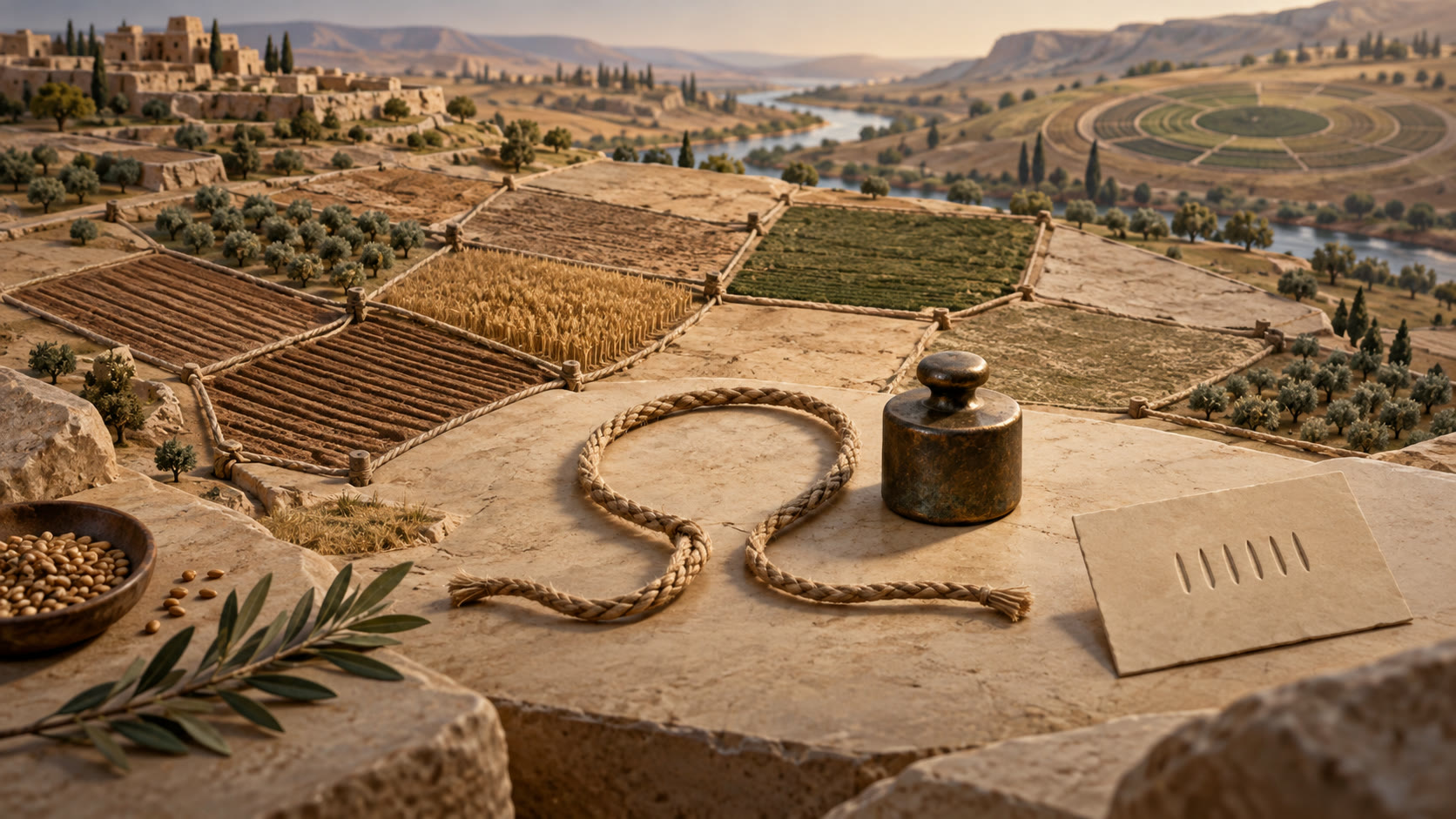
Modern conceptual cover commissioned by IL Archive (2026): fields and an unknotted cord evoke the Jubilee’s land and release laws. Not an archaeological site, inscription or record of an actual Jubilee; original indexed JPEG retained, CC0
Entidad
The fiftieth-year law of Leviticus 25: family land restoration, limited release from servitude, and debate over debt remission and Deuteronomy 15.
Variantes del nombre: Biblical Jubilee, Jubilee year (Leviticus 25)
Contexto y fuentes →
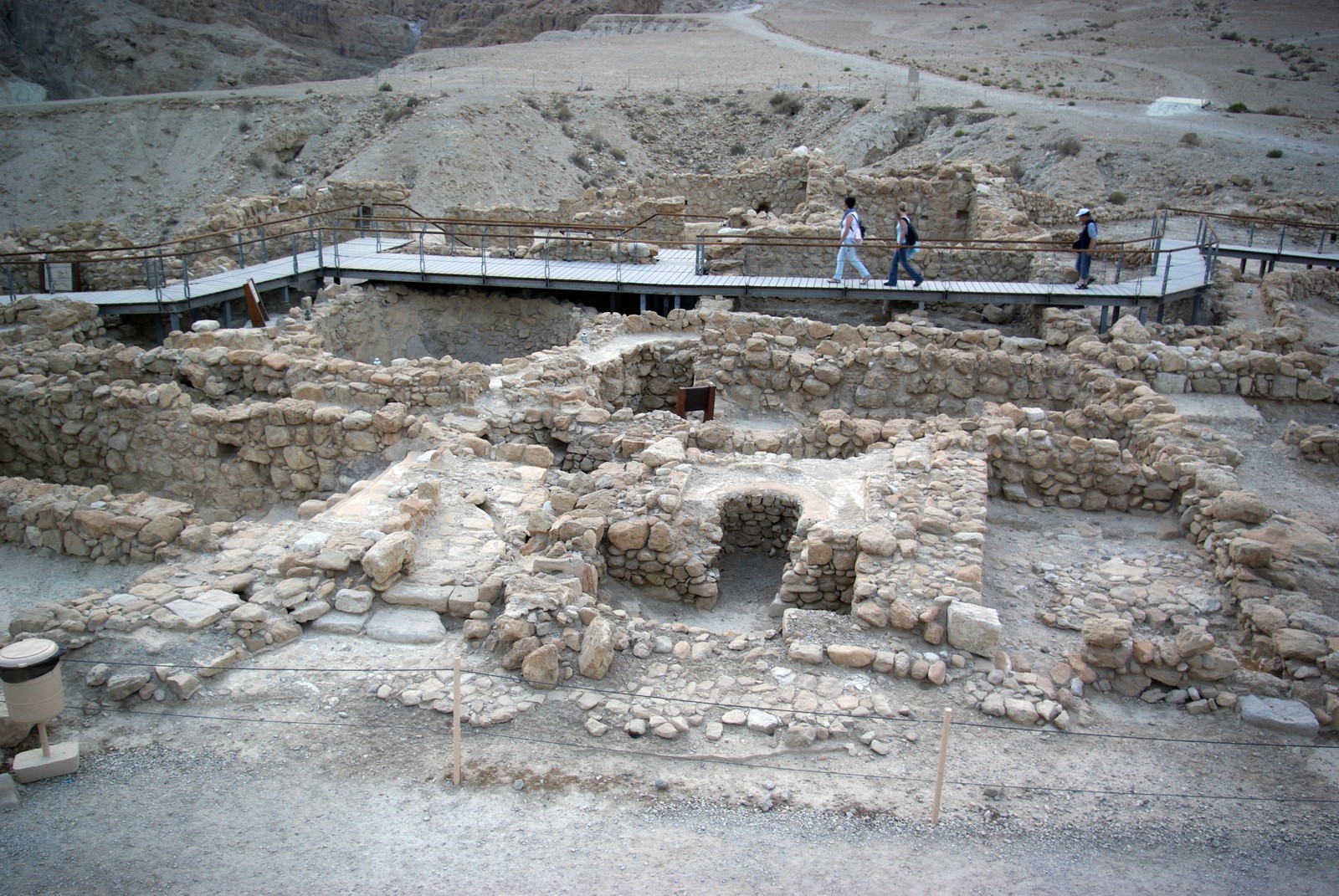
Qumran remains in a modern photograph. They provide a setting for the scrolls, not a portrait of every Jewish group or proof of an Essene identification. This is not a temple or heavenly-world reconstruction
Entidad
Diverse Jewish traditions between the rebuilding of Jerusalem’s temple around 515 BCE and its destruction in 70 CE: institutions, diaspora, groups and texts, with distinctions between events, composition, manuscripts and the limits of evidence.
Variantes del nombre: Second Temple Judaism, Second Temple period
Contexto y fuentes →
Persona
A Hebrew Bible scholar whose 2009 book examines terms such as Azazel without presupposing demonic identities.
Variantes del nombre: Judit M. Blair
Contexto y fuentes →
Persona
Scholar of ancient Israelite religion and inscriptions who taught theology and religious studies at Villanova; a specialist in the evidence for Asherah and el-Qom.
Variantes del nombre: Judith M. Hadley
Contexto y fuentes →
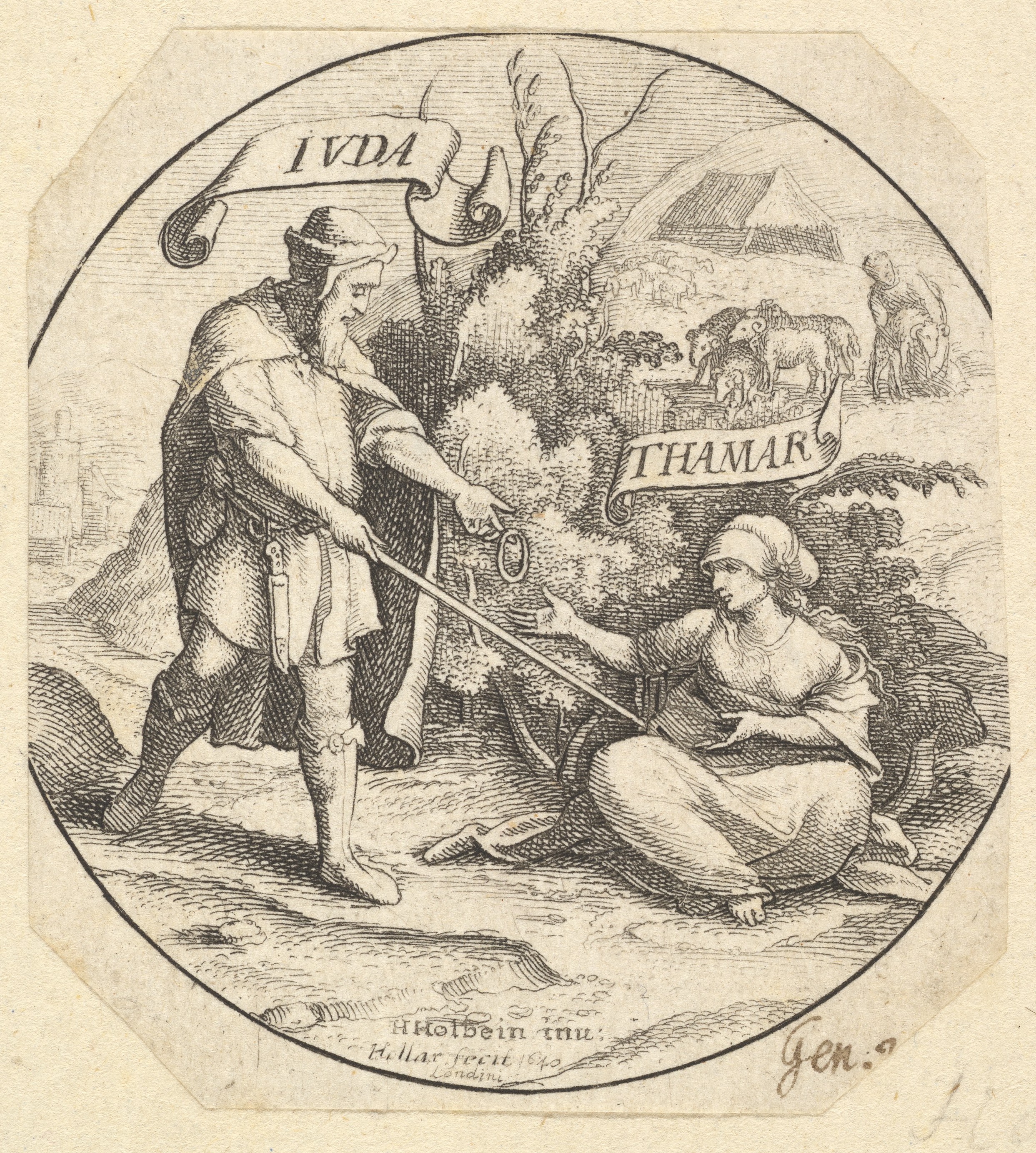
Judah and Tamar, etching by Wenceslaus Hollar, 1640, after Hans Holbein the Younger; Met 51.501.2142. Later reception of Genesis 38, not historical portraits or a marriage document
Persona
Father of Er, Onan and Shelah and Tamar’s father-in-law in Genesis 38, distinct from Judah’s kingdom.
Variantes del nombre: Judah in Genesis
Contexto y fuentes →
Persona
University of Helsinki Hebrew Bible scholar studying textual growth and Deuteronomy’s history.
Variantes del nombre: Juha Pakkala
Contexto y fuentes →
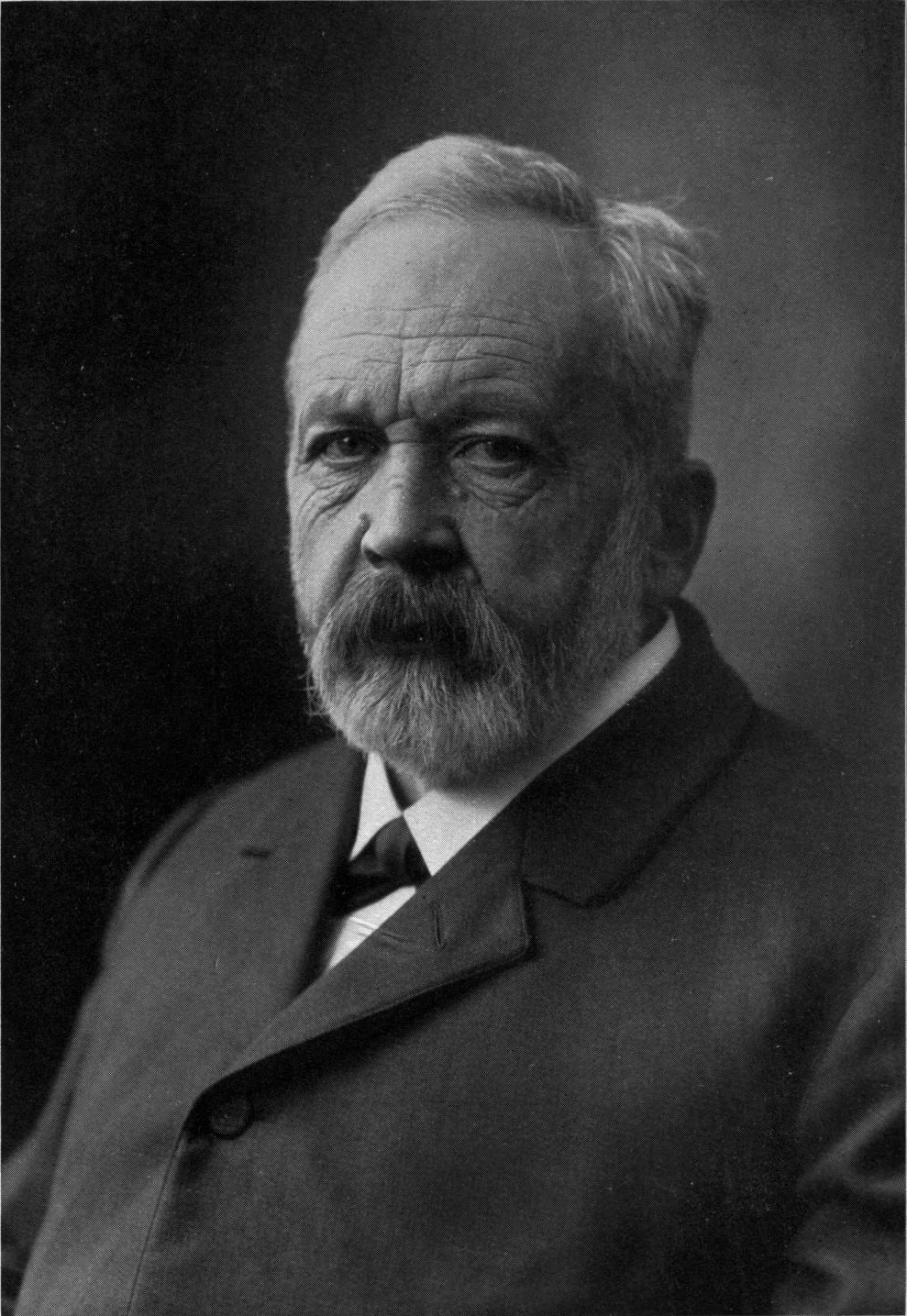
Julius Wellhausen in a photograph published in a commemorative volume in 1914
Persona
German biblical and Semitic-studies scholar associated with historical-critical analysis of the Pentateuch’s sources.
Variantes del nombre: Julius Wellhausen
Contexto y fuentes →
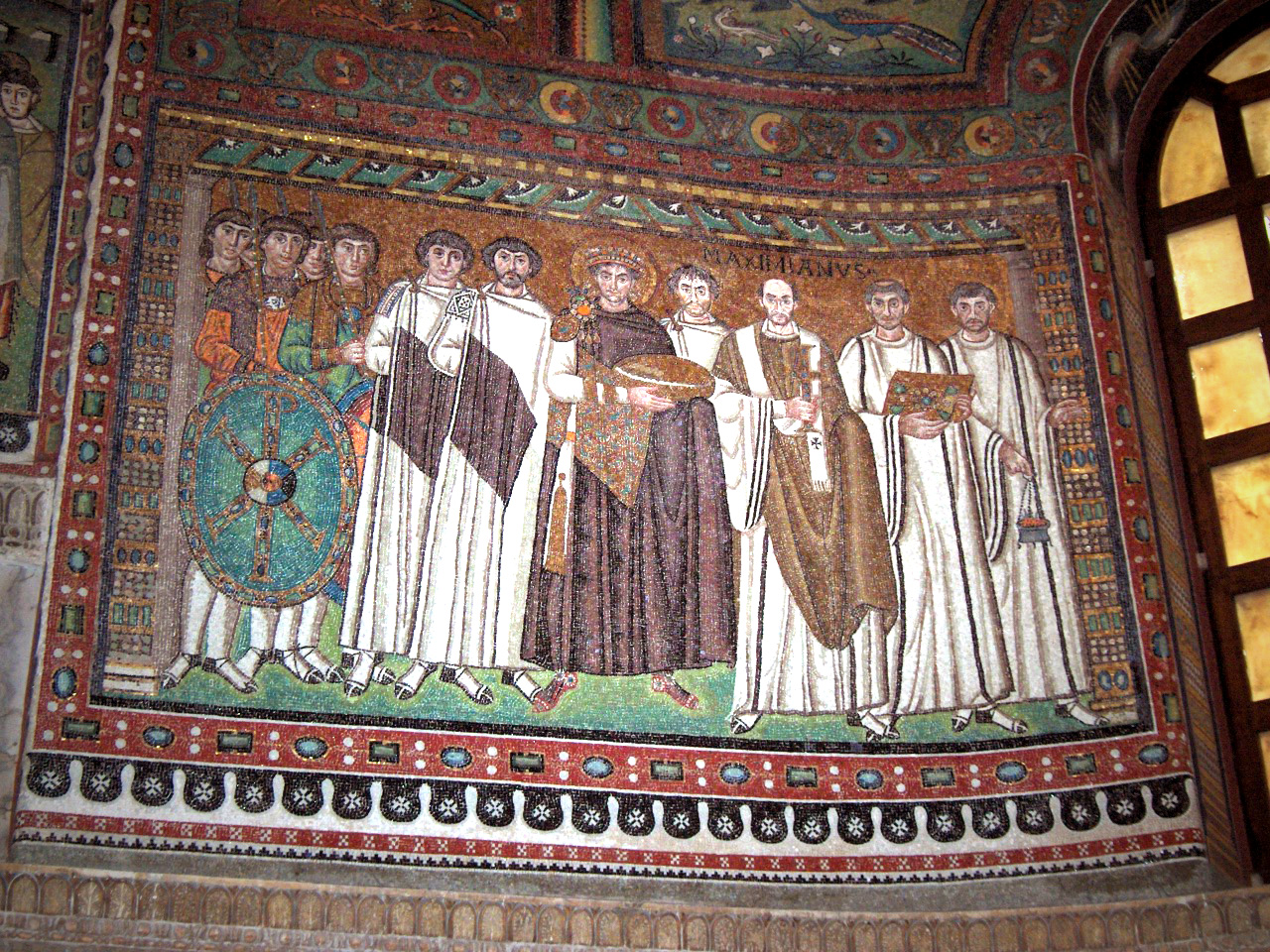
Sixth-century San Vitale mosaic at Ravenna portraying Justinian and his court. Contemporary imperial art, not a photograph or a barrier scene
Persona
Eastern Roman emperor from 527 to 565 CE; his reign is used in a proposed dating of a Syriac Alexander Legend layer.
Variantes del nombre: Justinian I
Contexto y fuentes →
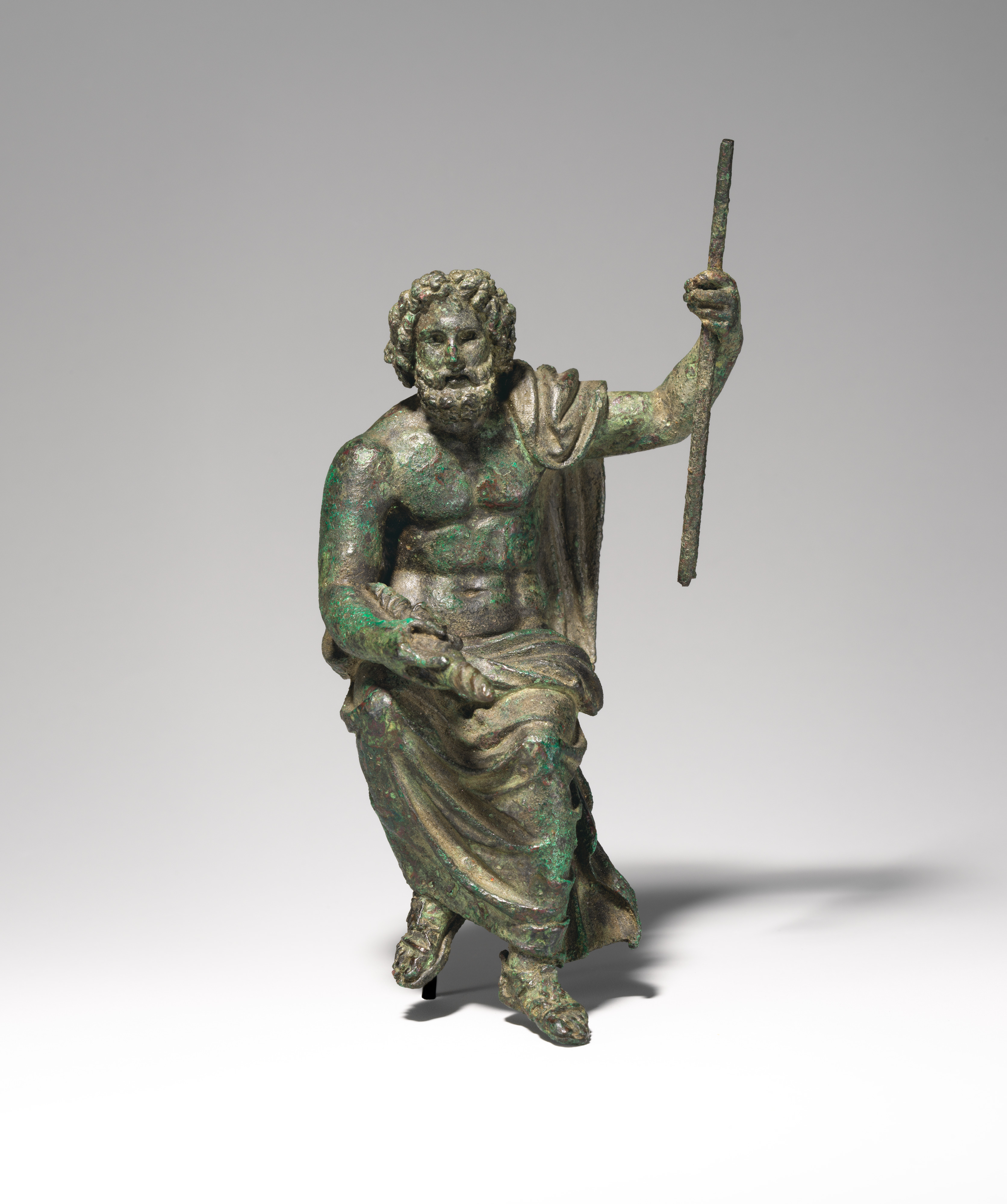
Bronze statuette of Jupiter Capitolinus, Roman, first–second century CE, Met 97.22.8. Evidence of the deity’s representation, not the flood decision scene
Entidad
Roman counterpart of Greek Zeus, deciding the flood in Ovid’s Metamorphoses.
Variantes del nombre: Jupiter, Roman deity, Jove
Contexto y fuentes →
Persona
Ancient Near Eastern iconography scholar and author of the IDD entry on Yam.
Variantes del nombre: Jürg Eggler
Contexto y fuentes →
Modern AI-generated symbolic cover with an imagined clay fragment, index cards and a magnifier. Not a photograph of an identified Ugaritic tablet or a verified transcription of its signs
Entidad
Abbreviation for a modern edition of alphabetic cuneiform texts. Its text references can be cross-identified with find numbers such as RS or RIH; they are not dates.
Variantes del nombre: KTU, CAT, Ugaritic text references
Contexto y fuentes →
Modern abstract illustration of intersecting questions and arguments in kalām; neither a historic manuscript nor a school-specific diagram
Entidad
Diverse traditions of argument about Islamic doctrine, addressing scripture, divine attributes, justice, prophecy and human agency, with shifting relations to law and philosophy.
Variantes del nombre: Kalām, Islamic theology, kalām theology
Contexto y fuentes →
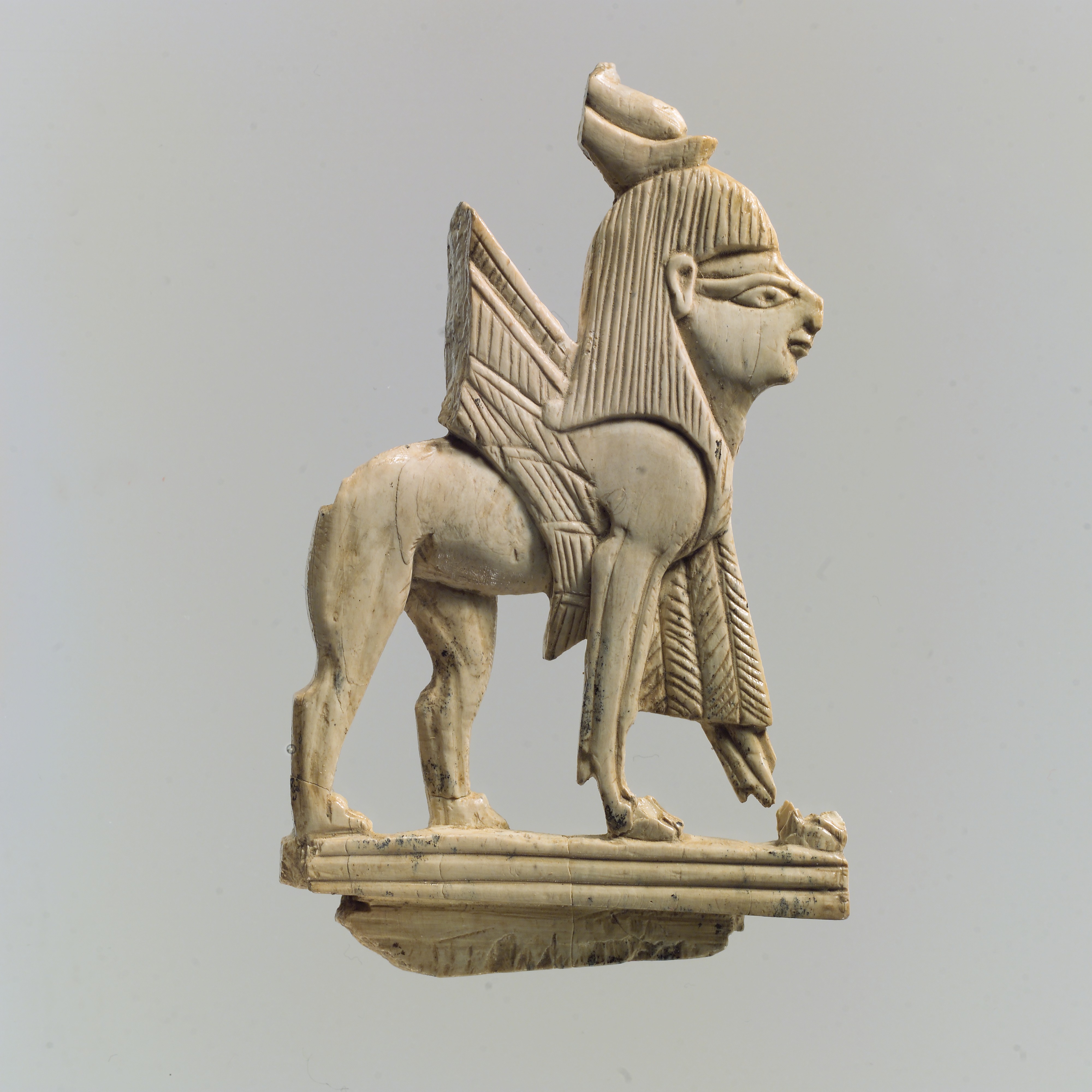
Ivory winged-sphinx plaque from Nimrud, ca. ninth–eighth centuries BCE; Met 61.197.3. Visual comparison, not the kapporet or an identified biblical cherub
Entidad
Gold object above the biblical Ark, associated with cherubim, divine speech, and the purification rite of Leviticus 16. “Atonement cover” names its position and ritual role; “mercy seat” does not establish a chair.
Variantes del nombre: kapporet, kappōret, mercy seat
Contexto y fuentes →
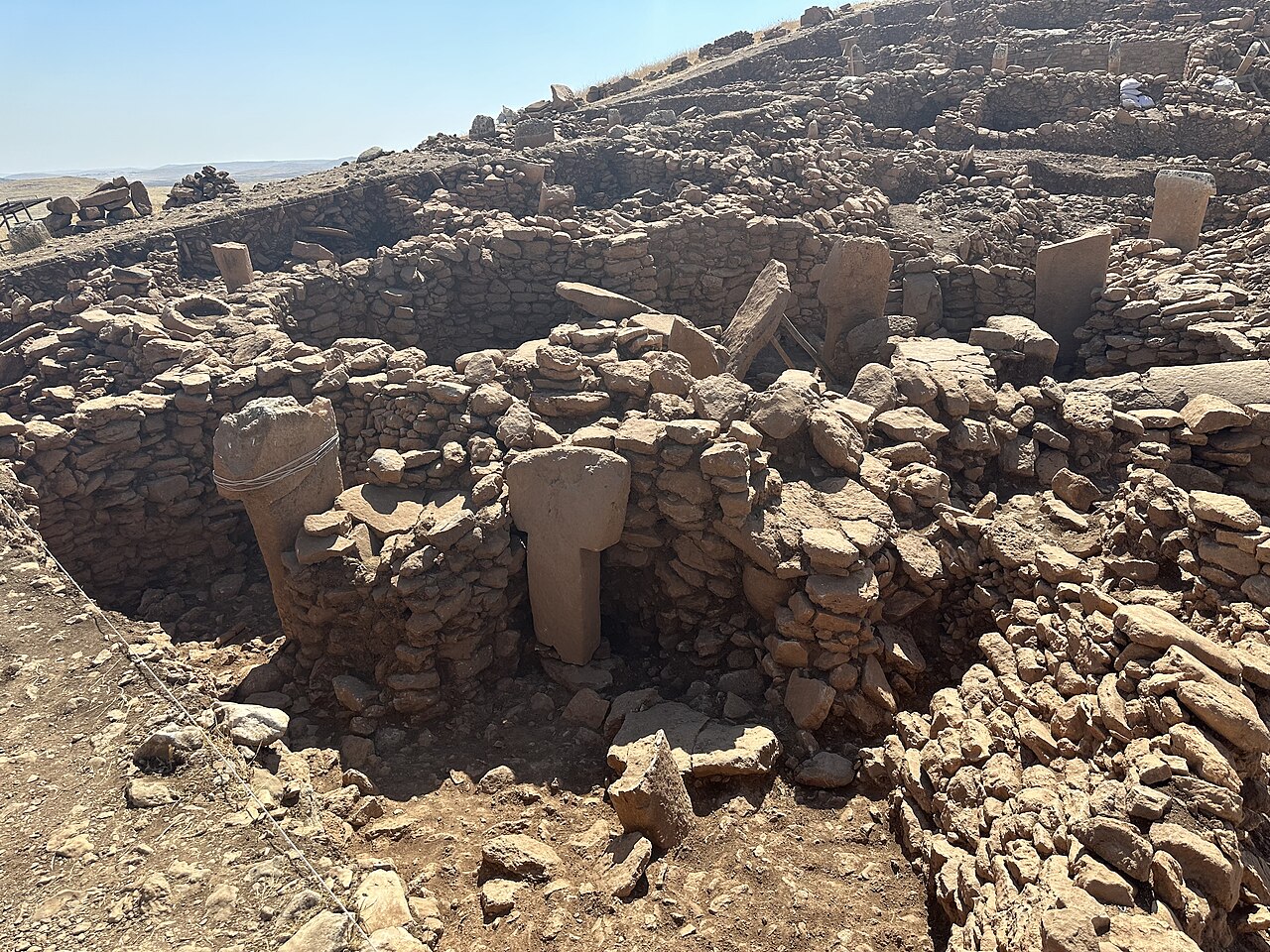
The Karahantepe excavation on 22 August 2024. Ropes and work supports are modern. The T-shaped pillar in this frame is not the faced pillar announced in 2025, and the photograph is not a reconstruction of the Neolithic site
Yacimiento
An excavation area in the Taş Tepeler project in southeastern Anatolia, where a faced T-shaped pillar was announced in 2025.
Variantes del nombre: Karahantepe, Karahan Tepe
Contexto y fuentes →
Persona
Biblical Greek and Septuagint scholar, professor emerita at Wheaton; translator of the Esther traditions in NETS.
Variantes del nombre: Karen H. Jobes, Karen Jobes
Contexto y fuentes →
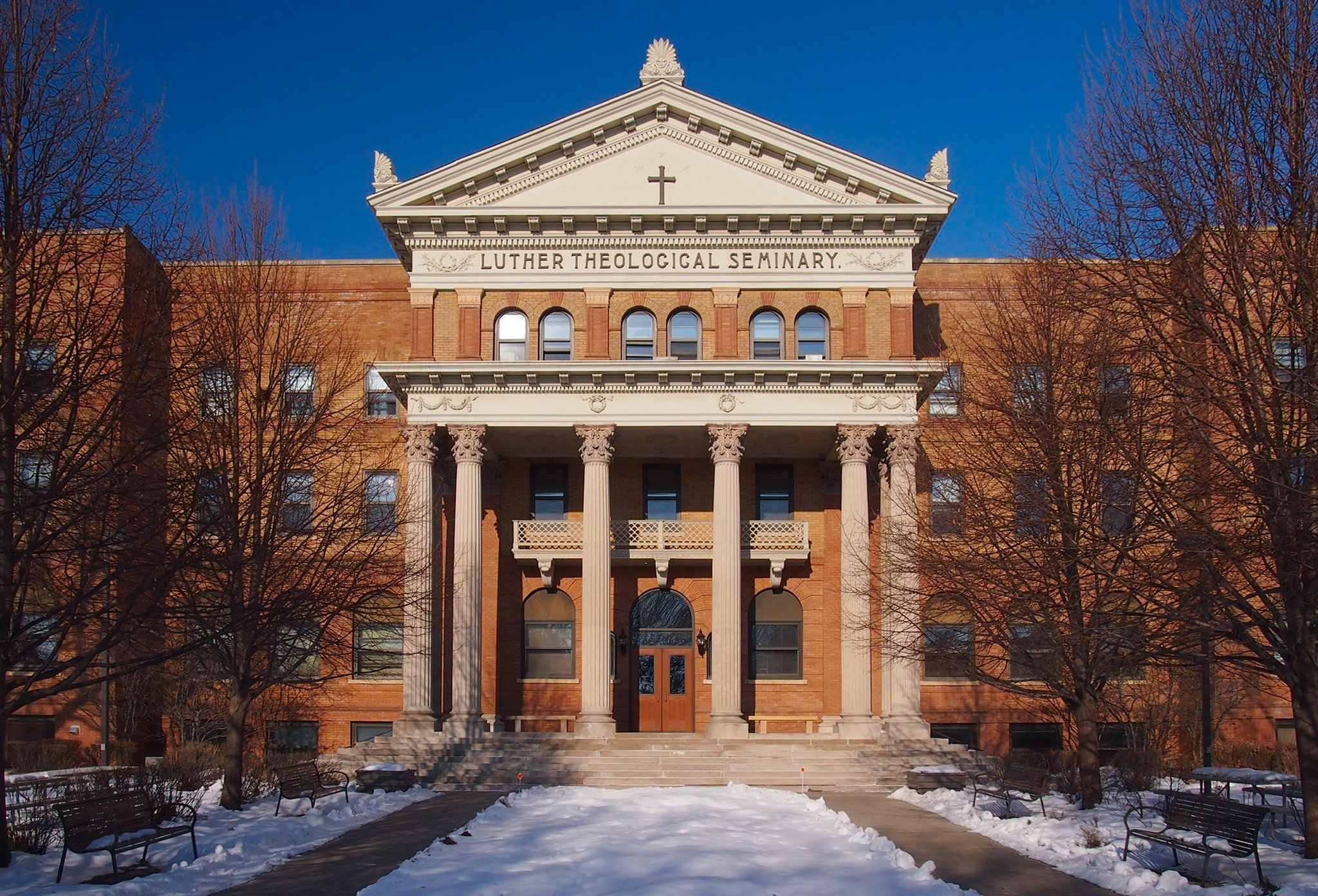
Bockman Hall on Luther Seminary’s campus in Saint Paul, Minnesota, photographed on 5 January 2013. This institutional view provides context for Kathryn Schifferdecker’s work as an Old Testament professor at the seminary
Persona
Old Testament scholar at Luther Seminary, studying biblical interpretation and creation theology in Job.
Variantes del nombre: Kathryn Schifferdecker, Kathryn M. Schifferdecker
Contexto y fuentes →
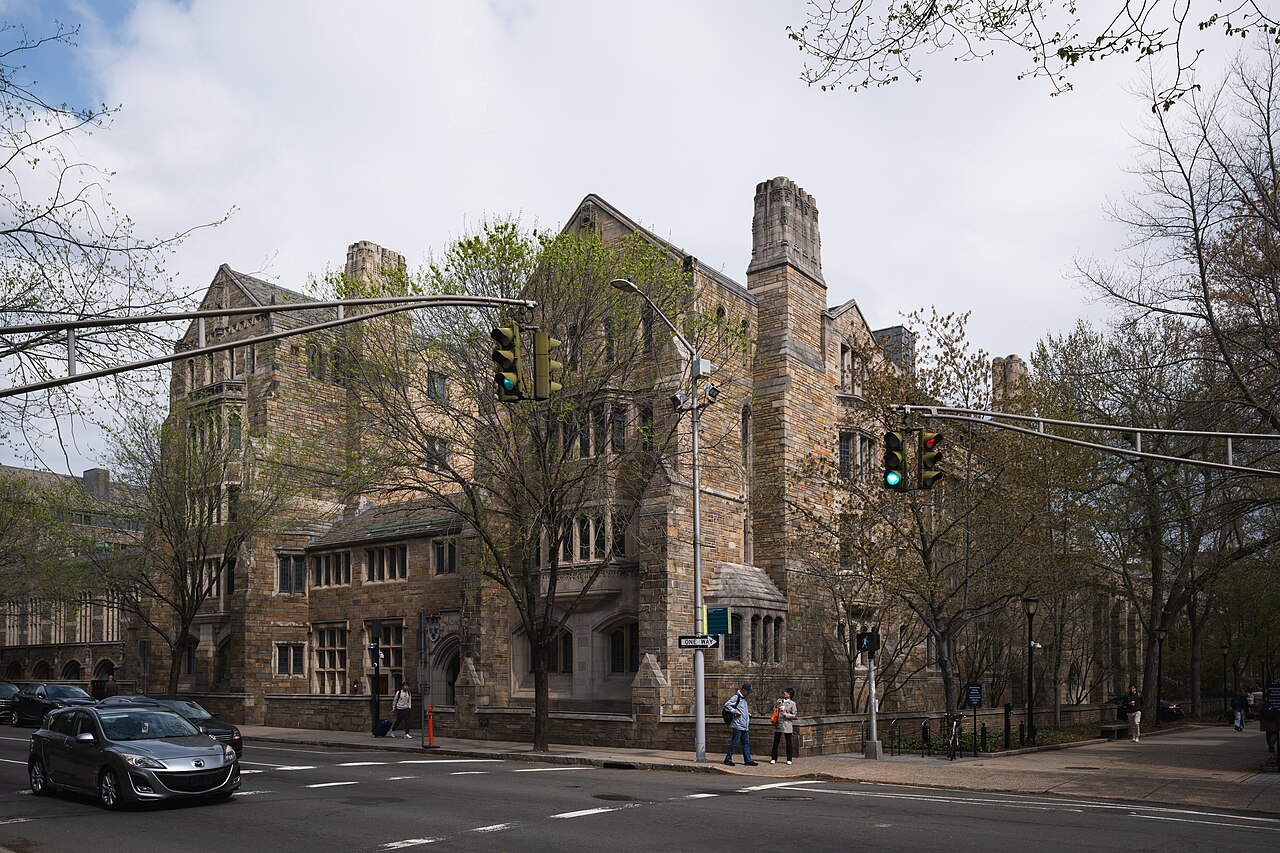
Sterling Memorial Library at Yale University in New Haven, Connecticut, on 20 April 2026, seen from Elm and High Streets. It provides context for the university that Kathryn Slanski joined in 2004
Persona
Yale scholar of Mesopotamia, studying texts, images, inscribed monuments, law and authority.
Variantes del nombre: Kathryn Slanski, Kathryn E. Slanski
Contexto y fuentes →
Persona
Purdue professor of Classics, Religious Studies and Comparative Literature, studying ancient myth and literature.
Variantes del nombre: Keith Dickson
Contexto y fuentes →
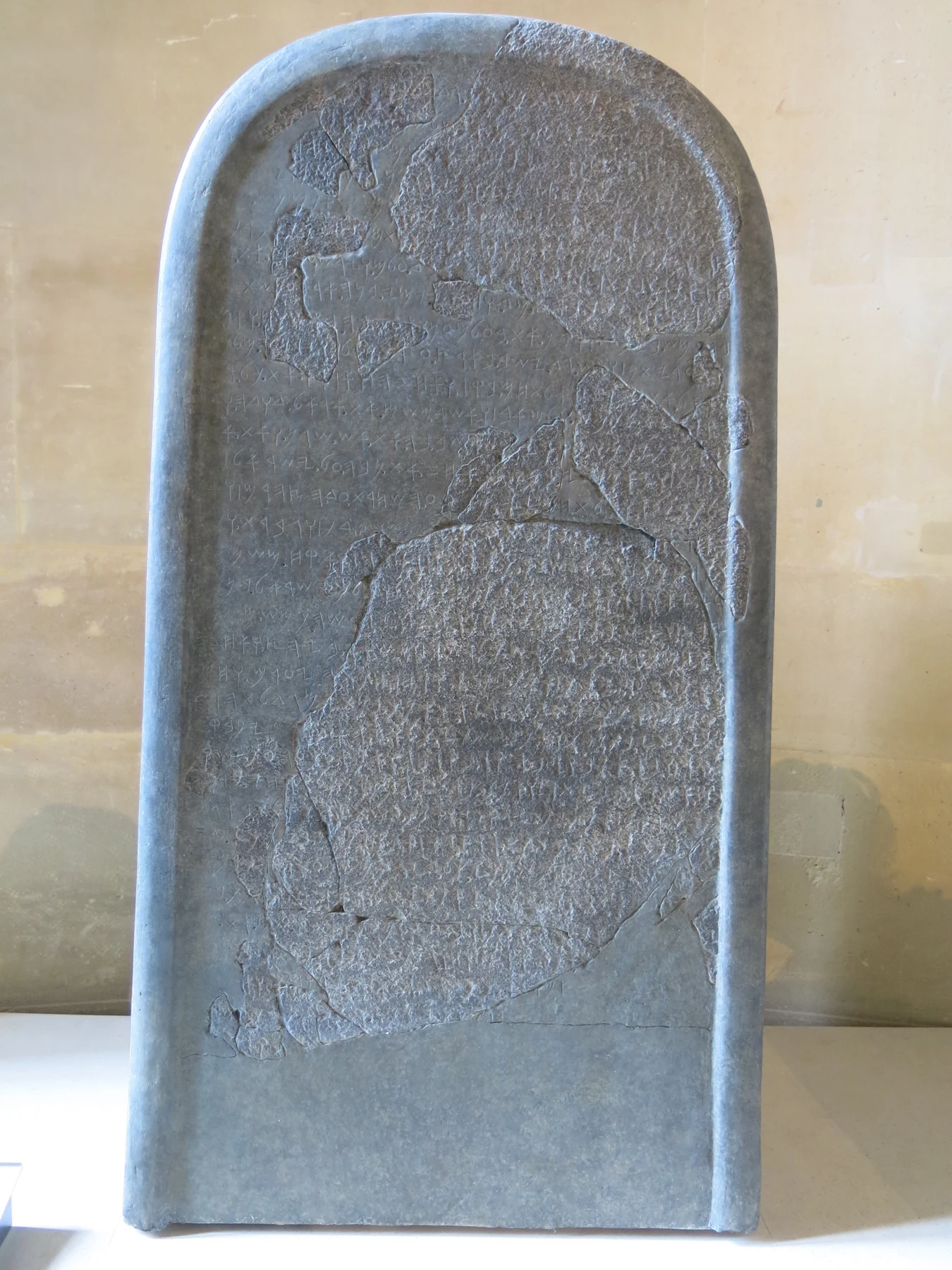
Mesha Stele, basalt from Dhiban, ninth century BCE, Louvre AO 5066. The text names Chemosh; the displayed object is reassembled and restored, not an image of the deity
Entidad
Major Moabite deity in the ninth-century BCE Mesha Stele, credited with restoring territory and receiving war booty; also named in Hebrew texts from another perspective.
Variantes del nombre: Chemosh, Kemosh
Contexto y fuentes →
Persona
Archaeologist studying houses, everyday life and social change, who applied building biography to Çatalhöyük.
Variantes del nombre: Kevin Kay
Contexto y fuentes →
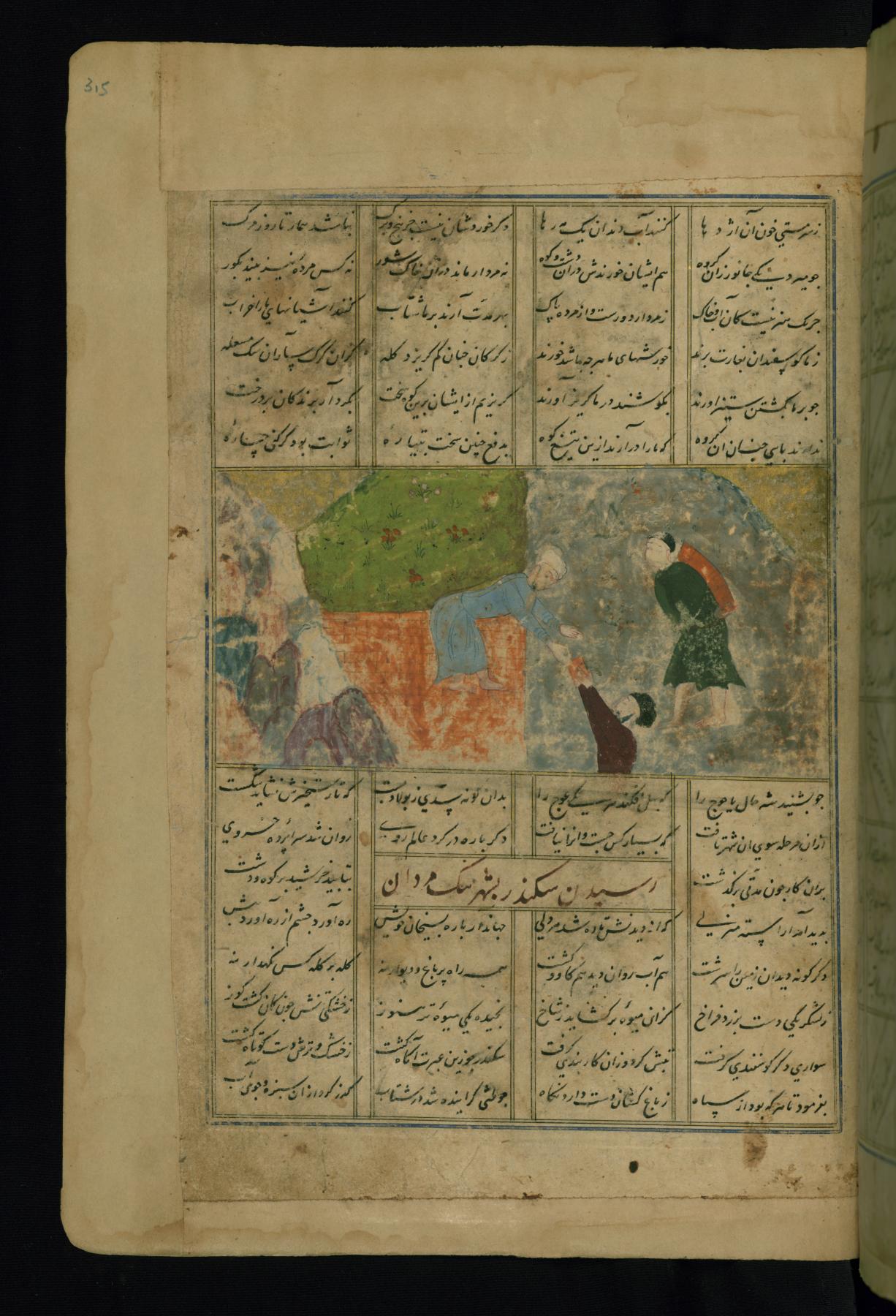
A Persian scene of Alexander building the wall, dated 1481. It is a later witness to the story, not the Syriac text studied by van Bladel or his portrait. Walters Art Museum, W.604.315A
Persona
Philologist and historian of the Near East and the transmission of learning across languages.
Variantes del nombre: Kevin van Bladel
Contexto y fuentes →

Modern imagined meeting of waters with a fish; not a photograph of an identifiable location, an ancient artifact or a documented reconstruction of Moses and Khidr’s journey
Persona
Khidr is the name given in hadith and exegesis to the servant accompanying Moses in Qur’an 18:60–82; the verses leave him unnamed, and later Sufi and popular portrayals vary.
Variantes del nombre: Khidr, al-Khidr, al-Khiḍr
Contexto y fuentes →
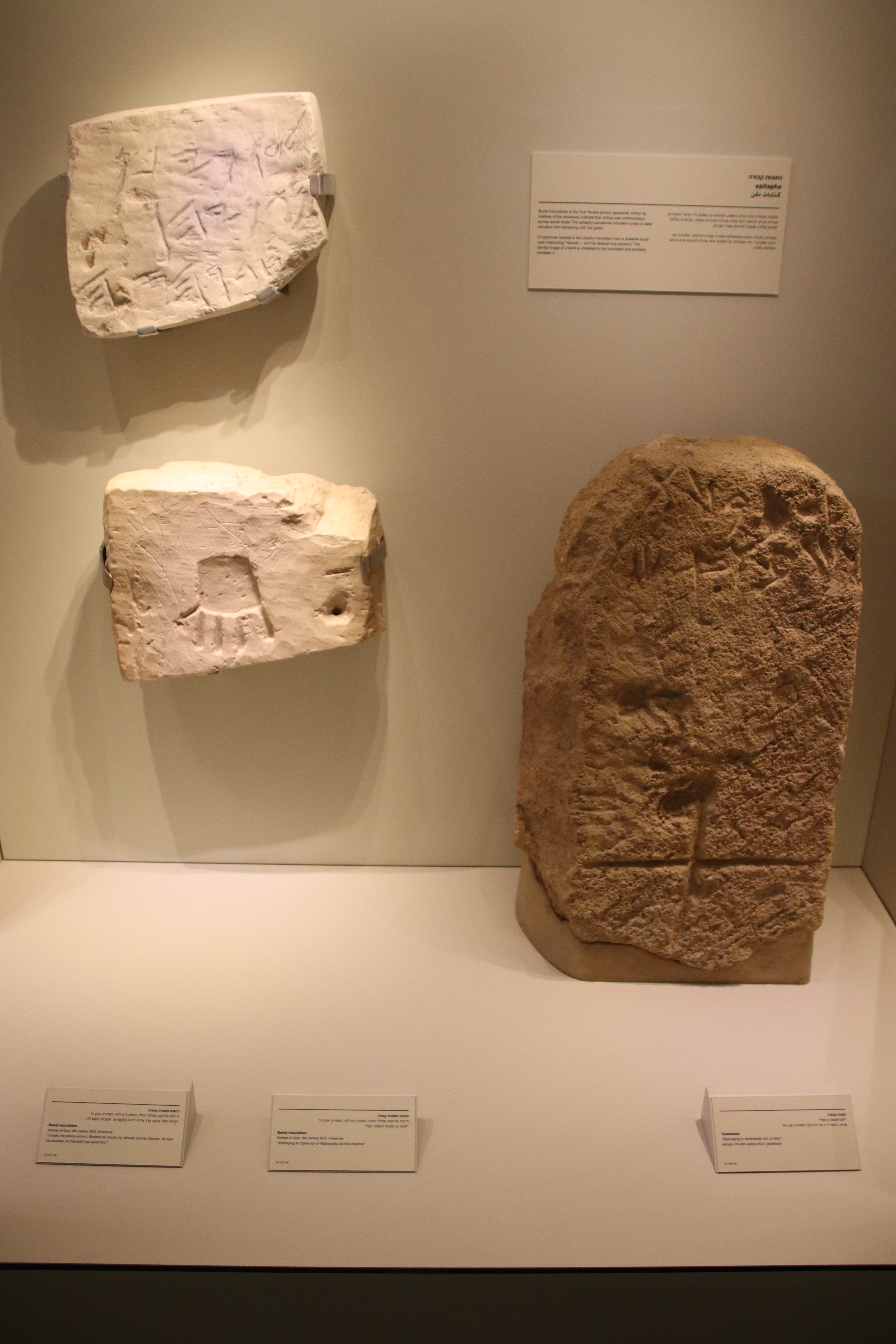
Museum display photographed by Gary Todd in 2018: the Uriyahu inscription from Khirbet el-Qom is the pale stone with the hand at lower left. Above it is another burial inscription from the site; the large object at right is a separate tombstone from Achziv. This is a modern display at the Israel Museum, Jerusalem, not the original tomb setting
Yacimiento
Site west of Hebron known for an eighth-century BCE funerary inscription commonly associating Yahweh with “his asherah”; damaged text and readings disputed.
Variantes del nombre: Khirbet el-Qom, Khirbet el-Qôm, el-Qom inscription
Contexto y fuentes →
Persona
Bioarchaeologist whose research includes human remains and cranial modification in the ancient Near East.
Variantes del nombre: Kirsi O. Lorentz, Kirsi Lorentz
Contexto y fuentes →
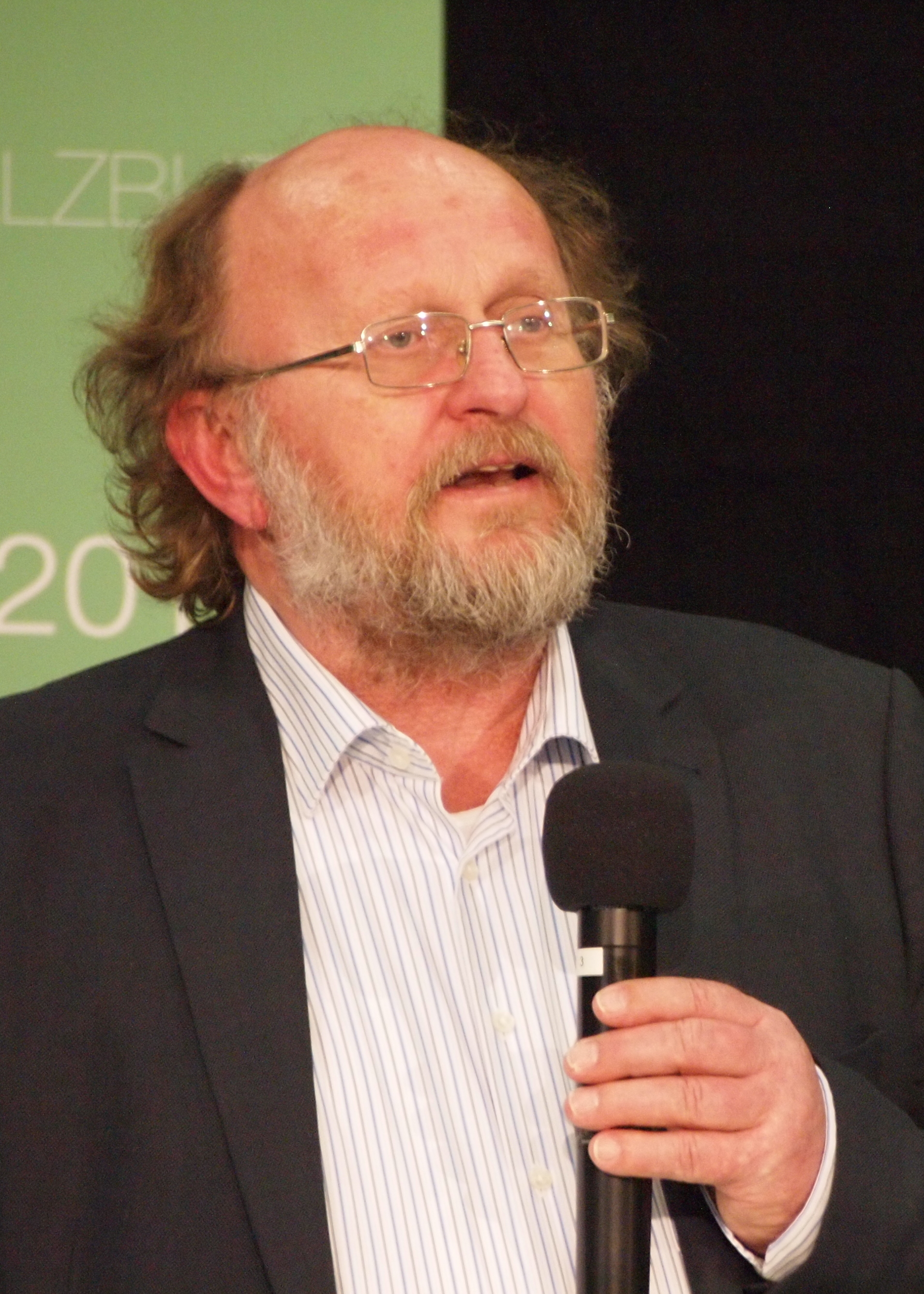
Klaus Schmidt, the Göbekli Tepe archaeologist, at the Monumento fair in Salzburg on 16 January 2014. Not a photograph from the excavation
Persona
A German prehistorian who directed the Göbekli Tepe excavations from 1995 until his death on 20 July 2014.
Variantes del nombre: Klaus Schmidt
Contexto y fuentes →
Persona
Scholar of the Hebrew Bible and ancient Judaism studying the Pentateuch’s literary history and the formation of biblical texts.
Variantes del nombre: Konrad Schmid
Contexto y fuentes →

Modern AI-generated symbolic scene combining a forge and a coastal storm to evoke Kothar-wa-Hasis’s literary role; not an archaeological site, weapon, palace or authenticated reconstruction
Entidad
Ugaritic divine craftsman who makes Baal’s weapons, builds his palace and proposes its window; also associated with Aqhat’s bow. No securely identified ancient portrait.
Variantes del nombre: Kothar-wa-Hasis, Kothar-wa-Khasis
Contexto y fuentes →
Persona
Scholar of ancient Judaism and rabbinic literature; associate professor of Jewish studies at Florida Atlantic University.
Variantes del nombre: Kristen H. Lindbeck
Contexto y fuentes →

Modern AI-generated symbolic cover evoking succession between sky, earth and storm; neither an artefact nor an ancient depiction of Kumarbi
Entidad
Hurrian god in Hittite songs from Hattusha; he overthrows Anu and carries the storm god. A study of CTH 344, contested genealogy, and Greek parallels.
Variantes del nombre: Kumarbi
Contexto y fuentes →
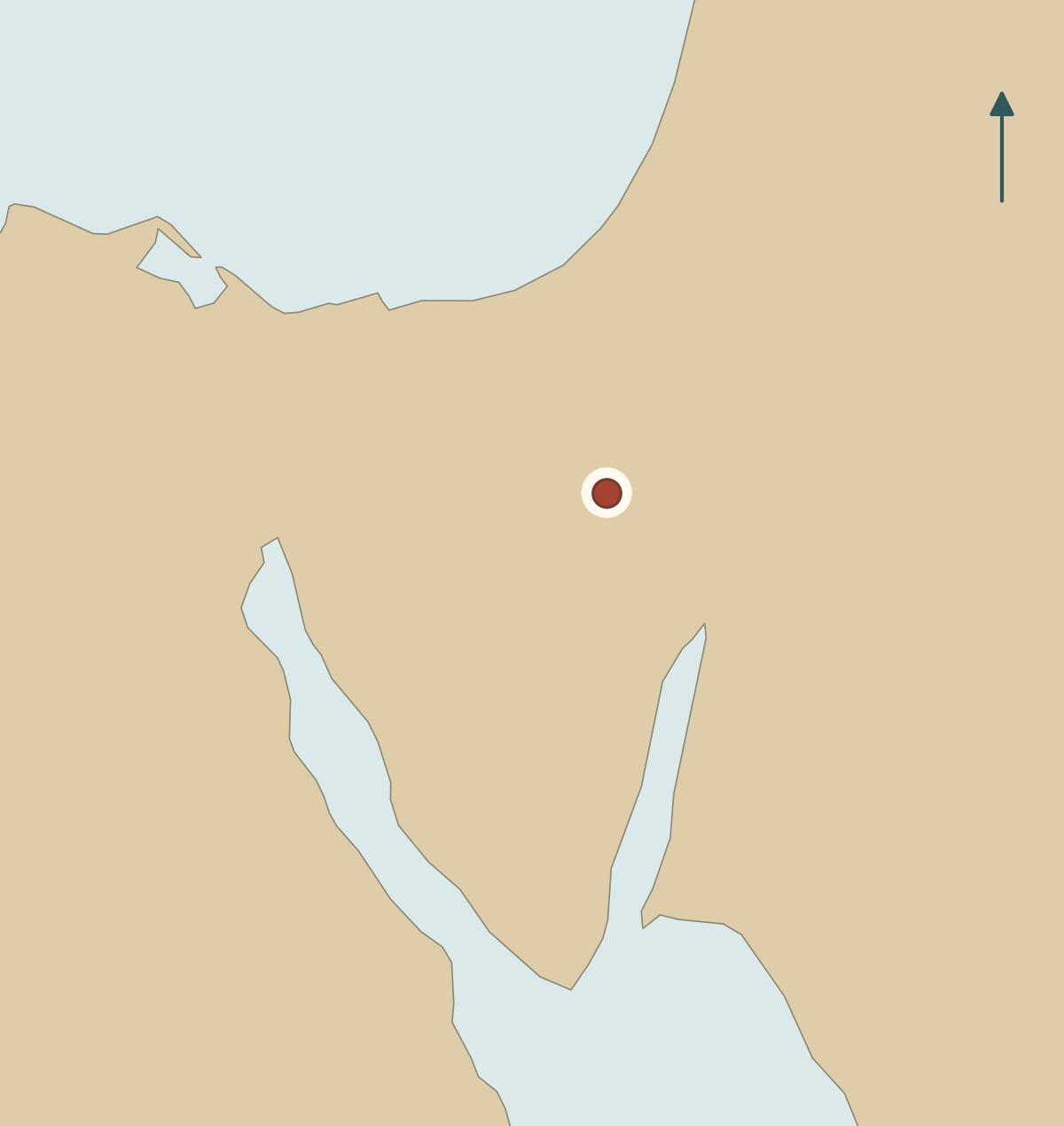
Modern locator derived from Natural Earth data: the red point marks Kuntillet ʿAjrud approximately within Sinai; the arrow points north. The Mediterranean is above, the gulfs of Suez and Aqaba below. Not an excavation plan or a map of ancient routes or borders
Yacimiento
A Sinai site with blessings invoking Yahweh of Samaria/Teman and “his asherah” around 800 BCE; inscriptions illuminate religion and writing, while the site’s function and imagery remain debated.
Variantes del nombre: Kuntillet Ajrud, Kuntillet ʿAjrud, Quntillet Ajrud, Horvat Teman
Contexto y fuentes →
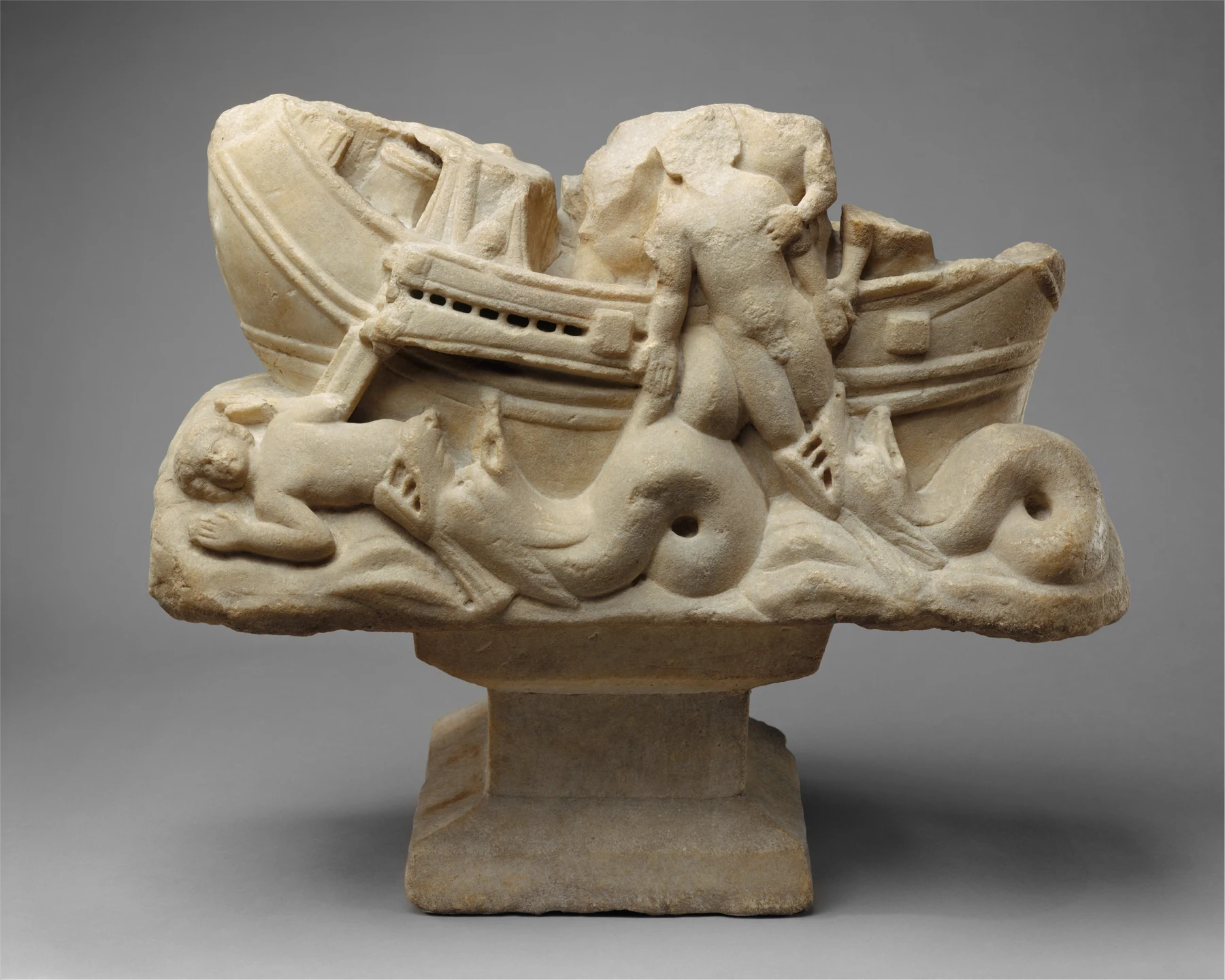
Roman marble table base from Asia Minor, early fourth century CE: Jonah is swallowed and released by a fantastic kētos beneath a ship. The Met, 77.7. Later Christian art, not zoological evidence for the Hebrew “great fish.”
Entidad
Kētos (κῆτος) is a Greek common noun for large real or imagined sea creatures, including mythical monsters and the creature in Greek Jonah and Matthew. It is not one modern species.
Variantes del nombre: kētos, ketos
Contexto y fuentes →

Modern conceptual cover: offering bowl, smoke and a luminous bow above receding waters. Generated in 2026; neither an ancient artifact nor a depiction of a documented event
Entidad
Genesis’s covenant with Noah, descendants and animals: promised in 6:18 and proclaimed in 9:8–17, assuring no flood will again destroy all flesh, with the cloud-bow as its sign.
Variantes del nombre: Noahic covenant, covenant with Noah, covenant of the bow
Contexto y fuentes →
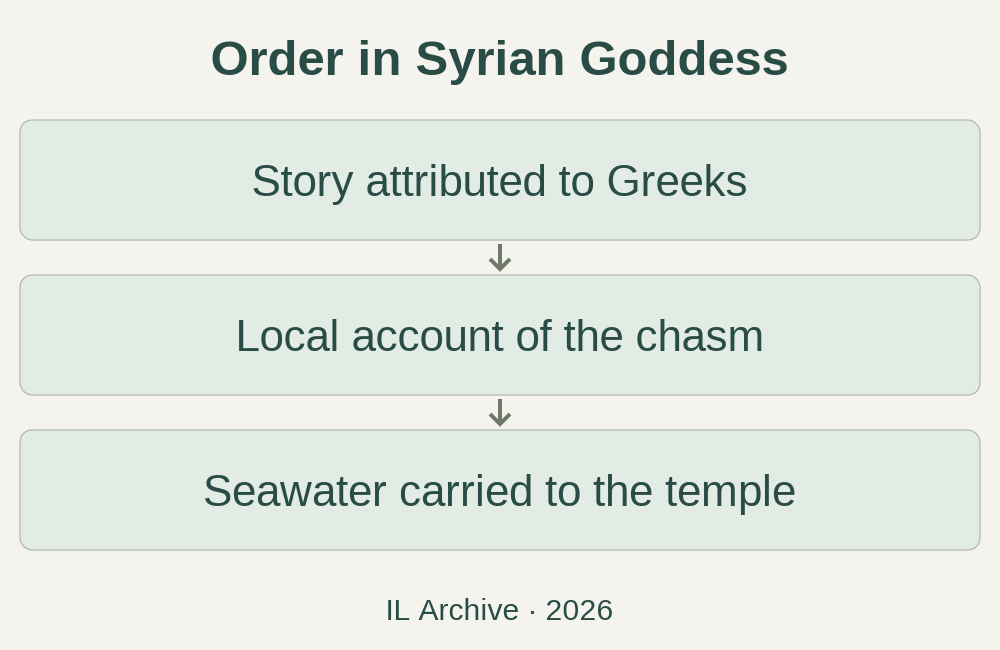
Modern explanatory diagram of one literary witness’s sequence or relationships, not a manuscript, portrait or demonstrated transmission route
Texto antiguo
Second-century CE Greek text attributed to Lucian, describing Syrian Hierapolis and its sanctuary traditions.
Variantes del nombre: On the Syrian Goddess
Contexto y fuentes →

Modern conceptual illustration of an offering on newly dried ground beneath an arc of light; neither an artifact photograph nor a reconstruction of a documented event. © IL Archive, CC0
Entidad
Rēaḥ nîḥōaḥ is a Hebrew expression for the pleasing odor of a burned offering presented to YHWH. Later interpretations associate it with acceptance; the phrase alone does not settle whether divine-food language is literal or symbolic.
Variantes del nombre: pleasing aroma, soothing aroma, rēaḥ nîḥōaḥ
Contexto y fuentes →
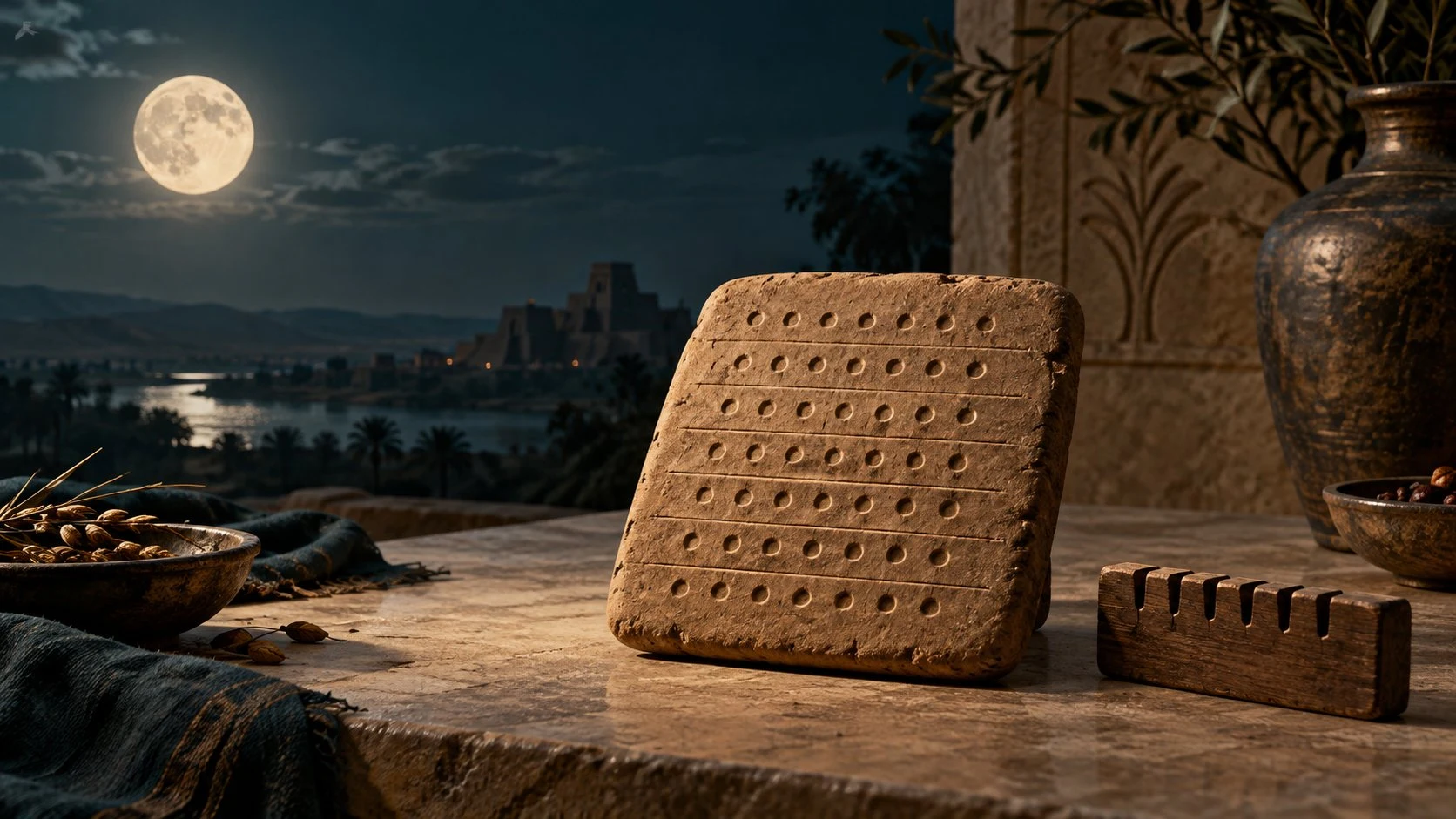
Original conceptual illustration of a mid-cycle moon and tablet calendar; not an artifact photograph or reconstruction of a historical ritual. © IL Archive, CC0
Entidad
Mesopotamian hemerologies assess dates for ritual, food, marriage, travel and other activities. The entry studies their witnesses, courtly examples and reception, and explains why cautionary dates are neither a universal calendar nor weekly rest days.
Variantes del nombre: hemerology, inauspicious days
Contexto y fuentes →
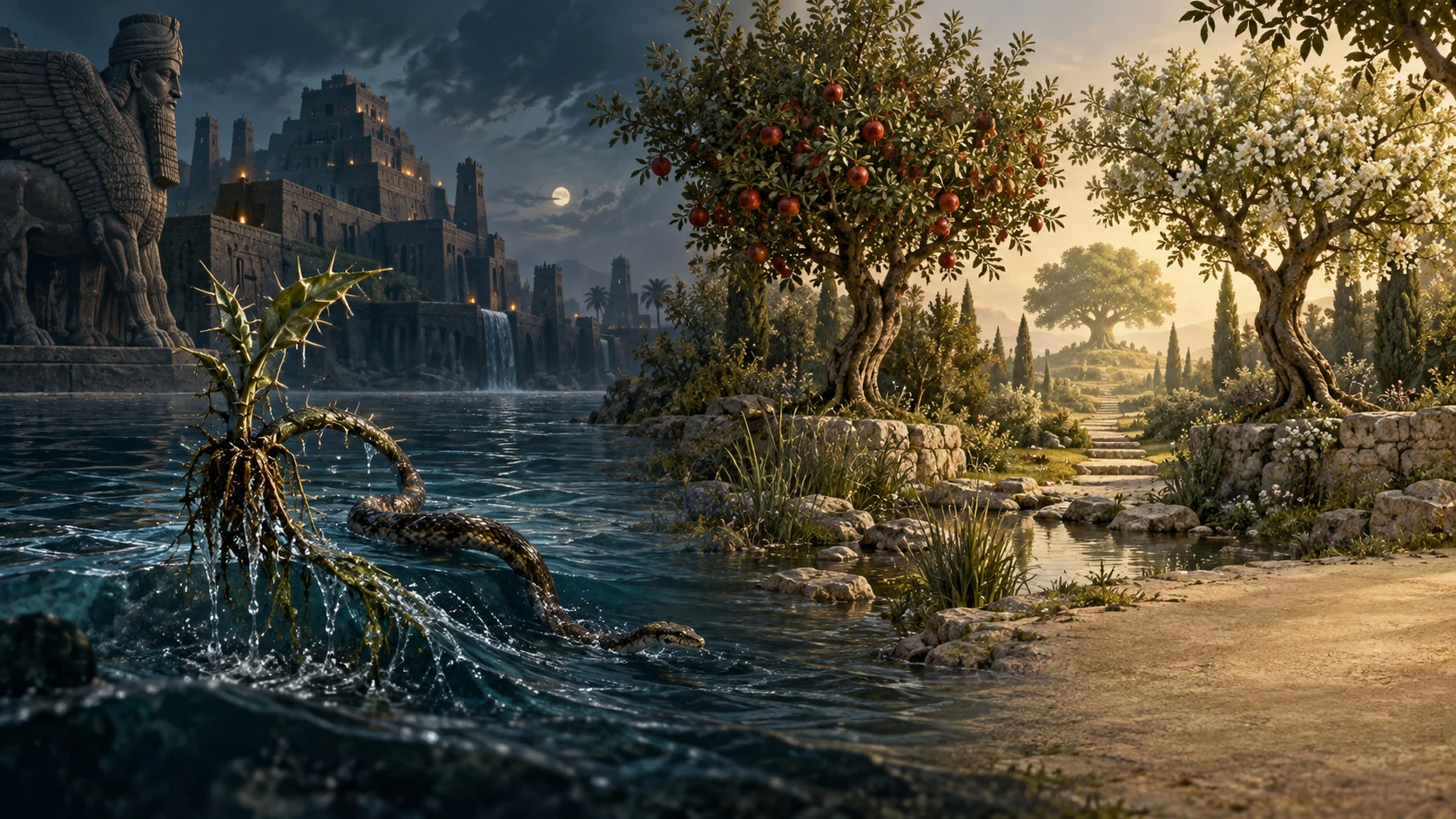
Modern conceptual illustration juxtaposing Gilgamesh’s water-borne plant with two trees in Genesis’s garden. It depicts no excavated artifact and does not establish identical stories. © IL Archive, CC0
Entidad
A thorny plant that Gilgamesh retrieves in Tablet XI and plans to test for rejuvenation, before a snake carries it away and sheds its skin. The account separates the narrative from interpretations of eating and immortality and cautiously compares the trees of Eden.
Variantes del nombre: Gilgamesh’s rejuvenating plant, Gilgamesh’s plant
Contexto y fuentes →
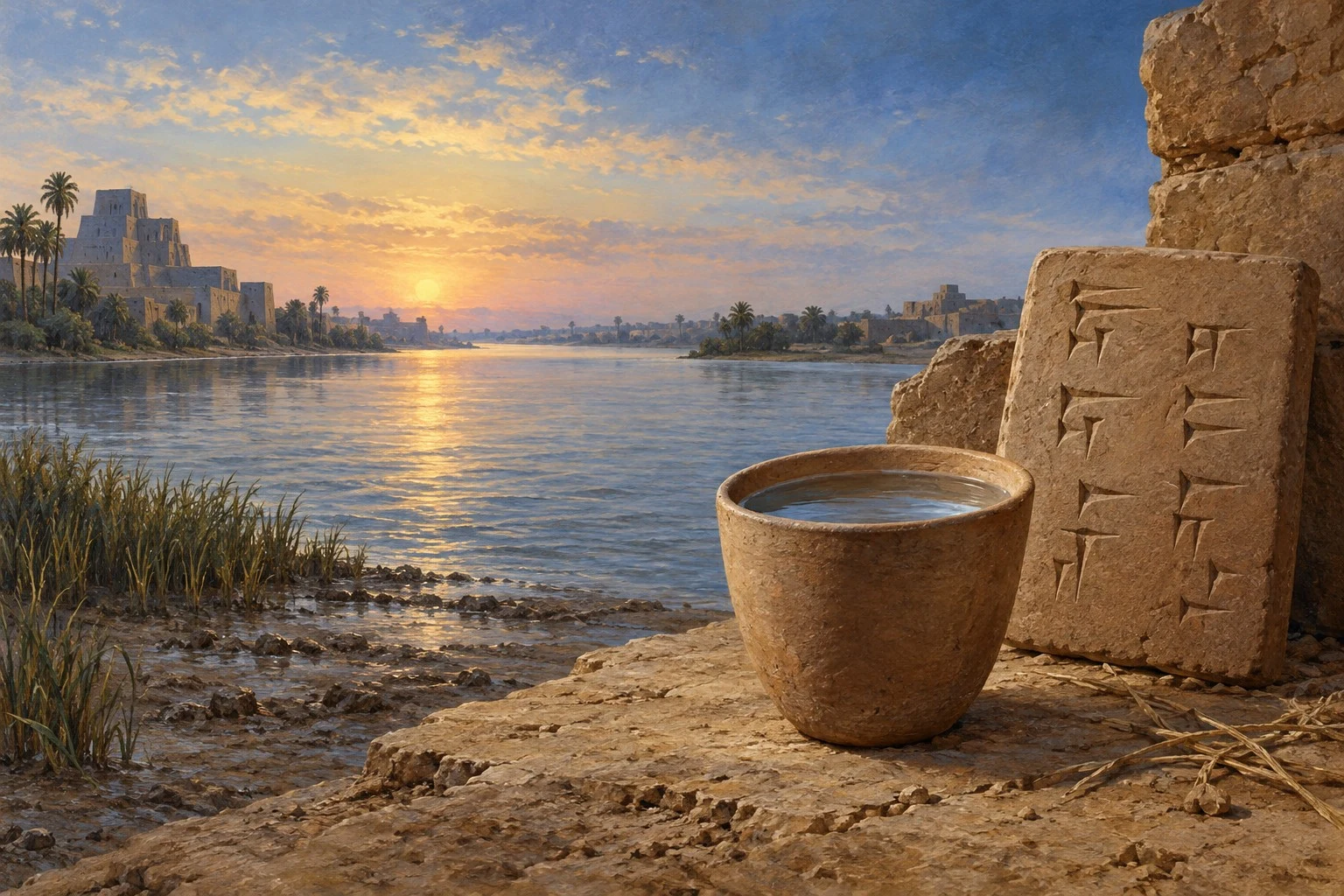
A modern conceptual illustration places river and vessel together to contrast two distinct procedures. It depicts no documented ordeal or specific artifact; the tablet's marks are decorative and not legible text
Entidad
Referral of an unresolved dispute to a divinized River for judgment, with procedures and consequences that differ between legal rules and case reports.
Variantes del nombre: river ordeal, riverine ordeal
Contexto y fuentes →
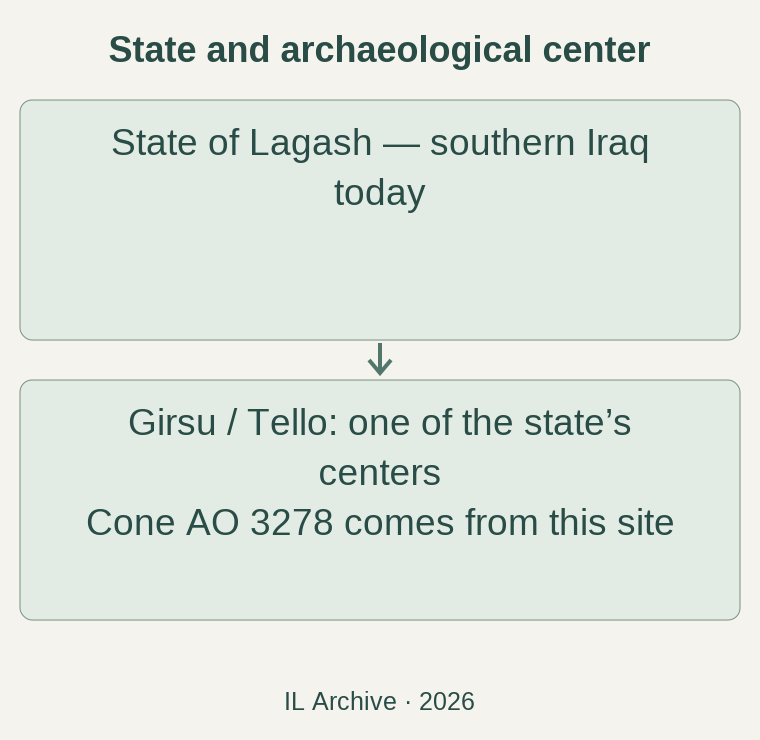
Modern diagram of the relationship or demand in the specified text; not an artifact photograph, a divine likeness or a portrait
Yacimiento
City-state in present-day southern Iraq; Girsu was one of its centers associated with royal inscriptions.
Variantes del nombre: Lagash, Sumerian city-state
Contexto y fuentes →
Persona
Papyrologist who co-edited a papyrus with the clay-sparrow episode.
Variantes del nombre: Lajos Berkes
Contexto y fuentes →
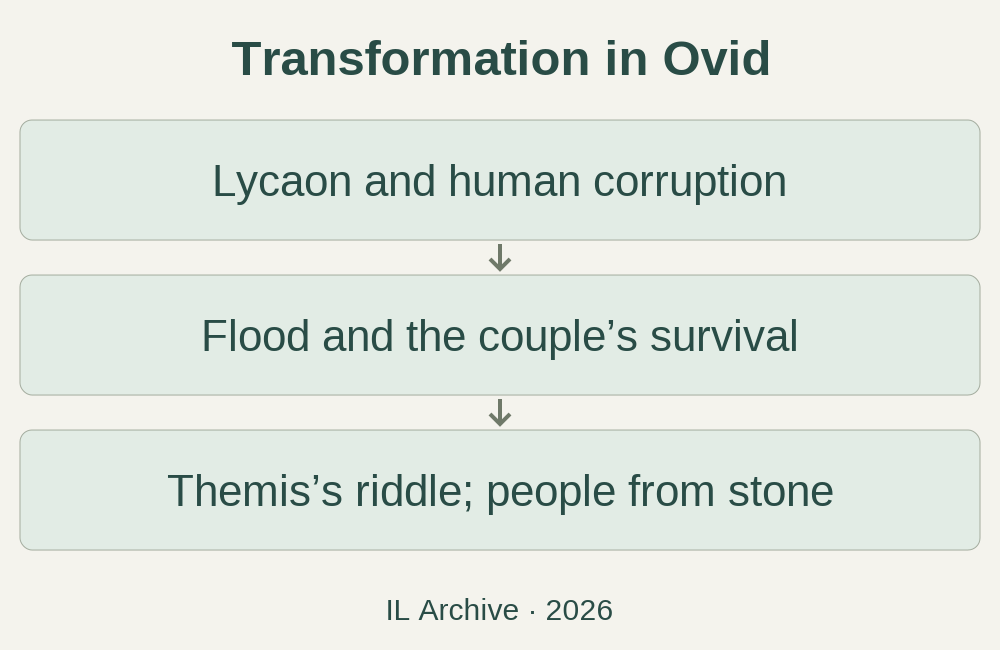
Modern explanatory diagram of one literary witness’s sequence or relationships, not a manuscript, portrait or demonstrated transmission route
Texto antiguo
Latin epic from the early first century CE collecting transformations, including Lycaon and Deucalion’s flood.
Variantes del nombre: Ovid’s Metamorphoses
Contexto y fuentes →