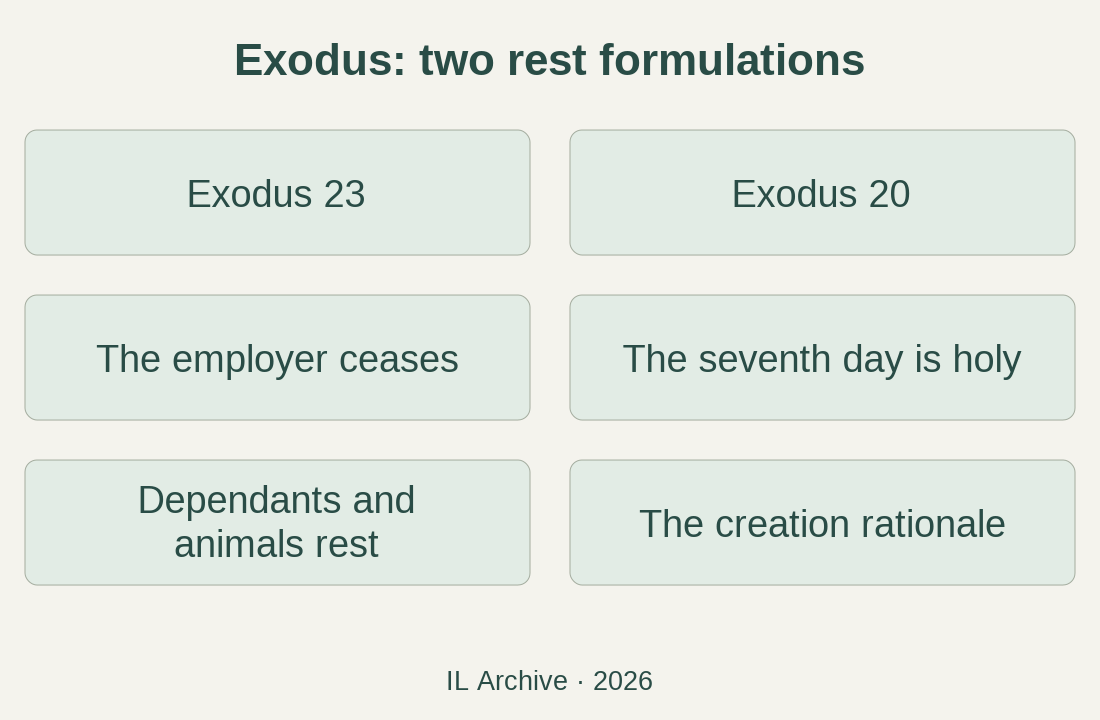
Modern diagram explaining the selected passage’s argument and sequence; not a manuscript image or archaeological reconstruction
Texto antiguo
Torah book recounting Israel’s departure from Egypt and containing different formulations of seventh-day rest.
Variantes del nombre: Book of Exodus
Contexto y fuentes →
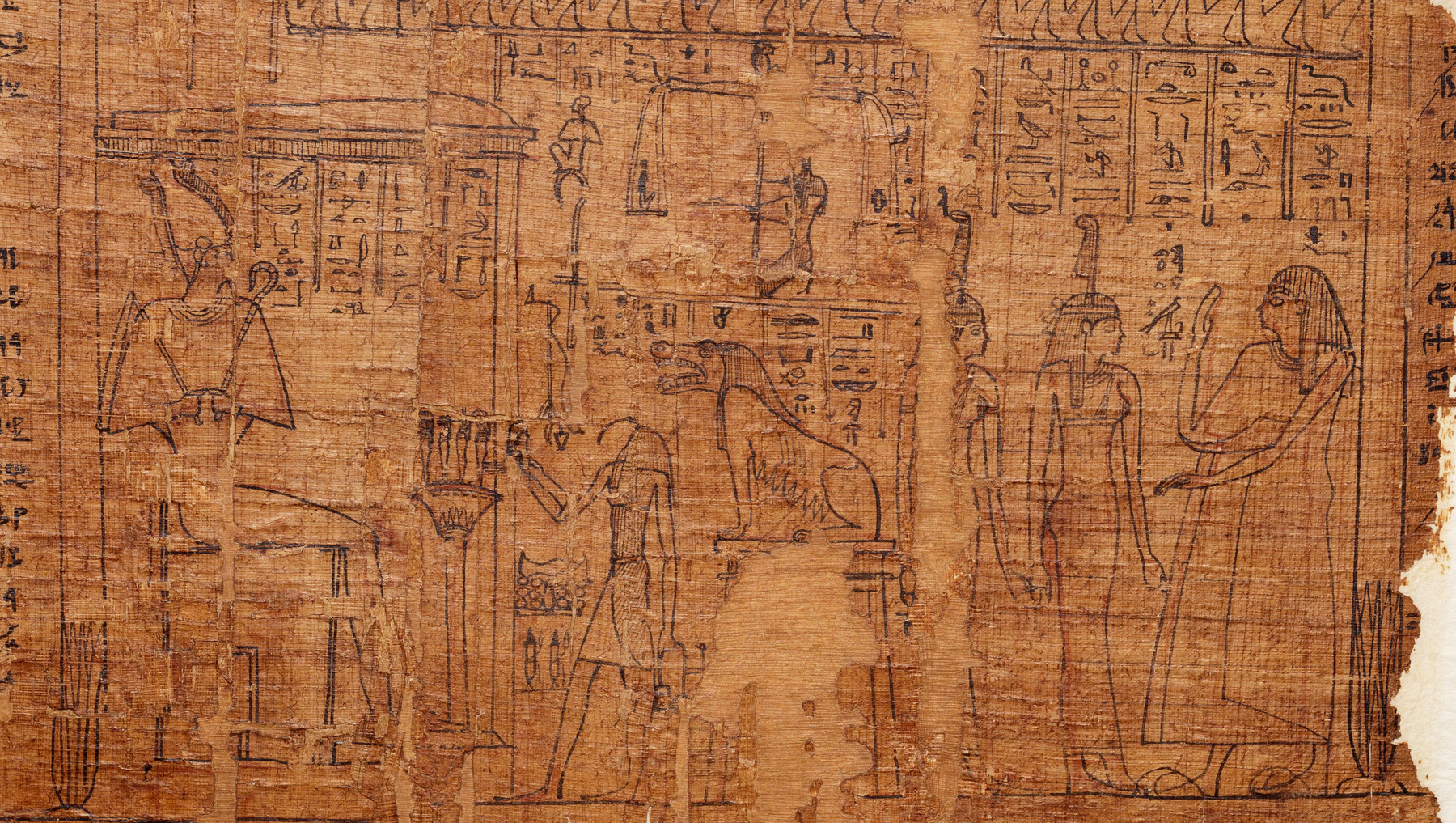
Documentary photographic crop of a Ptolemaic Egyptian papyrus showing part of the weighing of the heart and judgment, ca. 230–150 BCE; Met 66.99.142. The modern crop reproduces a real object, not a reconstruction
Texto antiguo
A modern name for a variable collection of Egyptian funerary spells and images intended for the afterlife, not a single book with a fixed sequence.
Variantes del nombre: Egyptian Book of the Dead, Book of the Dead
Contexto y fuentes →
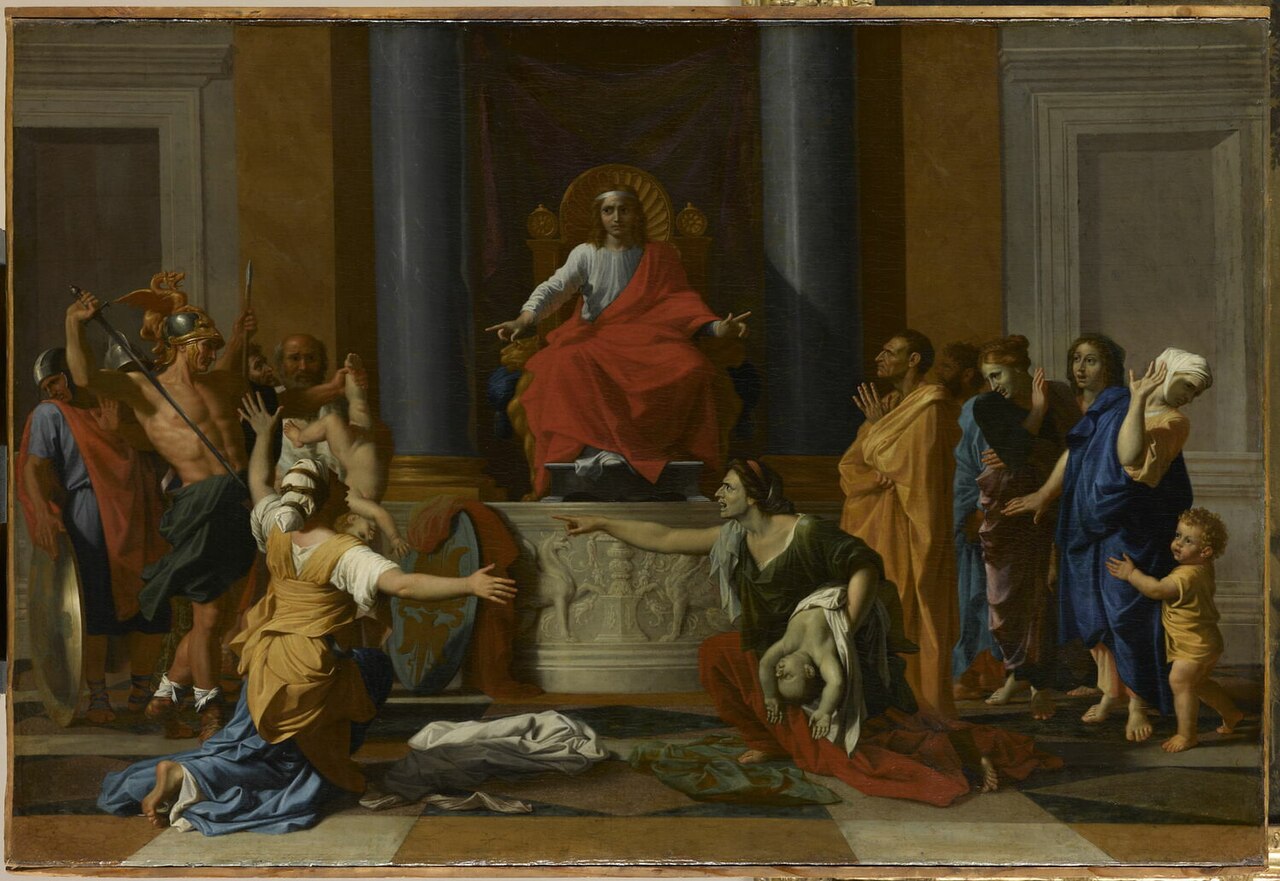
The Judgment of Solomon, Nicolas Poussin, 1649, Louvre INV 7277. Later artistic reception of 1 Kings 3: two women and two children before the king. It is neither a Kings manuscript nor contemporary evidence for the king
Texto antiguo
Biblical books narrating the kingdoms' history, including the campaign against Mesha in 2 Kings 3.
Variantes del nombre: 1 Kings, 2 Kings, Books of Kings
Contexto y fuentes →
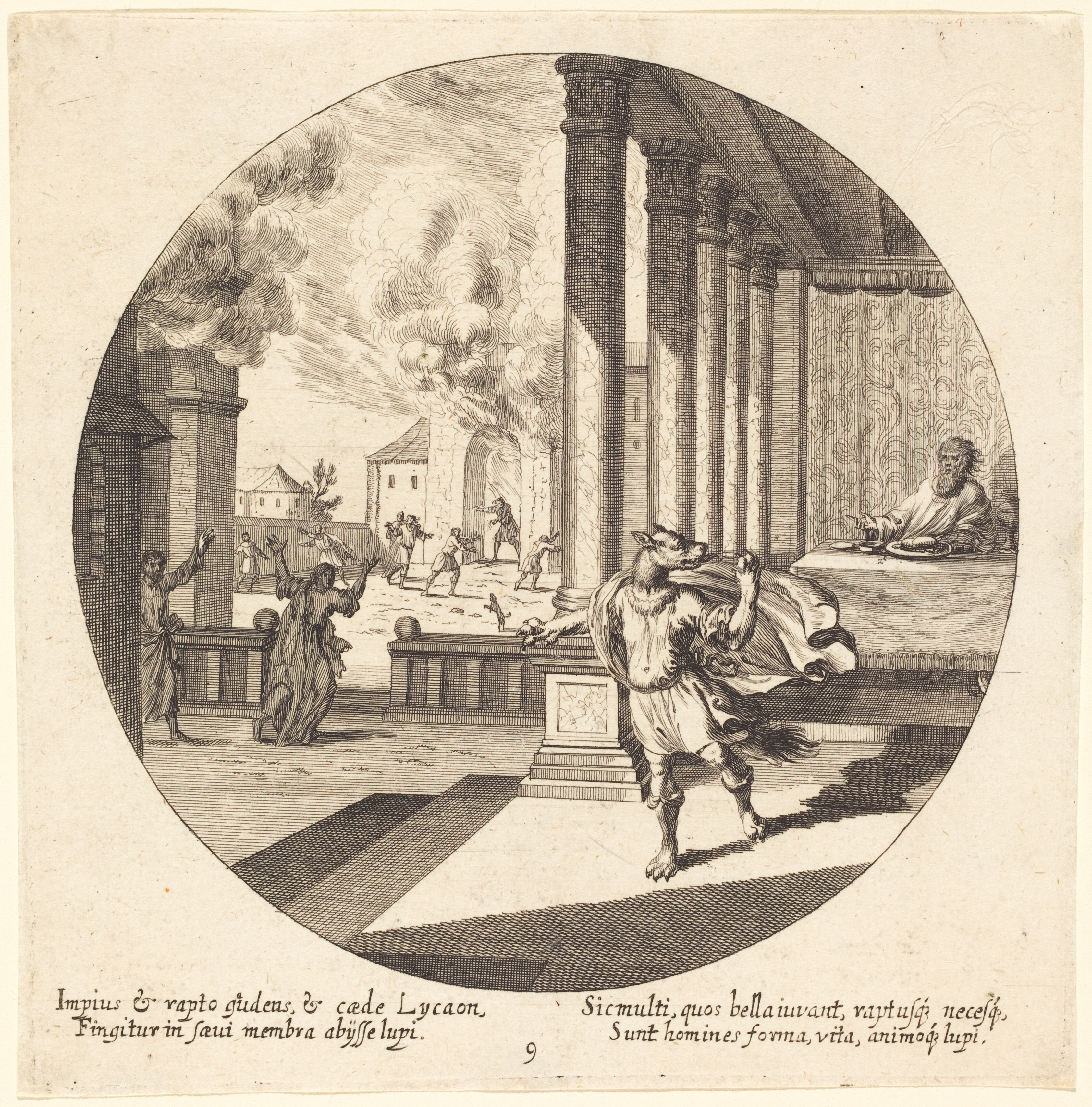
Jove Turns Lycaon into a Wolf, etching by Georg Andreas Wolfgang the Elder, 1665, National Gallery of Art 2005.17.11. Later artistic interpretation of Ovid’s episode
Persona
Figure changed into a wolf after testing Jupiter and serving human flesh in the Metamorphoses.
Variantes del nombre: Lycaon in Ovid’s account
Contexto y fuentes →
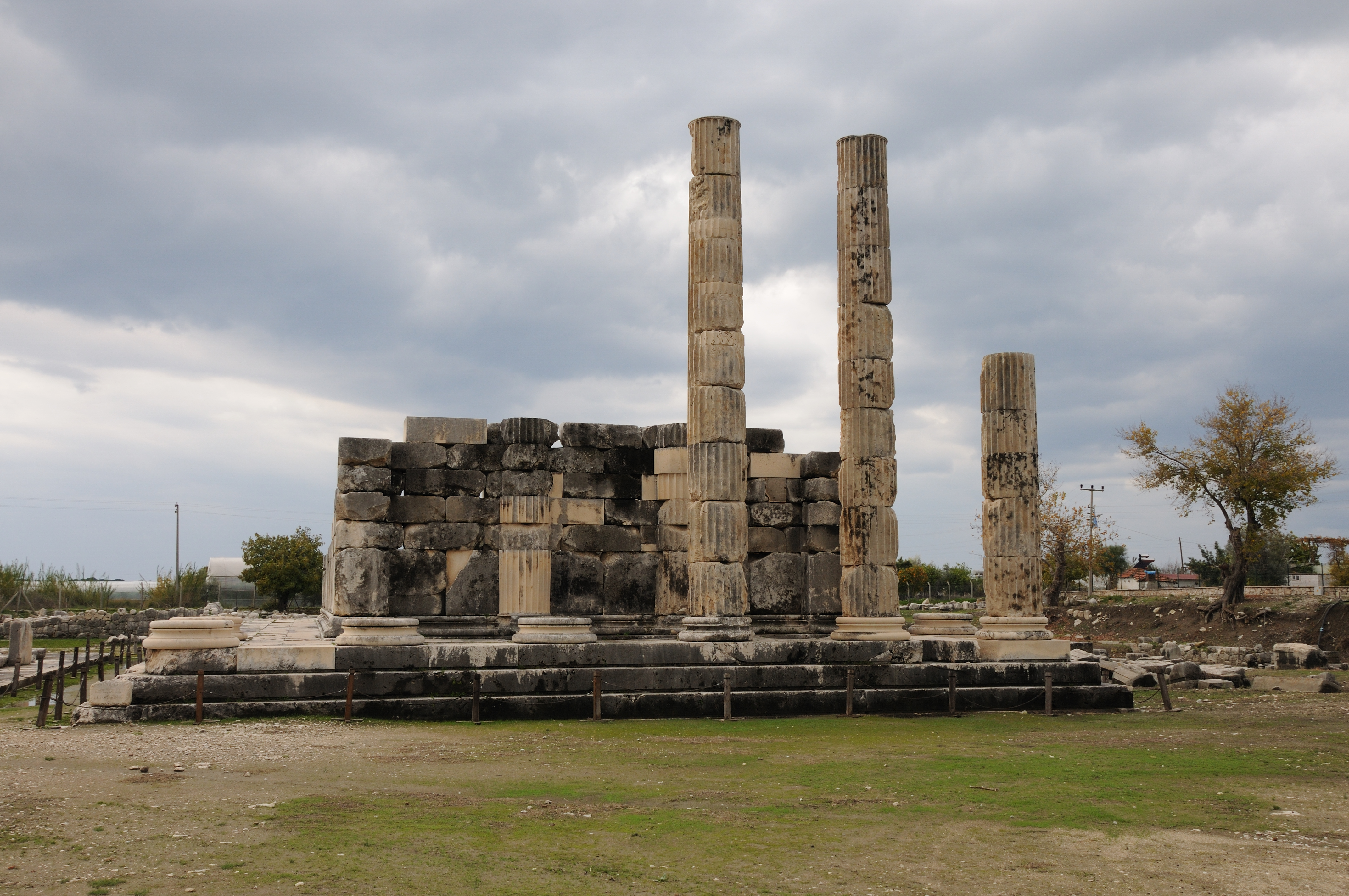
Columns and remains in Xanthos’s Roman Agora area, Türkiye, photographed by Josep M. Gracia, December 2021. A later phase of a Lycian city, not the king’s palace in Bellerophon’s tale
Yacimiento
Ancient region of southwestern Anatolia, now Türkiye, including Xanthos and Letoon; destination of Bellerophon in the Iliad.
Variantes del nombre: Lycia, Lycia
Contexto y fuentes →
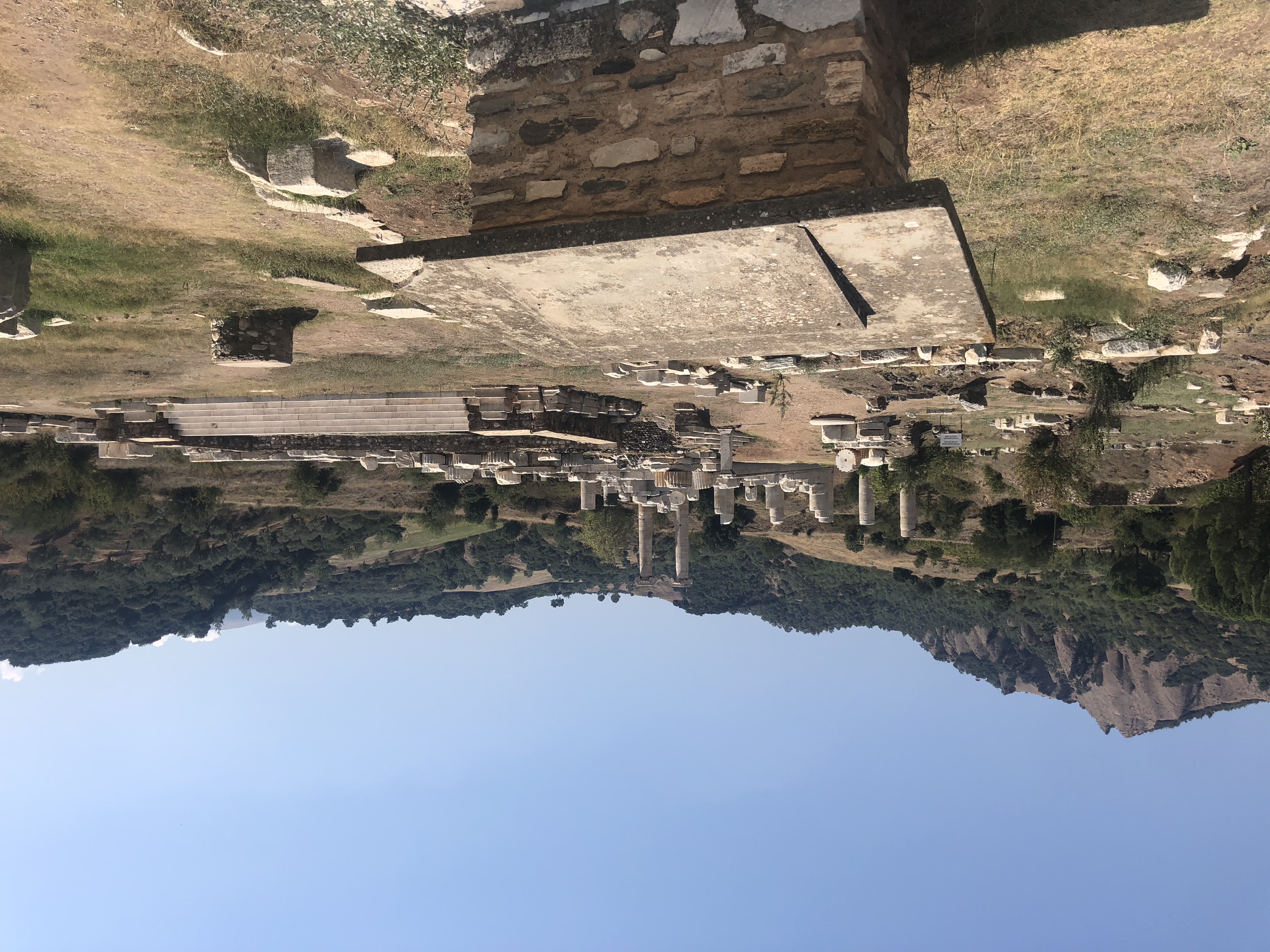
Artemis temple remains at Sardis, ancient Lydia's capital. This temple postdates Gyges; the photograph locates the site rather than his reign
Yacimiento
Ancient kingdom in western Anatolia with its capital at Sardis; neither a modern state nor a synonym for Magog.
Variantes del nombre: Lydia
Contexto y fuentes →
Modern AI-generated imagined cuneiform-writing scene. The illustrated tablets are not documented archaeological objects or a copy of an ancient god list
Entidad
Texts collecting divine names for preservation, teaching and classification, with varying theological organization.
Variantes del nombre: god lists, god list
Contexto y fuentes →
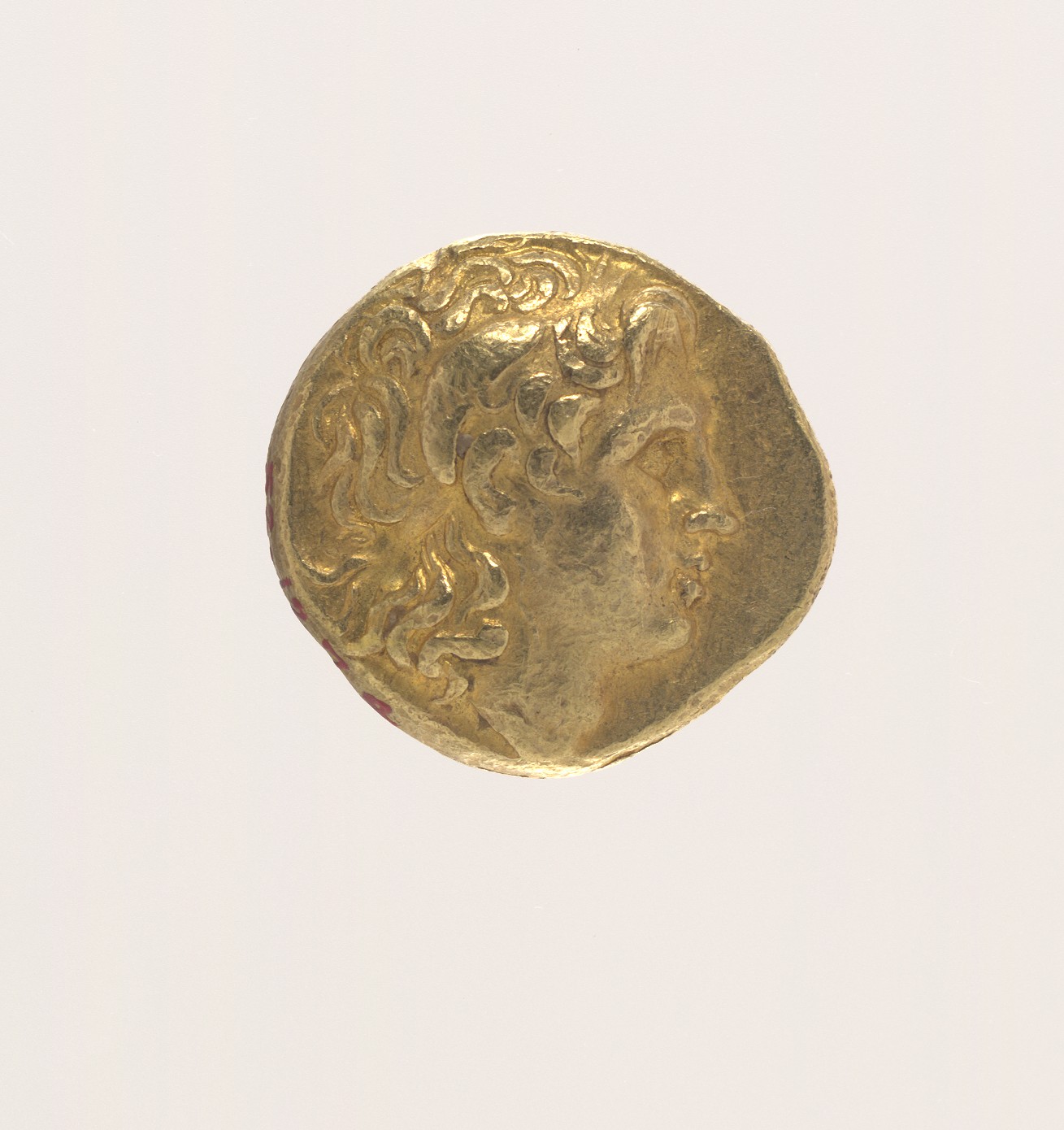
Gold stater issued in the name of Lysimachus, 286–281 BCE; the horned head is Alexander, not Lysimachus. The Met, 52.127.4
Persona
A successor of Alexander who ruled Thrace; his coins showed Alexander with Ammon’s horn.
Variantes del nombre: Lysimachus, Lysimachos
Contexto y fuentes →

Modern AI-generated symbolic illustration of disclosure across heavenly realms and historical time. Not an ancient manuscript, documented event, or historically established reconstruction
Entidad
Literary works narrating the disclosure of transcendent knowledge about heaven, history and destiny to a human seer, often by an angel; not every end-time belief or catastrophe prophecy is an apocalypse.
Variantes del nombre: apocalyptic literature, apocalyptic writing
Contexto y fuentes →
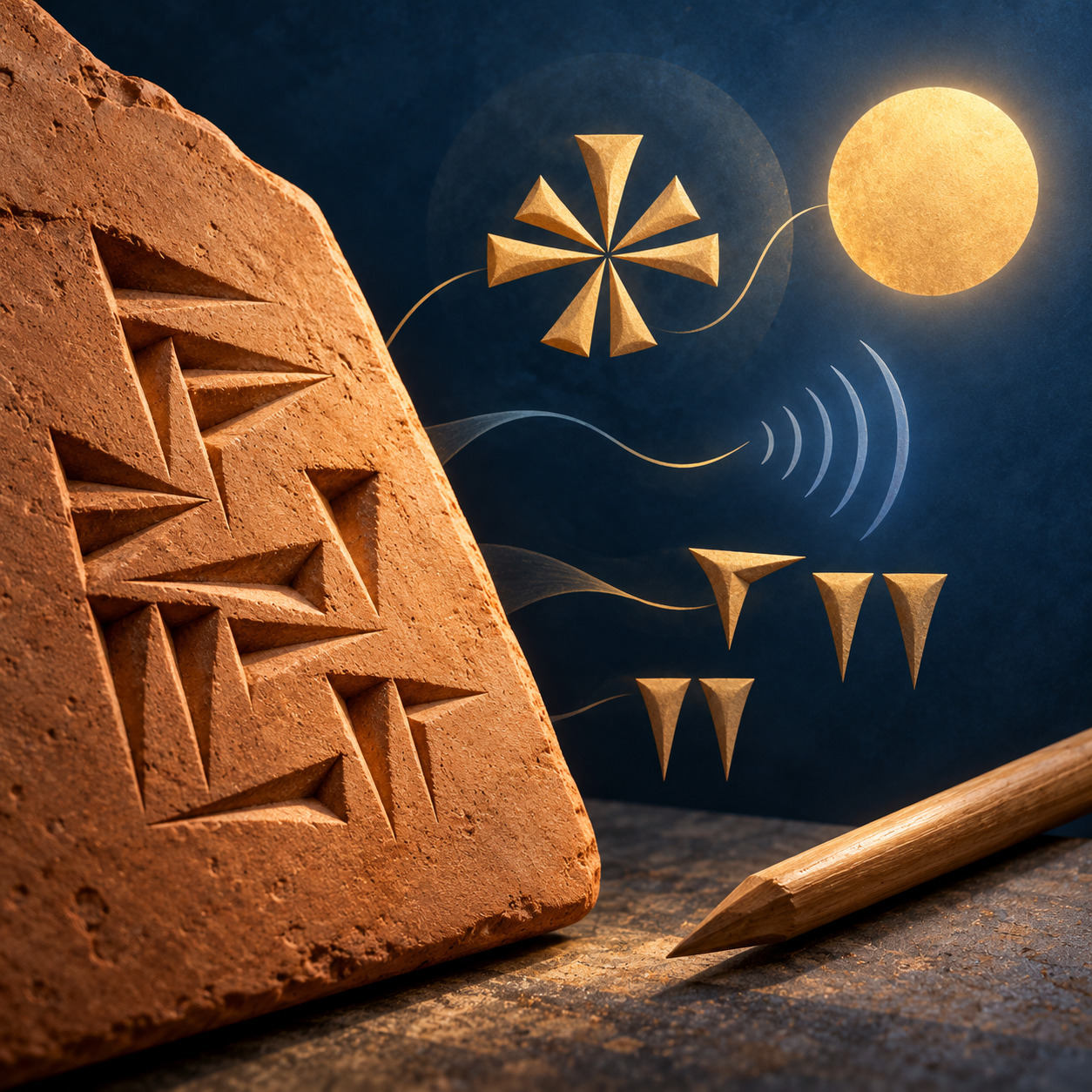
Modern AI-generated conceptual cover suggesting signs, meaning and sound; not an archaeological tablet or an authenticated ancient inscription
Entidad
A written sign functioning as a word sign in context; the same form may also have syllabic or determinative uses.
Variantes del nombre: logogram, word sign
Contexto y fuentes →
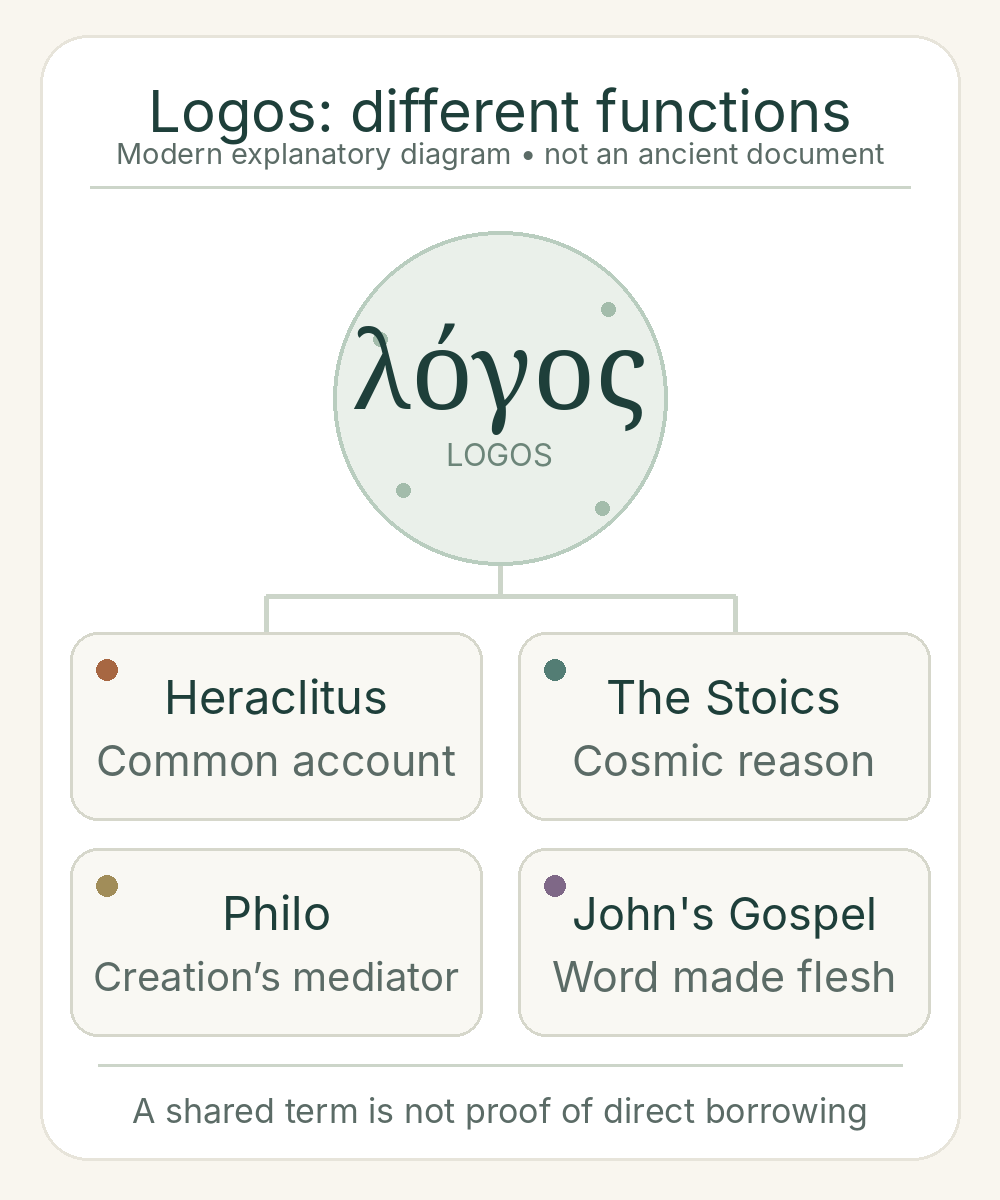
Modern explanatory diagram contrasting four functions of the Greek word “logos” in Heraclitus, Stoic thought, Philo and John’s Gospel. Shared vocabulary does not establish direct transmission; this is not an ancient artefact
Entidad
Greek term for speech, explanation or reason, also used for cosmic rationality. Philo uses it in accounts of creation, while John’s prologue speaks of the Word becoming flesh; its function varies with context.
Variantes del nombre: Logos
Contexto y fuentes →
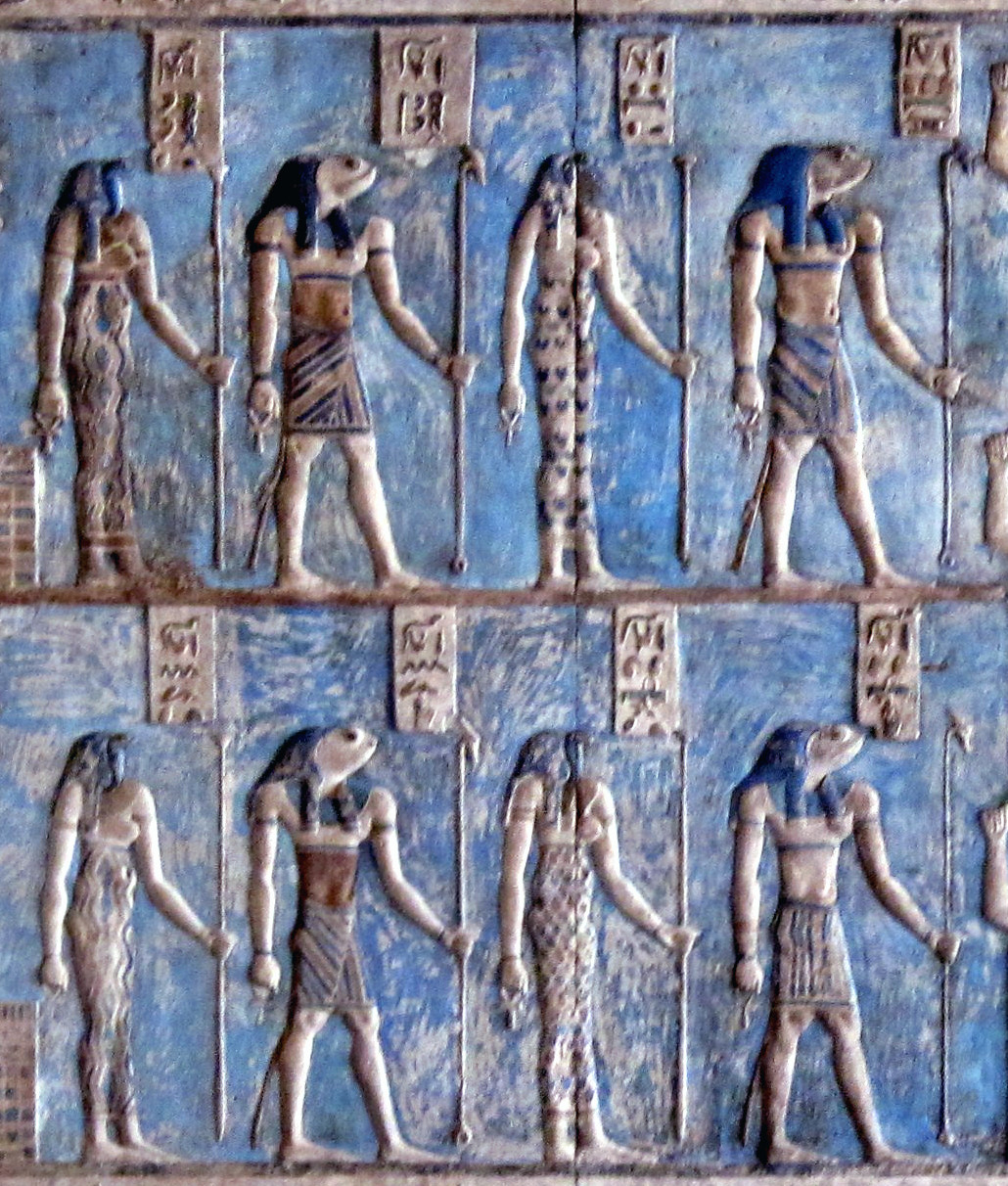
The Ogdoad in a ceiling relief at the temple of Hathor in Dendera: four pairs with frog and snake heads. This source crop was made by JMCC1 from Olaf Tausch’s 2011 photograph. The standing temple belongs to later Ptolemaic and Roman construction
Entidad
The Eight are four divine pairs describing conditions before the ordered world in Egyptian traditions
Variantes del nombre: eight paired deities, Nunet, Heh and Hehet, Kek and Keket, Tenem and Tenemet, Amunet
Contexto y fuentes →
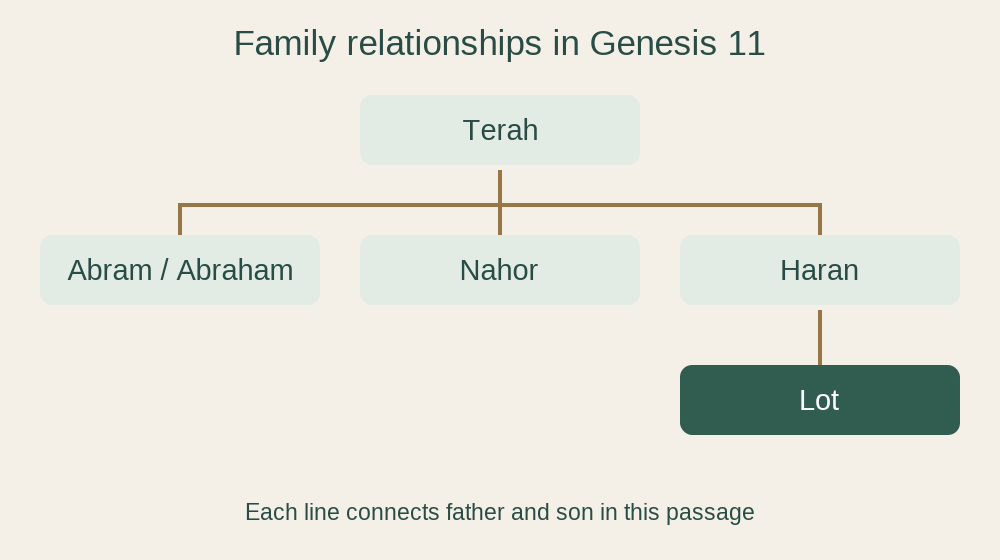
Modern diagram of family relationships in Genesis 11; the highlighted node identifies this entry’s figure. It explains the narrative’s genealogy, not physical likenesses or independent proof of their lives
Persona
Figure in Genesis and the Qur’an; Haran’s son and Abraham’s nephew in the biblical genealogy, whose belief appears in a Qur’anic migration scene.
Variantes del nombre: Lot
Contexto y fuentes →
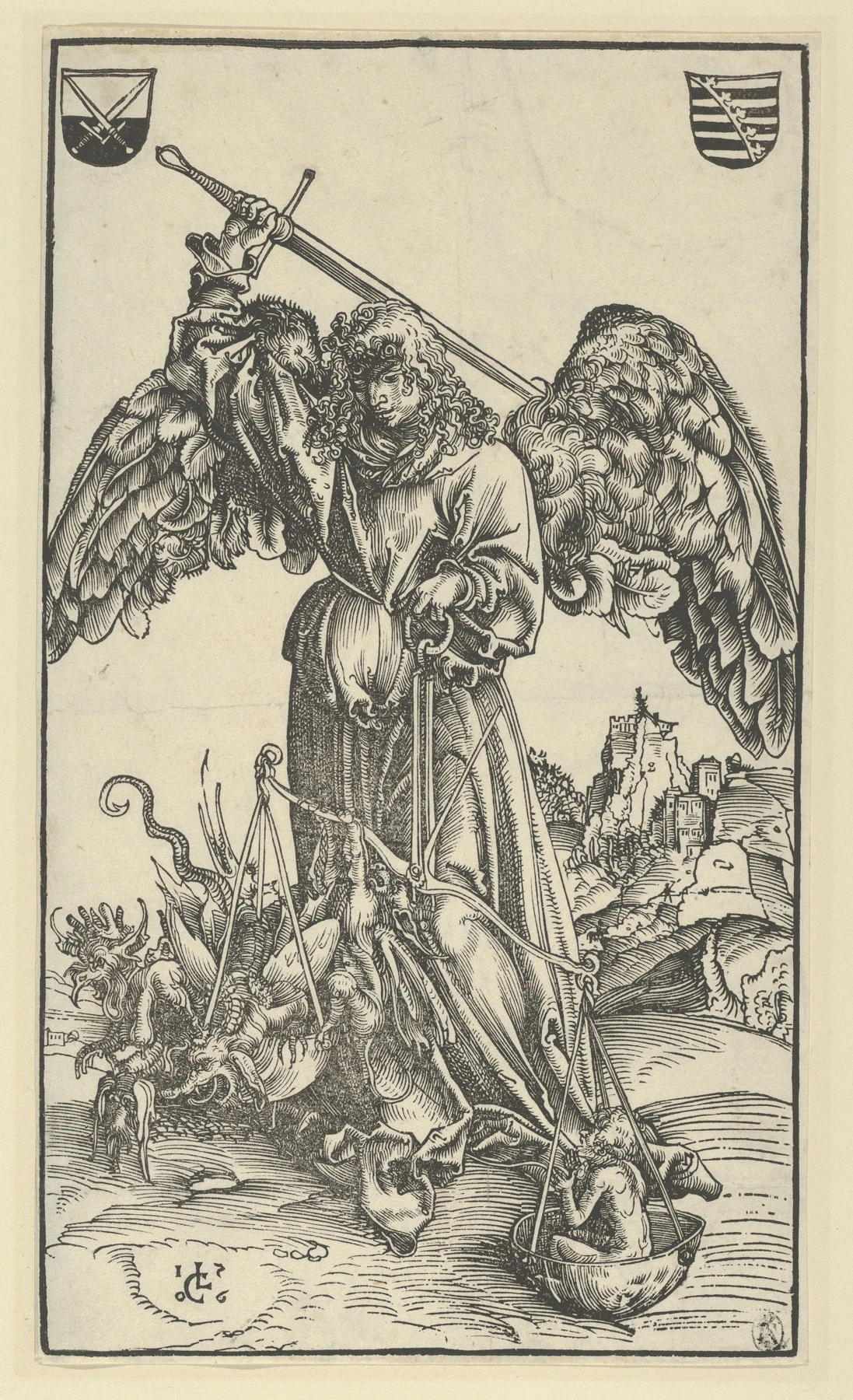
Cranach the Elder, Michael weighing a soul,1506; Met27.54.22. An example of his work, not his portrait
Persona
Lucas Cranach the Elder (1472–1553) was a German Renaissance painter and printmaker.
Variantes del nombre: Lucas Cranach the Elder
Contexto y fuentes →
Persona
Lucian of Samosata was a second-century CE writer in Greek, associated with Samosata on the Euphrates.
Variantes del nombre: Lucian of Samosata
Contexto y fuentes →
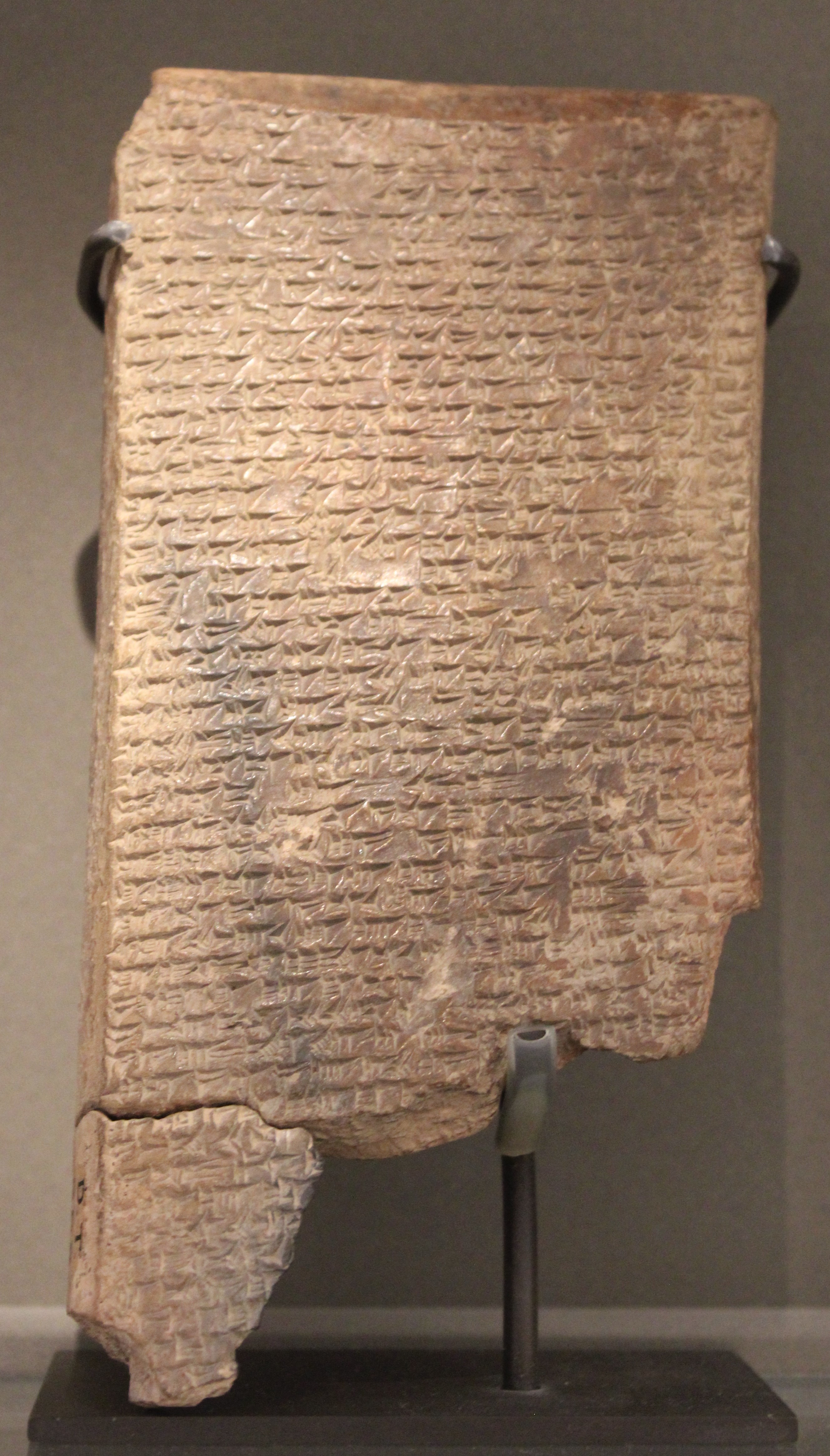
Cuneiform tablet K.2518+DT.358 from Nineveh, a copy of tablet II of Ludlul bēl nēmeqi, probably seventh century BCE; neither the original composition nor the complete poem. British Museum collection, on loan to the Louvre. Photograph by Zunkir, 2020, via Wikimedia Commons; original image unmodified
Texto antiguo
Babylonian Akkadian poem about Šubši-mešrê-Šakkan, his suffering, recovery, and praise of Marduk, examined through its five tablets, manuscript witnesses, dating, and qualified comparison with Job.
Variantes del nombre: Ludlul bēl nēmeqi, Ludlul bel nemeqi, Babylonian Job
Contexto y fuentes →
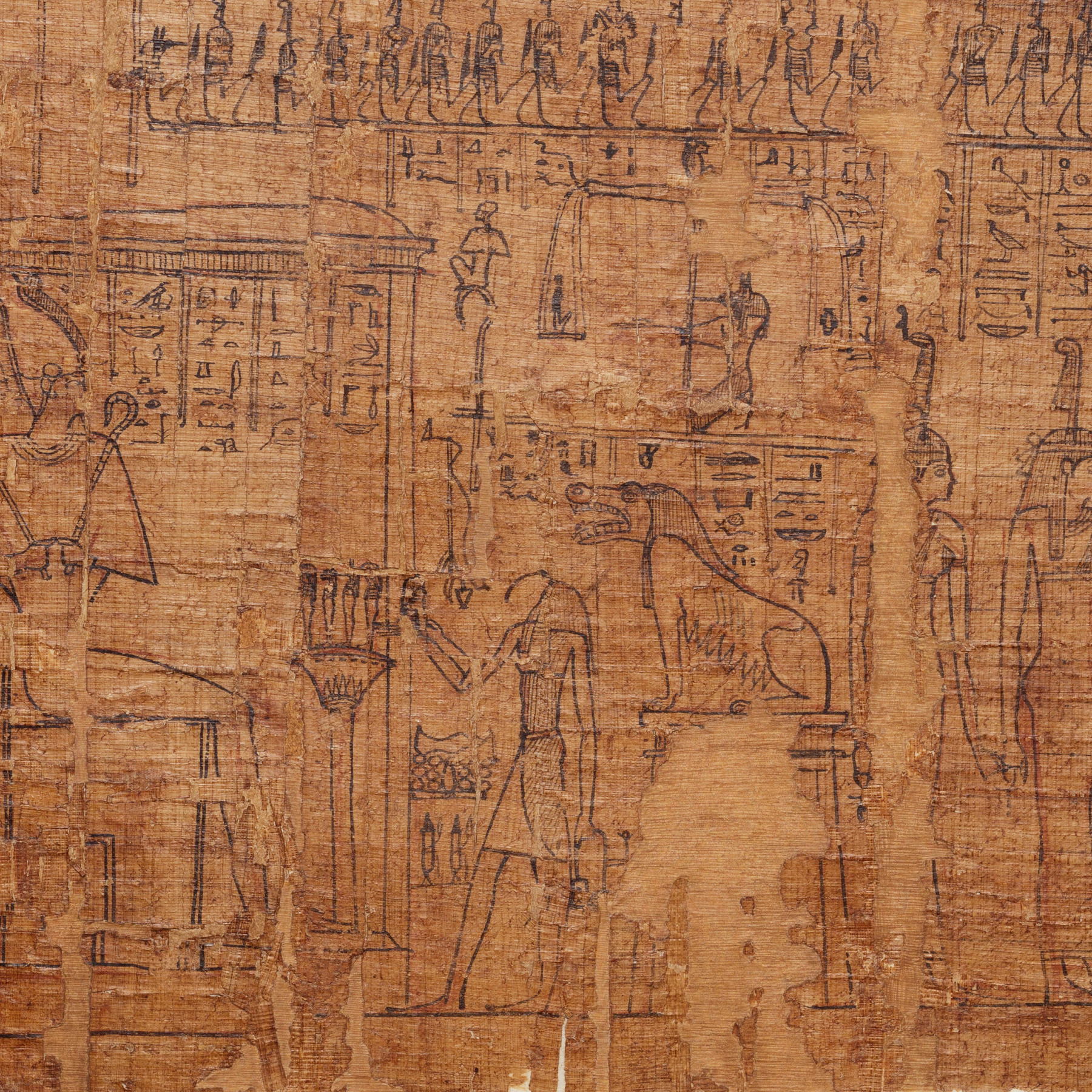
Editorial crop of the judgment papyrus: Anubis by the scale, a small figure of Maat in one pan, and Ammit nearby; Egypt, ca. 230–150 BCE; Met 66.99.142
Entidad
An Egyptian principle of truth, justice, and right order, also embodied by the ostrich-feather goddess Maat; differently expressed in rule, ritual, and funerary judgment.
Variantes del nombre: Maat, Ma'at, Maʿat
Contexto y fuentes →
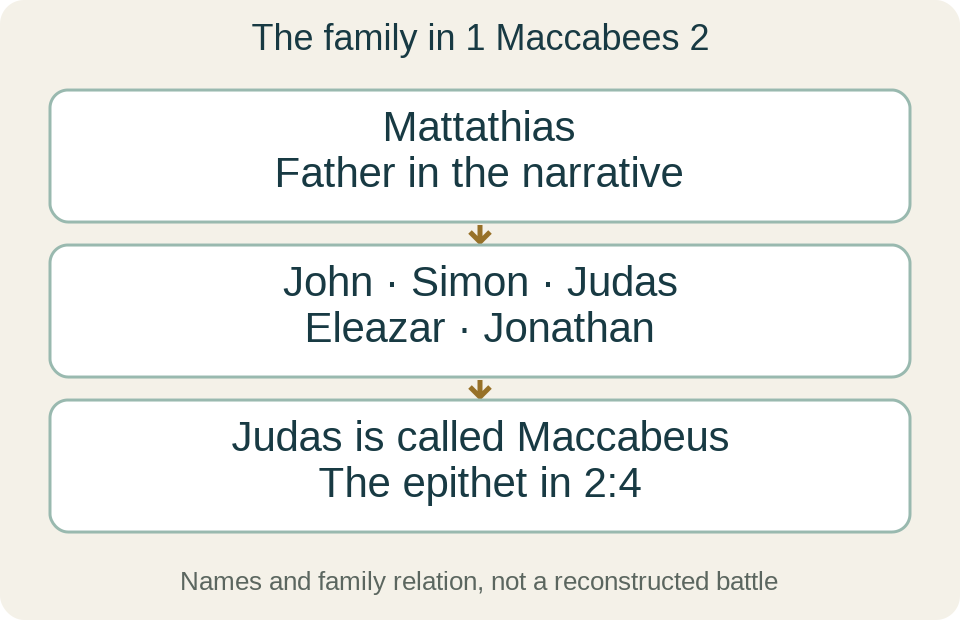
Modern diagram of the family as introduced in 1 Maccabees 2:1–5, not portraits or a battle scene. The collective name concerns Mattathias’s family; Maccabeus is Judas’s epithet in the text
Entidad
Jewish family associated with resistance to Seleucid rule in the second century BCE; 1 Maccabees narrates Mattathias and his sons.
Variantes del nombre: Maccabees
Contexto y fuentes →
Persona
Virologist with a PhD, also researching archaeological shrines and curtains.
Variantes del nombre: Madeleine Mumcuoglu
Contexto y fuentes →
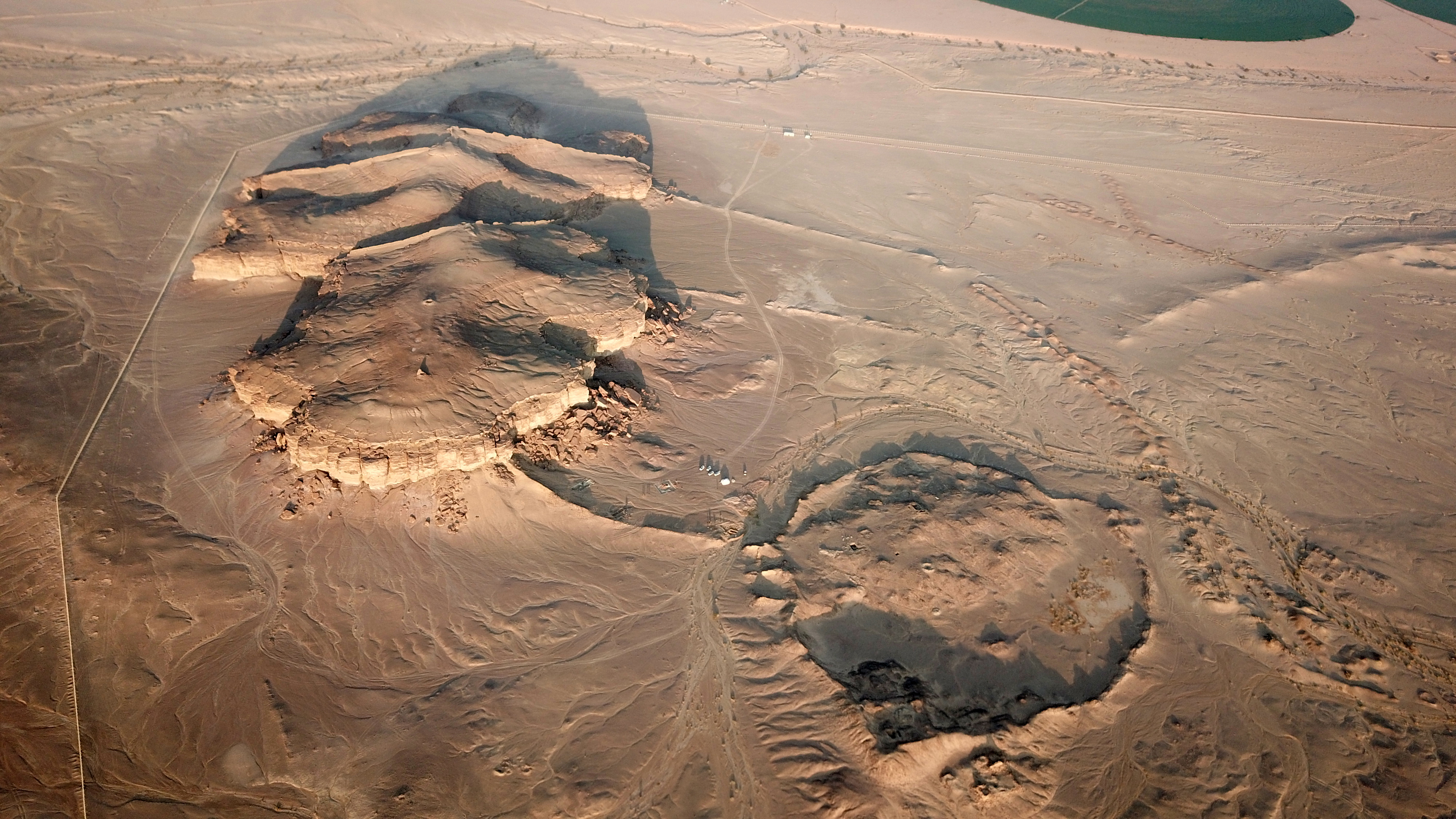
Modern drone photograph of the oasis site of Qurayyah in northwestern Arabia. It illustrates the regional setting of pottery formerly called Midianite, not the location of Moses’s residence or Mount Horeb
Entidad
Midian names a region and peoples in northwestern Arabia. Oasis archaeology and textual traditions distinguish the place’s history from hypotheses about the transmission of Yahweh worship.
Variantes del nombre: Midian, Midianites
Contexto y fuentes →
Persona
Mahmoud Omidsalar is a scholar of Persian literature, folklore and textual history.
Variantes del nombre: Mahmoud Omidsalar
Contexto y fuentes →
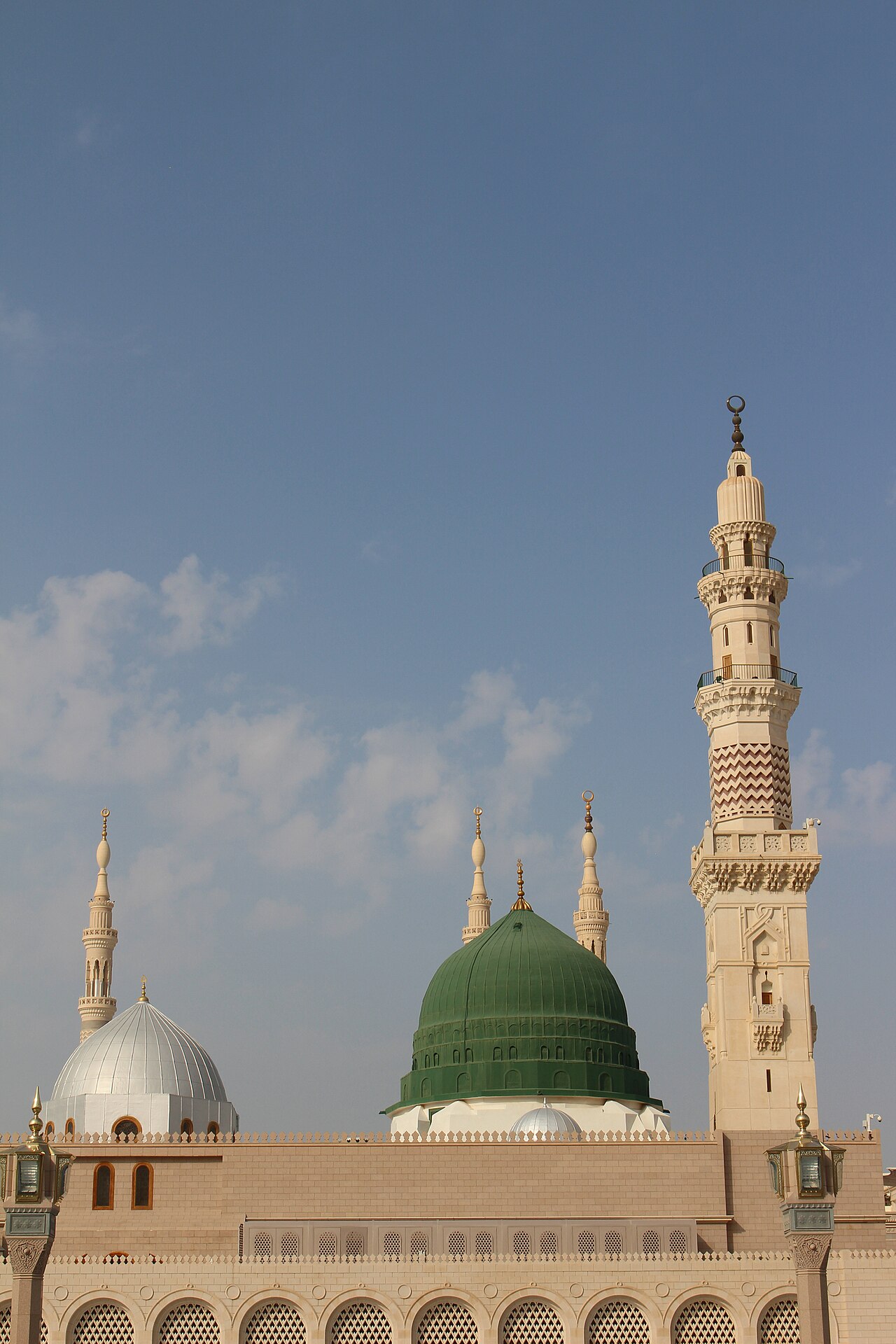
The Green Dome and minarets of the Prophet’s Mosque in Medina, Saudi Arabia, on 26 November 2025. This contemporary photograph shows part of the place associated with Muhammad’s life; the visible buildings reflect later architectural phases
Persona
Muhammad is the prophet of Islam, living about 570–632 CE in the setting of Islam’s seventh-century emergence
Variantes del nombre: Prophet Muhammad, the Prophet Muhammad
Contexto y fuentes →
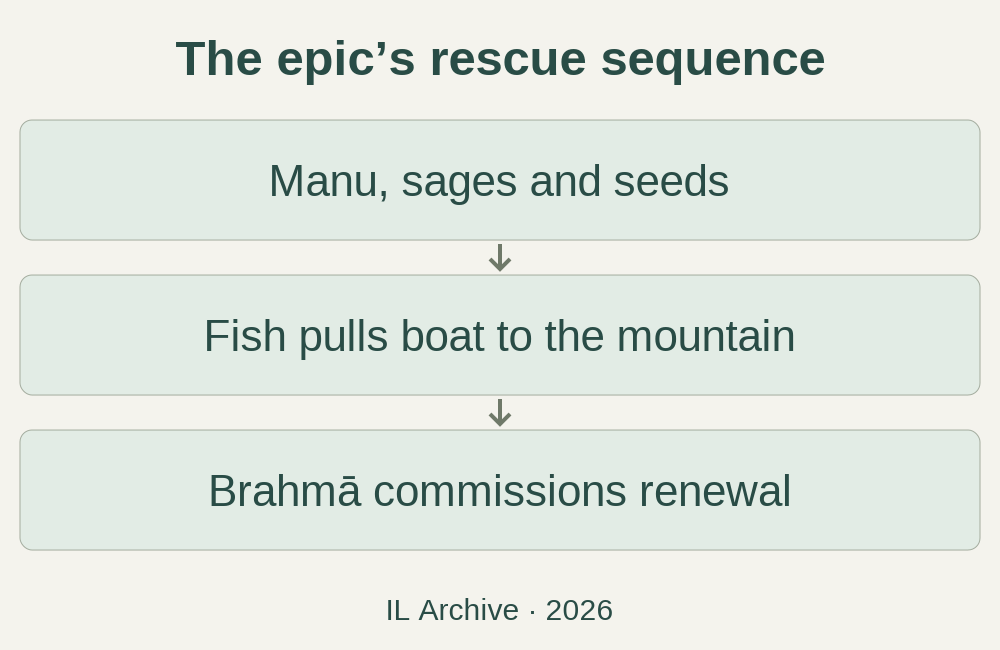
Modern explanatory diagram of narrative sequence and relationships, not a manuscript reproduction or portrait
Texto antiguo
Sanskrit epic formed over centuries, preserving a version of Manu, the fish and the seeds.
Variantes del nombre: Mahābhārata, Mahabharata
Contexto y fuentes →
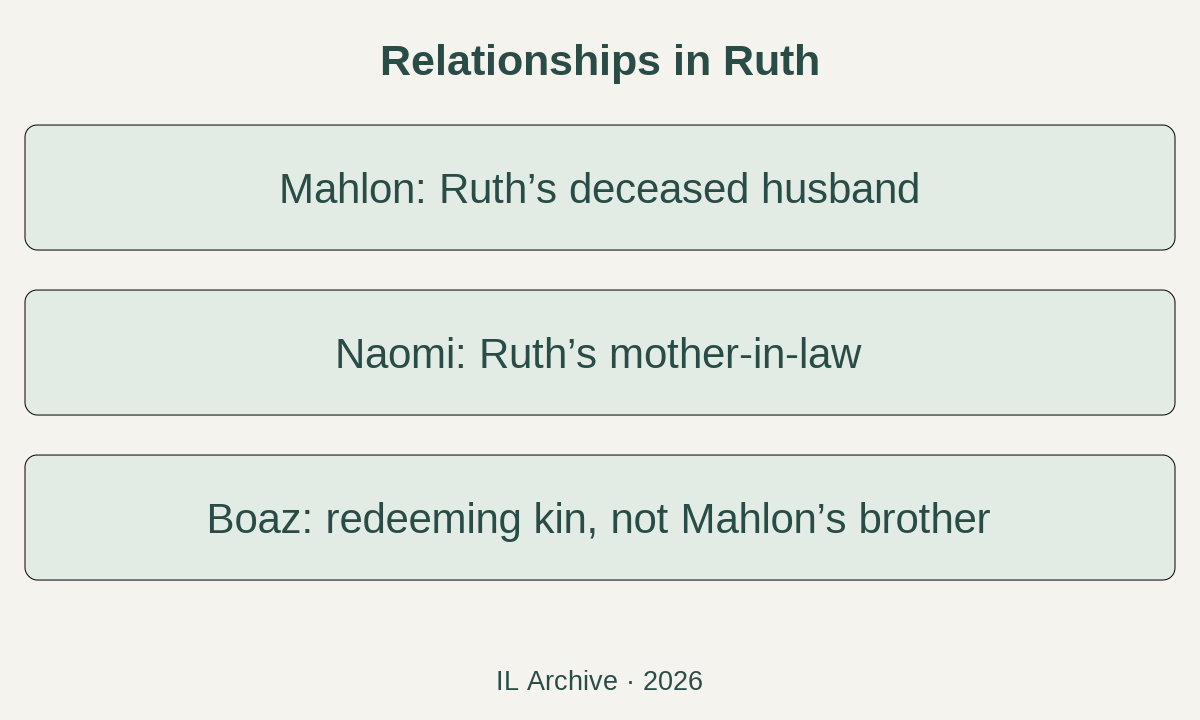
Modern explanatory diagram of relationships or cases in the specified witnesses; not portraits, a legal tablet or an ancient manuscript
Persona
Ruth’s deceased husband, named in the marriage scene of chapter 4.
Variantes del nombre: Mahlon in Ruth
Contexto y fuentes →
Persona
Malka Zeiger Simkovich is a scholar of ancient Judaism and Second Temple literature.
Variantes del nombre: Malka Zeiger Simkovich
Contexto y fuentes →

Modern conceptual illustration imagining a horned fish, a boat, vessels and mountains, chiefly inspired by the epic form of Manu’s flood story; neither an ancient artifact nor evidence of a documented location
Persona
A central human figure in several Sanskrit accounts of the flood and human renewal; his position and role differ across the Śatapatha Brāhmaṇa, Mahābhārata and Purāṇas.
Variantes del nombre: Manu, flood survivor Manu
Contexto y fuentes →
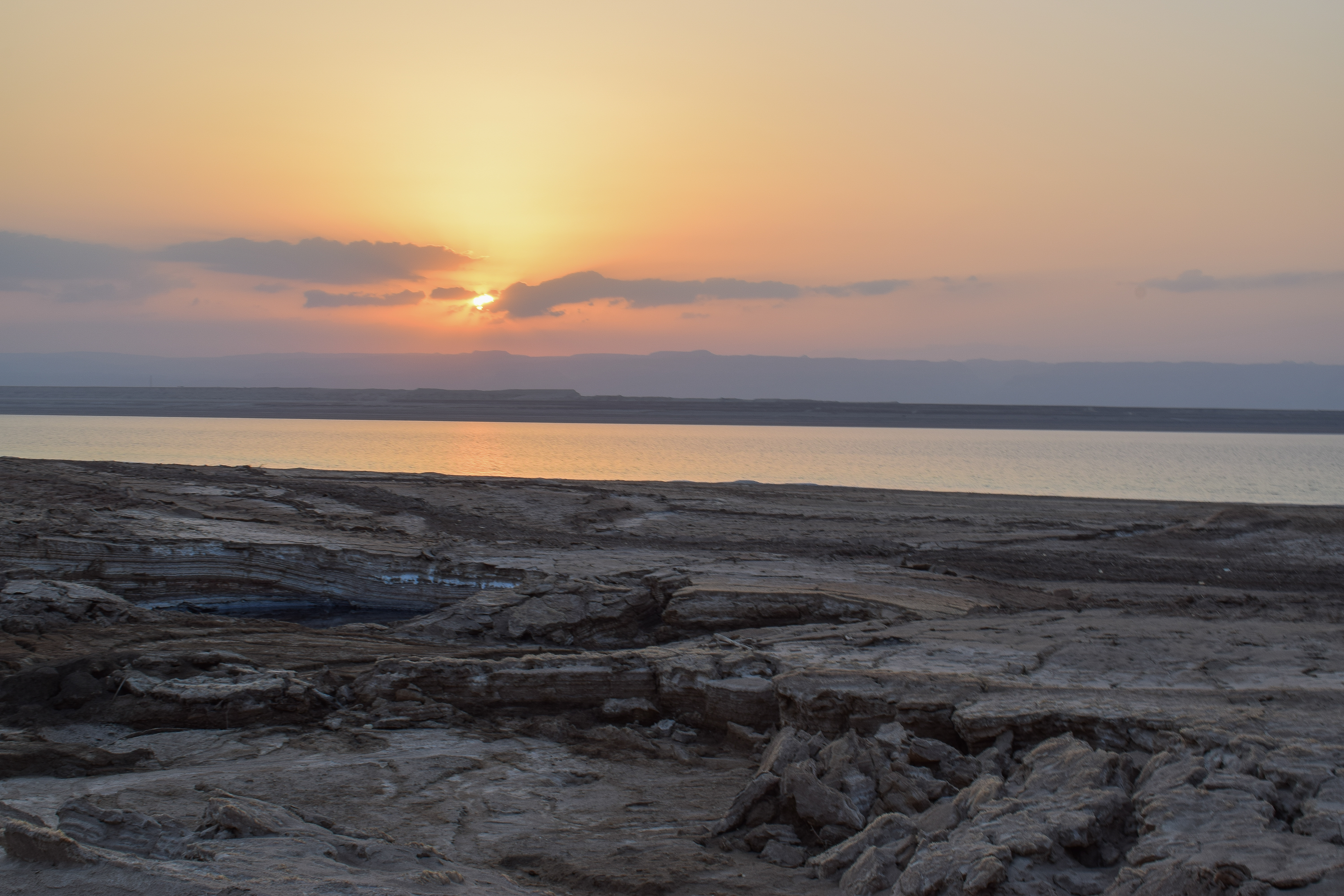
Sunset over the Dead Sea from its eastern shore at Ghor Al-Haditha, Jordan, on 26 October 2018. The Judean Mountains appear on the western horizon. The photograph illustrates the lake’s geography; the Qumran manuscript caves lie elsewhere on its western side
Yacimiento
The Dead Sea is a salt lake in the Jordan Rift Valley, near sites where ancient manuscripts were found
Variantes del nombre: Dead Sea
Contexto y fuentes →
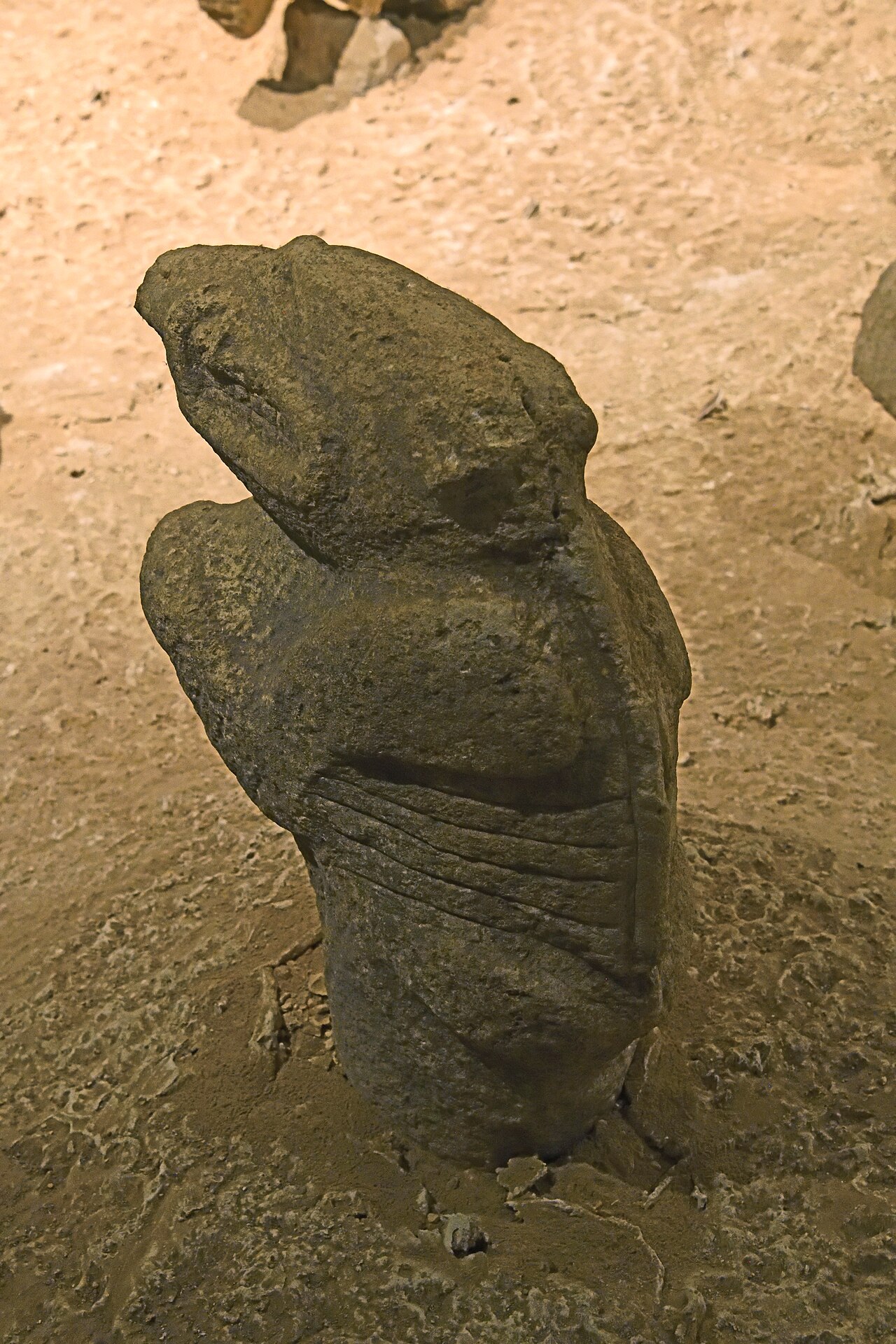
A wild-boar sculpture from Göbekli Tepe in a Şanlıurfa Museum display. It illustrates the animal imagery Marc Verhoeven discusses, not his portrait and not the central pillars
Persona
An archaeologist at RAAP in the Netherlands who on 13 June 2025 published a study of humans and animals in Göbekli Tepe’s imagery.
Variantes del nombre: Marc Verhoeven
Contexto y fuentes →
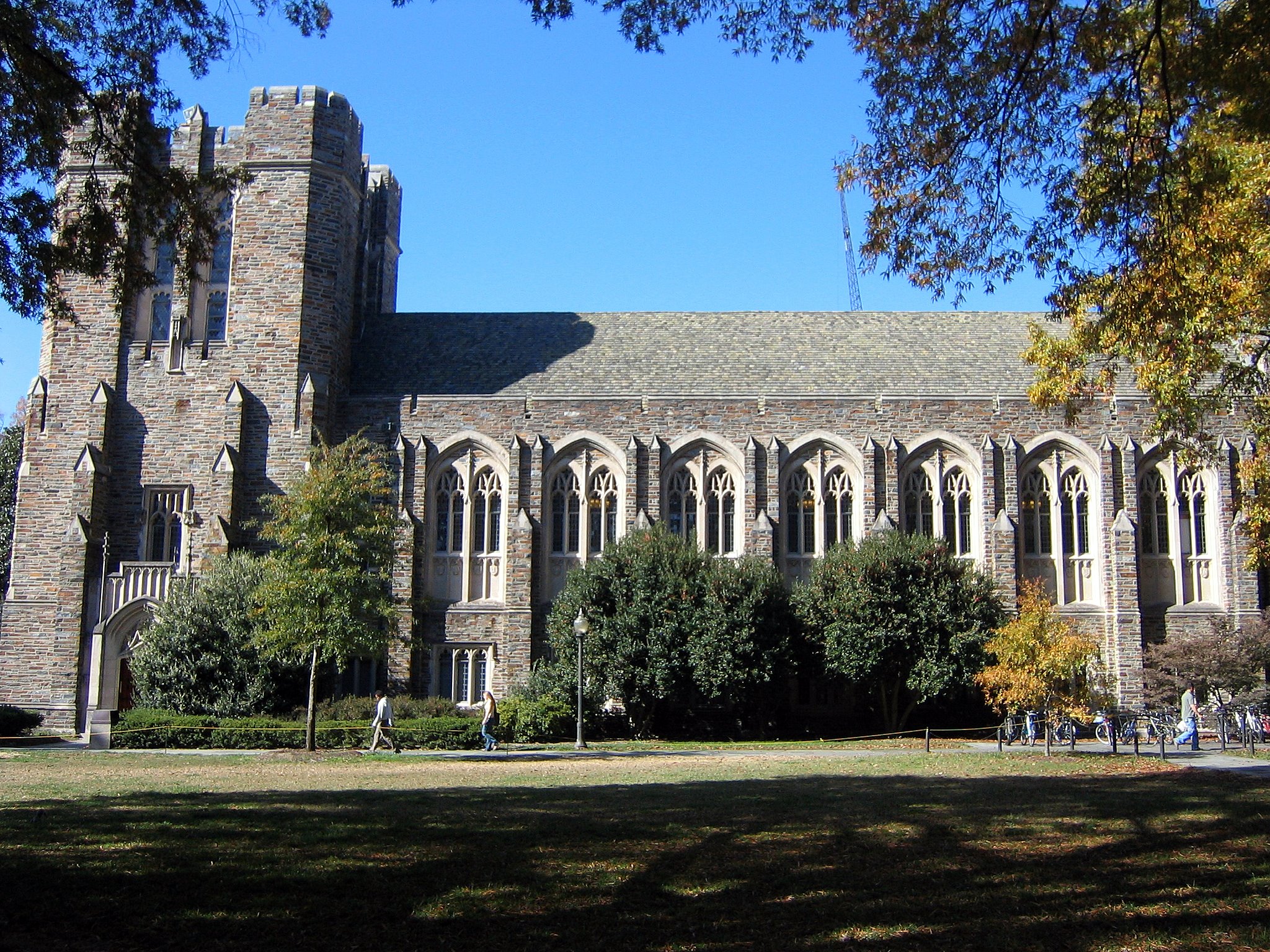
Perkins Library at Duke University in the United States, dated 10 November 2006 in the source record. The photograph shows part of the university setting associated with Marc Zvi Brettler’s work in Judaic and Hebrew Bible studies
Persona
Hebrew Bible scholar and professor emeritus at Duke, studying biblical texts historically and literarily.
Variantes del nombre: Marc Brettler, Marc Zvi Brettler
Contexto y fuentes →
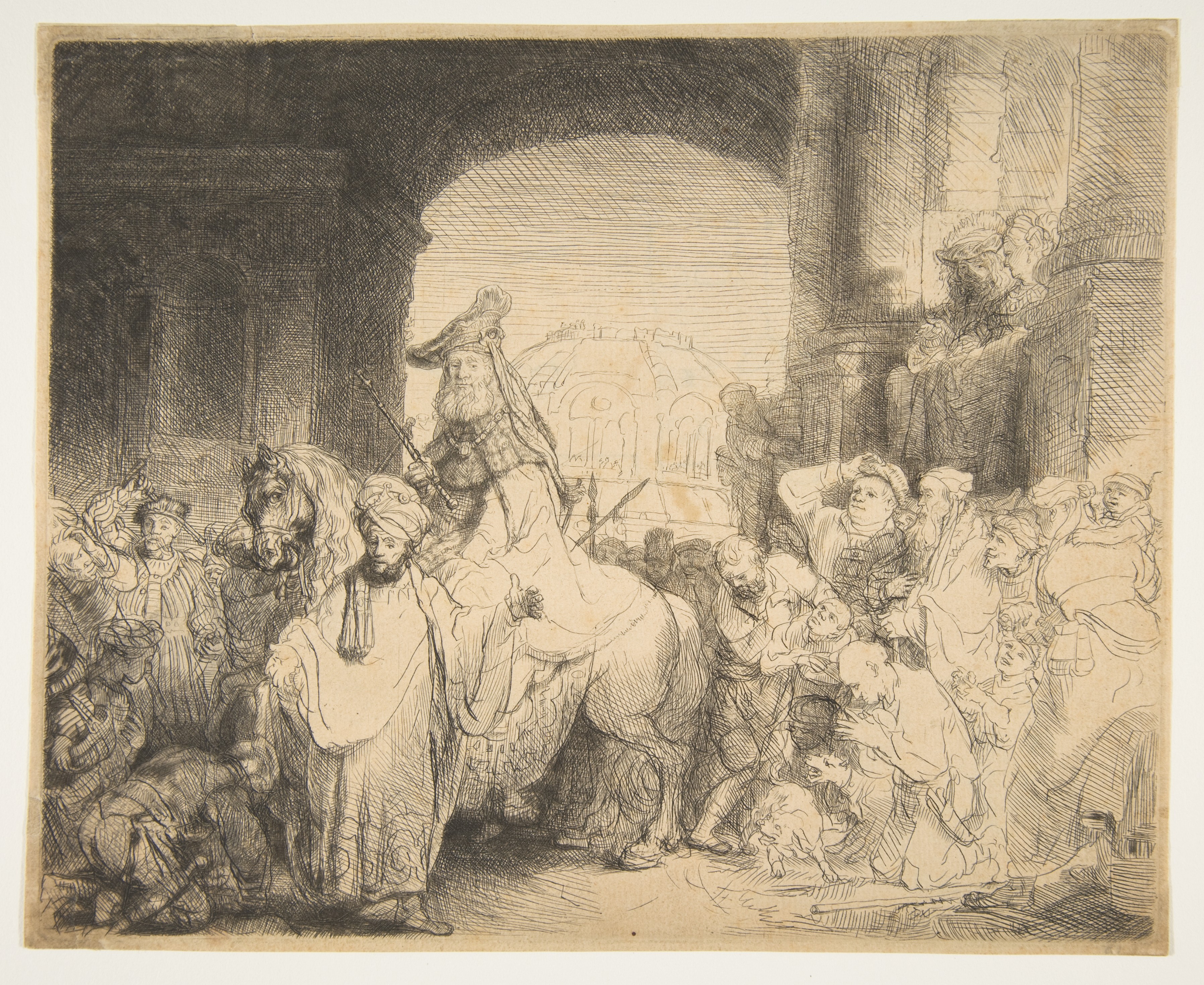
The Triumph of Mordecai, Rembrandt print,about 1641; Met 17.37.191. Mordecai rides while Haman leads: later interpretation of Esther 6, not documentary evidence of the event
Persona
Esther’s relative and guardian in the story, who uncovers a plot, confronts Haman and rises at court.
Variantes del nombre: Mordecai in Esther, Mordecai, Mardochaios
Contexto y fuentes →
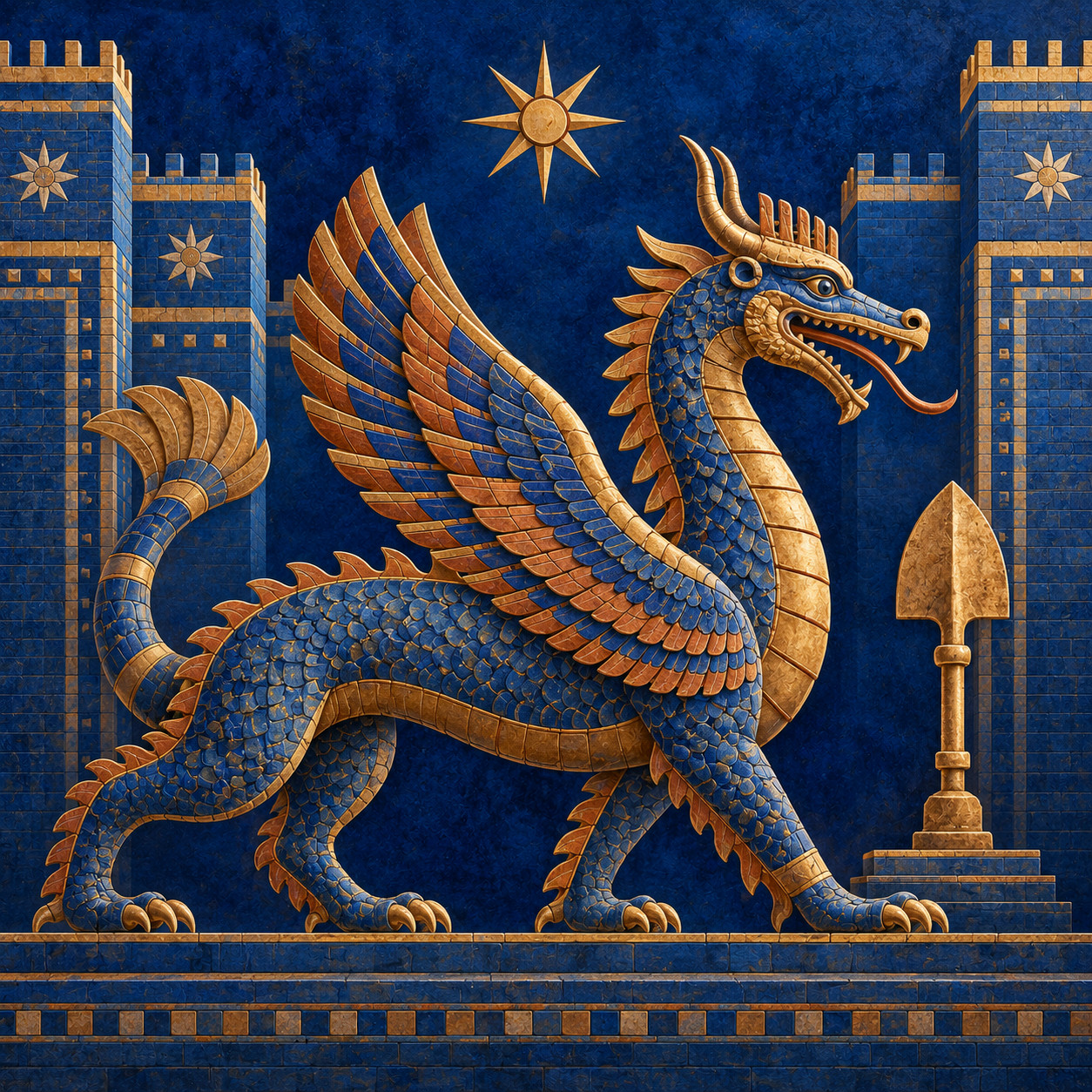
Modern AI-generated symbolic cover inspired by Babylonian colours, the spade and the mušḫuššu dragon. Wings and ornamental details are imaginative, not an ancient artefact or an evidenced reconstruction of Marduk
Entidad
Babylon’s leading god, worshipped at Esagil and elevated in the Akkadian Enūma eliš. His symbols include a spade and mušḫuššu dragon. His earliest origins remain obscure; Nibiru is no evidence of a planetary homeland.
Variantes del nombre: Marduk, Merodach
Contexto y fuentes →
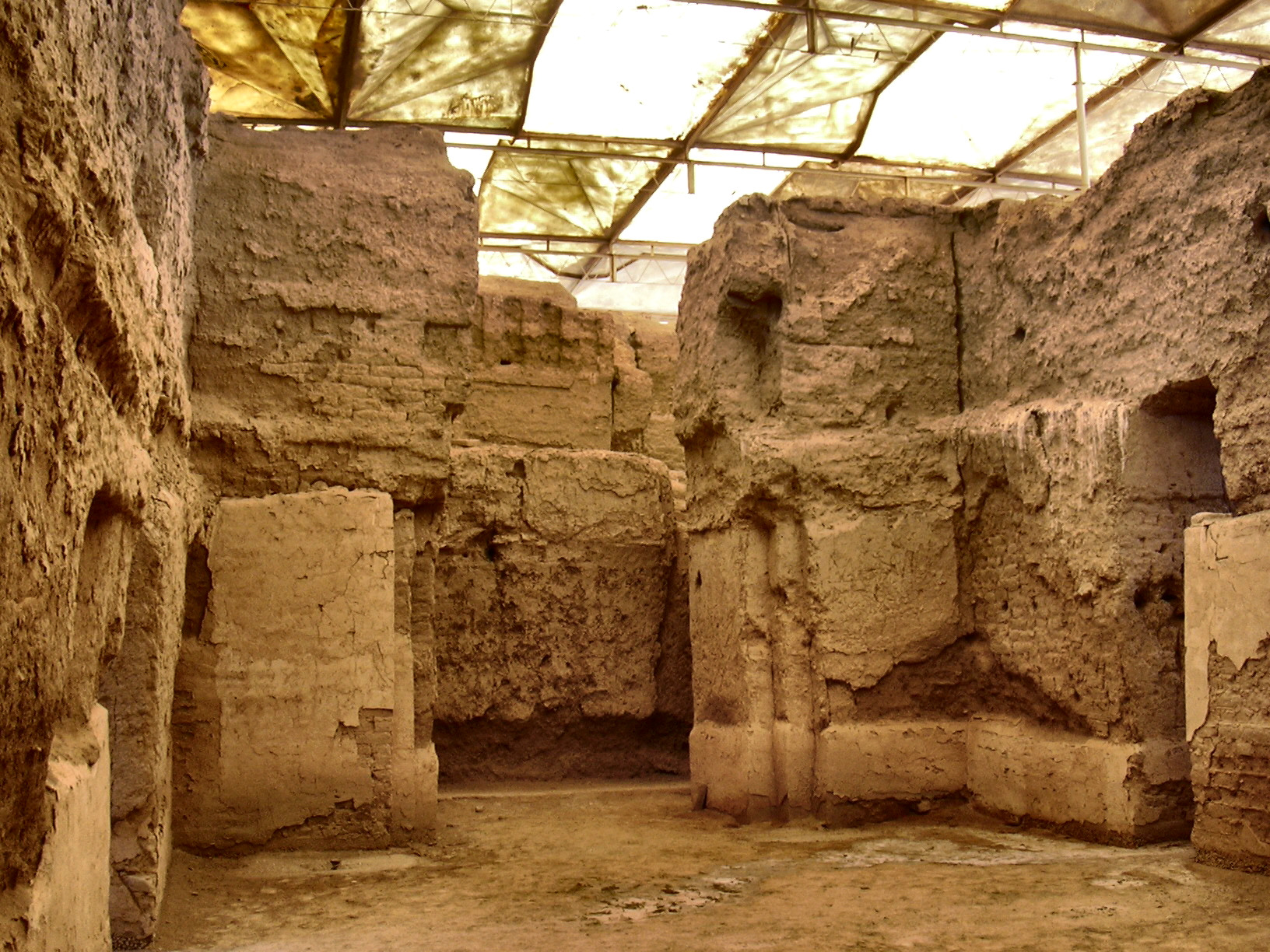
Surviving walls of the palace at Mari, Tell Hariri, photographed in 2006 beneath modern protective roofing. Contrast was adjusted to clarify the mud-brick masonry; this documents the ruins, not a reconstruction of the ancient palace
Yacimiento
Mari at Tell Hariri on the Syrian Euphrates was founded around 2900 BCE and rebuilt through three major urban phases. Its palace and cuneiform archives illuminate trade, royal government and religious practice, especially in the eighteenth century BCE.
Variantes del nombre: Mari, Tell Hariri
Contexto y fuentes →
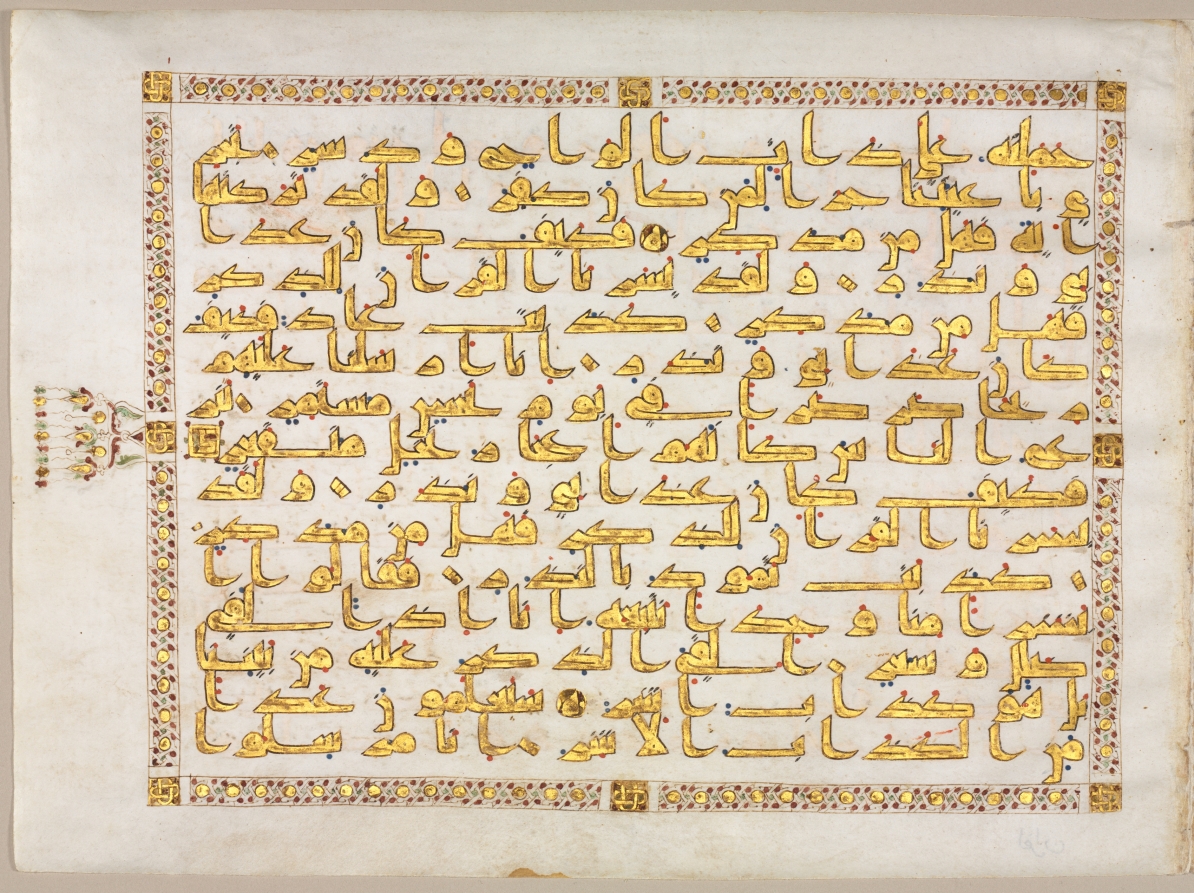
Ninth-century North African Qur'an folio with Sura 54:13–27. It illustrates later manuscript transmission, not Dhul Qarnayn's passage or Marianna Klar. Cleveland Museum of Art, 1993.39.2.a
Persona
Scholar of Quranic narrative in its late-antique literary contexts.
Variantes del nombre: Marianna Klar
Contexto y fuentes →
Persona
Oxford scholar of early Christianity and ancient philosophy.
Variantes del nombre: Mark Edwards
Contexto y fuentes →
Persona
Scholar of Deuteronomy, kinship and care for outsiders; director of the Centre for Missional Leadership at St. Andrew’s Hall.
Variantes del nombre: Mark R. Glanville, biblical scholar
Contexto y fuentes →
Persona
Scholar of the Hebrew Bible and Ugaritic religion whose work examines the divine family and biblical monotheism.
Variantes del nombre: Mark S. Smith, Hebrew Bible scholar
Contexto y fuentes →
Persona
Scholar of Semitic languages, cuneiform and Mesopotamian medicine who discussed Dilmun and paradise.
Variantes del nombre: Markham Geller
Contexto y fuentes →
Persona
Assyriologist and social historian, author of Women in the Ancient Near East.
Variantes del nombre: Marten Stol
Contexto y fuentes →
Persona
German scholar of the New Testament and ancient Judaism, 1926–2009.
Variantes del nombre: Martin Hengel
Contexto y fuentes →
Persona
Scholar of Jewish interpretation and professor emeritus at York University.
Variantes del nombre: Marty Lockshin
Contexto y fuentes →