Contemporary explainer; it is not an ancient artifact or historical likeness
Persona
Royal figure in Samuel and Kings, cited here in an instance of “adversary” applied to a human.
Variantes del nombre: King David
Contexto y fuentes →
Persona
Jewish studies scholar examining love in Deuteronomy through political fidelity and affection.
Variantes del nombre: Deena Grant
Contexto y fuentes →
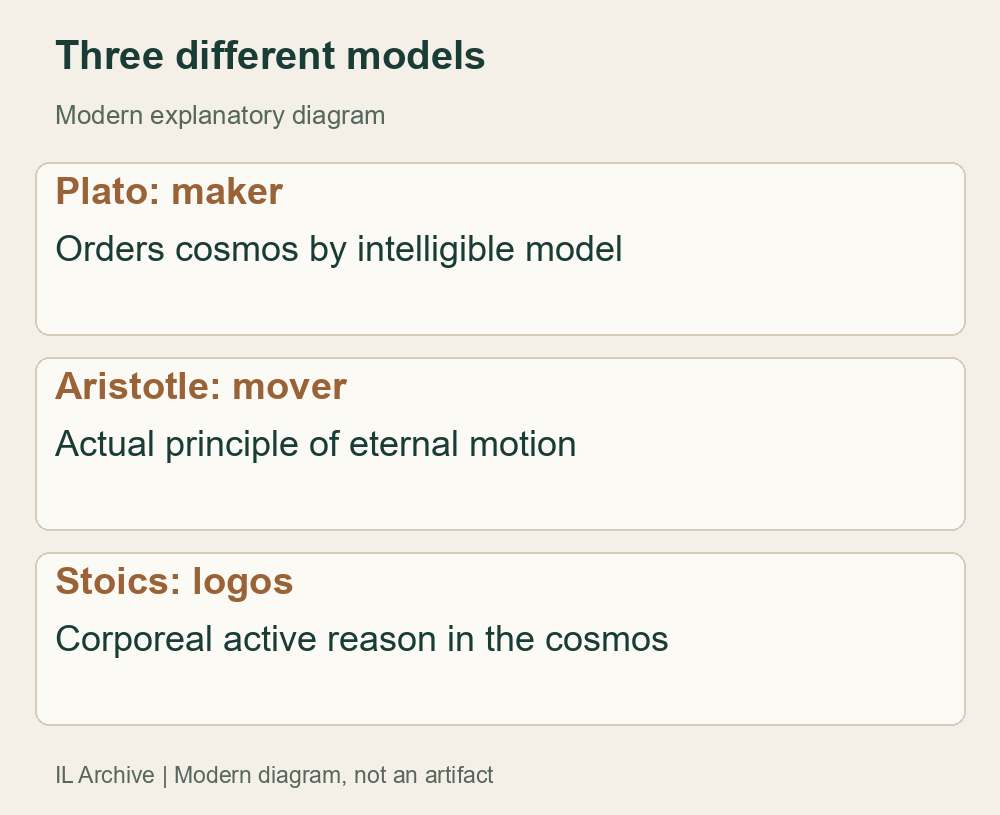
Modern explanatory diagram comparing Plato’s craftsman, Aristotle’s mover and the Stoic logos. The comparison distinguishes the roles of these principles; it is not an ancient object or a historical portrait
Entidad
The good craftsman through whom Plato explains cosmic order in the Timaeus, following an unchanging model grasped by reason.
Variantes del nombre: demiurge, demiourgos, Timaean maker
Contexto y fuentes →
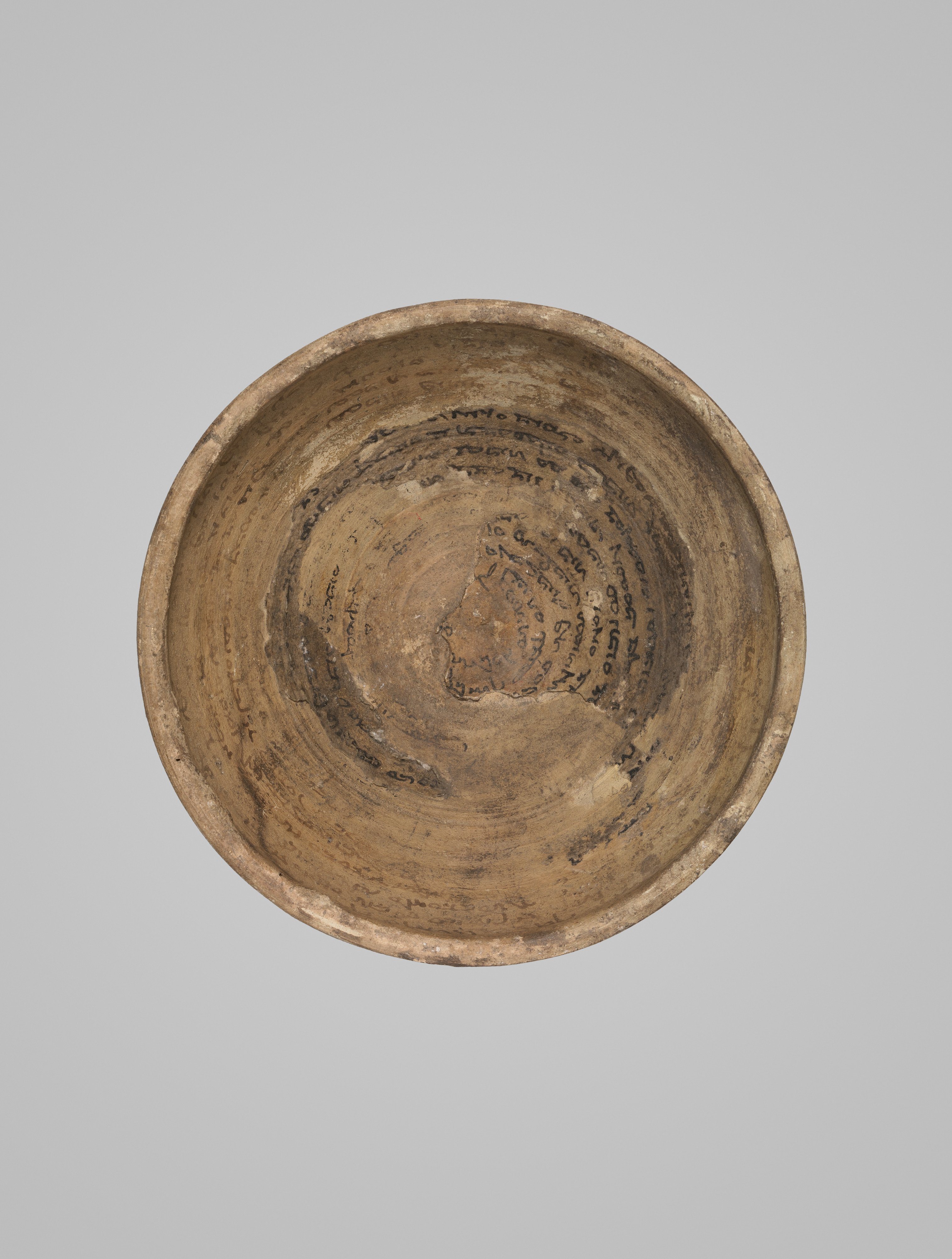
Sasanian incantation bowl with a Mandaic inscription, from Ctesiphon, Iraq, approximately fifth–sixth centuries CE; Met 32.150.89. Evidence of ritual writing in its own setting, not a depiction of demons or proof that the incantation worked
Entidad
Study or organization of harmful powers, names, origins and roles within specific traditions; no single doctrine or claim about existence beyond the text is assumed.
Variantes del nombre: demonology, demonologies
Contexto y fuentes →
Persona
Scholar of ancient Jewish and Christian texts who studied the Solomon-as-exorcist tradition.
Variantes del nombre: Dennis C. Duling
Contexto y fuentes →
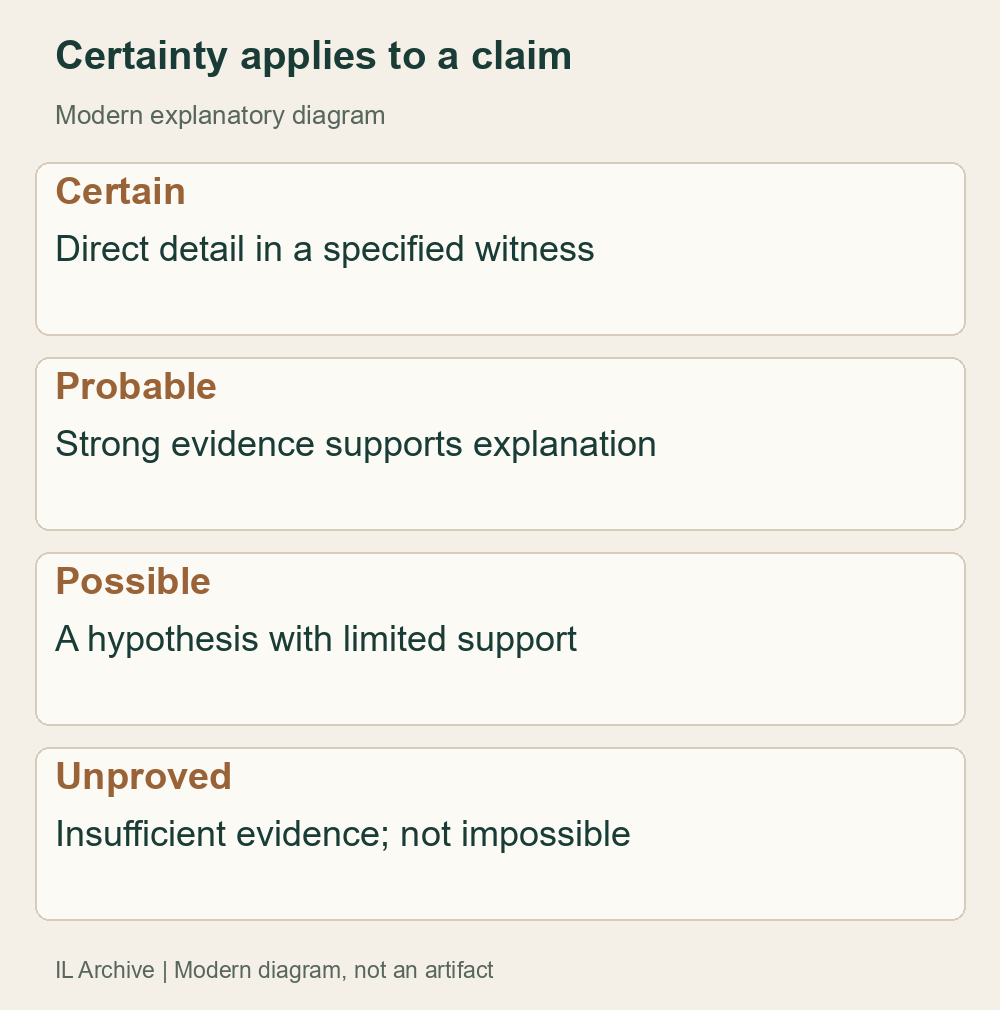
Relationship, source, direction and route can have different levels of support
Entidad
A historical relation in which a text was composed using another text or version; similarity alone cannot establish its direction.
Variantes del nombre: Literary dependence
Contexto y fuentes →
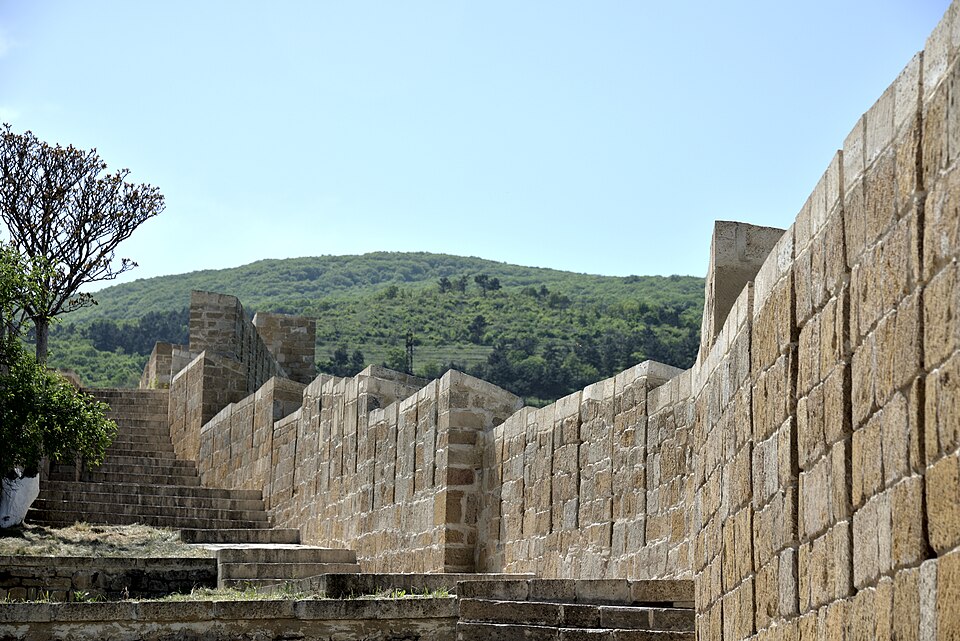
Derbent's northern city wall in Dagestan, photographed in 2018. It shows a real fortification, not proof of Gog and Magog's barrier
Yacimiento
Caspian-coast city in Russia's Dagestan with Sasanian fortifications; its existence does not identify Dhul Qarnayn's barrier.
Variantes del nombre: Derbent
Contexto y fuentes →
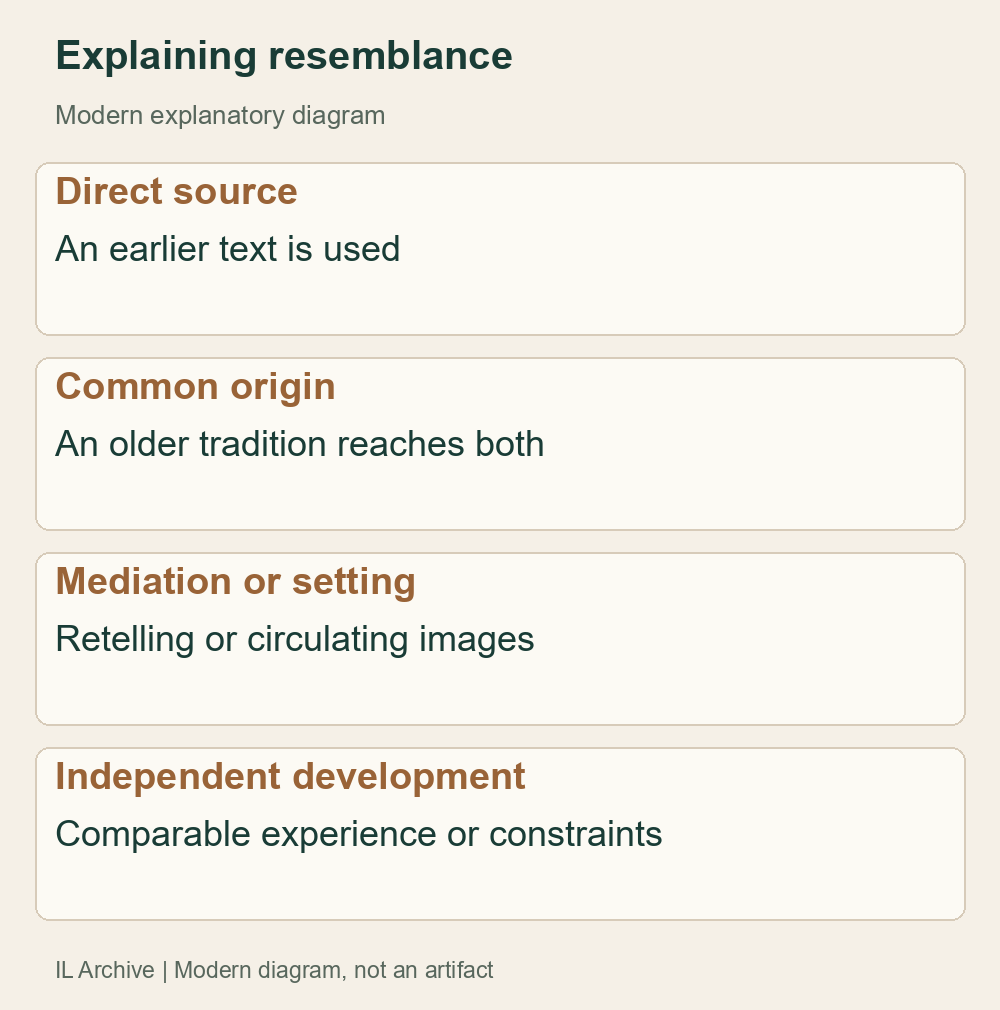
Alternatives can overlap; this diagram does not document a particular narrative’s route
Entidad
Similar narrative or cultural elements arising in different settings without historical transmission of the specific feature between them; a testable explanation, not a default assumption when records of borrowing are absent.
Variantes del nombre: Independent development
Contexto y fuentes →

Modern conceptual illustration of receding water, two survivors, a mountain and stones evoking Deucalion; not an archaeological photograph or a documented location. © IL Archive, CC0
Persona
Deucalion and Pyrrha in Greek and Latin flood accounts: genealogy, survival, stone-born people, local traditions and Near Eastern parallels, with attention to variant sources and dates.
Variantes del nombre: Deucalion, Deucalion flood
Contexto y fuentes →
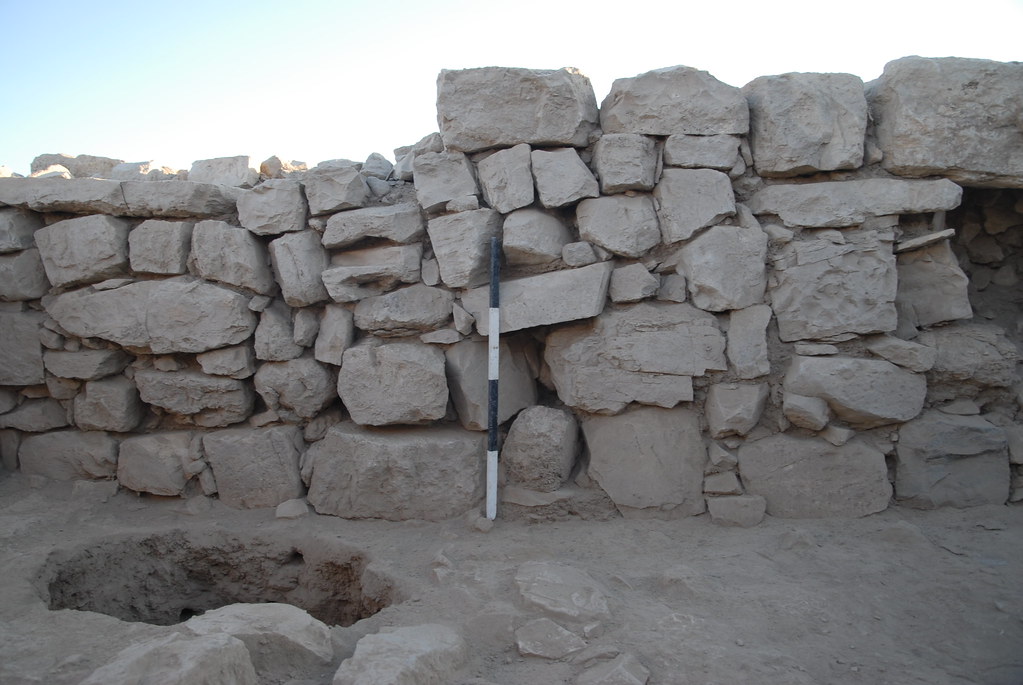
Wall exposed in the Dhiban excavations, 8 August 2009; file title “South-facing Wall.” The scale is modern. This photo record does not date the wall or identify it as belonging to Mesha’s reign
Yacimiento
Town and archaeological site in west-central Jordan, findspot of the Mesha Stele in 1868, with several periods of settlement.
Variantes del nombre: Dhiban, Dibon
Contexto y fuentes →
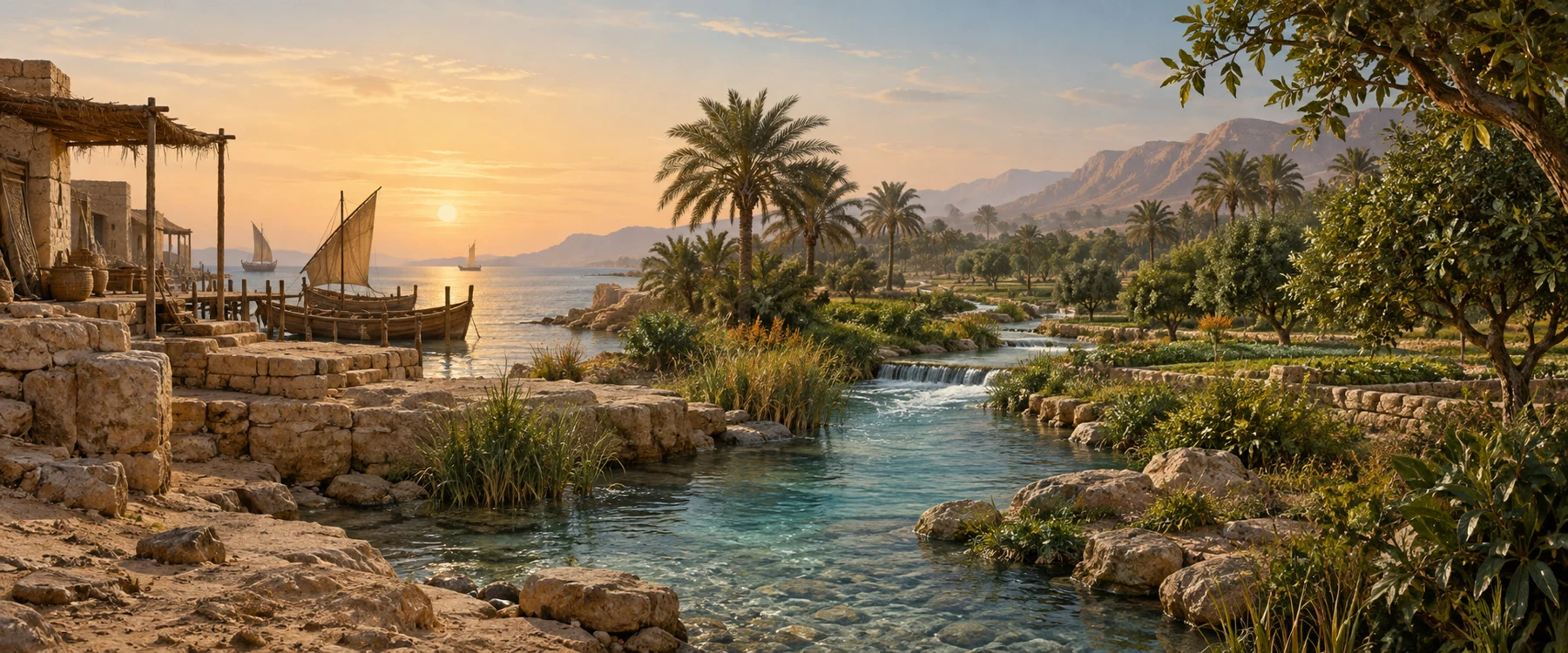
Modern conceptual illustration combining a Dilmun-like quay, fresh water and a garden to frame the comparison; neither an archaeological reconstruction nor a location of Eden. © IL Archive, CC0
Yacimiento
Dilmun was an ancient Gulf trading land with a major archaeological centre in Bahrain and connections to eastern Arabia and Failaka. This entry separates boats, burials and kings from the literary purity and fresh water of Enki and Ninhursaga, and tests the limits of comparison with Eden.
Variantes del nombre: Dilmun, Tilmun
Contexto y fuentes →
Persona
Scholar of Sumerian literature and conceptions of death who studied Dilmun in Enki and Ninhursaga.
Variantes del nombre: Dina Katz
Contexto y fuentes →
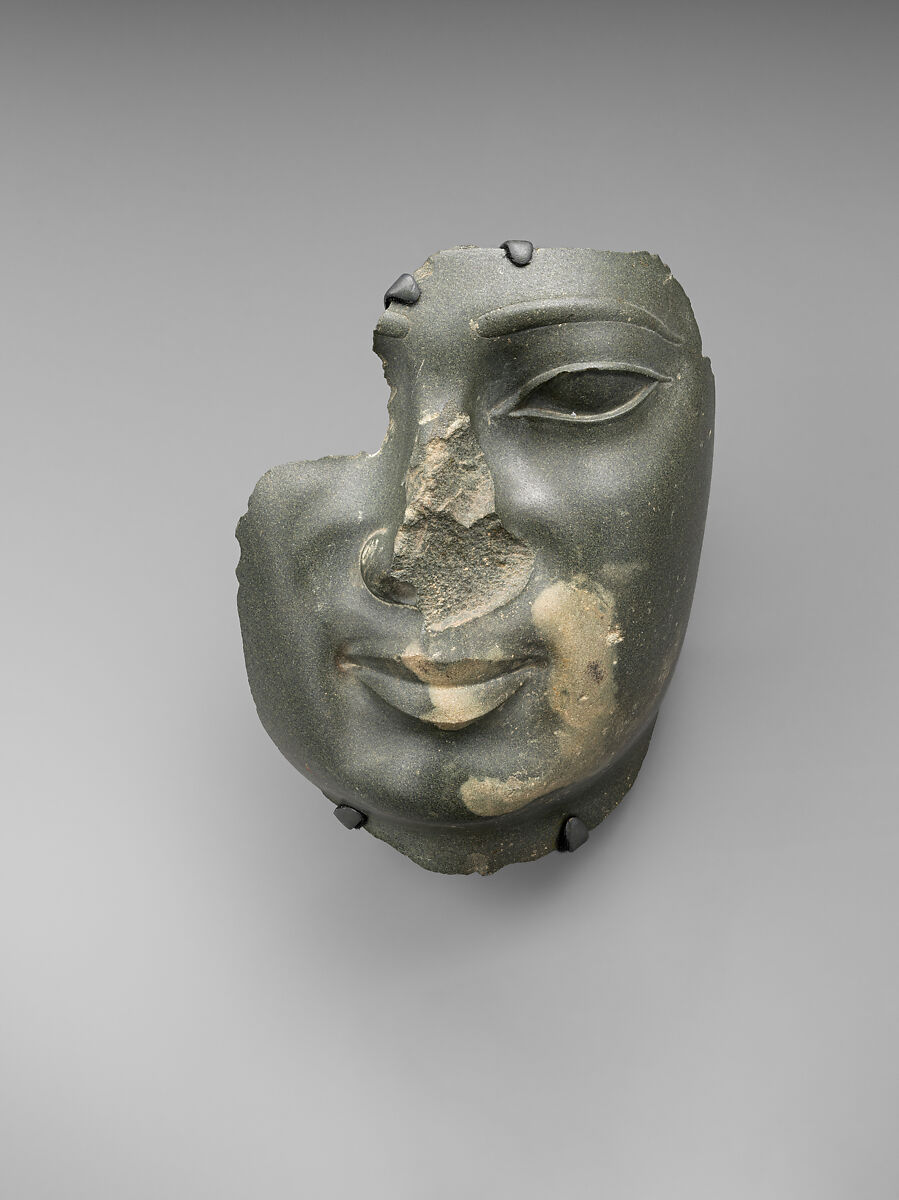
Statue-face fragment from Heliopolis, 284–246 BCE, The Met 12.187.31. Attributed to Ptolemy II or a contemporary; the identity is uncertain
Entidad
Dynasty of Macedonian origin ruling Egypt as kings from 305 to 30 BCE, amid Greek and Egyptian traditions.
Variantes del nombre: Ptolemaic dynasty in Egypt
Contexto y fuentes →
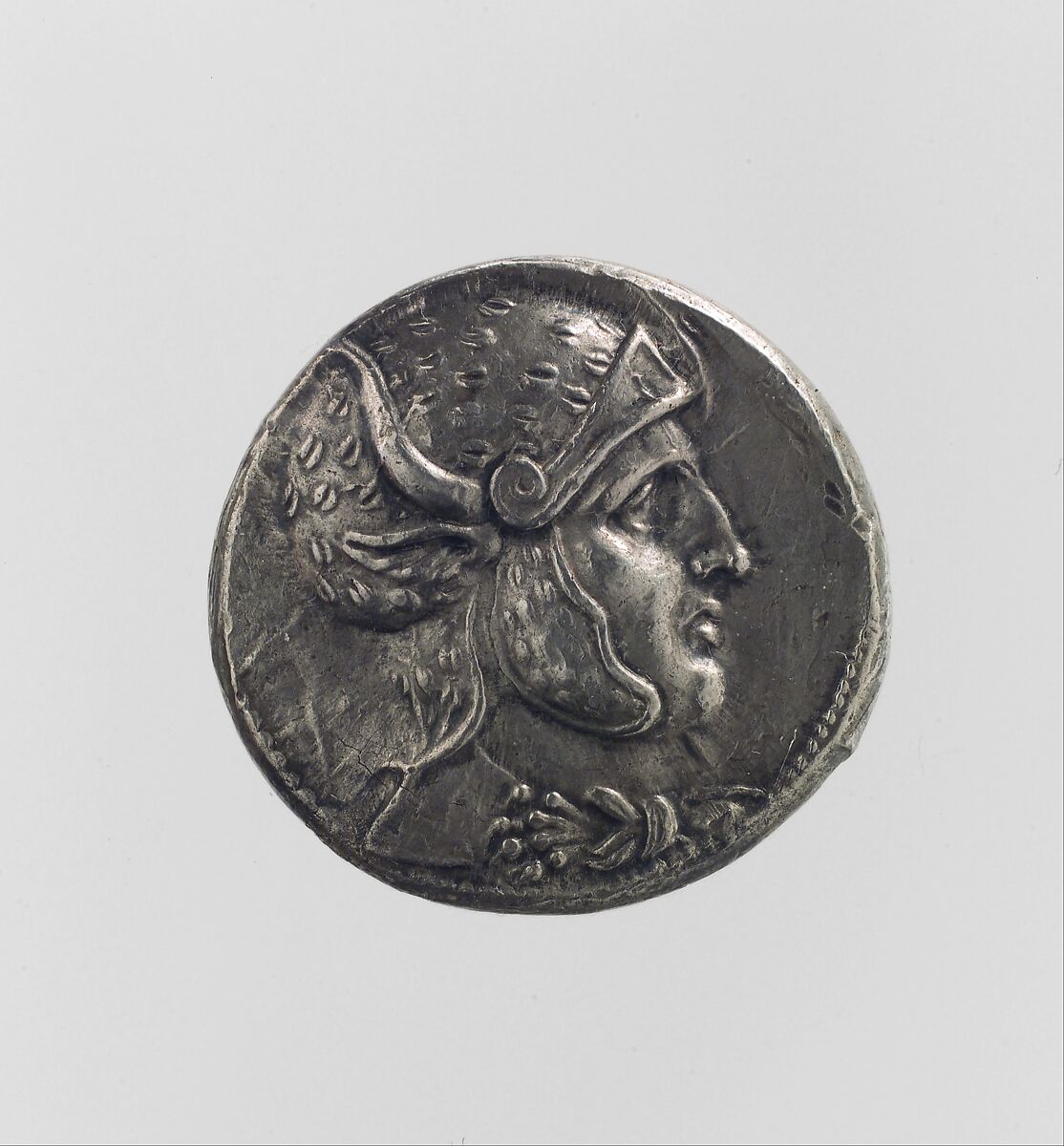
Obverse of Seleucus I’s silver tetradrachm, about 304–294 BCE, The Met 1974.105.9. A horned helmet and leopard skin appear; found at Pasargadae, probably struck at Susa
Entidad
Hellenistic dynasty arising after Alexander and ruling changing Near Eastern territories into the first century BCE.
Variantes del nombre: Seleucid dynasty
Contexto y fuentes →

Newly AI-generated conceptual illustration of a person seeking a deity’s protection. Not an ancient object, inscription, or verified reconstruction of a deity
Entidad
A deity associated in some ancient Near Eastern sources with an individual or family for care, protection, and intercession; not necessarily a separate or minor god.
Variantes del nombre: personal god, family god
Contexto y fuentes →
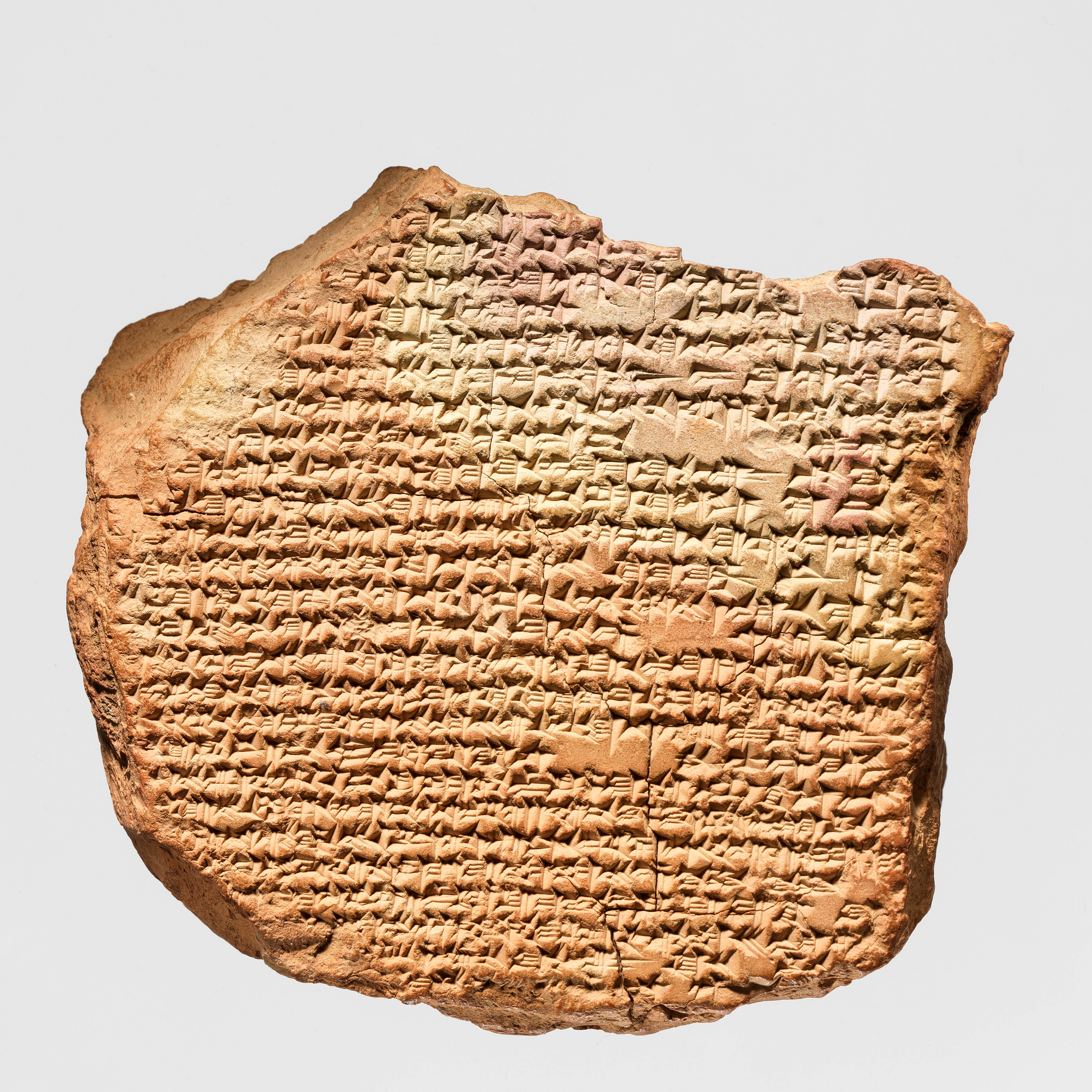
Surviving middle portion of a “Hymn to Marduk” tablet (The Met 86.11.313), first millennium BCE; Neo-Babylonian attribution tentative. The Sumerian text alternates with Akkadian translation and exalts Marduk. Authentic artifact photograph, cropped for display—not an image of the god or proof of monotheism
Entidad
A deity represented as holding superior authority among other gods in a specified source or tradition; the rank alone does not establish exclusive worship or monotheism.
Variantes del nombre: high god, chief god
Contexto y fuentes →
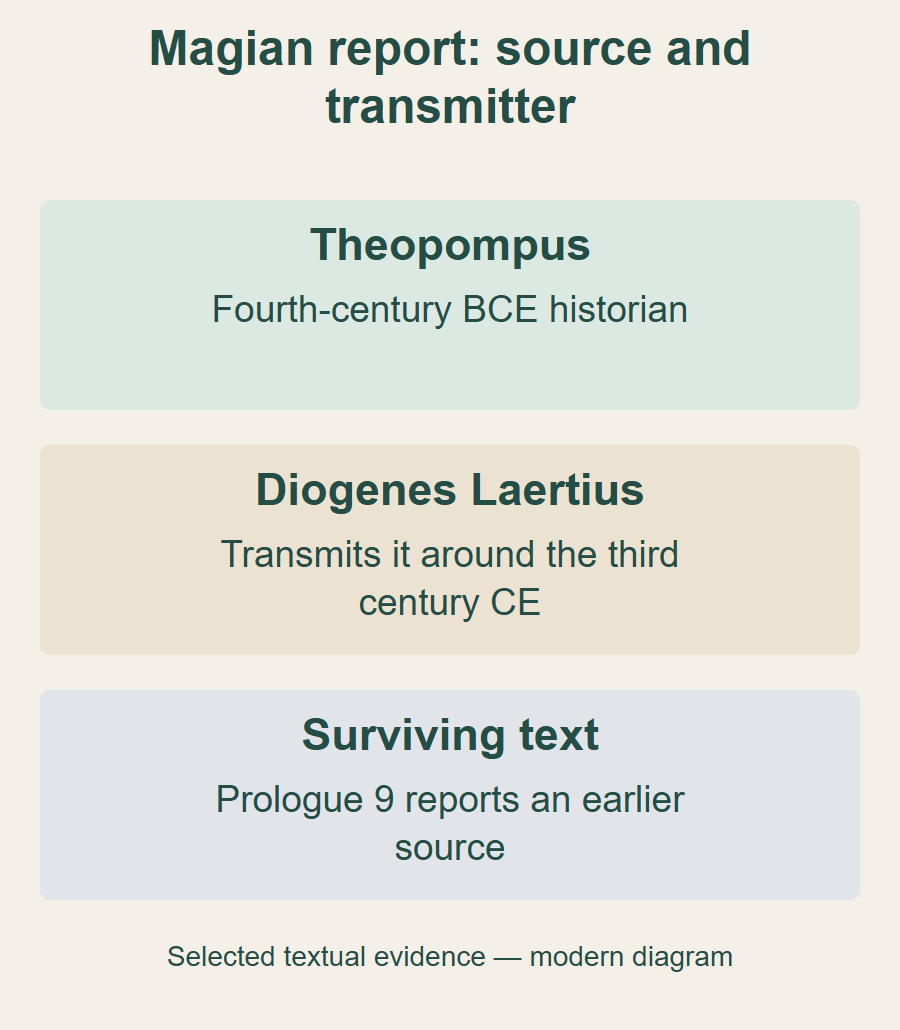
Modern chart of the report: fourth-century BCE Theopompus, then Diogenes Laertius around the third century CE, then the transmitted text. Source and transmitter dates distinguished; not an ancient manuscript
Persona
Diogenes Laertius was a Greek author usually dated to the early third century CE.
Variantes del nombre: Diogenes Laertius
Contexto y fuentes →
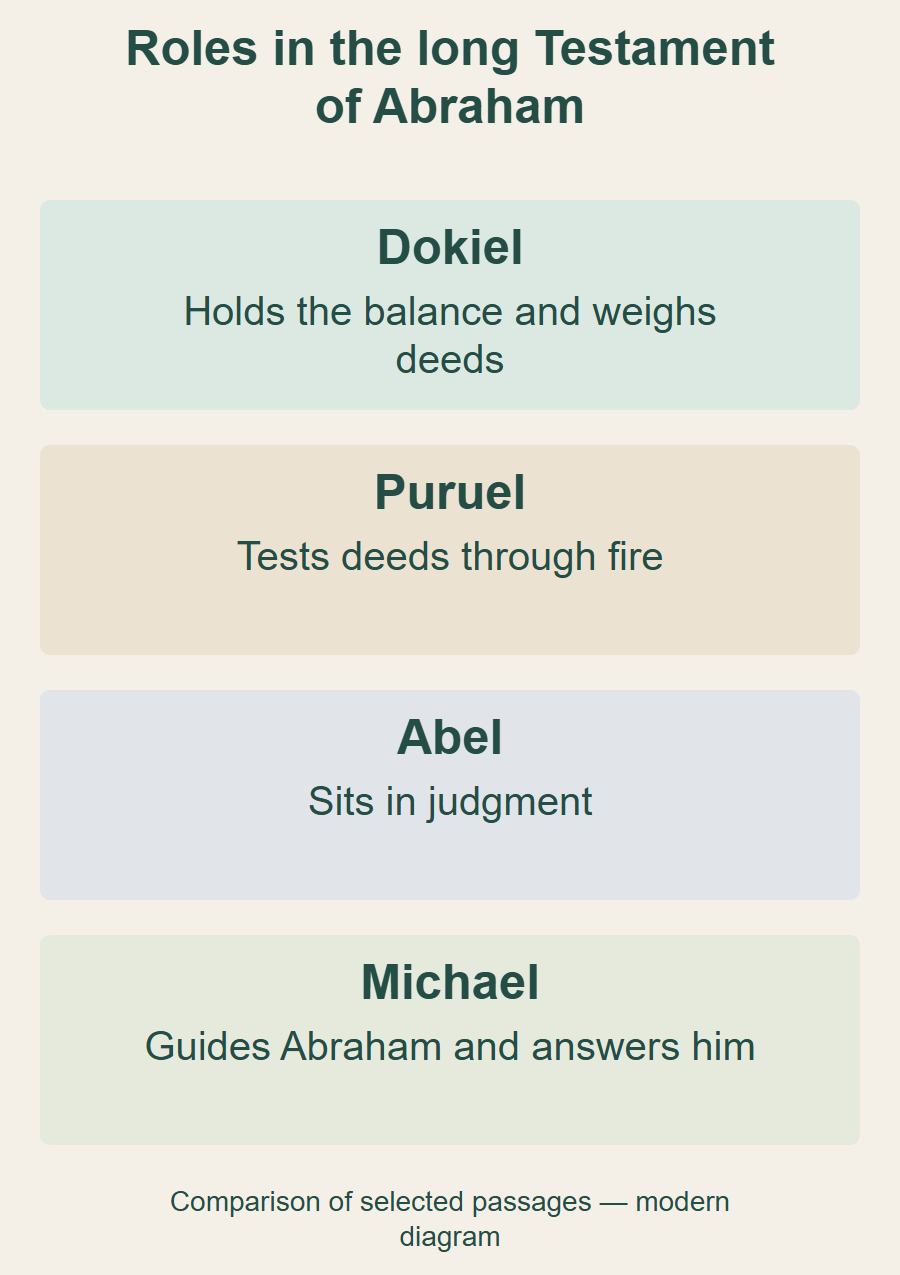
Modern chart of the long Testament of Abraham: Abel judges, Dokiel weighs, Puruel tests by fire and Michael guides Abraham; not ancient likenesses
Entidad
Dokiel is an angel in the long Testament of Abraham who holds the scales.
Variantes del nombre: Dokiel
Contexto y fuentes →
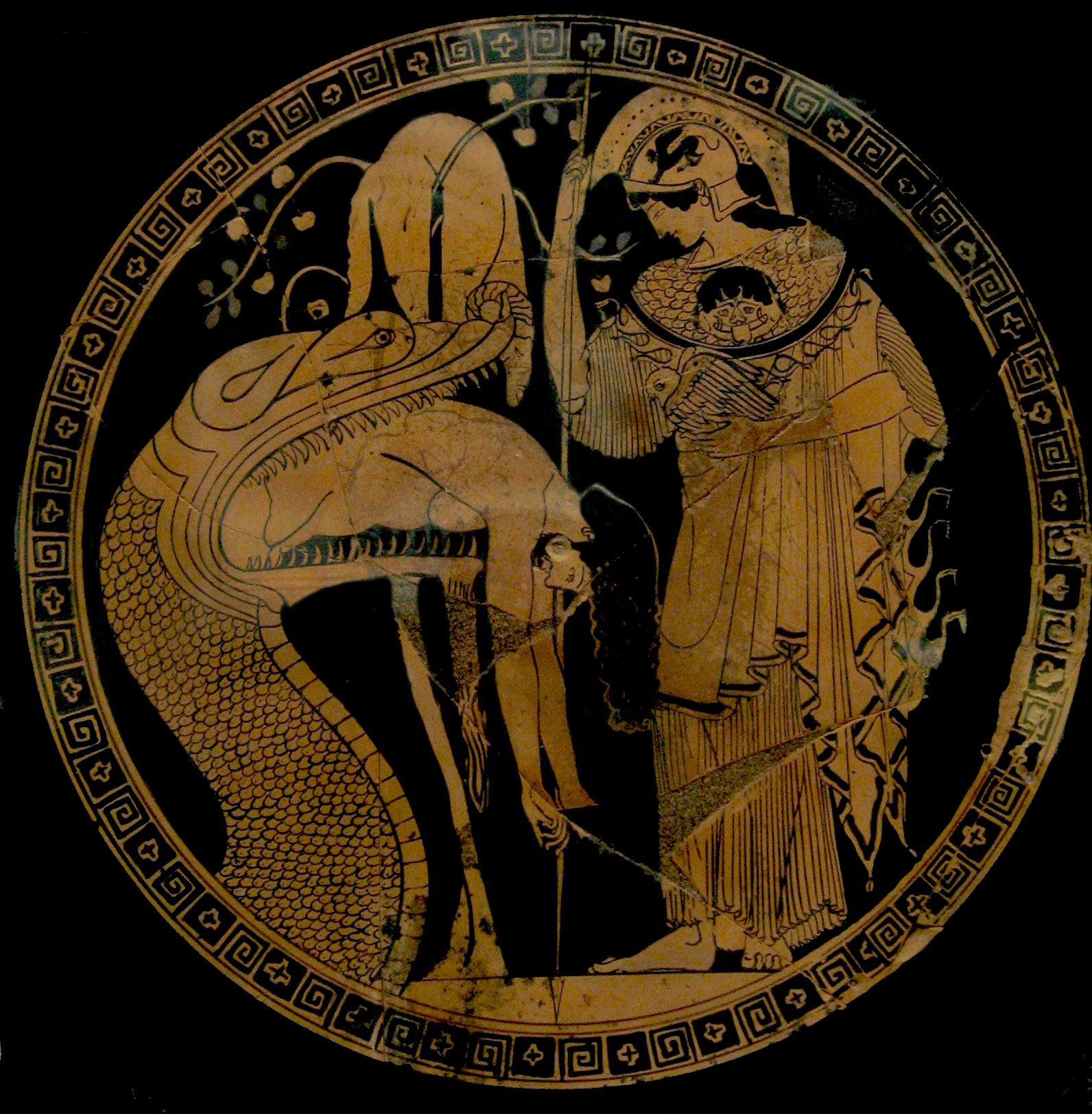
Jason emerging from the serpent, Athena at right, and the hanging Golden Fleece; Attic cup attributed to Douris, about 480–470 BCE, Vatican Museums 16545. Photograph of the cup, neither Jonah nor a portrait of its painter
Persona
An early fifth-century BCE Attic vase painter to whom the Vatican Museums attribute the Jason-and-serpent cup.
Variantes del nombre: Douris, Attic vase painter
Contexto y fuentes →
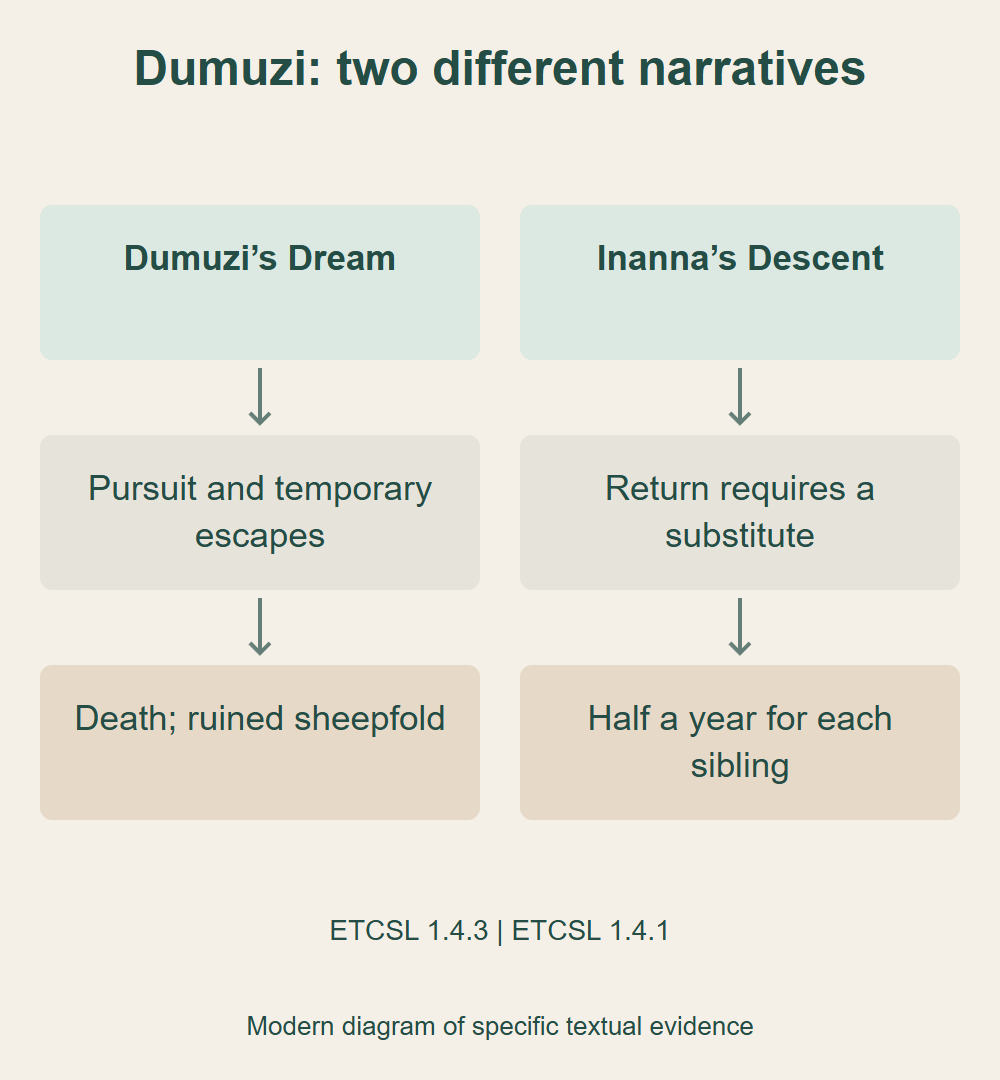
Modern comparison of the ending of Dumuzi’s Dream with the half-year settlement in Inanna’s Descent. Distinct textual structures, without an invented likeness
Entidad
Dumuzi is a deity of ancient Mesopotamian traditions associated with shepherding and Inanna; Tammuz appears as the name in later linguistic and textual traditions.
Variantes del nombre: Dumuzi, Dumuzid, Tammuz
Contexto y fuentes →
Persona
Scholar of ancient drama and fragmentary texts, associate professor of Classics at Grinnell College.
Variantes del nombre: Dustin W. Dixon
Contexto y fuentes →
Persona
Ancient Near Eastern historian and Hebrew Bible scholar specializing in ancient legal cultures.
Variantes del nombre: Dylan R. Johnson
Contexto y fuentes →
Persona
British Egyptologist and ancient-language scholar (1857–1934) who published a historical English translation of Syriac Alexander texts.
Variantes del nombre: E. A. Wallis Budge
Contexto y fuentes →
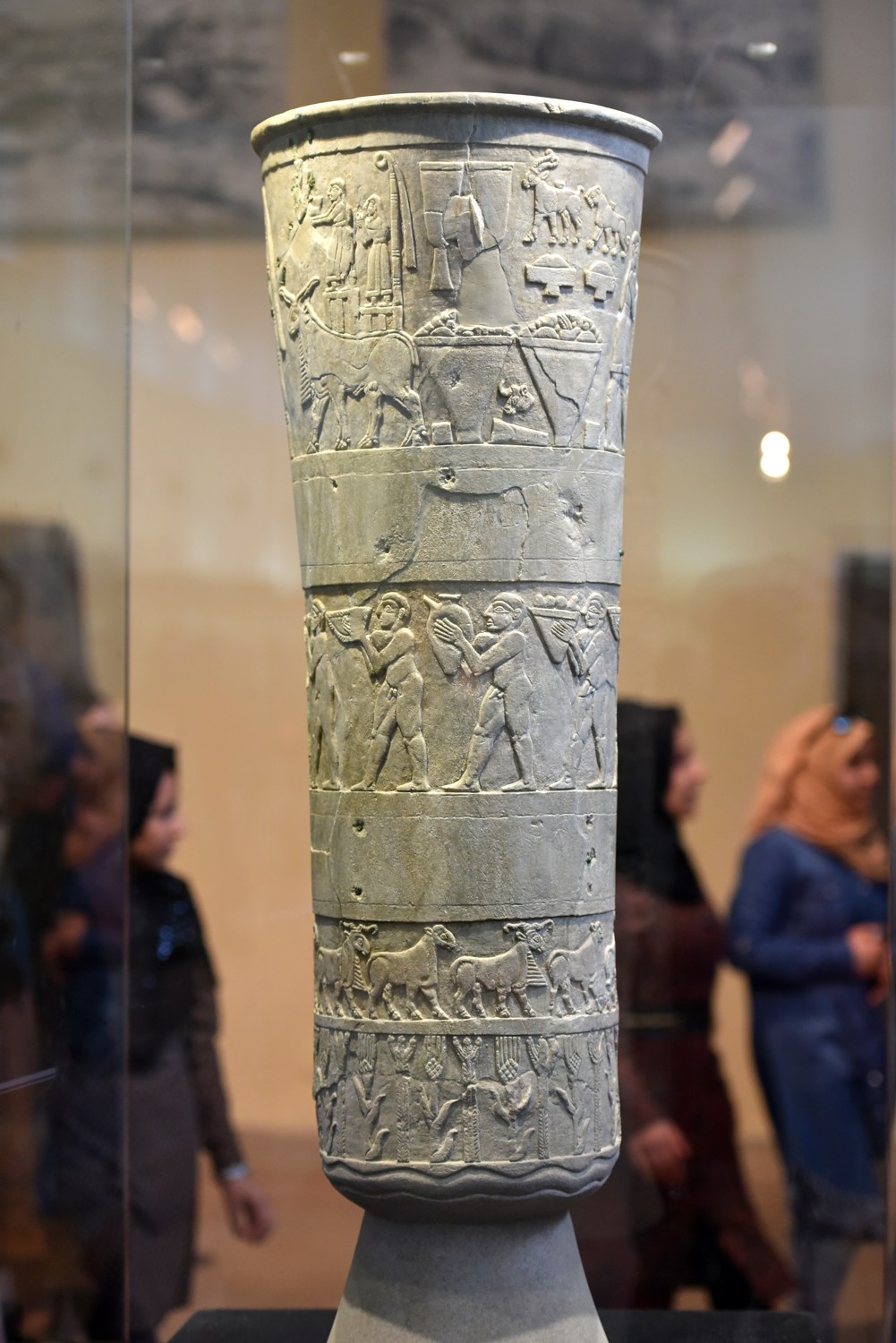
Warka Vase, Iraq Museum, Baghdad (IM19606), from Uruk; approximately late fourth millennium BCE. Registers show vegetation, animals, bearers of offerings and a debated upper scene. Parts were broken and restored. Photograph taken in 2019 of the object, not the buildings
Yacimiento
An archaeological precinct and institutional centre at Uruk associated with Inanna; its name does not fix every early building’s function.
Variantes del nombre: Eanna, Eanna precinct
Contexto y fuentes →
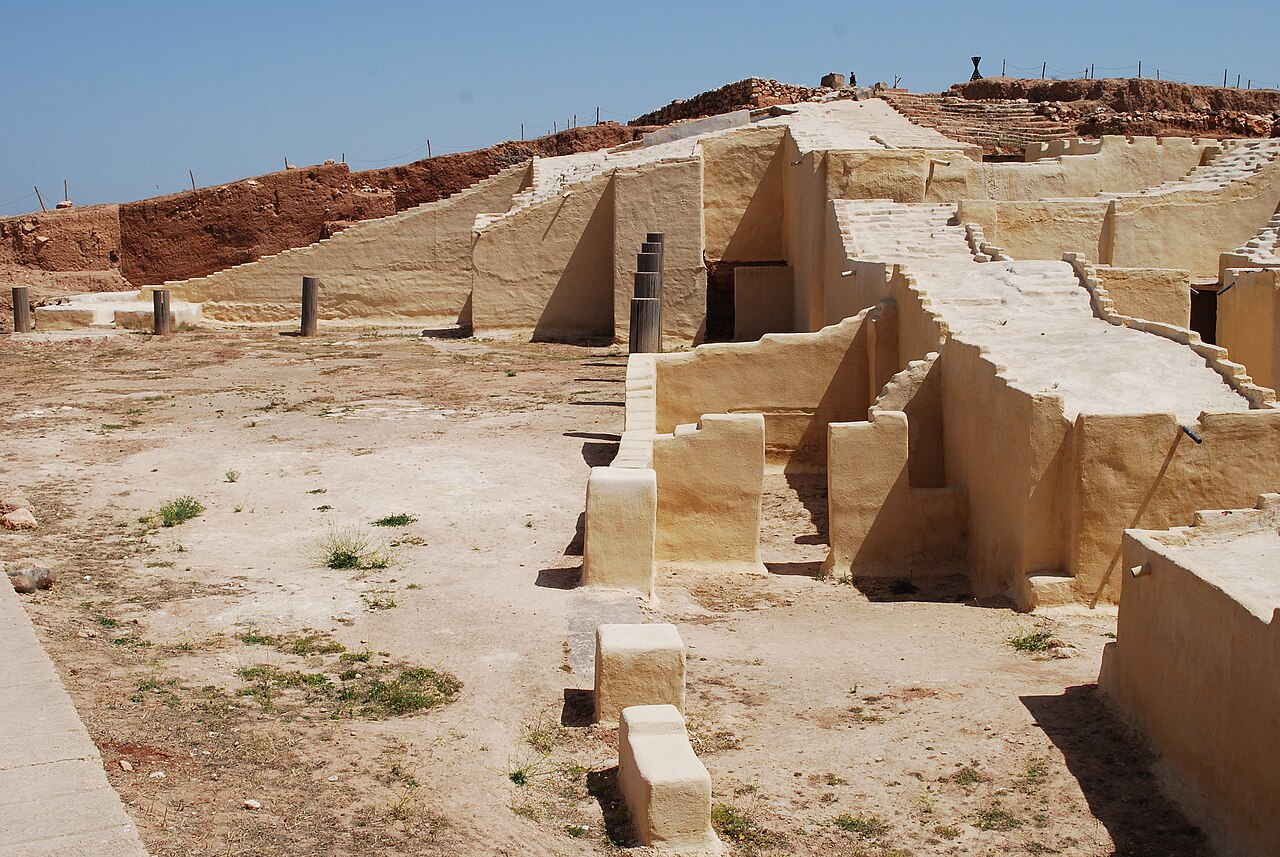
Archaeological view of Royal Palace G at Ebla (Tell Mardikh, Syria). This modern photograph shows architectural remains, not the tablets themselves, and cannot independently date every visible wall
Yacimiento
Ancient city at Tell Mardikh, southwest of Aleppo, Syria. Its Palace G archives illuminate third-millennium BCE administration, language, and cult; the site has later occupation phases.
Variantes del nombre: Ebla, Tell Mardikh
Contexto y fuentes →
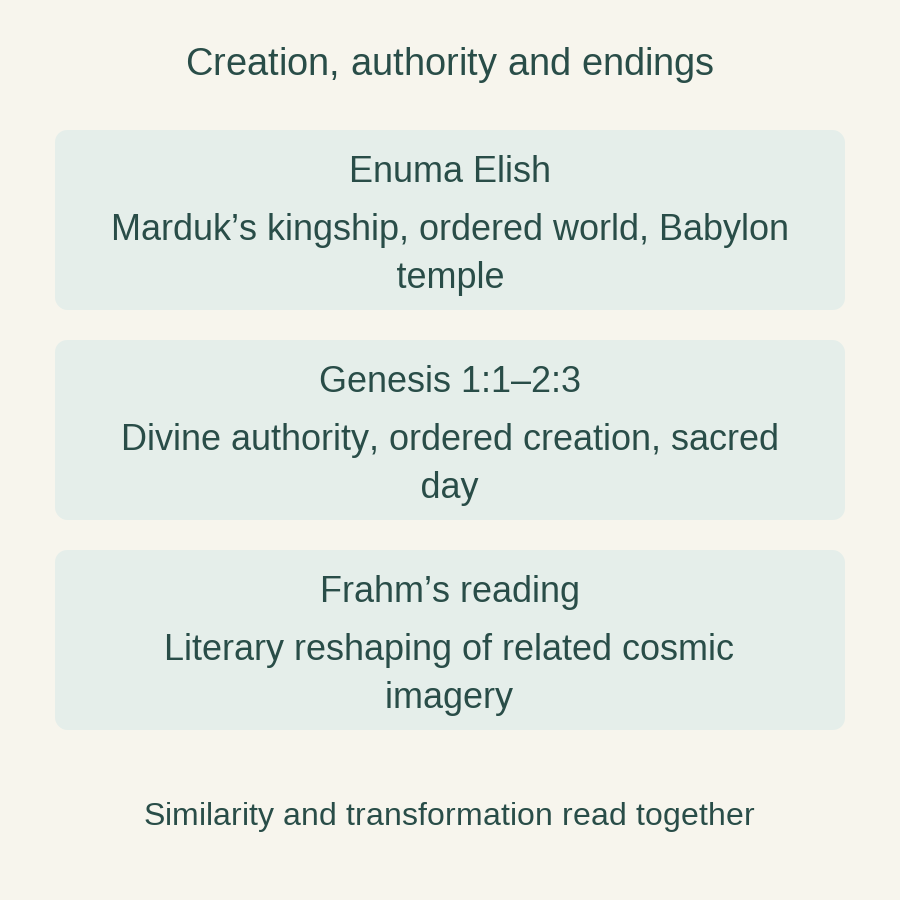
Modern explanation of convergence and transformation in Frahm’s reading; not a portrait or independent proof of transmission
Persona
Yale Assyriologist researching Assyrian and Babylonian history, cuneiform scholarship, and the connections between literature, religion and politics.
Variantes del nombre: Eckart Frahm, Assyriologist
Contexto y fuentes →
Persona
Ed Parish Sanders (1937–2022) was a scholar of ancient Judaism and early Christianity.
Variantes del nombre: Ed Parish Sanders
Contexto y fuentes →
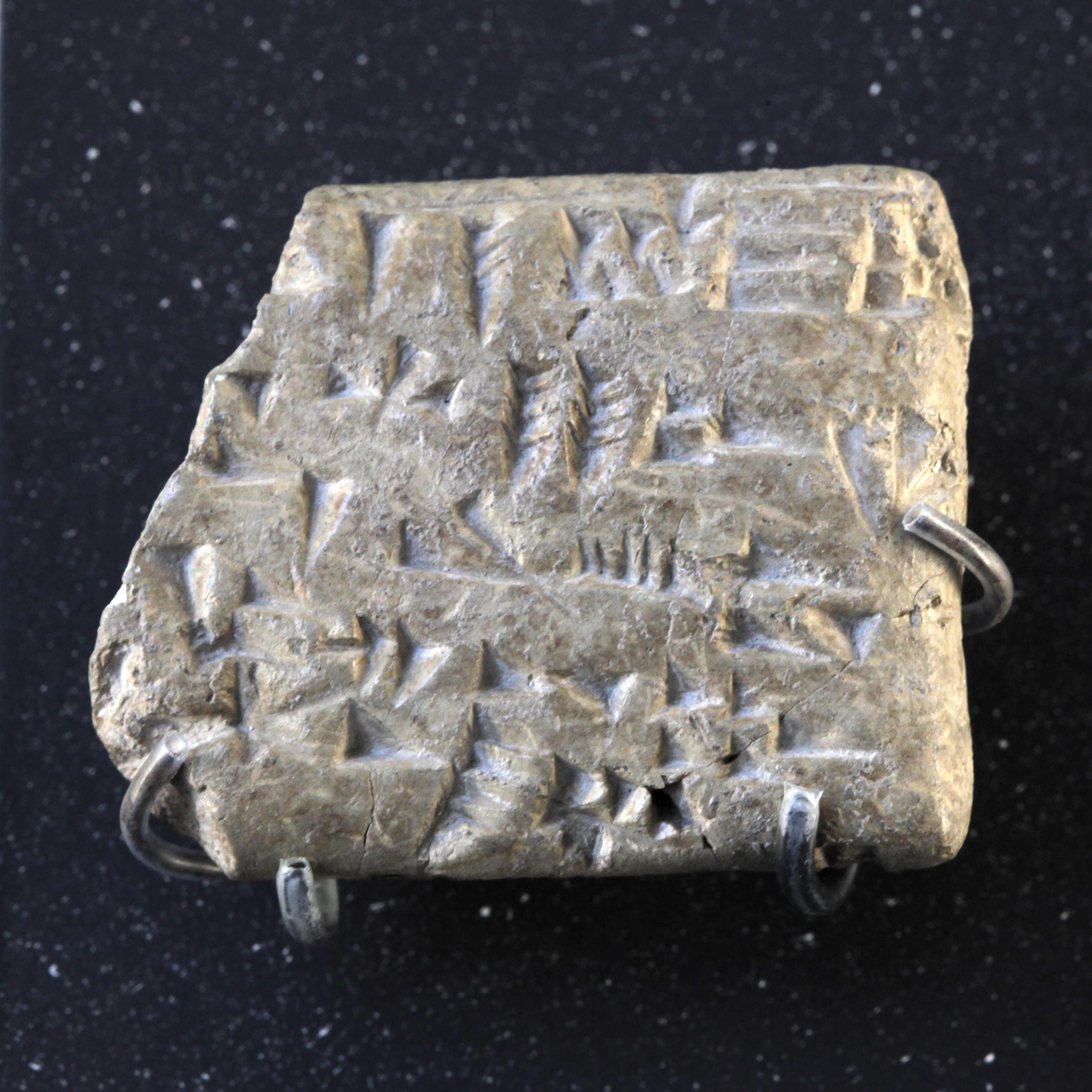
Fragmentary Ugaritic alphabet tablet from Ras Shamra, Late Bronze Age II (c. 1400–1200 BCE), Louvre AO 19992 / RS 10.087; seven letters are missing. Evidence for local scribal learning, not every culture of the period
Periodo
An archaeological period around 1600–1200 BCE in much of the Near East, with international diplomacy, exchange and religious diversity; its endpoints vary by region.
Variantes del nombre: Late Bronze Age
Contexto y fuentes →
Persona
Edward L. Greenstein is a Hebrew Bible scholar and professor emeritus in Bar-Ilan University’s Bible Department.
Variantes del nombre: Edward L. Greenstein, Edward Greenstein, Greenstein
Contexto y fuentes →
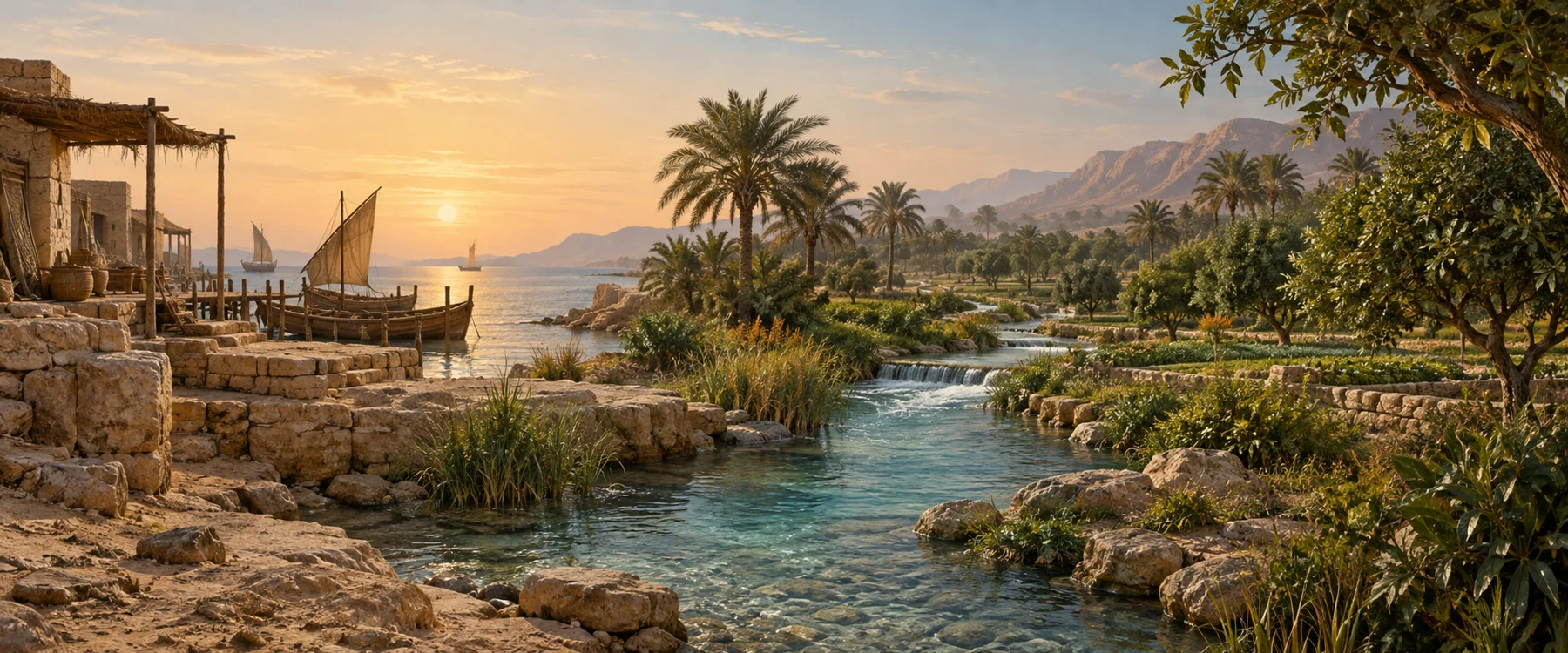
Modern conceptual illustration combining a Dilmun-like quay, fresh water and a garden to frame the comparison; neither an archaeological reconstruction nor a location of Eden. © IL Archive, CC0
Yacimiento
The place in which the garden of Genesis 2–3 is planted; the story describes rivers, trees and a human test, while its archaeological location and name’s derivation remain unsettled.
Variantes del nombre: Eden, Garden of Eden
Contexto y fuentes →
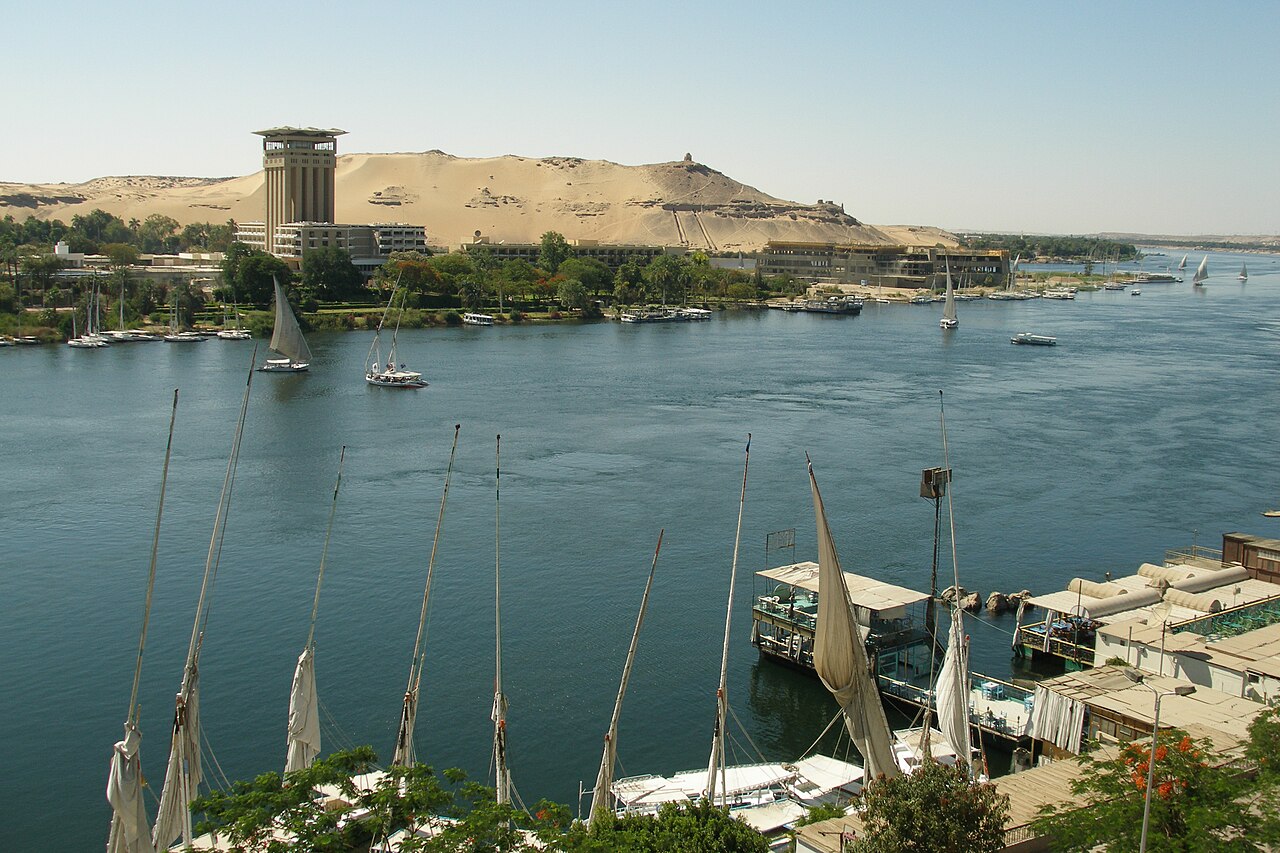
The Nile at Aswan in southern Egypt, 23 May 2007. A modern view of the river, its banks and sailing boats, illustrating part of the Nile Valley’s geographical setting
Yacimiento
Egypt lies mainly in northeastern Africa and includes the Sinai Peninsula in Asia
Variantes del nombre: Egypt, ancient Egypt
Contexto y fuentes →
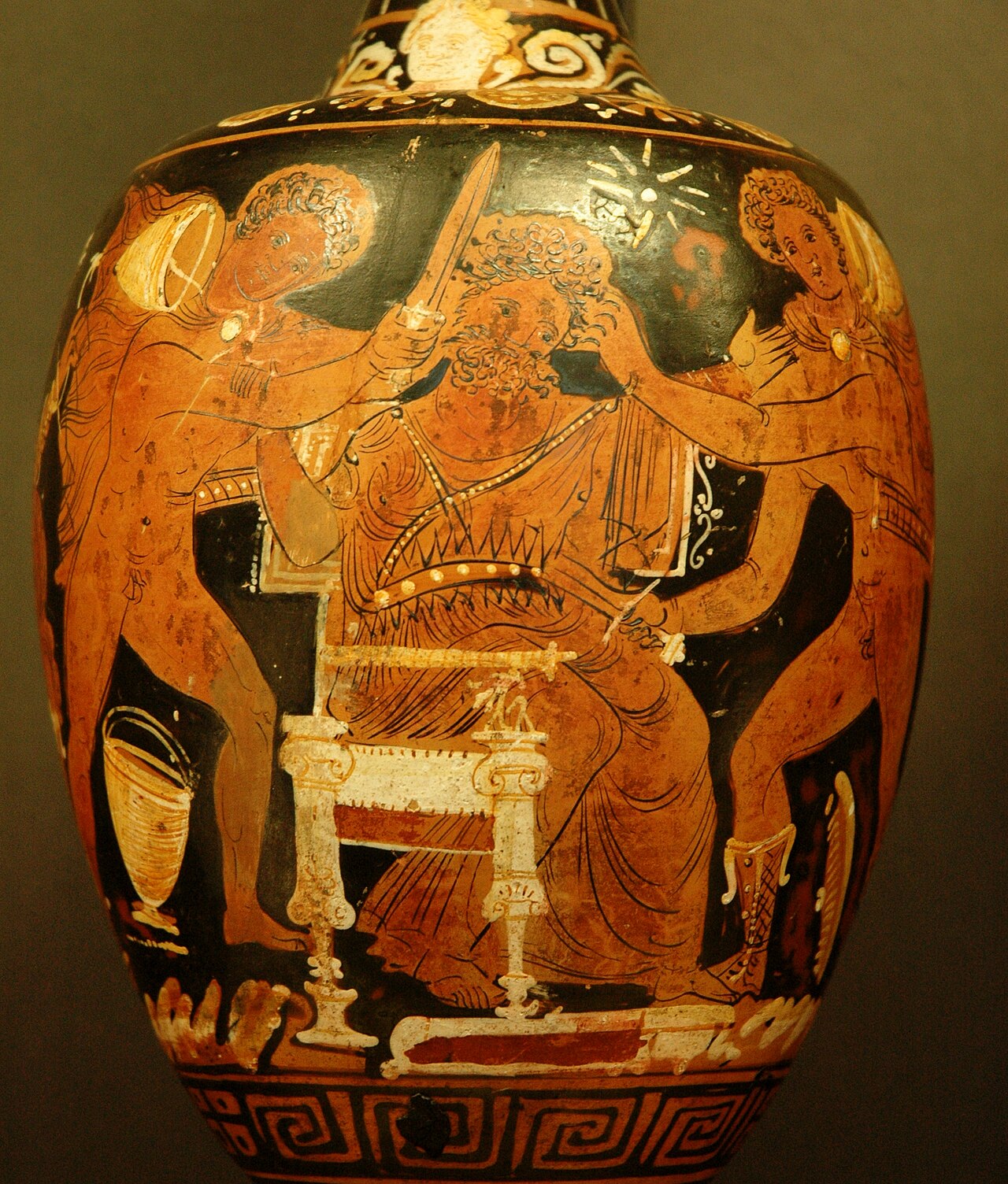
Death of Aegisthus on a Greek vase of about 320 BCE; Louvre K 320, Wind Group. The artwork depicts the revenge story, rather than the Odyssey’s first assembly itself
Persona
Human figure in Greek narrative whose fate Zeus recalls at the Odyssey’s opening.
Variantes del nombre: Aegisthus
Contexto y fuentes →
Persona
Scholar of the Hebrew Bible, ancient Judaism and the Dead Sea Scrolls; professor at KU Leuven from 2009 to 2024, with research on Jubilees’ textual growth.
Variantes del nombre: Eibert Tigchelaar, Eibert J. C. Tigchelaar
Contexto y fuentes →
Persona
A Hebrew Bible scholar studying death, lament, and nature’s ritual agency in Jonah 2.
Variantes del nombre: Ekaterina E. Kozlova
Contexto y fuentes →
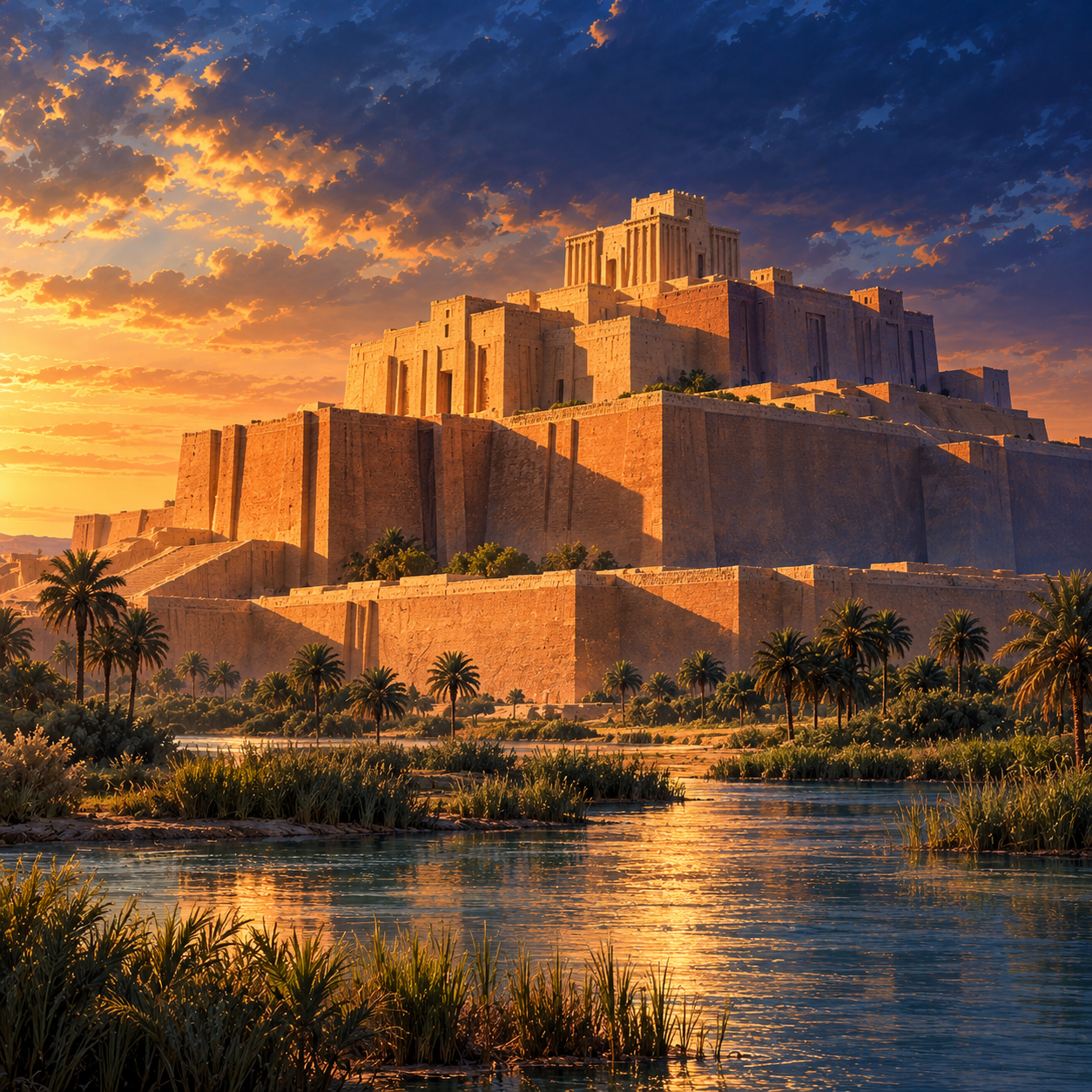
Modern AI-generated concept artwork of an imagined Mesopotamian-inspired sanctuary; not a photograph or verified reconstruction of Ekur, its temple or ziggurat
Entidad
Ekur (“Mountain House”) was Enlil’s chief sanctuary at Nippur, present-day Iraq; the name may extend to its precinct. Hymns and royal inscriptions attest to its prestige and rebuilding across periods; it is not simply the ziggurat.
Variantes del nombre: Ekur, E-kur
Contexto y fuentes →
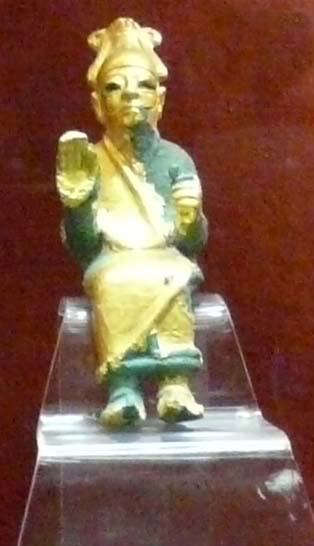
Small gilded-bronze statuette of a seated god from Ugarit, ca. 1400–1300 BCE, National Museum of Damascus S 3573. Tentatively identified as El on stylistic grounds; no inscription on the object confirms his name. Photographed in 2008
Entidad
El is a senior deity in Late Bronze Age Ugaritic texts, portrayed as father of the divine family and a council authority, alongside his consort Athirat. This entry does not cover every linguistic use of El.
Variantes del nombre: El
Contexto y fuentes →

Modern AI-assisted symbolic image of an open blank book; neither a photograph of a historical Quran manuscript nor a verified reconstruction of an early codex
Entidad
The central scripture of Islam, consisting of 114 Arabic surahs; its study distinguishes Quranic discourse from manuscript history, reading traditions, and historical inference.
Variantes del nombre: Quran, Qurʾān, Koran
Contexto y fuentes →

A generated contemporary illustration of an open book symbolizing the reading of transmitted creeds; neither an ancient copy of the 325 text nor a documented view of the council
Entidad
Profession of faith adopted at Nicaea in 325, focused on the Son’s relation to the Father and ending with a short Spirit clause. Distinct from the longer creed associated with 381, also commonly called “Nicene Creed”.
Variantes del nombre: Creed of Nicaea (325), Original Nicene Creed, Symbolum Nicaenum
Contexto y fuentes →
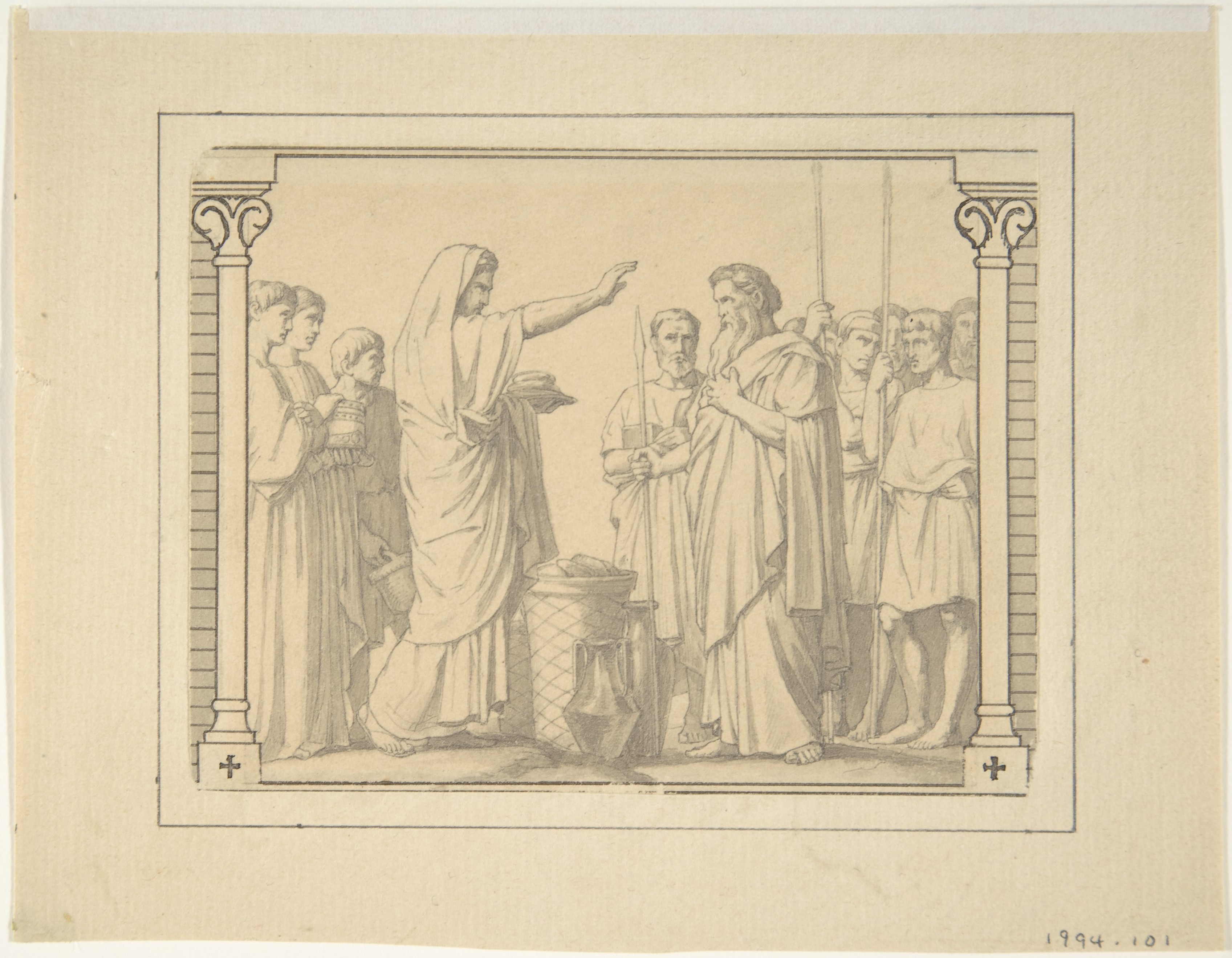
Melchizedek Presenting Abraham with Bread and Wine, a drawing by Hippolyte Flandrin, 1835–64, The Met, 1994.101. A later artistic reception of Genesis 14, not a historical image of the meeting or evidence of El Elyon’s appearance
Entidad
A Hebrew expression meaning “God Most High.” Genesis 14 identifies its bearer with Yahweh, while the Most High’s identity in Deuteronomy 32 remains debated separately from its manuscript readings.
Variantes del nombre: El Elyon
Contexto y fuentes →
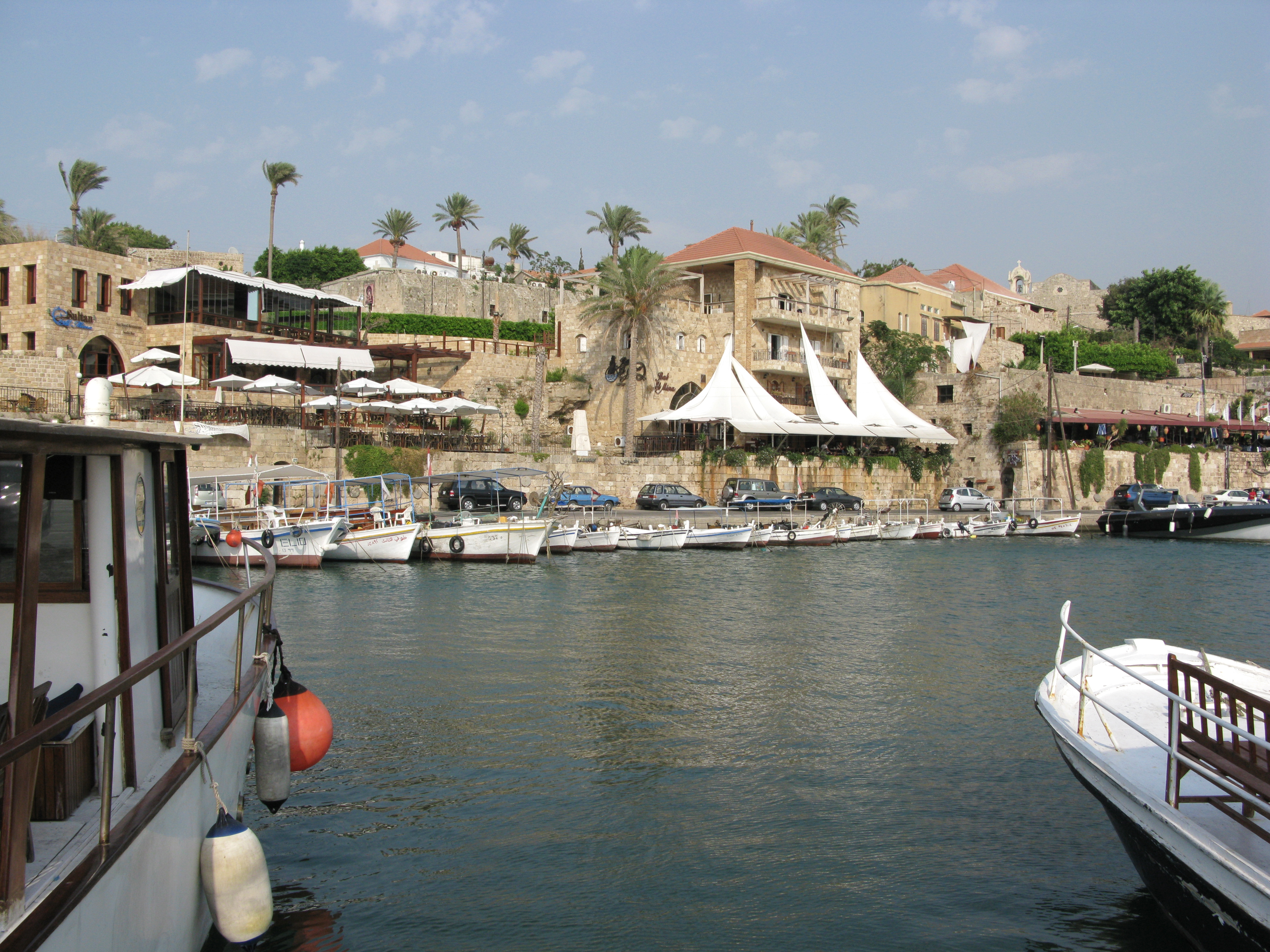
The harbour of Byblos, Lebanon, photographed on 4 September 2008. This modern view offers an example of the Levant’s Mediterranean coast. The region extends beyond this city, and its boundaries vary with period and context
Yacimiento
The Levant is a regional name for lands along the eastern Mediterranean
Variantes del nombre: Levant, the Levant
Contexto y fuentes →