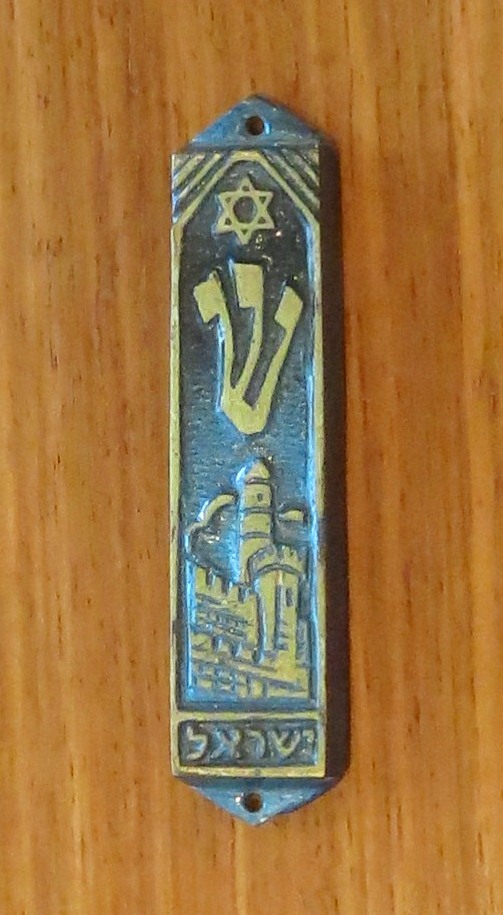
A mezuzah case from Macedonia, photographed in 2013. It bears ש, shin, used as an abbreviation of Shaddai in this tradition. It illustrates the name’s later Jewish reception; the file metadata do not date the case’s manufacture. It is not a witness from the ancestral period or a portrait of a deity
Entidad
A compound El name or title associated with ancestral narratives and identified with Yahweh in Exodus 6; Shaddai’s meaning and etymology remain uncertain.
Variantes del nombre: El Shaddai
Contexto y fuentes →
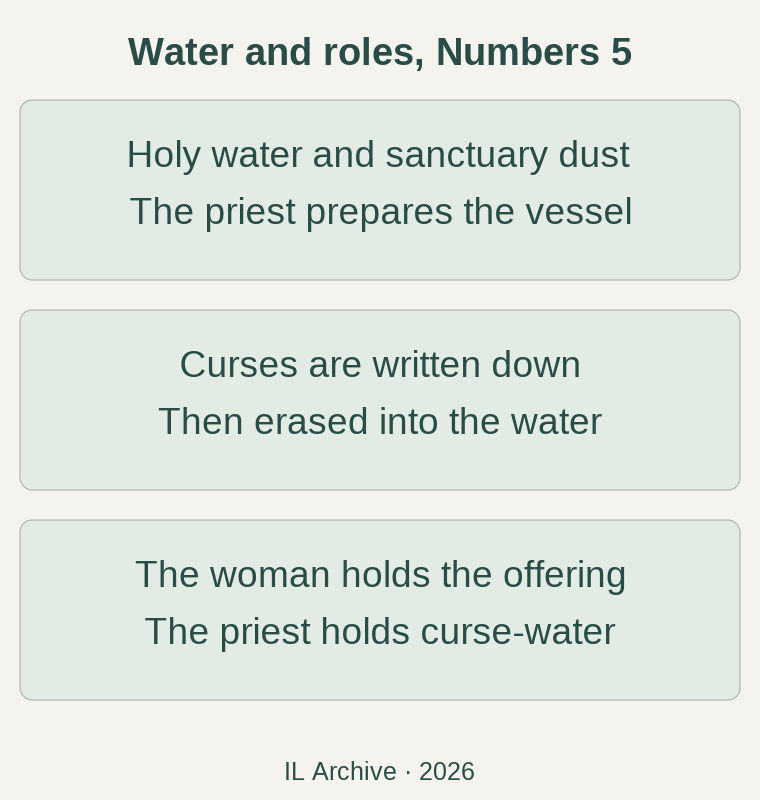
Modern diagram explaining roles in the specified source, not portraits or an ancient tablet. Row order explains relationships rather than reconstructing every ritual step
Entidad
Narrative worship tent whose floor supplies dust in Numbers 5.
Variantes del nombre: Tabernacle in the biblical narrative
Contexto y fuentes →
Modern generated conceptual illustration of a mid-month moon and an imaginary counting tablet. It is not an artifact photograph, a deciphered calendar or a reconstruction of a documented rite
Entidad
Šapattu is an Akkadian term attested for the lunar mid-month day or a half-month in time reckoning. A historical derivation of the weekly Hebrew Sabbath from it remains contested.
Variantes del nombre: shapattu, shabattu
Contexto y fuentes →

Modern AI-generated symbolic cover evoking the divine sign. The scene and radiating motif are imaginary, not an artifact or a verified depiction of AN/DINGIR
Entidad
A cuneiform sign used mostly before a divine name to classify it without being spoken independently; shown as raised d or {d} in transliteration. Usage depends on language and context.
Variantes del nombre: divine determinative, divine classifier
Contexto y fuentes →
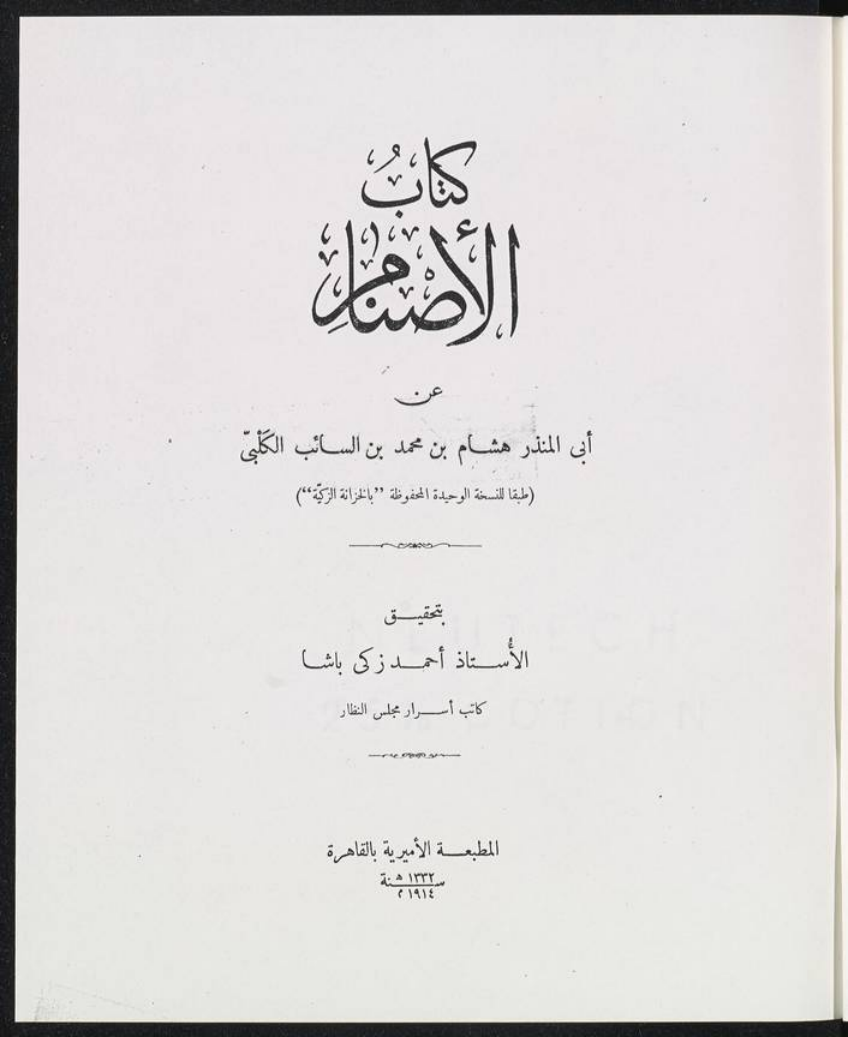
Title page of Hisham ibn Muhammad al-Kalbi’s Book of Idols, edited by Ahmad Zaki Pasha, Cairo, 1332 AH / 1914 CE; Cornell copy in Arabic Collections Online. A printed edition, not an author-era manuscript or portrait. A library leaf dates the replacement paper volume to 2005
Texto antiguo
Work by Hisham ibn Muhammad al-Kalbi transmitting Abbasid-era accounts of pre-Islamic Arabian deities and rites.
Variantes del nombre: Book of Idols
Contexto y fuentes →
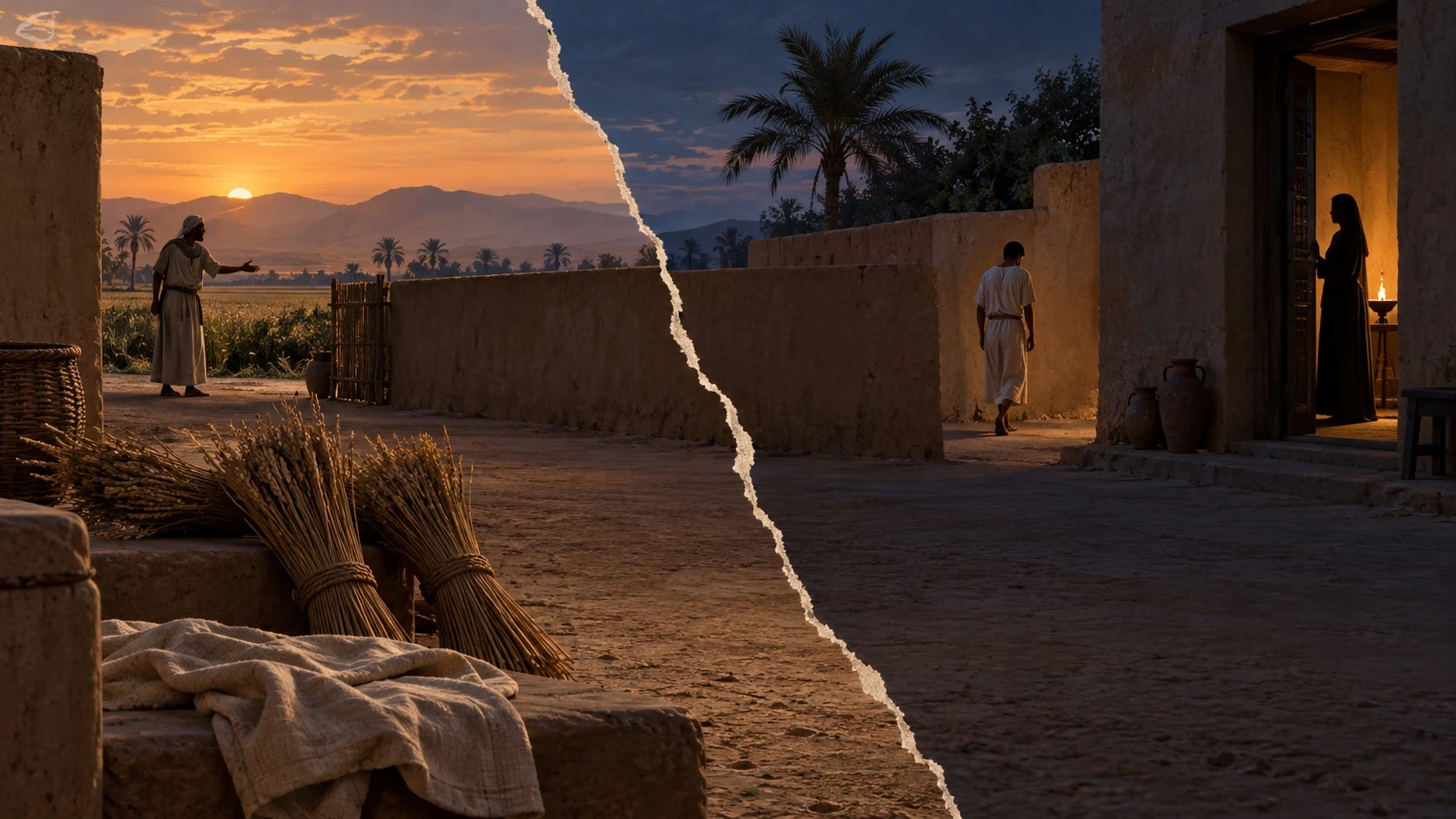
Modern editorial illustration of a household divided by Bata’s accusation; neither an excavated papyrus nor a documented historical reconstruction. © IL Archive, CC0
Entidad
A comparative label for a woman’s rejected overture followed by a false accusation; it does not give every version a biblical origin.
Variantes del nombre: Potiphar’s wife motif, false accusation after refusal
Contexto y fuentes →
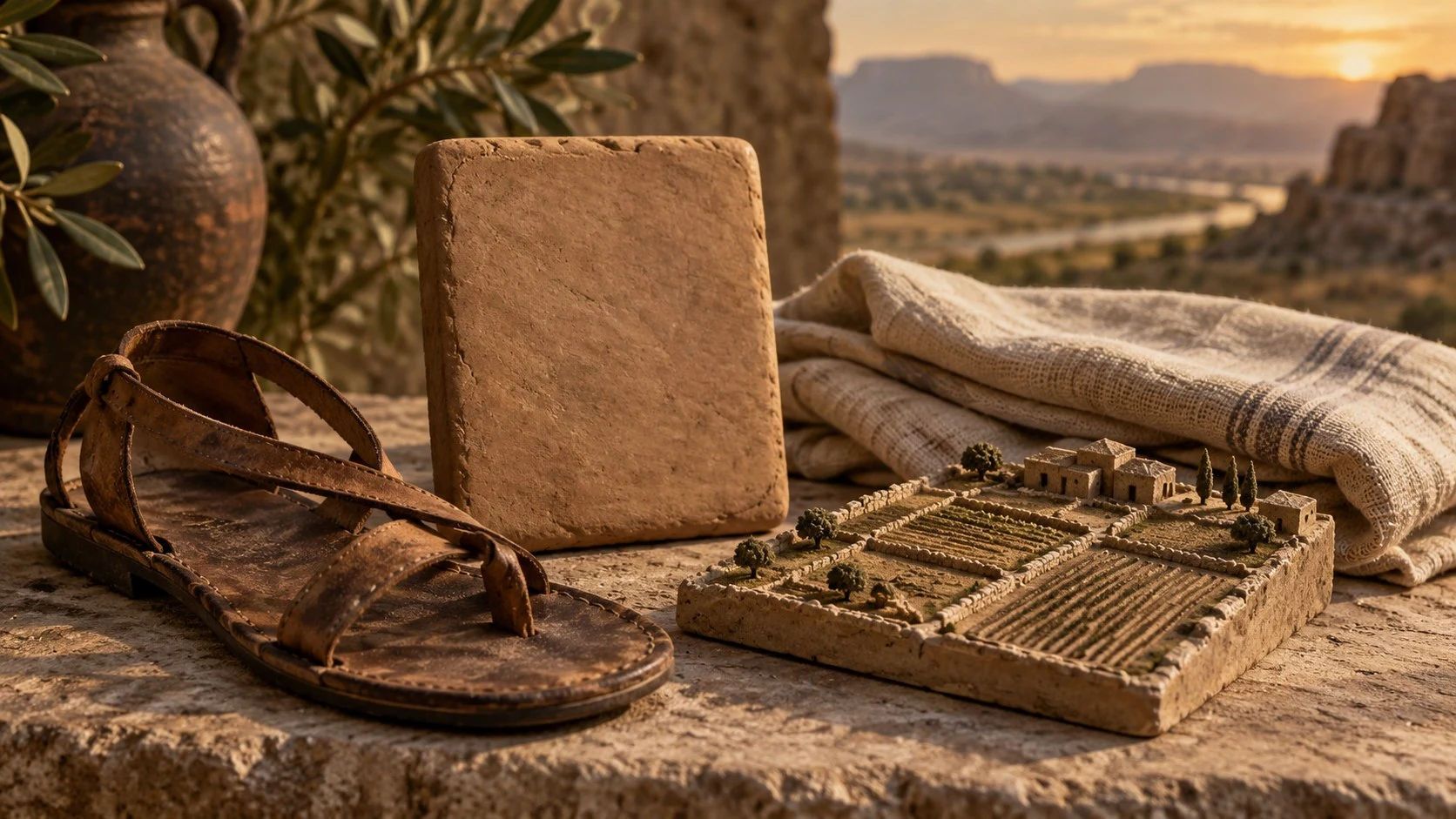
Modern conceptual illustration: a sandal, an uninscribed clay tablet and model fields symbolize kinship and inheritance. No documented artifact or historical scene is depicted. IL Archive / CC0
Entidad
A relative with an opportunity to redeem a family property interest. Ruth 4 presents a nearer relative and Boaz; the transaction is related to marriage but is not identical to the brother-in-law rule of Deuteronomy 25.
Variantes del nombre: kinsman-redeemer in Ruth, family redeemer in Ruth
Contexto y fuentes →
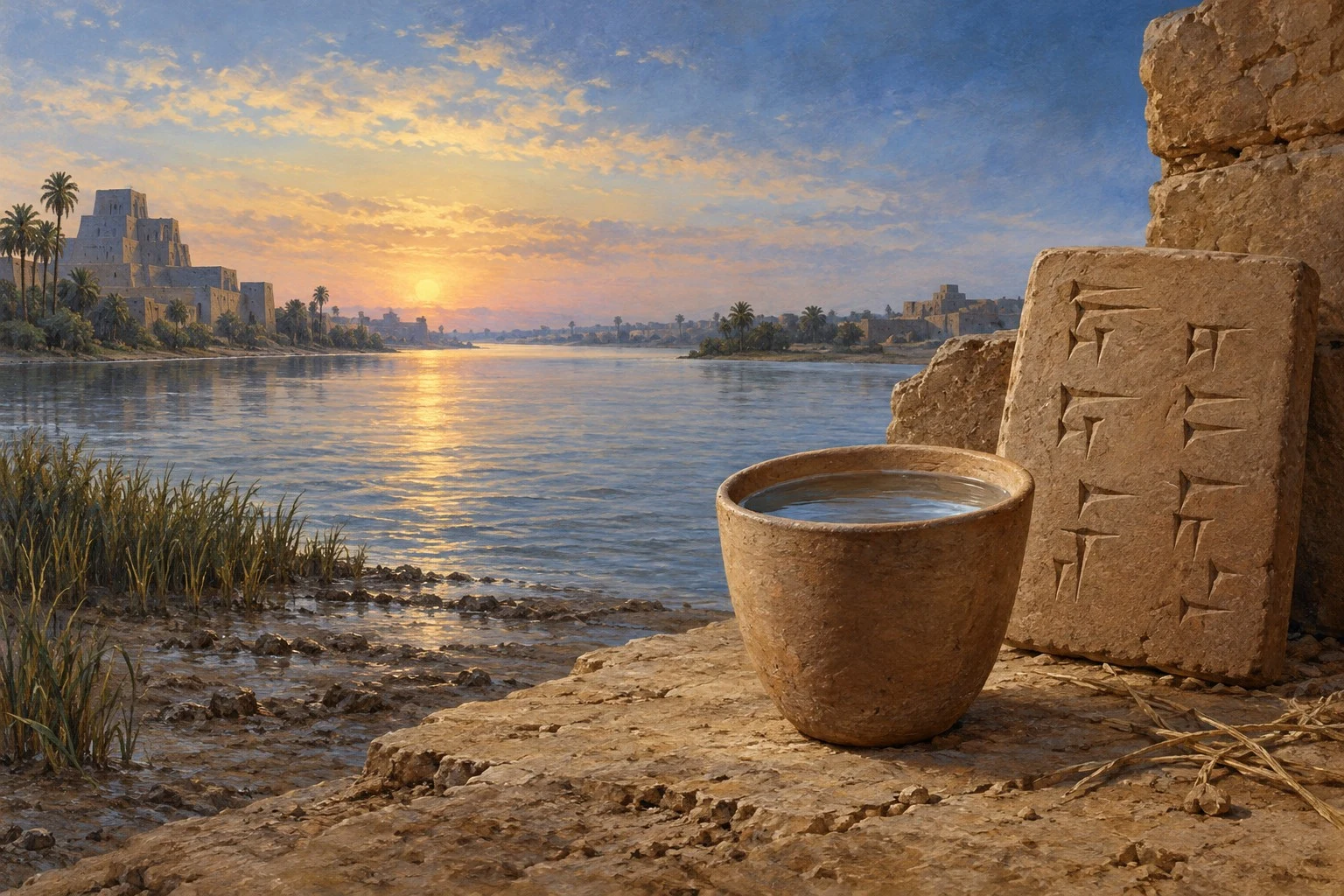
A modern conceptual illustration places river and vessel together to contrast two distinct procedures. It depicts no documented ordeal or specific artifact; the tablet's marks are decorative and not legible text. IL Archive / CC0
Entidad
Religious and legal ordeal described in Numbers 5:11–31 for an adultery allegation unresolved by witnesses: the wife swears before a priest and drinks “bitter water” linked to a conditional curse. “Sotah” is the common later rabbinic name. The prescription alone proves neither actual performance nor a specific medical effect.
Variantes del nombre: sotah, bitter-water ordeal
Contexto y fuentes →
Entidad
A remarkable stone-cutting creature in Gittin 68's Temple-building story, not an identified archaeological tool.
Variantes del nombre: shamir
Contexto y fuentes →
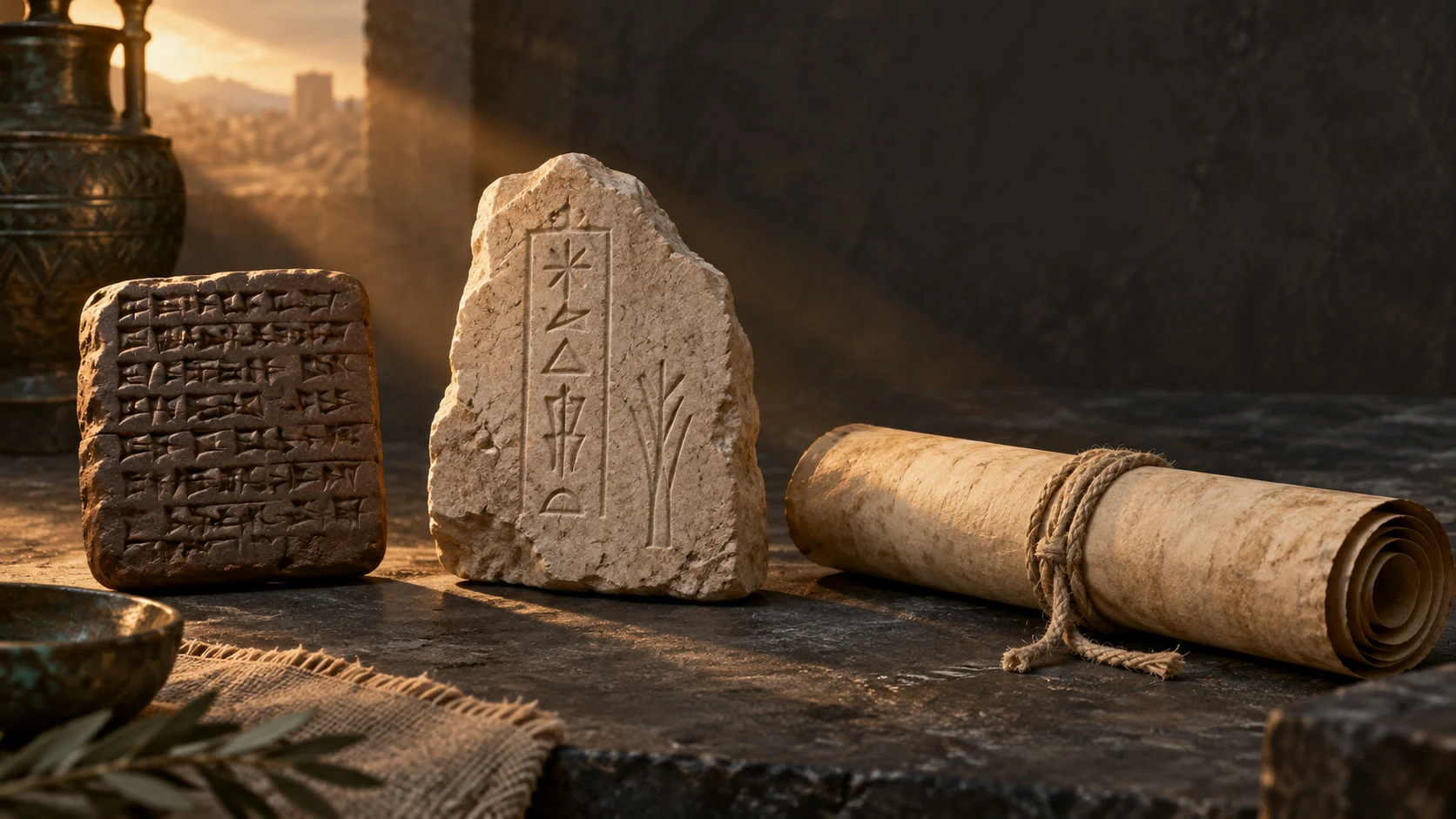
Modern conceptual cover generated for IL Archive (2026): imagined clay tablet, inscribed stone and scroll. The apparent writing is not an attested Esarhaddon inscription or a verified artifact, nor proof of contact with Deuteronomy. CC0 per owner declaration
Entidad
A 672 BCE Assyrian loyalty oath installing Ashurbanipal in Assyria and his brother in Babylon; copies survive from Nimrud and Tell Tayinat.
Variantes del nombre: Esarhaddon Succession Treaty, EST
Contexto y fuentes →

Modern interpretive illustration juxtaposing Gilgamesh’s water-borne plant and two trees in the Genesis garden. It is neither an excavated object nor a documented historical reconstruction, and it does not establish transmission between the stories
Entidad
A tree in the garden of Genesis 2–3, distinct from the tree of knowledge. After the forbidden fruit is eaten, the way to the tree of life is guarded lest humans eat from it and live forever. The text does not identify its fruit or explain precisely how it works.
Variantes del nombre: tree of life
Contexto y fuentes →

Modern AI-generated conceptual cover (2026): two imagined garden trees beside a water-borne plant recalling Gilgamesh. Coloured fruit and buildings are imaginative, not a botanical identification, an archaeological reconstruction, or proof of literary borrowing. © IL Archive, CC0
Entidad
The tree prohibited in Genesis 2:17 and eaten from in Genesis 3, narratively distinct from the tree of life; its fruit is unidentified.
Variantes del nombre: tree of the knowledge of good and evil
Contexto y fuentes →
Persona
A Jewish man whose exorcism Josephus says he witnessed before Vespasian; distinct from the biblical Eleazar son of Aaron.
Variantes del nombre: Eleazar the exorcist
Contexto y fuentes →
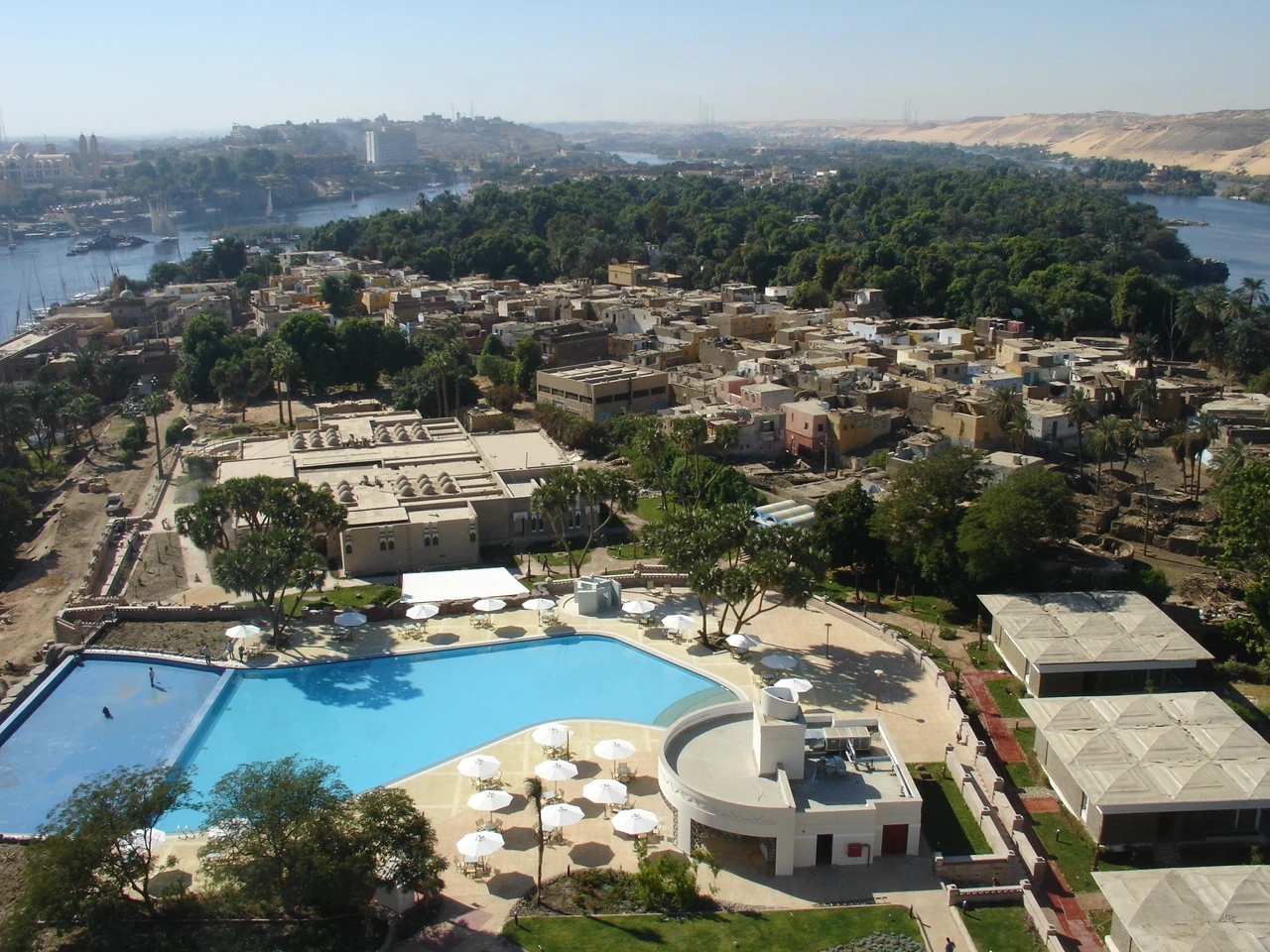
Modern view of Elephantine Island and the Nile near Aswan; geographical context, not the remains of Yaho’s temple
Yacimiento
Elephantine / Yeb, near Aswan at the Nile’s First Cataract, preserves a long-lived Egyptian town, temples of Khnum and Satet, and Persian-period garrisons. Aramaic papyri document several communities, including Judeans and Yaho’s temple, whose rebuilding was sought in 407 BCE; claims and archaeological interpretations must be distinguished.
Variantes del nombre: Elephantine, Yeb
Contexto y fuentes →
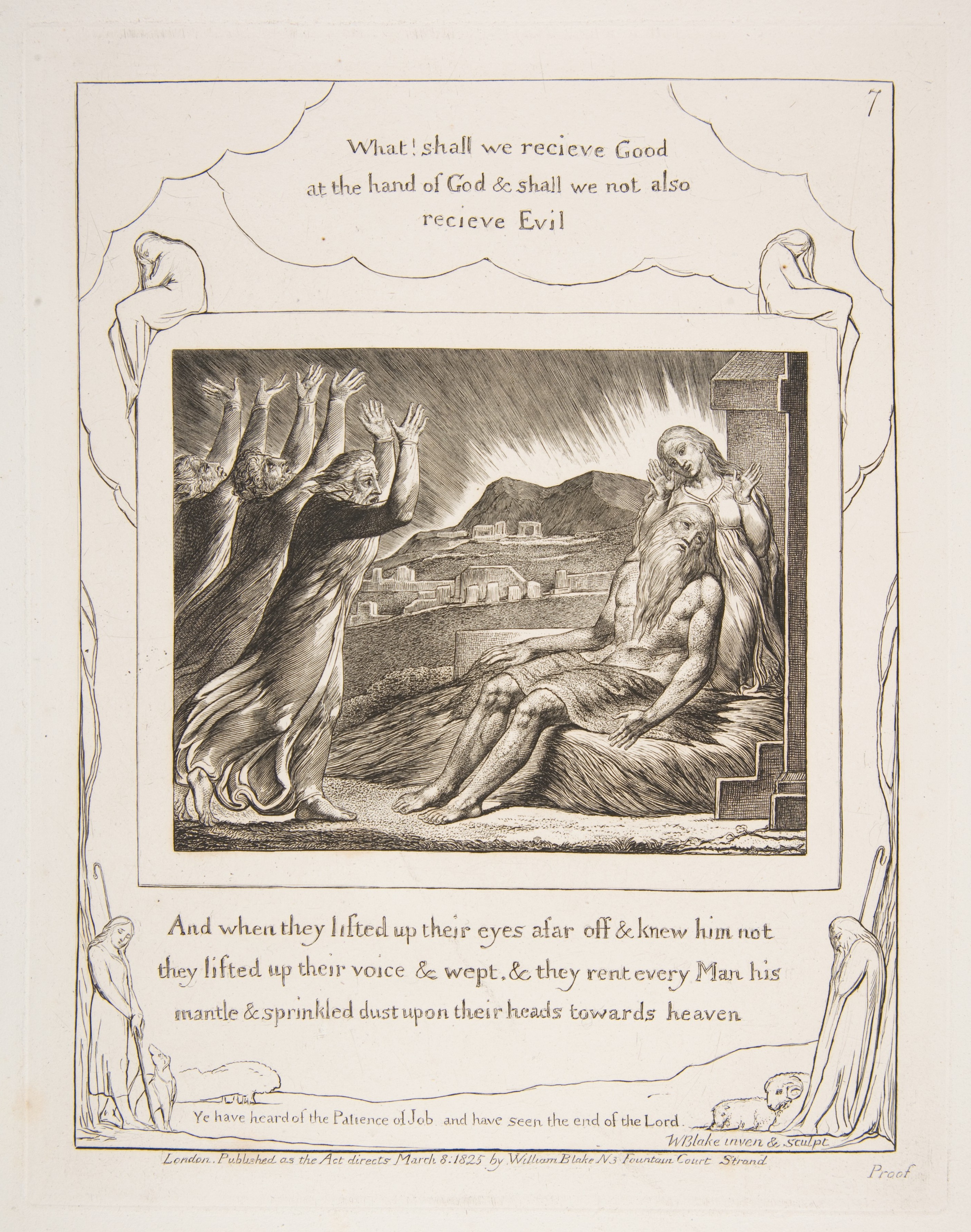
William Blake, Job’s Comforters,1825–26, engraving, Met 17.17.1–7. Later artistic reception of the friends’ arrival in Job 2; not Eliphaz’s historical appearance or an identification of one particular figure as him
Persona
Eliphaz the Temanite is one of Job’s three friends in the Hebrew book.
Variantes del nombre: Eliphaz the Temanite in Job
Contexto y fuentes →
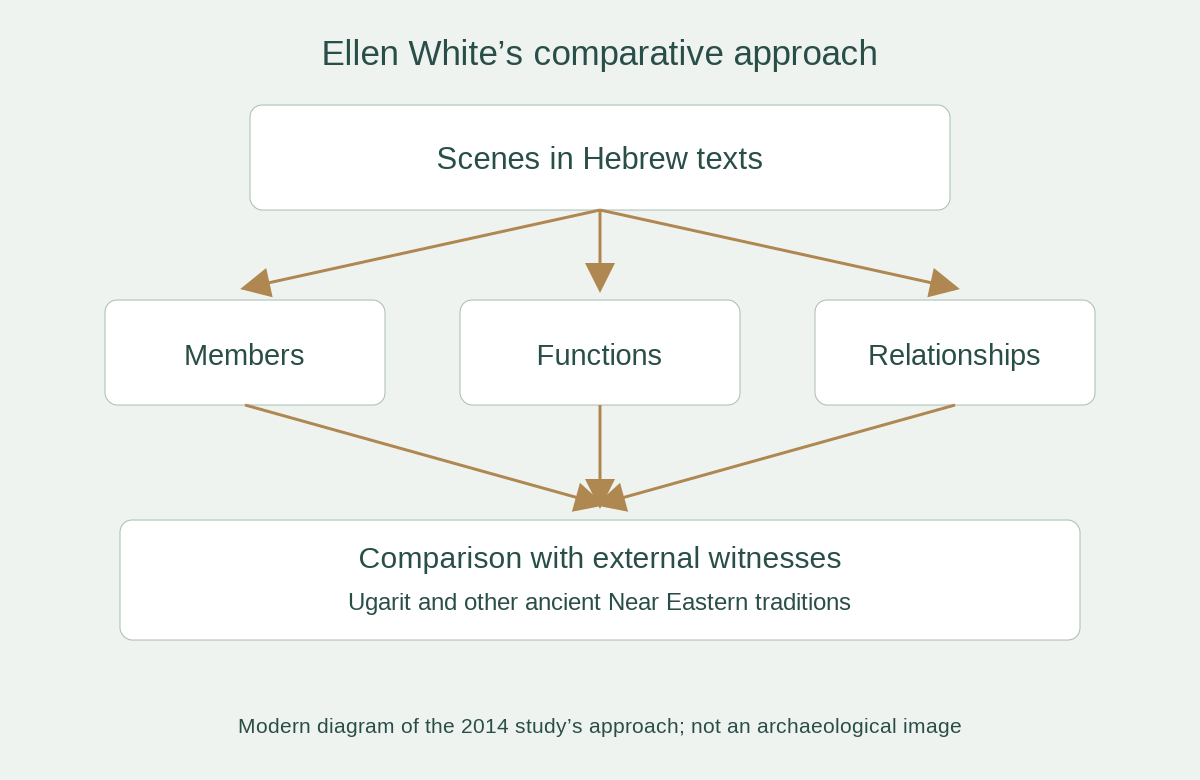
Modern diagram of Ellen White’s approach: examining members, functions and relationships in Hebrew scenes before external comparison. Not a portrait or ancient council image
Persona
Hebrew Bible scholar, born in 1978 according to her publisher, author of Yahweh’s Council: Its Structure and Membership (2014).
Variantes del nombre: Ellen White divine council
Contexto y fuentes →
Imagined papers and a library in a modern conceptual cover about the transmission of religious vocabulary; not a real Hebrew manuscript or an archaeological reconstruction
Entidad
Eloah (אֱלוֹהַּ) is a singular Hebrew noun meaning “a god” or “God,” common in Job but also used for other gods. It is not the proper name of a separate deity.
Variantes del nombre: Eloah
Contexto y fuentes →

Modern conceptual cover for reading “Elohim”: many points of light converge above blank parchment to suggest the difference between a word’s grammatical form and its referent. Digitally generated artwork, not an ancient artifact, manuscript or historical reconstruction
Entidad
A Hebrew word with plural morphology, used for “gods” or for a singular deity according to context.
Variantes del nombre: Elohim
Contexto y fuentes →
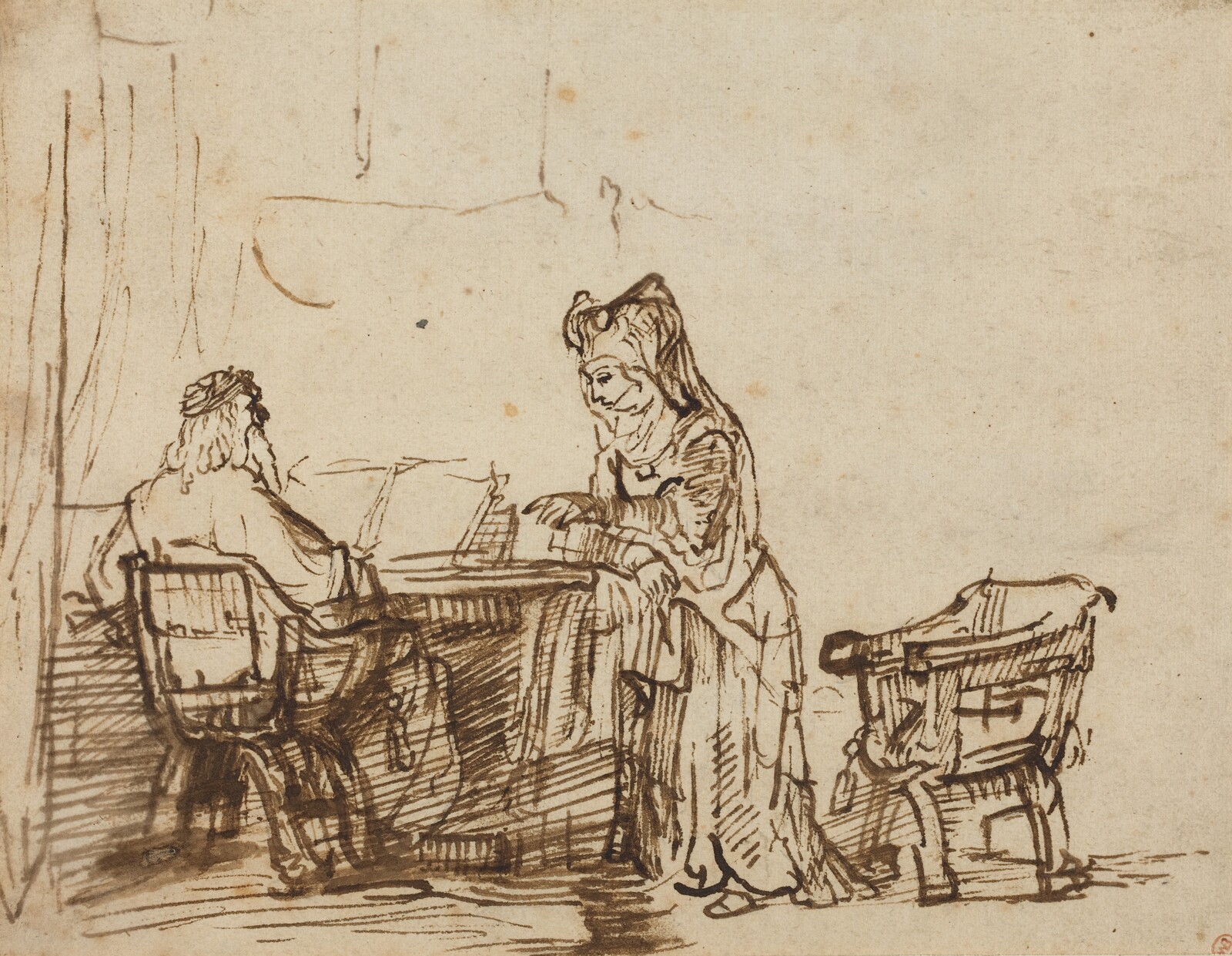
Eli and Hannah in an anonymous drawing after Rembrandt (1606–1669). A later rendering of their conversation, not contemporary portraiture. National Gallery of Art, 1942.9.667
Persona
Priest in 1 Samuel who speaks with Hannah; his sons are called “sons of Belial” in an account of abuses concerning offerings.
Variantes del nombre: Eli the priest
Contexto y fuentes →
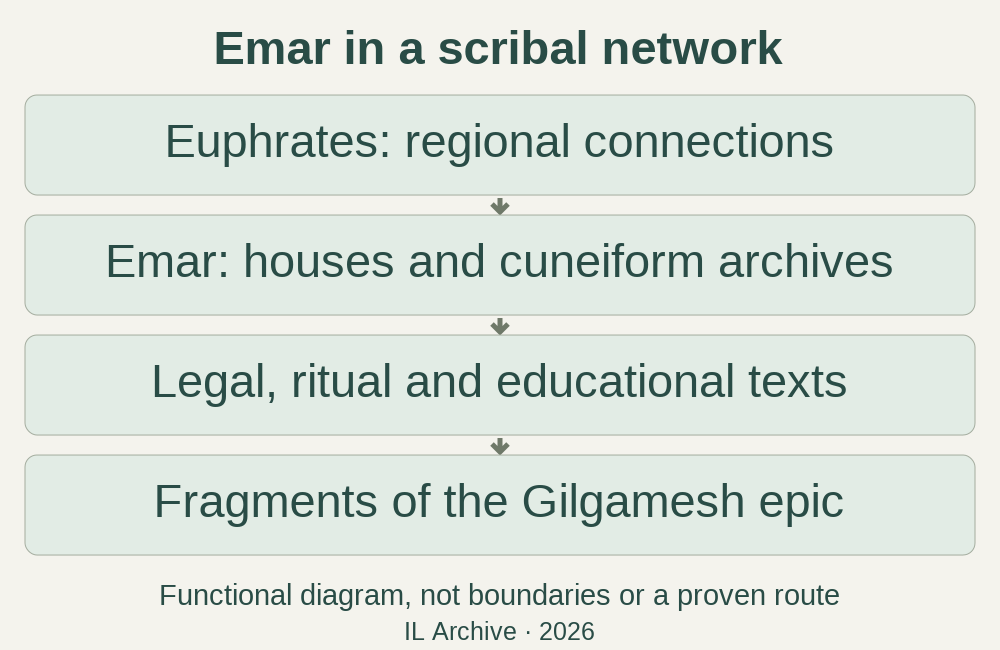
Modern diagram linking Emar’s location and archive functions; does not assert a specific Eden transmission route
Yacimiento
Ancient Euphrates city in Syria with Late Bronze Age cuneiform archives and Gilgamesh fragments.
Variantes del nombre: Emar, ancient Meskene, Emar
Contexto y fuentes →
Persona
Scholar of Greek and Sanskrit epics and professor of History and Classics at St. Catherine University.
Variantes del nombre: Emily Blanchard West
Contexto y fuentes →
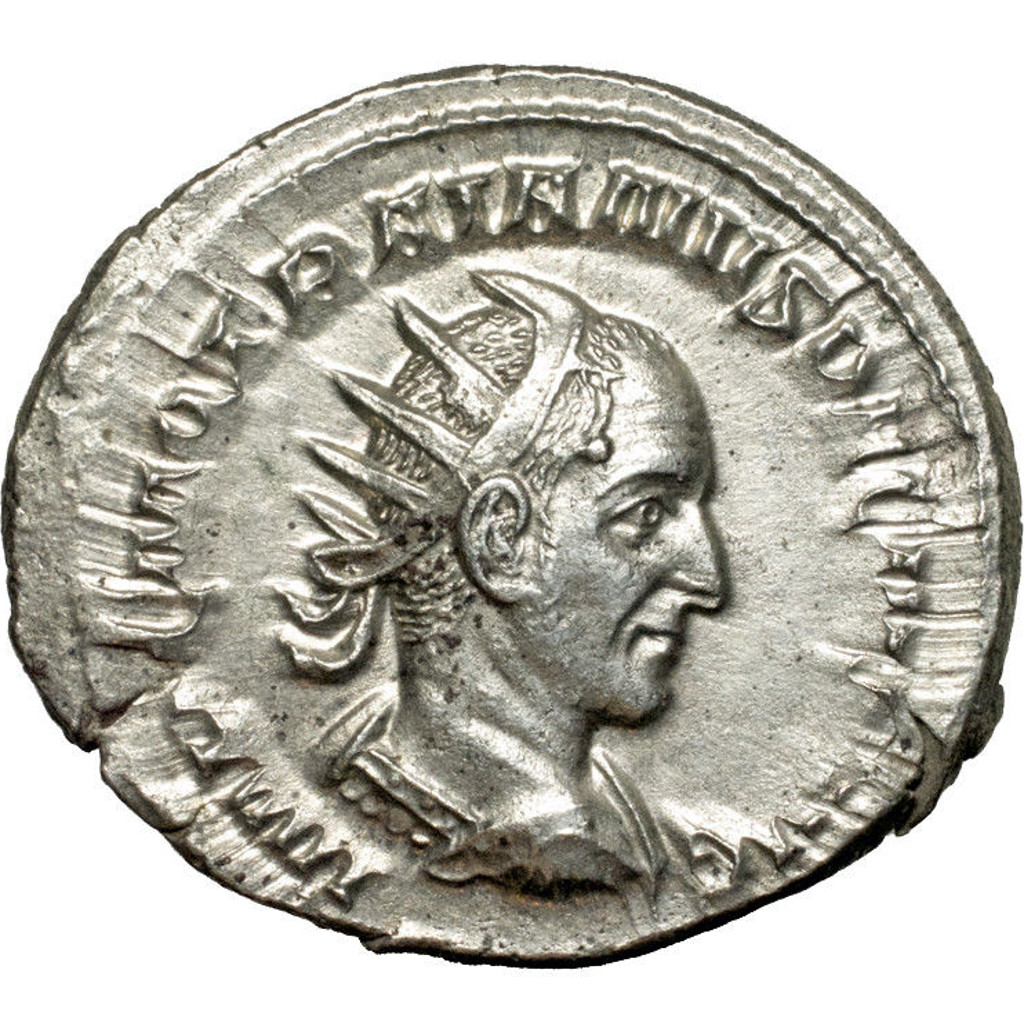
Antoninianus of Decius (249–251 CE), showing his portrait and the reverse. It documents his reign; it is not a coin proven to have been used in the Sleepers story. Velatrix, CC0
Persona
Roman emperor who ruled in 249–251 CE; the Sleepers narratives set their persecution in his reign.
Variantes del nombre: Decius, Trajan Decius
Contexto y fuentes →

A modern AI-generated symbolic image of light and human fabric for the idea of incarnation; neither a manuscript, artifact, nor a historically verified depiction of Jesus
Entidad
Christian belief that God’s Word assumed genuinely human existence in Jesus Christ; early formulations differ from later conciliar definitions and from mere divine appearances.
Variantes del nombre: Christian incarnation
Contexto y fuentes →
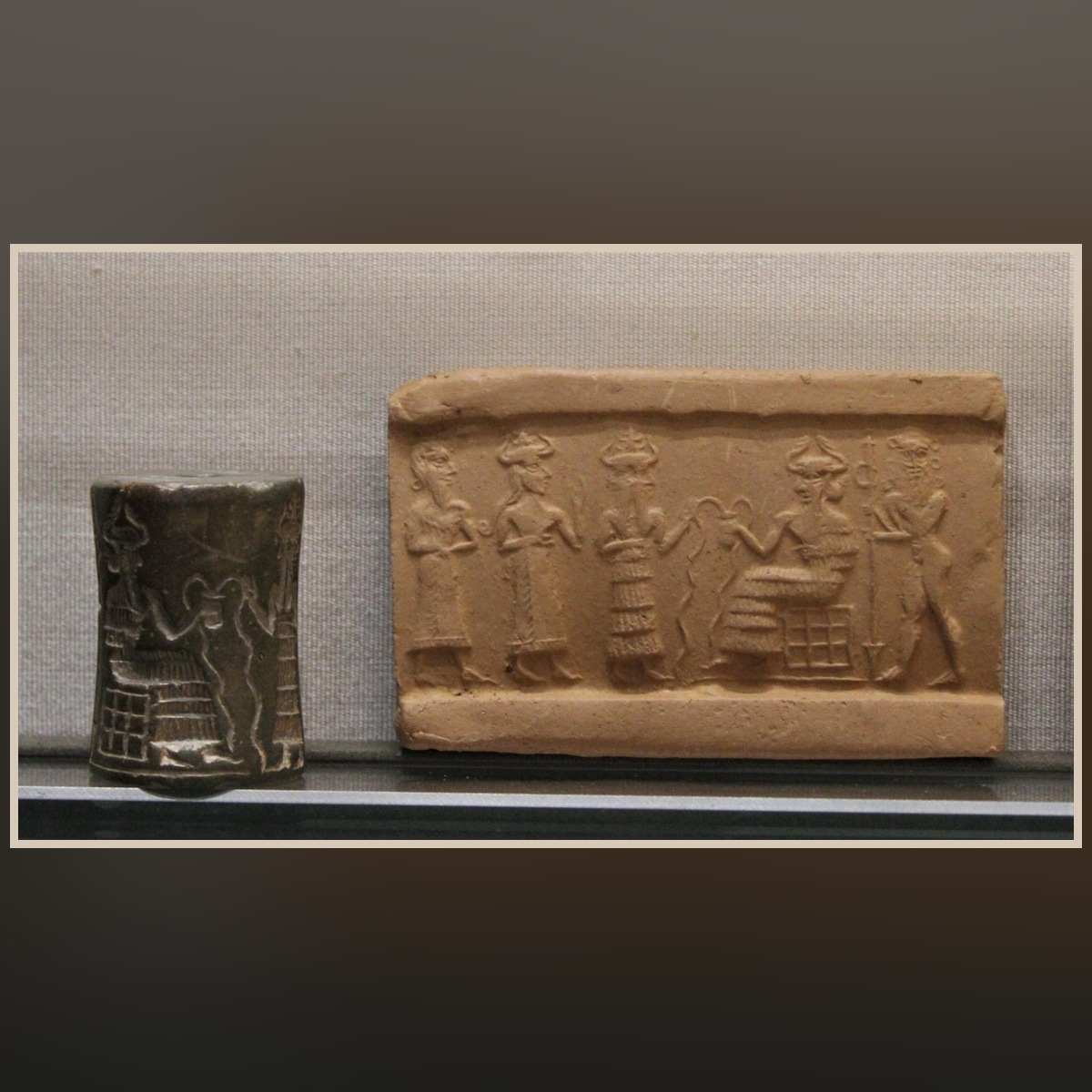
Akkadian cylinder seal MNB 1905 and a modern impression of its design, Louvre, c. 2340–2200 BCE. Newly squared and framed presentation of Zunkir’s photograph, with blurred background; seal and impression are fully retained. Not a depiction of Eridu’s earliest temple
Entidad
Mesopotamian deity also known as Ea, linked with Eridu and the Abzu (deep fresh waters), wisdom, incantations, and narratives of creation and cosmic order. Later written attestations do not identify the deity of Eridu’s earliest layers.
Variantes del nombre: Enki, Ea, Nudimmud
Contexto y fuentes →
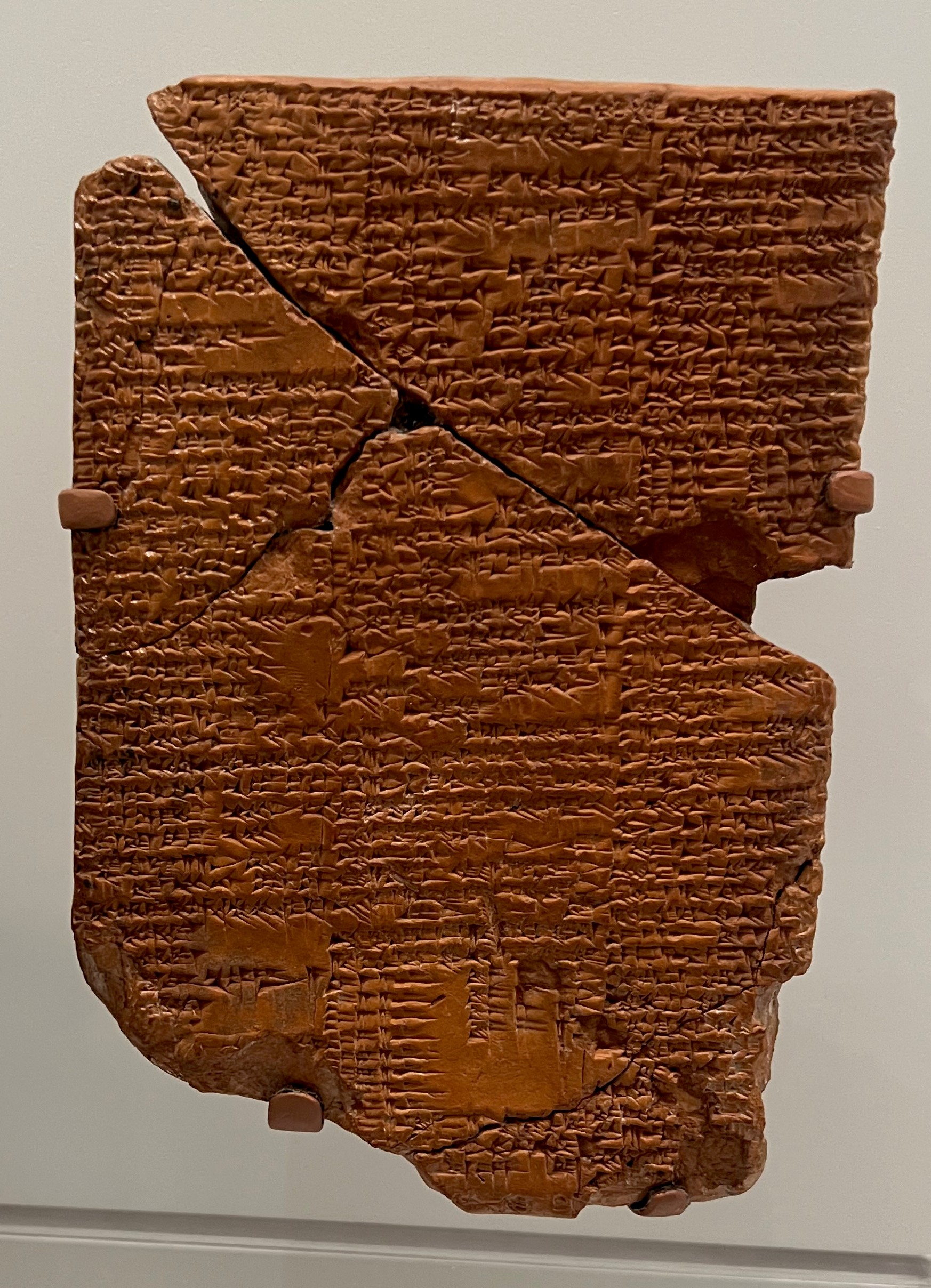
Enki and Ninhursaga tablet CBS 4561 from Nippur, about 1900–1600 BCE, Penn Museum. Photograph by Onceinawhile, 26 August 2022; one ancient witness, not every manuscript in the composite edition
Texto antiguo
Sumerian poem preserved in Old Babylonian copies, concerning Dilmun, water, birth and Enki’s illness and healing.
Variantes del nombre: Enki and Ninhursaga, Sumerian poem
Contexto y fuentes →
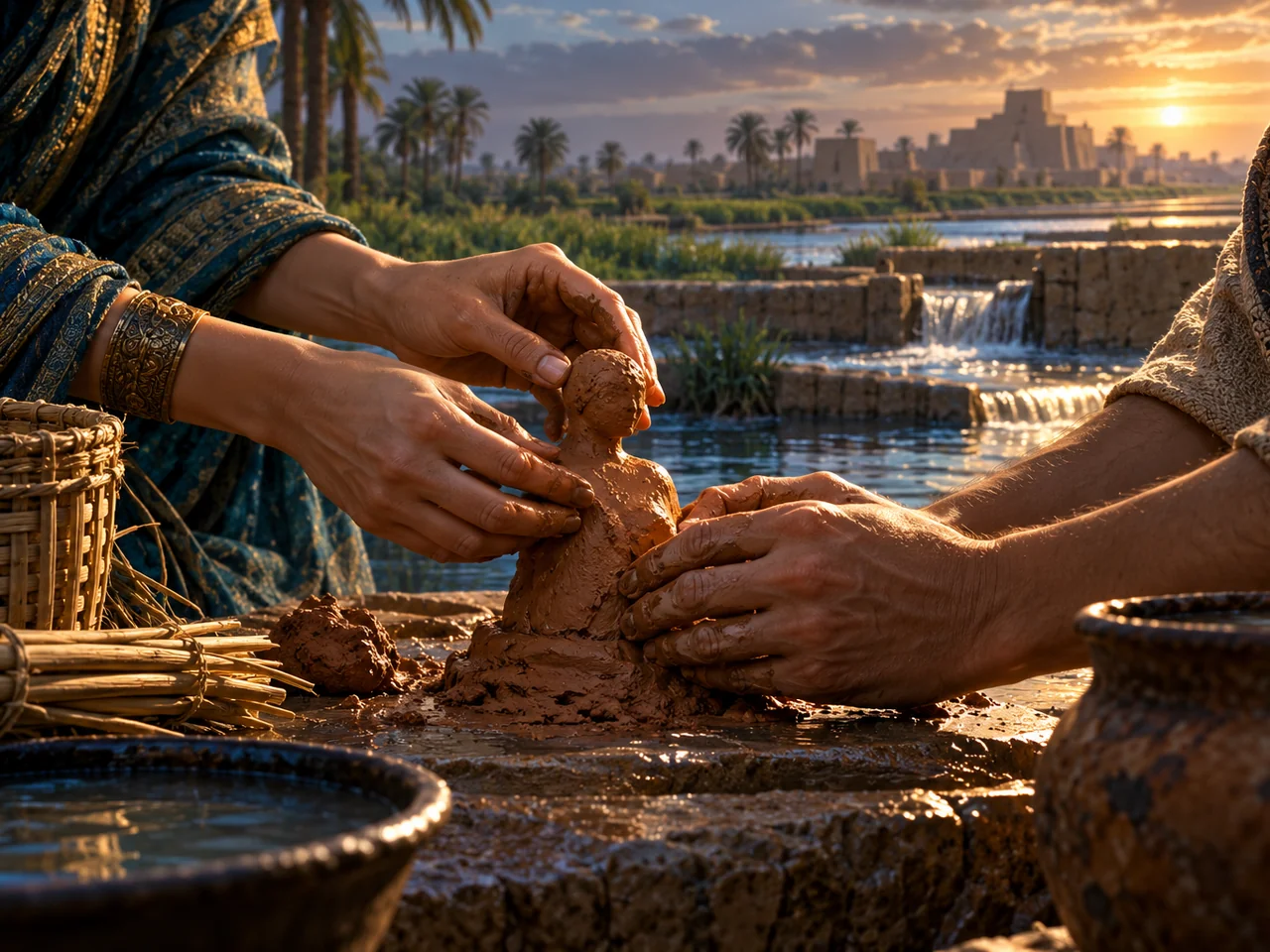
Modern interpretive illustration of shaping a human from clay, with water and baskets evoking the work in “Enki and Ninmaḫ”. AI-generated; not an ancient artifact or an authenticated reconstruction of the gods or setting
Texto antiguo
Sumerian work on humanity’s creation to relieve the gods’ labour, and Enki and Ninmaḫ’s contest over bodies, destinies and sustenance; with manuscript evidence, variant readings and dating limits.
Variantes del nombre: Enki and Ninmah, Enki and Ninmaḫ
Contexto y fuentes →
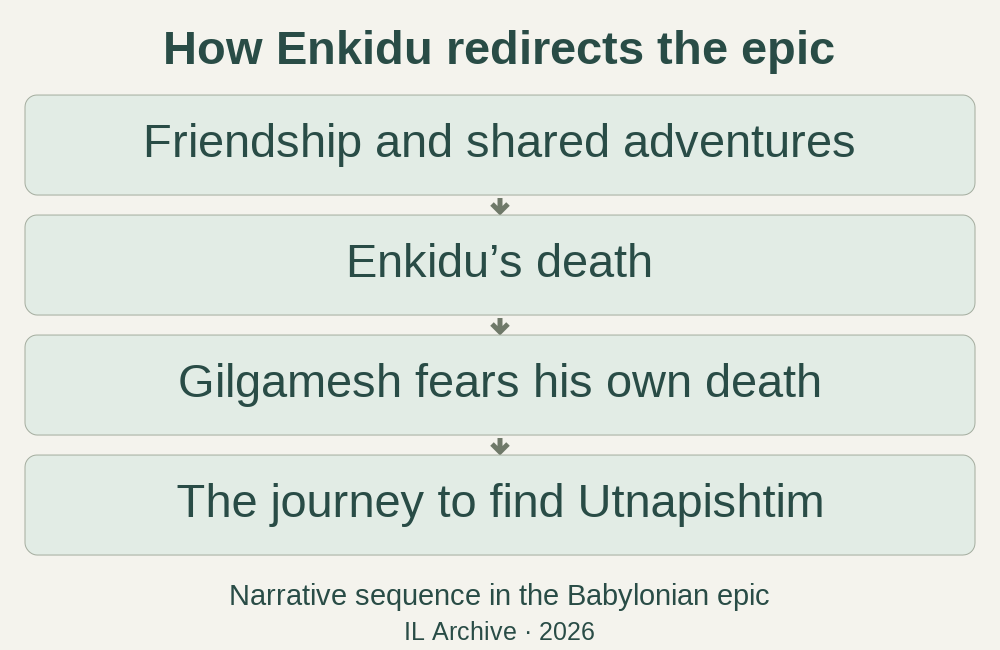
Modern explanatory diagram of narrative sequence and Enkidu’s role, not an ancient image or portrait
Persona
Gilgamesh’s companion in the Babylonian epic; his death sets the king searching for life beyond mortality.
Variantes del nombre: Enkidu, Gilgamesh’s companion, Enkidu
Contexto y fuentes →
Modern AI-generated imaginative scene of terraced sacred architecture in a riverine Mesopotamian-inspired landscape. Not a Nippur photograph, a verified reconstruction of Ekur, or an image of Enlil
Entidad
Enlil/Ellil: a major Mesopotamian god associated with destinies, kingship, and Ekur at Nippur, already prominent in third-millennium god lists. His name’s origin and cult beginnings remain debated.
Variantes del nombre: Enlil, Ellil, Nunamnir
Contexto y fuentes →

Modern AI-generated symbolic cover: an empty dais and a luminous sign of authority evoke Enlilship; neither an archaeological object nor an established reconstruction
Entidad
An Akkadian designation for Enlil’s paramount standing, granted to Marduk in Hammurabi’s prologue; it does not make the two gods identical.
Variantes del nombre: ellilūtu, Enlilship
Contexto y fuentes →

New AI-generated symbolic cover evoking Sippar’s sun, a storm, and oil observed upon water; not an ancient artifact or historical portrait of Enmeduranki
Entidad
Antediluvian king in Mesopotamian traditions, named in a Sumerian king list and depicted by an Akkadian legend as a transmitter of divinatory knowledge; distinct from Utuabzu and Enoch.
Variantes del nombre: Enmeduranki, En-men-dur-ana
Contexto y fuentes →
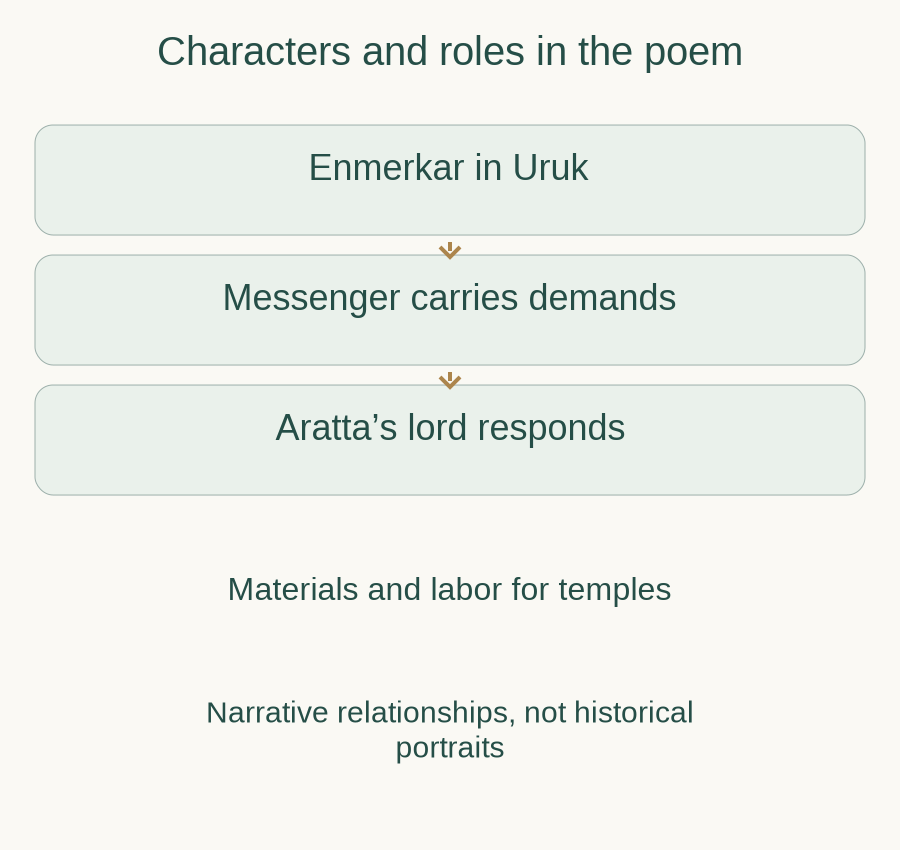
Modern IL Archive explanatory diagram: Characters and roles in the poem. Not a reproduction of an ancient artifact
Persona
Enmerkar is a ruler of Uruk in Sumerian literature and the protagonist of a poem about rivalry with Aratta’s lord.
Variantes del nombre: Enmerkar
Contexto y fuentes →
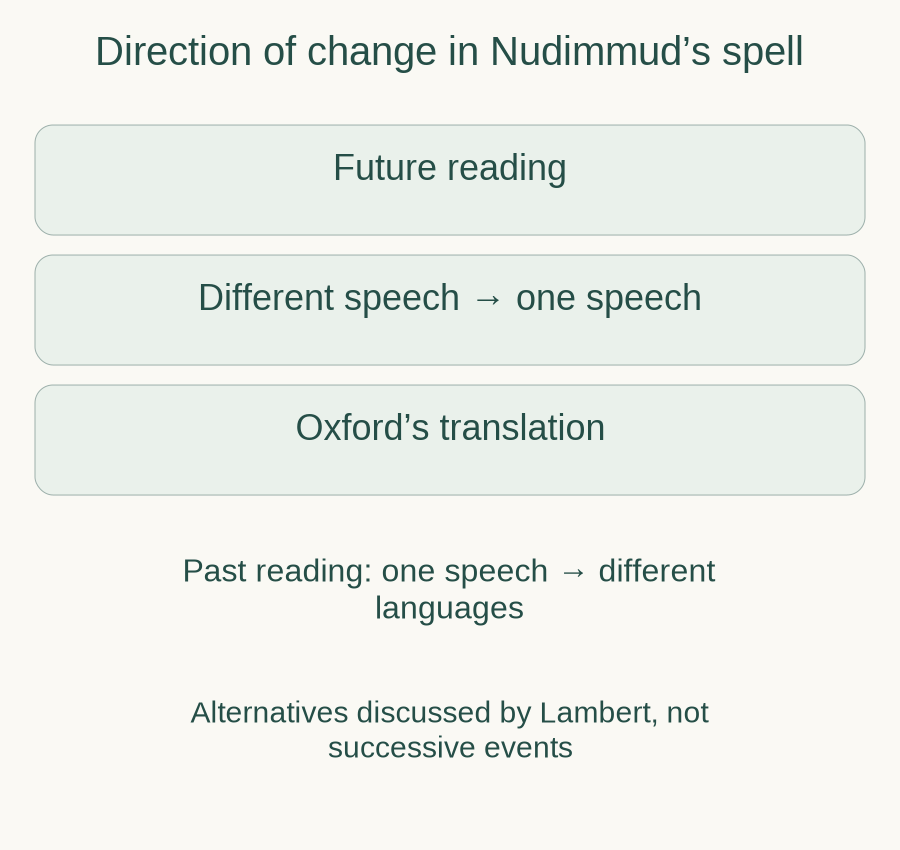
Modern IL Archive explanatory diagram: Direction of change in Nudimmud’s spell. Not a reproduction of an ancient artifact
Texto antiguo
A Sumerian poem of rivalry, messages and temples, containing an incantation about the speech of different peoples.
Variantes del nombre: Enmerkar and the Lord of Aratta
Contexto y fuentes →
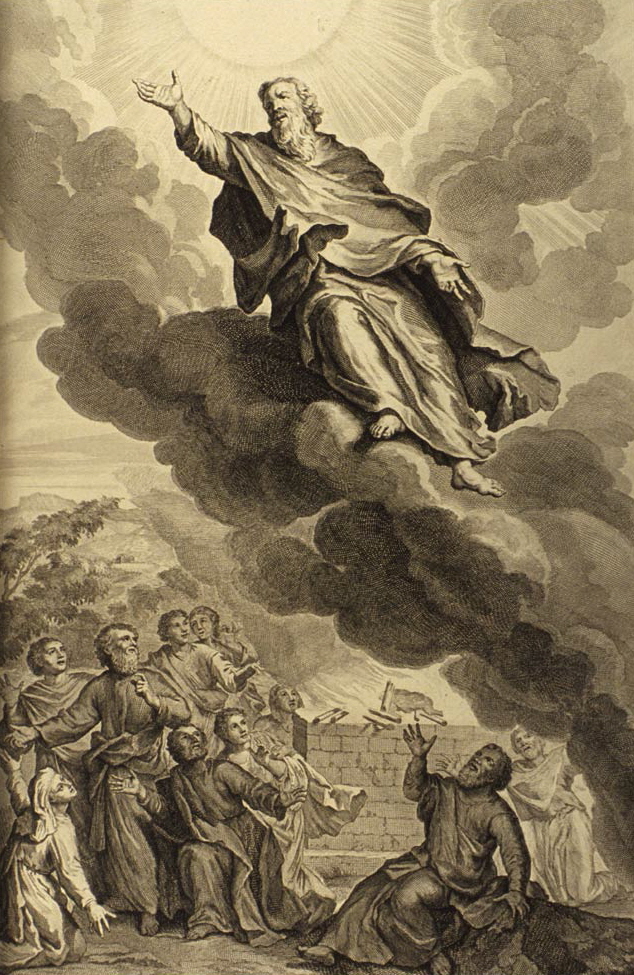
God took Enoch, an artistic interpretation of Genesis 5:24 in Figures de la Bible, The Hague, 1728. Illustrations by Gerard Hoet and others; evidence of later artistic reception
Persona
Enoch son of Jared is a figure in the genealogy of Genesis 5, seventh when counted from Adam.
Variantes del nombre: Enoch son of Jared
Contexto y fuentes →
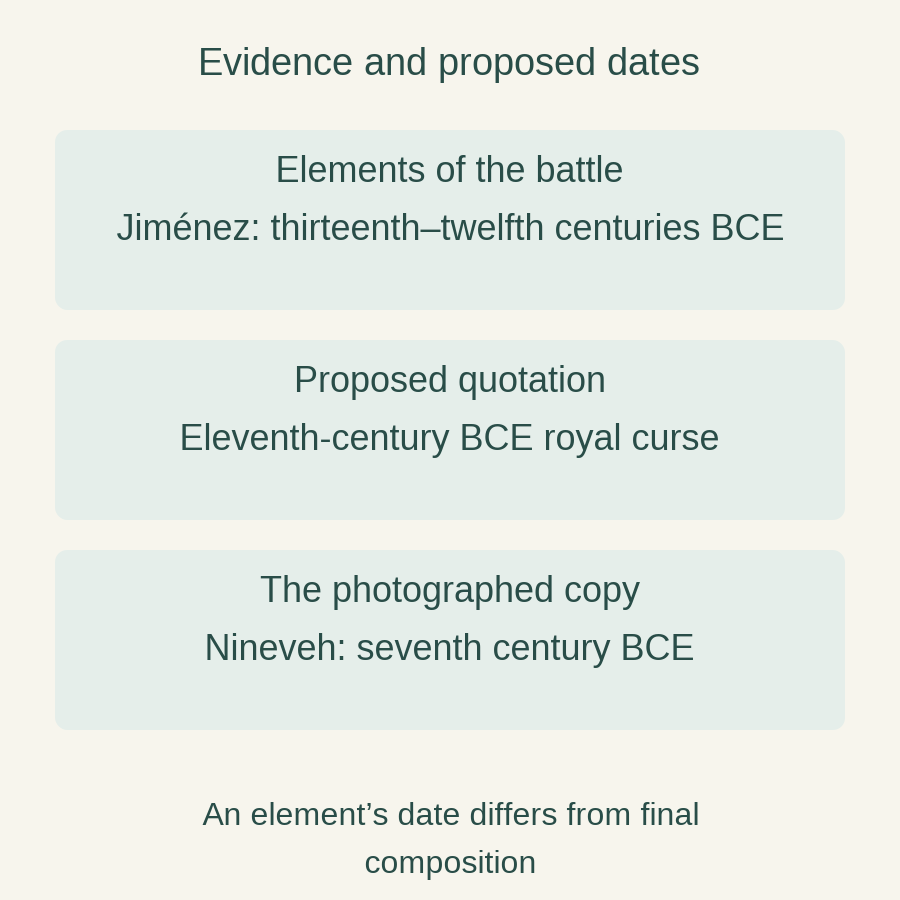
Modern diagram distinguishing a tradition’s elements, a proposed quotation and the surviving copy; not a portrait of Jiménez
Persona
Assyriologist and scholar of Babylonian literature, professor of ancient Oriental languages at LMU Munich, working on reconstructing and dating cuneiform texts.
Variantes del nombre: Enrique Jiménez
Contexto y fuentes →
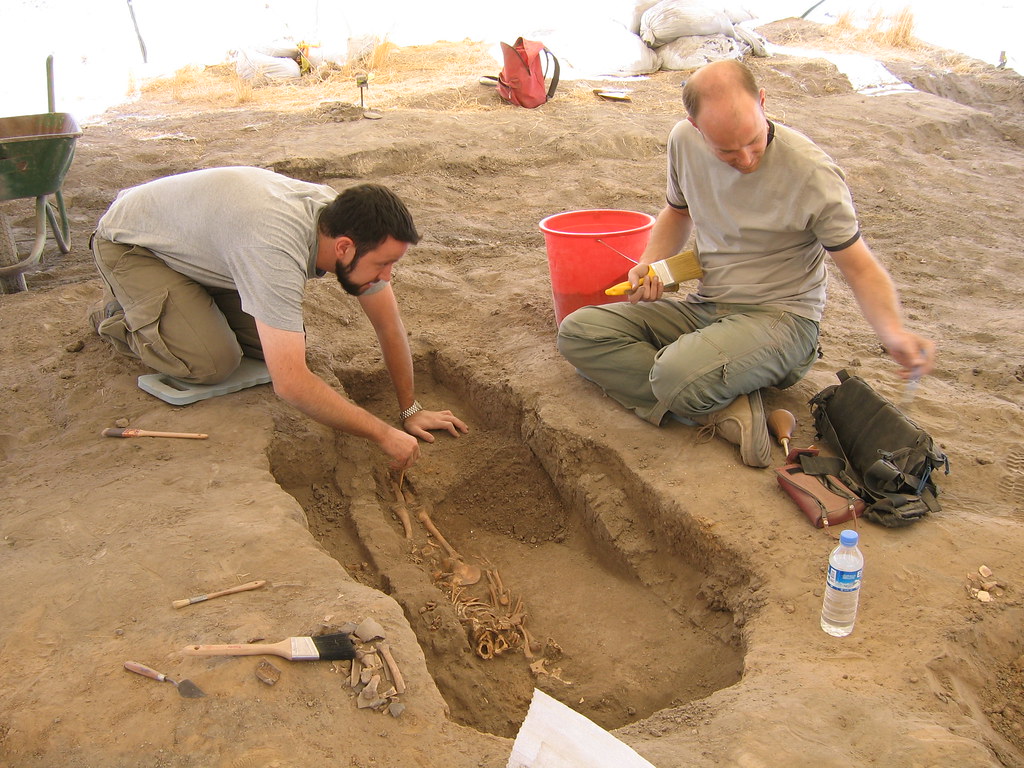
Excavation of a child burial at Çatalhöyük, 30 July 2006. A photograph of modern archaeological work; it does not by itself establish the grave’s date or relation to house-use phases
Entidad
Deposition of the dead within a settlement’s built area; burial beneath a domestic floor is one form.
Variantes del nombre: intramural burial, subfloor burial
Contexto y fuentes →
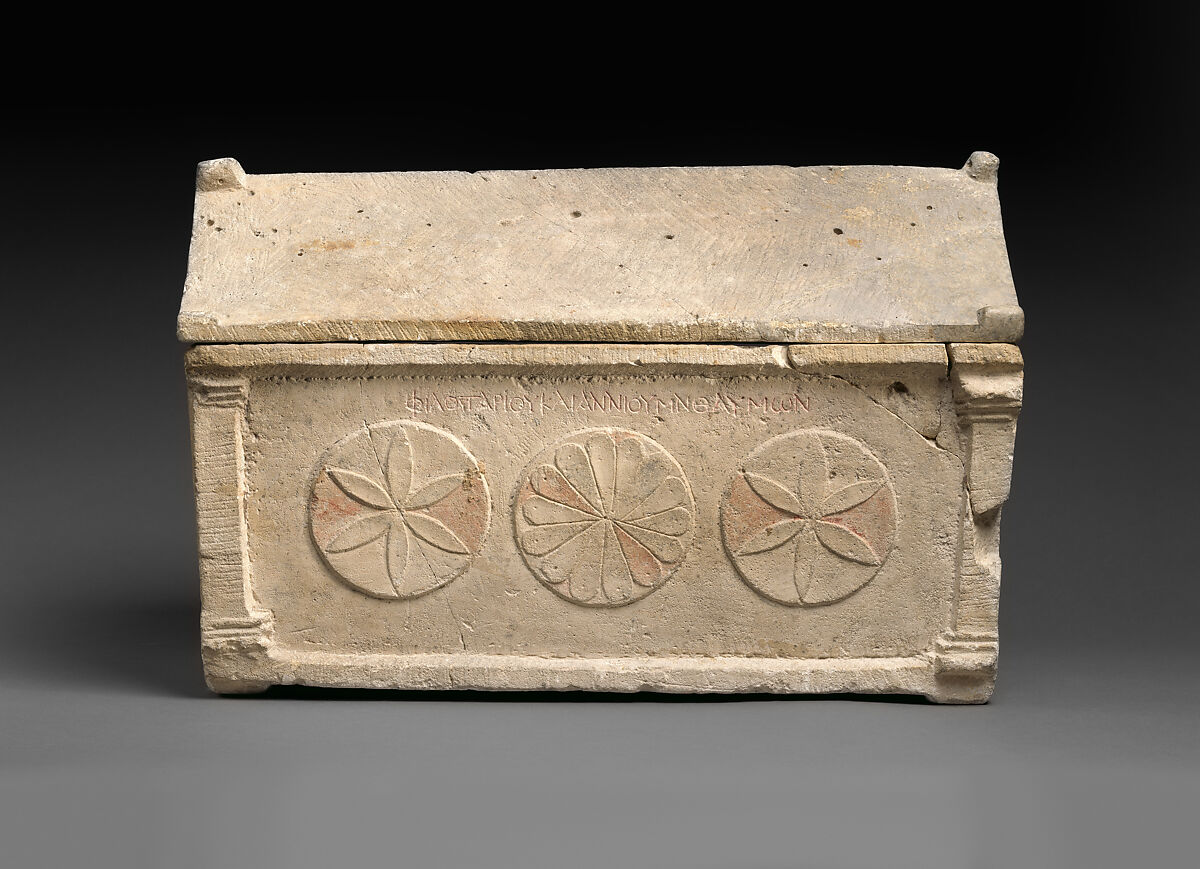
Limestone ossuary with lid, ca. 1st century BCE–1st century CE, Metropolitan Museum of Art, X.248.11a, b. A later example of collecting remains, not a Natufian or Neolithic burial
Entidad
Redeposition of human remains or selected elements after an earlier stage of treatment; established from context, not disarticulation alone.
Variantes del nombre: secondary burial, redeposition of human remains
Contexto y fuentes →
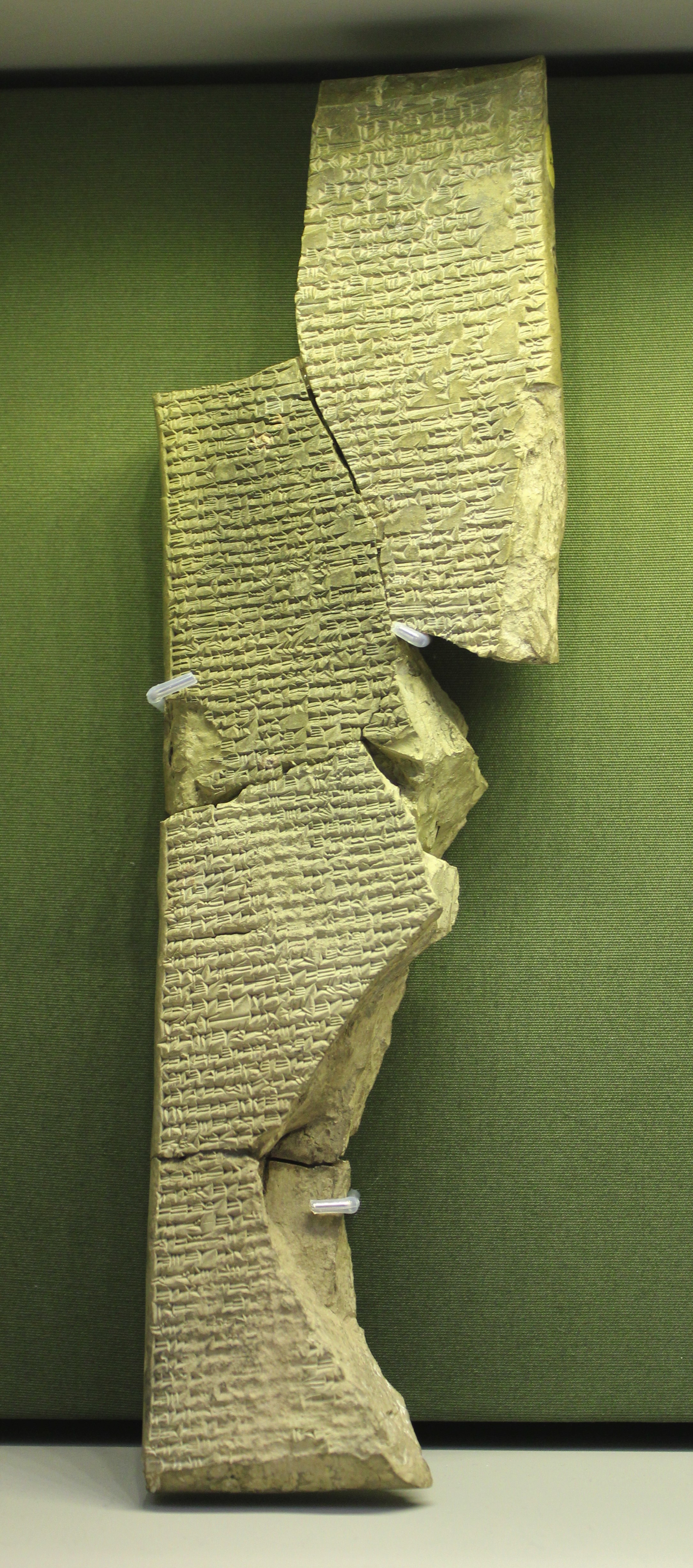
Joined fragments of Tablet III of Enuma Elish, from Neo-Assyrian Nineveh, British Museum (K.3473+ group; CDLI P365283). This is a partial manuscript of the poem, not the witness to the human-creation passage in Tablet VI. Photograph, 2020
Entidad
A seven-tablet Babylonian creation poem in Akkadian, recounting Marduk’s rise, victory over Tiamat, cosmic ordering and human creation, and culminating in praise through fifty names. Its composition date is debated; later manuscripts and recitation traditions preserve it.
Variantes del nombre: Enuma Elish, Enūma eliš, Babylonian Epic of Creation
Contexto y fuentes →
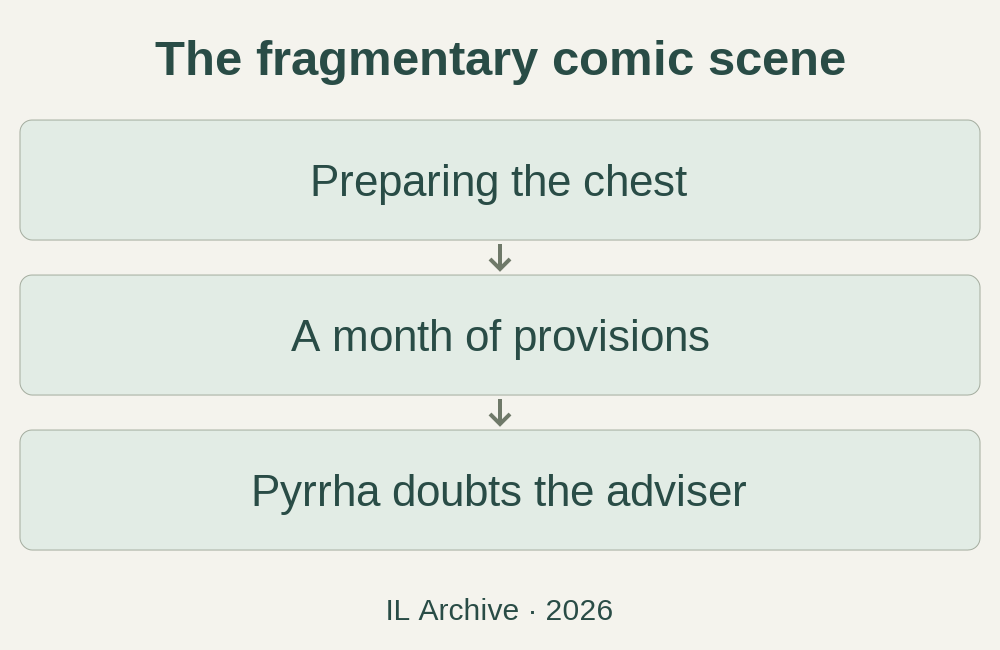
Modern explanatory diagram of one literary witness’s sequence or relationships, not a manuscript, portrait or demonstrated transmission route
Persona
Comic poet active in the early fifth century BCE, whose fragments preserve an early Pyrrha and Deucalion treatment.
Variantes del nombre: Epicharmus, Greek comic poet
Contexto y fuentes →
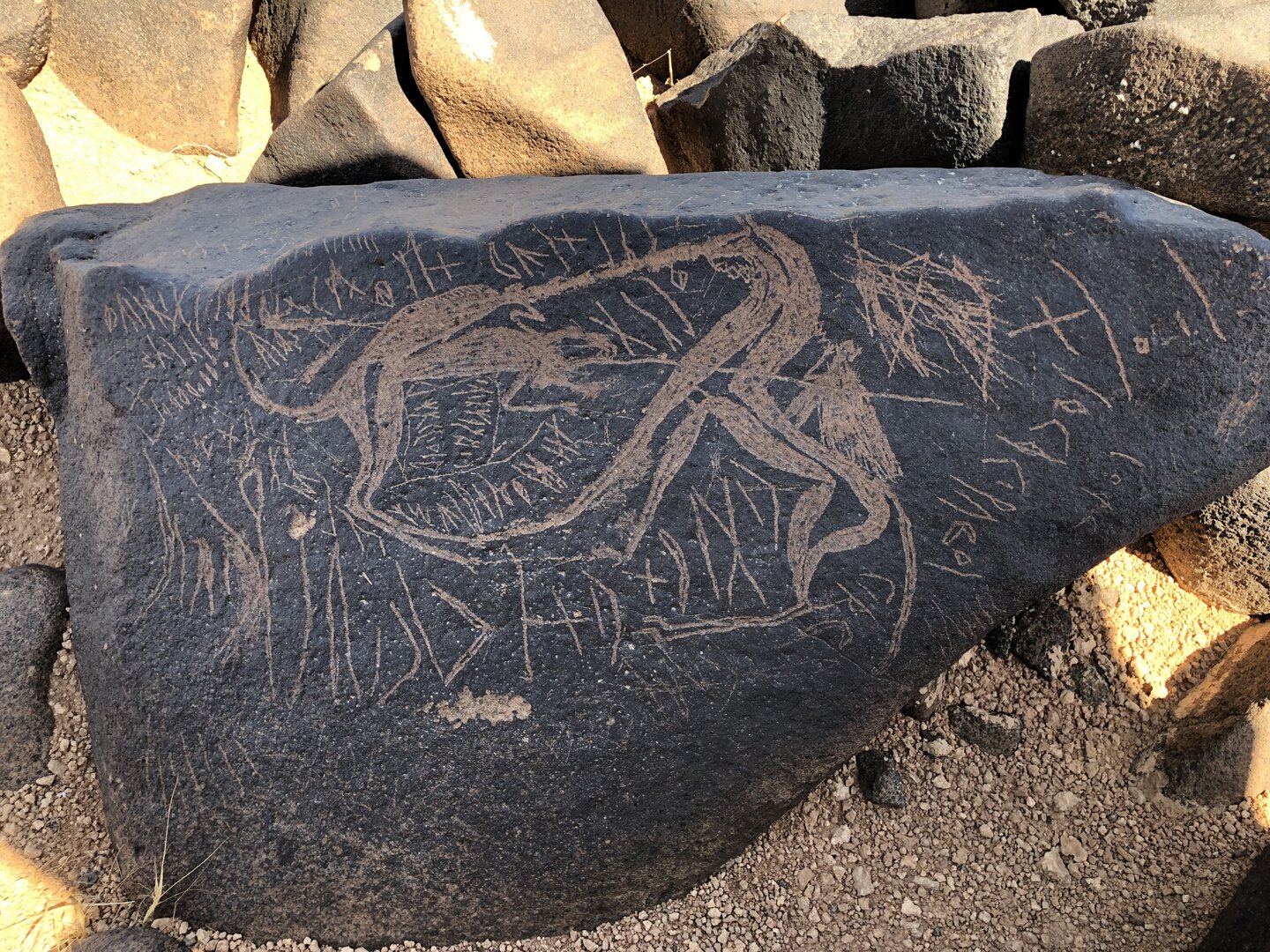
BES19s 77.1, Firʿ Wadi al-Khudari, Mafraq, Jordan. Its reading invokes Allat and then Allah. This photograph shows stone and writing; animal and human drawings are not identified as depictions of these deities. Original preserved without cropping or alteration
Entidad
The study of writing preserved on physical objects and monuments: its documentation, reading, dating, translation, material context and historical interpretation.
Variantes del nombre: epigraphy
Contexto y fuentes →

Modern AI-generated conceptual cover: an imagined traveller above an invented river city, walls and temple. Not the historical Gilgamesh, an ancient artifact or an evidence-based reconstruction of Uruk
Entidad
A Babylonian literary work with multiple recensions, preceded by separate Sumerian poems on Uruk’s king and Enkidu. Its standard form explores friendship, death, the flood and the limits of seeking eternal life.
Variantes del nombre: Epic of Gilgamesh, Gilgamesh epic
Contexto y fuentes →