Ani ante la balanza Capítulo 1
El pesaje del corazón
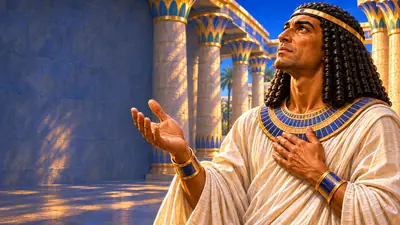
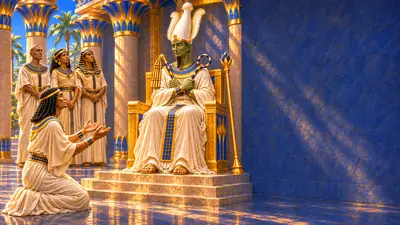
Ani se dirige a su corazón antes del pesaje. Después Tot y la asamblea de los dioses hablan del resultado. Horus conduce a Ani ante Osiris. Tras la presentación de Horus, Ani formula su propia súplica.
FuentesPase las páginas con las flechas, el teclado o deslizando el dedo.
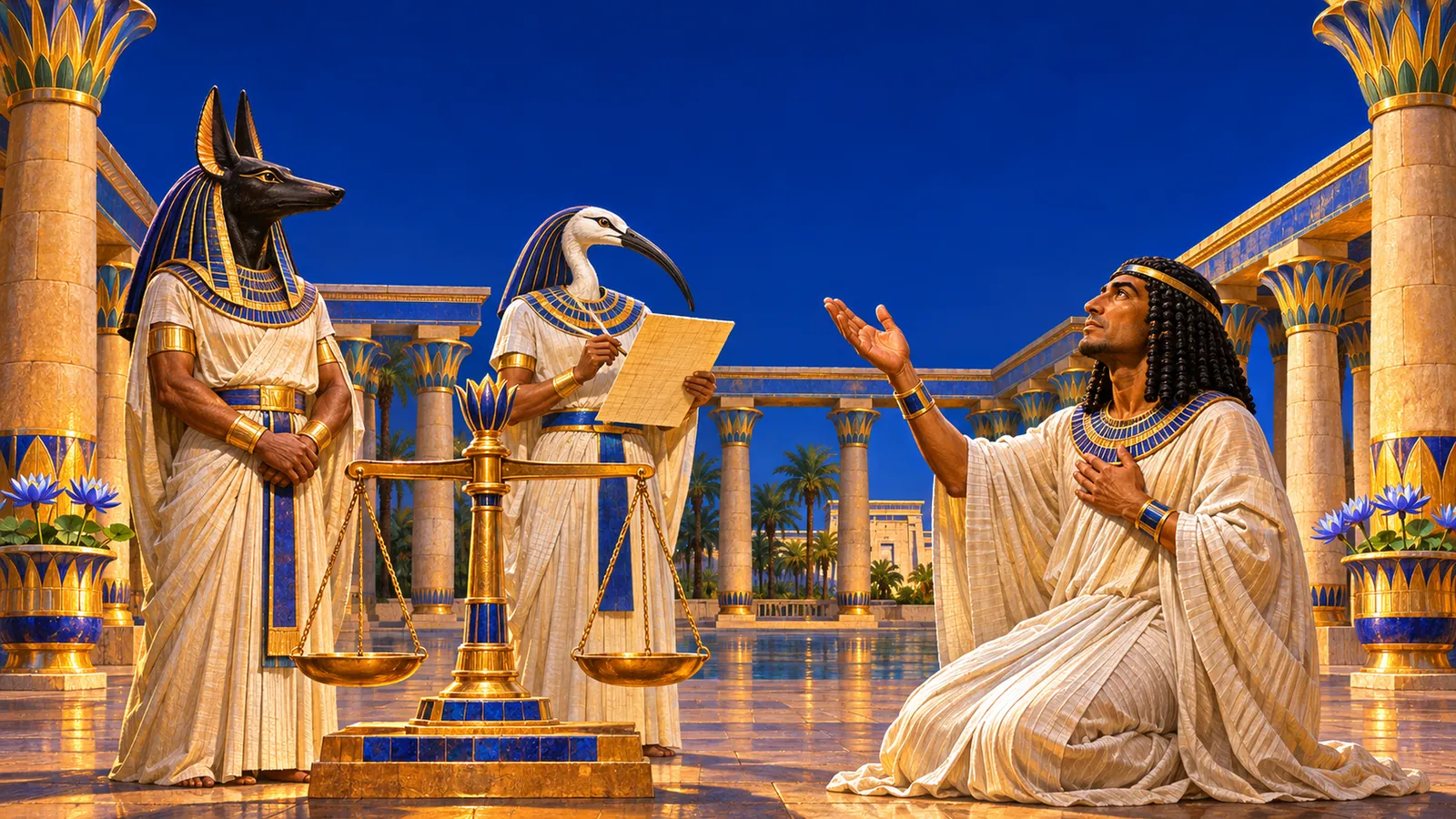
ANI ANTE LA BALANZA
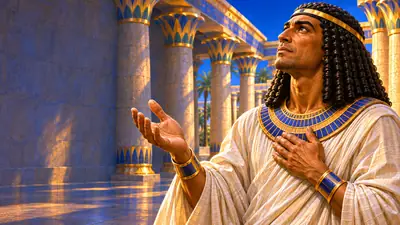
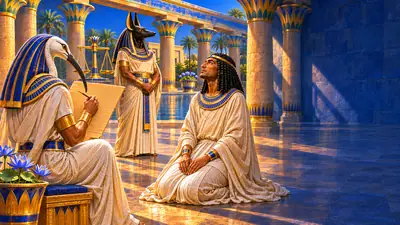
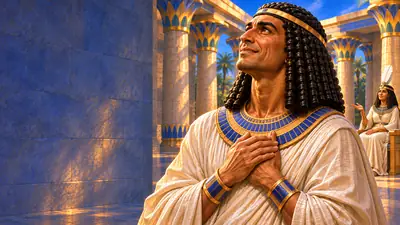
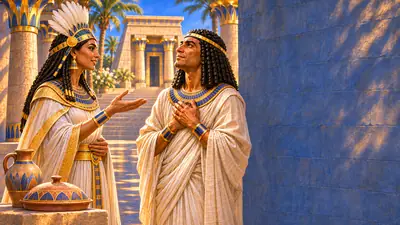
Antes del pesaje, Ani se dirige a su corazón. Lo llama dos veces su madre y dice después que por ese corazón llegó a existir.
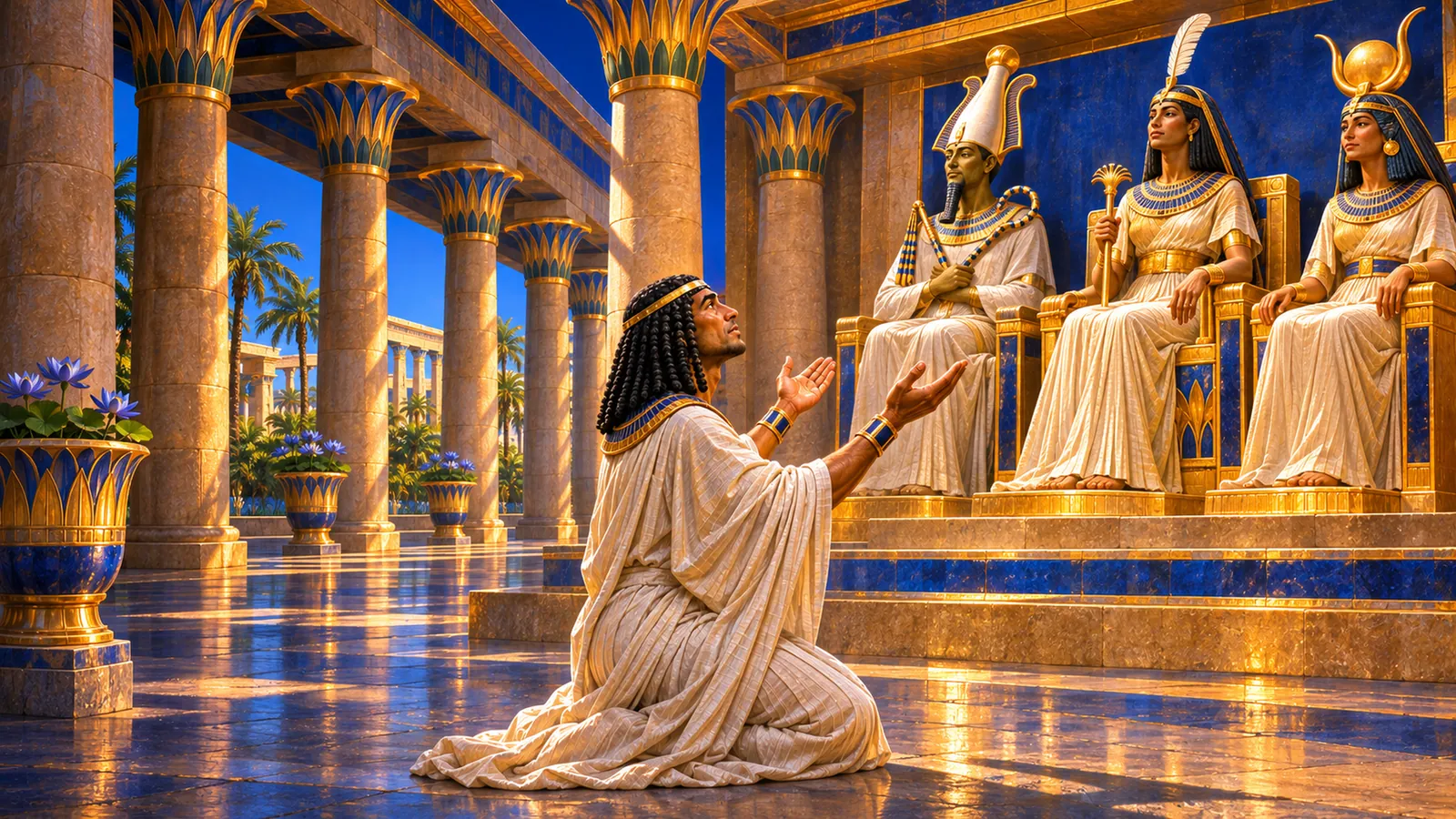
Pide que nada se alce contra él durante el juicio. Pide no encontrar oposición ante los príncipes soberanos.
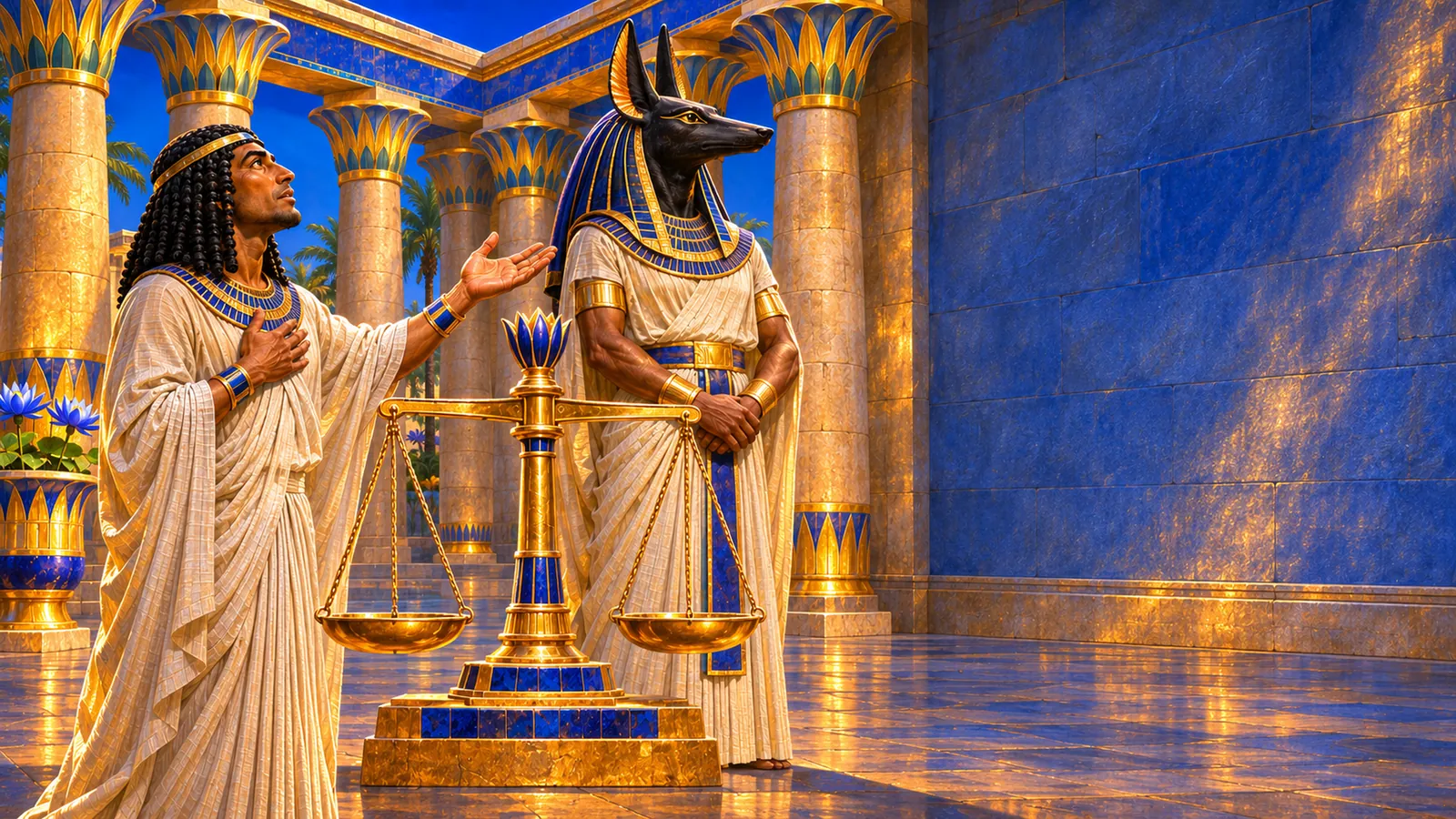
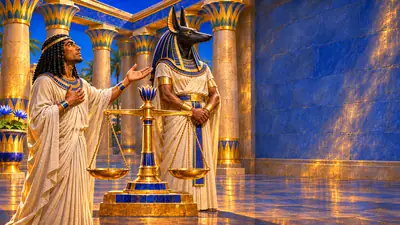
Ante el guardián de la Balanza, Ani pide que no lo separen de su corazón.
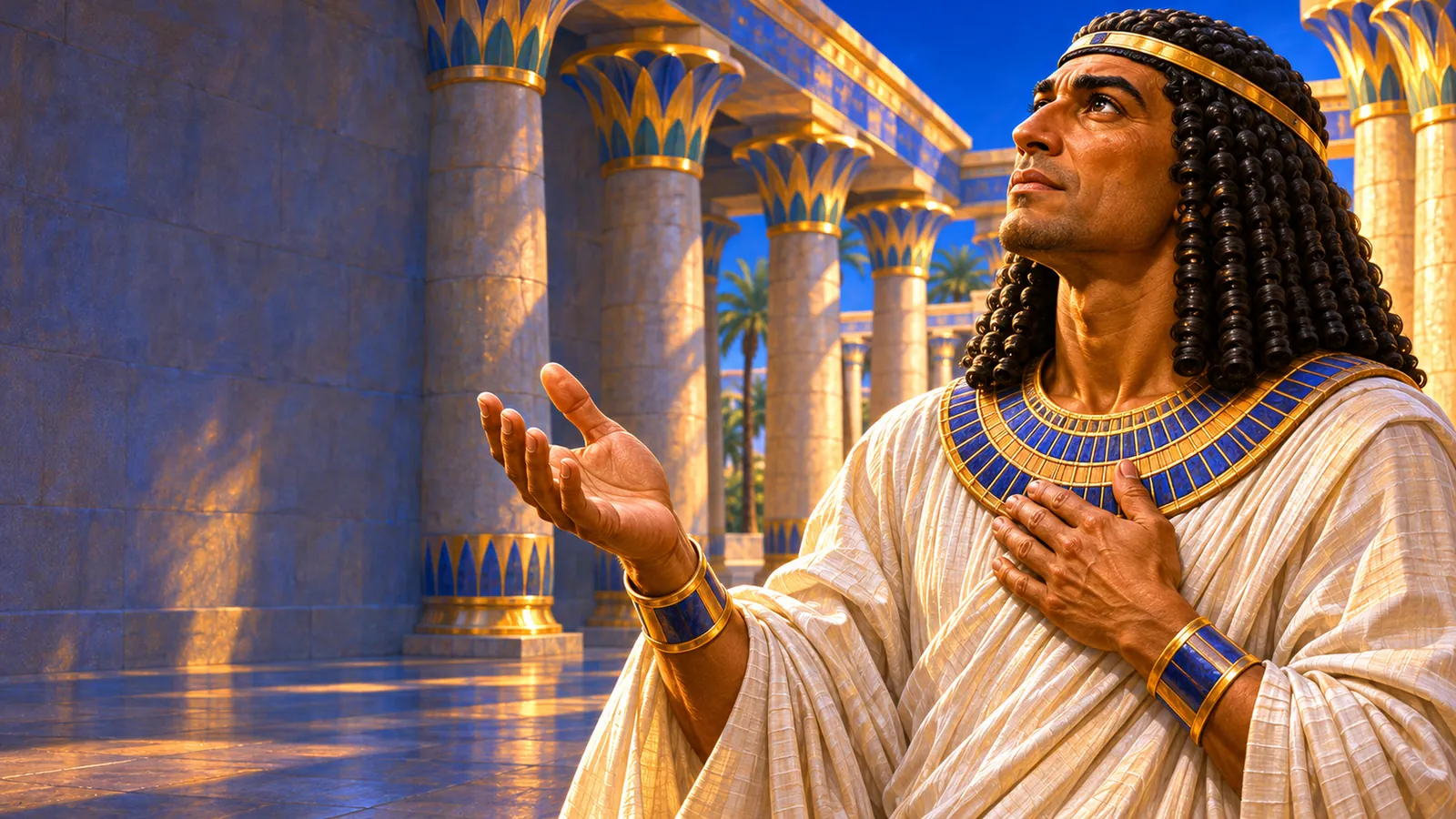
Ani sigue dirigiéndose a su corazón y le dice que es su ka, el que mora en su cuerpo.
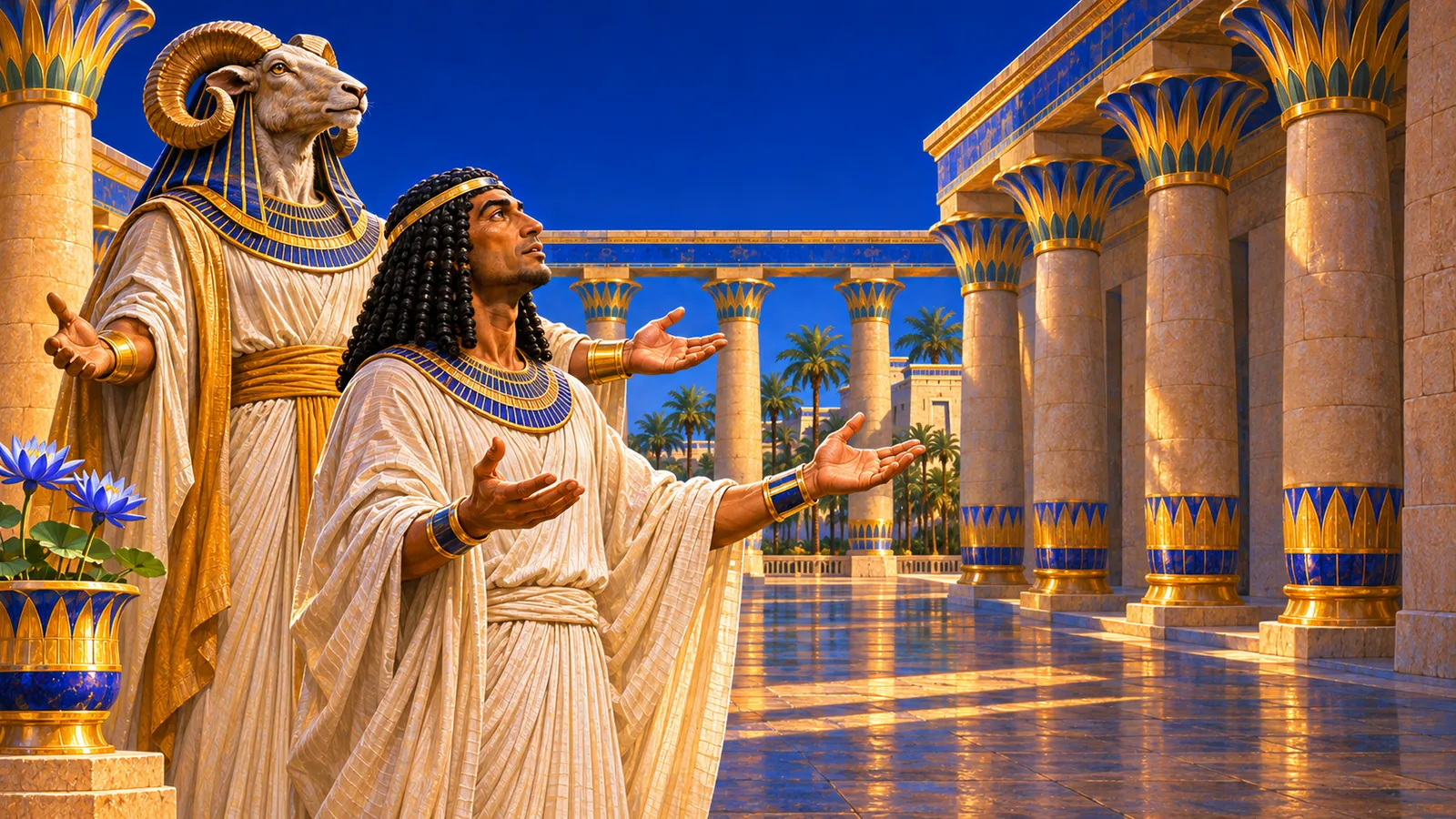
En la misma súplica, Ani también llama a su corazón el dios Khnemu, que une y fortalece sus miembros.

Ani pide a su corazón que salga al lugar de la felicidad, al que, según dice, se encaminan los dos.
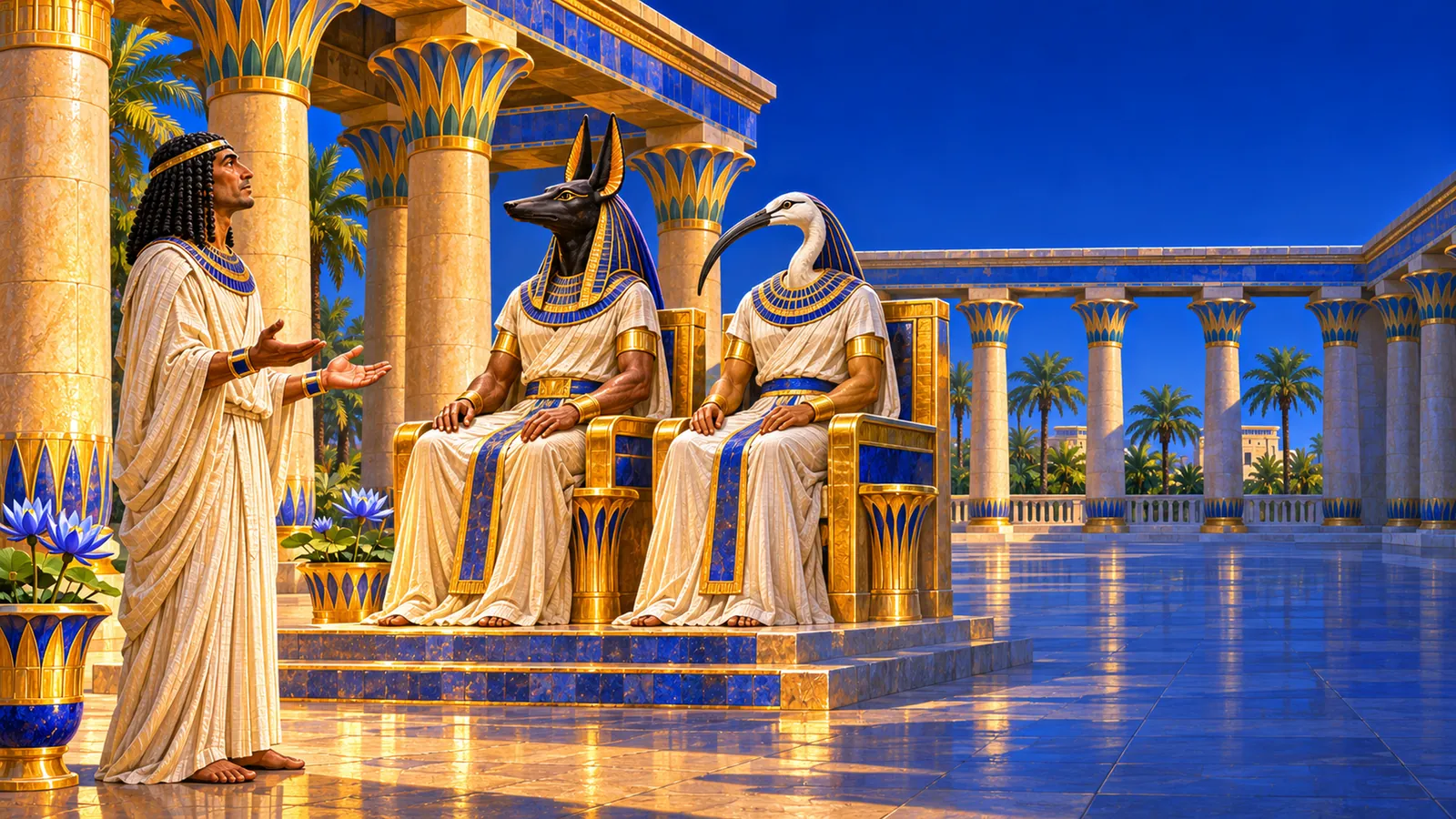
Ani dice que los príncipes del tribunal de Osiris rigen las circunstancias de la vida de las personas. Les pide que no hagan que su nombre apeste.
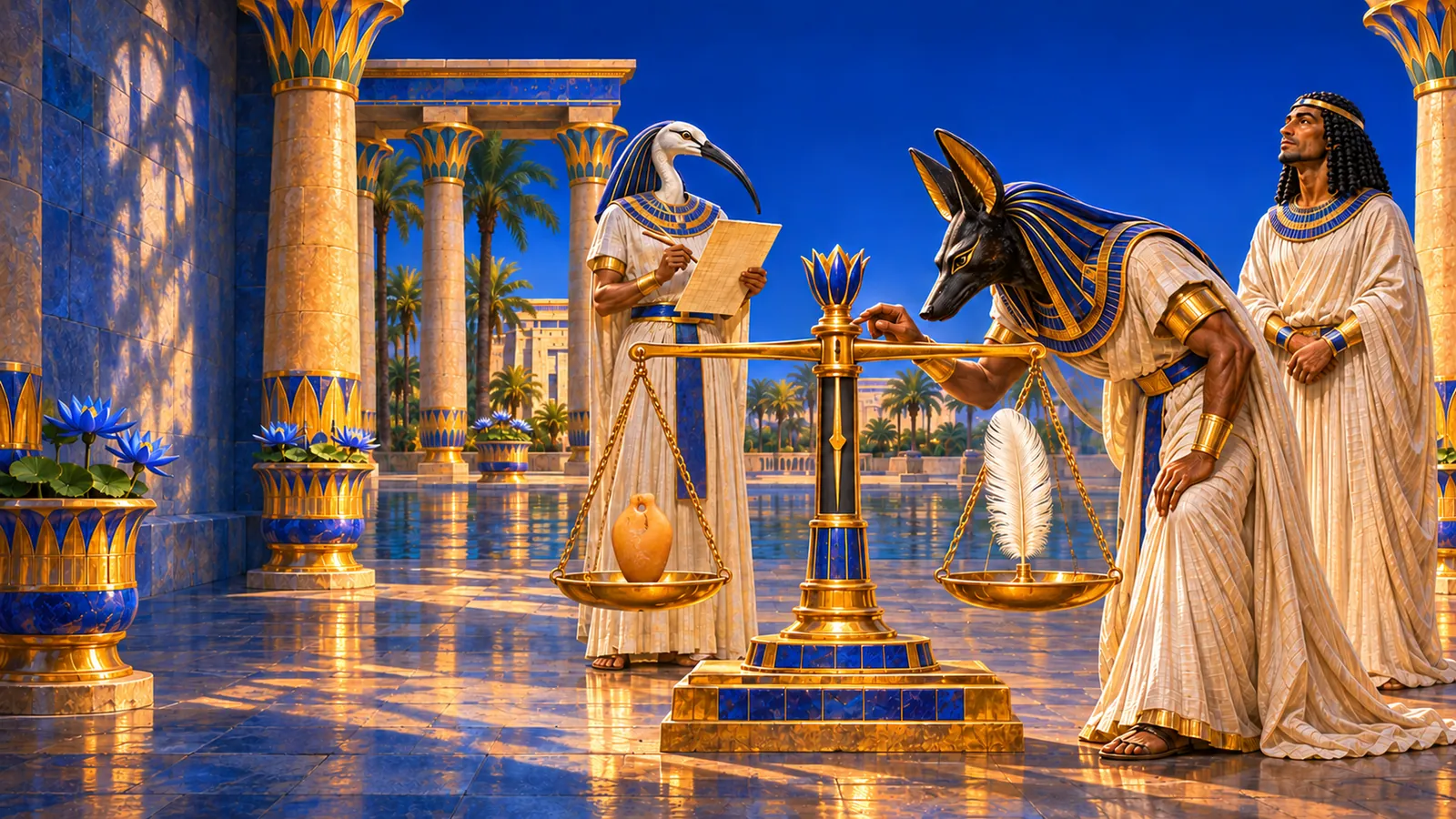
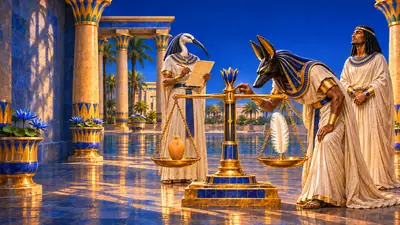
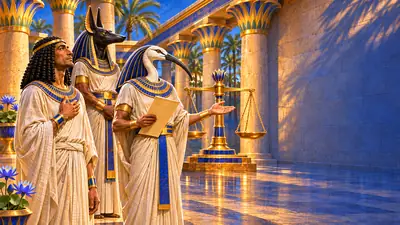
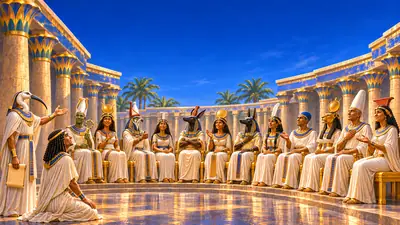
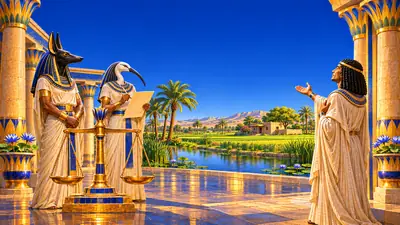
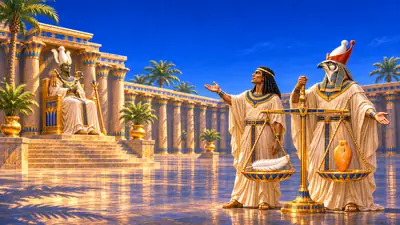
Budge describe ahora el pesaje. En su descripción, Anubis examina la lengüeta de la balanza, el indicador que muestra su posición.
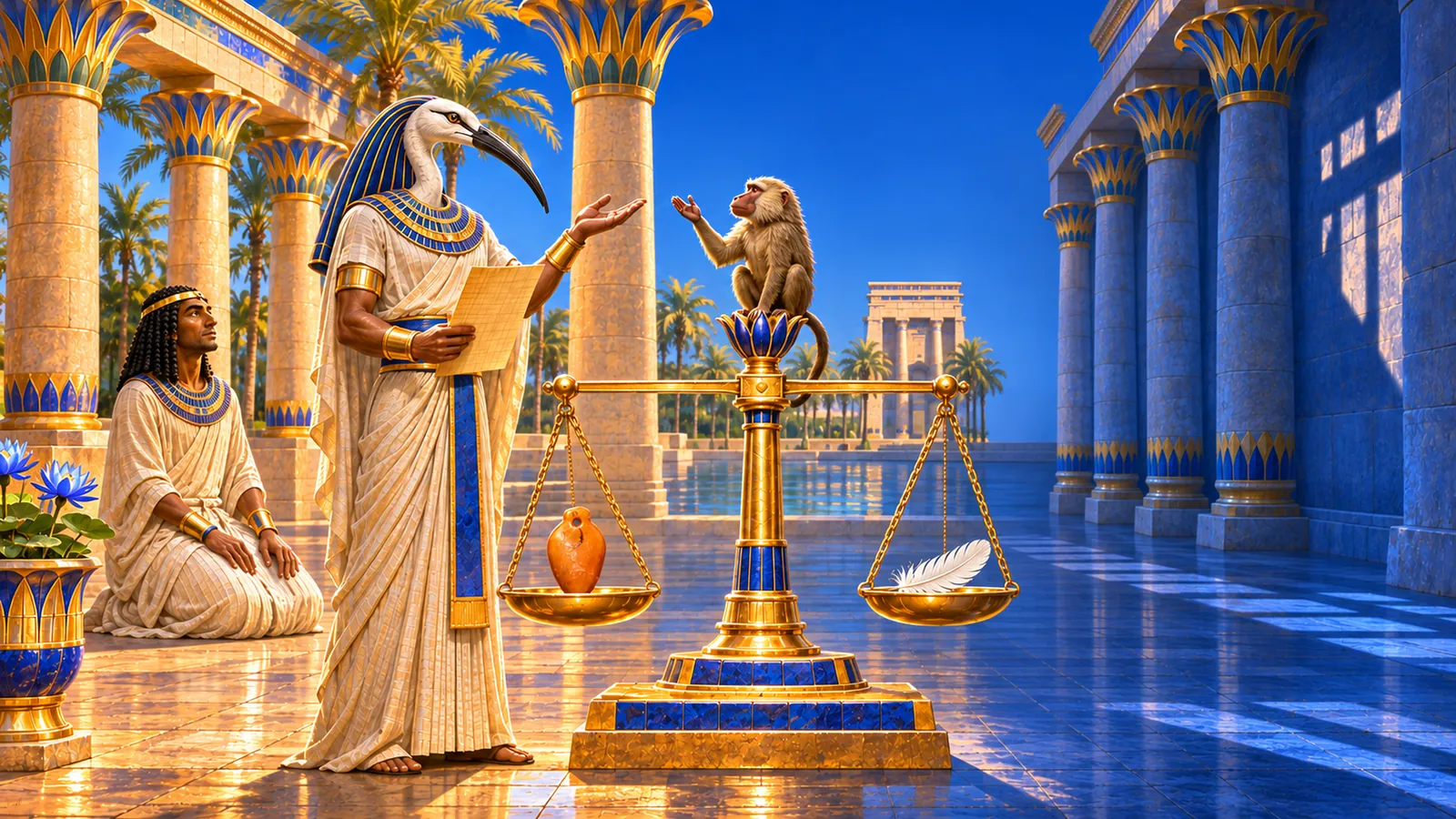
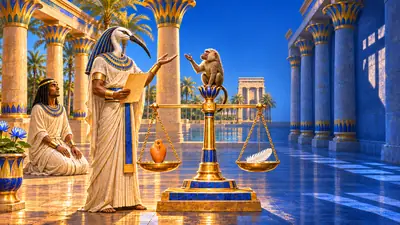
Budge describe cómo el mono señala a su compañero Tot que el brazo de la balanza está perfectamente horizontal.
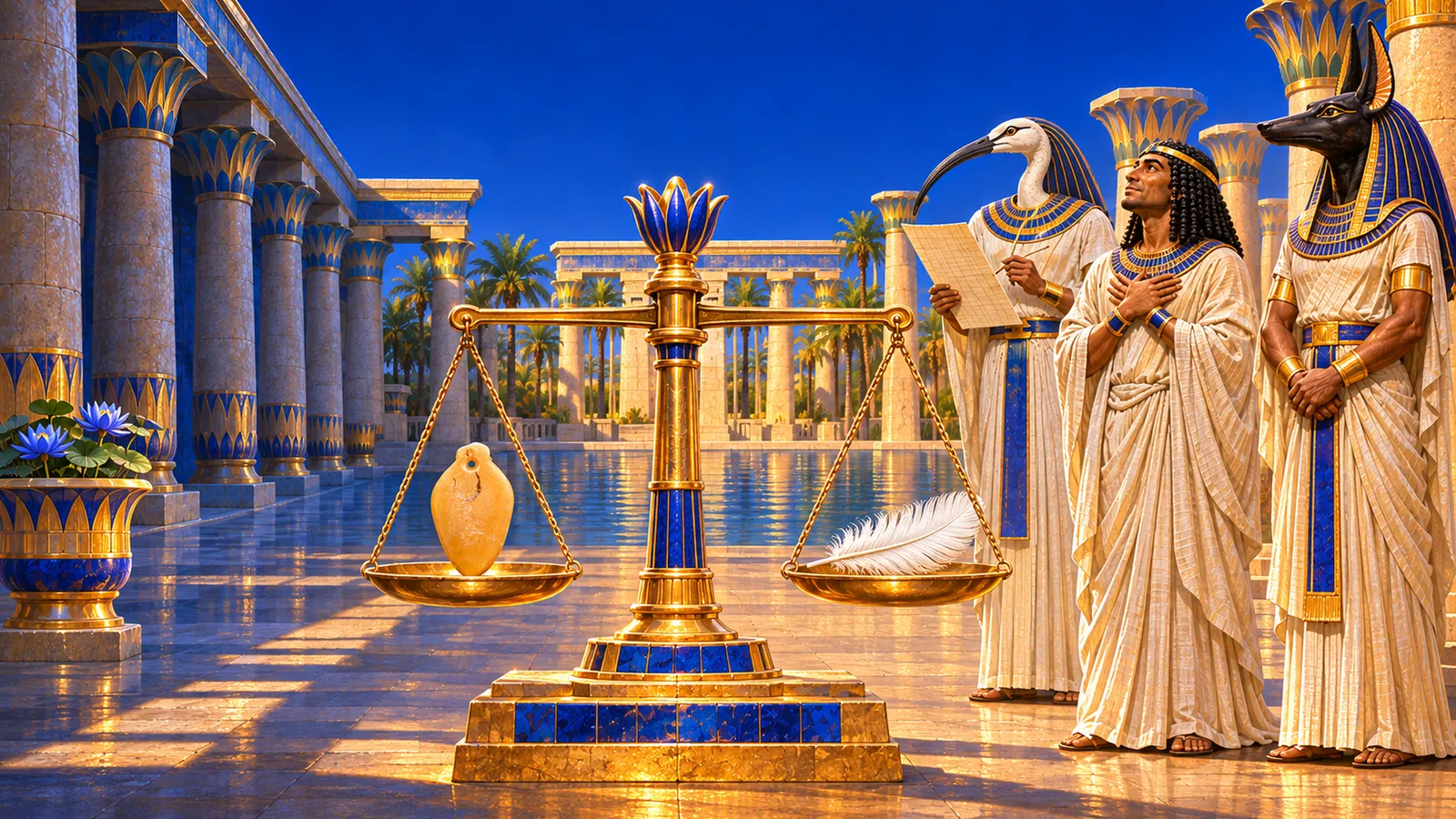
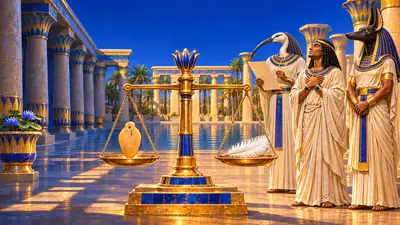
En el relato de Budge, el corazón de Ani equilibra exactamente la pluma que simboliza Maāt. Aquí explica Maāt en términos de lo recto, la verdad y la ley.
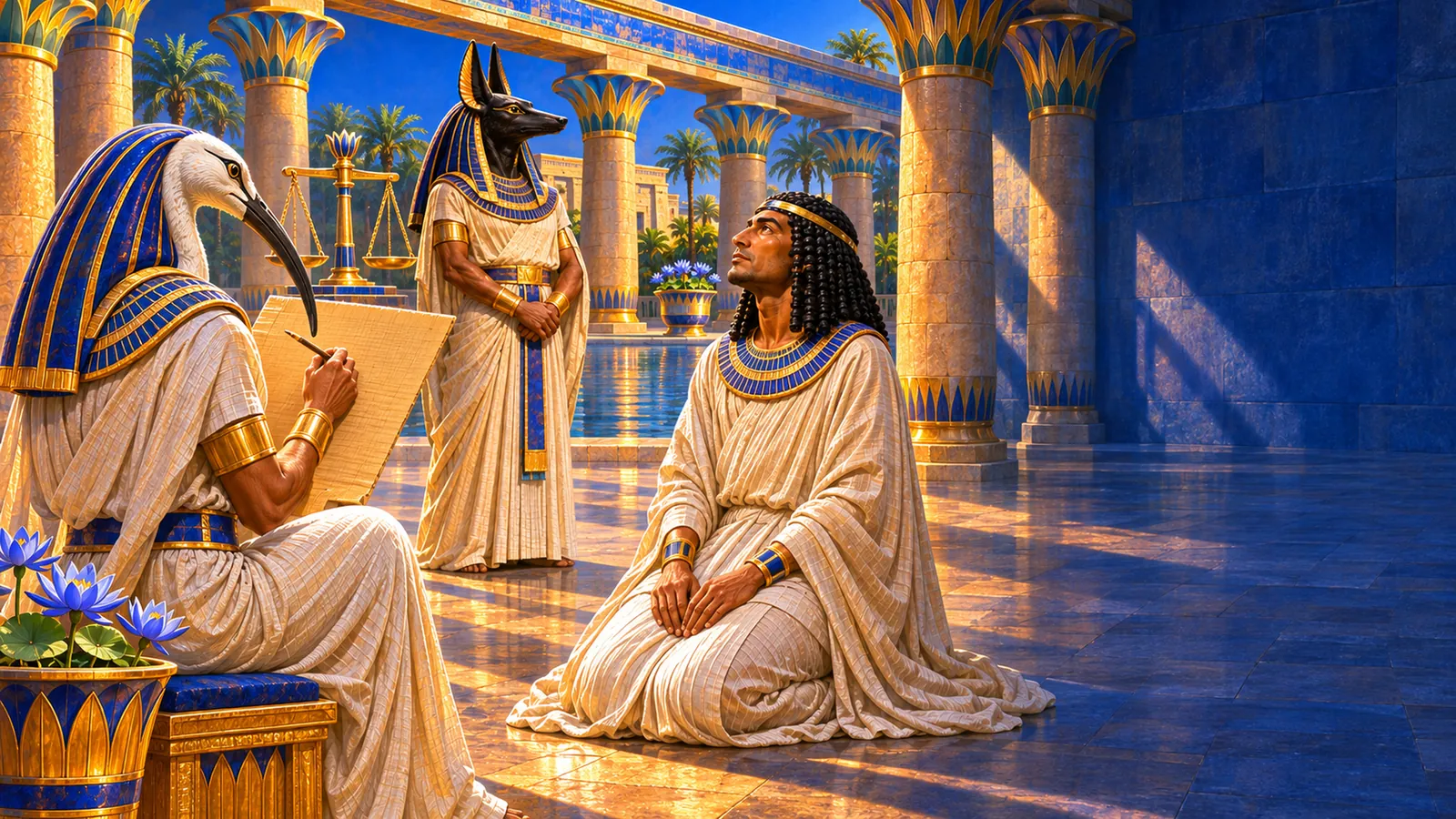
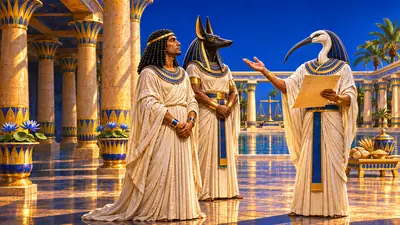
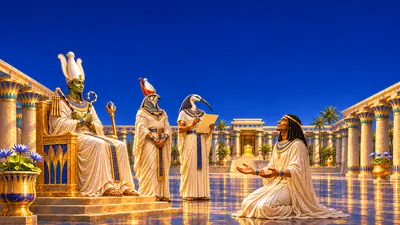
Budge dice que Tot anota el resultado del pesaje. Después, Tot se dirige a los dioses.
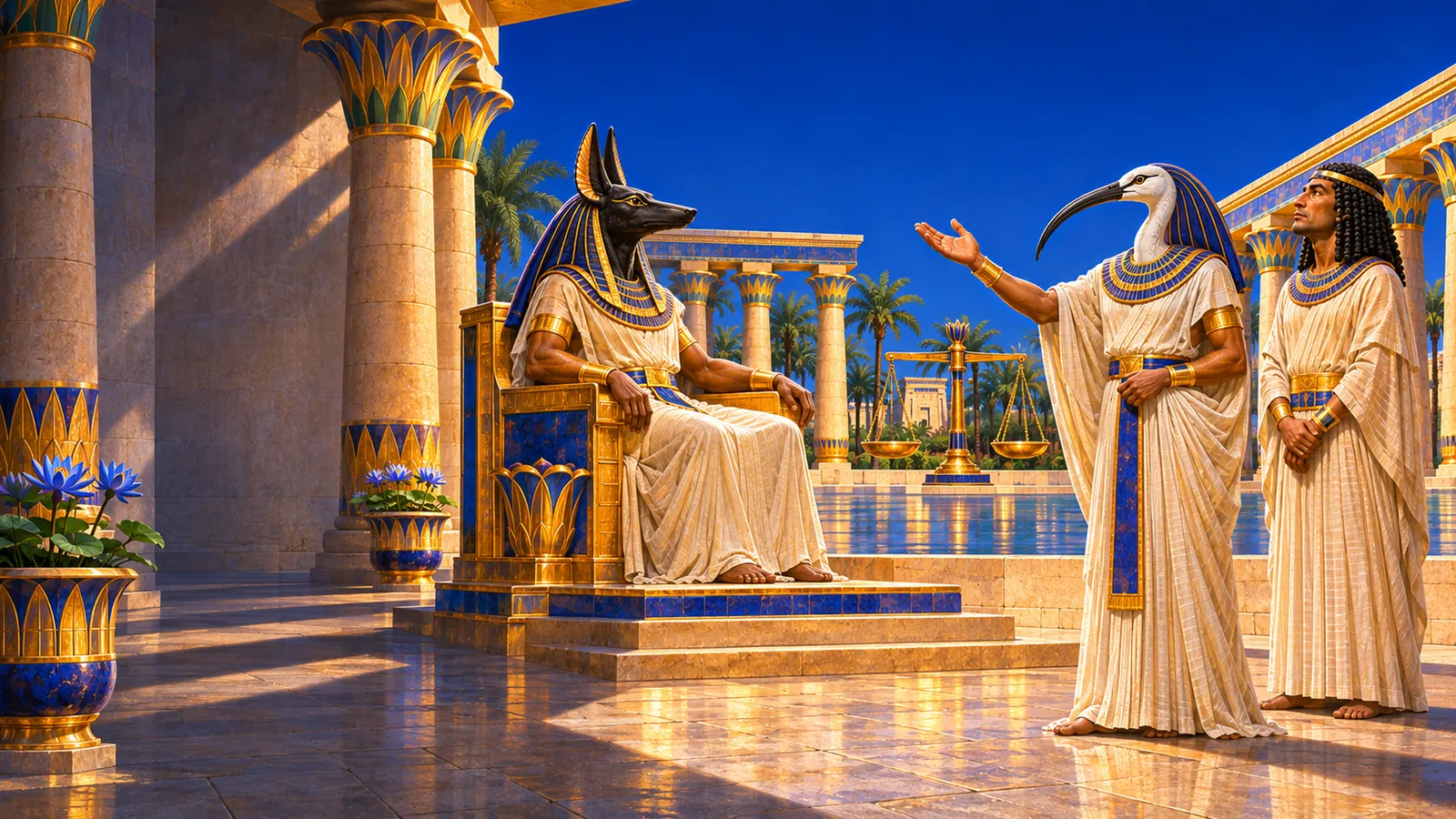
Tot llama a los dioses a escuchar el juicio. Les dice que el corazón de Osiris ha sido pesado en verdad.
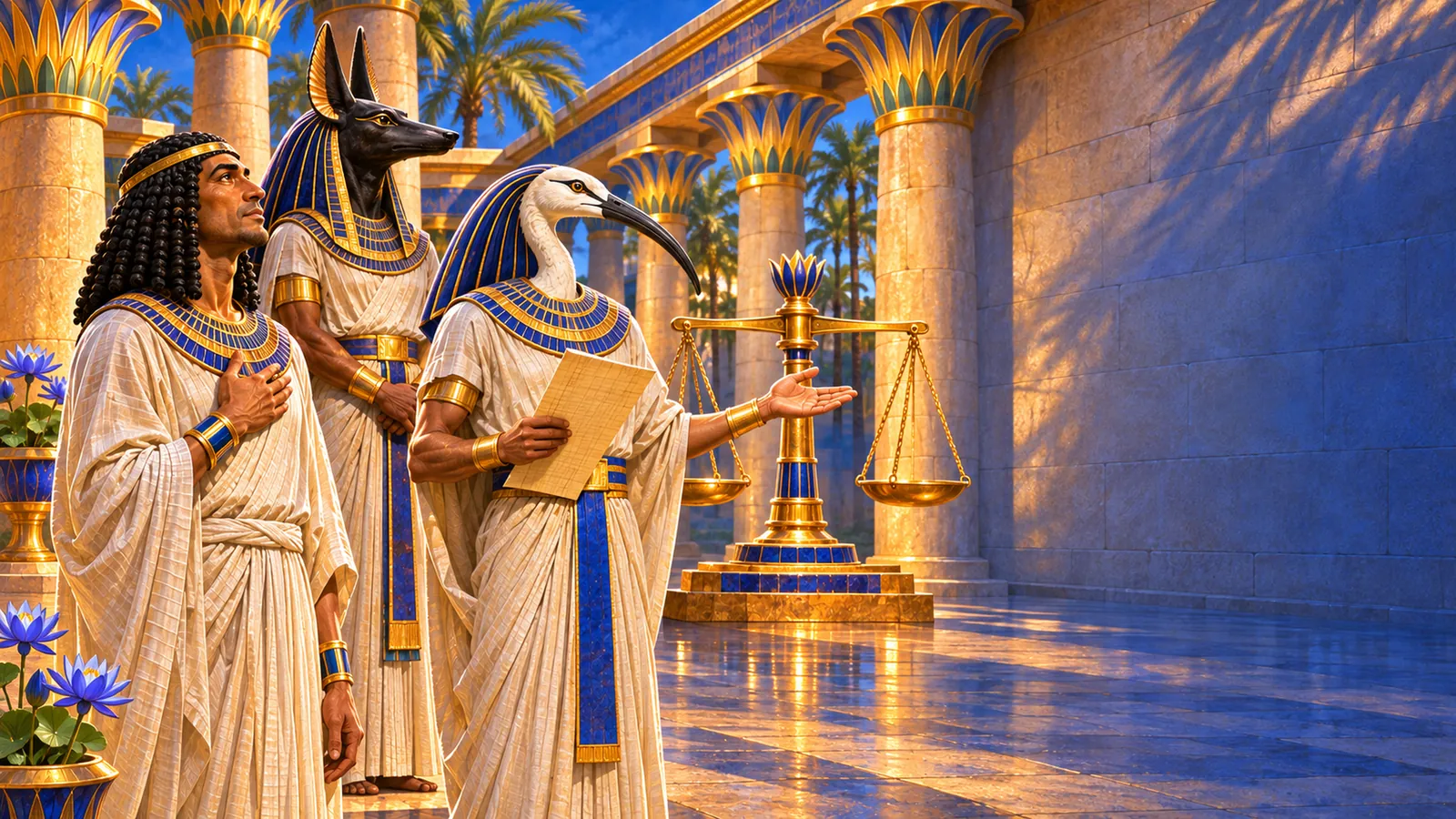
Tot dice que el alma del difunto compareció como testigo a su favor. Añade que se comprobó su verdad en la prueba de la Gran Balanza.
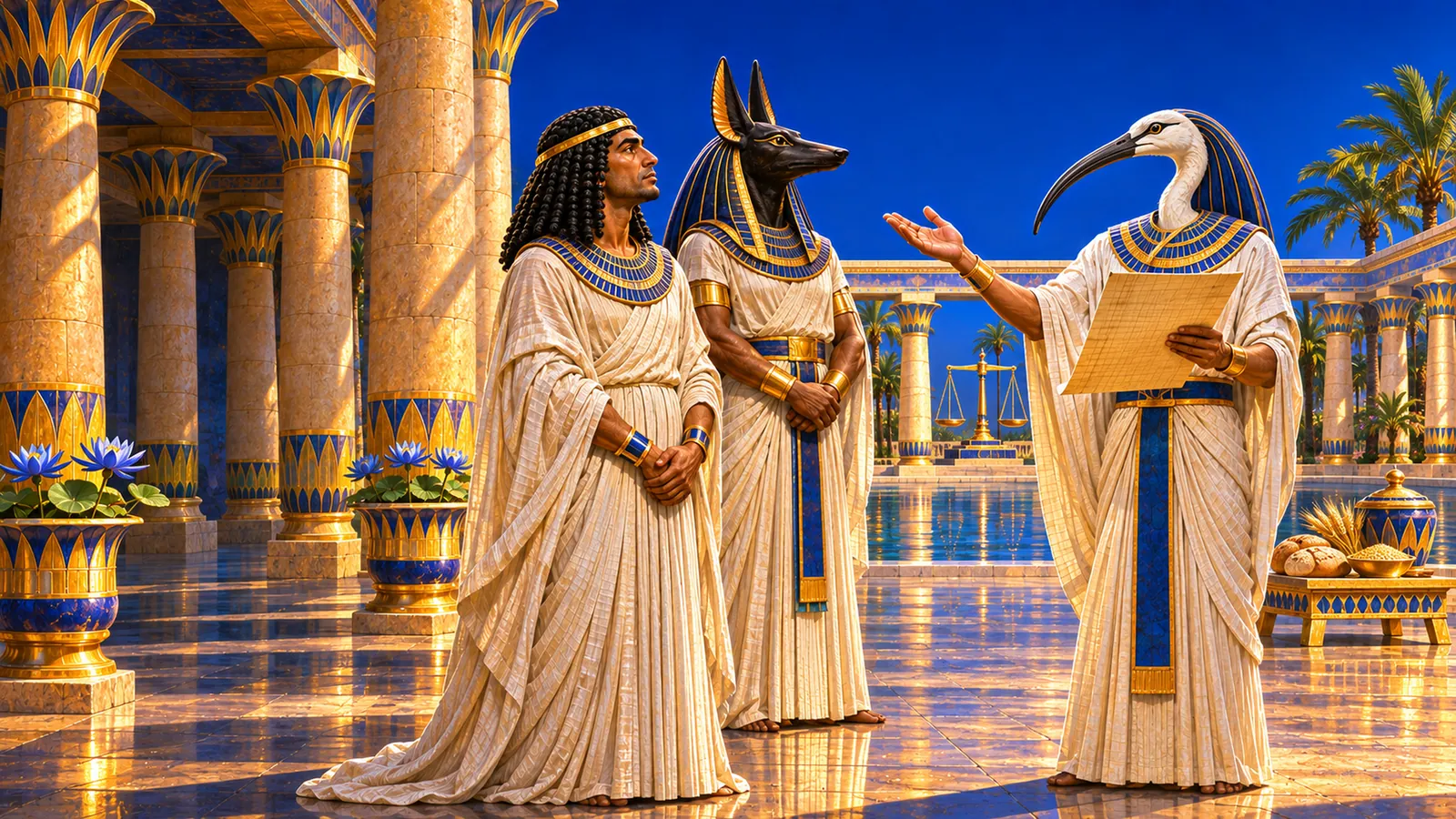
Tot informa que no se halló maldad en Ani. Añade que Ani no malgastó las ofrendas de los templos.
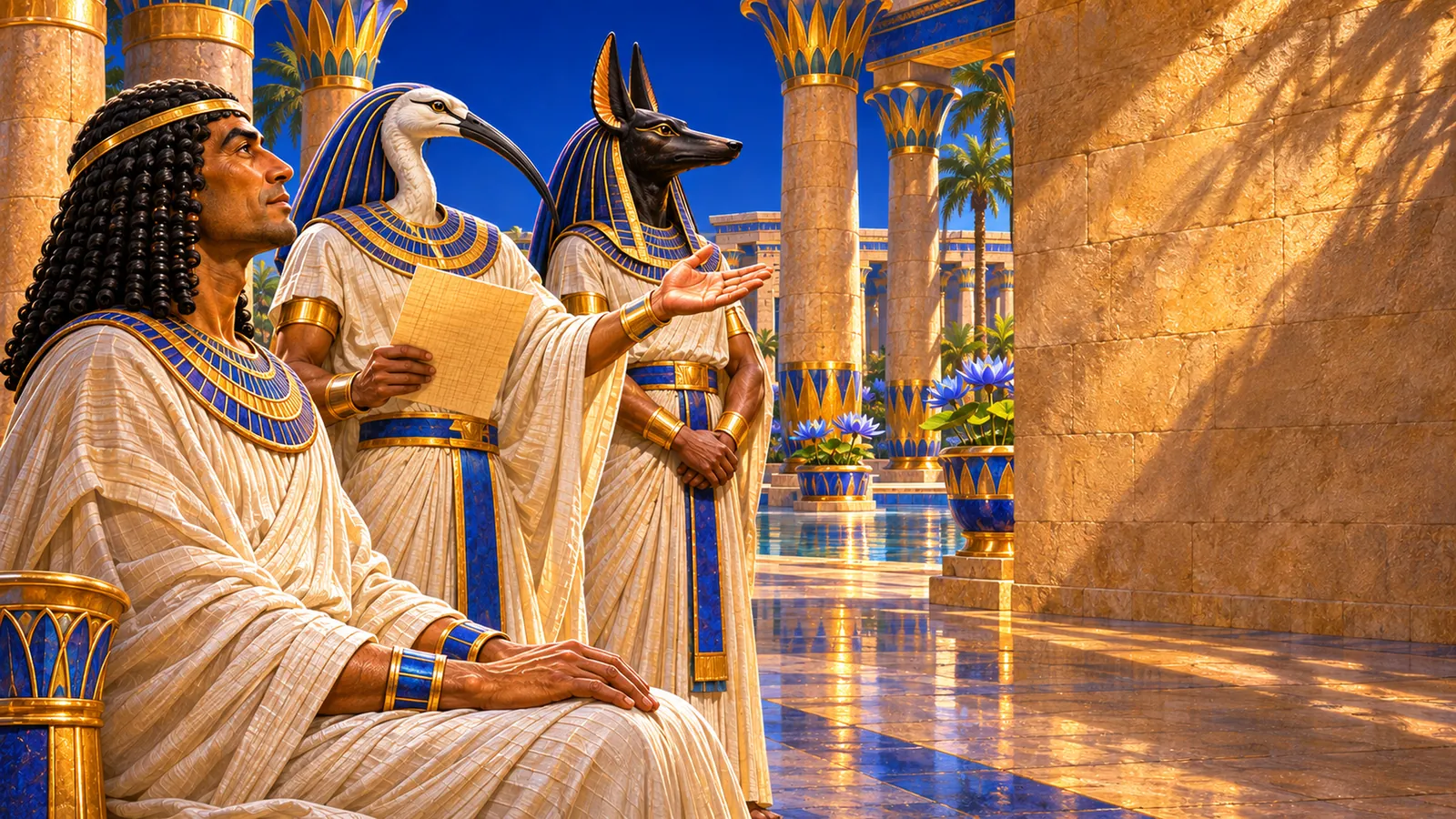
Tot dice que Ani no causó daño con sus actos ni difundió informes maliciosos mientras estuvo en la tierra.
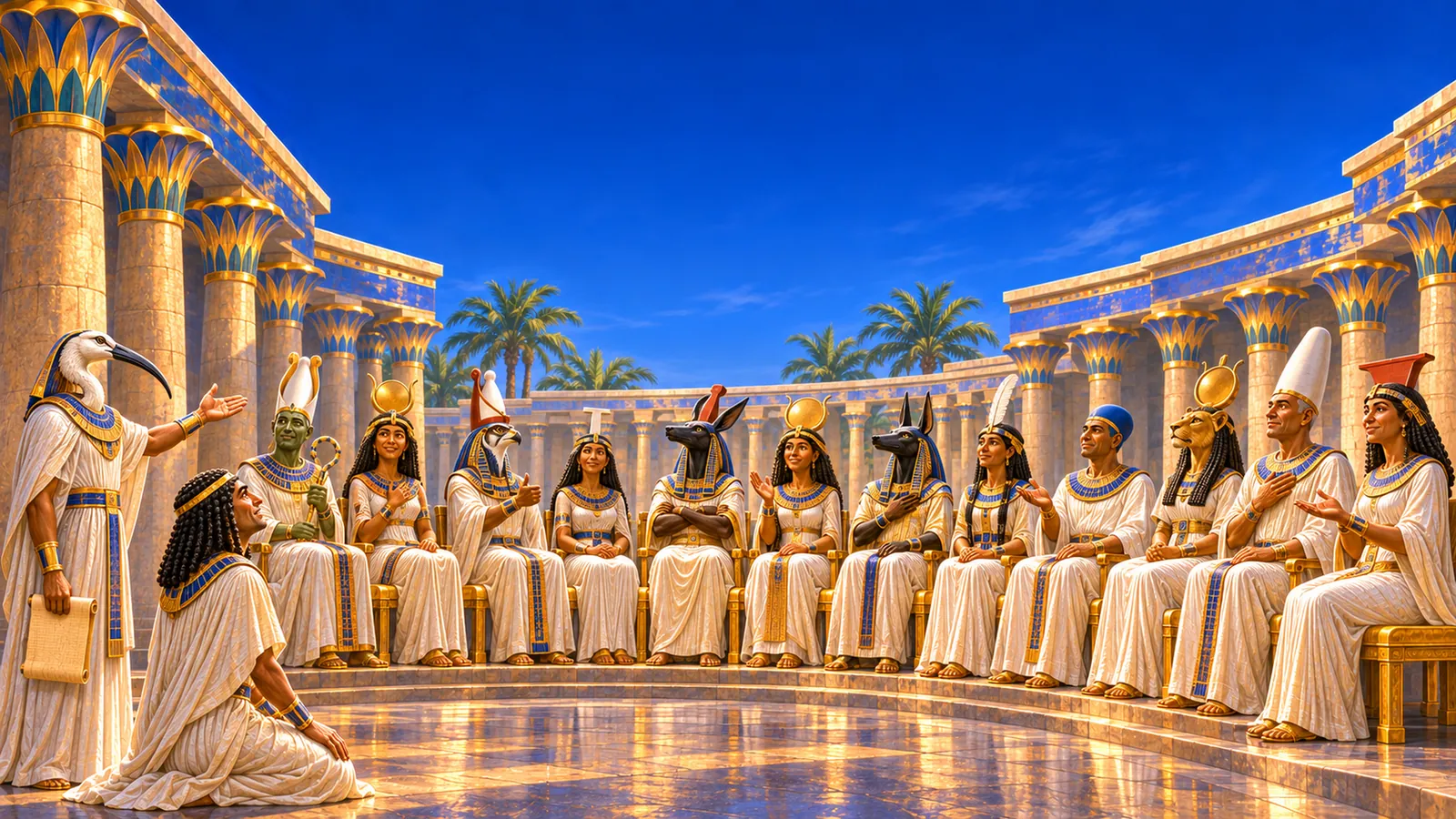
LA RESPUESTA
La gran asamblea de los dioses le dice a Tot que confirma sus palabras. Se dirige a él como habitante de Khemennu, que Budge identifica con Hermópolis.
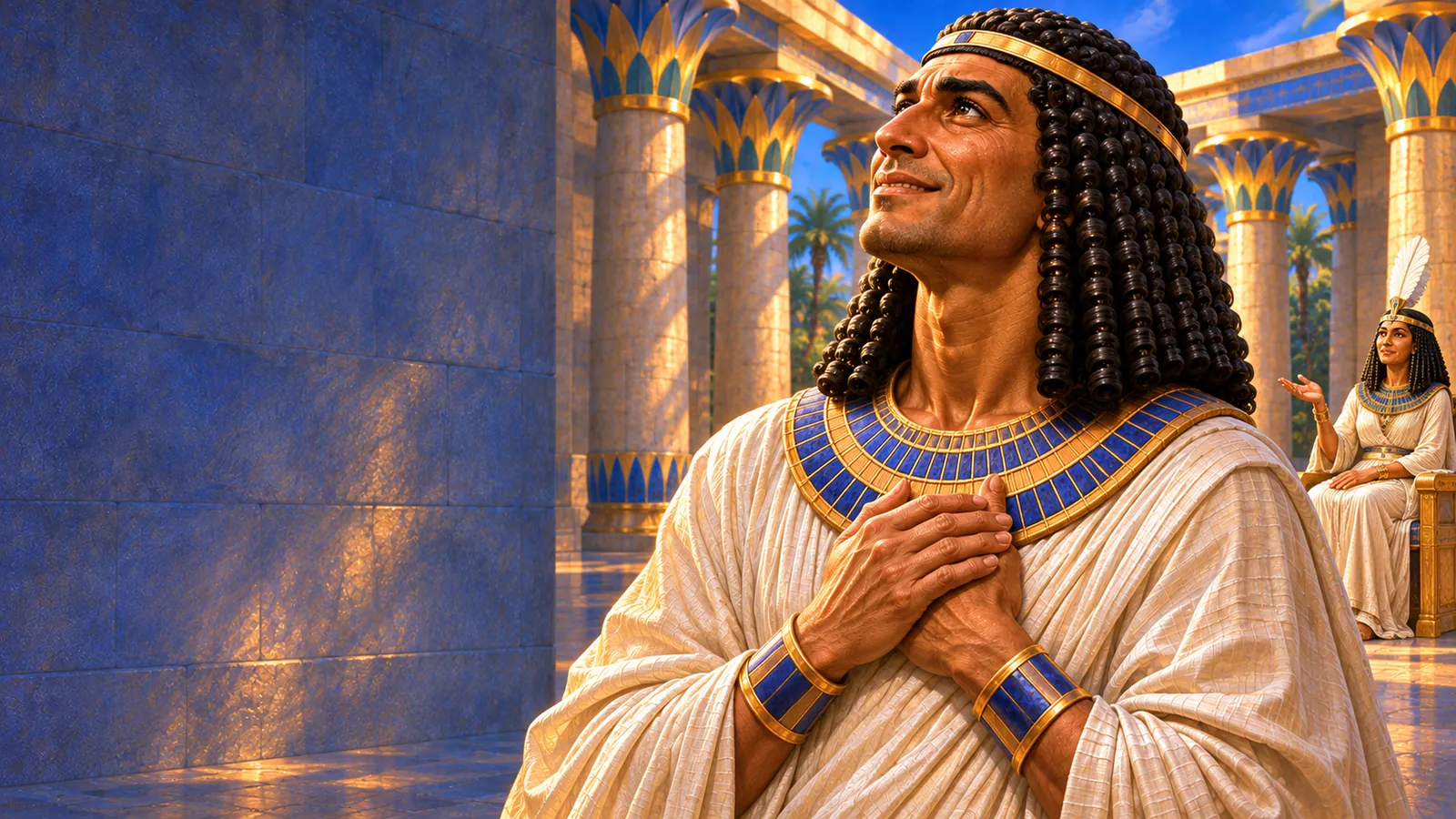
La asamblea lo nombra Osiris, el escriba Ani, triunfante. Lo declara santo y justo.
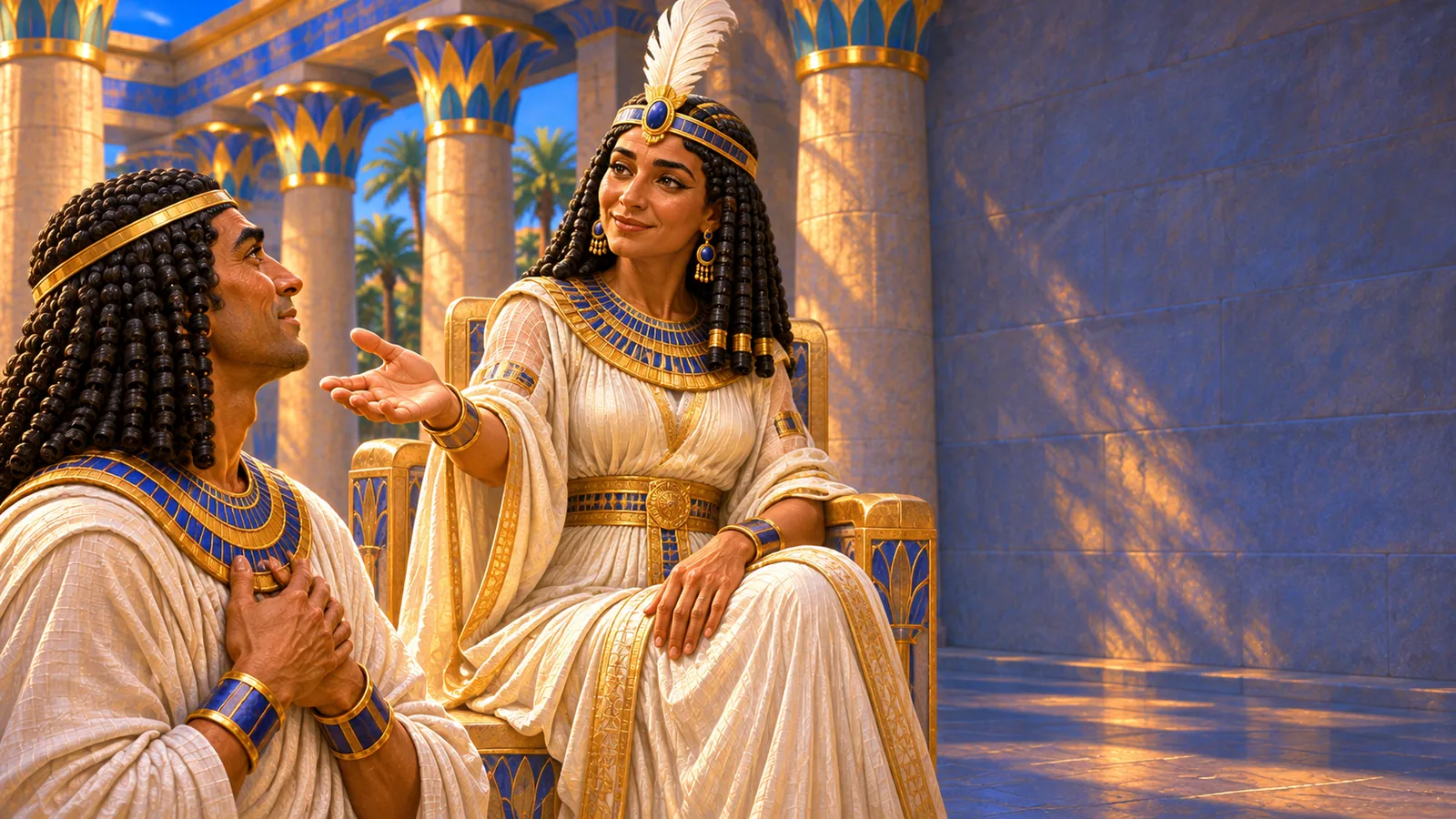
La asamblea dice que Ani no ha pecado. Añade que no ha cometido ningún mal contra ellos.
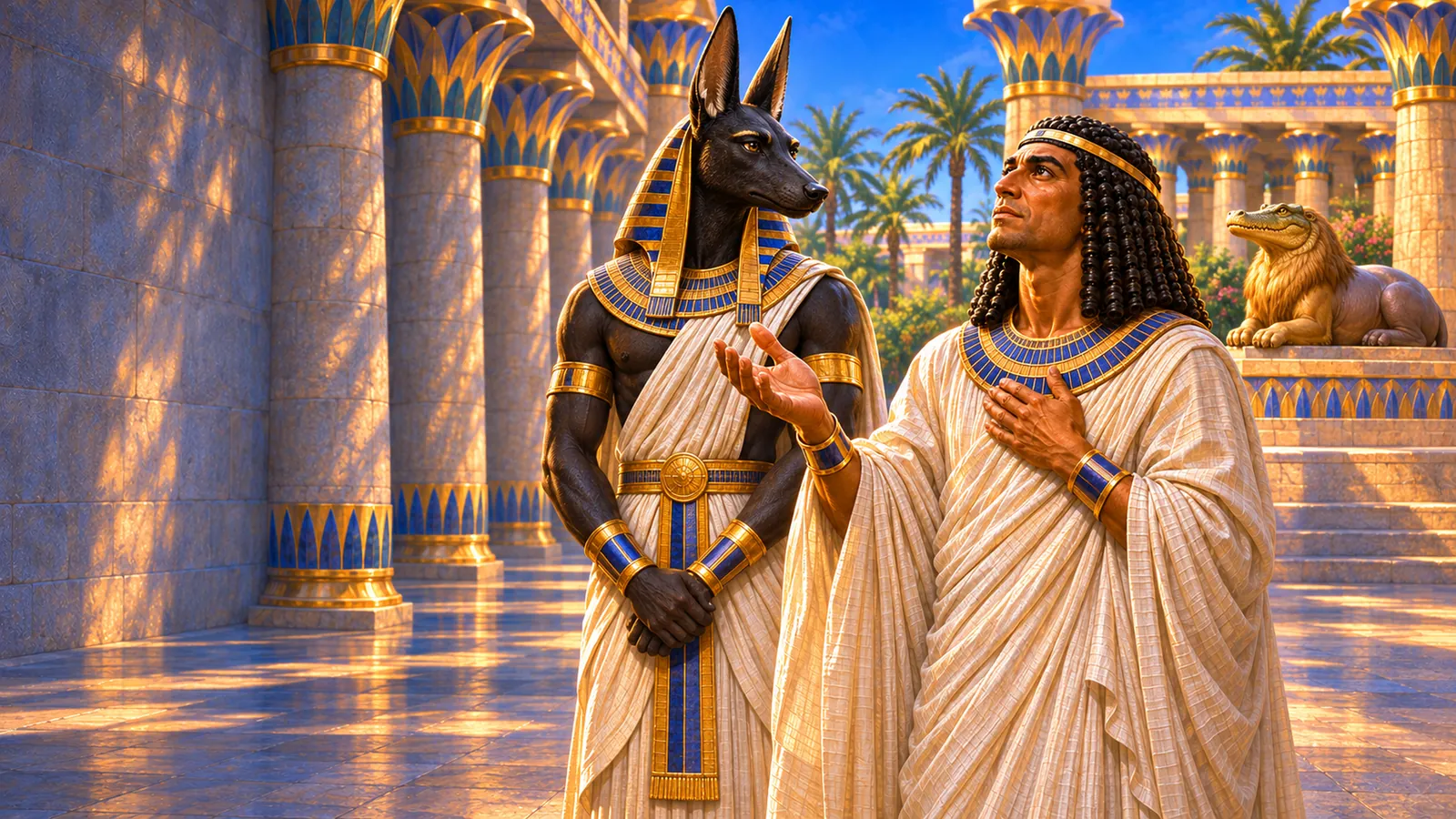
En su respuesta, la asamblea declara que no se permitirá que Ām-mit, la Devoradora, se imponga a Ani.
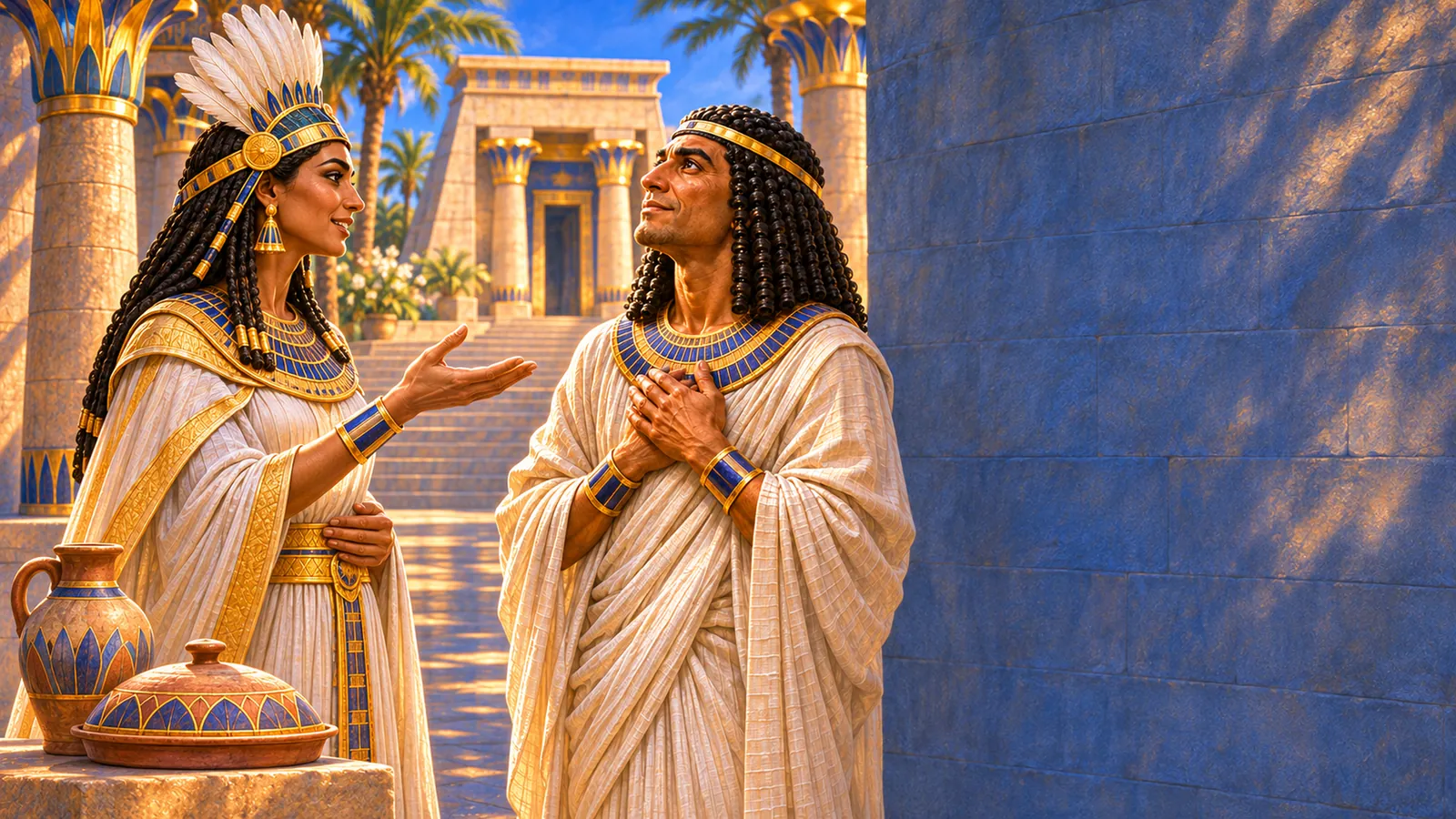
La asamblea dice que Ani recibirá ofrendas de carne y será admitido en presencia del dios Osiris.
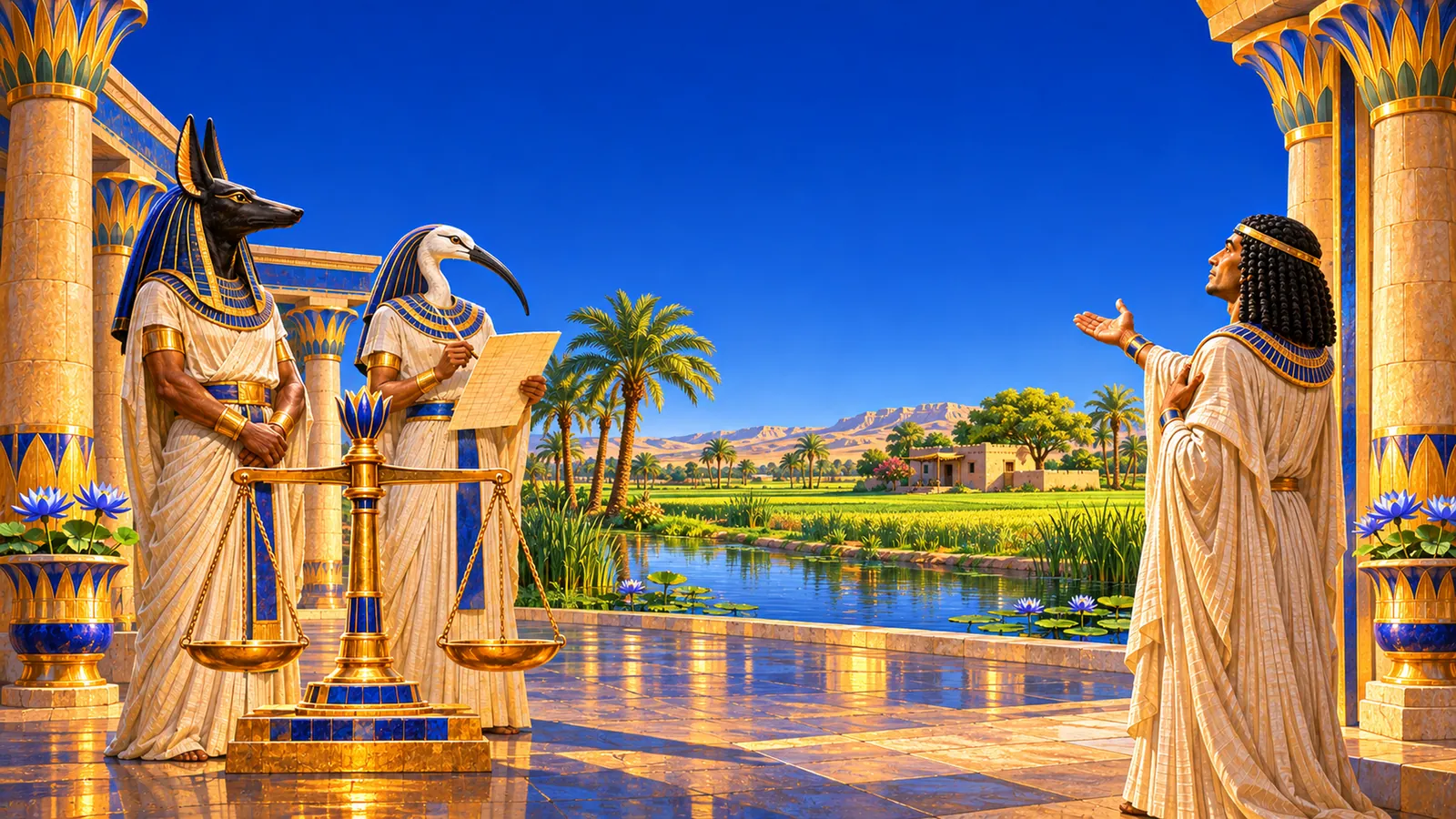
La asamblea también promete a Ani una morada para siempre en el Campo de la Paz, como la que se concede a los seguidores de Horus.
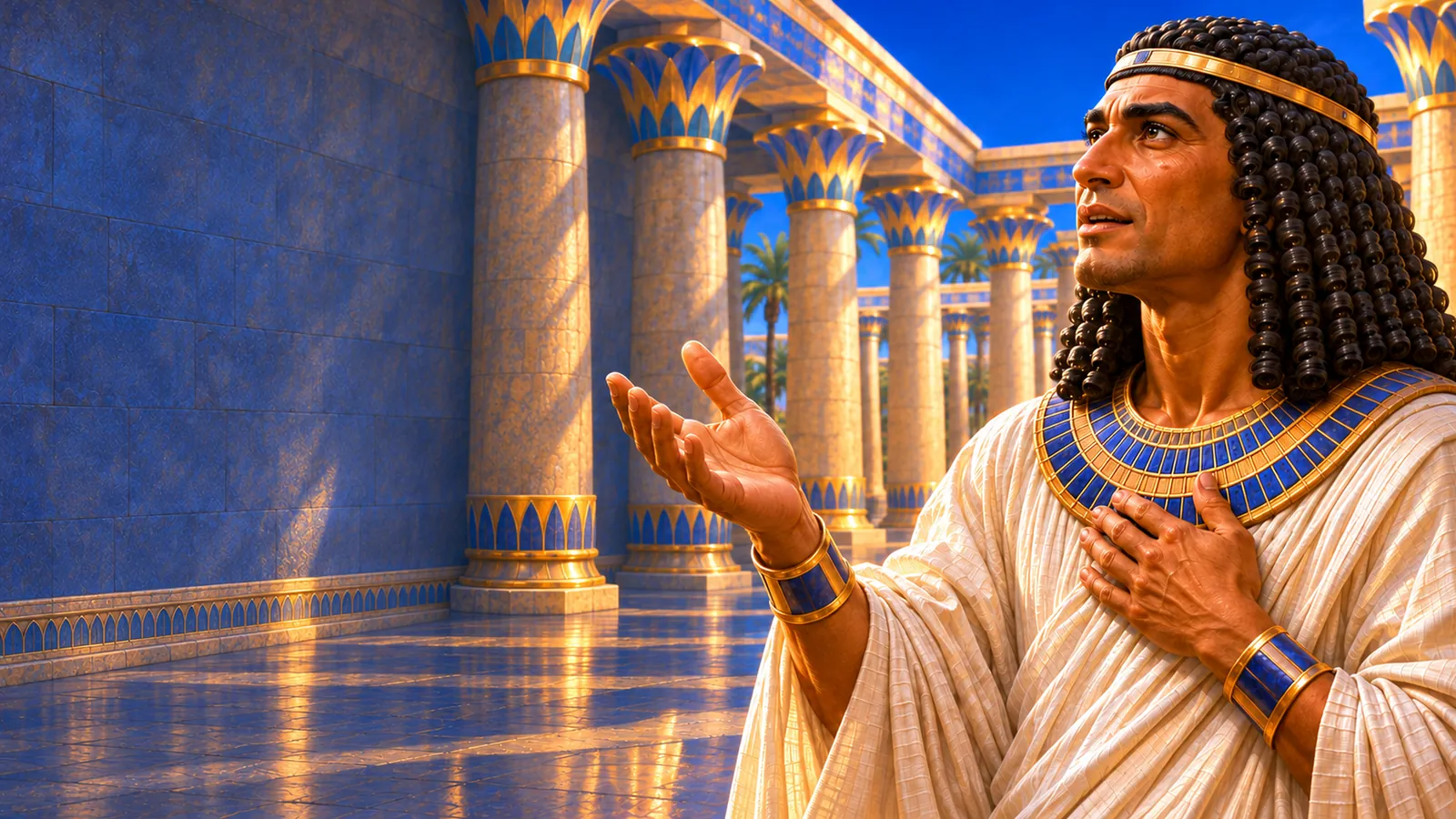
Budge traduce la expresión egipcia maā kheru como «triunfante». La explica como «veraz de voz» o «justo de palabra».
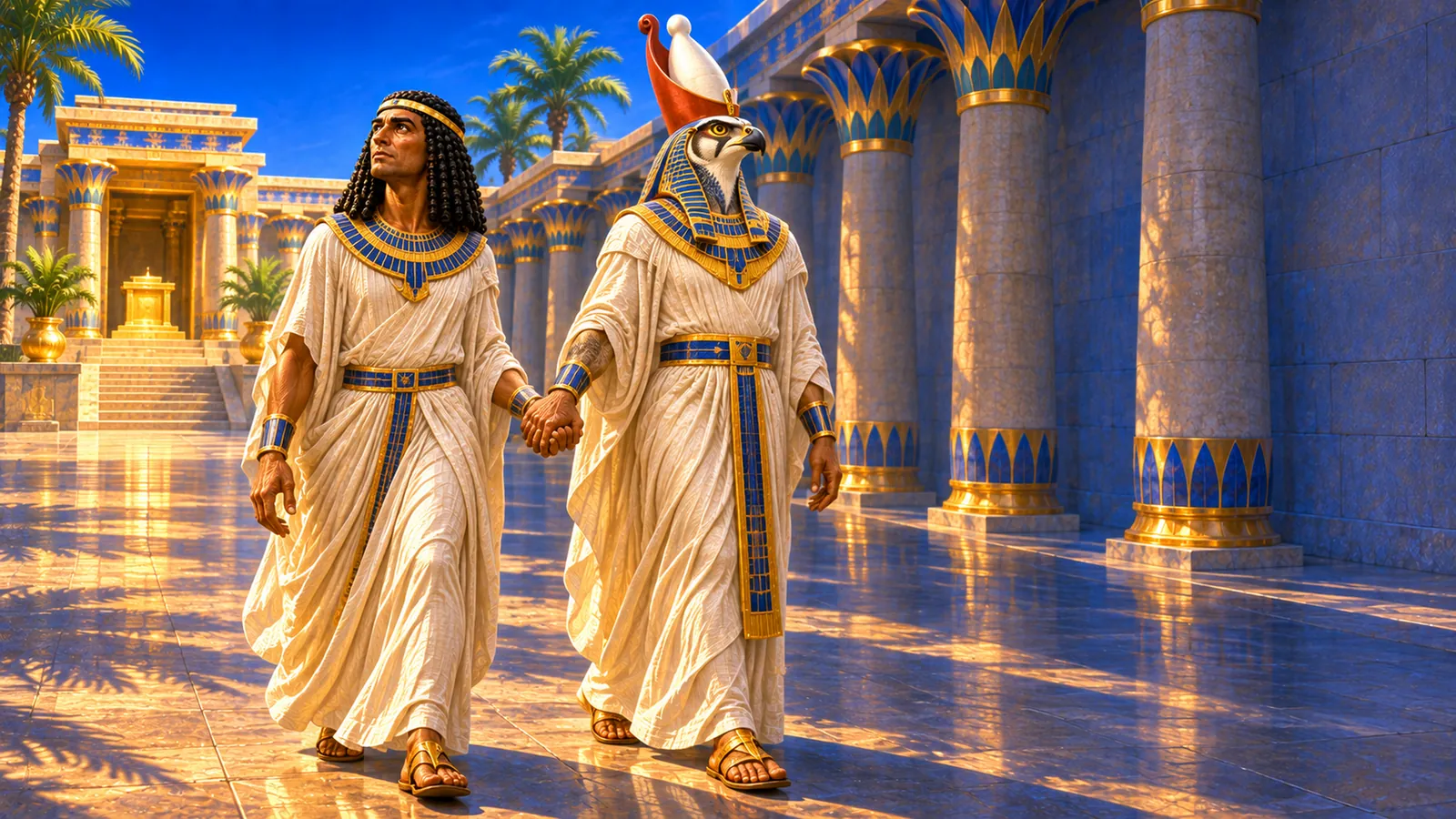
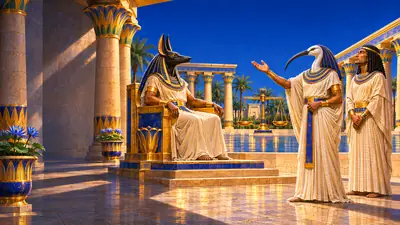
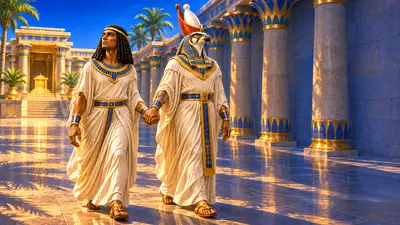
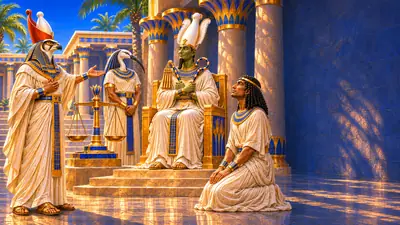
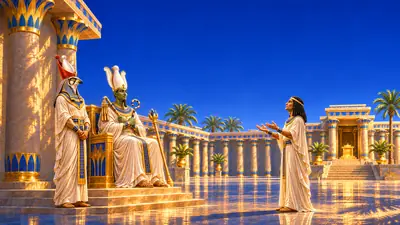
En la descripción de Budge, tras el juicio, Horus, hijo de Isis, ha asumido todos los atributos de su padre Osiris. Toma la mano izquierda de Ani con la derecha y lo lleva al santuario.
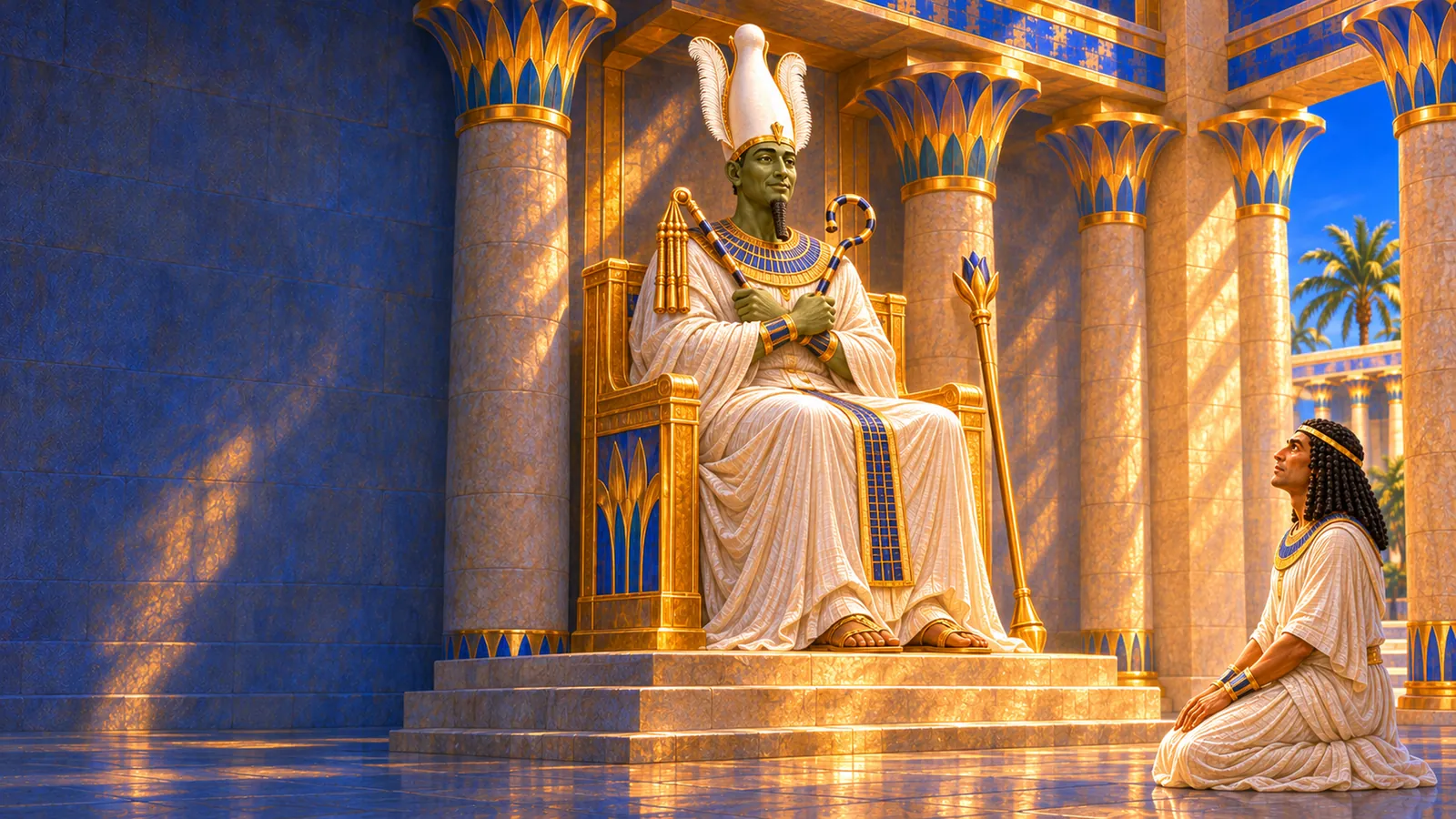
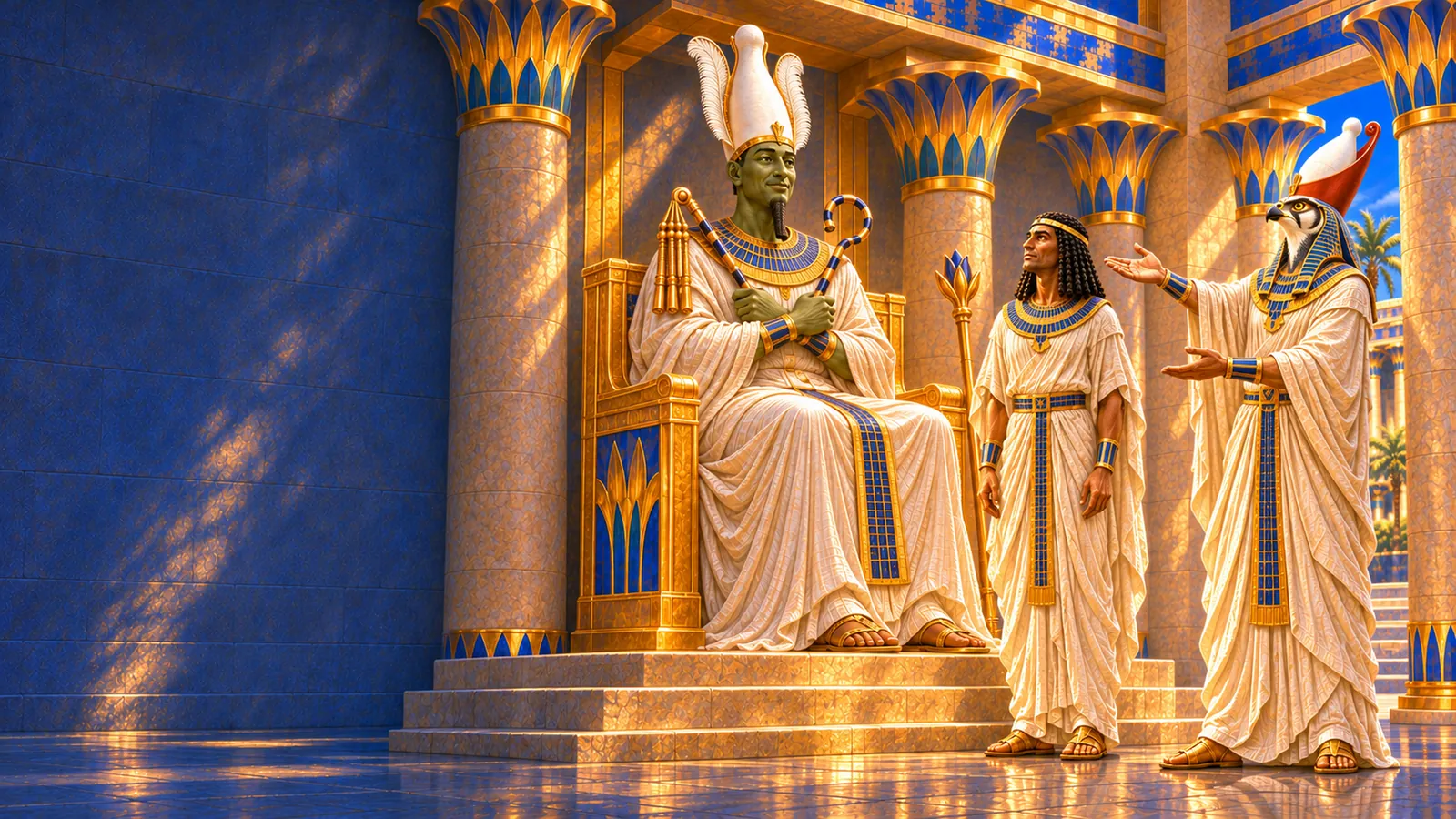
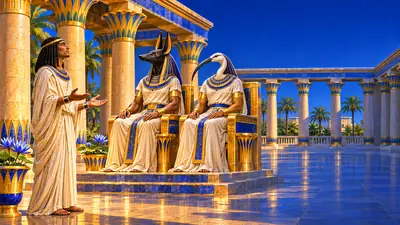
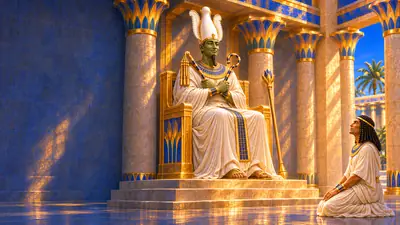
Budge describe a Osiris sentado en el santuario, con una corona blanca con plumas y con un cetro, un cayado y un látigo o flagelo en las manos. Dice que estos objetos simbolizan la soberanía y el dominio.
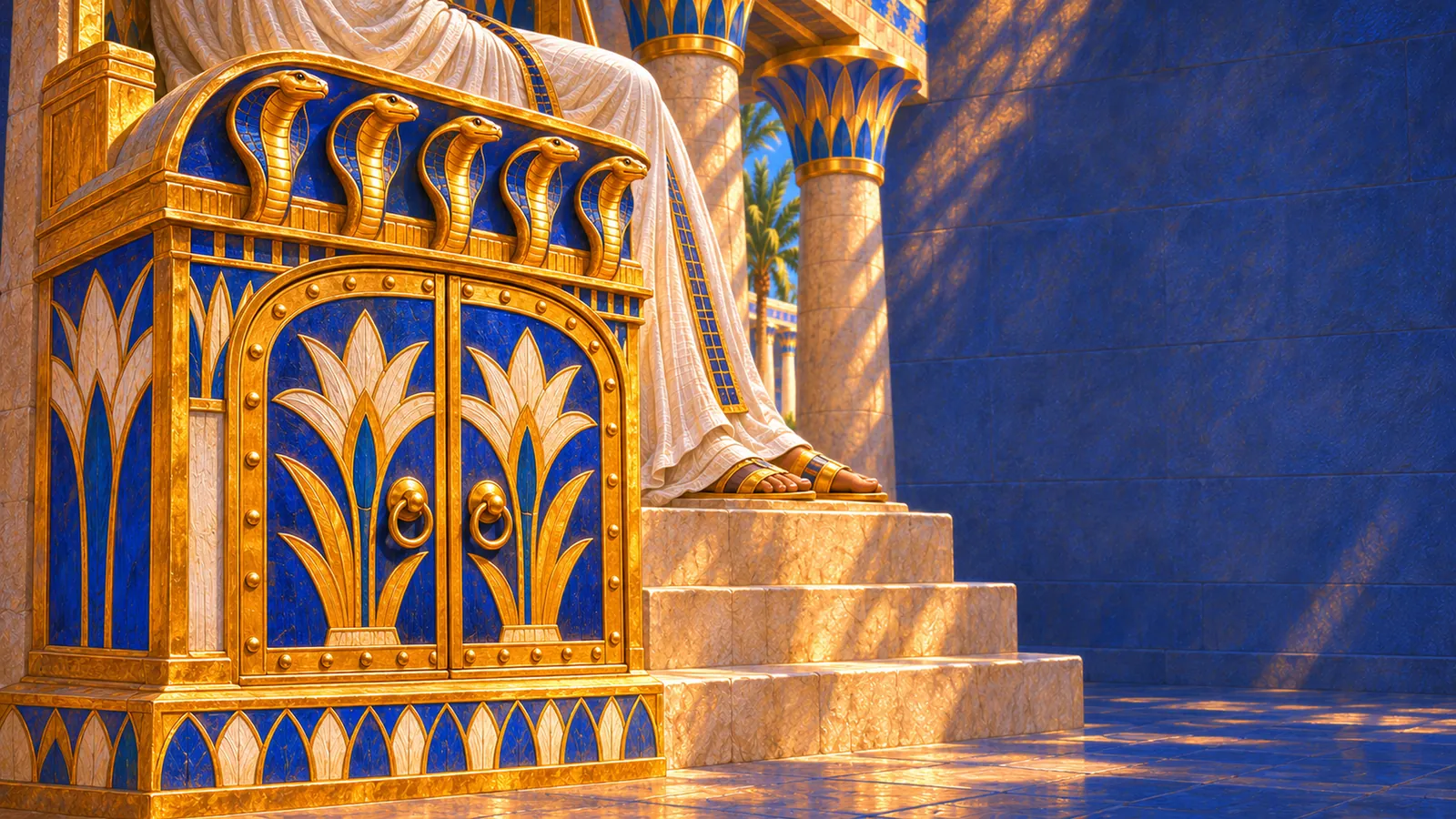
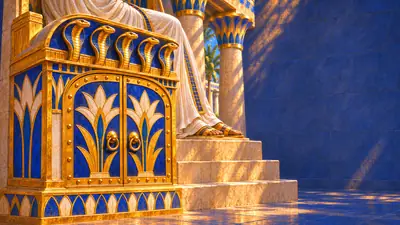
Según la descripción de Budge, el trono es una tumba. En el costado aparecen pintadas las puertas con cerrojo y la cornisa de ureos.
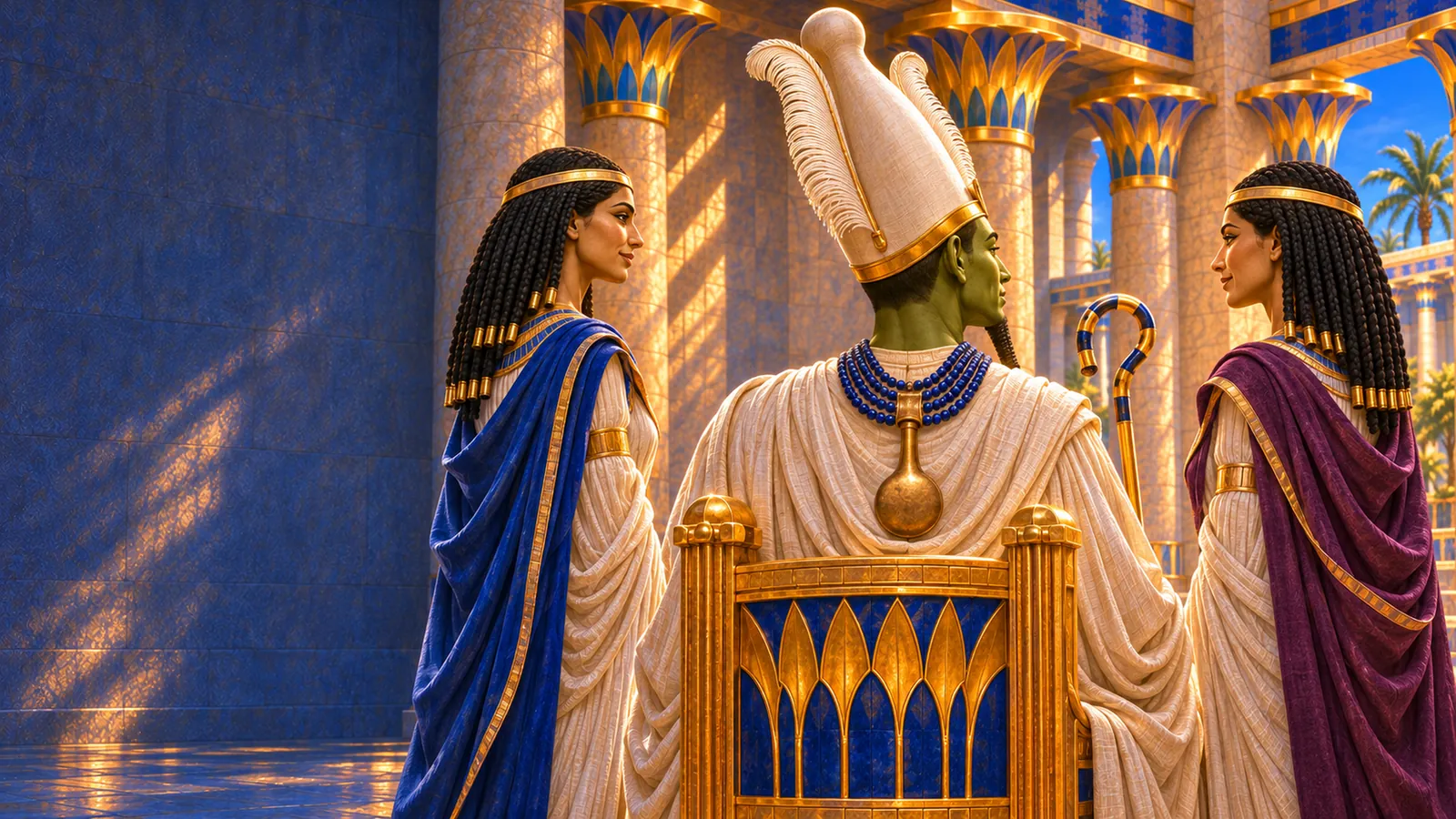
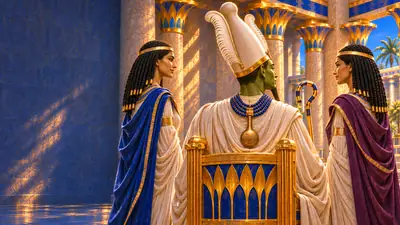
Budge dice que un menat cuelga detrás del cuello de Osiris como signo de alegría y felicidad. Neftis está a su derecha e Isis a su izquierda.
LA PRESENTACIÓN
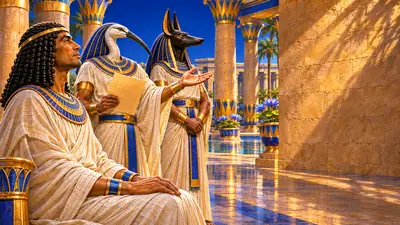
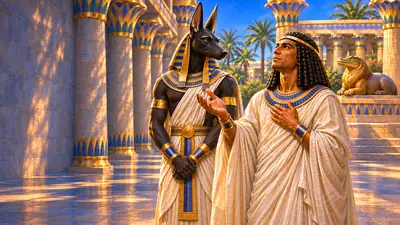
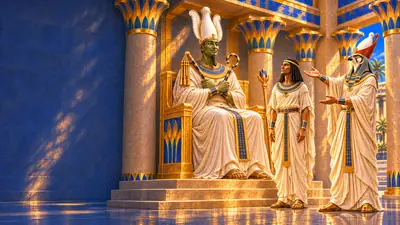
Horus se dirige a Osiris y lo llama Un-nefer. Dice que ha venido ante él y que le ha traído al Osiris Ani.
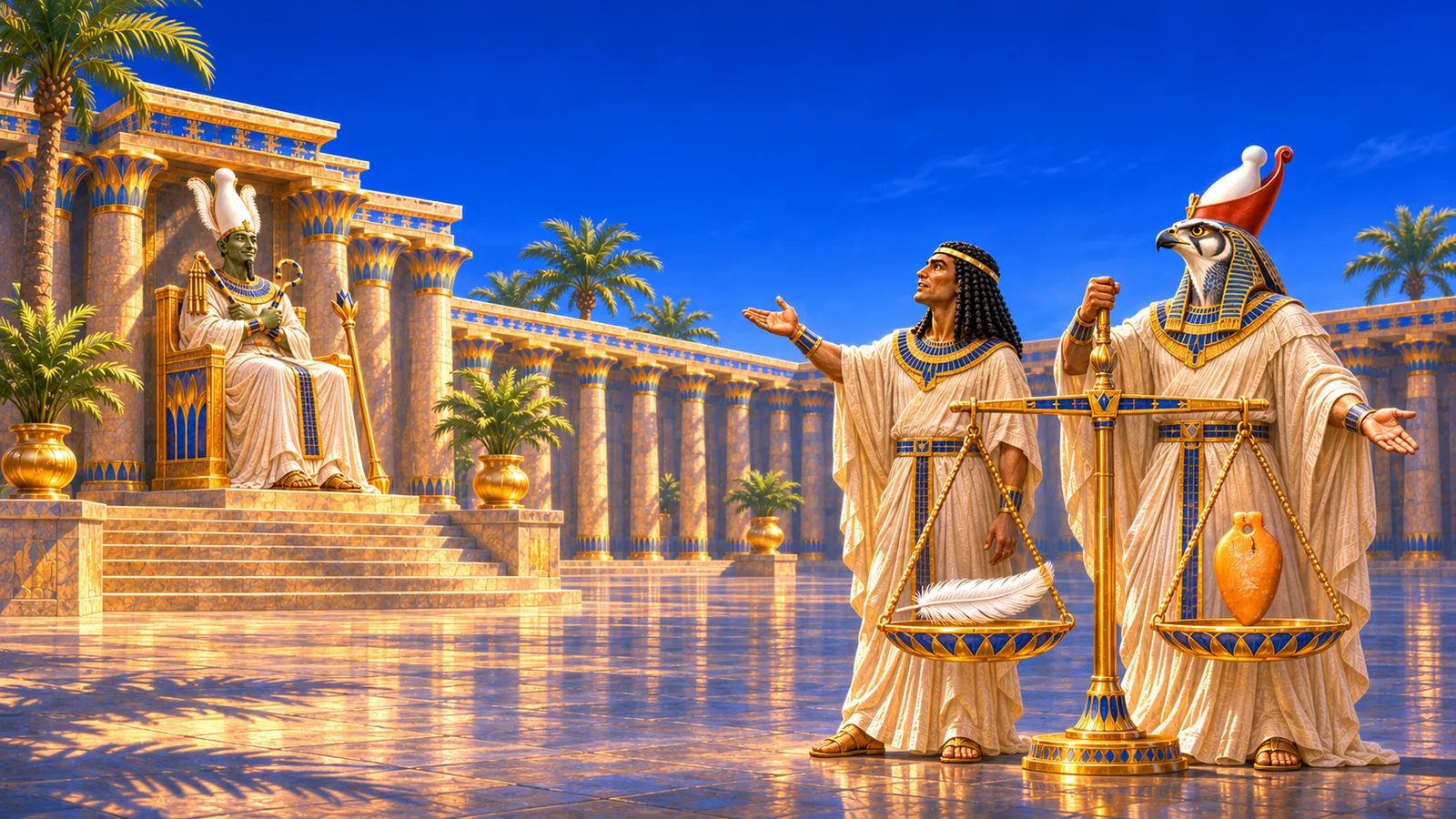
Horus dice que el corazón de Ani fue hallado justo y salió de la balanza. No había pecado contra ningún dios ni ninguna diosa.
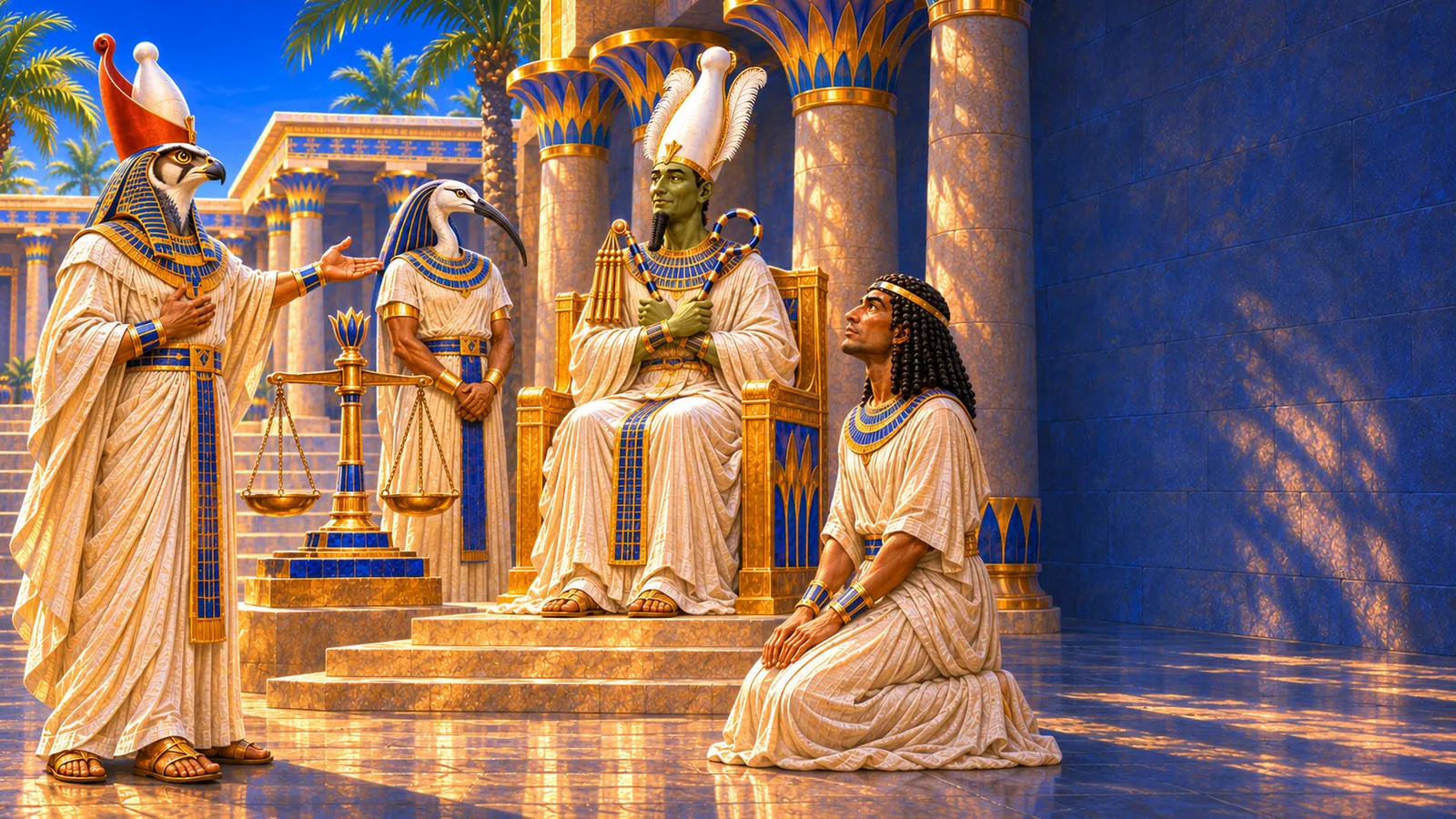
Horus añade que Tot lo pesó según el decreto que le dio la asamblea de los dioses. Declara que el resultado fue verdadero y justo.
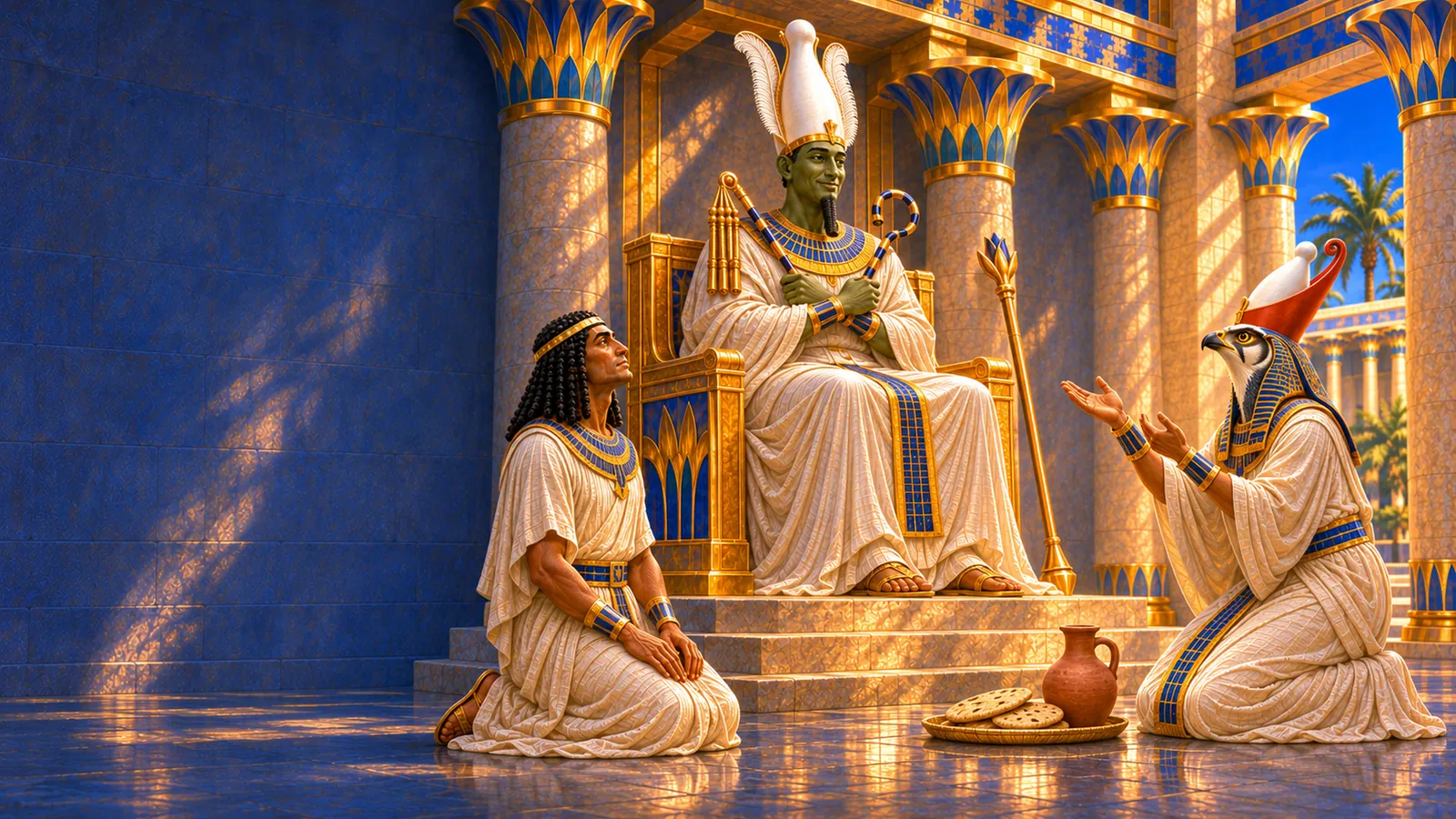
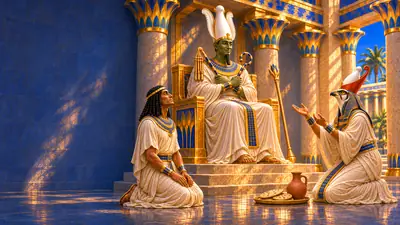
Horus pide a Osiris que dé a Ani tortas y cerveza y le permita entrar en su presencia. Pide que Ani sea para siempre como los seguidores de Horus.
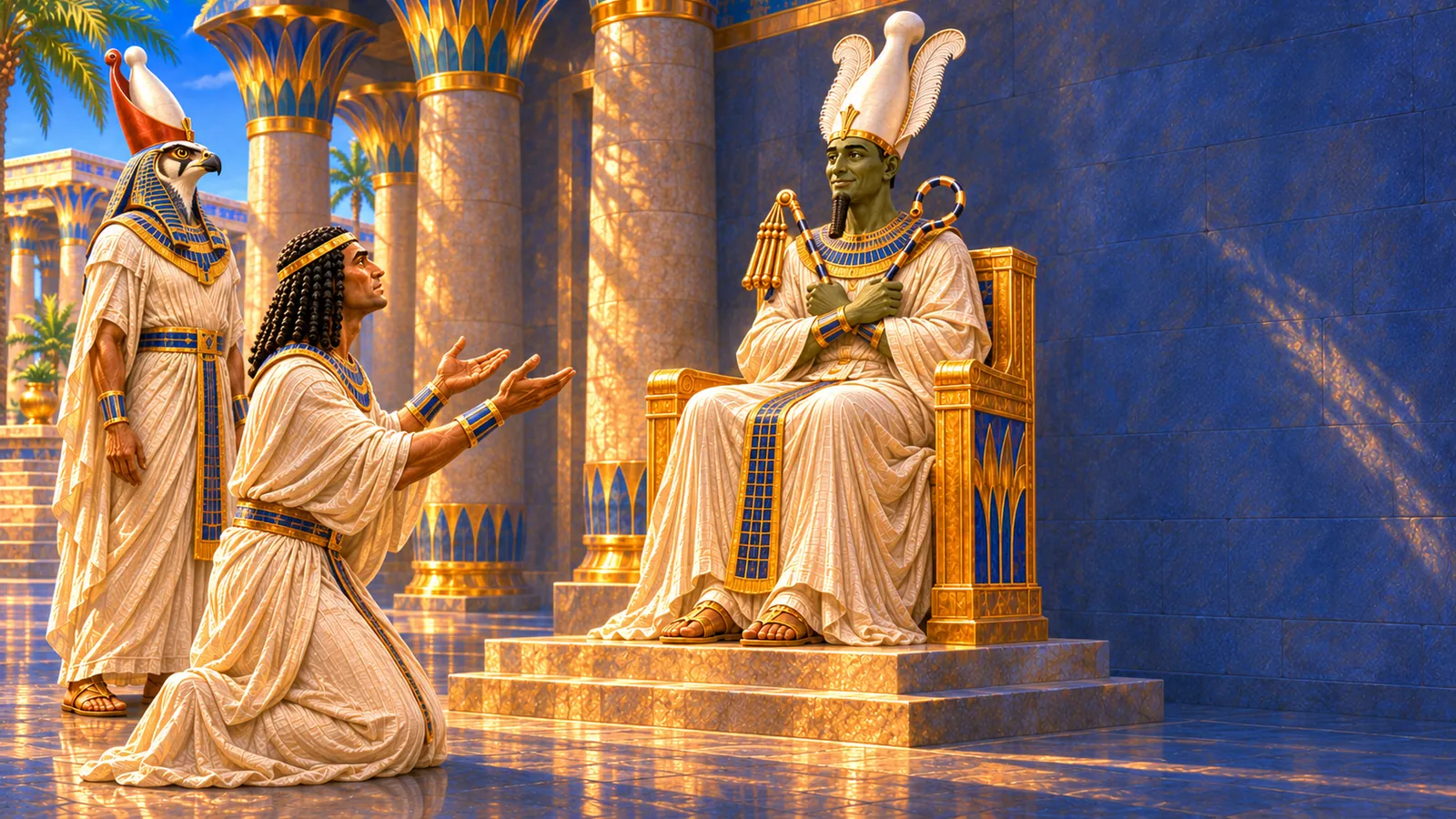
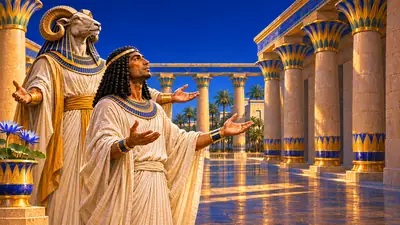
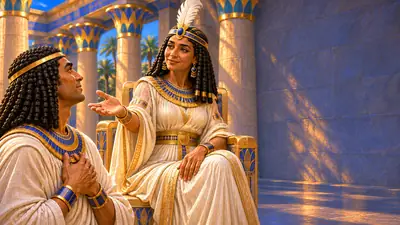
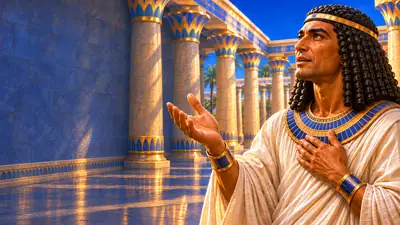
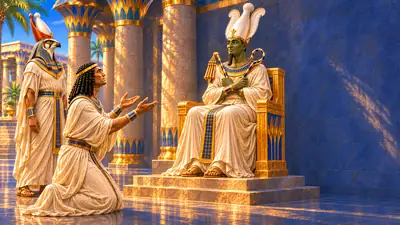
Entonces Ani presenta su propia súplica. Se dirige a Osiris como Señor de Amentet y dice que está en su presencia.
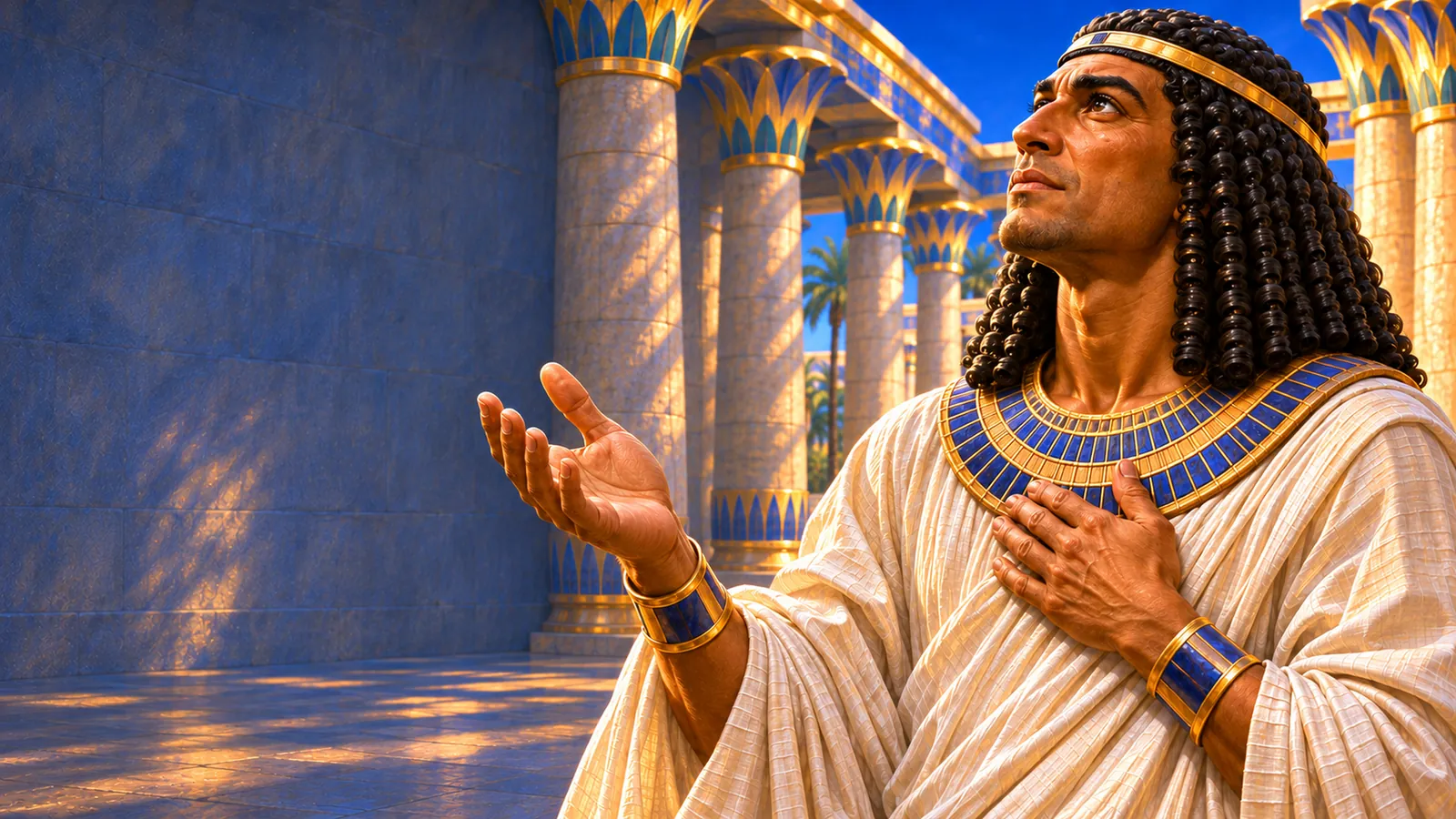
Ani dice que no hay en él pecado. Afirma que nunca ha mentido a sabiendas ni ha hecho nada con un corazón falso.
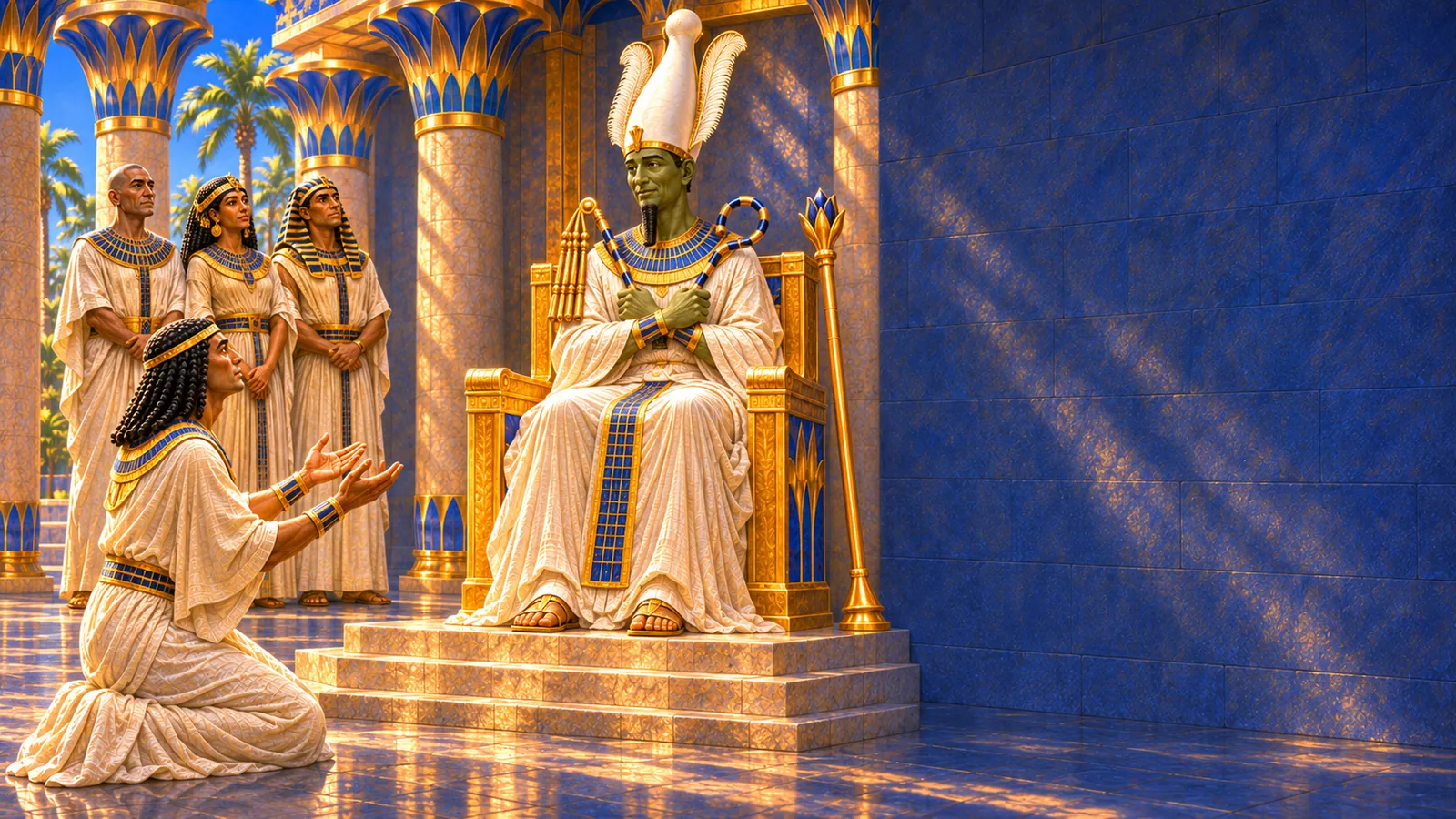
En su súplica, Ani pide ser como los favorecidos que rodean al señor al que se dirige.
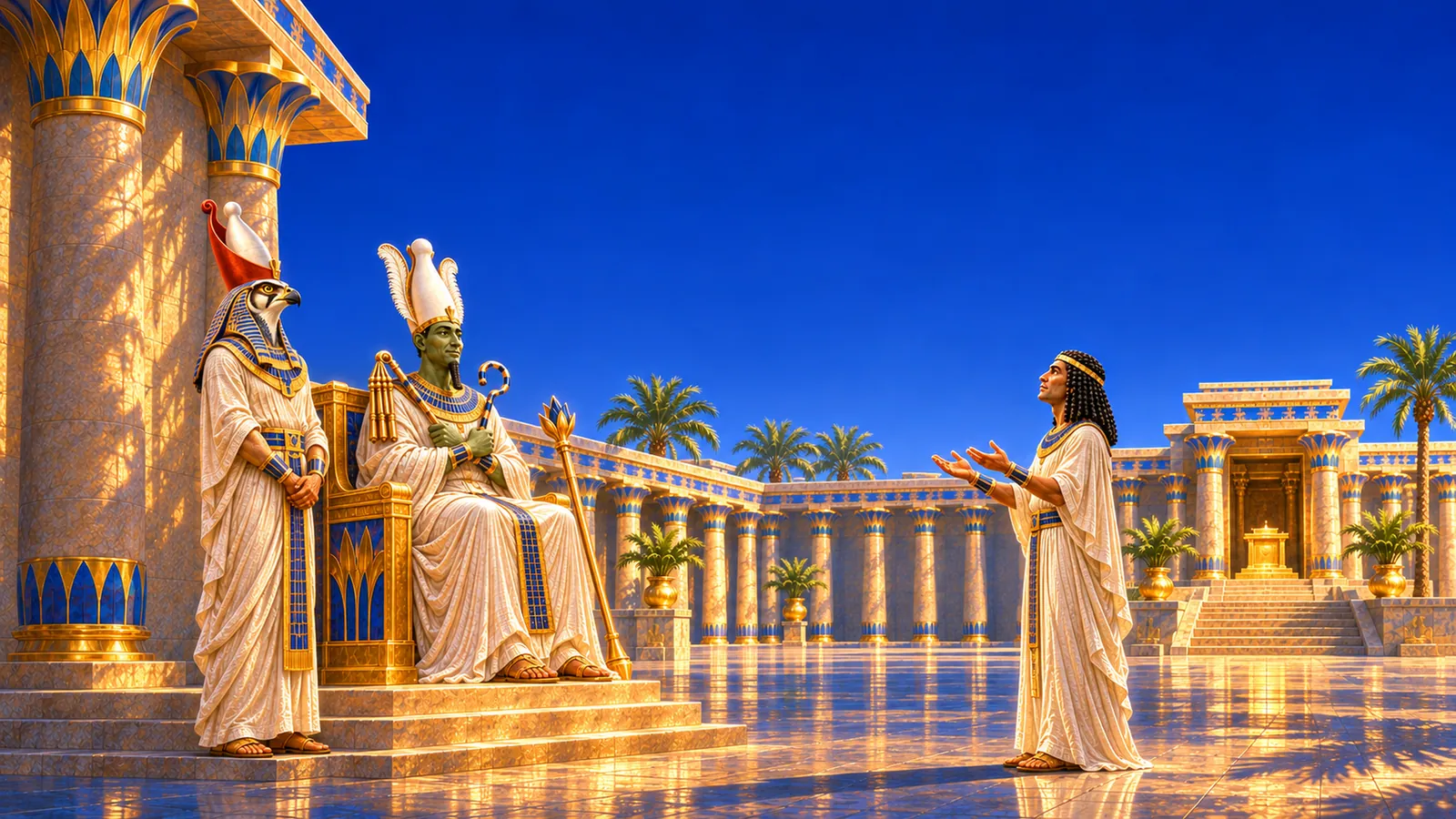
Ani pide ser un Osiris muy favorecido por el dios hermoso. Pide ser amado por el Señor del mundo.
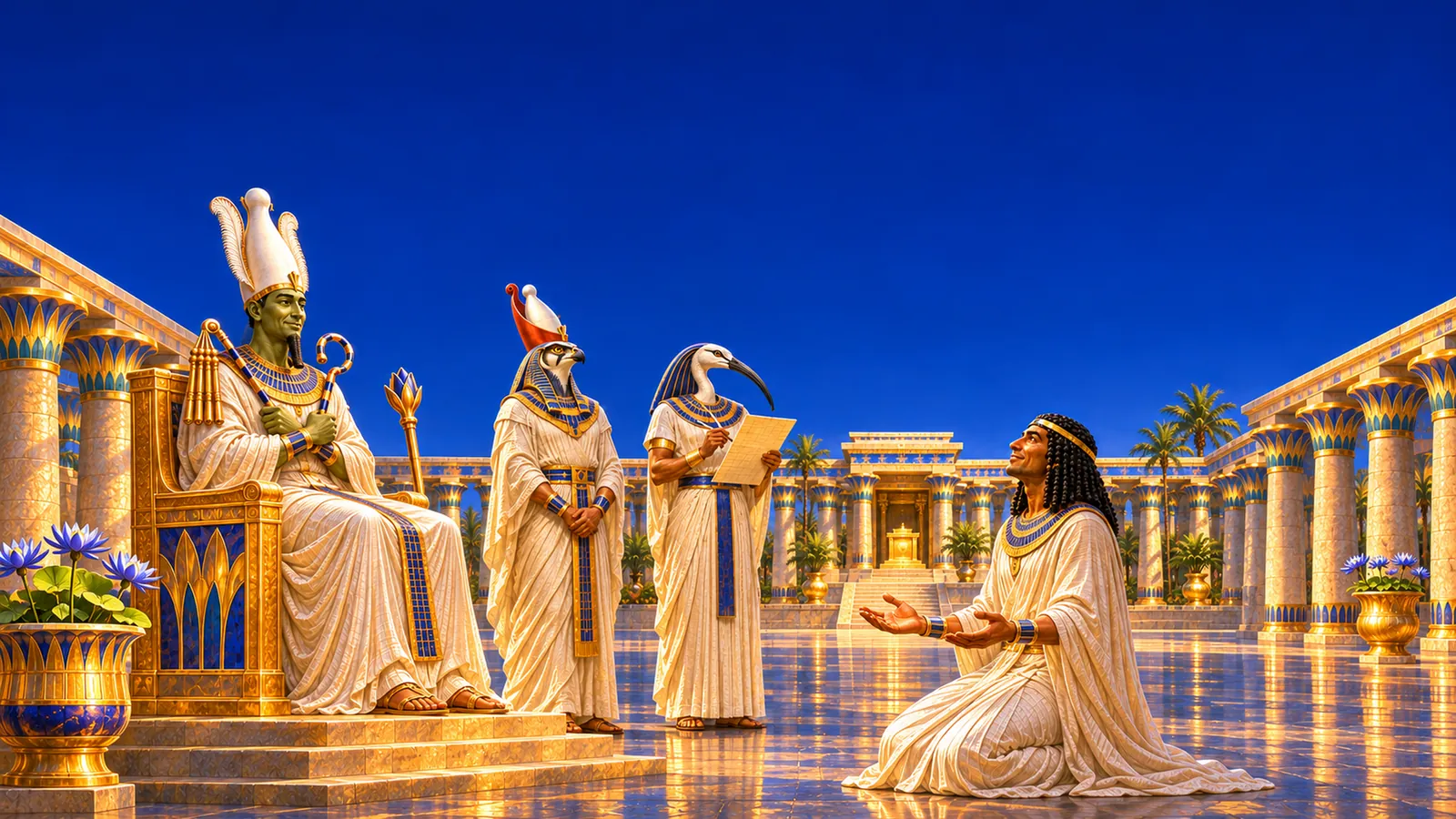
ANI ANTE OSIRIS
Ani se identifica como el escriba real de Maat, «que lo ama». Termina con su nombre y las palabras que Budge traduce por «triunfante ante Osiris».
Fin del capítulo 1
Todas las páginas

Fuentes
The five speeches are paraphrased in order.
Ediciones consultadas
- Publication record for Egyptian Ideas of the Future Life
- The 1908 edition, Chapter IV
- Budge’s illustration and description of Ani’s weighing
- Budge’s illustration and description of Ani’s audience before Osiris
- Budge note 90, British Museum Papyrus of Ani No. 10470
- Budge note 118, sources for the scene and its response
- Budge note 119, closing speech and variant
Notas sobre este relato
Pages 01–02 · transcription lines 3476–3479. Budge introduces Ani’s words before the weighing. Ani calls his heart his mother twice and names it as the heart through which he came into being. His first requests concern opposition at judgment and opposition in the presence of the sovereign princes.
Pages 03–04 · transcription lines 3479–3481. Ani asks that he and his heart remain together before the keeper of the Balance. He tells his heart that it is his ka, which dwells in his body.
Pages 05–06 · transcription lines 3481–3483. The Khnemu phrase follows a semicolon in Budge and continues Ani’s direct address to the heart. The two actions are joining the limbs and strengthening them. Next Ani asks his heart to come forth into the place of happiness to which they go.
Page 07 · transcription lines 3483–3485a. Ani’s closing appeal names the princes of Osiris’s court as those who order the circumstances of people’s lives. The phrase about his name stinking is his request that they spare his name from disgrace. His speech closes on the first part of line 3485. Budge then introduces a separate addition found in “some papyri.”
Pages 08–09 · transcription lines 3491–3493. In Budge’s description, Anubis examines the tongue of the balance. The ape indicates to its associate Thoth that the beam is exactly level.
Pages 10–11 · transcription lines 3493–3496. The heart exactly counterbalances the feather symbolic of Maāt. Budge explains Maāt in this passage through right, truth and law. Thoth writes down the result and prepares to address the gods in Budge’s account.
Page 12 · transcription lines 3500–3501. Thoth calls for the judgment to be heard and reports that the heart of Osiris has indeed been weighed. This title is spoken within the judgment of Ani. His soul’s witness, the trial in the Great Balance and the reported findings follow on the next pages.
Page 13 · Thoth’s report, lines 3501–3502. The soul stands as a witness for the deceased.
Pages 14–15 · Thoth’s report, lines 3502–3505. Thoth says that no wickedness was found in Ani, the temple offerings were not wasted, no harm was done by Ani’s deeds and no evil reports were spread by him while he was on earth.
Pages 16–18 · The great company’s reply, lines 3509–3513. Budge identifies the respondents as the great company of the gods. They confirm Thoth’s words and address him as dwelling in Khemennu. Budge’s parenthetical identification gives Hermopolis. They name the deceased as Osiris, the scribe Ani, triumphant, and declare him holy and righteous. The next sentence says he has not sinned or done evil against them.
Pages 19–20 · The great company’s reply, lines 3513–3515. The company says the Devourer Ām-mit will not be allowed to prevail over Ani. It then states that Ani will be granted meat-offerings and entrance into the presence of Osiris. The actual introduction by Horus in Budge’s later description follows at its own point.
Page 21 · The great company’s reply, lines 3516–3517. The grant concludes with a homestead forever in the Field of Peace, as for the followers of Horus. Note 118 at transcription line 4999 describes those followers as a class of mythological beings and refers to Budge’s *Papyrus of Ani*, p. cxxv.
Page 22 · Budge’s gloss, lines 3529–3533. His adjoining discussion elaborates on the powers he attributes to this expression.
Pages 23–24 · Budge’s shrine description, lines 3581–3586. Horus takes Ani’s left hand in his right and leads him up to the shrine. Budge describes Osiris seated there, wearing the white crown with feathers and holding a sceptre, a crook and a whip or flail. Budge says the implements signify sovereignty and dominion. The details remain in the spoken description.
Page 25, Papyrus of Ani with Budge’s attributed prose where specified, transcription lines 3586–3587. Budge describes the tomb that forms the throne and says the bolted doors and uraeus cornice appear painted at its side. Only his prose carries these details.
Page 26, Papyrus of Ani with Budge’s attributed prose where specified, transcription lines 3587–3589. Budge glosses it as a symbol of joy and happiness and separately specifies the positions to Osiris’s right and left.
Page 27, Papyrus of Ani with Budge’s attributed prose where specified, transcription lines 3607–3608. Budge introduces Horus as the speaker. Un-nefer addresses Osiris. The Osiris Ani is the person Horus is introducing.
Page 28, Papyrus of Ani with Budge’s attributed prose where specified, transcription lines 3608–3610. Horus applies the three clauses to Ani’s heart and says it had sinned against neither god nor goddess.
Page 29, Papyrus of Ani with Budge’s attributed prose where specified, transcription lines 3610–3612. Horus attributes the weighing to Thoth under the company’s decree. Budge leaves the finding as “it” in this sentence.
Page 30, Papyrus of Ani with Budge’s attributed prose where specified, transcription lines 3612–3614a. The cakes and ale, entry and enduring likeness to Horus’s followers complete the speech. Stop at “for ever!” on 3614 before Budge’s account of what follows.
Page 31, Papyrus of Ani with Budge’s attributed prose where specified, transcription lines 3616.
Page 32, Papyrus of Ani with Budge’s attributed prose where specified, transcription lines 3616–3617. The three claims are Ani’s own words within the appeal and distinct from the prior verdict. All three appear in these lines.
Page 33, Papyrus of Ani with Budge’s attributed prose where specified, transcription lines 3617–3618. Ani asks to be like the favored ones around the addressee. The wish remains a request.
Page 34, Papyrus of Ani with Budge’s attributed prose where specified, transcription lines 3618–3620. The text distinguishes the beautiful god and the title Lord of the world. It does not resolve their relationship in these lines.
Page 35, Papyrus of Ani with Budge’s attributed prose where specified, transcription lines 3620–3622 and n. 119. Budge supplies [I] in 3620.
Los versos antiguos de cada página
- Page 1: Budge 1908, Egyptian Ideas of the Future Life, ch. IV, Papyrus of Ani judgment, Ani’s speech to his heart (local HTML 3476–3477)
- Page 2: Budge 1908, Egyptian Ideas of the Future Life, ch. IV, Papyrus of Ani judgment, Ani’s speech to his heart (local HTML 3477–3479)
- Page 3: Budge 1908, Egyptian Ideas of the Future Life, ch. IV, Papyrus of Ani judgment, Ani’s speech to his heart (local HTML 3479–3480)
- Page 4: Budge 1908, Egyptian Ideas of the Future Life, ch. IV, Papyrus of Ani judgment, Ani’s speech to his heart (local HTML 3480–3481)
- Page 5: Budge 1908, Egyptian Ideas of the Future Life, ch. IV, Papyrus of Ani judgment, Ani’s speech to his heart (local HTML 3481–3482)
- Page 6: Budge 1908, Egyptian Ideas of the Future Life, ch. IV, Papyrus of Ani judgment, Ani’s speech to his heart (local HTML 3482–3483)
- Page 7: Budge 1908, Egyptian Ideas of the Future Life, ch. IV, Papyrus of Ani judgment, Ani’s speech to his heart (local HTML 3483–3485a)
- Page 8: Budge 1908, Egyptian Ideas of the Future Life, ch. IV, Papyrus of Ani judgment, Budge’s weighing description (local HTML 3491)
- Page 9: Budge 1908, Egyptian Ideas of the Future Life, ch. IV, Papyrus of Ani judgment, Budge’s weighing description (local HTML 3491–3493)
- Page 10: Budge 1908, Egyptian Ideas of the Future Life, ch. IV, Papyrus of Ani judgment, Budge’s weighing description (local HTML 3493–3495)
- Page 11: Budge 1908, Egyptian Ideas of the Future Life, ch. IV, Papyrus of Ani judgment, Budge’s weighing description (local HTML 3495–3496)
- Page 12: Budge 1908, Egyptian Ideas of the Future Life, ch. IV, Papyrus of Ani judgment, Thoth’s report (local HTML 3500–3501)
- Page 13: Budge 1908, Egyptian Ideas of the Future Life, 3rd ed., ch. IV, Ani’s judgment, Thoth’s report
- Page 14: Budge 1908, Egyptian Ideas of the Future Life, 3rd ed., ch. IV, Ani’s judgment, Thoth’s report
- Page 15: Budge 1908, Egyptian Ideas of the Future Life, 3rd ed., ch. IV, Ani’s judgment, Thoth’s report
The entire right is an unbroken, naturally shaded blue-gray near wall, gently out of focus, with no line or mark through it. - Page 16: Budge 1908, Egyptian Ideas of the Future Life, 3rd ed., ch. IV, Ani’s judgment, the company’s reply
- Page 17: Budge 1908, Egyptian Ideas of the Future Life, 3rd ed., ch. IV, Ani’s judgment, the company’s reply
- Page 18: Budge 1908, Egyptian Ideas of the Future Life, 3rd ed., ch. IV, Ani’s judgment, the company’s reply
The entire right is one cool muted blue plaster plane, smoothly shaded, without a wall edge or meeting line. - Page 19: Budge 1908, Egyptian Ideas of the Future Life, 3rd ed., ch. IV, Ani’s judgment, the company’s reply
- Page 20: Budge 1908, Egyptian Ideas of the Future Life, 3rd ed., ch. IV, Ani’s judgment, the company’s reply
- Page 21: Budge 1908, Egyptian Ideas of the Future Life, 3rd ed., ch. IV, Ani’s judgment, the company’s reply
- Page 22: Budge 1908, Egyptian Ideas of the Future Life, 3rd ed., ch. IV, Ani’s judgment, gloss on maā kheru
- Page 23: Budge 1908, Egyptian Ideas of the Future Life, 3rd ed., ch. IV, Ani’s judgment, Budge’s shrine description
- Page 24: Budge 1908, Egyptian Ideas of the Future Life, 3rd ed., ch. IV, Ani’s judgment, Budge’s shrine description
- Page 25: Budge 1908, Egyptian Ideas of the Future Life, ch. IV, Ani’s judgment (local HTML 3586–3587)
- Page 26: Budge 1908, Egyptian Ideas of the Future Life, ch. IV, Ani’s judgment (local HTML 3587–3589)
- Page 27: Budge 1908, Egyptian Ideas of the Future Life, ch. IV, Ani’s judgment (local HTML 3607–3608)
- Page 28: Budge 1908, Egyptian Ideas of the Future Life, ch. IV, Ani’s judgment (local HTML 3608–3610)
- Page 29: Budge 1908, Egyptian Ideas of the Future Life, ch. IV, Ani’s judgment (local HTML 3610–3612)
- Page 30: Budge 1908, Egyptian Ideas of the Future Life, ch. IV, Ani’s judgment (local HTML 3612–3614a)
Every shelf line and sharp highlight is confined to far right. - Page 31: Budge 1908, Egyptian Ideas of the Future Life, ch. IV, Ani’s judgment (local HTML 3616)
- Page 32: Budge 1908, Egyptian Ideas of the Future Life, ch. IV, Ani’s judgment (local HTML 3616–3617)
- Page 33: Budge 1908, Egyptian Ideas of the Future Life, ch. IV, Ani’s judgment (local HTML 3617–3618)
- Page 34: Budge 1908, Egyptian Ideas of the Future Life, ch. IV, Ani’s judgment (local HTML 3618–3620)
- Page 35: Budge 1908, Egyptian Ideas of the Future Life, ch. IV, Ani’s judgment (local HTML 3620–3622 and n. 119)
Ilustraciones hechas por IL Archive con herramientas de IA; el texto se basa en las fuentes antiguas (véanse las fuentes al final de cada capítulo).