Enki y el orden del mundo Capítulo 1
Enki organiza la hacienda del mundo
Esta adaptación ilustrada sigue el relato en prosa de Thorkild Jacobsen sobre Enki y su atención a los ríos, las lluvias, el cultivo, la construcción y los animales. La comparación final es de Jacobsen. Compara la organización de esos trabajos con la administración de una gran hacienda.
FuentesPase las páginas con las flechas, el teclado o deslizando el dedo.
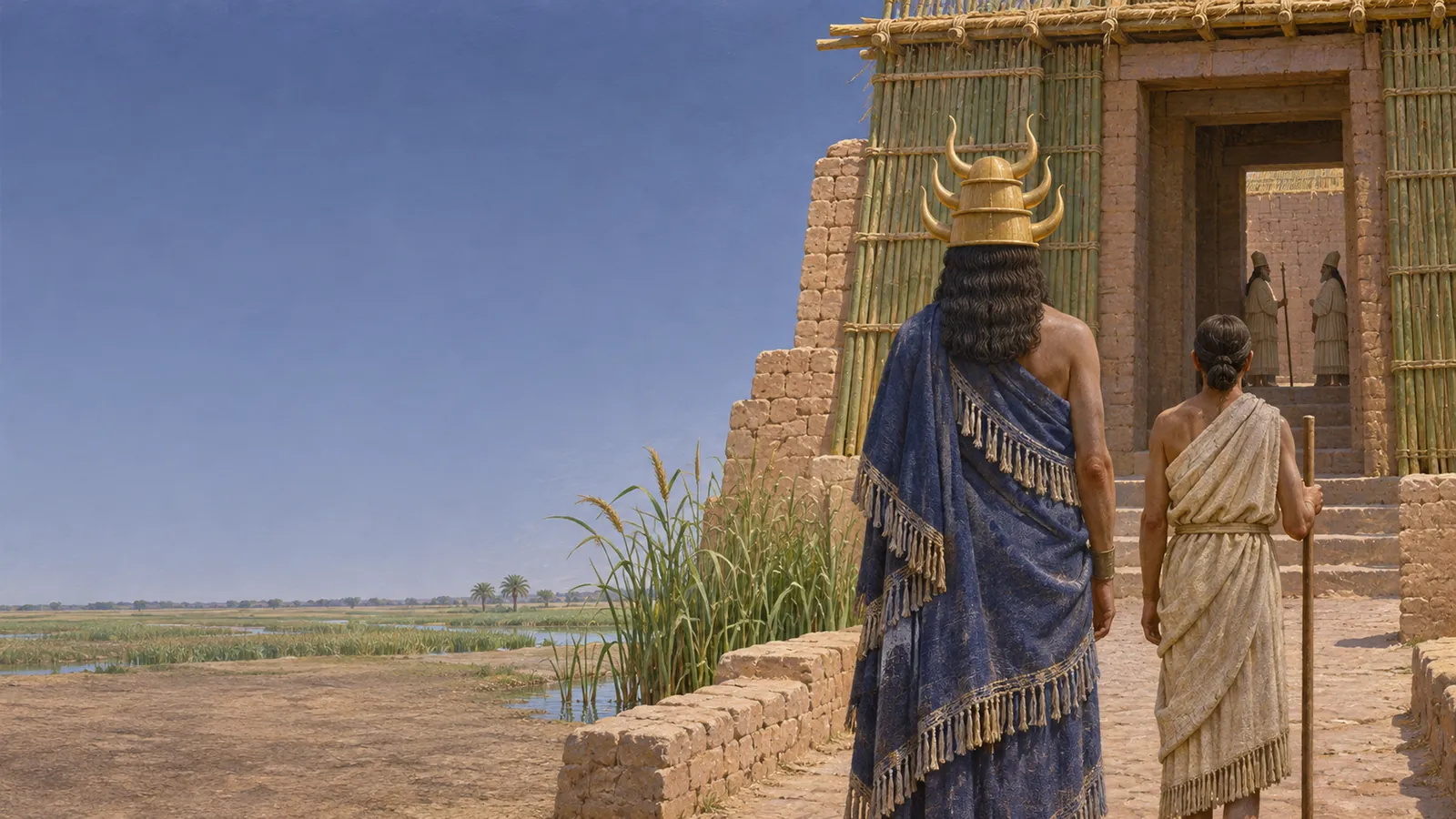
EL RELATO DE JACOBSEN
Este episodio adapta el relato en prosa publicado por Thorkild Jacobsen. Jacobsen dice que el comienzo se ha perdido y sugiere que quizá contaba cómo Anu y Enlil nombraron a Enki.
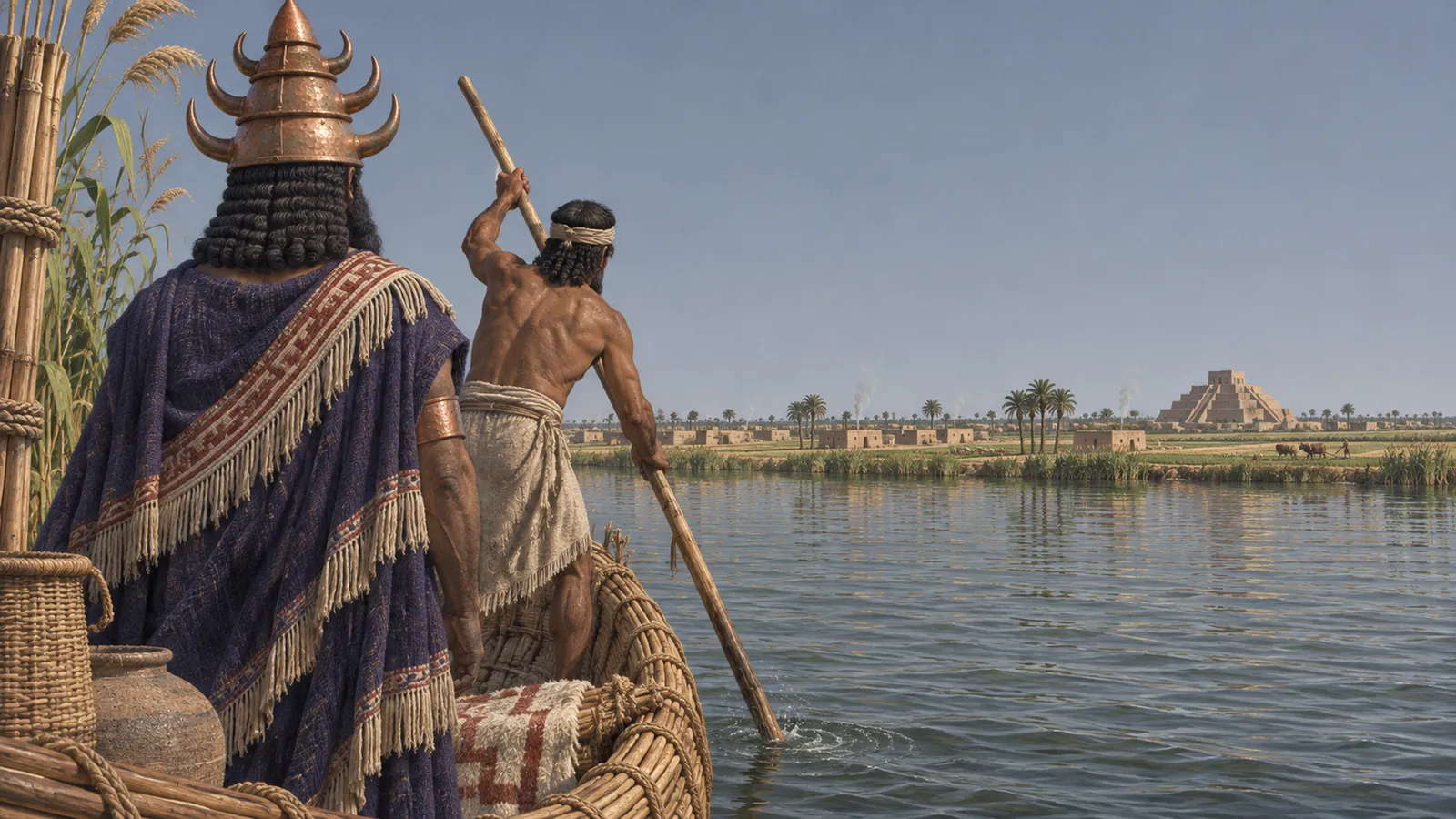
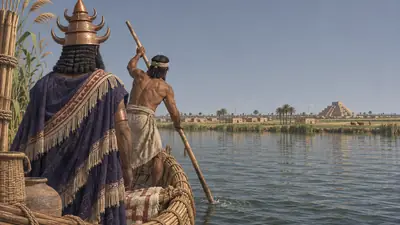
Donde el texto vuelve a ser legible, Jacobsen describe a Enki inspeccionando su territorio. En su relato, este abarca la mayor parte del mundo conocido entonces, y Enki visita sus grandes divisiones administrativas.
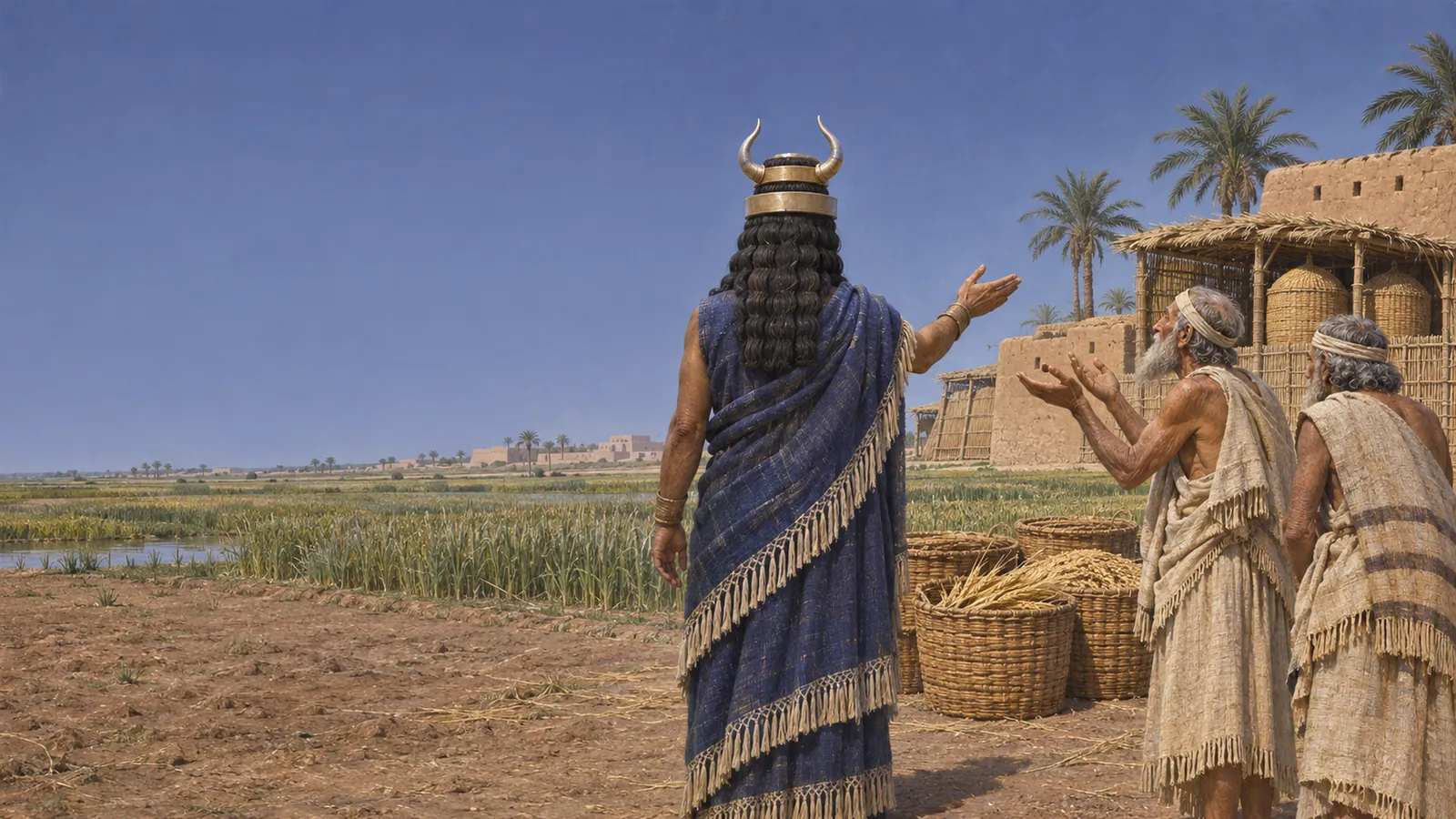
Jacobsen dice que Enki se detiene en cada país y lo bendice. La bendición le trae prosperidad y confirma las funciones que le corresponden.
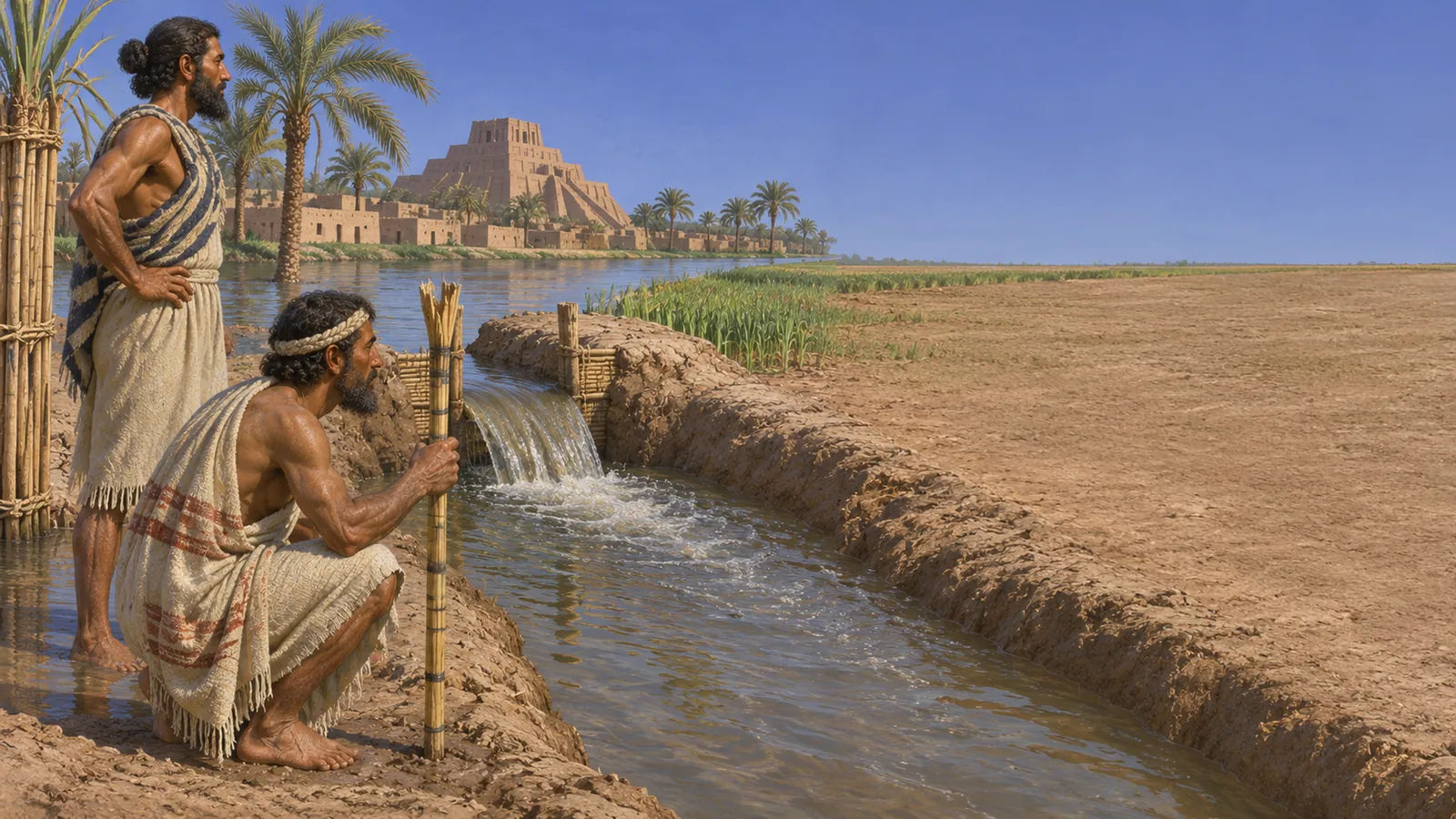
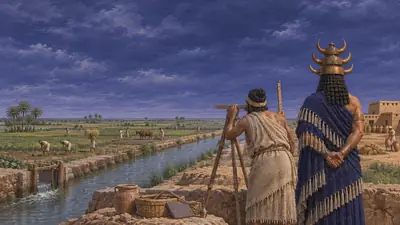
En el relato de Jacobsen, Enki pasa a ocuparse del agua y de lo que depende de ella. Llena el Éufrates y el Tigris de agua clara y pone a un dios a cargo de ambos ríos.
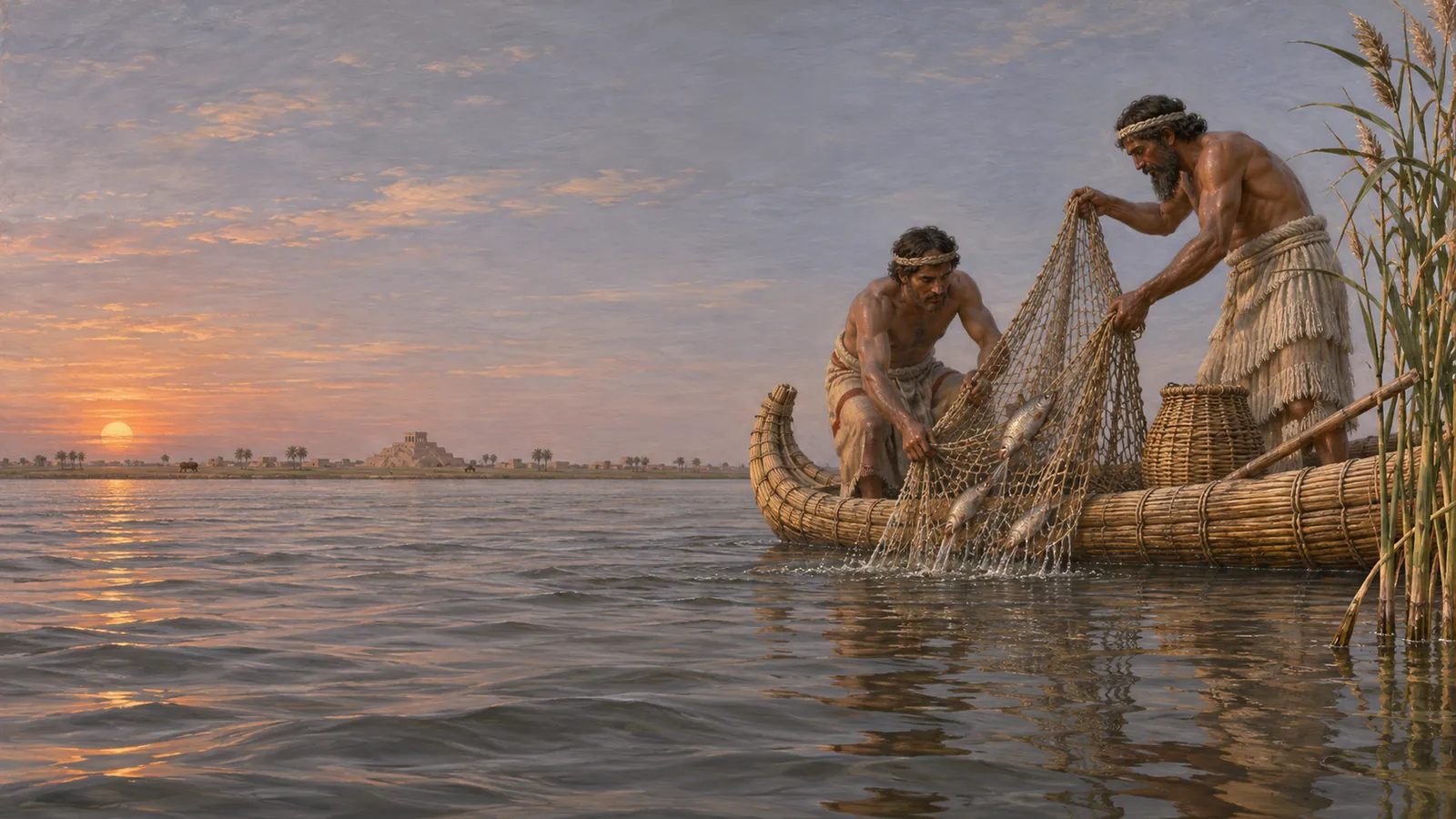
PECES Y CAÑAS
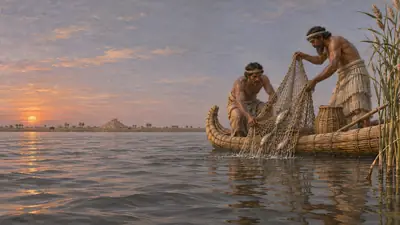
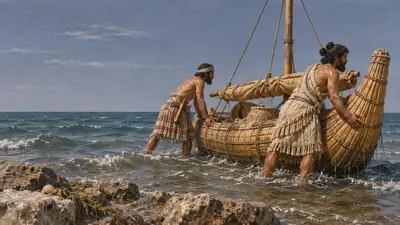
Jacobsen dice que Enki llena los ríos de peces y establece cañaverales. Encarga a otro dios el cuidado de los peces y los cañaverales.
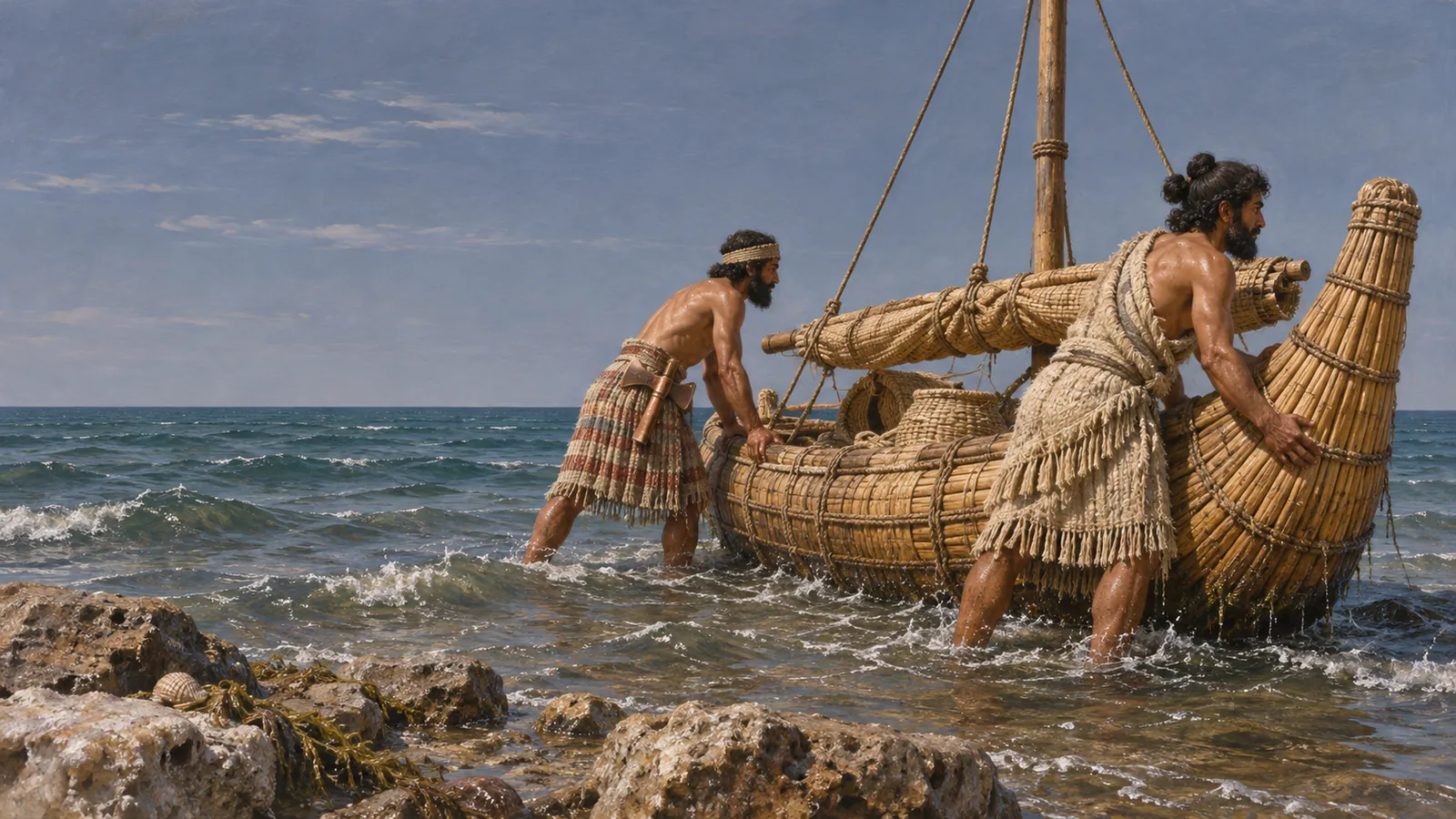
Jacobsen cuenta después que Enki pone en orden el mar y nombra a un dios para supervisarlo. Su relato deja sin nombre tanto al mar como al dios encargado.
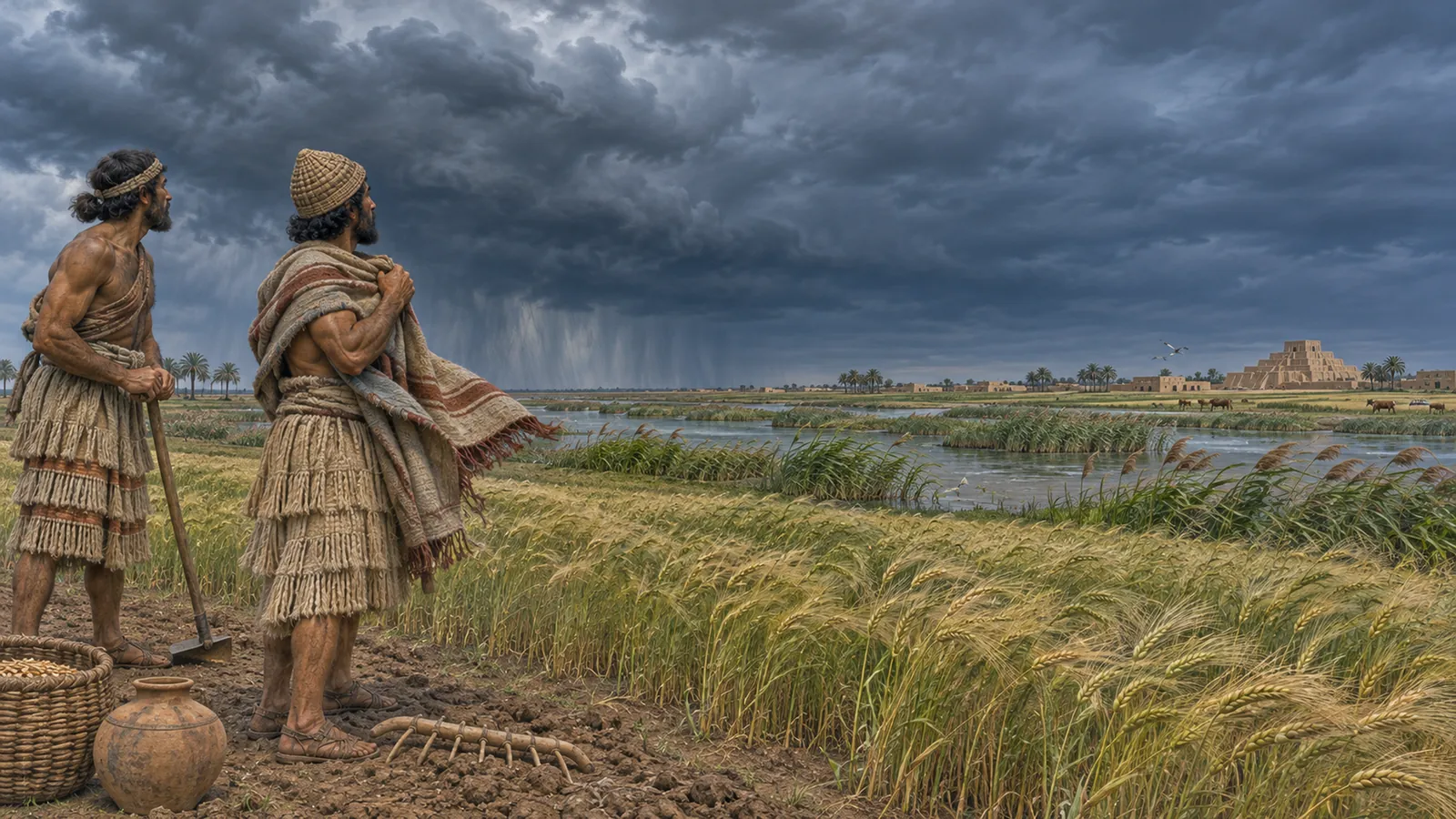
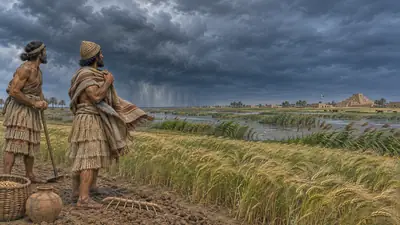
En el relato de Jacobsen, Enki pasa de ocuparse del mar a ocuparse de los vientos que traen las lluvias.
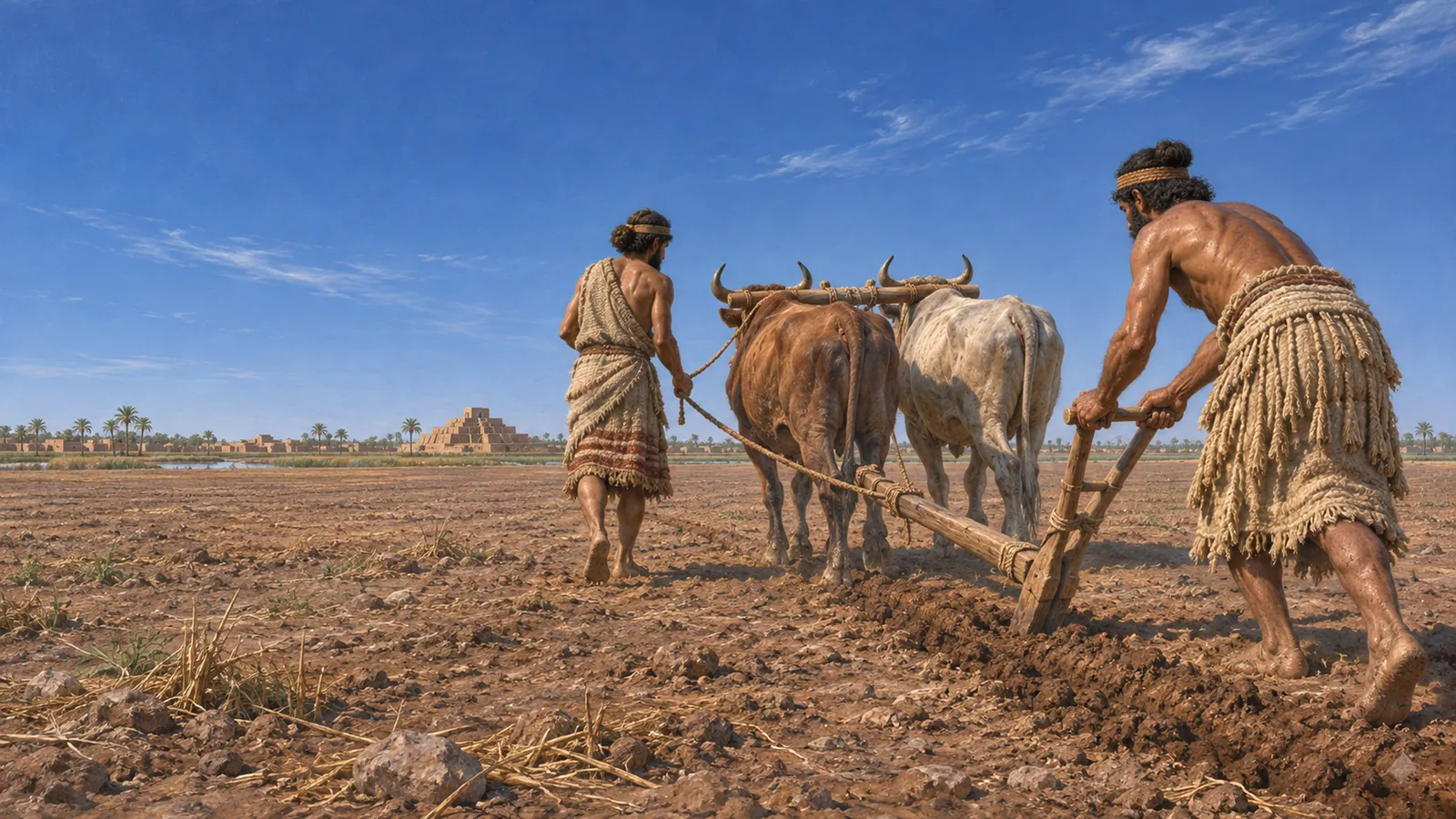
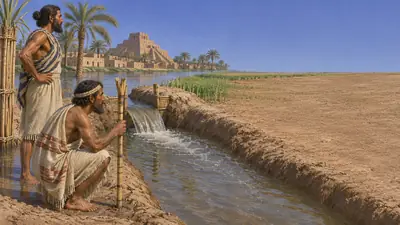
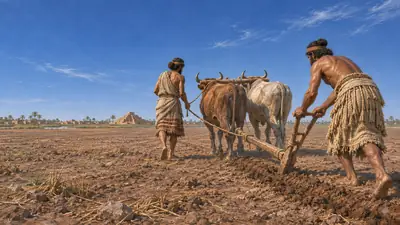
El relato de Jacobsen pasa después a la agricultura. Enki se ocupa del arado y abre los surcos en los campos.
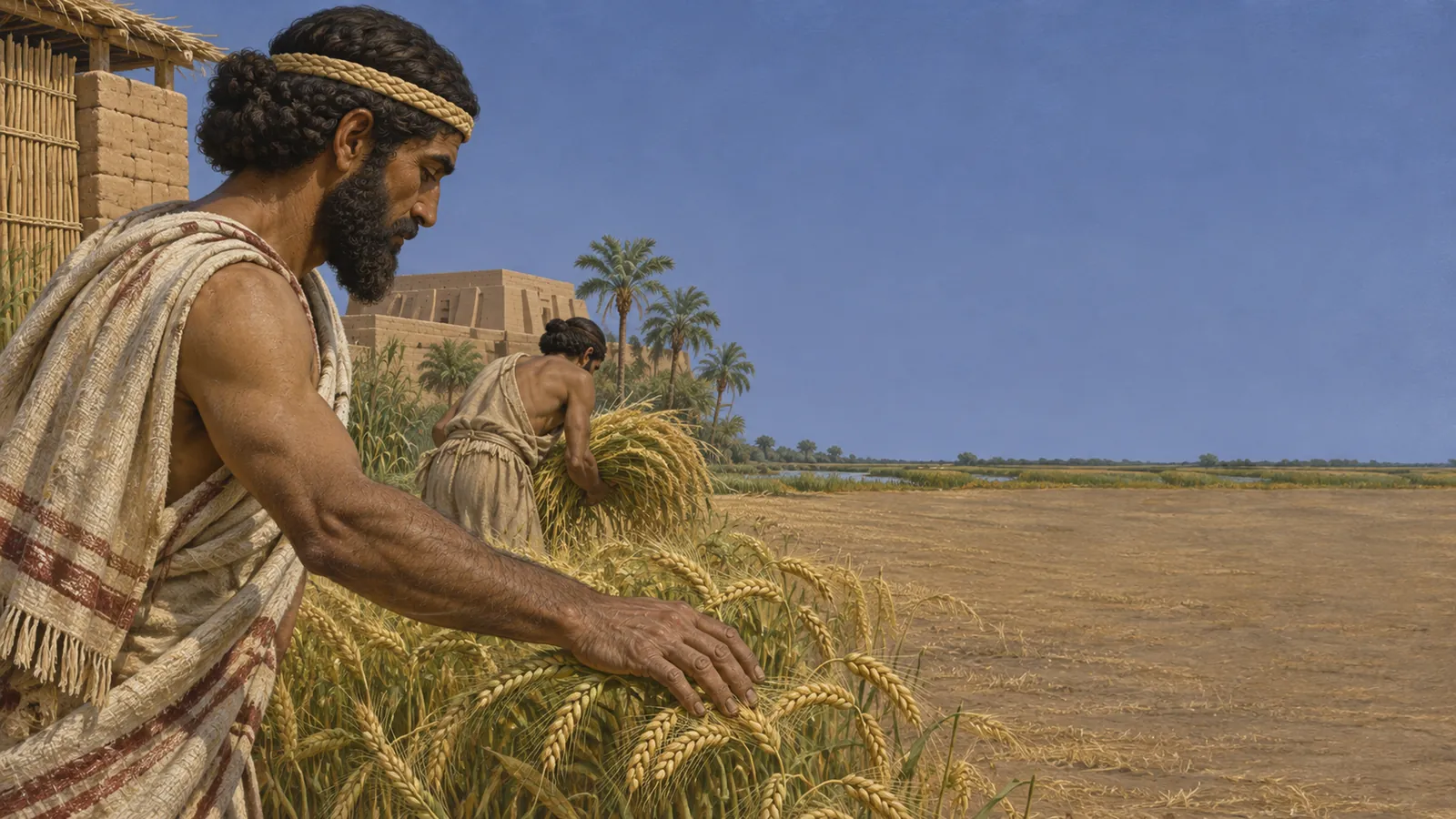
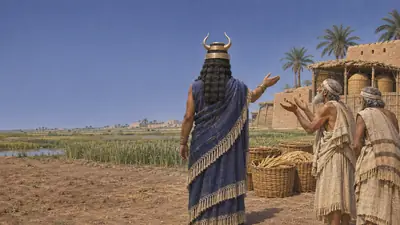
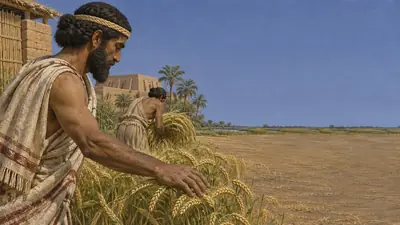
En el relato de Jacobsen sobre la organización de la agricultura, Enki deja crecer el grano en el campo.
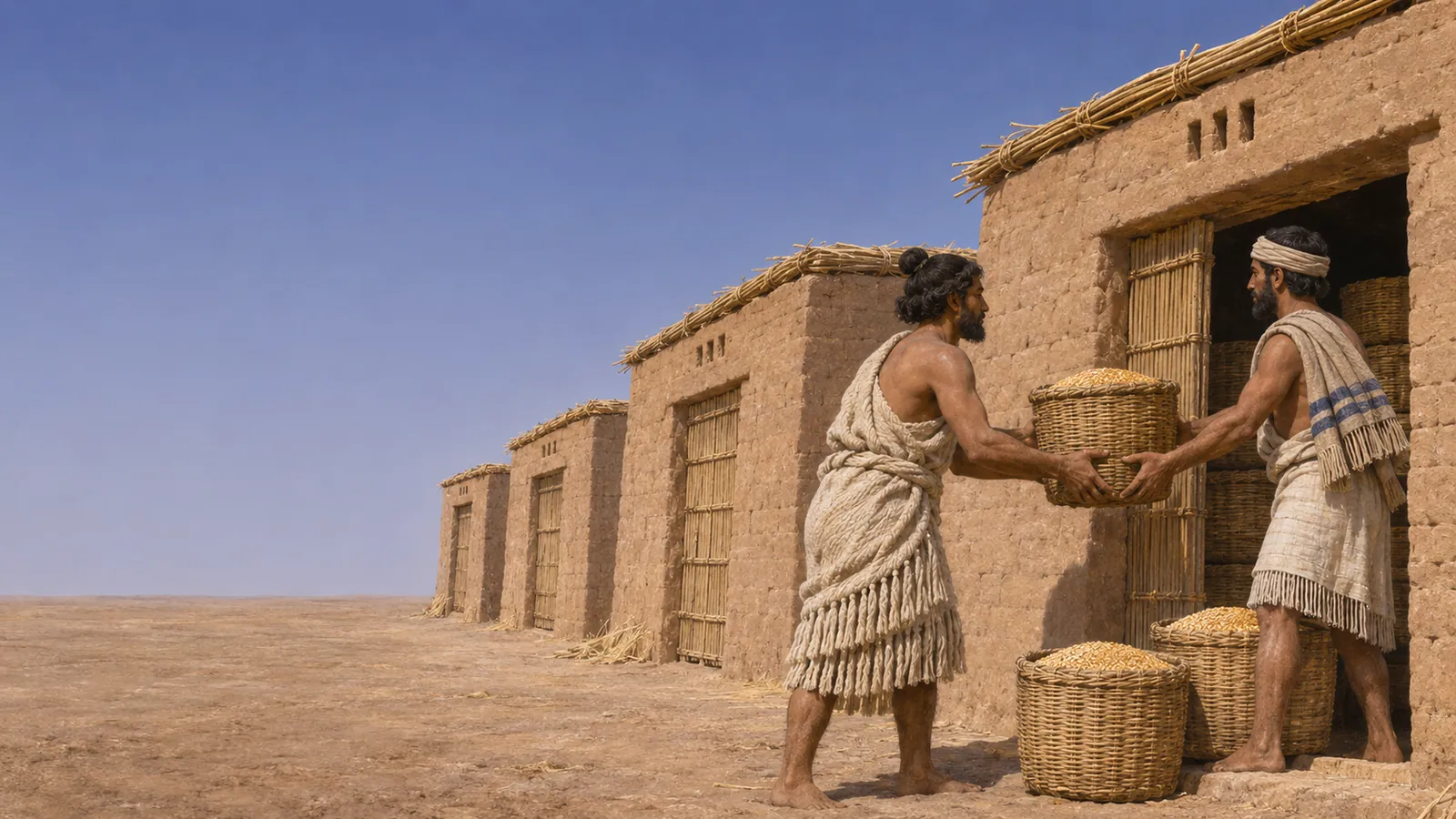
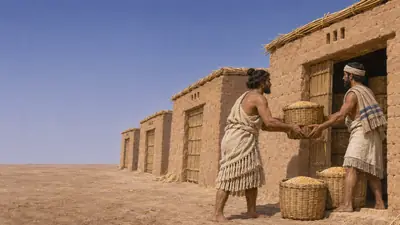
En el relato de Jacobsen, la siguiente tarea es el almacenamiento. Enki dispone los graneros en fila.
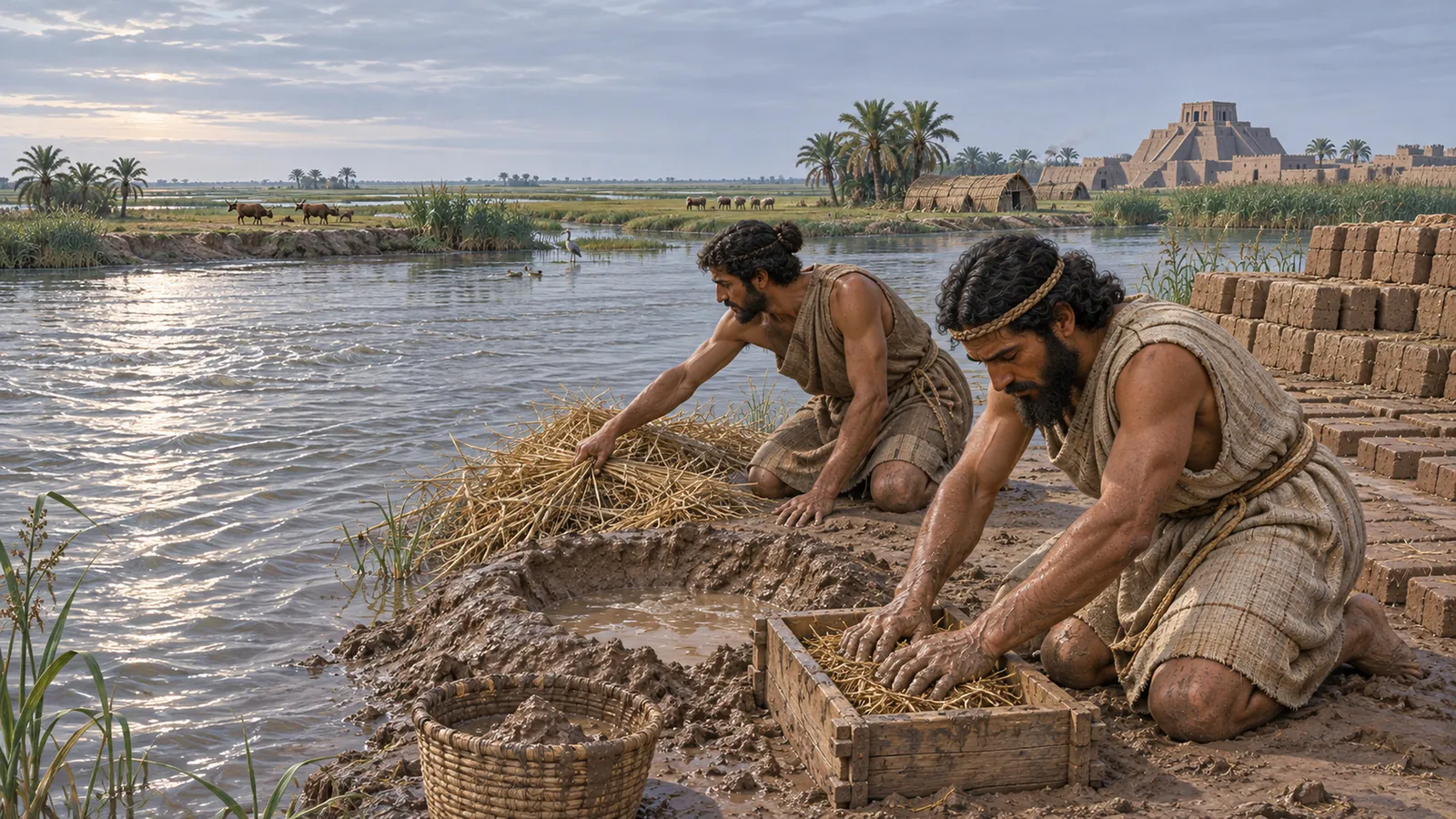
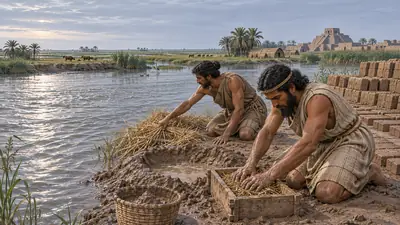
Jacobsen dice que Enki pasa de los campos a las ciudades y aldeas y encarga al dios de los ladrillos supervisar su fabricación. El relato no da un nombre propio para ese dios.
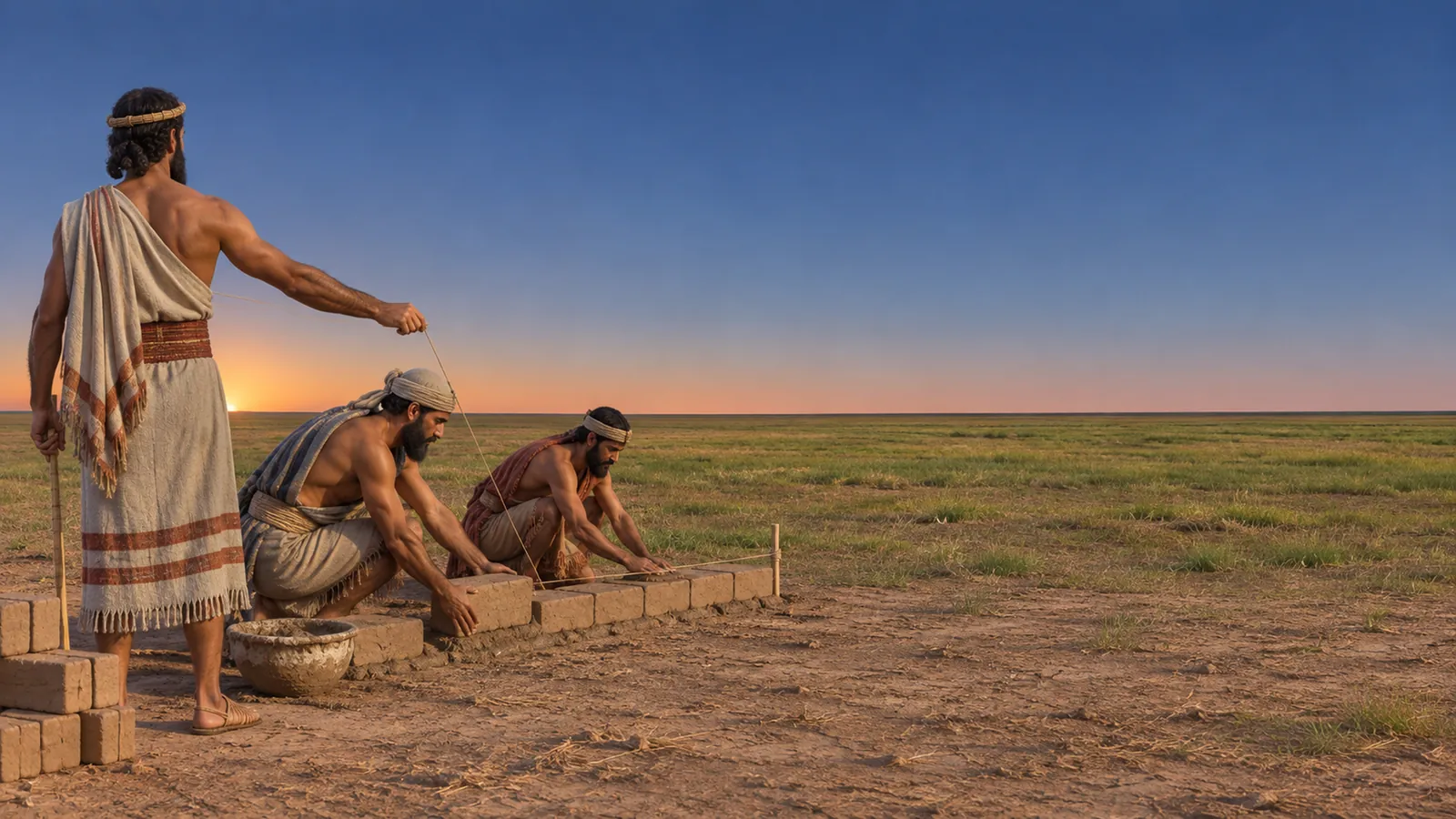
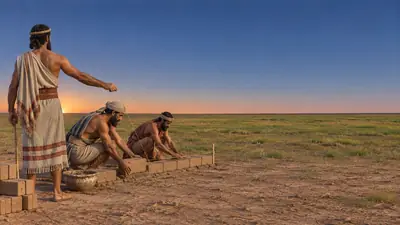
En el relato de Jacobsen, Enki pone cimientos y construye muros. Designa a Mushdama, el maestro constructor divino, para que supervise la obra.
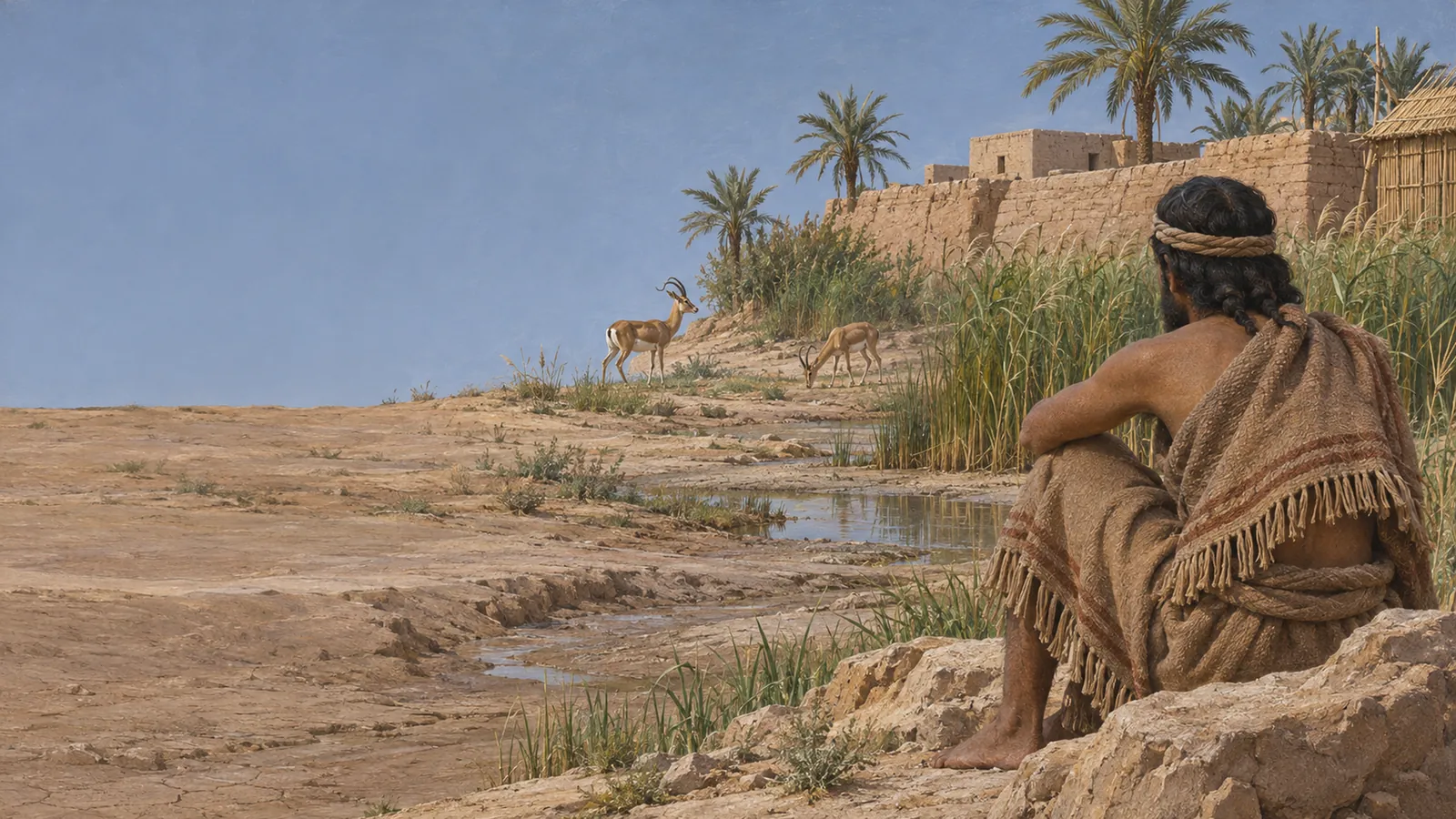
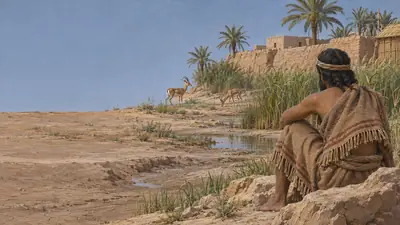
Jacobsen pasa después al desierto, donde Enki deja a los animales salvajes al cuidado del dios Sumukan.
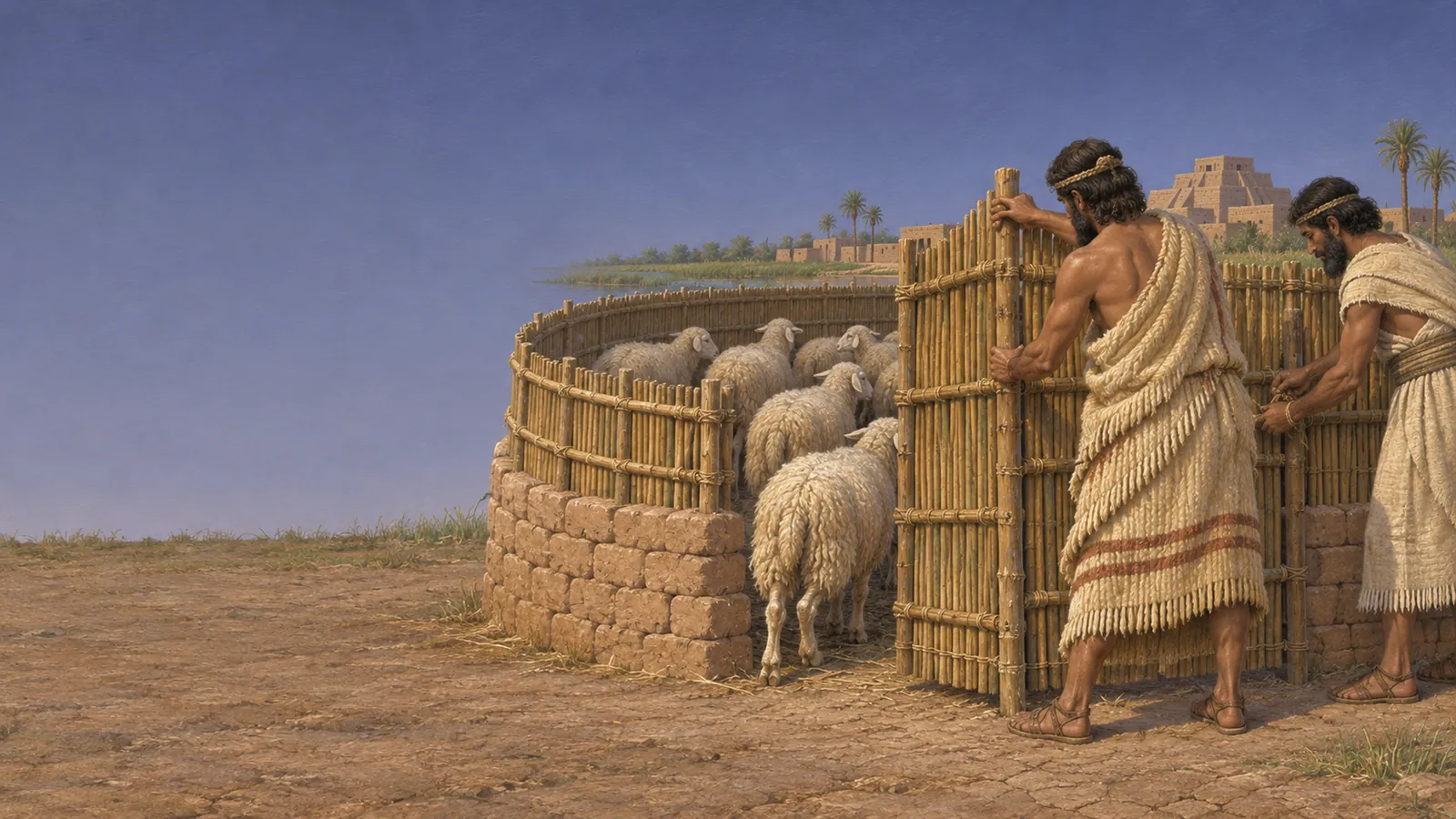
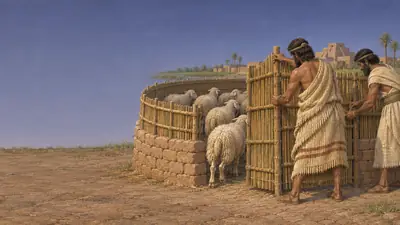
Jacobsen dice que Enki construye corrales y apriscos para los animales domésticos. Los deja al cuidado del dios pastor Dumuzi, a quien Jacobsen también llama Tammuz.
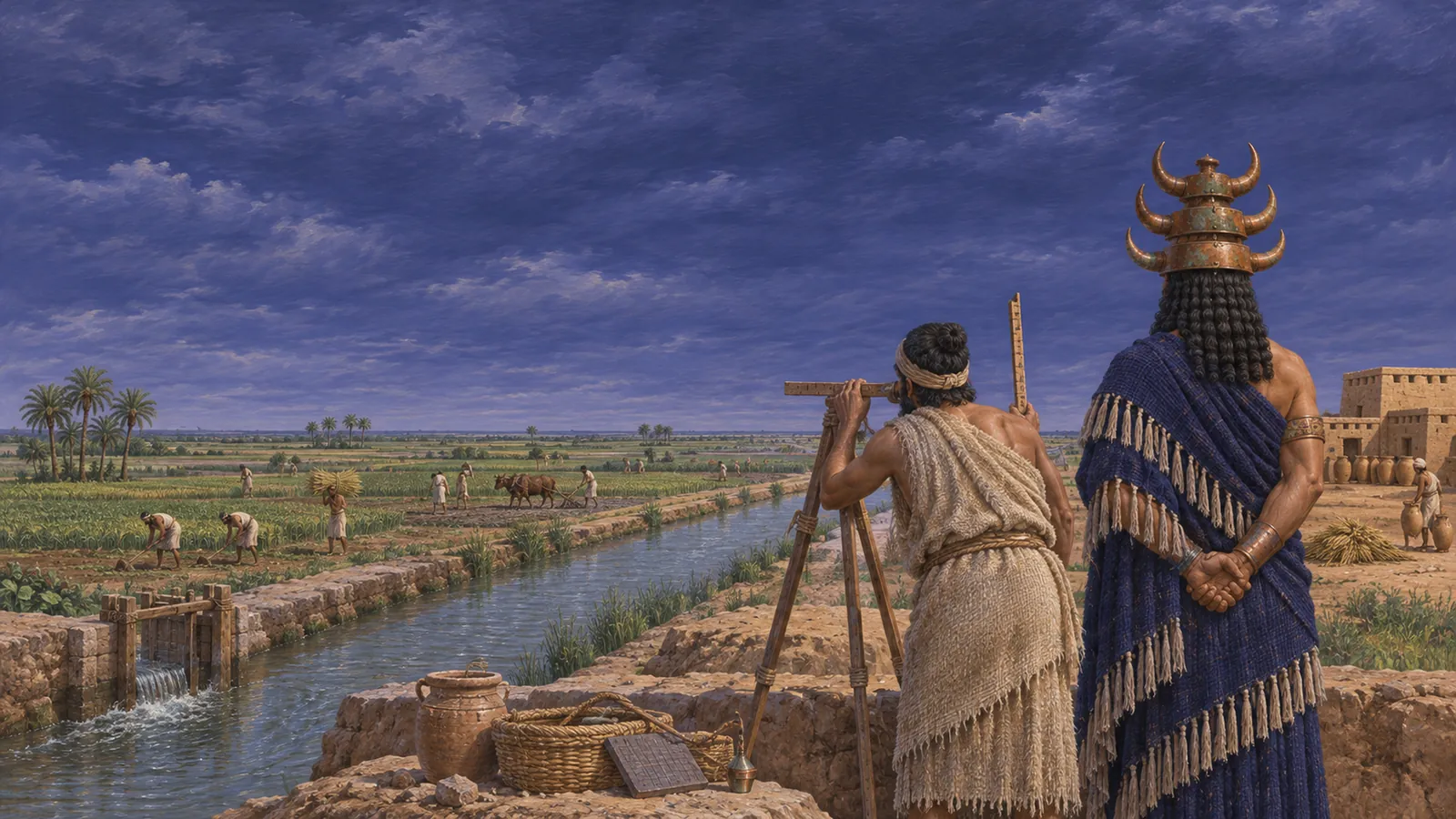
LA HACIENDA DEL MUNDO
Jacobsen presenta a Enki organizando las principales actividades de la economía de Mesopotamia, poniéndolas en marcha y nombrando supervisores divinos. Compara este orden en la naturaleza con una hacienda dirigida por un administrador capaz.
Fin del capítulo 1
Todas las páginas
Fuentes
160–161. Chapter note 25 directs readers to Kramer’s Mythology, note 59. Jacobsen’s subsection gives a prose summary and an interpretation. The ancient poem itself has no directly translated verses under this heading. Jacobsen explicitly treats the original opening as conjectural.
Ediciones consultadas
- University of Chicago, The Intellectual Adventure of Ancient Man
- Jacobsen’s printed subsection, pp. 160–161
- Chapter note 25, p. 184
Notas sobre este relato
Page 1, attribution and the lost opening. 160. Jacobsen reports that the beginning is lost. He proposes that it probably described how Anu and Enlil appointed Enki. Note 25 on p. 184 refers to note 59 in Samuel Noah Kramer’s *Sumerian Mythology*.
Pages 2–3, territory and prosperity. Jacobsen resumes his account on p. 160 with Enki’s tour and visits to the larger administrative areas. He describes Enki stopping in each country and assigning it prosperity and particular functions by his blessing. The countries and functions remain unspecified in these sentences.
Pages 4–5, rivers, fish and reeds. Jacobsen gives the names Euphrates and Tigris and describes the clear water and one divine overseer. He then separates the stocking of fish and the establishment of stands of cane from the previous act, giving those resources to another overseer. Jacobsen does not supply the names of either overseer here.
Pages 6–7, sea and rain. The sentence across pp. 160–161 gives responsibility for the sea to another divine overseer. Both the sea and its overseer are unnamed. On p. 161, Jacobsen next mentions the winds that bring rain. The passage gives no named season.
Page 8, the plow and the furrows. The summary on p. 161 then turns to Enki’s concern with the plow and the opening of furrows.
p. 161, first paragraph. Jacobsen says that Enki lets grain grow on the field after the work involving the plow and furrows. He sets granaries side by side.
p. 161, first paragraph. Enki moves from the fields to town and village in Jacobsen’s account. He appoints the brick god to oversee brickmaking. Jacobsen gives that god no personal name here. Enki lays foundations and builds walls, appointing Mushdama, the divine master builder, to oversee this work.
p. 161, second paragraph. Jacobsen says the wild animals of the desert are placed under the god Sumukan. Enki builds pens and sheepfolds for the domestic animals and puts them in the charge of the shepherd god Dumuzi, whom Jacobsen also calls Tammuz. These names belong to Jacobsen’s printed account.
p. 161, end of second paragraph. Jacobsen sums up Enki’s work as establishing economic activities in Mesopotamia, getting them started and appointing divine overseers. His comparison interprets natural order as a well-run estate. The selection ends before the heading for the distinct Enki and Ninmah story.
Los versos antiguos de cada página
- Page 1: Jacobsen, “Enki Organizes the World Manor,” 1977 Phoenix ed., p. 160, subsection opening and conjecture
- Page 2: Jacobsen, “Enki Organizes the World Manor,” 1977 Phoenix ed., p. 160, first paragraph, Enki’s inspection
- Page 3: Jacobsen, “Enki Organizes the World Manor,” 1977 Phoenix ed., p. 160, second paragraph, visits and blessings
- Page 4: Jacobsen, “Enki Organizes the World Manor,” 1977 Phoenix ed., p. 160, second paragraph, river water and oversight
- Page 5: Jacobsen, “Enki Organizes the World Manor,” 1977 Phoenix ed., p. 160, second paragraph, fish and canebrakes
- Page 6: Jacobsen, “Enki Organizes the World Manor,” 1977 Phoenix ed., pp. 160–161, sentence on the sea
- Page 7: Jacobsen, “Enki Organizes the World Manor,” 1977 Phoenix ed., p. 161, first paragraph, winds and rain
- Page 8: Jacobsen, “Enki Organizes the World Manor,” 1977 Phoenix ed., p. 161, first paragraph, plow and furrows
- Page 9: Jacobsen 1977, The Intellectual Adventure of Ancient Man, ch. V, Enki Organizes the World Manor, p. 161, first paragraph, grain
- Page 10: Jacobsen 1977, The Intellectual Adventure of Ancient Man, ch. V, Enki Organizes the World Manor, p. 161, first paragraph, storage
- Page 11: Jacobsen 1977, The Intellectual Adventure of Ancient Man, ch. V, Enki Organizes the World Manor, p. 161, first paragraph, the brick god
- Page 12: Jacobsen 1977, The Intellectual Adventure of Ancient Man, ch. V, Enki Organizes the World Manor, p. 161, first paragraph, building and Mushdama
- Page 13: Jacobsen 1977, The Intellectual Adventure of Ancient Man, ch. V, Enki Organizes the World Manor, p. 161, second paragraph, desert and Sumukan
- Page 14: Jacobsen 1977, The Intellectual Adventure of Ancient Man, ch. V, Enki Organizes the World Manor, p. 161, second paragraph, domestic animals and Dumuzi
- Page 15: Jacobsen 1977, The Intellectual Adventure of Ancient Man, ch. V, Enki Organizes the World Manor, p. 161, second paragraph, Jacobsen’s closing comparison
Ilustraciones hechas por IL Archive con herramientas de IA; el texto se basa en las fuentes antiguas (véanse las fuentes al final de cada capítulo).