La sala que habla Capítulo 1
Los nombres de la puerta
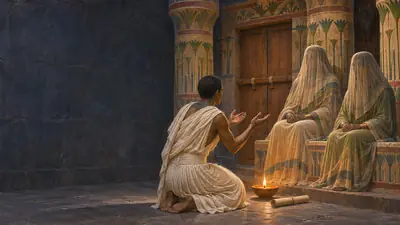
En el Papiro de Nu, un difunto dirige una súplica a quienes habitan la Sala de las Dos Maat e imagina que lo invitan a entrar. En el umbral, la puerta, el suelo y un guardián hacen sus preguntas. Thot tiene un último enigma antes de prometer que pronunciará su nombre.
FuentesPase las páginas con las flechas, el teclado o deslizando el dedo.
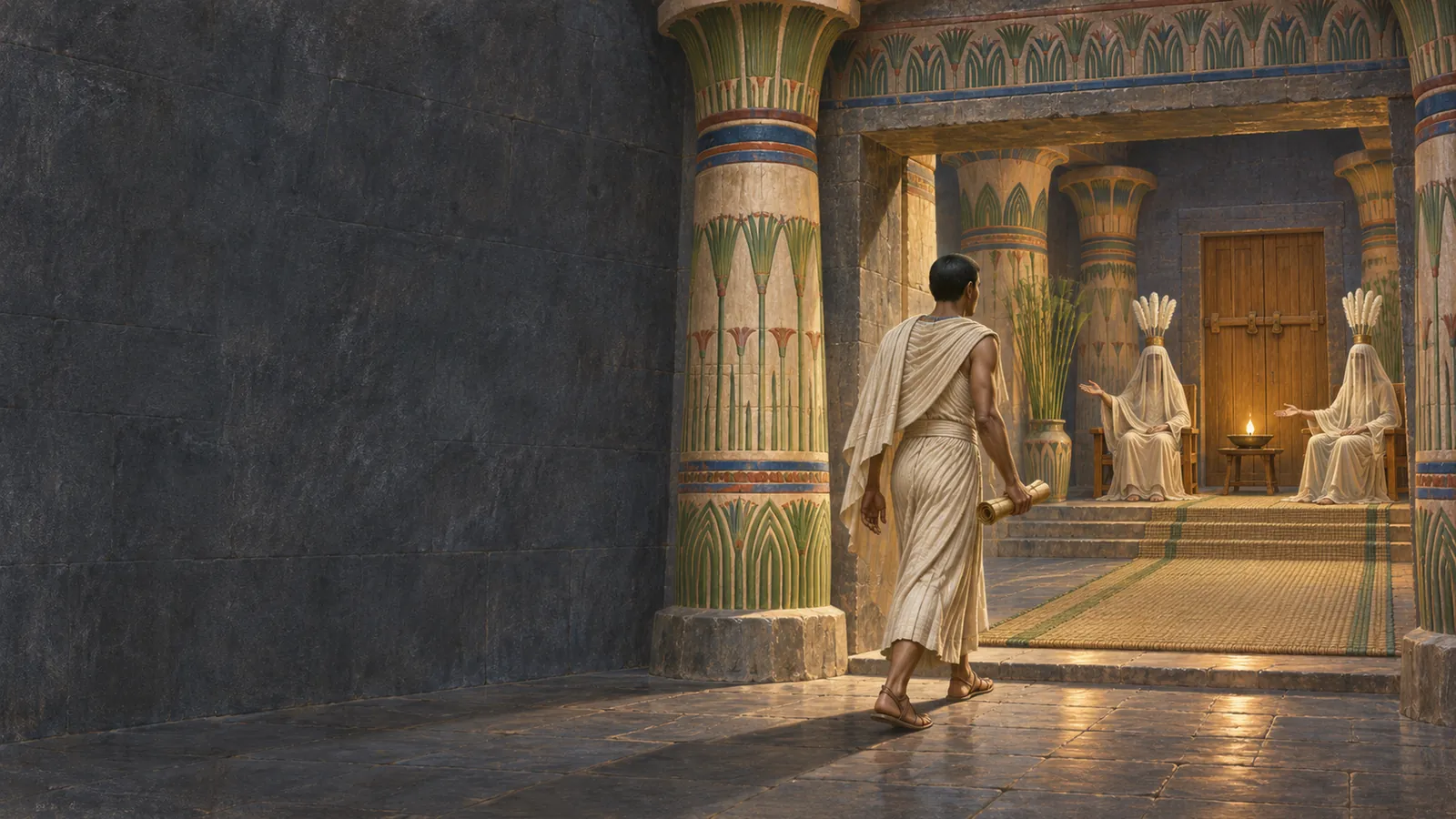
LA SALA
En el Papiro de Nu, el difunto habla de la sala de las diosas Maāti. Esta recitación sigue la traducción de Wallis Budge publicada en 1908.
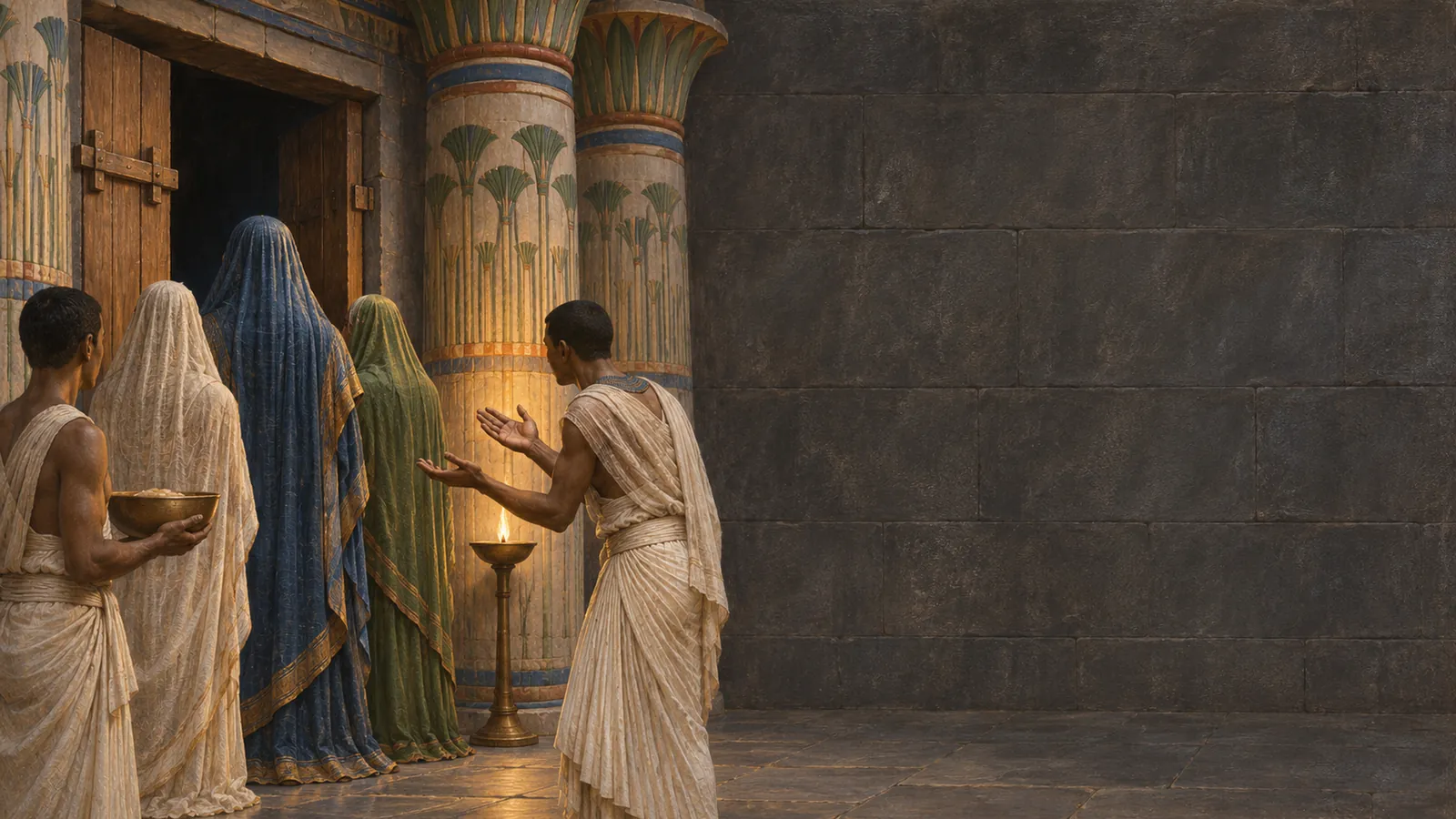
Dioses que habitáis en esta sala, os conozco y conozco vuestros nombres. No dejéis que caiga bajo vuestros cuchillos ni llevéis mis faltas ante el dios al que acompañáis.
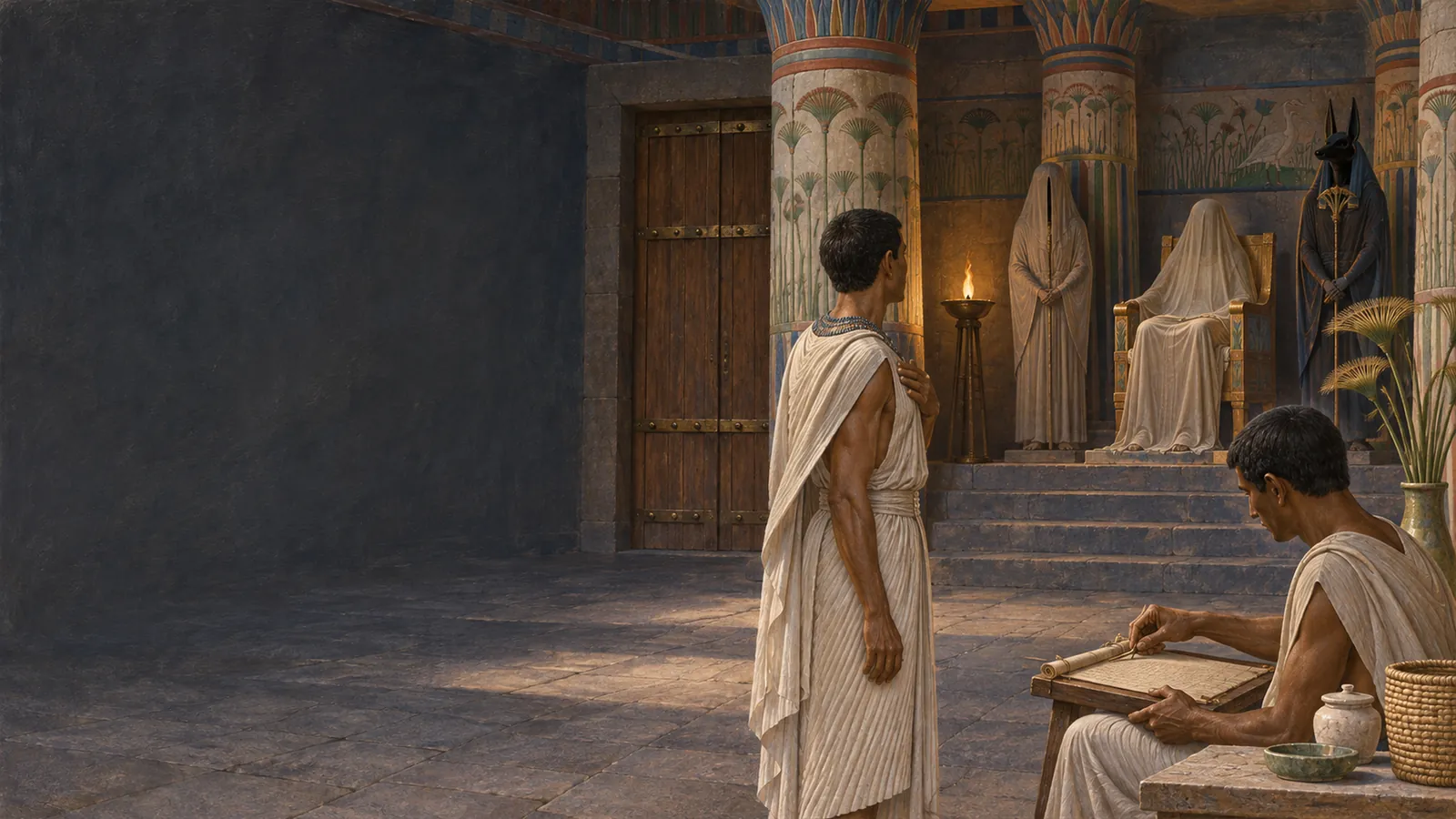
Declaradme justo de voz ante Neb-er-teber, pues en Egipto hice lo recto y verdadero. No he maldecido al dios, y que ningún mal me alcance por medio del rey.
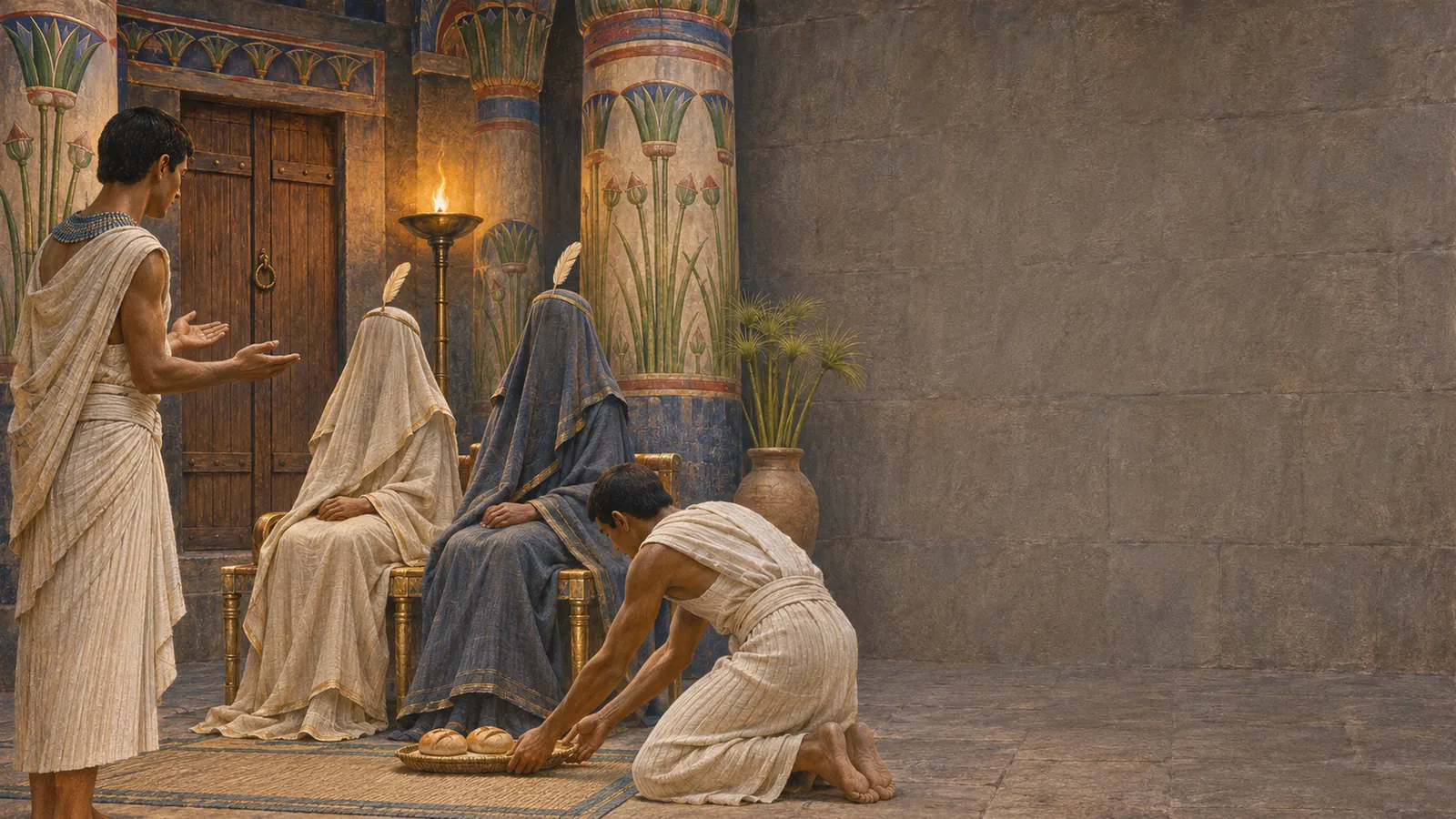
Os saludo, dioses que habitáis en la sala de las Maāti. Estáis libres de mal y os alimentáis de lo recto y verdadero en presencia de Horus.
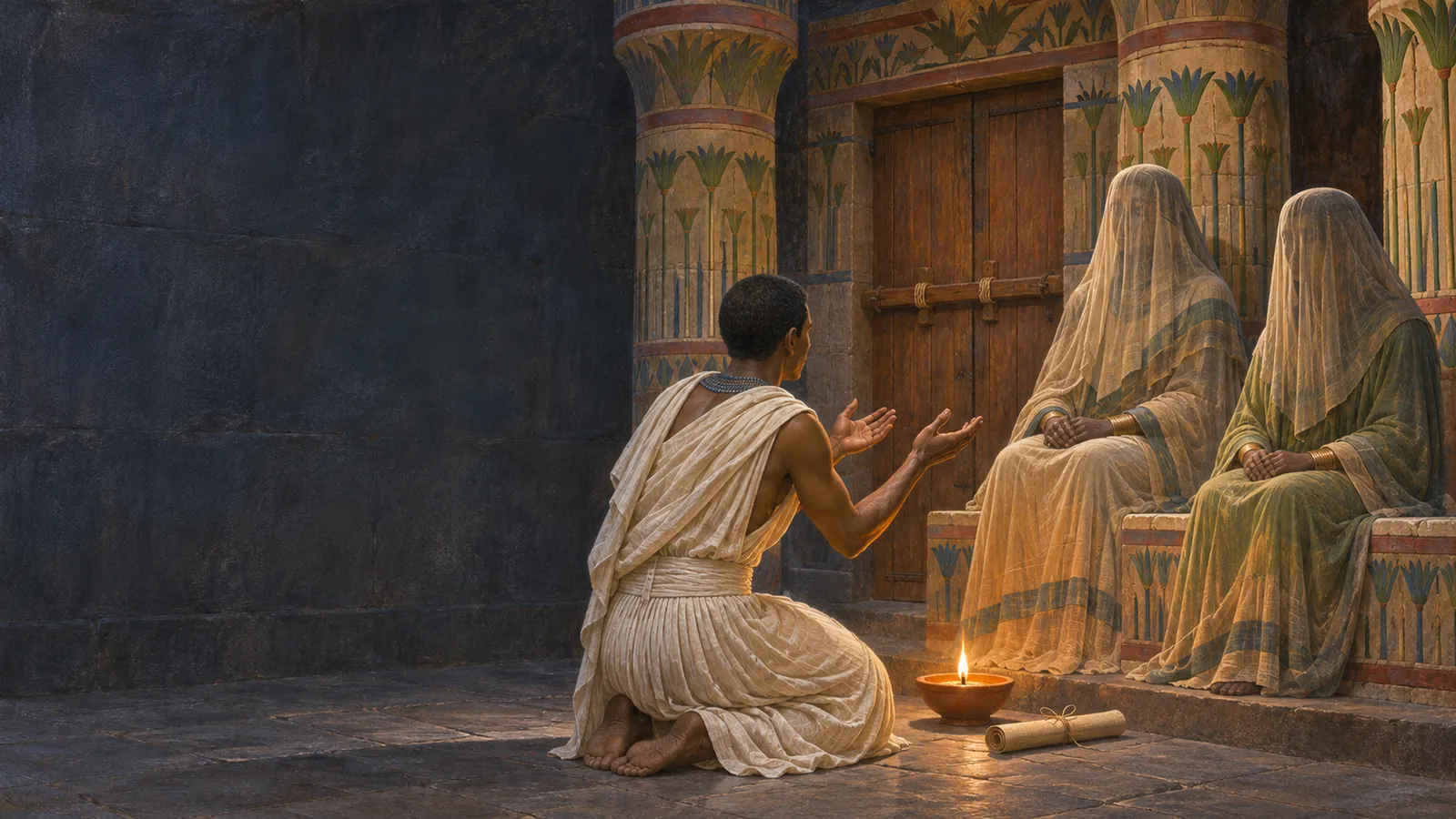
Salvadme de Baba, que se alimenta de las entrañas de los poderosos el día de rendir cuentas. Dejadme llegar hasta vosotros, pues no he cometido falta ni mal alguno, ni he dado falso testimonio.
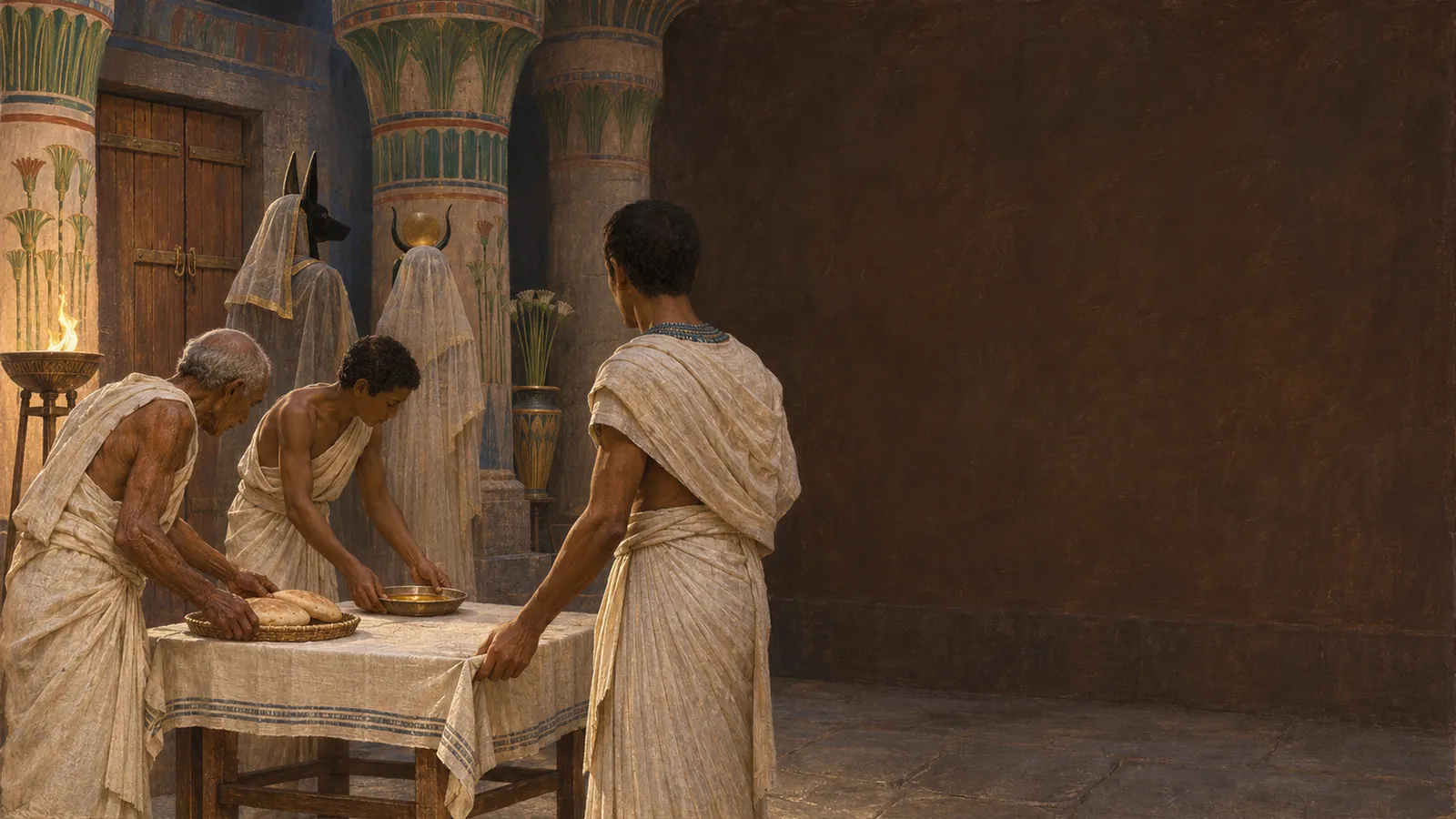
Vivo de lo recto y verdadero, y ese es mi alimento. He hecho lo que piden las personas y lo que agrada a los dioses.
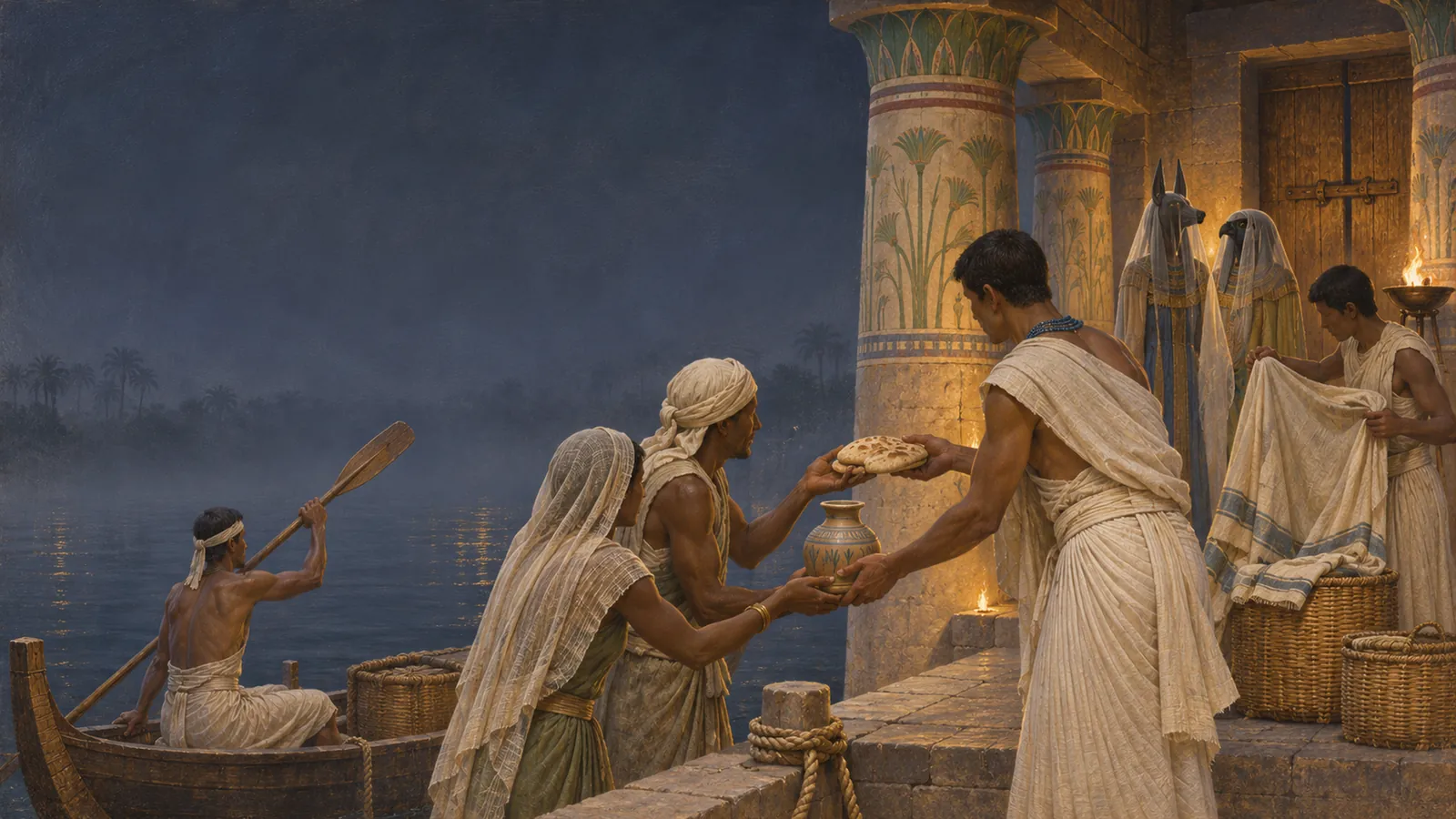
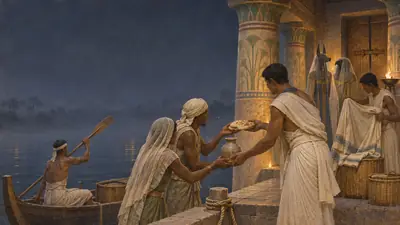
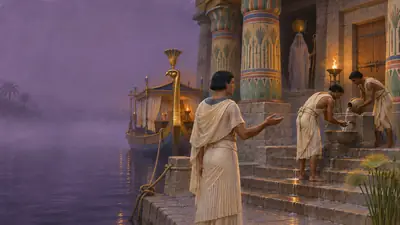
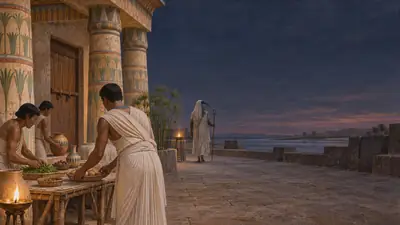
Di pan a quien tenía hambre, agua a quien tenía sed, ropa a quien no tenía con qué vestirse y una barca al navegante.
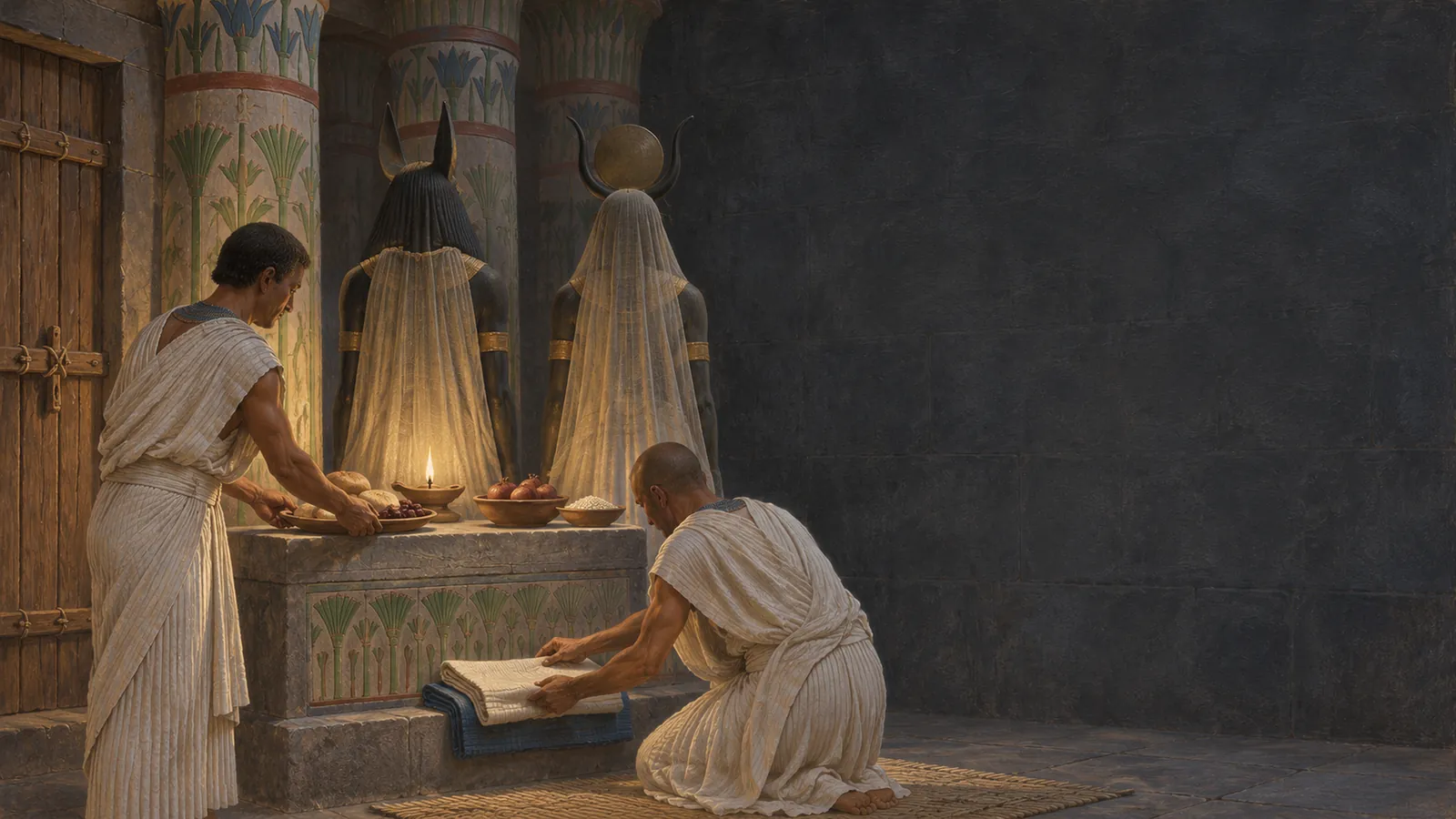
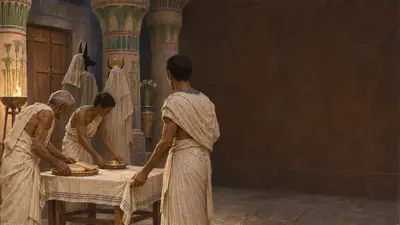
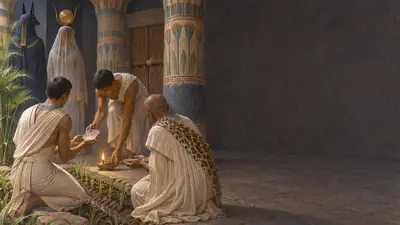
He hecho ofrendas a los dioses y preparado comidas para los difuntos. Protegedme y no presentéis acusación contra mí. Mi boca y mis manos están limpias, que quienes me vean me saluden en paz.
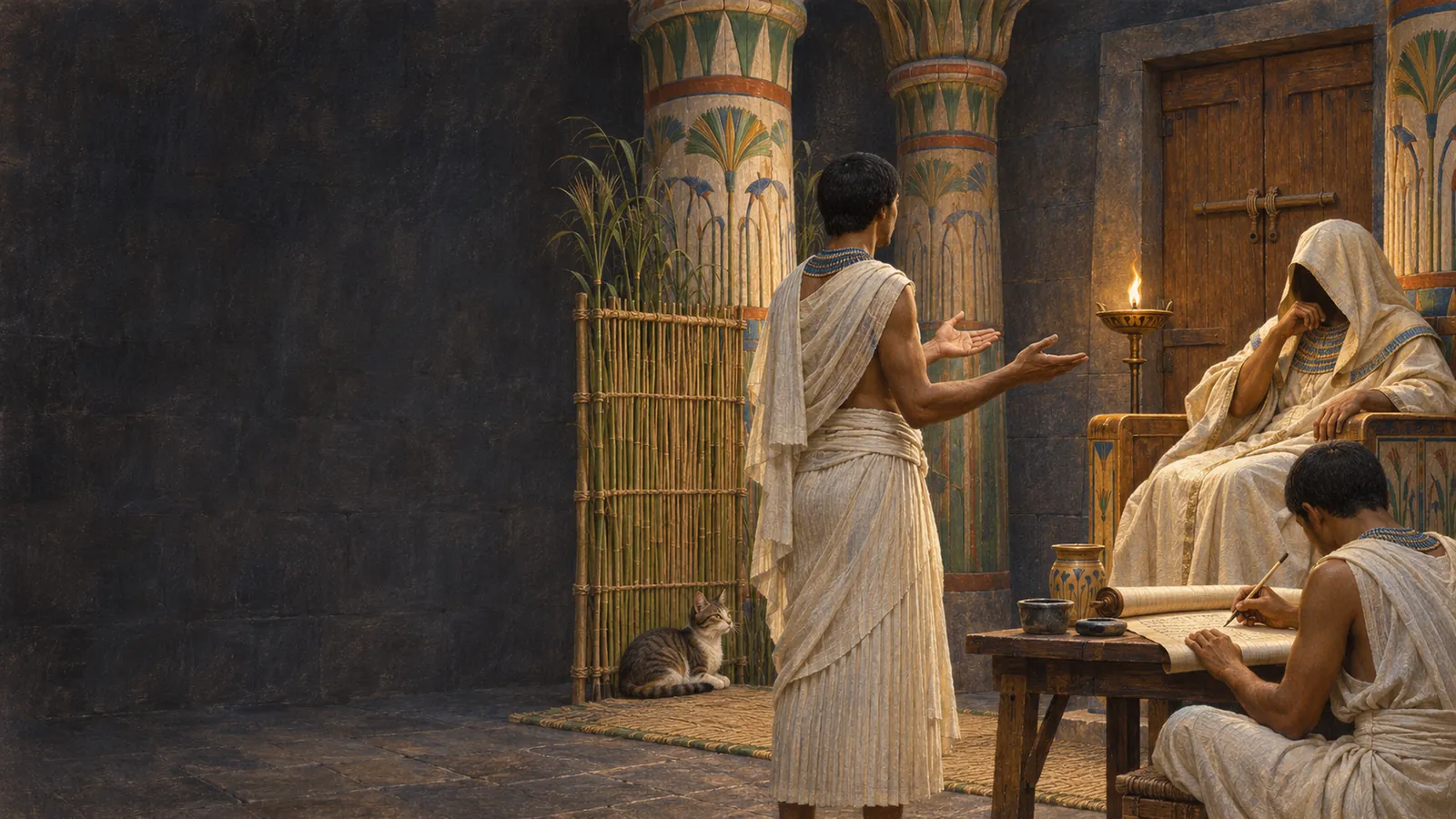
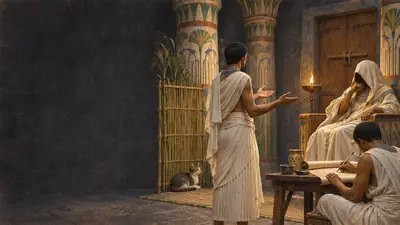
Oí la palabra poderosa que los espíritus dirigieron al Gato en la casa de Hapt-re. Testifiqué ante Hra-f-ha-f y él dictó una decisión.
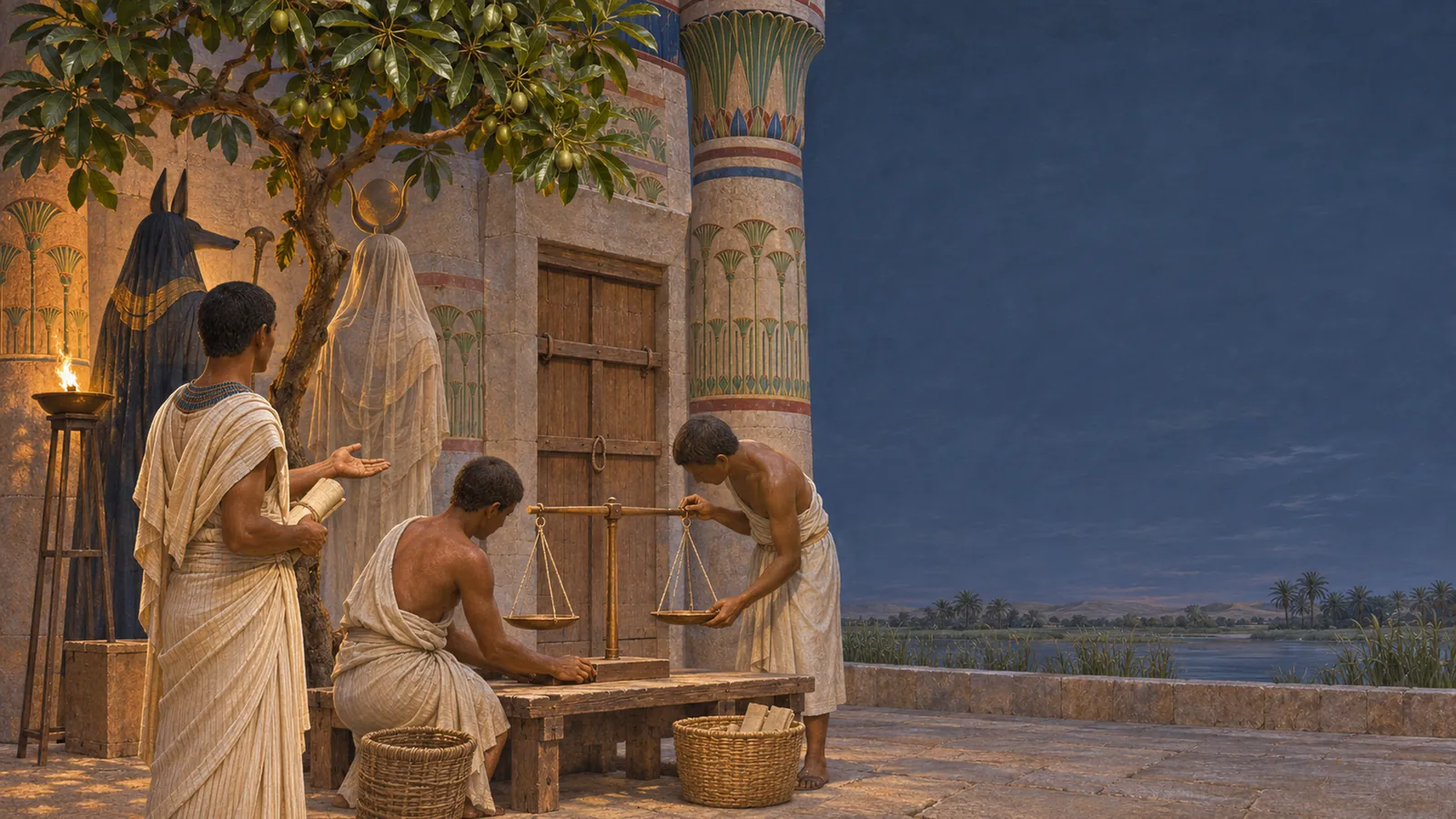
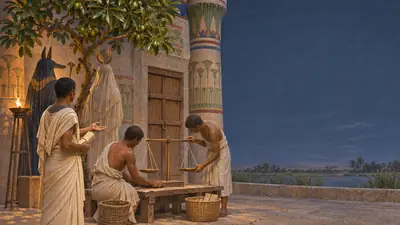
Vi lo que cobija el árbol persea en Re-stau. He venido a declarar lo recto y verdadero y a colocar la balanza en Aukert.
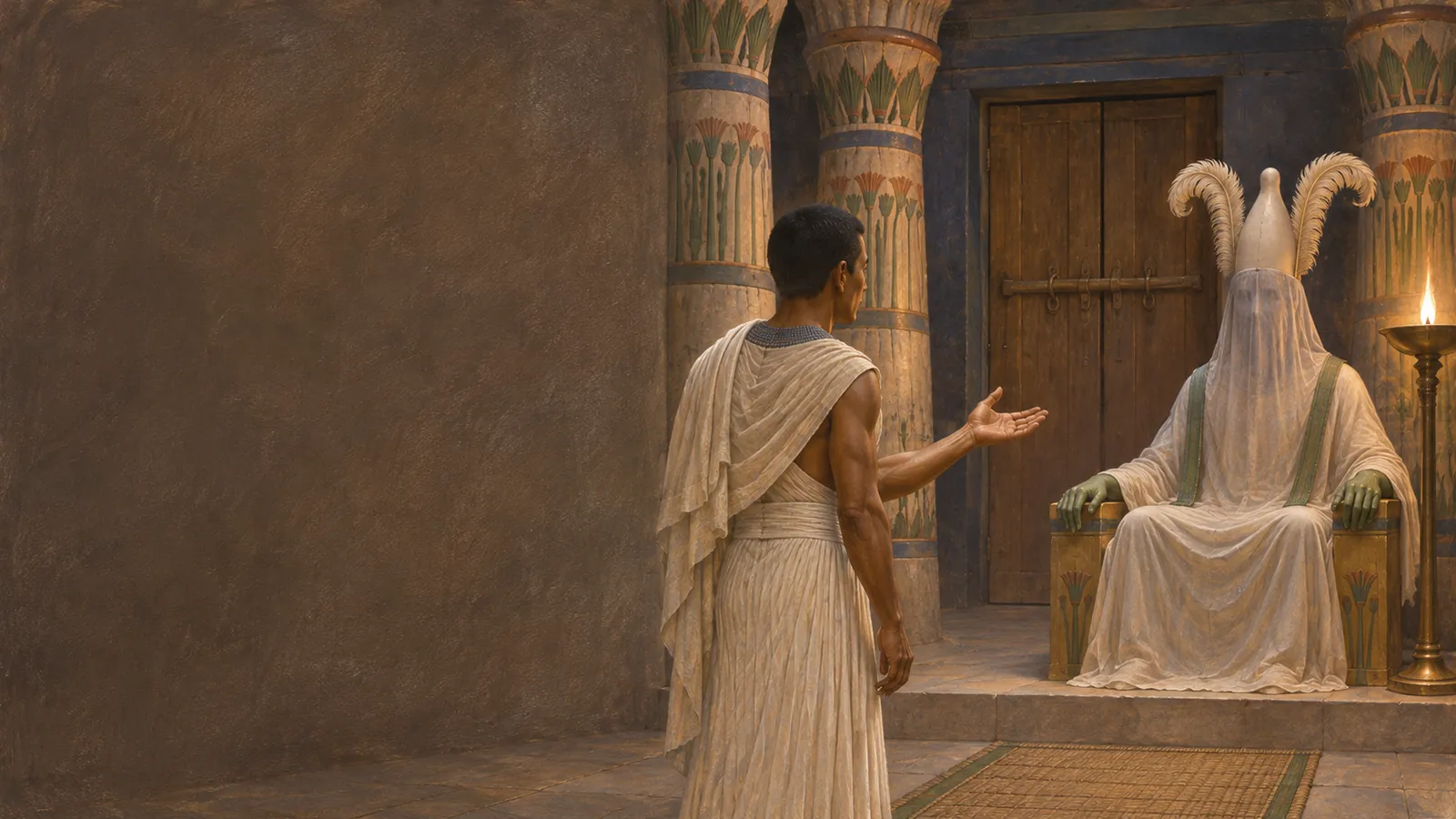
Osiris, Señor de los Vientos y señor de la corona Atefu, líbrame de tus mensajeros que traen calamidades. He obrado con rectitud y verdad para el Señor de lo Recto y Verdadero.
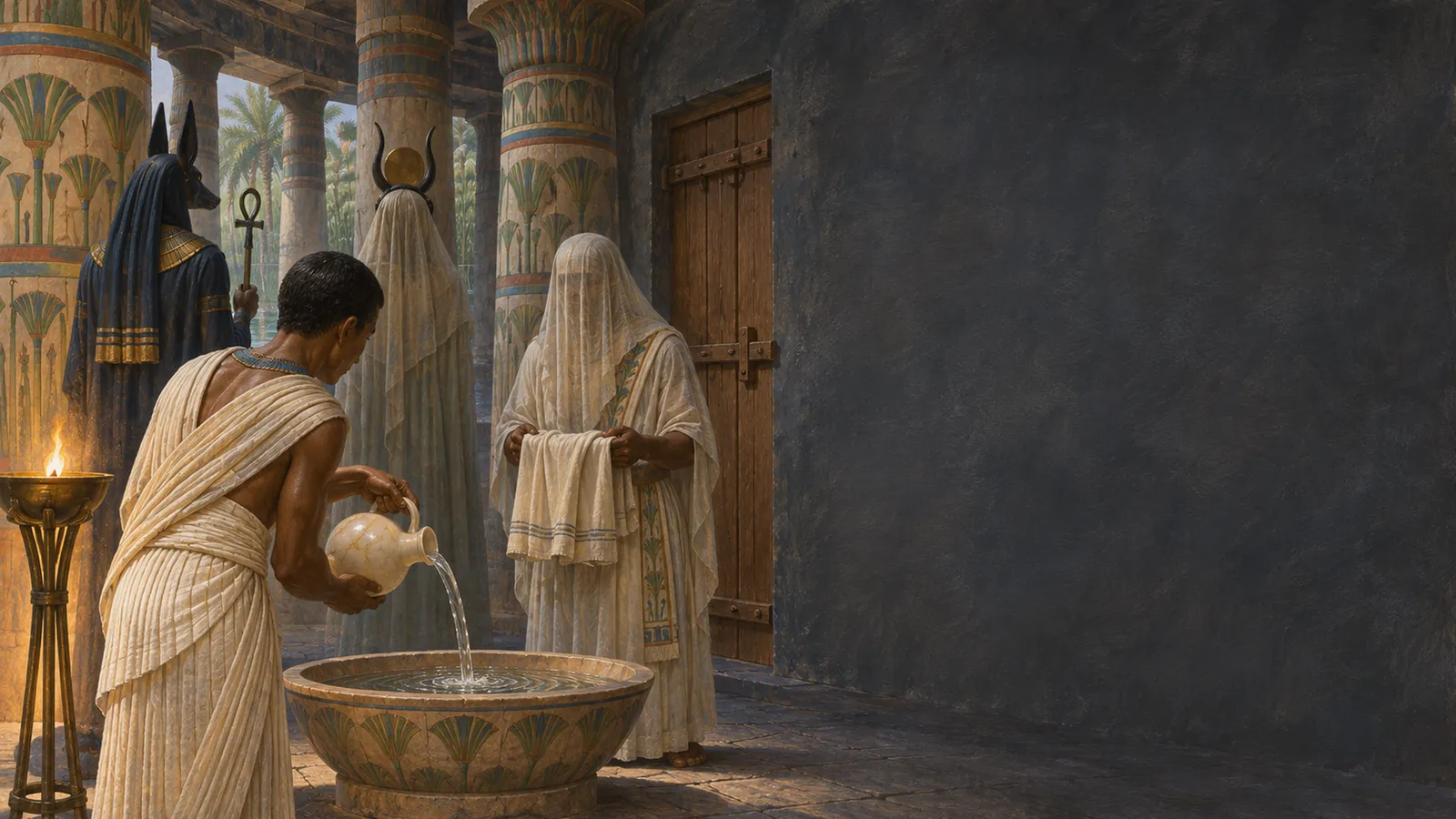
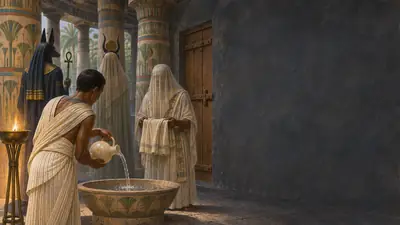
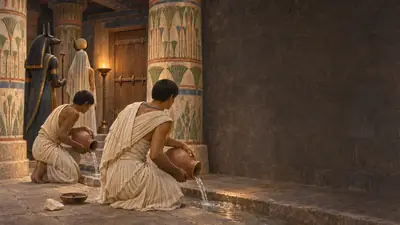
Me purifiqué con libaciones, y el estanque de lo Recto y Verdadero me limpió por dentro. Lo recto y verdadero llenan cada parte de mi cuerpo.
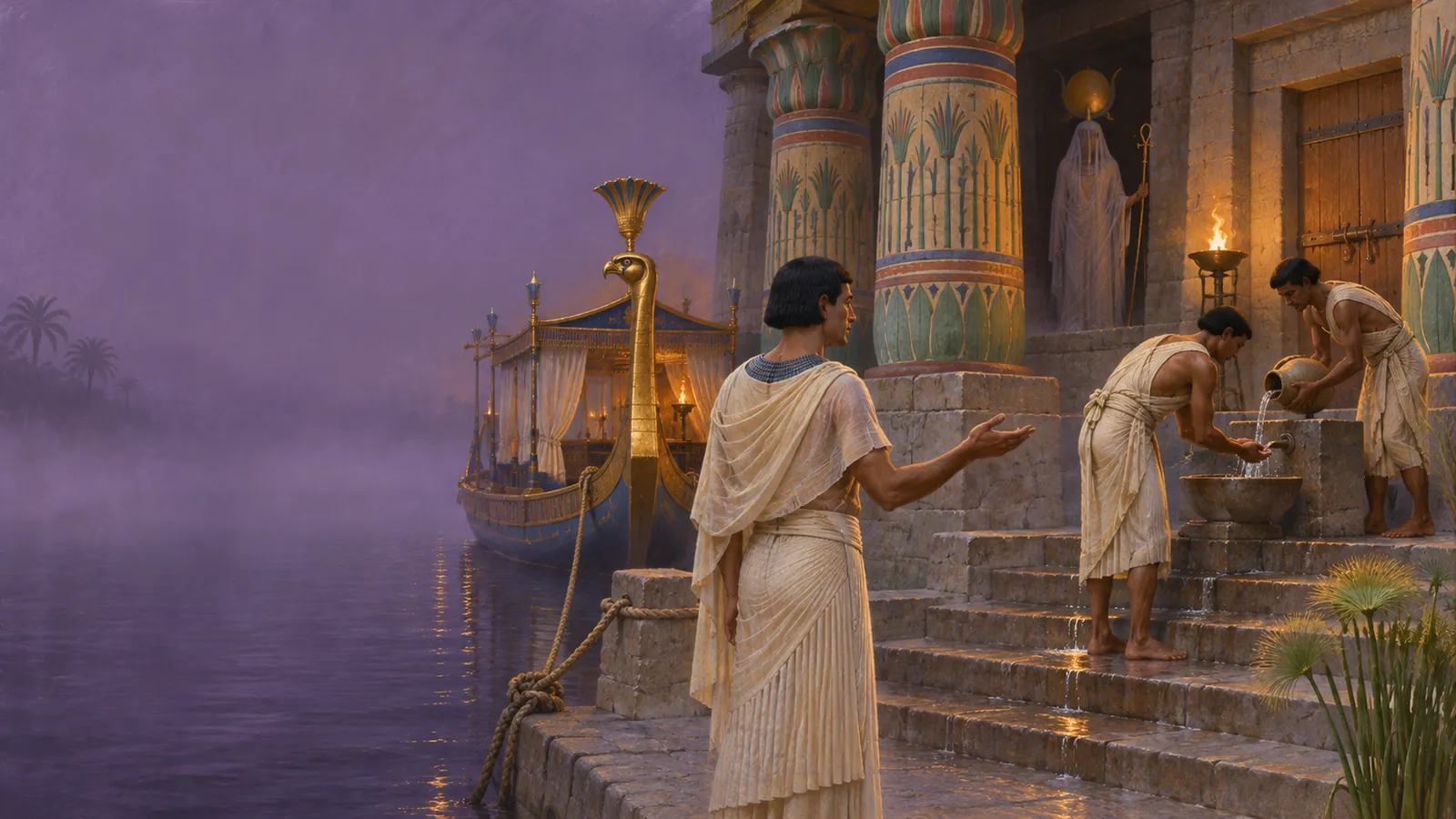
Fui purificado en el estanque del Sur y descansé en la ciudad del Norte. En el Campo de las Langostas, los marineros de Ra se bañan a la segunda hora de la noche y a la tercera hora del día.
UN NOMBRE
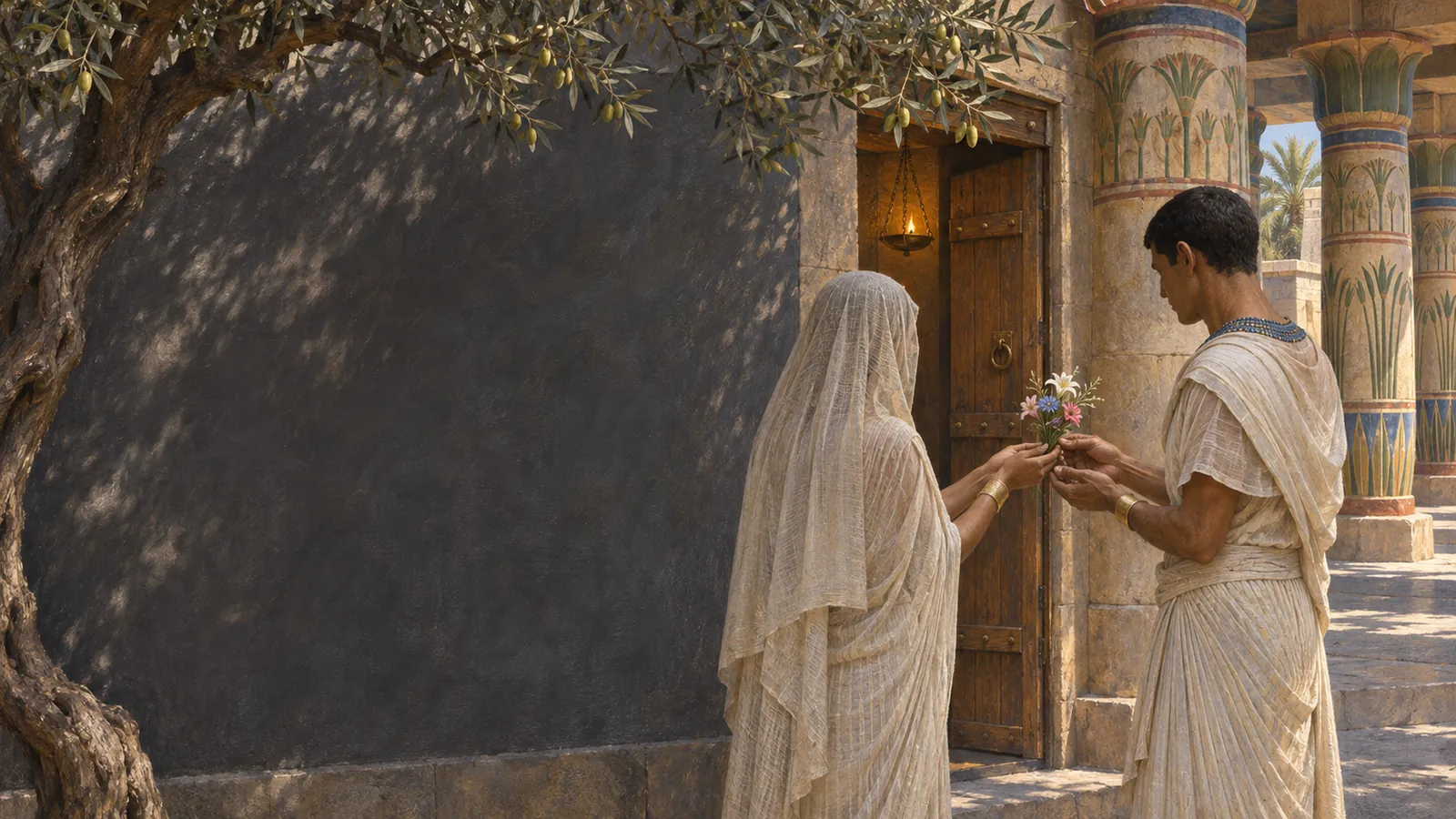
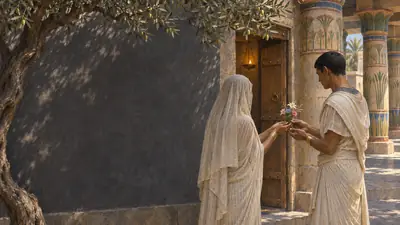
Quisiera que los dioses me preguntaran mi nombre. Respondería que soy Aquel a Quien Dan Flores y Quien Mora en Su Olivo. Que me digan entonces que pase.
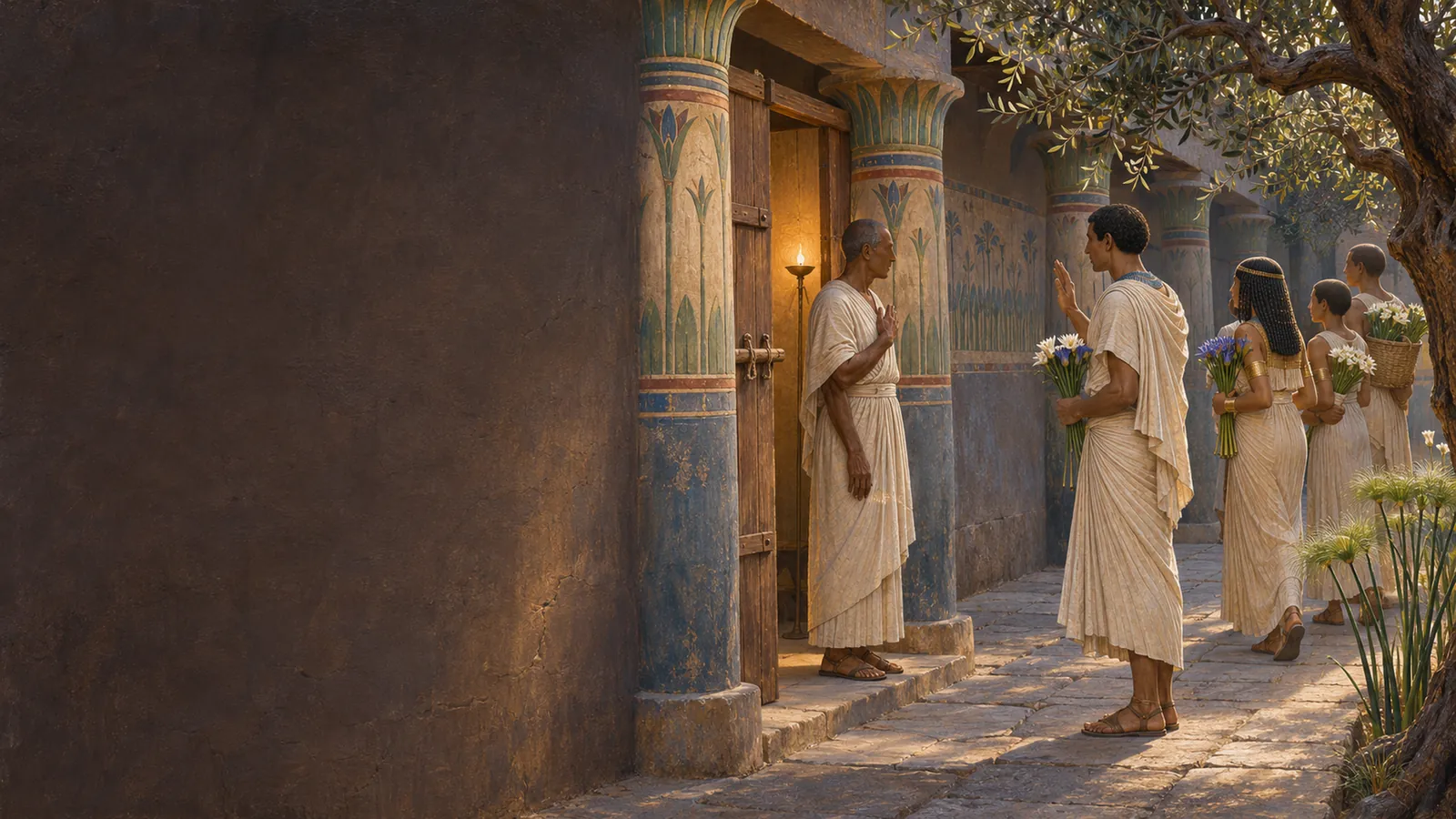
Seguiría hasta la ciudad al norte del olivo. Si me preguntaran qué vería allí, nombraría la Pierna y el Muslo y pediría ver la alegría en la tierra de los Fenkhu.
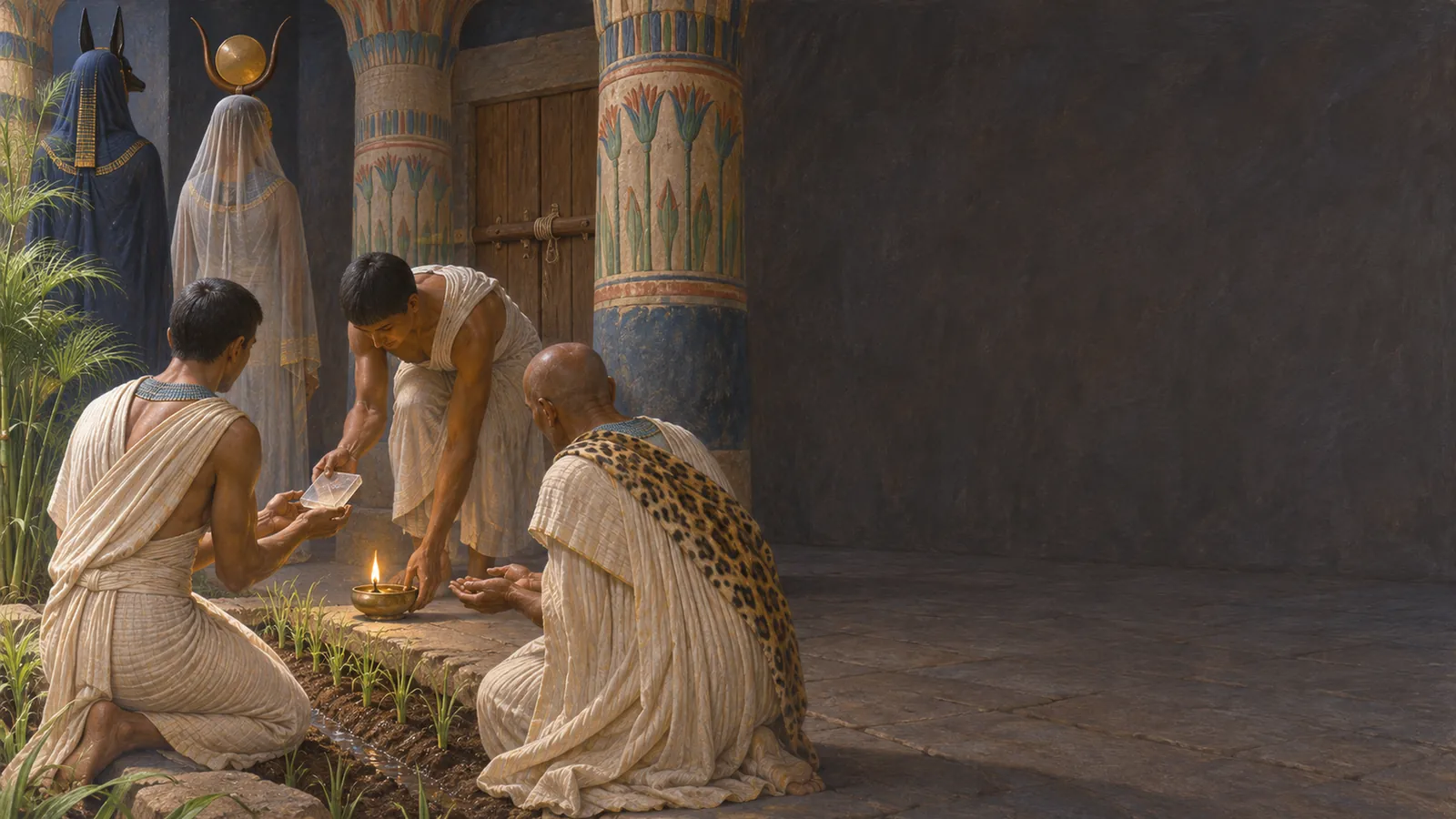
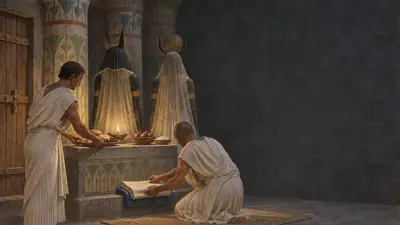
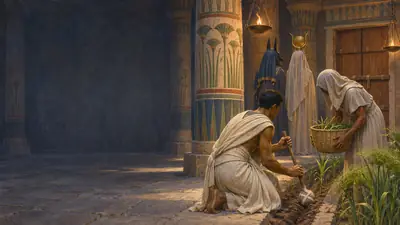
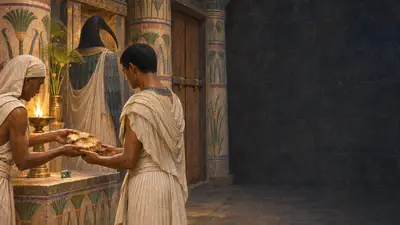
Me darían una llama viva y una tablilla de cristal. Las enterraría junto al surco de Maat como Cosas para la noche.
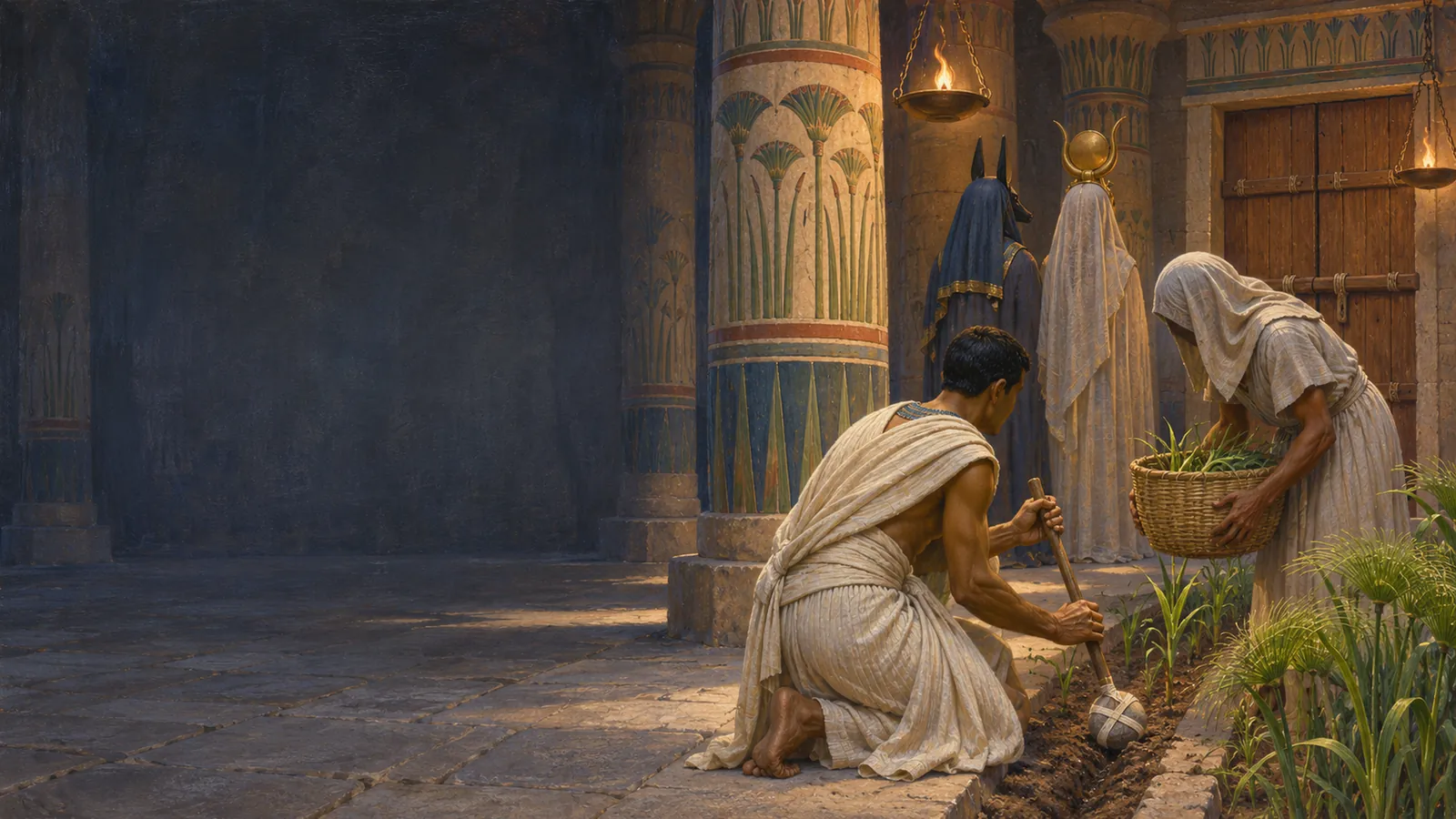
Si me preguntaran qué encontraría junto al surco de Maat, nombraría un cetro de sílex llamado el Dador de Aire.
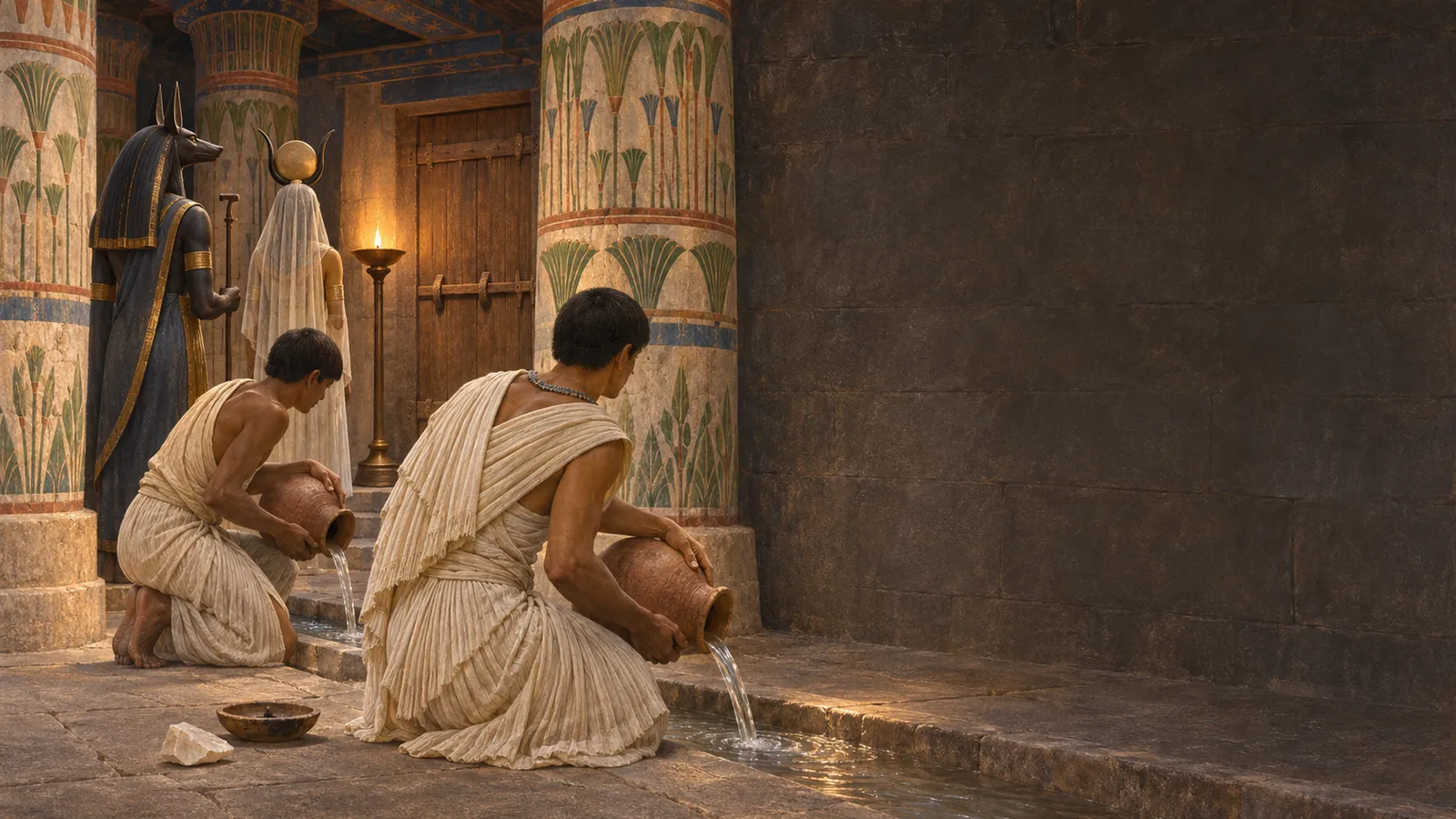
Después de enterrarlos, recitaría palabras sobre ellos en el surco. Apagaría el fuego, rompería la tablilla y haría un estanque de agua.
LA PUERTA
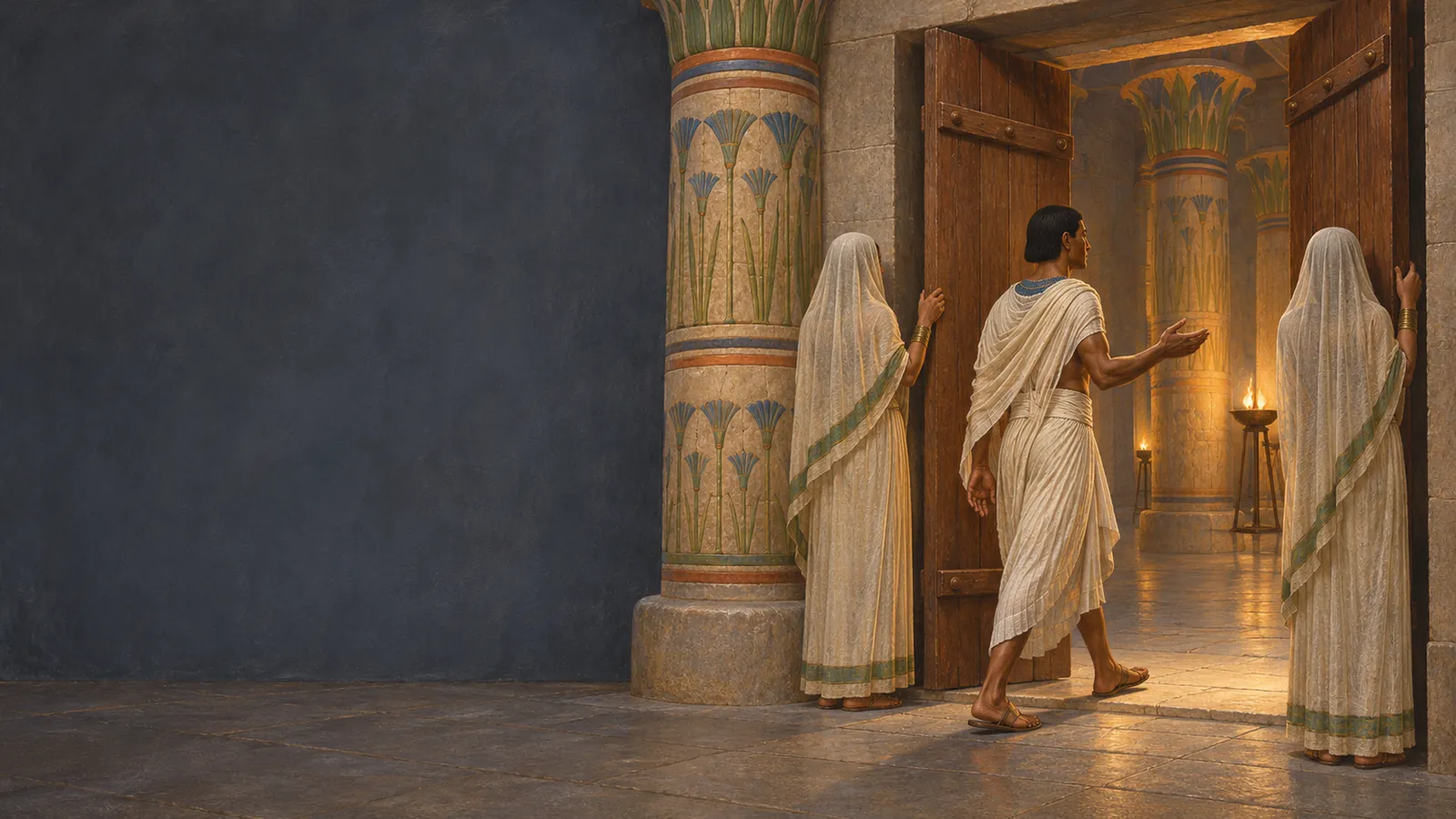
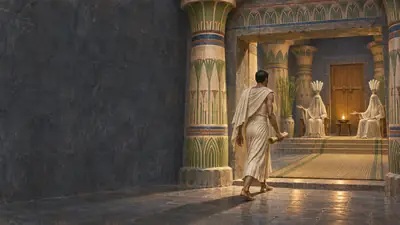
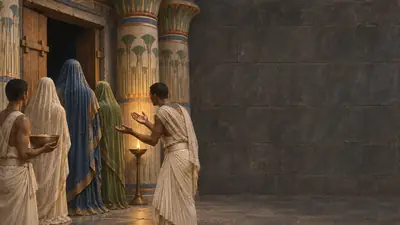
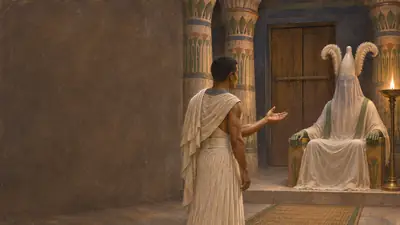
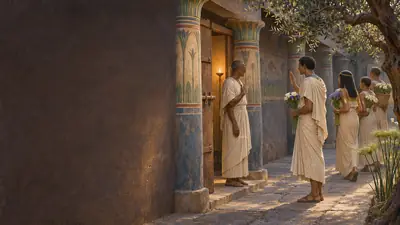
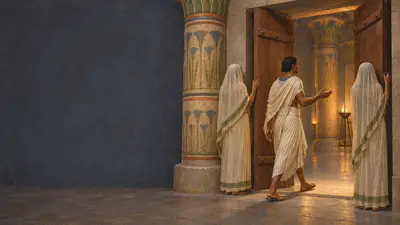
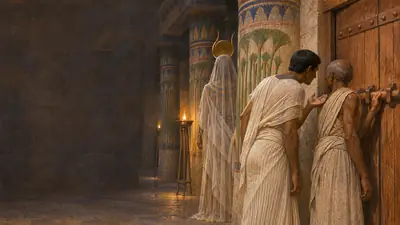
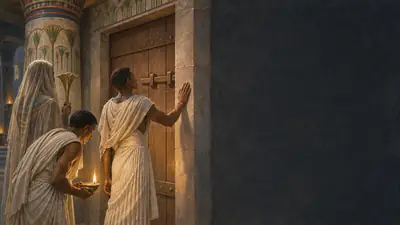
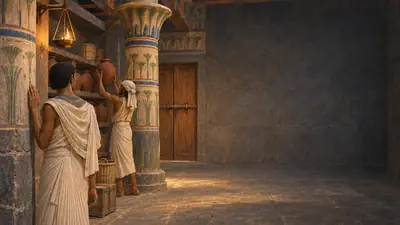
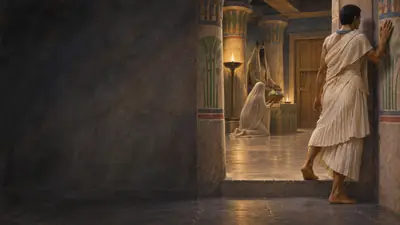
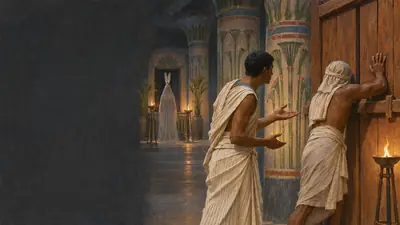
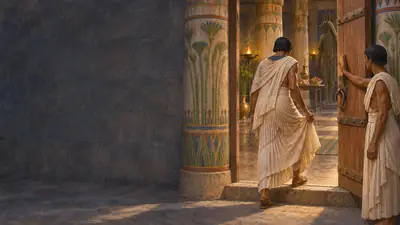
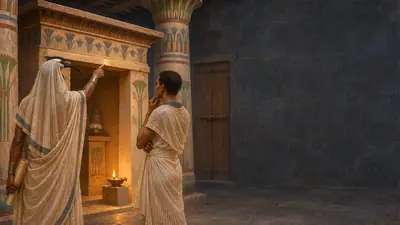
Que los dioses me inviten a entrar por la puerta de la sala de las diosas Maati, pues conozco a esos dioses. En el diálogo que sigue hablan partes de la sala.
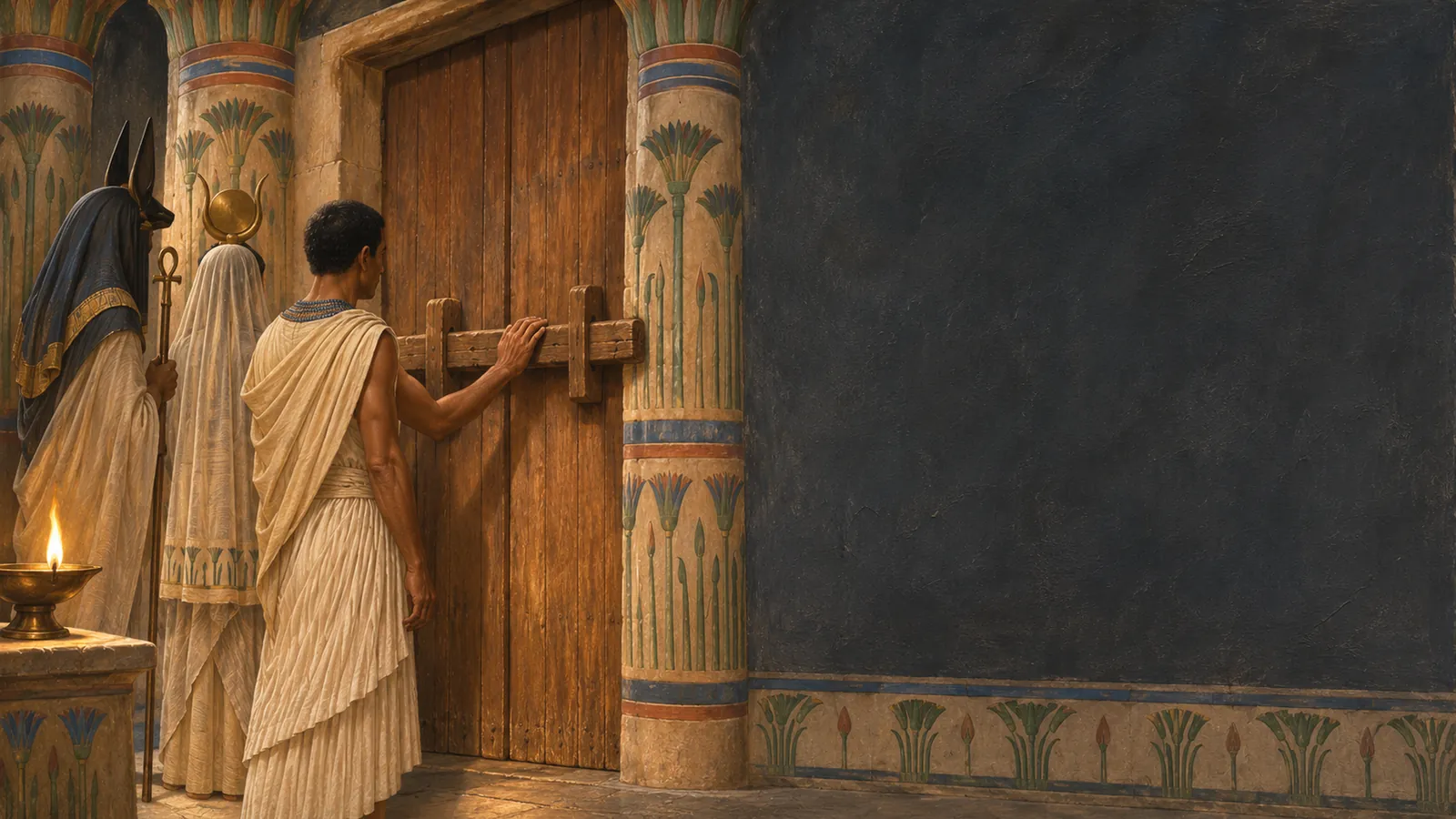
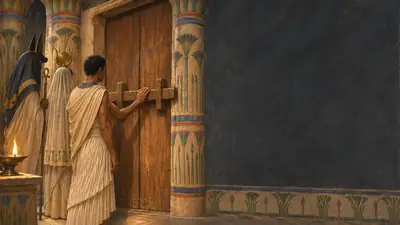
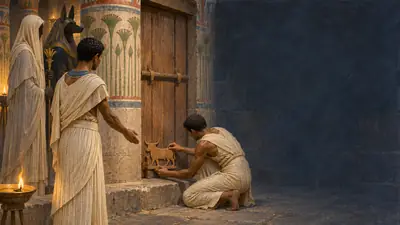
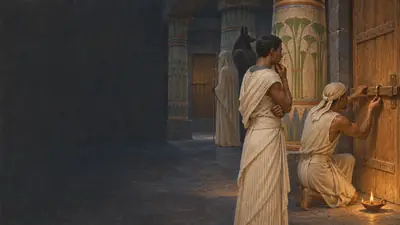
En el diálogo, los cerrojos de la puerta dicen al difunto que solo podrá pasar si dice sus nombres.
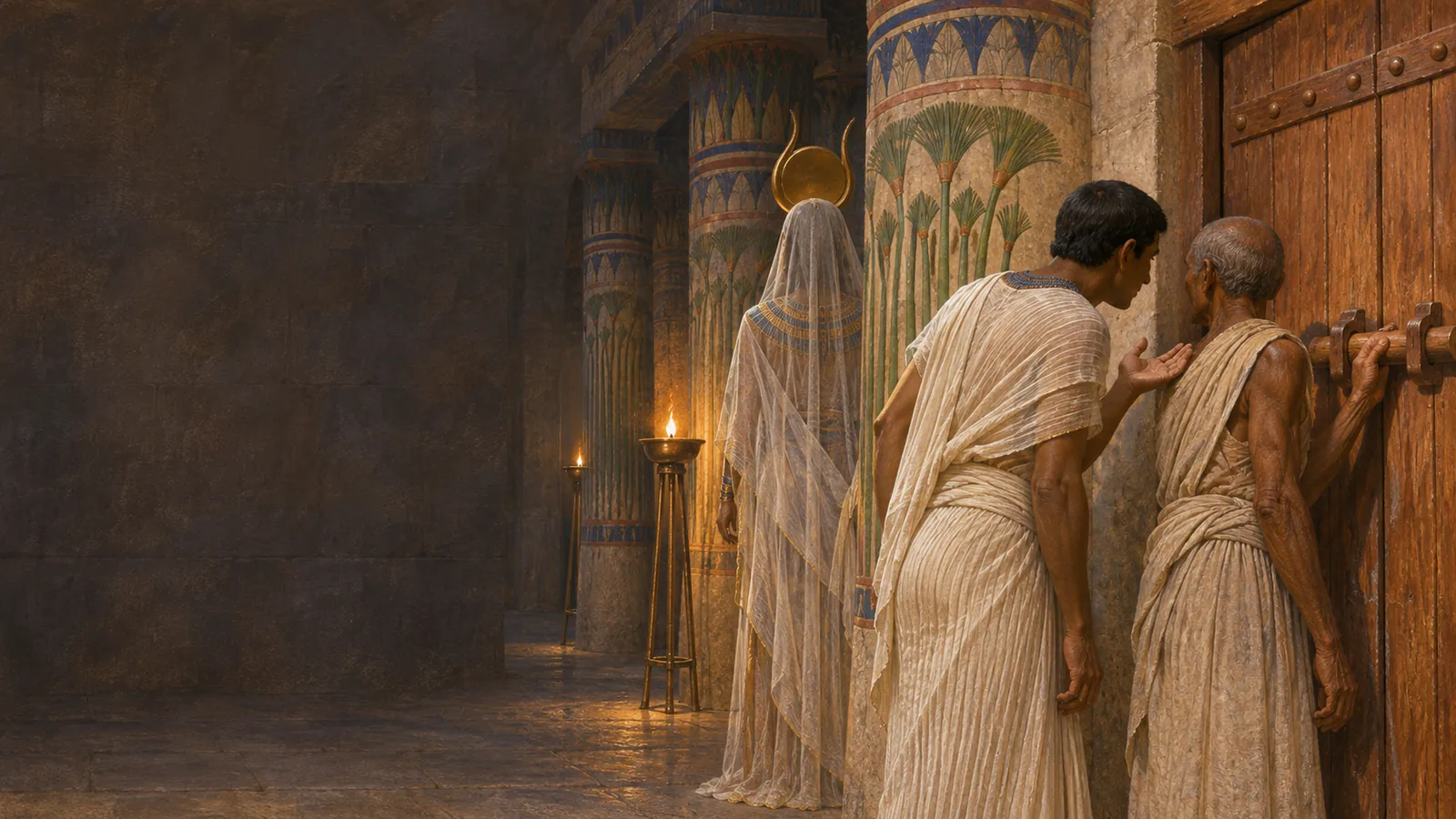
El difunto responde a los cerrojos de la puerta. Les da por nombre Lengua del Lugar de la Rectitud y la Verdad.
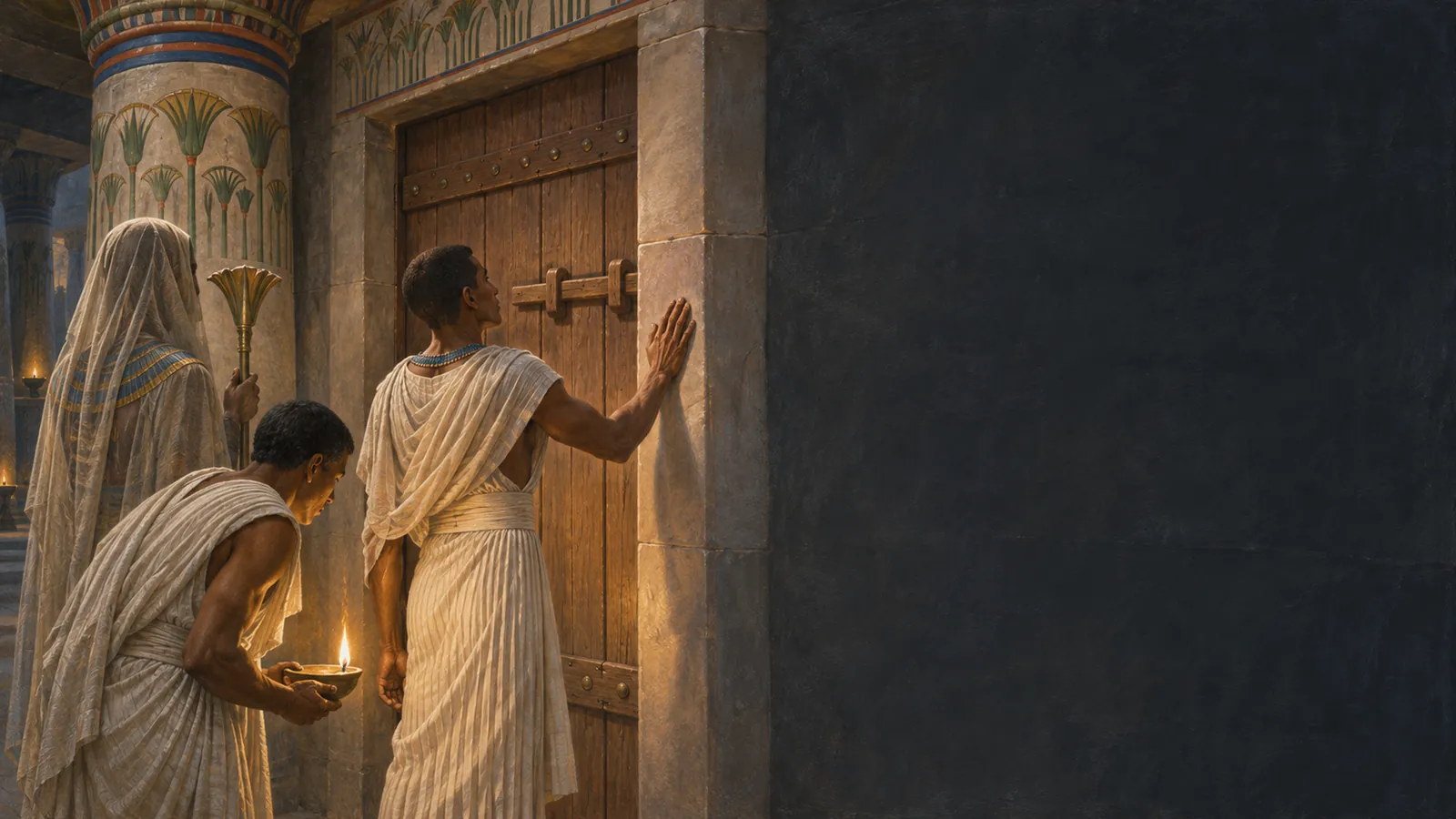
A continuación habla la jamba derecha en el diálogo. Le dice al difunto que debe decir su nombre antes de pasar.
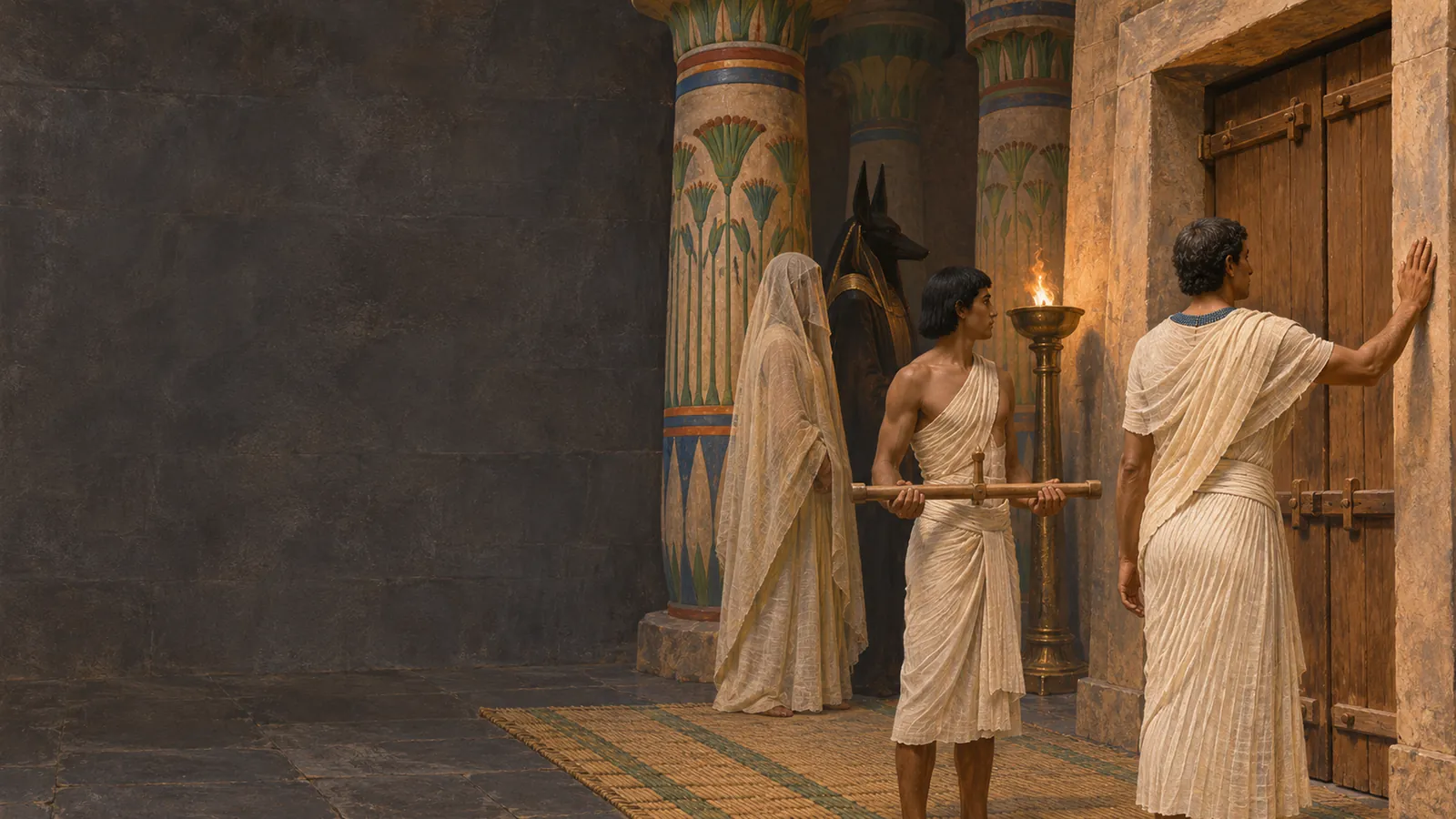
El difunto responde a la jamba derecha y la llama Balanza de Quien Eleva la Rectitud y la Verdad.
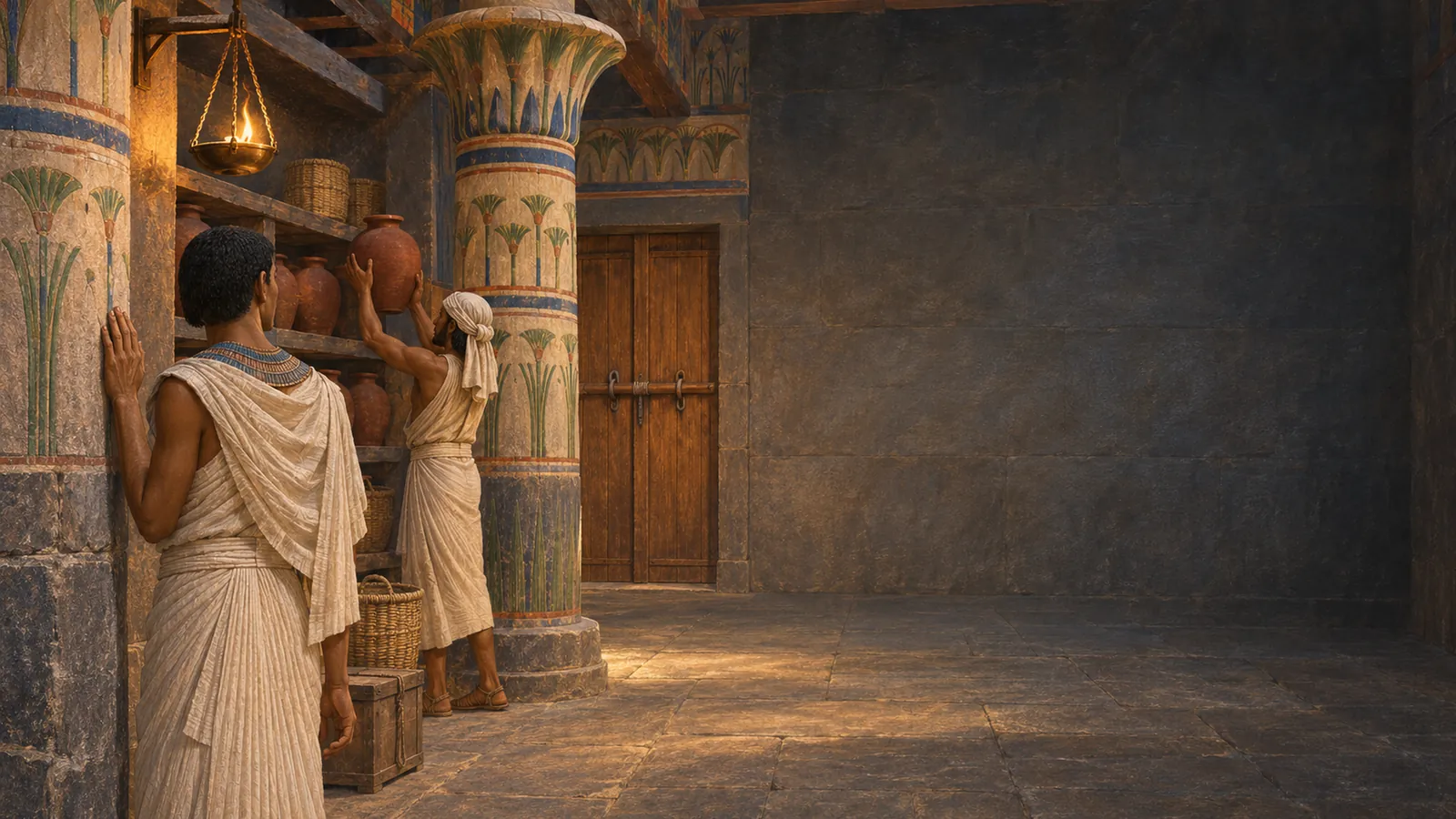
El poste izquierdo pide al difunto que diga su nombre antes de dejarlo entrar. El difunto responde: «Balanza del vino».
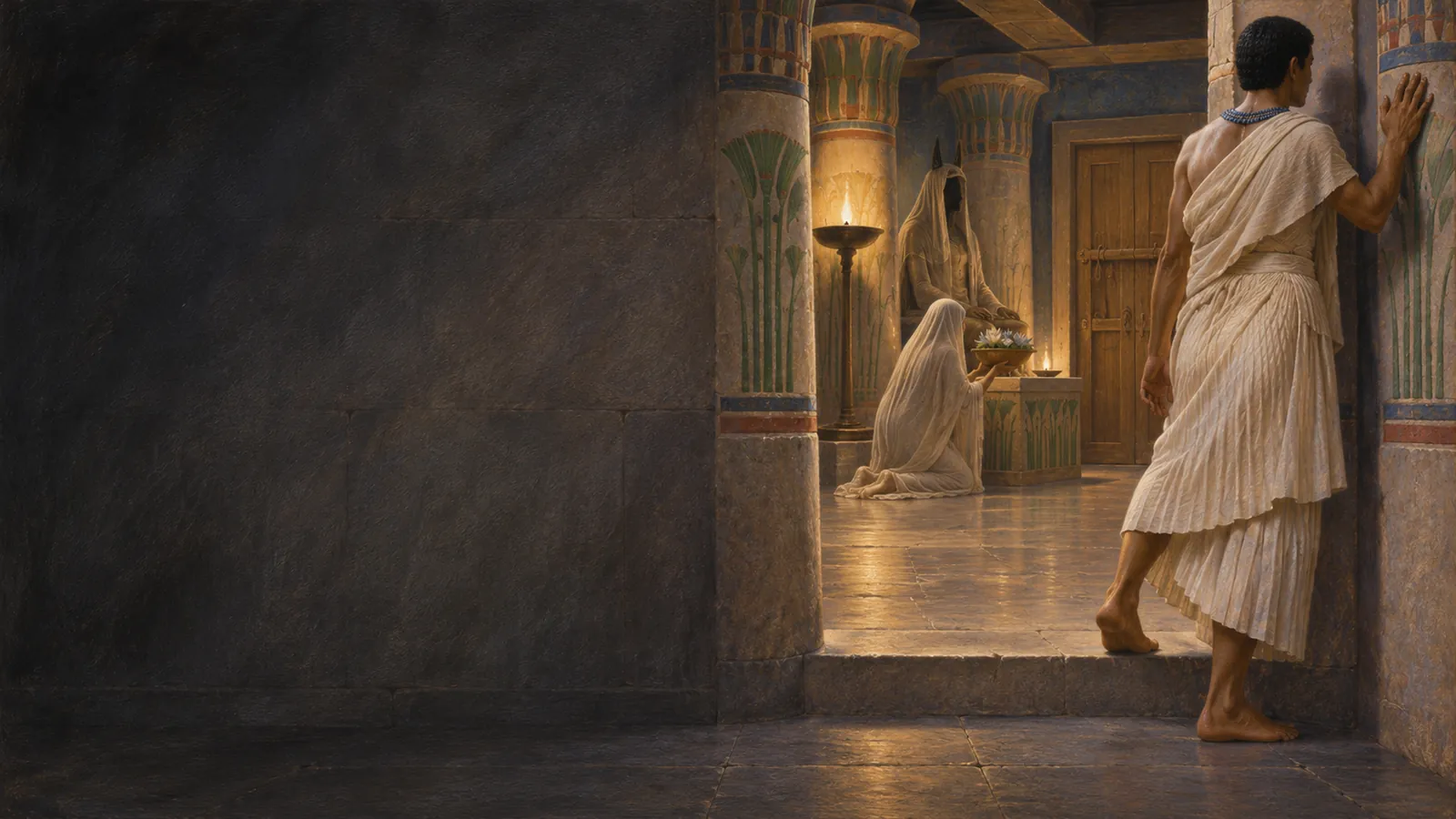
«No te dejaré pasar por encima de mí hasta que me digas mi nombre», dice el umbral al difunto.
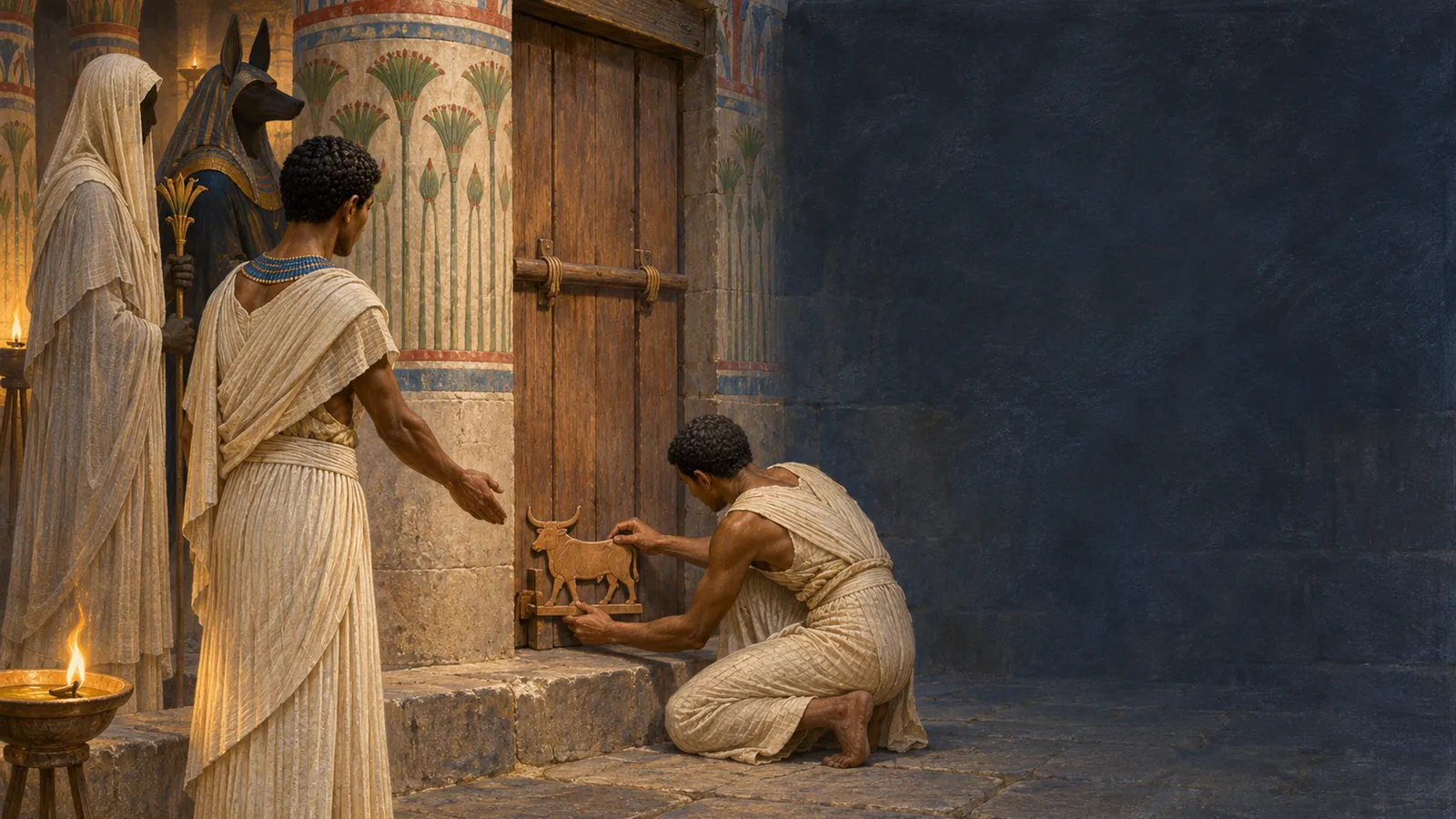
El umbral espera oír su nombre. El difunto le dice: «Tu nombre es Buey del dios Seb».
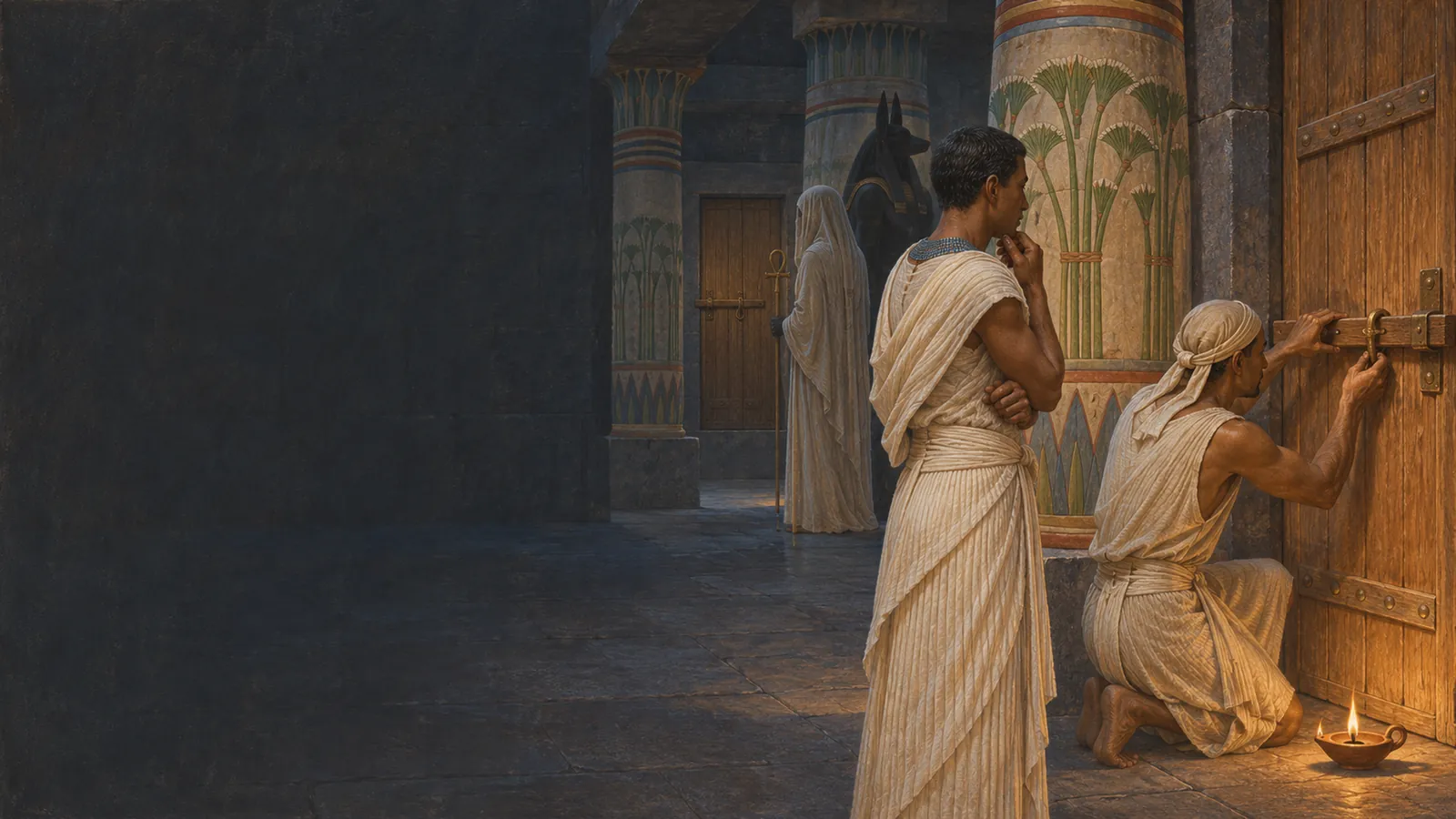
El cierre dice que no se abrirá hasta que el difunto diga su nombre. El difunto responde: «Hueso de la pierna de su madre».
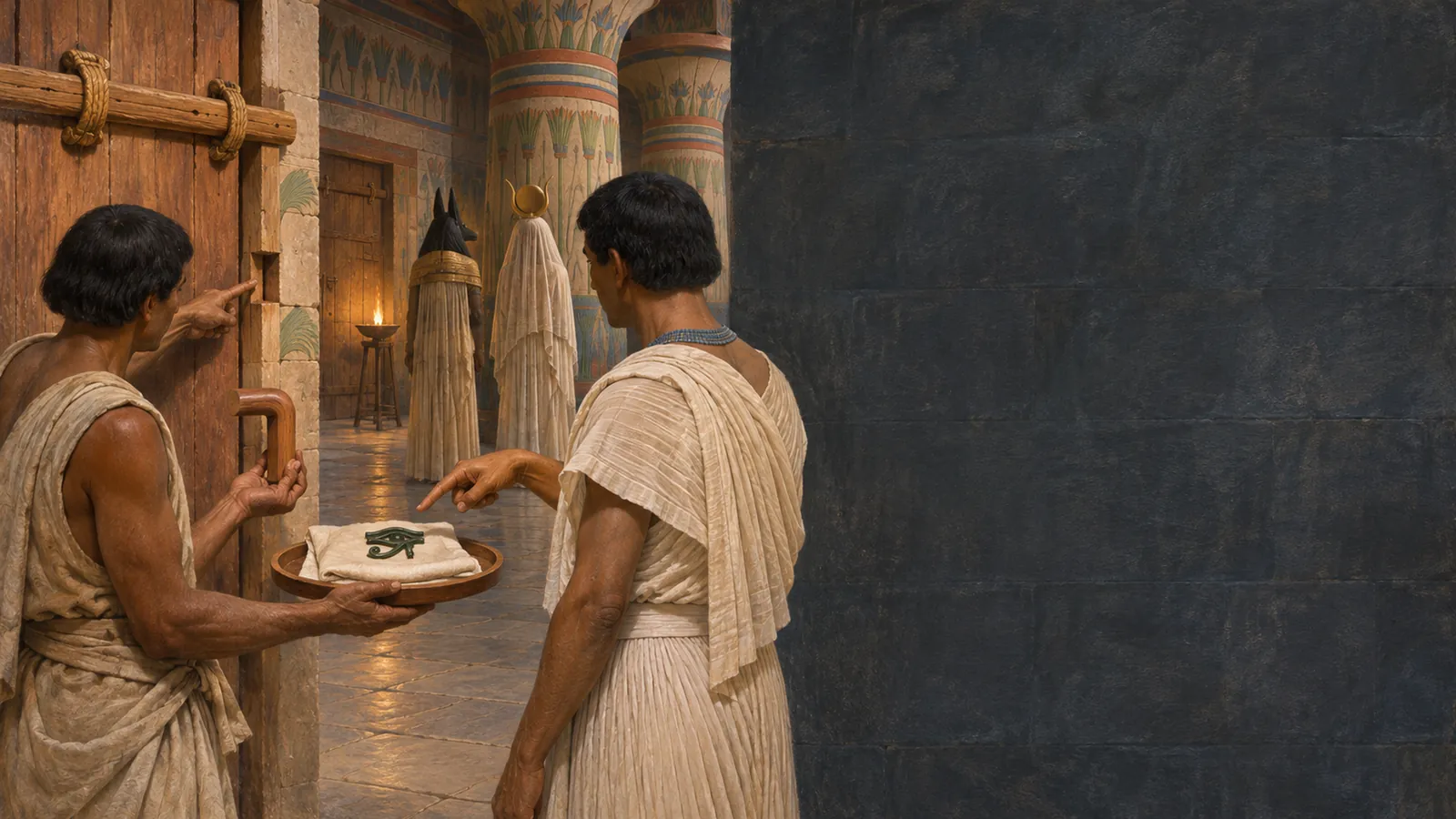
La cavidad dice que no se abrirá hasta oír su nombre. El difunto la llama Ojo viviente de Sobek, señor de Bakhau.
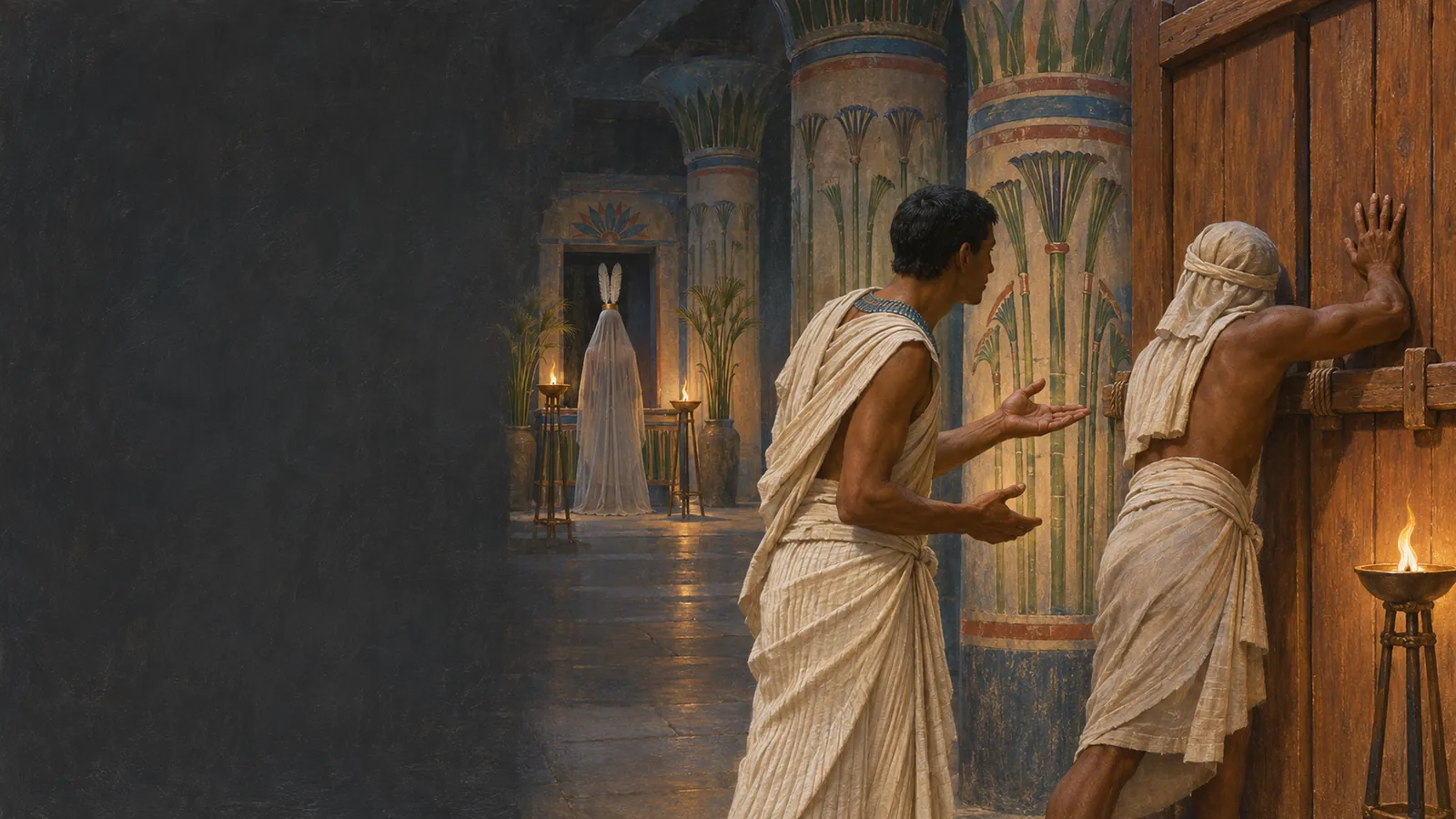
El portero también pide su nombre antes de abrir. El difunto lo llama el Codo de Shu cuando se coloca para proteger a Osiris.
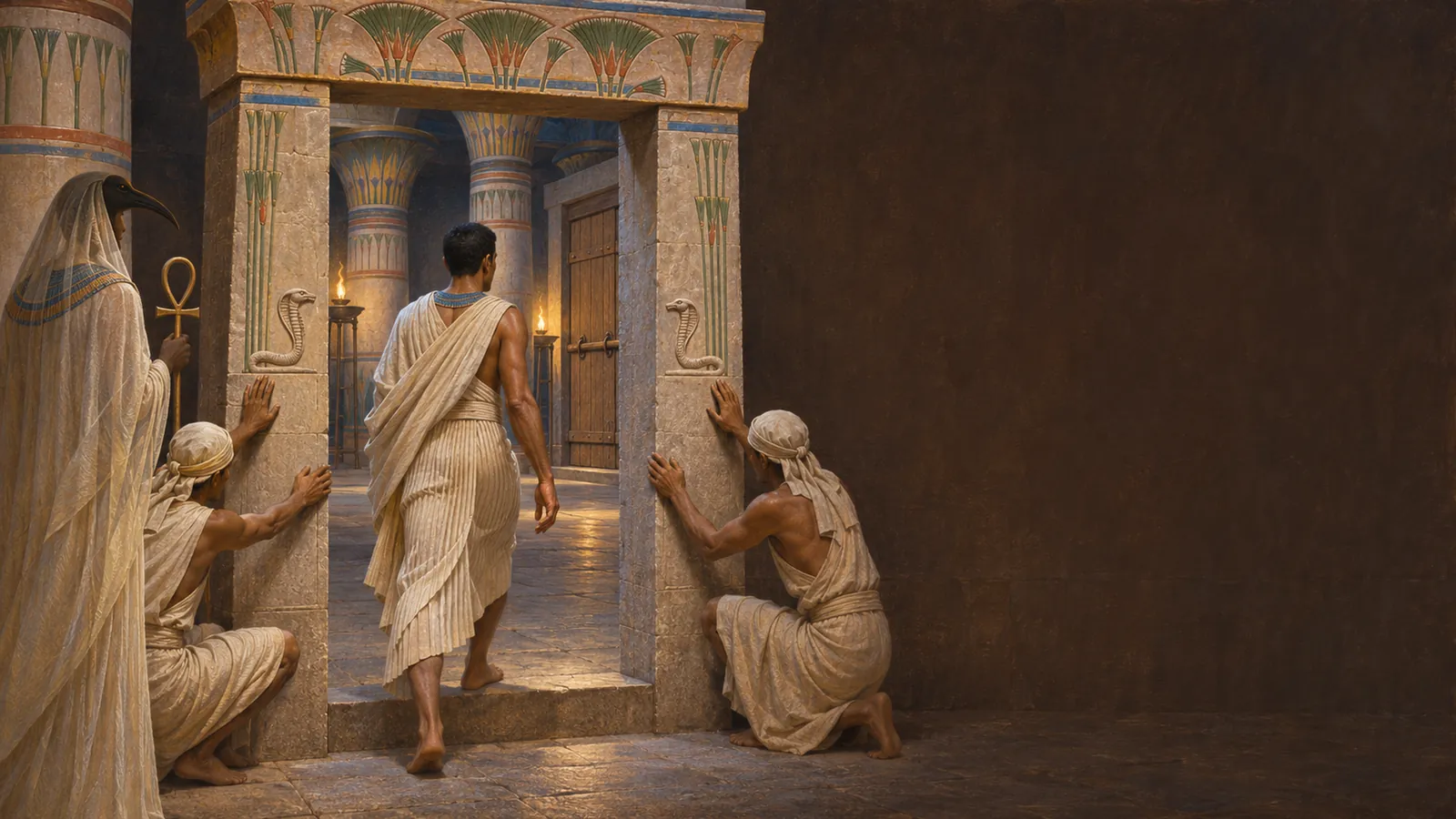
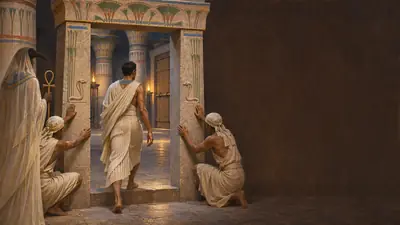
Los postes laterales hablan juntos y preguntan cómo se llaman. El difunto los llama Hijos de las Diosas Cobra. Al reconocerse por su nombre, le dicen que pase.
EL SUELO
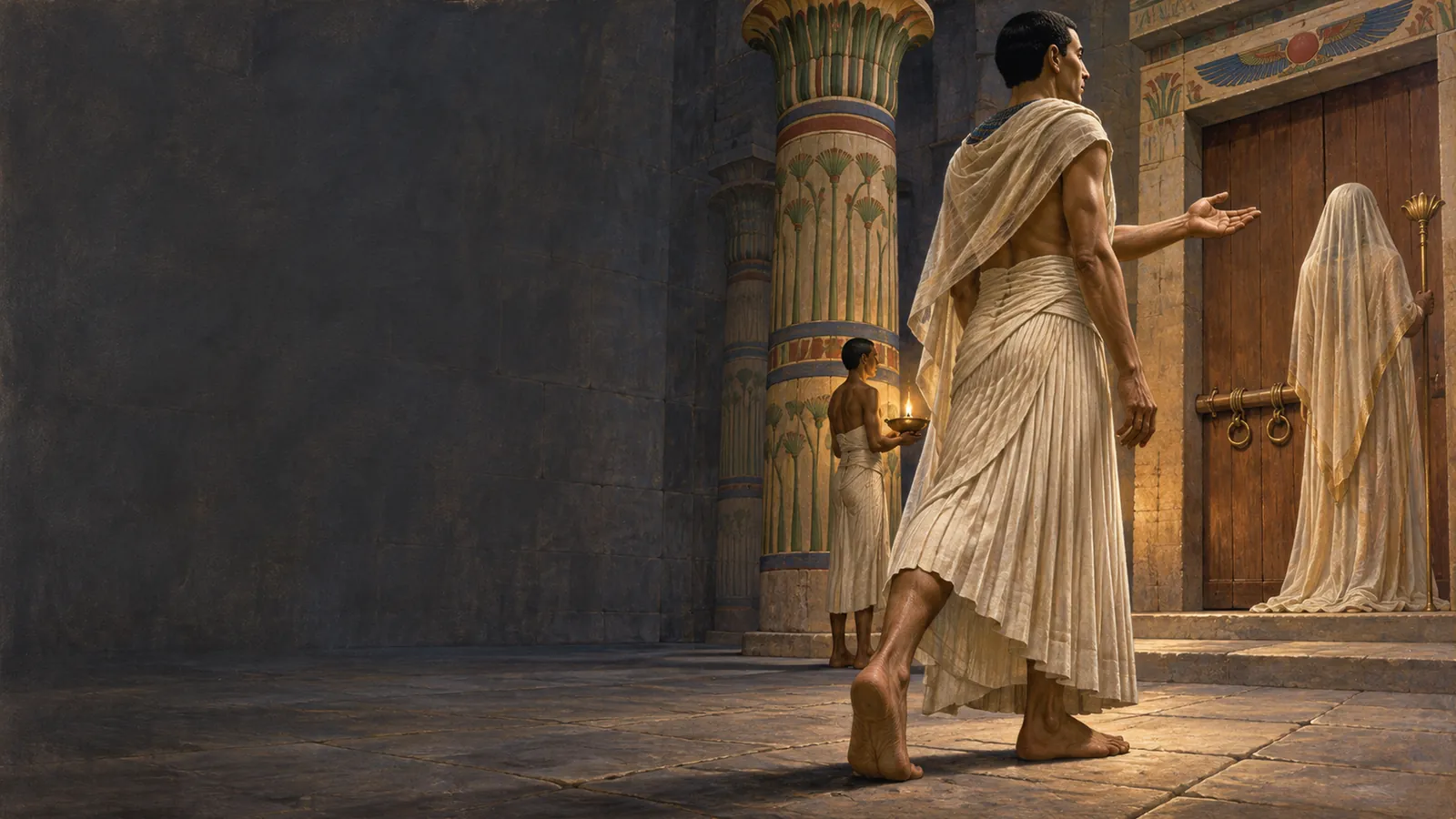
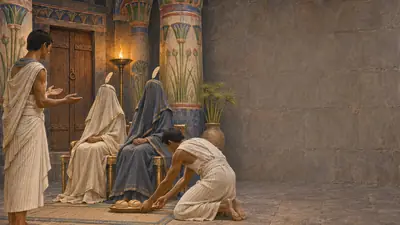
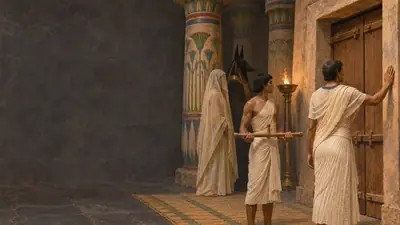
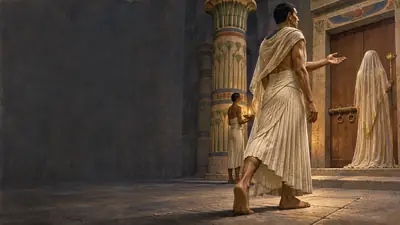
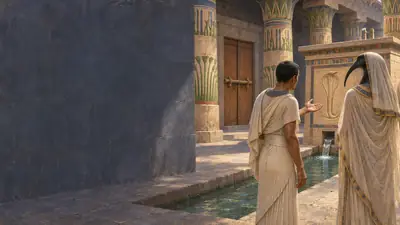
El suelo dice que es silencioso y sagrado. No dejará al difunto pisarlo hasta que le diga el nombre de cada pie.
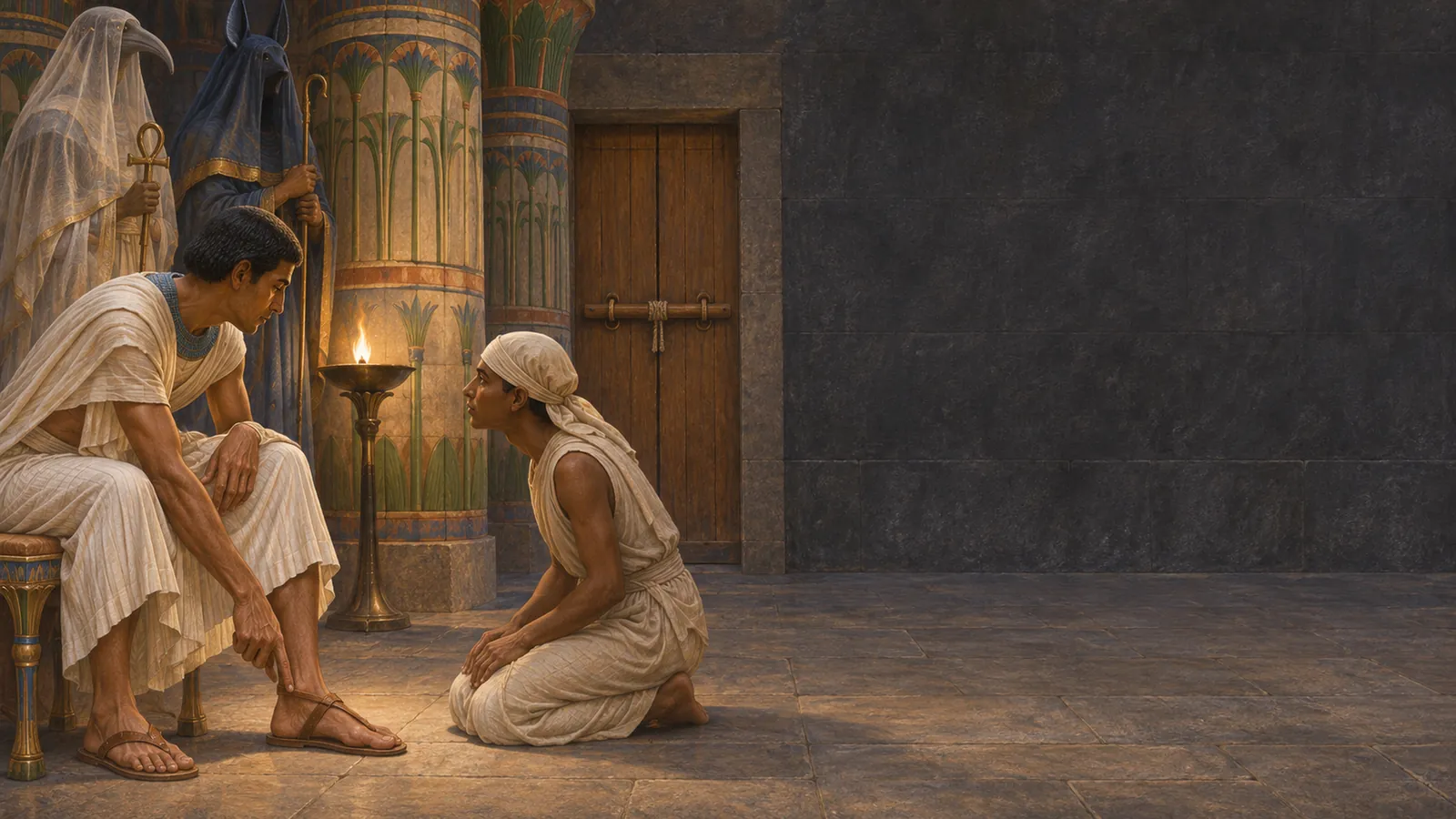
El difunto da al suelo dos nombres. Llama a su pie derecho Viajero del dios Khas, y al izquierdo, Bastón de la diosa Hathor.
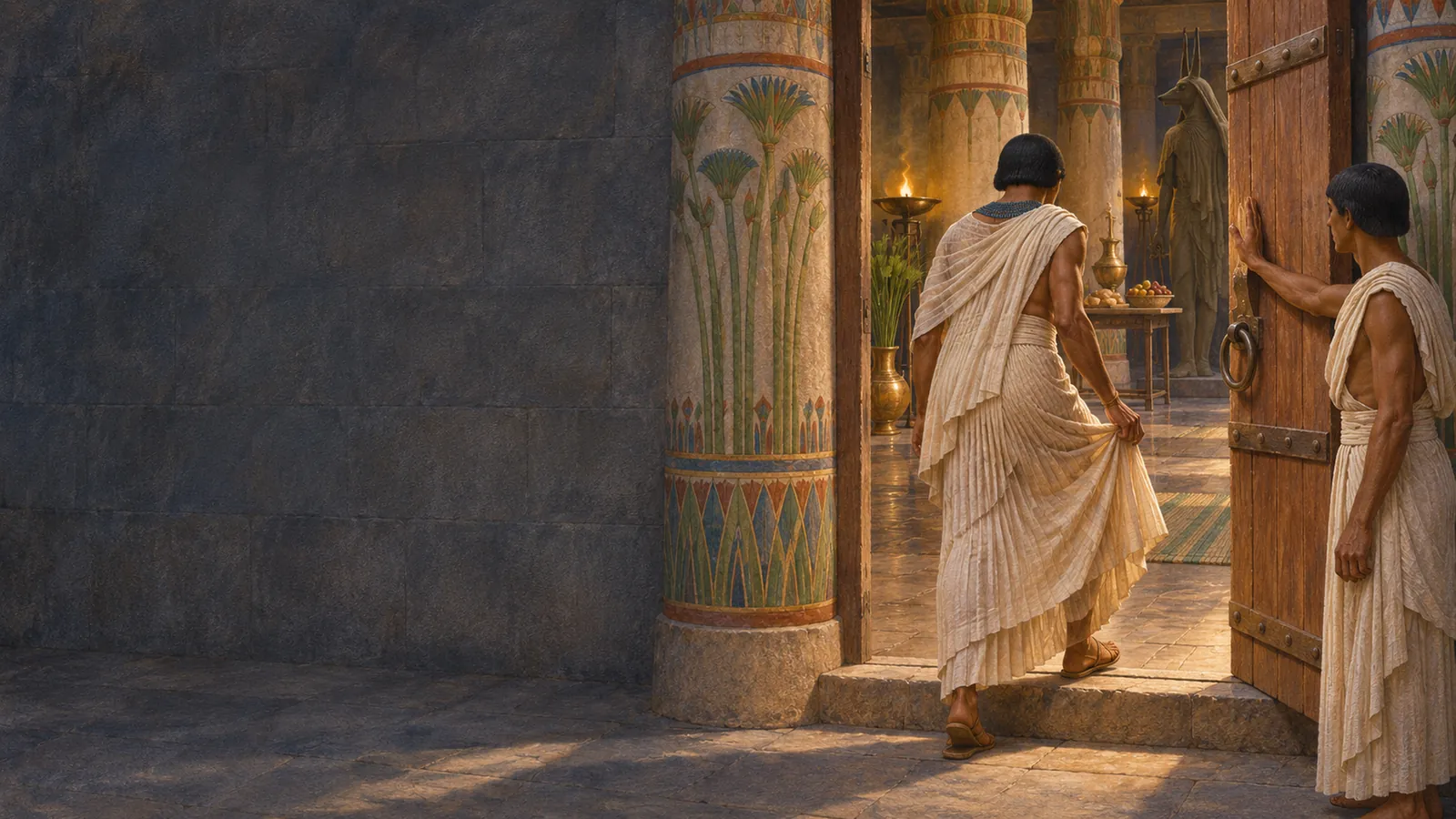
El suelo ha oído los dos nombres. Le responde al difunto: «Me conoces. Pasa, pues, sobre mí».
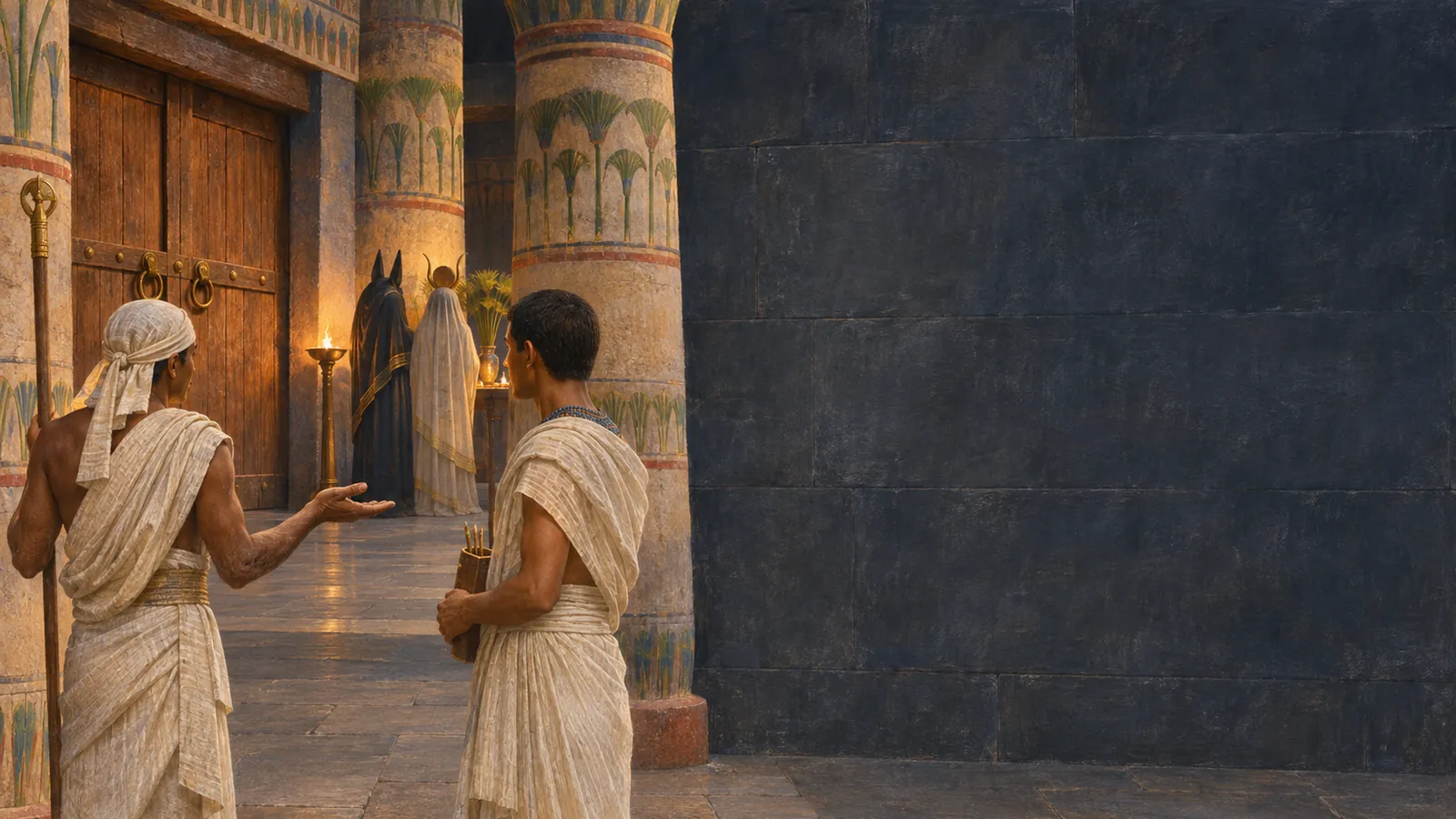
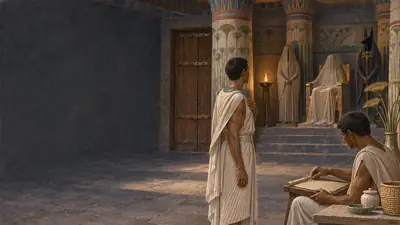
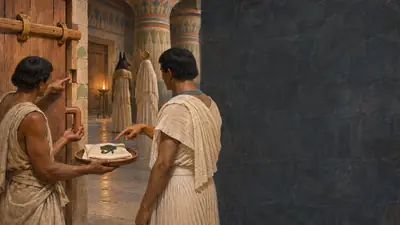
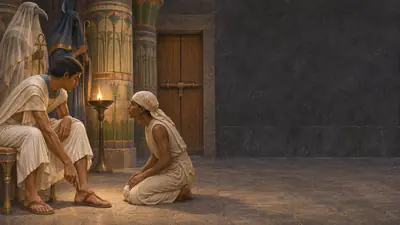
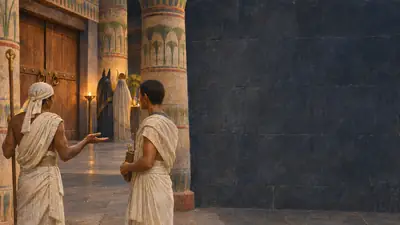
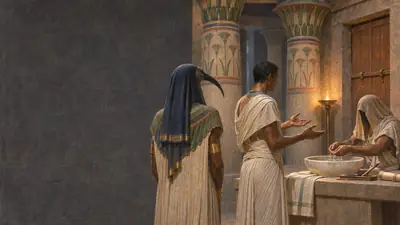
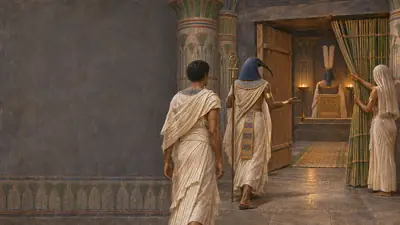
«No recibiré tu nombre hasta que me digas el mío», dice el guardián de la puerta. «Tú disciernes los corazones y escudriñas las entrañas», responde el difunto.
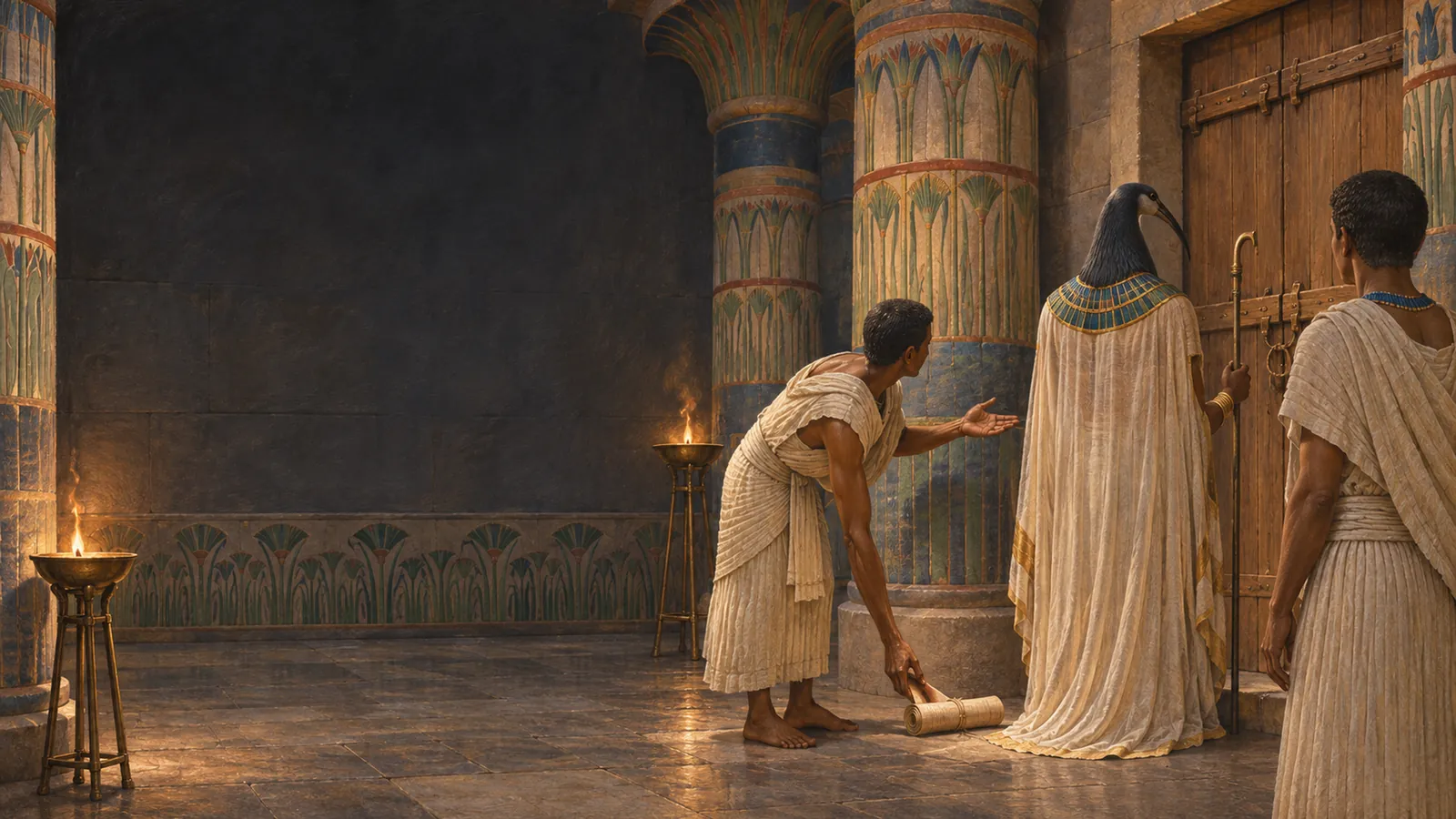
El guardián pregunta qué dios habita en su hora. El difunto responde: «Māau-Taui». Cuando el guardián le pregunta quién es Māau-Taui, responde: «Es Thot».
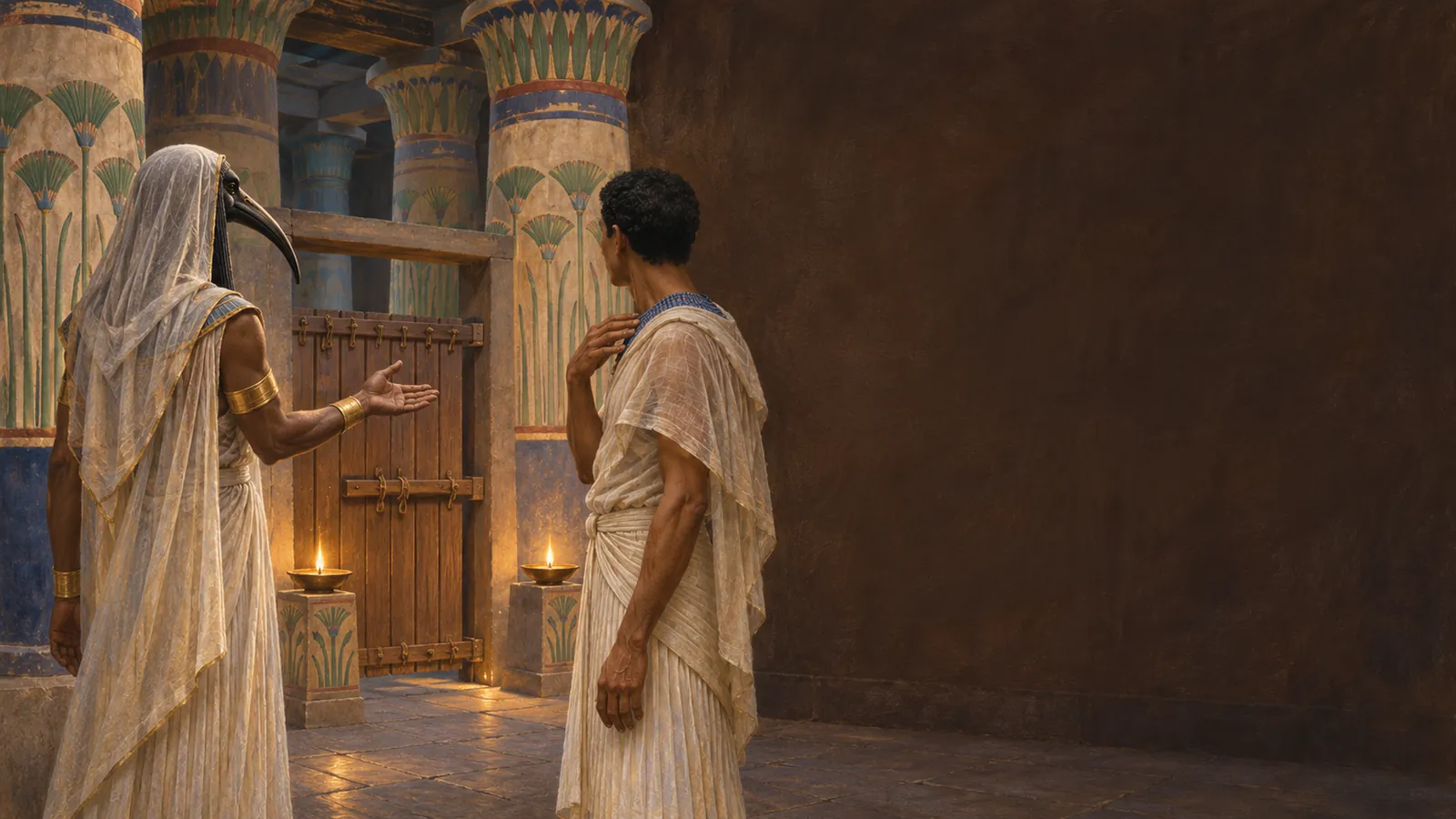
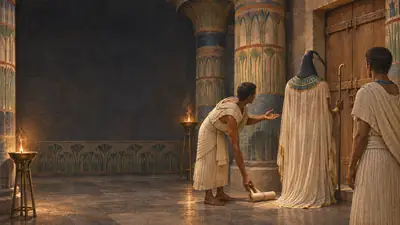
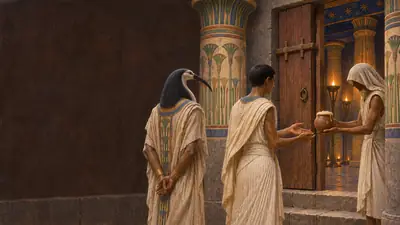
«Acércate», dice Thot. «¿Por qué has venido?» El difunto responde: «He venido y sigo adelante para que se pronuncie mi nombre».
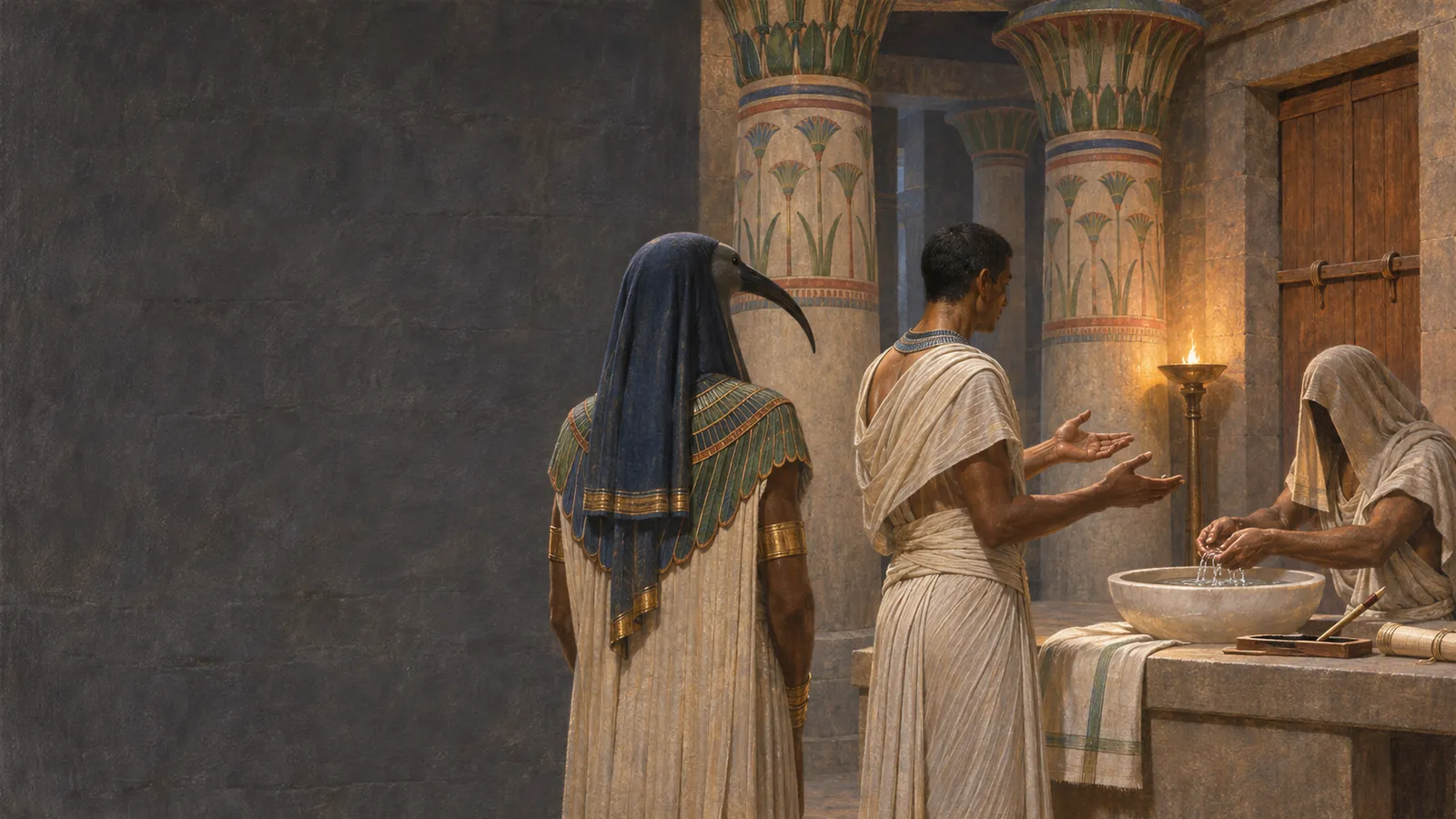
Thot le pregunta en qué estado se presenta. El difunto dice que ha sido purificado y protegido de los actos dañinos, y que no es de quienes los cometen.
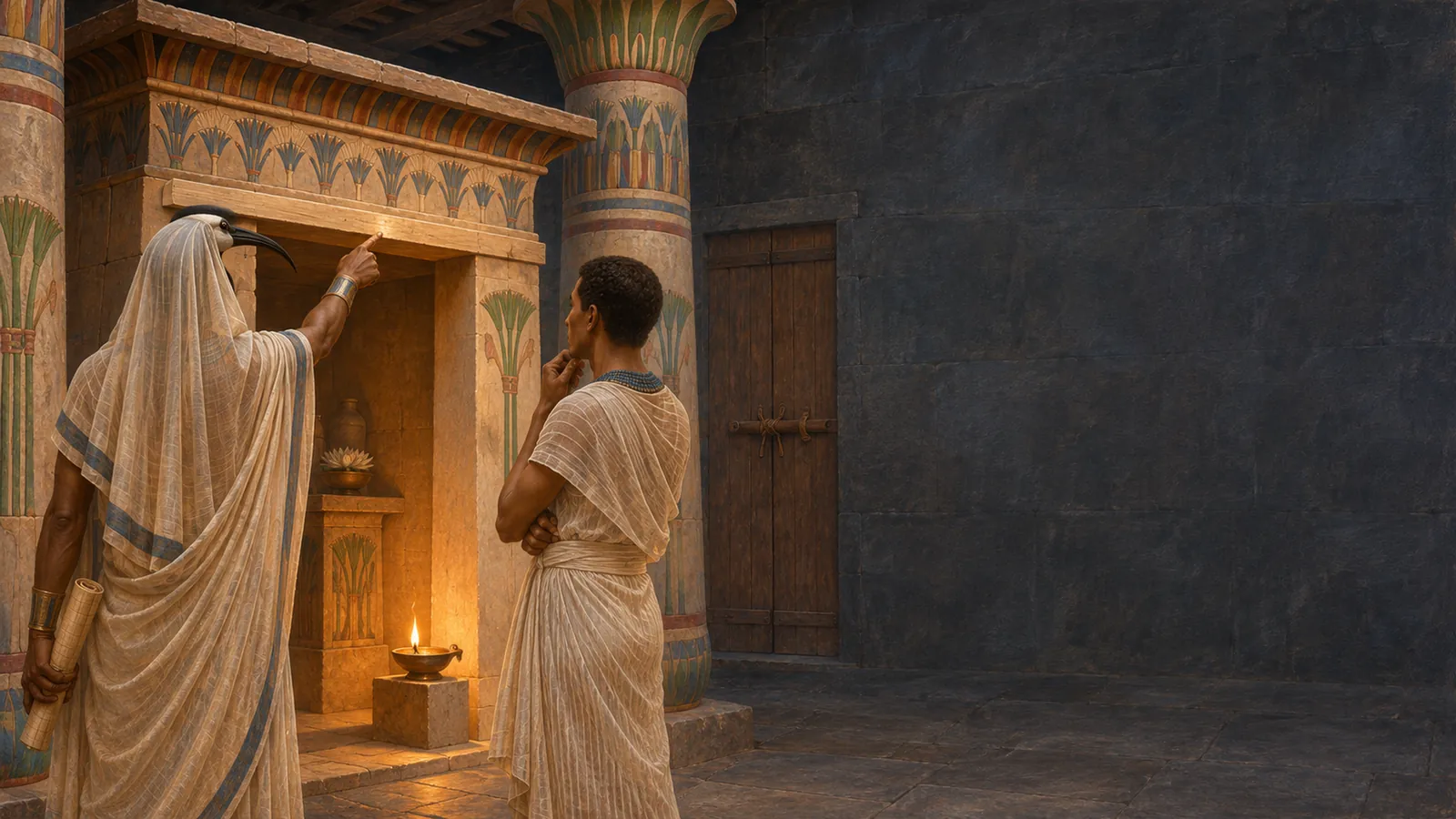
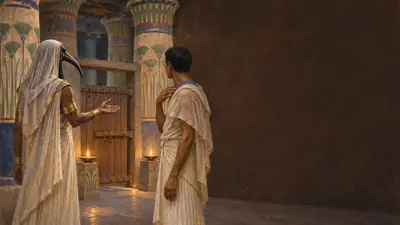
Thot dice que dará a conocer su nombre. Luego le pregunta por una casa cuyo techo es de fuego.
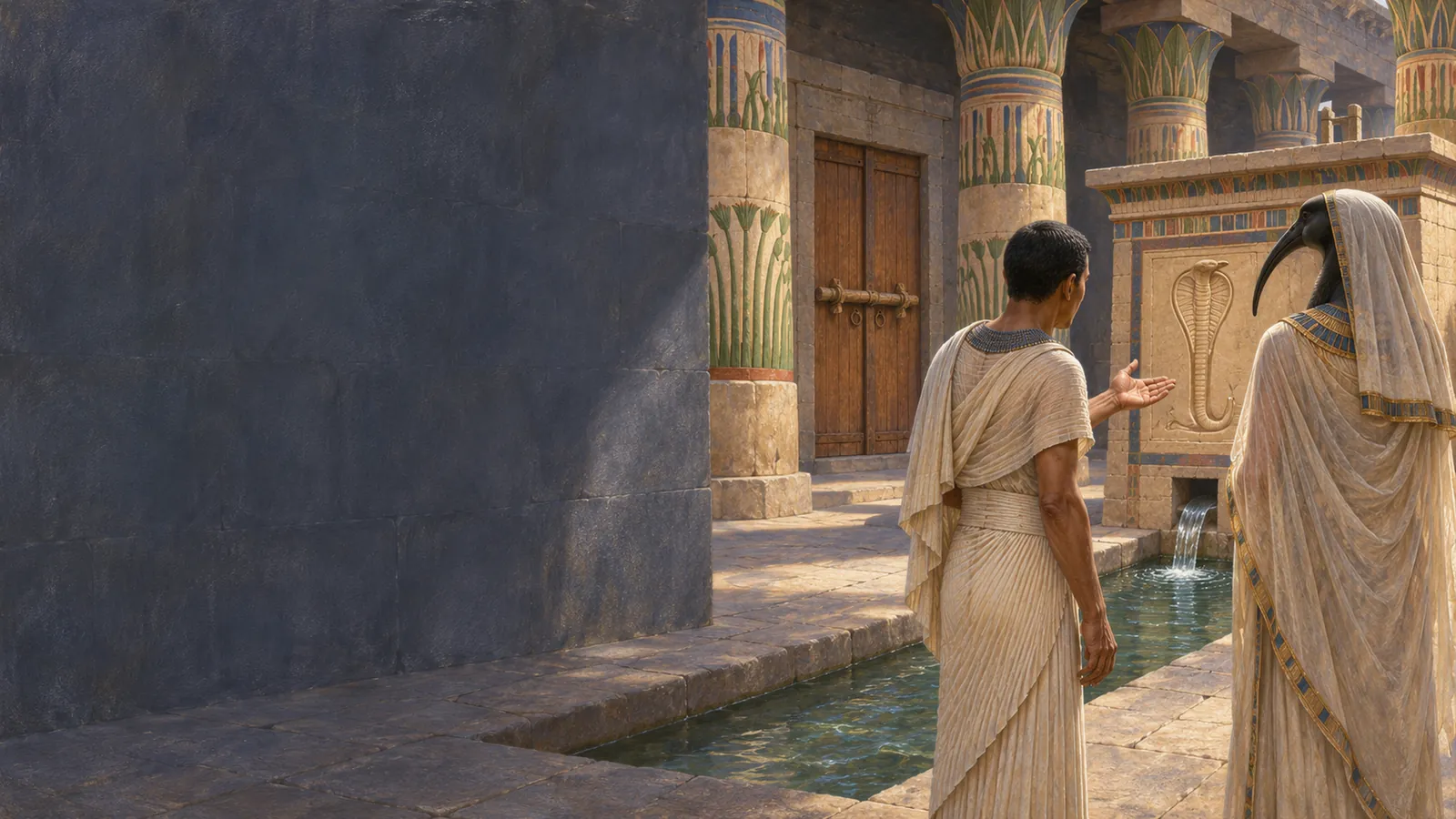
Sus paredes son cobras vivas, dice Thot, y su suelo es una corriente de agua. Luego vuelve a preguntarle al difunto: «¿Quién es?».
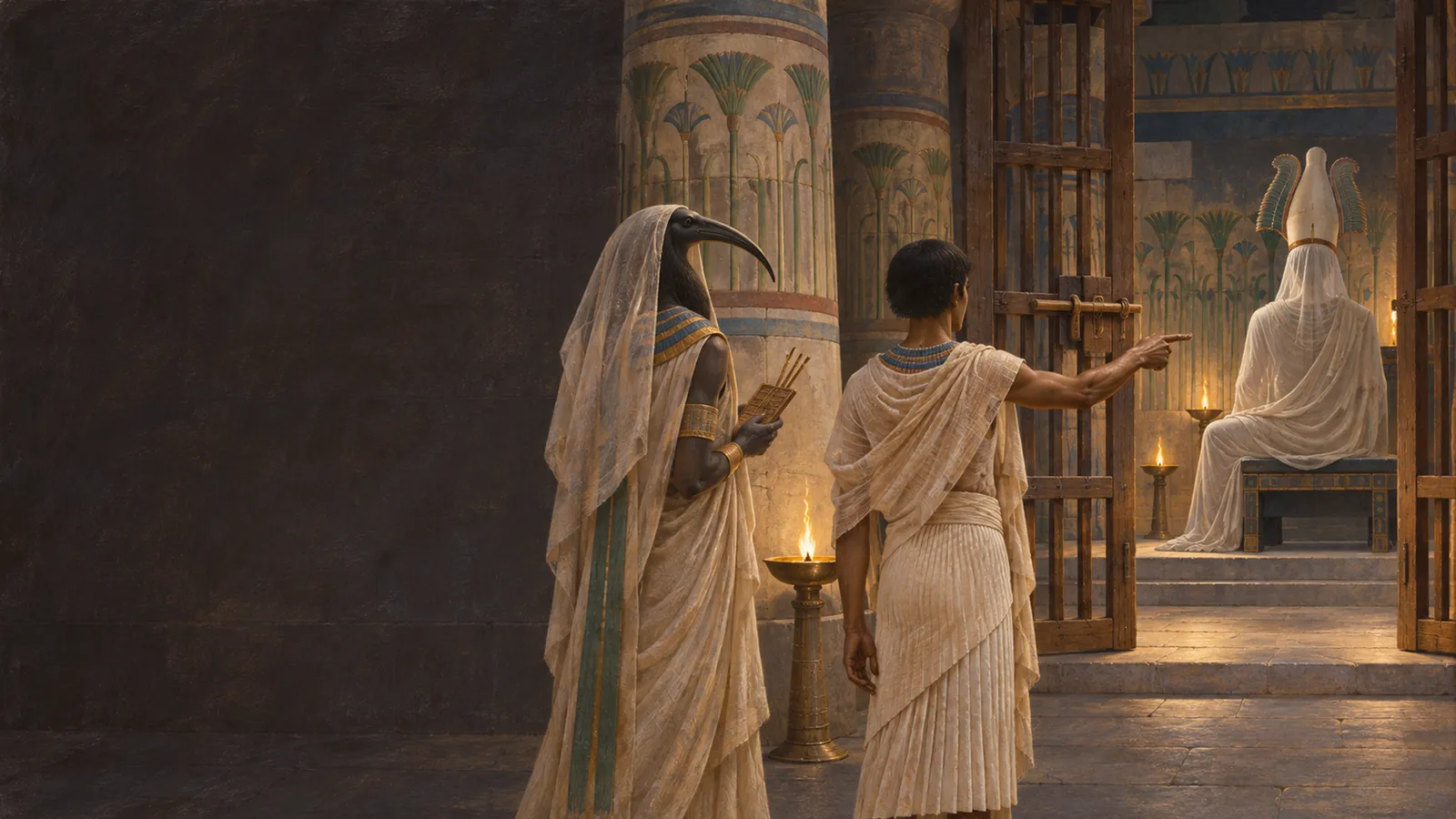
OSIRIS
El difunto ha oído el enigma de la extraña casa. En respuesta, le da a Thot un solo nombre: «Es Osiris».
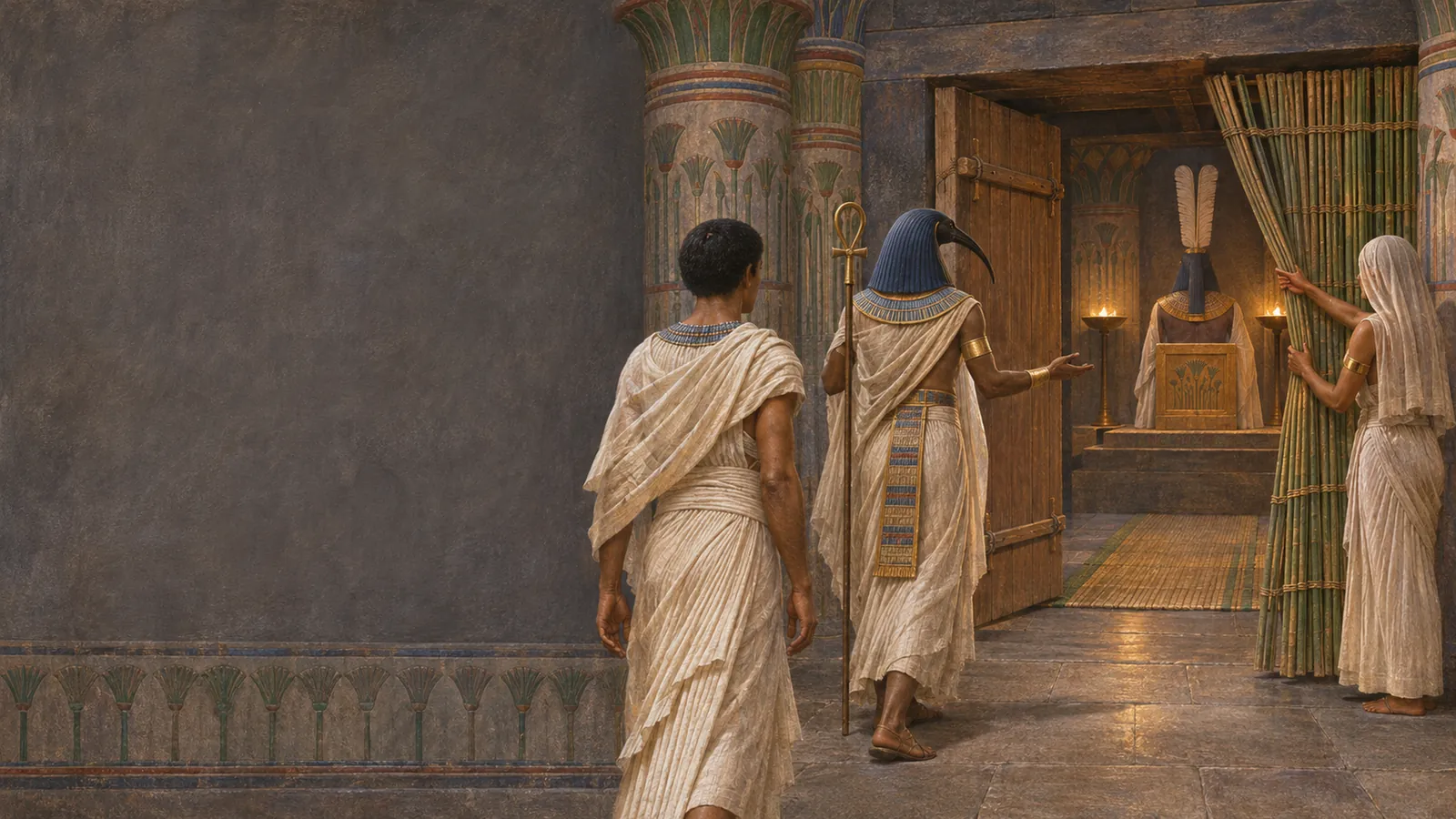
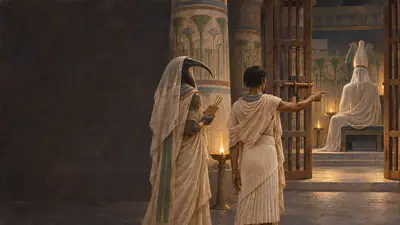
Thot invita al difunto a avanzar. Le promete que su nombre se pronunciará ante Osiris.
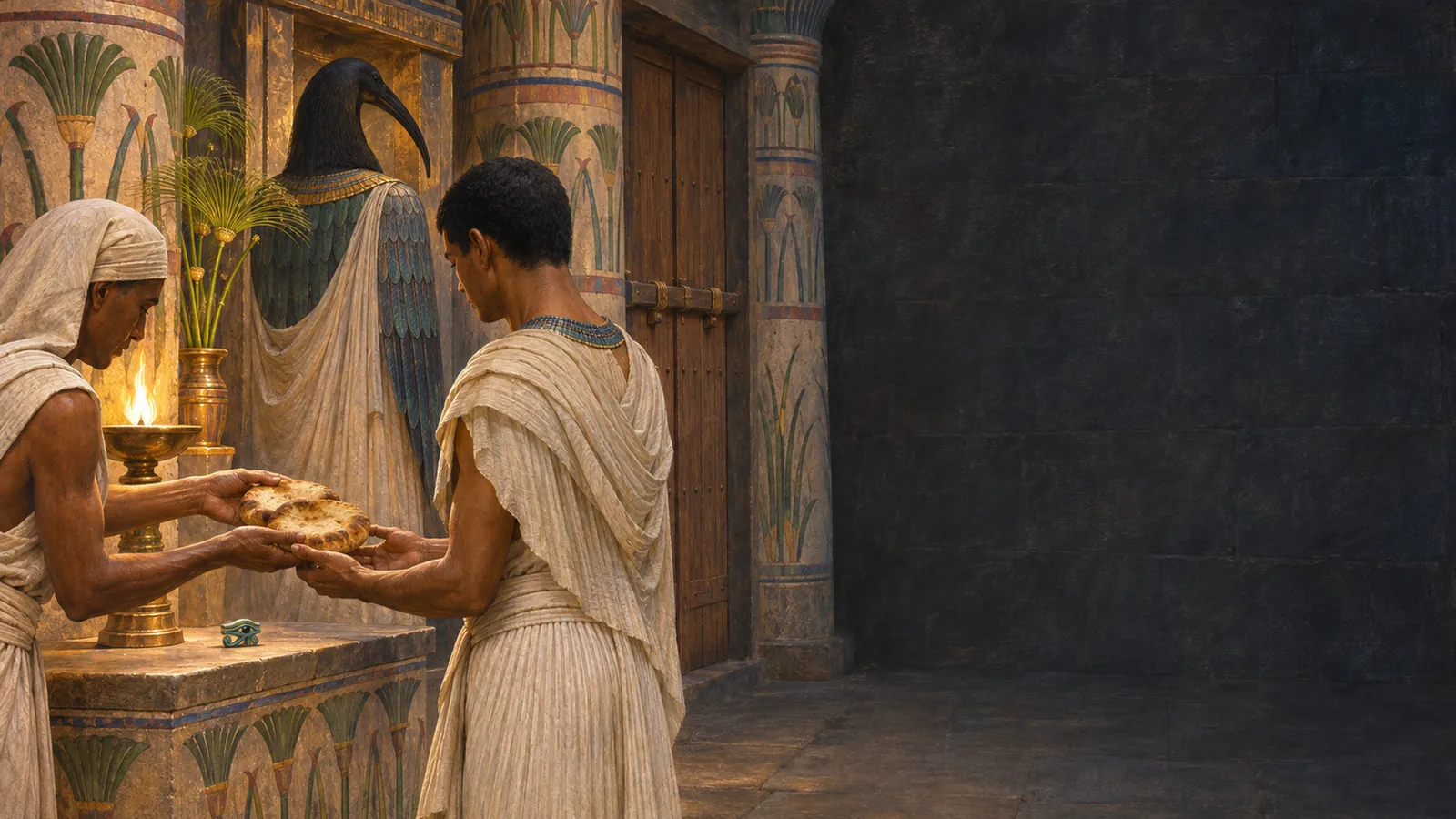
Thot le dice ahora al difunto de dónde vendrán sus tortas. Según su promesa, vendrán del Ojo de Ra.
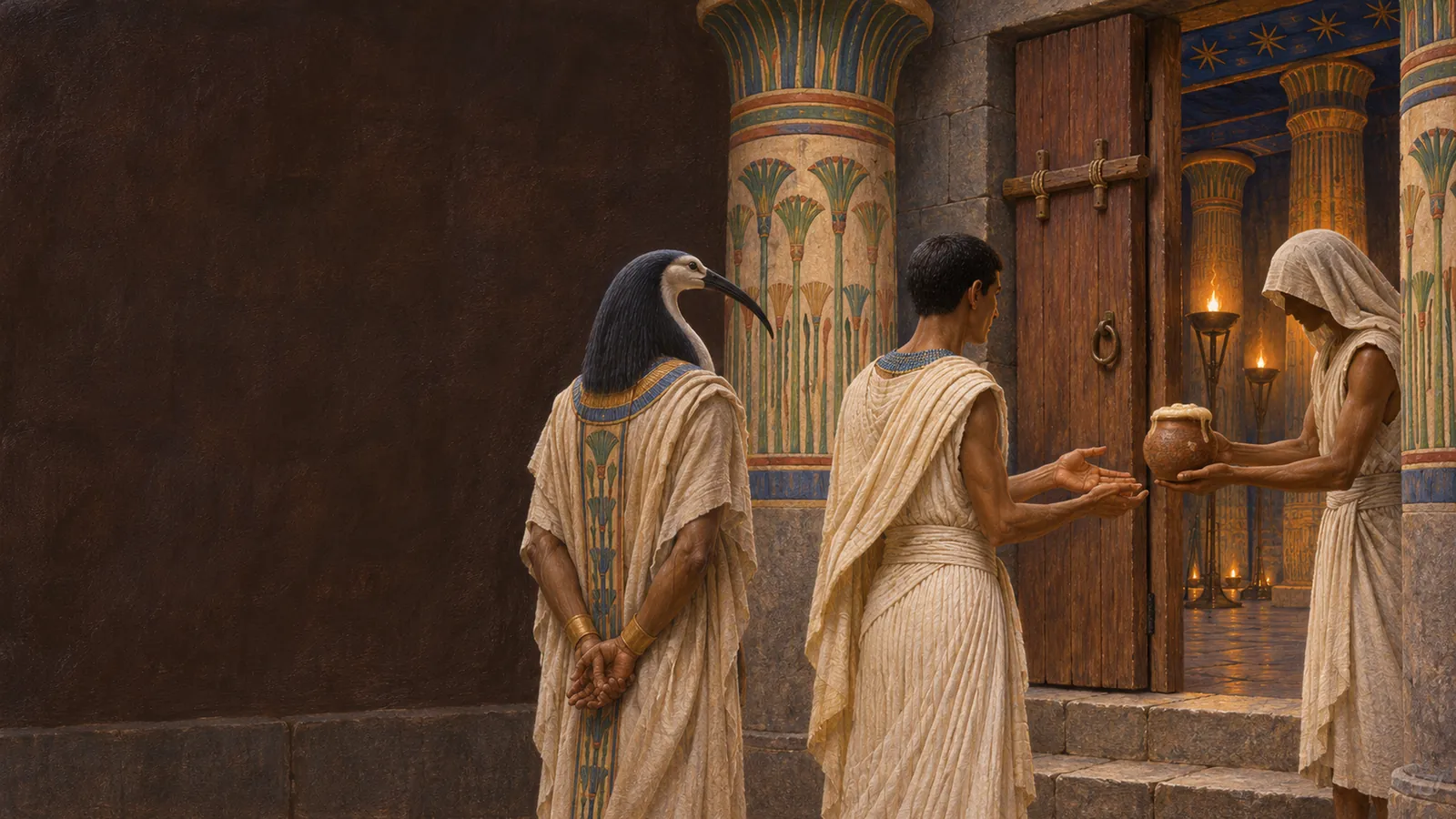
Tras las tortas llega la promesa de cerveza. Thot dice que esta bebida también vendrá del Ojo de Ra.
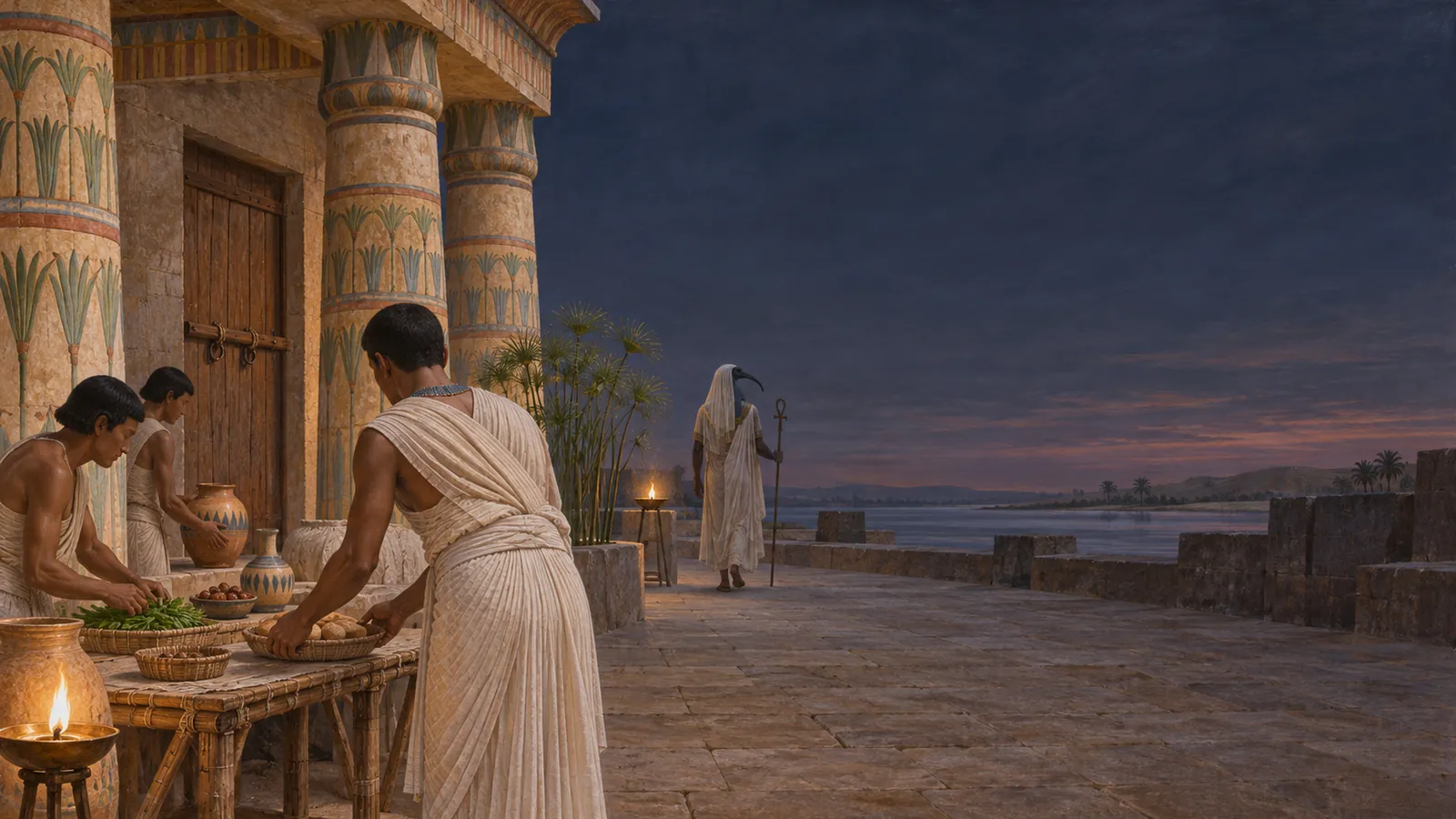
La última promesa de Thot es que las comidas funerarias del difunto en la tierra también vendrán del Ojo de Ra. El capítulo termina con esas palabras.
Fin del capítulo 1
Todas las páginas
Fuentes
**Edition.** E. A. Wallis Budge, *Egyptian Ideas of the Future Life*, third edition (1908), chapter IV, “The Judgment of the Dead.” Budge identifies the recited speech as a reading from the Papyrus of Nu. [Project Gutenberg ebook 11277](https://www.gutenberg.org/ebooks/11277)
Ediciones consultadas
- E. A. Wallis Budge, Egyptian Ideas of the Future Life, third edition, 1908, Chapter IV
- The Papyrus of Nu’s concluding speech, in the Project Gutenberg reading
- Budge’s reference for the Papyrus of Nu, British Museum No. 10477
Notas sobre este relato
The claims, requests and possible replies in the following pages remain the deceased speaker’s words.
**P02, 3635–3639.** The deceased says that he knows both the dwellers and their names.
He names Ta-mera, glossed by Budge as Egypt. He denies cursing God and asks to escape harm through the king.
**P04, 3644–3647.** The gods of the Hall are free of evil and feed on right and truth before Horus. The spoken account condenses Budge’s parallel descriptions of living and feeding on right and truth. Budge places Horus in his divine disk.
**P05, 3647–3654 and footnote 120.** The deceased asks to be rescued from Baba, whom Budge identifies in a footnote as Osiris’s firstborn son. His translation says Baba feeds on the entrails of mighty ones on the day of reckoning. The spoken account keeps that fact and combines the following denials of faults, sin and evil. The final appeal against harm includes a bracketed word in Budge.
**P06, 3654–3660.** The deceased says right and truth sustain him. He describes fulfilling human commands and doing what pleases the gods. Budge brackets wording linking the two and supplies connecting words in the following clause about being at peace with the god by doing his will.
**P07, 3660–3663.** The four gifts are bread, water, clothing and a boat. Budge brackets “shipwrecked” before mariner.
**P08, 3663–3669.** The deceased gives holy offerings to the gods and funerary meals to the beatified dead. It condenses the repeated greeting of peace.
**P09, 3669–3674 and footnote 121.** The deceased says he heard the spiritual bodies speak a powerful word to the Cat at Hapt-re. Budge identifies the Cat as Ra and describes a variant with an ass, identified as Osiris, speaking instead. The deceased says that he testified before Hra-f-ha-f, who gave a decision, with the possessive bracketed by Budge. The decision’s content is unstated here.
“Persea” retains Budge’s tree name without identifying a modern species.
The deceased addresses him as lord of the Atefu crown and Lord of the Winds.
**P12, 3685–3690.** The deceased describes several washings, including the cleansing of his breast and hinder parts. Budge brackets “[immersed]” in the passage about the inward parts and the Pool of Right and Truth. The final claim that right and truth are present throughout his body remains.
Ra’s divine sailors bathe at the second hour of the night and third hour of the day. The spoken account condenses the concluding reference to the gods’ satisfaction.
**P14, 3695–3701.** The deceased imagines being called forward and asked who he is and what his name is. The next page continues the prospective exchange.
Page 15. In the recited exchange, the speaker says he would pass to the city north of the olive tree. His answer names “The Leg and the Thigh,” and he asks to see rejoicing in the land of the Fenkhu.
Page 16. The question is what they would give him and what he would do with it. He names a fiery flame and a crystal tablet. He says he would bury them by the furrow of Māāat as “Things for the night.”
Page 17. When asked what he would find there, he names a flint sceptre called “Giver of Air.” The named object belongs to his reply.
Page 18. The speaker says he would recite words over the flame and crystal tablet in the furrow. He would extinguish the fire, break the tablet and make a pool of water. The verbs are what he says he would do in the prospective exchange.
Page 19. The deceased asks the gods to tell him to enter the Hall of the Māāti goddesses because he knows them. In the invitation he asks to hear, the gods speak of his knowing them. Budge then introduces the dialogue between the Hall’s parts and the deceased.
Page 20. The bolts say they would withhold passage unless the deceased gives their names. The edition identifies the door bolts as the speakers.
Page 21. The deceased gives the plural bolts one name. Budge prints it as “Tongue of the place of Right and Truth.”
Page 22. The right post next asks for its own name as the condition for passage. This is the speaker labelled “Right post” in the edition.
Page 23. The deceased names it “Scale of the lifter up of right and truth.” The scale is a name in his reply.
### The door fittings and the floor
### The Doorkeeper, Thoth, and the last promises
Los versos antiguos de cada página
- Page 1: Budge 1908, chapter IV, Papyrus of Nu, Nu attribution, 3629–3631
- Page 2: Budge 1908, chapter IV, Papyrus of Nu, First petition, 3635–3639
- Page 3: Budge 1908, chapter IV, Papyrus of Nu, First petition, 3639–3642
- Page 4: Budge 1908, chapter IV, Papyrus of Nu, Second petition, 3644–3647
- Page 5: Budge 1908, chapter IV, Papyrus of Nu, Second petition, 3647–3654
- Page 6: Budge 1908, chapter IV, Papyrus of Nu, Second petition, 3654–3660
- Page 7: Budge 1908, chapter IV, Papyrus of Nu, Second petition, 3660–3663
- Page 8: Budge 1908, chapter IV, Papyrus of Nu, Second petition, 3663–3669
- Page 9: Budge 1908, chapter IV, Papyrus of Nu, Second petition, 3669–3674
- Page 10: Budge 1908, chapter IV, Papyrus of Nu, Second petition, 3674–3678
- Page 11: Budge 1908, chapter IV, Papyrus of Nu, Third petition, 3680–3685
- Page 12: Budge 1908, chapter IV, Papyrus of Nu, Third petition, 3685–3690
- Page 13: Budge 1908, chapter IV, Papyrus of Nu, Third petition, 3690–3695
- Page 14: Budge 1908, chapter IV, Papyrus of Nu, Third petition, 3695–3701
- Page 15: Budge 1908, chapter IV, Papyrus of Nu, Third petition, 3701–3706
- Page 16: Budge 1908, chapter IV, Papyrus of Nu, Third petition, 3707–3713
- Page 17: Budge 1908, chapter IV, Papyrus of Nu, Third petition, 3714–3717
- Page 18: Budge 1908, chapter IV, Papyrus of Nu, Third petition, 3718–3723
- Page 19: Budge 1908, chapter IV, Papyrus of Nu, Third petition and dialogue heading, 3724–3730
- Page 20: Budge 1908, chapter IV, Papyrus of Nu, concluding dialogue, lines 3734–3735
- Page 21: Budge 1908, chapter IV, Papyrus of Nu, concluding dialogue, lines 3737–3738
- Page 22: Budge 1908, chapter IV, Papyrus of Nu, concluding dialogue, lines 3740–3741
- Page 23: Budge 1908, chapter IV, Papyrus of Nu, concluding dialogue, lines 3743–3744
- Page 24: Budge 1908, Chapter IV, Papyrus of Nu, concluding dialogue, lines 3746–3749
- Page 25: Budge 1908, Chapter IV, Papyrus of Nu, concluding dialogue, lines 3751–3752
- Page 26: Budge 1908, Chapter IV, Papyrus of Nu, concluding dialogue, lines 3754
- Page 27: Budge 1908, Chapter IV, Papyrus of Nu, concluding dialogue, lines 3756–3758
- Page 28: Budge 1908, Chapter IV, Papyrus of Nu, concluding dialogue, lines 3760–3763
- Page 29: Budge 1908, Chapter IV, Papyrus of Nu, concluding dialogue, lines 3765–3768
- Page 30: Budge 1908, Chapter IV, Papyrus of Nu, concluding dialogue, lines 3770–3776
- Page 31: Budge 1908, Chapter IV, Papyrus of Nu, concluding dialogue, lines 3778–3781
- Page 32: Budge 1908, Chapter IV, Papyrus of Nu, concluding dialogue, lines 3783–3785
- Page 33: Budge 1908, Chapter IV, Papyrus of Nu, concluding dialogue, lines 3787–3788
- Page 34: Budge 1908, Chapter IV, Papyrus of Nu, concluding dialogue, lines 3790–3794
- Page 35: Budge 1908, Chapter IV, Papyrus of Nu, concluding dialogue, lines 3796–3803
- Page 36: Budge 1908, Chapter IV, Papyrus of Nu, concluding dialogue, lines 3805–3808
- Page 37: Budge 1908, Chapter IV, Papyrus of Nu, concluding dialogue, lines 3810–3814
- Page 38: Budge 1908, Chapter IV, Papyrus of Nu, concluding dialogue, lines 3816–3818
- Page 39: Budge 1908, Chapter IV, Papyrus of Nu, concluding dialogue, lines 3818–3820
- Page 40: Budge 1908, Chapter IV, Papyrus of Nu, concluding dialogue, lines 3822
- Page 41: Budge 1908, Chapter IV, Papyrus of Nu, concluding dialogue, lines 3824–3825
- Page 42: Budge 1908, Chapter IV, Papyrus of Nu, concluding dialogue, lines 3825–3826
- Page 43: Budge 1908, Chapter IV, Papyrus of Nu, concluding dialogue, lines 3827–3828
- Page 44: Budge 1908, Chapter IV, Papyrus of Nu, concluding dialogue, lines 3829–3835
Ilustraciones hechas por IL Archive con herramientas de IA; el texto se basa en las fuentes antiguas (véanse las fuentes al final de cada capítulo).