El pastor y el labrador Capítulo 1
El cortejo de Inanna
Utu prefiere a Dumuzi, pero Inanna quiere casarse con un labrador. Dumuzi contrapone su lana y su leche a las telas y la cerveza del labrador. Una voz que Jacobsen atribuye con reservas a Inanna ofrece pasto, agua, trigo y habas. Jacobsen interpreta el desenlace como una reconciliación.
FuentesPase las páginas con las flechas, el teclado o deslizando el dedo.
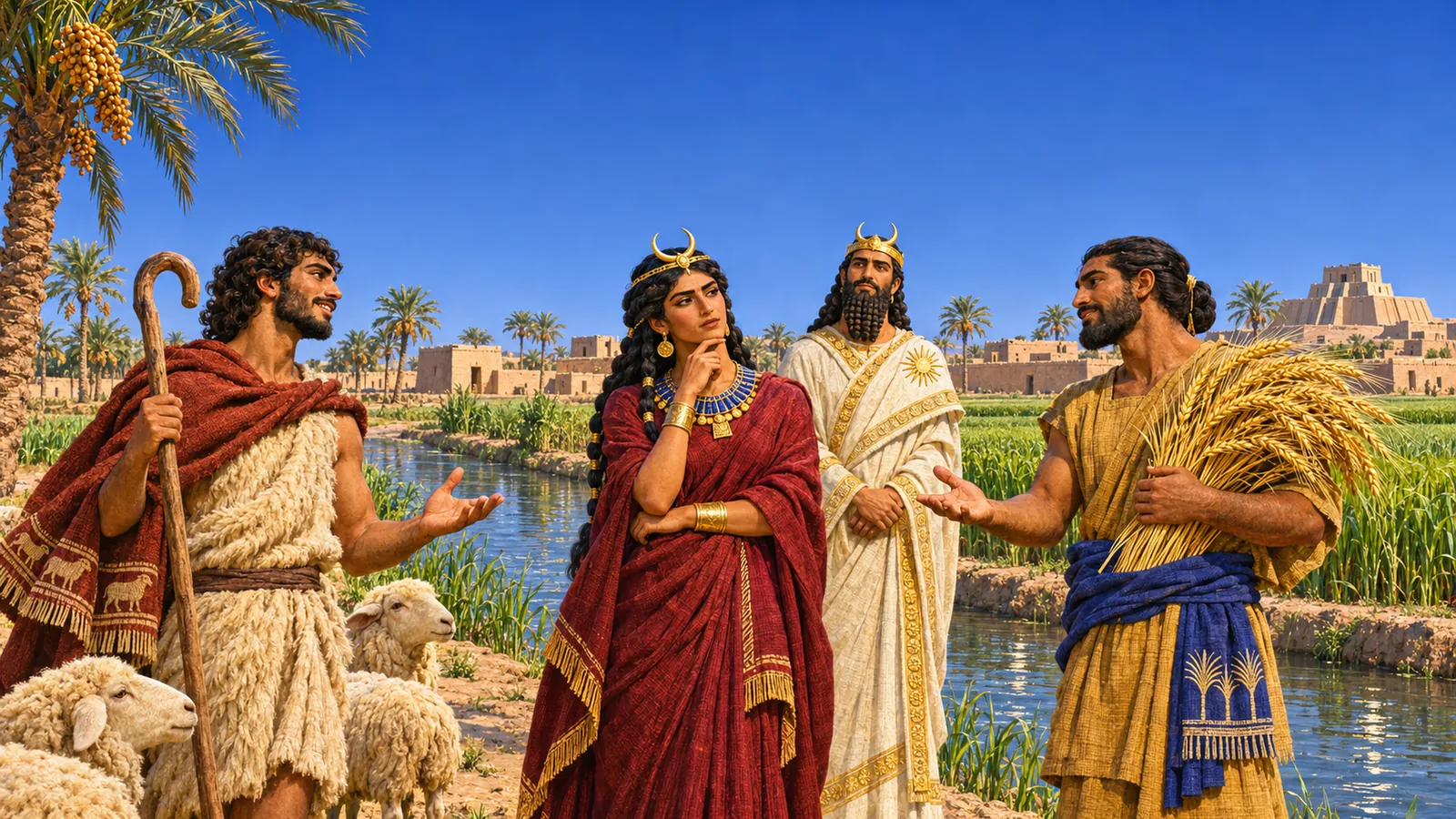
DOS PRETENDIENTES
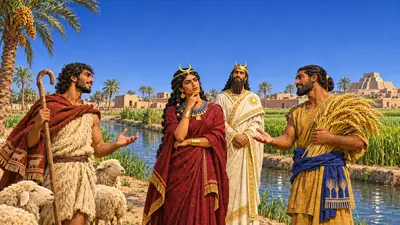
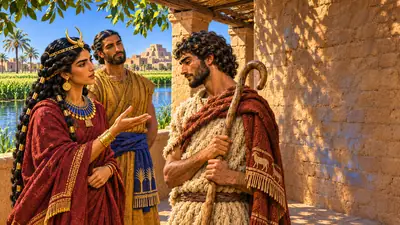
En el relato de Thorkild Jacobsen, el labrador Enkimdu y el pastor Dumuzi quieren casarse con Inanna. Su hermano Utu se inclina por Dumuzi.
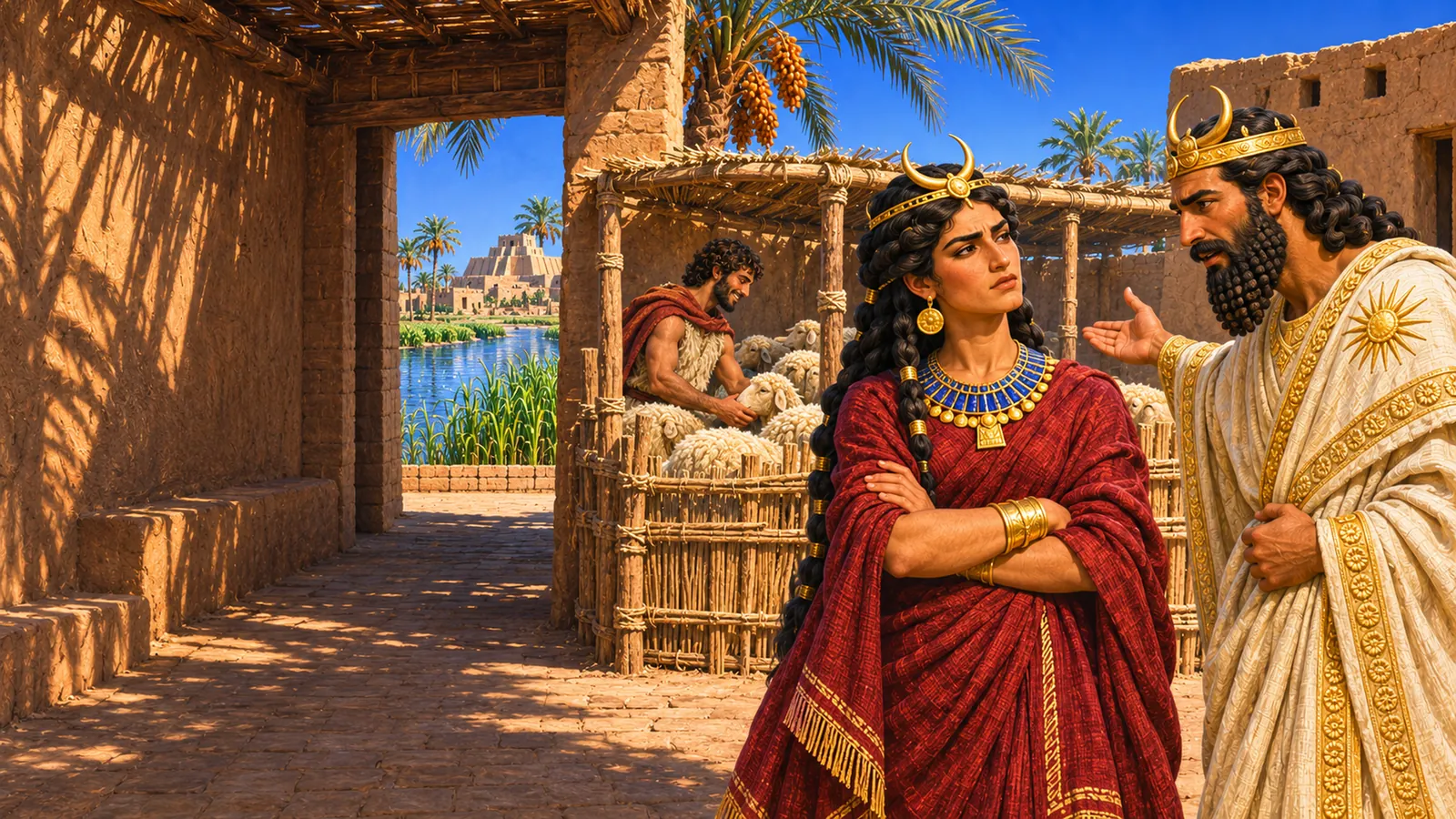
Los versos presentan a Utu, el hermano de Inanna, como guerrero y héroe. Aconseja a su hermana que se case con el pastor y le pregunta por qué se niega.
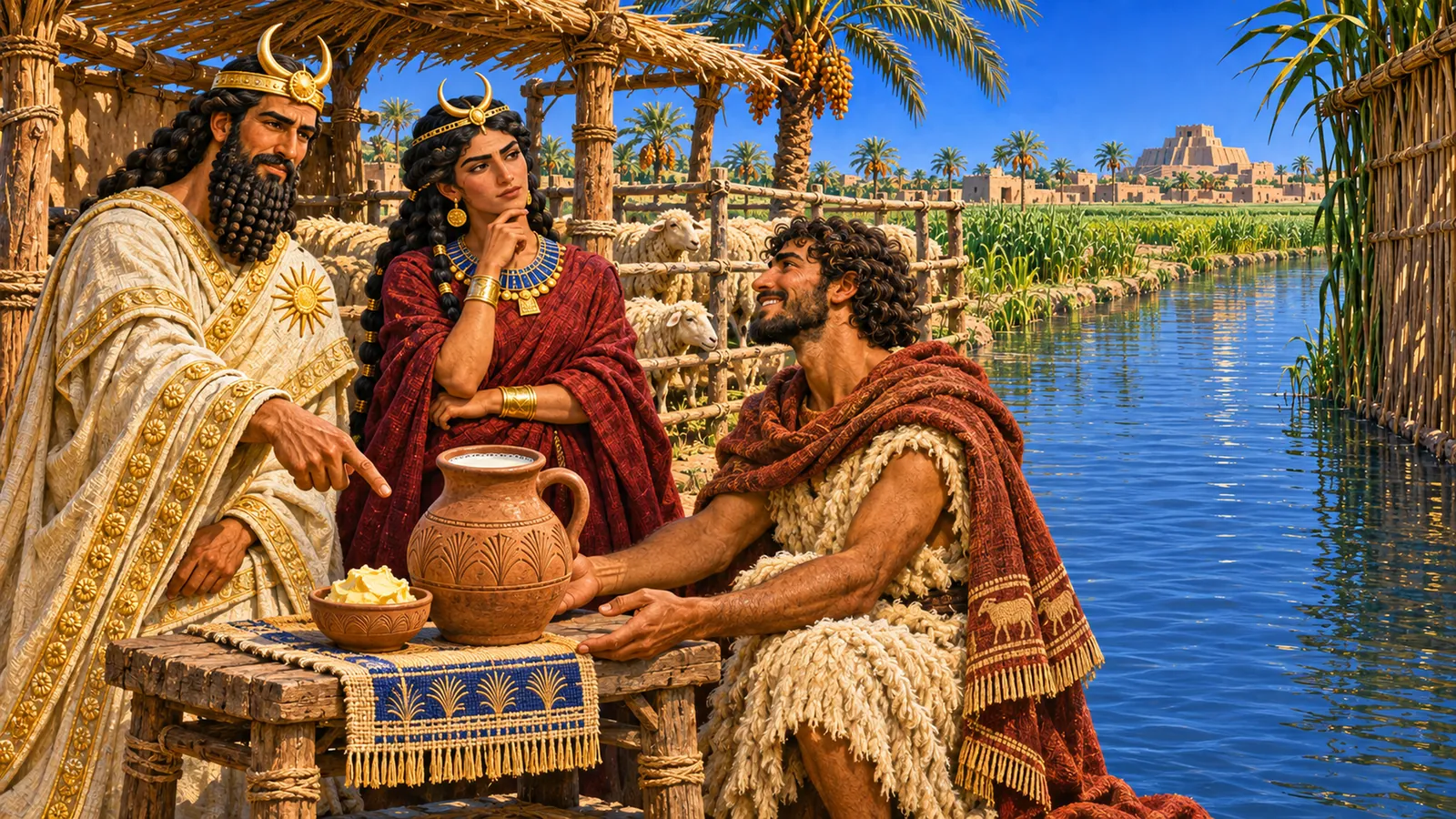
Utu alaba la calidad de la mantequilla y la leche del pastor. Dice que todo lo que produce el pastor es excelente y señala a Dumuzi como el hombre con quien Inanna debería casarse.
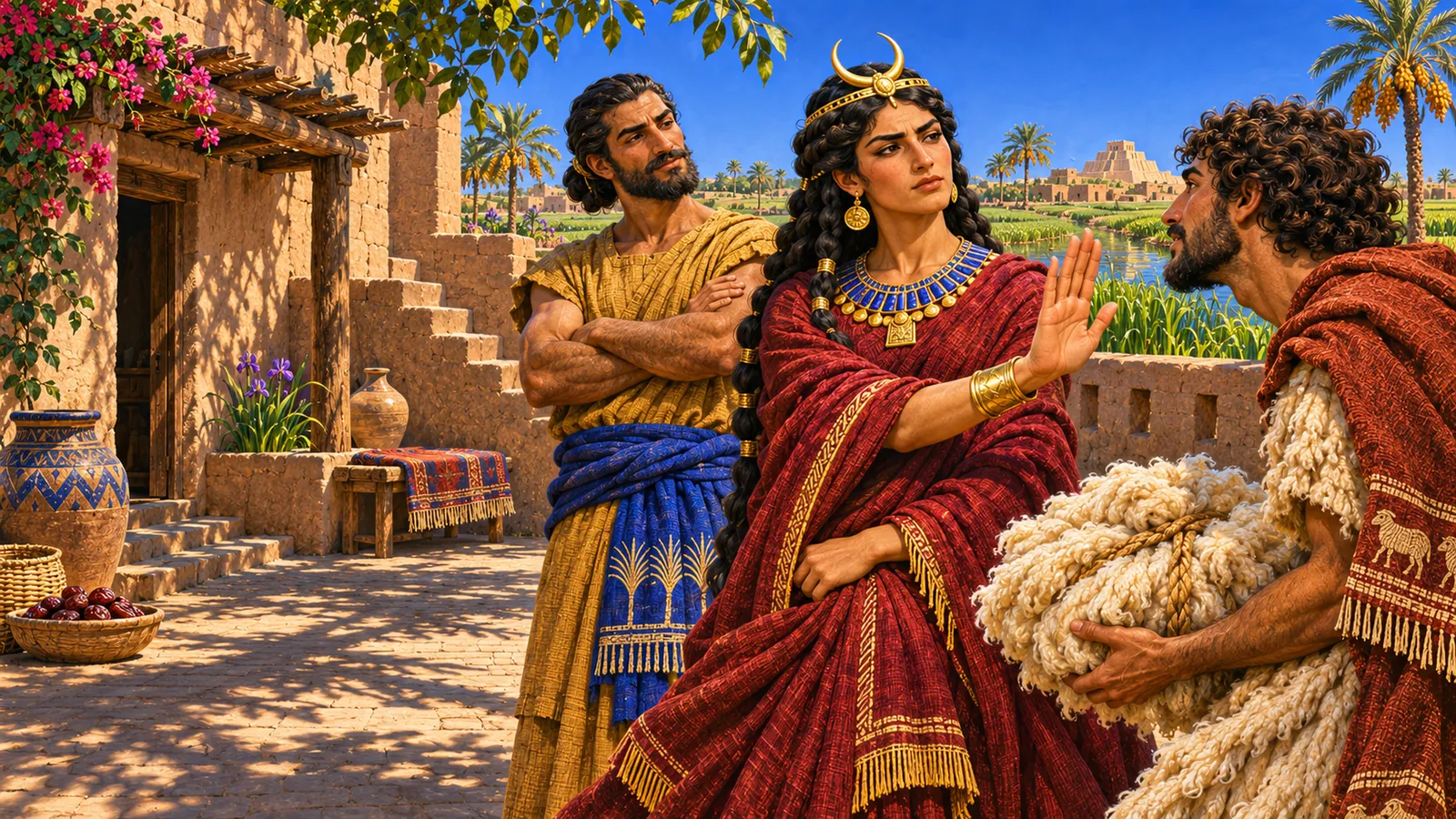
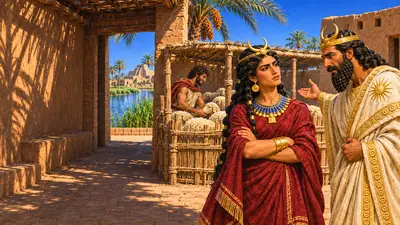
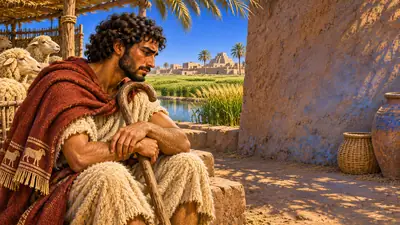
Inanna dice que nunca se casará con el pastor. Nunca se vestirá con su tejido con mechones ni dejará que la toque siquiera su lana más fina.
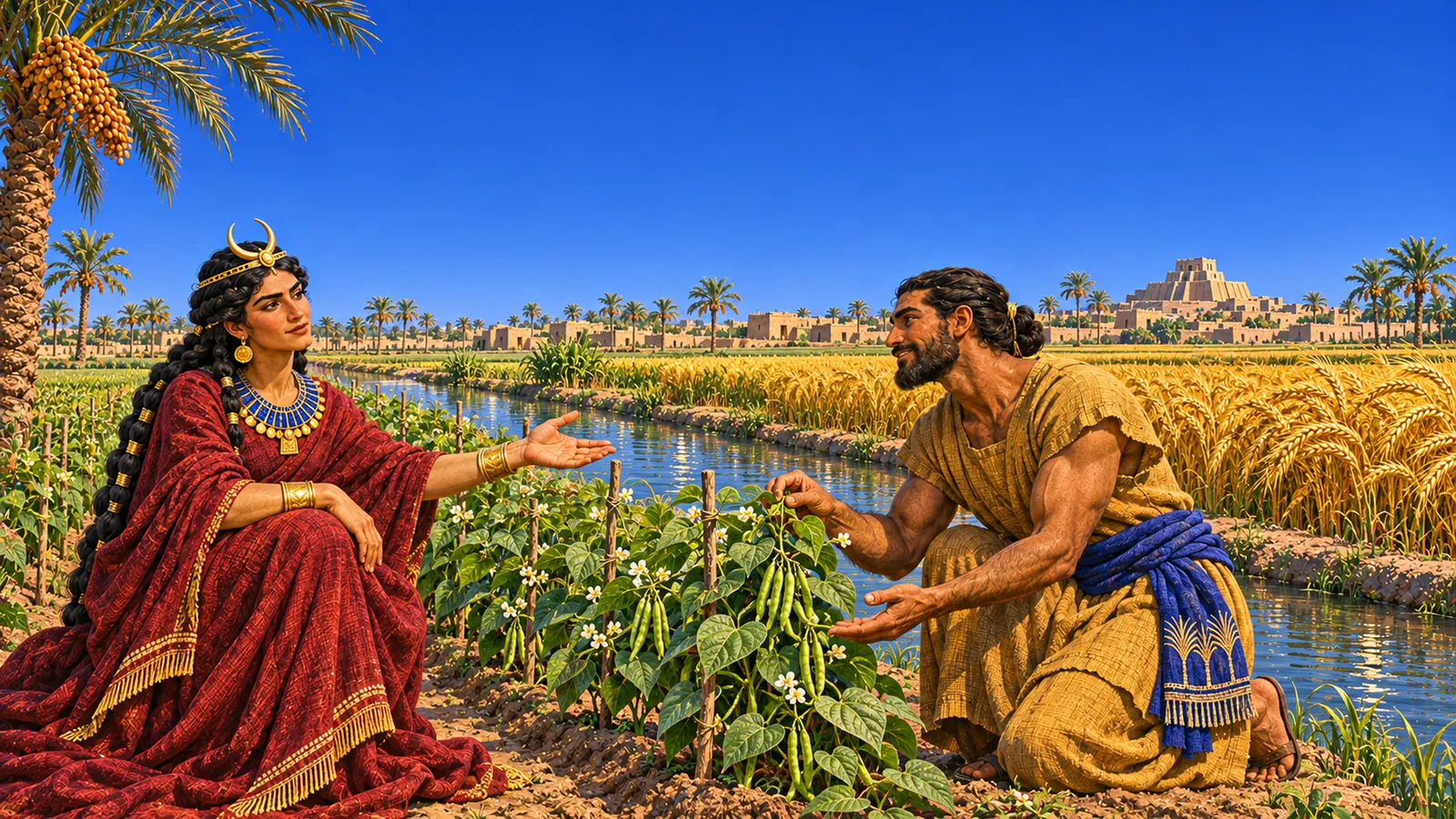
EL LABRADOR
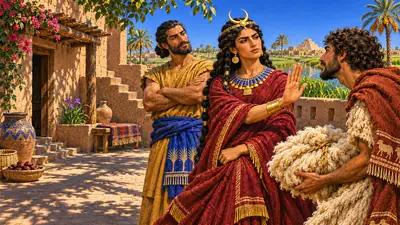
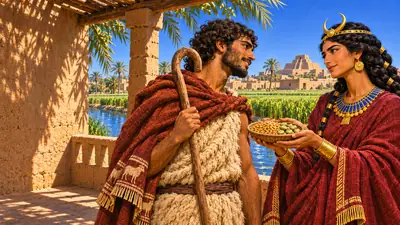
Inanna insiste en que solo se casará con un labrador. Describe al marido que quiere como un hombre que sabe cultivar habas y cereales.
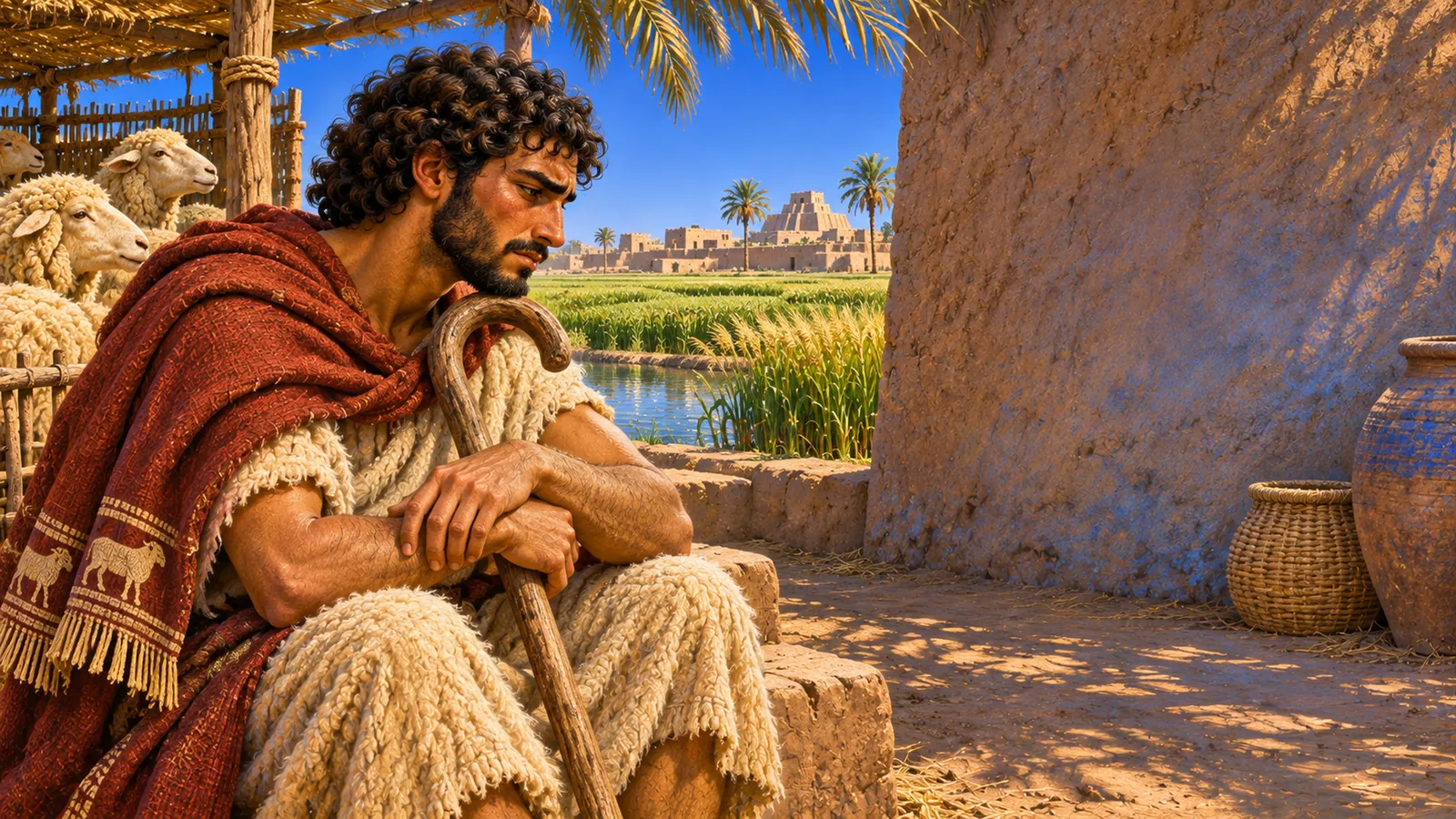
En el relato de Jacobsen, el rechazo desalienta a Dumuzi y hiere su orgullo. Empieza a pensar en qué podría ofrecer a cambio de cada producto del labrador.
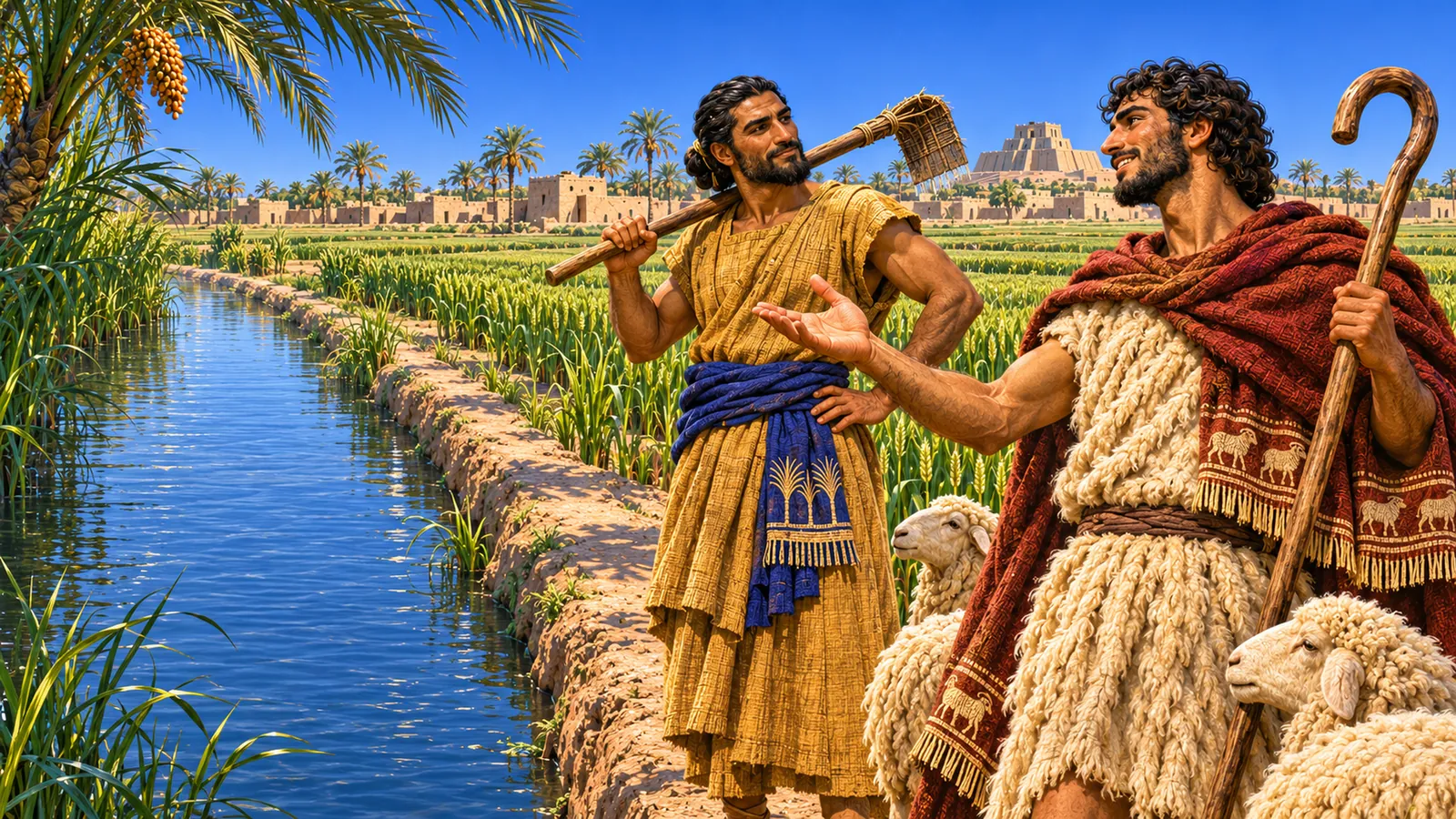
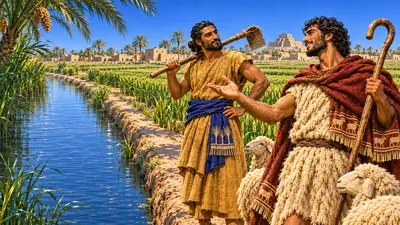
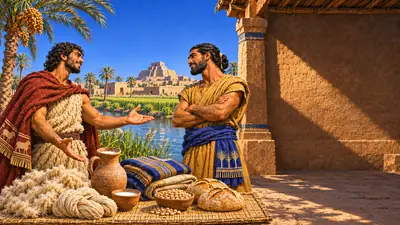
Dumuzi pregunta en qué lo supera el labrador. Nombra a Enkimdu, el hombre del dique y del canal, y vuelve a hacer la misma pregunta.
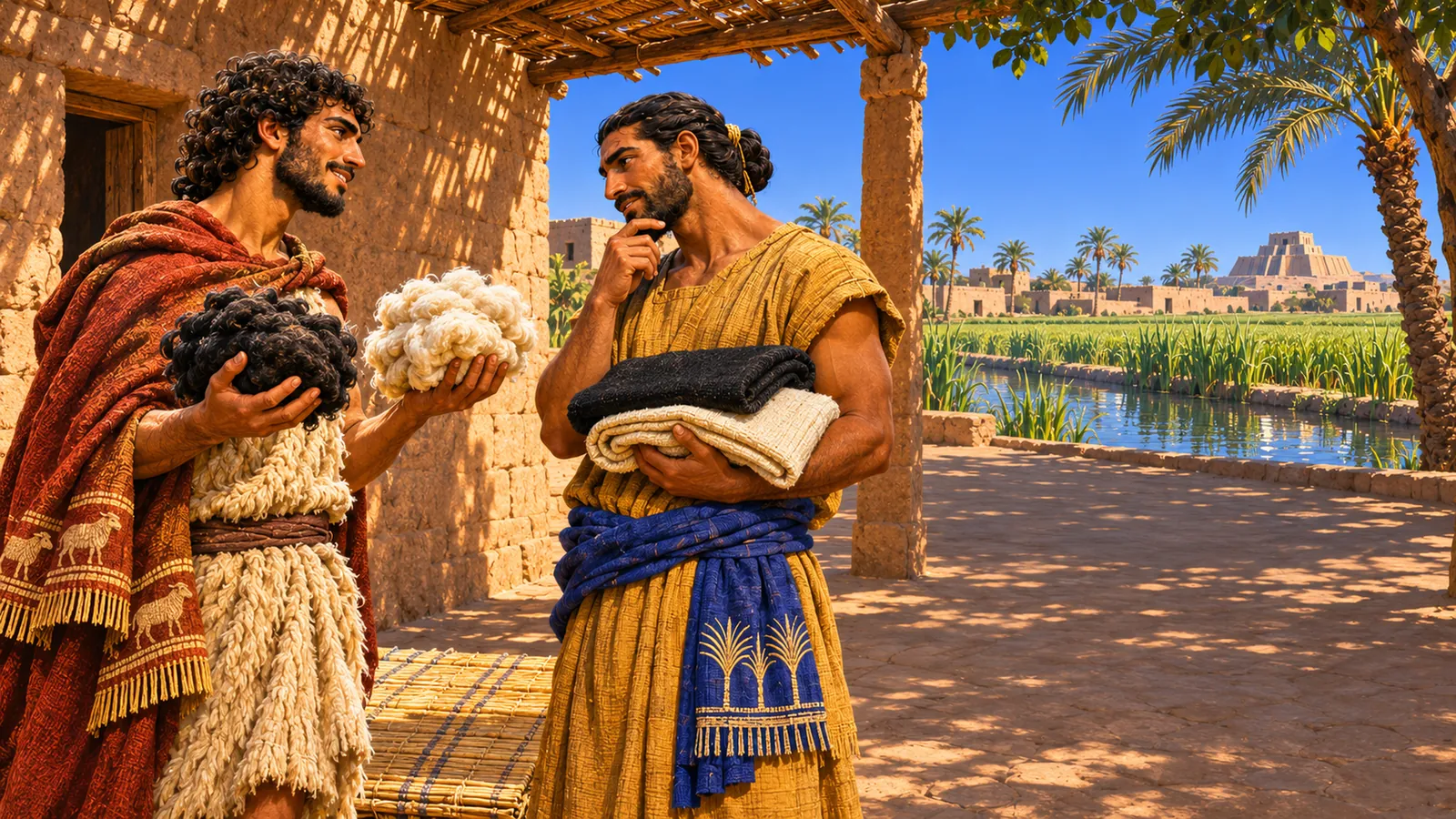
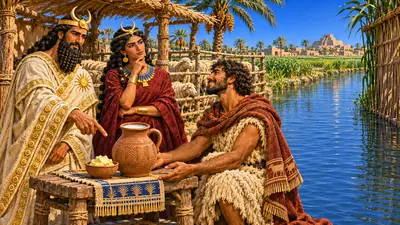
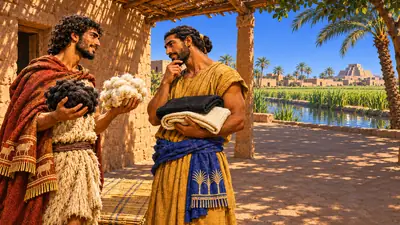
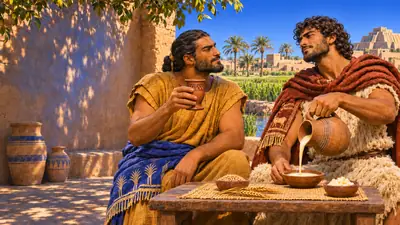
Dumuzi imagina qué daría si Enkimdu le ofreciera tela. Daría lana negra a cambio de tela negra y lana blanca a cambio de tela blanca.
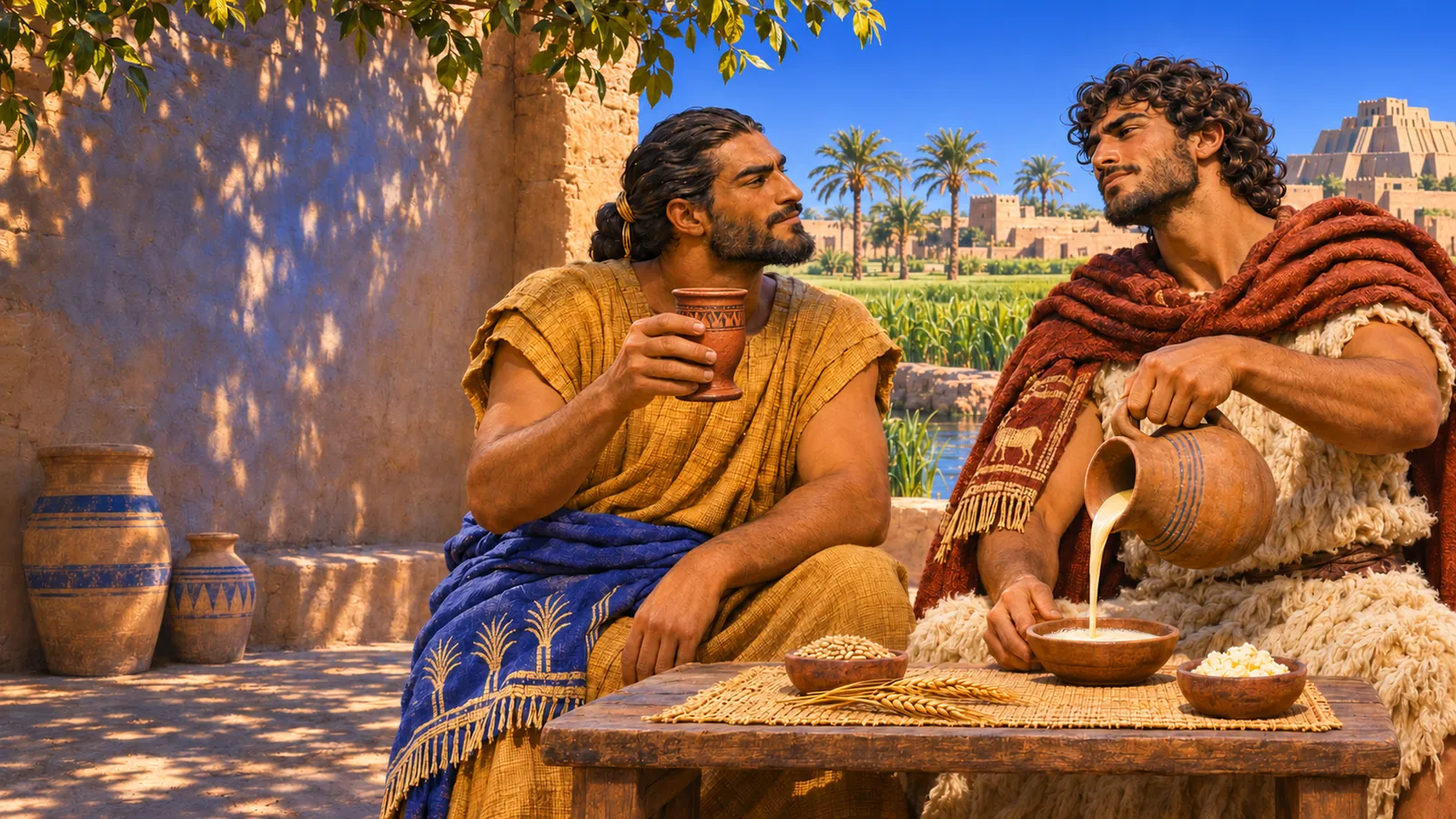
Dumuzi continúa su comparación con dos bebidas. Si el labrador le sirviera un poco de su mejor cerveza, él le serviría a cambio un poco de su leche amarilla.
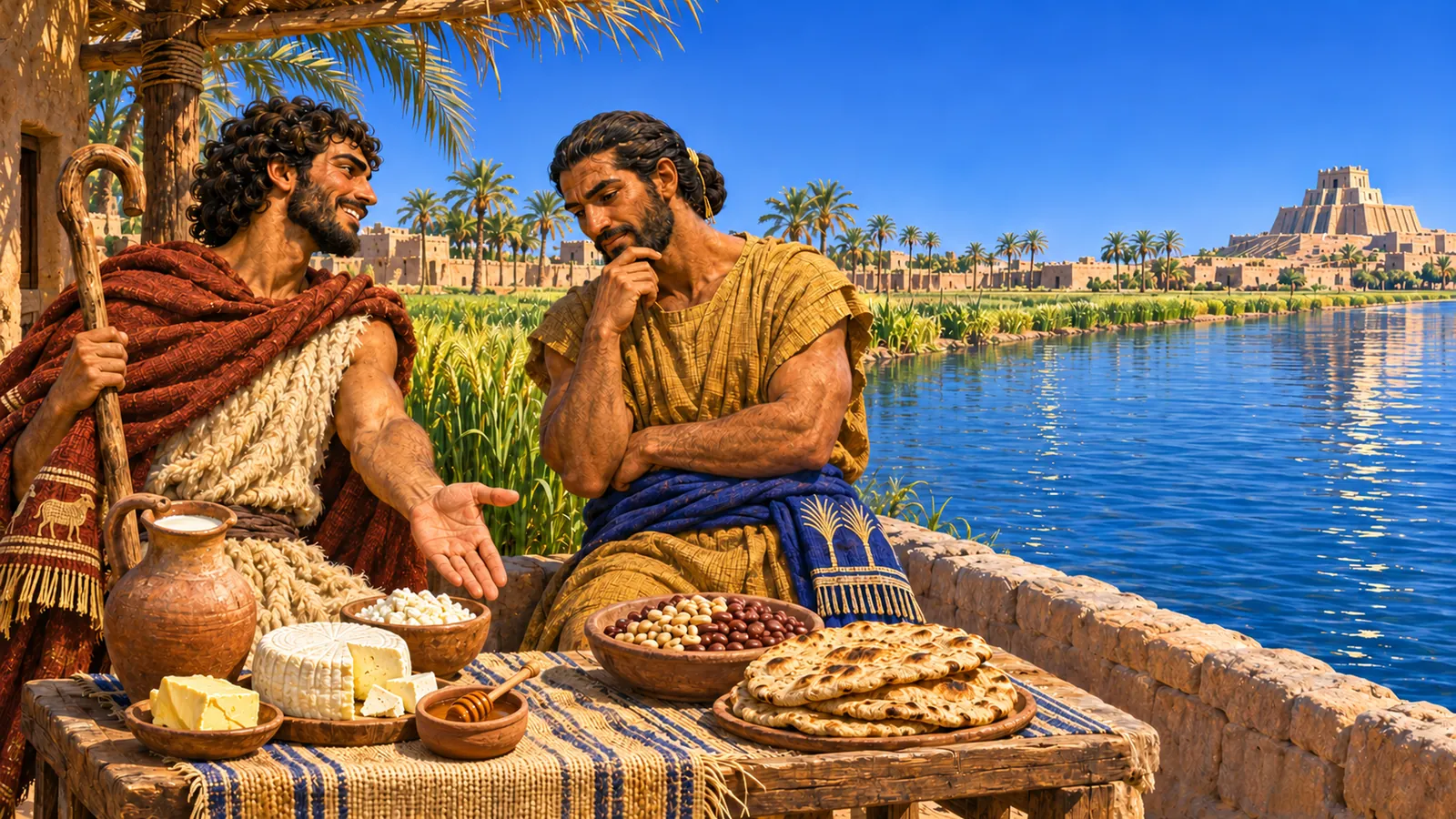
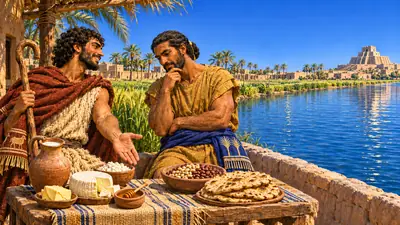
Jacobsen menciona otros productos que Dumuzi ofrece a cambio de los del labrador, entre ellos quesos pequeños por habas y cuajada fresca con miel por pan. Dumuzi calcula que aún le sobrarán mantequilla y leche.
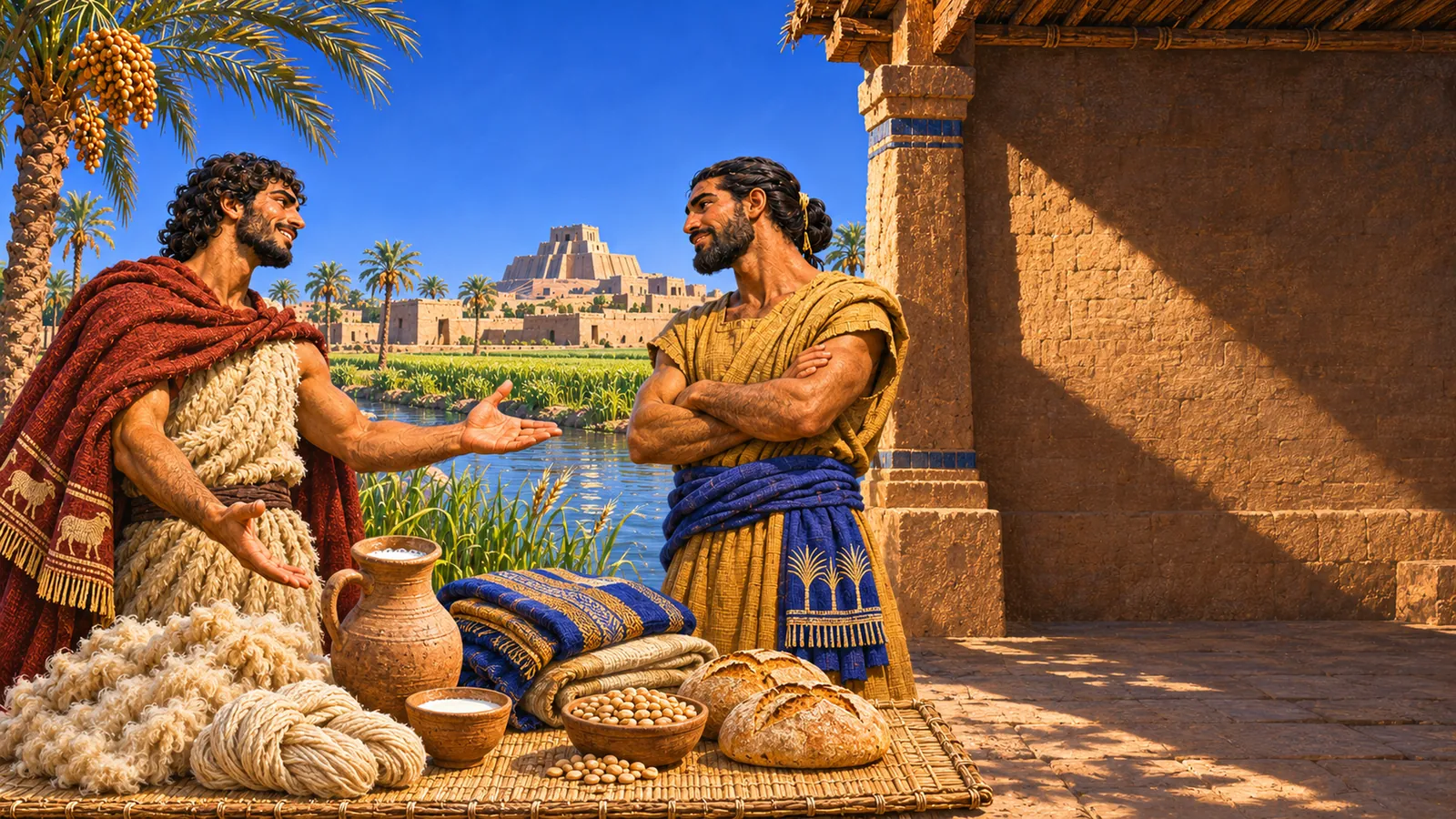
Jacobsen interpreta el intercambio imaginado como una competencia de regalos. Según su lectura, quien da más no debe nada y deja al otro en deuda con él.
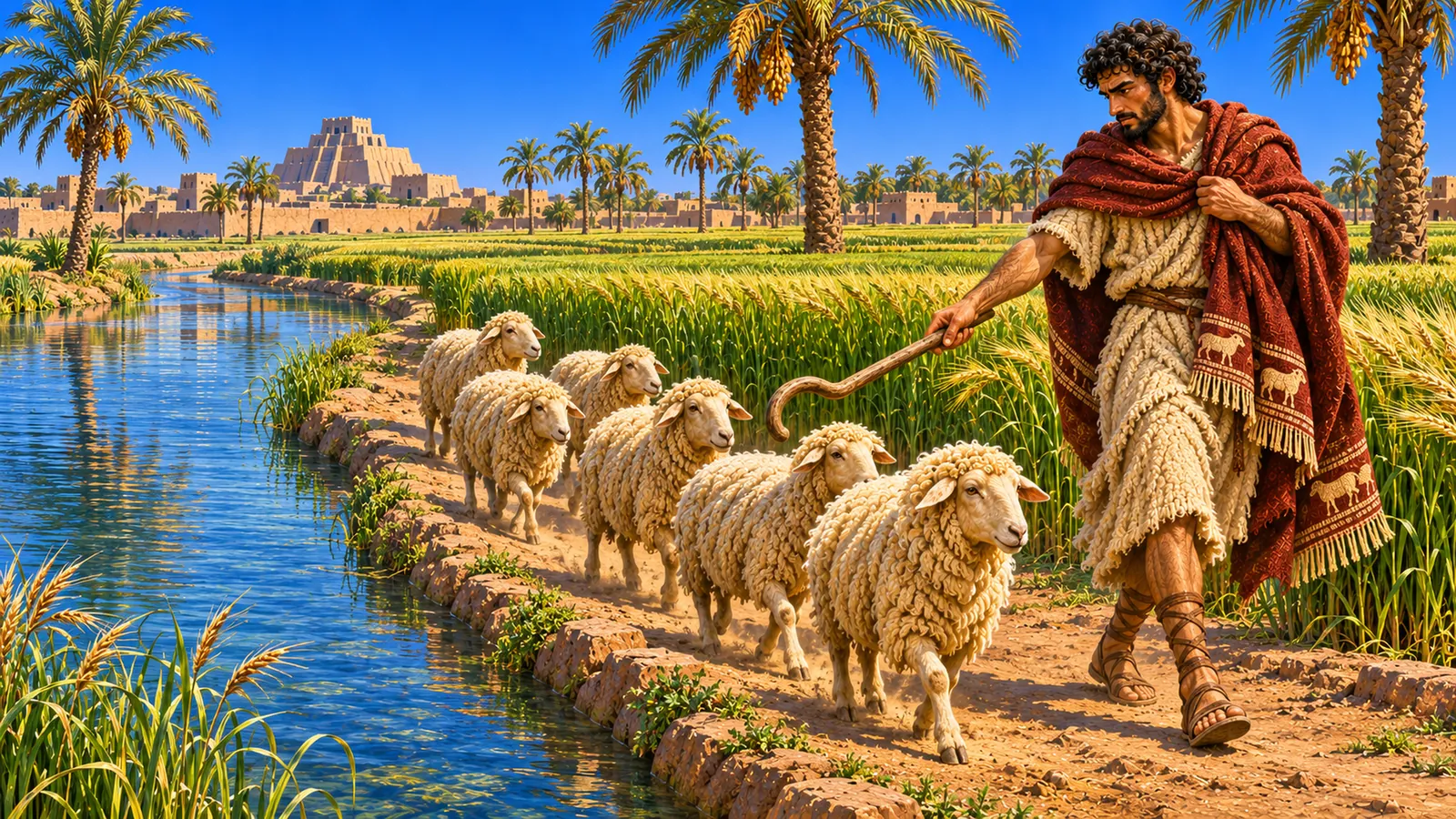
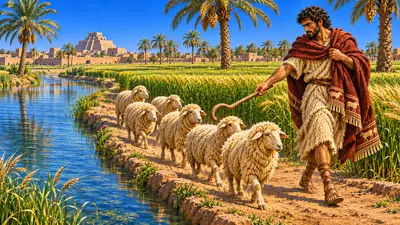
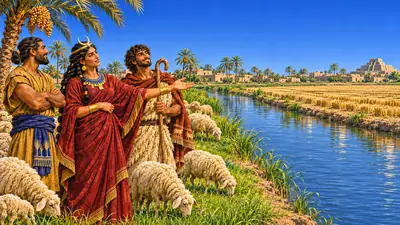
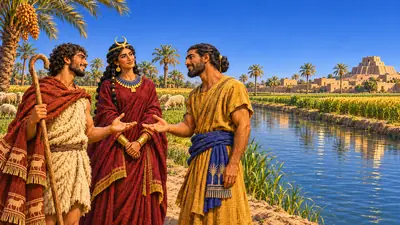
En el resumen de Jacobsen, el pastor gana confianza al comparar lo que cada uno puede ofrecer. Lleva sus ovejas a la orilla del río, en medio de los terrenos cultivados.
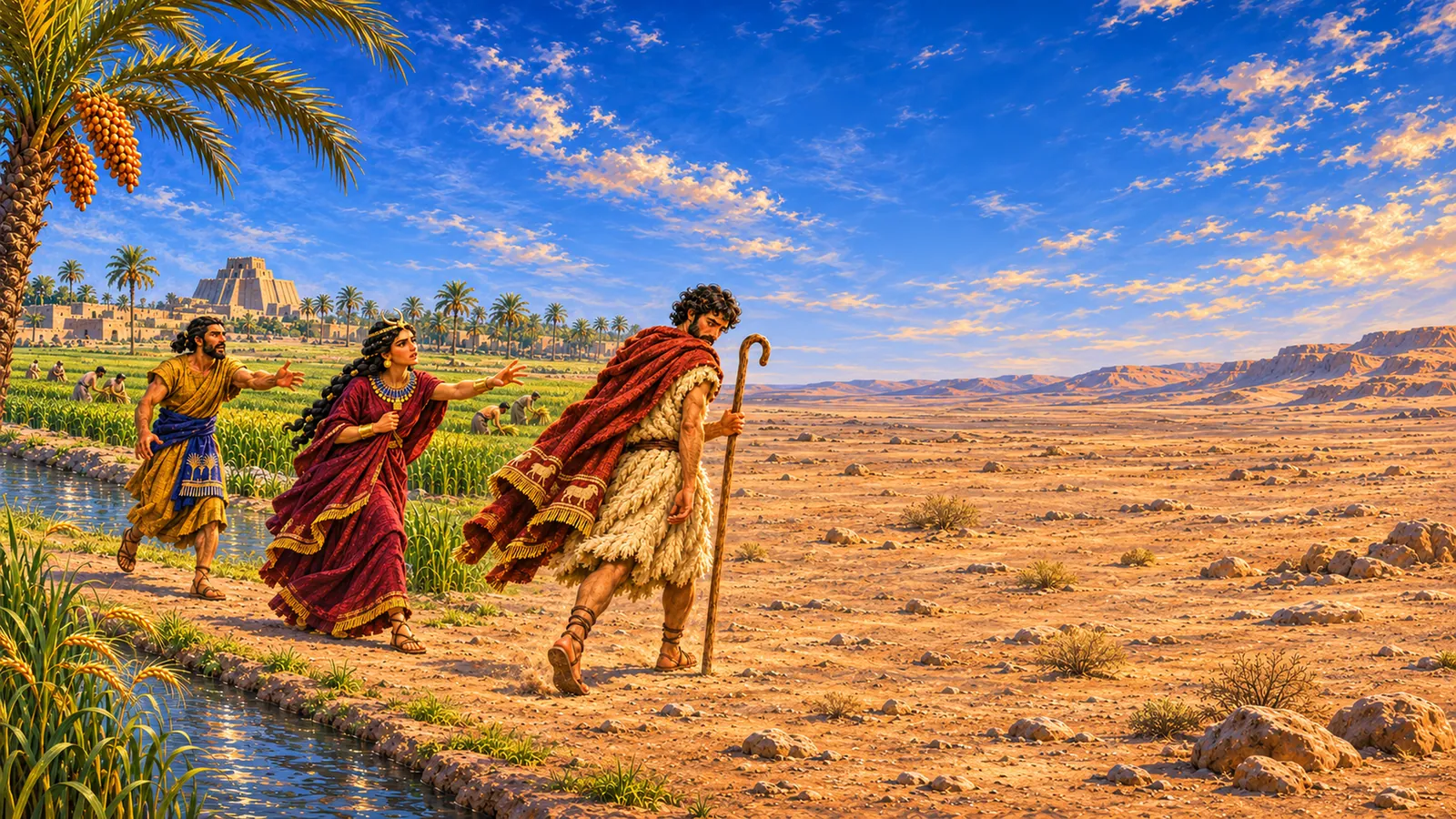
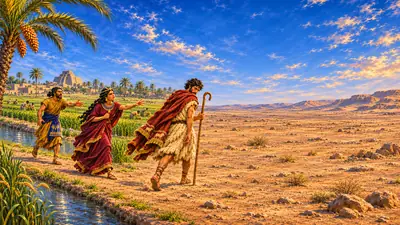
Jacobsen dice que Dumuzi ve a Enkimdu y a Inanna, y se retira avergonzado hacia el desierto. Los dos lo siguen, y Jacobsen atribuye con cautela a Inanna las palabras siguientes.
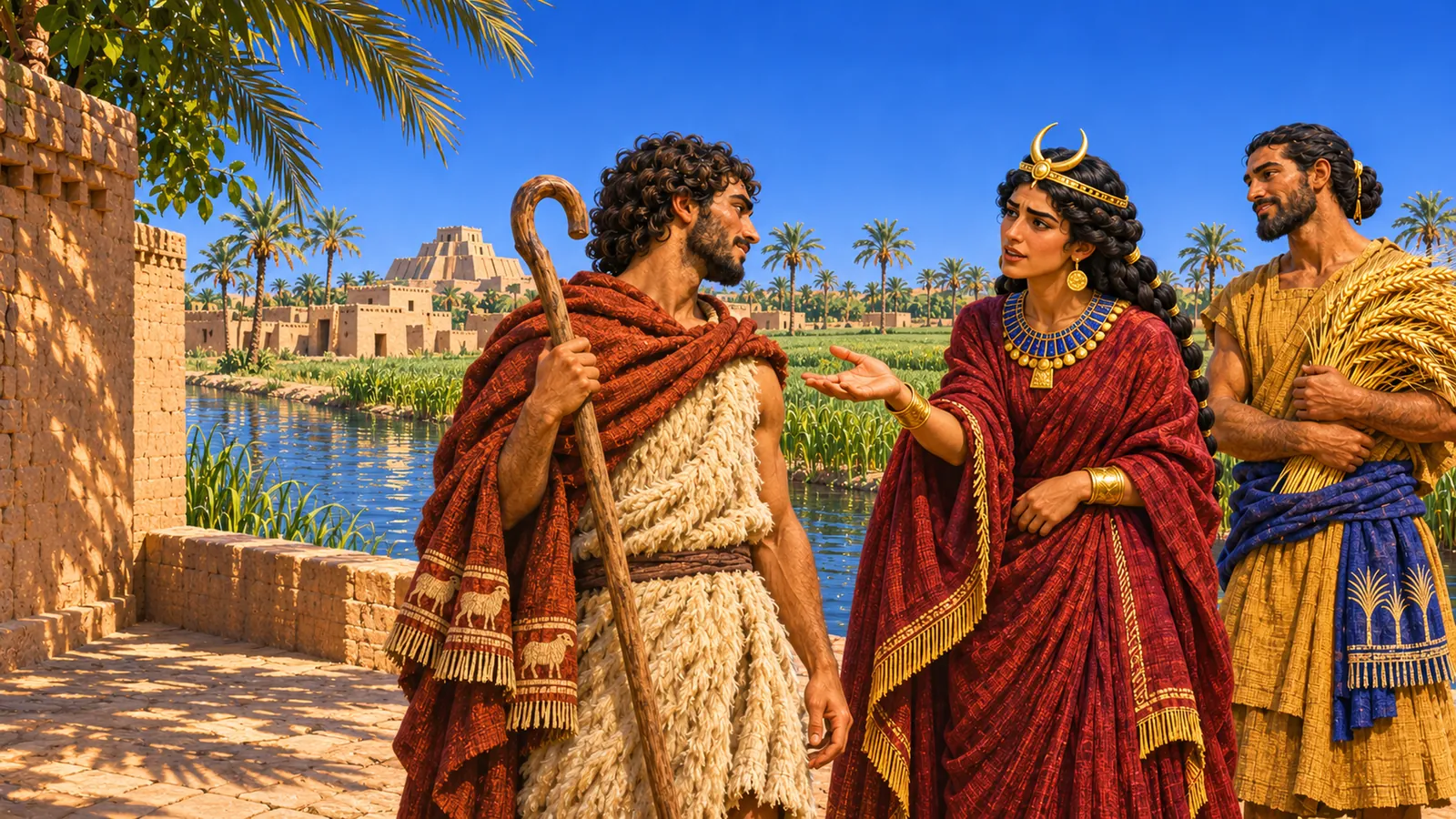
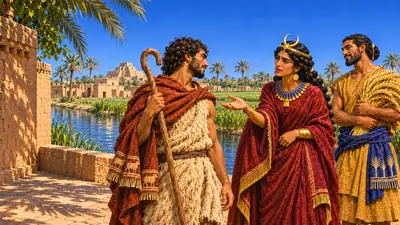
En los versos que Jacobsen atribuye con cautela a Inanna, la voz le pregunta al pastor por qué tienen que correr el uno contra el otro. El llamado al pastor se repite.
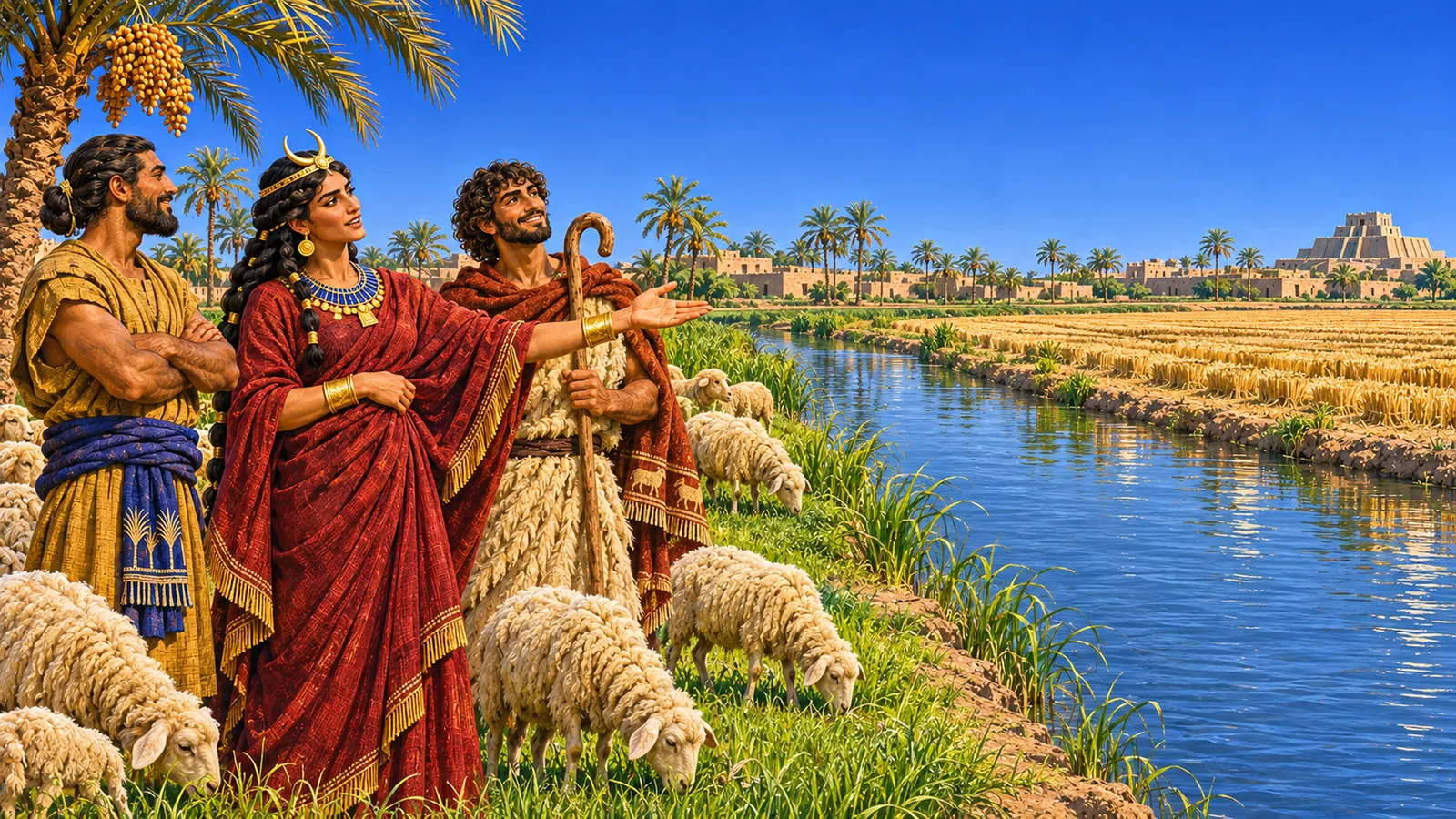
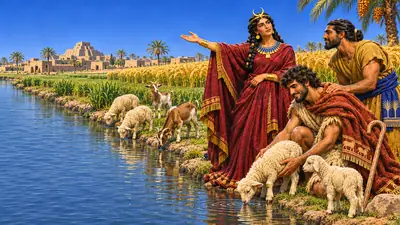
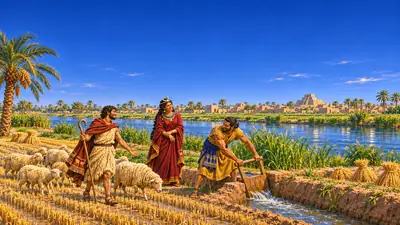
En las palabras que Jacobsen atribuye con cautela a Inanna, las ovejas pueden comer hierba en la orilla y pastar en el campo de rastrojo de quien habla. Jacobsen marca como inciertas las palabras para pastar y rastrojo.
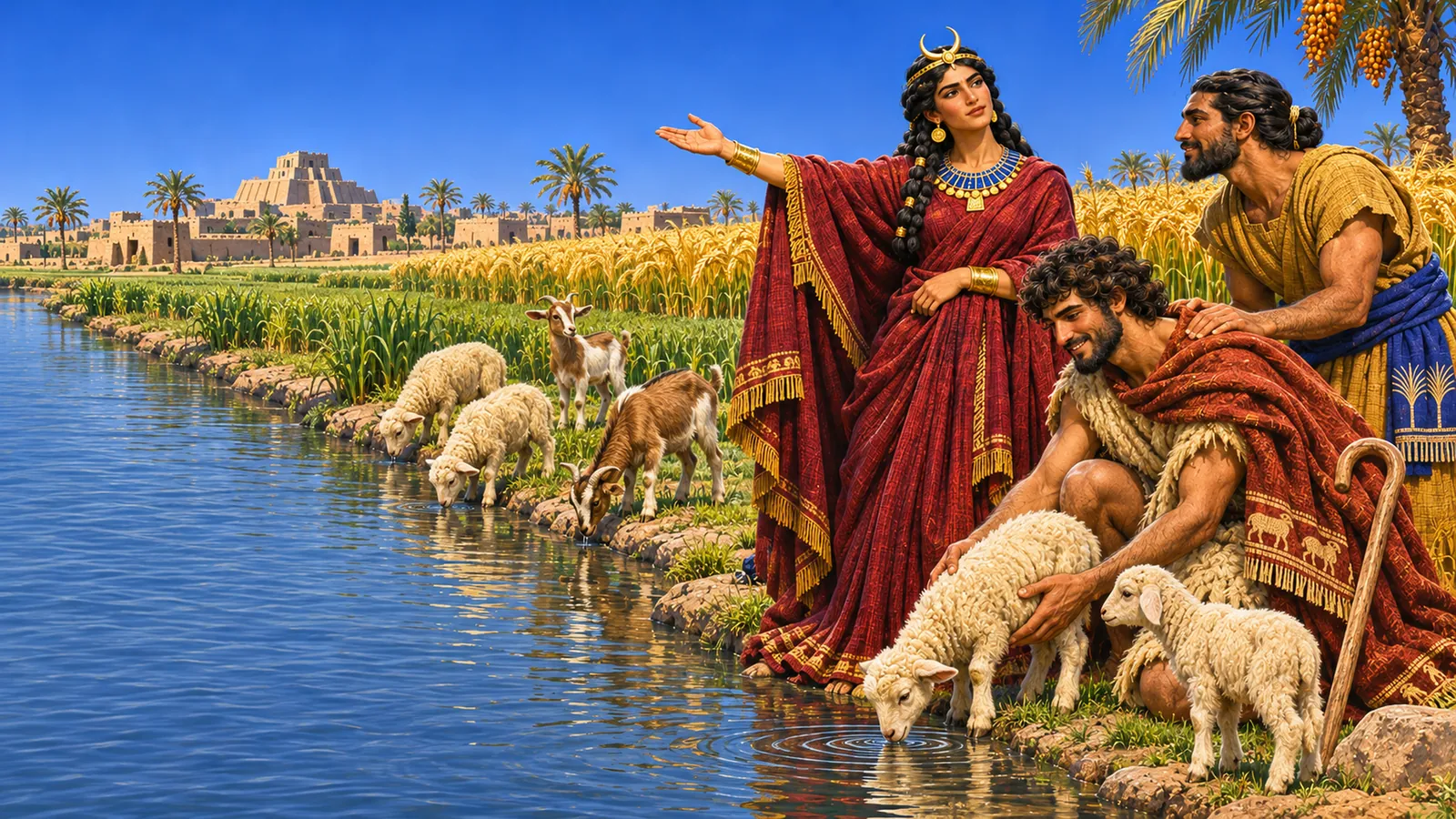
En las palabras que Jacobsen atribuye con cautela a Inanna, las ovejas pueden comer grano en los campos de Uruk. Los corderos y los cabritos pueden beber del canal de Adab de quien habla.
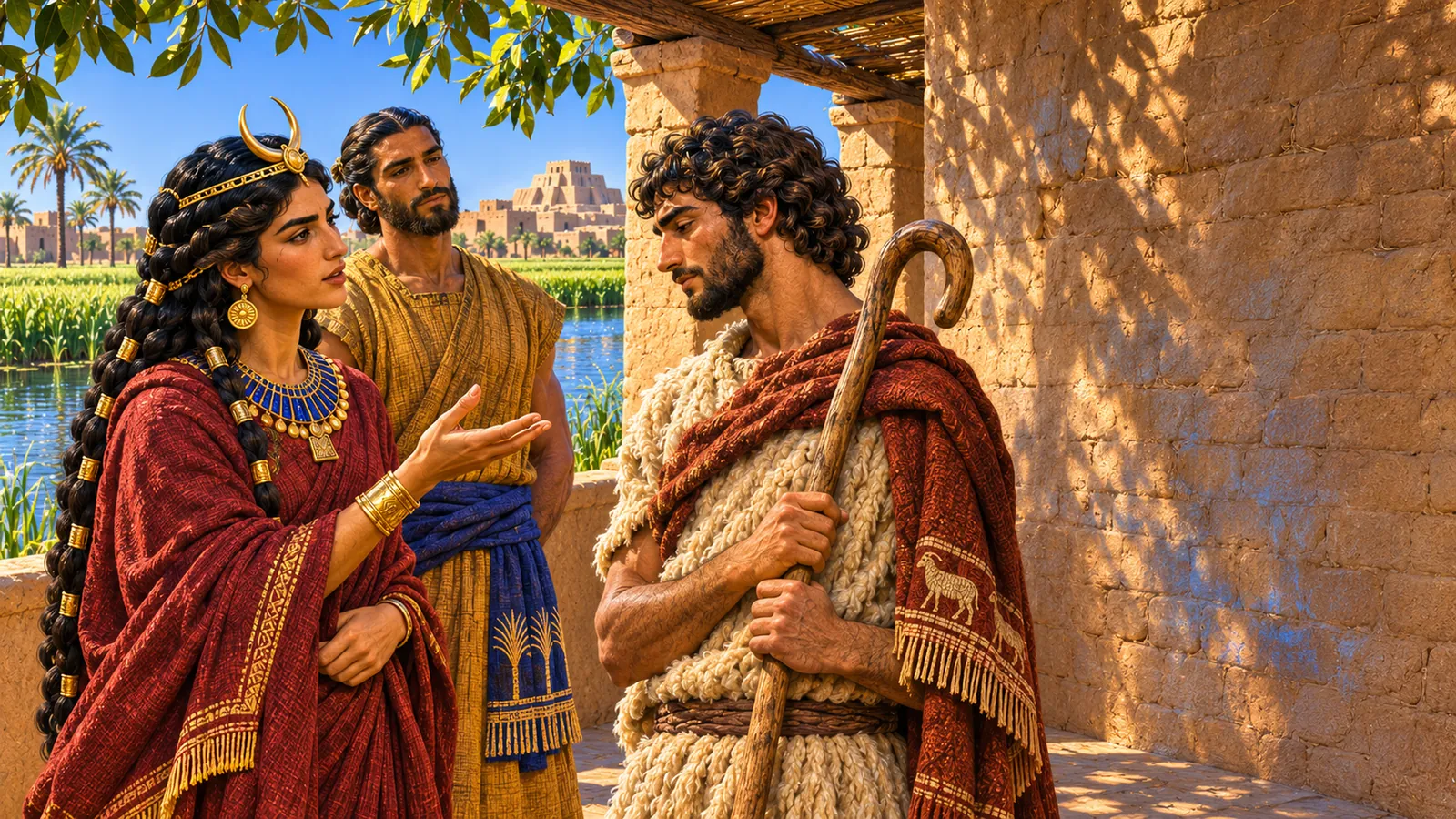
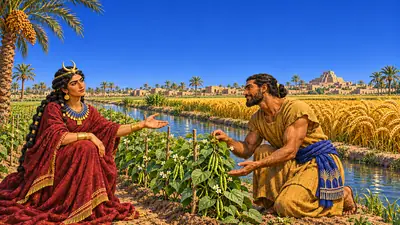
Jacobsen percibe una preferencia por el agricultor sin animadversión hacia el pastor. En versos que atribuye con cautela a Inanna, el pastor no puede convertirse en el agricultor Enkimdu, amigo de quien habla, solo para casarse con esa persona.
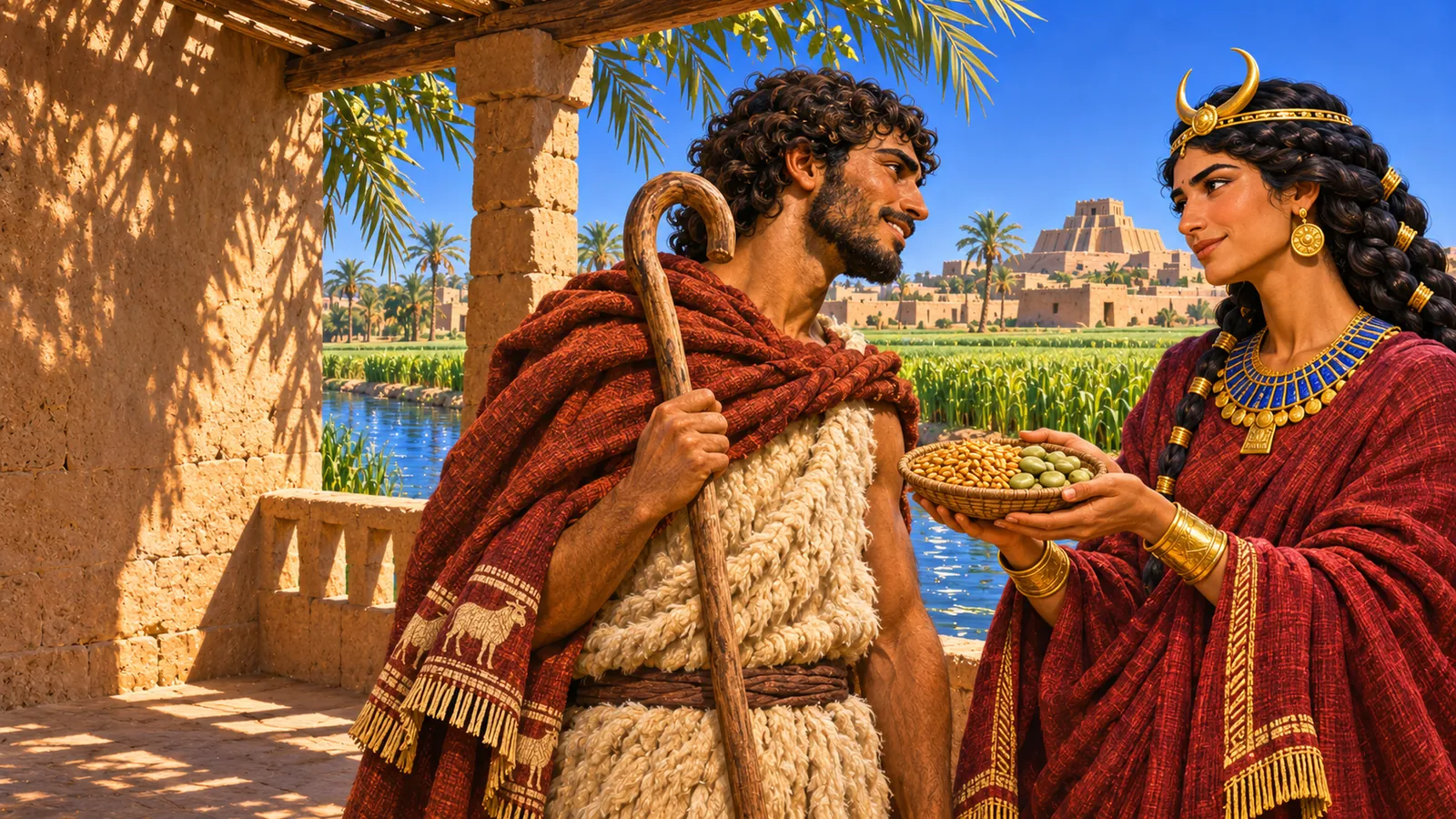
La voz, que Jacobsen atribuye con cautela a Inanna, promete traerle trigo y habas al pastor. El fragmento traducido por Jacobsen termina con este ofrecimiento.
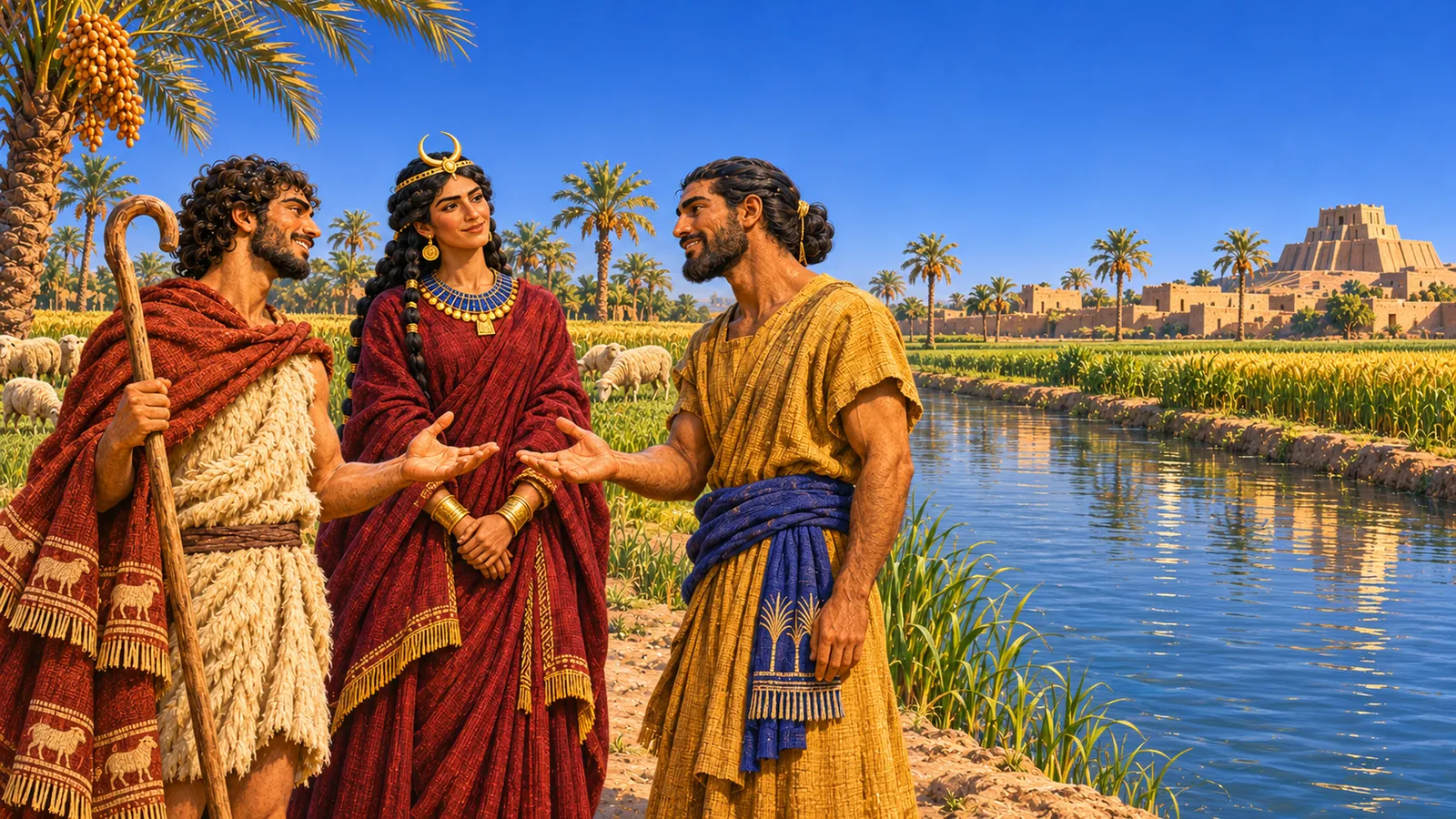
Jacobsen interpreta el final como una reconciliación y considera que Enkimdu es quien se casa con Inanna. Esta es su interpretación después de los últimos versos traducidos.
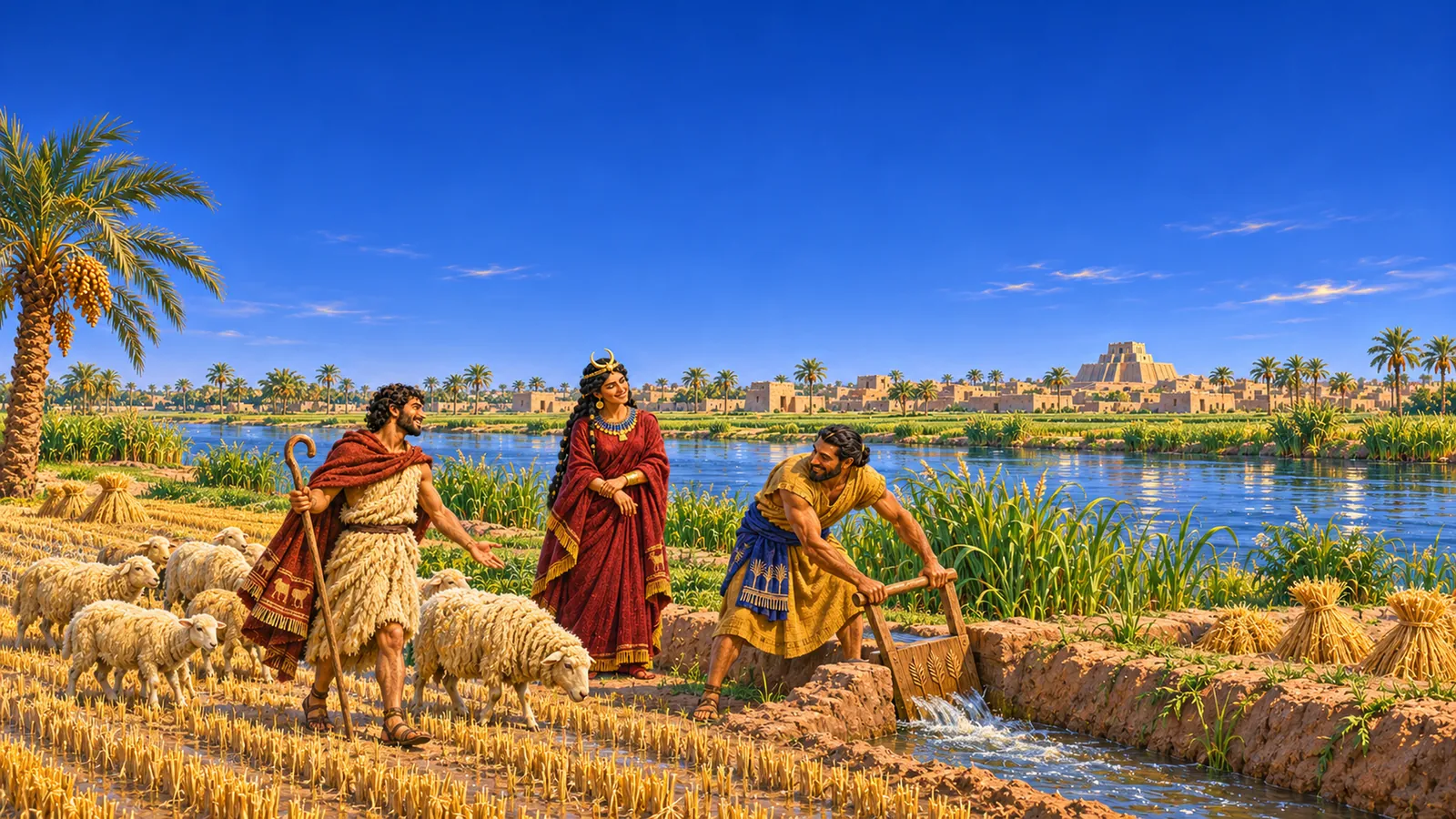
CAMPO Y PASTO
Jacobsen concluye que el agricultor y el pastor son igualmente necesarios y que sus productos se complementan. Dice que, pese a la rivalidad, el pastor puede usar los campos de rastrojo y los canales del agricultor, y que los dos deberían llevarse bien.
Fin del capítulo 1
Todas las páginas
Fuentes
This reading follows the printed subsection on the shepherd and the farmer in Thorkild Jacobsen’s The Cosmos as a State, The Intellectual Adventure of Ancient Man, University of Chicago Press, 1946, first Phoenix edition 1977, pp. 166–168. The volume credits H. A. Groenewegen Frankfort for the English poetic form (preface p. vi and p. 184, note 3). Chapter note 28 on p. 184 cites Chiera, SRT, no. 3 as the textual source.
Ediciones consultadas
- University of Chicago, The Intellectual Adventure of Ancient Man
- University of Chicago, printed pages 166–168, The Wooing of Inanna
- University of Bern catalogue record, Dumuzi et Enkimdu, 4.08.33
Notas sobre este relato
Page 1, opening account. The first paragraph under the heading on p. 166 identifies Enkimdu as the farmer, Dumuzi as the shepherd, and both as suitors of Inanna. The introduction’s identification of Utu as her guardian is Jacobsen’s contextual prose. The verse identifies him as her brother and introduces him as a warrior and hero.
Pages 2–3, Utu. The first verse selection on p. 166 gives Utu’s preference, his question to Inanna, his praise of butter, milk and the other products, and his recommendation of Dumuzi by name. The English verses are paraphrased; the volume credits H. A. Groenewegen Frankfort with the English poetic form of its ancient quotations (preface p. vi and p. 184, note 3).
Pages 4–5, Inanna. The reply on p. 166 repeats her refusal of the shepherd, his tufted cloth and his finest wool, before naming the cultivation of beans and grain in her preference for a farmer. These lines express her preference during the exchange.
Page 6, the connecting account. Jacobsen describes Dumuzi’s despondency and wounded pride in the prose that crosses pp. 166–167. He connects that reaction to Dumuzi’s comparison of what each man produces.
Page 7, Dumuzi’s repeated question. The third verse selection on p. 167 gives a repeated challenge and calls Enkimdu the man of the dike and canal. The printed dots in the repeated question signal wording absent from this presentation. The reading leaves those words unsupplied.
Pages 8–9, imagined exchanges. The translation distinguishes the farmer’s cloth from the shepherd’s wool in two matching colors. The comparison proceeds to the farmer’s prime beer and the shepherd’s yellow milk. The pairs are imagined offers in Dumuzi’s speech.
Page 10, the remaining pairs. He says Dumuzi expects to have butter and milk left over.
Pages 11–12 · p. 167, Jacobsen’s explanatory and connecting prose. Jacobsen interprets the exchange as a contest of gifts, where the larger giver incurs no debt and leaves the other in debt. He then describes Dumuzi recovering confidence as he compares the goods and driving his sheep to the riverbank amid cultivated ground.
Pages 13–14 · p. 167, connecting prose and fourth verse selection. Jacobsen says Dumuzi sees Enkimdu and Inanna, withdraws toward the desert in embarrassment and is followed by both. He tentatively assigns the following speech to Inanna. The first lines question why the speaker must race with the shepherd, addressing the shepherd repeatedly.
Pages 15–16 · p. 167, fourth verse selection. The sheep are offered grass on the bank and access to a field. Jacobsen prints question marks after “pasture” and “stubble.” The following lines offer grain from the fields of Uruk and water at the speaker’s Adab canal for lambs and young goats. The two names are retained as printed. The unoccupied views are symbolic landscapes.
Page 17 · p. 167, connecting prose and fifth verse selection. The speech says that the shepherd cannot turn into the farmer Enkimdu simply to become the speaker’s husband. Enkimdu is called a friend. The words “(the kind of man)” are printed as a parenthetical supply. The speaker attribution remains Jacobsen’s tentative reading.
Page 18 · p. 167, end of fifth verse selection. The offered provisions close the excerpted ancient verse in this subsection.
Pages 19–20 · p. 168, Jacobsen’s closing interpretation. Jacobsen reads the outcome as a reconciliation and interprets the farmer as the one Inanna marries. He then argues that farmer and shepherd are equally useful, their produce complements each other and rivalry can coexist with the shepherd’s access to stubble and canal water. He closes by saying the two should get along. Both pages speak in Jacobsen’s name. The following discussion opens a different subject.
Los versos antiguos de cada página
- Page 1: Jacobsen, “The Wooing of Inanna,” 1977 Phoenix ed., p. 166, opening prose
- Page 2: Jacobsen, “The Wooing of Inanna,” 1977 Phoenix ed., p. 166, verse block 1 opening
- Page 3: Jacobsen, “The Wooing of Inanna,” 1977 Phoenix ed., p. 166, verse block 1 close
- Page 4: Jacobsen, “The Wooing of Inanna,” 1977 Phoenix ed., p. 166, verse block 2 opening
- Page 5: Jacobsen, “The Wooing of Inanna,” 1977 Phoenix ed., p. 166, verse block 2 close
- Page 6: Jacobsen, “The Wooing of Inanna,” 1977 Phoenix ed., p. 166–167, connecting prose
- Page 7: Jacobsen, “The Wooing of Inanna,” 1977 Phoenix ed., p. 167, verse block 3 opening
- Page 8: Jacobsen, “The Wooing of Inanna,” 1977 Phoenix ed., p. 167, verse block 3, fabric exchanges
- Page 9: Jacobsen, “The Wooing of Inanna,” 1977 Phoenix ed., p. 167, verse block 3 close
- Page 10: Jacobsen, “The Wooing of Inanna,” 1977 Phoenix ed., p. 167, prose summary after verse block 3
- Page 11: Jacobsen 1977, The Intellectual Adventure of Ancient Man, ch. V, The Wooing of Inanna, p. 167, Jacobsen’s explanatory prose on gift exchange
- Page 12: Jacobsen 1977, The Intellectual Adventure of Ancient Man, ch. V, The Wooing of Inanna, p. 167, Jacobsen’s connecting prose, first movement
- Page 13: Jacobsen 1977, The Intellectual Adventure of Ancient Man, ch. V, The Wooing of Inanna, p. 167, Jacobsen’s connecting prose, encounter and retreat
- Page 14: Jacobsen 1977, The Intellectual Adventure of Ancient Man, ch. V, The Wooing of Inanna, p. 167, fourth translated verse selection, opening
- Page 15: Jacobsen 1977, The Intellectual Adventure of Ancient Man, ch. V, The Wooing of Inanna, p. 167, fourth translated verse selection, grass and stubble
- Page 16: Jacobsen 1977, The Intellectual Adventure of Ancient Man, ch. V, The Wooing of Inanna, p. 167, fourth translated verse selection, grain and water
- Page 17: Jacobsen 1977, The Intellectual Adventure of Ancient Man, ch. V, The Wooing of Inanna, p. 167, Jacobsen’s connecting prose and fifth translated verse selection, opening
- Page 18: Jacobsen 1977, The Intellectual Adventure of Ancient Man, ch. V, The Wooing of Inanna, p. 167, fifth translated verse selection, closing offer
- Page 19: Jacobsen 1977, The Intellectual Adventure of Ancient Man, ch. V, The Wooing of Inanna, p. 168, Jacobsen’s closing interpretive prose, opening
- Page 20: Jacobsen 1977, The Intellectual Adventure of Ancient Man, ch. V, The Wooing of Inanna, p. 168, Jacobsen’s closing interpretive prose, end of first paragraph
Ilustraciones hechas por IL Archive con herramientas de IA; el texto se basa en las fuentes antiguas (véanse las fuentes al final de cada capítulo).