Teti y el barquero del Canal Sinuoso Capítulo 1
Llamar al barquero
En una recitación de la pirámide de Teti, el ojo de Horus salta y la voz busca cruzar hacia el lado oriental del cielo. Llama al barquero y dice que ha encontrado su asiento vacío en la popa de la barca del Sol.
FuentesPase las páginas con las flechas, el teclado o deslizando el dedo.
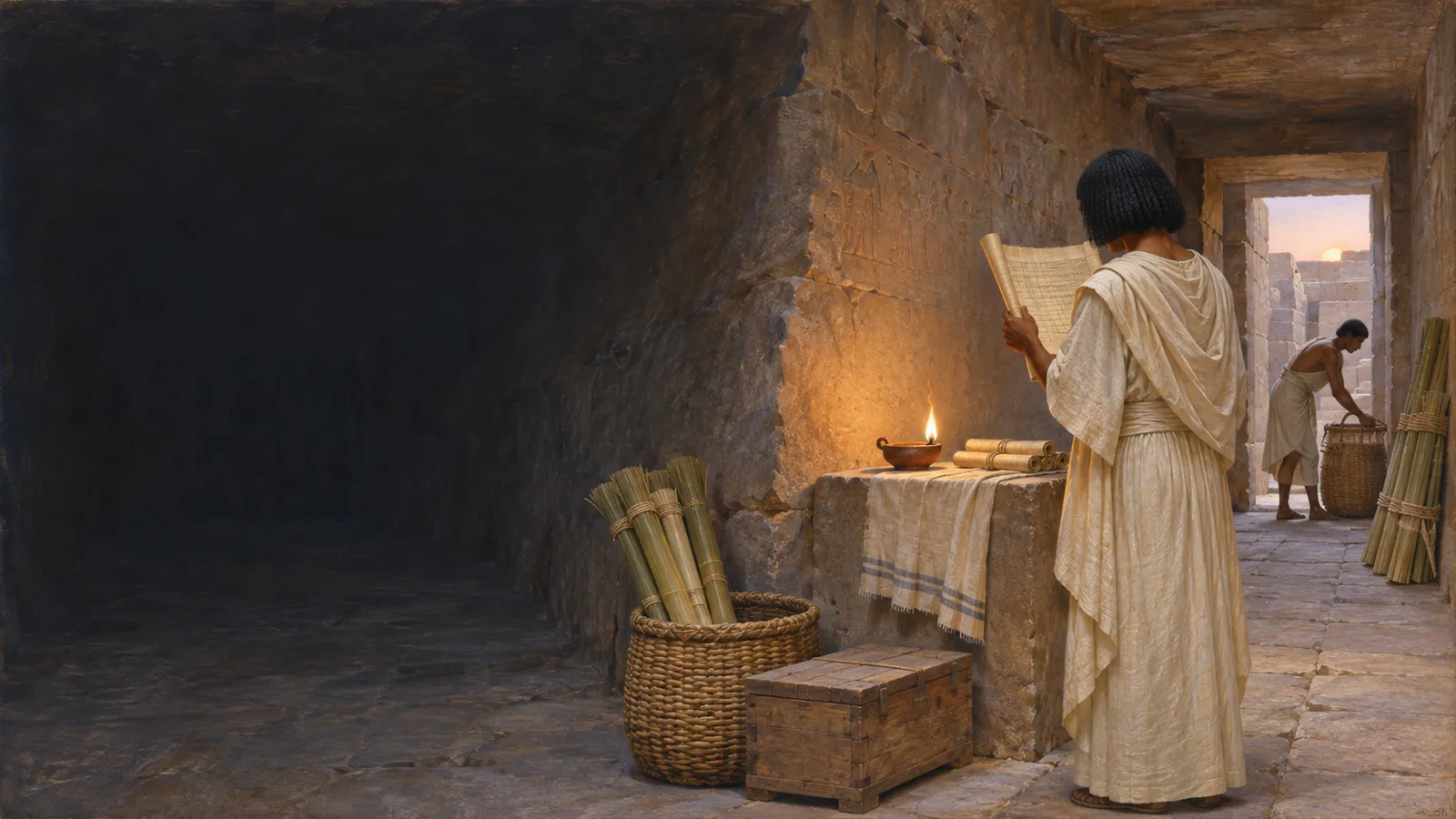
LLAMAR AL BARQUERO
James Allen traduce esta recitación de la pirámide de Teti. Está grabada en el paso de la cámara funeraria a la antecámara, entre las fórmulas para salir de la Duat.
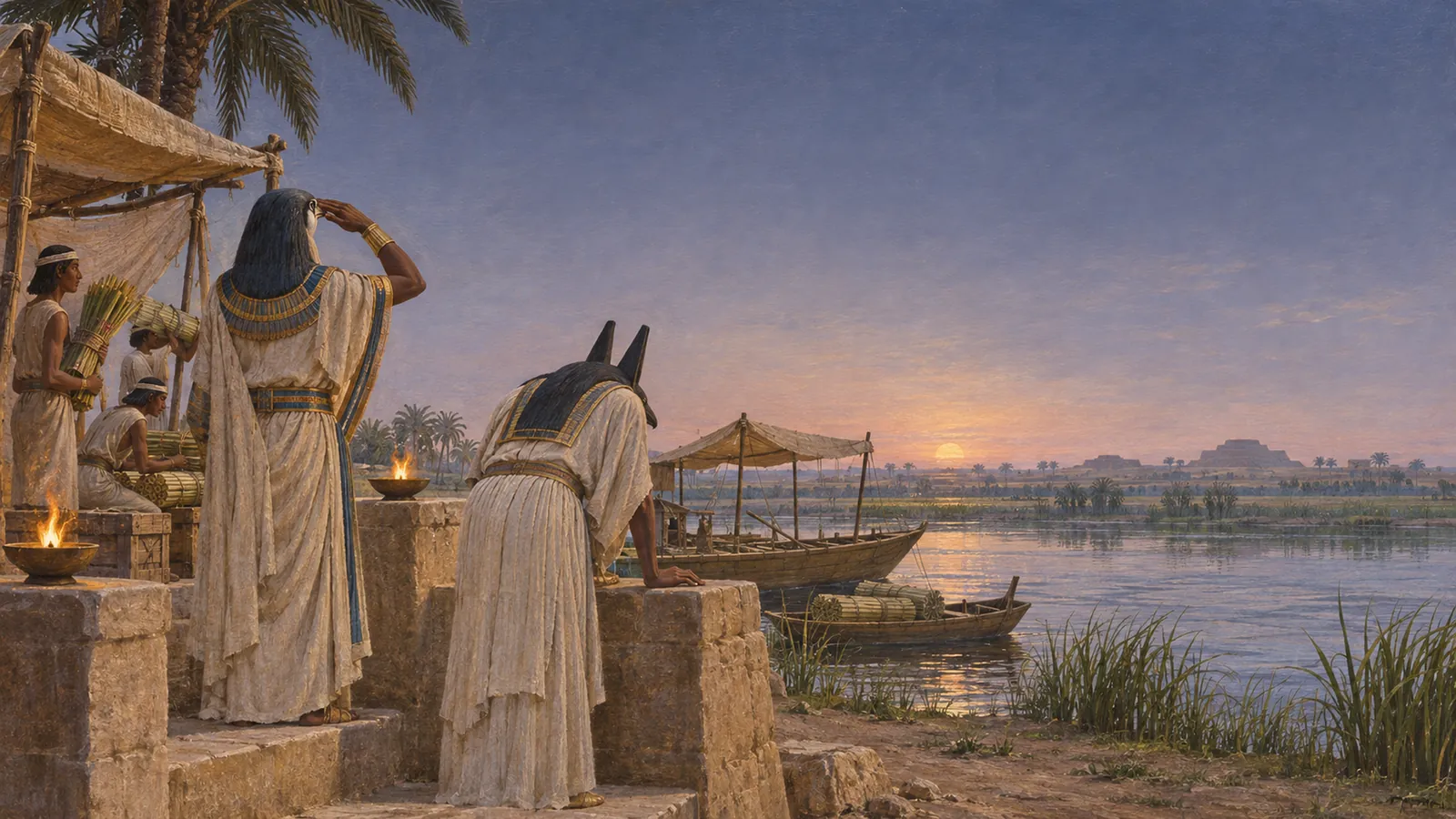
Al comienzo de la recitación, Horus clama por su ojo y Seth clama por sus testículos.
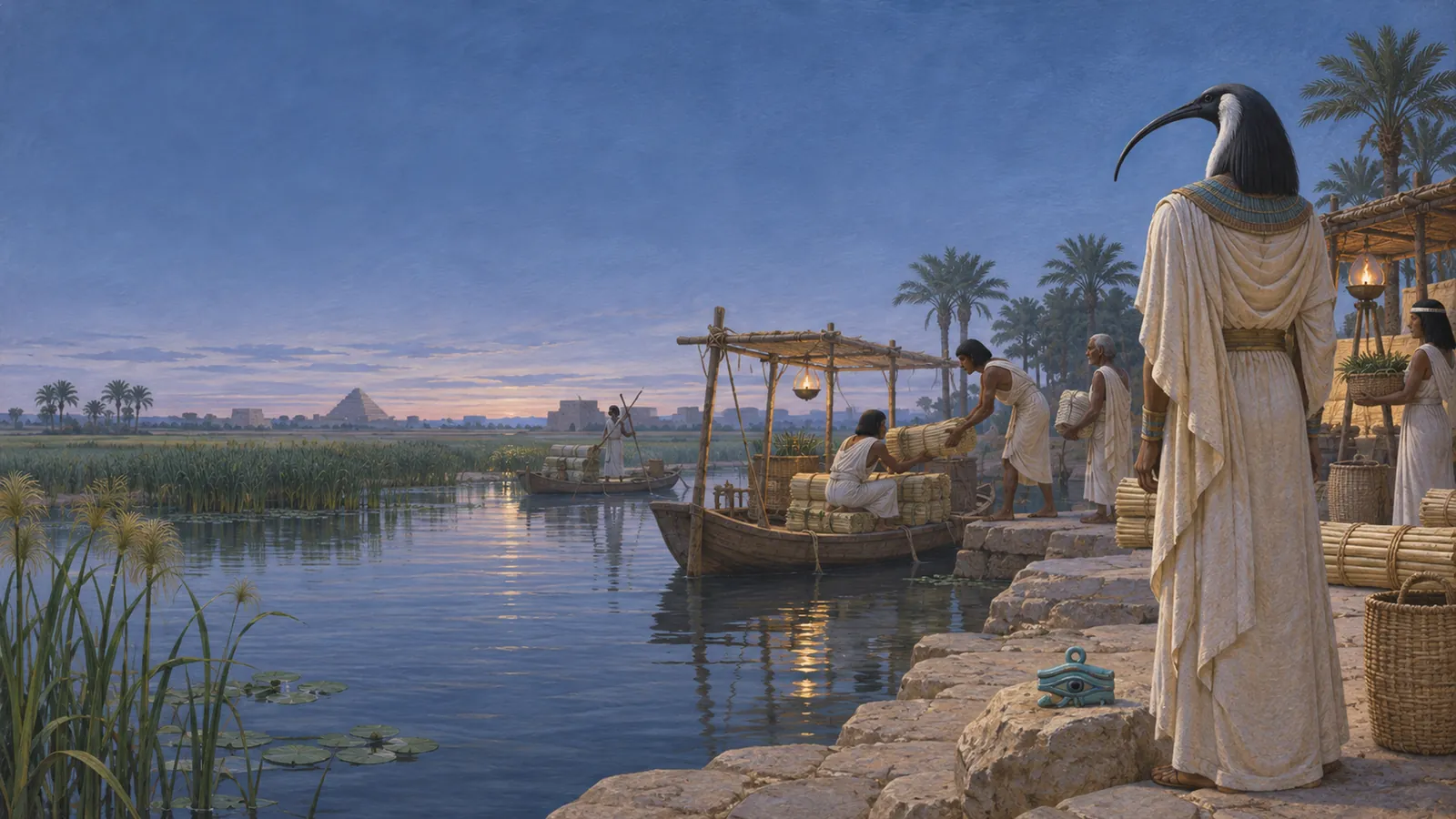
El ojo de Horus salta para escapar de Seth. La recitación relata una llegada al otro lado del Canal Sinuoso y dice que se había visto a Tot en aquella orilla.
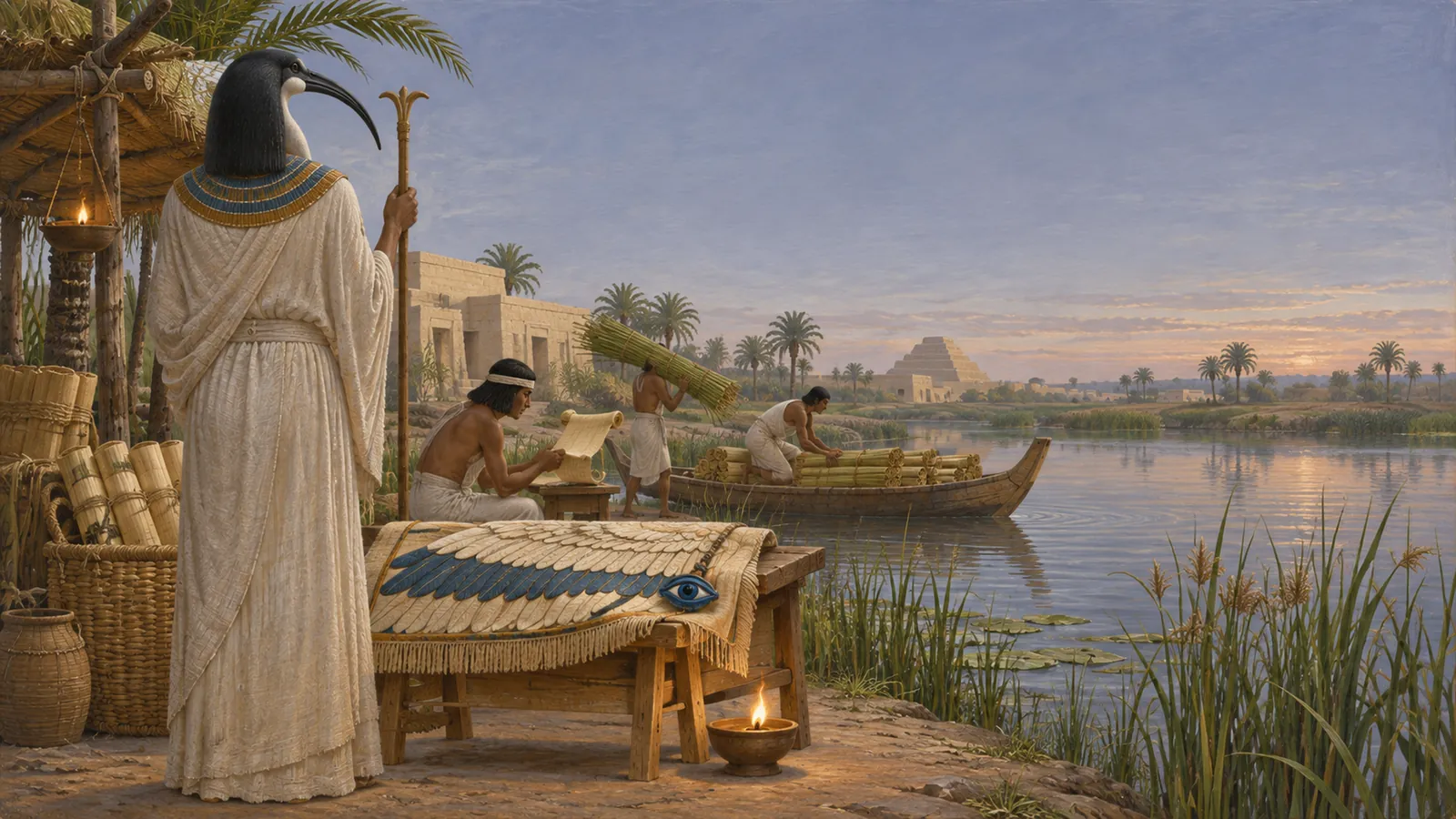
La fórmula dice que el ojo de Horus salta de nuevo al otro lado del canal. Luego describe una llegada al ala de Tot.
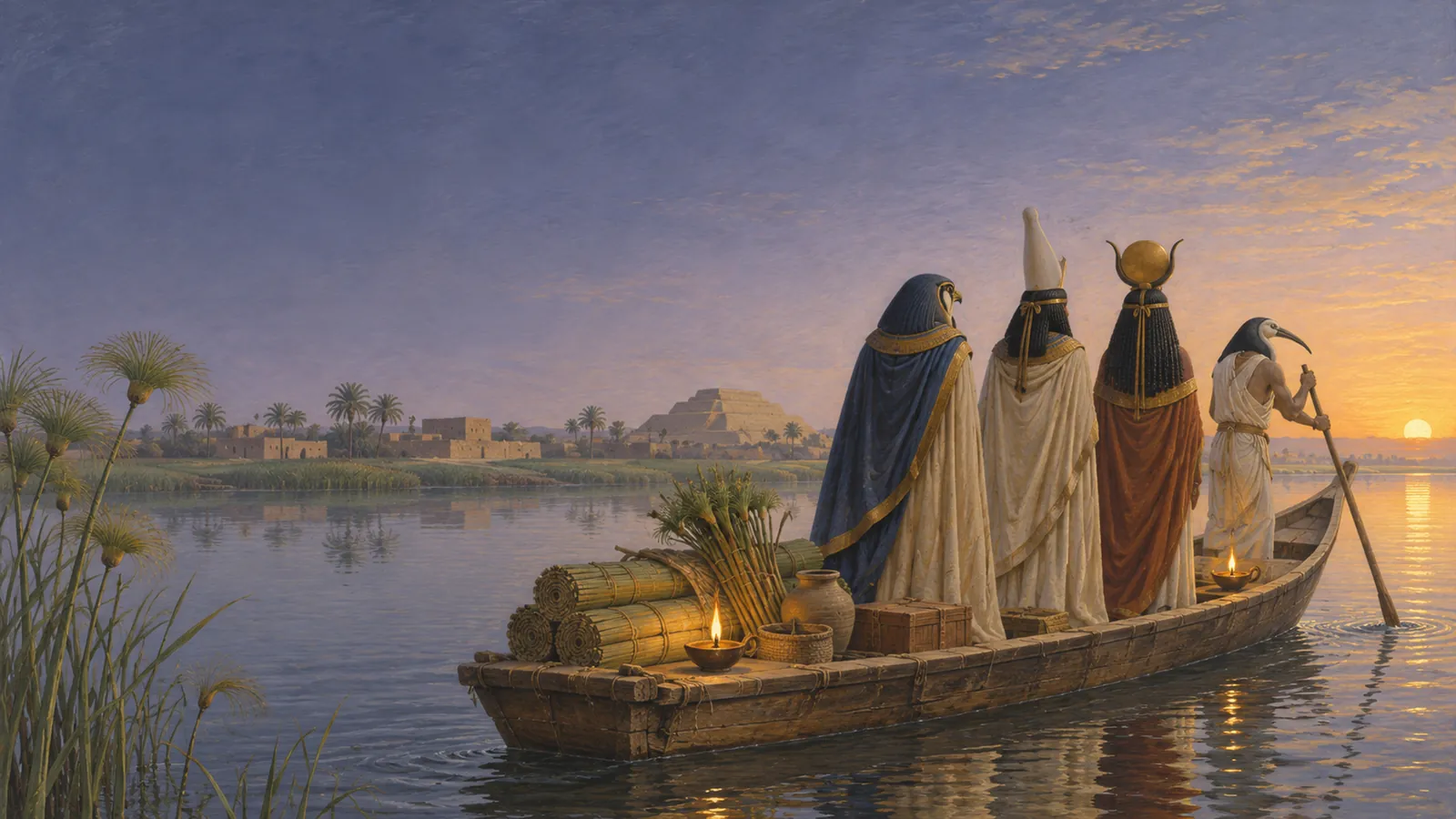
La voz se dirige a los dioses que cruzan sobre el ala de Tot hacia el lado oriental del cielo. Cruzan para disputar con Seth por el ojo de Horus.
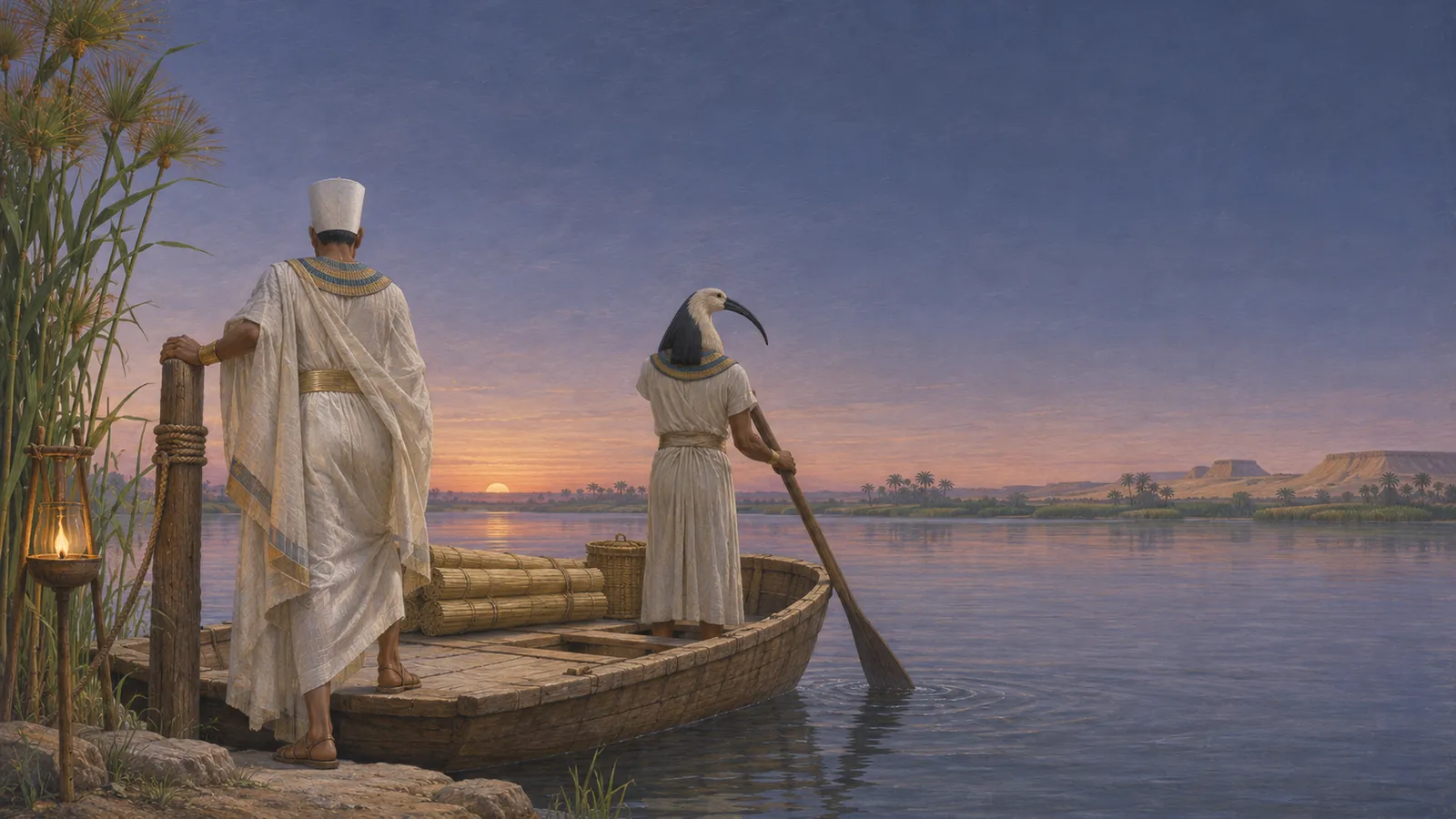
La voz dice que también cruzará el Canal Sinuoso sobre el ala de Tot hacia el lado oriental del cielo. Dice que se enfrentará a Seth en la disputa por ese mismo ojo.
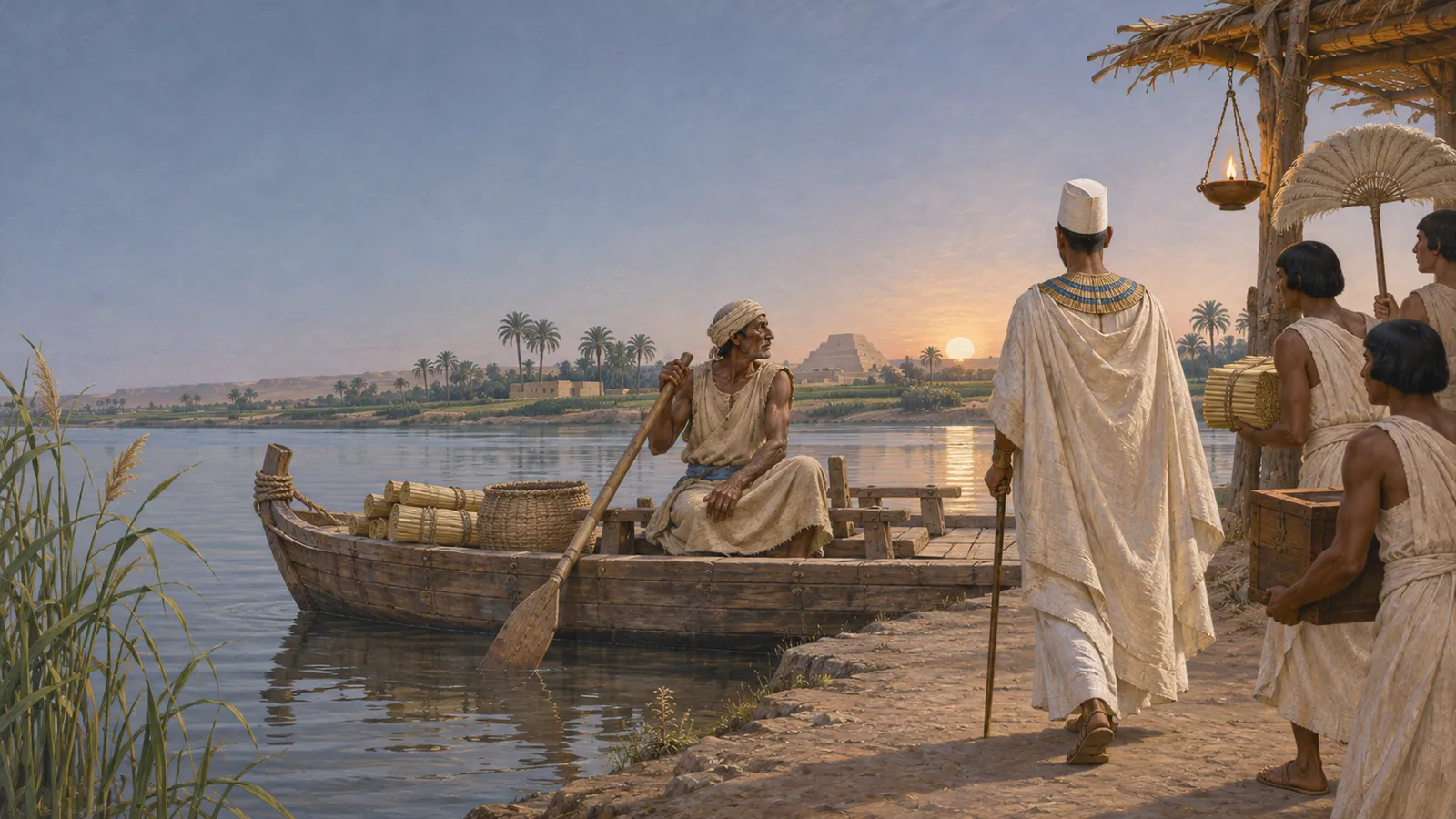
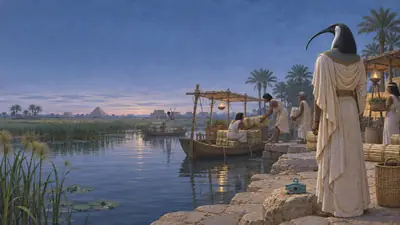
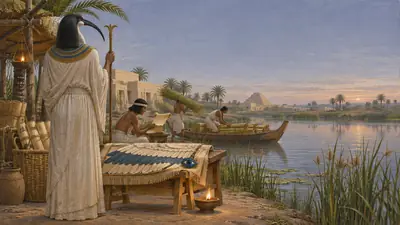
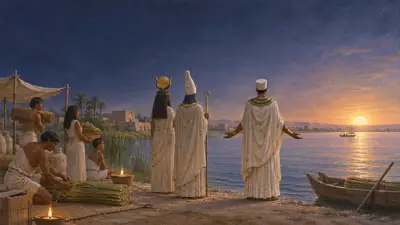
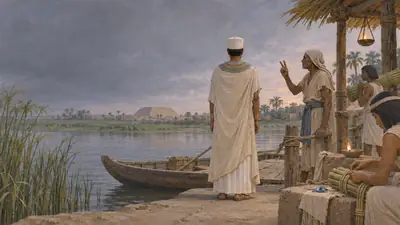
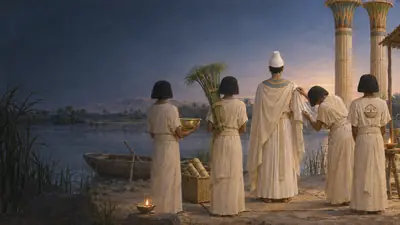
La voz saluda al barquero llamado El que ve detrás de sí. También lo llama remero de Nut y barquero del Canal Sinuoso, y le desea un despertar en paz.
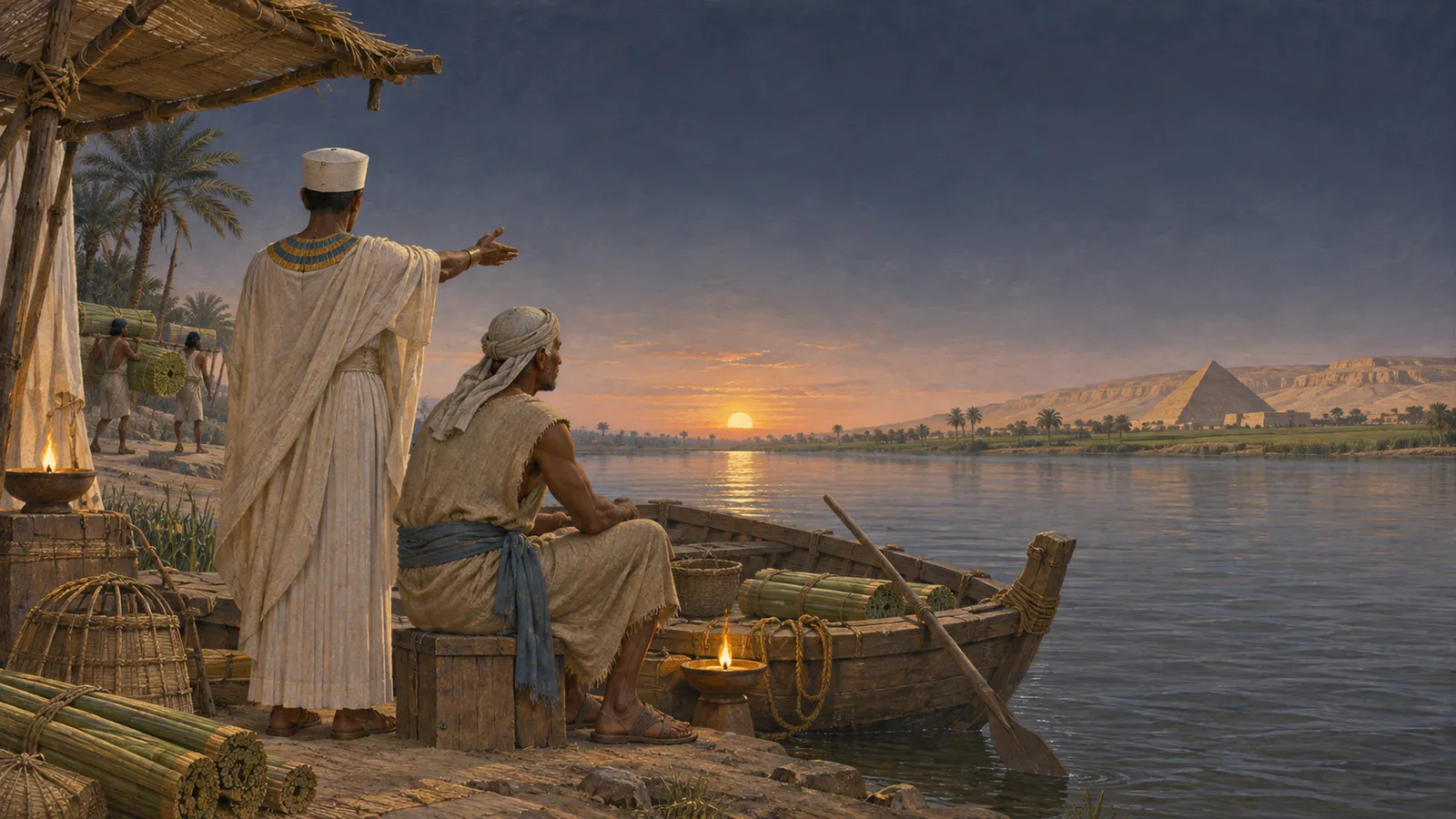
La voz pide al barquero que le diga su nombre al Sol y que anuncie su llegada.
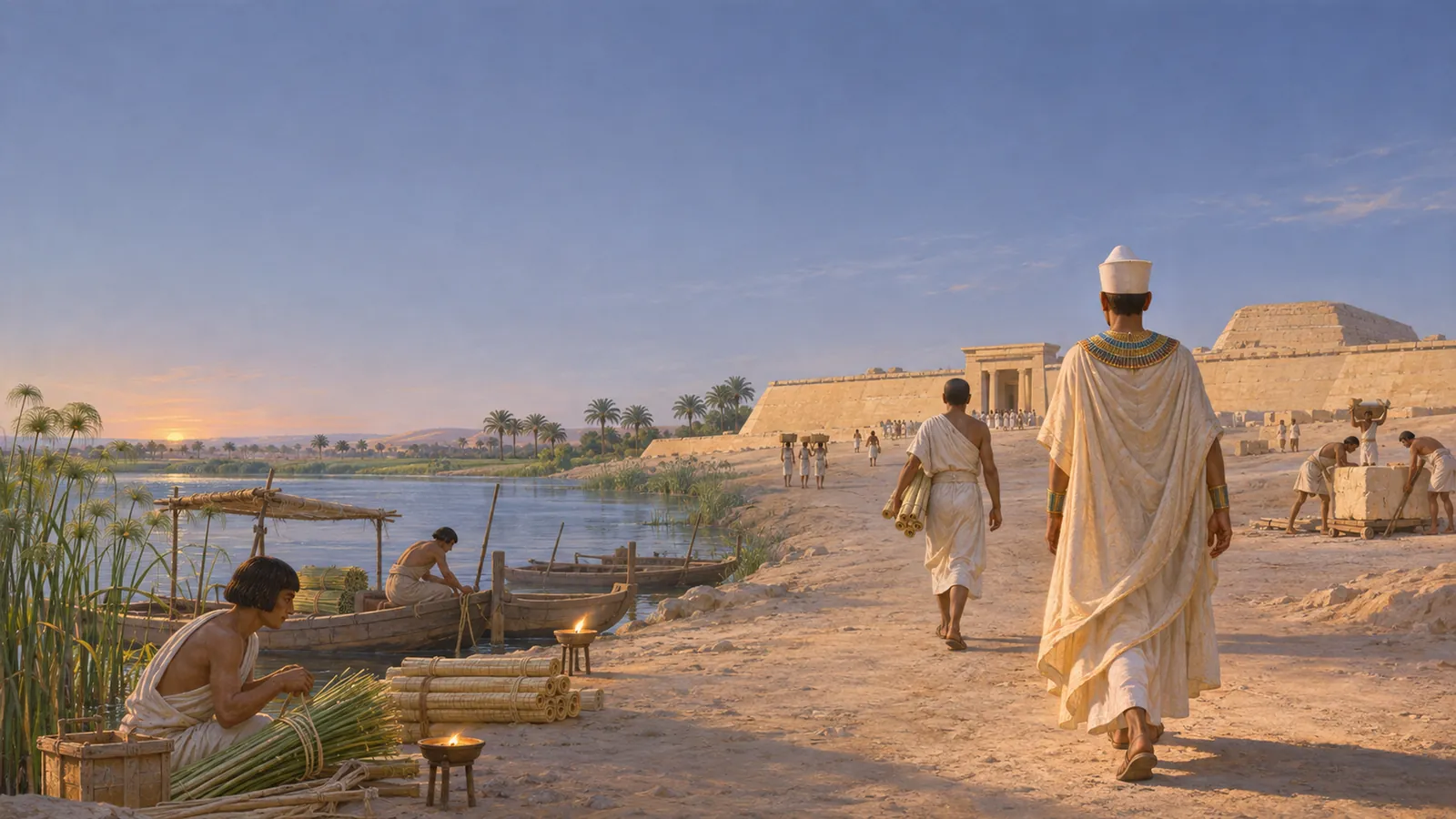
La voz dice que se dirige al palacio de los señores de los kas.
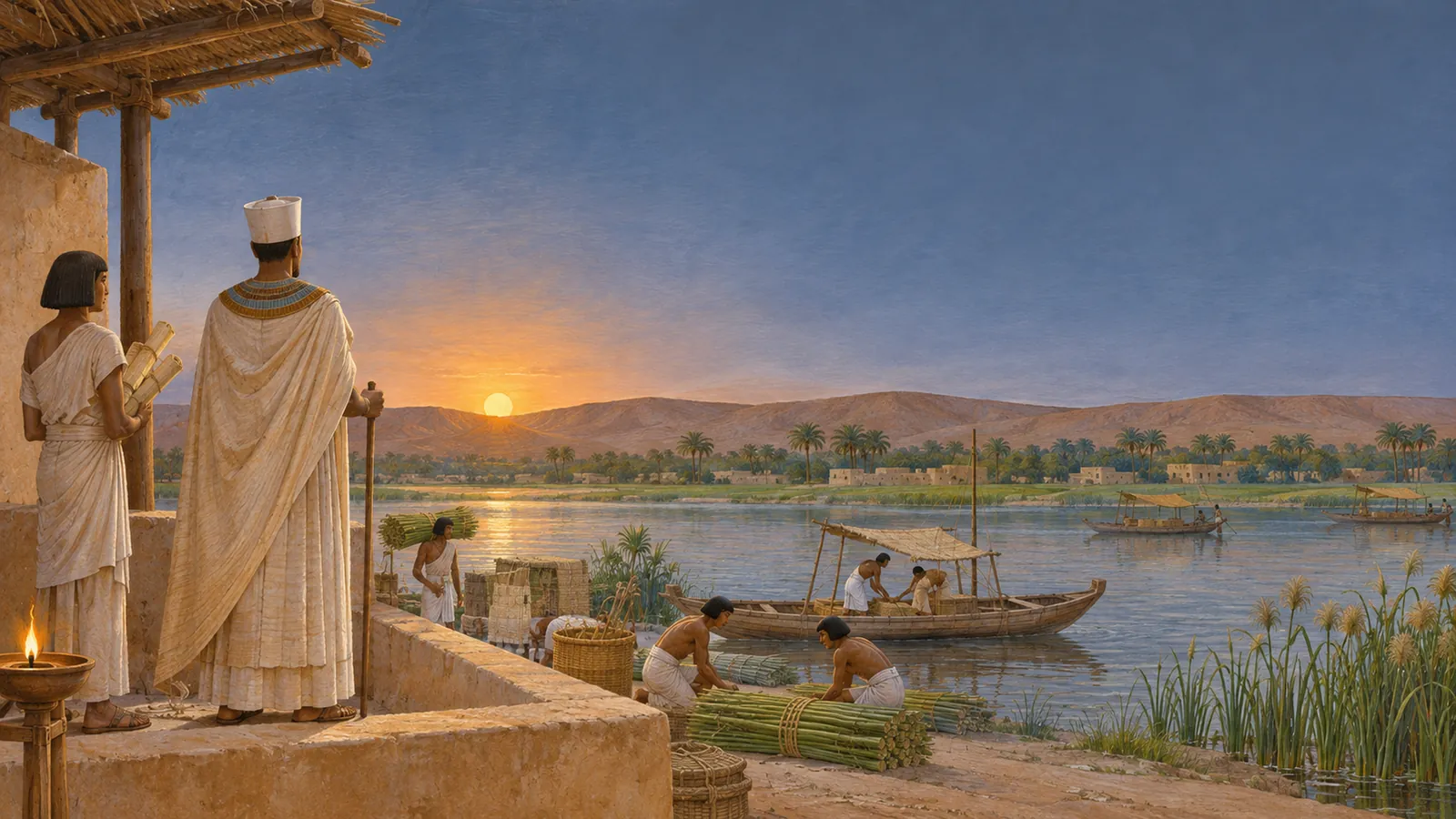
En el palacio de los señores de los kas, el Sol sale desde los montículos de Horus y de Seth. La fórmula lo llama dios de quienes van hacia sus kas.
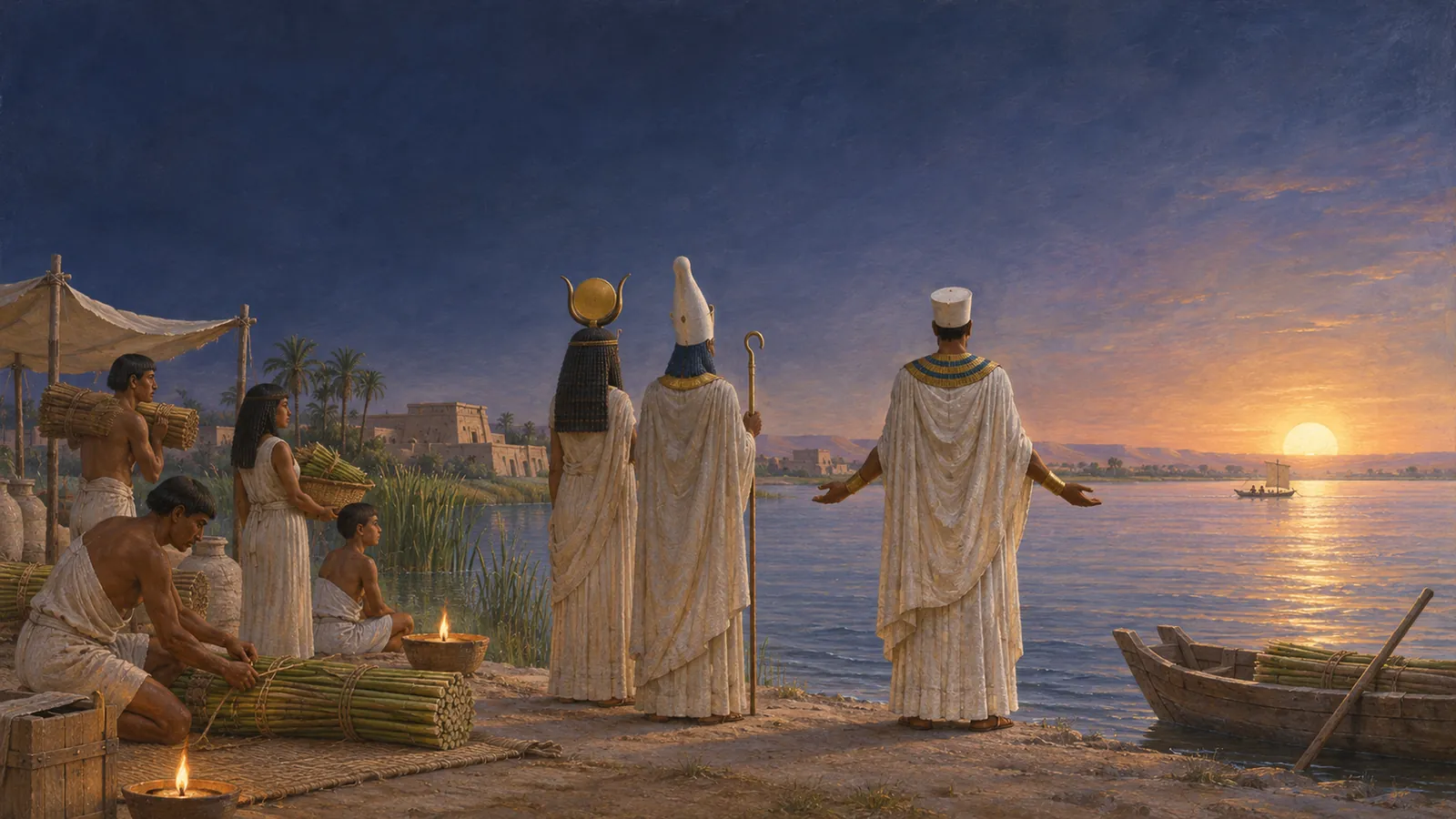
El recitante se dirige ahora al Sol. Le pide que lo recomiende al barquero del Canal Sinuoso, el llamado El que ve detrás de sí.
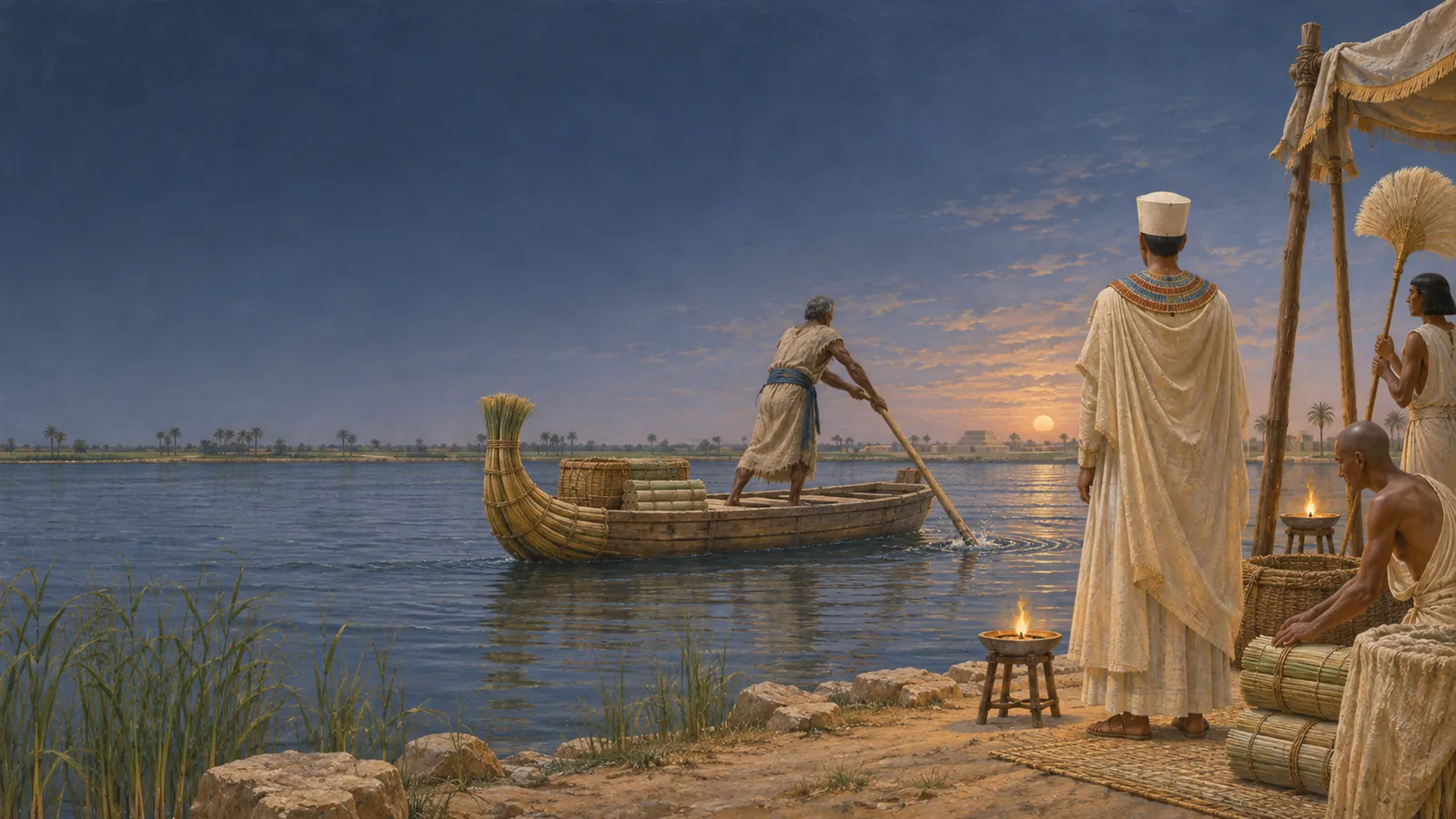
LA BARCA DE LOS DIOSES
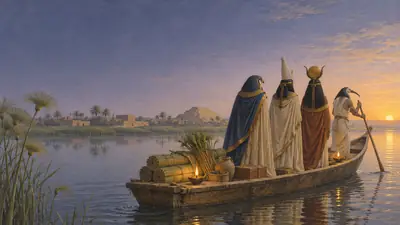
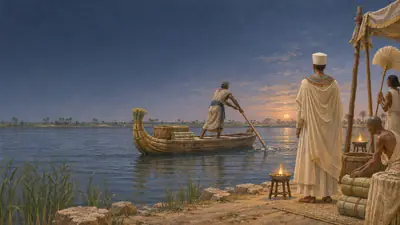
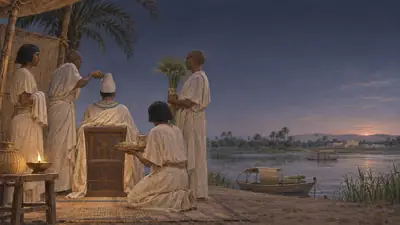
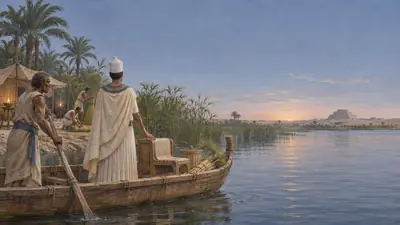
Quiere que el barquero le traiga la barca del Canal Sinuoso. Es la embarcación que usan los dioses para cruzar al lado oriental del cielo.
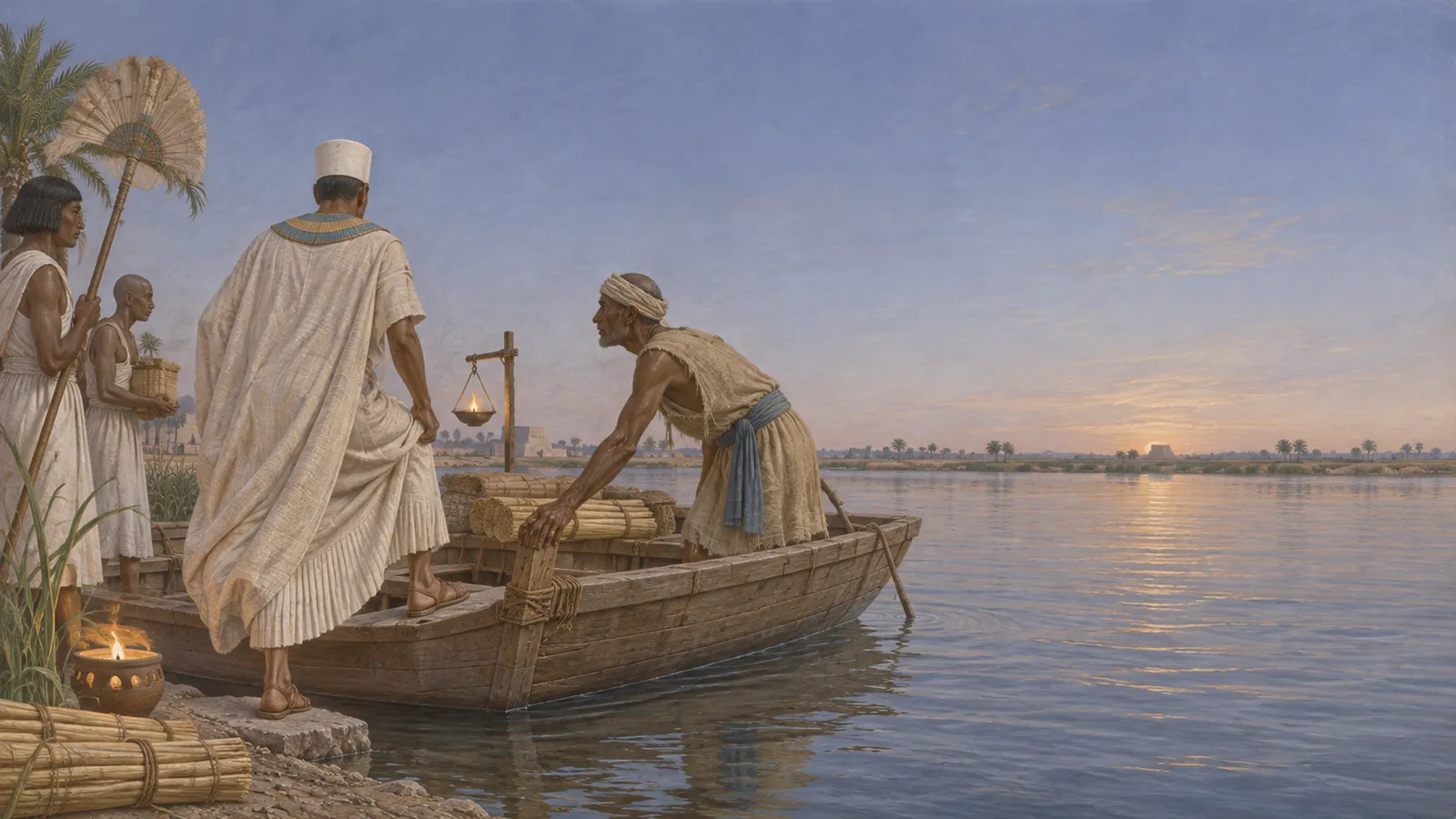
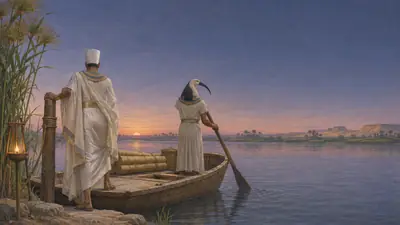
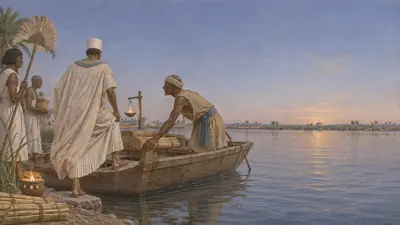
El recitante pide que lo lleven a él mismo al otro lado del Canal Sinuoso. Dice que su destino es el lado oriental del cielo.
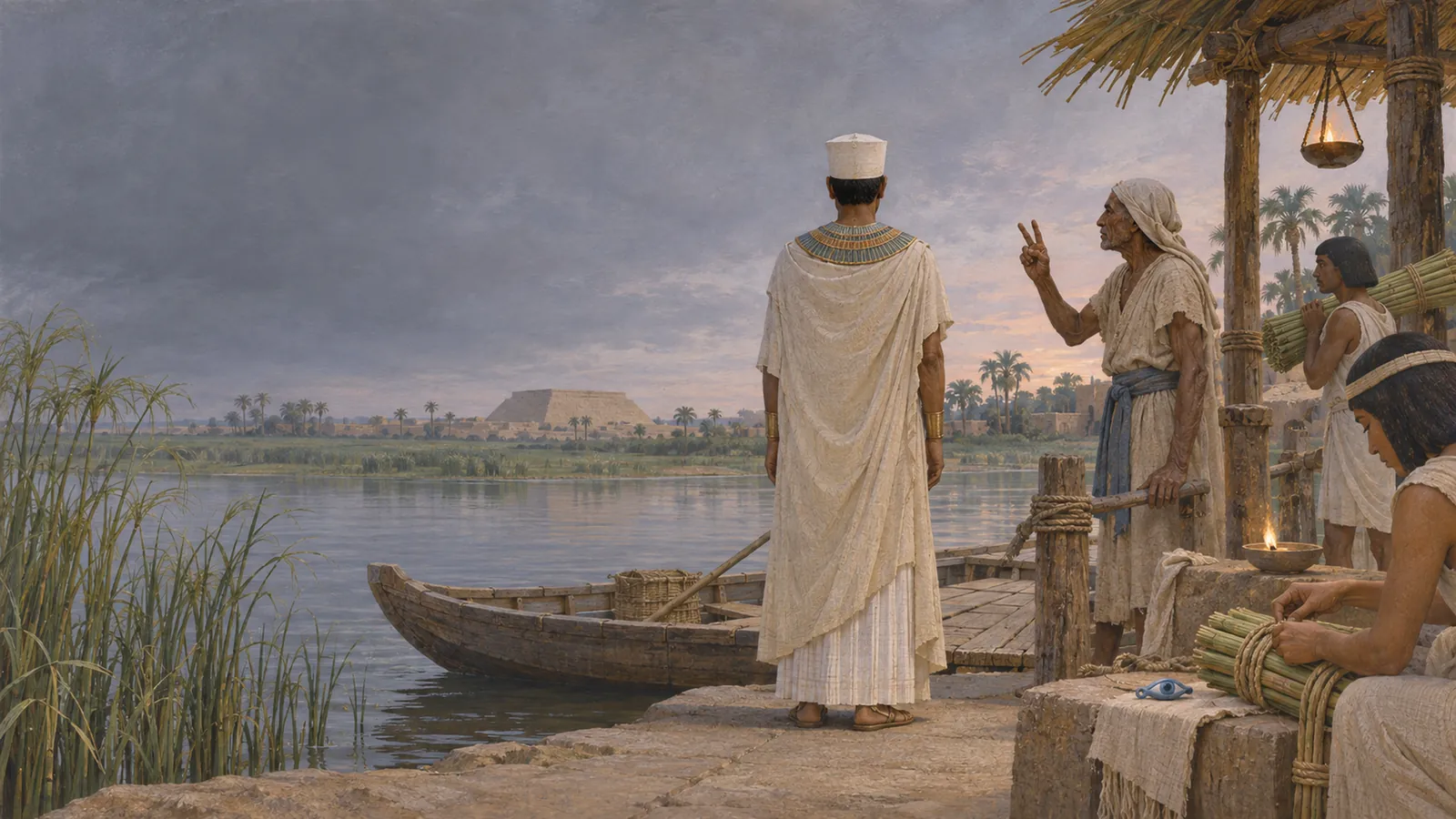
Dice que busca el ojo del propio Horus. También va al recuento de los dedos, que Allen describe como una prueba para embarcar.
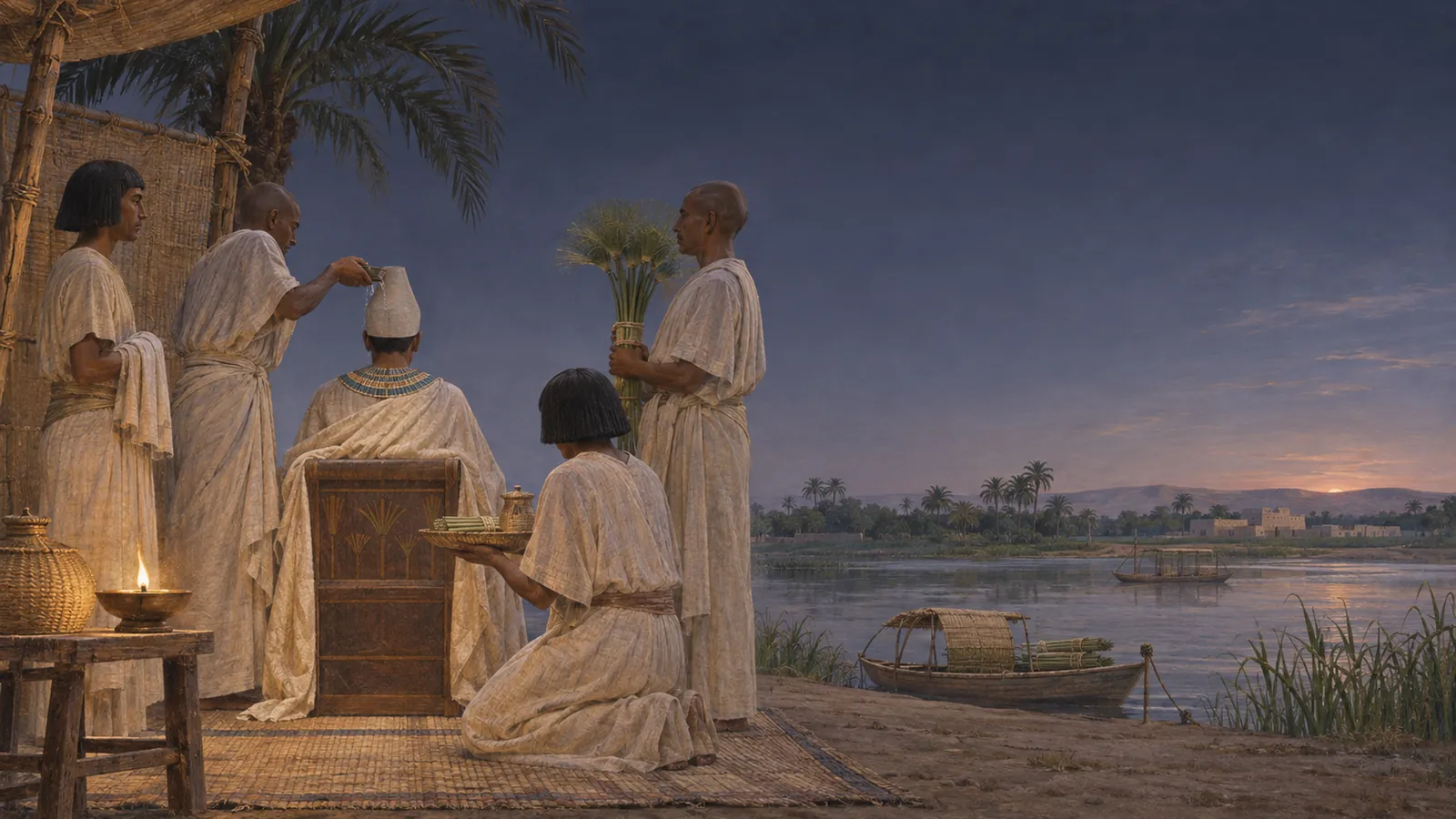
La fórmula dice que los dioses y las diosas le lavan la cara. Nombra a Imseti, Hapi, Duamutef y Qebehsenuef para el lado derecho, al que llama Horus.
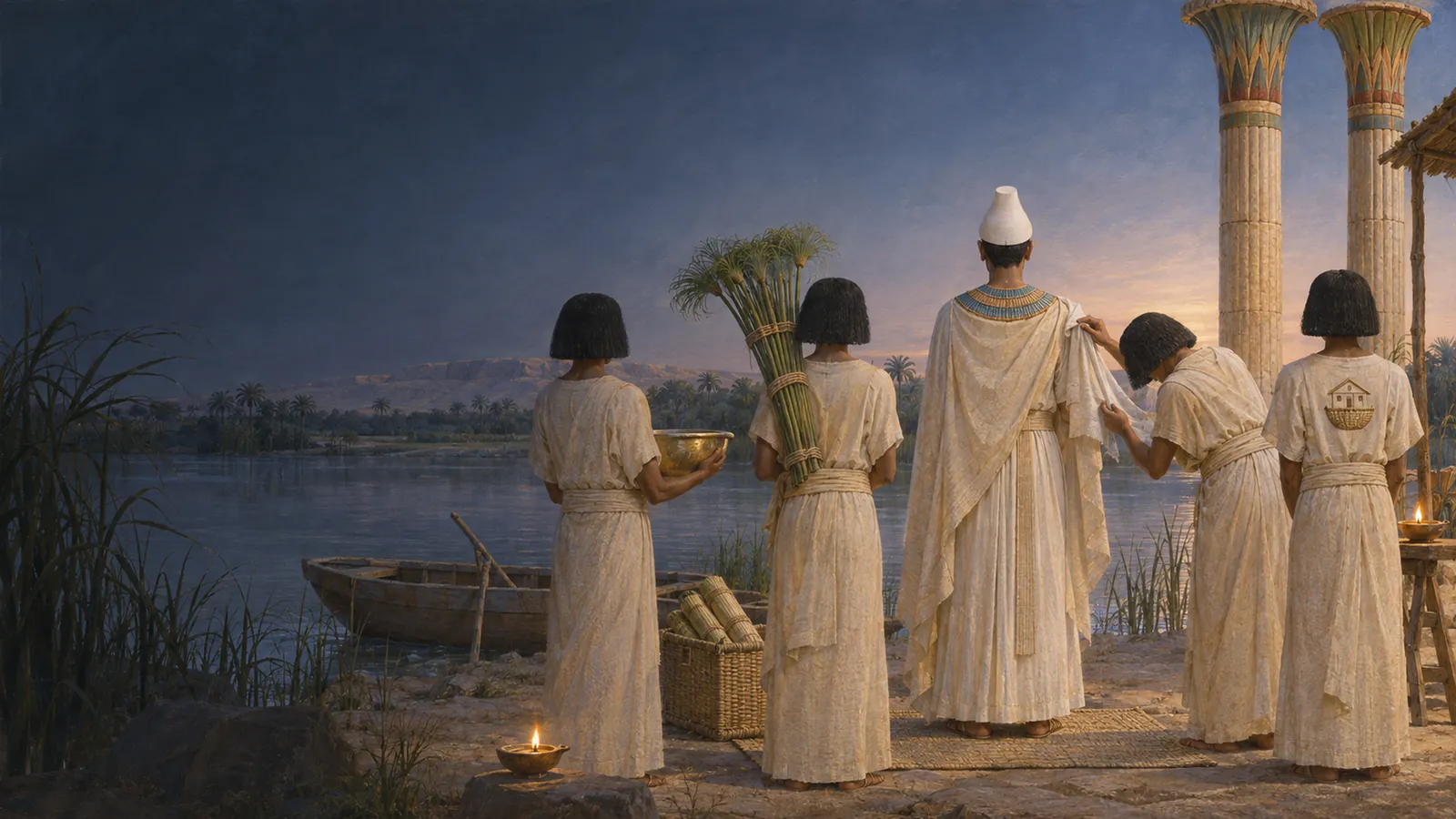
Para el lado izquierdo, la fórmula nombra al que golpea la barca Djenderu, al que está delante de sus dos columnas de papiro, a Neftis y a Ojos al frente. Llama Seth a ese lado.
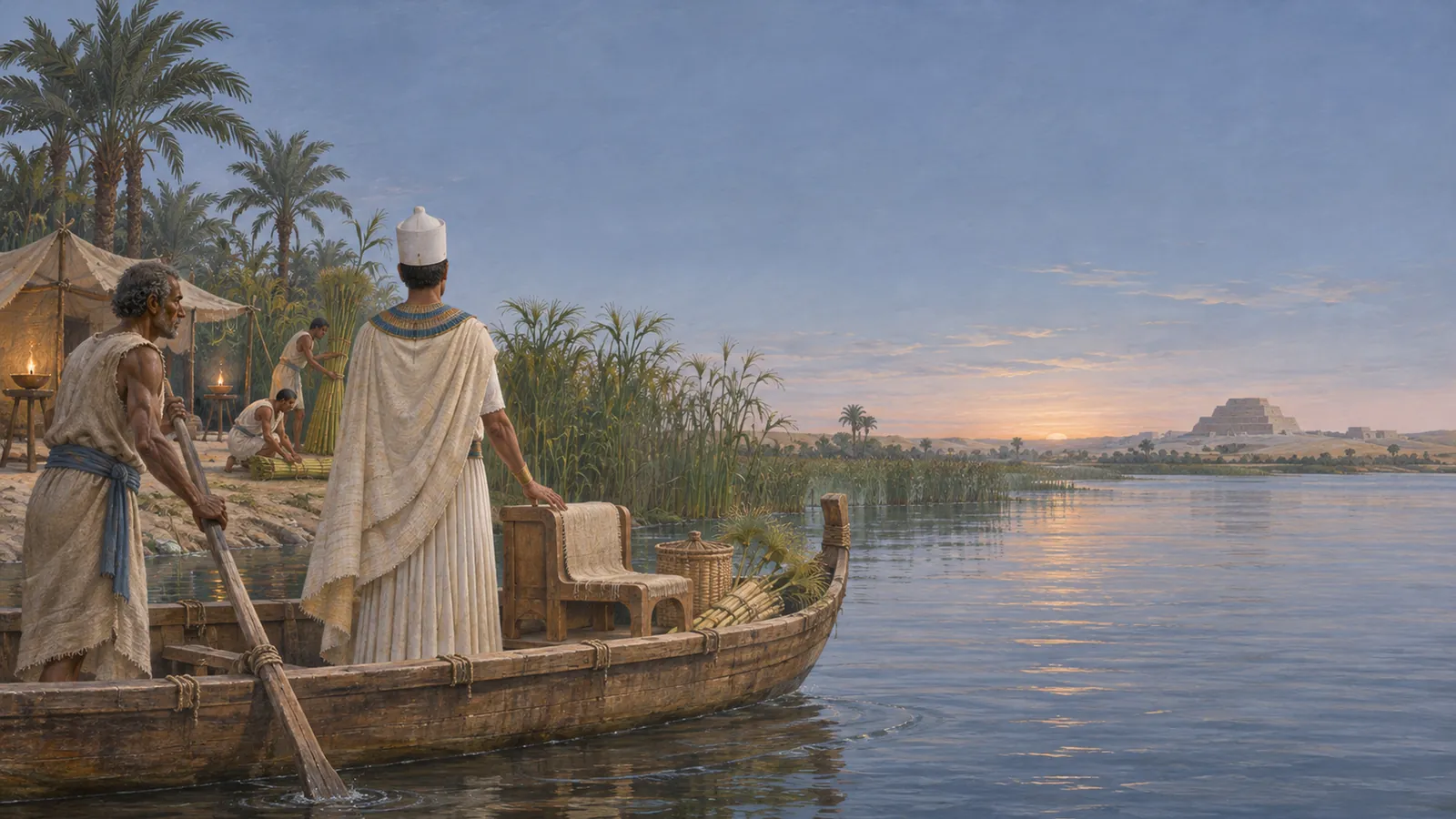
La fórmula vuelve a la barca con las palabras del recitante. Dice que su asiento ha tomado cuenta de él y que su timón lo ha reconocido.
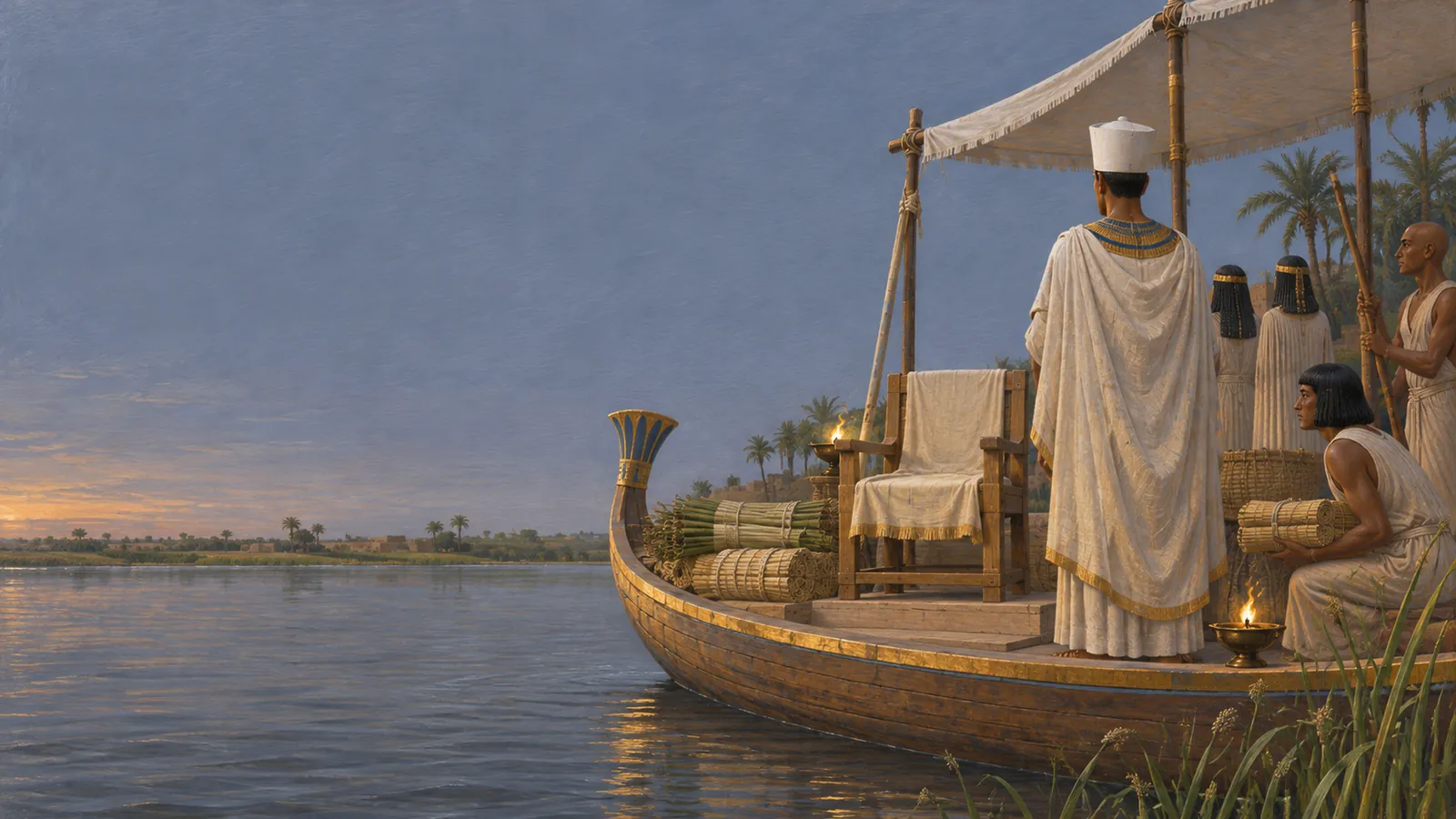
EL SITIO VACÍO
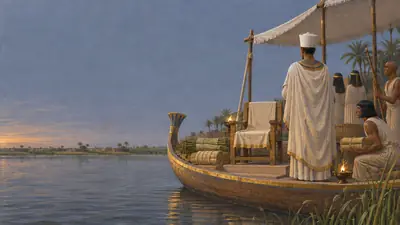
Encuentra su asiento vacío en la popa de la barca dorada del Sol. Allí termina la fórmula, con su sitio aún libre.
Fin del capítulo 1
Todas las páginas
Fuentes
The reading paraphrases the complete Teti recitation PT359 under Summoning the Ferryman in James P. Allen’s The Ancient Egyptian Pyramid Texts, second edition, SBL Press, 2015, p. 80. Allen explains the finger-counting as a test of competence for boarding in note 16. The recitation names the test and gives no result. The next heading begins a separate spell at the gate to the Akhet on p. 81.
Ediciones consultadas
- SBL Press, James P. Allen, The Ancient Egyptian Pyramid Texts, second edition
- PT359 in Teti, printed p. 80, Summoning the Ferryman
- Allen’s note 16, printed p. 99
Notas sobre este relato
printed pp. 69–70 and 80. The opening identifies the translator and location of the witness. Allen’s introduction places the spells of passage from the Duat to the Akhet in the passage between the burial chamber and the antechamber. The heading on p. 80 locates this spell there.
PT 359, first sentence. Horus cries out over his eye and Seth over his testicles. The text gives no cause in this sentence.
PT 359, first paragraph.
PT 359, second paragraph. The ancient address first describes the gods crossing on Thoth’s wing to the eastern side of the sky. They go to argue against Seth over Horus’s eye. The speaker then says he will join their crossing and argue against Seth over the same eye. His crossing here is stated as an intention.
PT 359, third paragraph. The speaker wishes a peaceful awakening to Sees Behind Him, Nut’s oarsman and the ferryman of the Winding Canal. He asks that his name be told to the Sun and names the palace of the lords of kas as his destination. In this edition, *kas* is a plural of *ka*, an Egyptian term for a vital aspect of a person.
Page 10, Allen 2015, Teti, p. 80, PT359. The Sun dawns from the Horus Mounds and Seth Mounds. The recitation names the Sun as the god of those who go to their kas.
Page 11, Allen 2015, Teti, p. 80, PT359. The speaker addresses the Sun and asks it to commend him to Sees Behind Him. The recitation has already identified him as the ferryman of the Winding Canal.
Page 12, Allen 2015, Teti, p. 80, PT359. The speaker asks for the ferryboat of the Winding Canal. The gods use it to cross to the eastern side of the sky.
Page 13, Allen 2015, Teti, p. 80, PT359. The speaker asks to be ferried to the same eastern side. The recitation states his request at this point.
Page 14, Allen 2015, Teti, p. 80, PT359. The quest is for Horus’s own eye. Allen describes counting fingers as a test of competence for boarding in note 16, p. 99. This passage gives no test result.
Page 15, Allen 2015, Teti, p. 80, PT359. The right side is called Horus. Allen gives Imseti, Hapi, Duamutef and Qebehsenuef. The verb have washed appears in parentheses in this part of the translation.
Page 16, Allen 2015, Teti, p. 80, PT359. The left side is called Seth and the second list names the Djenderu-bark-striker, the one at the front of his two papyrus columns, Nephthys and Eyes-Forward. The note preserves the distinct names for this side.
Page 17, Allen 2015, Teti, p. 80, PT359. The recitation describes the seat taking account of the speaker and the rudder recognizing him.
Page 18, Allen 2015, Teti, p. 80, PT359. The final line finds the seat empty at the stern of the golden bark of the Sun. The selection ends here. The next printed heading on p. 81 begins a different spell at the gate to the Akhet.
Los versos antiguos de cada página
- Page 1: Allen 2015, The Ancient Egyptian Pyramid Texts, Teti, pp. 69–70, 80, PT 359 and passage context
- Page 2: Allen 2015, The Ancient Egyptian Pyramid Texts, Teti, p. 80, PT 359, opening laments
- Page 3: Allen 2015, The Ancient Egyptian Pyramid Texts, Teti, p. 80, PT 359, first jump and landfall
- Page 4: Allen 2015, The Ancient Egyptian Pyramid Texts, Teti, p. 80, PT 359, second jump and landfall
- Page 5: Allen 2015, The Ancient Egyptian Pyramid Texts, Teti, p. 80, PT 359, address to the crossing gods
- Page 6: Allen 2015, The Ancient Egyptian Pyramid Texts, Teti, p. 80, PT 359, speaker’s own crossing
- Page 7: Allen 2015, The Ancient Egyptian Pyramid Texts, Teti, p. 80, PT 359, greeting the ferryman
- Page 8: Allen 2015, The Ancient Egyptian Pyramid Texts, Teti, p. 80, PT 359, announcement to the Sun
- Page 9: Allen 2015, The Ancient Egyptian Pyramid Texts, Teti, p. 80, PT 359, destination of the speaker
- Page 10: Allen, The Ancient Egyptian Pyramid Texts, 2nd ed. (2015), Teti, p. 80, PT359
- Page 11: Allen, The Ancient Egyptian Pyramid Texts, 2nd ed. (2015), Teti, p. 80, PT359
- Page 12: Allen, The Ancient Egyptian Pyramid Texts, 2nd ed. (2015), Teti, p. 80, PT359
- Page 13: Allen, The Ancient Egyptian Pyramid Texts, 2nd ed. (2015), Teti, p. 80, PT359
- Page 14: Allen, The Ancient Egyptian Pyramid Texts, 2nd ed. (2015), Teti, p. 80, PT359, and p. 99, n. 16
- Page 15: Allen, The Ancient Egyptian Pyramid Texts, 2nd ed. (2015), Teti, p. 80, PT359
- Page 16: Allen, The Ancient Egyptian Pyramid Texts, 2nd ed. (2015), Teti, p. 80, PT359
- Page 17: Allen, The Ancient Egyptian Pyramid Texts, 2nd ed. (2015), Teti, p. 80, PT359
- Page 18: Allen, The Ancient Egyptian Pyramid Texts, 2nd ed. (2015), Teti, p. 80, PT359
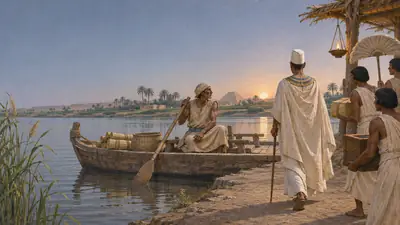
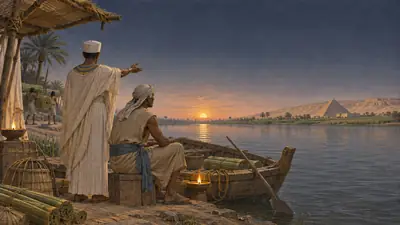
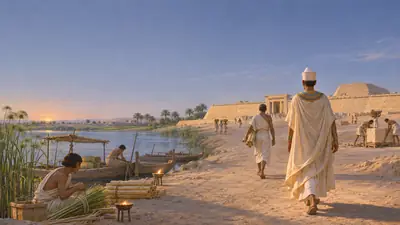
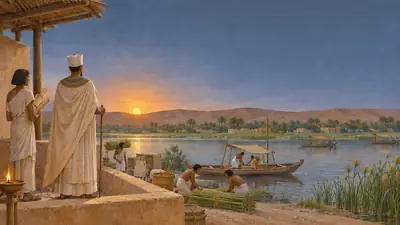
Ilustraciones hechas por IL Archive con herramientas de IA; el texto se basa en las fuentes antiguas (véanse las fuentes al final de cada capítulo).