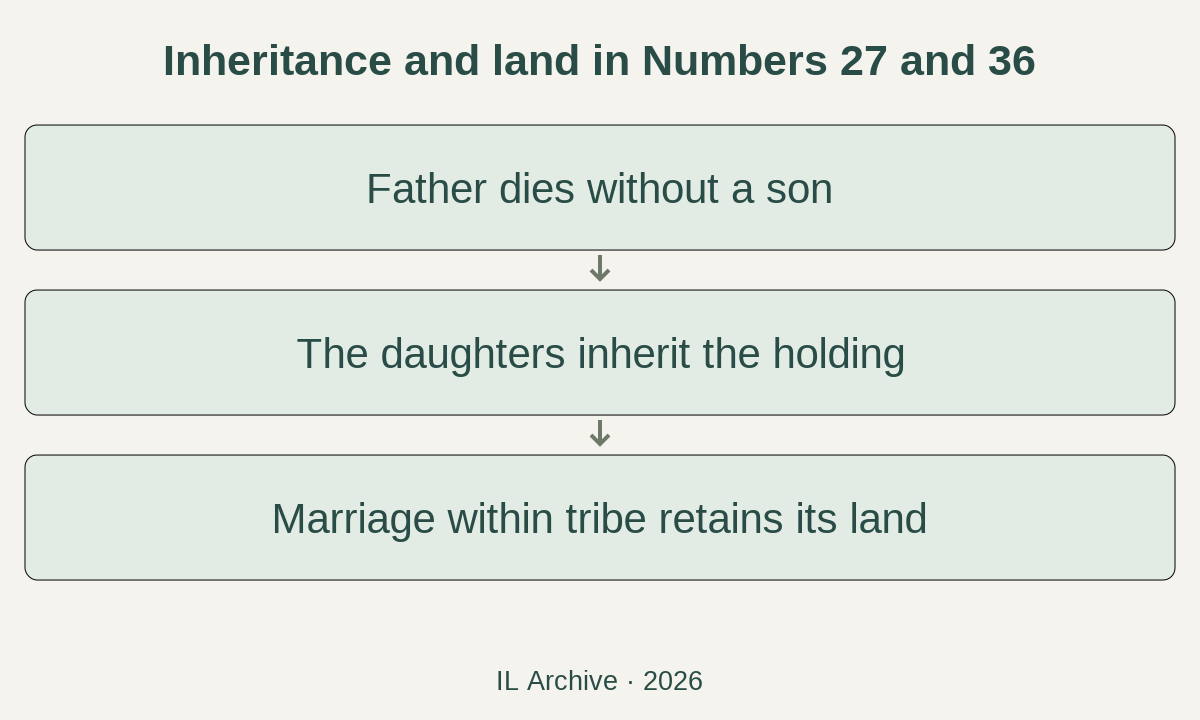
Modern explanatory diagram of relationships or cases in the specified witnesses; not portraits, a legal tablet or an ancient manuscript
Pessoa
Daughters petitioning for inheritance in Numbers 27, with marriage and land addressed in 36.
Variantes do nome: Daughters of Zelophehad
Contexto e fontes →

Modern AI-generated conceptual image evoking a heavenly gathering; not an ancient artefact or a documented depiction of the assembly in any particular text
Entidade
“Bene elohim” is a Hebrew expression in Job and Genesis whose interpretation depends on context; it also appears in Qumran 4Q37 at Deuteronomy 32:8. It does not itself establish biological descent or a fixed divine roster.
Variantes do nome: bene elohim, bene ha-elohim, sons of God
Contexto e fontes →
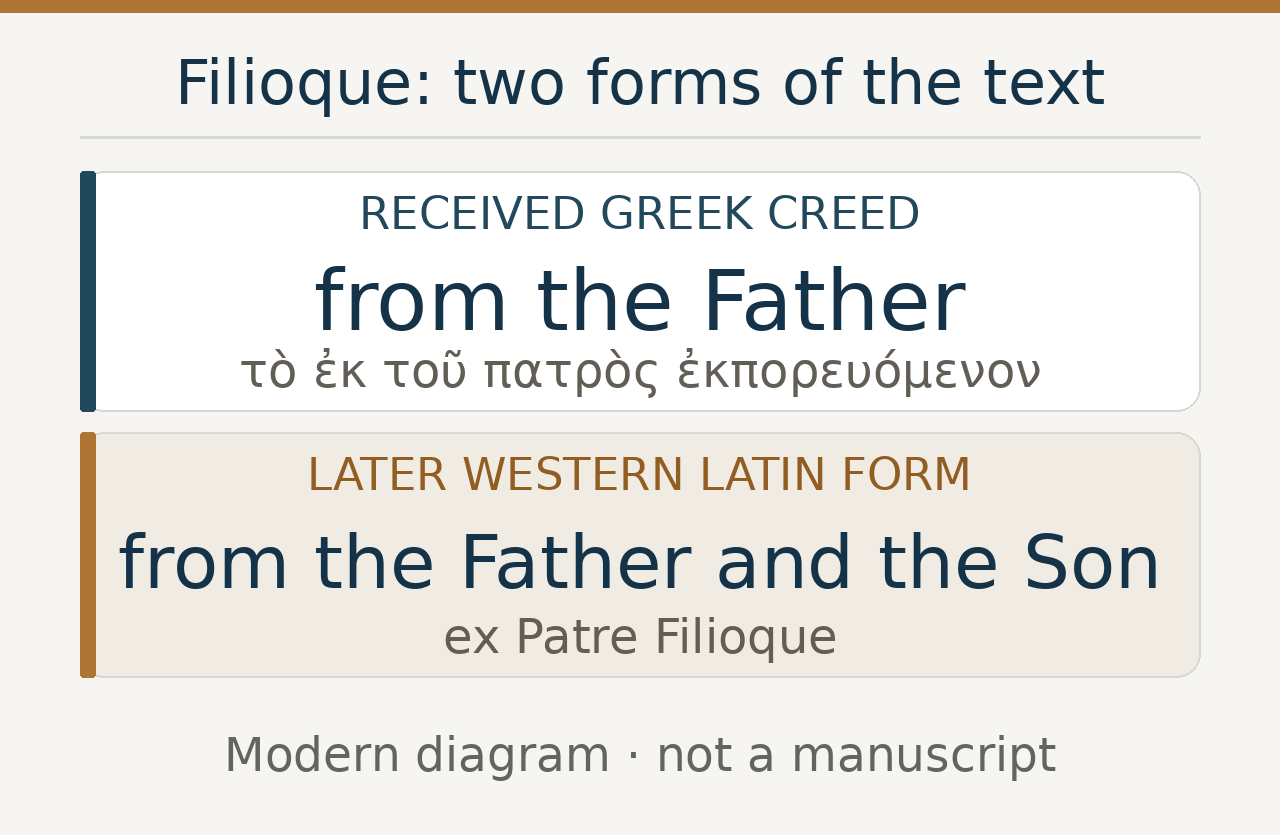
New editorial comparison of the received Greek phrase “from the Father” with the later Western Latin formula “from the Father and the Son.” Not a manuscript image or an independent witness to when insertion occurred
Entidade
Latin for “and the Son,” added in Western use to the clause about the Holy Spirit in the creed associated with Constantinople (381). Absent from the received Greek text; disputed in doctrine and the authority to amend the creed.
Variantes do nome: Filioque
Contexto e fontes →
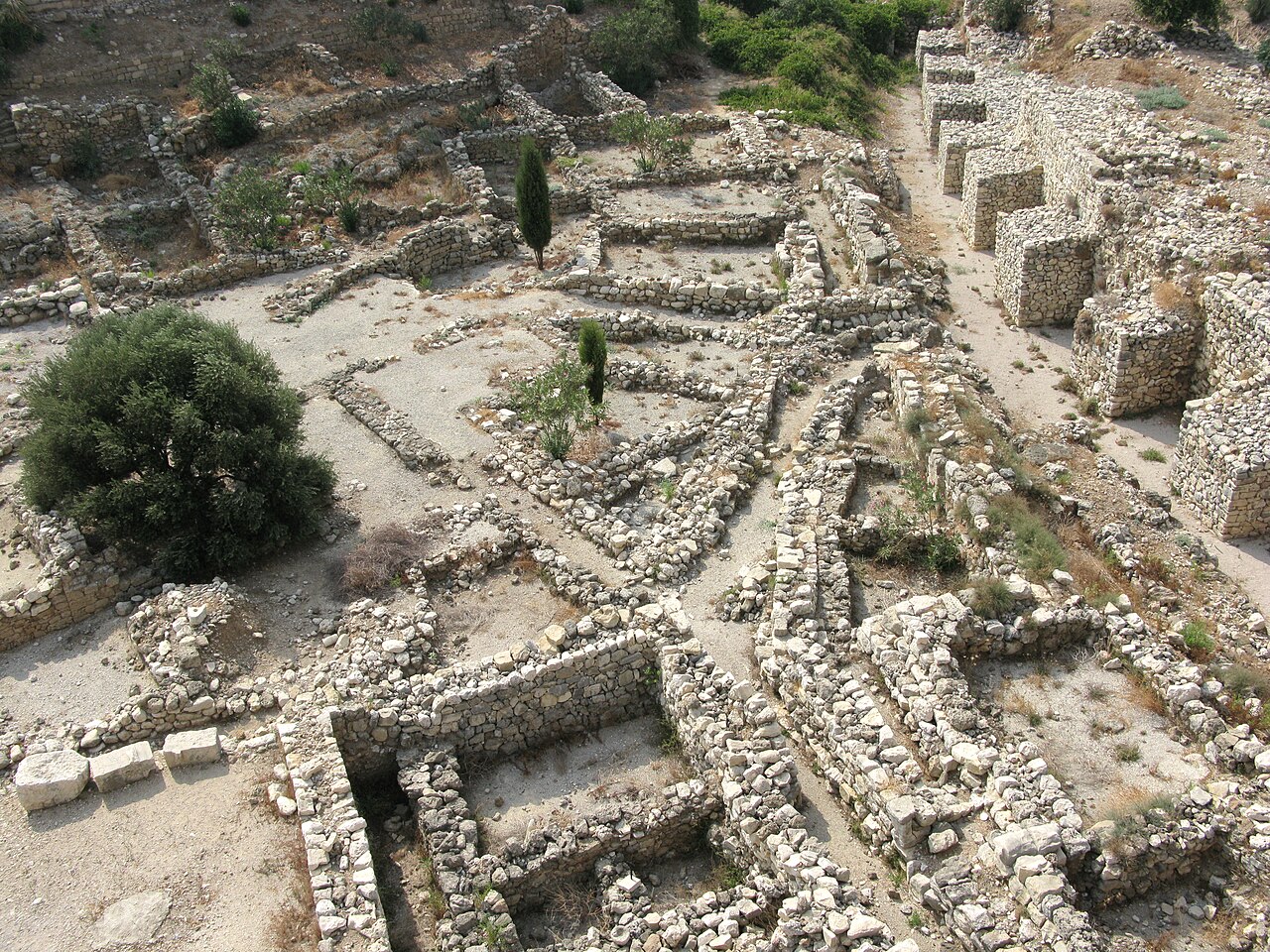
Modern view of the Byblos remains, Lebanon, 4 September 2008. Photograph by Vyacheslav Argenberg; context for Philo of Byblos’s name, not a portrait or identification of his library
Pessoa
Writer of about the first–second centuries CE and author of Phoenician History, distinct from Philo of Alexandria.
Variantes do nome: Philo of Byblos
Contexto e fontes →
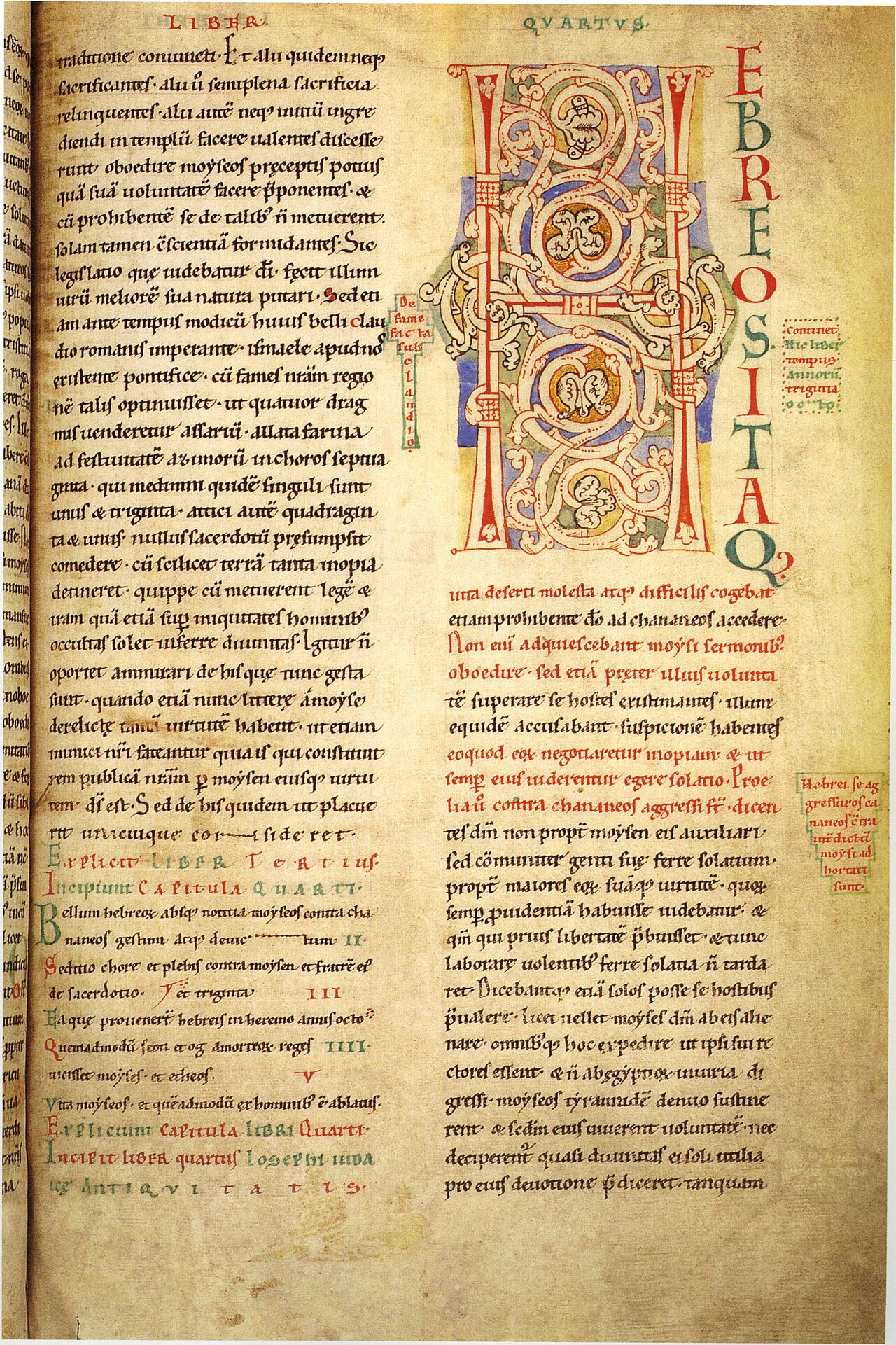
Twelfth-century Latin copy of Jewish Antiquities, Cologne Cathedral Library MS 162, fol. 41r. The page begins Book IV, not the Book I sacrifice account
Pessoa
First-century Jewish historian who retold older narratives, including Abraham’s test, in Jewish Antiquities.
Variantes do nome: Josephus, Flavius Josephus
Contexto e fontes →
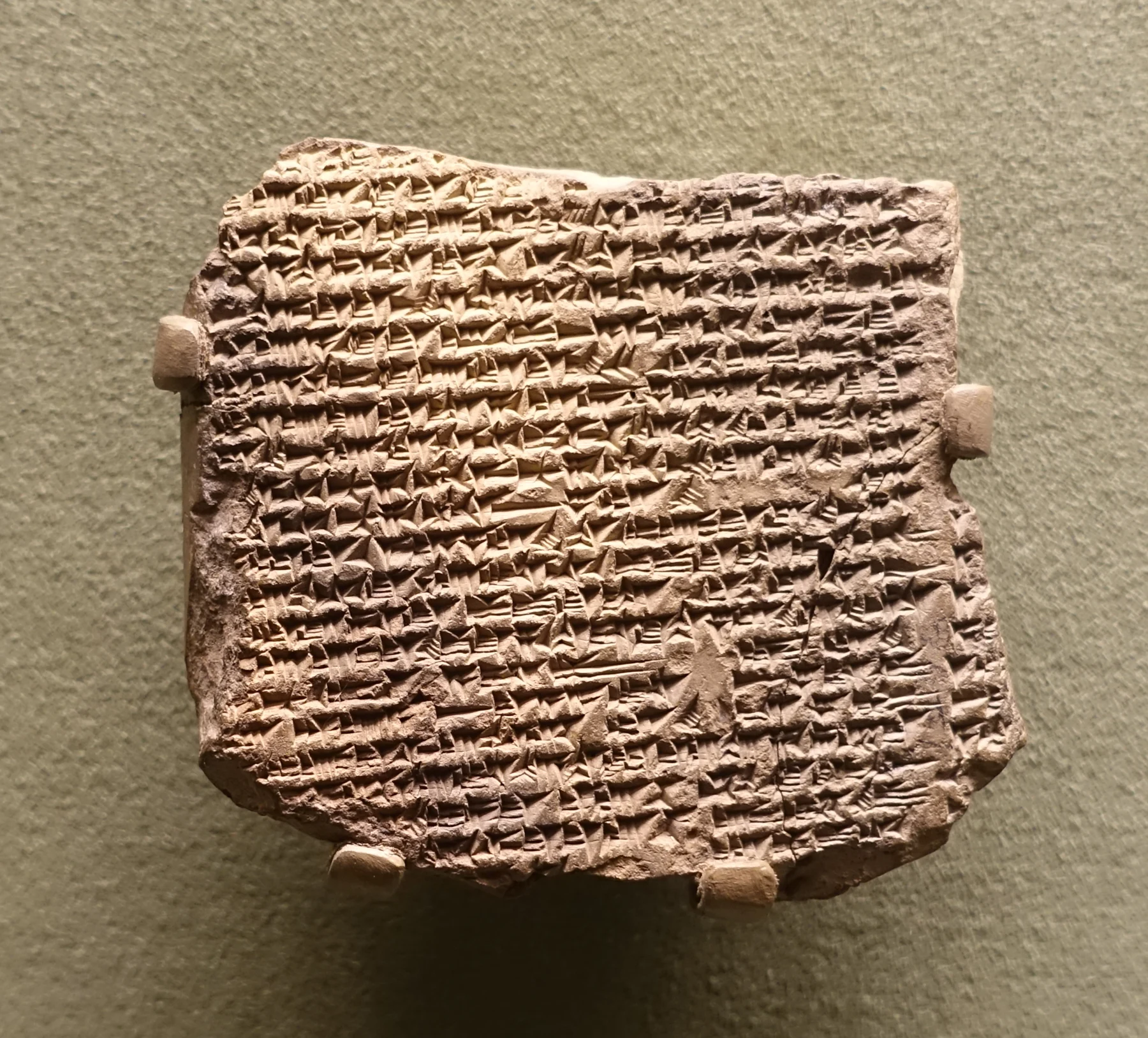
Adapa fragment A, MLC 1296, Neo-Assyrian, about the seventh century BCE, Morgan Library & Museum. Preserves the opening; not Amarna EA 356 or a portrait of Adapa or Adam. Photograph: Daderot, 2020; CC0 1.0
Artefato
Neo-Assyrian clay fragment written in Akkadian, preserving the beginning of Adapa’s story in the Morgan Library & Museum.
Variantes do nome: Adapa fragment MLC 1296
Contexto e fontes →
Pessoa
Frans A. M. Wiggermann is an Assyriologist, a scholar of ancient Mesopotamian languages and texts.
Variantes do nome: Frans A. M. Wiggermann
Contexto e fontes →

Modern AI-assisted interpretation of purification and renewed life in the Bundahishn narrative. Not an ancient artifact, identifiable persons, or a literal map of the final world; mountains and landscape are expressive elements
Entidade
Creation’s completion or renovation in Iranian tradition, linked to incorruptible life and evil’s retreat.
Variantes do nome: Frashokereti, Frašō.kərəti, Frashgird, Frashegird
Contexto e fontes →
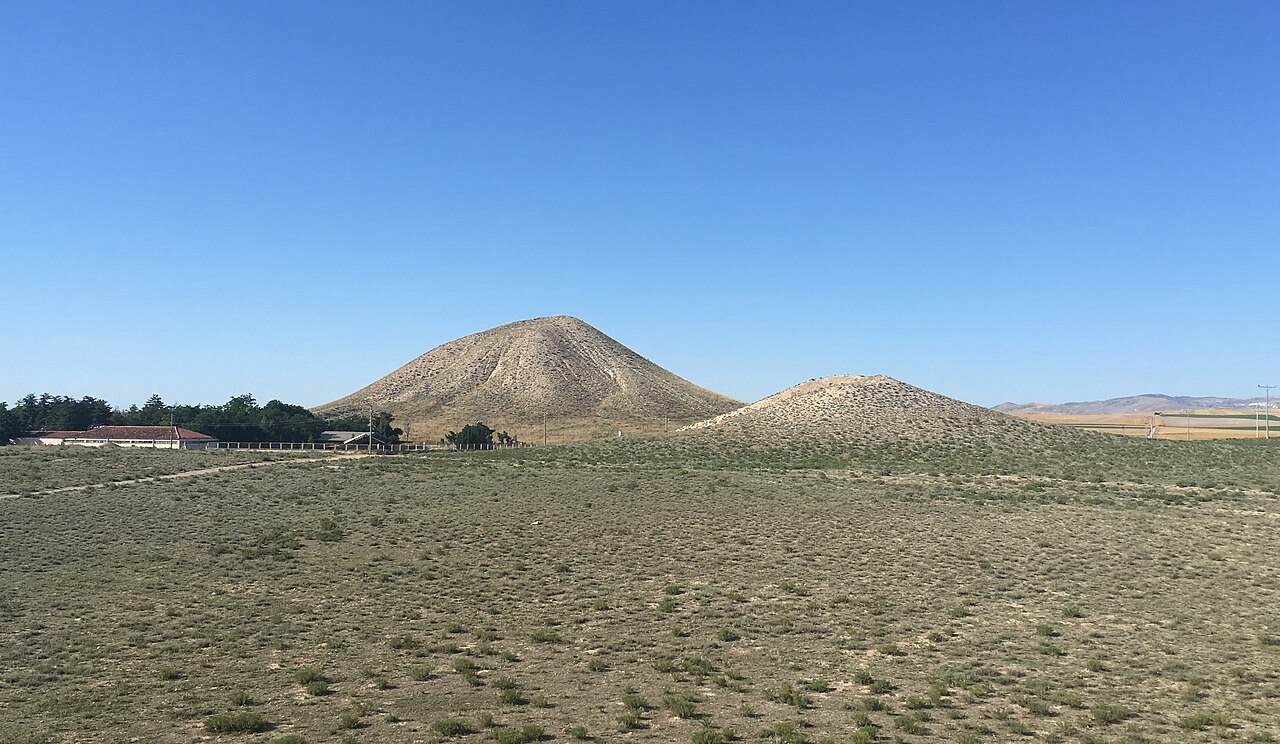
Burial mounds MM and P at Gordion, in modern Türkiye. A view of Phrygian remains by Archaeologist 1950, 2 July 2019; regional archaeological context, not evidence for a specific story’s route
Sítio
Historical inland Anatolian region with an Iron Age kingdom; Gordion was a major center.
Variantes do nome: Phrygia
Contexto e fontes →
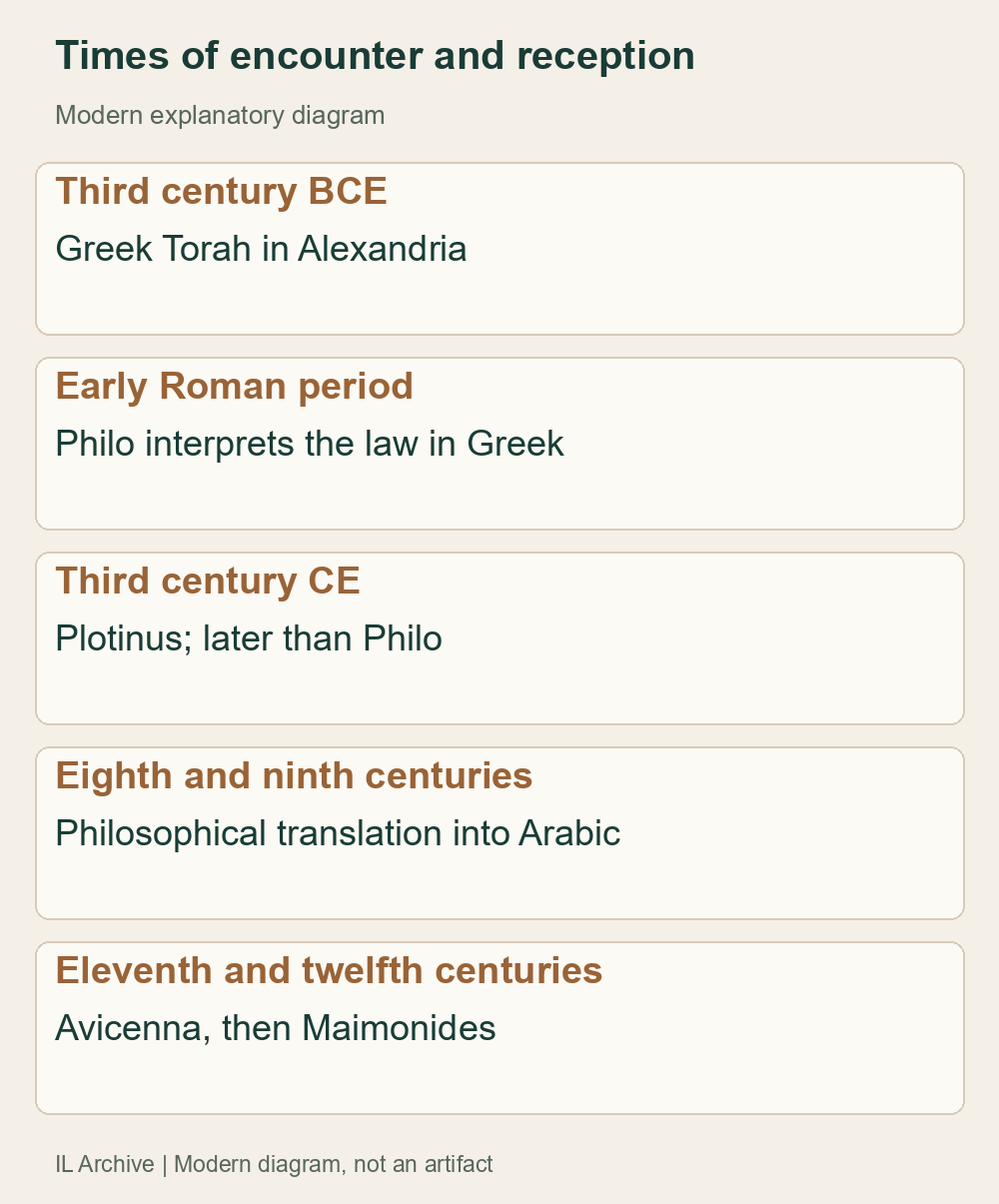
Modern explanatory chronology by IL Archive, situating Philo between the Greek Torah and later philosophies and traditions. Neither a portrait nor an ancient manuscript, and chronological succession does not establish direct borrowing between all the figures shown
Pessoa
Greek-writing Jewish interpreter in Roman Alexandria (roughly first century CE), who read the Torah philosophically while defending its practices; his works survive through Greek copying and Armenian translation.
Variantes do nome: Philo of Alexandria, Philo Judaeus
Contexto e fontes →

Modern AI-generated symbolic cover: imagined books and a trail of light allude to accounts of Gabriel in different texts. These are not real historic books, a portrait of the angel, or an archaeological reconstruction
Entidade
A Semitic theophoric name for an interpreter of visions in Daniel and a messenger in Luke; named Jibrīl in the Qurʾan. His functions depend on each textual context.
Variantes do nome: Gabriel, Jibrīl
Contexto e fontes →
Pessoa
Greek and Latin papyrologist who co-edited the Hamburg fragment.
Variantes do nome: Gabriel Nocchi Macedo
Contexto e fontes →
Pessoa
Researcher in Hebrew texts and their history, comparing Deuteronomic covenant with ancient imperial formulations.
Variantes do nome: Gad Barnea
Contexto e fontes →
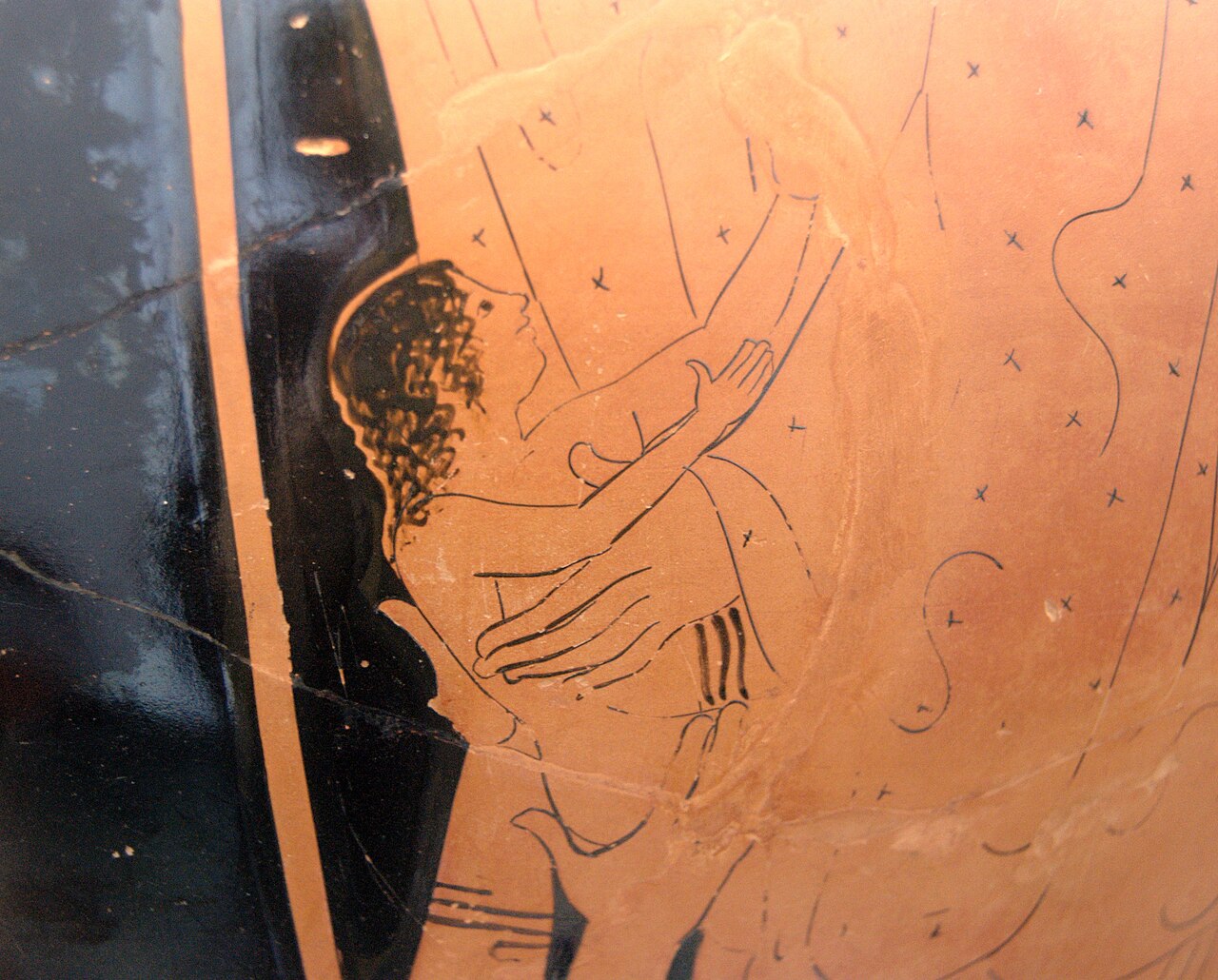
Gaia lifts the infant Erichthonios toward Athena; detail of an Attic vase, about 470–460 BCE, Munich 2413. Bibi Saint-Pol, 10 February 2007; another scene representing Gaia as Earth
Entidade
Earth as a divine figure, active in the gods’ origins and conflicts in Hesiod.
Variantes do nome: Gaia
Contexto e fontes →
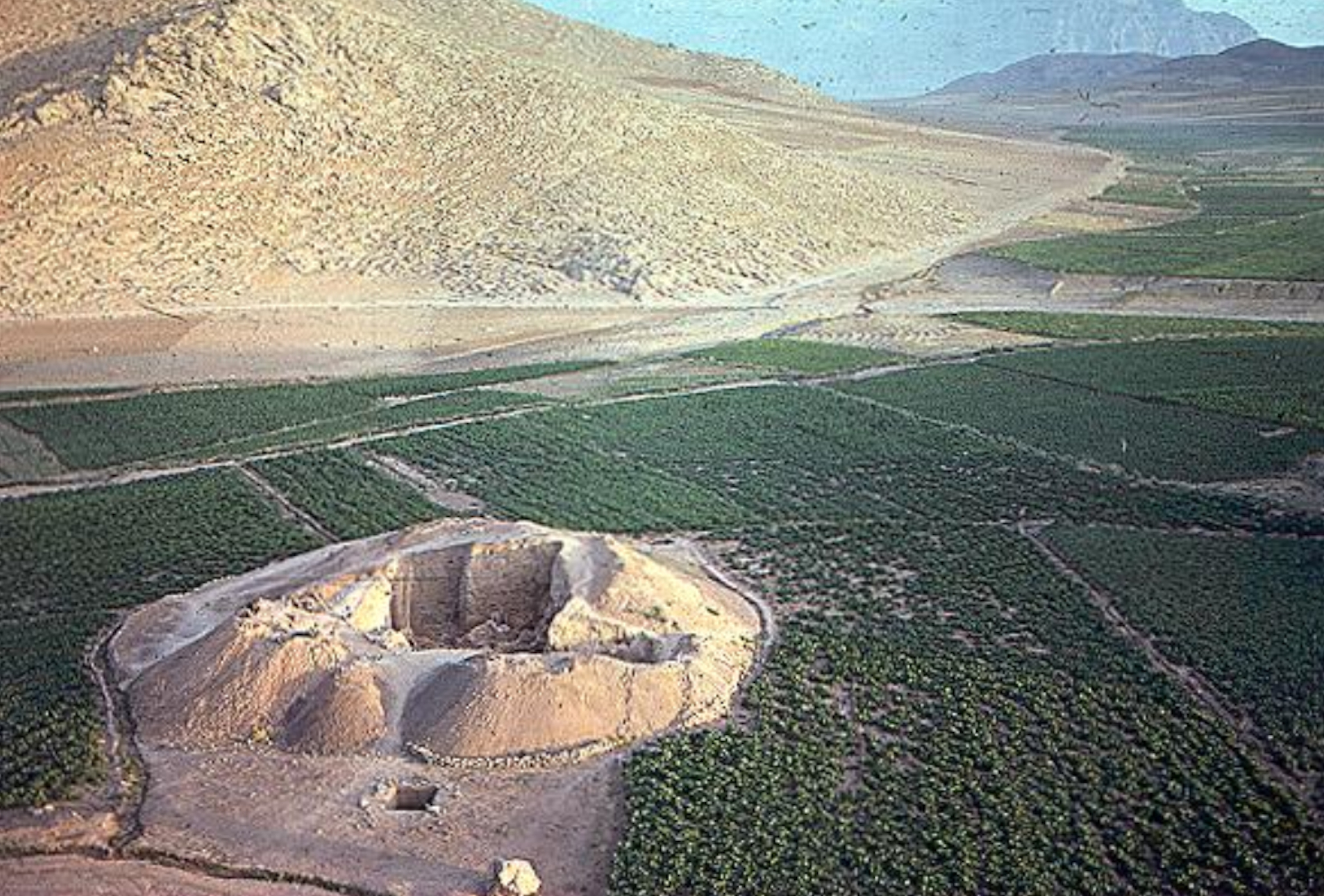
View of Ganj Dareh and its archaeological mound; not a reconstruction of the Neolithic village
Sítio
Neolithic site in western Iran’s Zagros, important for early settlement, herding, burial and cranial modification.
Variantes do nome: Ganj Dareh
Contexto e fontes →

Angell Hall at the University of Michigan, Ann Arbor, 8 March 2022. Institutional context for Gary Beckman, who joined Michigan in 1992; not a portrait or identification of his office
Pessoa
Scholar of the Hittite language, Hittite religion and ancient Near Eastern history, associated with the University of Michigan.
Variantes do nome: Gary Beckman
Contexto e fontes →
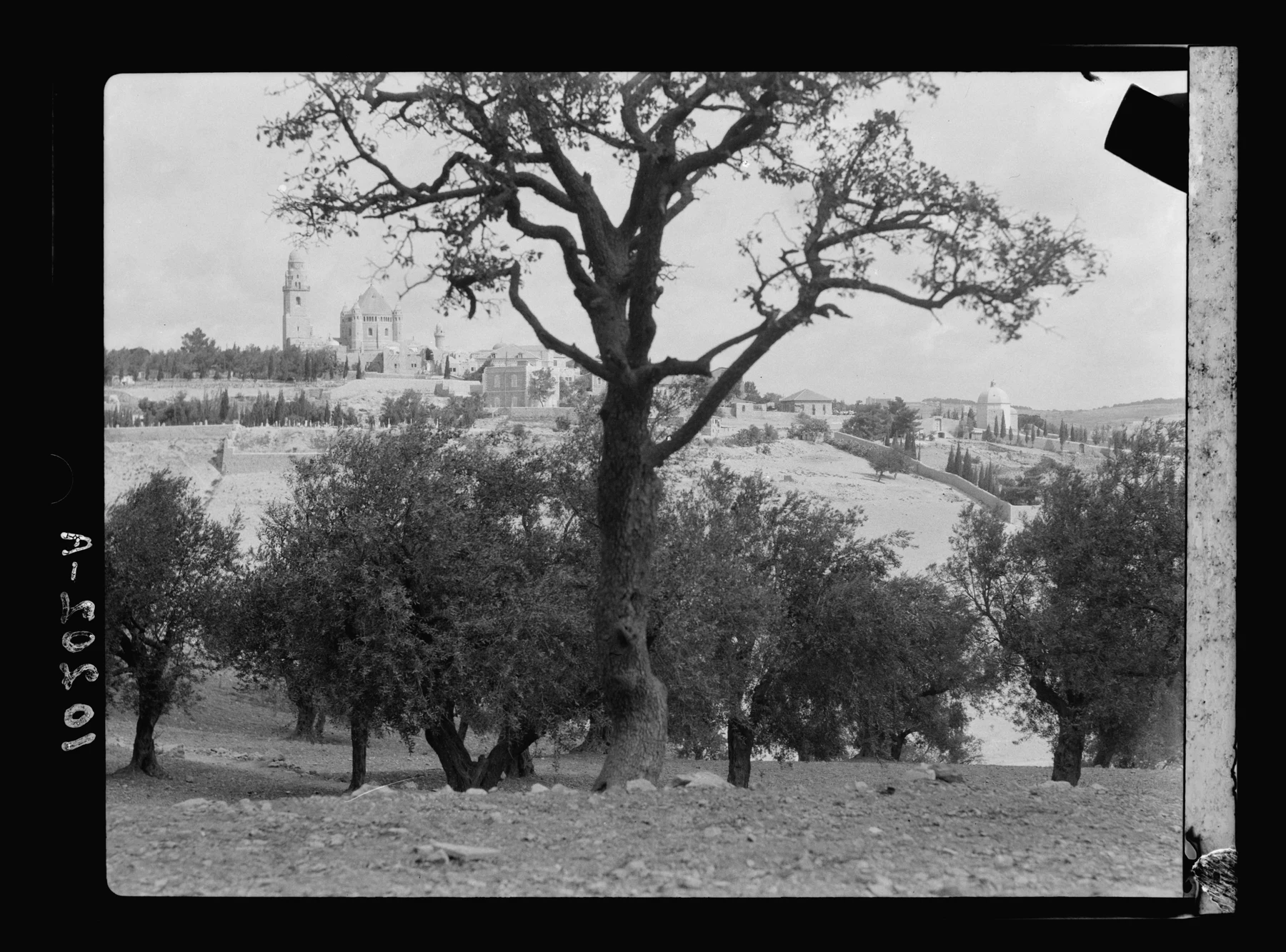
Mount Zion from the valley of Hinnom; American Colony (Jerusalem), Photo Department, 1934–1939. Library of Congress, LC-DIG-matpc-19029. Modern historical site photograph, not an image of the afterlife or photographic evidence of ancient rites. Collection rights dedicated to the public; no known publication restrictions
Entidade
A name linked to Jerusalem’s Valley of Hinnom. Gehenna acquired meanings of judgment in Jewish and Christian texts and is linguistically related to Quranic Jahannam; the depictions are not identical.
Variantes do nome: Gehenna, Gehinnom, Jahannam
Contexto e fontes →
Pessoa
Historian of early Islam studying religious identity and the language of shirk and idolatry.
Variantes do nome: Gerald R. Hawting
Contexto e fontes →
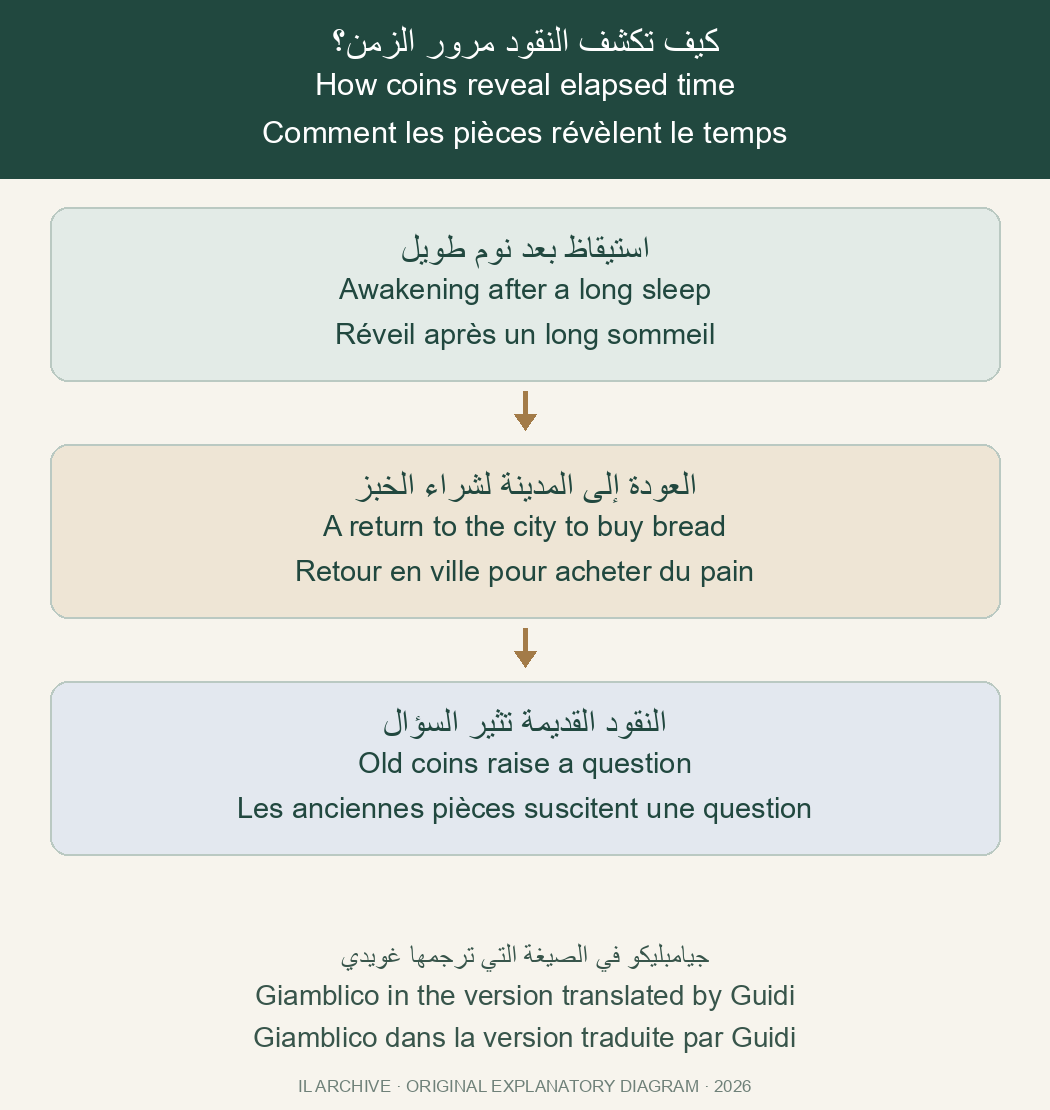
Modern diagram of Giamblico's role in the Christian version translated by Guidi: awakening, buying bread, and the time gap revealed through coins. It explains the narrative role rather than depicting a historical likeness
Pessoa
Name of a youth in the Christian version translated by Guidi; he returns to the city to buy bread after the long sleep.
Variantes do nome: Giamblico
Contexto e fontes →
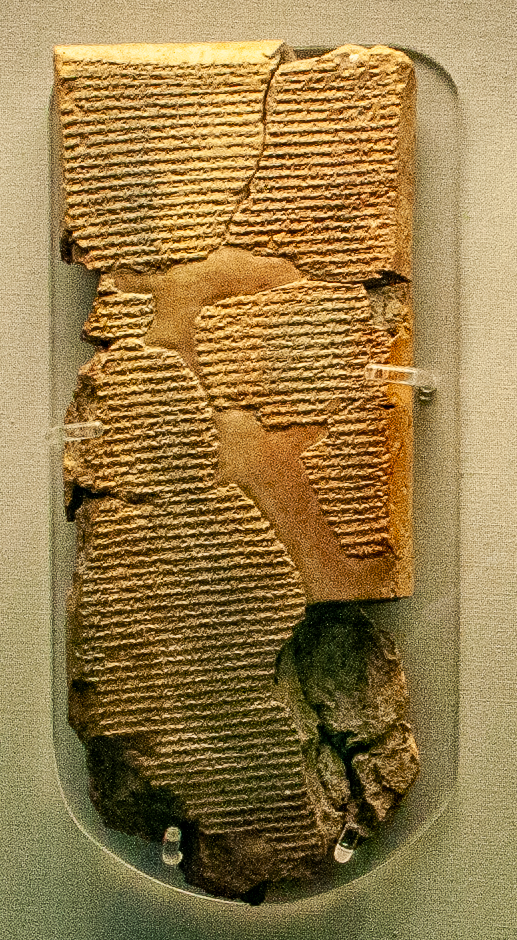
Assyrian tablet of about 660 BCE naming Gyges of Lydia; a written witness, not the king's portrait
Pessoa
Seventh-century BCE king of Lydia in western Anatolia, called Guggu in an Assyrian inscription; his identification with Ezekiel's Gog is unproven.
Variantes do nome: Gyges
Contexto e fontes →
Pessoa
A scholar of ancient Israel, Judaea, and early Christianity who proposes reading Jonah alongside Mediterranean Jason traditions.
Variantes do nome: Gildas Hamel
Contexto e fontes →

A journey across water towards an imagined city: modern AI-generated symbolic artwork evoking the Epic of Gilgamesh, not a photographed artifact or historical event
Entidade
A king of Uruk in Mesopotamian tradition and the hero of Sumerian poems and a multi-tablet Akkadian epic, with his companion Enkidu, the loss of a friend and the search for life. In standard Tablet XI, Utnapishtim tells him of the flood.
Variantes do nome: Gilgamesh
Contexto e fontes →
Pessoa
Italian artist (1727–1804) who depicted the Holy Family resting beside a palm.
Variantes do nome: Giovanni Domenico Tiepolo
Contexto e fontes →

Modern imaginative depiction of an iron barrier between mountains, evoking Gog and Magog barrier traditions; not a photograph of a known monument or evidence of a historical site
Entidade
Names used differently for Magog in Genesis, Gog the invader in Ezekiel, end-time nations in Revelation, and peoples behind a barrier in Syriac and Qur’anic traditions; not a modern ethnic identification.
Variantes do nome: Gog and Magog
Contexto e fontes →
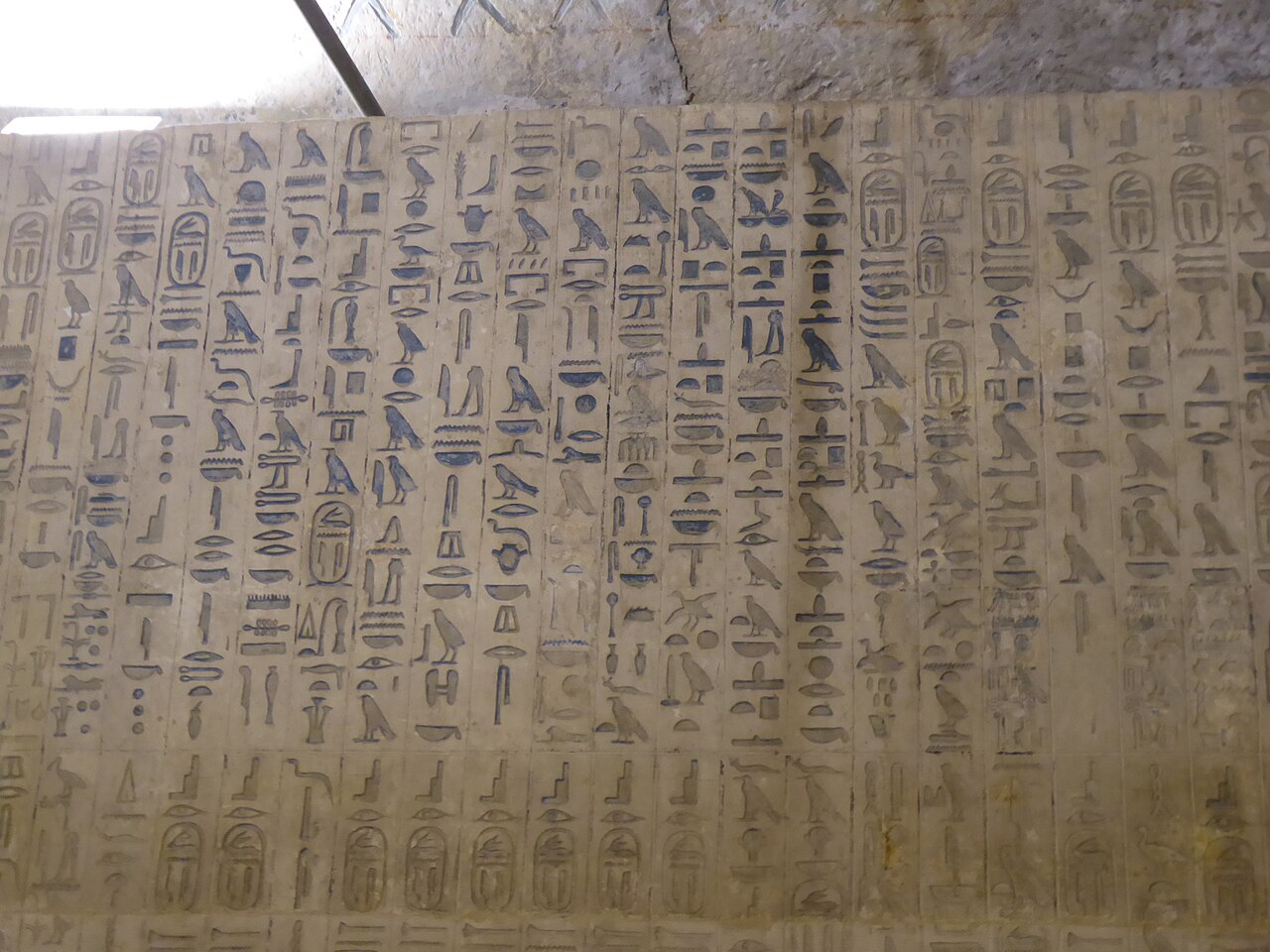
Hieroglyphic texts on the walls of Unas’s pyramid at Saqqara, from the late Fifth Dynasty, around the twenty-fourth century BCE. Photograph taken on 13 October 2017. The image provides context for ancient Egyptian texts used in scholarly comparisons of creation traditions
Pessoa
Old Testament scholar at Dallas Theological Seminary, examining biblical literature and its ancient Near Eastern contexts.
Variantes do nome: Gordon Johnston, Gordon H. Johnston
Contexto e fontes →
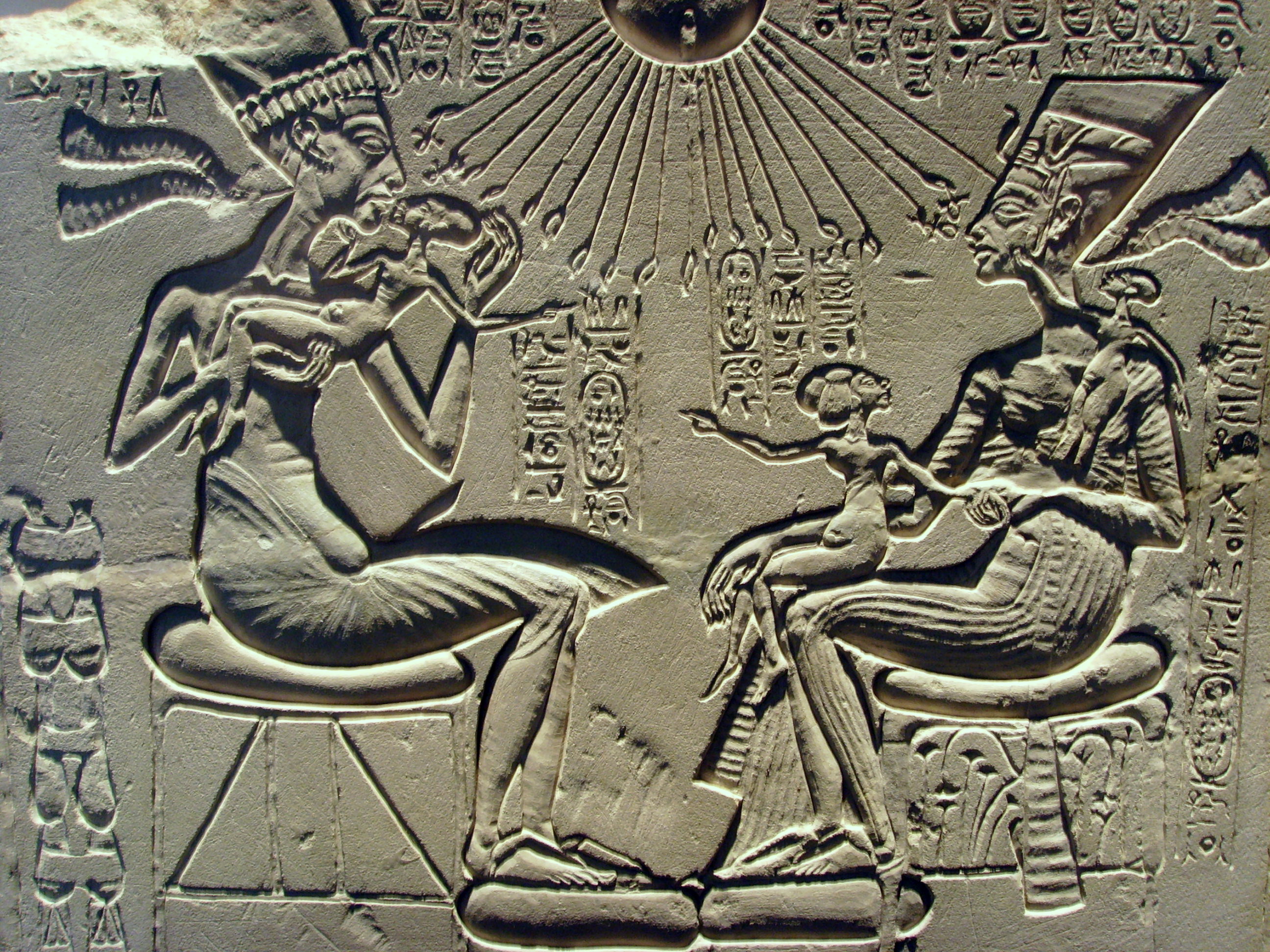
Akhenaten, Nefertiti and three daughters beneath Aten’s rays; limestone household altar, Amarna period, fourteenth century BCE, Berlin ÄM 14145. Context for royal mediation, not the hymn inscription in Ay’s tomb
Texto antigo
Egyptian hymn from Akhenaten’s fourteenth-century BCE reign, preserved in thirteen columns in Ay’s Amarna tomb. It praises Aten as life-giver and privileges royal knowledge; neither personal royal authorship nor Psalm 104’s dependence follows automatically.
Variantes do nome: Great Hymn to Aten, Great Aten Hymn
Contexto e fontes →
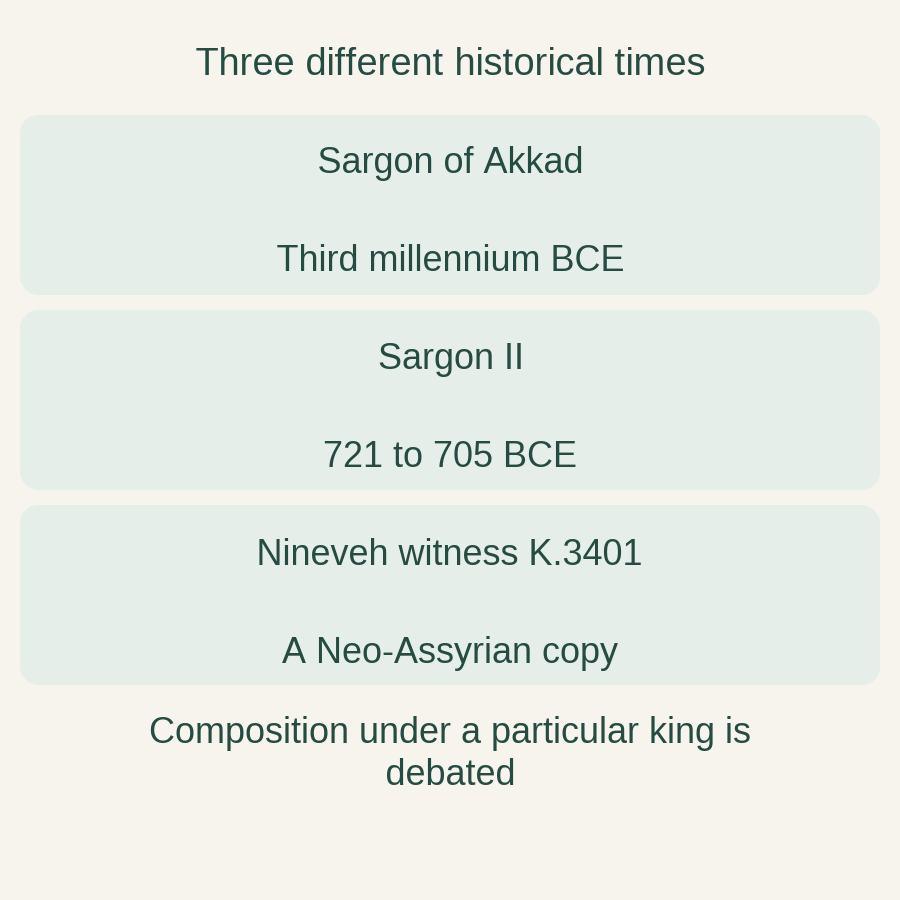
Modern diagram distinguishing Sargon of Akkad, Sargon II and the surviving copy; not a portrait of Frame
Pessoa
Assyriologist and historian of Mesopotamia, editor of Sargon II’s inscriptions in the Royal Inscriptions of the Neo-Assyrian Period project.
Variantes do nome: Grant Frame
Contexto e fontes →
Pessoa
Scholar of comparative Semitic linguistics and Ugaritic; professor emeritus at the University of Barcelona.
Variantes do nome: Gregorio del Olmo Lete
Contexto e fontes →
Pessoa
Debt-service law researcher whose 1989 dissertation compares Exodus, Deuteronomy and Leviticus.
Variantes do nome: Gregory Conrad Chirichigno
Contexto e fontes →
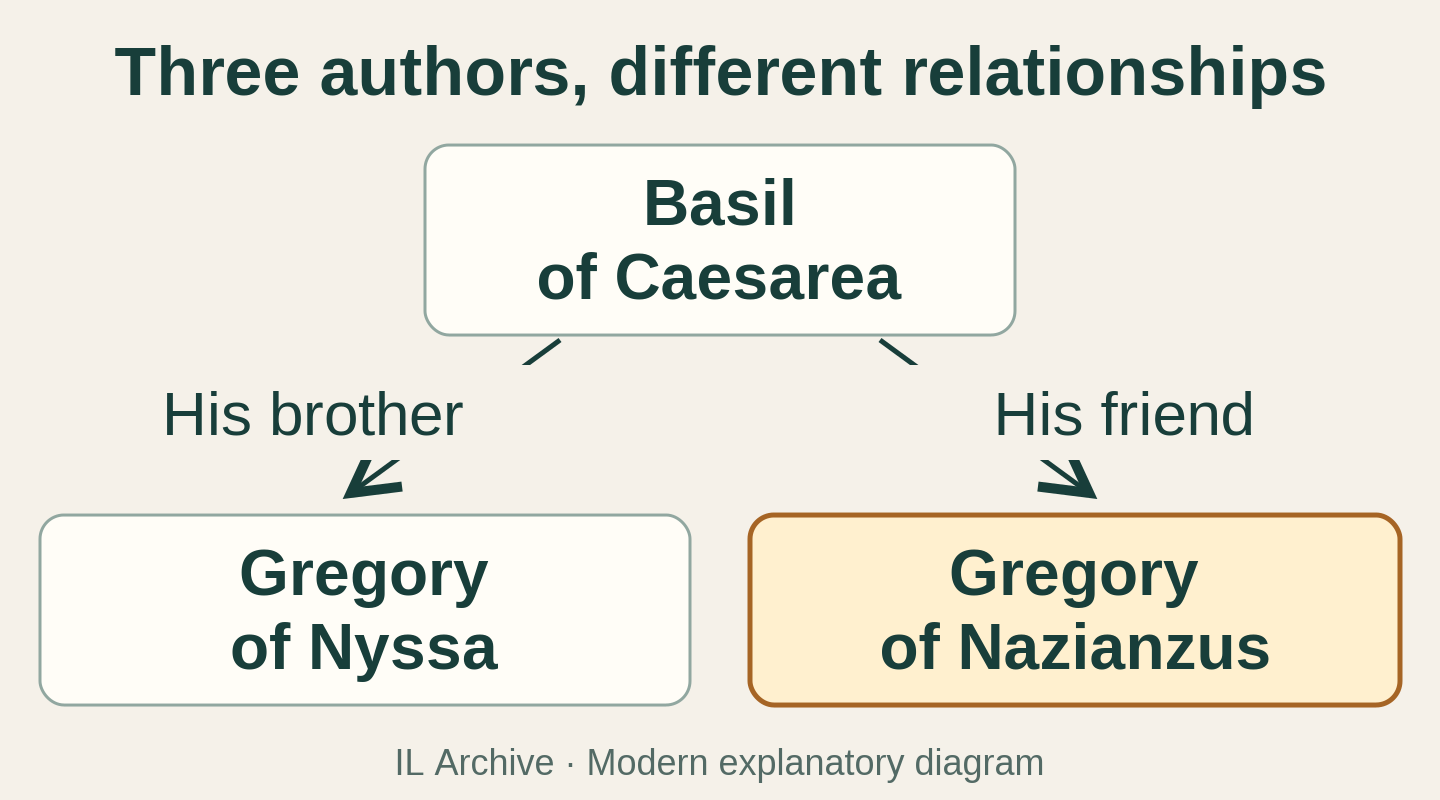
Modern Cappadocian relationship map: Basil is Gregory of Nyssa’s brother and Gregory of Nazianzus’s friend. Highlighting marks Nazianzus, author of Oration 31; the diagram is not a historical portrait
Pessoa
Fourth-century bishop and theologian, one of the Cappadocian Fathers.
Variantes do nome: Gregory of Nazianzus
Contexto e fontes →
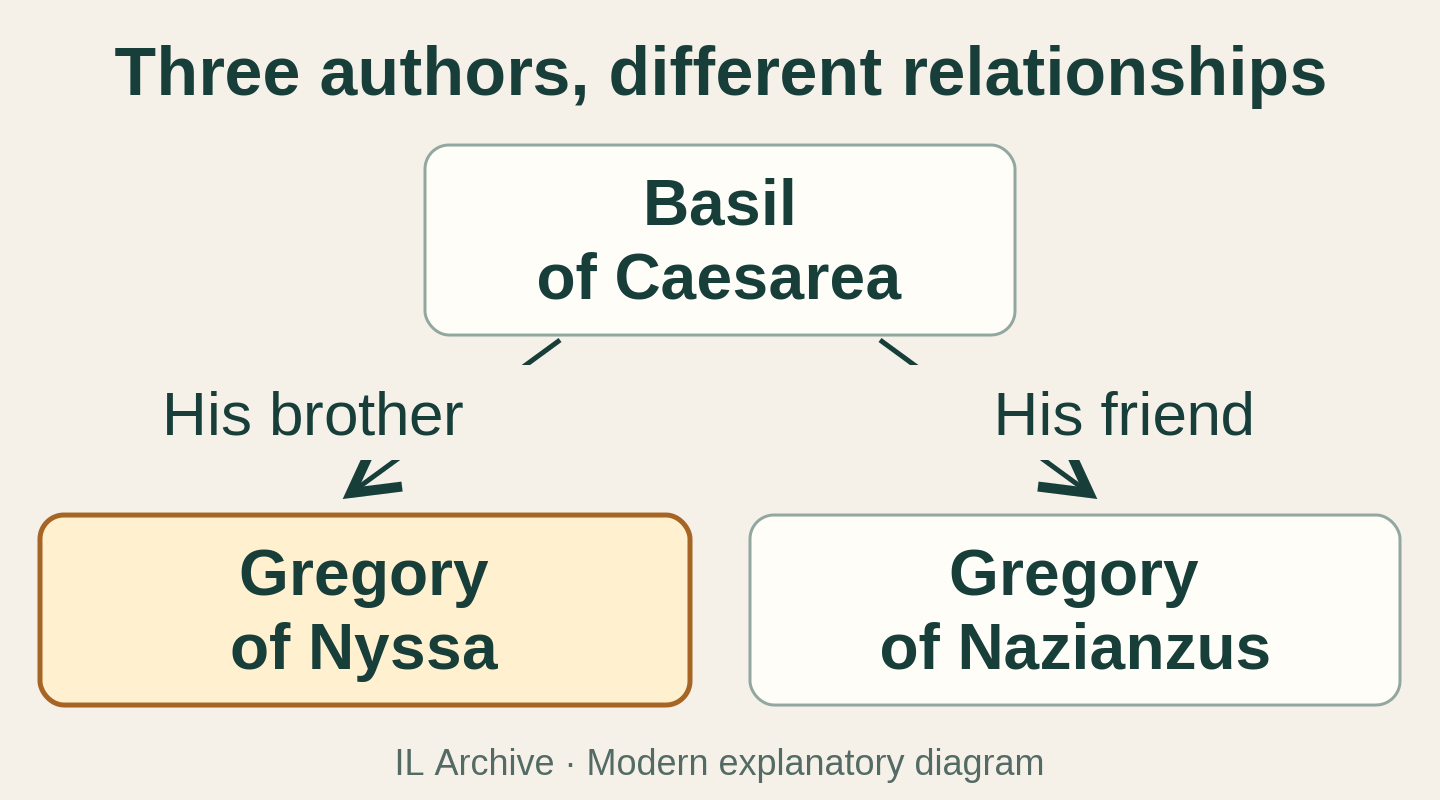
Modern map highlighting Gregory of Nyssa as Basil’s brother and distinguishing him from Basil’s friend Gregory of Nazianzus. The relations clarify author identities without inventing ancient appearances
Pessoa
Fourth-century bishop of Nyssa and theologian, one of the Cappadocian Fathers.
Variantes do nome: Gregory of Nyssa
Contexto e fontes →

Modern AI-generated interpretive cover: an open book, episcopal emblem and imagined riverside town. It is neither Gregory’s actual manuscript nor a documented reconstruction of sixth-century Tours
Pessoa
Bishop of Tours (573–594) and Gallo-Roman historian; author of ten books of Histories and works on miracles and saints. He rendered the Ephesian Sleepers tale into Latin with a Syrian interpreter, without establishing the source language or later channels of influence.
Variantes do nome: Gregory of Tours
Contexto e fontes →
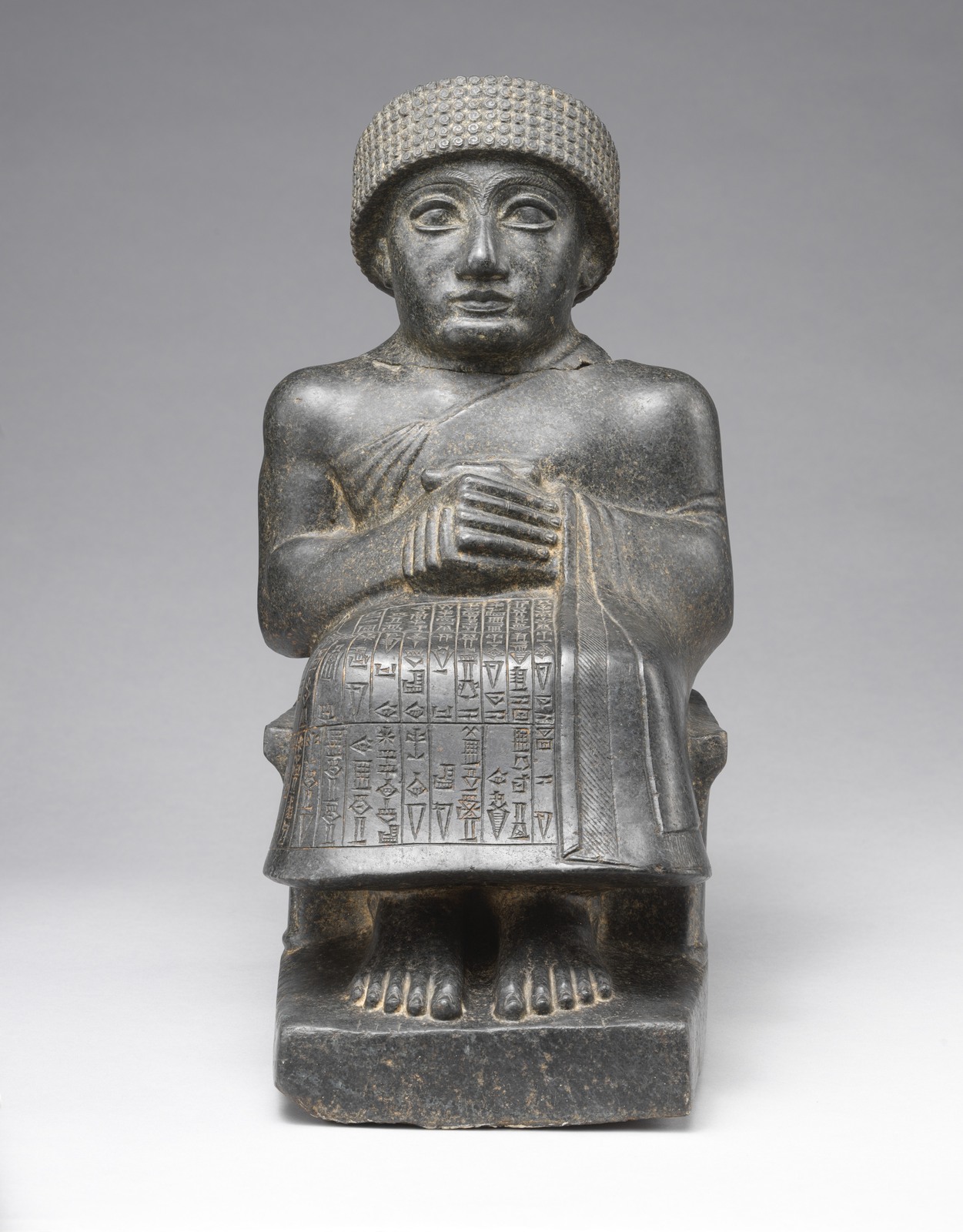
Statue of Gudea, Met 59.2, ca. 2090 BCE. The human ruler of Lagash, not a deity or an image of the Anunna collective
Entidade
Ruler of Lagash in the late third millennium BCE, whose inscriptions document temple construction and the name Anunna.
Variantes do nome: Gudea
Contexto e fontes →
Pessoa
Historian of religions specializing in Indian traditions, professor at Strasbourg since 2019.
Variantes do nome: Guillaume Ducœur
Contexto e fontes →

Modern symbolic image of an open book whose pages branch into layers of stories and interpretation. Newly AI-generated artwork, not a Genesis Rabbah manuscript or a historical reconstruction
Entidade
Jewish exegetical midrash on Genesis, mainly redacted around the fifth century CE in Roman Palestine. It assembles interpretations and narratives from different layers, including 38:13 on Abraham and the idols.
Variantes do nome: Genesis Rabbah, Genesis Rabba
Contexto e fontes →
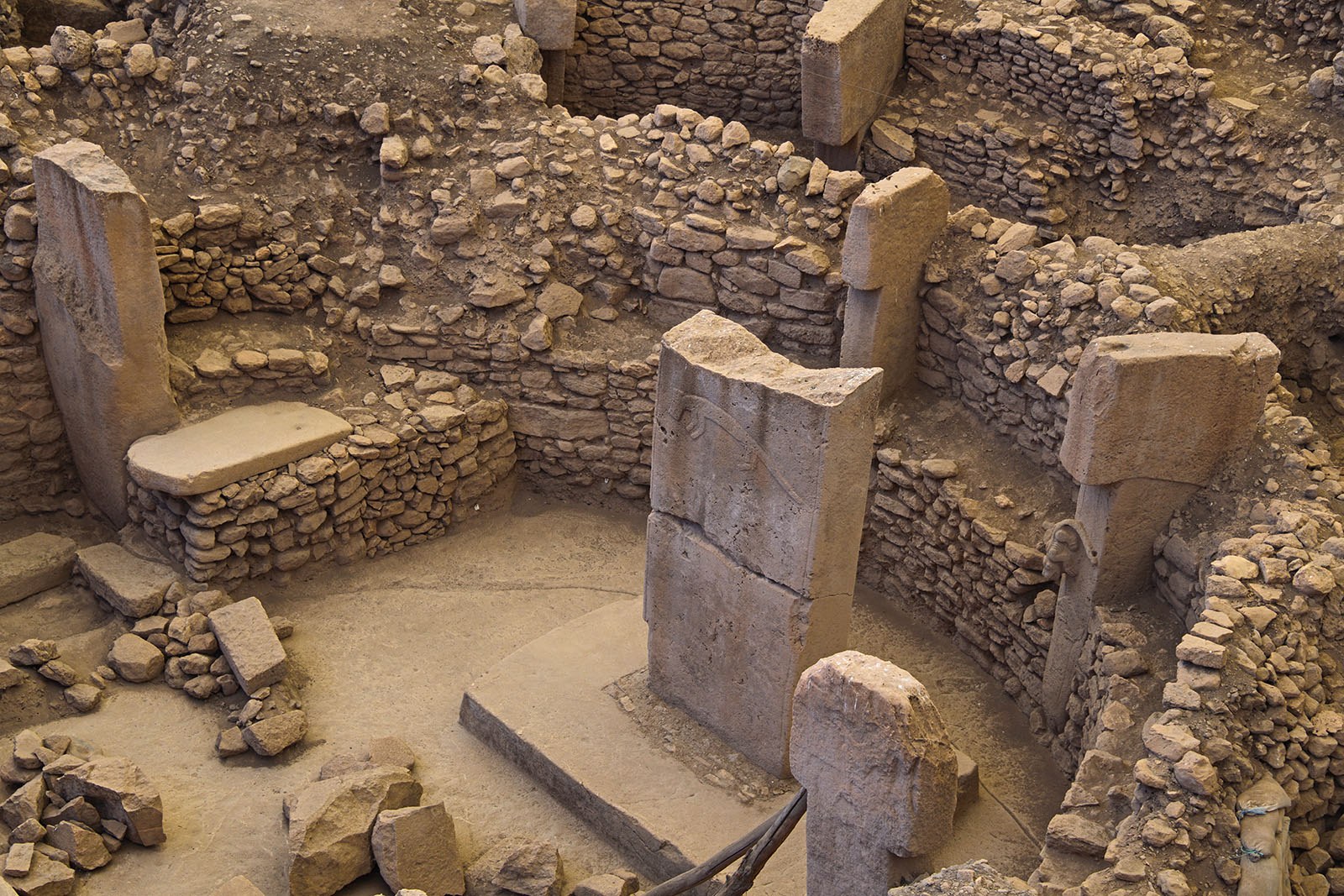
Building C at Göbekli Tepe, southeastern Türkiye, photographed by Dick Osseman in 2019. T-shaped limestone pillars and communal walls are visible in their partly restored excavated condition; this is not a reconstruction of a prehistoric ritual or proof of a divine identity
Sítio
Pre-Pottery Neolithic site near Şanlıurfa with T-shaped pillars and communal buildings. Evidence documents habitation and collective activities alongside a ritual component; the figures’ names are unknown.
Variantes do nome: Göbekli Tepe, Gobekli Tepe
Contexto e fontes →
Pessoa
Austrian scholar of ancient Judaism and rabbinic literature, born in 1940.
Variantes do nome: Günter Stemberger
Contexto e fontes →
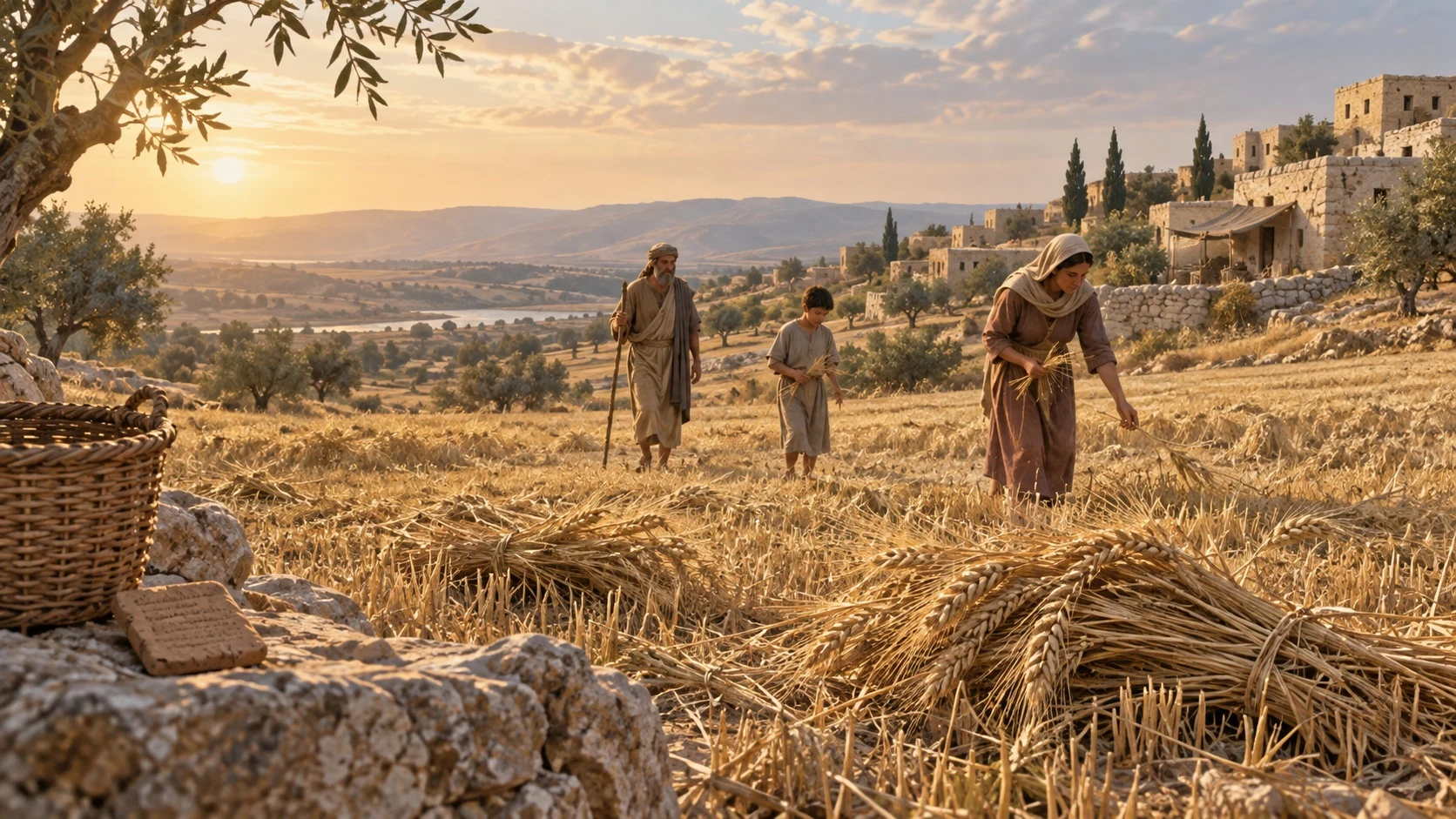
Contemporary conceptual illustration of sheaves left in a harvested field, inspired by Deuteronomy’s harvest rules. Not a record of an identified ancient village or evidence that the rules were enforced; IL Archive / CC0
Entidade
The Hebrew gēr is a resident outsider whose protections, work, gleaning and ritual roles differ by text; not simply any foreigner or later convert.
Variantes do nome: ger, gēr, resident alien
Contexto e fontes →

A newly generated conceptual illustration of a heavenly assembly and a distant figure below, inspired by Job 1–2. Not an ancient artefact, documented historical reconstruction, or verified likeness of ha-satan or Yahweh
Entidade
Hebrew “the adversary” in Job 1–2, who challenges Job’s motives with Yahweh’s permission. “Accuser” is a common functional interpretation, but “enforcer” has been argued; later Satan traditions cannot simply be read back into the passage.
Variantes do nome: ha-satan
Contexto e fontes →
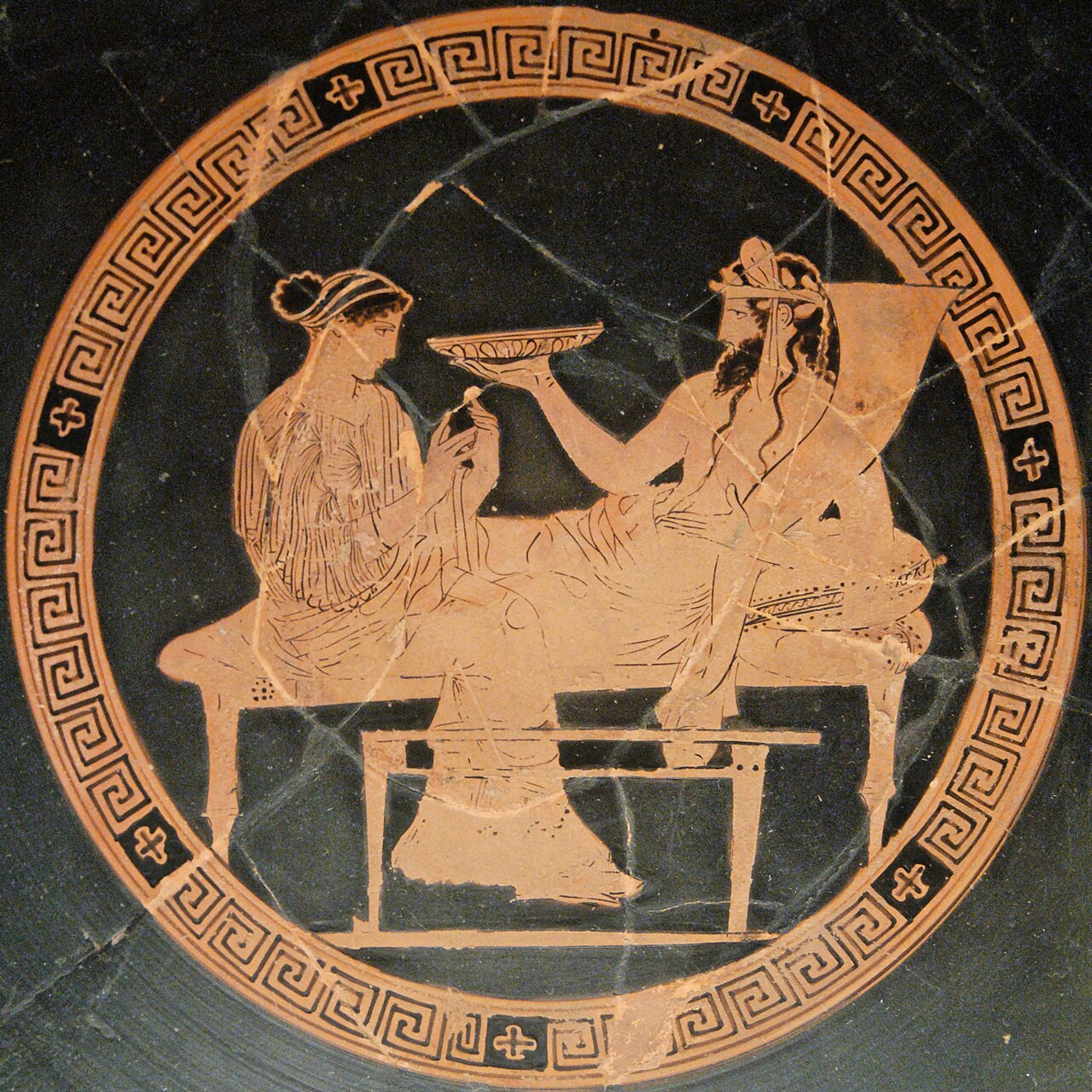
Hades and Persephone inside an Attic cup, about 430 BCE; British Museum 1847,0909.6 / E 82. An ancient artistic representation of the underworld’s rulers
Entidade
Underworld god in Greek narratives, and brother of Zeus and Poseidon in the Iliad exchange.
Variantes do nome: Hades
Contexto e fontes →