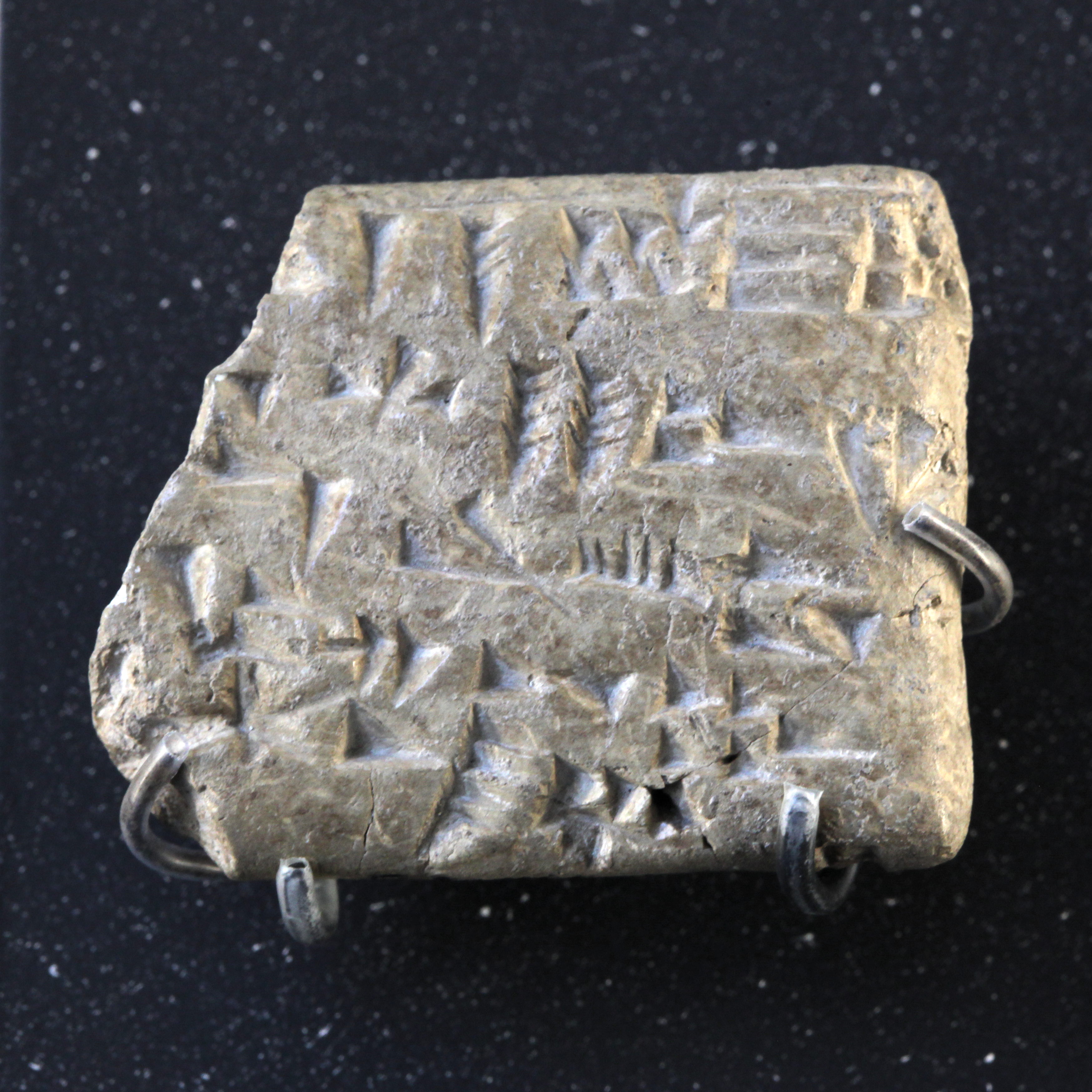
Fragment of a Ugaritic alphabet tablet in alphabetic cuneiform, from Ras Shamra, c. 1400–1200 BCE; Louvre, AO 19992 / RS 10.087. Evidence for one Semitic writing system, not the “source” of all Semitic languages
Entidade
A branch of the Afroasiatic language family, including Akkadian, Ugaritic, Hebrew, Aramaic, Arabic, Ethio-Semitic and South Arabian languages; a linguistic, not racial or religious, classification.
Variantes do nome: Semitic languages, Semitic language family
Contexto e fontes →
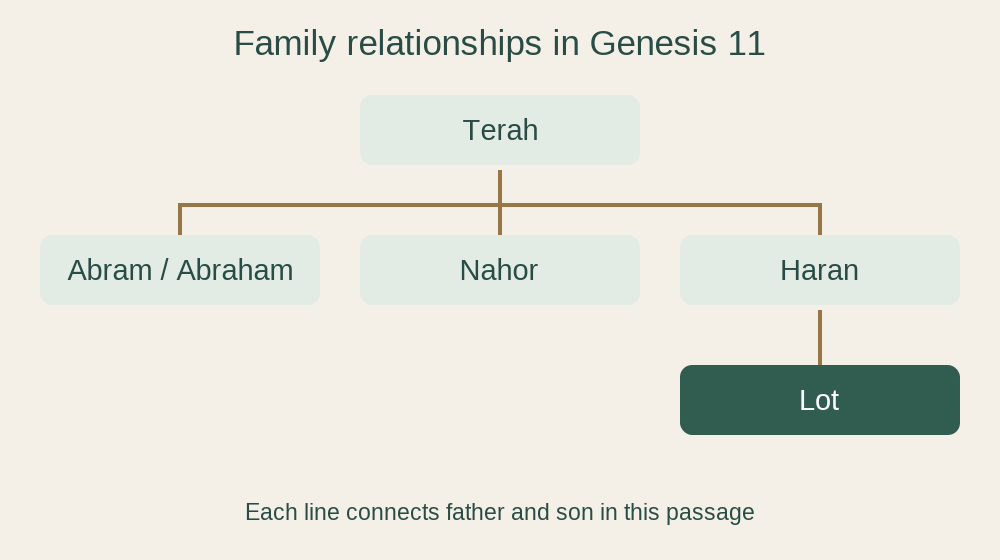
Modern diagram of family relationships in Genesis 11; the highlighted node identifies this entry’s figure. It explains the narrative’s genealogy, not physical likenesses or independent proof of their lives
Pessoa
Figure in Genesis and the Qur’an; Haran’s son and Abraham’s nephew in the biblical genealogy, whose belief appears in a Qur’anic migration scene.
Variantes do nome: Lot
Contexto e fontes →
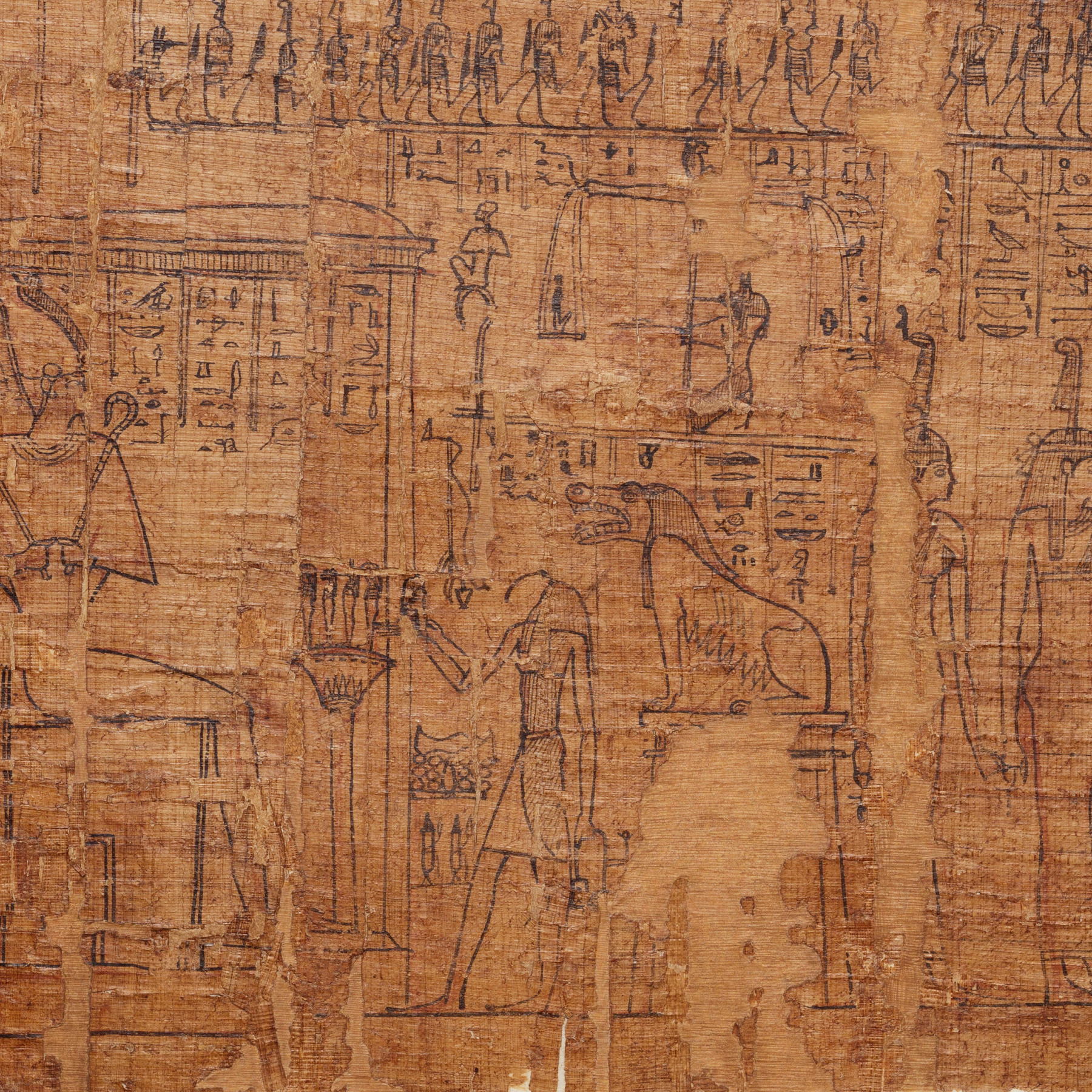
Editorial crop of the judgment papyrus: Anubis by the scale, a small figure of Maat in one pan, and Ammit nearby; Egypt, ca. 230–150 BCE; Met 66.99.142
Entidade
An Egyptian principle of truth, justice, and right order, also embodied by the ostrich-feather goddess Maat; differently expressed in rule, ritual, and funerary judgment.
Variantes do nome: Maat, Ma'at, Maʿat
Contexto e fontes →
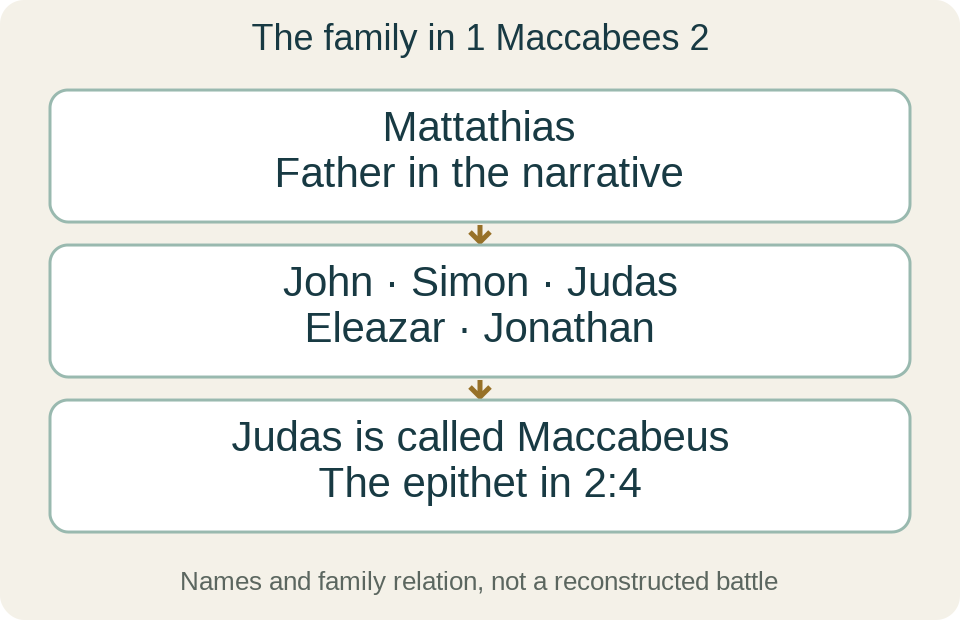
Modern diagram of the family as introduced in 1 Maccabees 2:1–5, not portraits or a battle scene. The collective name concerns Mattathias’s family; Maccabeus is Judas’s epithet in the text
Entidade
Jewish family associated with resistance to Seleucid rule in the second century BCE; 1 Maccabees narrates Mattathias and his sons.
Variantes do nome: Maccabees
Contexto e fontes →
Pessoa
Virologist with a PhD, also researching archaeological shrines and curtains.
Variantes do nome: Madeleine Mumcuoglu
Contexto e fontes →
Pessoa
Mahmoud Omidsalar is a scholar of Persian literature, folklore and textual history.
Variantes do nome: Mahmoud Omidsalar
Contexto e fontes →
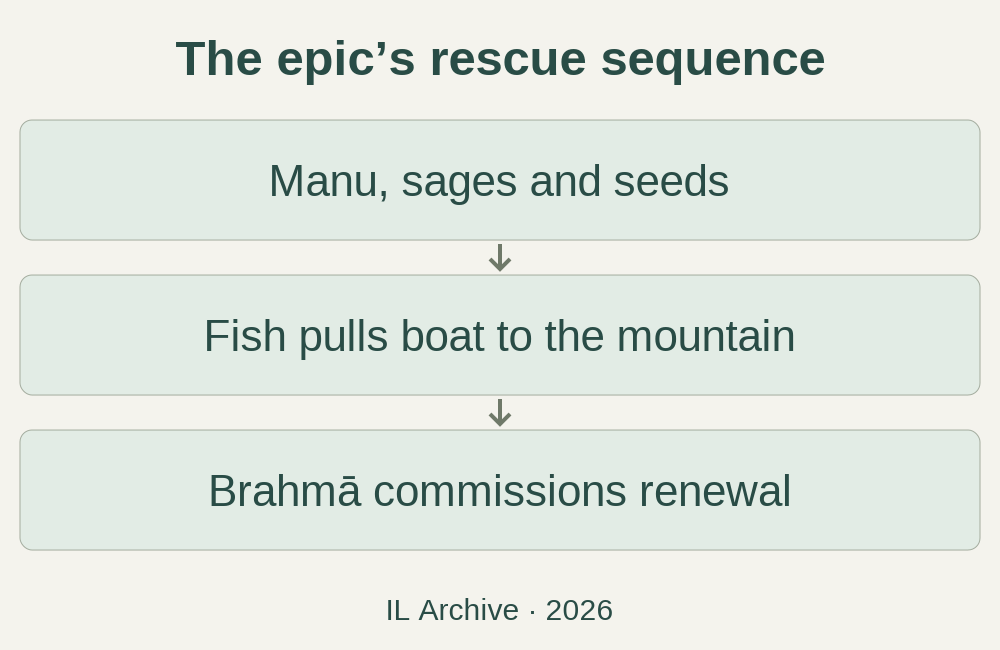
Modern explanatory diagram of narrative sequence and relationships, not a manuscript reproduction or portrait
Texto antigo
Sanskrit epic formed over centuries, preserving a version of Manu, the fish and the seeds.
Variantes do nome: Mahābhārata, Mahabharata
Contexto e fontes →
Pessoa
Malka Zeiger Simkovich is a scholar of ancient Judaism and Second Temple literature.
Variantes do nome: Malka Zeiger Simkovich
Contexto e fontes →
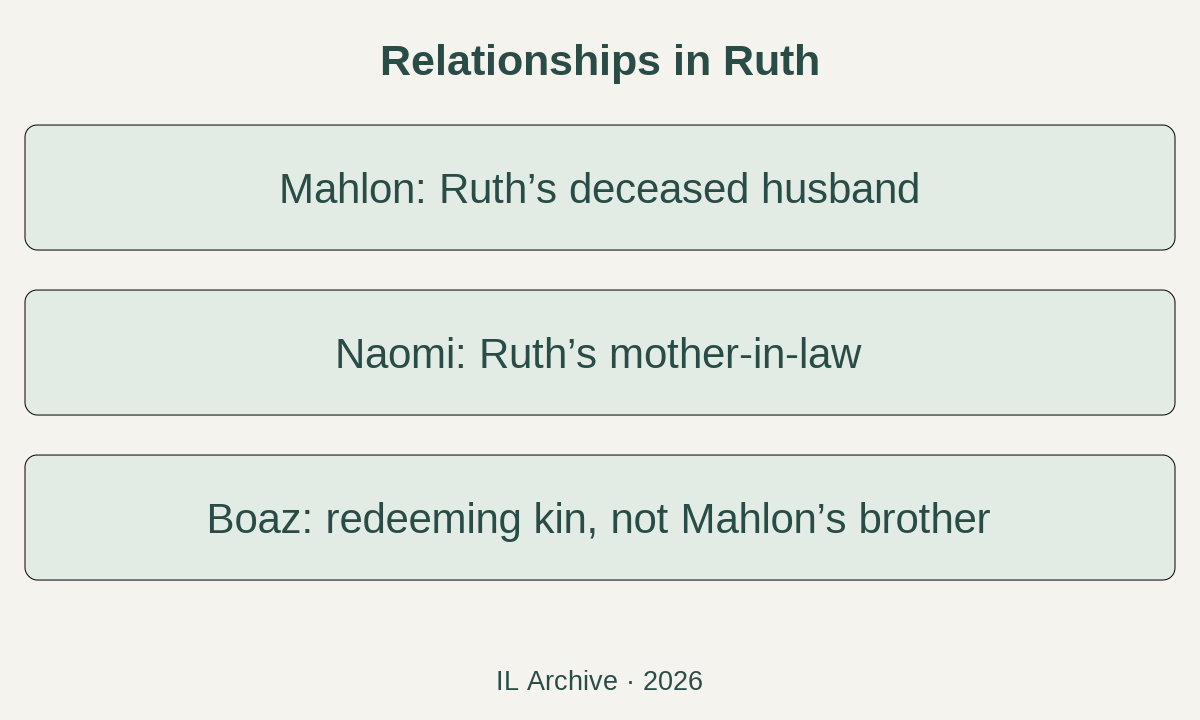
Modern explanatory diagram of relationships or cases in the specified witnesses; not portraits, a legal tablet or an ancient manuscript
Pessoa
Ruth’s deceased husband, named in the marriage scene of chapter 4.
Variantes do nome: Mahlon in Ruth
Contexto e fontes →
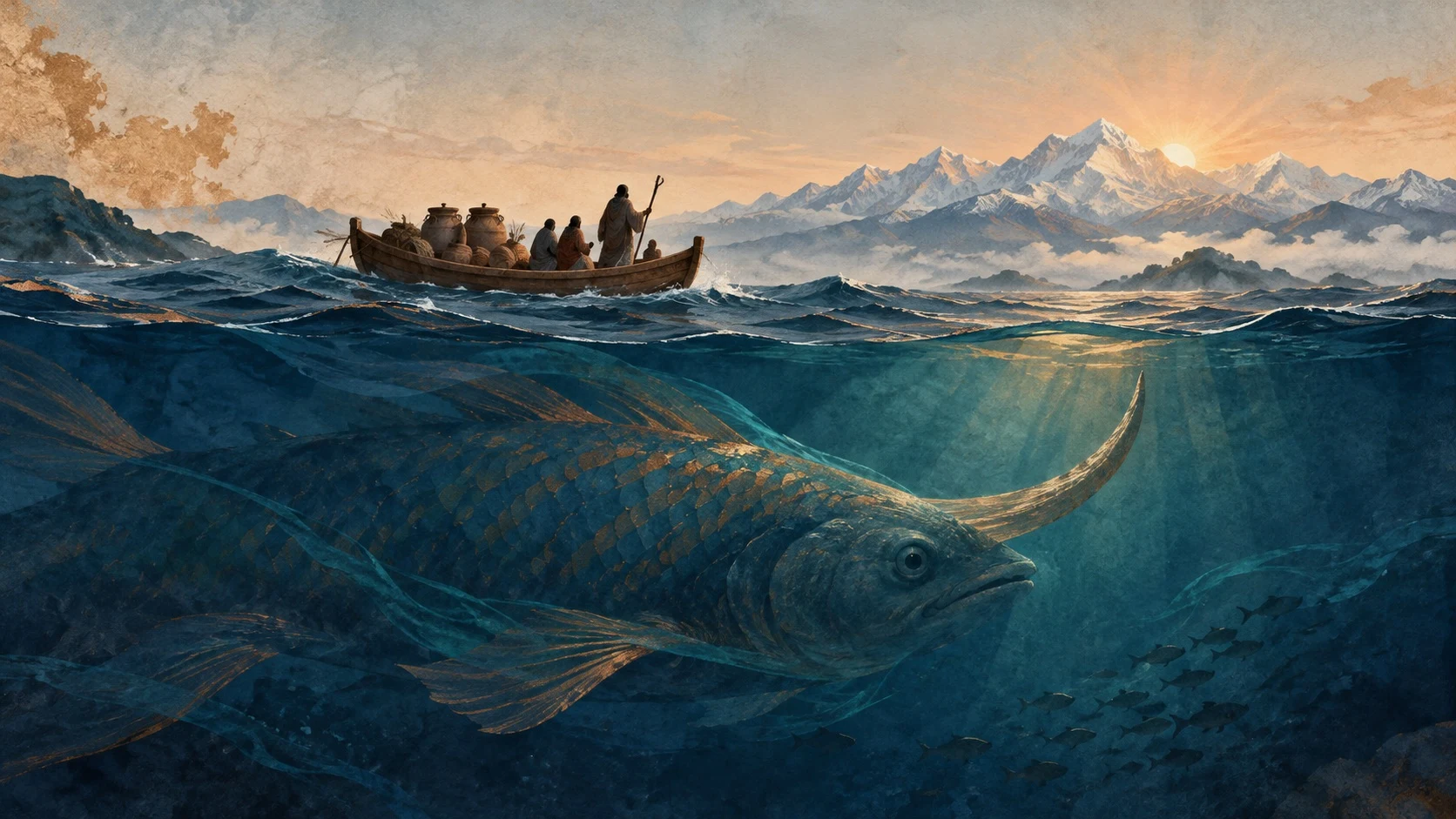
Modern conceptual illustration imagining a horned fish, a boat, vessels and mountains, chiefly inspired by the epic form of Manu’s flood story; neither an ancient artifact nor evidence of a documented location
Pessoa
A central human figure in several Sanskrit accounts of the flood and human renewal; his position and role differ across the Śatapatha Brāhmaṇa, Mahābhārata and Purāṇas.
Variantes do nome: Manu, flood survivor Manu
Contexto e fontes →
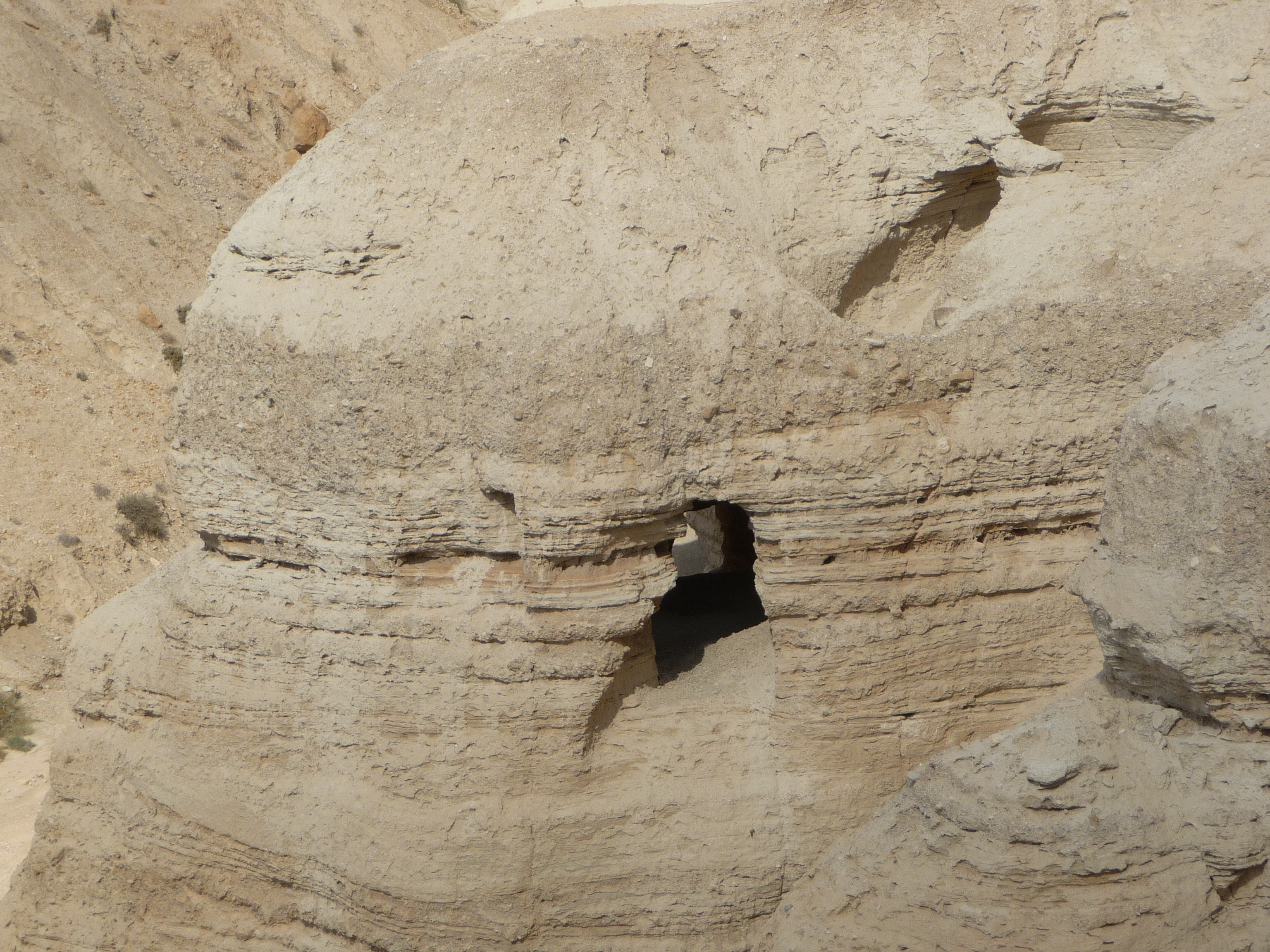
Cave 4 at Qumran, photographed by Immanuel Giel on 12 May 2018. A contextual view of the setting where part of the collection was found, not a scroll photograph or a reconstruction of its discovery
Entidade
Manuscript collections from the Judaean Desert, best known through Qumran: diverse works, languages and textual forms, with copying distinguished from composition.
Variantes do nome: Dead Sea Scrolls
Contexto e fontes →
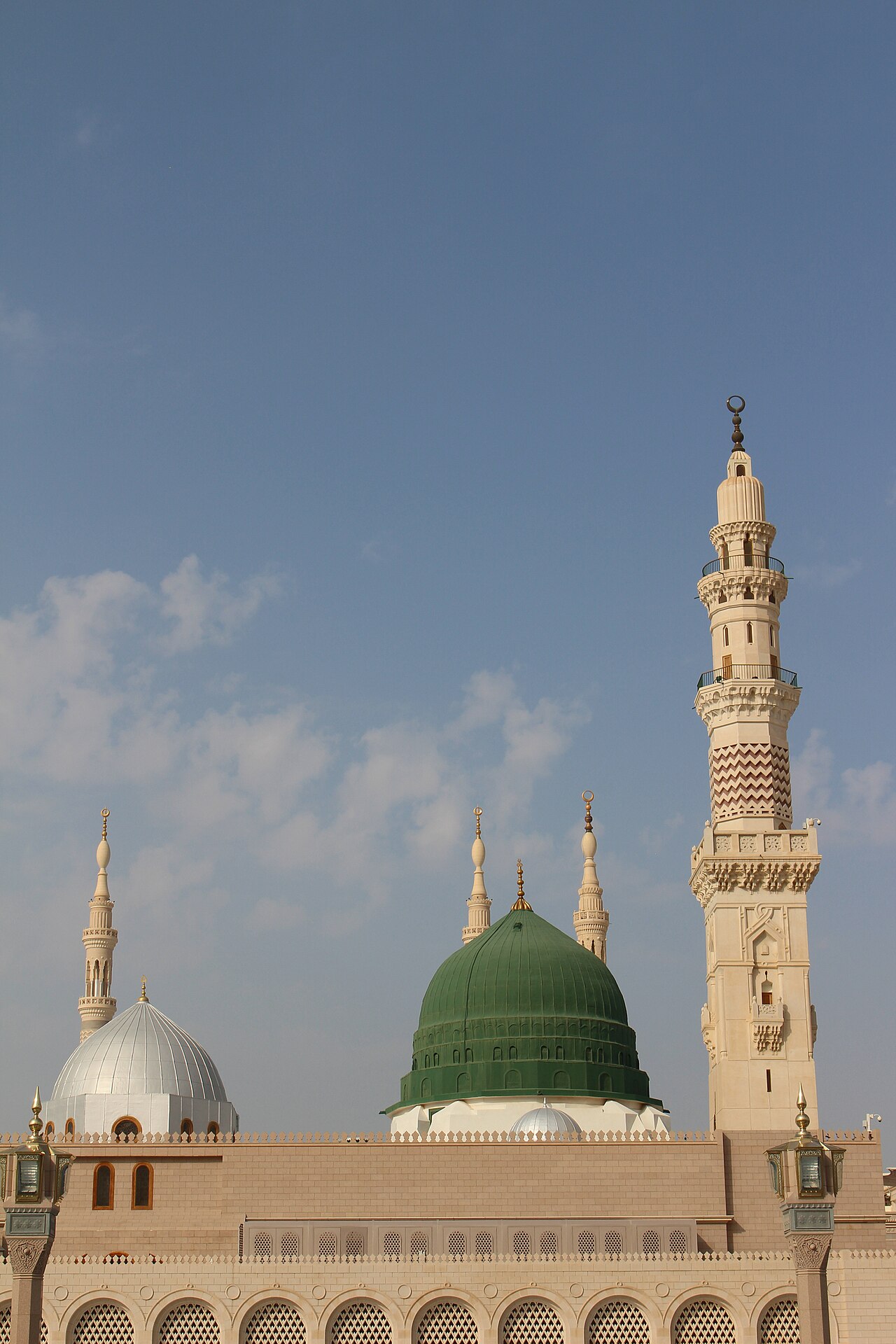
The Green Dome and minarets of the Prophet’s Mosque in Medina, Saudi Arabia, on 26 November 2025. This contemporary photograph shows part of the place associated with Muhammad’s life; the visible buildings reflect later architectural phases
Pessoa
Muhammad is the prophet of Islam, living about 570–632 CE in the setting of Islam’s seventh-century emergence
Variantes do nome: Prophet Muhammad, the Prophet Muhammad
Contexto e fontes →
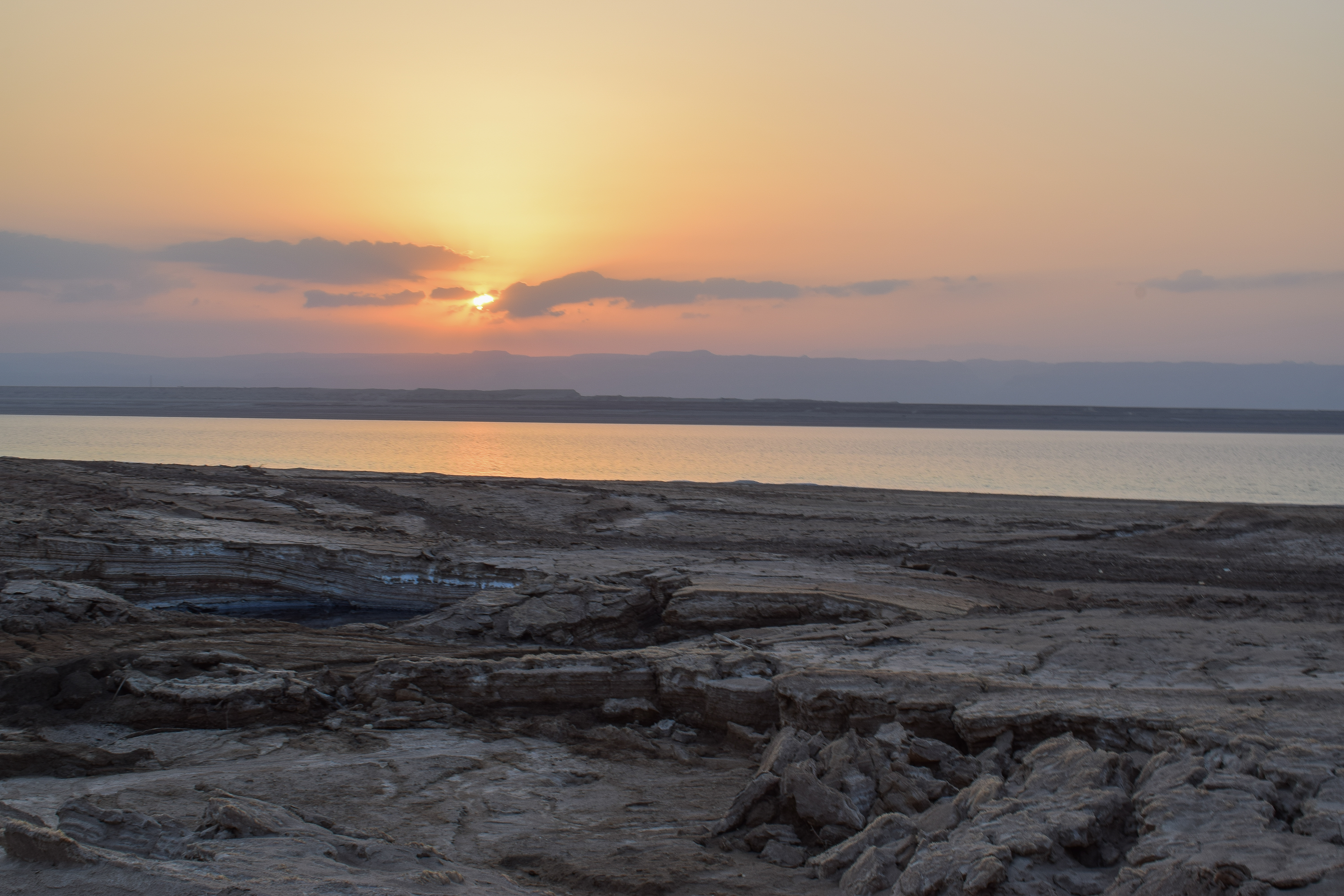
Sunset over the Dead Sea from its eastern shore at Ghor Al-Haditha, Jordan, on 26 October 2018. The Judean Mountains appear on the western horizon. The photograph illustrates the lake’s geography; the Qumran manuscript caves lie elsewhere on its western side
Sítio
The Dead Sea is a salt lake in the Jordan Rift Valley, near sites where ancient manuscripts were found
Variantes do nome: Dead Sea
Contexto e fontes →
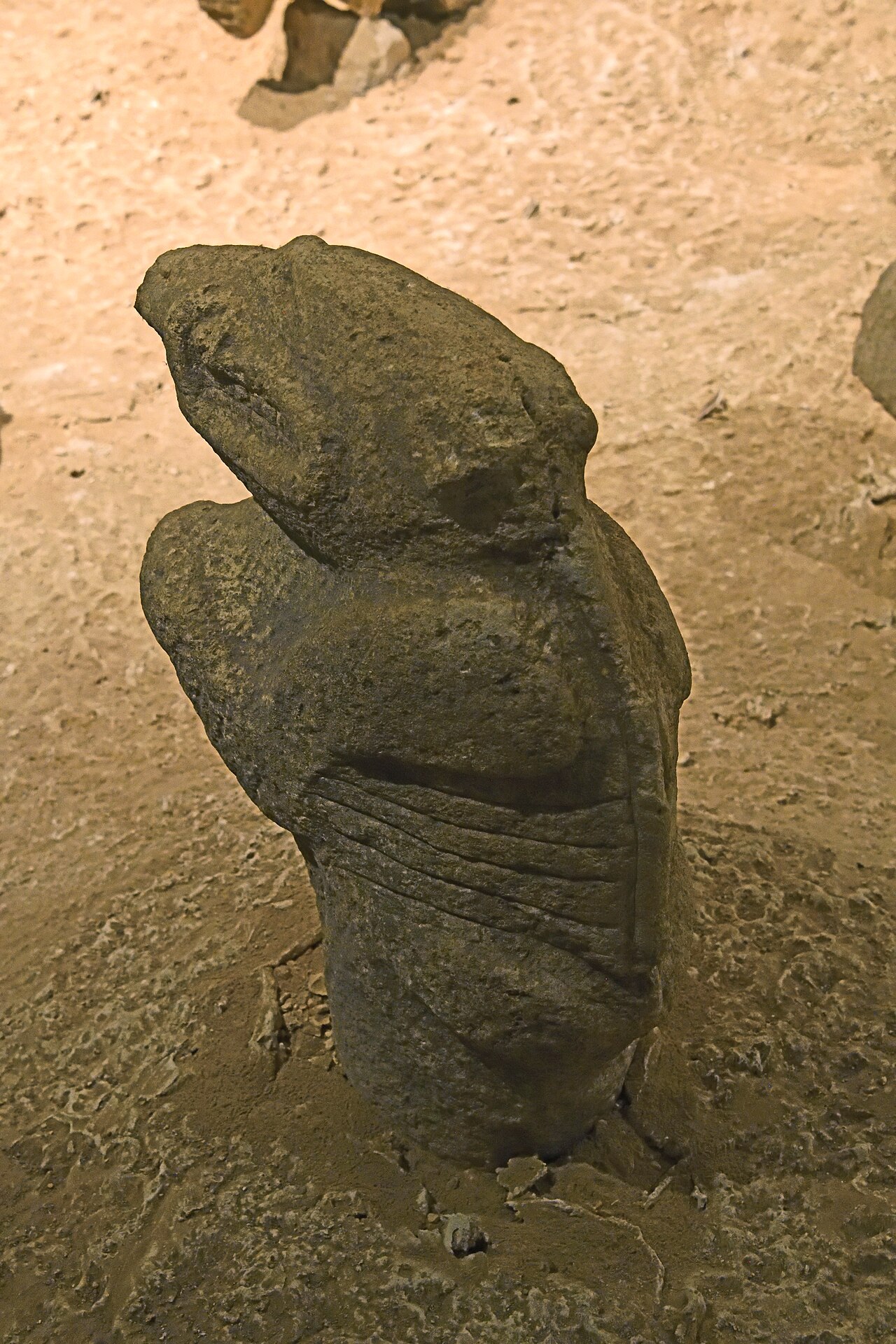
A wild-boar sculpture from Göbekli Tepe in a Şanlıurfa Museum display. It illustrates the animal imagery Marc Verhoeven discusses, not his portrait and not the central pillars
Pessoa
An archaeologist at RAAP in the Netherlands who on 13 June 2025 published a study of humans and animals in Göbekli Tepe’s imagery.
Variantes do nome: Marc Verhoeven
Contexto e fontes →
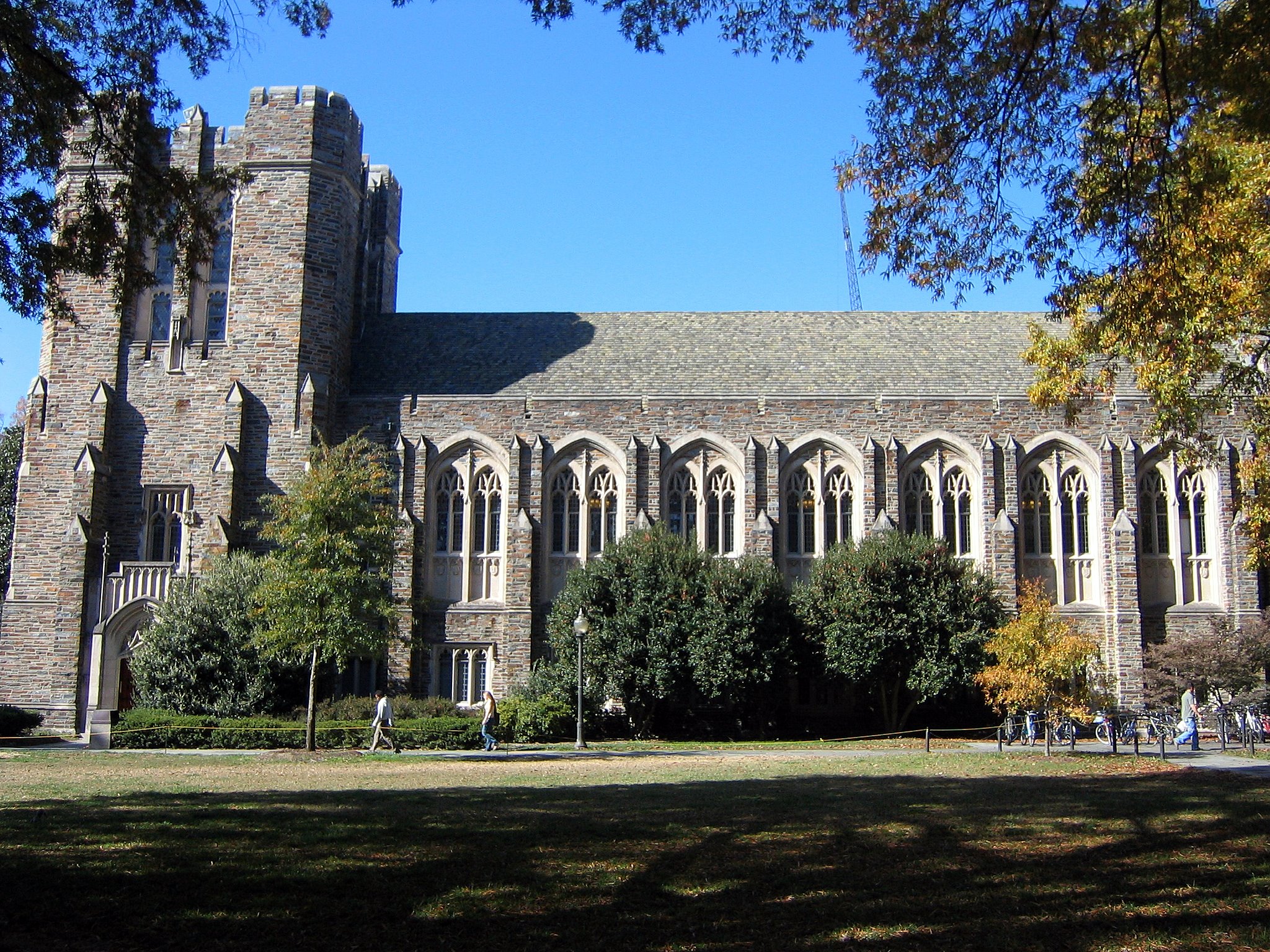
Perkins Library at Duke University in the United States, dated 10 November 2006 in the source record. The photograph shows part of the university setting associated with Marc Zvi Brettler’s work in Judaic and Hebrew Bible studies
Pessoa
Hebrew Bible scholar and professor emeritus at Duke, studying biblical texts historically and literarily.
Variantes do nome: Marc Brettler, Marc Zvi Brettler
Contexto e fontes →
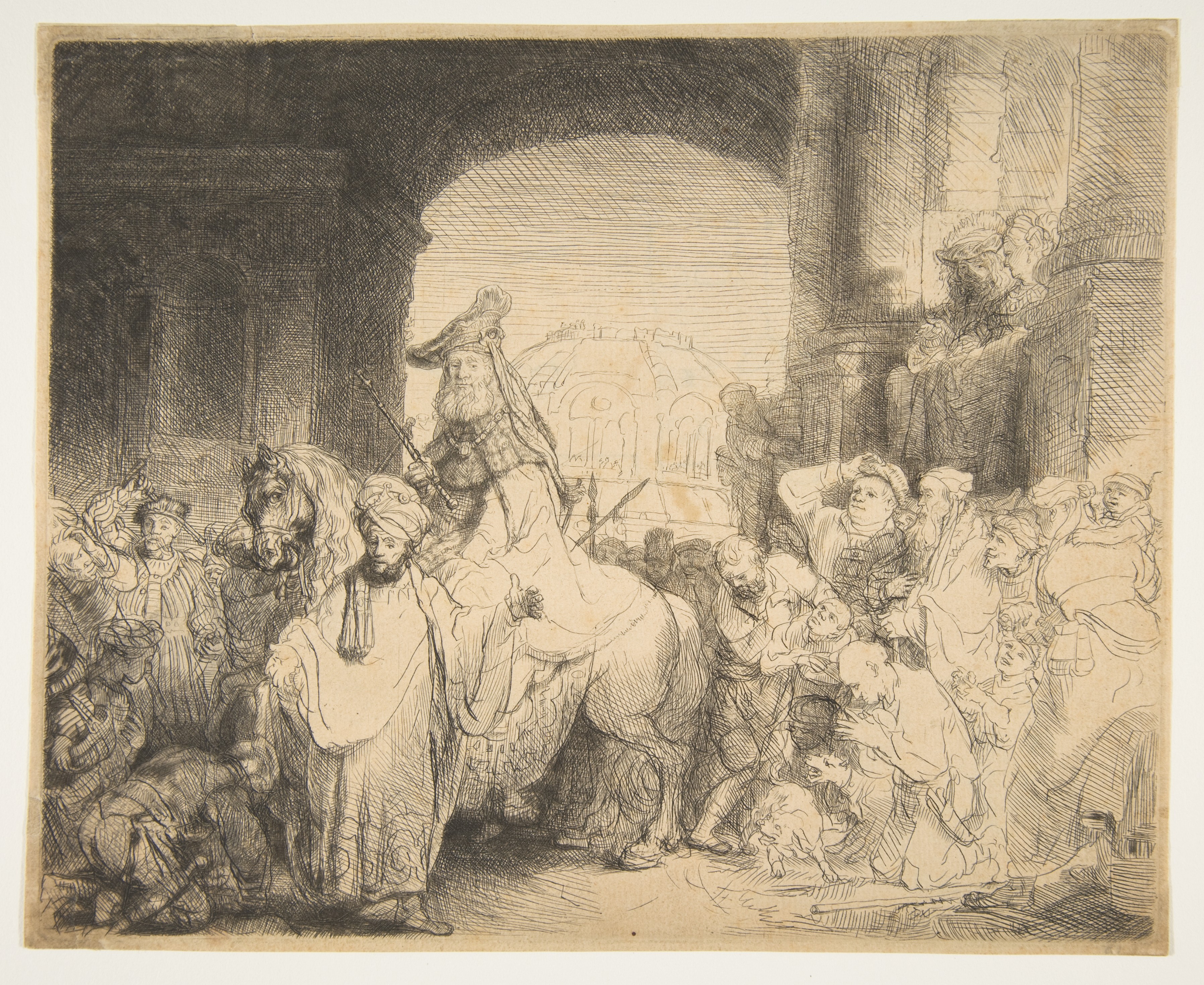
The Triumph of Mordecai, Rembrandt print,about 1641; Met 17.37.191. Mordecai rides while Haman leads: later interpretation of Esther 6, not documentary evidence of the event
Pessoa
Esther’s relative and guardian in the story, who uncovers a plot, confronts Haman and rises at court.
Variantes do nome: Mordecai in Esther, Mordecai, Mardochaios
Contexto e fontes →
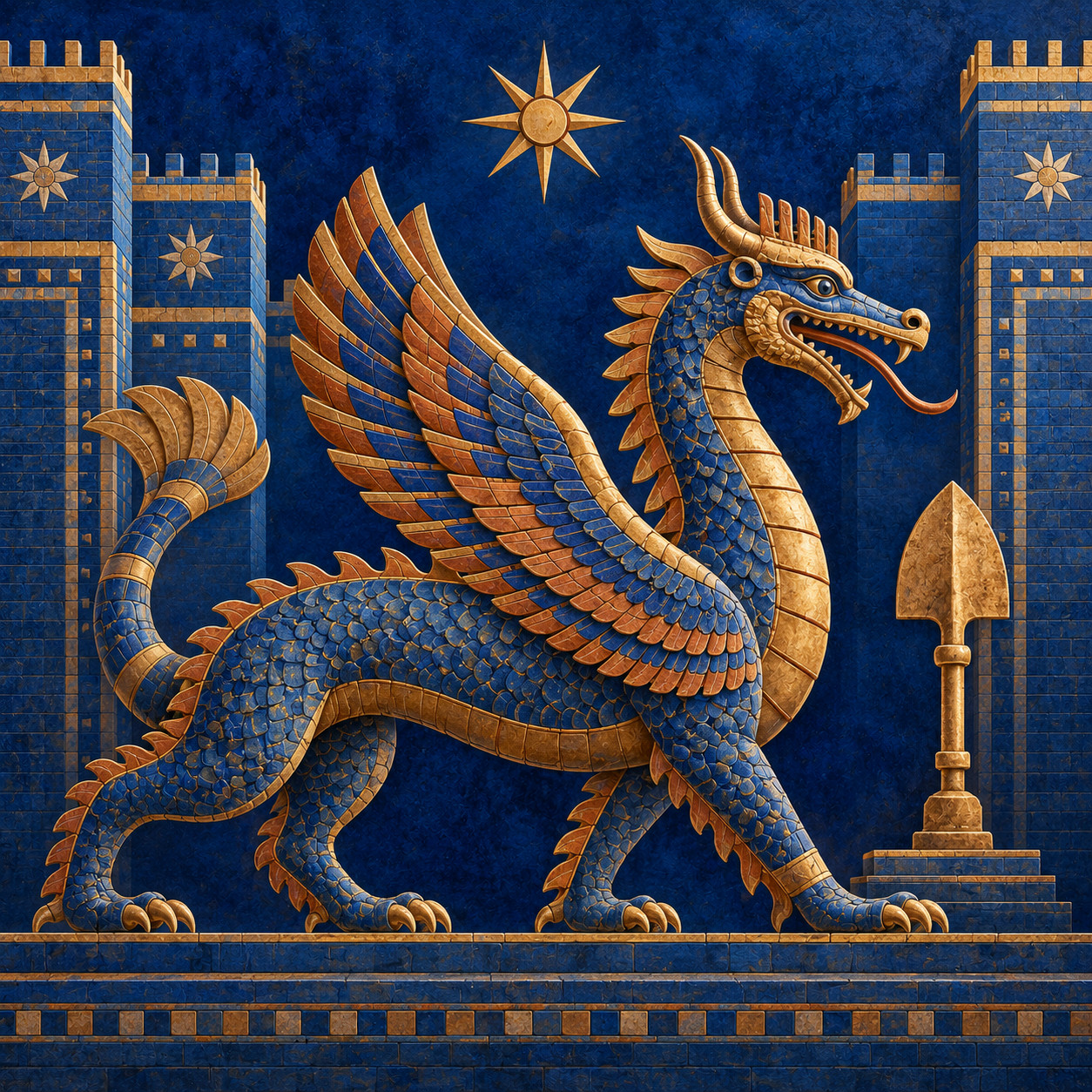
Modern AI-generated symbolic cover inspired by Babylonian colours, the spade and the mušḫuššu dragon. Wings and ornamental details are imaginative, not an ancient artefact or an evidenced reconstruction of Marduk
Entidade
Babylon’s leading god, worshipped at Esagil and elevated in the Akkadian Enūma eliš. His symbols include a spade and mušḫuššu dragon. His earliest origins remain obscure; Nibiru is no evidence of a planetary homeland.
Variantes do nome: Marduk, Merodach
Contexto e fontes →
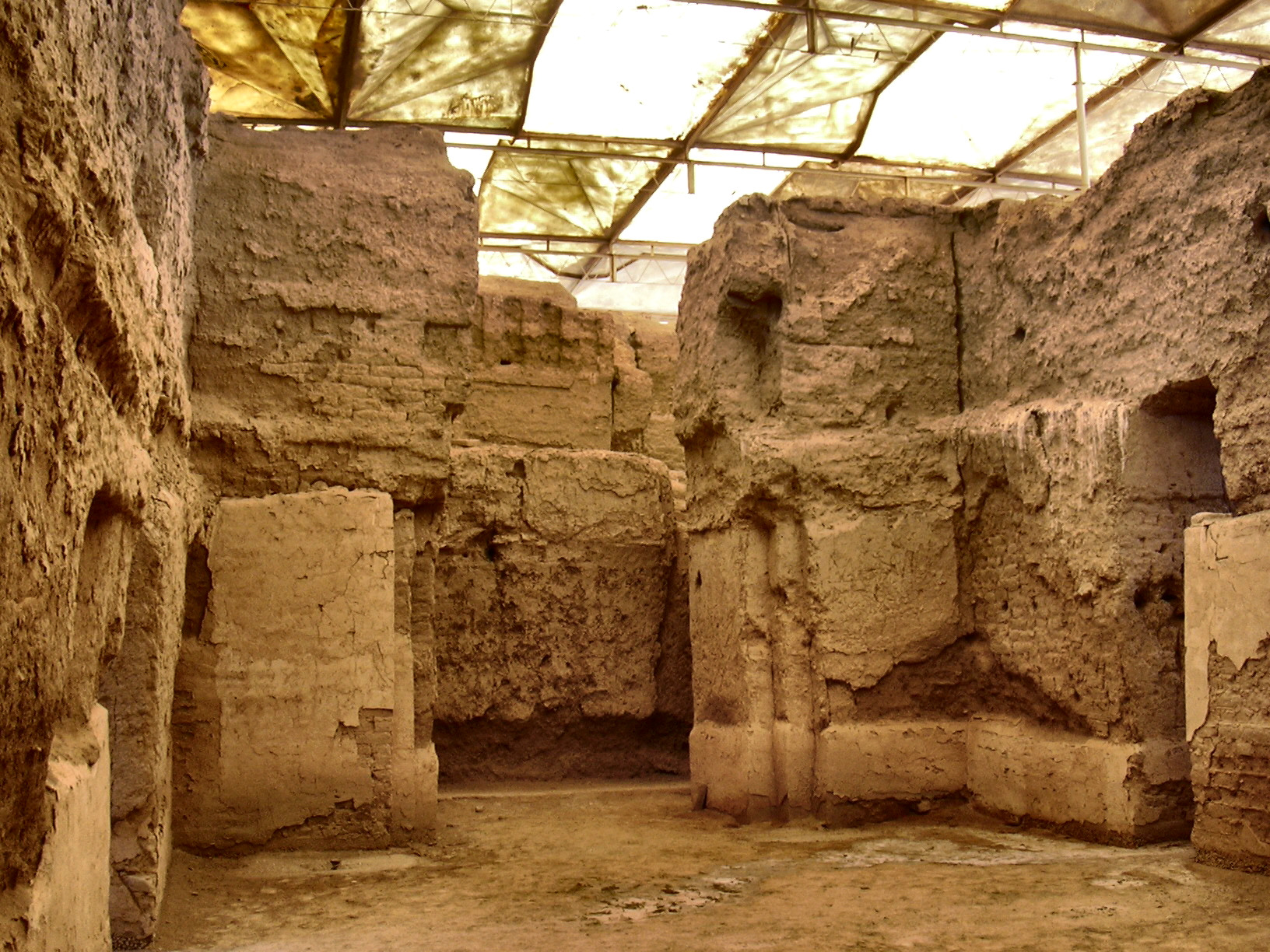
Surviving walls of the palace at Mari, Tell Hariri, photographed in 2006 beneath modern protective roofing. Contrast was adjusted to clarify the mud-brick masonry; this documents the ruins, not a reconstruction of the ancient palace
Sítio
Mari at Tell Hariri on the Syrian Euphrates was founded around 2900 BCE and rebuilt through three major urban phases. Its palace and cuneiform archives illuminate trade, royal government and religious practice, especially in the eighteenth century BCE.
Variantes do nome: Mari, Tell Hariri
Contexto e fontes →
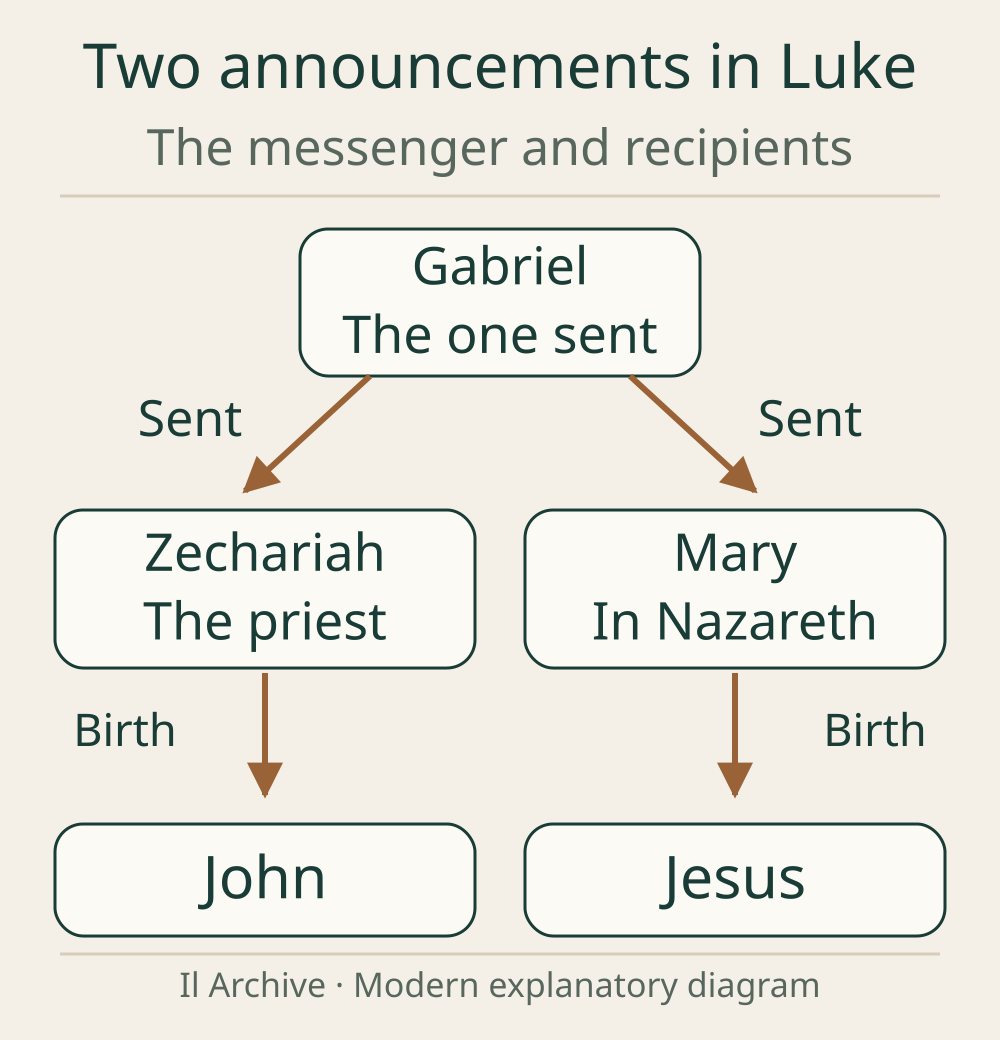
Modern diagram of the two announcements in Luke 1:5–38: Gabriel is sent to Zechariah to announce John’s birth and to Mary to announce Jesus’s birth. Lower arrows show the announcement’s subject, not descent from the angel. No faces or physical appearances are reconstructed
Pessoa
The recipient of Gabriel’s announcement of Jesus’s birth in Luke 1.
Variantes do nome: Mary mother of Jesus
Contexto e fontes →
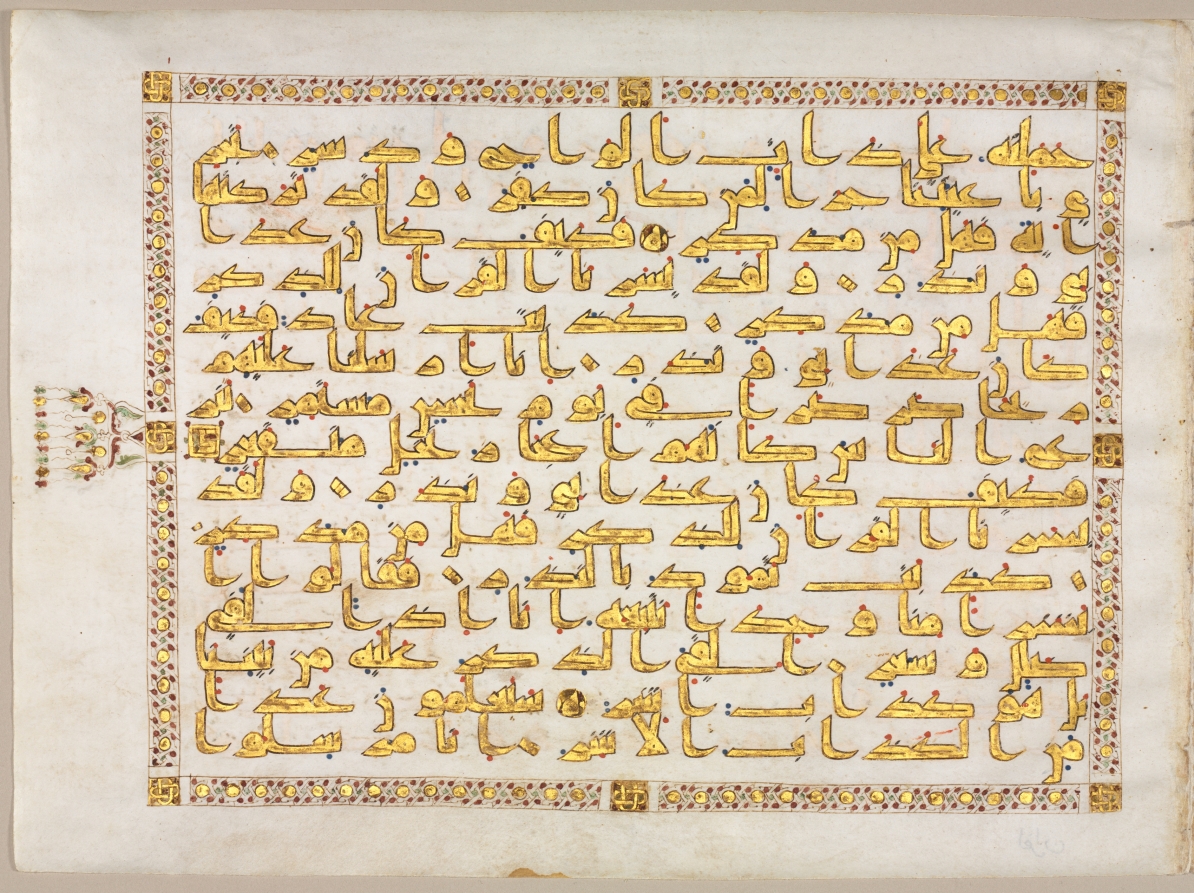
Ninth-century North African Qur'an folio with Sura 54:13–27. It illustrates later manuscript transmission, not Dhul Qarnayn's passage or Marianna Klar. Cleveland Museum of Art, 1993.39.2.a
Pessoa
Scholar of Quranic narrative in its late-antique literary contexts.
Variantes do nome: Marianna Klar
Contexto e fontes →
Pessoa
Oxford scholar of early Christianity and ancient philosophy.
Variantes do nome: Mark Edwards
Contexto e fontes →
Pessoa
Scholar of Deuteronomy, kinship and care for outsiders; director of the Centre for Missional Leadership at St. Andrew’s Hall.
Variantes do nome: Mark R. Glanville, biblical scholar
Contexto e fontes →
Pessoa
Scholar of the Hebrew Bible and Ugaritic religion whose work examines the divine family and biblical monotheism.
Variantes do nome: Mark S. Smith, Hebrew Bible scholar
Contexto e fontes →
Pessoa
Scholar of Semitic languages, cuneiform and Mesopotamian medicine who discussed Dilmun and paradise.
Variantes do nome: Markham Geller
Contexto e fontes →
Pessoa
Assyriologist and social historian, author of Women in the Ancient Near East.
Variantes do nome: Marten Stol
Contexto e fontes →
Pessoa
German scholar of the New Testament and ancient Judaism, 1926–2009.
Variantes do nome: Martin Hengel
Contexto e fontes →
Pessoa
Scholar of Jewish interpretation and professor emeritus at York University.
Variantes do nome: Marty Lockshin
Contexto e fontes →
Pessoa
Scholar of Zoroastrianism and Iranian languages, 1920–2006, and SOAS professor of Iranian studies.
Variantes do nome: Mary Boyce
Contexto e fontes →
Pessoa
Medieval-literature scholar who studied Jesus and clay birds across traditions.
Variantes do nome: Mary Dzon
Contexto e fontes →
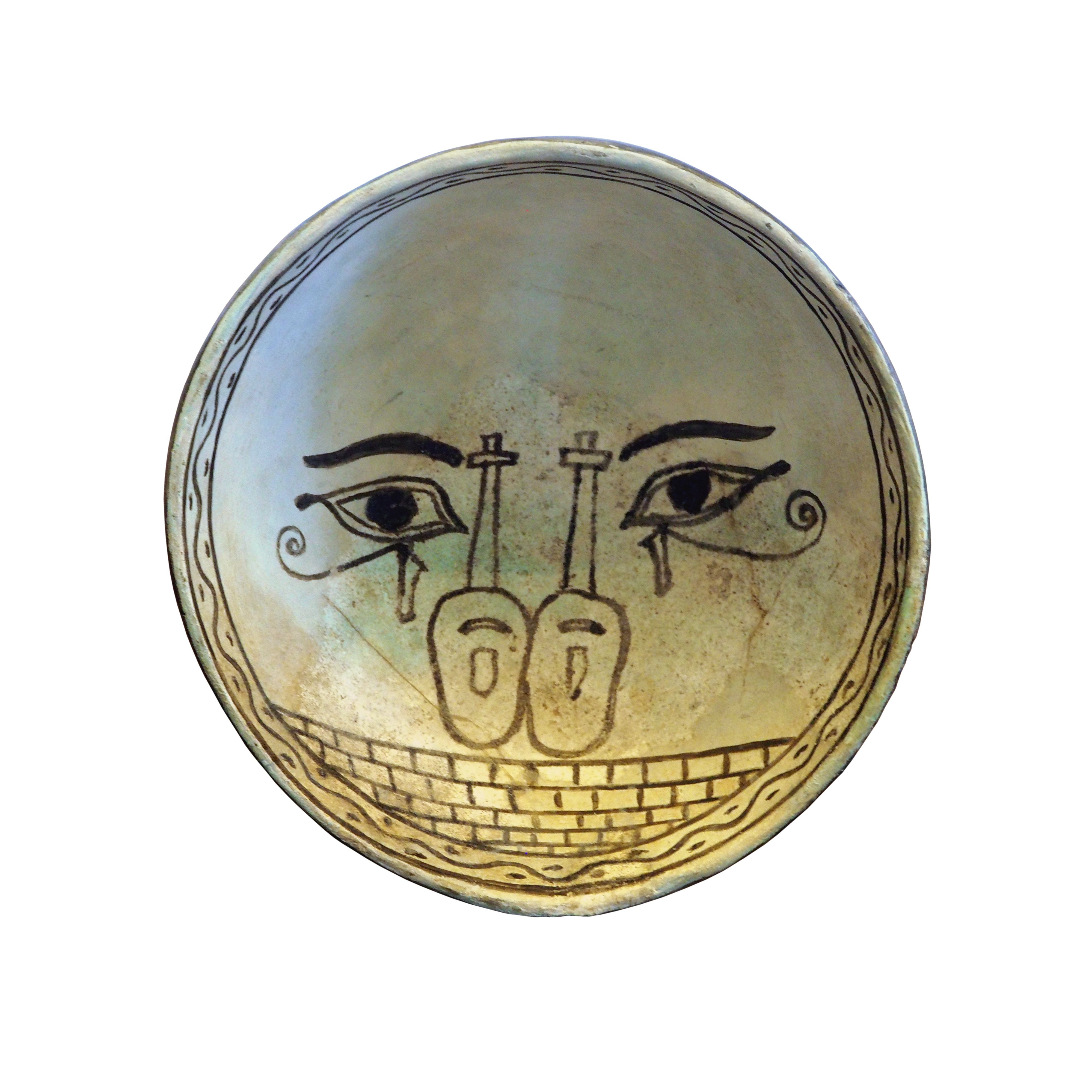
Cup of faience, a glazed silica-based material, with Egyptian signs, from tomb VI at Minet el-Beida, 1400–1200 BCE; Louvre AO 15727 (RS 4.104). Regional material context, not direct evidence that the cup was used in a marziḥu
Entidade
A banqueting institution or association in Ugaritic documents, with religious functions not reducible to one ritual.
Variantes do nome: marziḥu, marzihu, marzeaḥ
Contexto e fontes →

Modern conceptual rendering of confined spirits and a remaining portion in Jubilees 10. AI-generated cover, not an authentic depiction of Mastema, an ancient manuscript, an archaeological site, or a verified reconstruction
Entidade
Figure in Jubilees called Mastema or “prince of hostility”; leader of harmful spirits and proposer of trials under divine permission. Not automatically identical with every Satan or Belial tradition.
Variantes do nome: Mastema, Mastêmâ
Contexto e fontes →
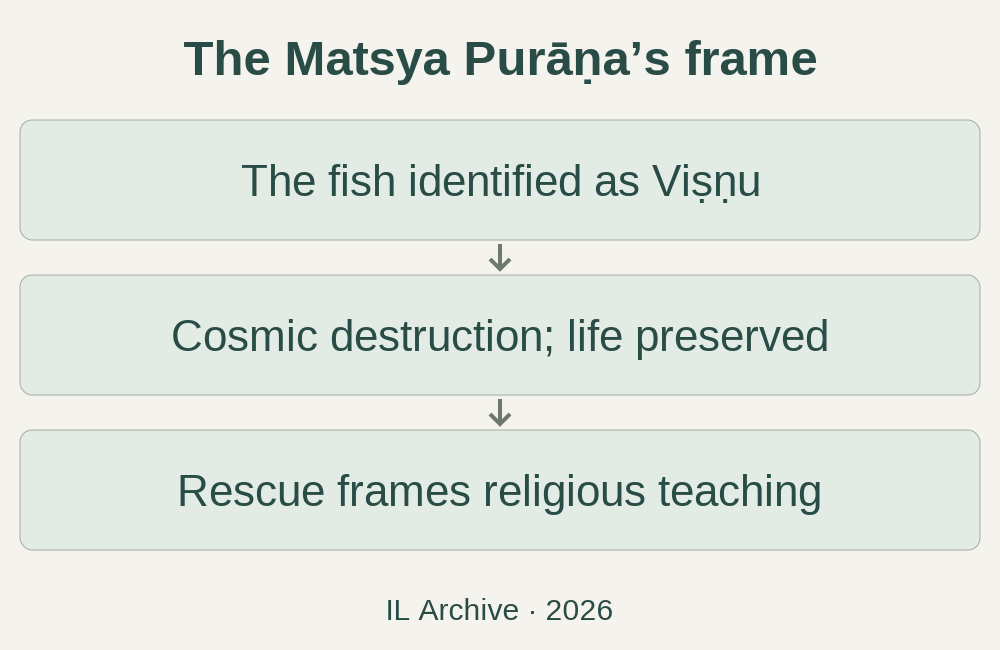
Modern explanatory diagram of narrative sequence and relationships, not a manuscript reproduction or portrait
Texto antigo
Sanskrit Purāṇic text framing religious instruction through the divine fish’s dialogue with Manu.
Variantes do nome: Matsya Purāṇa, Matsya Purana
Contexto e fontes →
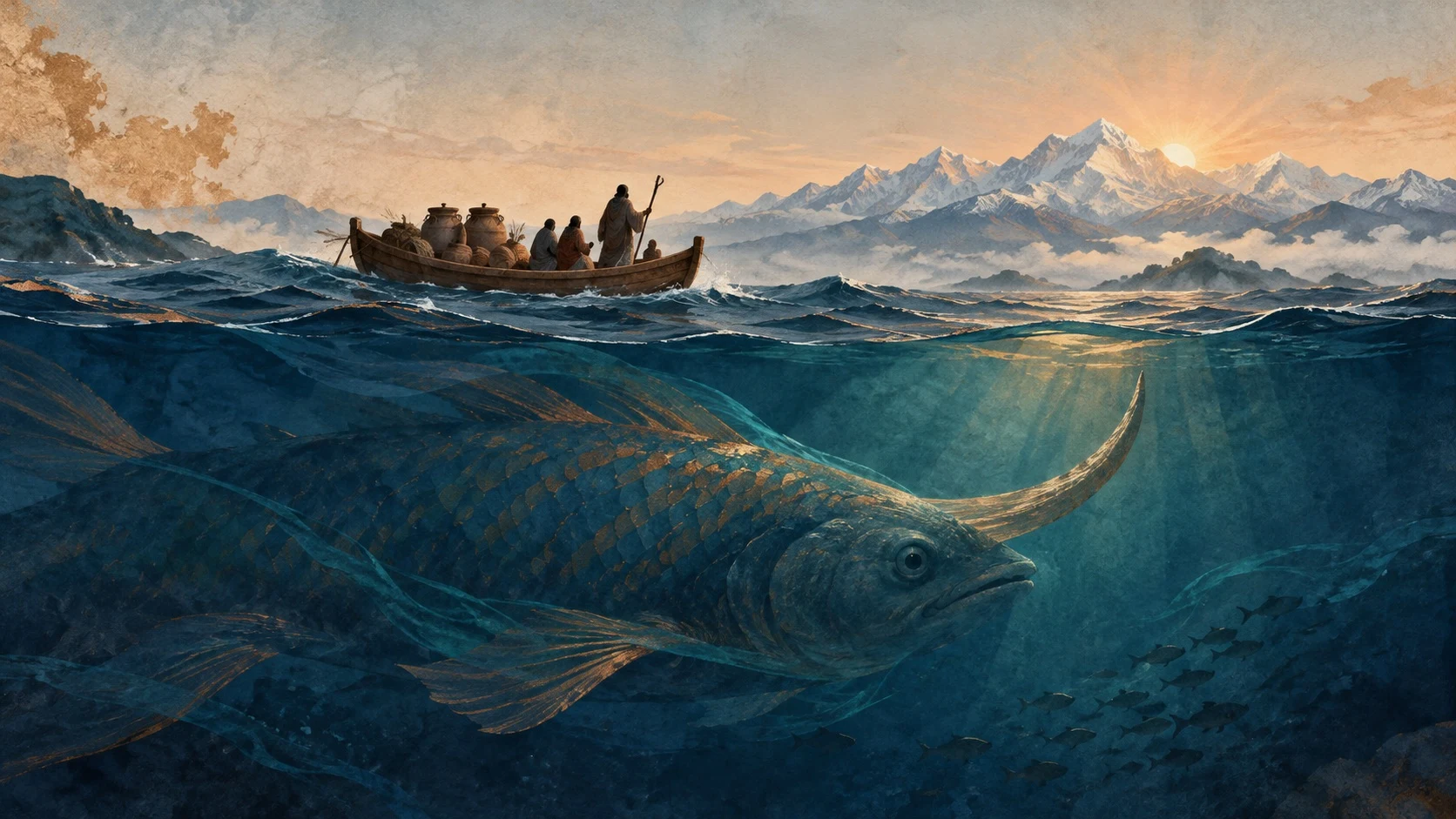
Modern conceptual illustration evoking the boat, horned fish, seeds and mountain in Manu traditions, especially the epic version; not an ancient artifact or documented location. © IL Archive, CC0
Entidade
The fish saves Manu from a flood. The Śatapatha Brāhmaṇa does not name its deity; the Mahābhārata calls it Brahmā, while the Purāṇic versions examined identify Viṣṇu and vary in survivors and renewal.
Variantes do nome: Matsya, Matsyāvatāra
Contexto e fontes →
Pessoa
German Old Testament scholar (born 1960), studying Isaiah’s monotheism, its Babylonian context, ancient astronomy and Qumran texts.
Variantes do nome: Matthias Albani
Contexto e fontes →
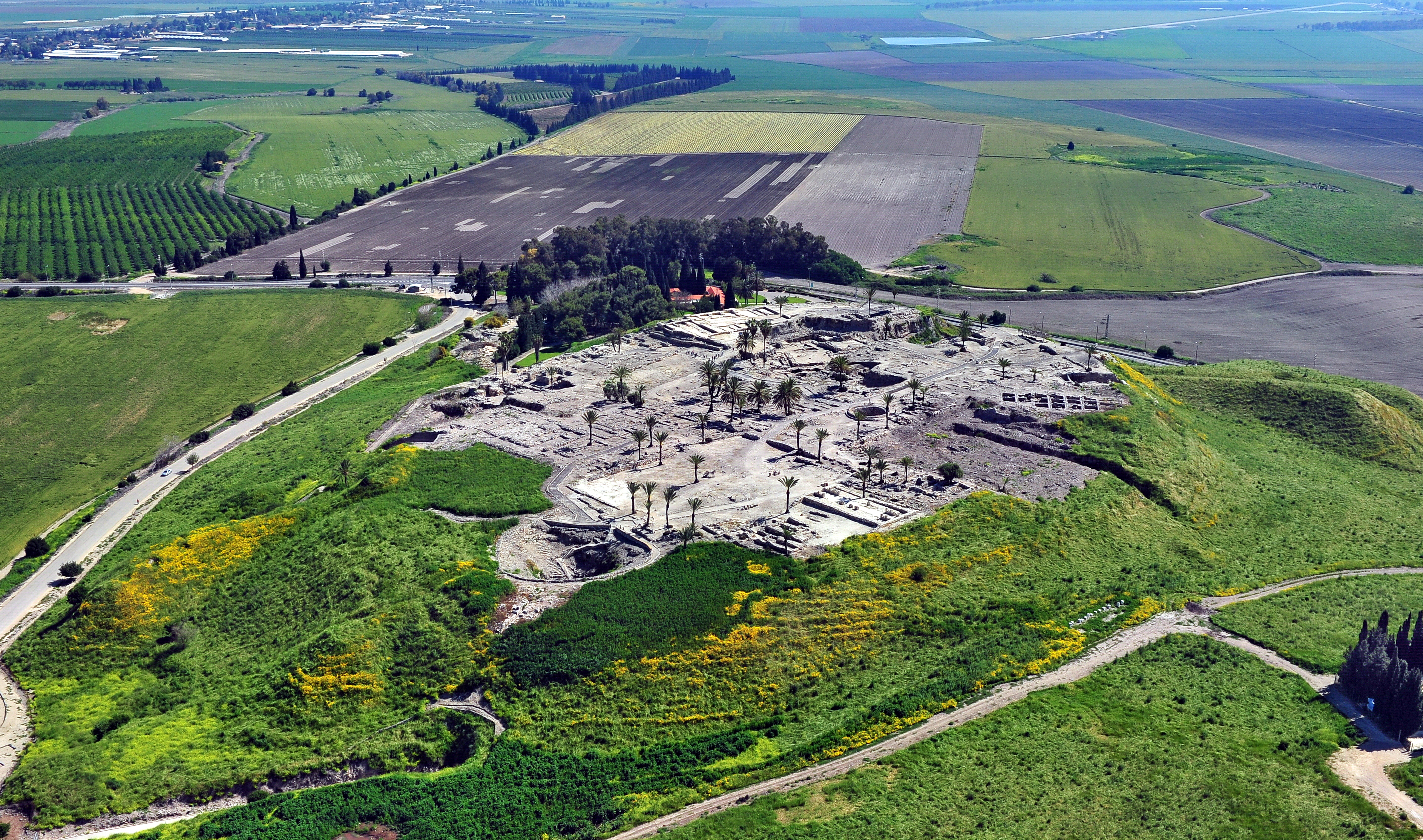
Aerial view of Tel Megiddo, Avram Graicer, 15 April 2011. Visible excavated remains do not identify the findspot of the Gilgamesh fragment
Sítio
Archaeological mound in present-day northern Israel with Bronze and Iron Age cities, associated with a Gilgamesh fragment.
Variantes do nome: Megiddo, Tell el-Mutesellim, Megiddo
Contexto e fontes →
Pessoa
Researcher in ancient texts and ritual, studying Aramaic tradition and Deuteronomic curses.
Variantes do nome: Melissa Ramos
Contexto e fontes →
Modern AI-generated interpretive cover using layered masonry as a metaphor for accumulated practice and memory; fictional scene, not Çatalhöyük or a documented archaeological site
Entidade
A concept for how groups shape, transmit and revise relationships to the past through narratives, rites, objects and places, without assuming unanimous recollection or fixed meanings for material traces.
Variantes do nome: social memory
Contexto e fontes →
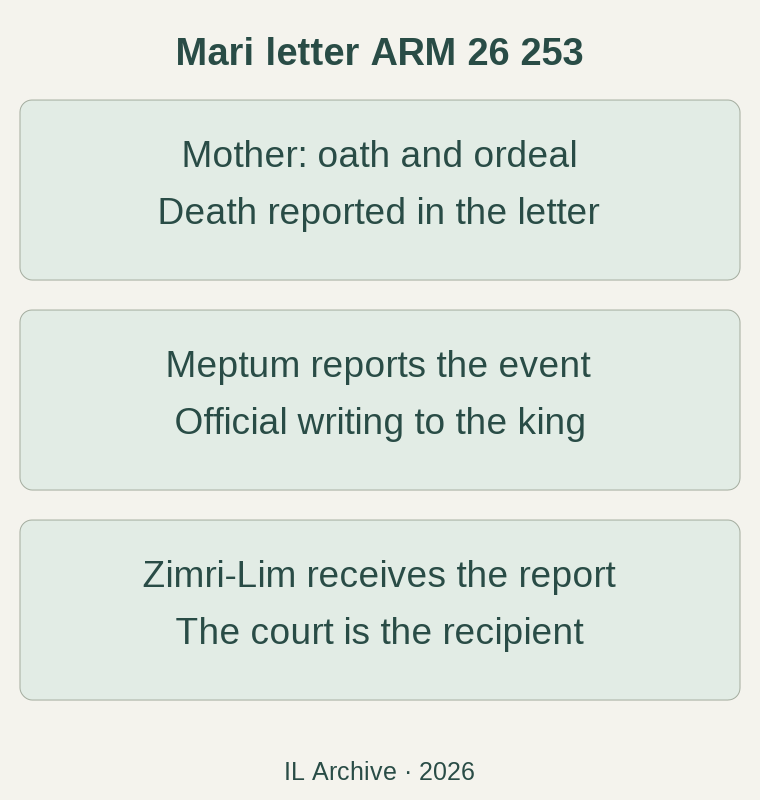
Modern diagram explaining roles in the specified source, not portraits or an ancient tablet. Row order explains relationships rather than reconstructing every ritual step
Pessoa
Official and commander reporting river ordeals in Zimri-Lim’s correspondence.
Variantes do nome: Meptum, Mari correspondent
Contexto e fontes →
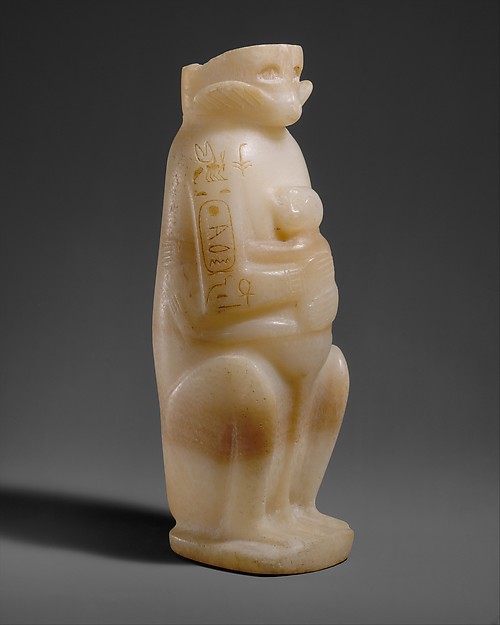
Egyptian-alabaster vase shaped as a mother monkey holding her young, inscribed with King Merenre I’s name. The Met dates it to about 2255–2246 BCE; object 30.8.134. The royal inscription appears on the shoulder
Pessoa
Merenre I was an Egyptian king of the Sixth Dynasty in the late third millennium BCE
Variantes do nome: Merenre I
Contexto e fontes →
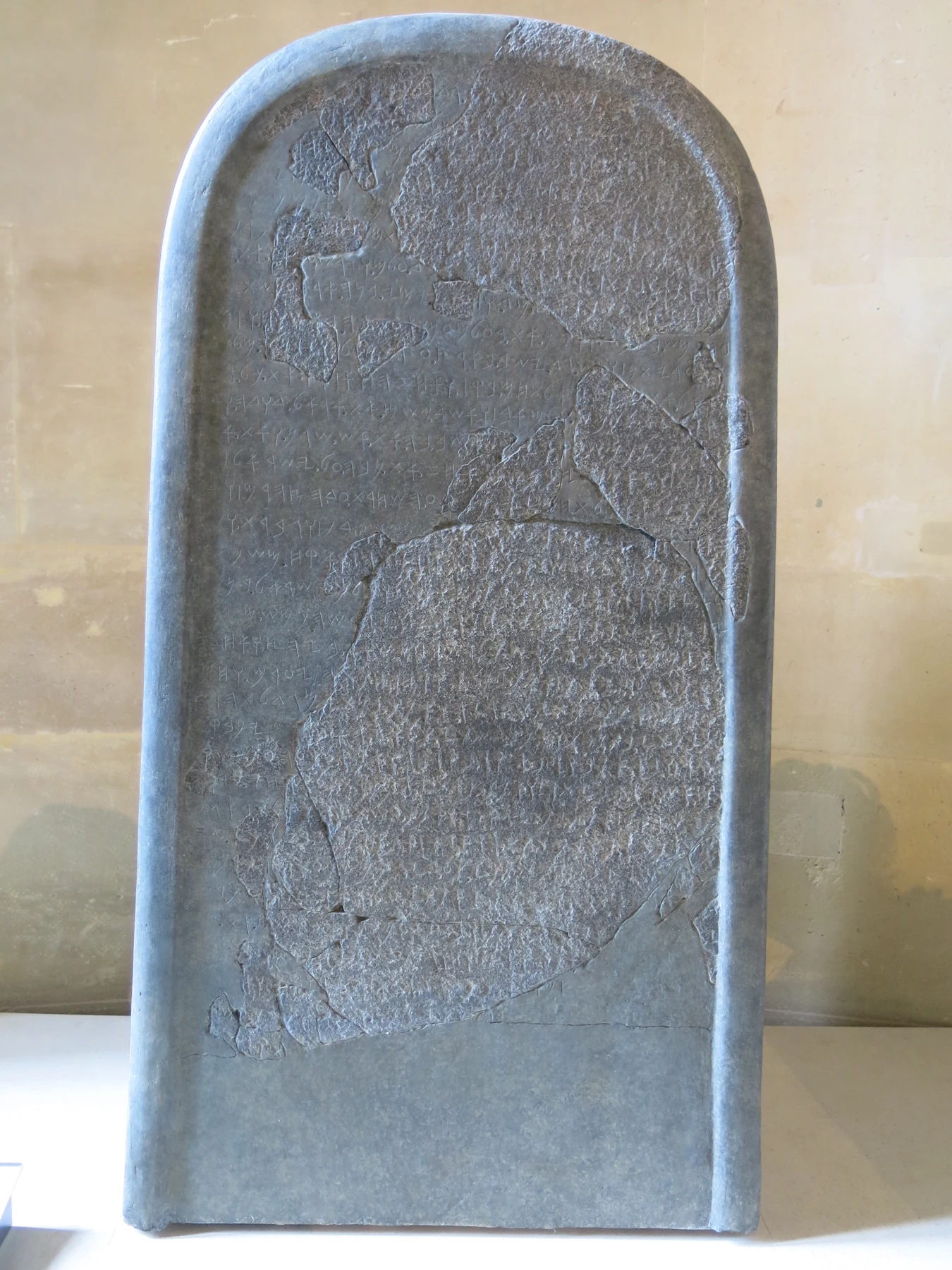
Mesha Stele, ninth century BCE, Louvre AO 5066. Photograph of the reassembled stone with modern infill, not a portrait of the king
Pessoa
Ninth-century BCE king of Moab whose inscription recounts conflict, territorial recovery and construction.
Variantes do nome: Mesha
Contexto e fontes →