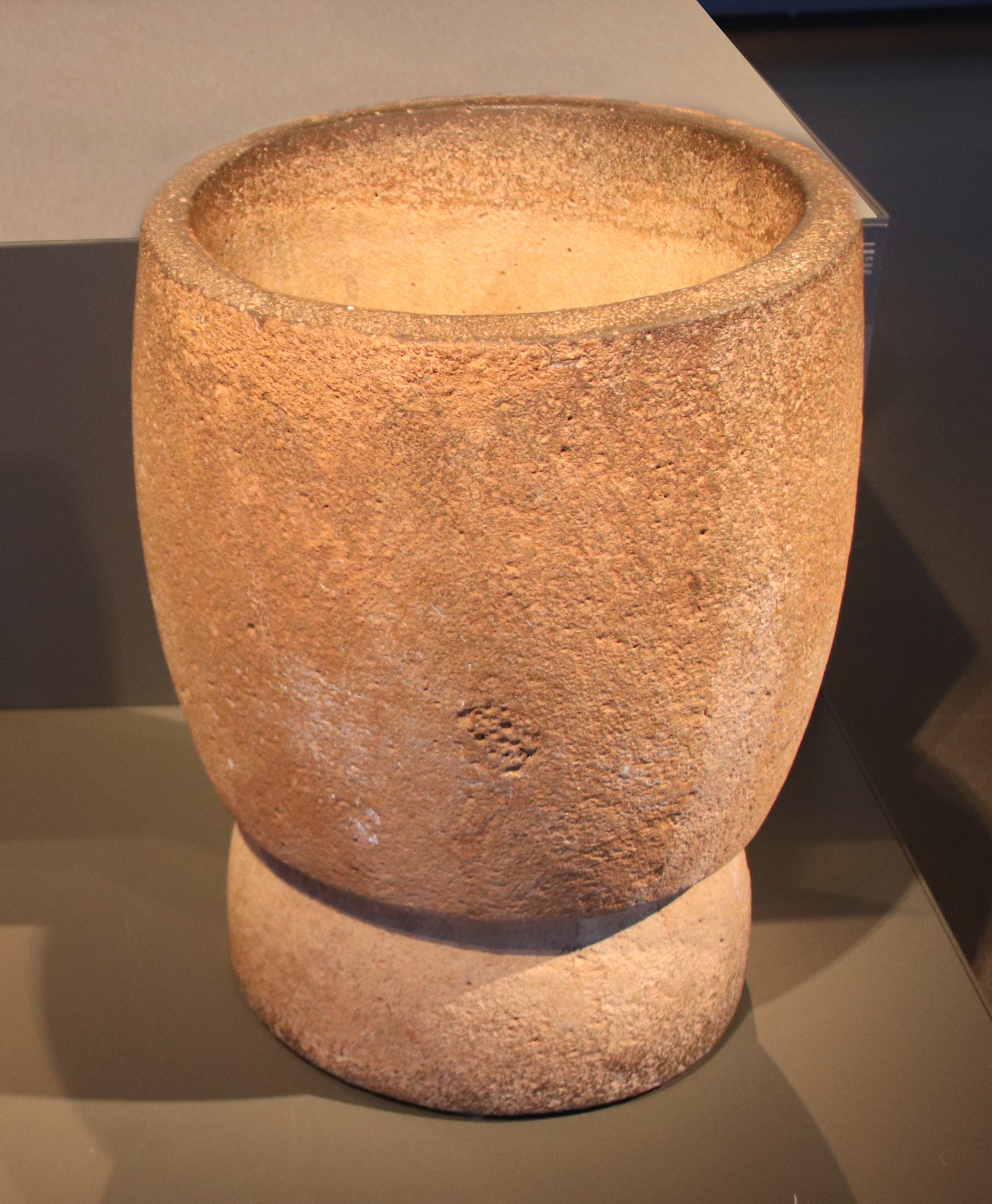
Stone mortar from Ain Mallaha (Eynan), displayed at the Israel Museum. An artifact from the site, not a view of the excavation
Sítio
A Natufian site in the Hula Valley of the Upper Jordan Valley, important for understanding prolonged residence before agriculture.
Variantes do nome: Ain Mallaha, Eynan, Eynan-Mallaha
Contexto e fontes →
Pessoa
Aino Hätinen is an Assyriologist whose interests include ancient Near Eastern literature and religion, prayers, rituals and celestial knowledge.
Variantes do nome: Aino Hätinen
Contexto e fontes →

Contemporary imaginative illustration of a ram and an unlit stone-and-wood altar inspired by Genesis 22; not an artifact or identified historical site
Entidade
Jewish name for Isaac’s binding in Genesis 22; his killing is stopped and a ram is offered instead. The story acquired varied interpretations and ritual uses.
Variantes do nome: Akedah, binding of Isaac
Contexto e fontes →
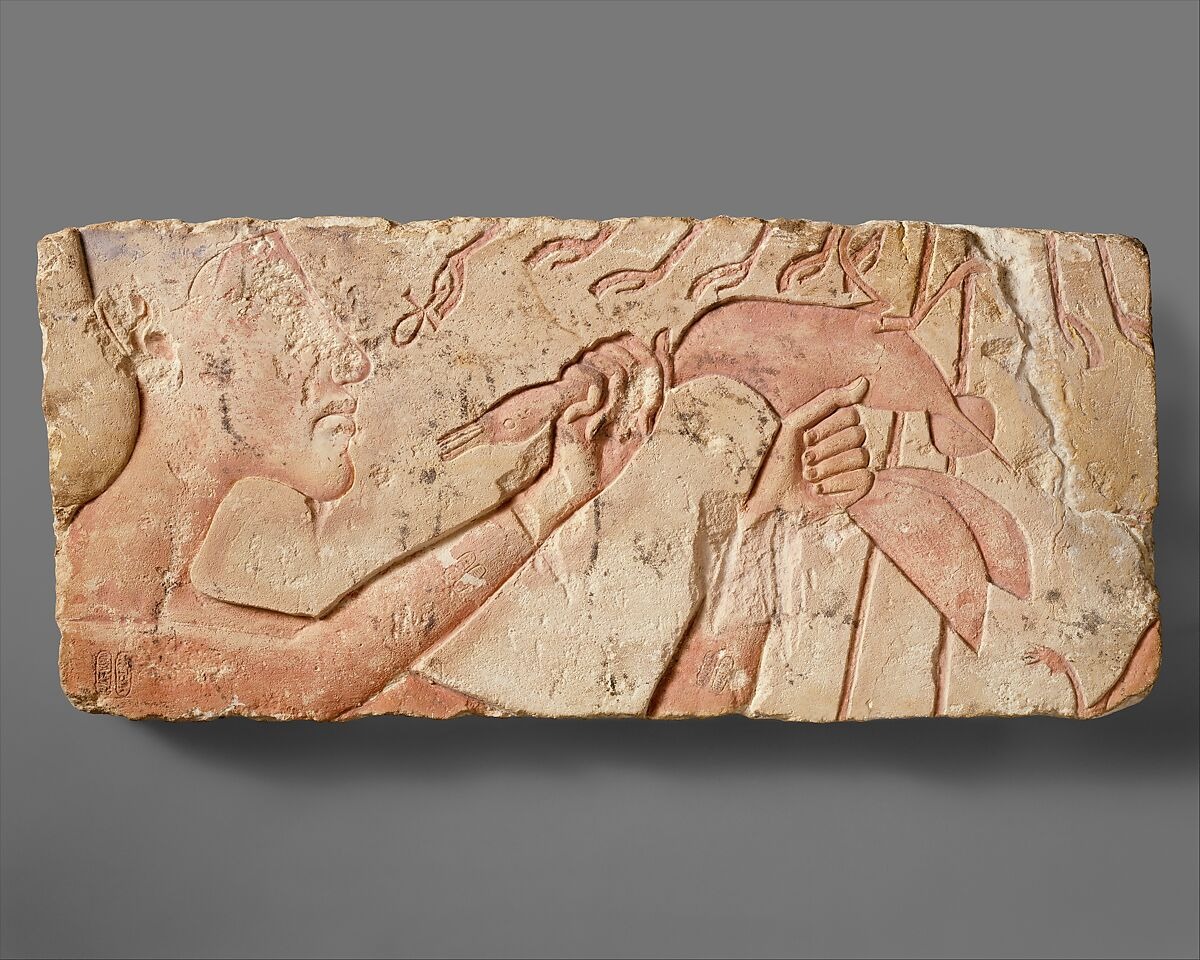
Akhenaten offering a duck, limestone relief with paint, Dynasty 18, The Met 1985.328.2. Aten rays and hands survive; the complete disk is not preserved here. The museum gives a probable Amarna origin. Original preserved; display copy uncropped
Pessoa
Egyptian eighteenth-dynasty king, formerly Amenhotep IV, who reorganized royal religion around Aten and founded Akhetaten.
Variantes do nome: Akhenaten, Akhnaton, Amenhotep IV
Contexto e fontes →
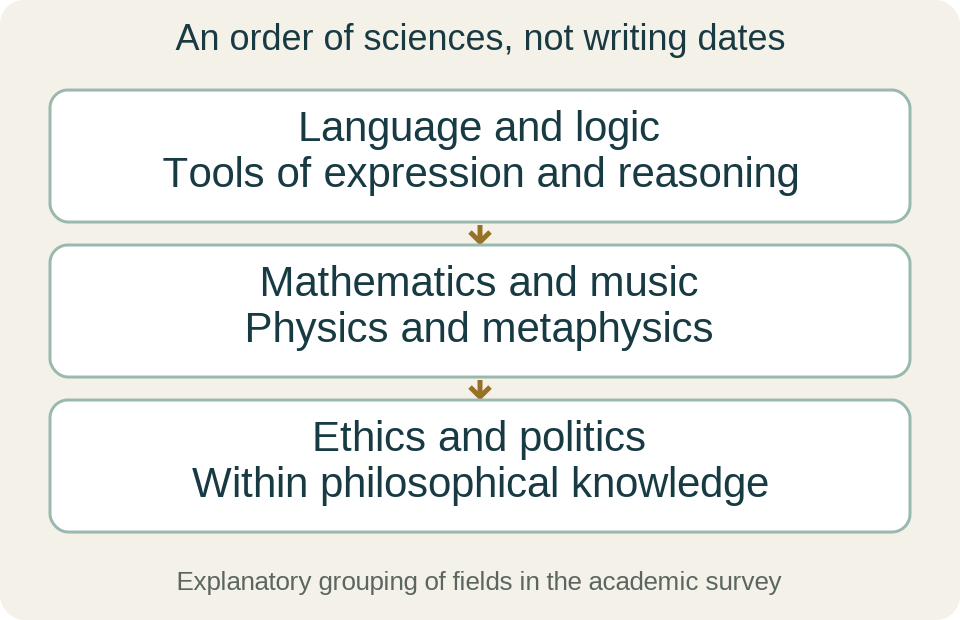
Modern grouping of fields in the academic survey following al-Farabi’s order of sciences. Some fields are combined for readability; this is not the chronology of his books or a manuscript of the Enumeration
Pessoa
Abu Nasr al-Farabi, philosopher and logician studying music and classification of knowledge, active in the late ninth and first half of the tenth century.
Variantes do nome: Al-Farabi, philosopher
Contexto e fontes →

Modern conceptual illustration of a scholar’s books, pens, and geometric tools, evoking al-Ghazālī’s engagement with reason and spiritual discipline. Not his likeness, an authenticated medieval setting, or a specific manuscript
Pessoa
Abū Ḥāmid al-Ghazālī (d. 1111), a Shāfiʿī jurist and theologian from Ṭūs, engaged critically with philosophy and wrote the ethical and Sufi compendium Revival of the Religious Sciences. His birth date is disputed.
Variantes do nome: Al-Ghazālī, Abū Ḥāmid al-Ghazālī, al-Ghazali
Contexto e fontes →
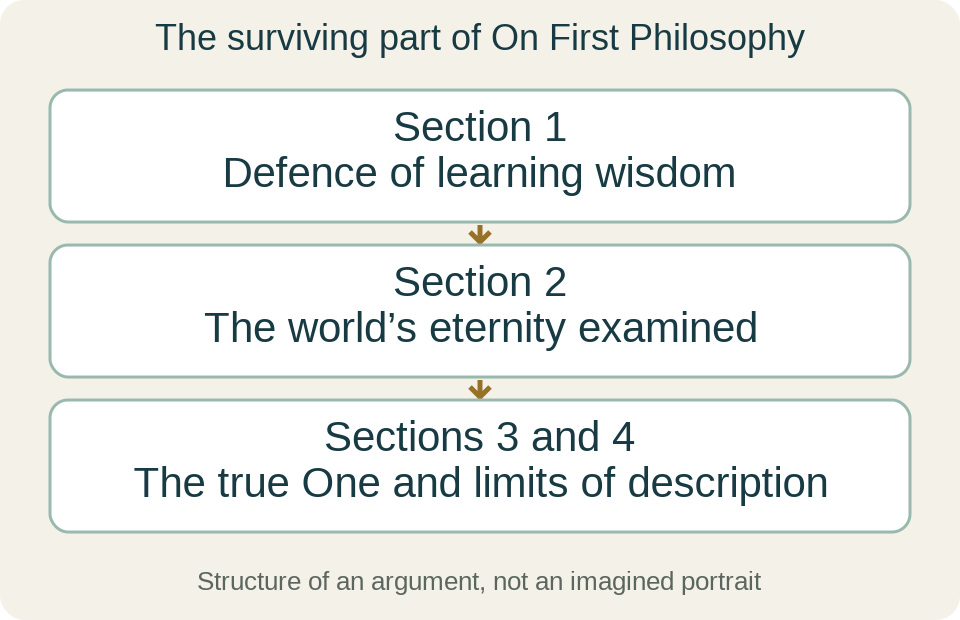
Modern diagram of the surviving part of al-Kindi’s On First Philosophy, following the academic reference’s description. It shows the sequence of subjects, not a manuscript or all his writings
Pessoa
Abu Yusuf Yaqub ibn Ishaq al-Kindi, ninth-century philosopher active in the Arabic translation movement.
Variantes do nome: Al-Kindi, philosopher
Contexto e fontes →

Modern AI-generated symbolic cover evoking layers of a name’s circulation; blank stones are not a documented artifact
Entidade
Quranic divine designation co-referring with Allah.
Variantes do nome: al-Raḥmān, al-Rahman, the Merciful
Contexto e fontes →
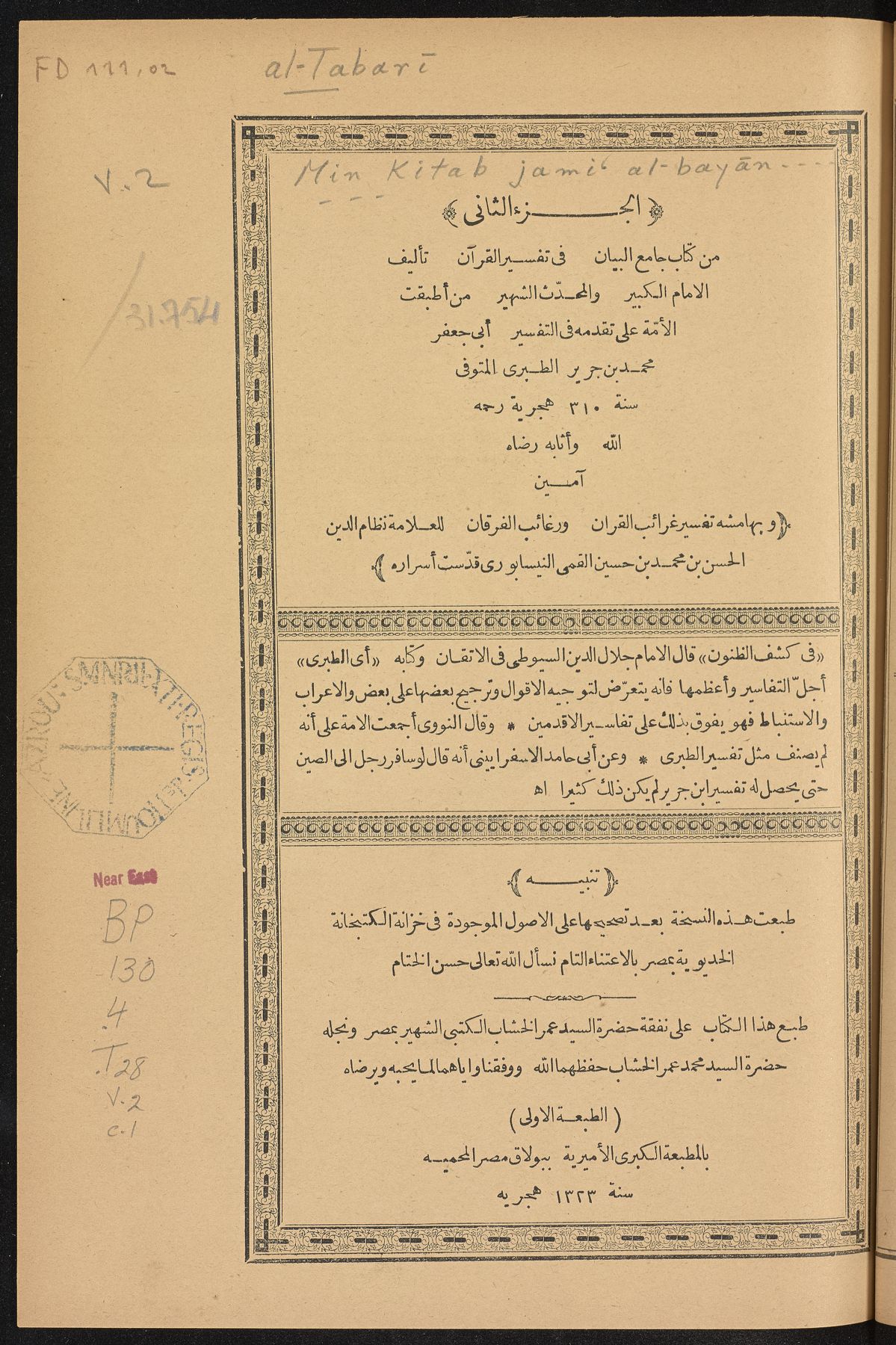
Title page of volume 2 of an Egyptian printed edition of al-Tabari's Jamiʿ al-bayan, 1323 AH/c. 1905 CE. It is a later edition, not his manuscript or portrait
Pessoa
Abbasid-era historian and Qur'anic exegete (c. 839–923 CE). His commentary records competing views on Abraham's son, then favors Isaac.
Variantes do nome: Muhammad ibn Jarir al-Tabari, al-Ṭabarī
Contexto e fontes →

Modern conceptual digital illustration of writing and textual transmission accompanying “Alāhā.” It is not an authentic Syriac manuscript, an archaeological find, or a historically verified reconstruction
Entidade
Alāhā (ܐܠܗܐ): a Syriac masculine singular common noun for “a god” or “God,” with Eastern and Western pronunciations; linguistic kinship does not itself establish shared doctrines.
Variantes do nome: Alaha, Alāhā, Aloho
Contexto e fontes →
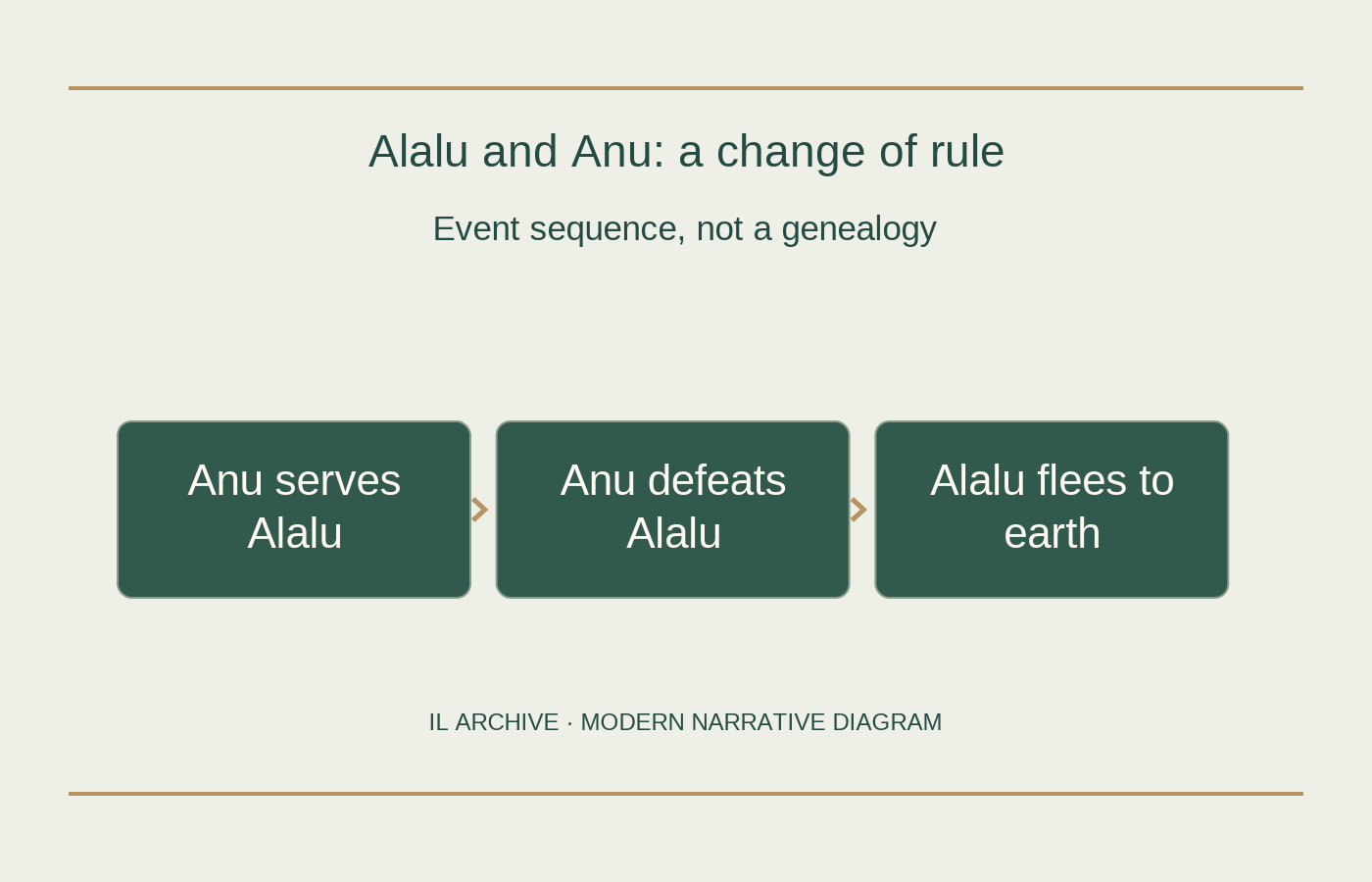
Modern diagram of the surviving Alalu–Anu account: service, defeat and flight to the dark earth. Arrows do not establish genealogy; no ancient divine likeness is invented
Entidade
First heavenly ruler in the surviving Kumarbi song; defeated by Anu, he flees to the dark earth.
Variantes do nome: Alalu
Contexto e fontes →
Pessoa
Alan Lenzi studies Babylonian literature and religion and the Hebrew Bible, and is a professor at the University of the Pacific in Stockton.
Variantes do nome: Alan Lenzi
Contexto e fontes →
Pessoa
Scholar of Hebrew and ancient Semitic languages, formerly a Liverpool professor, who studied Eden’s etymology.
Variantes do nome: Alan Ralph Millard, 1937–2024
Contexto e fontes →
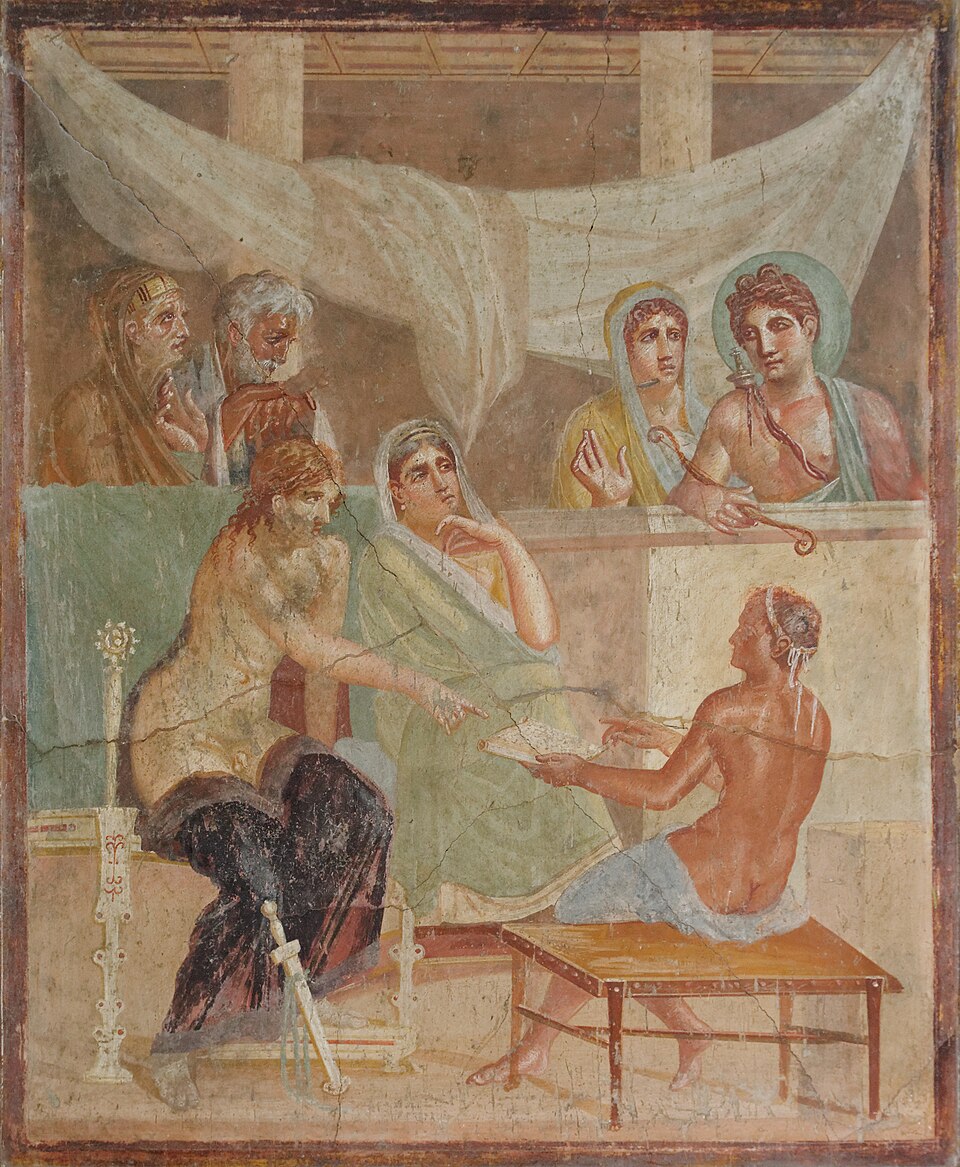
Admetus and Alcestis, first-century CE Roman fresco from the House of the Tragic Poet, Pompeii; Naples Archaeological Museum 9026. Later reception of the story, not a record of the 438 BCE performance. Published 960 px preview
Pessoa
A Greek narrative figure who accepts death for her husband Admetus and returns at the end of Euripides’ play, performed in 438 BCE.
Variantes do nome: Alcestis in Euripides’ play
Contexto e fontes →
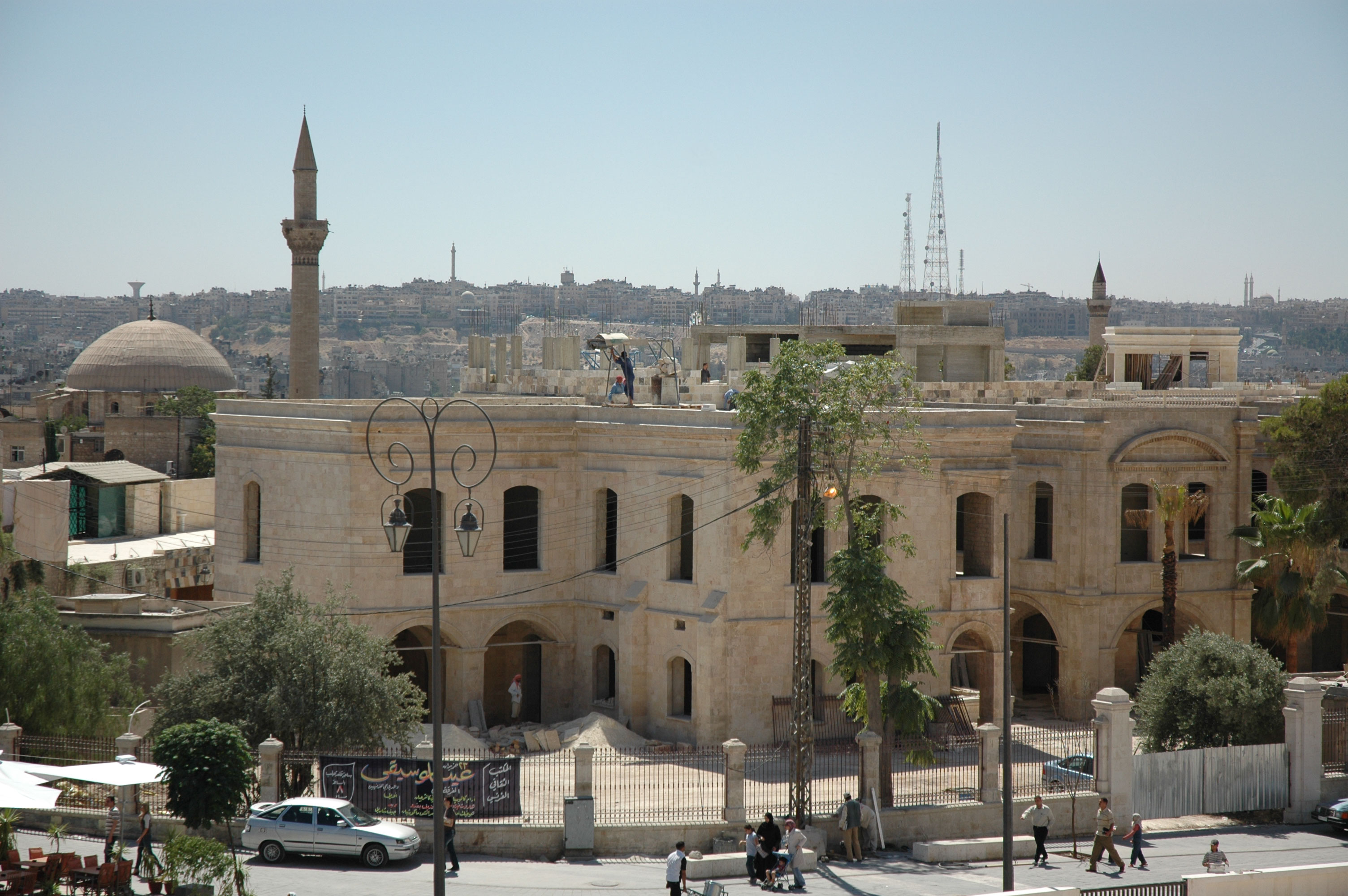
View of Aleppo’s old city by Ron Van Oers for UNESCO; capture date unestablished. The visible architecture postdates the Mari letters and does not depict the ordeal site or participants
Sítio
Northern Syrian city whose region appears in Mari reports, with architecture from multiple periods.
Variantes do nome: Aleppo, historical city
Contexto e fontes →
Pessoa
Assyriologist who wrote The Gilgamesh Epic and Old Testament Parallels, second edition 1949.
Variantes do nome: Alexander Heidel, Heidel
Contexto e fontes →
Pessoa
Nineteenth-century English translator of several apocryphal infancy narratives.
Variantes do nome: Alexander Walker
Contexto e fontes →
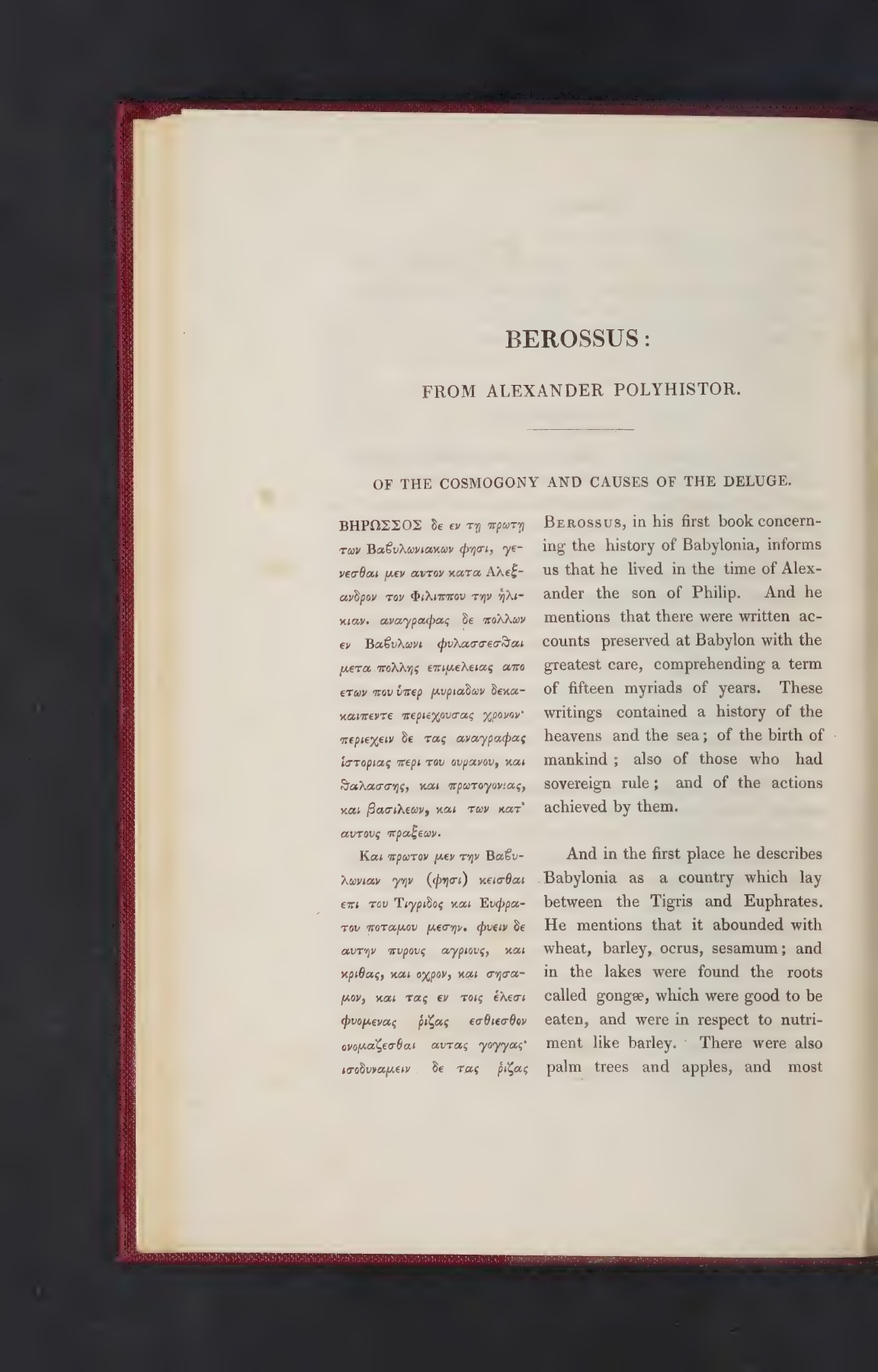
Heading identifying Alexander Polyhistor as transmitter, Cory’s edition, London, 1828; a page documenting transmission, rather than a portrait
Pessoa
Alexander Polyhistor was a Greek author of the first century BCE who compiled accounts of many peoples and countries.
Variantes do nome: Alexander Polyhistor
Contexto e fontes →
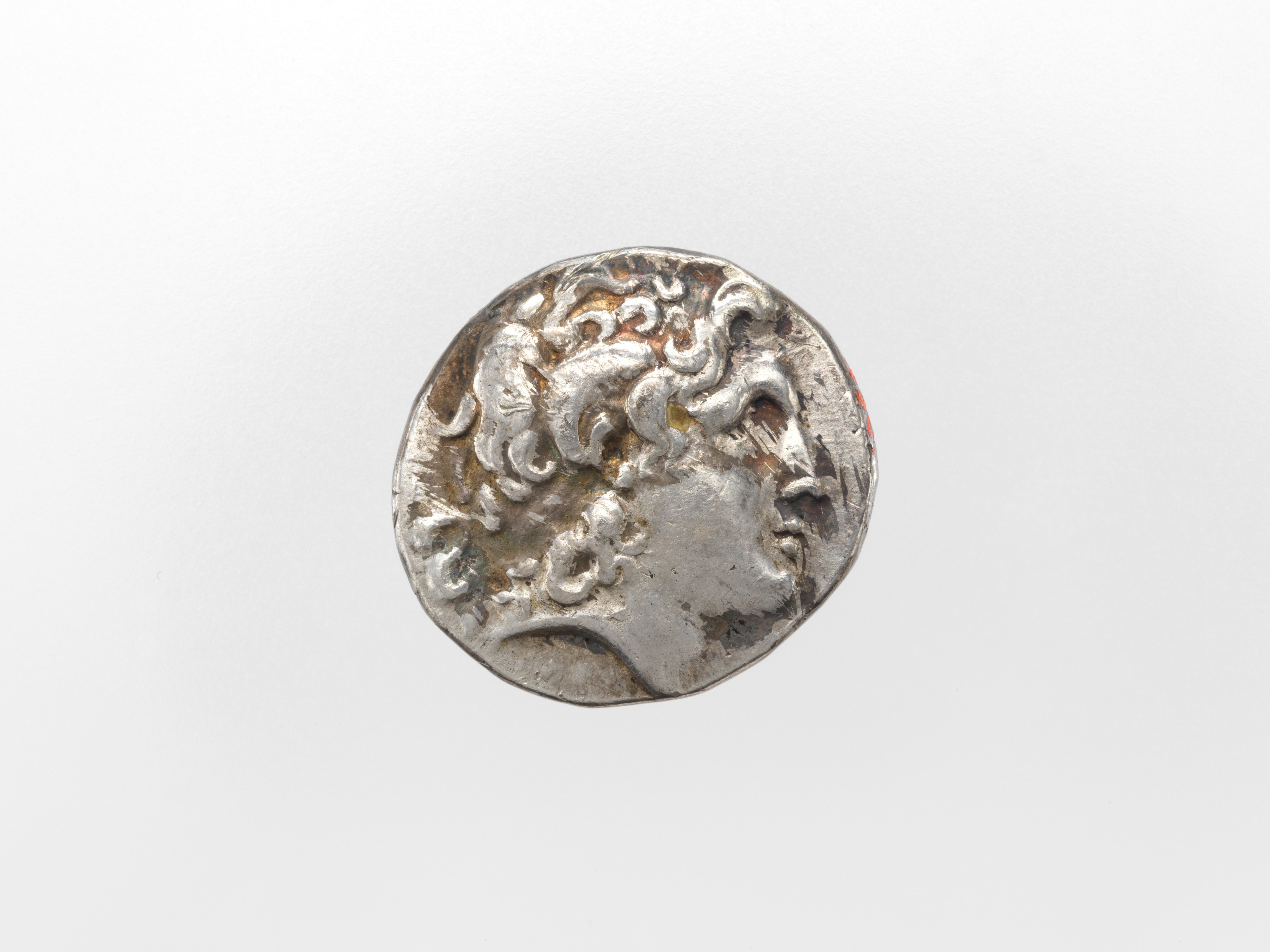
Alexander’s head with ram’s horn on Lysimachos coin, 297–281 BCE; Met 05.44.430. Posthumous Hellenistic image, not an identified Dhul Qarnayn portrait
Pessoa
Macedonian king who lived from 356 to 323 BCE and became a hero of stories in different languages and traditions after his death.
Variantes do nome: Alexander the Great
Contexto e fontes →

Alexandria Corniche and Saad Zaghloul Square,18 March2008; the modern city, not the Ptolemaic festival or ancient library
Sítio
Alexandria is a city on Egypt’s Mediterranean coast, founded by Alexander the Great in 331 BCE and an important center of trade and culture.
Variantes do nome: Alexandria
Contexto e fontes →
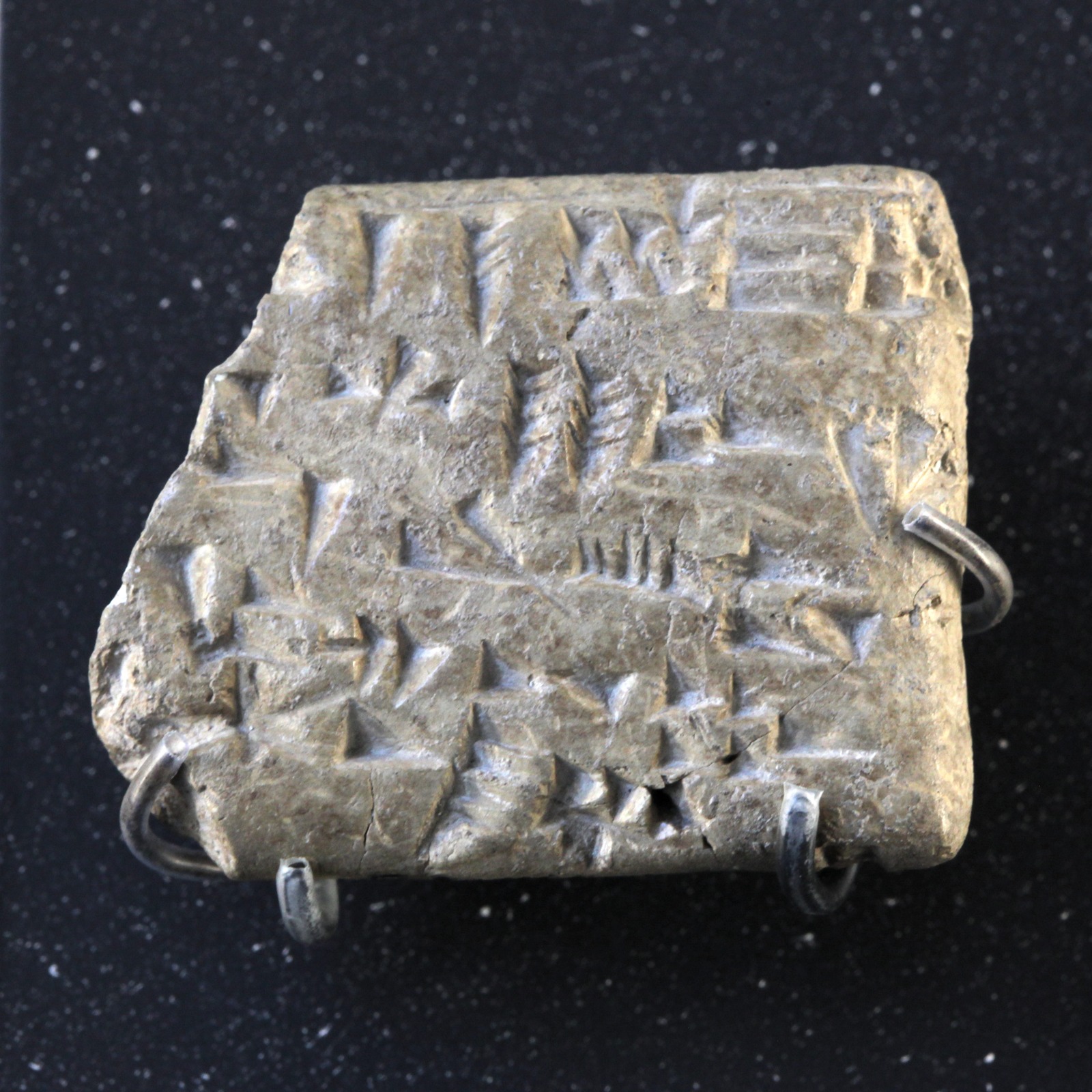
Incomplete Ugaritic abecedary tablet, Louvre AO 19992 / RS 10.087 (KTU 5.4). Found in 1938 with seven letters missing; museum date broadly 1400–1200 BCE. Not the complete abecedary found in 1948
Entidade
Alphabetic cuneiform system of Late Bronze Age Ugarit, using thirty chiefly consonantal written signs, distinct from Akkadian syllabic cuneiform.
Variantes do nome: Ugaritic alphabet, alphabetic cuneiform, Ugaritic abjad
Contexto e fontes →
Pessoa
Scholar of the Hebrew Bible, Northwest Semitic languages and ancient Levantine scribal practices.
Variantes do nome: Alice Mandell
Contexto e fontes →

Modern symbolic illustration of a writing setting; not an ancient inscription or a documented reconstruction of the name Allāh
Entidade
Allāh: the Arabic designation of the one God in Islam, also used in other Arabic-speaking traditions. Its pre-Islamic attestations vary in context and historical meaning.
Variantes do nome: Allah, Allāh
Contexto e fontes →
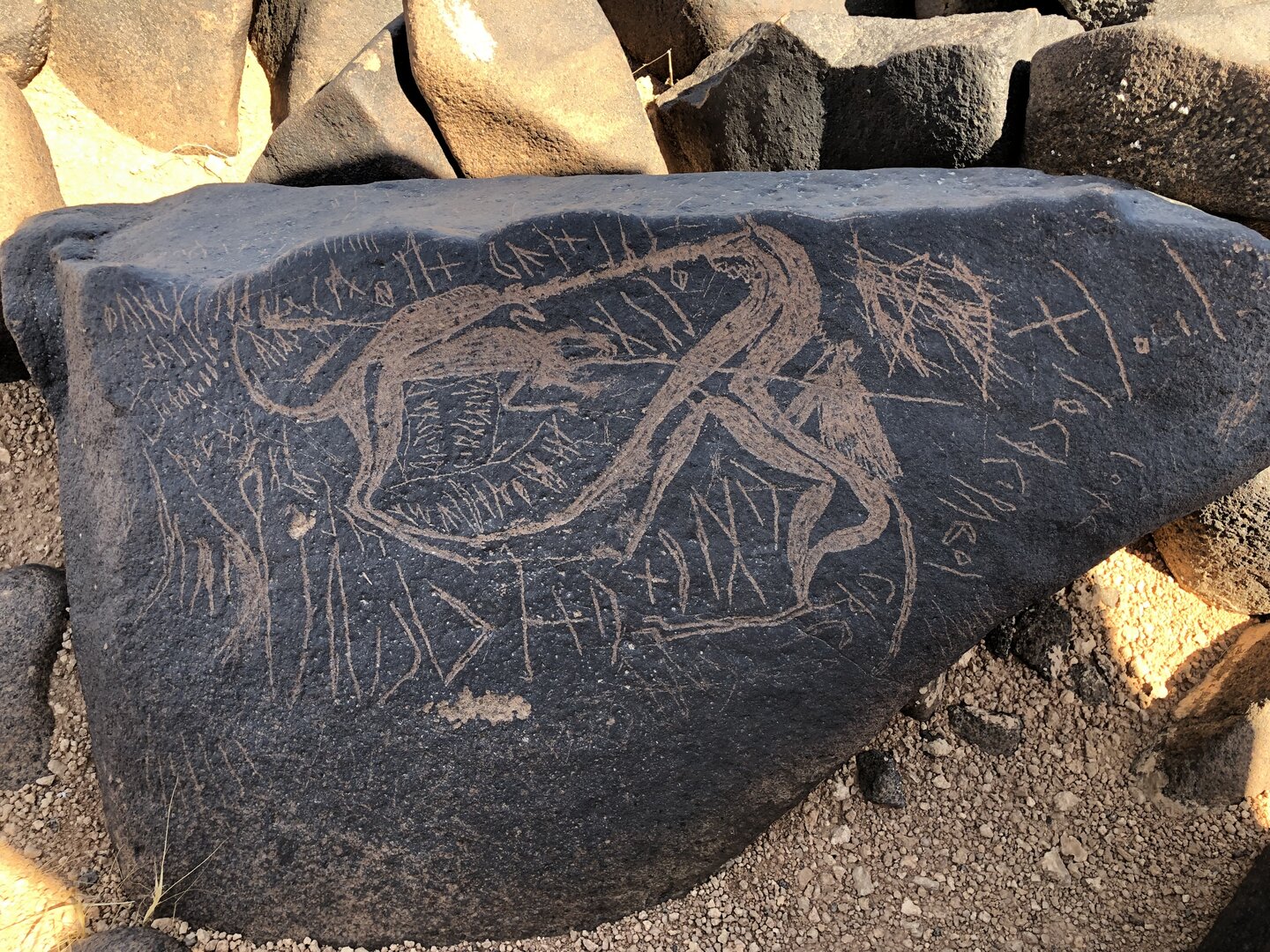
BES19s 77.1, Firʿ Wadi al-Khudari, Mafraq, Jordan. Its reading invokes Allat and then Allah. This photograph shows stone and writing; animal and human drawings are not identified as depictions of these deities. Original preserved without cropping or alteration
Entidade
An ancient Arabian goddess attested by Safaitic and Nabataean inscriptions, monuments in Palmyra, and the Quran; her roles and interpretations vary with period and context.
Variantes do nome: Allāt, al-Lāt, Allat
Contexto e fontes →
Pessoa
Almut Hintze studies ancient Iranian languages, the Avesta and Zoroastrian traditions.
Variantes do nome: Almut Hintze
Contexto e fontes →
Pessoa
Amar Annus is a scholar of ancient Near Eastern religions at the University of Tartu, Estonia.
Variantes do nome: Amar Annus
Contexto e fontes →

Modern AI-generated conceptual cover evoking a Nile horizon and desert cliffs in Middle Egypt; not a photograph of Amarna or an archaeologically established reconstruction of Akhenaten’s city
Sítio
Amarna is the archaeological site of Akhetaten, Akhenaten’s fourteenth-century BCE capital in Middle Egypt, preserving royal boundary stelae, temples, houses and cemeteries.
Variantes do nome: Amarna, Tell el-Amarna, Akhetaten, Akhet-Aten
Contexto e fontes →

Modern AI-generated conceptual illustration of natural elements and care for creation; not an ancient artifact or historical likeness of the Amesha Spentas
Entidade
Benevolent beings and concepts in Iranian tradition, approximately “holy/bounteous immortals.”
Variantes do nome: Amesha Spentas, Aməša Spənta, bounteous immortals
Contexto e fontes →
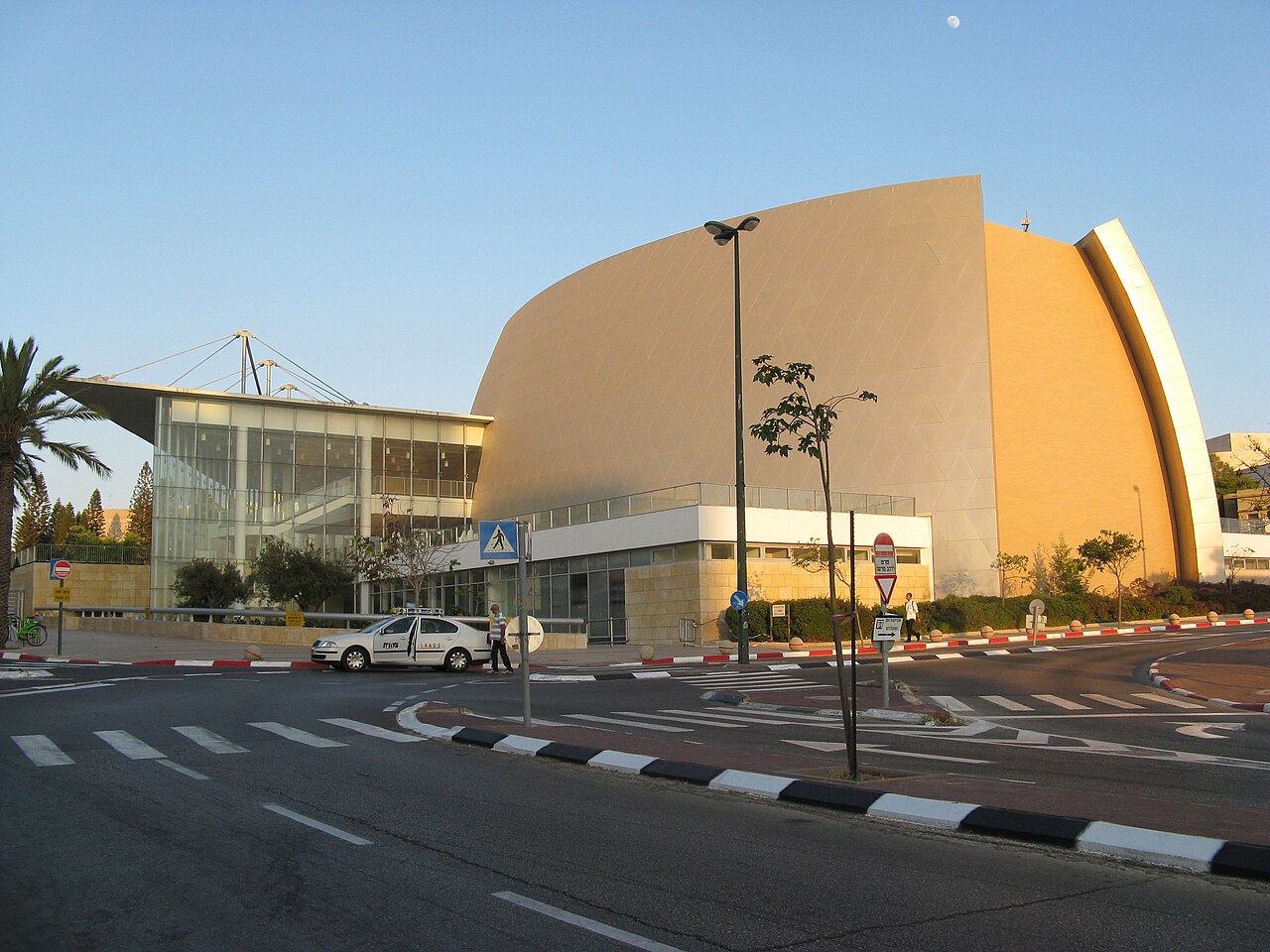
Smolarz Auditorium at Tel Aviv University, 30 June 2012. Context for the university associated with Amir Gilan; not his department’s building or his portrait
Pessoa
Tel Aviv University scholar of Hittite texts and ancient Anatolia, studying religion, ritual, literature and historiography.
Variantes do nome: Amir Gilan
Contexto e fontes →
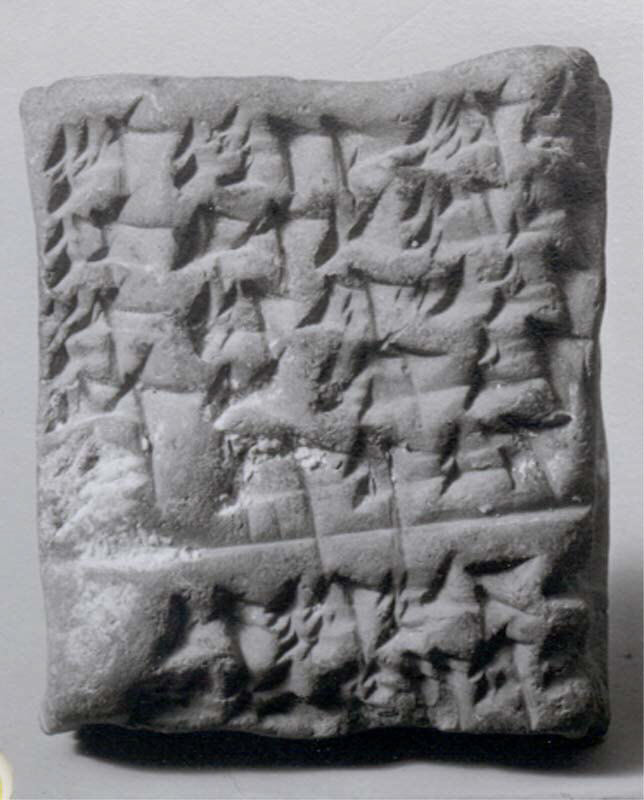
Old Babylonian silver-loan tablet,ca.1646BCE; Metropolitan Museum86.11.224. Evidence of period transactions, not a release-edict copy or proof this loan was cancelled
Pessoa
Babylonian king of the seventeenth century BCE in the Middle Chronology, whose edict provides selective debt and dependency relief.
Variantes do nome: Ammisaduqa
Contexto e fontes →
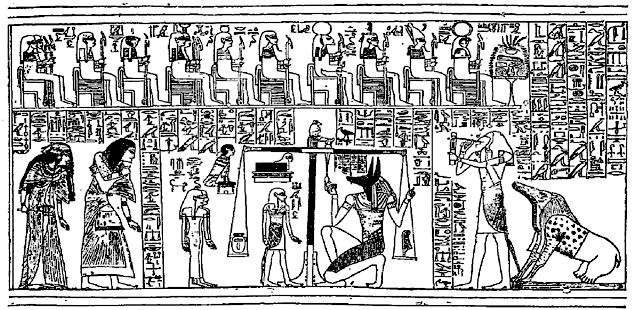
Historical facsimile of Ani’s heart-weighing, Budge’s third edition1908, illustration4. Ammit is at the far right, with Thoth before her; reproduction of an Egyptian witness
Entidade
Ammit is a composite being in Egyptian judgment imagery, associated with devouring those who fail the trial.
Variantes do nome: Ammit
Contexto e fontes →
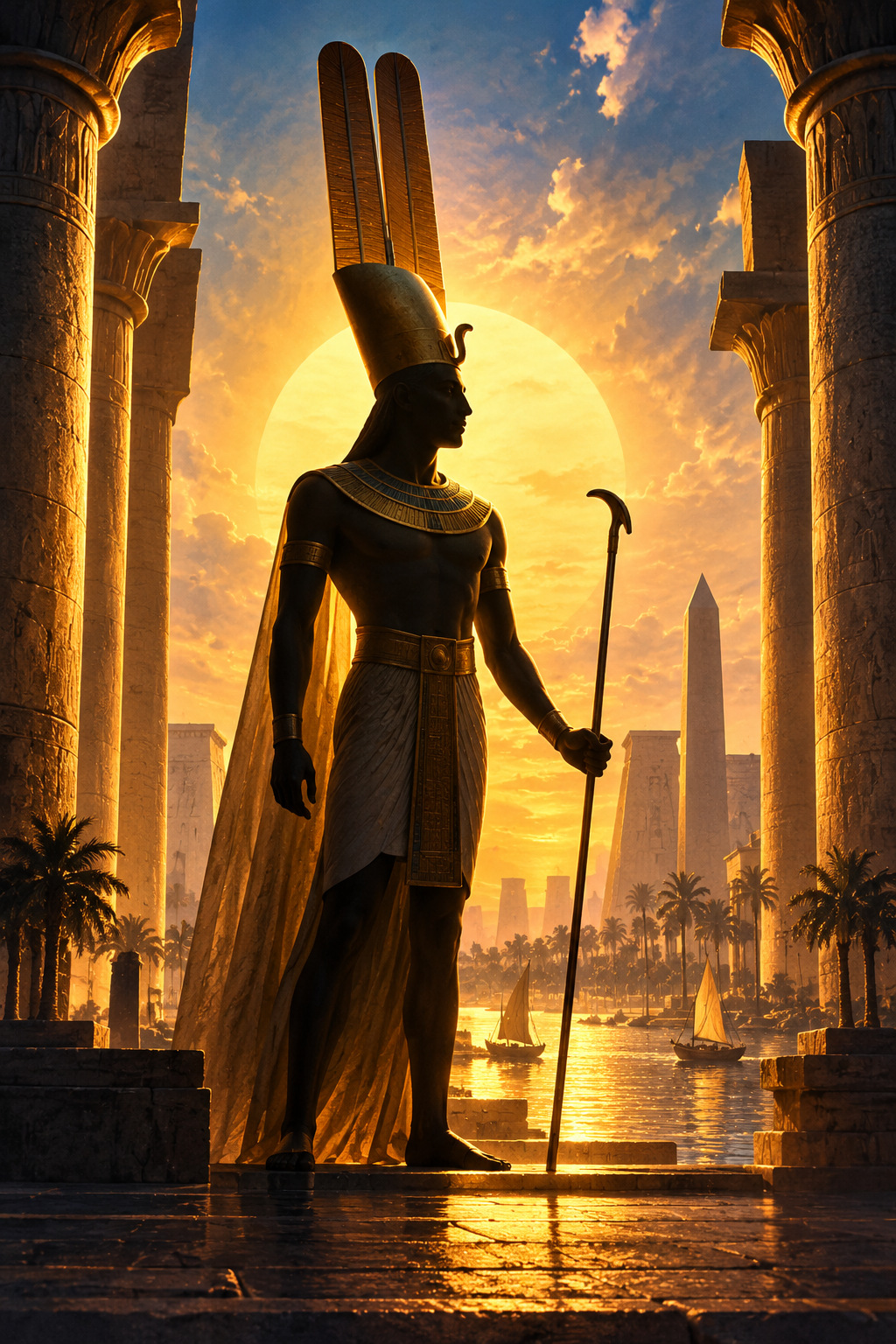
Modern AI-generated imaginative illustration (2026), inspired by Amun’s double-plumed crown and a Theban setting. Not an Egyptian artifact, portrait of a historical person, or established reconstruction of the god or Karnak
Entidade
Amun is an Egyptian deity centered on Thebes and Karnak, the “hidden one,” also worshipped as Amun-Re. His names and images were targeted under Akhenaten before royal support resumed.
Variantes do nome: Amun, Amon, Amun-Re
Contexto e fontes →
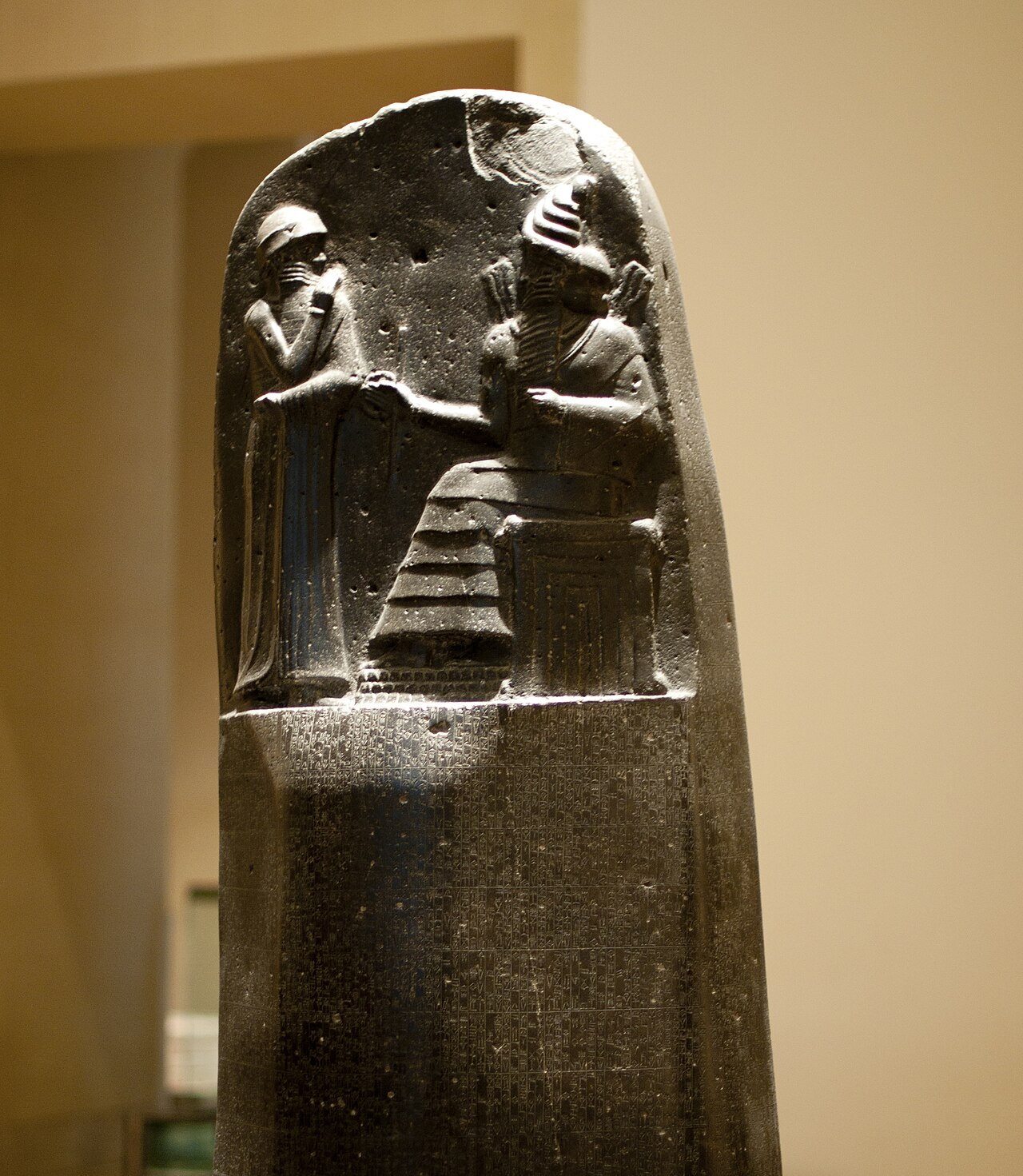
Top of Hammurabi’s stele, showing the Babylonian king before Shamash; eighteenth century BCE; Louvre, SB 8. An example from the world of Amorite-period kingdoms, not a collective portrayal of Amorites or their beliefs
Entidade
Groups associated with West Semitic speech in the Levant and Mesopotamia, whose dynasties were particularly prominent in the nineteenth and eighteenth centuries BCE (ca. 1900–1700 BCE).
Variantes do nome: Amorites, Amorite groups
Contexto e fontes →
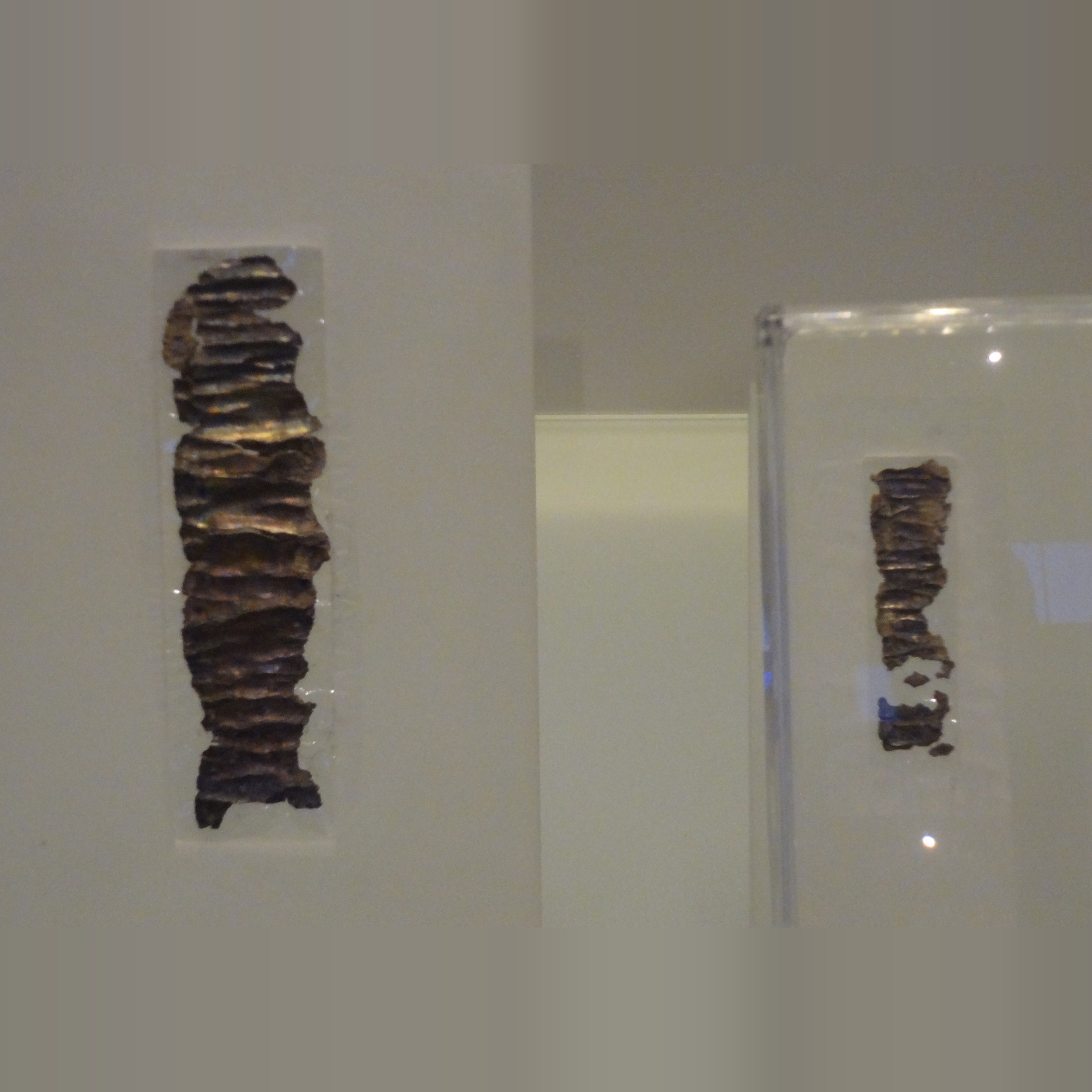
The unrolled Ketef Hinnom silver amulets displayed at the Israel Museum, Jerusalem, with the larger at left and the smaller at right. Modern square presentation of Bachrach44’s 2012 photograph: extended borders above and below, with neither artifact cropped
Artefato
Two inscribed silver amulets found at Ketef Hinnom near Jerusalem in 1979, bearing protective blessings parallel to Numbers 6:24–26. Generally dated to the late seventh or early sixth century BCE, though disputed; they do not date the entire book.
Variantes do nome: Ketef Hinnom amulets, Ketef Hinnom silver scrolls
Contexto e fontes →

Modern diagram explaining the specified relationship in the witness; not an ancient tablet or portrait, or a boundary map
Sítio
Levantine kingdom in Hittite treaties; its political name differs from the broader designation Amorites.
Variantes do nome: Amurru, Late Bronze Age kingdom
Contexto e fontes →
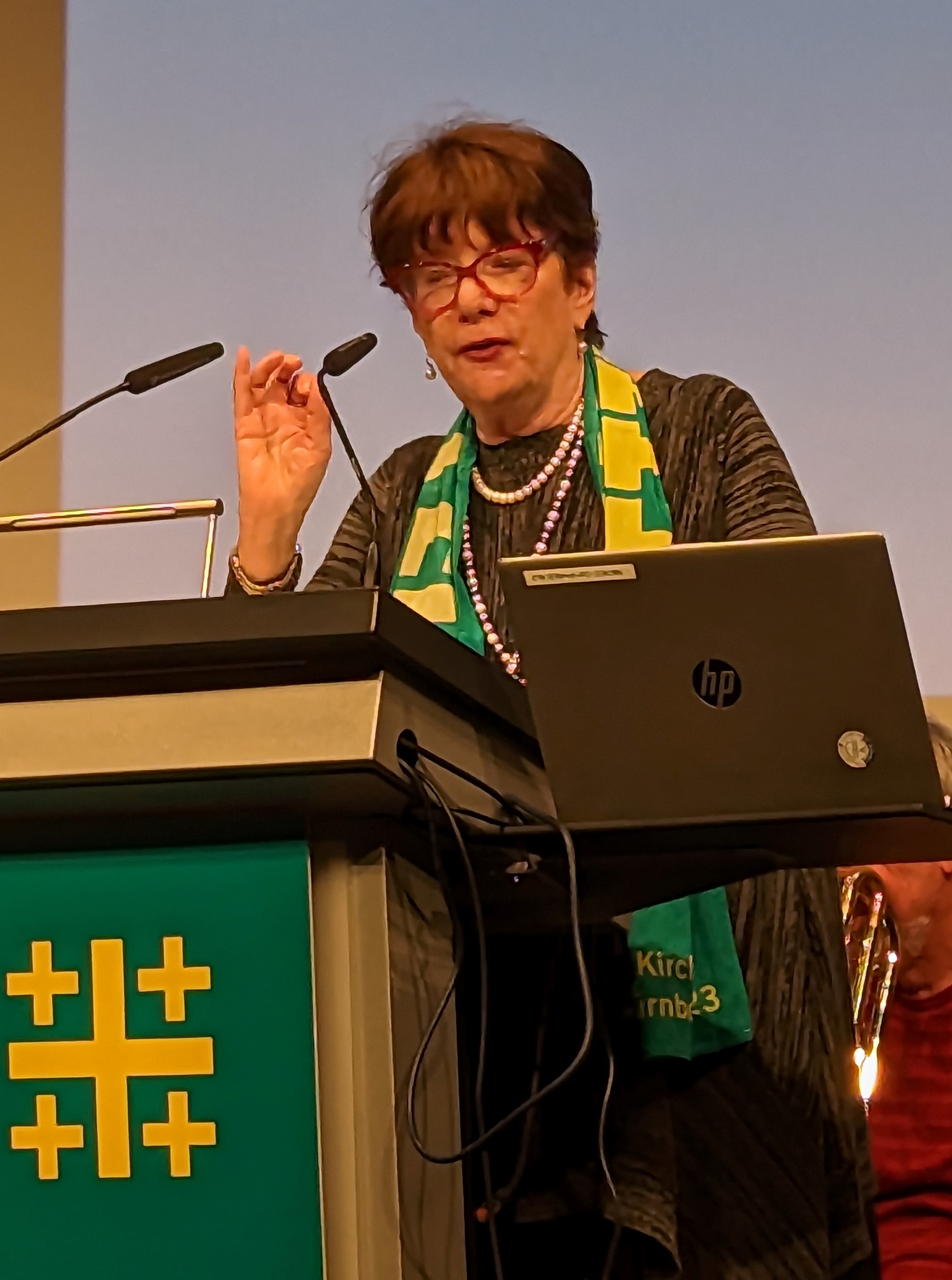
Amy-Jill Levine speaking at the German Protestant Kirchentag gathering in Nuremberg on 8 June 2023. Her photograph accompanies the introduction to her research on the New Testament and Jewish–Christian relations
Pessoa
New Testament and Jewish studies scholar at Hartford International University, studying Jewish contexts of early Christianity.
Variantes do nome: Amy-Jill Levine, Amy Jill Levine
Contexto e fontes →
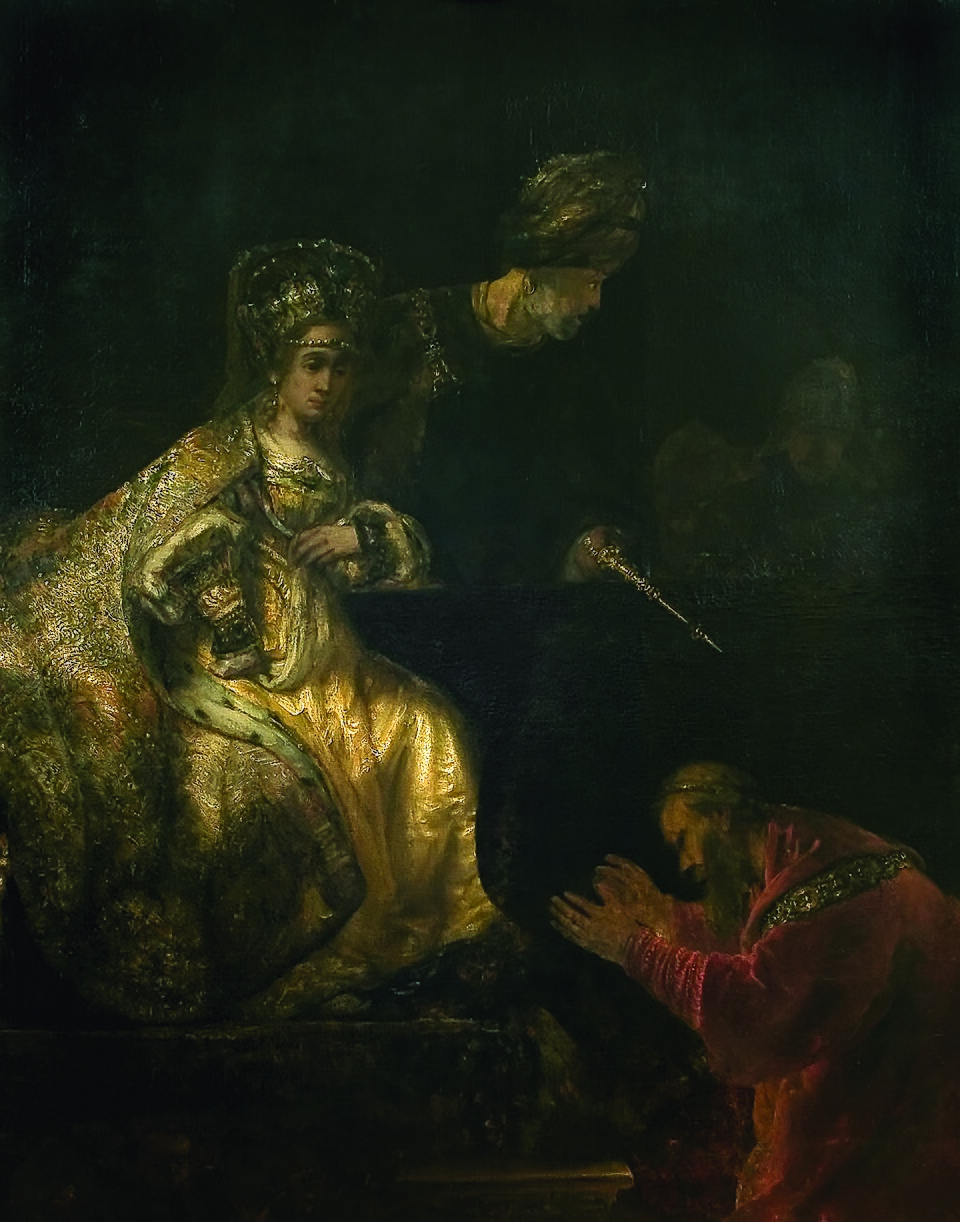
Haman before Esther,attributed to Rembrandt and his studio,1660 s; National Museum of Art of Romania 8187/221. Artistic interpretation of Esther 7, not historical portraits of the characters
Pessoa
The powerful court official opposing Esther and Mordecai, whose scheme to kill the Jews turns against him.
Variantes do nome: Haman in Esther
Contexto e fontes →

AI-generated modern imaginative cover: a horned crown and sky above an imagined Mesopotamian city. Not a portrait of An/Anu, an ancient artefact, or a documented reconstruction
Entidade
An is the Sumerian sky god, called Anu in Akkadian. The sign AN by itself does not identify him: it also denotes sky or divinity.
Variantes do nome: Anu, An (sky god)
Contexto e fontes →
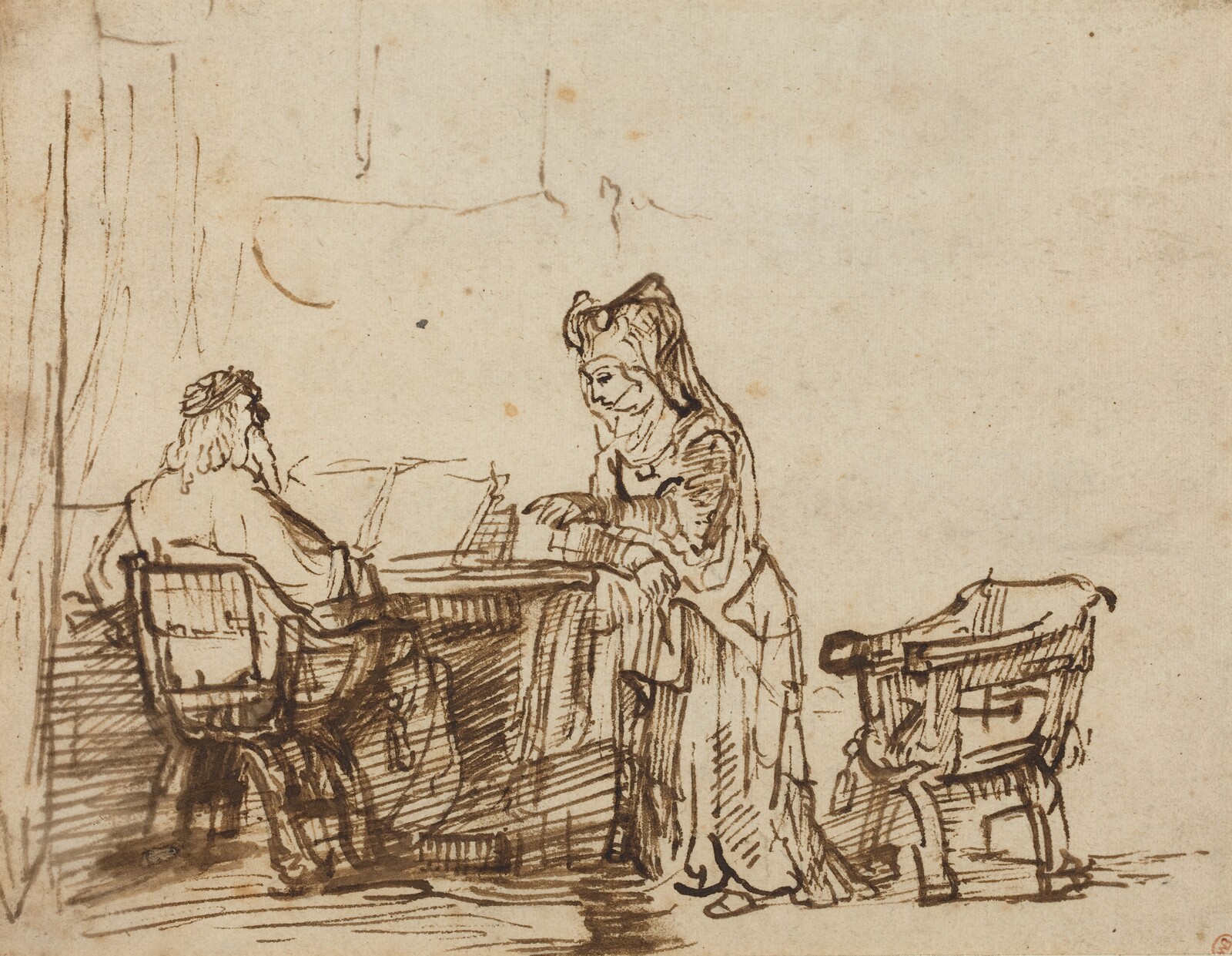
Hannah answering Eli, an anonymous drawing after Rembrandt (1606–1669). A later European rendering, not contemporary portraiture. National Gallery of Art, 1942.9.667
Pessoa
Figure in 1 Samuel who prays for a son and answers Eli’s suspicion of drunkenness; “daughter of Belial” describes conduct in her reply.
Variantes do nome: Hannah, mother of Samuel
Contexto e fontes →
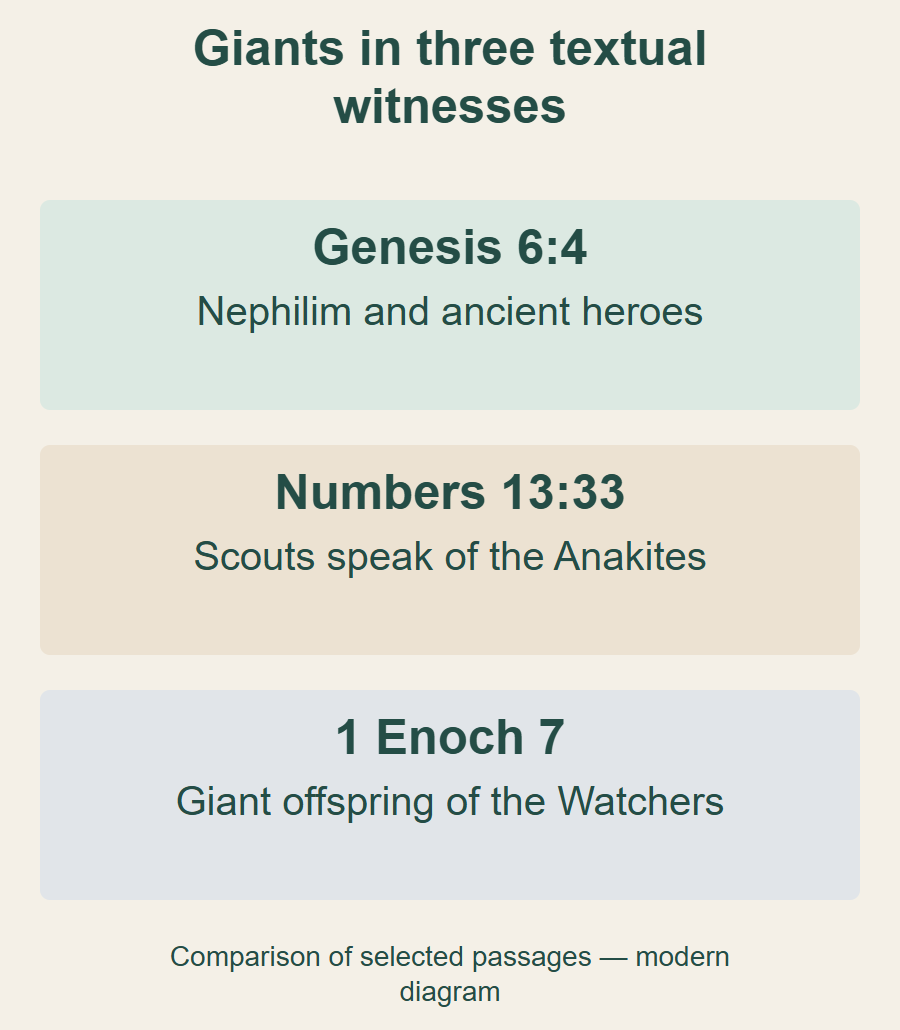
Modern textual comparison of Genesis 6, Numbers 13 and 1 Enoch 7, preserving differences between their giant traditions
Entidade
The Anakites are a group the scouts in Numbers describe as powerful and large.
Variantes do nome: Anakites, sons of Anak
Contexto e fontes →