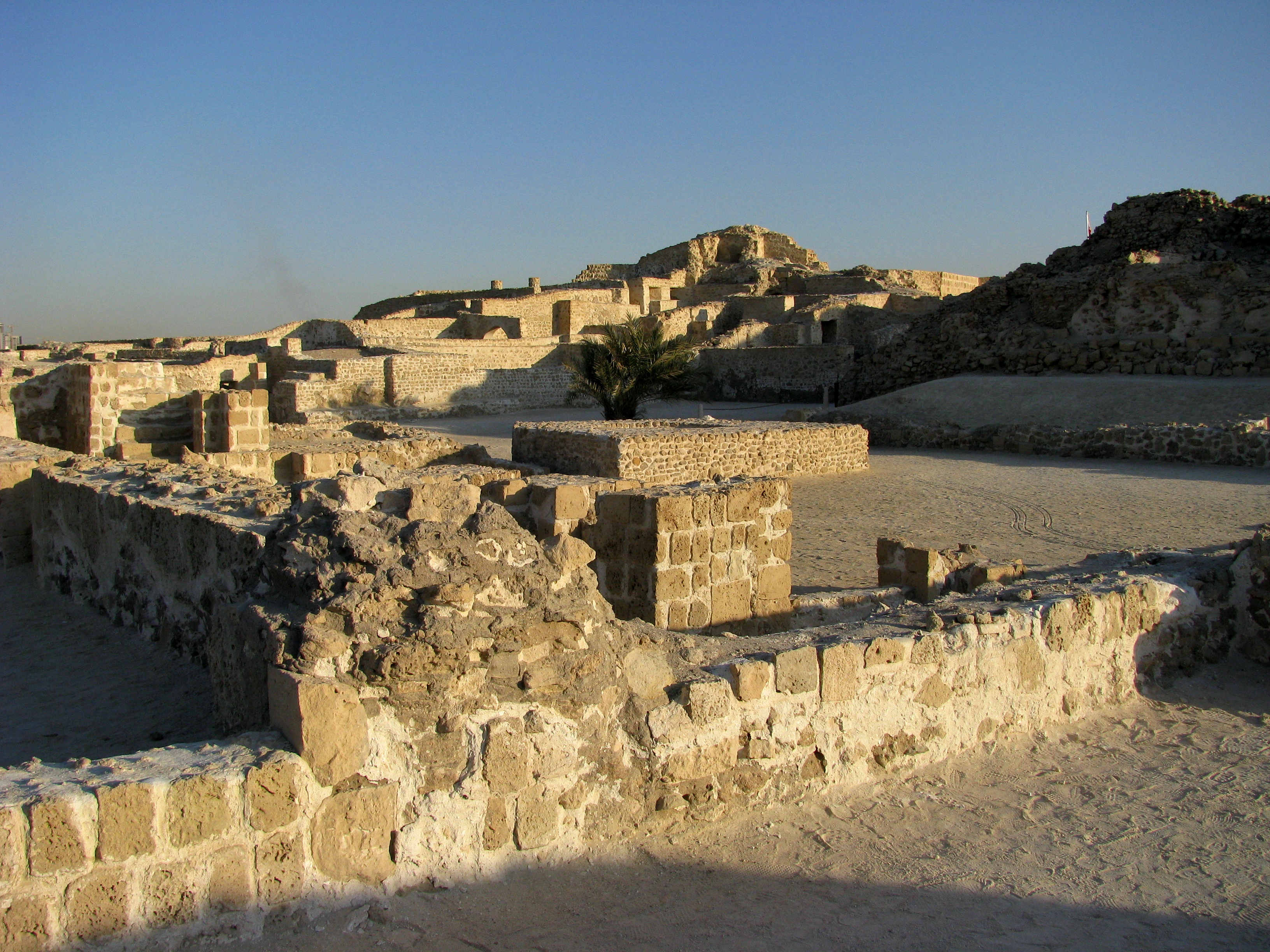
View at Qal’at al-Bahrain, Peter Dowley, 9 December 2008. The site includes successive layers and a sixteenth-century CE fort; not all visible walls date to ancient Dilmun
Sítio
Northern Bahrain site with Dilmun-period layers and a much later Portuguese fort, inscribed by UNESCO in 2005.
Variantes do nome: Qal’at al-Bahrain, harbour and archaeological tell
Contexto e fontes →
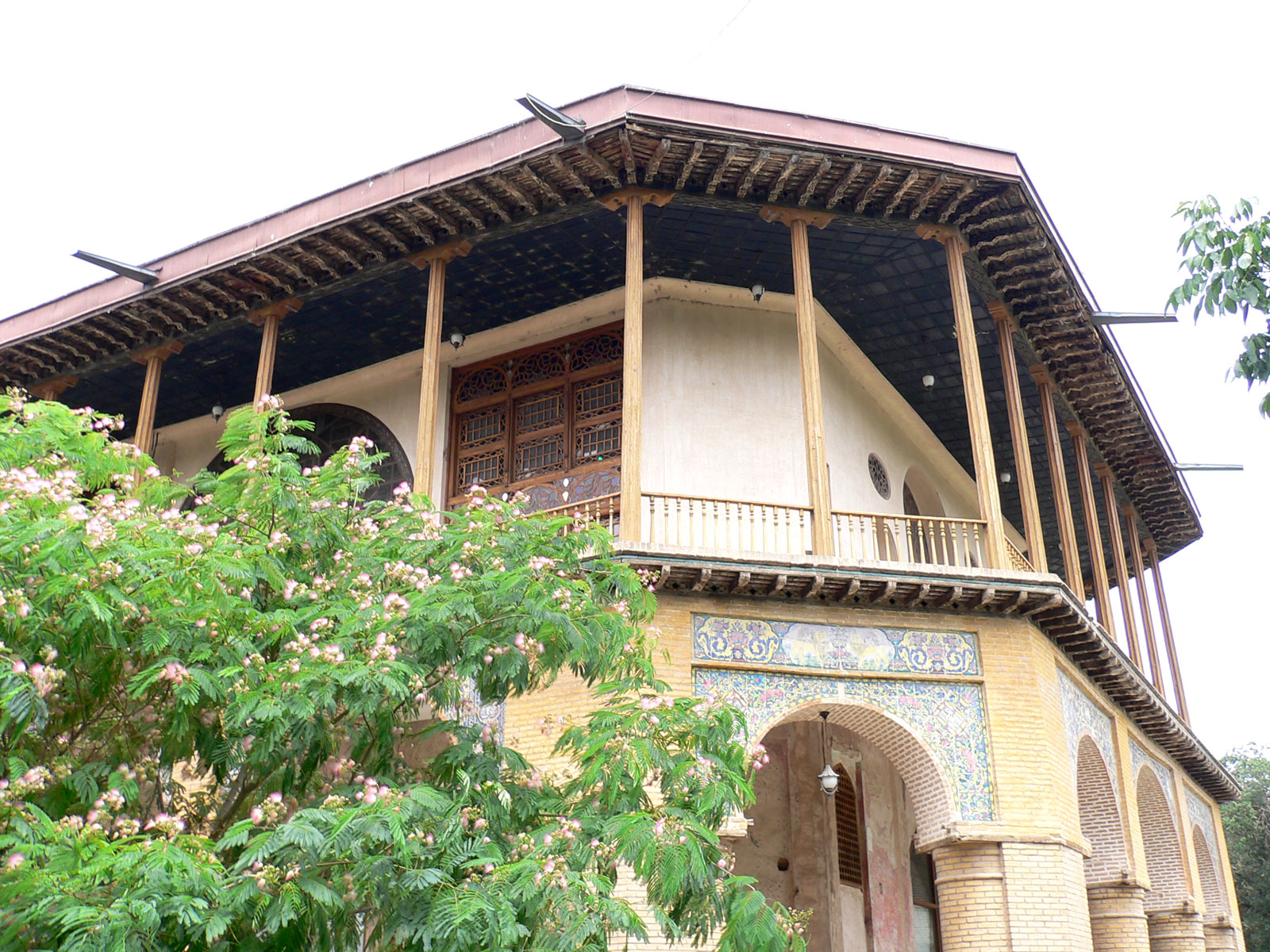
The Chehel Sotun pavilion in Qazvin, in a modern photograph uploaded in 2009. The city's heritage, not a proven production site for the Falnama leaf in the study. Abtin, CC BY-SA 3.0
Sítio
Iranian city that served as a Safavid capital in the later sixteenth century and was associated with manuscript arts.
Variantes do nome: Qazvin, Qazvīn
Contexto e fontes →
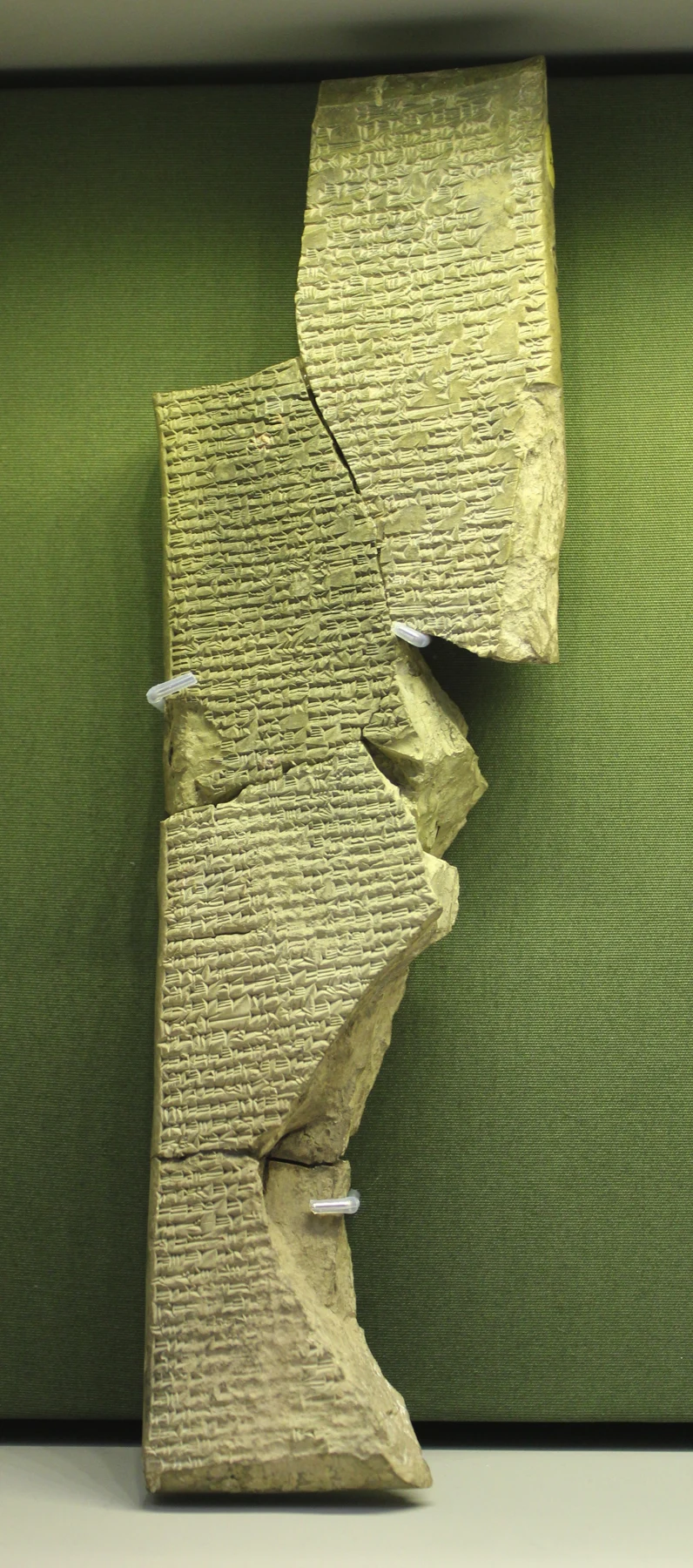
Cuneiform fragment K.3473 from Nineveh, a Neo-Assyrian witness to Enuma Elish Tablet III in the British Museum. This is a photograph of the textual witness, not Qingu or the Tablet VI creation episode
Entidade
Qingu (Kingu): a god whom Tiamat appoints commander and gives the Tablet of Destinies; captured after Marduk’s victory, his blood is used to make humans in Tablet VI.
Variantes do nome: Qingu, Kingu
Contexto e fontes →
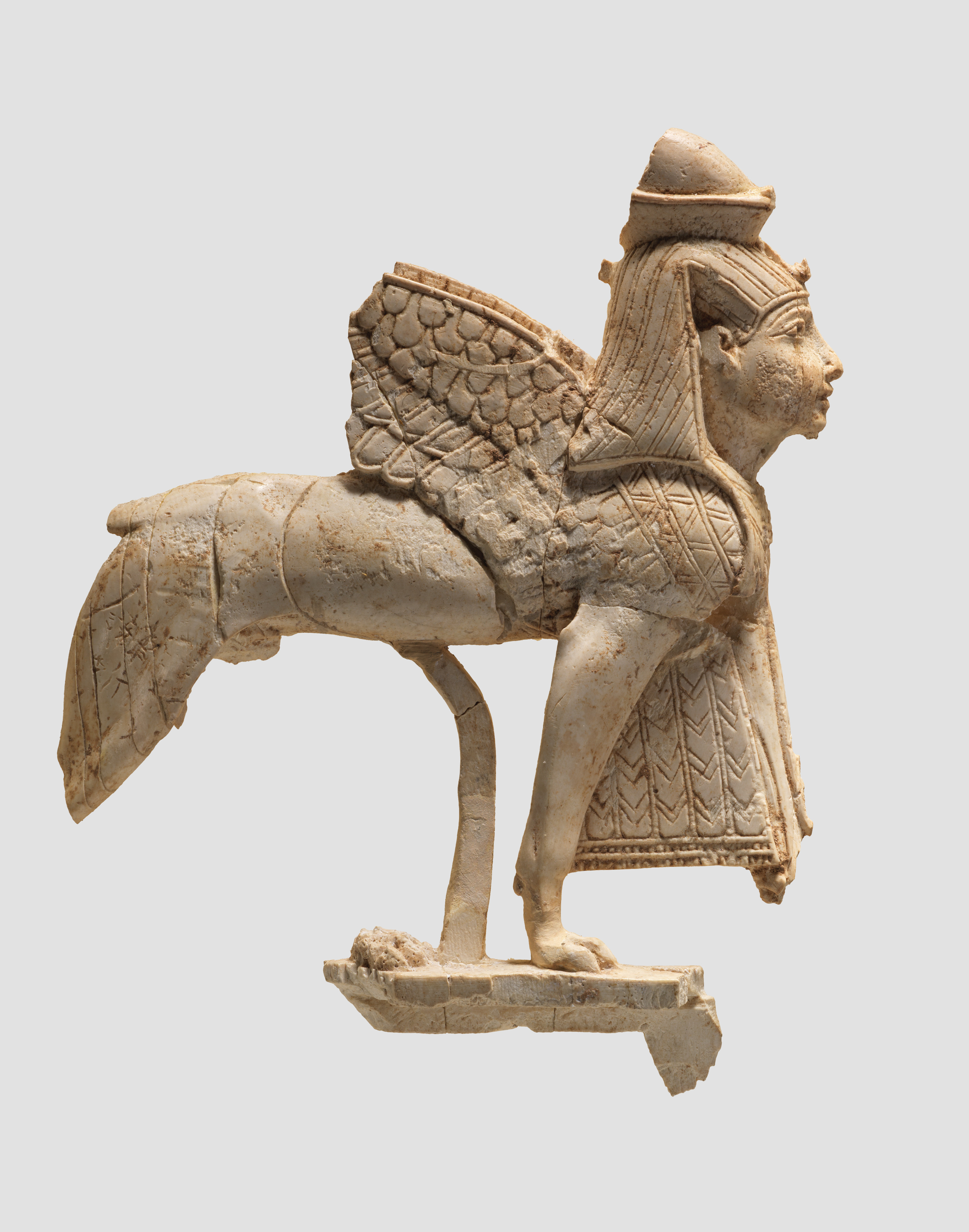
Ivory furniture plaque with a winged sphinx, ca. ninth–eighth century BCE; probably from Arslan Tash, Syria. The Met, 57.80.1. Comparative evidence, not a securely identified cherub or an image of the Ark
Entidade
Cherubim as Eden’s guardians, Ark and Temple figures, and beings in Ezekiel’s vision: a plural name, varying descriptions, and the limits of ancient visual comparisons.
Variantes do nome: cherubim, cherub
Contexto e fontes →
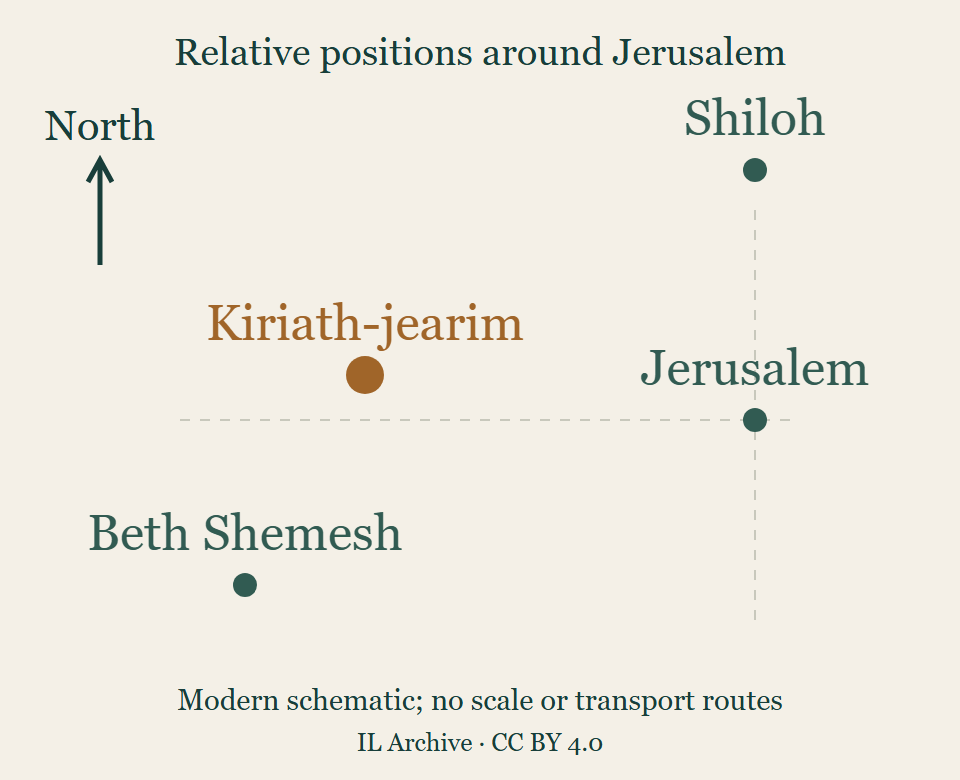
Modern schematic highlighting Kiriath-jearim / Deir el-Azar relative to Jerusalem and the other two sites. General directions, not a scale map or the Ark’s route
Sítio
Archaeological hill west of Jerusalem near Abu Ghosh, associated with the Ark in Samuel.
Variantes do nome: Kiriath-jearim / Deir el-Azar
Contexto e fontes →
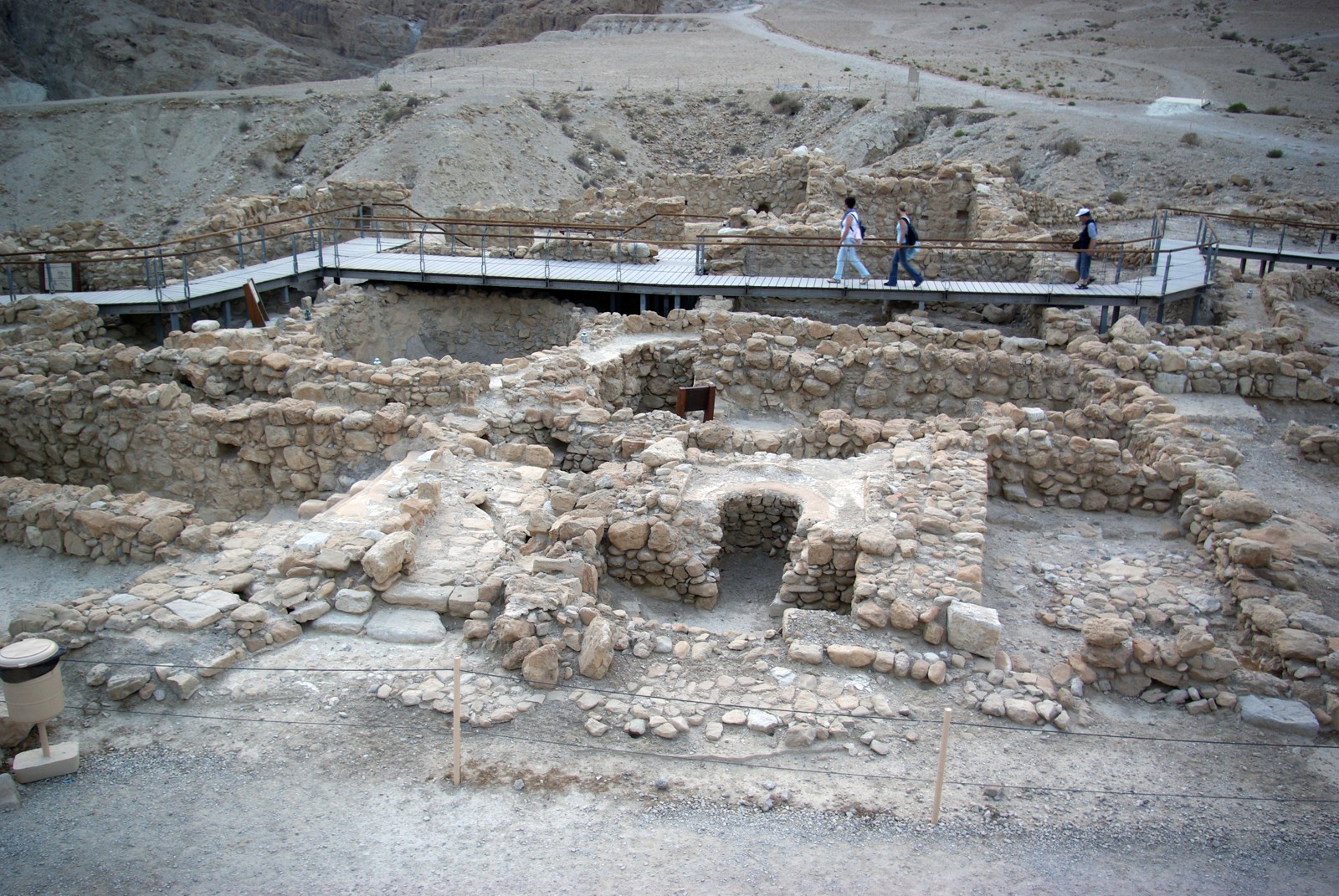
The ruins of Khirbet Qumran photographed in 2008. This is the built site, not a scroll cave or a manuscript fragment; the original photograph is preserved and the display copy is resized without cropping
Sítio
Archaeological site northwest of the Dead Sea near manuscript caves; its settlement and the groups who deposited the scrolls are studied together but not assumed identical. It is not synonymous with all Dead Sea Scrolls.
Variantes do nome: Qumran, Khirbet Qumran
Contexto e fontes →
Pessoa
Hebrew Bible scholar at Bar-Ilan University studying the Ark and cherubim.
Variantes do nome: Raanan Eichler
Contexto e fontes →
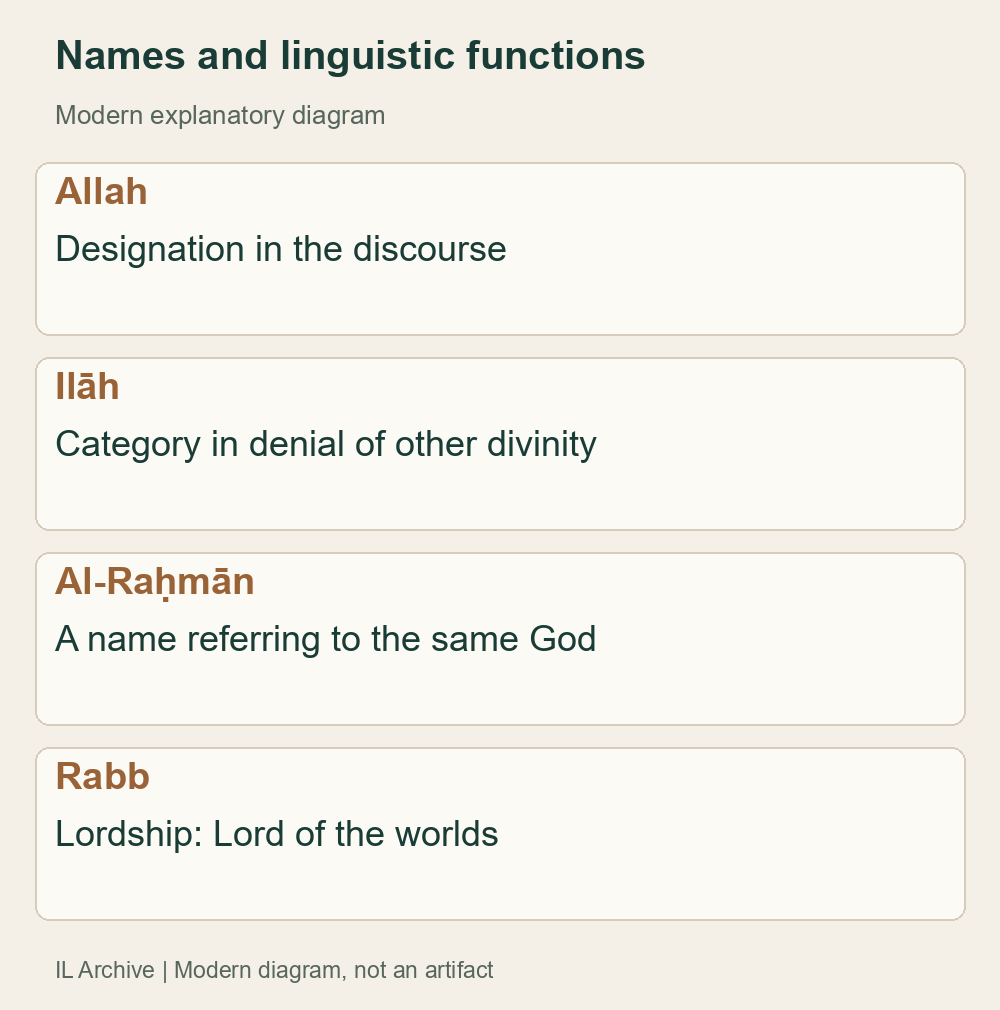
Modern explanatory diagram of Allah, ilāh, al-Raḥmān and rabb in Qur’anic usage; neither an etymological tree nor four separate gods. The etymology of “Allah” is a different question. [1][2][12]
Entidade
Arabic term for mastery, ownership or care according to context; used for God and human masters, without itself naming a separate deity.
Variantes do nome: rabb, Lord of the worlds
Contexto e fontes →
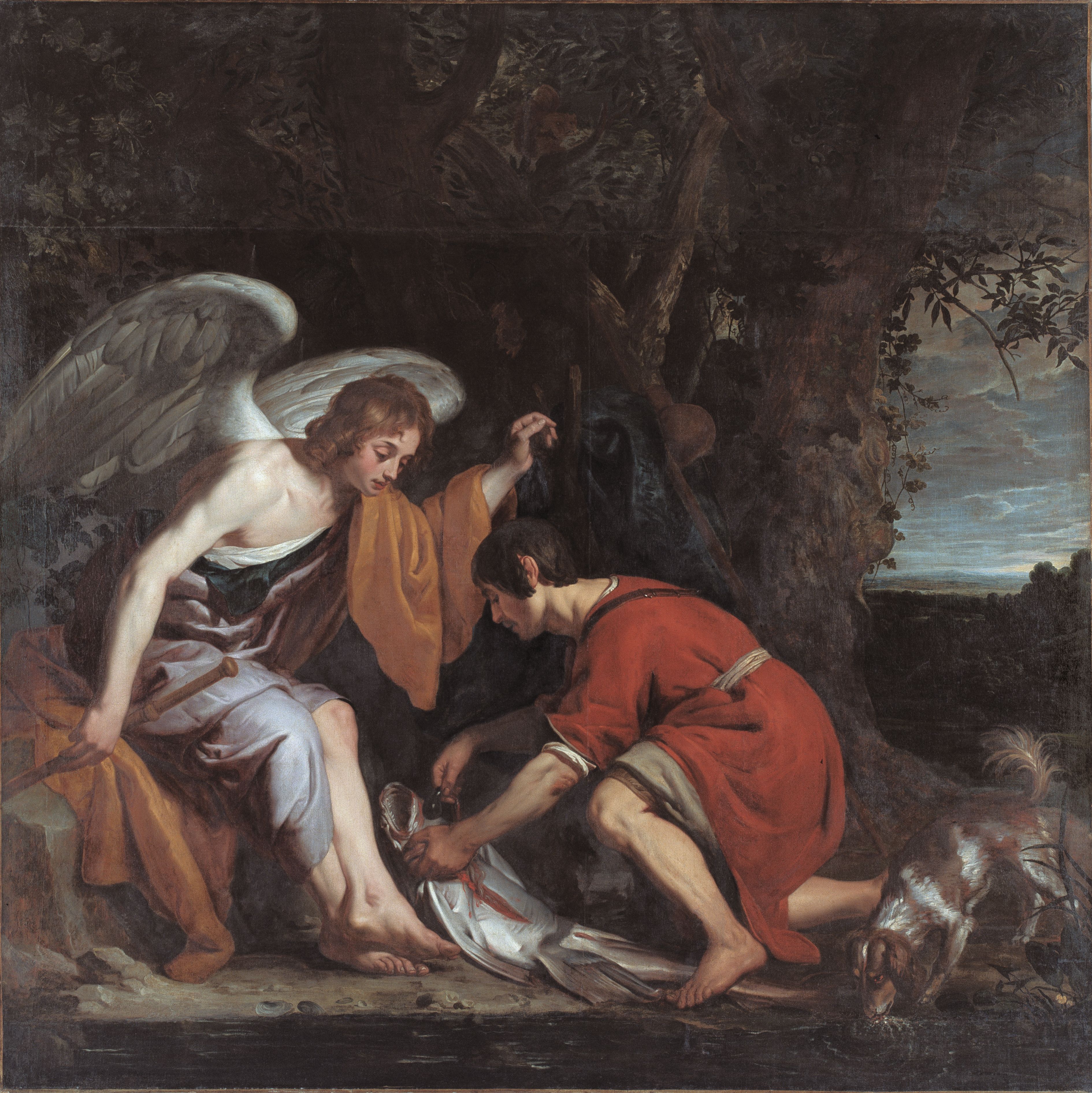
Gaspar de Crayer, Tobias and the Angel, c.1618, oil on canvas, Museum of Fine Arts Ghent, S-13. Raphael is on the left as Tobias cuts open the fish: a later European portrayal of the story, not documentation of the angel or event
Entidade
Raphael means “God has healed,” a name borne by a human in Chronicles and an angel in Tobit and 1 Enoch. In Tobit he accompanies the travelling son, helps heal the father and presents prayer before God; in Enoch he executes judgment and explains the places of the dead. Similarity of names does not settle his relationship to Israfil.
Variantes do nome: Raphael, Rephael
Contexto e fontes →
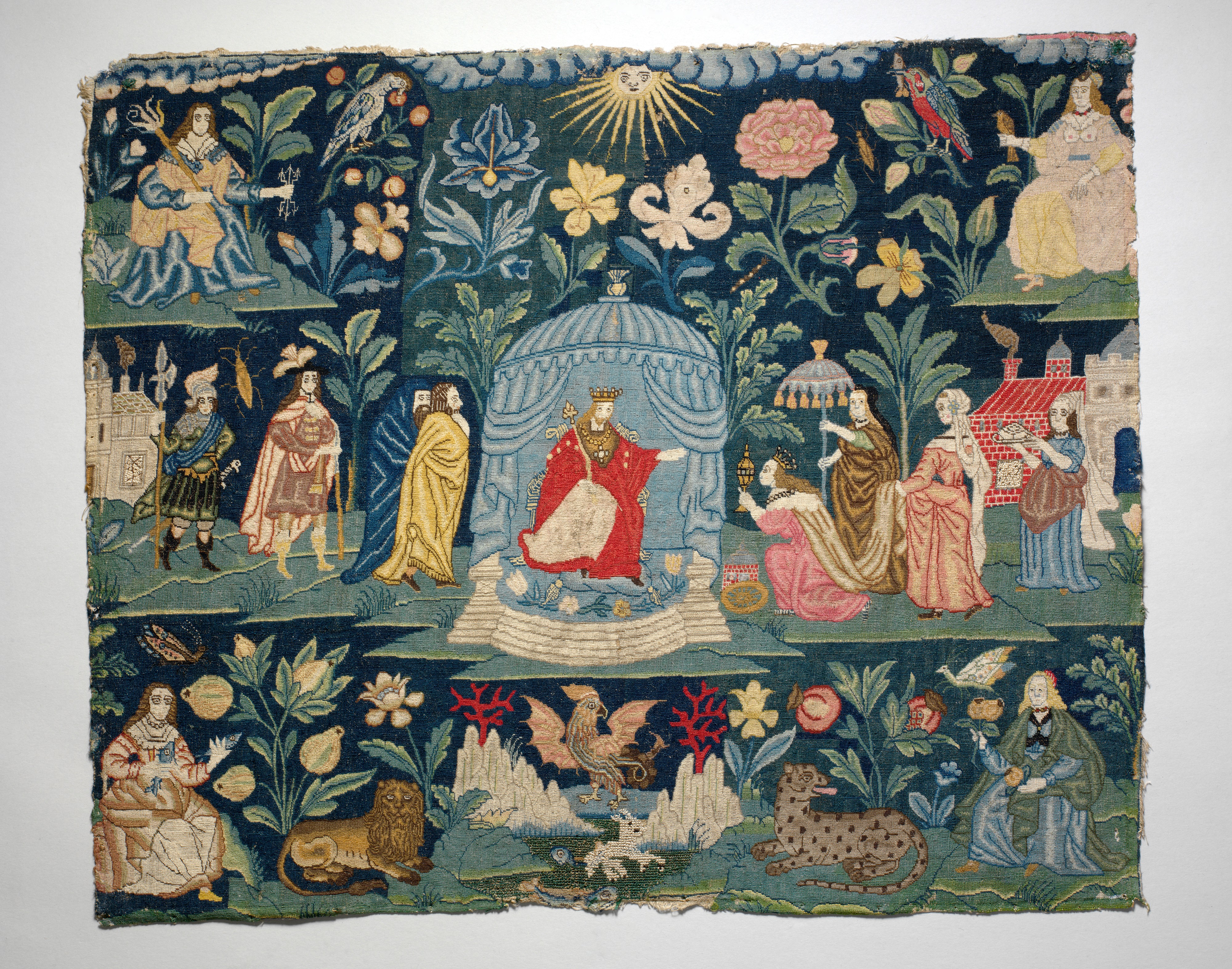
Solomon's meeting with the Queen of Sheba in British embroidery, ca. 1700: later artistic reception, not a historical portrait. Met 64.101.1307; public domain
Pessoa
The ruler in narratives of Solomon's encounter with Sheba; neither First Kings nor the Quran gives her a personal name, and her historical identification is unresolved.
Variantes do nome: Queen of Sheba
Contexto e fontes →
Pessoa
Scholar of ancient Mesopotamian and eastern Mediterranean literature; co-authored a 2021 comparison of Isaac and Iphigenia.
Variantes do nome: Heth
Contexto e fontes →

Modern AI-assisted illustration of a level balance, evoking impartiality in the Menog i Khrad. Neither a portrait of Rashn nor an excavated balance; the empty pans are a visual choice, not a textual detail
Entidade
Rashn is a Zoroastrian divine being linked to uprightness and discerning truth; the Menog i Khrad presents him as an impartial weigher who favors no ruler.
Variantes do nome: Rashn, Rashnu
Contexto e fontes →

Modern generated expressive cover: dawn light on an uninscribed rock and imagined highlands evoke the South Arabian epigraphic context; not a genuine Ḥimyarite inscription or documented place
Entidade
A divine designation written rḥmnn in Late South Arabian inscriptions, especially in Ḥimyar (fourth–sixth centuries CE), used in Jewish and Christian contexts; its referent is not always unambiguous.
Variantes do nome: Raḥmānān, Rahmanan, rḥmnn
Contexto e fontes →
Modern imaginative illustration of comparing inscriptions and sound patterns to infer older forms. The depicted objects and symbols are designed elements, not identified archaeological finds
Entidade
A method inferring earlier, sometimes unattested sounds and forms from recurring correspondences in related languages; the result is a hypothesis, not a discovered text.
Variantes do nome: linguistic reconstruction, comparative reconstruction
Contexto e fontes →
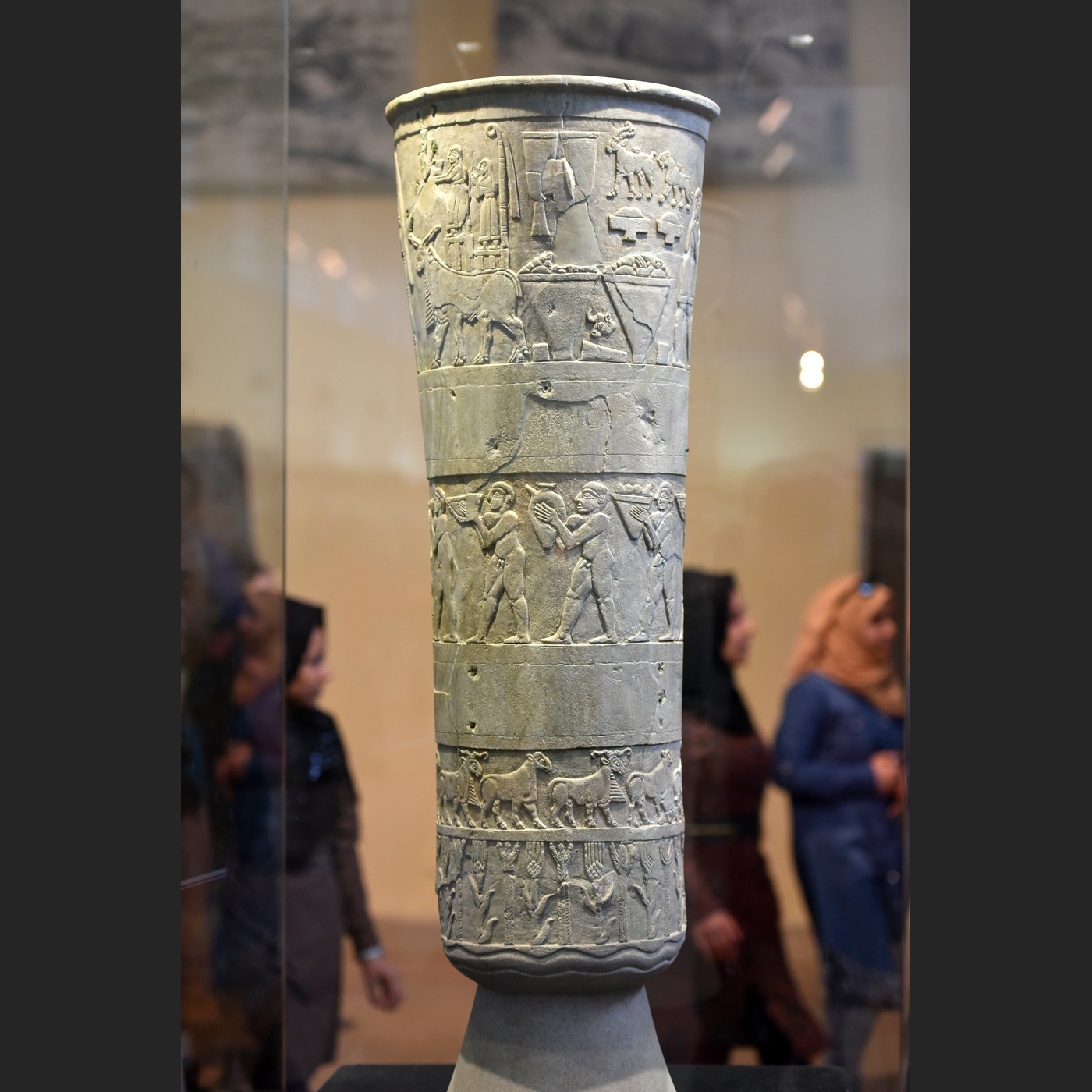
The Warka Vase in the Iraq Museum, photographed in 2019 and placed in a square frame with side margins so the complete height remains visible; not a reconstruction or drawing
Entidade
A horizontal zone or band grouping related images in an artwork; the count can depend on how rows are grouped, and their order alone does not establish chronology.
Variantes do nome: pictorial register, pictorial registers
Contexto e fontes →
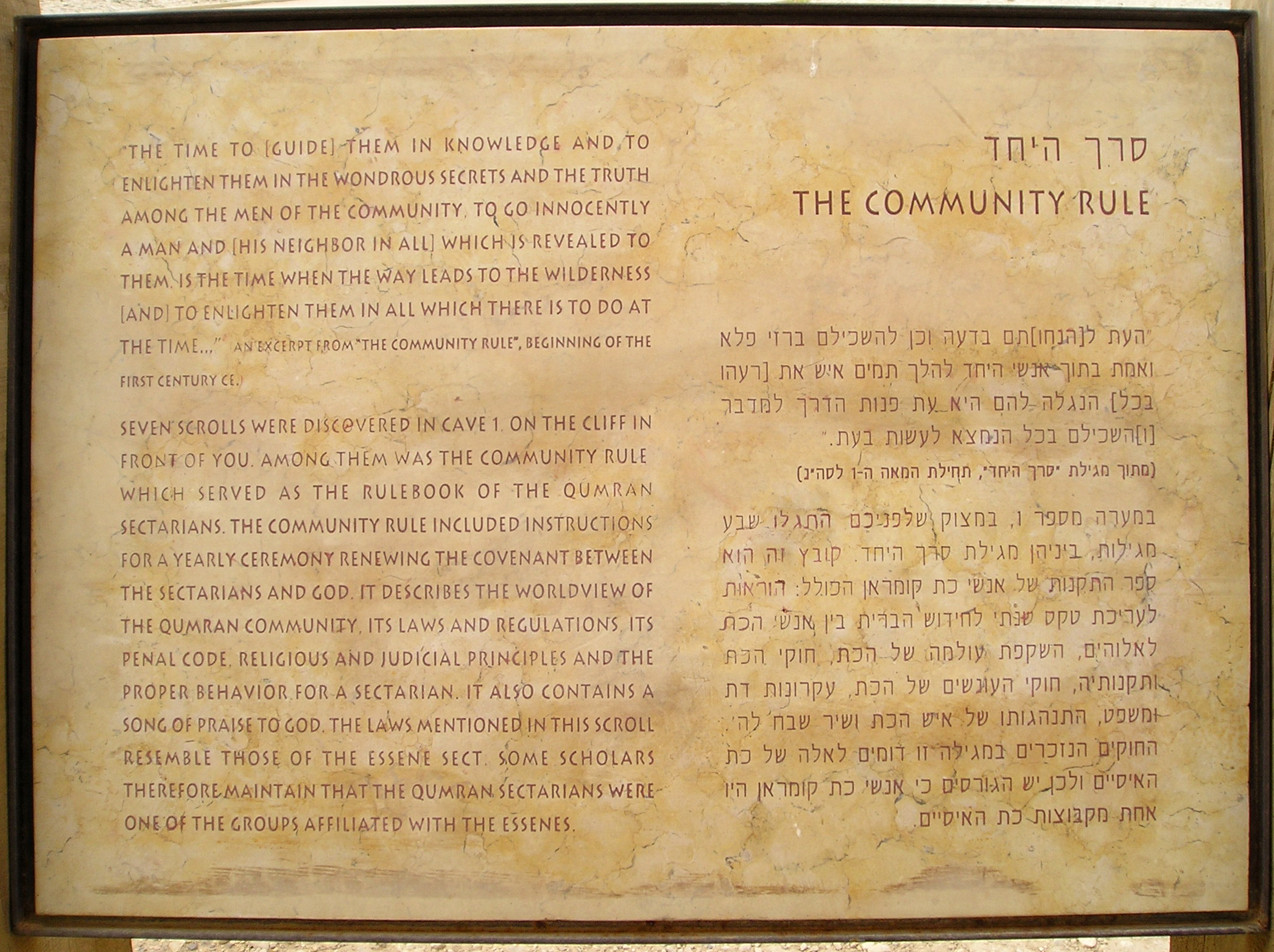
Modern explanatory sign about the Community Rule at Qumran, photographed by A. Sobkowski on 9 March 2006. It contains English and Hebrew text; this is not a photograph of the ancient scroll
Entidade
Hebrew text among the Dead Sea Scrolls; the copy designated 1QS includes teaching on the spirits of truth and perversity and conflict within the human heart.
Variantes do nome: Community Rule, 1QS
Contexto e fontes →
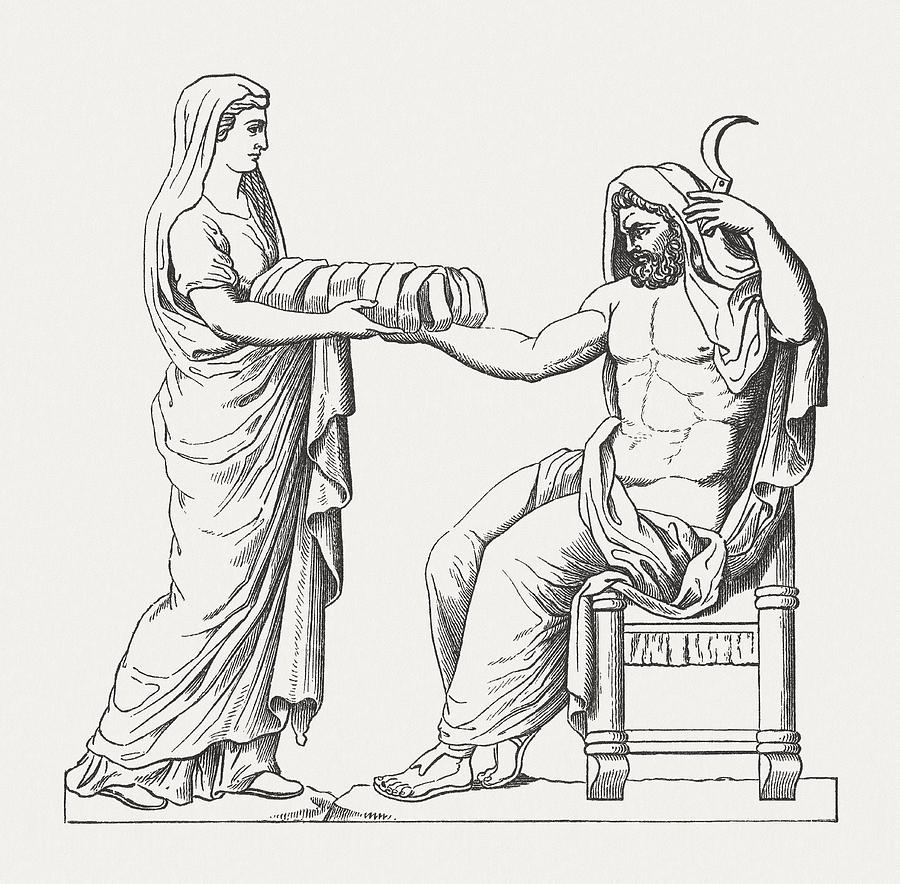
Rhea presents the stone to Kronos; wood engraving published in the 1878 Leipzig edition of Der Olymp. Later printed reception of the scene, not an artifact photograph or a likeness from Hesiod’s time
Entidade
Zeus’s mother in Hesiod, hiding the child and giving Kronos a stone instead.
Variantes do nome: Rhea
Contexto e fontes →
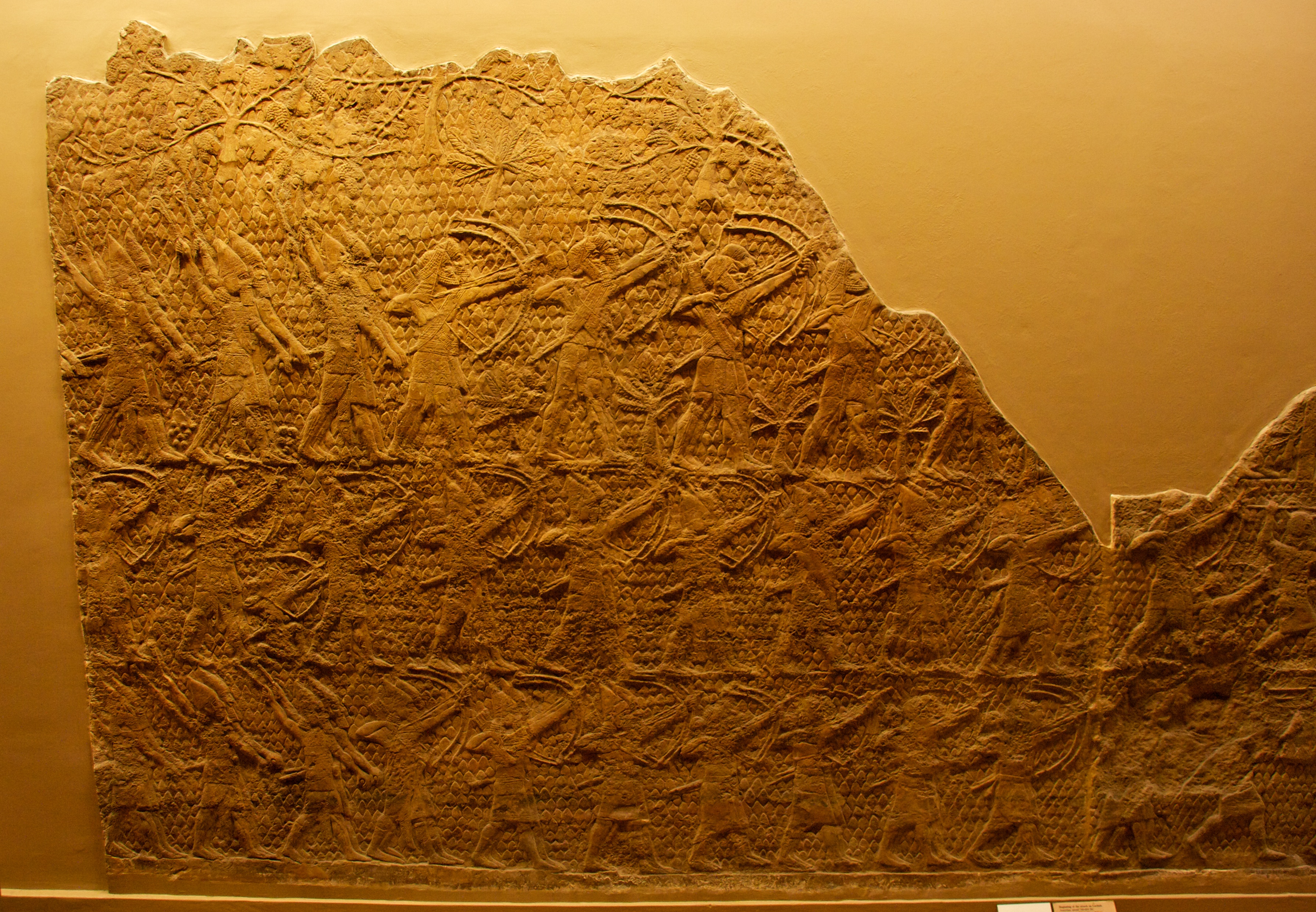
Detail of the Assyrian reliefs showing the siege of Lachish, a city of the kingdom of Judah, during Sennacherib’s campaign of 701 BCE. Carved at Nineveh around 700–692 BCE and held in the British Museum. Photographed on 12 September 2010; an Assyrian representation of the event from the attackers’ perspective
Sítio
Judah was an ancient southern Levantine kingdom centered on Jerusalem in the Iron Age
Variantes do nome: kingdom of Judah
Contexto e fontes →
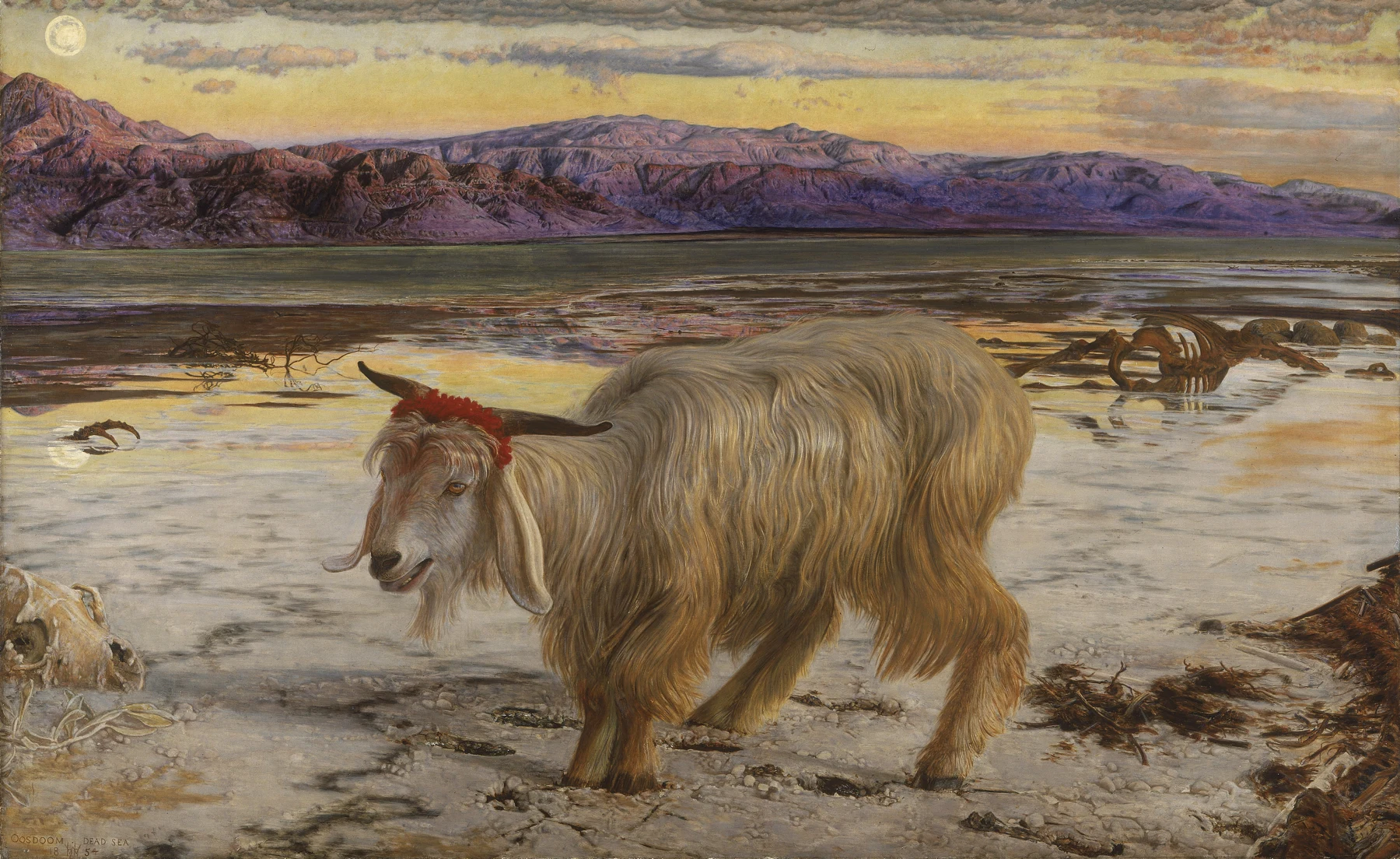
A horned goat stands by saline water before distant hills in William Holman Hunt’s The Scapegoat (1854), Lady Lever Art Gallery, LL 3623. Public-domain image via Wikimedia Commons of a nineteenth-century painting: not archaeological evidence, a depiction of Azazel, or a model for all removal rites
Entidade
Analytical term for expelling impurity, harm, or ominous danger from a protected domain; it does not equate transfer, expulsion, slaughter, and destruction.
Variantes do nome: ritual removal
Contexto e fontes →
Pessoa
Researcher in ancient West Asian material and visual culture who has studied standards and symbols in Mesopotamian art.
Variantes do nome: Renate Marian van Dijk-Coombes, Renate van Dijk-Coombes
Contexto e fontes →

Modern AI-generated conceptual cover: dawnlight, a new sprout, and luminous human figures symbolize revival and transformation. Neither an ancient artefact nor an established portrayal of resurrection
Entidade
Resurrection: the hope of the dead returning to life through divine action. Ancient traditions differ on who rises, what embodiment means, and how this relates to judgment or cosmic renewal.
Variantes do nome: resurrection, resurrection of the dead, raising the dead
Contexto e fontes →
Pessoa
New Testament and early Christianity scholar, emeritus professor at St Andrews.
Variantes do nome: Richard Bauckham
Contexto e fontes →
Pessoa
Professor of Talmud and rabbinics who studies rabbinic narratives and Jewish Babylonia.
Variantes do nome: Richard Kalmin
Contexto e fontes →
Pessoa
Old Testament and Semitic-language scholar at Denver Seminary, studying ancient inscriptions, names and religion.
Variantes do nome: Richard S. Hess
Contexto e fontes →
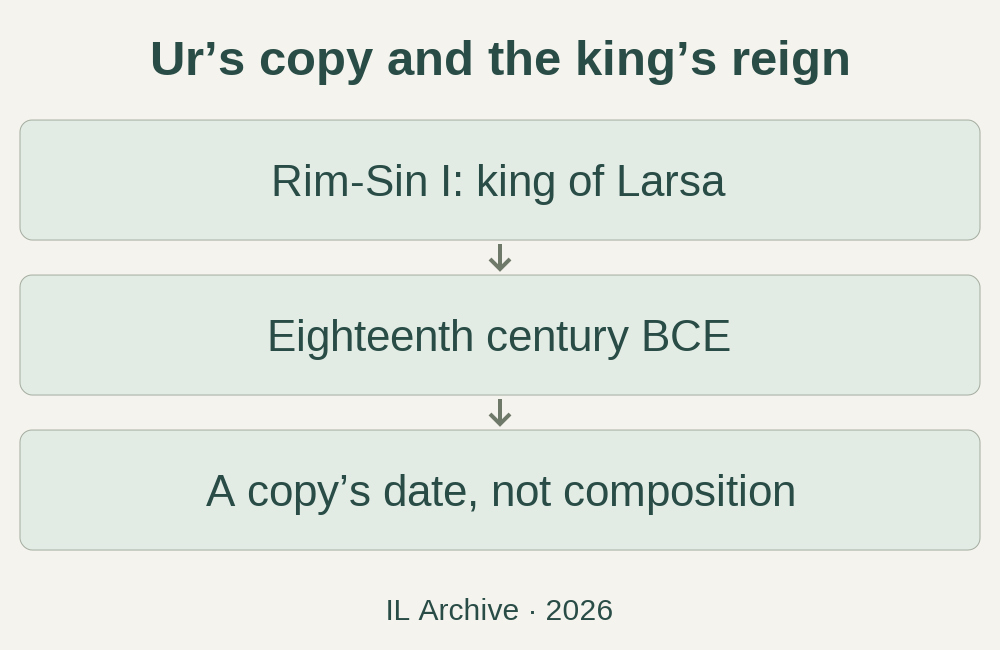
Modern witness-specific explanatory diagram of a sequence or linguistic relationship, not a portrait or fabricated artifact
Pessoa
Eighteenth-century BCE king in southern Mesopotamia, whose reign helps date the Ur copy of the poem.
Variantes do nome: Rim-Sin I, king of Larsa
Contexto e fontes →
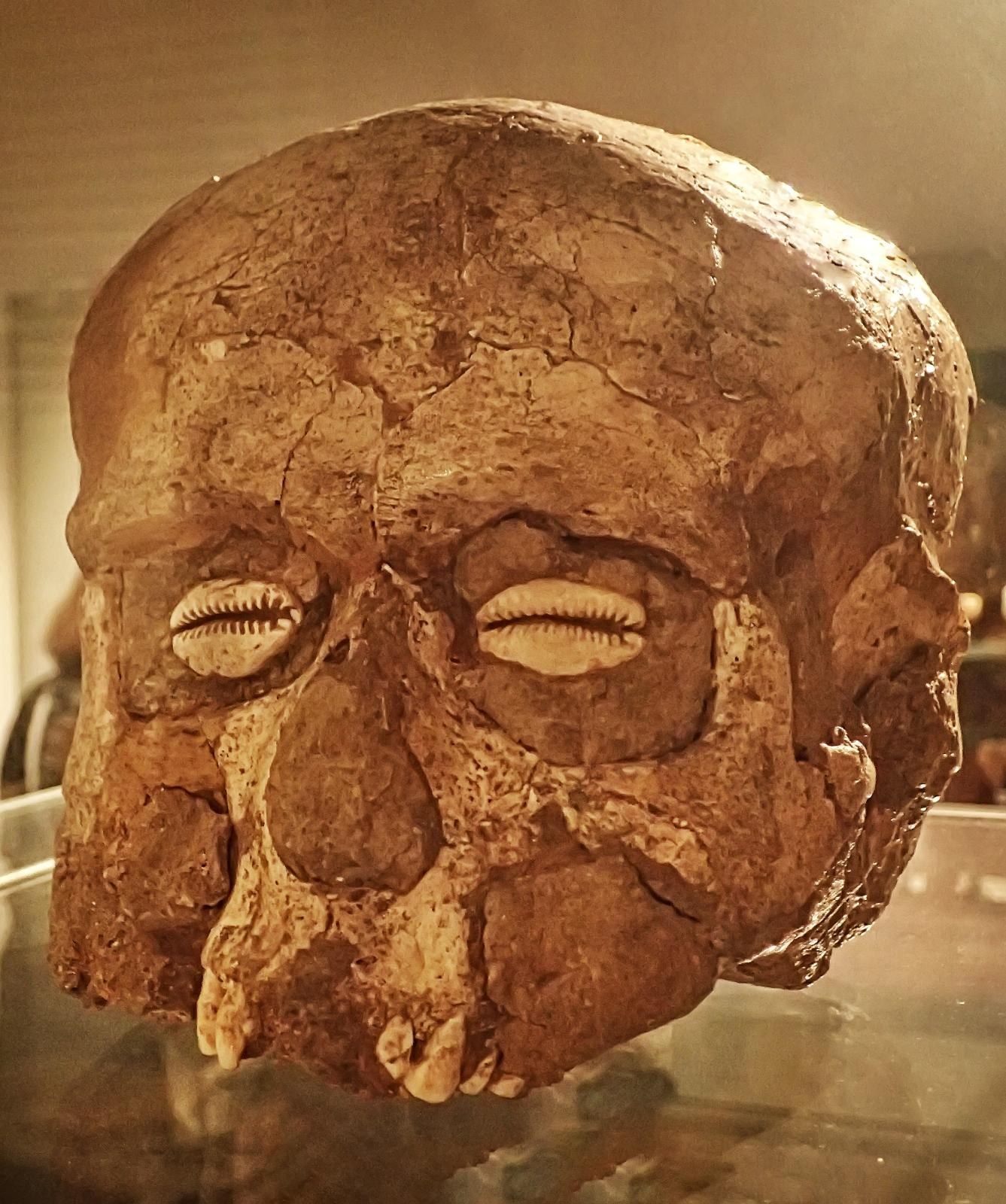
A plastered human skull from Jericho, around 7000 BCE, in the Ashmolean Museum, Oxford. Plaster remodels the face and shells mark the eyes; this treatment alone does not identify the beliefs of its makers
Entidade
An organised or distinguished practice meaningful to a community; it may leave traces, but its form alone does not reveal an associated doctrine.
Variantes do nome: ritual, rituals
Contexto e fontes →
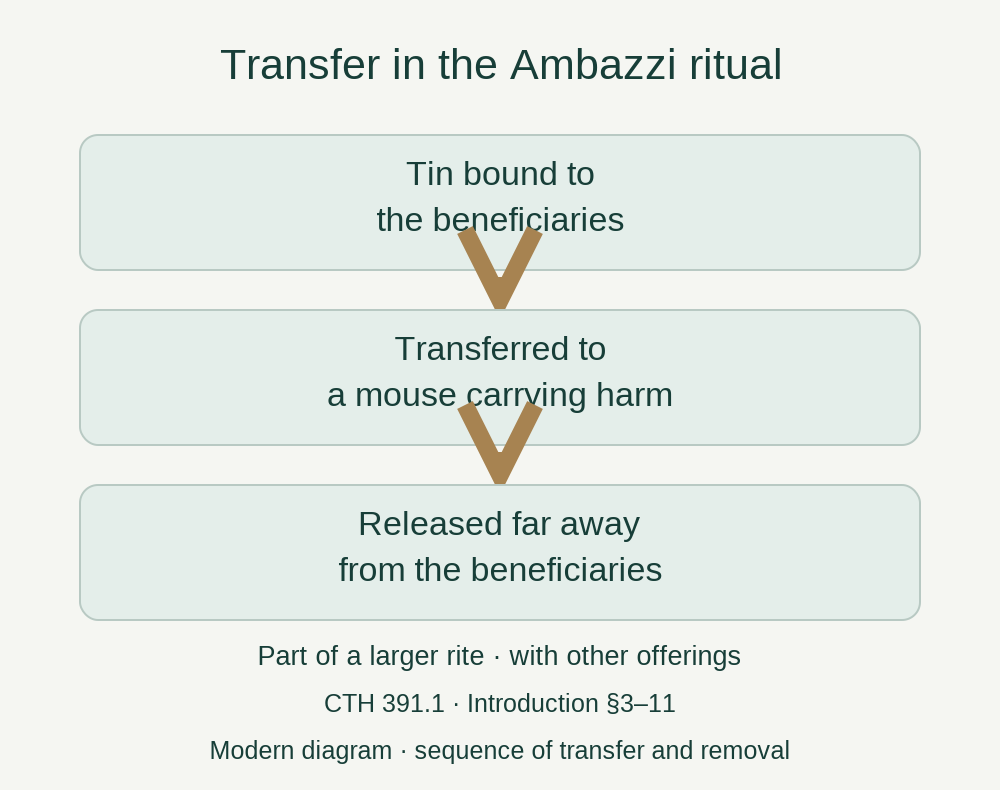
Tin, beneficiaries, and mouse in Ambazzi, following the scholarly introduction to CTH 391.1. Other offerings provide broader context, without asserting a subsequent step after release. Modern diagram
Texto antigo
A Hittite rite attributed to a female ritual expert, CTH 391.1; tin passes from beneficiaries to a mouse released to carry harm away.
Variantes do nome: Ambazzi ritual of removing harm
Contexto e fontes →
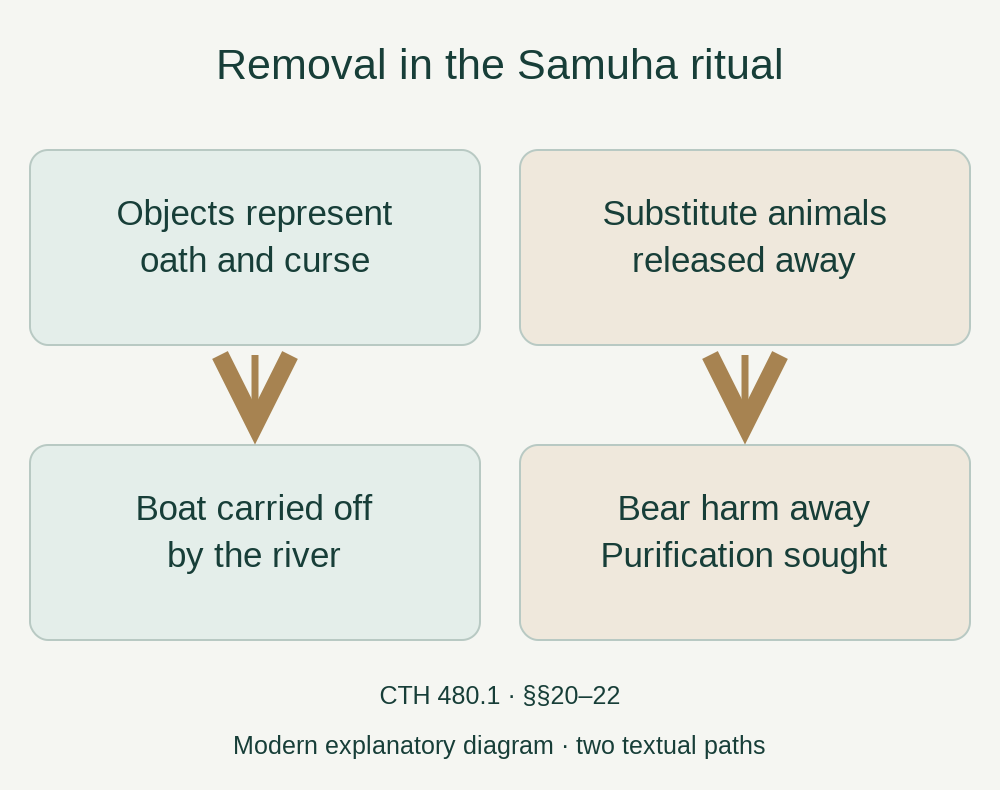
Two means of removal in Samuha, CTH 480.1, §§20–22: a boat with objects representing oath and curse, and animals carrying harm. Modern explanatory diagram
Texto antigo
A Hittite purification text, CTH 480.1, removing harmful speech, curse, and impurity by boat and animals in temple and royal contexts.
Variantes do nome: Samuha purification ritual
Contexto e fontes →
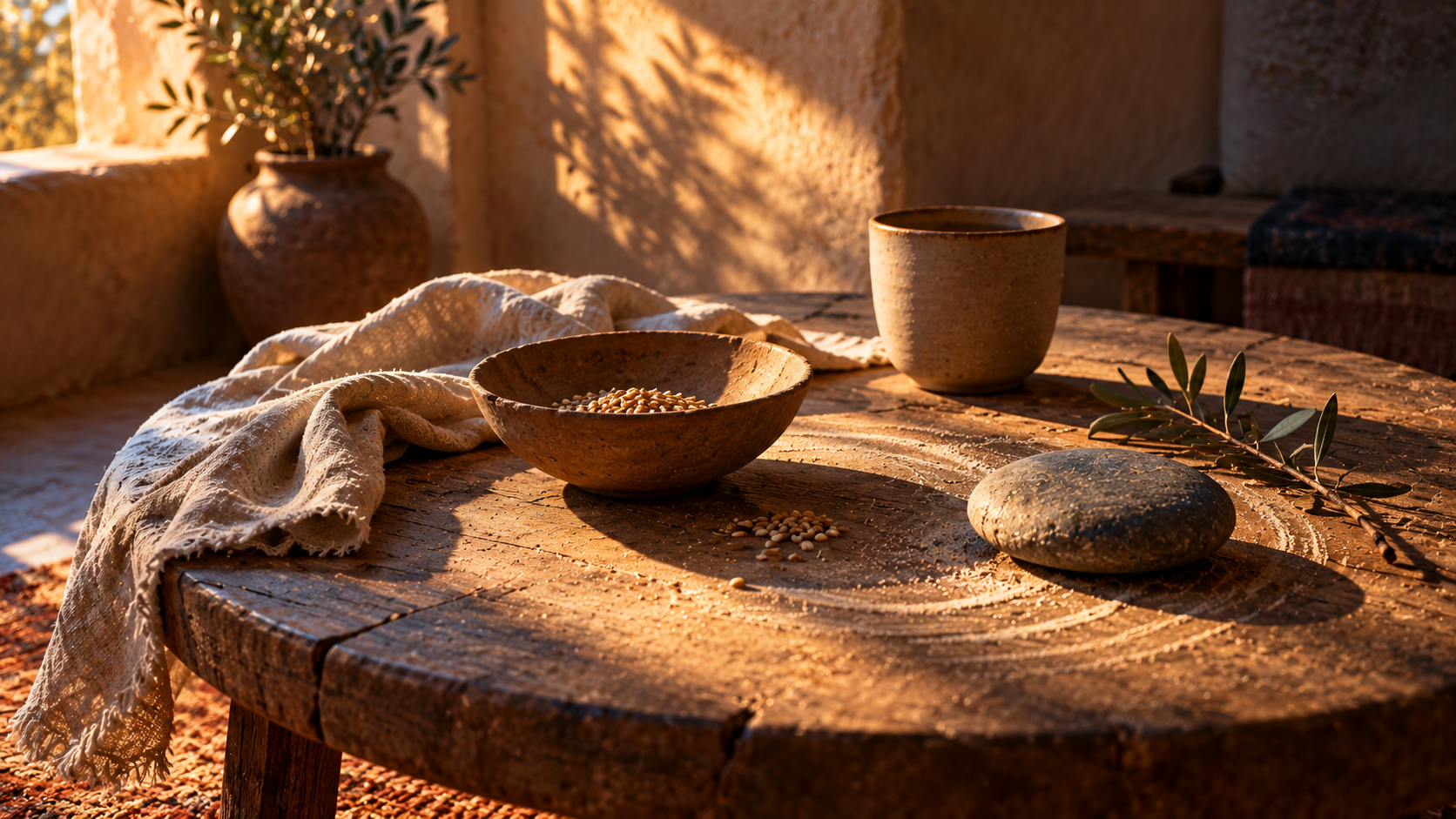
Modern AI-generated conceptual domestic still life: vessels, grains, cloth and ordinary objects. It depicts no documented ritual or historical house; the meaning of the objects depends on their use and context
Entidade
The acquisition of special qualities by familiar practices or places; an analytical concept that need not separate ritual from everyday life.
Variantes do nome: ritualization, ritualisation
Contexto e fontes →
Pessoa
Robert Henry Charles (1855–1931) was an Irish scholar, editor and translator of 1 Enoch.
Variantes do nome: Robert Henry Charles, R. H. Charles
Contexto e fontes →
Pessoa
UCLA Assyriologist and Sumerologist specializing in early Mesopotamian writing; a pioneer of the Cuneiform Digital Library Initiative.
Variantes do nome: Robert K. Englund
Contexto e fontes →

A newly generated modern symbolic contrast of light and shadow for the War Scroll; it does not depict the 1QM manuscript or a documented historical battle
Entidade
Dead Sea Scroll text portraying war between the sons of light and the hostile camp; its principal copy is designated 1QM.
Variantes do nome: War Scroll
Contexto e fontes →
Pessoa
Scholar of Hebrew texts, religion and comparative mythology; emeritus professor at UC Berkeley.
Variantes do nome: Ronald Hendel, Hebrew Bible scholar
Contexto e fontes →
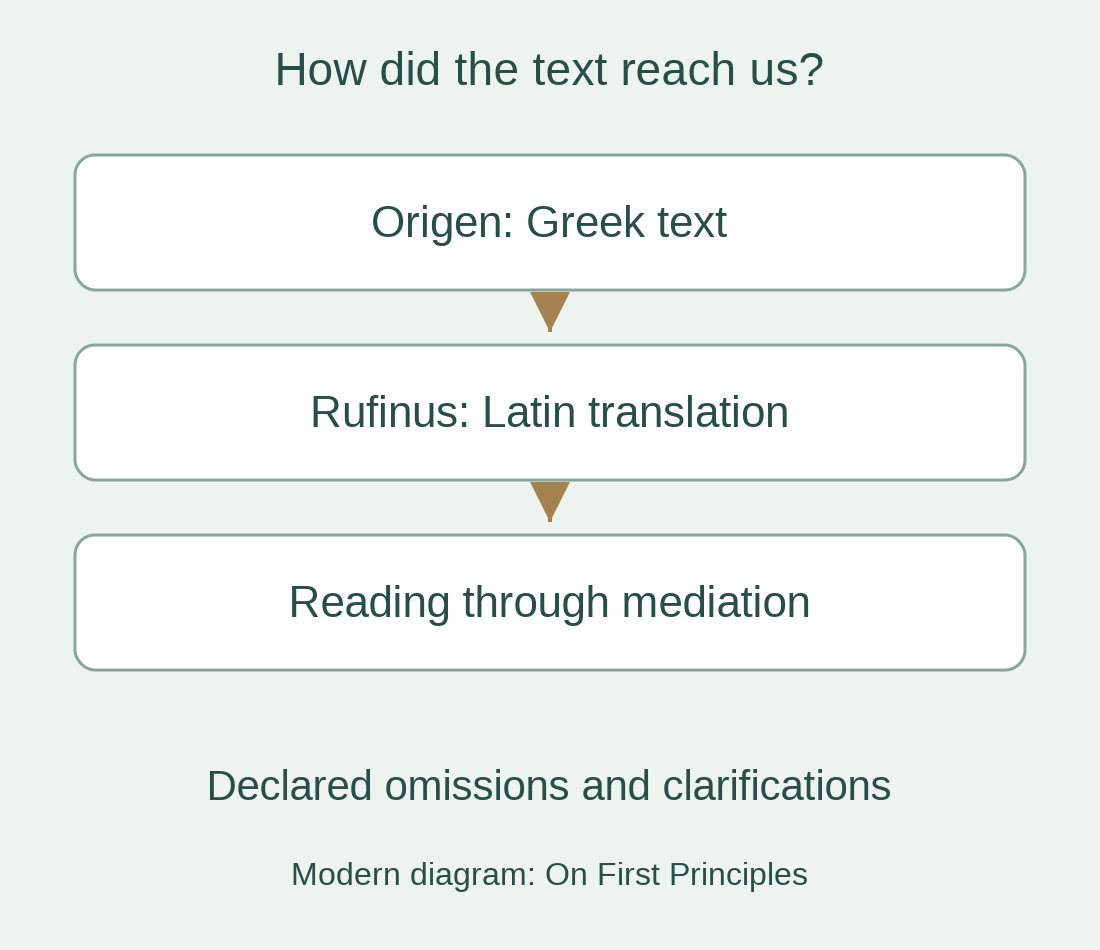
Modern diagram: On First Principles. Declared omissions and clarifications
Pessoa
Christian writer and translator, c.345–411 CE, who translated Greek works including Origen’s On First Principles into Latin.
Variantes do nome: Rufinus of Aquileia, Tyrannius Rufinus
Contexto e fontes →
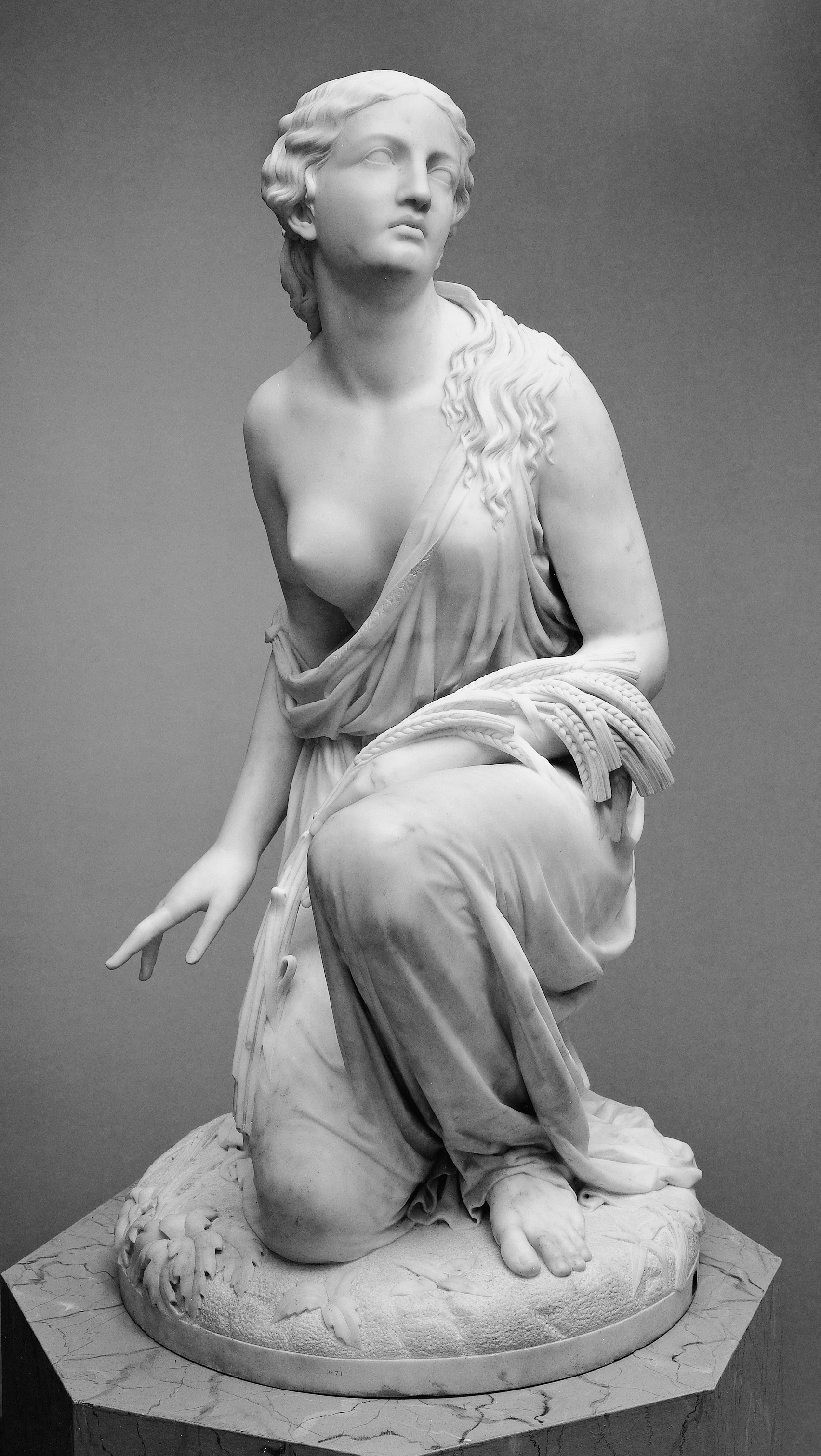
Ruth Gleaning, marble by Randolph Rogers: 1850 design, carved 1855 or 1856; Met 99.7.1. Artistic reception of Ruth 2, not a historical portrait or the chapter 4 redemption scene
Pessoa
Mahlon’s widow and Naomi’s daughter-in-law, marrying Boaz in Ruth.
Variantes do nome: Ruth, biblical character
Contexto e fontes →
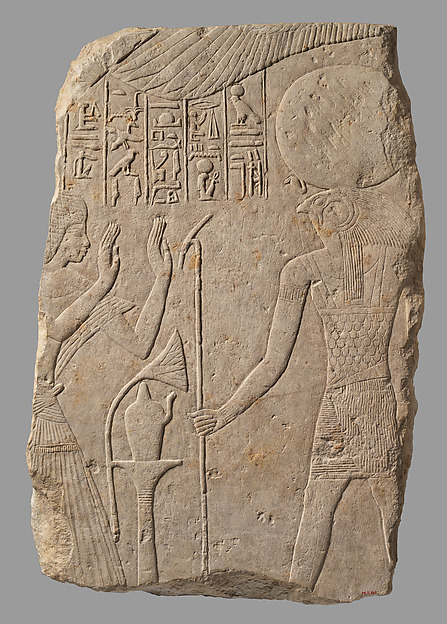
Pay raises his hands before Re-Harakhty, shown with a falcon’s head and solar disk, in a limestone stela fragment from Saqqara. The Met dates the object to about 1328–1318 BCE; inventory 04.2.527
Entidade
Re is the Egyptian sun god, associated with creation, life and renewal of cosmic order
Variantes do nome: Ra
Contexto e fontes →
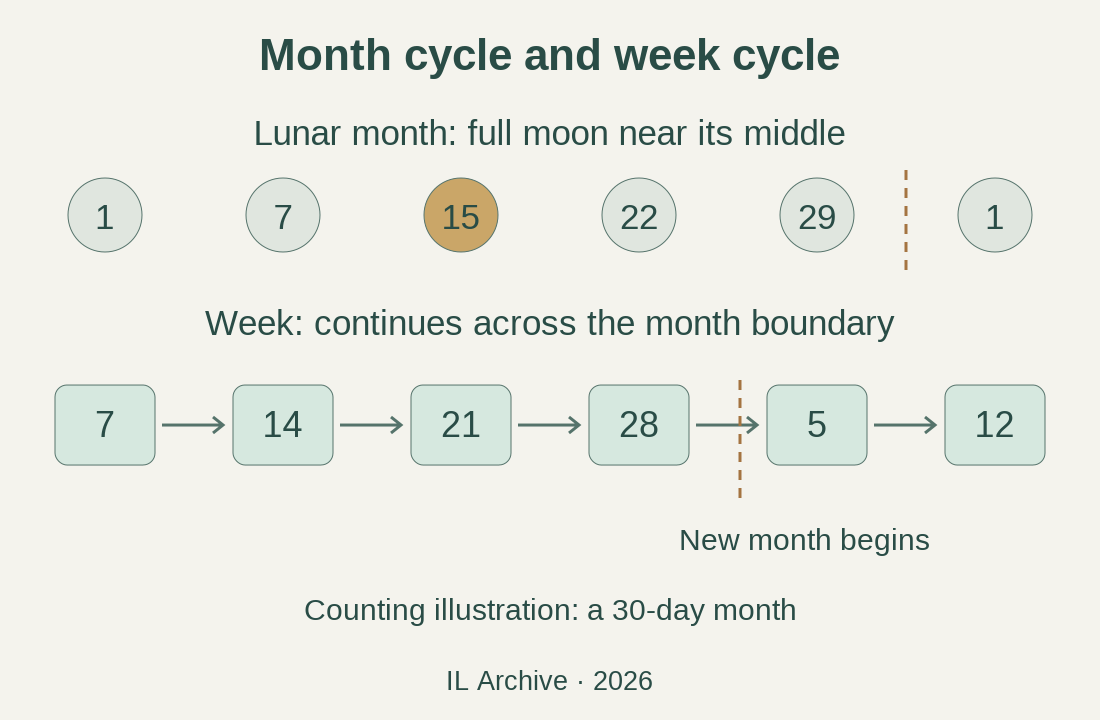
Modern comparison of a monthly lunar date and a continuous week. The counting example assumes a 30-day month and first rest on day 7: after day 28, the next rest falls on day 5 of the following month. Not an ancient calendar or evidence of Sabbath origins
Entidade
Sacred seventh day in Jewish traditions, linked by commandments to household rest, creation and liberation.
Variantes do nome: Sabbath, the weekly rest day
Contexto e fontes →
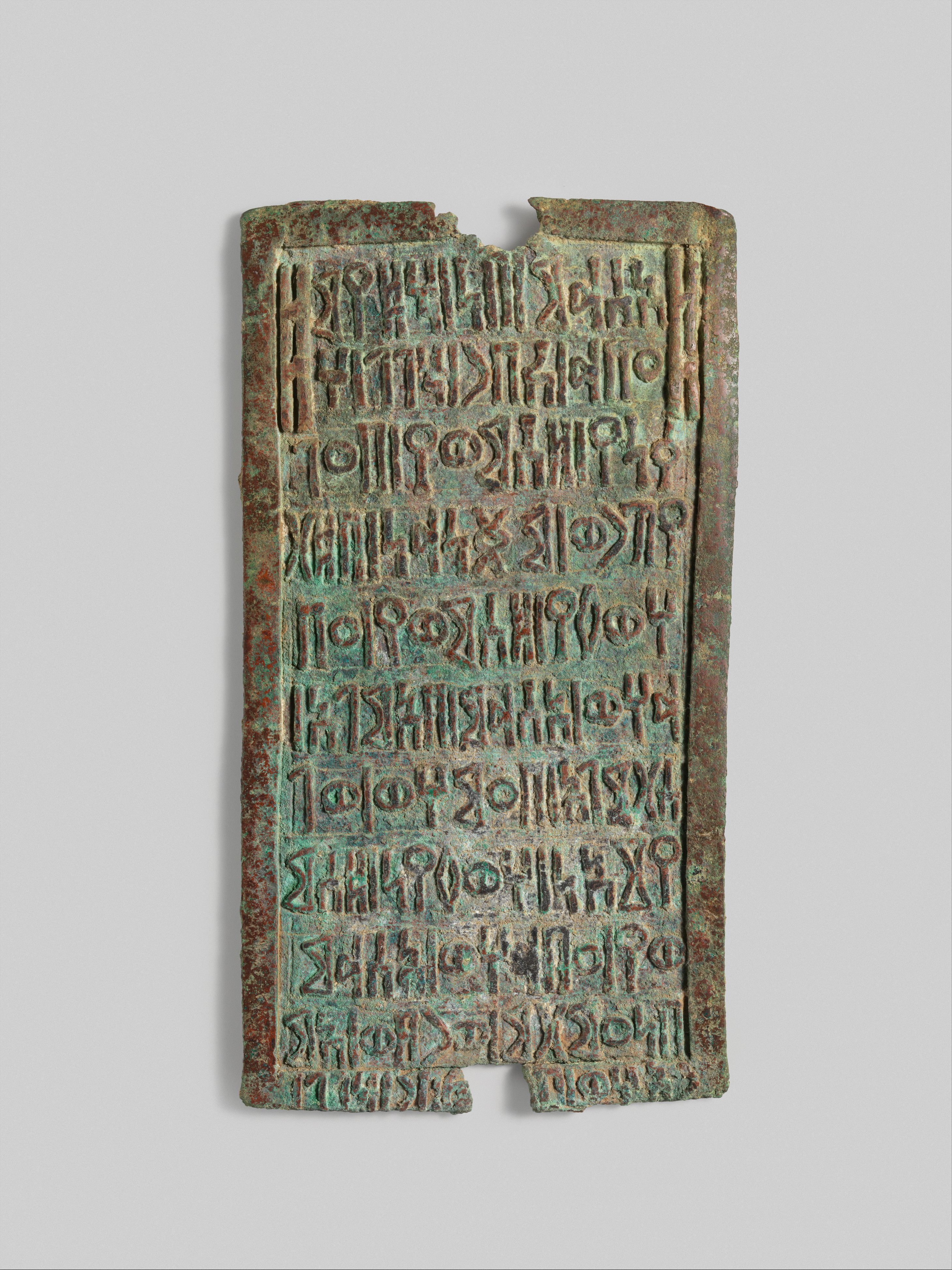
Copper-alloy votive plaque with a Sabaean dedicatory inscription, South Arabia, late first millennium BCE. A witness to Sabaean writing, not to the queen's identity. Met 1993.169; public domain
Sítio
An ancient South Arabian kingdom centered in present-day Yemen and prominent in the first millennium BCE; its attestation does not establish the Queen of Sheba's biography.
Variantes do nome: Saba, Sheba, kingdom of Saba
Contexto e fontes →
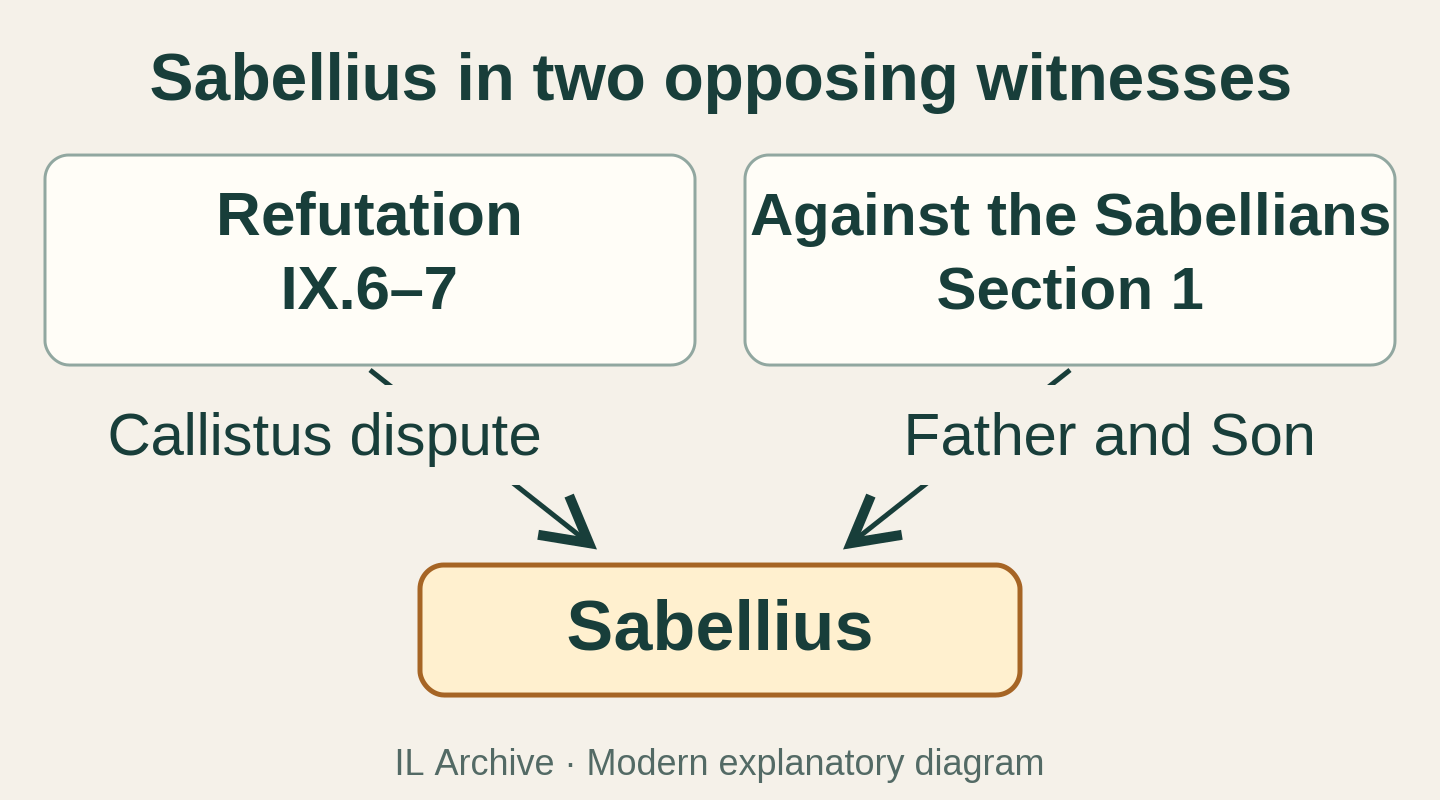
Modern map of two hostile reports about Sabellius: Refutation IX.6–7 and Against the Sabellians 1. Arrows identify their subject, not a surviving work by Sabellius
Pessoa
Christian teacher associated with debates on unity and distinction in the early third century.
Variantes do nome: Sabellius
Contexto e fontes →
Modern AI-generated symbolic cover: imagined steps, courtyard and blank scroll evoke debates about scripture and tradition in the Second Temple period. Not a photograph or verified reconstruction of a site, the Temple or the Sadducees
Entidade
The Sadducees were a Second Temple Jewish current, known mainly from external or rival accounts such as Josephus, the Mishnah and the New Testament rather than any surviving doctrinal writings of their own.
Variantes do nome: Sadducees, Sadducean
Contexto e fontes →