Pessoa
William A. Tooman
Professor of Hebrew Bible and ancient Judaism at St Andrews whose reading of Gog differs from the Marduk proposal.
Variantes do nome: William A. Tooman
Contexto e fontes →Um apoio à leitura
Definições breves de nomes, conceitos e lugares. Abra um registro para ler o contexto, as fontes e os materiais relacionados.
1047 definições
Pessoa
Professor of Hebrew Bible and ancient Judaism at St Andrews whose reading of Gog differs from the Marduk proposal.
Variantes do nome: William A. Tooman
Contexto e fontes →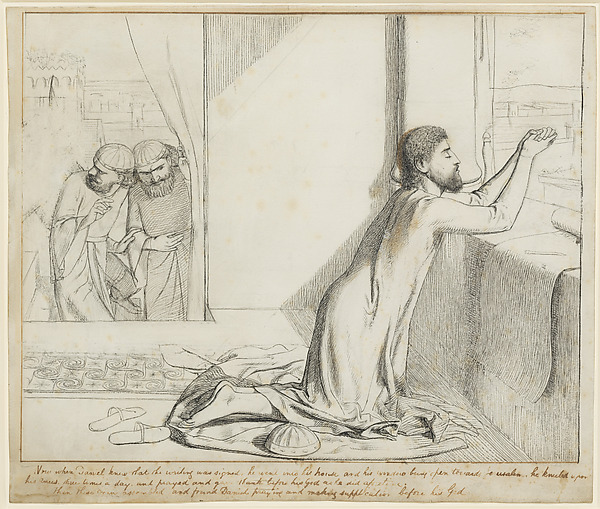
William Holman Hunt, Daniel Praying,1849; Met2023.675. An example of his work, not his portrait; inspired by Daniel6, not the resurrection in Daniel12
Pessoa
William Holman Hunt (1827–1910) was a British artist and co-founder of the Pre-Raphaelite Brotherhood.
Variantes do nome: William Holman Hunt
Contexto e fontes →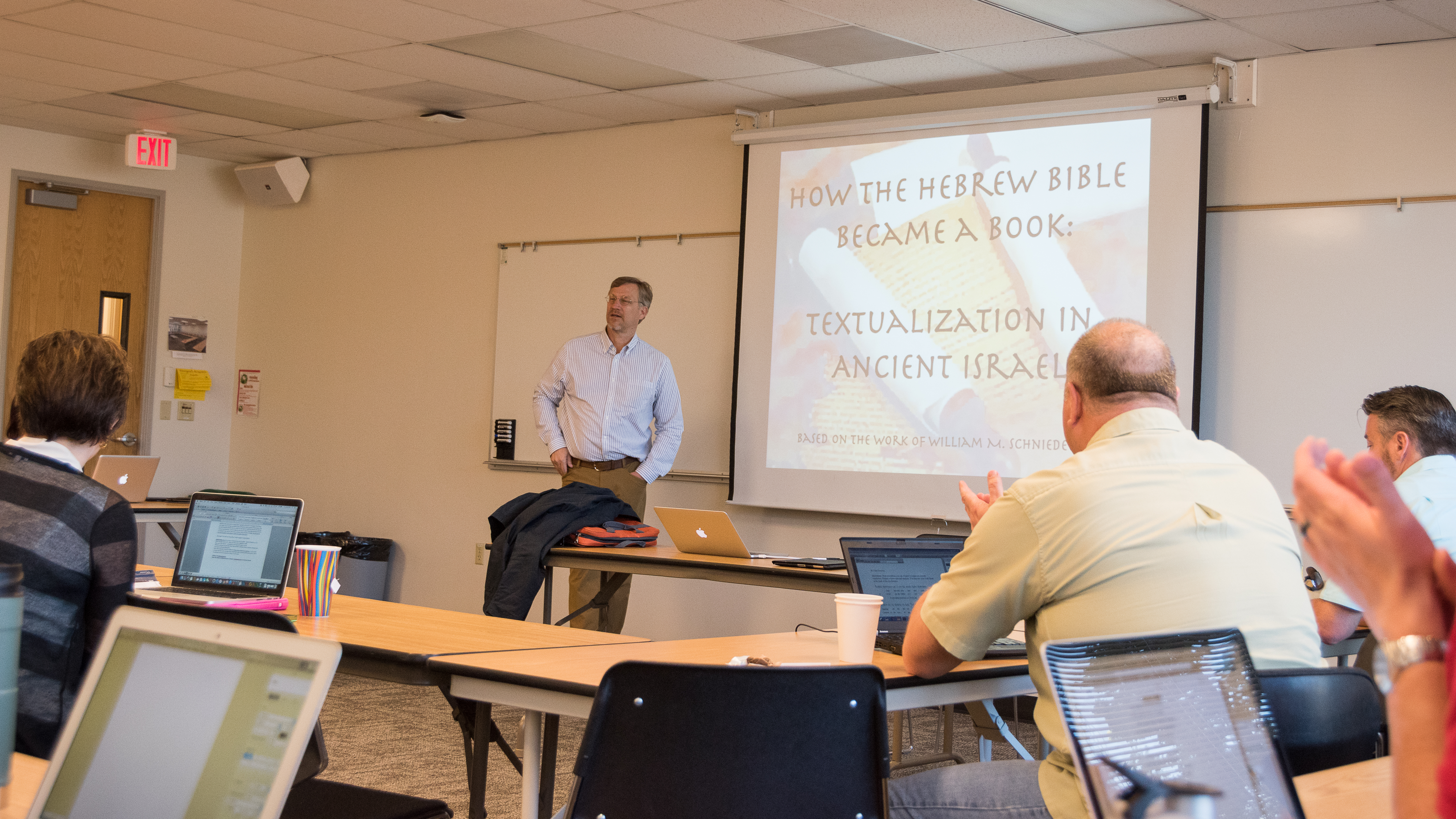
William M. Schniedewind presenting on how the Hebrew Bible became a book, Portland Seminary, 7 April 2016
Pessoa
UCLA professor of Biblical Studies and Northwest Semitic Languages and author of The Finger of the Scribe.
Variantes do nome: William M. Schniedewind
Contexto e fontes →Pessoa
Scholar of ancient Iranian languages and religion and professor emeritus at the University of Minnesota.
Variantes do nome: William W. Malandra
Contexto e fontes →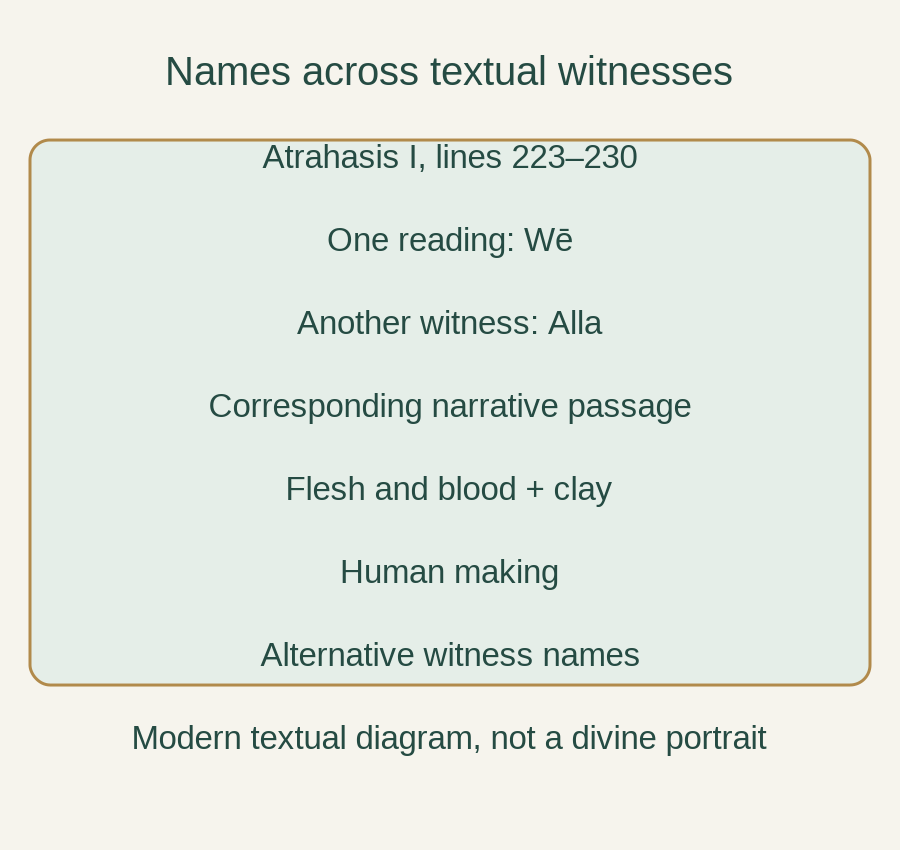
Modern diagram explaining variant names for the slain god in Atrahasis witnesses; not a reconstruction of divine appearance
Entidade
Wē names the god whose flesh and blood mix with clay in one reading of Atrahasis I; another witness has Alla in the corresponding passage.
Variantes do nome: Wē in Atrahasis
Contexto e fontes →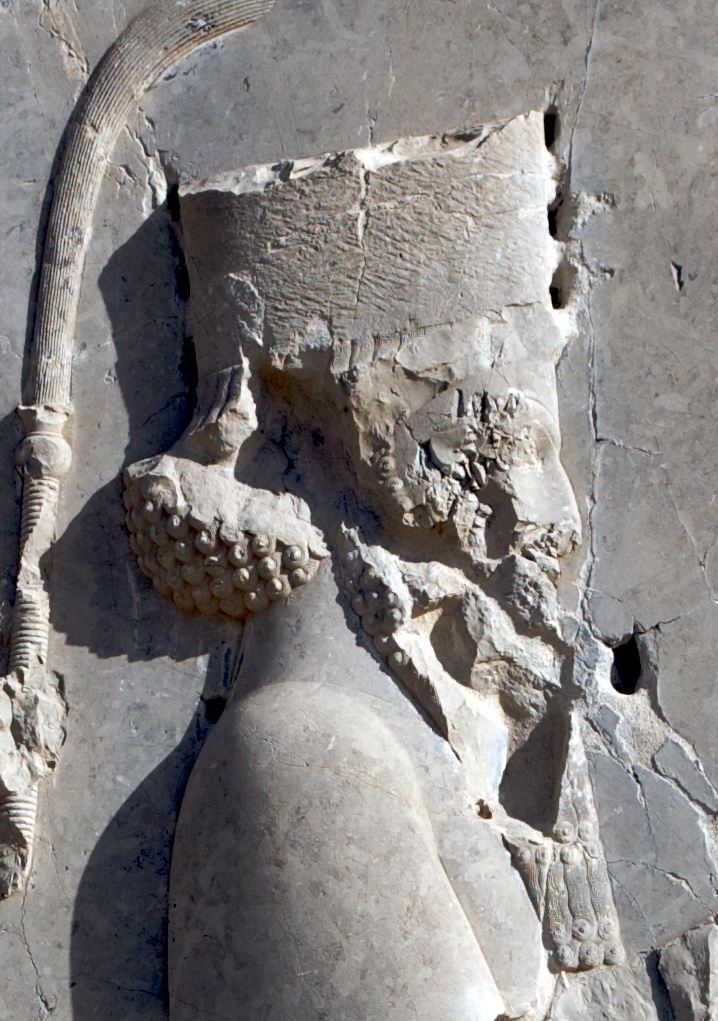
Royal figure in a Persepolis relief,identified as Xerxes in the image record; photograph by Nick Taylor,28 November 2018. Ancient royal representation, not a verified personal likeness
Pessoa
Achaemenid king, 486–465 BCE, usually identified by name with Ahasuerus in Hebrew Esther.
Variantes do nome: Xerxes I and Ahasuerus, Xerxes I, Xerxes, Ahasuerus
Contexto e fontes →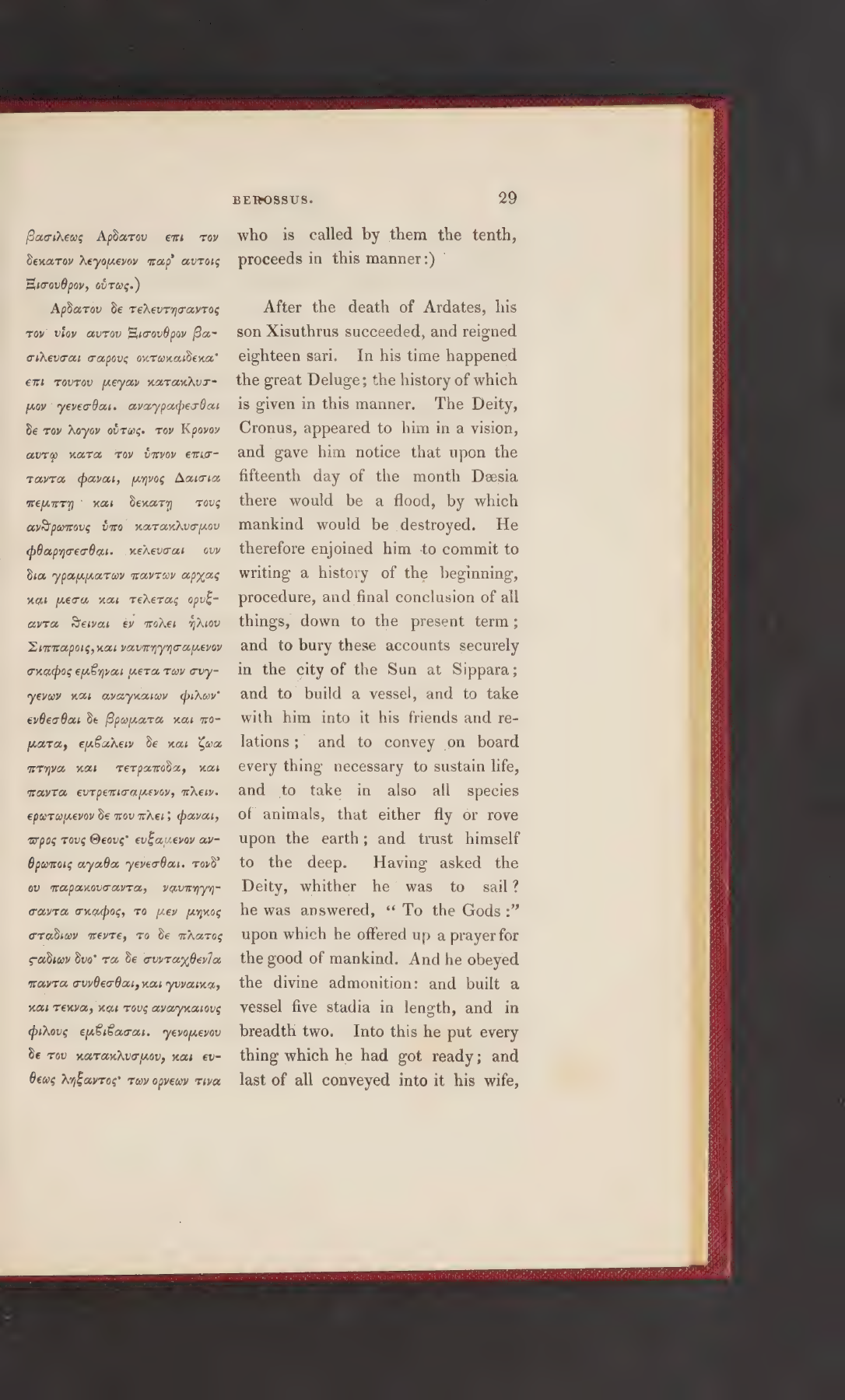
Xisuthrus and the burial of writings at Sippar before the flood; Cory’s Ancient Fragments, London, 1828, p. 29. The date belongs to the edition, rather than the story
Pessoa
Xisuthrus is the flood survivor in Greek fragments attributed to Berossus.
Variantes do nome: Xisuthrus
Contexto e fontes →
Contemporary fictional illustration evoking the four-letter name through four beams over a blank stone slab. Neither a depiction of Yahweh nor a real artefact or historically evidenced reconstruction
Entidade
The proper name of Israel’s deity, written יהוה (YHWH), the Tetragrammaton. Its exact ancient pronunciation is not directly preserved; texts and inscriptions witness its history.
Variantes do nome: Yahweh, YHWH, Tetragrammaton
Contexto e fontes →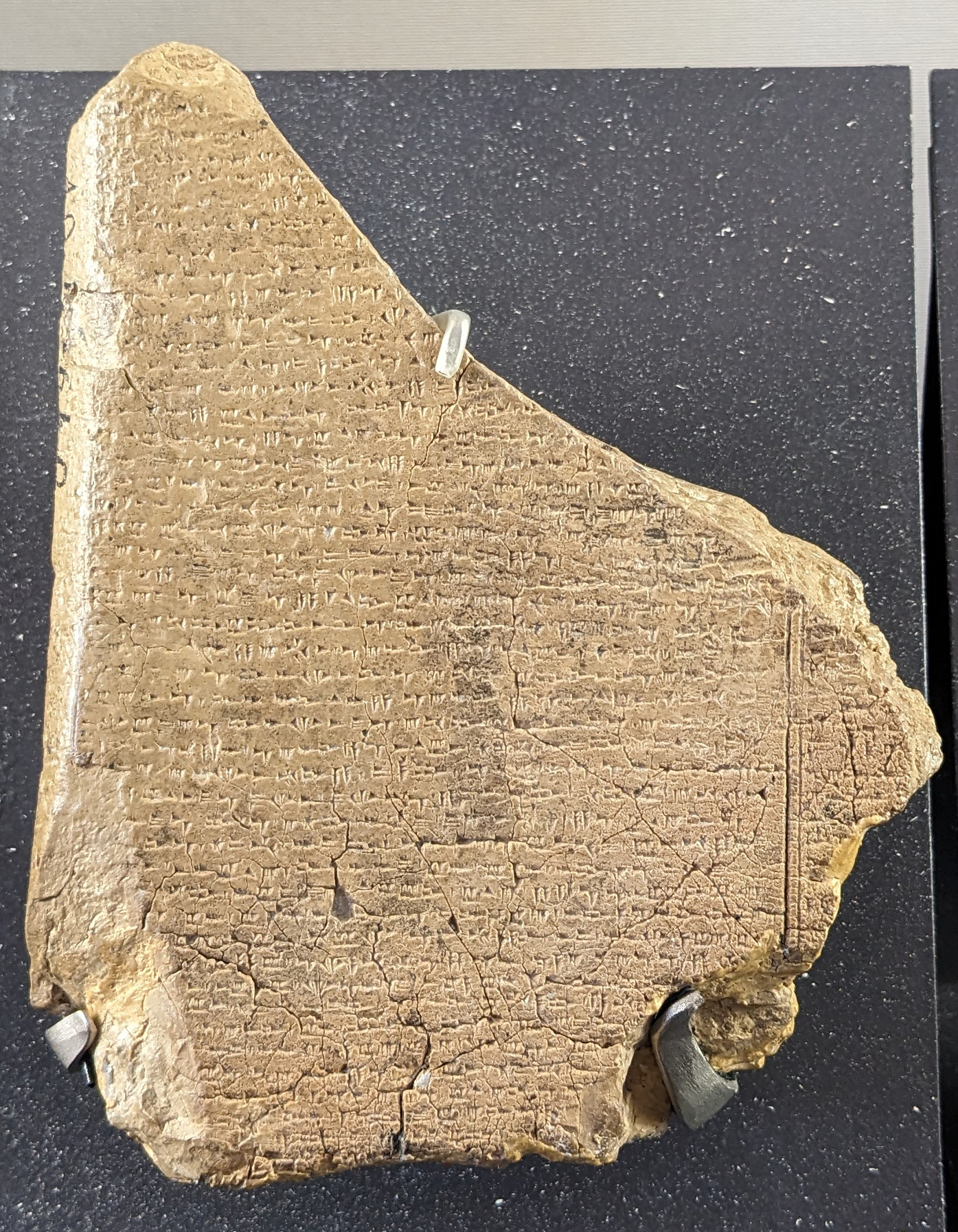
Clay tablet from Ugarit bearing a text of the Baal Cycle, Louvre AO 16640, dated by the museum to about 1400–1200 BCE. The photograph documents the written transmission of the narrative, not the appearance of Yam or the battle itself
Entidade
Sea god in Ugaritic texts, associated with the name Nahar and portrayed in the Baal Cycle as Baal’s rival for authority among the gods.
Variantes do nome: Yam, Yammu, Nahar
Contexto e fontes →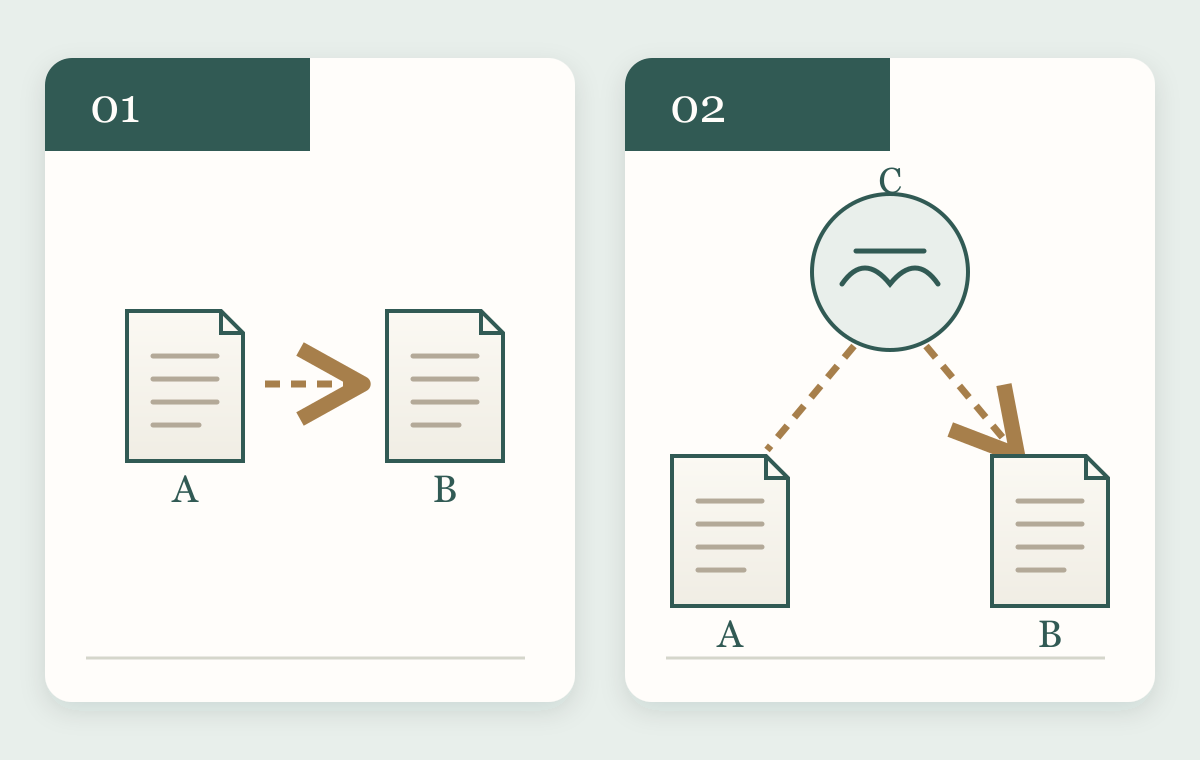
Original diagram of two models discussed in Kara’s study: direct dependence between texts (01) or a shared narrative milieu feeding two versions (02). The arrows are hypothetical, not evidence of a documented transfer
Pessoa
Author of a 2026 study comparing Dhul Qarnayn with the Syriac Alexander tradition.
Variantes do nome: Yasin Kara
Contexto e fontes →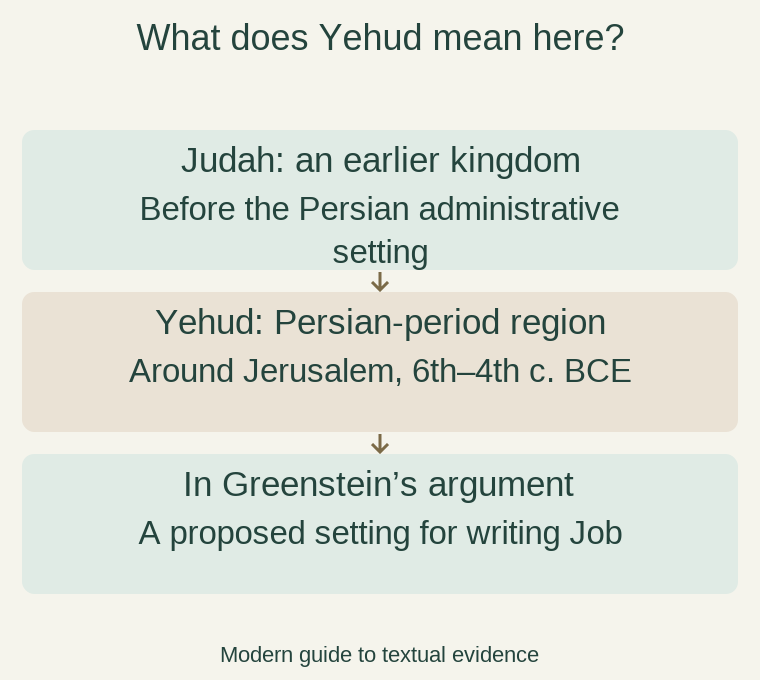
Modern diagram distinguishing the earlier kingdom of Judah from Persian-period Yehud, and locating Yehud within Greenstein’s dating argument. Not a boundary map or a verified homeland for Job’s character
Sítio
Yehud names the region around Jerusalem under Achaemenid Persian rule, from the sixth to the fourth century BCE.
Variantes do nome: Yehud in the Persian period
Contexto e fontes →
Modern AI-generated conceptual illustration evoking a city, water and layers of time. It does not portray the actual Yeni Mahalle archaeological site, documented remains or a scientific reconstruction
Sítio
Pre-Pottery Neolithic settlement in the Yeni Mahalle neighbourhood of Şanlıurfa, near Balıklıgöl. An archaeological section was investigated in 1997; Urfa Man had been found nearby in 1993. Settlement dates do not independently date the statue.
Variantes do nome: Yeni Mahalle Neolithic settlement, Urfa-Yeni Mahalle
Contexto e fontes →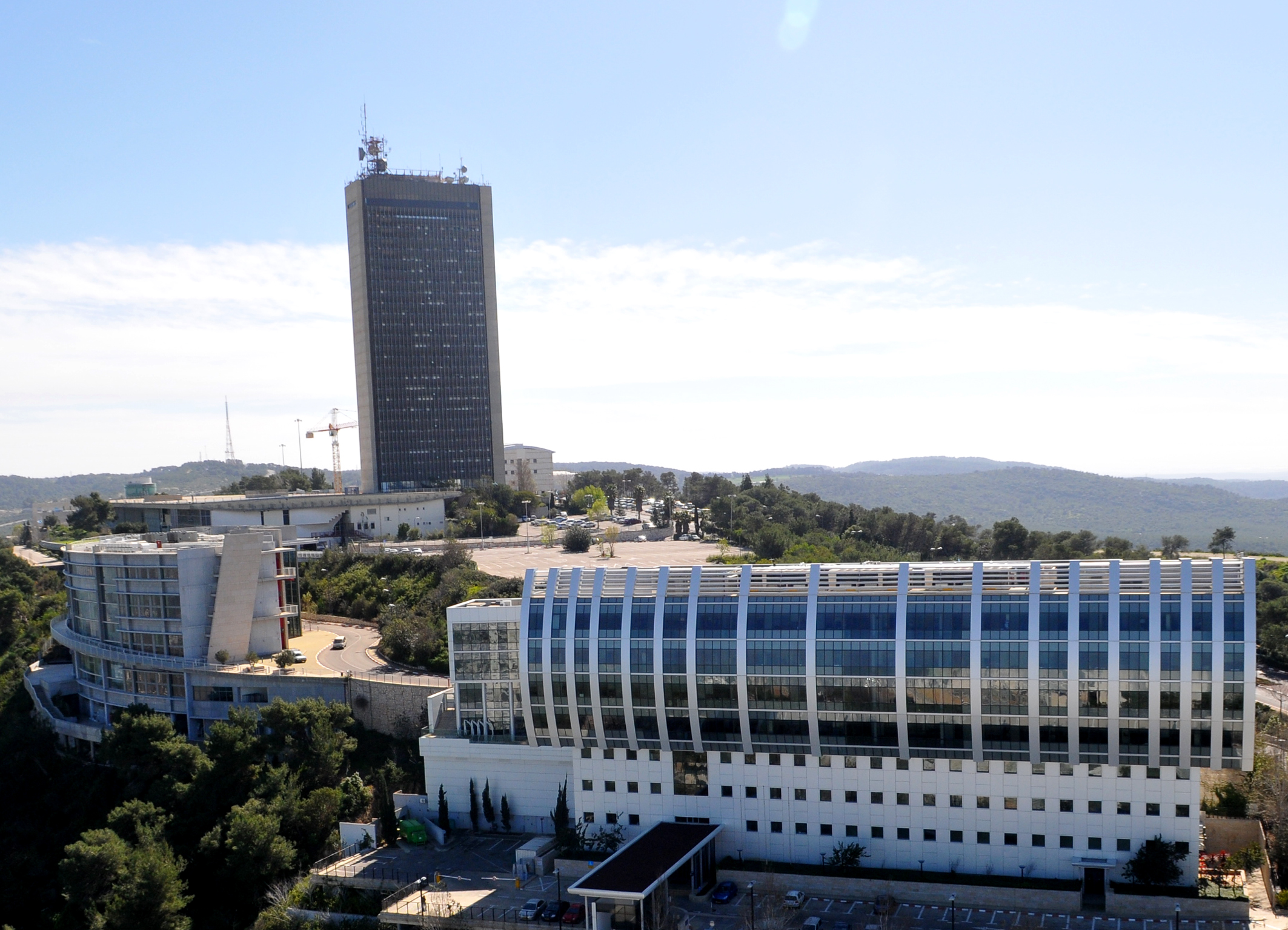
The University of Haifa on Mount Carmel and neighbouring buildings. Capture metadata dates the photograph to 13 February 2009; Haifa Municipality released it in June 2010. It shows the institution whose website records Yitzhaq Feder’s former teaching and research affiliations
Pessoa
Scholar of purity, expiation and ritual in the Hebrew Bible and its ancient setting, including Hittite comparisons.
Variantes do nome: Yitzhaq Feder, Yitzhak Feder
Contexto e fontes →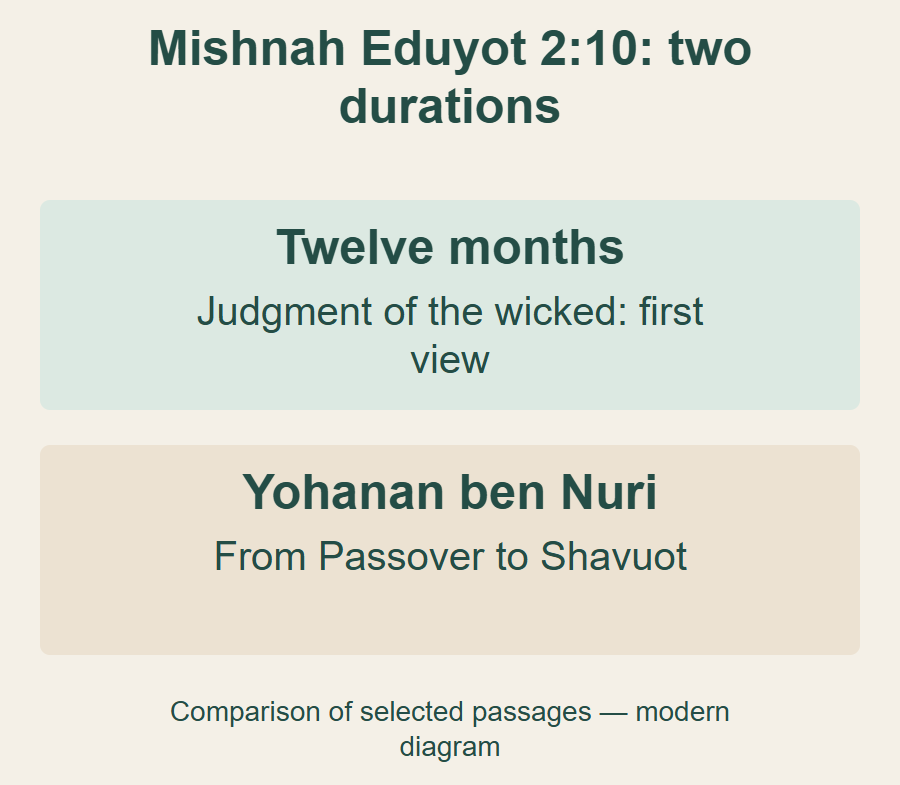
Modern comparison of two durations in Mishnah Eduyot 2:10: twelve months, and Passover to Shavuot in Yohanan ben Nuri’s view; not every rabbinic view of destiny
Pessoa
Yohanan ben Nuri was a first–second-century CE rabbi whose teachings occur in the Mishnah.
Variantes do nome: Yohanan ben Nuri
Contexto e fontes →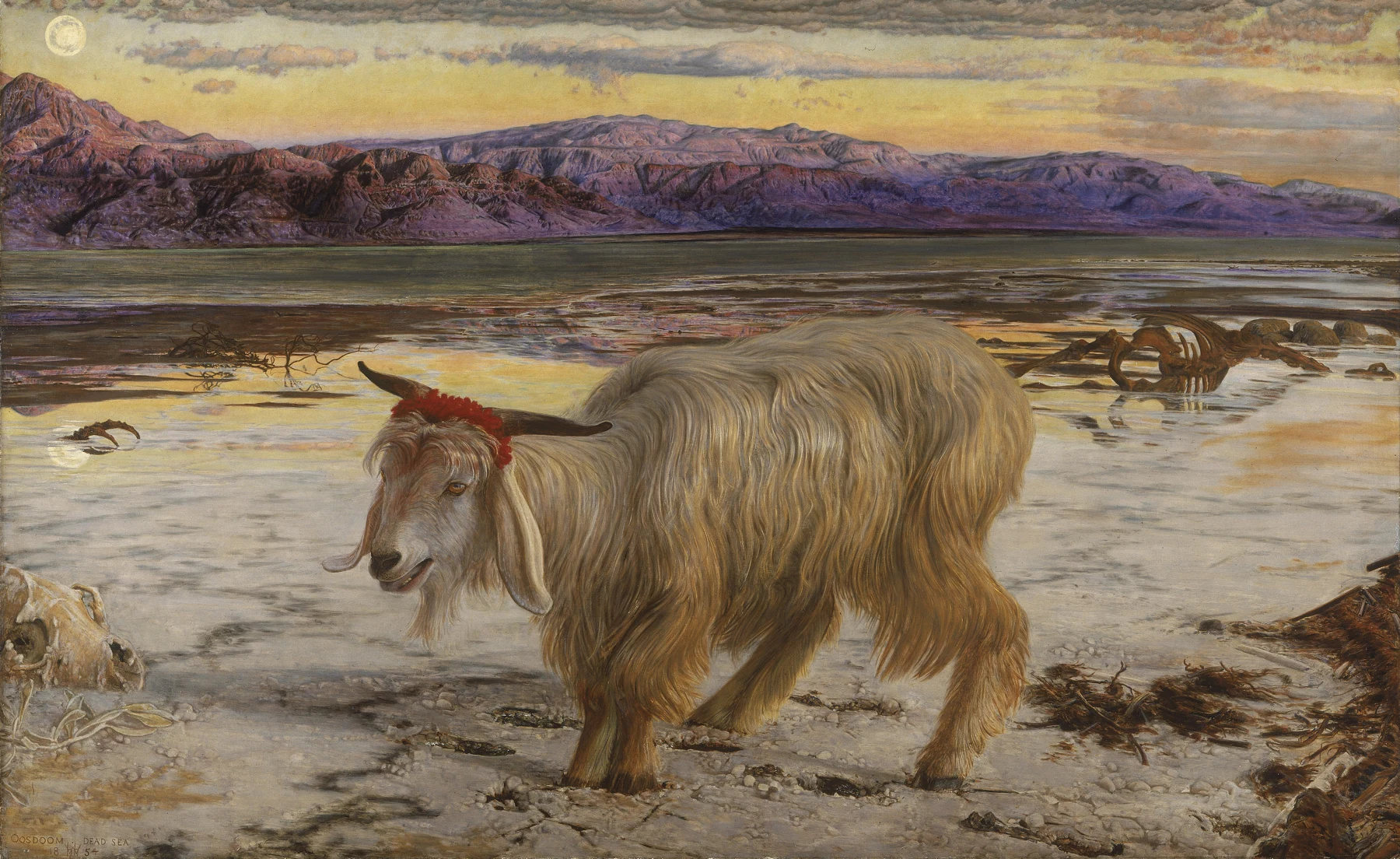
William Holman Hunt, The Scapegoat, mid-1850s; Lady Lever catalogue dates the painting to 1854, LL3623. Public-domain reproduction via Wikimedia Commons. Later religious artistic interpretation, not an archaeological depiction of Leviticus’s rite or a portrayal of Azazel
Entidade
Jewish observance on 10 Tishrei; Leviticus 16’s sanctuary purification and two-goat rite are distinct from later Mishnaic accounts and from fasting, prayer and repentance.
Variantes do nome: Yom Kippur, Day of Atonement
Contexto e fontes →Pessoa
Scholar affiliated in his 2022 paper with Seoul Women’s University, studying deror and return in Jeremiah 34.
Variantes do nome: Yoo-ki Kim
Contexto e fontes →Pessoa
Archaeologist and Hebrew University professor emeritus researching prehistory and the Iron Age.
Variantes do nome: Yosef Garfinkel
Contexto e fontes →Pessoa
Scholar of Arabic and Islamic studies whose work compares biblical and Qur'anic narratives; published a 2013 study of Abraham's intended sacrifice.
Variantes do nome: Younus Mirza
Contexto e fontes →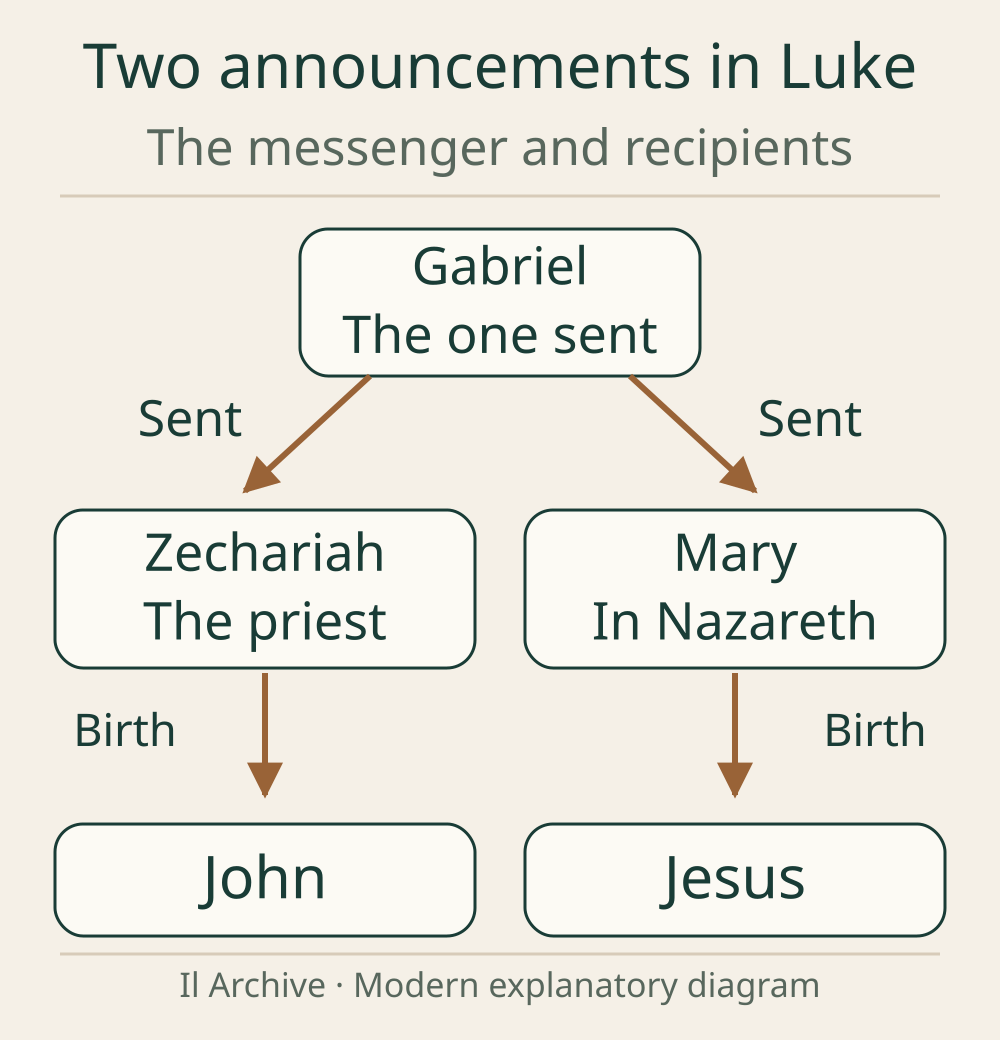
Modern diagram of the two announcements in Luke 1:5–38: Gabriel is sent to Zechariah to announce John’s birth and to Mary to announce Jesus’s birth. Lower arrows show the announcement’s subject, not descent from the angel. No faces or physical appearances are reconstructed
Pessoa
A priest and Elizabeth’s husband in Luke 1, who receives Gabriel’s announcement of John’s birth.
Variantes do nome: Zechariah father of John, Zacharias father of John
Contexto e fontes →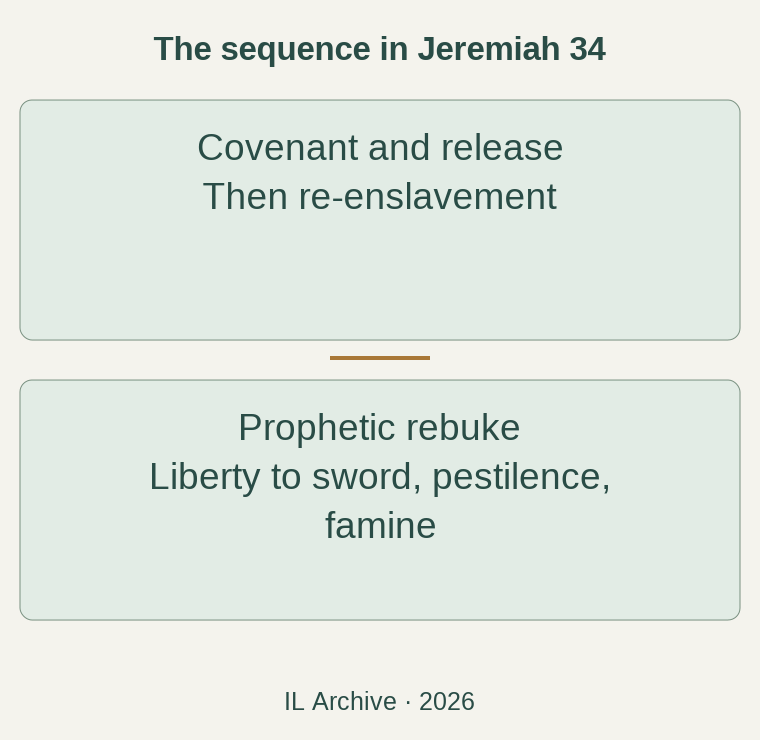
Modern diagram explaining the relationship between the named passages; not a manuscript photograph or historical portrait
Pessoa
Early-sixth-century BCE king of Judah associated in Jeremiah 34 with a release covenant and its reversal.
Variantes do nome: Zedekiah, king of Judah
Contexto e fontes →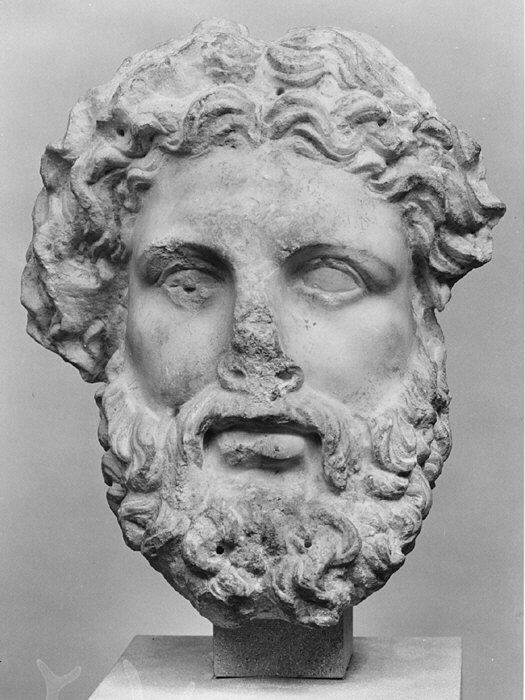
Greek marble head, third or second century BCE. The Metropolitan Museum identifies the deity as probably Zeus; the attribution is uncertain, and the object postdates the Iliad's formation
Entidade
Zeus is the sky god and leading deity in many Greek traditions. In the Iliad he presides over divine gatherings while others can still speak and object.
Variantes do nome: Zeus
Contexto e fontes →Pessoa
Hebrew Bible and reception scholar comparing the Torah’s service laws.
Variantes do nome: Zev Farber, Hebrew Bible scholar
Contexto e fontes →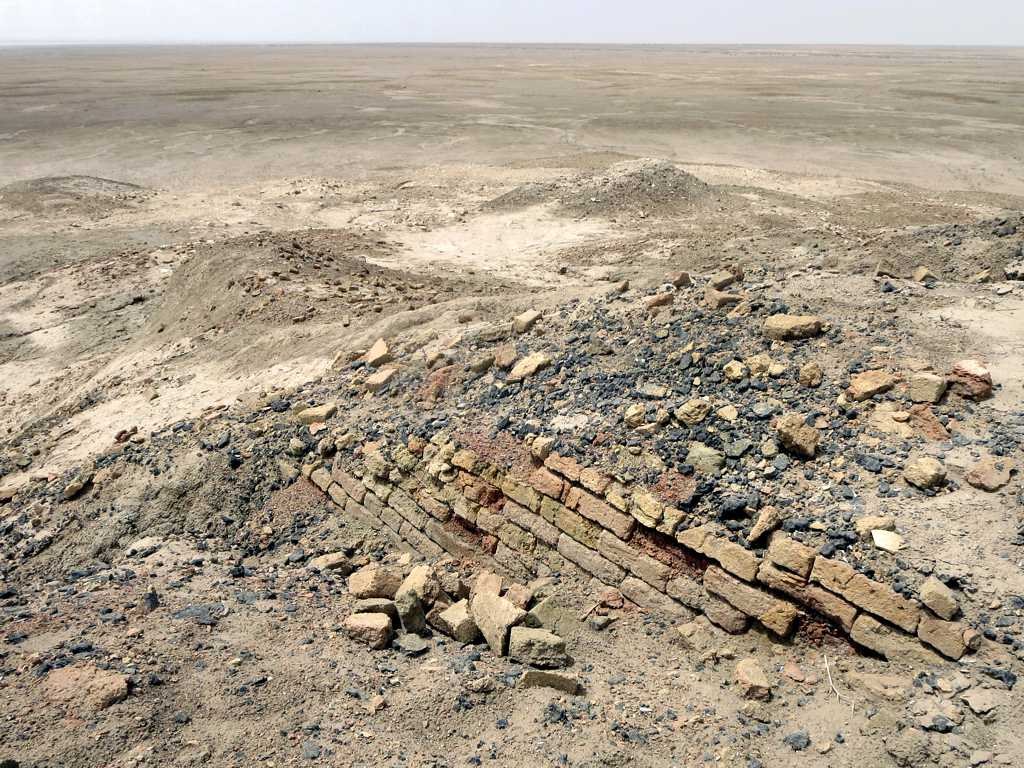
Brick remains and architectural debris at the Eridu ziggurat site, Iraq, photographed by David Stanley (11 April 2016). The original tower height and earlier Ubaid temples are not shown; individual brick stamps cannot be verified in this view
Entidade
Ziggurat: a monumental stepped or terraced cult structure of ancient Mesopotamia. Not every raised temple platform was a ziggurat, and the form and specific use of lost upper stages often remain uncertain.
Variantes do nome: ziggurat, ziggurats
Contexto e fontes →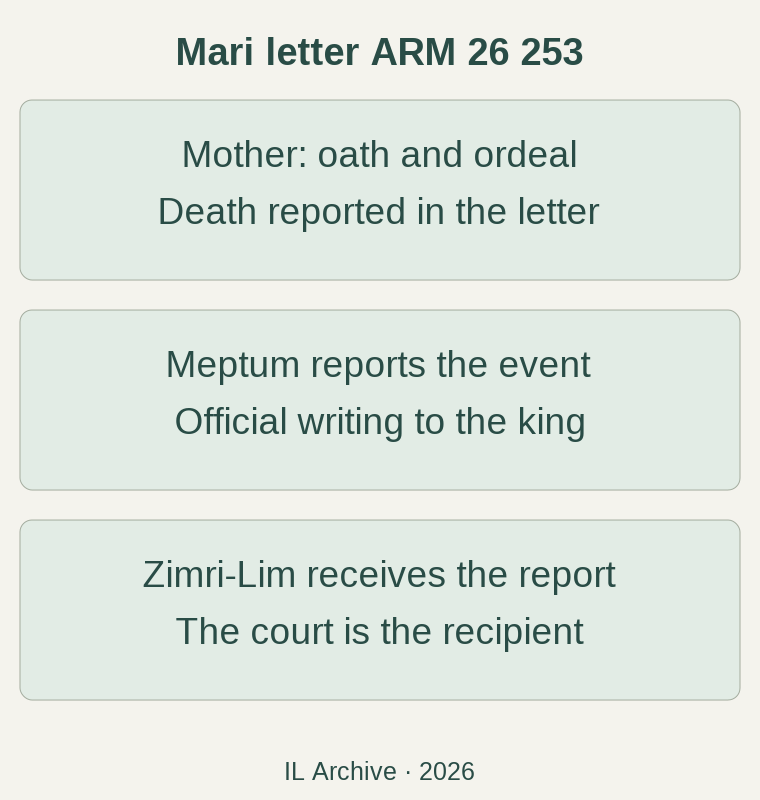
Modern diagram explaining roles in the specified source, not portraits or an ancient tablet. Row order explains relationships rather than reconstructing every ritual step
Pessoa
Eighteenth-century BCE king of Mari, recipient of letters reporting river ordeals.
Variantes do nome: Zimri-Lim, king of Mari
Contexto e fontes →
Modern generated imaginative illustration of a small vessel beneath sunlight after a storm, inspired by Ziusudra’s survival. Not a tablet photograph or an evidenced reconstruction of his boat: its construction details are lost
Entidade
A literary king-priest in the fragmentary Sumerian Flood Story (ETCSL 1.7.4). He survives by boat, sacrifices, and receives divine life from An and Enlil in Dilmun. The surviving copy is Old Babylonian; his historicity is unproven.
Variantes do nome: Ziusudra, Zi-ud-sura, Ziudsura
Contexto e fontes →
Modern AI-generated conceptual cover: flame and water in an imagined landscape; not a photograph of a Zoroastrian temple or a documented archaeological reconstruction
Entidade
A living Iranian religious tradition examined through Avestan hymns, Middle Persian writings and royal inscriptions, separating textual evidence, later interpretation and hypotheses of influence.
Variantes do nome: Zoroastrianism, Mazdaism, Mazdayasna
Contexto e fontes →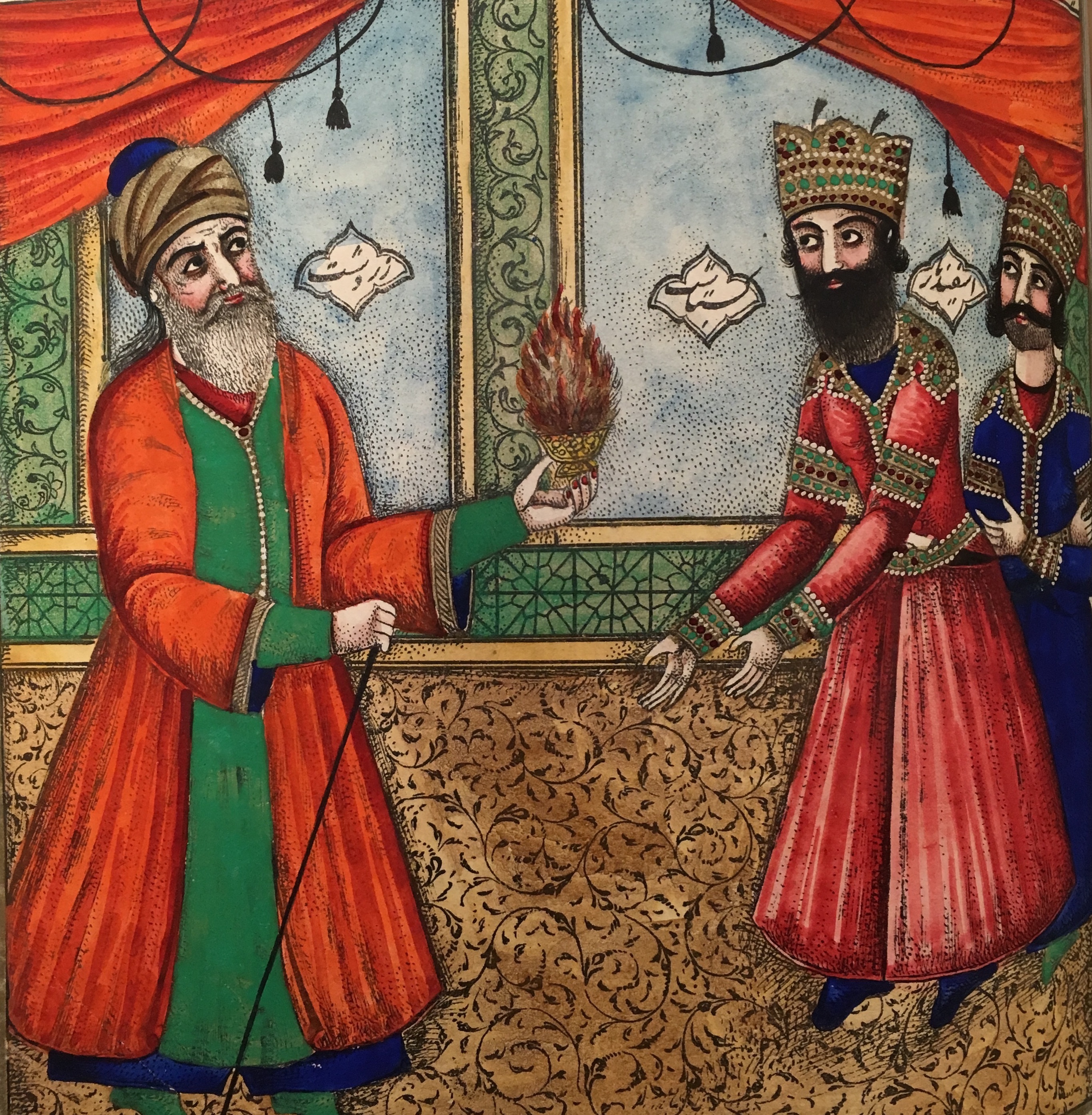
Zoroaster before Gushtasp in a hand-coloured lithographic Shahnameh, Bombay, 1849, p. 567; British Library, 14807.h.4. Nineteenth-century literary reception, not a contemporary portrait or evidence of Zarathustra’s actual appearance
Pessoa
Foundational figure associated with Zoroastrian tradition and the Old Avestan Gathas. His priestly role, teaching and relationship to the poems are subjects of research; his lifetime and biographical details remain disputed.
Variantes do nome: Zoroaster, Zarathustra, Zarathushtra
Contexto e fontes →
Modern abstract composition of blue and gold calligraphic ribbons, evoking the study of religious vocabulary rather than depicting an actual historic inscription
Entidade
ʾIlāh: Arabic common noun for a god or deity, with the broken plural āliha; distinct from the specific designation Allāh and understood from context.
Variantes do nome: ilah, ʾilāh, aliha
Contexto e fontes →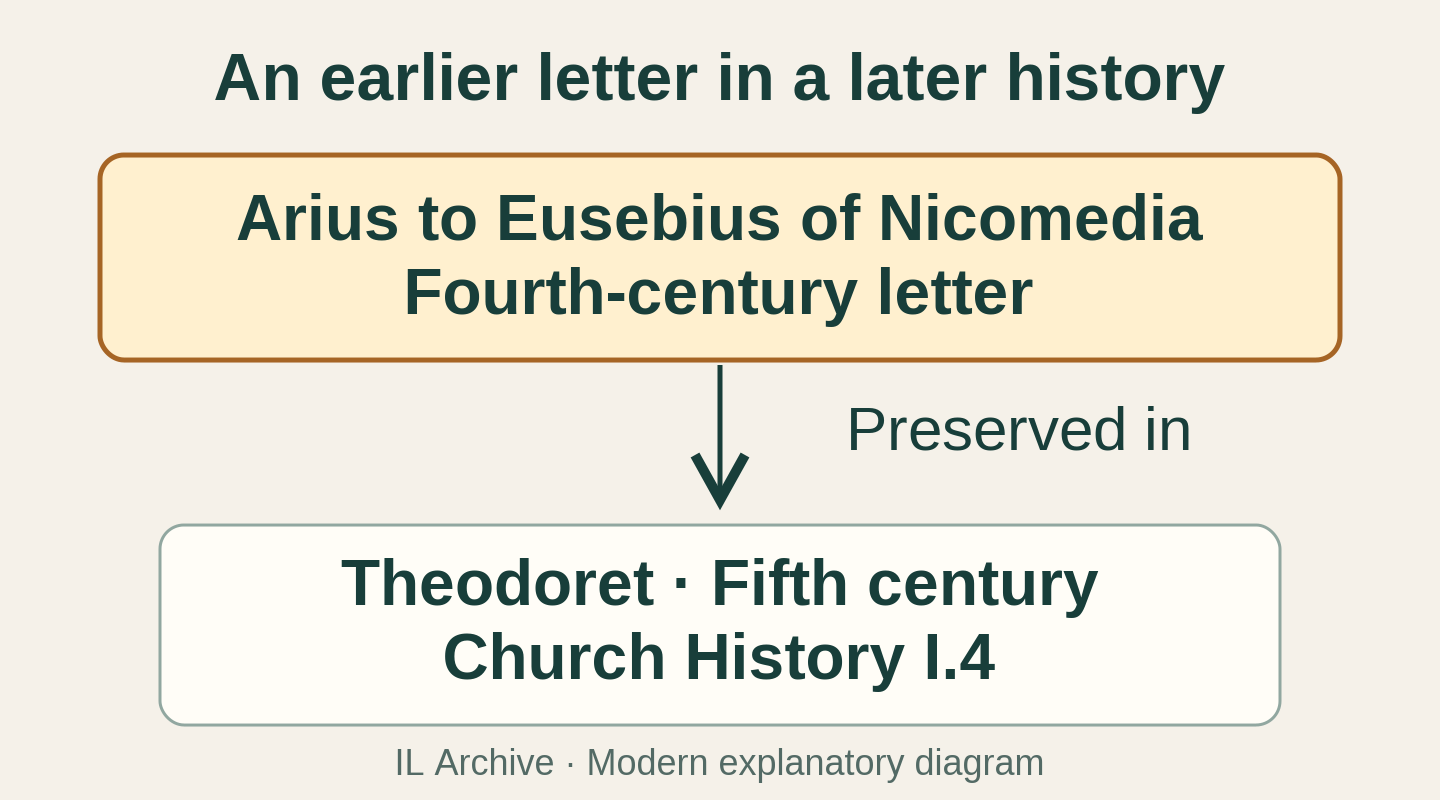
Modern diagram separating Arius’s fourth-century letter to Eusebius of Nicomedia from preservation in Theodoret’s fifth-century Church History. Highlighting marks the letter; the arrow represents transmission, not a complete documented manuscript chain
Pessoa
Early fourth-century Alexandrian presbyter associated with disputes over the Son.
Variantes do nome: Arius
Contexto e fontes →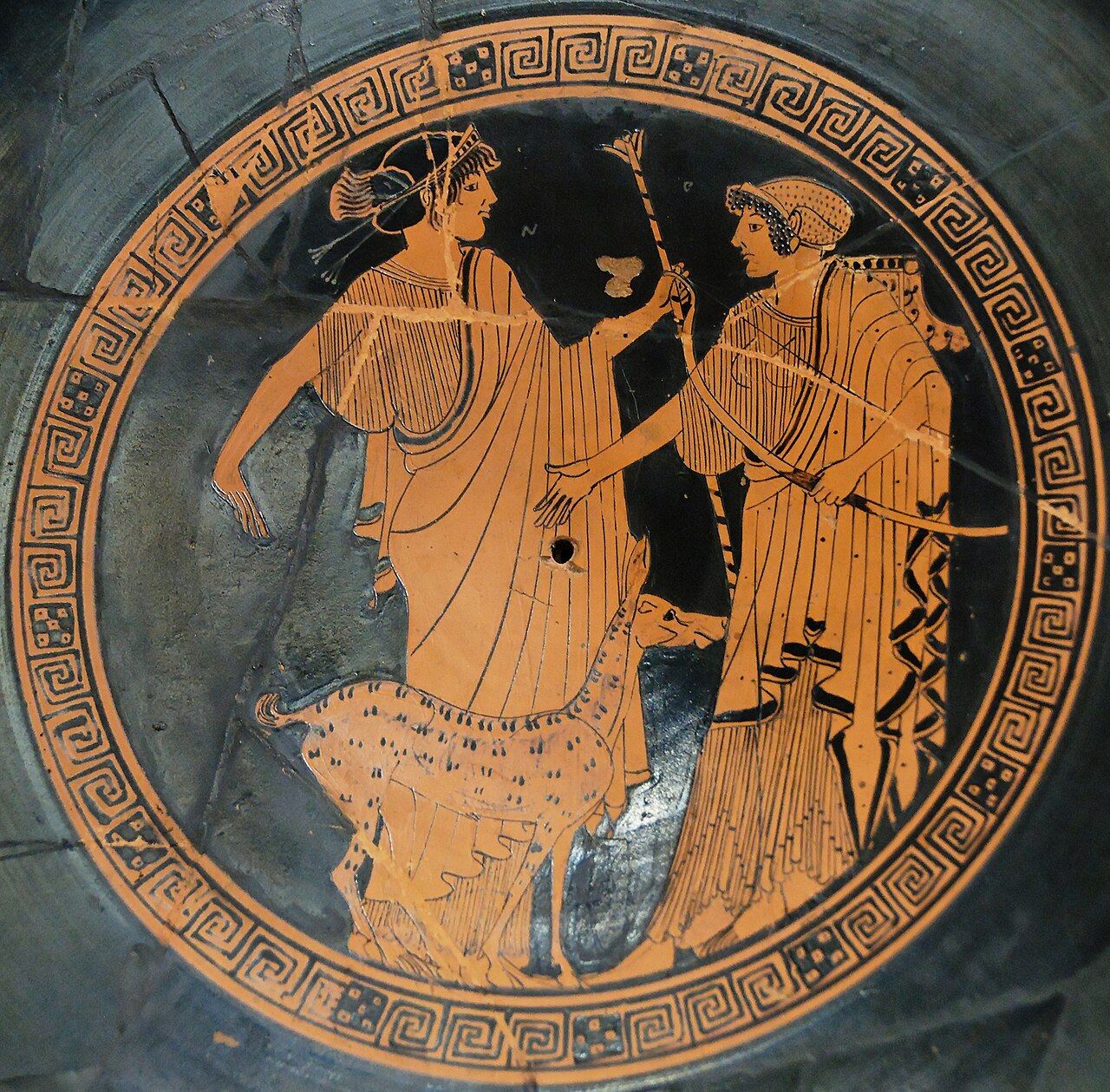
Apollo and Artemis with a deer inside an Attic cup of about 470 BCE; Louvre Cp 1005 / G 151. Archaeological evidence for representations of the two deities
Entidade
Goddess of hunting in Greek traditions and Apollo’s sister, named among the divine company in the Iliad.
Variantes do nome: Artemis
Contexto e fontes →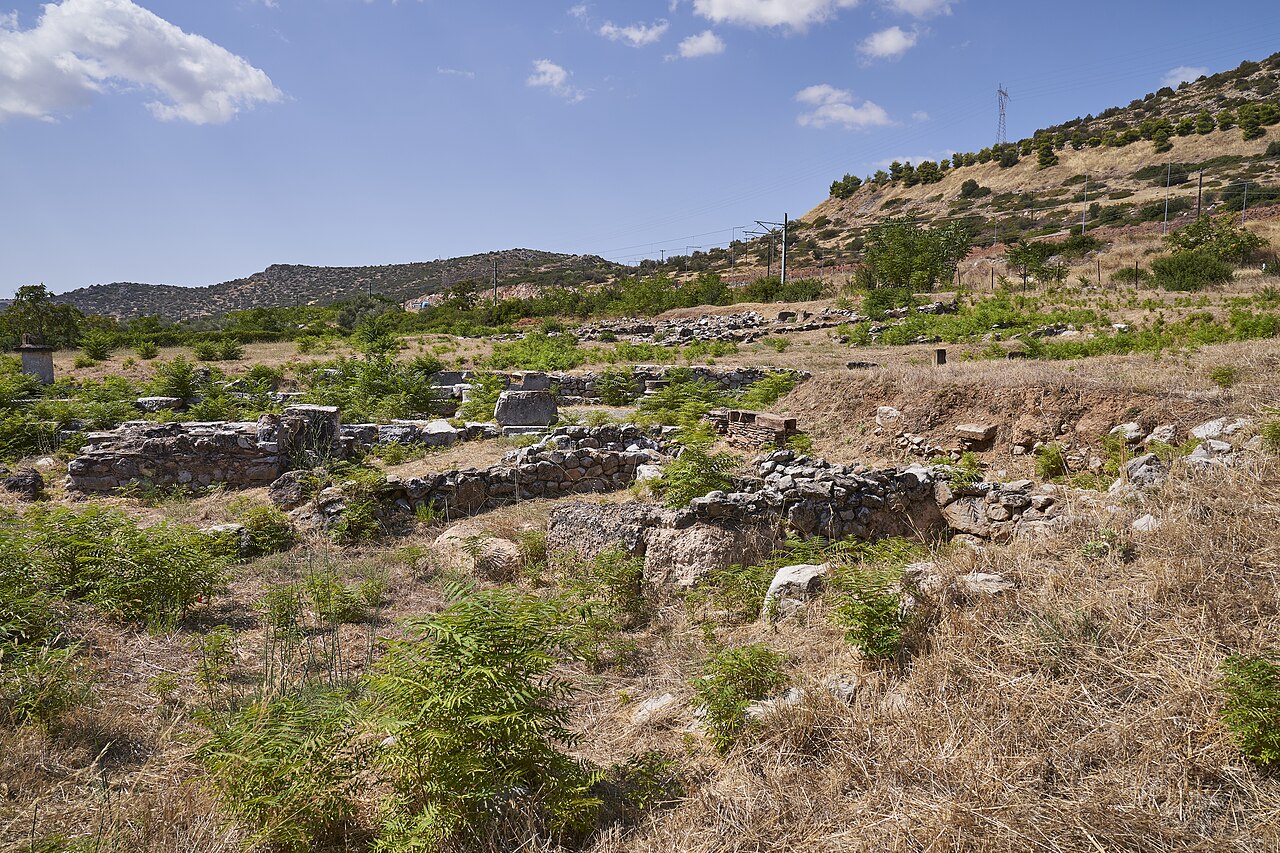
Artemis sanctuary remains at Aulis, Greece; George E. Koronaios, 2021. Evidence for a cult site, not for Iphigenia's episode
Sítio
Ancient place on the Boeotian coast near the Euripus Strait in Greece; setting of Iphigenia's Greek story and site of a fifth-century BCE Artemis temple.
Variantes do nome: Aulida
Contexto e fontes →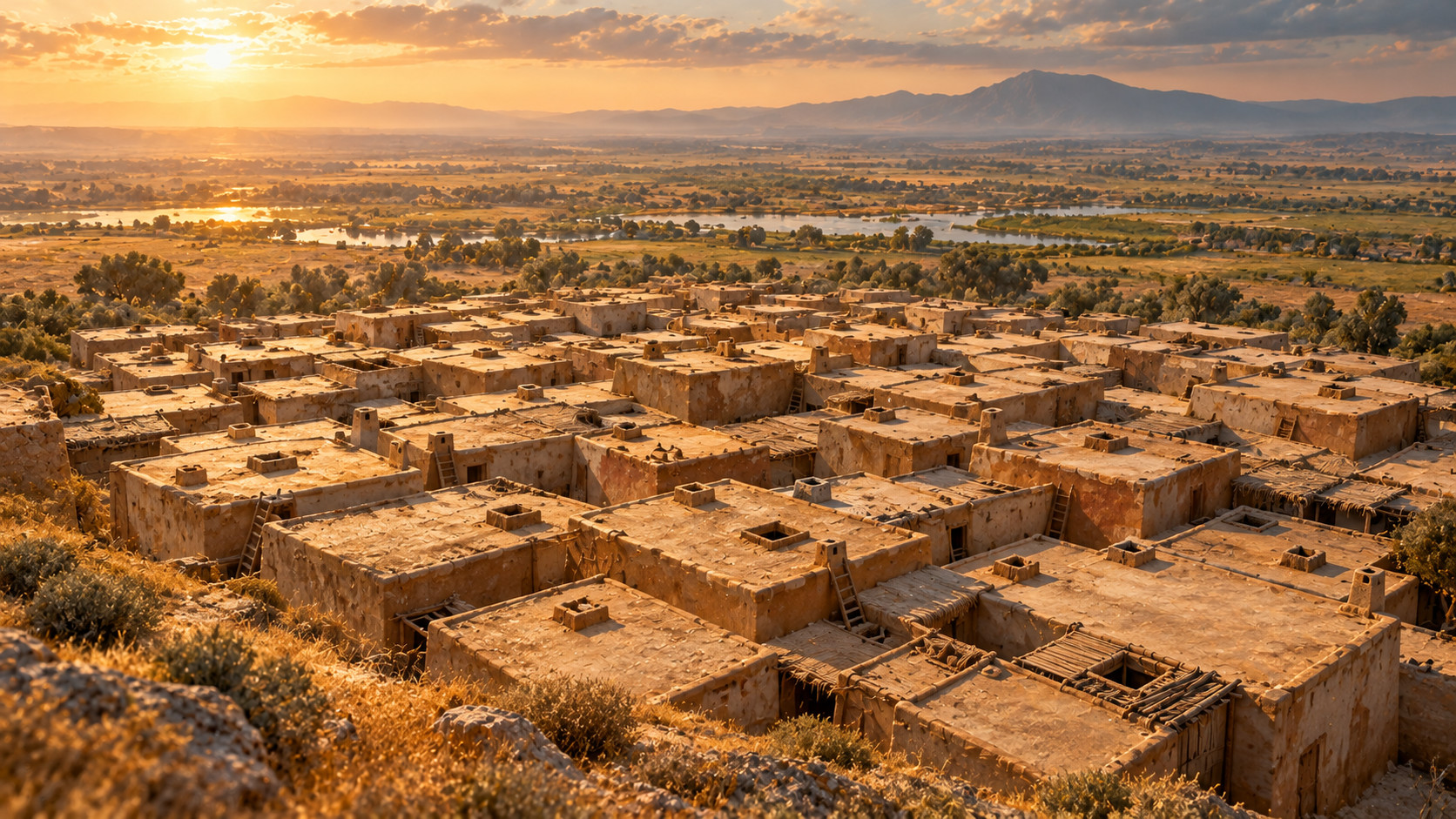
AI-generated interpretive scene inspired by tightly clustered roof-access houses at Çatalhöyük; not a site photograph, archaeological plan or verified reconstruction of its details
Sítio
Neolithic site on the Konya Plain in central Anatolia, with clustered houses, subfloor burials and imagery on the East Mound, and later Chalcolithic phases on the West Mound.
Variantes do nome: Çatalhöyük, Catalhoyuk
Contexto e fontes →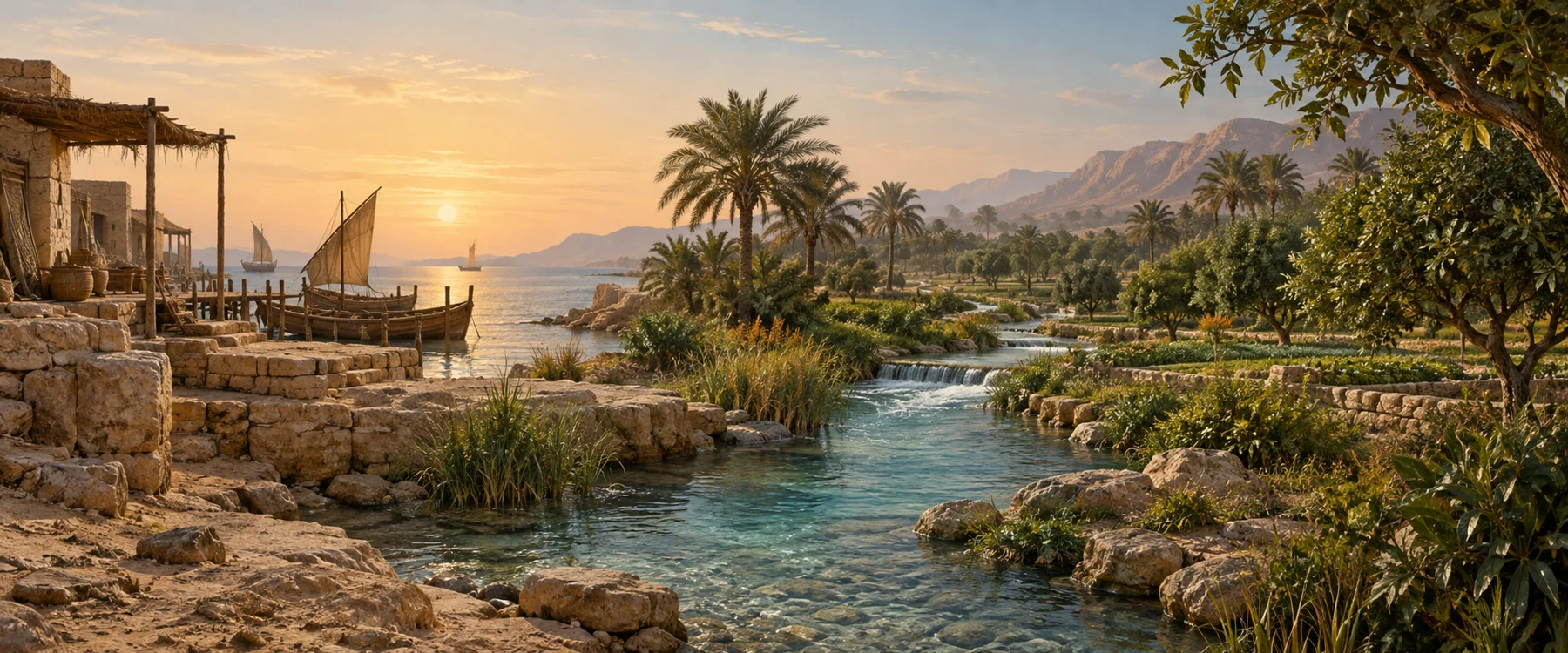
Modern conceptual illustration combining a Dilmun-like quay, fresh water and a garden to frame the comparison; neither an archaeological reconstruction nor a location of Eden. © IL Archive, CC0
Sítio
The place in which the garden of Genesis 2–3 is planted; the story describes rivers, trees and a human test, while its archaeological location and name’s derivation remain unsettled.
Variantes do nome: Eden, Garden of Eden
Contexto e fontes →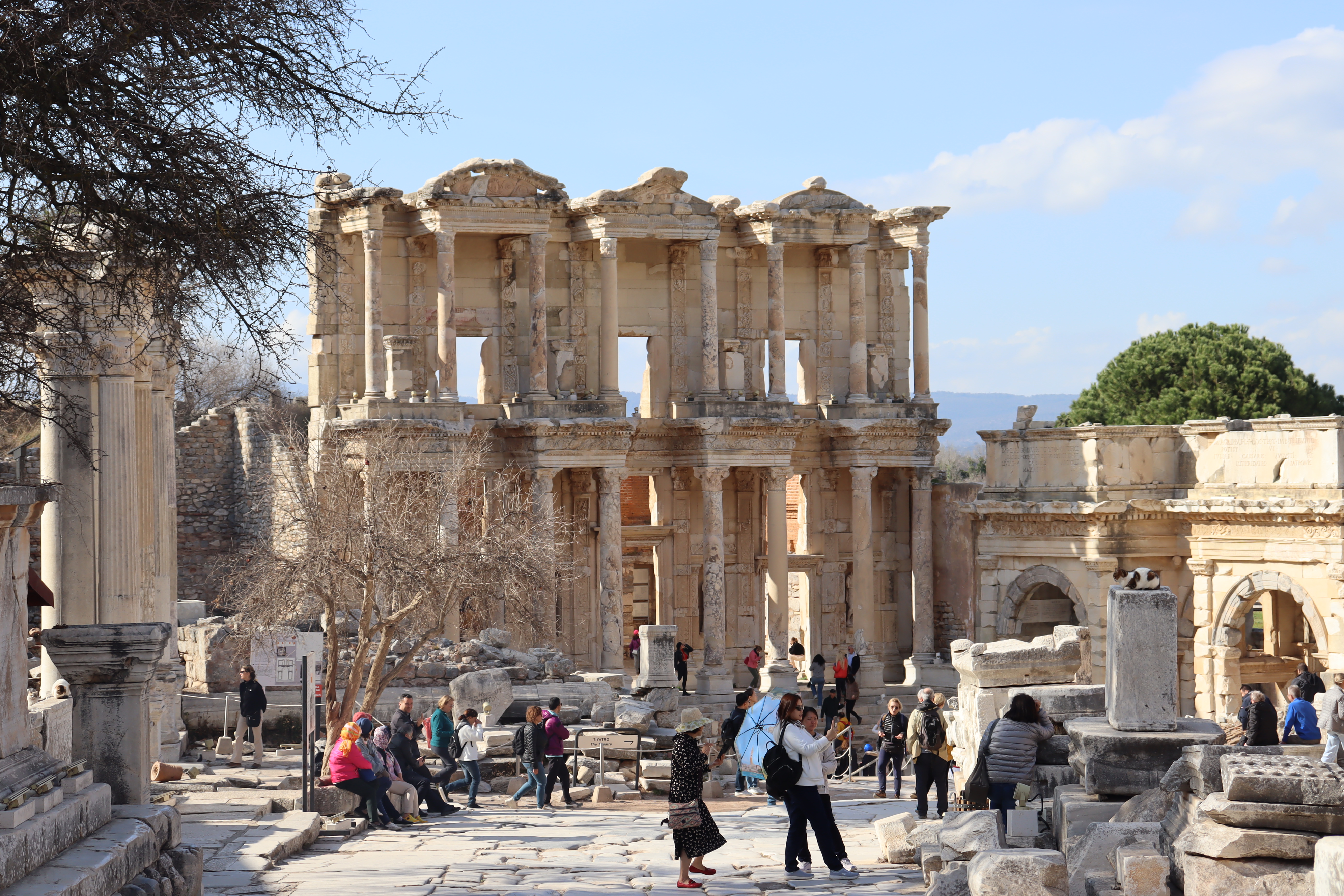
The Library of Celsus at Ephesus in a modern photograph. This Roman monument identifies the city, not the Sleepers' cave. Emre Dokur, CC BY-SA 4.0
Sítio
Ancient city in western Türkiye with major Roman and early Christian phases.
Variantes do nome: Ephesus
Contexto e fontes →Pessoa
Specialist in Semitic inscriptions and the Dead Sea Scrolls, emeritus professor at Jerusalem’s École biblique; proposes a shrine reading at el-Qom.
Variantes do nome: Émile Puech
Contexto e fontes →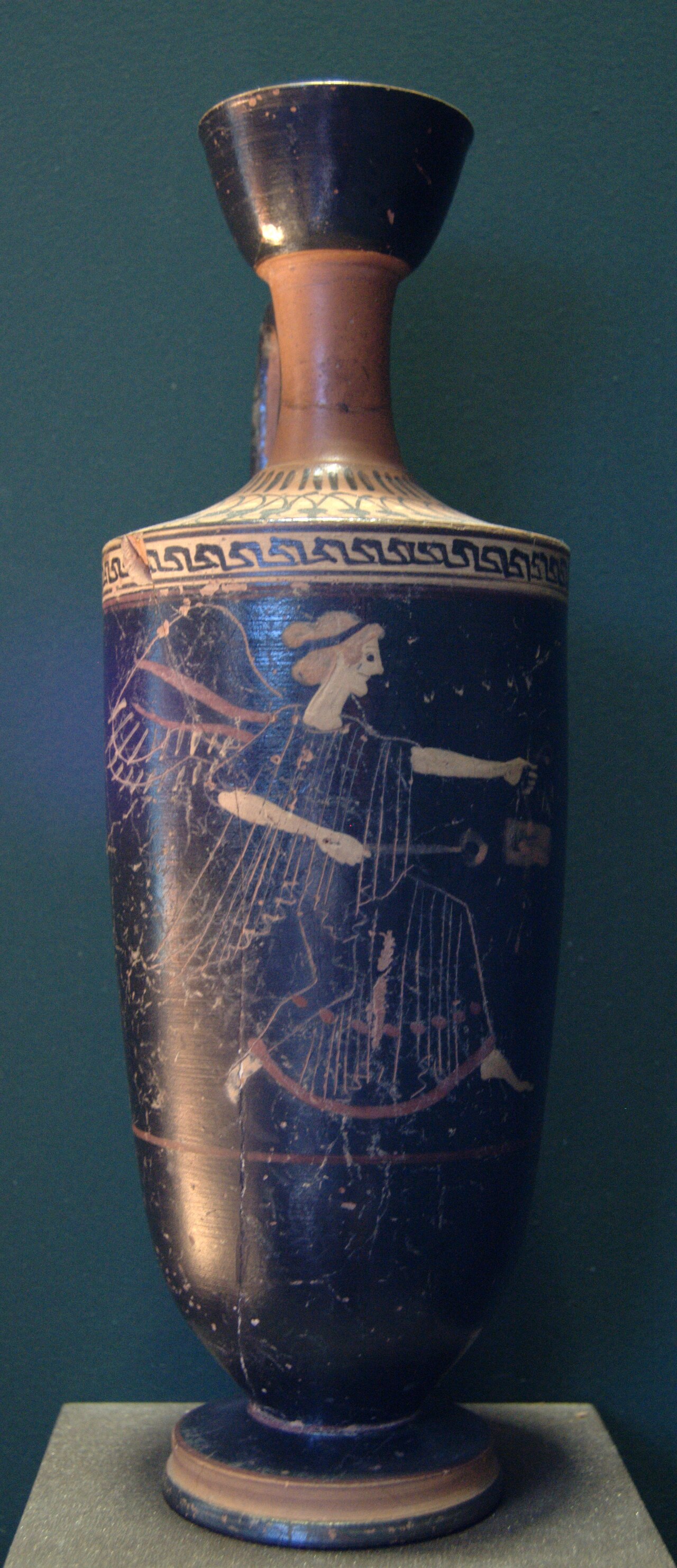
Winged Iris on a Greek vase, about 500–490 BCE; Louvre L 43. An ancient representation of the divine messenger named in the Iliad
Entidade
Greek divine messenger who conveys Zeus’s command to Poseidon in the Iliad.
Variantes do nome: Iris
Contexto e fontes →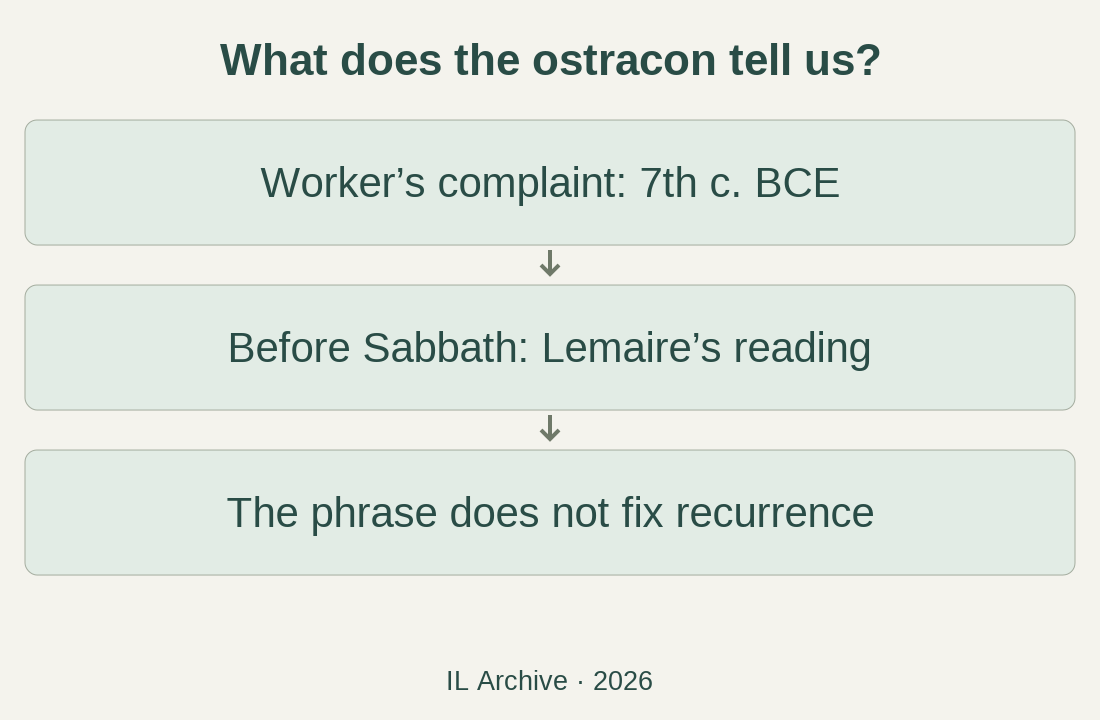
Modern diagram explaining the selected passage’s argument and sequence; not a manuscript image or archaeological reconstruction
Artefato
Worker’s complaint on a potsherd from a southern Levantine coastal fortress, late seventh century BCE, read as including “before Sabbath.”
Variantes do nome: Meṣad Ḥashavyahu ostracon
Contexto e fontes →
Modern conceptual illustration evoking the boat, horned fish, seed vessels and mountain in Manu traditions, especially the epic version; neither an ancient artifact nor a documented location
Texto antigo
Vedic Brāhmaṇa prose associated with the White Yajurveda, explaining sacrifices and their symbolism in differing school recensions. Includes the account of Manu’s flood rescue and Idā as a ritual explanation.
Variantes do nome: Śatapatha Brāhmaṇa, Satapatha Brahmana
Contexto e fontes →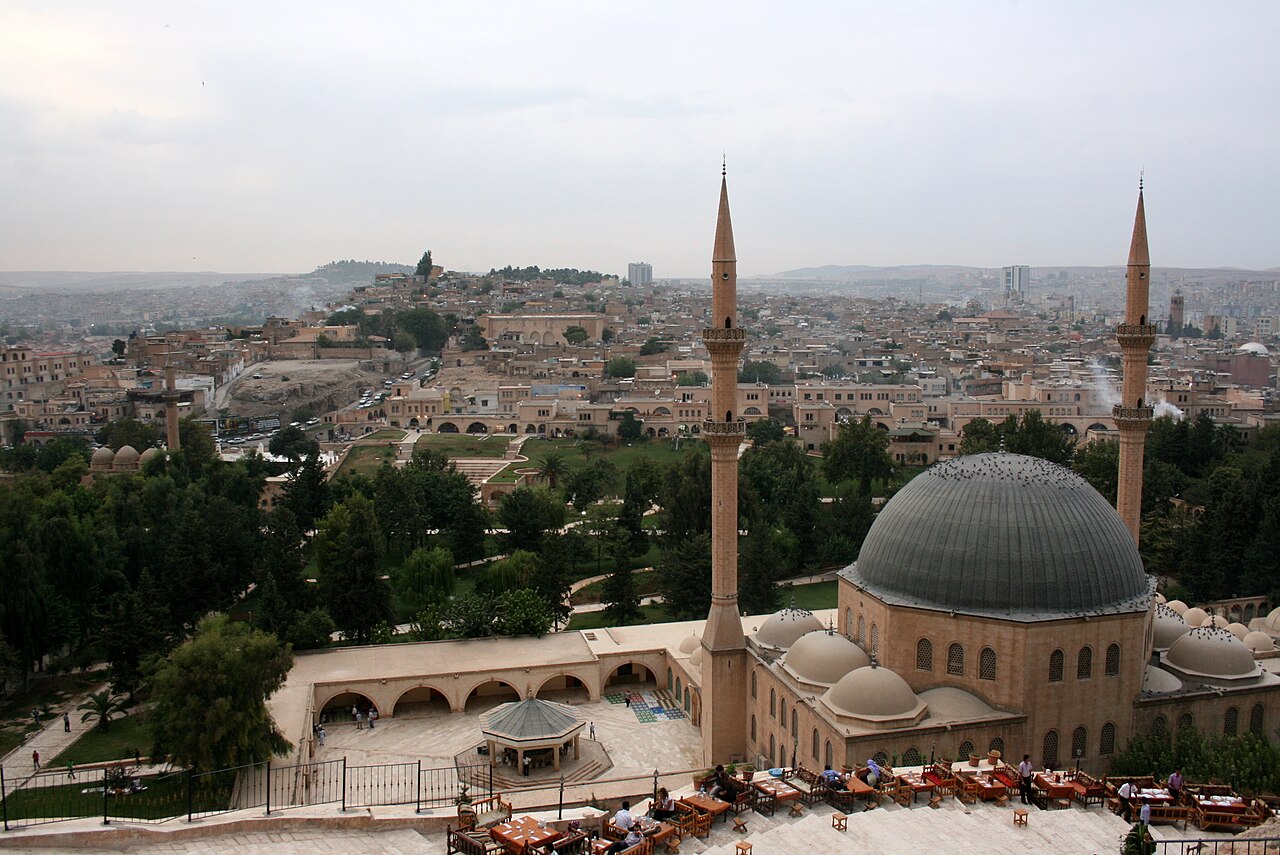
A modern view of Şanlıurfa from Urfa Castle, 5 July 2006, including a mosque and minarets of the later city. It shows the contemporary city, not Göbekli Tepe or the Neolithic period
Sítio
A modern city in southeastern Turkey, near Göbekli Tepe, whose museum displays Urfa Man.
Variantes do nome: Şanlıurfa, Sanliurfa, Urfa
Contexto e fontes →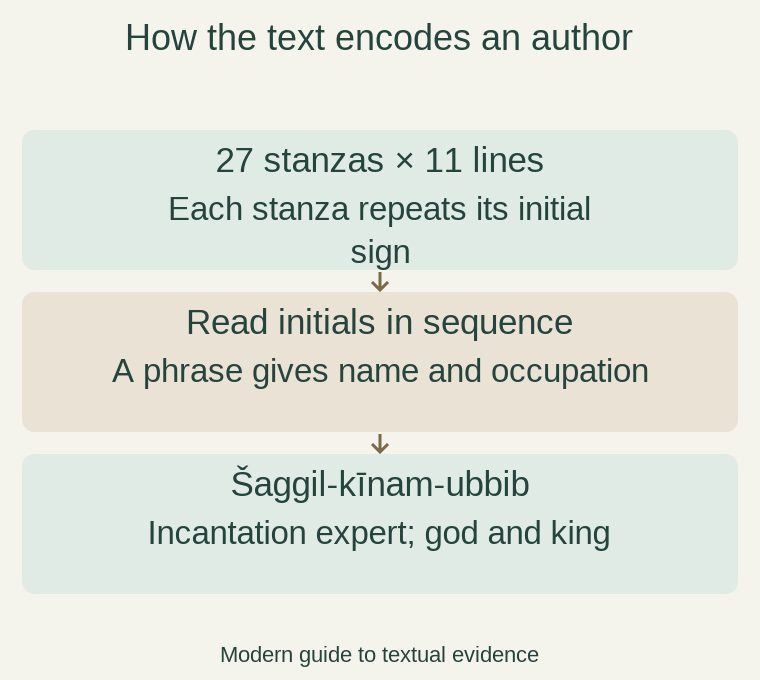
Modern explanation of the Theodicy’s acrostic: 27 stanzas of 11 lines, whose initials encode authorial attribution and occupation. It explains the reading principle, not a manuscript facsimile or every sign
Pessoa
Šaggil-kīnam-ubbib is the name to which the Babylonian Theodicy’s acrostic attributes the dialogue.
Variantes do nome: Šaggil-kīnam-ubbib
Contexto e fontes →