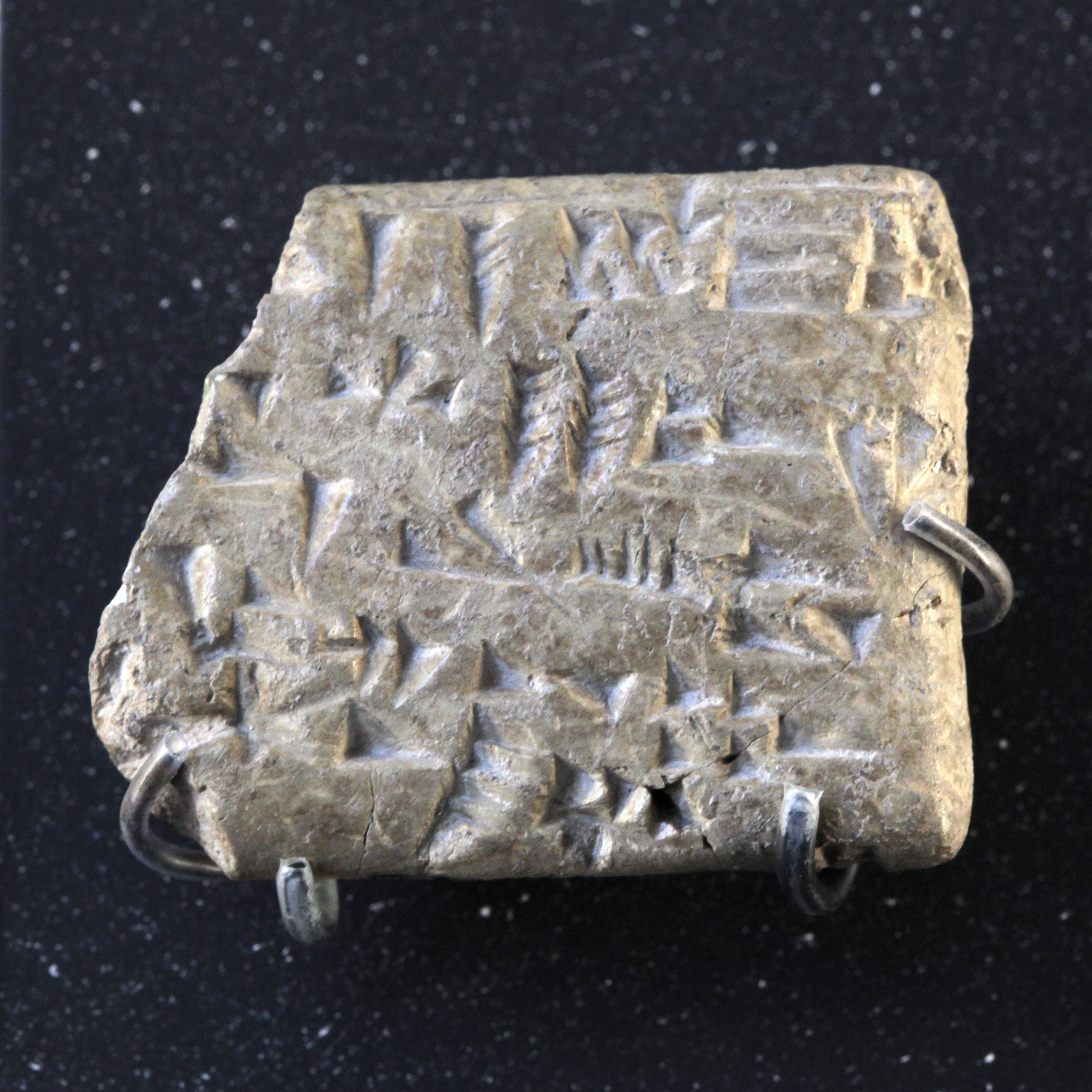
Fragment of an incomplete Ugaritic alphabet tablet, c. 1400–1200 BCE; Louvre, AO 19992 / RS 10.087. Evidence of Ugaritic writing
Entidade
Writing with wedge-shaped signs, developed from Mesopotamian recording traditions and used for several languages from the third millennium BCE.
Variantes do nome: cuneiform
Contexto e fontes →
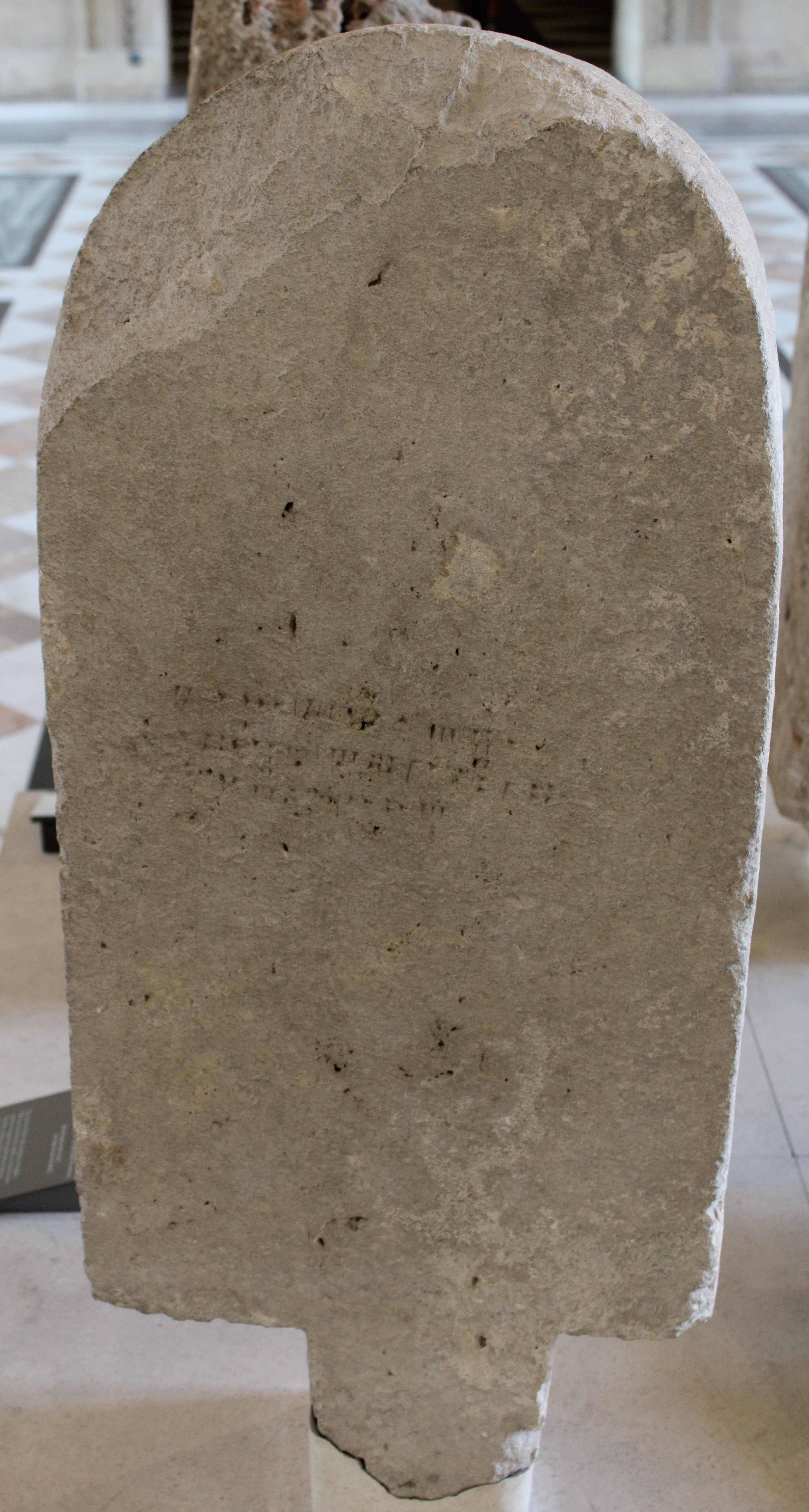
Dedicatory stele for Dagan from Ugarit, Louvre AO 19931; dated by the museum to 1400–1100 BCE. An inscribed witness, not a portrait of the god
Entidade
A god worshipped in Syria and Mesopotamia, especially at Tuttul and Terqa on the Euphrates, and associated with royal authority. His name appears as Dagon in the Hebrew Bible; no ancient image of him is securely identified.
Variantes do nome: Dagan, Dagān, Dagon
Contexto e fontes →
Pessoa
Ancient Near Eastern historian and University of Oklahoma professor emeritus who writes on slavery and release.
Variantes do nome: Daniel C. Snell
Contexto e fontes →

Daniel O. McClellan in a still from an American Council of Learned Societies recording, 2026
Pessoa
Biblical scholar studying concepts of deity and divine agency through cognitive and historical approaches.
Variantes do nome: Daniel O. McClellan, Daniel McClellan, Dan McClellan
Contexto e fontes →
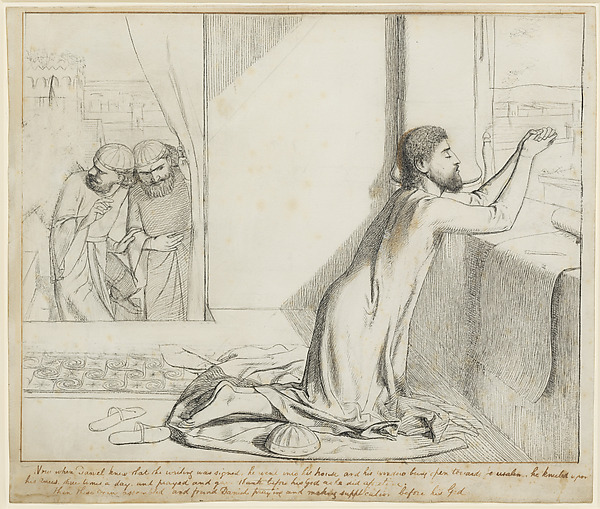
Holman Hunt, Daniel Praying,1849; Met2023.675. Later artistic reception of prayer in Daniel6, not an ancient portrait or the resurrection in chapter12
Pessoa
Daniel is the Jewish sage and visionary in the biblical book bearing his name.
Variantes do nome: Daniel
Contexto e fontes →
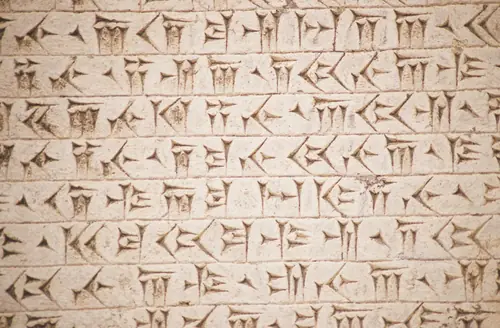
Cuneiform detail at Behistun, Iran, from Darius I’s late-sixth-century BCE royal inscription. The image does not identify the compared blessing and curse lines
Pessoa
Persian king of the late sixth and early fifth centuries BCE, responsible for the Behistun inscription.
Variantes do nome: Darius I
Contexto e fontes →
Modern AI-generated conceptual illustration: imagined tablets, parchment and landscape evoke a text’s different times; no actual object, manuscript or historical place is depicted
Entidade
Investigation of the date of a surviving witness and the development and transmission of a work, keeping narrated time, composition and copying separate.
Variantes do nome: Dating texts
Contexto e fontes →
Modern conceptual illustration pairing parchment-like material with a contemporary analyser to distinguish dating a support from dating its writing; not the Birmingham manuscript or a real laboratory photograph
Entidade
A method for estimating the age of organic material by measuring carbon-14 and calibrating the result; parchment age does not directly date writing.
Variantes do nome: Radiocarbon dating, Carbon-14 dating
Contexto e fontes →
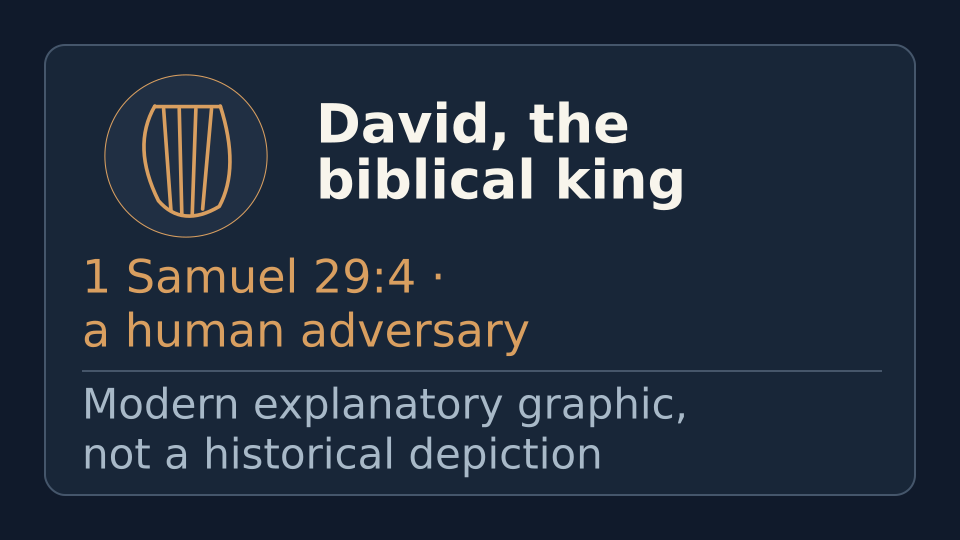
Contemporary explainer; it is not an ancient artifact or historical likeness
Pessoa
Royal figure in Samuel and Kings, cited here in an instance of “adversary” applied to a human.
Variantes do nome: King David
Contexto e fontes →
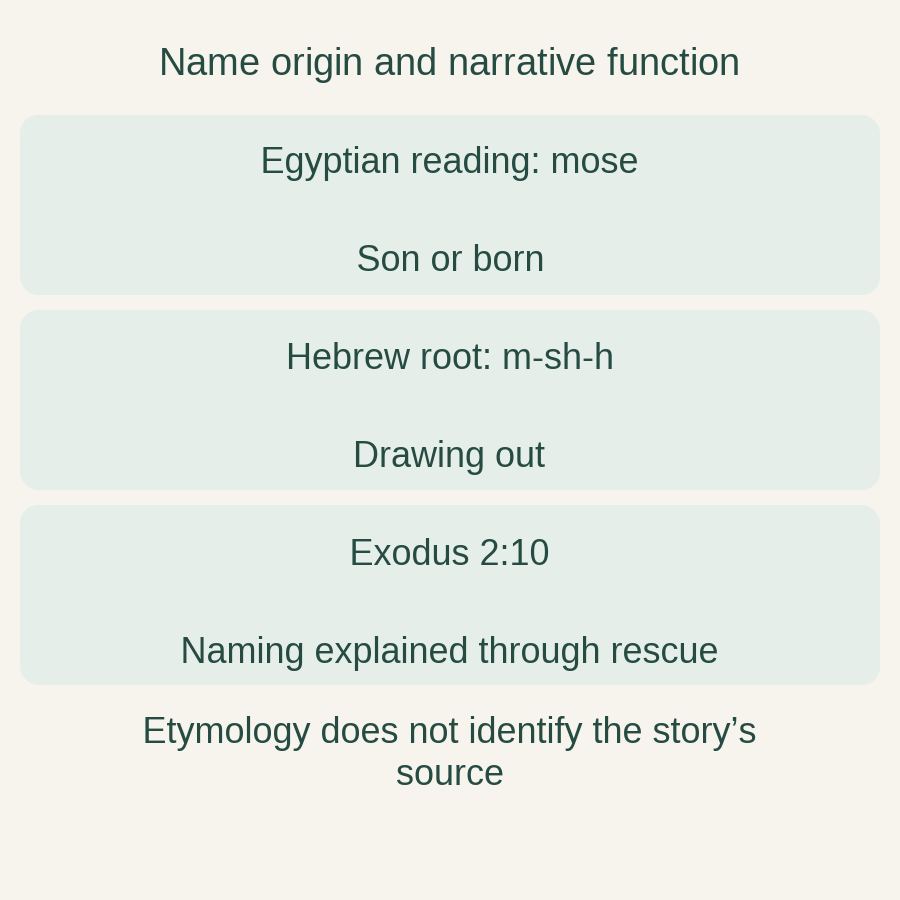
Modern diagram distinguishing Egyptian name origin and Hebrew narrative explanation; not a portrait of Zucker
Pessoa
Independent scholar and rabbi writing on the Bible and its interpretation; author of a 2018 discussion of Moses’ Egyptian name and Hebrew explanation.
Variantes do nome: David J. Zucker
Contexto e fontes →
Pessoa
Professor of Hebrew Bible at Union Theological Seminary, studying textual formation, writing and memory.
Variantes do nome: David M. Carr, Hebrew Bible scholar, David Carr
Contexto e fontes →
Pessoa
David Neil MacKenzie (1926–2001) was a British scholar of Middle and modern Iranian languages.
Variantes do nome: David Neil MacKenzie
Contexto e fontes →

Shapiro Campus Center at Brandeis University in Waltham, Massachusetts, on 7 April 2017. The photograph shows part of the institution associated with David P. Wright’s research on the Hebrew Bible and the ancient Near East
Pessoa
Hebrew Bible and ancient Near Eastern law and ritual scholar, professor emeritus at Brandeis.
Variantes do nome: David Wright, David P. Wright
Contexto e fontes →
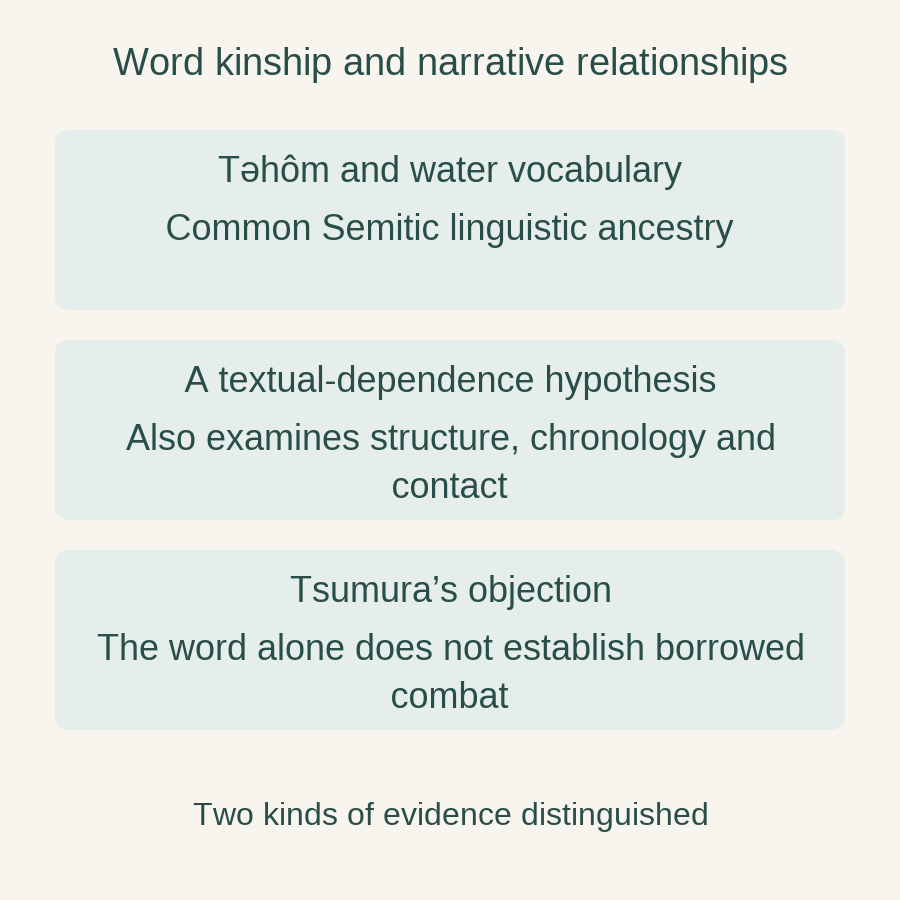
Modern diagram distinguishing linguistic kinship from a hypothesis about textual relationships; not a portrait of Tsumura
Pessoa
Linguist and Old Testament scholar, author of the 2005 Creation and Destruction, reassessing linguistic arguments for primordial combat behind biblical texts.
Variantes do nome: David Toshio Tsumura
Contexto e fontes →
Pessoa
Jewish studies scholar examining love in Deuteronomy through political fidelity and affection.
Variantes do nome: Deena Grant
Contexto e fontes →
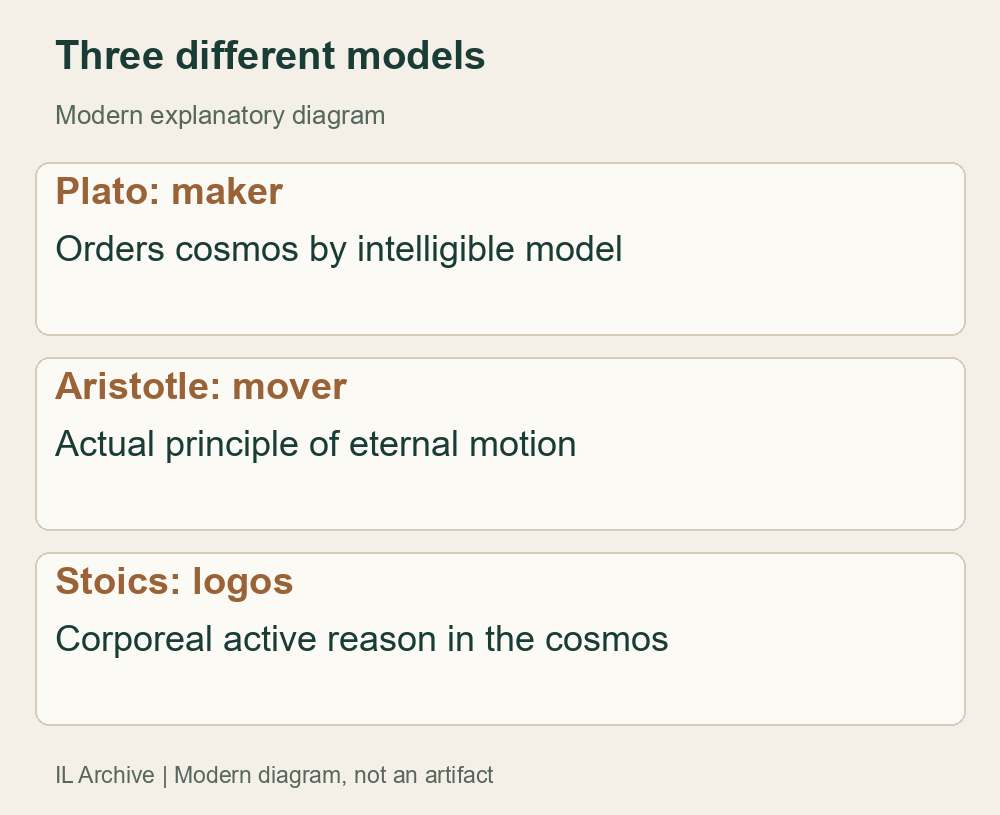
Modern explanatory diagram comparing Plato’s craftsman, Aristotle’s mover and the Stoic logos. The comparison distinguishes the roles of these principles; it is not an ancient object or a historical portrait
Entidade
The good craftsman through whom Plato explains cosmic order in the Timaeus, following an unchanging model grasped by reason.
Variantes do nome: demiurge, demiourgos, Timaean maker
Contexto e fontes →
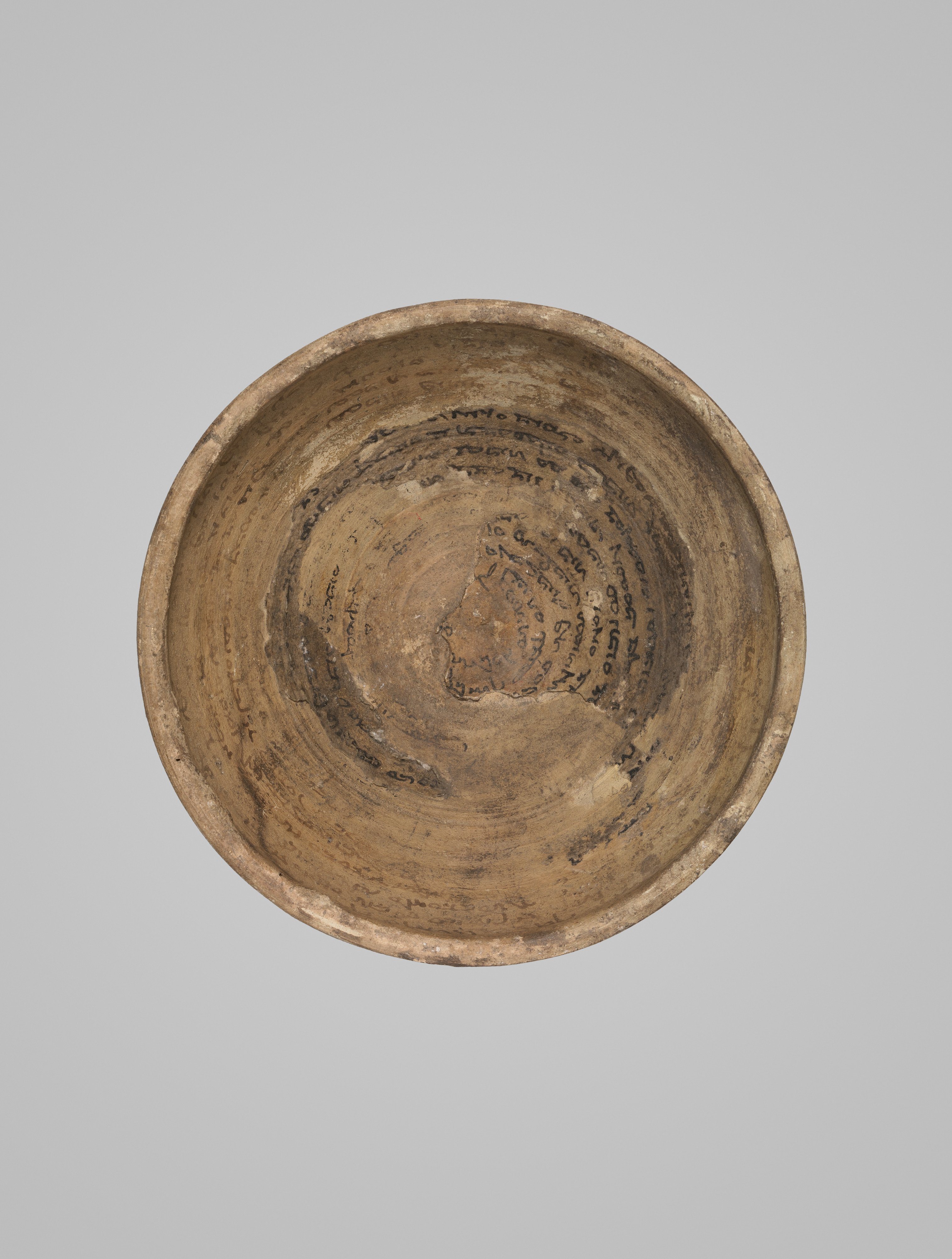
Sasanian incantation bowl with a Mandaic inscription, from Ctesiphon, Iraq, approximately fifth–sixth centuries CE; Met 32.150.89. Evidence of ritual writing in its own setting, not a depiction of demons or proof that the incantation worked
Entidade
Study or organization of harmful powers, names, origins and roles within specific traditions; no single doctrine or claim about existence beyond the text is assumed.
Variantes do nome: demonology, demonologies
Contexto e fontes →
Pessoa
Scholar of ancient Jewish and Christian texts who studied the Solomon-as-exorcist tradition.
Variantes do nome: Dennis C. Duling
Contexto e fontes →
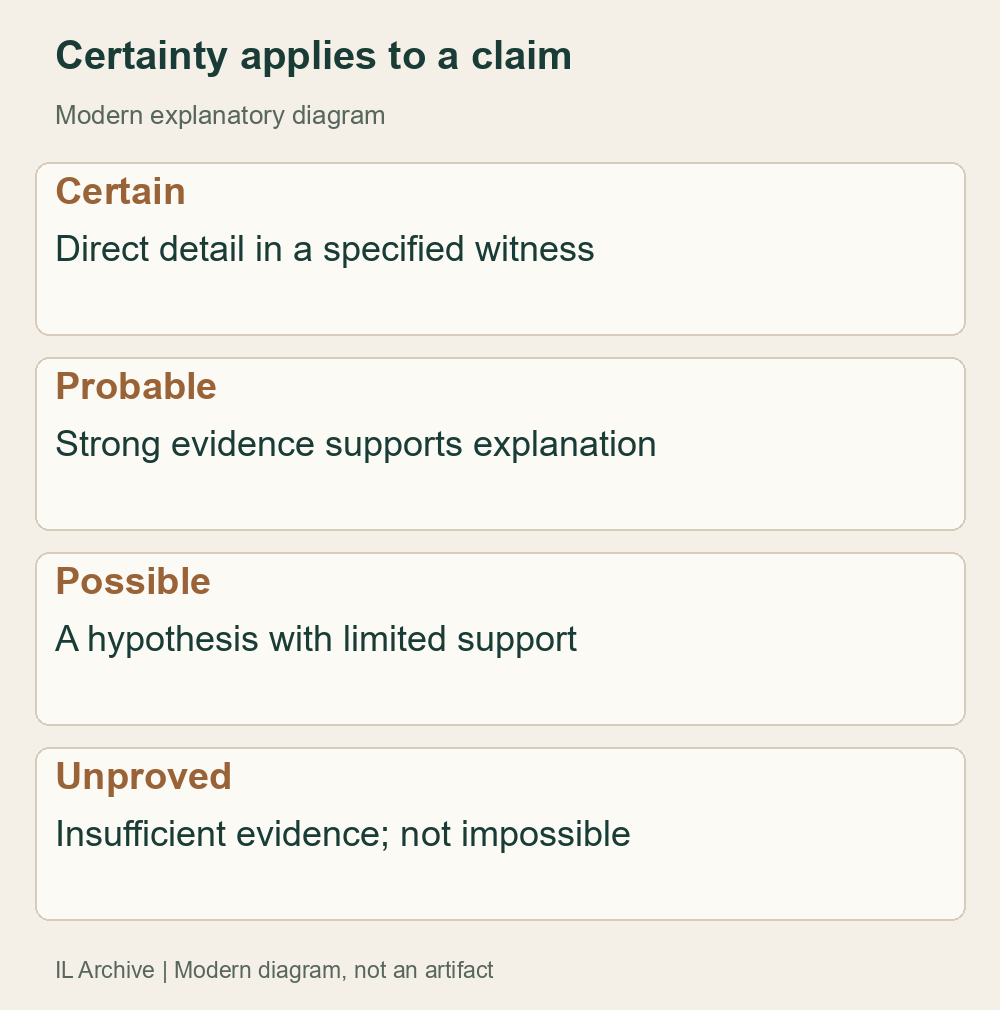
Relationship, source, direction and route can have different levels of support
Entidade
A historical relation in which a text was composed using another text or version; similarity alone cannot establish its direction.
Variantes do nome: Literary dependence
Contexto e fontes →
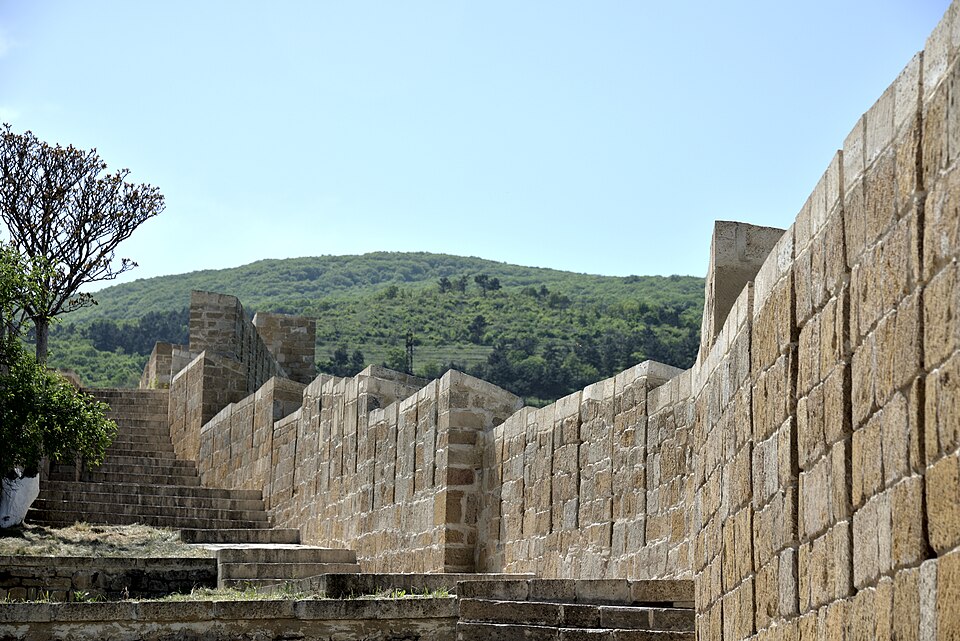
Derbent's northern city wall in Dagestan, photographed in 2018. It shows a real fortification, not proof of Gog and Magog's barrier
Sítio
Caspian-coast city in Russia's Dagestan with Sasanian fortifications; its existence does not identify Dhul Qarnayn's barrier.
Variantes do nome: Derbent
Contexto e fontes →
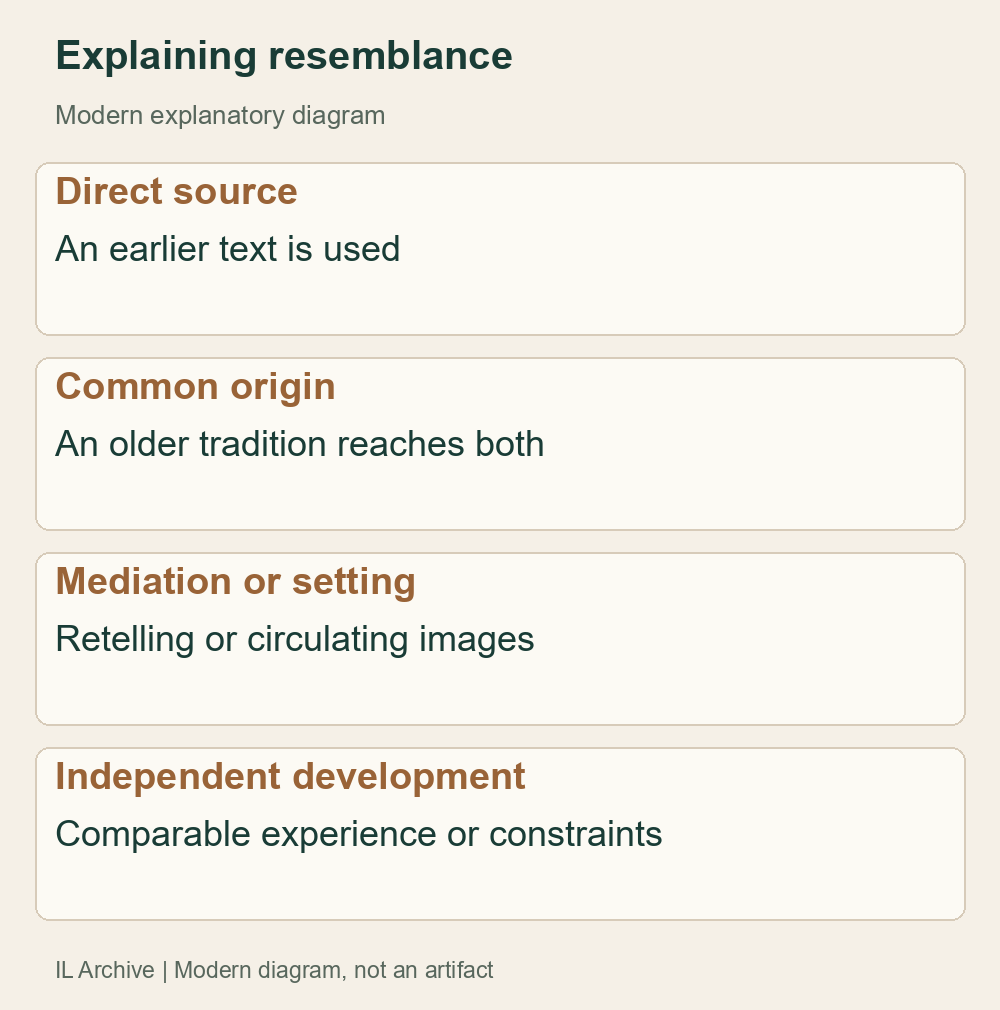
Alternatives can overlap; this diagram does not document a particular narrative’s route
Entidade
Similar narrative or cultural elements arising in different settings without historical transmission of the specific feature between them; a testable explanation, not a default assumption when records of borrowing are absent.
Variantes do nome: Independent development
Contexto e fontes →

Modern conceptual illustration of receding water, two survivors, a mountain and stones evoking Deucalion; not an archaeological photograph or a documented location. © IL Archive, CC0
Pessoa
Deucalion and Pyrrha in Greek and Latin flood accounts: genealogy, survival, stone-born people, local traditions and Near Eastern parallels, with attention to variant sources and dates.
Variantes do nome: Deucalion, Deucalion flood
Contexto e fontes →

Newly AI-generated conceptual illustration of a person seeking a deity’s protection. Not an ancient object, inscription, or verified reconstruction of a deity
Entidade
A deity associated in some ancient Near Eastern sources with an individual or family for care, protection, and intercession; not necessarily a separate or minor god.
Variantes do nome: personal god, family god
Contexto e fontes →
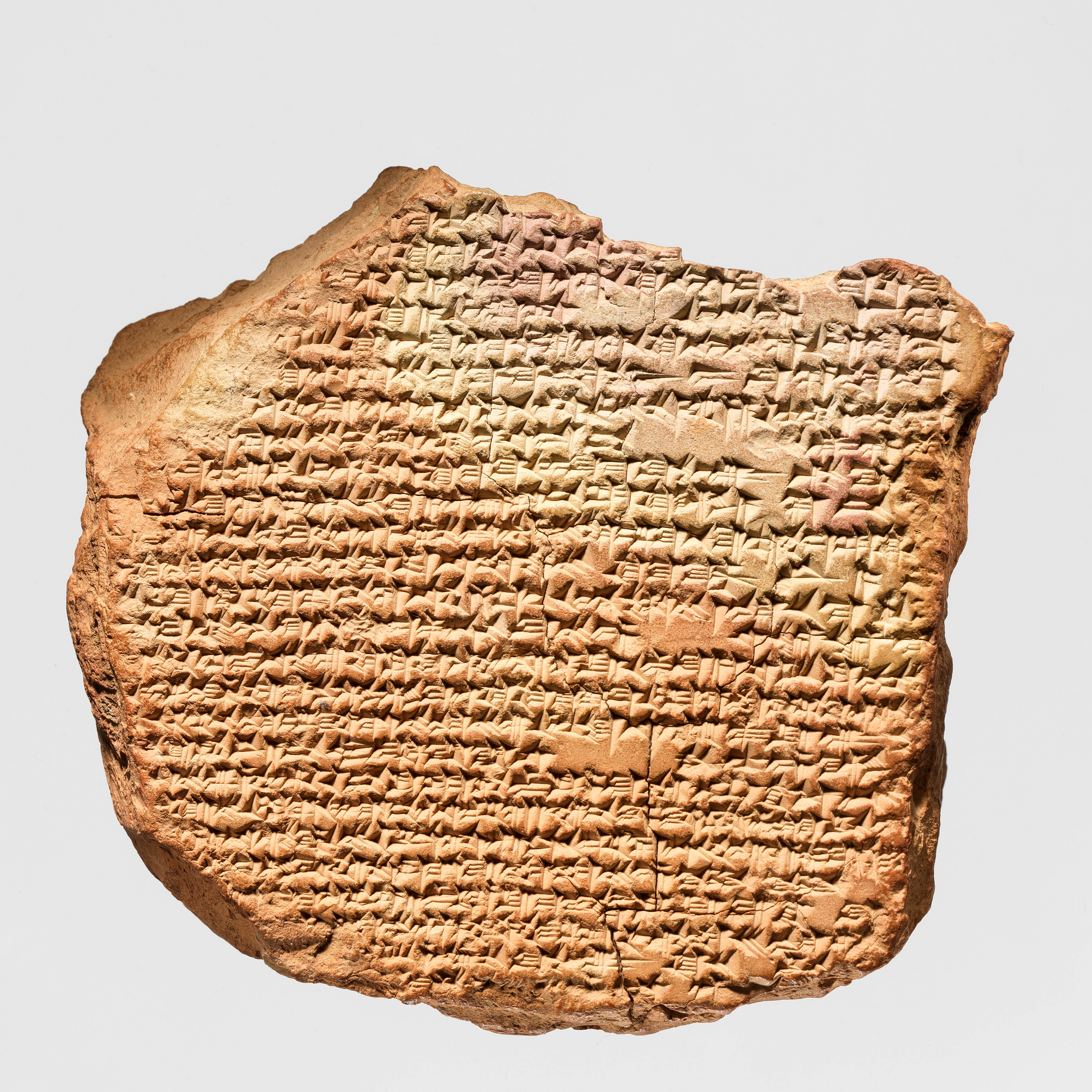
Surviving middle portion of a “Hymn to Marduk” tablet (The Met 86.11.313), first millennium BCE; Neo-Babylonian attribution tentative. The Sumerian text alternates with Akkadian translation and exalts Marduk. Authentic artifact photograph, cropped for display—not an image of the god or proof of monotheism
Entidade
A deity represented as holding superior authority among other gods in a specified source or tradition; the rank alone does not establish exclusive worship or monotheism.
Variantes do nome: high god, chief god
Contexto e fontes →
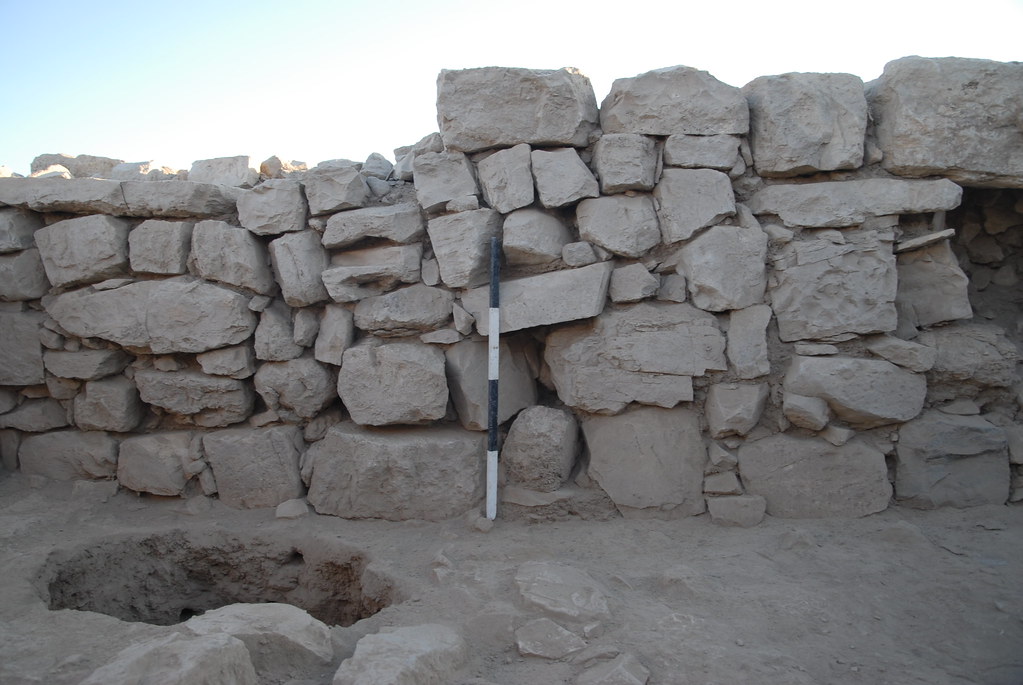
Wall exposed in the Dhiban excavations, 8 August 2009; file title “South-facing Wall.” The scale is modern. This photo record does not date the wall or identify it as belonging to Mesha’s reign
Sítio
Town and archaeological site in west-central Jordan, findspot of the Mesha Stele in 1868, with several periods of settlement.
Variantes do nome: Dhiban, Dibon
Contexto e fontes →

Modern conceptual illustration combining a Dilmun-like quay, fresh water and a garden to frame the comparison; neither an archaeological reconstruction nor a location of Eden. © IL Archive, CC0
Sítio
Dilmun was an ancient Gulf trading land with a major archaeological centre in Bahrain and connections to eastern Arabia and Failaka. This entry separates boats, burials and kings from the literary purity and fresh water of Enki and Ninhursaga, and tests the limits of comparison with Eden.
Variantes do nome: Dilmun, Tilmun
Contexto e fontes →
Pessoa
Scholar of Sumerian literature and conceptions of death who studied Dilmun in Enki and Ninhursaga.
Variantes do nome: Dina Katz
Contexto e fontes →
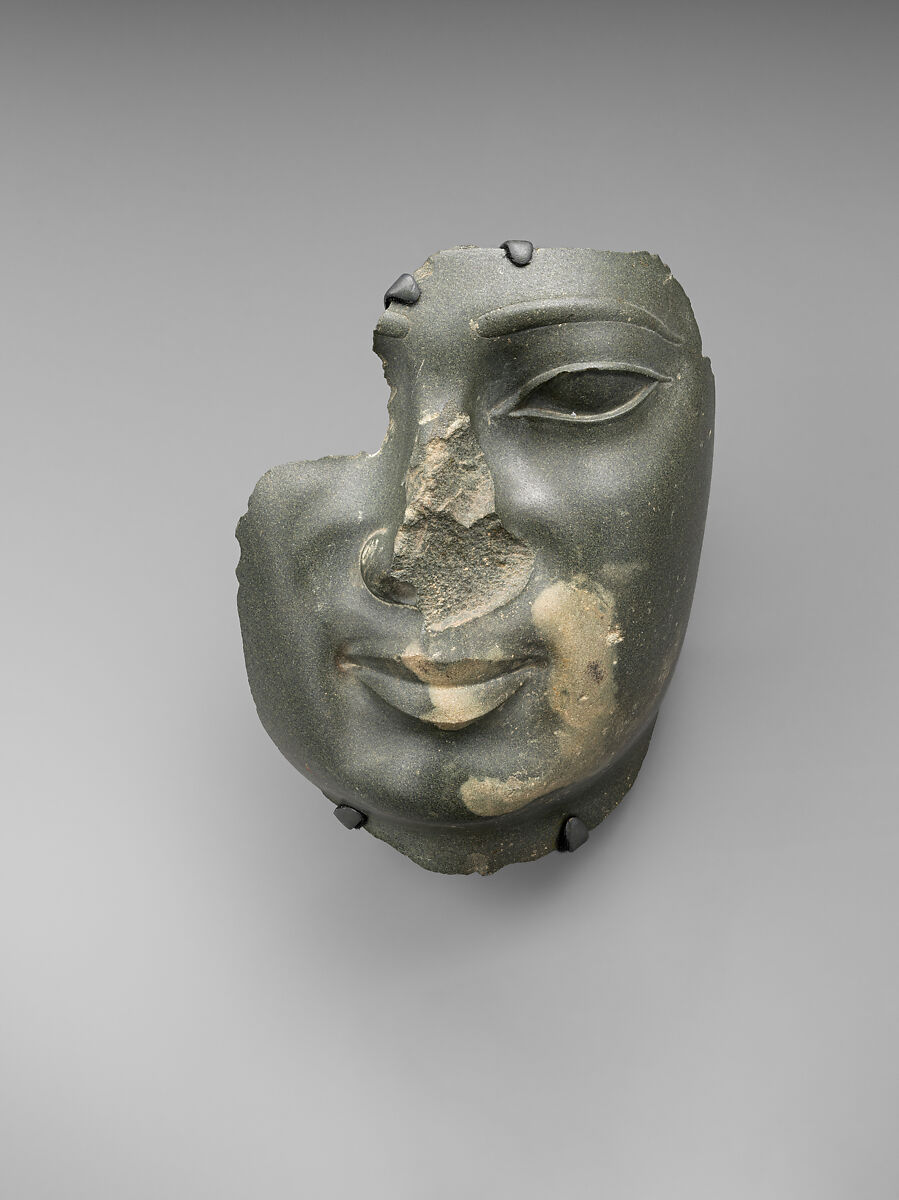
Statue-face fragment from Heliopolis, 284–246 BCE, The Met 12.187.31. Attributed to Ptolemy II or a contemporary; the identity is uncertain
Entidade
Dynasty of Macedonian origin ruling Egypt as kings from 305 to 30 BCE, amid Greek and Egyptian traditions.
Variantes do nome: Ptolemaic dynasty in Egypt
Contexto e fontes →
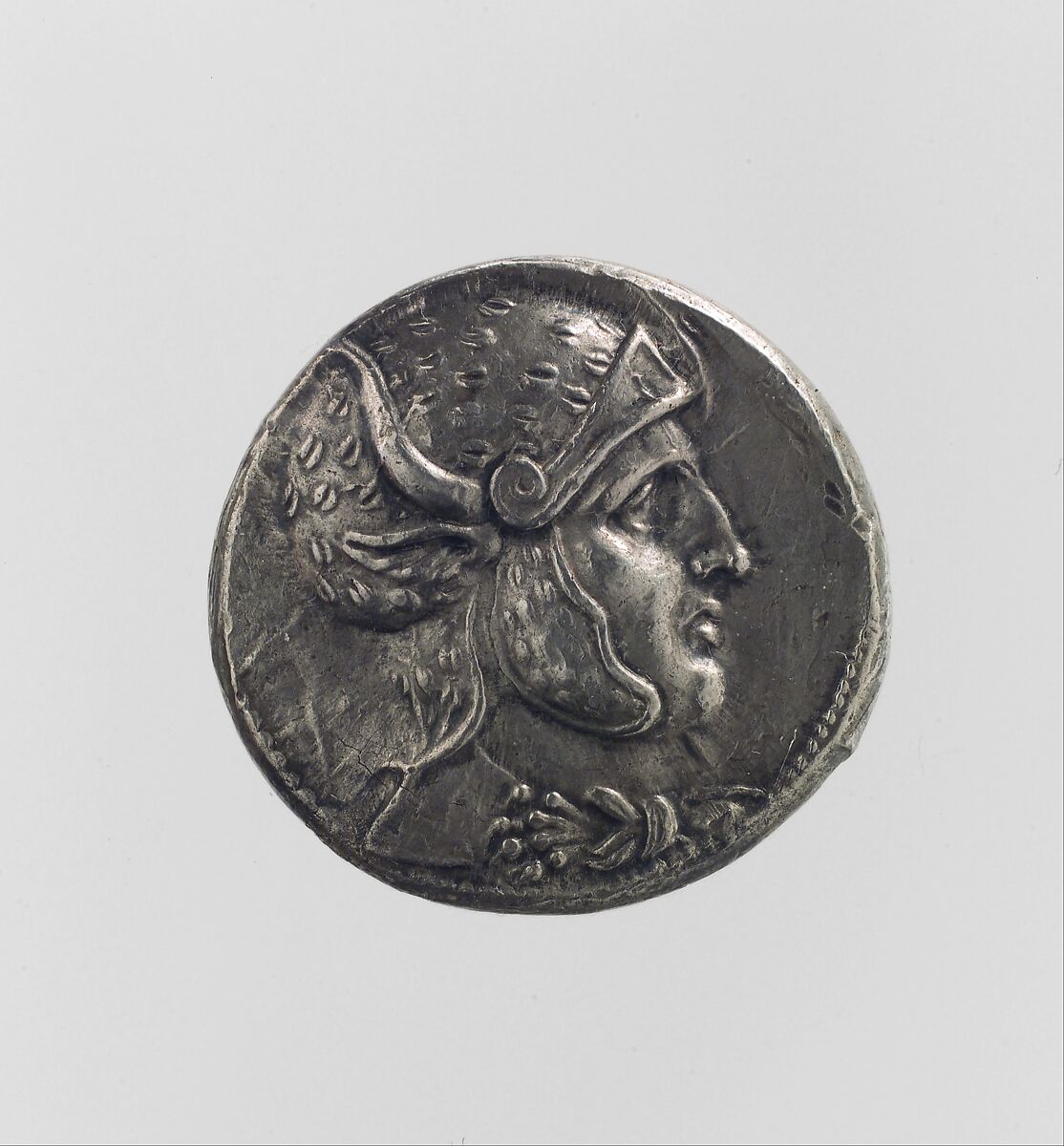
Obverse of Seleucus I’s silver tetradrachm, about 304–294 BCE, The Met 1974.105.9. A horned helmet and leopard skin appear; found at Pasargadae, probably struck at Susa
Entidade
Hellenistic dynasty arising after Alexander and ruling changing Near Eastern territories into the first century BCE.
Variantes do nome: Seleucid dynasty
Contexto e fontes →
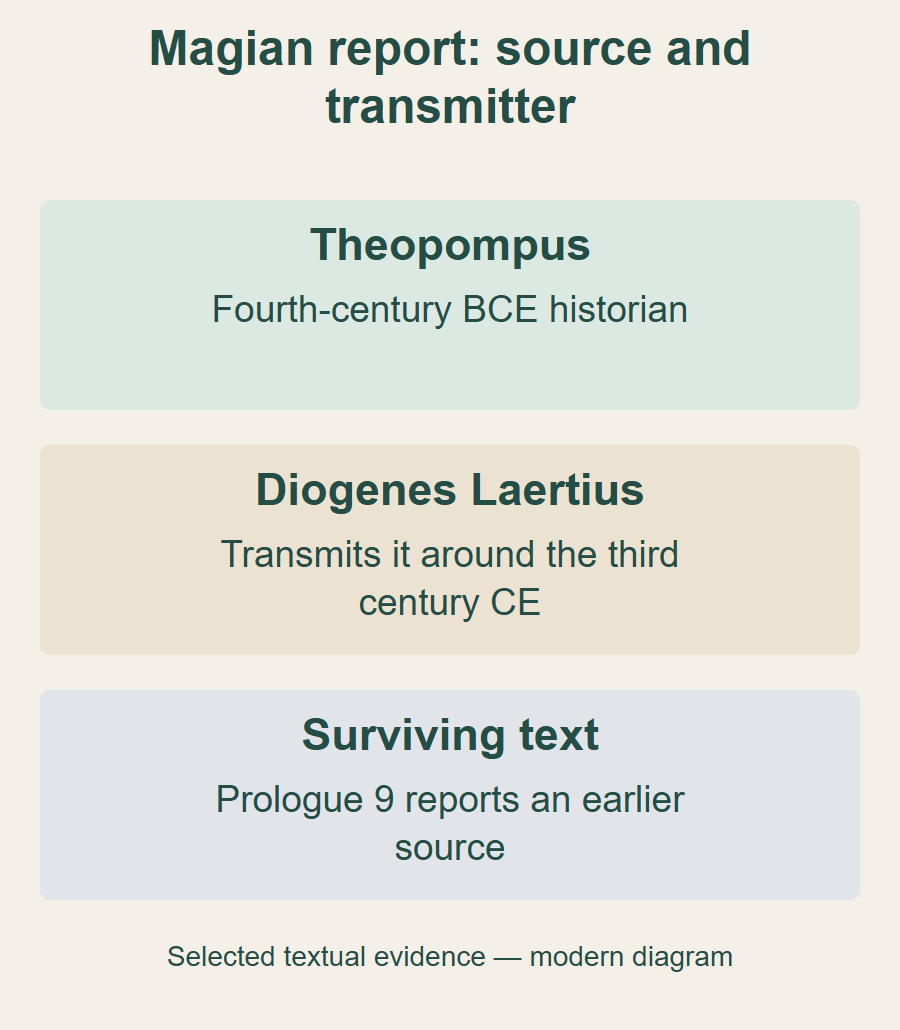
Modern chart of the report: fourth-century BCE Theopompus, then Diogenes Laertius around the third century CE, then the transmitted text. Source and transmitter dates distinguished; not an ancient manuscript
Pessoa
Diogenes Laertius was a Greek author usually dated to the early third century CE.
Variantes do nome: Diogenes Laertius
Contexto e fontes →
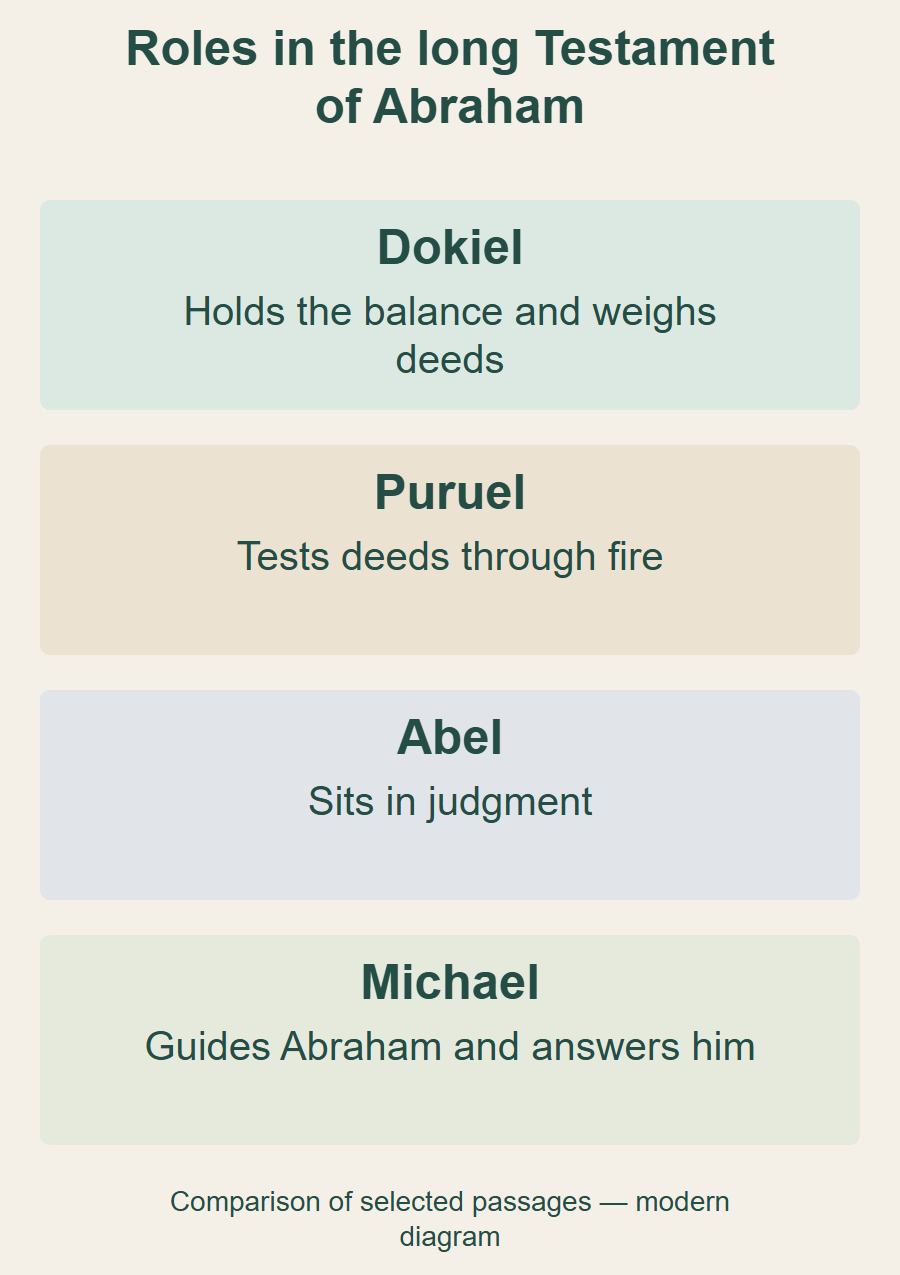
Modern chart of the long Testament of Abraham: Abel judges, Dokiel weighs, Puruel tests by fire and Michael guides Abraham; not ancient likenesses
Entidade
Dokiel is an angel in the long Testament of Abraham who holds the scales.
Variantes do nome: Dokiel
Contexto e fontes →
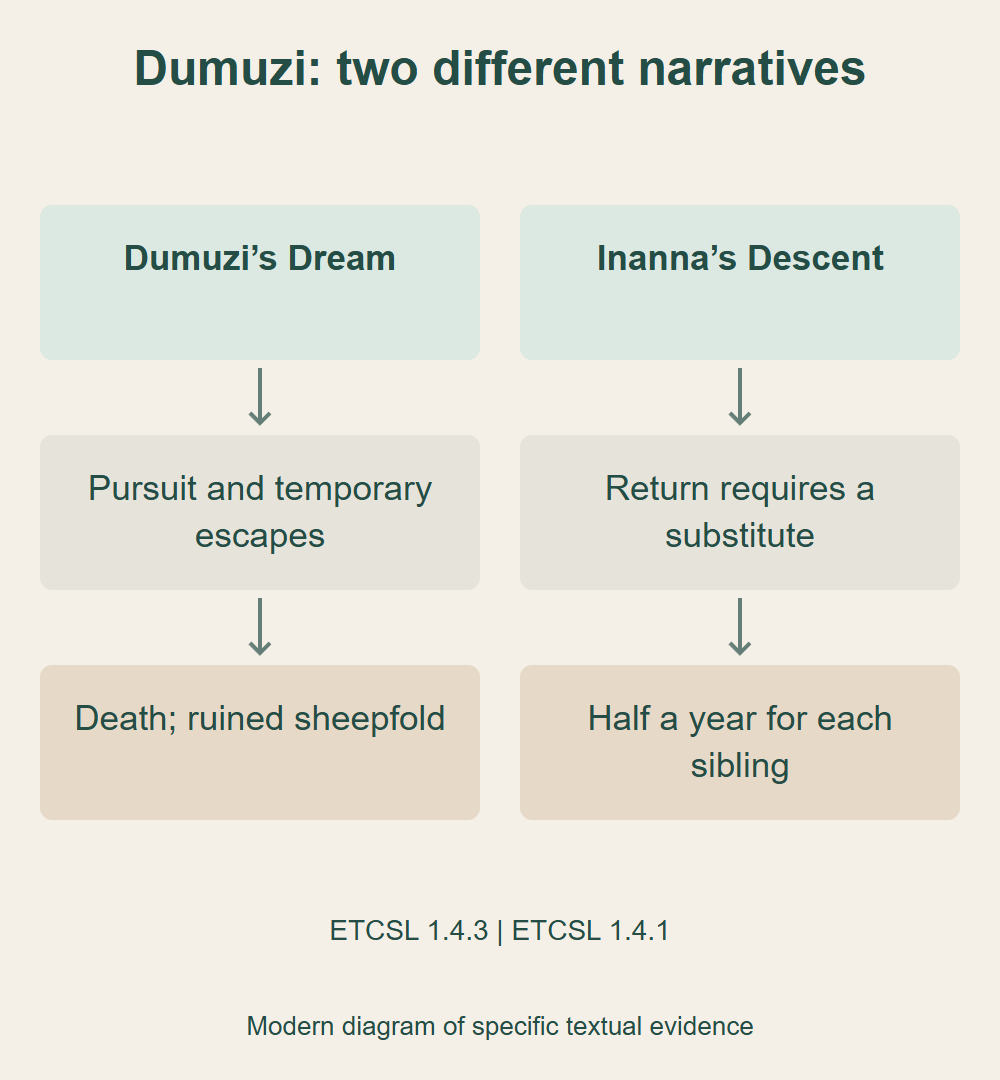
Modern comparison of the ending of Dumuzi’s Dream with the half-year settlement in Inanna’s Descent. Distinct textual structures, without an invented likeness
Entidade
Dumuzi is a deity of ancient Mesopotamian traditions associated with shepherding and Inanna; Tammuz appears as the name in later linguistic and textual traditions.
Variantes do nome: Dumuzi, Dumuzid, Tammuz
Contexto e fontes →
Pessoa
Scholar of ancient drama and fragmentary texts, associate professor of Classics at Grinnell College.
Variantes do nome: Dustin W. Dixon
Contexto e fontes →
Pessoa
Ancient Near Eastern historian and Hebrew Bible scholar specializing in ancient legal cultures.
Variantes do nome: Dylan R. Johnson
Contexto e fontes →
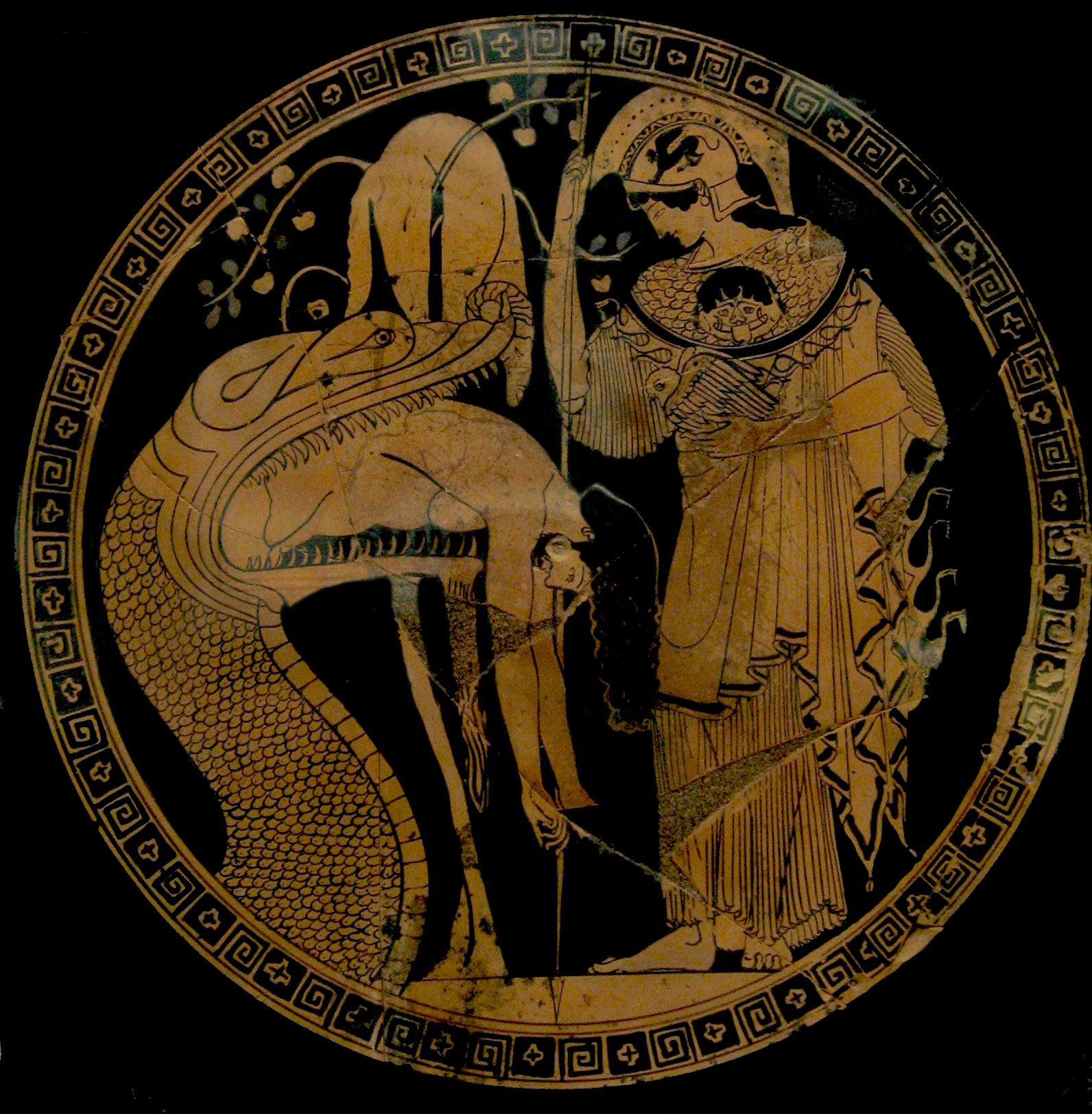
Jason emerging from the serpent, Athena at right, and the hanging Golden Fleece; Attic cup attributed to Douris, about 480–470 BCE, Vatican Museums 16545. Photograph of the cup, neither Jonah nor a portrait of its painter
Pessoa
An early fifth-century BCE Attic vase painter to whom the Vatican Museums attribute the Jason-and-serpent cup.
Variantes do nome: Douris, Attic vase painter
Contexto e fontes →
Pessoa
British Egyptologist and ancient-language scholar (1857–1934) who published a historical English translation of Syriac Alexander texts.
Variantes do nome: E. A. Wallis Budge
Contexto e fontes →
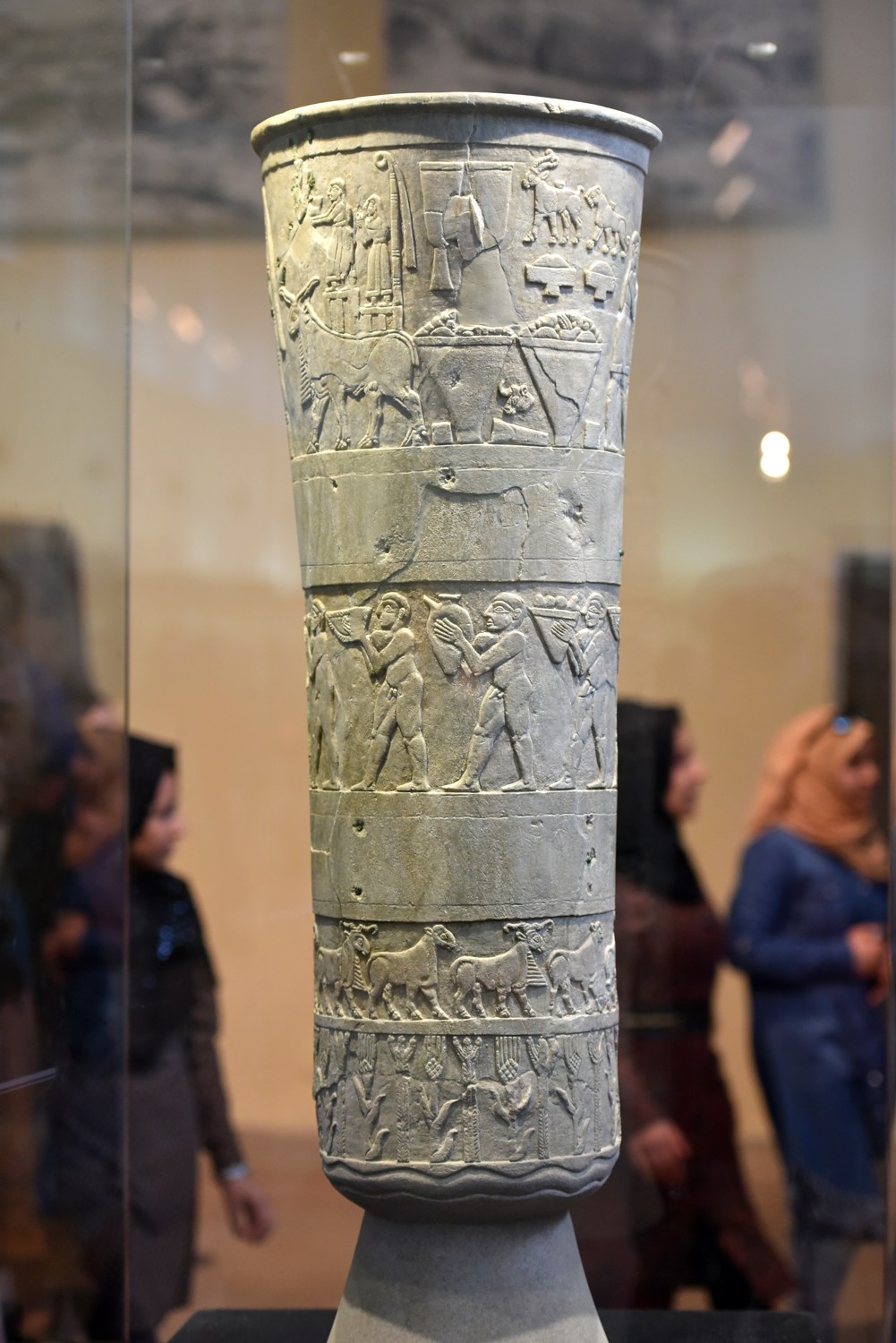
Warka Vase, Iraq Museum, Baghdad (IM19606), from Uruk; approximately late fourth millennium BCE. Registers show vegetation, animals, bearers of offerings and a debated upper scene. Parts were broken and restored. Photograph taken in 2019 of the object, not the buildings
Sítio
An archaeological precinct and institutional centre at Uruk associated with Inanna; its name does not fix every early building’s function.
Variantes do nome: Eanna, Eanna precinct
Contexto e fontes →
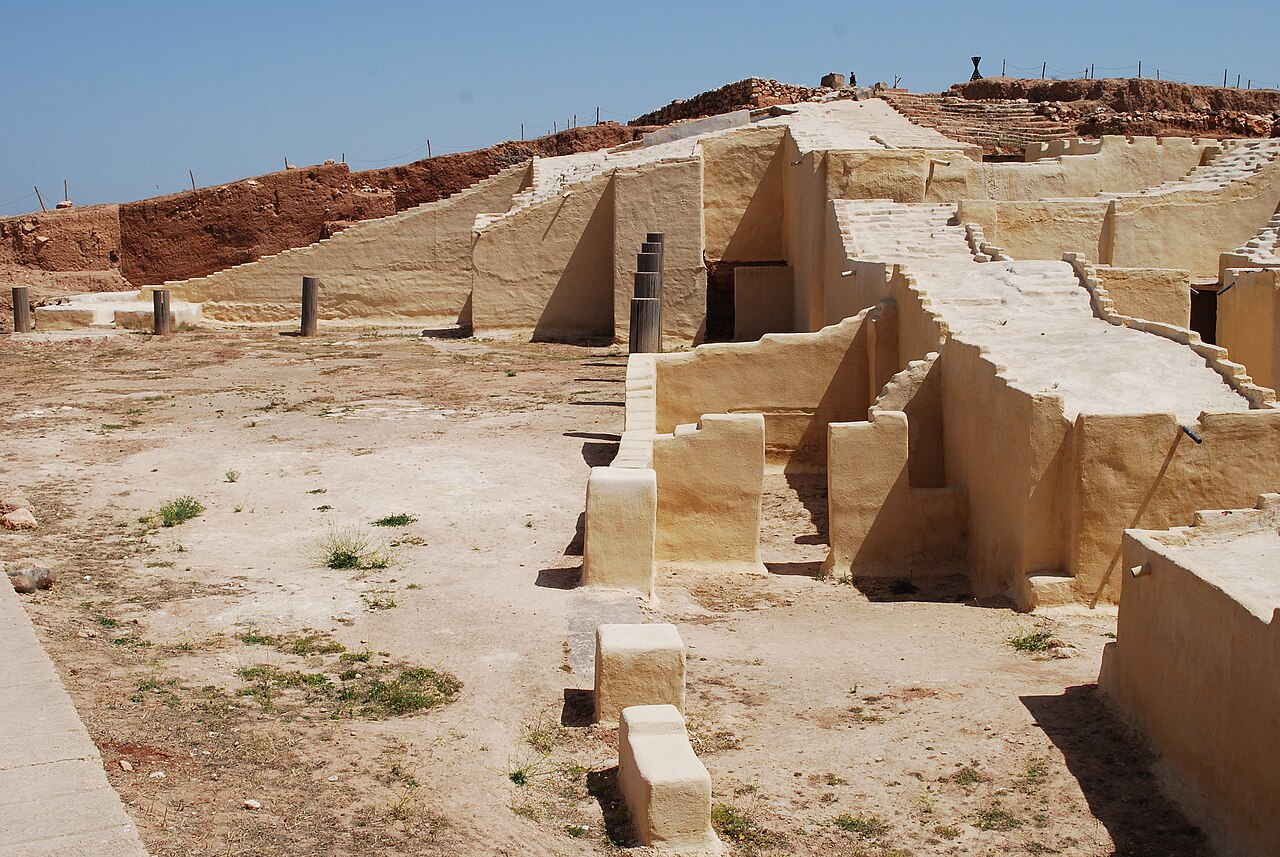
Archaeological view of Royal Palace G at Ebla (Tell Mardikh, Syria). This modern photograph shows architectural remains, not the tablets themselves, and cannot independently date every visible wall
Sítio
Ancient city at Tell Mardikh, southwest of Aleppo, Syria. Its Palace G archives illuminate third-millennium BCE administration, language, and cult; the site has later occupation phases.
Variantes do nome: Ebla, Tell Mardikh
Contexto e fontes →
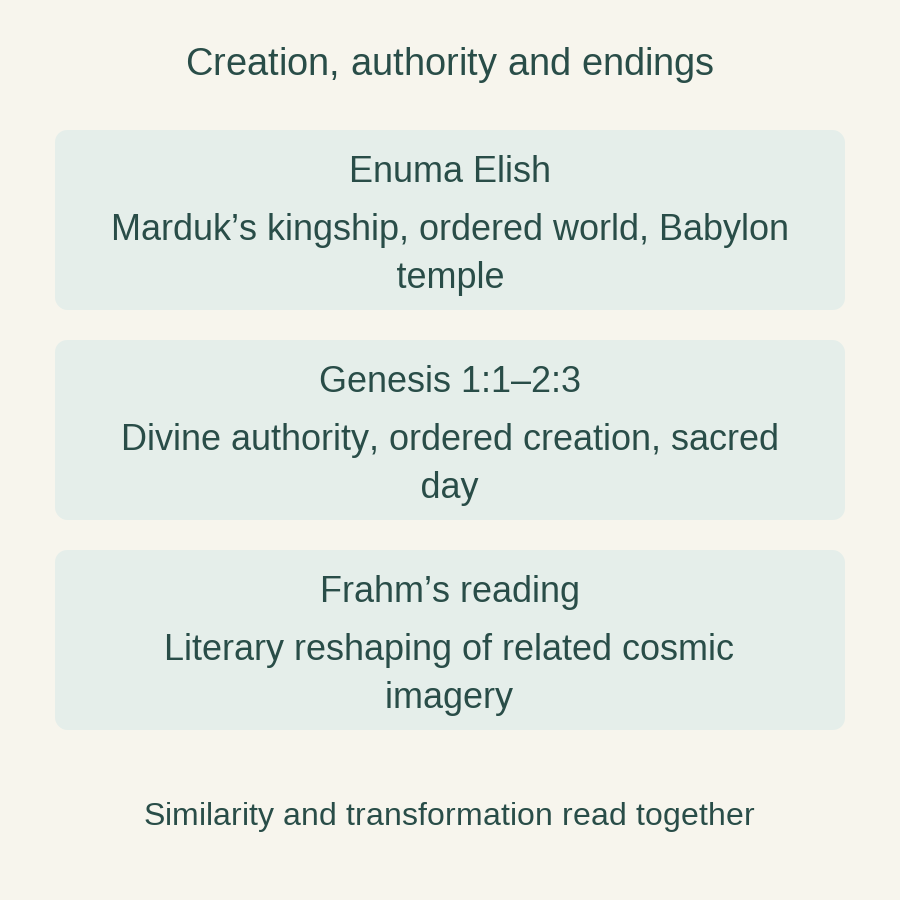
Modern explanation of convergence and transformation in Frahm’s reading; not a portrait or independent proof of transmission
Pessoa
Yale Assyriologist researching Assyrian and Babylonian history, cuneiform scholarship, and the connections between literature, religion and politics.
Variantes do nome: Eckart Frahm, Assyriologist
Contexto e fontes →
Pessoa
Ed Parish Sanders (1937–2022) was a scholar of ancient Judaism and early Christianity.
Variantes do nome: Ed Parish Sanders
Contexto e fontes →