Pessoa · Figura literária
Egisto
Tradução automática. Leia o original em inglês.
Figura humana da narrativa grega cujo destino Zeus recorda no início da Odisseia.
Última revisão:
Texto
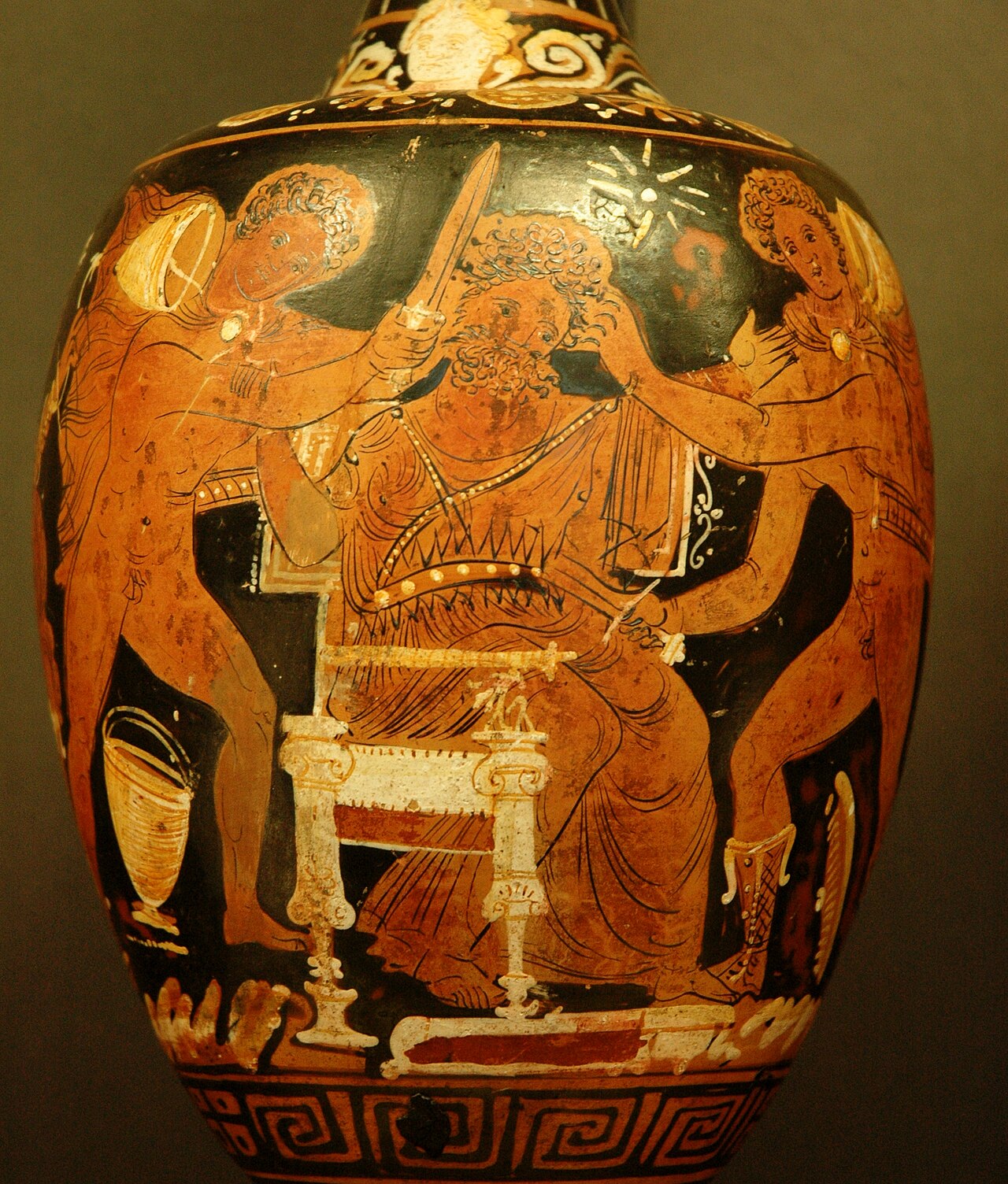
Figura humana da narrativa grega cujo destino ZeusZeusZeus is the sky god and leading deity in many Greek traditions. In the Iliad he presides over divine gatherings while others can still speak and object.Glossário · Clique para ler a explicação recorda no início da OdisseiaOdisseiaGreek epic attributed to Homer, following Odysseus’s return after the Trojan War.Glossário · Clique para ler a explicação. [1]
Zeus relaciona seu destino ao assassinato de um líder que retornava da guerra e à sua relação com a esposa desse líder, apesar de um aviso. AtenaAtenaGreek goddess associated in Hesiod with Zeus, Metis and birth from the head.Glossário · Clique para ler a explicação então se volta para OdisseuOdisseuGreek hero whose attempt to return home after the Trojan War is followed in the Odyssey.Glossário · Clique para ler a explicação, mostrando um orador que muda o assunto do conselho. [1]
Referências e notas
- Odyssey 1, first ten paragraphs through Athena/Mentes arrival and Telemachus welcome The specified scene, as detailed in the assembly study’s notes. Voltar ao texto ↑
Sugerir uma correção · Sugerir uma fonte para este registro
Citar este registro
IL Archive, «Egisto», https://ilarchive.com/pt/people/aegisthus-greek-myth
Continuar lendo