O lamento por Ur Capítulo 2
A tempestade sobre Ur
Enlil chama a tempestade e o povo lamenta-se em três passagens posteriores do Lamento por Ur. Jacobsen apresenta os excertos com a forma poética de H. A. Groenewegen Frankfort no texto de 1946 reeditado em 1977. A seleção termina com as consequências do desastre na cidade.
FontesVire as páginas com as setas, o teclado ou deslizando o dedo.
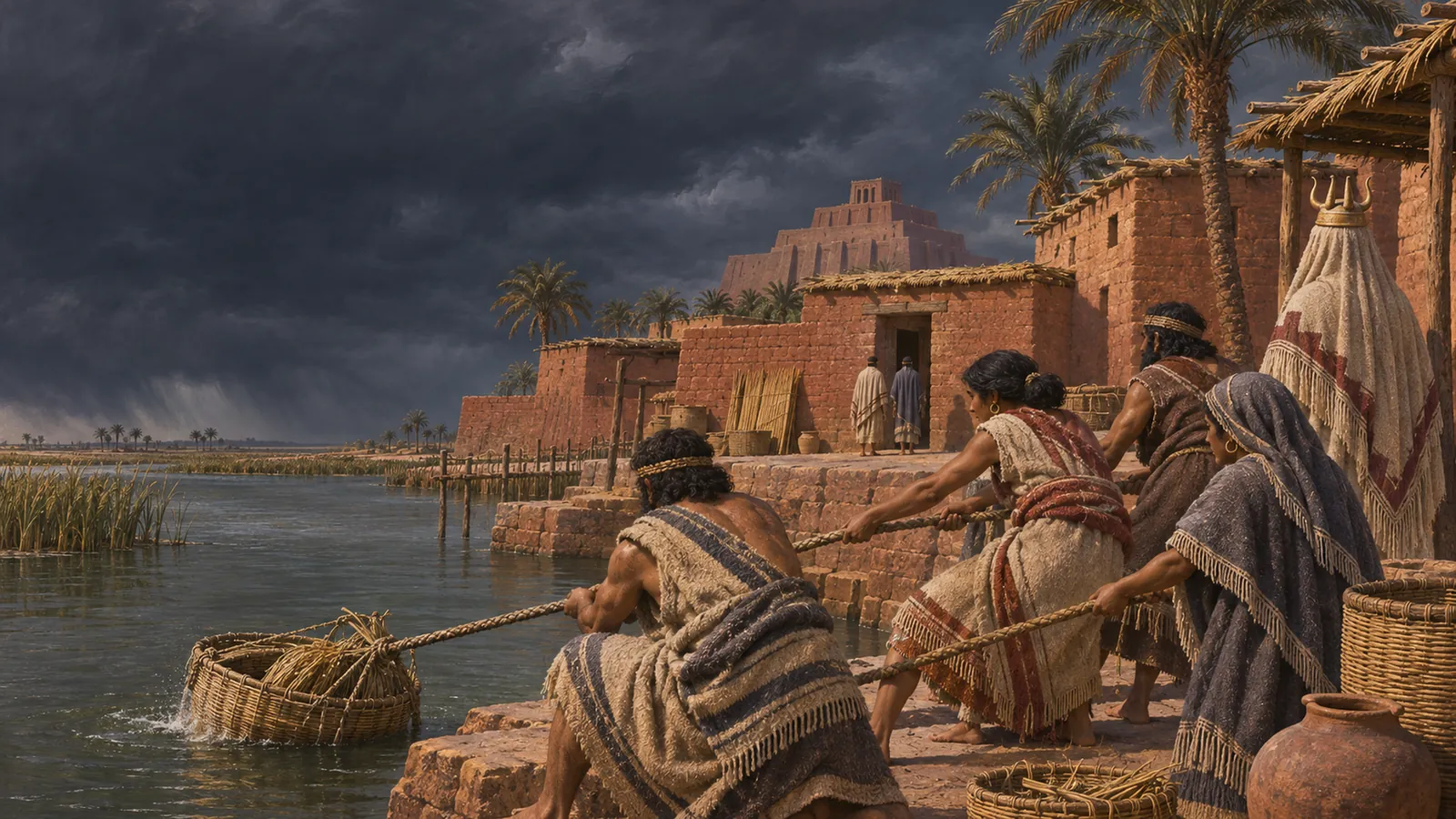
A TEMPESTADE SOBRE UR
Três excertos posteriores do lamento por Ur descrevem a tempestade e as suas consequências. Thorkild Jacobsen apresenta-os com a forma poética inglesa de H A Groenewegen Frankfort.
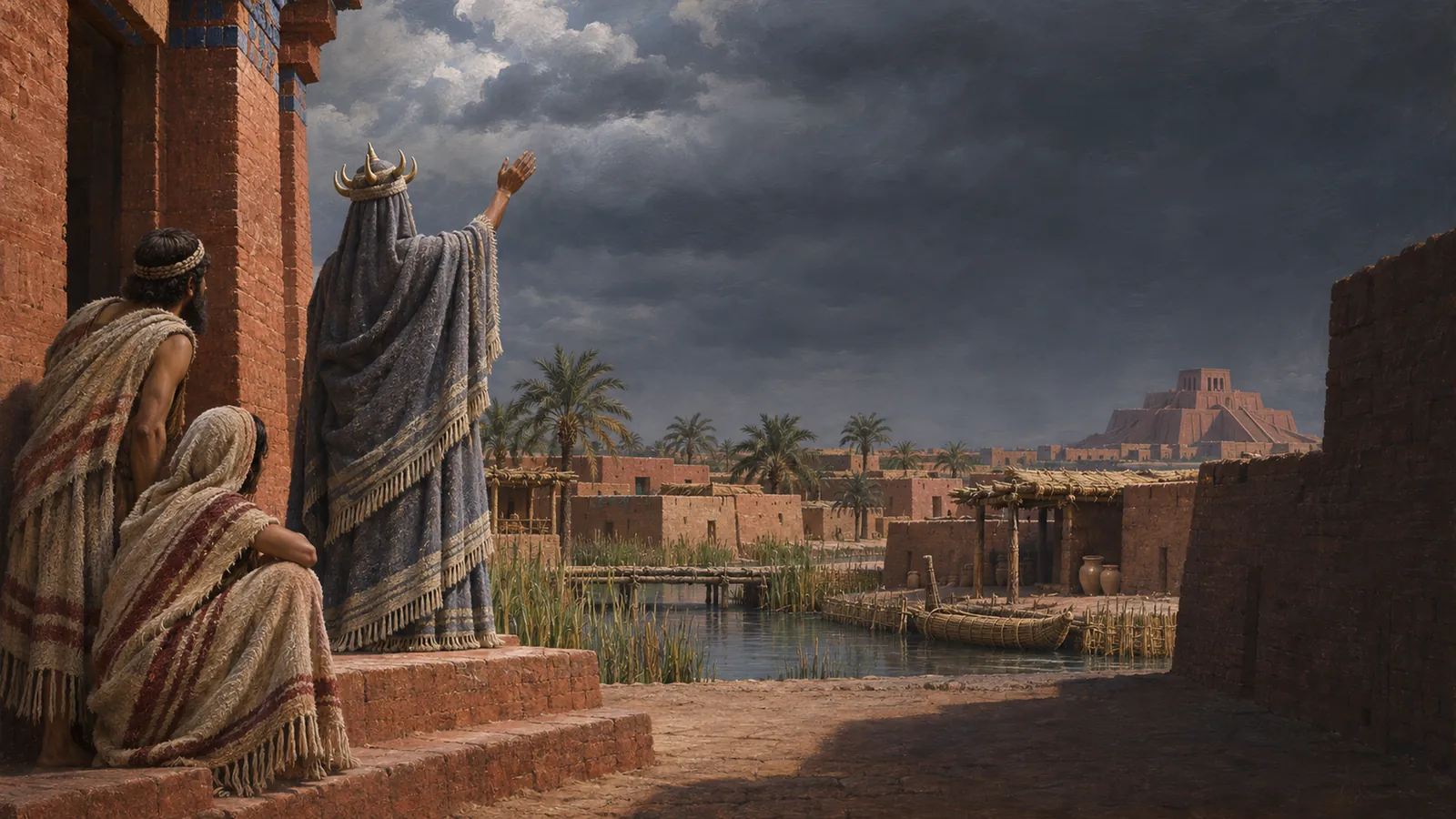
No poema, Enlil chama a tempestade. O povo lamenta-se, e o seu lamento torna-se um refrão que regressa à medida que a tempestade é convocada.
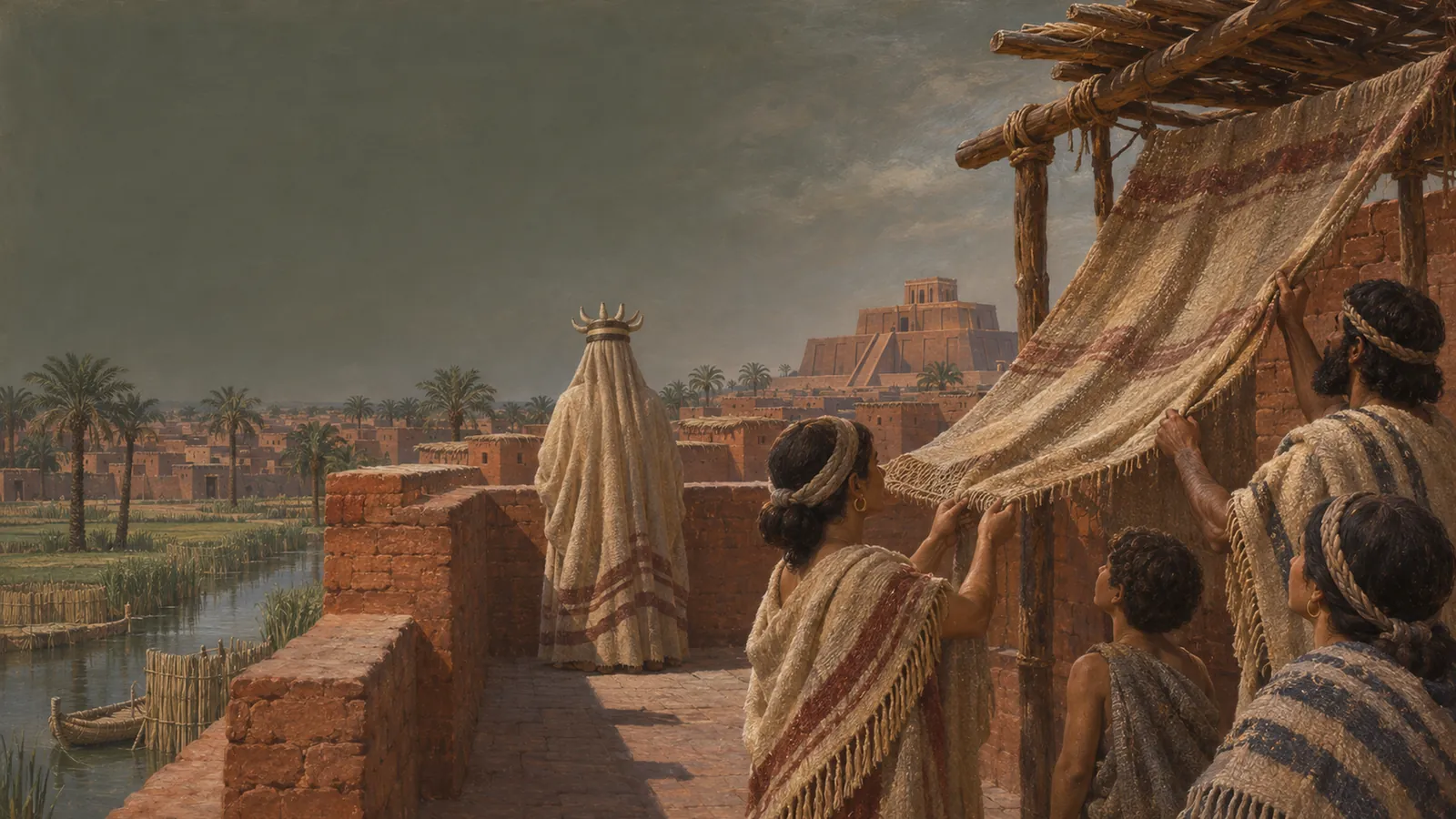
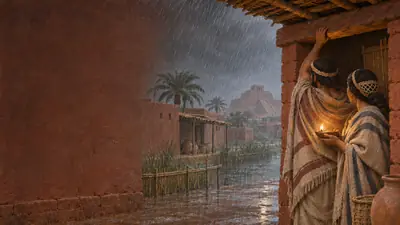
O poema diz que Enlil retira os ventos revigorantes da terra e tira a Sumer os bons ventos. O povo lamenta-se após cada perda.
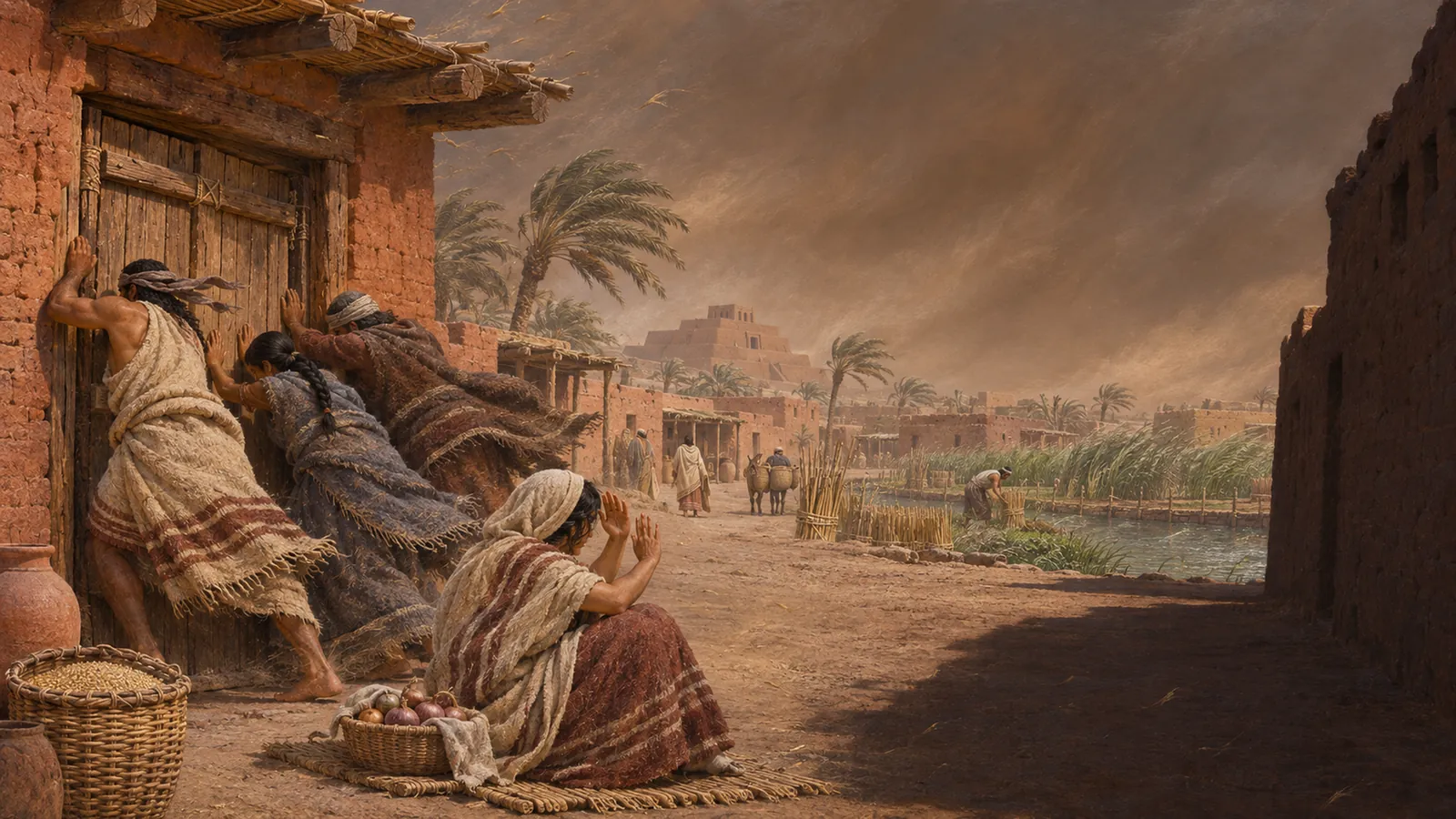
Enlil convoca depois os ventos que o poema chama maus. De novo, o verso sobre o lamento do povo responde à sua ação.
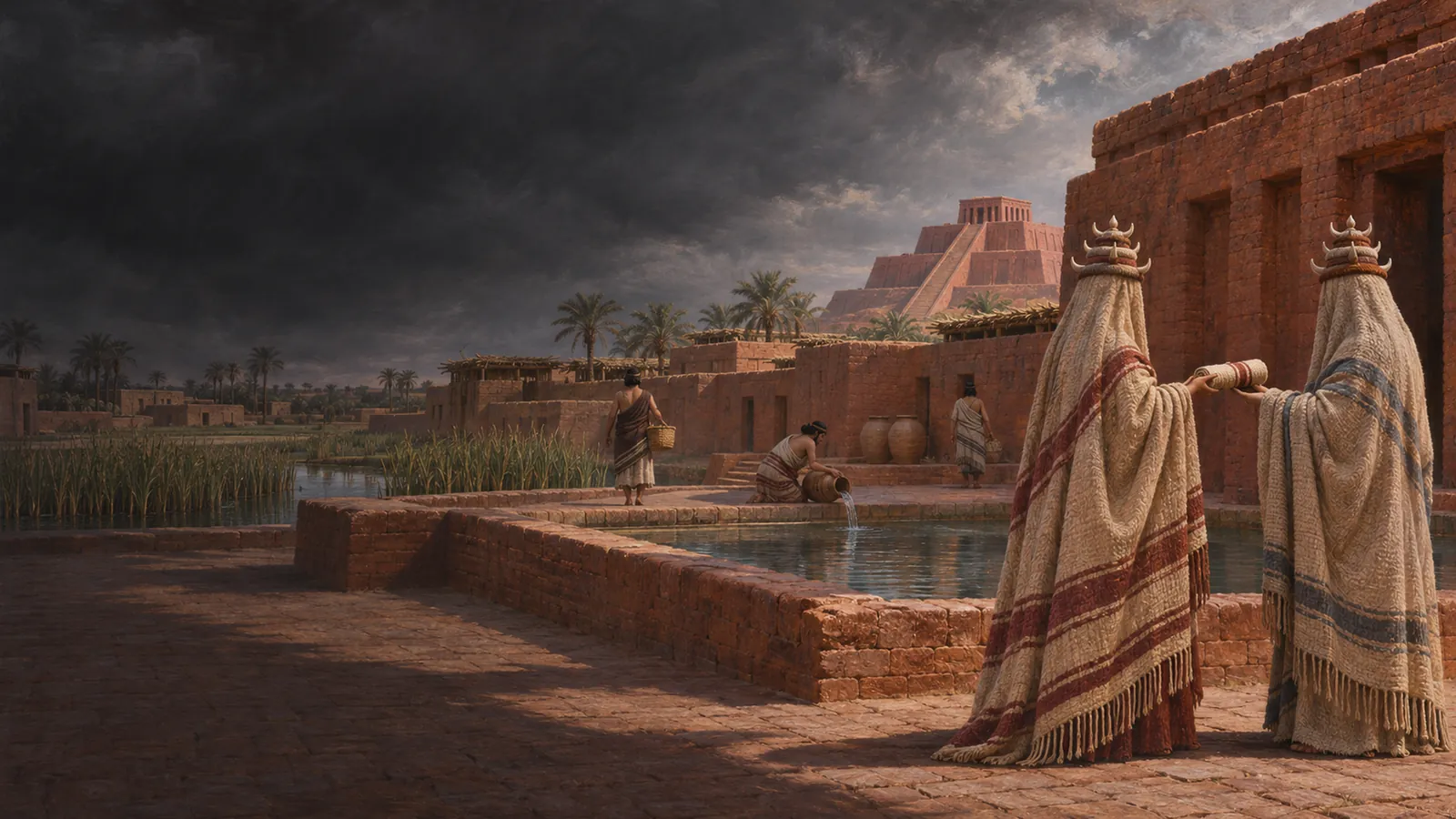
KINGALUDA
O poema diz que Enlil confia estes ventos a Kingaluda. Chama a Kingaluda o guardião das tempestades.
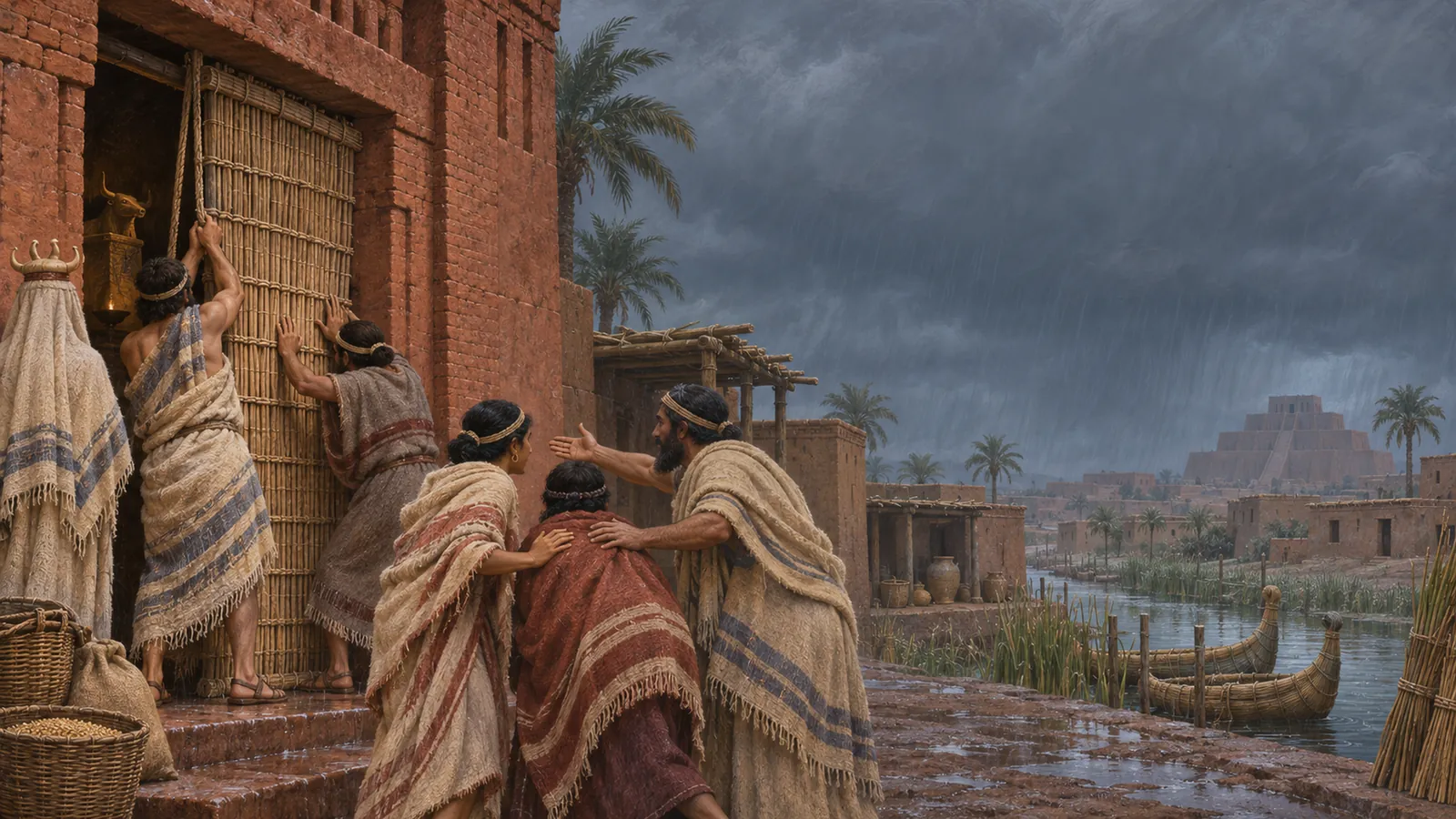
Enlil chama a tempestade que aniquilará a terra e convoca ventos desastrosos. O refrão diz que o povo se lamenta após cada chamamento.
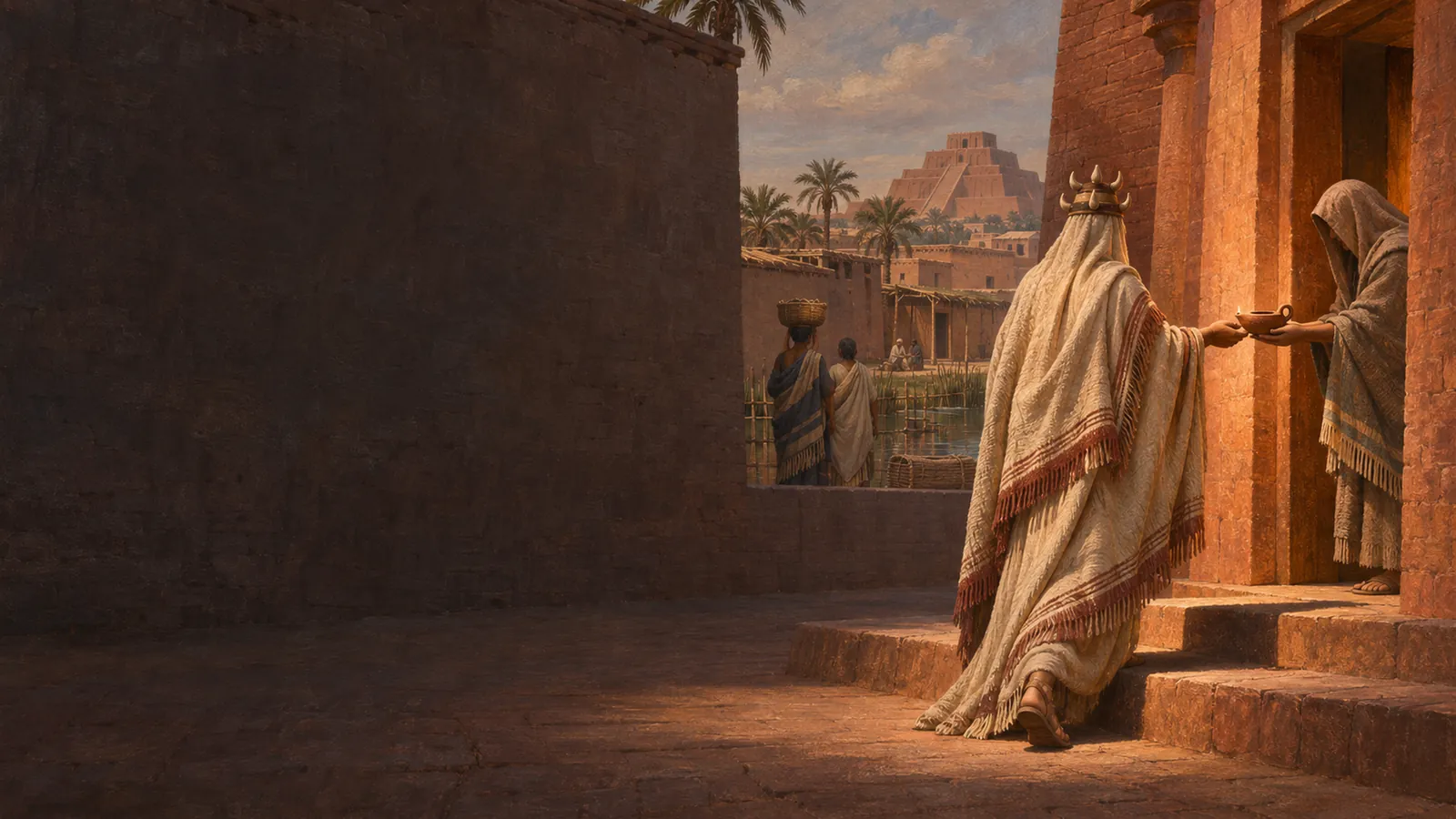
O poema nomeia agora Gibil como o ajudante escolhido por Enlil. Esta escolha precede o chamamento do furacão do céu.
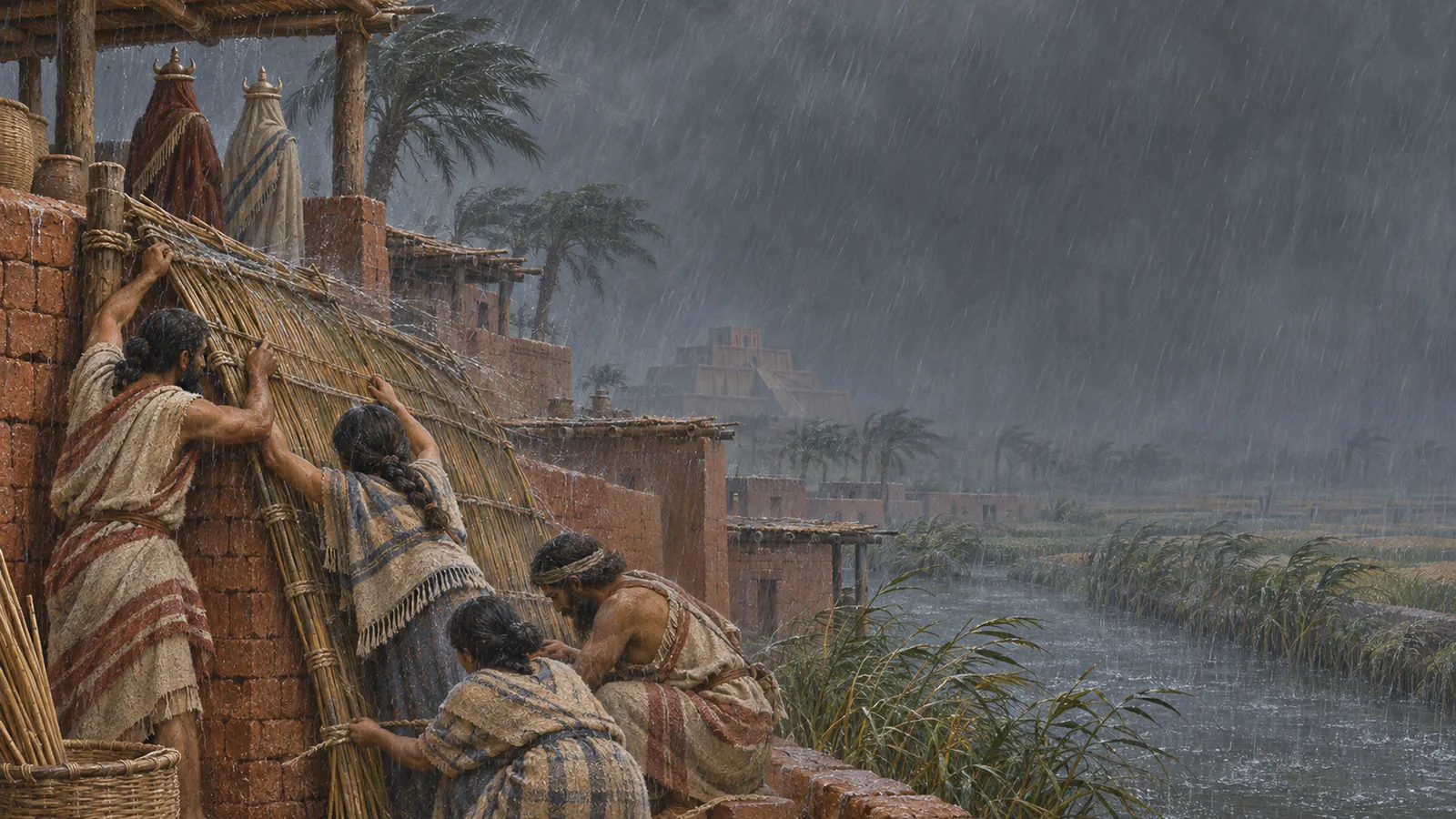
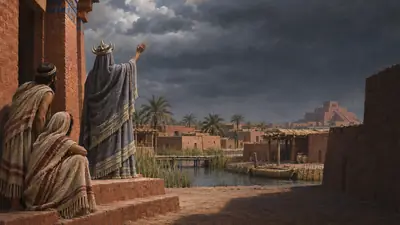
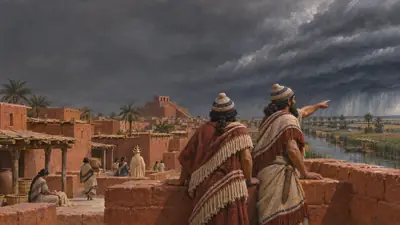
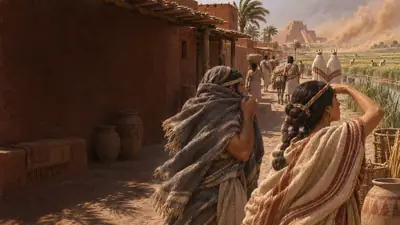
Enlil chama o furacão do céu. O poema descreve o furacão a uivar pelos céus, enquanto o refrão diz que o povo se lamenta.
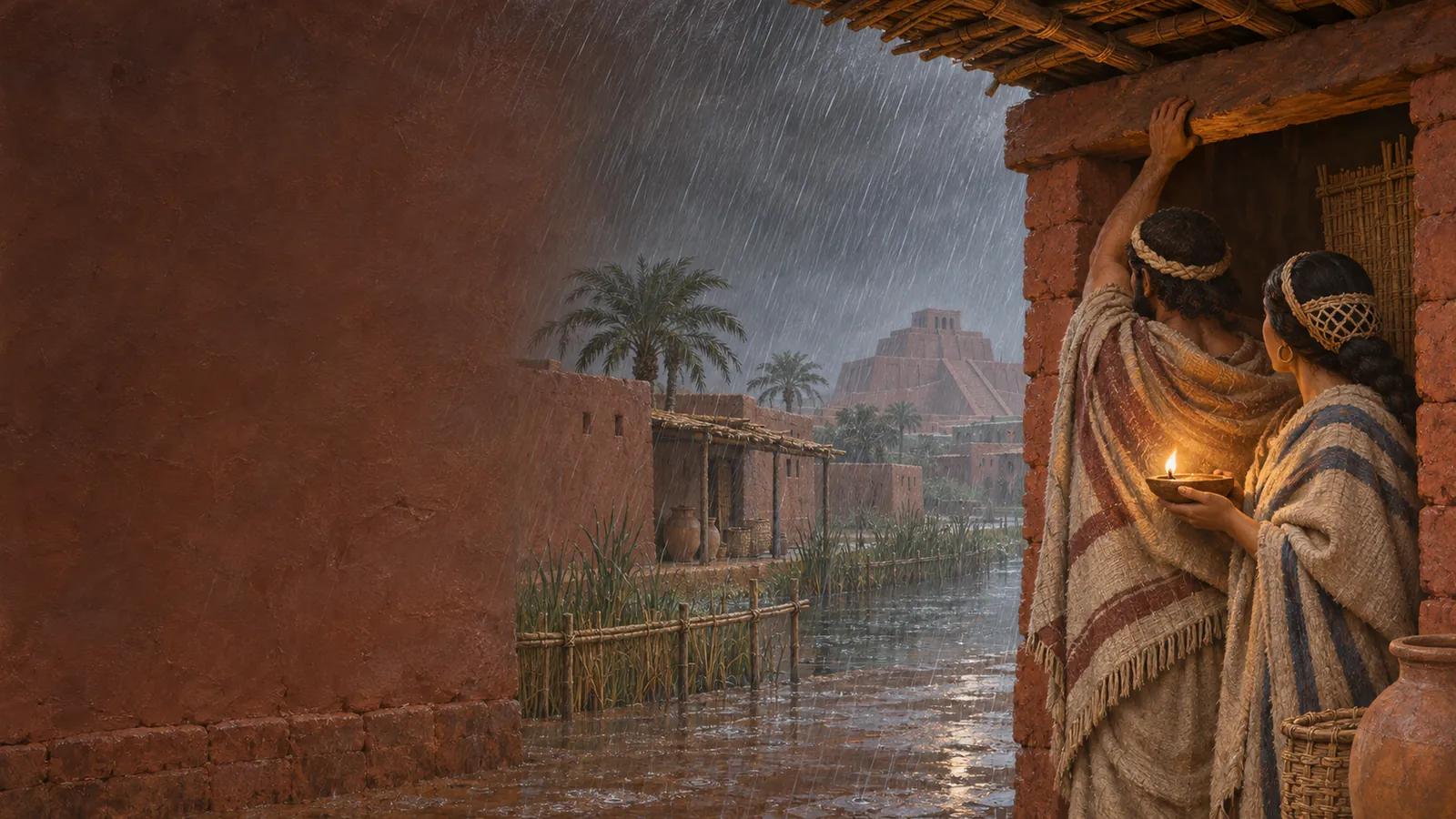
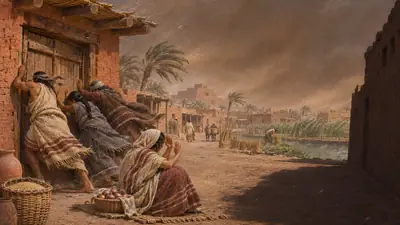
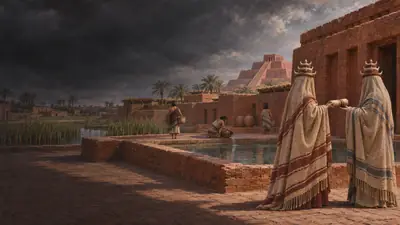
O poema descreve a tempestade devastadora a rugir pela terra. Mais uma vez, o lamento do povo interrompe a descrição da sua força.
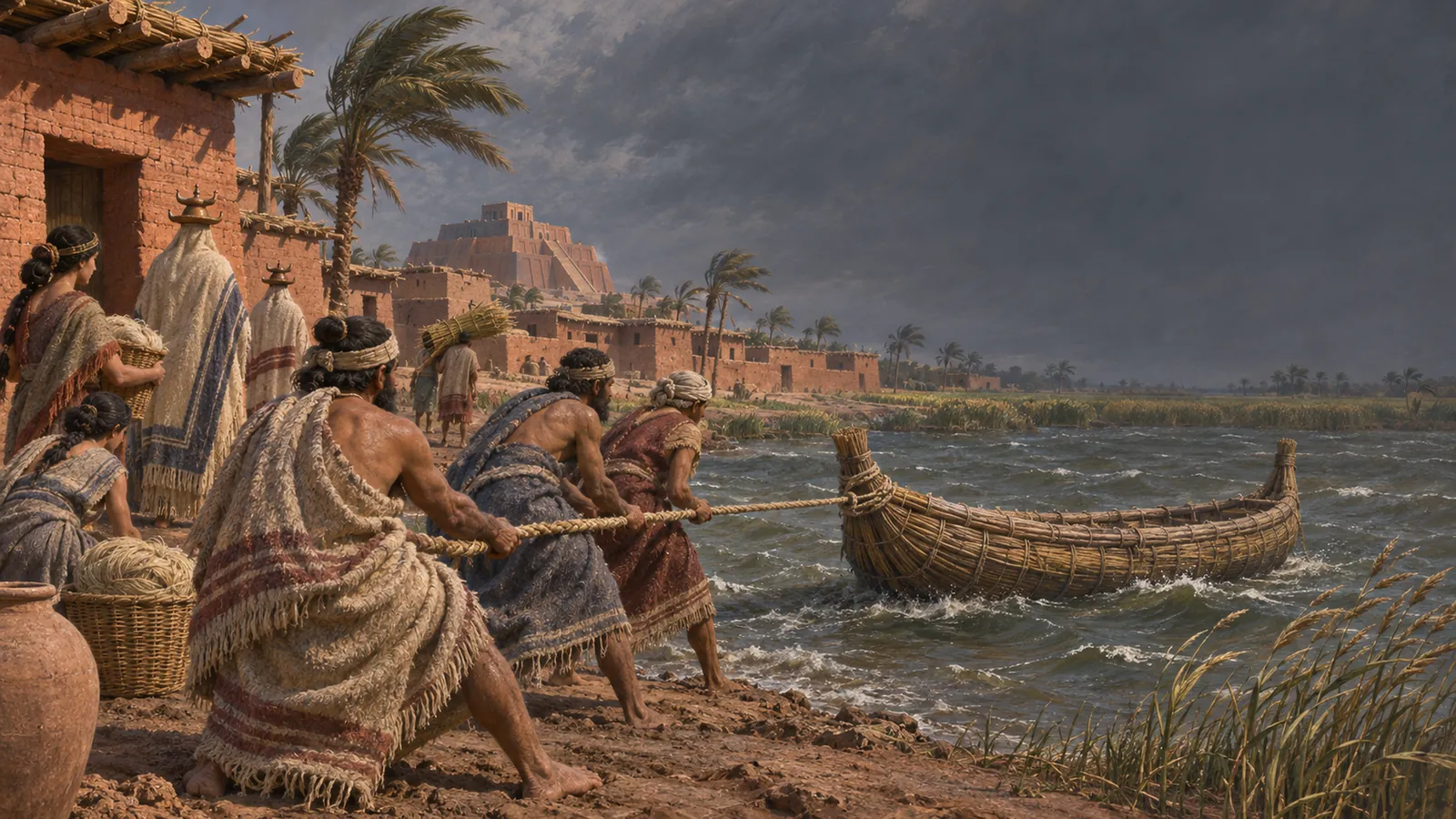
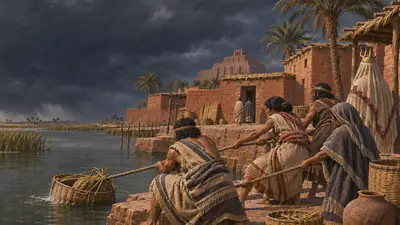
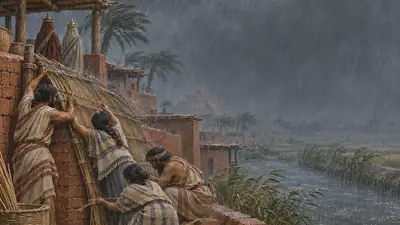
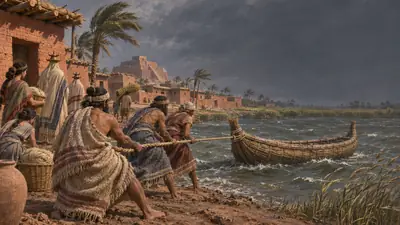
O poema apresenta a tempestade tão implacável como uma vaga de cheia. Abate-se sobre os barcos da cidade e devora-os.
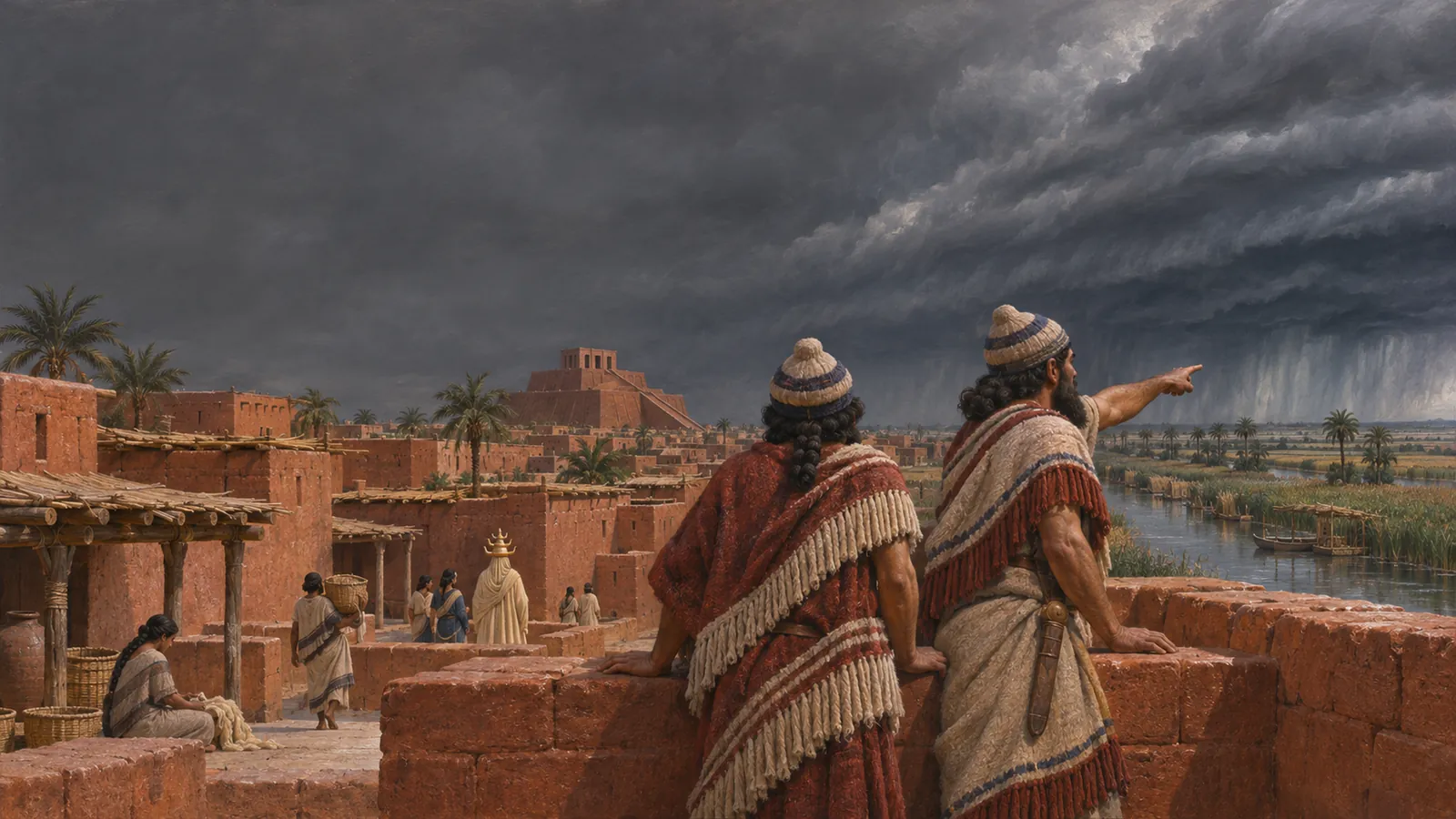
Enlil reúne todas estas tempestades na base do céu. Mais uma vez, o poema responde com o lamento do povo.
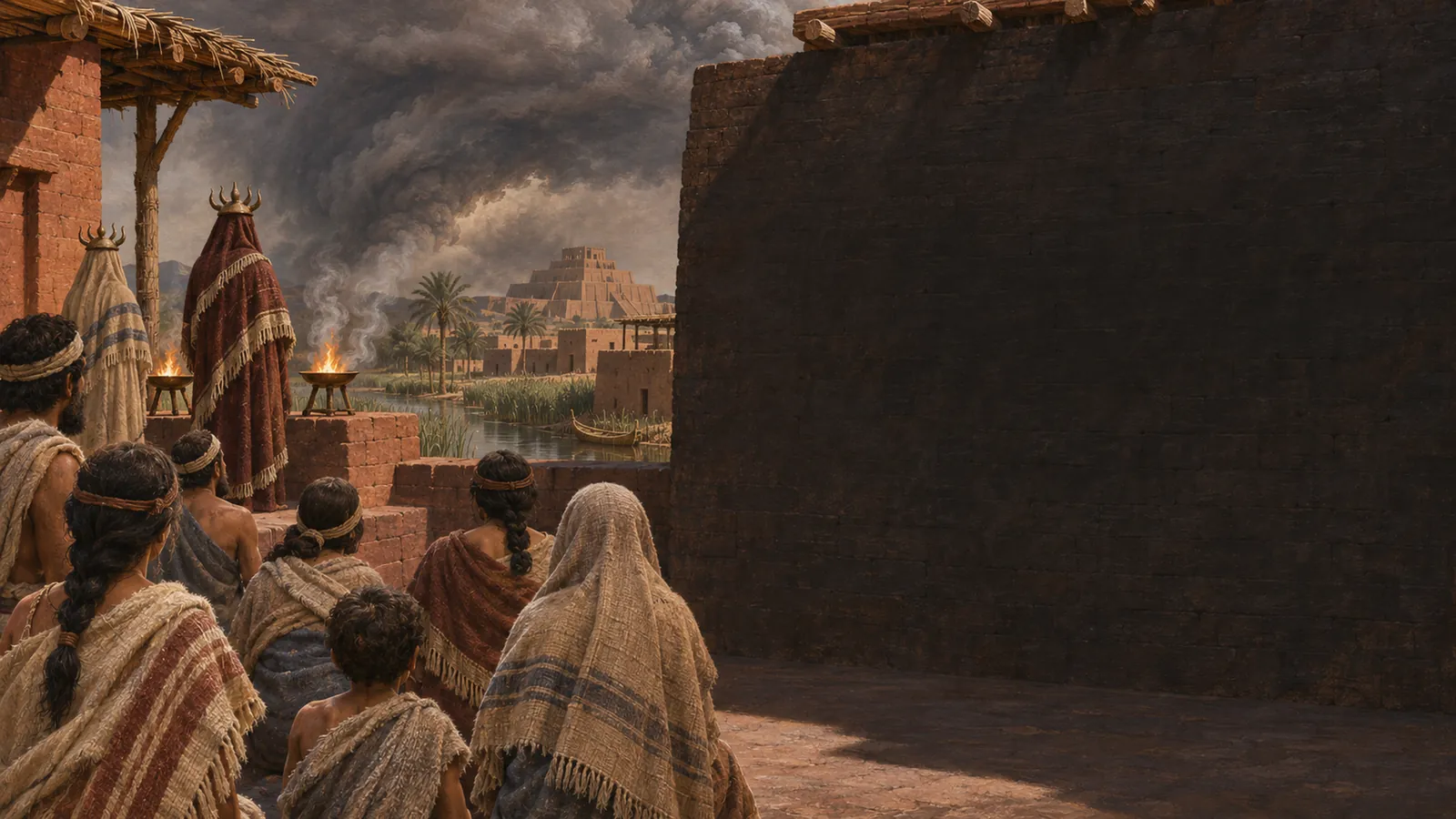
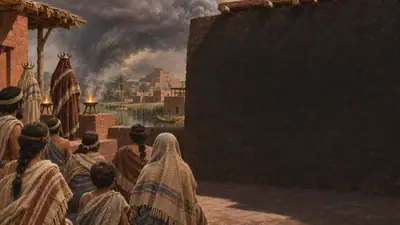
O poema diz que Enlil acende grandes fogos que anunciam a tempestade. O lamento do povo regressa entre as suas imagens.
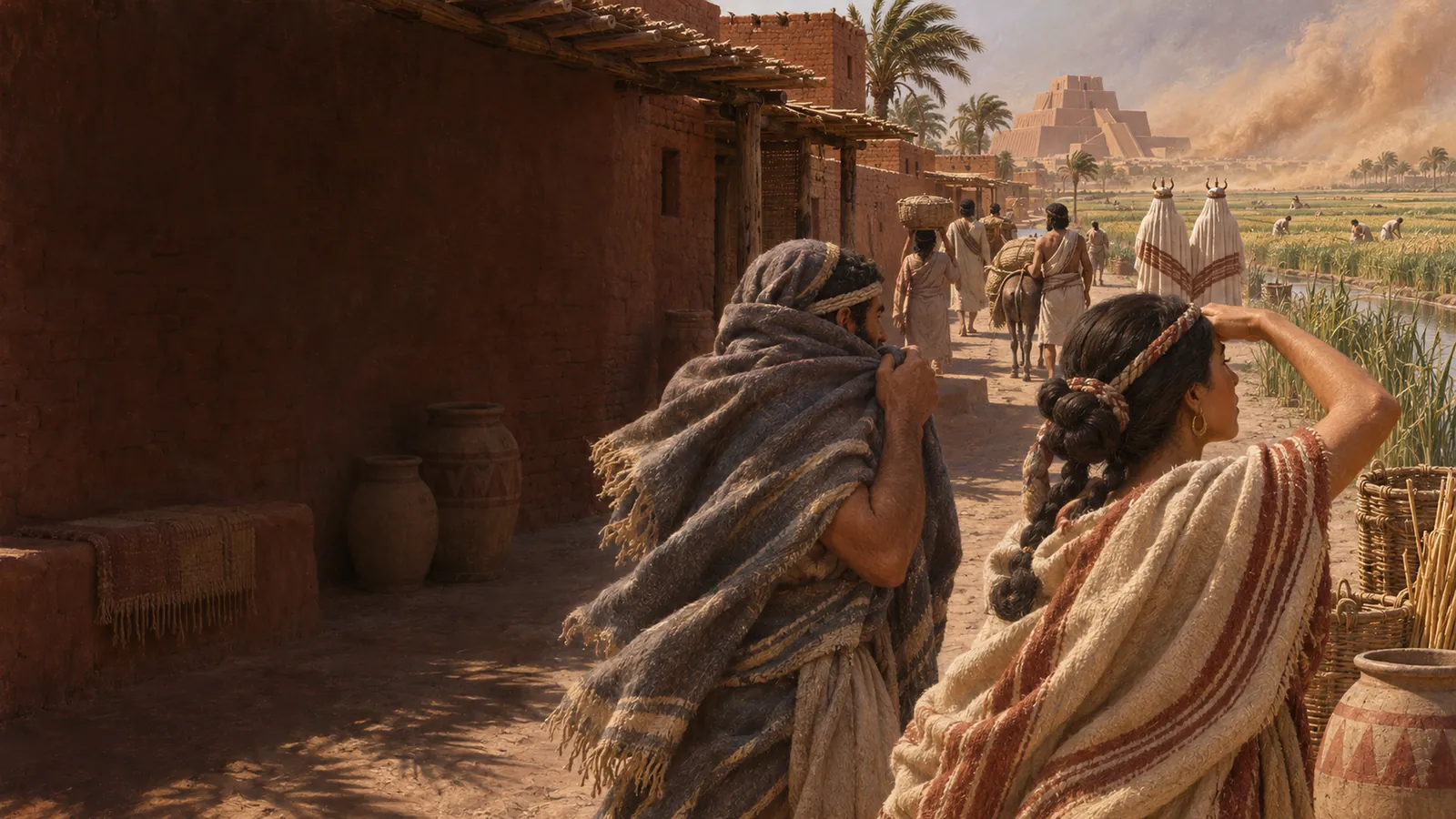
Coloca o calor ardente do deserto nos dois flancos dos ventos furiosos. O poema compara esse ardor ao calor do meio-dia.
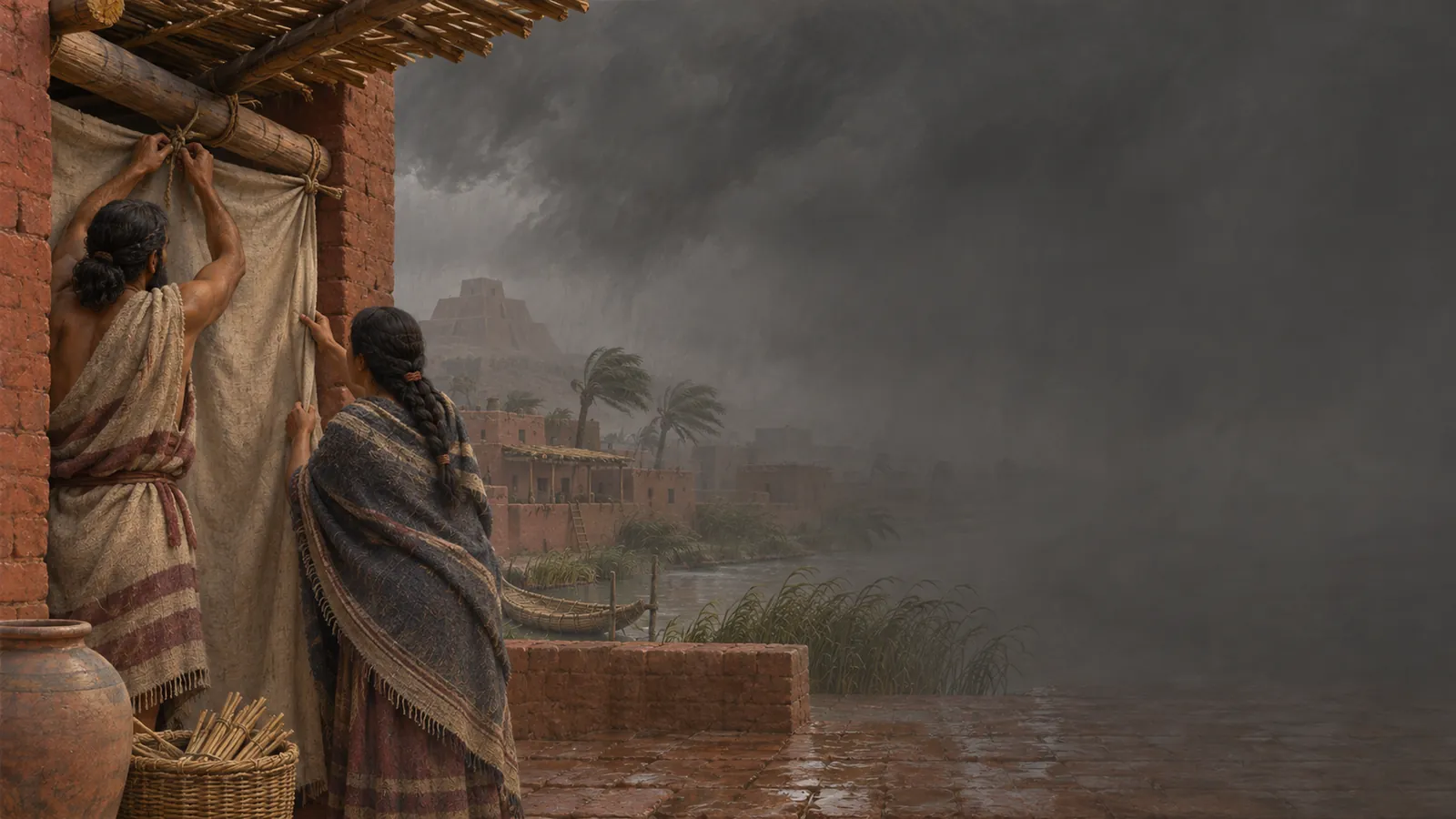
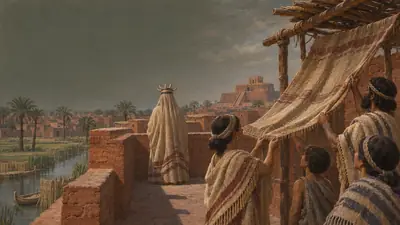
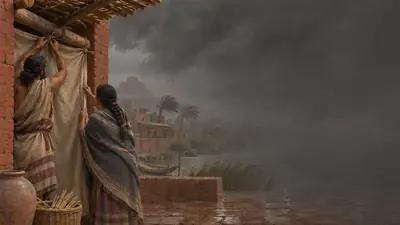
Numa citação separada, a tempestade ordenada por Enlil no seu ódio desgasta o país. Cobre Ur como um tecido e envolve-a como um lençol de linho.
RUÍNAS
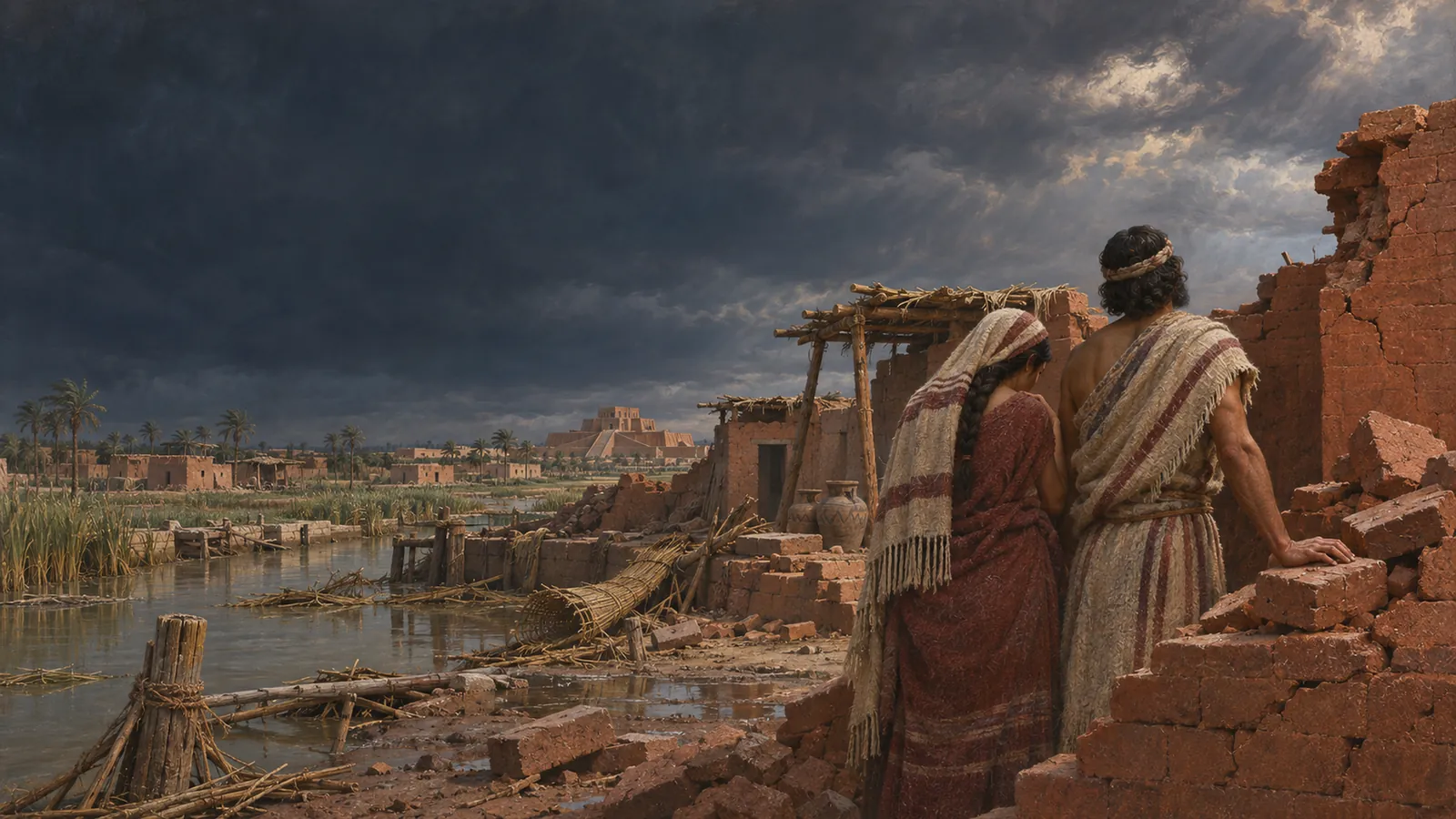
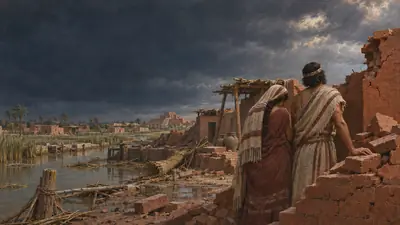
Outra citação diz que a tempestade deixou a cidade em ruínas. Dirige-se ao pai Nanna e repete que a cidade ficou arruinada, enquanto o povo se lamenta.
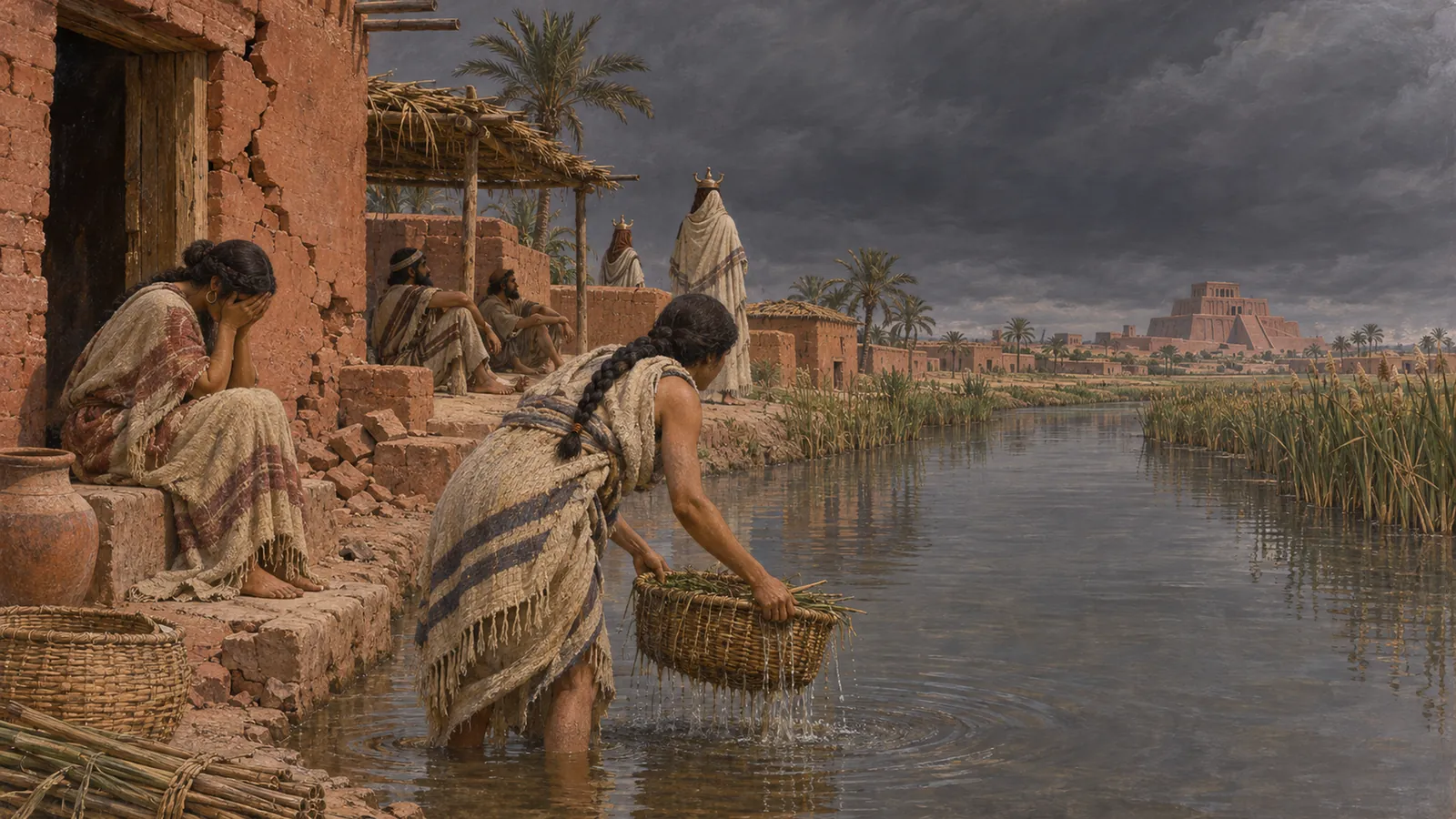
A tempestade deixou o país, diz o poema. A resposta que se repete volta a dar voz ao lamento do povo.
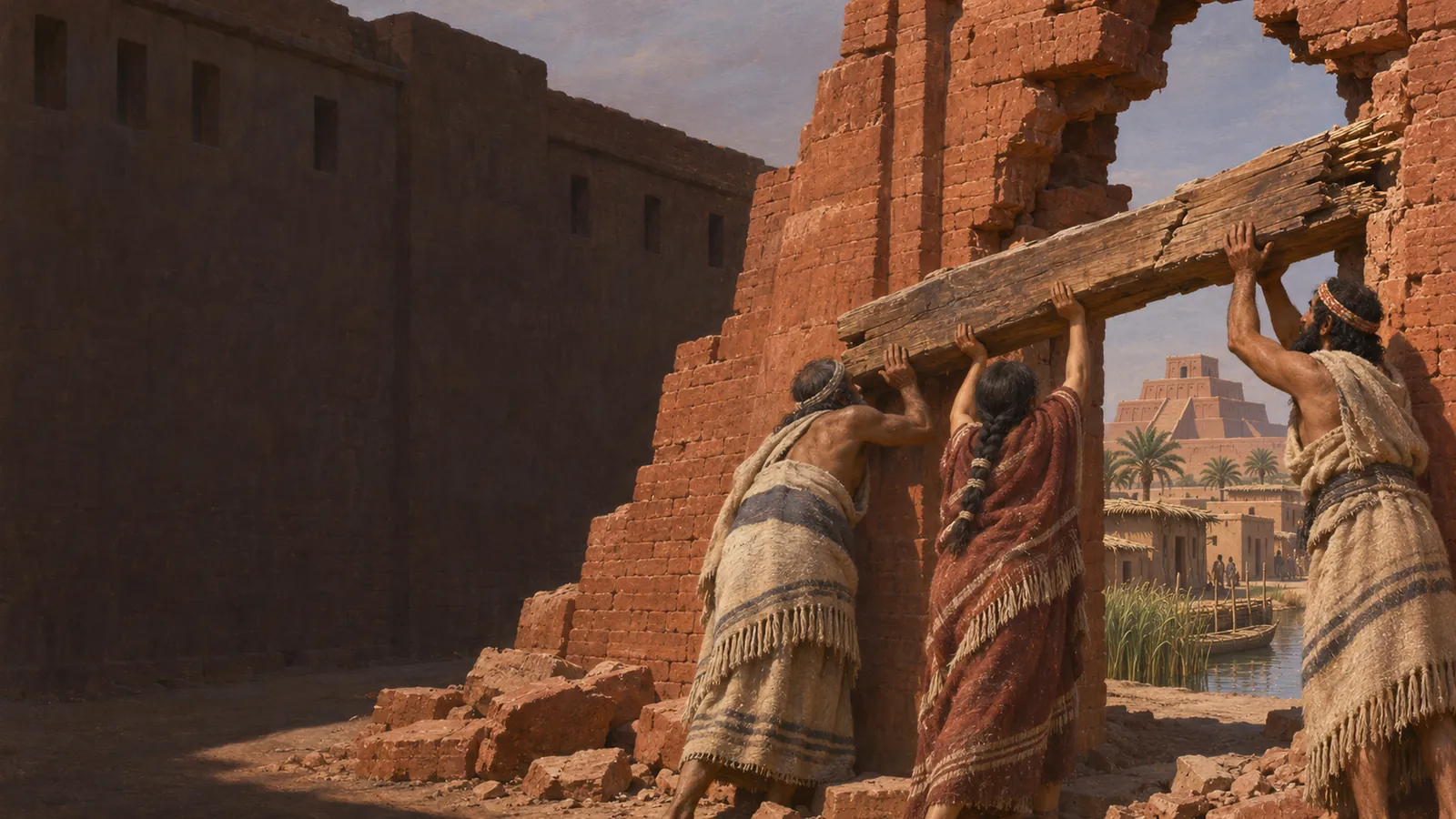
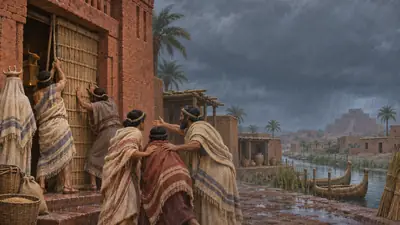
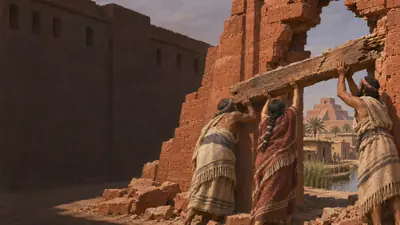
Os mortos cobrem os acessos à cidade. As muralhas estão abertas, e os altos portões e os caminhos estão cheios de mortos.
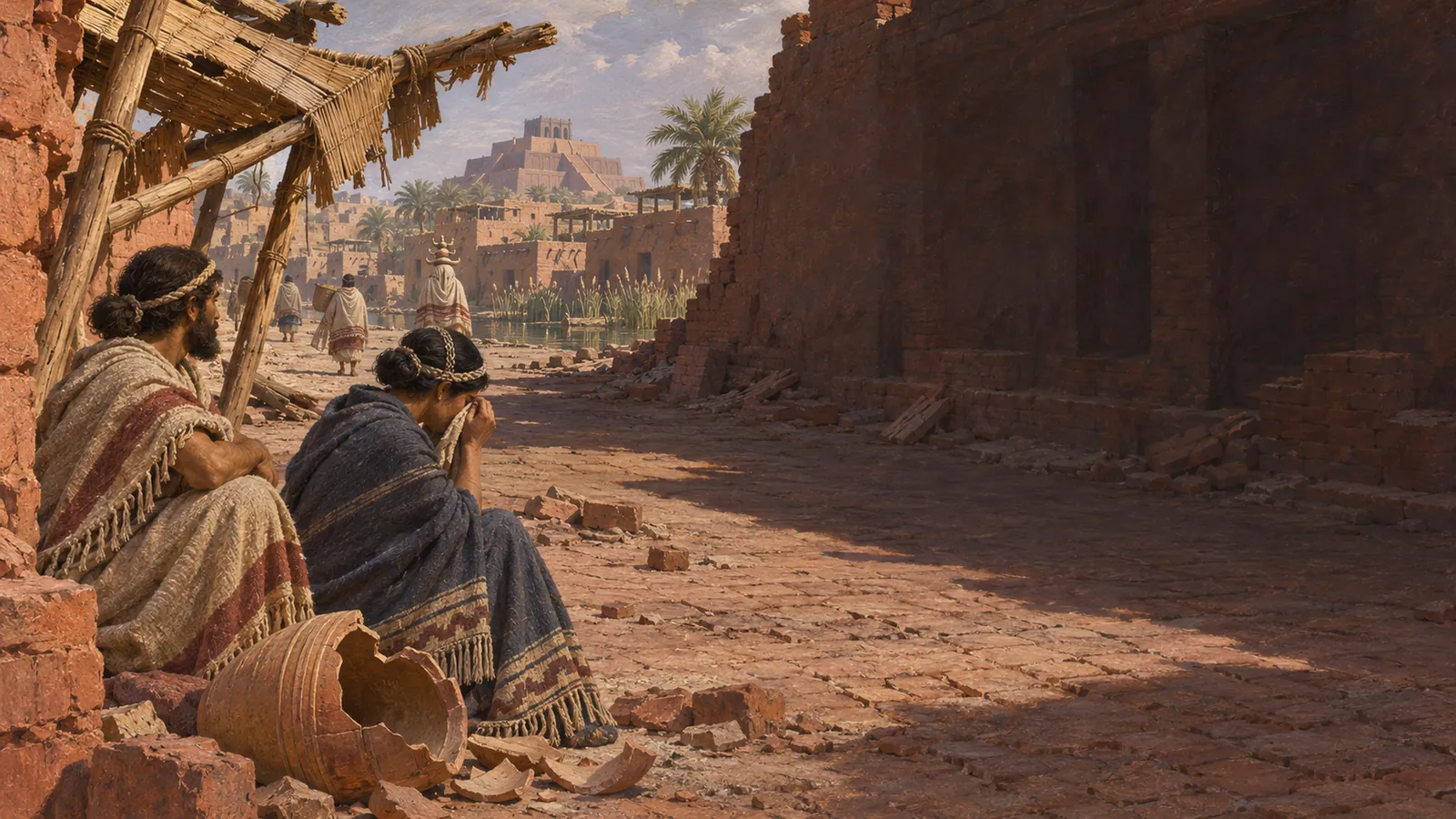
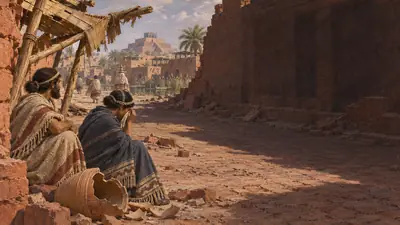
As ruas largas reuniam antes multidões para os banquetes. Agora o poema diz que os mortos ali jazem dispersos, por todas as ruas e caminhos.
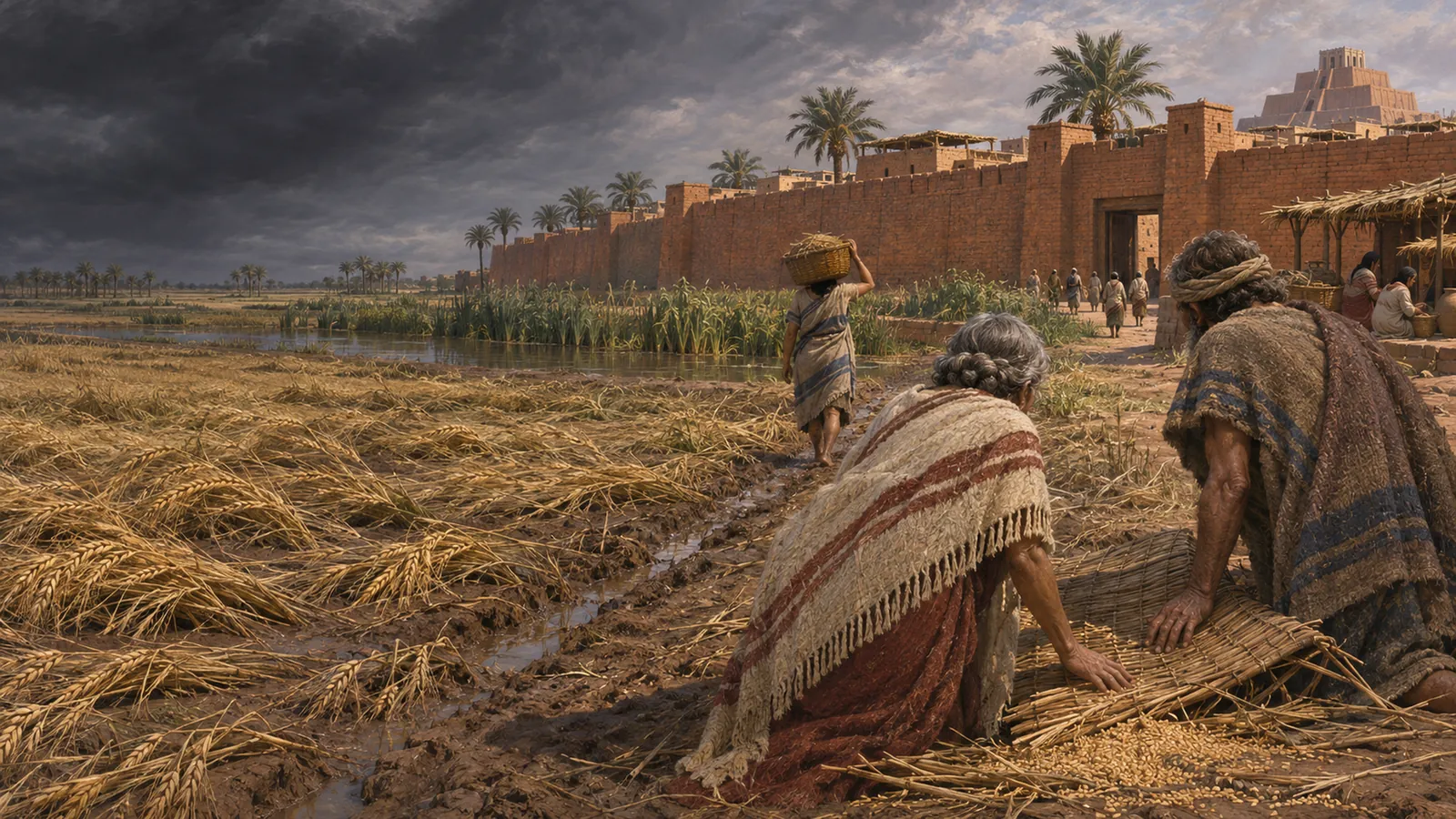
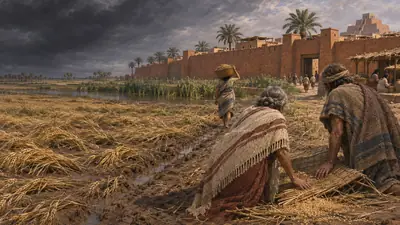
O poema volta-se para os campos abertos onde os dançarinos se reuniam antes. Diz que agora os mortos ali jazem amontoados.
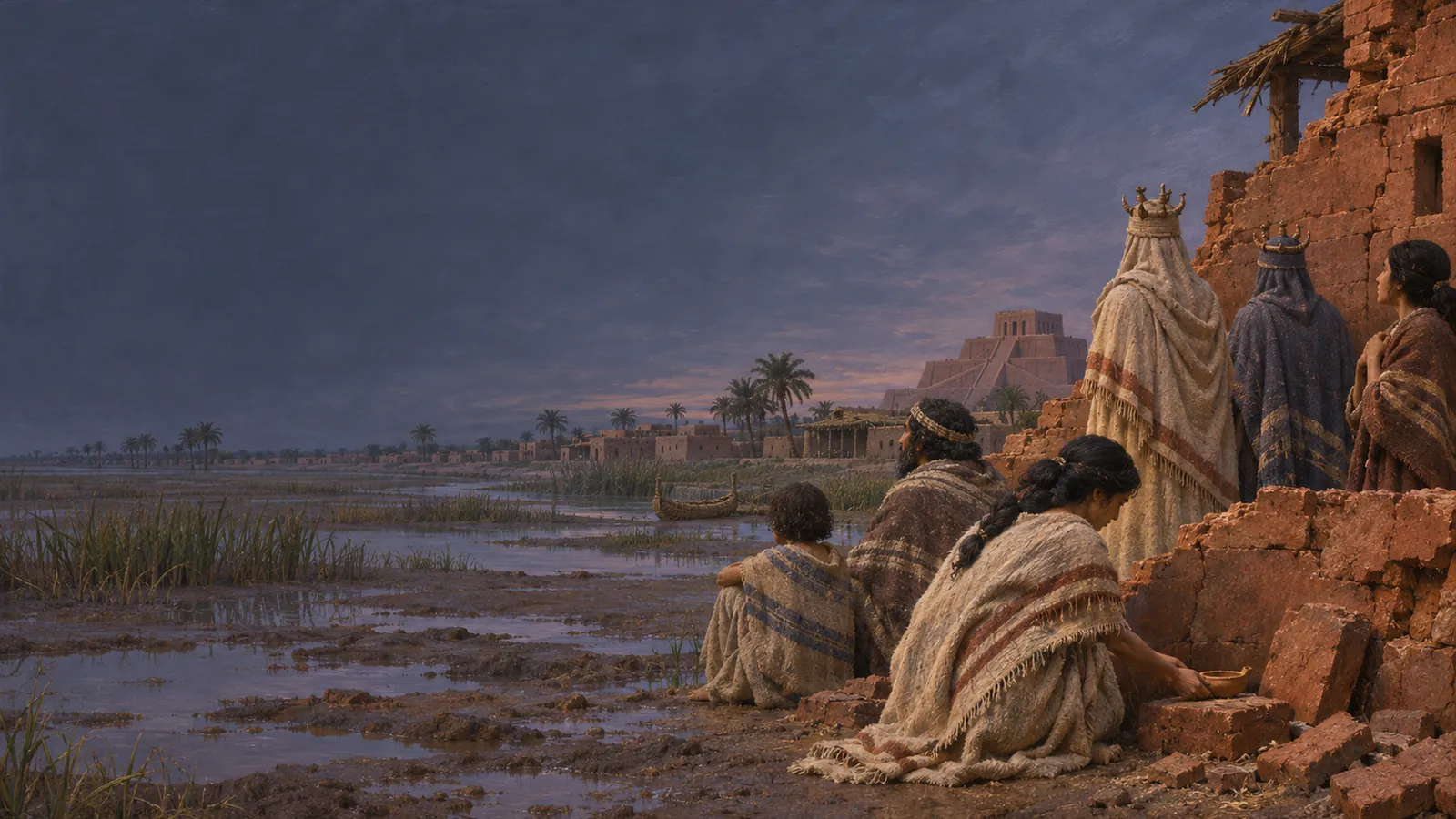
APÓS A TEMPESTADE
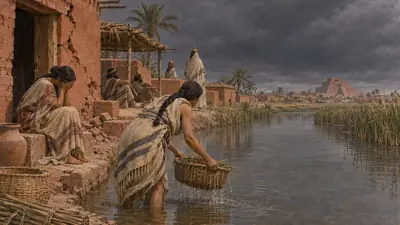
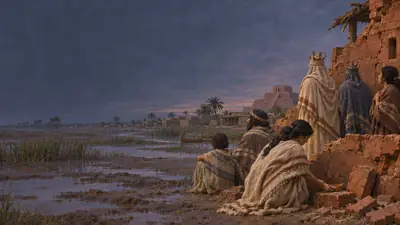
Os últimos versos descrevem o sangue do país a encher as cavidades e a decomposição dos mortos. Este excerto termina com essas imagens de devastação.
Fim do capítulo 2
Todas as páginas
Fontes
This chapter follows three further selections from the same Ur lament printed by Thorkild Jacobsen. The first is cited in note 16 as Kramer, Assyriological Studies XII, pp. 34 and 36, ancient lines 173–189. The second is cited in note 17 as p. 38, lines 203–204. The third is cited in note 18 as pp. 38 and 40, lines 208–218. The omitted intervals, 190–202 and 205–207, fall outside this modern selection. The book supplies inclusive ranges for its quotations. H. A. The 1946 main text is retained in the 1977 Phoenix edition. The ancient poem voices destruction, mourning and the death of inhabitants.
Edições consultadas
- University of Chicago, The Intellectual Adventure of Ancient Man
- Jacobsen’s three later Ur-lament selections, pp. 141–142
- Source notes 16–18, printed p. 184
Notas sobre este reconto
printed pp. 141–142 and notes 16–18, p. 184. The opening names the modern scholars and the three selected excerpts.
first quotation, cited lines 173–189, opening call. Enlil calls the storm. The people’s mourning is printed immediately afterward and recurs throughout the selection.
same quotation and group bounds, withdrawal of the winds. Enlil takes exhilarating winds from the land and good winds from Sumer, printed as Shumer in the rendering. The people mourn after each statement.
same quotation and group bounds, evil winds. Enlil summons evil winds, followed by the mourning refrain.
same quotation and group bounds, Kingaluda. Enlil entrusts the winds to Kingaluda, described as the tender of storms.
same quotation and group bounds, two renewed calls. Enlil calls the storm that will annihilate the land, then disastrous winds. The refrain follows each call.
same quotation and group bounds, helper. Enlil chooses Gibil as his helper before calling the heavenly hurricane.
same quotation and group bounds, heavenly hurricane. Enlil calls the hurricane of heaven, and the text describes its howl across the skies. The words describing its greatness and blinding quality are parenthetical in the English rendering.
same quotation and group bounds, storm over the land. The shattering storm roars across the land. The printed mourning refrain interrupts the description.
same quotation and group bounds, ships. The tempest is compared to a relentless flood wave that beats down upon and devours the city’s ships.
After the tempest and the city’s ships, Enlil gathers all the storms at the base of heaven. The people’s mourning follows. This clause closes the portion printed on p. 141, and the same quotation continues on p. 142. The sequence is retained after page 10’s ship clause.
first quotation continued, cited ancient lines 173–189. The opening of this printed page gives the great fires that herald the storm, followed by the mourning response. The subject remains Enlil from the preceding passage.
The next clauses place the searing heat of the desert on either flank of the furious winds. The final comparison is to the flaming heat of noon. Note 16 cites Kramer, *AS* XII, pp. 34 and 36, lines 173–189. Jacobsen gives the inclusive ancient range for the entire quotation, without assigning separate ancient line numbers to these translated clauses.
second quotation, cited ancient lines 203–204. Enlil orders the storm in hatred. It wears away the country, covers Ur like cloth and encloses it like a linen sheet. These are two closely paired textile comparisons in the printed rendering. Note 17 cites the same edition, p. 38, lines 203–204. Ancient lines 190–202 lie outside this selection between the first and second quotations. This is an editorial interval between excerpts.
opening of the third quotation, cited ancient lines 208–218. The storm leaves the city, which is a ruin. The next clause addresses father Nanna and repeats that the town has been left ruined, followed by the people’s mourning. Father Nanna remains an address within the quoted lament. Note 18 cites Kramer, *AS* XII, pp. 38 and 40, lines 208–218. Ancient lines 205–207 lie outside Jacobsen’s selection between the second and third quotations.
third quotation, cited ancient lines 208–218. After leaving the city, the storm leaves the country. The response repeats the people’s mourning.
third quotation, cited ancient lines 208–218. The approaches are covered by men rather than potsherds. The word “Dead” is parenthetical in the printed English. The walls gape, and the high gates and roads are piled with the dead. The comparison with potsherds belongs to the printed passage.
third quotation, cited ancient lines 208–218. The wide streets once drew feasting crowds. The poem now places scattered dead there and continues with bodies throughout the streets and roadways. The past feasts and present deaths are both explicit in this quotation.
third quotation, cited ancient lines 208–218. This change of setting follows the streets in the printed order.
The last lines describe the country’s blood filling its holes like metal in a mold. Bodies dissolve like fat left in the sun. These are the two final material similes. The two explicit comparisons are retained in this note. The selected quotation ends here, before Jacobsen resumes his prose about Enlil’s role.
Os versos antigos de cada página
- Page 1: Jacobsen, The Intellectual Adventure of Ancient Man, 1946 text / 1977 Phoenix ed., pp. 141–142; notes 16–18, p. 184, selected lines 173–189, 203–204, 208–218
- Page 2: Jacobsen, The Intellectual Adventure of Ancient Man, 1946 text / 1977 Phoenix ed., p. 141, storm quotation; n. 16, p. 184 cites Kramer AS XII, lines 173–189, opening call and refrain
- Page 3: Jacobsen, The Intellectual Adventure of Ancient Man, 1946 text / 1977 Phoenix ed., p. 141, storm quotation; n. 16, p. 184 cites Kramer AS XII, lines 173–189, the two withdrawals of good winds
- Page 4: Jacobsen, The Intellectual Adventure of Ancient Man, 1946 text / 1977 Phoenix ed., p. 141, storm quotation; n. 16, p. 184 cites Kramer AS XII, lines 173–189, the summoning of evil winds and refrain
- Page 5: Jacobsen, The Intellectual Adventure of Ancient Man, 1946 text / 1977 Phoenix ed., p. 141, storm quotation; n. 16, p. 184 cites Kramer AS XII, lines 173–189, the entrusting of winds to Kingaluda
- Page 6: Jacobsen, The Intellectual Adventure of Ancient Man, 1946 text / 1977 Phoenix ed., p. 141, storm quotation; n. 16, p. 184 cites Kramer AS XII, lines 173–189, the annihilating storm and disastrous winds
- Page 7: Jacobsen, The Intellectual Adventure of Ancient Man, 1946 text / 1977 Phoenix ed., p. 141, storm quotation; n. 16, p. 184 cites Kramer AS XII, lines 173–189, Gibil chosen before the heavenly hurricane
- Page 8: Jacobsen, The Intellectual Adventure of Ancient Man, 1946 text / 1977 Phoenix ed., p. 141, storm quotation; n. 16, p. 184 cites Kramer AS XII, lines 173–189, the heavenly hurricane and howling skies
- Page 9: Jacobsen, The Intellectual Adventure of Ancient Man, 1946 text / 1977 Phoenix ed., p. 141, storm quotation; n. 16, p. 184 cites Kramer AS XII, lines 173–189, the shattering storm and repeated mourning
- Page 10: Jacobsen, The Intellectual Adventure of Ancient Man, 1946 text / 1977 Phoenix ed., p. 141, storm quotation; n. 16, p. 184 cites Kramer AS XII, lines 173–189, flood-wave simile and the city’s ships
- Page 11: Jacobsen, The Intellectual Adventure of Ancient Man, first Phoenix ed. (1977; main text 1946), p. 141, first quotation, cited ancient lines 173–189, closing gathering at the base of heaven and mourning response; poetic rendering by H A Groenewegen Frankfort
- Page 12: Jacobsen, The Intellectual Adventure of Ancient Man, first Phoenix ed. (1977; main text 1946), p. 142, first quotation continued from p. 141, cited ancient lines 173–189, opening fires that herald the storm and mourning response; poetic rendering by H A Groenewegen Frankfort
- Page 13: Jacobsen, The Intellectual Adventure of Ancient Man, first Phoenix ed. (1977; main text 1946), p. 142, end of the first quotation, cited ancient lines 173–189, desert heat on either flank and noon-heat comparison; poetic rendering by H A Groenewegen Frankfort
- Page 14: Jacobsen, The Intellectual Adventure of Ancient Man, first Phoenix ed. (1977; main text 1946), p. 142, second quotation, cited ancient lines 203–204, storm ordered in hatred, wearing away the country, cloth and linen-sheet similes; poetic rendering by H A Groenewegen Frankfort
- Page 15: Jacobsen, The Intellectual Adventure of Ancient Man, first Phoenix ed. (1977; main text 1946), p. 142, third quotation, cited ancient lines 208–218, opening departure from the city, ruined town, address to father Nanna and mourning response; poetic rendering by H A Groenewegen Frankfort
- Page 16: Jacobsen, The Intellectual Adventure of Ancient Man, first Phoenix ed. (1977; main text 1946), p. 142, third quotation, cited ancient lines 208–218, departure from the country and recurring mourning response; poetic rendering by H A Groenewegen Frankfort
- Page 17: Jacobsen, The Intellectual Adventure of Ancient Man, first Phoenix ed. (1977; main text 1946), p. 142, third quotation, cited ancient lines 208–218, men rather than potsherds at the approaches, gaping walls, high gates and roads; poetic rendering by H A Groenewegen Frankfort
- Page 18: Jacobsen, The Intellectual Adventure of Ancient Man, first Phoenix ed. (1977; main text 1946), p. 142, third quotation, cited ancient lines 208–218, wide streets formerly filled with feasting crowds, followed by streets and roadways; poetic rendering by H A Groenewegen Frankfort
- Page 19: Jacobsen, The Intellectual Adventure of Ancient Man, first Phoenix ed. (1977; main text 1946), p. 142, third quotation, cited ancient lines 208–218, open fields formerly filled with dancers and heaps of the dead; poetic rendering by H A Groenewegen Frankfort
- Page 20: Jacobsen, The Intellectual Adventure of Ancient Man, first Phoenix ed. (1977; main text 1946), p. 142, end of the third quotation, cited ancient lines 208–218, blood in hollows like metal in a mold and bodies dissolving like fat left in the sun; poetic rendering by H A Groenewegen Frankfort
Ilustrações feitas pelo IL Archive com ferramentas de IA; o texto baseia-se nas fontes antigas (veja as fontes no fim de cada capítulo).