Regina e Barates Capítulo 1
Duas inscrições para Regina
Um monumento de South Shields conserva pormenores sobre Regina e Barates em latim e aramaico palmireno. O episódio segue cada inscrição por sua vez, desde a dedicatória em latim até à palavra de luto em aramaico.
FontesVire as páginas com as setas, o teclado ou deslizando o dedo.
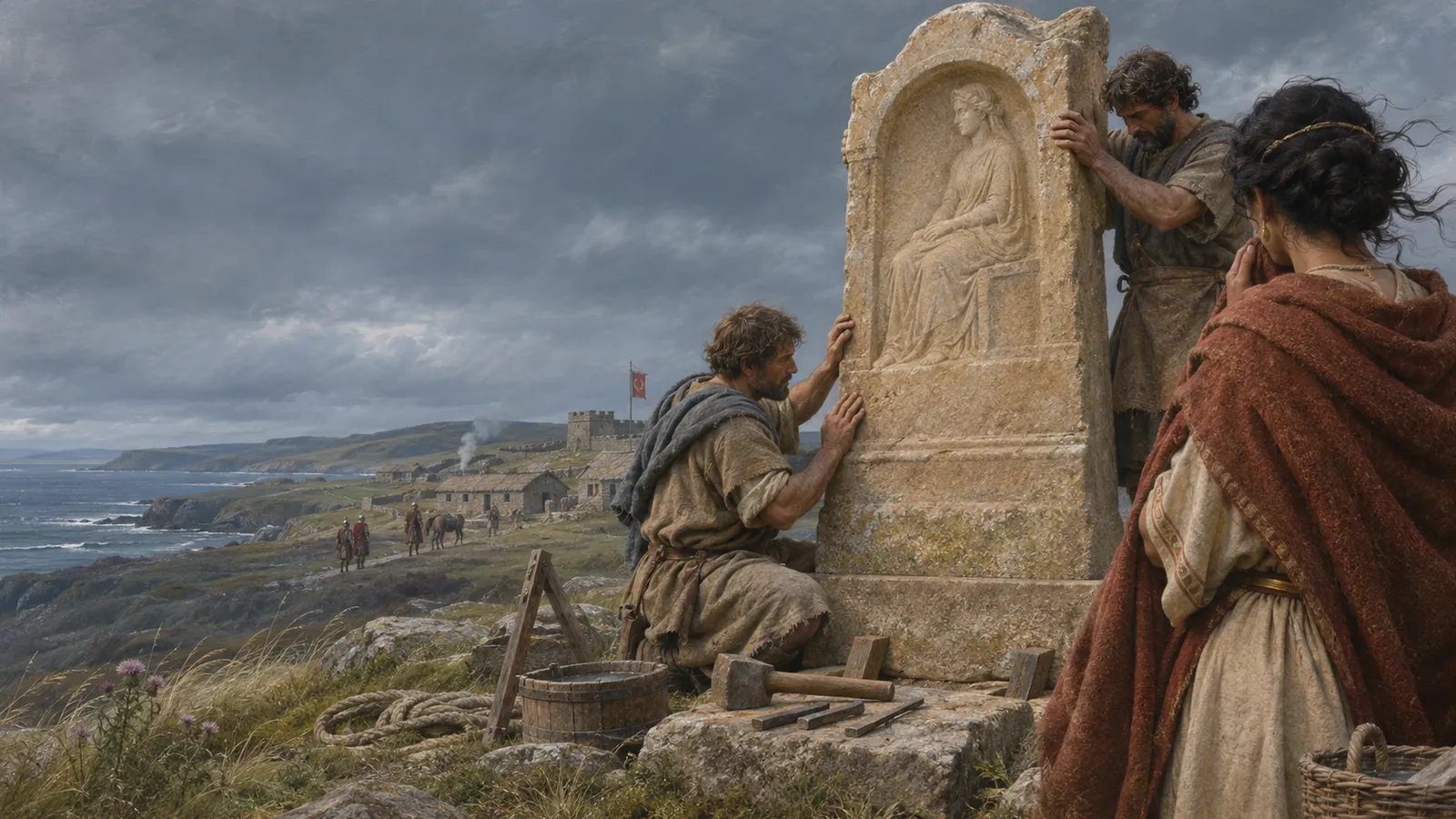
UM MONUMENTO
Um monumento de pedra encontrado em South Shields em 1878 apresenta um texto em latim por cima de uma linha em aramaico palmireno. Jeremy Hutton e Catherine Bonesho publicam e traduzem as duas inscrições.
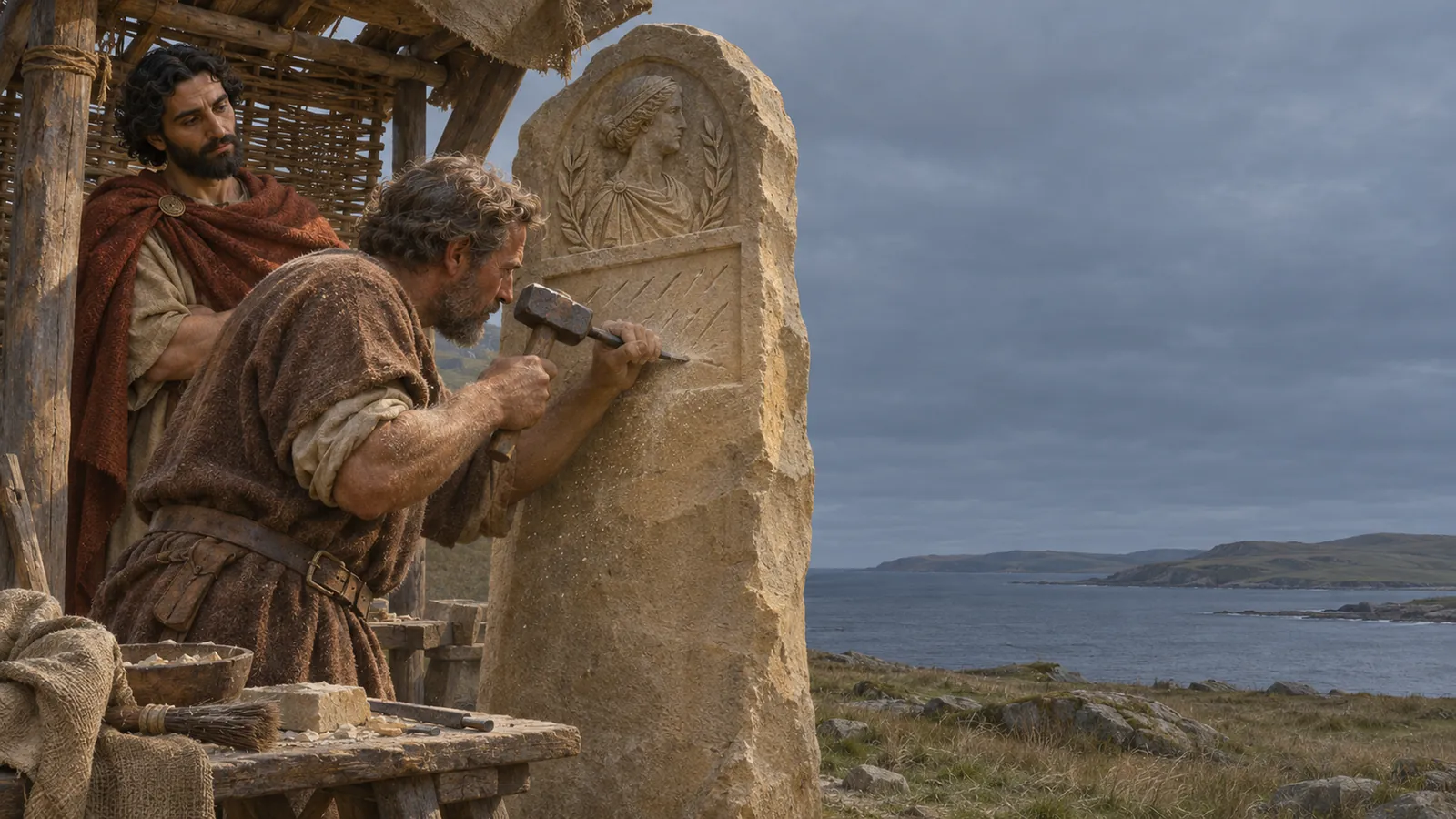
O texto latino começa com uma dedicatória aos espíritos dos mortos. Nomeia Regina e identifica-a como uma mulher liberta.
A INSCRIÇÃO LATINA
A inscrição latina apresenta Regina como esposa de Barates. Identifica Barates como palmireno.
A inscrição latina diz que Regina era do povo catuallauno e que tinha trinta anos. Os tradutores suprem o verbo que indica que ela viveu esse tempo.
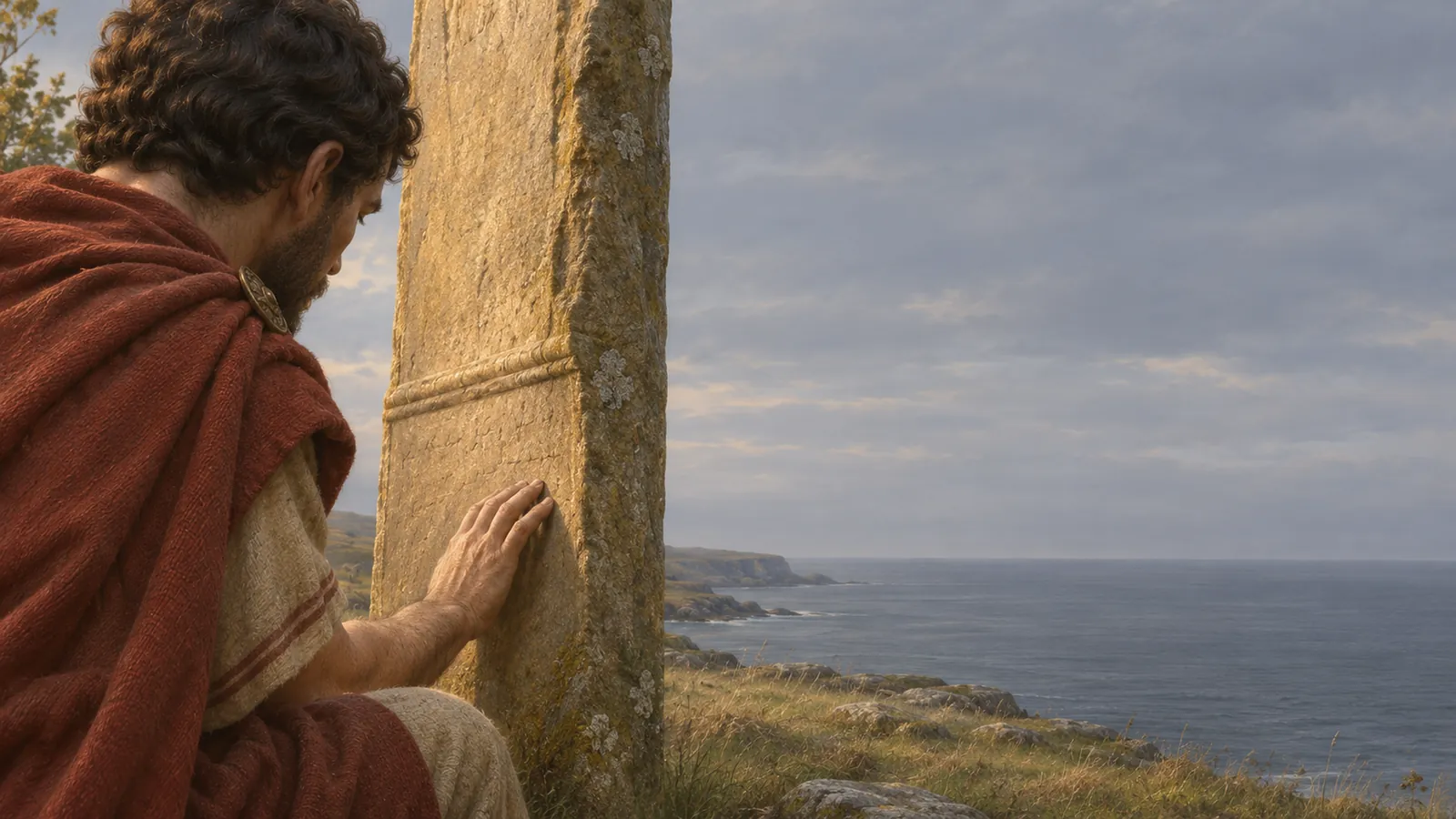
Na tradução publicada, a linha em aramaico palmireno identifica Regina como a liberta de Barates. O nome dele aparece na sua forma palmirena.
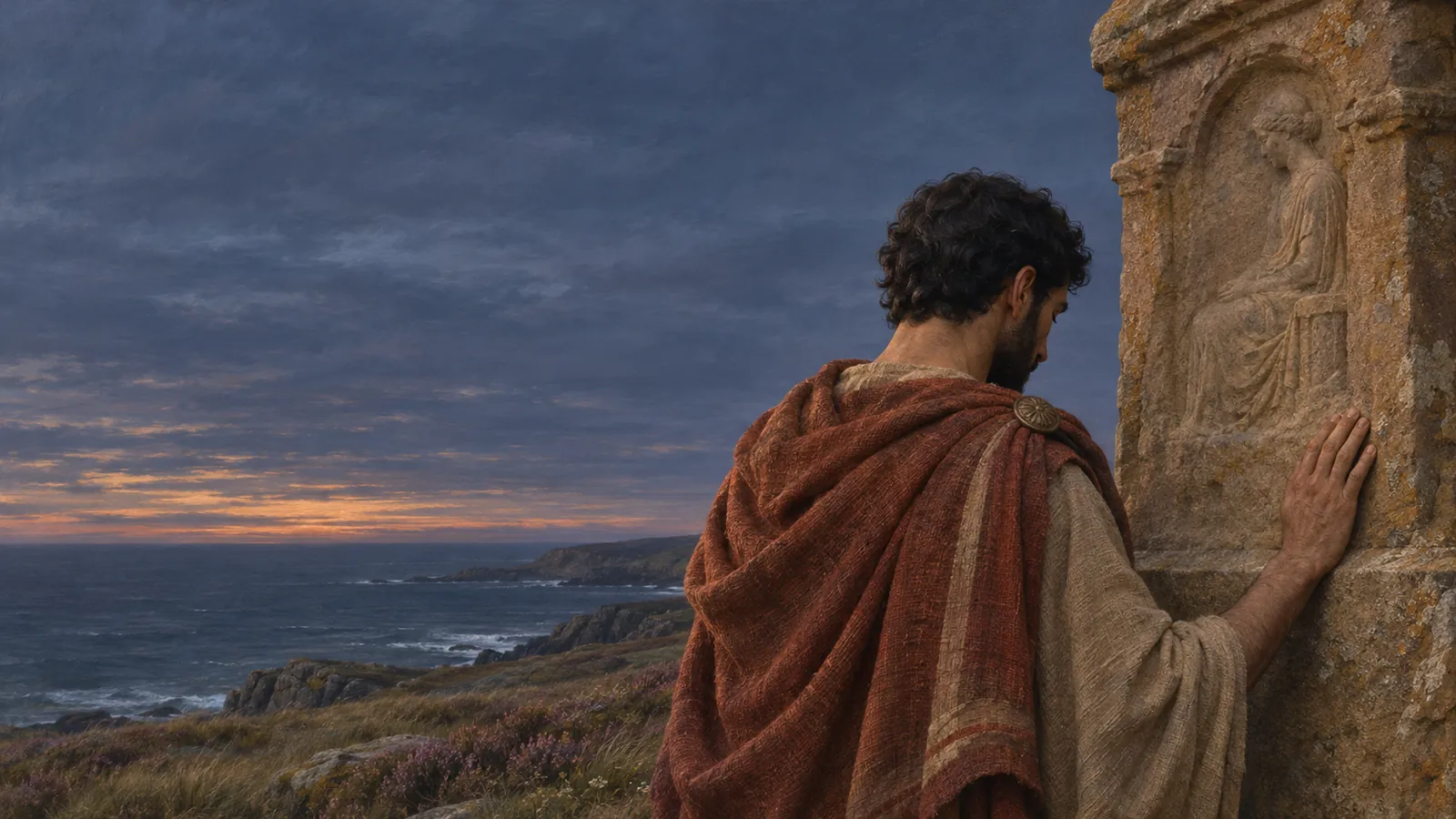
O LAMENTO
A linha em aramaico palmireno termina com uma única palavra de luto, que Hutton e Bonesho traduzem por ai.
Fim do capítulo 1
Todas as páginas




Fontes
The complete Latin and Palmyrene Aramaic inscriptions on the South Shields memorial have the respective references RIB 1065 and PAT 0246. This reading follows the texts and translations on pp. 271–272 in Jeremy M. Hutton and Catherine E. Bonesho’s contribution to Epigraphy, Philology, and the Hebrew Bible, SBL Press, 2015.
Edições consultadas
- SBL Press, Epigraphy, Philology, and the Hebrew Bible, publisher’s edition
- Hutton and Bonesho, pp. 271–272, inscriptions and translations
- Hutton and Bonesho, pp. 275–277, the names and freed status
Notas sobre este reconto
Page 1, the bilingual memorial. Hutton and Bonesho introduce RIB 1065 and PAT 0246 on p. 271. Page 272 gives their English translations. The discovery year refers to the find.
Page 2, Latin line 1, dedication and status. The standard formula to the spirits of the dead opens the Latin text. The published translation supplies the verb of dedicating in square brackets. It renders the status term as “free-woman,” and the authors use the conventional “freedwoman” in their later discussion.
Page 3, Latin lines 1–2, marriage and Barates. The Latin calls Regina the wife of Barates and identifies him as a Palmyrene. The edition prints the word for wife on line 1 and the name and origin on line 2.
Page 4, Latin line 3, people and age. The authors’ translation gives “Catuallaunian” based on the reading noted at p. 271, note 66. The number is thirty.
Page 5, Palmyrene Aramaic line 1, names and status. The published translation on p. 272 names Regina and calls her the freedwoman of the person named Barates in the Latin. Hutton and Bonesho align the Palmyrene spelling with Barates on p. 275. On pp. 276–277 they discuss the literal status phrase and consider whether its context could carry a marital connotation.
Page 6, Palmyrene Aramaic line 1, lament. The line ends in the word the translators render as “Alas!” The reading ends there. The neighboring example in the article concerns a separate memorial.
The published readings provide the text of both inscriptions.
Os versos antigos de cada página
- Page 1: Hutton and Bonesho (2015), Regina memorial, p. 271, description of RIB 1065 and PAT 0246
- Page 2: Hutton and Bonesho (2015), Regina memorial, p. 272, Latin line 1, dedication and status
- Page 3: Hutton and Bonesho (2015), Regina memorial, p. 272, Latin lines 1–2, relationship and origin of Barates
- Page 4: Hutton and Bonesho (2015), Regina memorial, p. 272, Latin line 3 and note 66
- Page 5: Hutton and Bonesho (2015), Regina memorial, p. 272, Aramaic line 1, names and status; 275–277, discussion
- Page 6: Hutton and Bonesho (2015), Regina memorial, p. 272, Aramaic line 1, final expression
Ilustrações feitas pelo IL Archive com ferramentas de IA; o texto baseia-se nas fontes antigas (veja as fontes no fim de cada capítulo).