O pastor e o agricultor Capítulo 1
O cortejo de Inanna
Utu prefere Dumuzi, mas Inanna quer casar com um agricultor. Dumuzi contrapõe a sua lã e o seu leite aos tecidos e à cerveja do agricultor. Uma voz que Jacobsen atribui com reservas a Inanna oferece pasto, água, trigo e favas. Jacobsen interpreta o desfecho como uma reconciliação.
FontesVire as páginas com as setas, o teclado ou deslizando o dedo.
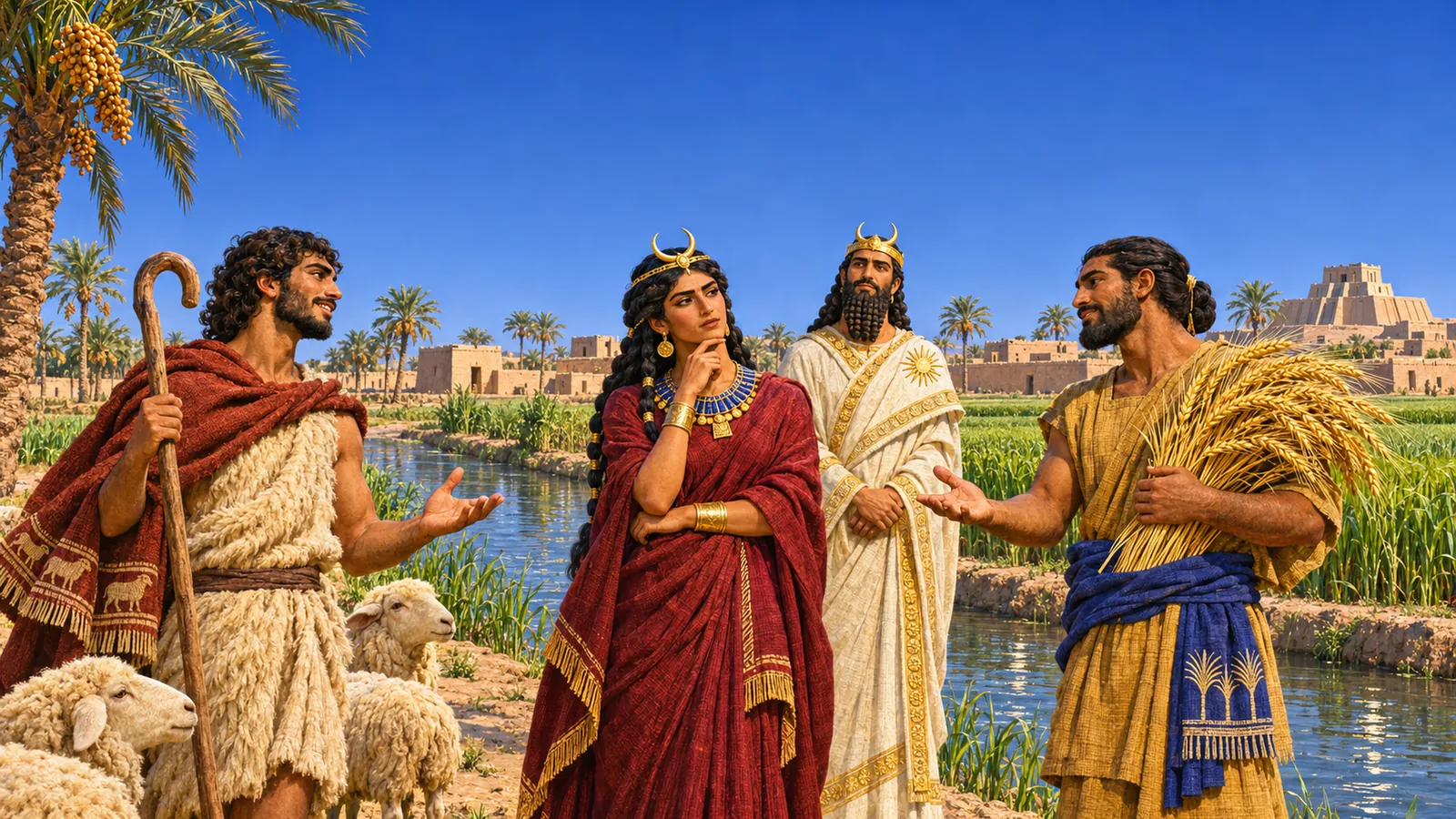
DOIS PRETENDENTES
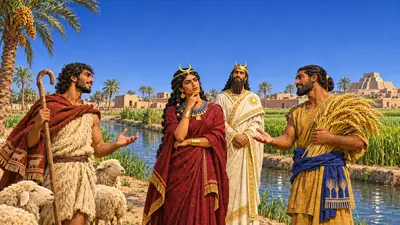
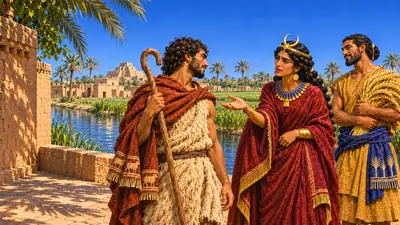
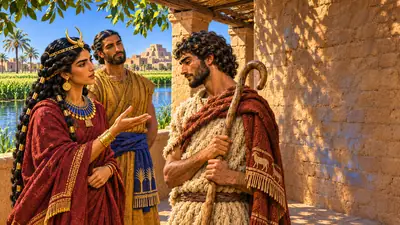
No relato de Thorkild Jacobsen, tanto o agricultor Enkimdu como o pastor Dumuzi querem casar com Inanna. O irmão dela, Utu, prefere Dumuzi.
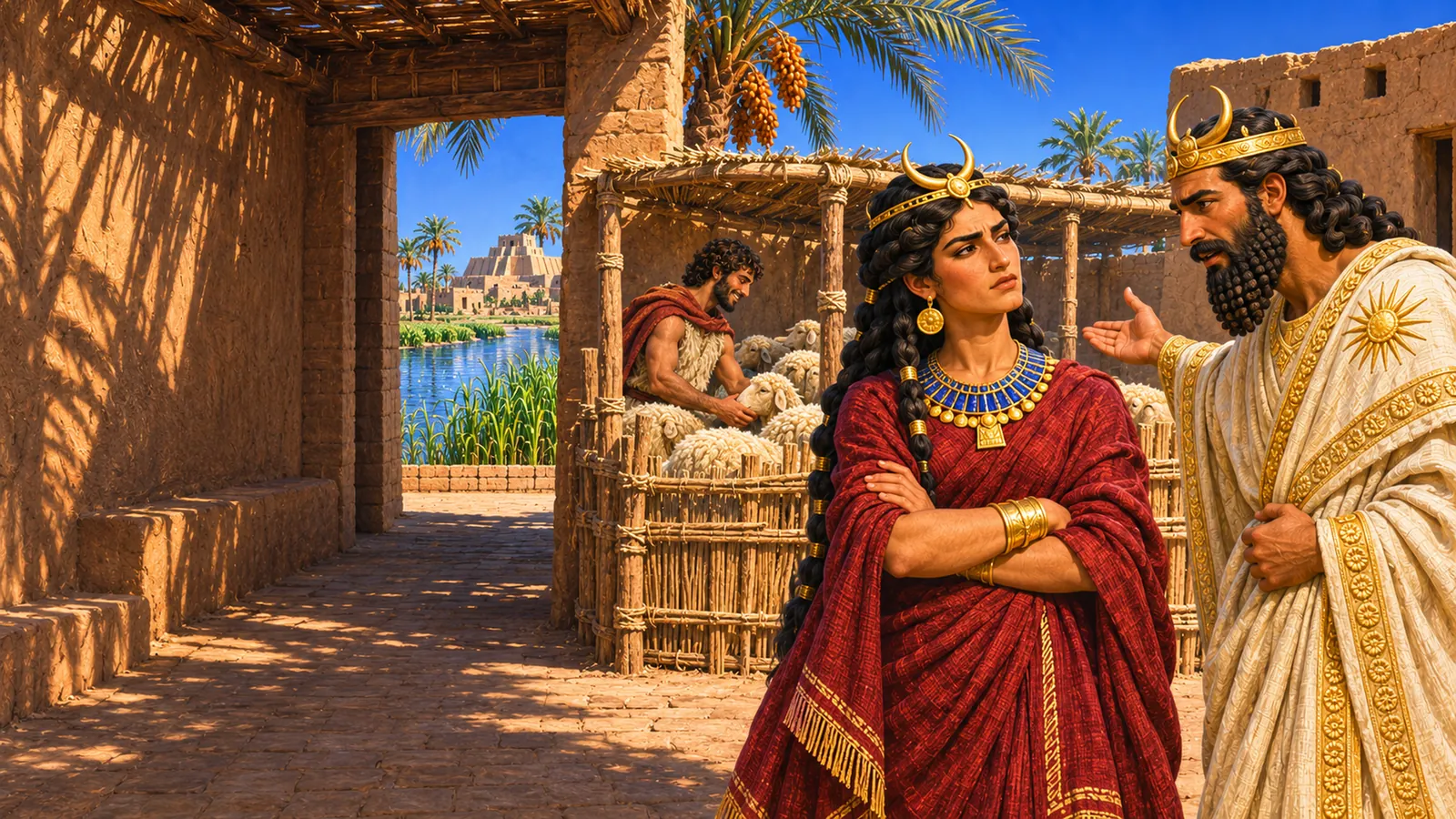
Os versos apresentam Utu, irmão de Inanna, como guerreiro e herói. Ele aconselha a irmã a casar com o pastor e pergunta-lhe por que não quer.
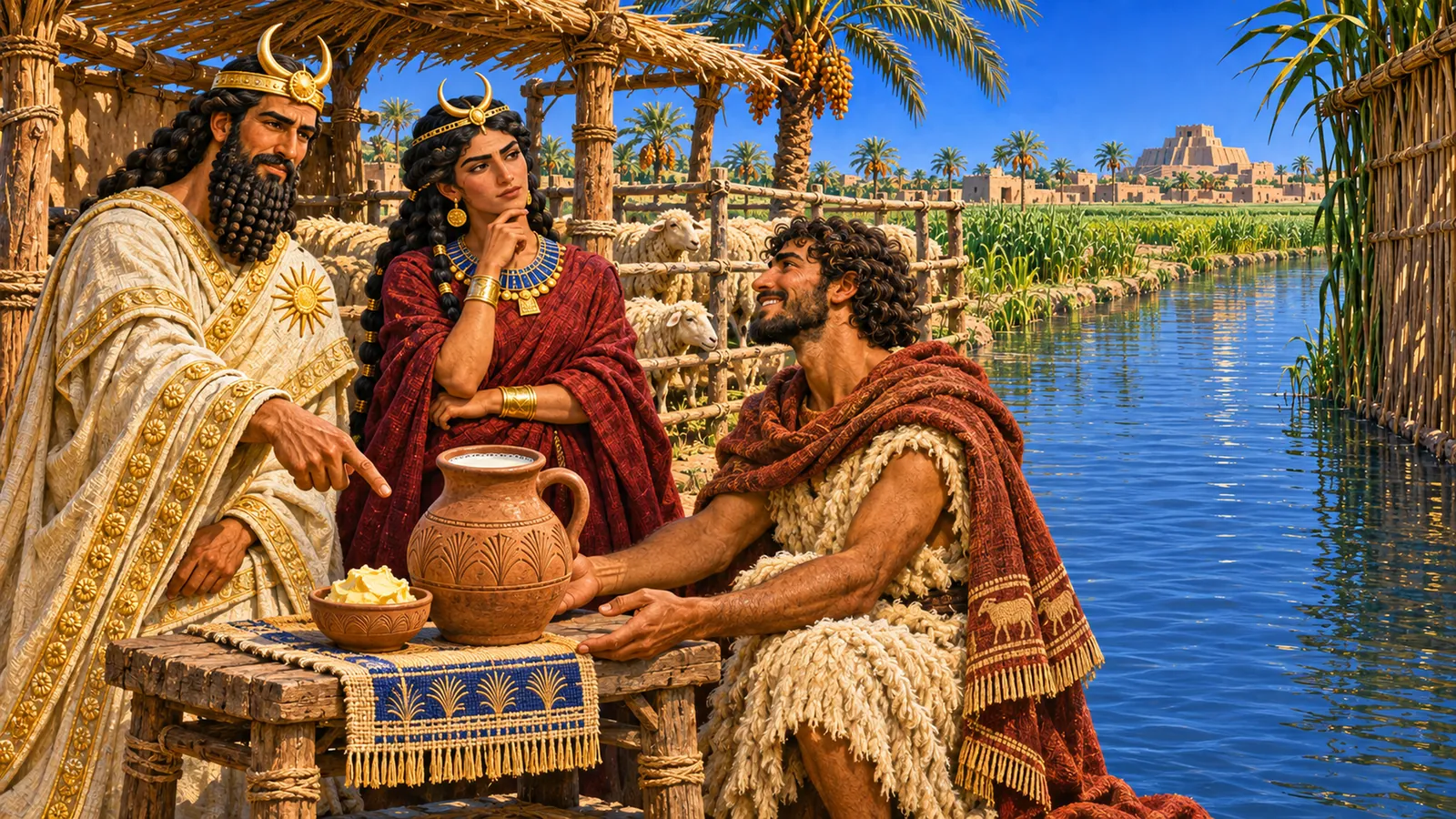
Utu elogia a qualidade da manteiga e do leite do pastor. Diz que todos os produtos do pastor são excelentes e aponta Dumuzi como aquele com quem Inanna deve casar.
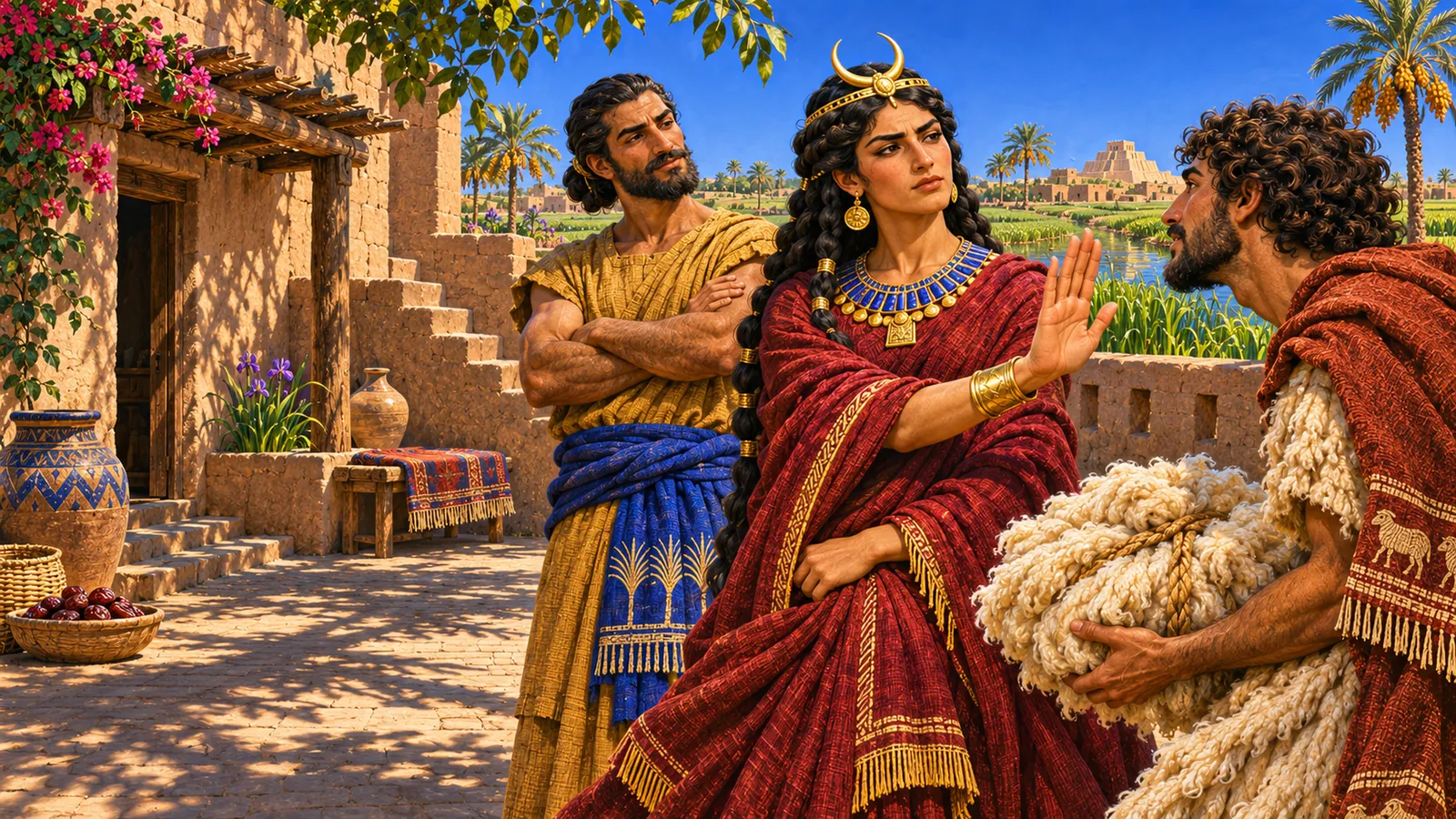
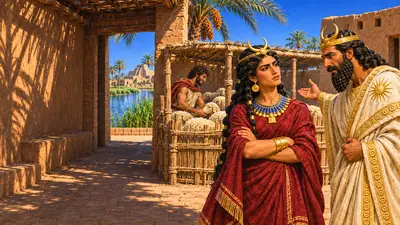
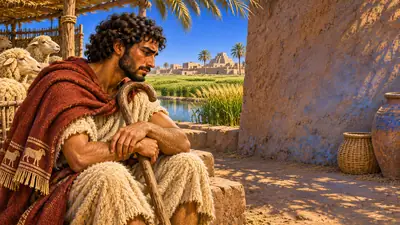
Inanna diz que nunca casará com o pastor. Nunca vestirá o tecido dele com tufos nem deixará que sequer a lã mais fina dele lhe toque.
O AGRICULTOR
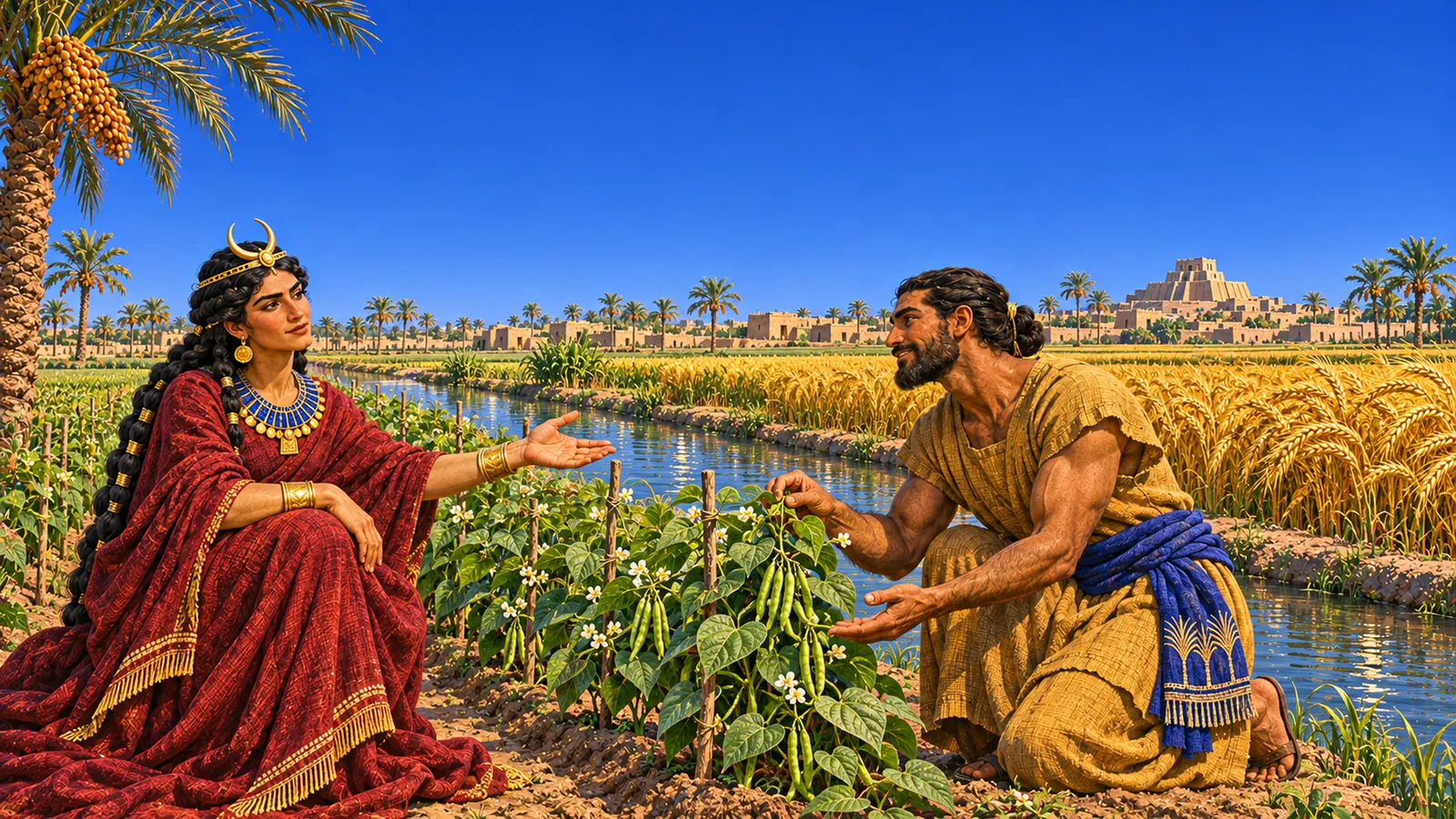
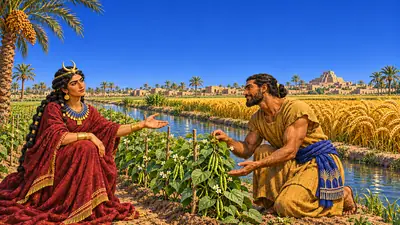
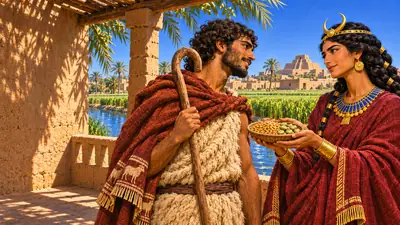
Inanna insiste que só casará com um agricultor. Descreve o marido que deseja como um homem que sabe cultivar favas e cereais.
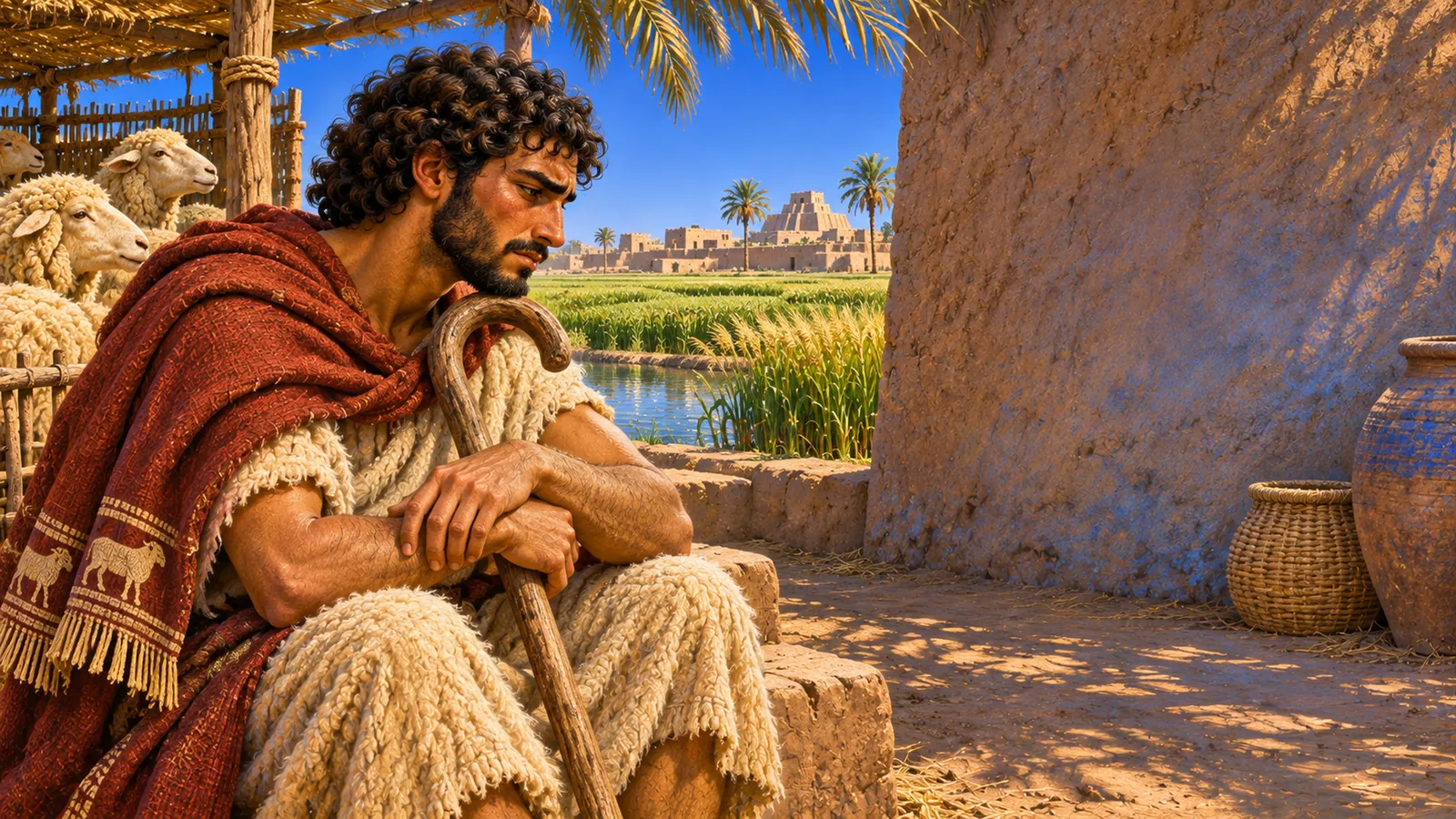
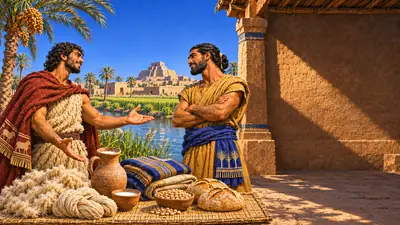
No relato de Jacobsen, a rejeição desanima Dumuzi e fere-lhe o orgulho. Ele começa a pensar no que pode oferecer em troca de cada produto do agricultor.
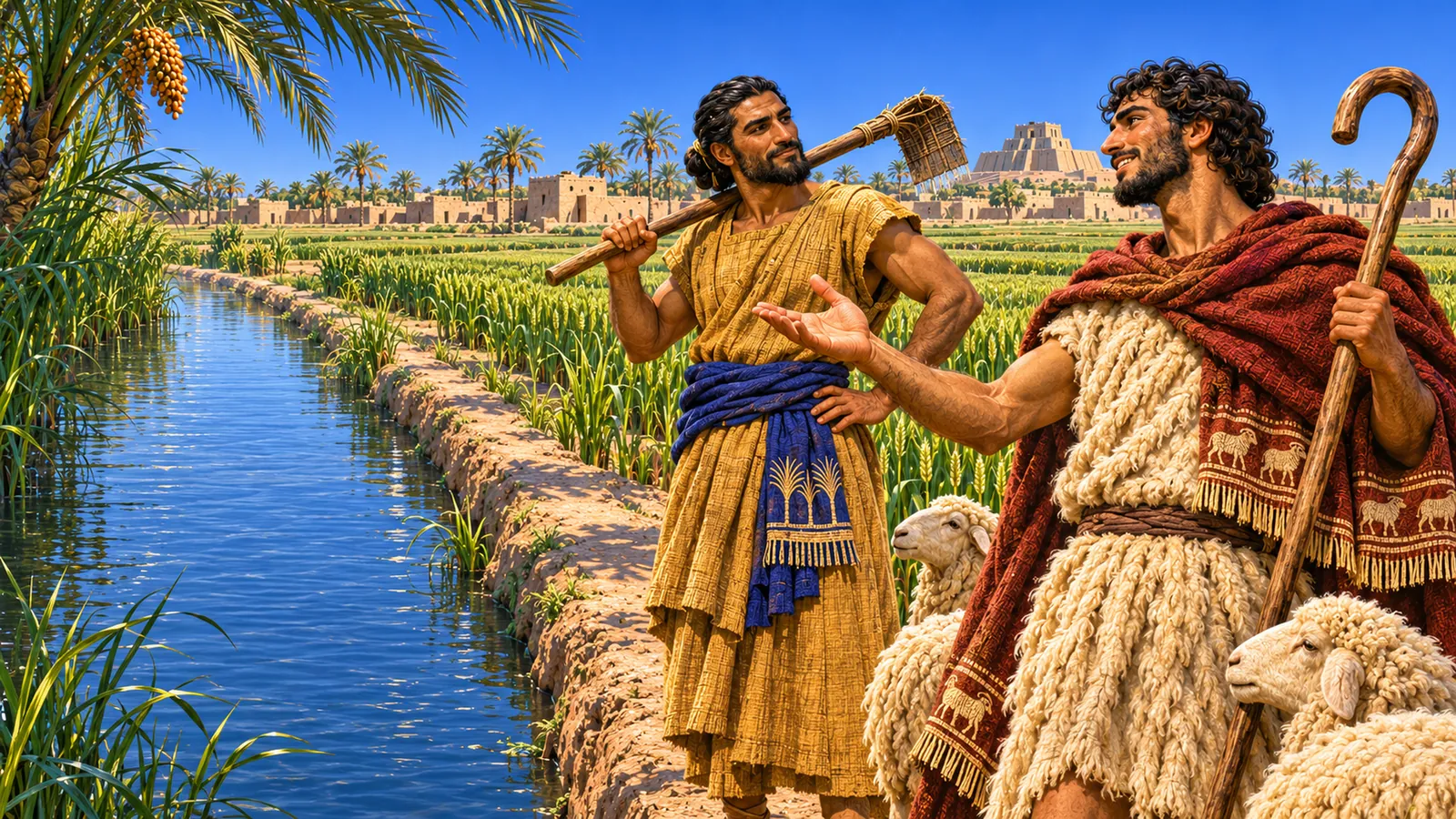
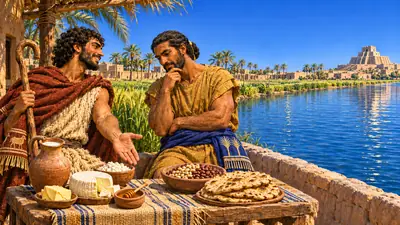
Dumuzi pergunta em que lhe é superior o agricultor. Nomeia Enkimdu, o homem do dique e do canal, e volta a fazer a mesma pergunta.
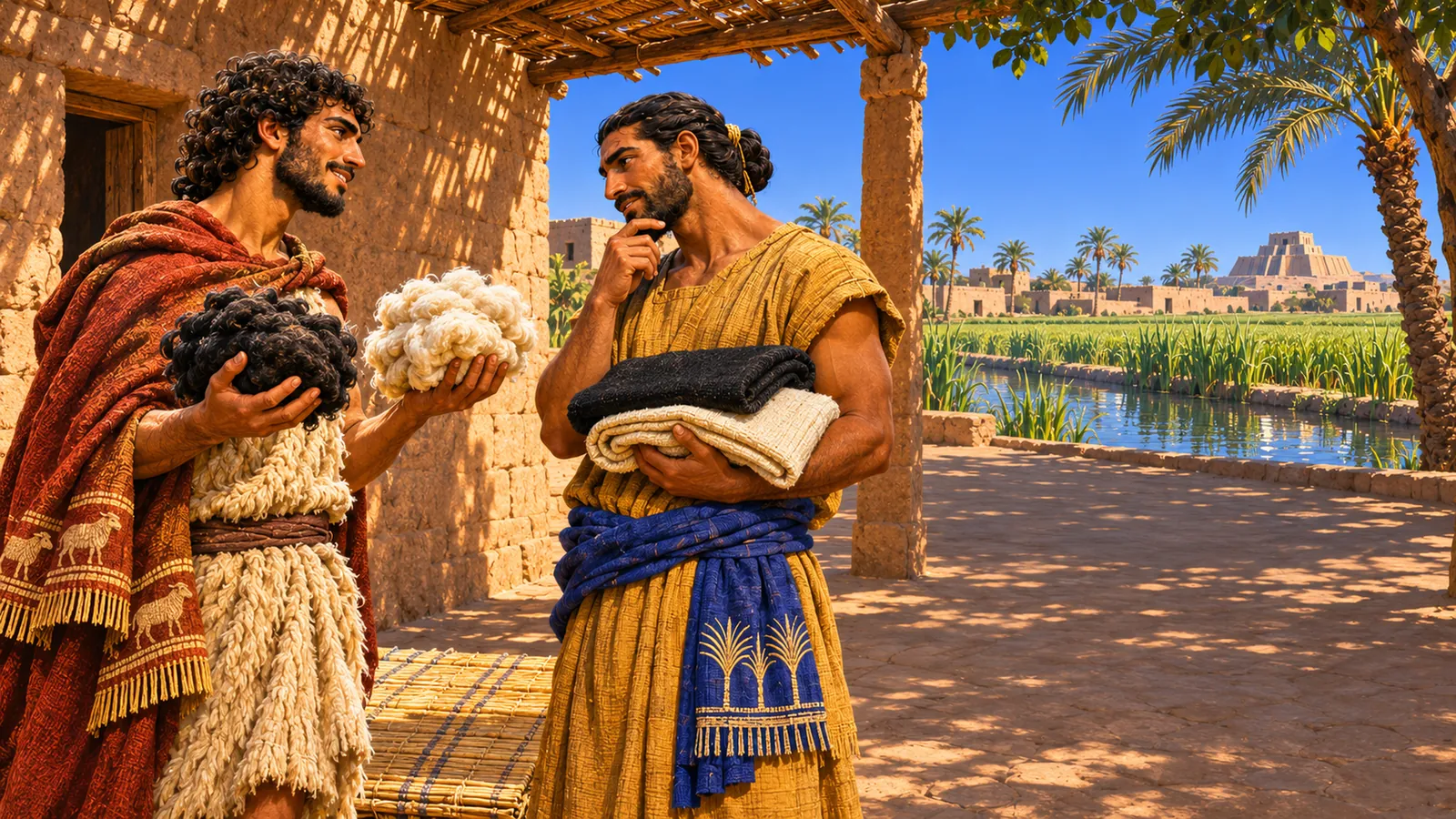
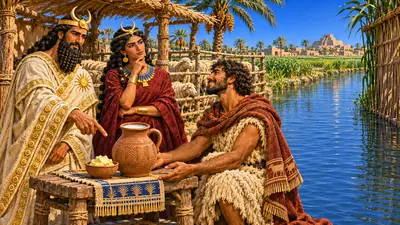
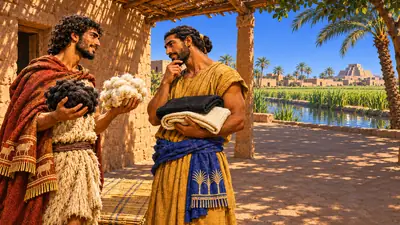
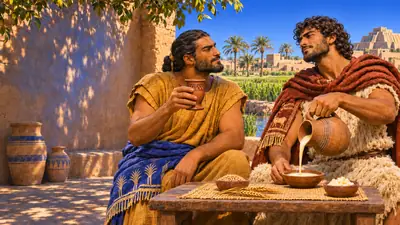
Dumuzi imagina o que daria se Enkimdu lhe oferecesse tecido. Daria lã preta em troca de tecido preto e lã branca em troca de tecido branco.
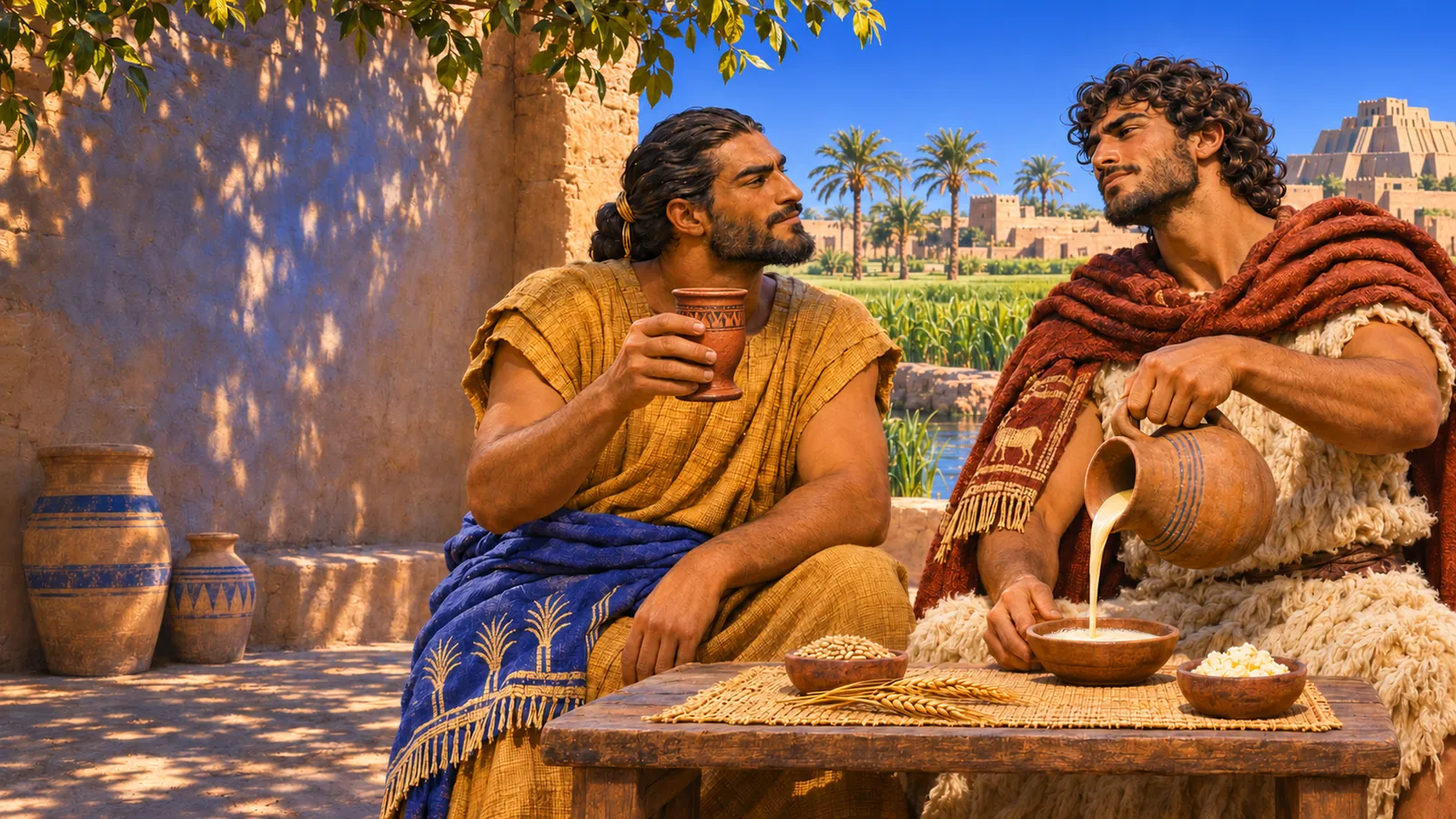
Dumuzi continua a comparação com duas bebidas. Se o agricultor lhe servisse um pouco da sua melhor cerveja, ele servir-lhe-ia em troca um pouco do seu leite amarelo.
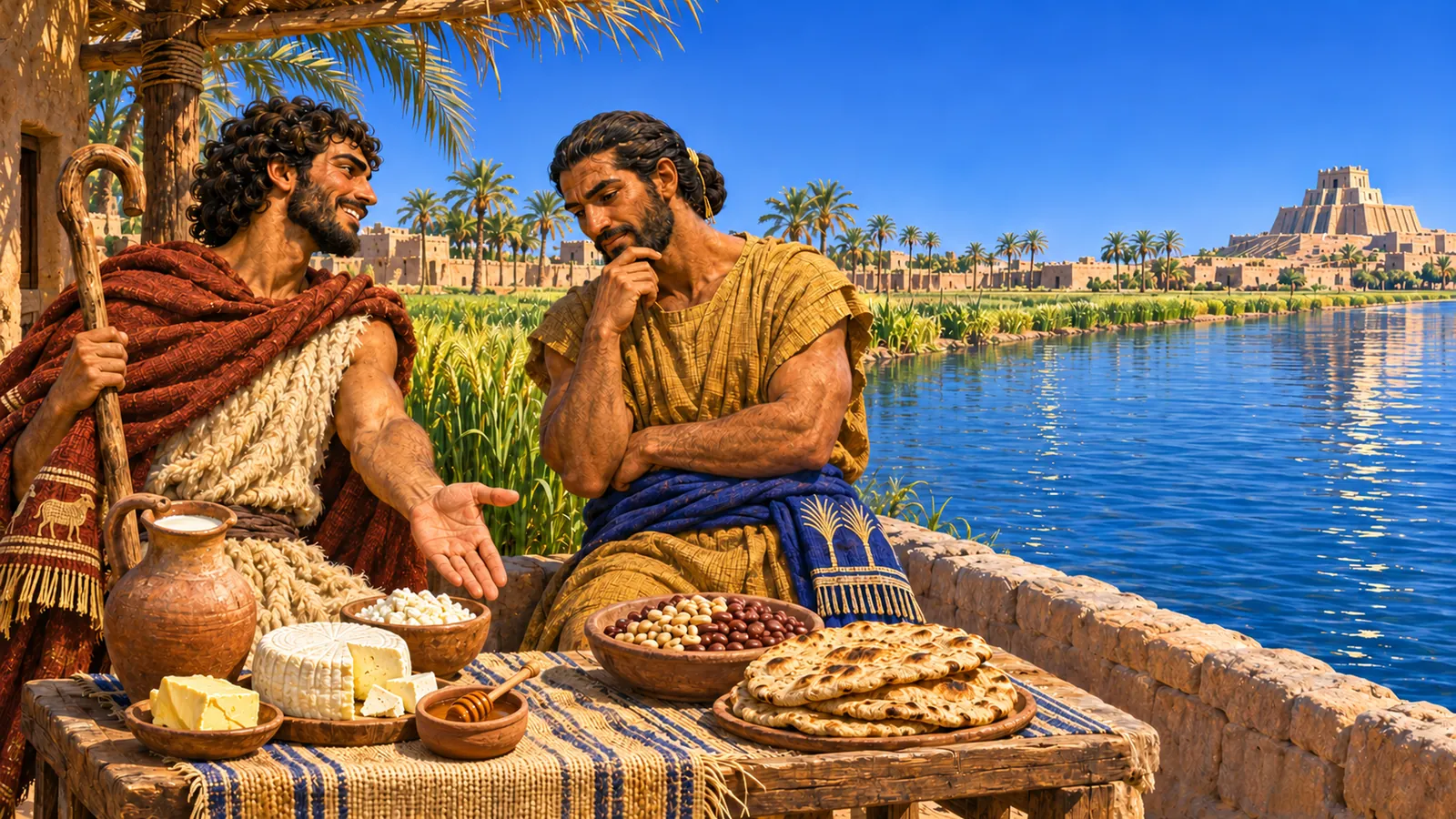
Jacobsen enumera outros produtos que Dumuzi oferece em troca dos do agricultor, como pequenos queijos por favas e coalhada fresca com mel por pão. Dumuzi calcula que ainda lhe sobrarão manteiga e leite.
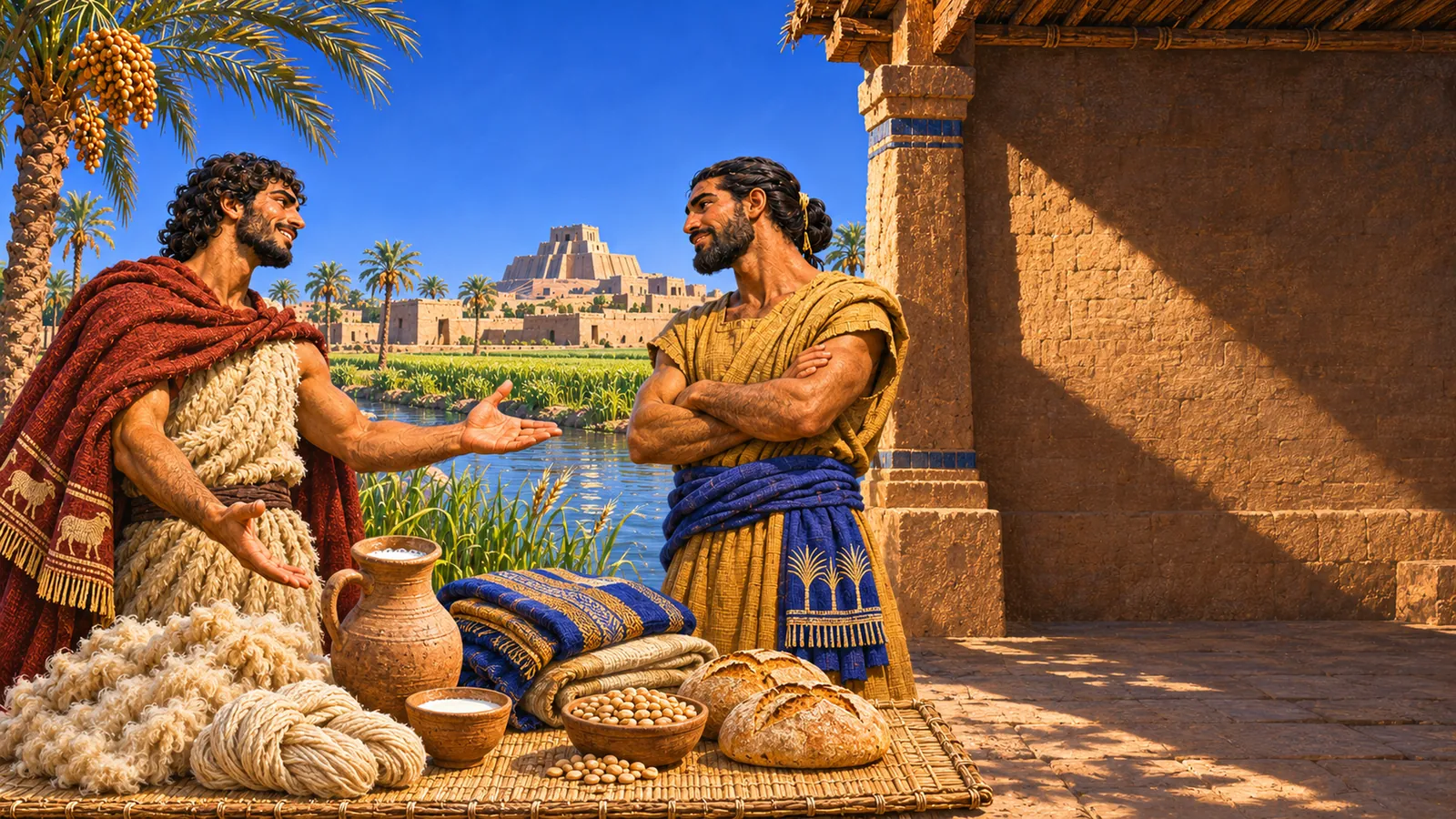
Jacobsen lê a troca imaginada como uma competição de dádivas. Na sua leitura, quem dá mais nada deve e deixa o outro em dívida para consigo.
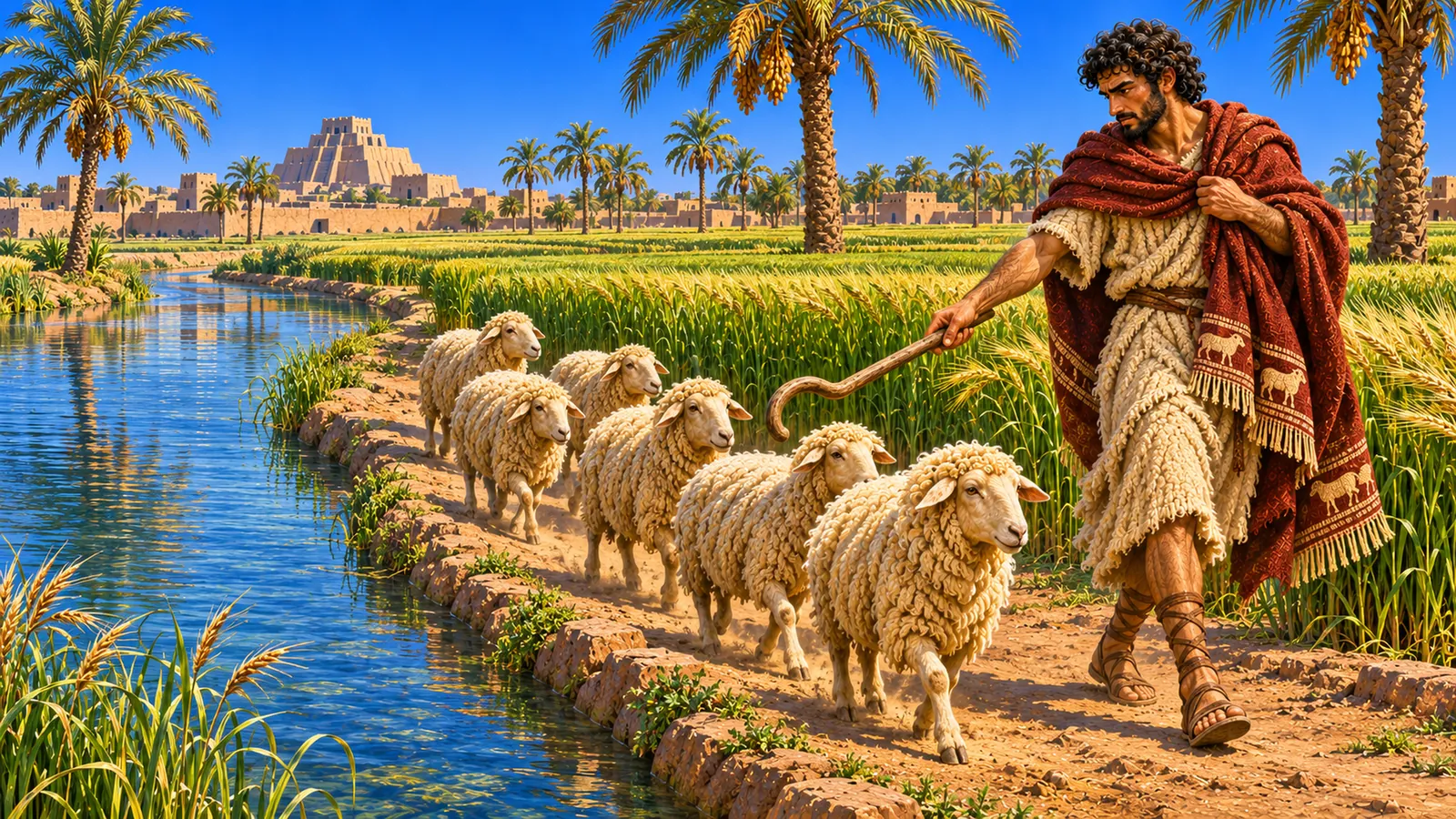
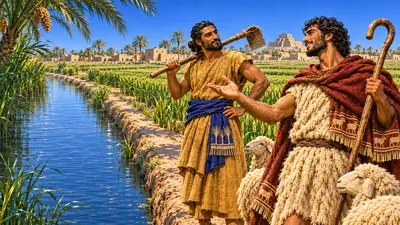
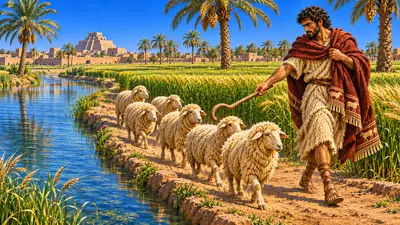
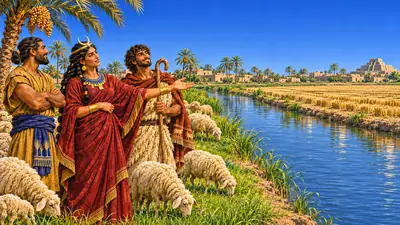
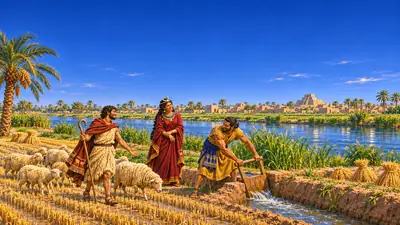
No resumo de Jacobsen, o pastor ganha confiança ao comparar o que cada um pode oferecer. Conduz as suas ovelhas até à margem do rio, no meio das terras cultivadas.
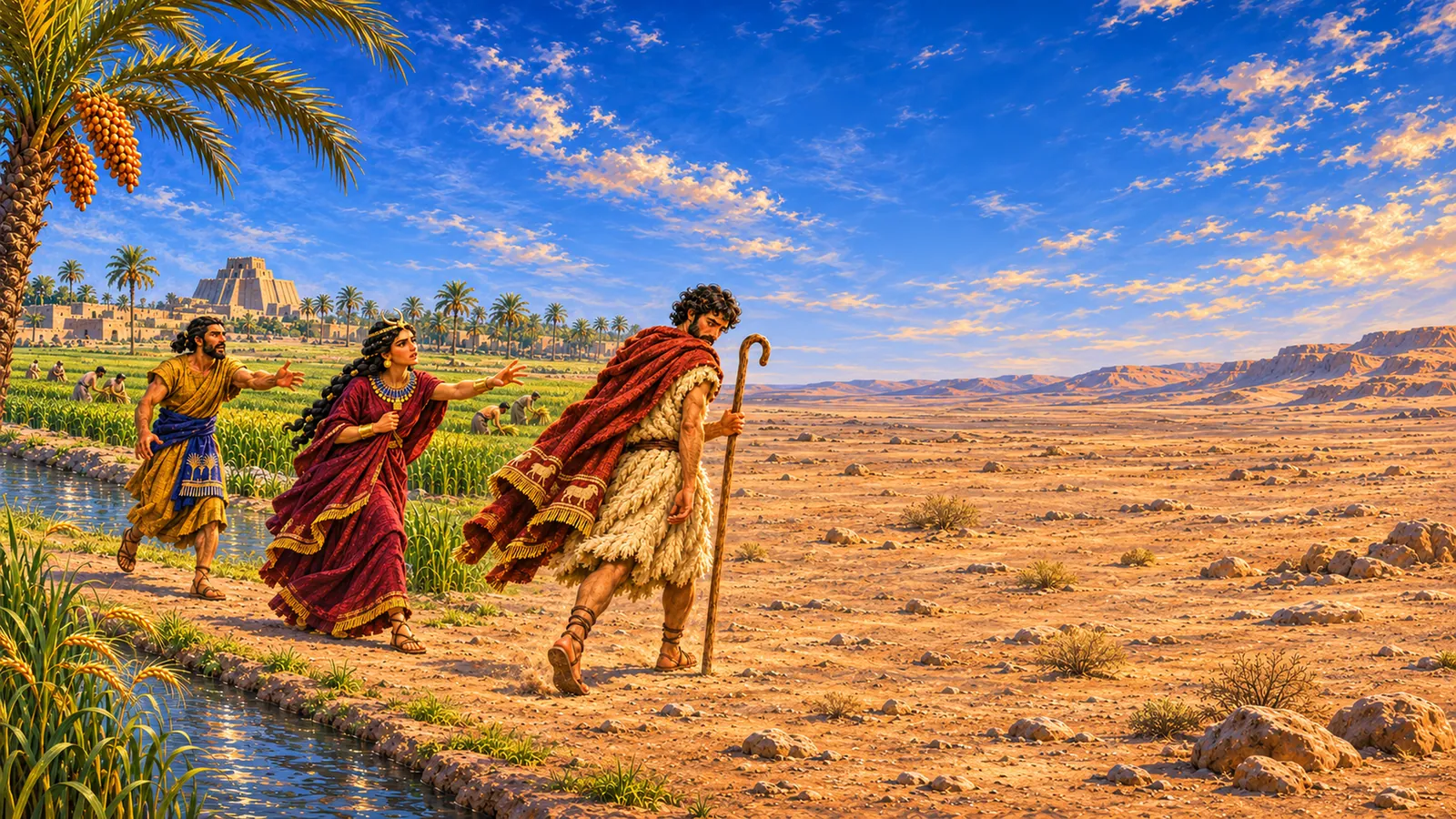
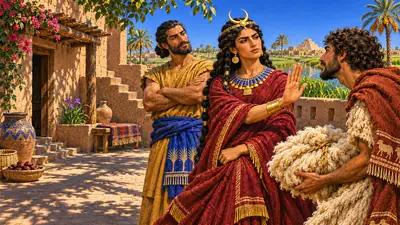
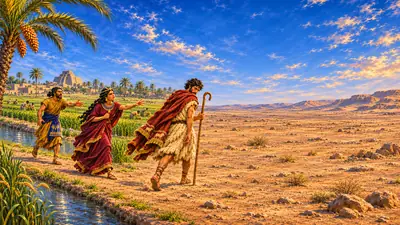
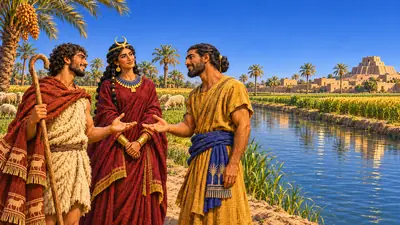
Jacobsen diz que Dumuzi vê Enkimdu e Inanna e, embaraçado, recua em direção ao deserto. Ambos o seguem, e Jacobsen atribui com reserva a fala seguinte a Inanna.
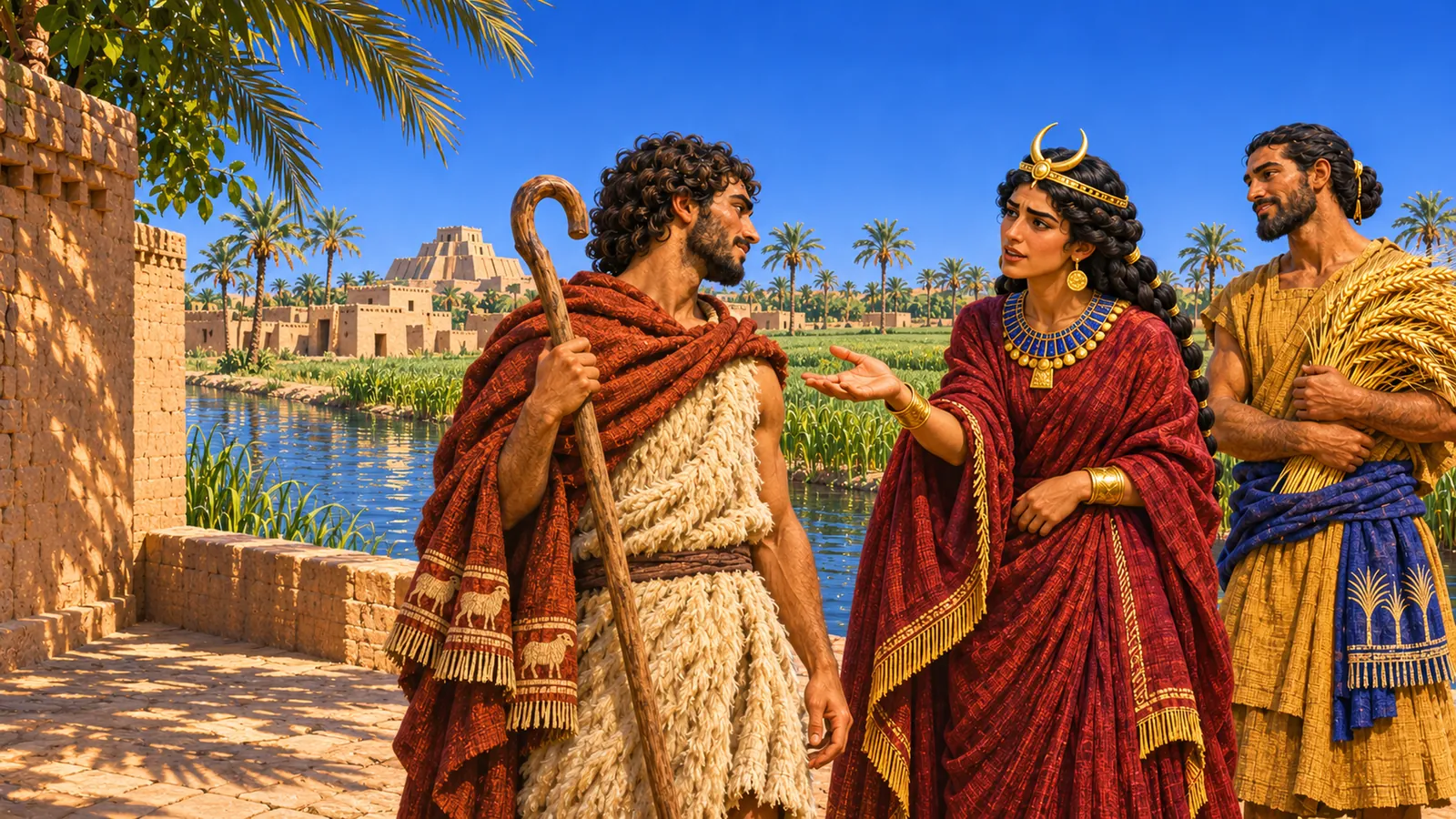
Nos versos que Jacobsen atribui com reserva a Inanna, a voz pergunta ao pastor porque têm os dois de correr um contra o outro. O chamamento ao pastor repete-se.
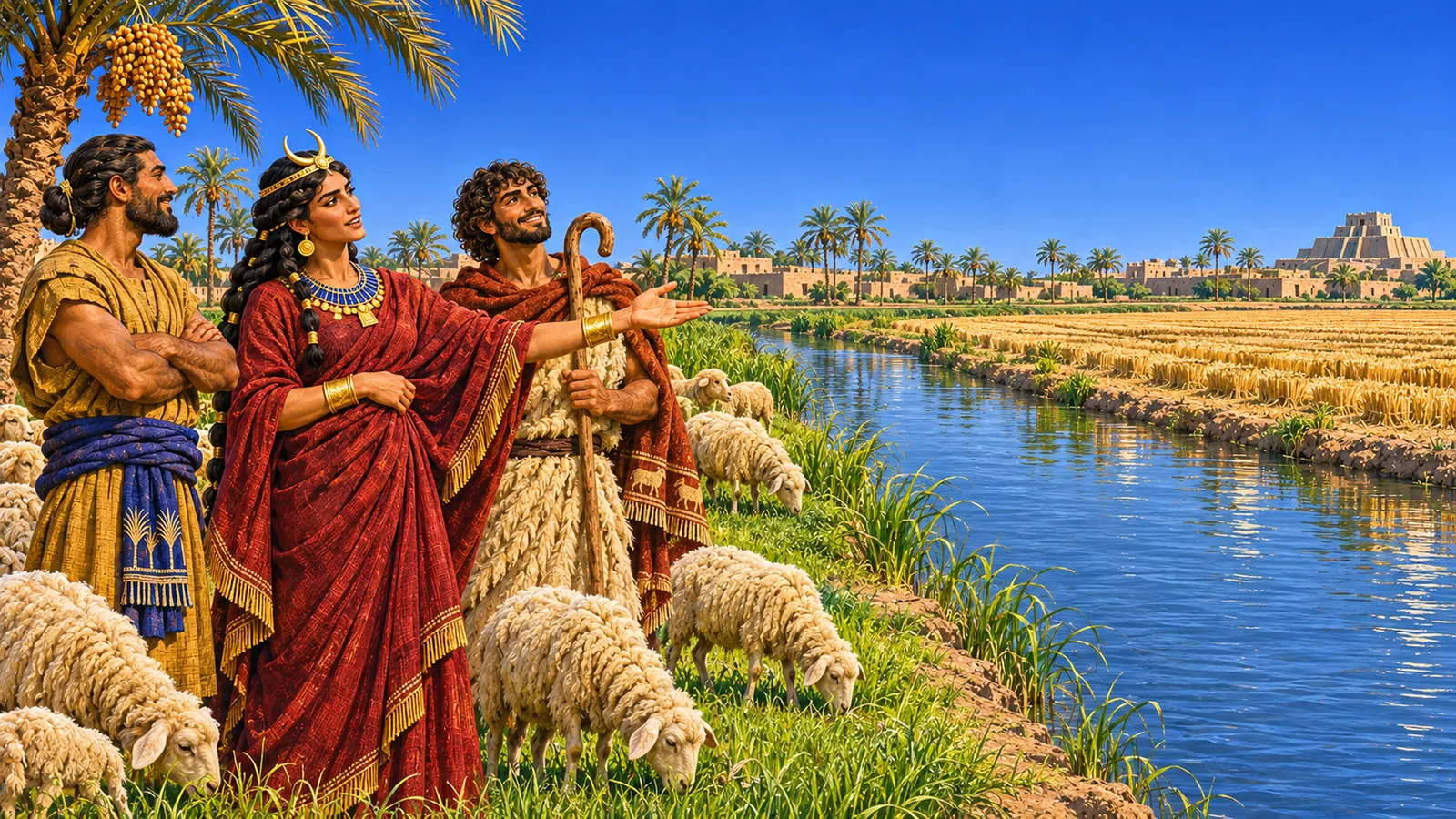
Na fala que Jacobsen atribui com reserva a Inanna, as ovelhas podem comer erva na margem e pastar no restolho do campo de quem fala. Jacobsen assinala como incertas as palavras para pastar e restolho.
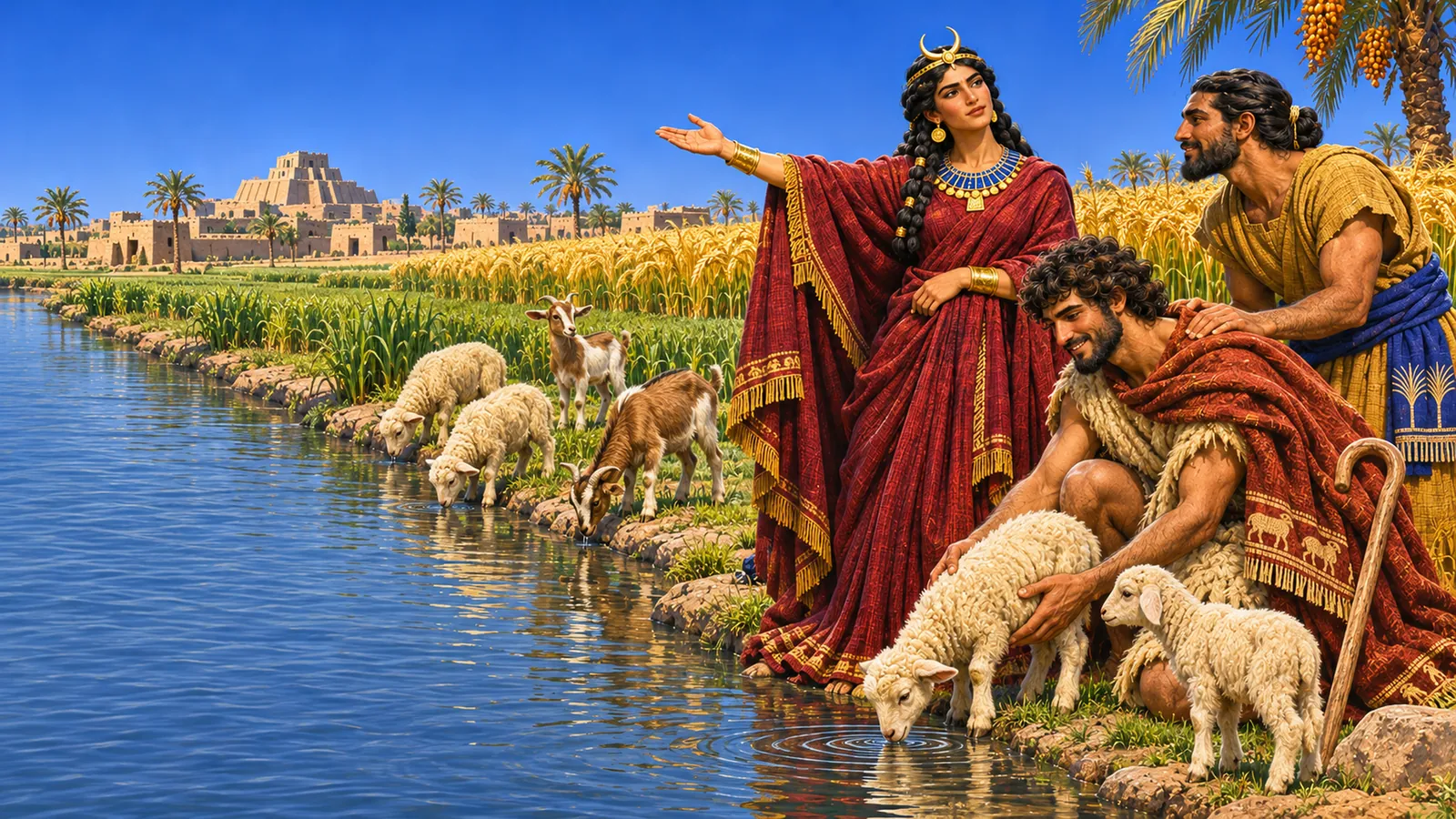
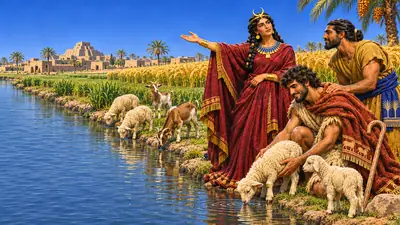
Na fala que Jacobsen atribui com reserva a Inanna, as ovelhas podem comer grão nos campos de Uruk. Os cordeiros e os cabritos podem beber no canal de Adab de quem fala.
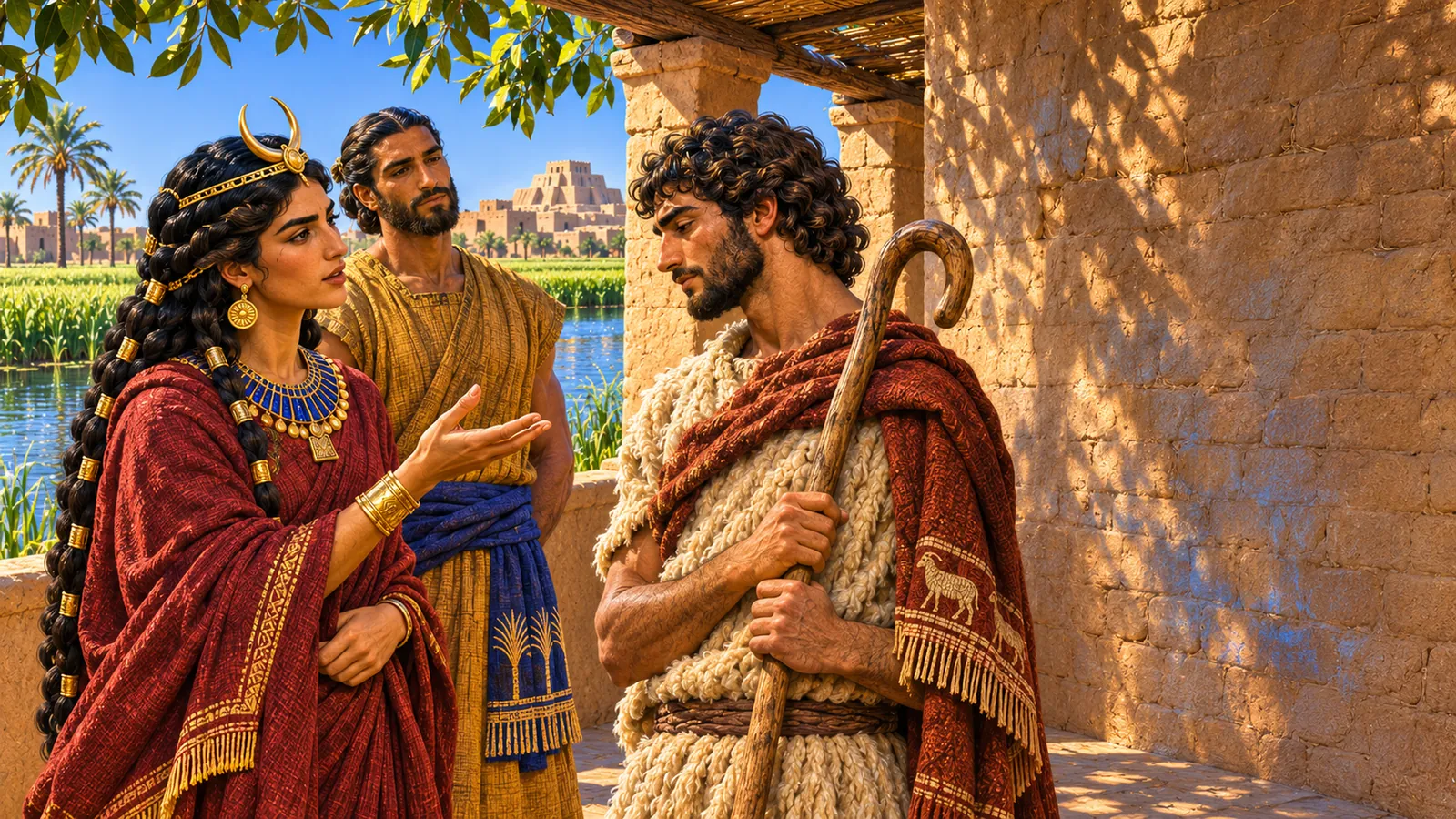
Jacobsen vê uma preferência pelo lavrador sem má vontade para com o pastor. Em versos que atribui com reserva a Inanna, o pastor não pode transformar-se no lavrador Enkimdu, amigo de quem fala, só para casar com essa pessoa.
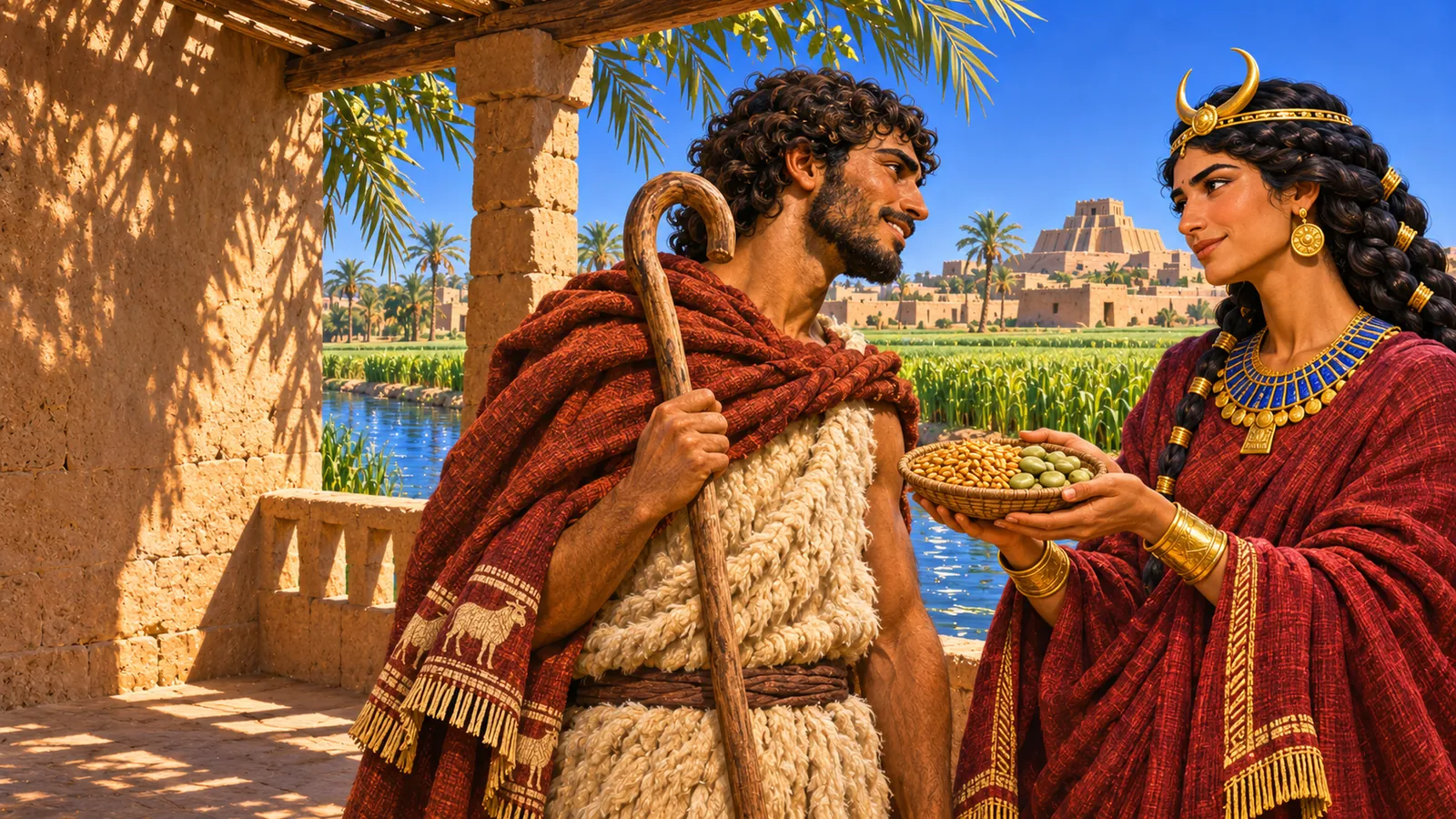
A voz, que Jacobsen atribui com reserva a Inanna, promete trazer trigo e favas ao pastor. O excerto traduzido por Jacobsen termina com esta oferta.
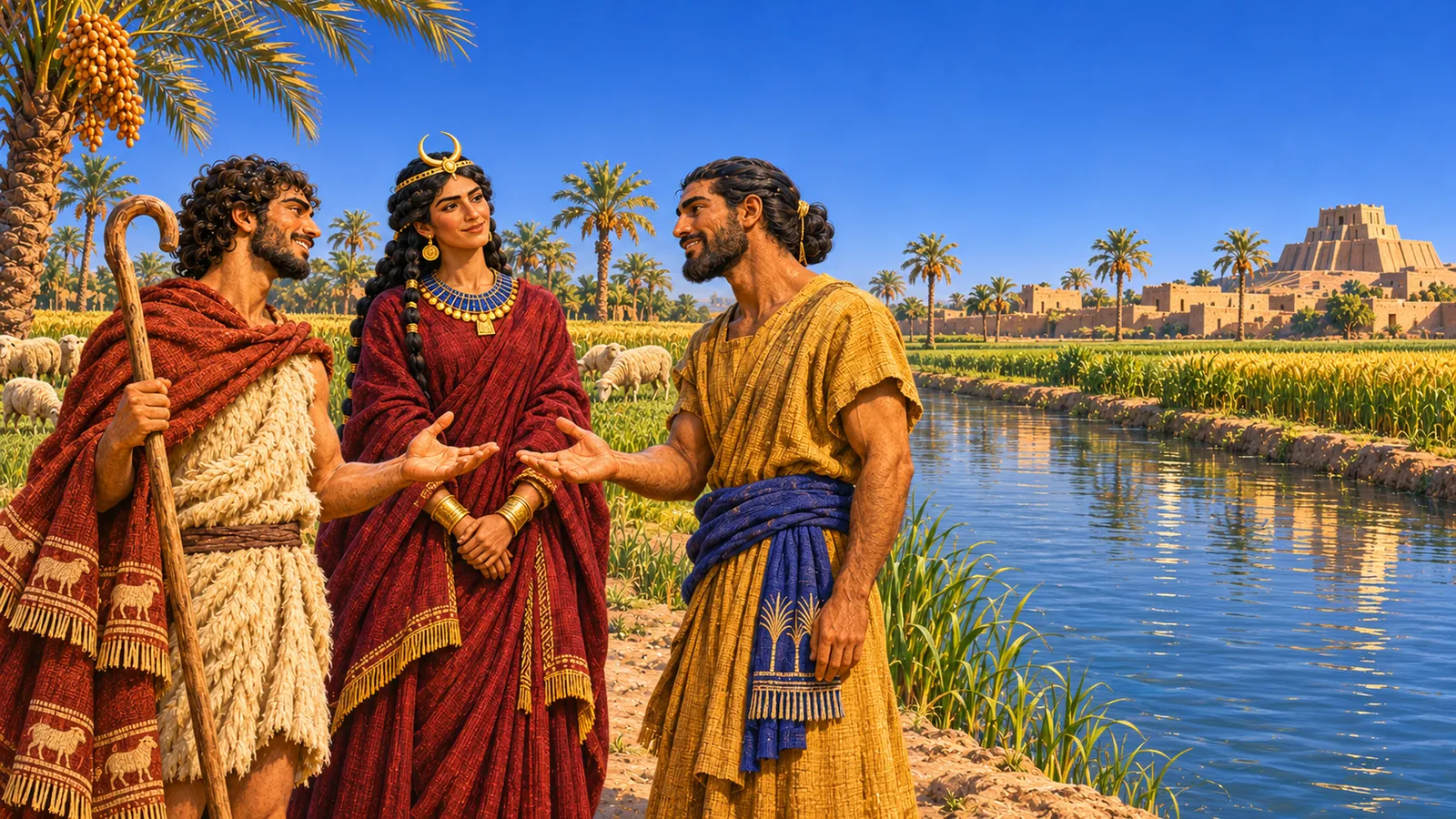
Jacobsen lê o final como uma reconciliação e entende que Inanna casa com Enkimdu. Esta é a sua interpretação depois dos últimos versos traduzidos.
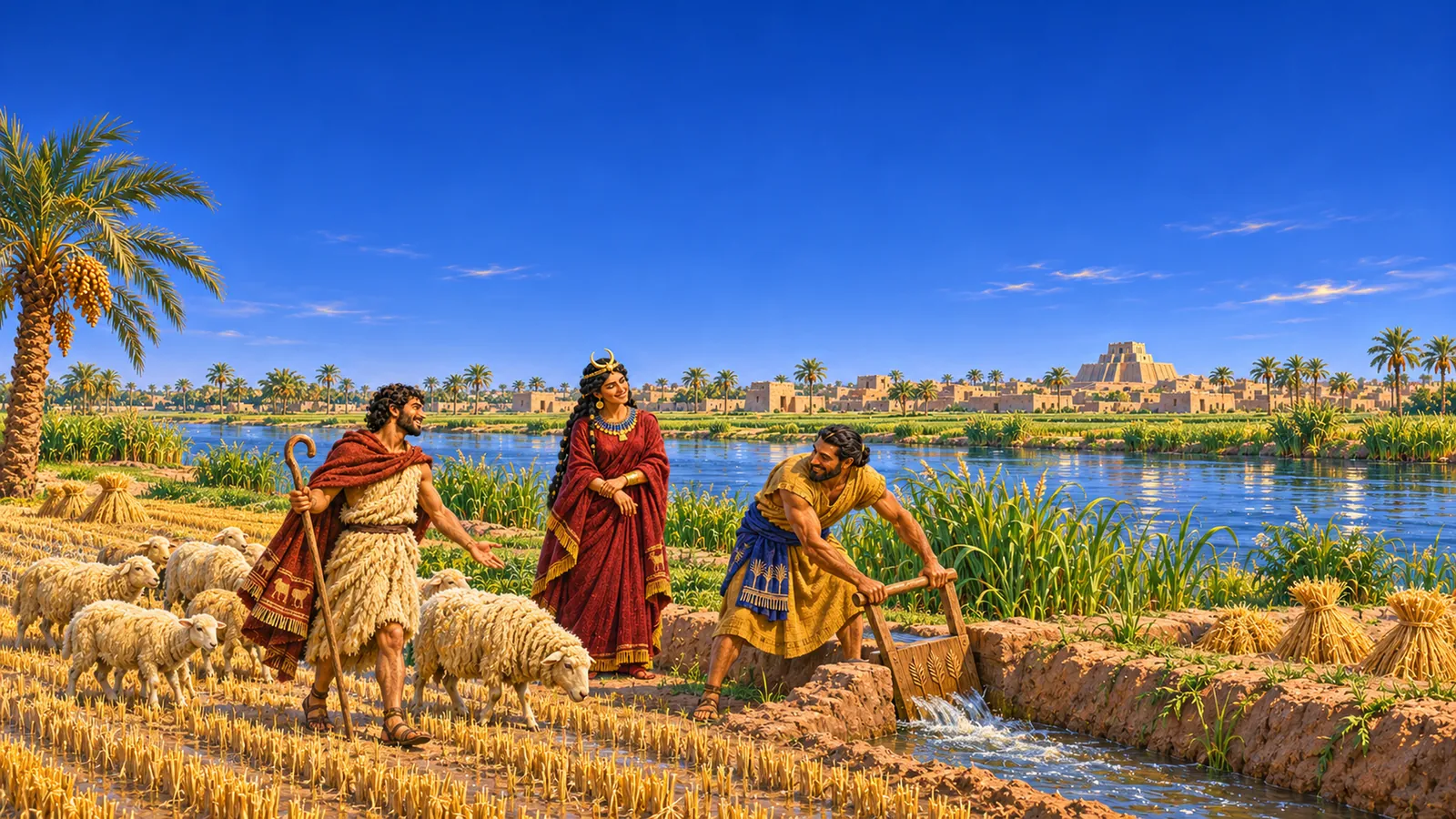
CAMPO E PASTAGEM
Jacobsen conclui que o lavrador e o pastor são igualmente necessários e que os seus produtos se complementam. Diz que, apesar da rivalidade, o pastor pode usar os campos de restolho e os canais do lavrador, e que os dois se devem entender.
Fim do capítulo 1
Todas as páginas
Fontes
This reading follows the printed subsection on the shepherd and the farmer in Thorkild Jacobsen’s The Cosmos as a State, The Intellectual Adventure of Ancient Man, University of Chicago Press, 1946, first Phoenix edition 1977, pp. 166–168. The volume credits H. A. Groenewegen Frankfort for the English poetic form (preface p. vi and p. 184, note 3). Chapter note 28 on p. 184 cites Chiera, SRT, no. 3 as the textual source.
Edições consultadas
- University of Chicago, The Intellectual Adventure of Ancient Man
- University of Chicago, printed pages 166–168, The Wooing of Inanna
- University of Bern catalogue record, Dumuzi et Enkimdu, 4.08.33
Notas sobre este reconto
Page 1, opening account. The first paragraph under the heading on p. 166 identifies Enkimdu as the farmer, Dumuzi as the shepherd, and both as suitors of Inanna. The introduction’s identification of Utu as her guardian is Jacobsen’s contextual prose. The verse identifies him as her brother and introduces him as a warrior and hero.
Pages 2–3, Utu. The first verse selection on p. 166 gives Utu’s preference, his question to Inanna, his praise of butter, milk and the other products, and his recommendation of Dumuzi by name. The English verses are paraphrased; the volume credits H. A. Groenewegen Frankfort with the English poetic form of its ancient quotations (preface p. vi and p. 184, note 3).
Pages 4–5, Inanna. The reply on p. 166 repeats her refusal of the shepherd, his tufted cloth and his finest wool, before naming the cultivation of beans and grain in her preference for a farmer. These lines express her preference during the exchange.
Page 6, the connecting account. Jacobsen describes Dumuzi’s despondency and wounded pride in the prose that crosses pp. 166–167. He connects that reaction to Dumuzi’s comparison of what each man produces.
Page 7, Dumuzi’s repeated question. The third verse selection on p. 167 gives a repeated challenge and calls Enkimdu the man of the dike and canal. The printed dots in the repeated question signal wording absent from this presentation. The reading leaves those words unsupplied.
Pages 8–9, imagined exchanges. The translation distinguishes the farmer’s cloth from the shepherd’s wool in two matching colors. The comparison proceeds to the farmer’s prime beer and the shepherd’s yellow milk. The pairs are imagined offers in Dumuzi’s speech.
Page 10, the remaining pairs. He says Dumuzi expects to have butter and milk left over.
Pages 11–12 · p. 167, Jacobsen’s explanatory and connecting prose. Jacobsen interprets the exchange as a contest of gifts, where the larger giver incurs no debt and leaves the other in debt. He then describes Dumuzi recovering confidence as he compares the goods and driving his sheep to the riverbank amid cultivated ground.
Pages 13–14 · p. 167, connecting prose and fourth verse selection. Jacobsen says Dumuzi sees Enkimdu and Inanna, withdraws toward the desert in embarrassment and is followed by both. He tentatively assigns the following speech to Inanna. The first lines question why the speaker must race with the shepherd, addressing the shepherd repeatedly.
Pages 15–16 · p. 167, fourth verse selection. The sheep are offered grass on the bank and access to a field. Jacobsen prints question marks after “pasture” and “stubble.” The following lines offer grain from the fields of Uruk and water at the speaker’s Adab canal for lambs and young goats. The two names are retained as printed. The unoccupied views are symbolic landscapes.
Page 17 · p. 167, connecting prose and fifth verse selection. The speech says that the shepherd cannot turn into the farmer Enkimdu simply to become the speaker’s husband. Enkimdu is called a friend. The words “(the kind of man)” are printed as a parenthetical supply. The speaker attribution remains Jacobsen’s tentative reading.
Page 18 · p. 167, end of fifth verse selection. The offered provisions close the excerpted ancient verse in this subsection.
Pages 19–20 · p. 168, Jacobsen’s closing interpretation. Jacobsen reads the outcome as a reconciliation and interprets the farmer as the one Inanna marries. He then argues that farmer and shepherd are equally useful, their produce complements each other and rivalry can coexist with the shepherd’s access to stubble and canal water. He closes by saying the two should get along. Both pages speak in Jacobsen’s name. The following discussion opens a different subject.
Os versos antigos de cada página
- Page 1: Jacobsen, “The Wooing of Inanna,” 1977 Phoenix ed., p. 166, opening prose
- Page 2: Jacobsen, “The Wooing of Inanna,” 1977 Phoenix ed., p. 166, verse block 1 opening
- Page 3: Jacobsen, “The Wooing of Inanna,” 1977 Phoenix ed., p. 166, verse block 1 close
- Page 4: Jacobsen, “The Wooing of Inanna,” 1977 Phoenix ed., p. 166, verse block 2 opening
- Page 5: Jacobsen, “The Wooing of Inanna,” 1977 Phoenix ed., p. 166, verse block 2 close
- Page 6: Jacobsen, “The Wooing of Inanna,” 1977 Phoenix ed., p. 166–167, connecting prose
- Page 7: Jacobsen, “The Wooing of Inanna,” 1977 Phoenix ed., p. 167, verse block 3 opening
- Page 8: Jacobsen, “The Wooing of Inanna,” 1977 Phoenix ed., p. 167, verse block 3, fabric exchanges
- Page 9: Jacobsen, “The Wooing of Inanna,” 1977 Phoenix ed., p. 167, verse block 3 close
- Page 10: Jacobsen, “The Wooing of Inanna,” 1977 Phoenix ed., p. 167, prose summary after verse block 3
- Page 11: Jacobsen 1977, The Intellectual Adventure of Ancient Man, ch. V, The Wooing of Inanna, p. 167, Jacobsen’s explanatory prose on gift exchange
- Page 12: Jacobsen 1977, The Intellectual Adventure of Ancient Man, ch. V, The Wooing of Inanna, p. 167, Jacobsen’s connecting prose, first movement
- Page 13: Jacobsen 1977, The Intellectual Adventure of Ancient Man, ch. V, The Wooing of Inanna, p. 167, Jacobsen’s connecting prose, encounter and retreat
- Page 14: Jacobsen 1977, The Intellectual Adventure of Ancient Man, ch. V, The Wooing of Inanna, p. 167, fourth translated verse selection, opening
- Page 15: Jacobsen 1977, The Intellectual Adventure of Ancient Man, ch. V, The Wooing of Inanna, p. 167, fourth translated verse selection, grass and stubble
- Page 16: Jacobsen 1977, The Intellectual Adventure of Ancient Man, ch. V, The Wooing of Inanna, p. 167, fourth translated verse selection, grain and water
- Page 17: Jacobsen 1977, The Intellectual Adventure of Ancient Man, ch. V, The Wooing of Inanna, p. 167, Jacobsen’s connecting prose and fifth translated verse selection, opening
- Page 18: Jacobsen 1977, The Intellectual Adventure of Ancient Man, ch. V, The Wooing of Inanna, p. 167, fifth translated verse selection, closing offer
- Page 19: Jacobsen 1977, The Intellectual Adventure of Ancient Man, ch. V, The Wooing of Inanna, p. 168, Jacobsen’s closing interpretive prose, opening
- Page 20: Jacobsen 1977, The Intellectual Adventure of Ancient Man, ch. V, The Wooing of Inanna, p. 168, Jacobsen’s closing interpretive prose, end of first paragraph
Ilustrações feitas pelo IL Archive com ferramentas de IA; o texto baseia-se nas fontes antigas (veja as fontes no fim de cada capítulo).