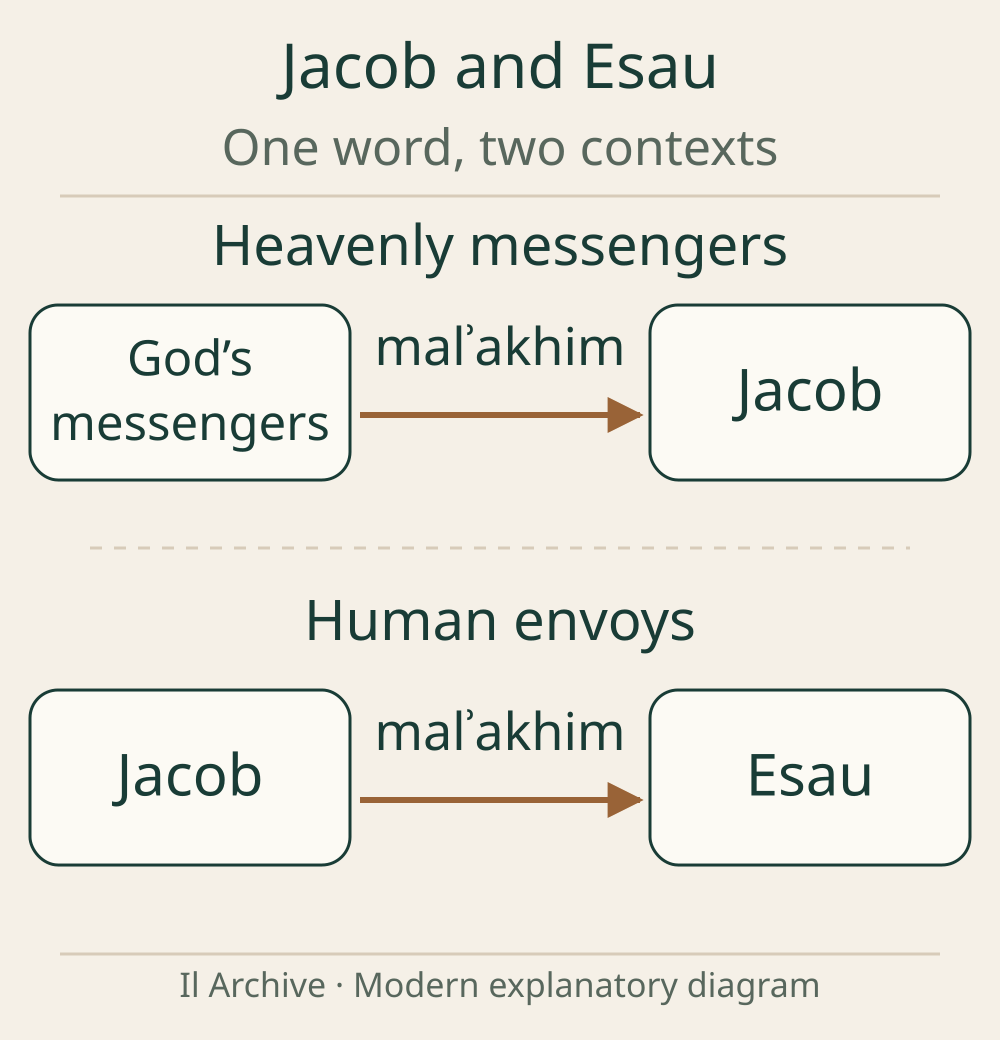
Modern linguistic diagram of Genesis 32:2 and 4 in Hebrew numbering (1 and 3 in common translations): the same word, malʾakhim, for God’s messengers and Jacob’s envoys to Esau. Arrows show the direction of communication, not a geographic route or portraits
Person
Jacob’s twin brother in Genesis and the recipient of his envoys in chapter 32.
Namensvarianten: Esau son of Isaac
Kontext und Quellen →

Modern AI-generated expressive cover for eschatology: an artistic metaphor for mortality and renewal, not an ancient artifact or an authenticated scene from any religious tradition
Entität
Study of after-death destiny, resurrection and judgment, and the fate or renewal of history and creation; their forms and histories vary across traditions.
Namensvarianten: eschatology, eschatological thought, study of the last things
Kontext und Quellen →
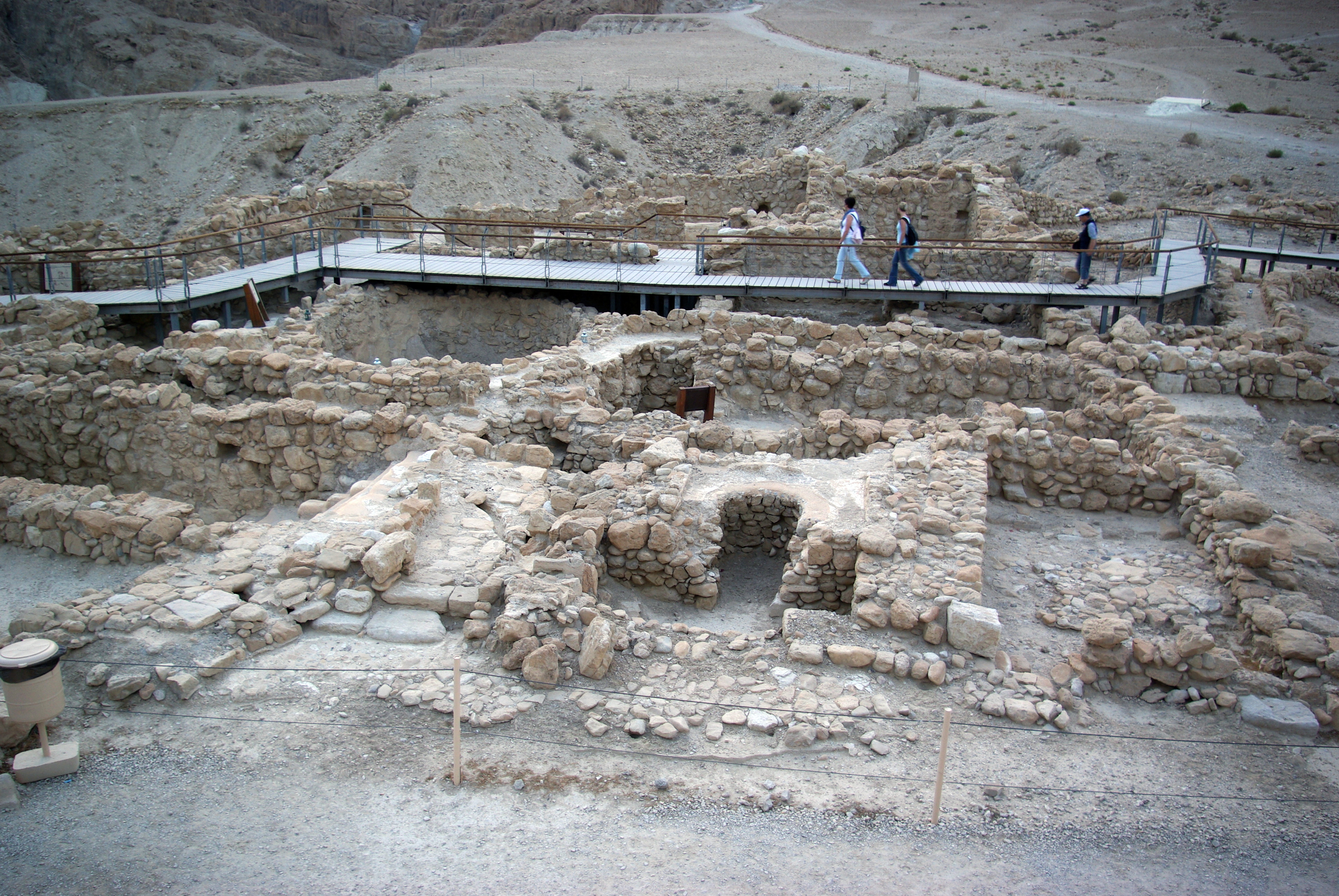
Excavated buildings at Qumran photographed in 2008, with modern visitor walkways visible. Contextual view of the site, not an ancient temple or proof of the identity of all Essenes
Entität
A Second Temple Jewish movement known especially through Josephus and Philo; evidence supports a Qumran connection without identifying every Essene or manuscript with one uniform community.
Namensvarianten: Essenes, Essene
Kontext und Quellen →
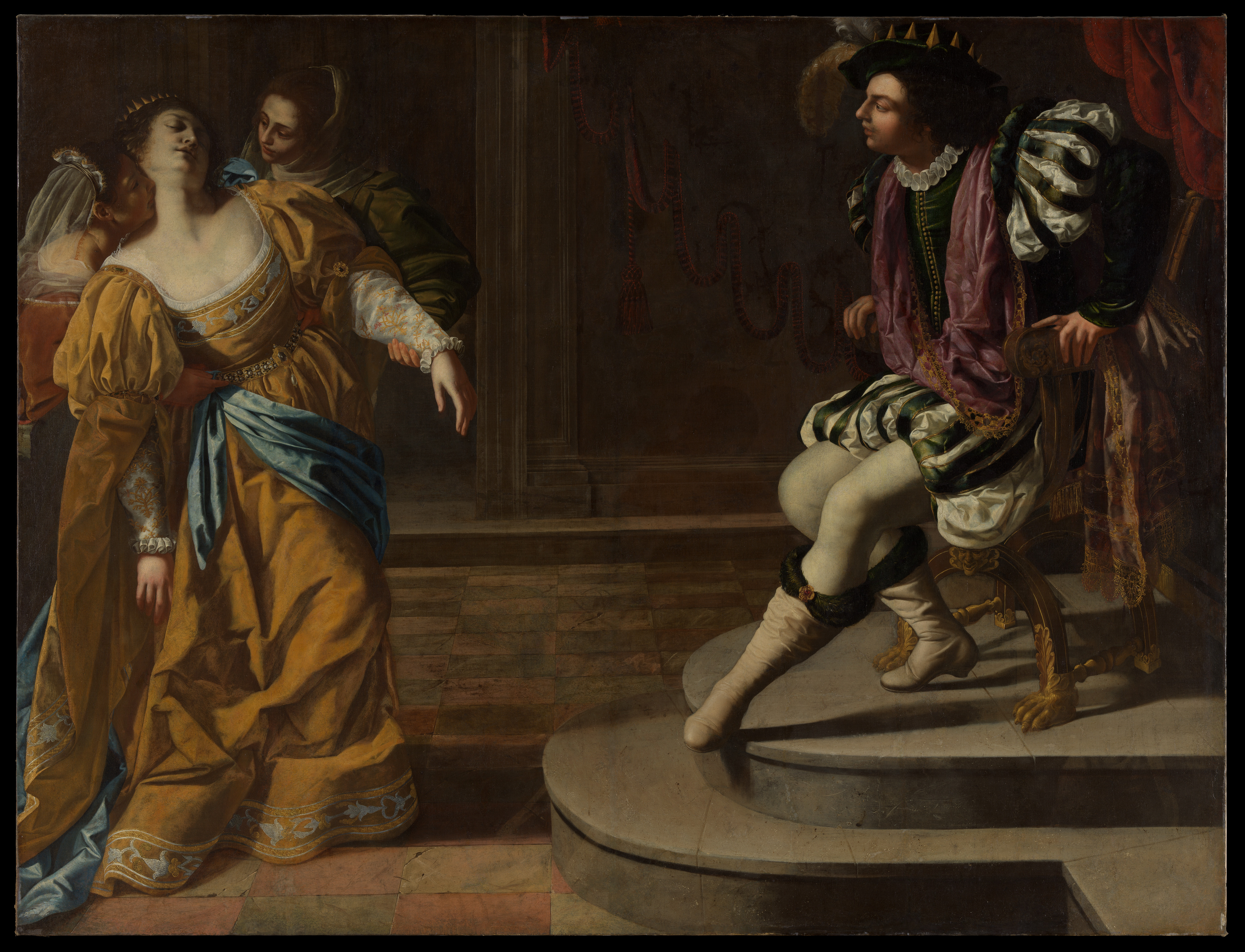
Esther before Ahasuerus, Artemisia Gentileschi,1620 s; Met 69.281. The queen is shown fainting: later artistic reception, not an image from the Achaemenid court
Person
The Jewish heroine of Esther, portrayed as becoming queen and intervening to save her community at the Persian court.
Namensvarianten: Esther, the biblical queen, Esther, Hadassah
Kontext und Quellen →
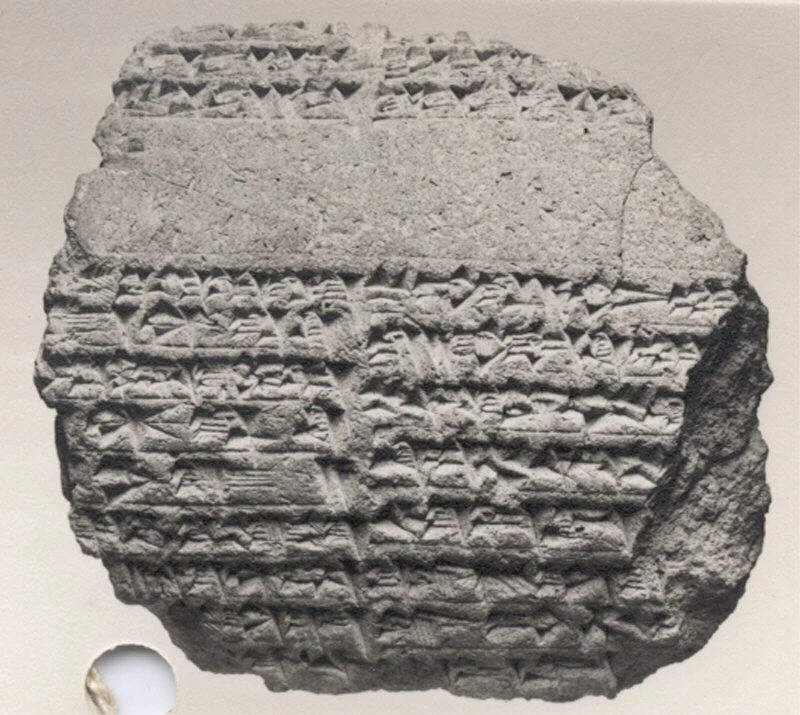
Clay cuneiform cylinder of Nebuchadnezzar II; the Metropolitan Museum identifies its inscription as commemorating the rebuilding of Etemenanki. Object 86.11.284 (c. 604–562 BCE); attribution to Babylon is qualified. This is a photograph of the object, not of the tower or Genesis
Entität
Stepped ziggurat in Babylon’s Esagil sacred precinct, associated with Marduk. Excavations establish its base, royal texts attest rebuilding, and a later Esagil Tablet supplies idealized dimensions.
Namensvarianten: Etemenanki, E-temen-an-ki, E-temen-anki
Kontext und Quellen →
Person
Doshisha University scholar of Jewish studies, rabbinic literature and Aramaic, who compared accounts of Abraham breaking idols.
Namensvarianten: Etsuko Katsumata
Kontext und Quellen →
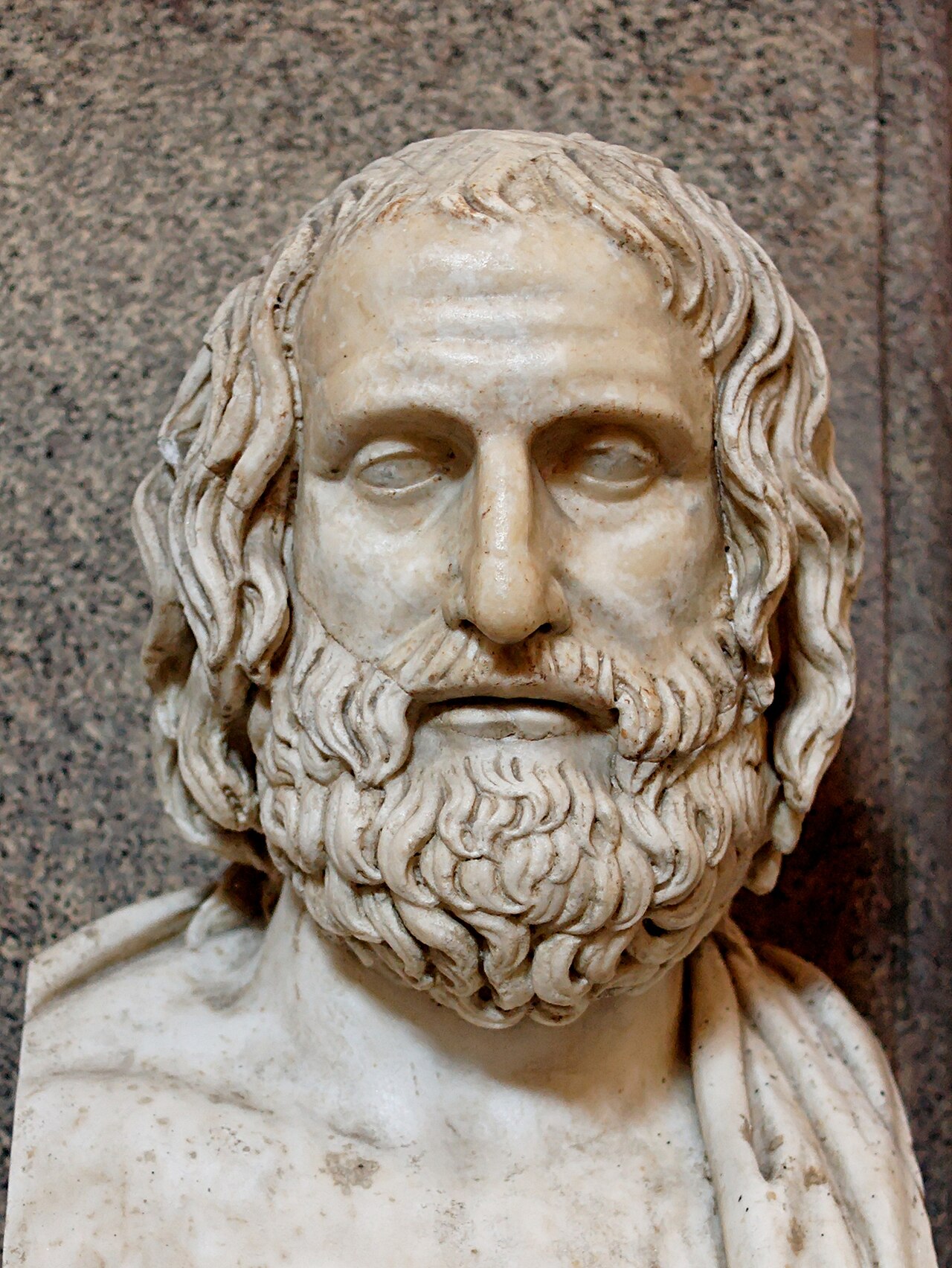
Roman bust identified as Euripides, after a Greek model of c. 330 BCE; Vatican Museums inv. 302. Made after his death, it cannot establish his actual features
Person
Fifth-century BCE Greek tragedian, died 406 BCE. In his Iphigenia among the Taurians, the heroine recounts a deer substituted for her.
Namensvarianten: Euripides
Kontext und Quellen →
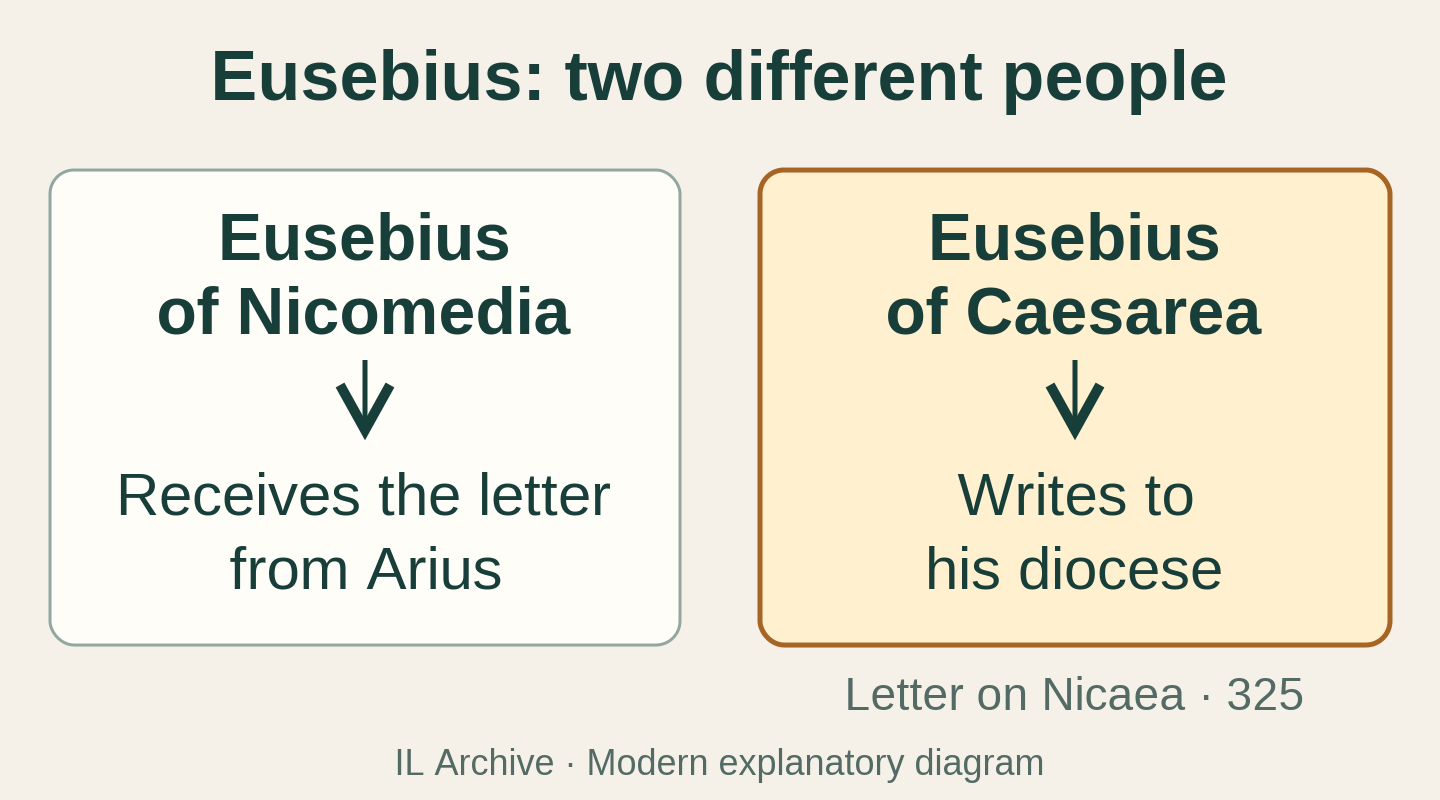
Modern comparison highlighting Eusebius of Caesarea, author of the letter explaining acceptance of the Nicene creed, distinct from Arius’s correspondent Eusebius of Nicomedia. Arrows clarify their different letter roles
Person
Third- and fourth-century Christian bishop and author of Church History.
Namensvarianten: Eusebius of Caesarea
Kontext und Quellen →
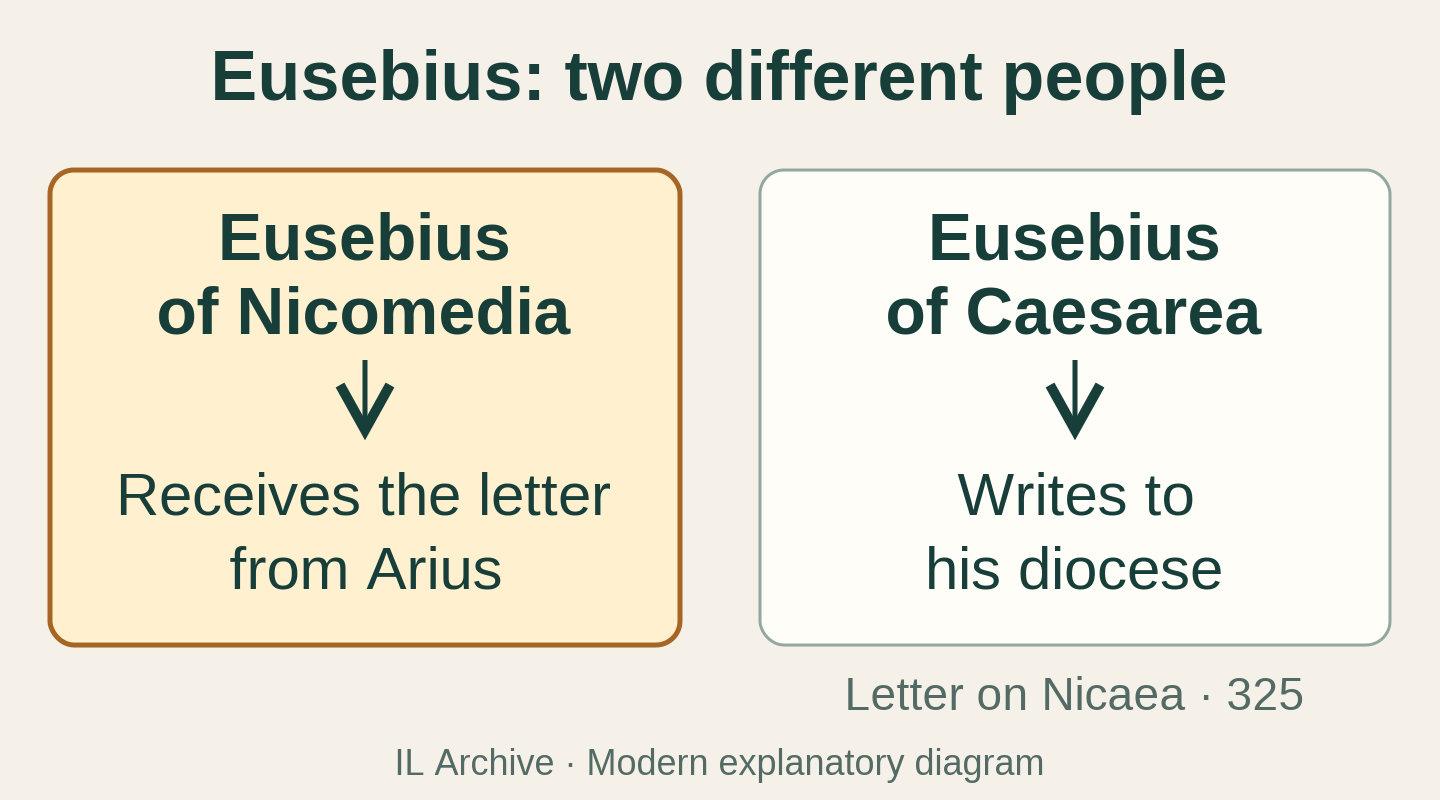
Modern comparison of Eusebius of Nicomedia, recipient of Arius’s letter, and Eusebius of Caesarea, writer to his diocese about Nicaea in 325. Highlighting identifies this entry’s subject
Person
Fourth-century bishop of Nicomedia, correspondent and supporter of Arius.
Namensvarianten: Eusebius of Nicomedia
Kontext und Quellen →
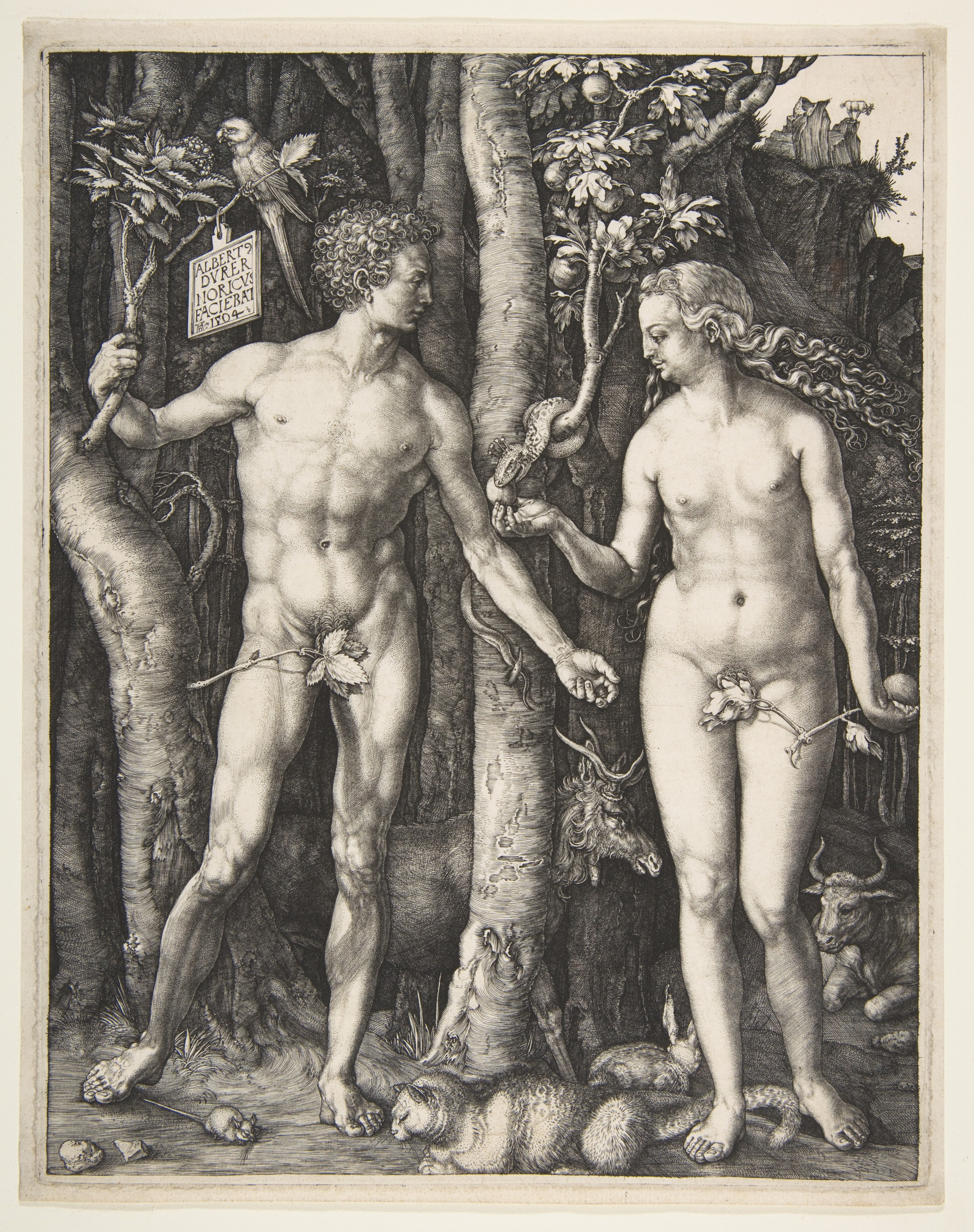
Adam and Eve, engraving by Albrecht Dürer, 1504, Met 19.73.1. Later artistic reception of Genesis, not a portrait of historical people or a Sumerian witness
Person
First woman in Genesis, whose making is linked to the human’s rib or side and whose name to mother of all the living.
Namensvarianten: Eve, figure in Genesis
Kontext und Quellen →
Person
Ezekiel is a priest and prophet in the Hebrew Bible, whose book is associated with the Judean exile in Babylonia in the sixth century BCE.
Namensvarianten: Ezekiel
Kontext und Quellen →
Person
British scholar and translator (1856–1924) who published the Testament of Solomon in 1898.
Namensvarianten: F. C. Conybeare
Kontext und Quellen →
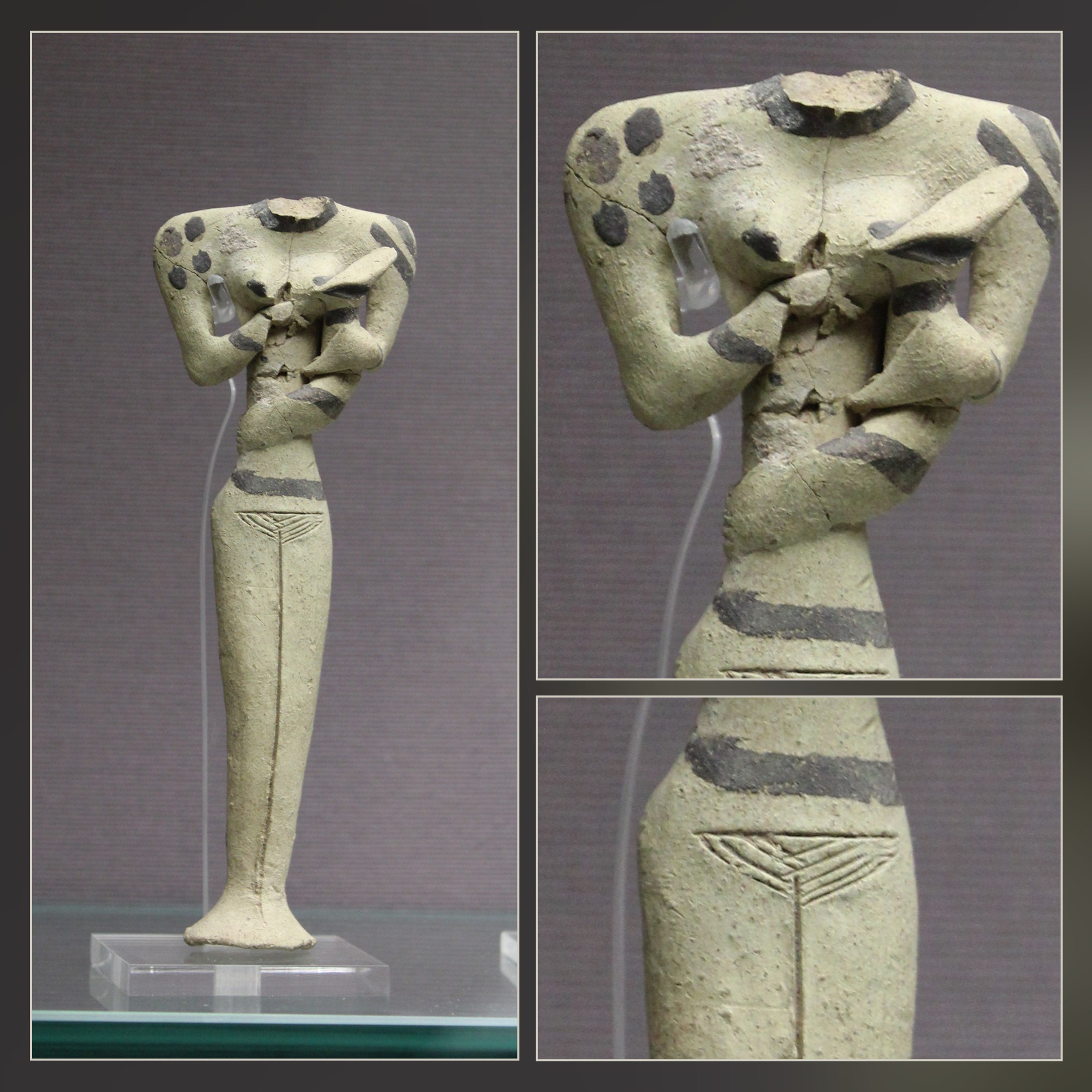
Editorial photographic cover showing the same object three ways: complete figurine at left, enlarged hands and infant and waist incision details at right. Ur, Ubaid period; British Museum 122873. Modern layout based on Zunkir’s photo, not three separate objects or a reconstruction
Entität
A small shaped object depicting a human, animal or abbreviated form, in clay, stone or another medium. Its form alone does not establish its use; manufacture, handling traces and find context matter.
Namensvarianten: figurine, figurines
Kontext und Quellen →
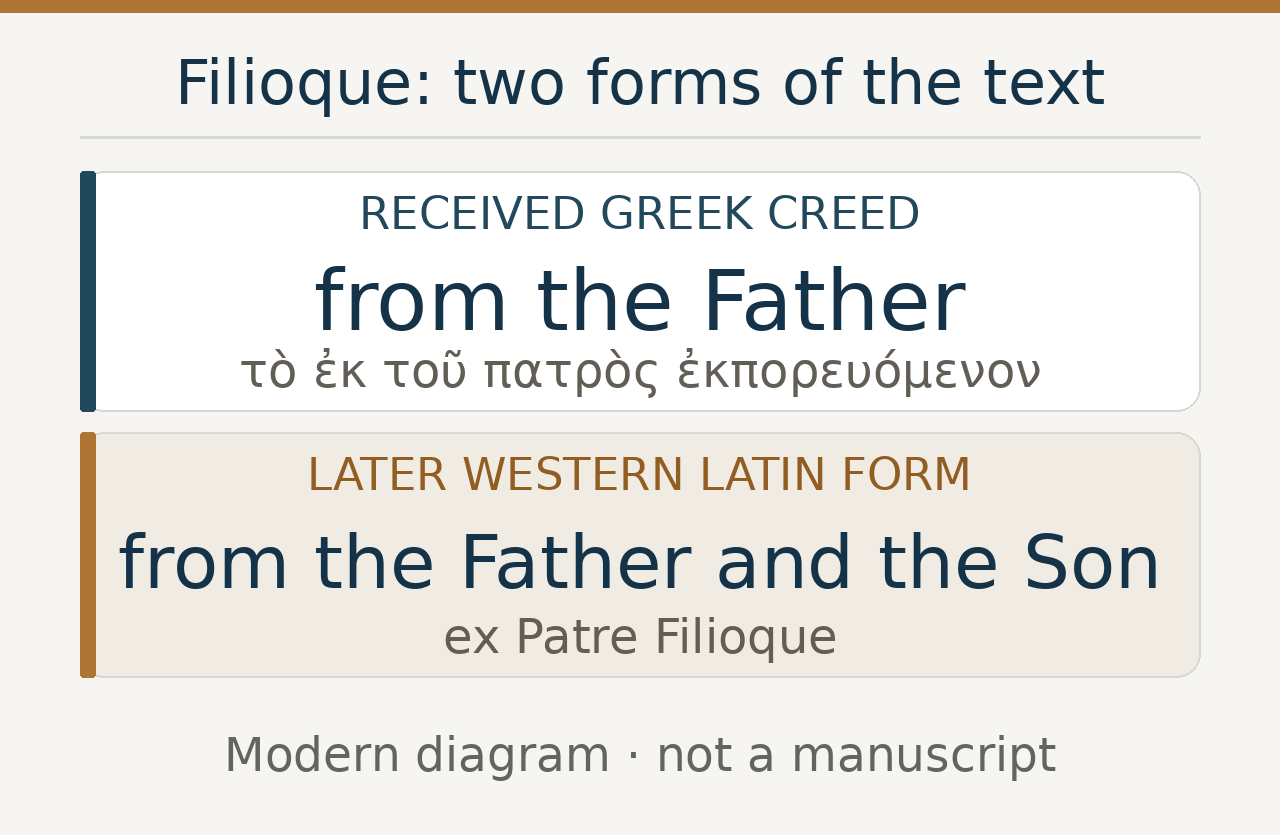
New editorial comparison of the received Greek phrase “from the Father” with the later Western Latin formula “from the Father and the Son.” Not a manuscript image or an independent witness to when insertion occurred
Entität
Latin for “and the Son,” added in Western use to the clause about the Holy Spirit in the creed associated with Constantinople (381). Absent from the received Greek text; disputed in doctrine and the authority to amend the creed.
Namensvarianten: Filioque
Kontext und Quellen →
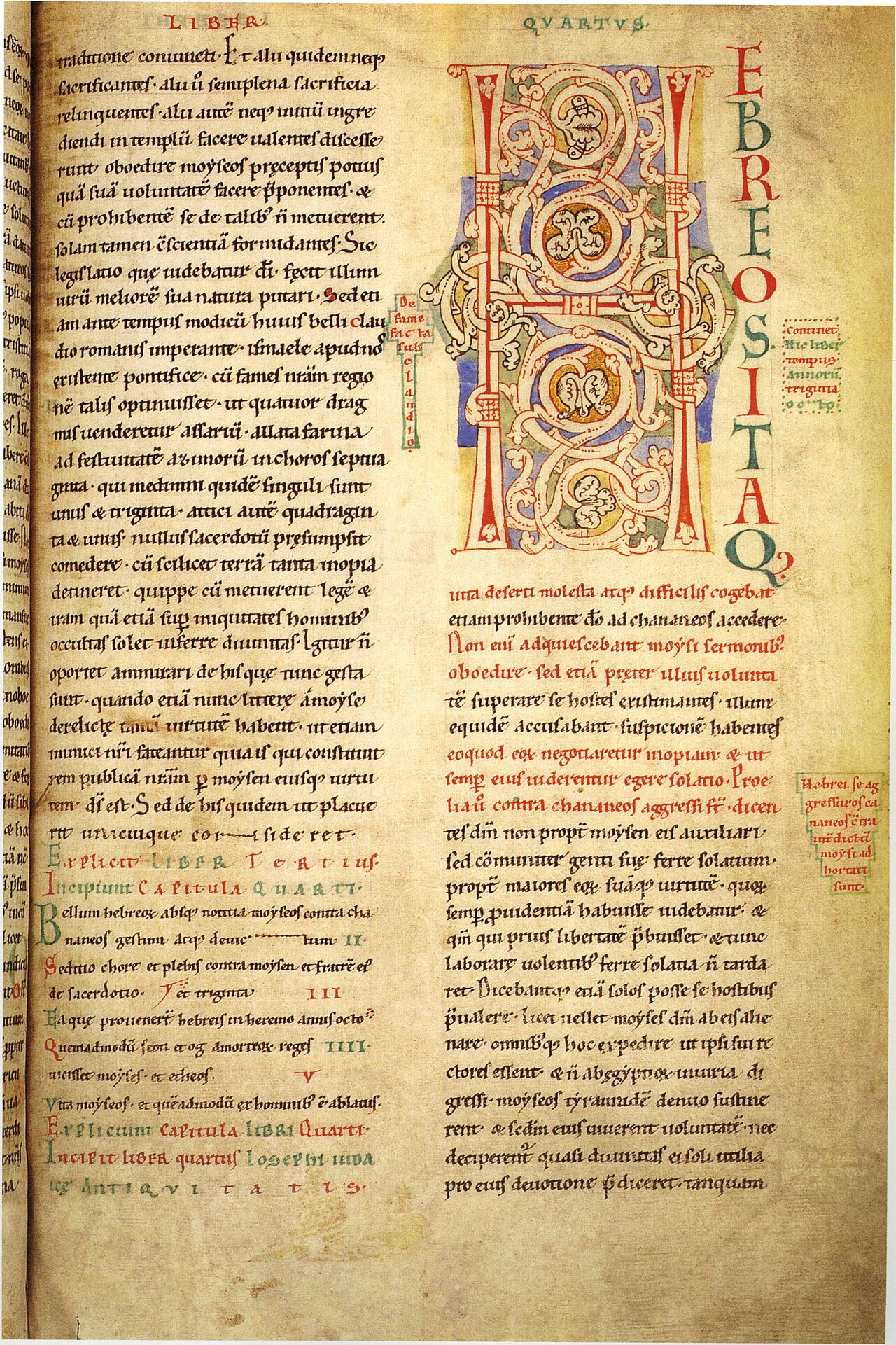
Twelfth-century Latin copy of Jewish Antiquities, Cologne Cathedral Library MS 162, fol. 41r. The page begins Book IV, not the Book I sacrifice account
Person
First-century Jewish historian who retold older narratives, including Abraham’s test, in Jewish Antiquities.
Namensvarianten: Josephus, Flavius Josephus
Kontext und Quellen →
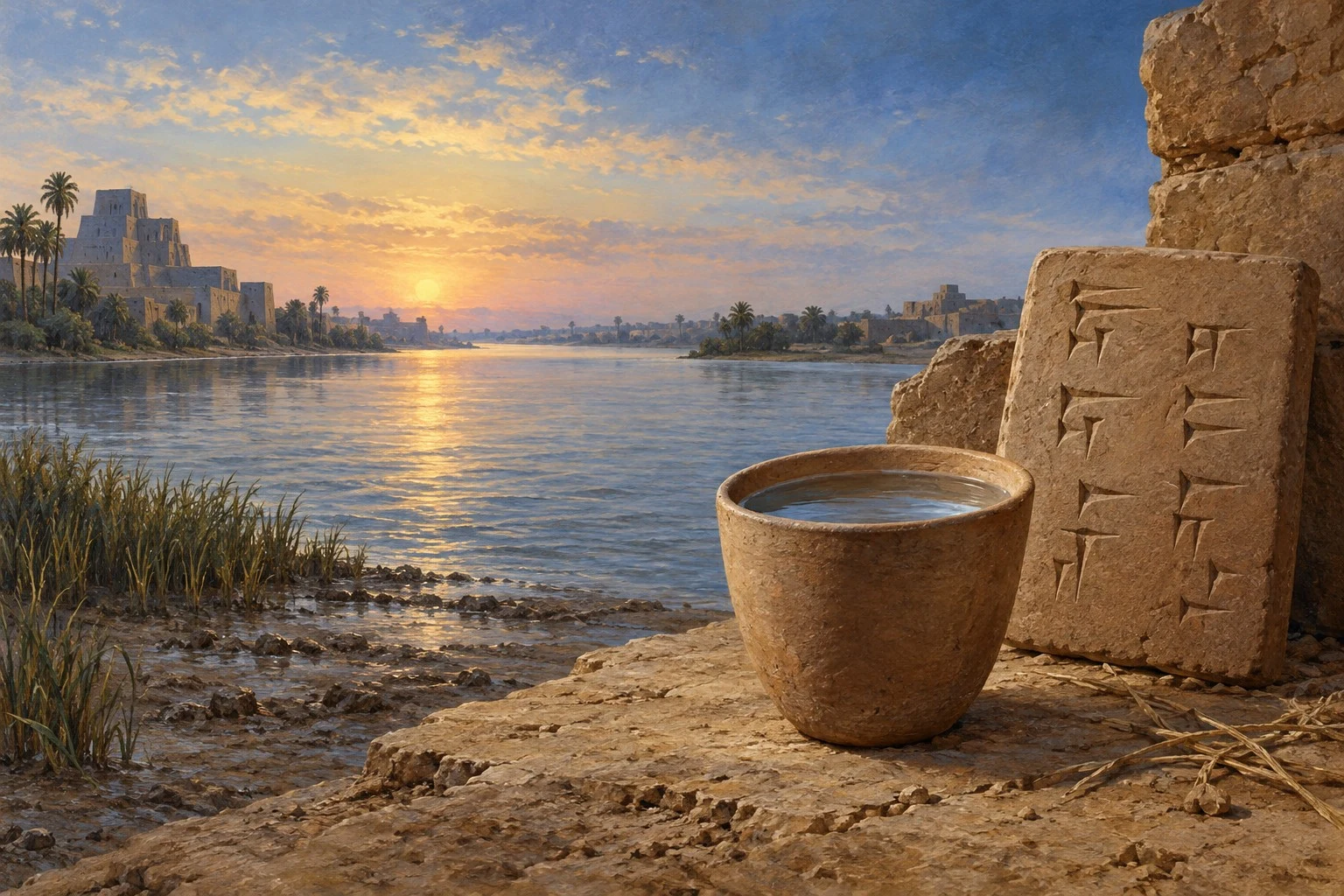
A modern conceptual illustration places river and vessel together to contrast two distinct procedures. It depicts no documented ordeal or specific artifact; the tablet's marks are decorative and not legible text
Entität
Referral of an unresolved dispute to a divinized River for judgment, with procedures and consequences that differ between legal rules and case reports.
Namensvarianten: river ordeal, riverine ordeal
Kontext und Quellen →
Person
Frans A. M. Wiggermann is an Assyriologist, a scholar of ancient Mesopotamian languages and texts.
Namensvarianten: Frans A. M. Wiggermann
Kontext und Quellen →

Modern AI-assisted interpretation of purification and renewed life in the Bundahishn narrative. Not an ancient artifact, identifiable persons, or a literal map of the final world; mountains and landscape are expressive elements
Entität
Creation’s completion or renovation in Iranian tradition, linked to incorruptible life and evil’s retreat.
Namensvarianten: Frashokereti, Frašō.kərəti, Frashgird, Frashegird
Kontext und Quellen →
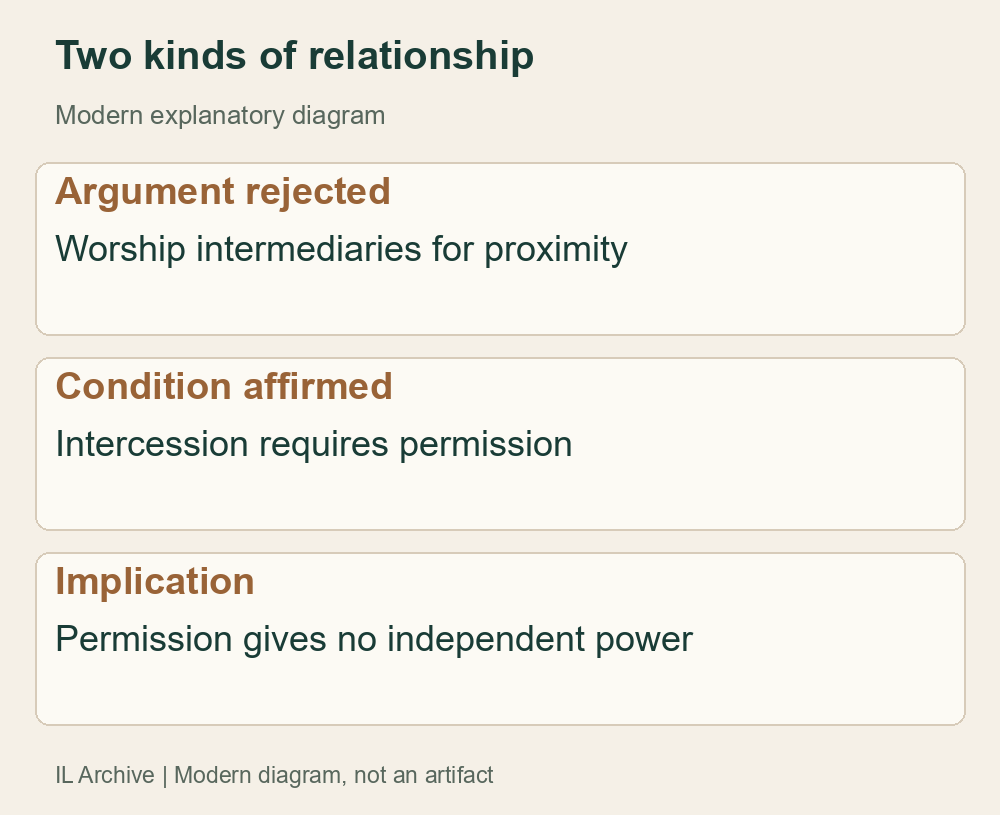
Modern explanatory diagram by IL Archive: distinguishes worship of intermediaries for proximity (Q 10:18; 39:3) from intercession conditional on permission (Q 2:255; 21:28). Not an ancient artifact or a statement about every school
Entität
An appeal made to God by an intercessor on another’s behalf; its actors, conditions, and acceptability differ by text and tradition. Not a synonym for every mediation, prayer, or tawassul.
Namensvarianten: intercession, religious intercession
Kontext und Quellen →

Modern AI-generated symbolic cover: imagined books and a trail of light allude to accounts of Gabriel in different texts. These are not real historic books, a portrait of the angel, or an archaeological reconstruction
Entität
A Semitic theophoric name for an interpreter of visions in Daniel and a messenger in Luke; named Jibrīl in the Qurʾan. His functions depend on each textual context.
Namensvarianten: Gabriel, Jibrīl
Kontext und Quellen →
Person
Greek and Latin papyrologist who co-edited the Hamburg fragment.
Namensvarianten: Gabriel Nocchi Macedo
Kontext und Quellen →
Person
Researcher in Hebrew texts and their history, comparing Deuteronomic covenant with ancient imperial formulations.
Namensvarianten: Gad Barnea
Kontext und Quellen →
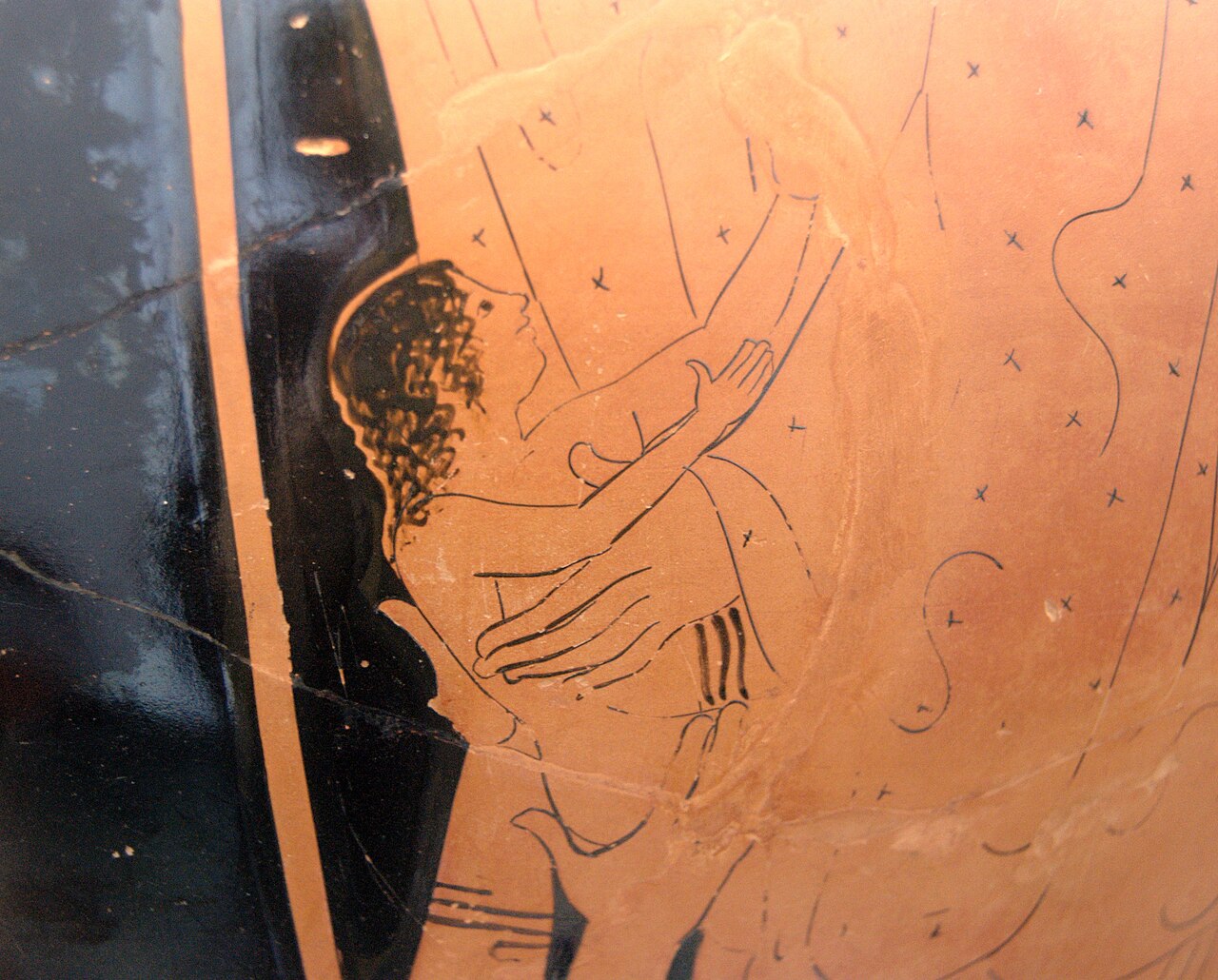
Gaia lifts the infant Erichthonios toward Athena; detail of an Attic vase, about 470–460 BCE, Munich 2413. Bibi Saint-Pol, 10 February 2007; another scene representing Gaia as Earth
Entität
Earth as a divine figure, active in the gods’ origins and conflicts in Hesiod.
Namensvarianten: Gaia
Kontext und Quellen →
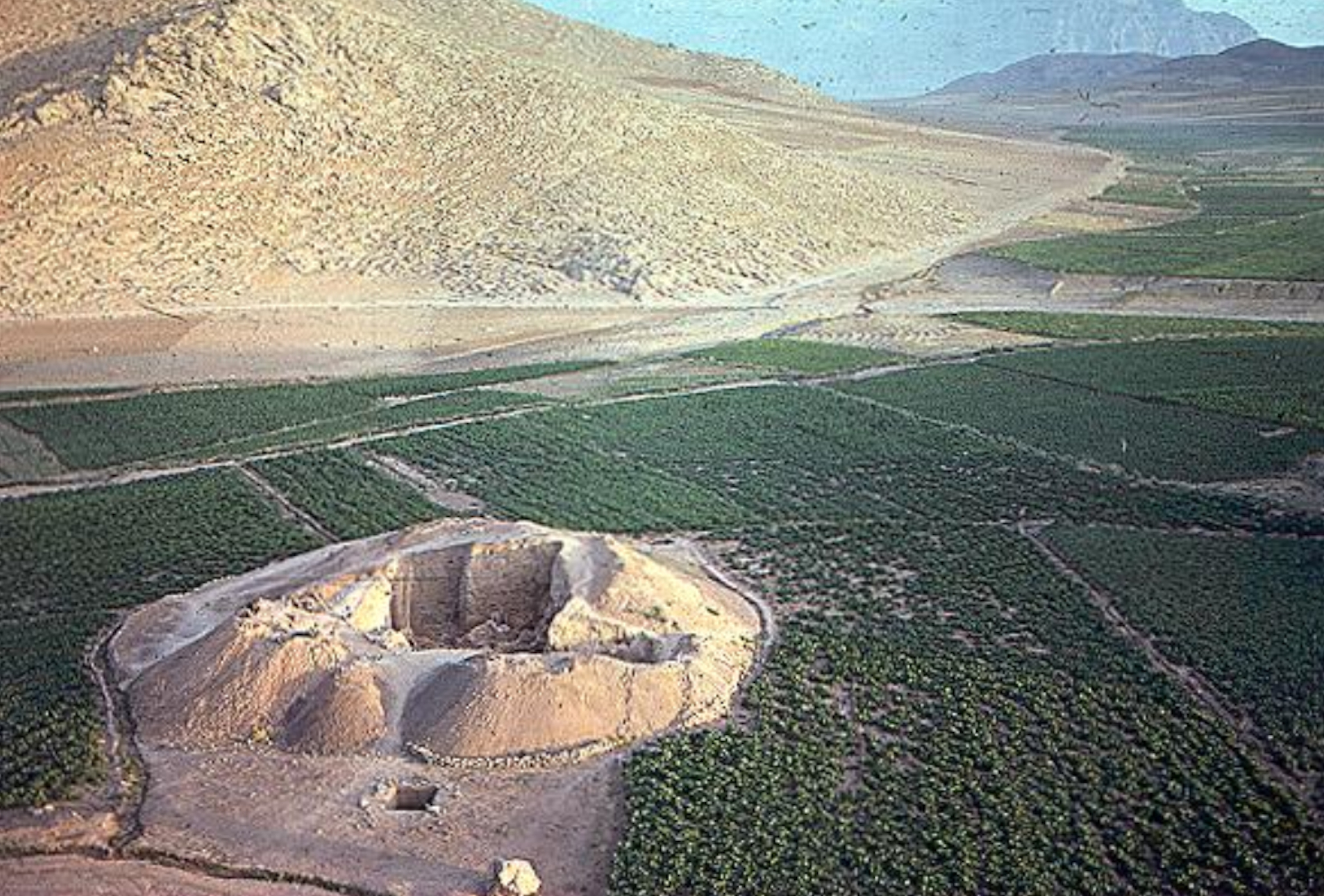
View of Ganj Dareh and its archaeological mound; not a reconstruction of the Neolithic village
Stätte
Neolithic site in western Iran’s Zagros, important for early settlement, herding, burial and cranial modification.
Namensvarianten: Ganj Dareh
Kontext und Quellen →

Angell Hall at the University of Michigan, Ann Arbor, 8 March 2022. Institutional context for Gary Beckman, who joined Michigan in 1992; not a portrait or identification of his office
Person
Scholar of the Hittite language, Hittite religion and ancient Near Eastern history, associated with the University of Michigan.
Namensvarianten: Gary Beckman
Kontext und Quellen →
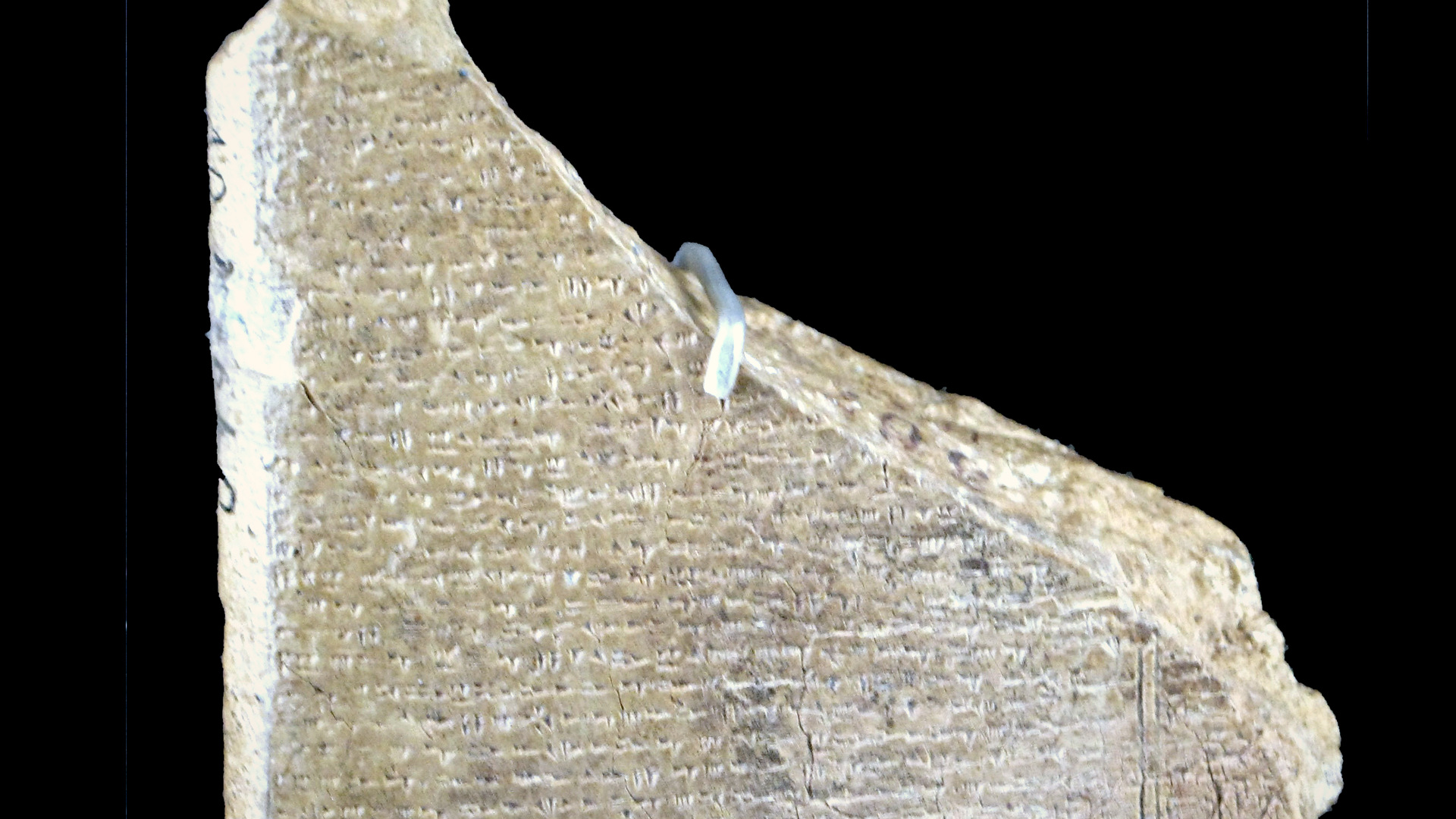
Editorial crop and colour adjustment of a Ugaritic Baal Cycle tablet, 14th–13th century BCE, Louvre AO 16640. Context for Ugaritic writing, not evidence that this face contains the name El or settles the sense of a particular word
Entität
A noun referring to a member of a class, such as “city” or “god”, unlike a proper name designating a particular entity. Semitic il/El may fulfill either function in context.
Namensvarianten: common noun
Kontext und Quellen →
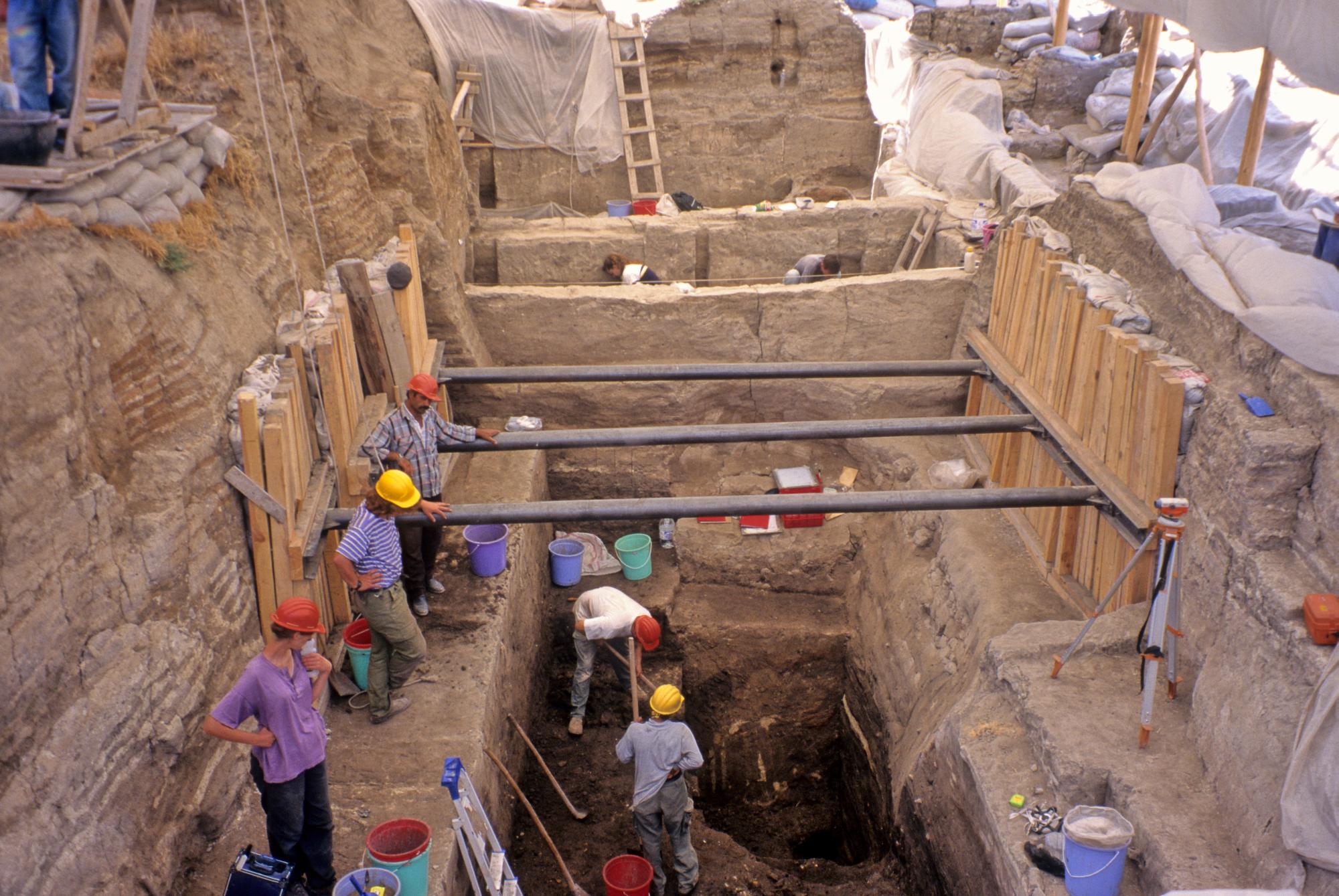
A deep excavation trench at Çatalhöyük exposes accumulated deposits and architectural remains. Braces, boards and working equipment are modern. This illustrates the setting for reading building sequences, not an identification of Building 42 or 52
Entität
Reading a building through construction, use, transformation and closure, rather than as a fixed plan.
Namensvarianten: building biography, building life history
Kontext und Quellen →
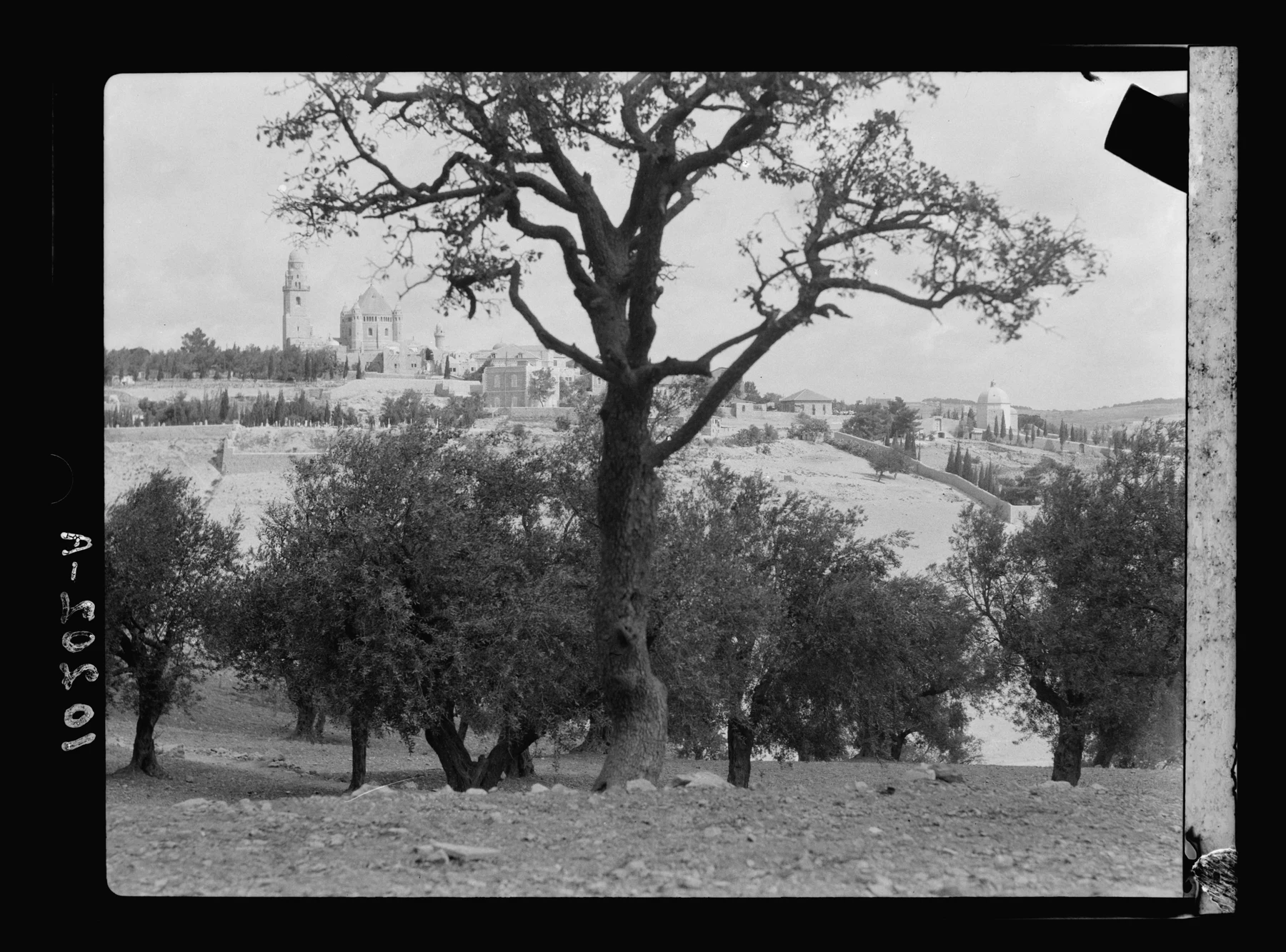
Mount Zion from the valley of Hinnom; American Colony (Jerusalem), Photo Department, 1934–1939. Library of Congress, LC-DIG-matpc-19029. Modern historical site photograph, not an image of the afterlife or photographic evidence of ancient rites. Collection rights dedicated to the public; no known publication restrictions
Entität
A name linked to Jerusalem’s Valley of Hinnom. Gehenna acquired meanings of judgment in Jewish and Christian texts and is linguistically related to Quranic Jahannam; the depictions are not identical.
Namensvarianten: Gehenna, Gehinnom, Jahannam
Kontext und Quellen →
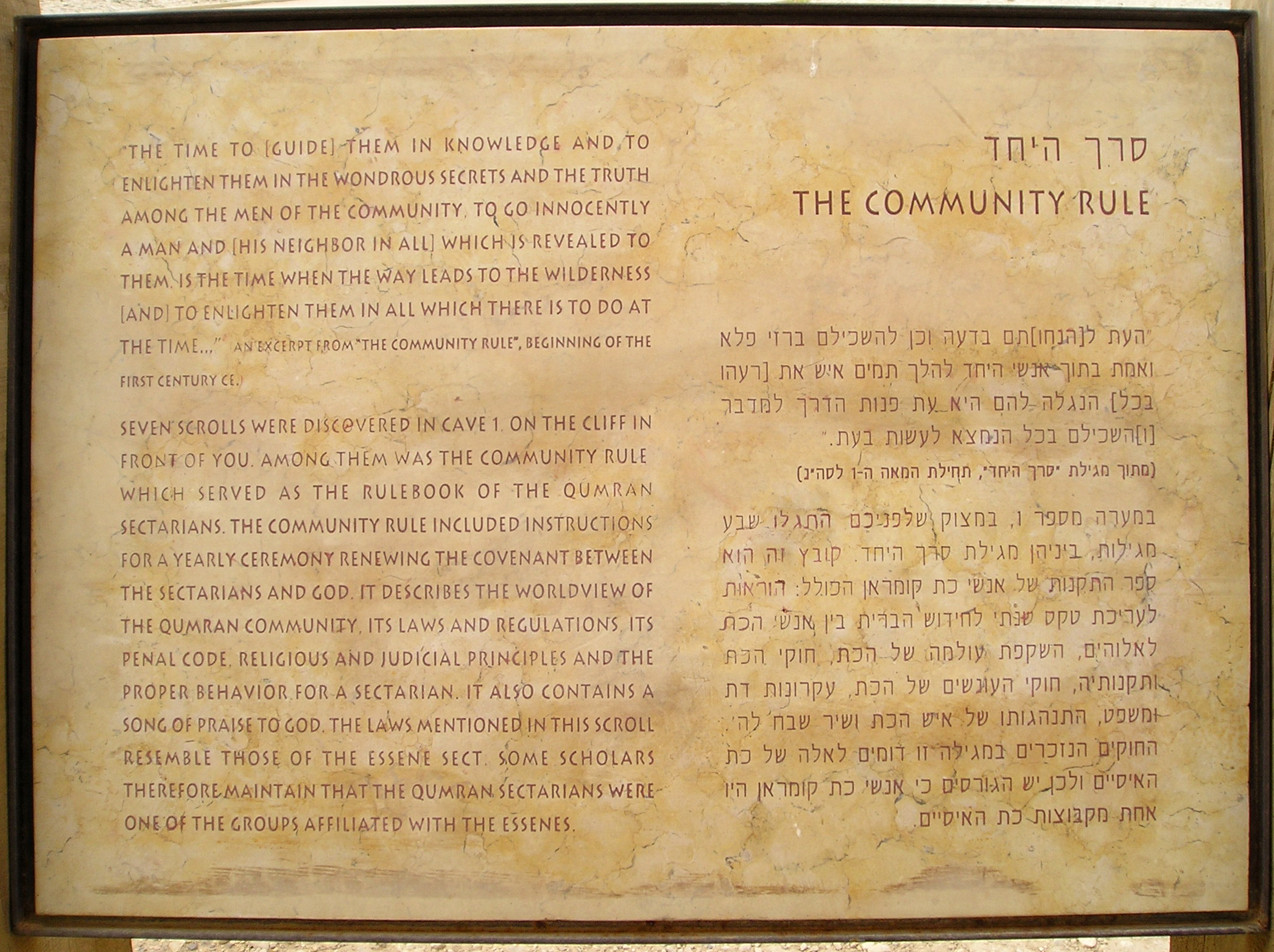
Modern explanatory sign about the Community Rule at Qumran, photographed by A. Sobkowski on 9 March 2006. It contains English and Hebrew text; this is not a photograph of the ancient scroll
Entität
Hebrew text among the Dead Sea Scrolls; the copy designated 1QS includes teaching on the spirits of truth and perversity and conflict within the human heart.
Namensvarianten: Community Rule, 1QS
Kontext und Quellen →

Branching paths symbolize the circulation of images and stories; a newly generated metaphorical cover, not an artifact or a map of proven transmission
Entität
An explanatory model in which several texts draw on circulating stories or imagery; it proves neither direct copying nor a particular lost original on its own.
Namensvarianten: Shared tradition
Kontext und Quellen →

Modern symbolic image of an open book whose pages branch into layers of stories and interpretation. Newly AI-generated artwork, not a Genesis Rabbah manuscript or a historical reconstruction
Entität
Jewish exegetical midrash on Genesis, mainly redacted around the fifth century CE in Roman Palestine. It assembles interpretations and narratives from different layers, including 38:13 on Abraham and the idols.
Namensvarianten: Genesis Rabbah, Genesis Rabba
Kontext und Quellen →

Modern conceptual cover: a DNA helix and abstract connections above house-plan-like shapes; neither a Çatalhöyük artifact nor evidence of a documented pedigree
Entität
An estimate of biological relatedness from inherited DNA shared by two people; its precision depends on sample quality and comparison, and it does not by itself define social family ties.
Namensvarianten: genetic kinship, biological relatedness
Kontext und Quellen →
Person
Historian of early Islam studying religious identity and the language of shirk and idolatry.
Namensvarianten: Gerald R. Hawting
Kontext und Quellen →
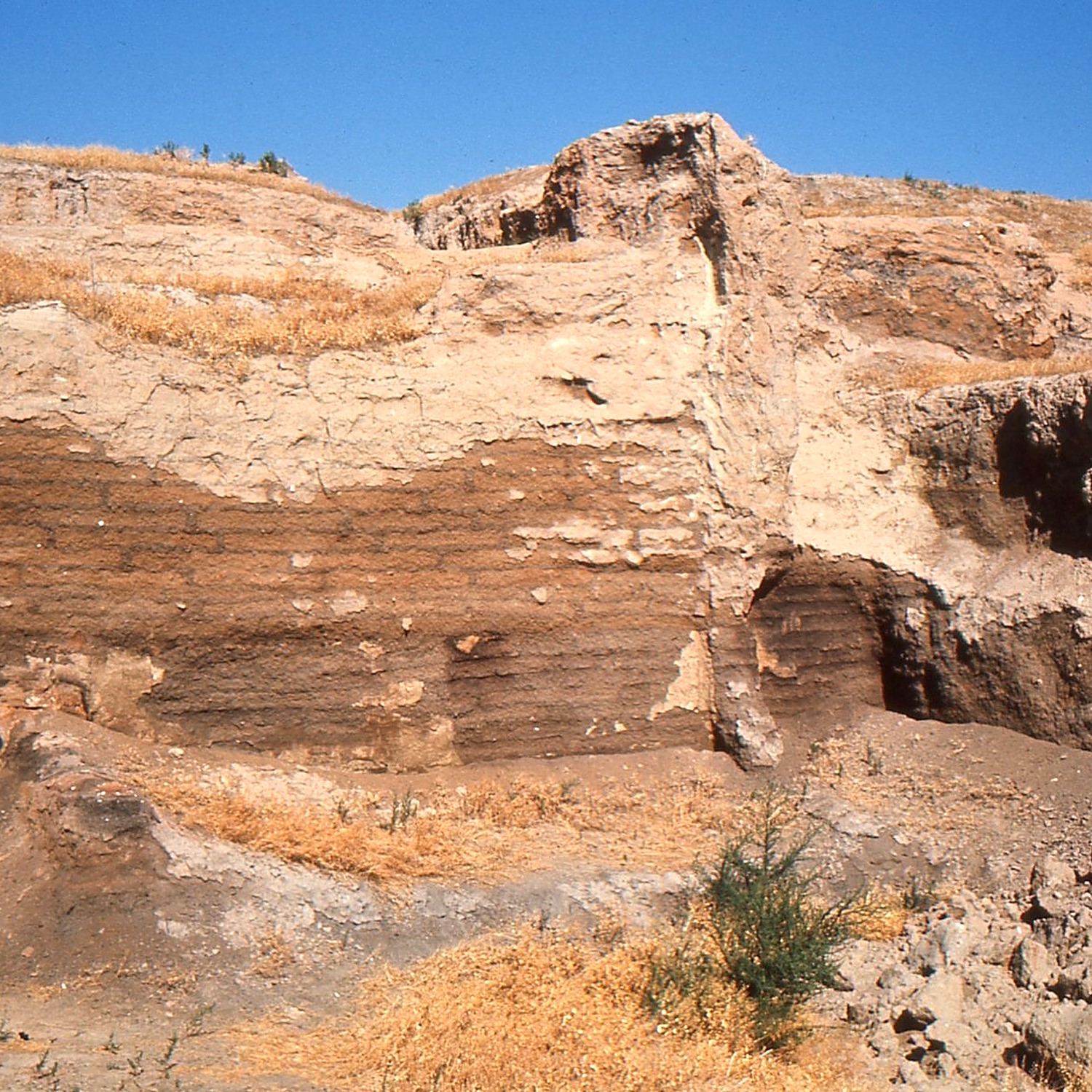
Photographic cover: exposed layers in a Çatalhöyük excavation, square-cropped and lightly tone-adjusted from Omar Hoftun’s 2013 photograph. It does not depict an identified history house
Entität
History houses: Hodder and Pels’s hypothesis linking certain long-lived Çatalhöyük buildings and concentrated burials to social memory. A debated analytical category, not an ancient name or proof of a separate temple.
Namensvarianten: history houses, history house
Kontext und Quellen →
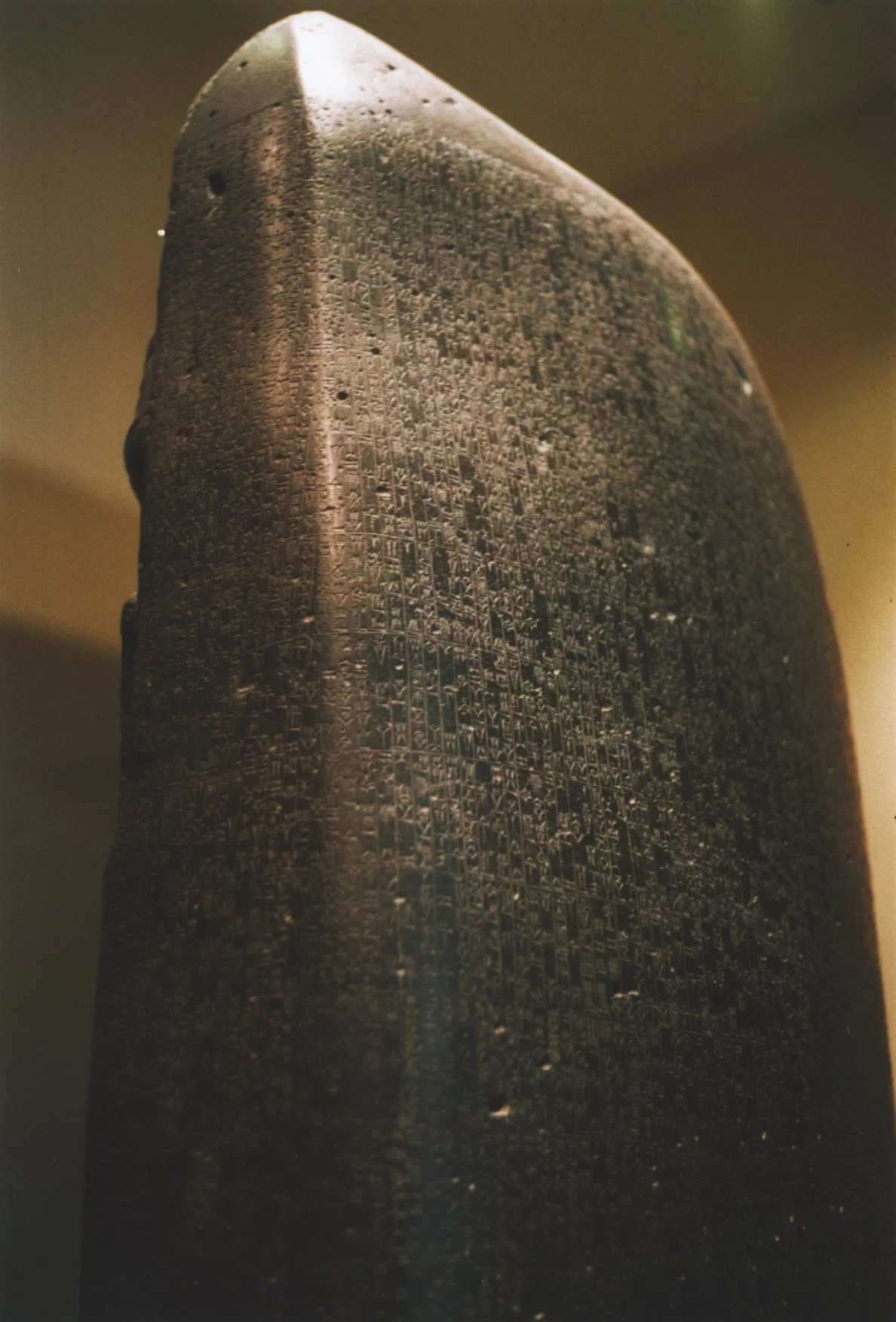
An inscribed face of Hammurabi’s stele, Louvre SB 8, eighteenth century BCE. This photograph shows cuneiform, not the upper king-and-Shamash relief. Photograph: Rama; CC BY-SA 3.0 France
Antiker Text
An eighteenth-century BCE Babylonian legal text in Akkadian, presenting property, family, labor and injury provisions within Hammurabi’s account of justice.
Namensvarianten: Laws of Hammurabi, Hammurabi’s laws
Kontext und Quellen →
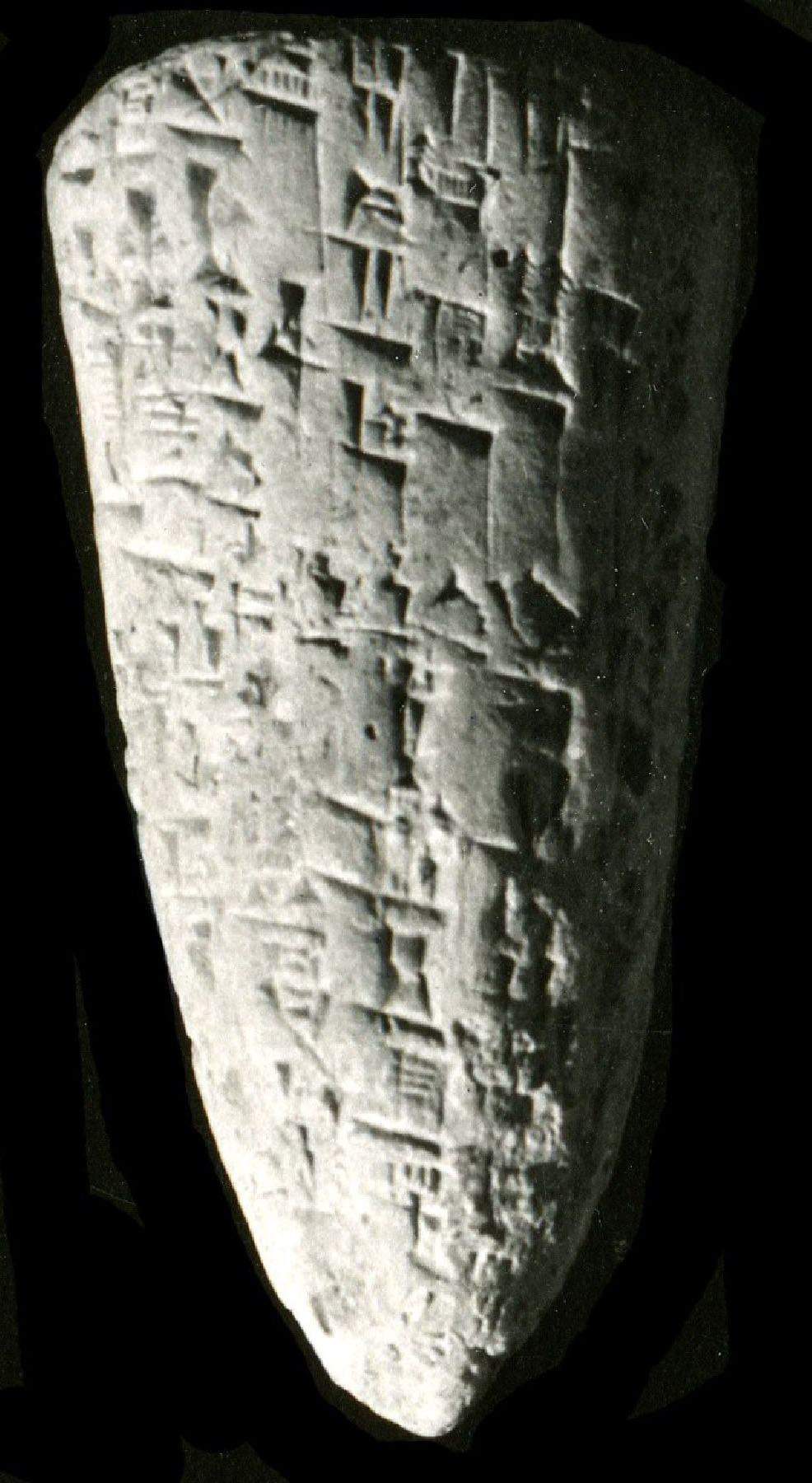
Votive cone of Lipit-Ishtar,ca.1934–1924 BCE; Walters 48.1455. A royal-period inscription, not a law-collection tablet or portrait of the king
Antiker Text
Sumerian law collection associated with Lipit-Ishtar of Isin in the twentieth century BCE.
Namensvarianten: Laws of Lipit-Ishtar
Kontext und Quellen →
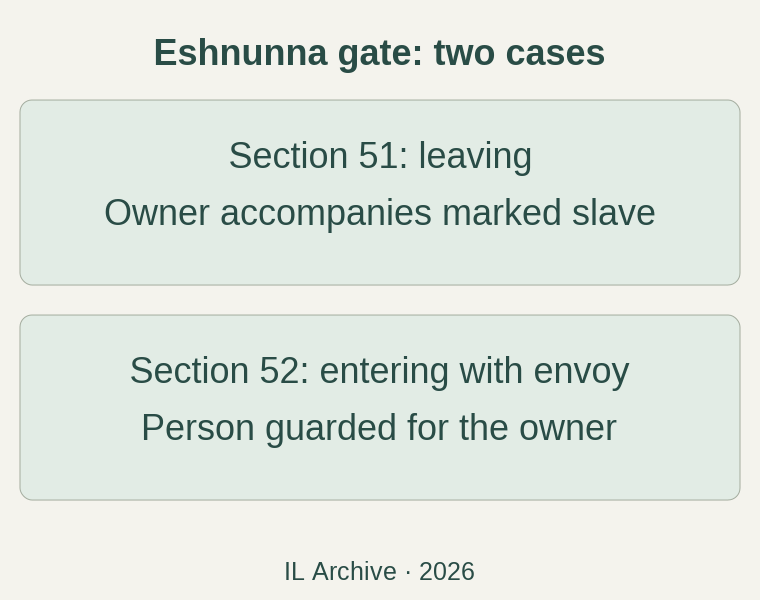
Modern diagram of the specified cases or direction of action, not an artifact photograph or portraits and not reconstruction of documented practice
Antiker Text
Old Babylonian Akkadian legal collection addressing transactions, injury and dependence.
Namensvarianten: Laws of Eshnunna
Kontext und Quellen →
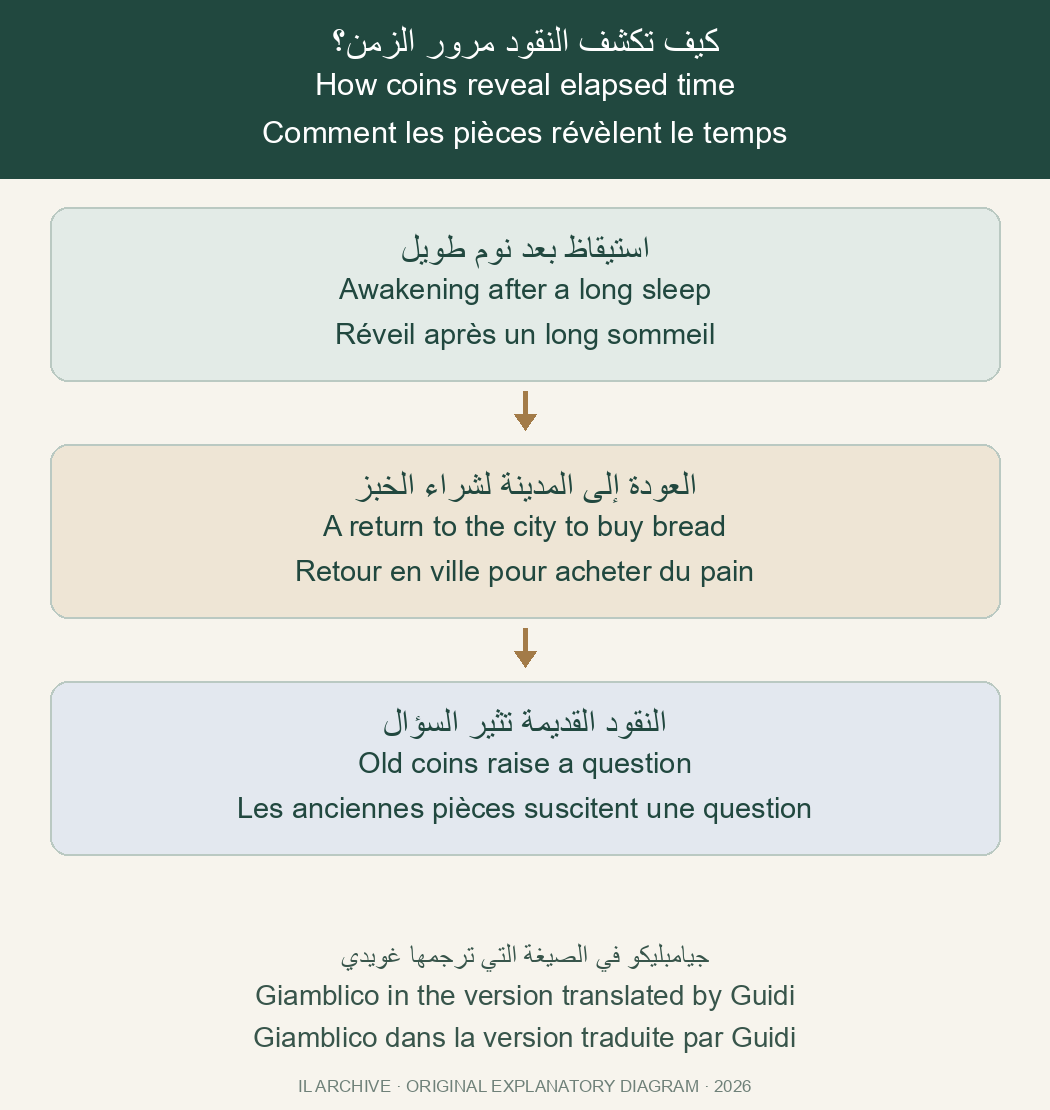
Modern diagram of Giamblico's role in the Christian version translated by Guidi: awakening, buying bread, and the time gap revealed through coins. It explains the narrative role rather than depicting a historical likeness
Person
Name of a youth in the Christian version translated by Guidi; he returns to the city to buy bread after the long sleep.
Namensvarianten: Giamblico
Kontext und Quellen →
Person
A scholar of ancient Israel, Judaea, and early Christianity who proposes reading Jonah alongside Mediterranean Jason traditions.
Namensvarianten: Gildas Hamel
Kontext und Quellen →

A journey across water towards an imagined city: modern AI-generated symbolic artwork evoking the Epic of Gilgamesh, not a photographed artifact or historical event
Entität
A king of Uruk in Mesopotamian tradition and the hero of Sumerian poems and a multi-tablet Akkadian epic, with his companion Enkidu, the loss of a friend and the search for life. In standard Tablet XI, Utnapishtim tells him of the flood.
Namensvarianten: Gilgamesh
Kontext und Quellen →