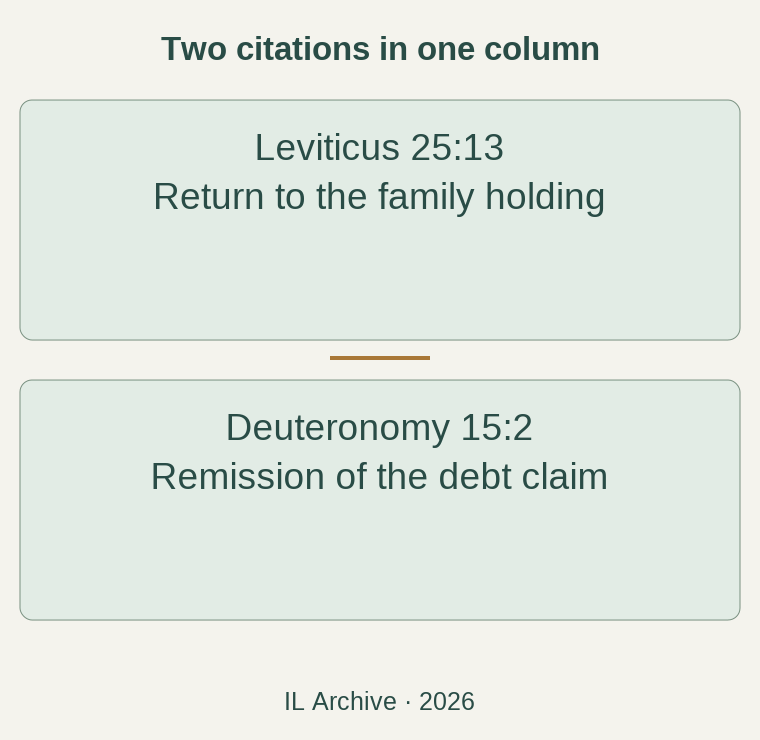
Modern diagram explaining the relationship between the named passages; not a manuscript photograph or historical portrait
Antiker Text
Cave Eleven Qumran text with a first-century BCE manuscript, combining jubilee and remission in an end-time interpretation.
Namensvarianten: 11QMelchizedek: Qumran interpretation
Kontext und Quellen →
Person
Named translator of the 1888 English edition of Paulus Cassel's Esther commentary.
Namensvarianten: Aaron Bernstein (translator of Cassel)
Kontext und Quellen →
Person
Semitic-languages and Hebrew Bible scholar; Regius Professor of Hebrew at Cambridge.
Namensvarianten: Aaron J. Koller
Kontext und Quellen →
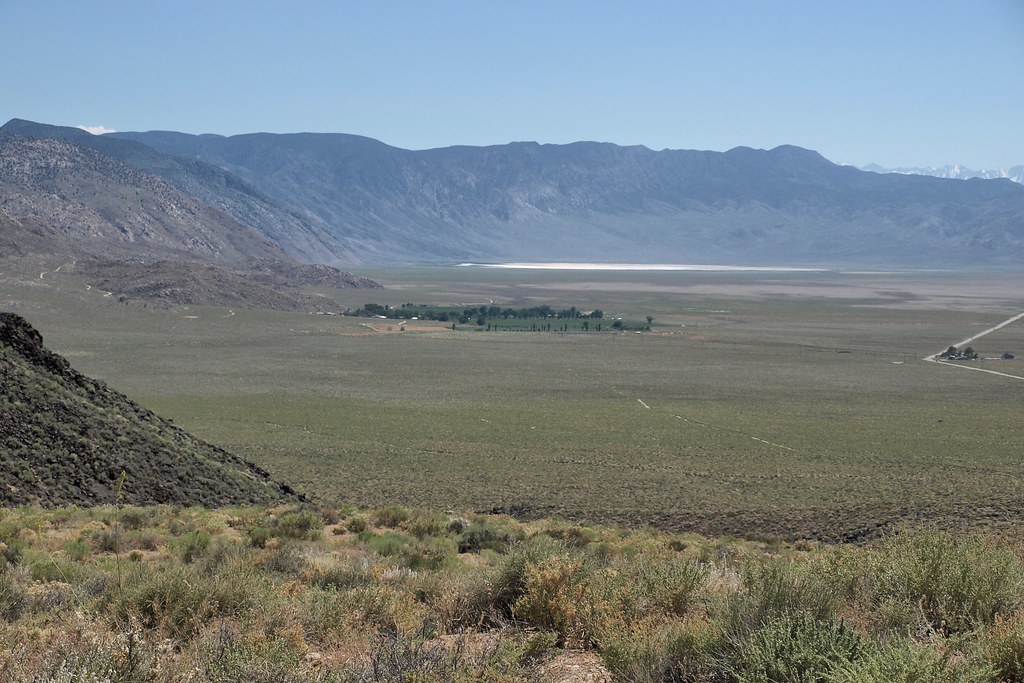
Deep Springs College and its valley in California, photographed in 2017. A view of an institution where Tugendhaft taught, rather than his portrait
Person
Scholar of the ancient Near East and the relationship between religion, politics and the arts.
Namensvarianten: Aaron Tugendhaft
Kontext und Quellen →
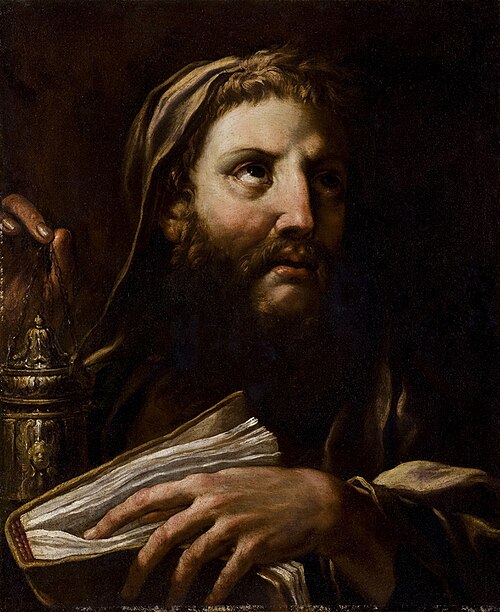
A figure probably representing Aaron holding a censer and book, about 1657–1660; painting attributed to Francesco Maffei. Agnes Etherington Art Centre, 36-002. Later artistic representation, not a historical portrait of Aaron
Person
Moses’s brother and a priest in biblical narrative; Leviticus 16 assigns him sanctuary purification and confession over the living goat.
Namensvarianten: Aaron, priest in the biblical narrative
Kontext und Quellen →
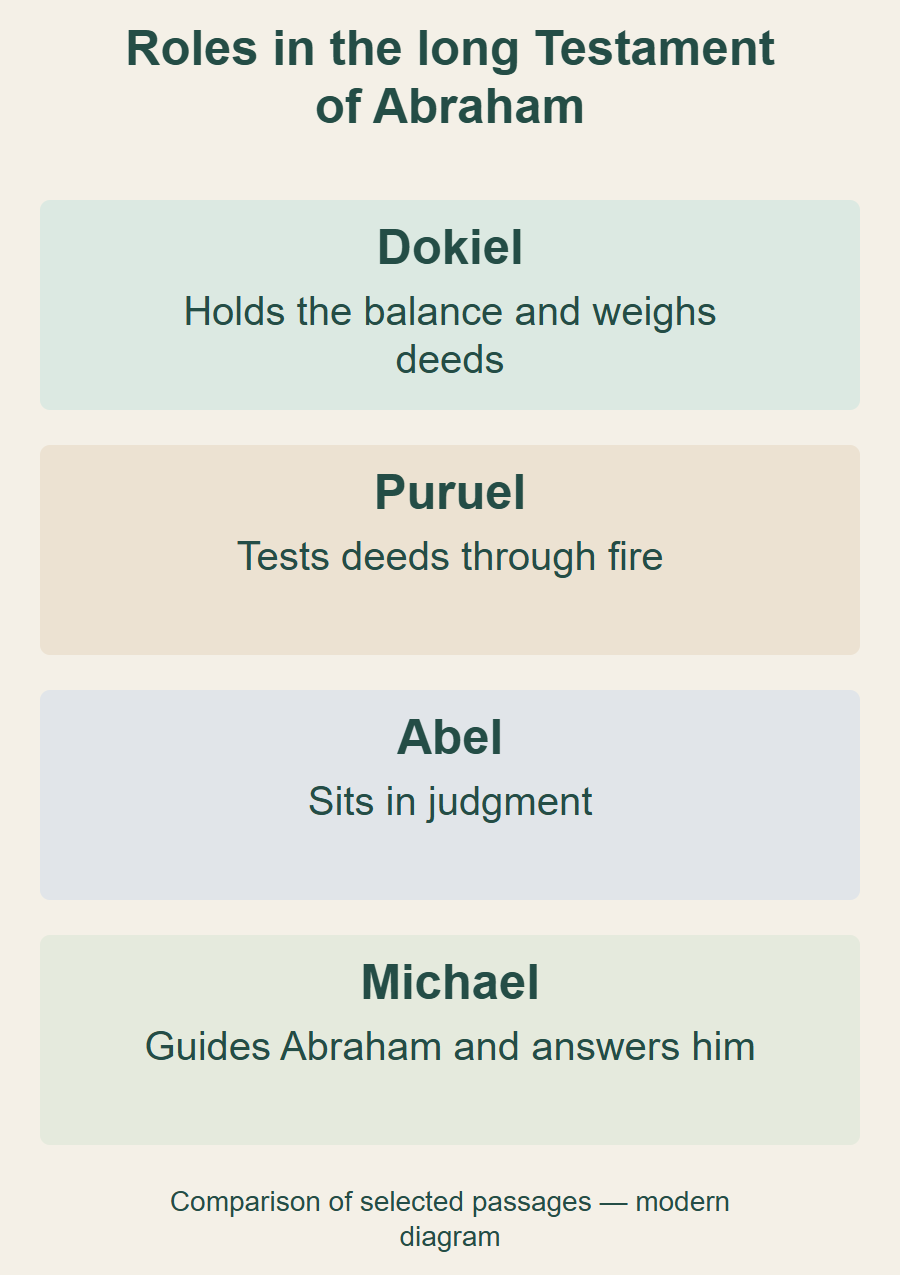
Modern chart of the long Testament of Abraham: Abel judges, Dokiel weighs, Puruel tests by fire and Michael guides Abraham; not ancient likenesses
Person
Abel is Adam’s son and Cain’s brother in Genesis, and the judge in the long Testament of Abraham.
Namensvarianten: Abel
Kontext und Quellen →
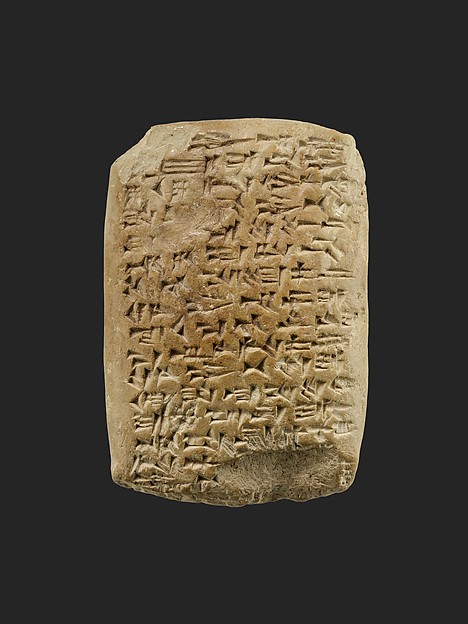
Akkadian letter from Abi-milku, ruler of Tyre, to the Egyptian king, preserved on a clay tablet from the Amarna archive. The Met dates it to about 1347–1330 BCE; object 24.2.12
Person
Abi-milku was a fourteenth-century BCE ruler of Tyre, known from letters to Egypt’s king
Namensvarianten: Abi-milku, Abimilki
Kontext und Quellen →
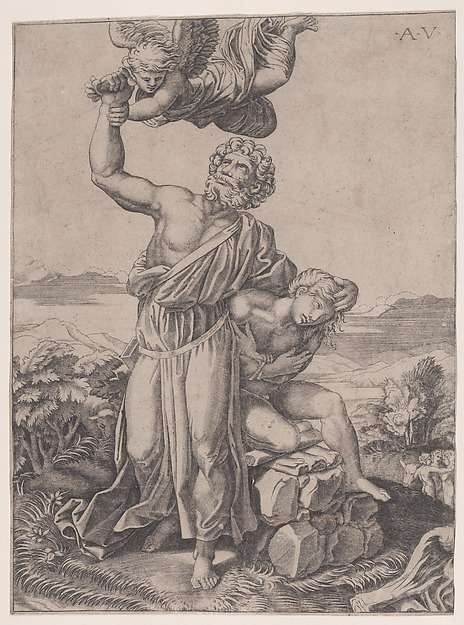
Agostino Veneziano's engraving Abraham's Sacrifice, 1516–18, The Met 17.50.16-80. Later European artistic reception, not a historical likeness
Person
Central figure in Genesis, the Qur'an and Jewish, Christian and Islamic traditions; the sacrifice study compares what each text says about him.
Namensvarianten: Abram, Ibrahim
Kontext und Quellen →
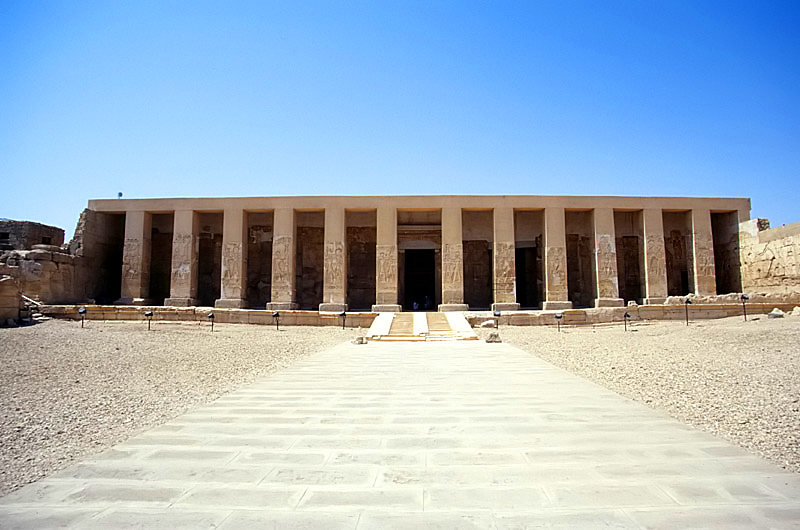
Façade of Seti I’s temple at Abydos, photographed by Roland Unger, 24 August 2000. A site photograph, not portable shrine CG 70041 used in the curtain study
Stätte
Ancient Upper Egyptian site associated with royal burials and the cult of Osiris.
Namensvarianten: Abydos in Egypt
Kontext und Quellen →
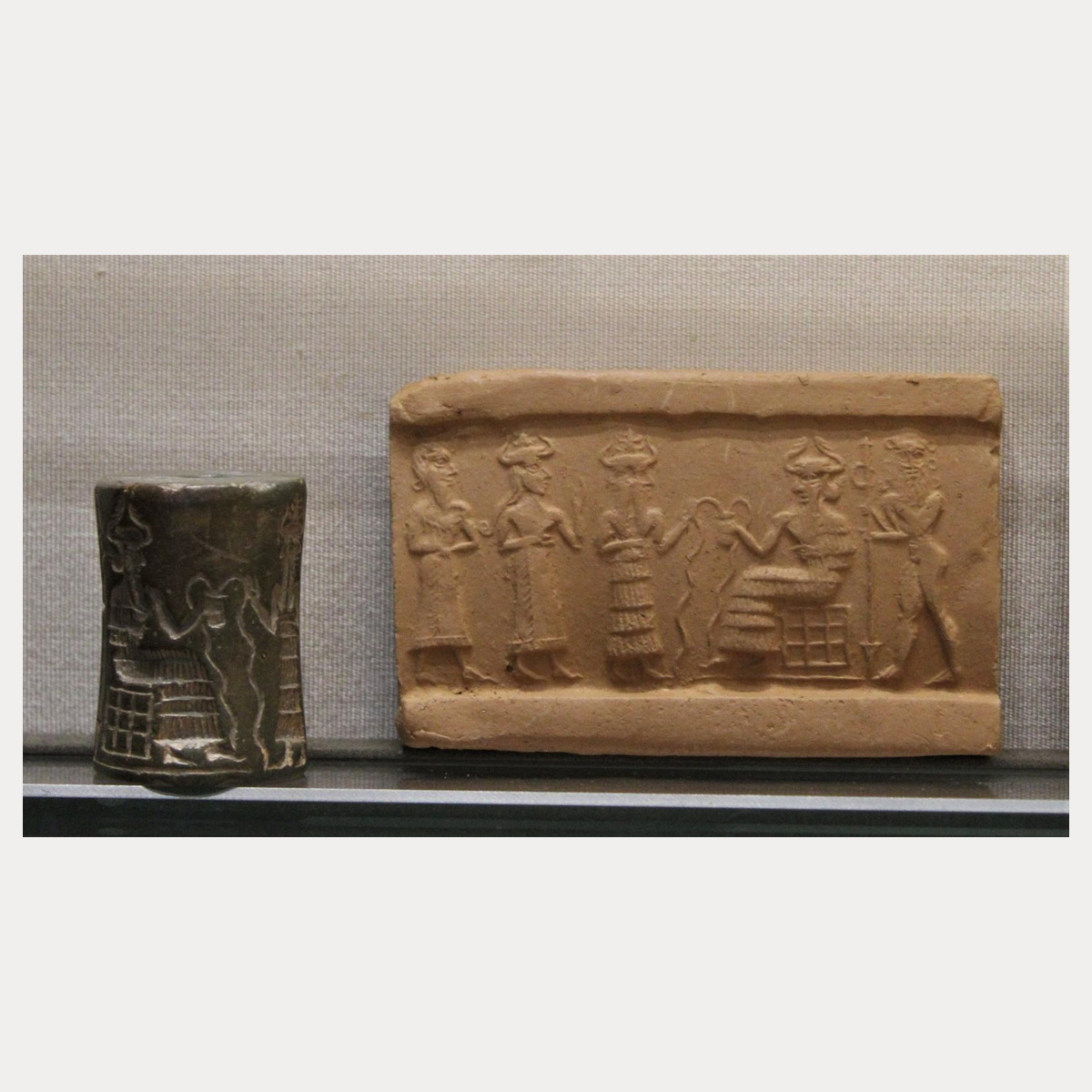
Modern square framing of an Akkadian seal and its modern impression, Louvre MNB 1905 (c. 2340–2200 BCE). The photograph is uncropped within a neutral margin; this is not an image of the Abzu itself
Entität
Cosmic subterranean freshwater in Mesopotamian religion, associated with Enki/Ea. The name occurs in E-abzu, “House of the Abzu”, at Eridu. Distinct from the narrative figure Apsû in the Enūma eliš and unnamed excavated structures.
Namensvarianten: Abzu
Kontext und Quellen →
Entität
Acheron evokes the realm of the dead in Greek literature. In Theocritus’s Adonis song it is the place from which the god returns.
Namensvarianten: Acheron in Greek literature
Kontext und Quellen →
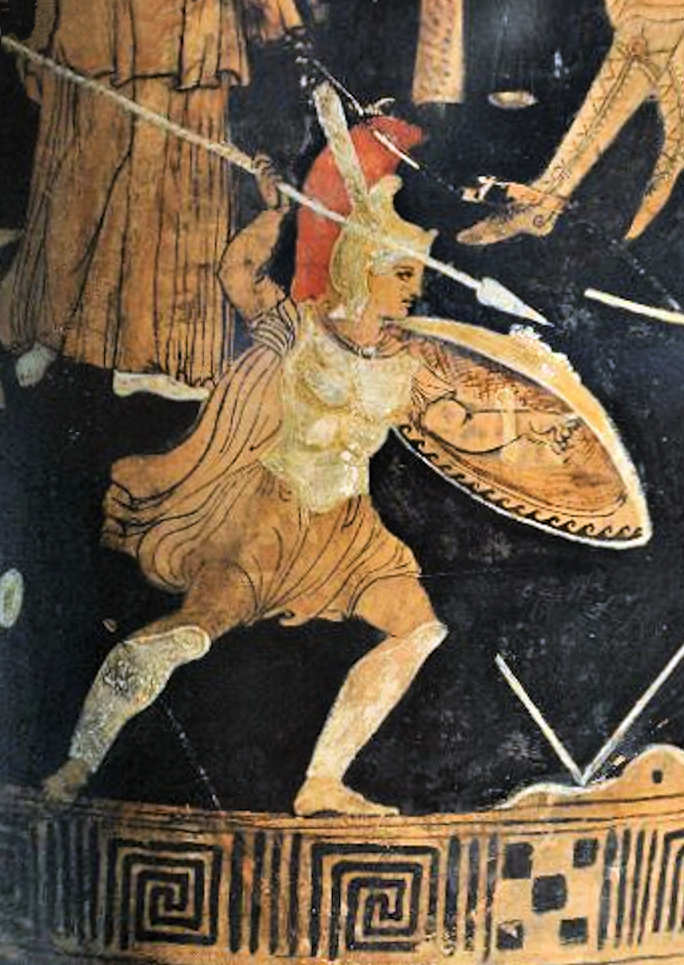
Achilles fighting Memnon on a vase of about 330–320 BCE; National Museum of Antiquities, Leiden, AMM 1. The scene belongs to broader Trojan War traditions, rather than the Iliad itself
Person
Important hero of the Iliad, whose anger and participation shape the poem’s warfare.
Namensvarianten: Achilles
Kontext und Quellen →
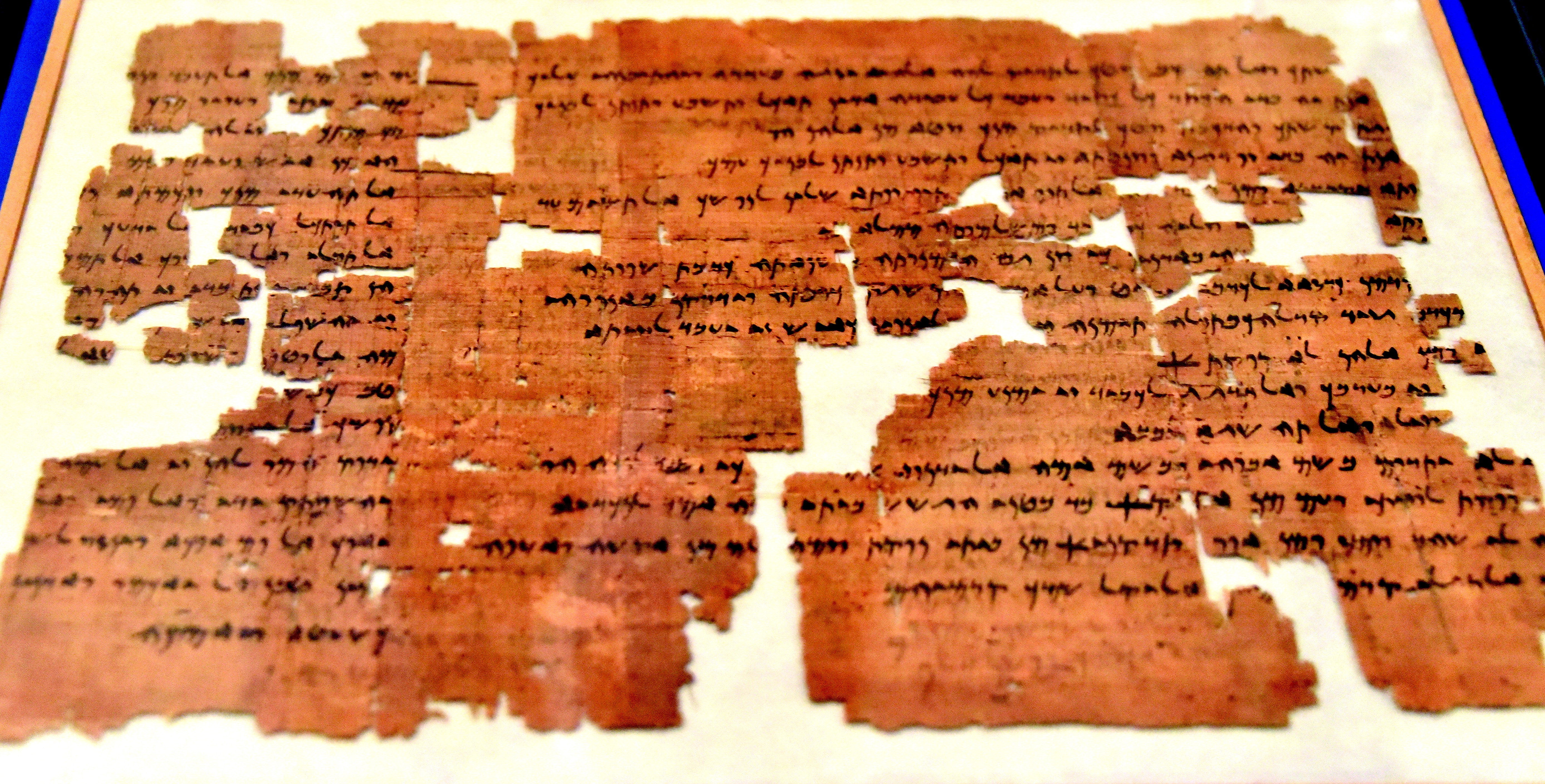
Aramaic Ahiqar papyrus P.13446/G, from Elephantine, Egypt, fifth century BCE, displayed at the Neues Museum, Berlin. Photograph by Osama Shukir Muhammed Amin, 22 July 2019; a textual witness to the story
Person
Ahiqar is a wise figure in ancient Aramaic traditions.
Namensvarianten: Ahiqar the wise figure
Kontext und Quellen →
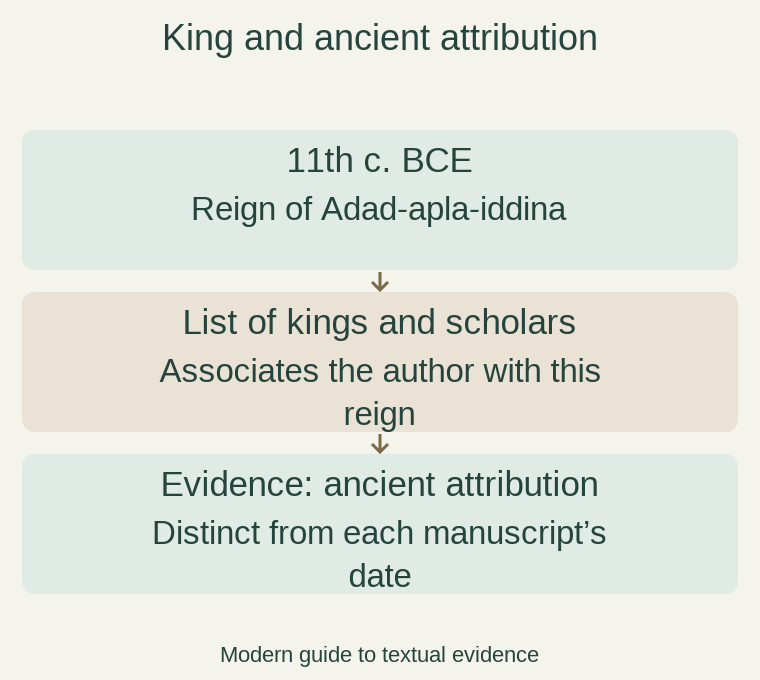
Modern explanation of the evidence: an eleventh-century BCE reign and an ancient list associating the Theodicy’s author with it. Neither king’s portrait nor list facsimile; attribution is distinct from each manuscript’s date
Person
Adad-apla-iddina was an eleventh-century BCE Babylonian king.
Namensvarianten: Adad-apla-iddina
Kontext und Quellen →
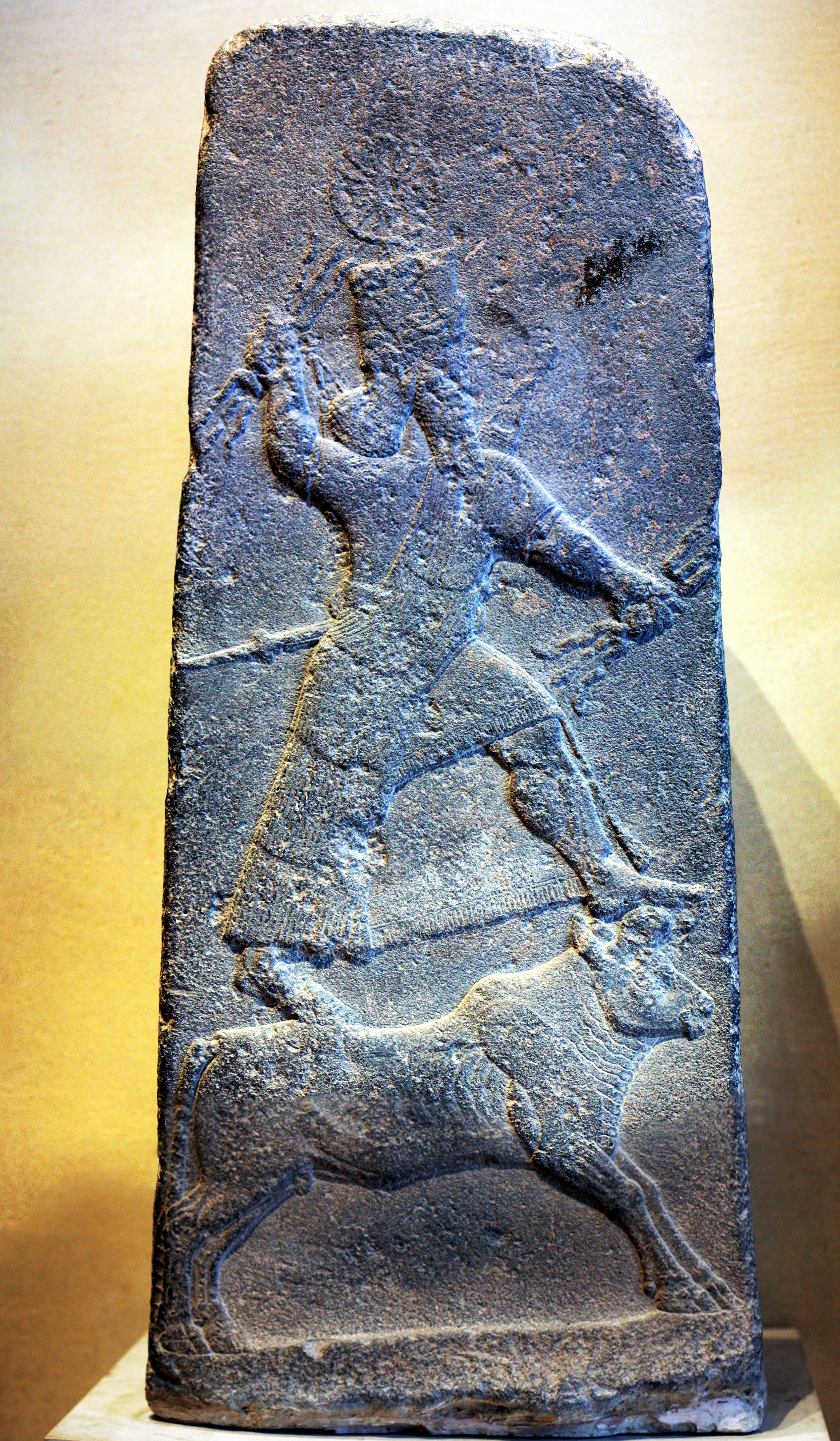
Adad standing on a bull and holding a thunderbolt; stele from Arslan Tash, northern Syria, eighth century BCE, Louvre AO13092. Photograph by Rama, 20 October 2007
Entität
Adad is the storm god in Mesopotamian traditions, associated with rain, thunder and powers of fertility or destruction.
Namensvarianten: Adad: storm god
Kontext und Quellen →
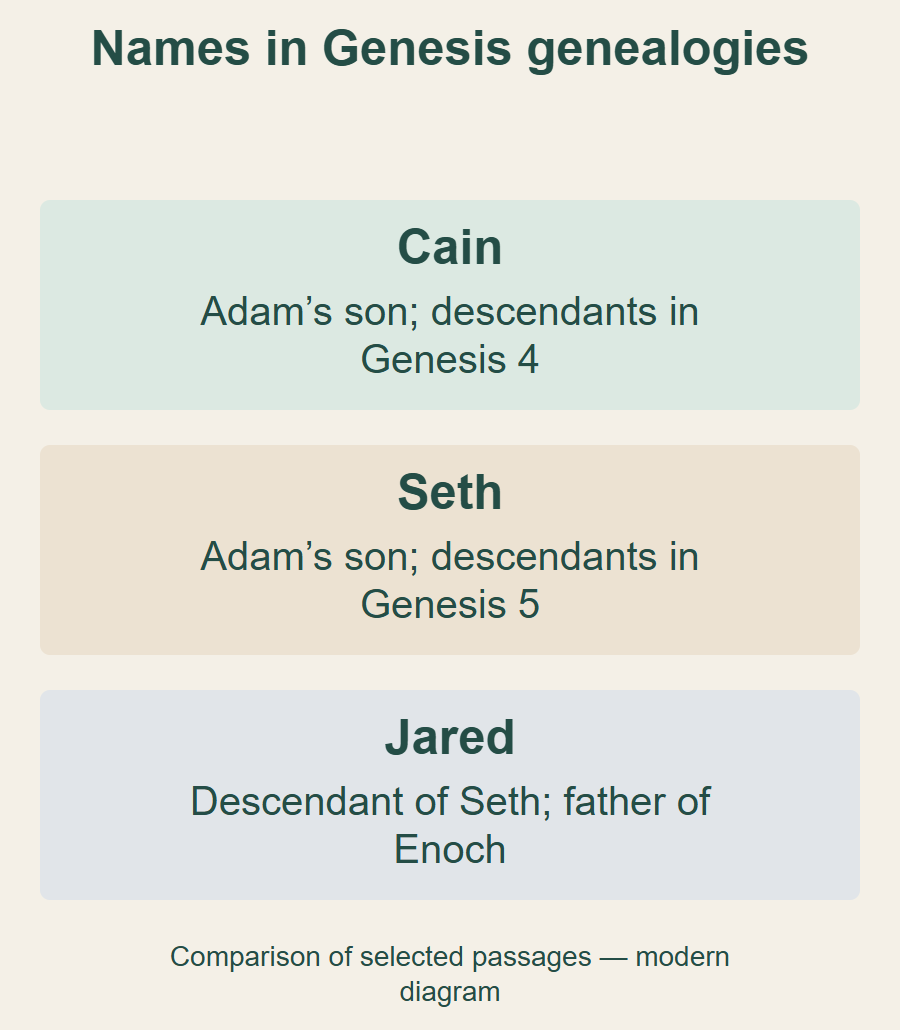
Modern chart of Cain’s and Seth’s branches from Adam and Jared’s position; textual genealogies in Genesis, not historical reconstruction
Person
Adam is a figure in Genesis’s narratives of beginnings, linked with Cain, Seth and Abel.
Namensvarianten: Adam
Kontext und Quellen →
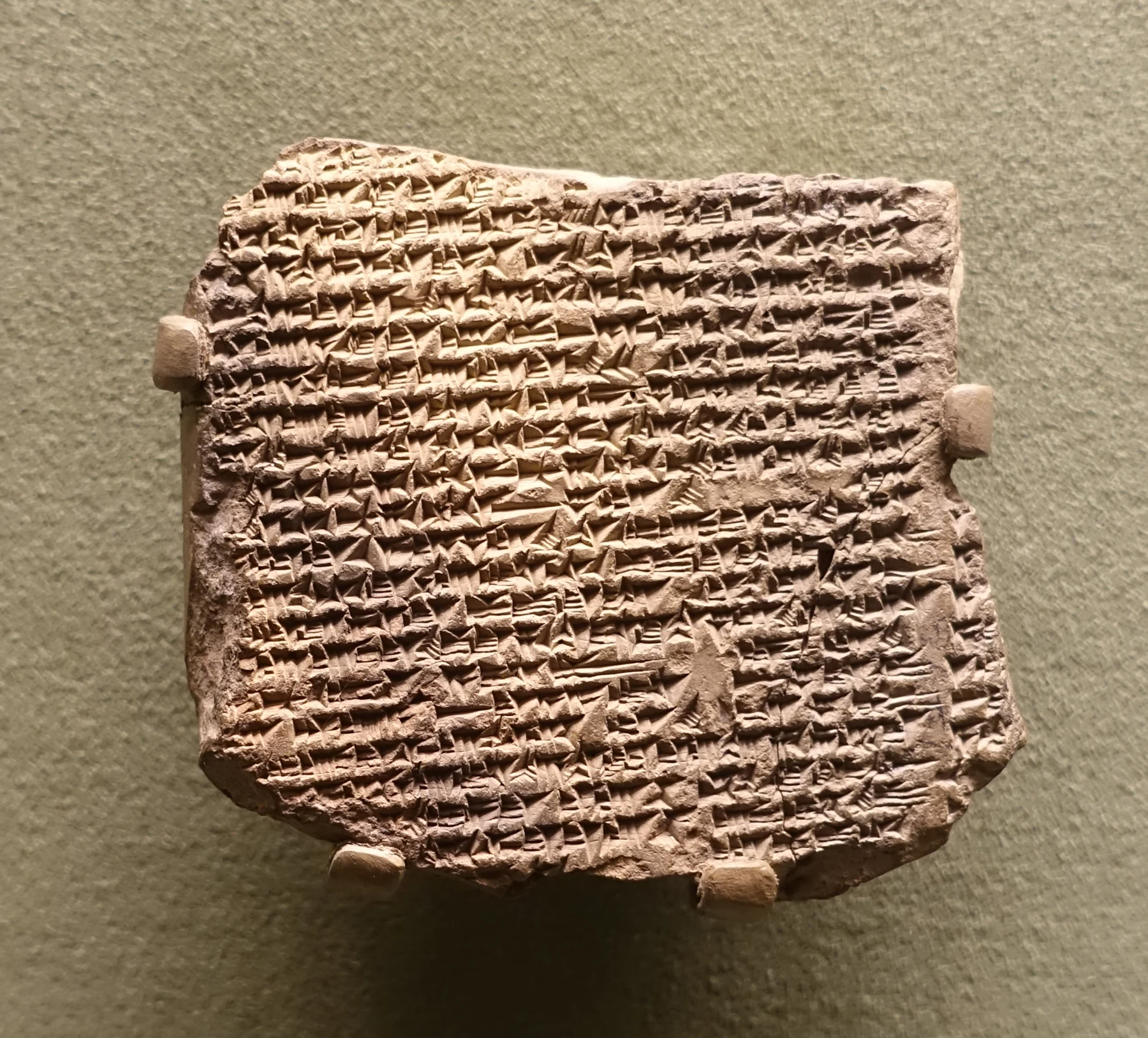
Adapa fragment A, MLC 1296, Neo-Assyrian, about the seventh century BCE, Morgan Library & Museum. Preserves the opening; not Amarna EA 356 or a portrait of Adapa or Adam. Photograph: Daderot, 2020; CC0 1.0
Entität
Adapa is a sage of Eridu in Mesopotamian tradition, associated with Ea. The South Wind story, audience with Anu, and ritual sources give him distinct roles; they do not establish his identity with Adam or the first human.
Namensvarianten: Adapa
Kontext und Quellen →
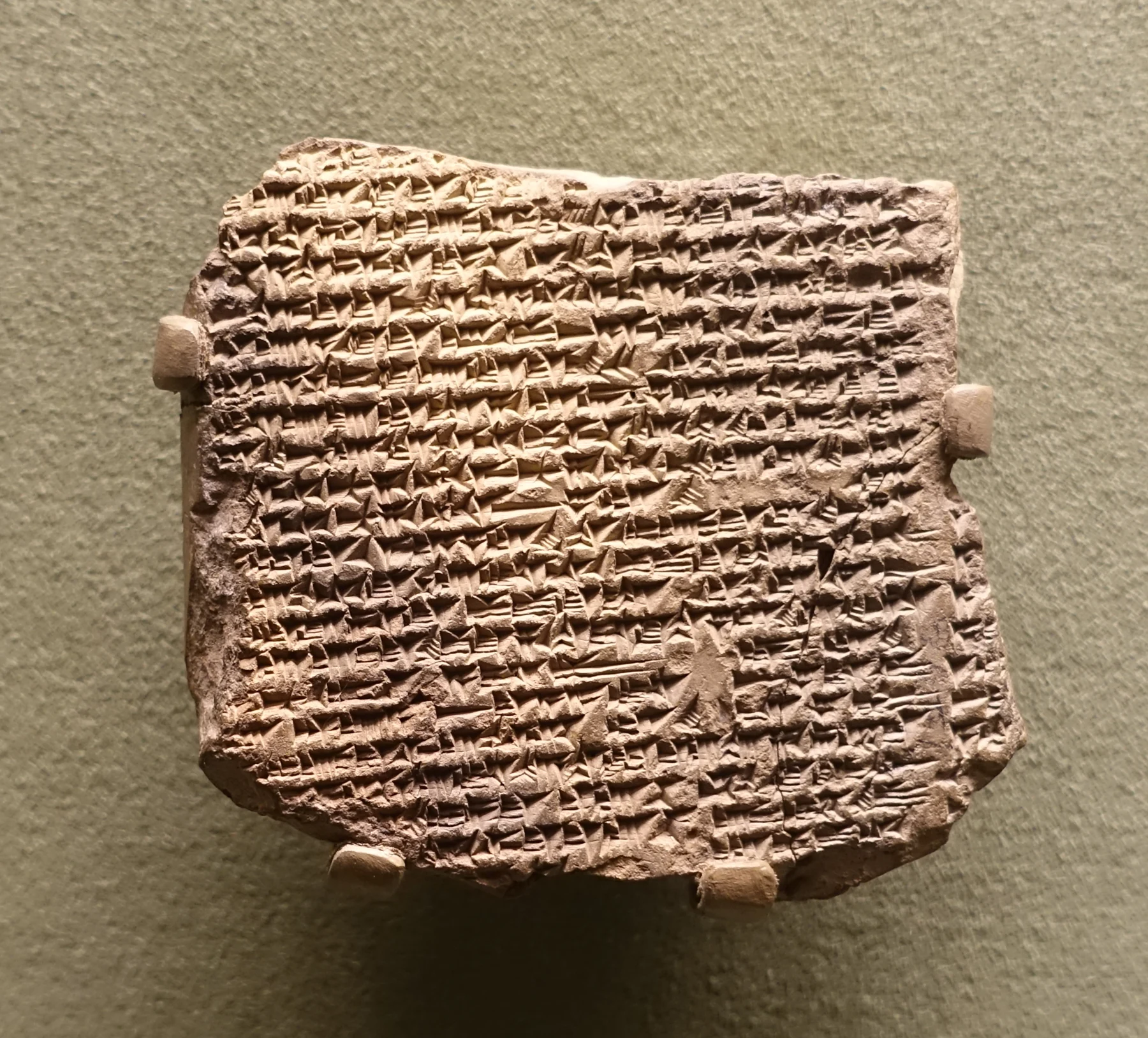
Fragment A of the Adapa narrative, MLC 1296, Neo-Assyrian, approximately seventh century BCE, Morgan Library & Museum. Preserves the opening, not Amarna EA 356 or a portrait of Adapa or Adam. Photographed by Daderot in 2020
Antiker Text
Divergent Sumerian and Akkadian witnesses recount Adapa’s disabling of the South Wind, his ascent and his refusal of life’s food; immortality, Ea’s intentions and the sage’s fate remain debated.
Namensvarianten: Adapa and the South Wind
Kontext und Quellen →
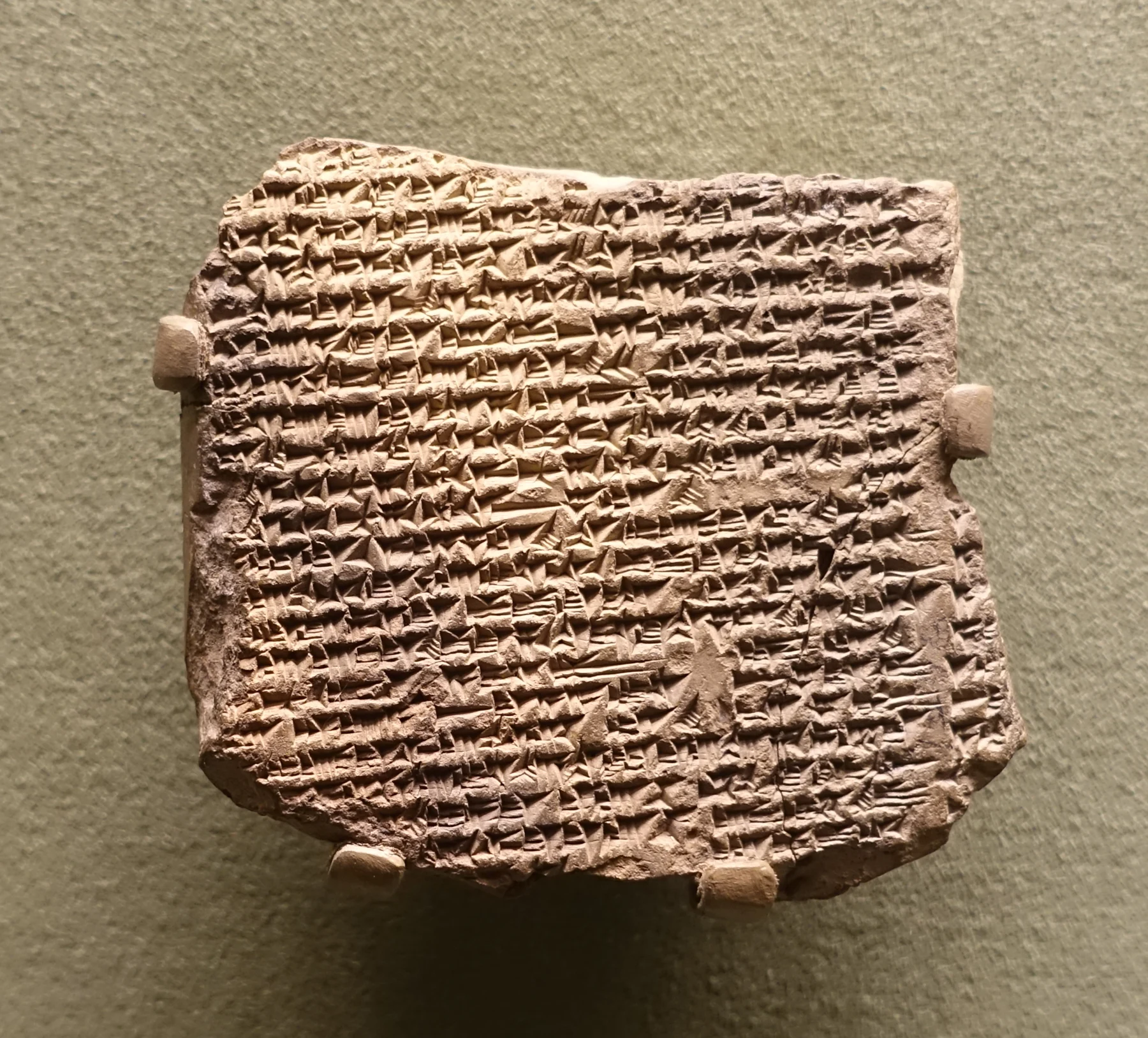
Adapa fragment A, MLC 1296, Neo-Assyrian, about the seventh century BCE, Morgan Library & Museum. Preserves the opening; not Amarna EA 356 or a portrait of Adapa or Adam. Photograph: Daderot, 2020; CC0 1.0
Artefakt
Neo-Assyrian clay fragment written in Akkadian, preserving the beginning of Adapa’s story in the Morgan Library & Museum.
Namensvarianten: Adapa fragment MLC 1296
Kontext und Quellen →
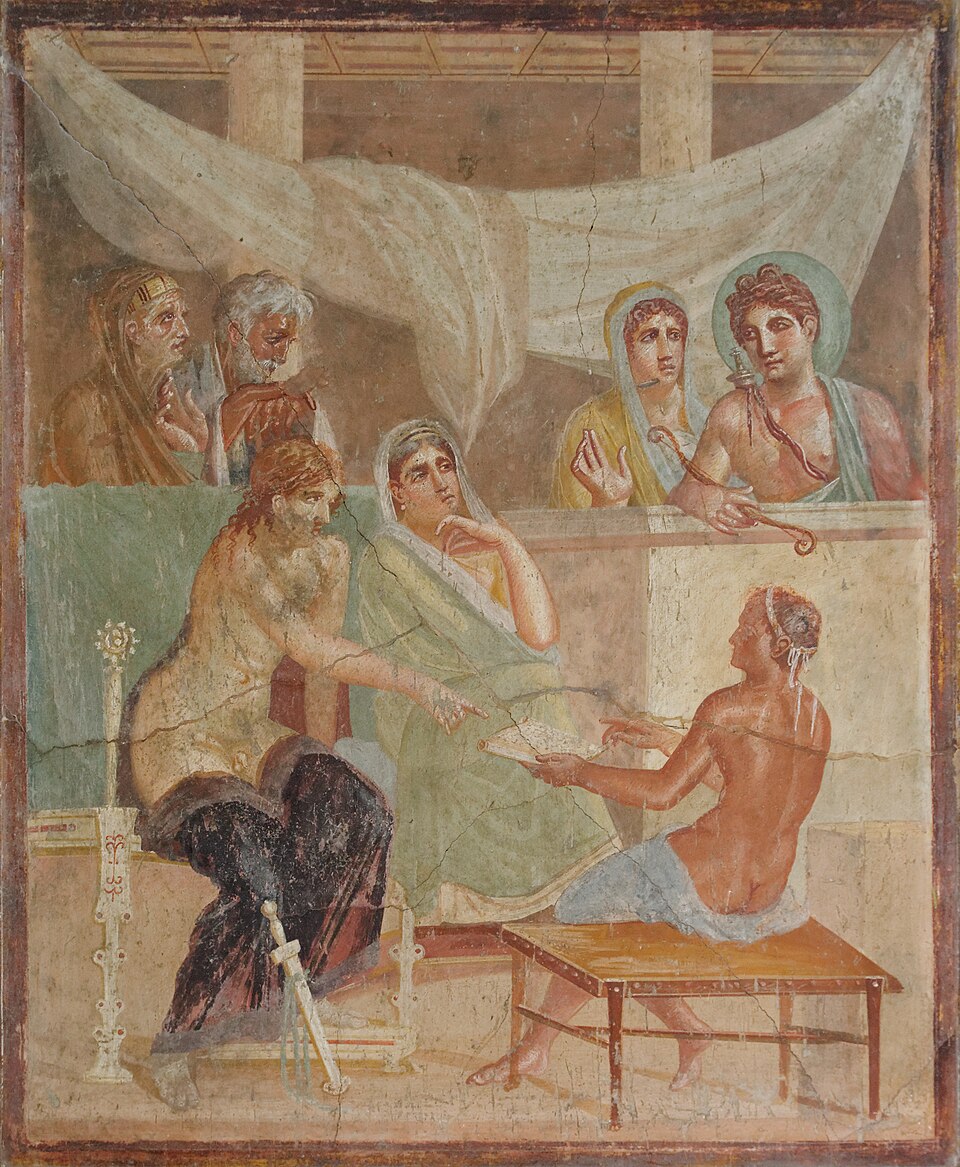
Admetus and Alcestis, first-century CE Roman fresco from the House of the Tragic Poet, Pompeii; Naples Archaeological Museum 9026. Later reception of the story, not a record of the 438 BCE performance. Published 960 px preview
Person
Alcestis’s husband in Greek narrative, allowed to escape death if another person dies for him; his wife accepts the exchange.
Namensvarianten: Admetus in Alcestis
Kontext und Quellen →
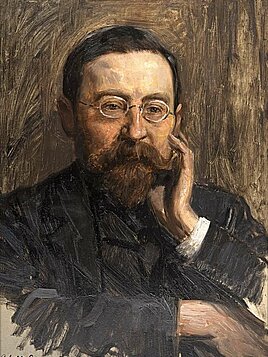
Portrait study of Adolf Erman by William Pape, about 1900–1905, Berlinische Galerie BG-M 12040/12. Detail reproduction published by the Berlin-Brandenburg Academy; historical artwork
Person
Adolf Erman (1854–1937) was a German Egyptologist central to modern study of Egyptian language and its dictionary project.
Namensvarianten: Adolf Erman
Kontext und Quellen →
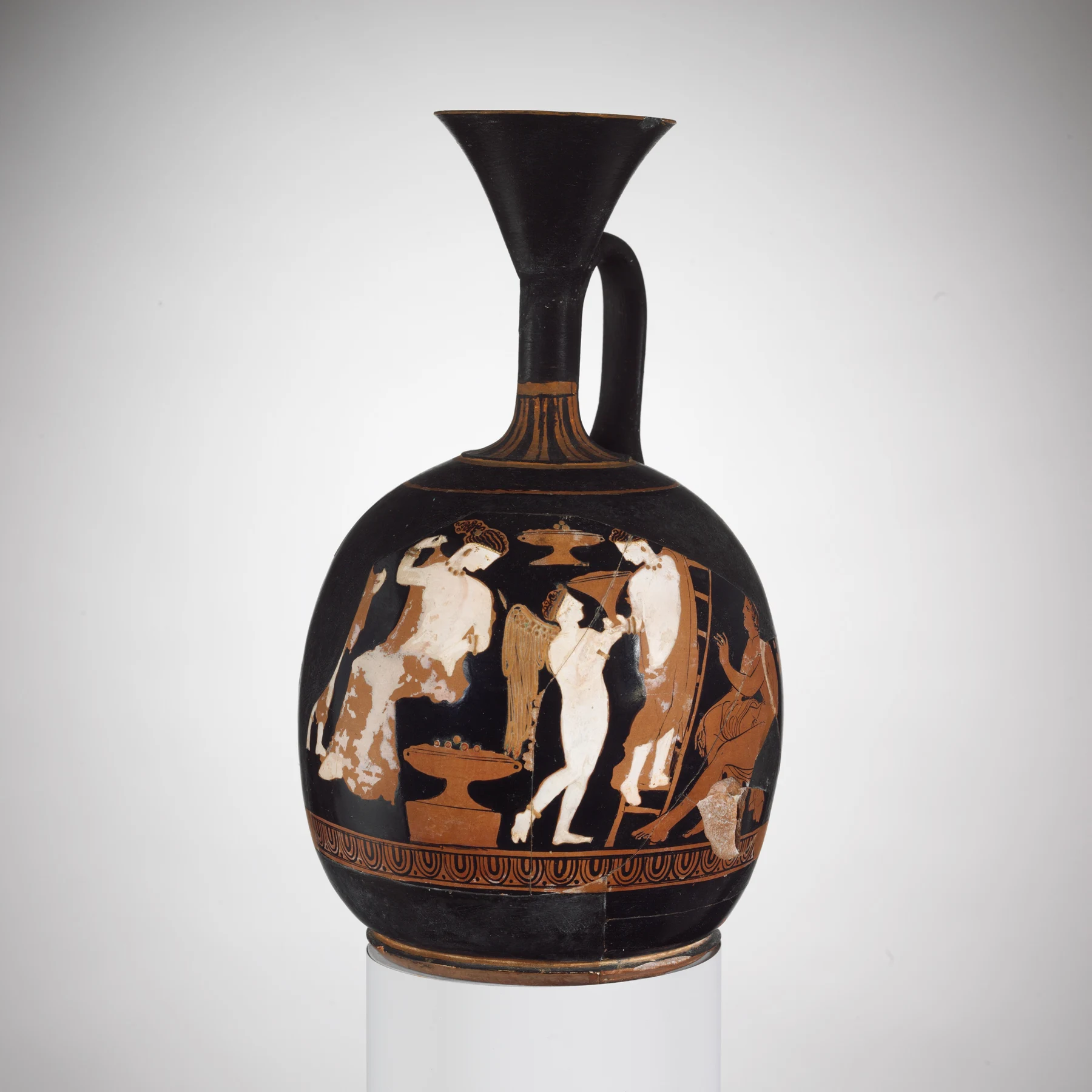
Attic red-figure oil jar, mid-fourth century BCE: a woman on a ladder receives a planter from Eros. The seated man and the other woman may represent Adonis and Aphrodite; both identifications are tentative. The Met, 22.139.26; public-domain image
Entität
Adonia: a festival associated with Adonis, attested through women’s laments and ephemeral plantings; its surviving descriptions vary among Athens, Alexandria, and Byblos.
Namensvarianten: Adonia, Adonis festival
Kontext und Quellen →
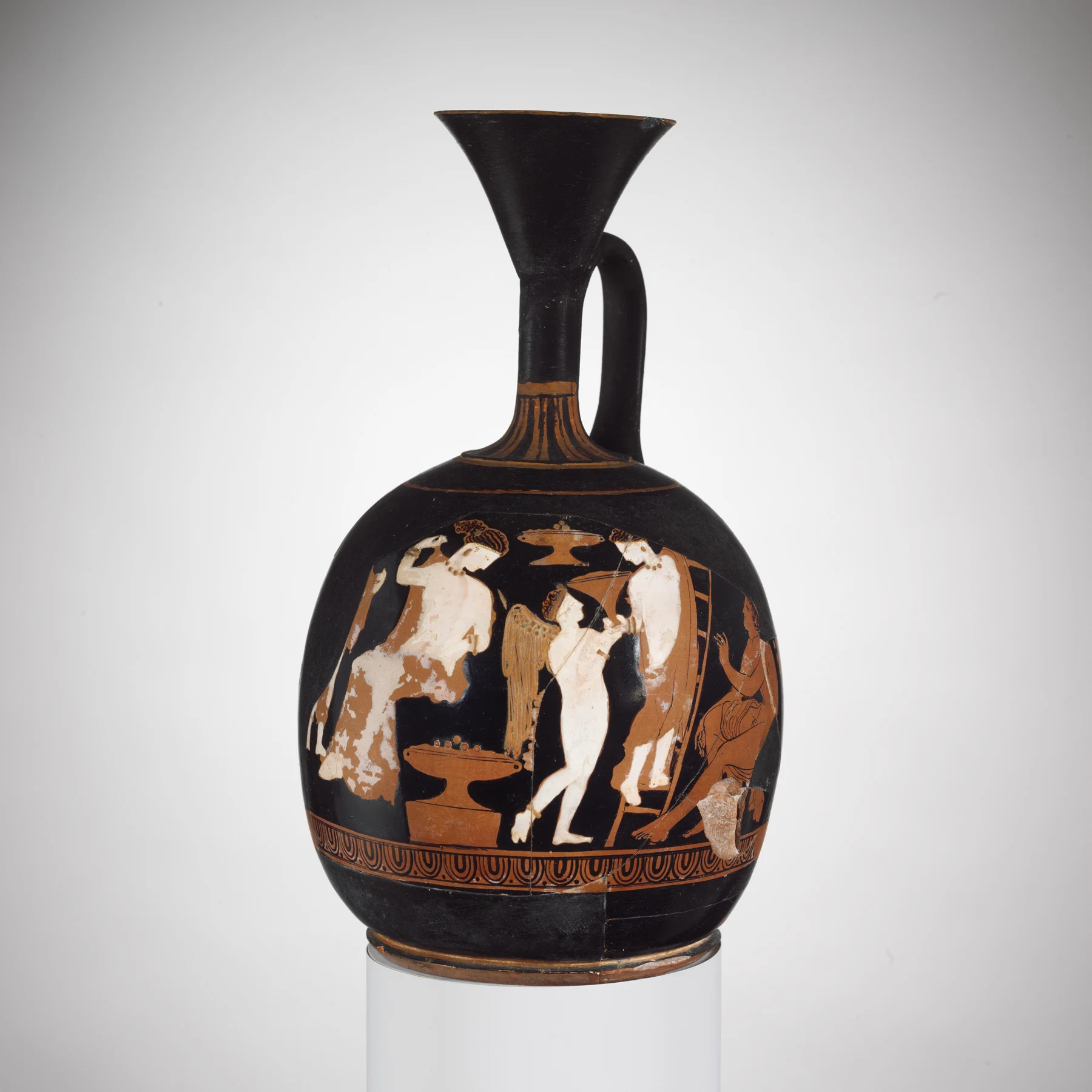
Attic red-figure oil jar, mid-4th century BCE; a woman receives a planter from Eros in a scene associated with the Adonia. Metropolitan Museum, 22.139.26; Public Domain
Entität
A Greek mythic figure associated with Aphrodite, lament, and the Adonia; ancient sources diverge on his birth, death, divided residence, and ritual return.
Namensvarianten: Adonis
Kontext und Quellen →
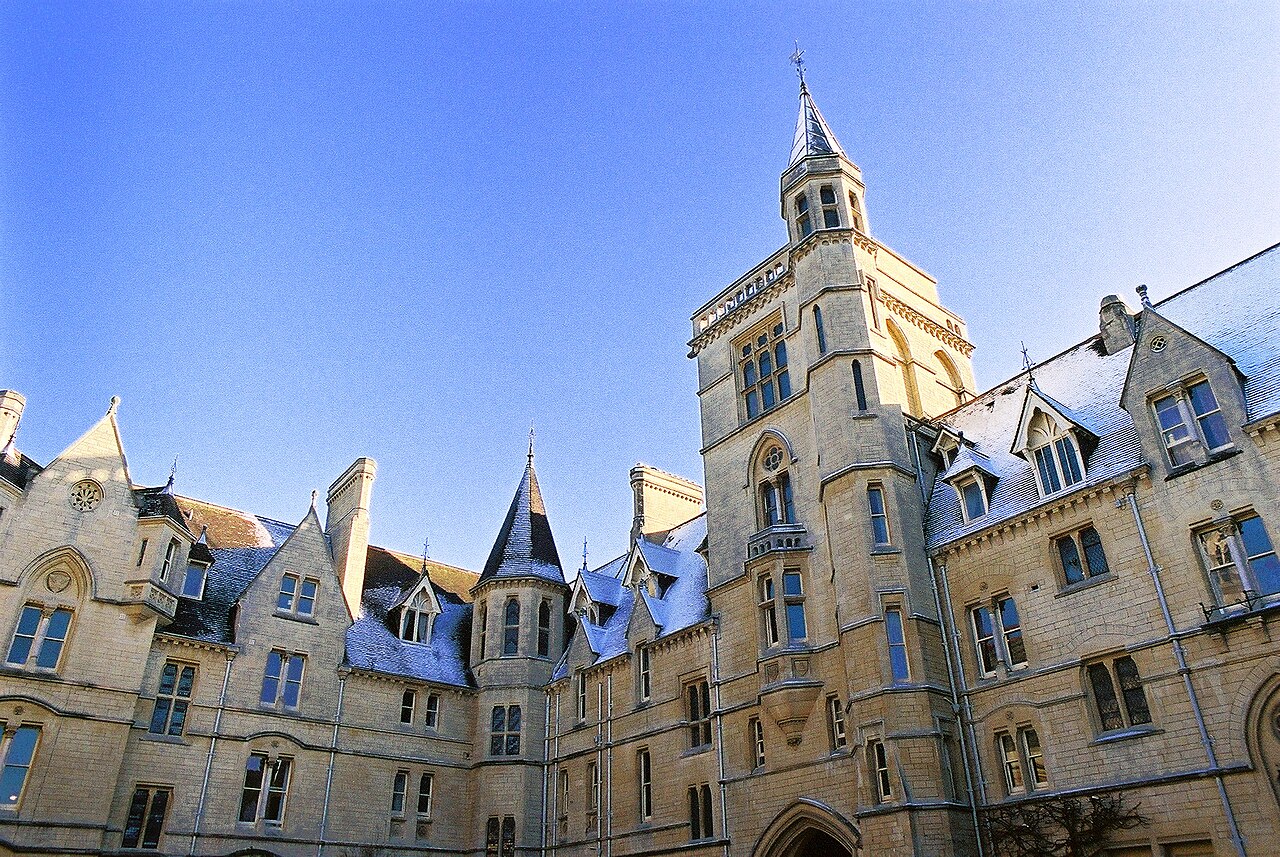
Front quadrangle of Balliol College, Oxford, 21 January 2004. A view of the college associated with Adrian Kelly; it does not establish his position in that year or locate his office
Person
Professor of Ancient Greek Literature at Oxford and Balliol, researching early poetry and the traditions shaping it.
Namensvarianten: Adrian Kelly
Kontext und Quellen →
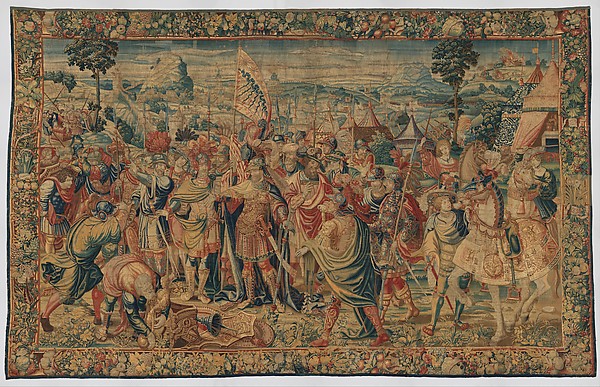
Agamemnon Musters the Greek Troops at Aulis, later European Story of Iphigenia tapestry, The Met 226955; artistic reception, not historical evidence for the figure
Person
Figure of Greek narrative, commander of the expedition to Troy and Iphigenia's father in Euripides; the play does not independently establish his historicity.
Namensvarianten: Agamemnon of Mycenae
Kontext und Quellen →
Person
Researcher in Arabian inscriptions, the history of Arabic and Semitic languages.
Namensvarianten: Ahmad Al-Jallad
Kontext und Quellen →
Person
Ahmad Tafazzoli (1937–1997) was a scholar of Middle Iranian languages and literature.
Namensvarianten: Ahmad Tafazzoli
Kontext und Quellen →
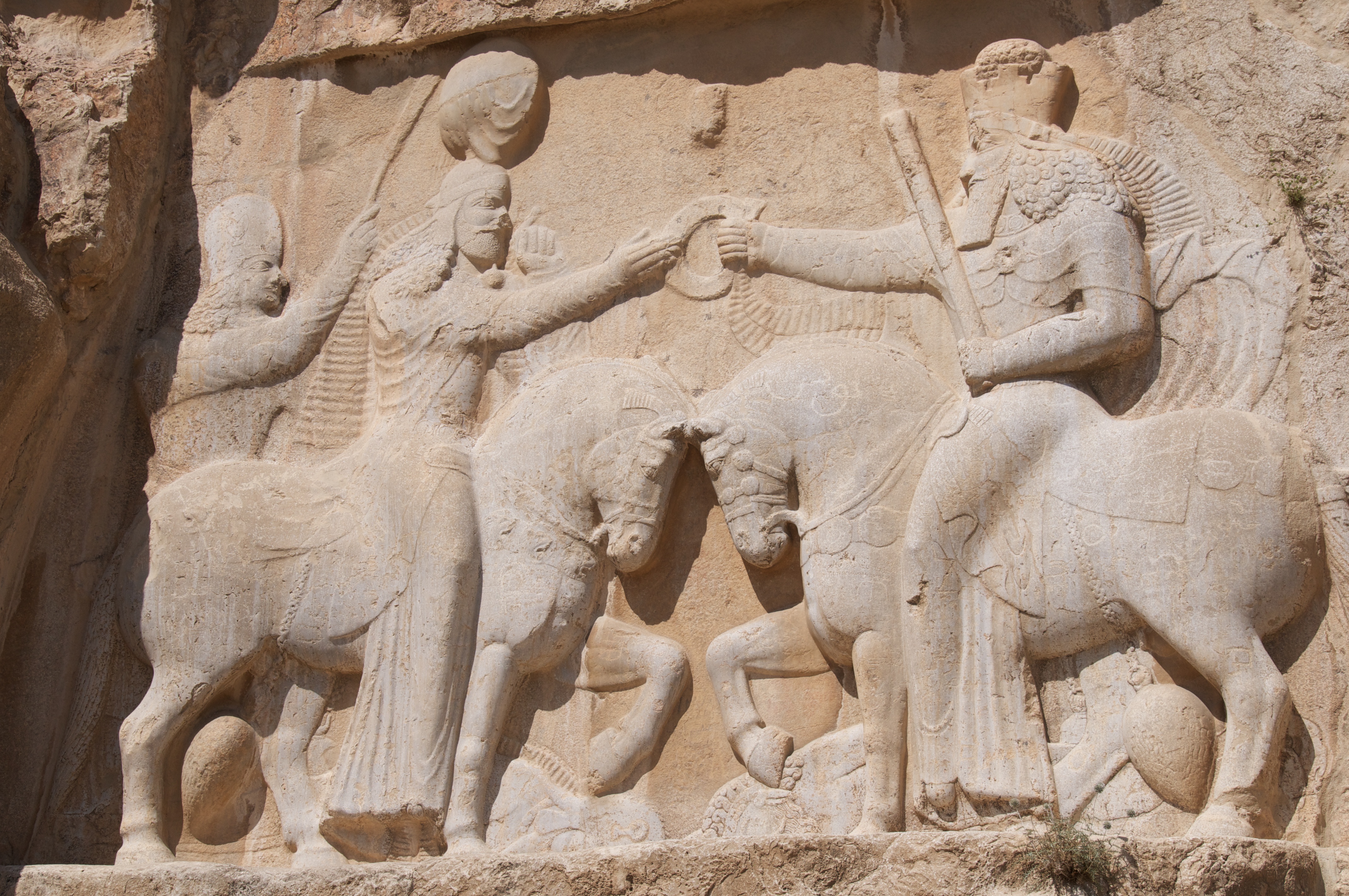
Investiture relief of Ardashir I at Naqsh-e Rustam, Iran, third century CE; Ahura Mazda at right according to the inscriptional identification. Photographed in 2010, not an image from Zarathustra’s lifetime
Entität
Wise Lord in Iranian traditions, associated with truth, goodness and creation; not a Persian name for Yahweh.
Namensvarianten: Ahura Mazda, Ahuramazda, Ohrmazd, Ormazd
Kontext und Quellen →
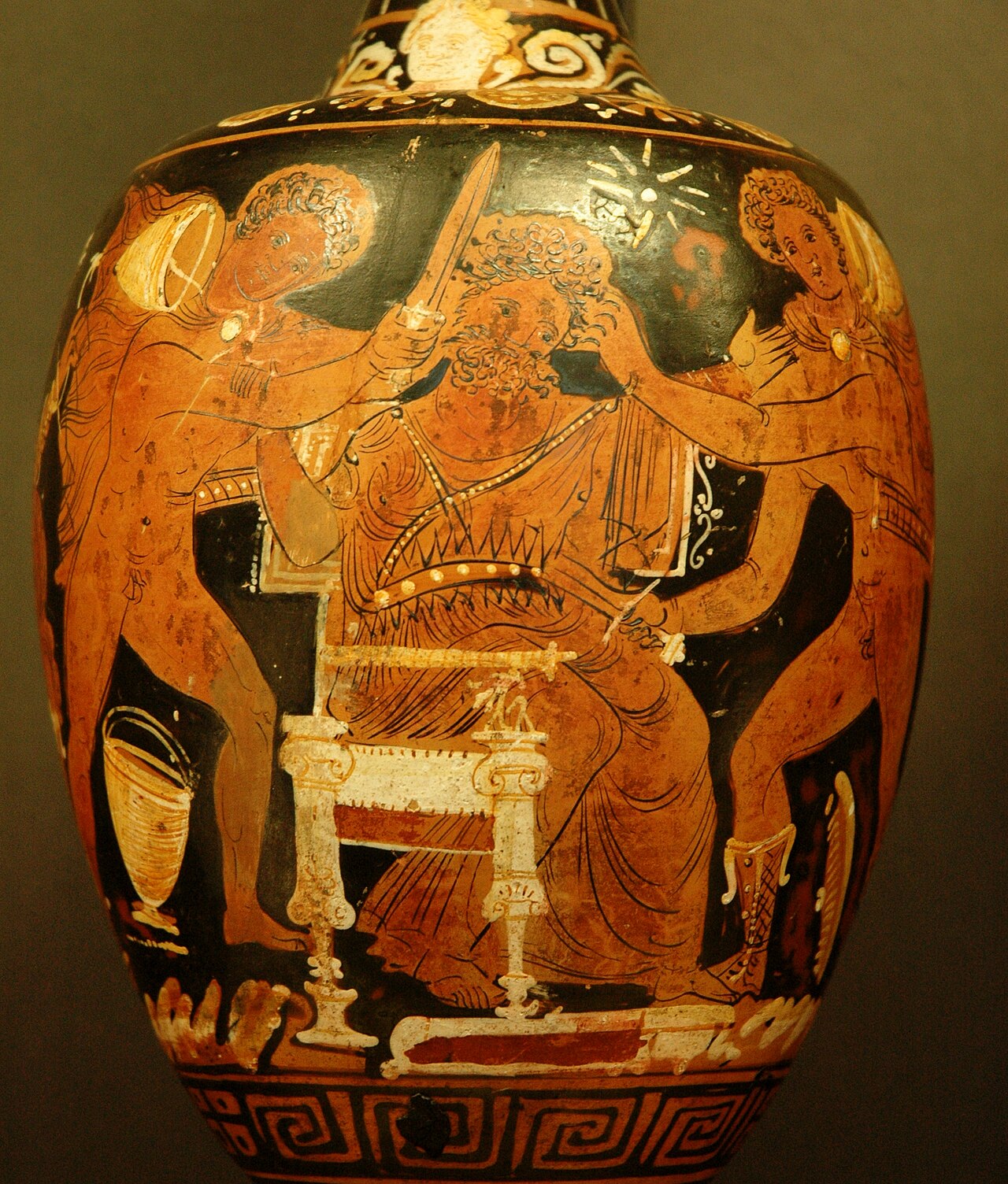
Death of Aegisthus on a Greek vase of about 320 BCE; Louvre K 320, Wind Group. The artwork depicts the revenge story, rather than the Odyssey’s first assembly itself
Person
Human figure in Greek narrative whose fate Zeus recalls at the Odyssey’s opening.
Namensvarianten: Aegisthus
Kontext und Quellen →
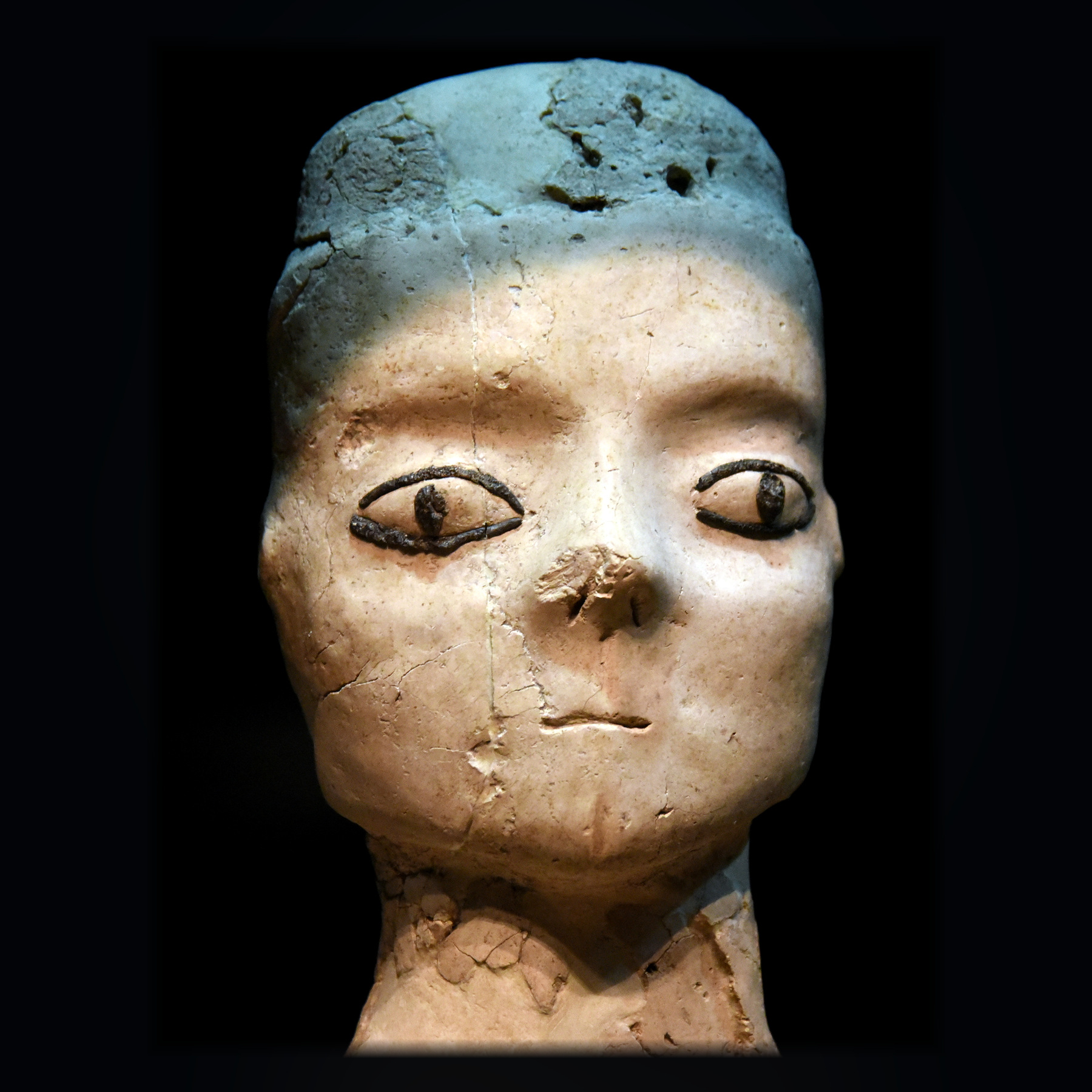
Editorial square cover derived from a museum photograph of an Ain Ghazal plaster head. Reframed with margins from the same image, without reconstructing or adding features to the object; original photograph by Osama Shukir Muhammed Amin (2018)
Stätte
Neolithic settlement near Wadi Zarqa and Amman, known for plaster-floored houses, burials and large human sculptures made from lime plaster and reeds. Its pre-pottery and pottery phases are documented; the identities and exact functions of its figures are unknown.
Namensvarianten: Ain Ghazal, ’Ain Ghazal, 'Ain Ghazal
Kontext und Quellen →
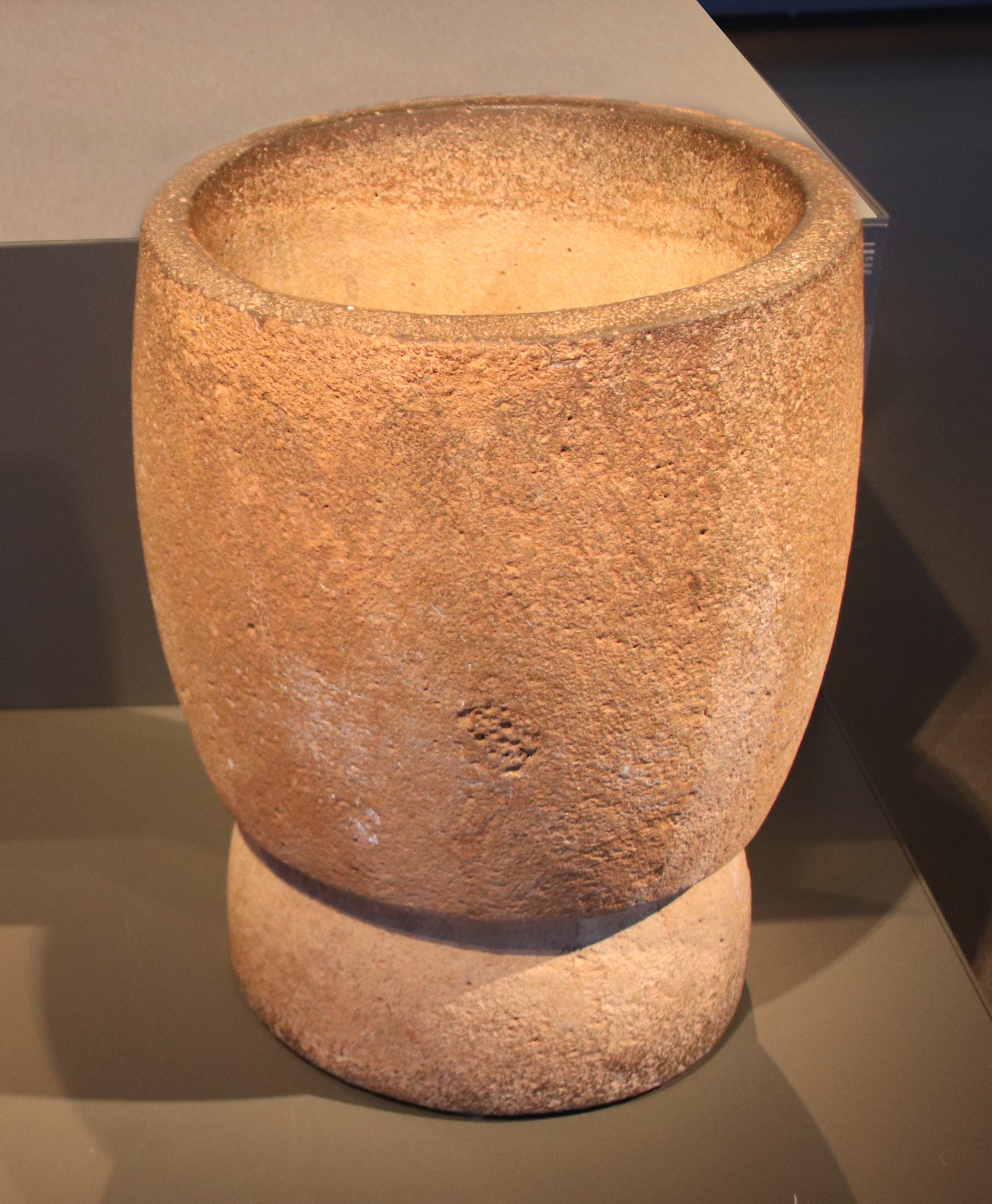
Stone mortar from Ain Mallaha (Eynan), displayed at the Israel Museum. An artifact from the site, not a view of the excavation
Stätte
A Natufian site in the Hula Valley of the Upper Jordan Valley, important for understanding prolonged residence before agriculture.
Namensvarianten: Ain Mallaha, Eynan, Eynan-Mallaha
Kontext und Quellen →
Person
Aino Hätinen is an Assyriologist whose interests include ancient Near Eastern literature and religion, prayers, rituals and celestial knowledge.
Namensvarianten: Aino Hätinen
Kontext und Quellen →

Contemporary imaginative illustration of a ram and an unlit stone-and-wood altar inspired by Genesis 22; not an artifact or identified historical site
Entität
Jewish name for Isaac’s binding in Genesis 22; his killing is stopped and a ram is offered instead. The story acquired varied interpretations and ritual uses.
Namensvarianten: Akedah, binding of Isaac
Kontext und Quellen →
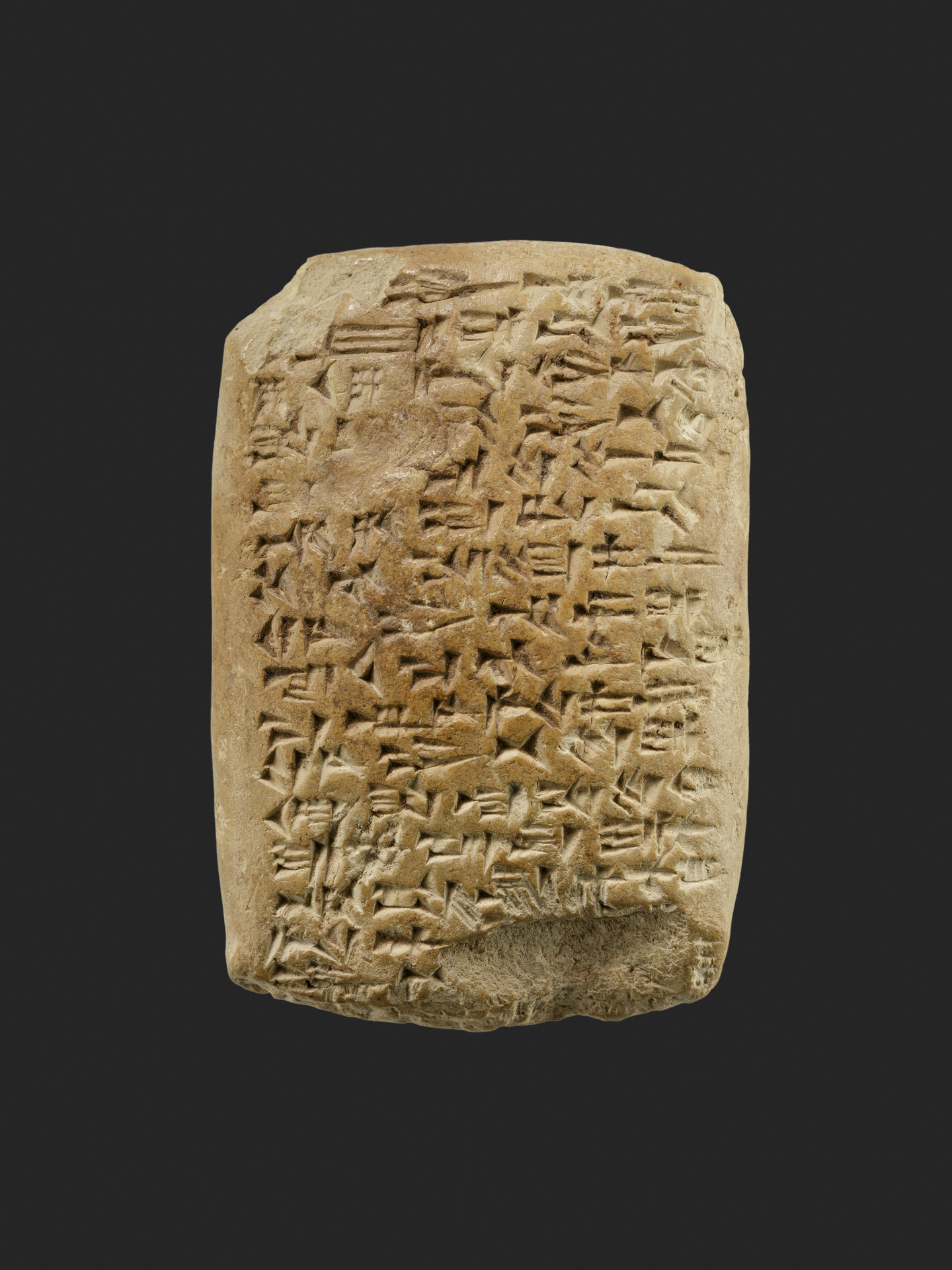
Clay tablet bearing an Akkadian cuneiform letter from Abi-milku, ruler of Tyre, to the Egyptian king; discovered at Amarna, ca. 1347–1330 BCE. The Met, 24.2.12. Evidence of diplomatic writing, not of everyone’s spoken language
Entität
An ancient East Semitic language written in cuneiform from the third millennium BCE; its varieties include Babylonian and Assyrian, and it served in international diplomacy.
Namensvarianten: Akkadian
Kontext und Quellen →
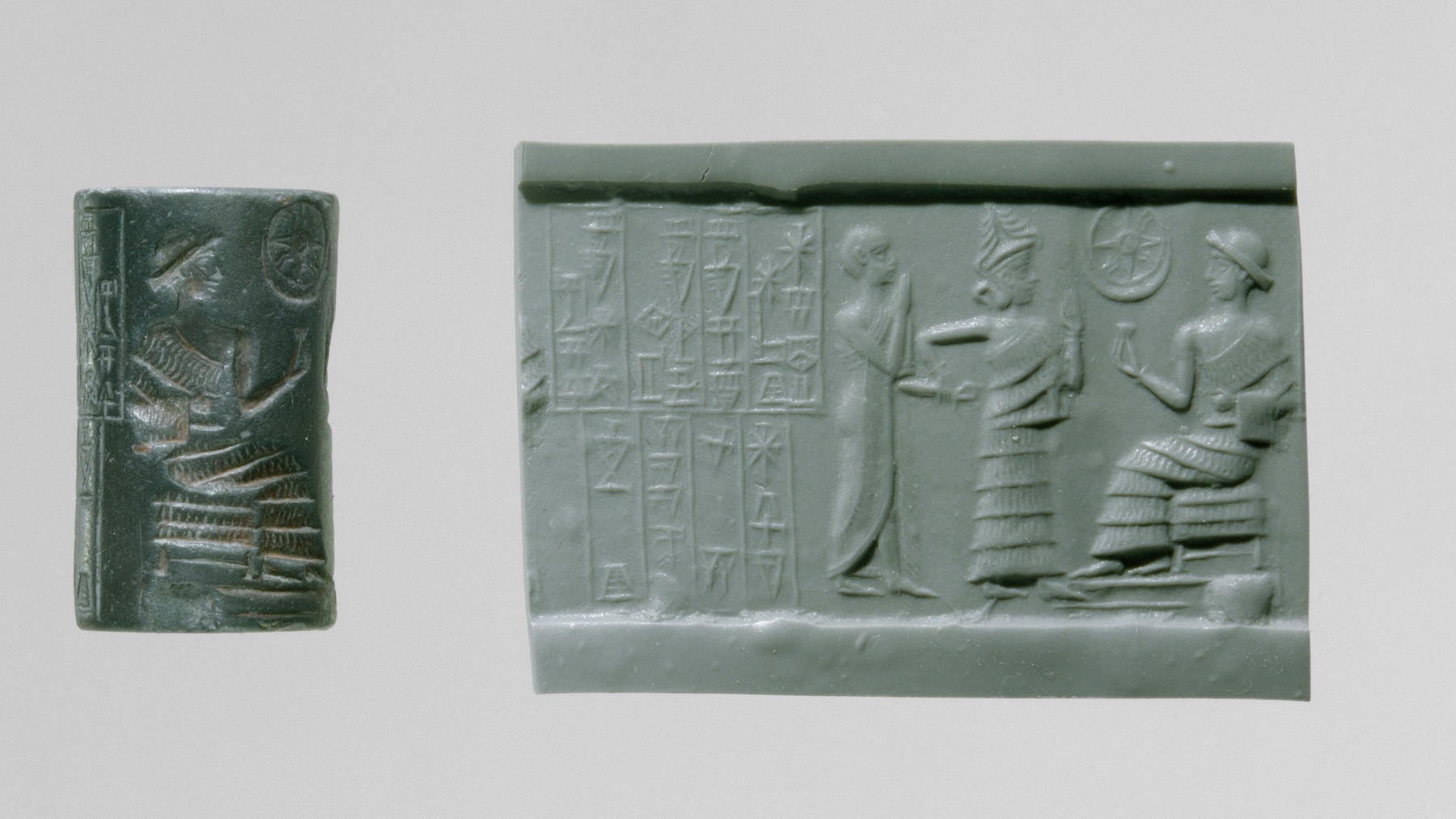
Ur III cylinder seal and modern impression (ca. 2028–2004 BCE; The Met, 1988.380.2). Its inscription names the owner Ilum-bani; it is not an identified depiction of the god El
Entität
An Akkadian common noun meaning “god”; older case forms include ilum, ilam and ilim. It occurs in personal names but does not by itself identify Ugaritic El.
Namensvarianten: ilu, ilum, ilim
Kontext und Quellen →
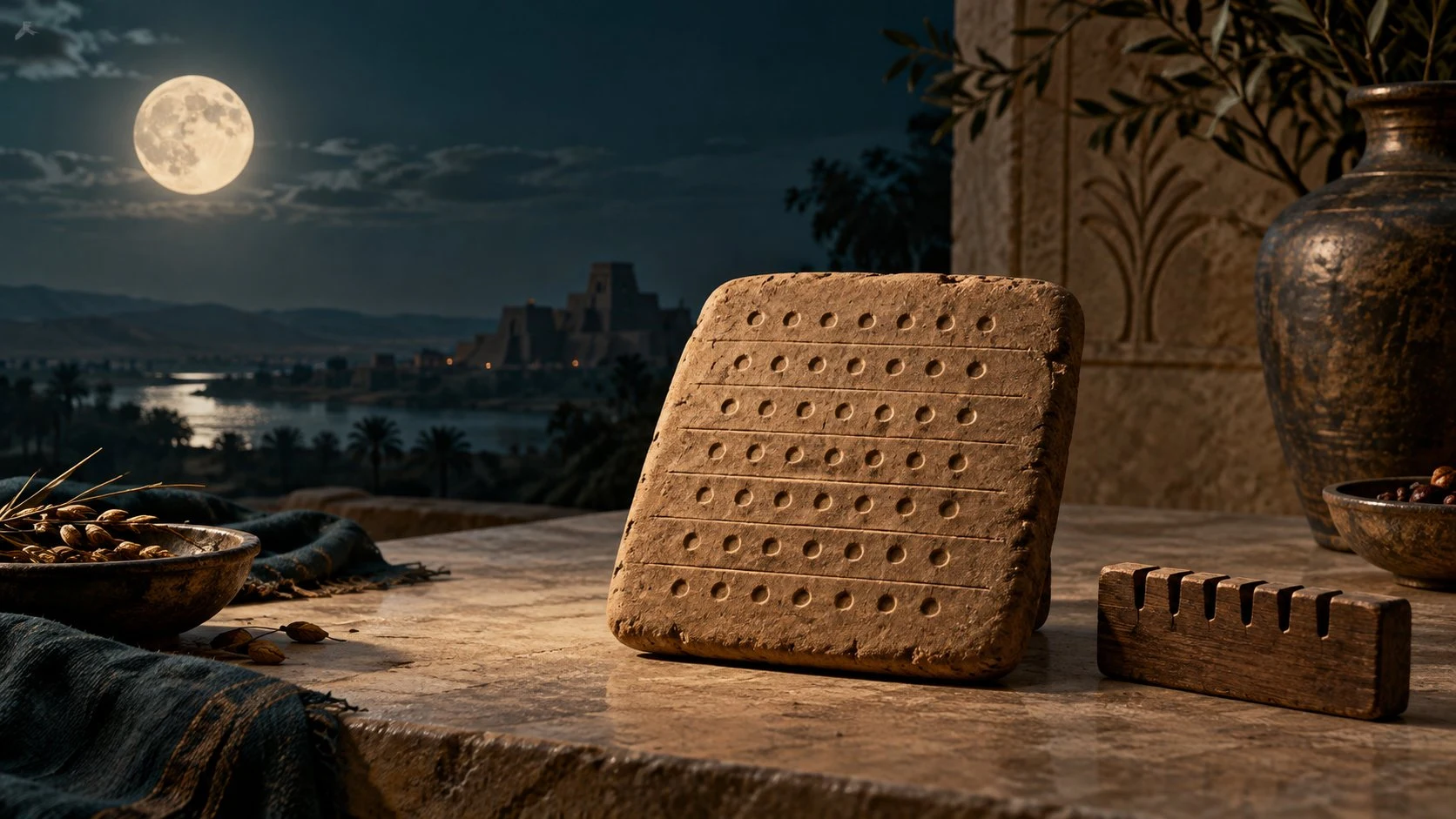
Modern generated conceptual illustration of a mid-month moon and an imaginary counting tablet. It is not an artifact photograph, a deciphered calendar or a reconstruction of a documented rite
Entität
Šapattu is an Akkadian term attested for the lunar mid-month day or a half-month in time reckoning. A historical derivation of the weekly Hebrew Sabbath from it remains contested.
Namensvarianten: shapattu, shabattu
Kontext und Quellen →
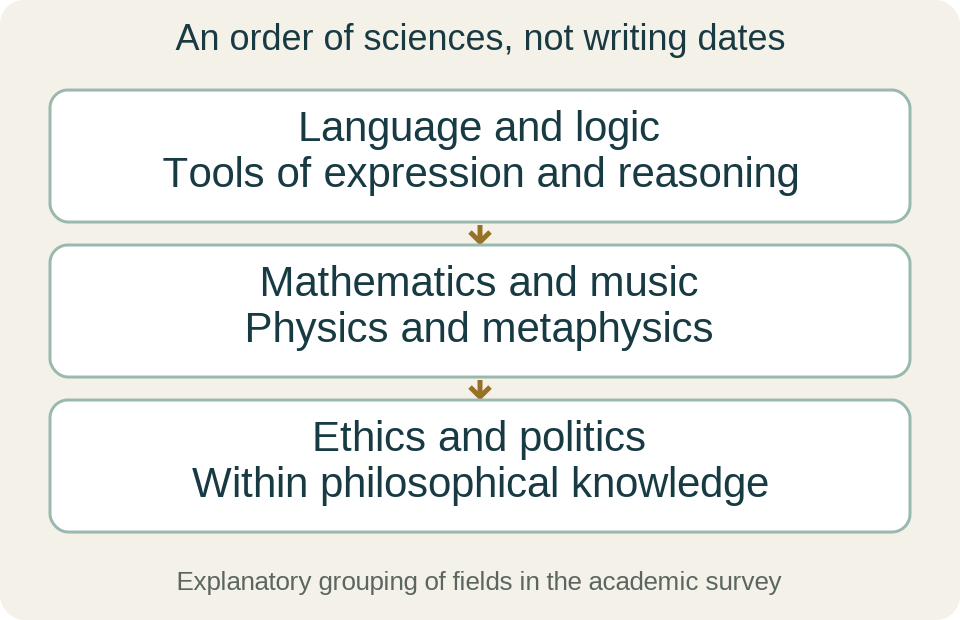
Modern grouping of fields in the academic survey following al-Farabi’s order of sciences. Some fields are combined for readability; this is not the chronology of his books or a manuscript of the Enumeration
Person
Abu Nasr al-Farabi, philosopher and logician studying music and classification of knowledge, active in the late ninth and first half of the tenth century.
Namensvarianten: Al-Farabi, philosopher
Kontext und Quellen →

Modern conceptual illustration of a scholar’s books, pens, and geometric tools, evoking al-Ghazālī’s engagement with reason and spiritual discipline. Not his likeness, an authenticated medieval setting, or a specific manuscript
Person
Abū Ḥāmid al-Ghazālī (d. 1111), a Shāfiʿī jurist and theologian from Ṭūs, engaged critically with philosophy and wrote the ethical and Sufi compendium Revival of the Religious Sciences. His birth date is disputed.
Namensvarianten: Al-Ghazālī, Abū Ḥāmid al-Ghazālī, al-Ghazali
Kontext und Quellen →
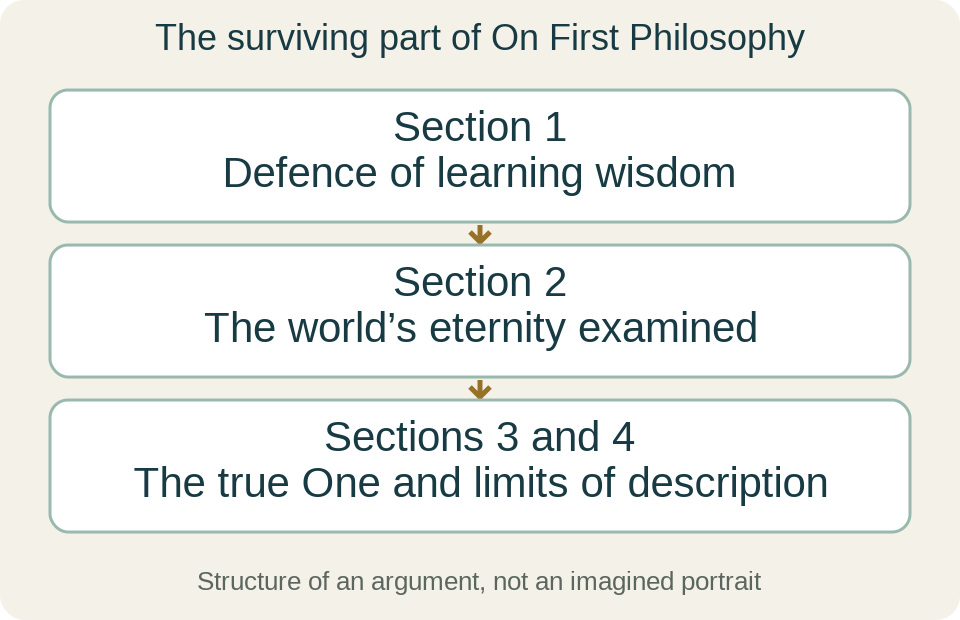
Modern diagram of the surviving part of al-Kindi’s On First Philosophy, following the academic reference’s description. It shows the sequence of subjects, not a manuscript or all his writings
Person
Abu Yusuf Yaqub ibn Ishaq al-Kindi, ninth-century philosopher active in the Arabic translation movement.
Namensvarianten: Al-Kindi, philosopher
Kontext und Quellen →

Modern AI-generated symbolic cover evoking layers of a name’s circulation; blank stones are not a documented artifact
Entität
Quranic divine designation co-referring with Allah.
Namensvarianten: al-Raḥmān, al-Rahman, the Merciful
Kontext und Quellen →