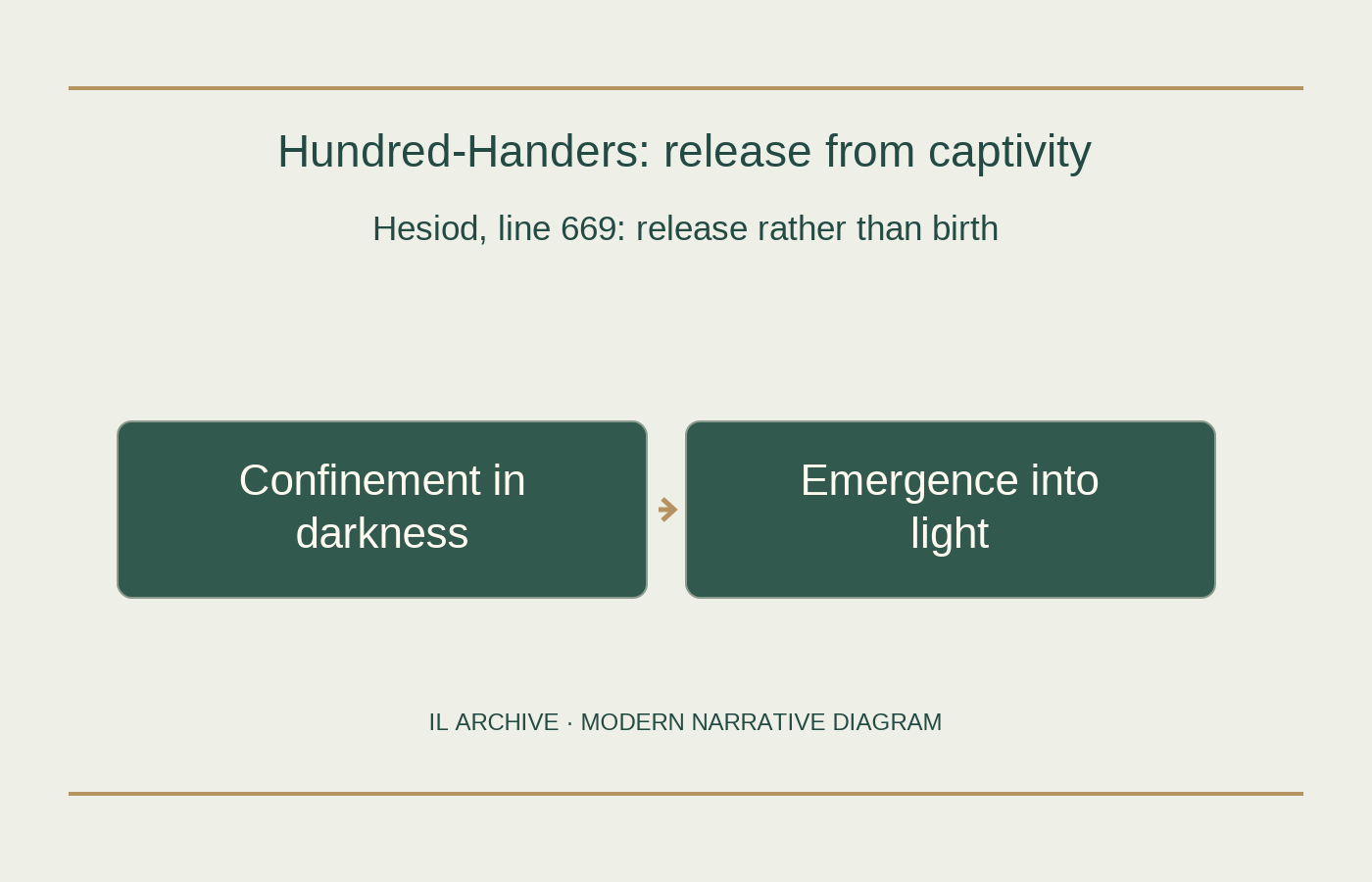
Modern diagram of the release from captivity into light at Theogony669. It explains the scene when comparing emergence verbs, without reconstructing the Hundred-Handers’ appearance
Entität
Beings in Hesiod’s poem, shown in one scene leaving captivity and darkness for light.
Namensvarianten: Hundred-Handers, Hecatoncheires
Kontext und Quellen →
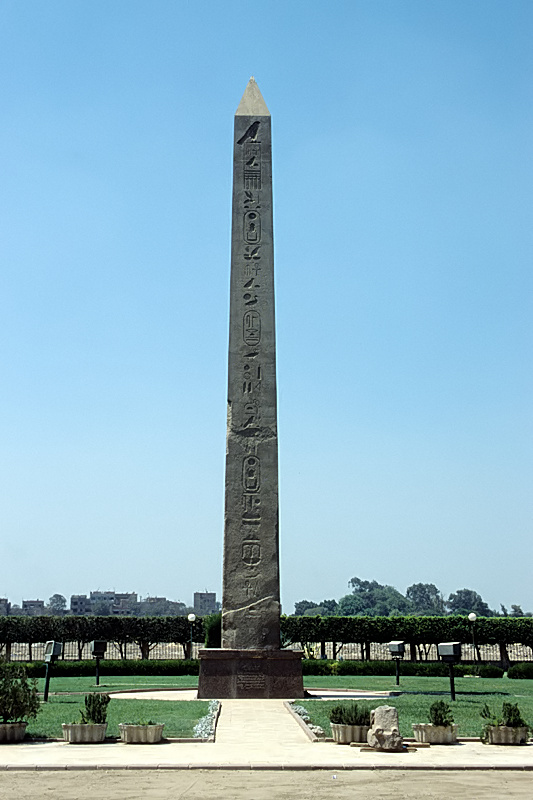
The obelisk of Senusret I at Matariya in Cairo, at the site of ancient Iunu/Heliopolis, 2 September 2001. It belongs to the Middle Kingdom, in the twentieth century BCE; the monument’s date differs from that of this modern photograph
Stätte
Heliopolis is the Greek name of Egyptian Iunu, at Matariya in northern present-day Cairo
Namensvarianten: Heliopolis, Iunu
Kontext und Quellen →
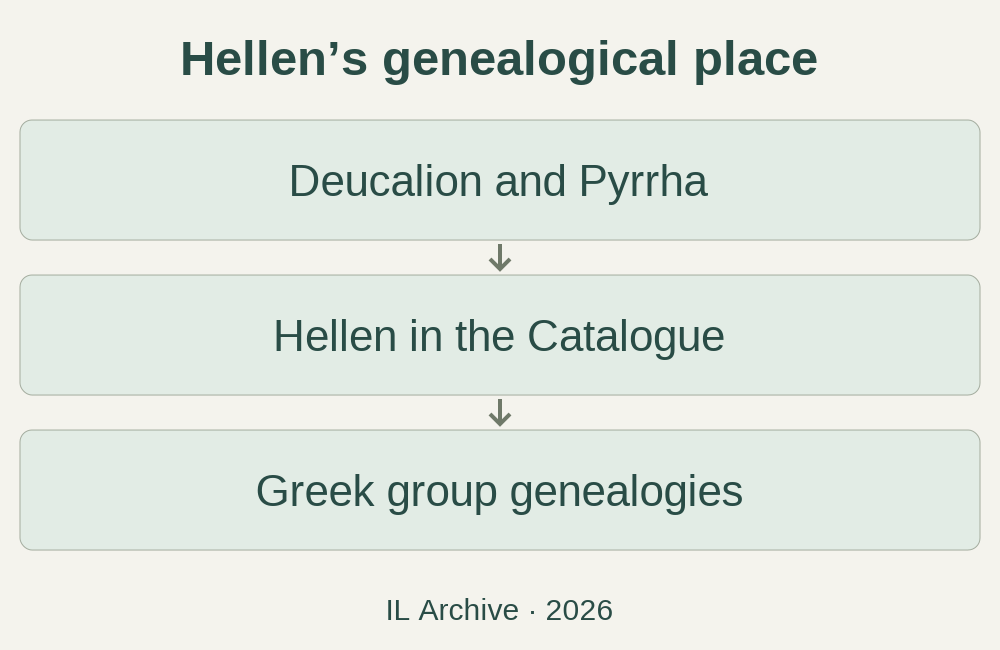
Modern explanatory diagram of one literary witness’s sequence or relationships, not a manuscript, portrait or demonstrated transmission route
Person
Figure associated with Greek genealogies, presented as Deucalion and Pyrrha’s son.
Namensvarianten: Hellen, Greek genealogical figure
Kontext und Quellen →
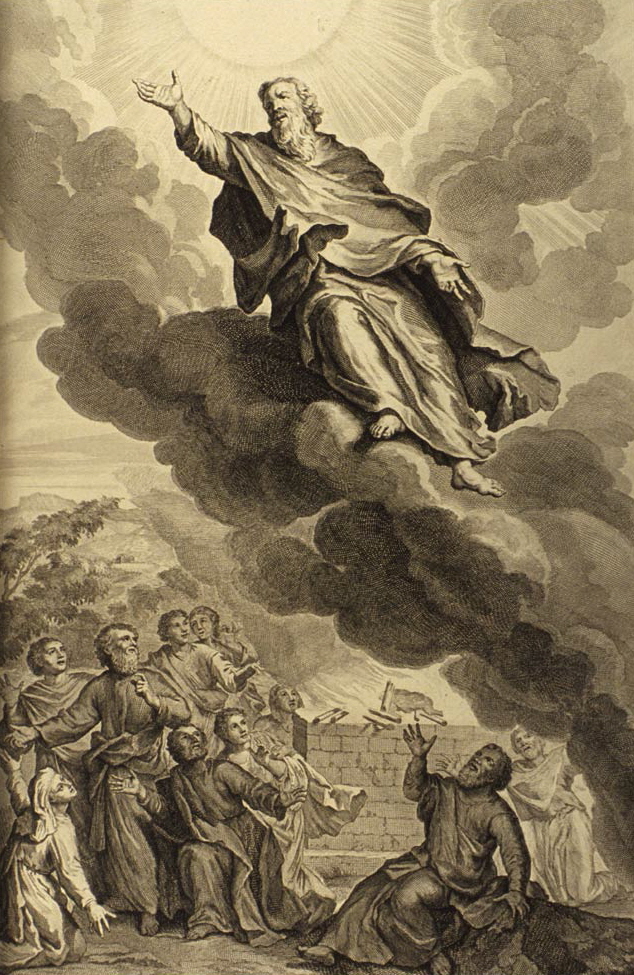
God took Enoch, an artistic interpretation of Genesis 5:24 in Figures de la Bible, The Hague, 1728. Illustrations by Gerard Hoet and others; evidence of later artistic reception
Person
Enoch son of Jared is a figure in the genealogy of Genesis 5, seventh when counted from Adam.
Namensvarianten: Enoch son of Jared
Kontext und Quellen →

Modern AI-generated symbolic cover: one luminous centre amid distinct surrounding forms visualises preference within plurality. Not an ancient religious artefact, historical cosmology or archaeological reconstruction
Entität
Henotheism is a scholarly term for privileging or exalting one deity without necessarily excluding other gods. Its boundaries with monolatry and monotheism are debated; Vedic, Ugaritic, Moabite and Hebrew evidence is examined without assuming a universal sequence.
Namensvarianten: henotheism, henotheistic worship
Kontext und Quellen →
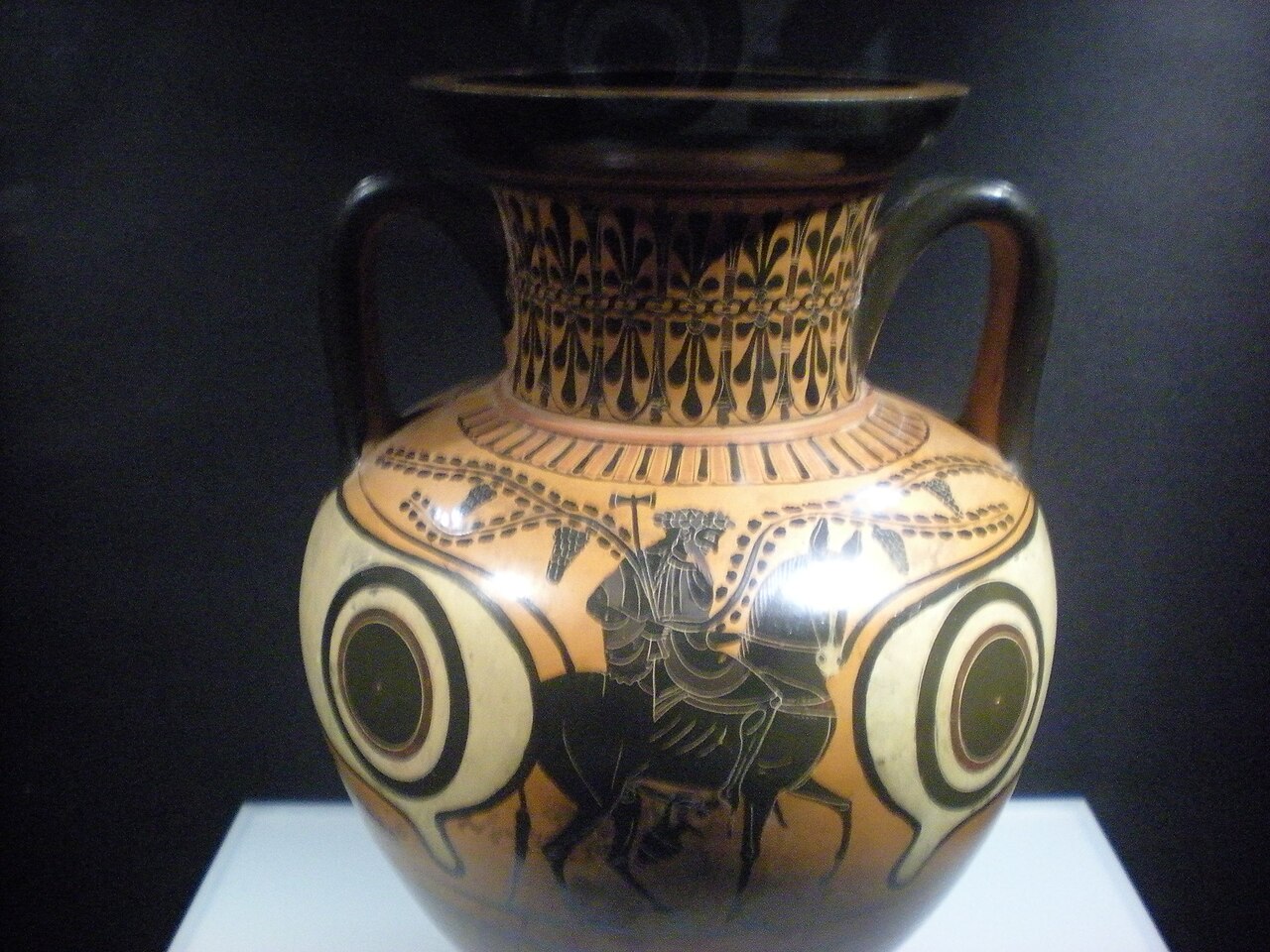
Hephaestus returning to Olympus on a donkey, on an ancient Greek cup in the British Museum, 1836,0224.48. The image depicts the return story, rather than the Iliad’s assembly scene
Entität
God of metalworking in Greek traditions; the Iliad portrays him as Hera’s son and mediator in her dispute with Zeus.
Namensvarianten: Hephaestus
Kontext und Quellen →
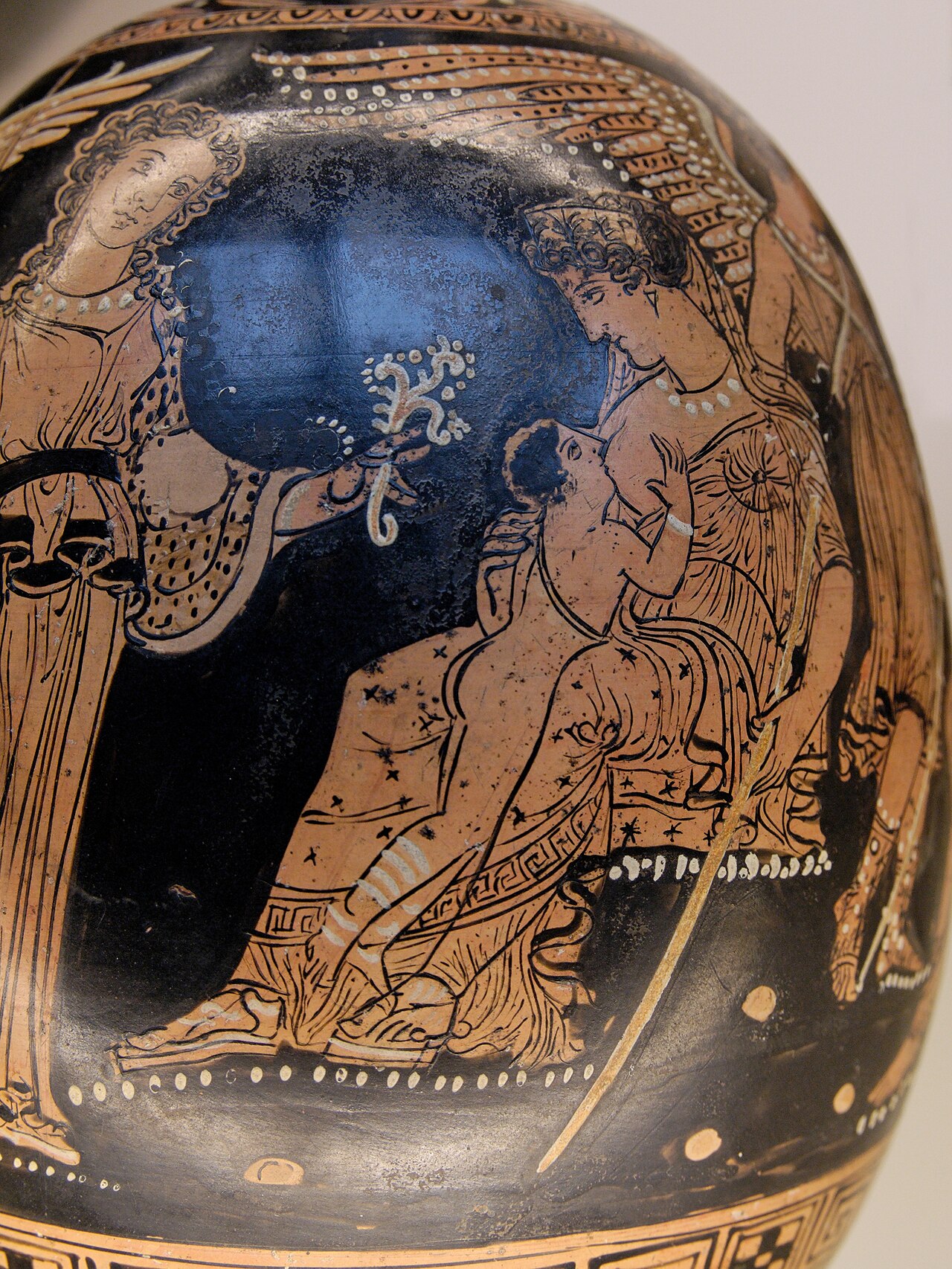
A woman tentatively identified in the museum catalogue as Hera, nursing Heracles; vase of about 365–350 BCE, British Museum 1846,0925.13. The female figure’s identification remains uncertain
Entität
Greek goddess and Zeus’s wife, appearing in council and family-disagreement scenes in the Iliad.
Namensvarianten: Hera
Kontext und Quellen →
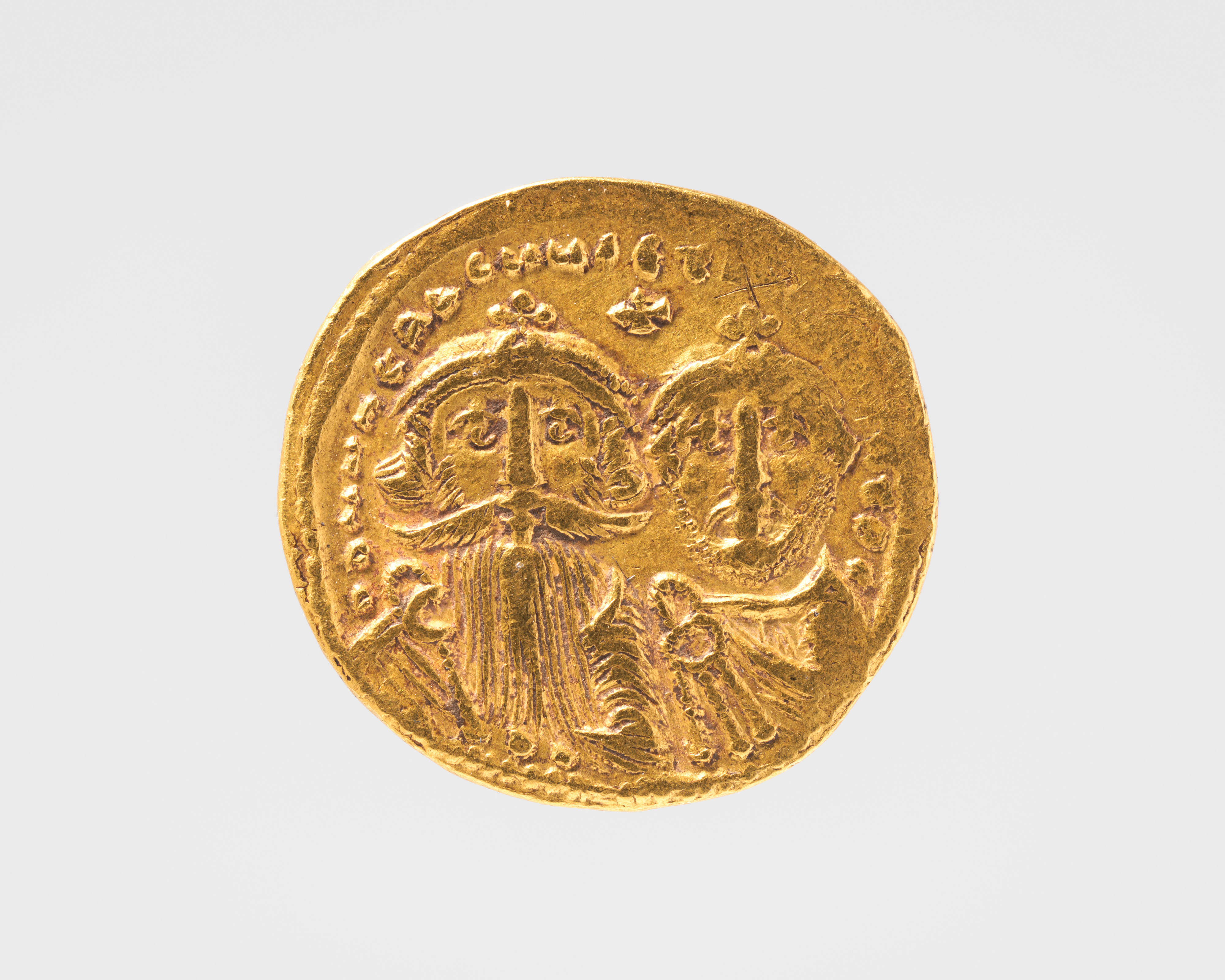
Gold solidus of 629–631 CE bearing official representations of Heraclius and his son Heraclius Constantine; a Byzantine coin, not a photographic likeness
Person
Byzantine emperor who ruled 610–641 CE; his victory over Persia informs dating proposals for some Syriac Alexander texts.
Namensvarianten: Heraclius the emperor
Kontext und Quellen →
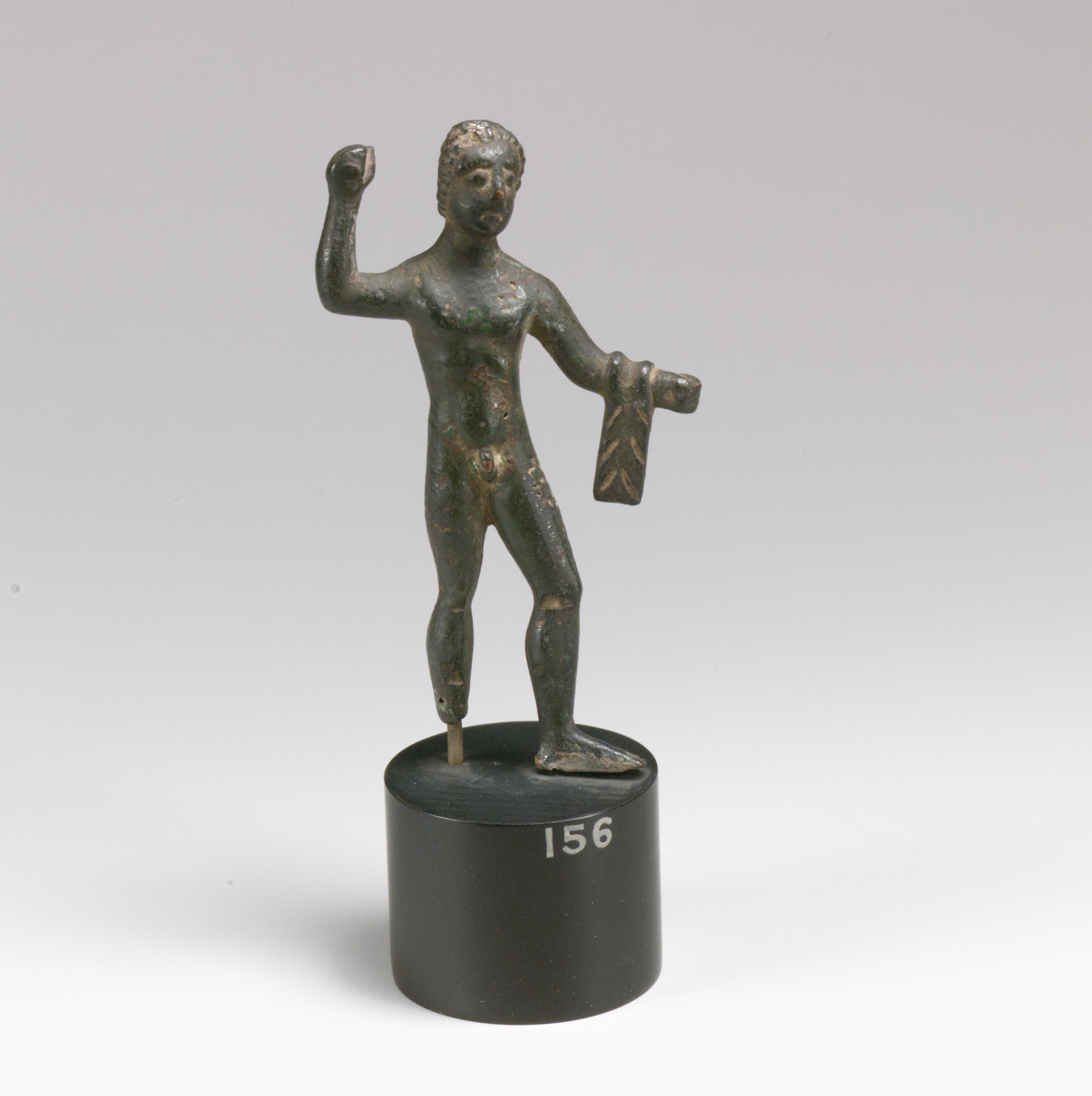
Bronze statuette of Heracles, Italic, about the third–first century BCE; Met 96.9.432. An ancient representation of the hero, not Alcestis’s rescue
Person
A hero of Greek traditions, also known as Hercules; rescues Alcestis in Euripides’ play, while other witnesses depict his apotheosis.
Namensvarianten: Heracles, Greek hero
Kontext und Quellen →
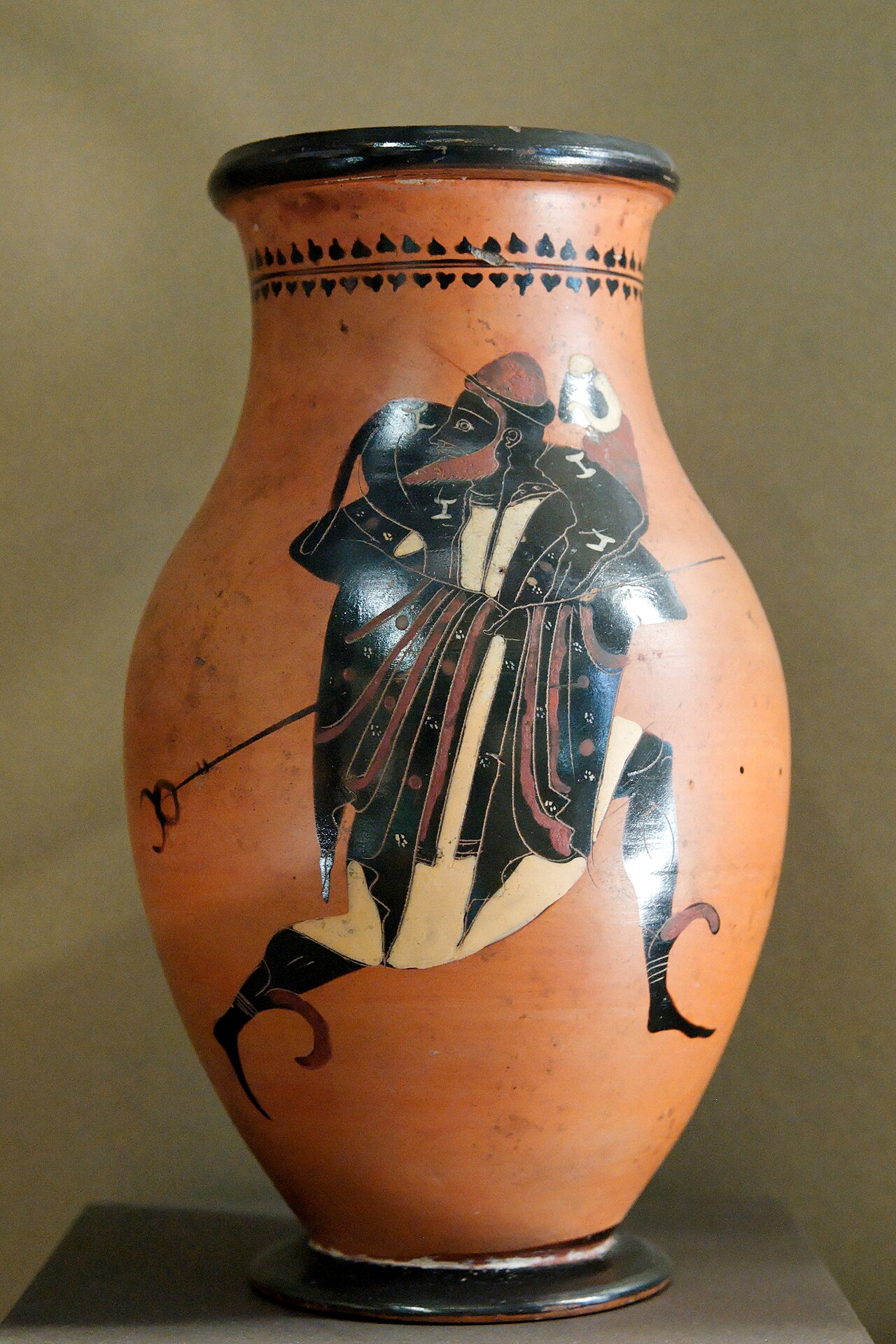
Hermes carrying a ram on an Attic vase, about 515–510 BCE; Louvre Cp 639 / F 159. An archaeological representation of one aspect of the god
Entität
Greek god acting as a messenger in the Odyssey passages examined here.
Namensvarianten: Hermes
Kontext und Quellen →
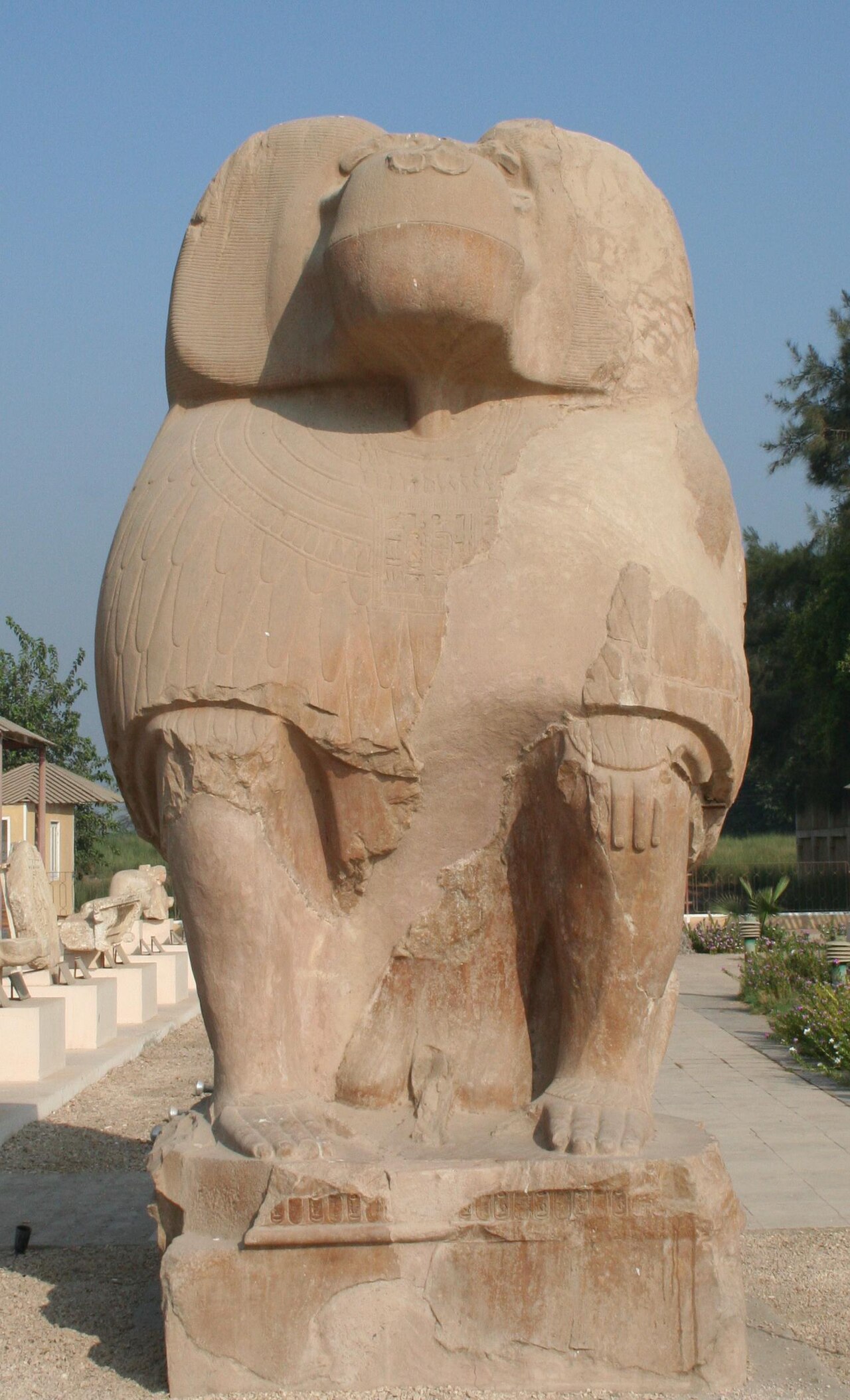
A colossal statue of Thoth as a baboon at Ashmunein/Hermopolis, from Amenhotep III’s reign in the fourteenth century BCE. Photographed on 18 September 2006; it offers a material example of the city’s association with Thoth
Stätte
Hermopolis is an ancient Egyptian city at Ashmunein, called Khemenu in Egyptian
Namensvarianten: Hermopolis, Khemenu, Ashmunein, Khmun
Kontext und Quellen →
Person
Late-first-century-BCE king of Judaea in the journey-to-Egypt story.
Namensvarianten: Herod the Great
Kontext und Quellen →
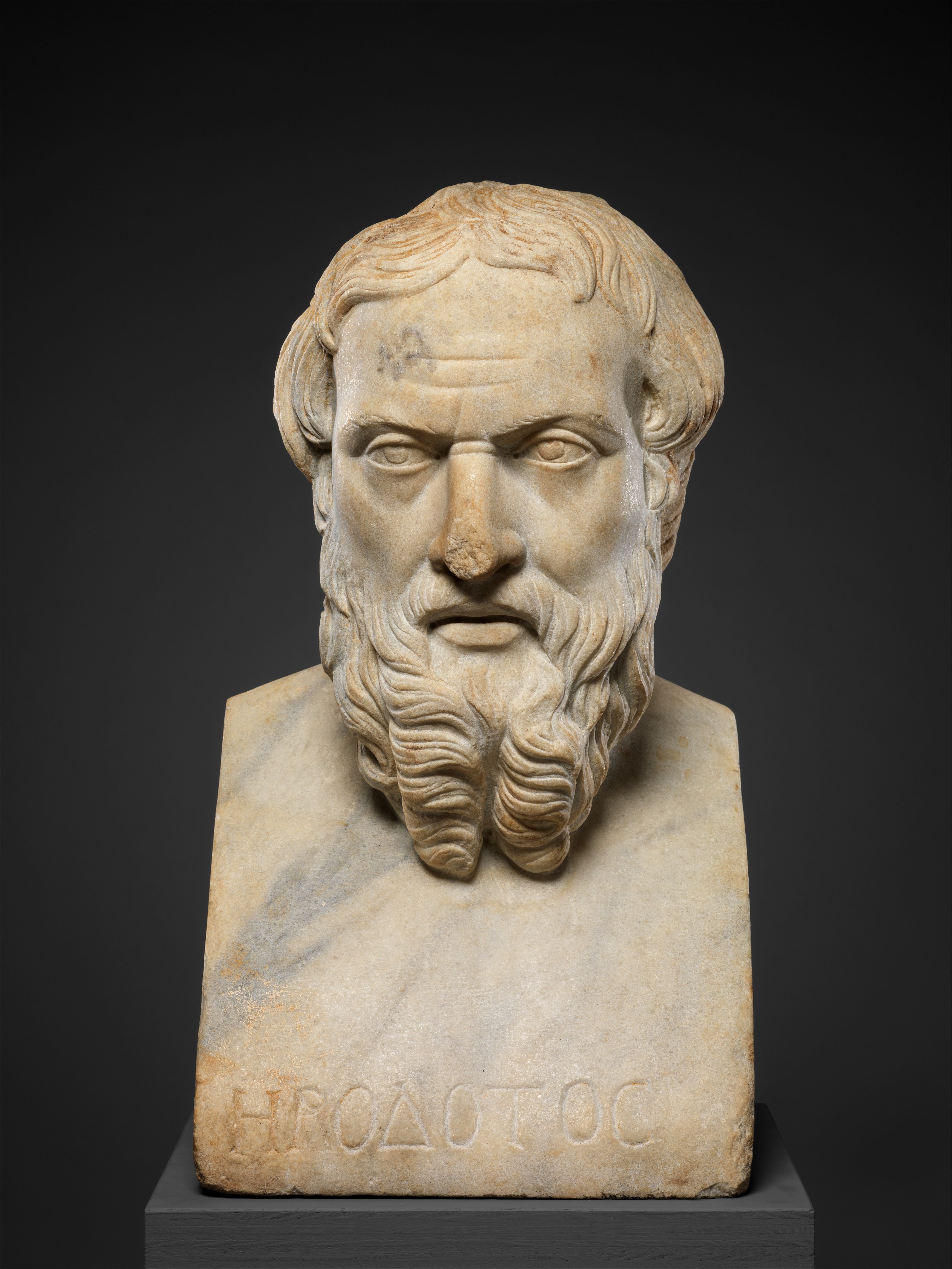
Marble bust of Herodotus,second-century CE Roman copy after a fourth-century BCE Greek model; Met 91.8. A representation later than the historian’s lifetime
Person
Fifth-century BCE Greek historian whose account of the Persian Wars includes reports on peoples, court and empire.
Namensvarianten: Herodotus, Herodotos
Kontext und Quellen →
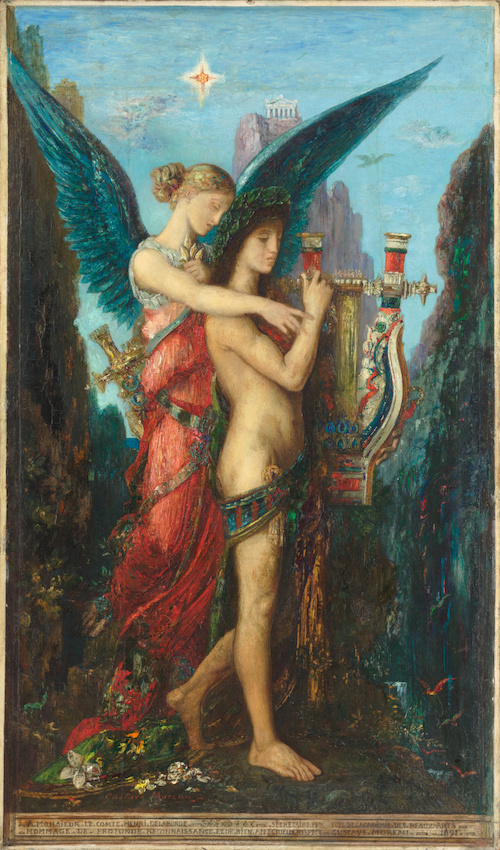
Hesiod and the Muse, an 1891 oil-on-wood painting by Gustave Moreau, Musée d’Orsay RF 1961 7. A modern artistic reception of the ancient poet, not a contemporary likeness
Person
Greek poet whose major work is generally dated to the late eighth or early seventh century BCE, including the Theogony.
Namensvarianten: Hesiod
Kontext und Quellen →
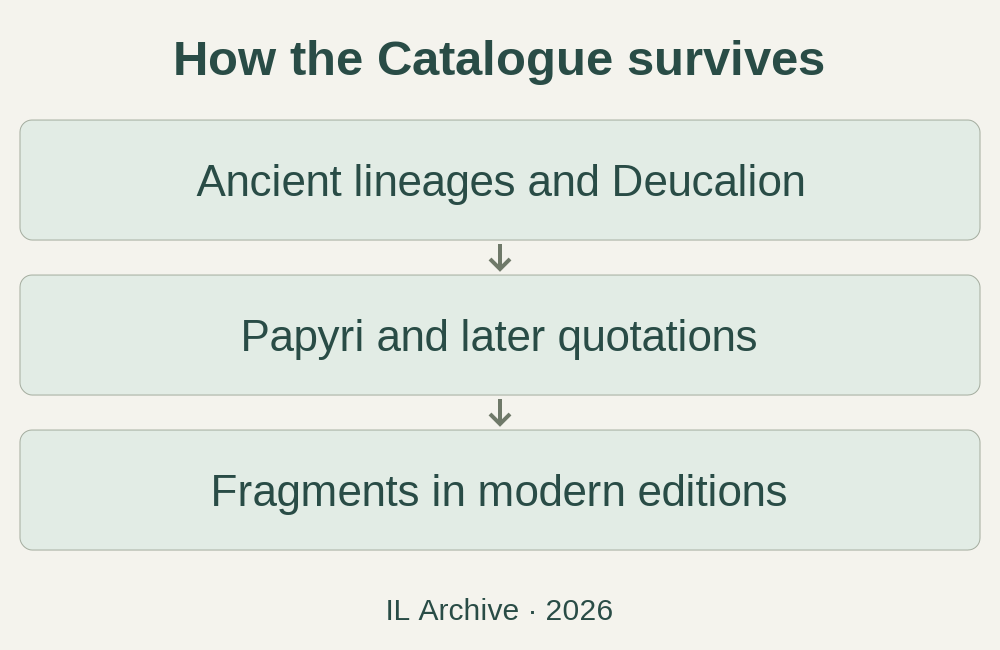
Modern explanatory diagram of one literary witness’s sequence or relationships, not a manuscript, portrait or demonstrated transmission route
Antiker Text
Greek genealogical poem, mostly lost, whose fragments preserve Deucalion’s family and Greek lineages.
Namensvarianten: Hesiodic Catalogue of Women
Kontext und Quellen →
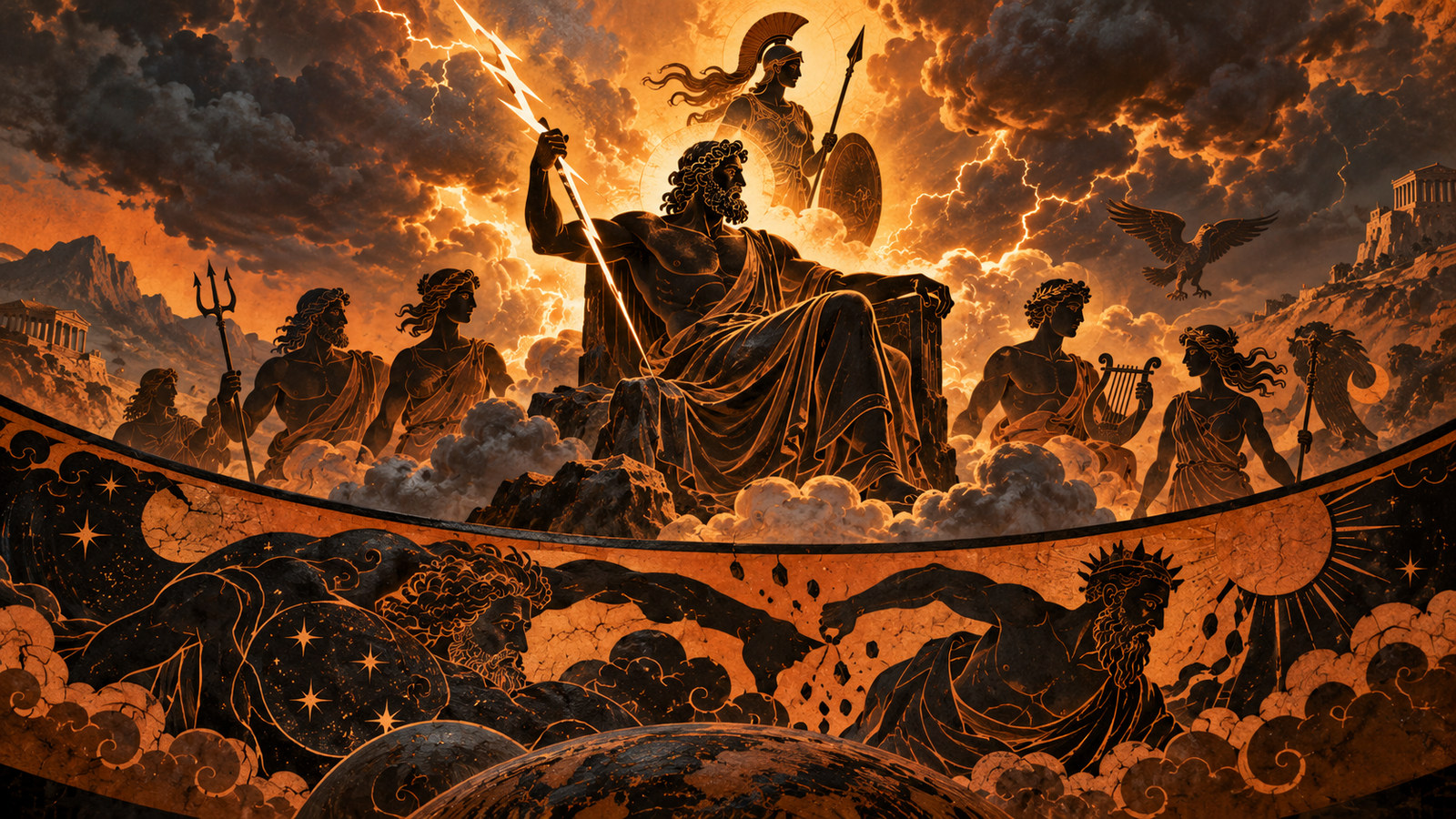
Contemporary imaginative illustration of divine generations in the Theogony, with Zeus at the center of a symbolic scene. It is not a photograph of ancient pottery or a documented reconstruction of the gods
Antiker Text
Greek poem on divine generations and Zeus’s kingship; its surviving form does not identify all of Hesiod’s sources.
Namensvarianten: Theogony, Hesiod’s Theogony
Kontext und Quellen →
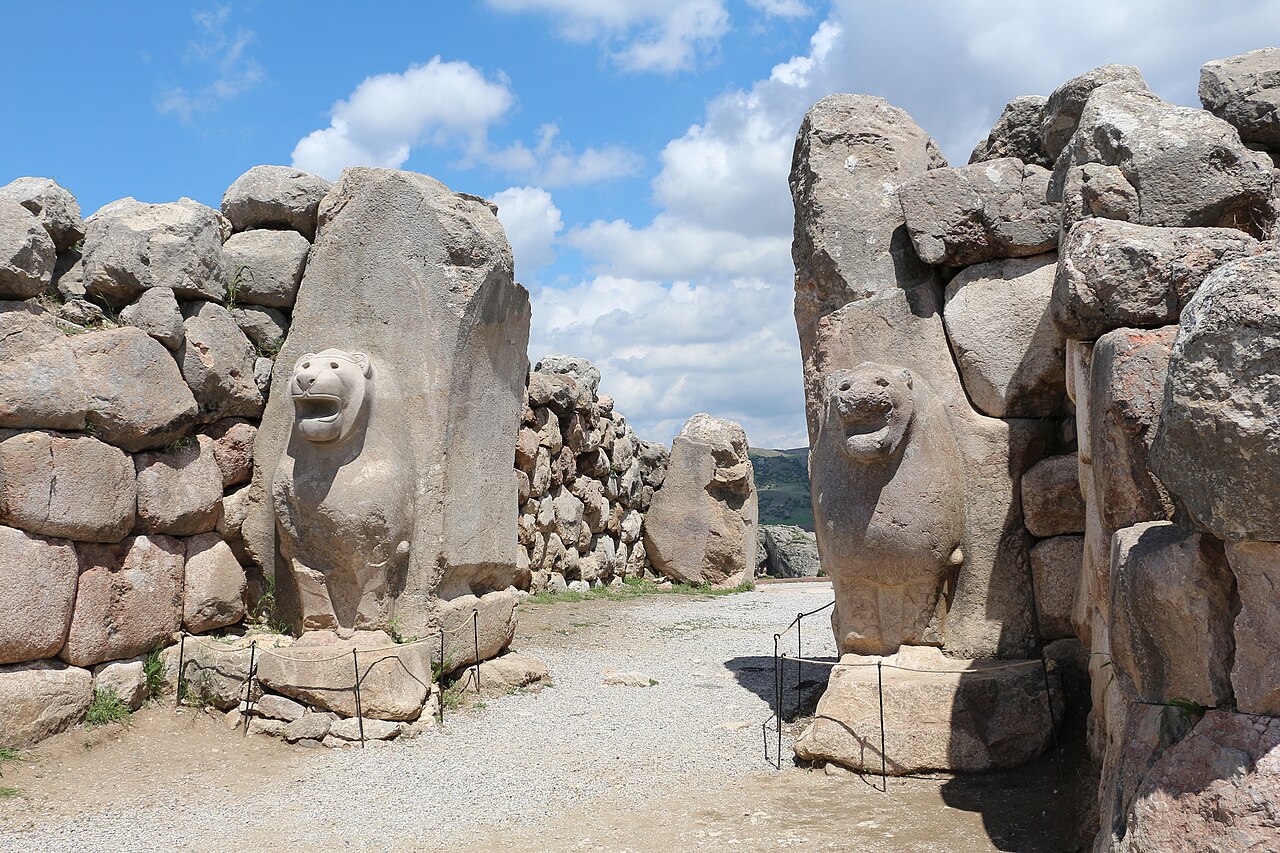
The Lion Gate at Hattusha, the Hittite capital near Boğazköy in modern Türkiye. A contemporary view of the remains, photographed by Bernard Gagnon on 19 May 2014
Entität
Ancient people and kingdom of Anatolia, dominating much of Anatolia and northern Syria around 1650–1200 BCE.
Namensvarianten: Hittites
Kontext und Quellen →
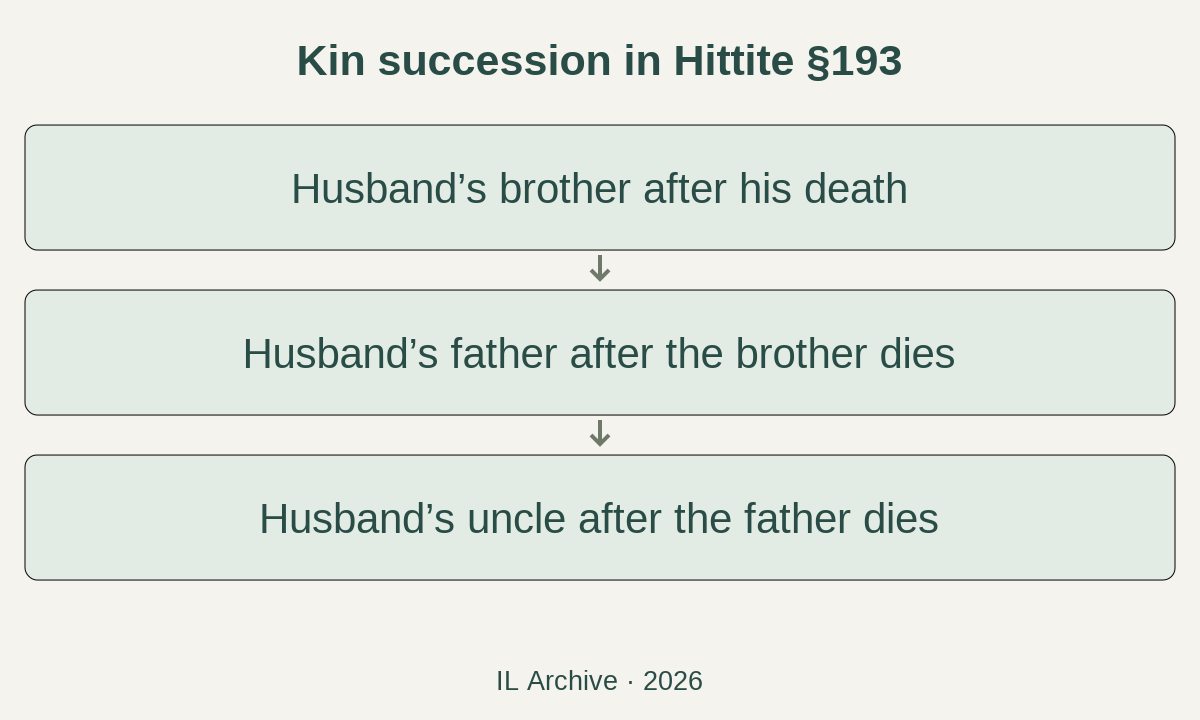
Modern explanatory diagram of relationships or cases in the specified witnesses; not portraits, a legal tablet or an ancient manuscript
Antiker Text
Hittite kinship and relationship provisions from a collection whose earliest copies date around 1650–1500 BCE.
Namensvarianten: Hittite law collection
Kontext und Quellen →
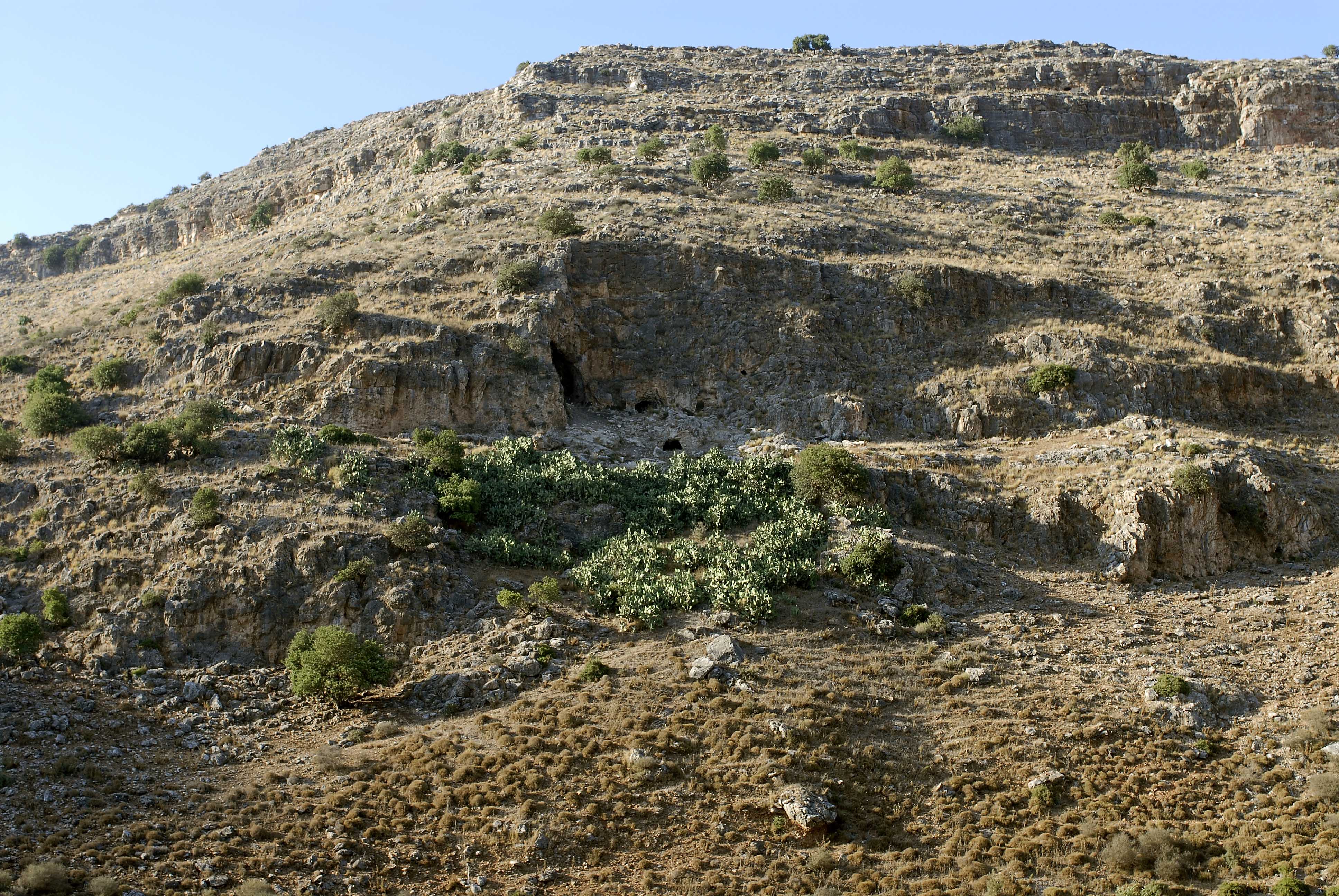
Hilazon Tachtit Cave viewed from the south, July 2006. A modern photograph of the site and its surroundings, not of the grave or funeral
Stätte
A Late Natufian burial cave in Galilee, with an exceptional woman’s grave and deposits interpreted as funerary feasts.
Namensvarianten: Hilazon Tachtit, Hilazon Tachtit Cave
Kontext und Quellen →

Himalaya from the International Space Station, 28 January 2004, ISS008-E-13304. Modern geographical view, not identification of Manu’s landing summit
Stätte
Mountain range separating the Tibetan Plateau from parts of the Indian subcontinent, named in Manu’s epic story.
Namensvarianten: Himalaya mountain range, Himalayas
Kontext und Quellen →

Modern astronomical photograph of the Milky Way’s central region and dark dust lanes. It illustrates stars in the astral sense of heavenly host, not the divine council in Micaiah’s vision
Entität
A heavenly group whose meaning varies: celestial bodies in some texts, attendants around the throne deliberating in 1 Kings 22.
Namensvarianten: heavenly host, host of heaven
Kontext und Quellen →
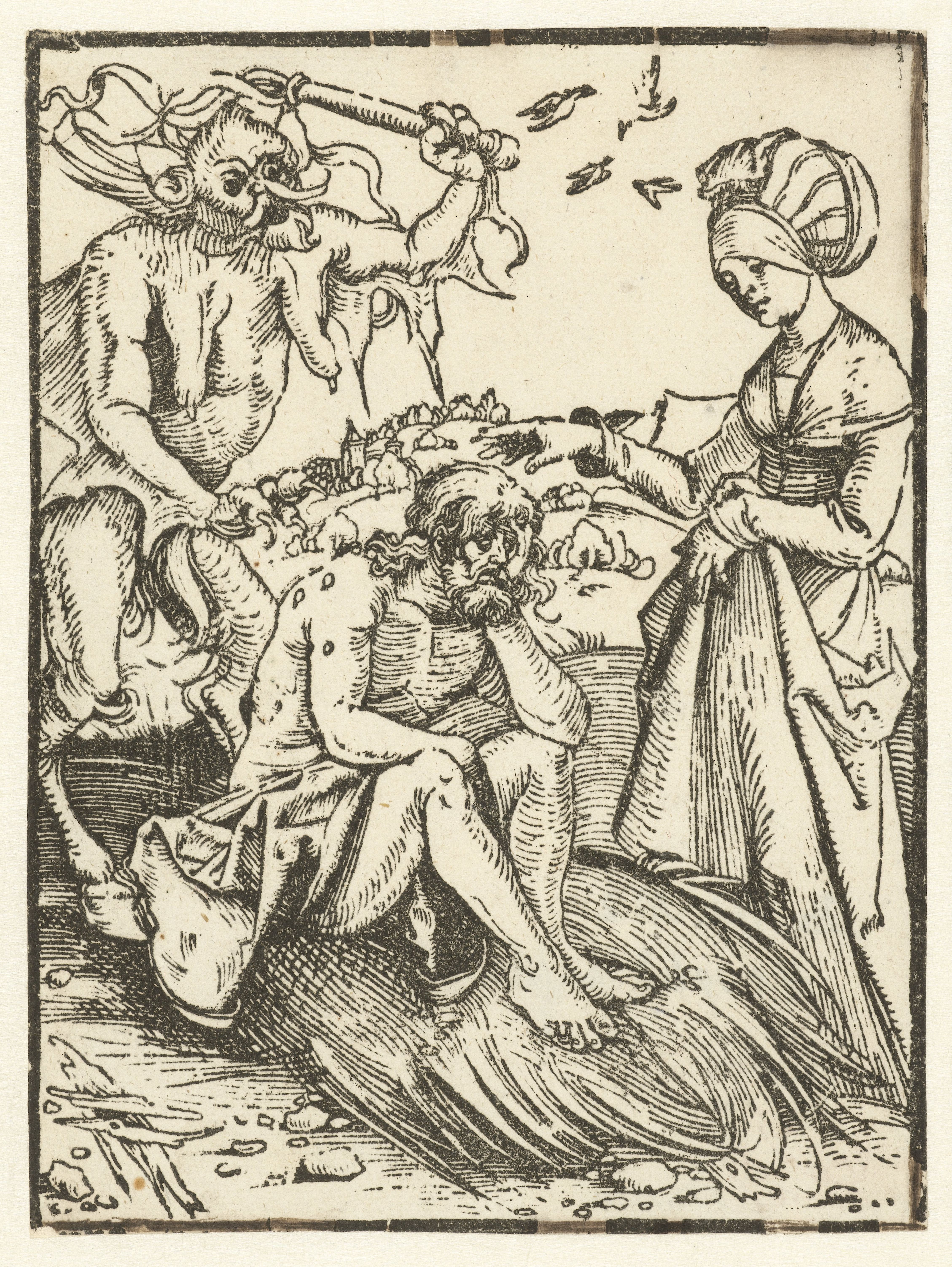
Job on the dunghill with his wife and a devil; woodcut from Albrecht Dürer’s school, Nuremberg, 1509, RP-P-OB-1550, Rijksmuseum. A later rendering, not a historical portrait
Person
Central figure of the Book of Job, introduced as upright and subjected to suffering after a heavenly discussion of his fidelity.
Namensvarianten: Job
Kontext und Quellen →
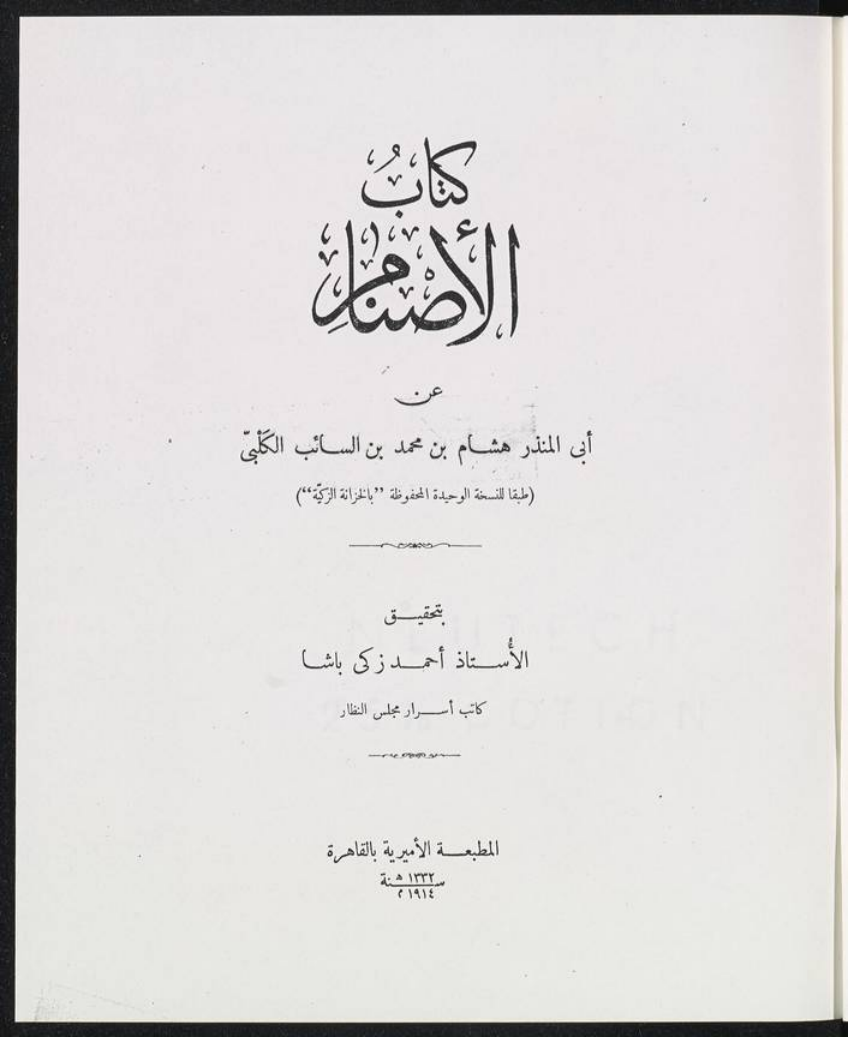
Title page of Hisham ibn Muhammad al-Kalbi’s Book of Idols, edited by Ahmad Zaki Pasha, Cairo, 1332 AH / 1914 CE; Cornell copy in Arabic Collections Online. A printed edition, not an author-era manuscript or portrait. A library leaf dates the replacement paper volume to 2005
Person
Abbasid-era compiler of historical and genealogical traditions, deceased in the early ninth century CE; author of the Book of Idols.
Namensvarianten: Hisham ibn Muhammad al-Kalbi
Kontext und Quellen →
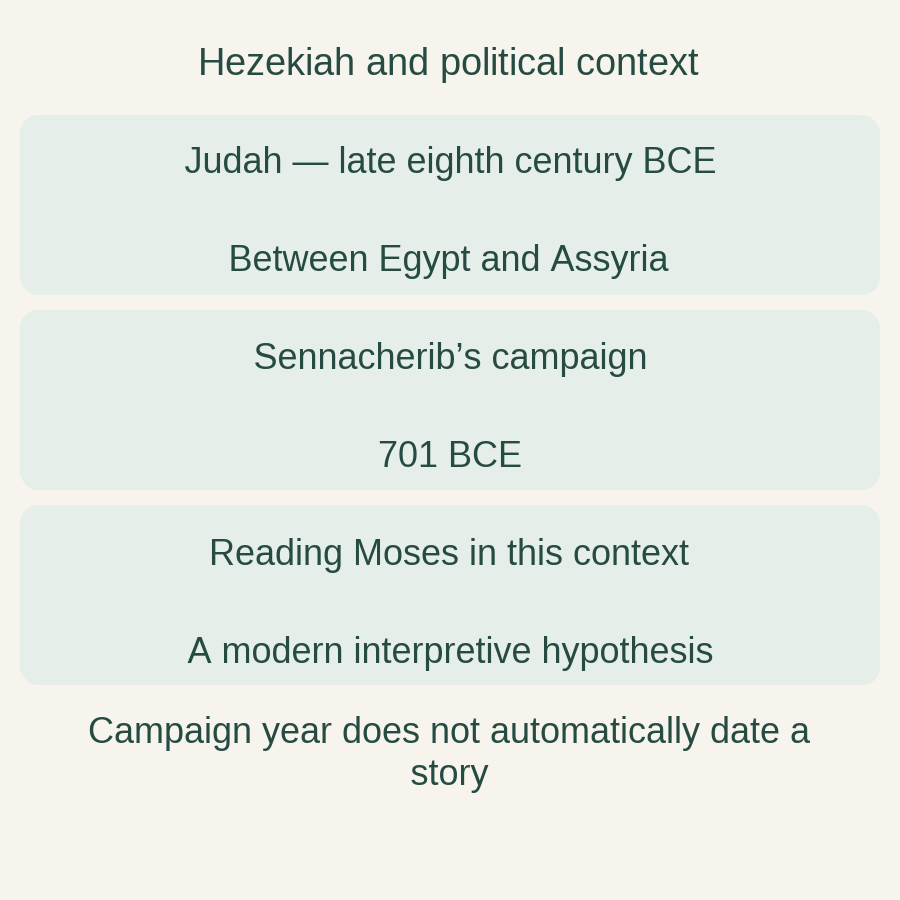
Modern diagram of Hezekiah’s political setting, distinguished from proposed literary dating; not a portrait
Person
King of Judah in the late eighth century BCE, named in Sennacherib’s Assyrian accounts of the 701 BCE campaign.
Namensvarianten: Hezekiah, king of Judah
Kontext und Quellen →
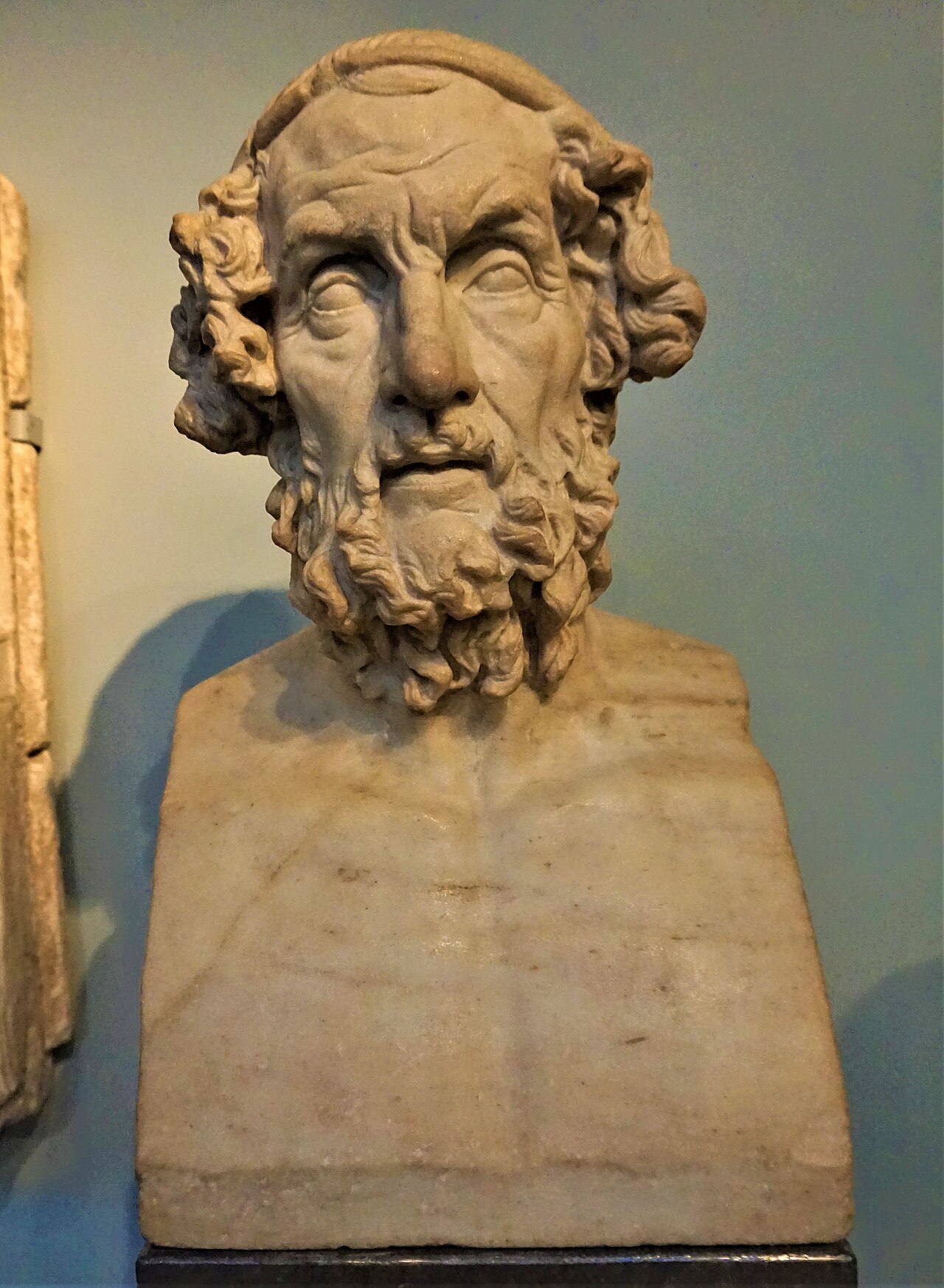
Roman portrait bust representing Homer, second century CE; British Museum 1805,0703.85. An artistic likeness made long after the epics, rather than a contemporary portrait
Person
The name to which Greek tradition attributes the Iliad and Odyssey.
Namensvarianten: Homer
Kontext und Quellen →

Modern AI-generated conceptual scene: a blank book and overlapping light symbolize the historical question of unity and distinction. Not a depiction of the 325 Council, a historical manuscript or the divine being
Entität
Homoousios: “of the same substance.” Used for the Son in relation to the Father in the 325 Nicene Creed to distinguish him from creatures. Its precise implications remained contested as ousia and hypostasis acquired sharper later uses.
Namensvarianten: homoousios, consubstantial, of the same substance
Kontext und Quellen →
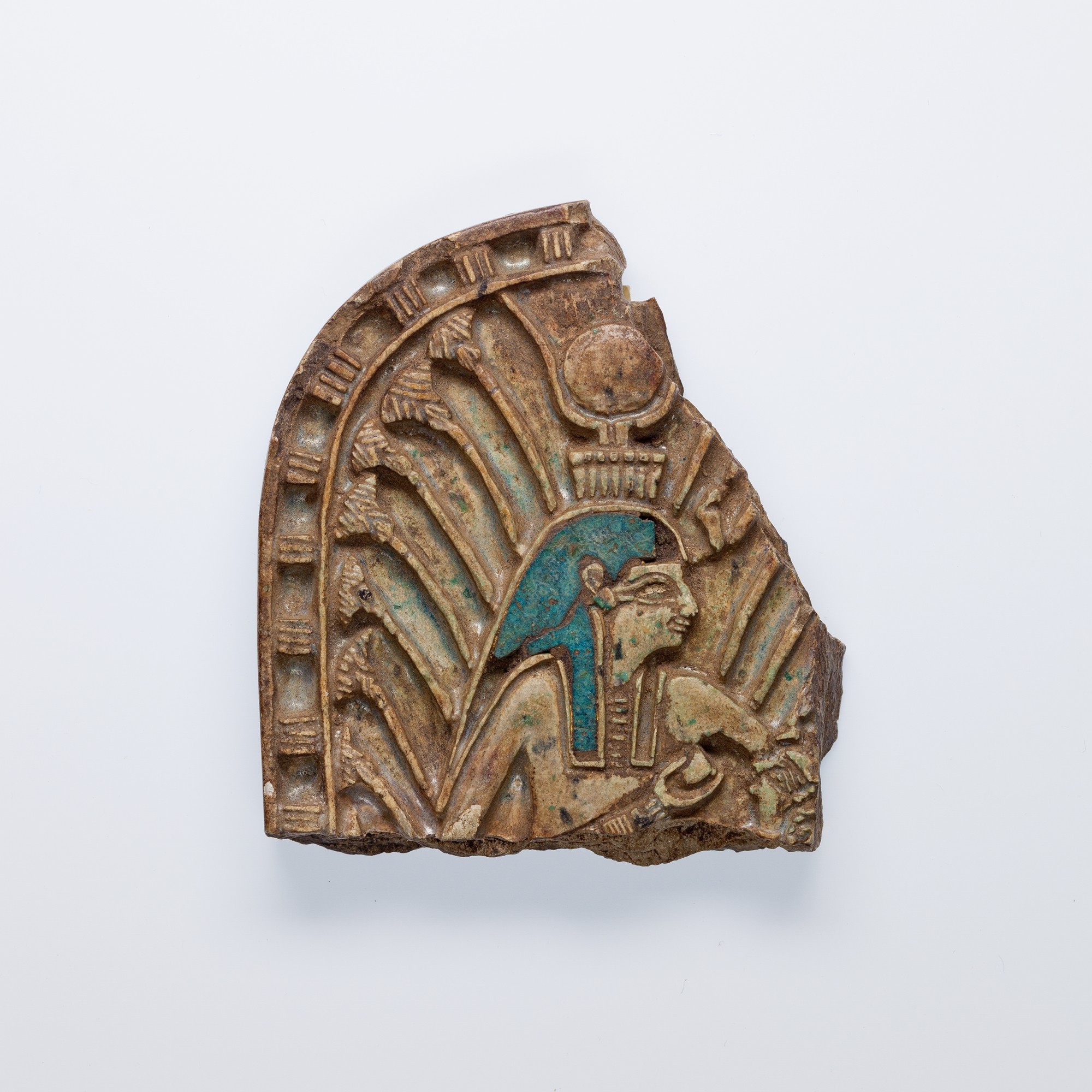
Isis nursing Horus among papyrus, about 1080–664 BCE, glazed steatite, Met 30.8.239. The museum tentatively identifies its original function as a box lid or menat counterpoise; not Papyrus Jumilhac
Entität
Egyptian god associated with kingship and the sky, also appearing as the child protected by his mother Isis in marsh and nursing traditions.
Namensvarianten: Horus
Kontext und Quellen →
Person
Hugo Gressmann (1877–1927) was a German Old Testament and history-of-religions scholar working in Berlin.
Namensvarianten: Hugo Gressmann
Kontext und Quellen →
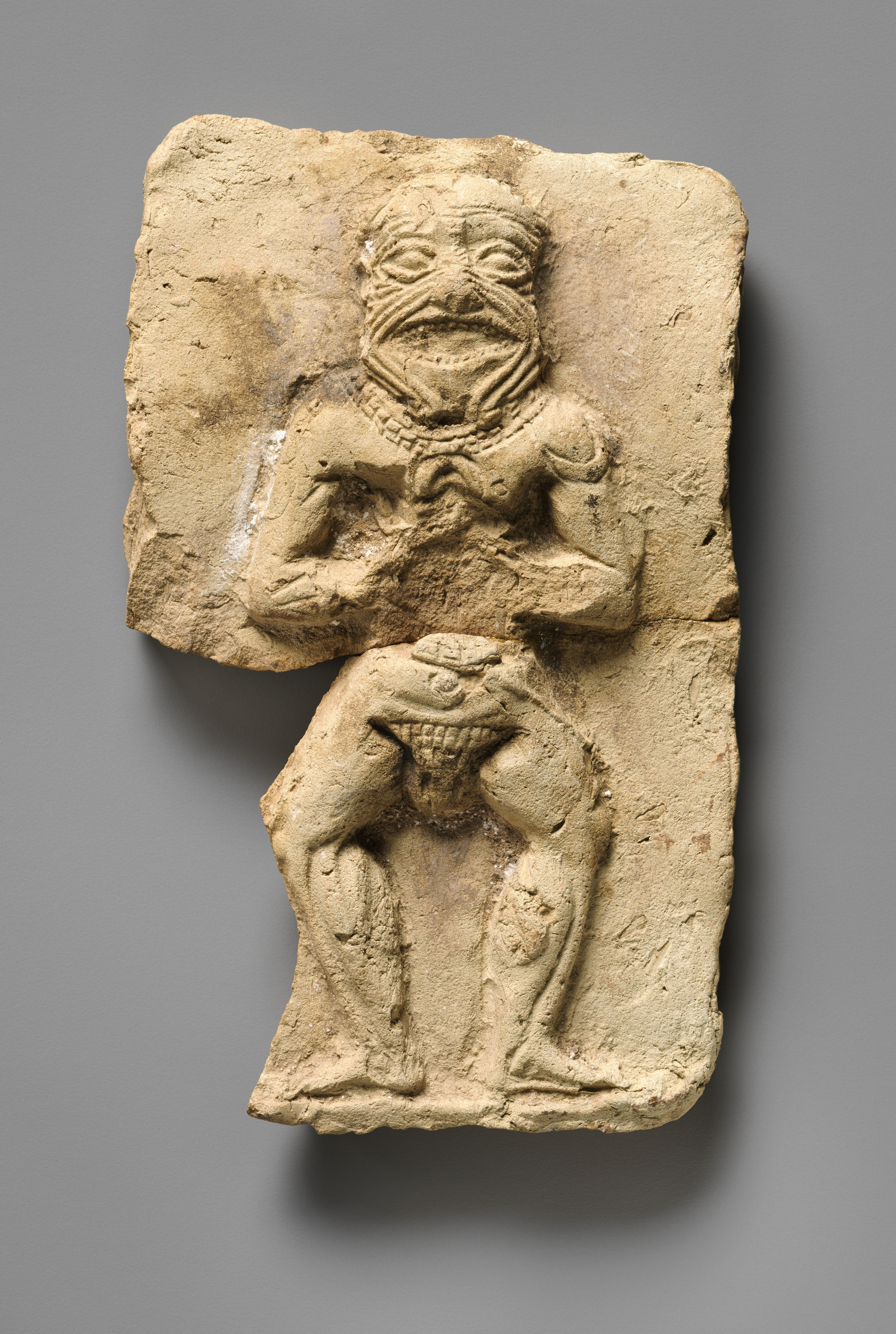
Babylonian ceramic plaque of Humbaba, about 2000–1600 BCE; Met 1974.347.3a,b. Ancient representation of the forest guardian, not the plant episode
Person
Guardian of the Cedar Forest confronted by Gilgamesh and Enkidu in the epic traditions.
Namensvarianten: Humbaba, guardian of the Cedar Forest, Humbaba
Kontext und Quellen →
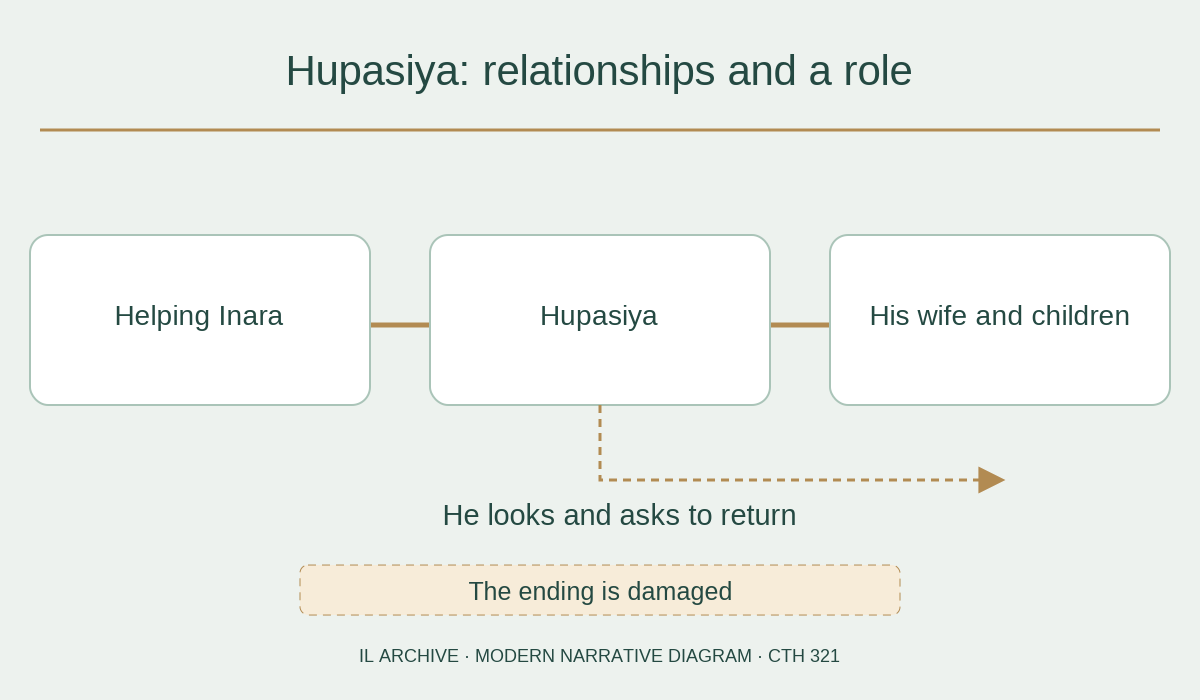
Modern diagram of Hupasiya’s two relationships in the first account: helping Inara and wanting to return to his wife and children. The ending is marked as damaged; no unpreserved fate or portrait is supplied
Person
Inara’s human helper in the first Hittite Illuyanka account, who binds the serpent after the feast.
Namensvarianten: Hupasiya, Hupashiya
Kontext und Quellen →
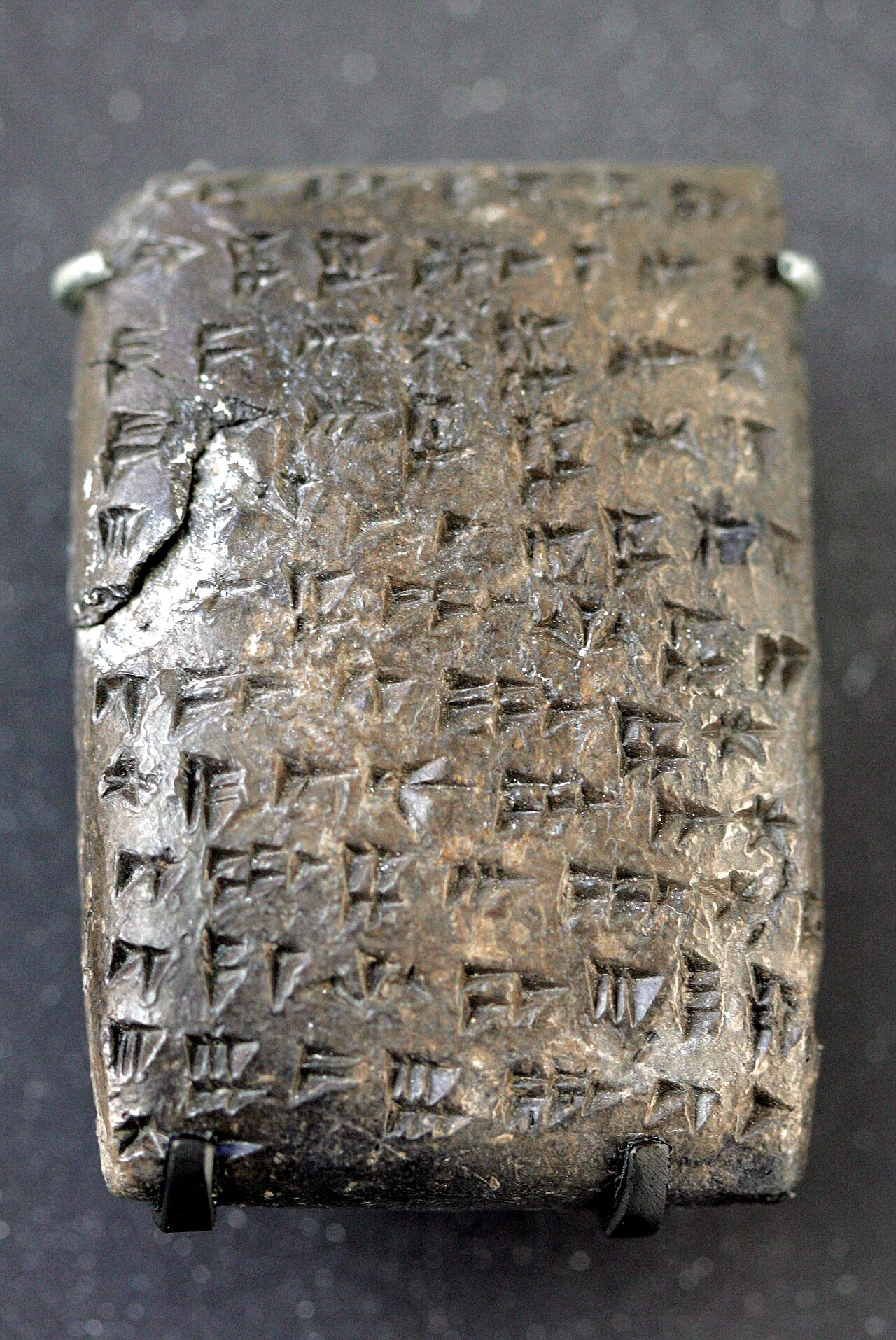
Hurrian-language incantation tablet from Ras Shamra, about 1400–1200 BCE, Louvre AO 12016. Rama, 20 October 2007. Evidence of Hurrian at Ugarit, not the Kumarbi-song tablet
Entität
Ancient Near Eastern groups and language, prominent in northern Mesopotamia, the Levant and Anatolia in the second millennium BCE.
Namensvarianten: Hurrians
Kontext und Quellen →

Contemporary AI-generated conceptual cover: three distinct crystals in an imagined library evoke questions of unity and distinction in theological language. Not a depiction of God, a council, an artifact or three divine substances
Entität
Hypostasis is a Greek term with changing meanings. In later Trinitarian theology it distinguishes Father, Son and Spirit within one divine essence; earlier Greek, biblical and Syriac usages require separate contextual reading.
Namensvarianten: hypostasis, hypostases
Kontext und Quellen →
Person
Researcher in Quranic manuscripts, reading traditions and written and oral transmission.
Namensvarianten: Hythem Sidky
Kontext und Quellen →
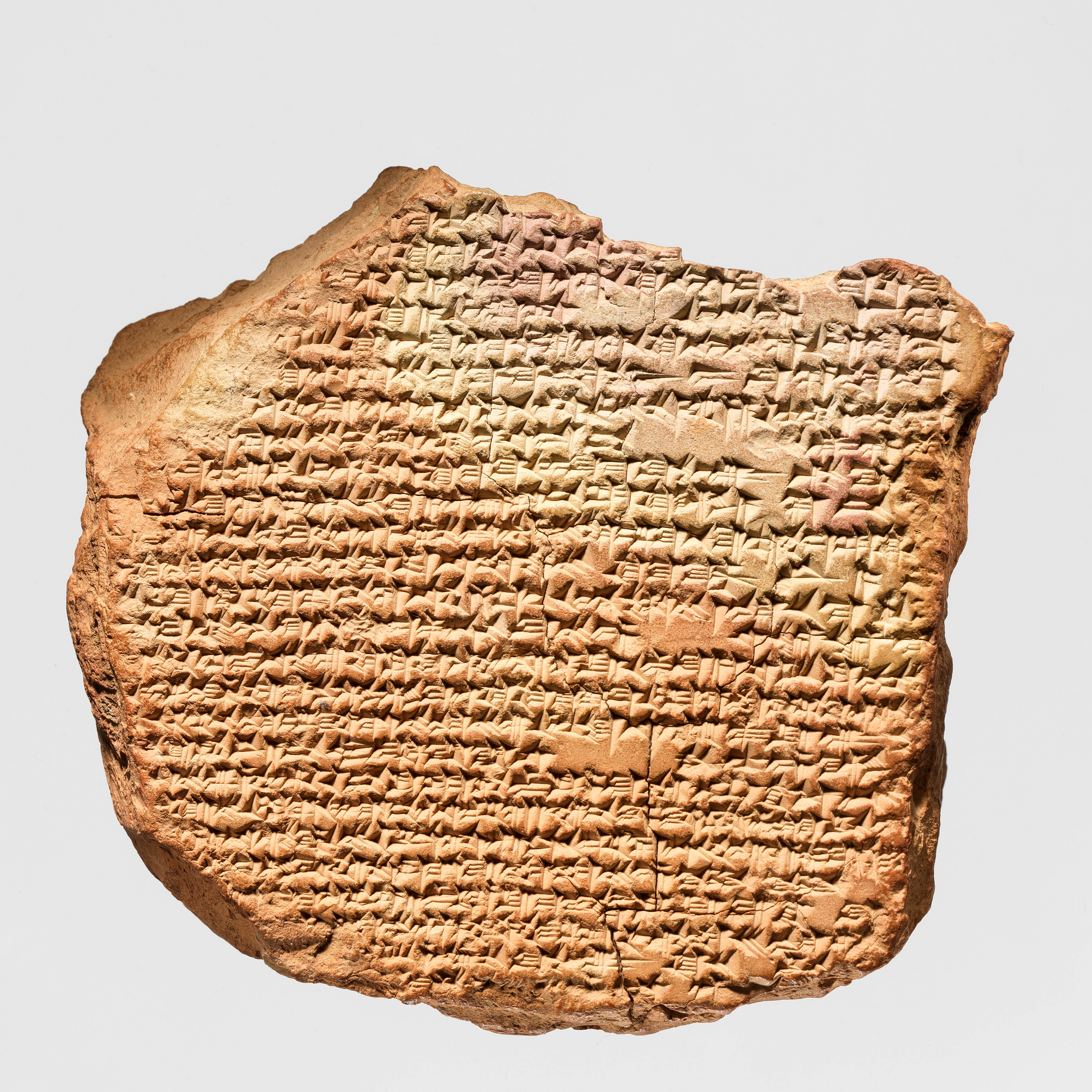
Surviving middle portion of a “Hymn to Marduk” tablet (The Met 86.11.313), first millennium BCE; Neo-Babylonian attribution tentative. The Sumerian text alternates with Akkadian translation and exalts Marduk. Authentic artifact photograph, cropped for display—not an image of the god or proof of monotheism
Entität
A deity represented as holding superior authority among other gods in a specified source or tradition; the rank alone does not establish exclusive worship or monotheism.
Namensvarianten: high god, chief god
Kontext und Quellen →
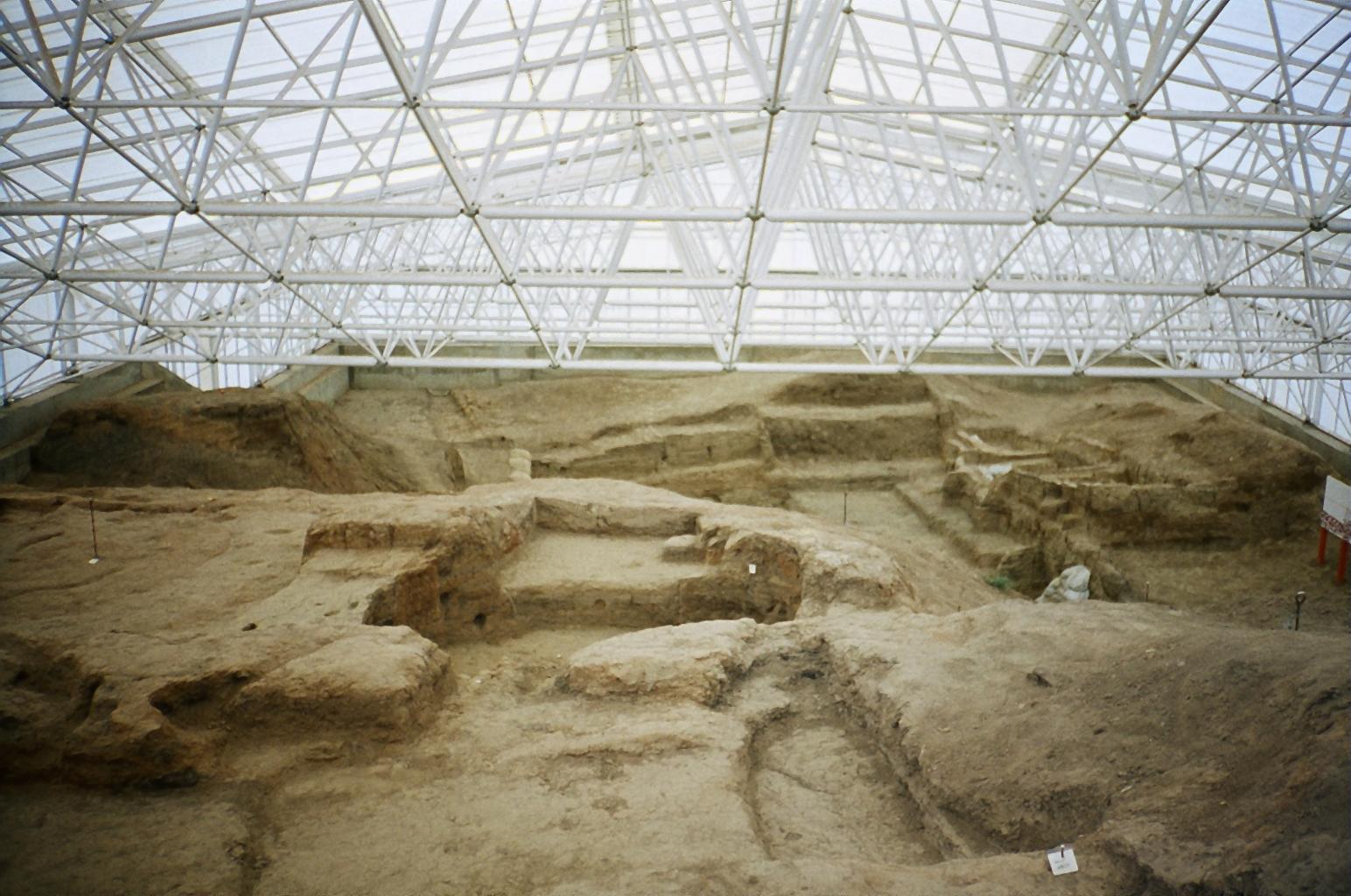
The south area at Çatalhöyük in 2003, under a modern shelter, during the project Ian Hodder directed. Not his portrait and not the houses while they were occupied
Person
An archaeologist who directed the Çatalhöyük project from 1993 to 2018 and read its buildings as houses of dwelling and memory, not necessarily separate temples.
Namensvarianten: Ian Hodder
Kontext und Quellen →
Person
Archaeologist studying social organization, identity and village life, including Neolithic communities.
Namensvarianten: Ian Kuijt
Kontext und Quellen →

The Whiteknights campus of the University of Reading, with the Humanities and Social Sciences building, 10 November 2007. A view of the university associated with Ian Rutherford’s work
Person
Specialist in Greek literature and religion at the University of Reading, studying contacts with Anatolia and Egypt.
Namensvarianten: Ian Rutherford
Kontext und Quellen →
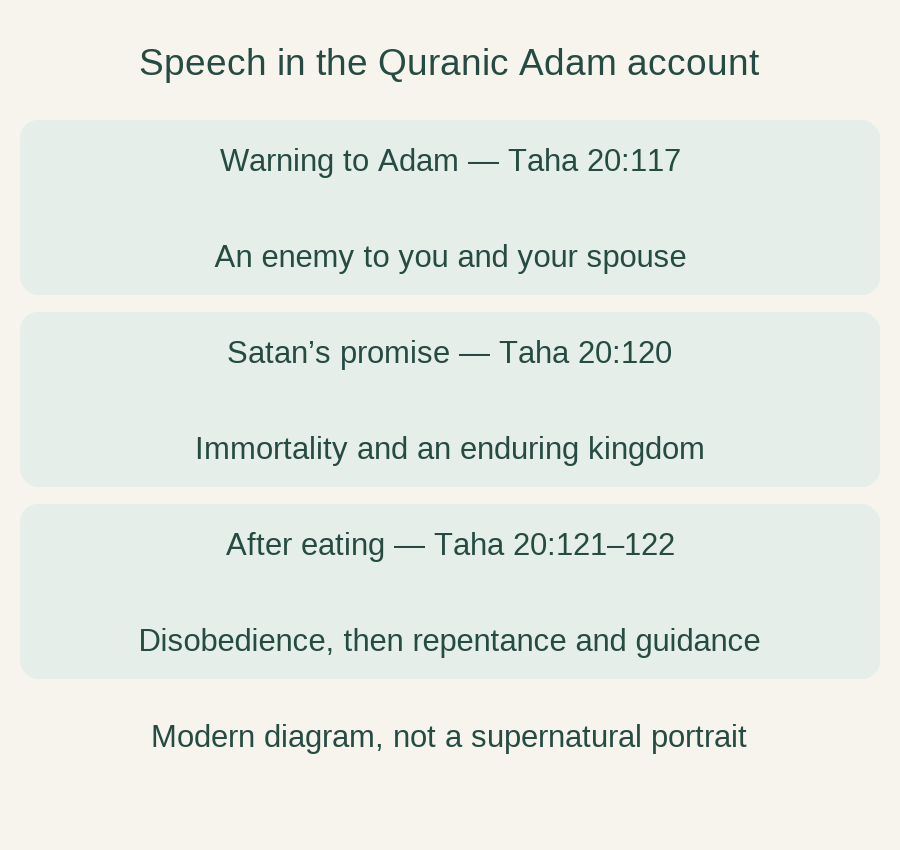
Modern diagram distinguishing the warning, Satan’s promise and the narrated aftermath of eating; not a portrait of Iblis
Entität
Iblis names the figure who refuses to prostrate before Adam in the Quran; Taha places the promise of immortality on Satan’s lips in the temptation scene.
Namensvarianten: Iblis in the Quran
Kontext und Quellen →
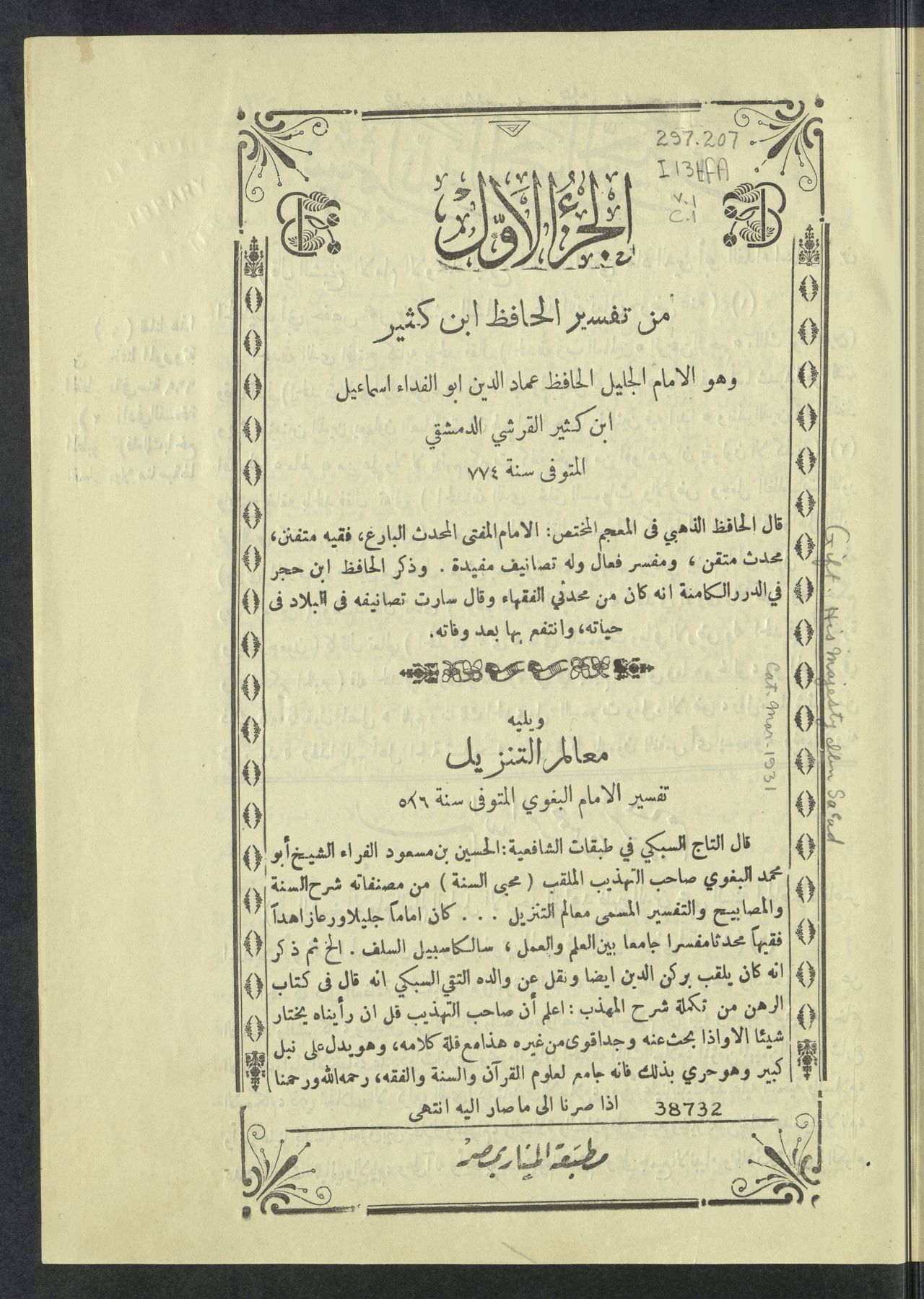
Title page of volume 1 of the Egyptian al-Manar printing of Ibn Kathir's commentary, 1343–1347 AH/c. 1924–1928 CE; a later printed edition, not a fourteenth-century image
Person
Syrian Qur'anic exegete and historian (c. 1301–1373 CE) who favors Ishmael in his reading of the sacrifice account.
Namensvarianten: Isma'il ibn 'Umar Ibn Kathir
Kontext und Quellen →
Person
Hanbali Muslim scholar (1263–1328) based in Damascus, who wrote on interpretation, law and theology; modern research considers his influence on identifying Abraham's son in the sacrifice story.
Namensvarianten: Taqi al-Din Ibn Taymiyya, Ibn Taymiyyah
Kontext und Quellen →