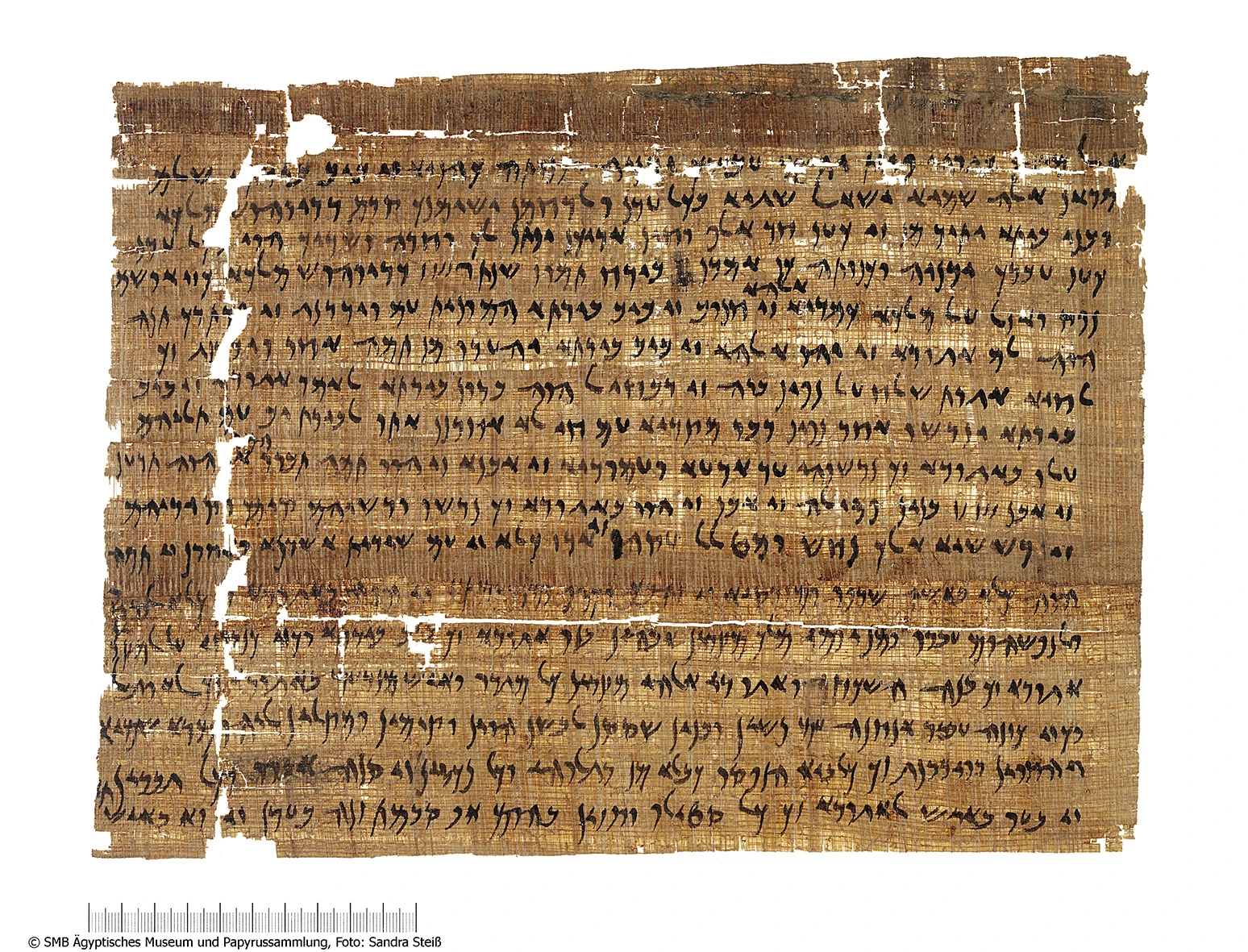
Recto of petition P.13495, dated 25 November 407 BCE, from Elephantine’s priestly community. A document, not a portrait of Jedaniah. Photograph Sandra Steiß, Staatliche Museen zu Berlin
Person
An Elephantine priest named with his colleagues in the temple-rebuilding petition of 407 BCE.
Namensvarianten: Jedaniah son of Gemariah
Kontext und Quellen →
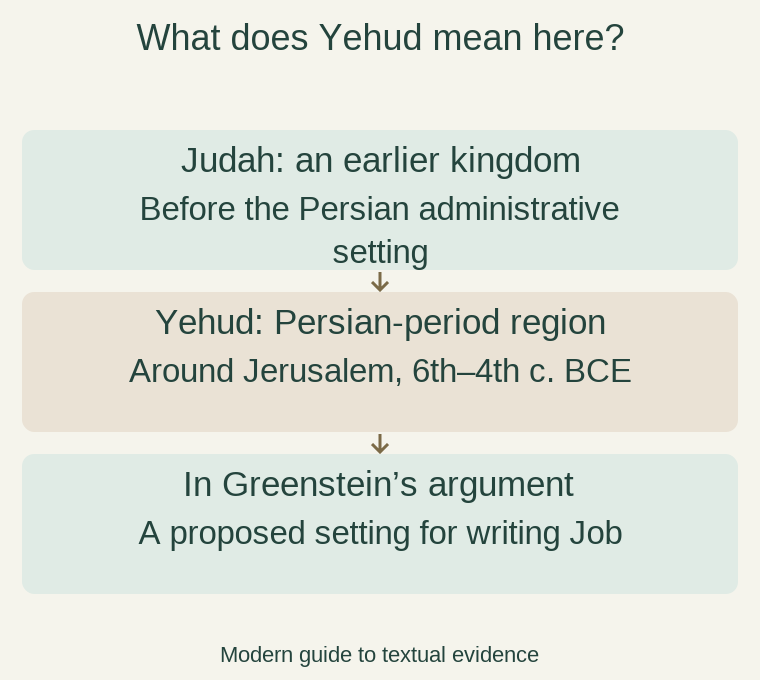
Modern diagram distinguishing the earlier kingdom of Judah from Persian-period Yehud, and locating Yehud within Greenstein’s dating argument. Not a boundary map or a verified homeland for Job’s character
Stätte
Yehud names the region around Jerusalem under Achaemenid Persian rule, from the sixth to the fourth century BCE.
Namensvarianten: Yehud in the Persian period
Kontext und Quellen →

The Rotunda and Lawn, University of Virginia, Charlottesville, 14 March 2011. Institutional context for Jenny Strauss Clay; a campus view, not her portrait
Person
Professor emerita at the University of Virginia, specializing in early Greek poetry and its gods and human–divine relations.
Namensvarianten: Jenny Strauss Clay
Kontext und Quellen →
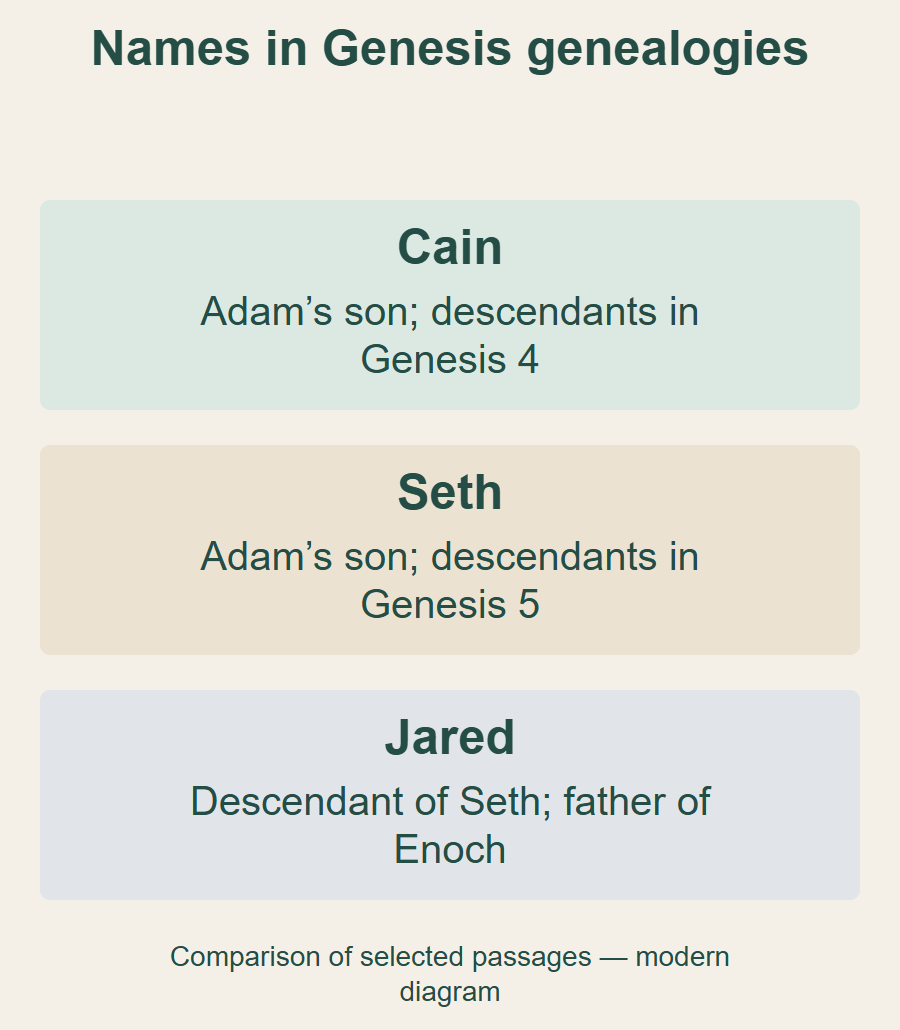
Modern chart distinguishing the Cain and Seth branches in Genesis and Jared’s position; textual relationships, not a reconstructed historical genealogy
Person
Jared is Enoch’s father in Genesis 5; the Watchers’ descent is set in his days.
Namensvarianten: Jared
Kontext und Quellen →
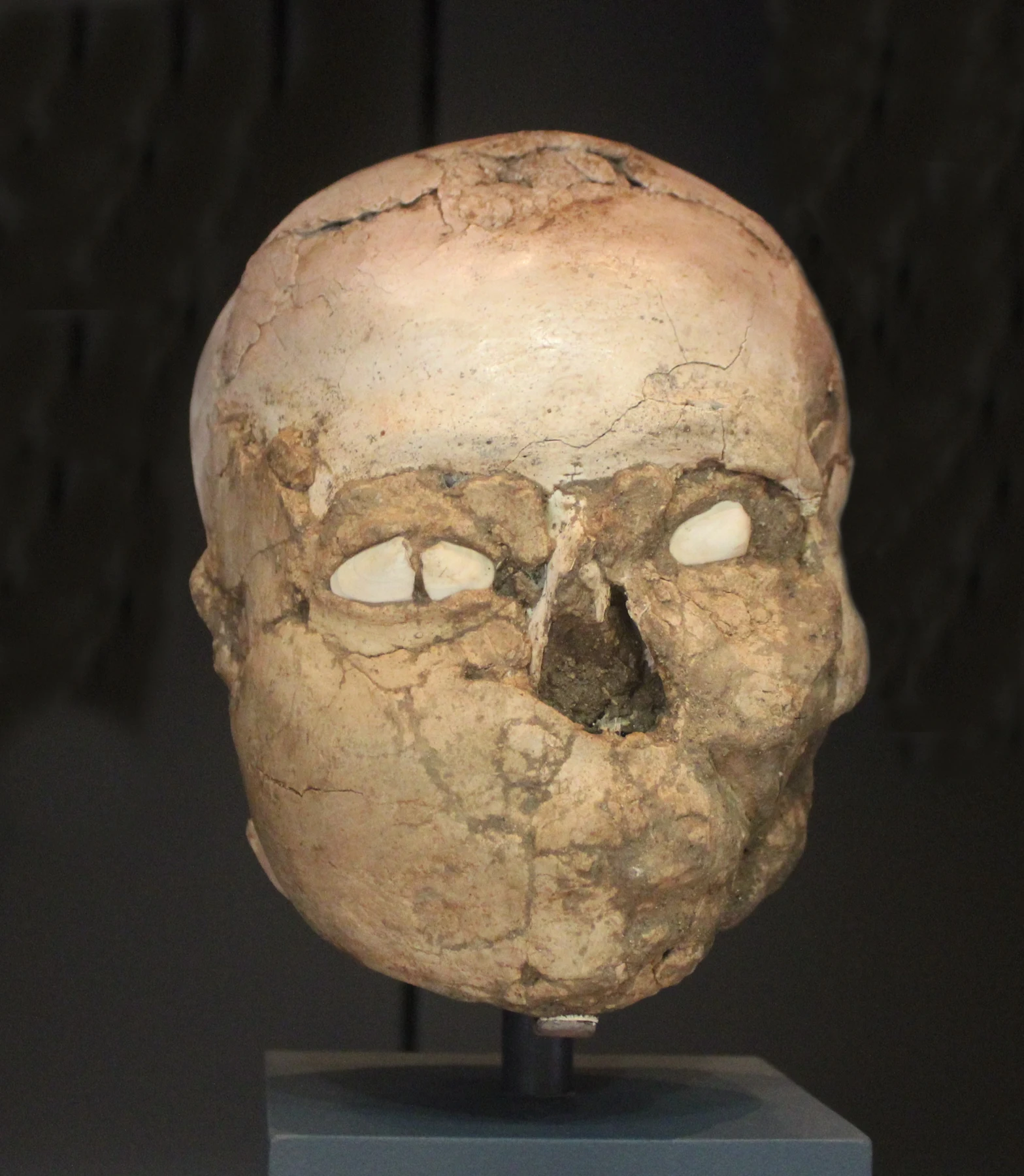
Plastered skull from Jericho, Pre-Pottery Neolithic B, displayed at the British Museum. An ancient modeled face on human remains, not a modern facial reconstruction
Stätte
Archaeological mound near present-day Jericho in Palestine’s Jordan Valley, preserving early Neolithic settlement and Bronze Age layers.
Namensvarianten: Tell es-Sultan
Kontext und Quellen →
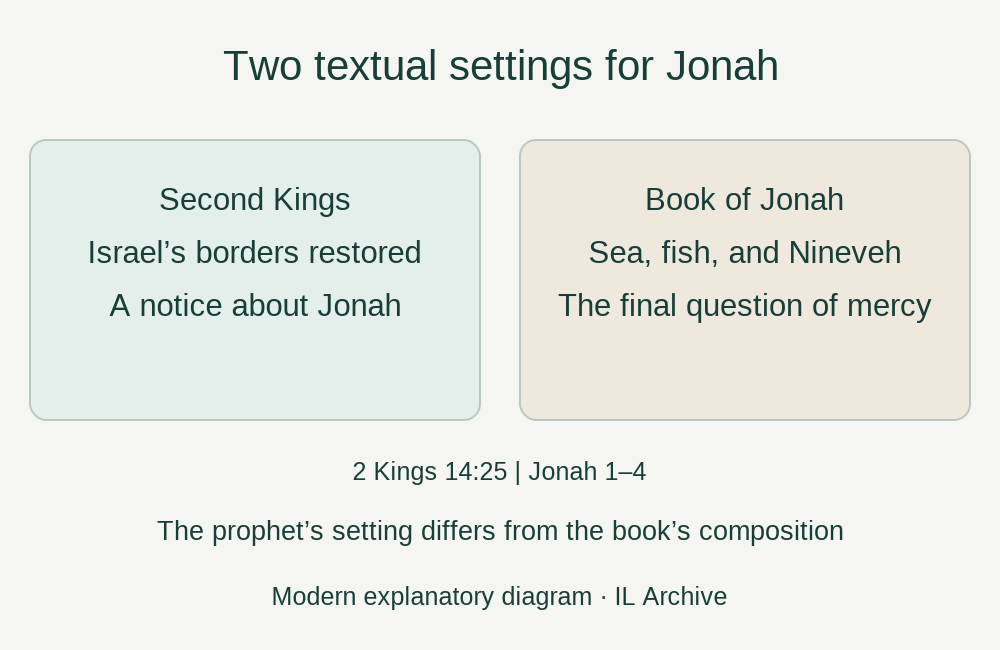
Second Kings14:25 concerns restored borders and Jonah son of Amittai; Jonah1–4 concerns the sea, Nineveh, and mercy. Modern comparison distinguishing the figure’s setting from composition, not a portrait of king or prophet
Person
An eighth-century BCE northern king; Second Kings 14:25 links restored borders to the word of Jonah son of Amittai.
Namensvarianten: Jeroboam II, king of Israel
Kontext und Quellen →
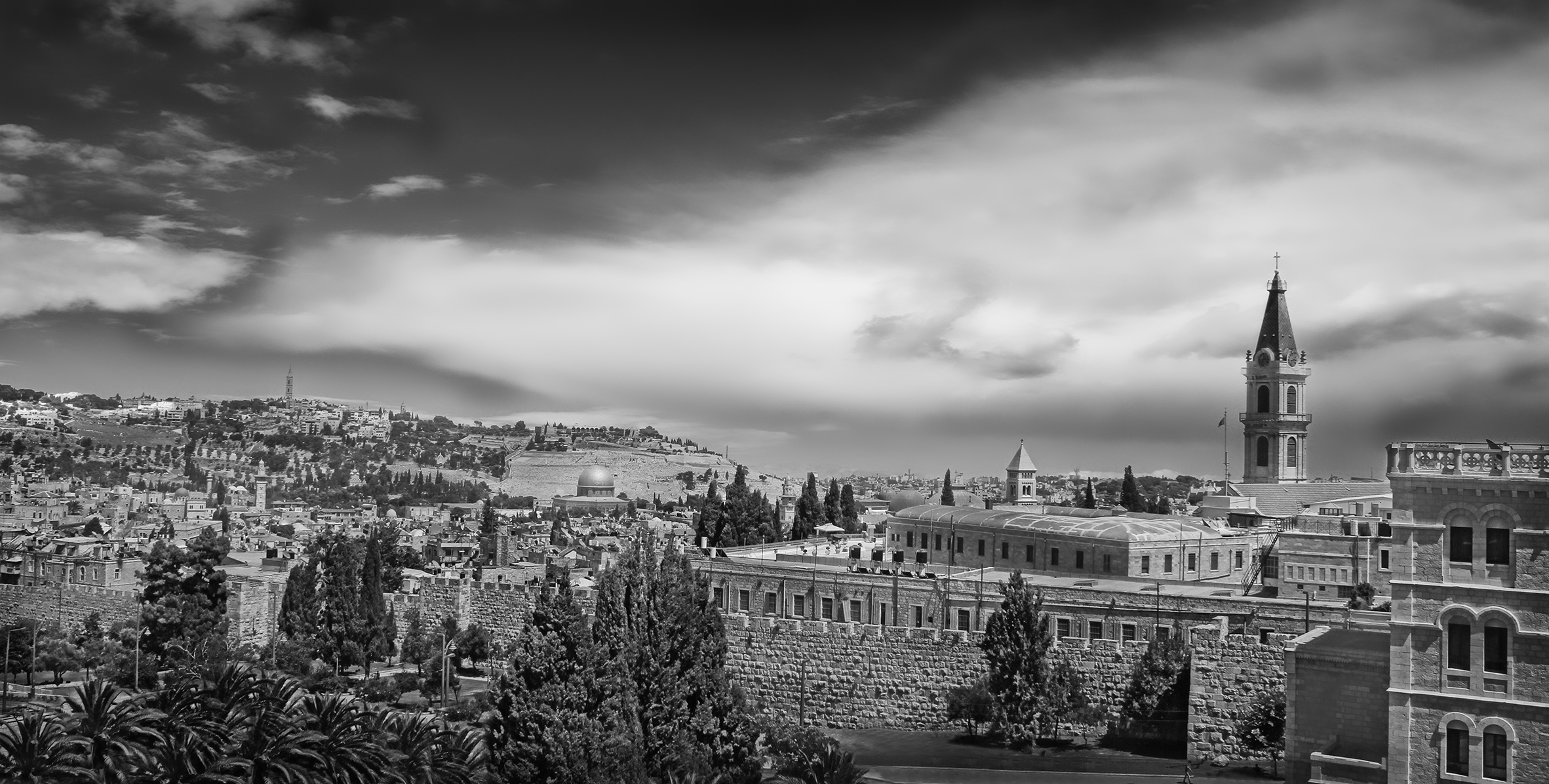
Jerusalem’s Old City seen from the north, photographed on 20 July 2012. The Dome of the Rock and the Mount of Olives appear in the background. This modern view brings together landmarks from several periods; it differs from the city in the time of the kingdom of Judah
Stätte
Jerusalem is a city of religious importance in Judaism, Christianity and Islam
Namensvarianten: Jerusalem
Kontext und Quellen →
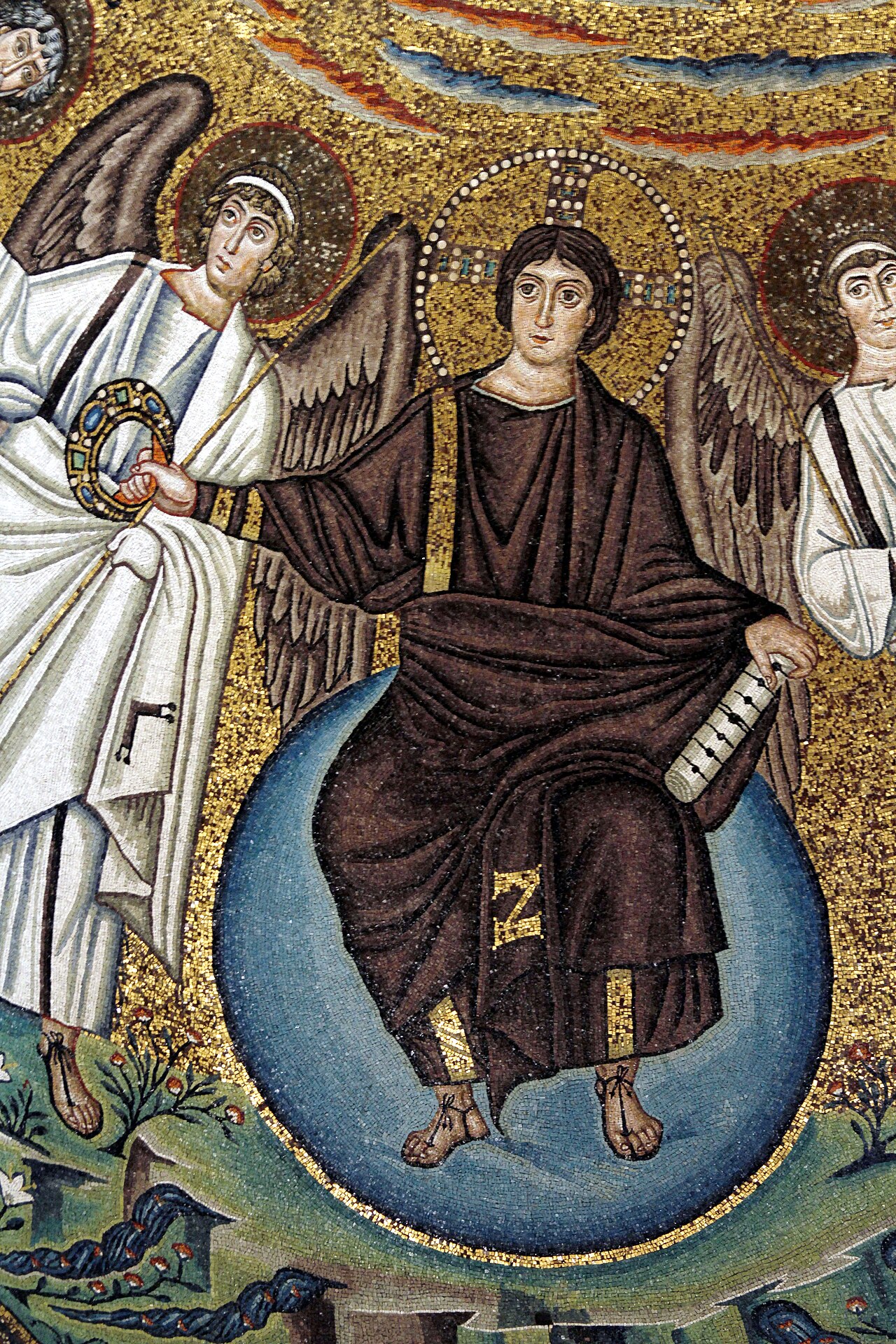
Christ between two angels in a sixth-century mosaic at the Basilica of San Vitale in Ravenna, Italy. He is shown seated above a blue sphere in a cosmic scene. Photograph by José Luiz, 17 September 2016
Person
Jesus Christ is Christianity’s central figure, who lived in the first century CE
Namensvarianten: Jesus Christ
Kontext und Quellen →
Person
Hebrew Bible and reception scholar at the University of Gothenburg, studying Esther’s reinterpretation across time.
Namensvarianten: Jill Middlemas
Kontext und Quellen →
Person
Scholar of biblical reception who studies the Queen of Sheba across Jewish, Christian and Muslim traditions.
Namensvarianten: Jillian Stinchcomb
Kontext und Quellen →
Person
Ancient Near East scholar studying water ordeals, Mari letters and testimony.
Namensvarianten: Joanna Töyräänvuori
Kontext und Quellen →
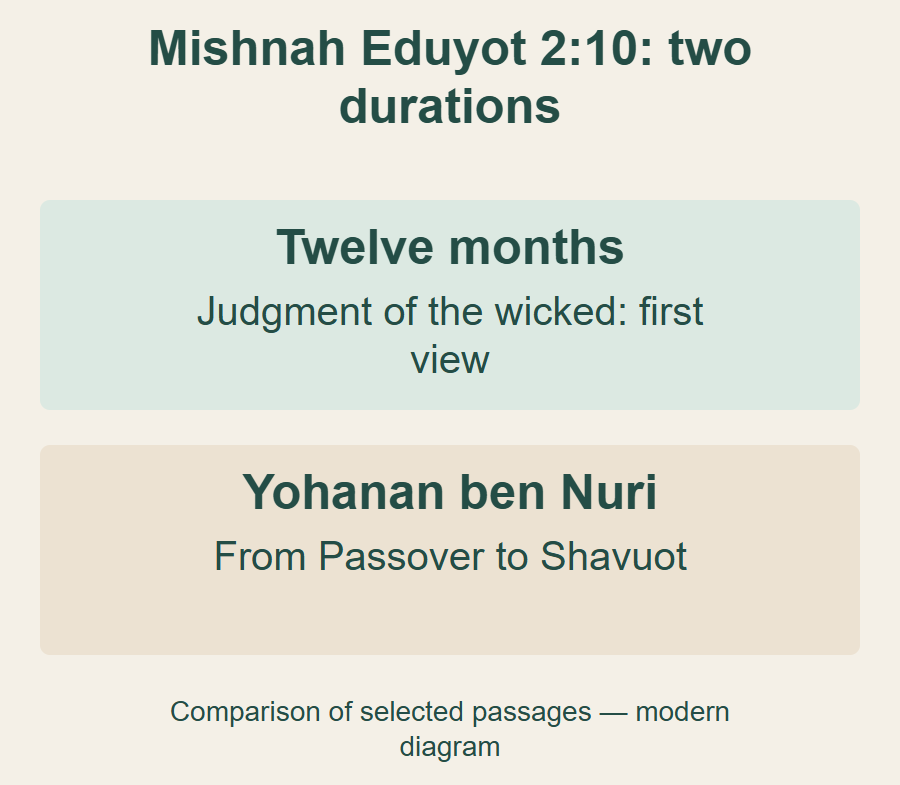
Modern comparison of two durations in Mishnah Eduyot 2:10: twelve months, and Passover to Shavuot in Yohanan ben Nuri’s view; not every rabbinic view of destiny
Person
Yohanan ben Nuri was a first–second-century CE rabbi whose teachings occur in the Mishnah.
Namensvarianten: Yohanan ben Nuri
Kontext und Quellen →
Person
New Testament and Christian origins scholar and Duke emeritus professor, studying the Gospels in their Jewish context.
Namensvarianten: Joel Marcus
Kontext und Quellen →
Person
Hebrew Bible and Pentateuch scholar who developed a renewed argument for the Documentary Hypothesis.
Namensvarianten: Joel S. Baden, Joel Baden
Kontext und Quellen →
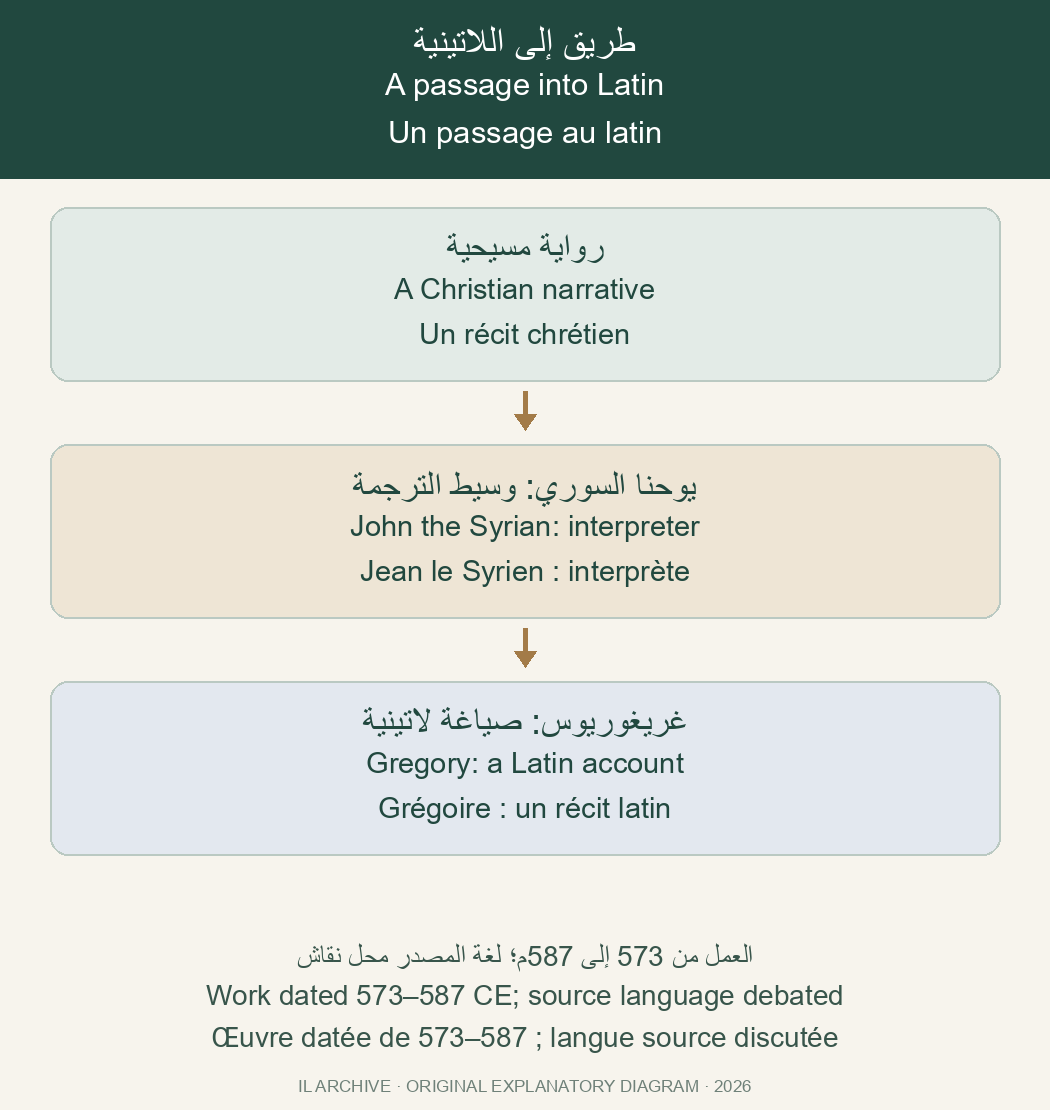
Modern diagram of John the Syrian's role in the Latin narrative's ending: an interpreter assisting Gregory. Greek or Syriac as the source language remains debated. This is neither a portrait nor a chain of transmission to the Qur'an
Person
Interpreter named in the ending of the Latin Sleepers of Ephesus account, dated to the sixth century CE.
Namensvarianten: John the Syrian
Kontext und Quellen →
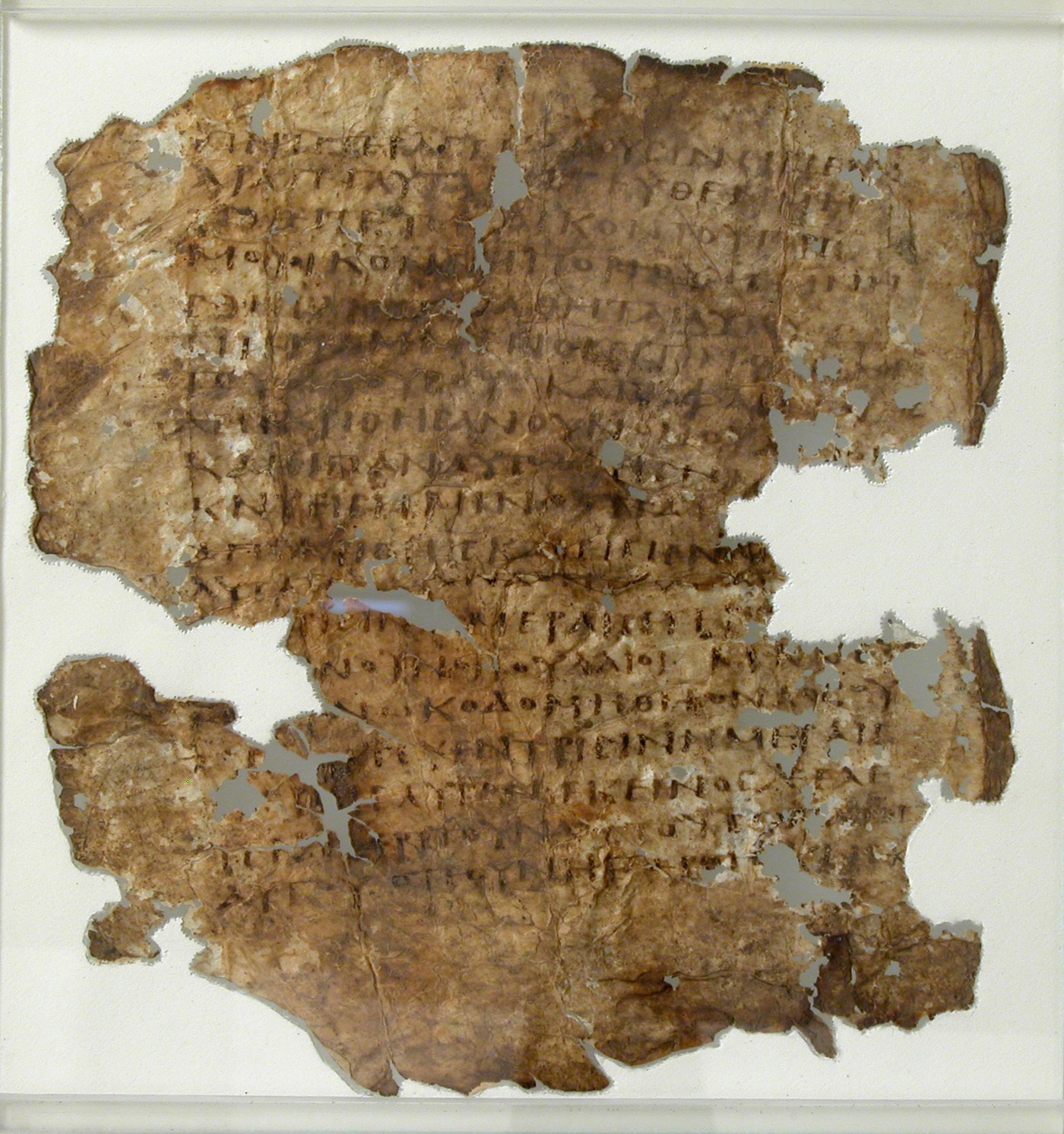
Fragment of John 2:11–22, ink on parchment, The Met 09.182.43. The museum dates the leaf to the fourth century; it does not preserve the chapter 1 prologue, and its copying date does not date composition
Antiker Text
One of the New Testament Gospels, opening with the Word, creation and the Word becoming flesh.
Namensvarianten: Gospel of John
Kontext und Quellen →
Person
Old Testament scholar who discussed Eden’s serpent and Babylonian traditions in a 2015 article.
Namensvarianten: John Day, Old Testament scholar, John Day
Kontext und Quellen →
Person
Semitic and historical linguist and emeritus professor at the University of Texas at Austin.
Namensvarianten: John Huehnergard
Kontext und Quellen →
Person
Hebrew Bible scholar and Yale emeritus professor who writes on proportionality in the talion formula.
Namensvarianten: John J. Collins
Kontext und Quellen →
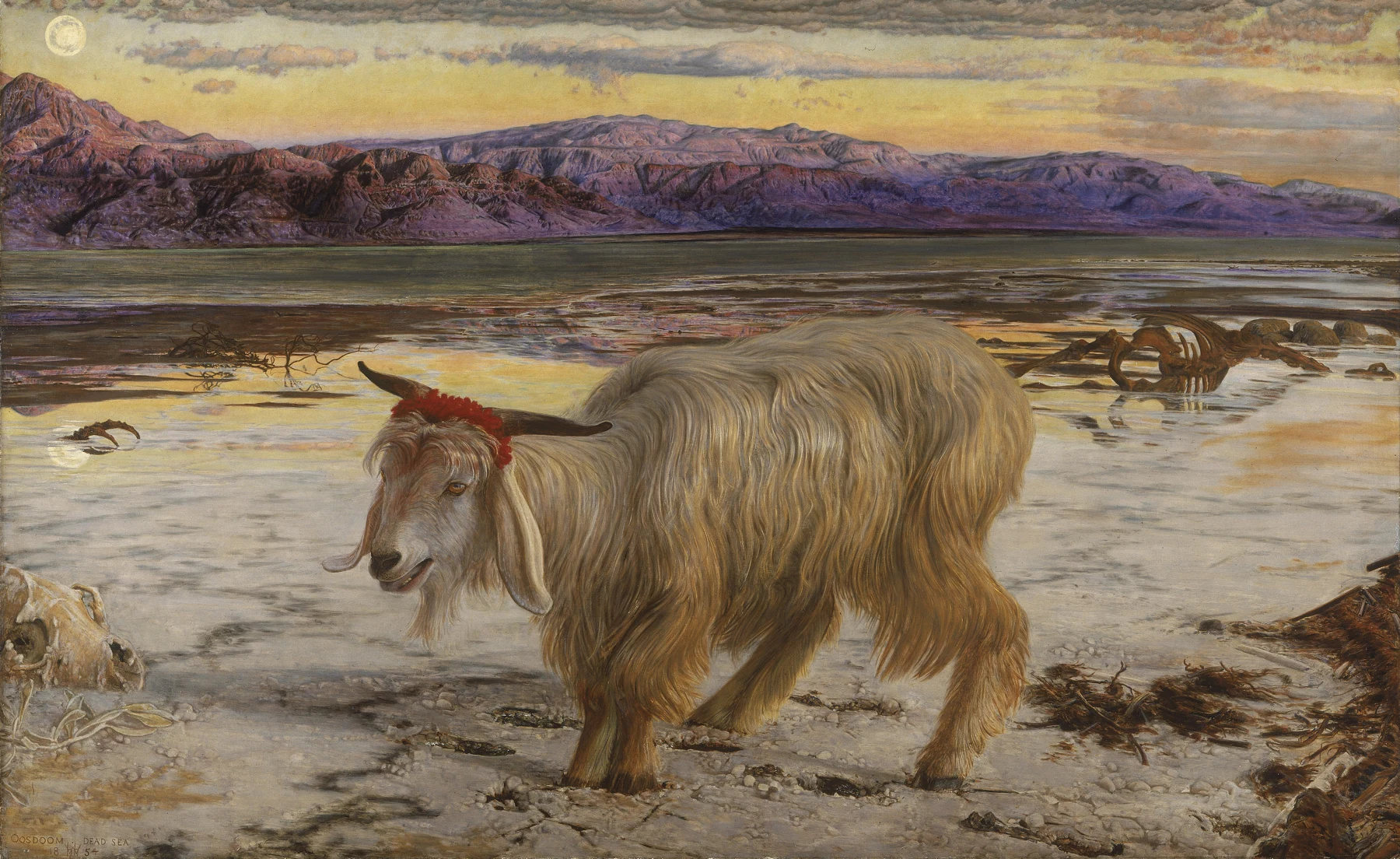
William Holman Hunt, The Scapegoat, mid-1850s; Lady Lever catalogue dates the painting to 1854, LL3623. Public-domain reproduction via Wikimedia Commons. Later religious artistic interpretation, not an archaeological depiction of Leviticus’s rite or a portrayal of Azazel
Entität
Jewish observance on 10 Tishrei; Leviticus 16’s sanctuary purification and two-goat rite are distinct from later Mishnaic accounts and from fasting, prayer and repentance.
Namensvarianten: Yom Kippur, Day of Atonement
Kontext und Quellen →
Person
Jon D. Levenson studies the Hebrew Bible, its interpretation and Jewish traditions.
Namensvarianten: Jon D. Levenson
Kontext und Quellen →
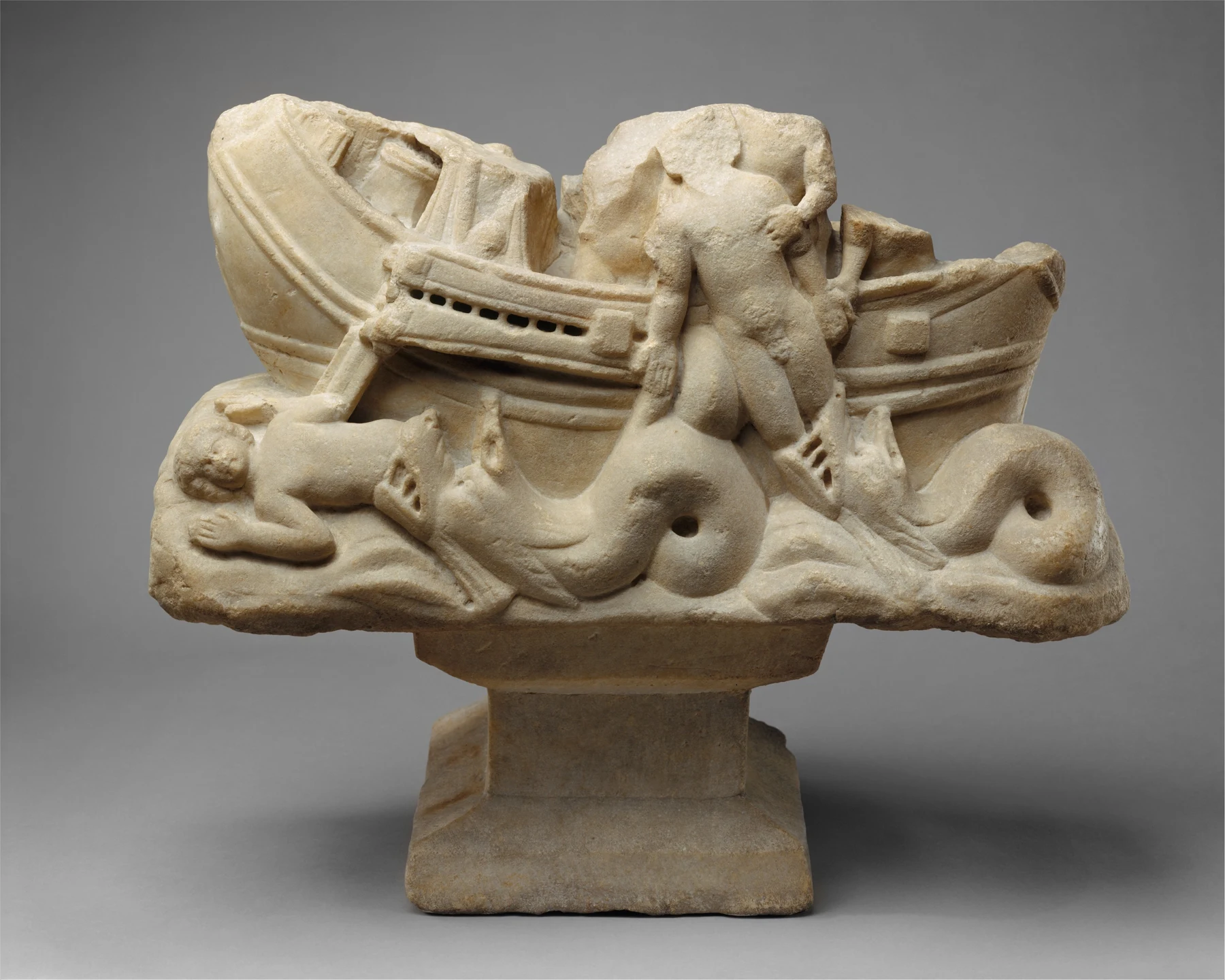
Jonah and the sea creature on a Roman marble table base, early fourth century CE. The Metropolitan Museum of Art, New York, 77.7. Evidence for Christian artistic reception, not an image from the prophet’s lifetime. Museum photograph: public domain
Entität
Prophetic figure named Jonah son of Amittai in Kings and the Book of Jonah, corresponding to Yunus in the Qur’an; distinguish each narrative, its composition and reception.
Namensvarianten: Jonah son of Amittai, prophet Jonah, Yunus
Kontext und Quellen →
Person
Hebrew Bible and ancient Judaism scholar at the University of Texas at Austin studying jubilee interpretation.
Namensvarianten: Jonathan Kaplan
Kontext und Quellen →
Modern diagram distinguishing a literary case, legal evidence and population statistics; not a portrait of Valk
Person
Scholar of Mesopotamian history and Assyriology, whose work includes a 2016 study of infant loss in Mesopotamia.
Namensvarianten: Jonathan Valk
Kontext und Quellen →
Person
Jonathan Z. Smith (1938–2017) was a historian of religions and scholar of comparative method at the University of Chicago.
Namensvarianten: Jonathan Z. Smith
Kontext und Quellen →
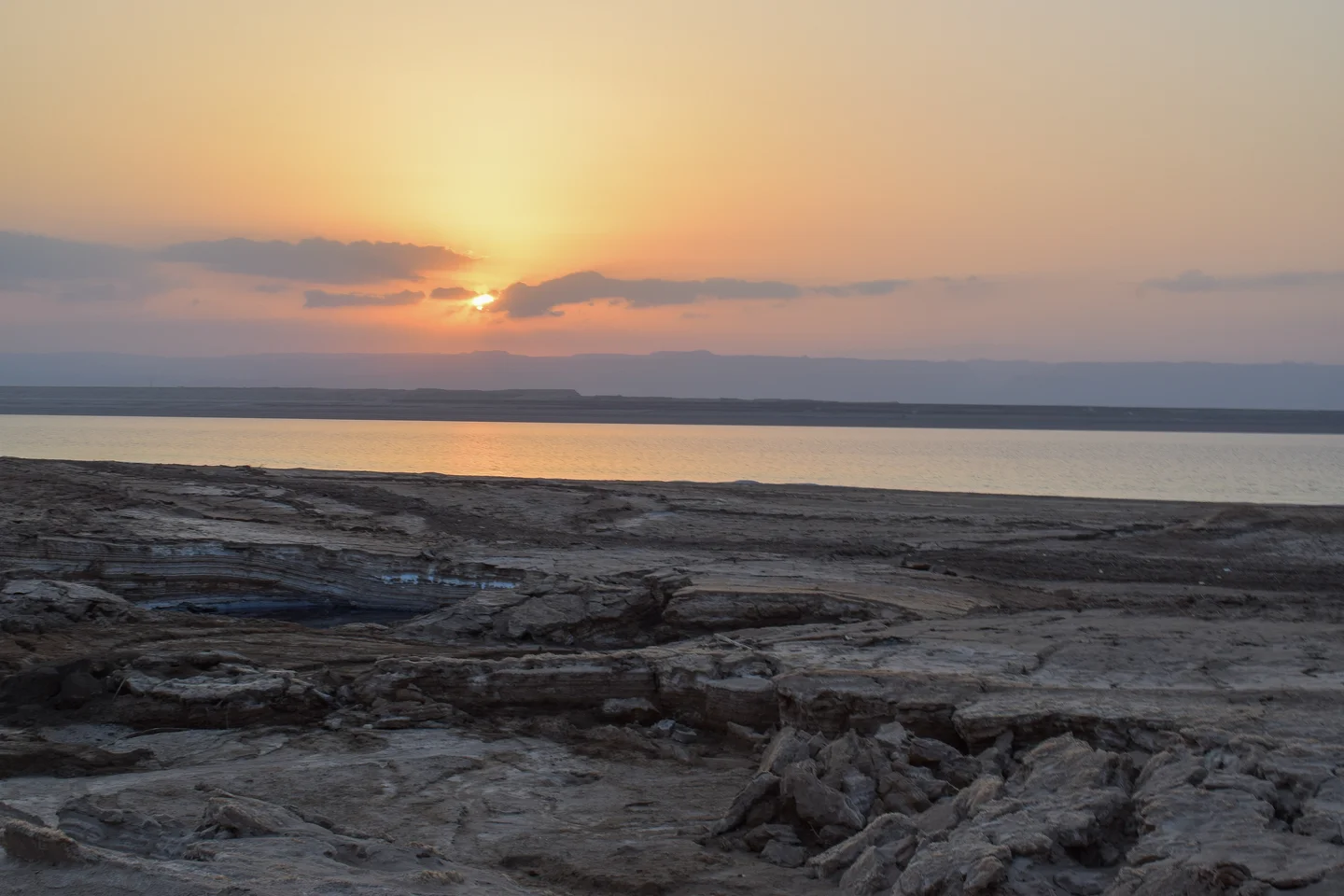
Eastern Dead Sea shore at Ghor Al Haditha, Jordan, 26 October 2018. Westward view from the modern country, not a map of its borders or a reconstruction of ancient Moab
Stätte
Modern Levantine country independent as a kingdom in 1946, whose present territory includes Dhiban and ancient Moabite sites.
Namensvarianten: Jordan
Kontext und Quellen →
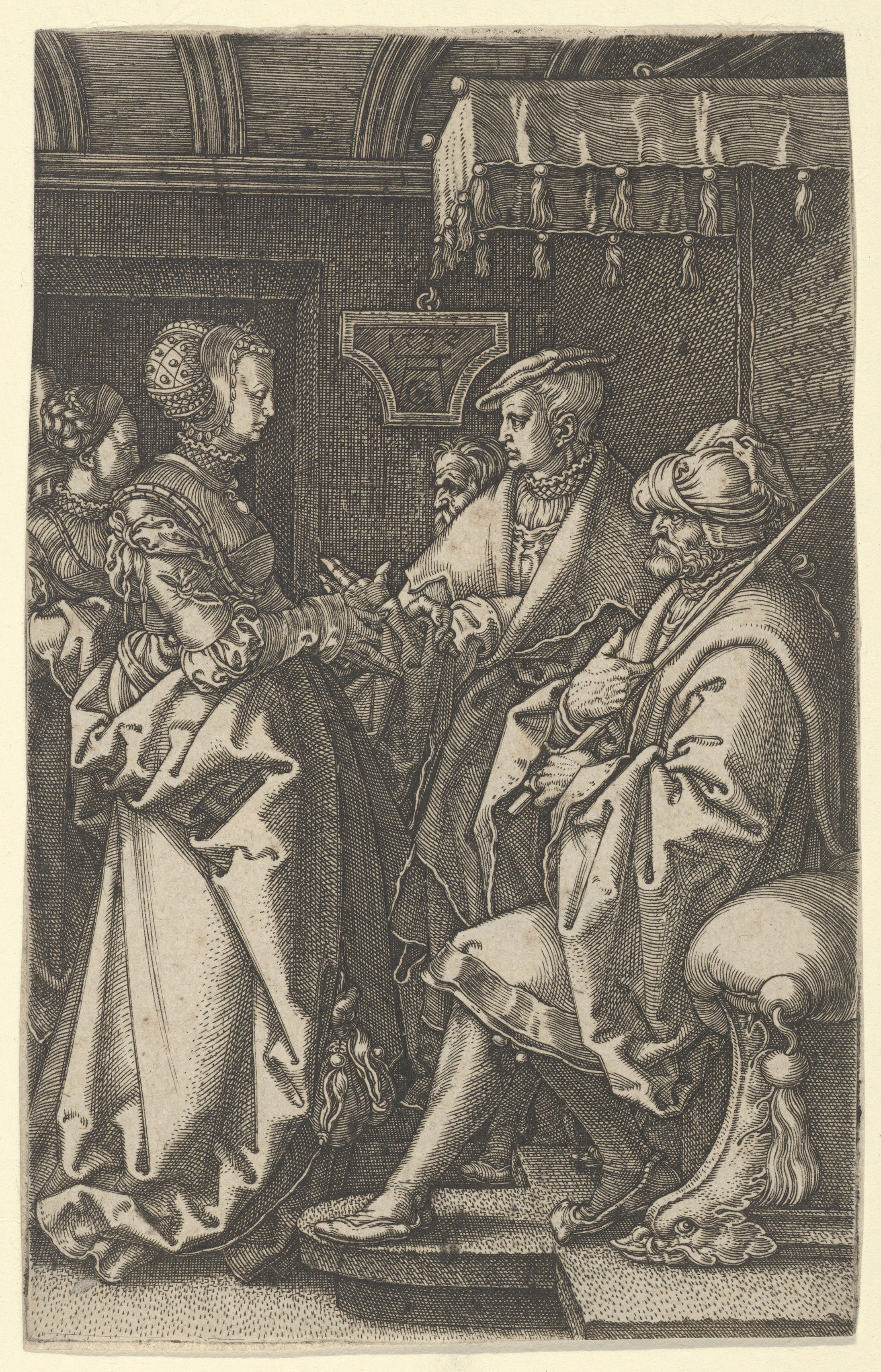
Potiphar’s Wife Accusing Joseph, Heinrich Aldegrever engraving, 1532; Met 49.132.83. Wife at left, seated Potiphar at right, Joseph behind him: artistic reception of Genesis 39:17, not historical portraits
Person
Figure whose story in Genesis and Sūrat Yūsuf combines enslavement, accusation, prison and advancement in Egypt.
Namensvarianten: Joseph in Genesis and the Qur’an, Joseph in Genesis
Kontext und Quellen →
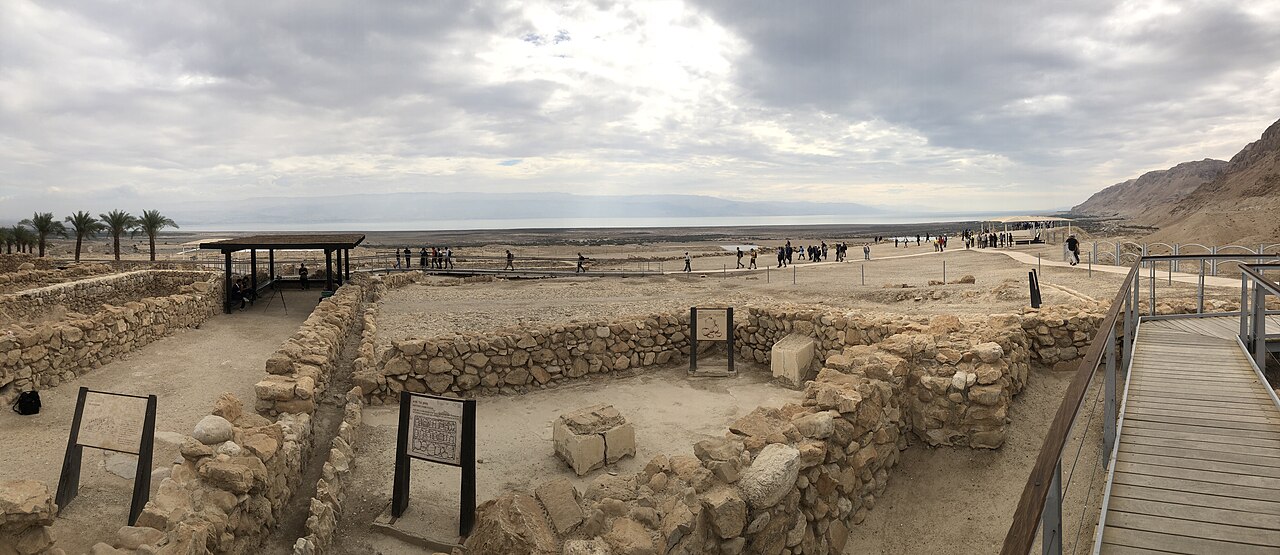
Modern view of the Qumran archaeological site, the setting of scroll research; not a portrait of Fitzmyer or an image of manuscript 4Q225
Person
American biblical and Dead Sea Scrolls scholar (1920–2016), who studied Qumran retellings of Abraham’s test.
Namensvarianten: Joseph Fitzmyer
Kontext und Quellen →
Contemporary explainer; it is not an ancient artifact or historical likeness
Person
High priest opposed by ha-satan and ritually reclothed in Zechariah 3.
Namensvarianten: Joshua the high priest
Kontext und Quellen →
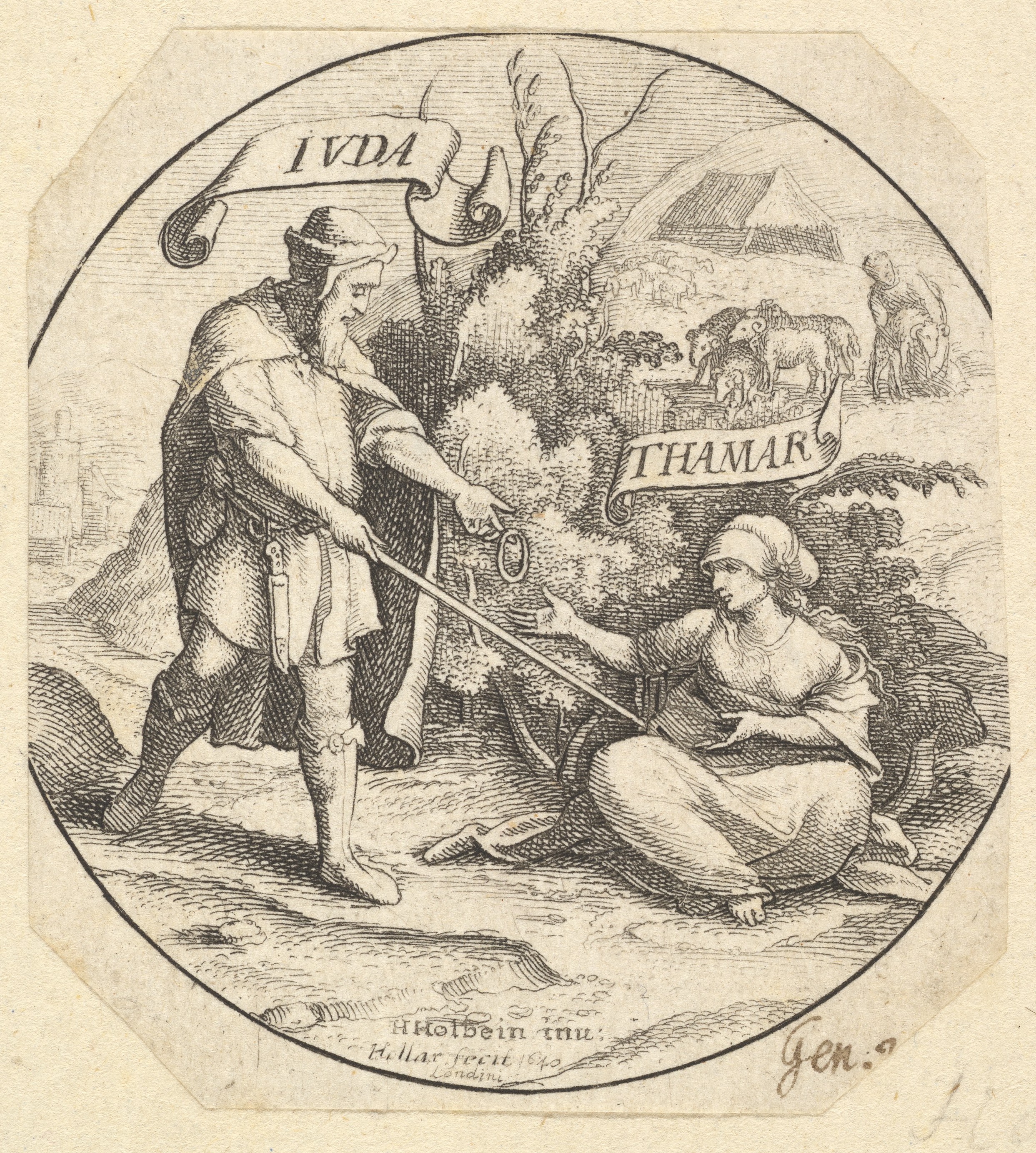
Judah and Tamar, etching by Wenceslaus Hollar, 1640, after Hans Holbein the Younger; Met 51.501.2142. Later reception of Genesis 38, not historical portraits or a marriage document
Person
Father of Er, Onan and Shelah and Tamar’s father-in-law in Genesis 38, distinct from Judah’s kingdom.
Namensvarianten: Judah in Genesis
Kontext und Quellen →
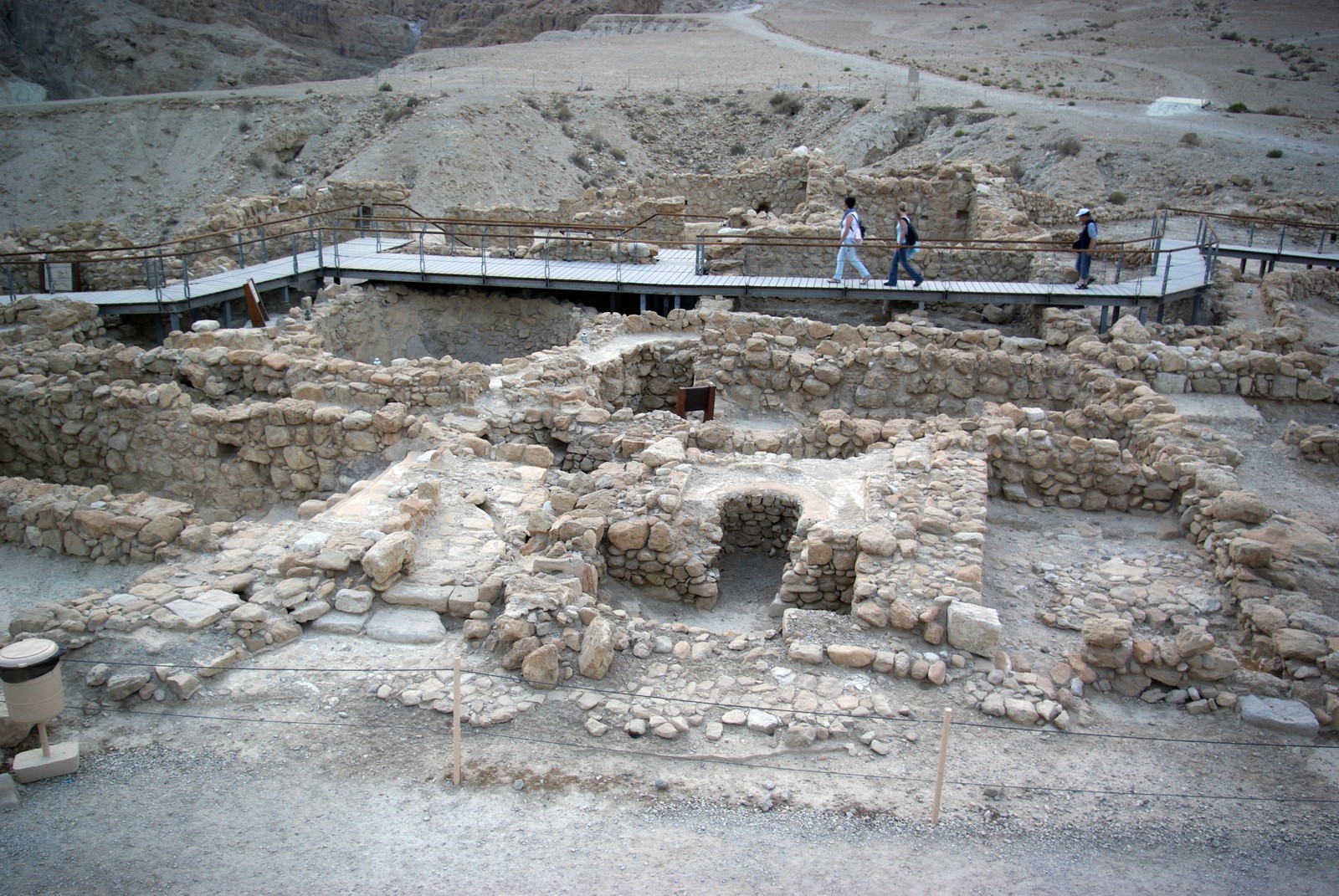
Qumran remains in a modern photograph. They provide a setting for the scrolls, not a portrait of every Jewish group or proof of an Essene identification. This is not a temple or heavenly-world reconstruction
Entität
Diverse Jewish traditions between the rebuilding of Jerusalem’s temple around 515 BCE and its destruction in 70 CE: institutions, diaspora, groups and texts, with distinctions between events, composition, manuscripts and the limits of evidence.
Namensvarianten: Second Temple Judaism, Second Temple period
Kontext und Quellen →
Person
A Hebrew Bible scholar whose 2009 book examines terms such as Azazel without presupposing demonic identities.
Namensvarianten: Judit M. Blair
Kontext und Quellen →
Person
Scholar of ancient Israelite religion and inscriptions who taught theology and religious studies at Villanova; a specialist in the evidence for Asherah and el-Qom.
Namensvarianten: Judith M. Hadley
Kontext und Quellen →
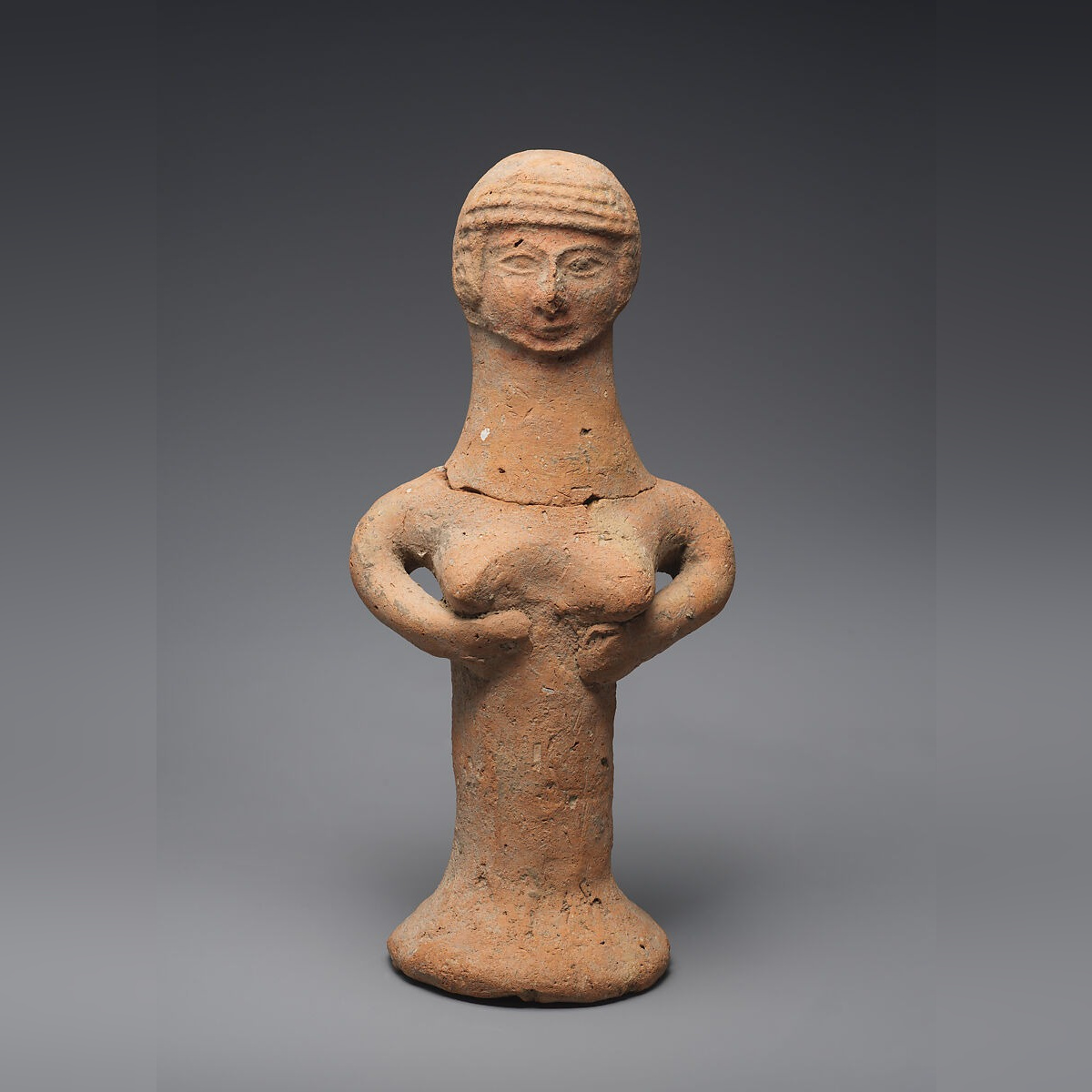
Ceramic female pillar figurine from Lachish, ca. eighth–seventh centuries BCE, Metropolitan Museum of Art 34.126.53. Square photographic layout with modern neutral side extensions; the artifact itself is unaltered and fully visible
Entität
Small late Iron Age terracotta female figures of Judah, with pillar-like bases and moulded or hand-shaped heads; neither their represented identity nor their ritual or protective use is settled.
Namensvarianten: Judean pillar figurines, Judahite pillar figurines, JPFs
Kontext und Quellen →
Person
University of Helsinki Hebrew Bible scholar studying textual growth and Deuteronomy’s history.
Namensvarianten: Juha Pakkala
Kontext und Quellen →
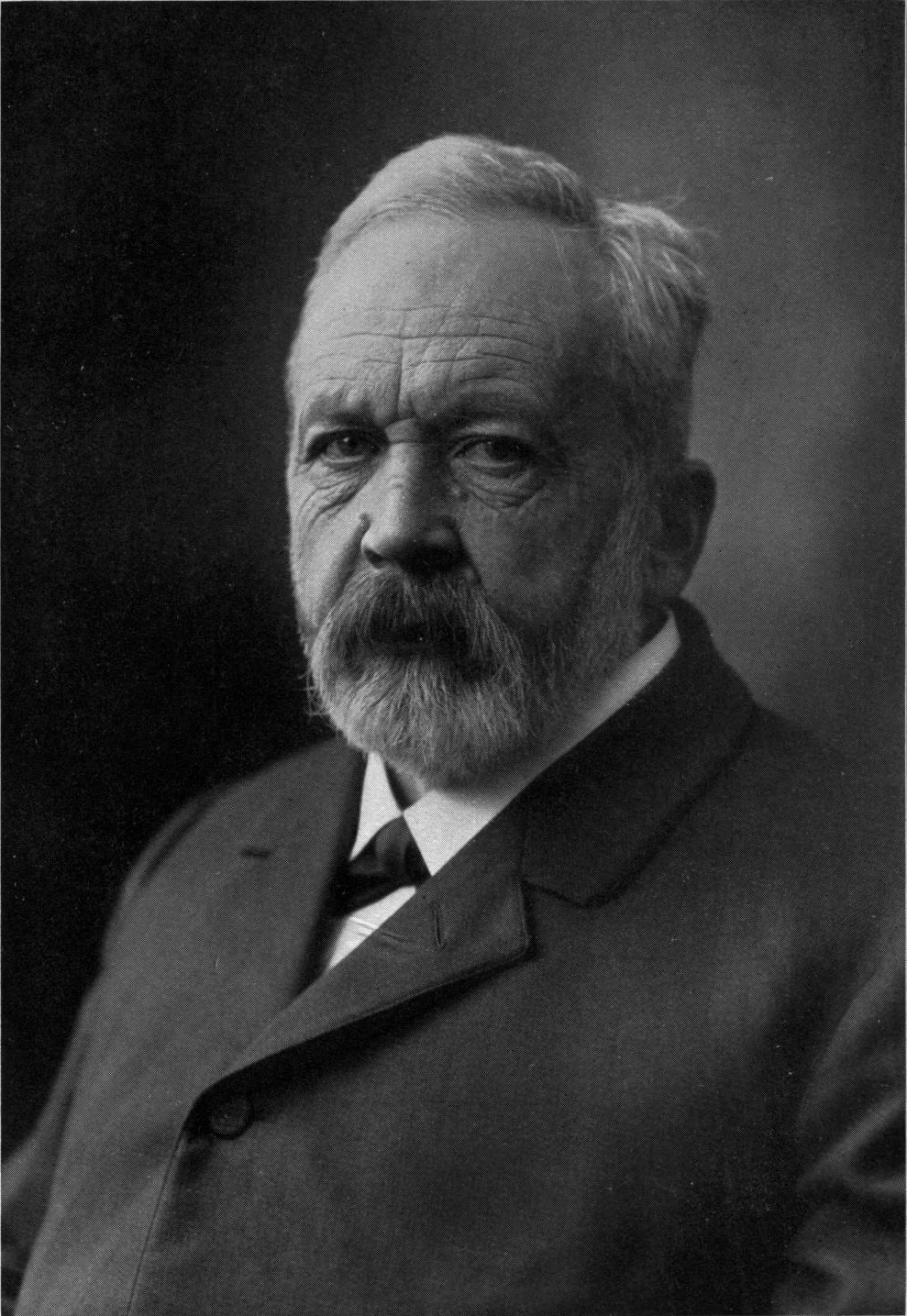
Julius Wellhausen in a photograph published in a commemorative volume in 1914
Person
German biblical and Semitic-studies scholar associated with historical-critical analysis of the Pentateuch’s sources.
Namensvarianten: Julius Wellhausen
Kontext und Quellen →
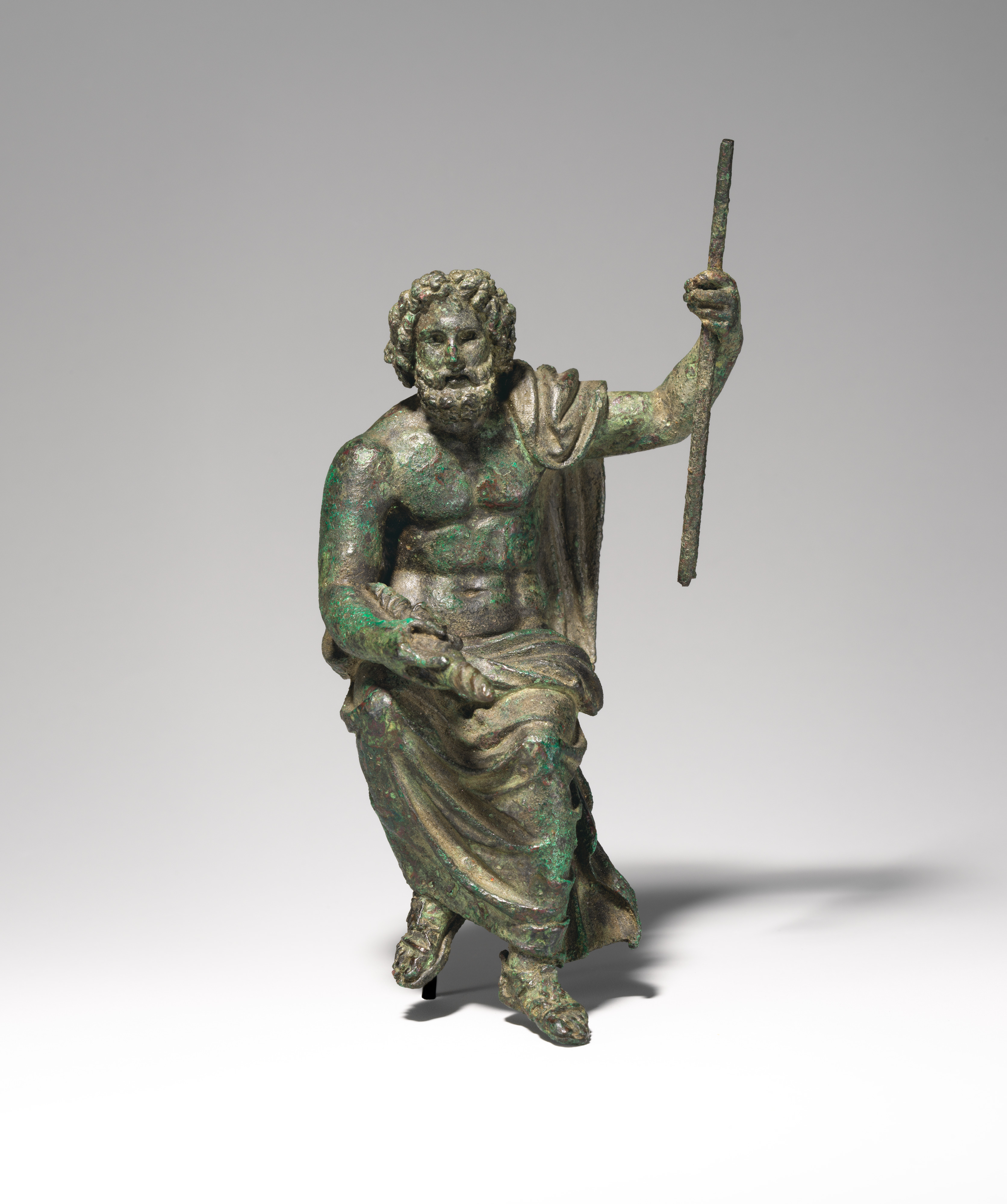
Bronze statuette of Jupiter Capitolinus, Roman, first–second century CE, Met 97.22.8. Evidence of the deity’s representation, not the flood decision scene
Entität
Roman counterpart of Greek Zeus, deciding the flood in Ovid’s Metamorphoses.
Namensvarianten: Jupiter, Roman deity, Jove
Kontext und Quellen →
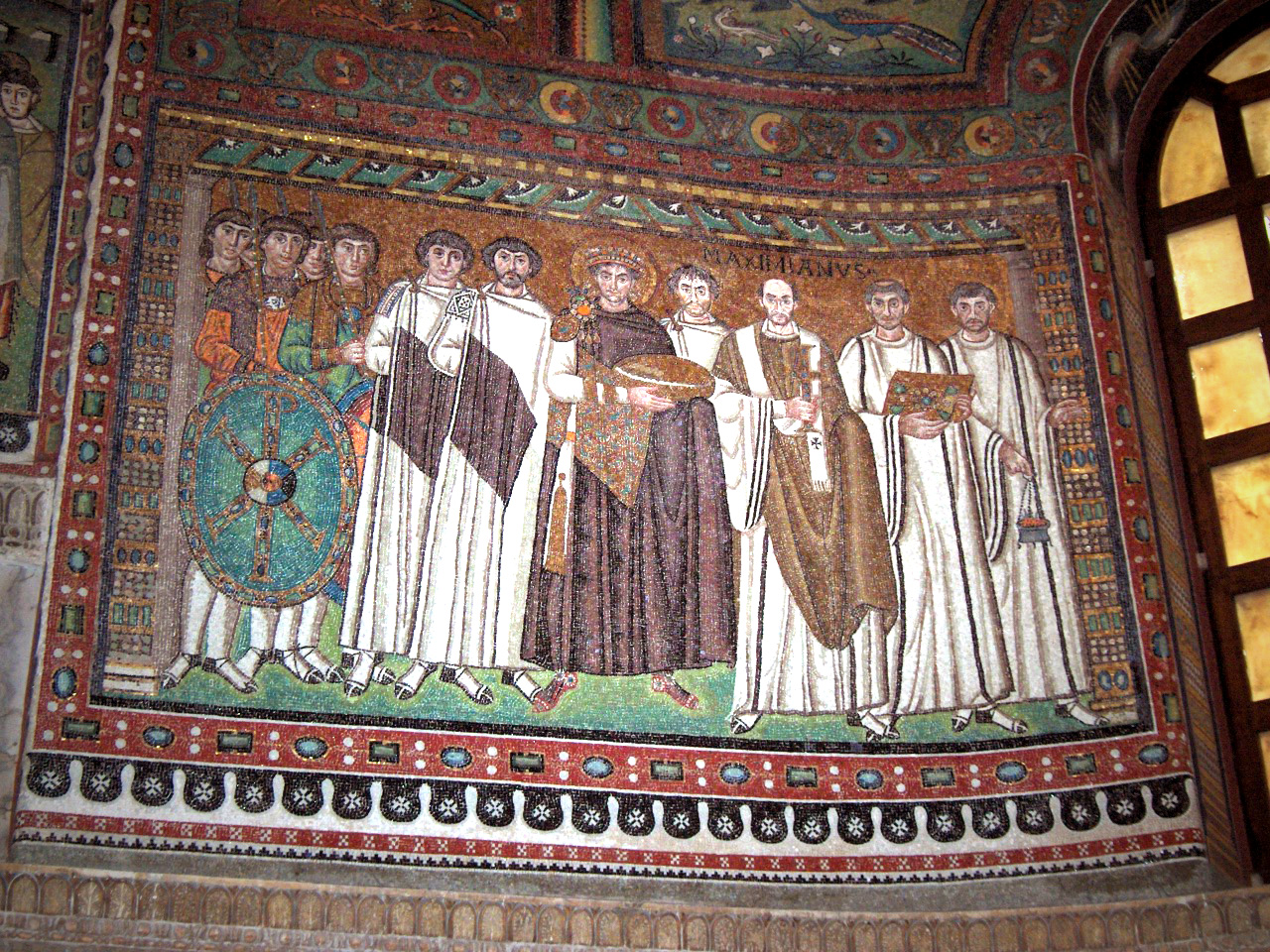
Sixth-century San Vitale mosaic at Ravenna portraying Justinian and his court. Contemporary imperial art, not a photograph or a barrier scene
Person
Eastern Roman emperor from 527 to 565 CE; his reign is used in a proposed dating of a Syriac Alexander Legend layer.
Namensvarianten: Justinian I
Kontext und Quellen →
Person
Ancient Near Eastern iconography scholar and author of the IDD entry on Yam.
Namensvarianten: Jürg Eggler
Kontext und Quellen →
Modern AI-generated symbolic cover with an imagined clay fragment, index cards and a magnifier. Not a photograph of an identified Ugaritic tablet or a verified transcription of its signs
Entität
Abbreviation for a modern edition of alphabetic cuneiform texts. Its text references can be cross-identified with find numbers such as RS or RIH; they are not dates.
Namensvarianten: KTU, CAT, Ugaritic text references
Kontext und Quellen →