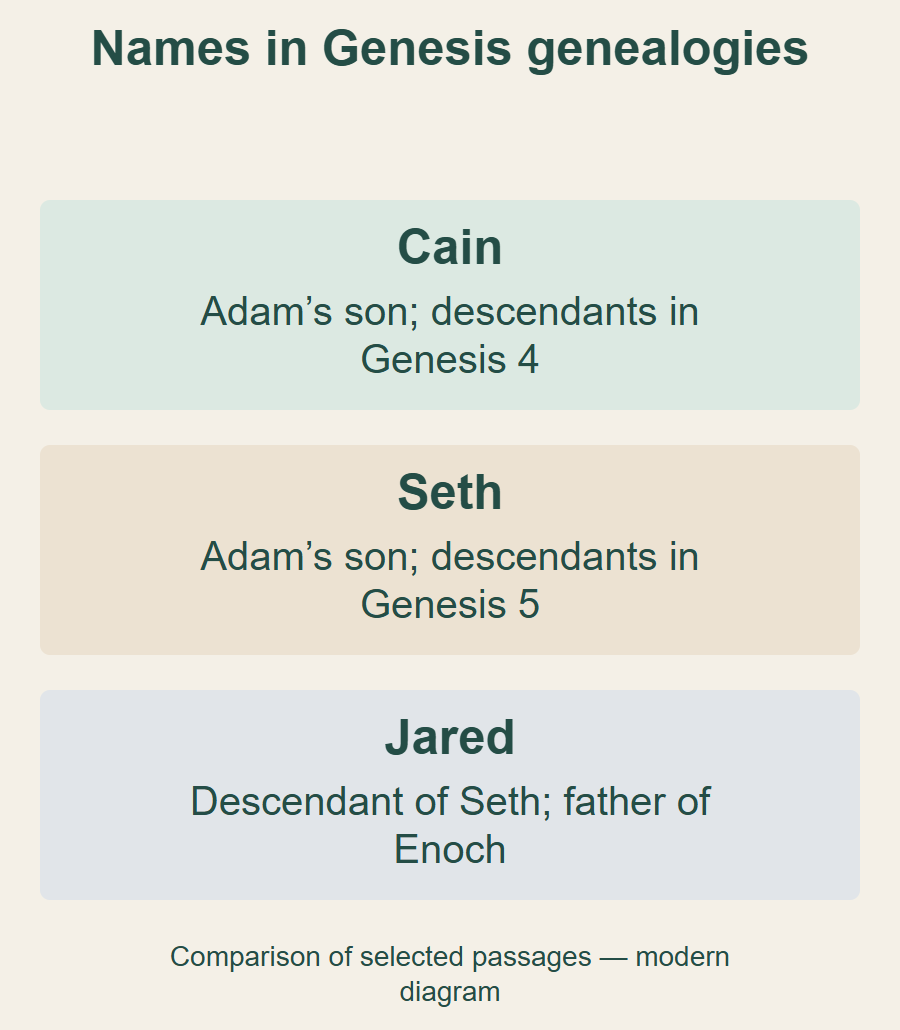
Modern chart distinguishing the Cain and Seth branches in Genesis and Jared’s position; textual relationships, not a reconstructed historical genealogy
Person
Cain is Adam’s son in Genesis 4, which tells of his killing his brother and lists his descendants.
Namensvarianten: Cain
Kontext und Quellen →
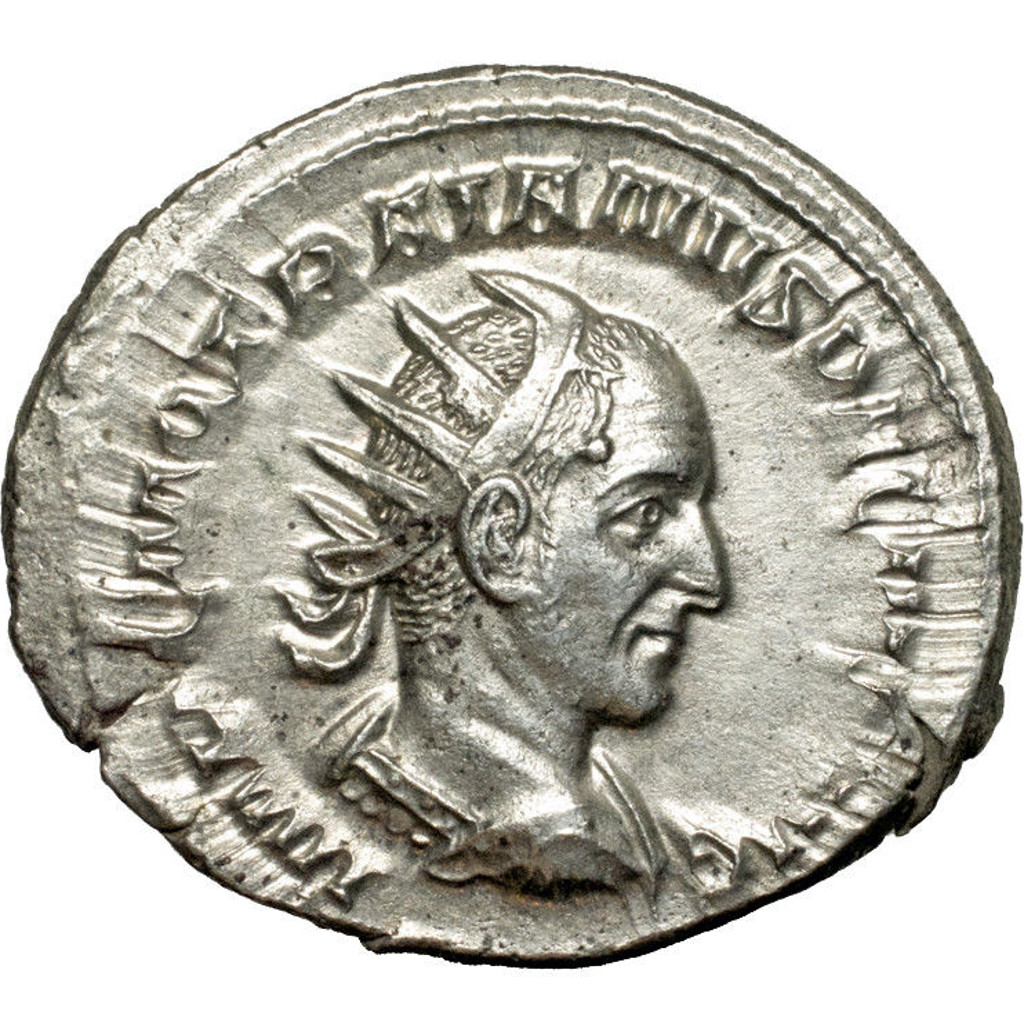
Antoninianus of Decius (249–251 CE), showing his portrait and the reverse. It documents his reign; it is not a coin proven to have been used in the Sleepers story. Velatrix, CC0
Person
Roman emperor who ruled in 249–251 CE; the Sleepers narratives set their persecution in his reign.
Namensvarianten: Decius, Trajan Decius
Kontext und Quellen →

Modern generated symbolic scene of tree rings and a luminous timeline suggesting calibration; neither a photographed scientific sample nor a plotted calibration dataset
Entität
cal BP denotes calibrated calendar years before the fixed reference year 1950, not raw ¹⁴C BP measurements; calibrated intervals depend on the curve, sample and probability model.
Namensvarianten: cal BP, calibrated BP
Kontext und Quellen →
Person
Third-century-BCE Greek poet whose Hymn to Delos evokes Apollo's birth.
Namensvarianten: Callimachus of Cyrene
Kontext und Quellen →
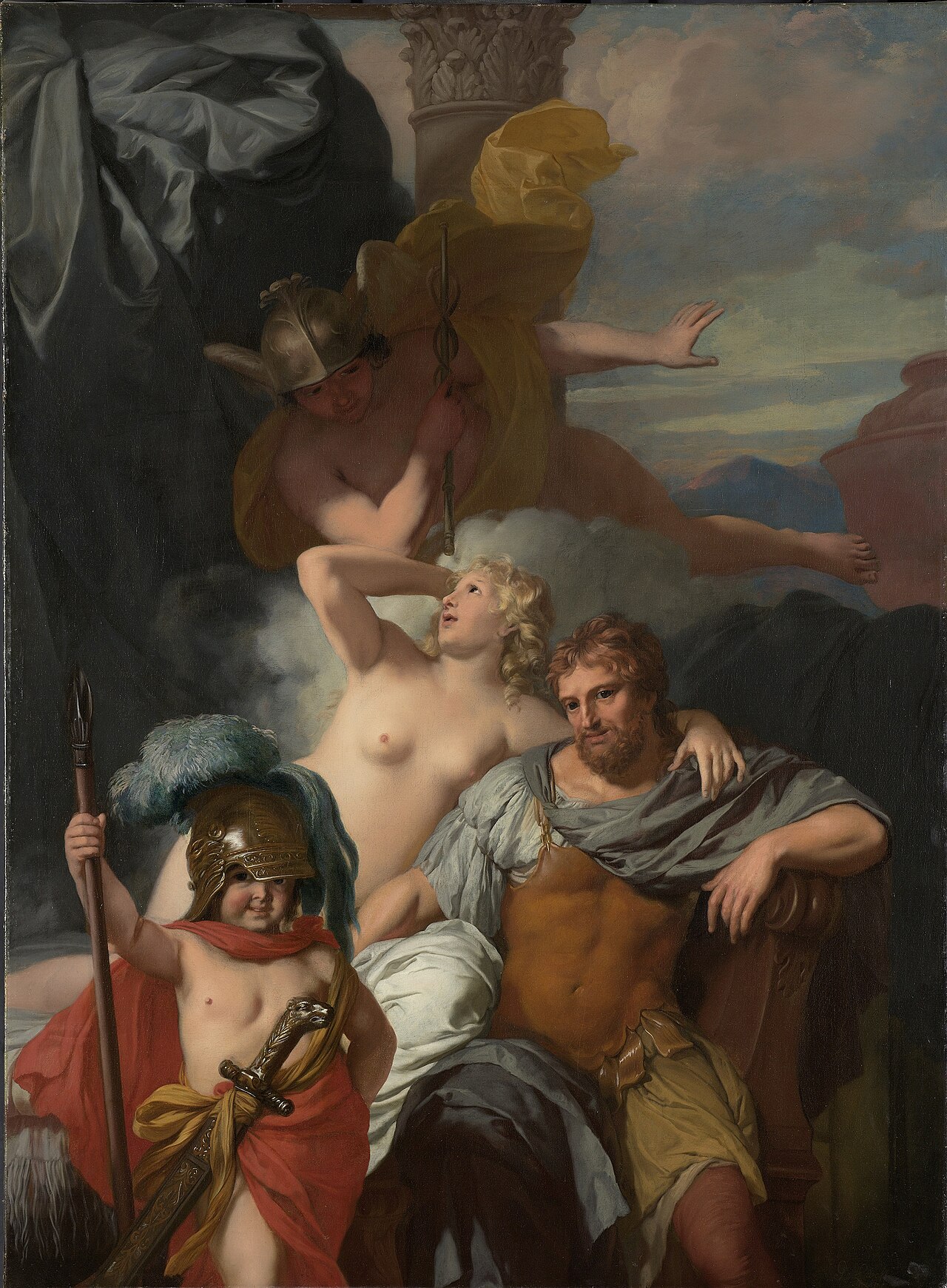
Mercury ordering Calypso to release Odysseus, painted by Gerard de Lairesse about 1680; Rijksmuseum SK-A-212. A later European representation of the story, rather than an ancient Greek artifact
Entität
Divine figure in the Odyssey who keeps Odysseus on her island while he longs to return home.
Namensvarianten: Calypso
Kontext und Quellen →
Modern abstract illustration of intersecting questions and arguments in kalām; neither a historic manuscript nor a school-specific diagram
Entität
Diverse traditions of argument about Islamic doctrine, addressing scripture, divine attributes, justice, prophecy and human agency, with shifting relations to law and philosophy.
Namensvarianten: Kalām, Islamic theology, kalām theology
Kontext und Quellen →
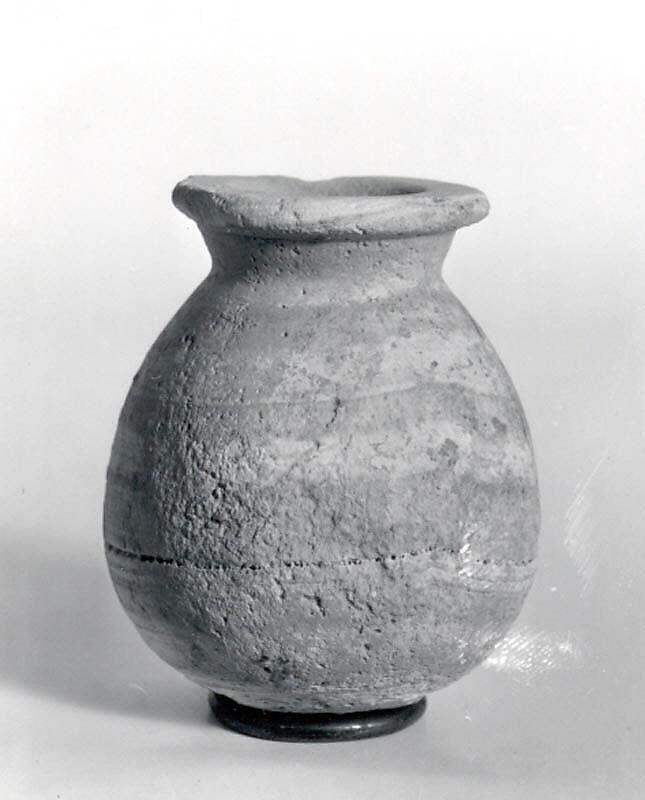
Alabaster vessel from Lachish, modern Tell ed-Duweir, ca. 1780–1580 BCE, classified as Canaanite by the Metropolitan Museum. One object from the region’s Middle Bronze Age; it neither maps Canaan’s boundaries nor establishes Abraham’s story. Met 34.126.31
Stätte
Regional name in the Mediterranean Levant, associated with Canaanite cities and cultures in the second millennium BCE and with Abraham’s family’s destination in Genesis.
Namensvarianten: Canaan
Kontext und Quellen →
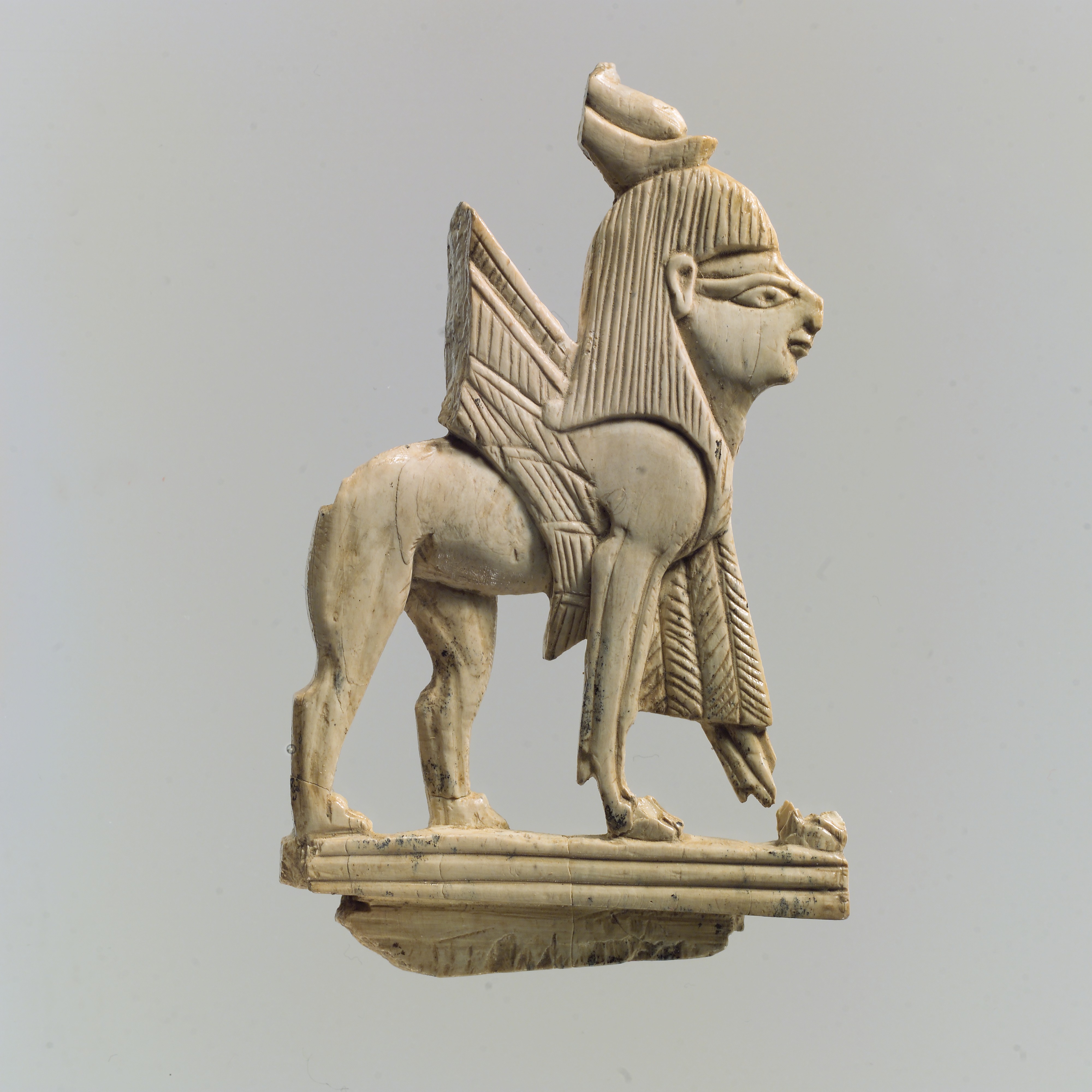
Ivory winged-sphinx plaque from Nimrud, ca. ninth–eighth centuries BCE; Met 61.197.3. Visual comparison, not the kapporet or an identified biblical cherub
Entität
Gold object above the biblical Ark, associated with cherubim, divine speech, and the purification rite of Leviticus 16. “Atonement cover” names its position and ritual role; “mercy seat” does not establish a chair.
Namensvarianten: kapporet, kappōret, mercy seat
Kontext und Quellen →
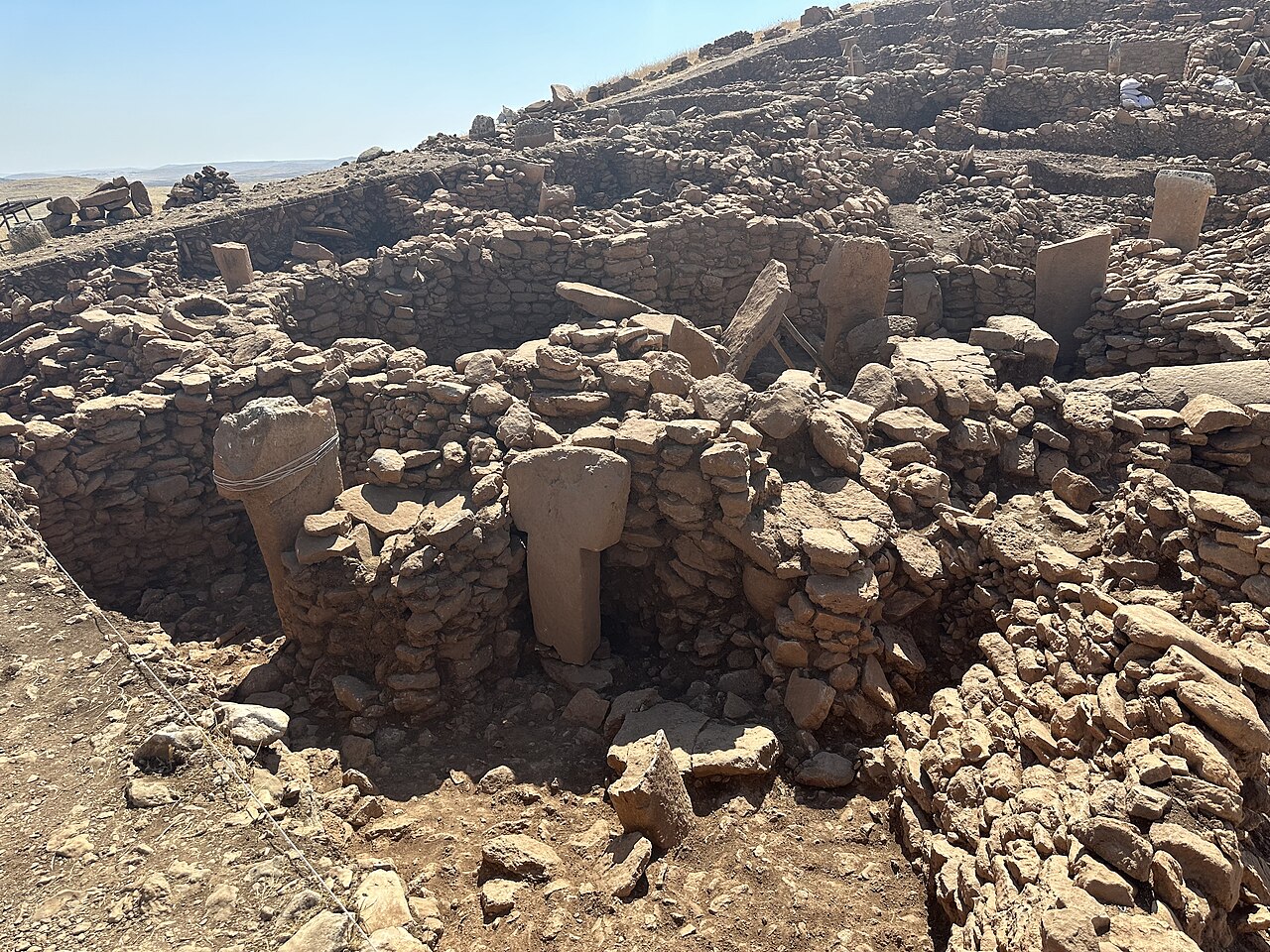
The Karahantepe excavation on 22 August 2024. Ropes and work supports are modern. The T-shaped pillar in this frame is not the faced pillar announced in 2025, and the photograph is not a reconstruction of the Neolithic site
Stätte
An excavation area in the Taş Tepeler project in southeastern Anatolia, where a faced T-shaped pillar was announced in 2025.
Namensvarianten: Karahantepe, Karahan Tepe
Kontext und Quellen →
Person
Biblical Greek and Septuagint scholar, professor emerita at Wheaton; translator of the Esther traditions in NETS.
Namensvarianten: Karen H. Jobes, Karen Jobes
Kontext und Quellen →
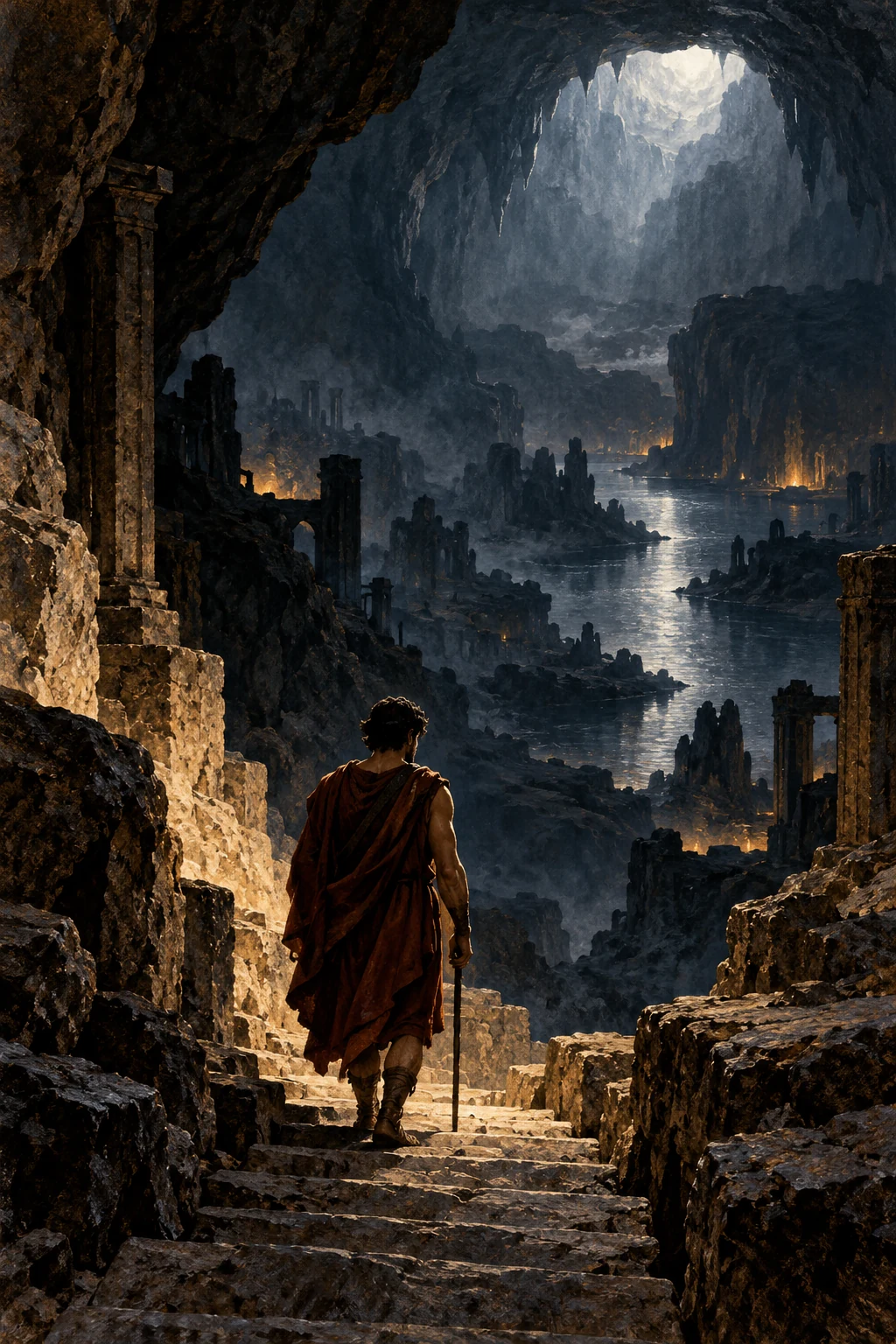
Modern digitally generated interpretative scene of a descent into the underworld; not an ancient artifact or an evidenced historical reconstruction
Entität
Greek for descent; in literary criticism, a purposeful journey to the realm of the dead, distinct from necromancy and resurrection.
Namensvarianten: katabasis
Kontext und Quellen →
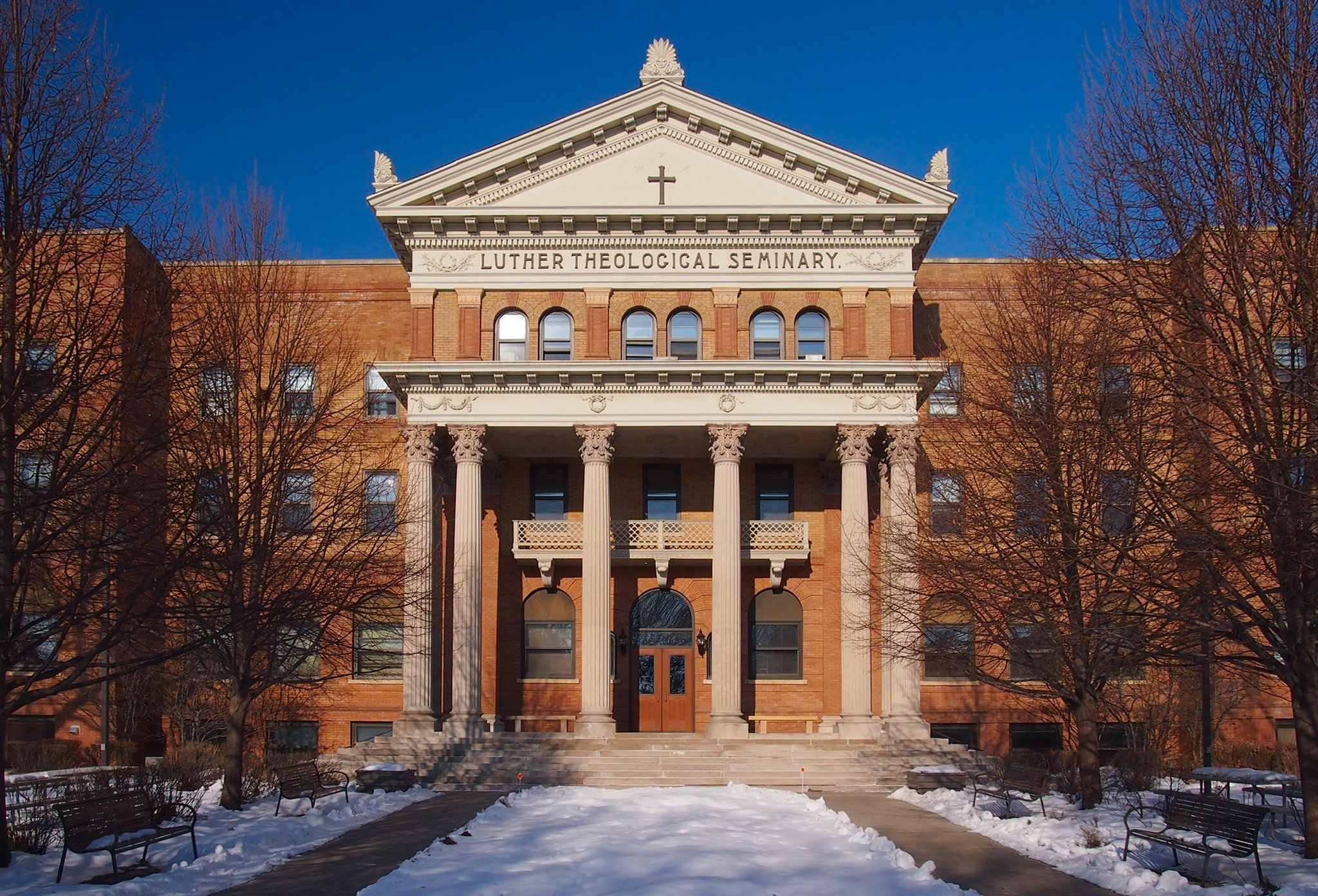
Bockman Hall on Luther Seminary’s campus in Saint Paul, Minnesota, photographed on 5 January 2013. This institutional view provides context for Kathryn Schifferdecker’s work as an Old Testament professor at the seminary
Person
Old Testament scholar at Luther Seminary, studying biblical interpretation and creation theology in Job.
Namensvarianten: Kathryn Schifferdecker, Kathryn M. Schifferdecker
Kontext und Quellen →
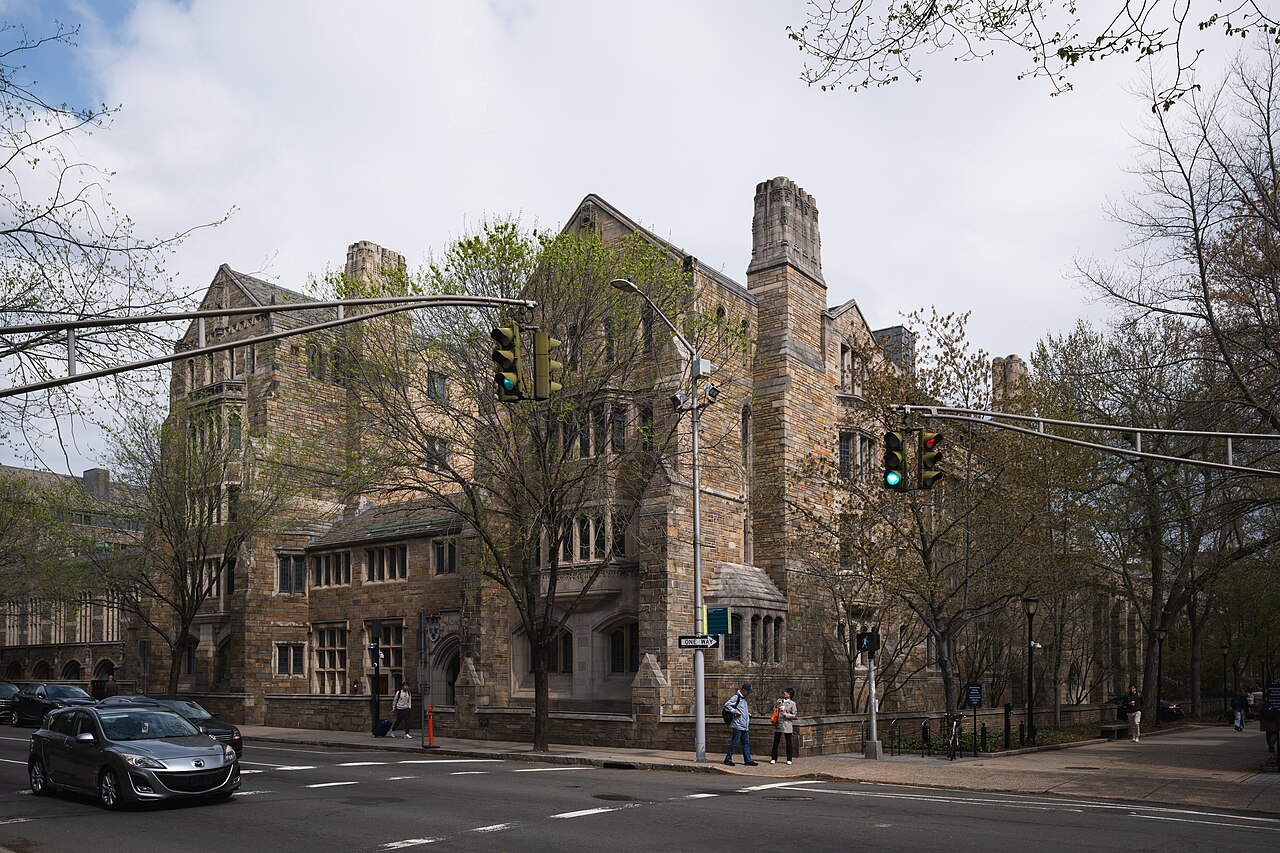
Sterling Memorial Library at Yale University in New Haven, Connecticut, on 20 April 2026, seen from Elm and High Streets. It provides context for the university that Kathryn Slanski joined in 2004
Person
Yale scholar of Mesopotamia, studying texts, images, inscribed monuments, law and authority.
Namensvarianten: Kathryn Slanski, Kathryn E. Slanski
Kontext und Quellen →
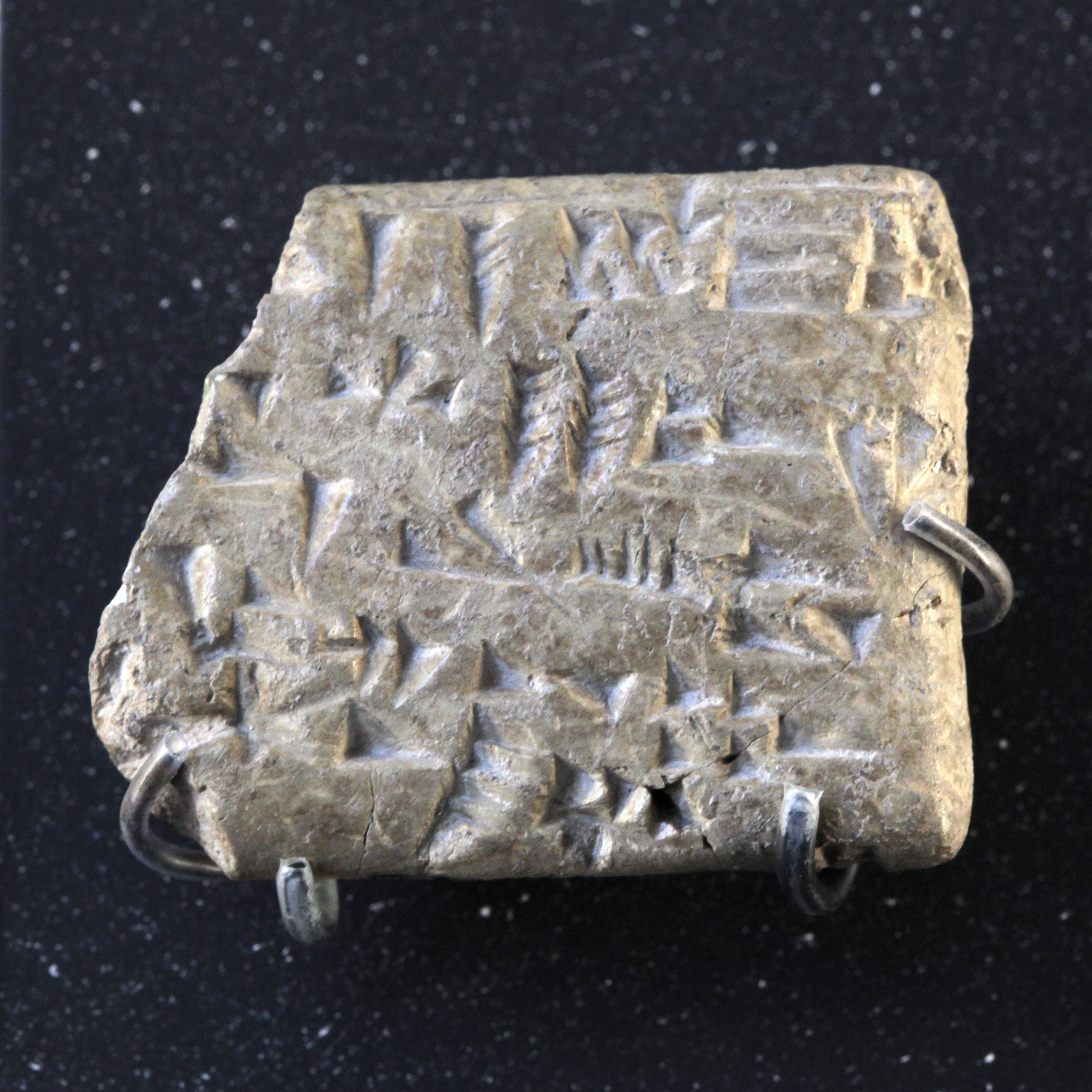
Fragment of an incomplete Ugaritic alphabet tablet, c. 1400–1200 BCE; Louvre, AO 19992 / RS 10.087. Evidence of Ugaritic writing
Entität
Writing with wedge-shaped signs, developed from Mesopotamian recording traditions and used for several languages from the third millennium BCE.
Namensvarianten: cuneiform
Kontext und Quellen →
Person
Purdue professor of Classics, Religious Studies and Comparative Literature, studying ancient myth and literature.
Namensvarianten: Keith Dickson
Kontext und Quellen →
Person
Archaeologist studying houses, everyday life and social change, who applied building biography to Çatalhöyük.
Namensvarianten: Kevin Kay
Kontext und Quellen →
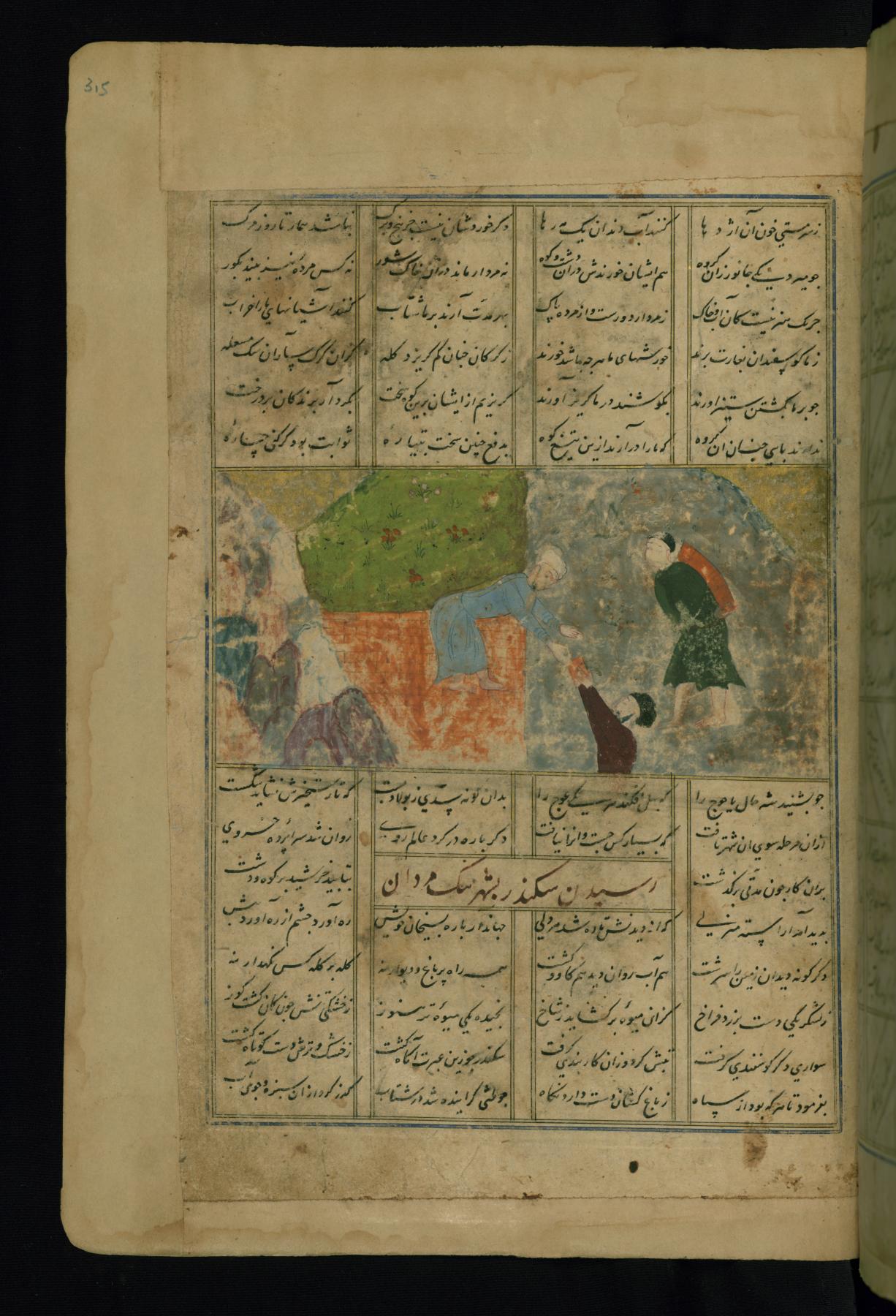
A Persian scene of Alexander building the wall, dated 1481. It is a later witness to the story, not the Syriac text studied by van Bladel or his portrait. Walters Art Museum, W.604.315A
Person
Philologist and historian of the Near East and the transmission of learning across languages.
Namensvarianten: Kevin van Bladel
Kontext und Quellen →

Modern imagined meeting of waters with a fish; not a photograph of an identifiable location, an ancient artifact or a documented reconstruction of Moses and Khidr’s journey
Person
Khidr is the name given in hadith and exegesis to the servant accompanying Moses in Qur’an 18:60–82; the verses leave him unnamed, and later Sufi and popular portrayals vary.
Namensvarianten: Khidr, al-Khidr, al-Khiḍr
Kontext und Quellen →
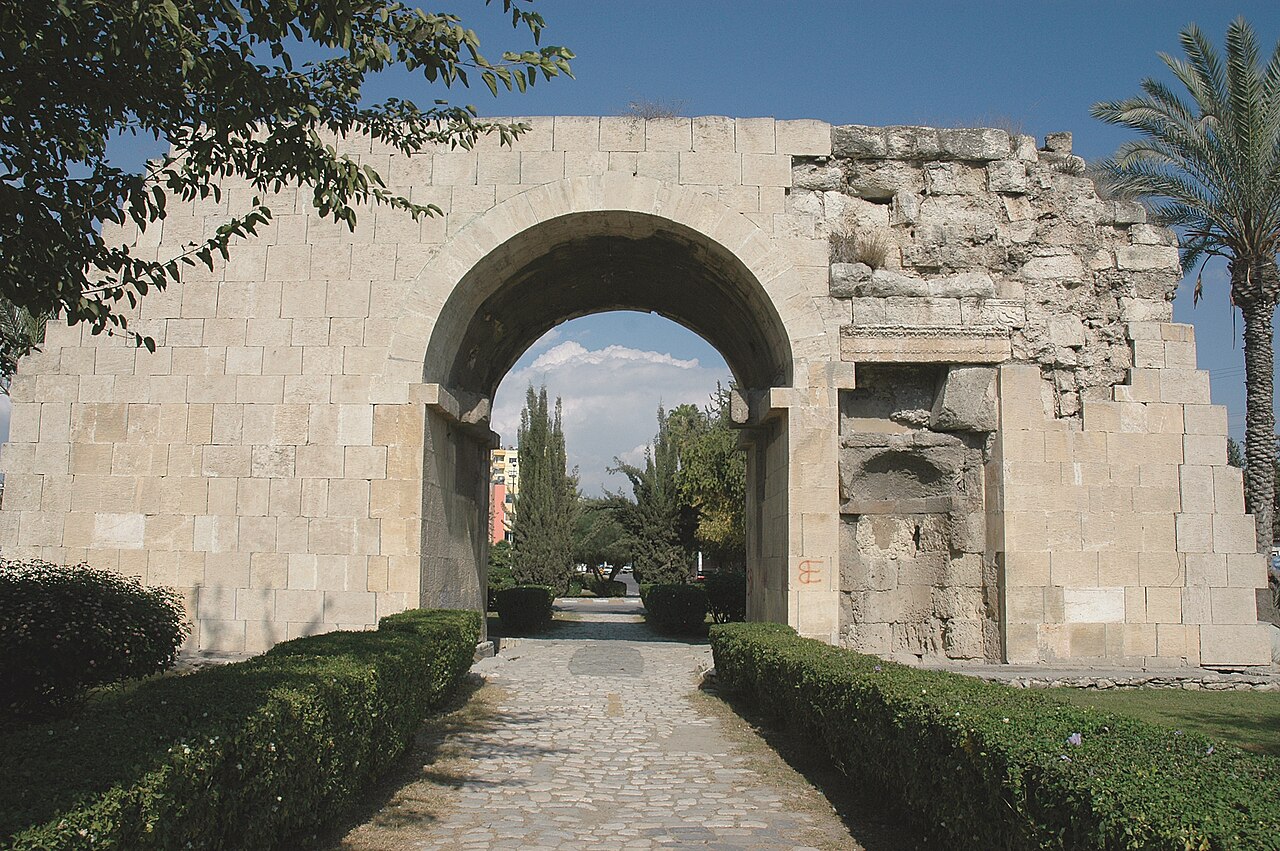
The gateway known as Cleopatra’s Gate in Tarsus, a city of historical Cilicia in modern Türkiye, 3 October 2005. A view of a place in the region; the popular name does not date the visible building
Stätte
Historical region on Anatolia’s southern coast in modern Türkiye, with plains and uplands connected to the Levant and Anatolian interior.
Namensvarianten: Cilicia
Kontext und Quellen →
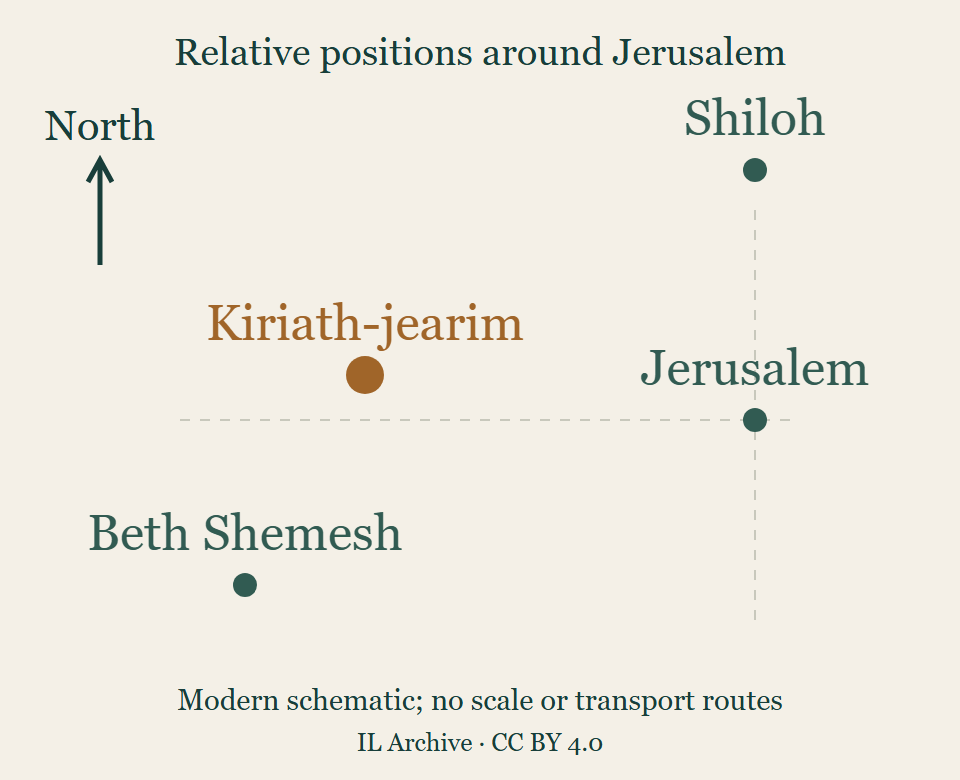
Modern schematic highlighting Kiriath-jearim / Deir el-Azar relative to Jerusalem and the other two sites. General directions, not a scale map or the Ark’s route
Stätte
Archaeological hill west of Jerusalem near Abu Ghosh, associated with the Ark in Samuel.
Namensvarianten: Kiriath-jearim / Deir el-Azar
Kontext und Quellen →
Person
Bioarchaeologist whose research includes human remains and cranial modification in the ancient Near East.
Namensvarianten: Kirsi O. Lorentz, Kirsi Lorentz
Kontext und Quellen →
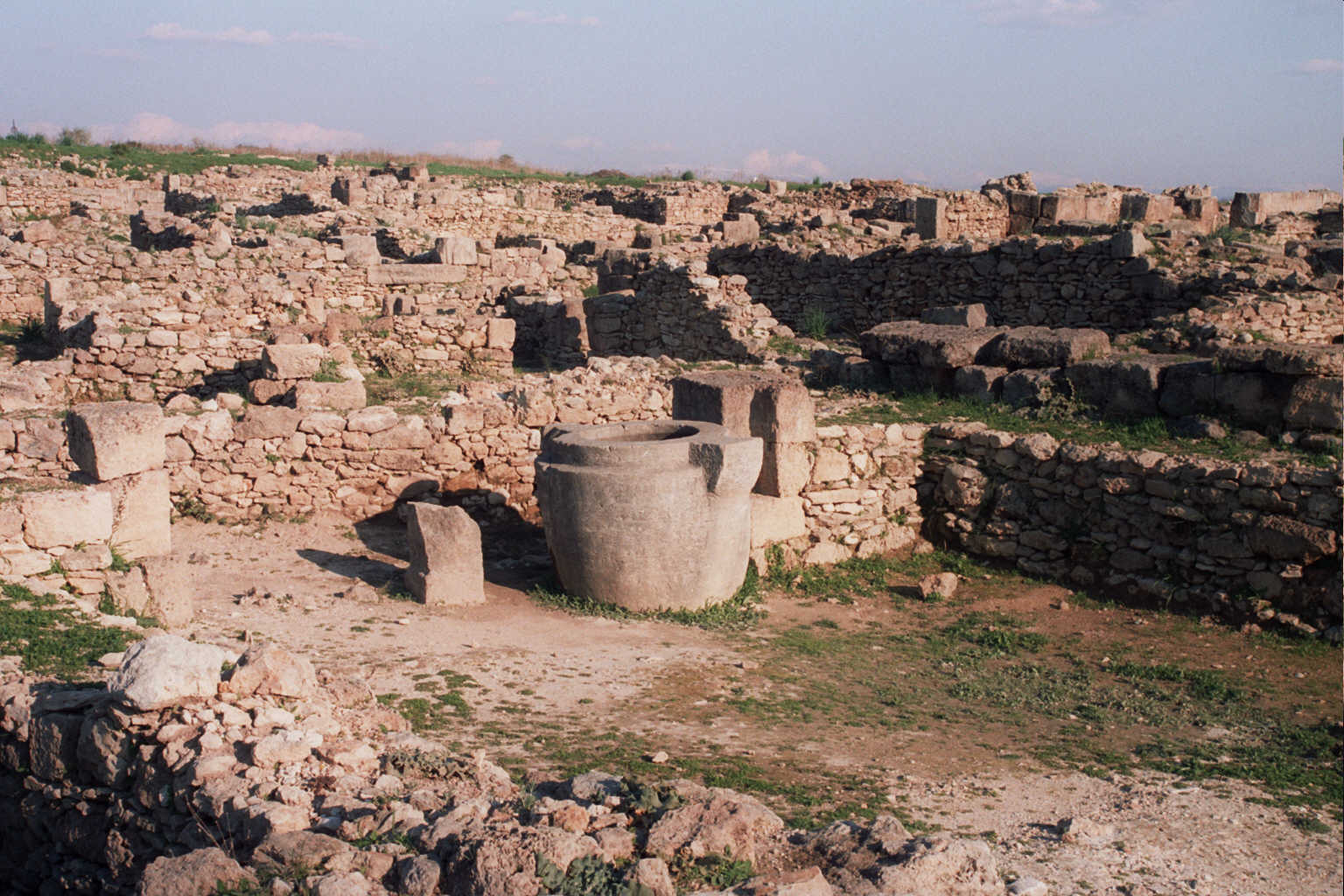
Ruins of Ugarit at Ras Shamra, photographed by Loris Romito on a 2005 trip. Context for the site that preserved the Kirta tablets, not the hero’s palace or an identified findspot; not every visible structure is dated here to the text’s writing
Antiker Text
Ugaritic poetic narrative in three tablets about King Kirta, his family and a vow; KTU1.16 names Ilimilku, without proving he invented all its traditions.
Namensvarianten: Tale of Kirta
Kontext und Quellen →
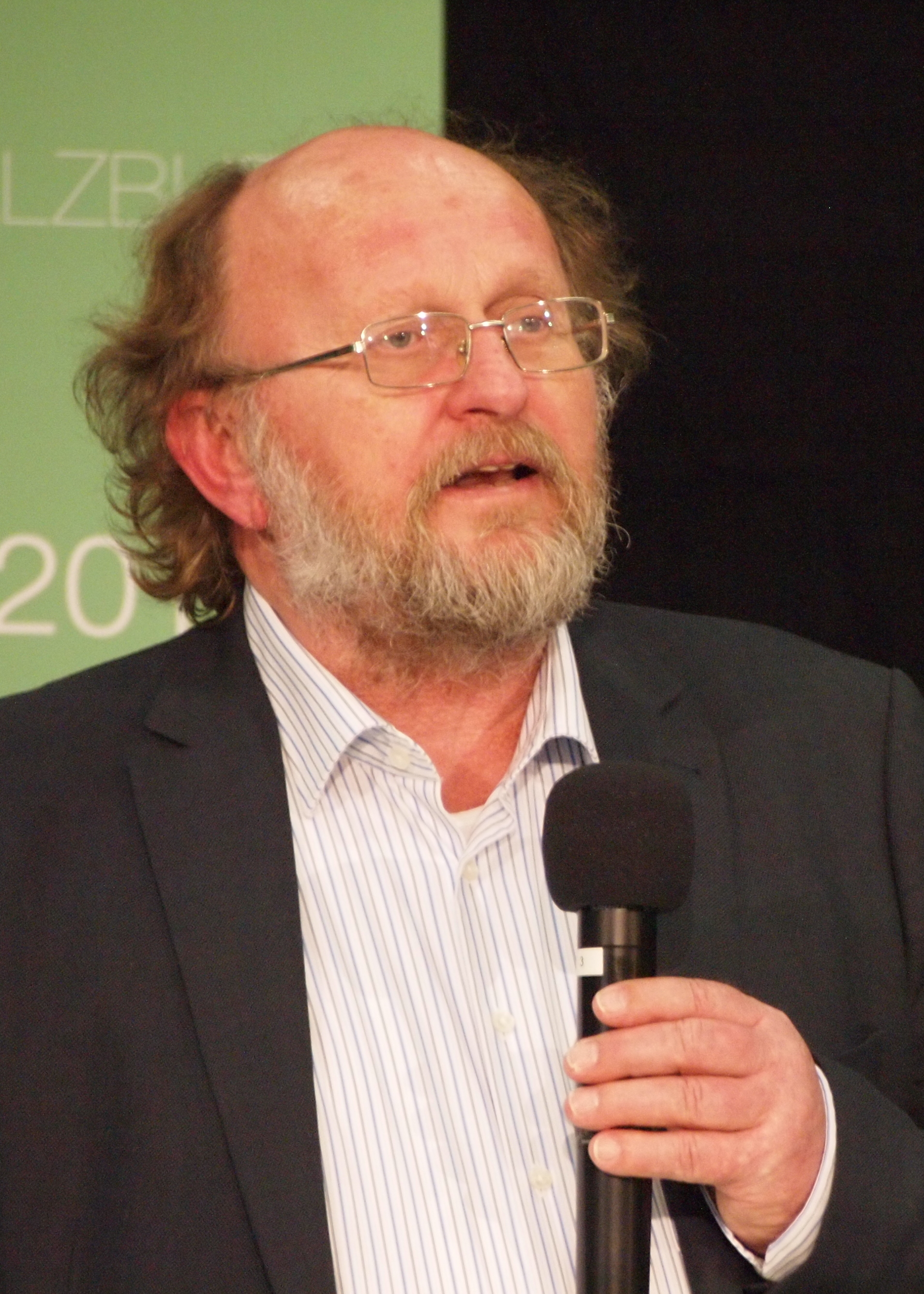
Klaus Schmidt, the Göbekli Tepe archaeologist, at the Monumento fair in Salzburg on 16 January 2014. Not a photograph from the excavation
Person
A German prehistorian who directed the Göbekli Tepe excavations from 1995 until his death on 20 July 2014.
Namensvarianten: Klaus Schmidt
Kontext und Quellen →
Person
Scholar of the Hebrew Bible and ancient Judaism studying the Pentateuch’s literary history and the formation of biblical texts.
Namensvarianten: Konrad Schmid
Kontext und Quellen →
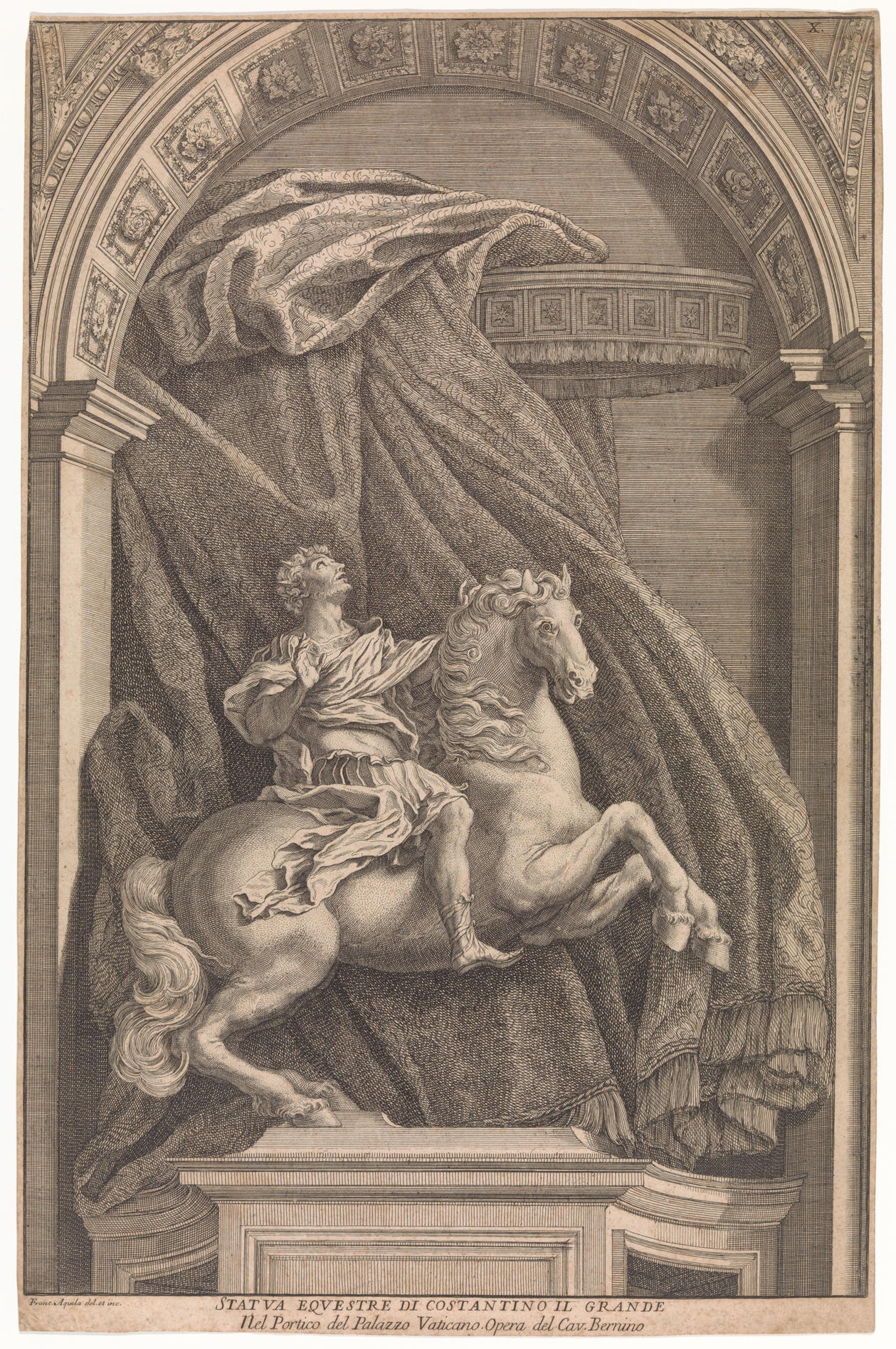
Etching by Francesco Faraone Aquila, 1690–1740, after Bernini’s equestrian Constantine in the Vatican, The Met 1991.1063. It represents the vision of the Cross in later art, not a fourth-century portrait or a scene of Nicaea
Person
Roman emperor, reigning in 306–337 CE, who convened Nicaea in 325.
Namensvarianten: Constantine I
Kontext und Quellen →
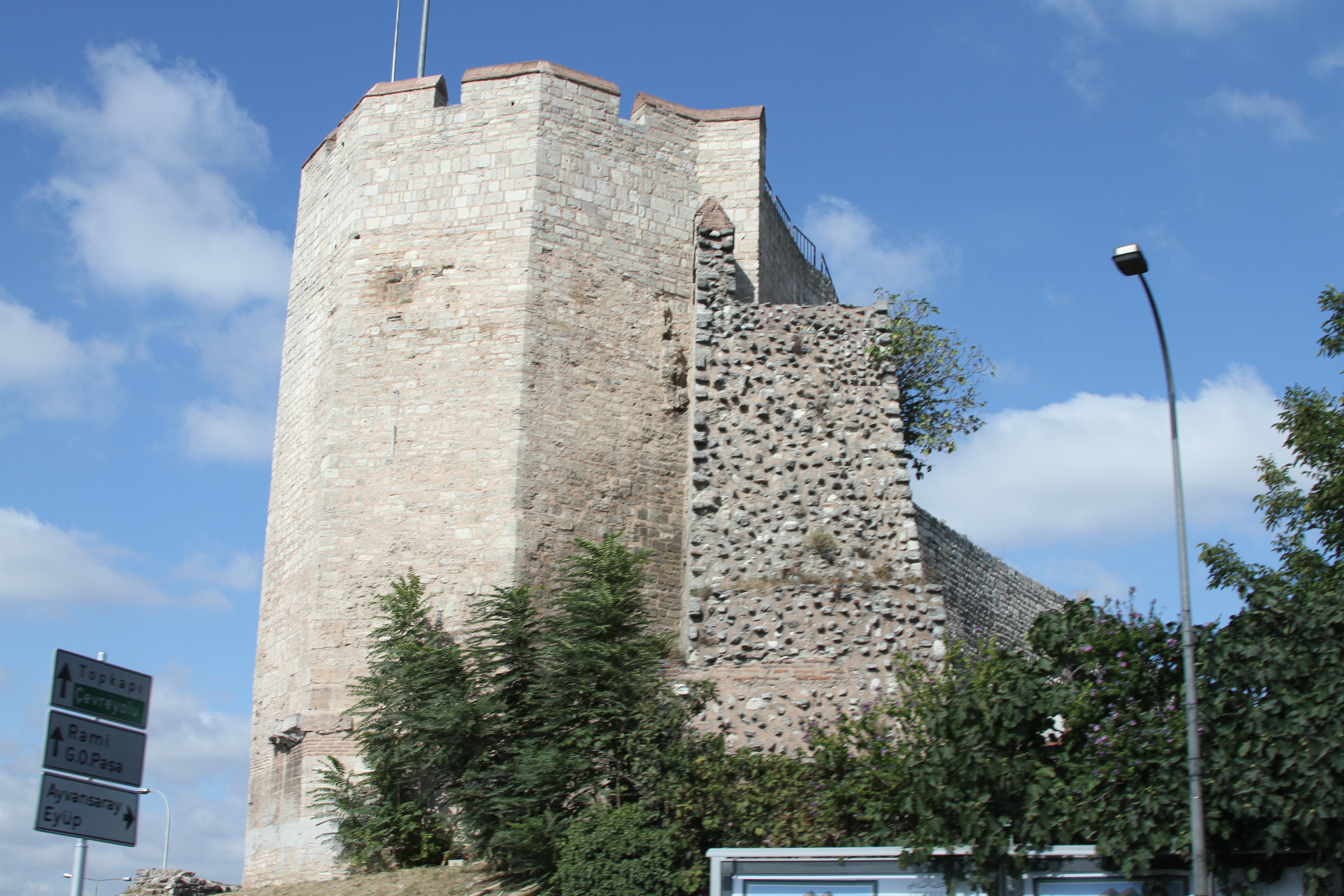
Part of Constantinople’s walls in modern Istanbul, photographed by José Luiz Bernardes Ribeiro on 15 September 2011, CC BY-SA 3.0. The monument in its modern condition, not the council meeting of 381
Stätte
Late antique and medieval city on the historic peninsula of modern Istanbul.
Namensvarianten: Constantinople
Kontext und Quellen →

Modern AI-generated symbolic scene combining a forge and a coastal storm to evoke Kothar-wa-Hasis’s literary role; not an archaeological site, weapon, palace or authenticated reconstruction
Entität
Ugaritic divine craftsman who makes Baal’s weapons, builds his palace and proposes its window; also associated with Aqhat’s bow. No securely identified ancient portrait.
Namensvarianten: Kothar-wa-Hasis, Kothar-wa-Khasis
Kontext und Quellen →

Mountain landscape in the Lefka Ori of Crete, near Pachnes, 5 August 2016, according to the photographer’s metadata. A modern island view, not a location of Zeus’s hiding in the story
Stätte
Greek island in the eastern Mediterranean, associated in Hesiod with hiding the infant Zeus.
Namensvarianten: Crete
Kontext und Quellen →

A newly generated modern symbolic contrast of light and shadow for the War Scroll; it does not depict the 1QM manuscript or a documented historical battle
Entität
Dead Sea Scroll text portraying war between the sons of light and the hostile camp; its principal copy is designated 1QM.
Namensvarianten: War Scroll
Kontext und Quellen →
Person
Scholar of ancient Judaism and rabbinic literature; associate professor of Jewish studies at Florida Atlantic University.
Namensvarianten: Kristen H. Lindbeck
Kontext und Quellen →
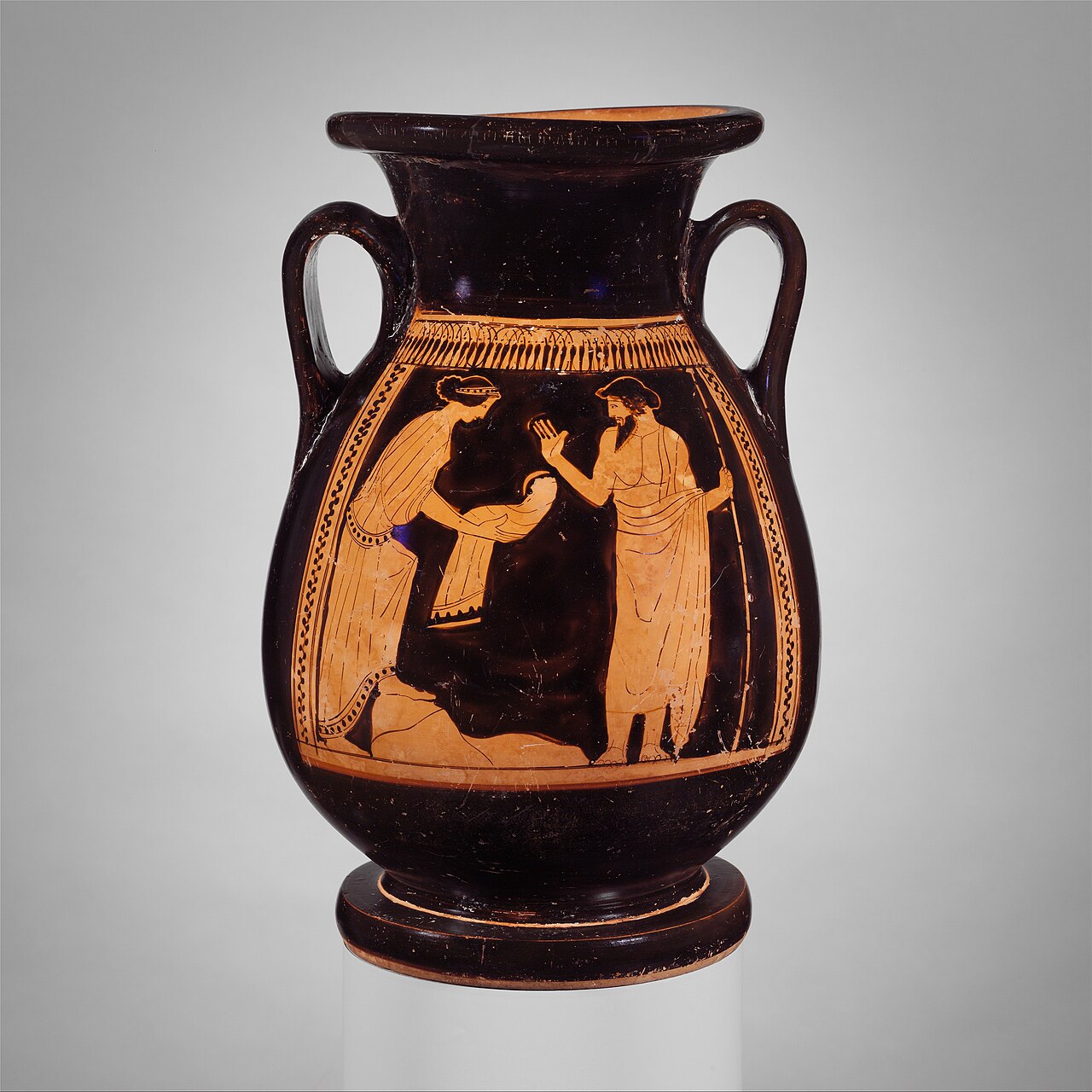
Rhea hands Kronos a wrapped stone on an Attic jar, about 460–450 BCE, attributed to the Nausicaä Painter. Metropolitan Museum of Art, 06.1021.144; museum photograph
Entität
Greek divine figure and Zeus’s father; Hesiod connects his reign with struggles between divine generations.
Namensvarianten: Kronos, Cronus
Kontext und Quellen →
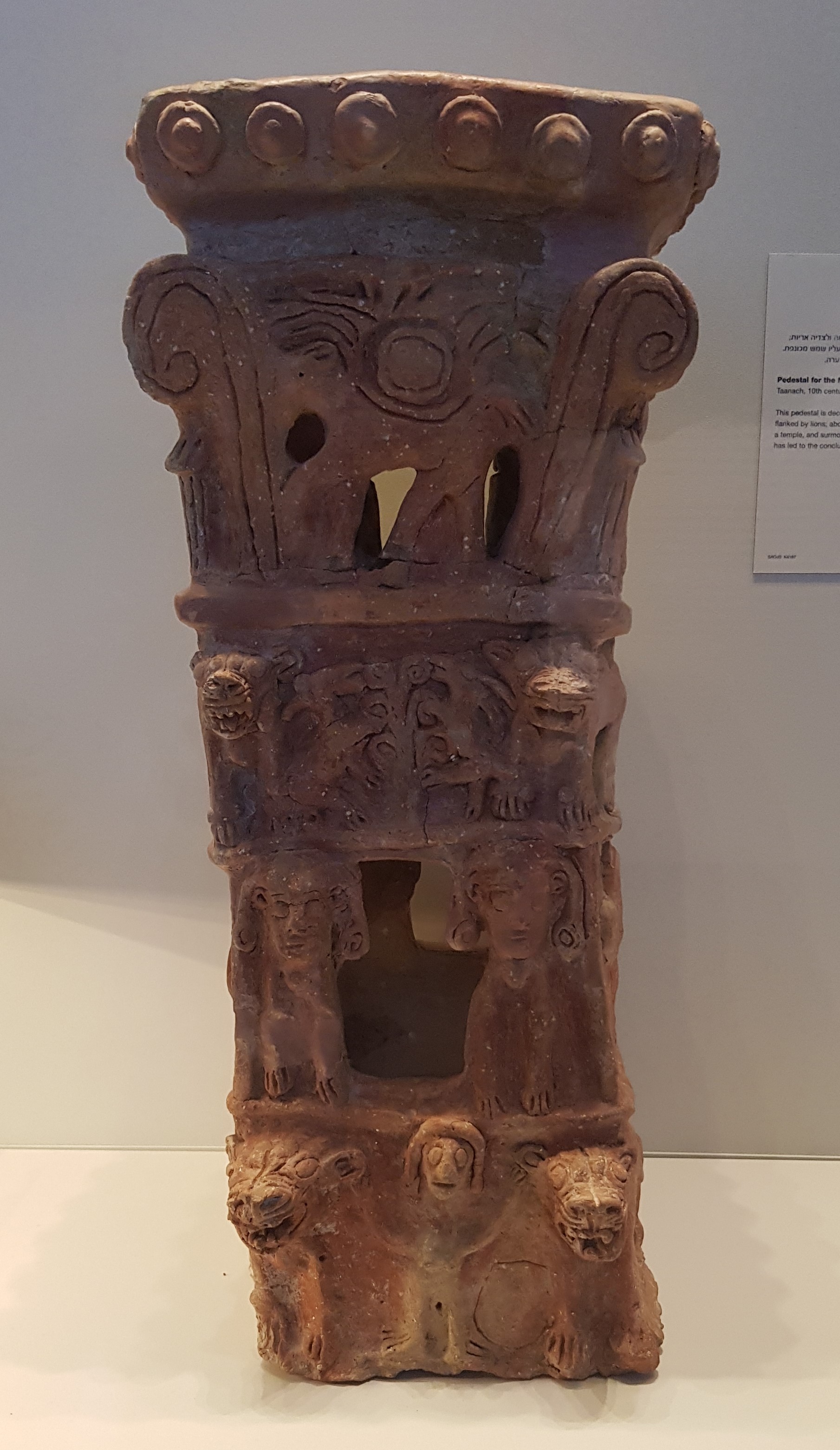
Ceramic cult stand from Taanach, tenth–ninth centuries BCE, Israel Museum. A tree between two animals appears in the second tier from the top. Contextual evidence of cultic imagery, not an excavated wooden asherah or a certain identification of the goddess
Entität
Asherah as a cult object or symbol, often wooden in biblical contexts; relation to the goddess and inscriptional ʾšrth remains debated.
Namensvarianten: asherah cult symbol, asherah cult object, asherah pole
Kontext und Quellen →

Modern AI-generated symbolic cover evoking succession between sky, earth and storm; neither an artefact nor an ancient depiction of Kumarbi
Entität
Hurrian god in Hittite songs from Hattusha; he overthrows Anu and carries the storm god. A study of CTH 344, contested genealogy, and Greek parallels.
Namensvarianten: Kumarbi
Kontext und Quellen →
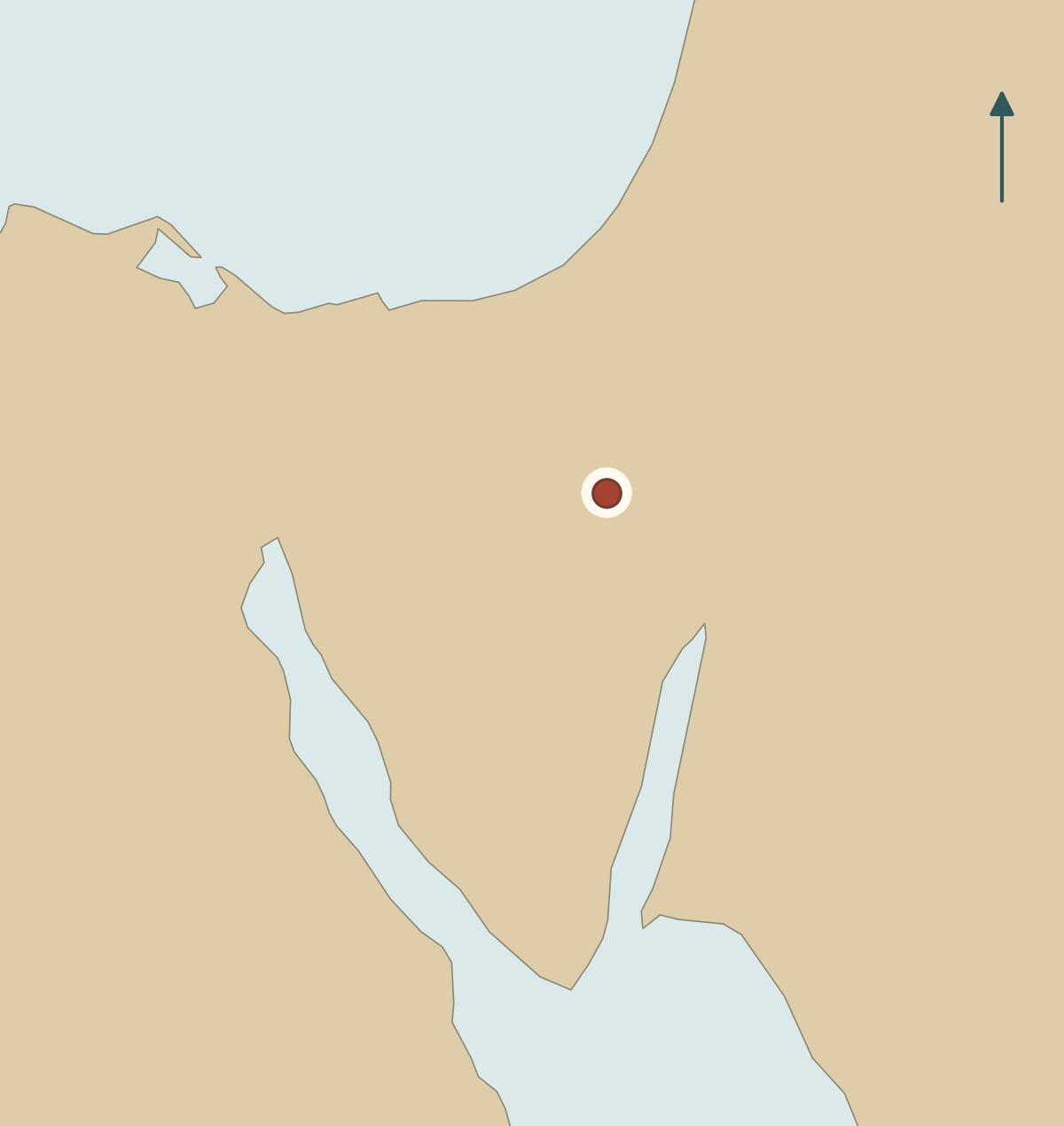
Modern locator derived from Natural Earth data: the red point marks Kuntillet ʿAjrud approximately within Sinai; the arrow points north. The Mediterranean is above, the gulfs of Suez and Aqaba below. Not an excavation plan or a map of ancient routes or borders
Stätte
A Sinai site with blessings invoking Yahweh of Samaria/Teman and “his asherah” around 800 BCE; inscriptions illuminate religion and writing, while the site’s function and imagery remain debated.
Namensvarianten: Kuntillet Ajrud, Kuntillet ʿAjrud, Quntillet Ajrud, Horvat Teman
Kontext und Quellen →
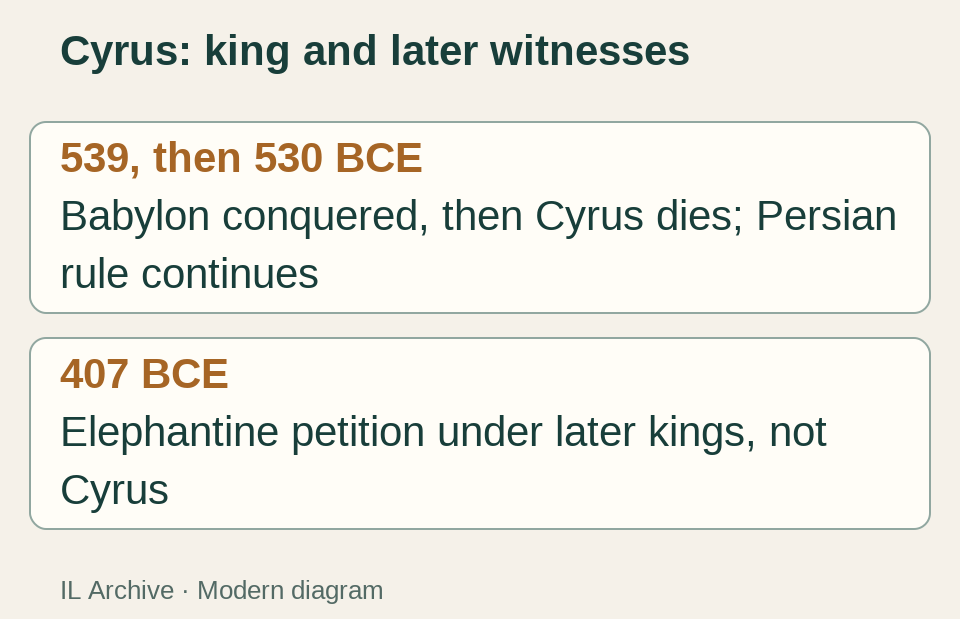
Modern timeline distinguishes Cyrus’s conquest of Babylon in 539 BCE and death in 530 BCE from the Elephantine petition of 407 BCE under later Persian kings; not a royal portrait or ancient document
Person
Founder of the Achaemenid Empire; conquered Babylon in 539 BCE and died in 530 BCE.
Namensvarianten: Cyrus II
Kontext und Quellen →
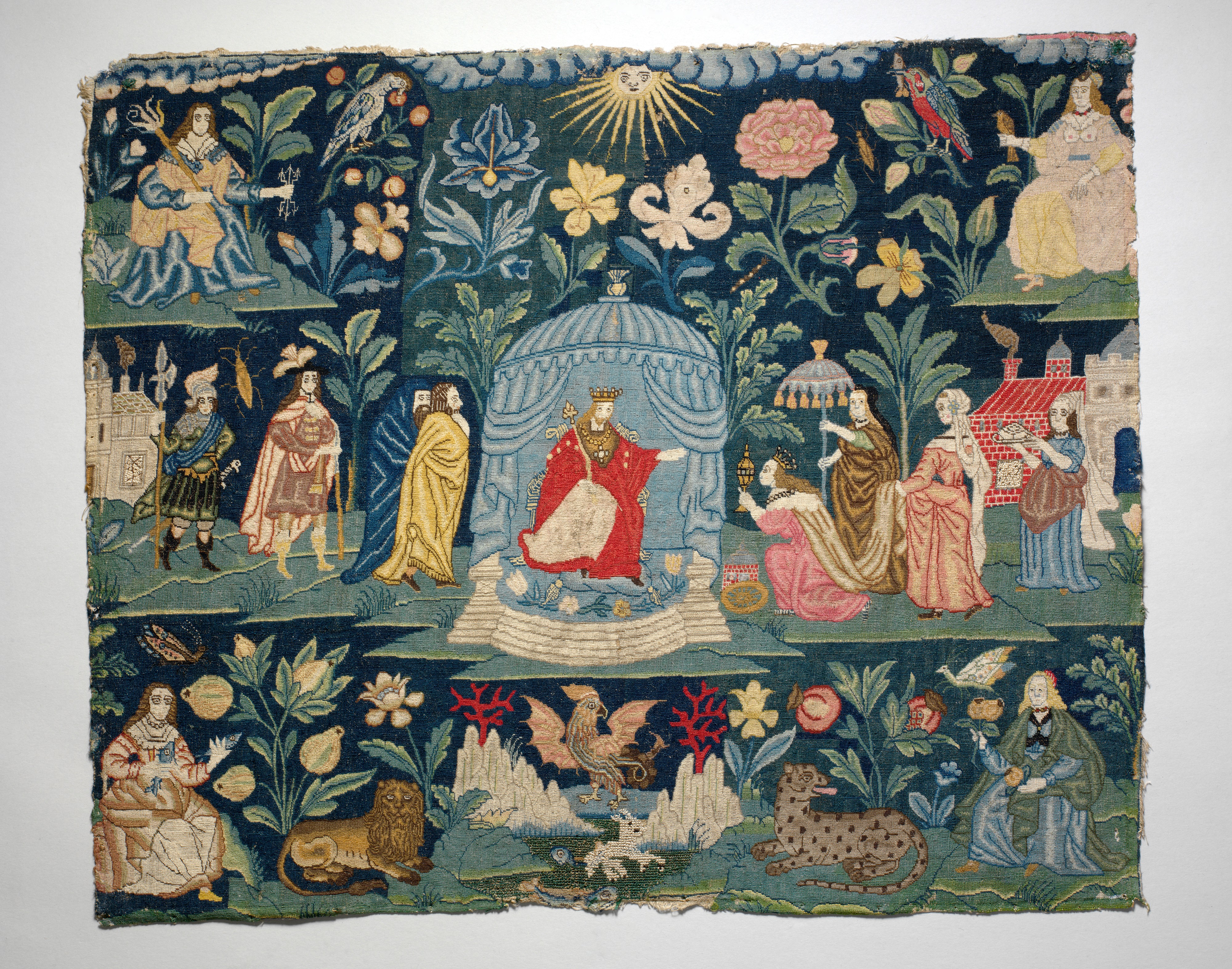
Solomon's meeting with the Queen of Sheba in British embroidery, ca. 1700: later artistic reception, not a historical portrait. Met 64.101.1307; public domain
Person
The ruler in narratives of Solomon's encounter with Sheba; neither First Kings nor the Quran gives her a personal name, and her historical identification is unresolved.
Namensvarianten: Queen of Sheba
Kontext und Quellen →
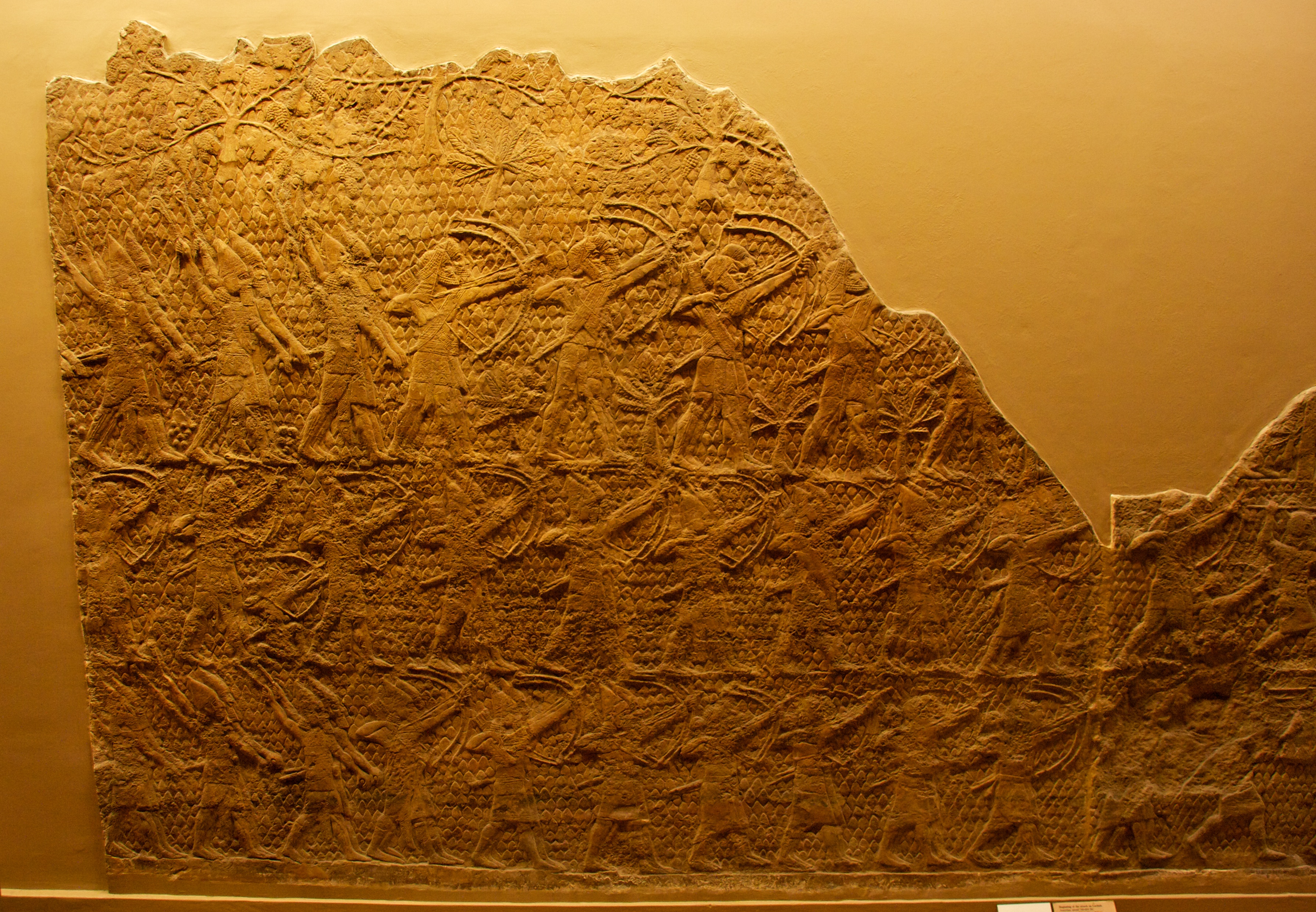
Detail of the Assyrian reliefs showing the siege of Lachish, a city of the kingdom of Judah, during Sennacherib’s campaign of 701 BCE. Carved at Nineveh around 700–692 BCE and held in the British Museum. Photographed on 12 September 2010; an Assyrian representation of the event from the attackers’ perspective
Stätte
Judah was an ancient southern Levantine kingdom centered on Jerusalem in the Iron Age
Namensvarianten: kingdom of Judah
Kontext und Quellen →
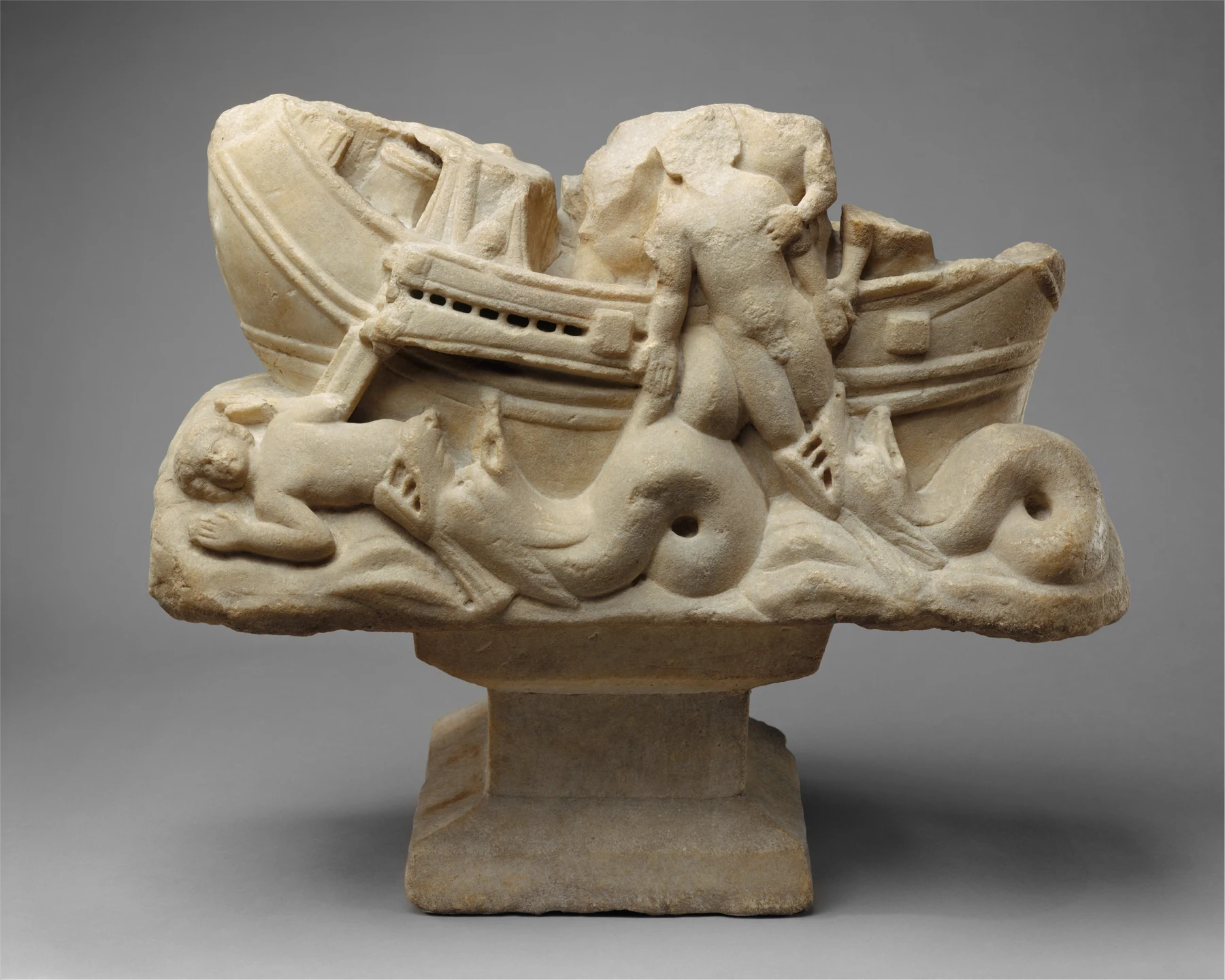
Roman marble table base from Asia Minor, early fourth century CE: Jonah is swallowed and released by a fantastic kētos beneath a ship. The Met, 77.7. Later Christian art, not zoological evidence for the Hebrew “great fish.”
Entität
Kētos (κῆτος) is a Greek common noun for large real or imagined sea creatures, including mythical monsters and the creature in Greek Jonah and Matthew. It is not one modern species.
Namensvarianten: kētos, ketos
Kontext und Quellen →
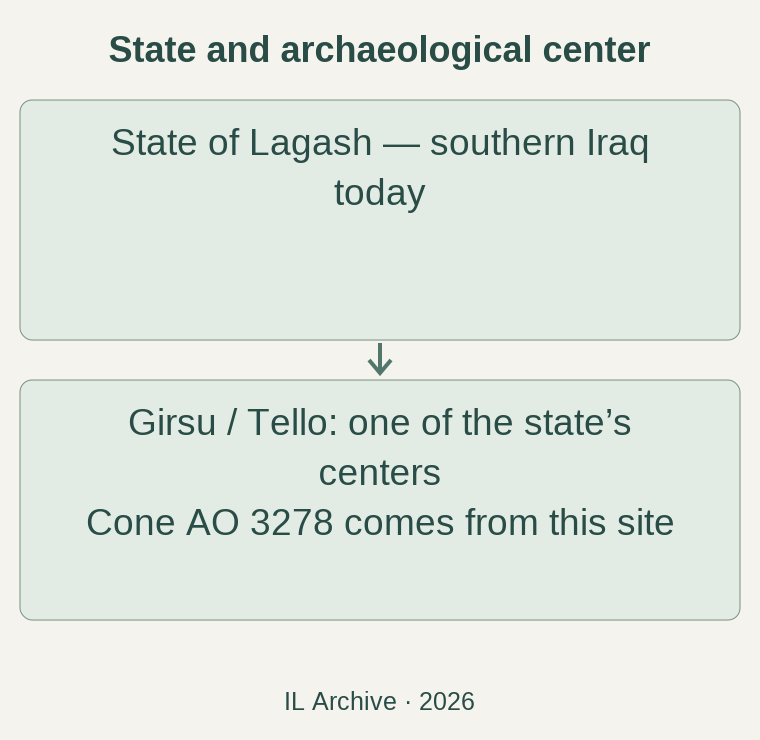
Modern diagram of the relationship or demand in the specified text; not an artifact photograph, a divine likeness or a portrait
Stätte
City-state in present-day southern Iraq; Girsu was one of its centers associated with royal inscriptions.
Namensvarianten: Lagash, Sumerian city-state
Kontext und Quellen →
Person
Papyrologist who co-edited a papyrus with the clay-sparrow episode.
Namensvarianten: Lajos Berkes
Kontext und Quellen →