
Modern AI-generated expressive cover: imagined scrolls and a harbor scene evoke the passage of writing between languages. Not a manuscript photograph or a verified reconstruction of Ptolemaic Alexandria
Entität
A name for the varied ancient Greek translations and writings associated with Jewish scripture; beginning with the Torah, the texts differ across books and manuscripts.
Namensvarianten: Septuagint
Kontext und Quellen →

Six imagined wings around light above an altar: a newly generated symbolic cover inspired by Isaiah 6, not an ancient artifact or verified reconstruction of seraphim or the temple
Entität
Six-winged attendants of the throne in Isaiah 6, associated with praise and purification. Related Hebrew wording also refers to serpents; seraphim are not automatically cherubim or all angels.
Namensvarianten: seraphim, seraph
Kontext und Quellen →
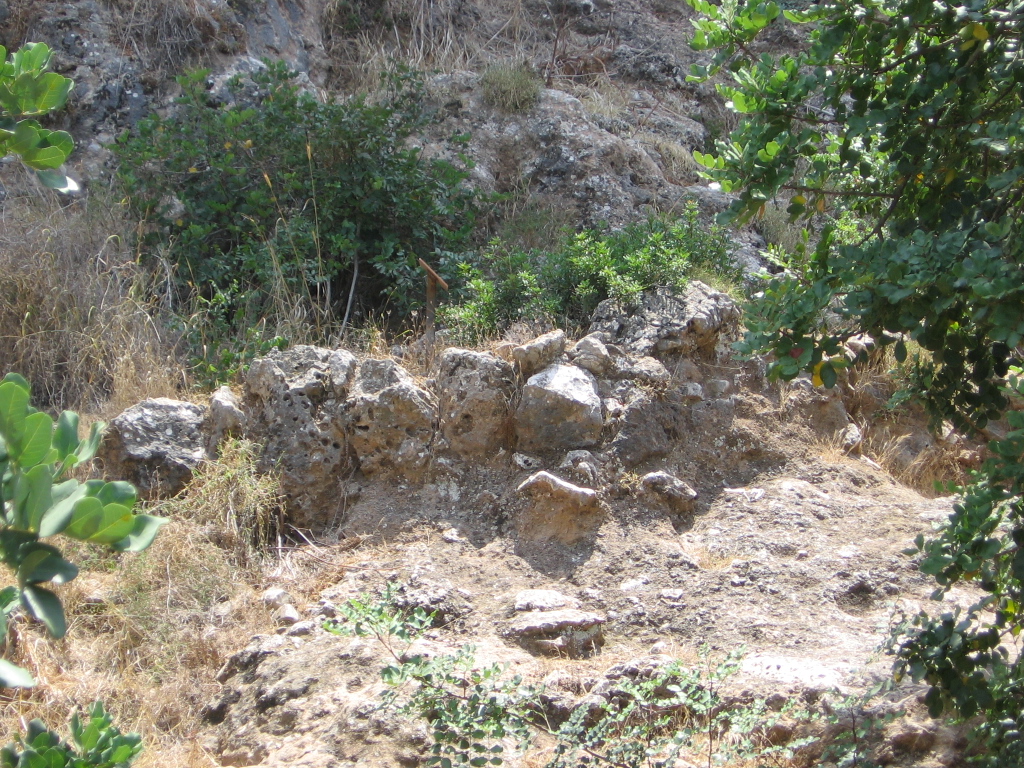
Remains of a supporting wall of a Natufian house at el-Wad Terrace, Mount Carmel. A modern photograph of ancient architecture, not Ain Mallaha or Wadi Hammeh 27; a durable building alone does not establish occupation duration
Entität
Reduced residential mobility and prolonged occupation of a place: a concept distinct from agriculture, assessed through evidence beyond the presence of buildings.
Namensvarianten: sedentism, residential sedentism, semi-sedentism
Kontext und Quellen →
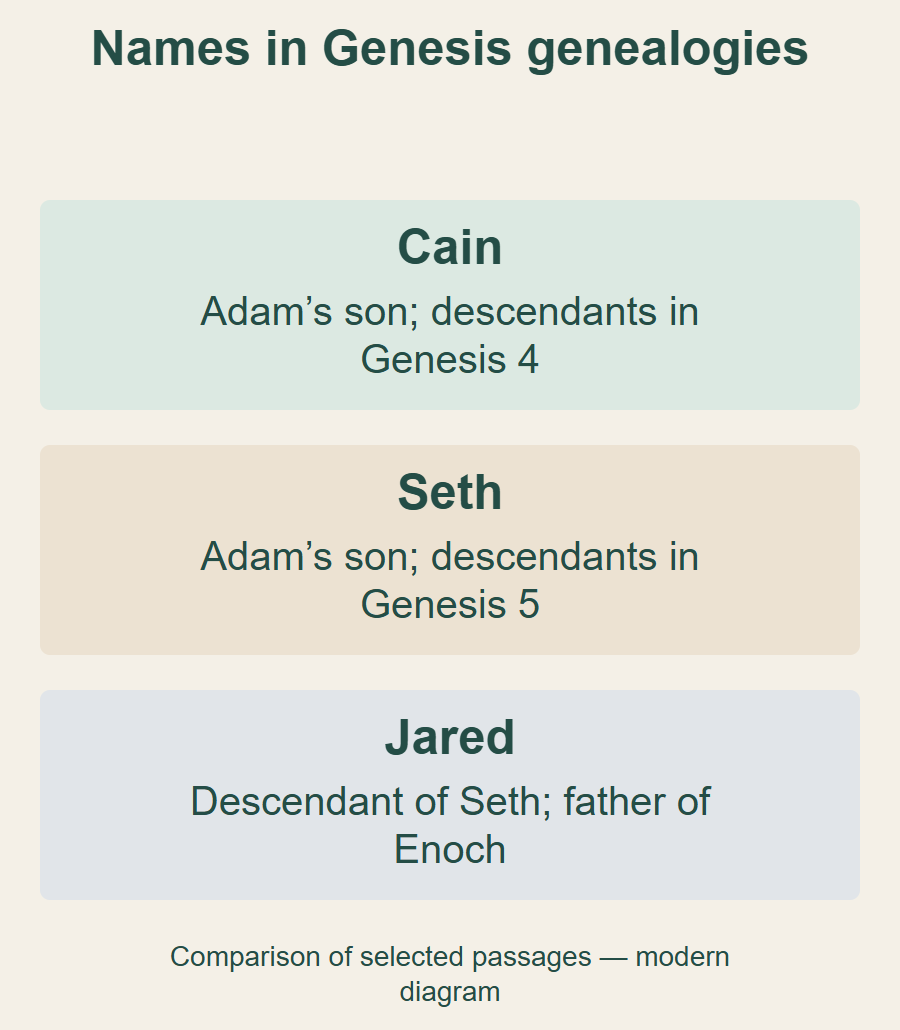
Modern chart distinguishing the Cain and Seth branches in Genesis and Jared’s position; textual relationships, not a reconstructed historical genealogy
Person
Seth is Adam’s son in Genesis; Augustine interprets the sons of God as his descendants.
Namensvarianten: Seth
Kontext und Quellen →
Person
Scholar of ancient Judaism, wisdom and narrative; assistant professor at Radboud University, with research on Ahiqar.
Namensvarianten: Seth A. Bledsoe, Seth Bledsoe
Kontext und Quellen →

Modern schematic of the slab and abrasion around its centre. Not a photograph of EA498, a transcription of its signs, or a restoration of missing columns; proportions and marks are indicative
Artefakt
The Shabaka Stone (British Museum EA498), inscribed c. 710 BCE, links Ptah, heart, speech, creation, and kingship; its damage, textual readings, and alleged older papyrus remain central questions.
Namensvarianten: Shabaka Stone
Kontext und Quellen →
Person
Yeshiva University scholar of Mesopotamian literature and law and their biblical and later relationships.
Namensvarianten: Shalom E. Holtz, Assyriologist and biblical scholar
Kontext und Quellen →

Modern AI-generated symbolic image of the sun above a dark passage; neither an Ugaritic artifact nor an attested portrait of Shapshu
Entität
Shapshu, the Ugaritic sun goddess, helps mourn Baal and warns Mot under El’s authority; her links with the dead and drought remain debated.
Namensvarianten: Shapshu, Shapash, Šapšu
Kontext und Quellen →
Person
Shaul Shaked was a scholar of Iranian languages, Zoroastrianism and its contacts with Jewish traditions.
Namensvarianten: Shaul Shaked
Kontext und Quellen →
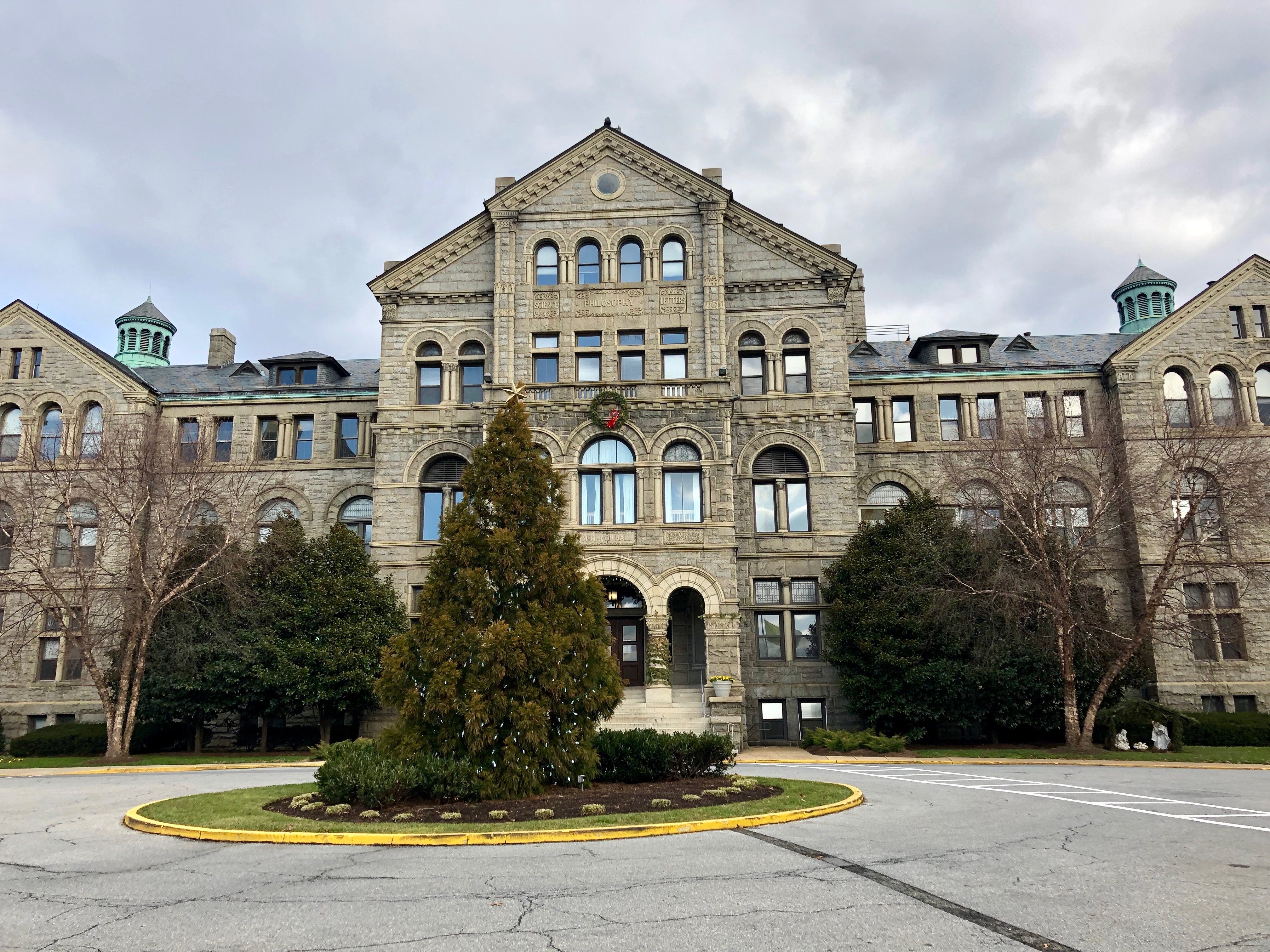
McMahon Hall at the Catholic University of America, Washington, photographed in 2018. Institutional context for Griffith's career, not his portrait or a documented office. w_lemay, CC0
Person
American scholar (1938–2026) of Syriac and early Arabic Christianity and encounters with Islam.
Namensvarianten: Sidney Griffith, Sidney H. Griffith
Kontext und Quellen →
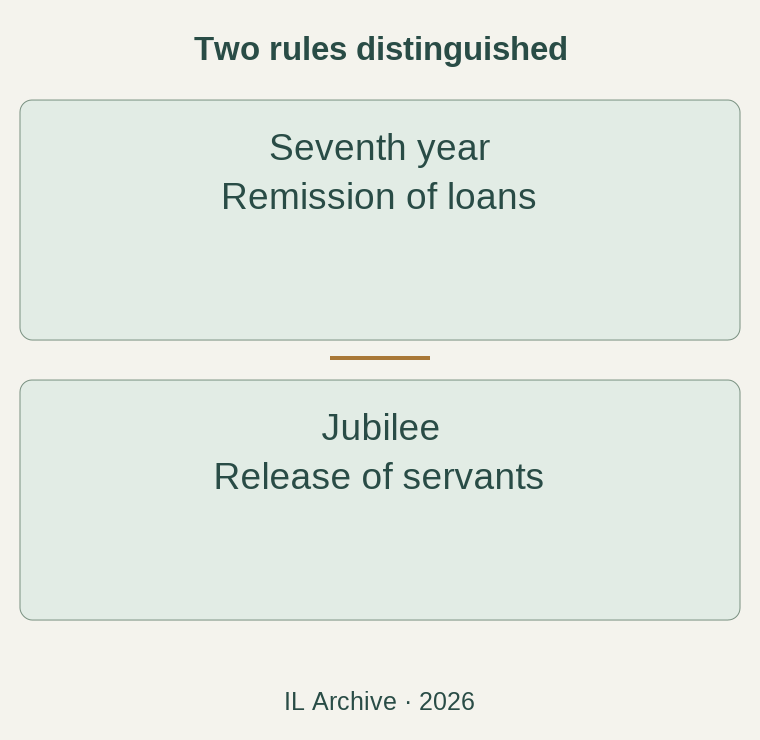
Modern diagram explaining the relationship between the named passages; not a manuscript photograph or historical portrait
Antiker Text
Rabbinic interpretation of Leviticus preserving early-CE traditions and separating remission and jubilee rules.
Namensvarianten: Sifra Leviticus
Kontext und Quellen →
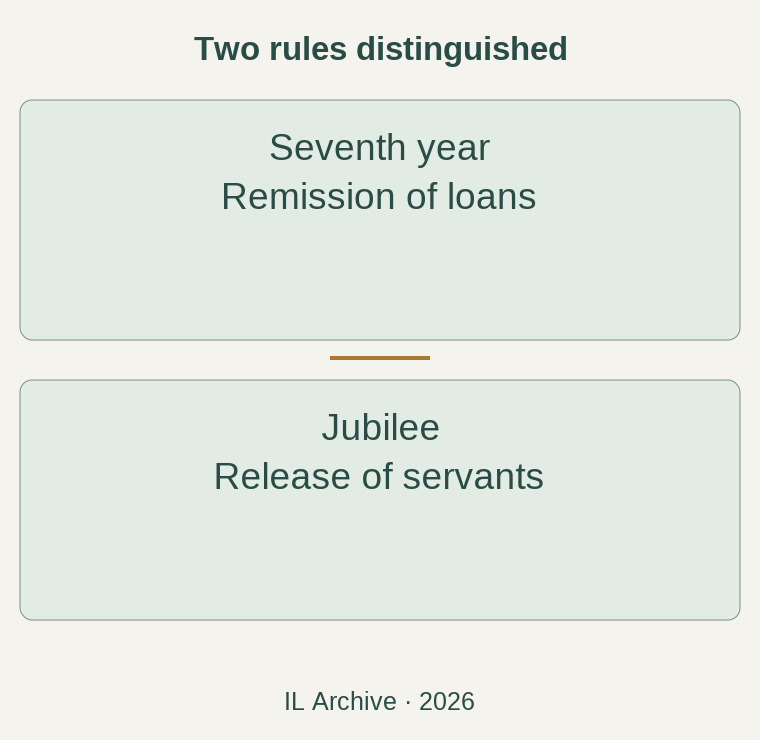
Modern diagram explaining the relationship between the named passages; not a manuscript photograph or historical portrait
Antiker Text
Rabbinic interpretation of Deuteronomy distinguishing seventh-year remission and jubilee release in the compared passage.
Namensvarianten: Sifre Deuteronomy
Kontext und Quellen →
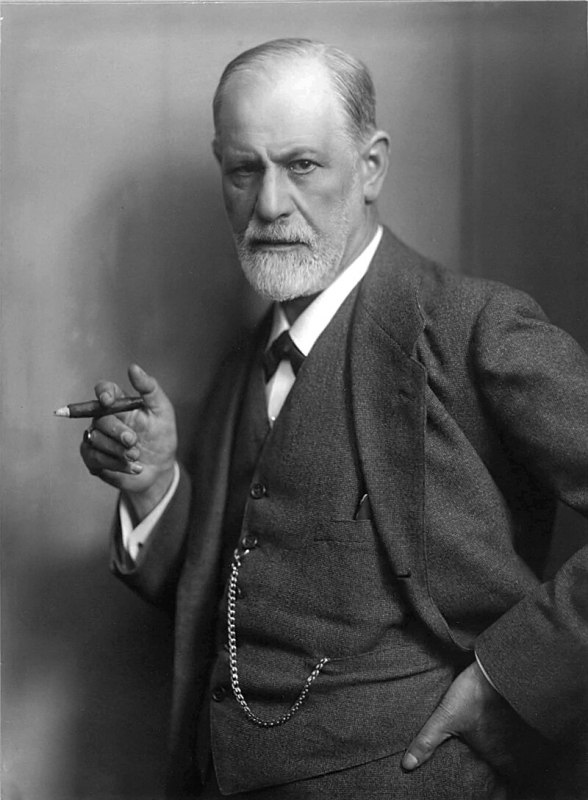
Sigmund Freud in 1921, photographed by Max Halberstadt, as displayed by the University of Vienna history archive. The published crop is retained without further cropping. A portrait of the modern thinker, not evidence from Akhenaten’s time
Person
Neurologist and founder of psychoanalysis, born 1856, died 1939.
Namensvarianten: Sigmund Freud
Kontext und Quellen →
Person
Scholar of the Hebrew Bible and religious history who has written on pre-Islamic Raḥmānān.
Namensvarianten: Sigrid K. Kjær
Kontext und Quellen →
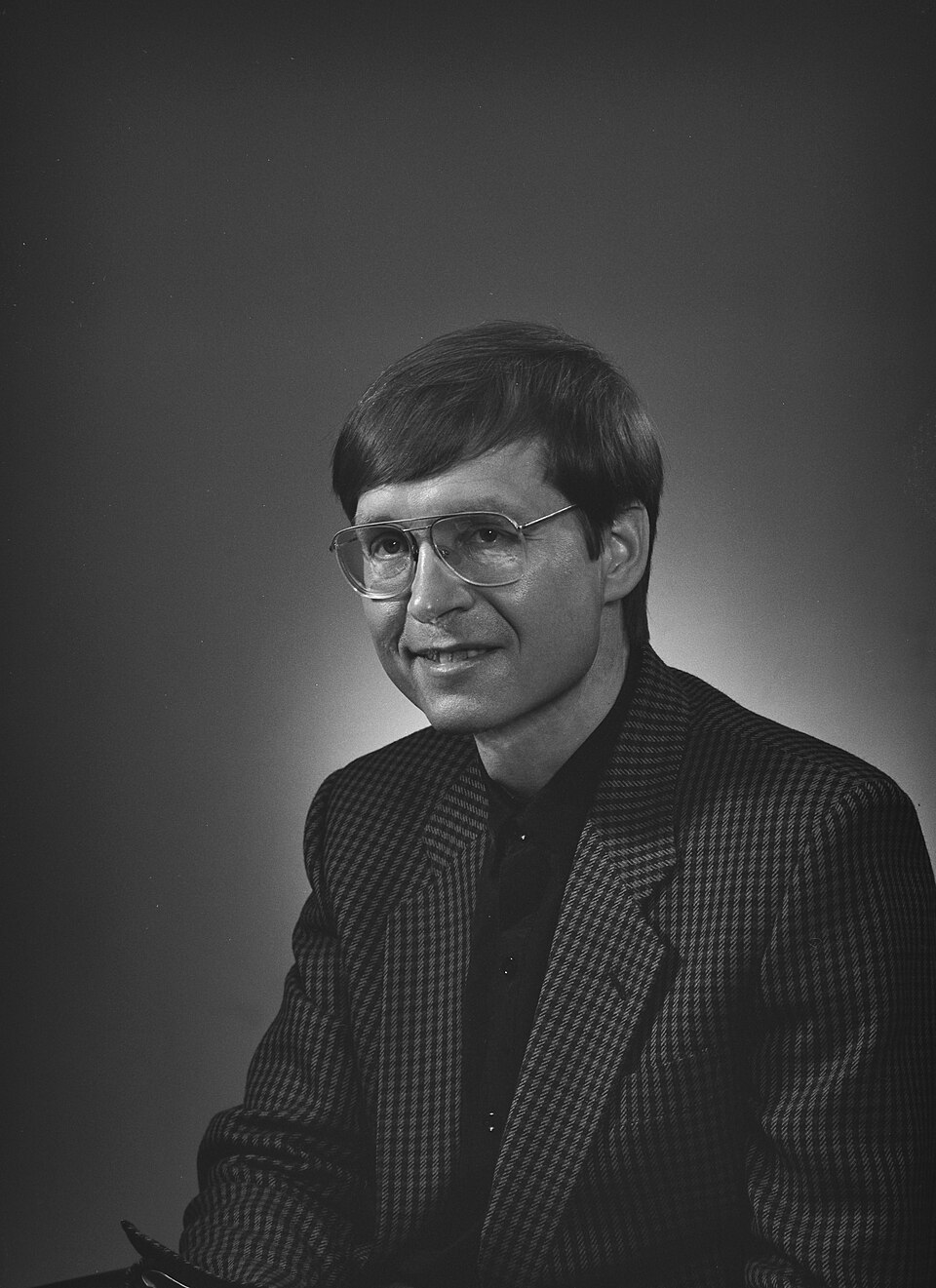
Simo Parpola in 1993, photographed by Kuvasiskot studio; Finnish collection record via Finna and Wikimedia Commons
Person
A Finnish Assyriologist specializing in ancient Assyria, editor of scholarly letters and interpreter of sage and Oannes traditions.
Namensvarianten: Simo Parpola
Kontext und Quellen →
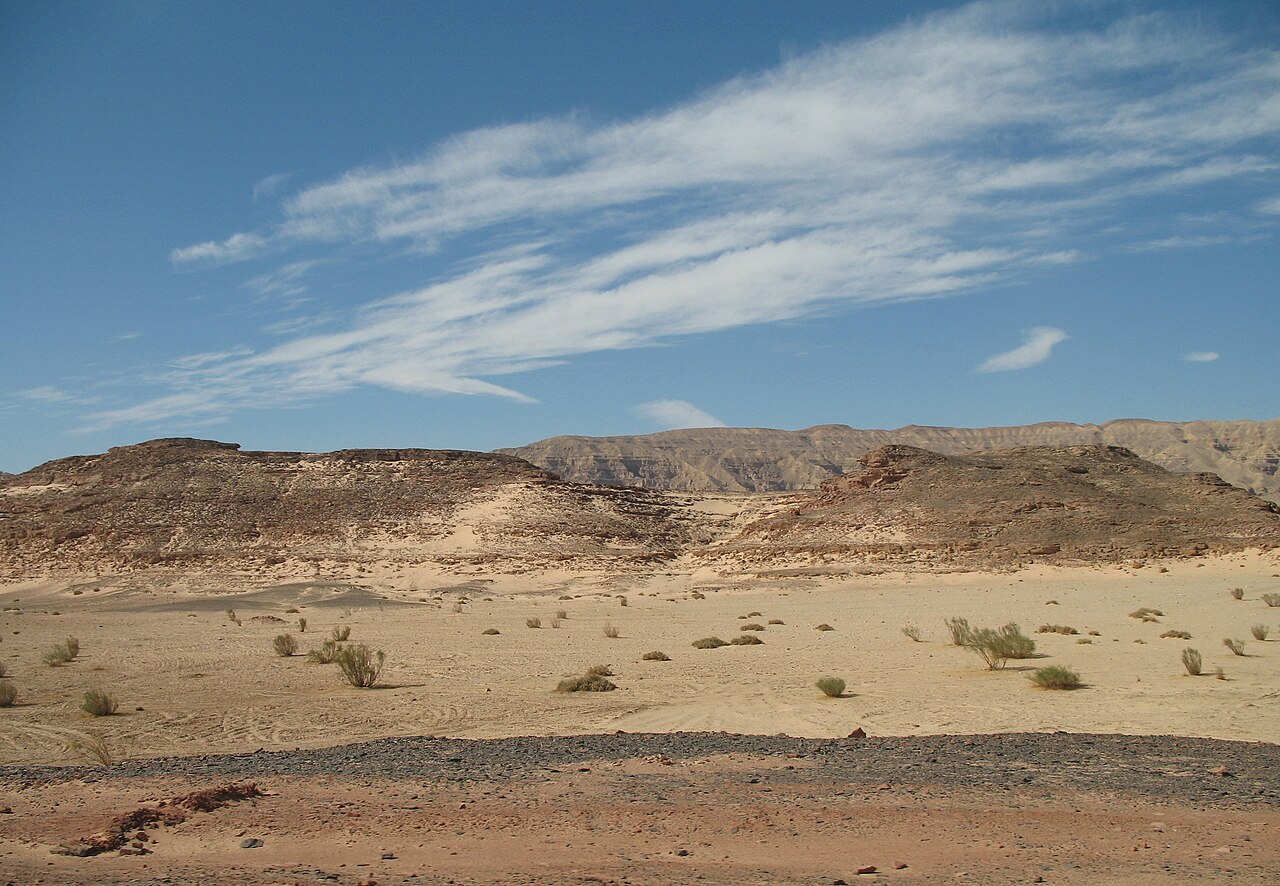
A view of the Sinai desert in Egypt, 22 November 2008. It shows the peninsula’s landscape without identifying the mountain meant by the biblical narratives
Stätte
Sinai is a peninsula in eastern Egypt; in the Torah the name also denotes the mountain of revelation to Moses
Namensvarianten: Sinai, Mount Sinai
Kontext und Quellen →
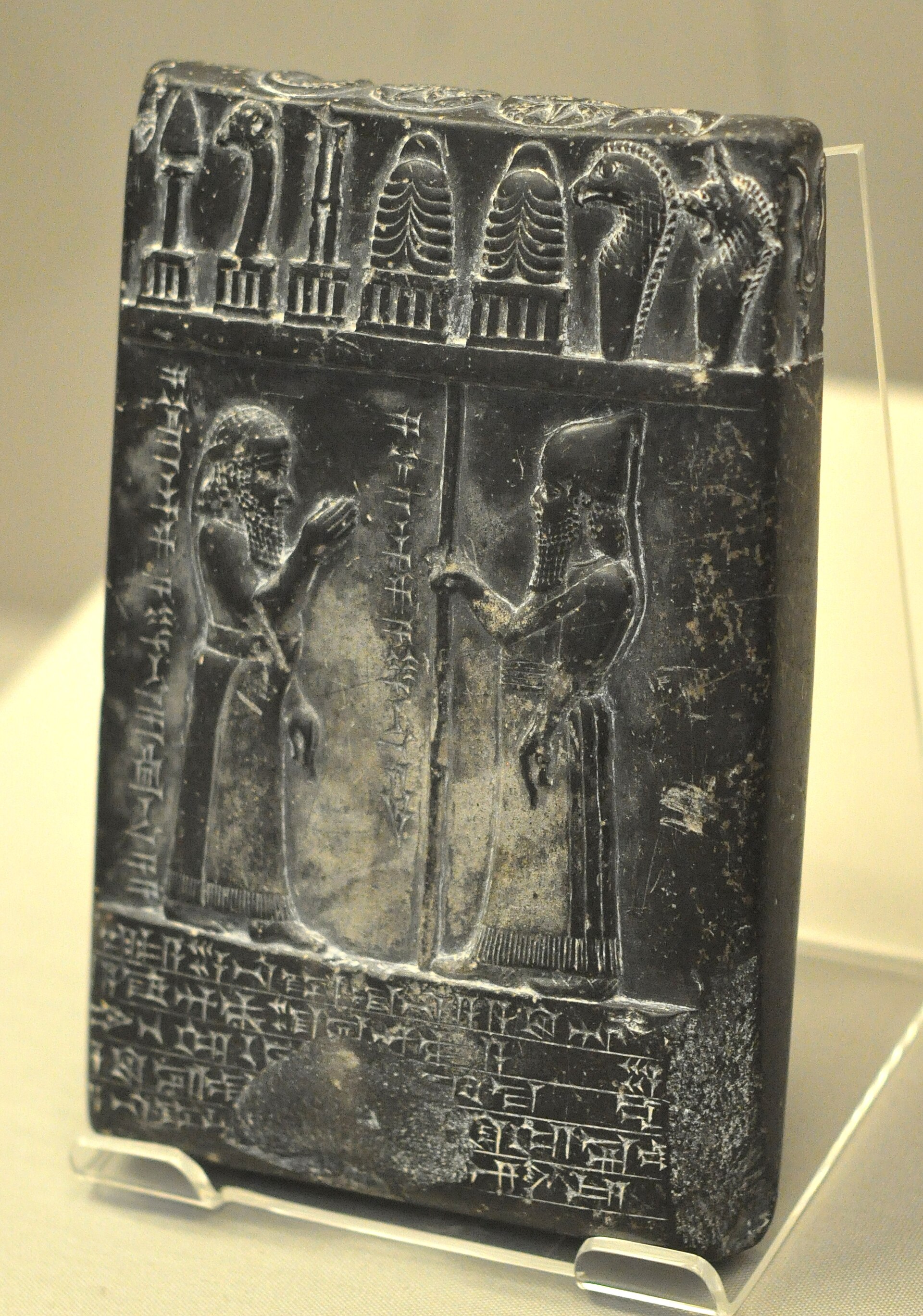
Steintafel über die Rückgabe von Ländereien an einen Priester durch den babylonischen König Nabu-apla-iddina, um 870 v. u. Z., aus Sippar (Tell Abu Habbah). British Museum
Stätte
Sippar is an ancient Babylonian city in present-day Iraq, identified with Tell Abu Habbah.
Namensvarianten: Sippar: Abu Habbah
Kontext und Quellen →

Sophus Helle at the Bogforum book conference, Bella Center, Copenhagen, 7 November 2025. Photograph by Christian Ursilva
Person
Sophus Helle is a scholar and translator of ancient Mesopotamian literature.
Namensvarianten: Sophus Helle
Kontext und Quellen →
Modern AI-generated interpretive cover using layered masonry as a metaphor for accumulated practice and memory; fictional scene, not Çatalhöyük or a documented archaeological site
Entität
A concept for how groups shape, transmit and revise relationships to the past through narratives, rites, objects and places, without assuming unanimous recollection or fixed meanings for material traces.
Namensvarianten: social memory
Kontext und Quellen →

Modern imaginative illustration of comparing inscriptions and sound patterns to infer older forms. The depicted objects and symbols are designed elements, not identified archaeological finds
Entität
A method inferring earlier, sometimes unattested sounds and forms from recurring correspondences in related languages; the result is a hypothesis, not a discovered text.
Namensvarianten: linguistic reconstruction, comparative reconstruction
Kontext und Quellen →

AI-generated conceptual cover: branching paths evoke shared ancestry without depicting an actual linguistic family tree or documented historical transfer
Entität
Common linguistic descent demonstrated by systematic sound and morphological correspondences, unlike borrowing or accidental resemblance.
Namensvarianten: linguistic relatedness, linguistic kinship, linguistic relationship
Kontext und Quellen →

Modern AI-generated conceptual cover evoking cities, routes and textual cultures of late antiquity. A fictional composite, not an archaeological photograph or a reconstruction of any identified location
Epoche
A flexible historians’ framework for transformations around the third to eighth centuries CE across the Mediterranean, Iran and Arabia, with variable boundaries.
Namensvarianten: late antiquity, Late Antiquity
Kontext und Quellen →
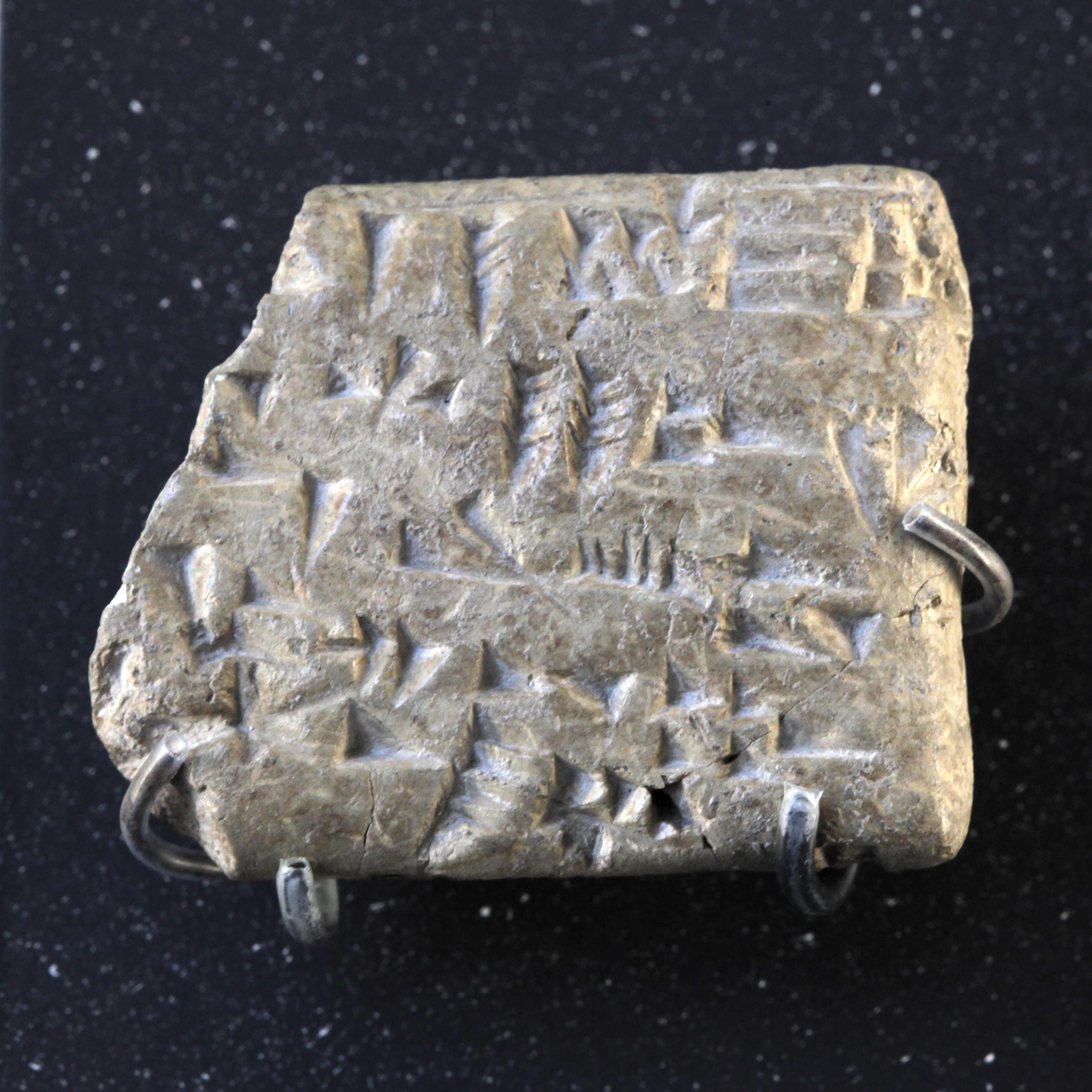
Fragmentary Ugaritic alphabet tablet from Ras Shamra, Late Bronze Age II (c. 1400–1200 BCE), Louvre AO 19992 / RS 10.087; seven letters are missing. Evidence for local scribal learning, not every culture of the period
Epoche
An archaeological period around 1600–1200 BCE in much of the Near East, with international diplomacy, exchange and religious diversity; its endpoints vary by region.
Namensvarianten: Late Bronze Age
Kontext und Quellen →

Modern conceptual illustration of receding water, two survivors, a boat, stones and a mountain evoking Deucalion; not an archaeological photograph, identified historical vessel or documented location
Entität
Mythic people arising from stones after the flood of Deucalion and Pyrrha. Pindar names the stone-born lineage; Ovid and Pseudo-Apollodorus recount stone throwing in different forms.
Namensvarianten: stone-born people, people from stones
Kontext und Quellen →

Contemporary imaginative composition placing a ram and deer beside a symbolic altar to introduce three distinct narratives; it depicts neither a single historical event nor an archaeological artifact
Entität
An animal or offering replacing a person threatened with slaughter in a narrative. Genesis specifies a ram, Qur’an 37 a “great sacrifice” without naming the animal, and Euripides a deer. The parallel alone does not prove borrowing.
Namensvarianten: Sacrificial substitution
Kontext und Quellen →
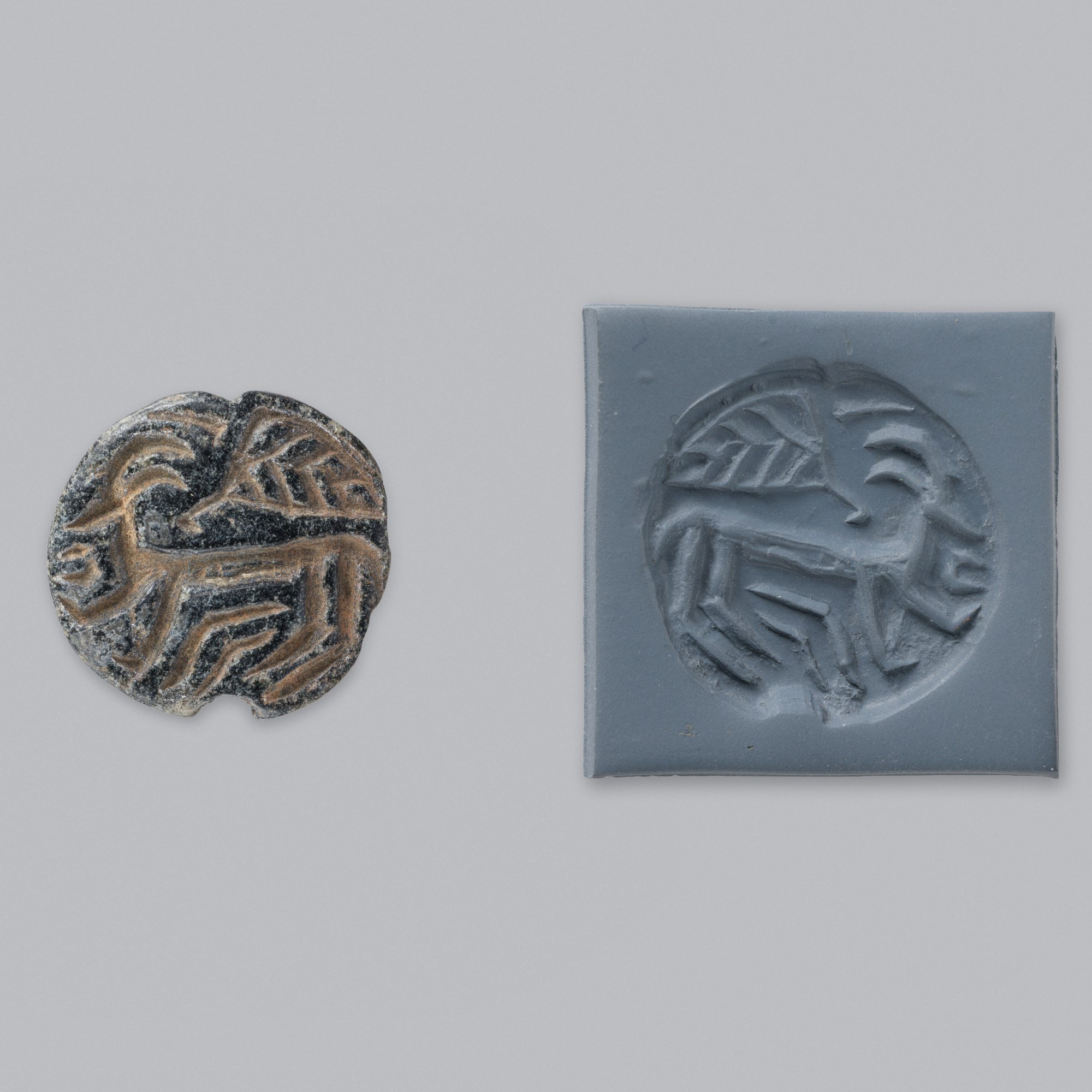
Sixth–fifth-millennium BCE stamp seal attributed to Syria or Anatolia, beside a modern museum-made impression. Square derivative of the original museum photograph, without invented archaeological content. Accession 1984.175.13
Entität
A small engraved implement pressed into soft clay to leave an impression, unlike a rolled cylinder seal. Its uses are investigated through sealings, find contexts and wear; imagery alone establishes neither writing nor belief.
Namensvarianten: stamp seal, stamp seals
Kontext und Quellen →
Person
Hebrew Bible and ancient Near Eastern law scholar at John Jay College, New York.
Namensvarianten: Stephen C. Russell
Kontext und Quellen →
Person
Scholar of early Christian Mary traditions and late-antique Near Eastern religion.
Namensvarianten: Stephen J. Shoemaker
Kontext und Quellen →
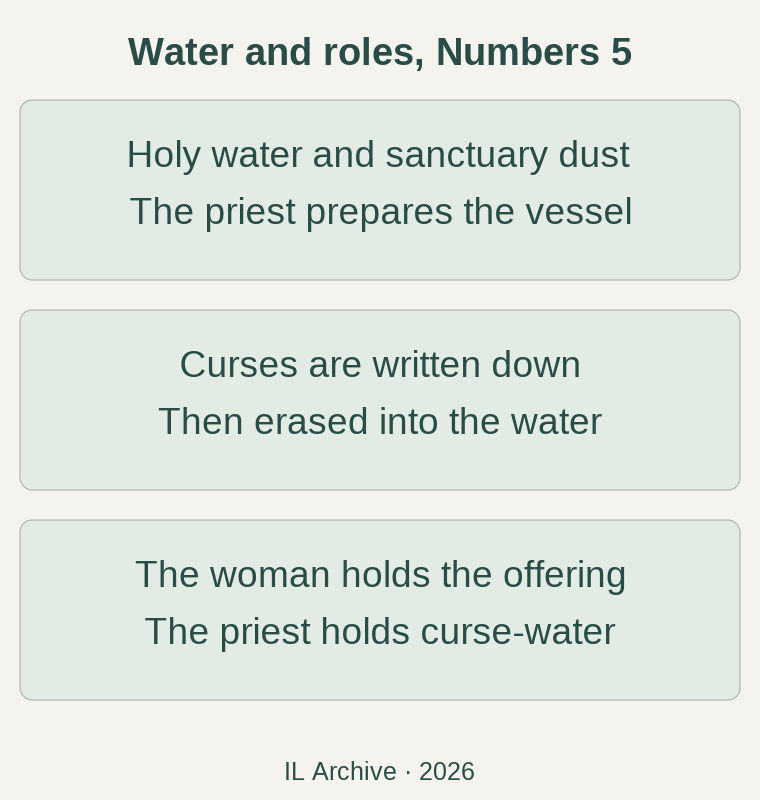
Modern diagram explaining roles in the specified source, not portraits or an ancient tablet. Row order explains relationships rather than reconstructing every ritual step
Entität
Narrative worship tent whose floor supplies dust in Numbers 5.
Namensvarianten: Tabernacle in the biblical narrative
Kontext und Quellen →
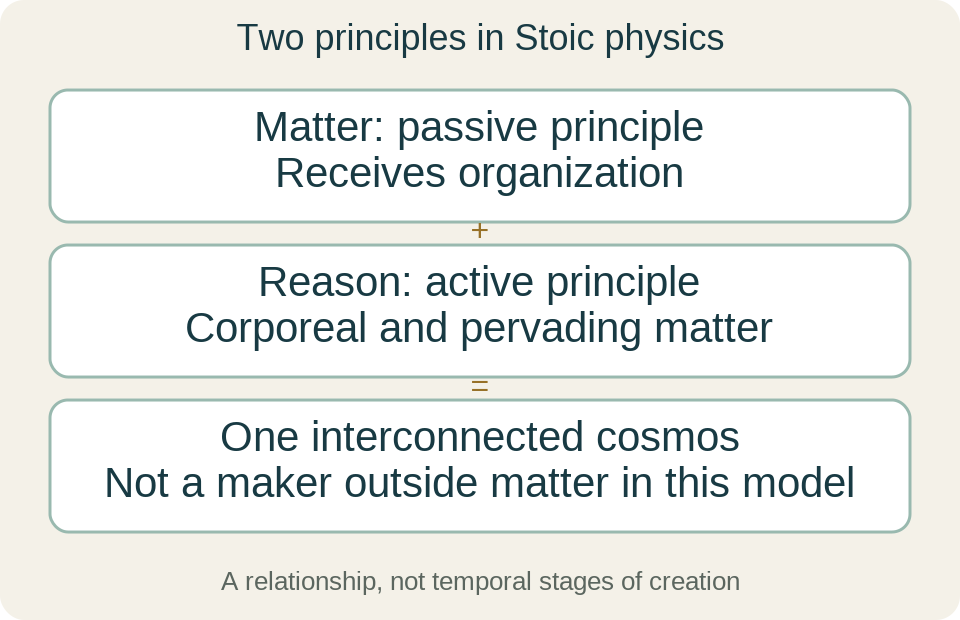
Modern diagram distinguishing active and passive principles within Stoic physics. The arrangement explains their relation, not temporal succession or a humanlike god
Entität
Philosophical school founded in Athens around 300 BCE, combining logic, physics and ethics.
Namensvarianten: Stoicism
Kontext und Quellen →
Person
Islamic-history scholar who proposed a comparative route for Mary and palm narratives.
Namensvarianten: Suleiman A. Mourad
Kontext und Quellen →
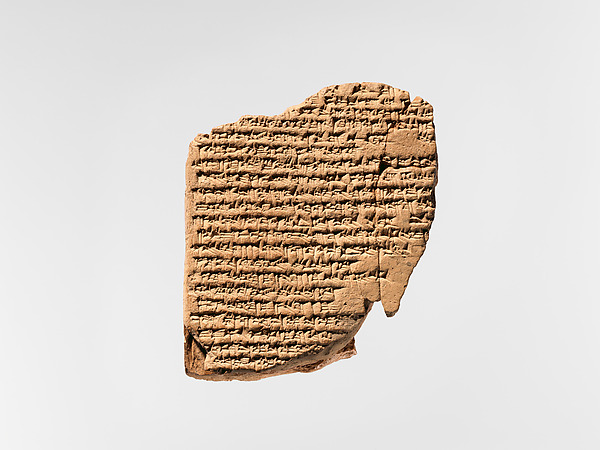
Tablet of a Sumerian lament with Akkadian translations of many lines, about the second–first centuries BCE; Met 86.11.286a. A late witness to the language’s continued scribal and ritual use
Entität
Ancient language of southern Mesopotamia, clearly attested in third-millennium BCE texts and maintained in learning and ritual after its spoken use declined.
Namensvarianten: Sumerian language, Sumerian
Kontext und Quellen →
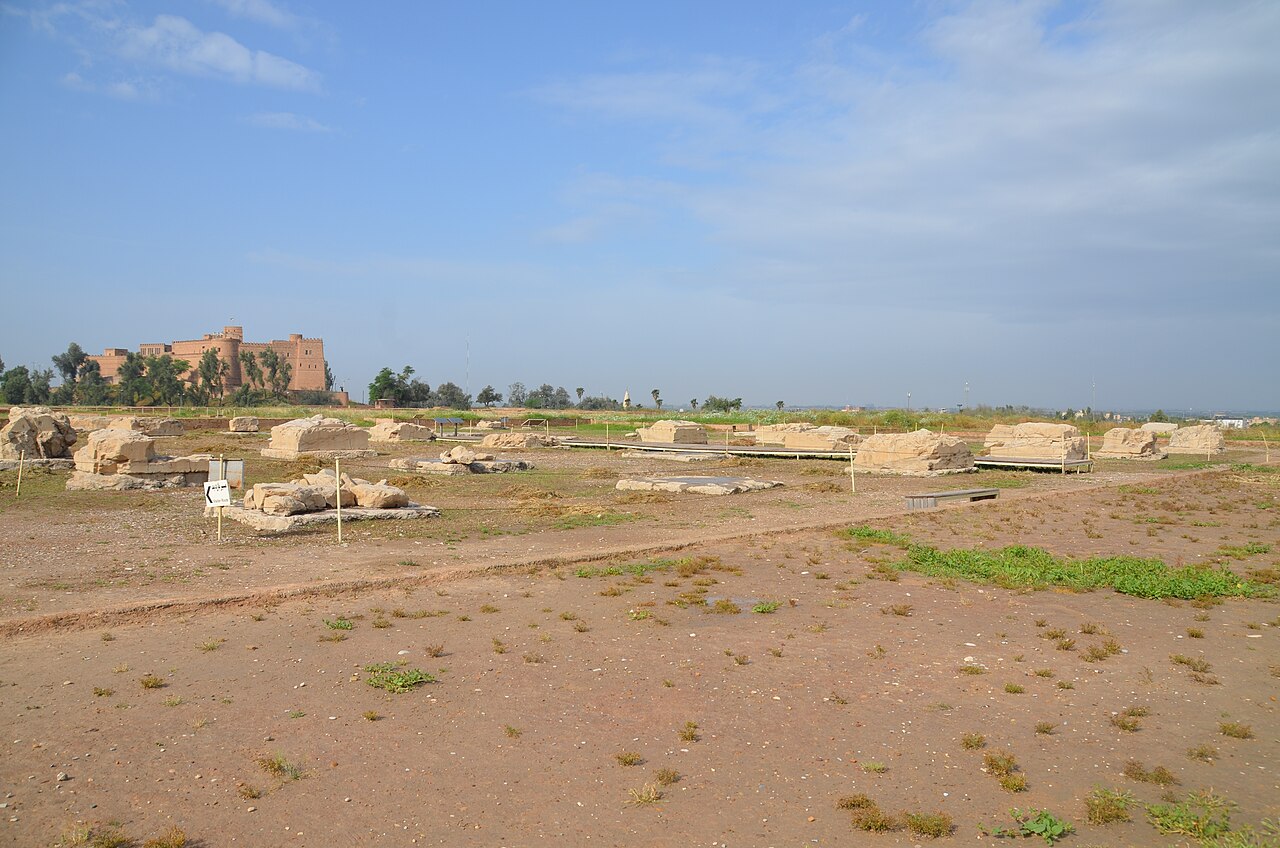
Remains of the Apadana hall of Darius’s palace at Susa, at Shush in southwestern Iran, 18 April 2019. The column bases and archaeological remains appear in the foreground
Stätte
Susa is an archaeological city at Shush in southwestern present-day Iran
Namensvarianten: Susa, Shush
Kontext und Quellen →
Person
Egyptologist working on religion and tales, including a major Two Brothers study and Egyptian/biblical narrative comparisons.
Namensvarianten: Susan Tower Hollis, Susan Hollis
Kontext und Quellen →
Person
Norwegian New Testament and Revelation scholar who compared Gog and Magog in Ezekiel and Revelation.
Namensvarianten: Sverre Bøe
Kontext und Quellen →
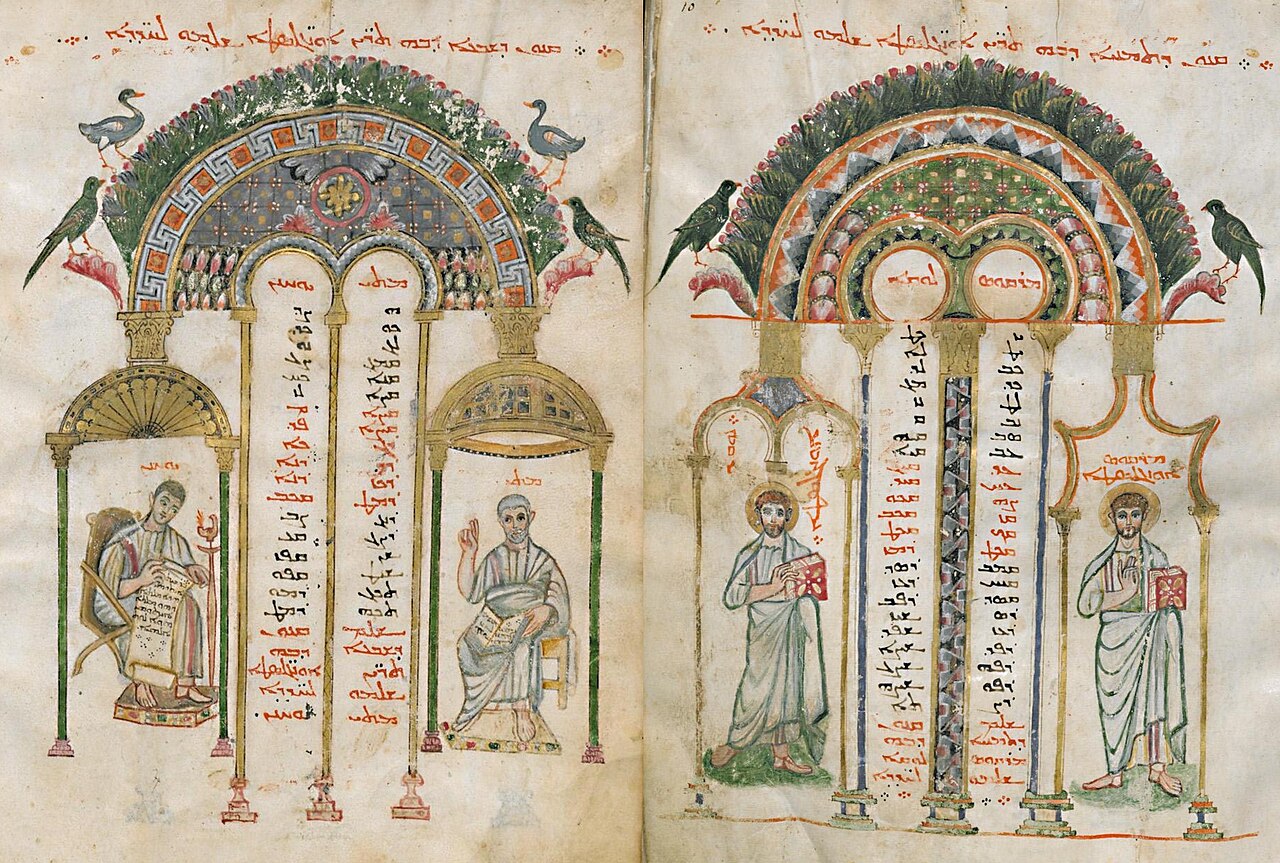
Folios 9v and 10r of the Rabbula Gospels, a sixth-century Syriac manuscript: canon tables and portraits of the Evangelists. An example of Syriac Christian book culture, rather than the language’s entire history
Entität
An Aramaic literary language rooted in Edessa, first attested in non-Christian inscriptions and later prominent in Christian writing, scholarship, translation and liturgy.
Namensvarianten: Syriac
Kontext und Quellen →
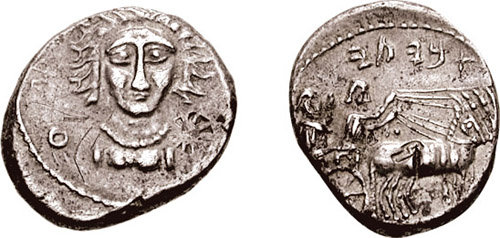
Silver didrachm from Bambyce, later Hierapolis, about 340–332 BCE; CNG Triton VIII lot 518. Female bust, Aramaic legends and chariot scene; not a depiction of the flood sanctuary
Stätte
Ancient northern Syrian city, also called Bambyce, associated with the sanctuary described in On the Syrian Goddess.
Namensvarianten: Syrian Hierapolis, Manbij, Hierapolis Bambyce, Bambyce, Manbij
Kontext und Quellen →

Modern AI-generated conceptual image evoking a heavenly gathering; not an ancient artefact or a documented depiction of the assembly in any particular text
Entität
“Bene elohim” is a Hebrew expression in Job and Genesis whose interpretation depends on context; it also appears in Qumran 4Q37 at Deuteronomy 32:8. It does not itself establish biological descent or a fixed divine roster.
Namensvarianten: bene elohim, bene ha-elohim, sons of God
Kontext und Quellen →
Person
Co-author with Raleigh Heth of a 2021 article on Isaac and Iphigenia; the published record gives only the initials T. E.
Namensvarianten: Kelley, T. E.
Kontext und Quellen →
Person
Takayoshi Oshima is an Assyriologist studying Babylonian literature and religion and their connections with the Hebrew Bible.
Namensvarianten: Takayoshi Oshima
Kontext und Quellen →