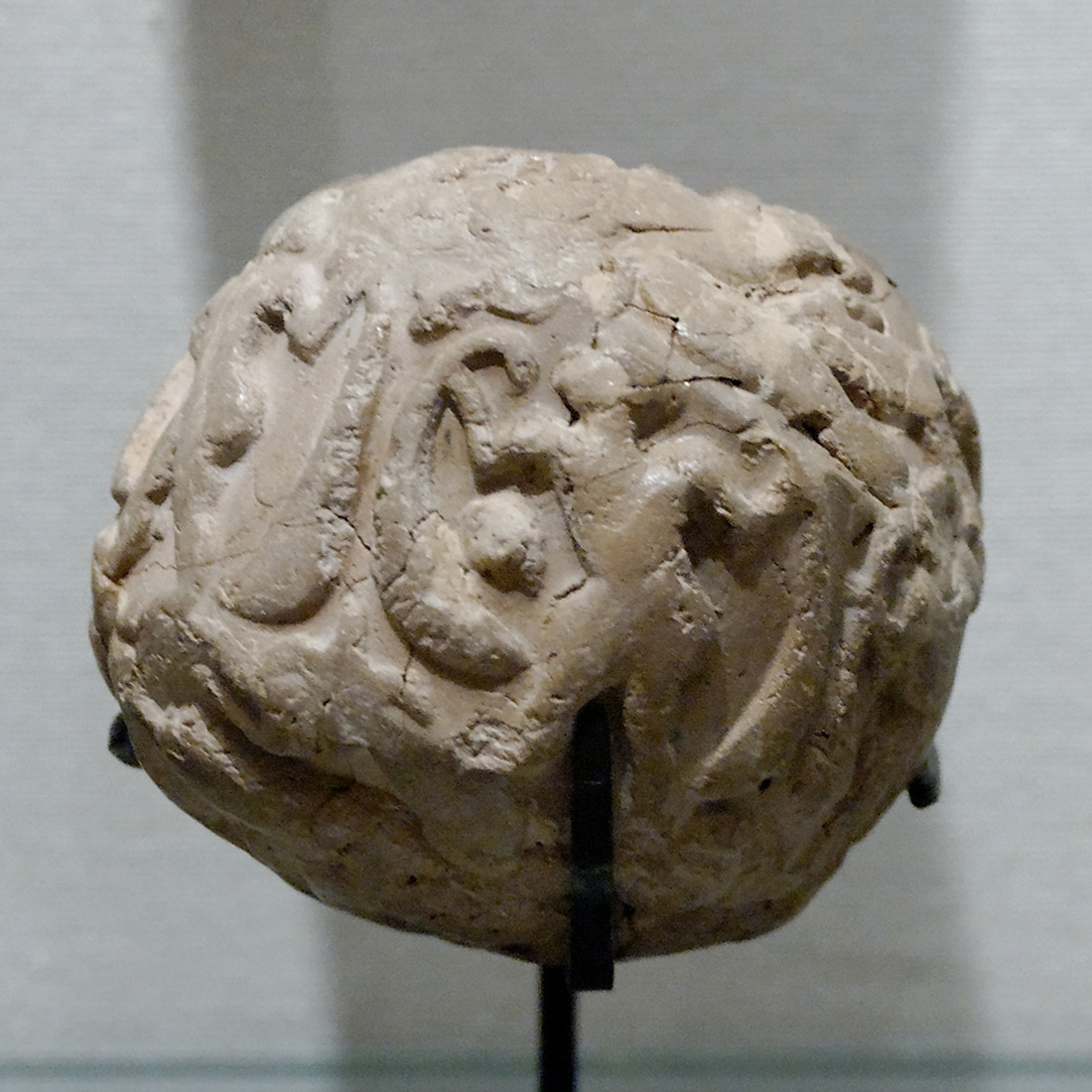
Cover crop: sealed clay envelope from Susa, Louvre Sb 1932 (museum date c. 3500–2900 BCE). Square crop of the original photograph; associated displayed tokens appear in the full photograph in the article
Entität
A hollow clay container used in early administration, sometimes enclosing counting tokens and carrying external seal impressions or marks. Distinct from solid sealings; it is not an established ancestor of all writing.
Namensvarianten: clay envelopes, clay envelope, hollow clay envelopes
Kontext und Quellen →
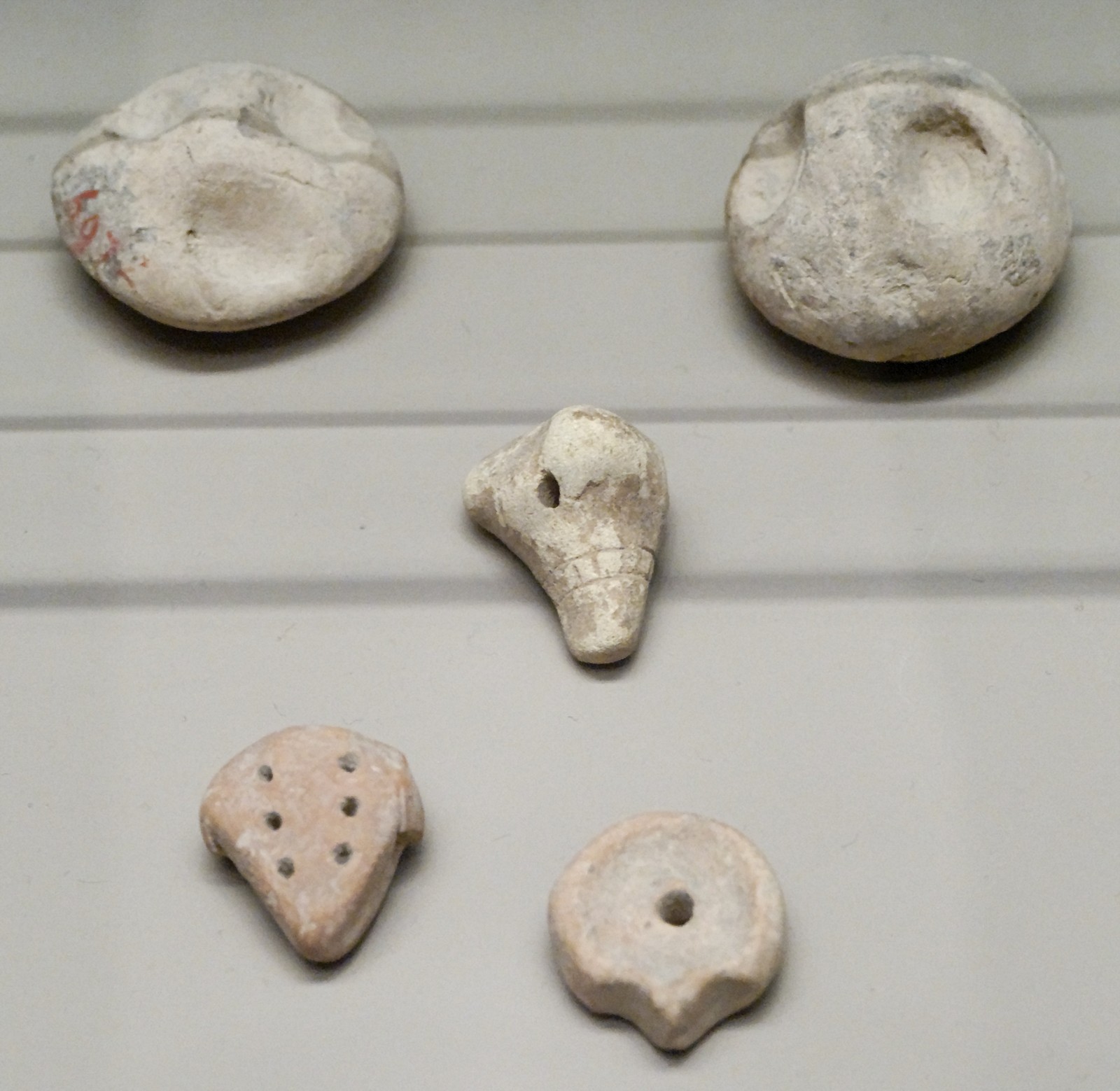
Five clay objects from Susa in the Louvre, assigned to the Uruk-period fourth millennium BCE (the photograph metadata lists SB 4966 among the group). Later examples, not the earliest Neolithic tokens or the clay envelopes discussed here
Entität
Small shaped clay objects from West Asia since the Neolithic; some served counting or recording, but there is no evidence of one universal accounting function for all.
Namensvarianten: clay tokens, clay token
Kontext und Quellen →
Person
Scholar of Christian apocrypha who edited Greek and Syriac infancy traditions.
Namensvarianten: Tony Burke
Kontext und Quellen →
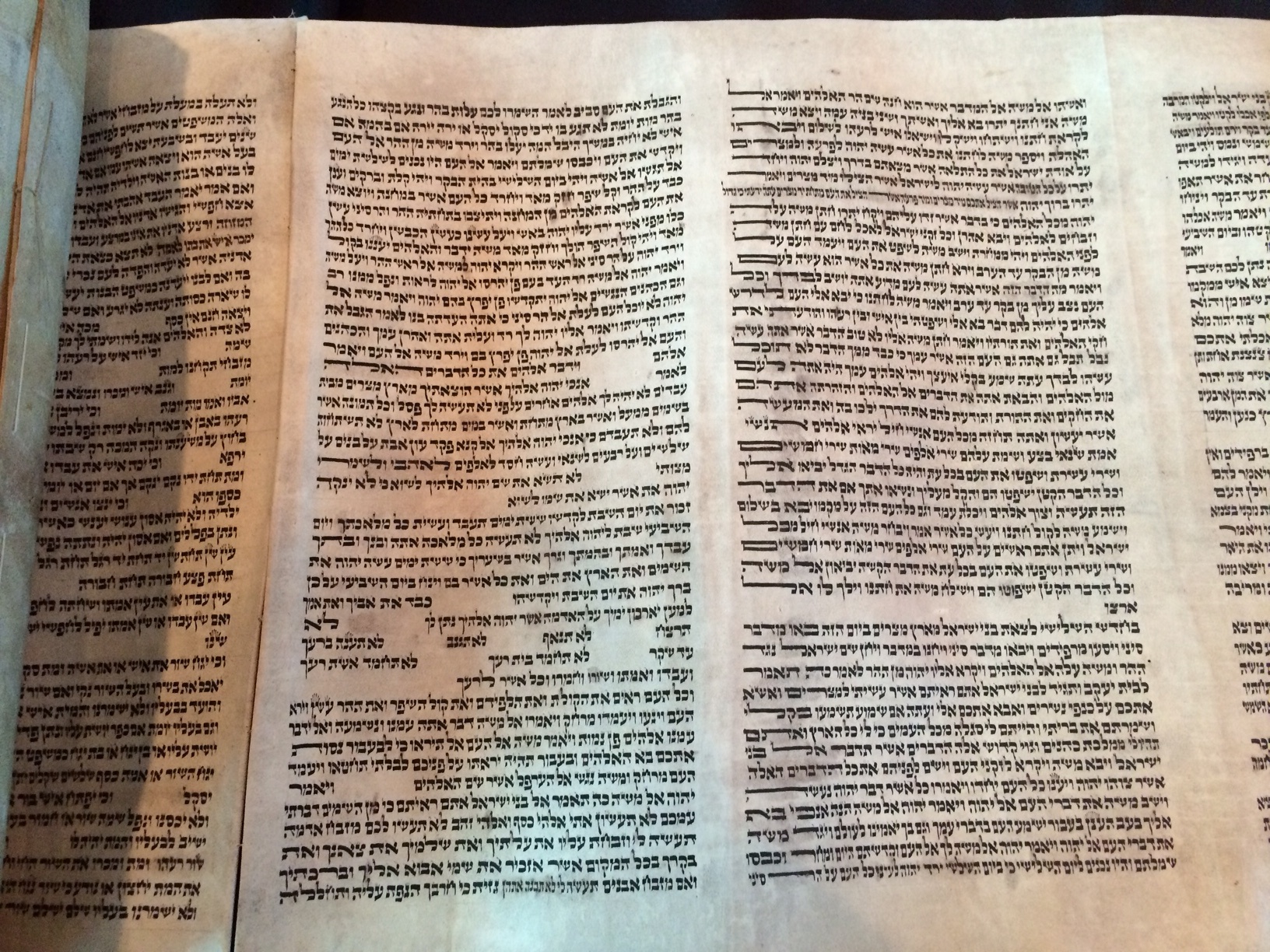
A Torah scroll partly unrolled for reading, photographed by Jacob Gucker on 11 February 2016. It illustrates the scroll format and Hebrew writing; the file page does not document this copy’s date or location. It is not a dated witness to the books’ composition
Entität
The first five books of the Jewish and Christian Bible: Genesis, Exodus, Leviticus, Numbers and Deuteronomy. They combine narrative and law from creation to Moses’ death; in Jewish usage, “Torah” can also encompass a wider body of authoritative teaching.
Namensvarianten: Torah, Pentateuch, five books of Moses
Kontext und Quellen →
Person
Norwegian scholar of the New Testament and Philo of Alexandria, professor emeritus since 2014.
Namensvarianten: Torrey Seland
Kontext und Quellen →
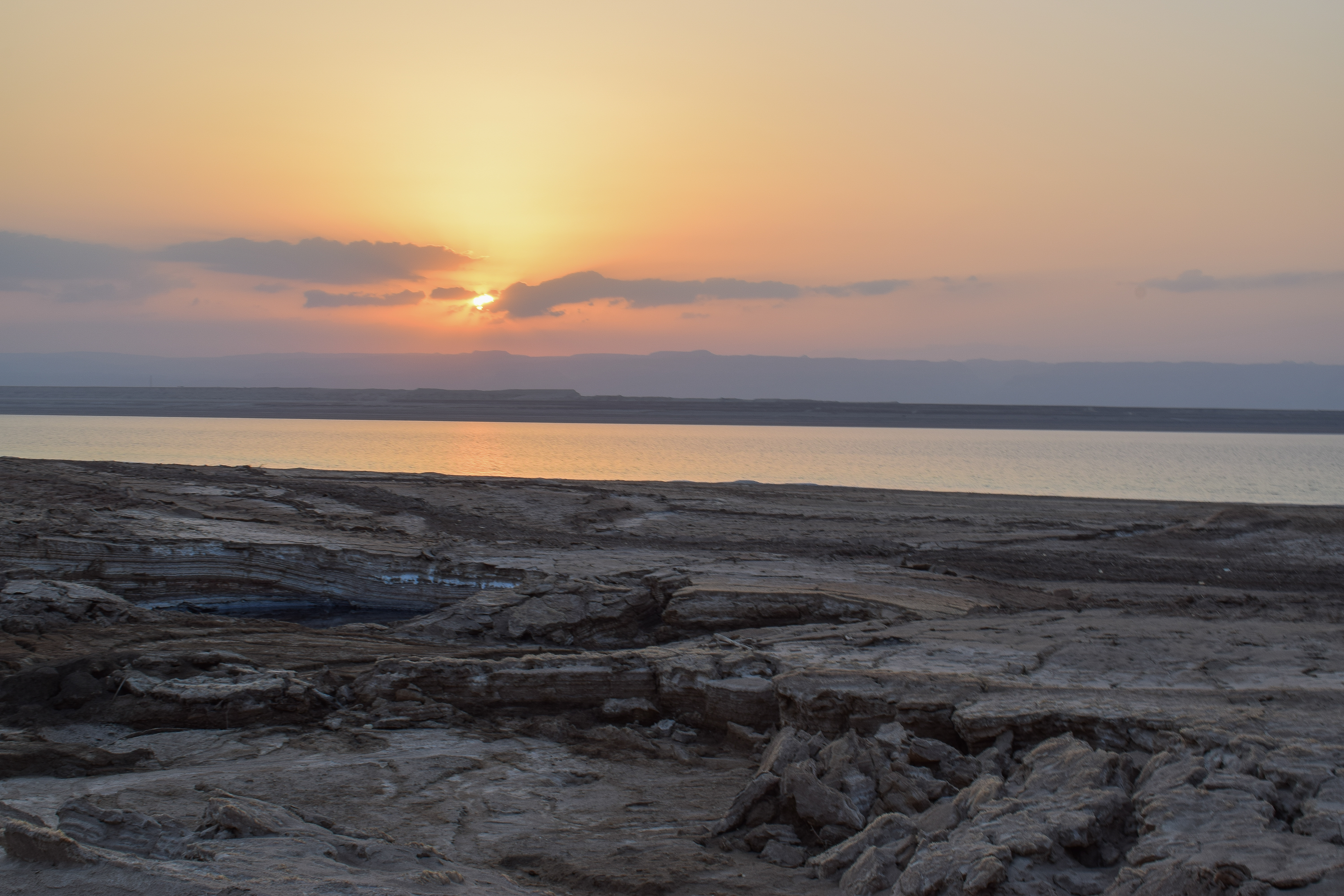
Sunset over the Dead Sea from its eastern shore at Ghor Al-Haditha, Jordan, on 26 October 2018. The Judean Mountains appear on the western horizon. The photograph illustrates the lake’s geography; the Qumran manuscript caves lie elsewhere on its western side
Stätte
The Dead Sea is a salt lake in the Jordan Rift Valley, near sites where ancient manuscripts were found
Namensvarianten: Dead Sea
Kontext und Quellen →
Person
Bar-Ilan Hebrew Bible scholar studying prophecy, temples and Judah in ancient Near Eastern contexts.
Namensvarianten: Tova Ganzel
Kontext und Quellen →
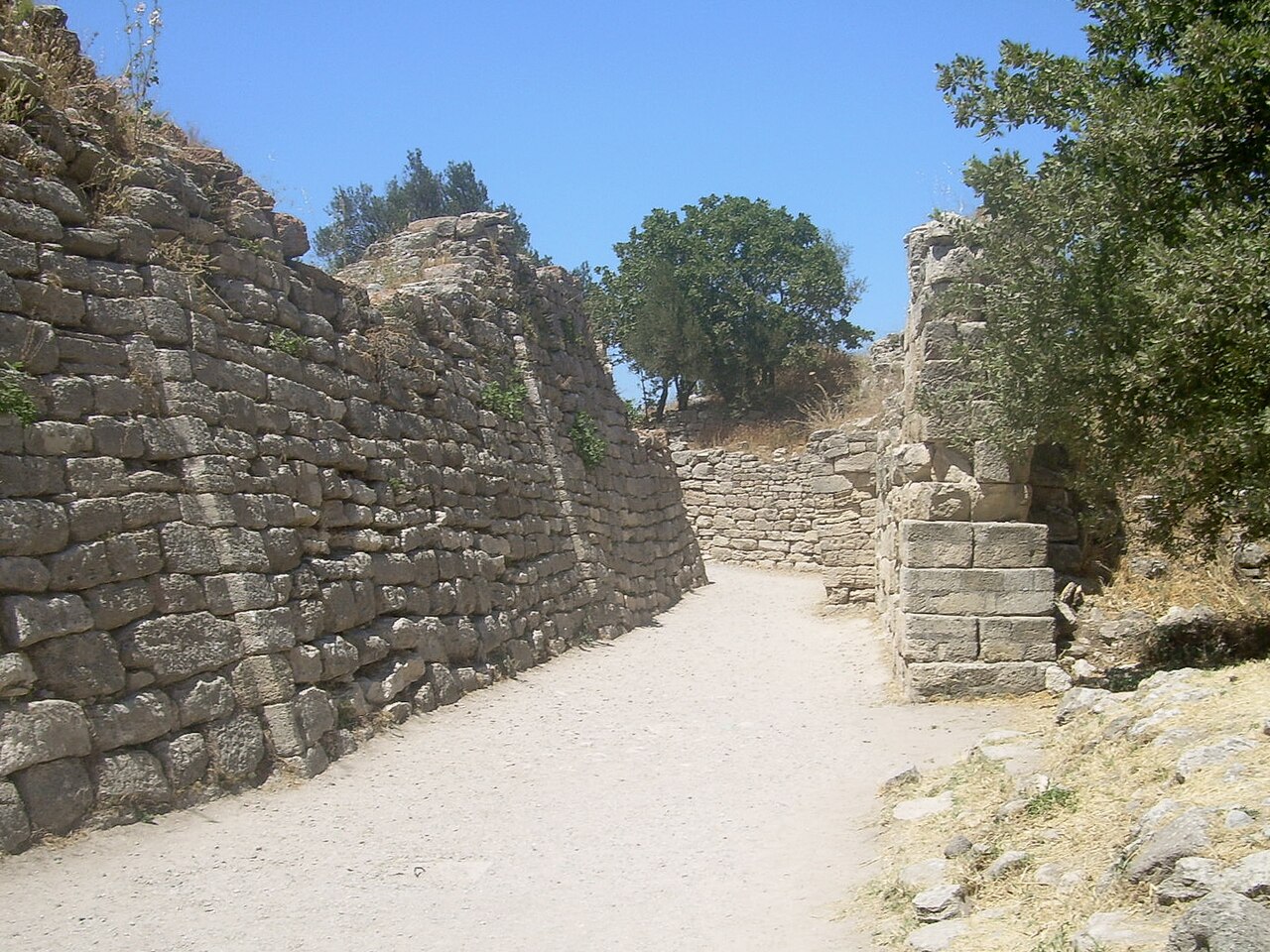
Archaeological walls at Troy/Hisarlik in present-day Turkey, photographed in 2012. The site’s remains alone do not establish the Iliad’s detailed account of the Trojan War
Stätte
Archaeological site in northwestern Turkey associated with Troy in Greek tradition.
Namensvarianten: Troy / Hisarlık
Kontext und Quellen →
Person
Tryggve N. D. Mettinger (1940–2023) was a Swedish Old Testament scholar and professor of Old Testament exegesis at Lund from 1978 to 2003.
Namensvarianten: Tryggve N. D. Mettinger
Kontext und Quellen →
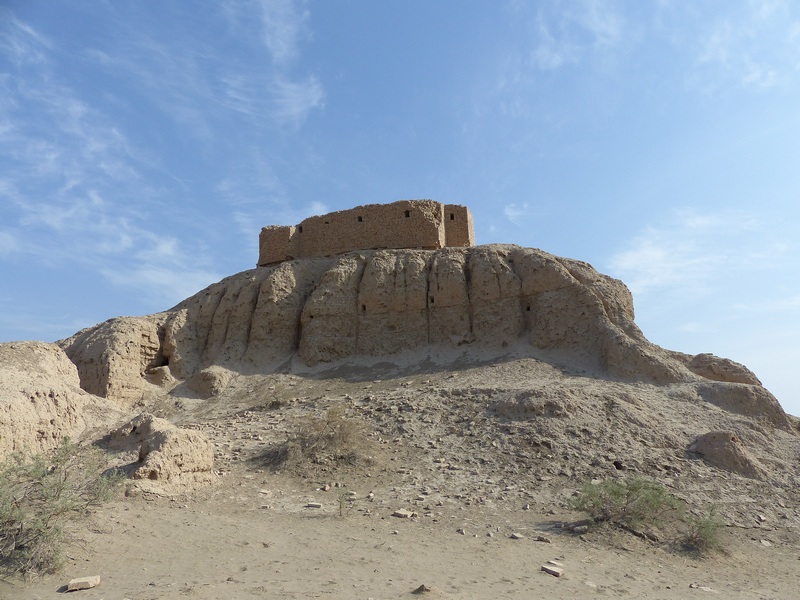
View of the archaeological site of Nippur, Iraq, photographed by Marjon Verburg. Context for the area associated with Tummal, not an identification of Tummal or Ninlil’s temple; no date is assigned to the visible building
Stätte
Cult centre of Ninlil in the Nippur region, not securely located; remembered in a text about successive royal restorations.
Namensvarianten: Tummal
Kontext und Quellen →
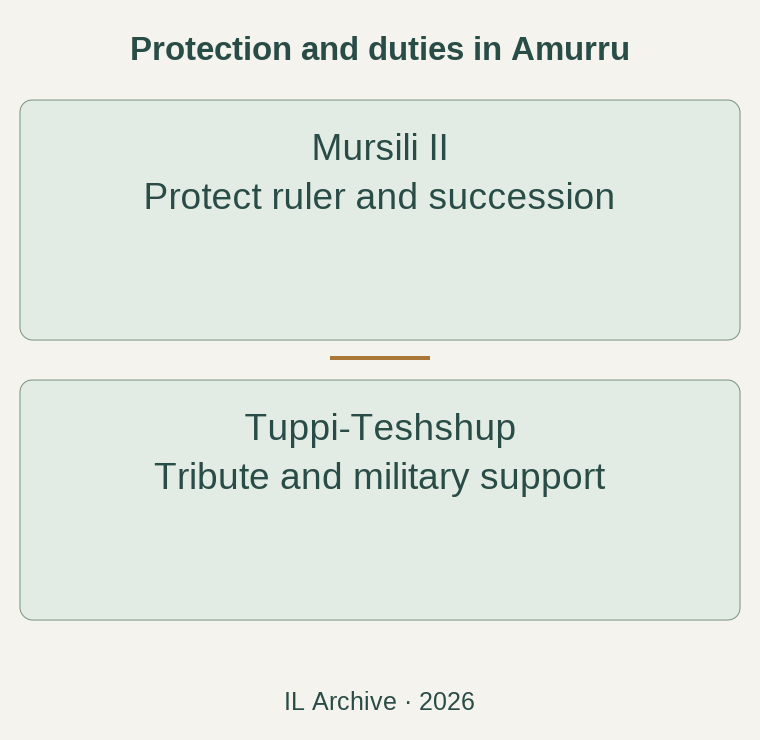
Modern diagram explaining the specified relationship in the witness; not an ancient tablet or portrait, or a boundary map
Person
Ruler of Amurru in the late fourteenth century BCE and party to Mursili II’s treaty.
Namensvarianten: Tuppi-Teshshup
Kontext und Quellen →
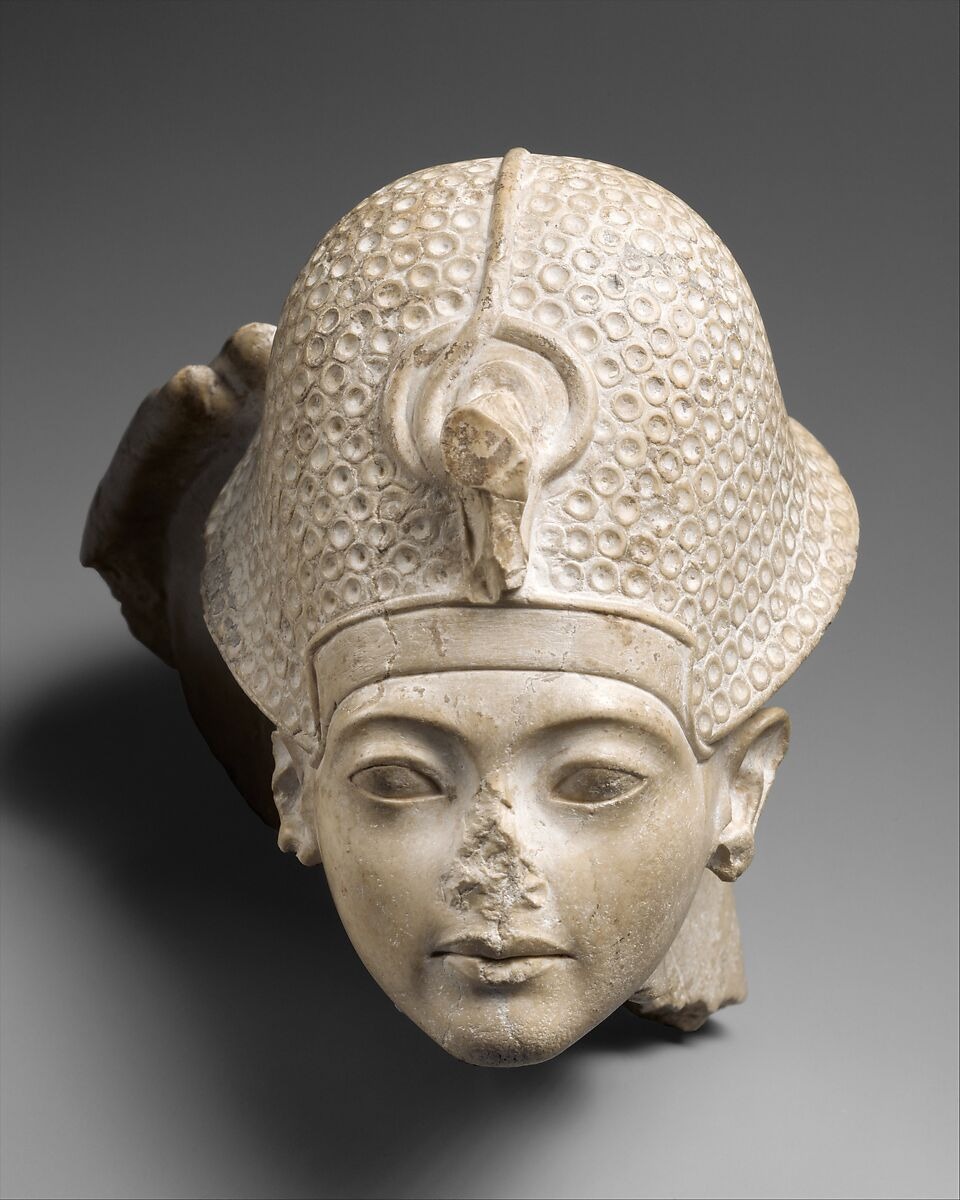
Tutankhamun’s head and remains of Amun’s hand on the crown, limestone, Dynasty 18, The Met 50.6. Fragment of a statue group, not a complete Amun statue; context for renewed royal relations with Amun. Uncropped display copy
Person
Late Eighteenth-Dynasty Egyptian king, originally Tutankhaten, later Tutankhamun as official patronage of Amun resumed. Famous for tomb KV62; aspects of his parentage and death are debated.
Namensvarianten: Tutankhamun, Tutankhamen, Tutankhaten, Nebkheperure
Kontext und Quellen →
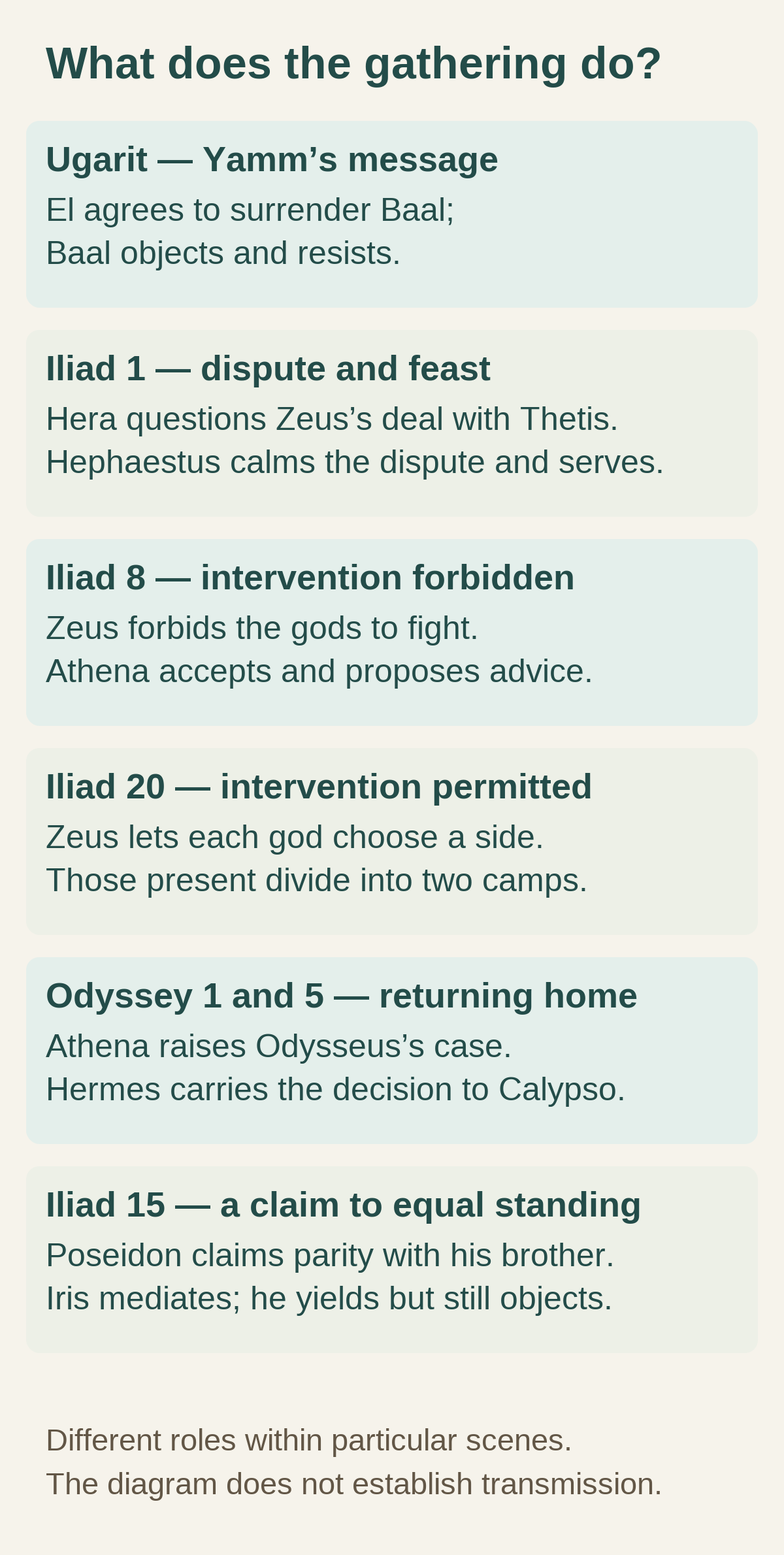
Modern explanatory diagram comparing functions of particular Ugaritic, Iliadic and Odyssean scenes: message, dispute and feast, forbidding or permitting intervention, and a return decision. A tool for reading narratives, rather than independent evidence of transmission
Entität
A way to analyse a recurring assembly scene in narrative, while its purpose, speakers and decision vary.
Namensvarianten: divine assembly type-scene
Kontext und Quellen →

Contemporary digital interpretation of Typhon inspired by Greek literary descriptions of serpent heads, fire, and volcanoes; not an ancient artifact or a historical scene
Entität
Typhon (Typhoeus), a serpentine adversary of Zeus in Greek myth; his defeat and punishment vary across Hesiod, Pindar, and the later Library.
Namensvarianten: Typhon, Typhoeus
Kontext und Quellen →
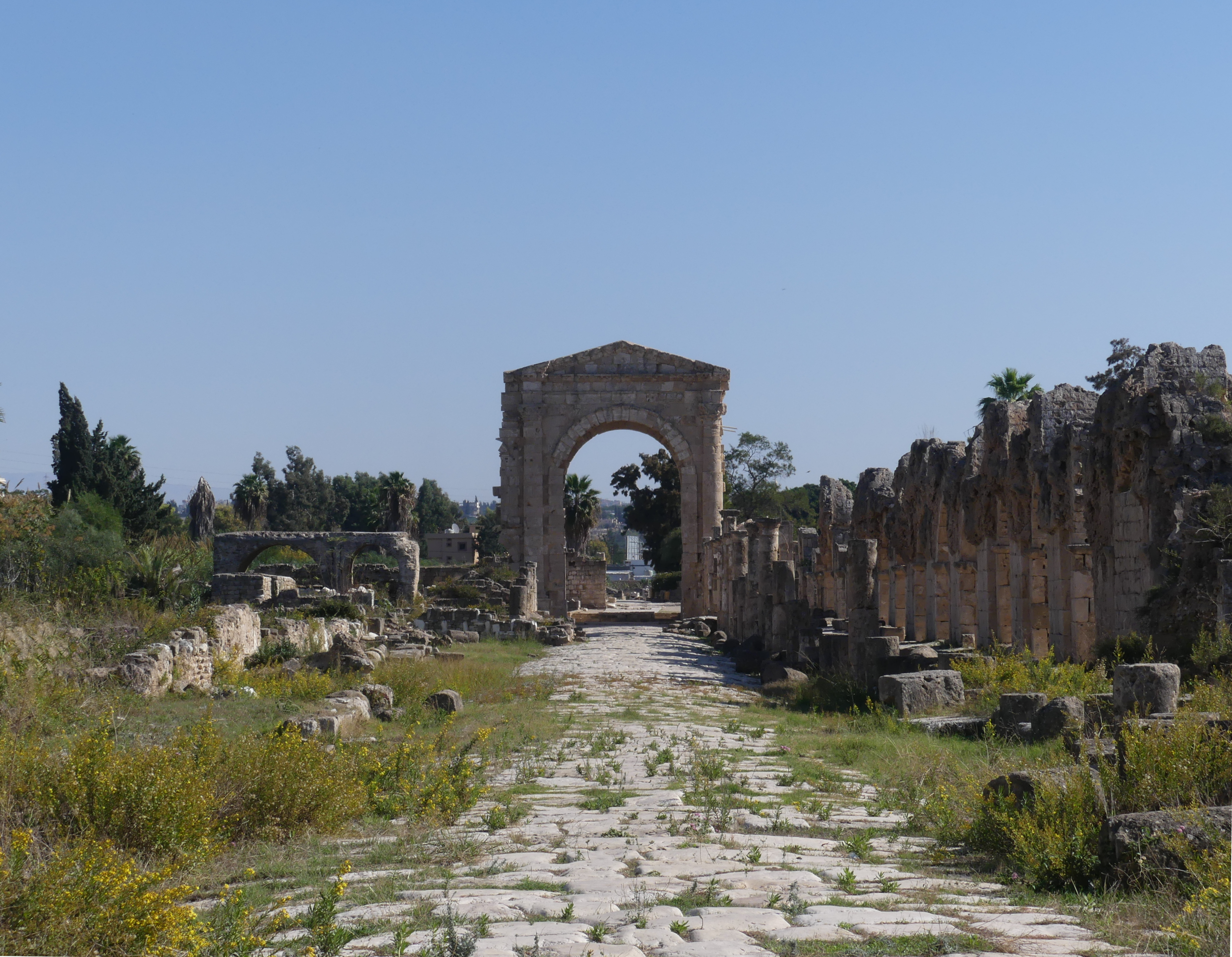
The restored Roman triumphal arch at Al Bass in Tyre, Lebanon, with aqueduct remains on its right. The arch dates to the second century CE. This photograph, taken on 19 November 2019, shows a later phase in the Phoenician city’s history
Stätte
Tyre is a city on the coast of present-day southern Lebanon and an important ancient Phoenician center
Namensvarianten: Tyre
Kontext und Quellen →
Person
Assyriologist and scholar of Mesopotamian religion, emeritus professor at Brandeis University.
Namensvarianten: Tzvi Abusch
Kontext und Quellen →
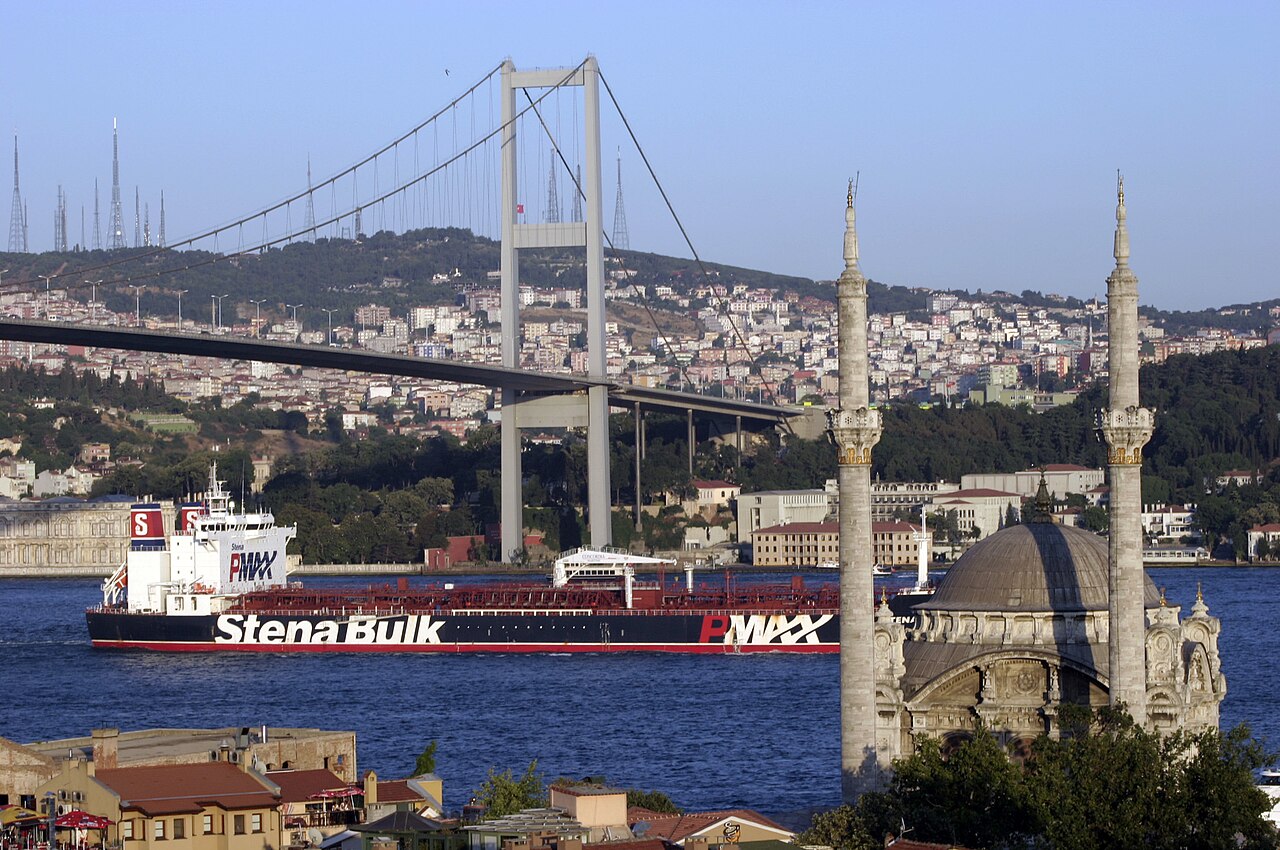
Ortaköy Mosque and the Bosphorus Bridge in Istanbul, Turkey, June 2008. A modern view of the strait and the bridge joining the city’s European and Asian shores
Stätte
Turkey is a modern country including Anatolia and territory in southeastern Europe
Namensvarianten: Turkey, Türkiye
Kontext und Quellen →
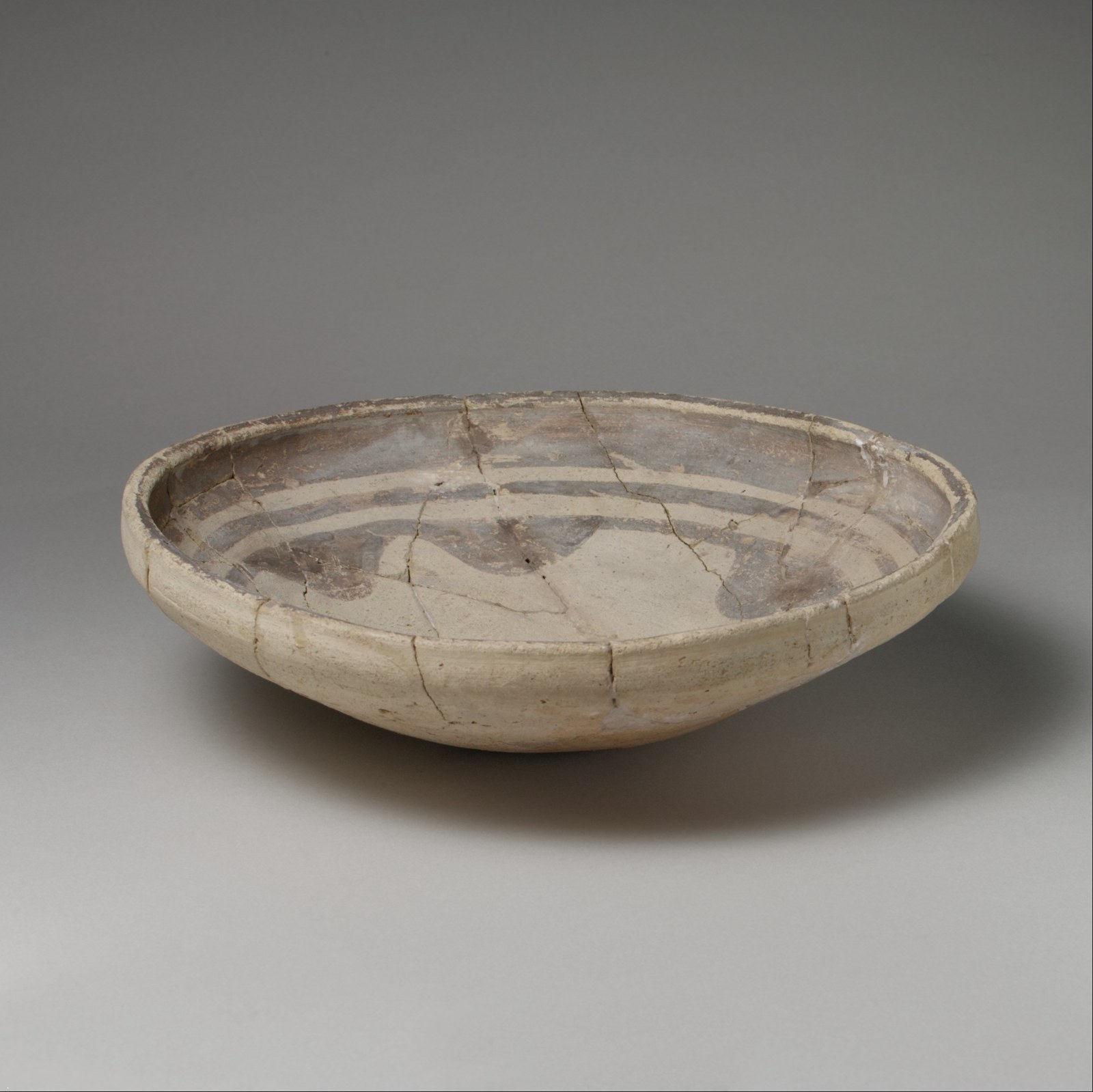
Ubaid bowl from Eridu cemetery, grave 136; mid-sixth–fifth millennium BCE. Metropolitan Museum of Art, 49.133.2. A specific archaeological object, not a representation of all Ubaid pottery
Epoche
An archaeological designation for material traditions associated with southern Mesopotamia and its regional connections. The broad southern sequence spans c. 6500–3800 BCE, with regional variation; the label alone identifies neither a people nor a language.
Namensvarianten: Ubaid culture, Ubaid period, Ubaid
Kontext und Quellen →
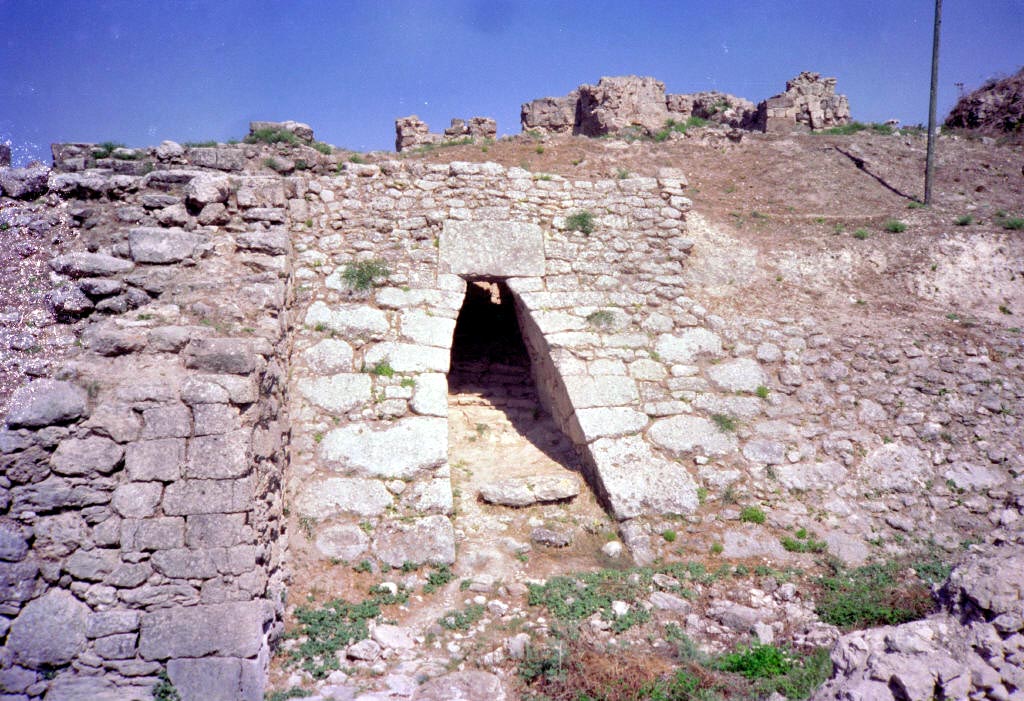
Entrance to Ugarit at Ras Shamra, near Latakia; photographed in August 1989. A modern photograph of the archaeological site, reused unchanged
Stätte
Ancient city and kingdom at Ras Shamra on the Syrian coast, flourishing between the fourteenth and early twelfth centuries BCE and preserving multilingual archives.
Namensvarianten: Ugarit, Ras Shamra
Kontext und Quellen →
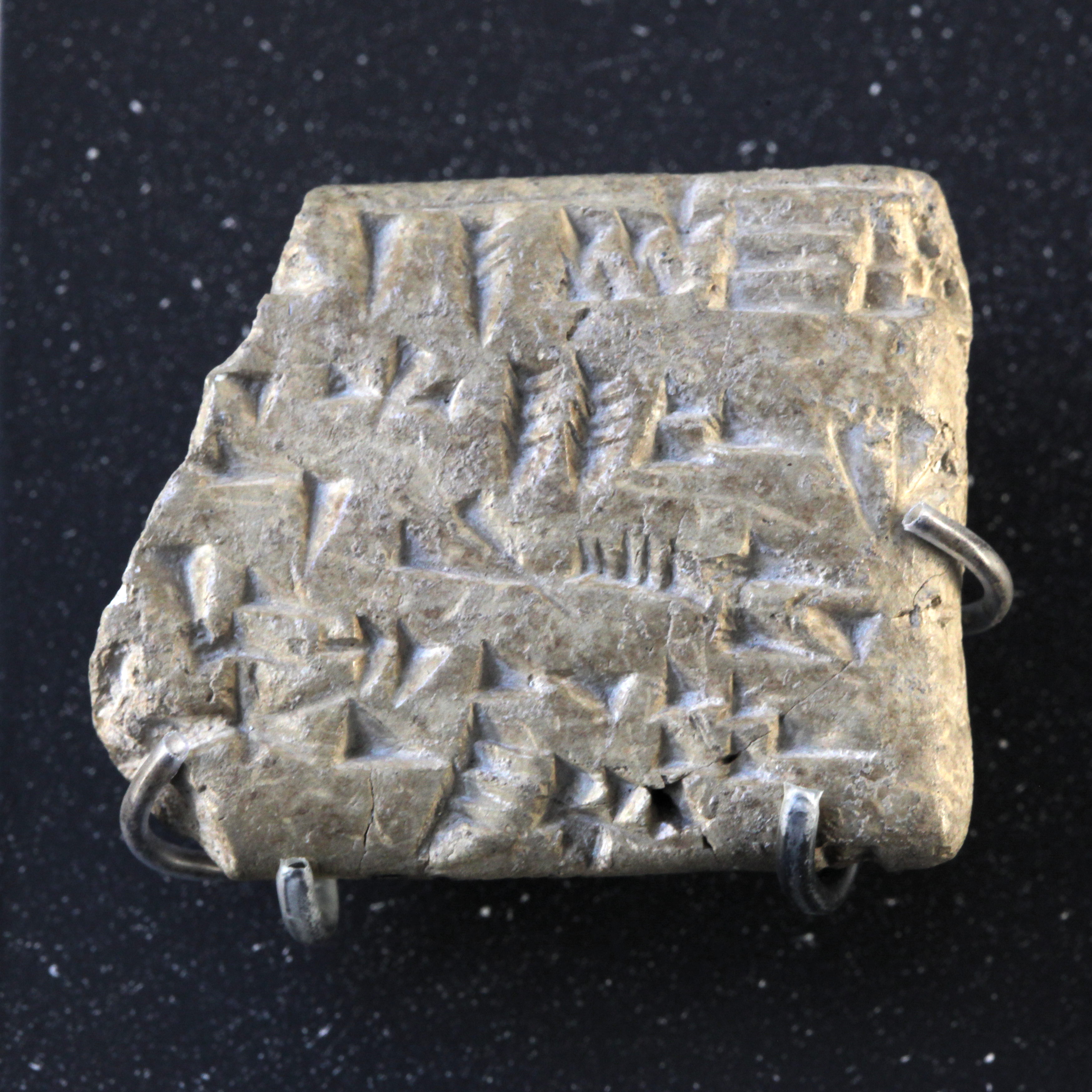
Fragment bearing the sequence of Ugaritic alphabetic letters, about 1400–1200 BCE in the Louvre catalogue; AO 19992. A photograph of an actual witness from Ugarit
Entität
Ancient Semitic language preserved in Ugarit’s tablets on the Syrian coast, from the fourteenth–twelfth centuries BCE, written in a cuneiform alphabet.
Namensvarianten: Ugaritic language, Ugaritic
Kontext und Quellen →
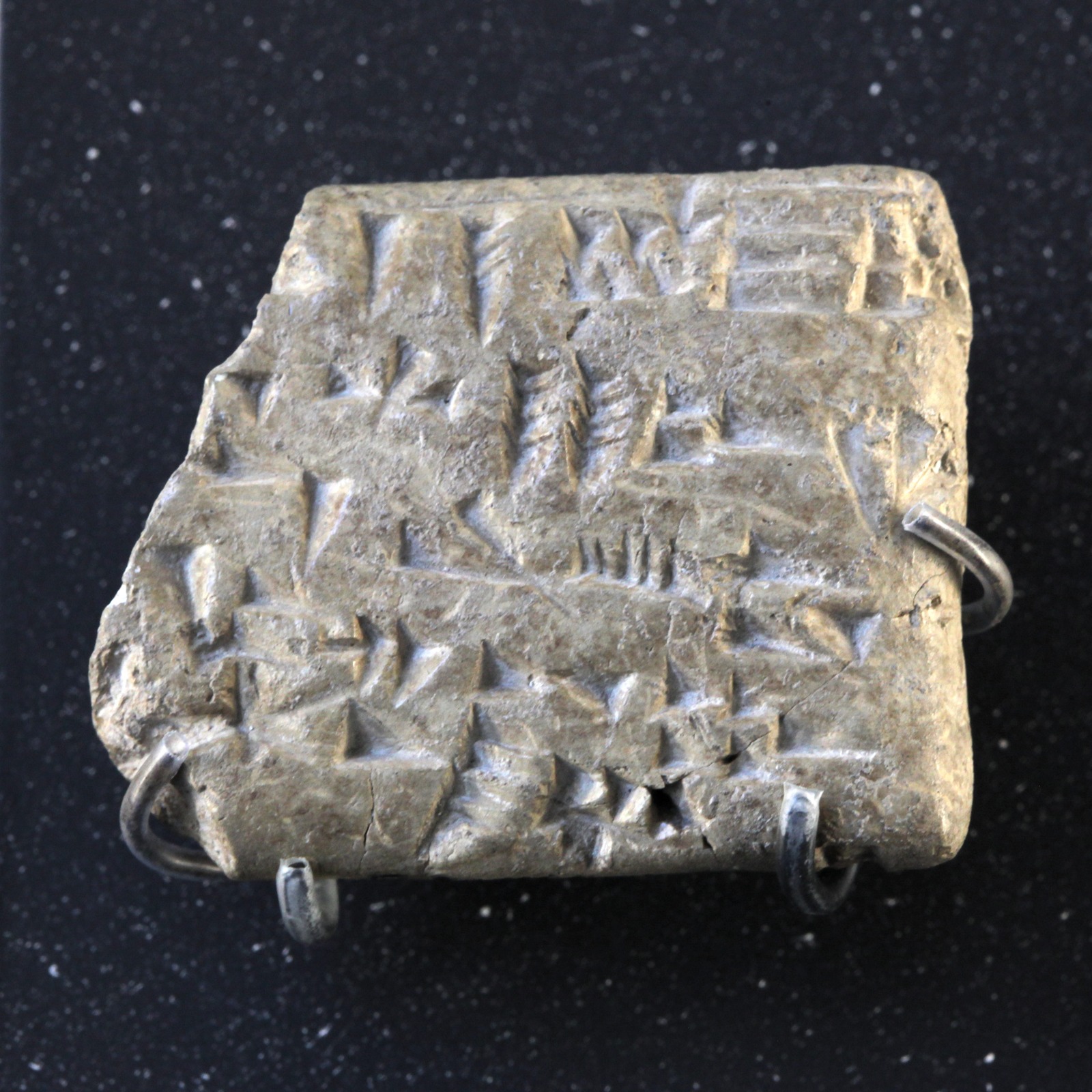
Incomplete Ugaritic abecedary tablet, Louvre AO 19992 / RS 10.087 (KTU 5.4). Found in 1938 with seven letters missing; museum date broadly 1400–1200 BCE. Not the complete abecedary found in 1948
Entität
Alphabetic cuneiform system of Late Bronze Age Ugarit, using thirty chiefly consonantal written signs, distinct from Akkadian syllabic cuneiform.
Namensvarianten: Ugaritic alphabet, alphabetic cuneiform, Ugaritic abjad
Kontext und Quellen →
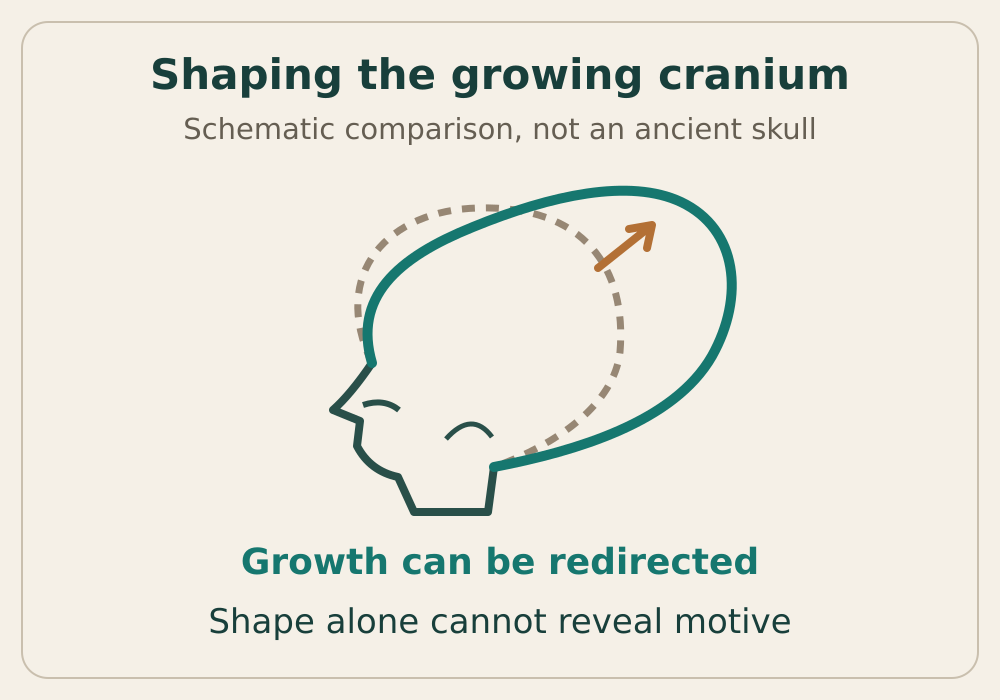
Modern explanatory adaptation of an earlier IL Archive graphic. A dashed outline is compared with a higher, backward-extended vault to illustrate a possible direction of change. Not anatomical measurements, an archaeological skull or one person’s growth stages; no procedure is depicted
Entität
A pattern of early-growth head shaping associated with circumferential constraint and an elevated or extended vault.
Namensvarianten: circumferential head shaping, circumferential modification
Kontext und Quellen →
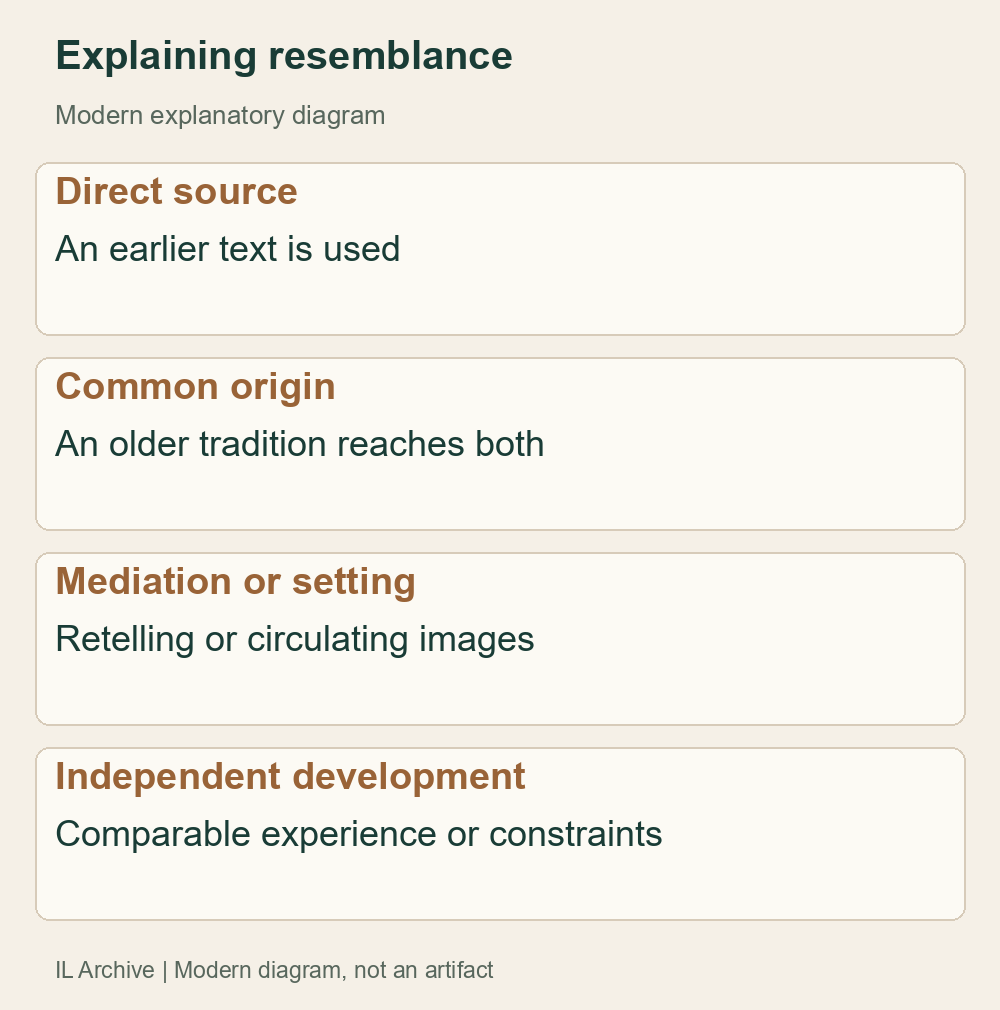
Alternatives can overlap; this diagram does not document a particular narrative’s route
Entität
Similar narrative or cultural elements arising in different settings without historical transmission of the specific feature between them; a testable explanation, not a default assumption when records of borrowing are absent.
Namensvarianten: Independent development
Kontext und Quellen →
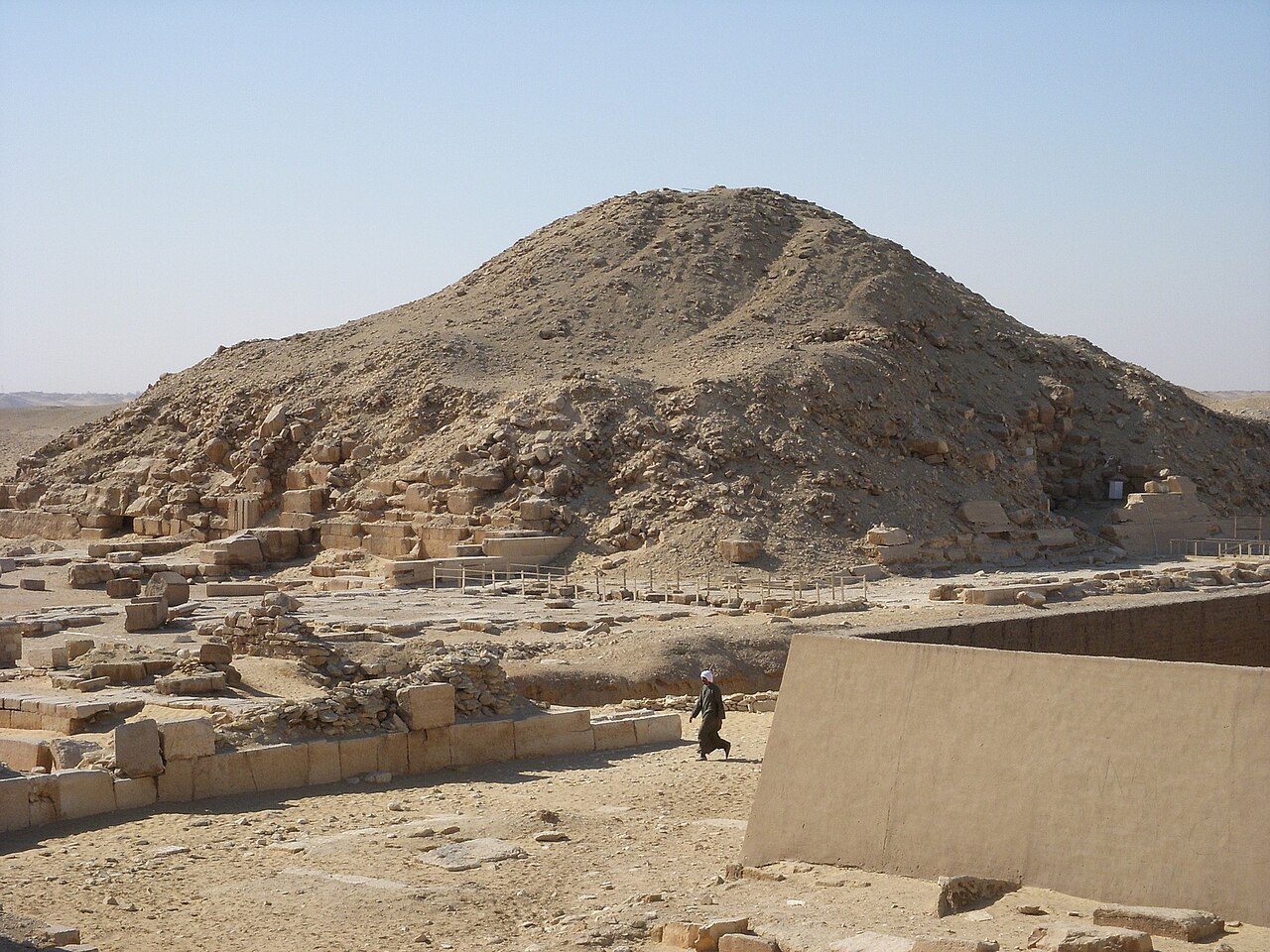
The remains of Unas’s pyramid at Saqqara, from the late Fifth Dynasty, around the twenty-fourth century BCE. Its interior preserves the earliest known Pyramid Texts inscribed in a royal pyramid. Photograph by Vincent Brown, 2017
Person
Unas was the last king of Egypt’s Fifth Dynasty, in the late third millennium BCE
Namensvarianten: Unas
Kontext und Quellen →
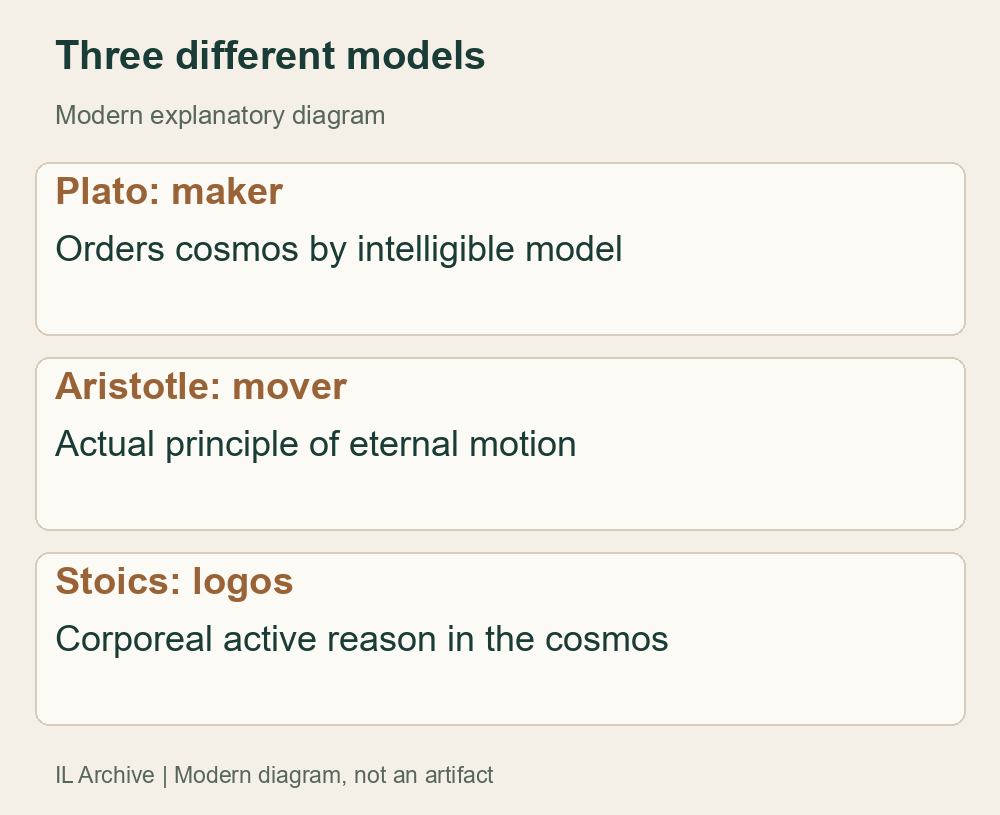
Modern explanatory diagram comparing Plato’s craftsman, Aristotle’s mover and the Stoic logos. The comparison distinguishes the roles of these principles; it is not an ancient object or a historical portrait
Entität
Aristotle’s principle explaining continuing cosmic motion while remaining itself unmoved and unchanged.
Namensvarianten: unmoved mover, unmoved first mover
Kontext und Quellen →
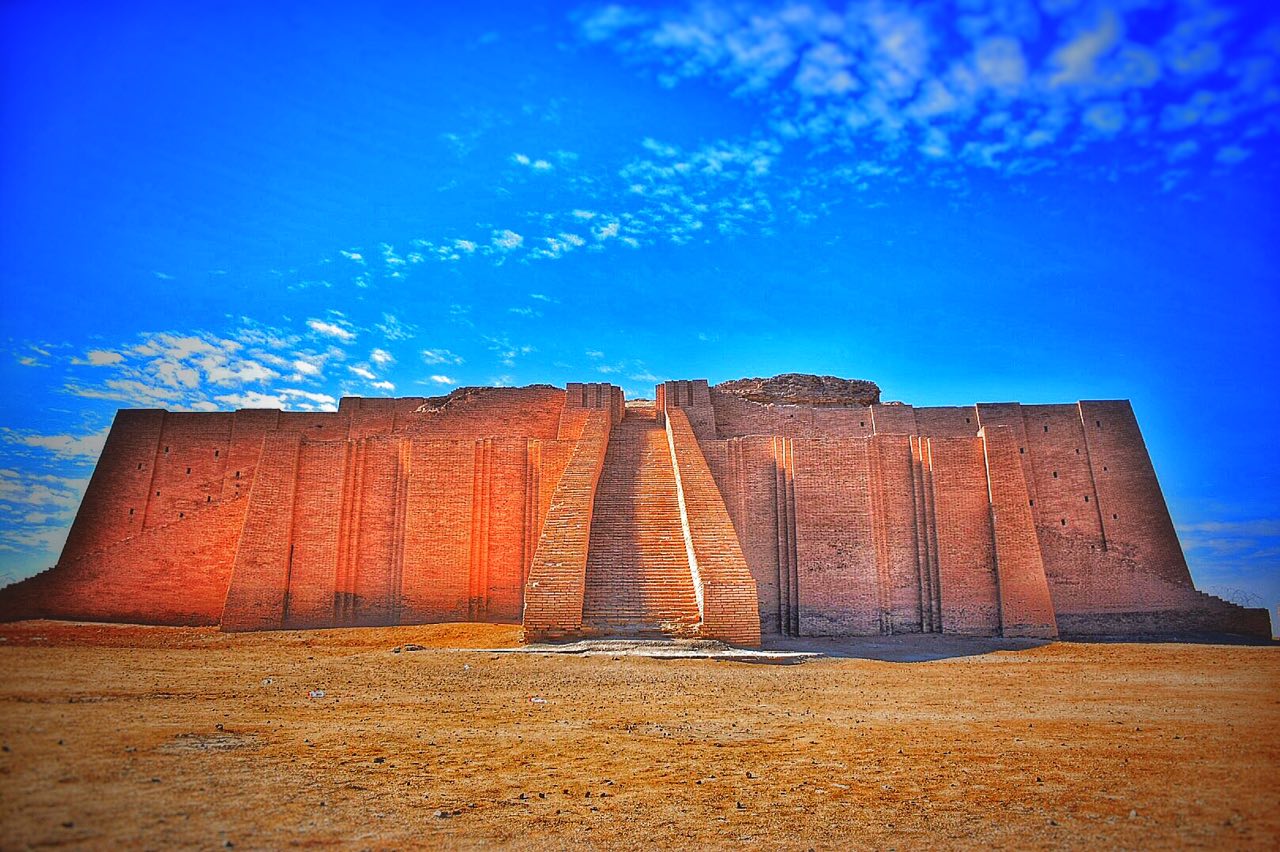
The ziggurat of Ur near Nasiriyah in southern Iraq. The original monument dates to about 2100 BCE; the visible façade and stairs include modern restorations. Photograph by Amjedha95,5 February 2018. This is the archaeological site associated with Ur, not proof of Abraham’s narrated events there
Stätte
City named in Genesis’s account of Abraham’s family, commonly associated with archaeological Ur near Nasiriyah in southern Iraq.
Namensvarianten: Ur of the Chaldeans, Ur of the Chaldees
Kontext und Quellen →
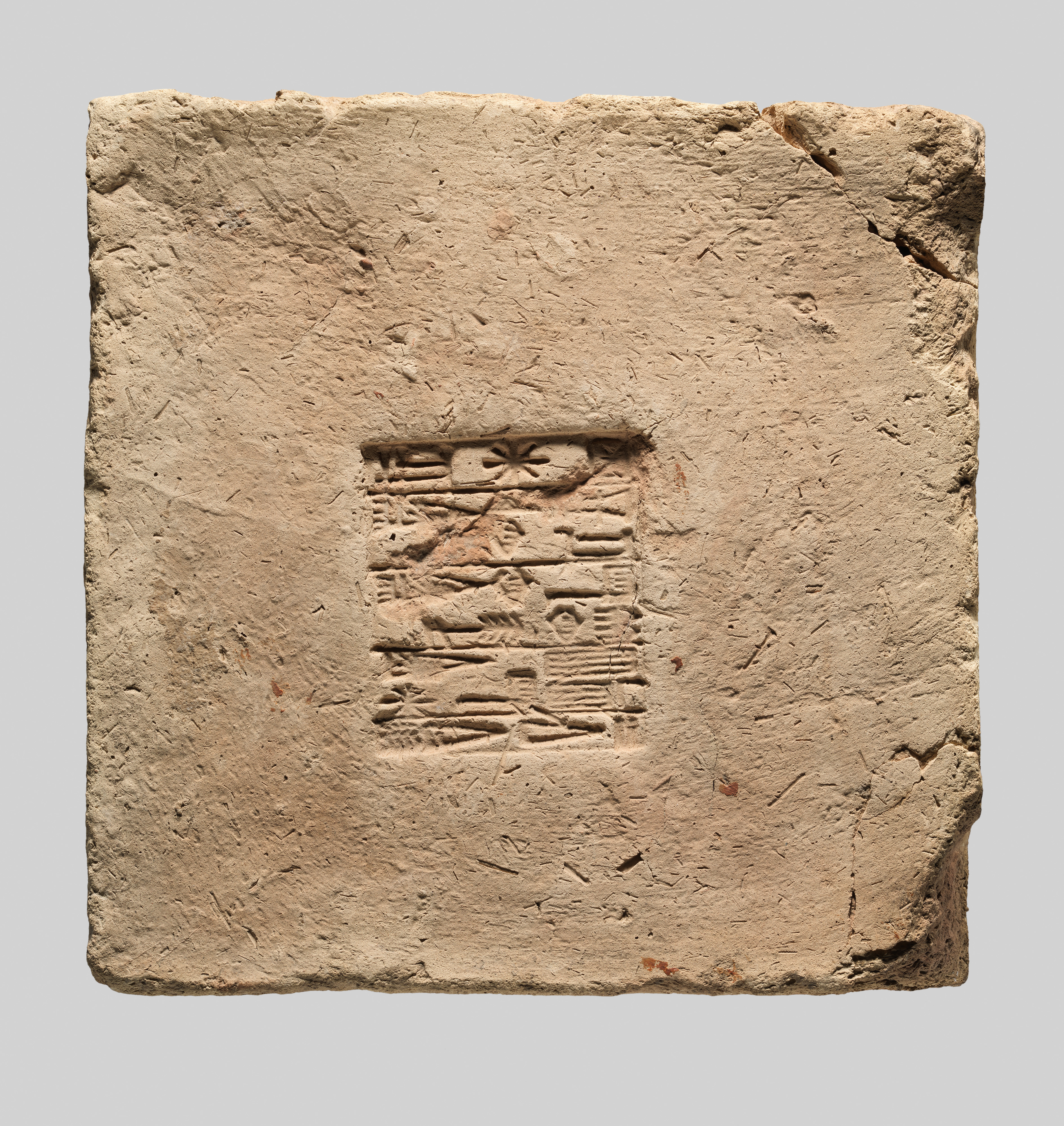
Brick naming Ur-Nammu, ca. 2112–2095 BCE, Met 59.41.86. A royal building inscription, not a copy of the laws or the brother’s-wife clause
Antiker Text
Sumerian laws attributed to Ur-Namma, read through witnesses and composite editions.
Namensvarianten: Laws attributed to Ur-Namma
Kontext und Quellen →
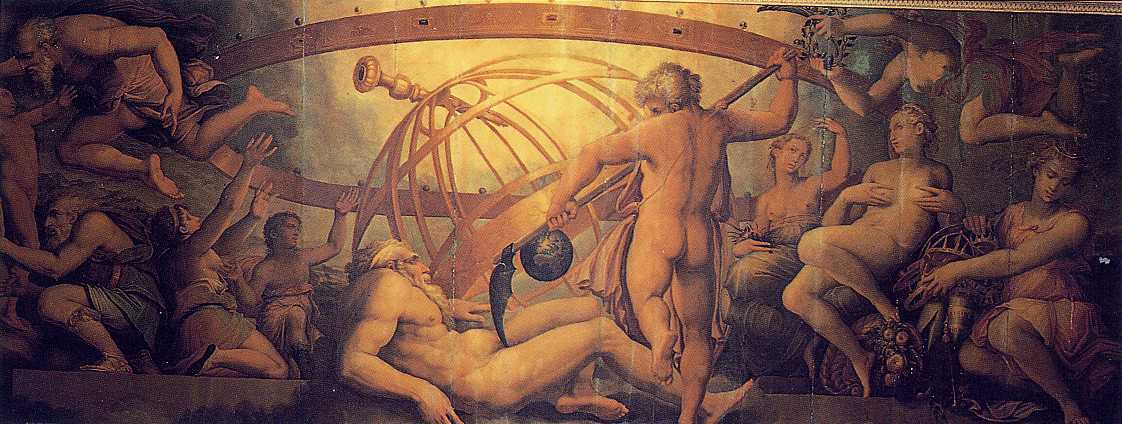
The assault on Ouranos in a sixteenth-century work by Vasari and Gherardi, Palazzo Vecchio, Florence. Later artistic reception, not an ancient Greek witness or a contemporary image of Hesiod’s time
Entität
Sky as a divine figure in Greek poetry; Kronos’s father in Hesiod.
Namensvarianten: Ouranos, Uranus
Kontext und Quellen →

Modern generated symbolic illustration: scroll, lamp, astronomical instrument and star-filled sky. It evokes light and Uriel’s explanation of the luminaries in Enoch; neither an ancient document nor a portrait of the angel or a historical school
Entität
Hebrew name containing “El,” borne by humans in Chronicles and an angel in 1 Enoch and 4 Ezra. Roles vary by text; no Ugaritic divine origin is established.
Namensvarianten: Uriel
Kontext und Quellen →
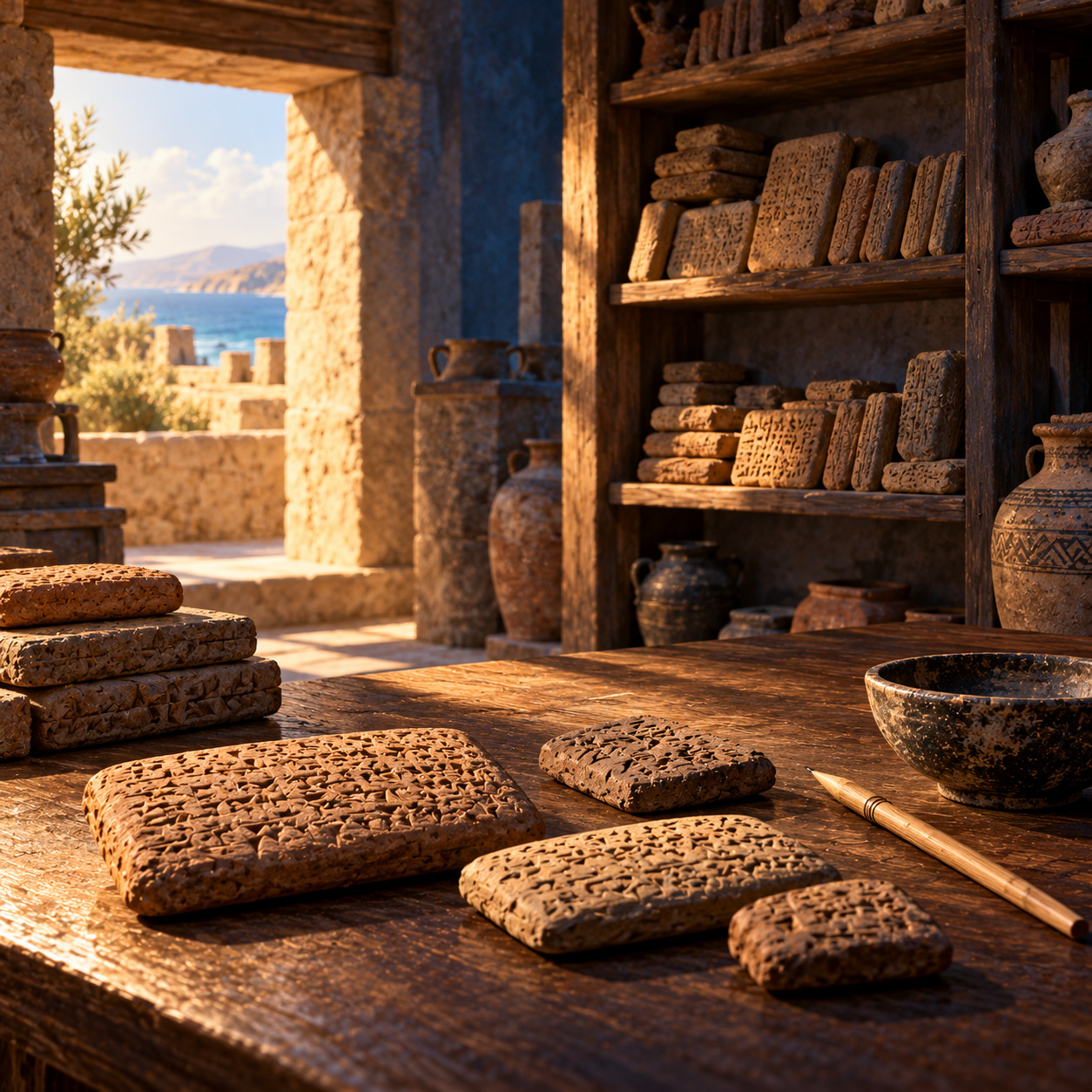
Modern generated conceptual scene suggesting tablet storage in a Bronze Age household; not a photograph of Urtenu’s house or an archaeologically verified reconstruction, and the marks are not readable texts
Entität
Urtenu was an elite figure of Late Bronze Age Ugarit, associated with a house and tablet archives in the city’s southern sector; correspondence links him with court affairs and trade, although his precise office is uncertain.
Namensvarianten: Urtenu, Urtēnu, House of Urtenu
Kontext und Quellen →
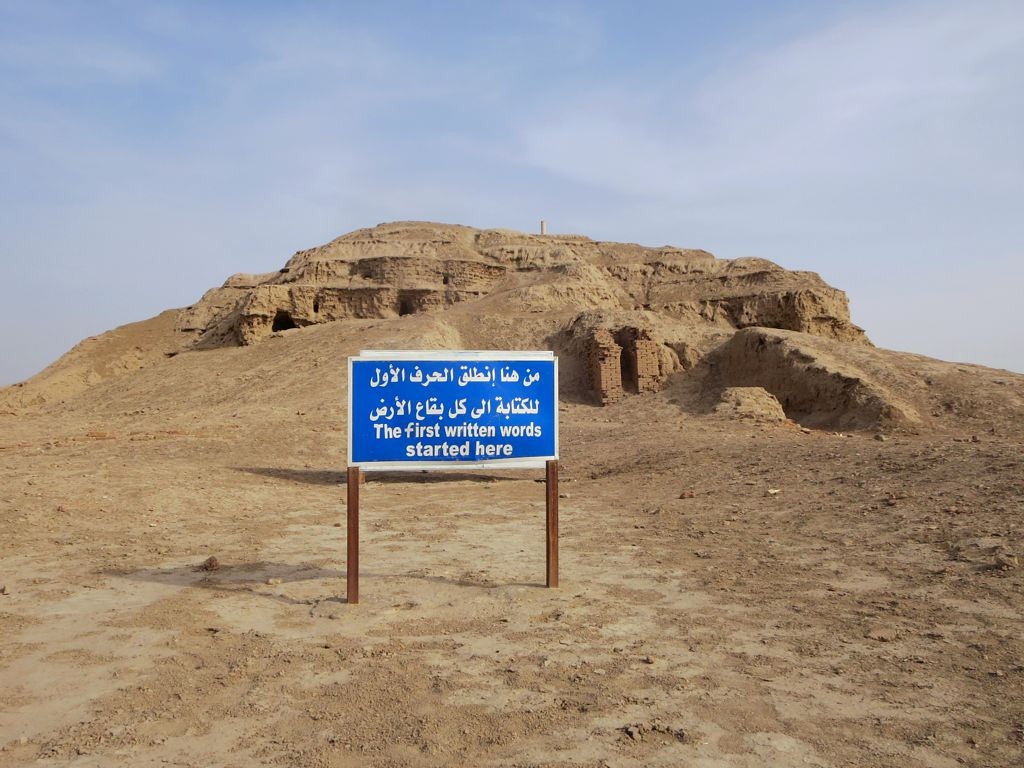
Architectural remains at Uruk/Warka, photographed by David Stanley, 9 April 2016. The sign is modern; its claim about first writing is not independent evidence of global priority or an exact invention date
Stätte
Ancient city at Warka in southern Iraq, a major urban centre around 3200 BCE that preserved early writing and accounting tablets.
Namensvarianten: Uruk, Warka
Kontext und Quellen →
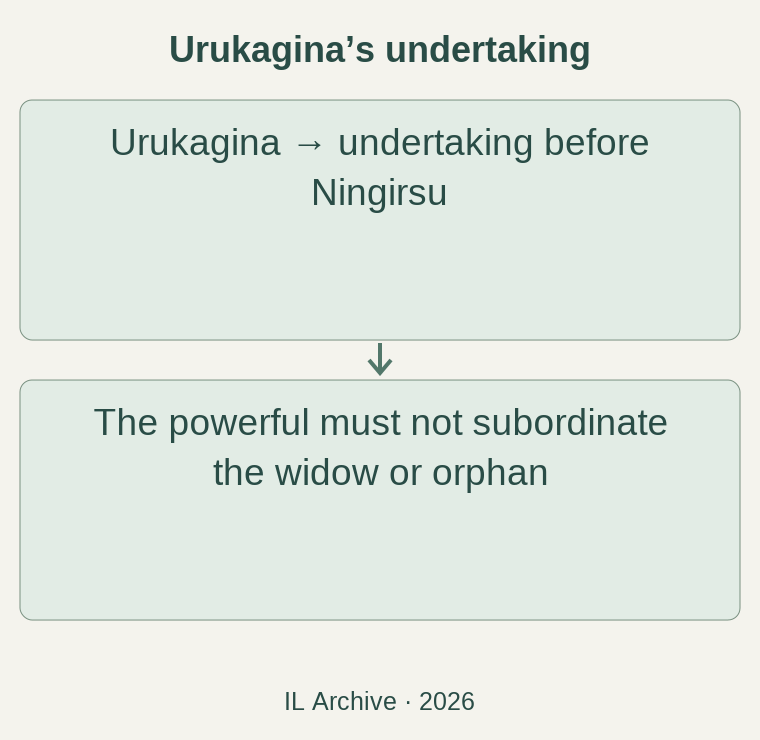
Modern diagram of the relationship or demand in the specified text; not an artifact photograph, a divine likeness or a portrait
Person
Ruler of Lagash around 2350 BCE, associated with reform inscriptions concerning burdens and justice.
Namensvarianten: Urukagina, ruler of Lagash
Kontext und Quellen →
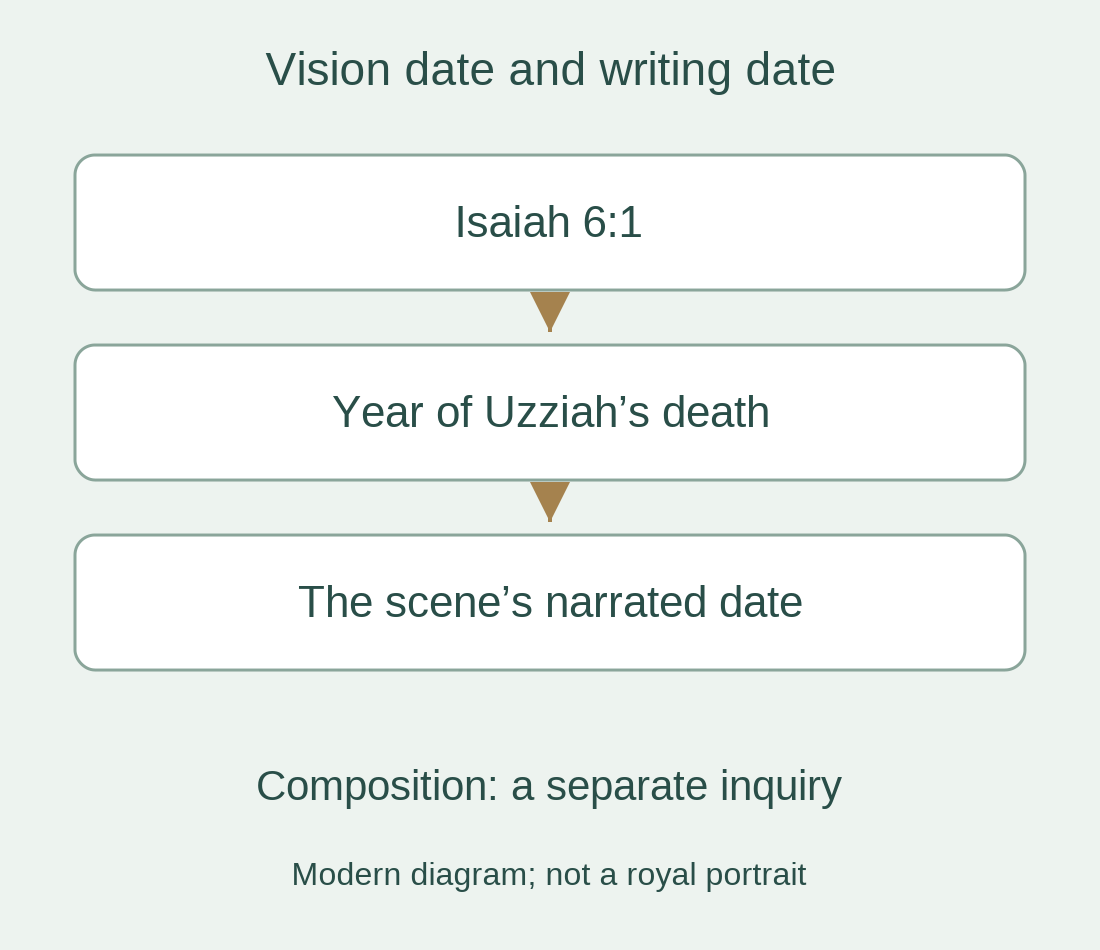
Modern diagram; not a royal portrait. Composition: a separate inquiry
Person
King of Judah in the biblical narrative; Isaiah 6 dates its vision to his death year, a date for the scene rather than the book’s composition.
Namensvarianten: Uzziah king of Judah, Uzziah
Kontext und Quellen →
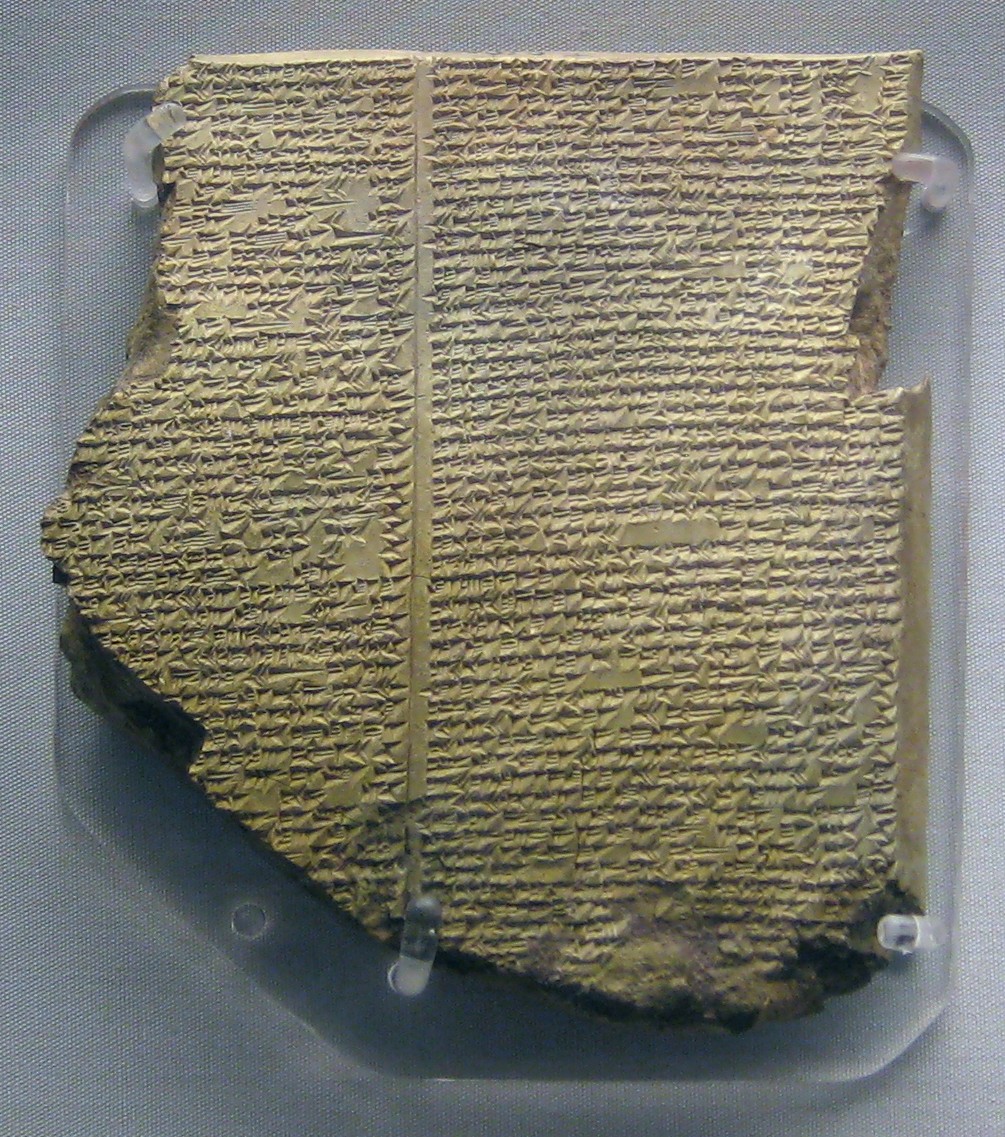
The Flood Tablet, British Museum K.3375: a seventh-century BCE Neo-Assyrian fragment from Ashurbanipal’s library at Nineveh, preserving part of Gilgamesh XI. Photographed 24 June 2010. A witness to the story’s transmission, not a portrait of Utnapishtim or evidence that the flood occurred; it does not alone preserve every line of the composite edition
Entität
The flood hero of Standard Babylonian Gilgamesh, granted exceptional life with his wife by the gods. He tells Gilgamesh how he survived; his name overlaps with Atrahasis and Ziusudra traditions without making their narratives identical.
Namensvarianten: Utnapishtim, Uta-napishti, Utanapishti
Kontext und Quellen →
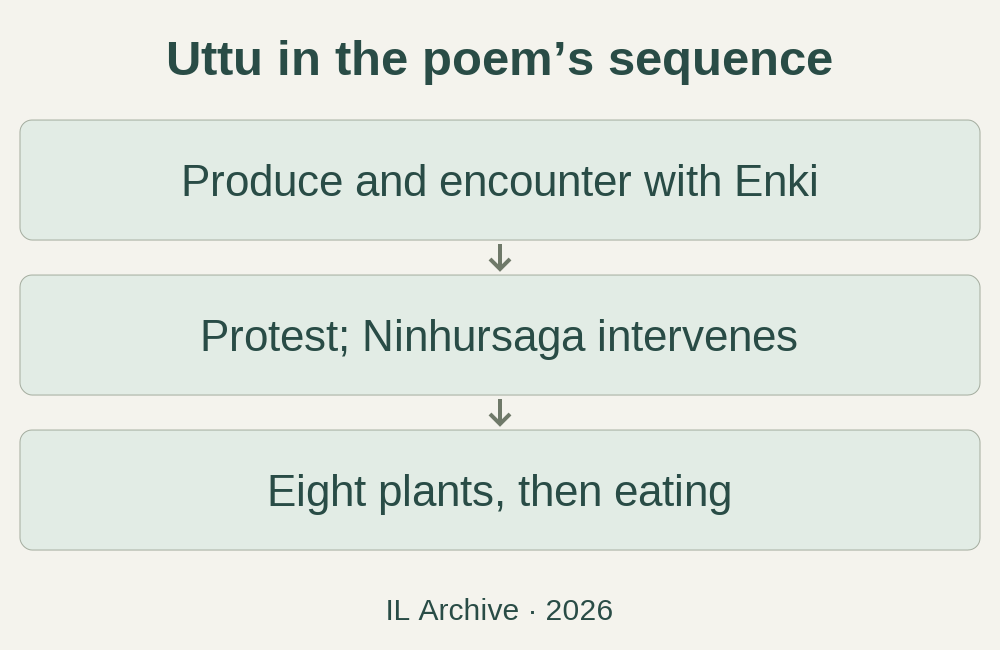
Modern witness-specific explanatory diagram of a sequence or linguistic relationship, not a portrait or fabricated artifact
Entität
Goddess whose encounter with Enki belongs to the sequence of births and plants in Enki and Ninhursaga.
Namensvarianten: Uttu, divine figure in Enki’s poem
Kontext und Quellen →
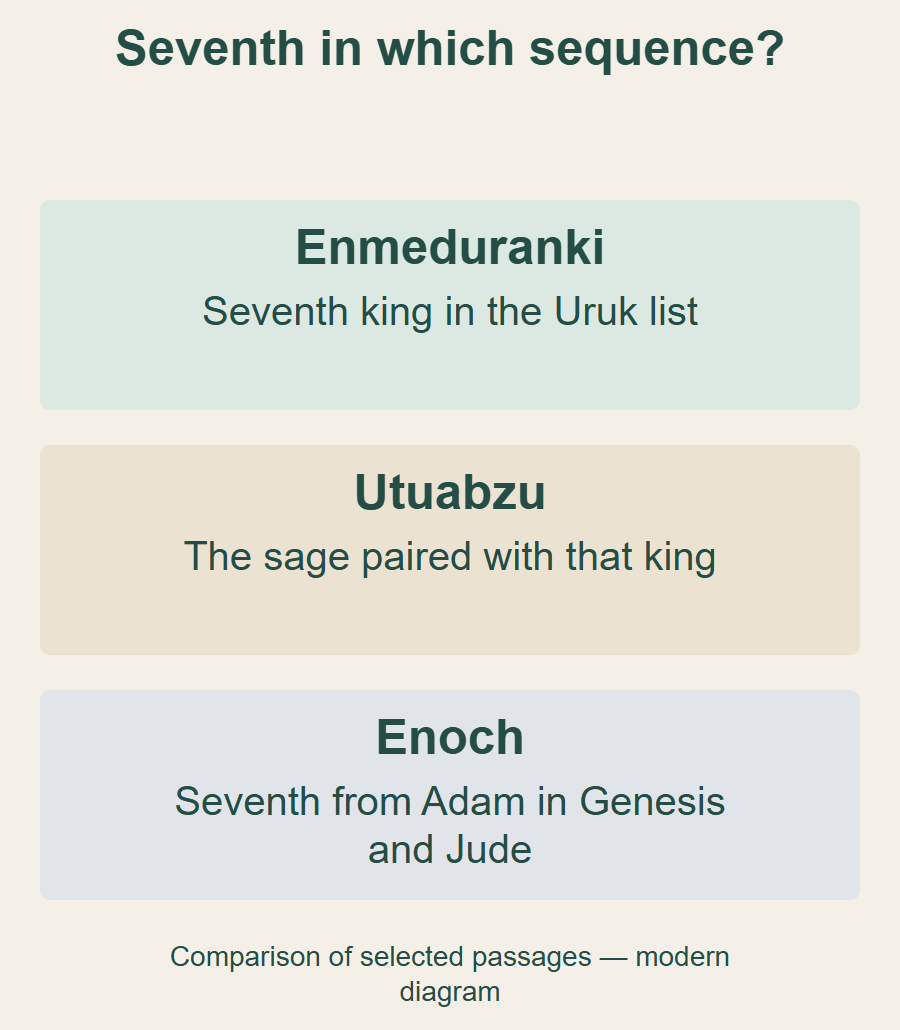
Modern comparative chart distinguishing the seventh king Enmeduranki from his corresponding sage Utuabzu, alongside Enoch’s seventh position in Genesis. This is not an image of the ancient tablet
Person
Utuabzu is a sage in the Uruk List of Kings and Sages, preserved on a tablet copied in 165 BCE. The list pairs him with the seventh king, Enmeduranki.
Namensvarianten: Utuabzu
Kontext und Quellen →
Person
Historian researching Arabia and the Near East in Late Antiquity and the Middle Ages.
Namensvarianten: Valentina A. Grasso
Kontext und Quellen →

Modern AI-generated conceptual cover: a symbolic clay head, shadows, woven bands and imagined objects evoke embodiment; not an ancient object or a verified reconstruction
Entität
An interpretive framework for bodily practices, appearances and experiences through which belonging and difference are negotiated; skeletal form alone does not disclose meaning.
Namensvarianten: embodied identity, bodily identity
Kontext und Quellen →
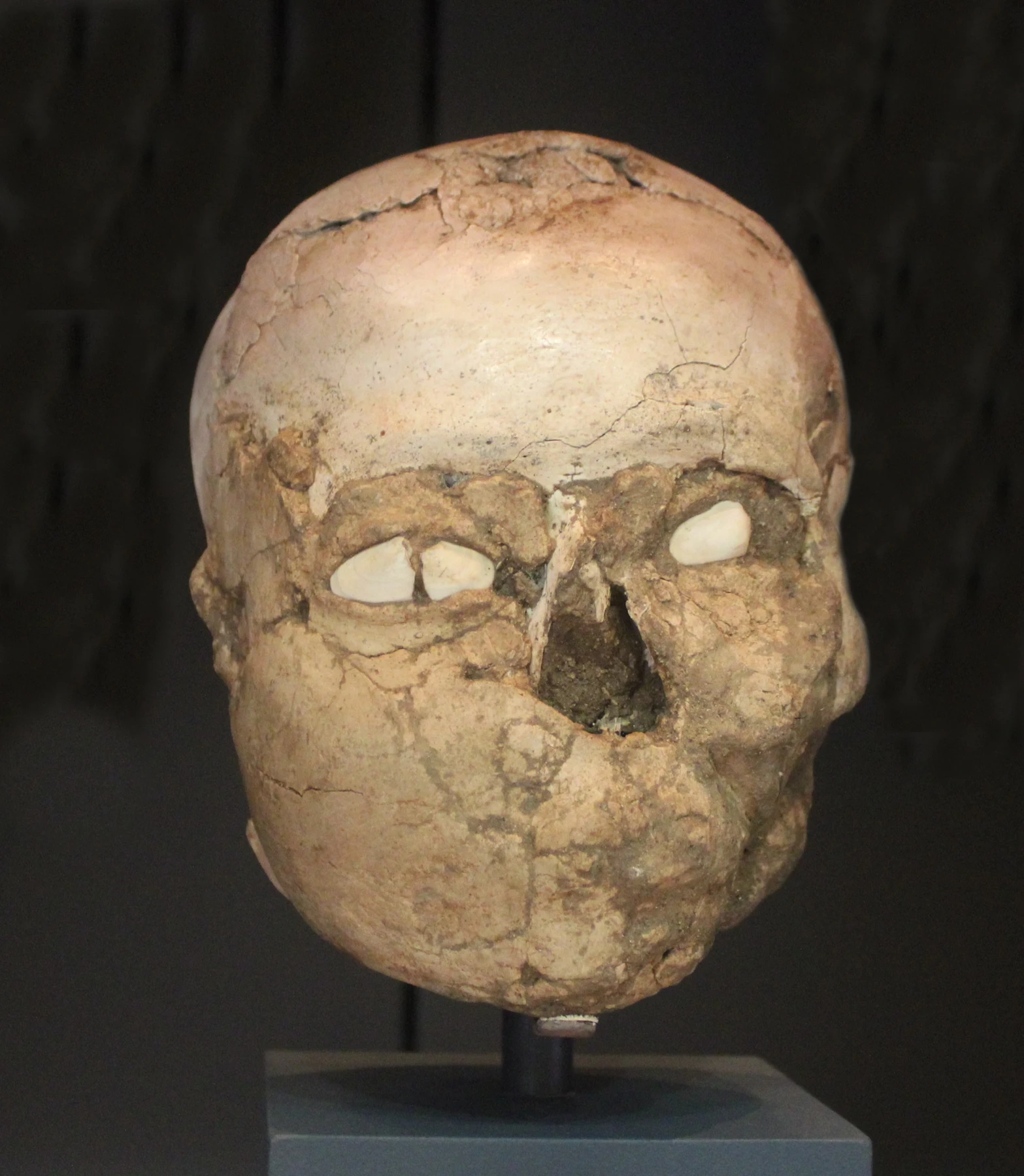
Plastered skull from Jericho, Pre-Pottery Neolithic B, displayed at the British Museum. An ancient modeled face on human remains, not a modern facial reconstruction
Entität
Human skulls whose features were modelled after death with plaster or similar material, sometimes with shell eyes. Distinct from childhood head shaping; they do not by themselves disclose a person’s identity or the community’s beliefs.
Namensvarianten: Plastered skulls
Kontext und Quellen →
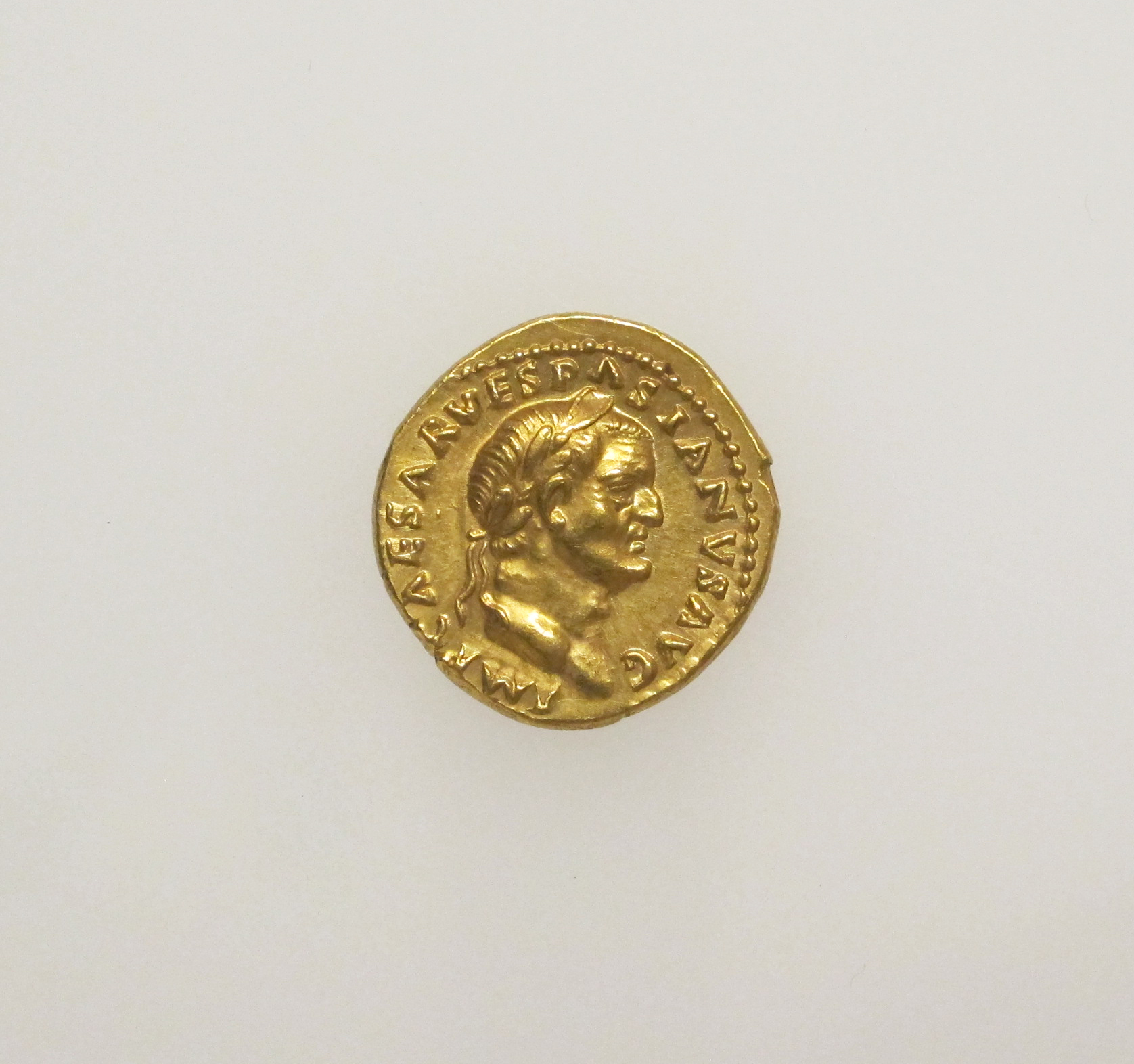
Roman gold aureus bearing Vespasian's portrait and name, minted in 70 CE. A contemporary witness to the emperor, not to Josephus's exorcism scene. Met 99.35.154; public domain
Person
Roman emperor from 69 to 79 CE; Josephus names him among the audience of an exorcism linked to Solomon.
Namensvarianten: Vespasian
Kontext und Quellen →