
Modern conceptual illustration evoking the boat, horned fish, seed vessels and mountain in Manu traditions, especially the epic version; neither an ancient artifact nor a documented location
Antiker Text
Vedic Brāhmaṇa prose associated with the White Yajurveda, explaining sacrifices and their symbolism in differing school recensions. Includes the account of Manu’s flood rescue and Idā as a ritual explanation.
Namensvarianten: Śatapatha Brāhmaṇa, Satapatha Brahmana
Kontext und Quellen →
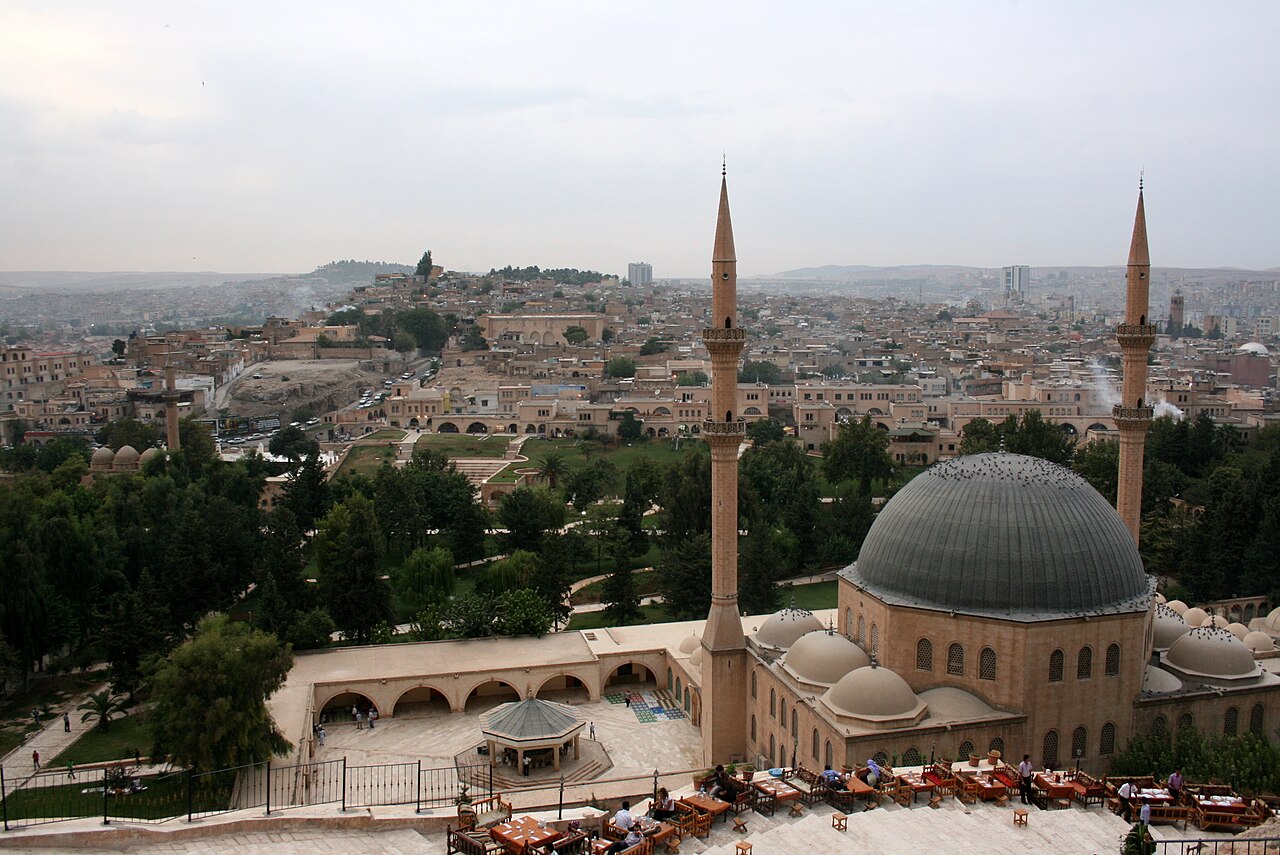
A modern view of Şanlıurfa from Urfa Castle, 5 July 2006, including a mosque and minarets of the later city. It shows the contemporary city, not Göbekli Tepe or the Neolithic period
Stätte
A modern city in southeastern Turkey, near Göbekli Tepe, whose museum displays Urfa Man.
Namensvarianten: Şanlıurfa, Sanliurfa, Urfa
Kontext und Quellen →
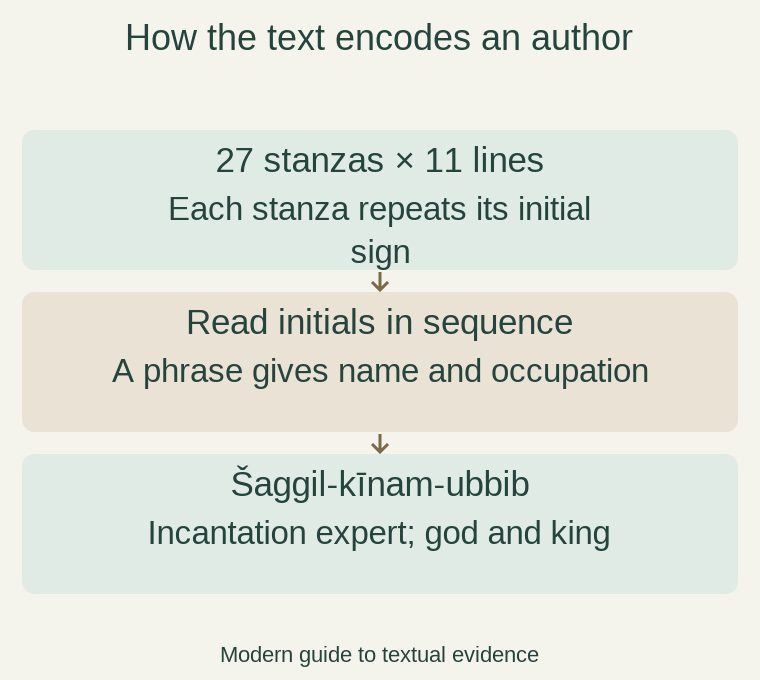
Modern explanation of the Theodicy’s acrostic: 27 stanzas of 11 lines, whose initials encode authorial attribution and occupation. It explains the reading principle, not a manuscript facsimile or every sign
Person
Šaggil-kīnam-ubbib is the name to which the Babylonian Theodicy’s acrostic attributes the dialogue.
Namensvarianten: Šaggil-kīnam-ubbib
Kontext und Quellen →
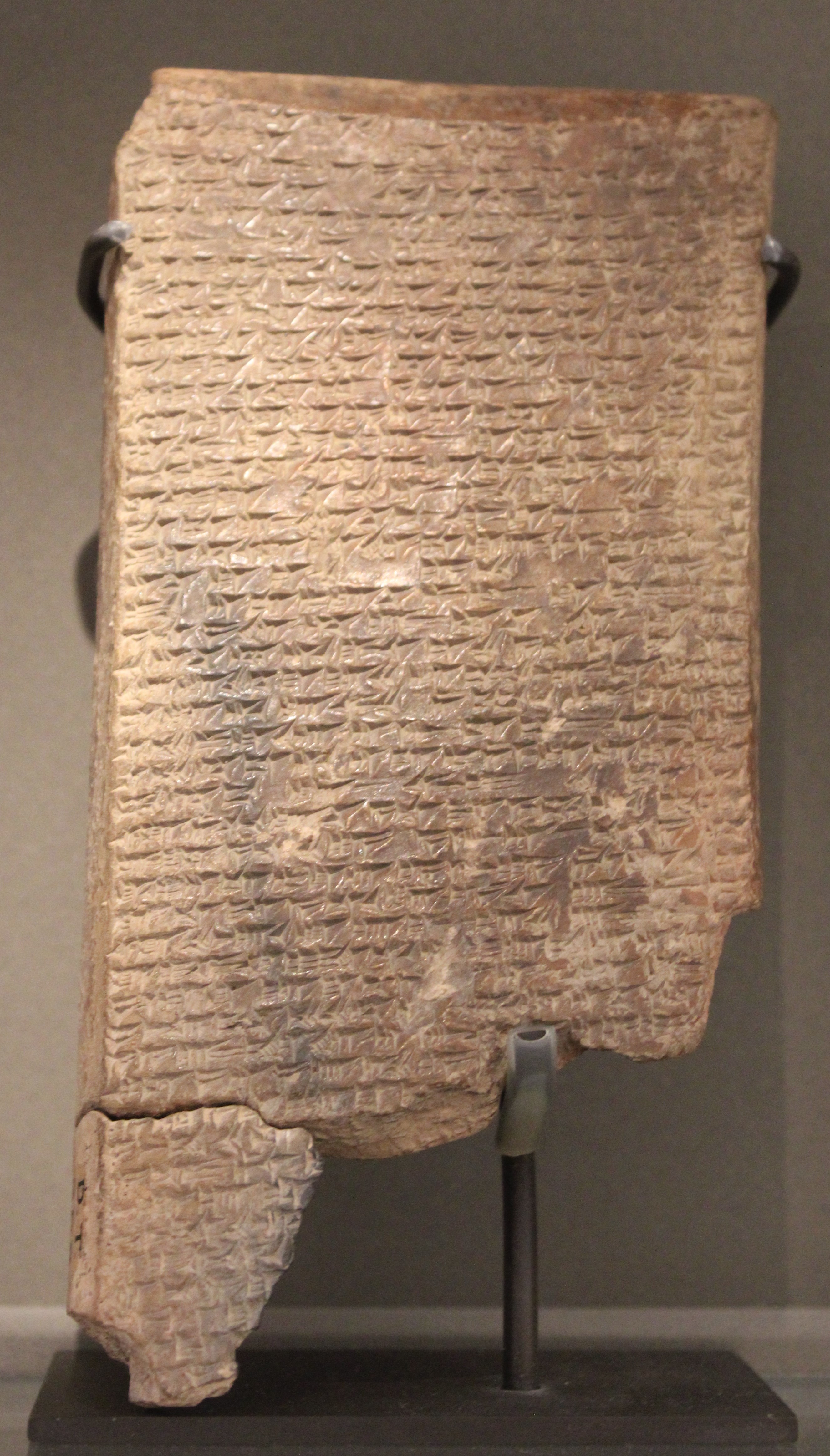
Nineveh witness to Ludlul tablet II, K.2518+DT.358, seventh century BCE, British Museum collection, on loan at the Louvre. Part of the work telling Šubši’s story, not his likeness or the tablet III passage naming him
Person
Šubši-mešrê-Šakkan is the protagonist of Ludlul bēl nēmeqi, the Babylonian poem moving from loss of standing and illness to healing and praise of Marduk.
Namensvarianten: Šubši-mešrê-Šakkan
Kontext und Quellen →

Modern generated symbolic cover evoking Mesopotamian counting: imagined clay tokens, not an artifact or an attested depiction of the ŠAR₂ sign or 3,600 objects
Entität
Sumerian numeral meaning 3,600 = 60×60. Its use for years or other quantities depends on the text; Akkadian šar “king” is distinct. No orbital period follows from the number alone.
Namensvarianten: šar₂, Sumerian shar 3600
Kontext und Quellen →
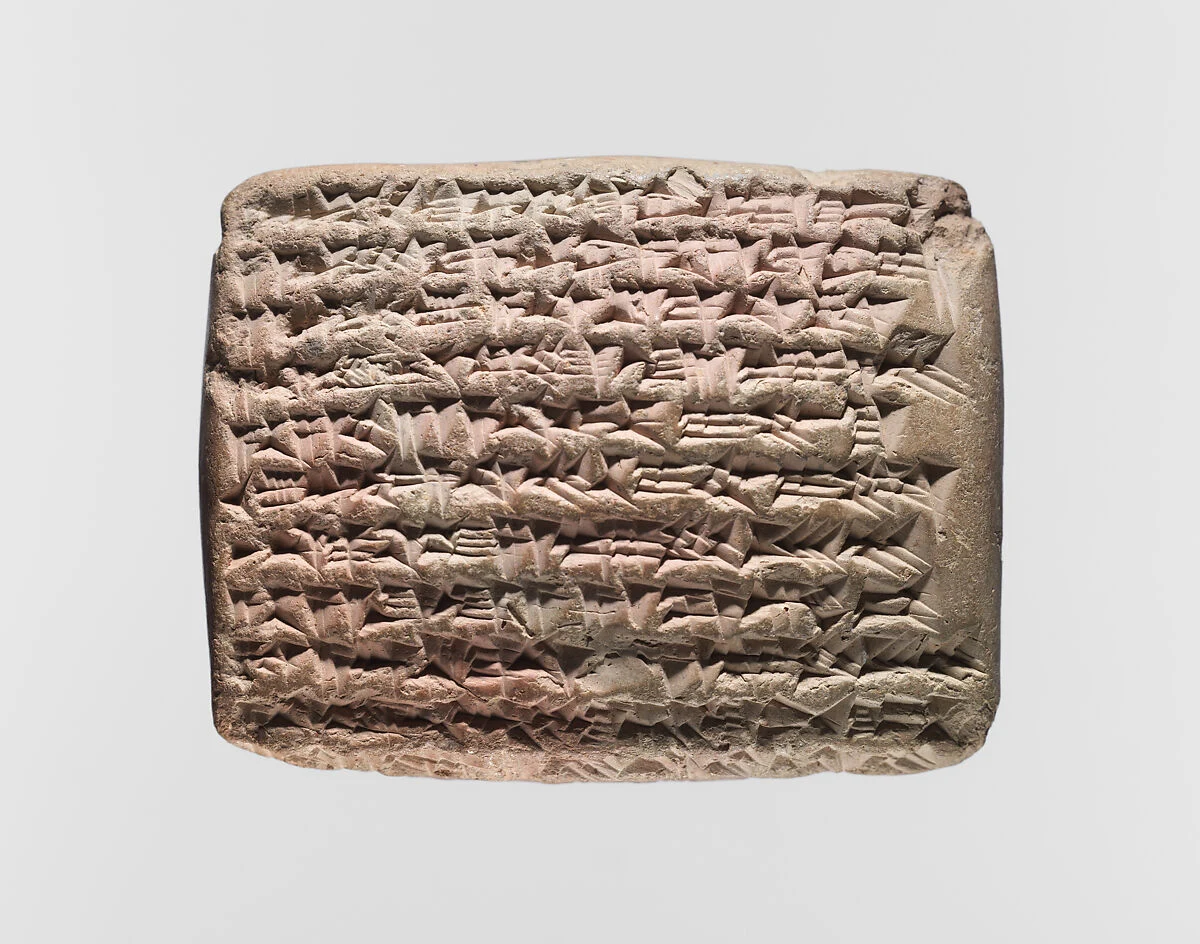
Cuneiform tablet from Babylon, ca. 554 BCE, Met 79.7.11. The museum records a proxy purchase of an enslaved person; NaBuCCo summarizes the sale of a woman and her son. This later Babylonian document is neither a Hebrew biblical text nor evidence that Torah provisions were enforced
Entität
Hebrew עֶבֶד (*ʿeved*): an enslaved person, servant, subject or official according to context; the word alone does not specify legal status or service length.
Namensvarianten: ʿeved, ʿeḇeḏ, Hebrew ʿeved
Kontext und Quellen →

Modern AI-generated conceptual image of a path toward the horizon, suggesting religious orientation; not a photograph of an archaeological site, Abraham, or a historical ḥanīf community
Entität
A Qur’anic description of Abraham and those devoted to God rather than association; its etymology and the history of pre-Islamic “ḥanīfs” remain debated.
Namensvarianten: hanif, ḥanīf, ḥanīfiyya, hunafa
Kontext und Quellen →