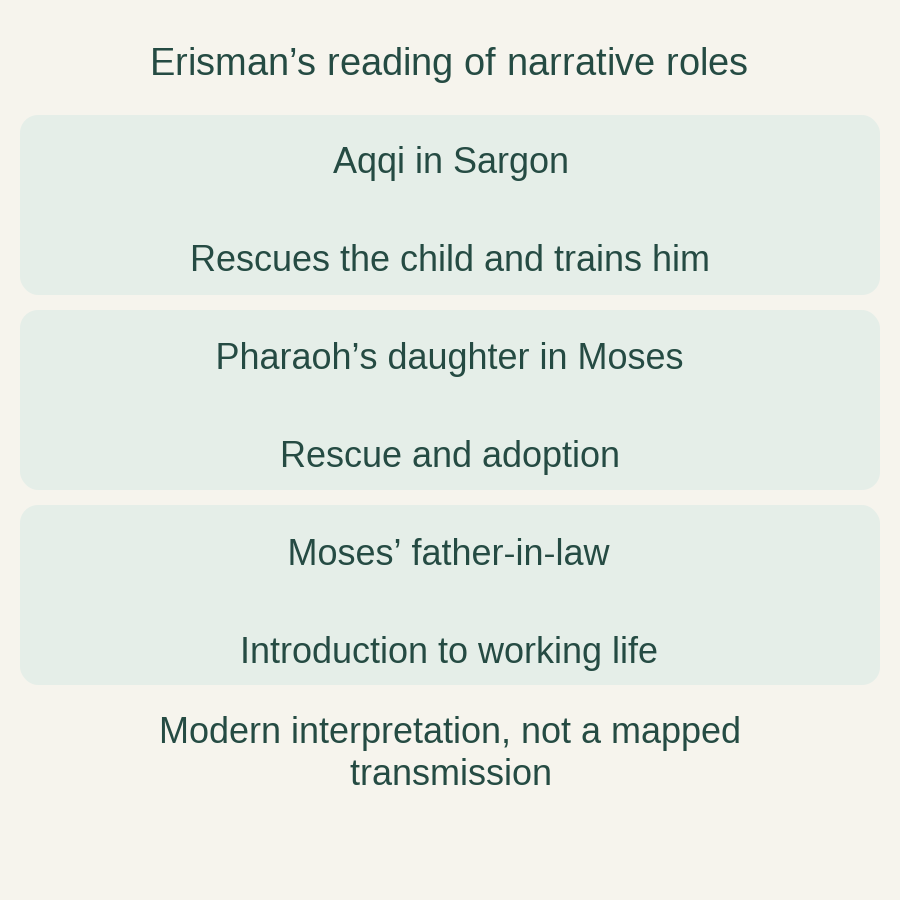
Modern diagram of narrative roles in Erisman’s interpretation; not a portrait or a proven route of transmission
Person
Scholar of the Bible and ancient Near East, working on wilderness narratives, the growth of the Torah and political interpretation.
Namensvarianten: Angela Roskop Erisman
Kontext und Quellen →
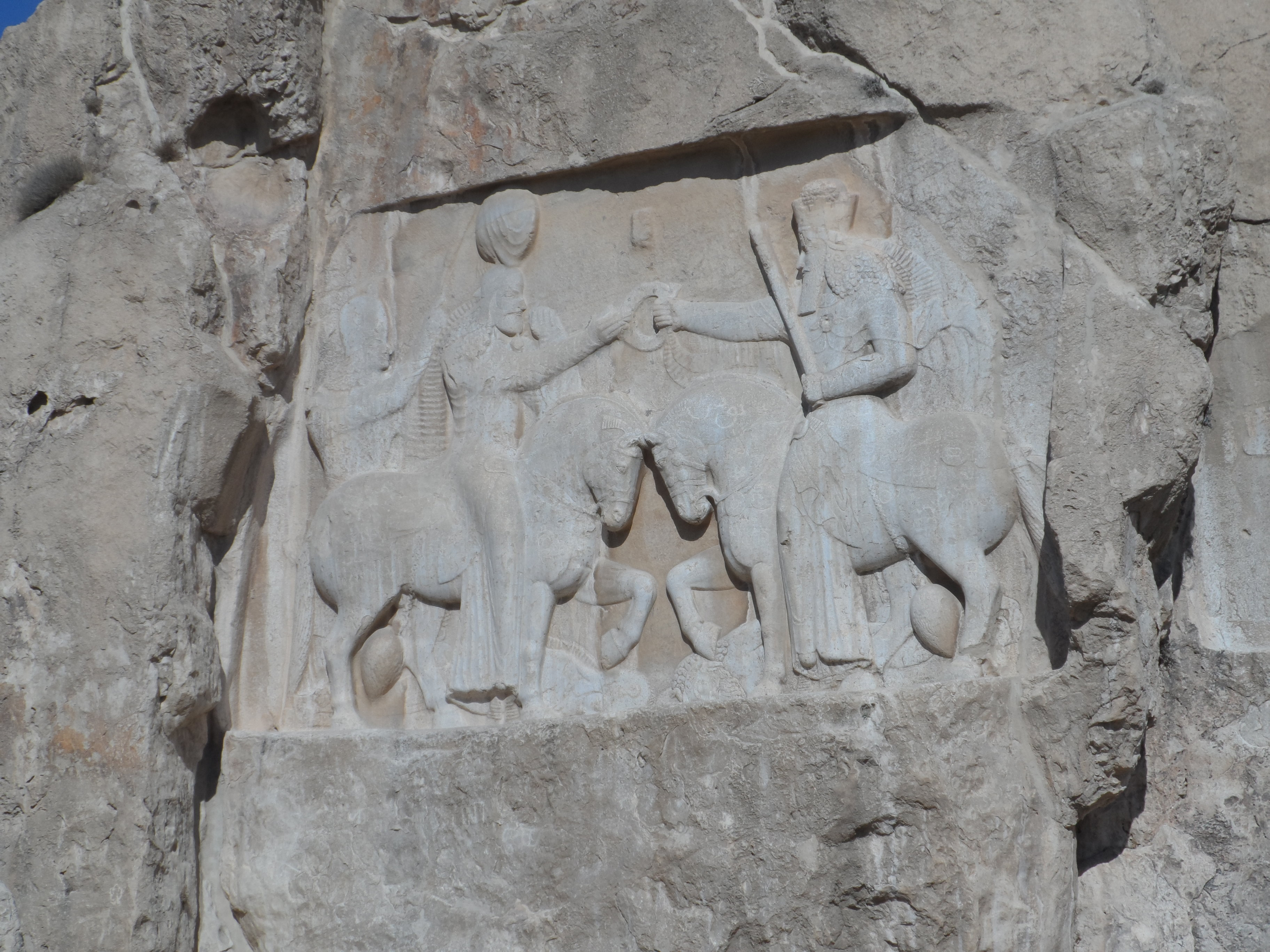
Ardashir I’s investiture relief at Naqsh-e Rostam, third century CE. Heinz Luschey in Encyclopaedia Iranica interprets the figure beneath Ohrmazd’s horse, on the right, as symbolizing Ahriman. This is a specific Sasanian witness, not an illustration of every textual stratum. Small details are clearer when enlarged
Entität
The hostile spirit in Zoroastrian texts: Gathic wording, Younger Avestan counter-creation and Ahriman in Middle Persian cosmology.
Namensvarianten: Angra Mainyu, Aŋra Mainiiu, Ahriman
Kontext und Quellen →

Modern generated symbolic scene: a standing stone and an empty space. Not an archaeological photograph, verified reconstruction, or evidence of a ban on divine images
Entität
Divine presence expressed in worship without a central anthropomorphic or zoomorphic image; it may describe an image-free practice or an explicit rejection, depending on contextual evidence.
Namensvarianten: aniconism, aniconic practice
Kontext und Quellen →
Person
A scholar of Greek literature and ancient religious imagery, including the demonic in the Septuagint and interpretations of Azazel.
Namensvarianten: Anna Angelini
Kontext und Quellen →
Person
Annette Yoshiko Reed studies ancient Judaism, early Christianity and their relationships in late antiquity, and is a professor at Harvard Divinity School.
Namensvarianten: Annette Yoshiko Reed
Kontext und Quellen →
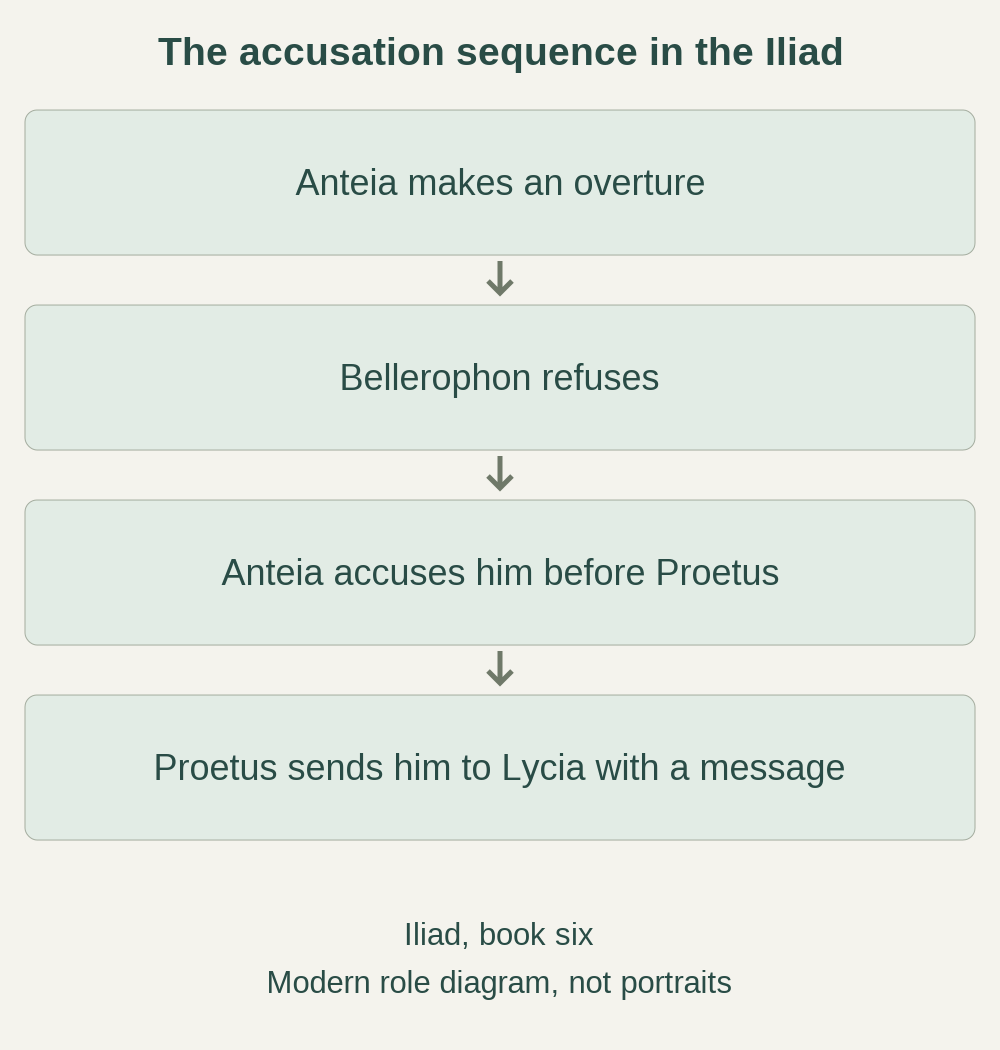
Modern diagram of Anteia, Bellerophon and Proetus in the Iliad episode; explains sequence without deciding other texts’ dependence
Person
Proetus’s wife in the Iliad, accusing Bellerophon after he refuses her overture.
Namensvarianten: Anteia in the Iliad, Anteia
Kontext und Quellen →
Person
British New Testament scholar and Anglican theologian, 1930–2018.
Namensvarianten: Anthony Ernest Harvey, A. E. Harvey
Kontext und Quellen →
Person
Anthony P. SooHoo studies ancient Near Eastern cultures and received his doctorate from New York University’s Institute for the Study of the Ancient World in 2019.
Namensvarianten: Anthony P. SooHoo
Kontext und Quellen →
Modern AI-generated conceptual illustration: imaginary stone forms evoking an abstract human body. Not excavated artefacts or a reconstruction of a pillar at Göbekli Tepe
Entität
Representation of a thing or being with human traits. It describes visible or linguistically attributed features, not by itself a person, ancestor or deity.
Namensvarianten: anthropomorphism, anthropomorphic, humanlike form
Kontext und Quellen →
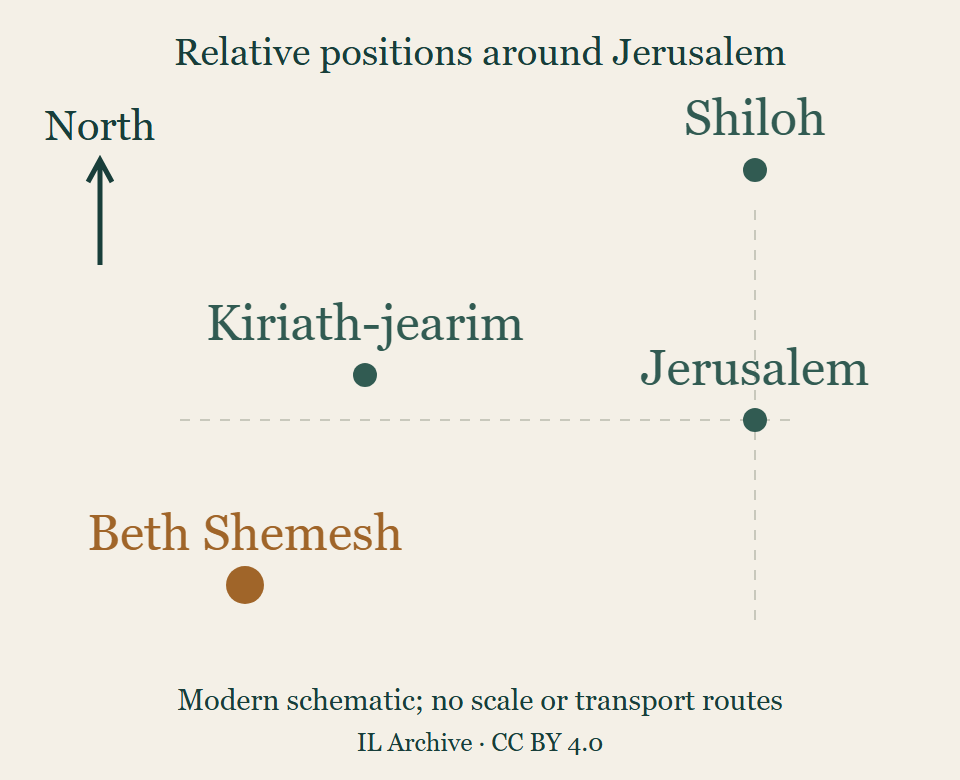
Modern schematic highlighting Ancient Beth Shemesh relative to Jerusalem and the other two sites. General directions, not a scale map or the Ark’s route
Stätte
Shephelah archaeological site associated with the Ark’s return in 1 Samuel.
Namensvarianten: Ancient Beth Shemesh
Kontext und Quellen →
Modern conceptual depiction of southern Levantine highlands, evoking the setting discussed in research on early Israel; neither archaeological photography nor a verified reconstruction of any settlement or period
Entität
Name attested for a population on the Merneptah Stele around 1208 BCE, later for the northern Iron Age kingdom and for broader textual and religious identities; the senses are not identical.
Namensvarianten: Israel, ancient Israel
Kontext und Quellen →
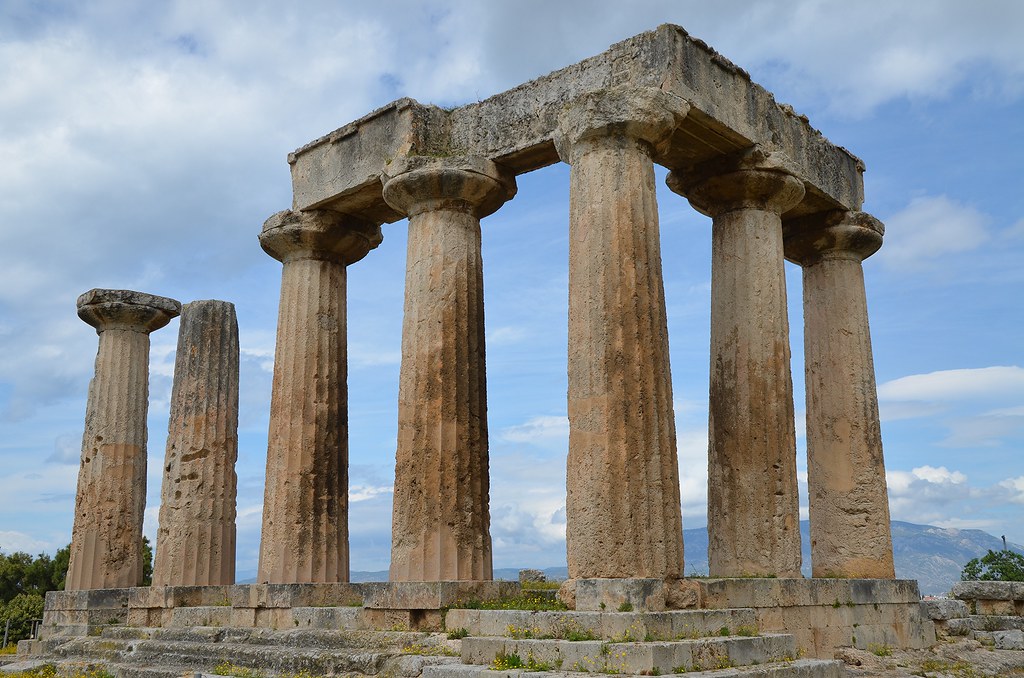
Temple of Apollo at Corinth, about540 BCE; photographed19 April2014. Greek architecture predating Paul’s first-century CE letters; a view of the site, not a depiction of the addressed community
Stätte
Corinth was an ancient Greek city with a strategic position between central Greece and the Peloponnese.
Namensvarianten: Ancient Corinth
Kontext und Quellen →
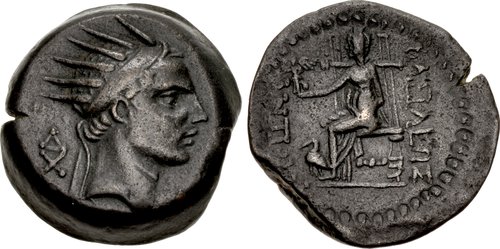
Bronze coin of Antiochus IV Epiphanes, Seleucia on the Tigris, about173/172–164BCE; CNG,TritonXXII,313. Royal portrait at left; seated goddess holding Nike at right, not a Daniel scene
Person
Antiochus IV Epiphanes was a Seleucid king who ruled from175 to164 BCE.
Namensvarianten: Antiochus IV Epiphanes
Kontext und Quellen →
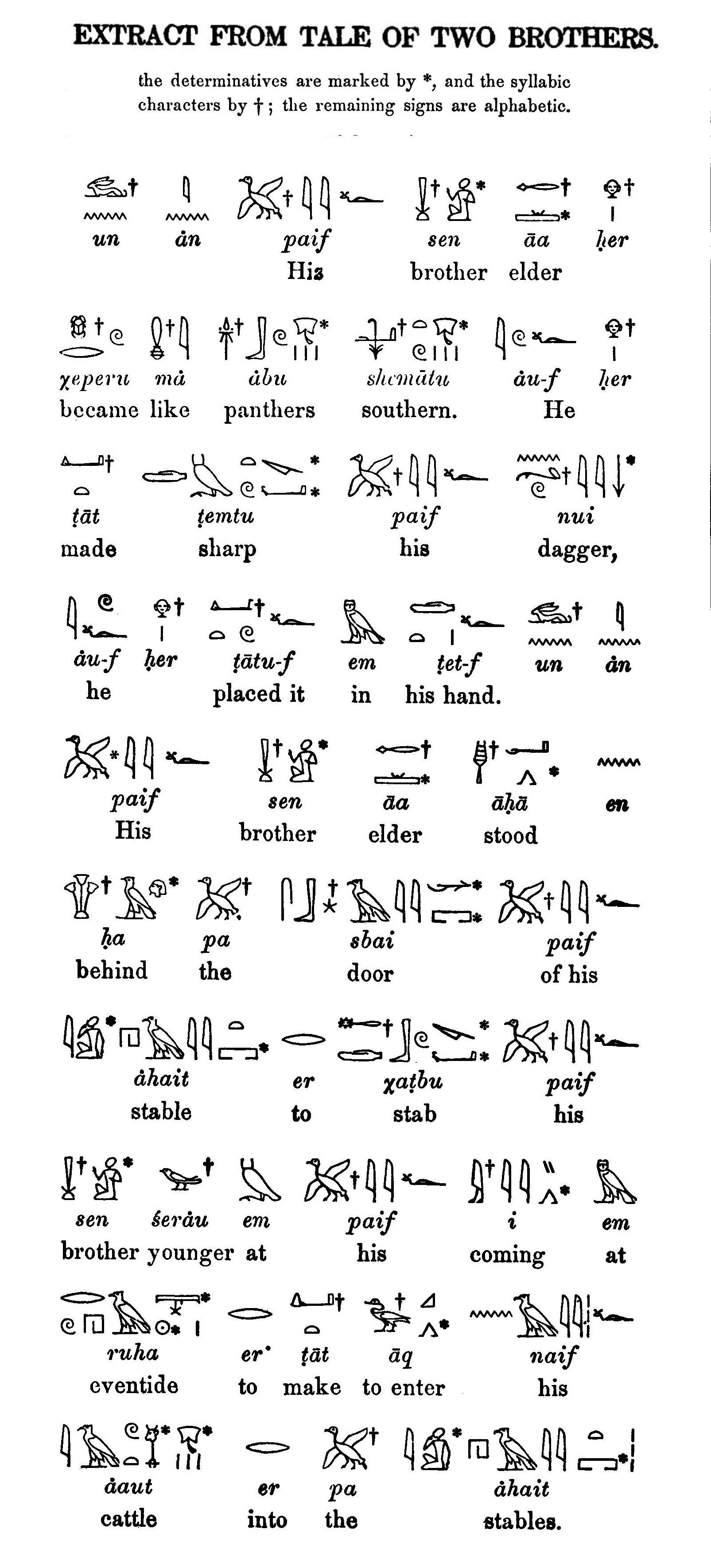
Printed Two Brothers excerpt in Wallis Budge’s Egyptian Language, 1889, pp. 38–39: educational hieroglyphic transcription with English glosses of the armed elder brother. Not a photograph of the hieratic papyrus or Inena’s signature
Person
Elder brother called Anub or Anubis in the tale, initially believing his wife’s charge, then recognizing her deception.
Namensvarianten: Anubis, Bata’s elder brother, Anub in the Two Brothers
Kontext und Quellen →
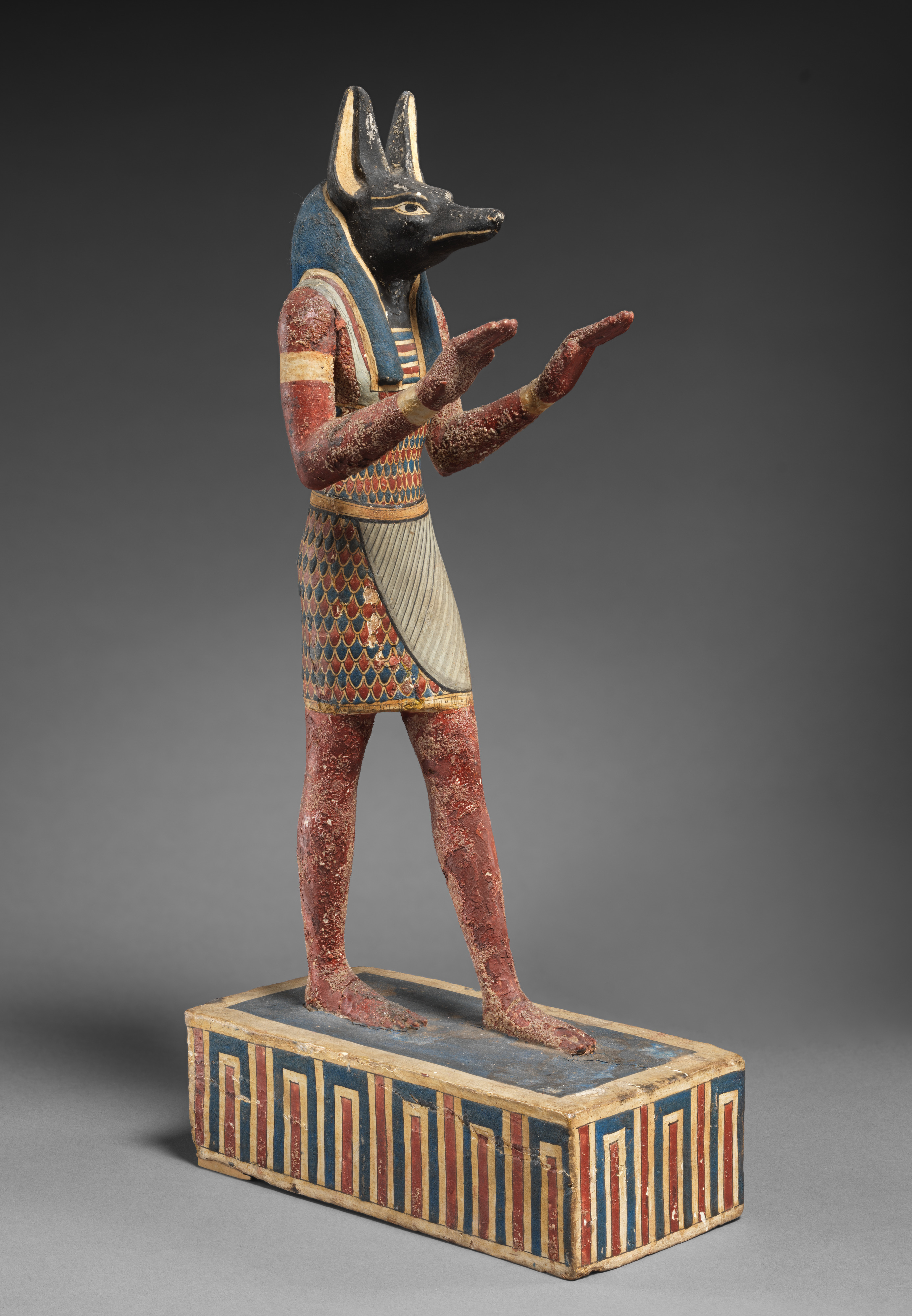
Painted plastered-wood statuette of a canid-headed god, probably Anubis; Egypt,332–30 BCE. Met38.5; actual object with the museum’s qualified identification
Entität
Anubis is an Egyptian deity associated with the dead and the balance in heart-weighing scenes.
Namensvarianten: Anubis
Kontext und Quellen →
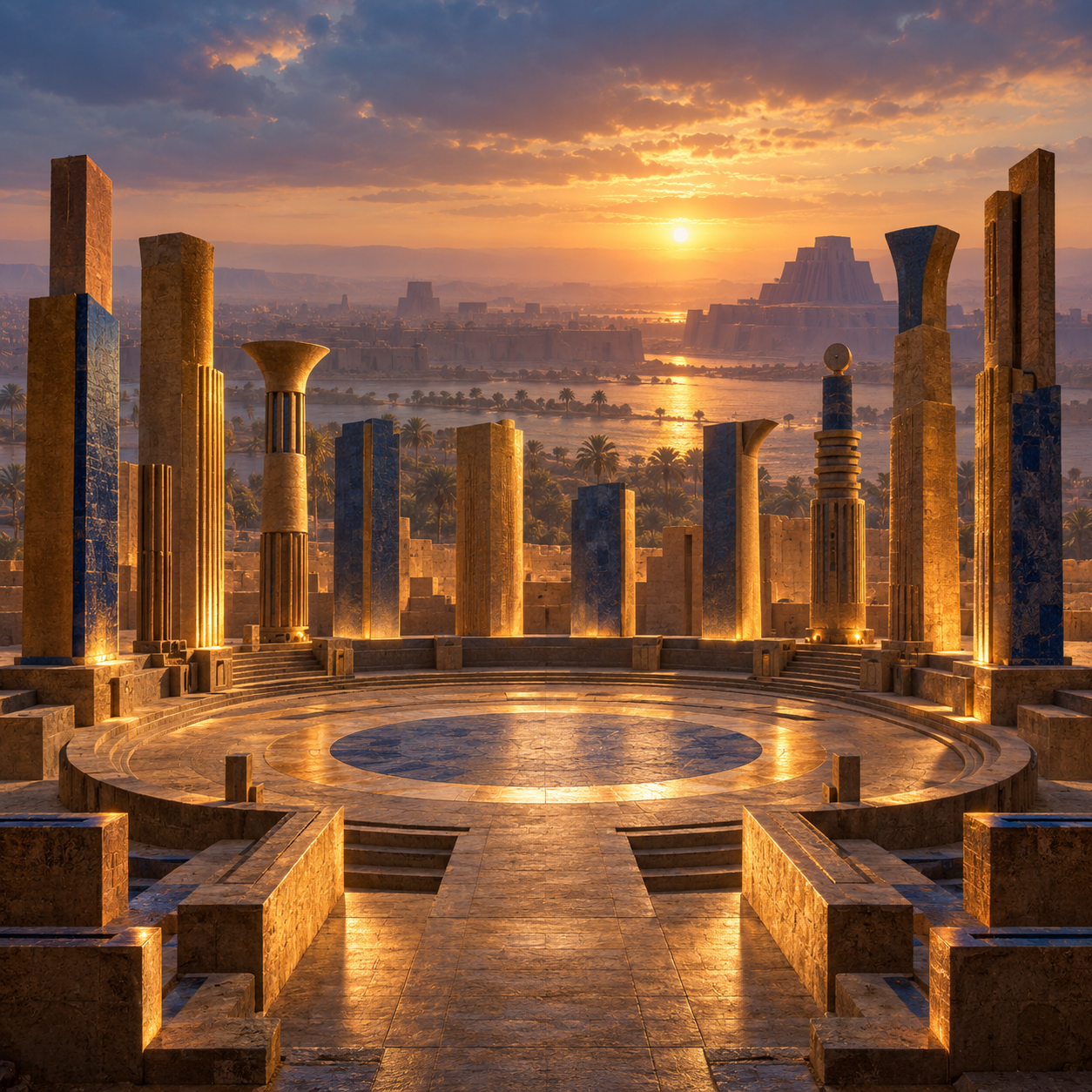
Modern generated conceptual scene evoking a divine assembly in an imagined Mesopotamian setting; neither an ancient image of the Anunna nor a documented reconstruction of a site or temple
Entität
Anunna/Anunnaki is a collective designation for Mesopotamian gods whose scope varies by text and period; it is not a group with one fixed membership or number.
Namensvarianten: Anunna, Anuna, Anunnaki, Anunnaku
Kontext und Quellen →
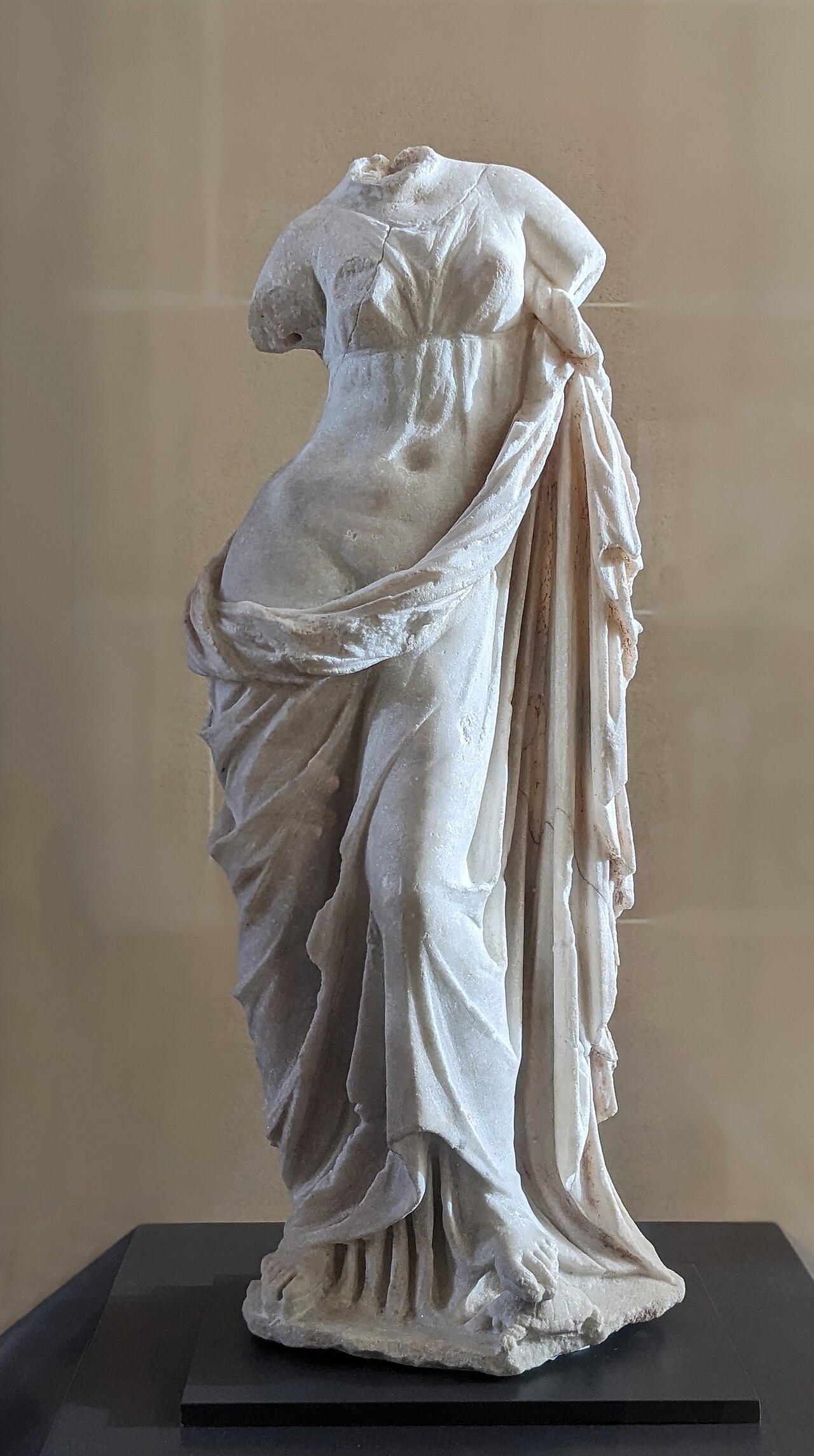
Aphrodite with a Turtle, an incomplete restored statue from Dura-Europos, about the second–third centuries CE, Louvre AO 20126. Shonagon, 5 January 2024; an object later than Hesiod’s poem
Entität
Greek goddess whose origin Hesiod relates to foam after the assault on Ouranos.
Namensvarianten: Aphrodite
Kontext und Quellen →
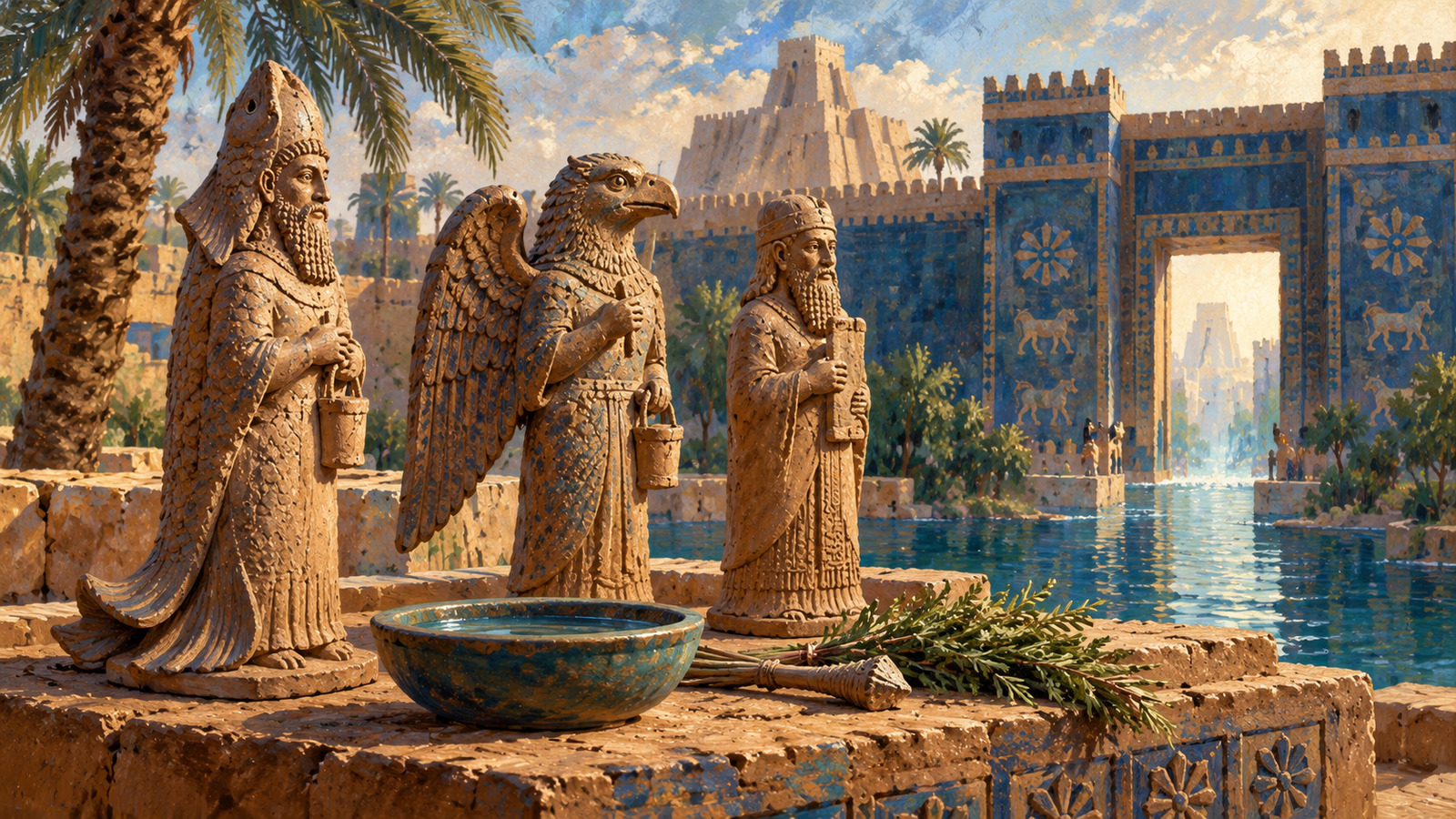
Contemporary AI-generated interpretive illustration (2026) symbolically combining motifs associated with sages and protective figurines in an imagined cityscape; not an ancient object or a documented reconstruction
Entität
An Akkadian term for a sage or expert. Specific texts describe seven primordial sages; rituals use related protective figures. Neither the titles nor the depicted forms are always identical.
Namensvarianten: apkallu, apkallū
Kontext und Quellen →

A contemporary interpretive image of Abraham between the idol workshop and the ascent toward a throne with celestial wheels; generated artwork, not a manuscript or artefact photograph
Entität
A self-contained source-critical study of the Apocalypse of Abraham, its Slavonic witnesses, date, idol polemic, heavenly vision, chapter 29, and contrasts with the Testament and other Abrahamic traditions.
Namensvarianten: Apocalypse of Abraham
Kontext und Quellen →

Modern AI-generated symbolic illustration of disclosure across heavenly realms and historical time. Not an ancient manuscript, documented event, or historically established reconstruction
Entität
Literary works narrating the disclosure of transcendent knowledge about heaven, history and destiny to a human seer, often by an angel; not every end-time belief or catastrophe prophecy is an apocalypse.
Namensvarianten: apocalyptic literature, apocalyptic writing
Kontext und Quellen →
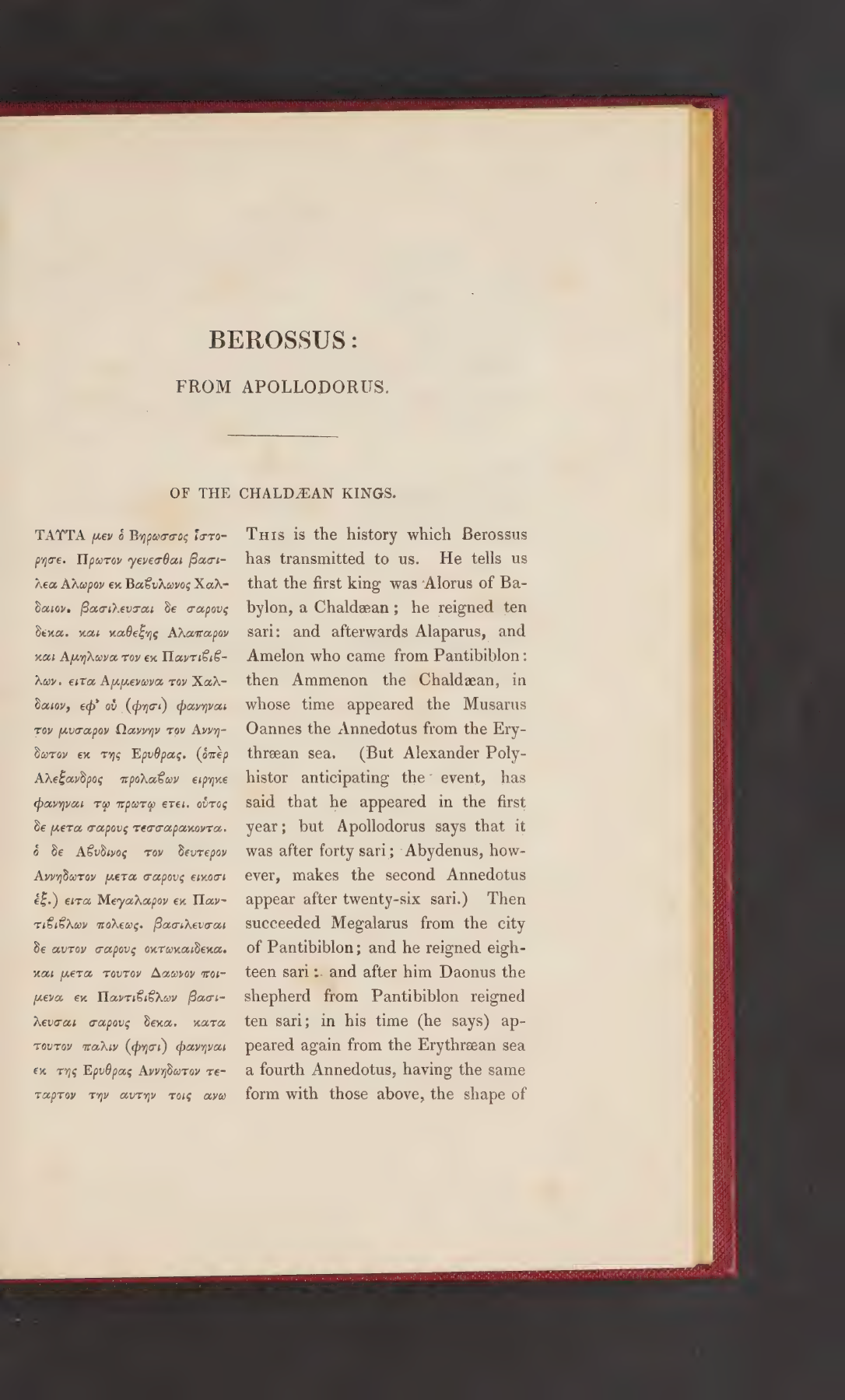
Opening of the fragment printed under Apollodorus’s name in Cory’s edition, London, 1828. It concerns Chaldaean kings; this is not a page of the Library attributed to Apollodorus
Person
Apollodorus is a name in the transmission of Berossus on Babylonian kings and teaching beings.
Namensvarianten: Apollodorus in the transmission of Berossus
Kontext und Quellen →
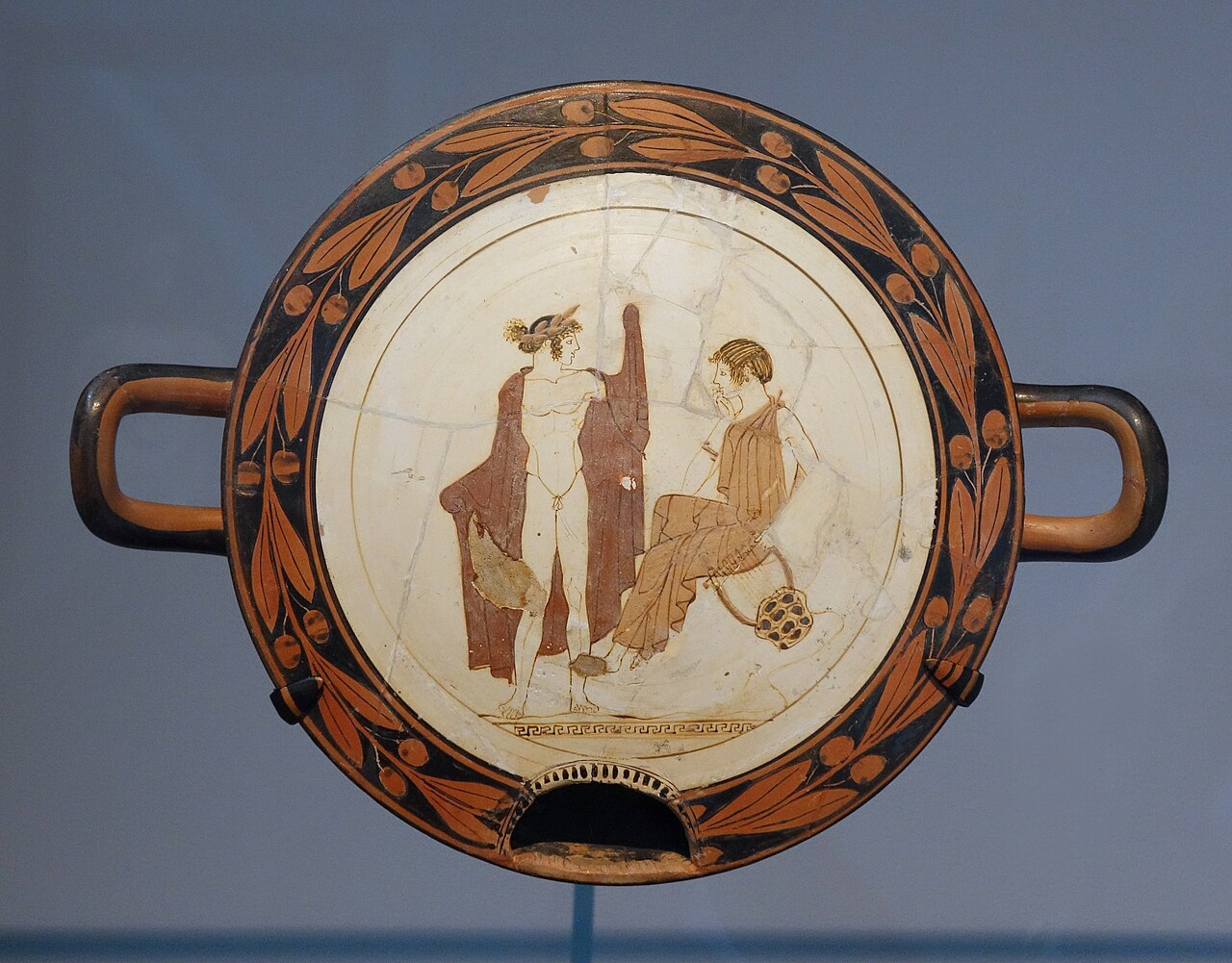
Apollo and a Muse on an Attic white-ground cup; Museum of Fine Arts, Boston, 00.356. An ancient representation of the god, rather than a particular Iliadic assembly scene
Entität
God of music and prophecy in Greek traditions, also participating in the Iliad’s events.
Namensvarianten: Apollo
Kontext und Quellen →
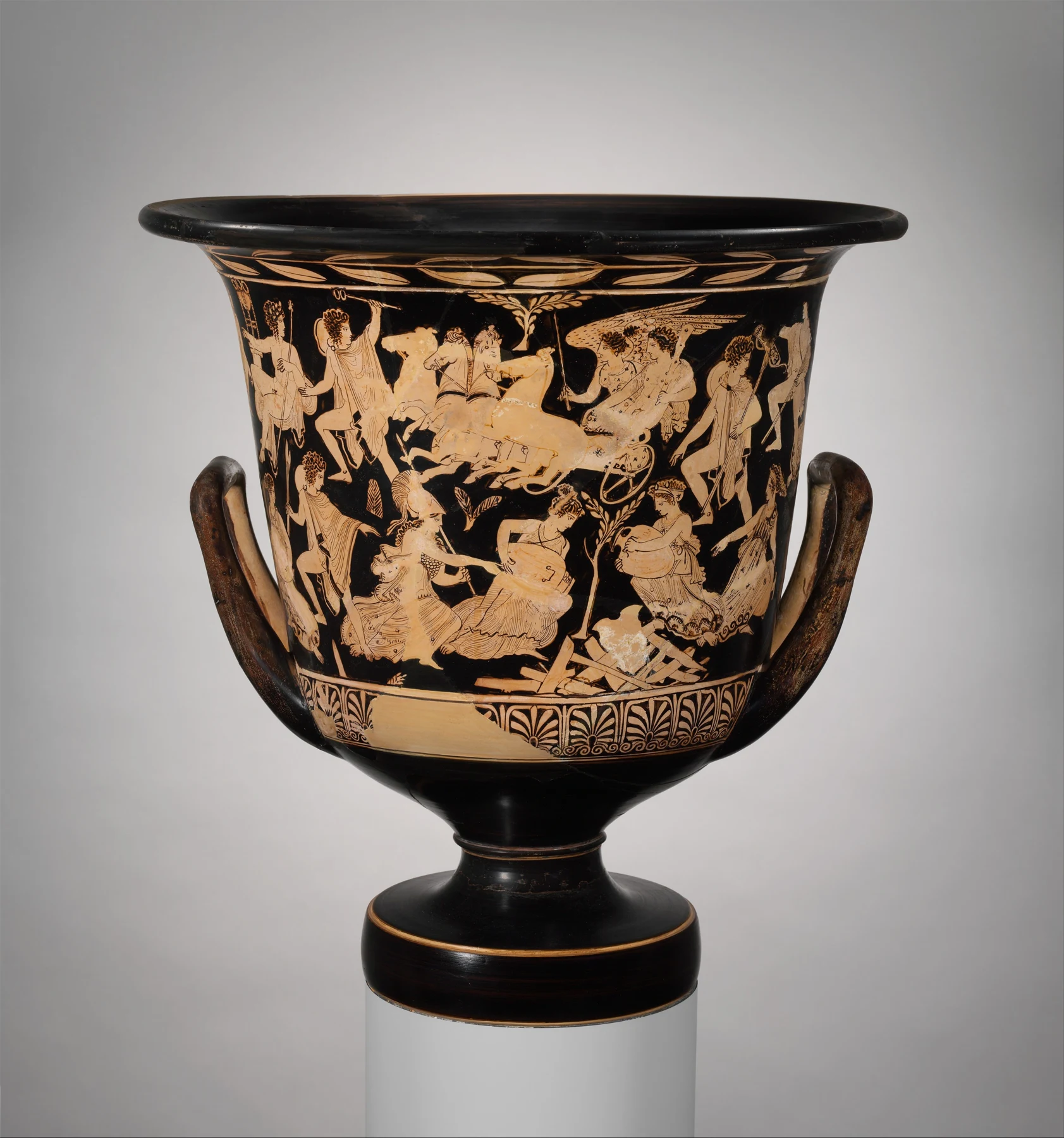
Attic red-figure vessel, 4th century BCE; depicts Heracles’s apotheosis, not Alcestis’s rescue. Metropolitan Museum, 52.11.18; public-domain photograph
Entität
Attribution of divine standing to a hero, person or ruler in narrative, worship or official recognition; distinct from mere immortality, hero cult or return to life.
Namensvarianten: apotheosis
Kontext und Quellen →
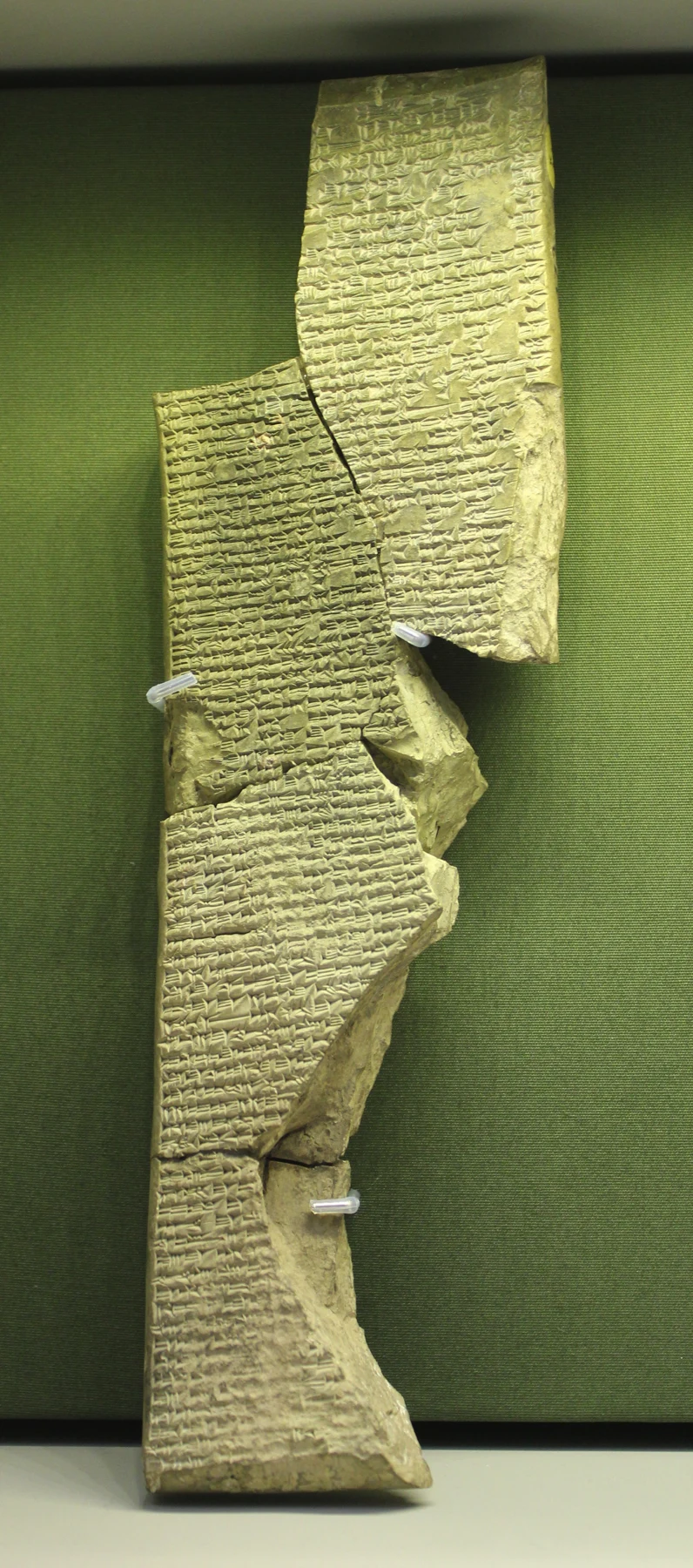
Cuneiform witness K.3473 (CDLI P365283) to Tablet III of Enuma Elish, Nineveh/Kuyunjik, Neo-Assyrian period; British Museum. A manuscript photograph, not Tablet I or a depiction of Apsû
Entität
Apsû: primordial watery ancestor in Enuma Elish, killed by Ea after plotting against the younger gods. Ea’s sanctuary later bears the same name; distinct in context from the broader cosmic Abzu.
Namensvarianten: Apsû, Apsu
Kontext und Quellen →
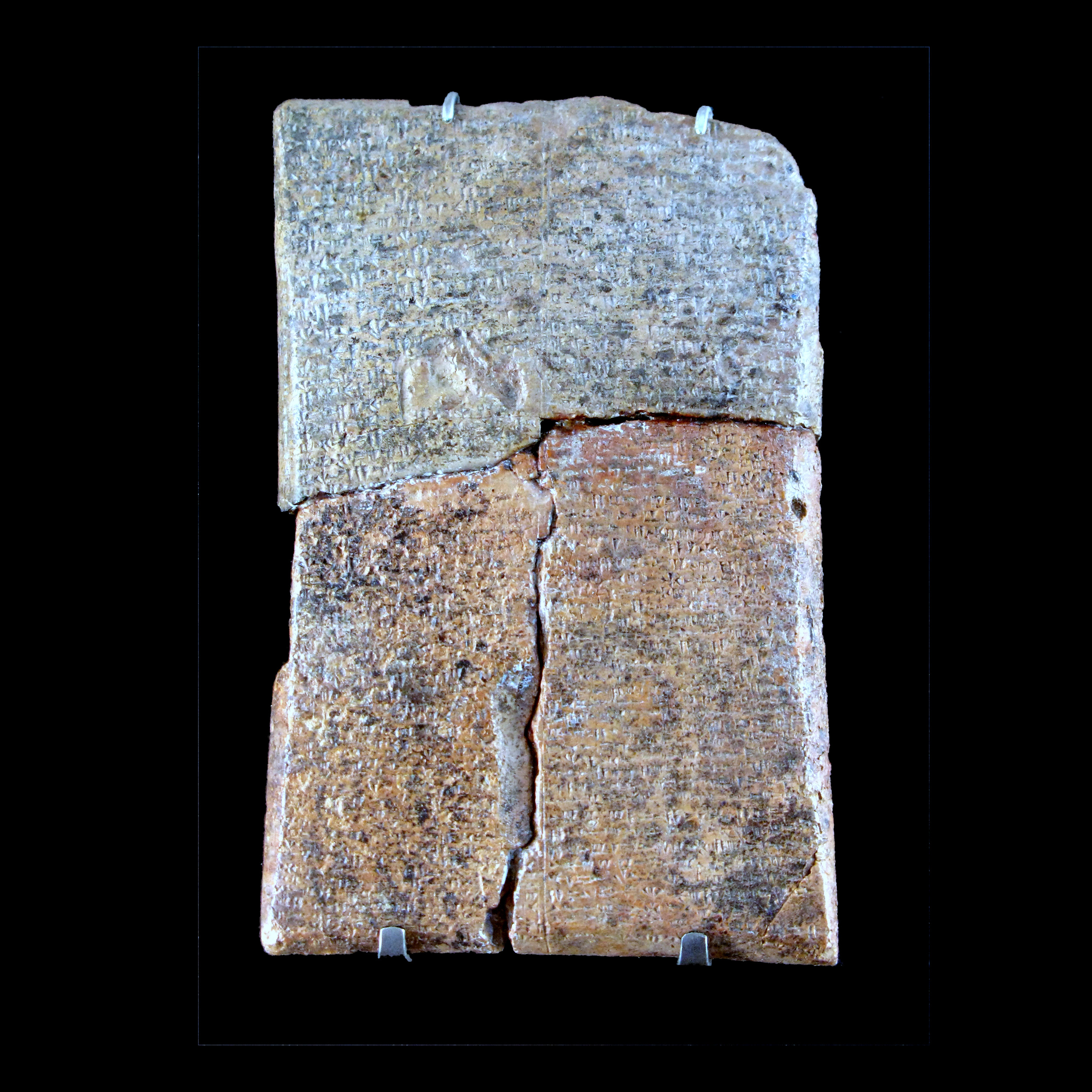
Third tablet of the Tale of Aqhat, KTU 1.19, Louvre AO 17323, from Ras Shamra; museum dating 1400–1200 BCE. This is not the first tablet, KTU 1.17, with its damaged colophon
Antiker Text
Ugaritic poetic narrative in three tablets about Aqhat, Danel’s son; attribution to Ilimilku relies on comparison, with his name restored in a damaged colophon.
Namensvarianten: Tale of Aqhat
Kontext und Quellen →
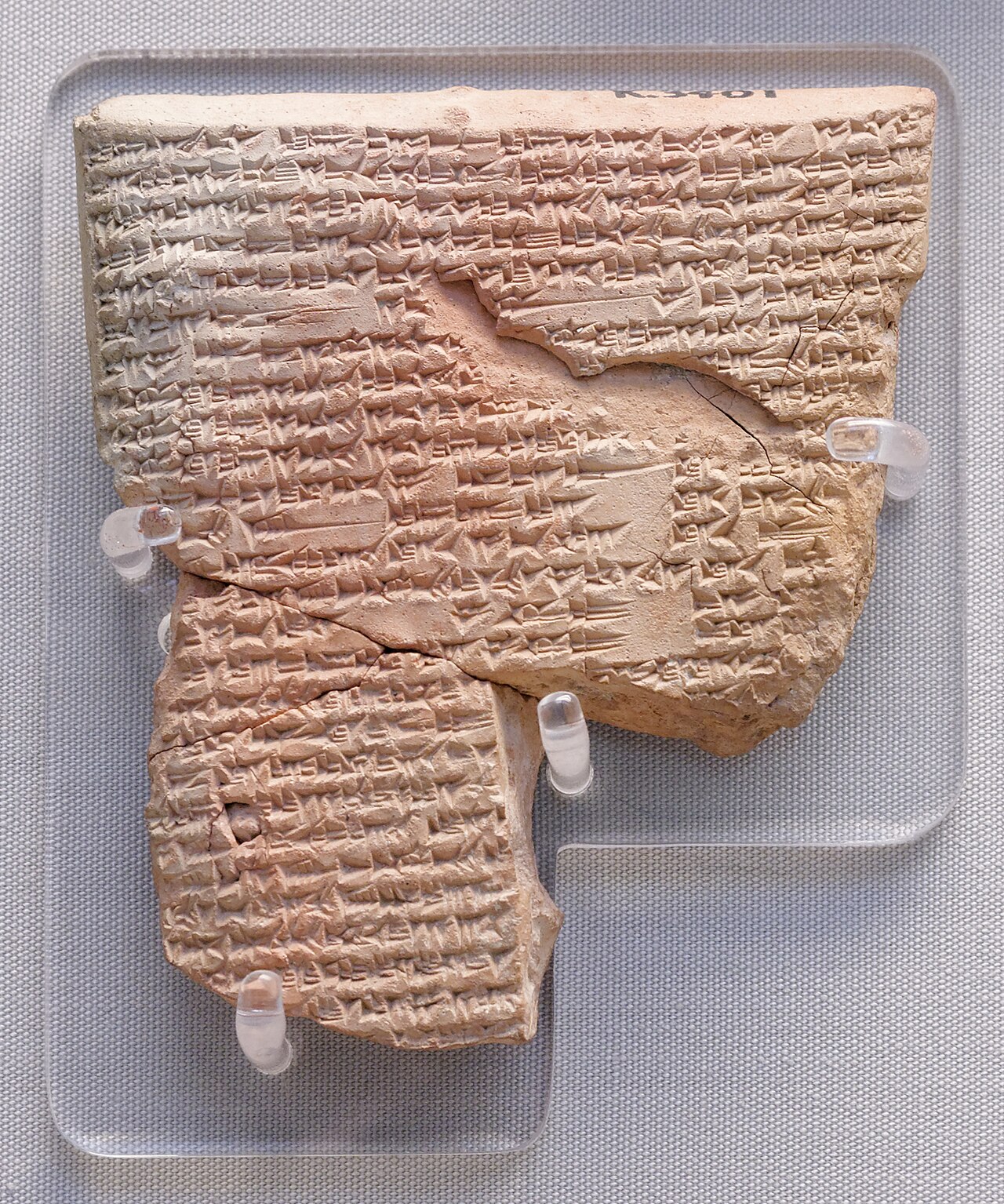
A clay tablet from Nineveh preserving Sargon’s birth legend, in which Aqqi is the irrigator who adopts the child. A seventh-century BCE Assyrian copy, British Museum K.3401. Photograph by Marie-Lan Nguyen, 2012; the narrative is later than the king’s lifetime
Person
Aqqi is the irrigator who finds the child in the river and adopts him in Sargon of Akkad’s birth story
Namensvarianten: Aqqi, Akki
Kontext und Quellen →

Modern abstract composition of blue and gold calligraphic ribbons, evoking the study of religious vocabulary rather than depicting an actual historic inscription
Entität
ʾIlāh: Arabic common noun for a god or deity, with the broken plural āliha; distinct from the specific designation Allāh and understood from context.
Namensvarianten: ilah, ʾilāh, aliha
Kontext und Quellen →
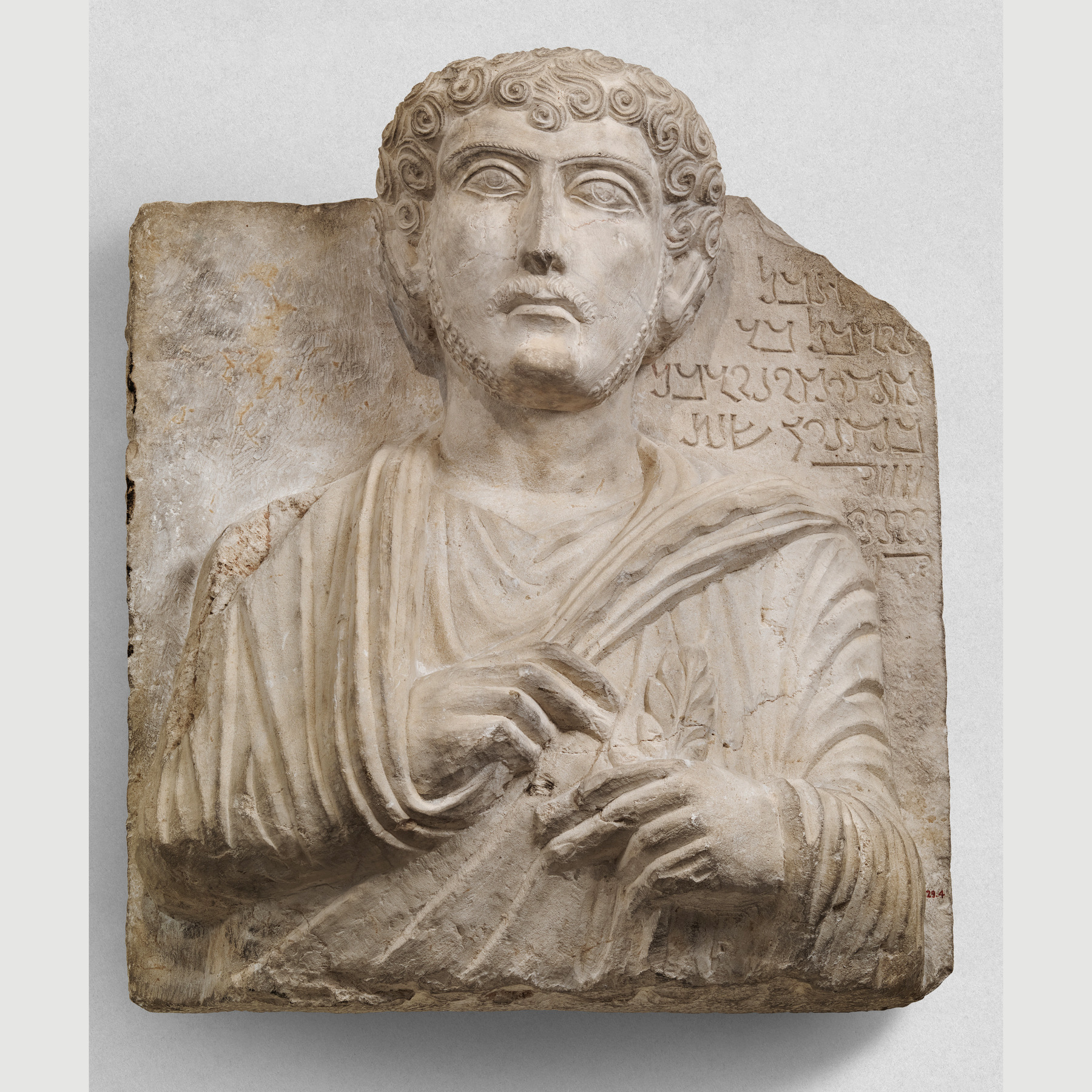
Limestone funerary relief from Palmyra, ca. 181 CE; The Met, 02.29.4. Its Palmyrene Aramaic inscription identifies the deceased, his ancestry, and a date. This is a cropped, modestly tone-adjusted museum photograph, not an example of every Aramaic dialect
Entität
Northwest Semitic language varieties documented since the early first millennium BCE, including Old and Imperial Aramaic, Syriac, Jewish dialects, and living Neo-Aramaic forms.
Namensvarianten: Aramaic
Kontext und Quellen →
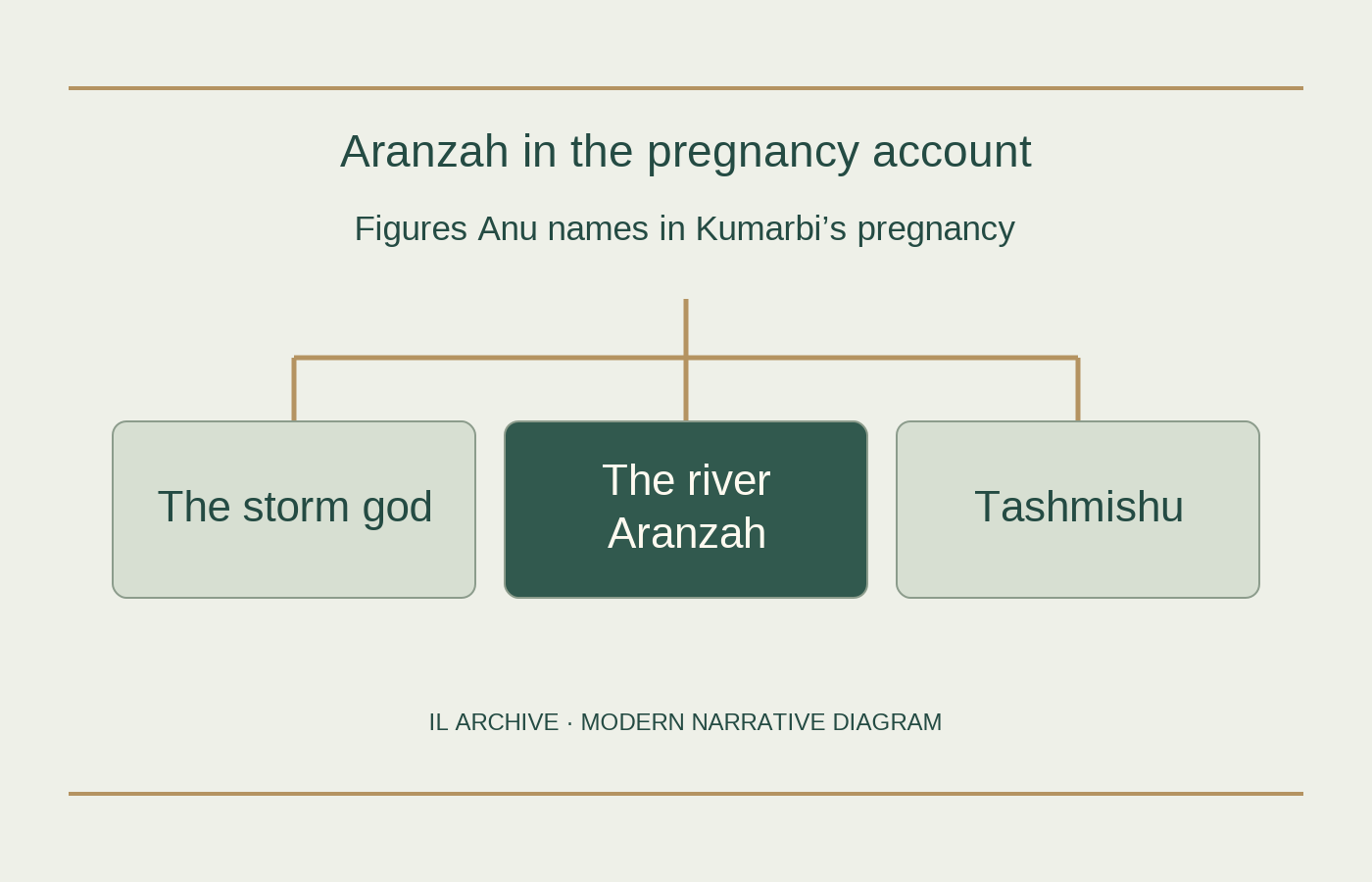
Modern diagram of Kumarbi’s pregnancy list, highlighting Aranzah as a river divine figure. Branches group names in the scene; not a river map or the order of every birth event
Entität
River as a divine figure, named among those Kumarbi carries in the Hittite song.
Namensvarianten: Aranzah, Aranzakh
Kontext und Quellen →
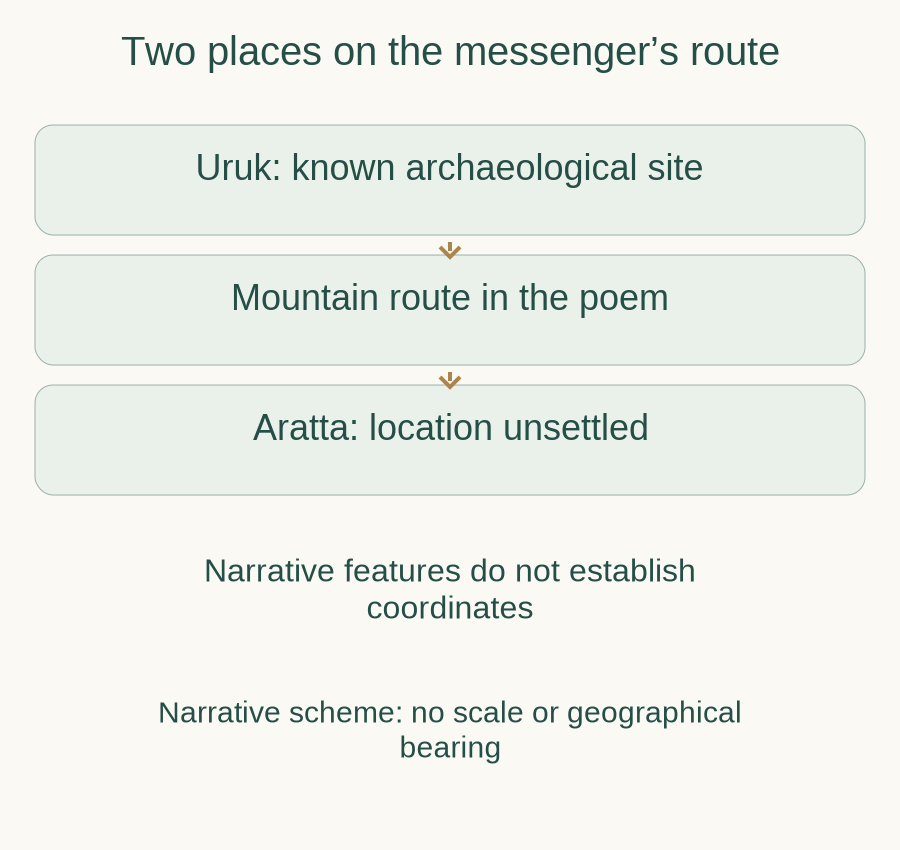
Modern IL Archive explanatory diagram: Two places on the messenger’s route. Not a reproduction of an ancient artifact
Stätte
Aratta is a place in Sumerian literature visited by Uruk’s messenger in Enmerkar’s story; its historical location is unsettled.
Namensvarianten: Aratta
Kontext und Quellen →
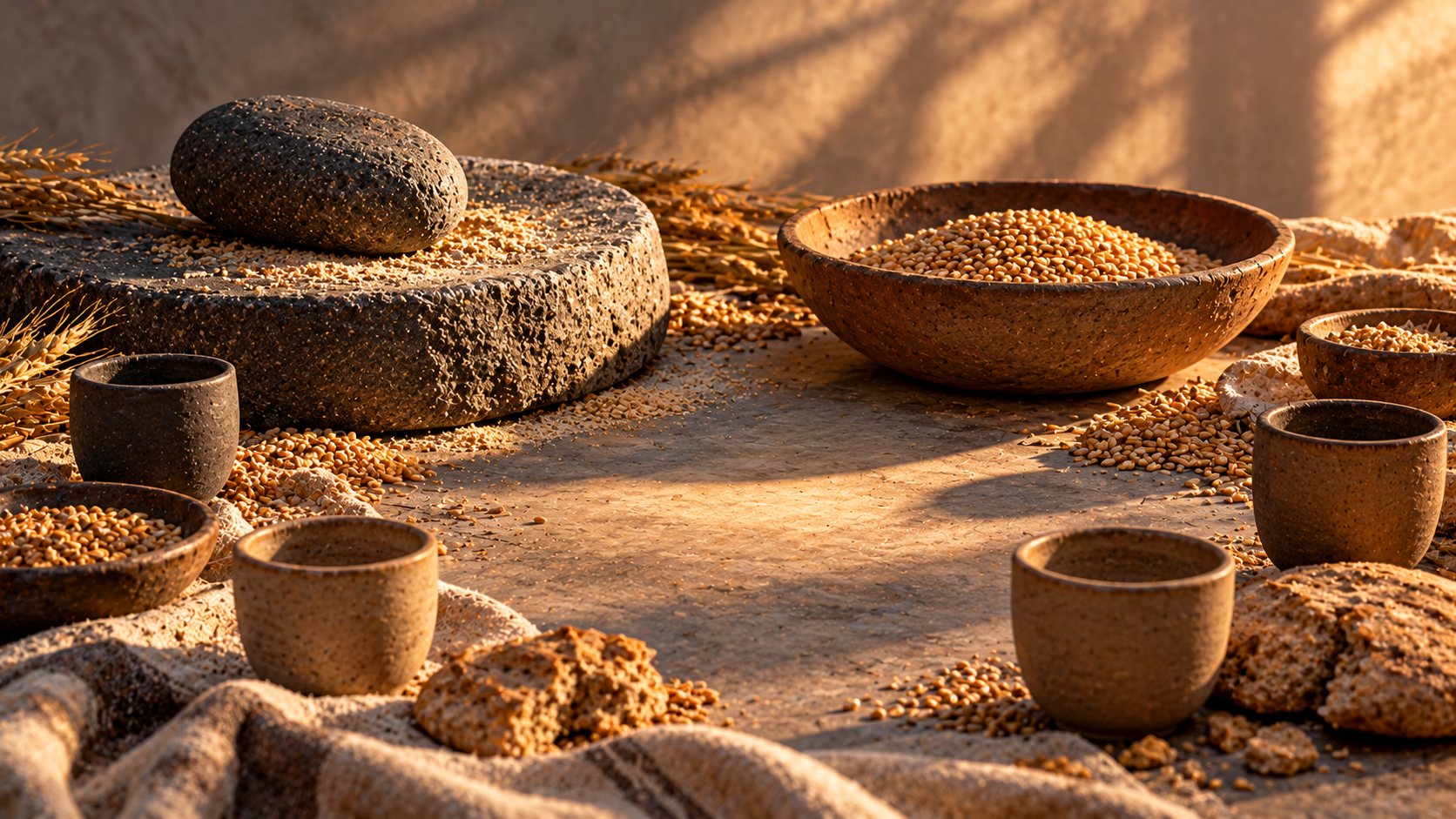
Modern AI-generated conceptual still life linking grain, grinding and shared food to the work-feasting model; not an archaeological photograph or a historical reconstruction of Göbekli Tepe
Entität
An interpretive model connecting collective labour and hospitality: food accompanies participation in a project. Proposed for some Göbekli Tepe evidence, it does not establish the details of a particular feast.
Namensvarianten: work feasting, work feast, work feasts
Kontext und Quellen →
Person
Northwest Semitic scholar studying ancient Israel and its neighbours, and coauthor of a linguistic study of Lotan and Leviathan.
Namensvarianten: Aren Wilson-Wright
Kontext und Quellen →
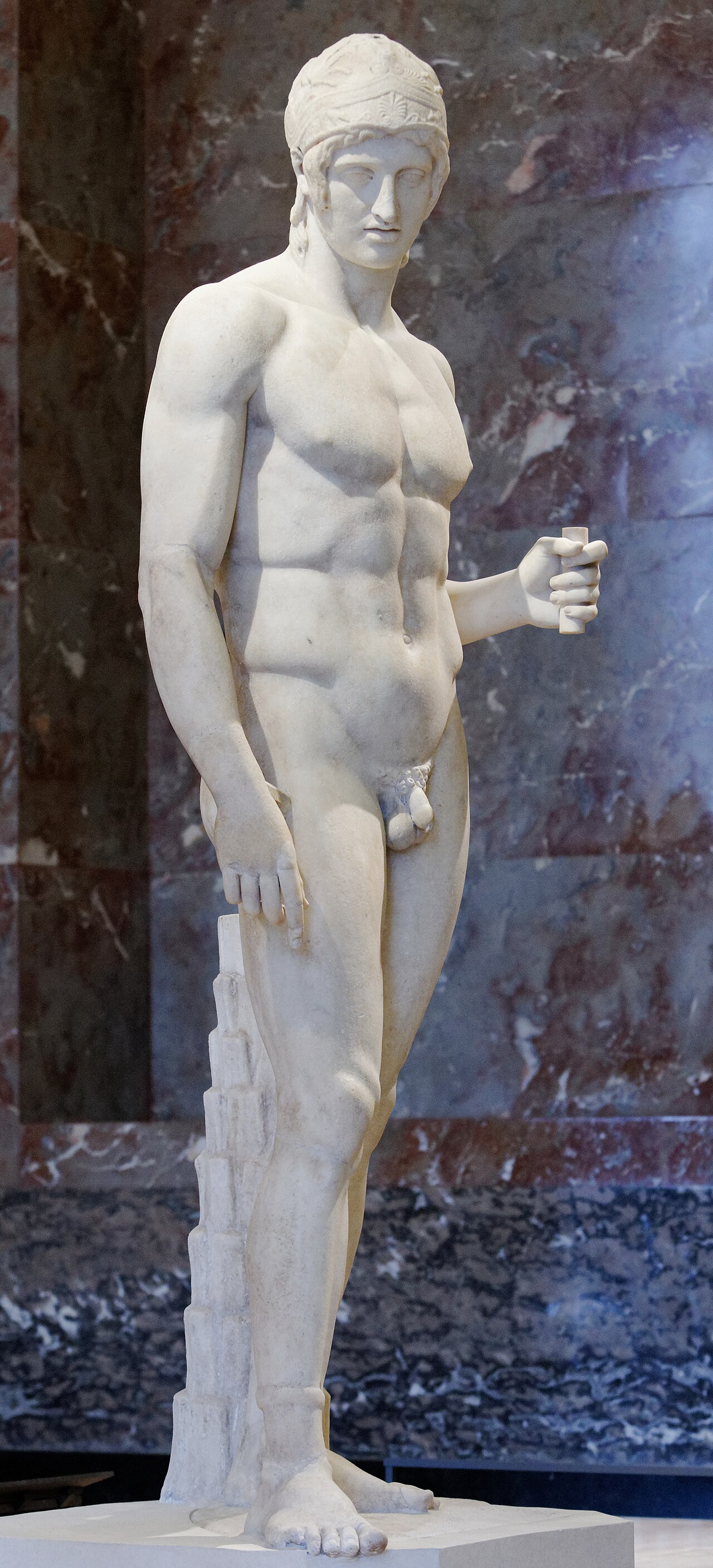
Roman statue of the “Borghese Ares” type, held by the Louvre, Ma 866. The type’s name and identification do not make it a contemporary image of Iliadic scenes
Entität
God of war in Greek traditions and a participating figure in the Iliad.
Namensvarianten: Ares
Kontext und Quellen →
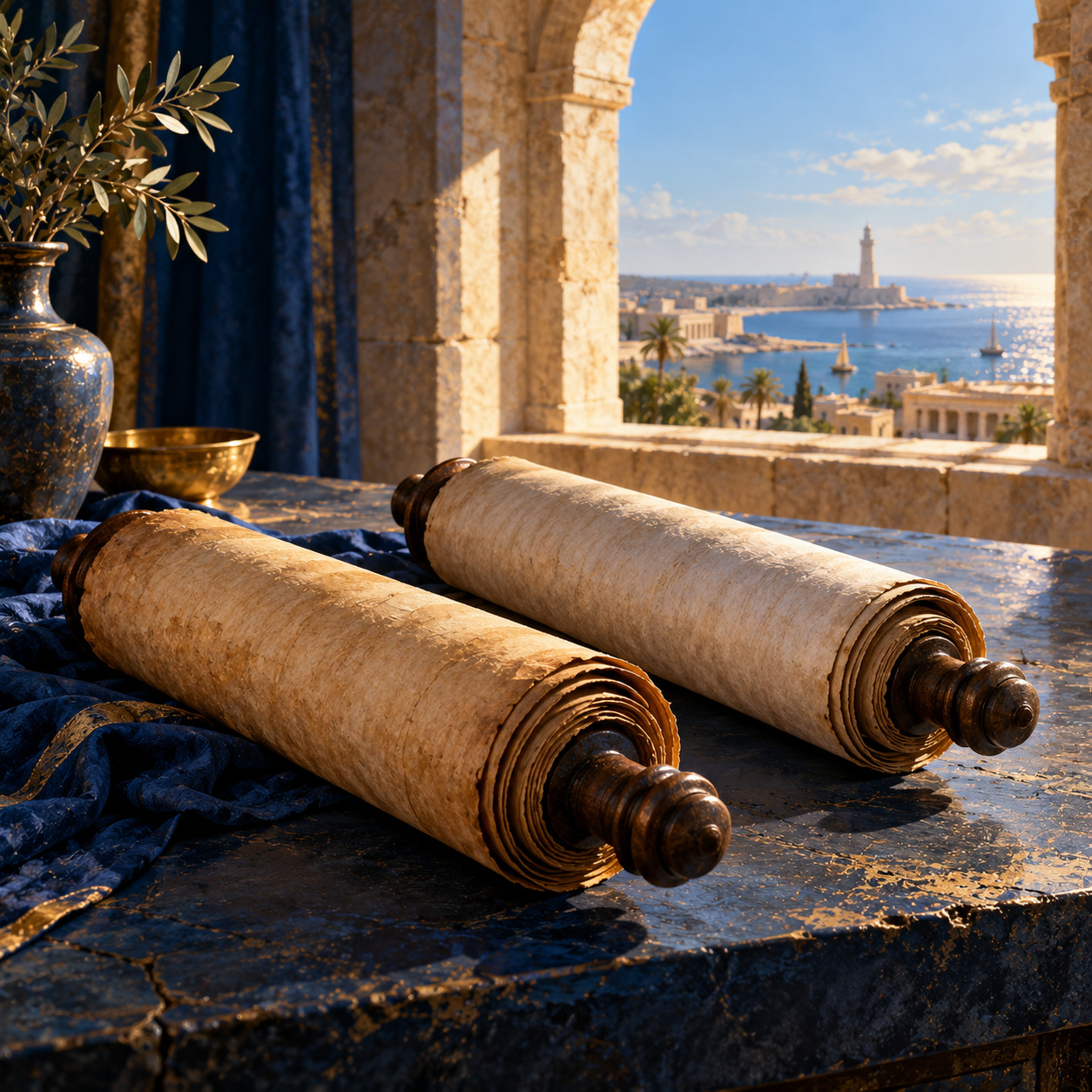
Modern AI-generated conceptual cover: two imagined scrolls before a stylized Mediterranean harbour evoke the Torah’s translation into Greek. Neither an ancient manuscript photograph nor a documented reconstruction of Alexandria or the Pharos lighthouse
Entität
Greek Alexandrian Jewish composition, probably second century BCE, portraying the translation of Mosaic Law under Ptolemy II. A literary witness to the reception of the Septuagint, not contemporary minutes or an account of Torah composition.
Namensvarianten: Letter of Aristeas, Aristeas to Philocrates
Kontext und Quellen →
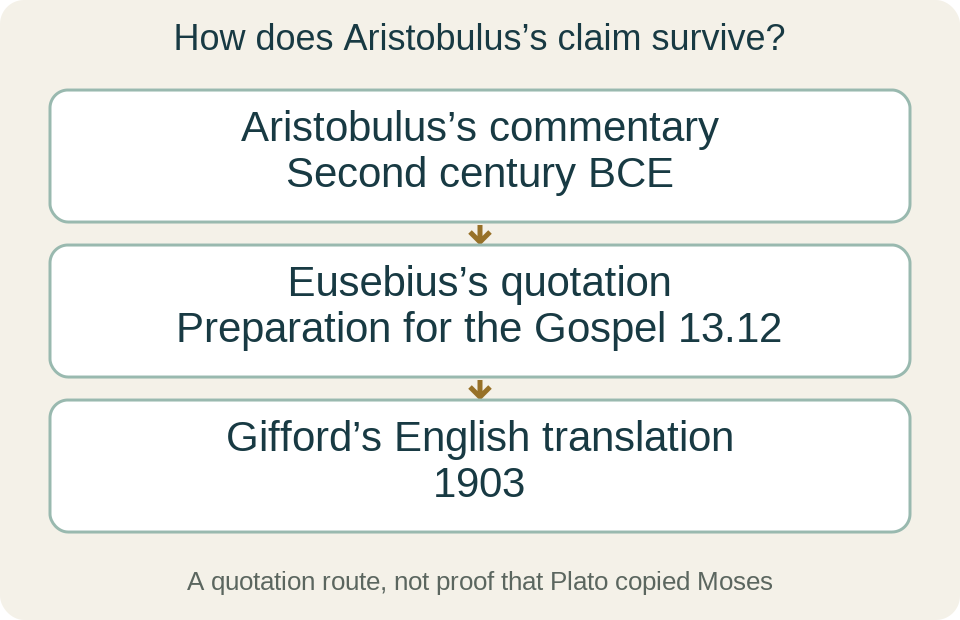
Modern diagram of the fragment’s mediation: a claim attributed to Aristobulus, quoted by Eusebius, then the English translation published in 1903. Arrows transmit the claim without validating it
Person
Alexandrian Jewish author usually dated to the second century BCE, whose interpretation of the law survives in later quotations.
Namensvarianten: Aristobulus Jewish interpreter, Aristobulus
Kontext und Quellen →
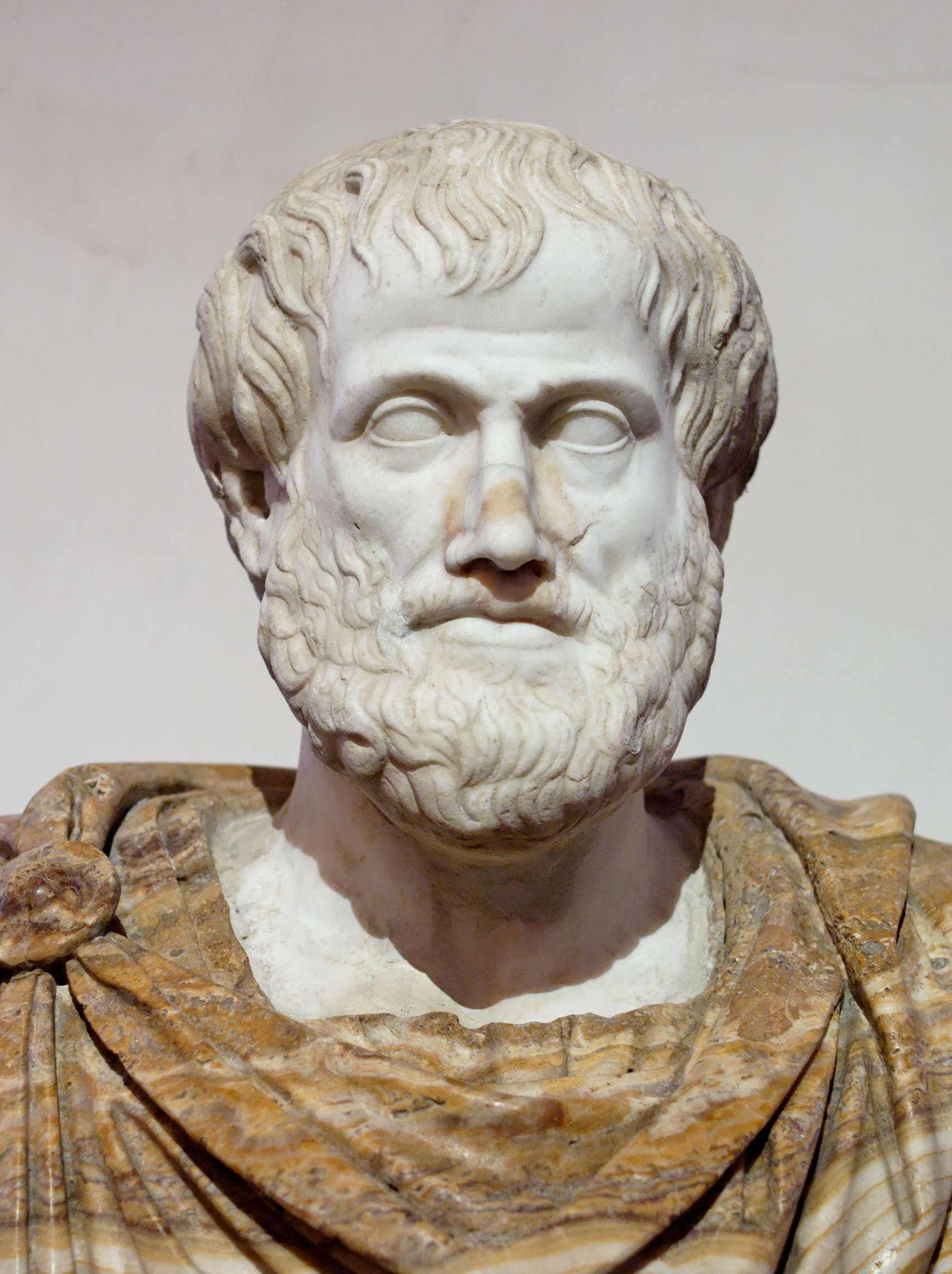
Bust of Aristotle, Palazzo Altemps, Rome, inventory 8575. A Roman marble copy after a Greek model; the alabaster mantle is a modern addition. Photograph by Jastrow, 2006. This is not a sculpture made during Aristotle’s lifetime
Person
Aristotle (384–322 BCE) was a Greek philosopher who studied nature, life and thought. His writings influenced later religious philosophies.
Namensvarianten: Aristotle, Aristotelēs
Kontext und Quellen →
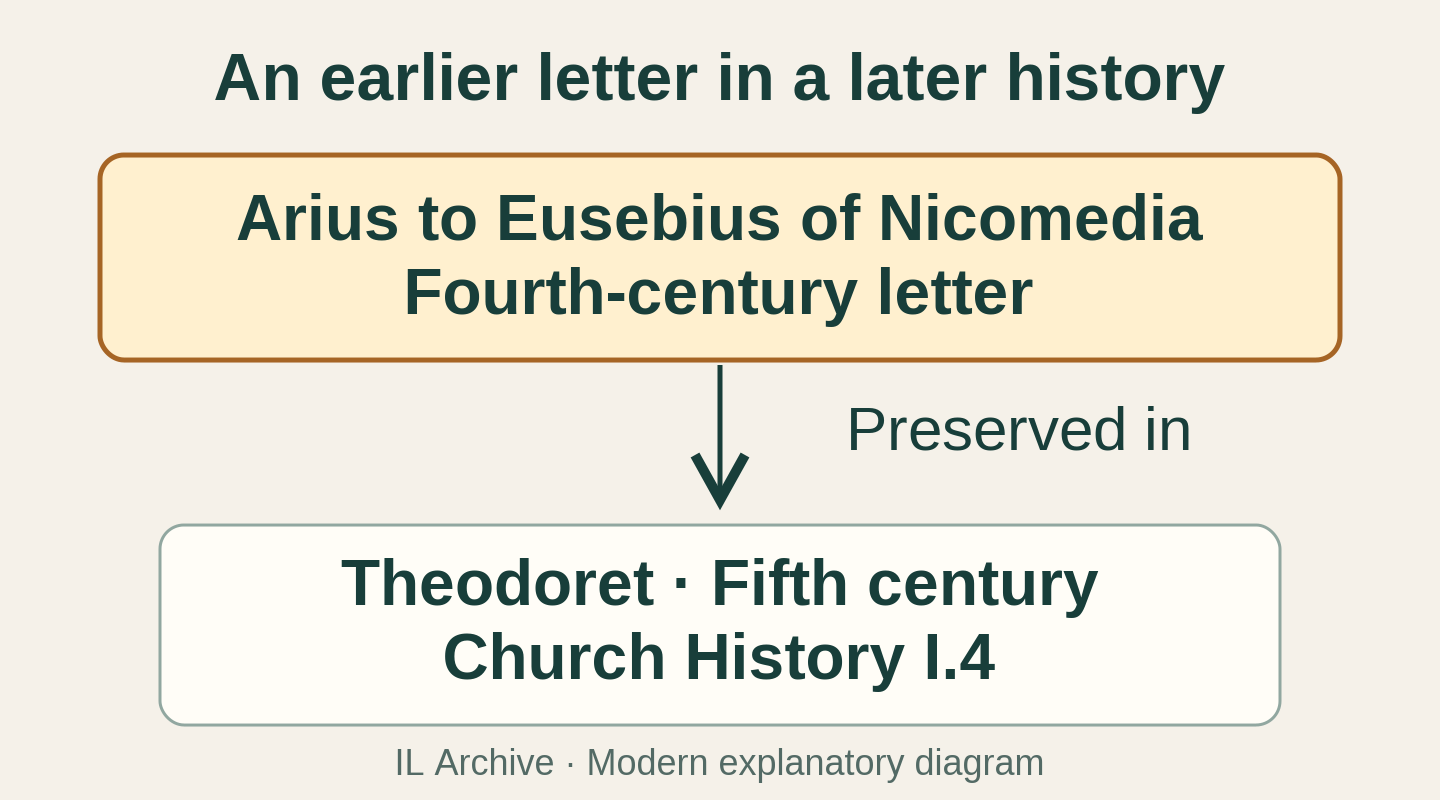
Modern diagram separating Arius’s fourth-century letter to Eusebius of Nicomedia from preservation in Theodoret’s fifth-century Church History. Highlighting marks the letter; the arrow represents transmission, not a complete documented manuscript chain
Person
Early fourth-century Alexandrian presbyter associated with disputes over the Son.
Namensvarianten: Arius
Kontext und Quellen →
Person
Historian of ancient Judaism and maître de conférences émérite at EPHE–PSL, examining how definitions of monotheism affect its dating.
Namensvarianten: Arnaud Sérandour
Kontext und Quellen →
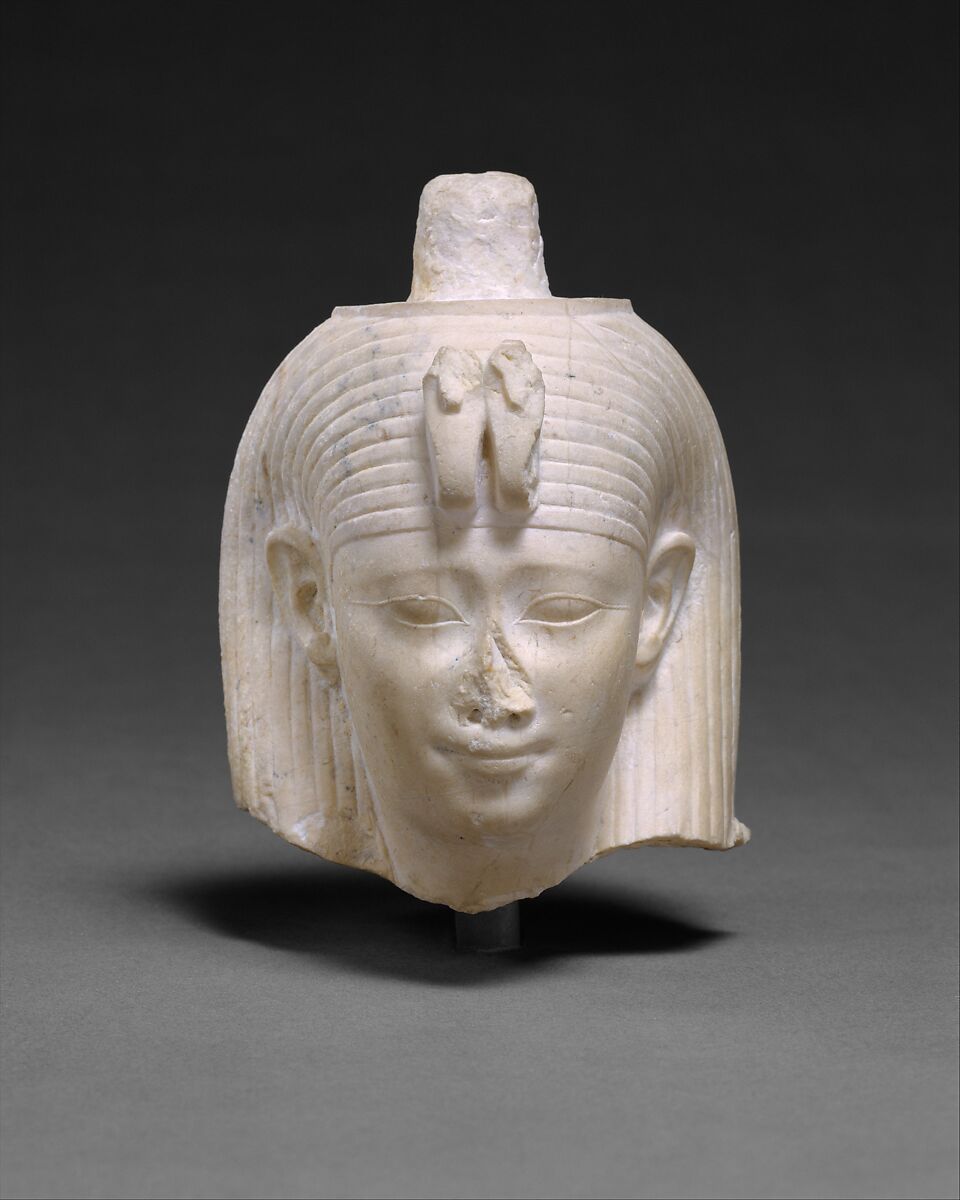
Limestone head attributed to Arsinoe II, 278–270 BCE, The Met 38.10. The dates refer to the object; its identification with the queen is tentative
Person
Third-century BCE Ptolemaic queen, sister-wife of Ptolemy II, represented on royal coinage.
Namensvarianten: Arsinoe II
Kontext und Quellen →
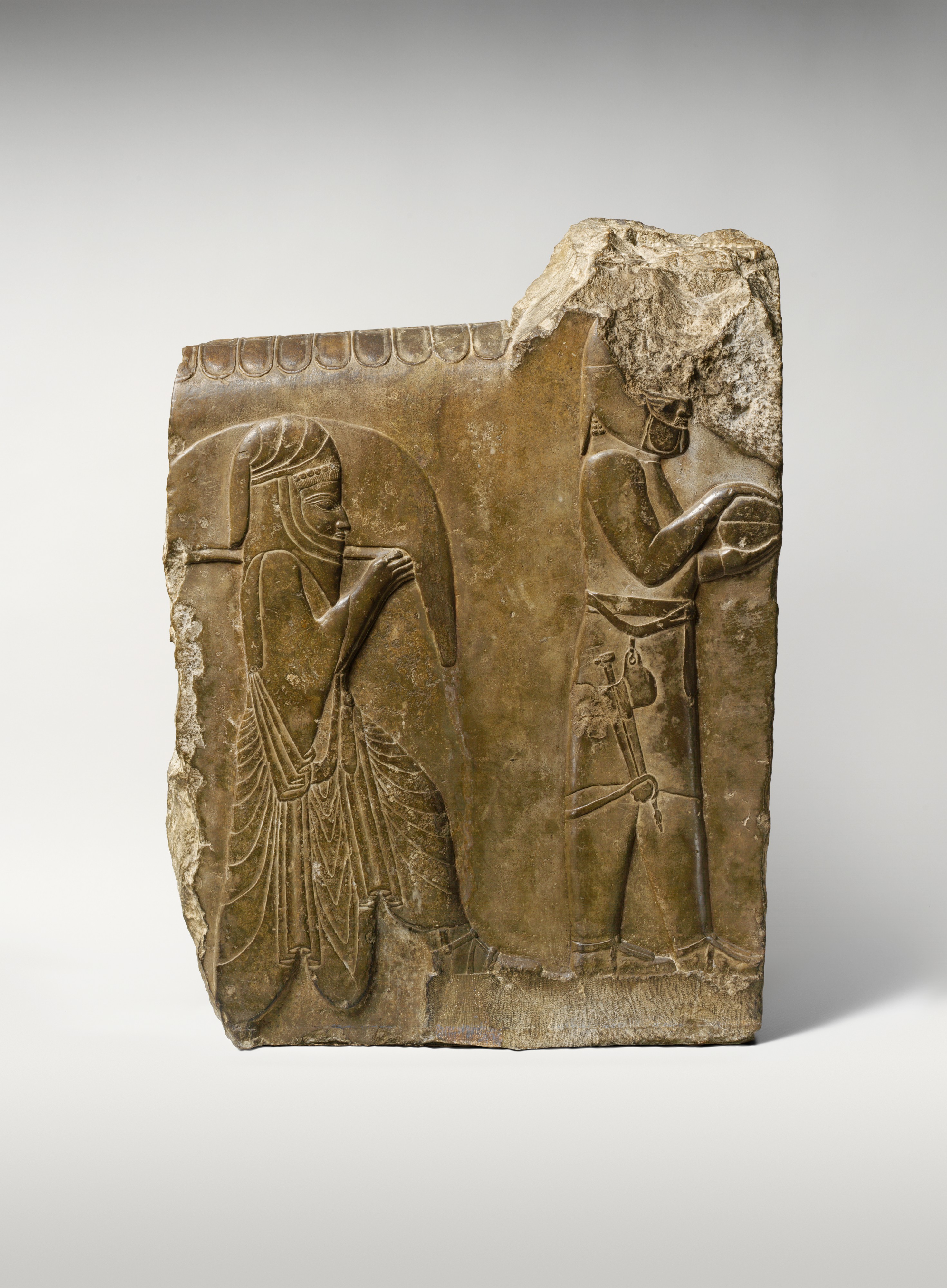
Servants carrying food and drink,Persepolis,about 358–338 BCE,assigned by the museum to ArtaxerxesIII’s reign; Met 34.158. An artifact of his period, not his portrait
Person
Fourth-century BCE Achaemenid king, more than a century after Xerxes I; the museum assigns the servants relief to his reign.
Namensvarianten: Artaxerxes III
Kontext und Quellen →