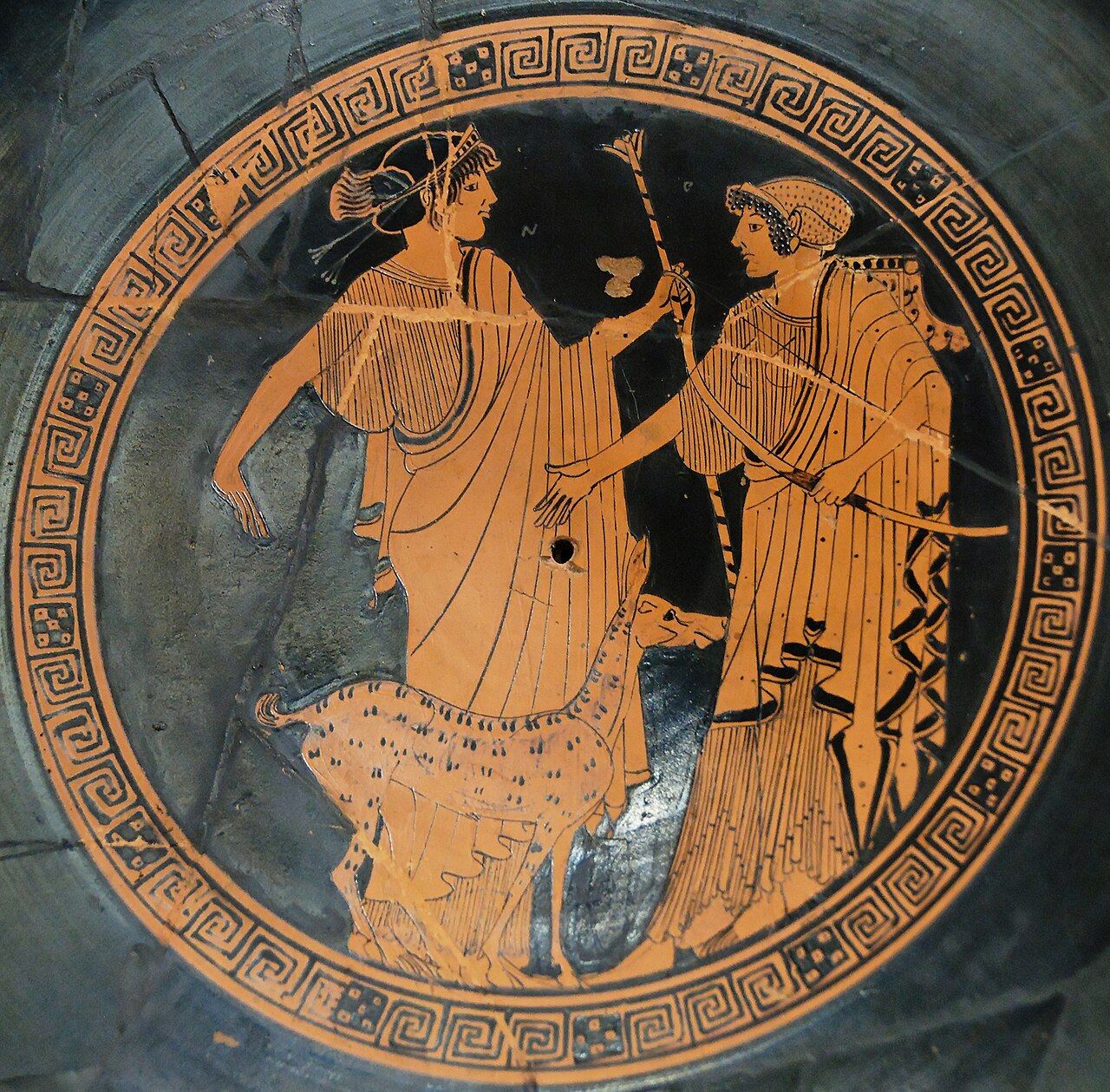
Apollo and Artemis with a deer inside an Attic cup of about 470 BCE; Louvre Cp 1005 / G 151. Archaeological evidence for representations of the two deities
Entität
Goddess of hunting in Greek traditions and Apollo’s sister, named among the divine company in the Iliad.
Namensvarianten: Artemis
Kontext und Quellen →
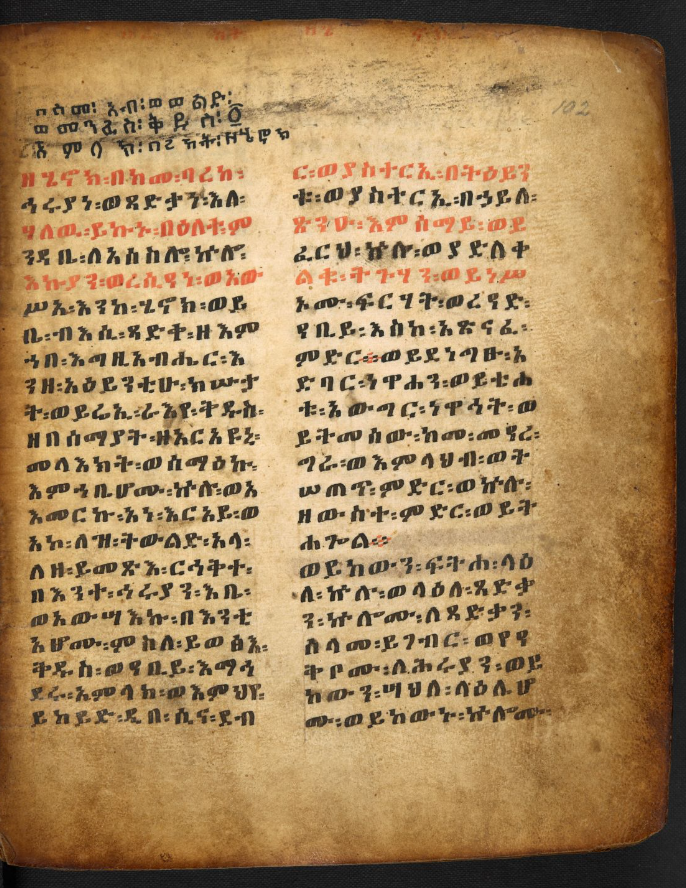
Beginning of First Enoch in Geʽez, British Library Or. 485, fol. 102r, sixteenth century. Evidence of the book’s transmission, not a portrait of Azazel or the page containing his punishment
Entität
Asael is a punished angelic teacher in First Enoch; Azazel is a name whose referent in the wilderness rite of Leviticus 16 is disputed. Later traditions connect them, without establishing one unchanging identity across all witnesses.
Namensvarianten: Asael, Asahel, Azazel
Kontext und Quellen →
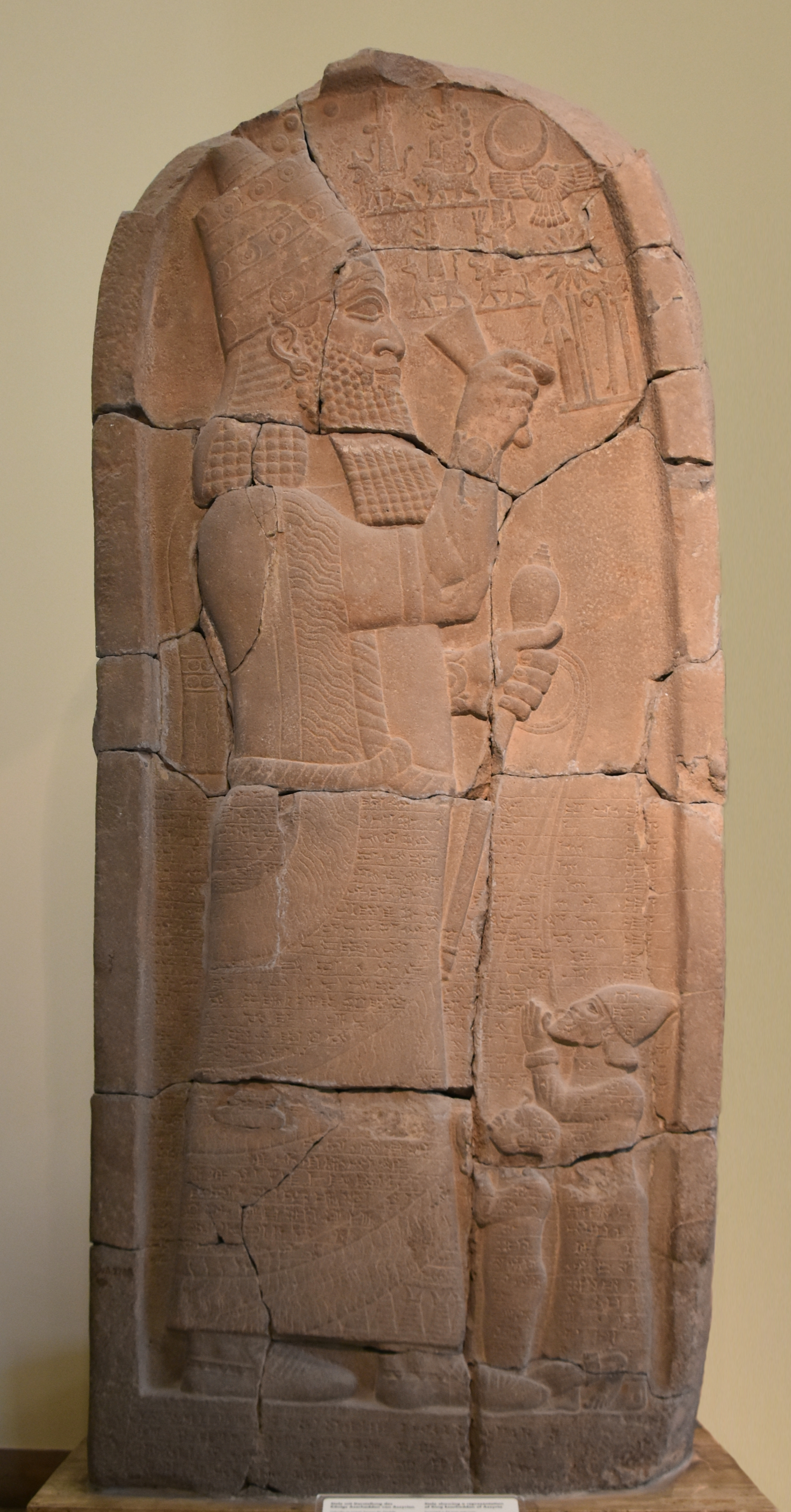
Victory stele of Esarhaddon, seventh century BCE, Berlin collection, showing king and captives. Royal representation, not Ahiqar. Published crop of Richard Mortel’s photograph
Person
Sennacherib’s son and successor, Assyrian king in 680–669 BCE, named in Ahiqar and Tobit.
Namensvarianten: Esarhaddon, king of Assyria, Esarhaddon
Kontext und Quellen →
Entität
The 'king of demons' in the Babylonian Talmud's Gittin 68 story about Solomon and the shamir.
Namensvarianten: Ashmedai
Kontext und Quellen →
Person
Hebrew Bible scholar of authority and ritual, proposing an interpretation of the suspected wife’s impurity.
Namensvarianten: Aslan Cohen Mizrahi
Kontext und Quellen →
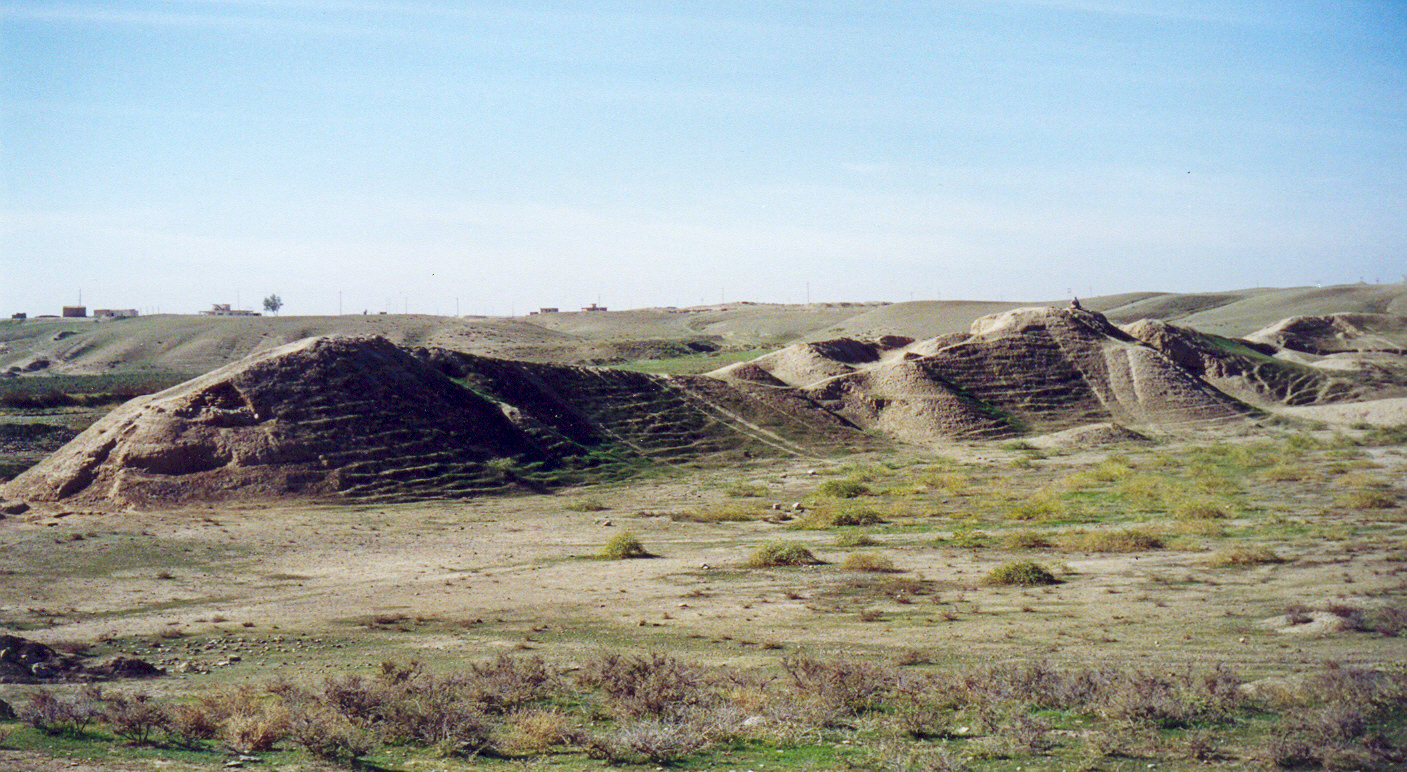
Archaeological remains at Ashur, Qal’at Sherqat, Iraq, photographed by Véronique Dauge for UNESCO. Capture date unestablished; a site view, not the Assyrian law tablet
Stätte
Ancient Tigris city in Iraq, an Assyrian political and religious centre.
Namensvarianten: Ashur, Assur, Qal’at Sherqat
Kontext und Quellen →
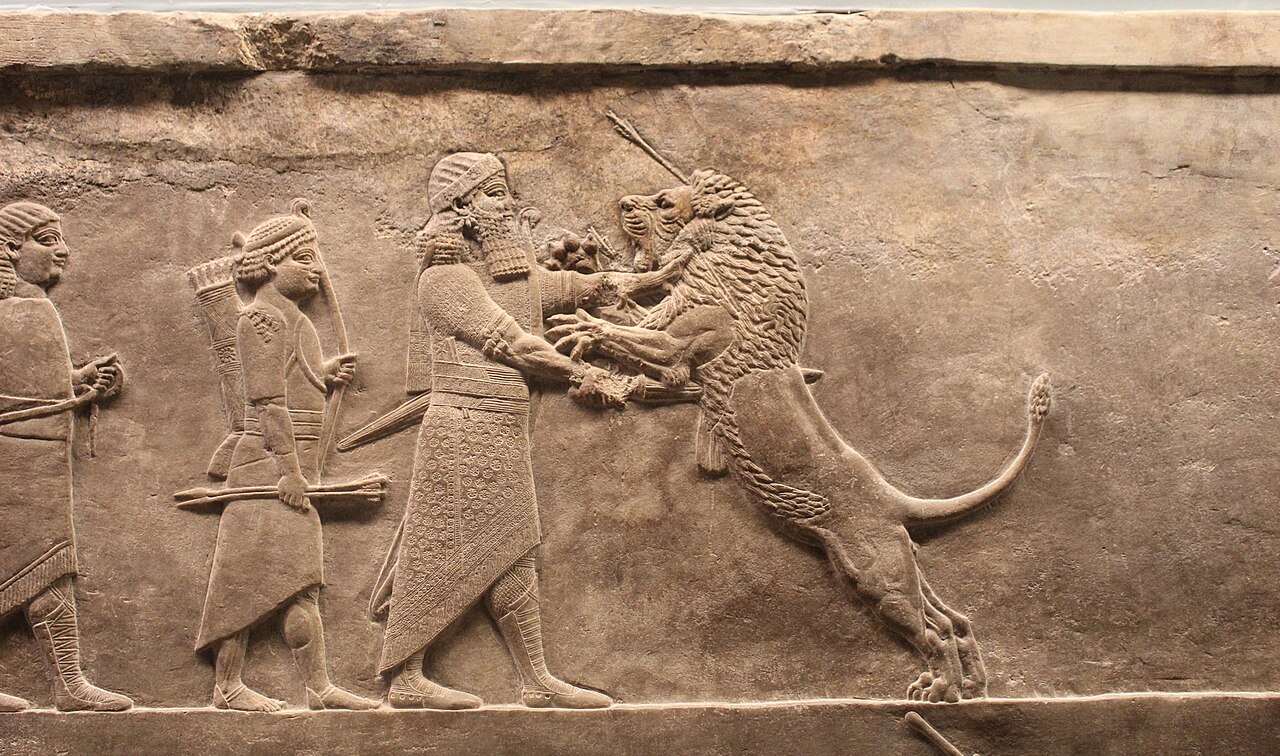
Ashurbanipal stabs a lion in a relief from the North Palace at Nineveh, around 645–635 BCE, now in the British Museum. Attendants accompany the king in this royal hunting scene. Photograph taken on 9 March 2020
Person
Ashurbanipal was an Assyrian king of the seventh century BCE, reigning about 668–631 BCE
Namensvarianten: Ashurbanipal, Assurbanipal
Kontext und Quellen →
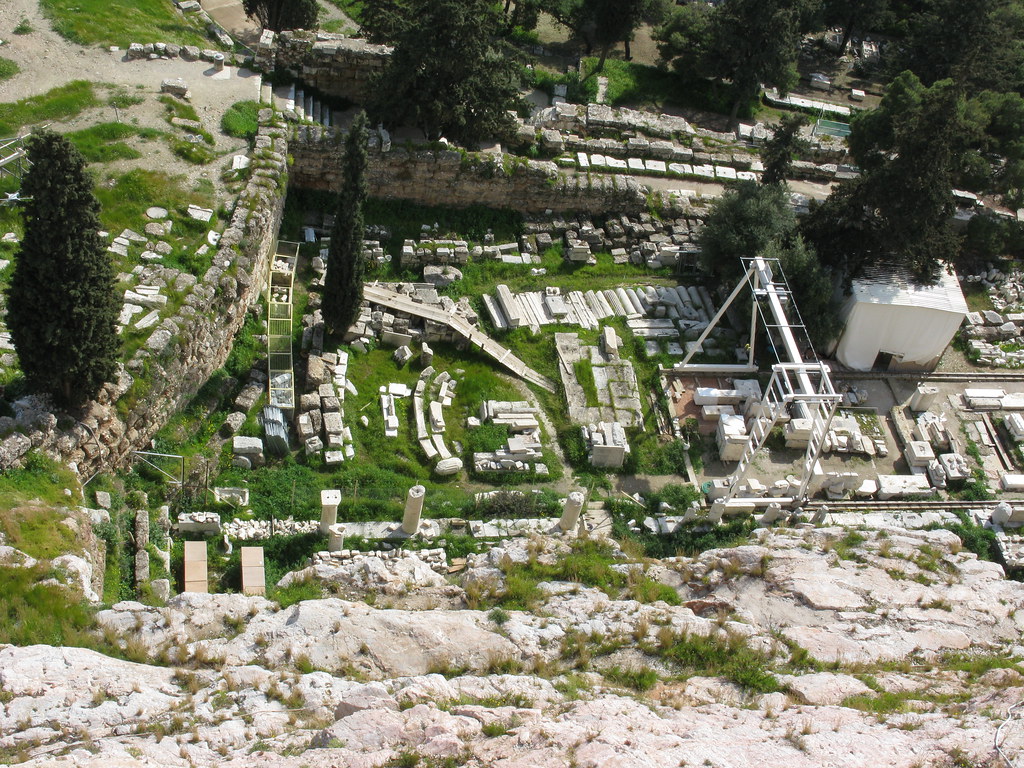
Athens: Asklepieion remains on the Acropolis’s south slope,22 March2009. Archaeological layers and modern conservation structures, not an Adonia ritual
Stätte
Athens is a Greek city renowned in antiquity for philosophy, arts and political institutions, preserving the Acropolis and monuments from several periods.
Namensvarianten: Athens
Kontext und Quellen →
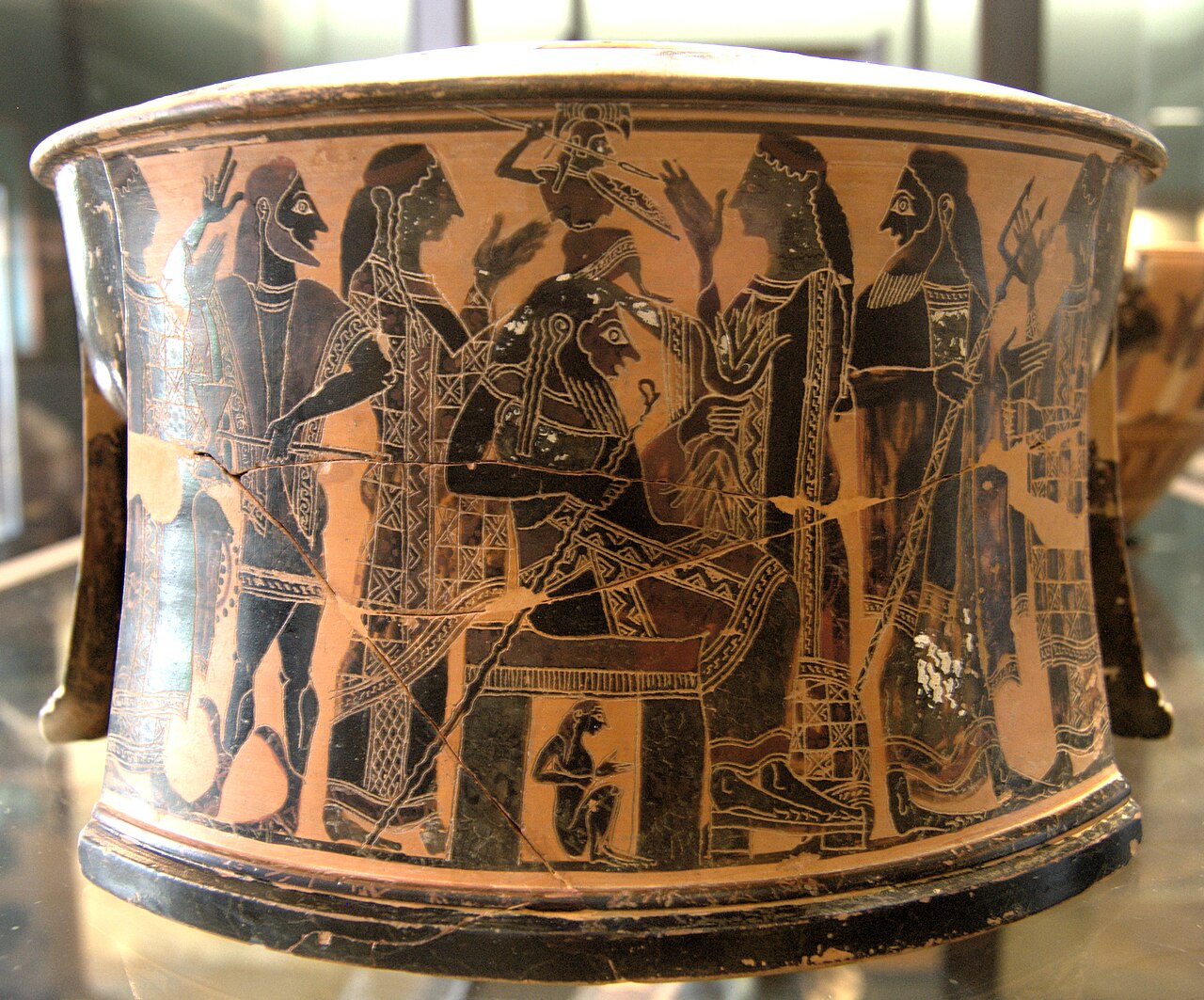
Athena’s birth from Zeus’s head on an Attic vessel, about 570–560 BCE, Louvre CA 616. Bibi Saint-Pol, 1 June 2007. An ancient artistic witness; the museum records restorations to the vessel
Entität
Greek goddess associated in Hesiod with Zeus, Metis and birth from the head.
Namensvarianten: Athena
Kontext und Quellen →
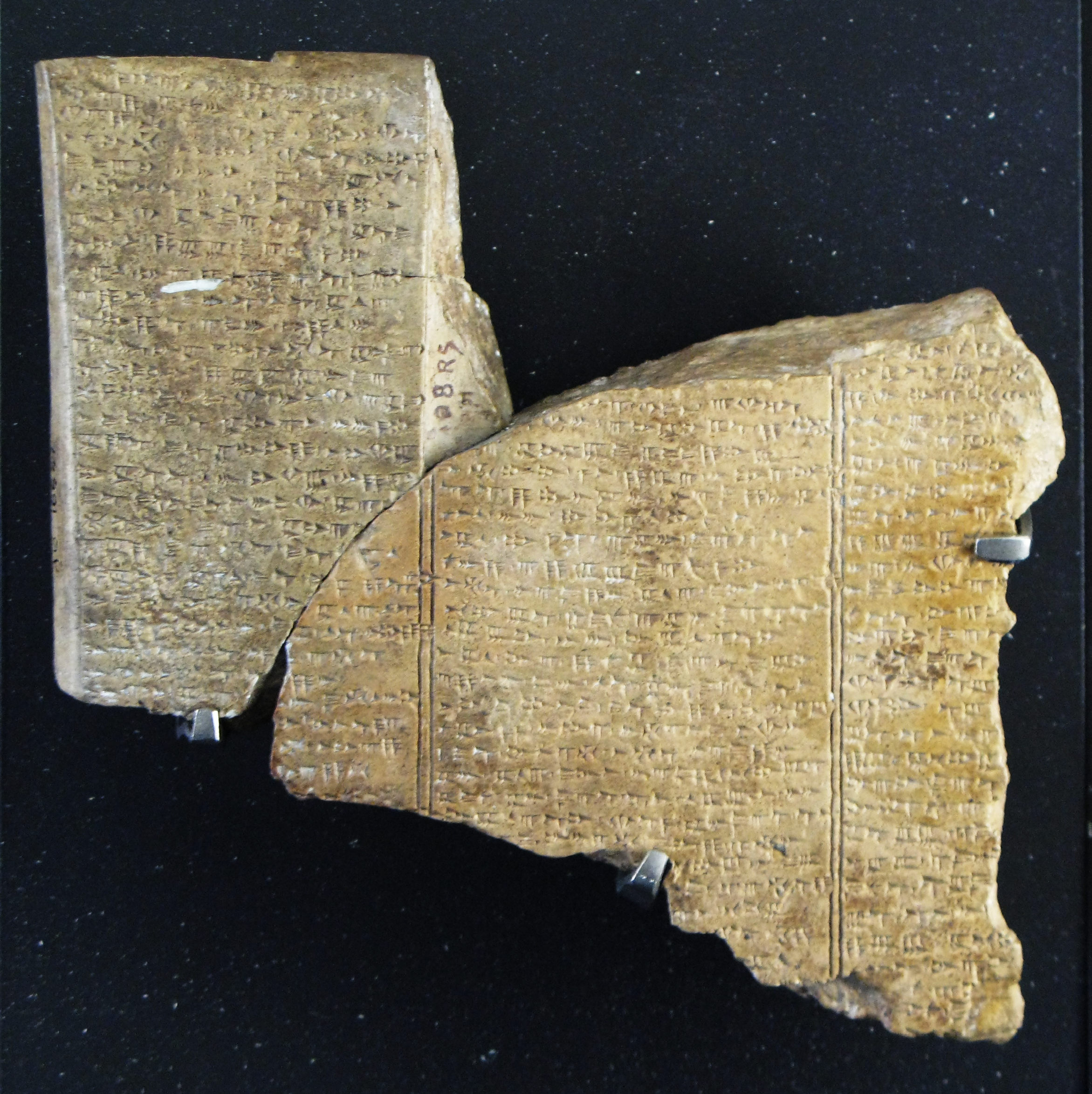
Baal Cycle tablet AO 16641 and AO 16642, from Ugarit, about 1400–1200 BCE; Louvre Museum. Context for the literature in which Athirat appears, not a depiction of the goddess. It preserves KTU 1.5, not the palace and seventy-sons passage in KTU 1.4 discussed here
Entität
A prominent goddess commonly understood as El’s consort in Ugaritic texts; she bears the progenitress epithet and intercedes for Baal’s palace.
Namensvarianten: Athirat, Asherah
Kontext und Quellen →
Modern AI-generated expressive image of symbolic mountains, ruins and a star; neither a scholarly reconstruction of Saphon or Athtar’s temple at Barāqish nor a photograph of an ancient object
Entität
Deity who tries Baal’s throne in a Ugaritic myth and descends; the name Athtar also occurs in ancient South Arabian inscriptions and local cults. The text does not describe a revolt against El.
Namensvarianten: Athtar, ʿAthtar, ʿAṯtar
Kontext und Quellen →
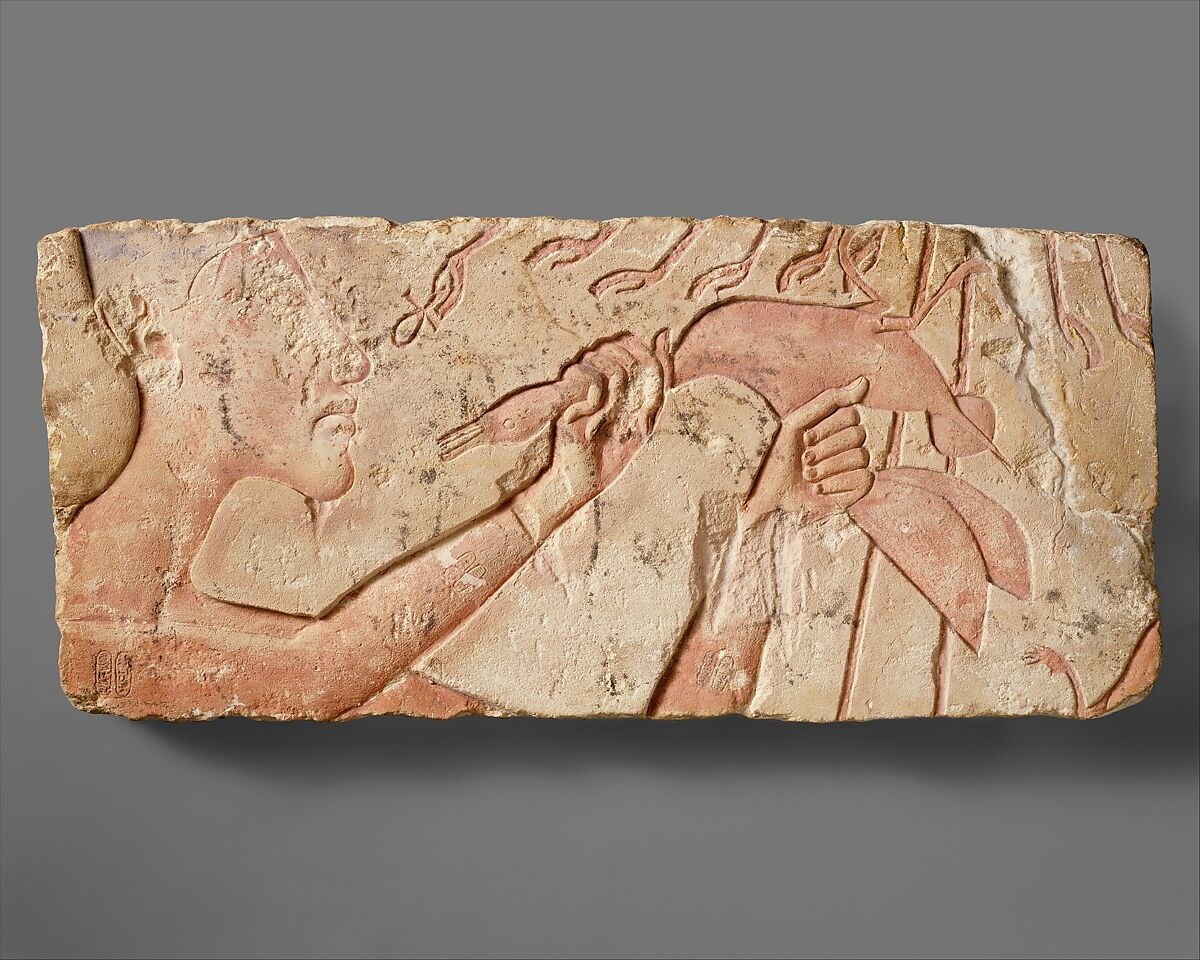
Akhenaten offering a duck, limestone relief with paint, Dynasty 18, The Met 1985.328.2. Aten rays and hands survive; the complete disk is not preserved here. The museum gives a probable Amarna origin. Original preserved; display copy uncropped
Entität
Aten is the solar disk and the divine power associated with its light in ancient Egypt. Akhenaten made Aten the exclusive focus of his official cult; Amarna reliefs show rays ending in hands, while household finds reveal other religious practices.
Namensvarianten: Aten, Aton
Kontext und Quellen →
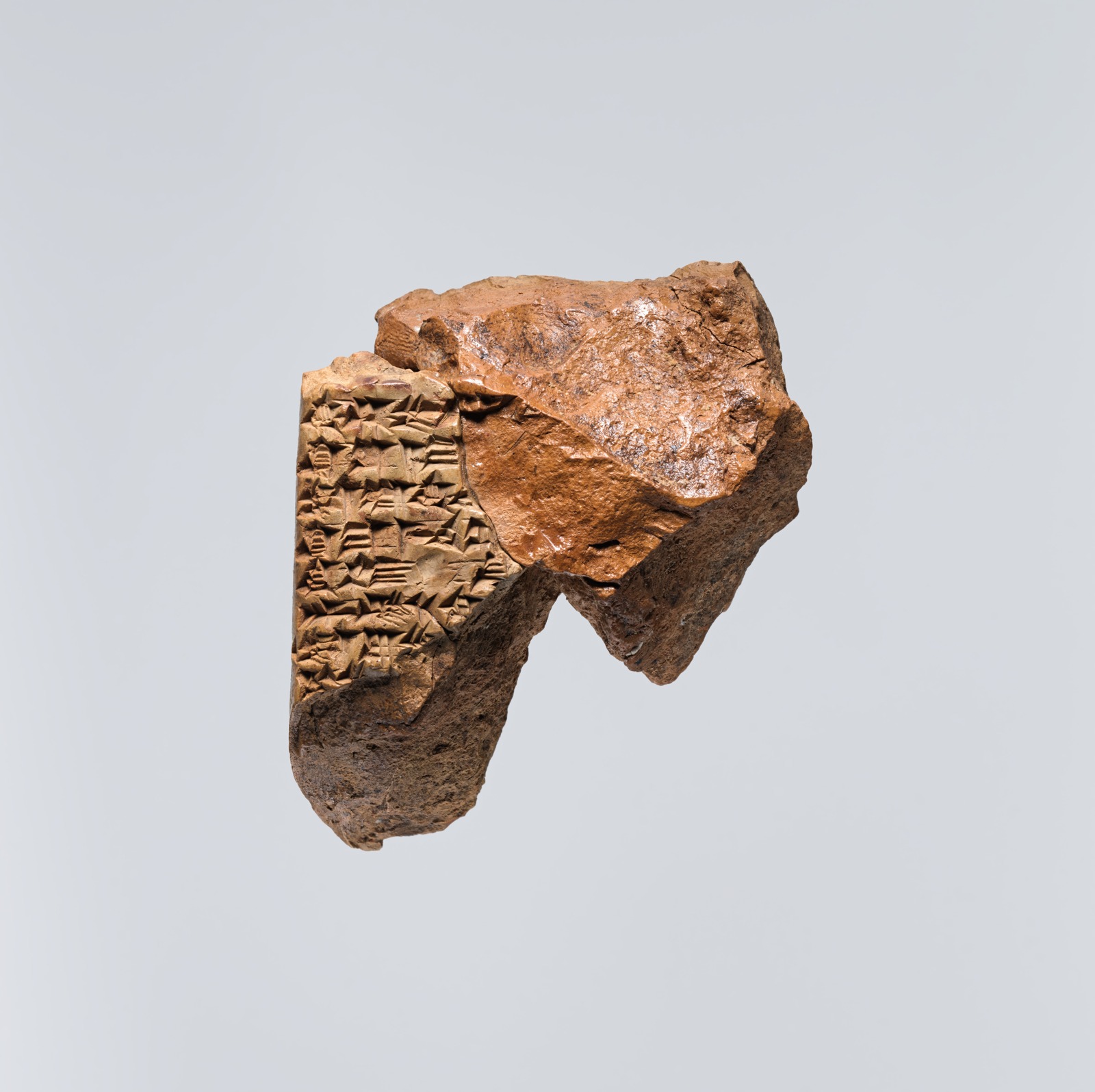
Cuneiform fragment of the Atrahasis tradition, Mesopotamia, c. seventh–sixth centuries BCE; Met 86.11.378a. A later copy, not the Old Babylonian manuscript or Gilgamesh K.3375. Original preserved; resized without cropping
Entität
Akkadian narrative on human creation, relations with the gods and the flood, named for its survivor warned by Enki. Its surviving manuscripts differ in date and preservation; its hero must not be equated uncritically with every Utnapishtim version.
Namensvarianten: Atrahasis, Atra-hasis, Atrahasis epic
Kontext und Quellen →
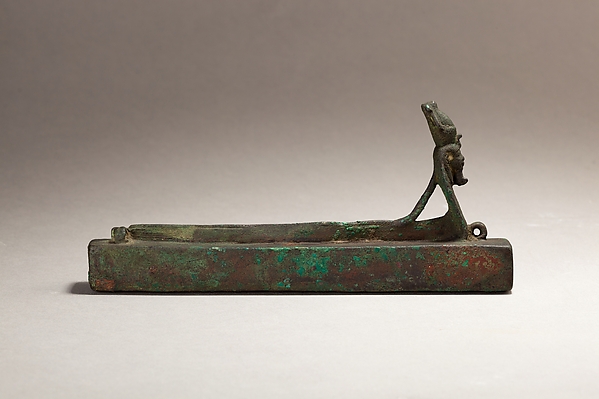
Atum as a human-headed cobra above an animal-mummy box. Made of cupreous metal, the object is dated by the Met to 664–30 BCE; inventory 04.2.519. It illustrates one of the god’s forms in later Egyptian periods
Entität
Atum is an Egyptian creator god associated with Heliopolis
Namensvarianten: Atum
Kontext und Quellen →

Modern AI-generated conceptual cover: dawnlight, a new sprout, and luminous human figures symbolize revival and transformation. Neither an ancient artefact nor an established portrayal of resurrection
Entität
Resurrection: the hope of the dead returning to life through divine action. Ancient traditions differ on who rises, what embodiment means, and how this relates to judgment or cosmic renewal.
Namensvarianten: resurrection, resurrection of the dead, raising the dead
Kontext und Quellen →

New symbolic illustration of a book in an imagined setting; neither Augustine, Hippo, nor a documented historical manuscript is depicted
Person
Fourth- and fifth-century Christian author describing his changing grasp of nonspatial divine presence.
Namensvarianten: Augustine, Augustine of Hippo
Kontext und Quellen →
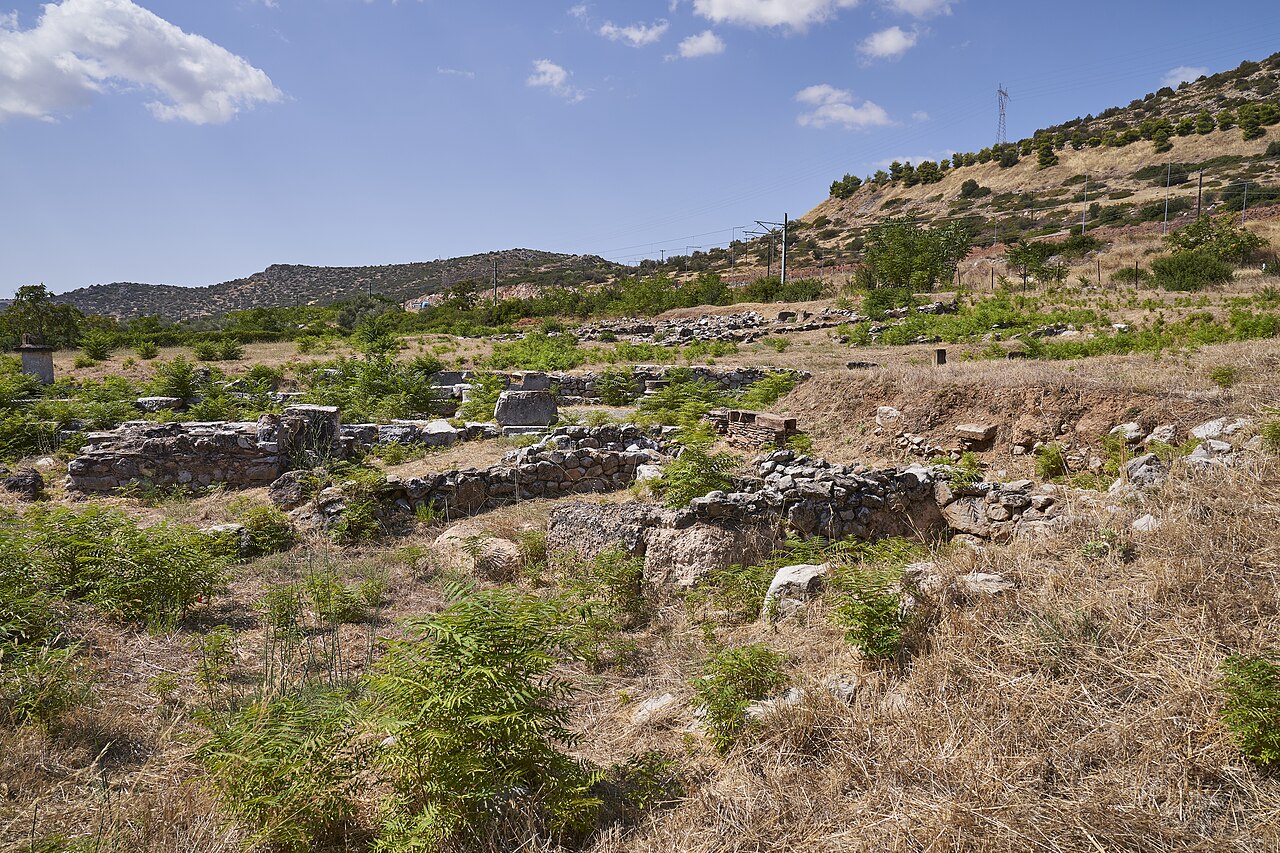
Artemis sanctuary remains at Aulis, Greece; George E. Koronaios, 2021. Evidence for a cult site, not for Iphigenia's episode
Stätte
Ancient place on the Boeotian coast near the Euripus Strait in Greece; setting of Iphigenia's Greek story and site of a fifth-century BCE Artemis temple.
Namensvarianten: Aulida
Kontext und Quellen →
Person
Archaeologist and art historian whose research includes prehistoric Near Eastern human figurines, their contexts and gender.
Namensvarianten: Aurélie Daems, Aurelie Daems
Kontext und Quellen →
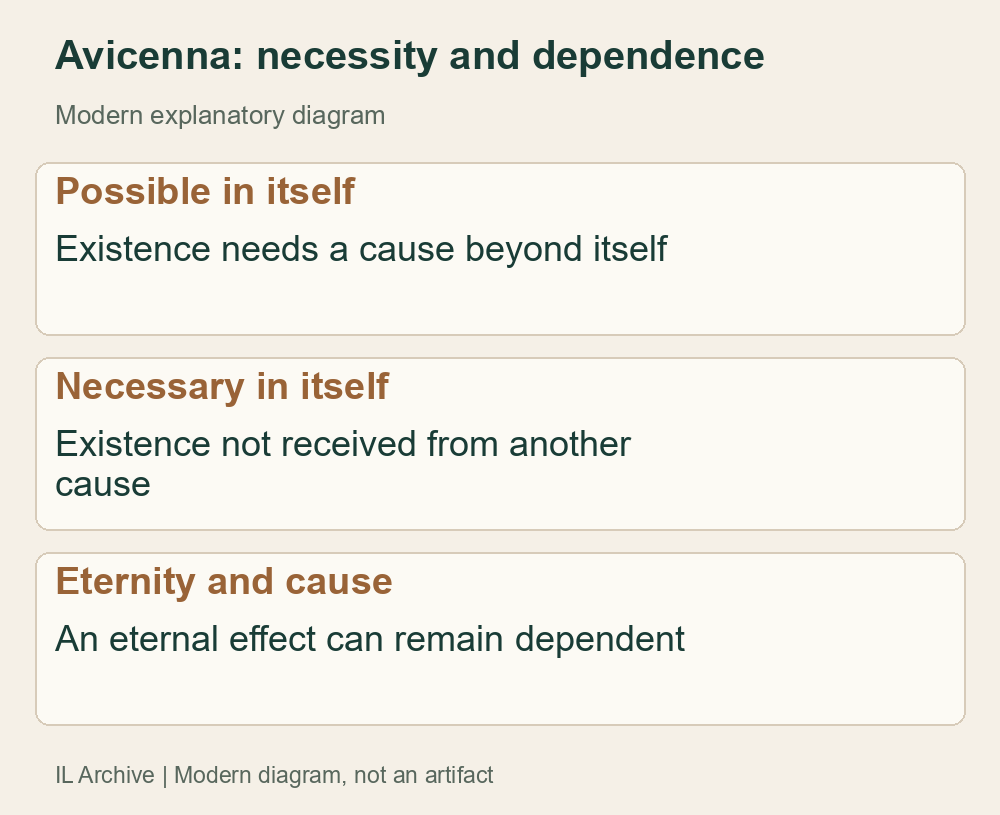
Modern diagram of ontological dependence, not a temporal sequence or portrait. The argument does not make all Islamic schools agree
Person
Avicenna (Ibn Sīnā, died 1037) was a philosopher and physician from the Bukhara milieu, active across the eastern Islamic world. His philosophical Cure and medical Canon address distinct subjects; his arguments on essence, necessity, and soul require careful reading of the texts.
Namensvarianten: Avicenna, Ibn Sina, Ibn Sīnā
Kontext und Quellen →

Newly generated modern conceptual cover: flame and light in an imagined landscape evoke ritual memory and transmission. It is neither an archaeological vessel, a real location nor an Avesta manuscript
Antiker Text
The Zoroastrian sacred corpus in Old and Younger Avestan, containing hymns, liturgy and prayers transmitted orally before later manuscript copying.
Namensvarianten: Avesta, Avestan corpus
Kontext und Quellen →
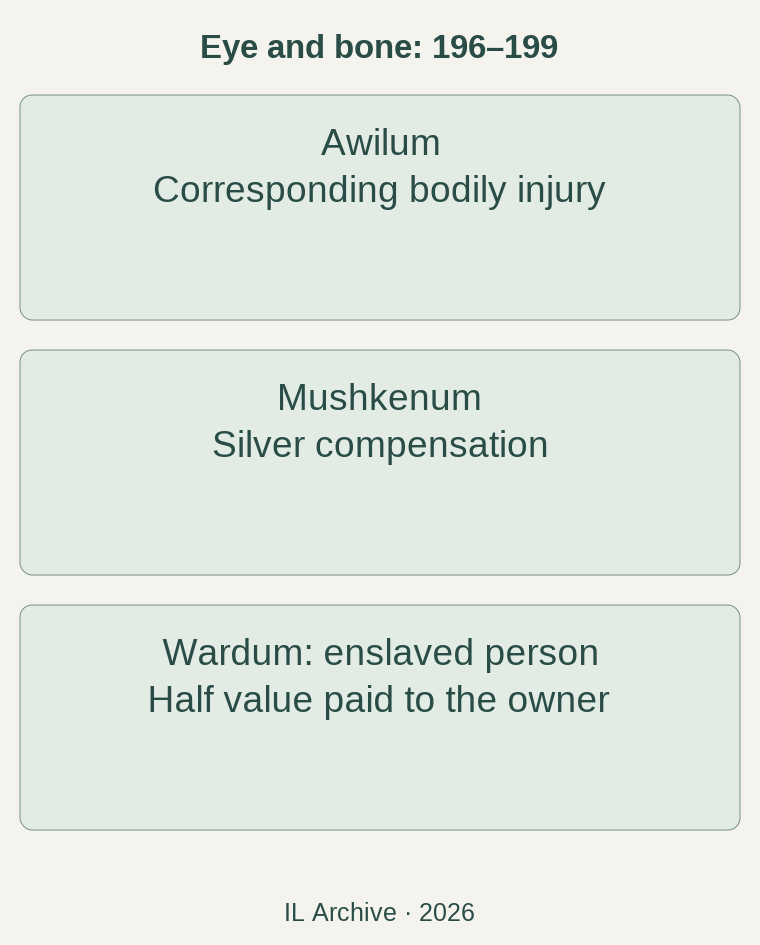
Modern diagram explaining the witness’s specified dates or provisions; not an ancient tablet, building or manuscript photograph
Entität
Akkadian legal and social categories affecting penalties and compensation in Hammurabi’s laws.
Namensvarianten: awilum, mushkenum, wardum
Kontext und Quellen →
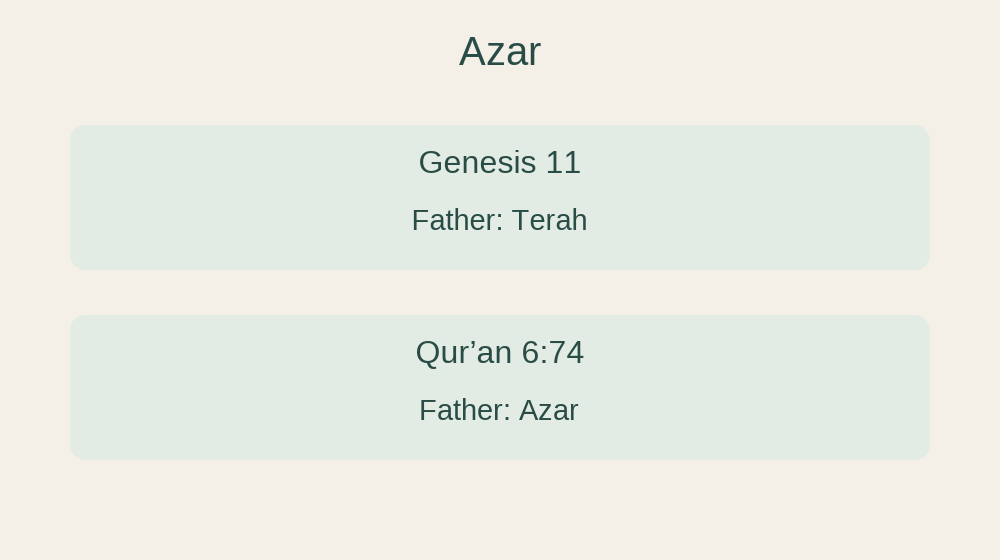
Modern comparison distinguishing what the named passages say about the figure; not a historical likeness or identification of a person behind the narrative
Person
Name in Qur’an 6:74 when Abraham addresses his father about idol worship, differing from the name Terah in Genesis.
Namensvarianten: Azar
Kontext und Quellen →
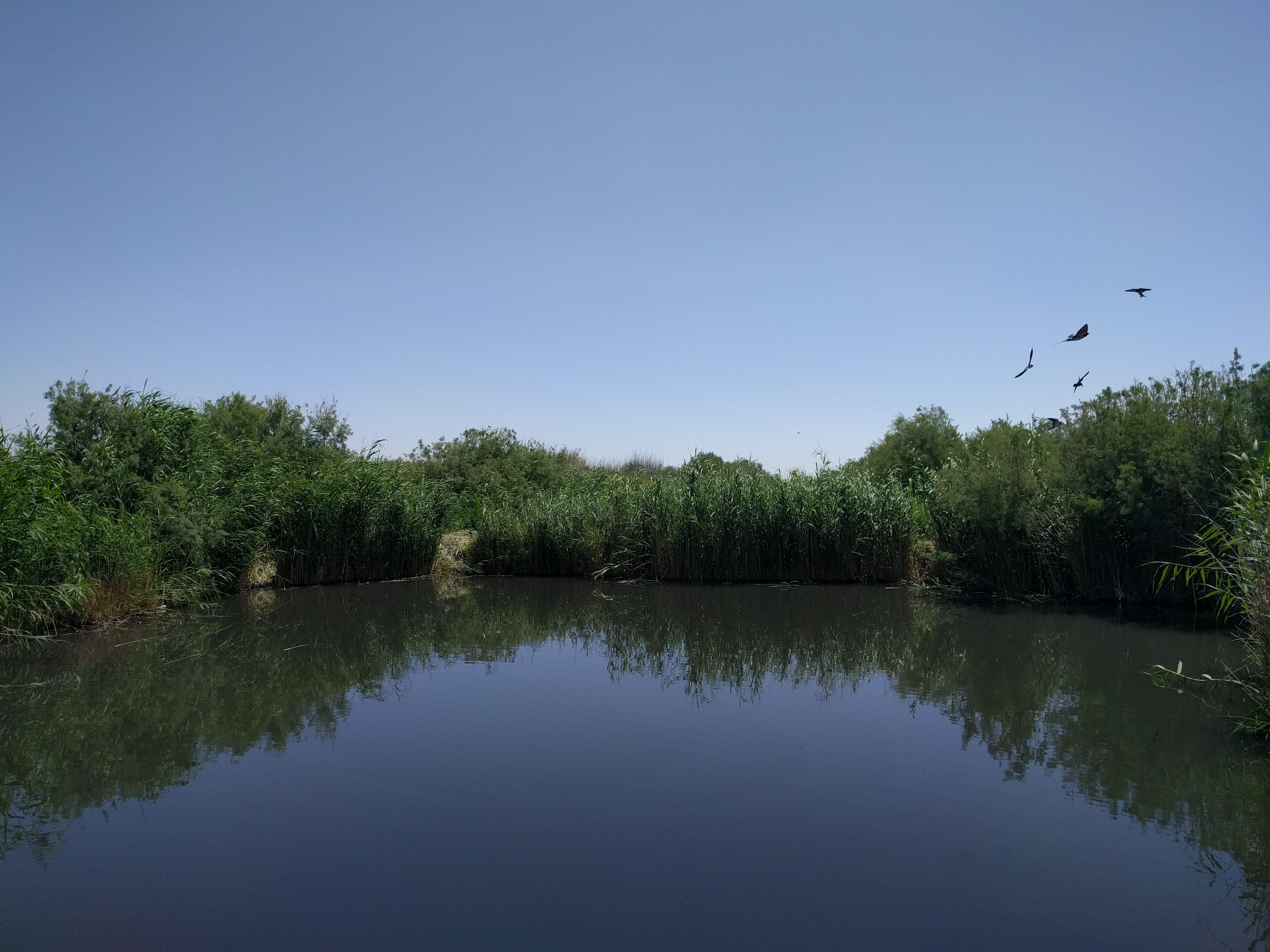
A pond in the modern Azraq Wetland Reserve. Geographic context for the oasis, not the Azraq 18 excavation or its graves, nor a reconstruction of its Natufian environment
Stätte
A Natufian site in eastern Jordan’s Azraq oasis; analysis of its collective grave reconstructed successive burials and later cranial treatment.
Namensvarianten: Azraq 18, Azraq18
Kontext und Quellen →
New AI-generated conceptual image inspired by stratified mudbrick settlements near Aşıklı; not a site photograph, excavation plan, or verified archaeological reconstruction
Stätte
An early Neolithic settlement in central Anatolia’s Melendiz valley (c. 8350–7300 BCE), revealing rebuilding, early sheep management, selective subfloor burials, and some genetic kin ties—not a known religious doctrine.
Namensvarianten: Aşıklı Höyük, Asikli Hoyuk, Aşıklı
Kontext und Quellen →
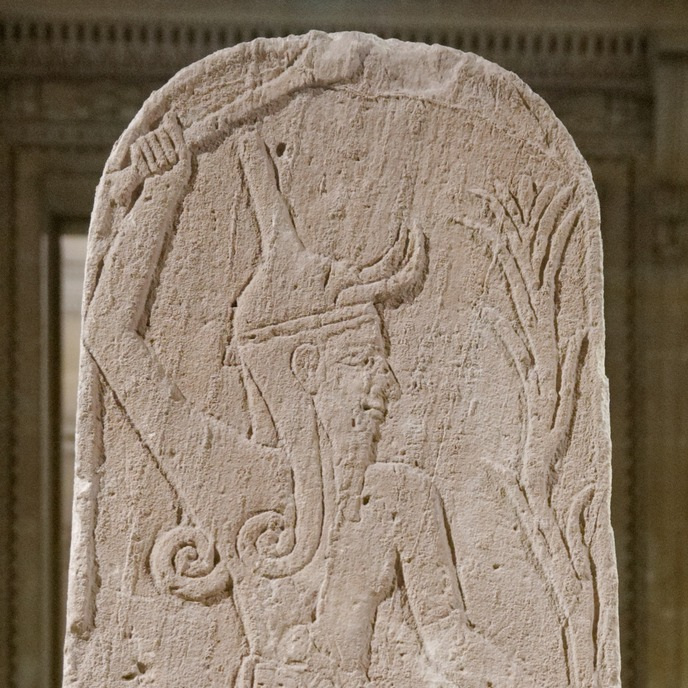
Modern photographic crop of the upper part of the Stela of Baal with Thunderbolt (Ugarit; Louvre AO 15775 / RS 4.427), highlighting the head, raised weapon and vegetal emblem; the complete stela appears in the article. Not an archaeological reconstruction
Entität
Ugaritic storm god and warrior king who defeats Yamm, builds his palace with El’s consent and confronts Mot. References to El and Dagan as fathers do not define a single genealogy.
Namensvarianten: Baal, Baʿlu, Baal-Haddu
Kontext und Quellen →
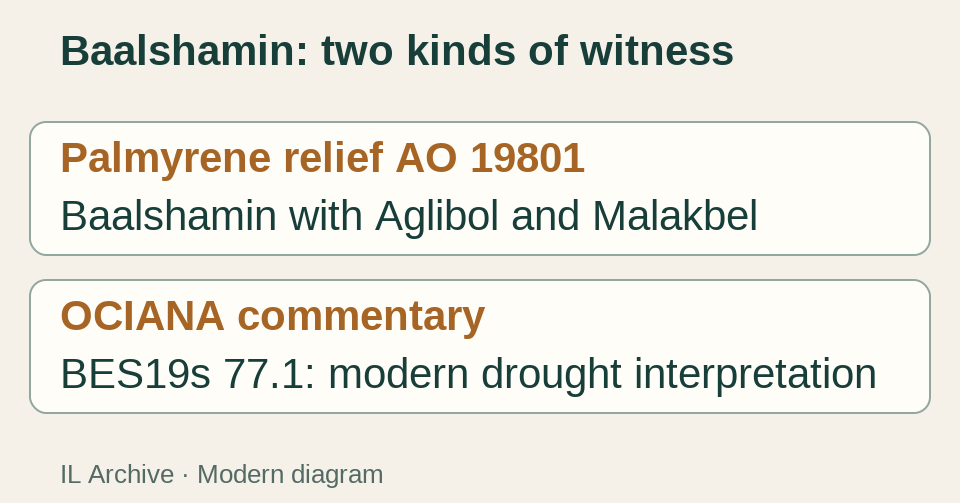
Modern explanatory diagram compares Palmyrene relief AO 19801, depicting Baalshamin with Aglibol and Malakbel, with his mention in modern drought commentary on BES19s 77.1. BES19s itself invokes Allat and Lh. This is not an ancient depiction of the deity
Entität
Celestial deity attested in the Palmyrene region of Syria; depicted with Aglibol and Malakbel in a Louvre relief.
Namensvarianten: Baalshamin, Baal Shamin
Kontext und Quellen →
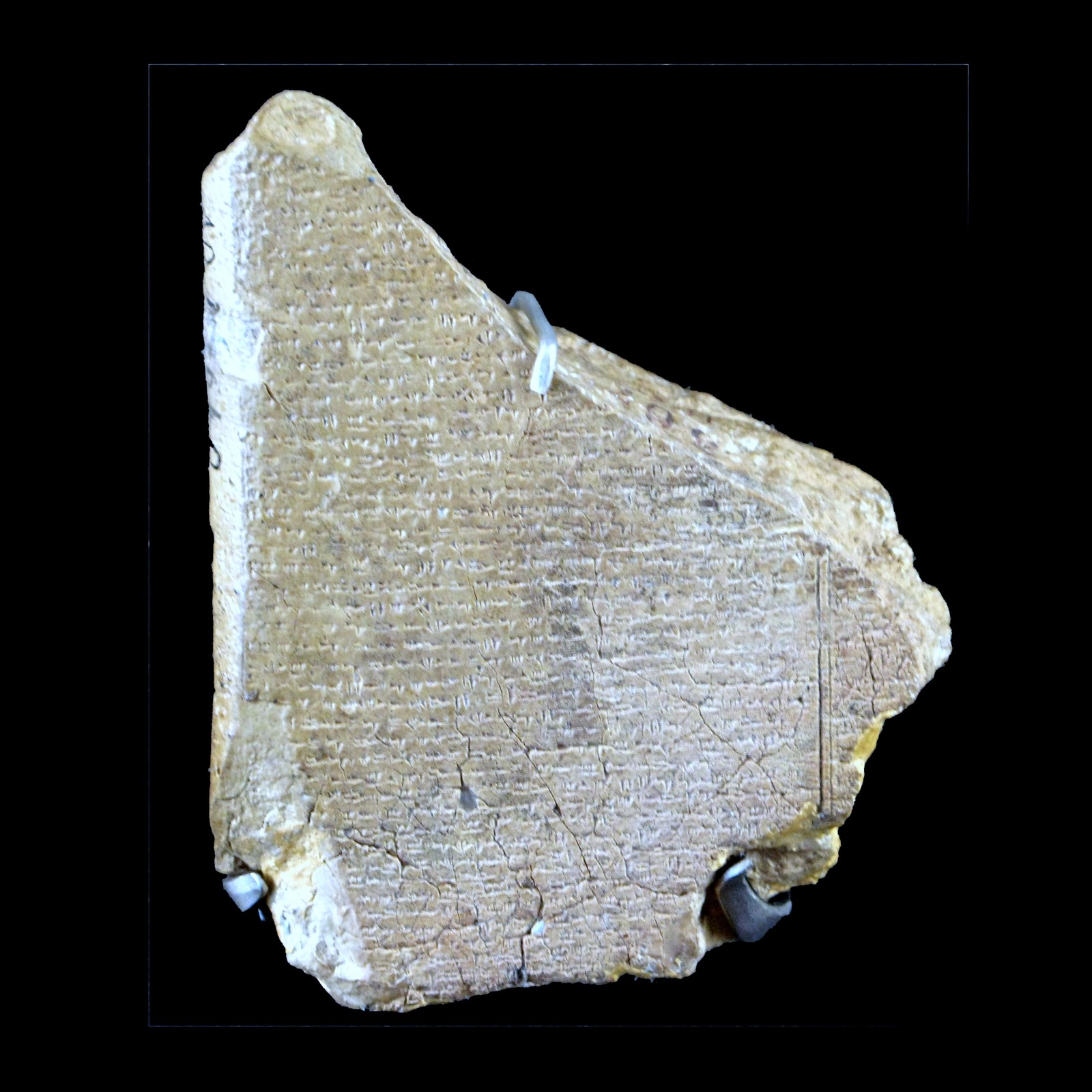
Baal Cycle tablet AO 16640 / RS 3.367 from Ugarit, about 1400–1200 BCE, associated with KTU 1.2; Louvre. Not the palace-authorization tablet KTU 1.4. A photograph of actual textual evidence, not imagined gods
Entität
A group of Late Bronze Age Ugaritic religious texts recounting Baal’s conflicts, relationships with the gods and the building of his palace.
Namensvarianten: Baal Cycle
Kontext und Quellen →
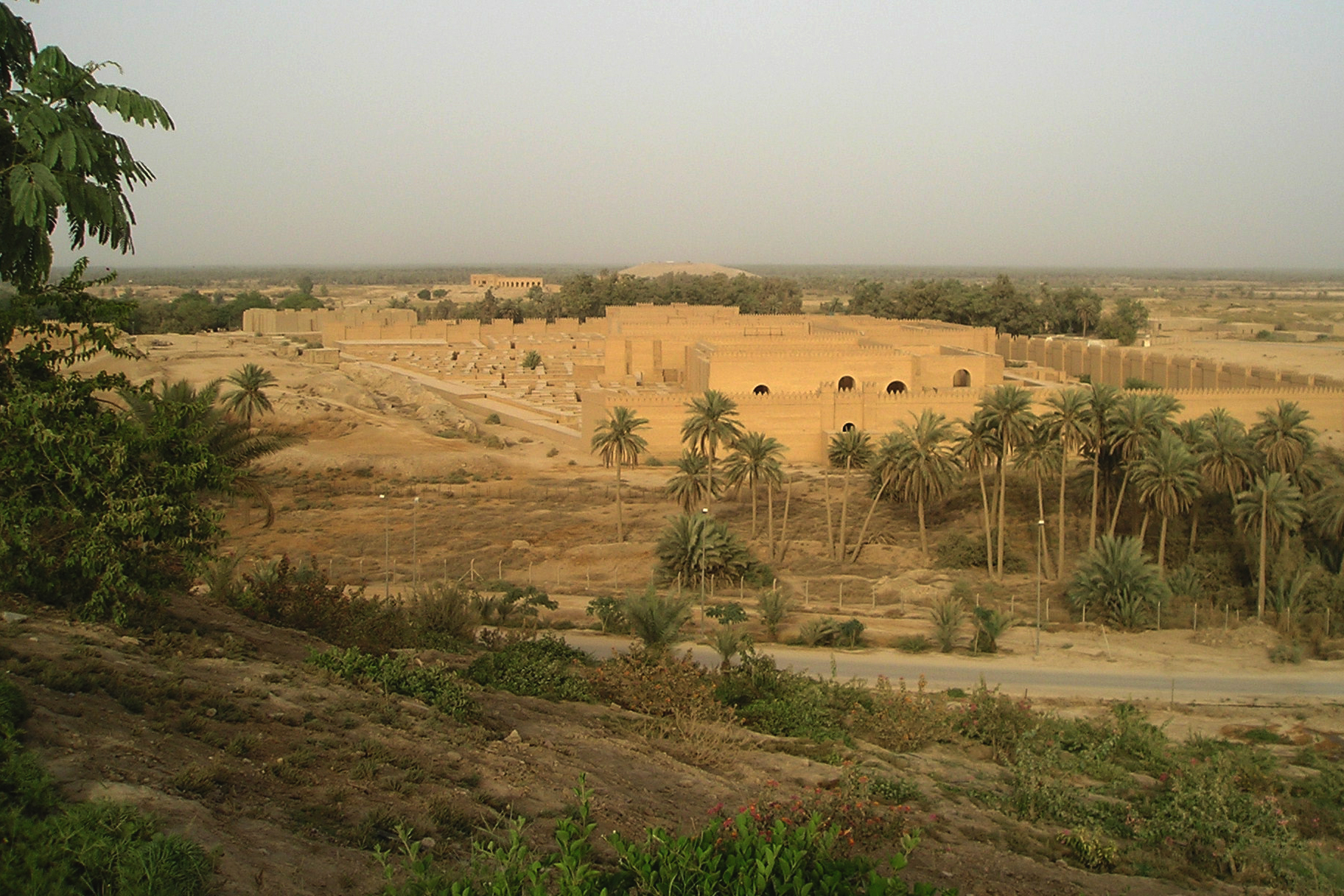
The site of Babylon in Iraq, in a photograph dated 2009 on its source page. It includes buildings reconstructed in modern times over the archaeological site, alongside the surrounding land
Stätte
Babylon is an ancient city in central present-day Iraq, south of Baghdad
Namensvarianten: Babylon
Kontext und Quellen →
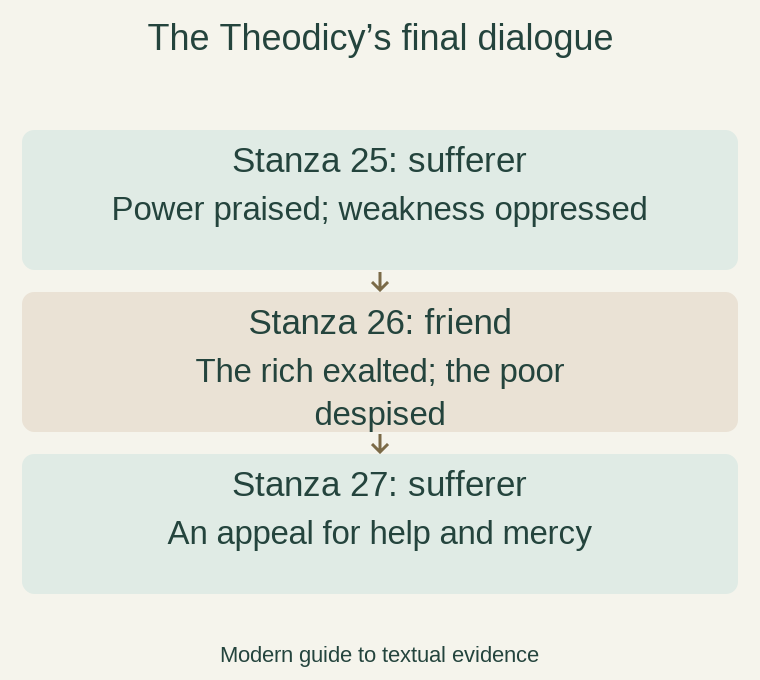
Modern diagram of stanzas 25–27: complaint about injustice, the friend’s account of rich and poor, then an appeal for mercy. It traces the voices without deciding which speaker wins
Antiker Text
The Babylonian Theodicy is an Akkadian poetic dialogue between a sufferer and a friend about worship, injustice and divine justice.
Namensvarianten: Babylonian Theodicy
Kontext und Quellen →
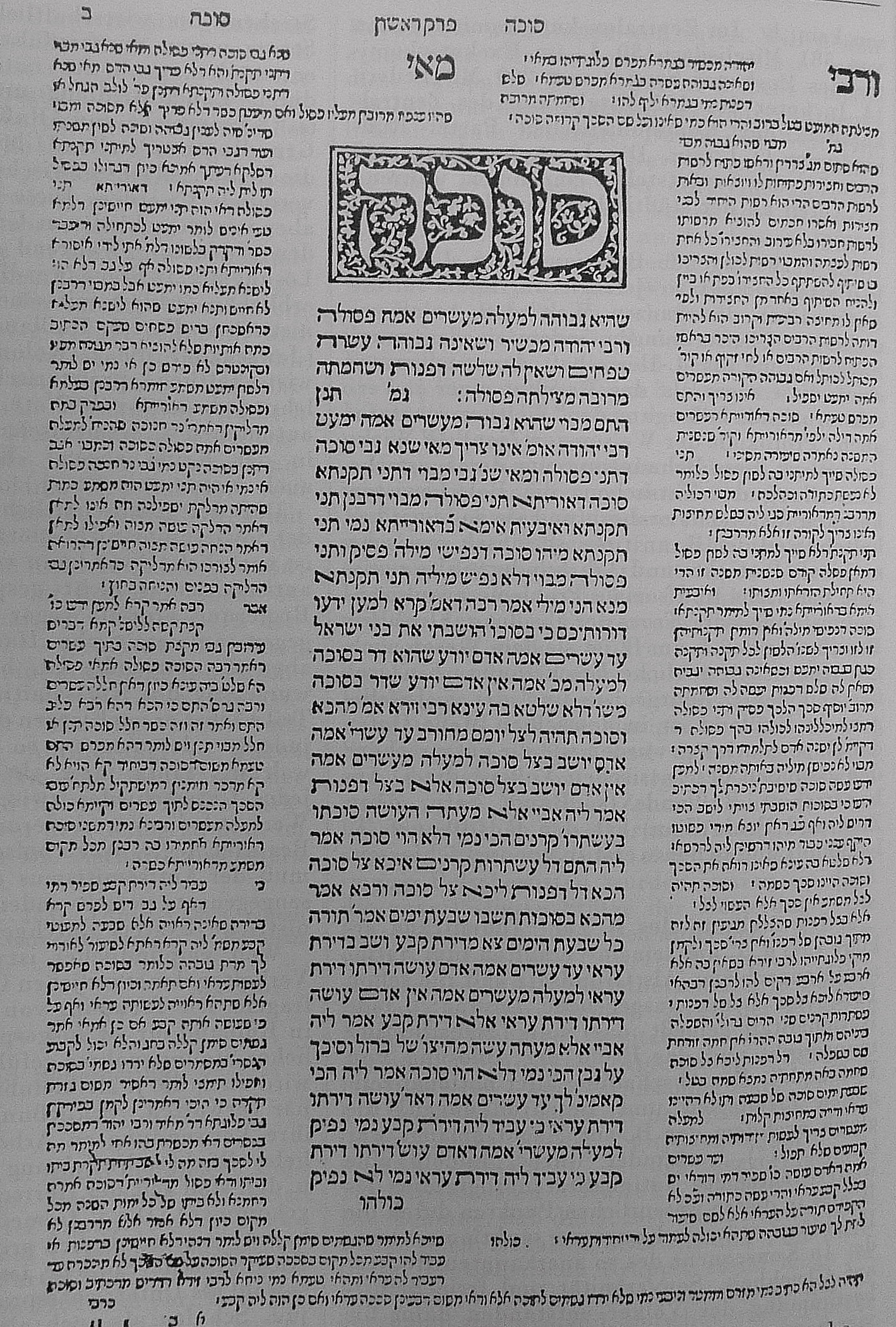
A page from Daniel Bomberg's Babylonian Talmud, printed in Venice between 1525 and 1539, photographed by Warburg. This page is from Sukkah, not Gittin 68, and the edition postdates the Talmud's composition. Public domain
Antiker Text
A large rabbinic compilation in Hebrew and Aramaic, formed in Mesopotamia through stages; its final redaction remains debated.
Namensvarianten: Babylonian Talmud, Bavli
Kontext und Quellen →
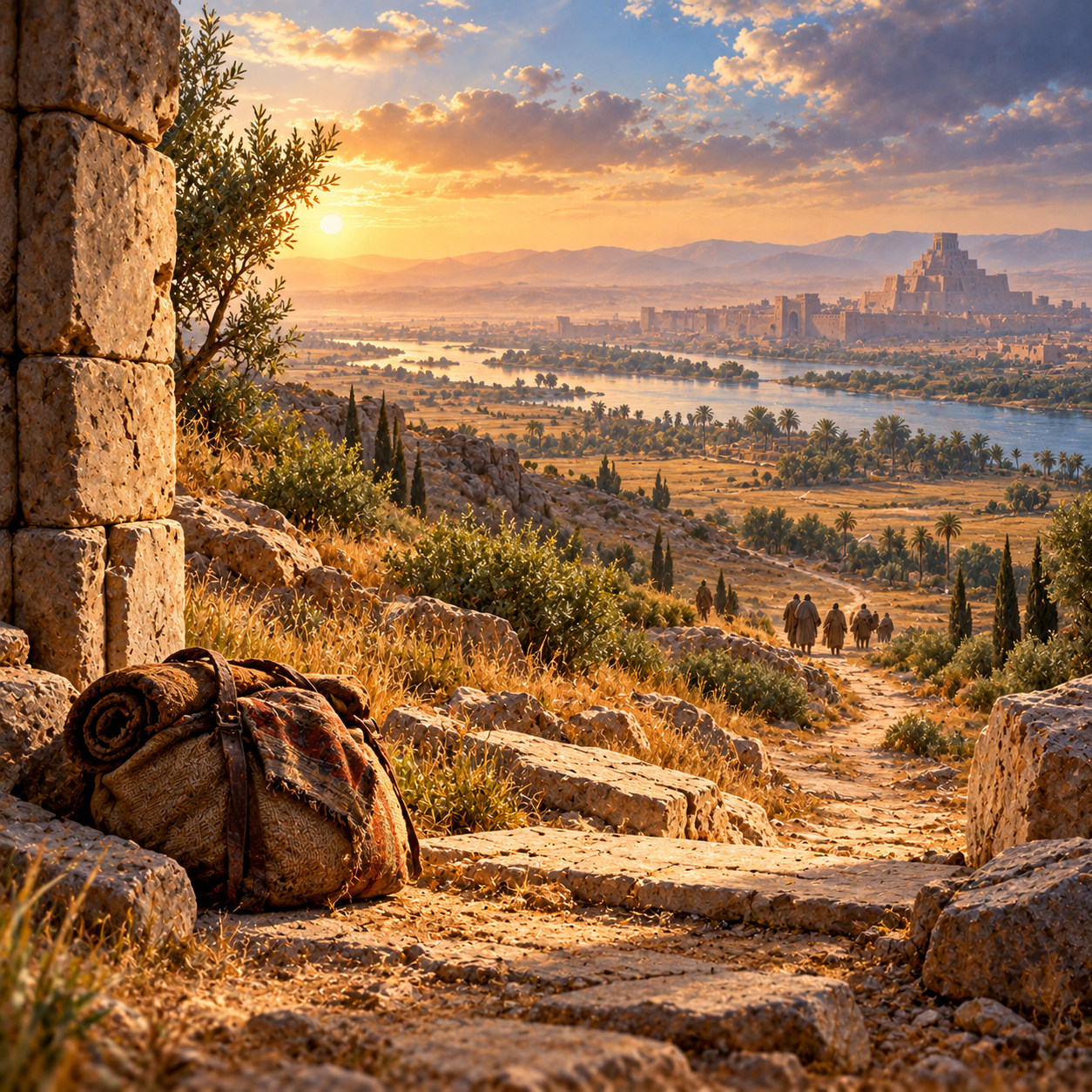
Modern AI-generated conceptual scene: an imagined path toward a riverside Mesopotamian city, evoking displacement and exile. Not a historical image of the deportation route or a verified reconstruction of Jerusalem or Babylon
Entität
Judean deportations to Babylonia and the kingdom’s collapse in the early sixth century BCE; several phases, not everyone removed or returned at once.
Namensvarianten: Babylonian exile, Judean exile, Babylonian captivity
Kontext und Quellen →
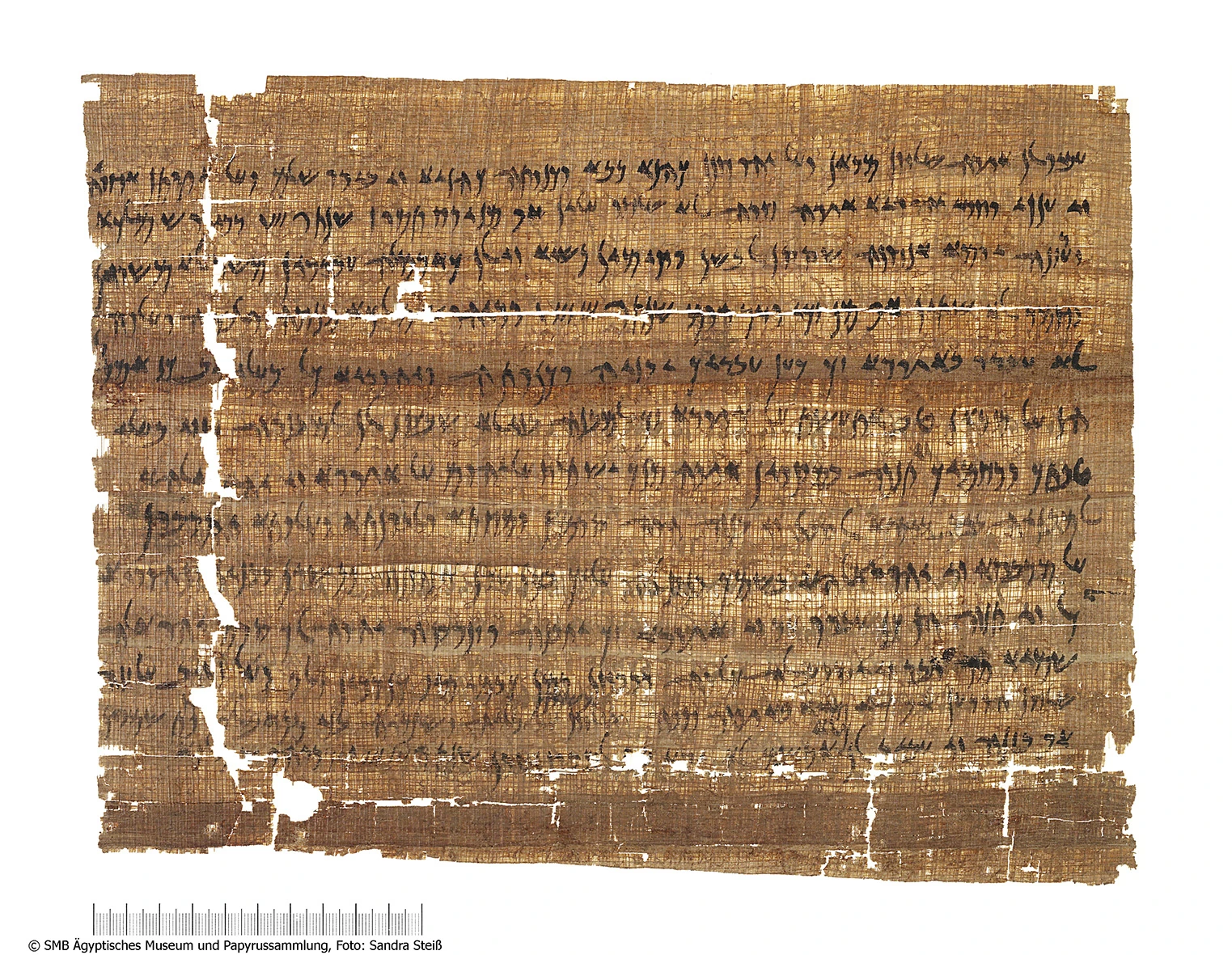
Verso of the petition addressed to Bagohi, P.13495, 407 BCE. A face of the document, not a portrait of the governor; his identity follows from the whole petition. Photograph Sandra Steiß, Staatliche Museen zu Berlin
Person
Governor of Persian-period Yehud, addressed by the Elephantine priests in 407 BCE.
Namensvarianten: Bagohi governor of Yehud
Kontext und Quellen →
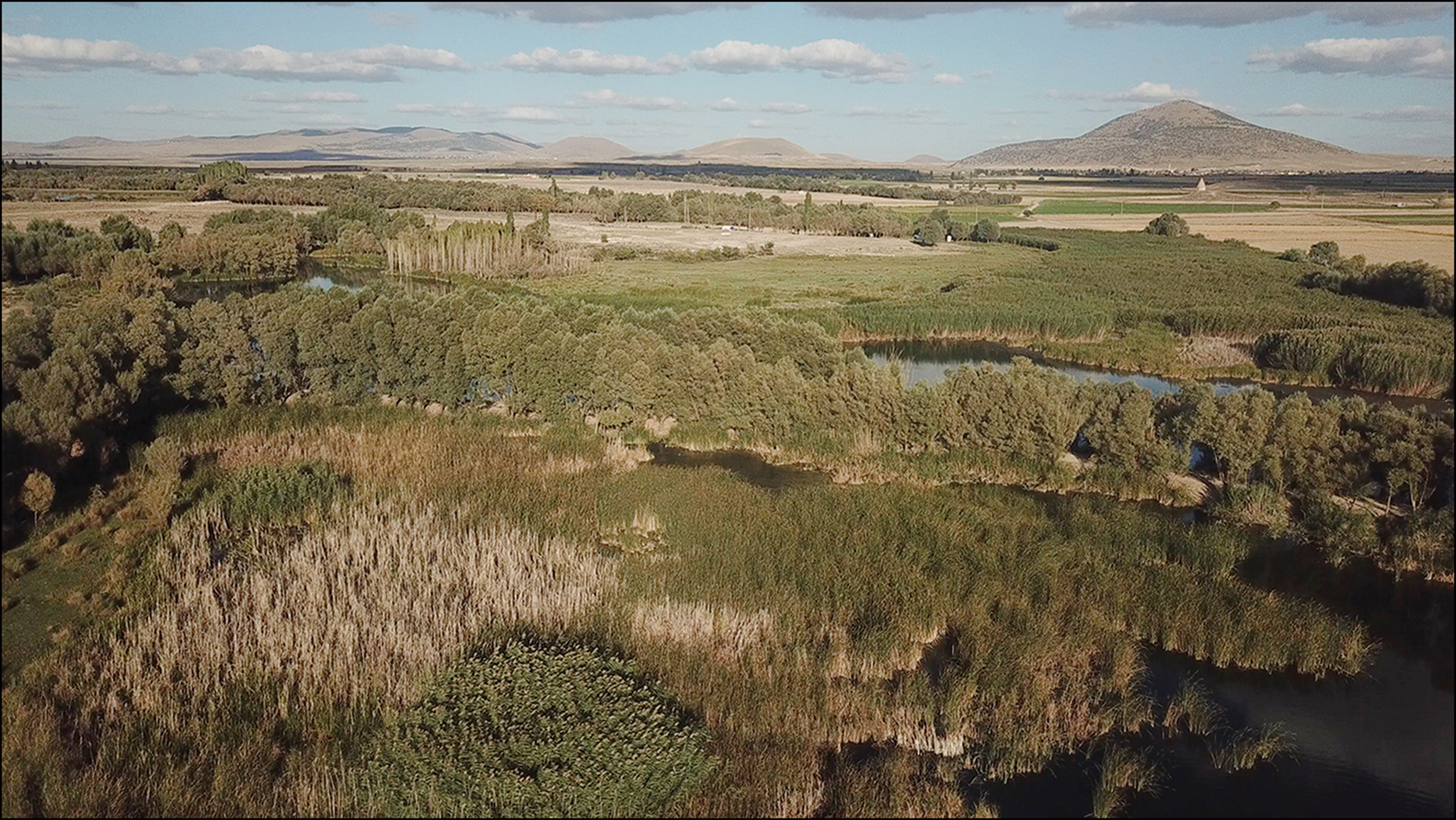
Modern aerial view of Balıklı among wetlands: the site is the lighter area in the upper middle, with Nenezidağ in the right background. Excavation-project photograph published in 2024, not a reconstruction of the ancient village
Stätte
An Early Neolithic settlement in central Anatolian Cappadocia near Aşıklı Höyük, known for semi-subterranean houses and burials beneath floors and within walls, occupied approximately in the late ninth and early eighth millennia BCE.
Namensvarianten: Balıklı, Balikli
Kontext und Quellen →
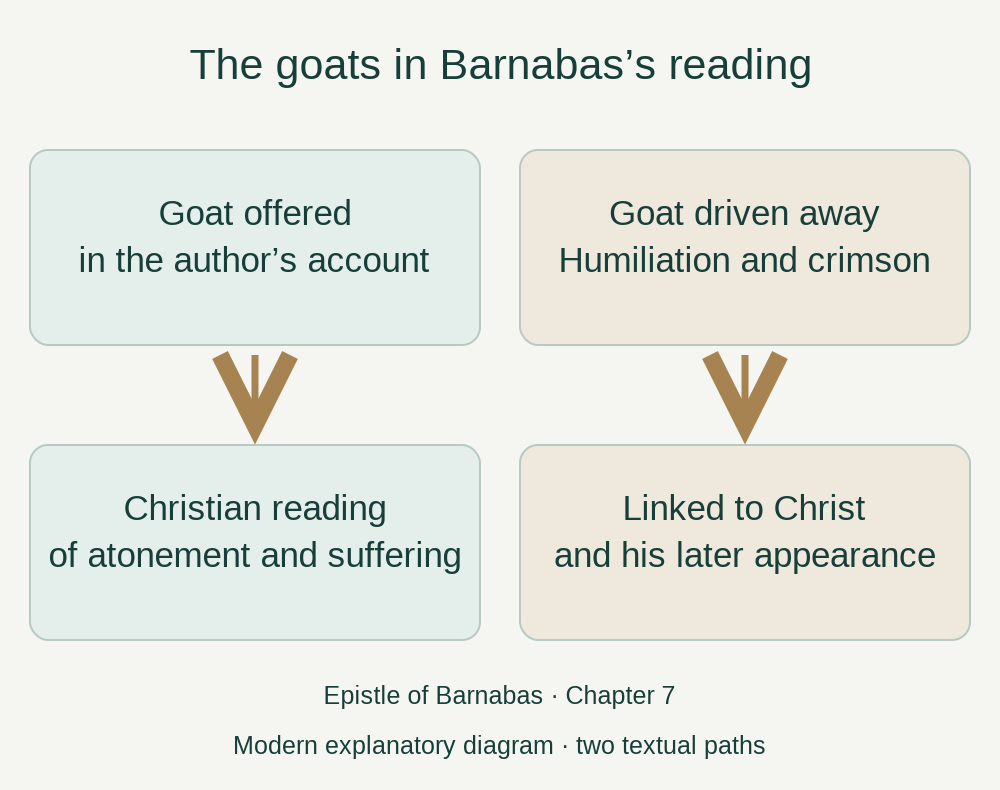
The two goats as figures of Christ, his suffering and later appearance in Barnabas 7. A modern diagram of the Christian text’s interpretation, not a reconstruction of every earlier rite
Antiker Text
An early Christian text usually placed in the late first or early second century CE; chapter 7 interprets the two goats as figures of Christ.
Namensvarianten: Epistle of Barnabas
Kontext und Quellen →
Person
American scholar of the Hebrew Bible and ancient Near East (1930–2021), who linked roots of global monotheism to Assyrian-period prophetic discourse.
Namensvarianten: Baruch A. Levine
Kontext und Quellen →
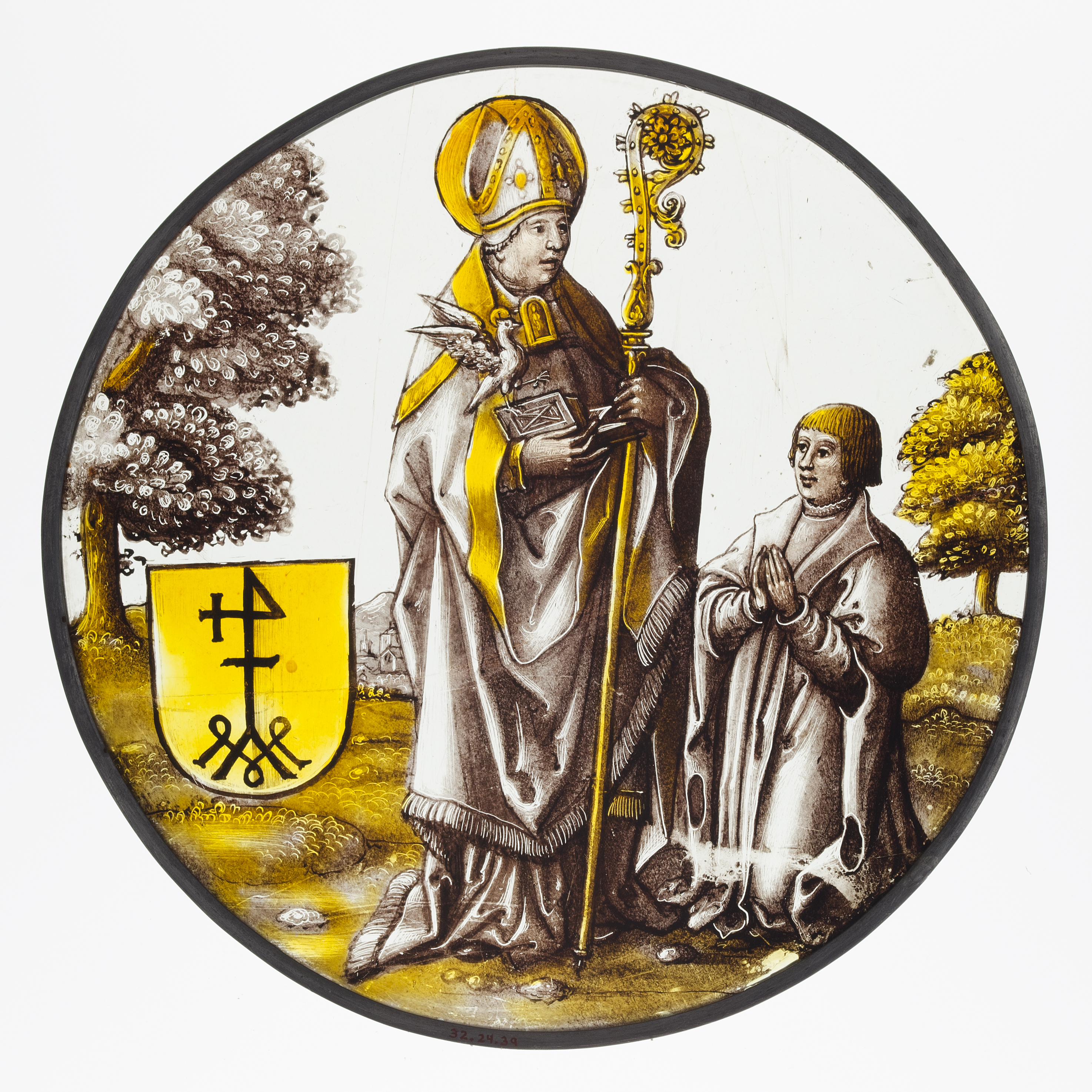
Basil with a donor in South Netherlandish stained glass, around 1515, The Met 32.24.39. A later artistic reception, not evidence of his fourth-century appearance
Person
Fourth-century bishop and theologian, brother of Gregory of Nyssa.
Namensvarianten: Basil of Caesarea
Kontext und Quellen →
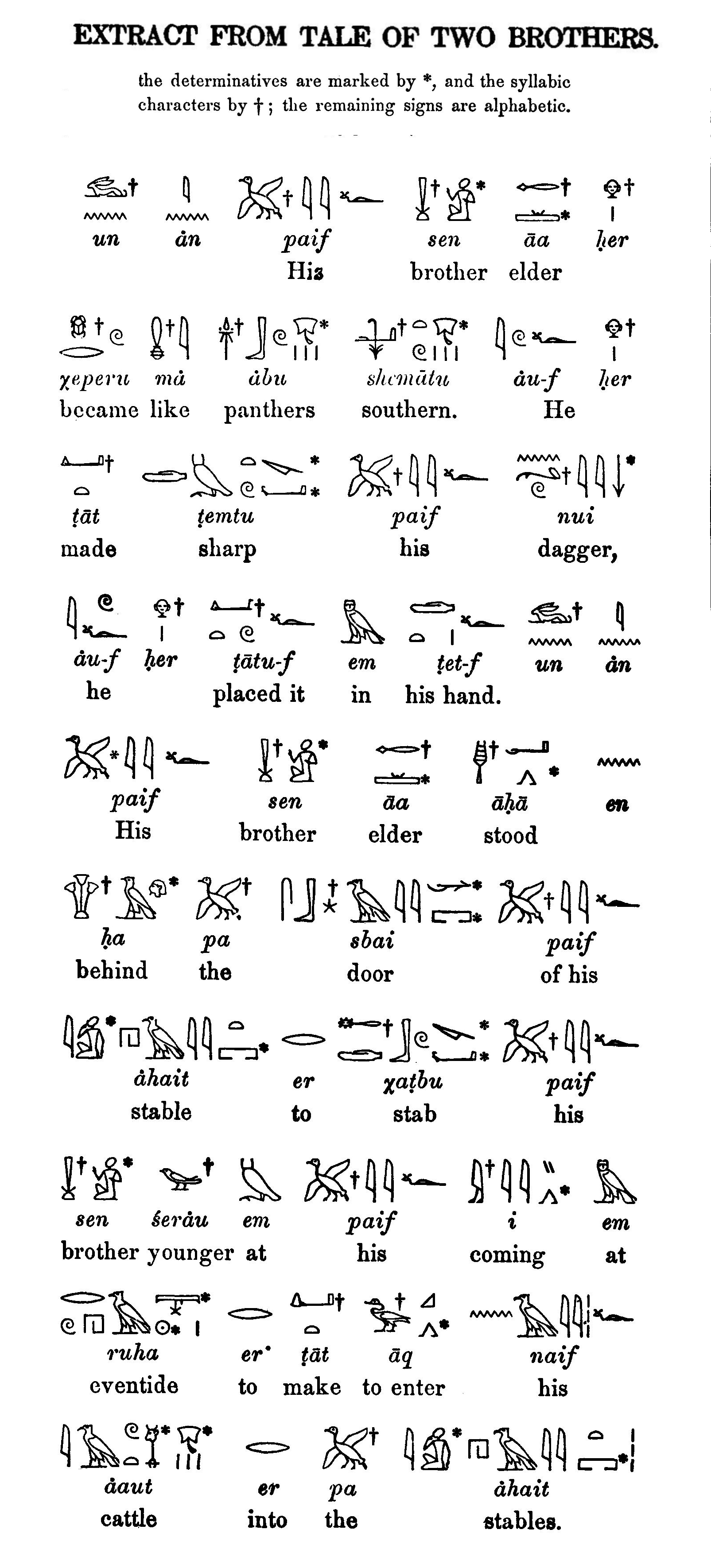
Printed Two Brothers excerpt in Wallis Budge’s Egyptian Language, 1889, pp. 38–39: educational hieroglyphic transcription with English glosses of the armed elder brother. Not a photograph of the hieratic papyrus or Inena’s signature
Person
Younger brother in the Egyptian tale preserved by D’Orbiney, accused and later transformed before attaining kingship.
Namensvarianten: Bata in the Tale of the Two Brothers, Bata
Kontext und Quellen →
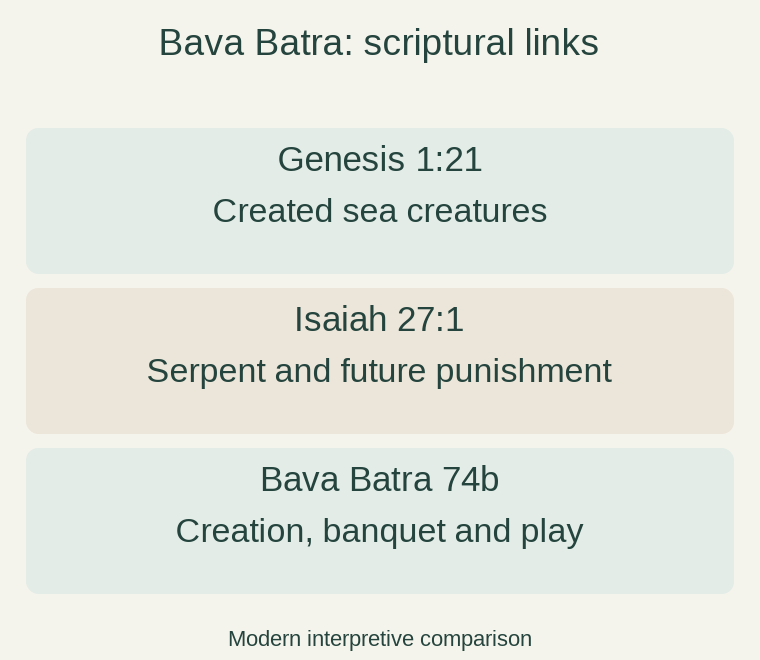
Modern comparison of specified passages and literary roles; not a manuscript or an authenticated likeness
Antiker Text
Rabbinic tractate containing later Leviathan traditions in Babylonian Talmud 74b.
Namensvarianten: Bava Batra in the Talmud
Kontext und Quellen →
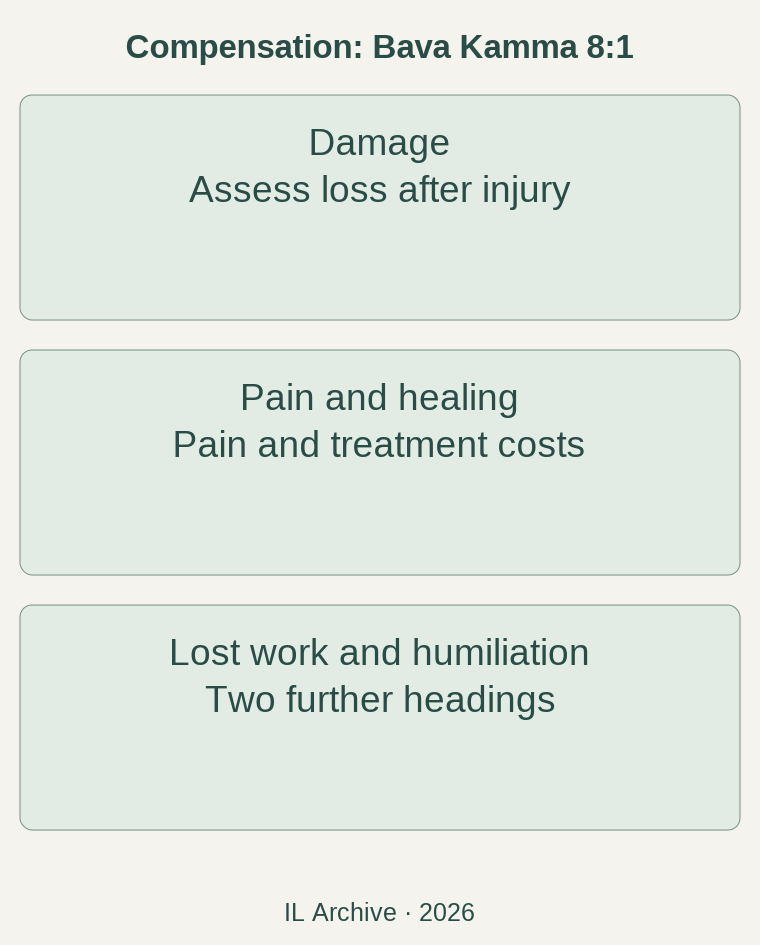
Modern diagram explaining the witness’s specified dates or provisions; not an ancient tablet, building or manuscript photograph
Antiker Text
Mishnah tractate on damage;8:1 sets out five headings of compensation for personal injury.
Namensvarianten: Bava Kamma in the Mishnah
Kontext und Quellen →
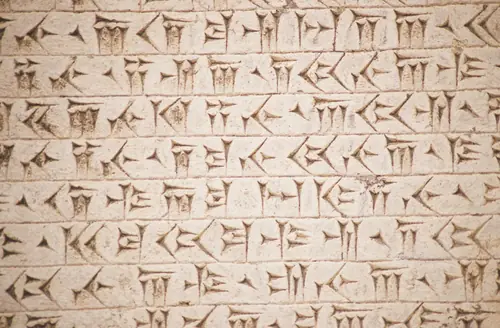
Cuneiform detail at Behistun, Iran, from Darius I’s late-sixth-century BCE royal inscription. The image does not identify the compared blessing and curse lines
Stätte
Iranian site preserving a royal inscription in three languages from the late sixth century BCE.
Namensvarianten: Behistun and Darius I’s inscription
Kontext und Quellen →