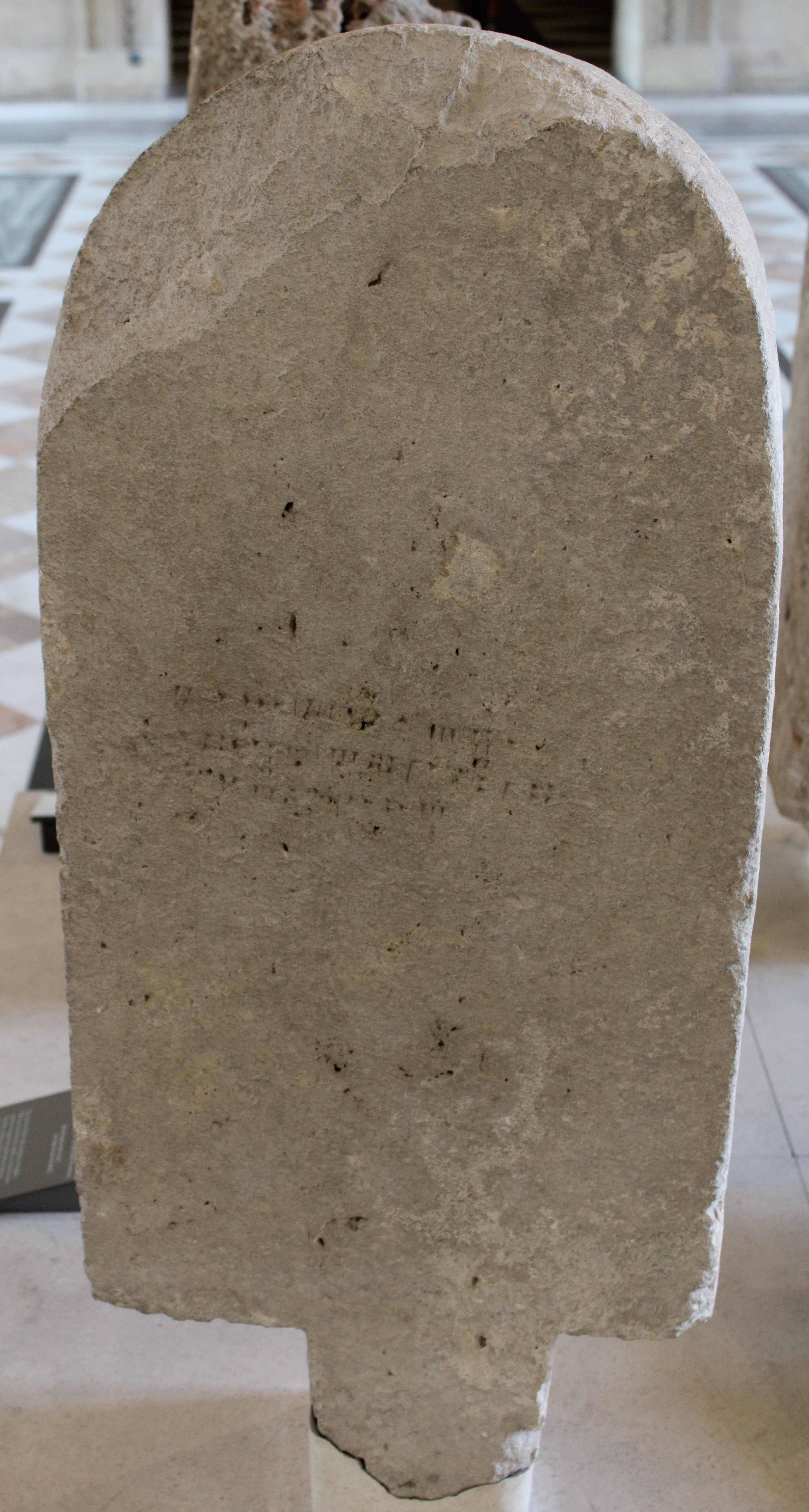
Dedicatory stele for Dagan from Ugarit, Louvre AO 19931; dated by the museum to 1400–1100 BCE. An inscribed witness, not a portrait of the god
Entität
A god worshipped in Syria and Mesopotamia, especially at Tuttul and Terqa on the Euphrates, and associated with royal authority. His name appears as Dagon in the Hebrew Bible; no ancient image of him is securely identified.
Namensvarianten: Dagan, Dagān, Dagon
Kontext und Quellen →
Person
Ancient Near Eastern historian and University of Oklahoma professor emeritus who writes on slavery and release.
Namensvarianten: Daniel C. Snell
Kontext und Quellen →

Daniel O. McClellan in a still from an American Council of Learned Societies recording, 2026
Person
Biblical scholar studying concepts of deity and divine agency through cognitive and historical approaches.
Namensvarianten: Daniel O. McClellan, Daniel McClellan, Dan McClellan
Kontext und Quellen →
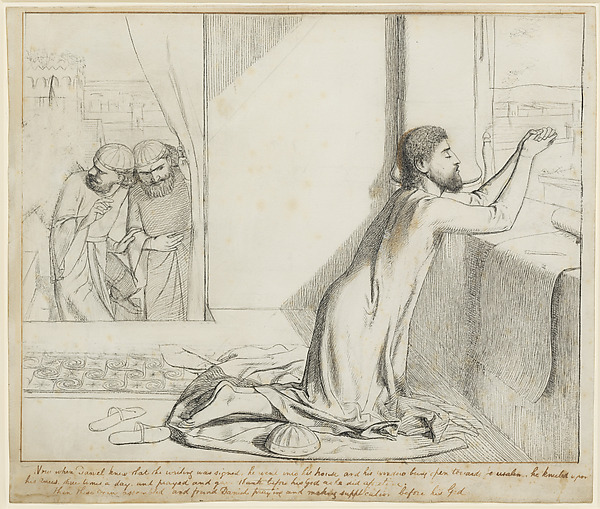
Holman Hunt, Daniel Praying,1849; Met2023.675. Later artistic reception of prayer in Daniel6, not an ancient portrait or the resurrection in chapter12
Person
Daniel is the Jewish sage and visionary in the biblical book bearing his name.
Namensvarianten: Daniel
Kontext und Quellen →
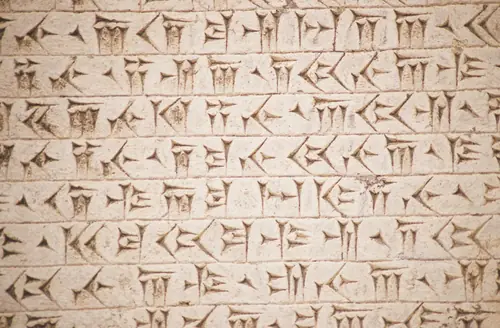
Cuneiform detail at Behistun, Iran, from Darius I’s late-sixth-century BCE royal inscription. The image does not identify the compared blessing and curse lines
Person
Persian king of the late sixth and early fifth centuries BCE, responsible for the Behistun inscription.
Namensvarianten: Darius I
Kontext und Quellen →

Modern interpretive image of Mary’s repose, with a book, palm and symbolic heavens; AI-generated, not an ancient manuscript, artifact or historical record of the event
Antiker Text
Apocryphal “Palm” family account of Mary’s death and assumption, fully transmitted in Ethiopic with earlier fragments; distinct from the Six-Books Dormition.
Namensvarianten: Book of Mary’s Repose, Book of Mary's Repose
Kontext und Quellen →
Newly generated interpretive illustration of the family’s journey in Pseudo-Matthew, with palm and water; not an artifact, manuscript image, or authenticated historical reconstruction
Antiker Text
Latin work on Mary and Jesus’ childhood, distinct from canonical Matthew.
Namensvarianten: Gospel of Pseudo-Matthew, Pseudo-Matthew
Kontext und Quellen →
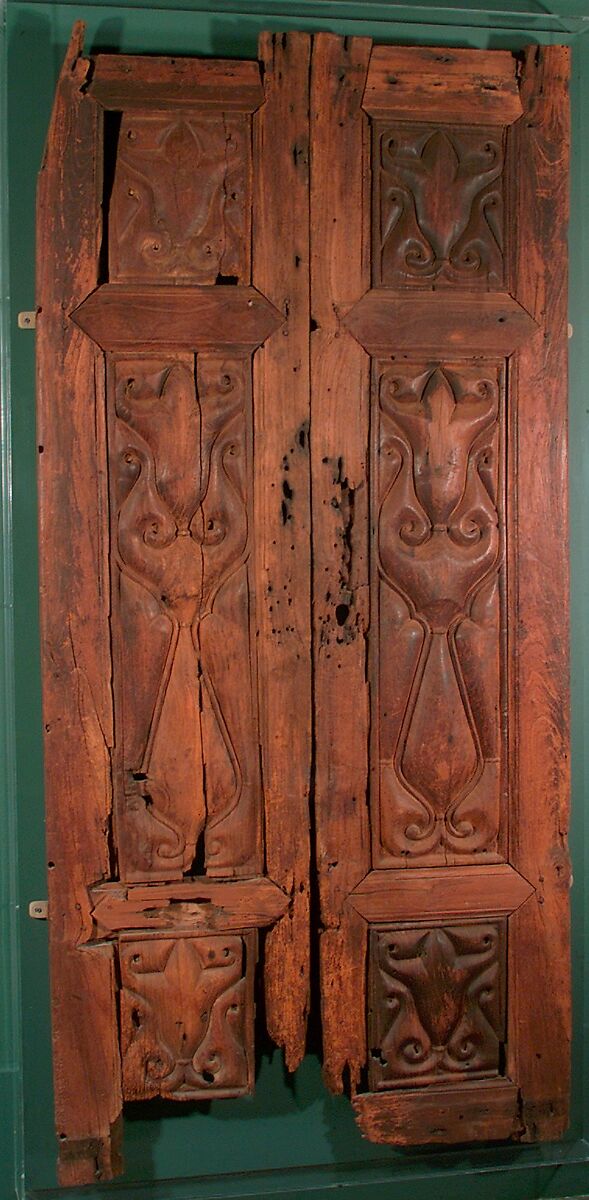
Pair of teak doors in the Beveled Style, ninth century CE, The Met 31.119.1 with 31.119.2. Probably from Samarra, reportedly found at Takrit; not a library or translation gathering
Entität
Caliphate established in 750 CE, associated with Baghdad, Samarra and scholarly translation, whose effective power changed over time.
Namensvarianten: Abbasid caliphate
Kontext und Quellen →

Modern AI-generated interpretive illustration of clay birds beside a stream, inspired by the infancy narrative; neither a photograph of an ancient object nor a verified historical reconstruction
Antiker Text
Accounts of Jesus’ boyhood, distinct from the sayings Gospel of Thomas.
Namensvarianten: Infancy Gospel of Thomas
Kontext und Quellen →
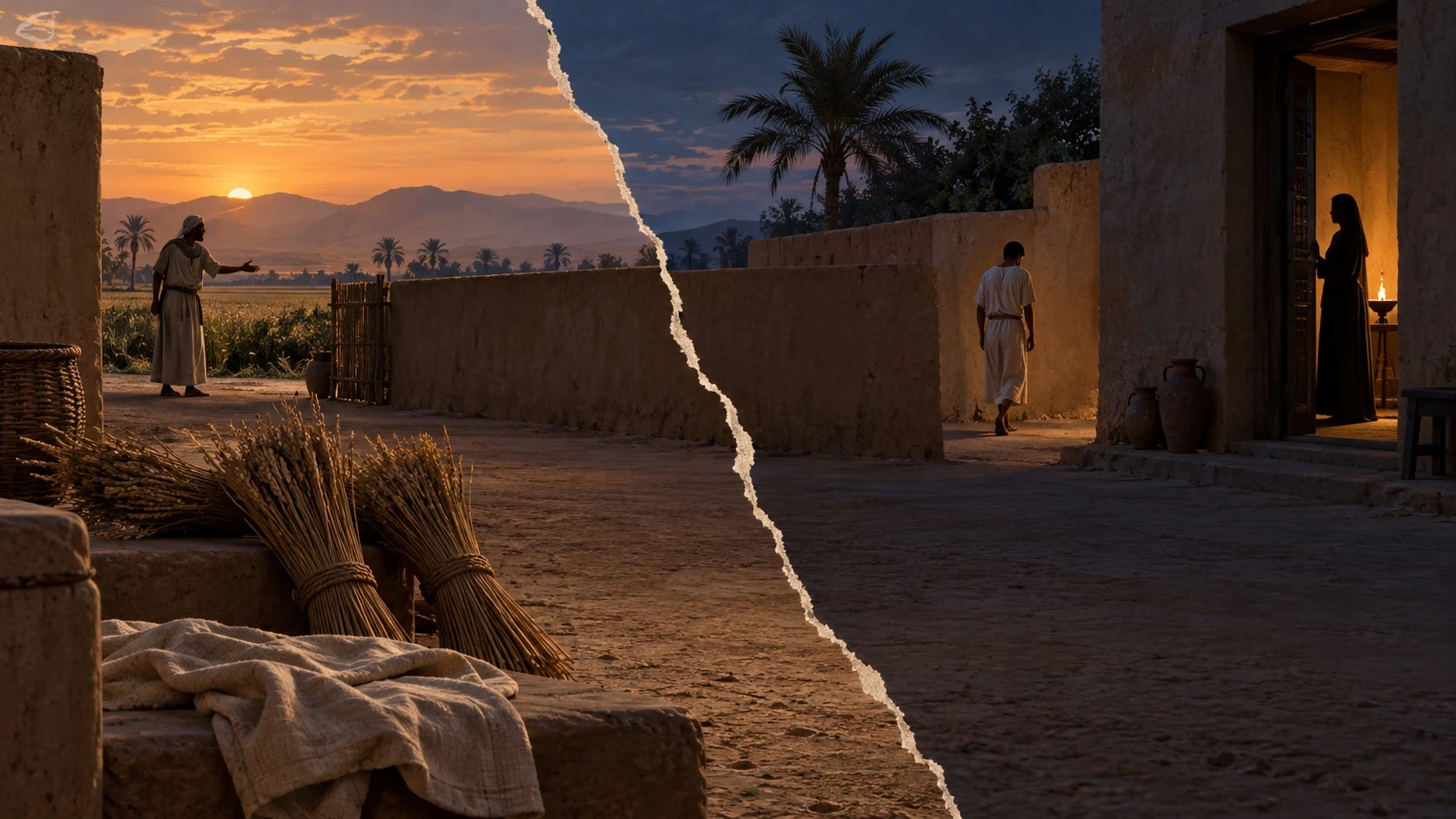
Modern editorial illustration of a household divided by Bata’s accusation; neither an excavated papyrus nor a documented historical reconstruction. © IL Archive, CC0
Entität
A comparative label for a woman’s rejected overture followed by a false accusation; it does not give every version a biblical origin.
Namensvarianten: Potiphar’s wife motif, false accusation after refusal
Kontext und Quellen →

A generated contemporary illustration of an open book symbolizing the reading of transmitted creeds; neither an ancient copy of the 325 text nor a documented view of the council
Entität
Profession of faith adopted at Nicaea in 325, focused on the Son’s relation to the Father and ending with a short Spirit clause. Distinct from the longer creed associated with 381, also commonly called “Nicene Creed”.
Namensvarianten: Creed of Nicaea (325), Original Nicene Creed, Symbolum Nicaenum
Kontext und Quellen →
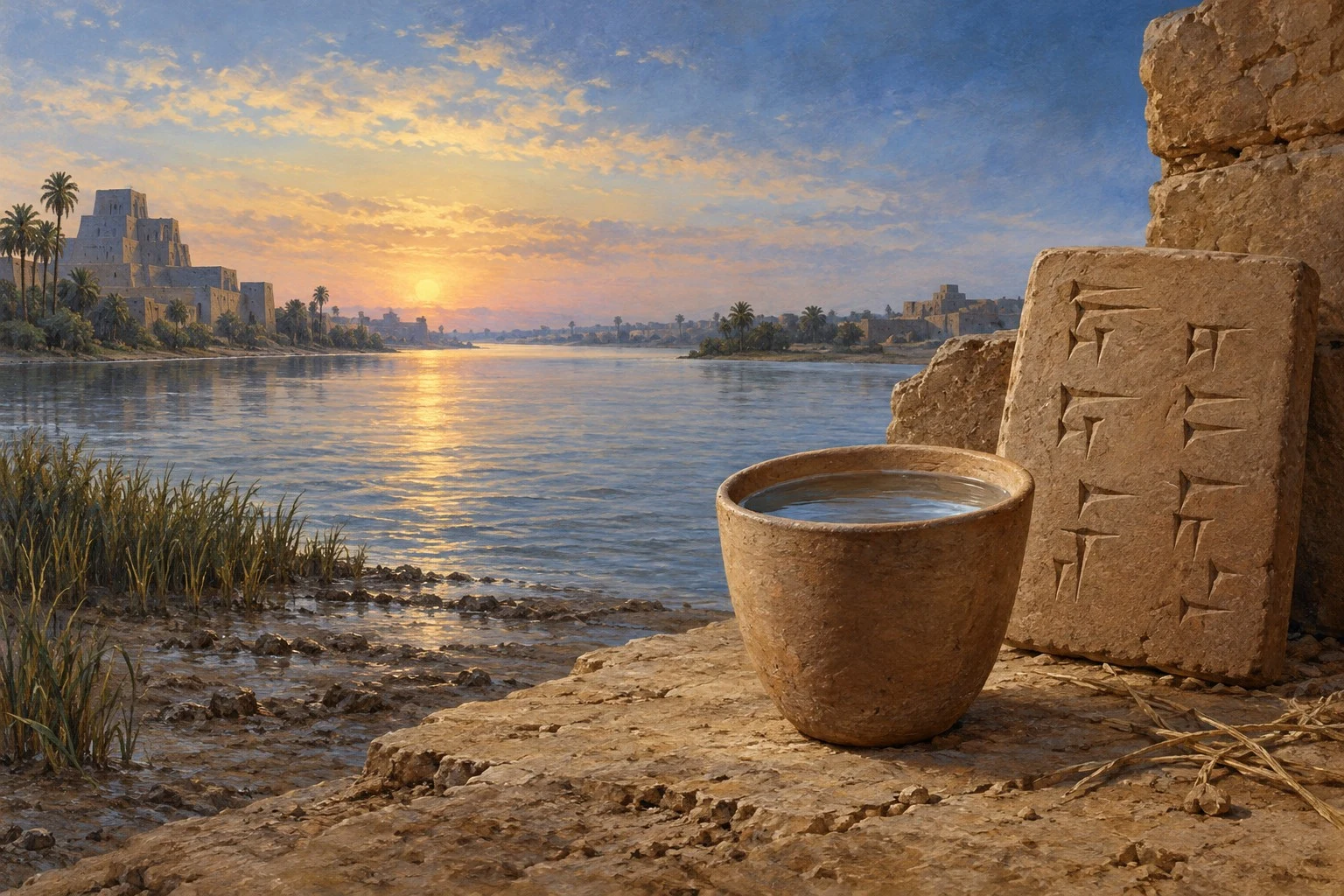
A modern conceptual illustration places river and vessel together to contrast two distinct procedures. It depicts no documented ordeal or specific artifact; the tablet's marks are decorative and not legible text. IL Archive / CC0
Entität
Religious and legal ordeal described in Numbers 5:11–31 for an adultery allegation unresolved by witnesses: the wife swears before a priest and drinks “bitter water” linked to a conditional curse. “Sotah” is the common later rabbinic name. The prescription alone proves neither actual performance nor a specific medical effect.
Namensvarianten: sotah, bitter-water ordeal
Kontext und Quellen →
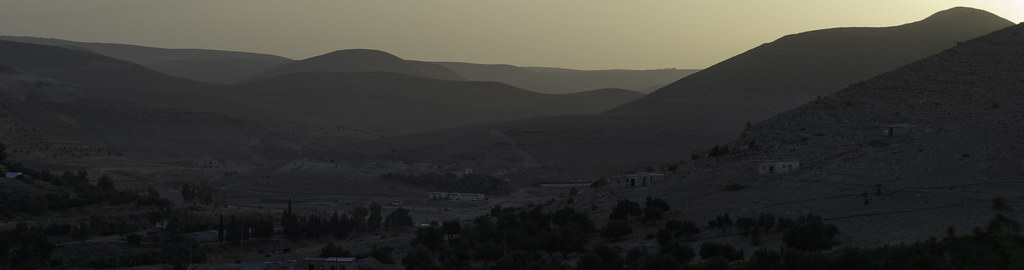
Wadi Mujib landscape, 21 June 2010, in the Dhiban project photo collection. Regional context east of the Dead Sea; houses and roads are modern and the image does not define Moab’s borders
Stätte
An ancient land and kingdom in present-day Jordan, with Mesha's ninth-century BCE inscription a major local witness.
Namensvarianten: Moab
Kontext und Quellen →
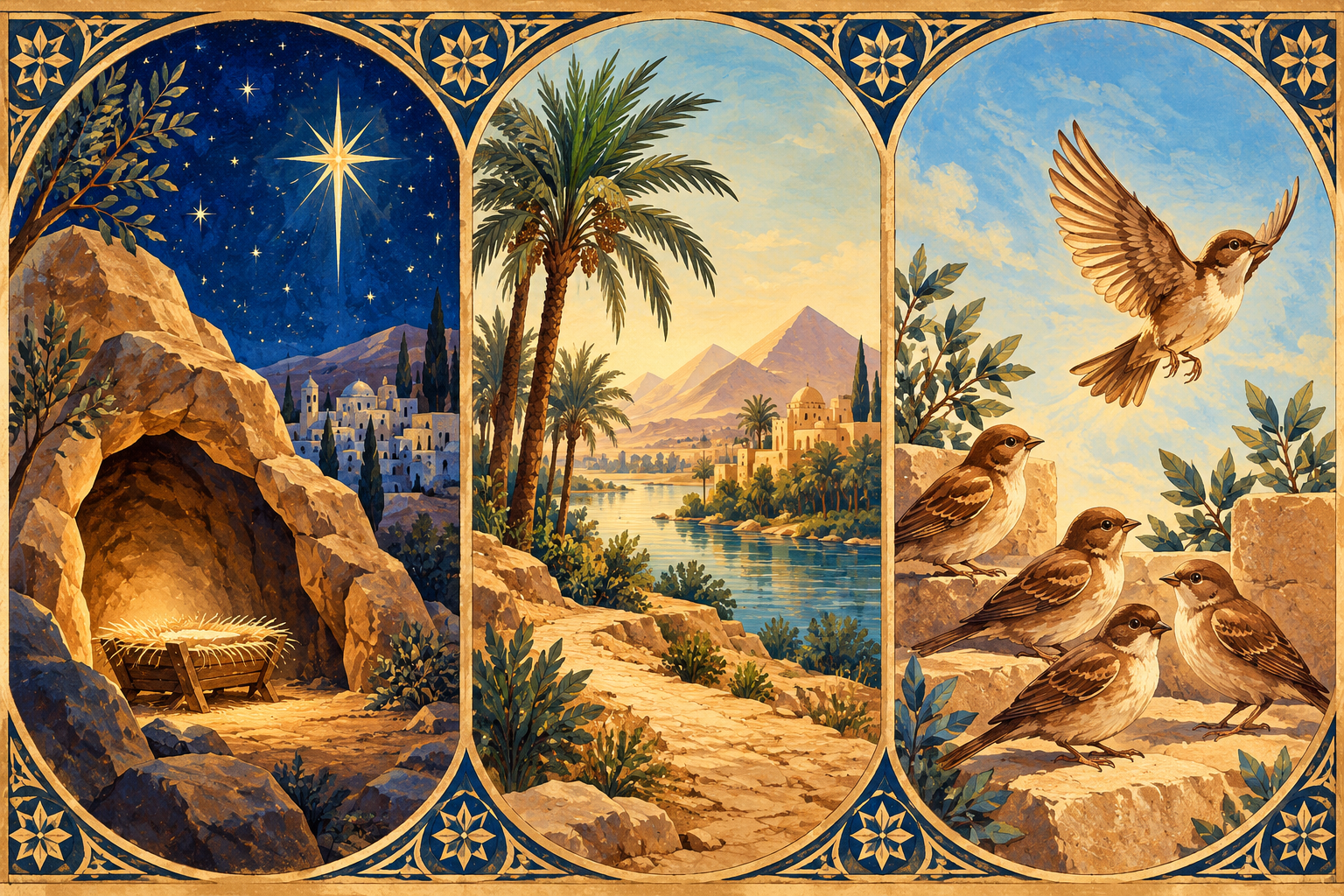
Newly generated interpretive illustration symbolizing the Nativity, journey to Egypt and birds in infancy stories; not a manuscript, historical photograph or verified reconstruction
Antiker Text
A noncanonical Arabic Christian collection about Jesus’ birth, the journey to Egypt and childhood miracles, with structurally different Oxford and Florence recensions; distinct from the Infancy Gospel of Thomas.
Namensvarianten: Arabic Infancy Gospel
Kontext und Quellen →
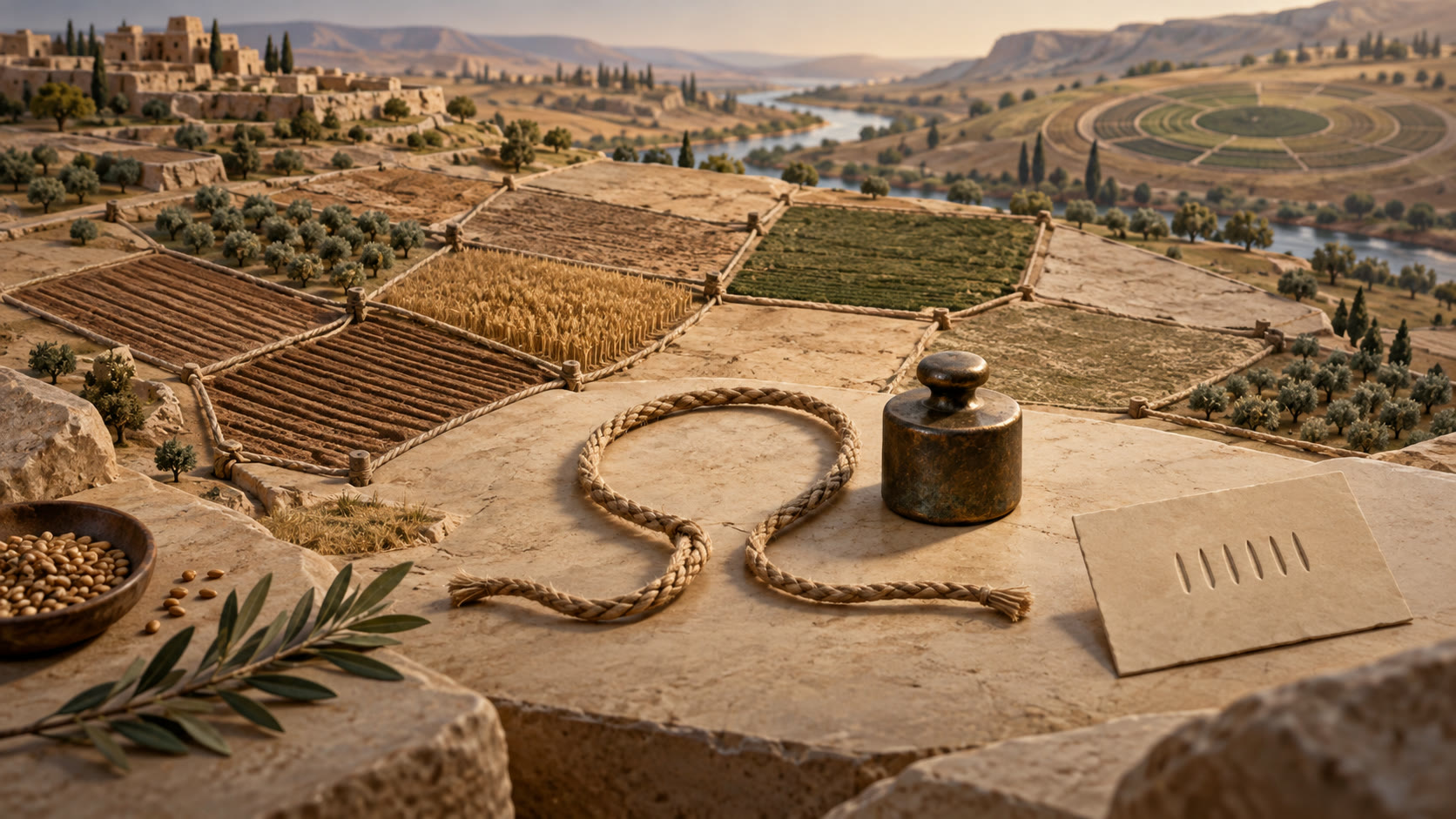
Modern conceptual cover commissioned by IL Archive (2026): fields and an unknotted cord evoke the Jubilee’s land and release laws. Not an archaeological site, inscription or record of an actual Jubilee; original indexed JPEG retained, CC0
Entität
The fiftieth-year law of Leviticus 25: family land restoration, limited release from servitude, and debate over debt remission and Deuteronomy 15.
Namensvarianten: Biblical Jubilee, Jubilee year (Leviticus 25)
Kontext und Quellen →

Modern AI-generated symbolic cover evoking the divine sign. The scene and radiating motif are imaginary, not an artifact or a verified depiction of AN/DINGIR
Entität
A cuneiform sign used mostly before a divine name to classify it without being spoken independently; shown as raised d or {d} in transliteration. Usage depends on language and context.
Namensvarianten: divine determinative, divine classifier
Kontext und Quellen →

Newly AI-generated symbolic cover bringing together a fish, spring, and mountainous gate; not a manuscript image, archaeological object, or verified historical reconstruction
Antiker Text
Syriac metrical homily on Alexander, life-water, and the gate against Gog and Magog, attested by a ninth-century manuscript catalogue and described in scholarship as having three recensions. Traditionally attributed to Jacob of Serugh; Brock proposes composition after 629/630 CE. Recensions are not collated here.
Namensvarianten: Syriac Alexander Poem
Kontext und Quellen →
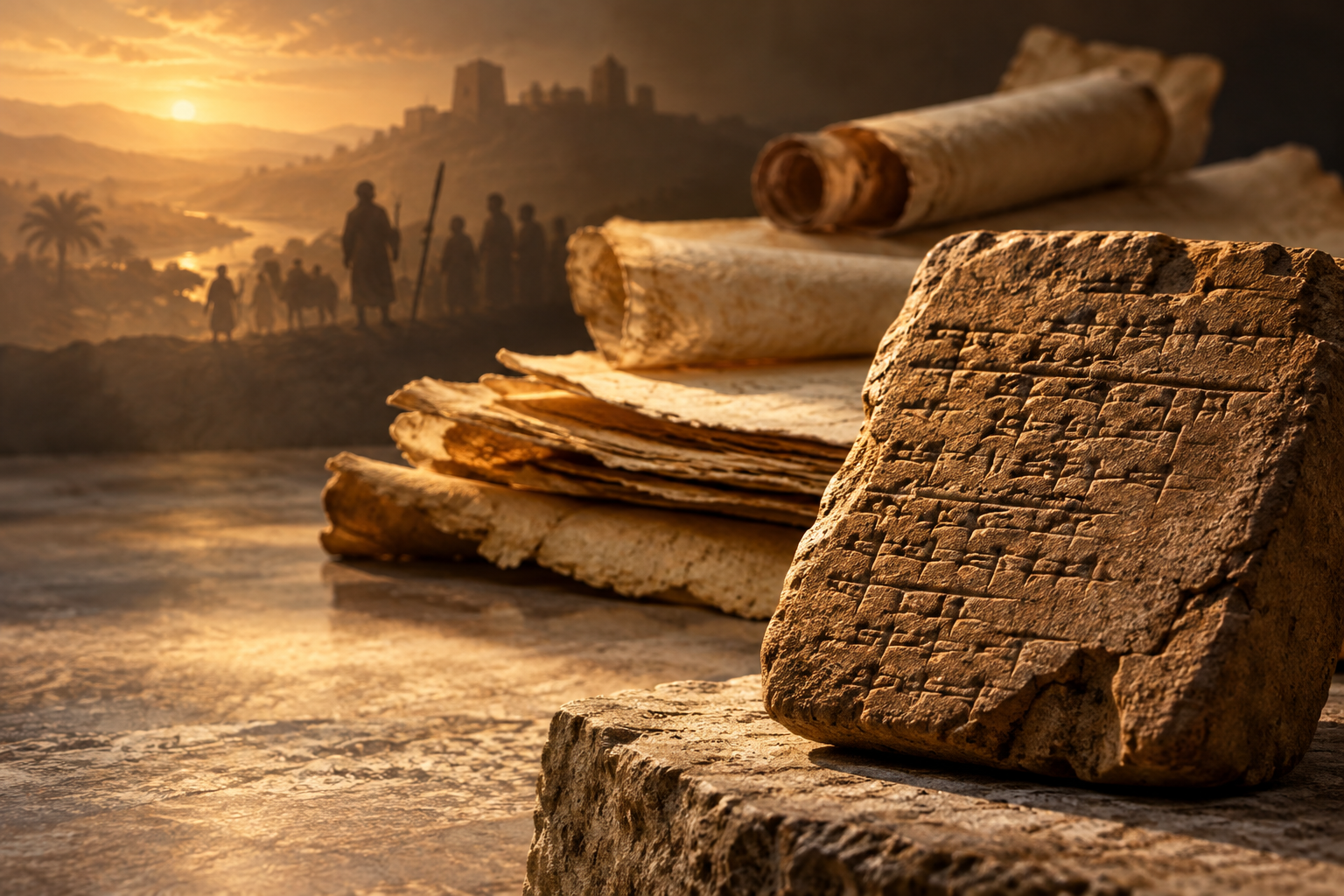
Modern AI-generated conceptual illustration: imagined tablets, parchment and landscape evoke a text’s different times; no actual object, manuscript or historical place is depicted
Entität
Investigation of the date of a surviving witness and the development and transmission of a work, keeping narrated time, composition and copying separate.
Namensvarianten: Dating texts
Kontext und Quellen →
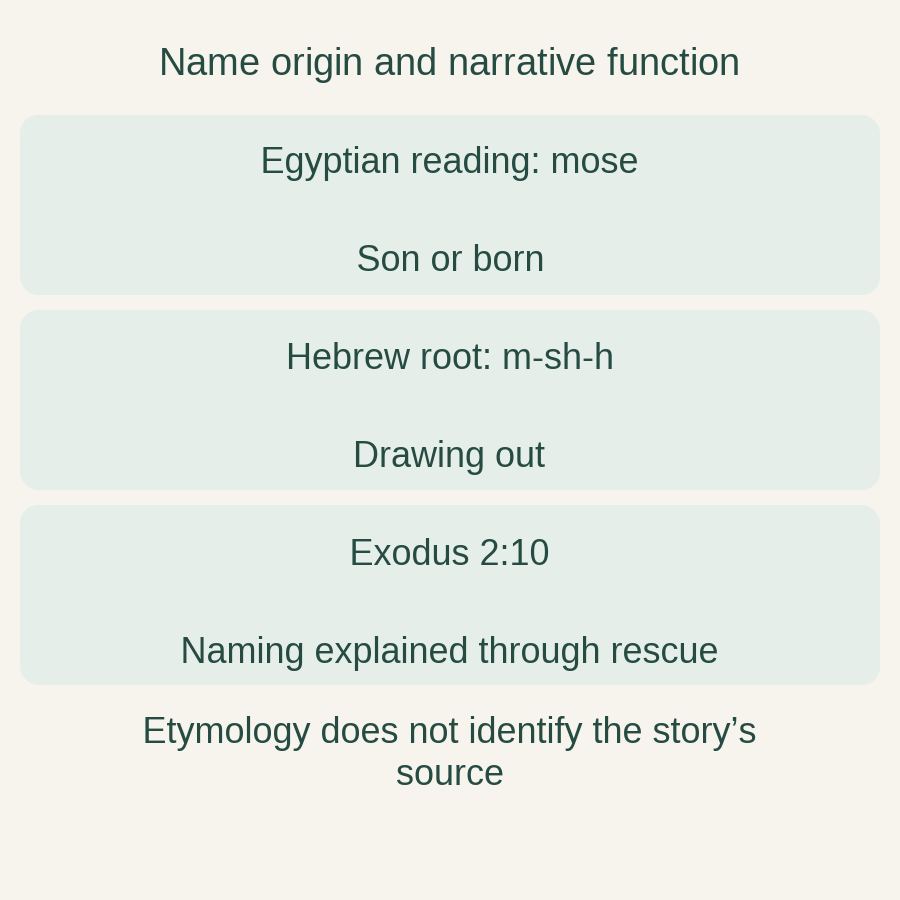
Modern diagram distinguishing Egyptian name origin and Hebrew narrative explanation; not a portrait of Zucker
Person
Independent scholar and rabbi writing on the Bible and its interpretation; author of a 2018 discussion of Moses’ Egyptian name and Hebrew explanation.
Namensvarianten: David J. Zucker
Kontext und Quellen →
Person
Professor of Hebrew Bible at Union Theological Seminary, studying textual formation, writing and memory.
Namensvarianten: David M. Carr, Hebrew Bible scholar, David Carr
Kontext und Quellen →
Person
David Neil MacKenzie (1926–2001) was a British scholar of Middle and modern Iranian languages.
Namensvarianten: David Neil MacKenzie
Kontext und Quellen →
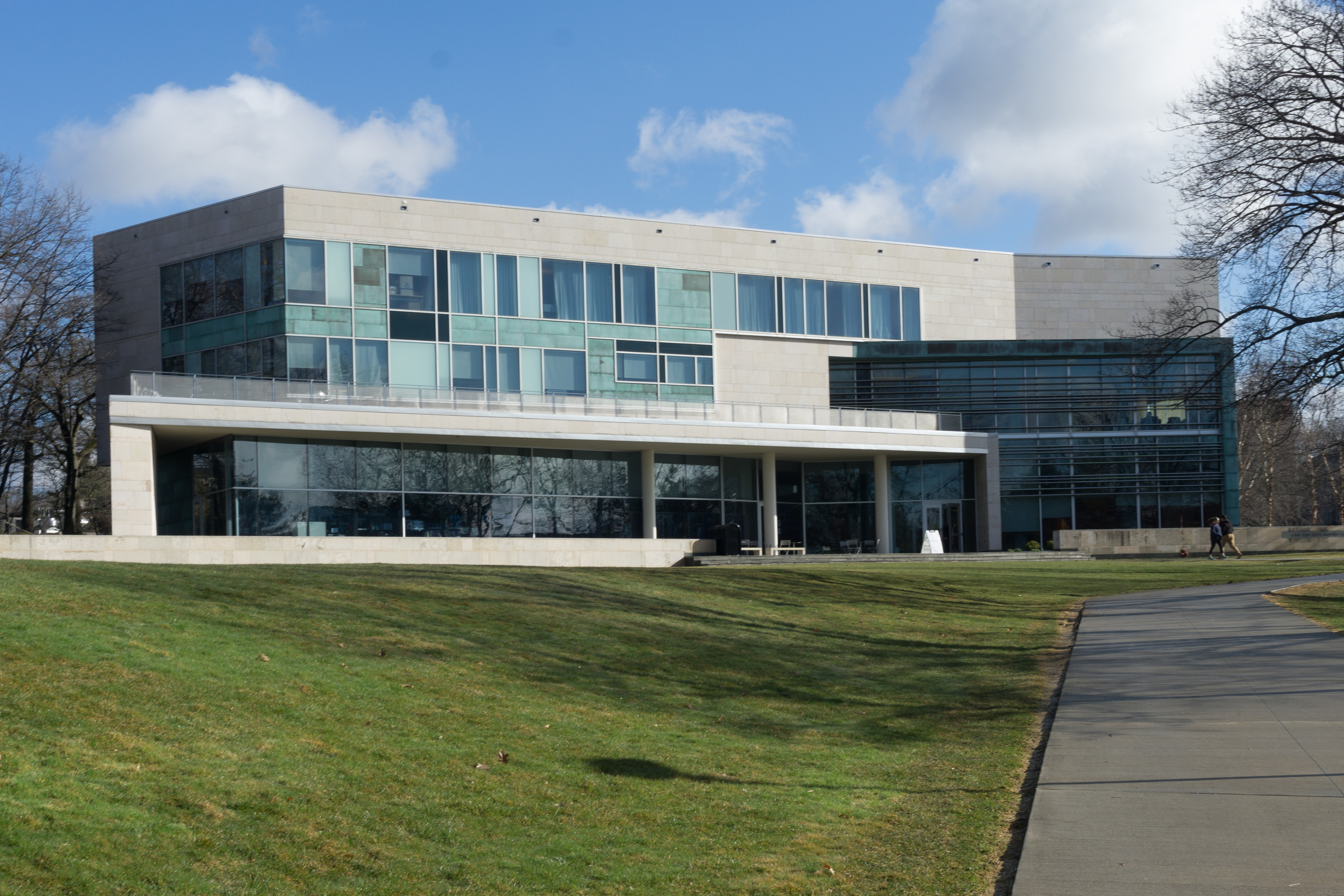
Shapiro Campus Center at Brandeis University in Waltham, Massachusetts, on 7 April 2017. The photograph shows part of the institution associated with David P. Wright’s research on the Hebrew Bible and the ancient Near East
Person
Hebrew Bible and ancient Near Eastern law and ritual scholar, professor emeritus at Brandeis.
Namensvarianten: David Wright, David P. Wright
Kontext und Quellen →
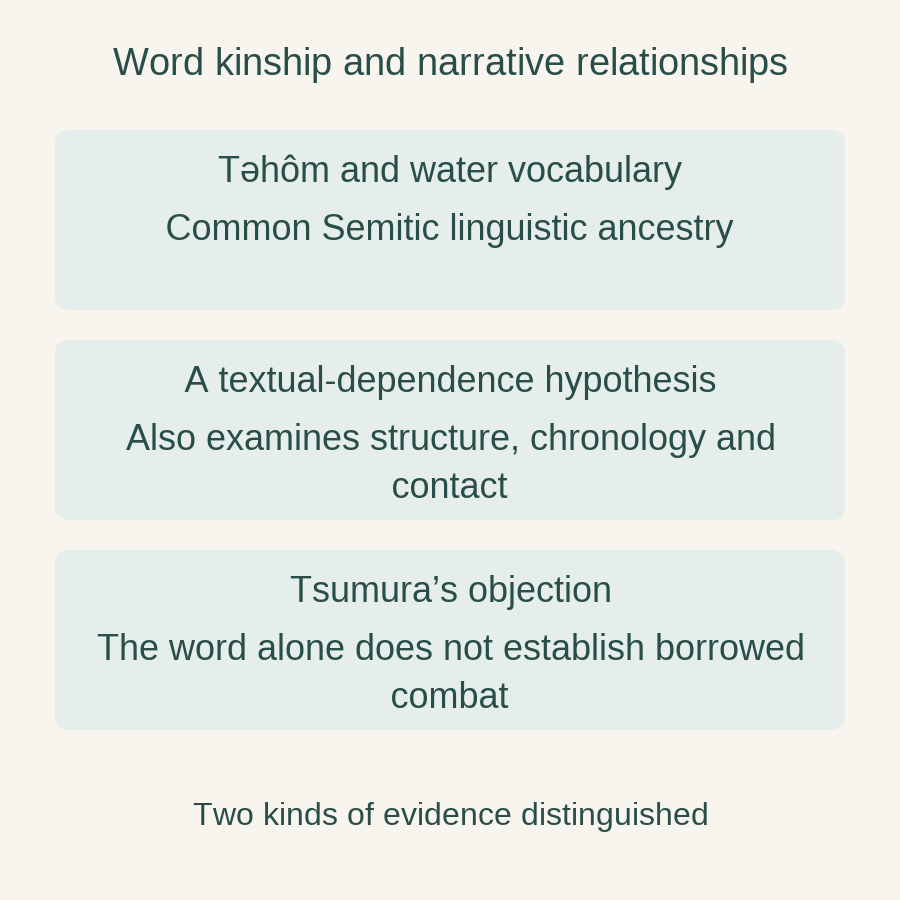
Modern diagram distinguishing linguistic kinship from a hypothesis about textual relationships; not a portrait of Tsumura
Person
Linguist and Old Testament scholar, author of the 2005 Creation and Destruction, reassessing linguistic arguments for primordial combat behind biblical texts.
Namensvarianten: David Toshio Tsumura
Kontext und Quellen →
Contemporary explainer; it is not an ancient artifact or historical likeness
Person
Royal figure in Samuel and Kings, cited here in an instance of “adversary” applied to a human.
Namensvarianten: King David
Kontext und Quellen →
Person
Jewish studies scholar examining love in Deuteronomy through political fidelity and affection.
Namensvarianten: Deena Grant
Kontext und Quellen →
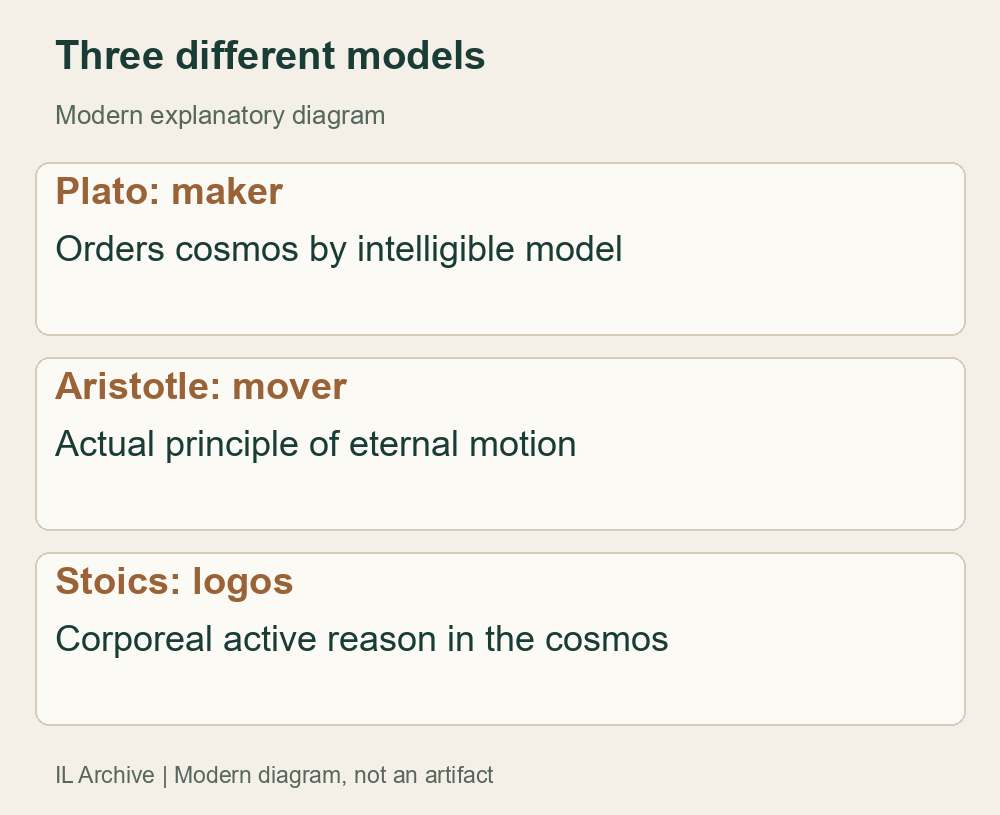
Modern explanatory diagram comparing Plato’s craftsman, Aristotle’s mover and the Stoic logos. The comparison distinguishes the roles of these principles; it is not an ancient object or a historical portrait
Entität
The good craftsman through whom Plato explains cosmic order in the Timaeus, following an unchanging model grasped by reason.
Namensvarianten: demiurge, demiourgos, Timaean maker
Kontext und Quellen →
Person
Scholar of ancient Jewish and Christian texts who studied the Solomon-as-exorcist tradition.
Namensvarianten: Dennis C. Duling
Kontext und Quellen →

Modern AI-generated symbolic image of throne, fire and books in Daniel 7; imaginative artwork, not an artifact, verified reconstruction or portrait of El
Entität
Aramaic title of the enthroned divine judge in Daniel 7:9–14, associated with white head hair, a fiery throne and books of judgment; the text mentions no beard.
Namensvarianten: Ancient of Days, Ancient One (Daniel 7)
Kontext und Quellen →

Modern AI-generated conceptual cover (2026): two imagined garden trees beside a water-borne plant recalling Gilgamesh. Coloured fruit and buildings are imaginative, not a botanical identification, an archaeological reconstruction, or proof of literary borrowing. © IL Archive, CC0
Entität
The tree prohibited in Genesis 2:17 and eaten from in Genesis 3, narratively distinct from the tree of life; its fruit is unidentified.
Namensvarianten: tree of the knowledge of good and evil
Kontext und Quellen →

Modern interpretive illustration juxtaposing Gilgamesh’s water-borne plant and two trees in the Genesis garden. It is neither an excavated object nor a documented historical reconstruction, and it does not establish transmission between the stories
Entität
A tree in the garden of Genesis 2–3, distinct from the tree of knowledge. After the forbidden fruit is eaten, the way to the tree of life is guarded lest humans eat from it and live forever. The text does not identify its fruit or explain precisely how it works.
Namensvarianten: tree of life
Kontext und Quellen →

Modern AI-assisted symbolic image of an open blank book; neither a photograph of a historical Quran manuscript nor a verified reconstruction of an early codex
Entität
The central scripture of Islam, consisting of 114 Arabic surahs; its study distinguishes Quranic discourse from manuscript history, reading traditions, and historical inference.
Namensvarianten: Quran, Qurʾān, Koran
Kontext und Quellen →
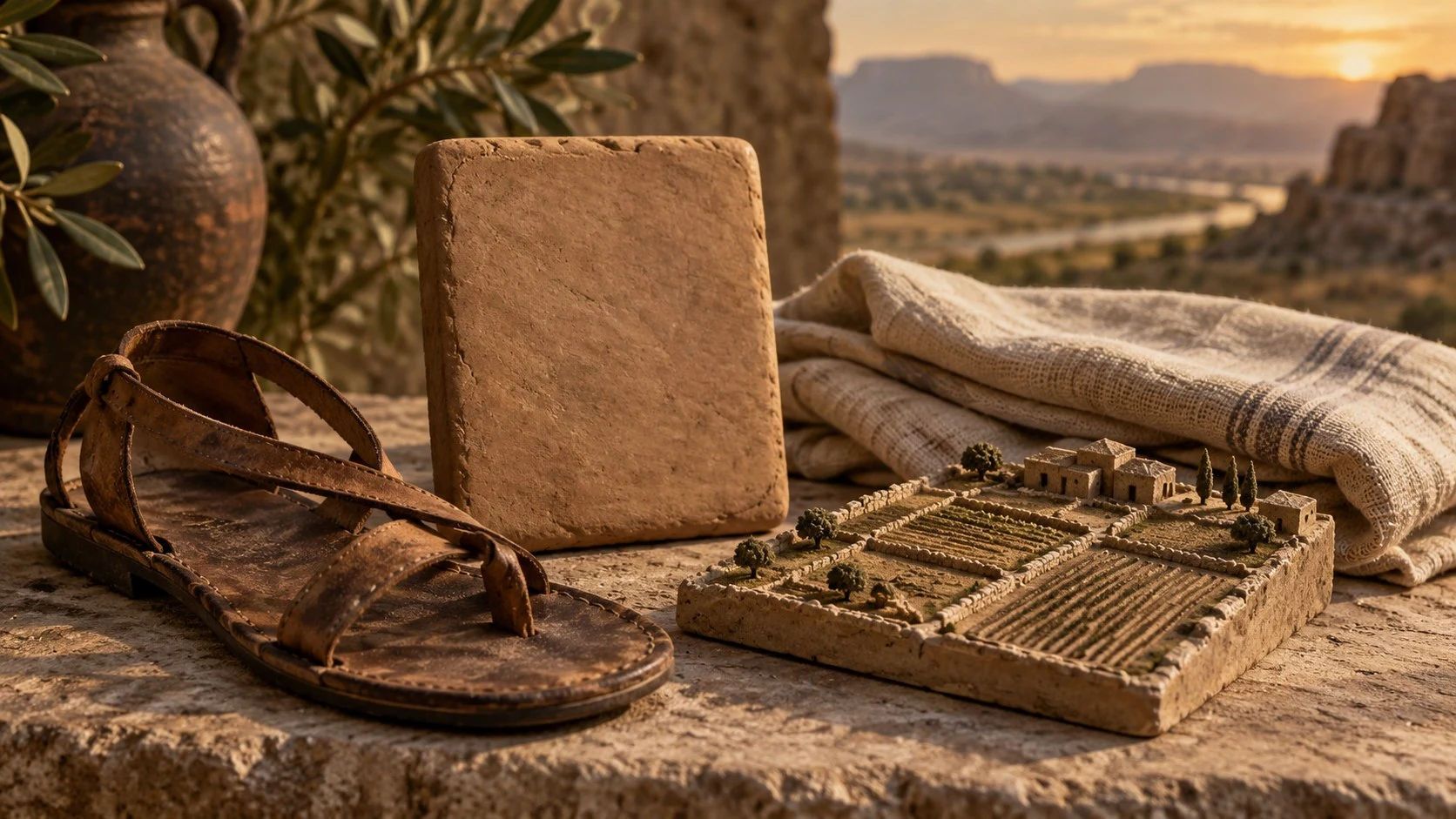
Modern conceptual illustration: a sandal, an uninscribed clay tablet and model fields symbolize kinship and inheritance. No documented artifact or historical scene is depicted. IL Archive / CC0
Entität
A relative with an opportunity to redeem a family property interest. Ruth 4 presents a nearer relative and Boaz; the transaction is related to marriage but is not identical to the brother-in-law rule of Deuteronomy 25.
Namensvarianten: kinsman-redeemer in Ruth, family redeemer in Ruth
Kontext und Quellen →
Entität
A remarkable stone-cutting creature in Gittin 68's Temple-building story, not an identified archaeological tool.
Namensvarianten: shamir
Kontext und Quellen →
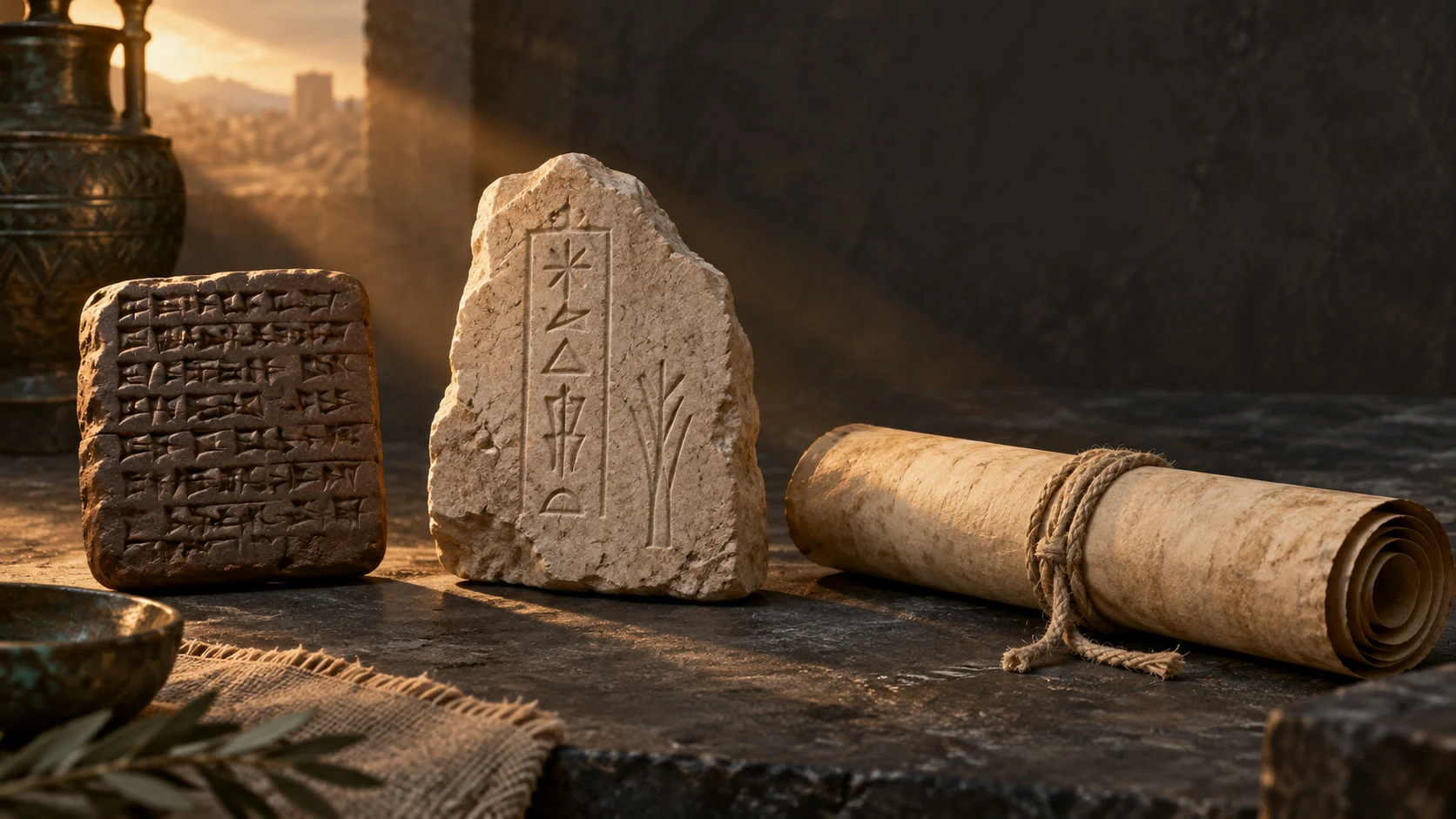
Modern conceptual cover generated for IL Archive (2026): imagined clay tablet, inscribed stone and scroll. The apparent writing is not an attested Esarhaddon inscription or a verified artifact, nor proof of contact with Deuteronomy. CC0 per owner declaration
Entität
A 672 BCE Assyrian loyalty oath installing Ashurbanipal in Assyria and his brother in Babylon; copies survive from Nimrud and Tell Tayinat.
Namensvarianten: Esarhaddon Succession Treaty, EST
Kontext und Quellen →
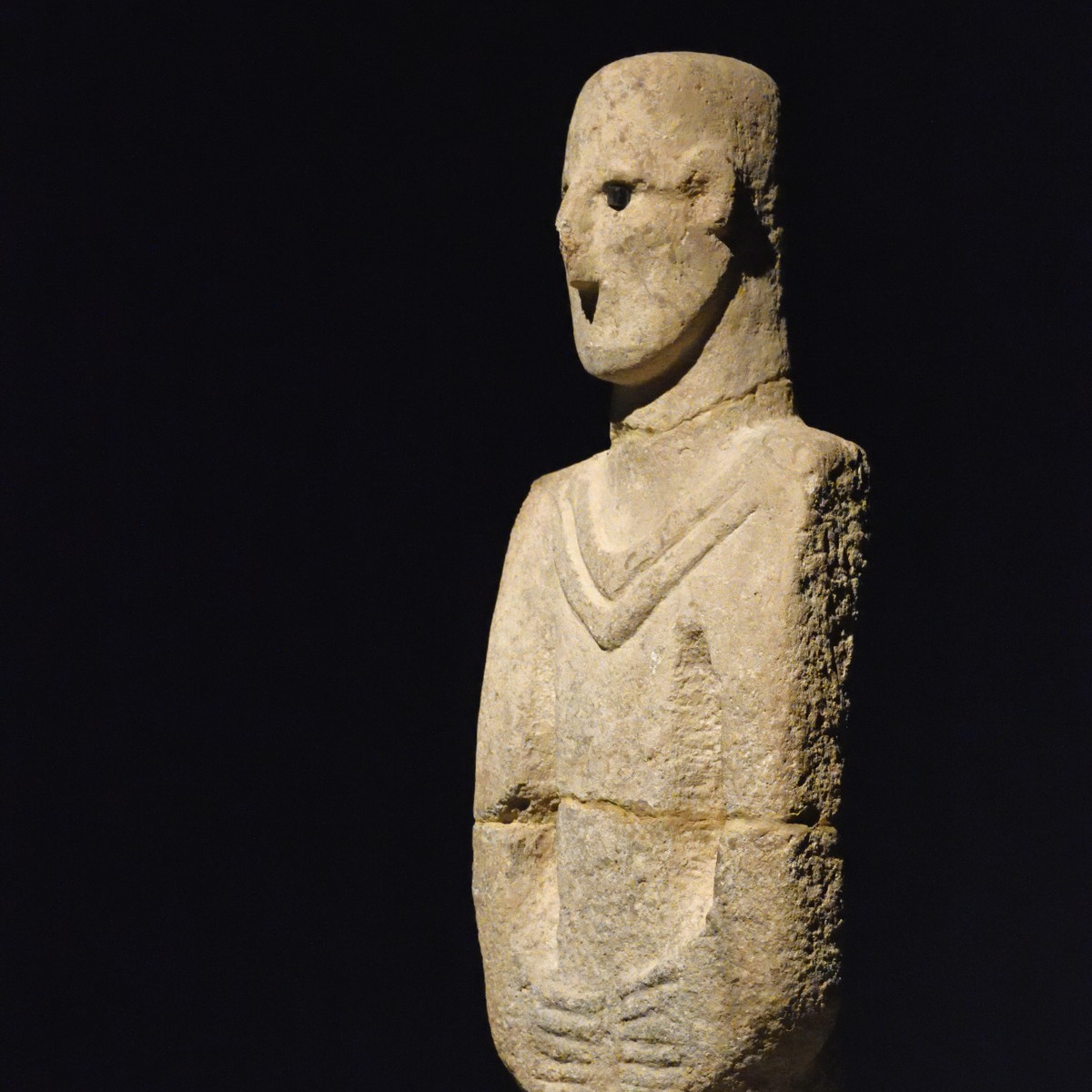
Cropped photographic detail of Urfa Man in the Şanlıurfa Archaeology Museum, showing the eyes, V-shaped feature and hands. A modern square crop of Dick Osseman’s 20 September 2019 photograph, not an image of the excavation site
Artefakt
An Early Neolithic limestone human figure discovered in 1993 at Yeni Mahalle, Şanlıurfa, with obsidian-accented eyes and hands at the groin, but no carved mouth or separate legs. Its precise find context, independent date and purpose are unknown.
Namensvarianten: Urfa Man, Yeni Mahalle statue
Kontext und Quellen →

Modern conceptual cover: offering bowl, smoke and a luminous bow above receding waters. Generated in 2026; neither an ancient artifact nor a depiction of a documented event
Entität
Genesis’s covenant with Noah, descendants and animals: promised in 6:18 and proclaimed in 9:8–17, assuring no flood will again destroy all flesh, with the cloud-bow as its sign.
Namensvarianten: Noahic covenant, covenant with Noah, covenant of the bow
Kontext und Quellen →
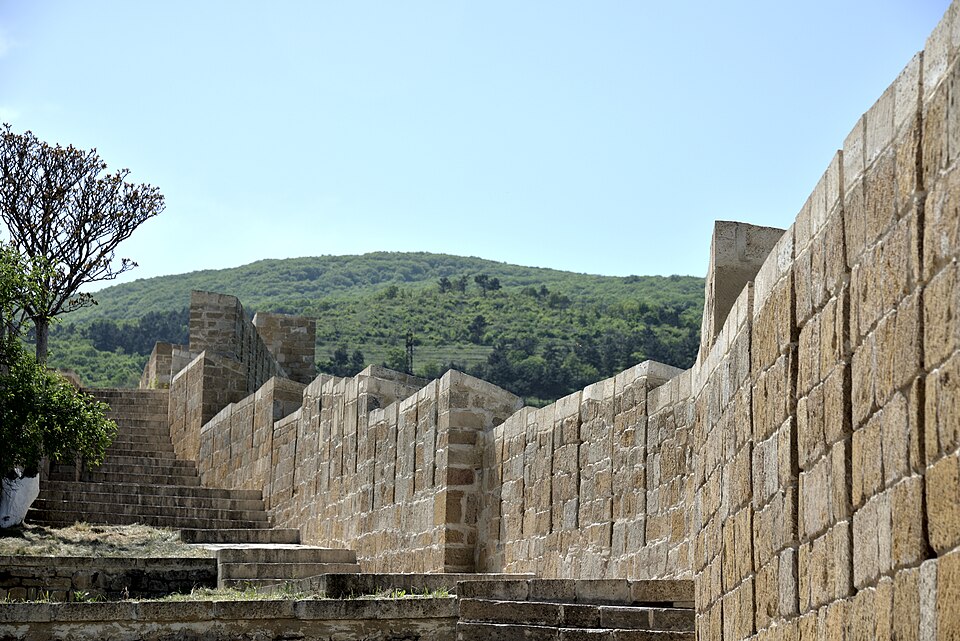
Derbent's northern city wall in Dagestan, photographed in 2018. It shows a real fortification, not proof of Gog and Magog's barrier
Stätte
Caspian-coast city in Russia's Dagestan with Sasanian fortifications; its existence does not identify Dhul Qarnayn's barrier.
Namensvarianten: Derbent
Kontext und Quellen →
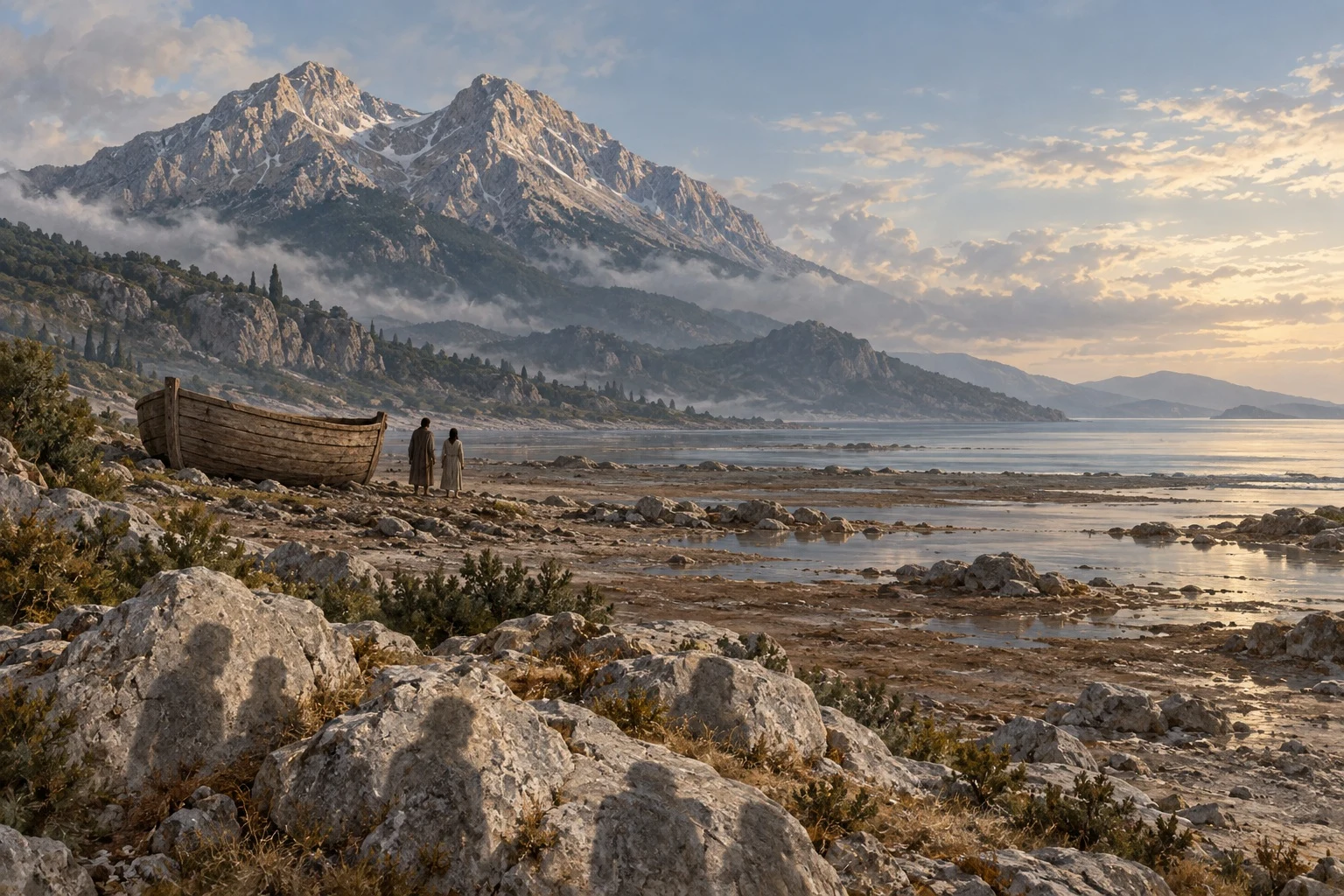
Modern conceptual illustration of receding water, two survivors, a mountain and stones evoking Deucalion; not an archaeological photograph or a documented location. © IL Archive, CC0
Person
Deucalion and Pyrrha in Greek and Latin flood accounts: genealogy, survival, stone-born people, local traditions and Near Eastern parallels, with attention to variant sources and dates.
Namensvarianten: Deucalion, Deucalion flood
Kontext und Quellen →
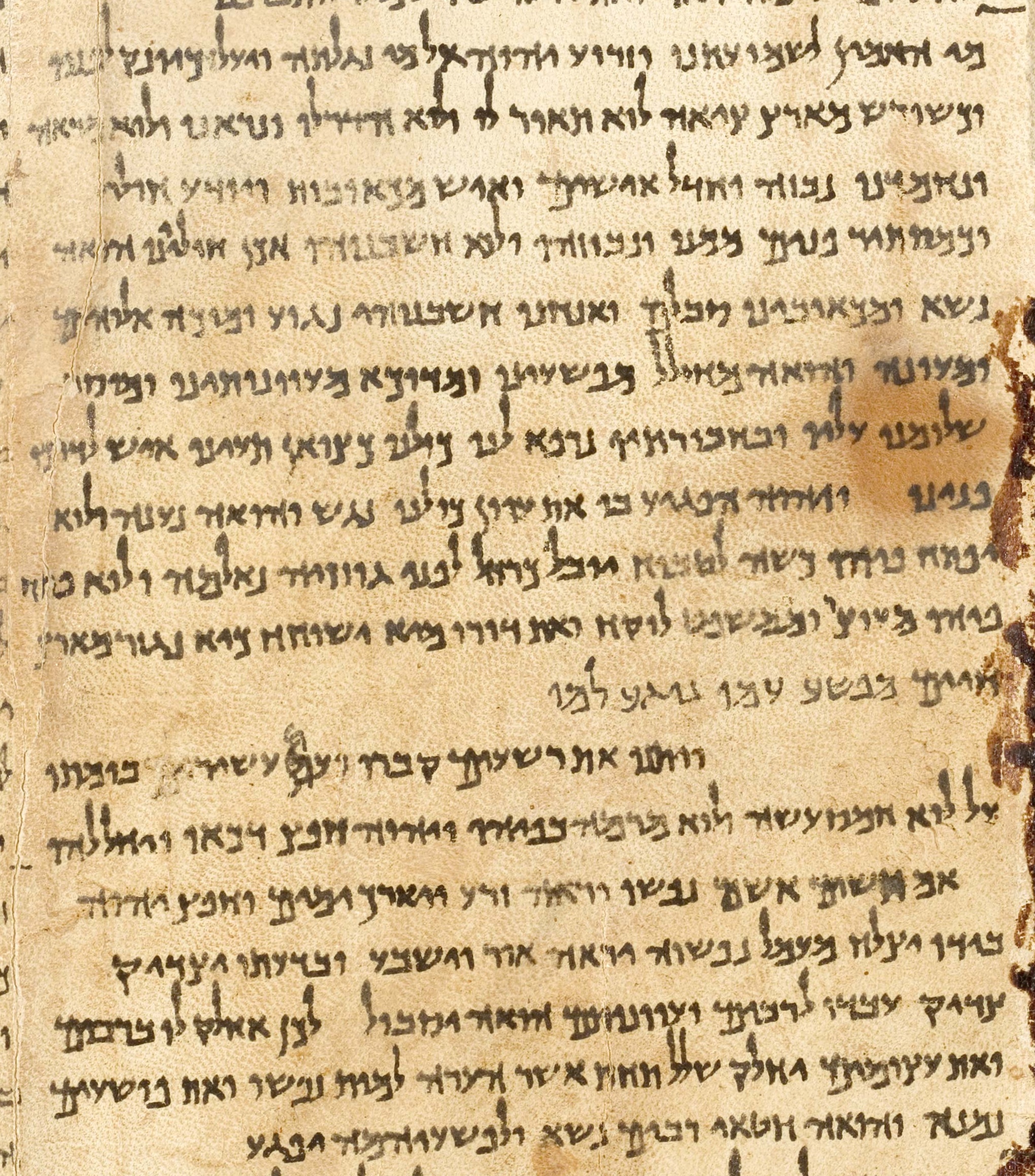
Isaiah 53 in the Great Isaiah Scroll (1QIsaa) from Qumran, a second-century BCE copy. The photograph witnesses textual transmission, not the suffering servant’s identity or the collection’s date of composition
Entität
Scholarly label for Isaiah 40–55, associated substantially with exile and Cyrus; neither an identified biography nor proof of a single author or date.
Namensvarianten: Second Isaiah, Deutero-Isaiah, Isaiah 40–55
Kontext und Quellen →
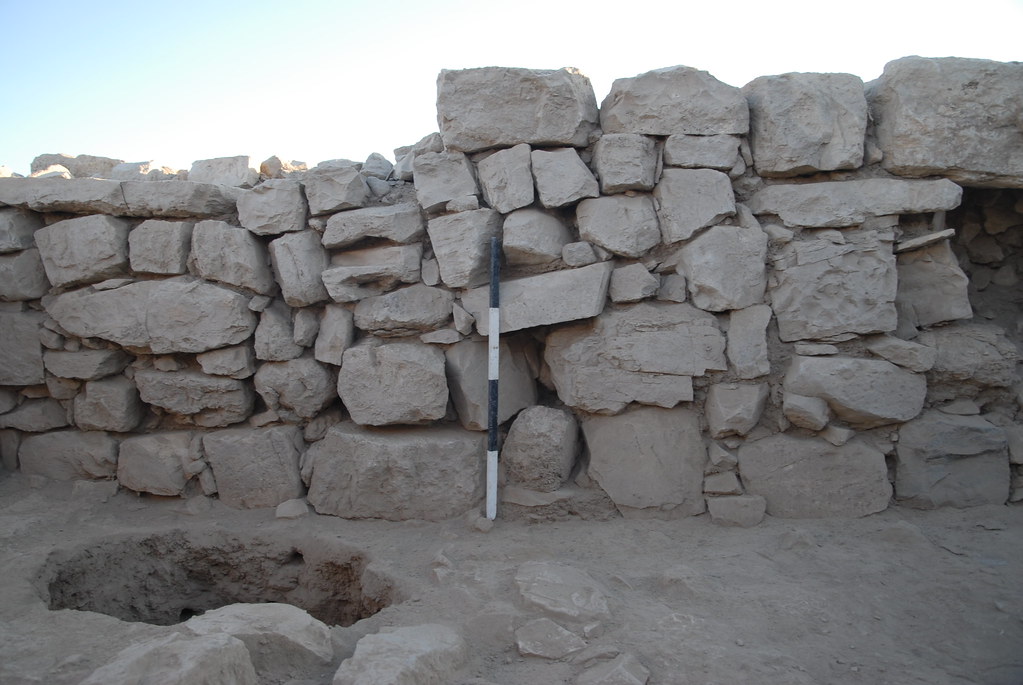
Wall exposed in the Dhiban excavations, 8 August 2009; file title “South-facing Wall.” The scale is modern. This photo record does not date the wall or identify it as belonging to Mesha’s reign
Stätte
Town and archaeological site in west-central Jordan, findspot of the Mesha Stele in 1868, with several periods of settlement.
Namensvarianten: Dhiban, Dibon
Kontext und Quellen →