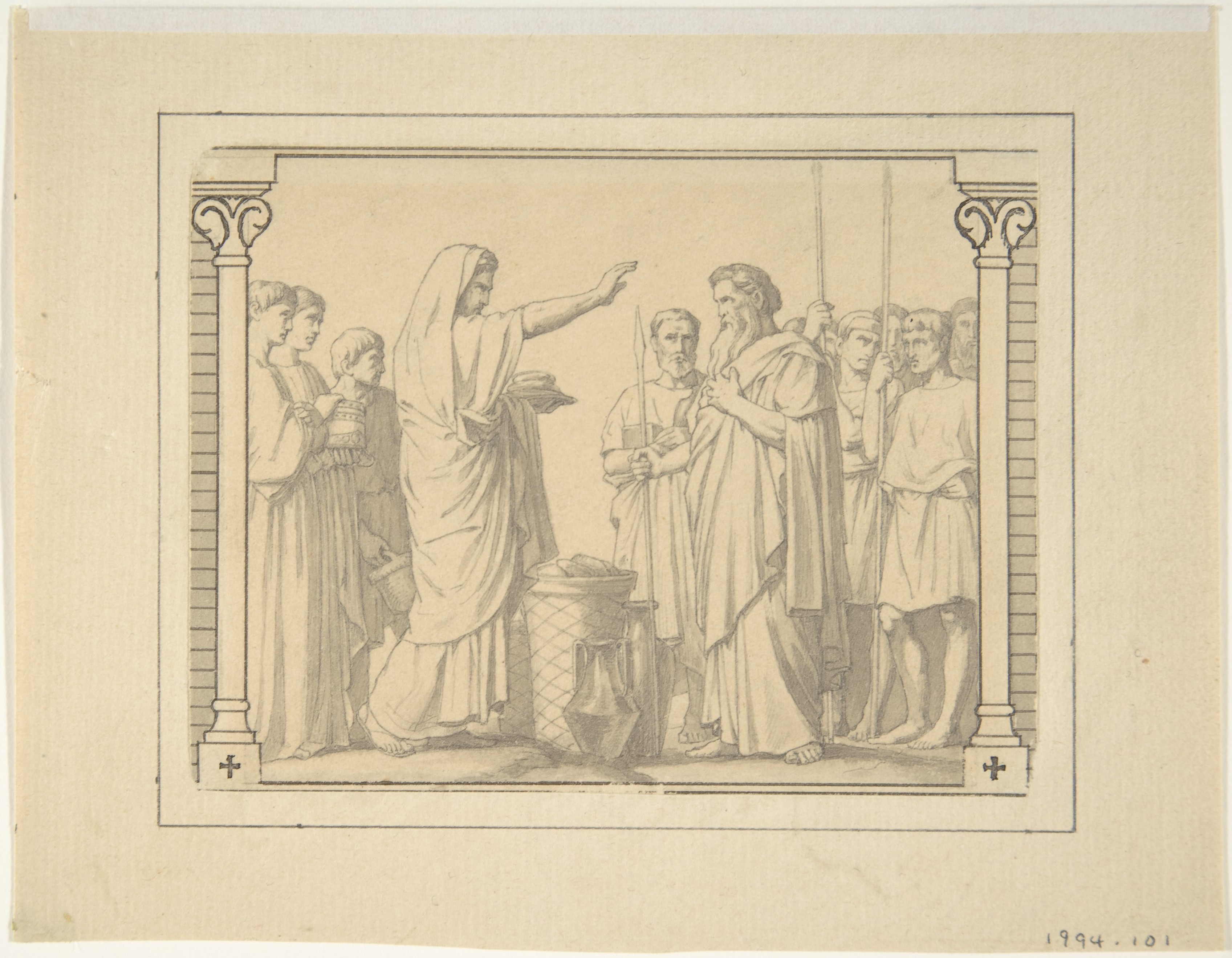
Melchizedek Presenting Abraham with Bread and Wine, a drawing by Hippolyte Flandrin, 1835–64, The Met, 1994.101. A later artistic reception of Genesis 14, not a historical image of the meeting or evidence of El Elyon’s appearance
Entität
A Hebrew expression meaning “God Most High.” Genesis 14 identifies its bearer with Yahweh, while the Most High’s identity in Deuteronomy 32 remains debated separately from its manuscript readings.
Namensvarianten: El Elyon
Kontext und Quellen →
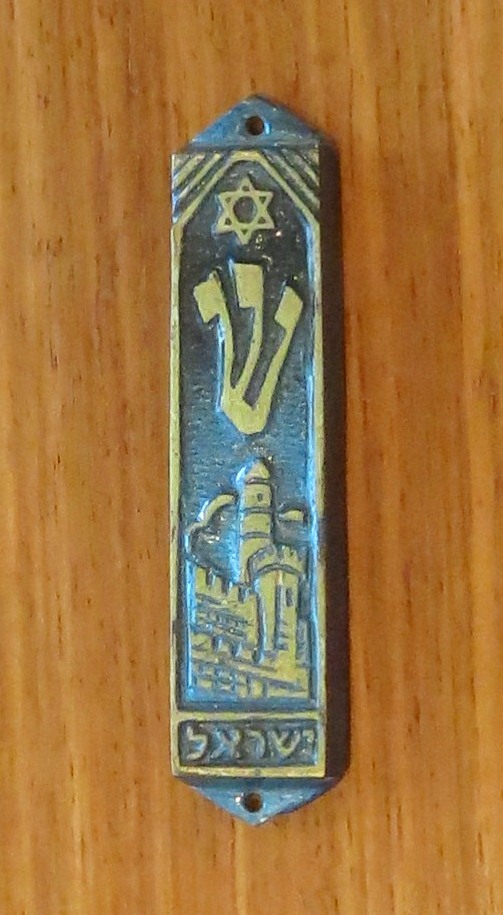
A mezuzah case from Macedonia, photographed in 2013. It bears ש, shin, used as an abbreviation of Shaddai in this tradition. It illustrates the name’s later Jewish reception; the file metadata do not date the case’s manufacture. It is not a witness from the ancestral period or a portrait of a deity
Entität
A compound El name or title associated with ancestral narratives and identified with Yahweh in Exodus 6; Shaddai’s meaning and etymology remain uncertain.
Namensvarianten: El Shaddai
Kontext und Quellen →
Person
A Jewish man whose exorcism Josephus says he witnessed before Vespasian; distinct from the biblical Eleazar son of Aaron.
Namensvarianten: Eleazar the exorcist
Kontext und Quellen →
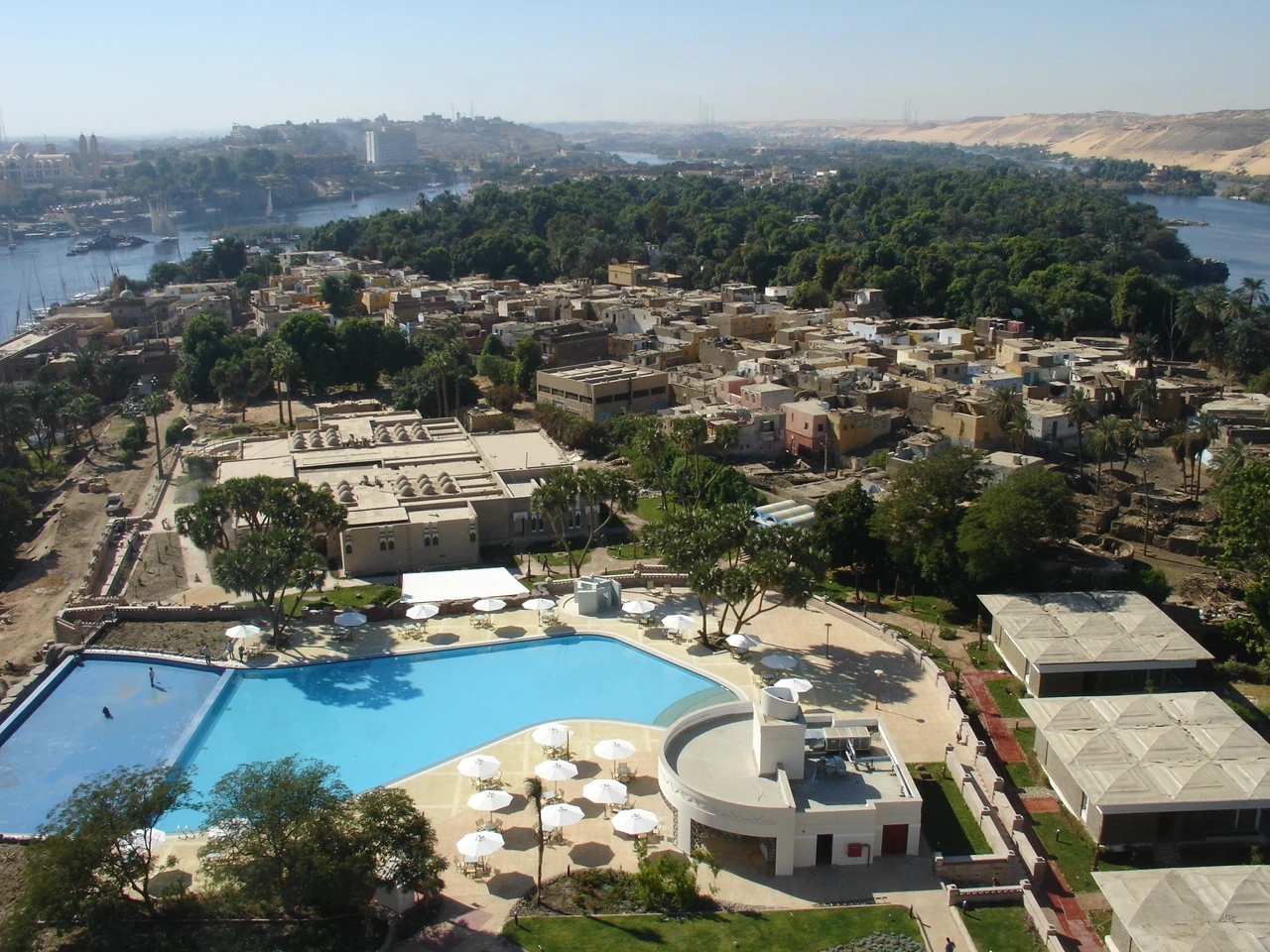
Modern view of Elephantine Island and the Nile near Aswan; geographical context, not the remains of Yaho’s temple
Stätte
Elephantine / Yeb, near Aswan at the Nile’s First Cataract, preserves a long-lived Egyptian town, temples of Khnum and Satet, and Persian-period garrisons. Aramaic papyri document several communities, including Judeans and Yaho’s temple, whose rebuilding was sought in 407 BCE; claims and archaeological interpretations must be distinguished.
Namensvarianten: Elephantine, Yeb
Kontext und Quellen →
Modern editorial illustration of a sage writing at an ancient court. Generated explanatory image, not a photograph of P.13446 or a documented reconstruction of Daniel or Ahiqar. © IL Archive, CC0
Artefakt
A fragmentary Aramaic witness, probably from the later fifth century BCE, preserving Ahiqar’s tale and sayings with gaps and editorial restorations.
Namensvarianten: Ahiqar papyrus, Elephantine Ahiqar
Kontext und Quellen →
Modern AI-generated conceptual cover: imagined papyrus fragments over a symbolic Nile landscape. It does not depict the actual P.13464, its script or a documented findspot
Artefakt
Aramaic papyrus letter from Elephantine, dated to year five of Darius II (419/418 BCE), with Nisan dates and ritual expressions; “Passover” is a restoration and the reading remains debated.
Namensvarianten: Passover Letter, Passover Papyrus, Elephantine Passover Letter
Kontext und Quellen →
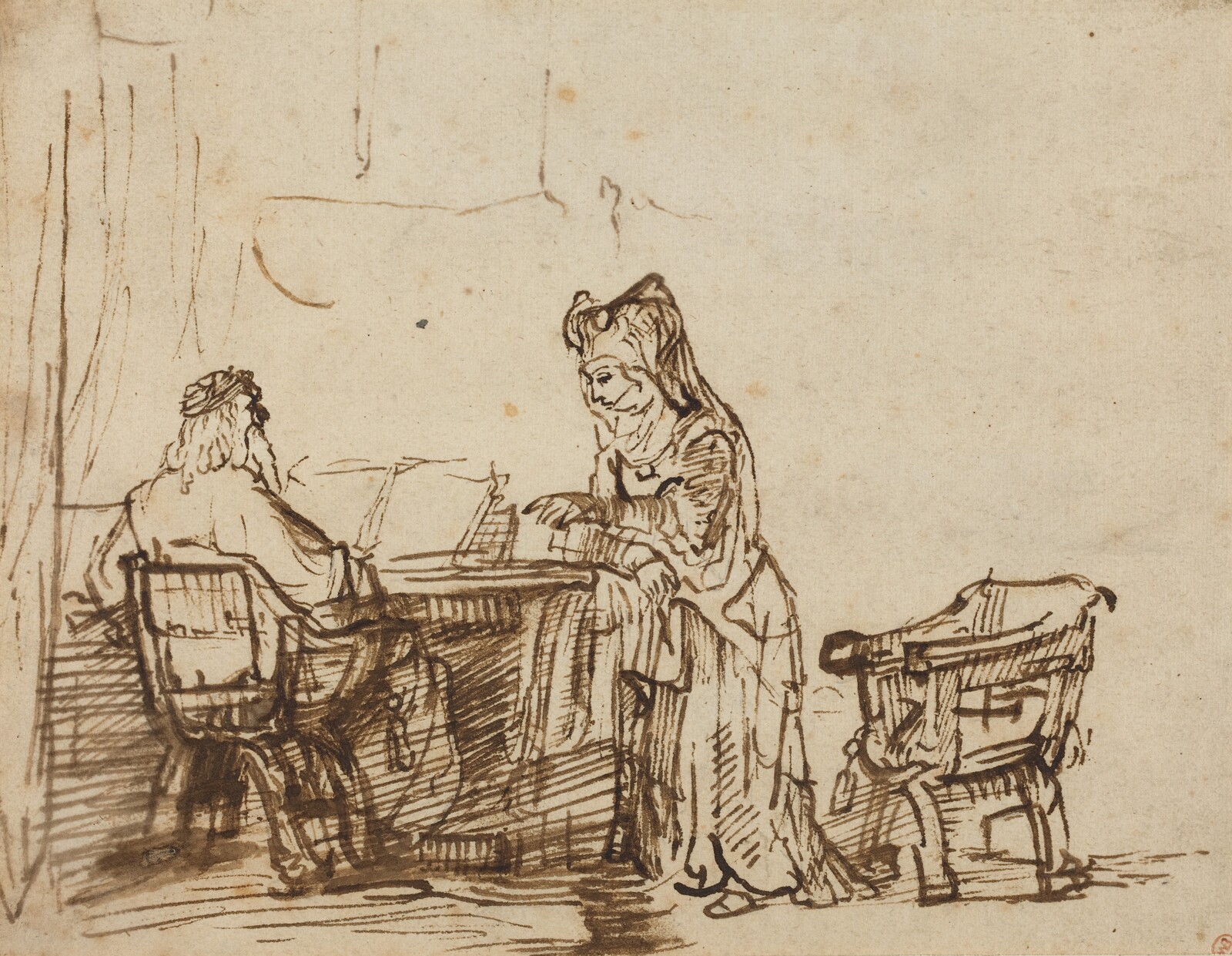
Eli and Hannah in an anonymous drawing after Rembrandt (1606–1669). A later rendering of their conversation, not contemporary portraiture. National Gallery of Art, 1942.9.667
Person
Priest in 1 Samuel who speaks with Hannah; his sons are called “sons of Belial” in an account of abuses concerning offerings.
Namensvarianten: Eli the priest
Kontext und Quellen →
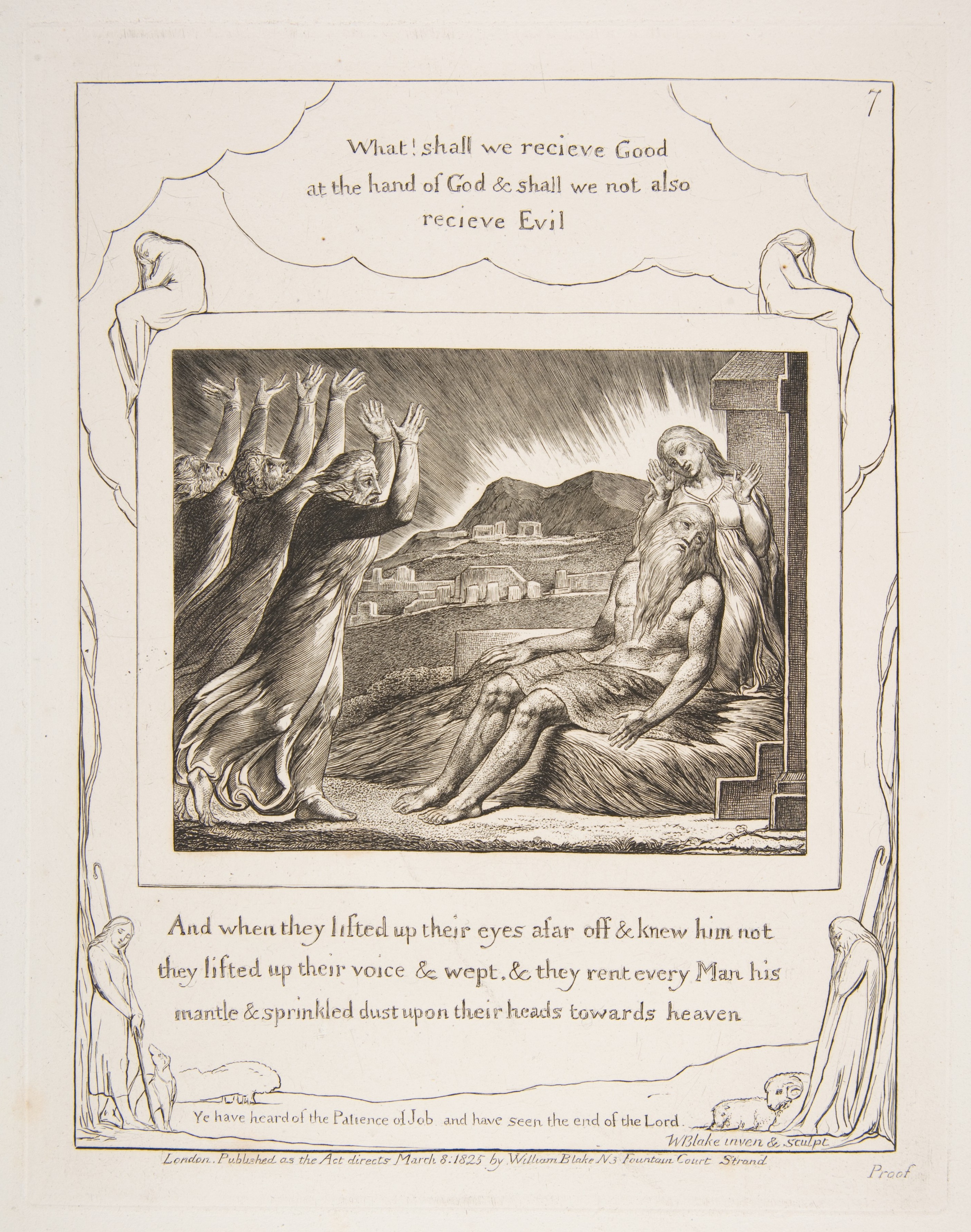
William Blake, Job’s Comforters,1825–26, engraving, Met 17.17.1–7. Later artistic reception of the friends’ arrival in Job 2; not Eliphaz’s historical appearance or an identification of one particular figure as him
Person
Eliphaz the Temanite is one of Job’s three friends in the Hebrew book.
Namensvarianten: Eliphaz the Temanite in Job
Kontext und Quellen →
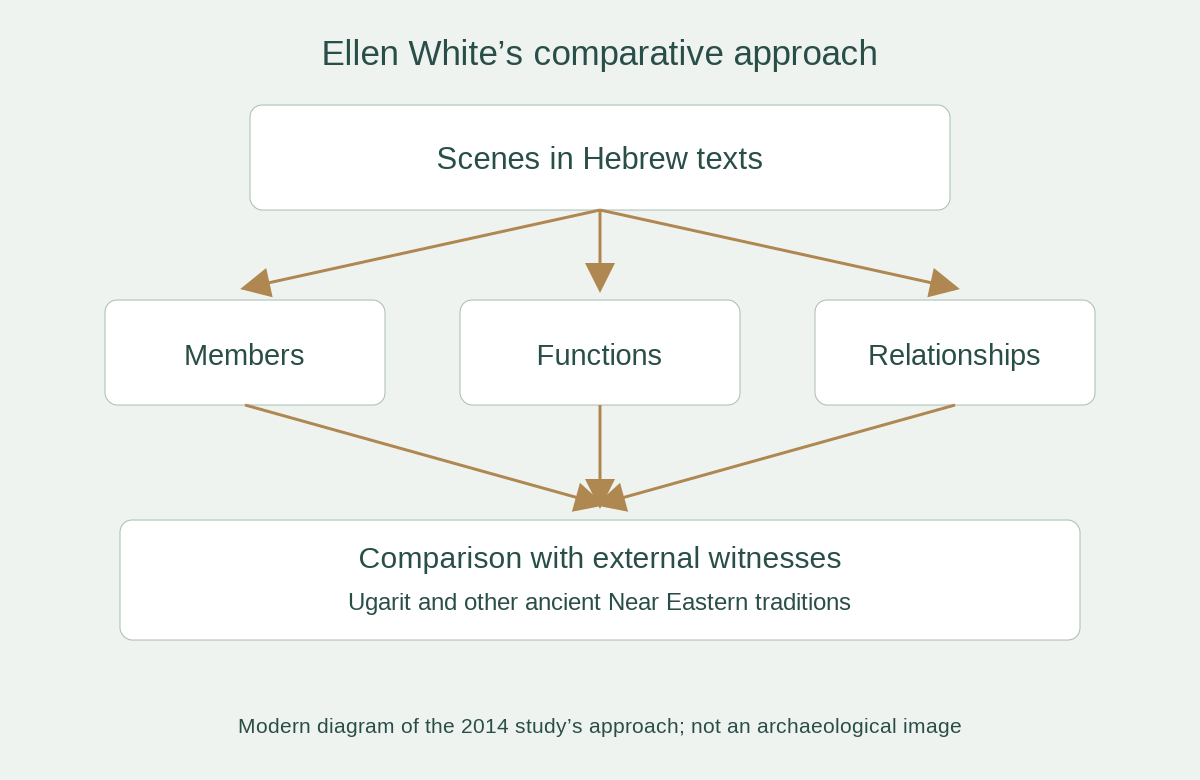
Modern diagram of Ellen White’s approach: examining members, functions and relationships in Hebrew scenes before external comparison. Not a portrait or ancient council image
Person
Hebrew Bible scholar, born in 1978 according to her publisher, author of Yahweh’s Council: Its Structure and Membership (2014).
Namensvarianten: Ellen White divine council
Kontext und Quellen →

Imagined papers and a library in a modern conceptual cover about the transmission of religious vocabulary; not a real Hebrew manuscript or an archaeological reconstruction
Entität
Eloah (אֱלוֹהַּ) is a singular Hebrew noun meaning “a god” or “God,” common in Job but also used for other gods. It is not the proper name of a separate deity.
Namensvarianten: Eloah
Kontext und Quellen →

Modern conceptual cover for reading “Elohim”: many points of light converge above blank parchment to suggest the difference between a word’s grammatical form and its referent. Digitally generated artwork, not an ancient artifact, manuscript or historical reconstruction
Entität
A Hebrew word with plural morphology, used for “gods” or for a singular deity according to context.
Namensvarianten: Elohim
Kontext und Quellen →
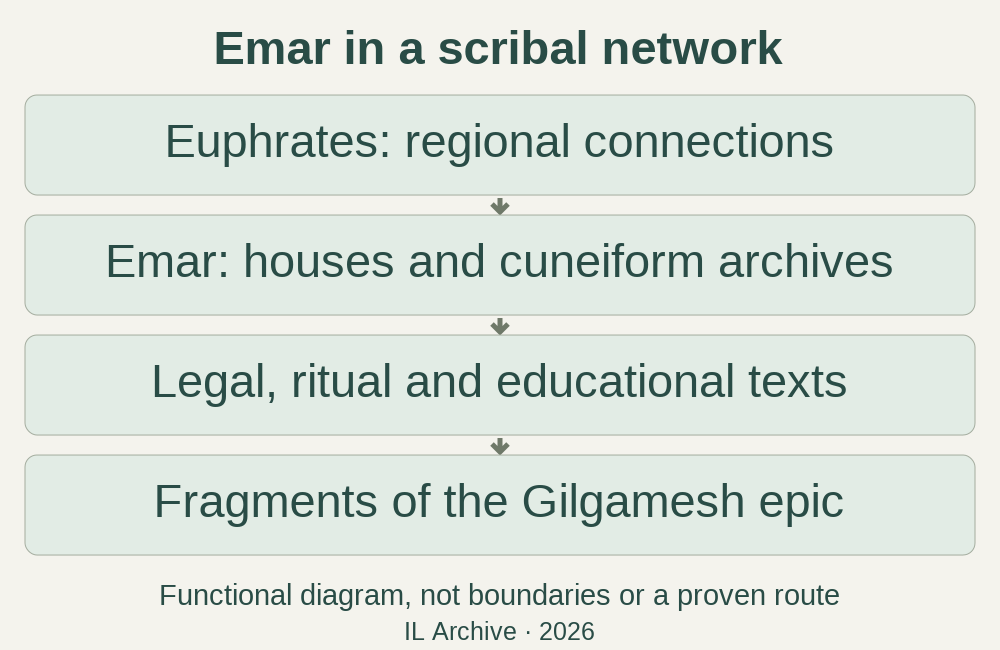
Modern diagram linking Emar’s location and archive functions; does not assert a specific Eden transmission route
Stätte
Ancient Euphrates city in Syria with Late Bronze Age cuneiform archives and Gilgamesh fragments.
Namensvarianten: Emar, ancient Meskene, Emar
Kontext und Quellen →
Person
Scholar of Greek and Sanskrit epics and professor of History and Classics at St. Catherine University.
Namensvarianten: Emily Blanchard West
Kontext und Quellen →

Newly generated imaginative cover: a luminous message between two fictional gateways; neither an ancient object nor a reconstruction of an angel or historical site
Entität
Hebrew malʾakh (מַלְאָךְ) means “envoy,” human or heavenly according to the passage. Messenger roles vary; the word alone proves neither wings nor an earlier divine identity.
Namensvarianten: malʾakh, heavenly messenger
Kontext und Quellen →

Modern generated symbolic cover: an imagined blank book and wing-like light evoke written traditions about heavenly messengers. Neither a real manuscript nor an authenticated historical or religious representation
Entität
Study and organization of angels and heavenly beings: names, ranks and roles within particular traditions, without assuming one fixed system.
Namensvarianten: angelology, study of angels
Kontext und Quellen →
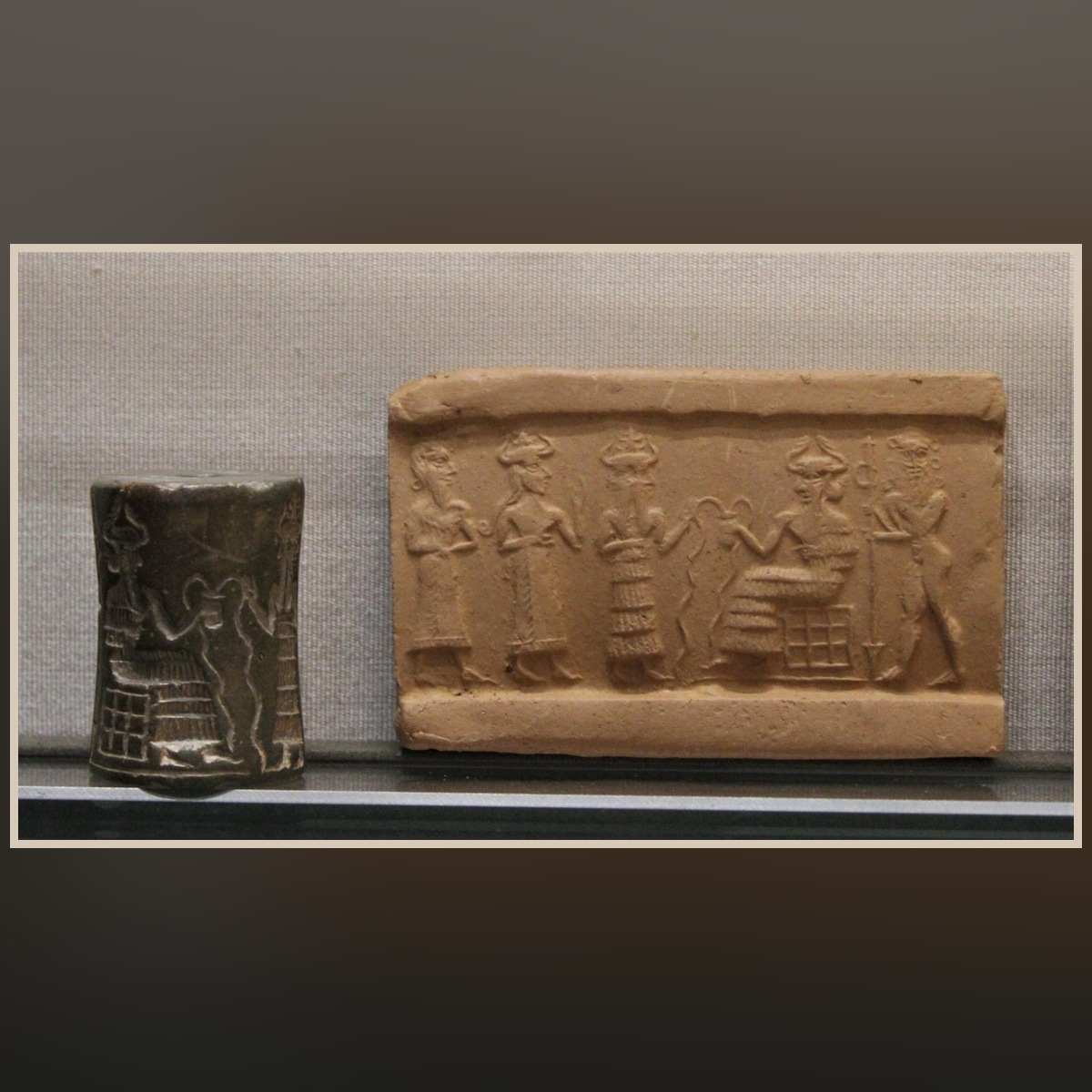
Akkadian cylinder seal MNB 1905 and a modern impression of its design, Louvre, c. 2340–2200 BCE. Newly squared and framed presentation of Zunkir’s photograph, with blurred background; seal and impression are fully retained. Not a depiction of Eridu’s earliest temple
Entität
Mesopotamian deity also known as Ea, linked with Eridu and the Abzu (deep fresh waters), wisdom, incantations, and narratives of creation and cosmic order. Later written attestations do not identify the deity of Eridu’s earliest layers.
Namensvarianten: Enki, Ea, Nudimmud
Kontext und Quellen →
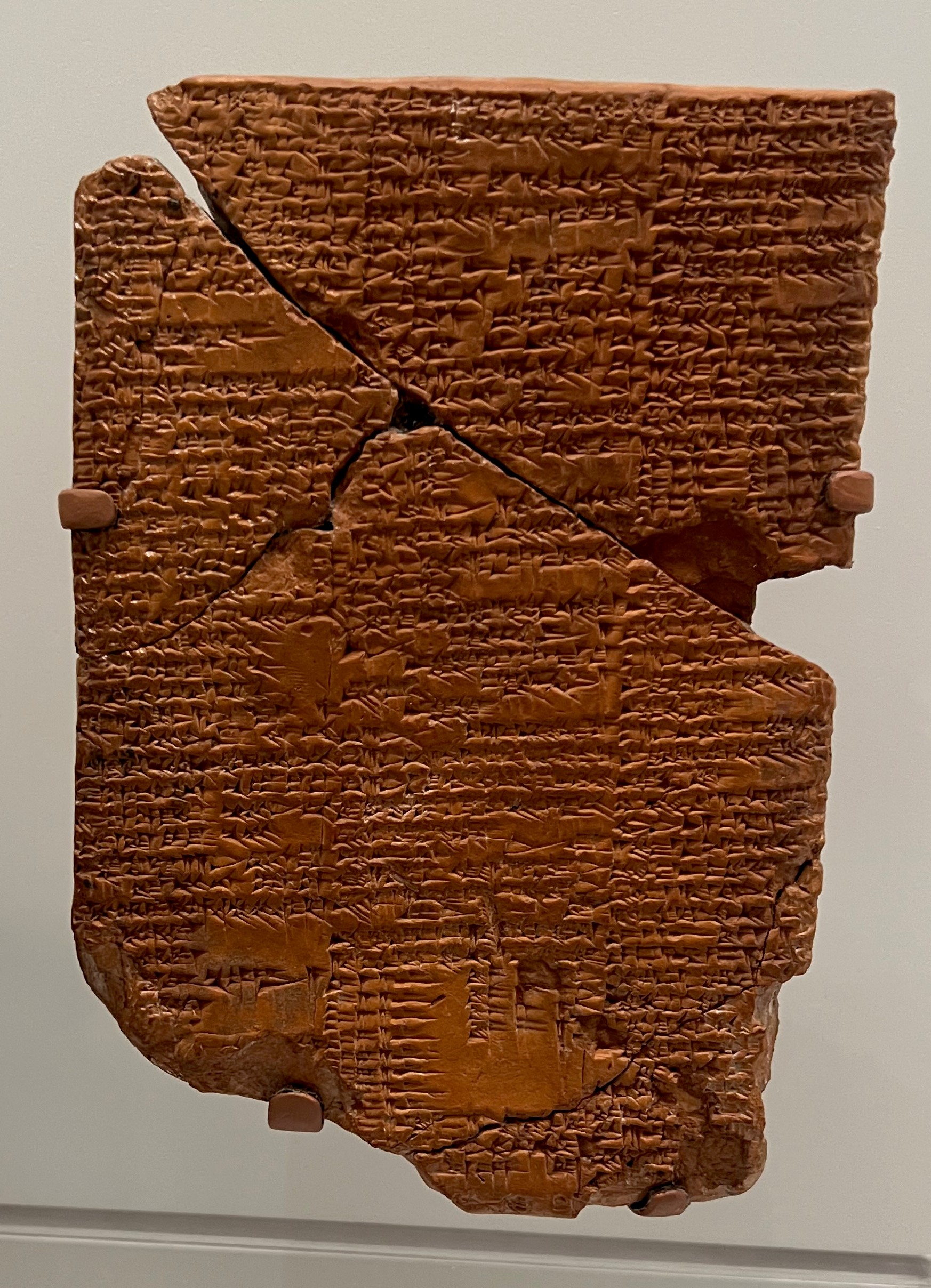
Enki and Ninhursaga tablet CBS 4561 from Nippur, about 1900–1600 BCE, Penn Museum. Photograph by Onceinawhile, 26 August 2022; one ancient witness, not every manuscript in the composite edition
Antiker Text
Sumerian poem preserved in Old Babylonian copies, concerning Dilmun, water, birth and Enki’s illness and healing.
Namensvarianten: Enki and Ninhursaga, Sumerian poem
Kontext und Quellen →
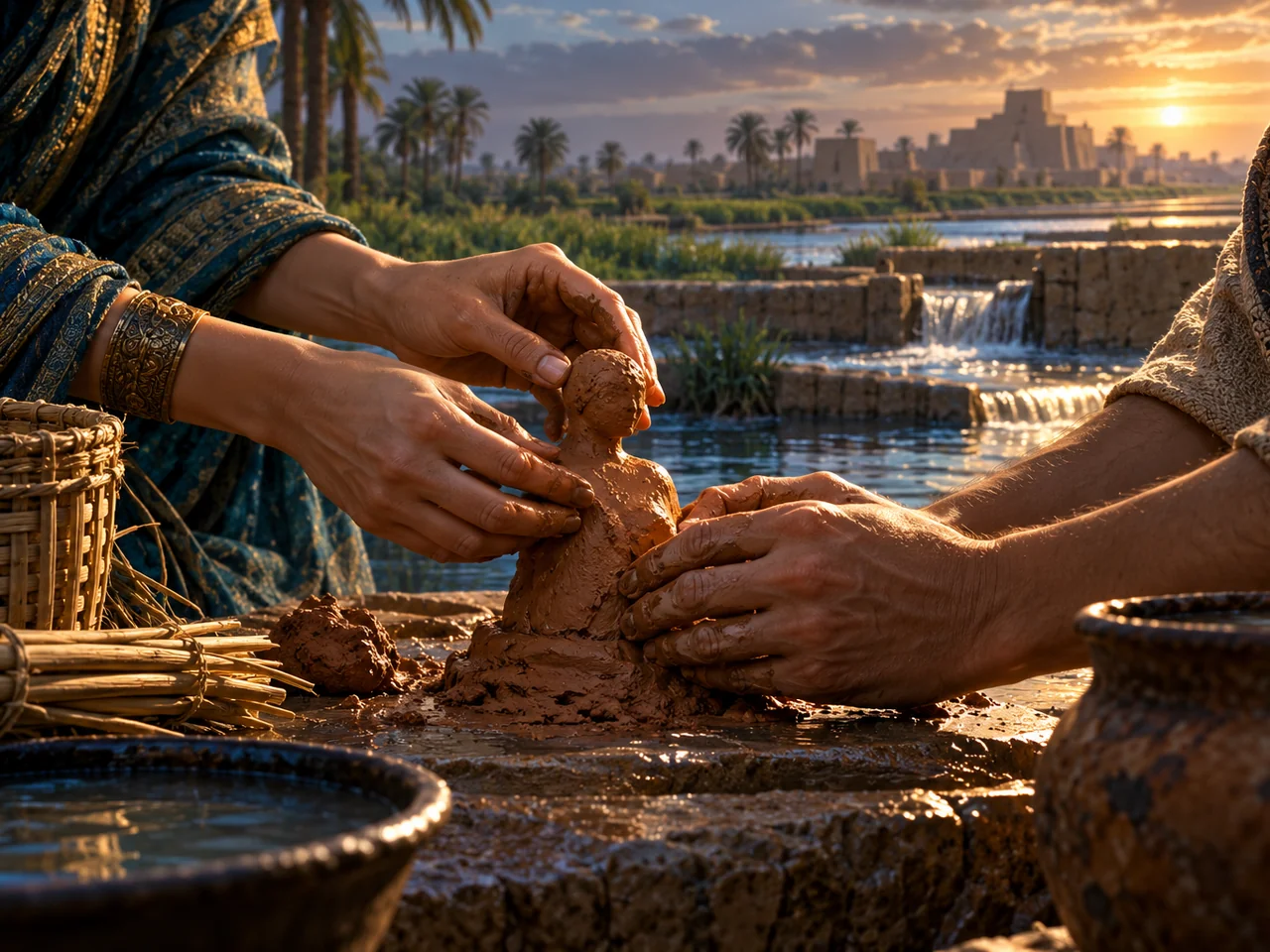
Modern interpretive illustration of shaping a human from clay, with water and baskets evoking the work in “Enki and Ninmaḫ”. AI-generated; not an ancient artifact or an authenticated reconstruction of the gods or setting
Antiker Text
Sumerian work on humanity’s creation to relieve the gods’ labour, and Enki and Ninmaḫ’s contest over bodies, destinies and sustenance; with manuscript evidence, variant readings and dating limits.
Namensvarianten: Enki and Ninmah, Enki and Ninmaḫ
Kontext und Quellen →
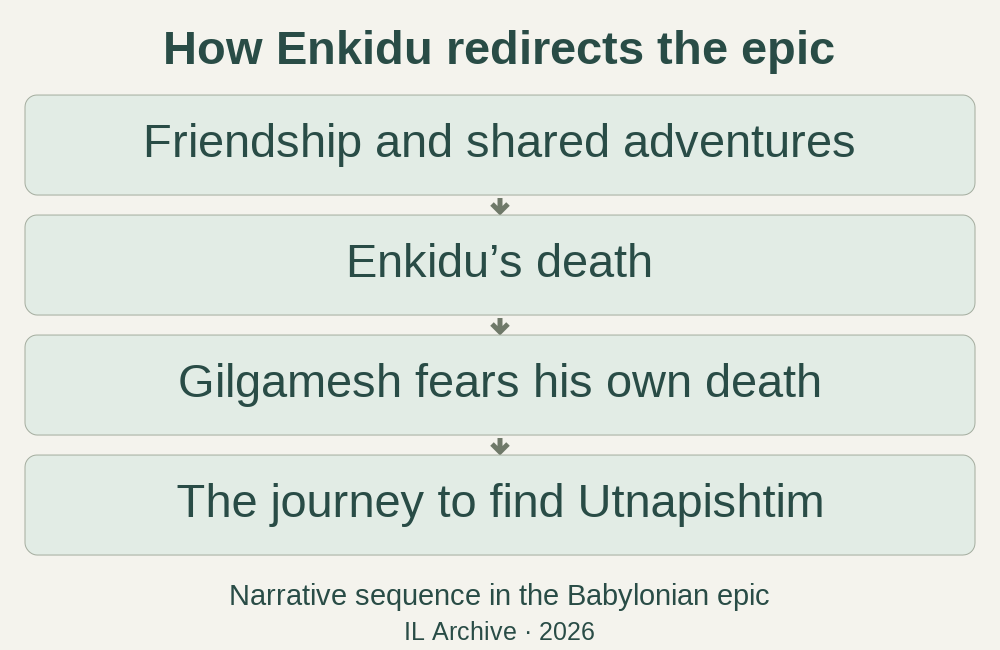
Modern explanatory diagram of narrative sequence and Enkidu’s role, not an ancient image or portrait
Person
Gilgamesh’s companion in the Babylonian epic; his death sets the king searching for life beyond mortality.
Namensvarianten: Enkidu, Gilgamesh’s companion, Enkidu
Kontext und Quellen →
Modern AI-generated imaginative scene of terraced sacred architecture in a riverine Mesopotamian-inspired landscape. Not a Nippur photograph, a verified reconstruction of Ekur, or an image of Enlil
Entität
Enlil/Ellil: a major Mesopotamian god associated with destinies, kingship, and Ekur at Nippur, already prominent in third-millennium god lists. His name’s origin and cult beginnings remain debated.
Namensvarianten: Enlil, Ellil, Nunamnir
Kontext und Quellen →

Modern AI-generated symbolic cover: an empty dais and a luminous sign of authority evoke Enlilship; neither an archaeological object nor an established reconstruction
Entität
An Akkadian designation for Enlil’s paramount standing, granted to Marduk in Hammurabi’s prologue; it does not make the two gods identical.
Namensvarianten: ellilūtu, Enlilship
Kontext und Quellen →

New AI-generated symbolic cover evoking Sippar’s sun, a storm, and oil observed upon water; not an ancient artifact or historical portrait of Enmeduranki
Entität
Antediluvian king in Mesopotamian traditions, named in a Sumerian king list and depicted by an Akkadian legend as a transmitter of divinatory knowledge; distinct from Utuabzu and Enoch.
Namensvarianten: Enmeduranki, En-men-dur-ana
Kontext und Quellen →
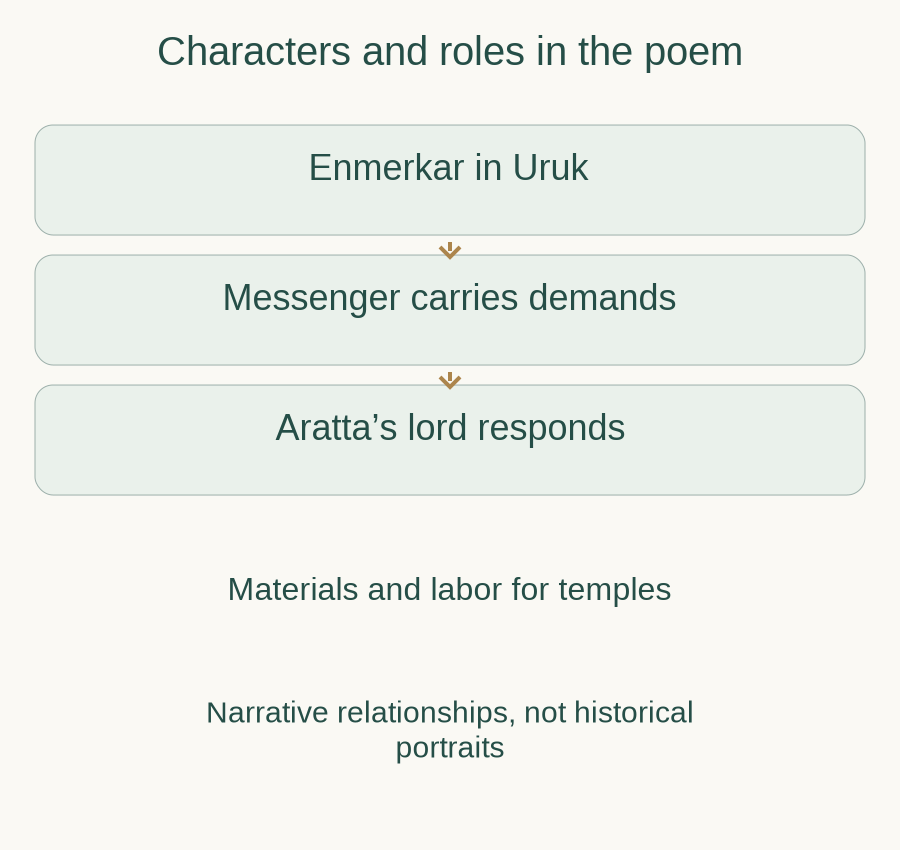
Modern IL Archive explanatory diagram: Characters and roles in the poem. Not a reproduction of an ancient artifact
Person
Enmerkar is a ruler of Uruk in Sumerian literature and the protagonist of a poem about rivalry with Aratta’s lord.
Namensvarianten: Enmerkar
Kontext und Quellen →
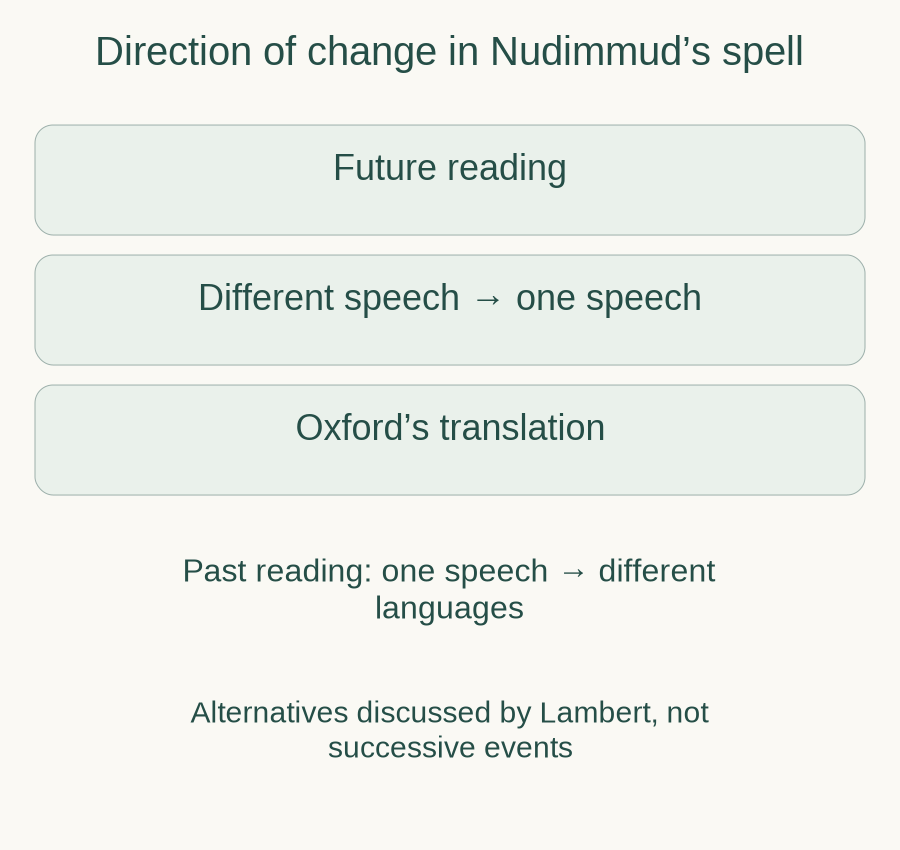
Modern IL Archive explanatory diagram: Direction of change in Nudimmud’s spell. Not a reproduction of an ancient artifact
Antiker Text
A Sumerian poem of rivalry, messages and temples, containing an incantation about the speech of different peoples.
Namensvarianten: Enmerkar and the Lord of Aratta
Kontext und Quellen →
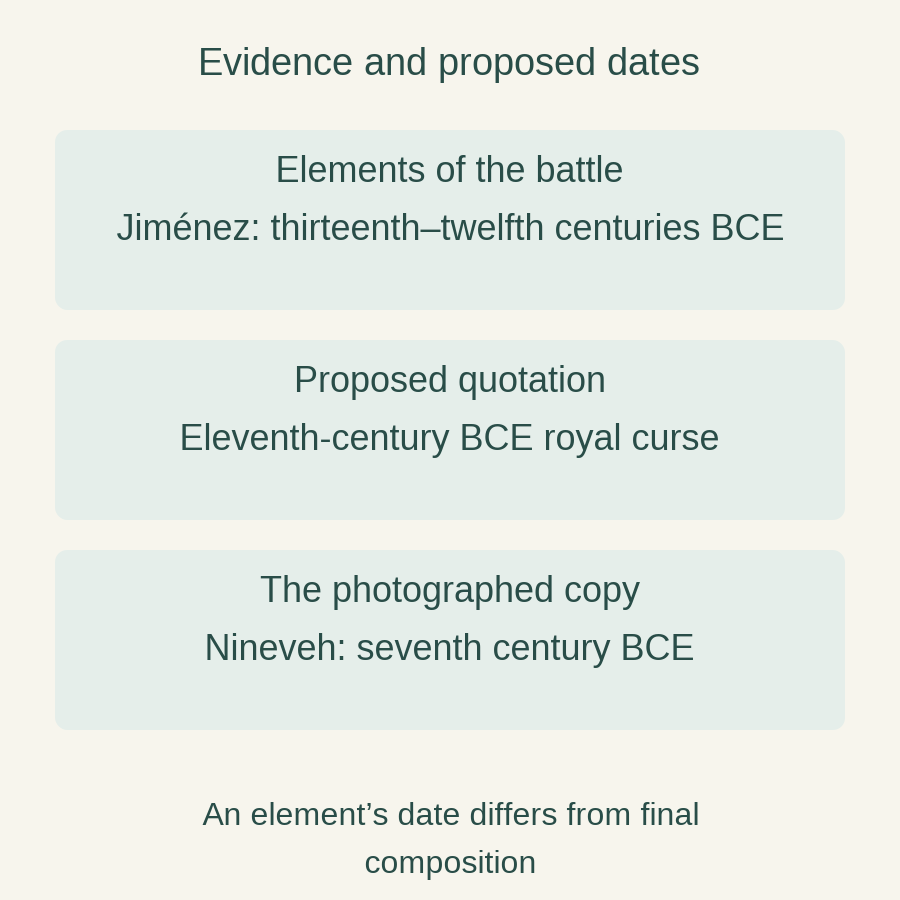
Modern diagram distinguishing a tradition’s elements, a proposed quotation and the surviving copy; not a portrait of Jiménez
Person
Assyriologist and scholar of Babylonian literature, professor of ancient Oriental languages at LMU Munich, working on reconstructing and dating cuneiform texts.
Namensvarianten: Enrique Jiménez
Kontext und Quellen →
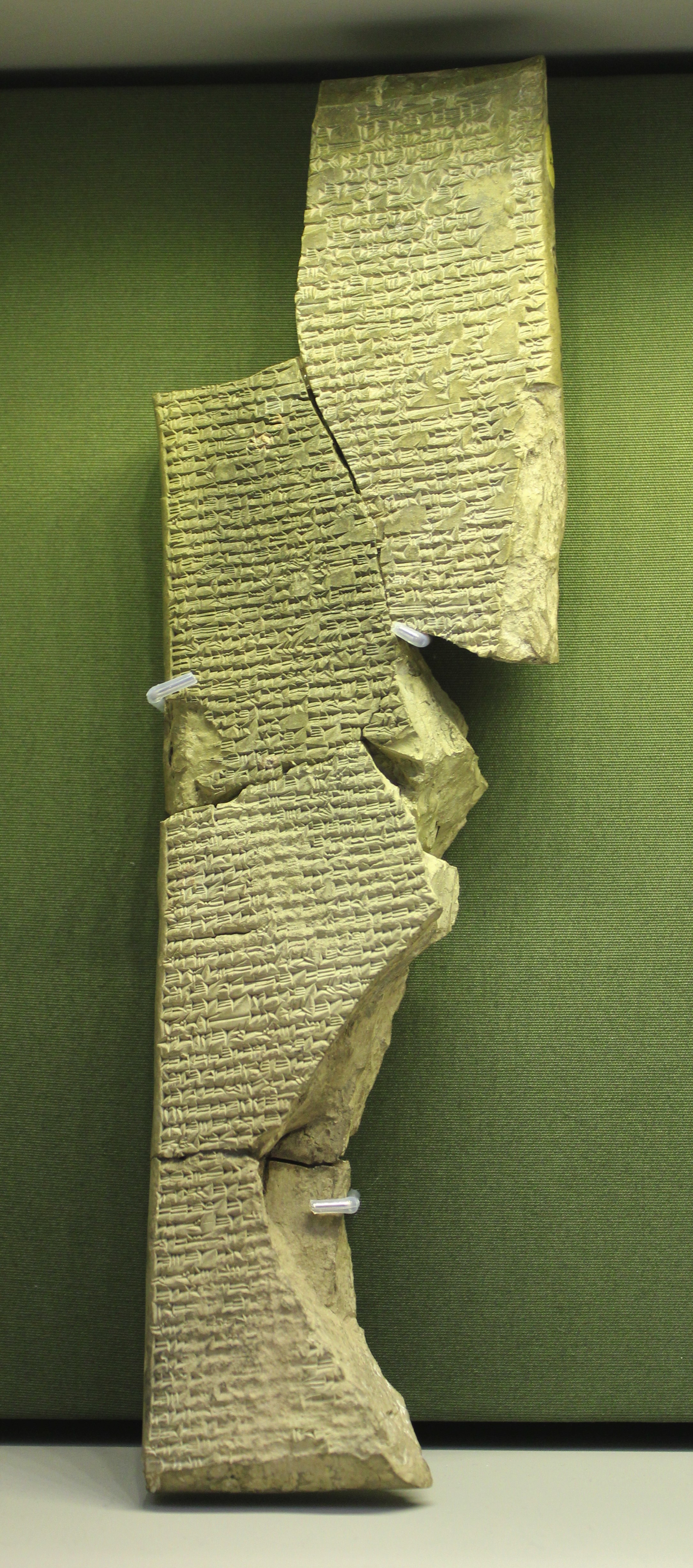
Joined fragments of Tablet III of Enuma Elish, from Neo-Assyrian Nineveh, British Museum (K.3473+ group; CDLI P365283). This is a partial manuscript of the poem, not the witness to the human-creation passage in Tablet VI. Photograph, 2020
Entität
A seven-tablet Babylonian creation poem in Akkadian, recounting Marduk’s rise, victory over Tiamat, cosmic ordering and human creation, and culminating in praise through fifty names. Its composition date is debated; later manuscripts and recitation traditions preserve it.
Namensvarianten: Enuma Elish, Enūma eliš, Babylonian Epic of Creation
Kontext und Quellen →
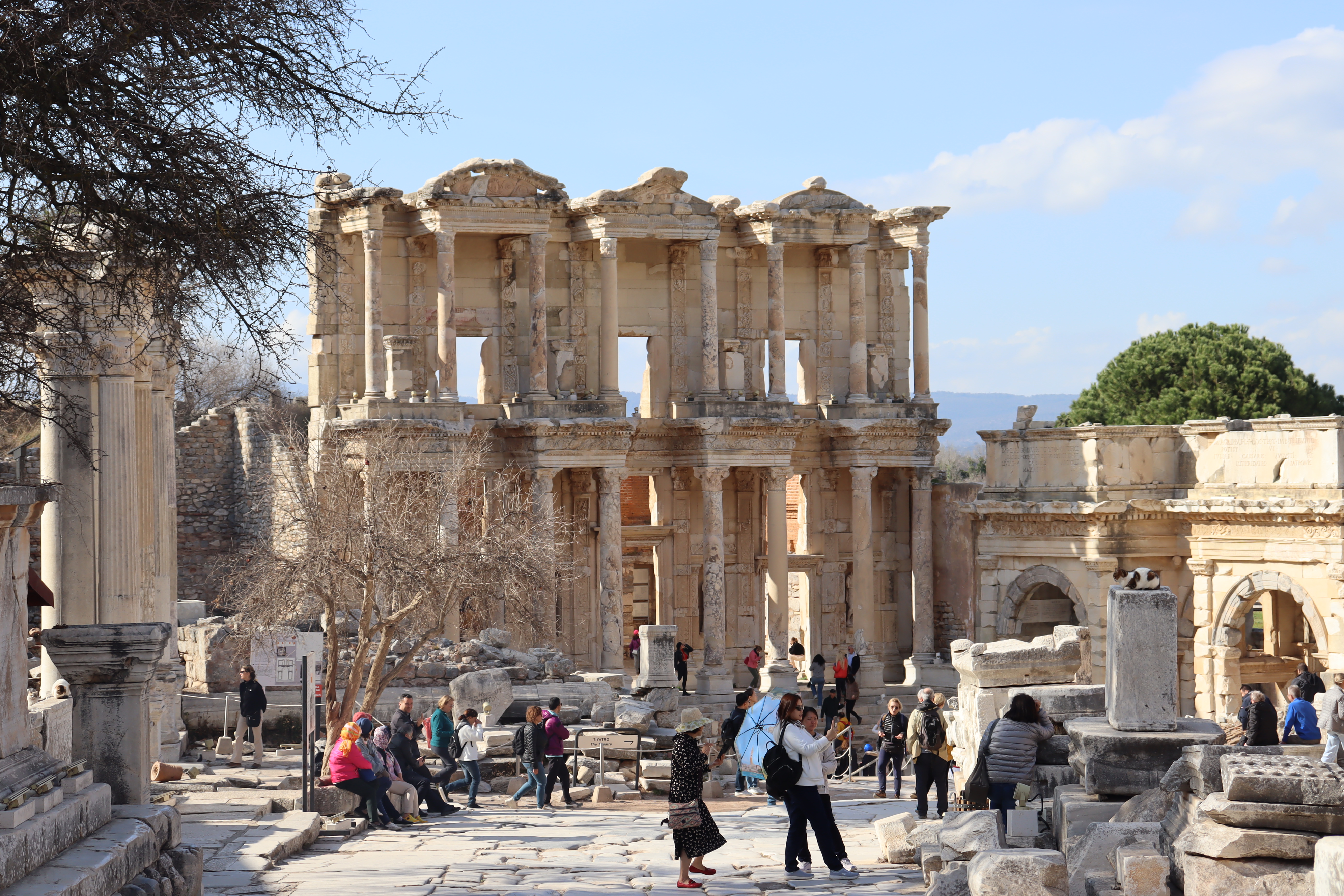
The Library of Celsus at Ephesus in a modern photograph. This Roman monument identifies the city, not the Sleepers' cave. Emre Dokur, CC BY-SA 4.0
Stätte
Ancient city in western Türkiye with major Roman and early Christian phases.
Namensvarianten: Ephesus
Kontext und Quellen →
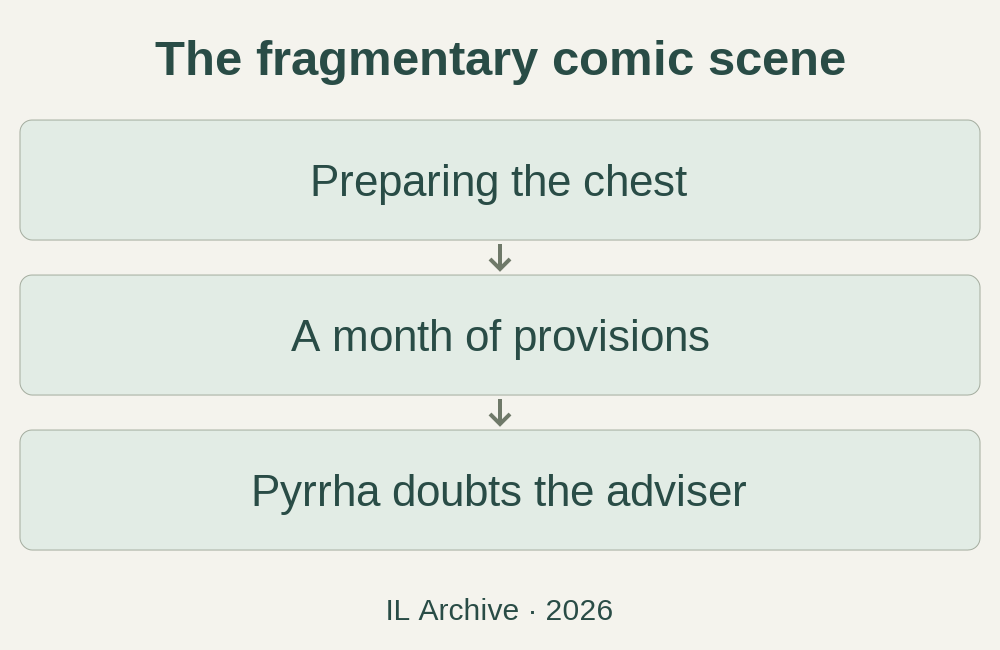
Modern explanatory diagram of one literary witness’s sequence or relationships, not a manuscript, portrait or demonstrated transmission route
Person
Comic poet active in the early fifth century BCE, whose fragments preserve an early Pyrrha and Deucalion treatment.
Namensvarianten: Epicharmus, Greek comic poet
Kontext und Quellen →
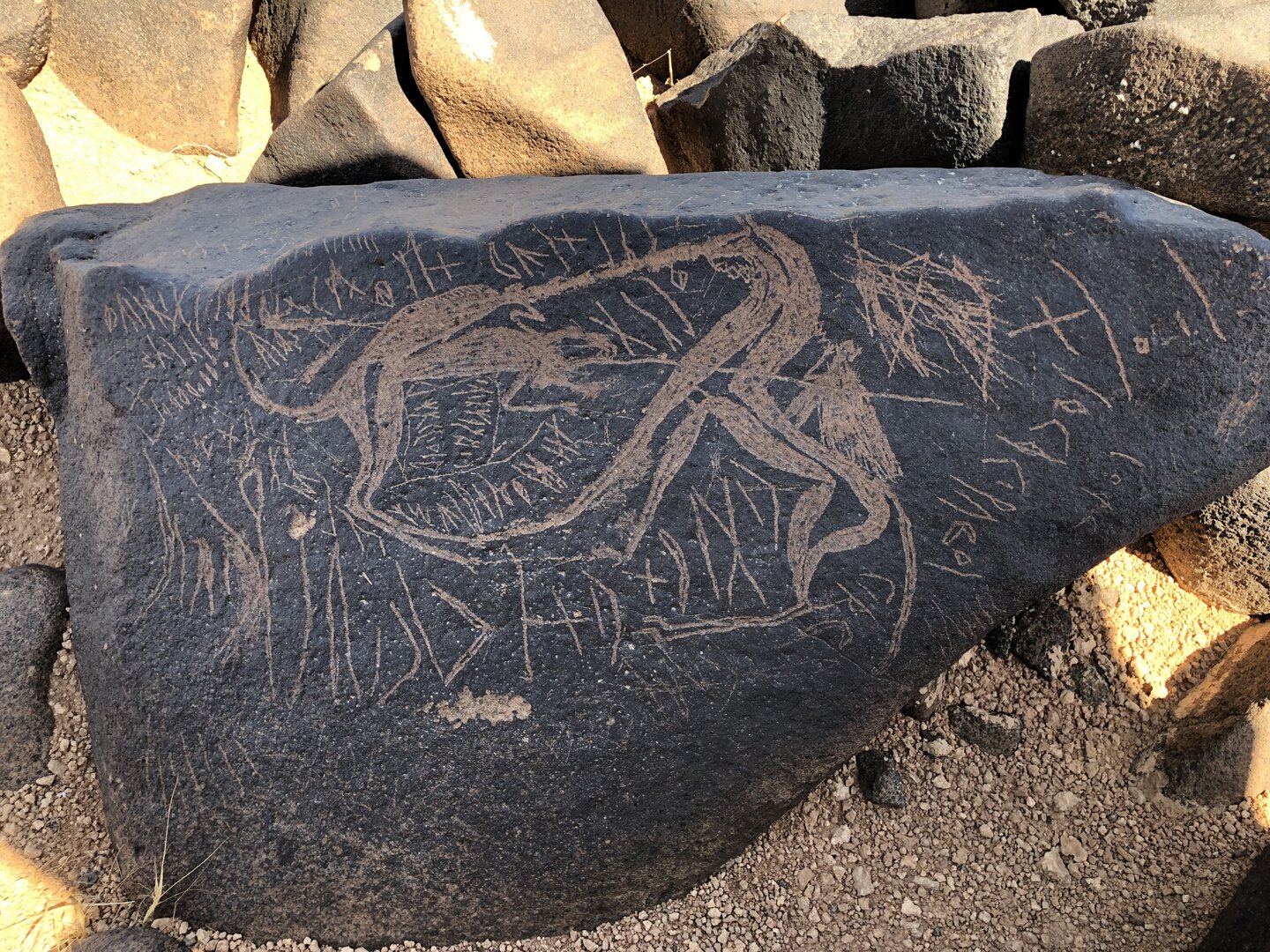
BES19s 77.1, Firʿ Wadi al-Khudari, Mafraq, Jordan. Its reading invokes Allat and then Allah. This photograph shows stone and writing; animal and human drawings are not identified as depictions of these deities. Original preserved without cropping or alteration
Entität
The study of writing preserved on physical objects and monuments: its documentation, reading, dating, translation, material context and historical interpretation.
Namensvarianten: epigraphy
Kontext und Quellen →
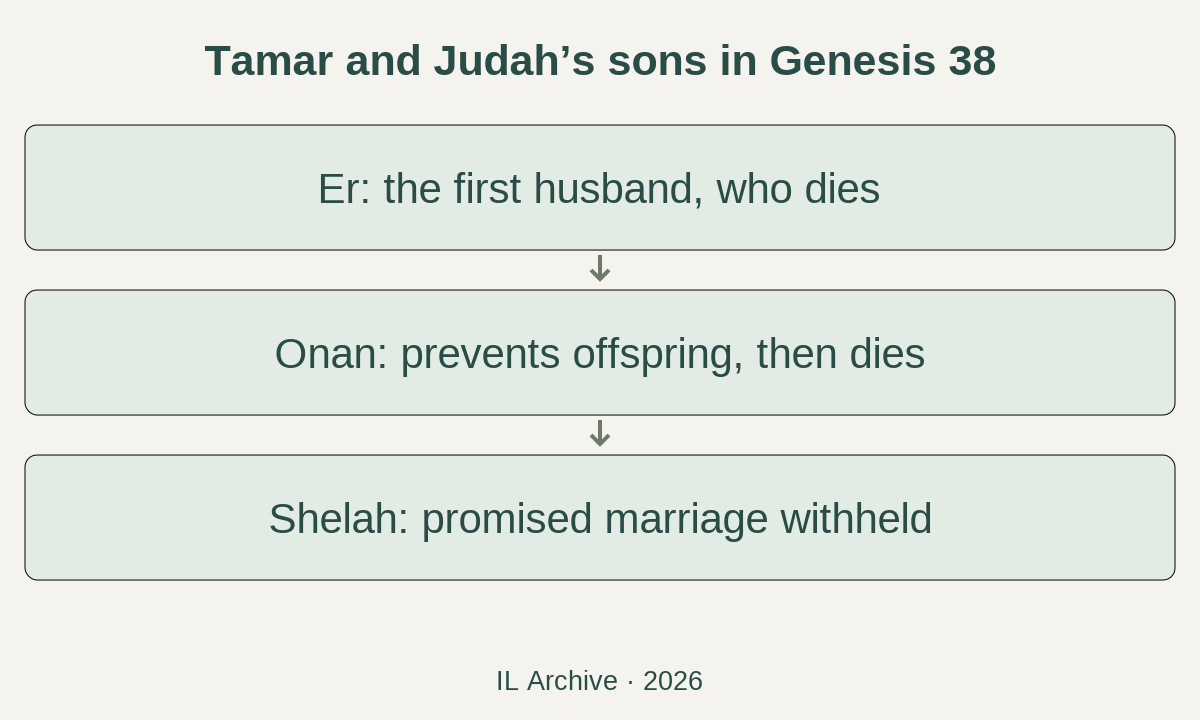
Modern explanatory diagram of relationships or cases in the specified witnesses; not portraits, a legal tablet or an ancient manuscript
Person
Judah’s firstborn and Tamar’s husband, whose death is narrated in Genesis 38.
Namensvarianten: Er, son of Judah
Kontext und Quellen →
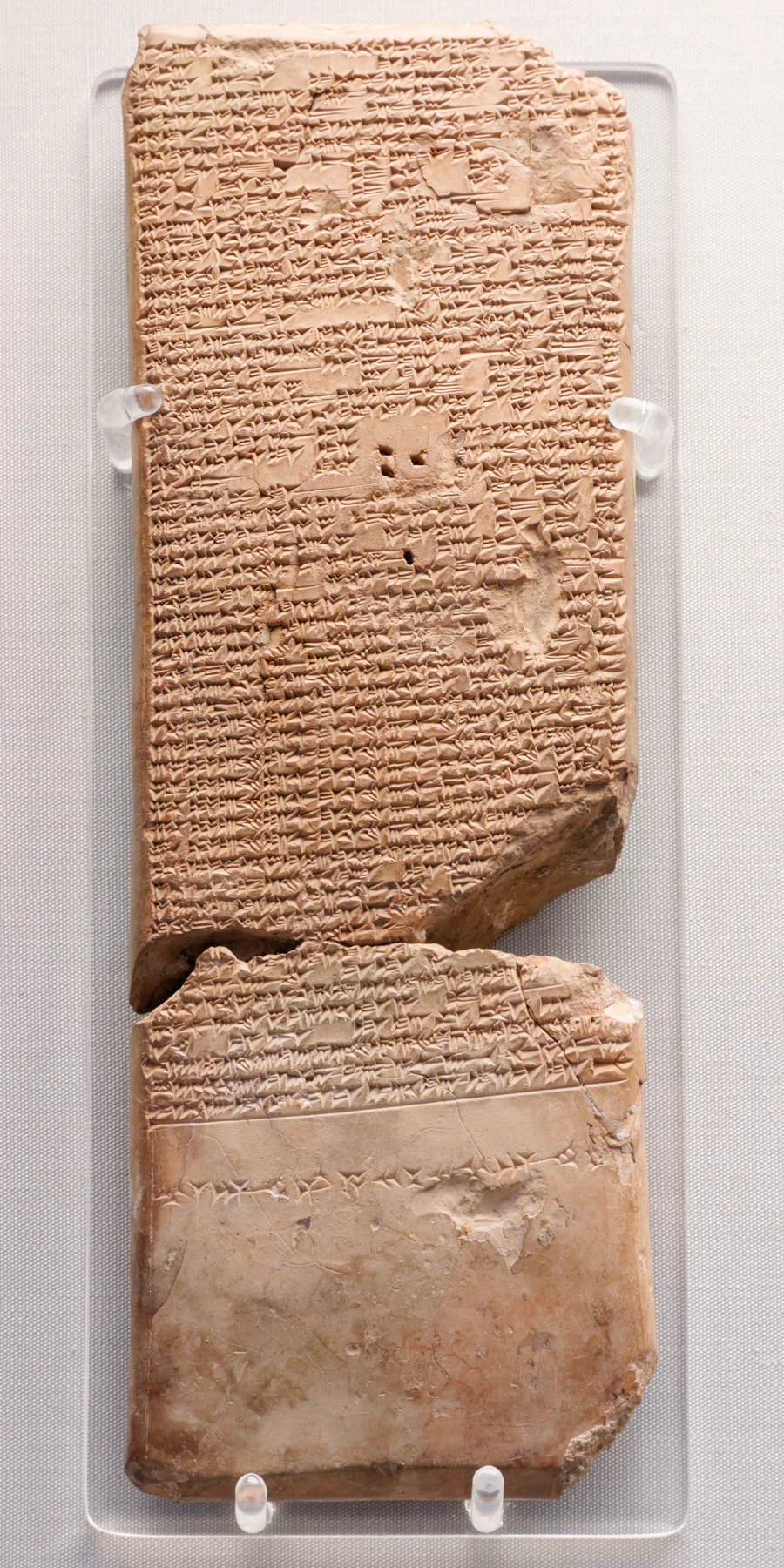
K.162, Akkadian copy of Ishtar’s Descent from Ashurbanipal’s library at Nineveh, seventh century BCE, British Museum. Not a tablet of the Sumerian Inanna composition
Entität
Mesopotamian goddess ruling the netherworld; Inanna’s sister in descent texts, with varying accounts of her relationship with Nergal.
Namensvarianten: Ereshkigal
Kontext und Quellen →
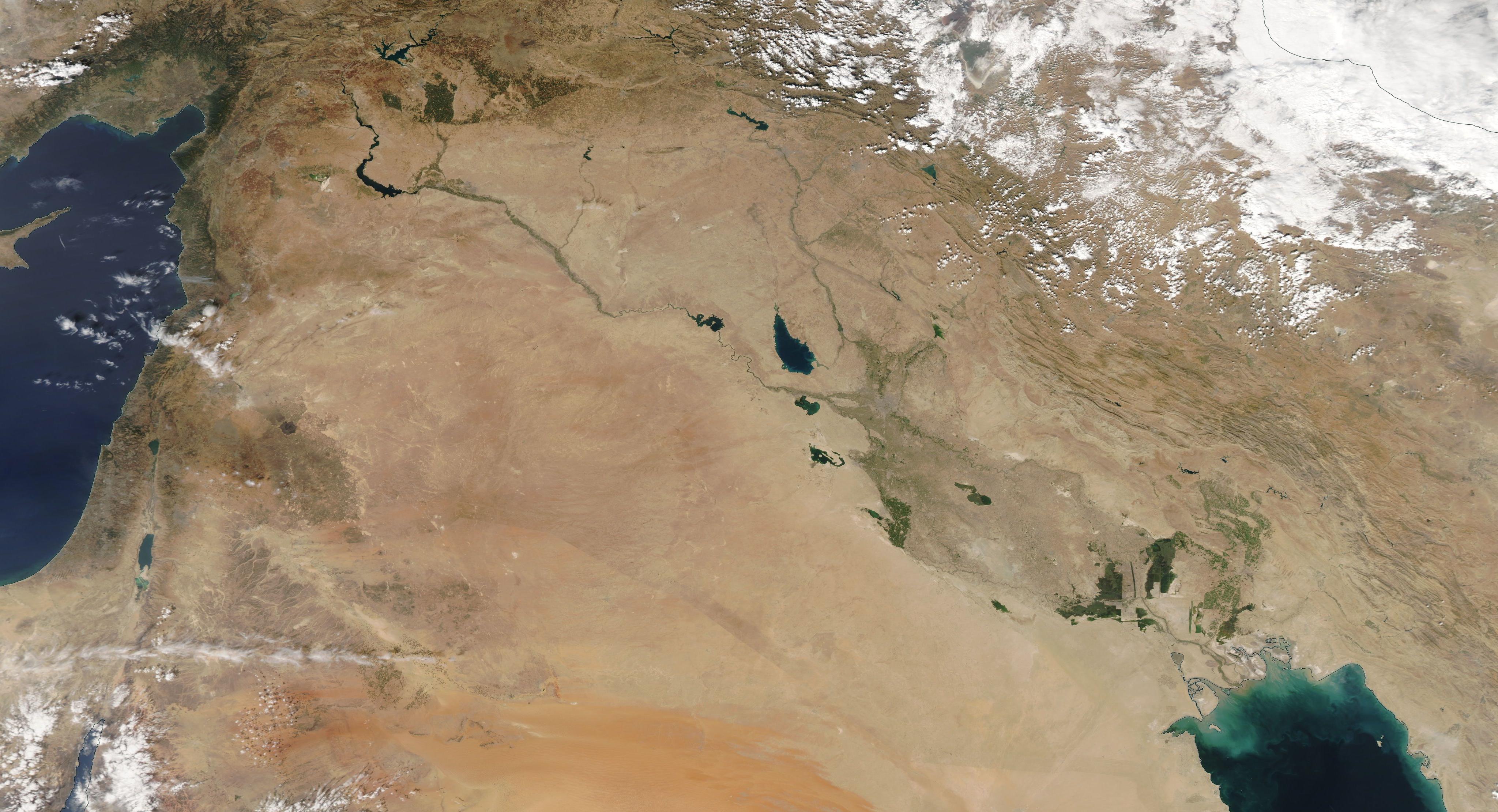
Satellite view of Mesopotamia and its surroundings, NASA, 9 October 2020. Modern geographical context; it neither locates unidentified Ereš nor reconstructs ancient river courses
Stätte
Sumerian city associated with Nisaba; its archaeological location remains uncertain. Not the goddess Ereshkigal.
Namensvarianten: Ereš, Eresh
Kontext und Quellen →
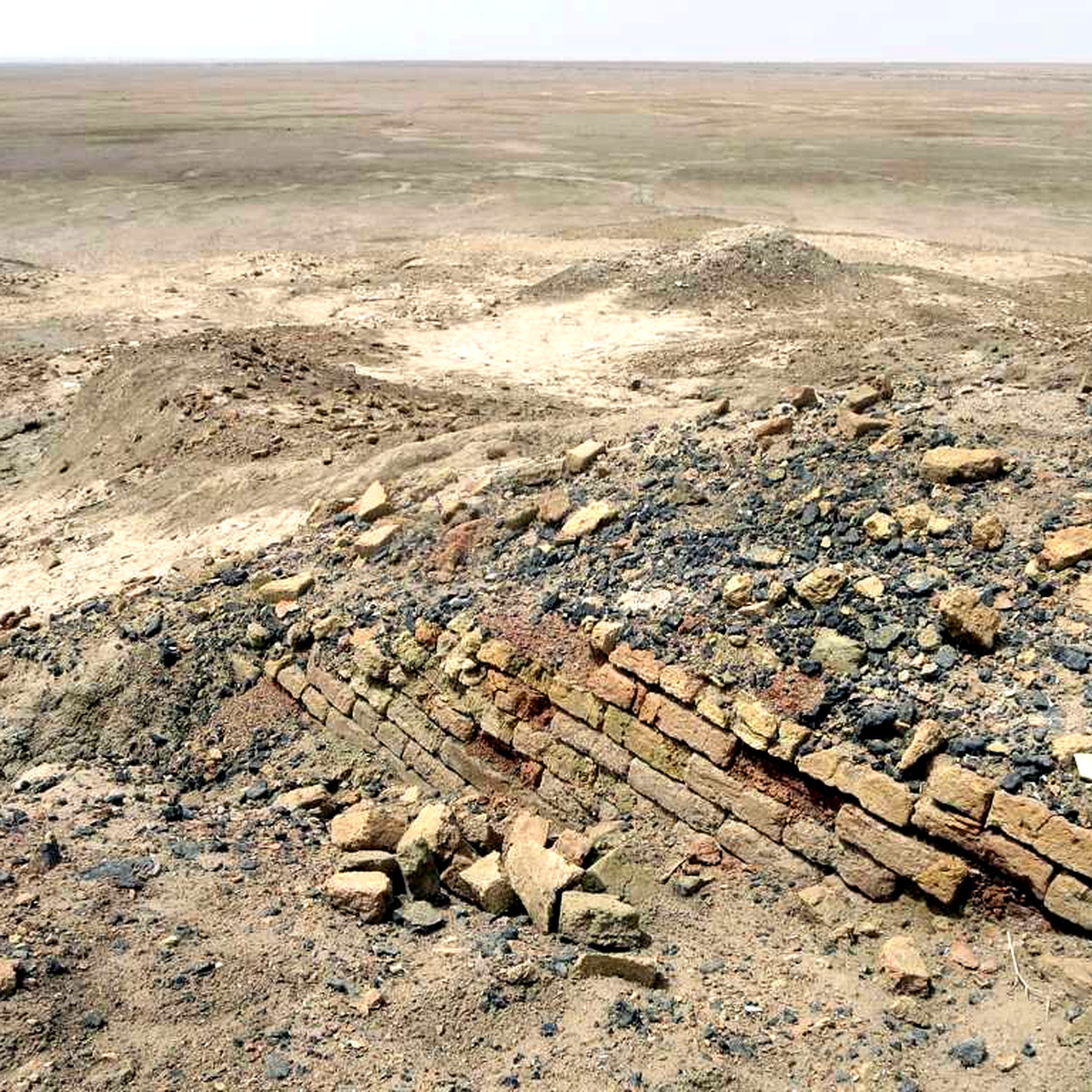
Cover: square, tonally adjusted crop of David Stanley’s 2016 photograph of the Eridu ziggurat remains. The visible structure postdates the Ubaid and does not show the earliest buildings
Stätte
Eridu (Abu Shahrain), a multi-mound site in southern Iraq occupied since the Ubaid, later home to a religious precinct associated with Enki. Its eighteen sounding levels are not proof that every early building was a temple.
Namensvarianten: Eridu, Abu Shahrain, Abu Shahrayn
Kontext und Quellen →

University College London portico, 25 March 2015. Institutional context for Erik van Dongen’s 2010 thesis; a later photograph, not a portrait or identification of his office
Person
Researcher who examined Kumarbi–Hesiod connections in a 2010 doctoral thesis at University College London.
Namensvarianten: Erik van Dongen
Kontext und Quellen →
Person
Scholar of ancient religion, archaeology and imagery, with research on Judean pillar figurines and their use-contexts.
Namensvarianten: Erin Darby
Kontext und Quellen →
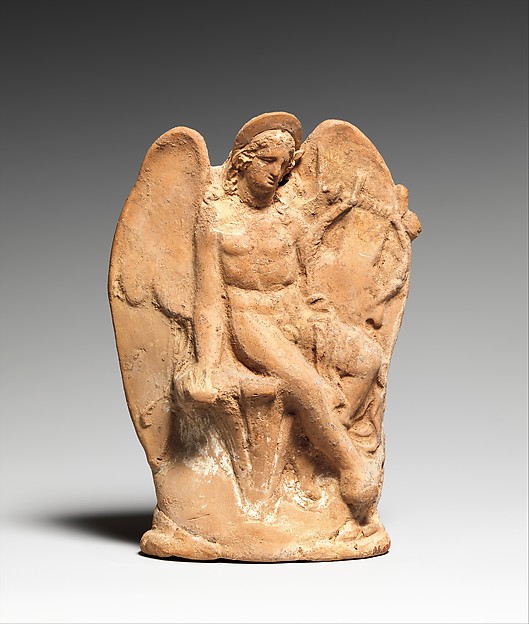
Winged Eros, Greek terracotta, probably Attic, first half of the fourth century BCE; Met06.1054. A separate object from the study’s Adonia vessel
Entität
Eros is the Greek god of love, represented with wings in ancient art.
Namensvarianten: Eros
Kontext und Quellen →
Contemporary explainer; it is not an ancient artifact or historical likeness
Antiker Text
Biblical retelling of Israel’s monarchy; its census passage ascribes the incitement of David to “satan”.
Namensvarianten: 1 Chronicles
Kontext und Quellen →

Modern AI-generated conceptual illustration evoking sky and time in Enochic literature; neither a historical manuscript nor a verified ancient cosmological reconstruction
Entität
A composite Second Temple Jewish apocalyptic collection on the Watchers, parables, celestial cycles, historical visions, and judgment, preserved complete in Geʽez.
Namensvarianten: First Enoch, 1 Enoch, Ethiopic Enoch
Kontext und Quellen →
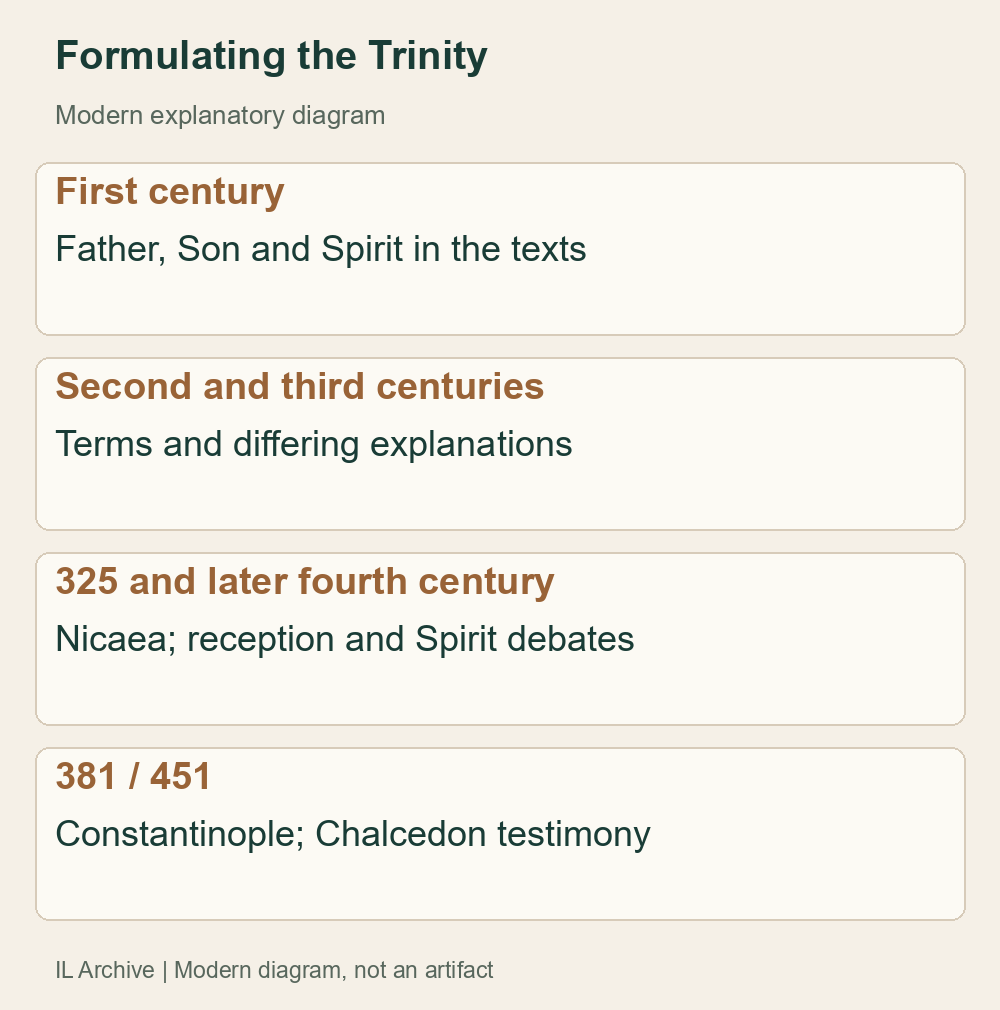
Modern timeline of witnesses and formulations, not one birth date for belief or immediate consensus. It distinguishes 381 from the expanded creed’s attestation in 451
Entität
Christian council convened by Constantine in 325 at Nicaea; issued a creed on Father and Son and addressed church affairs, with disputes continuing over its reception.
Namensvarianten: Council of Nicaea, First Council of Nicaea, Nicaea 325
Kontext und Quellen →
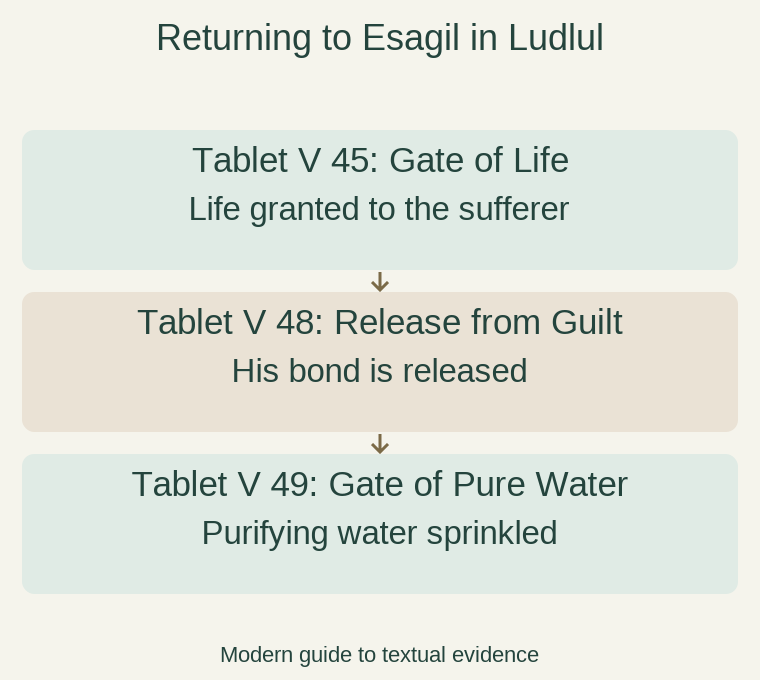
Modern diagram of three gates in Ludlul V 45, 48 and 49: Life, Release from Guilt, and Pure Water. Selected literary sequence, not a reconstruction of temple architecture or all its gates
Stätte
Esagil, also written Esagila, is Marduk’s temple in ancient Babylon, in present-day Iraq, and a central sanctuary of the city’s god.
Namensvarianten: Esagil, Marduk’s temple
Kontext und Quellen →