Stätte · Stadt
Schilo / Seilun
Automatische Übersetzung. Lesen Sie das Original auf Englisch.
Archäologische Stätte im Bergland des Westjordanlands, verbunden mit der Lade im Buch Samuel.
Zuletzt geprüft:
Text
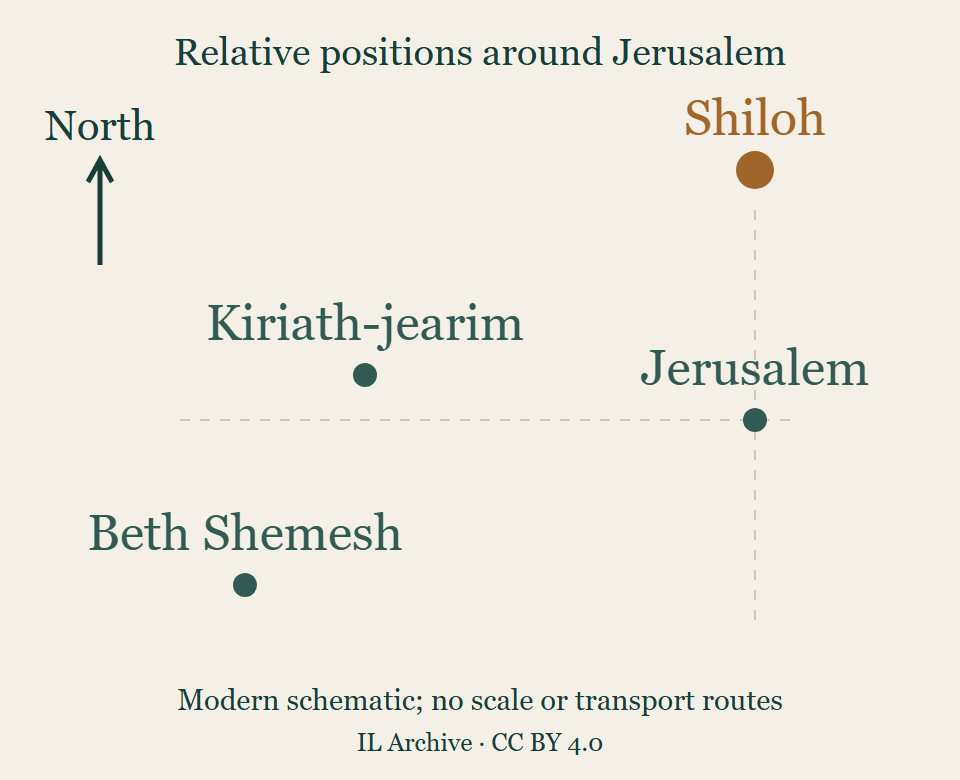
Schilo, auch Seilun, ist eine archäologische Stätte im Bergland des Westjordanlands nördlich von JerusalemJerusalemJerusalem is a city of religious importance in Judaism, Christianity and IslamGlossar · Zum Lesen der Erläuterung klicken, mit Überresten von der Bronzezeit bis in die mittelalterliche Zeit. [1][2][4]
1 Samuel 4 erzählt, wie die Lade von dort in die Schlacht gebracht wurde. Dies bestimmt ihre erzählerische Rolle, getrennt vom archäologischen Nachweis des Gegenstandes. [3]
Verweise und Anmerkungen
- Library of Congress, “Ruins of Shiloh (Seilun),”2019692548. West Bank site identification; historical photograph does not prove ancient sanctuary form. Zurück zum Text ↑
- Reut Livyatan Ben-Arie, “Shiloh in the Transition from the Byzantine to the Early Islamic Period.” Excavation-history excerpt, p 23*, and multiple site periods; not a whole-article reading. Zurück zum Text ↑
- 1 Samuel 4:3–11, Hebrew text, Sefaria. Ark fetched from Shiloh, defeat and capture; actual prior passage reading reused. Zurück zum Text ↑
- “The Samaria Hills: Geography and Geology,” excerpt hosted by Ariel University. P 37*: region north of Jerusalem and valleys including Shiloh; geographic excerpt only, not whole article. Zurück zum Text ↑
Korrektur vorschlagen · Eine Quelle zu diesem Eintrag vorschlagen
Diesen Eintrag zitieren
IL Archive, «Schilo / Seilun», https://ilarchive.com/de/sites/shiloh-ancient-site