Enki und die Weltordnung Kapitel 1
Enki ordnet das Landgut der Welt
Diese illustrierte Bearbeitung folgt Thorkild Jacobsens Prosadarstellung von Enki, der sich um Flüsse, Regen, Ackerbau, Bauten und Tiere kümmert. Der abschließende Vergleich stammt von Jacobsen. Er setzt die Organisation der verschiedenen Arbeiten mit der Verwaltung eines großen Landguts in Beziehung.
QuellenBlättern Sie mit den Pfeilen, den Pfeiltasten oder durch Wischen.
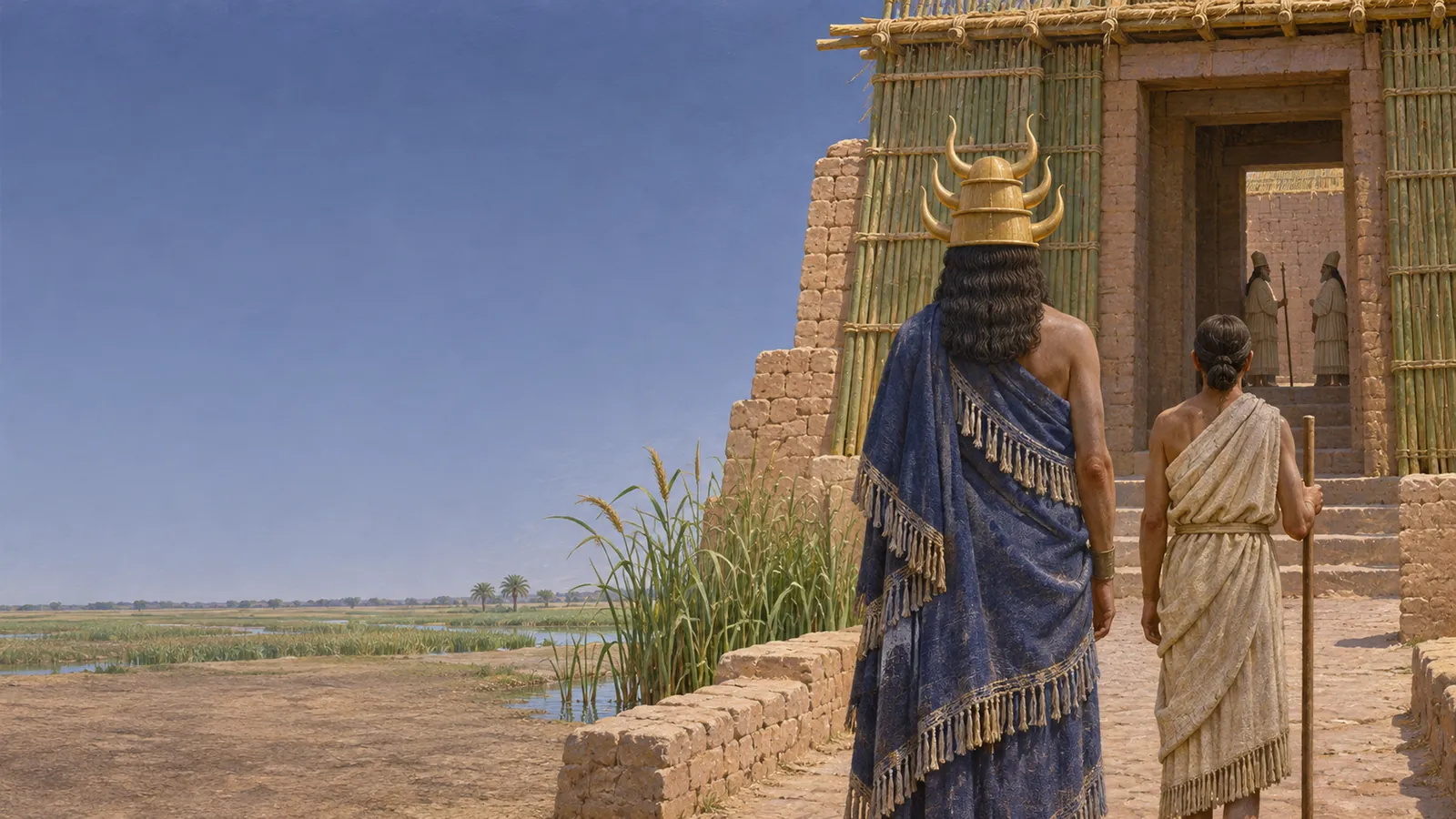
JACOBSENS DARSTELLUNG
Diese Folge bearbeitet Thorkild Jacobsens veröffentlichte Darstellung in Prosa. Jacobsen sagt, der Anfang sei verloren, und vermutet, dass er von der Ernennung Enkis durch Anu und Enlil berichtete.
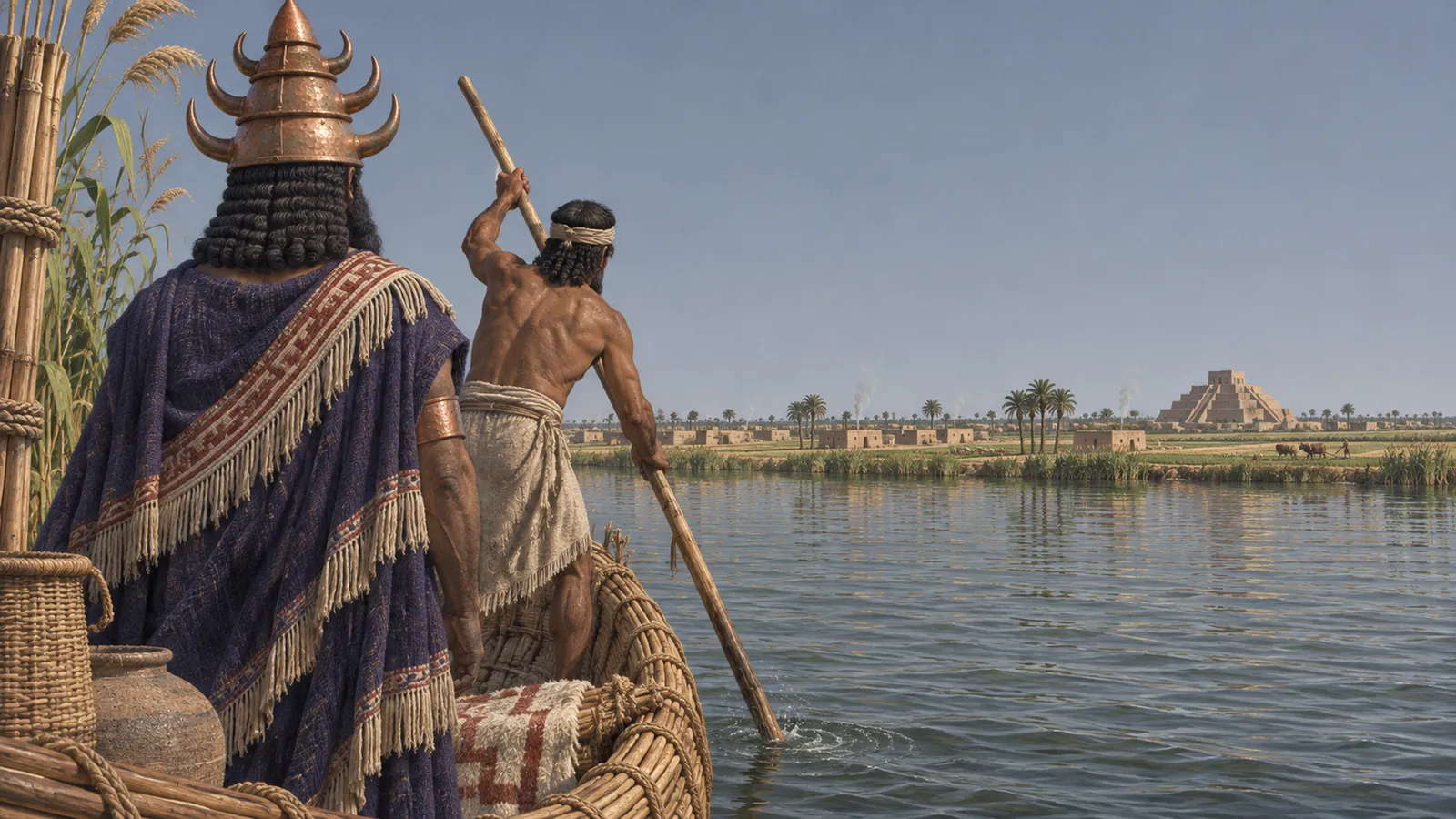
Wo der Text wieder lesbar wird, schildert Jacobsen Enkis Rundgang durch sein Gebiet. In Jacobsens Darstellung umfasst es den größten Teil der damals bekannten Welt, und Enki besucht seine größeren Verwaltungsbezirke.
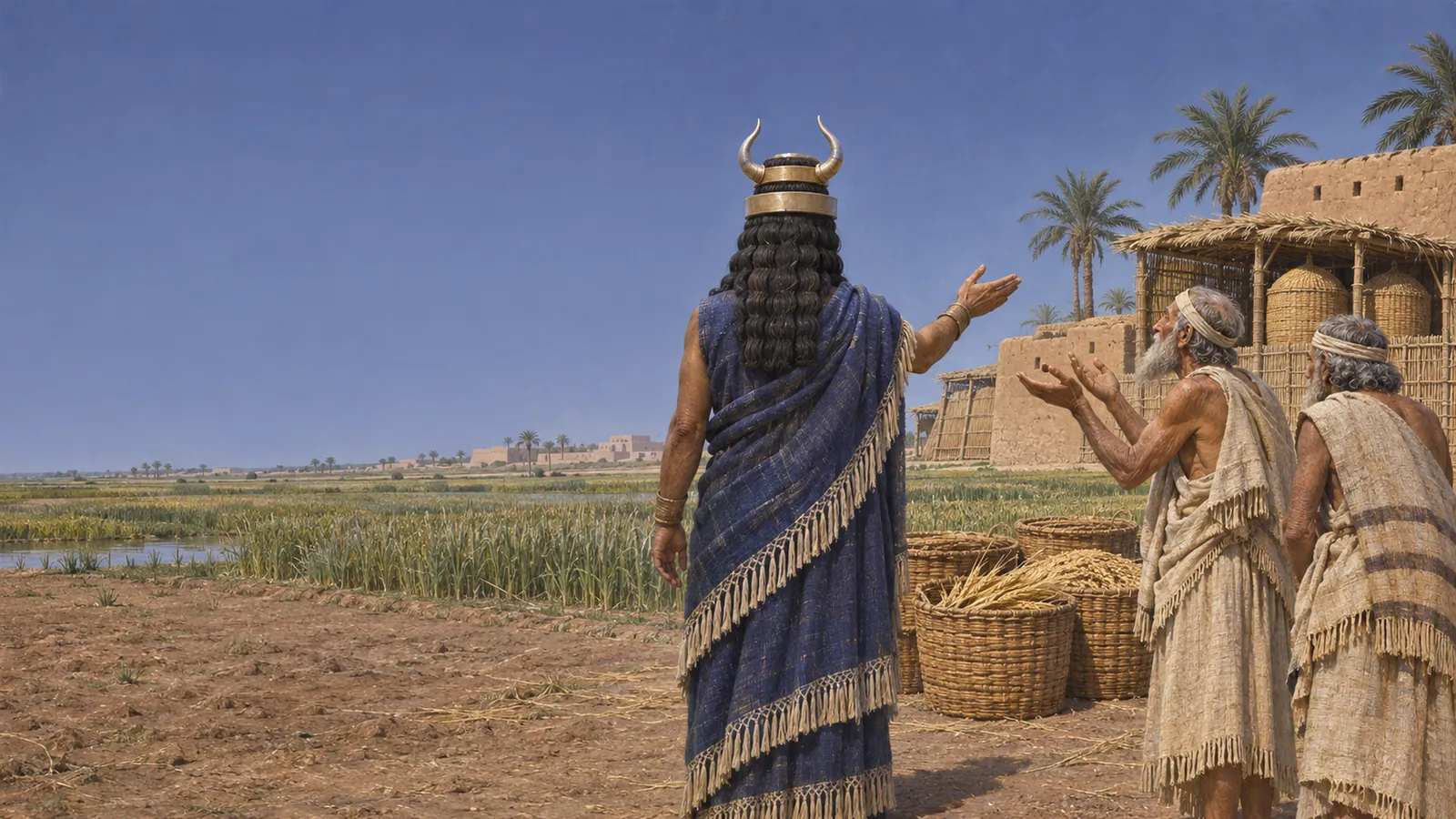
Jacobsen sagt, dass Enki in jedem Land Halt macht und es segnet. Der Segen bringt dem Land Wohlstand und bestätigt seine besonderen Aufgaben.
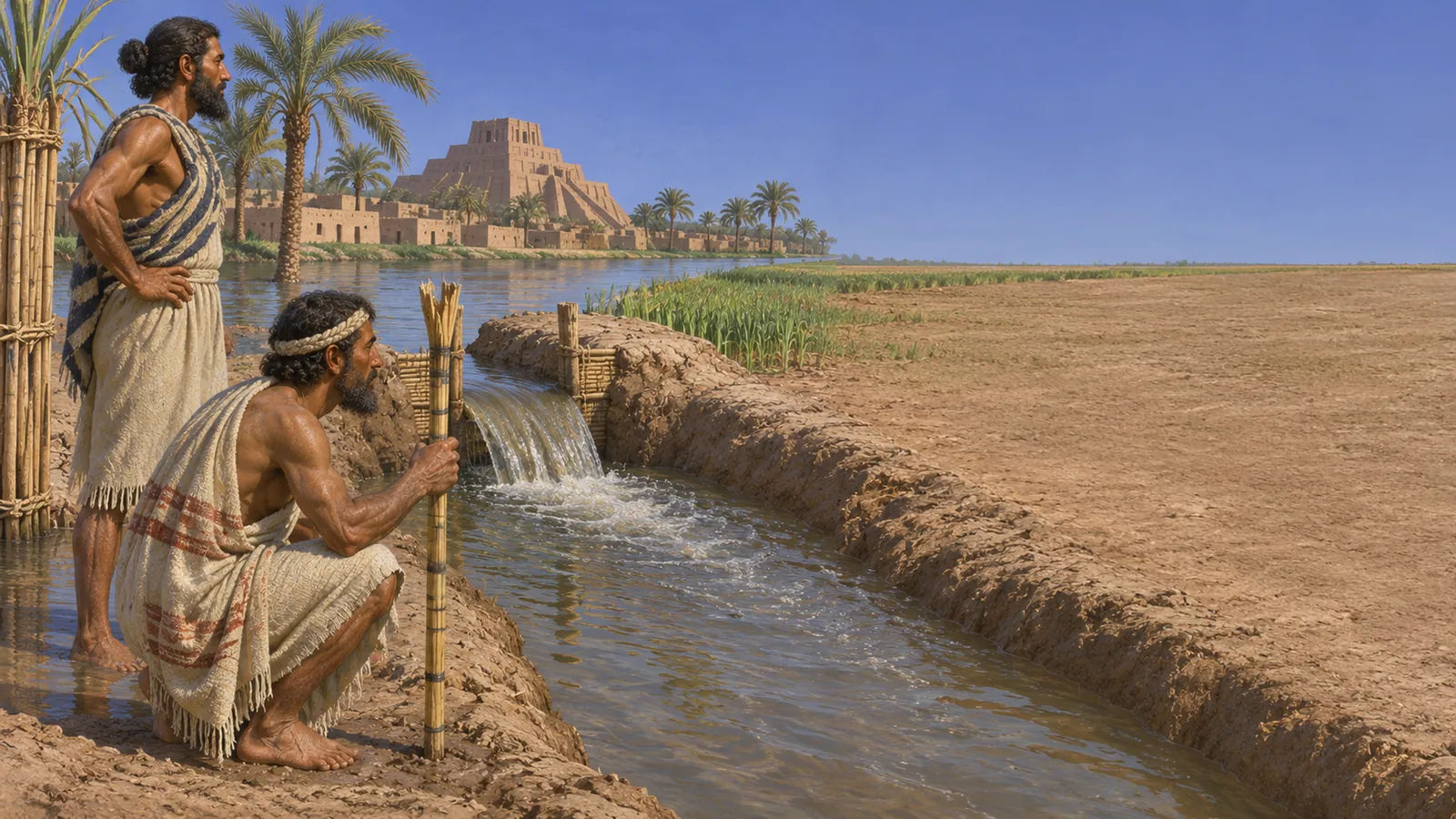
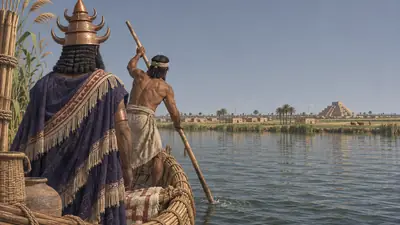
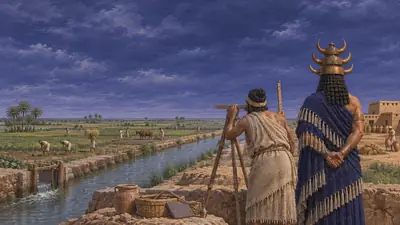
In Jacobsens Darstellung wendet sich Enki dem Wasser und allem davon Abhängigen zu. Er füllt Euphrat und Tigris mit klarem Wasser und überträgt einem Gott die Aufsicht über beide Flüsse.
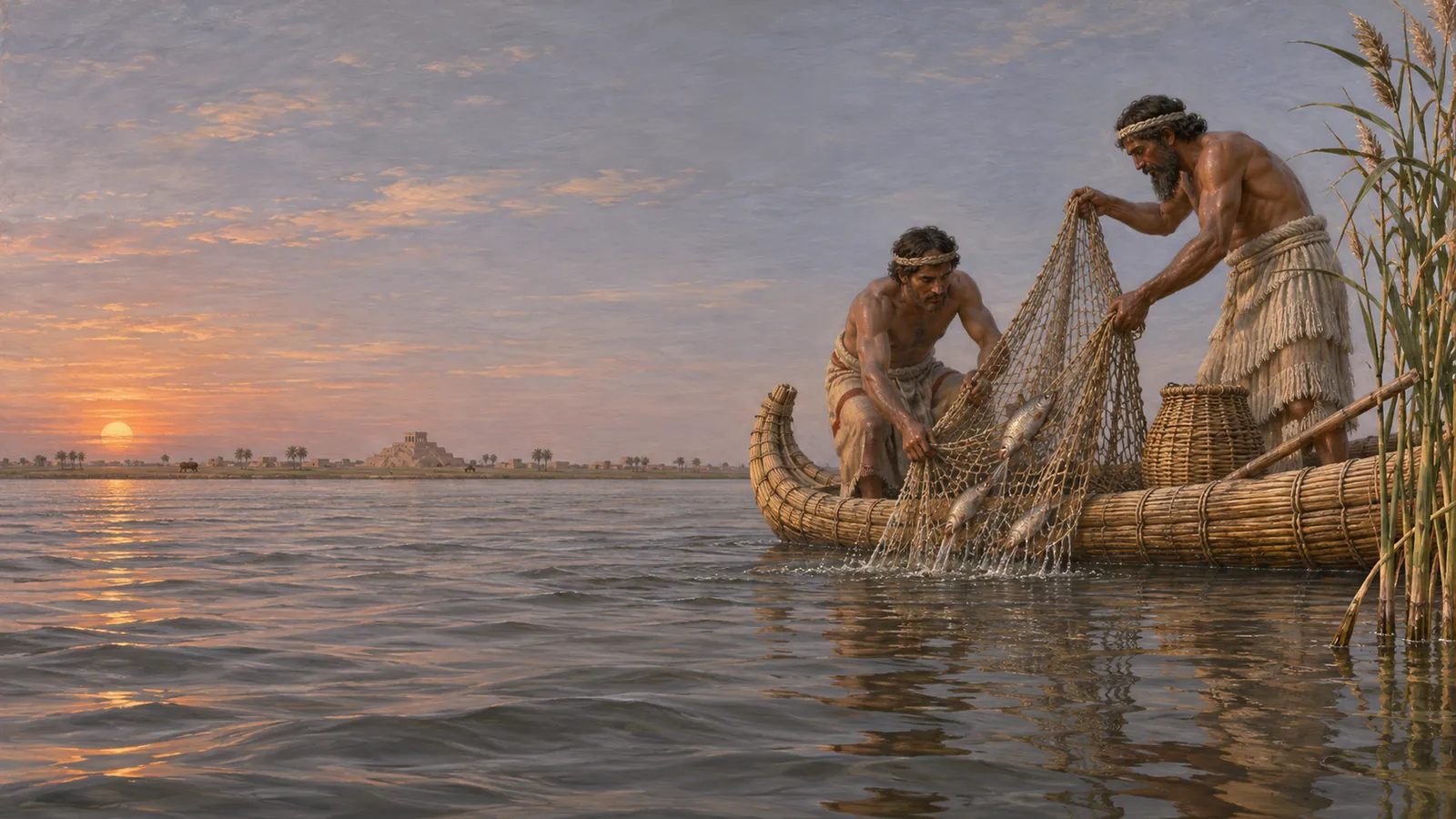
FISCHE UND SCHILF
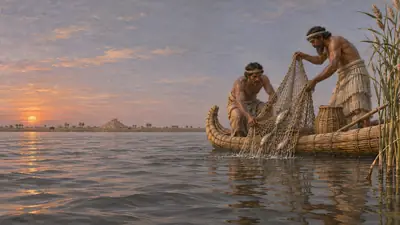
Jacobsen sagt, Enki fülle die Flüsse mit Fischen und lege Schilfbestände an. Einem anderen Gott überträgt er die Aufsicht über Fische und Schilf.
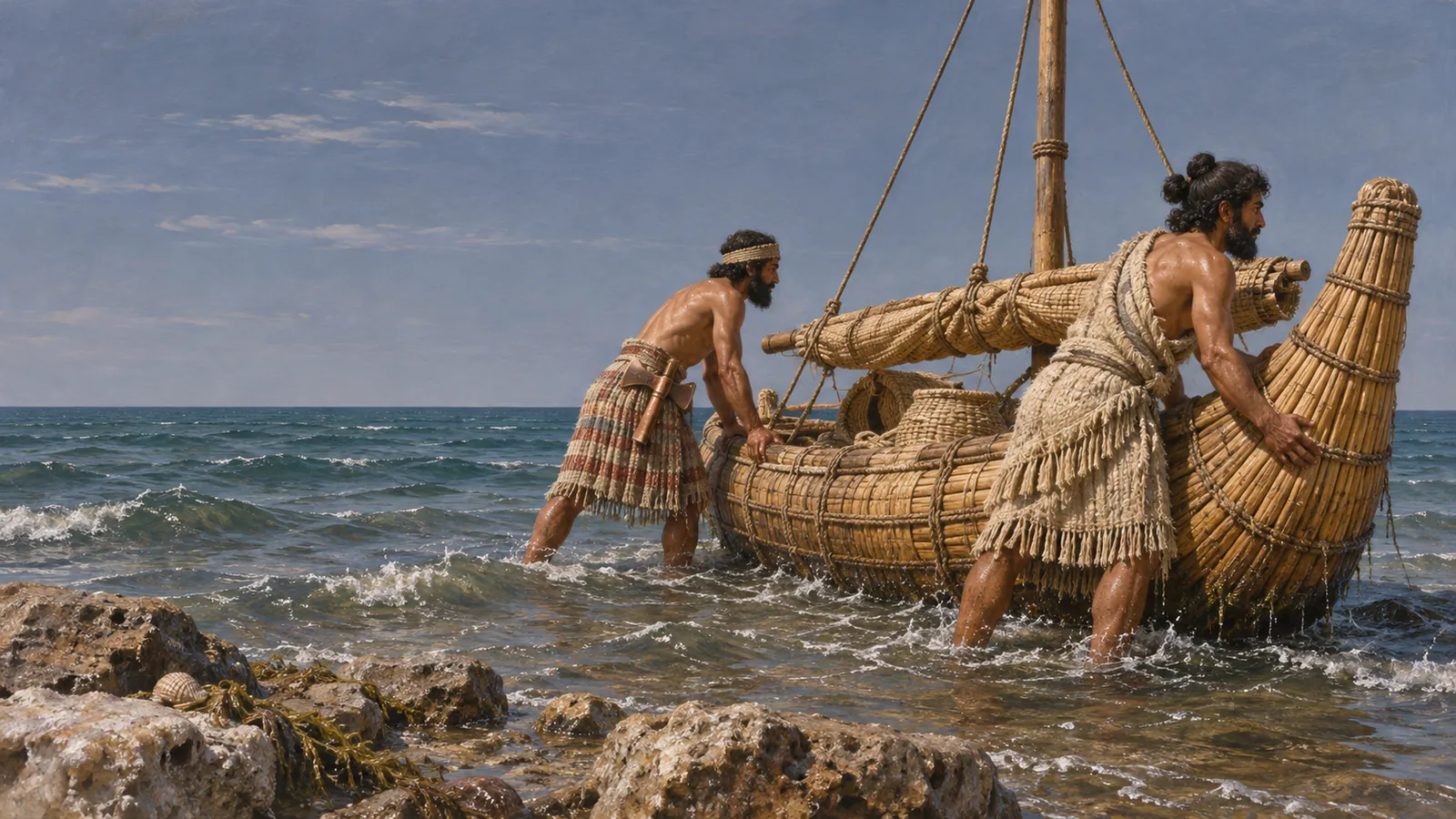
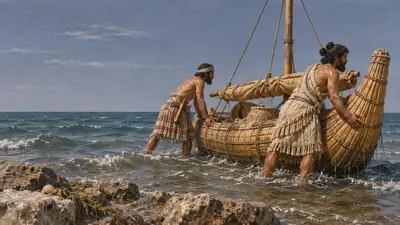
Jacobsen schildert anschließend, wie Enki das Meer ordnet und einen Gott mit der Aufsicht betraut. In seiner Darstellung bleiben sowohl das Meer als auch sein Aufseher ungenannt.
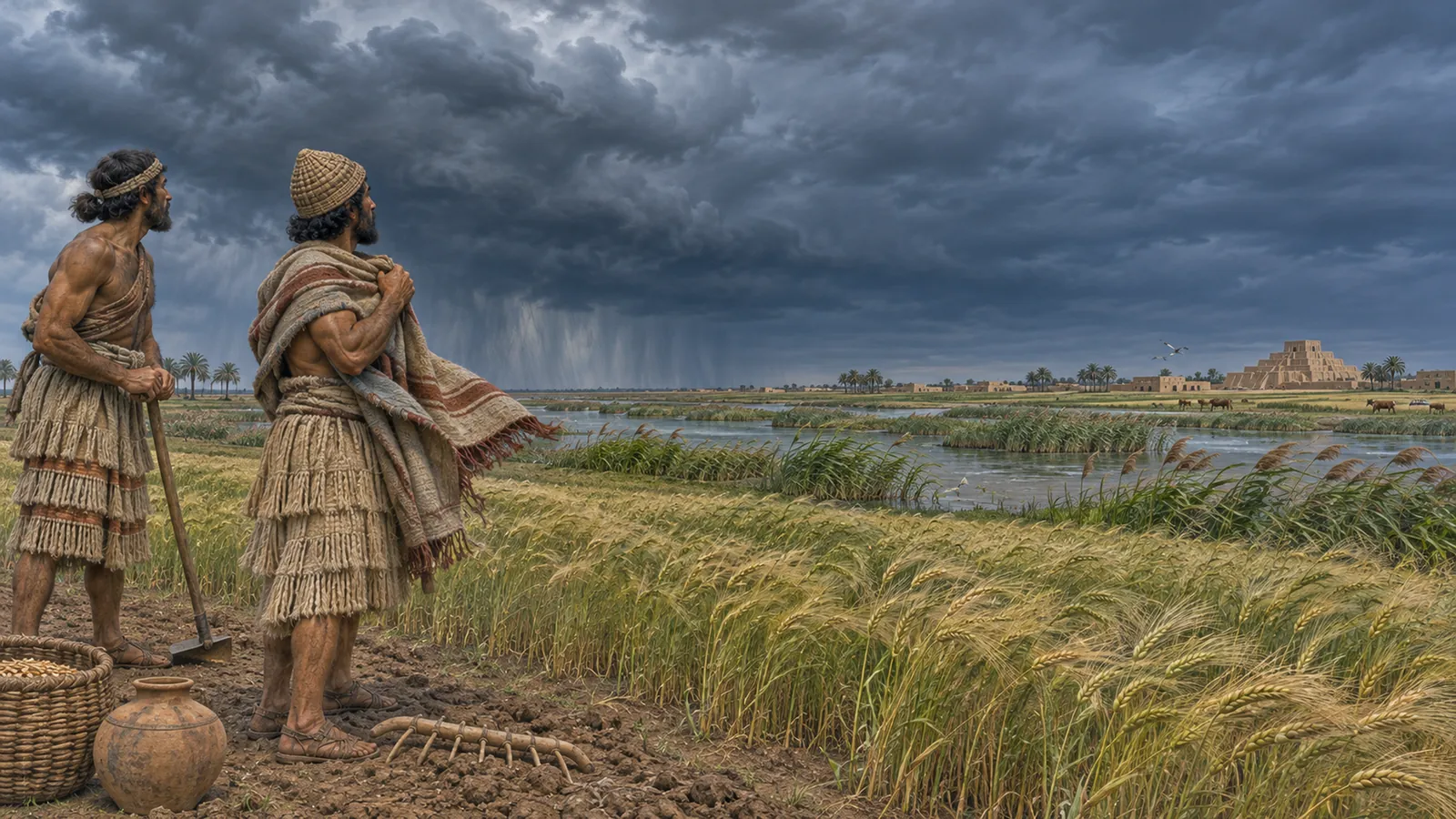
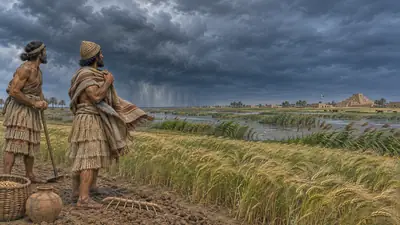
In Jacobsens Darstellung wendet sich Enki nach seiner Arbeit am Meer den Winden zu, die den Regen bringen.
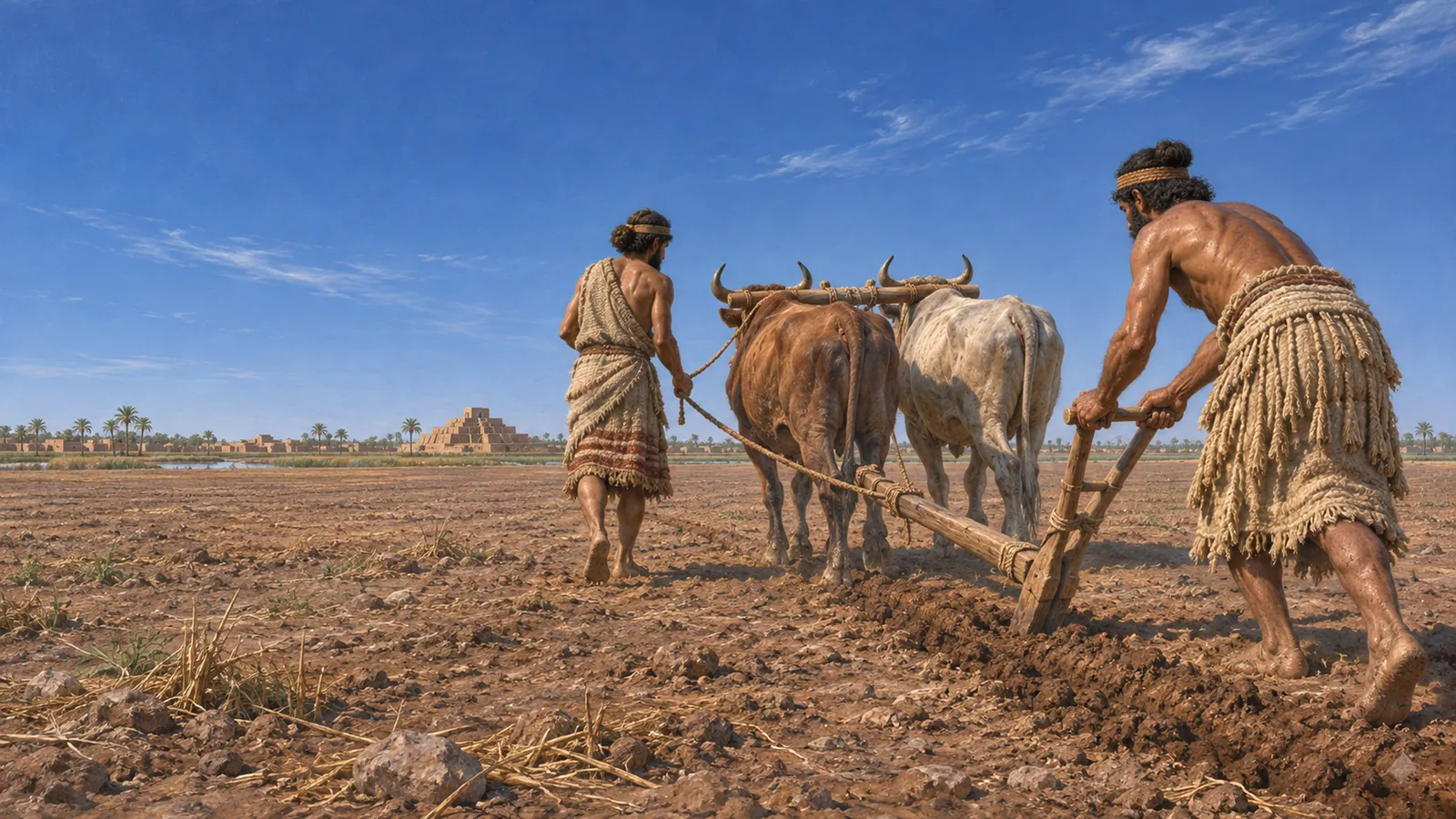
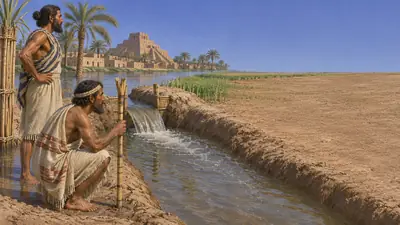
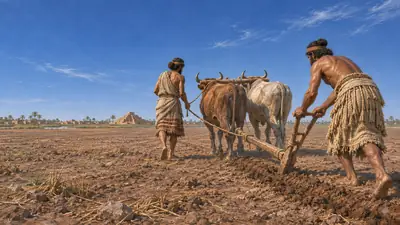
Jacobsens Darstellung geht dann zum Ackerbau über. Enki kümmert sich um den Pflug und zieht Furchen auf den Feldern.
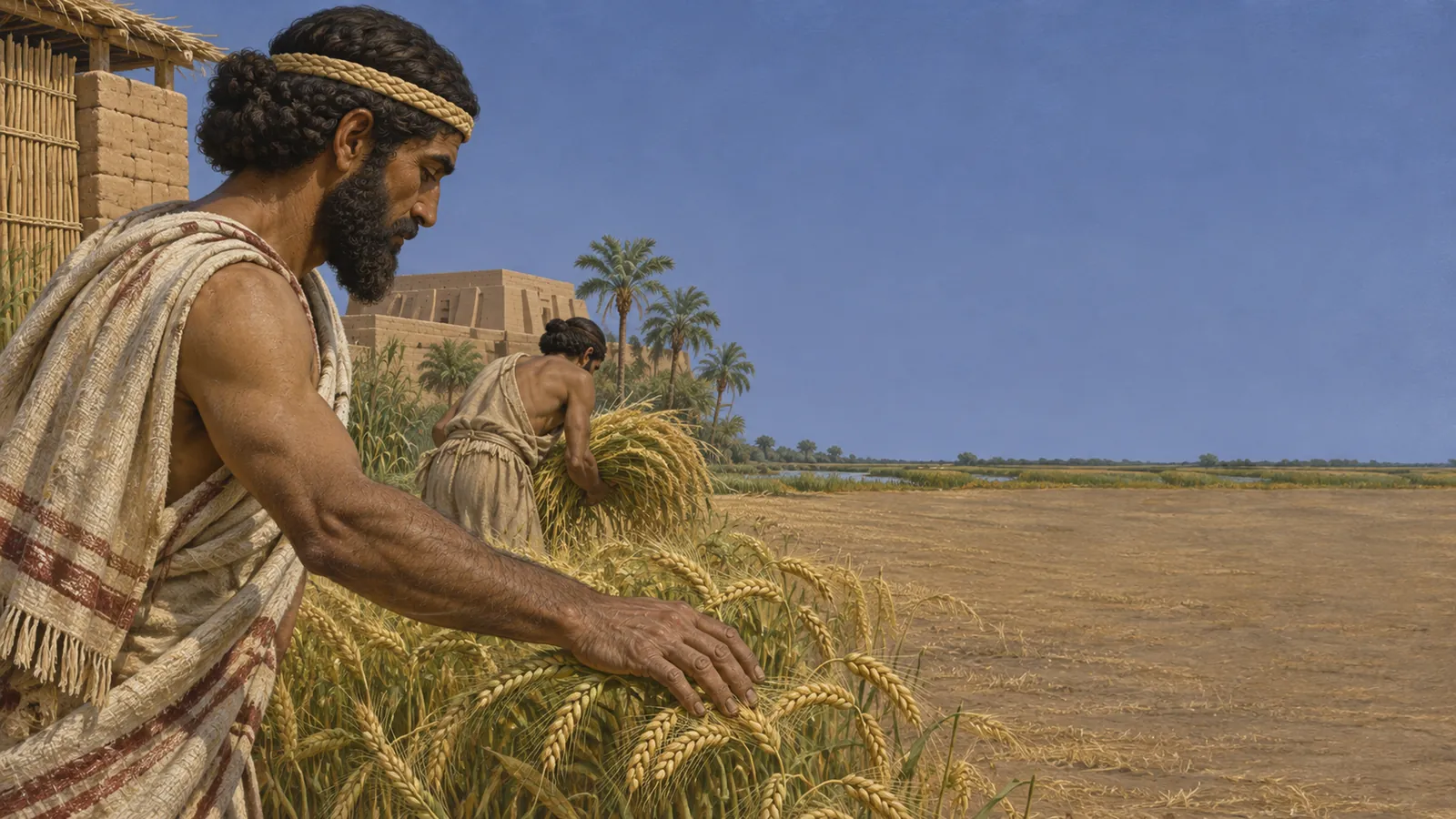
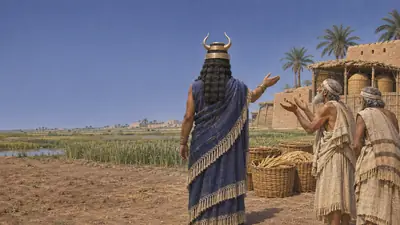
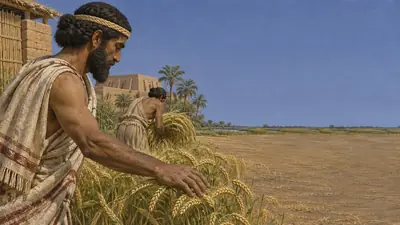
In Jacobsens Darstellung der Organisation der Landwirtschaft lässt Enki Getreide auf dem Feld wachsen.
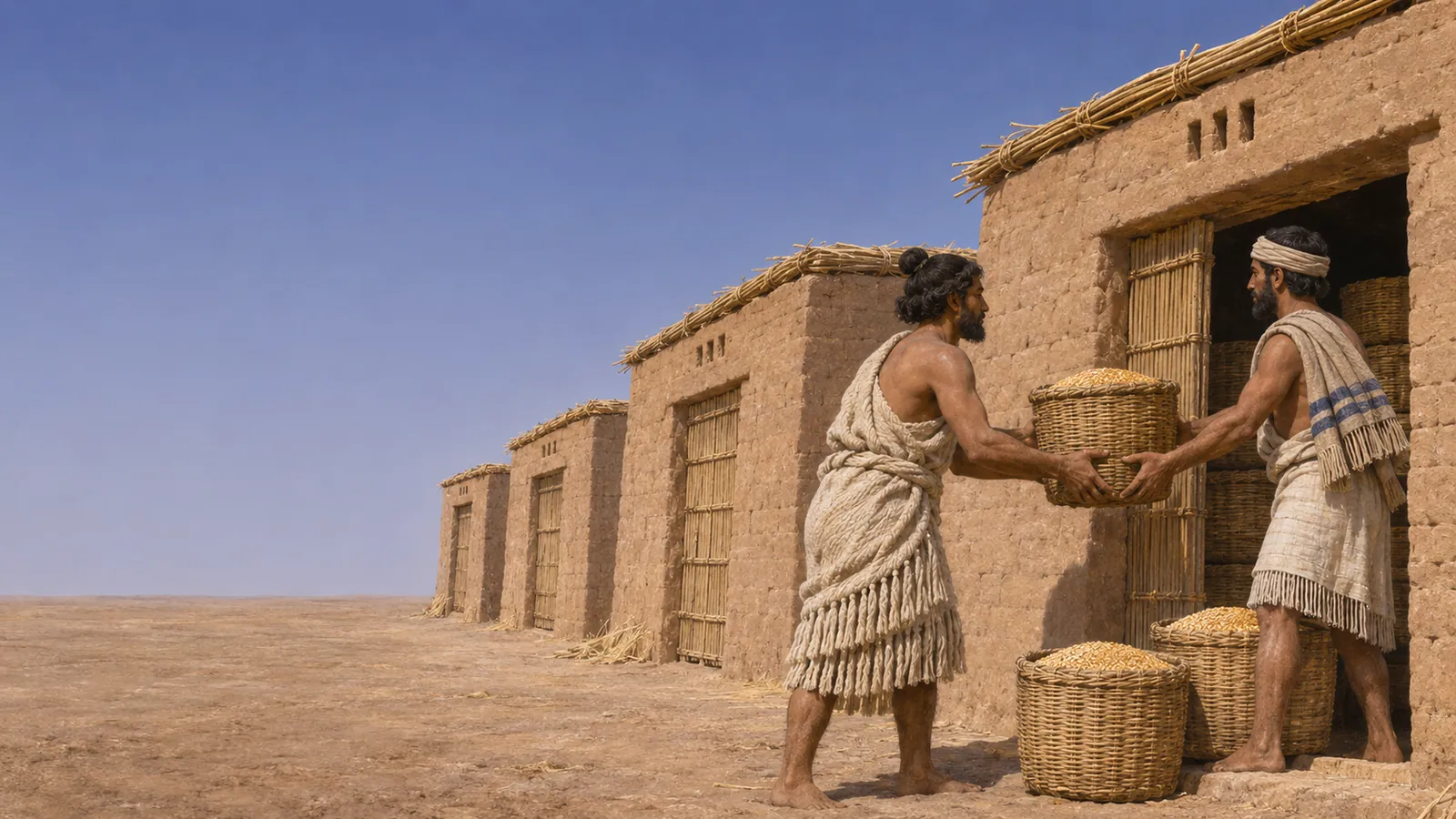
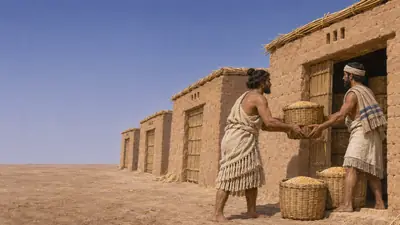
Die nächste Aufgabe in Jacobsens Darstellung ist die Vorratshaltung. Enki reiht die Kornspeicher aneinander.
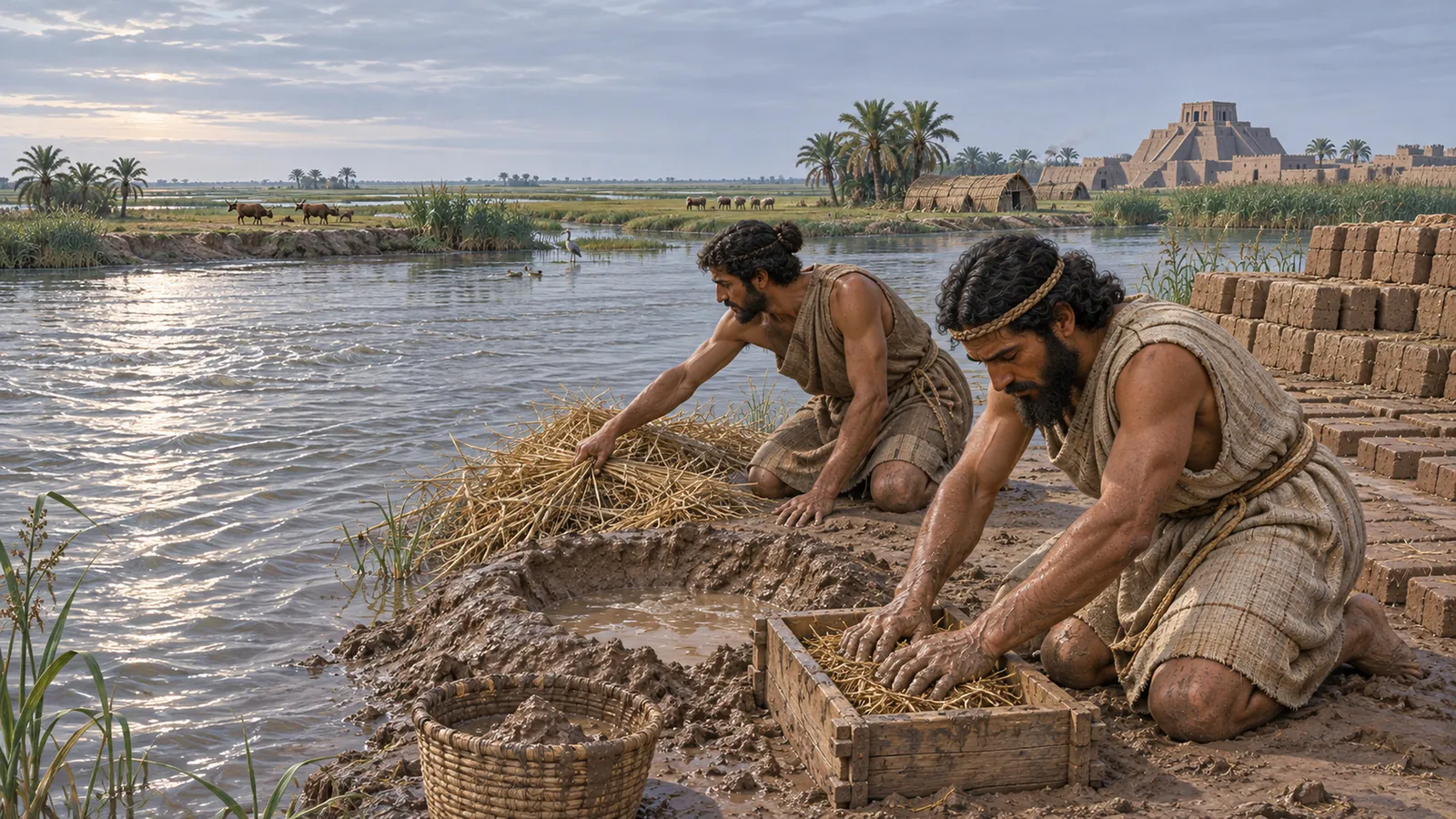
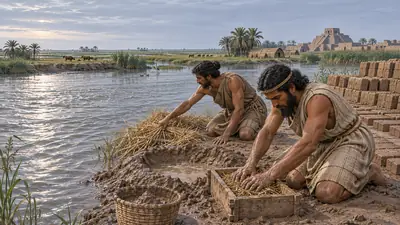
Jacobsen sagt, Enki gehe von den Feldern zu Städten und Dörfern und beauftrage den Ziegelgott, die Herstellung von Ziegeln zu beaufsichtigen. Die Darstellung nennt für diesen Gott keinen Eigennamen.
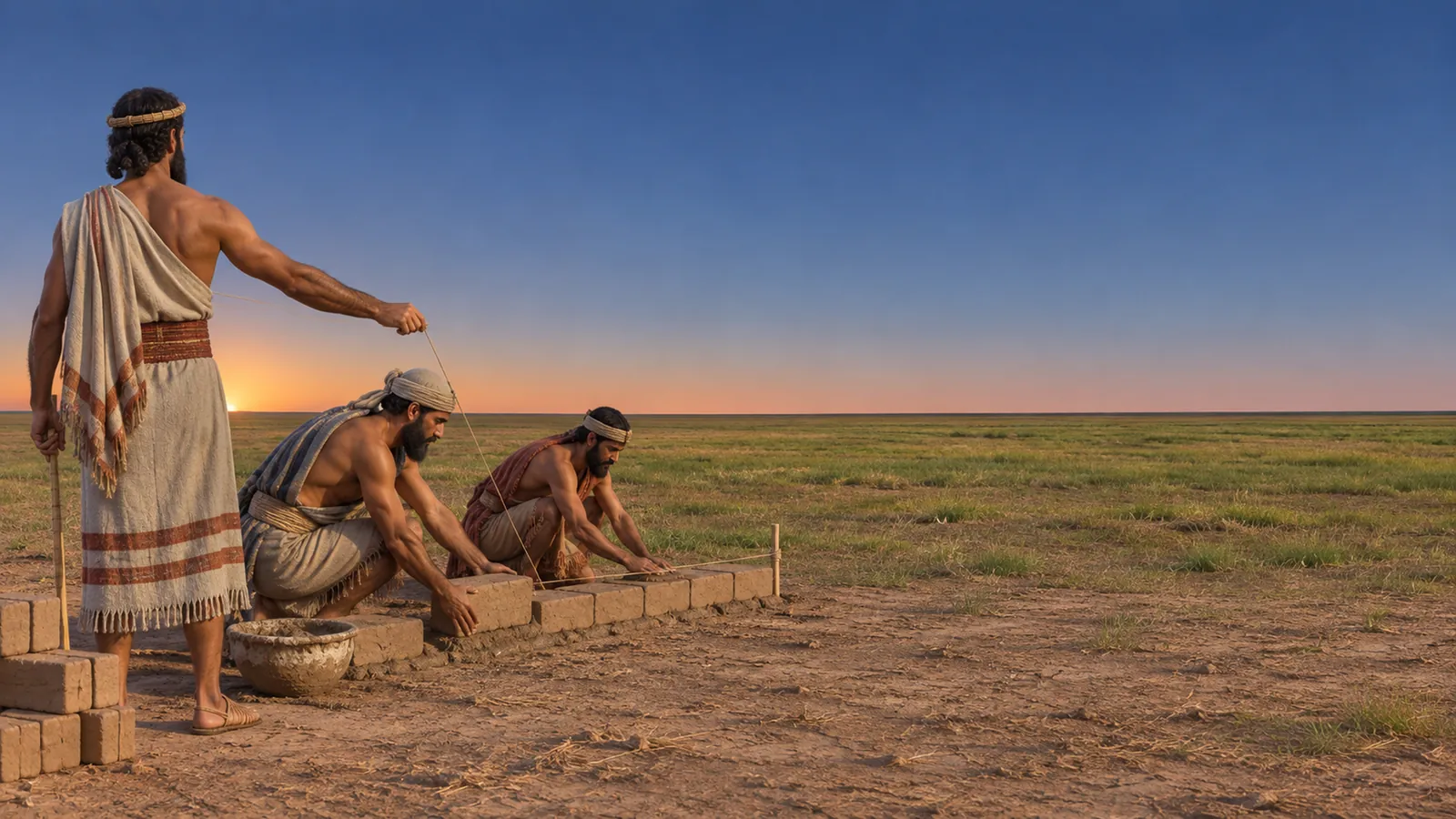
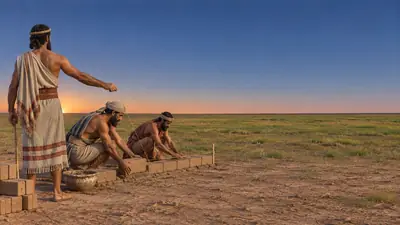
In Jacobsens Darstellung legt Enki Fundamente und errichtet Mauern. Er setzt Mushdama, den göttlichen Baumeister, zur Aufsicht über diese Arbeiten ein.
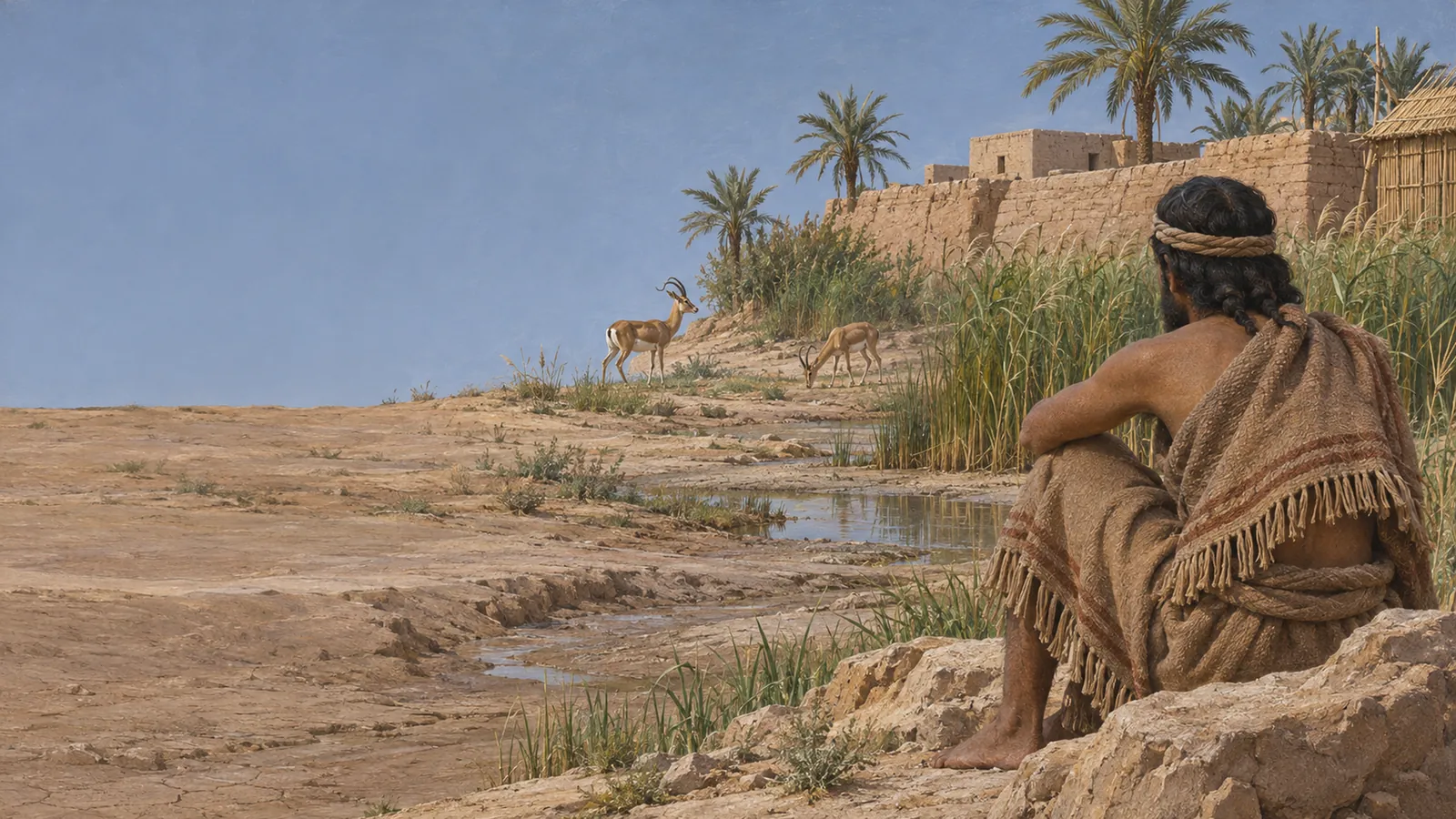
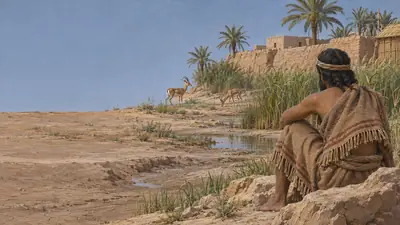
Jacobsen wendet sich dann der Wüste zu, wo Enki die wilden Tiere der Obhut des Gottes Sumukan anvertraut.
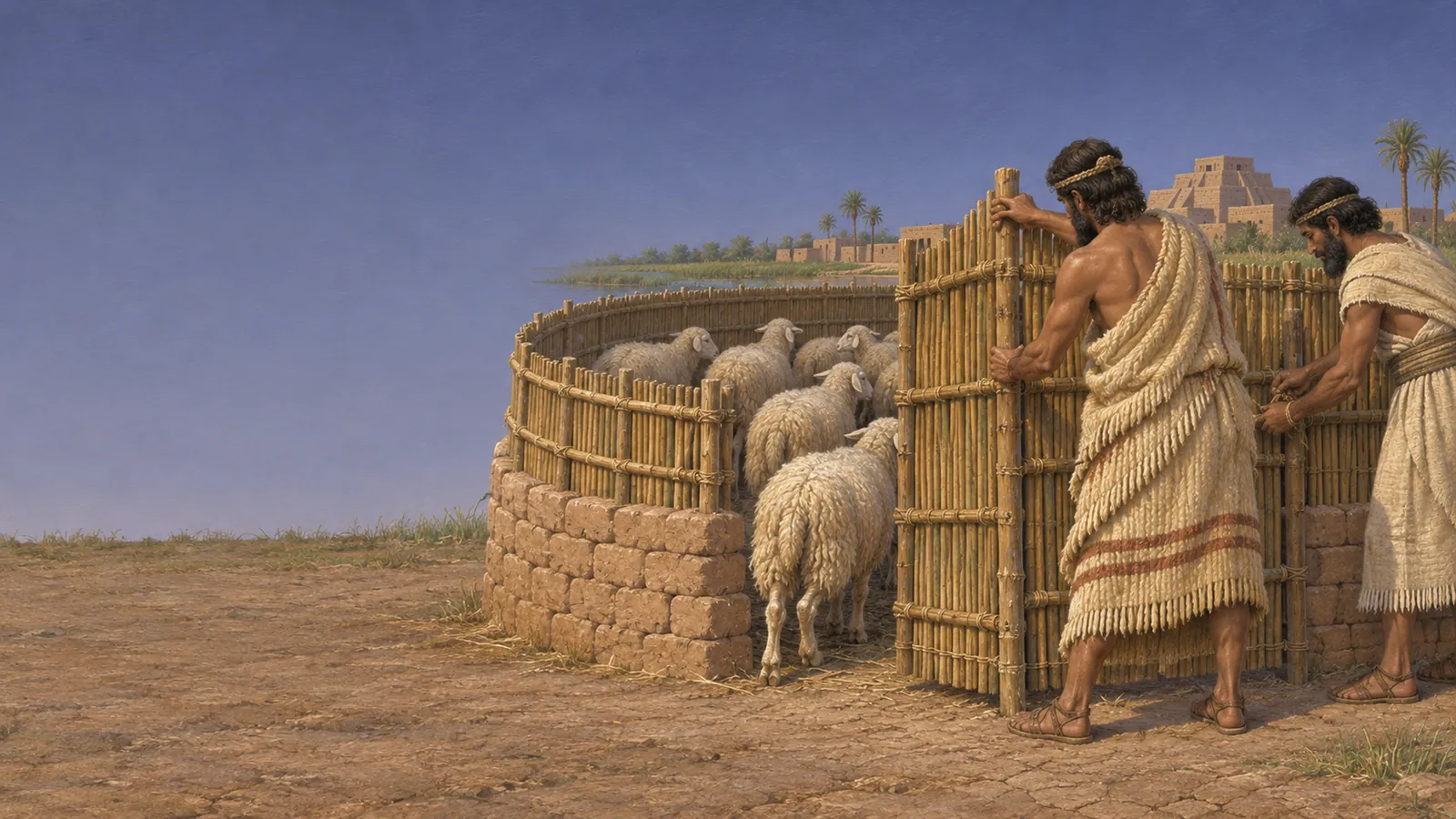
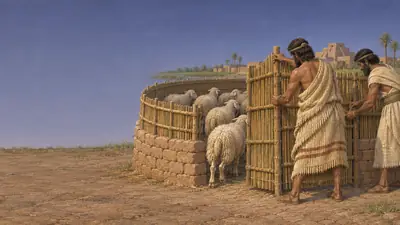
Jacobsen sagt, Enki baue Pferche und Schafhürden für die Haustiere. Er vertraut sie dem Hirtengott Dumuzi an, den Jacobsen auch Tammuz nennt.
DAS GUT DER WELT
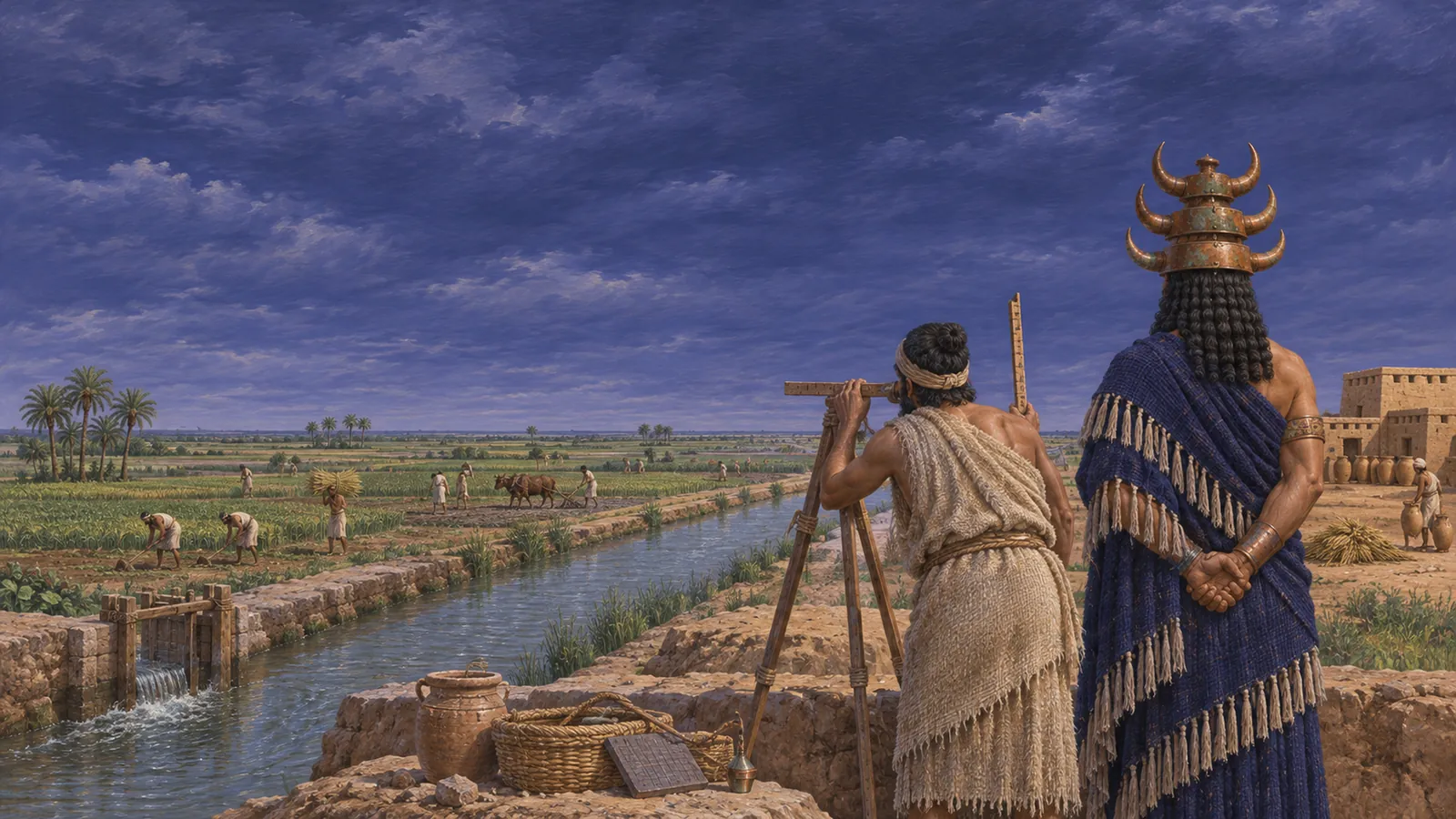
Jacobsen stellt Enki als den dar, der die wichtigsten Tätigkeiten der mesopotamischen Wirtschaft einrichtet, in Gang bringt und mit göttlichen Aufsehern besetzt. Er vergleicht diese Ordnung in der Natur mit einem Gut, das ein fähiger Verwalter führt.
Ende von Kapitel 1
Alle Seiten
Quellen
160–161. Chapter note 25 directs readers to Kramer’s Mythology, note 59. Jacobsen’s subsection gives a prose summary and an interpretation. The ancient poem itself has no directly translated verses under this heading. Jacobsen explicitly treats the original opening as conjectural.
Benutzte Editionen
- University of Chicago, The Intellectual Adventure of Ancient Man
- Jacobsen’s printed subsection, pp. 160–161
- Chapter note 25, p. 184
Hinweise zu dieser Nacherzählung
Page 1, attribution and the lost opening. 160. Jacobsen reports that the beginning is lost. He proposes that it probably described how Anu and Enlil appointed Enki. Note 25 on p. 184 refers to note 59 in Samuel Noah Kramer’s *Sumerian Mythology*.
Pages 2–3, territory and prosperity. Jacobsen resumes his account on p. 160 with Enki’s tour and visits to the larger administrative areas. He describes Enki stopping in each country and assigning it prosperity and particular functions by his blessing. The countries and functions remain unspecified in these sentences.
Pages 4–5, rivers, fish and reeds. Jacobsen gives the names Euphrates and Tigris and describes the clear water and one divine overseer. He then separates the stocking of fish and the establishment of stands of cane from the previous act, giving those resources to another overseer. Jacobsen does not supply the names of either overseer here.
Pages 6–7, sea and rain. The sentence across pp. 160–161 gives responsibility for the sea to another divine overseer. Both the sea and its overseer are unnamed. On p. 161, Jacobsen next mentions the winds that bring rain. The passage gives no named season.
Page 8, the plow and the furrows. The summary on p. 161 then turns to Enki’s concern with the plow and the opening of furrows.
p. 161, first paragraph. Jacobsen says that Enki lets grain grow on the field after the work involving the plow and furrows. He sets granaries side by side.
p. 161, first paragraph. Enki moves from the fields to town and village in Jacobsen’s account. He appoints the brick god to oversee brickmaking. Jacobsen gives that god no personal name here. Enki lays foundations and builds walls, appointing Mushdama, the divine master builder, to oversee this work.
p. 161, second paragraph. Jacobsen says the wild animals of the desert are placed under the god Sumukan. Enki builds pens and sheepfolds for the domestic animals and puts them in the charge of the shepherd god Dumuzi, whom Jacobsen also calls Tammuz. These names belong to Jacobsen’s printed account.
p. 161, end of second paragraph. Jacobsen sums up Enki’s work as establishing economic activities in Mesopotamia, getting them started and appointing divine overseers. His comparison interprets natural order as a well-run estate. The selection ends before the heading for the distinct Enki and Ninmah story.
Die antiken Verse hinter jeder Seite
- Page 1: Jacobsen, “Enki Organizes the World Manor,” 1977 Phoenix ed., p. 160, subsection opening and conjecture
- Page 2: Jacobsen, “Enki Organizes the World Manor,” 1977 Phoenix ed., p. 160, first paragraph, Enki’s inspection
- Page 3: Jacobsen, “Enki Organizes the World Manor,” 1977 Phoenix ed., p. 160, second paragraph, visits and blessings
- Page 4: Jacobsen, “Enki Organizes the World Manor,” 1977 Phoenix ed., p. 160, second paragraph, river water and oversight
- Page 5: Jacobsen, “Enki Organizes the World Manor,” 1977 Phoenix ed., p. 160, second paragraph, fish and canebrakes
- Page 6: Jacobsen, “Enki Organizes the World Manor,” 1977 Phoenix ed., pp. 160–161, sentence on the sea
- Page 7: Jacobsen, “Enki Organizes the World Manor,” 1977 Phoenix ed., p. 161, first paragraph, winds and rain
- Page 8: Jacobsen, “Enki Organizes the World Manor,” 1977 Phoenix ed., p. 161, first paragraph, plow and furrows
- Page 9: Jacobsen 1977, The Intellectual Adventure of Ancient Man, ch. V, Enki Organizes the World Manor, p. 161, first paragraph, grain
- Page 10: Jacobsen 1977, The Intellectual Adventure of Ancient Man, ch. V, Enki Organizes the World Manor, p. 161, first paragraph, storage
- Page 11: Jacobsen 1977, The Intellectual Adventure of Ancient Man, ch. V, Enki Organizes the World Manor, p. 161, first paragraph, the brick god
- Page 12: Jacobsen 1977, The Intellectual Adventure of Ancient Man, ch. V, Enki Organizes the World Manor, p. 161, first paragraph, building and Mushdama
- Page 13: Jacobsen 1977, The Intellectual Adventure of Ancient Man, ch. V, Enki Organizes the World Manor, p. 161, second paragraph, desert and Sumukan
- Page 14: Jacobsen 1977, The Intellectual Adventure of Ancient Man, ch. V, Enki Organizes the World Manor, p. 161, second paragraph, domestic animals and Dumuzi
- Page 15: Jacobsen 1977, The Intellectual Adventure of Ancient Man, ch. V, Enki Organizes the World Manor, p. 161, second paragraph, Jacobsen’s closing comparison
Illustrationen von IL Archive mit KI-Werkzeugen; der Text folgt den antiken Quellen (siehe die Quellen am Ende jedes Kapitels).