Entidad · Concepto
Espíritu Santo
Página de referencia que vincula un nombre, grupo o concepto con los materiales que lo tratan.
Traducción automática. Lea el original en inglés.
Nombre presente en los textos y el culto cristianos, cuya relación con el Padre y el Hijo se definió en las formulaciones trinitarias.
Última revisión:
Texto
El Espíritu Santo aparece nombrado en los primeros textos y oraciones cristianos. En 1 Corintios 12:4–6, Espíritu, Señor y Dios aparecen juntos en la descripción de dones, ministerios y actividades; 2 Corintios termina con la gracia de Cristo, el amor de Dios y la comunión del Espíritu Santo.[1][2]
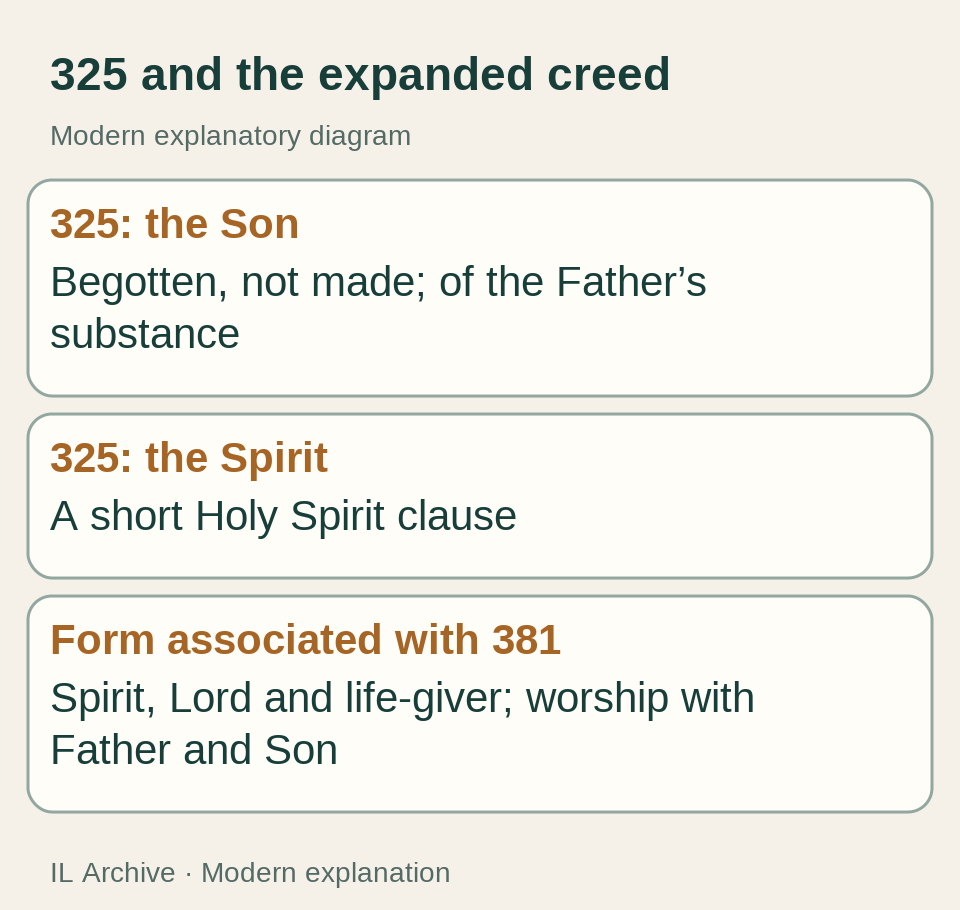
El credo ampliado asociado con Constantinopla en 381 n. e. y claramente atestiguado en las actas de Calcedonia en 451 describe al Espíritu como Señor y dador de vida, que procede del Padre y es adorado y glorificado junto con el Padre y el Hijo. Esta elaboración pertenece a la historia de la interpretación de la relación entre los nombres, junto a la presencia del Espíritu en textos anteriores.[3]
Referencias y notas
- 1 Corinthians 12:4–6, displayed KJV translation. Spirit, Lord and God in gifts, ministries and activities: threefold language, not a definition of three coequal hypostases. Volver al texto ↑
- 2 Corinthians 13:14, displayed KJV translation. Christ’s grace, God’s love and fellowship of the Spirit; numbered verse 13 in some editions. Volver al texto ↑
- Niceno-Constantinopolitan Creed, received text and editorial introduction, NPNF 14, CCEL. Creed and introduction read: Spirit Lord and life-giver, from Father, worshipped with Father and Son. Heading preserves Chalcedonian presentation. Attribution to 381 distinguished from 451 documentation and earlier related forms. Volver al texto ↑
Proponer una corrección · Proponga una fuente para este registro
Citar este registro
IL Archive, «Espíritu Santo», https://ilarchive.com/es/entities/holy-spirit-christianity