Entidad
Rea
Página de referencia que vincula un nombre, grupo o concepto con los materiales que lo tratan.
Traducción automática. Lea el original en inglés.
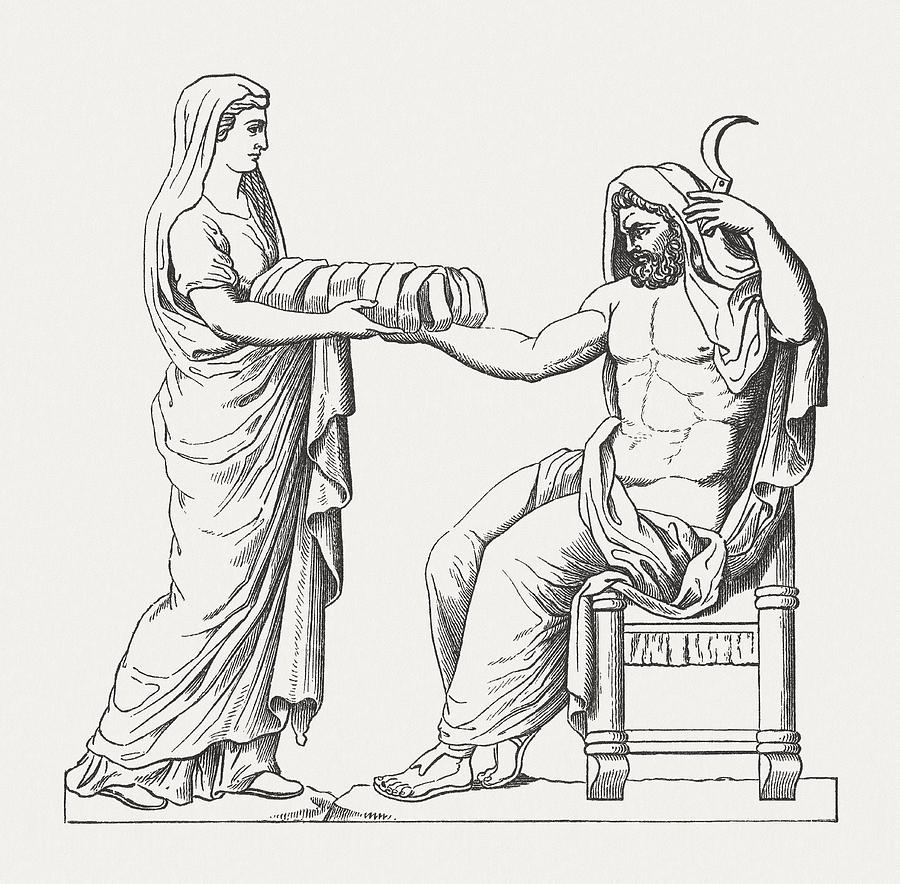
Madre de Zeus en Hesíodo, que oculta al niño y da a Crono una piedra en su lugar.
Última revisión:
Texto
Rea es una figura divina de los relatos griegos. En la Teogonía del poeta griego HesíodoHesíodoGreek poet whose major work is generally dated to the late eighth or early seventh century BCE, including the Theogony.Glosario · Pulse para leer la explicación da a luz a los hijos de Crono, pero él los devora, temiendo perder su gobierno. Ella pide ayuda a Gea y a Urano. [1]
ZeusZeusZeus is the sky god and leading deity in many Greek traditions. In the Iliad he presides over divine gatherings while others can still speak and object.Glosario · Pulse para leer la explicación queda oculto en Creta, y Crono recibe una piedra envuelta. La escena muestra a Rea protegiendo al niño y cambiando la sucesión. La fecha del poema difiere del tiempo mítico de sus acontecimientos. [2]
Referencias y notas
- Hesiod, Theogony Lines450–479: Rhea and Kronos. Volver al texto ↑
- Hesiod, Theogony Lines480–504: child and stone. Volver al texto ↑
Proponer una corrección · Proponga una fuente para este registro
Citar este registro
IL Archive, «Rea», https://ilarchive.com/es/entities/rhea-greek-goddess
Seguir leyendo