Entity
Rhea
A reference page linking a name, group, or concept to the materials that discuss it.
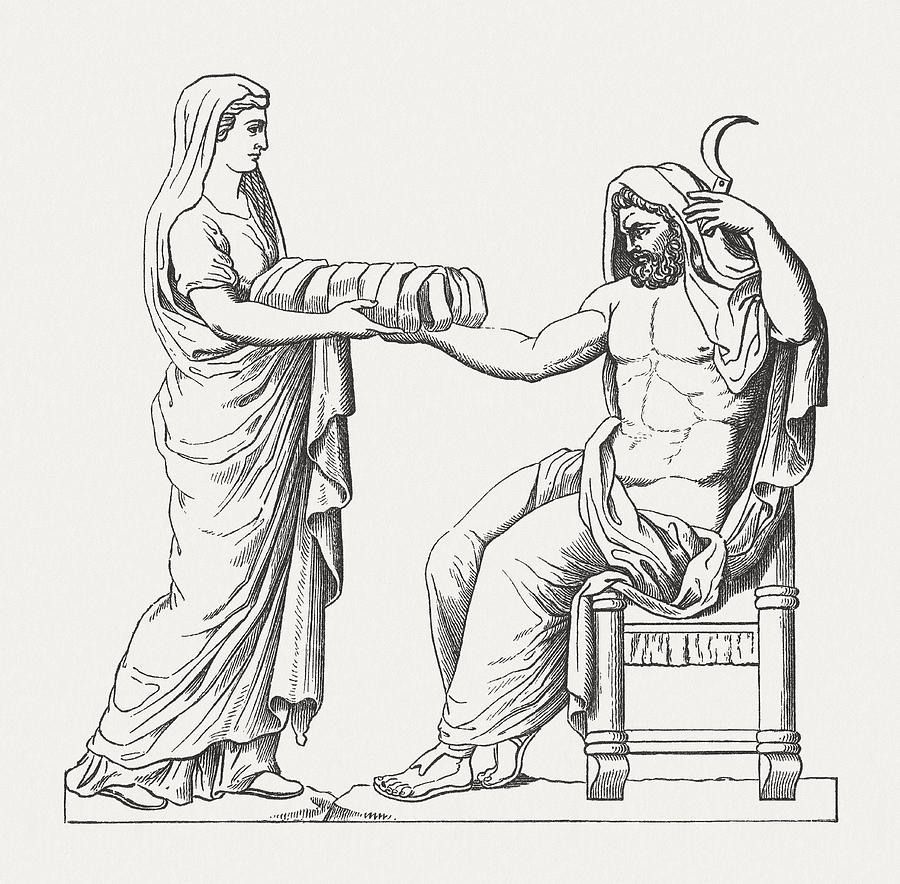
Zeus’s mother in Hesiod, hiding the child and giving Kronos a stone instead.
Text
Rhea is a divine figure in Greek narratives. In the Greek poet HesiodHesiodGreek poet whose major work is generally dated to the late eighth or early seventh century BCE, including the Theogony.Glossary · Click to read the explanation’s TheogonyHesiod’s TheogonyGreek poem on divine generations and Zeus’s kingship; its surviving form does not identify all of Hesiod’s sources.Glossary · Click to read the explanation she bears KronosKronosGreek divine figure and Zeus’s father; Hesiod connects his reign with struggles between divine generations.Glossary · Click to read the explanation’s children, but he swallows them, fearing the loss of his rule. She asks Gaia and Ouranos for help. [1]
ZeusZeusZeus is the sky god and leading deity in many Greek traditions. In the Iliad he presides over divine gatherings while others can still speak and object.Glossary · Click to read the explanation is hidden in CreteCreteGreek island in the eastern Mediterranean, associated in Hesiod with hiding the infant Zeus.Glossary · Click to read the explanation, and Kronos receives a wrapped stone. The scene shows Rhea protecting the child and changing the succession. The poem’s date differs from the mythical time of its events. [2]
References and notes
- Hesiod, Theogony Lines450–479: Rhea and Kronos. Return to the text ↑
- Hesiod, Theogony Lines480–504: child and stone. Return to the text ↑
Research history
Substantive changes are retained here. Minor copy edits remain in the internal operational log.
-
Substantive record update
-
Substantive record update
Suggest a correction · Suggest a source for this record
Cite this record
IL Archive, «Rhea», Edition 3, https://ilarchive.com/en/entities/rhea-greek-goddess