Ancient text
Hesiod’s Theogony
A text for line-by-line reading, with transliteration, translation, and resources.
- Region
- Boeotia, the ancient Greek world
A sourced introduction to Hesiod’s Theogony, with selected sense-renderings on Chaos, Gaia, Kronos, Zeus, and Athena’s birth. This is not a full translation of the poem.
Estimated reading time: 6 min Published Last reviewed:
Share article
Text
Introduction
How does HesiodHesiodGreek poet whose major work is generally dated to the late eighth or early seventh century BCE, including the Theogony.Glossary · Click to read the explanation’s Theogony arrange the birth of the Greek gods and the succession of divine rulers? This entry explains the structure of the poem and presents brief, freely rendered selections, each identified by line number. It is not the complete poem or a line-by-line critical translation from Greek.
The distinction between what the poem says about GaiaGaiaEarth as a divine figure, active in the gods’ origins and conflicts in Hesiod.Glossary · Click to read the explanation, OuranosOuranosSky as a divine figure in Greek poetry; Kronos’s father in Hesiod.Glossary · Click to read the explanation, KronosKronosGreek divine figure and Zeus’s father; Hesiod connects his reign with struggles between divine generations.Glossary · Click to read the explanation, and ZeusZeusZeus is the sky god and leading deity in many Greek traditions. In the Iliad he presides over divine gatherings while others can still speak and object.Glossary · Click to read the explanation, and what scholars infer from comparisons with earlier Anatolian narratives, is essential to reading it. [1][9]
The poem and the texts through which we know it
Theogony (Θεογονία) is a Greek poem in hexameters attributed to Hesiod, associated with Boeotia and usually dated, approximately, to the late eighth or early seventh century BCE. It is more than a list of divine names: genealogies are linked to contests between generations and, ultimately, the stabilization of Zeus’s rule. The text is known through manuscripts and editions much later than its presumed composition. [1][10]
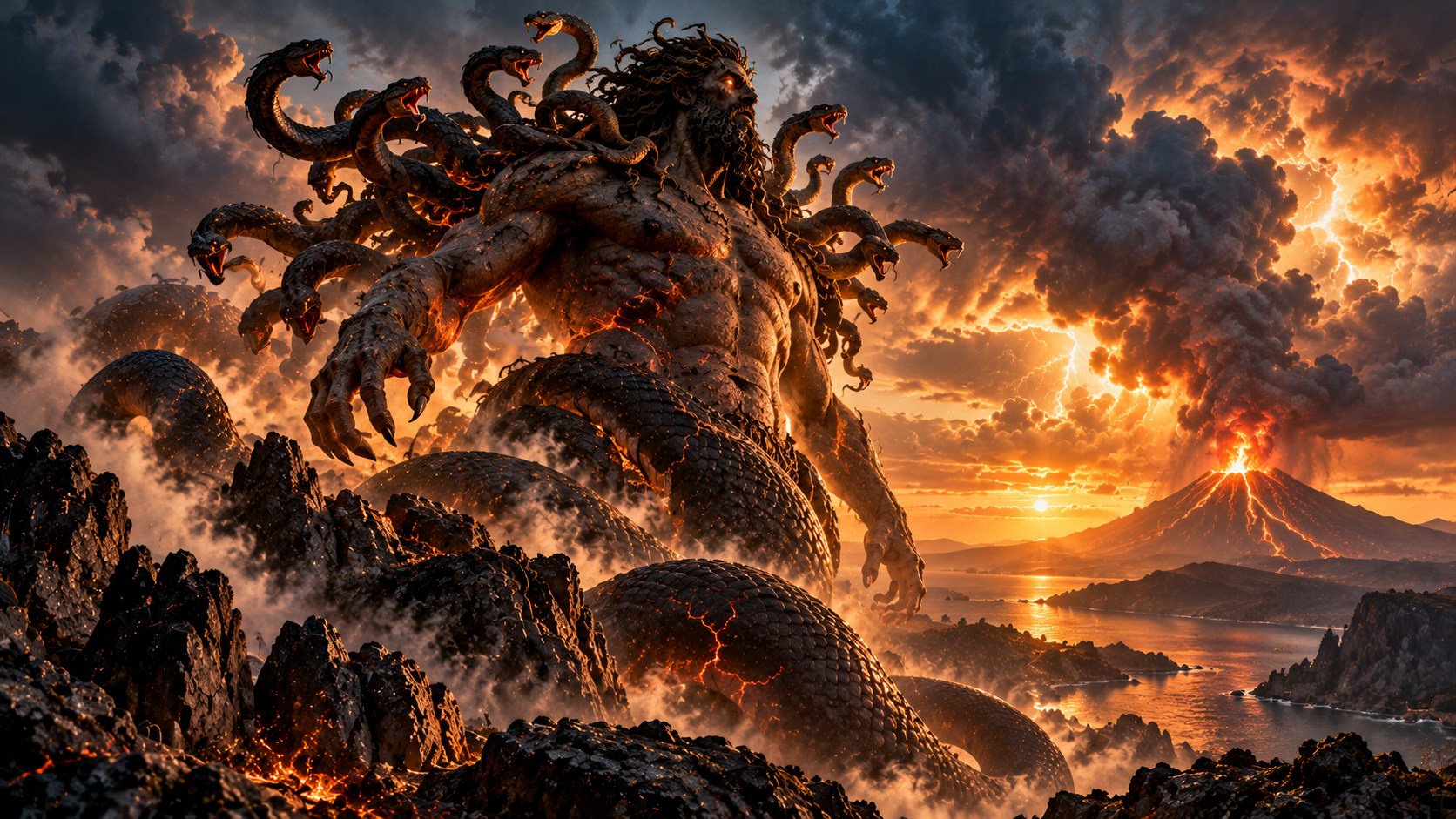
In the opening lines (1–34), the poet invokes the MusesMusesA group of Greek divine figures associated with song and poetry.Glossary · Click to read the explanation of Mount Helicon and portrays his poetic authority as their gift. The poem then moves through the first beings and divine genealogies, the war with the Titans, Zeus’s confrontation with TyphoeusTyphon / TyphoeusTyphon (Typhoeus), a serpentine adversary of Zeus in Greek myth; his defeat and punishment vary across Hesiod, Pindar, and the later Library.Glossary · Click to read the explanation, and his marriages and descendants. This entry offers an introduction and selected passages, not a substitute for the complete Greek text and the historical English translation linked in the references. [1][6]
First beings: Chaos and Earth
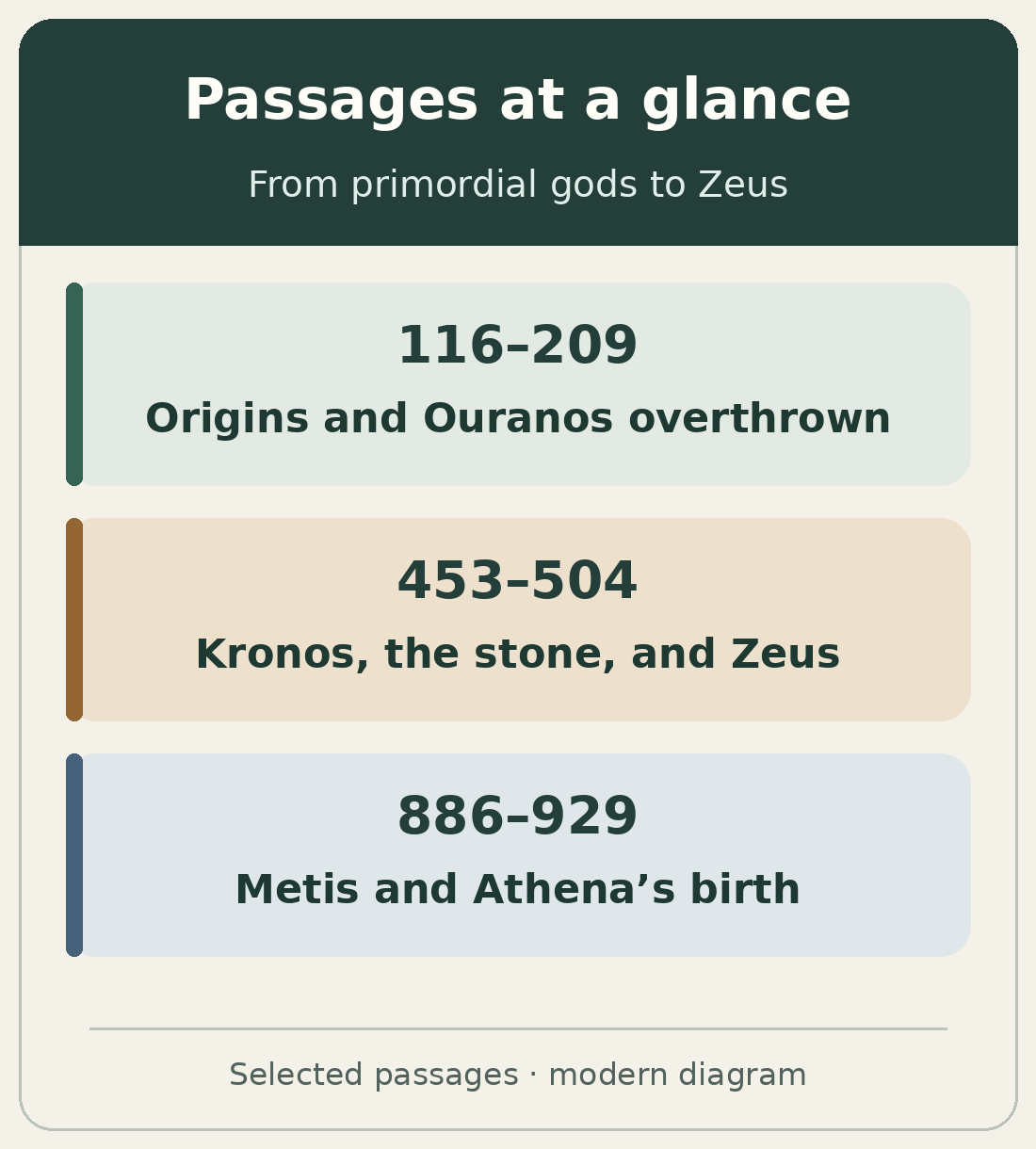
Lines 116–125 place Chaos (a primordial gap or opening) first, followed by Earth, TartarusTartarusDeep abyss in Greek poetic imagination, named by Zeus as a place of punishment in the Iliad.Glossary · Click to read the explanation, and Eros; other powers, including Darkness and Night, emerge from Chaos. Chaos is a named primordial condition within the poem, not automatically equivalent to the later philosophical idea of absolute nothingness. [1]
Free sense-rendering of selected lines 116–125
The poem proceeds through interwoven genealogies. In lines 130–174 Gaia bears Ouranos and has children with him, including the Titans. When Ouranos confines his children within Gaia, she appeals to them, and Kronos volunteers to confront his father. [2]
Ouranos overthrown: the sickle, blood, and sea
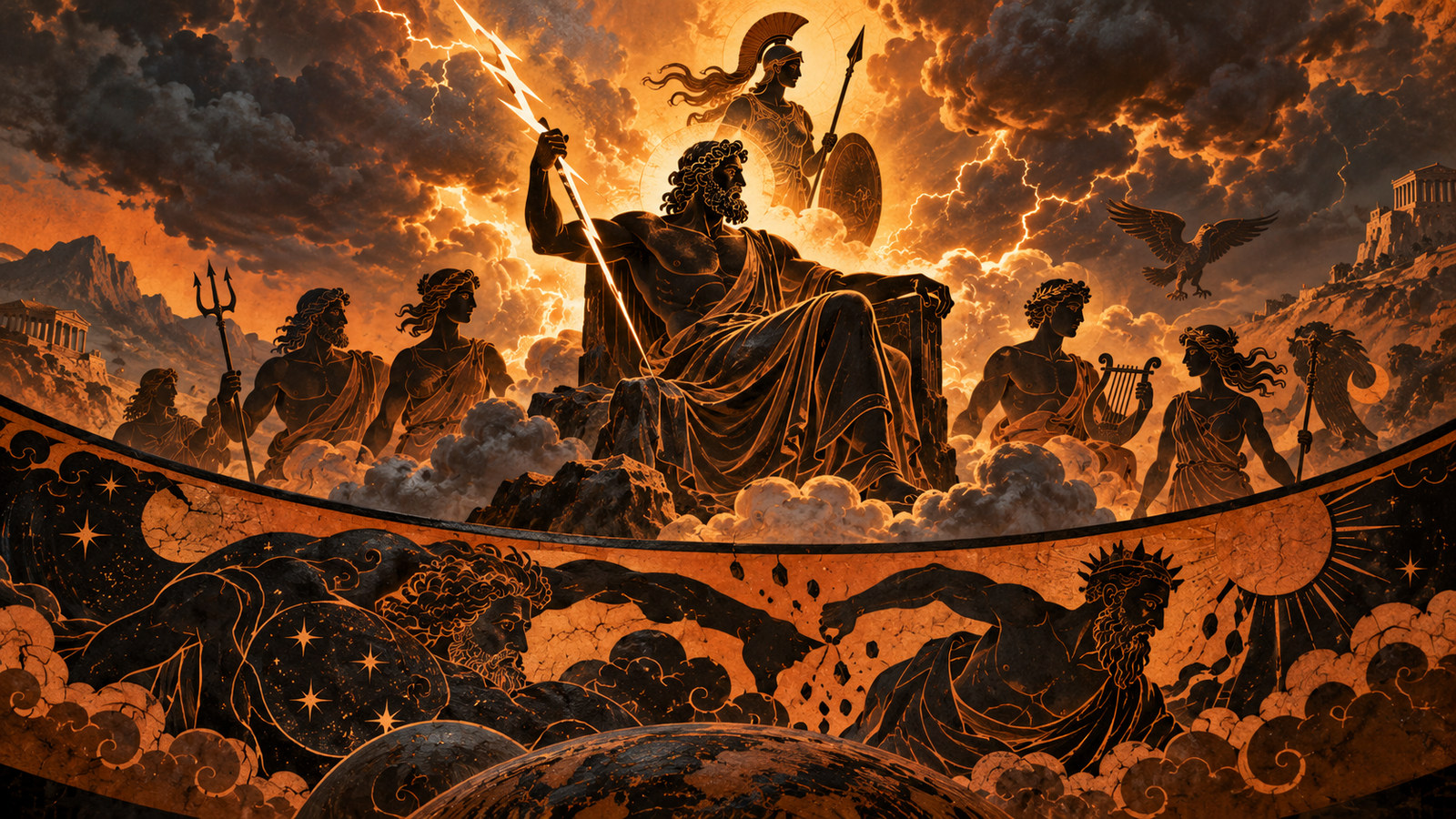
In lines 175–209 Kronos ambushes Ouranos as Gaia has planned, cuts off his father's genitals with a sickle, and throws them away. The drops of blood received by Earth lead to further beings, while the sea foam around the severed part is connected to the emergence of AphroditeAphroditeGreek goddess whose origin Hesiod relates to foam after the assault on Ouranos.Glossary · Click to read the explanation. This is an act of cutting and casting away, not an account of Kronos swallowing Ouranos’s genitals. [2][3]
Free sense-rendering of selected lines 178–185
Kronos, his children, and the stone
Lines 453–504 describe a different action. RheaRheaZeus’s mother in Hesiod, hiding the child and giving Kronos a stone instead.Glossary · Click to read the explanation bears children to Kronos, who swallows them for fear that one of them will displace him. With Gaia’s help she saves Zeus, giving Kronos a swaddled stone in the baby's place. He swallows it without recognizing the deception and later brings up what he had swallowed. In the narrative Zeus sets up the stone at Pytho, near Delphi. [4][5]
Free sense-rendering of selected lines 485–500
This should not be conflated with the earlier overthrow of Ouranos. One episode concerns the mutilation of a father; the other involves Kronos swallowing his children and the stone substituted for Zeus. The poem continues with the Titans’ defeat and the struggle against Typhoeus. [3][4][5][6]
Zeus, Metis, and Athena’s birth
Having overcome his opponents, Zeus confirms his authority and assigns the gods their honors (around lines 881–885). Lines 886–900 say that he swallows MetisMetisDivine figure and Athena’s mother in Hesiod; Zeus swallows her while pregnant to forestall a possible successor.Glossary · Click to read the explanation, a goddess of wisdom, when she is about to bear AthenaAthenaGreek goddess associated in Hesiod with Zeus, Metis and birth from the head.Glossary · Click to read the explanation, after learning that a later child might challenge his supremacy. Lines 924–926 describe Athena's emergence from Zeus's head. Zeus swallows Metis; Kronos had swallowed his own children, while the cutting of Ouranos was a separate, earlier event. [7][8]
Free sense-rendering of selected lines 886–900 and 924–926
Other sections of the poem trace many divine families and recount Prometheus, the theft of fire, and the wars of the gods. These selections are not a complete account of the work. [1][6]
Is there a connection with Anatolian traditions?
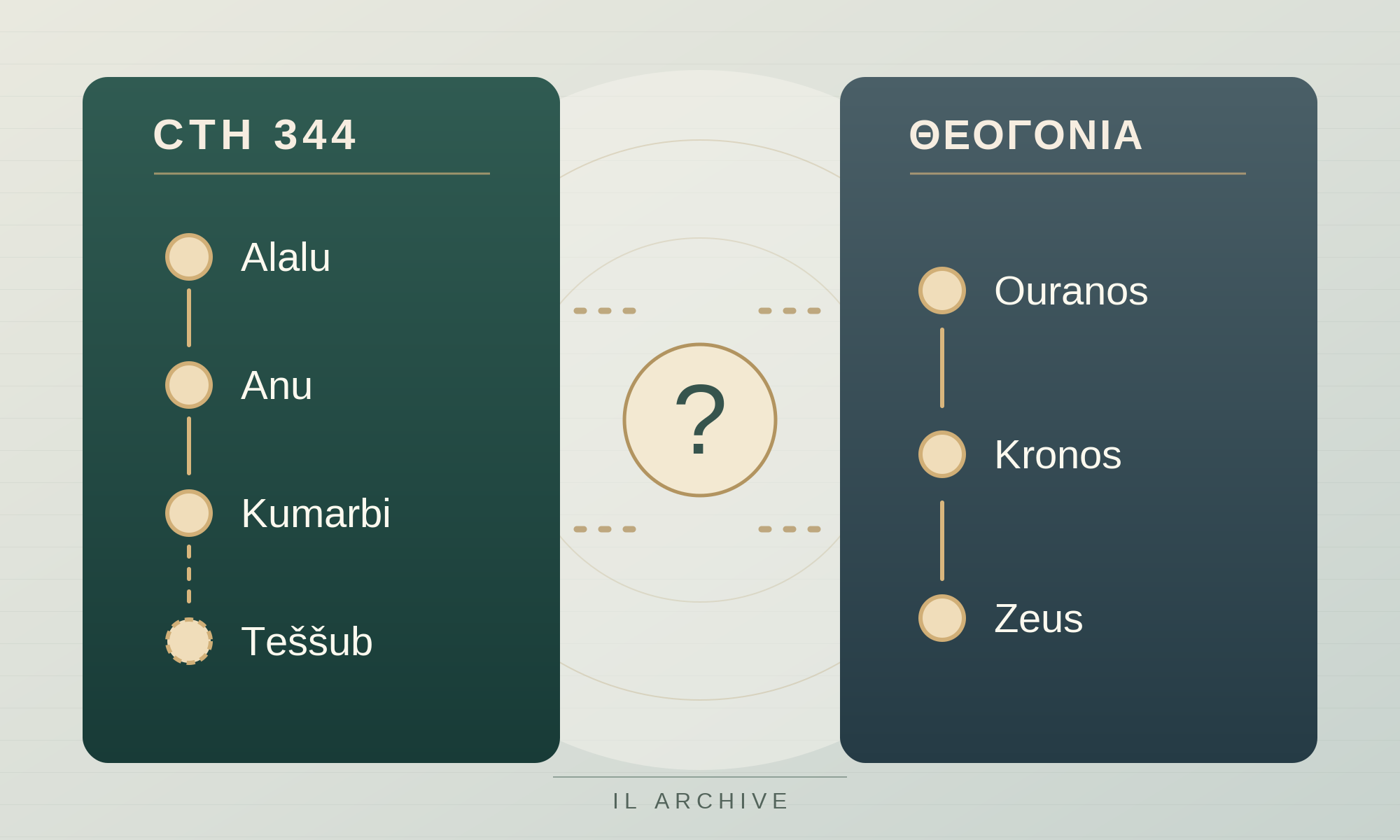
A comparison with KumarbiKumarbiHurrian god in Hittite songs from Hattusha; he overthrows Anu and carries the storm god. A study of CTH 344, contested genealogy, and Greek parallels.Glossary · Click to read the explanation, a deity in Hurrian tradition whose story is transmitted in Hittite texts, reveals important similarities and differences. In the Song of Going Forth or Kingship in Heaven tradition, Kumarbi bites off Anu's genitals and swallows associated material. Hesiod, by contrast, has Kronos castrate Ouranos with a sickle and later swallow his own children. The actions and agents must not be collapsed into a single story with renamed characters. [9]
Scholar Erik van DongenErik van DongenResearcher who examined Kumarbi–Hesiod connections in a 2010 doctoral thesis at University College London.Glossary · Click to read the explanation argues that the combination of motifs and historical contacts through AnatoliaAnatoliaAnatolia is the region occupying the Asian part of present-day TurkeyGlossary · Click to read the explanation support a proposed transmission of the heavenly kingship narrative to the Aegean before the surviving form of the Theogony. He develops a historical argument and possible route, not evidence of a surviving document showing Hesiod borrowing from a particular copy. Textual comparisons, chronology, and the contexts of contact are therefore part of evaluating the proposal. [9]
Scope of these selections
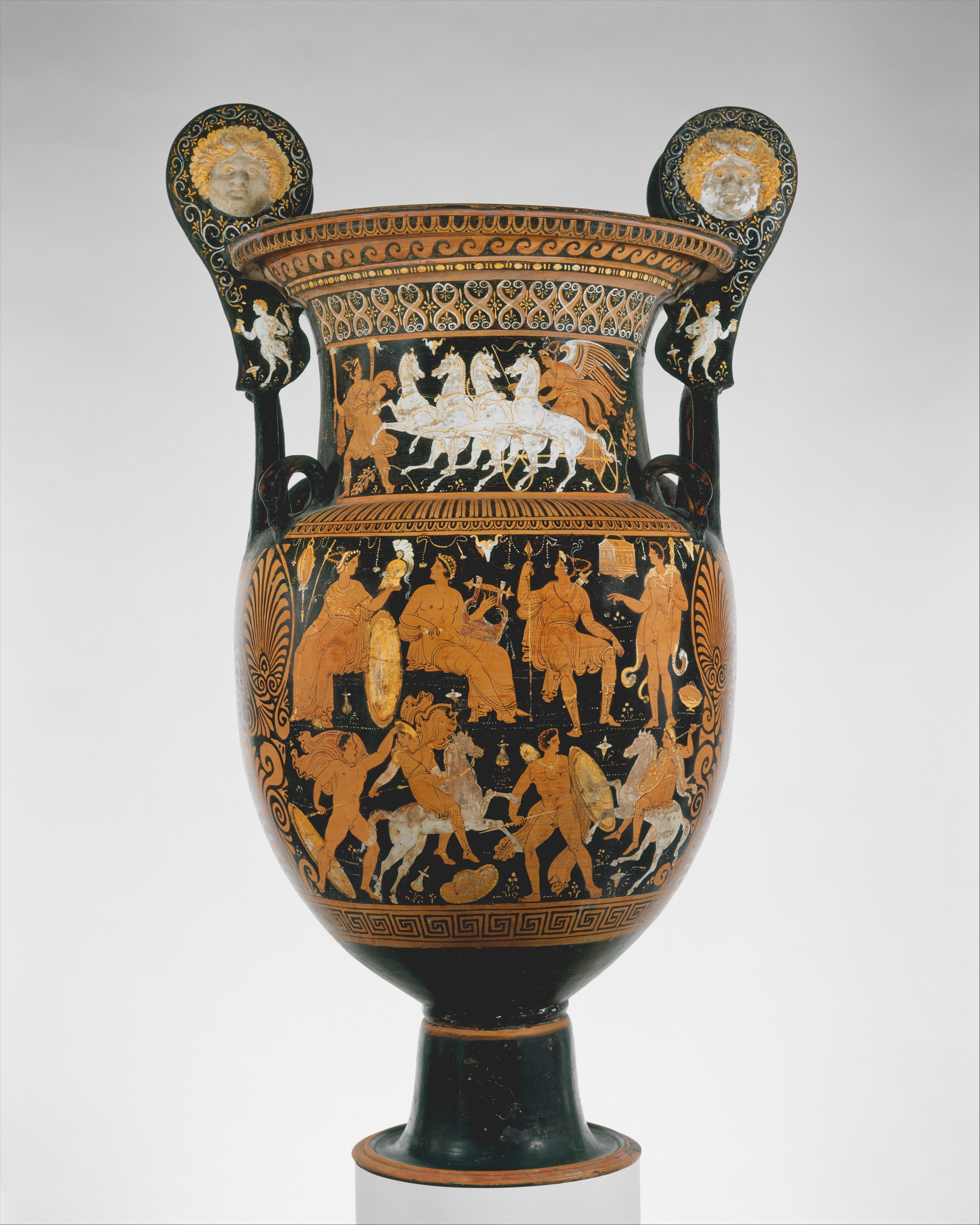
The excerpts above are short sense-renderings, not continuous translations of entire passages. Their references follow the Greek line numbering of the 1914 edition by Hugh G. Evelyn-White, checked against the Greek text and his historical English rendering at the cited locations. This is not a complete new English translation. The modern visuals illustrate reading and later reception, not a manuscript written in Hesiod's lifetime. [1][10]
Quick answers
What is the Theogony and roughly when was it composed?
It is a Greek poem attributed to Hesiod, usually dated approximately to the late eighth or early seventh century BCE. It links the births of the gods to struggles between generations and the settling of Zeus's rule. [1][10]
How does Kronos overthrow his father Ouranos?
Following Gaia's plan, Kronos ambushes Ouranos, cuts off his genitals with a sickle and throws them away. [2][3]
What is the story of the swaddled stone?
Kronos swallows his children, fearing one will displace him. Rhea, helped by Gaia, saves Zeus by giving Kronos a wrapped stone instead, which he swallows without noticing. [4][5]
Why does Zeus swallow Metis?
After learning that a later child might challenge his supremacy, Zeus swallows Metis, a goddess of wisdom, as she is about to bear Athena. Athena later emerges from his head. [7][8]
Is Hesiod's story connected to an Anatolian one?
That is uncertain. Erik van Dongen argues for a possible route of transmission, but it is a historical argument, not a surviving document that shows a direct link. The stories also differ in actions and agents. [9]
References and notes (10)
- Hesiod, Theogony, Greek text edited and historical English translation by Hugh G. Evelyn-White (1914), especially the opening and primordial beings; digitized Greek text based on Perseus. Lines 1–34 and 100–129, Greek alongside the 1914 translation. Return to the text ↑
- Hesiod, Theogony: Gaia, Ouranos, their offspring, and the sickle plot; Greek text and Evelyn-White’s 1914 translation. Lines 130–174. Return to the text ↑
- Hesiod, Theogony: Ouranos’s mutilation and the births from blood and sea foam; Greek text with Evelyn-White’s 1914 translation. Lines 175–209, especially 178–200. Return to the text ↑
- Hesiod, Theogony: Rhea, Kronos, and his swallowing of the children to prevent succession. Lines 450–479, especially 453–467. Return to the text ↑
- Hesiod, Theogony: Zeus hidden, the substituted stone swallowed and later disgorged and set up at Pytho. Lines 480–504, especially 485–500. Return to the text ↑
- Hesiod, Theogony: Zeus’s battle against Typhoeus before the settlement of his rule. Lines 820–869. Return to the text ↑
- Hesiod, Theogony: Zeus’s kingship and his swallowing of Metis after a warning concerning a future successor. Lines 881–900, especially 886–900; lines 870–880 concern the winds. Return to the text ↑
- Hesiod, Theogony: Zeus’s consorts and children, and Athena’s birth from his head; a supplemental/doublet passage transmitted after 929 is not relied on here. Lines 900–929, especially 924–926; excluding supplemental lines 929a onward. Return to the text ↑
- Erik W. M. van Dongen, Studying external stimuli to the development of the ancient Aegean: The “Kingship in Heaven”-theme from Kumarbi to Kronos via Anatolia, doctoral thesis, UCL (2010). Selected passages on the narrative comparison and a proposed transmission route, not the entire thesis. Abstract and excerpts from printed pp. 131–132, 143–145, 175–177; not the entire thesis. Return to the text ↑
- Late Greek manuscript of the Theogony with scholia, Biblioteca Marciana, Venice, Gr. 464, fol. 158v (lines 566–586); the file is dated 1319. A medieval witness, not an autograph by Hesiod. File description, folio, and date; not a reading of the whole manuscript. Return to the text ↑
Archive records may be reviewed and refined as better evidence or sources become available. Suggest a correction
Suggest a correction · Suggest a source for this record
Cite this record
IL Archive, «Hesiod’s Theogony», https://ilarchive.com/en/texts/hesiod-theogony
Continue reading