Study
Divine assemblies in the Levant and Greece: resemblance and transmission limits
An extended study of a topic, with evidence and references.
- Region
- The Near East and the Mediterranean
Councils of El, Baal and Zeus: how feasts, messengers and decisions move Ugaritic and Homeric stories, and what chronology and Phoenician–Greek contact help explain.
Share article
Text
Introduction
Why do gatherings of gods in Greek poetryAncient Greek worldGreek-speaking communities and cities around the Aegean and beyond, extending across the borders of modern Greece.Glossary · Click to read the explanation resemble councils described on tablets from UgaritUgaritAncient city and kingdom at Ras Shamra on the Syrian coast, flourishing between the fourteenth and early twelfth centuries BCE and preserving multilingual archives.Glossary · Click to read the explanation on the Syrian coast? Both settings have a leader, gods who speak or object, feasts and messengers carrying decisions. This study compares particular scenes and asks whether their resemblance helps trace stories travelling across the Mediterranean, or also reflects similar ways of imagining authority.
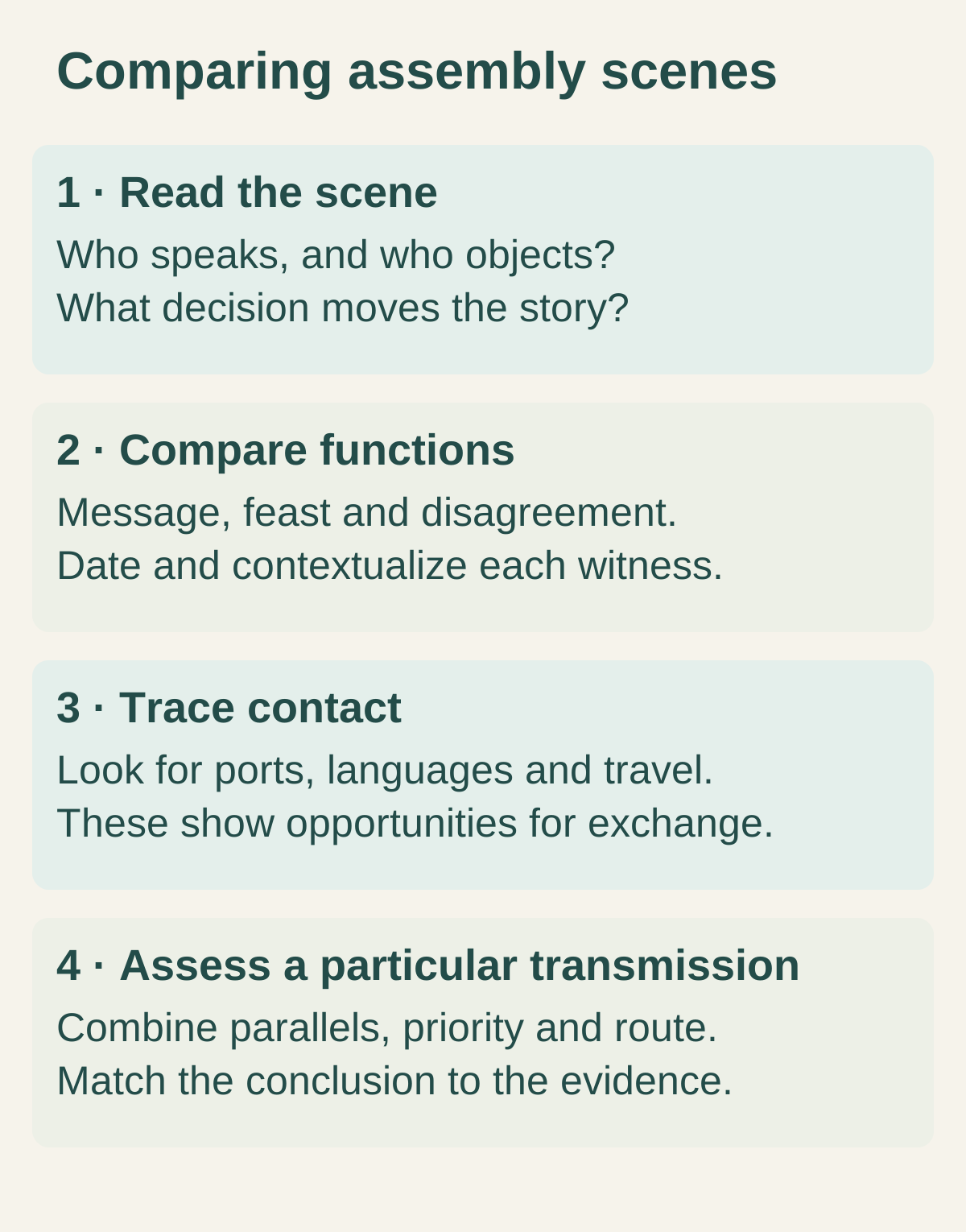
We will begin with what happens in each story: who calls the meeting, what the others request, and how the decision changes. We then consider the texts’ dates and Phoenician–Greek contact. This approach helps explain what the council means within each text, while distinguishing clear resemblance from a historical route that still requires evidence.
Why do the gods gather?
In one scene of the IliadIliadGreek epic attributed to Homer, narrating a phase of the Trojan War.Glossary · Click to read the explanation, ZeusZeusZeus is the sky god and leading deity in many Greek traditions. In the Iliad he presides over divine gatherings while others can still speak and object.Glossary · Click to read the explanation summons the gods and PoseidonPoseidonSea god in Greek traditions and an influential figure in the Iliad and Odyssey.Glossary · Click to read the explanation asks why they have met. Zeus replies that they may join either side of the war. In the OdysseyOdysseyGreek epic attributed to Homer, following Odysseus’s return after the Trojan War.Glossary · Click to read the explanation, AthenaAthenaGreek goddess associated in Hesiod with Zeus, Metis and birth from the head.Glossary · Click to read the explanation raises the case of OdysseusOdysseusGreek hero whose attempt to return home after the Trojan War is followed in the Odyssey.Glossary · Click to read the explanation, a man whose return home has been delayed; a decision then becomes a message carried by HermesHermesGreek god acting as a messenger in the Odyssey passages examined here.Glossary · Click to read the explanation to CalypsoCalypsoDivine figure in the Odyssey who keeps Odysseus on her island while he longs to return home.Glossary · Click to read the explanation, who keeps him with her. In both cases the gathering moves the story forward: warfare changes direction or the return begins. [3][4][5]
The Iliad and Odyssey are Greek epics traditionally attributed to HomerHomerThe name to which Greek tradition attributes the Iliad and Odyssey.Glossary · Click to read the explanation. The first concerns a phase of the Trojan War, and the second follows Odysseus’s journey after it. A modern study places their familiar forms in the eighth and early seventh centuries BCE, with roots in earlier oral poetry and continuing debate over composition and the fixing of the text. This concerns the poems’ formation, rather than an established date for the events they narrate. [13]
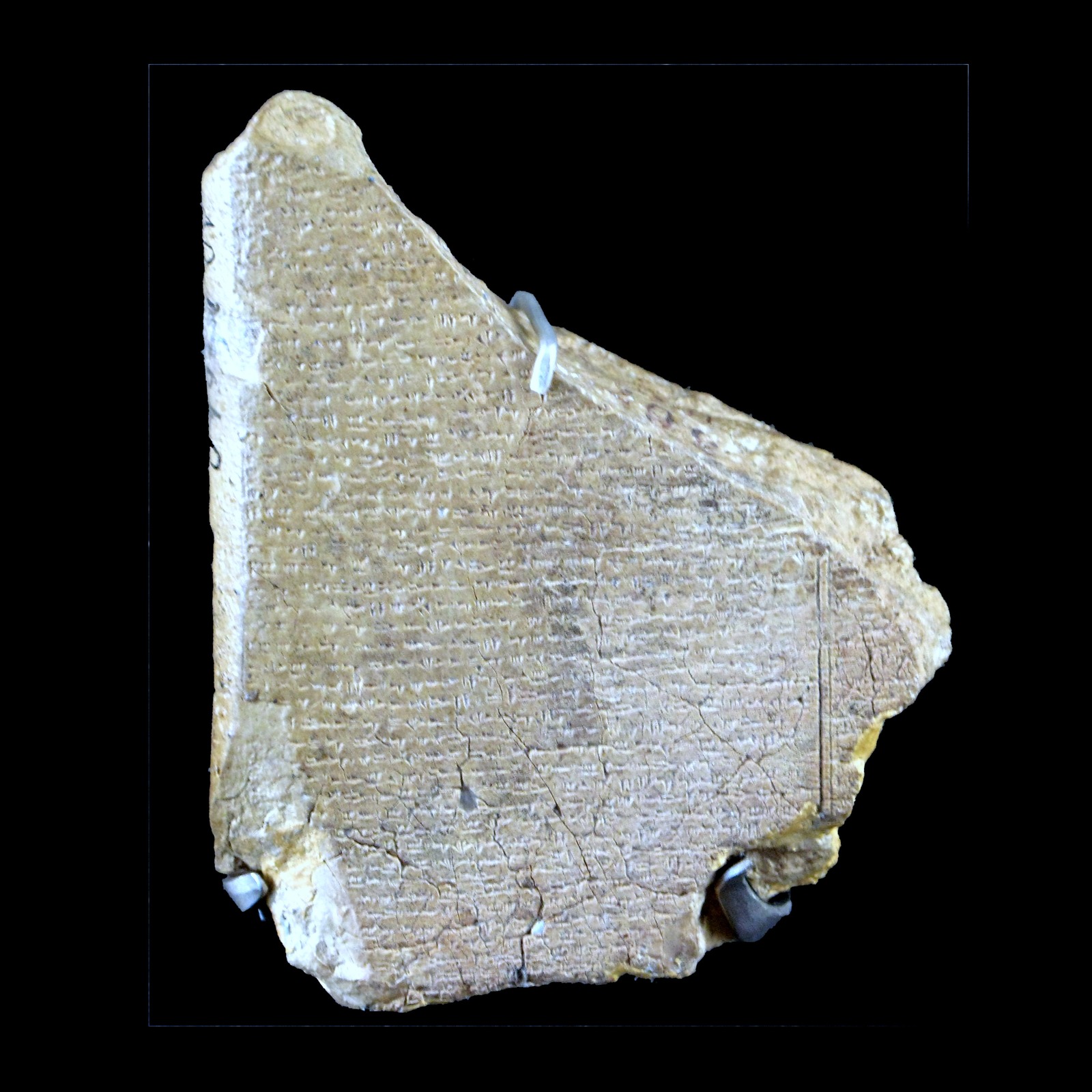
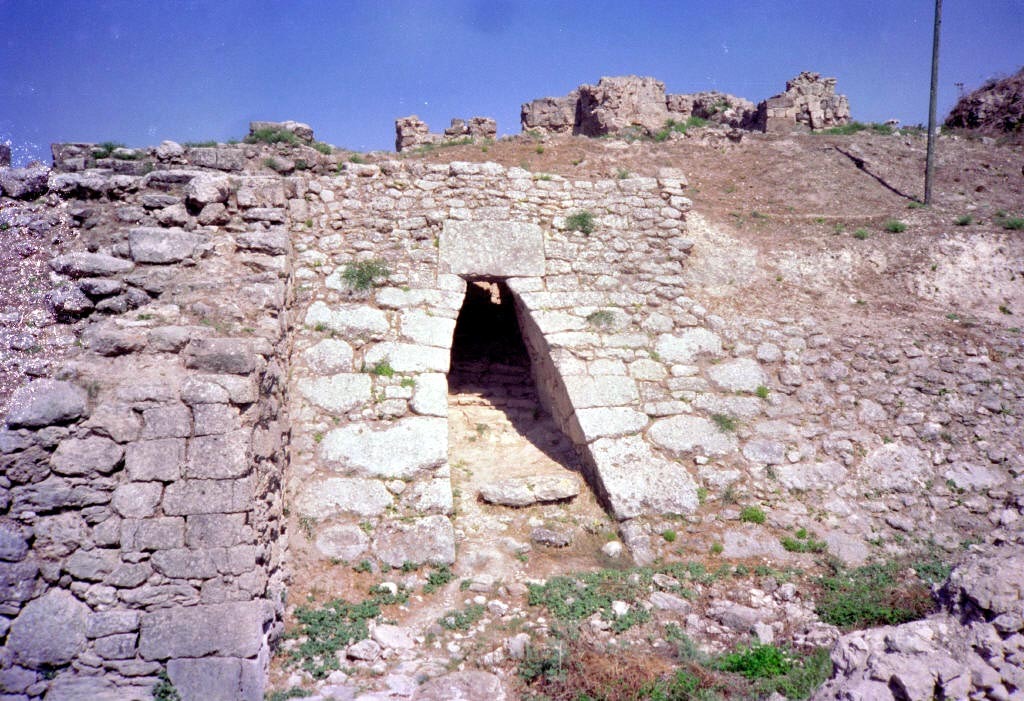
Ugarit, at Ras Shamra near modern LatakiaLatakiaA coastal city in Syria, south of ancient Ugarit at Ras Shamra.Glossary · Click to read the explanation, was a flourishing coastal city in the Late Bronze AgeLate Bronze AgeAn archaeological period conventionally around 1600–1200 BCE in much of the Near East, with regional variation.Glossary · Click to read the explanation, particularly from the fourteenth century BCE. Its tablets preserved stories of ElEl at UgaritA deity prominent in West Semitic traditions, especially as head of the divine family in Ugaritic texts.Glossary · Click to read the explanation, BaalBaalStorm god and protagonist of Ugarit’s Baal Cycle; exercises active kingship while El retains importance and authorizes the palace.Glossary · Click to read the explanation and the divine community. The Ugaritic witnesses compared here are generally older than the Homeric compositions, but priority alone leaves the scene’s transmission open. [6][7][14]
Different gatherings and different functions
Gods may meet to eat, hear a messenger or discuss a crisis. We use “councils” broadly for a divine company appearing together and playing a role in the narrative. Bernardo BallesterosBernardo BallesterosScholar of early Greek poetry and its comparison with Mesopotamian and Near Eastern literature.Glossary · Click to read the explanation, a scholar of early Greek poetry and its comparison with Near Eastern literature, explains this flexible definition in the abstract of the Introduction to his 2024 book. [8][9]
To distinguish the gathering’s function, we follow the participants’ actions. Does someone bring an order? Can others object? Does the meeting end with a messenger’s dispatch or the granting of new standing? Family, feast and court may coexist, but these details show what the particular scene does. [9]
Ugarit: kinship, rank and messengers
In the Ugaritic texts, El is a senior paternal deity, while Baal is the storm god and an active figure in struggles over rule. The company around them is sometimes described through sons and relatives. Differences of standing appear in who visits another, stands before them or requests approval. [7]
Sang Youl ChoSang Youl ChoResearcher who studied the ranks and roles of heavenly beings in Ugarit and the Hebrew Bible.Glossary · Click to read the explanation, whose 2007 doctoral study at the University of Edinburgh examined heavenly beings in Ugarit and the HebrewHebrewA Northwest Semitic language in the Canaanite group, with ancient and modern forms.Glossary · Click to read the explanation Bible, proposes ranks for the council using such actions and titles. His model helps explain relationships, while the number and boundaries of its levels remain a scholarly interpretation rather than a unified list supplied by one tablet. [7]
Messengers also have a part in this world. They carry a deity’s demand to another company and announce the message’s source. Following their arrival, speech and reception shows authority working through emissaries alongside kinship and direct force. [7]
When Yamm’s messengers arrive
On one tablet of the Baal CycleBaal CycleA group of Late Bronze Age Ugaritic religious texts recounting Baal’s conflicts, relationships with the gods and the building of his palace.Glossary · Click to read the explanation, a delegation from YammYam / NaharSea god and Baal’s opponent for kingship, also associated with Nahar, River.Glossary · Click to read the explanation, the deity embodying the sea, reaches the gods gathered for food. The text describes lowered heads and Baal’s protest at the company’s response. The emissaries carry a demand for Baal’s submission to Yamm. [6][7]
El answers in terms that make Baal Yamm’s dependent, obliged to bring tribute. Baal refuses submission. The conflict therefore begins with disagreement within the company: El recognizes Yamm’s demand and Baal resists it. Understanding this difference explains the council’s position better than imagining that all its members unanimously selected Baal to fight their opponent. [6][7]
Column I of the tablet known to scholars as KTUKTU: Ugaritic Text ReferencesAbbreviation for a modern scholarly corpus of alphabetic cuneiform texts; its numbers are references, not dates.Glossary · Click to read the explanation 1.2 preserves these details. The designation identifies the text; the question for readers is how the message becomes a crisis over Baal’s standing and relationships. [7]
A small detail changes the reading of authority
Before their arrival, Yamm instructs his messengers about bowing before El and the council. Translators disagree over a small Ugaritic word, al: some read it negatively, making the instruction not to bow; Cho chooses an affirmative sense, making bowing the requirement. His notes present both readings, and he supports his choice by the subsequent description of the messengers standing up. [7]
With the negative reading, the scene may show two emissaries deliberately disregarding the etiquette of rank. With the affirmative reading, they offer homage before declaring their demand. A single word thus affects how the characters’ conduct is understood. We read the passage through the study and its presentation of the text, retaining the disagreement rather than claiming independent inspection of the original tablet. [7]
Palace, feast and recognition
Elsewhere in the Baal Cycle, AnatAnatAn active and violent goddess in Ugaritic literature; pressures El over Baal’s palace and addresses him with paternal and wisdom language.Glossary · Click to read the explanation, the goddess who supports Baal, announces that he has obtained a house like his brothers’. Baal then invites his relatives and the sons of AthiratAthiratA high-ranking goddess commonly understood as El’s consort in Ugaritic texts; associated with the progenitress epithet and the palace intercession.Glossary · Click to read the explanation, a mother goddess in Ugaritic tradition, to feast in his house. The house gives him a place to receive others, and the invitation’s language connects place, kinship and recognition. [6]
Aaron TugendhaftAaron TugendhaftScholar of the ancient Near East and the relationship between religion, politics and the arts.Glossary · Click to read the explanation, a scholar of the ancient Near EastAncient Near EastA historical and geographical term covering Mesopotamia, the Levant and neighbouring ancient societies.Glossary · Click to read the explanation and the relationship between religion and politics, compares this scene with Late Bronze Age kings addressing their peers as “brother.” In his reading, brotherhood helps portray Baal’s attainment of recognized standing. This political interpretation is the scholar’s proposal; kinship can also be read within the divine family. [6]
Through this reading, palace construction changes Baal’s relationships rather than merely increasing his possessions. This function can be studied without identifying a historical king represented by Baal or treating the poem’s details as a record of political events. [6]
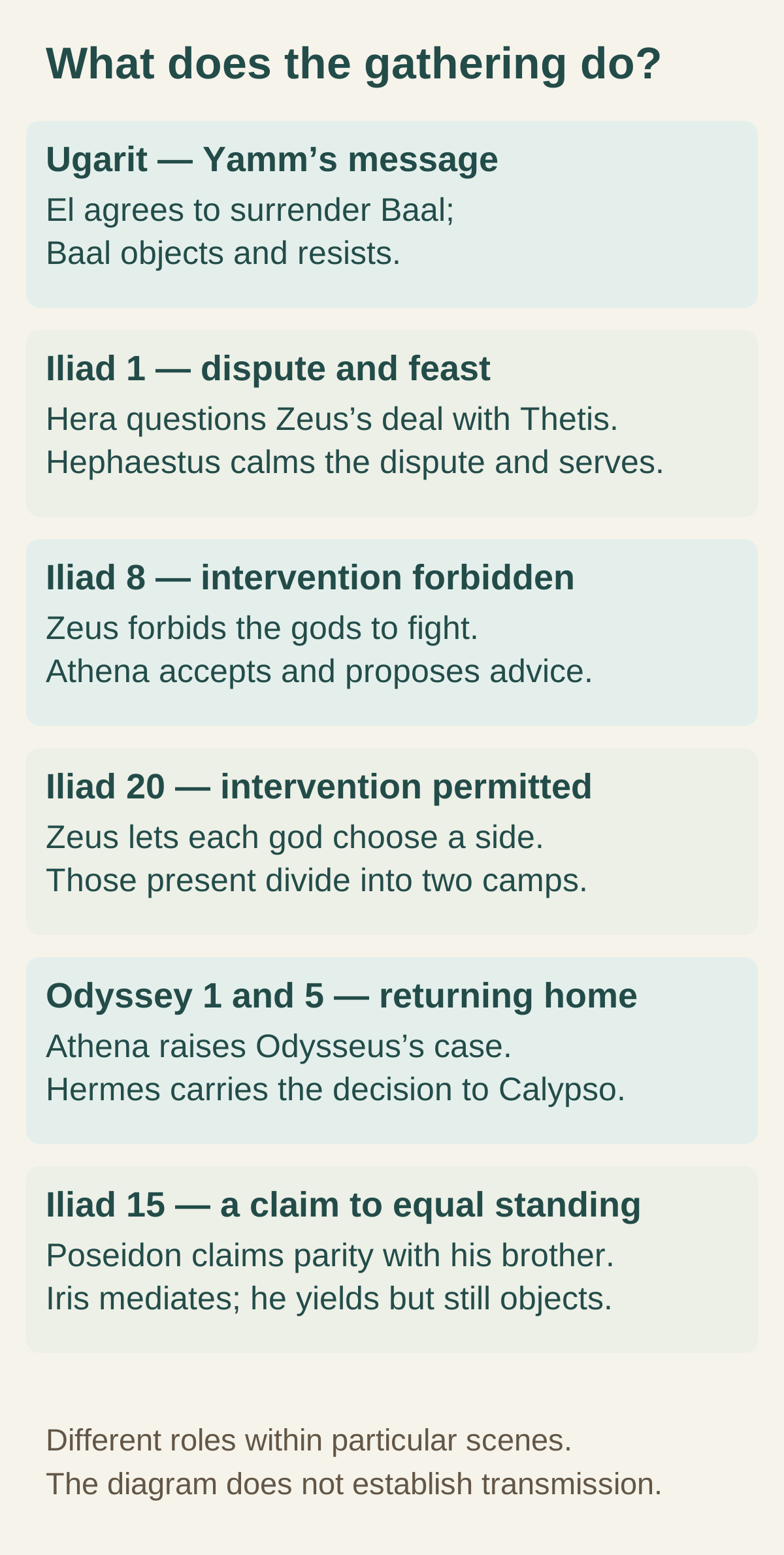
Iliad 1: court, feast and disagreement
We turn to Greece and the close of the Iliad’s first book. Zeus returns home, the gods rise from their seats, and he sits down. His wife HeraHeraGreek goddess and Zeus’s wife, appearing in council and family-disagreement scenes in the Iliad.Glossary · Click to read the explanation asks what he has secretly agreed with ThetisThetisSea goddess in Greek poetry and mother of Achilles, one of the Iliad’s heroes.Glossary · Click to read the explanation, the sea goddess and mother of AchillesAchillesImportant hero of the Iliad, whose anger and participation shape the poem’s warfare.Glossary · Click to read the explanation, an important epic hero. Zeus refuses to reveal all his plans and threatens Hera when she continues to object. [1]
HephaestusHephaestusGod of metalworking in Greek traditions; the Iliad portrays him as Hera’s son and mediator in her dispute with Zeus.Glossary · Click to read the explanation, the craftsman god and Hera’s son, intervenes to calm the quarrel and serve drink. He recalls trying to assist his mother earlier, when Zeus threw him from heaven. Hera smiles, the others laugh, and the feast resumes: ApolloApolloGod of music and prophecy in Greek traditions, also participating in the Iliad’s events.Glossary · Click to read the explanation plays, the MusesMusesA group of Greek divine figures associated with song and poetry.Glossary · Click to read the explanation sing, and everyone retires to their dwellings. Family disagreement, the householder’s authority, food and attempted reconciliation share the scene. [1]
Zeus’s authority and ability to threaten coexist with characters who can speak and mediate. The company around him resembles a council, but his actions and roles retain their Greek character. A paternal title or leadership of a gathering alone does not make him identical to El. [1][7]
The variety of relationships is clearer in book 15. Poseidon, the sea god, protests that he, Zeus and HadesHadesUnderworld god in Greek narratives, and brother of Zeus and Poseidon in the Iliad exchange.Glossary · Click to read the explanation, ruler of the underworld, are three brothers who divided their domains by lot. He claims equal standing, then yields after IrisIrisGreek divine messenger who conveys Zeus’s command to Poseidon in the Iliad.Glossary · Click to read the explanation, the messenger, responds, while remaining angry. The exchange explains how Zeus’s superiority coexists with others’ claims to parity: calling him father does not make every participant his child. [12]
Iliad 8: intervention forbidden
At the opening of book 8, Zeus calls the gods together atop OlympusMount OlympusMountain in northern Greece associated in ancient traditions with the divine community’s dwelling.Glossary · Click to read the explanation, their community’s dwelling in the narrative. He prohibits helping either side of the war without his authorization and threatens disobedience with punishment or confinement in TartarusTartarusDeep abyss in Greek poetic imagination, named by Zeus as a place of punishment in the Iliad.Glossary · Click to read the explanation, the deep abyss described in the passage. [2]
He then uses a golden chain to illustrate his superiority: even together they could not drag him from heaven, whereas he could raise them along with earth and sea. It is a poetic image of strength within a threatening speech. [2]
Athena, who assists warriors and offers counsel in these passages, acknowledges his strength and expresses pity for the fighters. She accepts abstention from combat but requests room to advise them. Zeus smiles and answers gently. A severe command is followed by speech leaving room for negotiation, with the decision remaining with the leader. [2]
Iliad 20: intervention permitted
In book 20, Zeus directs ThemisThemisGreek goddess instructed in the Iliad to gather the gods for a meeting with Zeus.Glossary · Click to read the explanation to gather the gods in his house. The summons includes rivers except OceanusOceanusWater-related divine figure in Greek poetry, distinguished from the modern geographical use of “ocean.”Glossary · Click to read the explanation, and nymphsNymphs in Greek poetryDivine figures associated with natural places in Greek poetry, such as springs and groves.Glossary · Click to read the explanation associated with natural places in Greek poetry. Poseidon asks the meeting’s purpose. This time Zeus announces that he will watch while the others may assist the side they prefer. [3]
His stated reason is fear that Achilles’s anger might bring TroyTroy / HisarlıkArchaeological site in northwestern Turkey associated with Troy in Greek tradition.Glossary · Click to read the explanation down before its appointed fate. The company divides: Hera, Athena, Poseidon, Hermes and Hephaestus support the Greeks; AresAresGod of war in Greek traditions and a participating figure in the Iliad.Glossary · Click to read the explanation, Apollo, ArtemisArtemisGoddess of hunting in Greek traditions and Apollo’s sister, named among the divine company in the Iliad.Glossary · Click to read the explanation, LetoLetoGreek goddess and Apollo’s mother in the Iliad, appearing among the gods supporting the Trojans.Glossary · Click to read the explanation, the river and AphroditeAphroditeGreek goddess whose origin Hesiod relates to foam after the assault on Ouranos.Glossary · Click to read the explanation support the Trojans. The text preserves these names and their differing loyalties within the same council. [3]
Intervention was forbidden in book 8 and permitted in book 20. The change makes the gathering’s function clear: it announces a new policy responding to a narrative crisis. Summoning rivers and nymphs also extends the company beyond the familiar list of twelve gods; this scene determines its participants. [2][3]
Odyssey: the absent man’s case and the return message
At the Odyssey’s opening, Poseidon is away among the Ethiopians, a people placed at the world’s edges in this passage. The others gather, and Zeus discusses AegisthusAegisthusHuman figure in Greek narrative whose fate Zeus recalls at the Odyssey’s opening.Glossary · Click to read the explanation, a man who disregarded a warning and suffered the consequences. His initial subject is human responsibility for actions. [4]
Athena redirects discussion towards Odysseus, detained by Calypso. Zeus explains Poseidon’s anger: Odysseus injured the eye of PolyphemusPolyphemusOne-eyed giant in the Odyssey and Poseidon’s son within the narrative.Glossary · Click to read the explanation, Poseidon’s son and one of the one-eyed giants in the narrative. He then invites consideration of Odysseus’s return, expecting the opponent to yield to the company’s agreement. [4]
Athena proposes sending Hermes, the divine messengerAngel / Divine MessengerHebrew malʾakh means messenger, human or celestial according to context; the word alone proves neither wings nor origin from a particular Canaanite god.Glossary · Click to read the explanation, to Calypso and goes herself to Odysseus’s son TelemachusTelemachusOdysseus’s son in the Odyssey, whose position at home is affected by his father’s absence and family crisis.Glossary · Click to read the explanation. Another scene in book 5 has Zeus actually command Hermes to communicate the return decision. The initial proposal differs from the later message’s implementation, and following both helps explain the epic’s movement. [4][5]
Poseidon remains influential despite his absence from the meeting, and the return remains dangerous. Book 5 describes a raft journey before Odysseus reaches people who will assist him. The council starts a plan, while its execution remains a substantial part of the story. [5]
Resemblance as a reading tool
Narrative analysis calls a recurring scene with a recognizable sequence a type-sceneDivine assembly type-sceneA way to analyse a recurring assembly scene in narrative, while its purpose, speakers and decision vary.Glossary · Click to read the explanation, such as a gathering followed by speeches and a decision. A poet can use that structure while changing the speaker, absent figure or outcome. The Iliad’s and Odyssey’s councils consequently differ despite sharing a company around Zeus. [1][2][3][4][5][9]
Comparison with Ugarit helps draw attention to details: someone stands before another, participants lower their heads, a messenger carries a demand, or a feast marks recognition of its host. Such comparison teaches us about each text even when the scene’s transmission route remains unknown. [6][7]
The texts describe imagined authority in the divine world. We can compare it with family, court and political relations while keeping the difference from human institutions in view. An objection within a meeting does not establish Greek democracy, nor does a threat provide one model for all eastern kingdoms. [6][8][9]
Names and the reading medium
Translation has a practical role in the comparison. We read the Homeric passages in Samuel ButlerSamuel ButlerEnglish writer and translator of Homer who lived from 1835 to 1902.Glossary · Click to read the explanation’s historical English translation, which calls Zeus Jove, Hera Juno and Athena Minerva, Latin names commonly used in that translation. We use the Greek names here to make the characters easier to follow. The poems are Greek, and the translator’s terminology should be distinguished from the ancient work’s vocabulary. [1][2][3][4][5]
Similarly, comparison places El and Zeus alongside one another to examine speech, standing and decisions. Their names are linguistically different, and resemblance in some functions leaves the stories’ differences intact. Naming the work, passage and reading medium preserves those distinctions and makes returning to the evidence possible. [1][7]
Contact exists; a scene’s route needs proof
PhoeniciansPhoeniciansCommunities of Levantine coastal cities known for Mediterranean contact during the first millennium BCE.Glossary · Click to read the explanation from the Levantine coastal cities in the first millennium BCE participated in contact across the Mediterranean. Carolina López-RuizCarolina López-RuizScholar of ancient Mediterranean religions, mythologies and exchange between Greek and Semitic traditions.Glossary · Click to read the explanation, a scholar of ancient Mediterranean religions and mythologies, studies their connections with Greece through texts and archaeology. She discusses the adaptation of the Phoenician alphabet to Greek and finds combining Greek and Semitic elements in contact settings. [10]
López-Ruiz proposes circulation in several stages: narrative elements may arrive after more than one community has reshaped them. This model helps examine Phoenician mediationIntercessionMediation subject in the cited Quranic texts to permission and approval, not divine independence.Glossary · Click to read the explanation, while identifying a particular Homeric council’s source remains harder; no surviving Phoenician copy supplies that route. [10]
The abstract of Ballesteros’s book considers Greek inheritance of the council scene as a whole from the Near East unlikely, while allowing long oral contact and exchanges assisted by related poetic forms and religious interests. Here we rely on the available book and Introduction abstracts, rather than a full reading of the book’s arguments. [8][9]
Contact can be real while the origin of a particular detail remains under investigation. A specific transmission proposal requires an appropriate chronology, resemblance extending beyond a group around a leader, and a contact setting explaining possible circulation. Alternatives, such as related poetic traditions or the independent developmentIndependent developmentSimilar elements arising without historical transmission between them.Glossary · Click to read the explanation of some images, remain part of the comparison.
What does this comparison establish?
The evidence shows divine gatherings as a means of portraying power, kinship, objection and recognition. In Ugarit, Yamm’s demand becomes a crisis involving Baal, while a feast helps establish the palace owner’s standing. In Homer, warfare policy changes, or a human case is raised and a decision dispatched. [1][2][3][4][5][6][7]
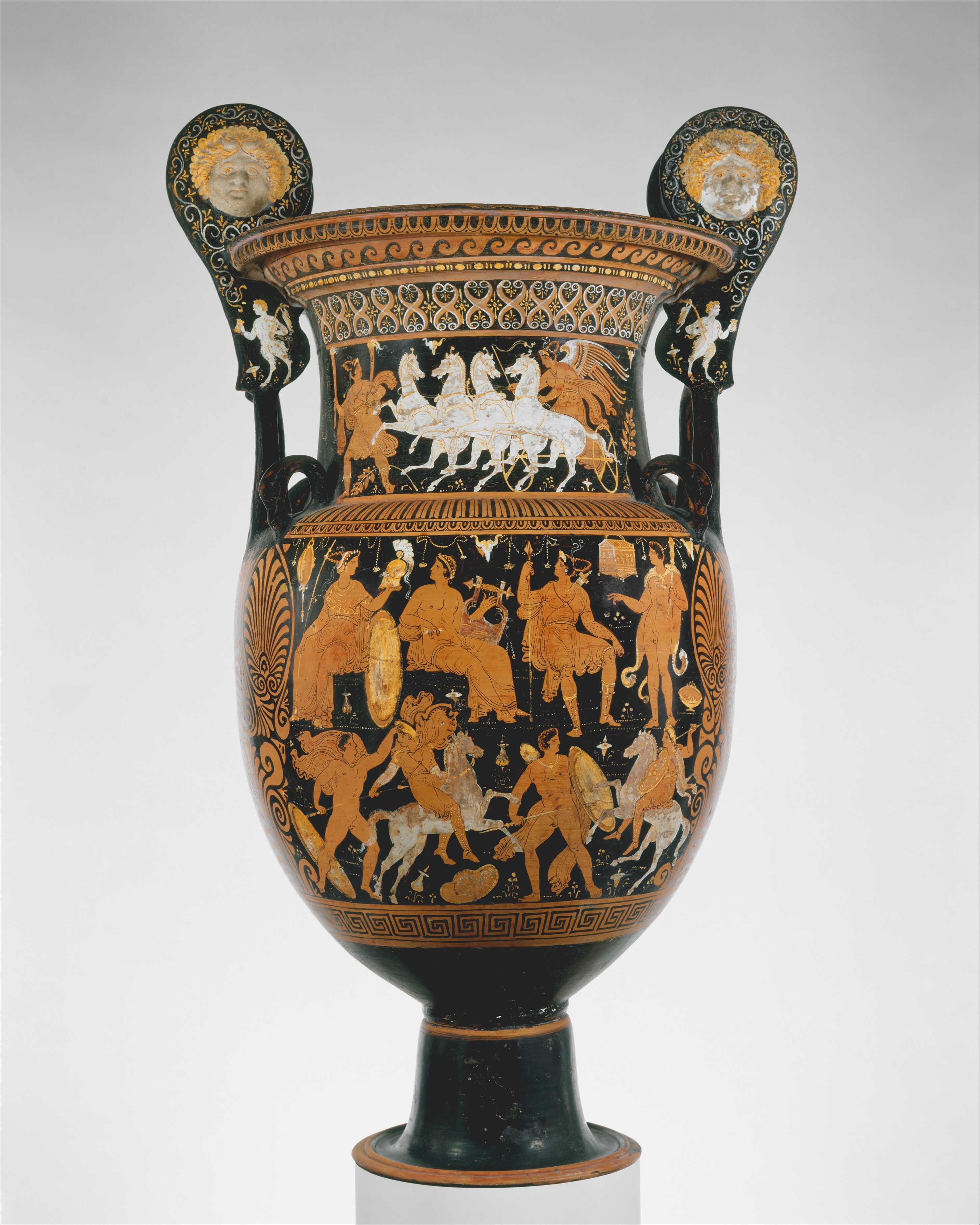
The cover preserves another artistic witness: a South Italian vase, about 320–310 BCE, depicting a divine assembly above an Amazonomachy. It belongs to later Greek art and illustrates the continued depiction of the divine company; it represents neither Ugarit’s council nor a particular Homeric scene. [11]
Comparison closest to this evidence follows the scenes’ details and dates, then asks about their possible transmission. It explains how poetry makes a will into a decision and lets members of the company speak or object. Texts, language and contact evidence determine what can be traced between the LevantThe LevantThe Levant is a regional name for lands along the eastern MediterraneanGlossary · Click to read the explanation and Greece, with the route remaining open where those witnesses end.
References and notes
- Complete specified closing passage; Butler’s Latinized divine names are rendered here as Greek names. Iliad, Book 1 closing nine paragraphs, from Zeus nod through the banquet and night; Butler public-domain prose translation Return to the text ↑
- Specified opening passage; modern synopsis is not part of the ancient poem. Iliad 8, first seven paragraphs including modern chapter synopsis; council proper first three primary paragraphs Return to the text ↑
- Themis summons, permission and divided sides; no fixed count of twelve. Iliad 20, first seven paragraphs; invocation of council through division of divine sides Return to the text ↑
- First assembly and proposed message, distinguished from execution in book 5. Odyssey 1, first ten paragraphs through Athena/Mentes arrival and Telemachus welcome Return to the text ↑
- Hermes’s dispatch and the return decree. Odyssey 5, first seven paragraphs through Hermes arrival at Calypso cave Return to the text ↑
- Republished text and notes read; brotherhood interpretation attributed to the author. Aaron Tugendhaft, Fragments 2 (2012),89–104; republished main sections I–IV and notes; KTU 1.2 I 36–38,1.4 V 27–29,VI 40–46 Return to the text ↑
- Specified pages only; alternative al readings on 164–165, notes 167/168. Sang Youl Cho, Pro-angelology in the Ugaritic Texts and the Hebrew Bible, PhD Edinburgh 2007; pp 17,31–35,93–94,100–101,164–167,170–174; KTU 1.2 i 14–15,19–33 Return to the text ↑
- Book abstract and contents only; full book not read. Bernardo Ballesteros, Divine Assemblies in Early Greek and Babylonian Epic, Oxford 2024; publisher abstract and contents Return to the text ↑
- Introduction abstract only;32-page chapter unavailable. Ballesteros, Introduction, pp 1–32; DOI 10.1093/9780198924623.003.0001 Return to the text ↑
- Complete six-page chapter and notes, not the whole volume. Carolina López-Ruiz, Greek Literature and the Lost Legacy of Canaan, in Aruz/Seymour 2016, pp 316–321; official PDF 333–338 Return to the text ↑
- Vase identity, front scene and image rights; later than the compared texts. Met 254922;56.171.63; attributed Capodimonte Painter; ca 320–310 BCE; public-domain photograph Return to the text ↑
- Complete specified exchange; Poseidon’s claim within the narrative. Iliad 15; Iris addresses Poseidon, three-brothers/domain-lots speech, Iris reply and Poseidon withdrawal; Butler public-domain translation Return to the text ↑
- Deborah Steiner, Introduction, Homer: Odyssey Books XVII–XVIII (Cambridge,2010) Publisher summary on oral poetry and composition in the eighth–early seventh centuries BCE; not the complete chapter or an established date for the Trojan War. Return to the text ↑
- Department of Ancient Near Eastern Art, Ugarit (Metropolitan Museum,2004) Historical passages: Ras Shamra near Latakia, prosperity from the fourteenth century BCE and Late Bronze Age archives. Return to the text ↑
Research history
Substantive changes are retained here. Minor copy edits remain in the internal operational log.
-
Substantive record update
-
Substantive record update
Suggest a correction · Suggest a source for this record
Cite this record
IL Archive, «Divine assemblies in the Levant and Greece: resemblance and transmission limits», Edition 3, https://ilarchive.com/en/studies/divine-councils-and-greek-gods
Continue reading