Study
Resemblance Does Not Establish Borrowing
An extended study of a topic, with evidence and references.
From Moses and Sargon to flood narratives and the heavenly council: historical comparison, dates of traditions and copies, relationship and direction, common origins, mediation and independent development.
Estimated reading time: 10 min Published Last reviewed:
Share article
Text
Introduction
How can we establish a historical relationship between two ancient narratives? We explore this question through the infancy stories of MosesMosesCentral figure in Exodus, Torah traditions and the Qur’an; childhood accounts differ in detail.Glossary · Click to read the explanation and Sargon of AkkadSargon of AkkadSargon of Akkad was a historical third-millennium BCE ruler and founder of the Akkadian dynasty; royal accounts of his campaigns must be distinguished from later stories of his birth and rise.Glossary · Click to read the explanation, flood traditions and scenes of the heavenly council. The aim is to understand what comparison reveals about the transmission and transformation of ideas: when does a connection become probable, and what helps establish its direction?
We bring together the dates of witnesses, routes of contact, distinctive details and narrative functions, then compare possible explanations. A study can establish a strong connection while the carrier or intermediary copy remains unknown. Relationship, direct source and route are connected questions, each with its own argument.
Three scenes invite comparison
A child in a basket near water survives and becomes a prominent figure. A community survives a flood in a boat. A heavenly ruler presides among other beings. Ancient narratives preserve comparable images, but examining each witness in detail helps explain the nature and weight of the resemblance beyond their matching headlines.
From observing resemblance to explaining a connection
Saying that two texts resemble one another describes something open to examination. Saying that one borrowed from the other proposes a history: earlier material, a receiving work and a direction of transmission. We therefore define the claim first. “Flood traditions are historically related” is broader than “the author of Genesis copied Gilgamesh Tablet XI,” which specifies a work and a mode of use.
We distinguish literary borrowingLiterary borrowingUse of verbal or narrative material from an earlier text or tradition in a later work, distinguishing evidence of transfer from mere resemblance.Glossary · Click to read the explanation, the use of earlier material, from literary dependenceLiterary dependenceA historical relation in which a text was composed using another text or version; similarity alone cannot establish its direction.Glossary · Click to read the explanation, through which a work's composition and connections are explained by its relationship with another. Cooper SmithCooper Smith, Hebrew Bible scholarHebrew Bible researcher studying literary allusion and criteria for the direction of dependence.Glossary · Click to read the explanation addresses this distinction in a methodological study published online in 2023 in a volume dated 2022: establishing the relationship prepares the inquiry into direction without deciding it automatically.[3]
Explanations that can overlap
A text may use an earlier text directly, or both may inherit an older shared traditionShared traditionAn explanatory model in which several texts draw on circulating stories or imagery; it proves neither direct copying nor a particular lost original on its own.Glossary · Click to read the explanation. Material may pass through intermediate retellings or circulate within a cultural setting without one written source. Independent developmentIndependent developmentSimilar narrative or cultural elements arising in different settings without historical transmission of the specific feature between them; a testable explanation, not a default assumption when records of borrowing are absent.Glossary · Click to read the explanation is also possible when comparable experiences lead to similar images. A common origin can coexist with later exchanges within a tradition.
We compare these explanations by the evidence they accommodate. Death, birth, water and illness are widely shared experiences; a boat is unsurprising in a rescue from water. A distinctive combination of details, connected in an unusual way, increases the explanatory strength of a historical relationship.
In his 1962 article “ParallelomaniaParallelomaniaOverstating textual or conceptual parallels and inferring historical dependence without adequate contextual, chronological, or transmission evidence; not a rejection of comparison.Glossary · Click to read the explanation,” the comparative biblical scholar Samuel SandmelSamuel SandmelSamuel Sandmel (1911–1979): American Jewish rabbi and scholar of the New Testament and Hellenistic Judaism, author of “Parallelomania” (1962) and works on early Christianity and Jewish–Christian understanding.Glossary · Click to read the explanation warned against exaggerating resemblance and building a relationship and direction upon it. He mentioned an earlier use of the term. The warning improves comparison: read each work in context, then examine parallels within its structure.[1]
Three dates of a story
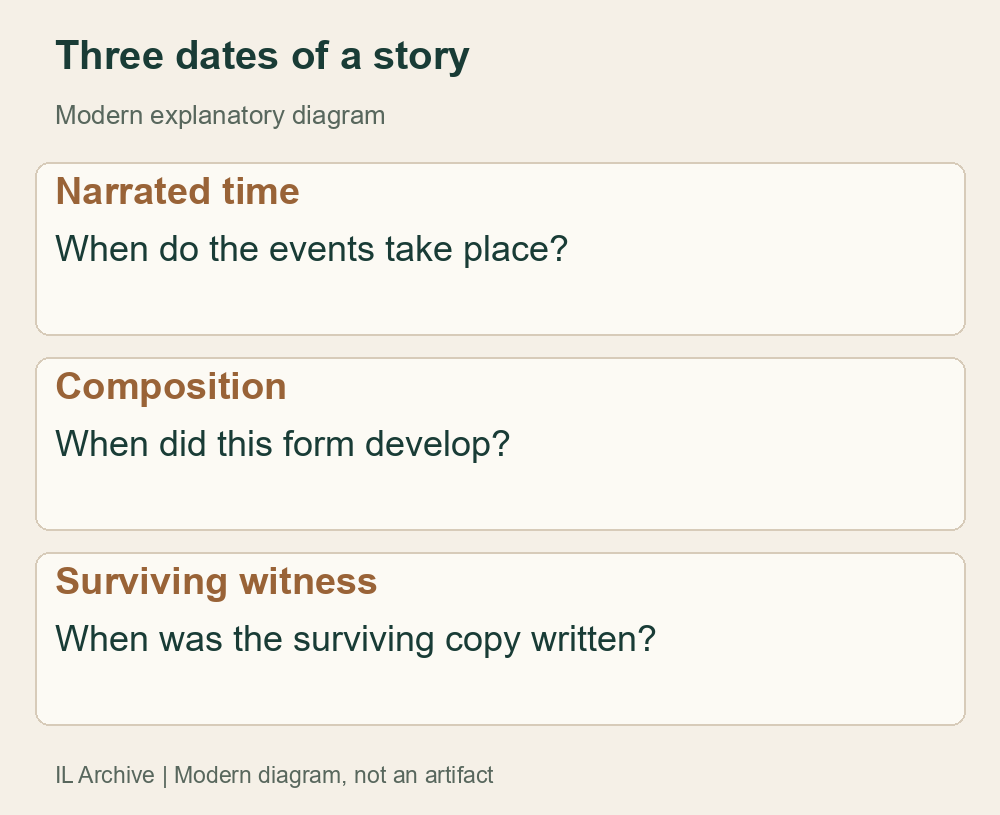
Dating textsDating textsInvestigation of the date of a surviving witness and the development and transmission of a work, keeping narrated time, composition and copying separate.Glossary · Click to read the explanation requires distinguishing the events narrated, the narrative's formation or composition, and the surviving copy. A story about an ancient king can be written centuries later, while a late tablet may reproduce an older tradition. Examination of the object dates a material witness; language, style and historical context also inform the age of the narrative.
Sargon of Akkad, for example, was a third-millennium BCE king. The well-known witness to his birth legend, K 3401 and associated fragments, comes from Neo-Assyrian NinevehNineveh and KuyunjikNineveh is an ancient Assyrian city near Mosul in northern Iraq; Kuyunjik is one of its archaeological moundsGlossary · Click to read the explanation, much later than his lifetime. Proposals about the story's composition or political use belong to a further question in literary history.[4][5]
These distinctions help order the evidence. A proposed source form must have existed earlier or been available when the receiving work developed. The earliest surviving copy may postdate its tradition's beginnings, so an earlier material witness, a probably earlier composition and a possibly earlier tradition are distinct claims.
Moses and Sargon: examining the scene
Plant basket, pitch, water, rescue and the child's later prominence form a meaningful cluster of parallels. In ExodusBook of ExodusTorah book recounting Israel’s departure from Egypt and containing different formulations of seventh-day rest.Glossary · Click to read the explanation 2:1–10, the mother places the basket among reeds at the bank while the sister watches. Pharaoh's daughter intervenes, and the child returns to his mother for nursing before adoption. These details define the scene's construction and the characters' roles.[5][6]
The comparative study cited here discusses readings of Moses' story as a reworking of royal narrative, whether opposing the Assyrian king's image or expressing hope of deliverance in exile. It also highlights the child's beauty as an important feature of Exodus and its later reception. These arguments extend beyond the basket and are evaluated alongside compositional dates and the functions of differences; direct dependence and direction remain matters for investigation.[5]
Contact, availability and use
Trade, war, migration, multilingualism and scribal movement open routes of transmission. CuneiformCuneiformWriting with wedge-shaped signs, developed from Mesopotamian recording traditions and used for several languages from the third millennium BCE.Glossary · Click to read the explanation documents attest Judeans in Babylonia, southern MesopotamiaMesopotamiaHistorical region associated with the Tigris and Euphrates: Uruk, Ur, Eridu, cuneiform, Sumer, Akkad, Babylon and Assyria, their languages and cults, and the limits of archaeological evidence.Glossary · Click to read the explanation, during the Neo-Babylonian and Persian periods. This is important evidence for contact; connecting it with a particular narrative requires examining what was available and how it was used.[7]
A community can live abroad without reading local literature, and a translated or oral story can circulate without knowledge of the original script. Population contact, availability and actual use are therefore distinguished. Language learning or a work's circulation in a school increases probable access; converging evidence can also support transmission when the carrier and complete route remain unknown.
Distinctive details and their relationships
A literary motifLiterary motifA narrative or imagistic element recurring within or across stories; its role and context matter, and repetition alone cannot prove borrowing.Glossary · Click to read the explanation is a recurring element, such as an endangered child, dream or flood. Its significance increases when it accompanies details and relationships distinguishing a group of narratives. Emily Blanchard WestEmily Blanchard WestScholar of Greek and Sanskrit epics and professor of History and Classics at St. Catherine University.Glossary · Click to read the explanation's 2017 study discusses multiple shared elements, sequence, specificity and culturally explicable changes. They are tools for comparison requiring examination, rather than a ready-made numerical test.[2]
Boat, passengers and sailing are not three wholly independent arguments, since some imply others. We also examine the pattern's distribution in other stories. In an invented teaching example, two kings dreaming is a broad resemblance; two dreams featuring a lion crossing a river against the current, followed by the same unusual arrangement of three objects, invite closer investigation. Direct contact or a third story known to both might explain it.
Relationships within a scene also affect its weight. A warning before a catastrophe differs from an explanation afterwards; a sacrifice addressing conflict among gods performs a different role from a scene announcing a lasting covenant. Reworking can alter sequence and meaning, and we test that explanation through context and supporting evidence.
The flood: multiple works and copies
The Sumerian narrative preserves ZiusudraZiusudraA literary king-priest in the fragmentary Sumerian Flood Story (ETCSL 1.7.4). He survives by boat, sacrifices, and receives divine life from An and Enlil in Dilmun. The surviving copy is Old Babylonian; his historicity is unproven.Glossary · Click to read the explanation's story; AtrahasisAtrahasis: Epic and HeroAkkadian narrative on human creation, relations with the gods and the flood, named for its survivor warned by Enki. Its surviving manuscripts differ in date and preservation; its hero must not be equated uncritically with every Utnapishtim version.Glossary · Click to read the explanation has an Old Babylonian witness from AmmisaduqaAmmisaduqaBabylonian king of the seventeenth century BCE in the Middle Chronology, whose edict provides selective debt and dependency relief.Glossary · Click to read the explanation's reign in the second millennium BCE. UtnapishtimUtnapishtimThe flood hero of Standard Babylonian Gilgamesh, granted exceptional life with his wife by the gods. He tells Gilgamesh how he survived; his name overlaps with Atrahasis and Ziusudra traditions without making their narratives identical.Glossary · Click to read the explanation's narrative appears in GilgameshEpic of GilgameshA Babylonian literary work with multiple recensions, preceded by separate Sumerian poems on Uruk’s king and Enkidu. Its standard form explores friendship, death, the flood and the limits of seeking eternal life.Glossary · Click to read the explanation Tablet XI, followed by NoahNoahNoah is the flood-story figure in Genesis and a prophet in the Qur’anGlossary · Click to read the explanation in GenesisBook of GenesisHebrew book of the Torah containing Noah’s flood, survival offering and covenant with living creatures.Glossary · Click to read the explanation. Comparison must identify the particular witness within these different works and forms.[8][9][11][12]
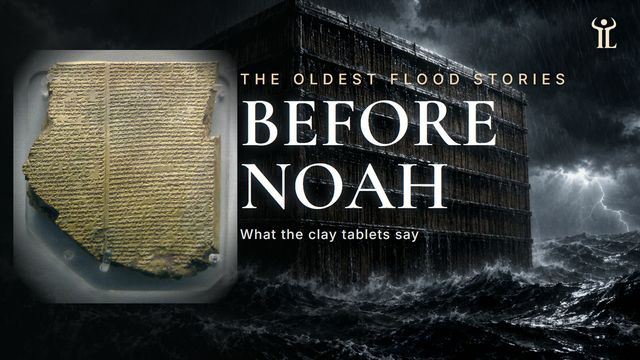
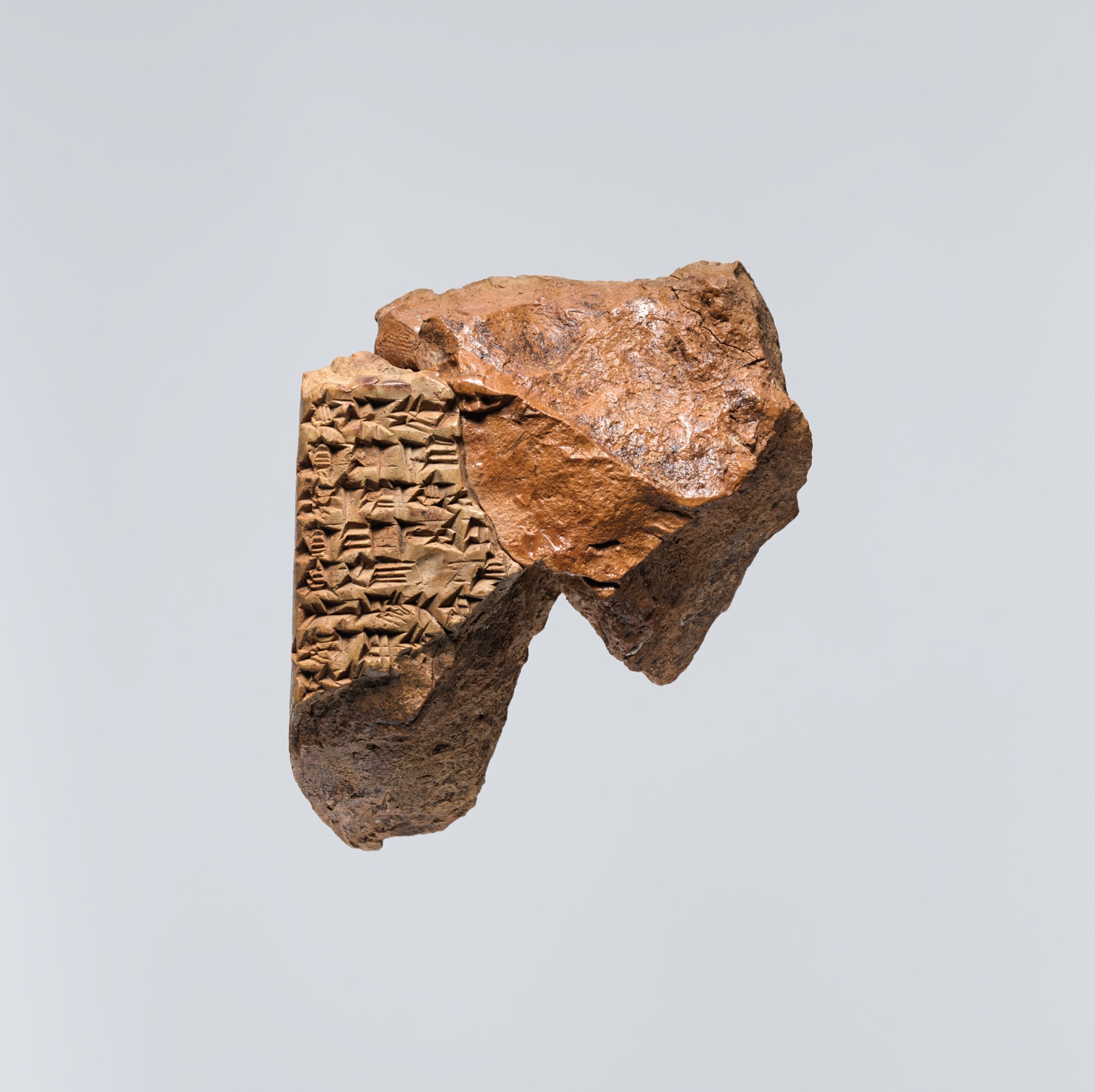
Mesopotamian witnesses long precede Genesis' final composition. The photographed Metropolitan Museum fragment, 86.11.378a, dates approximately to the seventh–sixth centuries BCE. It exemplifies the continued copying of flood traditions rather than their beginnings. The Museum describes its two faces within traditions in which the names Atrahasis and Utnapishtim overlap.[17]
The flood pattern and the sequence of birds
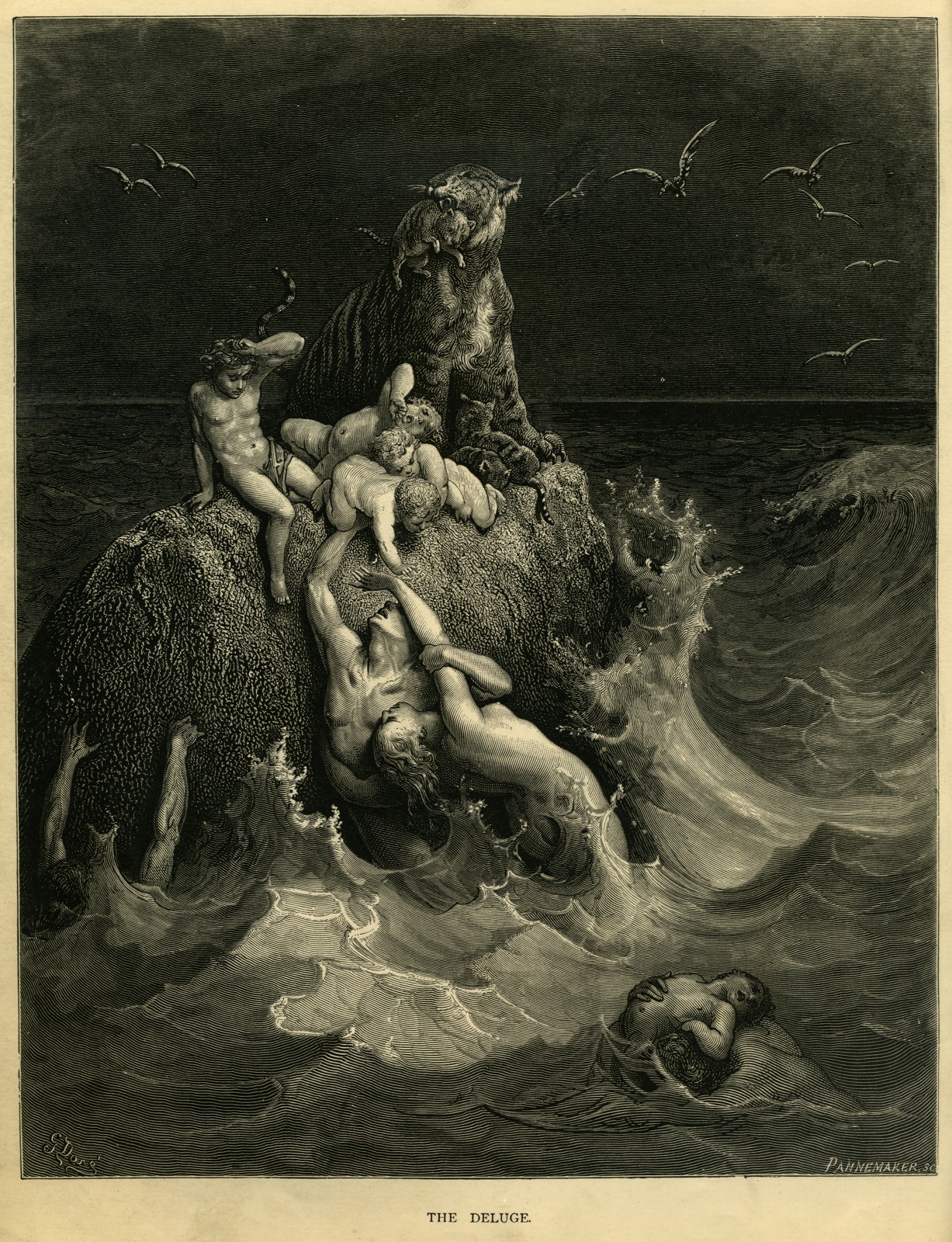
A divine decision to destroy, warning a survivor, building a boat, preserving life, receding water and an offering after rescue form a richer comparison than a flood alone. The narratives preserve different combinations, with damaged tablets and missing passages taken into account.[8][11][12][13]
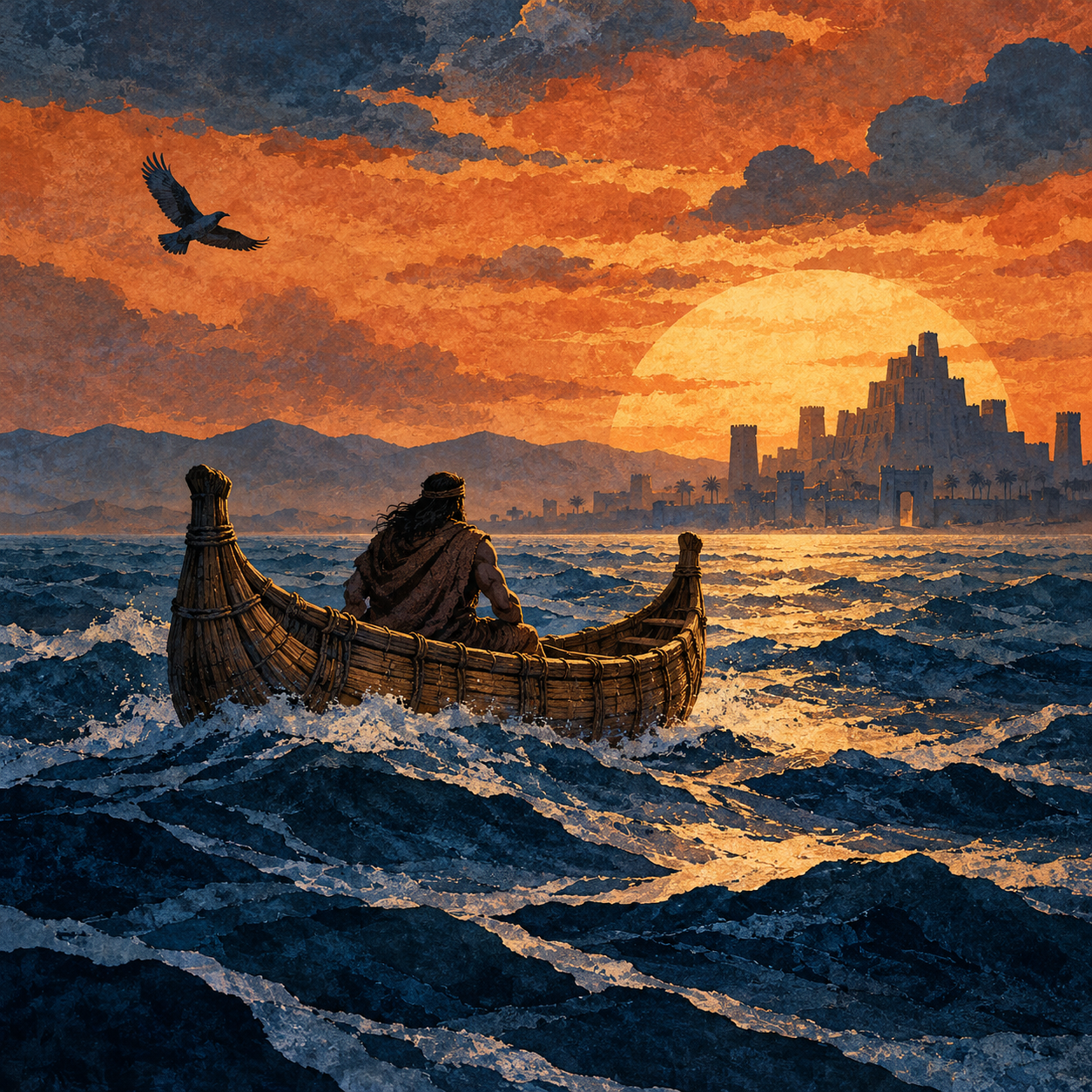
Bird release is clear in Gilgamesh and Genesis. Gilgamesh sends a dove, then a swallow, then a raven; Genesis sends a raven followed by repeated dove trials. Ziusudra's surviving passages do not preserve the same scene. We record this difference between the readable witnesses while leaving missing portions within the limits of our knowledge.[8][11][13]
The catastrophe's cause and its aftermath
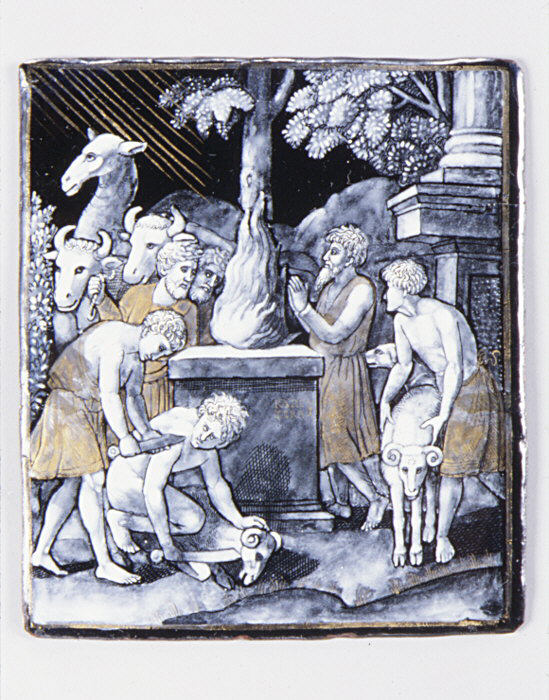
Atrahasis connects its crises with human increase and, in the familiar interpretation, noise disturbing the deity; measures regulating humanity's continuation follow the flood. Genesis grounds judgment in wickedness and violence, connecting survival with a promise and covenant with NoahThe Noahic Covenant in GenesisGenesis’s covenant with Noah, descendants and animals: promised in 6:18 and proclaimed in 9:8–17, assuring no flood will again destroy all flesh, with the cloud-bow as its sign.Glossary · Click to read the explanation, his descendants and living creatures.[10][19][12][14]
Gilgamesh depicts differing divine attitudes towards the disaster and survivor, while Genesis brings judgment, grief and promise into a narrative about one God. These differences help trace transformed meaning within a related pattern of events.[11][12][13]
Literary connection is closer when Atrahasis is compared with Gilgamesh's flood within the AkkadianAkkadianAn ancient East Semitic language written in cuneiform from the third millennium BCE; its varieties include Babylonian and Assyrian, and it served in international diplomacy.Glossary · Click to read the explanation written tradition. Closely corresponding passages and expressions go beyond boat and catastrophe. Alan Ralph MillardAlan Ralph Millard, 1937–2024Scholar of Hebrew and ancient Semitic languages, formerly a Liverpool professor, who studied Eden’s etymology.Glossary · Click to read the explanation discussed this relationship in his Atrahasis research: it supports literary reuse without necessarily identifying the copy behind every stage.[18]
The heavenly council: shared structure, changing roles
Texts from UgaritUgaritAncient city and kingdom at Ras Shamra on the Syrian coast, flourishing between the fourteenth and early twelfth centuries BCE and preserving multilingual archives.Glossary · Click to read the explanation present ElElEl is a senior deity in Late Bronze Age Ugaritic texts, portrayed as father of the divine family and a council authority, alongside his consort Athirat. This entry does not cover every linguistic use of El.Glossary · Click to read the explanation and a divine community described through family and council. HebrewHebrewA Northwest Semitic language of the Canaanite group, encompassing Iron Age epigraphy, Biblical, Rabbinic, medieval and Modern Hebrew; its scripts and pronunciations changed over time.Glossary · Click to read the explanation texts preserve heavenly groups, expressions such as sons of God and assembly of El, and scenes presided over by YahwehYahwehThe proper name of Israel’s deity, written יהוה (YHWH), the Tetragrammaton. Its exact ancient pronunciation is not directly preserved; texts and inscriptions witness its history.Glossary · Click to read the explanation. These witnesses allow investigation of continuity within a West Semitic tradition extending beyond one city or tablet.[15][16]
Ellen White, the divine-council scholarEllen White, divine-council scholarHebrew Bible scholar, born in 1978 according to her publisher, author of Yahweh’s Council: Its Structure and Membership (2014).Glossary · Click to read the explanation, calls for examining Hebrew scenes' particular features before applying a ready-made Ugaritic arrangement. Throne, assembly and messenger can persist while participants' ranks and functions change.[15]
In a heavenly reading of Psalm 82, within the Book of PsalmsBook of PsalmsCollection of ancient Hebrew poems and prayers; Leviathan has different roles in Psalms 74 and 104.Glossary · Click to read the explanation, the presiding figure judges beings called gods and declares their mortality; a human-judges interpretation also exists. We therefore distinguish observing the divine councilDivine councilA divine council is a religious and literary scene in which divine beings gather before a superior authority for discussion, commissioning or judgment; it is not identical to a pantheon list.Glossary · Click to read the explanation structure from proposing identities across periods. Each proposed identity has its own evidence; continuity does not require every later angel to have been a particular Ugaritic god.[16]
The whole text and the choice of witnesses
We examine genre, speaker, audience, a passage's position and its surroundings. Divine fatherhood can concern the gods' genealogy in one work and the protection of a people in another; a heavenly messenger can belong to worship or an explanation of political catastrophe. Including these functions preserves differences that help explain the relationship.
The selection of compared texts also matters. Presenting the closest three after searching thousands can conceal how common the elements are; dividing one scene into overlapping points can inflate their weight. Explain the selection, show other examples of the subject and discordant details, so readers can judge what distinguishes the proposed parallel.
Missing texts and a shared event
A lost narrative or oral transmissionOral transmissionThe passing-on of words, narratives or knowledge through hearing, performance and learning, sometimes alongside writing; degrees of stability vary with genre, setting and controls.Glossary · Click to read the explanation may lie between witnesses. Research keeps this possibility open because ancient literature survives only partially, seeking evidence for it rather than treating it as an existing document. New discoveries can lead to a revised hypothesis.
Several stories may also preserve memory of a local flood. Literary connection and the event's occurrence are different questions: a shared event requires evidence of deposits, location, date and extent, then a connection with the narratives. One event can generate independent accounts, and related stories can move far from their beginnings. Similar flood narratives alone do not establish a worldwide inundation.
What helps establish direction?
Verbal and structural correspondence may support a relationship; other evidence then helps establish direction. Does one passage assume knowledge another explains? Does reworking give the material a recognizable purpose? Is there stylistic incongruity explained by the proposed use, after comparison with the author's own patterns? These are examples of criteria Smith assembles.[3]
Their value emerges through convergence. Smith's conclusion emphasizes that several arguments supporting one direction are stronger than a single line of reasoning. Evidence can vary in strength or conflict in a particular case; we then present both arguments and explain a possible judgment, preserving positive evidence even when every detail cannot be resolved.[3]
Six questions organize comparison
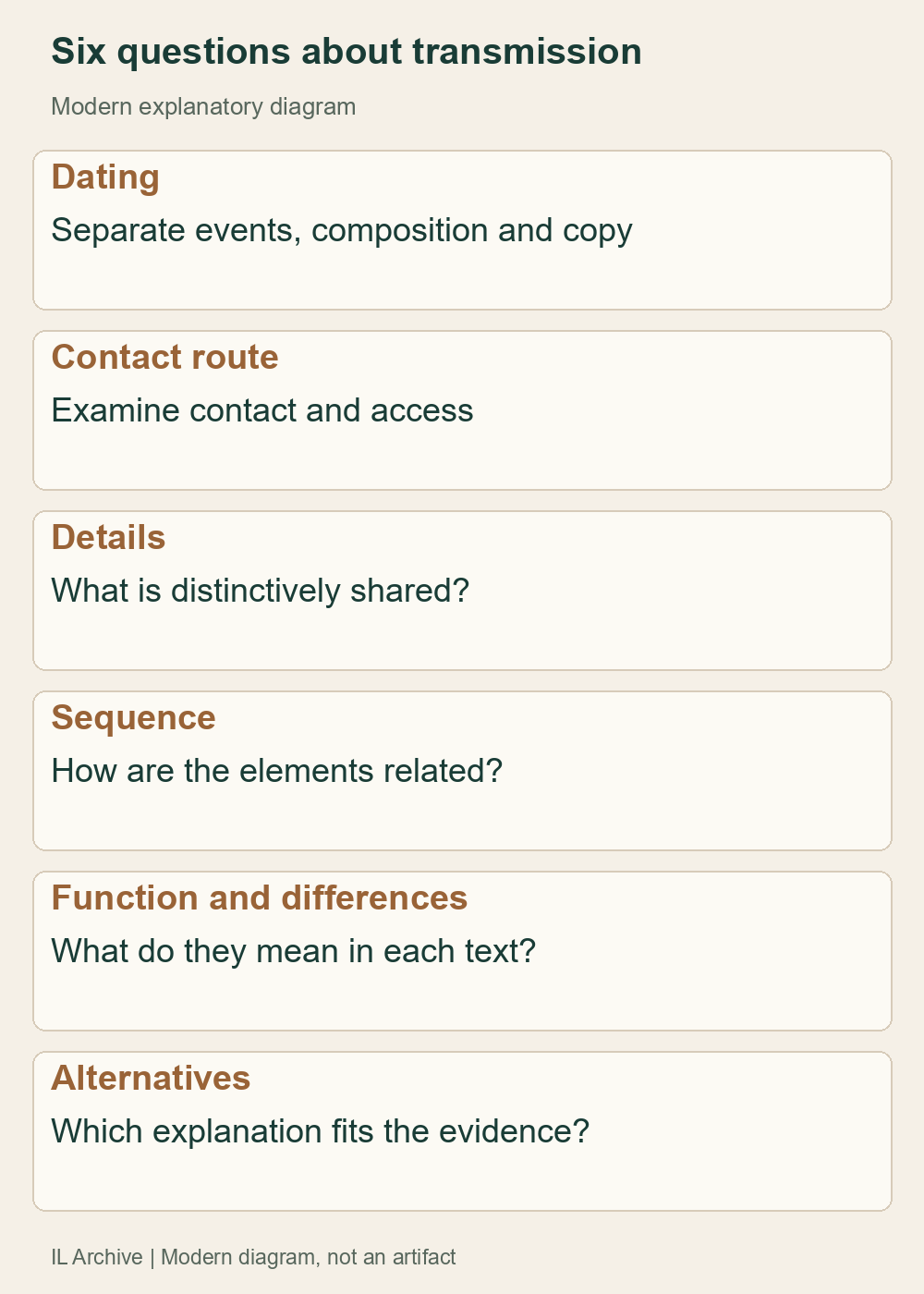
How are witnesses and compared forms dated? Was there contact and plausible availability? Which distinctive details correspond? How are they related and ordered? What are their functions and the meaning of their differences? Which explanation accommodates the material with fewer assumptions? These are working questions for this study, weighed together according to the evidence, without requiring equally strong answers to all six.[2][3]
Certainty concerns a specific claim
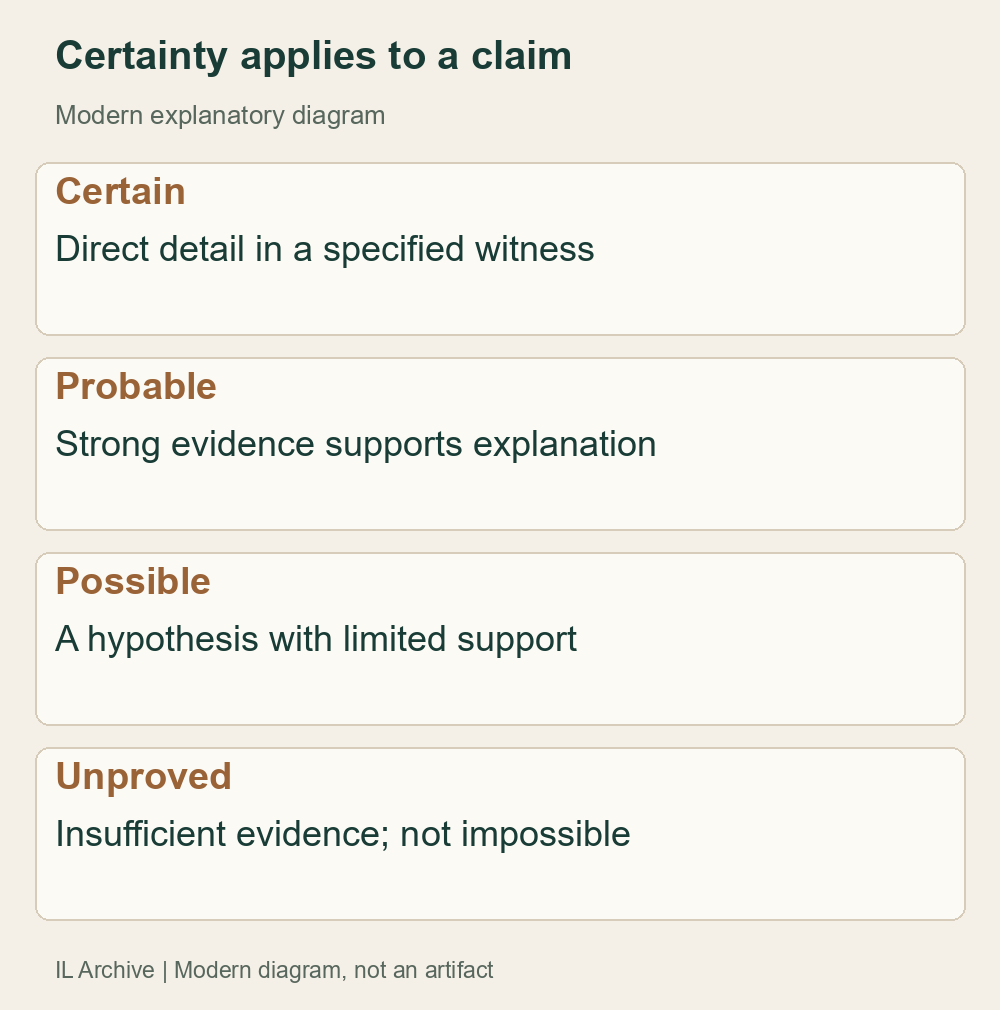
Birds and a boat can be certainly present in two texts, their traditions probably related, oral mediation possible, and the copying of a particular tablet unproved. These judgments address different questions. Each comes with reasons: specified direct evidence, strong converging arguments, limited support, or a witness insufficient to settle the claim.
Borrowing describes a historical relationship rather than automatically accusing an author of plagiarism. Familiar material can be transformed for another theology or audience. We investigate how the change occurred, distinguishing its observable effects from deliberate reversal or polemic, which requires evidence of purpose and context.
Three examples, differing conclusions
Moses and Sargon offer a cluster of parallels and arguments about reworking that deserve investigation, while direct dependence and direction require a separate judgment. For the flood, earlier witnesses and connected details strongly favour a relationship with Mesopotamian traditions; the route into Genesis and its direct source remain unidentified.[5][6][8][11][12][13]
For the heavenly council, West Semitic continuity explains an important body of evidence without identifying one Ugaritic tablet as its direct source. These are differing conclusions from comparison here: identify what the material supports and retain the transmission, continuity or transformation it reveals, even when parts of the history remain unknown.[15][16]
Related readings
References and notes (19)
- Samuel Sandmel, “Parallelomania,” Journal of Biblical Literature 81/1 (1962), pp.1–13. Indexed opening and context discussion; Sandmel reports an earlier use of the term. Return to the text ↑
- Emily West, “The Transformation of Cyavana: A Case Study in Narrative Evolution,” Oral Tradition 31/1 (2017), pp.77–122. pp.77–81, especially 78; comparison criteria and narrative evolution. Tigay 1993 discussed through West. Return to the text ↑
- Cooper Smith, “Inner-Biblical Allusion and the Direction of Dependence: Toward a Comprehensive List of Criteria,” Journal of Hebrew Scriptures 22, article 6, volume 2022; online 12 June 2023. pp.1–3 and 24–26; relationship, direction and converging evidence. Return to the text ↑
- Cuneiform Digital Library Initiative, P 365306, K 3401 + Sm 2118, Sargon birth legend. Object metadata: Nineveh, Neo-Assyrian period; copy date distinct from the king’s lifetime. Return to the text ↑
- James A. Loader, “The beautiful infant and Israel’s salvation,” HTS 67/1 (2011), article 913. Abstract, introduction and Hebrew Exodus 2:1–4 discussion; Otto and other readings presented as scholarly interpretations, not consensus. Return to the text ↑
- Exodus 2:1–10, Hebrew text with the historical Jewish Publication Society translation. 2:1–10; basket at the bank, sister’s watch, nursing and adoption. Return to the text ↑
- Laurie E. Pearce, “Cuneiform Sources for Judeans in Babylonia in the Neo-Babylonian and Achaemenid Periods: An Overview,” Religion Compass 10/9 (2016), pp.230–243. Author’s abstract on Babylonian society and economy; contact evidence, not identification of a transmitted text. Return to the text ↑
- University of Oxford, Electronic Text Corpus of Sumerian Literature, ETCSL 1.7.4, “The Flood Story.” Segments A–E with lacunae; bird release not preserved in the surviving Ziusudra passages. Return to the text ↑
- Cuneiform Digital Library Initiative, P 285811, Old Babylonian Atrahasis witness. Object record: Ammisaduqa year 12; absolute dates depend on chronology. Return to the text ↑
- A. R. George and F. N. H. Al-Rawi, “Tablets from the Sippar Library VI. Atra-ḫasīs,” Iraq 58 (1996), pp.147–190. Indexed opening, p.147; creation, human increase and successive disasters. Return to the text ↑
- Alexander Heidel, The Gilgamesh Epic and Old Testament Parallels, 2nd edition (1949), Tablet XI translation. pp.81–87; warning, boat, rescue, dove, swallow, raven and offering. Return to the text ↑
- Genesis 6:5–22, Hebrew text with the historical Jewish Publication Society translation. 6:5–22; wickedness, violence and instructions for survival. Return to the text ↑
- Genesis 8, Hebrew text with the historical Jewish Publication Society translation. 8:4–12 and 20–22; landing, bird sequence, offering and promise. Return to the text ↑
- Genesis 9:8–17, Hebrew text with the historical Jewish Publication Society translation. 9:8–17; covenant with Noah, descendants and living creatures. Return to the text ↑
- Ellen White, Yahweh’s Council: Its Structure and Membership (2014), publisher preview. Chapter 1, pp.1–4, PDF 18–21; Hebrew scenes and the value of external comparison. Return to the text ↑
- Psalm 82, Hebrew text with the historical Jewish Publication Society translation. Whole psalm; JPS chooses “judges” in verse 1; the heavenly reading interprets wording and context. Return to the text ↑
- Metropolitan Museum, 86.11.378a, later Babylonian flood-tradition fragment. Ca. seventh–sixth centuries BCE; catalogue and Open Access image. Description identifies Utnapishtim on the reverse. Return to the text ↑
- A. R. Millard, The Atra-ḫasīs Epic and Its Place in Babylonian Literature, MPhil thesis (1965), University of London, SOAS record. Indexed institutional abstract, chapter VI; corresponding Atrahasis/Gilgamesh passages and reuse. Return to the text ↑
- Stephanie Dalley, Atrahasis translation, Tablet III, pp.33–35. Post-flood offerings and measures for humanity’s continuation; PDF 26–28. Return to the text ↑
Suggest a correction · Suggest a source for this record
Cite this record
IL Archive, «Resemblance Does Not Establish Borrowing», https://ilarchive.com/en/studies/similarity-and-borrowing
Continue reading