Person · Historical ruler
Sargon of Akkad
The historical king of Akkad, his victory inscriptions and later origin stories, examined alongside Moses while separating the ruler’s life from literary composition and surviving witnesses.
Estimated reading time: 6 min Published Last reviewed:
Share article
Text
Introduction
Sargon of Akkad, also called Šarru-kīn, was a historical king who founded the dynasty of Akkad in third-millennium BCE MesopotamiaMesopotamiaHistorical region associated with the Tigris and Euphrates: Uruk, Ur, Eridu, cuneiform, Sumer, Akkad, Babylon and Assyria, their languages and cults, and the limits of archaeological evidence.Glossary · Click to read the explanation. His reign is conventionally placed around 2334–2279 BCE in one commonly used chronology; these are reconstructed dates, not independently fixed dates for his accession or death.[3]
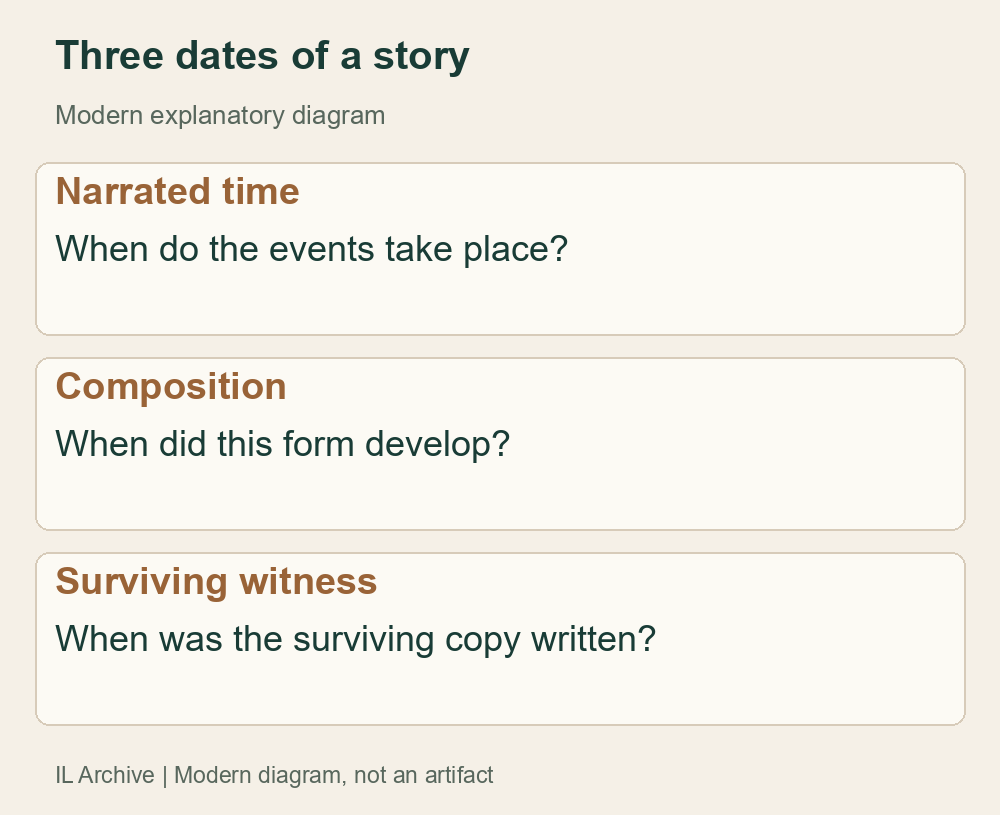
This entry distinguishes what royal inscriptions tell us from later stories about the king’s rise and birth, and explains why the infant-in-a-basket narrative is compared with MosesMosesCentral figure in Exodus, Torah traditions and the Qur’an; childhood accounts differ in detail.Glossary · Click to read the explanation in the Book of Exodus. The king’s lifetime, the composition of a narrative about him, and the date of a surviving tablet are different questions.[1][2]
The king and the emergence of Akkadian power
Sargon rose among the cities of southern MesopotamiaMesopotamiaHistorical region associated with the Tigris and Euphrates: Uruk, Ur, Eridu, cuneiform, Sumer, Akkad, Babylon and Assyria, their languages and cults, and the limits of archaeological evidence.Glossary · Click to read the explanation, each with its own ruling institutions and sanctuaries. His authority was associated with the city of Agade, or Akkad, whose exact archaeological location remains disputed. Royal inscriptions attributed to him recount the defeat of Sumerian cities, including UrukUrukAncient city at Warka in southern Iraq, a major urban centre around 3200 BCE that preserved early writing and accounting tablets.Glossary · Click to read the explanation, and confrontation with Lugalzagesi, ruler of Uruk. These are not merely episodes of a later birth tale: edited royal inscriptions, surviving in witnesses and copies, attest a political project. Their triumphant language must nevertheless be distinguished from a neutral record of every campaign.[4]
An edited Sumerian composite text of an early royal inscription (RIME 2.01.01.01) contains the following wording. The translation here follows ORACC; editorial markings indicate damaged or reconstructed signs, not an entirely intact single tablet:[4]
“He conquered the city of Uruk and demolished its walls.” — composite inscription, lines 12–15.
Another royal-inscription recension boasts of victory in thirty-four battles and of ships from Meluhha, Magan and DilmunDilmun: Ancient Gulf Land and Literary SettingDilmun was an ancient Gulf trading land with a major archaeological centre in Bahrain and connections to eastern Arabia and Failaka. This entry separates boats, burials and kings from the literary purity and fresh water of Enki and Ninhursaga, and tests the limits of comparison with Eden.Glossary · Click to read the explanation moored at Agade’s quay. These claims convey an ambitious vision of far-reaching connections, but ships arriving from named regions do not by themselves prove military occupation of those regions; even the battle total belongs to a royal rhetoric requiring critical evaluation.[5]
A brief timeline: ruler, compositions and witnesses
- Approximately the twenty-fourth and twenty-third centuries BCE: the historical setting of Sargon’s reign and the expansion of AkkadianAkkadianAn ancient East Semitic language written in cuneiform from the third millennium BCE; its varieties include Babylonian and Assyrian, and it served in international diplomacy.Glossary · Click to read the explanation power; one conventional chronology gives 2334–2279 BCE.[3]
- Second millennium BCE: Sumerian traditions transmitted through scribal copies, including the Sumerian King List and “Sargon and Ur-Zababa.” The copies’ dates do not fix when each episode was first devised.[6][7]
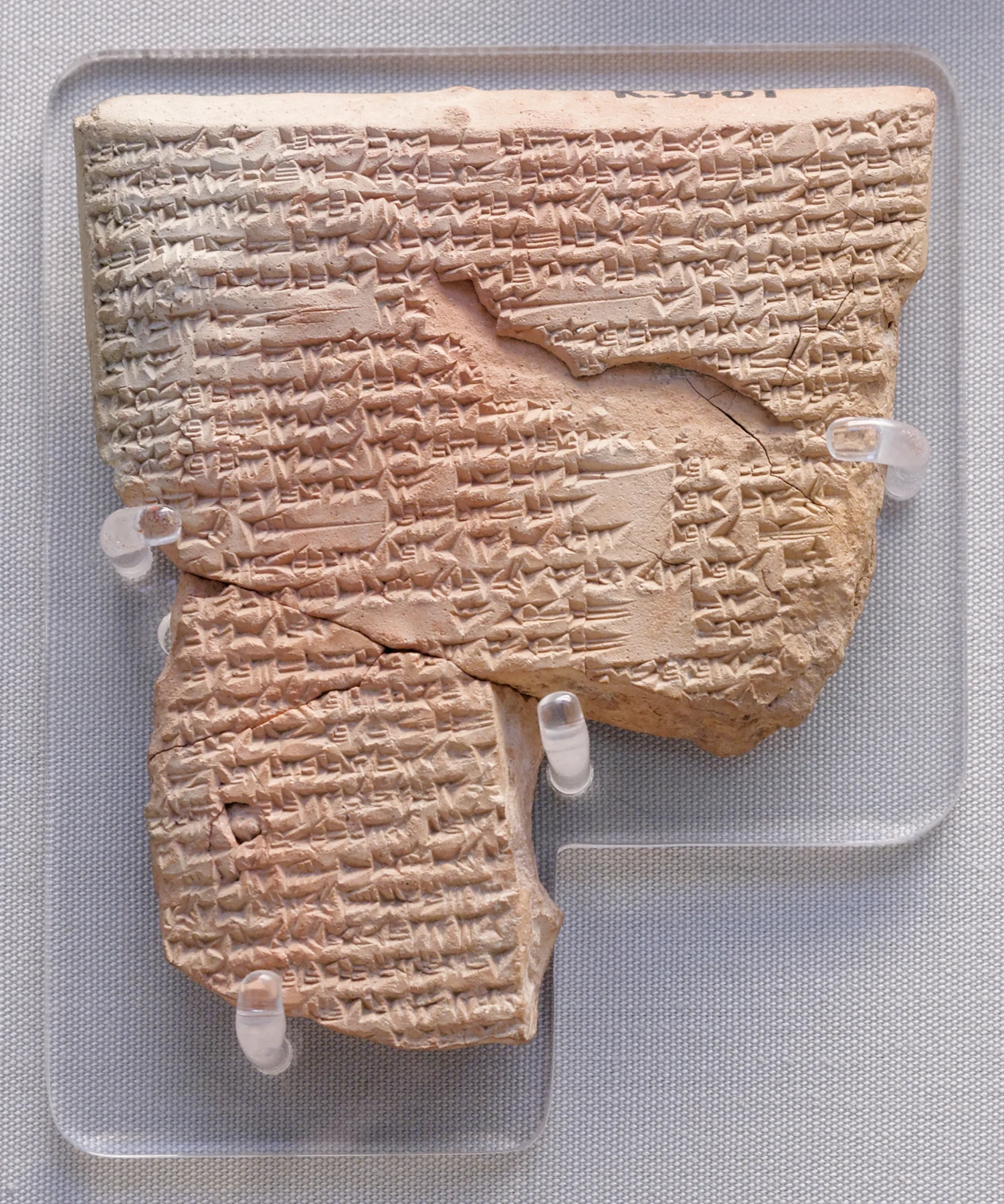
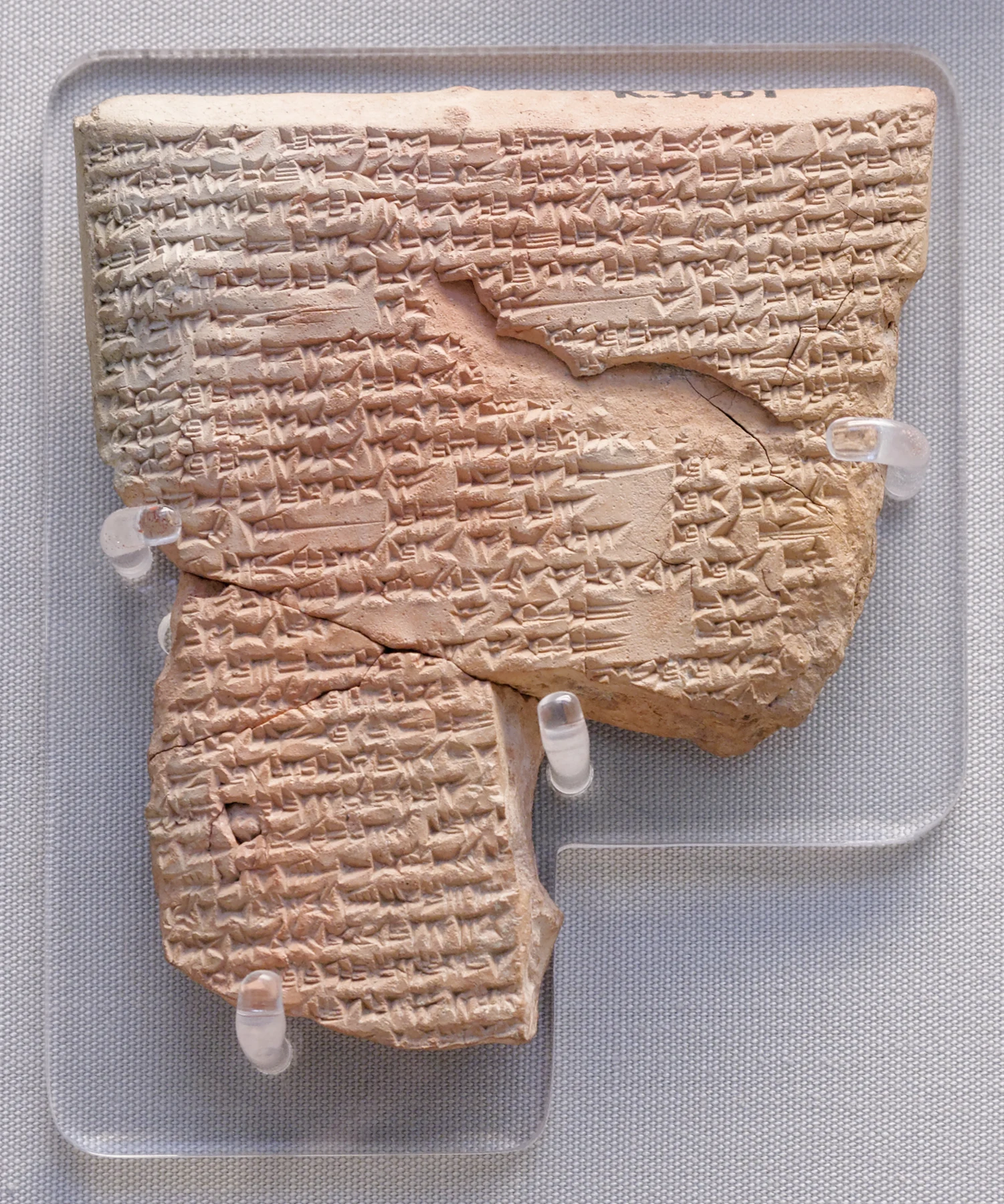
- First millennium BCE: Sargon traditions circulated in later Assyrian settings. Birth-story tablet K.3401, joined to Sm.2118, is a Neo-Assyrian witness from NinevehNineveh and KuyunjikNineveh is an ancient Assyrian city near Mosul in northern Iraq; Kuyunjik is one of its archaeological moundsGlossary · Click to read the explanation, not a document written in the king’s lifetime.[1][9]
- Exodus 2: the narrated period, the formation of the HebrewHebrewA Northwest Semitic language of the Canaanite group, encompassing Iron Age epigraphy, Biblical, Rabbinic, medieval and Modern Hebrew; its scripts and pronunciations changed over time.Glossary · Click to read the explanation story and the ages of surviving manuscripts must be examined separately; none dates the others automatically.[2][11]
Divergent origins in Sumerian memory
CuneiformCuneiformWriting with wedge-shaped signs, developed from Mesopotamian recording traditions and used for several languages from the third millennium BCE.Glossary · Click to read the explanation sources demand careful separation. The Sumerian King List describes Sargon as cupbearer to Ur-Zababa, king of Kish, and says his father was a gardener. Even the king’s reign length varies across manuscripts: 56 years in one witness, 55 or 54 in others. Those figures cannot establish a precise birth year or date an incident from his childhood.[6]
The Sumerian composition “Sargon and Ur-Zababa”Sargon and Ur-ZababaFragmentarily preserved Sumerian composition depicting Sargon as Ur-Zababa’s cupbearer and naming his father La’ibum, distinct from the Akkadian birth legend.Glossary · Click to read the explanation instead gives the father the name La’ibum, while the mother’s designation lies in a damaged passage. ETCSL’s composite text preserves this short portion in segment A, line 11:[7]
“His father was La’ibum; his mother […]” — composite Sumerian text, segment A, line 11; the ellipsis denotes loss, not a restored name.
The same narrative presents Sargon as a cupbearer who dreams that InanaInanna / IshtarA prominent Mesopotamian goddess whose Sumerian name Inanna became associated with Akkadian Ishtar across diverse traditions. She was associated with desire, war, royal authority and Venus, while local forms and genealogies varied among texts.Glossary · Click to read the explanation will aid him against Ur-Zababa. The frightened ruler then seeks to eliminate his servant. The story dramatizes the transfer of legitimacy from an old ruler to a new one under divine patronage; its dream is not a court record of events at Kish.[8]
The Akkadian birth narrative and its tablet
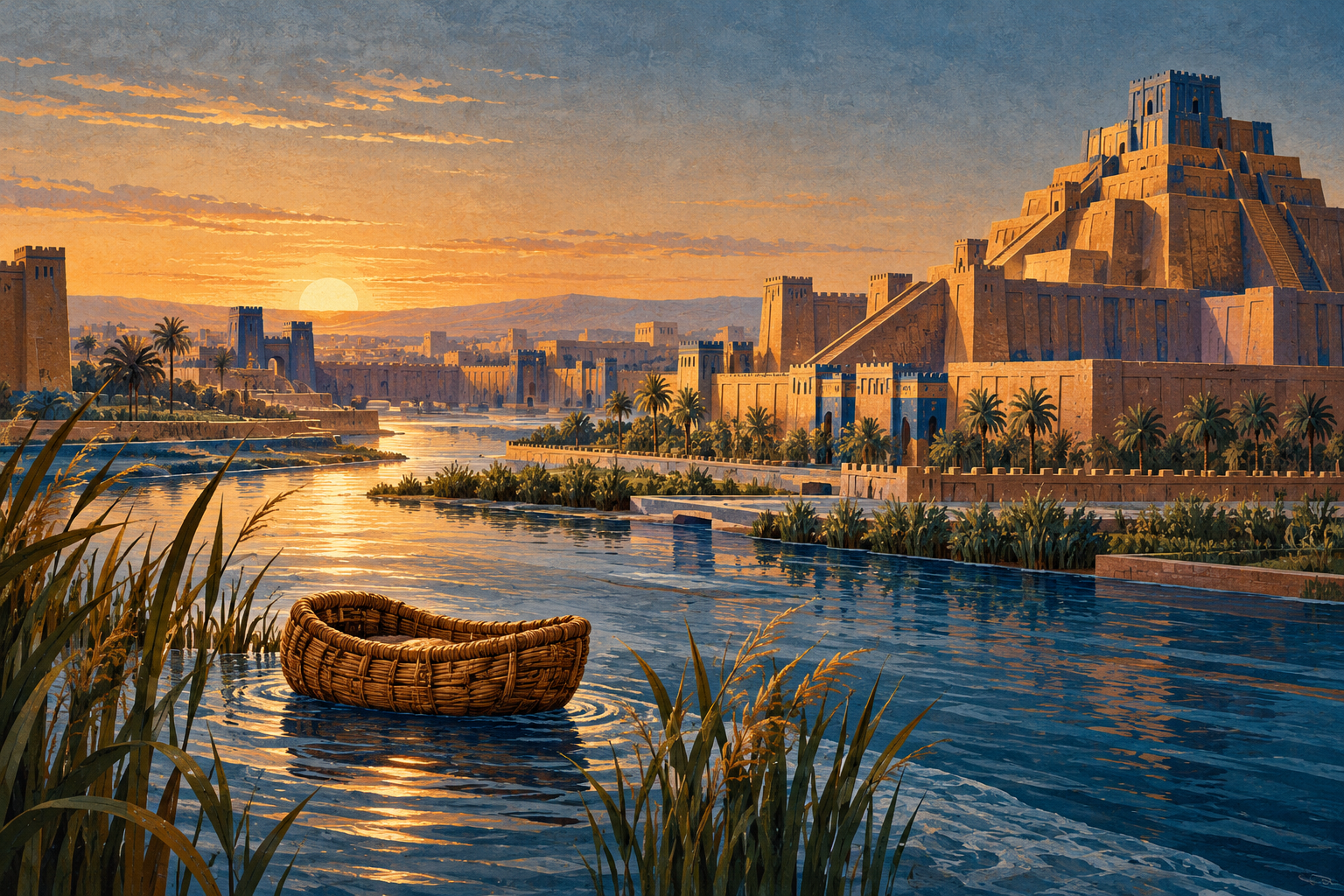
The Akkadian “Birth Legend of Sargon”Sargon Birth LegendAn Akkadian pseudo-autobiography of Sargon’s concealed birth, basket rescue and rise to kingship; its manuscripts are late and the date of composition disputed.Glossary · Click to read the explanation speaks in the king’s first person: his mother is presented as a priestess (with an uncertainty mark in the mediated reading), his father unknown, and his mother places him secretly in a reed basket sealed with bitumen. The river carries him to AqqiAqqi in Sargon’s birth storyAqqi is the irrigator who finds the child in the river and adopts him in Sargon of Akkad’s birth storyGlossary · Click to read the explanation, a water-drawer, who raises him and makes him a gardener before IshtarInanna / IshtarA prominent Mesopotamian goddess whose Sumerian name Inanna became associated with Akkadian Ishtar across diverse traditions. She was associated with desire, war, royal authority and Venus, while local forms and genealogies varied among texts.Glossary · Click to read the explanation favors him. This synopsis uses an online reproduction of a passage translated in Joan Goodnick Westenholz’s 1997 edition; the pages of that critical edition were not consulted directly here. No argument about a particular Akkadian sign or damaged reading is based on that mediated quotation.[10]
A key material witness is tablet K.3401Sargon birth tablet K.3401Akkadian clay tablet from Nineveh preserving Sargon’s birth story in the Neo-Assyrian period, many centuries after the king’s lifetime.Glossary · Click to read the explanation, joined with Sm.2118 and catalogued as P365306 by CDLI. It comes from NinevehNineveh and KuyunjikNineveh is an ancient Assyrian city near Mosul in northern Iraq; Kuyunjik is one of its archaeological moundsGlossary · Click to read the explanation and the AshurbanipalAshurbanipalAshurbanipal was an Assyrian king of the seventh century BCE, reigning about 668–631 BCEGlossary · Click to read the explanation Library collection; the British Museum assigns it to the Neo-Assyrian period. This is a genuine ancient object bearing a story about a much earlier king, not a tablet commissioned by Sargon or a record of his infancy. The first composition date of the birth tale is unresolved, although a late Assyrian setting has been proposed.[1][9][10]
The Sumerian and Akkadian tellings also differ over the father, mother and early occupation. One need not treat one as a perfect biography and the other as an erroneous family register: narrative roles and explanations of humble or extraordinary origins can change with the stories’ purposes.
The basket child and Moses: parallels and differences
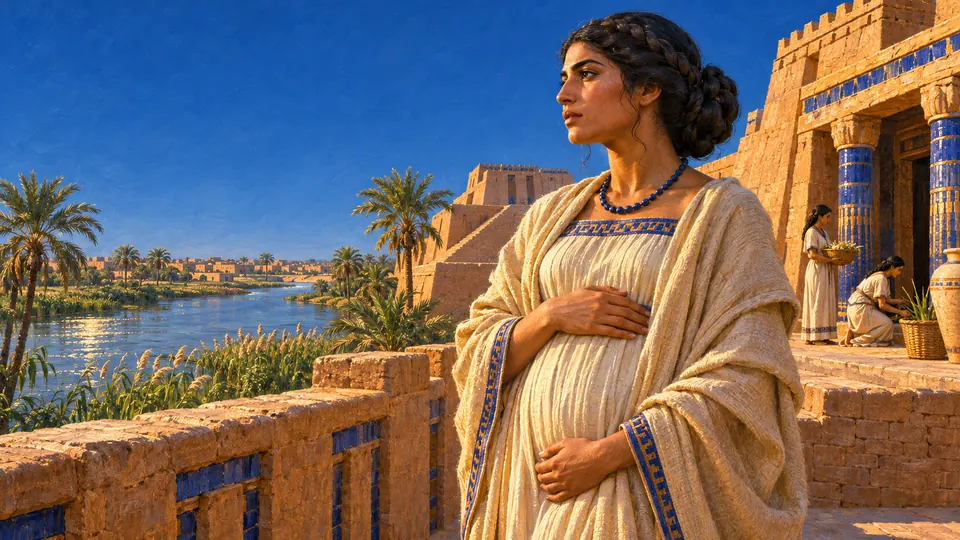
In the Book of ExodusBook of ExodusTorah book recounting Israel’s departure from Egypt and containing different formulations of seventh-day rest.Glossary · Click to read the explanation, chapter 2 describes how MosesMosesCentral figure in Exodus, Torah traditions and the Qur’an; childhood accounts differ in detail.Glossary · Click to read the explanation’ mother hides him for three months against a pharaonic decree targeting male newborns. She then sets him in a waterproofed papyrus container among the reeds at the Nile’s edge; his sister watches, Pharaoh’s daughter finds him, and the family becomes involved in nursing him. Sargon’s story instead has the river carry the basket to Aqqi and moves toward legitimating a king favored by Ishtar. Reeds, bitumen, water and rescue are striking shared features, but the agents, the basket’s position and the stories’ outcomes matter too.[11][10]
Exodus 2:3 in the published Hebrew text reads, with a marked omission within the verse:[11]
“She took a papyrus basket for him […] and placed it among the reeds at the Nile’s bank.” — Exodus 2:3, editorial translation of the Hebrew text published by Mechon Mamre, not a translation of the Akkadian tablet.
Scholars debate possible literary interaction in ancient scribal culture. Eckart Otto interpreted the Moses story as a critical reuse of an Assyrian royal model. Johannes Gerhards agreed in principle, while also emphasizing an exilic message of hope. Here those views are known through James A. Loader’s account of their work, not from a complete reading of Otto’s and Gerhards’s books. Loader’s article principally studies the significance and reception of Moses as a “beautiful” infant; it does not establish an incontrovertible route of borrowing.[2]
The parallels make literary comparison worthwhile, but they do not establish the direction of transmission or prove that the writer of Exodus 2 directly copied tablet K.3401. The surviving birth witnesses are late, and the dates of its first composition and the editing of the Exodus story remain debated. In short, royal inscriptions and related evidence support the existence and political career of Sargon; accounts of his childhood come to us through later acts of cultural memory, to be read for their literary purposes rather than as eyewitness biography.[1][2][4]
References and notes (11)
- Cuneiform Digital Library Initiative (CDLI), “CT 13, pl. 42, K 03401 +” (P365306; K.3401 + Sm.2118) Artifact entry: Nineveh/Kuyunjik, Neo-Assyrian, Akkadian, K.3401 + Sm.2118. A witness date, not Sargon’s date. Return to the text ↑
- James A. Loader, “The beautiful infant and Israel’s salvation,” HTS Teologiese Studies 67/1 (2011), article 913, DOI: 10.4102/hts.v67i1.913 Full HTML article read, especially “The infant Moses in Exodus 2,” Sargon parallels, and Loader’s account of Otto and Gerhards. Its main argument concerns beauty and reception, not a proven borrowing route. Return to the text ↑
- John A. Brinkman, “List of Kings,” 8th edition, electronic Babylonian Library, research status January 2023 Dynasty of Akkad table: Sargon 2334–2279 BCE and 56? years; a chronological model, not independently secure absolute dates. Return to the text ↑
- ORACC, Early Text Corpus of Sumerian Royal Inscriptions (ETCSRI), Sargon 01, RIME 2.01.01.01 composite, Q000834 Sumerian composite and English translation inspected, lines 1–101, especially 12–29 (Uruk, Lugalzagesi); damaged/restored signs and multiple exemplars remain distinguished. Return to the text ↑
- ORACC, ETCSRI, Sargon 11, RIME 2.01.01.11 composite, Q001403 Inscription and translation examined, lines 1–28: 34 battles, ships from Meluhha, Magan and Dilmun, and northern claims in royal discourse. Return to the text ↑
- ETCSL, “The Sumerian king list,” t.2.1.1, lines 266–296 (Oxford edition) Akkad-dynasty section, lines 266–296: gardener, cupbearer and 56/55/54-year variant readings with manuscript sigla. Return to the text ↑
- ETCSL, “Sargon and Ur-Zababa,” Sumerian composite transliteration c.2.1.4, segments A–C Composite transliteration inspected, A 1–13, B 1–56, C 1–12, particularly A 10–11 naming La’ibum; edition lists AO 7673 and 3N-T296. Return to the text ↑
- ETCSL, “Sargon and Ur-Zababa,” English translation t.2.1.4, segments A–C English translation read across A–C, especially B 1–56 (cupbearer, dream, Ur-Zababa’s attempted elimination); English is the intermediary for interpretation. Return to the text ↑
- British Museum, collection entry “tablet,” registration K.3401 (Neo-Assyrian), linked to Ashurbanipal’s library Museum object description, period, provenance and dimensions: K.3401, Nineveh, Neo-Assyrian, with a 17-line fragment noted in the catalogue. Return to the text ↑
- Claire Sulos, “The Neo-Assyrian Birth Legend” (20 May 2023; page subsequently revised), excerpt credited to Joan Goodnick Westenholz, Legends of the Kings of Akkade (1997) Read online republication of lines 1–14 credited as Westenholz (1997), NOT the critical edition itself; no specific Akkadian sign readings inferred. Return to the text ↑
- Mechon Mamre, Hebrew–English Bible, Exodus 2:1–10 (Hebrew text) Hebrew Exodus 2:1–10 and displayed English translation read, especially v. 3 (papyrus basket, bitumen, reeds and riverbank). Return to the text ↑
Suggest a correction · Suggest a source for this record
Cite this record
IL Archive, «Sargon of Akkad», https://ilarchive.com/en/people/sargon-of-akkad
Continue reading
Related readings