Site
Dilmun: Ancient Gulf Land and Literary Setting
Dilmun was an ancient Gulf trading land centred archaeologically on Bahrain. The entry separates boats, burials and kings from the purity and water of Enki and Ninhursaga and tests the limits of comparison with Eden.
Estimated reading time: 9 min Published Last reviewed:
Share article
Text
Introduction
Dilmun was both a name used in ancient Mesopotamian records for a Gulf trading land and a setting in Sumerian literature. It did not denote one modern coastline with unchanging borders. What can ships, settlements, graves and royal inscriptions establish about the historical region, and what does the poem EnkiEnkiMesopotamian deity also known as Ea, linked with Eridu and the Abzu (deep fresh waters), wisdom, incantations, and narratives of creation and cosmic order. Later written attestations do not identify the deity of Eridu’s earliest layers.Glossary · Click to read the explanation and Ninhursaga make of its purity and transforming waters? This entry keeps those questions separate before assessing comparisons with the garden of EdenEden: The Setting of Genesis’s GardenThe place in which the garden of Genesis 2–3 is planted; the story describes rivers, trees and a human test, while its archaeological location and name’s derivation remain unsettled.Glossary · Click to read the explanation in Genesis.
Name and changing geography
Dilmun, also written Tilmun in some traditions, appears in cuneiformCuneiformWriting with wedge-shaped signs, developed from Mesopotamian recording traditions and used for several languages from the third millennium BCE.Glossary · Click to read the explanation sources connected with Gulf navigation. Modern Bahrain lies at the heart of the archaeological culture commonly called Early Dilmun, but the country name in documents of different periods should not simply be equated with the borders of the modern state. Archaeologist Daniel T. Potts relates some early attestations to the al-Ahsa coast of eastern Arabia and places a prominent focus on Bahrain from the late third millennium BCE. This is a reconstruction from texts and material evidence, not an ancient map delineating permanent frontiers. [3]
Failaka Island near Kuwait and the eastern Arabian coast participated in Dilmun-related networks during parts of the Bronze Age. Excavations on Failaka reveal dwellings, storage facilities and a temple with architectural affinities to the Barbar temples in Bahrain. Yet an exchange station is not necessarily a capital, and shared pottery or seals do not by themselves prove a single enduring political dominion. Settlement, cultural connections and jurisdiction must be investigated separately. [8]
Ships and exchange before the poem
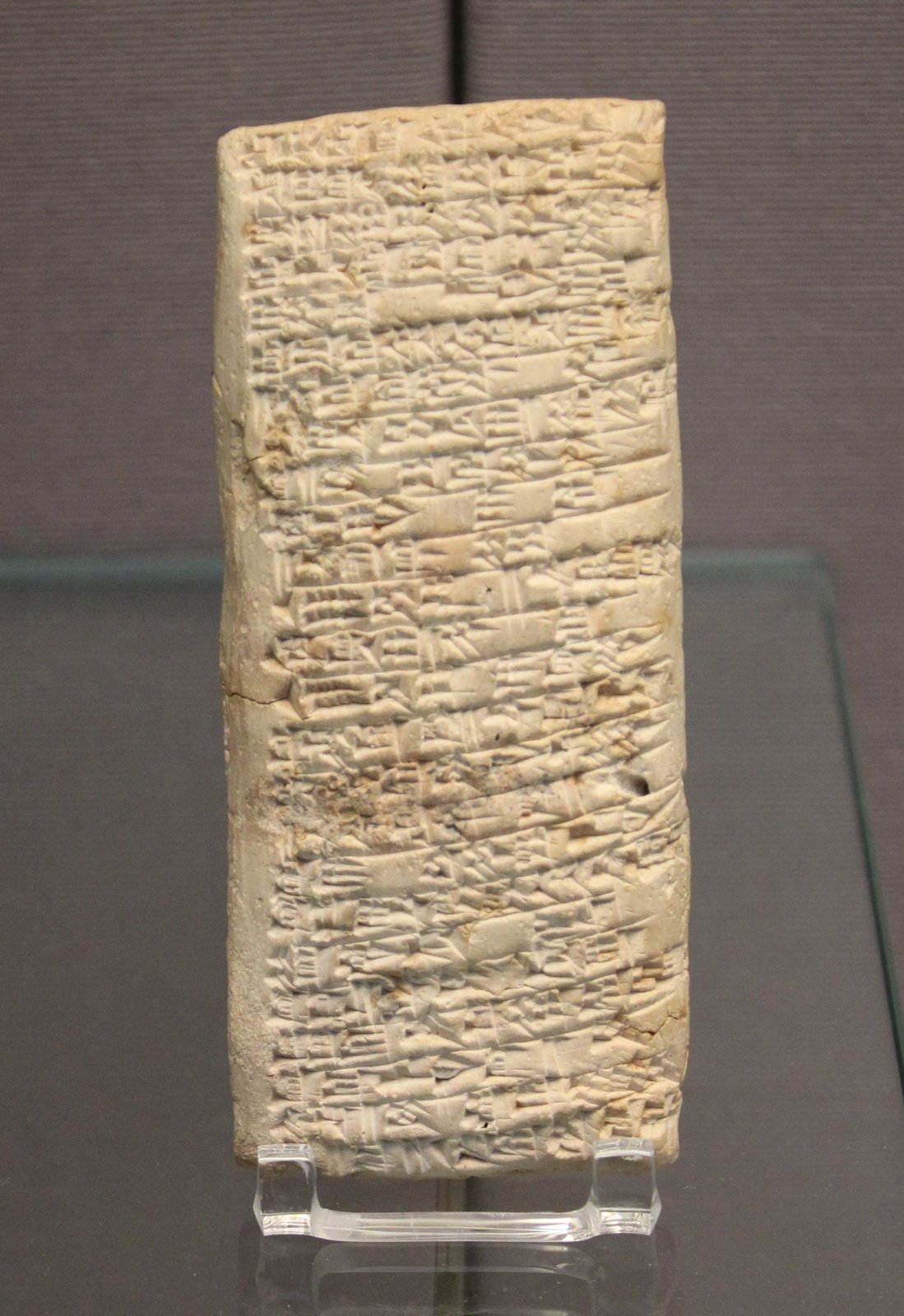
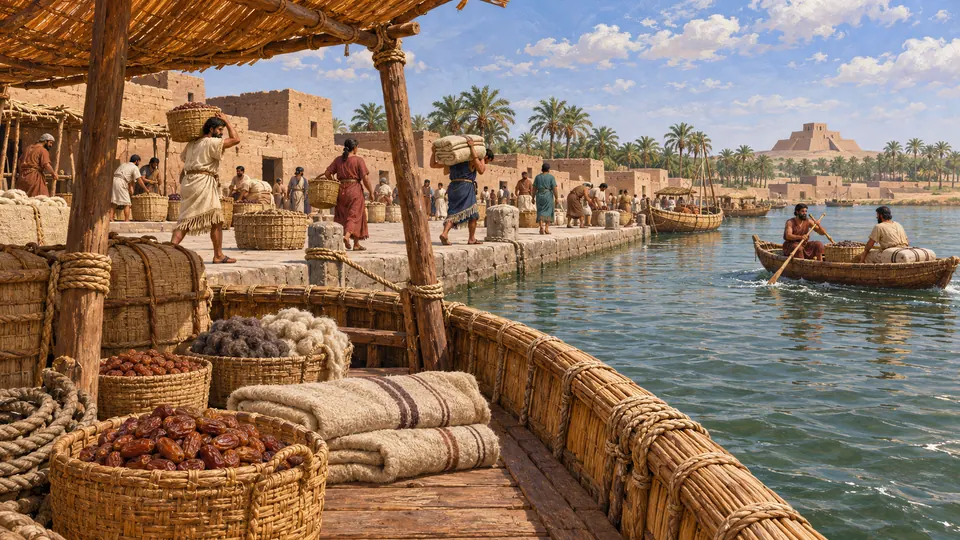
One important inscription comes from Ur-Nanshe, ruler of the Sumerian city-state of LagashLagash, Sumerian city-stateCity-state in present-day southern Iraq; Girsu was one of its centers associated with royal inscriptions.Glossary · Click to read the explanation, around the middle of the third millennium BCE. Its Sumerian text mentions ma₂ dilmun, “Dilmun boats,” alongside timber cargo. Translations of the accompanying verb vary between editions; the firm observation is that boats and wood occur in a royal inscription celebrating the ruler's activities. The inscription alone does not identify where the timber was felled or define the territory ruled from Dilmun. The citation refers to a specified composite royal inscription, not to every Lagash tablet. [4]
Such testimony helps explain Dilmun's intermediary position between southern MesopotamiaMesopotamiaHistorical region associated with the Tigris and Euphrates: Uruk, Ur, Eridu, cuneiform, Sumer, Akkad, Babylon and Assyria, their languages and cults, and the limits of archaeological evidence.Glossary · Click to read the explanation and trading networks of the southern Gulf and the Indus region. It does not imply that all copper, wood and stone passing through its ports originated on Bahrain itself. Potts emphasizes transshipment; copper, in particular, probably reached Dilmun from Magan, a region generally associated in this context with Oman and southeastern Arabia. Connections shown by shared goods and seal styles are stronger evidence for exchange than for a centuries-long monopoly over Gulf commerce. [3]
Bahrain: harbour, burials and rulers
The tell of Qal'at al-BahrainQal’at al-Bahrain, harbour and archaeological tellNorthern Bahrain site with Dilmun-period layers and a much later Portuguese fort, inscribed by UNESCO in 2005.Glossary · Click to read the explanation, on the island's northern coast, contains occupation levels beginning around 2300 BCE and continuing through later eras. It is identified as a major Dilmun harbour and centre. Residential, public, commercial and defensive remains are present, but the sequence covers many centuries: the Portuguese fort giving the site its modern name is emphatically not an Early Dilmun structure. [7]
The Dilmun burial mounds supply a different picture of society. The UNESCO-listed group is broadly dated to about 2200–1750 BCE and comprises twenty-one archaeological components with numerous graves, including larger royal tombs. Differences of size and construction support analysis of social differentiation and funerary practices; they are neither a direct population census nor evidence that all tombs belonged to a single kingdom with known borders. The stamp sealsStamp sealA small engraved implement pressed into soft clay to leave an impression, unlike a rolled cylinder seal. Its uses are investigated through sealings, find contexts and wear; imagery alone establishes neither writing nor belief.Glossary · Click to read the explanation at Saar and objects from the Barbar temples add evidence about local institutions, crafts and contacts. [5][14]
Political authority is not known from the site's modern designation alone. Four inscribed fragments of stone vessels attest the names of the Dilmun king Yagli-El and his father Ri'mum, usually discussed around 1700 BCE. UNESCO presents them as evidence for a ruling dynasty. They do not, by themselves, prove an uninterrupted succession across every earlier and later phase or fix the reach of that dynasty. [6]
A short chronology of the evidence
- Around 2500 BCE: Ur-Nanshe's Lagash inscriptions mention Dilmun boats and timber; the dates approximate the period of the inscriptions. [4]
- From about 2300 BCE: the long archaeological sequence at Qal'at al-Bahrain begins, not the history of all Dilmun. [7]
- About 2200–1750 BCE: the main burial-mound group described by UNESCO, although finer typological dates differ. [5]
- During the second millennium BCE: Dilmun-related occupation and trade on Failaka, in successive site phases. [8]
- Around 1700 BCE: inscriptions preserving the names Yagli-El and Ri'mum. [6]
- Old Babylonian period, second millennium BCE: surviving scribal witnesses to Enki and Ninhursaga; the dates of copies are not securely the dates of first composition or of events within the poem. [10]
Literary Dilmun in Enki and Ninhursaga
The perspective changes in Enki and NinhursagaEnki and Ninhursaga, Sumerian poemSumerian poem preserved in Old Babylonian copies, concerning Dilmun, water, birth and Enki’s illness and healing.Glossary · Click to read the explanation, a Sumerian composition available in a scholarly composite text assembled from cuneiform witnesses. Its opening repeatedly calls Dilmun pure or unspoiled. Lions do not kill, wolves do not carry away lambs, and illness and aging are absent in a distinctive literary tableau. Those lines are not a survey of Bahrain's animals, mortality or medical history: they describe exceptional conditions inside a narrative. [1][9]
This is a short Sumerian phrase from line 3 of the Oxford composite text. The English rendering is an editorial one guided by the edition and its translation; sikil also admits connotations of being virginal or untouched. It is not presented as the verbatim text of a particular complete tablet, nor as evidence that historical Bahrain was free from violence or disease. [9][1]
NinsikilaNinsikila, Dilmun’s lady in the poemGoddess who asks Enki for the water needed by Dilmun’s city in the poem’s opening.Glossary · Click to read the explanation, a goddess associated with Dilmun in this poem, complains to her father EnkiEnkiMesopotamian deity also known as Ea, linked with Eridu and the Abzu (deep fresh waters), wisdom, incantations, and narratives of creation and cosmic order. Later written attestations do not identify the deity of Eridu’s earliest layers.Glossary · Click to read the explanation that the gift of a city is inadequate. Her complaint evokes a place lacking a river quay and cultivated fields or furrows. Lines 33–39 contain damage and missing text, so the speech cannot serve as a reliable inventory of irrigation works at one archaeological settlement. [1][9]
Fresh water and a literary port
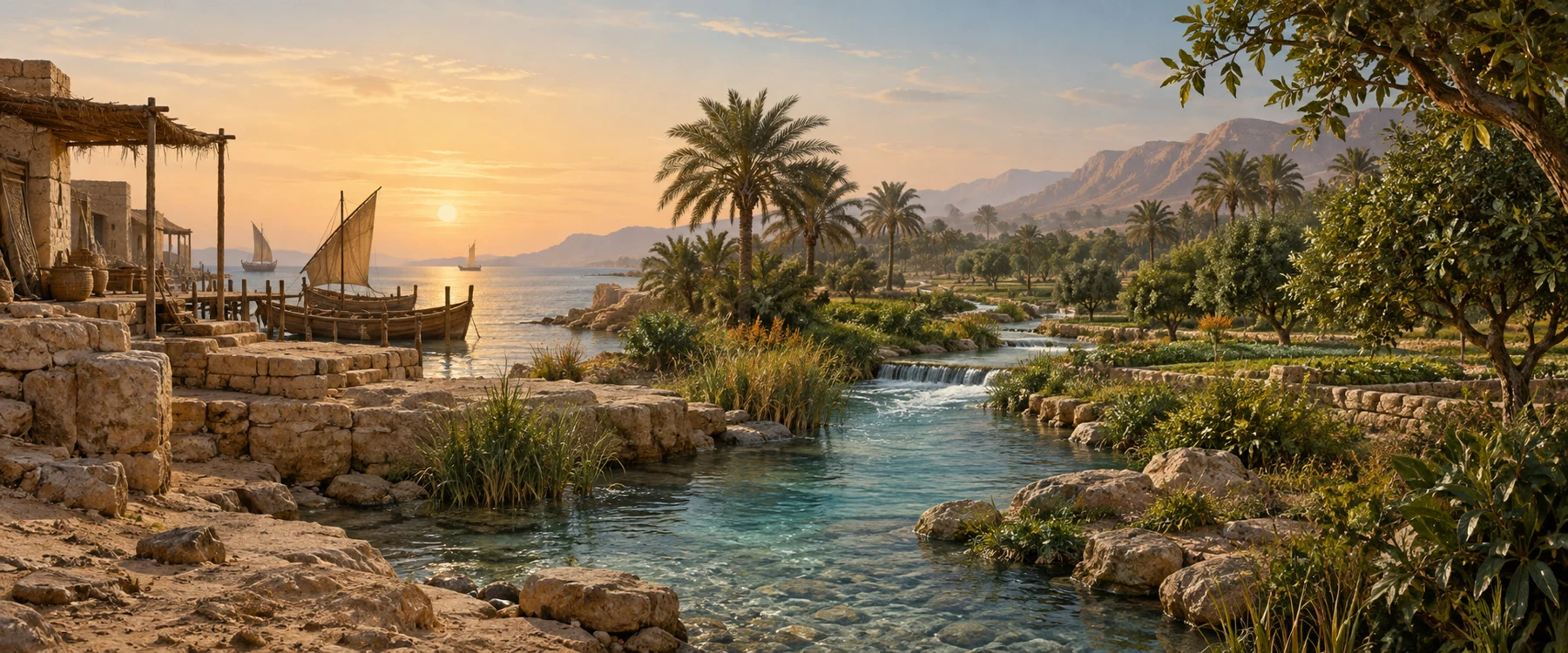
Enki promises that fresh water will emerge from below ground, fill reservoirs, sustain the city and make its fields and quay productive. Lines 50–62 narrate the fulfilment of that promise. The movement is from an extraordinary purity that does not itself ensure material prosperity to fertility enabled by water and exchange. [1]
The transliteration follows ETCSL line 47; this short editorial translation follows its interpretation of bitter and fresh water. The divine wish in the poem is not an independent hydrological report. An Ur manuscript supplies a possible insertion after line 49 listing goods and lands, including Meluhha, Magan and Elam. The editor numbers this addition 49A–49V precisely because its manuscript status differs; it should not be silently treated as part of every witness. [9][1]
The remaining episodes concern divine pregnancies, plants and Enki's illness and recovery. Enki consumes plants whose destinies he had yet to determine, is cursed by NinhursagaNinhursaga, birth and healing goddessMesopotamian goddess central to the births and Enki’s healing in Enki and Ninhursaga.Glossary · Click to read the explanation, and is healed through births of deities; the conclusion assigns Dilmun to Ensag. The connections between bodily fertility, water and divine patronage are literary motifs, not a survey of a Bronze Age farm or an unchanging single “paradise” narrative. [1]
Narrative time, manuscripts and literary interpretation
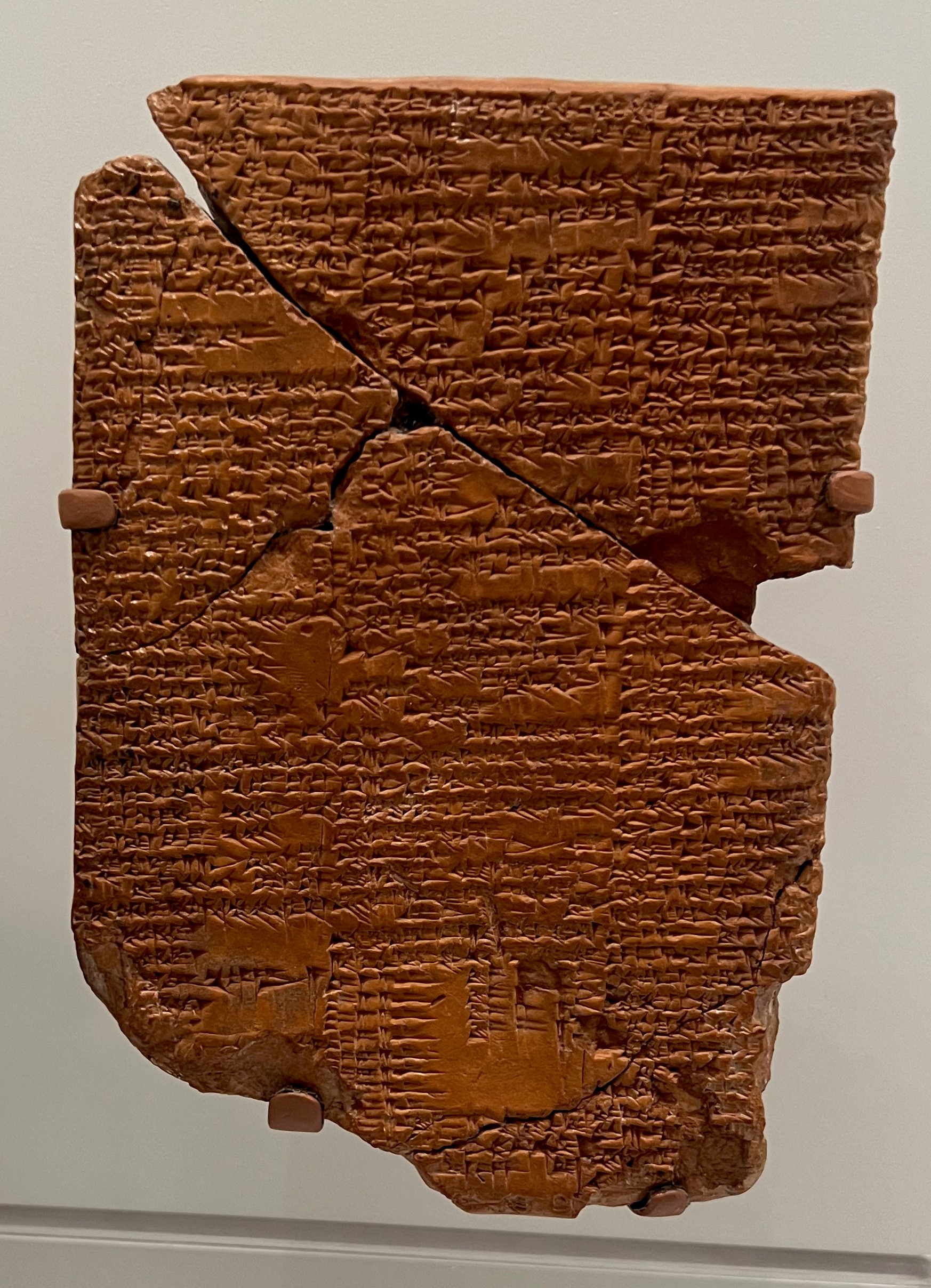
The actions of gods in the story have no calendar date assignable before or after the burial mounds: they occur in narrative time. The Sumerian composition survives through the scribal tradition of the Old Babylonian period, including witnesses associated with Nippur. Some themes may be older, but an early historical mention of Dilmun or Ur-Nanshe does not date the editing of the entire poem. ETCSL's edition combines broken passages and variants and is not a facsimile of one intact tablet. [10][9]
Assyriologist Dina Katz argues that the Dilmun opening and the subsequent episodes can be read as two narrative units brought together in one composition. She points to the transition from the gift of water to sequences of descent, illness and healing, suggesting that Enki's role as giver of fresh water helps connect them. The abrupt transition is a textual observation; the hypothesis does not establish the discovery of two separately surviving complete compositions or their precise date of combination. The extant composite can also be read as a whole whose episodes illuminate each other through water and fertility. [11][12]
Pascal Attinger also provides a French translation with philological commentary. Its bibliographic record was checked, but this text relies for its quotations on the accessible ETCSL text and translation rather than claiming a fresh, line-by-line consultation of Attinger's PDF, which could not be retrieved. [2]
The garden of Eden: comparison without identification
EdenEden: The Setting of Genesis’s GardenThe place in which the garden of Genesis 2–3 is planted; the story describes rivers, trees and a human test, while its archaeological location and name’s derivation remain unsettled.Glossary · Click to read the explanation raises a legitimate question about images of fertility, water and life, explored further in the dedicated Dilmun–Eden comparison. In Genesis, God plants a garden, places the human there and describes a river flowing from Eden before dividing into four headwaters. The passage names the Tigris and Euphrates alongside Pishon and Gihon. Human obligations, two trees, transgression and removal from the garden structure this narrative, unlike the provisioning of Dilmun with water and a commercial quay in Enki's poem. [13][1]
This is the beginning of Genesis 2:10 in the displayed Masoretic HebrewHebrewA Northwest Semitic language of the Canaanite group, encompassing Iron Age epigraphy, Biblical, Rabbinic, medieval and Modern Hebrew; its scripts and pronunciations changed over time.Glossary · Click to read the explanation text; the English translation is independent. Traditions incorporated into Genesis took shape and were edited in first-millennium BCE Israelite and Judean settings, though their detailed dating remains debated. Extant manuscript witnesses and later textual transmissions are not dates of events narrated in the garden. Naming recognizable rivers, or sharing imagery of water and lush growth, neither identifies Dilmun as Eden nor establishes direct copying from Enki and Ninhursaga. [13]
What the evidence supports
Royal inscriptions, settlement remains, burials and kings' names together establish historical Dilmun as a significant participant in Gulf exchange, with a major Bahraini centre and contacts beyond the island. The Sumerian poem makes the name signify a religiously charged literary place where purity and life-giving water are tied to Enki. Comparison with Eden illuminates both recurring themes and important structural differences. The geographic range of Dilmun in individual periods, the arrangement and age of the poem's sections, and any specific path of literary transmission remain questions of differing evidentiary strength, not points resolved merely by resemblance. [3][7][1][11][13]
References and notes (14)
- Oxford ETCSL, Enki and Ninhursaga (c.1.1.1), composite translation; selected passages from lines 1–281 checked with lacunae and insertions; the text is composite, not one manuscript. ETCSL c.1.1.1, ll. 1–4, 11–62, 190–281; insertions 49A–49V and 126A–126CC Return to the text ↑
- Pascal Attinger, Enki et Ninḫursaĝa (1.1.1), French translation and notes; Zenodo bibliographic record (2019) checked, PDF text inaccessible in this review; no detailed textual reading claimed. Zenodo DOI 10.5281/zenodo.2667747, bibliographic record only Return to the text ↑
- Daniel T. Potts, “Persian Gulf i. In Antiquity,” Encyclopaedia Iranica (2005, revised 2020); sections on Dilmun’s geography, exchange, seals and settlement. Early Gulf archaeology, Dilmun/Magan and seal sections (opening part) Return to the text ↑
- ETCSRI/Oracc, composite inscription Ur-Nanshe 22 (RIME 1.09.01.22), indexed excerpt of the Dilmun boats/timber passage; direct page failed to open, no collation of exemplars. RIME 1.09.01.22, lines 16–18 Return to the text ↑
- UNESCO World Heritage Centre, “Dilmun Burial Mounds,” site description and Outstanding Universal Value; dates, components and burials. Site description: c. 2200–1750 BCE, 21 components, c. 11,774 tombs Return to the text ↑
- UNESCO Memory of the World, “Cuneiform Inscriptions of Dilmun Kings on Stone Vessels (c. 1700 BCE),” register description of four fragments and royal names; not a separate epigraphic collation. Register page, two descriptive paragraphs on four fragments and Yagli-El/Ri’mum Return to the text ↑
- UNESCO World Heritage Centre, Qal’at al-Bahrain: Ancient Harbour and Capital of Dilmun; site description and Outstanding Universal Value, not the complete excavation reports. Site description and OUV: occupation from c. 2300 BCE and harbour role Return to the text ↑
- Flemming Højlund and Aiysha Abu-Laban (eds.), Tell F6 on Failaka Island: Kuwaiti-Danish Excavations 2008–2012 (2016), Aarhus University Press description; publisher summary only. Publisher description of Gulf trade and Failaka occupation phases only Return to the text ↑
- Oxford ETCSL, Sumerian composite text of Enki and Ninhursaga, c.1.1.1; transliterations and editorial brackets examined at cited passages. Lines 1–4, 29–62, 190–281, plus insertion 49A–49V Return to the text ↑
- ePSD2/Oracc, Enki and Ninhursaga (Q000332), catalogue labels Old Babylonian/Nippur; catalogue and visible text excerpt, not all tablet exemplars. Catalogue metadata on period, provenience and text category Return to the text ↑
- Dina Katz, “Enki and Ninhursaga, Part One: The Story of Dilmun,” Bibliotheca Orientalis 64 (2007), pp. 568–589; publisher abstract only. Publisher abstract on the article landing page only Return to the text ↑
- Dina Katz, “Enki and Ninhursaga, Part Two: The Story of Enki and Ninhursaga,” Bibliotheca Orientalis 65 (2008), pp. 320–342; publisher abstract on the linking role of water only. Publisher abstract on article landing page only Return to the text ↑
- Genesis 2, Hebrew text with parallel translation at Mechon Mamre; verses 2:5–17 and garden setting checked; article’s quoted translation is independently phrased. Genesis 2:5–17; Hebrew quotation at 2:10 Return to the text ↑
- Bahrain Authority for Culture and Antiquities, National Museum “Hall of Dilmun,” exhibit overview on Saar, Barbar and seals; not a full object catalogue. Hall of Dilmun overview and principal collections only Return to the text ↑
Suggest a correction · Suggest a source for this record
Cite this record
IL Archive, «Dilmun: Ancient Gulf Land and Literary Setting», https://ilarchive.com/en/sites/dilmun-ancient-gulf
Continue reading
Related readings