Person · Figure
Ea-nasir
- Names
- Ea-nasir · Ea-nāṣir
- Timeline
- From 1800 BCE to 1750 BCE
- Region
- Mesopotamia
A merchant of Ur who traded copper by way of Dilmun, about 1800–1750 BCE. He is known from letters found in his house, above all a customer's angry complaint about poor copper.
Estimated reading time: 6 min Published Last reviewed:
Share article
Text
Introduction
Ea-nasir (in scholarly spelling Ea-nāṣir) was a merchant who lived at UrUr of the ChaldeansCity named in Genesis’s account of Abraham’s family, commonly associated with archaeological Ur near Nasiriyah in southern Iraq.Glossary · Click to read the explanation, in southern MesopotamiaMesopotamiaHistorical region associated with the Tigris and Euphrates: Uruk, Ur, Eridu, cuneiform, Sumer, Akkad, Babylon and Assyria, their languages and cults, and the limits of archaeological evidence.Glossary · Click to read the explanation, in the Old Babylonian period. His name means roughly "EaEnkiMesopotamian deity also known as Ea, linked with Eridu and the Abzu (deep fresh waters), wisdom, incantations, and narratives of creation and cosmic order. Later written attestations do not identify the deity of Eridu’s earliest layers.Glossary · Click to read the explanation is the protector". Ea was the AkkadianAkkadianAn ancient East Semitic language written in cuneiform from the third millennium BCE; its varieties include Babylonian and Assyrian, and it served in international diplomacy.Glossary · Click to read the explanation name of the god EnkiEnkiMesopotamian deity also known as Ea, linked with Eridu and the Abzu (deep fresh waters), wisdom, incantations, and narratives of creation and cosmic order. Later written attestations do not identify the deity of Eridu’s earliest layers.Glossary · Click to read the explanation, and names built on a god's name were normal at the time. Ea-nasir belonged to a group of traders called alik TilmunDilmun: Ancient Gulf Land and Literary SettingDilmun was an ancient Gulf trading land with a major archaeological centre in Bahrain and connections to eastern Arabia and Failaka. This entry separates boats, burials and kings from the literary purity and fresh water of Enki and Ninhursaga, and tests the limits of comparison with Eden.Glossary · Click to read the explanation, "those who go to Tilmun": merchants who sailed down the Gulf to DilmunDilmun: Ancient Gulf Land and Literary SettingDilmun was an ancient Gulf trading land with a major archaeological centre in Bahrain and connections to eastern Arabia and Failaka. This entry separates boats, burials and kings from the literary purity and fresh water of Enki and Ninhursaga, and tests the limits of comparison with Eden.Glossary · Click to read the explanation and brought copper back to Ur. [4]
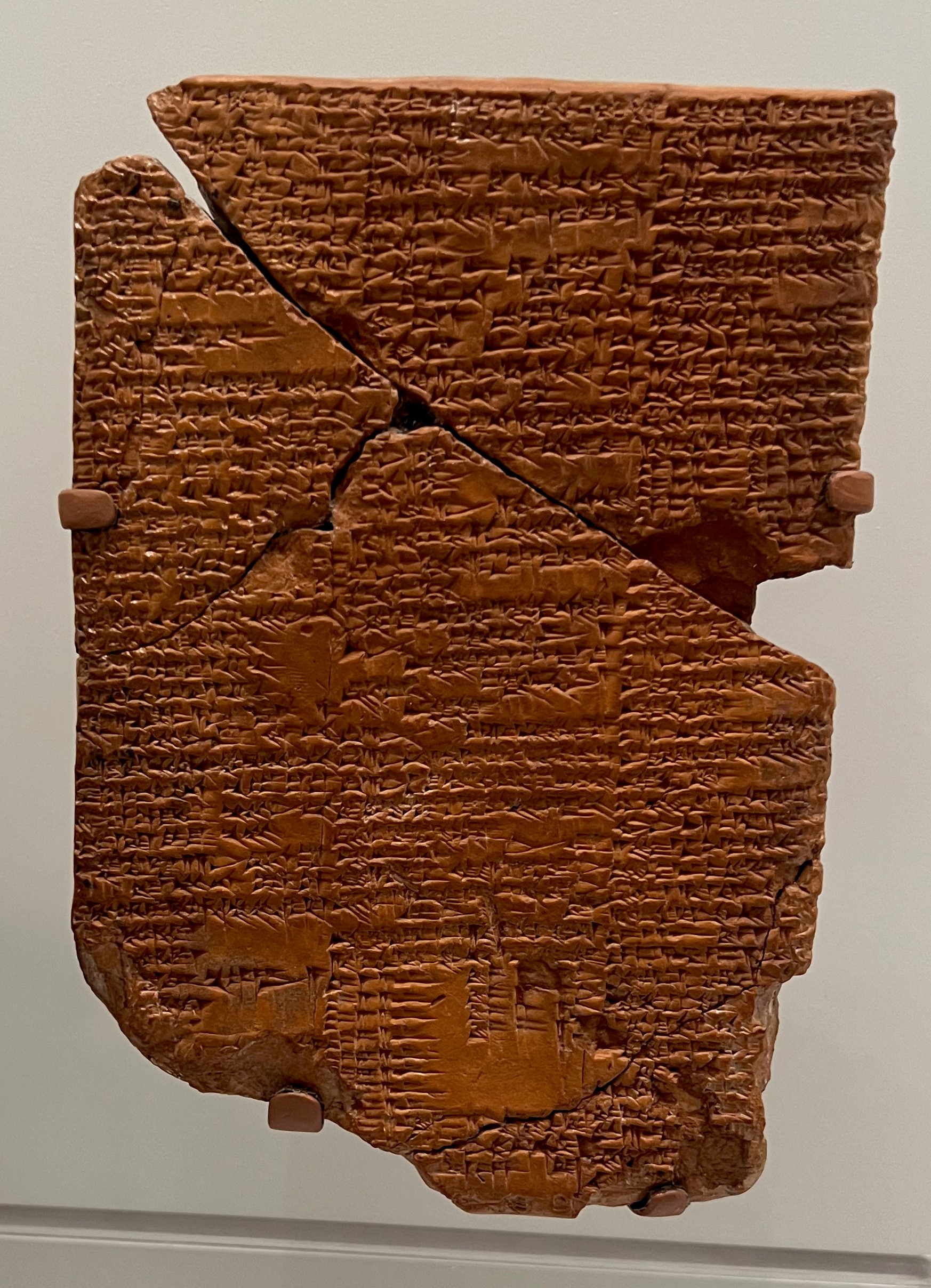
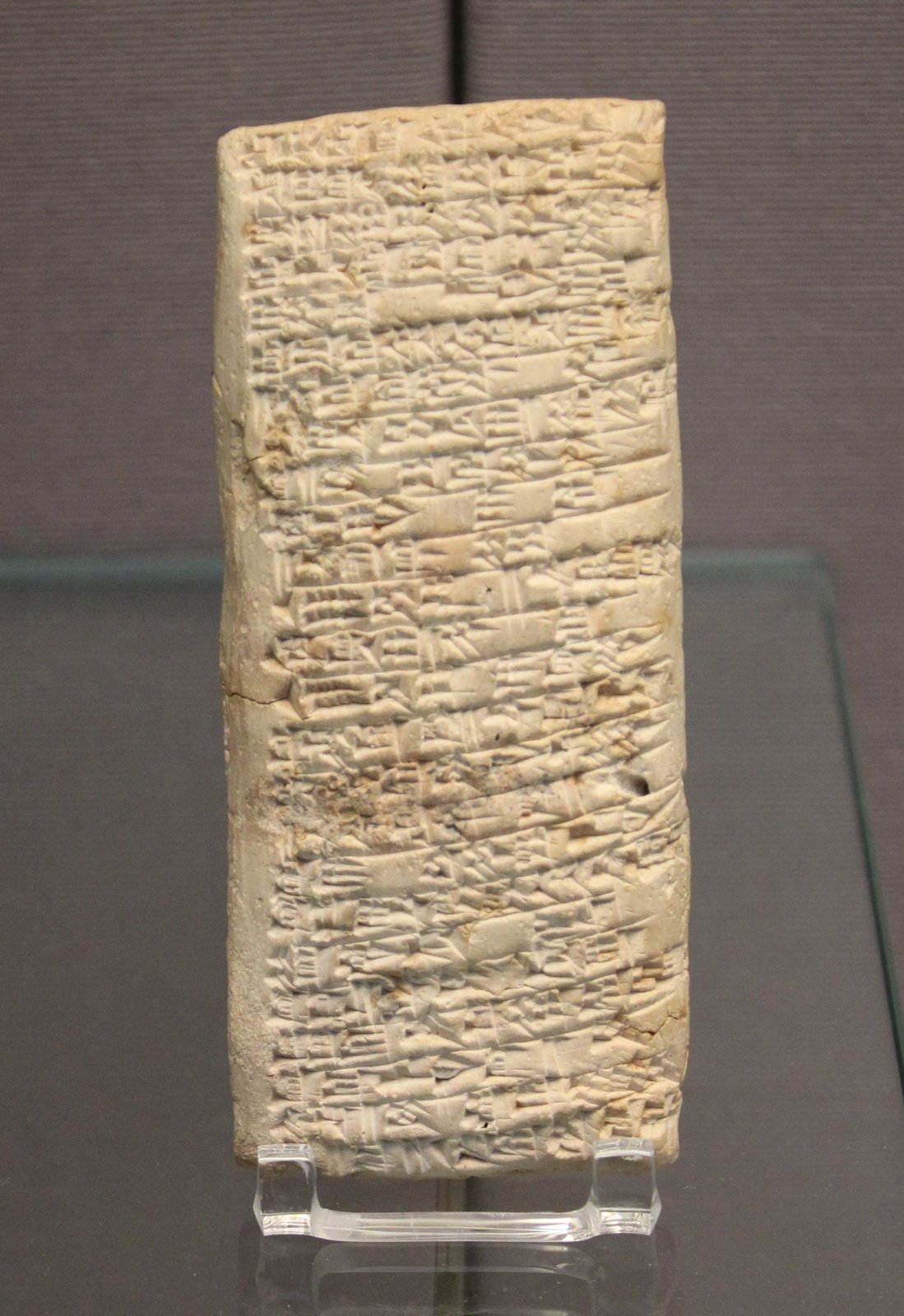
Today he is famous because of one clay tablet. It is a letter from a customer called Nanni, who accuses him of offering bad copper and of treating his messengers with contempt. The tablet was found in Ea-nasir's house by the British–American excavations of Leonard Woolley and is now in the British Museum (BM 131236). This entry sets out what the tablets show and what the modern internet legend has added. [1][2][5]
What the tablets show
Everything we know about Ea-nasir comes from clay tablets written in cuneiformCuneiformWriting with wedge-shaped signs, developed from Mesopotamian recording traditions and used for several languages from the third millennium BCE.Glossary · Click to read the explanation, the wedge-shaped signs that scribes pressed into wet clay. They were found in one house in the residential quarter of Ur that Woolley called area AH. The museum catalogue cards, now published online by the Ur Online project of the British Museum and the Penn Museum, list several letters "to Ea-nasir" from different senders, such as Muhaddum and Arbituram, together with business documents. [3]
Some tablets from the same house are dated by the year names of Rim-Sin IRim-Sin I, king of LarsaEighteenth-century BCE king in southern Mesopotamia, whose reign helps date the Ur copy of the poem.Glossary · Click to read the explanation, king of Larsa, who ruled southern Mesopotamia, Ur included, for about sixty years before HammurabiHammurabiKing of Babylon in Mesopotamia, reigning around 1792–1750 BCE. A celebrated legal text preserved on a stele and cuneiform copies bears his name.Glossary · Click to read the explanation of BabylonBabylonBabylon is an ancient city in central present-day Iraq, south of BaghdadGlossary · Click to read the explanation conquered his kingdom. A year name worked like a label for the year: instead of a number, people wrote "the year the king captured the city of Isin", so a dated tablet tells us under which king it was written. This places Ea-nasir's business around 1800–1750 BCE. The British Museum's label dates Nanni's letter to about 1750 BCE. [3][5]
We have no portrait of him, nothing in his own words, and no record of his birth or death. We know him only through letters other people sent him.
Copper from the Gulf
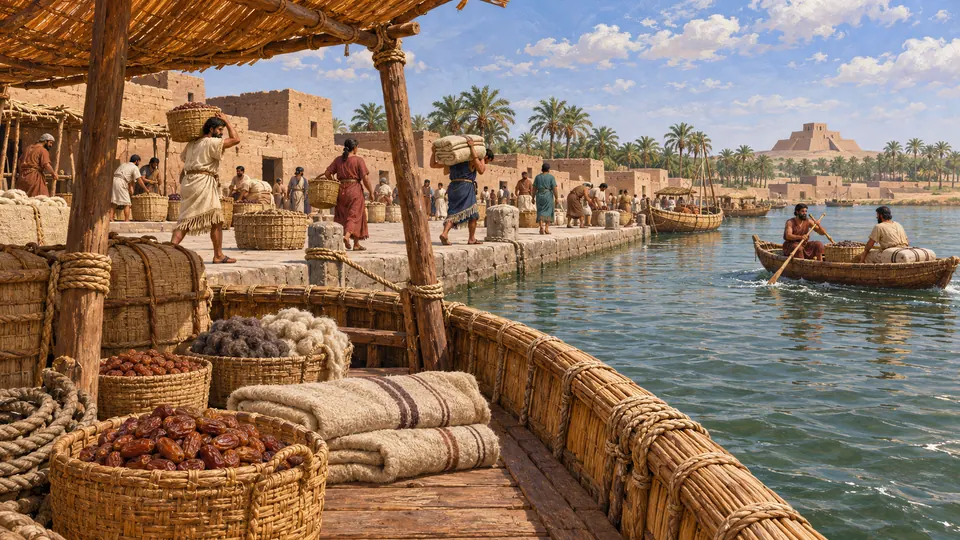
Southern Mesopotamia had no metal ores, so copper had to be brought in. Mixed with a little tin, it made bronze, a harder metal for tools, weapons and vessels. In the time of Ea-nasir much of this copper came through Dilmun, the trading land centred on today's Bahrain (see also Qal'at al-BahrainQal’at al-Bahrain, harbour and archaeological tellNorthern Bahrain site with Dilmun-period layers and a much later Portuguese fort, inscribed by UNESCO in 2005.Glossary · Click to read the explanation). [4]
Louise Dorso, who studied the cuneiform evidence for Dilmun, describes the archives of the alik Tilmun merchants of Ur. She writes that these merchants, Ea-nasir among them, probably worked for the temple of Ur, which gave them the funds for their voyages. Their main purchase was copper. The amounts could be large: one shipment weighed up to 18.33 tonnes. People from Dilmun also seem to have lived at Ur, where some of their seals have been found. [4]
The copper travelled as ingots, that is, bars or cakes of cast metal that were weighed and checked before sale. Their quality mattered, because impure copper made poor bronze. This is the background of Nanni's letter.
Nanni's complaint (BM 131236)
The tablet is a small, pale slab of unfired clay, 11.5 cm tall and 5 cm wide, about the size of a mobile phone. It is written in AkkadianAkkadianAn ancient East Semitic language written in cuneiform from the third millennium BCE; its varieties include Babylonian and Assyrian, and it served in international diplomacy.Glossary · Click to read the explanation. It was excavated in Woolley's season of 1930–31 under the field number U 16814A, entered the British Museum in 1953 (registration 1953,0411.71) and was published in 1953 as number 81 in the volume Ur Excavations Texts V. The catalogue card gives its findspot as the "chapel" of the excavated house, the name Woolley gave to a small room that he took to be a family shrine. [2][5]
The letter opens in the usual way: "Tell Ea-nasir: Nanni sends the following message." Then comes a reminder. Ea-nasir had said that he would give fine copper ingots to a man called Gimil-Sin. Instead he showed Nanni's messenger ingots that were not good and said, in effect: take them or go away. In A. Leo Oppenheim's English translation of 1967, Nanni answers:
Nanni goes on. His messengers, "gentlemen like ourselves", came to collect his bag of money, but were sent back empty-handed several times, through enemy territory. He mentions a mina of silver (about half a kilogram) that he may owe, and sets against it the copper that he and another man, Šumi-abum, had handed over to the palace on Ea-nasir's behalf, recorded on a sealed tablet kept in the temple of ShamashShamashMesopotamian god of the sun and justice, shown before Hammurabi on an eighteenth-century BCE stele preserved in the Louvre.Glossary · Click to read the explanation. He demands his money back in full. From now on, he says, he will choose the ingots one by one in his own yard and refuse any that are not of good quality. [1]
Some words are uncertain. In Oppenheim's translation the words in brackets are his own additions to make the short Akkadian clear, and he marks "owe(?)" with a question mark because the reading is not sure. [1]
What we do not know
We hear only Nanni's side. No answer from Ea-nasir is known, and we do not know how the quarrel ended. A complaint is an accusation, not a judgment. The letter itself shows a web of debts, deliveries and payments to the palace, so it may record an ordinary business dispute rather than proof of fraud. [1]
The house tells a little more. Woolley named the streets of this quarter after streets in Oxford, so Ea-nasir's house is known as No. 1 Old Street. In Woolley's description, the house had stood for a long time, but part of it had later been cut off and joined to the house next door. Some scholars read this as a sign of falling fortunes. Others think the house was divided between heirs after the owner's death. Both are guesses. [3][5]
From tablet to internet legend
In February 2015 a photograph of the tablet in the British Museum was posted on Reddit and tumblr and spread around the world as "the oldest customer complaint". The archaeologist GabrielGabriel / JibrīlA Semitic theophoric name for an interpreter of visions in Daniel and a messenger in Luke; named Jibrīl in the Qurʾan. His functions depend on each textual context.Glossary · Click to read the explanation Moshenska, who studied this meme (a joke that people copy and change again and again online), notes that it adds a second story to the tablet: that Ea-nasir kept his angry letters as trophies. He calls this idea likely inaccurate. [5] A simpler explanation is that letters stayed with the person who received them, like any other business papers.
Moshenska also points out that the joke tends to make Ea-nasir, not Nanni, the hero of the story, and that the figure of the cheating trader can echo old Western stereotypes about people of the Middle East. For the historian, Ea-nasir is something simpler and rarer: an ordinary merchant of Ur whose name, house and business problems survive after almost four thousand years. [5]
References and notes (5)
- A. Leo Oppenheim, Letters from Mesopotamia: Official, Business, and Private Letters on Clay Tablets from Two Millennia (Chicago: University of Chicago Press, 1967; open-access reissue by the Institute for the Study of Ancient Cultures) Old Babylonian letters, section “Trade”, letter no. 12 (UET 5 81), pp. 82–83: the full English translation of Nanni's letter to Ea-nasir, read from the scanned pages. Return to the text ↑
- Ur Online (British Museum and Penn Museum), object record “16814A | 1953,0411.71” Whole record: catalogue card, findspot “House 4 (Chapel) A.H”, season 9 (1930–1931), clay, unfired, L. 115 mm, W. 50 mm, BM 131236, registration 1953,0411.71, references to Ur Excavations Texts V (Figulla and Martin 1953) and Ur Excavations VII (Woolley and Mallowan 1976). Return to the text ↑
- Ur Online (British Museum and Penn Museum), excavation context “House IV” and “No. 1 Old Street”, area AH, Ur Context descriptions (House IV mostly covering No. 1 Old Street; Woolley's description of No. 1 Old Street) and the list of objects from House IV with their catalogue cards: letters to Ea-nasir from Muhaddum and Arbituram (UET 5 29, UET 5 7) and tablets dated by year names of Rim-Sin. Return to the text ↑
- Louise Dorso, “Du Pays de Cocagne au pays oublié ? Dilmun / Bahreïn dans les sources cunéiformes”, Arabian Humanities 19 (2024) Paragraphs 3–5: the alik tilmun merchants of Ur and Ea-nasir, funding by the temple of Ur, copper as the main import, the 18.33-tonne cargo, Dilmun people and seals at Ur. Return to the text ↑
- Gabriel Moshenska, “The Legend of Ea-Naṣir: How a Babylonian Businessman Became an Internet Meme”, Journal of Contemporary Archaeology 12.1 (2026): 52–76 (author's accepted manuscript, UCL Discovery) Whole article, especially “The Complaint Tablet” (the tablet, the AH quarter and No. 1 Old Street, the alik Tilmun, the museum label “About 1750 BC”), “Ea-Naṣir Finds Fame” (the 2015 posts and the “hate mail” idea), the section on stereotypes, and the conclusion. Return to the text ↑
Suggest a correction · Suggest a source for this record
Cite this record
IL Archive, «Ea-nasir», https://ilarchive.com/en/people/ea-nasir
Continue reading