Site
The Gipar at Ur
- Names
- E-gig-par · Egipar · Gig-par-ku · Gipar · Gipar-ku · Giparu
- Timeline
- From 2300 BCE to 539 BCE
- Region
- Mesopotamia
The house of the high priestess of the moon god at Ur, with a temple of the goddess Ningal inside its walls. Kings rebuilt it for more than 1,500 years, and Leonard Woolley excavated it in the 1920s.
Estimated reading time: 6 min Published Last reviewed:
Share article
Text
Introduction
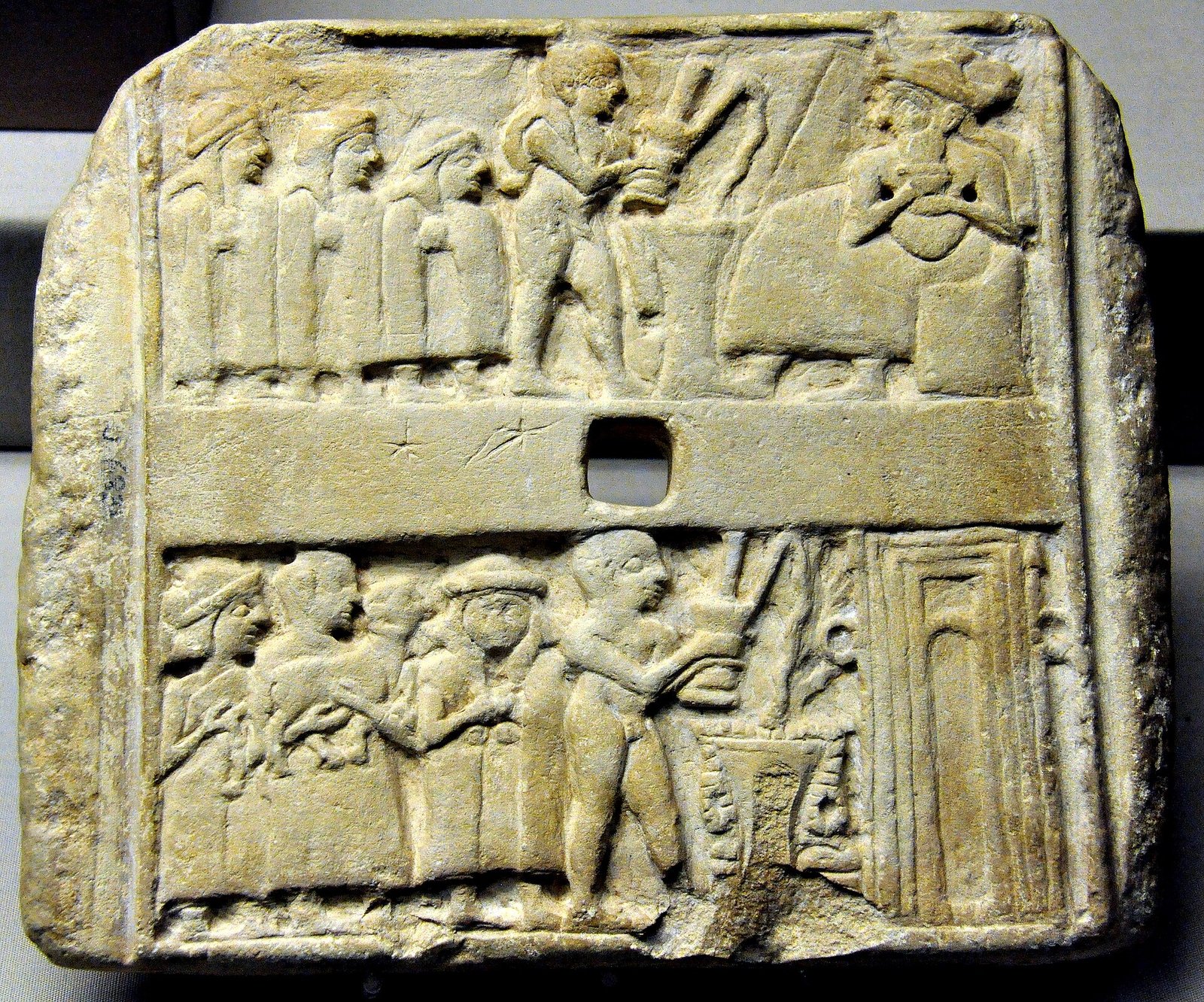
The gipar was the official house of the high priestess of NannaNanna / Su’en / SinMesopotamian moon god known as Nanna, Su’en and Sîn/Sin. Worshipped especially at Ur and Harran, he is associated with the crescent and lunar cycle; names and myths have different histories.Glossary · Click to read the explanation, the moon god of UrUr of the ChaldeansCity named in Genesis’s account of Abraham’s family, commonly associated with archaeological Ur near Nasiriyah in southern Iraq.Glossary · Click to read the explanation. It stood in the sacred quarter of the city, close to the god's own temple and his great zigguratZigguratZiggurat: a monumental stepped or terraced cult structure of ancient Mesopotamia. Not every raised temple platform was a ziggurat, and the form and specific use of lost upper stages often remain uncertain.Glossary · Click to read the explanation, and it held a temple of the goddess Ningal, Nanna's wife, inside its walls. Its most famous resident was Enheduanna, a daughter of Sargon of AkkadSargon of AkkadSargon of Akkad was a historical third-millennium BCE ruler and founder of the Akkadian dynasty; royal accounts of his campaigns must be distinguished from later stories of his birth and rise.Glossary · Click to read the explanation, around 2300 BCE. [1][2][3]
It was rebuilt again and again for more than 1,500 years. In the 1920s the joint expedition of the British Museum and the Penn Museum, led by Leonard Woolley, uncovered its best-preserved phase. [1][4][5]
A word and a place
Gipar is a SumerianSumerian languageAncient language of southern Mesopotamia, clearly attested in third-millennium BCE texts and maintained in learning and ritual after its spoken use declined.Glossary · Click to read the explanation word (in AkkadianAkkadianAn ancient East Semitic language written in cuneiform from the third millennium BCE; its varieties include Babylonian and Assyrian, and it served in international diplomacy.Glossary · Click to read the explanation, gipāru). Ancient writers used it for more than one sacred building. A collection of temple hymns praises the gipar of Nanna's temple at Ur as a "princely shrine", and names another gipar in a shrine of the moon god at Gaesh. [6]
Poems about UrukUrukAncient city at Warka in southern Iraq, a major urban centre around 3200 BCE that preserved early writing and accounting tablets.Glossary · Click to read the explanation place a gipar in the sacred area of the goddess InannaInanna / IshtarA prominent Mesopotamian goddess whose Sumerian name Inanna became associated with Akkadian Ishtar across diverse traditions. She was associated with desire, war, royal authority and Venus, while local forms and genealogies varied among texts.Glossary · Click to read the explanation. In the poem Gilgamesh and the Bull of Heaven, the goddess refuses to let GilgameshGilgameshA king of Uruk in Mesopotamian tradition and the hero of Sumerian poems and a multi-tablet Akkadian epic, with his companion Enkidu, the loss of a friend and the search for life. In standard Tablet XI, Utnapishtim tells him of the flood.Glossary · Click to read the explanation "pronounce verdicts in my holy gipar". The building at Ur is the one that has been excavated and described in detail. [6][7]
The high priestess
The woman who lived in the gipar at Ur held the title en, a Sumerian word that also means "lord" or "ruler". She was in charge of the temple's land and wealth, and she had her own household: a few seals name Enheduanna's hairdresser, the manager of her estate and her scribes. On a stone disk she calls herself "the spouse of Nanna", which may mean that in some ritualsRitualAn organised or distinguished practice meaningful to a community; it may leave traces, but its form alone does not reveal an associated doctrine.Glossary · Click to read the explanation she stood for the goddess Ningal. [3]
By tradition, the king chose his own daughter for the post. Inscriptions name several holders over the centuries: Enheduanna; Enmenanna, a daughter of Naram-Sin of Akkad; Enanatuma, a daughter of King Ishme-Dagan of Isin; Enanedu, a sister of Rim-Sin I, king of LarsaRim-Sin I, king of LarsaEighteenth-century BCE king in southern Mesopotamia, whose reign helps date the Ur copy of the poem.Glossary · Click to read the explanation; and, last of all, En-nigaldi-Nanna, the daughter of Nabonidus. [1][4][5]
The building Woolley found
The oldest walls that can be dated go back to the kings of the Third Dynasty of Ur. Door stones of King Ur-Namma (about 2112–2095 BCE) name "the Gipar-ku" of Ningal, which is why Woolley called the building by that name. Ur-Namma's grandson Amar-Suena rebuilt it and wrote on its door stones that he had built "the brilliant gipar, her beloved temple" for Ningal. [4]
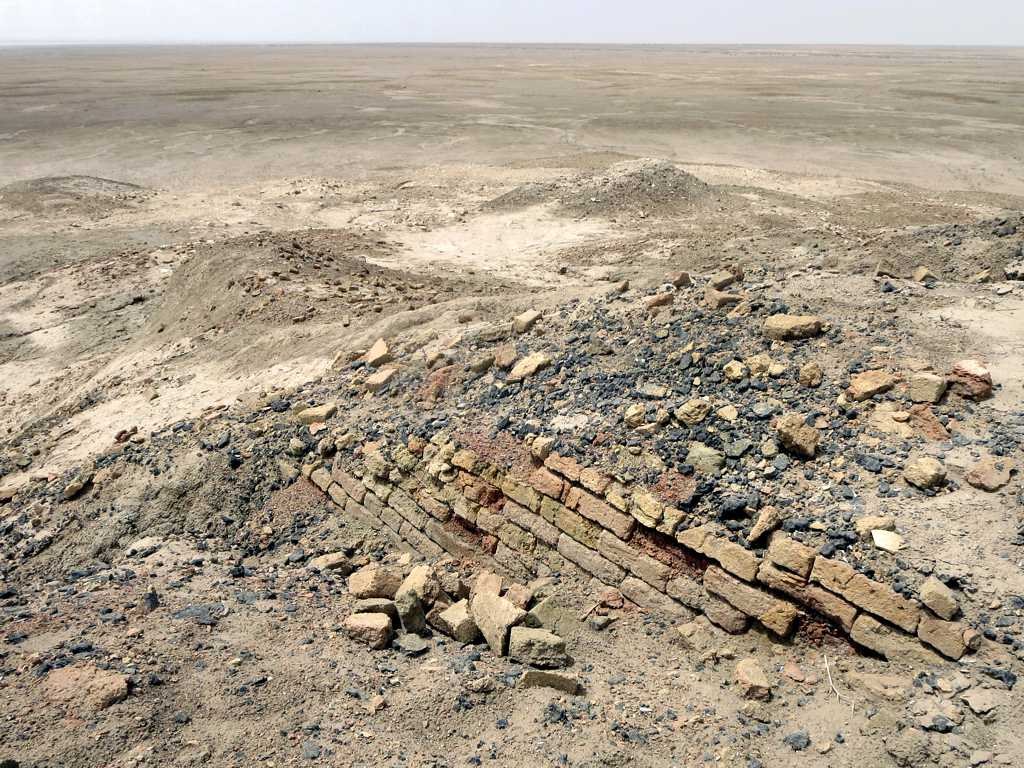
When the Elamites sacked Ur, around 2004 BCE, the building was destroyed. Less than a century later, the high priestess Enanatuma rebuilt it on exactly the old foundations, in the days of Gungunum, king of Larsa. This time the walls were made of baked brick instead of sun-dried mud brick. [4]
Her building was almost square, about 79 by 76 metres, a little smaller than a football pitch. A thick double wall surrounded it, and a long passage cut it into two parts, each with its own outer door. Woolley found:
- shrines with bases for statues, altars and paved open courts;
- in front of one sanctuary, the broken pieces of a small statue of Ningal dedicated by Enanatuma;
- a small chapel where stone slabs bearing Amar-Suena's dedication had stood; the king had been worshipped as a god in his own lifetime;
- kitchens with a fireplace and a cooking range, and store rooms;
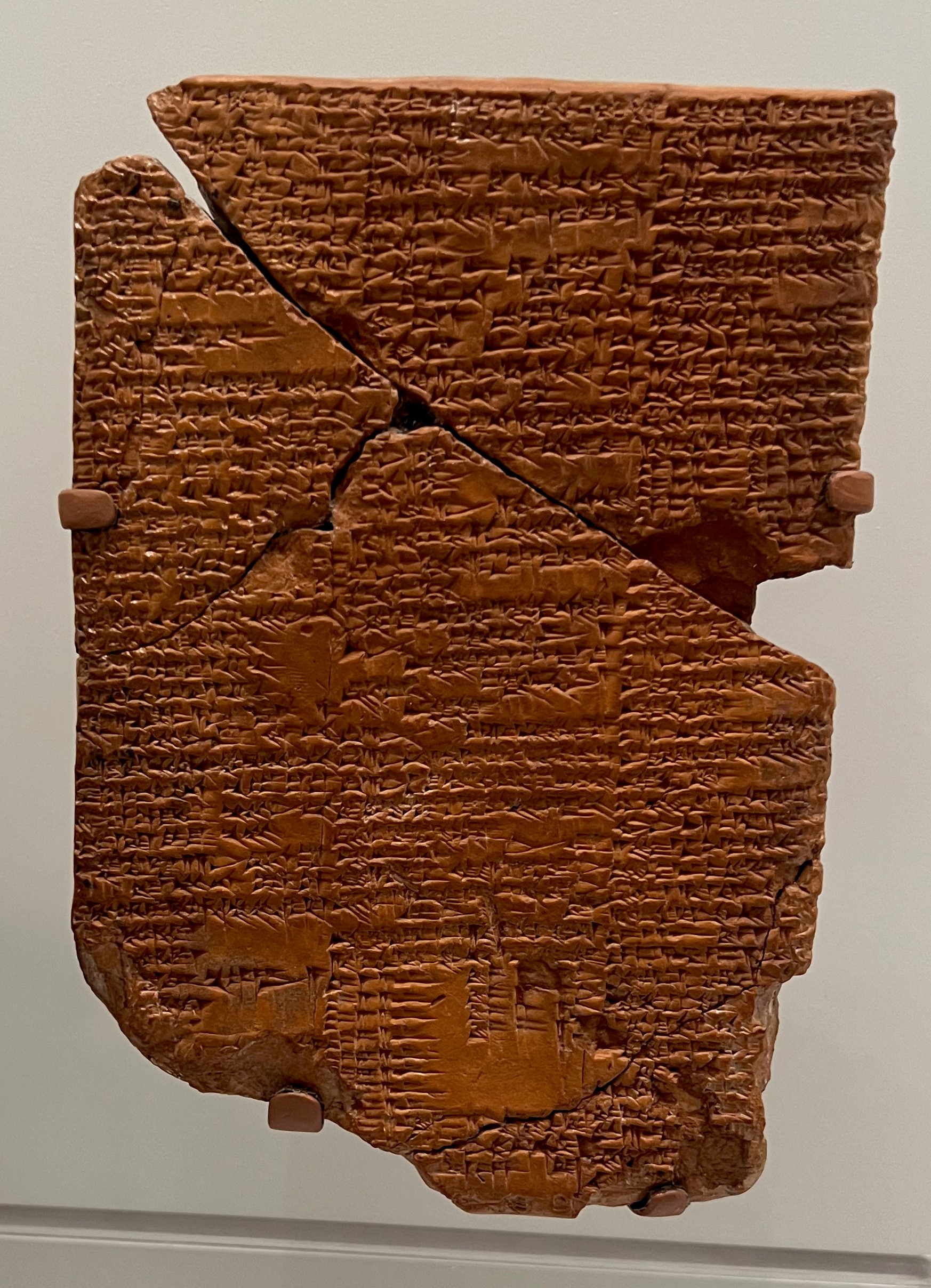
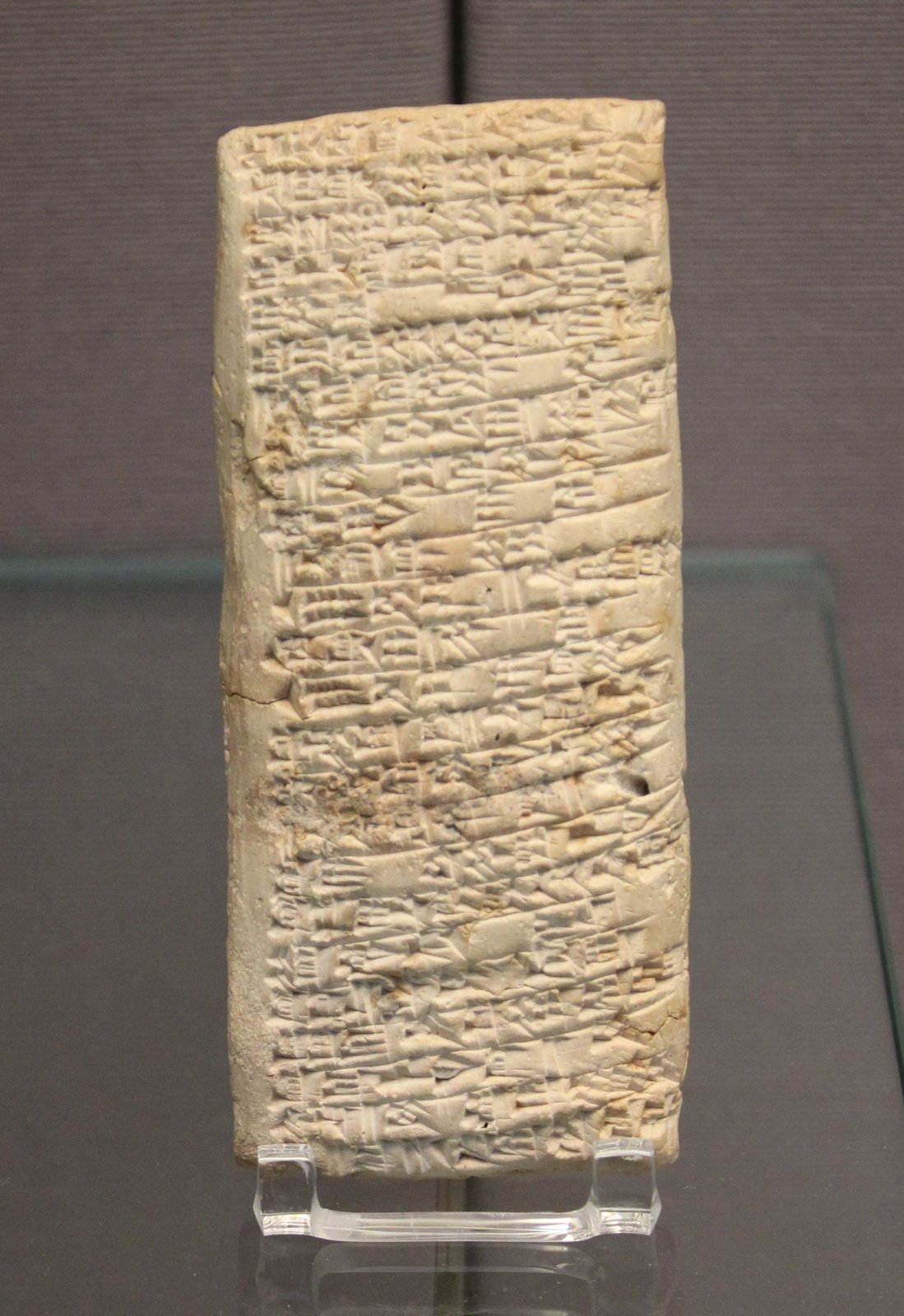
- many clay tablets, most of them business records, some dated almost year by year. [4]
One block of rooms had brick vaults built under each floor, all of them robbed long ago. In one place Woolley took them for the tombs of successive high priestesses, with their living rooms above. Elsewhere he doubted that the rooms were a house at all. A faience mask and a very fine faience bowl came from one of these tombs. A later king's inscription speaks of a burial ground of earlier priestesses beside the gipar. [4][5]
Woolley described the building mainly as a temple of Ningal. Later scholars read it as the priestess's official house, with her living quarters, a large kitchen, workrooms, an archive, a burial place for former priestesses, and shrines. [3][4]
Fire, and the disk of Enheduanna
The tablets in the building run through the reign of HammurabiHammurabiKing of Babylon in Mesopotamia, reigning around 1792–1750 BCE. A celebrated legal text preserved on a stele and cuneiform copies bears his name.Glossary · Click to read the explanation and stop in the tenth year of his son Samsu-iluna. In the next year, about 1740 BCE, the cities of the south rebelled and Samsu-iluna "destroyed the walls of Ur". Woolley found the temple of Ningal burnt and looted: its inner rooms were full of wood ash and smashed stone vessels from its treasury. Later builders, under the kings of BabylonBabylonBabylon is an ancient city in central present-day Iraq, south of BaghdadGlossary · Click to read the explanation and then the Kassites, built on parts of the site again. [4]
The most famous find from the gipar is the stone disk of Enheduanna. It lay in pieces in the rubbish above one of the rooms, in a level centuries later than the priestess it names. It is now in the Penn Museum in Philadelphia (B16665). [2][4]
Nabonidus and his daughter
More than a thousand years later, Nabonidus (556–539 BCE), the last king of the Neo-Babylonian empire, revived the office. In a long inscription on a clay cylinder he explains how an eclipse of the moon showed him that the moon god wanted a high priestess. Omens chose his own daughter, whom he named En-nigaldi-Nanna. [5]
He found the Egipar, as he calls it, in ruins and overgrown with date palms and orchards. He cleared it, traced the old foundations and rebuilt it "as in ancient times". In the ruins he found an inscription of Enanedu, the sister of Rim-Sin, who had renewed the building and put a wall around the burial ground of the earlier priestesses. Nabonidus walled that burial ground again and built a house for his daughter beside the Egipar. [5]
Woolley found bricks of Nabonidus that call the building "a house for the priestess", and a gate stone that calls it "the house of the entu", the Akkadian title of the high priestess. In one room lay objects far older than the room itself, among them a Kassite boundary stone, a fragment of a statue of King Shulgi and a clay drum copying old inscriptions. Woolley took the room for a small museum of local antiquities, linked to the priestess and to a school. It is a famous idea, but it rests on his reading of one room. He also thought she may really have lived in a larger building just outside the sacred enclosure. [1]
A symbol of the city
In the Lament for Ur, a poem about the fall of Ur at the end of the Third Dynasty, the empty gipar stands for the ruin of the whole city:
Lament for Urim, lines 348–358, translation of the Electronic Text Corpus of Sumerian Literature. [8]
What remains uncertain
- The word: the texts do not show that every gipar, at Ur, Uruk or Gaesh, had the same plan or purpose. [6][7]
- The rooms: Woolley's names for many rooms are guesses from their plans; the block of vaults may have been living rooms, tombs, or both. [3][4]
- Before Ur-Namma: Enheduanna lived in a gipar around 2300 BCE, but the building of her time has not been identified among the excavated walls. [3][4]
References and notes (8)
- Sir Leonard Woolley, with a contribution by M. E. L. Mallowan, Ur Excavations IX: The Neo-Babylonian and Persian Periods (London: Trustees of the British Museum and the University Museum, 1962) pp. 15–19: the E-gig-par of Nabonidus, the stamped bricks ("a house for the priestess of Nannar at Ur") and the gate socket ("the house of the entu"), Bel-shalti-Nannar (En-nigaldi-Nanna), the room with older objects read as a museum and school, Woolley's suggestion of a larger residence outside the Temenos, and the site after Cyrus; p. 11 on the Neo-Babylonian Temenos wall over the old Gig-par-ku. Return to the text ↑
- Penn Museum (University of Pennsylvania Museum of Archaeology and Anthropology), "Disc of Enheduanna", object B16665, collection record Whole record: field number U.6612, findspot in a chamber of the Larsa temple of Ningal called the Gig-par-ku, date c. 2300 BCE, calcite, diameter 25 cm, British Museum/University Museum Expedition to Ur, 1926. Return to the text ↑
- Sophus Helle, "The Historical Enheduana", enheduana.org (companion website to Helle, Enheduana: The Complete Poems of the World's First Author, Yale University Press, 2023) Sections on the gipar (courts, living quarters, kitchen, workspaces, archive, burial site, shrine), the title en and the economic role of the office, the seals of her household, and the disk's "spouse of Nanna" and the link to Ningal. Return to the text ↑
- Sir Leonard Woolley and Sir Max Mallowan, Ur Excavations VII: The Old Babylonian Period, ed. T. C. Mitchell (London: British Museum Publications for the Trustees of the two Museums, 1976) pp. 8–9 (the Gipar-ku among the public buildings: Amar-Suena, En-ana-tuma, 80 × 76 m, the two parts, the Amar-Suena chapel, the vaults read as priestesses' tombs); pp. 12–13 (tablets to Samsu-iluna year 10, the burning of the temple of Ningal); pp. 40–43, 51–53 and 56–57 (Ur-Nammu and Amar-Suena door sockets, Me-Enlil's bowl, the Larsa rebuilding by En-ana-tuma under Gungunum, the vaults under rooms B.10–15 and Woolley's doubts, the Enmenanna gate socket, the cross-passage to temple, kitchens and stores, the Ningal statuette U.6352, the find of the Enheduanna disk); catalogue entries U.6612, U.6691, U.6829 and U.6831. Return to the text ↑
- Frauke Weiershäuser and Jamie Novotny, "Nabonidus 34" (En-nigaldi-Nanna Cylinder, YBC 2182), Royal Inscriptions of the Neo-Babylonian Empire, in Royal Inscriptions of Babylonia online (RIBo), Oracc, 2015–20 Edition and translation, i 1–ii 43: the eclipse, the extispicy choosing his daughter En-nigaldi-Nanna, the stele of Nebuchadnezzar I, the ruined Egipar overgrown with palms and orchards, the inscription of Enanedu (daughter of Kudur-mabuk, sister of Rim-Sin), the burial ground of the earlier entu-priestesses, the house built for his daughter, the closing prayers. Return to the text ↑
- J. A. Black, G. Cunningham, E. Robson and G. Zólyomi, "The temple hymns", c.4.80.1, The Electronic Text Corpus of Sumerian Literature, Oxford, 1998–2006 Lines 109–117 (Nanna's E-kiš-nu-ĝal at Urim: "jipar, princely shrine") and 158–167 (Nanna's Kar-zida at Gaeš: "your jipar is founded in purity"). Return to the text ↑
- J. A. Black, G. Cunningham, E. Robson and G. Zólyomi, "Gilgameš and the Bull of Heaven", c.1.8.1.2, The Electronic Text Corpus of Sumerian Literature, Oxford, 1998–2006 Whole translation; the jipar in version A 5–11 and B 7–18 (unknown provenance), Me-Turan A 8–39, and the Ur III Nippur fragments. Return to the text ↑
- J. A. Black, G. Cunningham, E. Robson and G. Zólyomi, "The lament for Urim", c.2.2.2, The Electronic Text Corpus of Sumerian Literature, Oxford, 1998–2006 Lines 348–358 (the en priest and the jipar). Return to the text ↑
Suggest a correction · Suggest a source for this record
Cite this record
IL Archive, «The Gipar at Ur», https://ilarchive.com/en/sites/gipar
Continue reading
Related readings