Enheduanna Chapter 1
The Song at Night
The priestess Enheduanna calls on Inanna after a rival drives her from the sanctuary. In the night, she finds her voice and sings again.
SourcesTurn the pages with the arrows, the arrow keys or a swipe.
UR
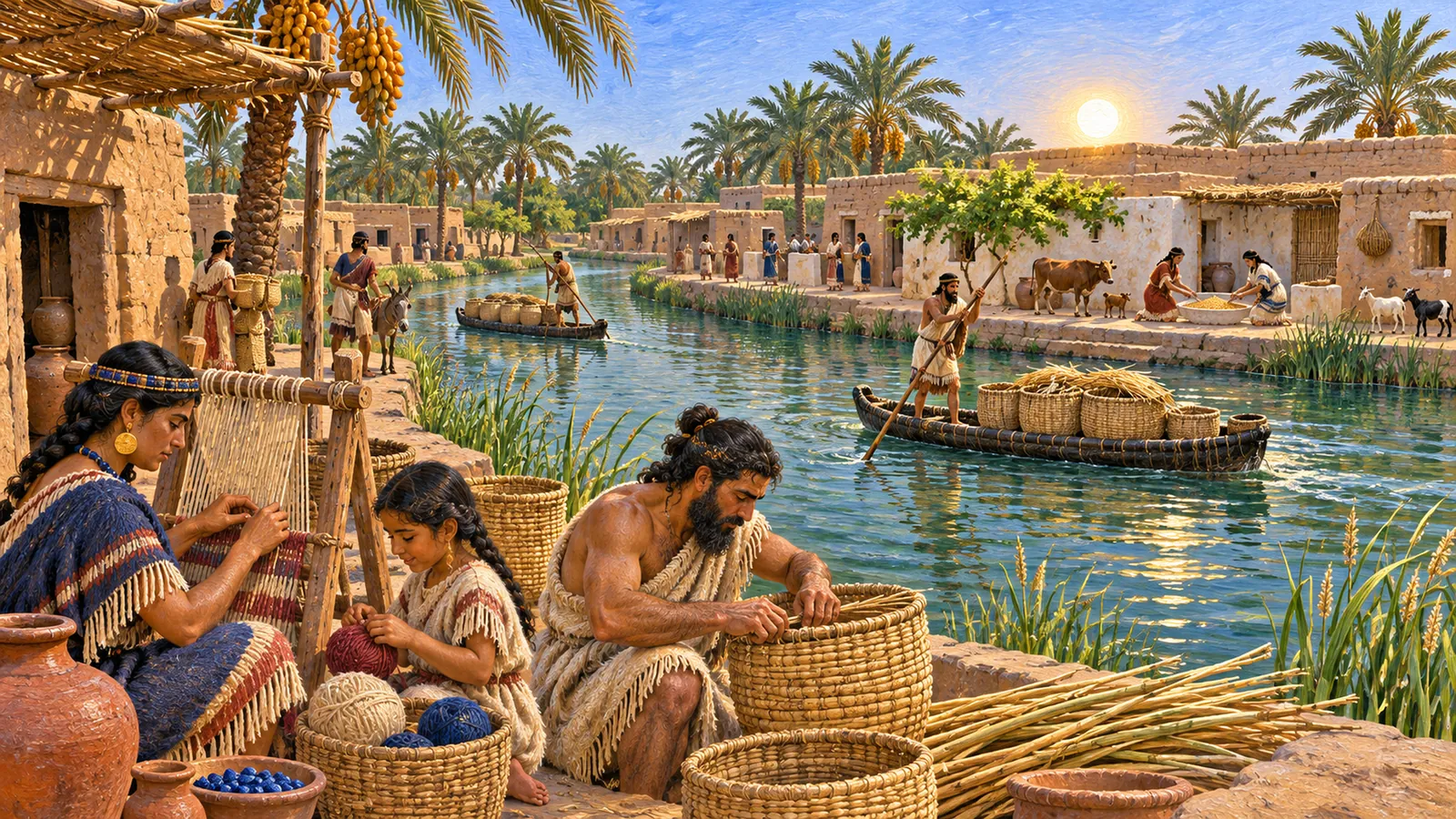
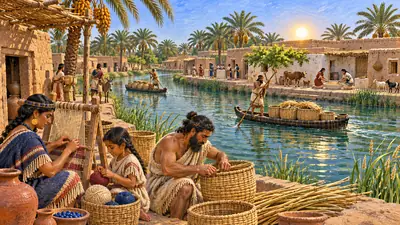
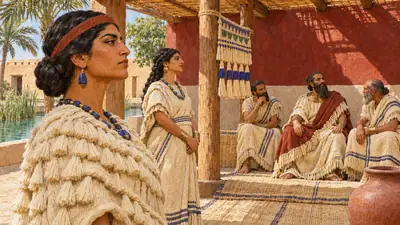
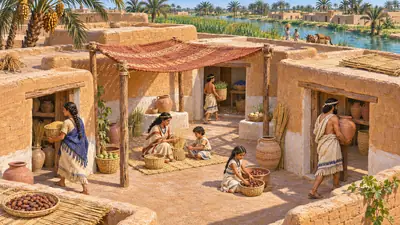
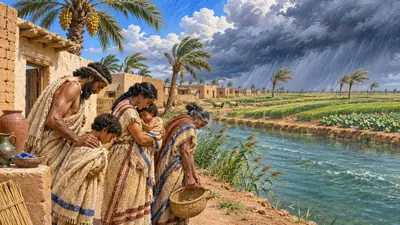
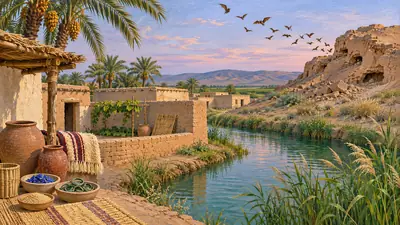
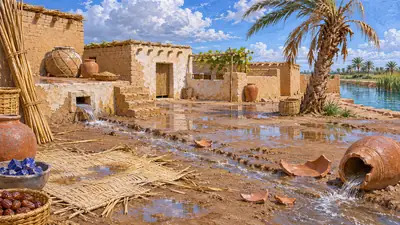
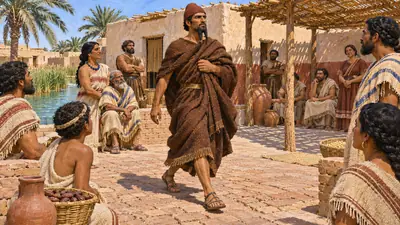
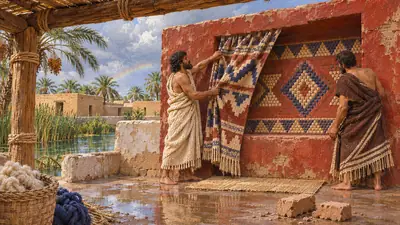
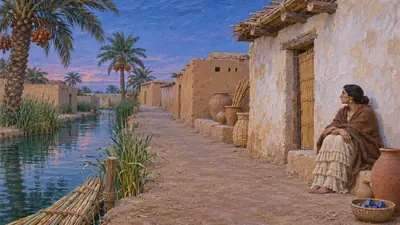
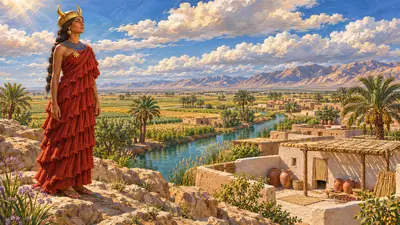
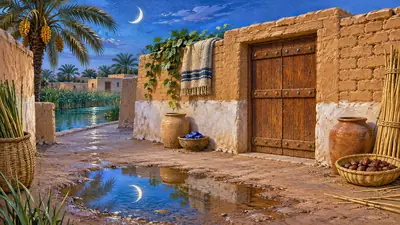
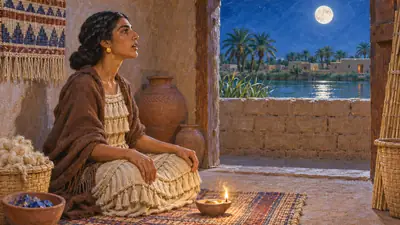
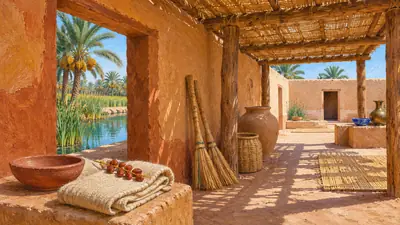
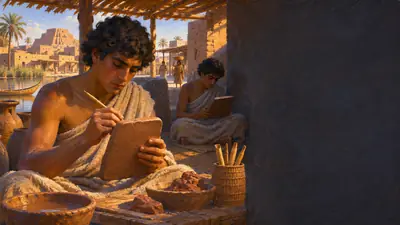
In the days of Sargon of Akkad, boatmen carried baskets along the canals of Ur. Beyond the palms stood the low rooms where the moon god was served.
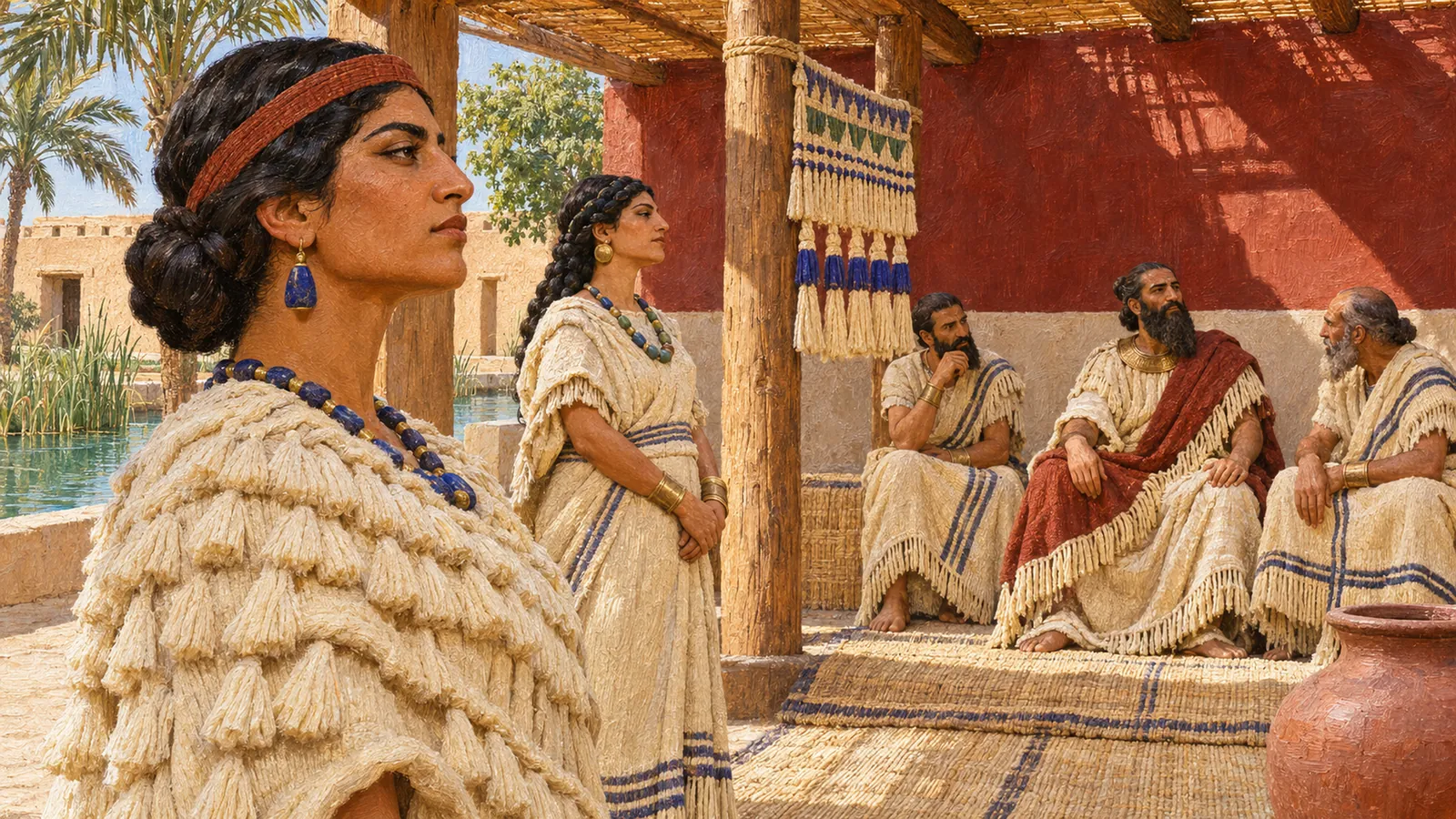
Sargon was the king who brought many cities under Akkadian rule. His daughter Enheduanna held the office of en, high priestess of the moon god Nanna, at Ur.
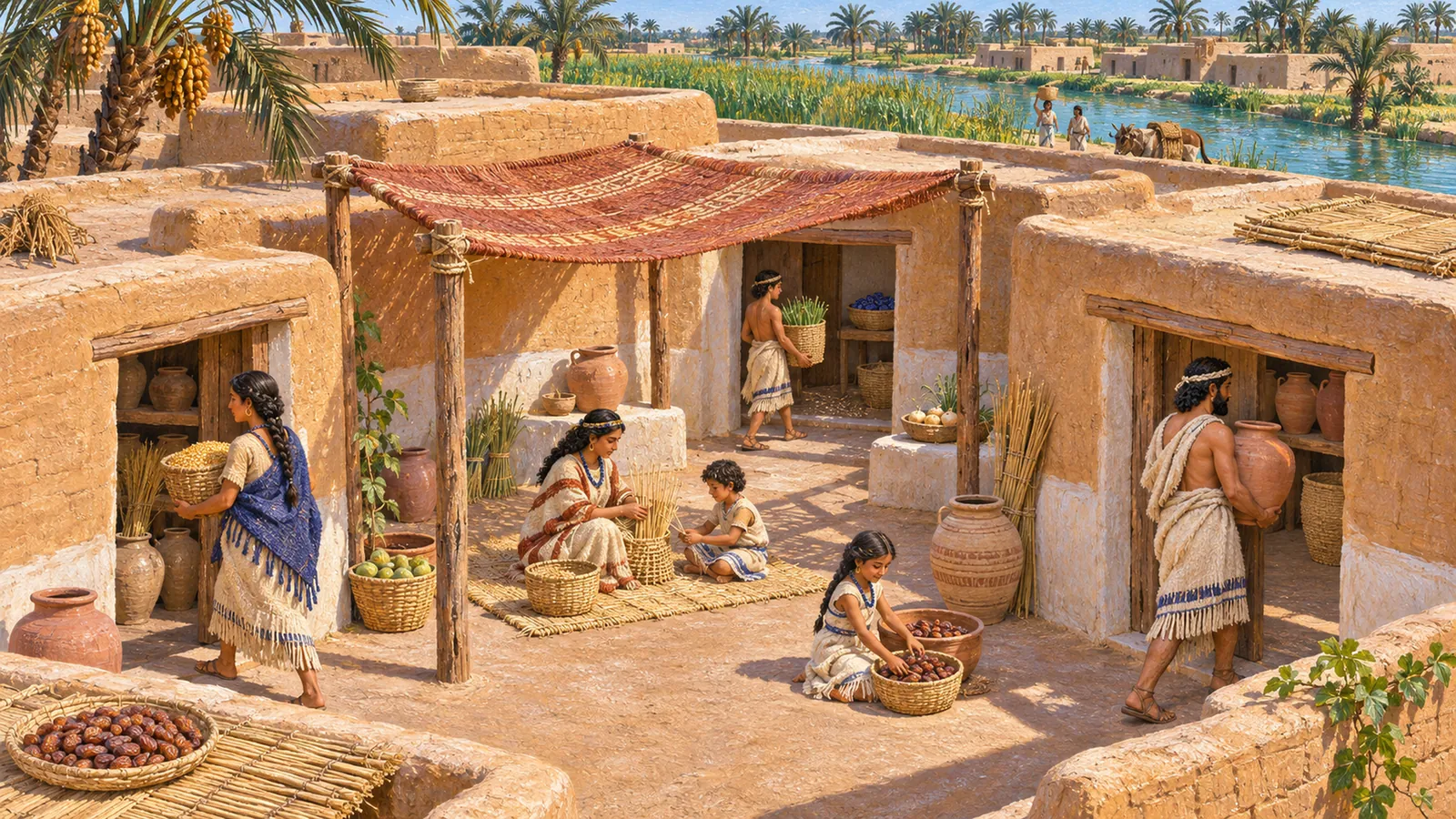
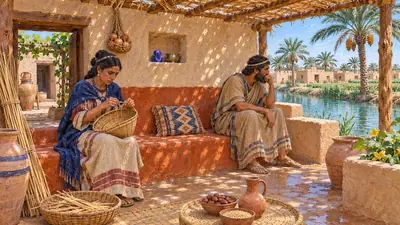
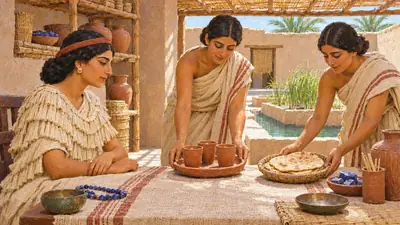
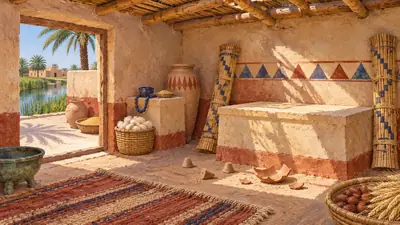
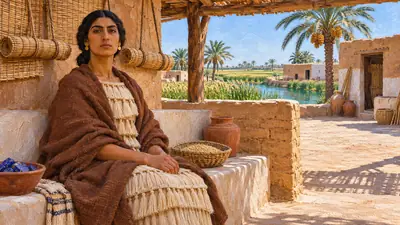
Her residence in the temple precinct was called the gipar. Its rooms and courtyards belonged to her office, as did offerings brought in by hand and songs sung aloud.
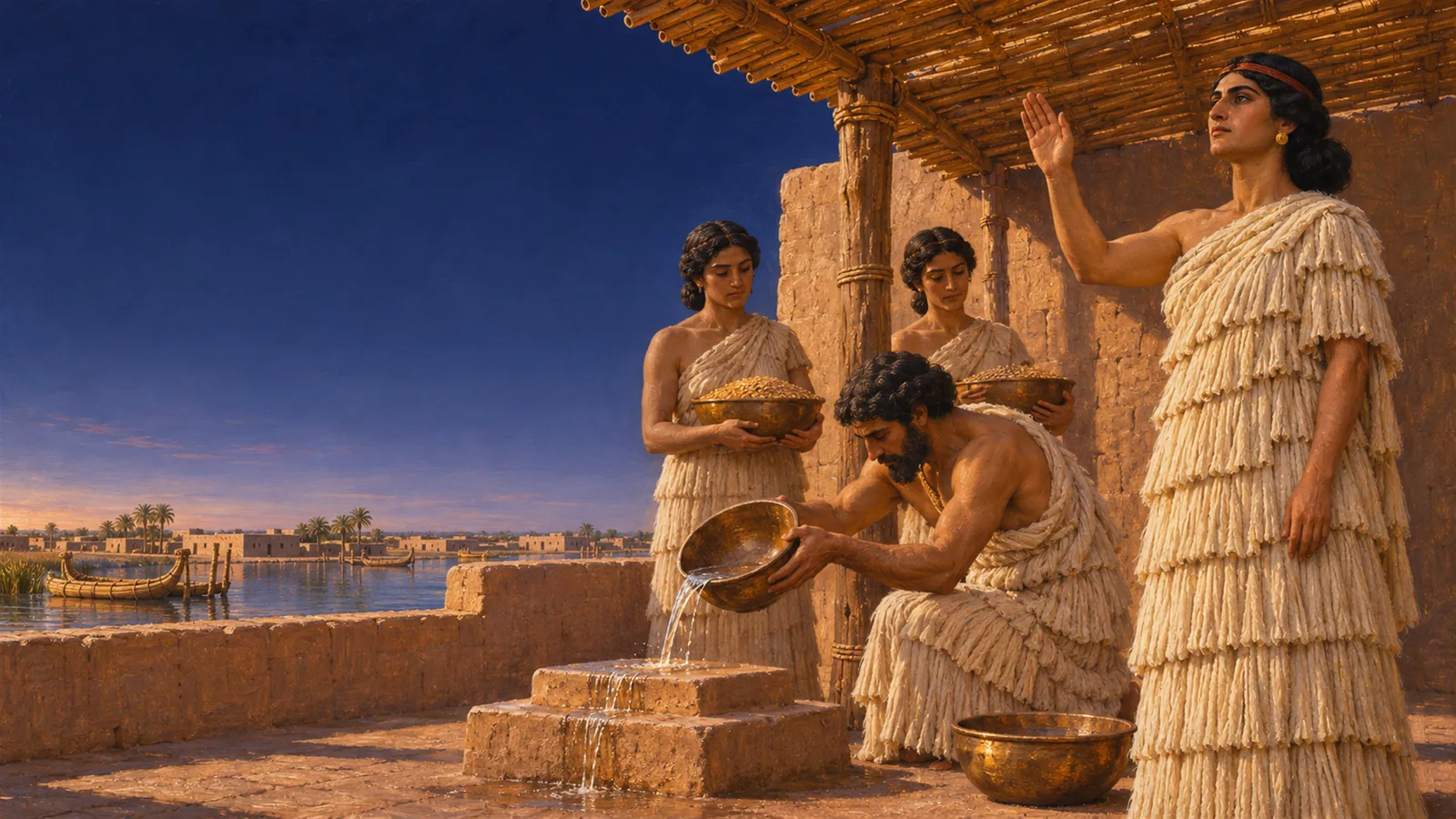
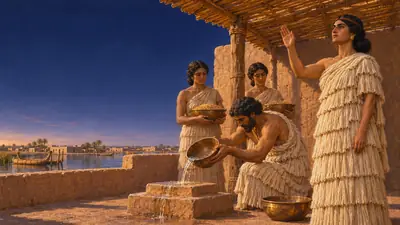
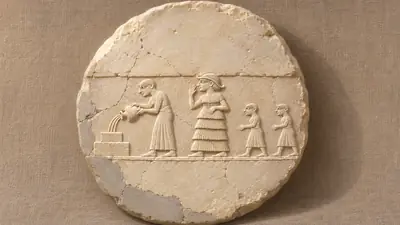
The priestess had a place in the ceremonies of Ur. A carved stone made in her lifetime shows her as a libation is poured, one hand raised.

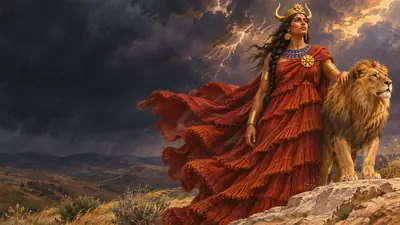
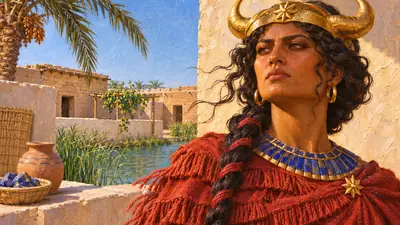
The hymn begins with another figure. Its singer calls to Inanna, bright in her headdress and breast ornament, and pictures her gathering seven divine powers close to her heart.

The Sumerian poem calls those powers me. A person can hear something of their force in the thunder of Ishkur and in floodwater pouring down from the mountains.
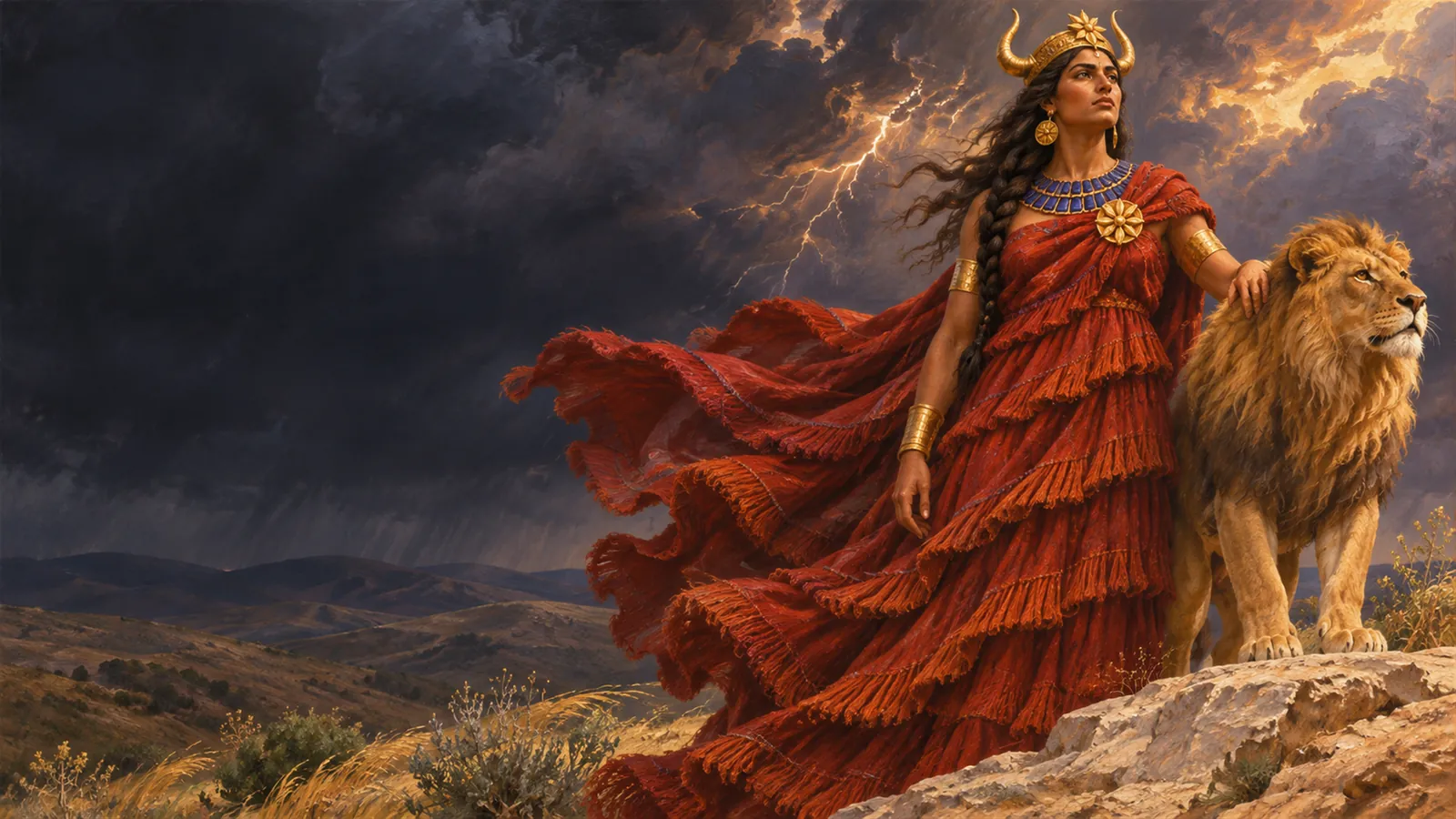
The singer gives Inanna the sting of a dragon and the might of a storm. She pictures the goddess riding a beast, with fire falling upon the land.
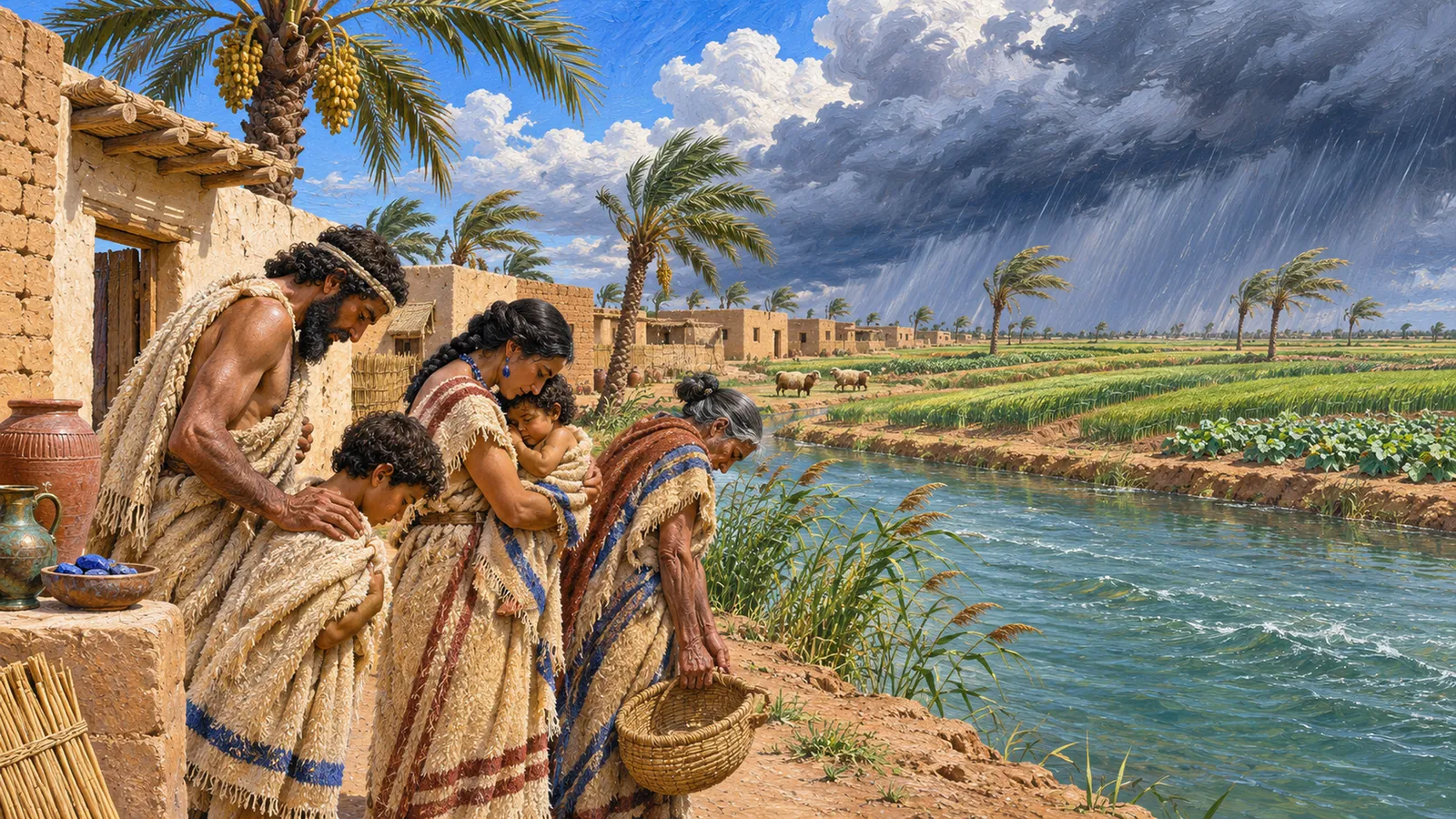
An has bestowed power on Inanna, and her rites are beyond understanding. In the hymn, whole lands lower their heads and stand silent when the goddess draws near.
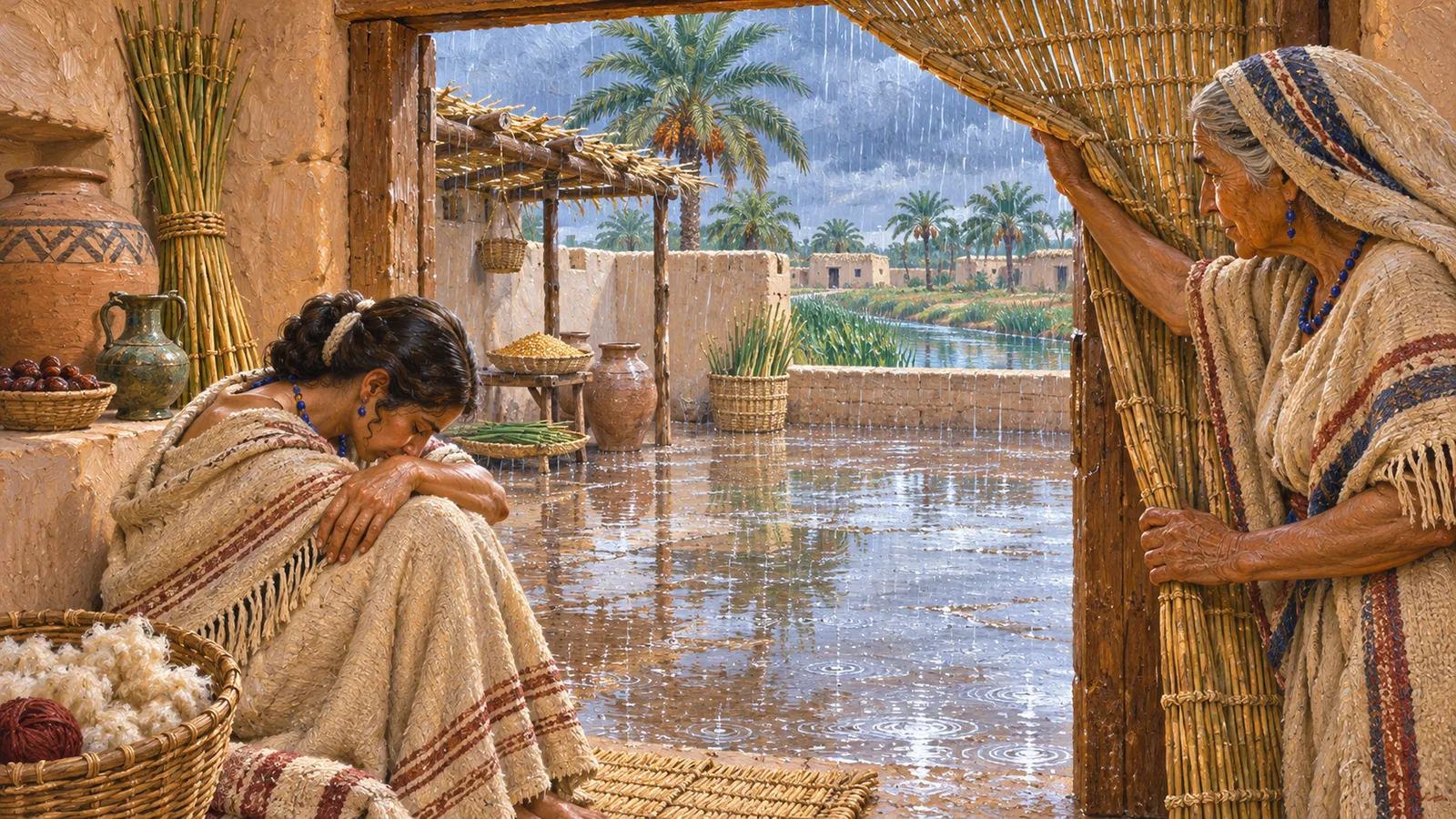
Inanna comes across a threshold of tears. She walks into what the singer calls the house of laments, where the sound that greets her is already full of grief.
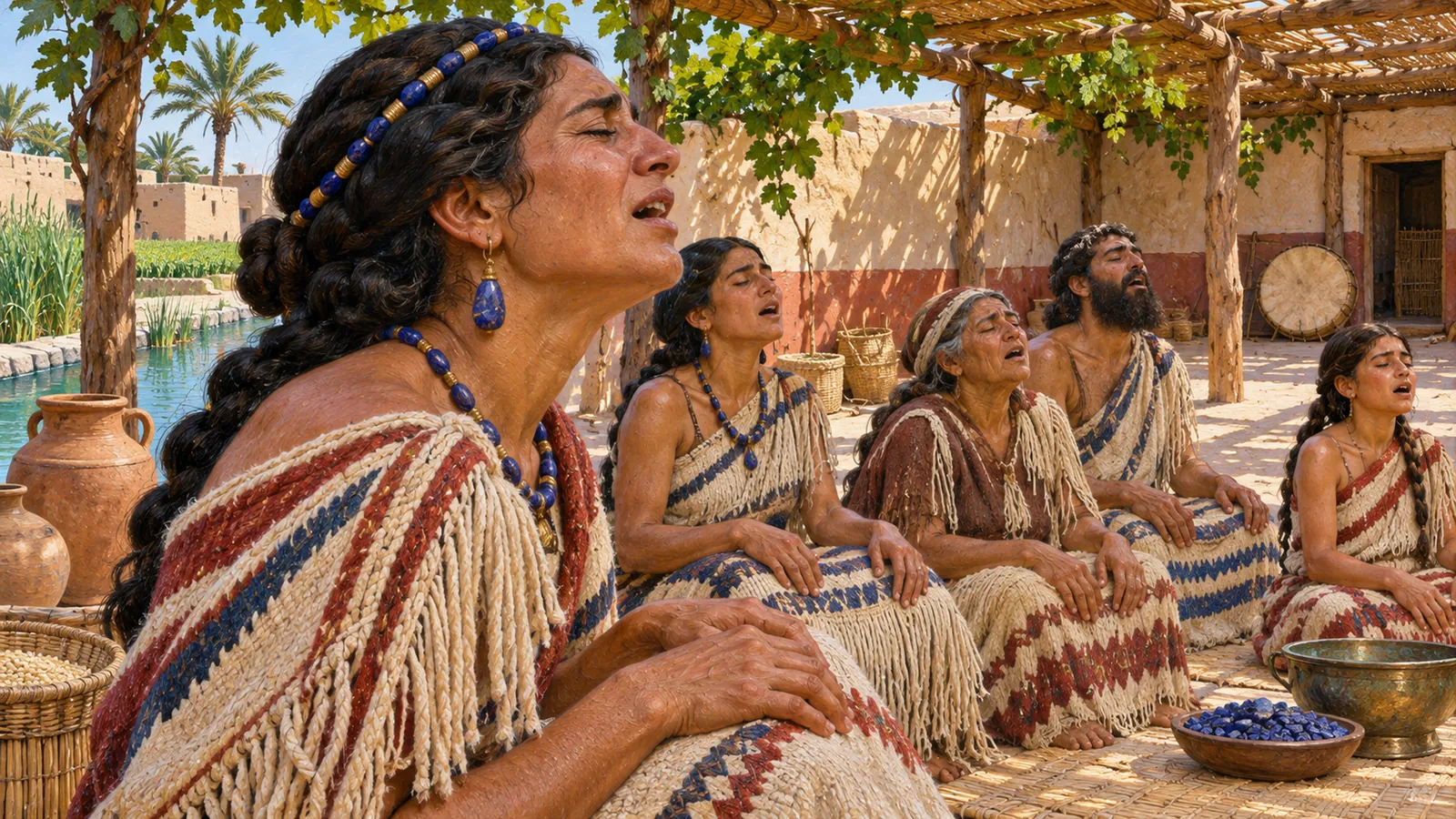
The goddess moves with tireless feet. Thunder answers her, and the lament called the balaj begins. The storm outside and the sound within the house belong to the same song.
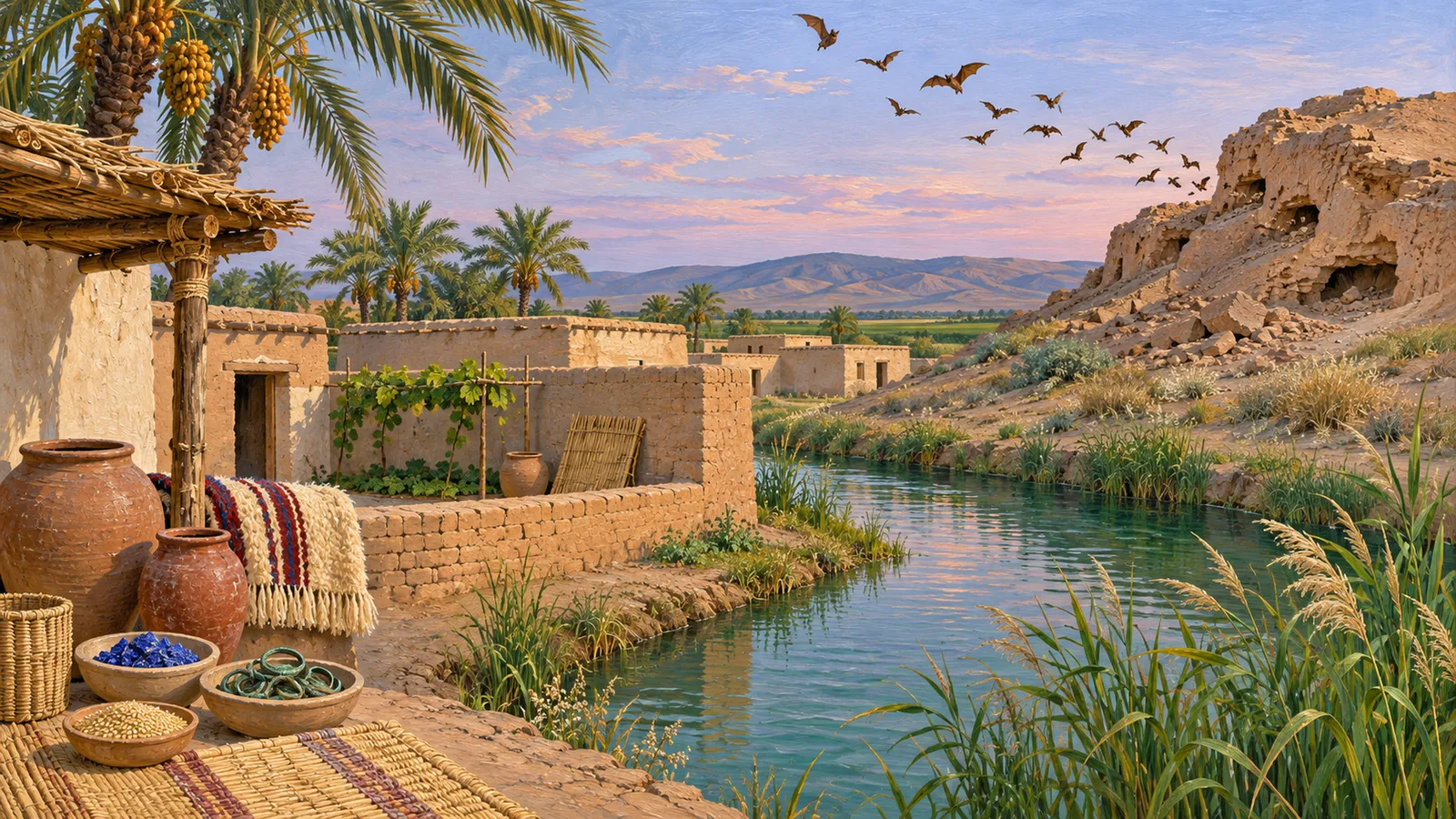
Even the Anuna gods flee before Inanna, the poem says. They scatter like bats into broken mounds. Who, the singer asks, can cool the heart of Nanna’s daughter?
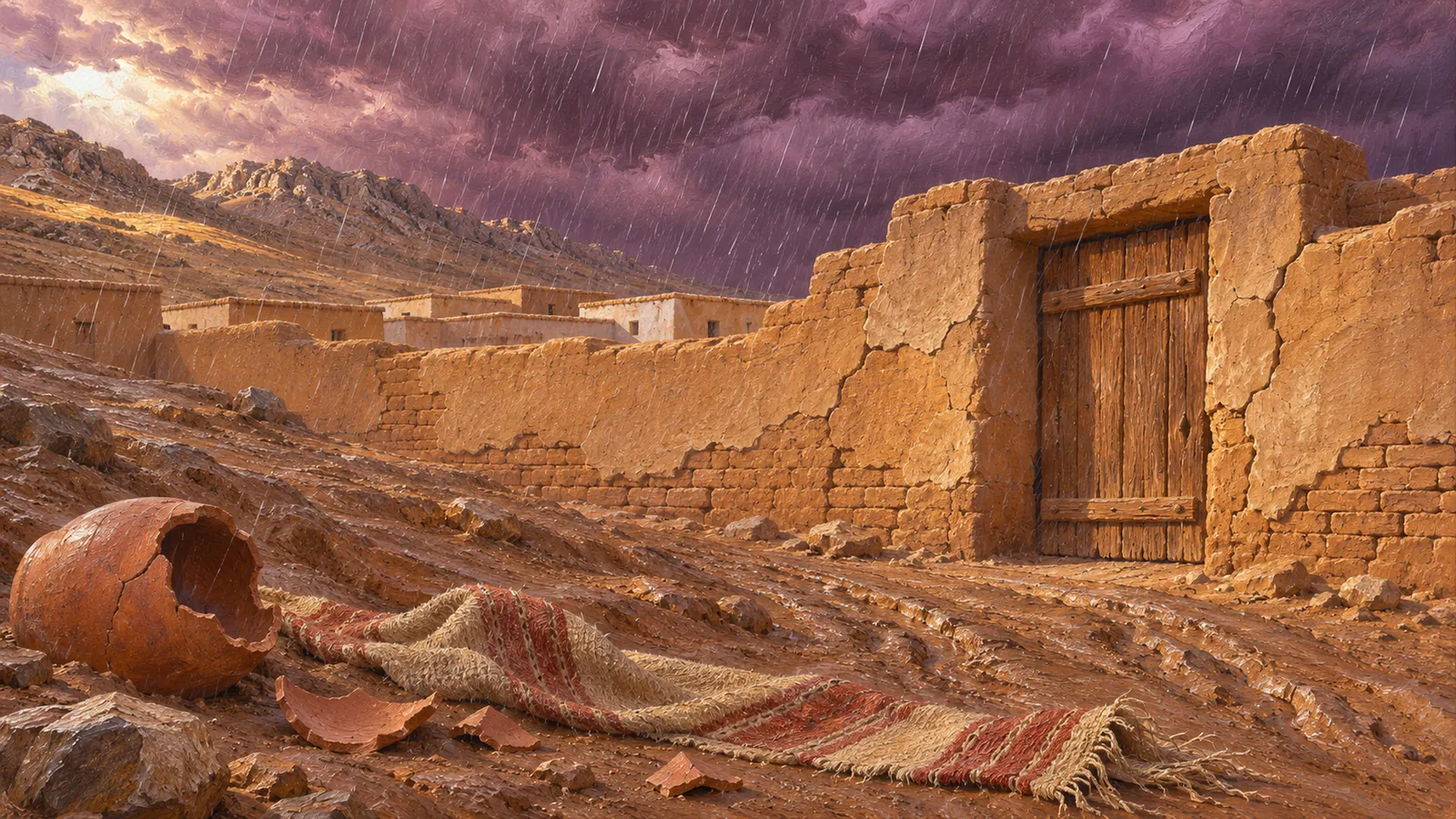
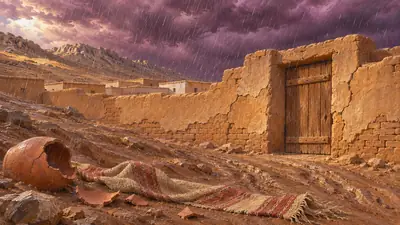
The hymn follows that anger into a foreign land. Hillsides are stripped, city gates suffer, soldiers scatter, and young people are taken captive. The singer lets the damage speak.
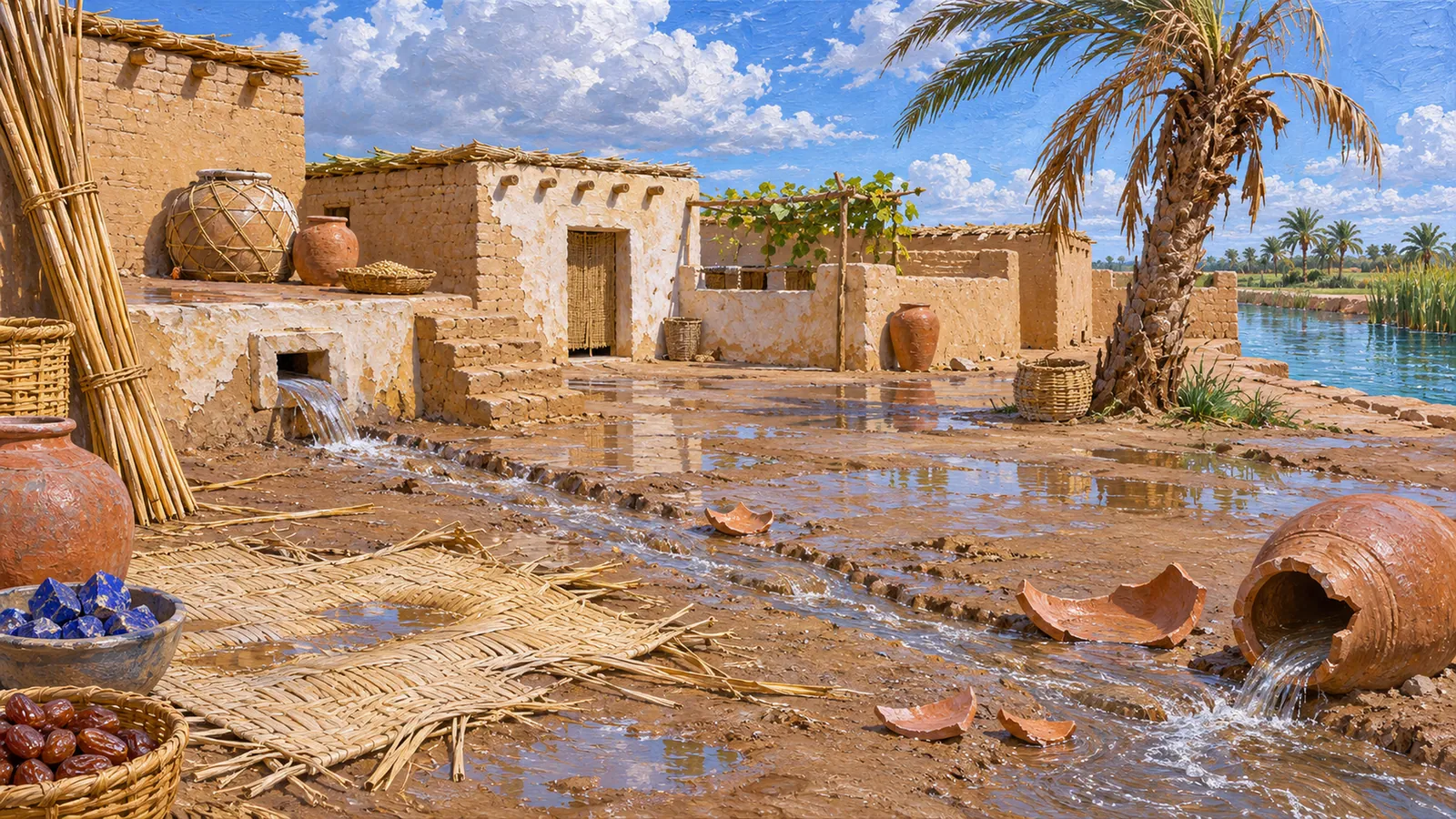
The ground that once rang with dancing is emptied by storms. In the poem, a city's willingness to bow can be read in the places where daily life has stopped.
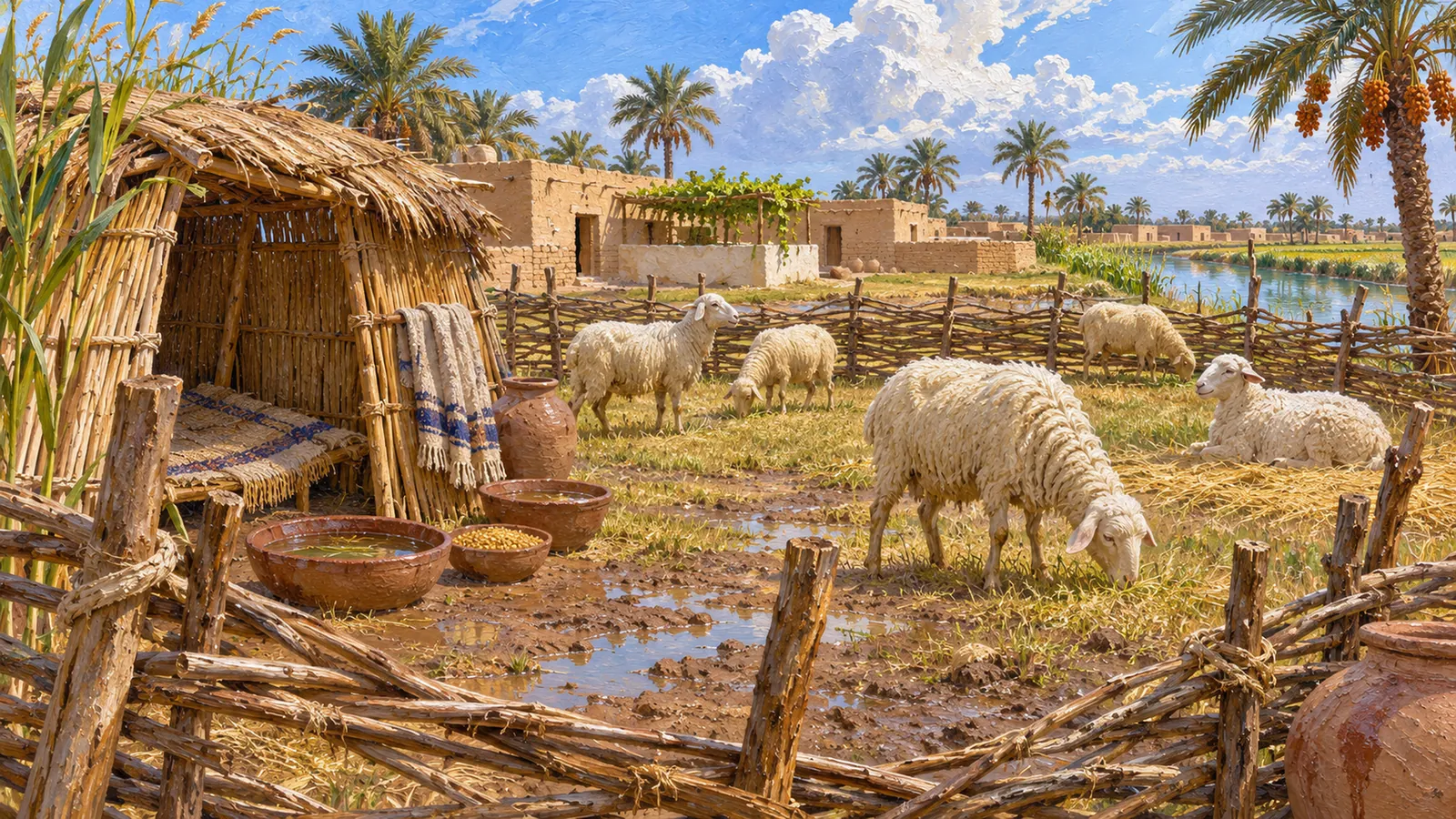
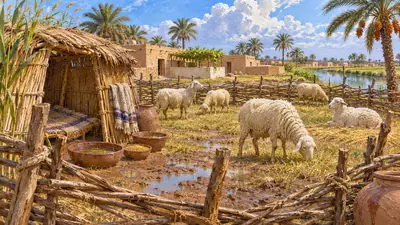
The singer brings the storm nearer still. Sheepfolds are left without their usual care. The creatures that depended on familiar hands now stand in the wind.
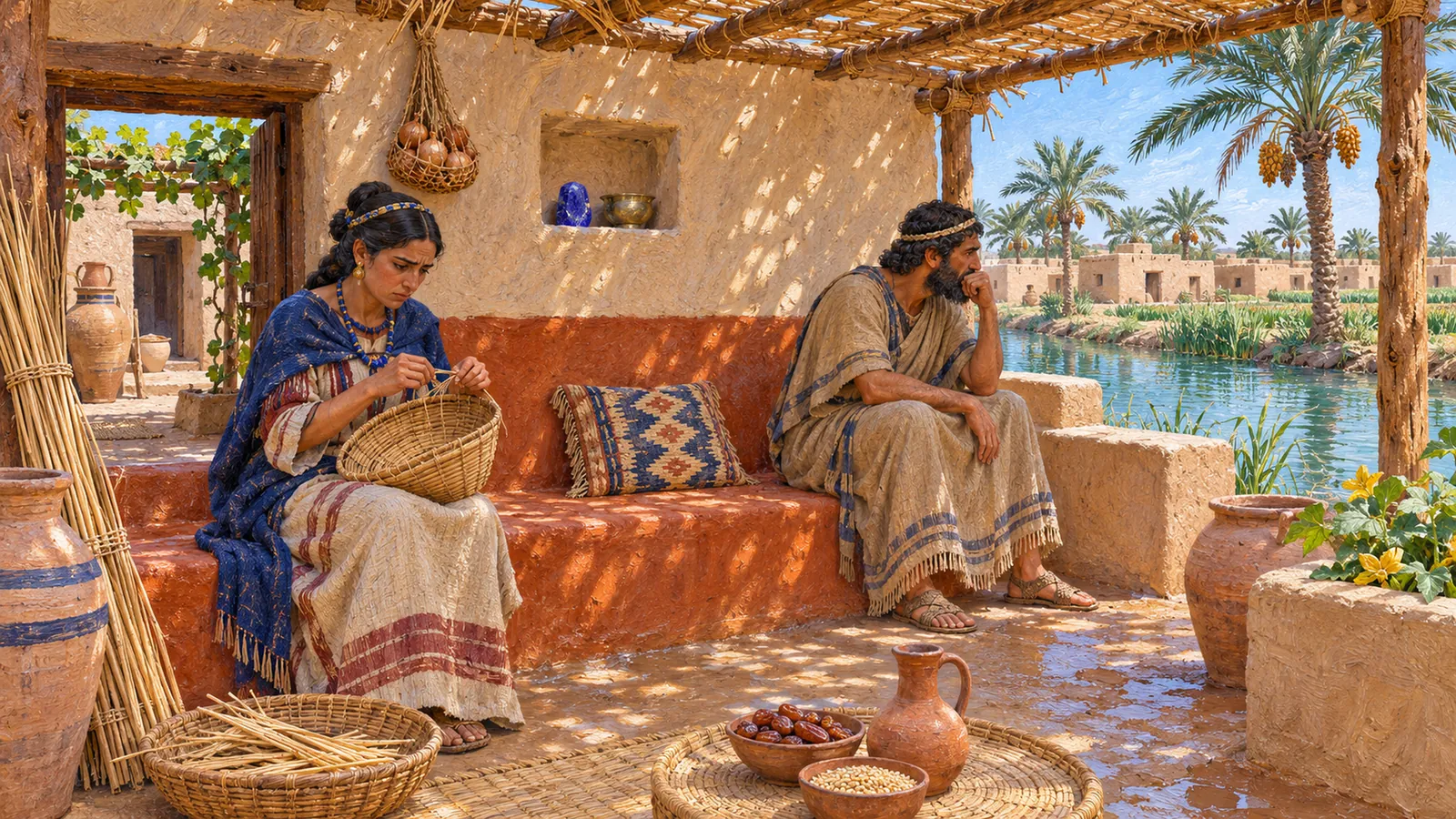
The silence reaches a household. A woman no longer speaks her private thoughts to her husband. The hymn measures the goddess’s power in this small loss as well.
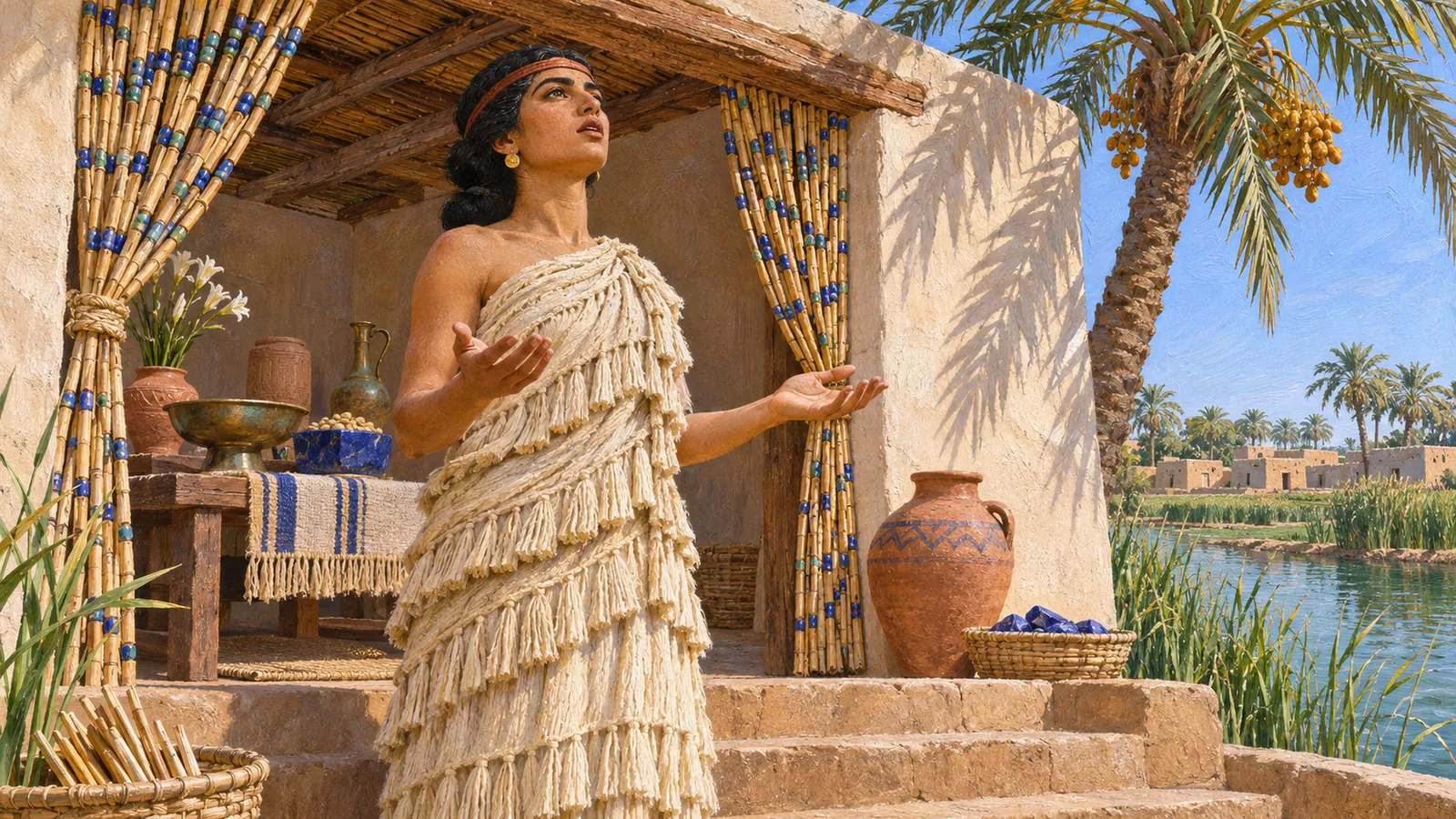
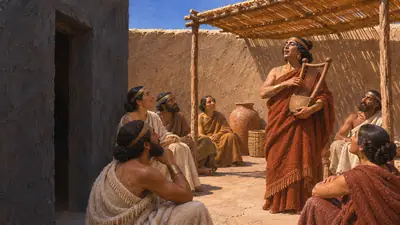
The singer promises to make Inanna’s greatness known in song. Then she speaks her own name. She is Enheduanna, the high priestess, and she has a case to bring.
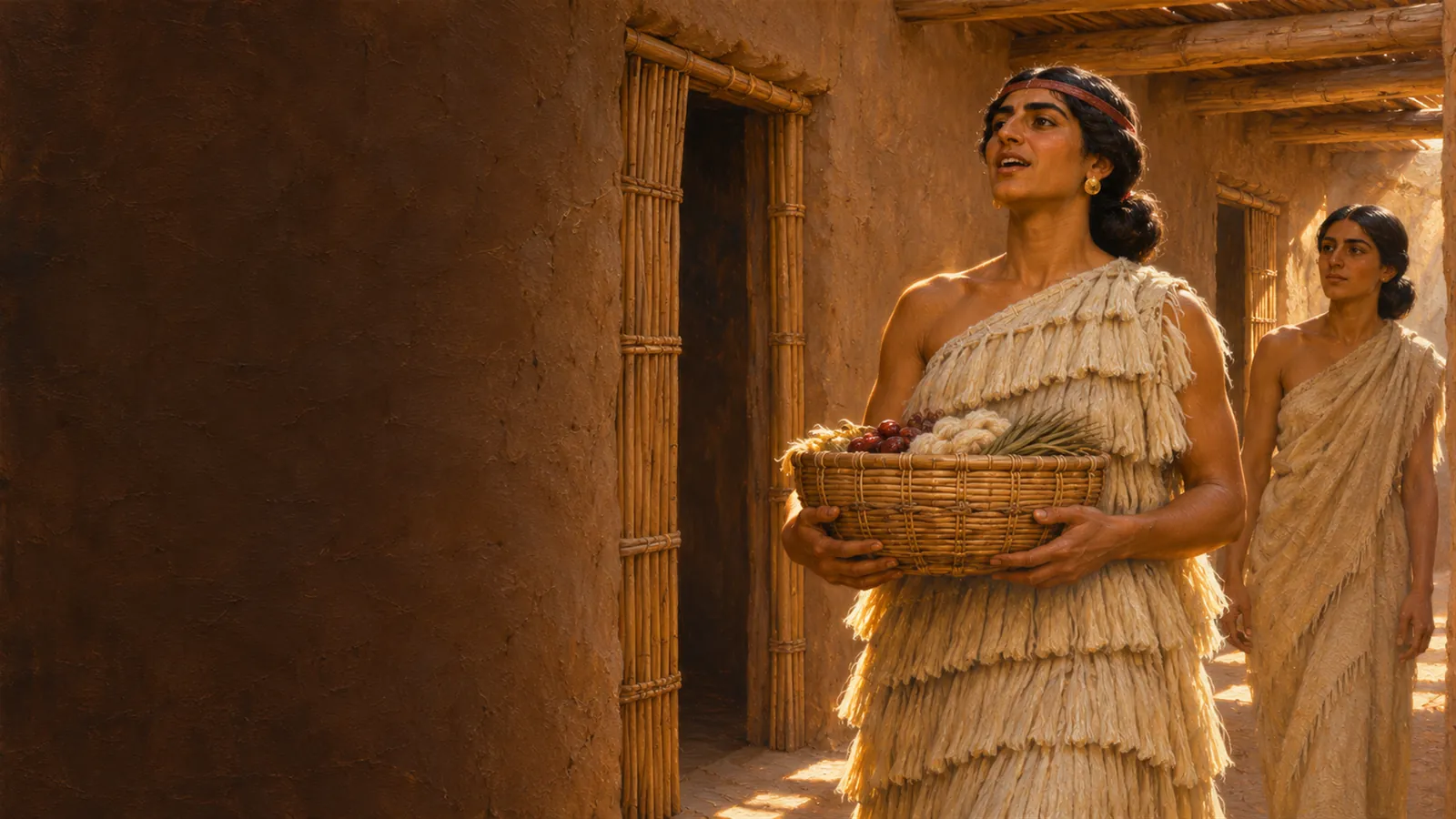
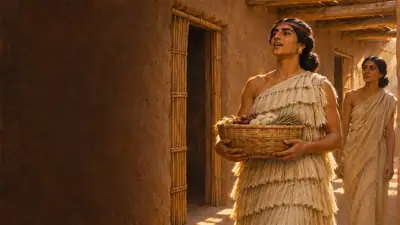
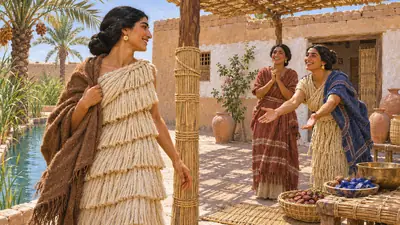
Enheduanna remembers entering the gipar and lifting the ritual basket. In those days she could sing for joy as she carried it, secure in the work that was hers.
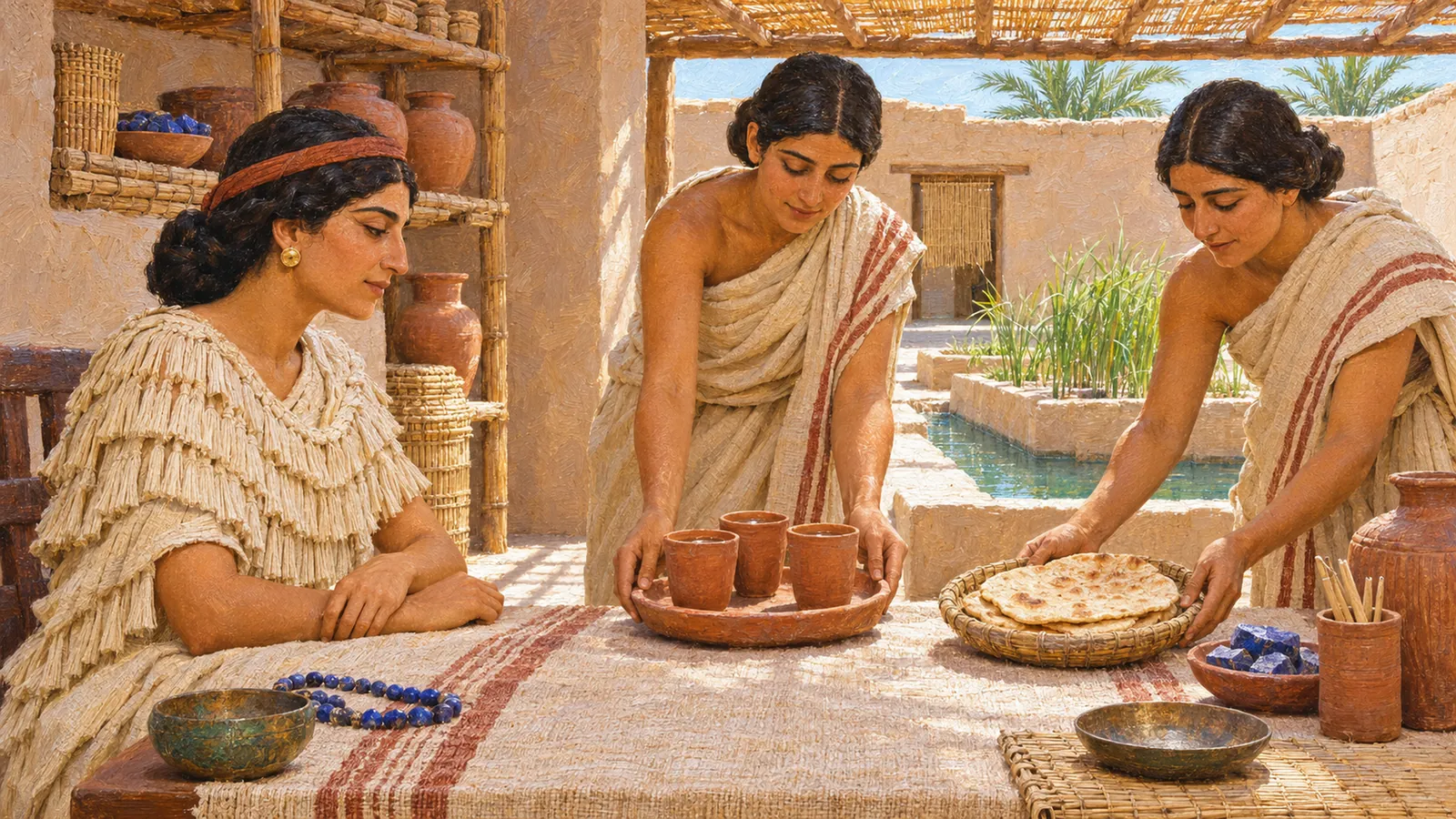
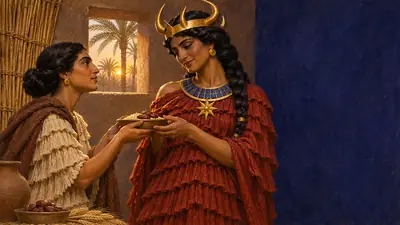
She remembers offerings too. One ancient copy speaks of a meal for the dead. The recollection of food set out in the gipar leads into a bitter change.
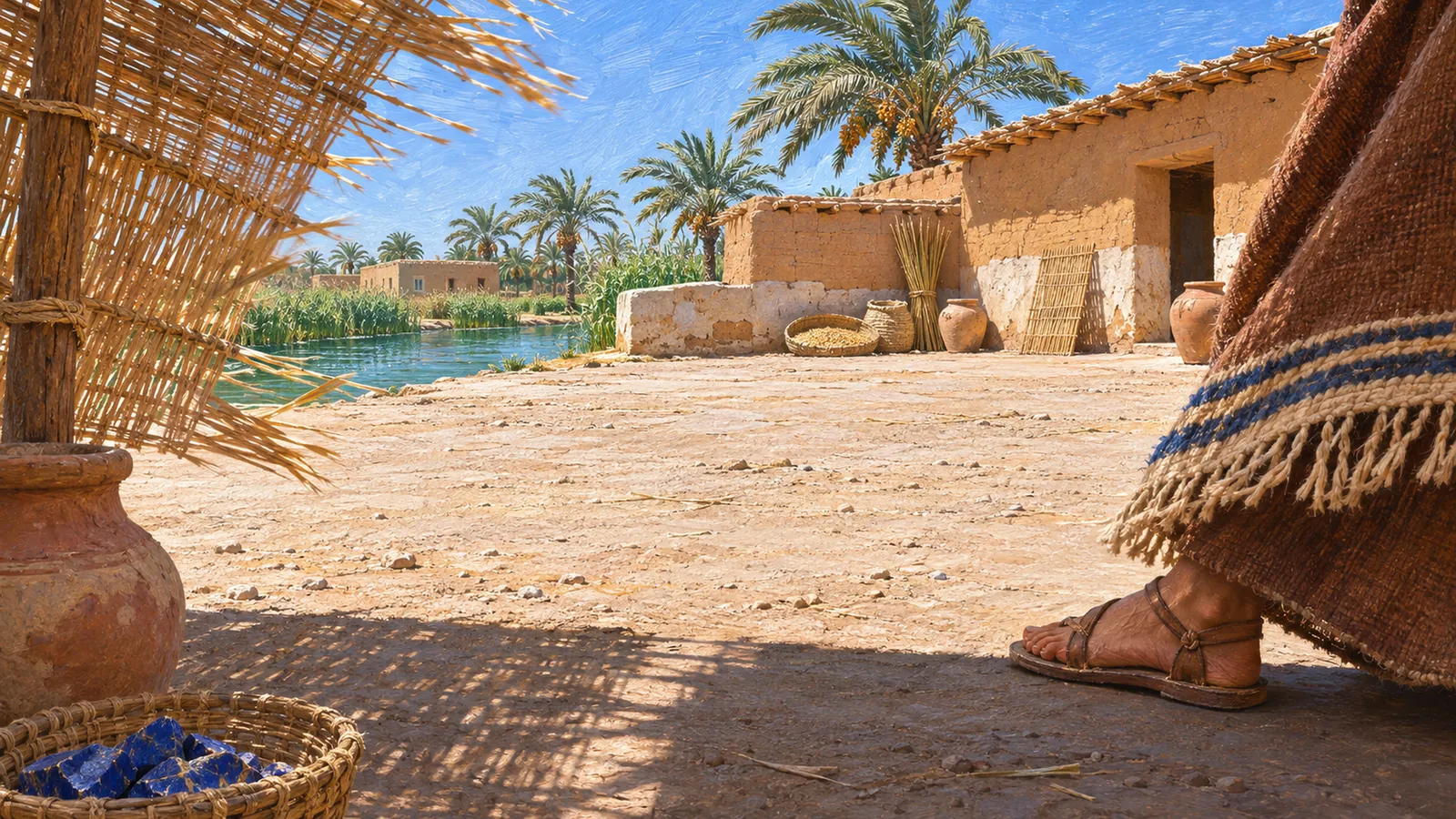
The light burns Enheduanna when she steps into it. When she seeks the shade, it becomes a storm. The city in which she once belonged offers no shelter.
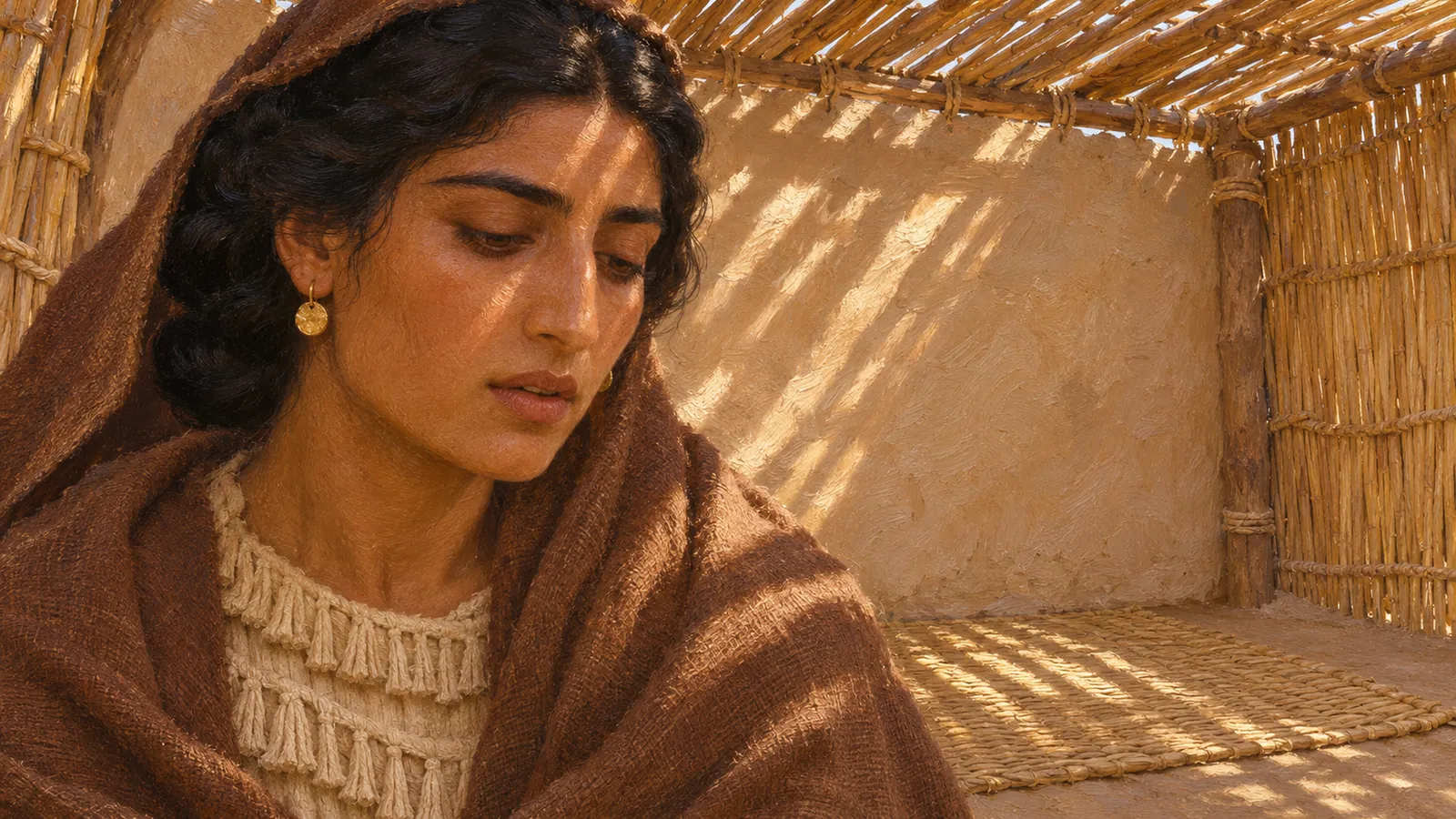
The mouth that used to speak like honey can no longer soothe anyone. Enheduanna describes the break with the past as a change in the very sound of her voice.
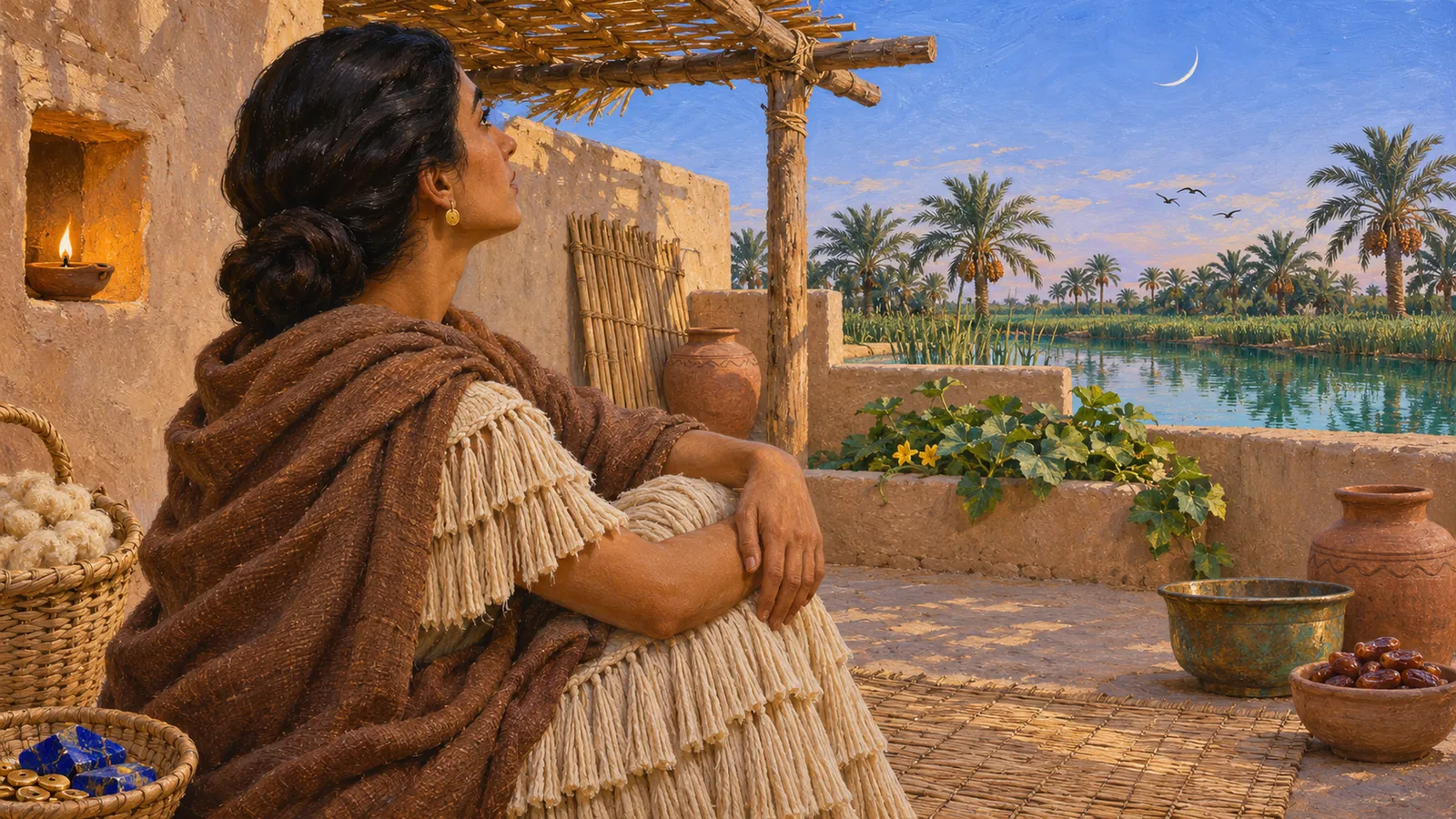
She calls on the moon god Nanna, also called Suen, and asks him to carry her story to An. A decision about her fate still hangs in the balance.
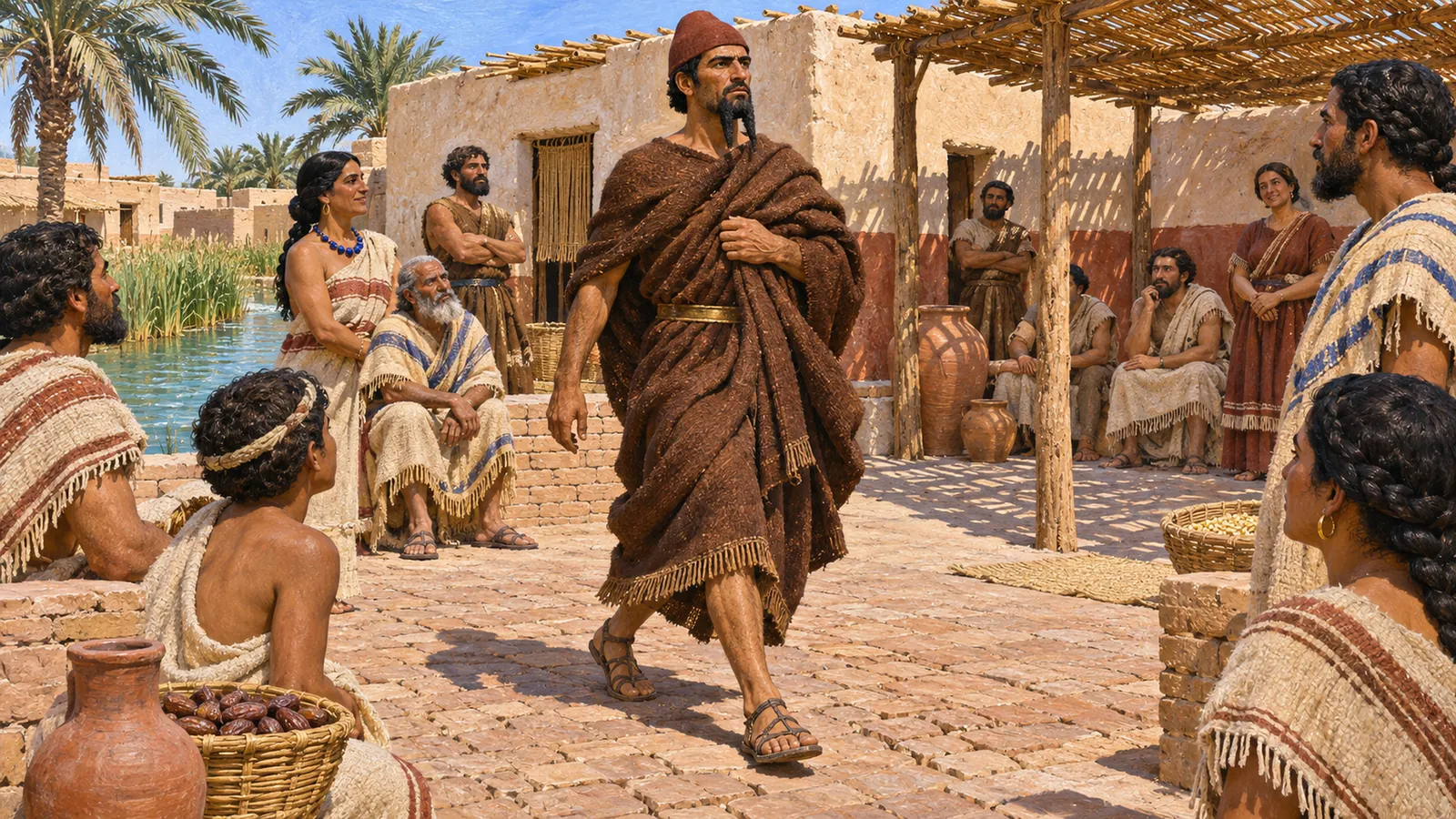
In her plea, Enheduanna names Lugal-Ane. In the poem he is the man who opposes her and unsettles the old order, turning her loss into a public case.

Enheduanna turns her tears into a libation in the poem, pouring them like sweet beer. She asks Inanna to take up the matter that nobody has settled.
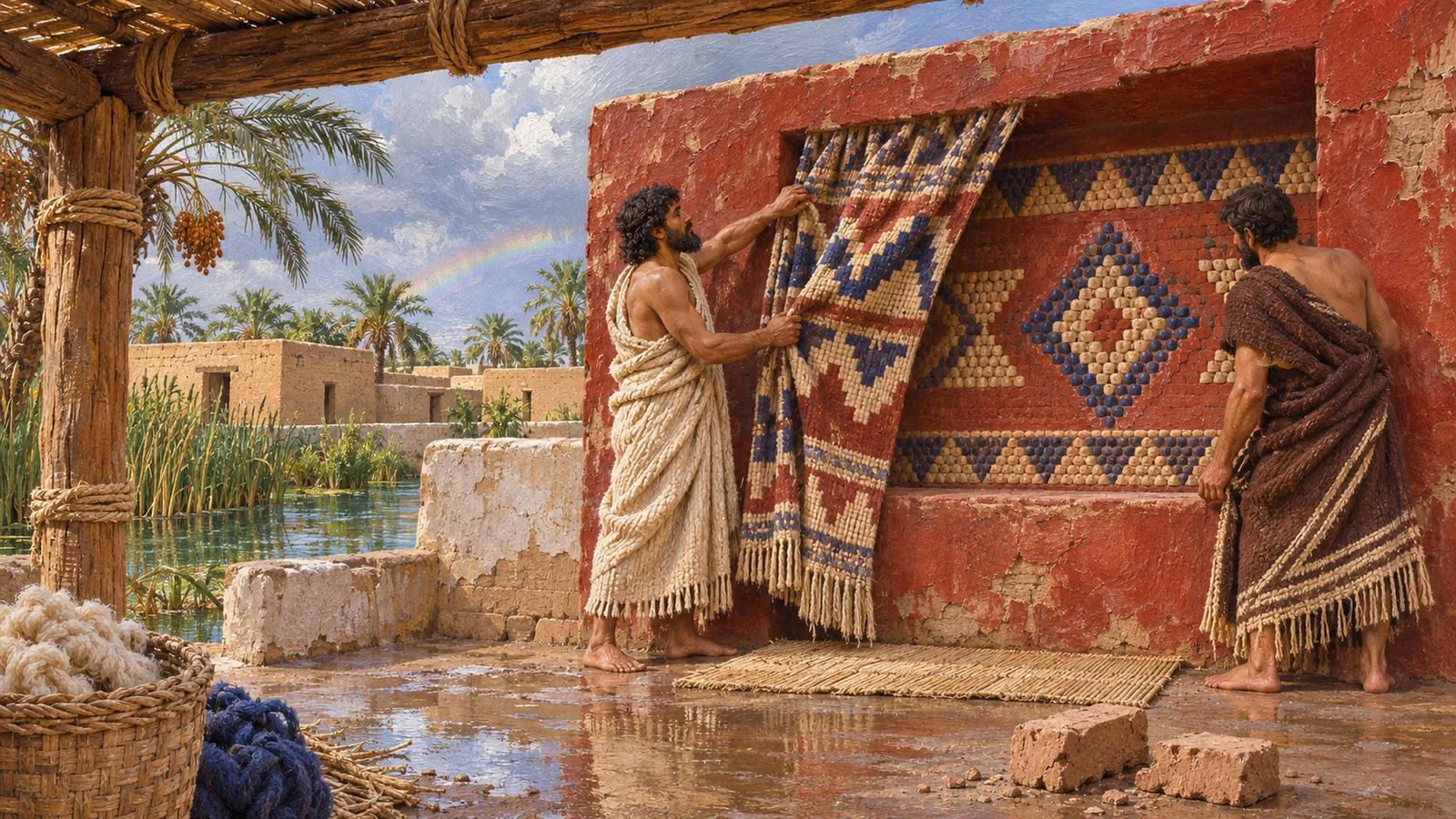
Her charge reaches beyond Ur. She says Lugal-Ane changed the rites and took Eanna, a sanctuary in Uruk, away from An. Its beauty had seemed inexhaustible before the upheaval.
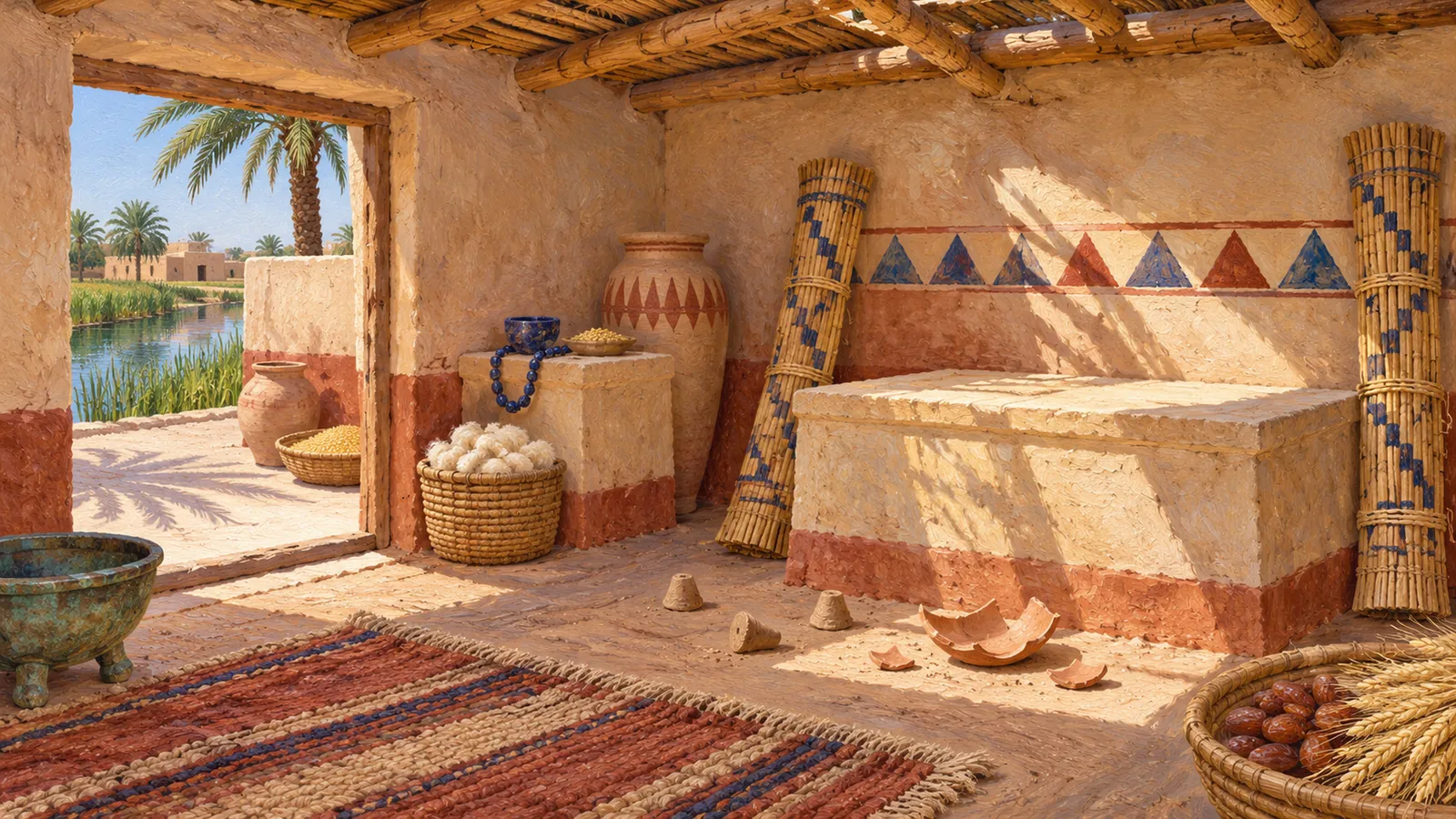
The temples in the poem are places where people keep the old rites. By changing those rites, Enheduanna says, Lugal-Ane has broken an order that goes beyond her own office.
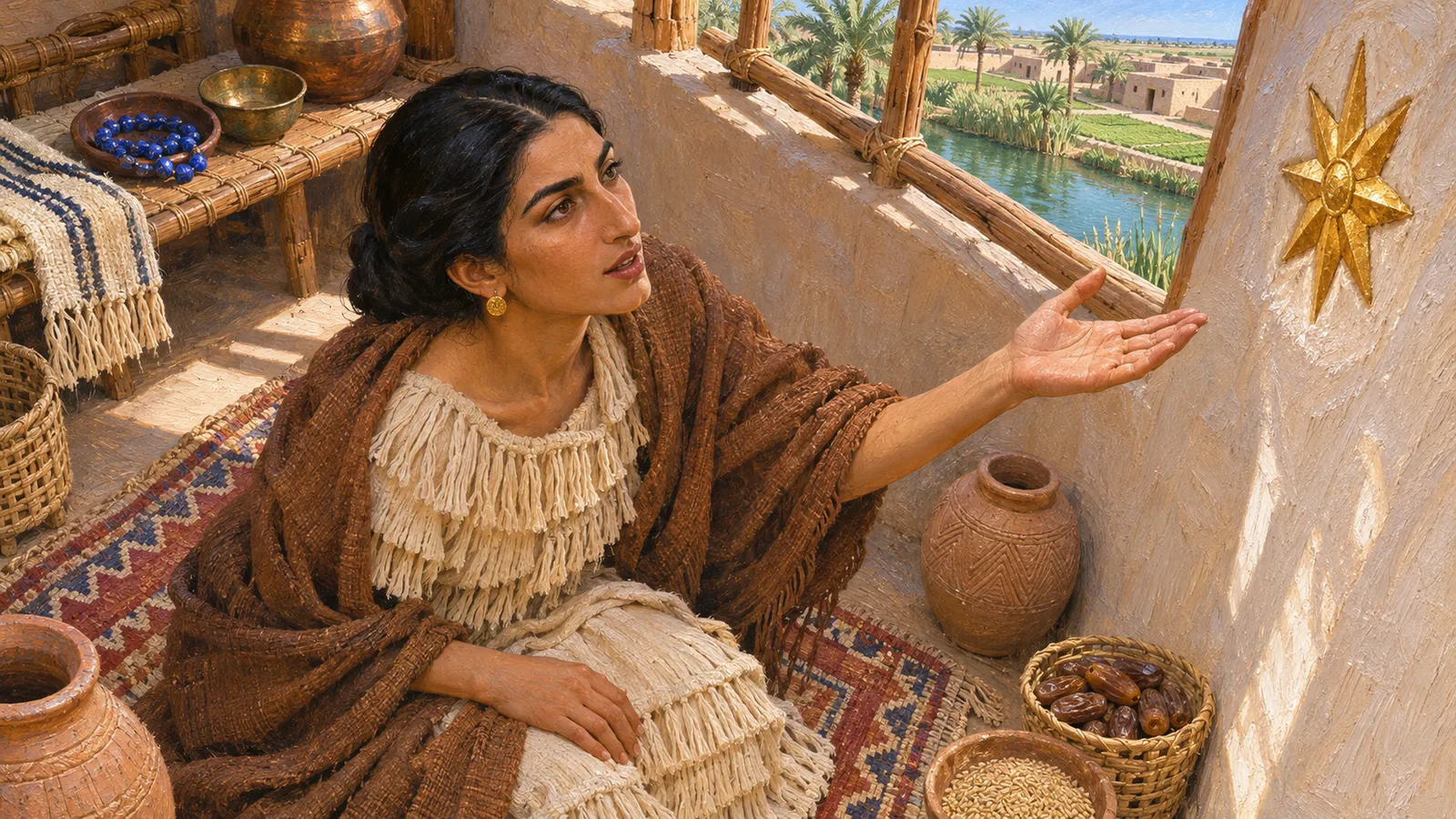
She wants Inanna to drive Lugal-Ane out. She also calls on An and Enlil to turn against the city. Desperate for a hearing, she asks for a terrible answer.

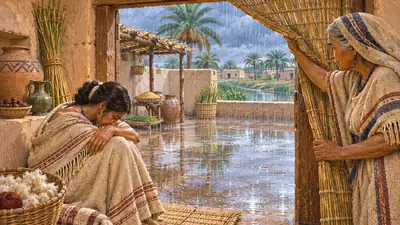
The poem imagines a mother unable to soothe her child. In Enheduanna’s grief, the consolation that ought to come most readily has become as distant as the gods.

There is a lamentation boat, too, and Enheduanna speaks of leaving it behind. She asks whether her songs, the very work she did in safety, will now cost her life.
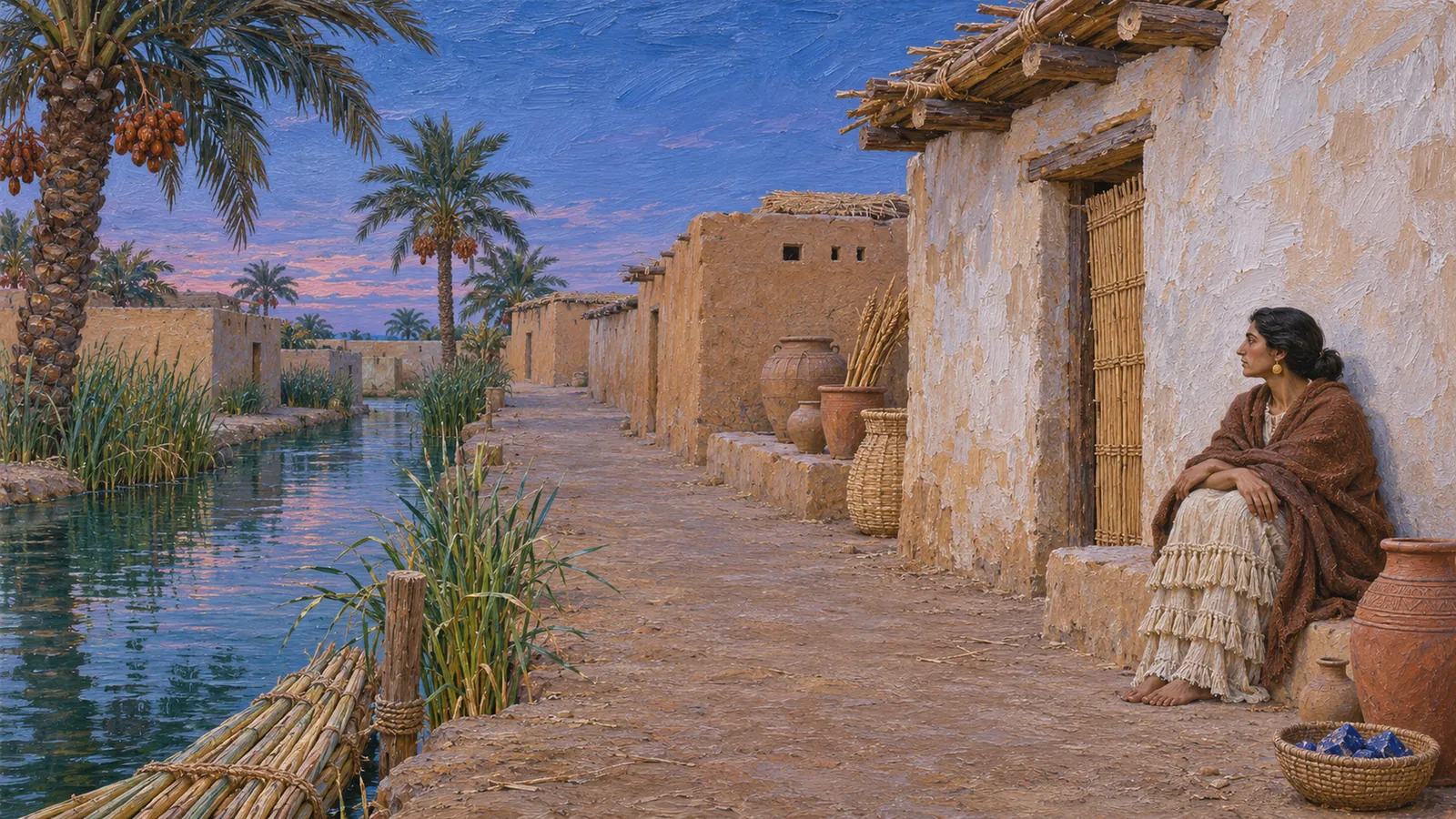
Nanna has not decided her case. The complaint returns to that silence. Enheduanna can name what was done to her and still wait without an answer.
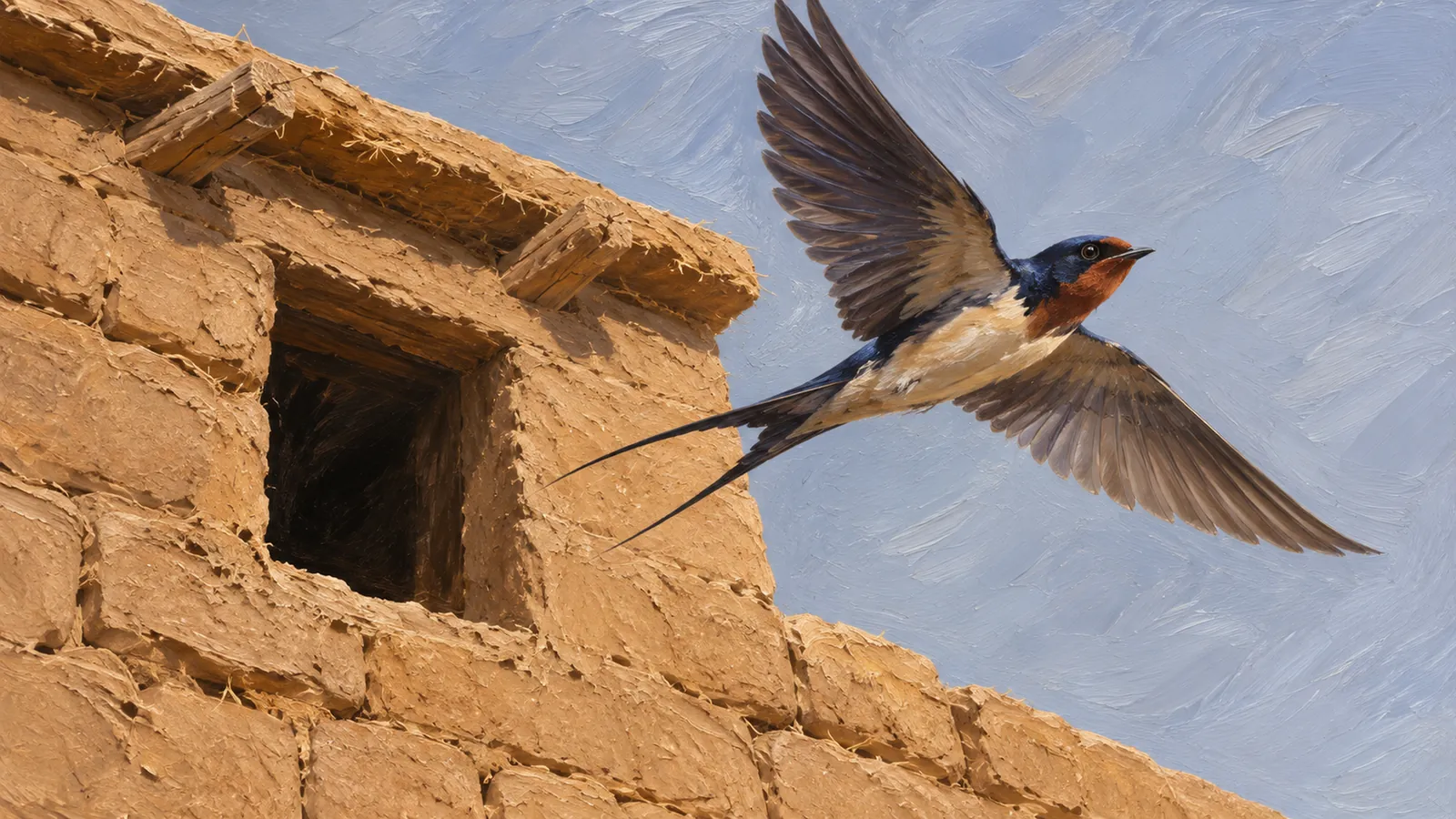
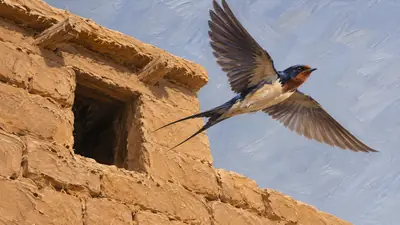
She says she was driven out like a swallow from a window. The image is sudden and small enough to hold the moment when her place was taken away.
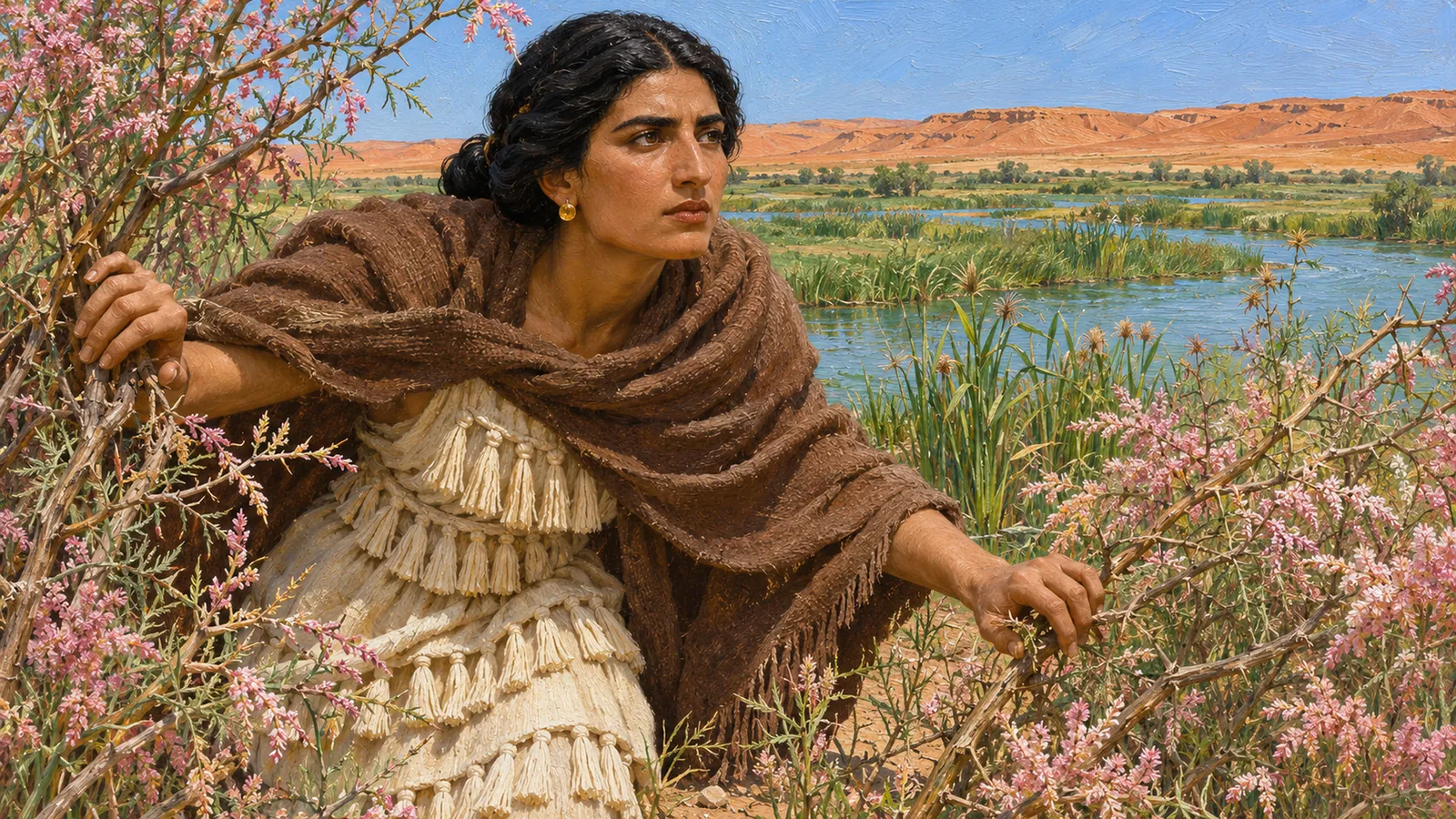
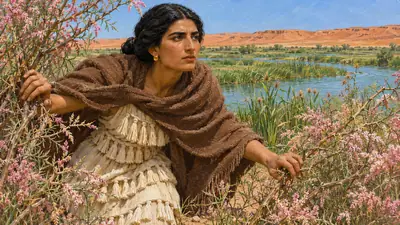
The swallow can fly, but the priestess must find her way among thorns. In the poem even her strength and the knowledge she counted on are slipping away.
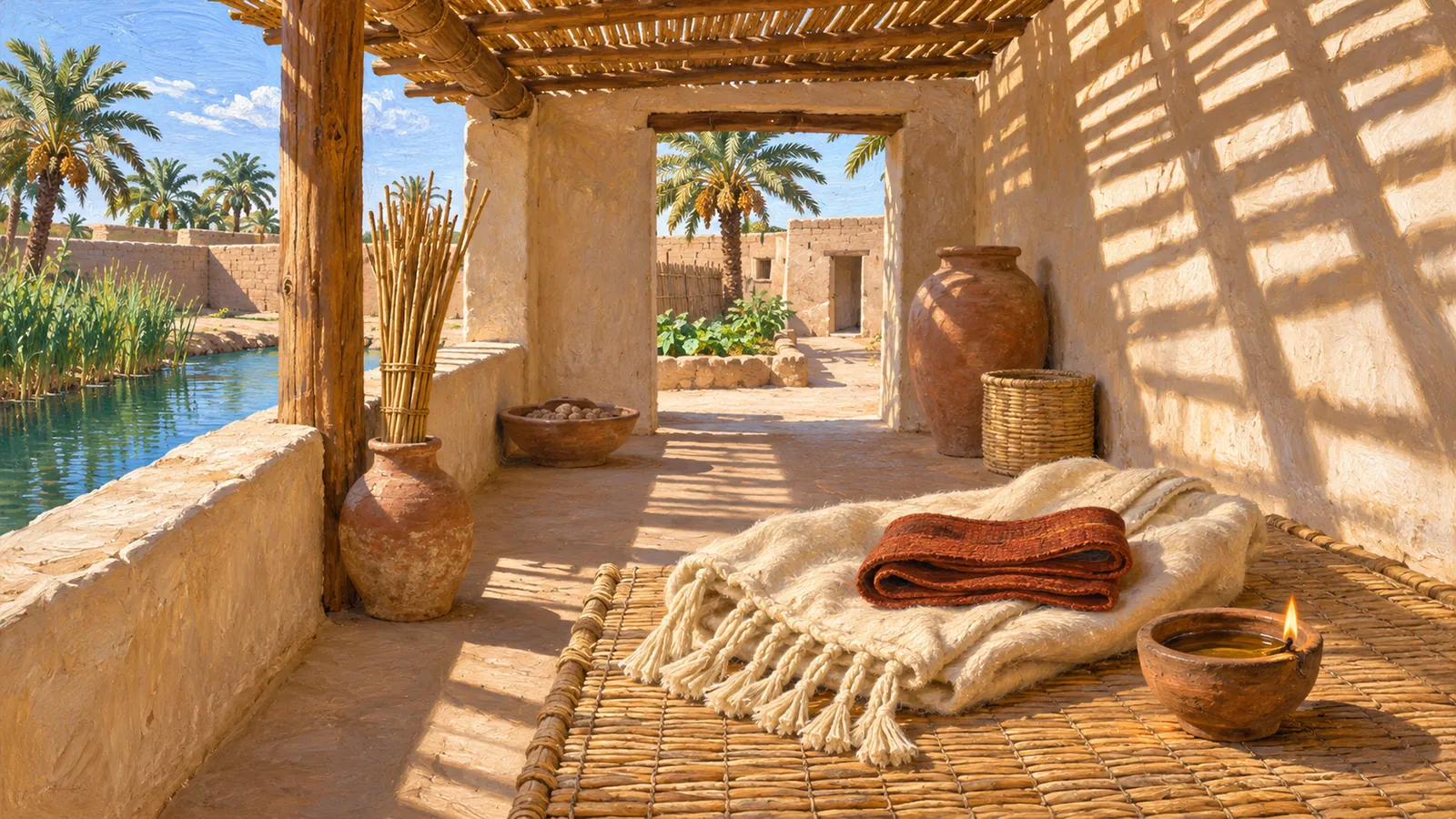
Even the mark of her office is taken. The tablets speak of her priestly crown or her priestly garment. What she once wore openly has become another thing she has lost.
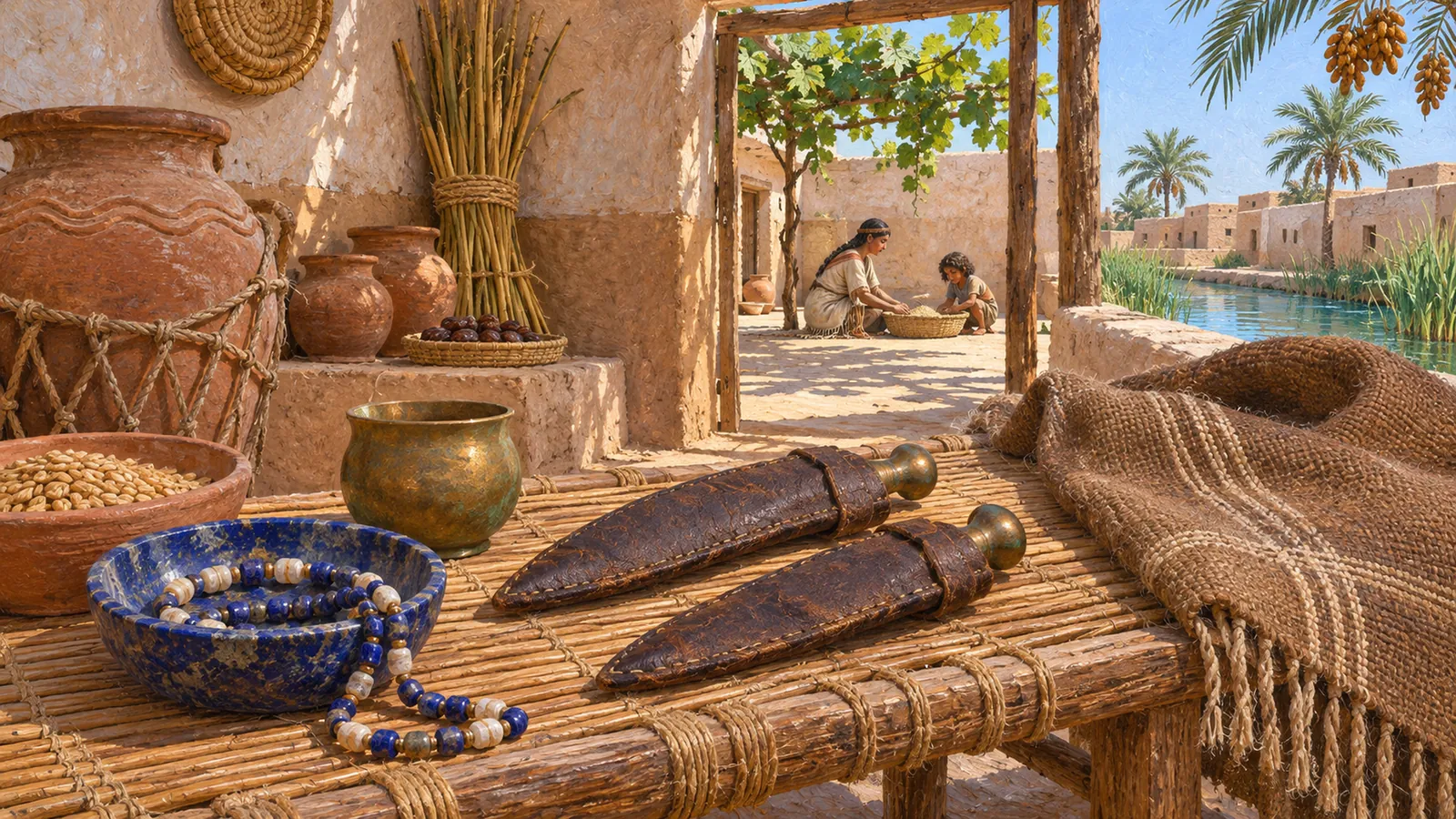
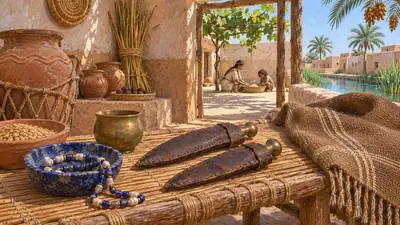
In its place, she says, she is given a knife and dagger to wear. The hymn presents them as a bitter mockery of the honour she once carried.

Once more the singer asks that Inanna’s heart be calmed. The power that frightened gods and scattered cities is the same power on which the exiled priestess now depends.
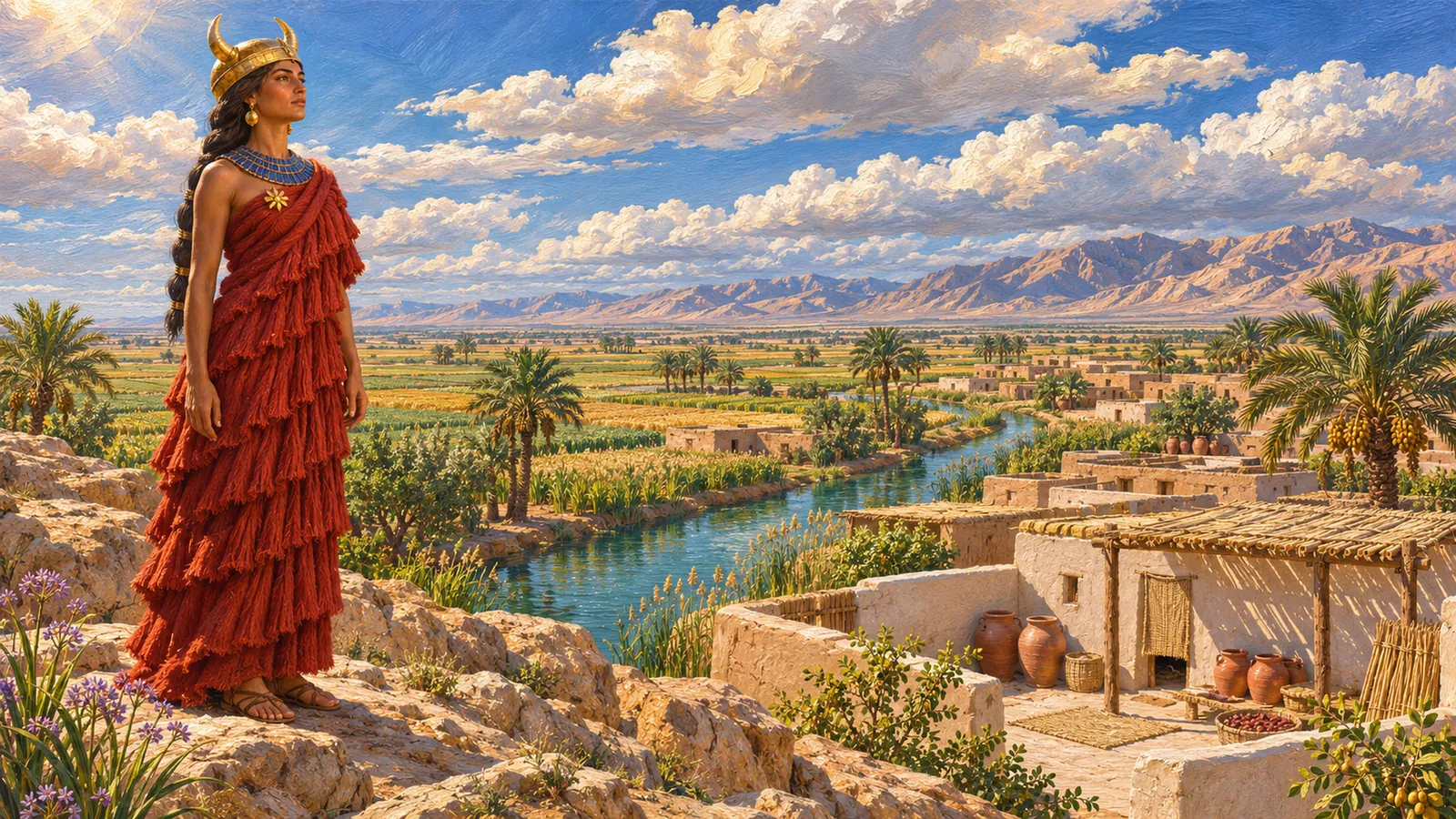
The singer recalls that Inanna once stood among the lesser gods. Now the Anuna bow before her. Her new standing gives weight to the plea Enheduanna has placed before her.

The poem sets her at the rim of the sky and high above it. To praise her rank is to look across the earth and then straight up.
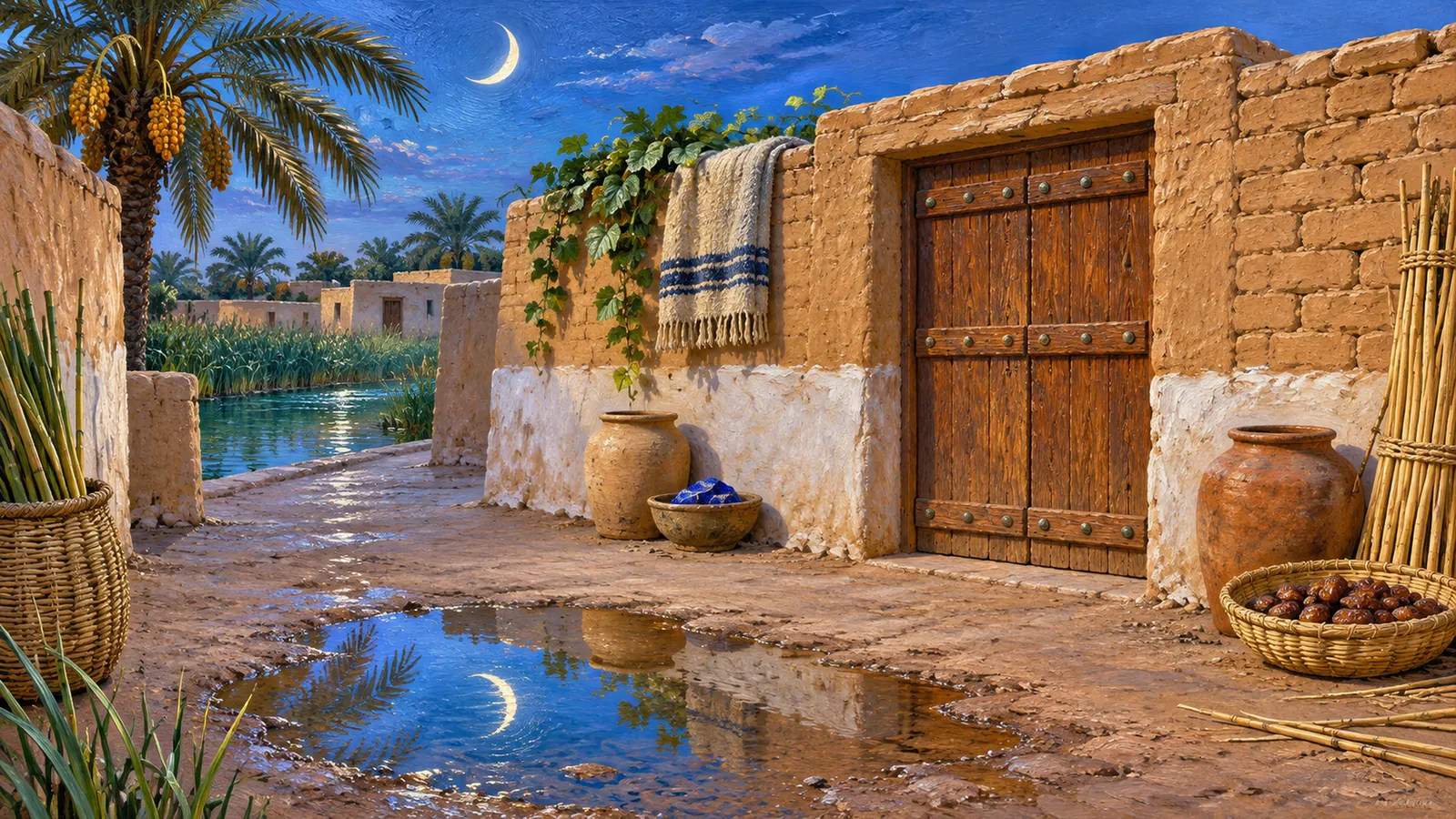
Enheduanna speaks of a message from Ningal, whose pronouncements she says she has kept to herself. The hymn leaves those words behind a closed door. Her case is still open.
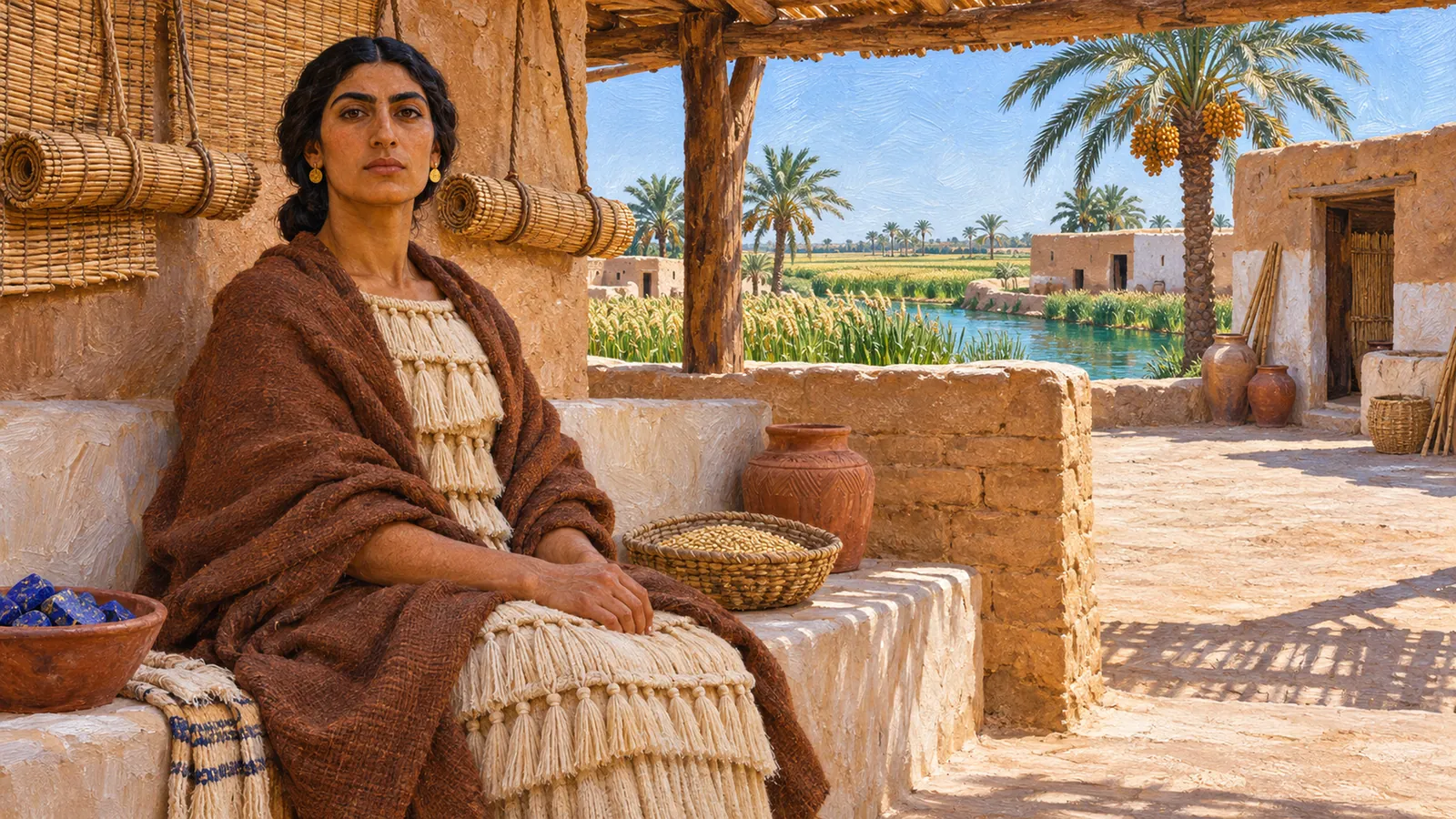
Later in the hymn, Nanna places the man in Inanna’s hands. Enheduanna returns to the goddess, whose authority she has spent the song making clear, to ask for an answer.
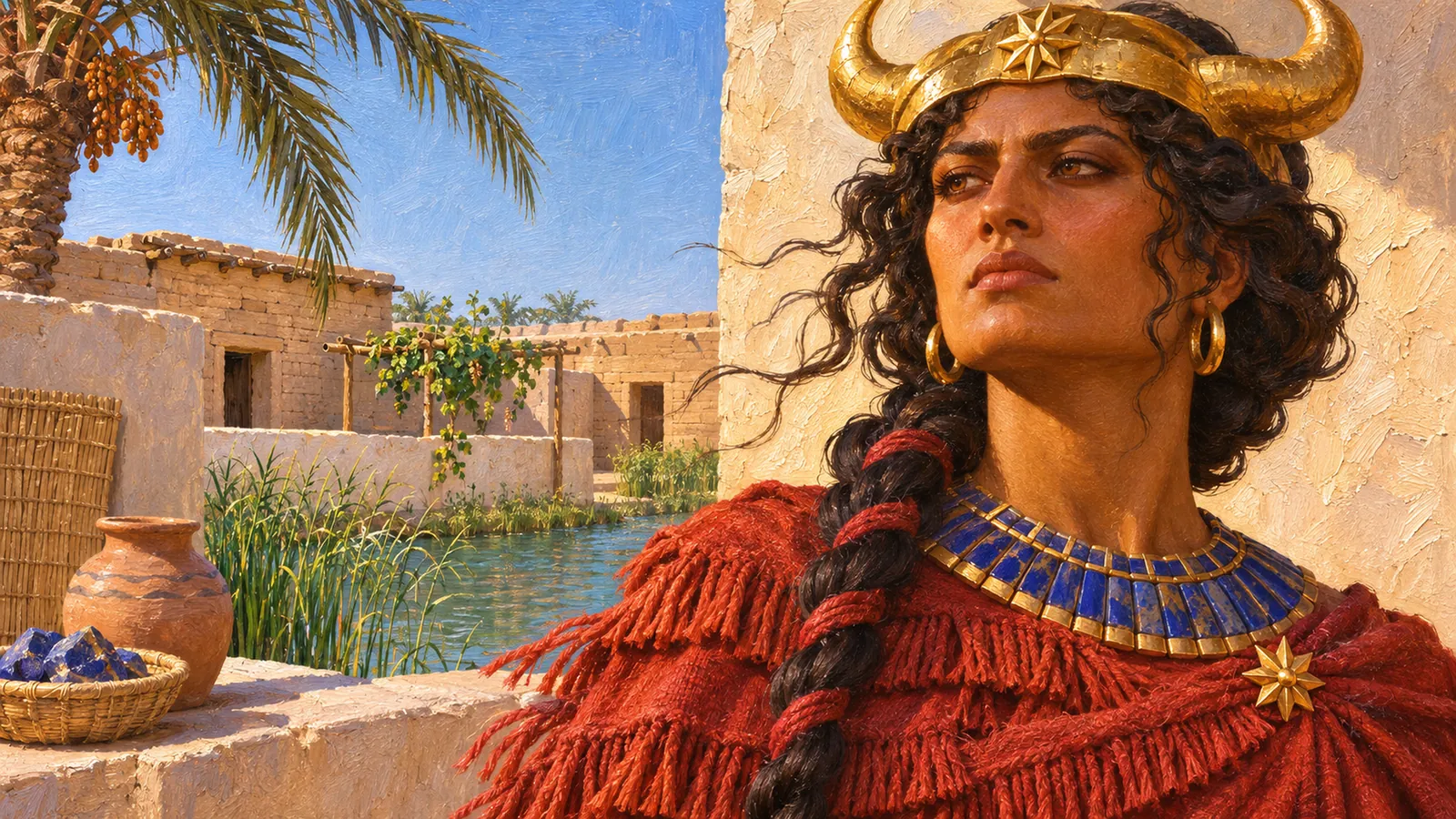
The singer insists that the goddess be known. She is vast as sky and earth, relentless in purpose, and terrible to face. The praise is also an appeal to listen.
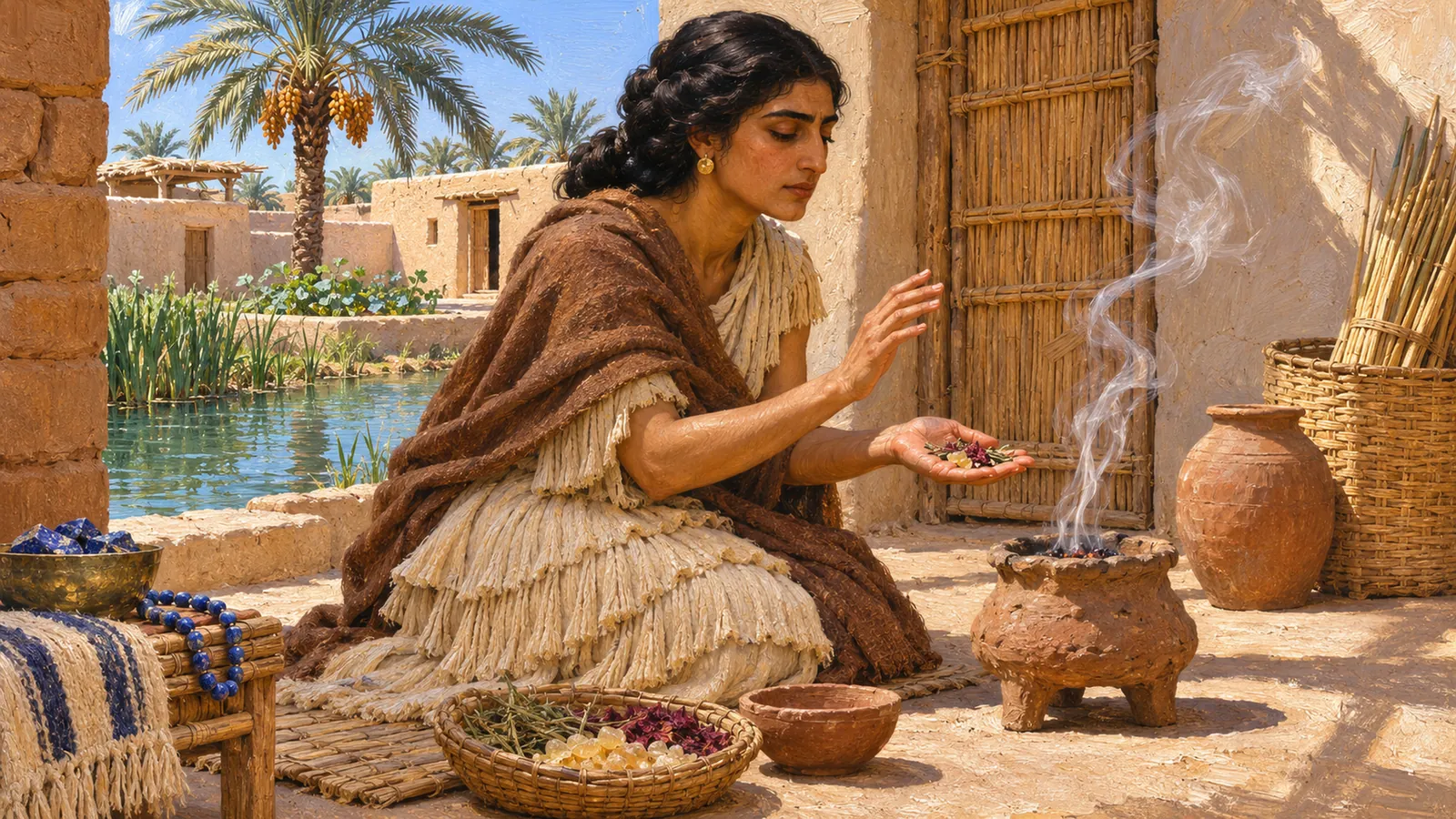
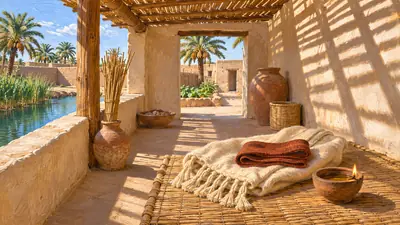
At the Eshdam-kug shrine named in the hymn, the priestess prepares coals for the rites of purification. Her hands, idle when her office was taken, have work again.
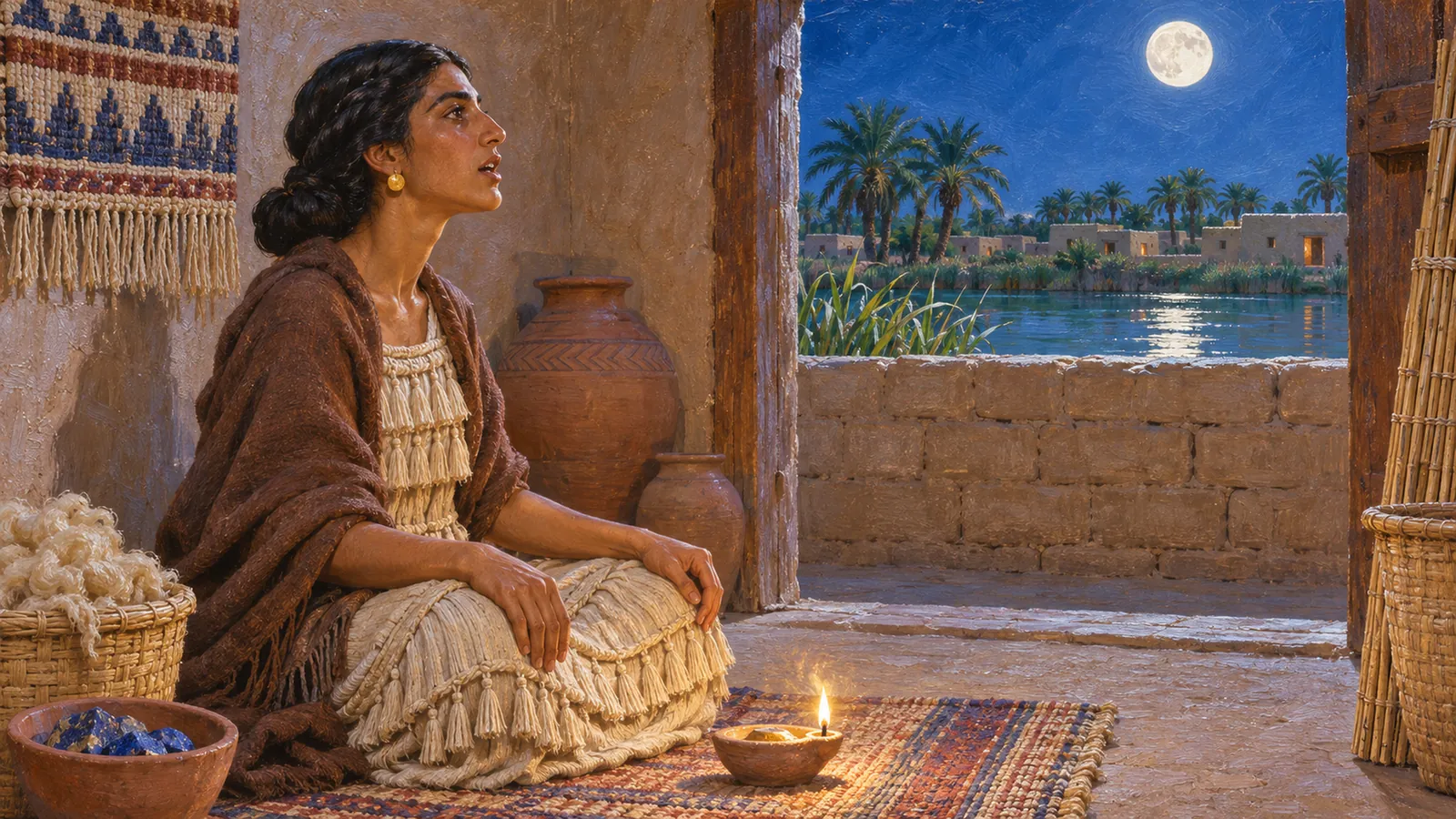
In the night she brings Inanna a song. The poem speaks of bringing it forth as though it were a birth. The voice that could no longer soothe is heard again.
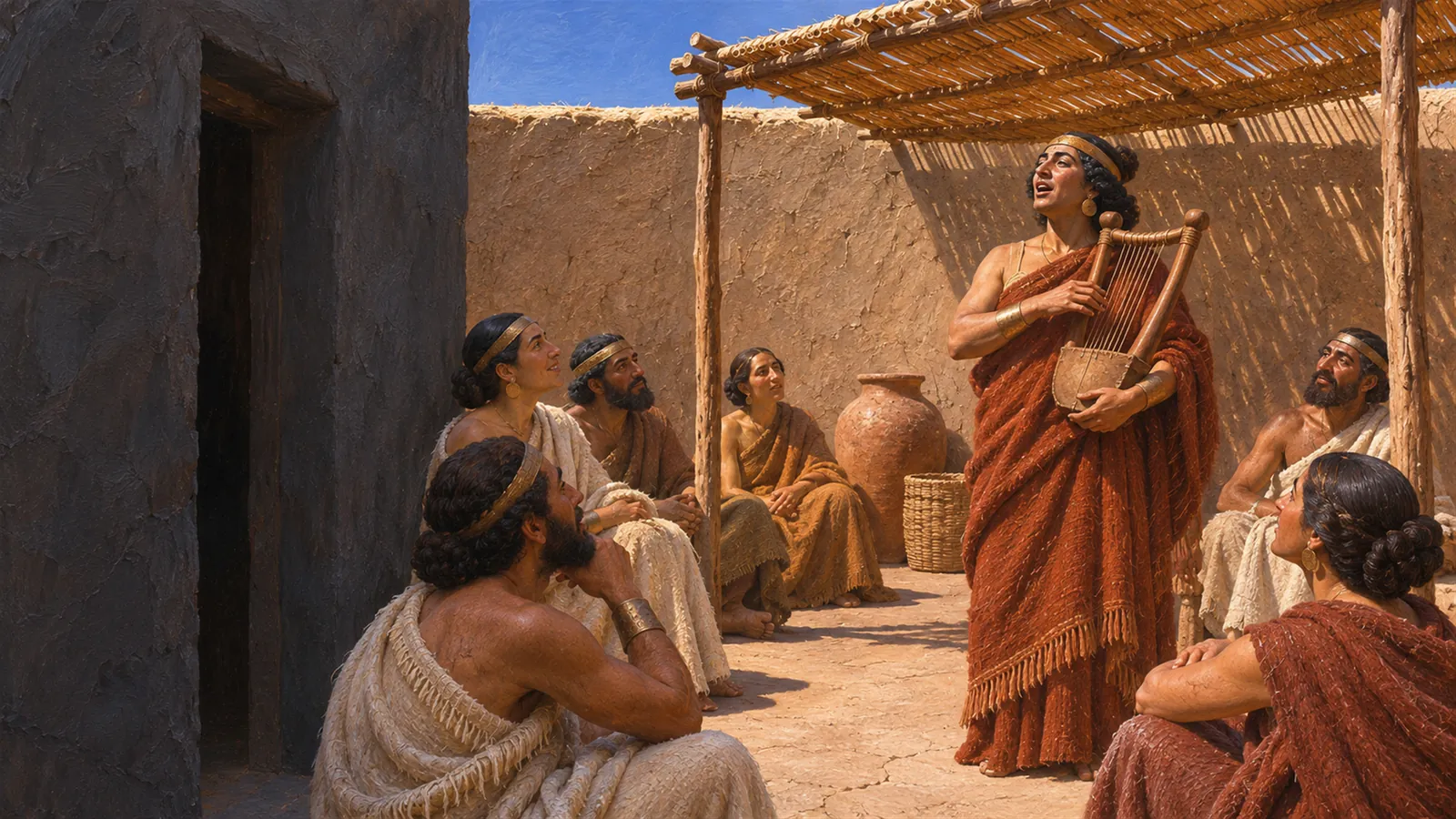
She asks a singer to repeat the words at noon. What was shaped in the dark can now be heard in daylight, through a voice other than her own.
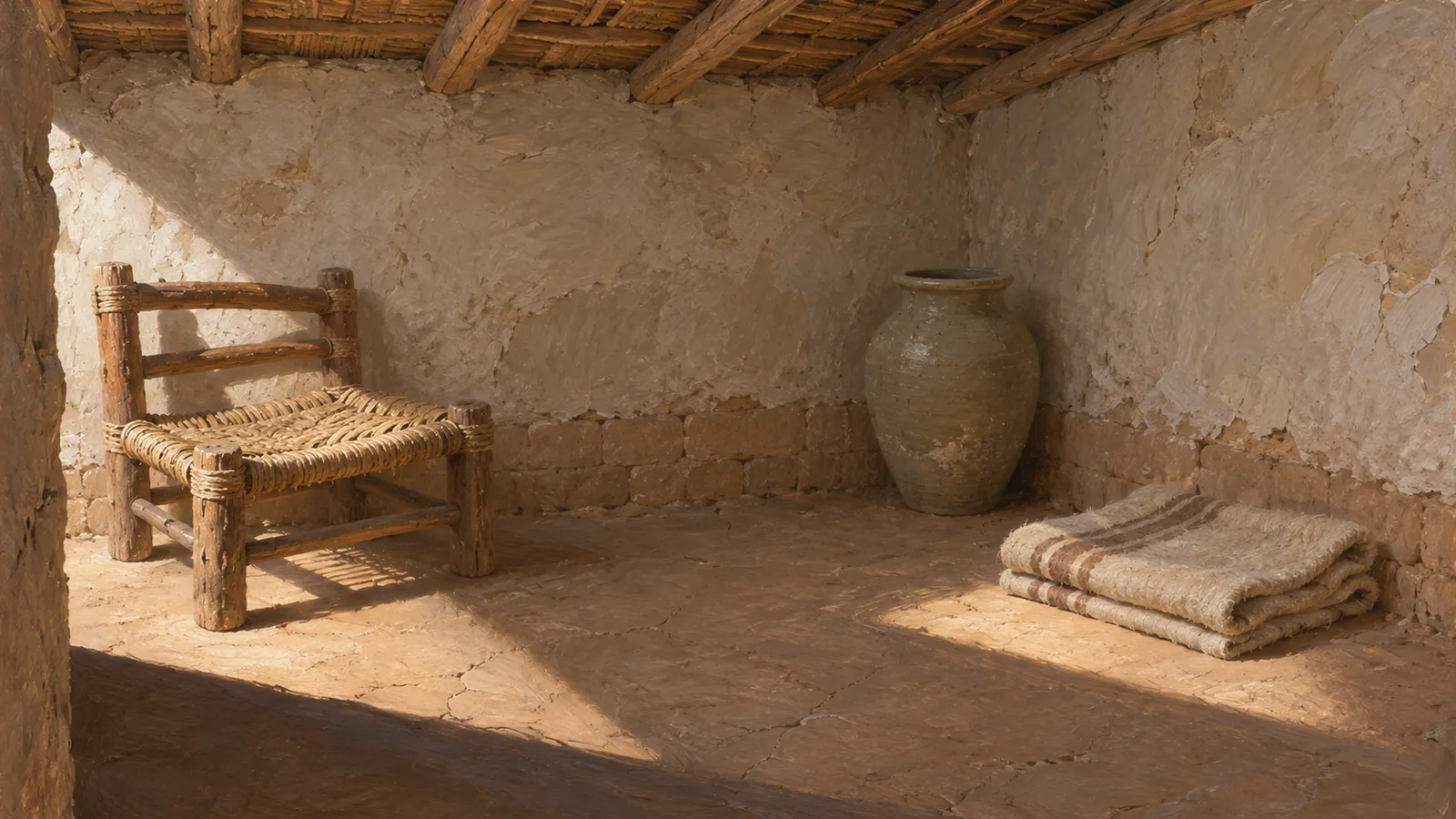
The verses still speak of a captive spouse and a captive child. Their names are absent. The scene of loss belongs beside the anger the song is trying to calm.
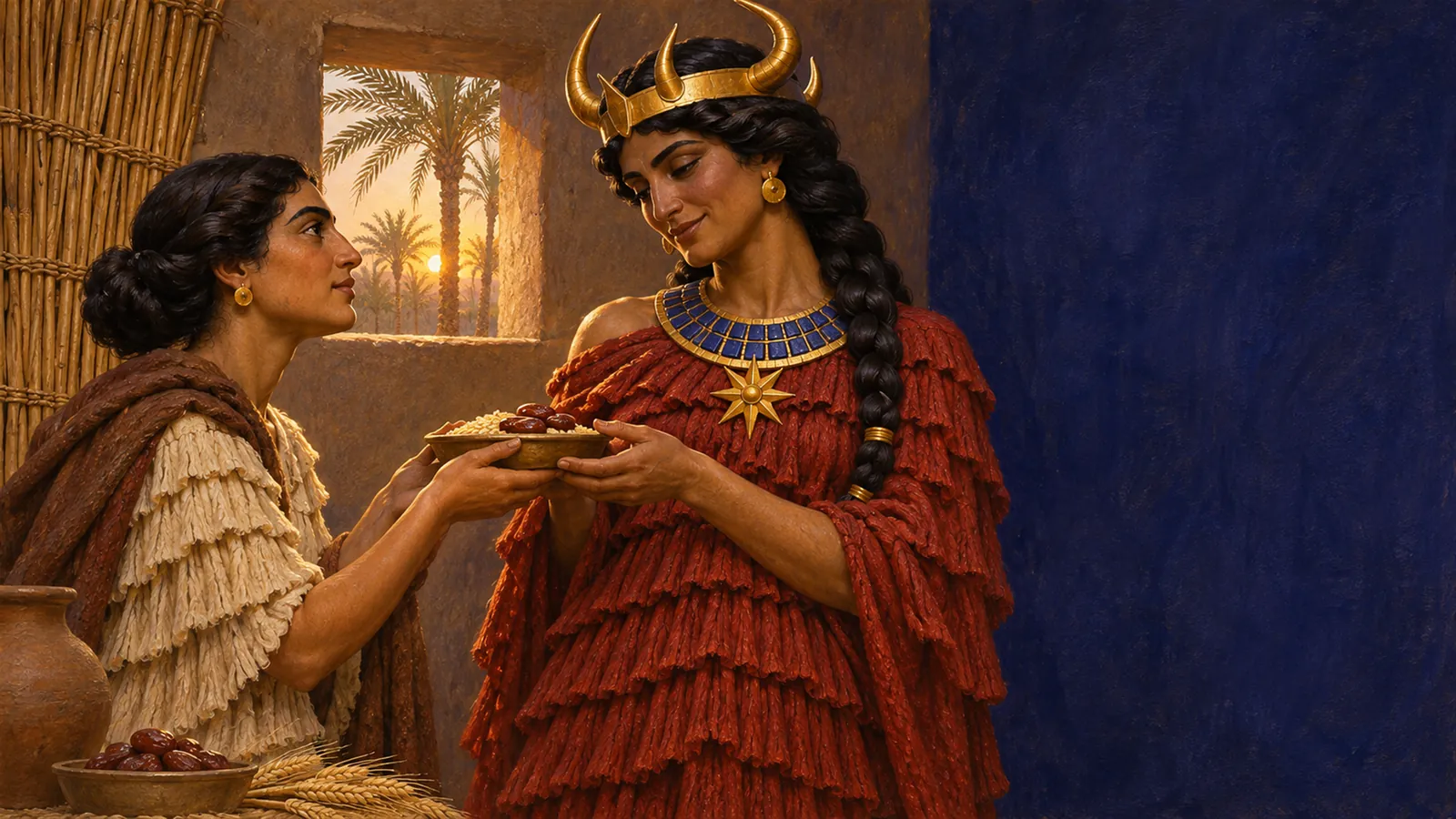
At last the goddess accepts the prayer and the offering. The anger that shook the land grows calm. The hymn answers the question Enheduanna has asked again and again.
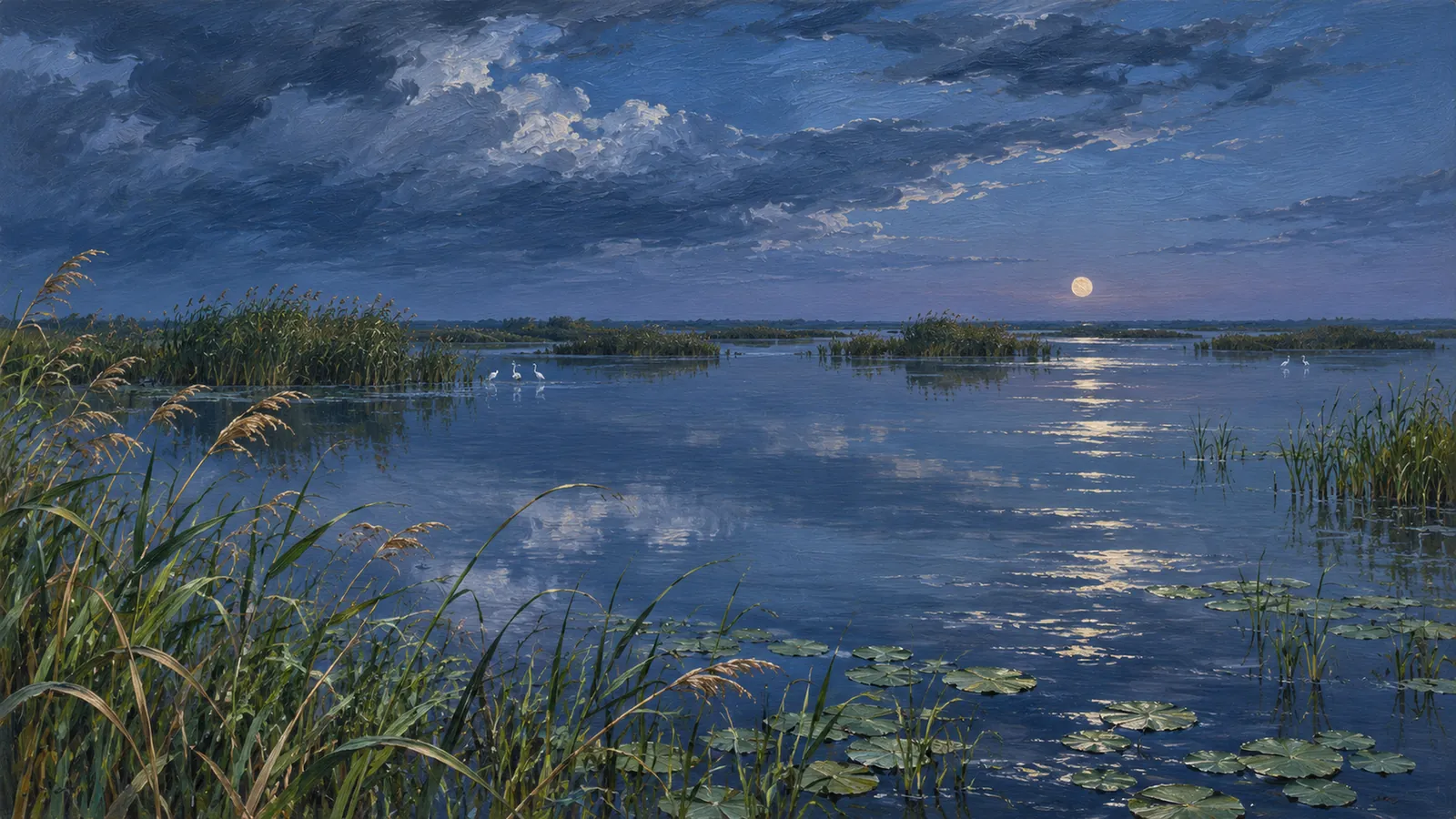
The goddess’s radiance is now sweet. The hymn compares it to moonrise. Earlier light burned the exiled priestess, and now light is how she tells us the danger has passed.
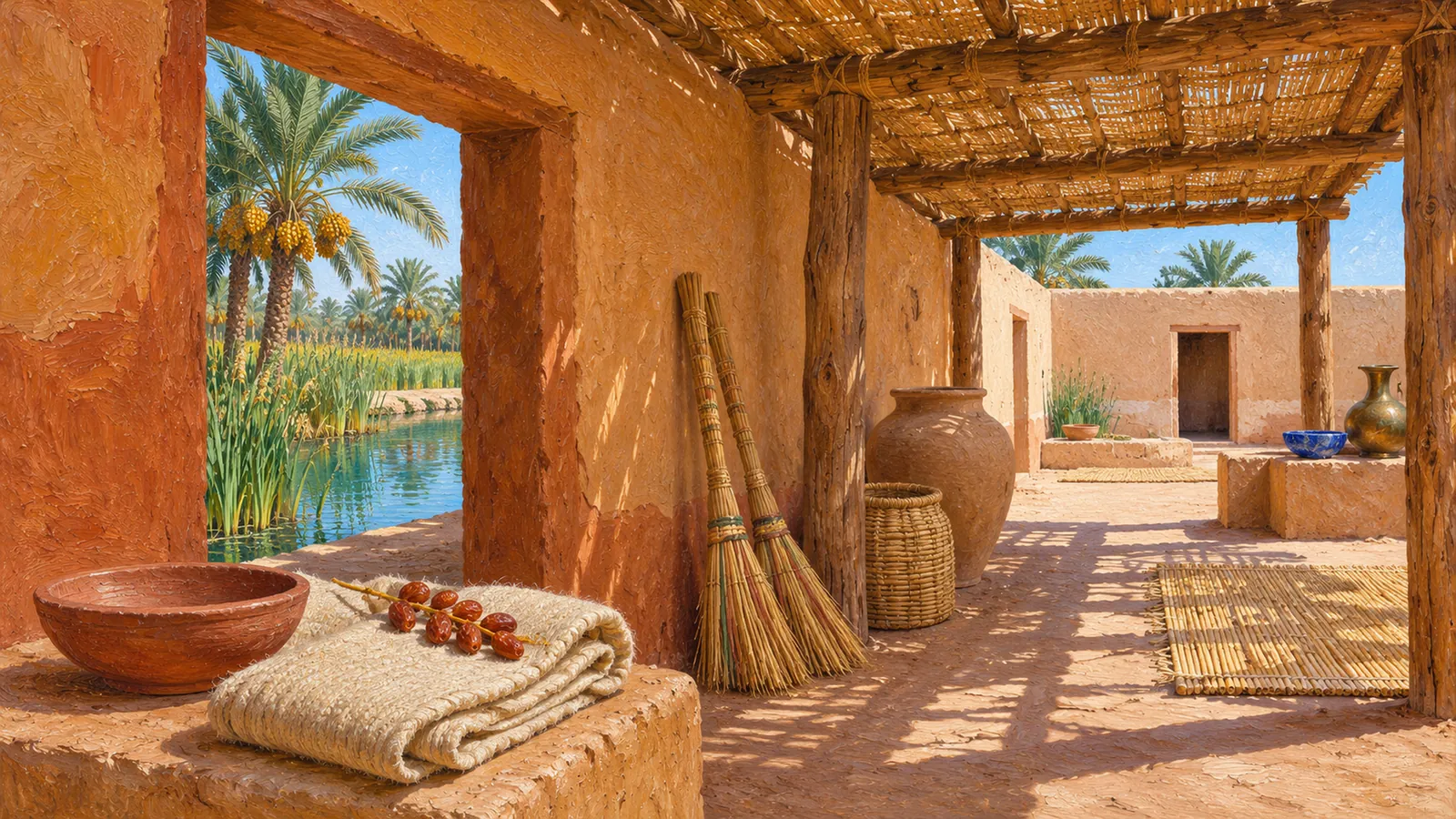
Nanna looks on, and Ningal speaks a blessing. The moon god who once gave no answer is a witness now. Ningal’s voice, once kept secret, is heard in the ending.
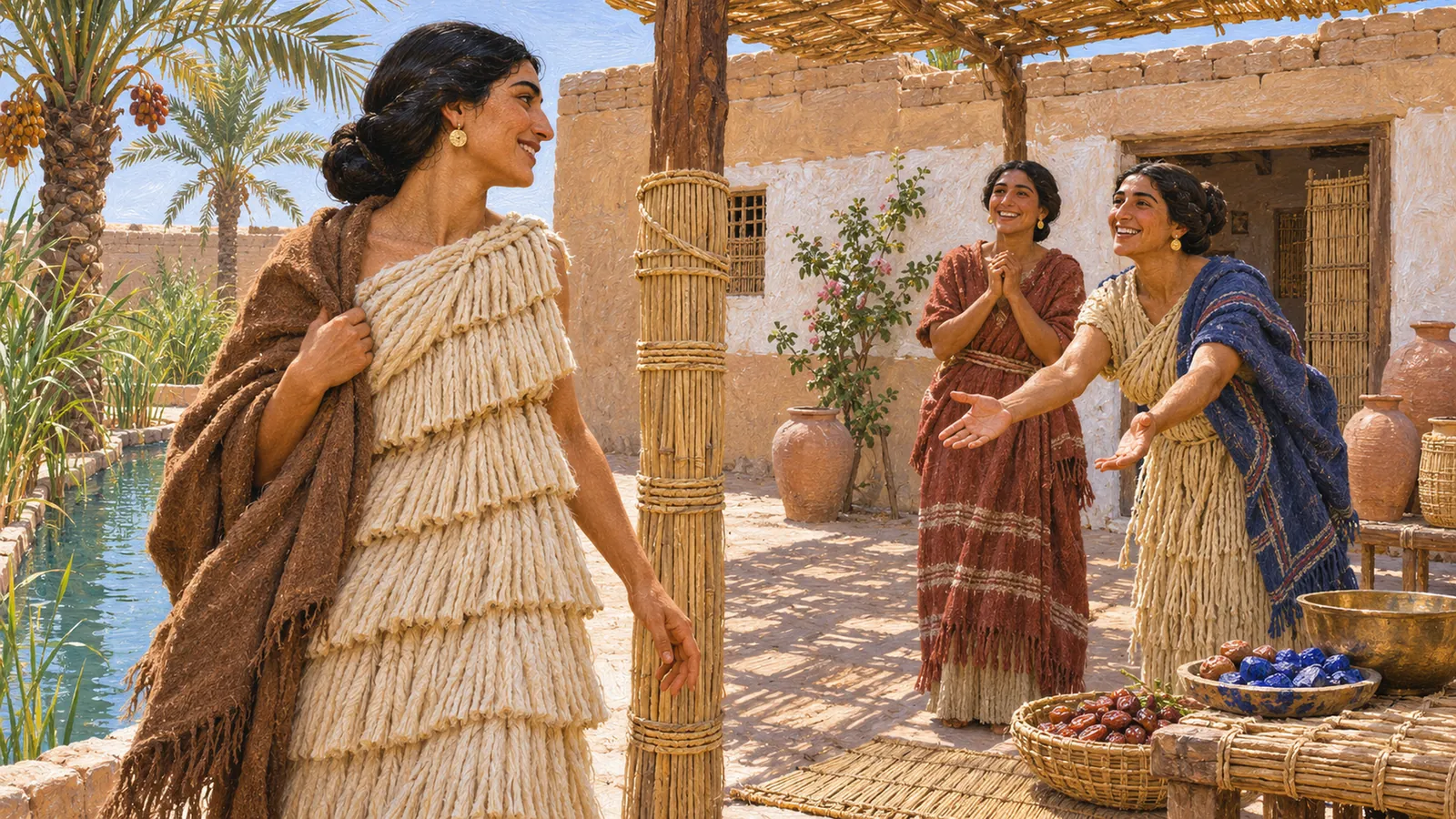
The doorposts offer a welcome. The ending can be heard as a return for the priestess. In its last lines the song gives its praise to Inanna.
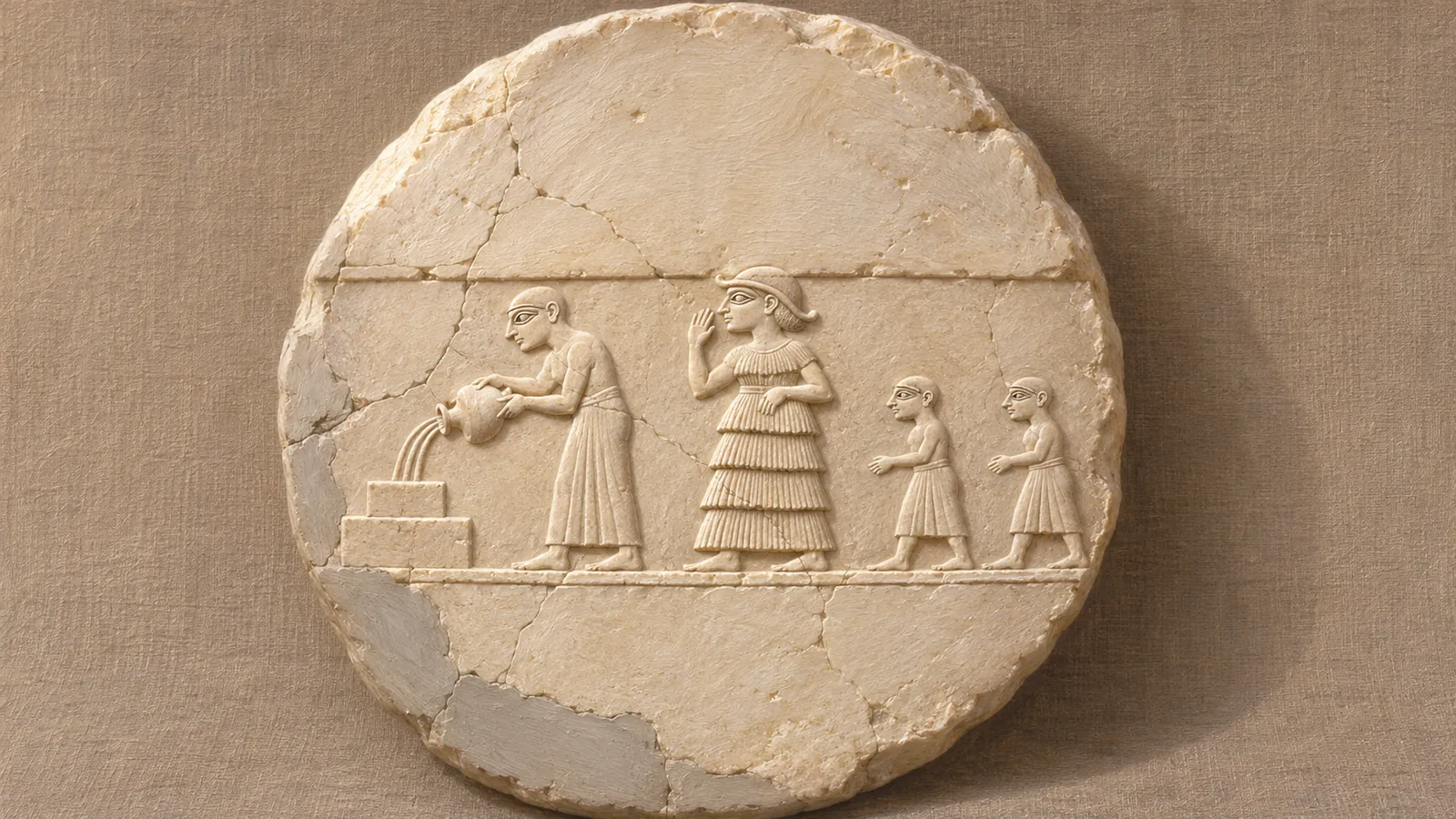
On the restored white calcite disk, four figures attend a libation. Its dedication, also known from an ancient copy, names Enheduanna as Sargon’s daughter and a priestess of Nanna.
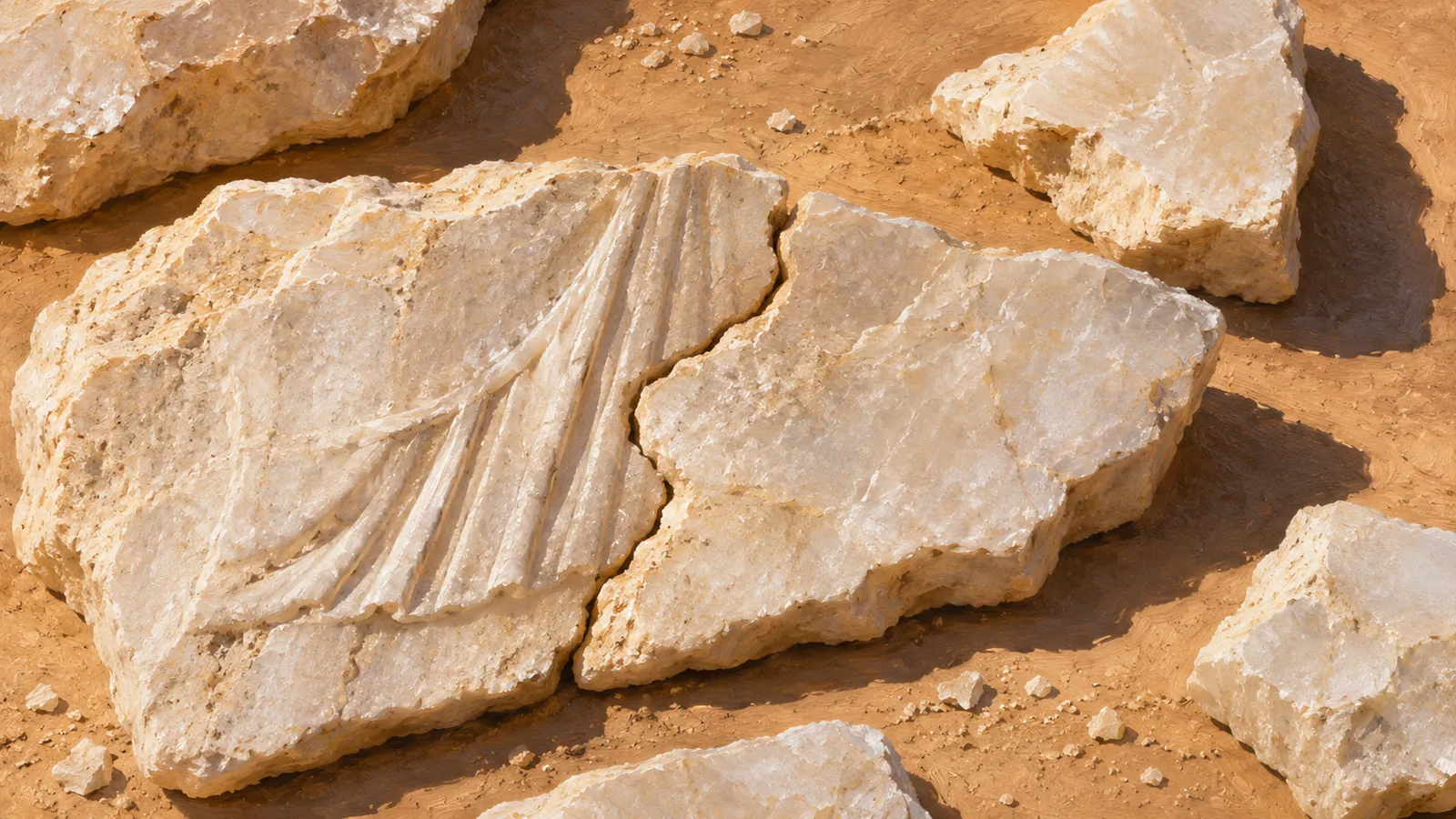
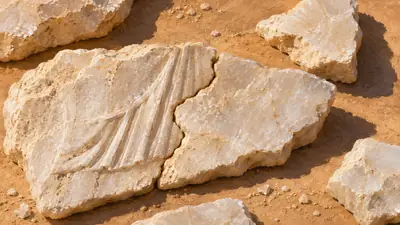
Excavators found the disk in fragments in the 1920s. Its dedication gives historians a witness to the priestess herself, and her story of exile comes to us through the hymn.
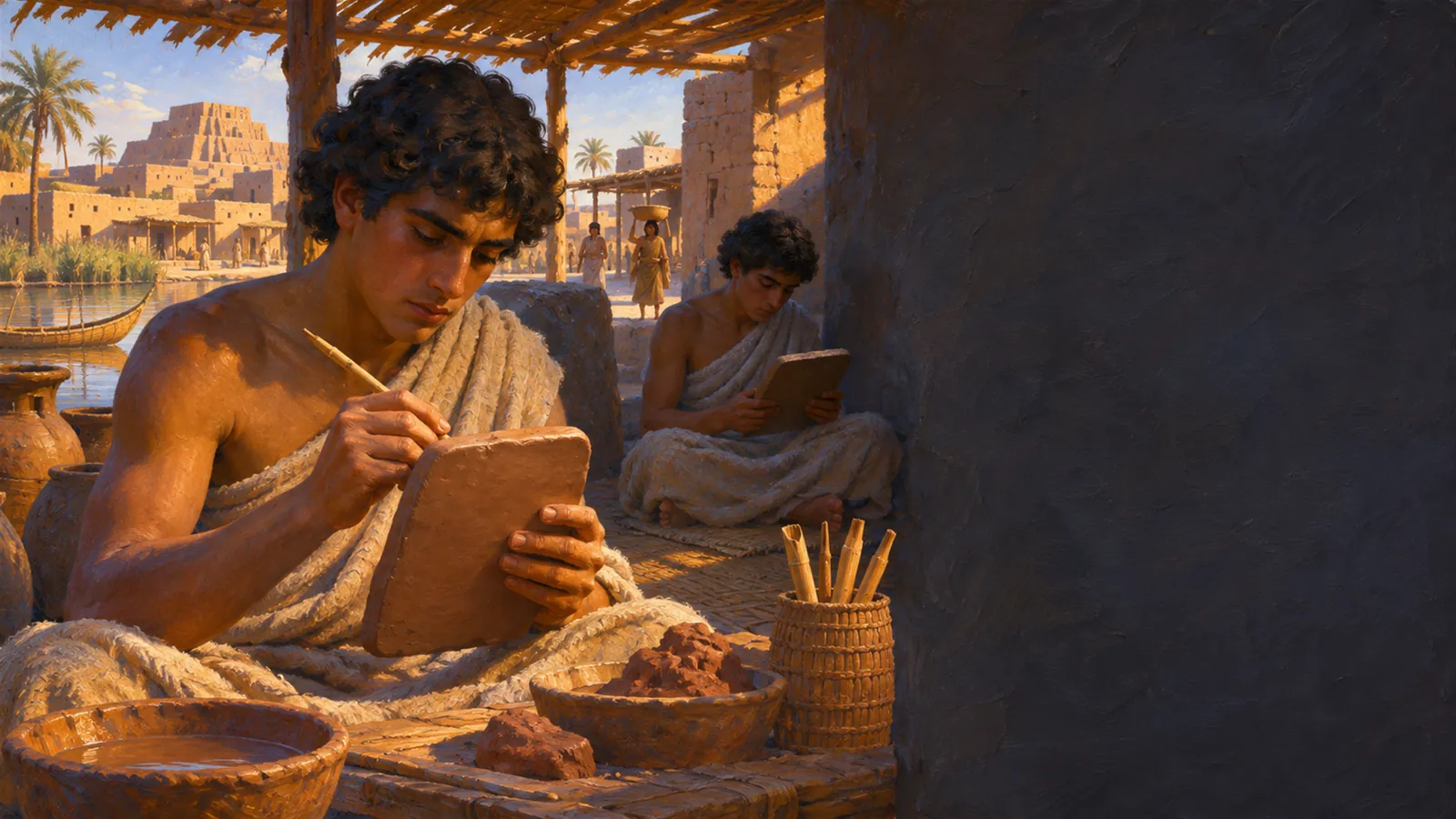
The hymn survives in clay copies made long after her lifetime. They preserve the moment a priestess says her own name, and the song she asks another voice to carry.
End of chapter 1
All pages












Sources
Editions consulted
- Penn Museum, Disc of Enheduanna B16665
- Morgan Library & Museum, Disk of Enheduanna, inscription and relief
- University of Oxford, ETCSL 4.07.2, The Exaltation of Inana
- Sophus Helle, The Exaltation of Inana, annotated translation
- CDLI, Old Babylonian witness to Inanna B and composite Q000623
- CDLI, composite text of The Exaltation of Inanna, P478852
- Leonard Woolley, *Ur Excavations IV*, Sargonid period and plate 41
- Sophus Helle, *The Disk of Enheduana*, text and restoration history
Ancient lines behind each page
- Page 1: Penn Museum B16665, Helle disk study and Woolley excavation report, historical setting
- Page 2: Penn Museum B16665, Helle disk study and Woolley excavation report, historical setting
- Page 3: Penn Museum B16665, Helle disk study and Woolley excavation report, 66–69 and historical setting
- Page 4: Penn Museum B16665, Helle disk study and Woolley excavation report, disk, obverse
Reconstruction after the disk's preserved libation group - Page 5: ETCSL 4.07.2, 1–12, and Helle annotated translation
- Page 6: ETCSL 4.07.2, 1–12, and Helle annotated translation
- Page 7: ETCSL 4.07.2, 1–19, and Helle annotated translation
- Page 8: ETCSL 4.07.2, 13–23, and Helle annotated translation
- Page 9: ETCSL 4.07.2, 23–33, and Helle annotated translation
- Page 10: ETCSL 4.07.2, 23–33, and Helle annotated translation
- Page 11: ETCSL 4.07.2, 34–41, and Helle annotated translation
- Page 12: ETCSL 4.07.2, 42–51, and Helle annotated translation
- Page 13: ETCSL 4.07.2, 48–53, and Helle annotated translation
- Page 14: ETCSL 4.07.2, 52–59, and Helle annotated translation
- Page 15: ETCSL 4.07.2, 54–59, and Helle annotated translation
- Page 16: ETCSL 4.07.2, 60–66, and Helle annotated translation
- Page 17: ETCSL 4.07.2, 66–69, and Helle annotated translation
- Page 18: ETCSL 4.07.2, 66–73, and Helle annotated translation
- Page 19: ETCSL 4.07.2, 70–73, and Helle annotated translation
- Page 20: ETCSL 4.07.2, 70–73, and Helle annotated translation
- Page 21: ETCSL 4.07.2, 74–80, and Helle annotated translation
- Page 22: ETCSL 4.07.2, 74–90, and Helle annotated translation
- Page 23: ETCSL 4.07.2, 81–84, and Helle annotated translation
- Page 24: ETCSL 4.07.2, 85–90, and Helle annotated translation
- Page 25: ETCSL 4.07.2, 85–90, and Helle annotated translation
- Page 26: ETCSL 4.07.2, 81–96, and Helle annotated translation
- Page 27: ETCSL 4.07.2, 91–98, and Helle annotated translation
- Page 28: ETCSL 4.07.2, 94–102, and Helle annotated translation
- Page 29: ETCSL 4.07.2, 99–105, and Helle annotated translation
- Page 30: ETCSL 4.07.2, 101–108, and Helle annotated translation
- Page 31: ETCSL 4.07.2, 101–108, and Helle annotated translation
- Page 32: ETCSL 4.07.2, 105–108, and Helle annotated translation
- Page 33: ETCSL 4.07.2, 105–108, and Helle annotated translation
- Page 34: ETCSL 4.07.2, 109–111, and Helle annotated translation
- Page 35: ETCSL 4.07.2, 112–115, and Helle annotated translation
- Page 36: ETCSL 4.07.2, 112–115, and Helle annotated translation
- Page 37: ETCSL 4.07.2, 116–121, and Helle annotated translation
- Page 38: ETCSL 4.07.2, 118–125, and Helle annotated translation
- Page 39: ETCSL 4.07.2, 122–135, and Helle annotated translation
- Page 40: ETCSL 4.07.2, 136–138, and Helle annotated translation
- Page 41: ETCSL 4.07.2, 139–141, and Helle annotated translation
- Page 42: ETCSL 4.07.2, 140–141, and Helle annotated translation
- Page 43: ETCSL 4.07.2, 142–143, and Helle annotated translation
- Page 44: ETCSL 4.07.2, 144–145, and Helle annotated translation
- Page 45: ETCSL 4.07.2, 146–147, and Helle annotated translation
- Page 46: ETCSL 4.07.2, 148–149, and Helle annotated translation
- Page 47: ETCSL 4.07.2, 150–154, and Helle annotated translation
One reading of the poem's ambiguous final greeting - Page 48: Penn Museum B16665, Helle disk study and Woolley excavation report, disk and dedication
- Page 49: Penn Museum B16665, Helle disk study and Woolley excavation report, excavation and disk
- Page 50: CDLI P305864 and P478852, Old Babylonian manuscripts
Illustrations made with AI tools by IL Archive; the text is based on the ancient sources (see the sources at the end of each chapter).