Exploration
Time
Explore records by their historical setting: creation, composition, or existence in a period. A book’s publication year or an object’s discovery date does not determine its position here.
Before the third millennium BCE
-
From 13000 BCE to 9500 BCE
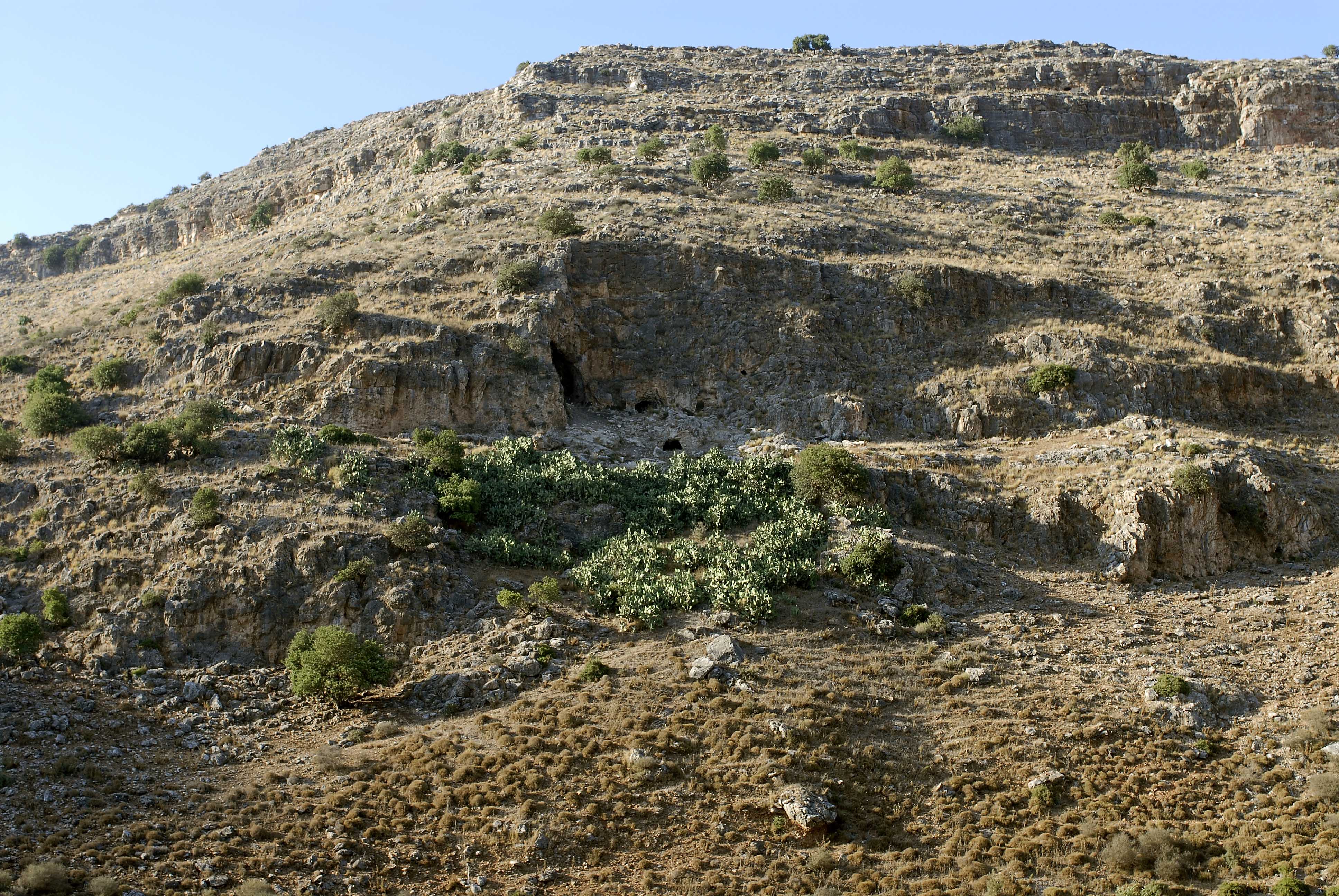
Hayonim Cave
Site · A multistratified cave in western Galilee whose Natufian burials reveal ornaments, mortuary practices and repeated use of place, not proven continuous group identity.
-
From 13000 BCE to 9500 BCE
Natufian culture
Period · A late Epipalaeolithic culture of the Levant (roughly 13,000–9500 BCE), linked among some foraging groups with stone architecture and repeated burials before domesticated farming; it varies from site to site.
-
From 13000 BCE to 9500 BCE
The Natufians: What Happened to Religion When People Began to Settle?
Study · Houses, graves, ornaments, feasts and place memory before fully developed agriculture: Natufian evidence and its limits for reconstructing rituals, ancestors and gods.
-
From 12060 BCE to 9650 BCE
Raqefet Cave
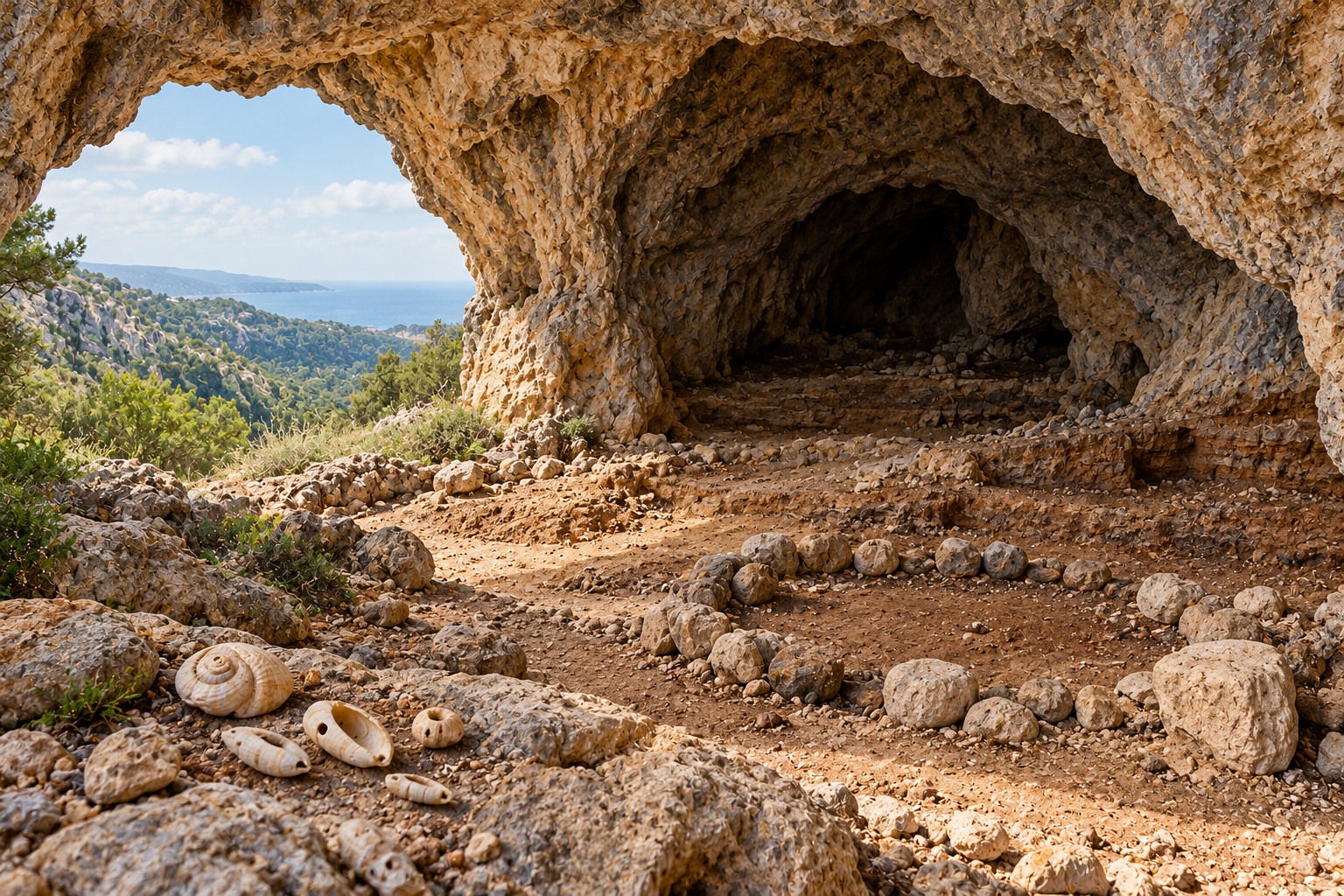
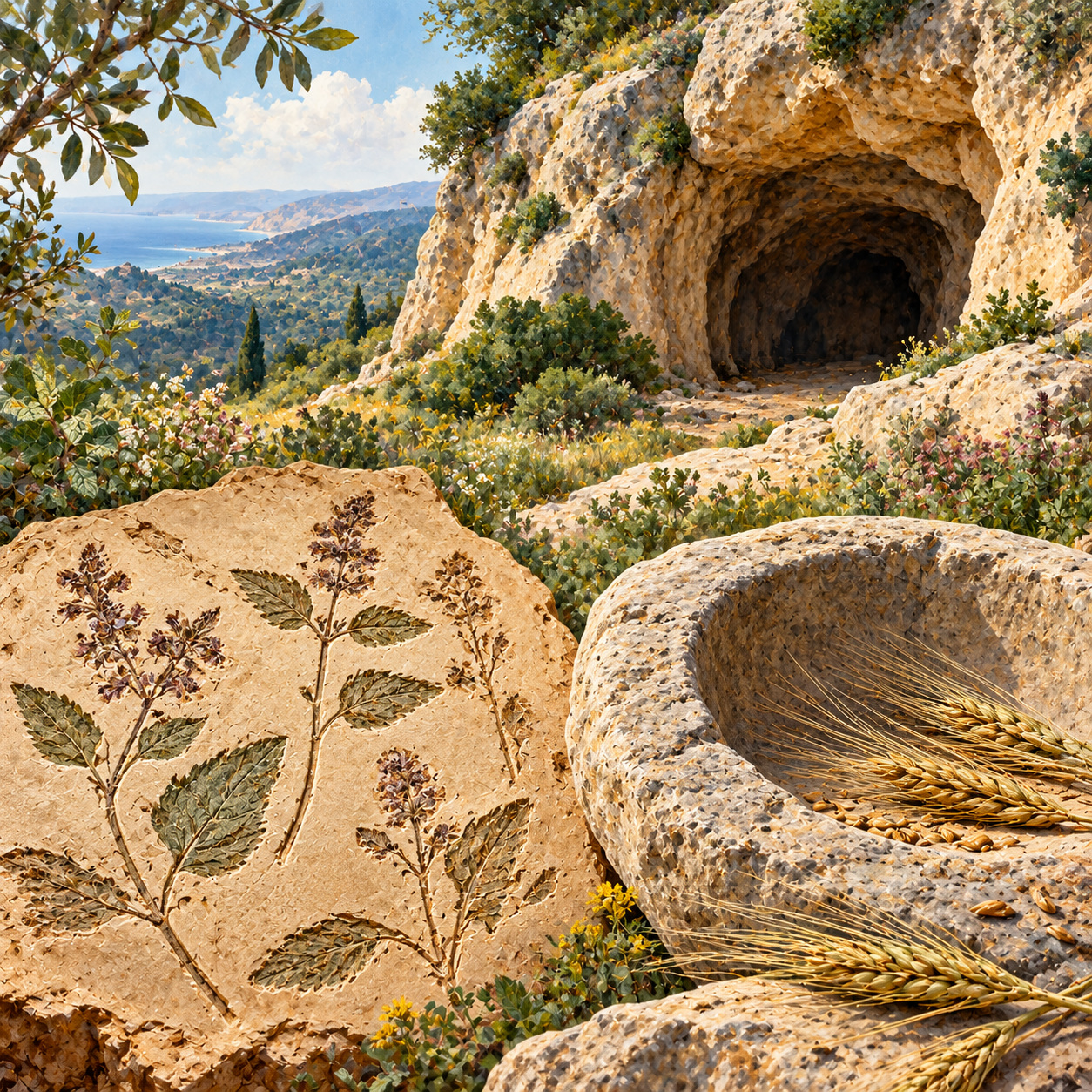
Site · A Mount Carmel cave with a multigenerational Natufian cemetery. Plant impressions in four graves support a flowering-plant lining, whereas the proposed brewing function of three mortars remains contested.
-
From 10450 BCE to 10050 BCE
Hilazon Tachtit
Site · A Late Natufian burial cave in Galilee, with an exceptional woman’s grave and deposits interpreted as funerary feasts.
-
From 9600 BCE to 8200 BCE
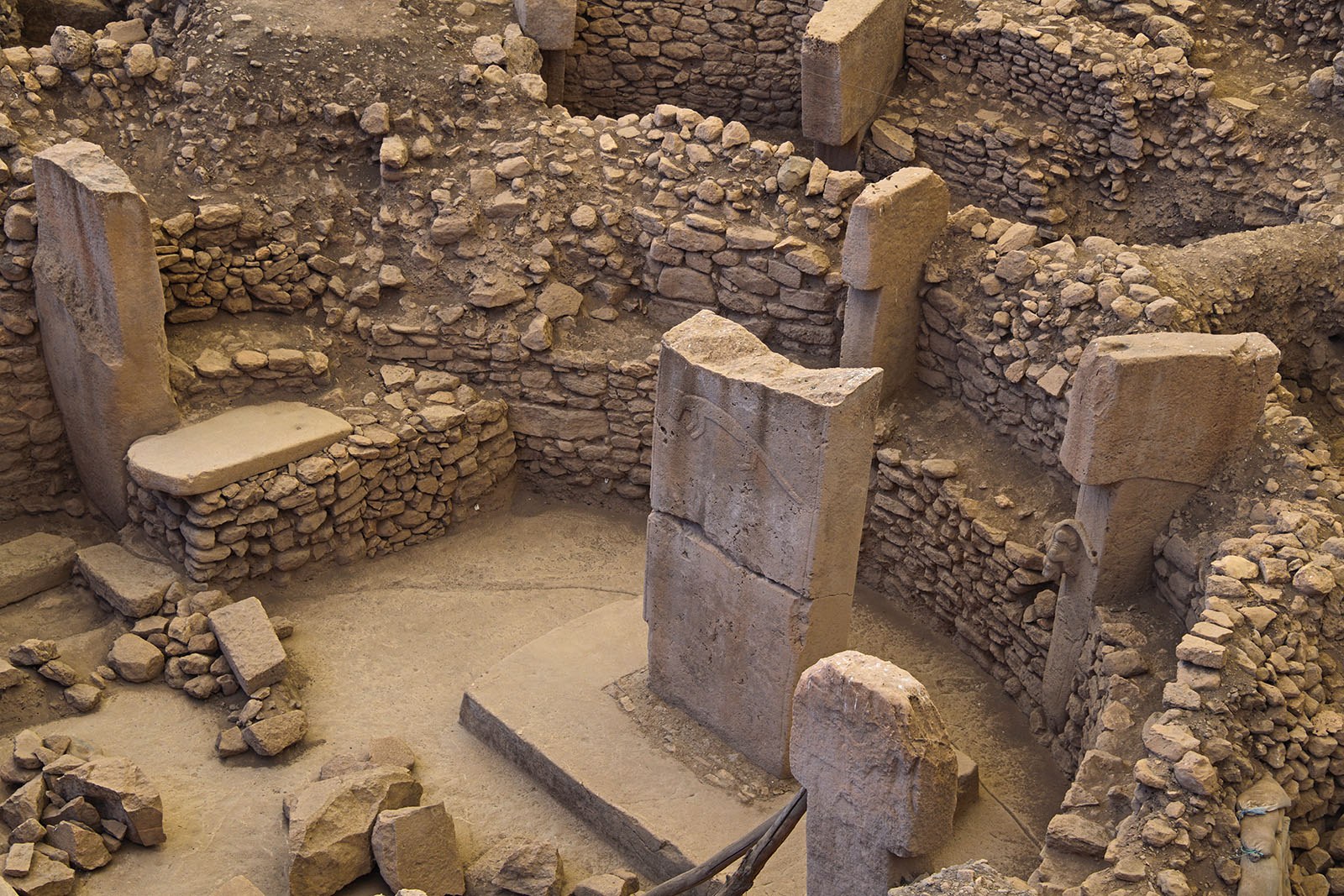
Göbekli Tepe
Site · A Neolithic site near Şanlıurfa (listed monuments c. 9600–8200 BCE) with anthropomorphic T-pillars; settlement and burial research shows daily life and ritual intertwined, without identifying named gods.
-
From 9400 BCE to 7500 BCE
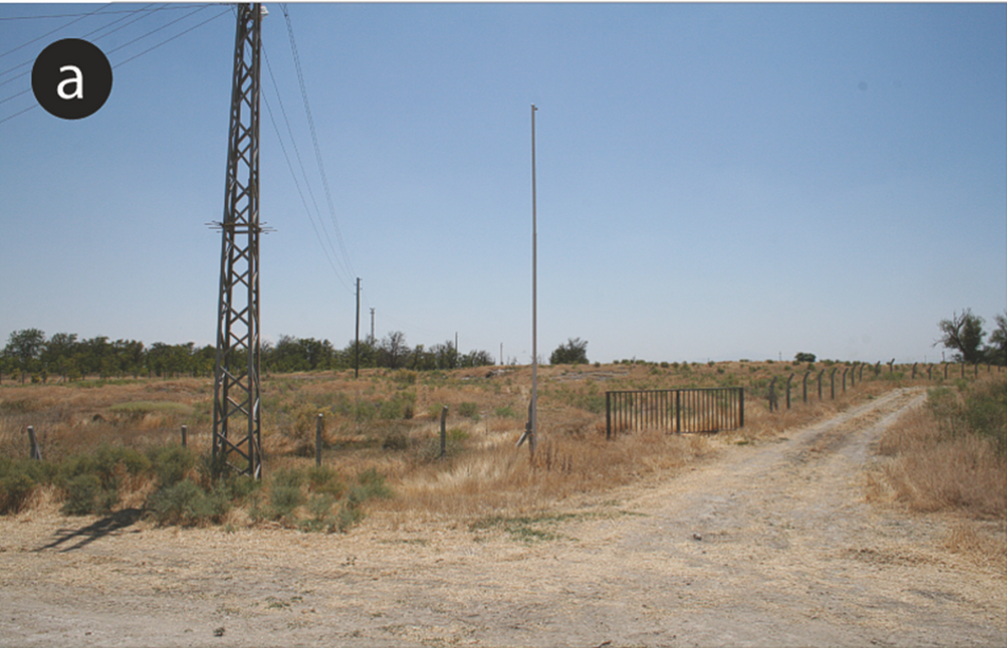
Boncuklu Höyük
Site · A Neolithic settlement on the Konya Plain: settlement phases, food, houses, burial and kinship, distinguishing archaeological evidence from modern replicas.
-
From 9400 BCE to 7100 BCE
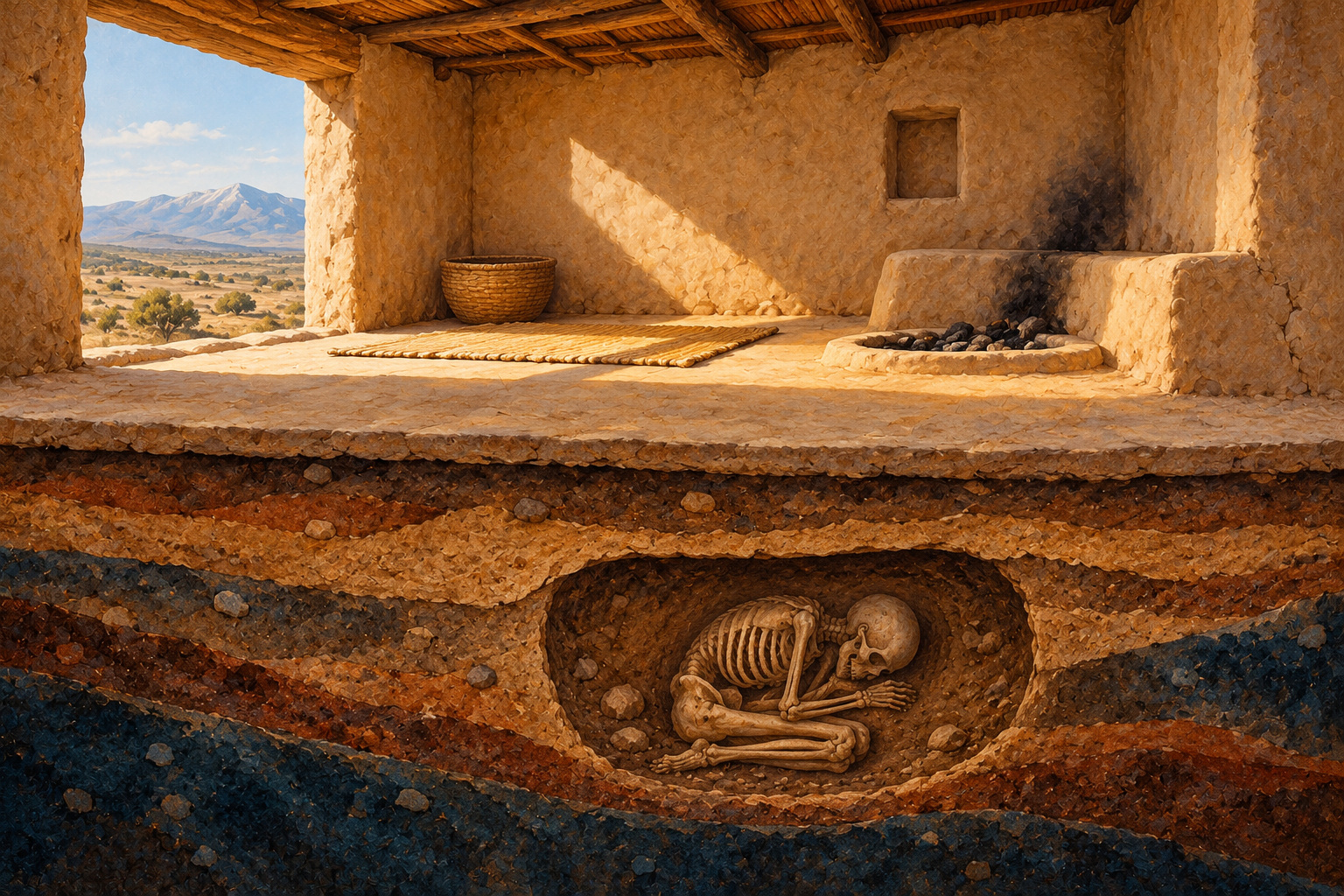
Living Above the Dead: Subfloor Burial Before Çatalhöyük
Study · Subfloor burial at Aşıklı, Balıklı and Boncuklu before Çatalhöyük: funerary contexts, plant fibres, ancient-DNA kinship and the limits of ancestors-and-underworld interpretations.
-
From 8500 BCE to 7500 BCE
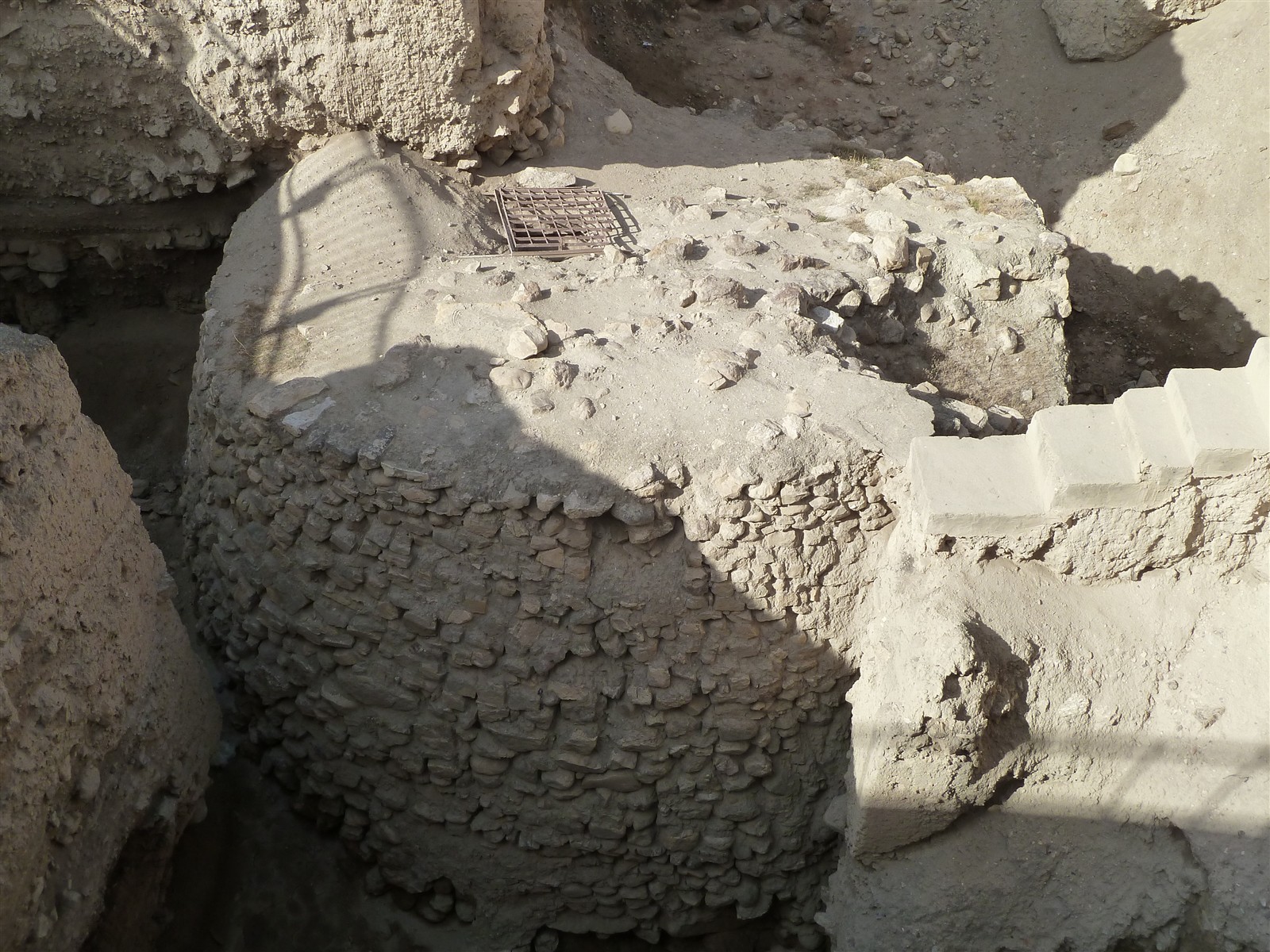
The Neolithic Tower at Tell es-Sultan (Jericho)
Site · A stone tower with an internal staircase rose beside an early settlement wall at Jericho. The tower, wall and ditch have prompted different explanations, from defence and flood protection to a proposed alignment with the summer solstice.
-
From 8500 BCE to 4000 BCE
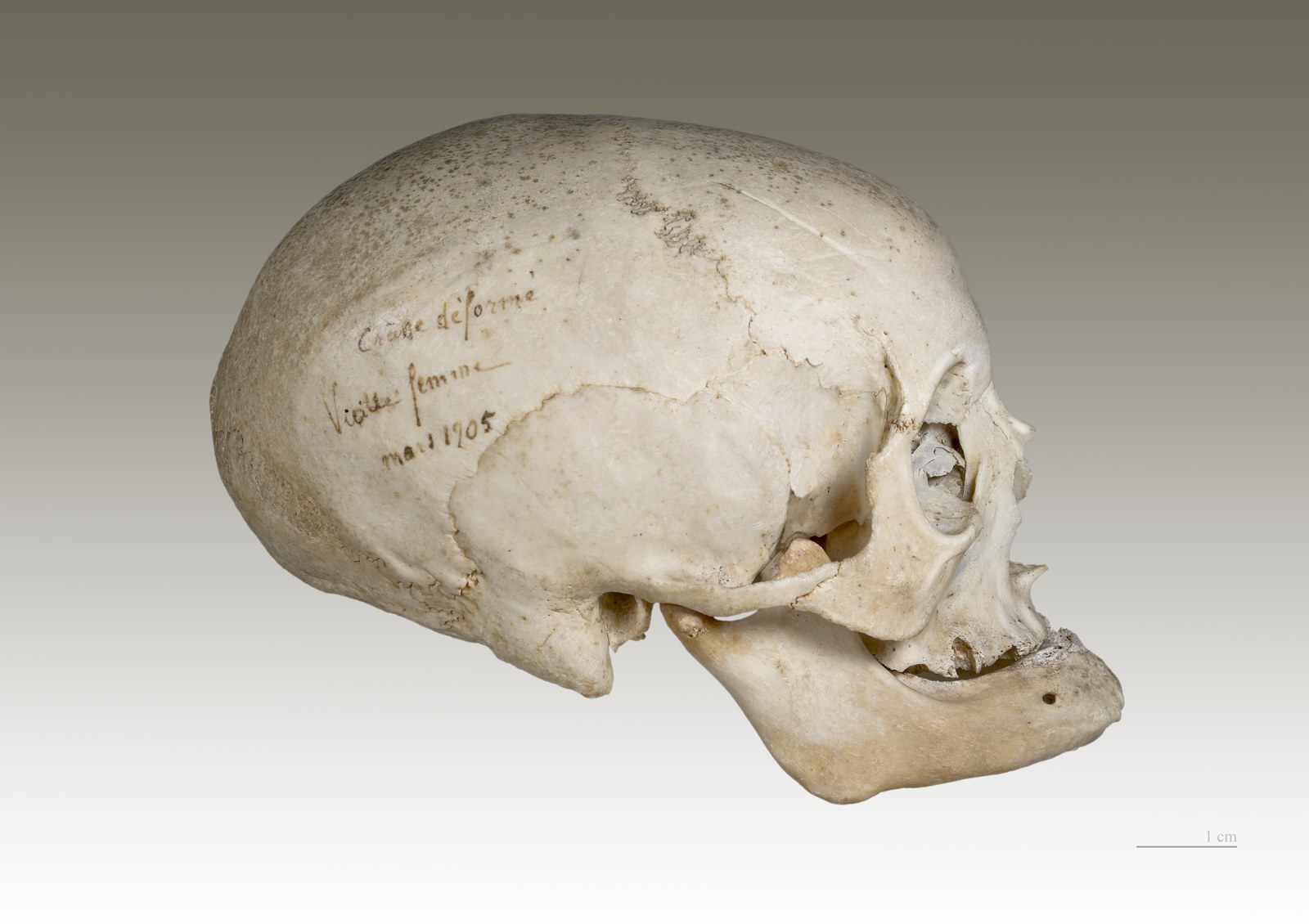
Why Did People Elongate Their Children’s Skulls? From Neolithic Head Shaping to Ubaid Figurines
Study · Head-shaping evidence from the Zagros, Jericho and Tell Zeidan, and possible identity, beauty and status motives: what bones establish and how far they explain Ubaid figurine heads.
-
From 8350 BCE to 7300 BCE
Aşıklı Höyük
Site · An early Neolithic settlement in central Anatolia’s Melendiz valley (c. 8350–7300 BCE), with early sheep management and selective subfloor burials whose genetics reveal some kin ties, without certainty about beliefs.
-
From 8300 BCE to 7950 BCE
Balıklı
Site · An Early Neolithic settlement in central Anatolian Cappadocia, c. 8300–7950 BCE, with renewed houses and subfloor and wall burials whose interpretation changes with excavation.
-
From 8200 BCE to 6000 BCE
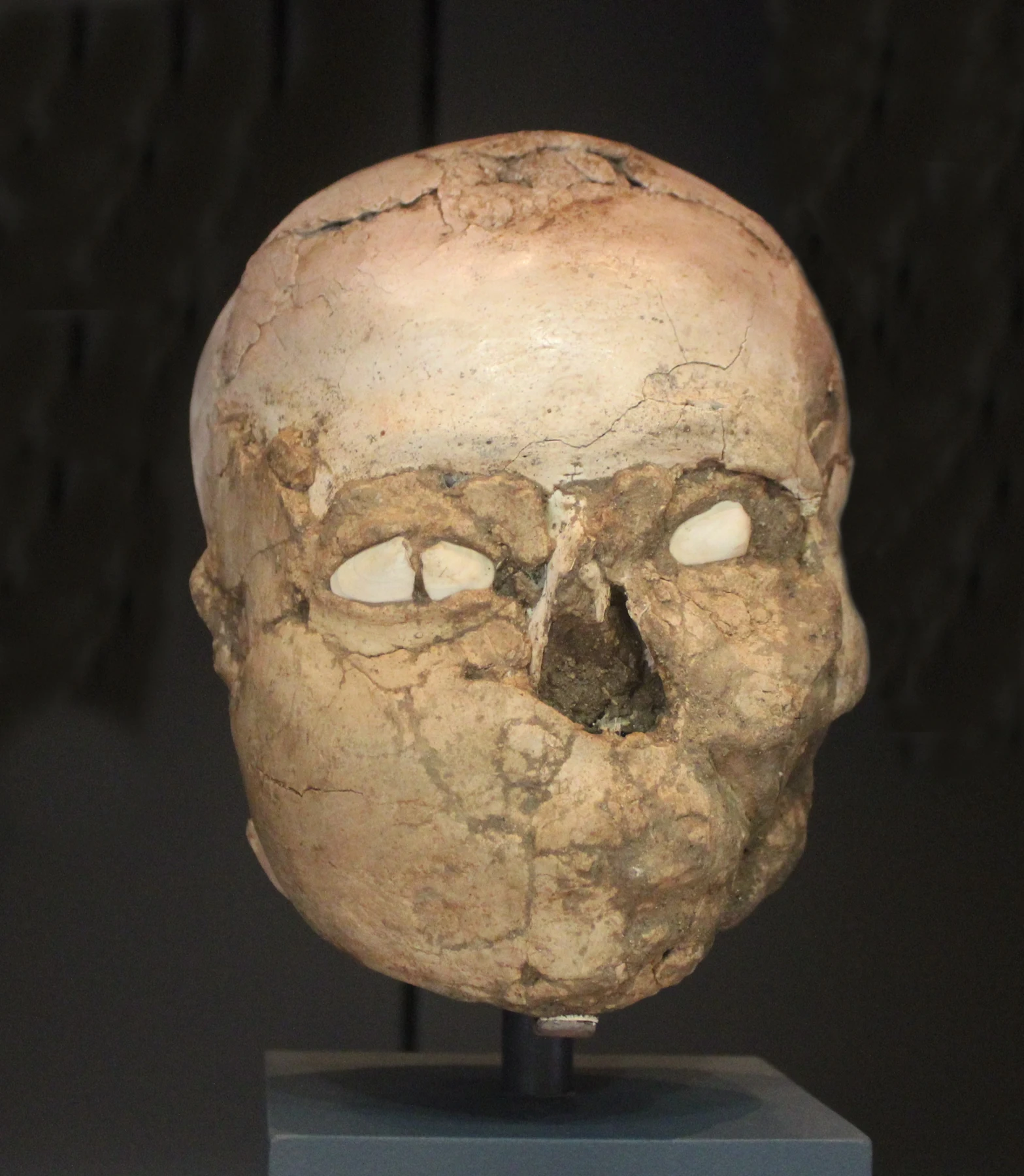
Jericho’s Plastered Skulls: Faces of the Dead and the Limits of Ancestor Interpretation
Study · How do faces made over human remains and modern imaging help us understand memory, belonging and treatment of the dead at prehistoric Jericho?
-
From 7400 BCE to 6200 BCE
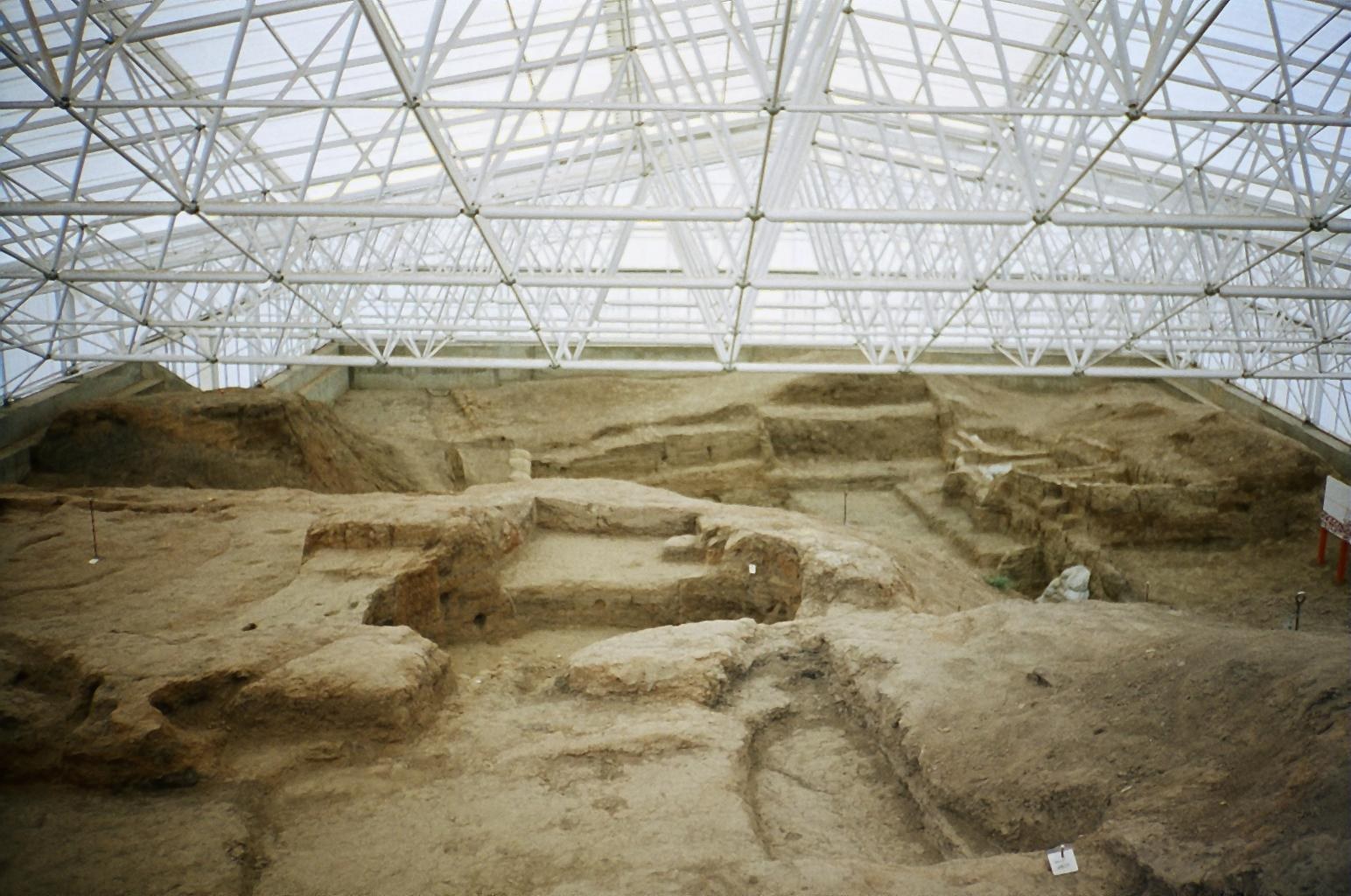
Çatalhöyük
Site · A major Neolithic settlement on the Konya plain: clustered houses, subfloor burials and household imagery, with new evidence for changing social and biological kinship.
-
From 7100 BCE to 5950 BCE
Houses and Ancestors at Çatalhöyük: When Architecture Became Memory
Study · Subfloor burial, architectural continuity and the kinship of the dead: what the evidence reveals about memory and affiliation, and the limits of ancestor and descent interpretations.
-
From 6500 BCE to 3800 BCE
Ubaid culture
Period · An archaeological label for material traditions linked to southern Mesopotamia. The broad southern sequence spans c. 6500–3800 BCE, with regional variation; the label alone identifies neither a people nor a language.
-
From 4000 BCE to 3100 BCE
The Uruk Period (c. 4000–3100 BCE)
Period · The age of southern Mesopotamia’s first large cities, centred on Uruk. Mass-produced bowls, seals, clay accounting tokens and some of the earliest writing survive; its dates and the reach of its influence remain debated.
-
From 4000 BCE to 3000 BCE
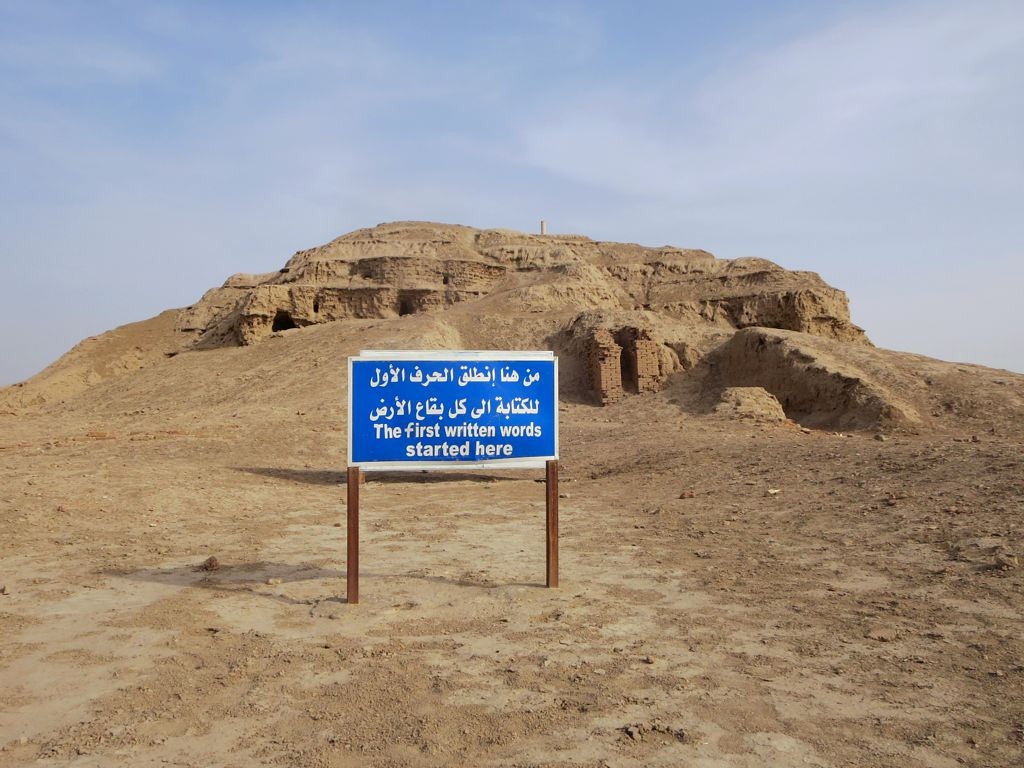
Uruk
Site · Ancient city at Warka in southern Iraq, a major urban centre around 3200 BCE that preserved early writing and accounting tablets.
-
From 3350 BCE to 3000 BCE
Proto-cuneiform
Entity · The earliest phase of cuneiform in southern Mesopotamia, c. 3350–3000 BCE: numbers and signs on clay, mostly administrative accounts. Representation of language is limited, and many signs’ readings are still under study.
-
From 3350 BCE to 2500 BCE
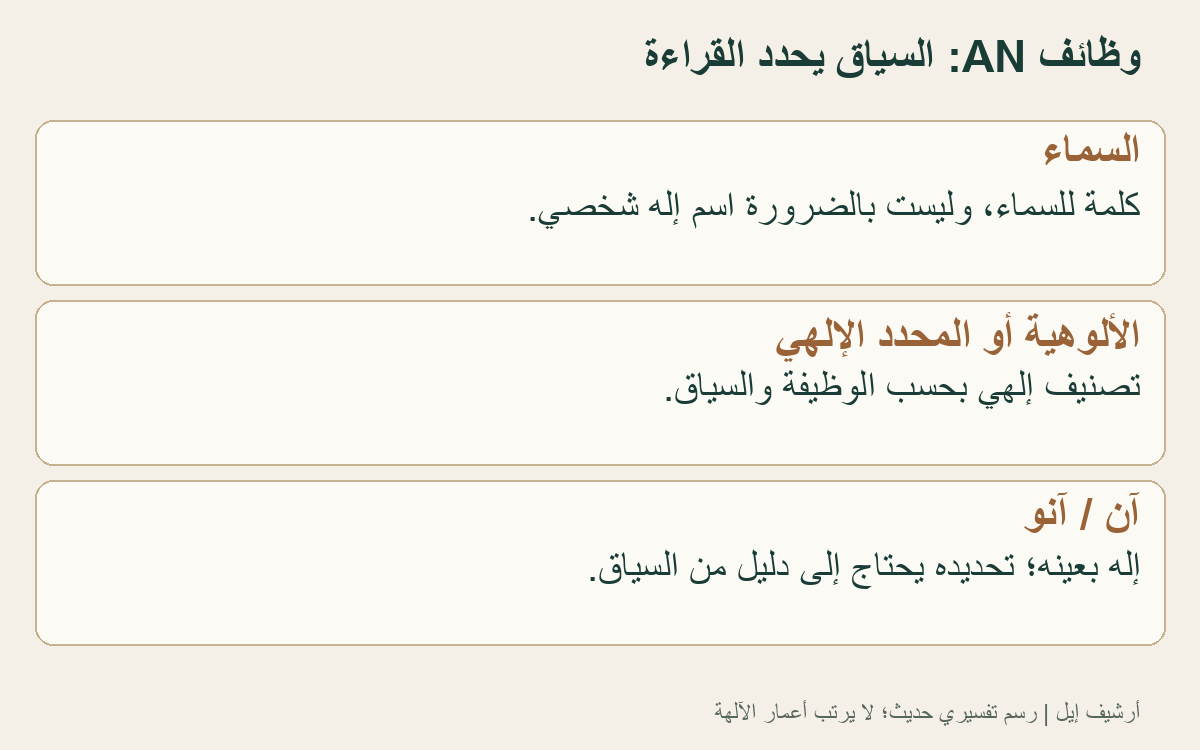
The Earliest Divine Names in Mesopotamia: When Writing Preserved the Name
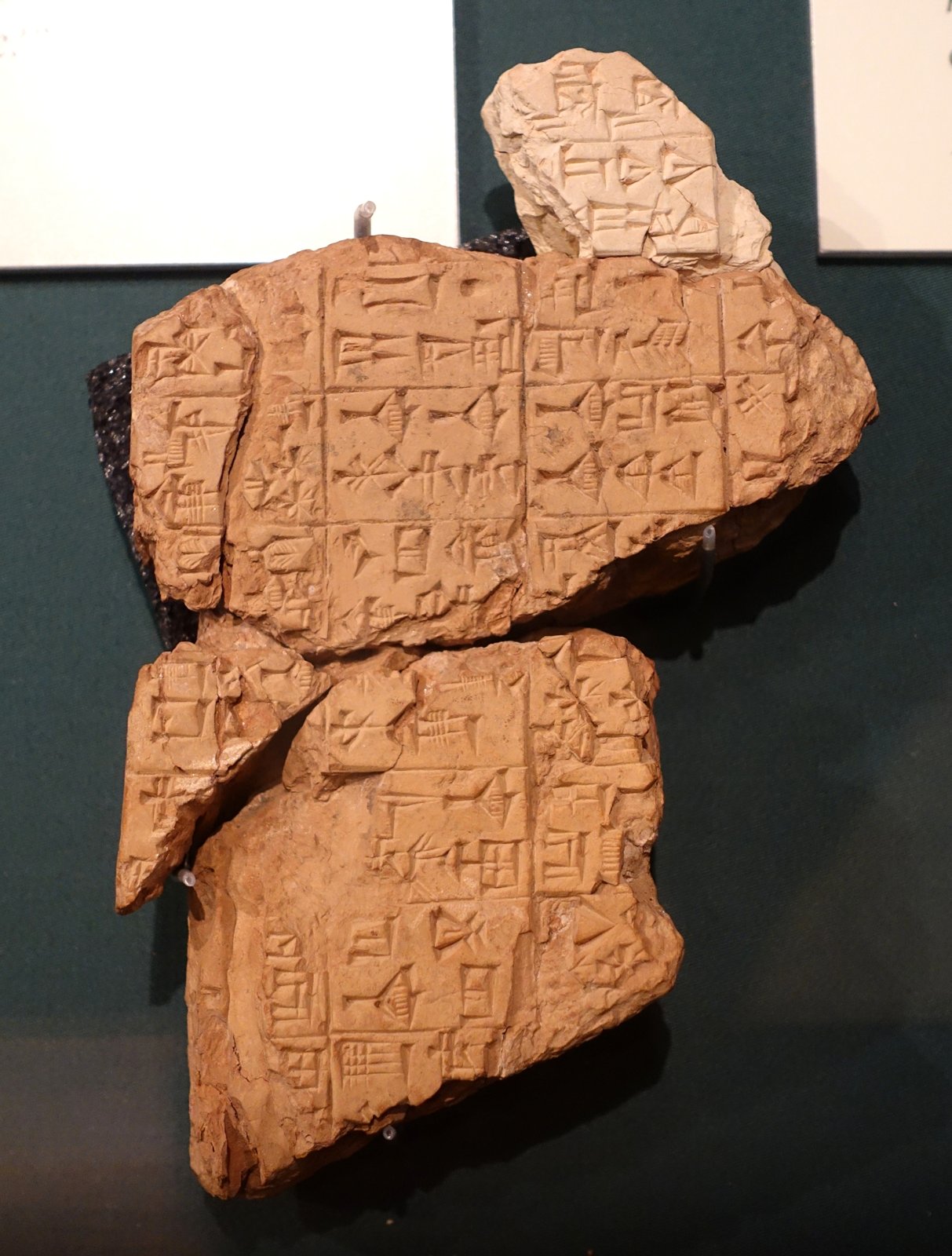
Study · From Uruk tablets to Fara lists: Nanna, Ninlil, Inanna, Enlil and An, and what makes a divine name readable without equating first attestation with the beginning of worship.
-
From 3300 BCE to 2900 BCE
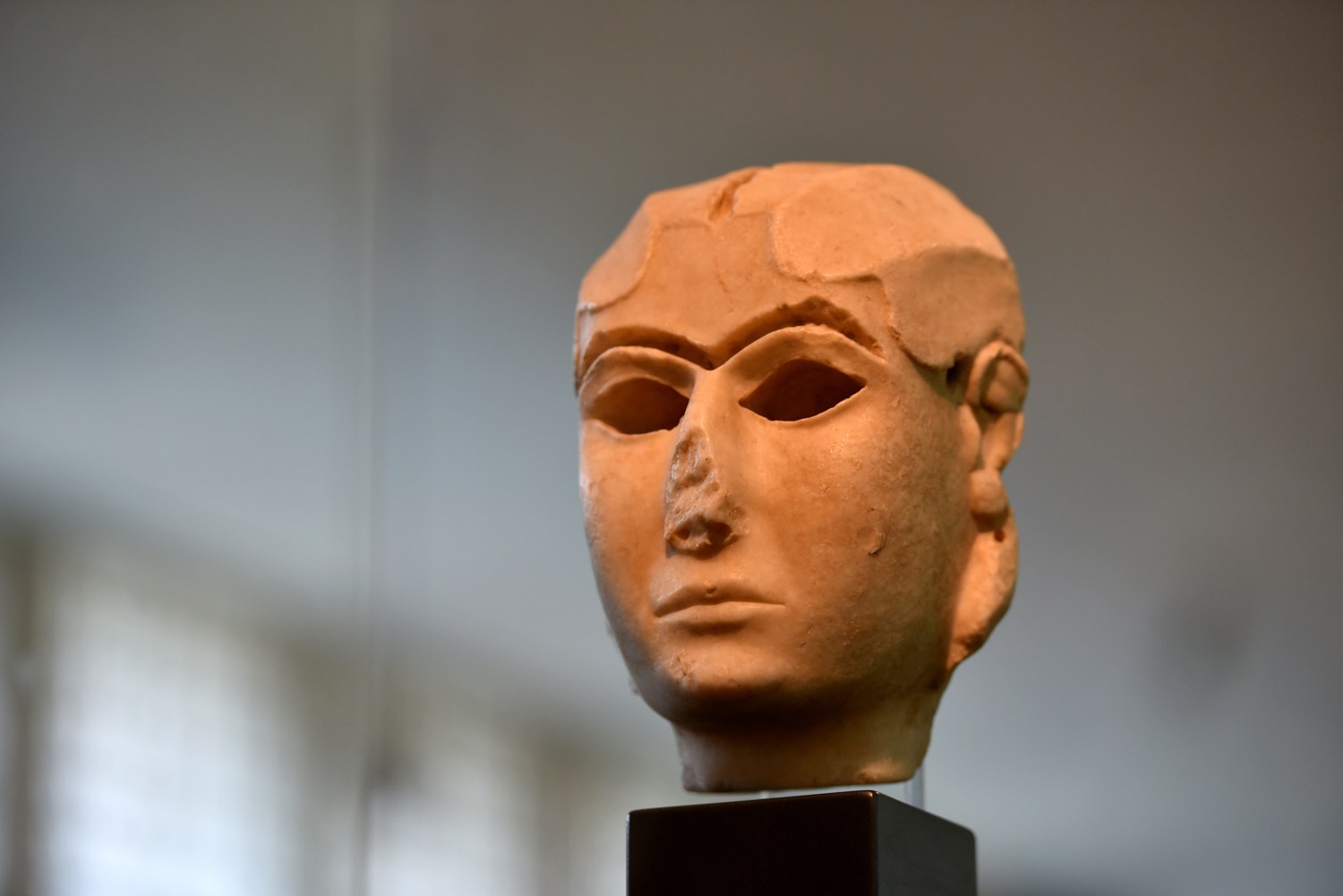
The Warka Vase and Head: When the Sacred Became Recognizable
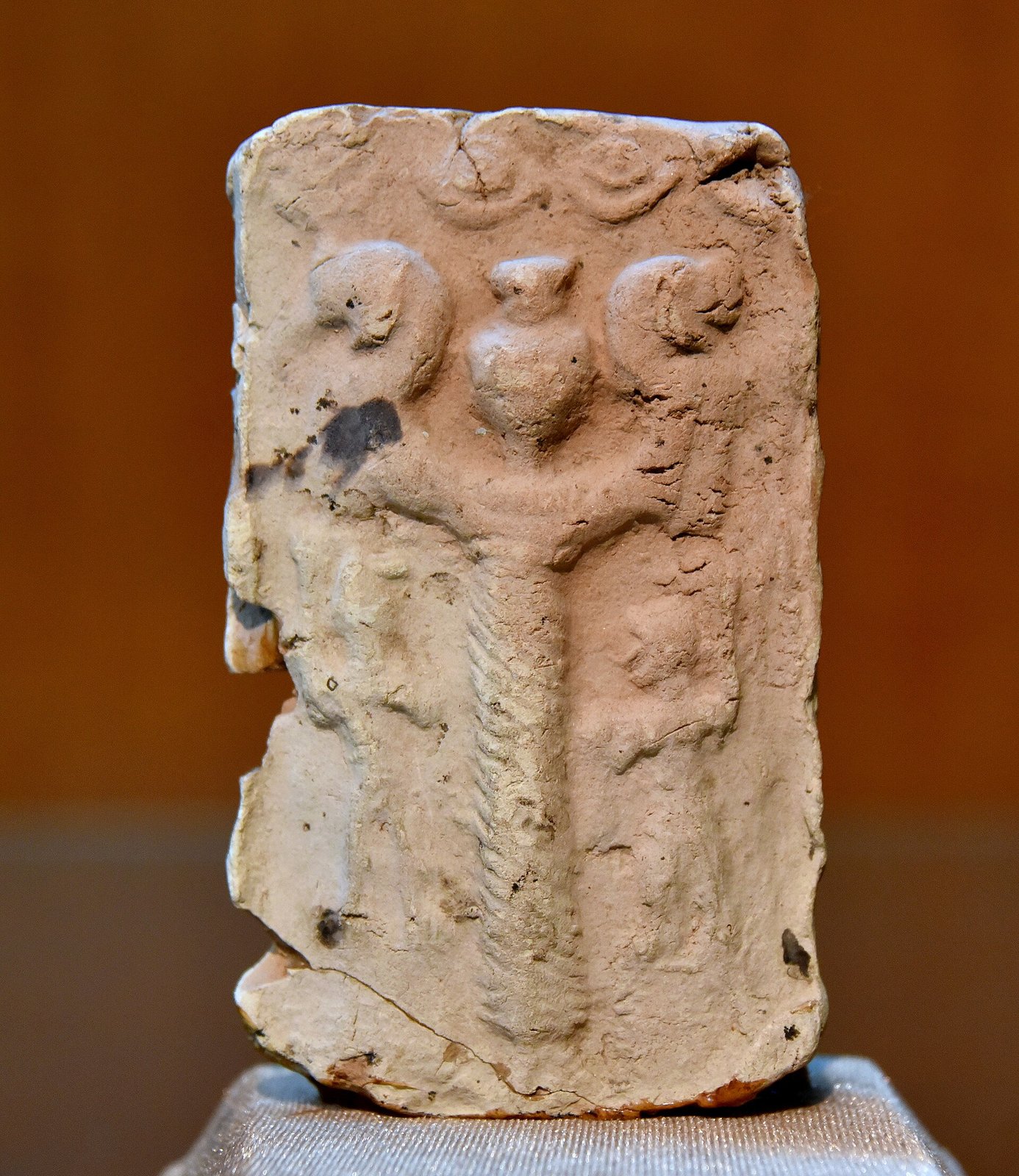
Study · Offerings, Inanna’s emblems and authority at Uruk, alongside a female face probably from a composite statue: what the objects establish and how far goddess, priestess and ruler can be identified.
-
From 3200 BCE to 3000 BCE
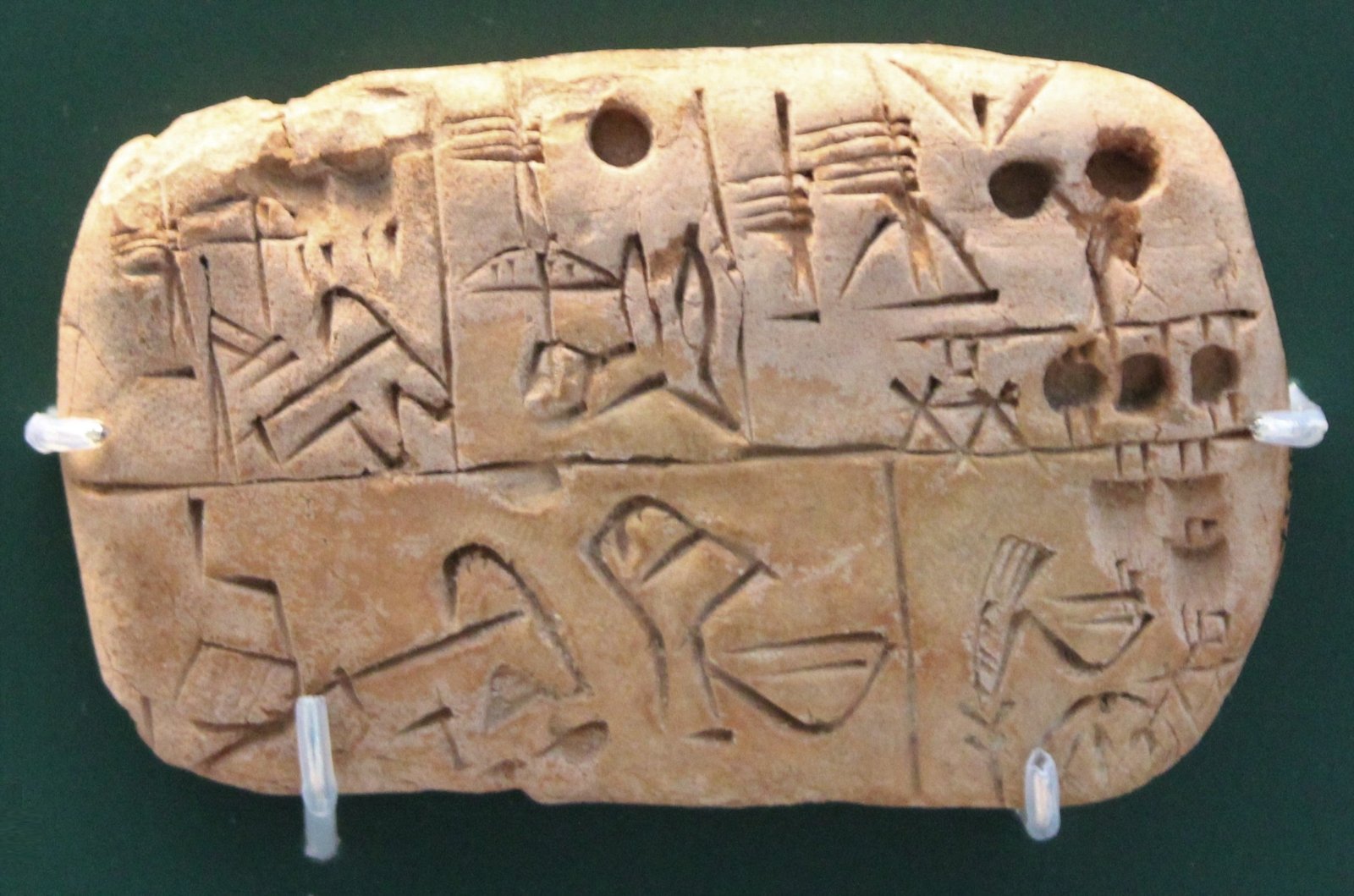
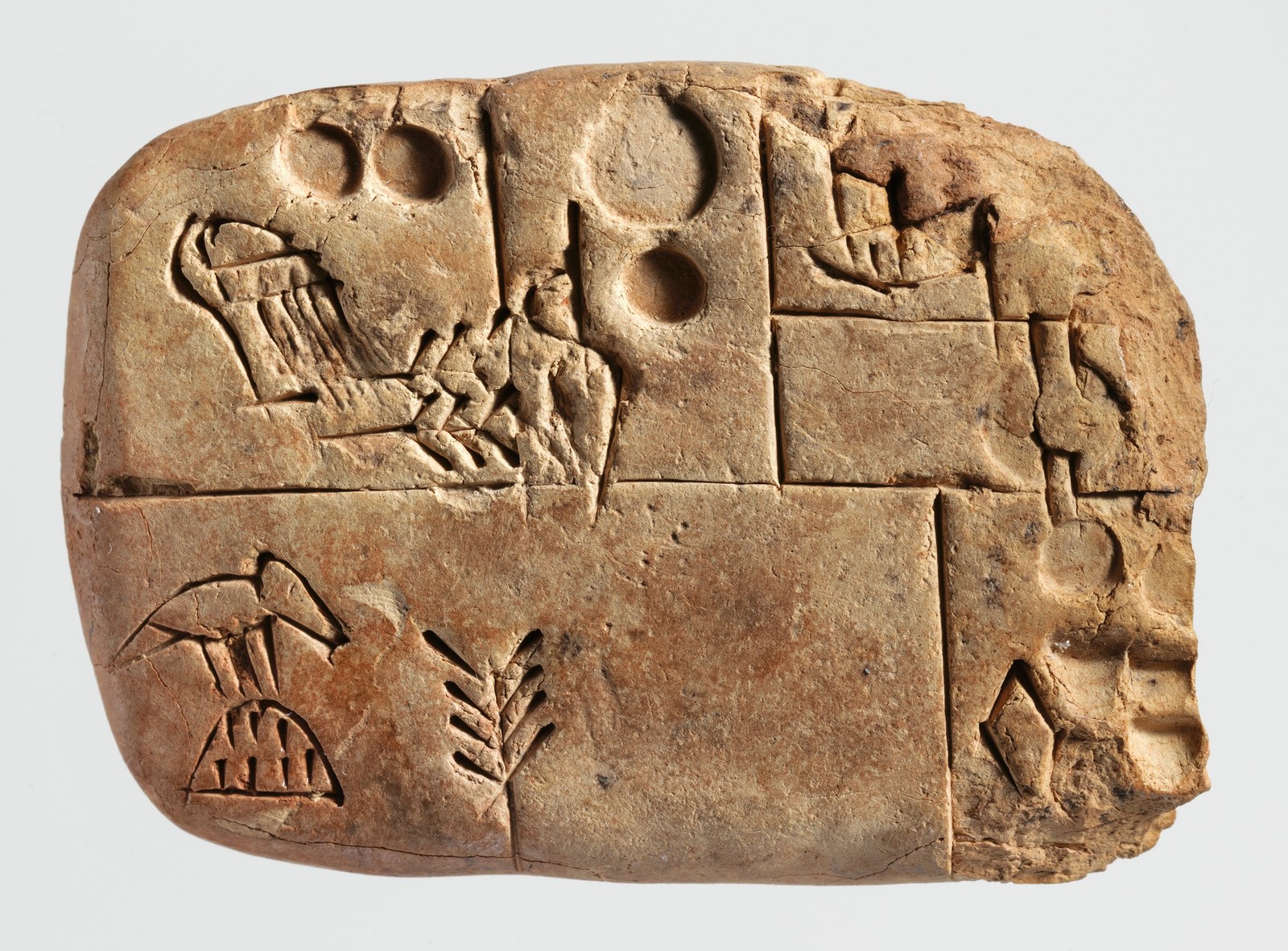
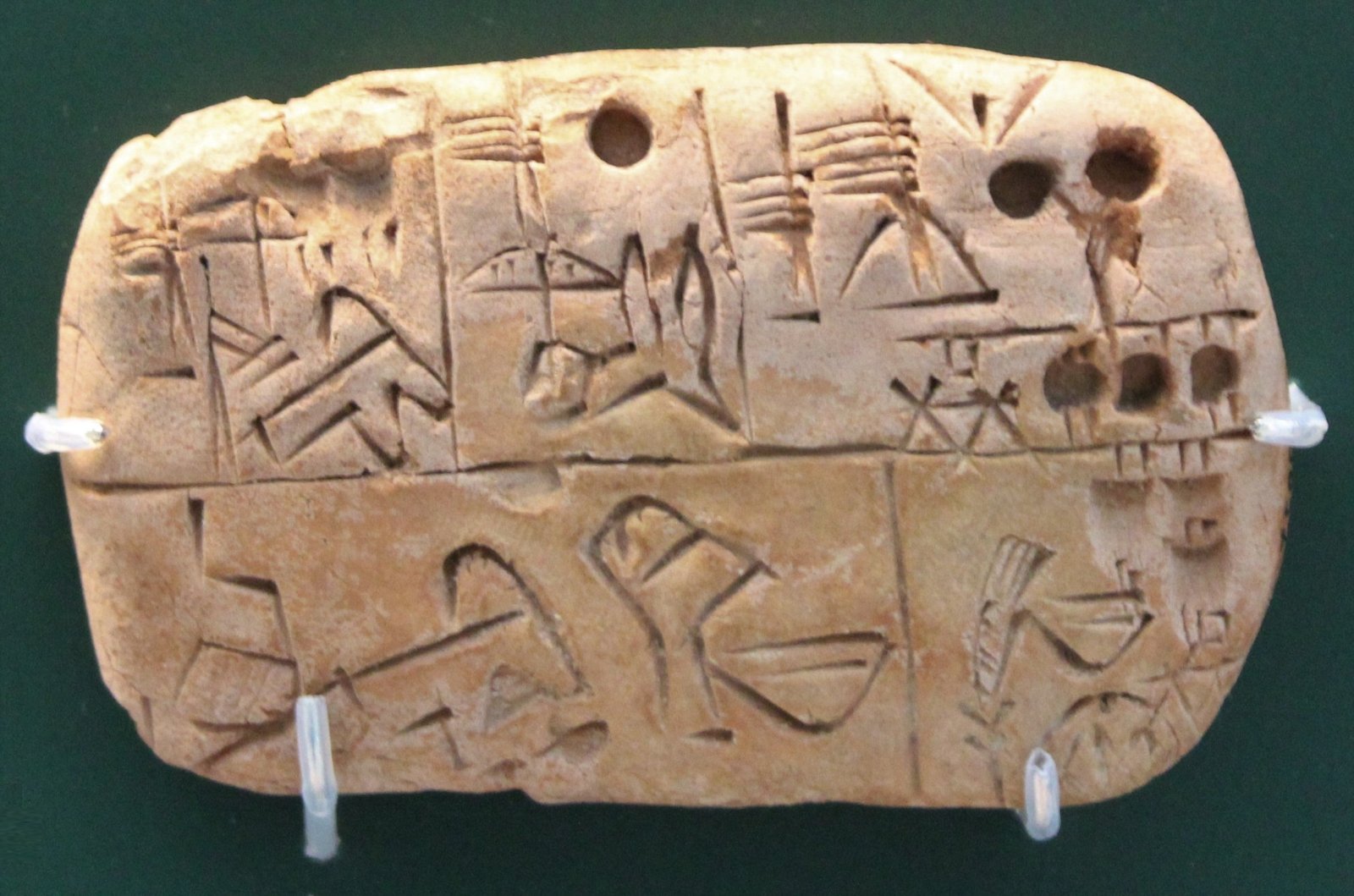
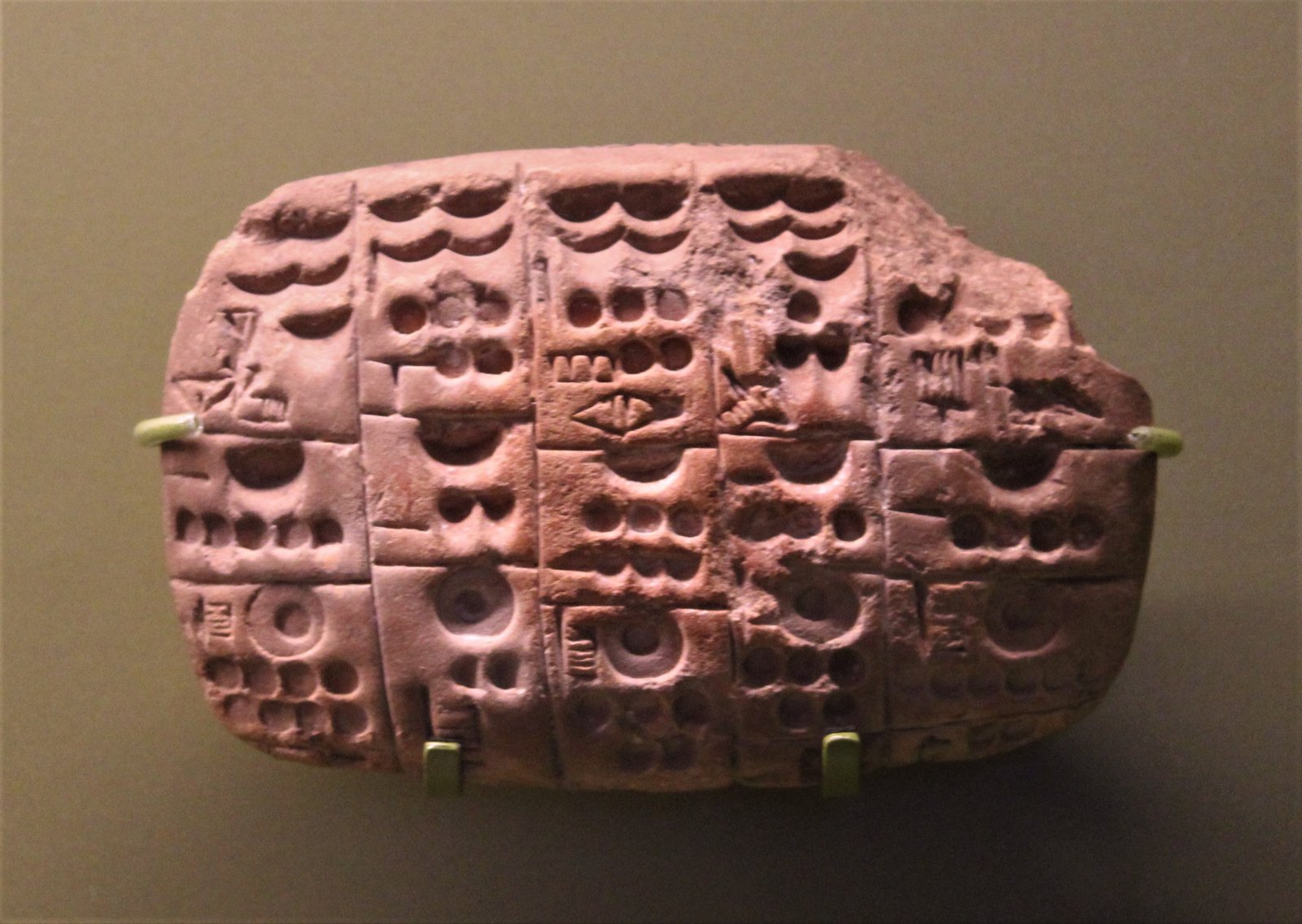
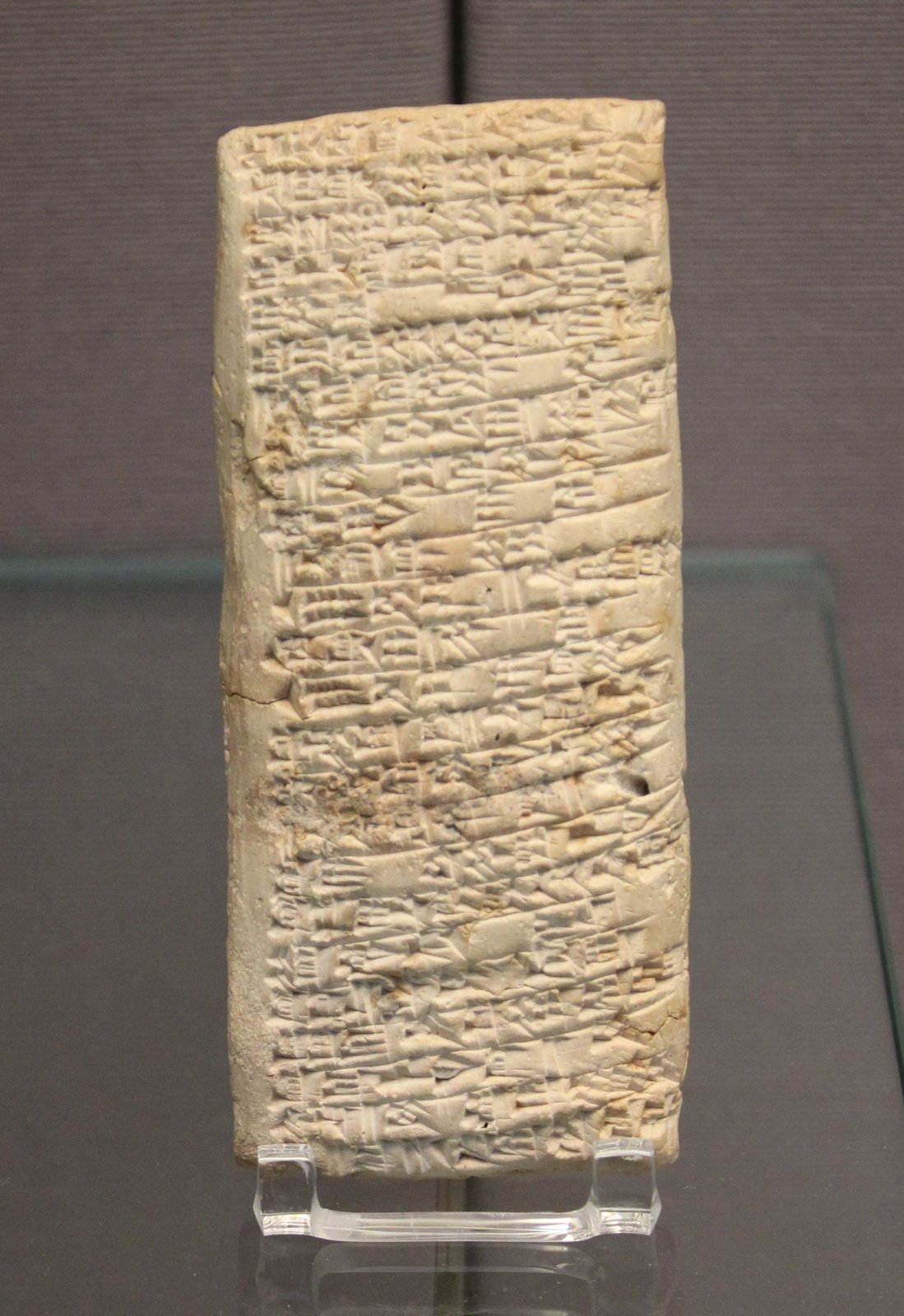
A Late Uruk Tablet Recording Food Rations (BM 140852)
Artifact · A clay tablet records allotments of barley and emmer wheat. On the front, a head and bowl mark the account as a record of provisions. The back keeps the two grains separate, so each total can be checked against the entries.
-
From 3200 BCE to 3000 BCE
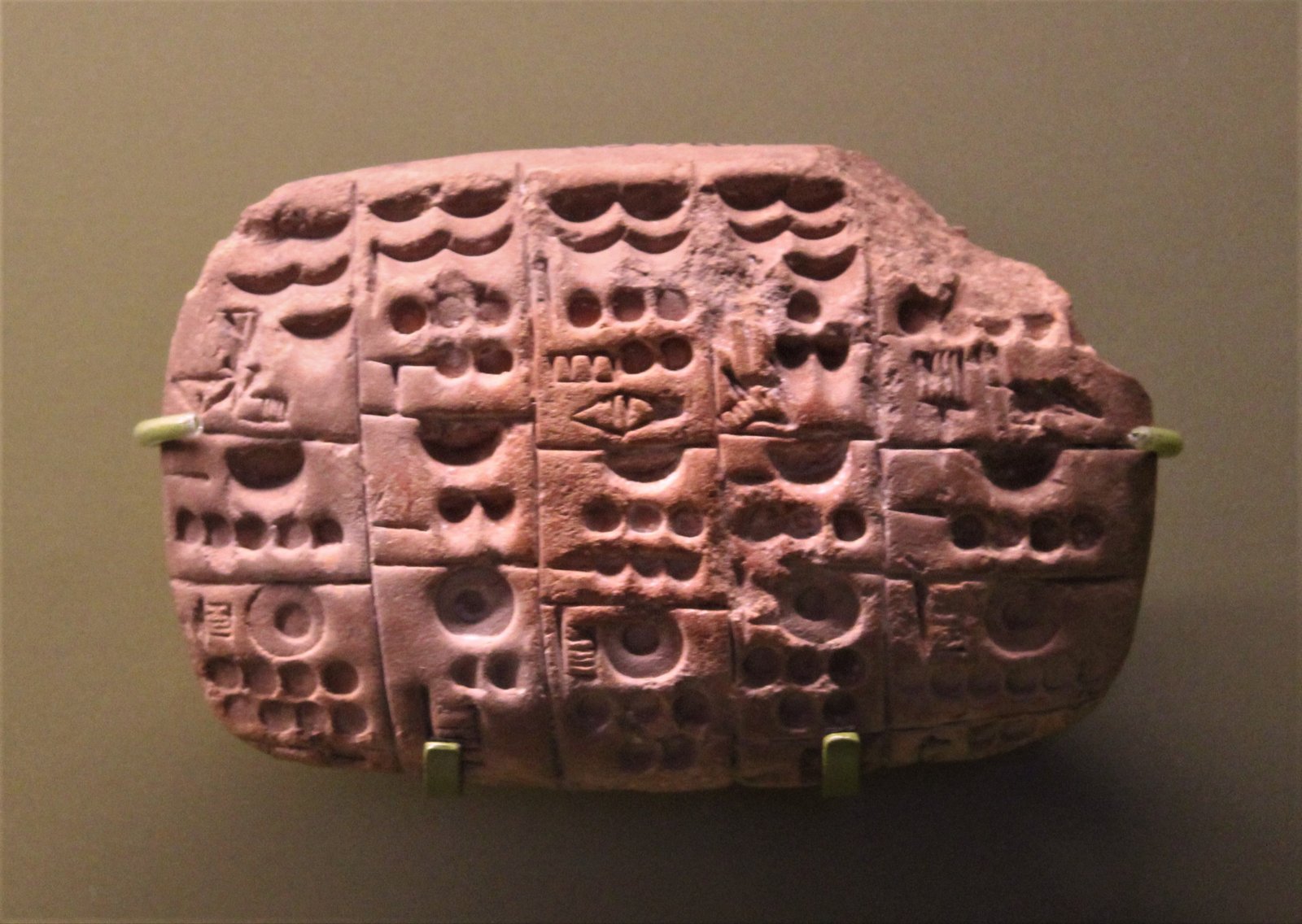
A Tablet Recording Five Field Areas
Artifact · A clay tablet associated with Jemdet Nasr pairs the length and width of five plots with their areas. Its reverse records a total just seven units short of a round number, raising a question about how the figures were chosen.
-
From 3200 BCE to 3000 BCE
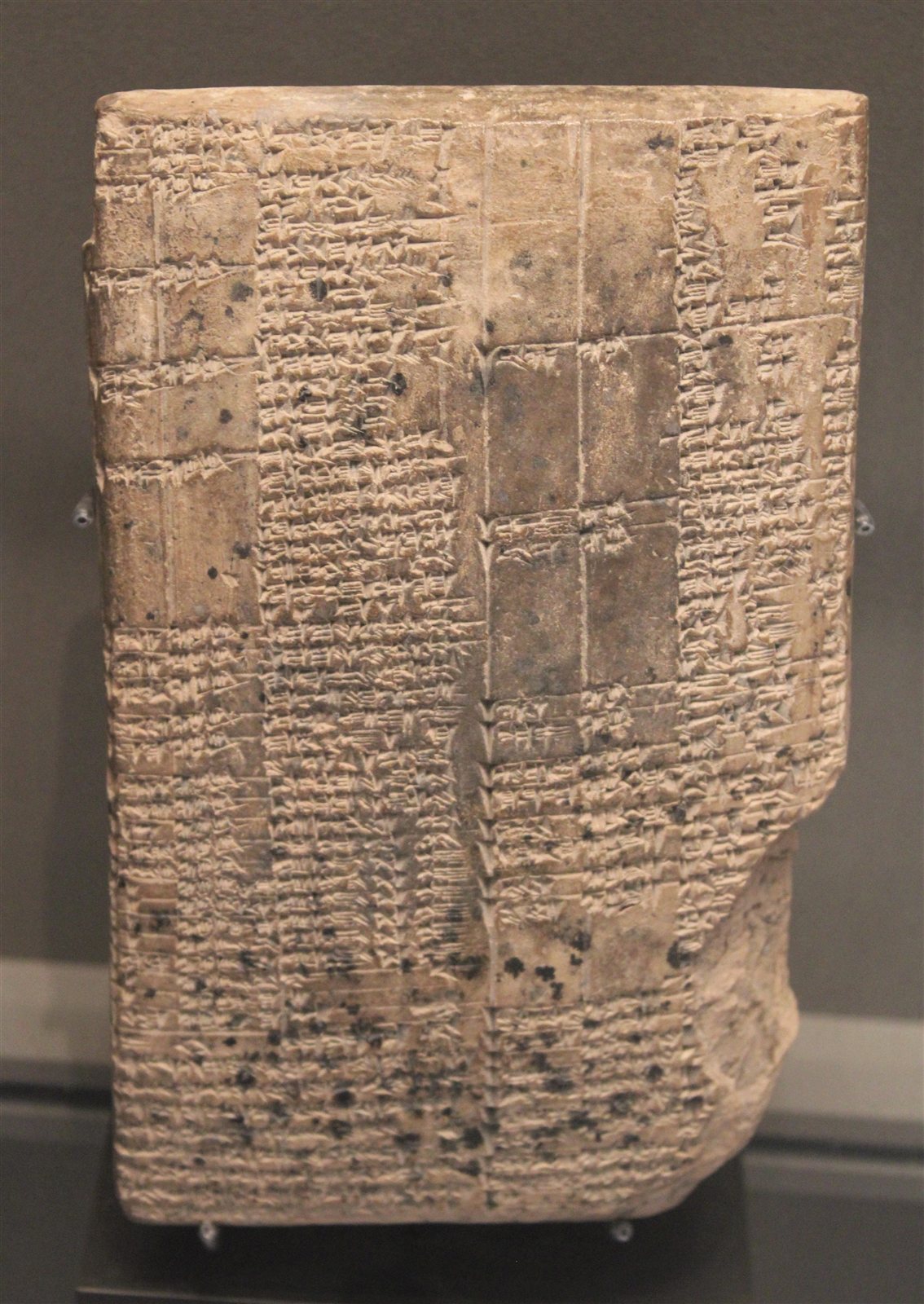
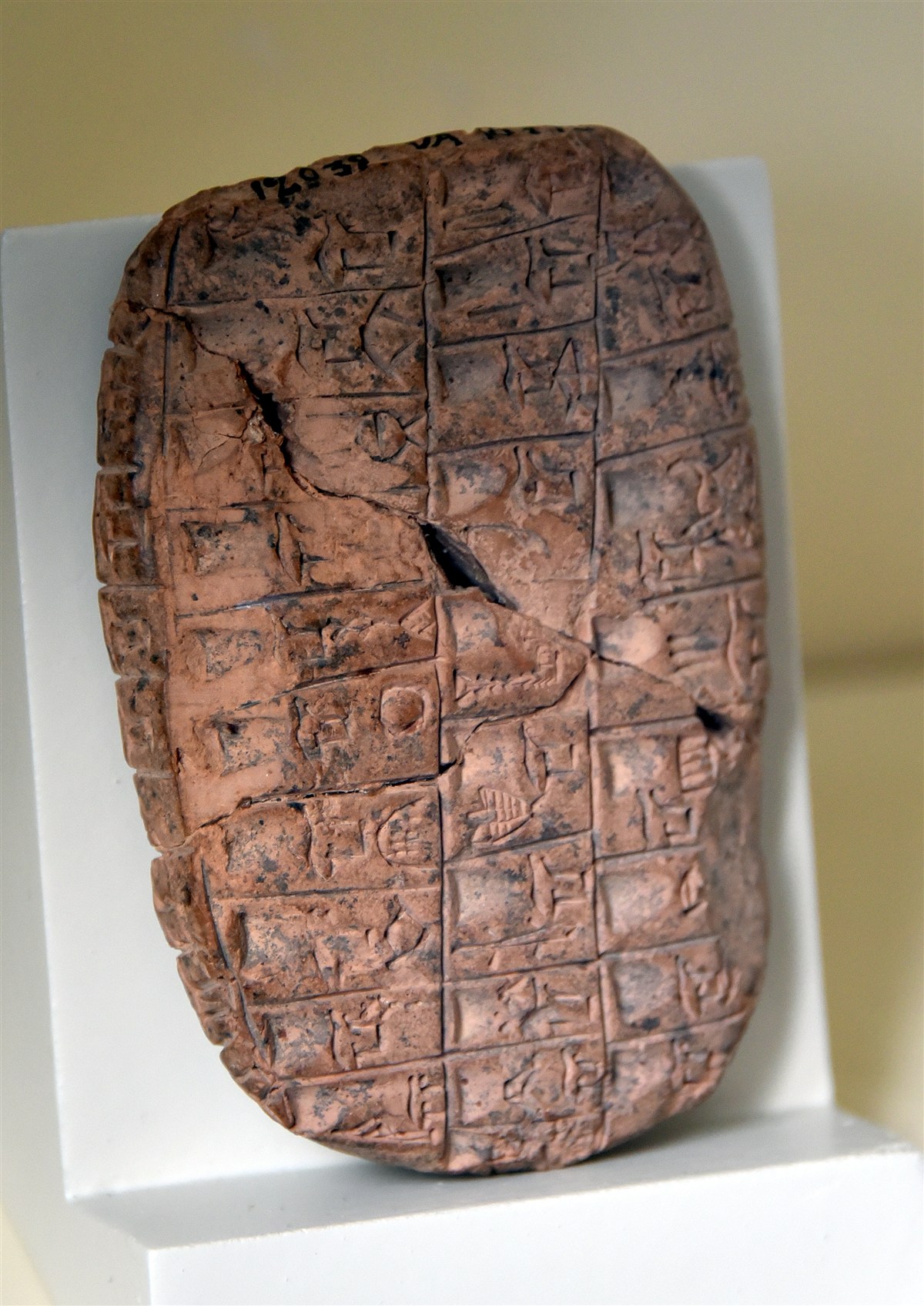
The Pig List from Uruk (Berlin VAT 16773)
Artifact · A small clay tablet from Uruk arranges 58 entries associated with pigs in ruled columns. A total on its edge and parallel entries on another clay fragment show how early scribes organized lists and counted their entries.
-
From 3100 BCE to 2900 BCE
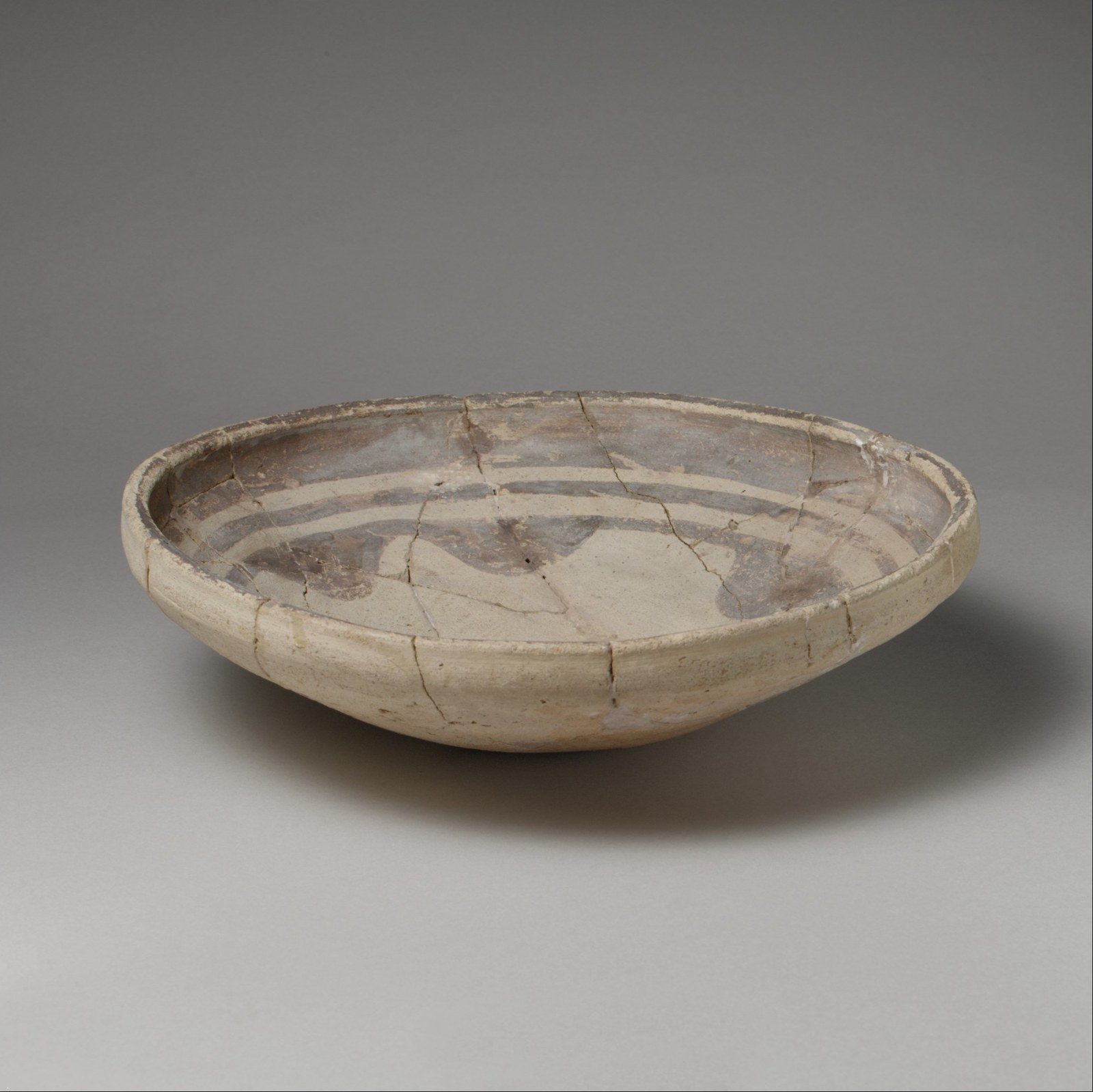
The Jemdet Nasr Period (c. 3100–2900 BCE)
Period · A short phase around the turn of the fourth to the third millennium BCE, named after a mound in central Iraq. Its painted pottery, administrative tablets and seal impressions preserve evidence of contacts between cities.
Third millennium BCE
-
From 2900 BCE to 1760 BCE
Mari
Site · Mari at Tell Hariri on the Syrian Euphrates was founded around 2900 BCE and rebuilt through three major urban phases. Its palace and cuneiform archives illuminate trade, royal government and religious practice, especially in the eighteenth century BCE.
-
From 2900 BCE to 2350 BCE
The Early Dynastic Period in Mesopotamia (c. 2900–2350 BCE)
Period · In southern Mesopotamia, city-states such as Ur and Lagash competed for power. The royal tombs of Ur and the Stele of the Vultures show how rulers displayed their authority. The dates of the period remain approximate.
-
From 2900 BCE to 2600 BCE
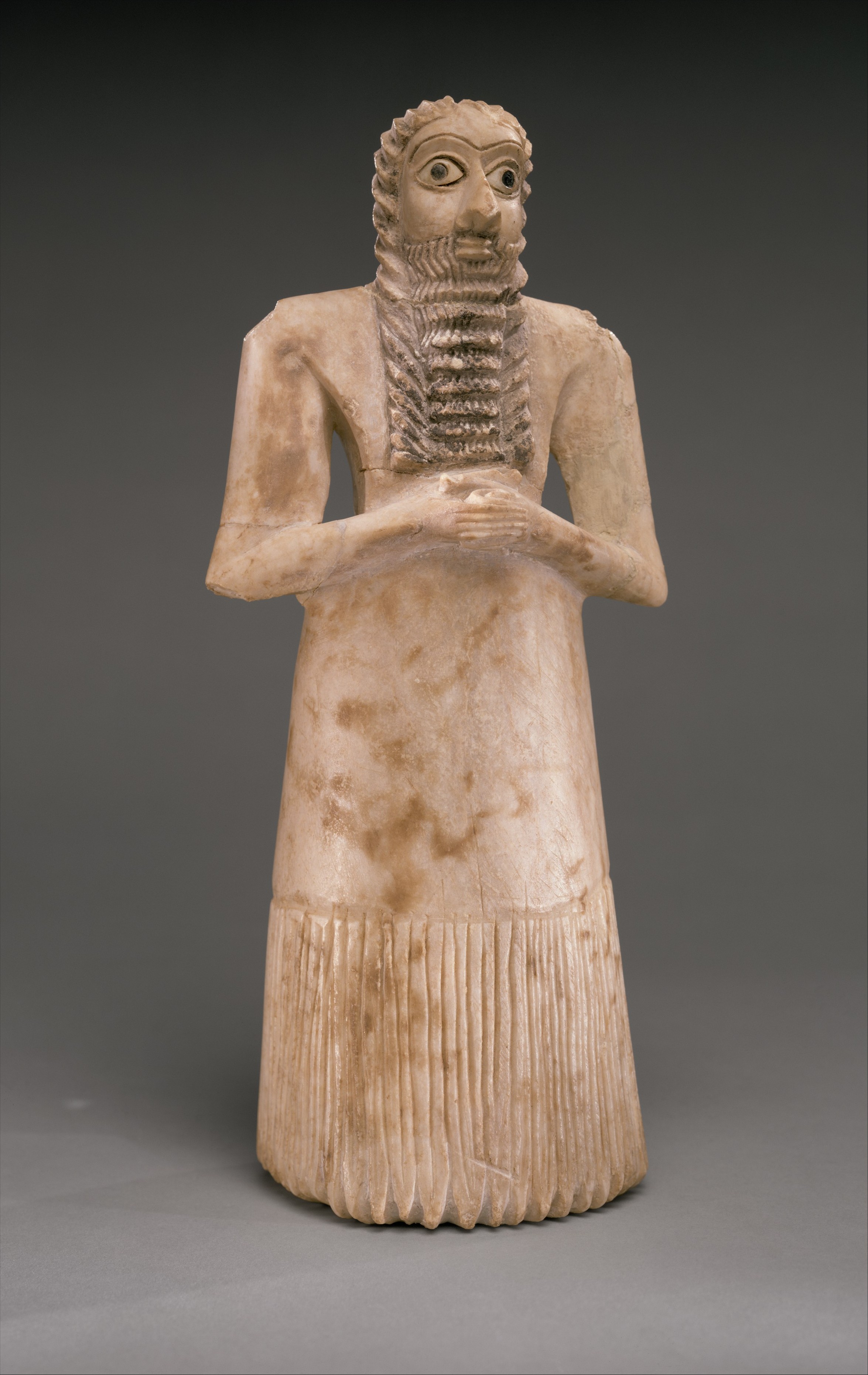
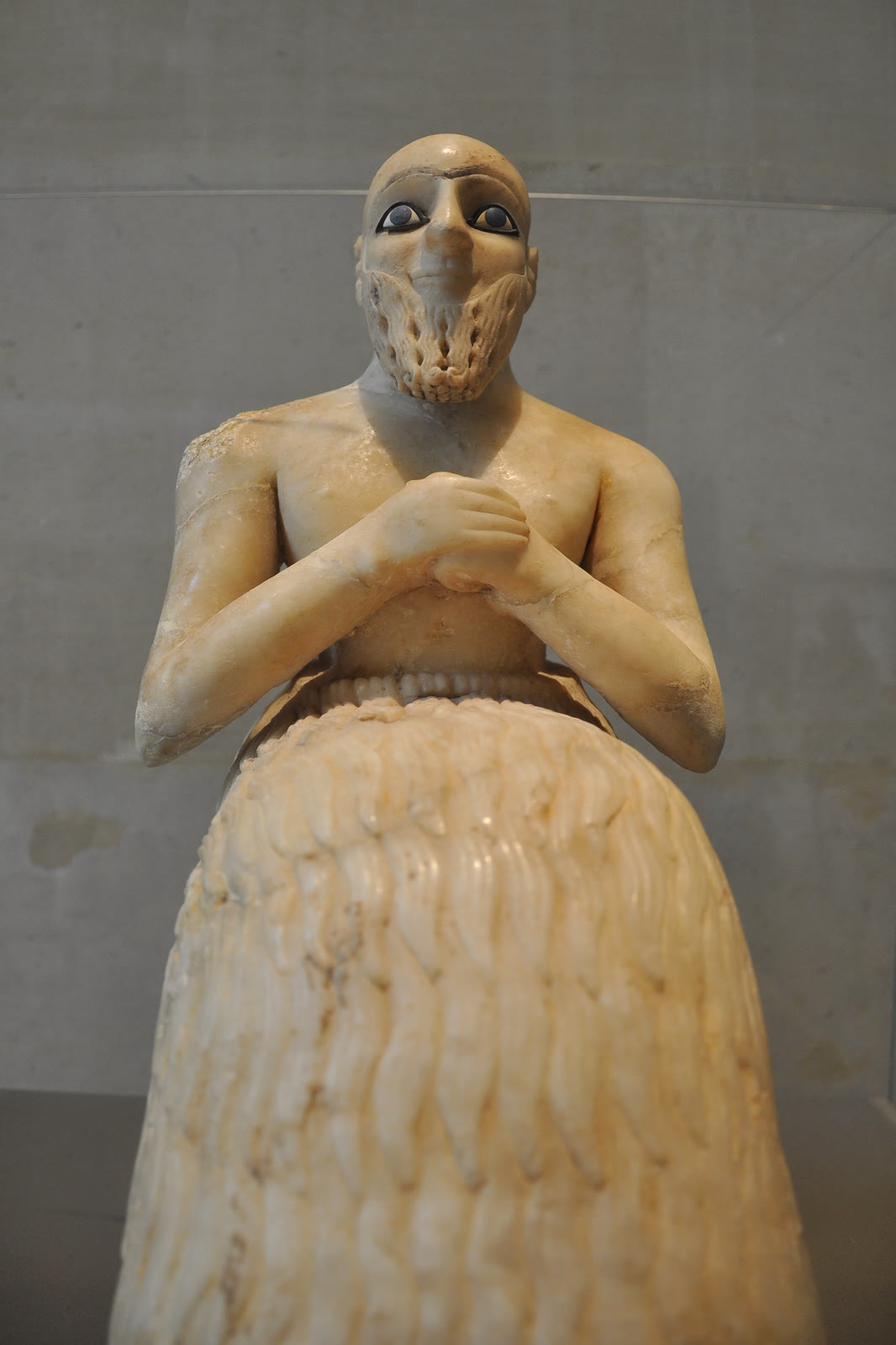
The Tell Asmar Worshiper 40.156: Image-Presence and the Limits of Substitution
Artifact · A standing worshiper statue from Tell Asmar, dated ca. 2900–2600 BCE, with clasped hands and inlaid eyes; the entry separates its form from the interpretation of devotional presence without settling which god was meant.
-
2600 BCE
God Lists
Entity · Cuneiform lists in which Mesopotamian scribes recorded divine names from the third millennium BCE on, revealing scribal training and the classification of the divine world, not a direct census of gods worshipped at once.
-
From 2600 BCE to 300 BCE
Nergal
Entity · Nergal was the Mesopotamian god of the city of Kutha, of war, plague and sudden death, and in time the king of the underworld beside Ereshkigal. Who he was, and what the texts say about him.
-
From 2600 BCE to 1100 BCE
The Instructions of Shuruppak: A Father's Advice to Ziusudra, in One of the Oldest Books We Can Read
Ancient text · In this Sumerian collection, Shuruppak advises his son Ziusudra, the hero of a separate flood story. Copied for over a thousand years, the sayings offer counsel on debts, quarrels and life among neighbours.
-
From 2600 BCE to 2400 BCE
The Standard of Ur: War and Peace on a Box from the Royal Cemetery (British Museum 1928,1010.3)
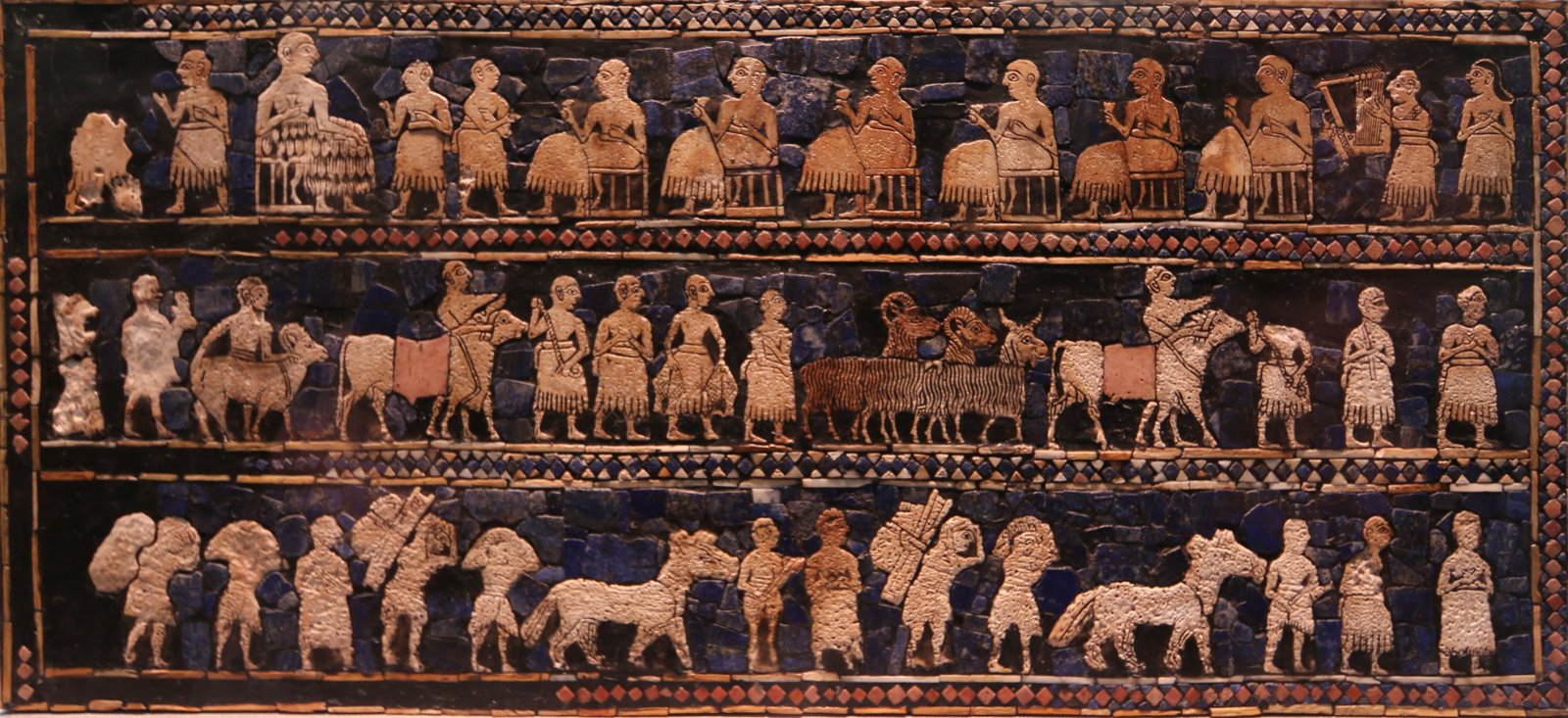
Artifact · A hollow box inlaid with shell, lapis lazuli and red limestone shows a battle on one side and a banquet on the other. Found in a plundered tomb at Ur, its use is unknown; "standard" is only a nickname.
-
From 2600 BCE to 600 BCE
Who Headed the Sumerian Divine Assembly? An or Enlil?
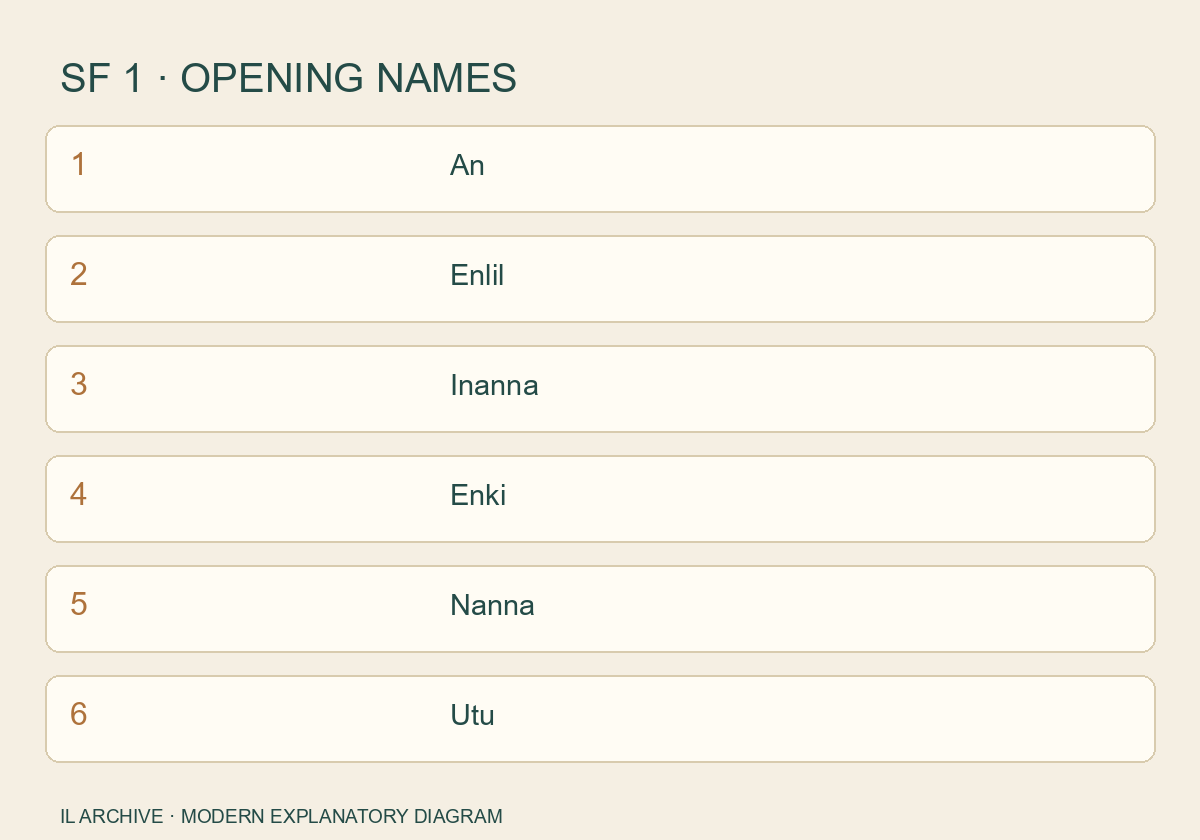
Study · Fara’s SF 1 begins with An, while SF 5 begins with Enlil, in a different document type. Royal inscriptions, Ekur hymns and textual variants reveal overlapping authority, not a securely dated transfer of one throne.
-
From 2600 BCE to 255 BCE
Zababa
Entity · Zababa was the war god of Kish in ancient Iraq, honoured for more than two thousand years. What his temples, the kings who served him and the god lists tell us, and what is still unclear.
-
From 2589 BCE to 2566 BCE
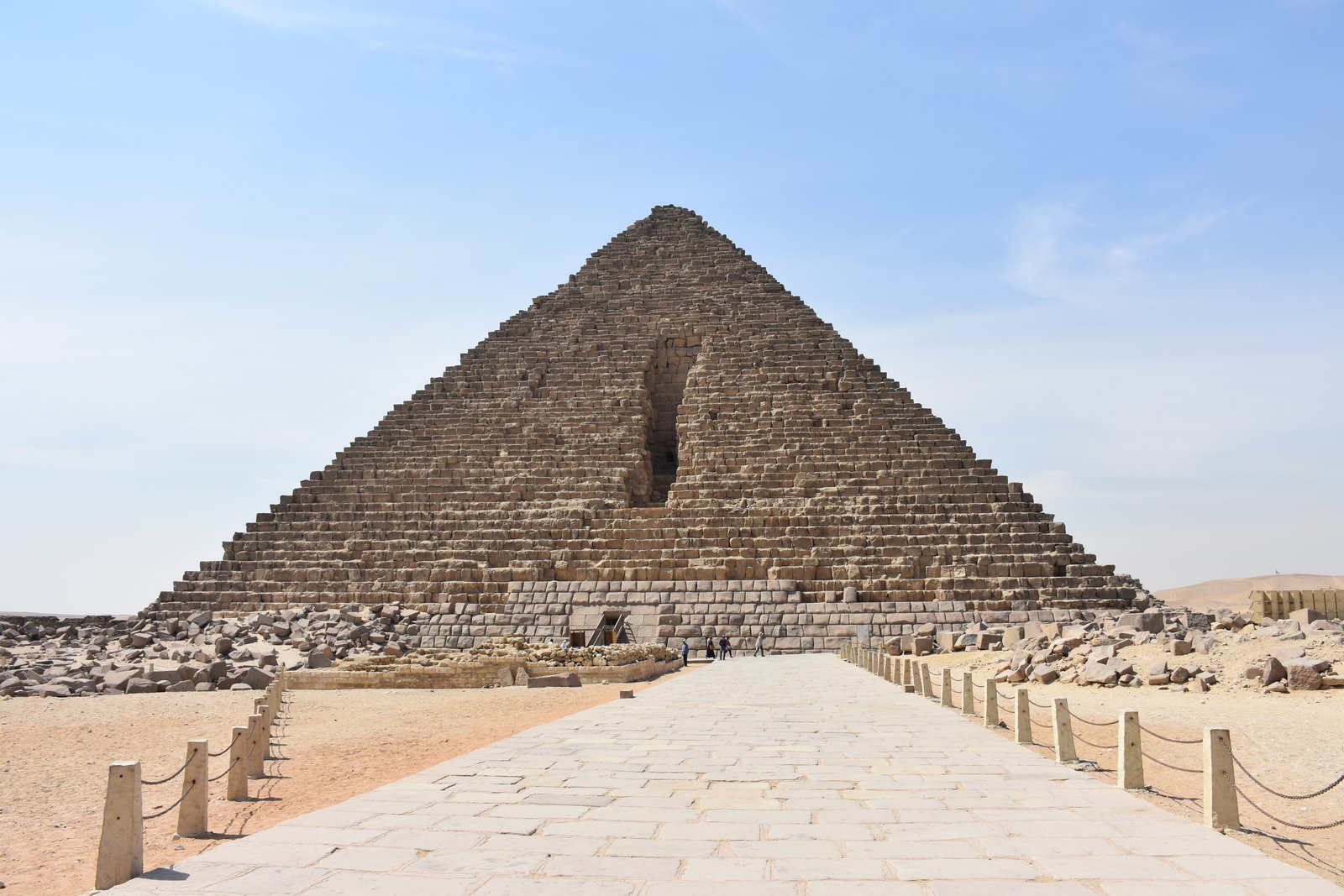
Khufu, the King Who Built the Great Pyramid
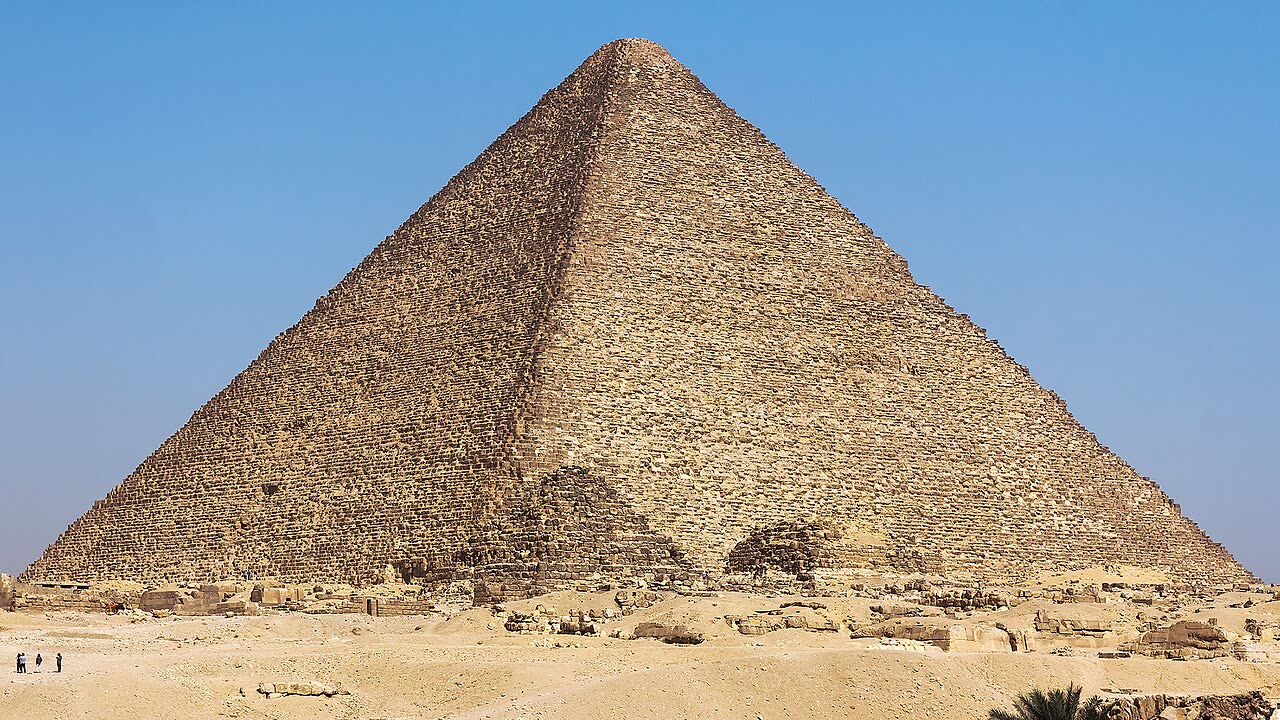
Person · Khufu’s pyramid still stands at Giza, and a papyrus from his reign records deliveries of stone. A much later tale places him at the centre of a story about the next dynasty.
-
From 2500 BCE to 1600 BCE
Enlil and Ninlil: A Sumerian Myth of Nippur, a Forbidden River Bank, and the Origins of Four Gods
Ancient text · A Sumerian poem of about 150 lines set in Nippur. It recounts Ninlil’s encounter with Enlil, his exile and the conception of four gods.
-
From 2500 BCE to 2400 BCE
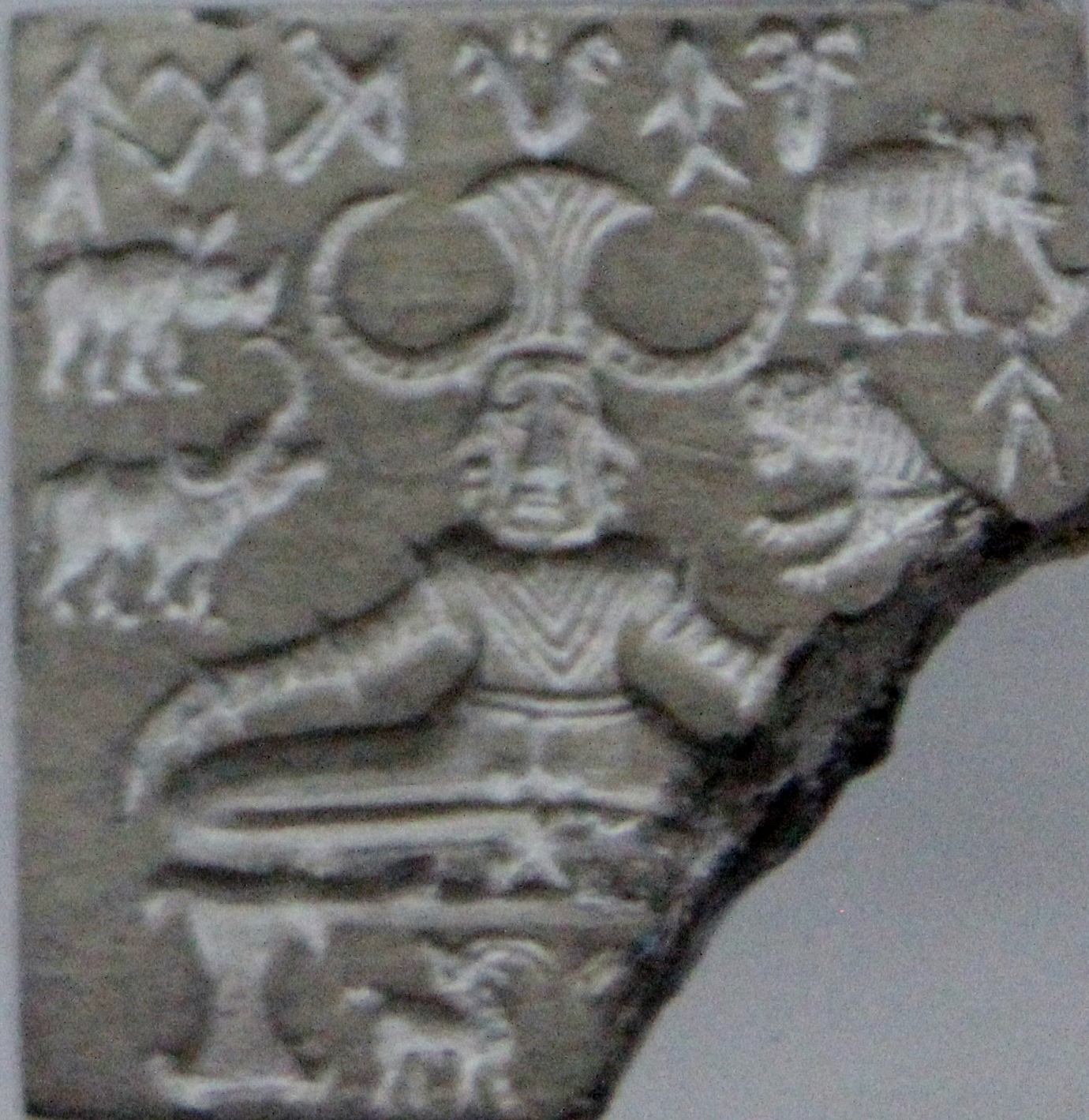
Mohenjo-daro Seal DK 5175/143: Image and the Limits of Naming Shiva
Artifact · A steatite seal from Mohenjo-daro, approximately 2500–2400 BCE, with a horned figure, animals and undeciphered Indus signs; the entry explains its “Pashupati/proto-Shiva” naming and the objections to it.
-
From 2500 BCE to 1170 BCE
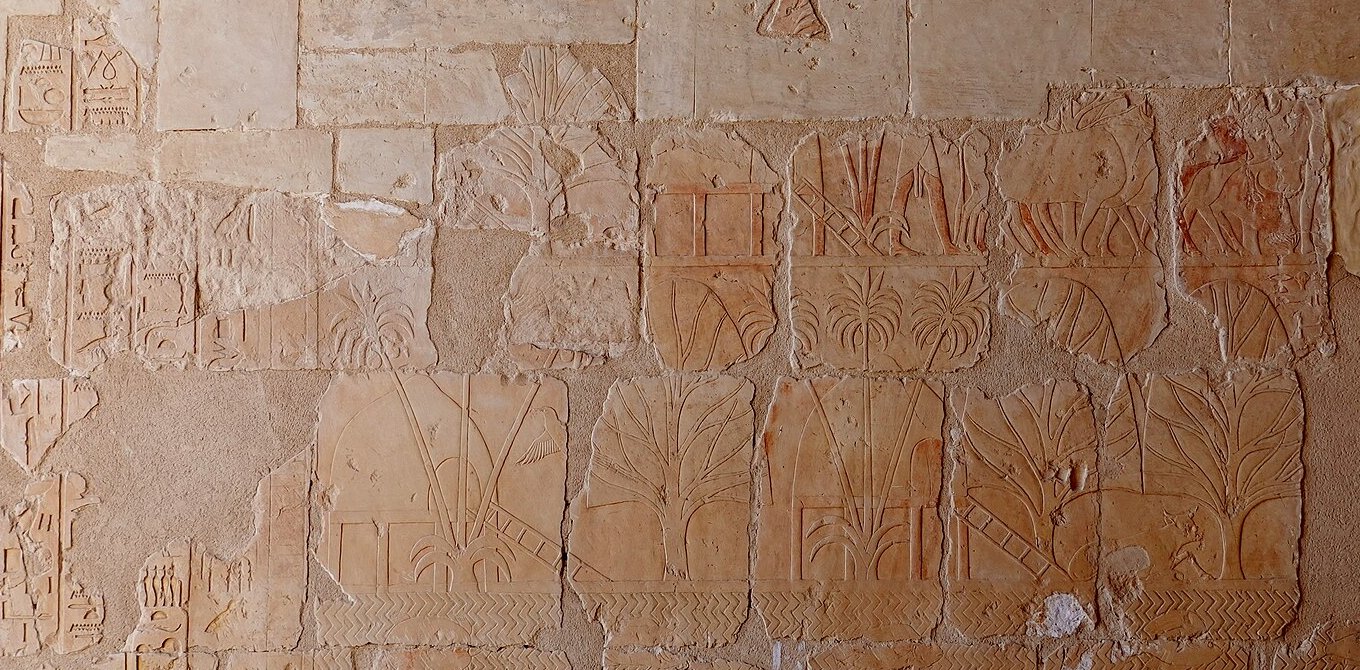
Punt
Site · A distant land on the southern Red Sea that Egyptian ships reached for myrrh, incense, ebony and animals for more than a thousand years. Where exactly it lay is still debated.
-
2500 BCE
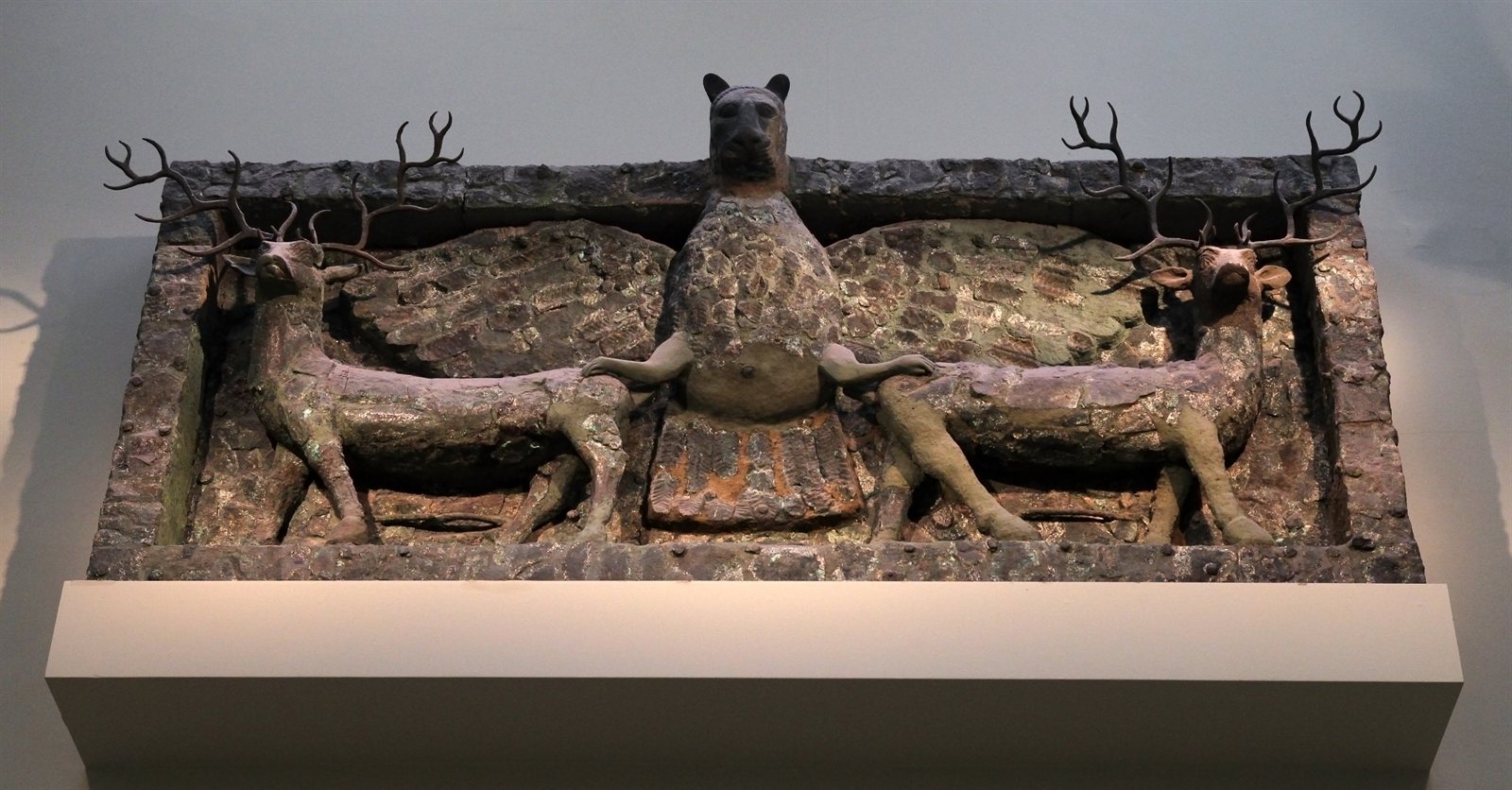
The Imdugud Relief from Tell al-Ubaid (British Museum 114308)
Artifact · A copper-alloy panel from the temple precinct at Tell al-Ubaid shows a lion-headed eagle gripping two stags. Excavation records and the British Museum’s reconstruction help explain what survives and where it may once have hung.
-
From 2500 BCE to 2340 BCE
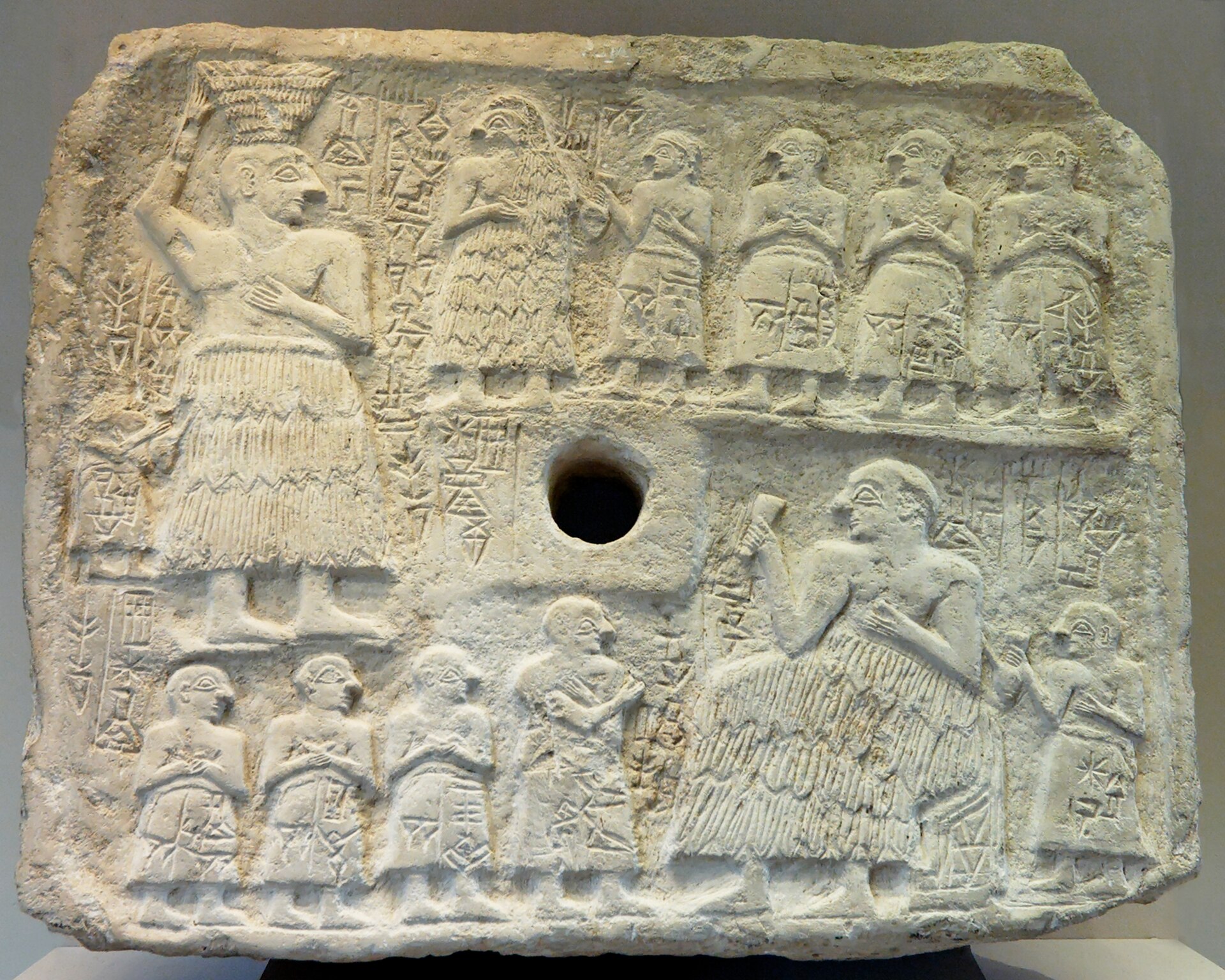
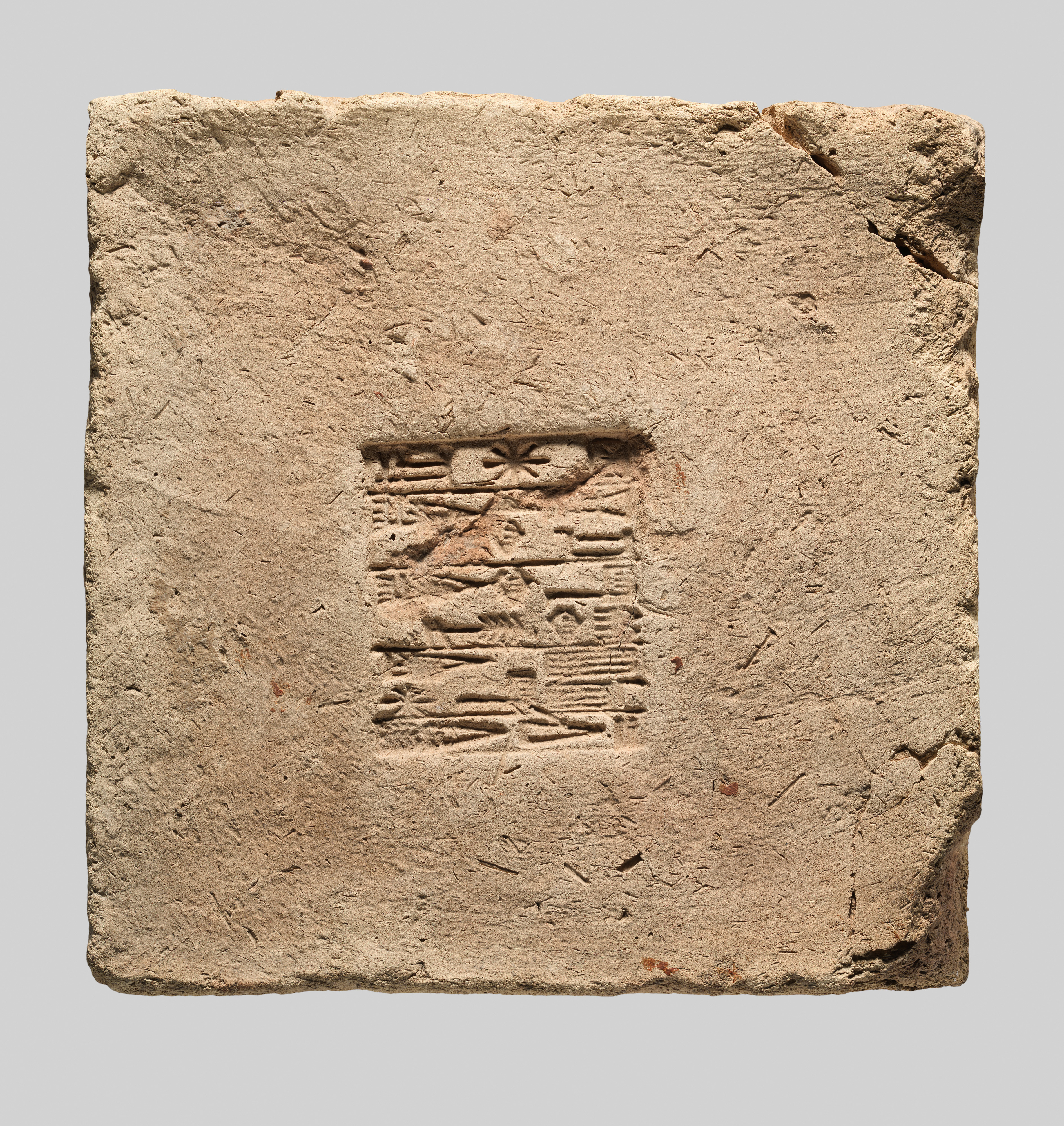
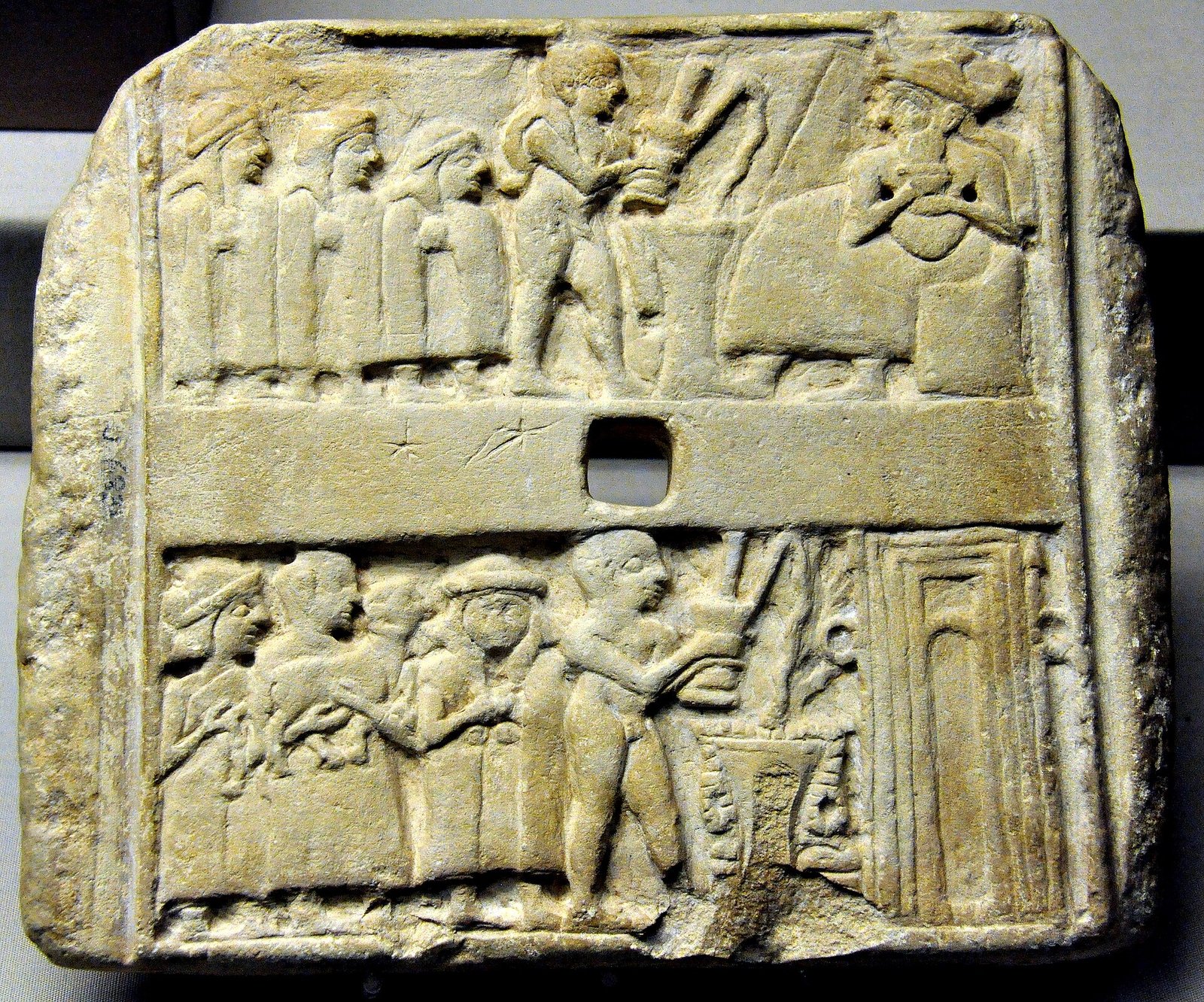
The Relief of Ur-Nanshe (Louvre AO 2344)
Artifact · A pierced limestone relief from Girsu shows the king of Lagash carrying a building basket and presiding at a banquet. Its Sumerian inscriptions name temples, people in the scenes and boats of Dilmun associated with timber.
-
From 2500 BCE to 2340 BCE
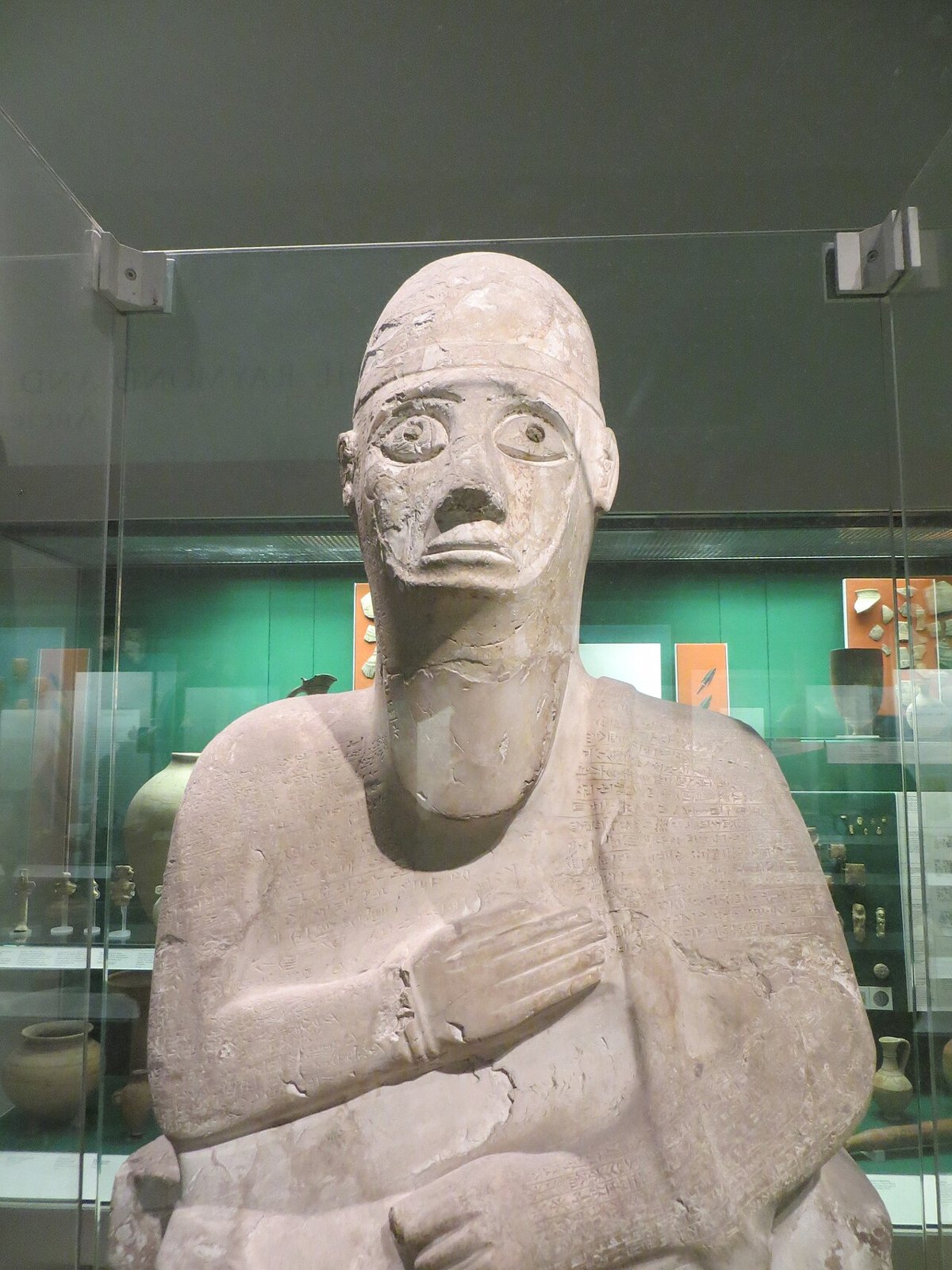
The Statue of Ebih-Il and the Il-Names of Mari
Artifact · The seated Ebih-Il dedicated this statue to Ishtar at Mari around 2400 BCE. His name preserves the element Il, a separate piece of evidence from the dedication.
-
From 2500 BCE to 500 BCE
Widow, Orphan, and Resident Outsider: Justice between Mesopotamia and the Torah
Study · How texts of Lagash, Ur, Nanshe and Hammurabi framed protection of widows and orphans, and Hebrew texts included resident outsiders in wages, harvests, tithes and festivals.
-
From 2450 BCE to 2425 BCE
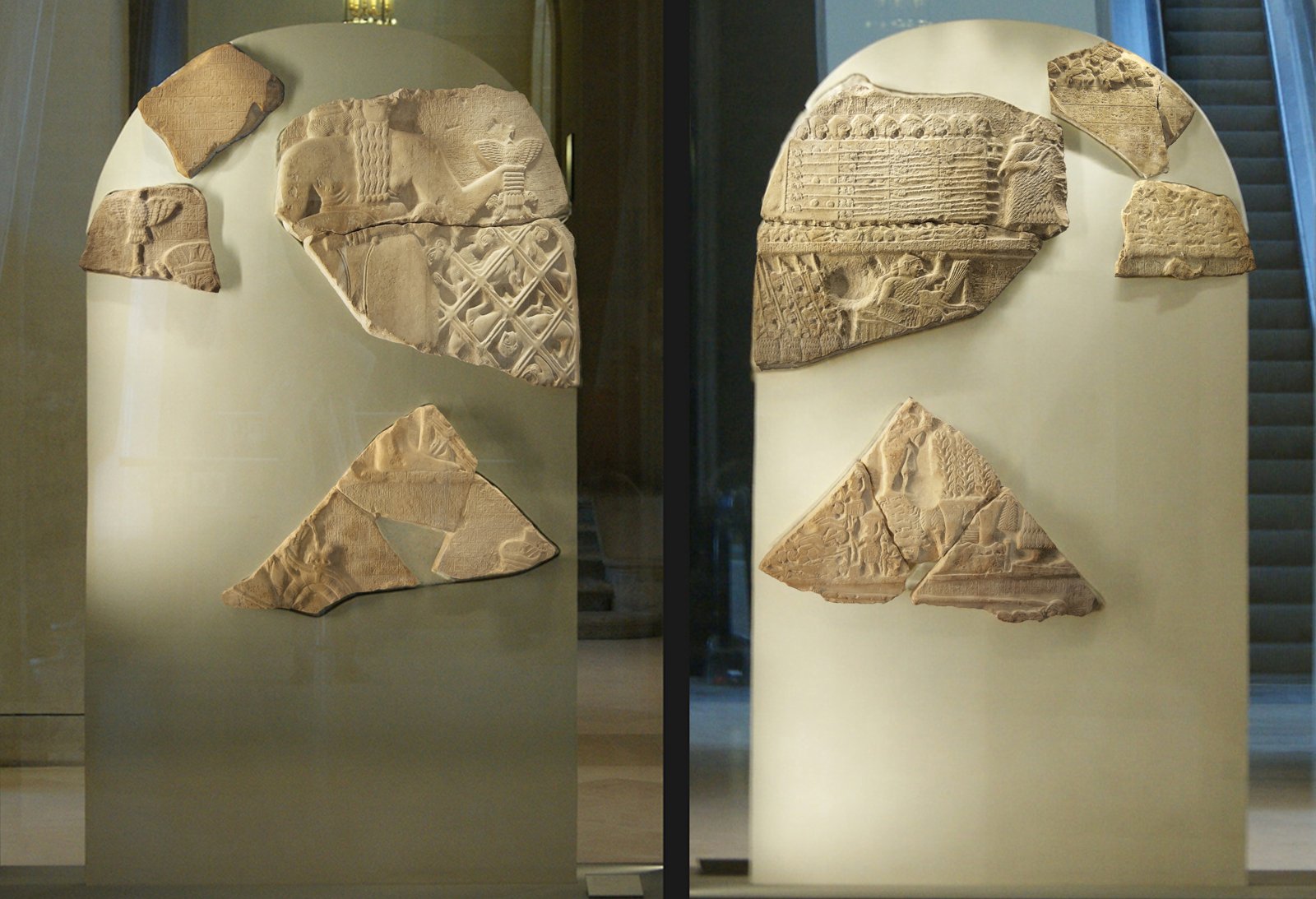
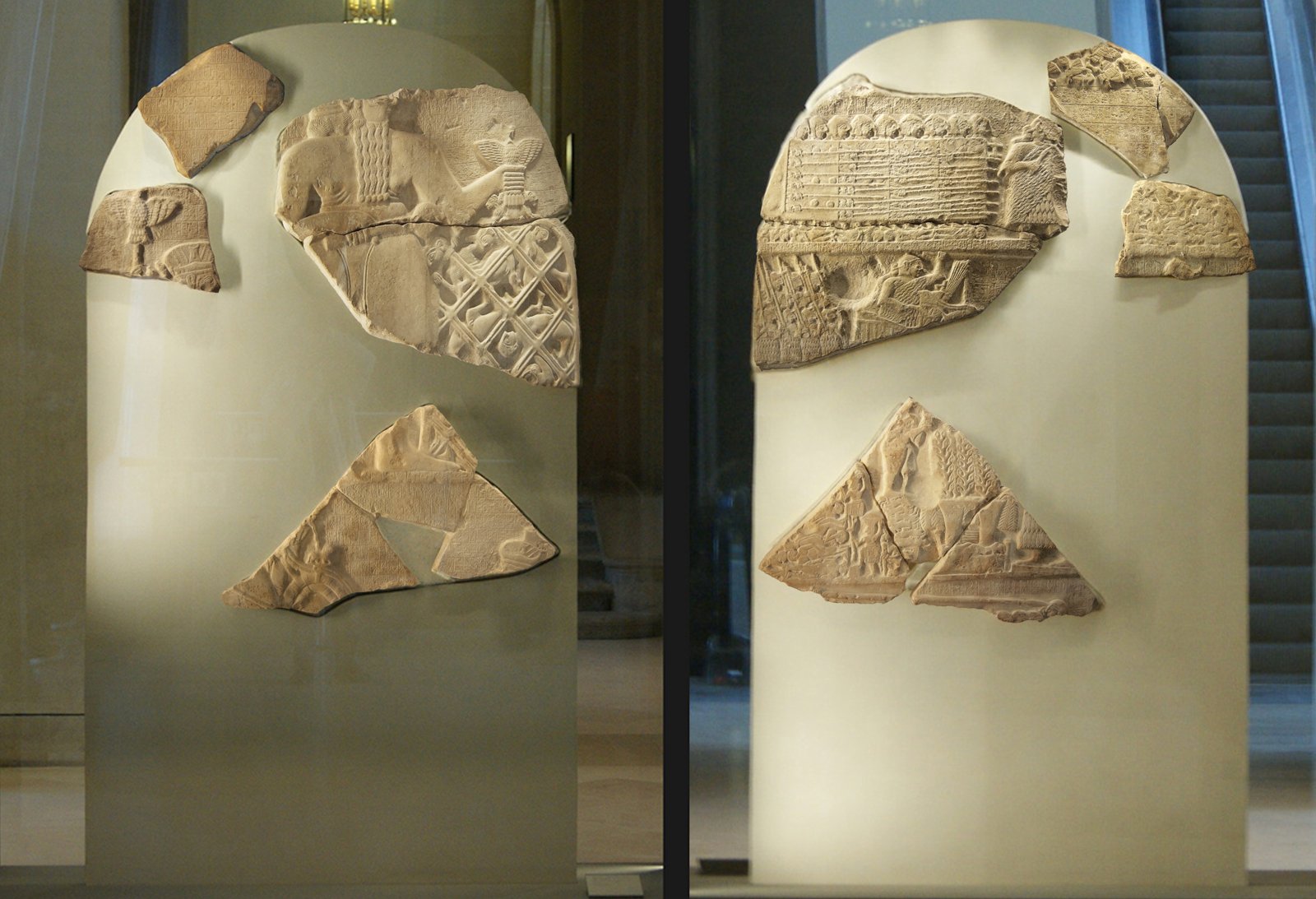
The Stele of the Vultures (Louvre AO 50)
Artifact · Seven limestone fragments preserve Eannatum’s account of victory over Umma. Soldiers, vultures and a net full of prisoners share the stone with Sumerian oaths about a boundary, its irrigation channels and its markers.
-
From 2353 BCE to 457 CE
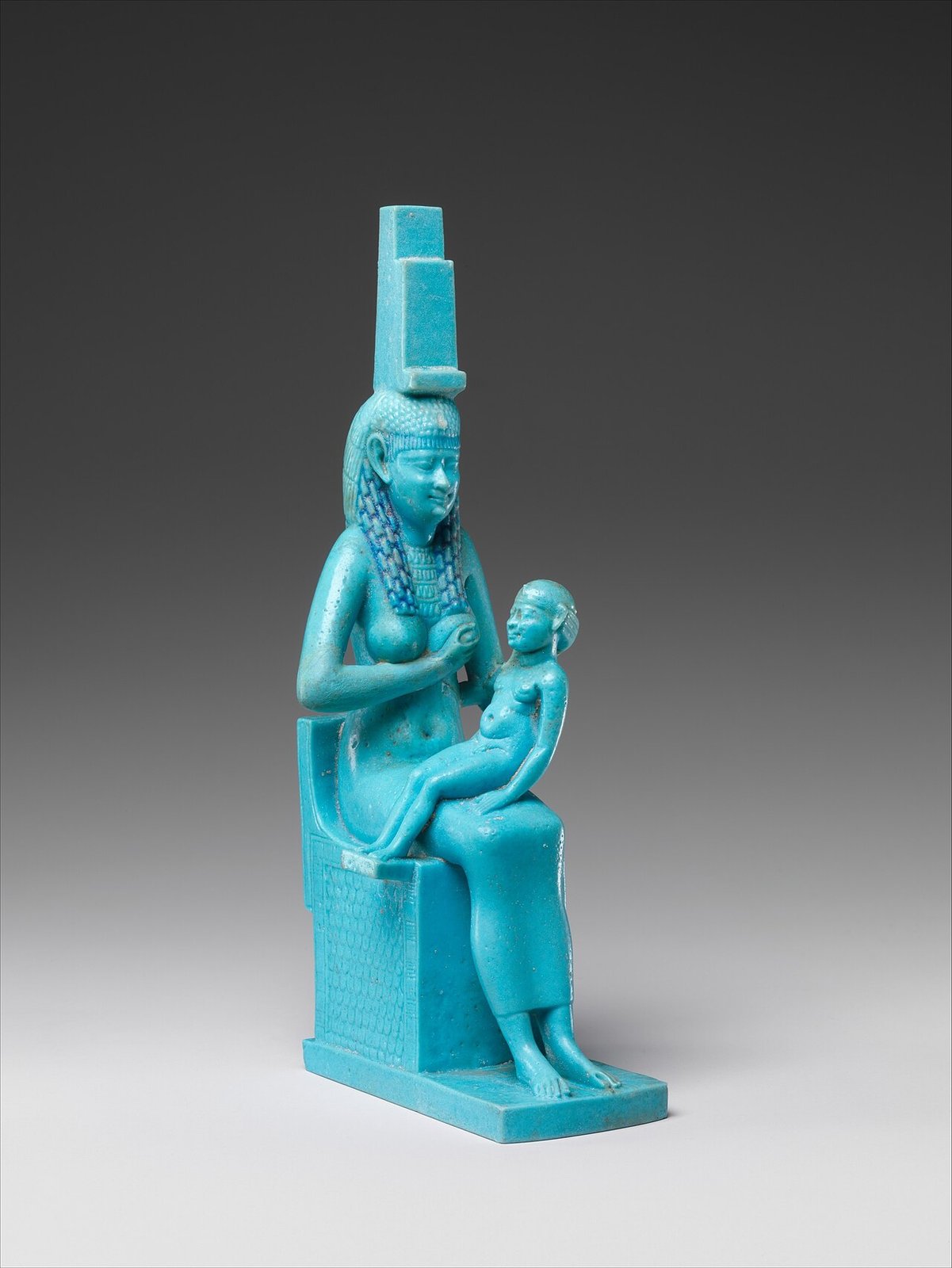
Isis
Entity · An Egyptian goddess, sister and wife of Osiris and mother of Horus. Texts from the pyramids to Roman times show her as mourner, healer, protector of children and model of royal motherhood.
-
From 2340 BCE to 2200 BCE
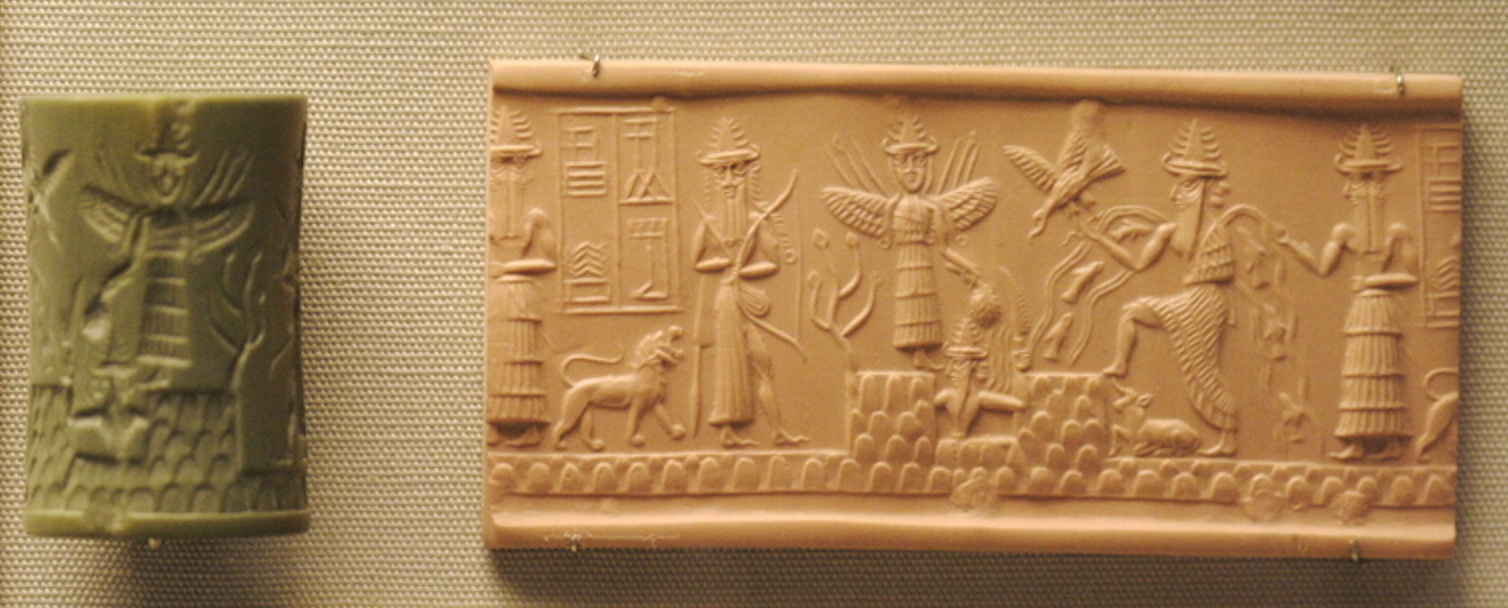
The Cylinder Seal of Adda (British Museum 89115)
Artifact · A greenstone seal from the Akkadian period names Adda the scribe in Sumerian. Its impression shows the sun god emerging between mountains, water flowing from Enki’s shoulders and an armed figure whose identity is still debated.
-
From 2334 BCE to 2154 BCE
The Akkadian Empire (c. 2334–2154 BCE)
Period · From Akkad, a city whose site remains unidentified, Sargon brought much of southern Mesopotamia under one dynasty. Inscriptions, archives and excavation finds trace the reach of his successors and the breakup of their rule.
-
From 2316 BCE to 2292 BCE
Lugalzagesi
Person · Ruler of Umma who became king of Uruk in the 24th century BCE. He brought much of Sumer under one rule and sacked Lagash, then lost it all to Sargon of Akkad.
-
2300 BCE
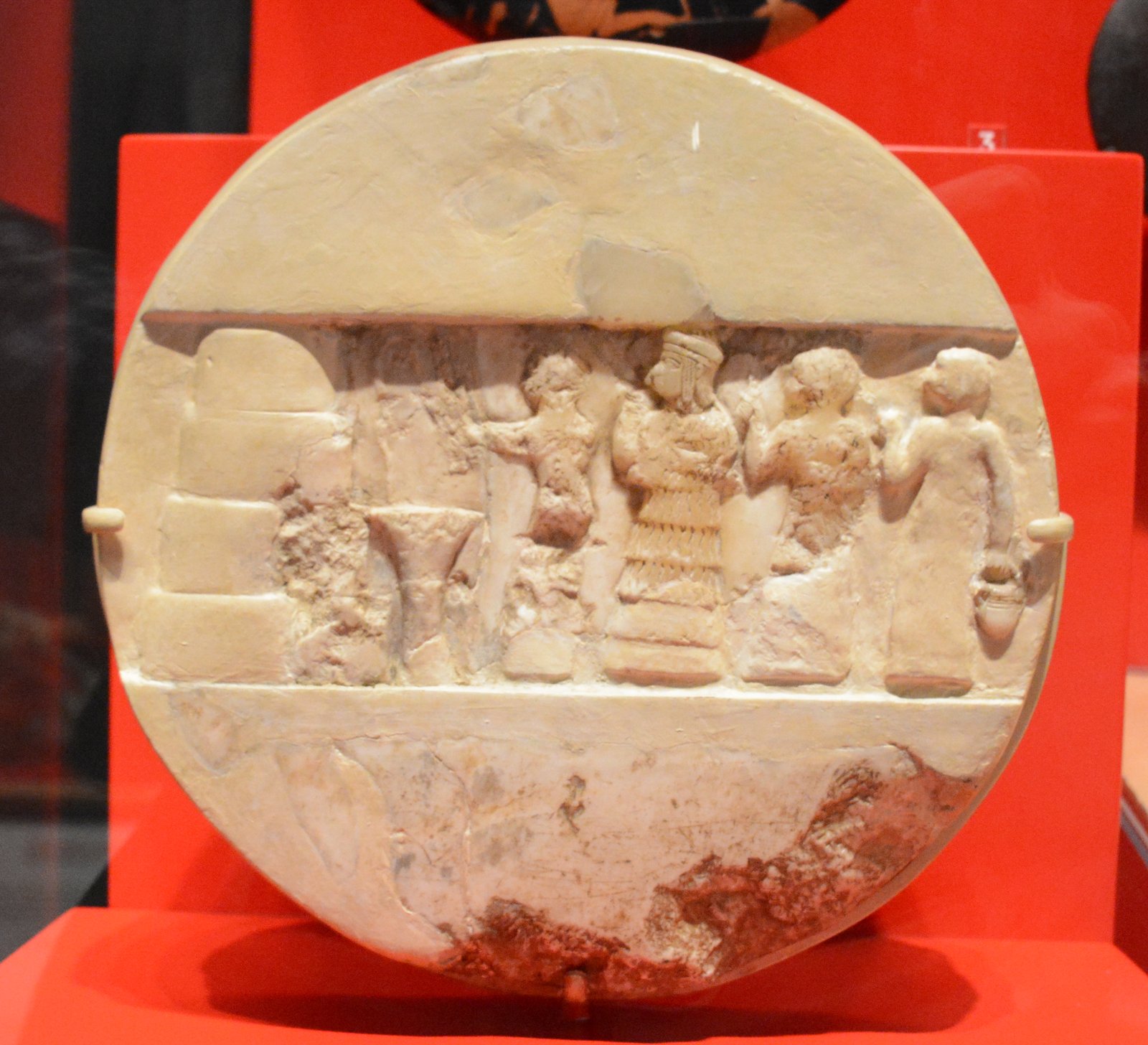
Enheduanna
Person · High priestess of the moon god at Ur around 2300 BCE and a daughter of Sargon of Akkad. A stone disk names her, and later copies attach her name to famous Sumerian hymns.
-
From 2300 BCE to 700 CE
Moses and Sargon: the child in the basket and the limits of comparison
Study · Moses and Sargon: basket, bitumen, rescue and adoption; witness dates, political readings and Egyptian imagery, with a separate comparison of the Quranic account.
-
From 2300 BCE to 539 BCE
The Gipar at Ur
Site · The house of the high priestess of the moon god at Ur, with a temple of the goddess Ningal inside its walls. Kings rebuilt it for more than 1,500 years, and Leonard Woolley excavated it in the 1920s.
-
From 2254 BCE to 2218 BCE
Naram-Sin of Akkad, in Royal Inscriptions and Later Stories
Person · Naram-Sin ruled Akkad in the twenty-third century BCE. His monuments celebrate victory and divine favour. Later stories remember a king whose decisions brought trouble.
-
From 2254 BCE to 2218 BCE
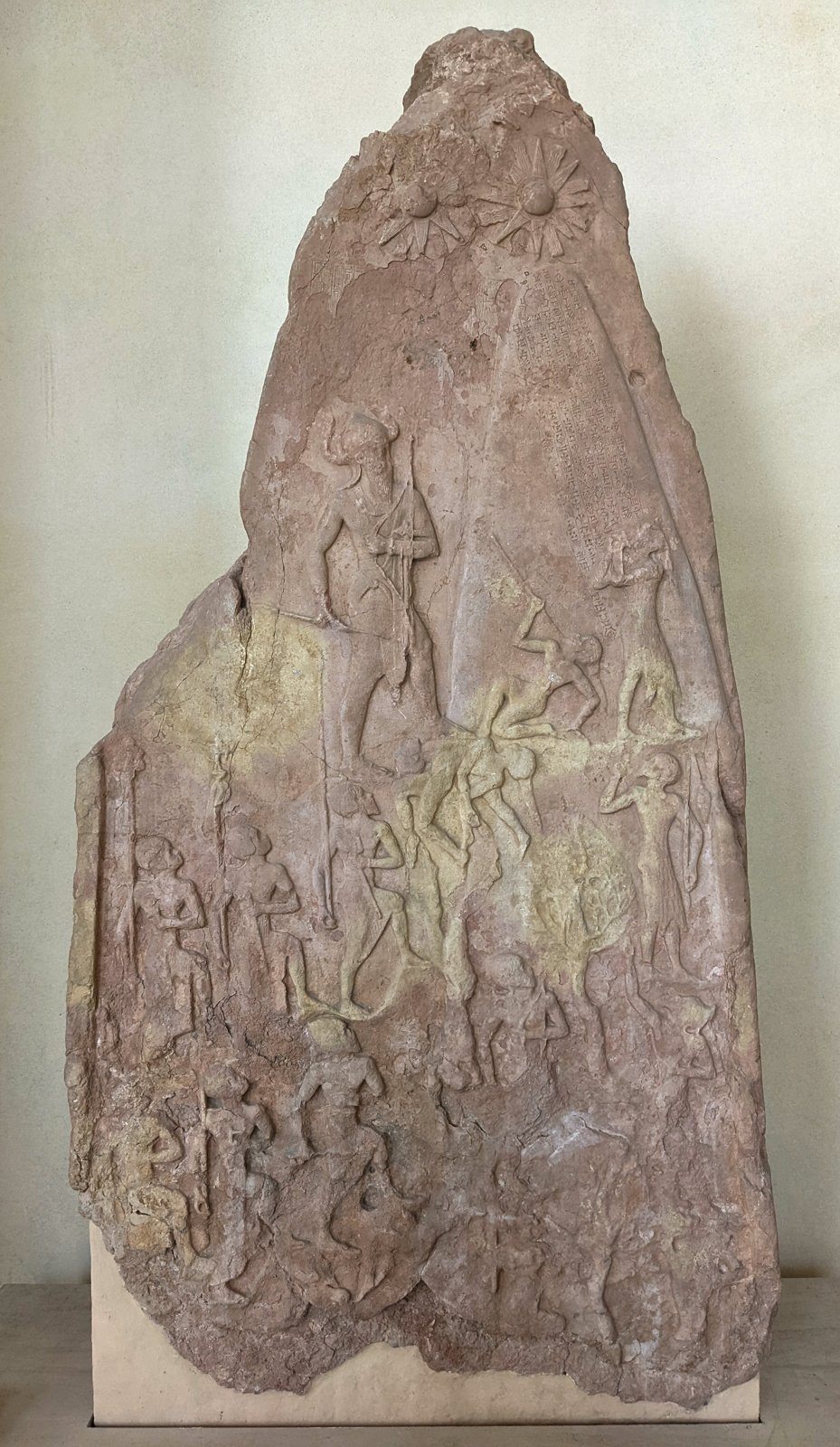
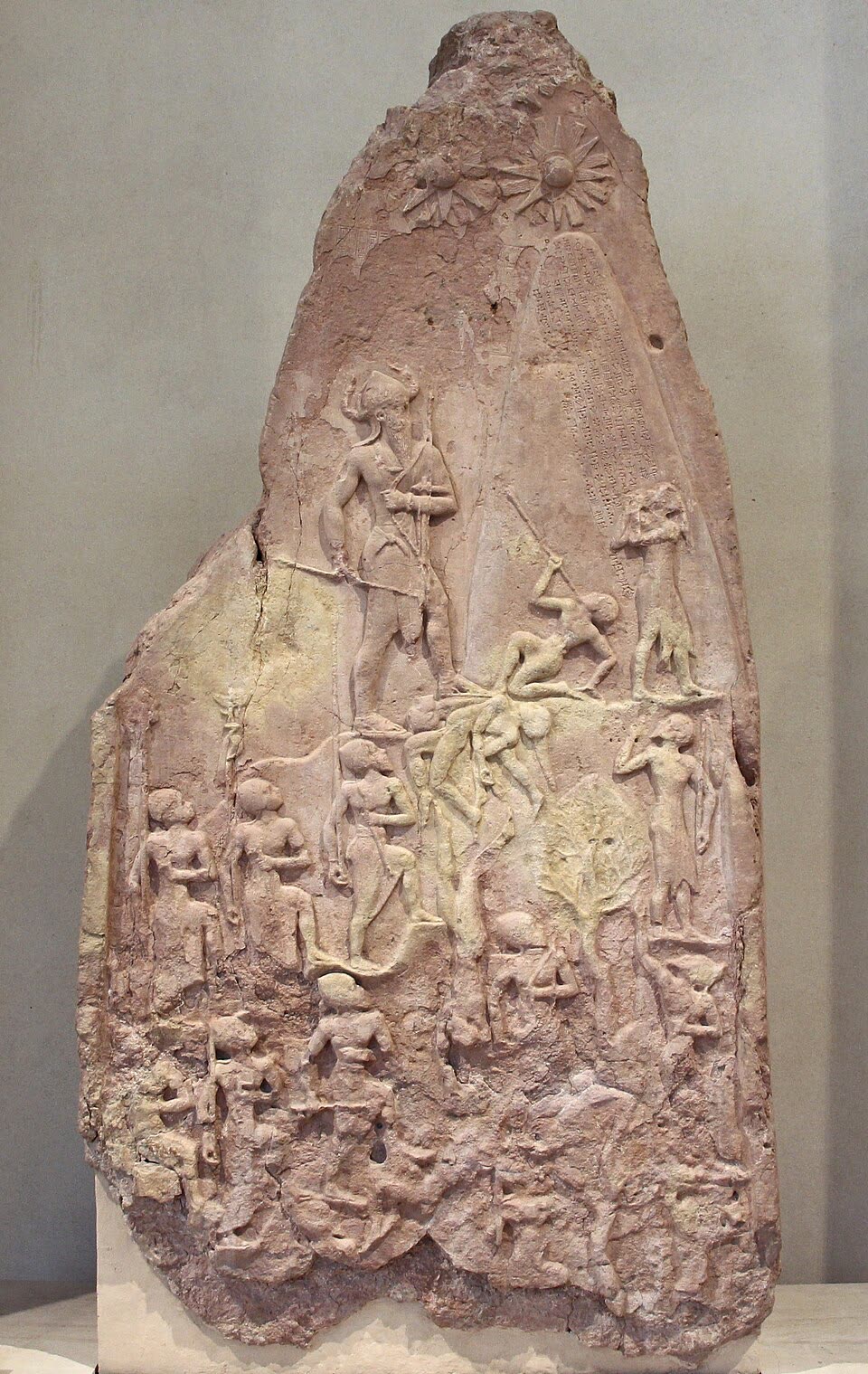
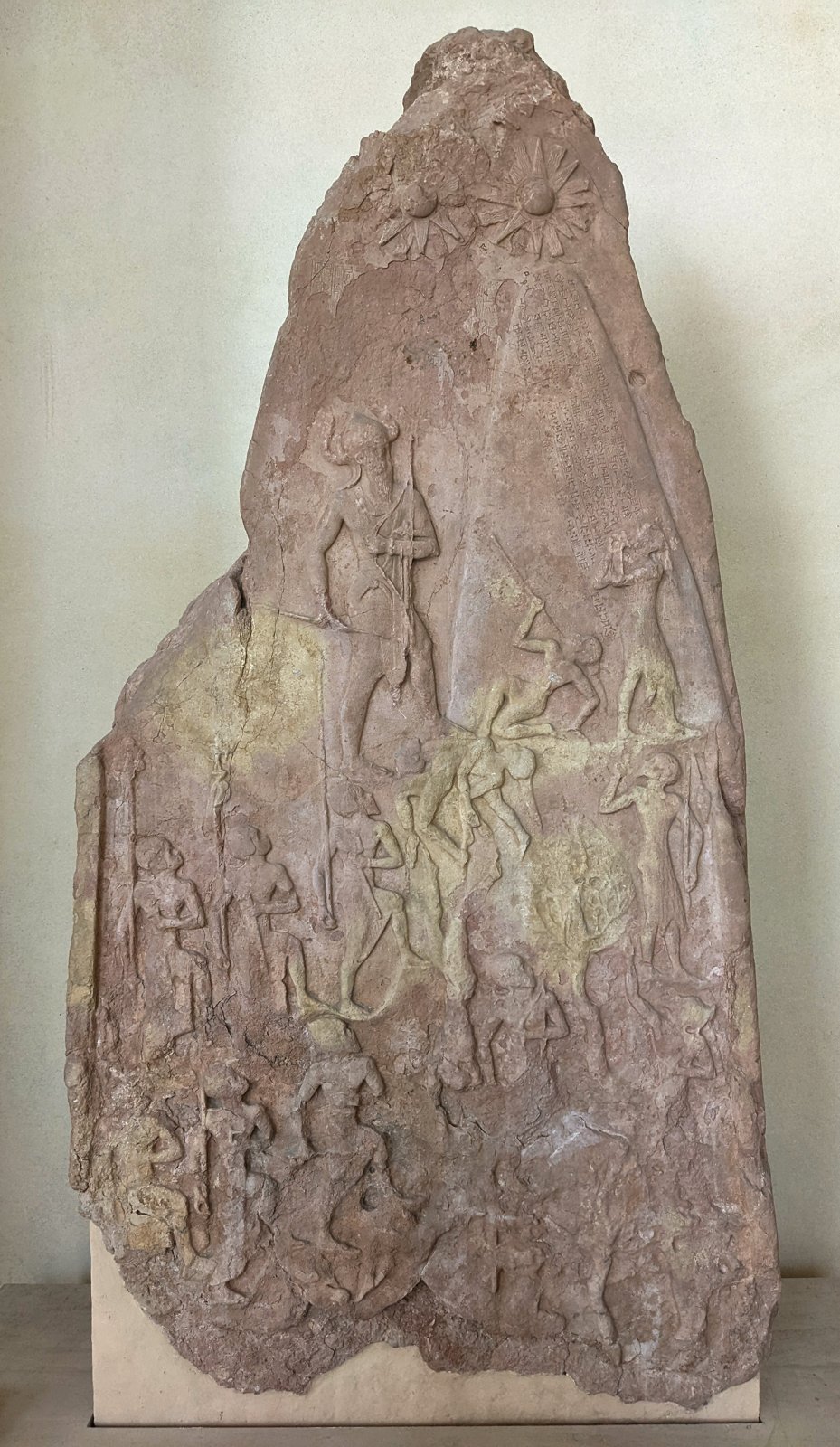
The Victory Stele of Naram-Sin (Louvre SB 4)
Artifact · On a two-metre limestone stele, the king of Akkad climbs a mountain above his soldiers. A damaged Akkadian text names the people of Lullubum. A later Elamite inscription records how the stone was taken from Sippar to Elam.
-
From 2200 BCE to 2015 CE
Anunna and Anunnaki: What Do the Texts Actually Say?
Study · Names, membership, numbers, the underworld and human creation: Mesopotamian evidence distinguished from Sitchin’s modern orbital, gold-mining and genetic-engineering narrative.
-
From 2200 BCE to 1600 BCE
Seven in Sumerian Poetry: Gates, Terrors, Mountains and Judges
Study · Seven gates, seven judges, seven helpers, seven mountains: a line-by-line reading of how Sumerian poems count to seven, and what the number does in each story.
-
From 2125 BCE to 1750 BCE
Eninnu, Ningirsu's Temple
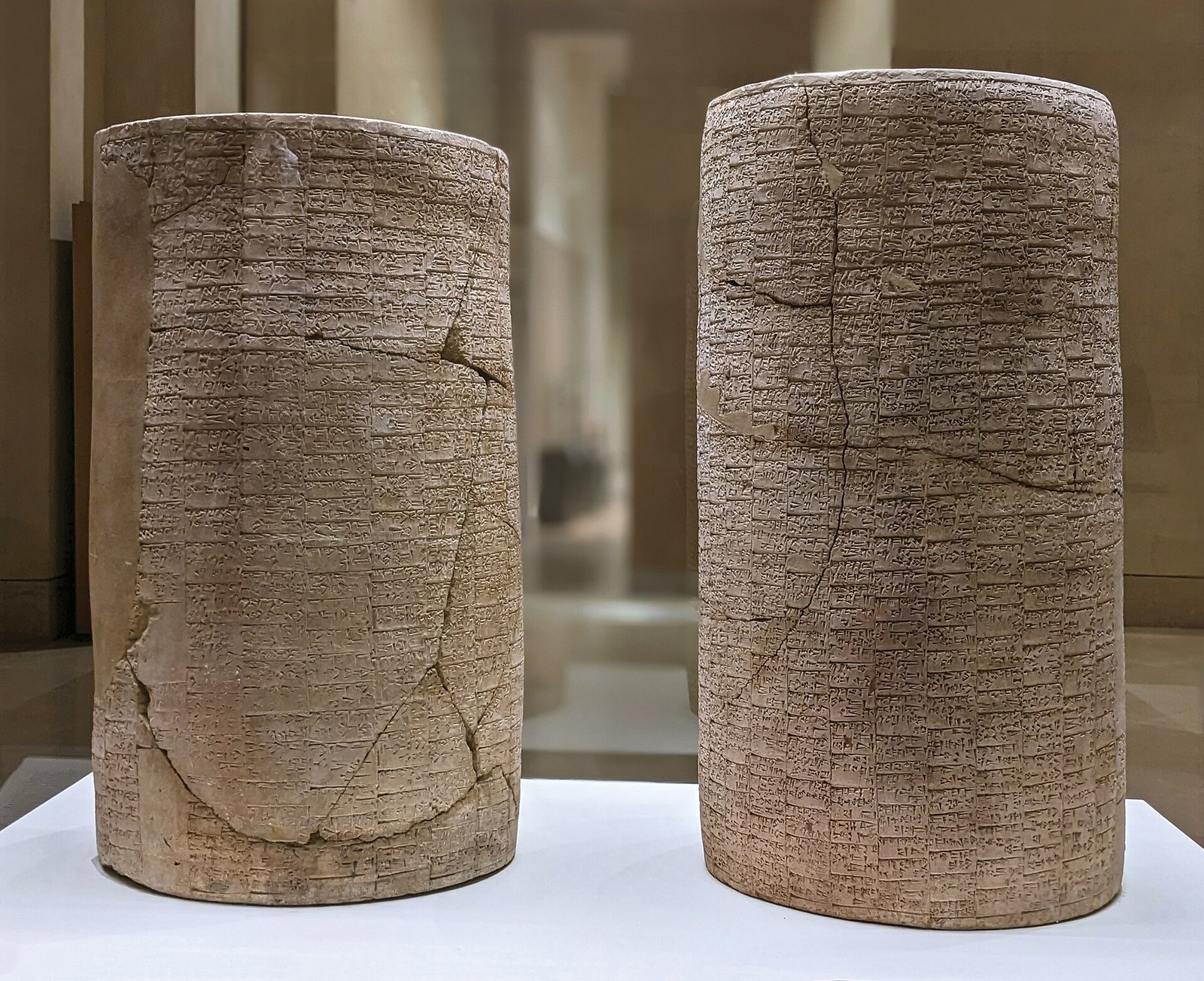
Site · The great temple of the god Ningirsu at Girsu, in the Sumerian state of Lagash. Gudea rebuilt it around 2120 BCE and told the story on two clay cylinders now in the Louvre.
-
2112 BCE
Karnak Temple Complex
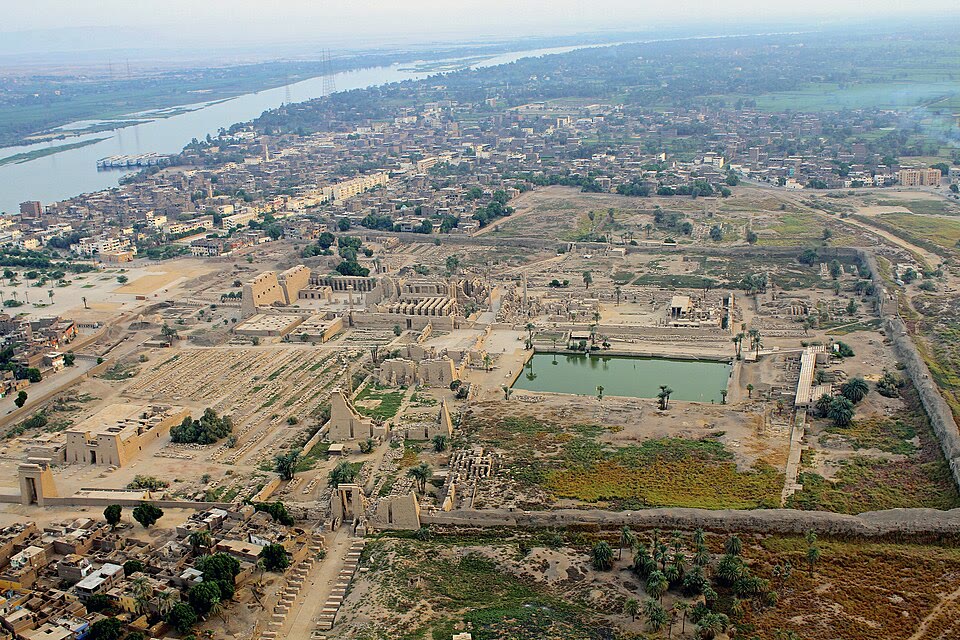
Site · The great temple complex of Amun at ancient Thebes, on the east bank of the Nile at modern Luxor. For some two thousand years, Egyptian kings and later rulers rebuilt and enlarged it.
-
From 2112 BCE to 2004 BCE
The Third Dynasty of Ur (Ur III, c. 2112–2004 BCE)
Period · During this century, the kings of Ur ruled southern Mesopotamia and kept their administrative records on clay tablets. Its dates, its reforms and the reasons for its fall are all debated.
-
From 2112 BCE to 2004 BCE
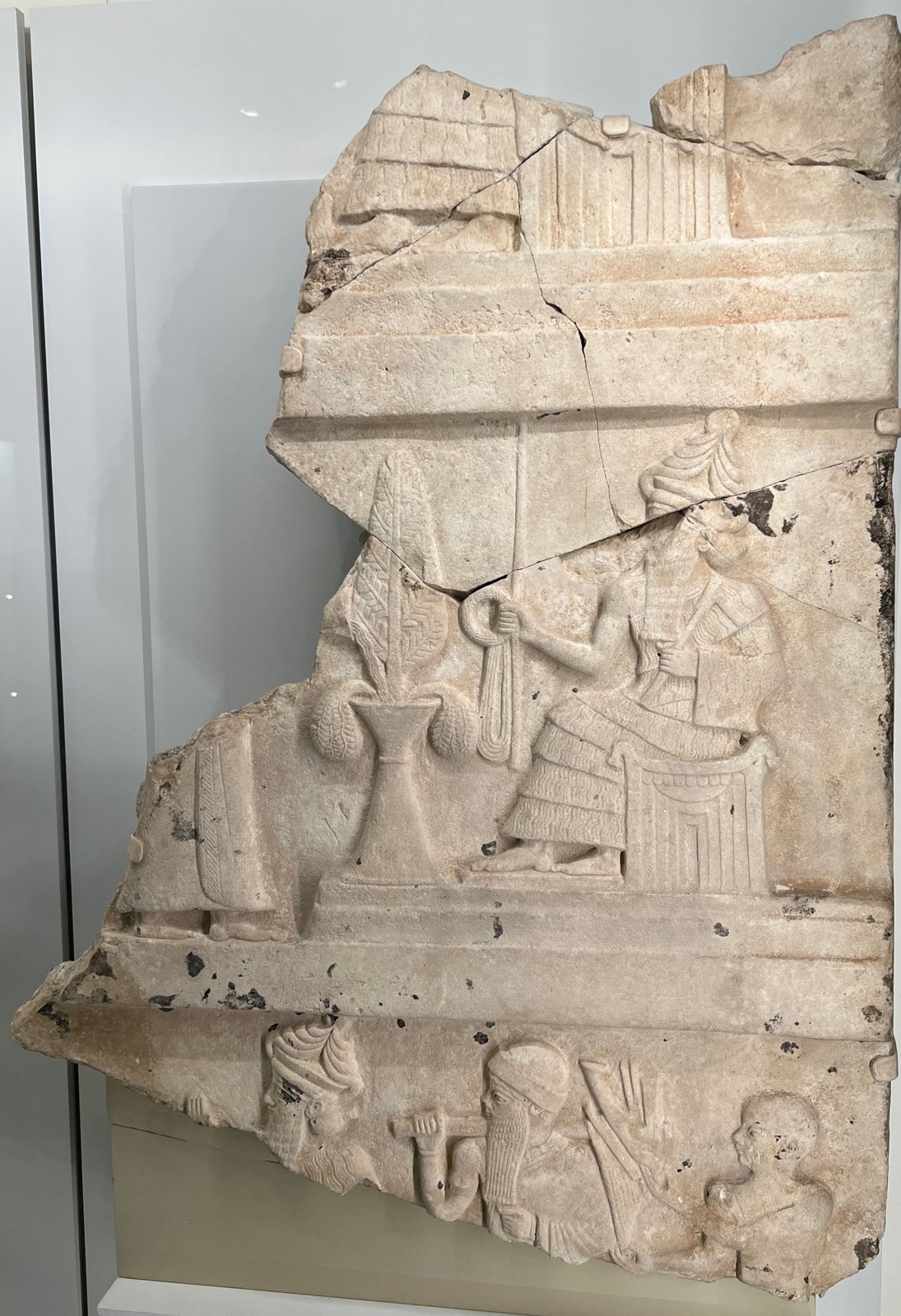
The Ur-Namma Stela from Ur (Penn Museum B16676)
Artifact · A king pours an offering before an enthroned god on a broken limestone monument from Ur. Excavation records and successive reconstructions show how scholars recovered its scenes and why the royal patron remains uncertain.
-
2100 BCE
From the River to “Bitter Water”: How Did the Ancients Seek Divine Judgment?
Study · River ordeals and bitter water: Mesopotamian laws, Mari letters and Numbers 5, comparing oaths, supervising authorities and scholarly explanations of relationships between the sources.
-
2100 BCE
Marriage, Inheritance, and a Brother’s Widow: One Law or Different Solutions?
Study · How do Hittite and Assyrian laws and Hebrew books address the widow, land and family name? Comparing legal, contractual and narrative evidence and arguments about their relationships.
-
From 2100 BCE to 600 BCE
The Sebettu: “the Seven” as Demons and as Protectors in Mesopotamia
Study · In Mesopotamian texts "the Seven" (Sebettu) are both merciless demons in exorcists' spells and warrior gods who protect kings and households. How one group could play both roles.
-
2055 BCE
Deir el-Bahari
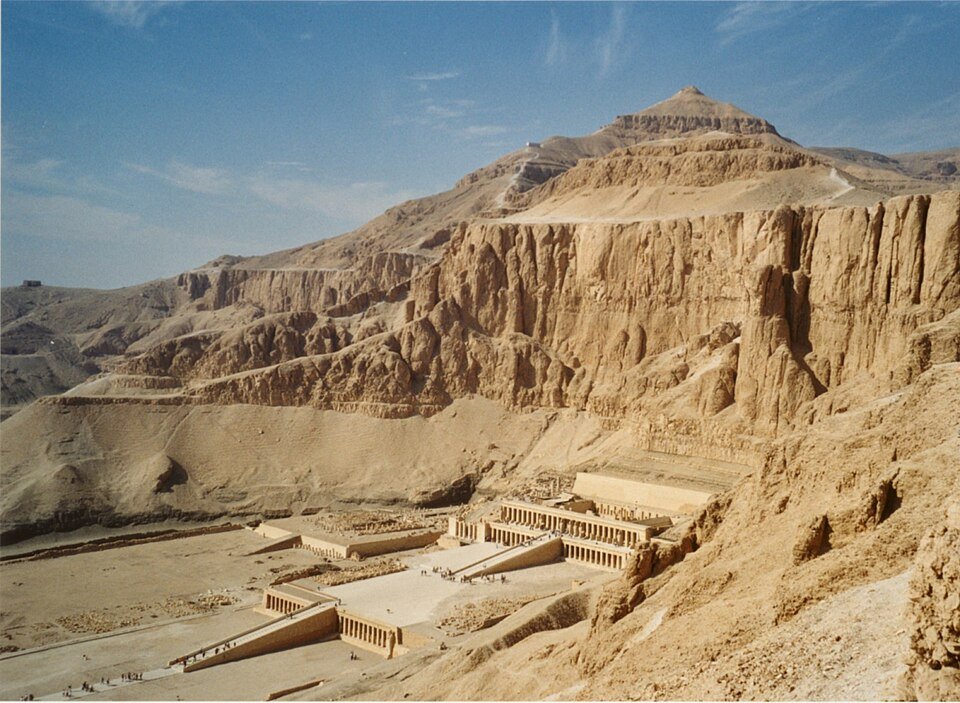
Site · A bay in the cliffs of western Thebes where Egyptian kings built terraced temples, from Mentuhotep II to Hatshepsut and Thutmose III. It later held a monastery and a hidden cache of royal mummies.
-
From 2050 BCE to 1760 BCE
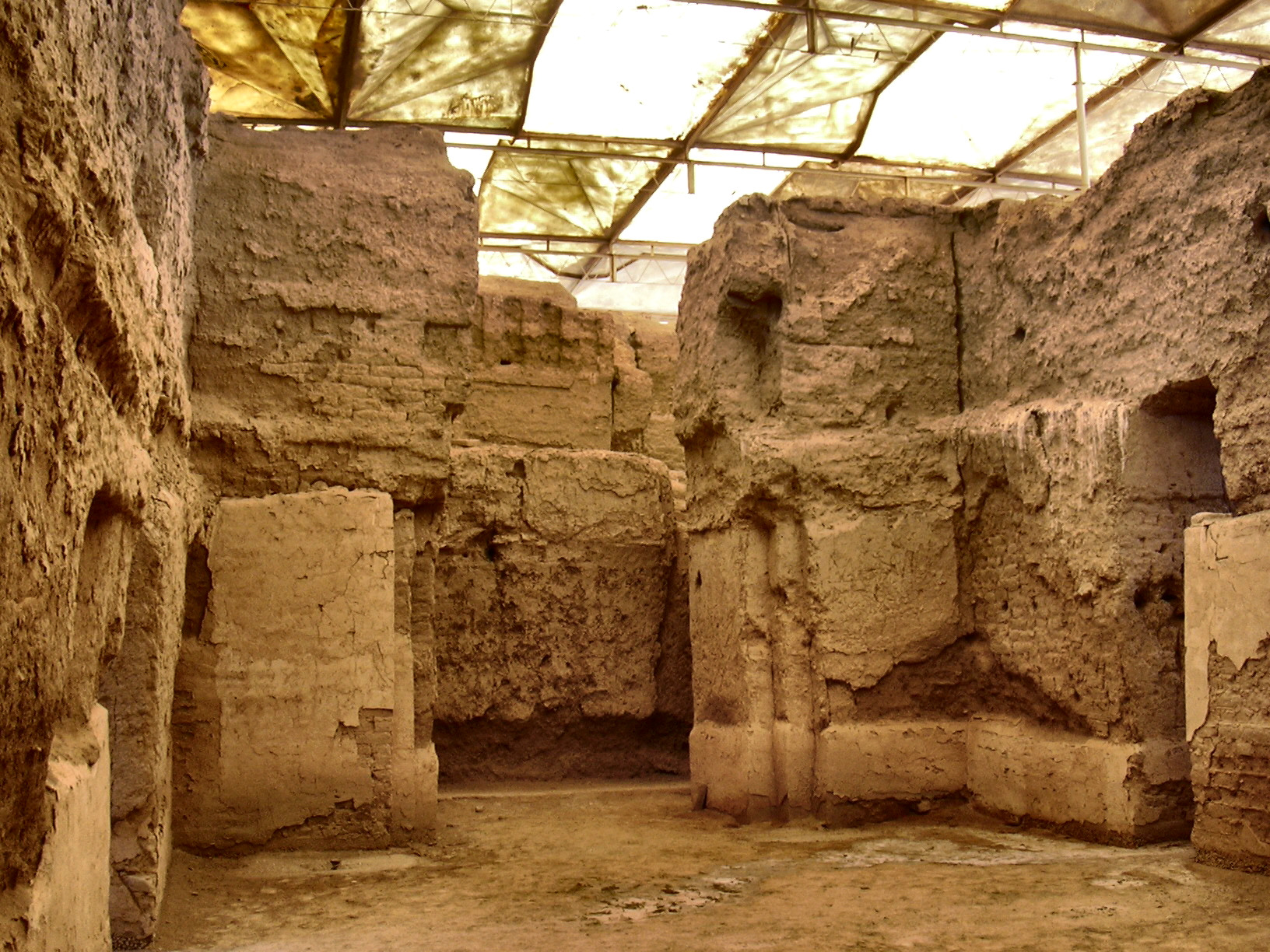
The Great Royal Palace of Mari at Tell Hariri
Site · At Mari, a route through courtyards and a painted vestibule led to the throne room. Excavated walls, murals and tablets document how the palace combined royal ceremony, household work and administration.
-
From 2028 BCE to 2004 BCE
Ibbi-Sin, the Last King of the Third Dynasty of Ur
Person · Ibbi-Sin ruled as the authority of Ur gave way to rival powers, including Ishbi-Erra’s kingdom at Isin. His seals, surviving accounts and the later Sumerian lament preserve different evidence for the reign.
Second millennium BCE
-
From 2000 BCE to 1300 BCE
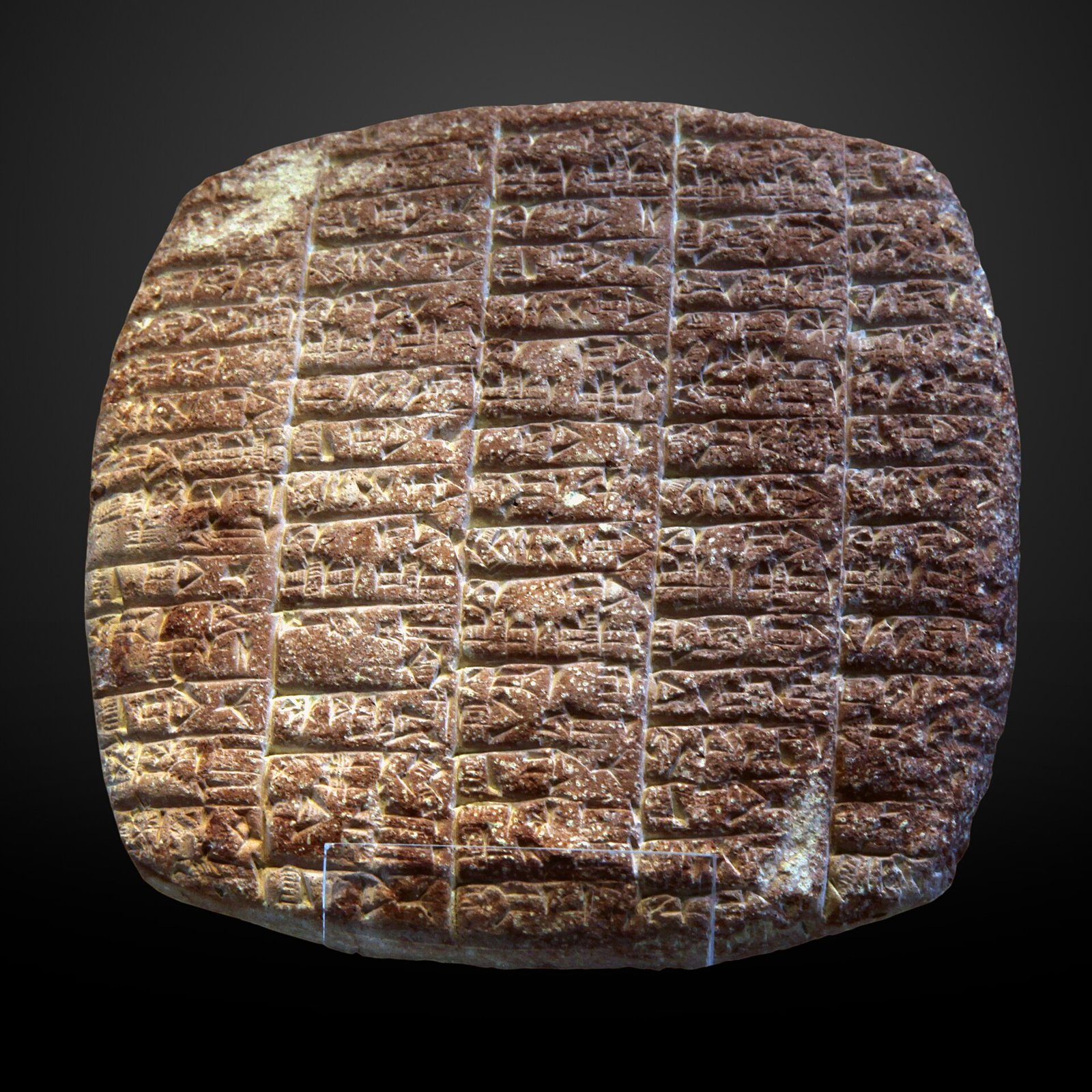
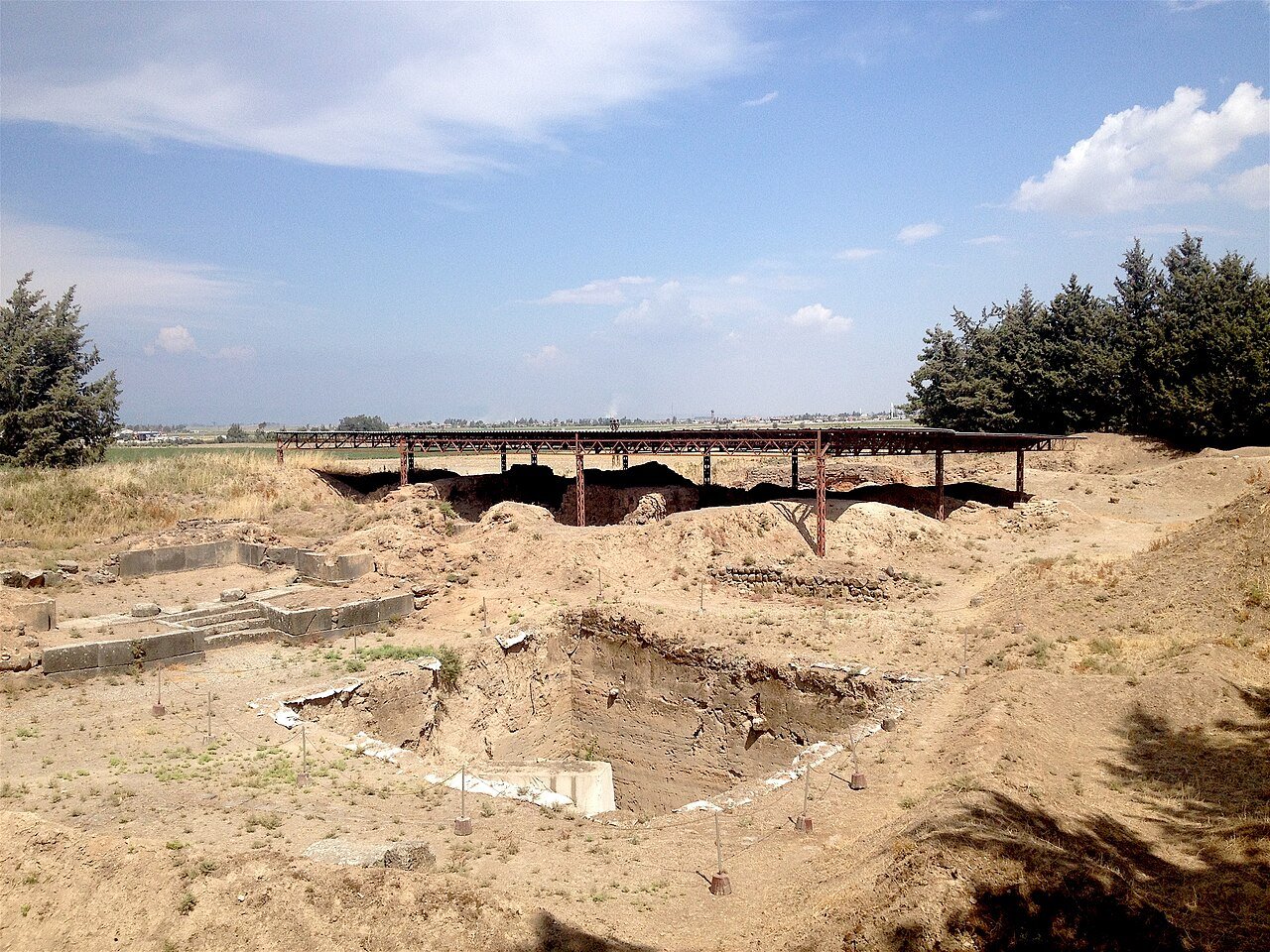
Alalakh (Tell Atchana)
Site · A Bronze Age city on the Orontes in southern Türkiye. Two burnt palaces kept clay archives from the eras of Aleppo's kings and of Mittani; the city was largely abandoned around 1300 BCE.
-
From 2000 BCE to 900 CE
Gehenna and Ancient Underworlds: A Place-Name with Changing Meanings
Study · From Hinnom and Sheol to Enoch, Mark and the Quran: distinguishing the dead’s abode, punishment, waiting and renovation while testing linguistic kinship and transmission.
-
From 2000 BCE to 500 BCE
Slavery and Debt Service between Hammurapi and the Torah: Are These Texts Describing the Same Institution?
Study · Debt service and slavery in Hammurapi, Exodus, Deuteronomy and Leviticus: dependants, release terms, women and fugitives, and scholarly arguments about legal relationships and practice.
-
From 2000 BCE to 1150 BCE
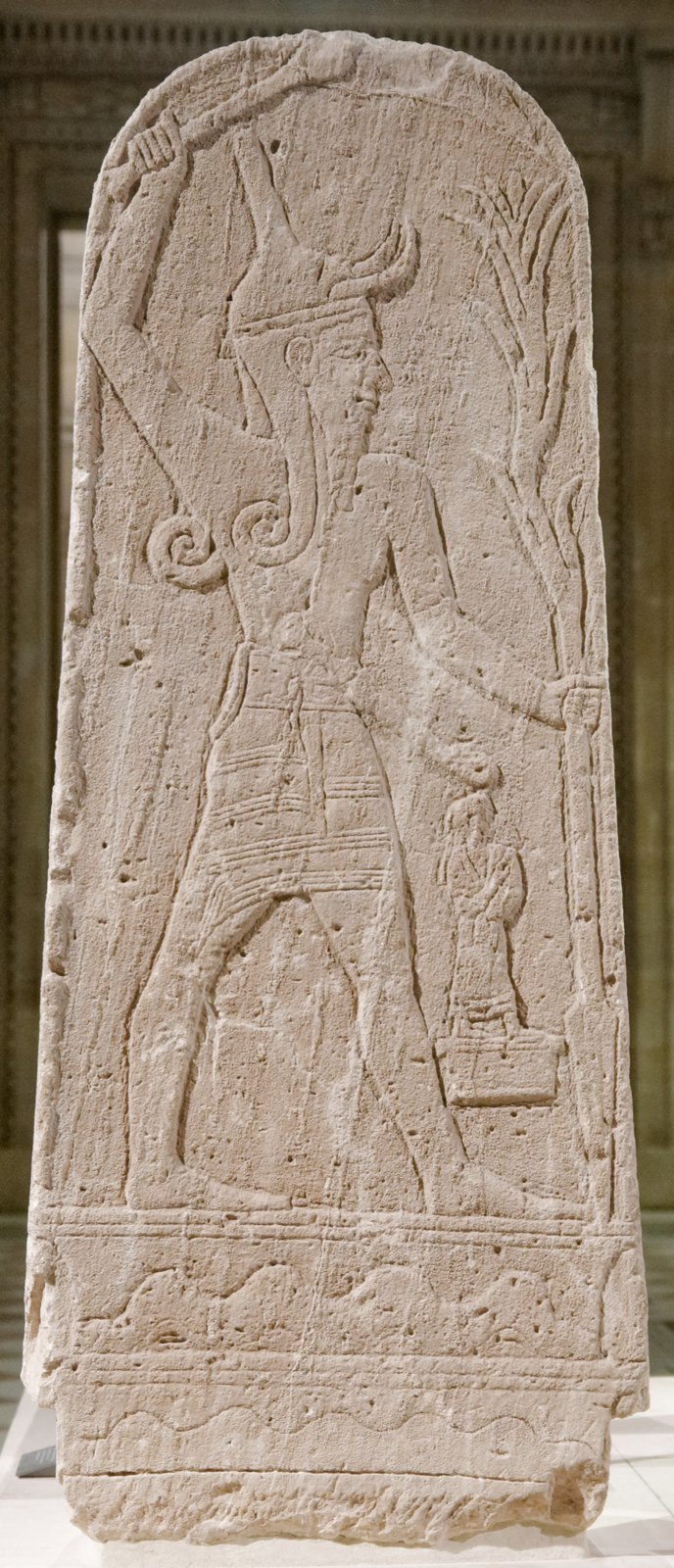
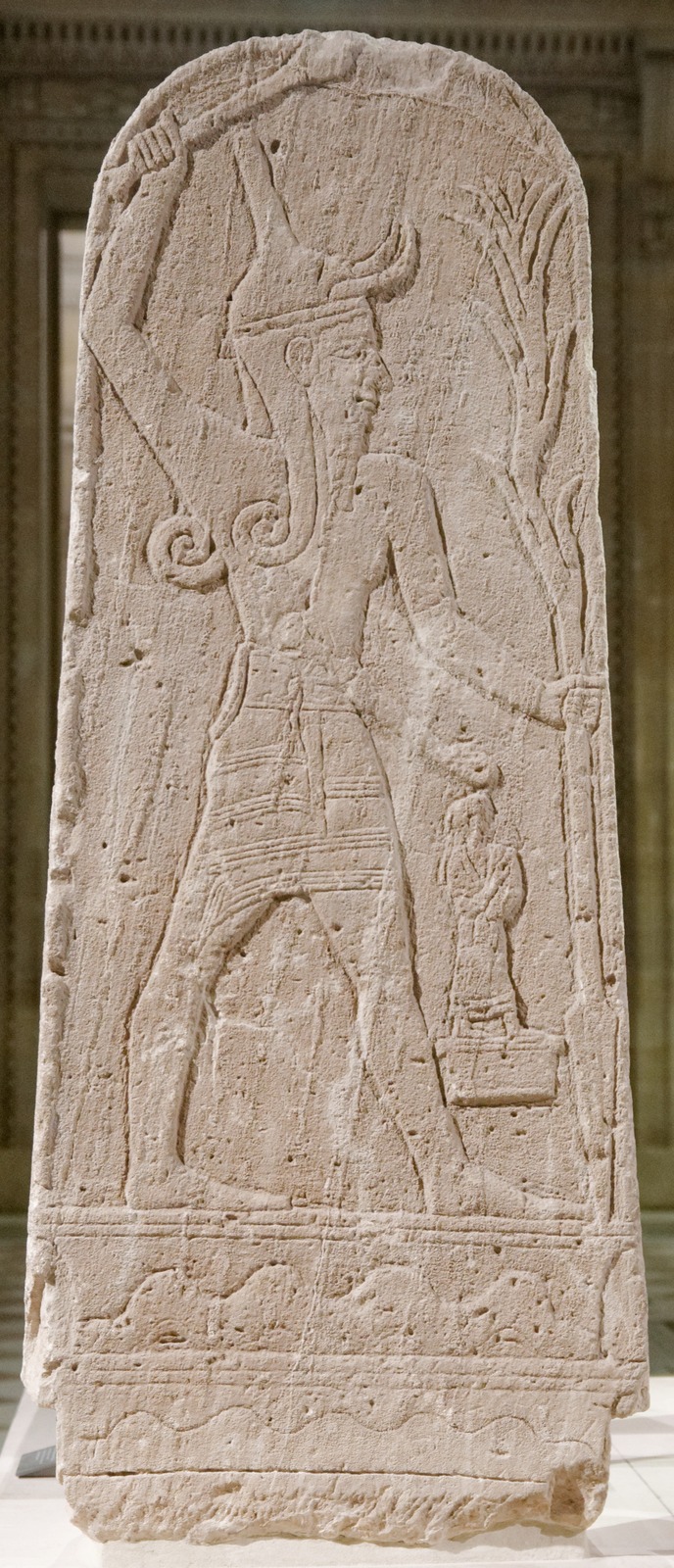
The Baal with Thunderbolt Stele from Ugarit (Louvre AO 15775)
Artifact · A limestone stele from Ugarit showing a striding storm god and a small king, found in 1932 near the Temple of Baal: what the object is, how it is dated and what its image can and cannot show.
-
From 2000 BCE to 1800 BCE
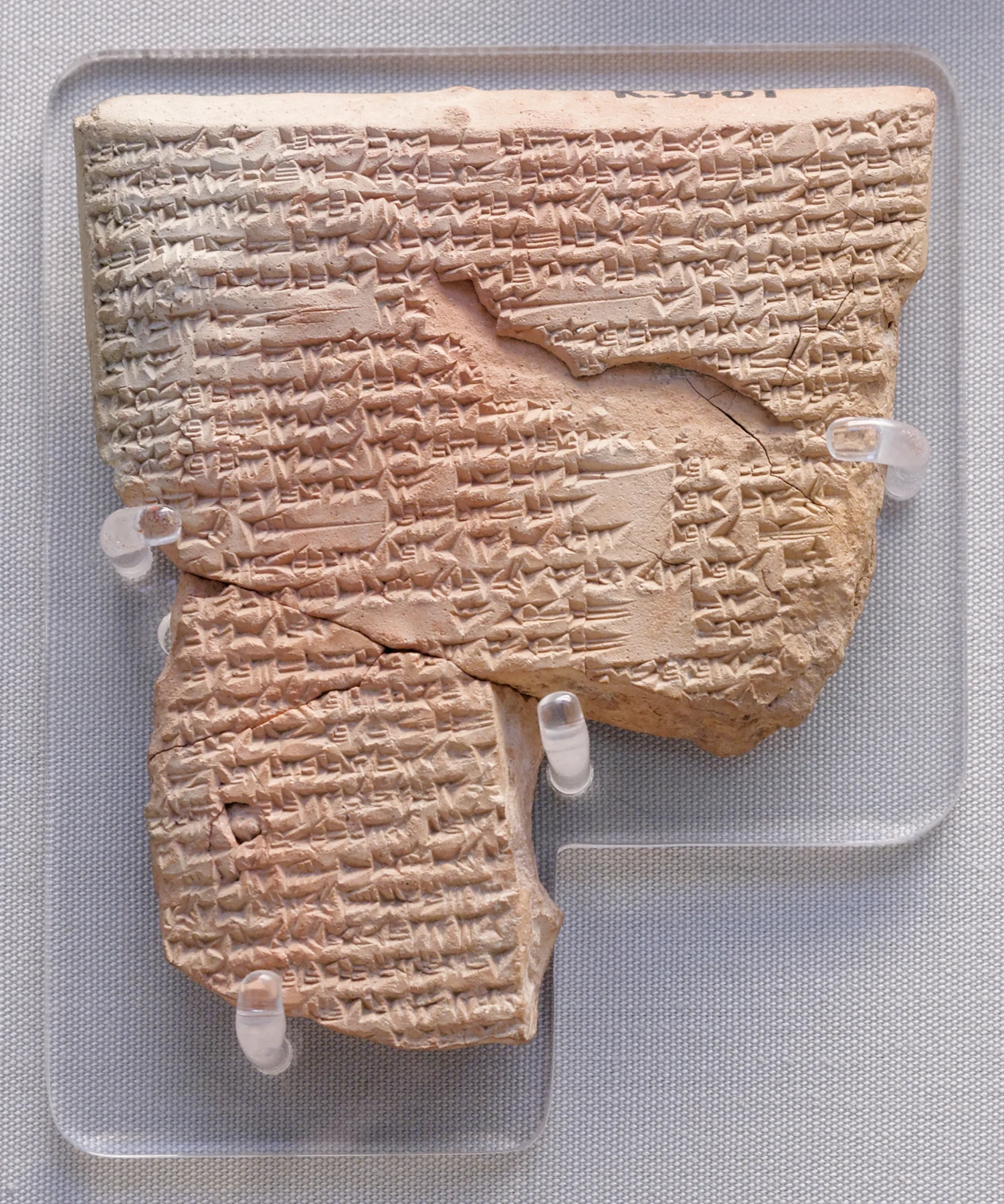
The Birth of Vegetation on a Sumerian Tablet (Louvre AO 6715)
Artifact · A damaged clay tablet preserves the opening of the Sumerian debate between Tree and Reed. Its verses describe how Heaven and Earth bring forth the two plants. In one reading, they are friends before they become rivals.
-
From 2000 BCE to 1600 BCE
The Lament for Ur: When the Gods Abandon a City and Ningal Pleads for It
Ancient text · A Sumerian poem mourning the fall of Ur through the voice of its goddess Ningal. In Oxford’s edition it runs to 438 lines and shows how ancient writers explained the catastrophe.
-
From 2000 BCE to 1550 BCE
The Middle Bronze Age in the Levant (c. 2000–1550 BCE)
Period · Fortified cities and royal palaces mark the Middle Bronze Age in the Levant. Pottery and radiocarbon dates chart the changes at individual sites, and Egyptian texts and objects document contacts across the region.
-
From 2000 BCE to 1595 BCE
The Old Babylonian period (c. 2000–1595 BCE)
Period · After Ur fell, Isin and Larsa competed for power in southern Mesopotamia. Hammurabi brought much of the region under Babylon. The dates of that rise and of the dynasty’s end depend on the chronology used.
-
From 2000 BCE to 1700 BCE
The Sumerian King List: Kings Before and After the Flood, and Cities Taking Turns at Kingship
Ancient text · A Sumerian composition in which kingship passes from city to city, from eight kings before the flood to the rulers of Isin. A key source for early Mesopotamia, but not a plain chronicle.
-
From 2000 BCE to 650 CE
The Tower of Babel: the city, the tower, and the languages
Study · Babel, Etemenanki and Enmerkar’s incantation compared through archaeology, architecture, language, dated witnesses and differing strengths of connection.
-
From 1961 BCE to 1917 BCE
Senusret I, the White Chapel and the Succession of Amenemhat I
Person · Senusret I built at Karnak and Lisht, where monuments preserve his names and titles. A relief and two literary works offer different evidence about his succession.
-
From 1900 BCE to 1600 BCE
A Tablet of Gilgamesh and Huwawa from Kish
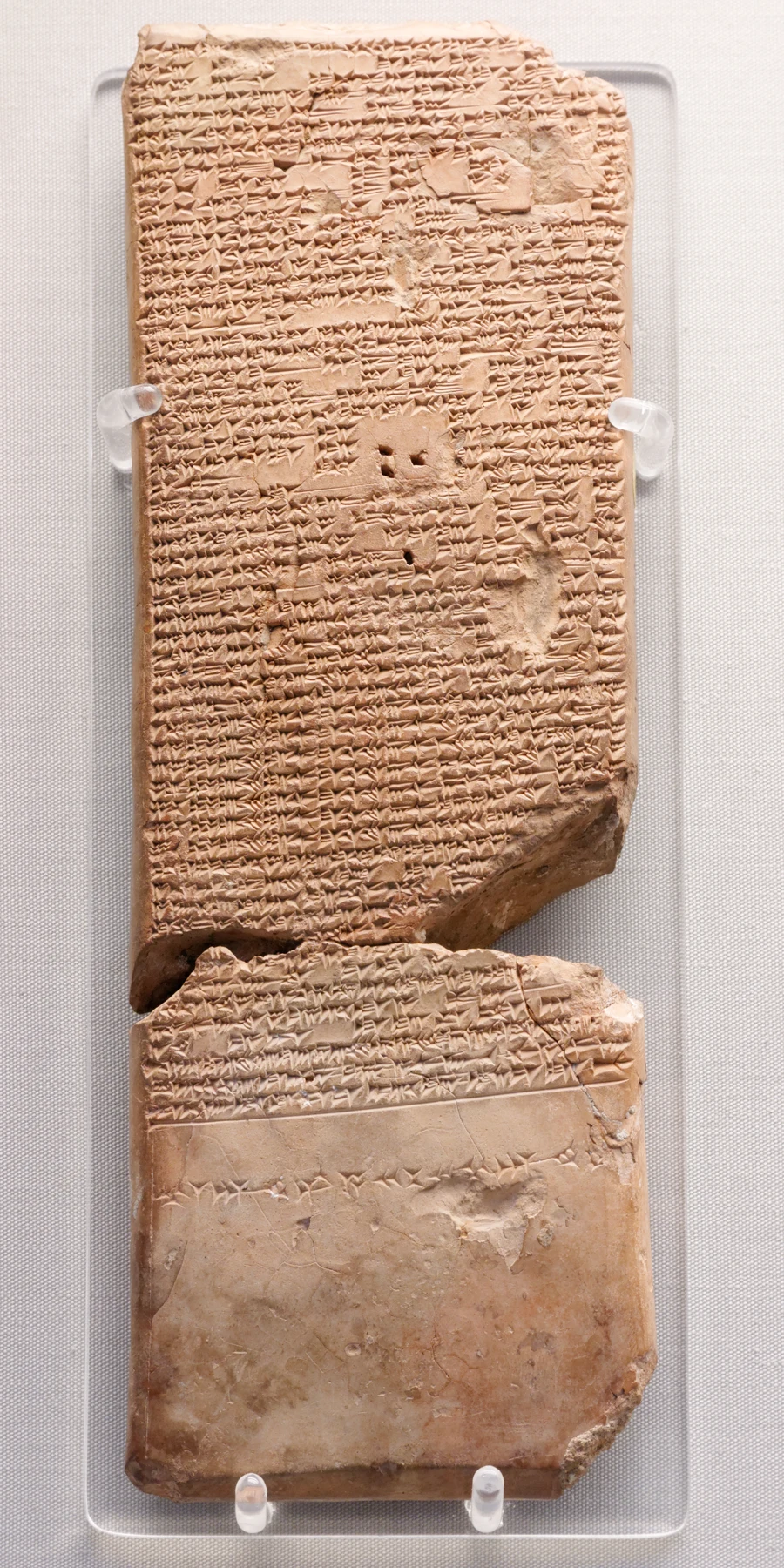
Artifact · A clay tablet from Kish preserves an Old Babylonian copy of the Sumerian cedar-forest story. Its columns retain Utu’s seven helpers, Enkidu’s warning and a version of the ending in which two gods receive Huwawa’s head.
-
From 1900 BCE to 700 CE
Clay, labor, and breath: ancient accounts of human creation
Study · Earthly material and human creation in Mesopotamian texts, Genesis and the Quran: clay, dust, blood, breath, human work and the dates and possible relationships of the witnesses.
-
From 1900 BCE to 600 BCE
Inanna and Ishtar’s Descent: What Changes between the Narratives?
Study · Reading the Sumerian and Akkadian texts separately: seven gates, three days, rescue and substitution, and how the narratives’ endings differ.
-
From 1900 BCE to 300 BCE
The Flood Before Noah: Ziusudra, Atrahasis, Utnapishtim and Genesis
Study · Older Mesopotamian flood accounts and Noah: vessels, birds and sacrifice; changing motives and survival; the strength and limits of literary comparison.
-
From 1900 BCE to 1600 BCE
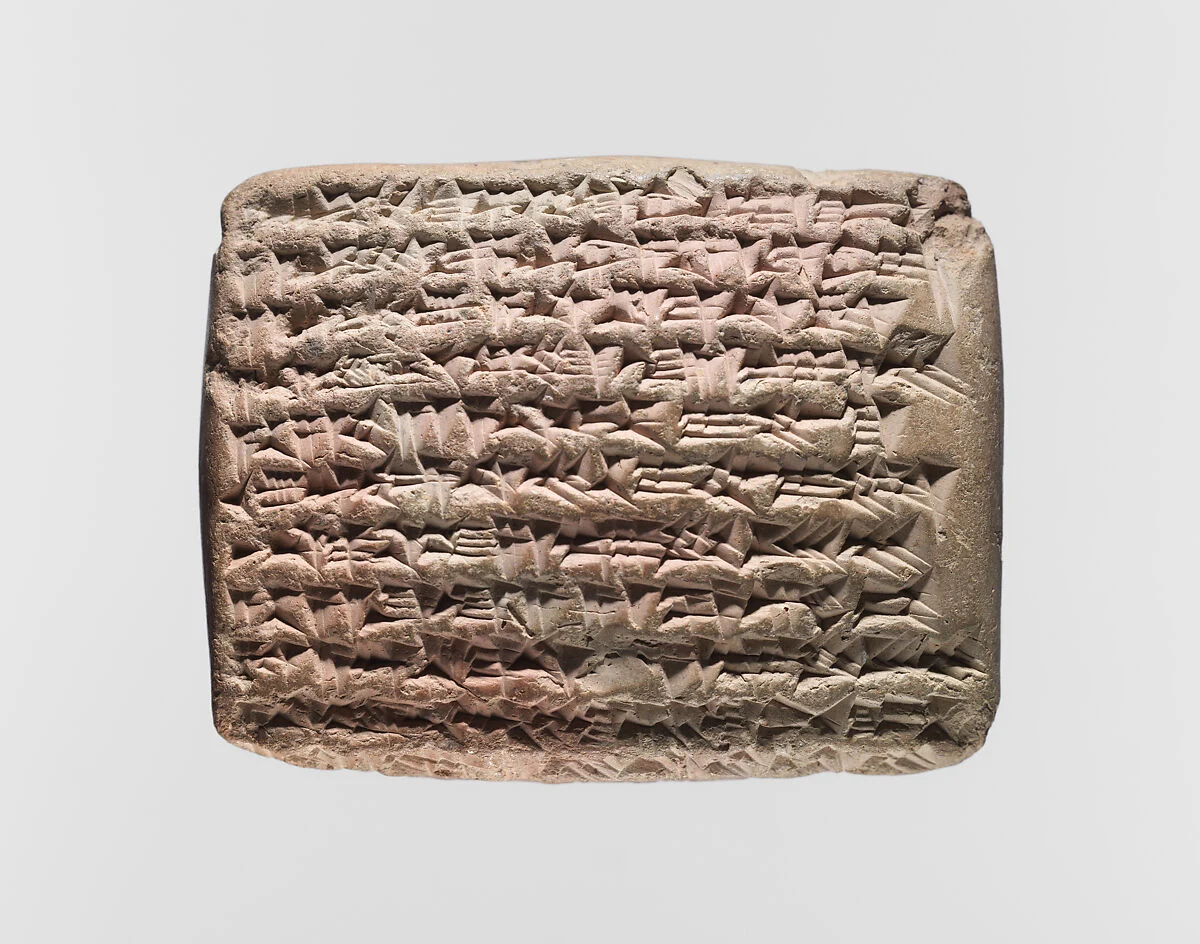
YBC 7289: An Old Babylonian Square and Its Diagonal
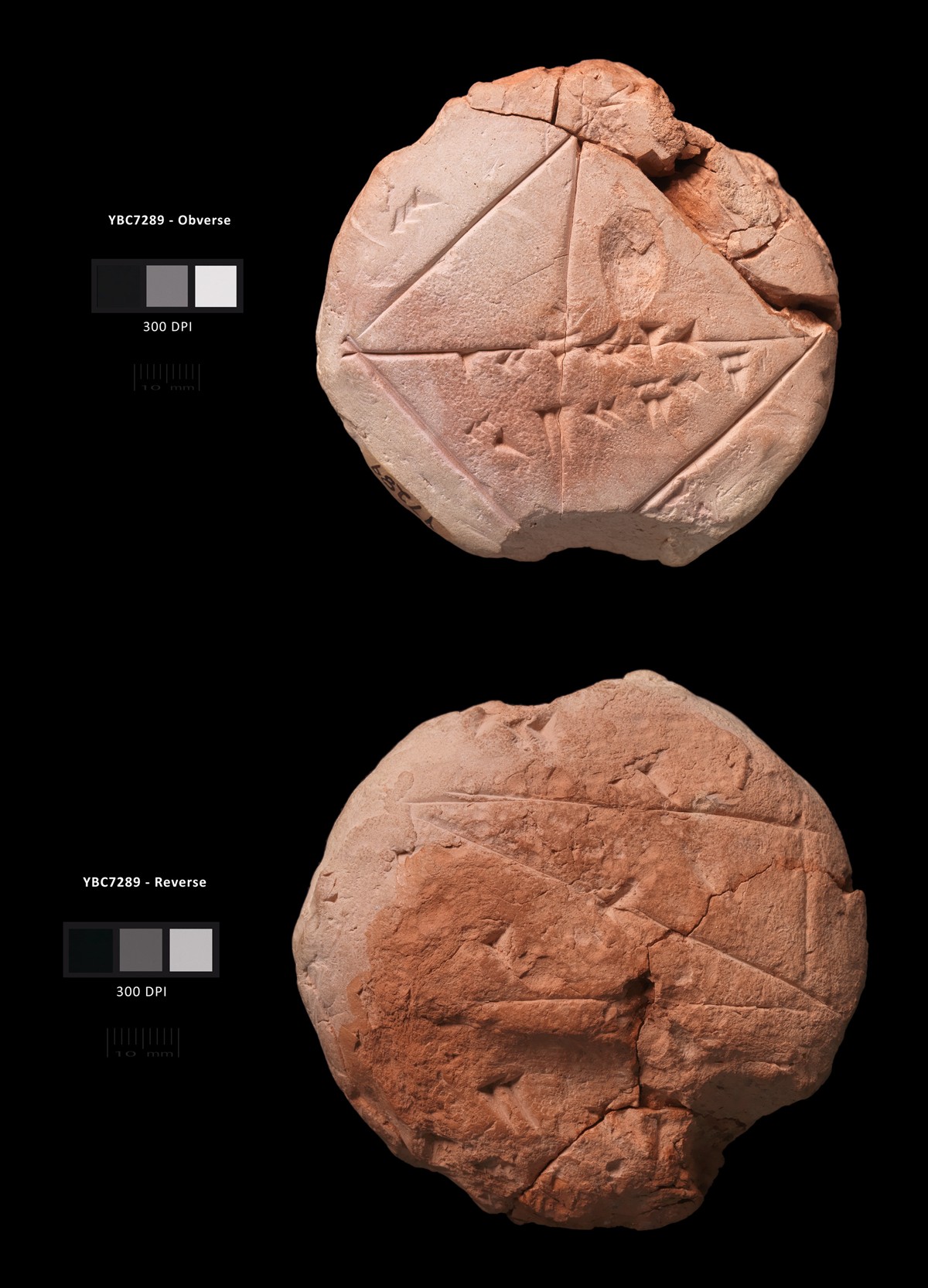
Artifact · An Old Babylonian clay tablet shows how to find the diagonal of a square. Three groups of cuneiform numerals record the side, a remarkably close approximation of the square root of two, and the resulting diagonal.
-
From 1850 BCE to 400 CE
From Pictures to Letters: How the Alphabet Was Born
Study · Most of the world's alphabets descend from a Bronze Age idea: one simple sign for each consonant. The chain runs from Sinai and Phoenicia to Greek, Aramaic, Hebrew and Arabic. Some links are firm, others still debated.
-
From 1827 BCE to 1800 BCE
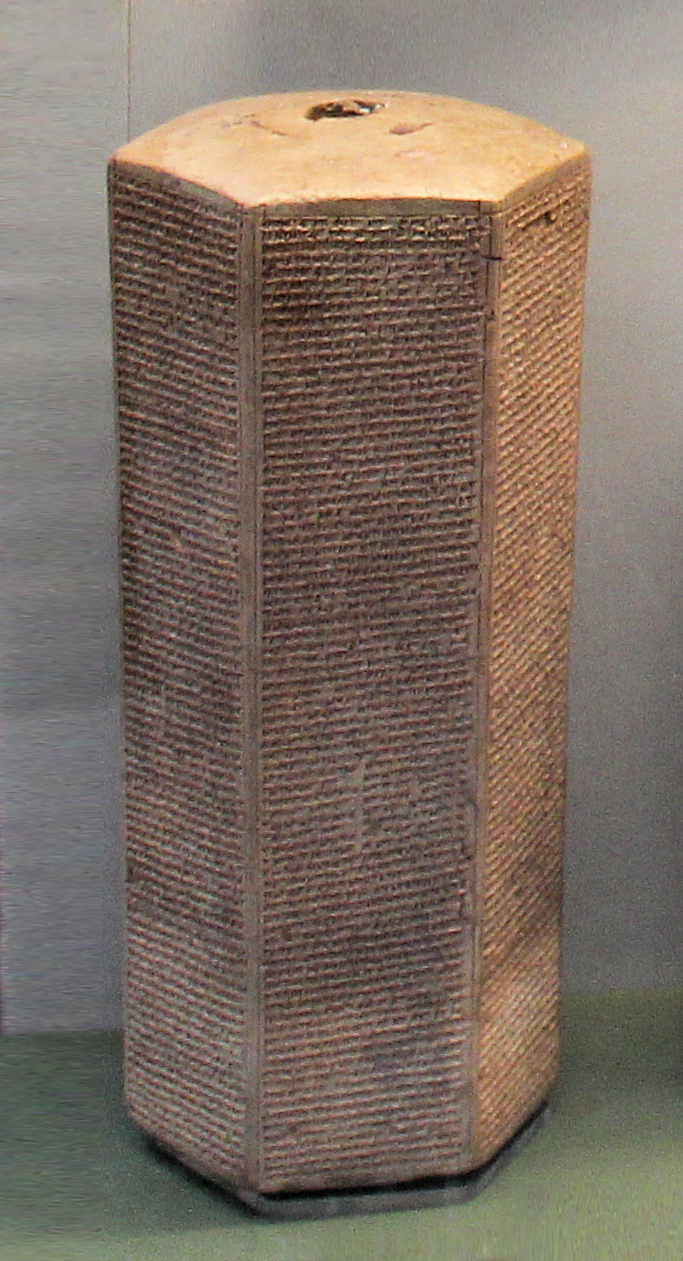
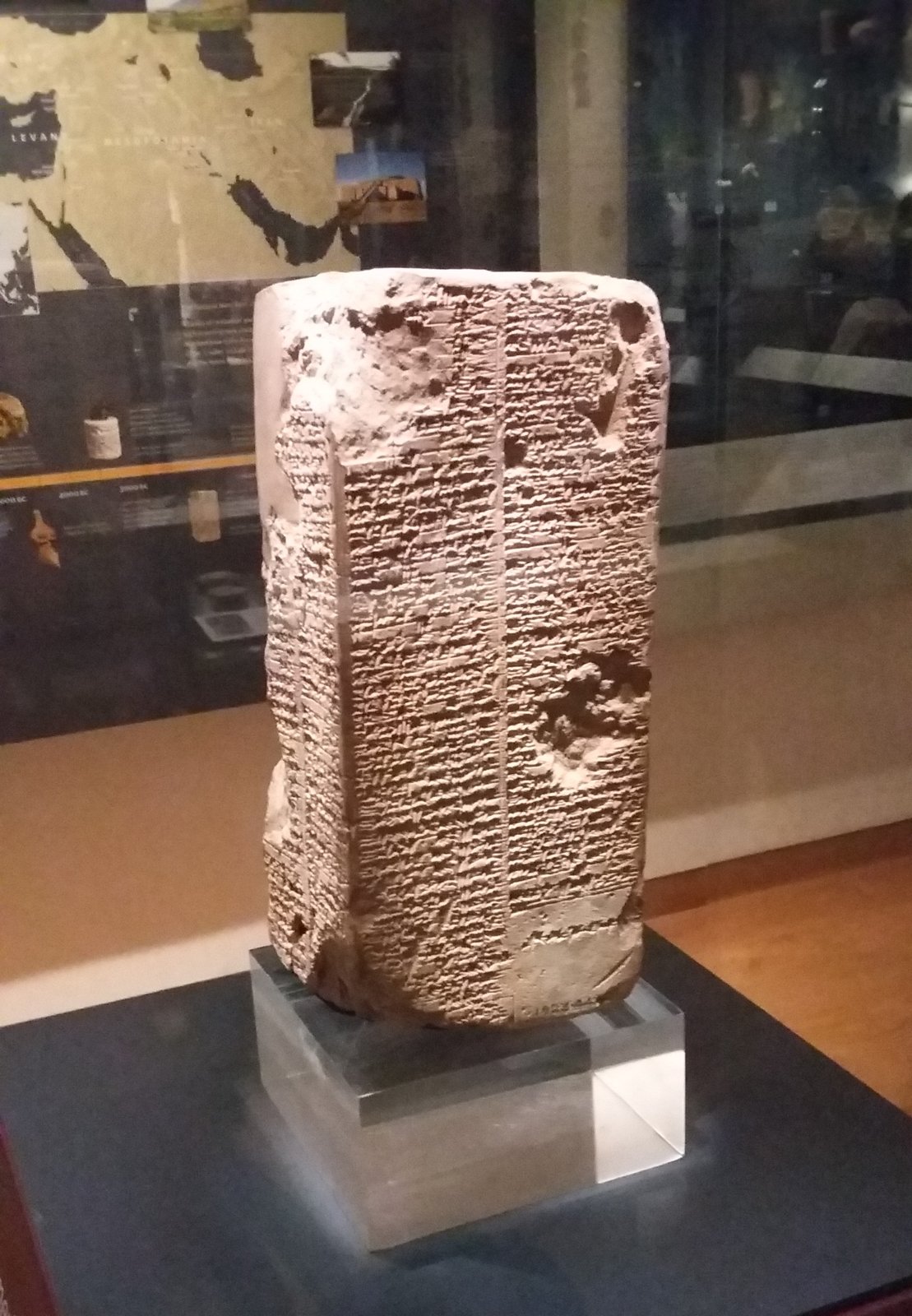
The Weld-Blundell Prism and the Sumerian King List (Ashmolean AN1923.444)
Artifact · A four-sided clay prism in Oxford, written about 1800 BCE, carries the fullest copy of the Sumerian King List: kings before the flood, cities taking turns at kingship, and what scholars debate about it.
-
From 1820 BCE to 1762 BCE
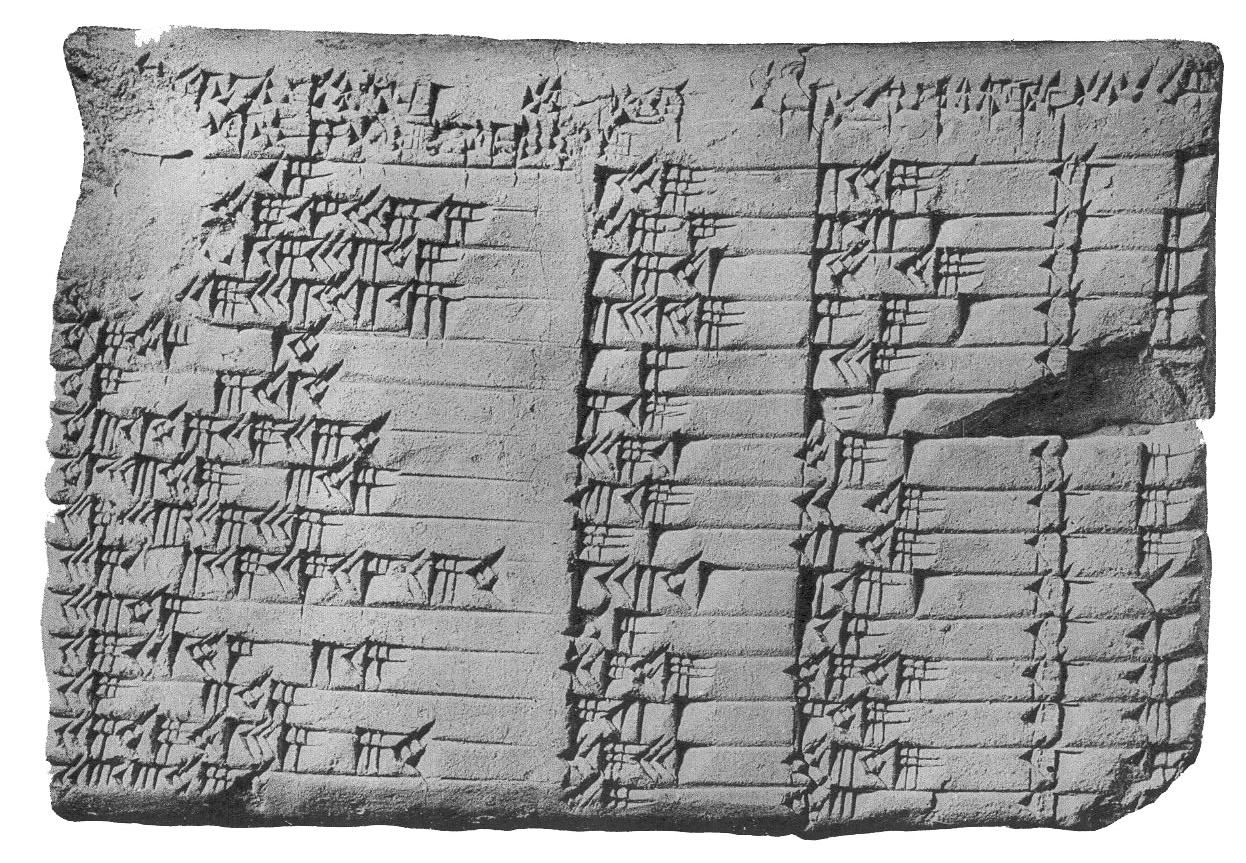
Plimpton 322: An Old Babylonian Table of Numbers
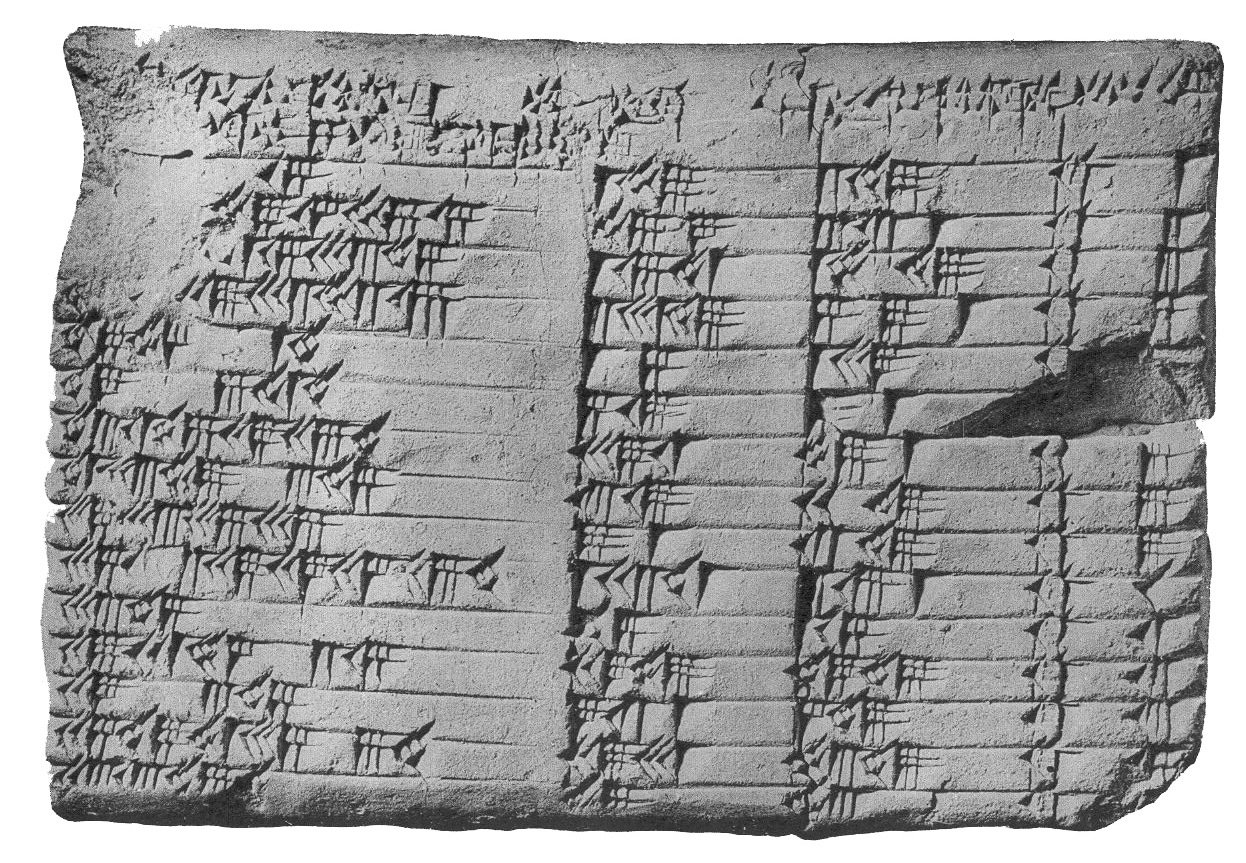
Artifact · Four columns of numbers on a broken Babylonian tablet preserve exact relationships between the sides and diagonals of rectangles. Their purpose remains debated, from scribal exercises to a study related to surveying.
-
From 1800 BCE to 700 CE
Adapa and Adam: wisdom, the food of life, and the limits of comparison
Study · Adapa and Eden: food, wisdom, obedience and life, from Tell Haddad and Amarna witnesses to Genesis and the Quran, distinguishing copy dates from proposed transmission.
-
From 1800 BCE to 1750 BCE
Ea-nasir
Person · A merchant of Ur who traded copper by way of Dilmun, about 1800–1750 BCE. He is known from letters found in his house, above all a customer's angry complaint about poor copper.
-
From 1800 BCE to 600 BCE
Hammurabi and the Covenant Code: parallels and the limits of borrowing
Study · What happens when an ox kills someone, or an enslaved person’s eye is injured? Reading Hammurabi and Exodus 21 to explain parallels, differences and possible legal transmission.
-
From 1800 BCE to 500 BCE
Marduk’s Rise: Babylon and the Making of Divine Kingship
Study · From assembly recognition and battle to Babylon and fifty names: how did the poem frame Marduk’s supremacy, and how does it relate to historical evidence?
-
From 1800 BCE to 273 CE
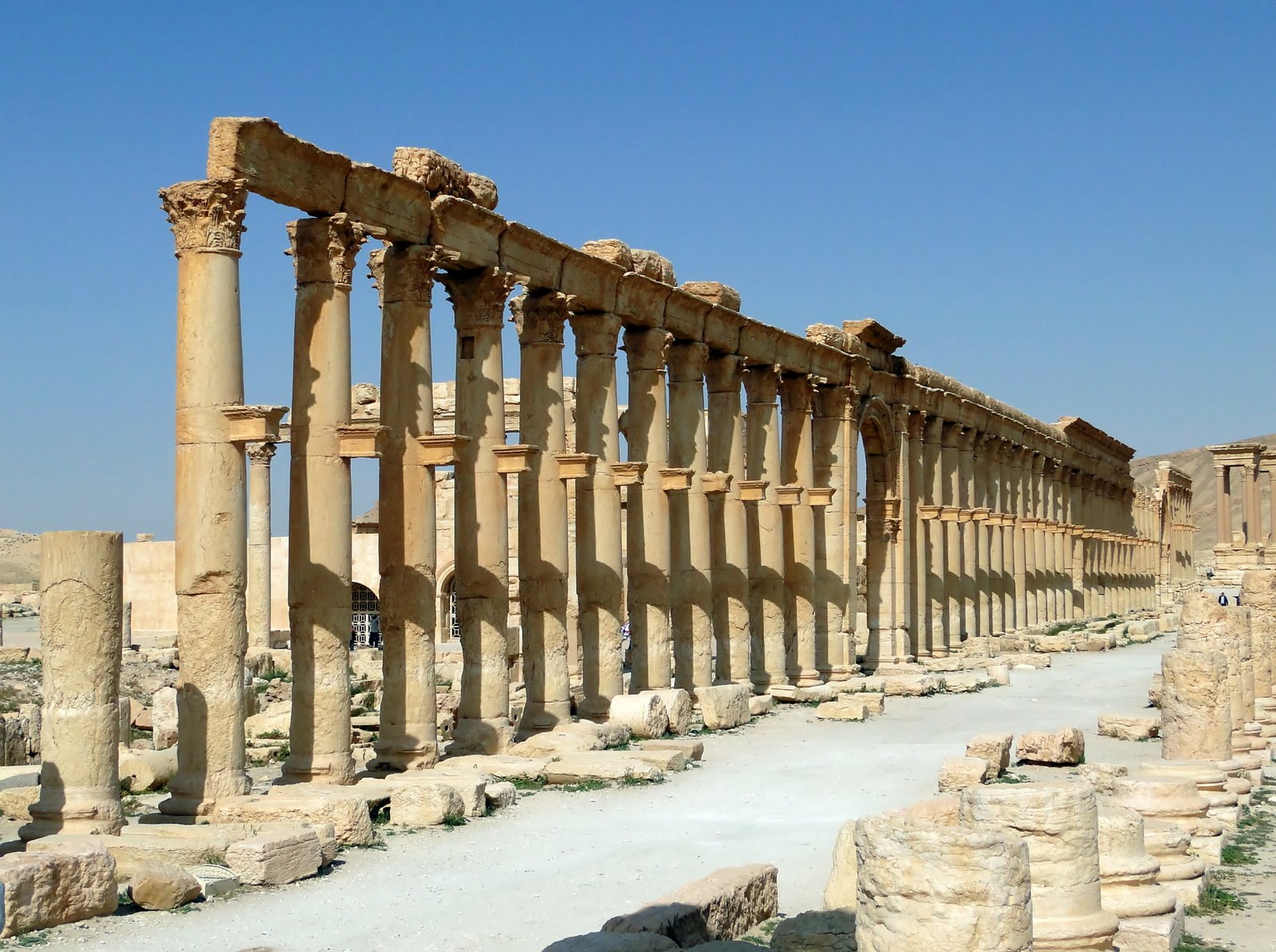
Palmyra (Tadmor)
Site · An oasis city in the Syrian desert, called Tadmor by its own people. Caravan trade made it rich under Rome; its temples, tombs and two-language inscriptions survive, though war damaged them badly in 2015.
-
From 1800 BCE to 1550 BCE
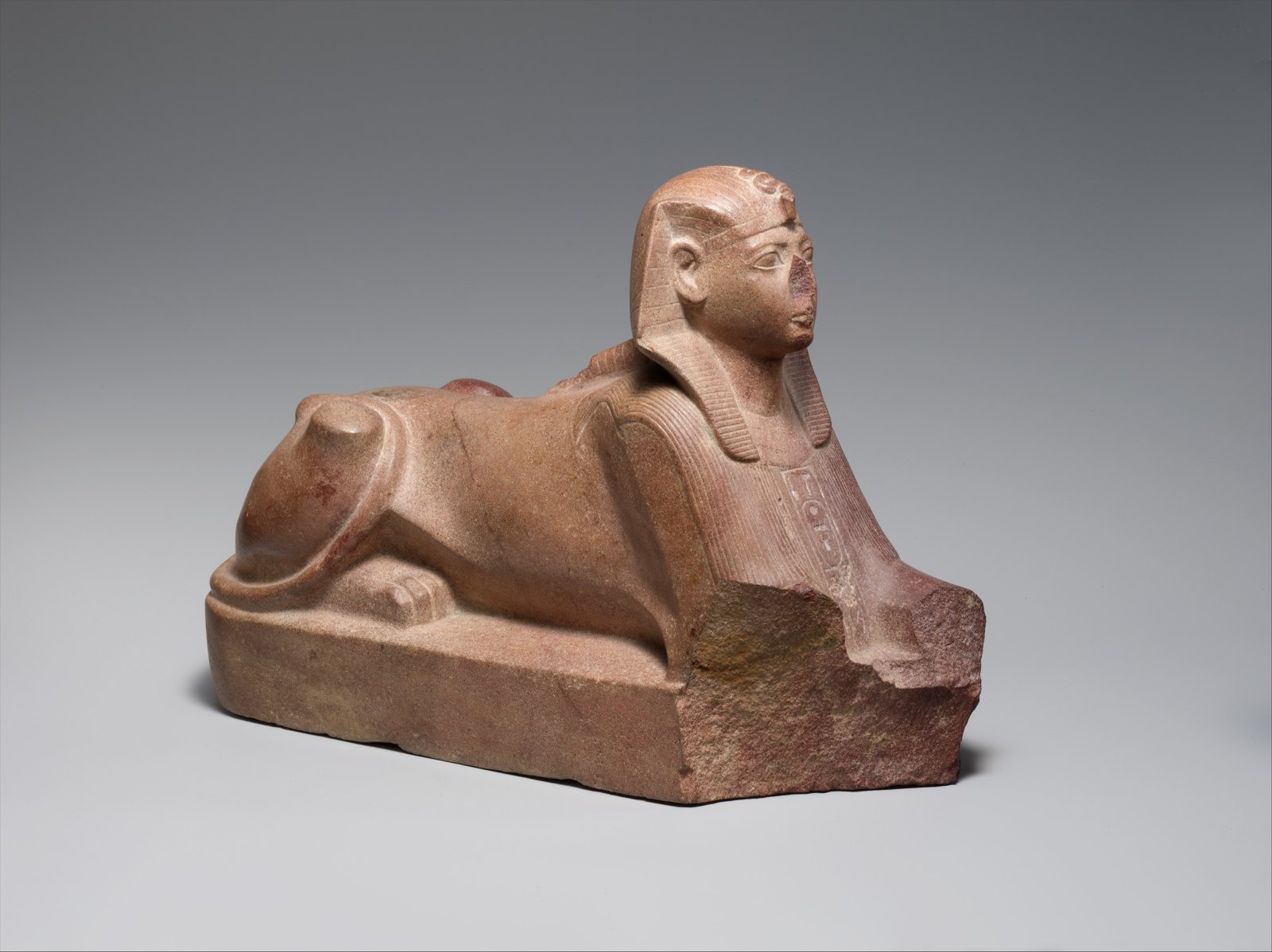
Serabit el-Khadim and Wadi el-Hol: The Earliest Alphabetic Inscriptions
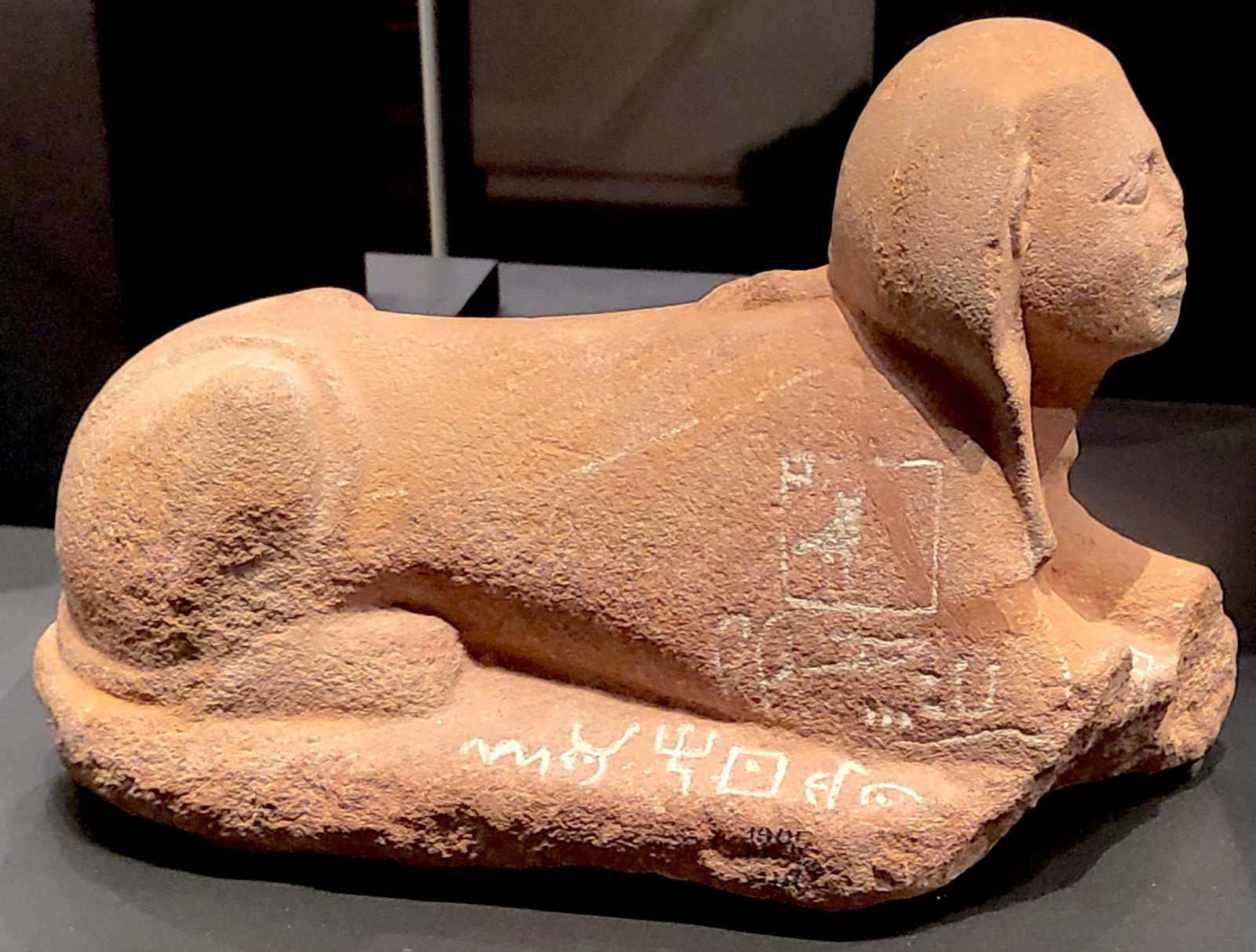
Artifact · A small stone sphinx from a Sinai turquoise-mining site carries what many scholars regard as the oldest consonant-alphabet writing. Where, when and by whom it was made is still debated.
-
From 1800 BCE to 1750 BCE
The Burney Relief ("Queen of the Night"): Who Is the Winged Goddess?
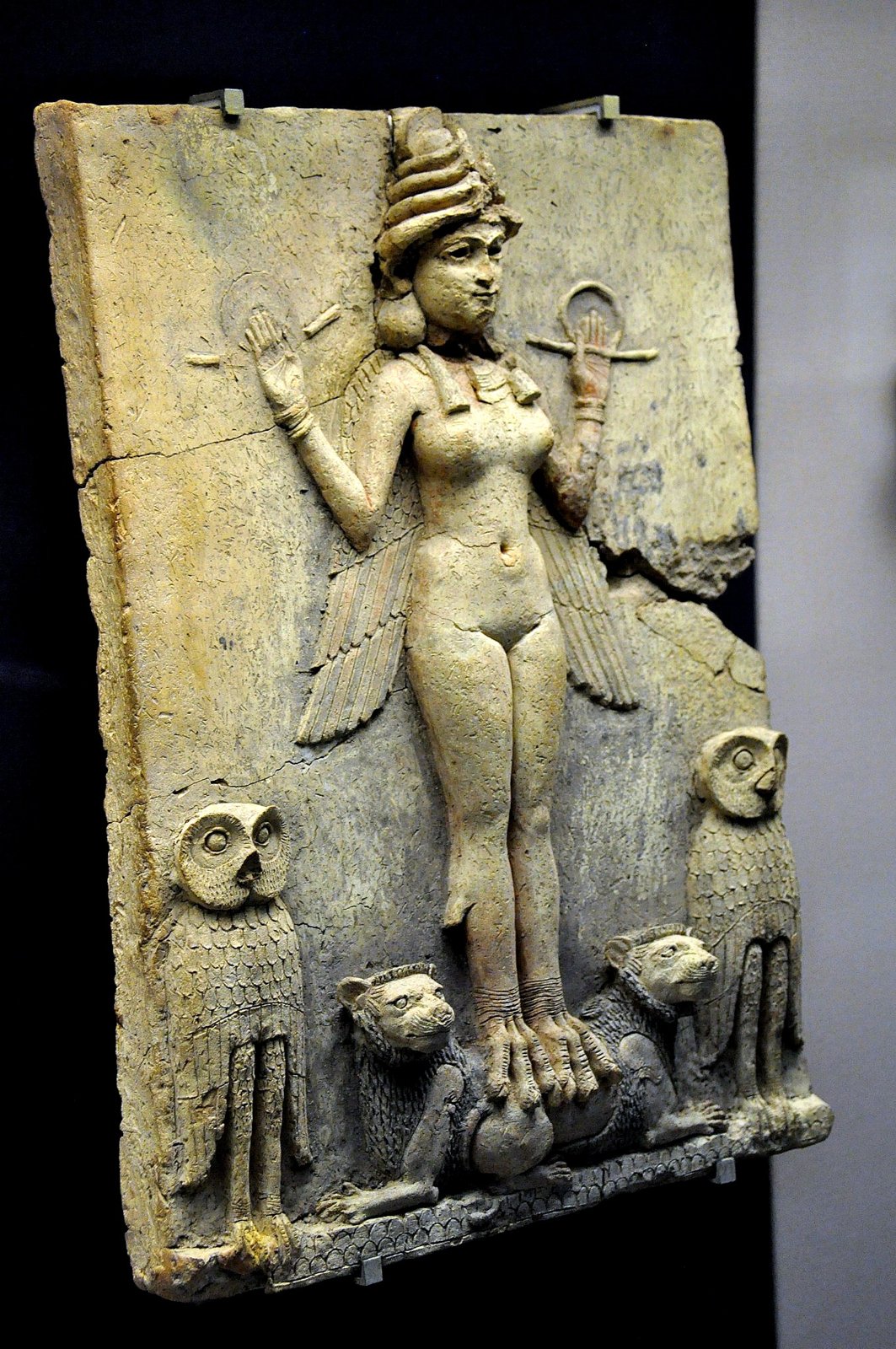
Artifact · A baked-clay plaque shows a winged, bird-footed woman with two owls and two lions. Where it comes from is unknown, and her name is still debated: Ishtar, her sister Ereshkigal, or a demon. What the object shows and what is uncertain.
-
From 1800 BCE to 1701 BCE
The Middle Bronze Age Gate at Tel Dan
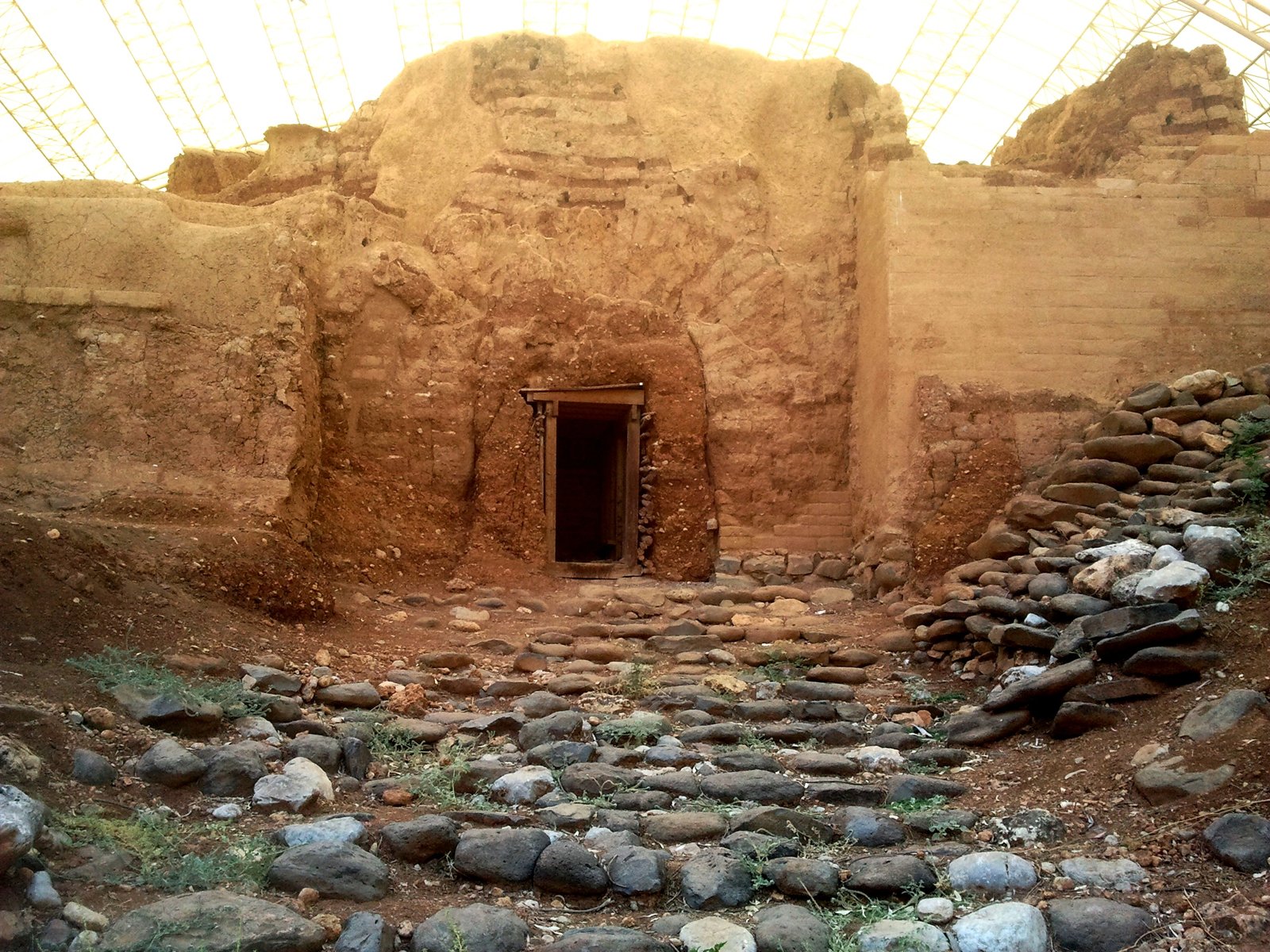
Site · Three mudbrick arches once spanned a single passage into the Canaanite city of Laish. The inhabitants buried the gate within an earthen rampart. The covering protected a rare example of Bronze Age construction.
-
From 1792 BCE to 1750 BCE
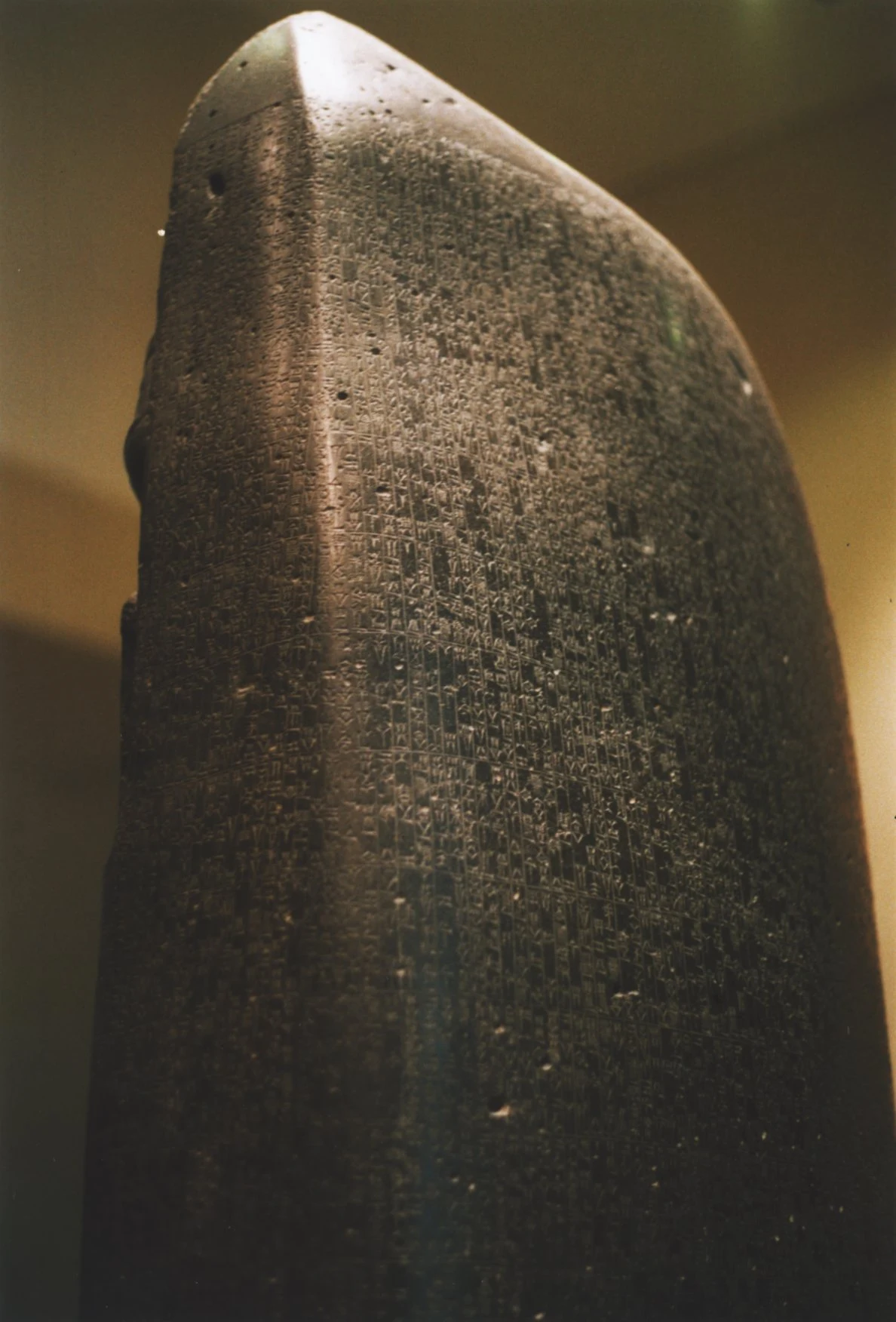
The Code of Hammurabi Stele (Louvre Sb 8): The Object, Its Image and Its Journey to Susa
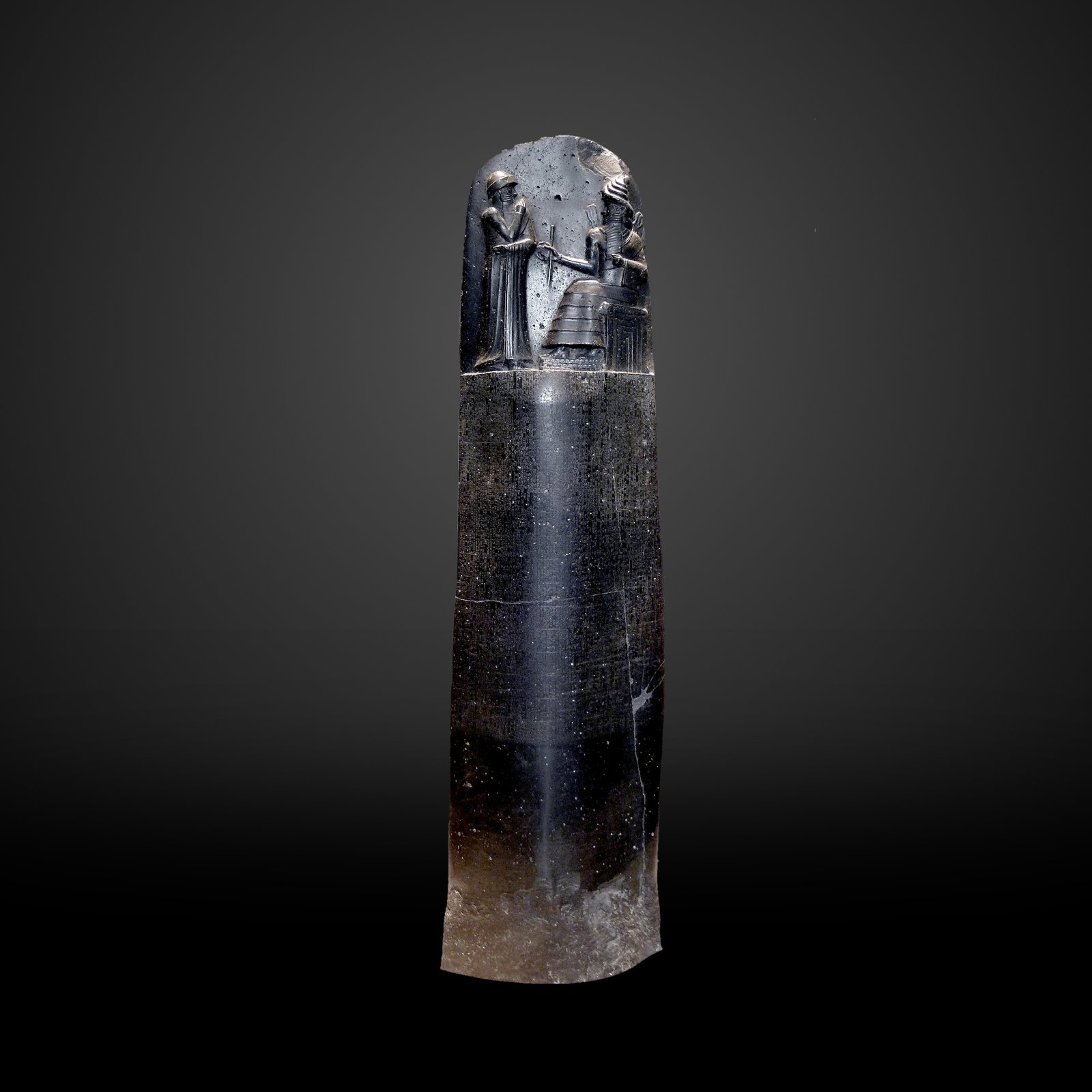
Artifact · A black basalt pillar, 2.25 metres tall, carries a picture of a king before a god and one of the best-known legal texts of the ancient world. What the object is, how it reached Susa, and what scholars still debate.
-
From 1792 BCE to 1595 BCE
Ṣaltu (Saltu): Discord, the Rival Ea Made for Ishtar
Entity · In an Old Babylonian song, the wise god Ea shapes a new goddess called Ṣaltu, "Discord", and sends her to quarrel with Ishtar. Who she is, what the tablets say, and what is still unclear.
-
1750 BCE
Nanni of Ur, a voice in the copper trade
Person · Nanni sent an Akkadian letter to Ea-nāṣir over poor copper, a withheld purse and the treatment of his messengers. His complaint records how one trader sought redress in the Old Babylonian trade with Dilmun.
-
From 1700 BCE to 500 BCE
Debt Release and the Jubilee: From Babylonian Decrees to Biblical Law
Study · Babylonian release decrees compared with seventh-year and jubilee laws: covered groups, calendars, Qumran and rabbinic readings, and arguments for a historical relationship.
-
From 1700 BCE to 1180 BCE
Nerik, the Hittite city of the Storm God
Site · Cuneiform tablets and a monumental temple support the identification of Nerik with Oymaağaç Höyük in northern Türkiye. The cult city appears in Hittite festival texts, including the opening of the Illuyanka story.
-
1650 BCE
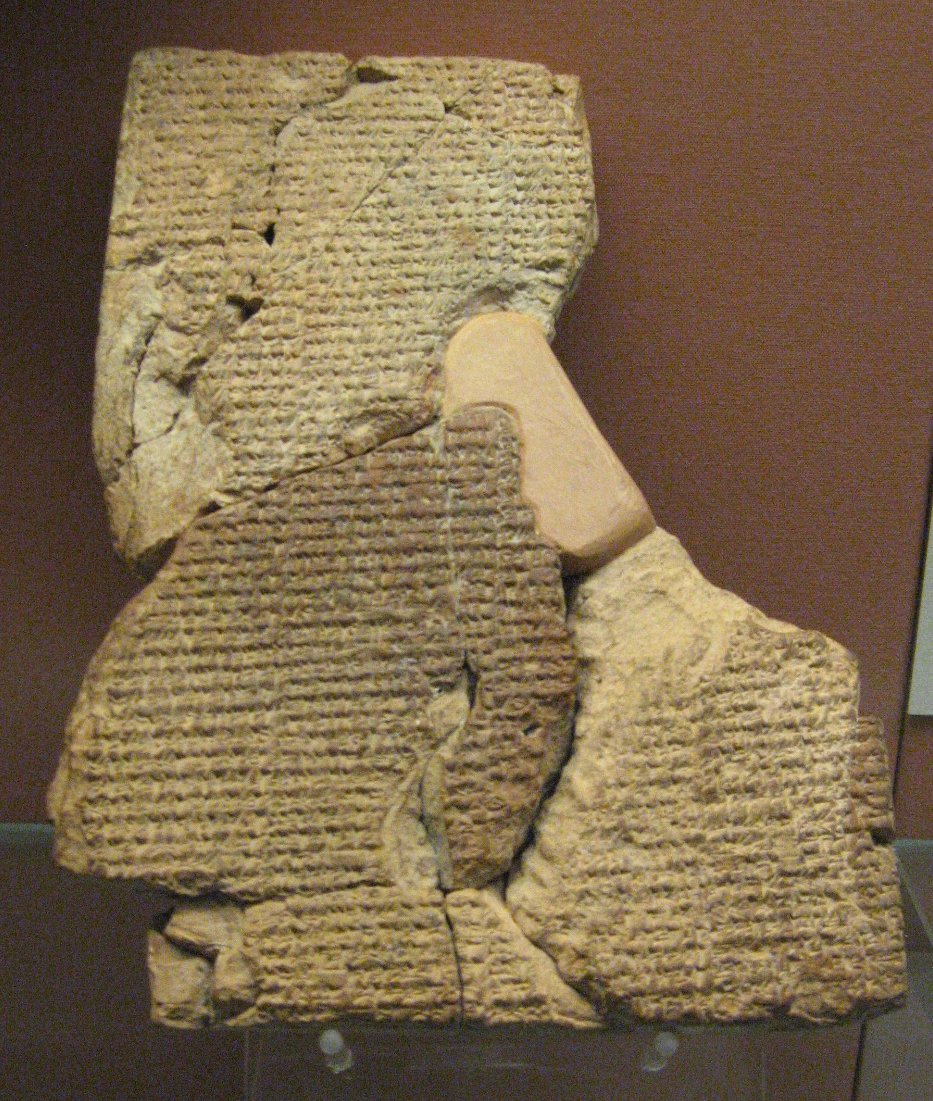
The Sumerian Flood Tablet from Nippur (CBS 10673)
Artifact · Only the lower part of this tablet from Nippur survives. It names five cities, describes a flood that rocks a boat for seven days and nights, and tells what the gods grant the survivor Ziusudra.
-
From 1635 BCE to 1634 BCE
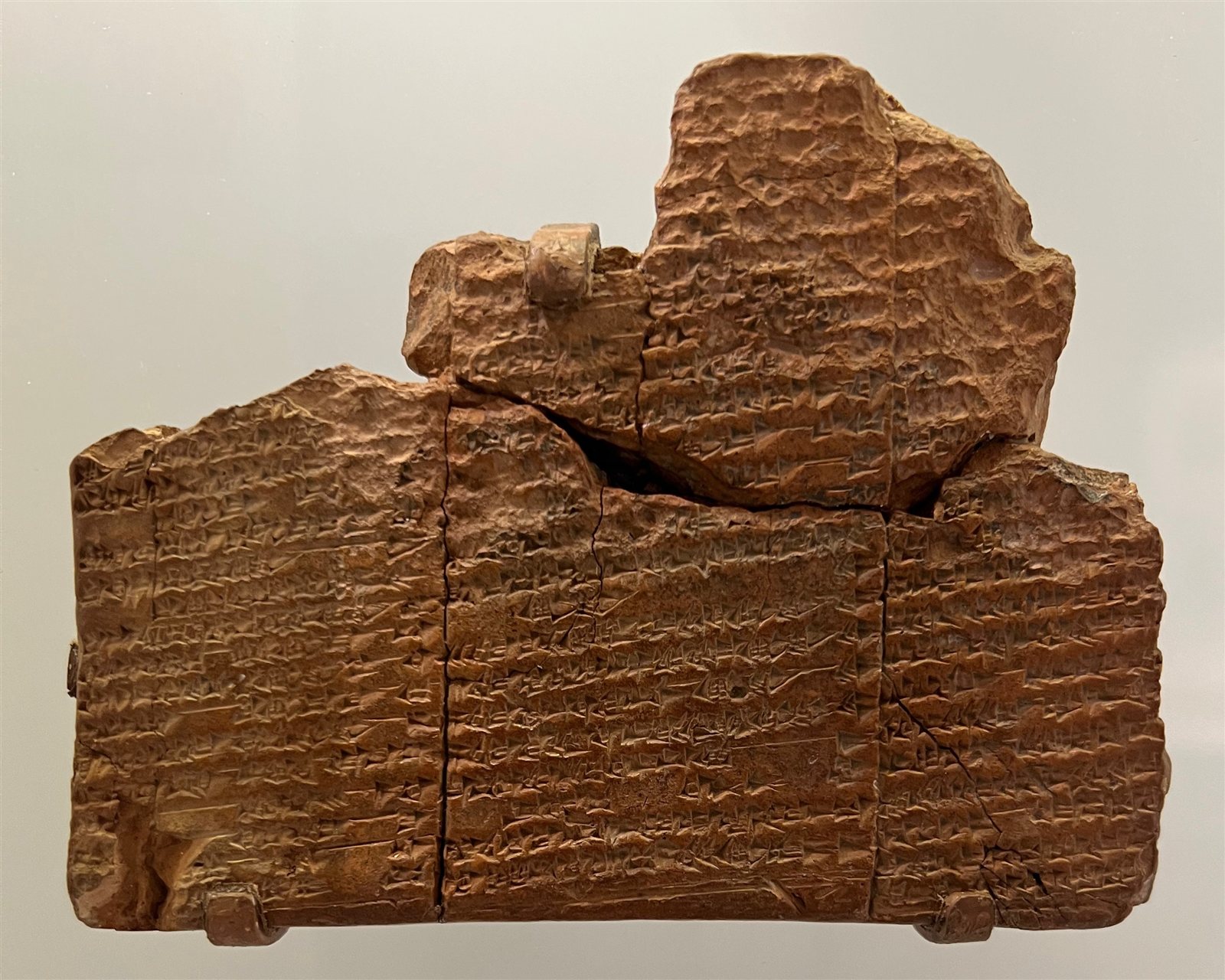
Tablet I of Atrahasis from Sippar (BM 78941 and 78943)
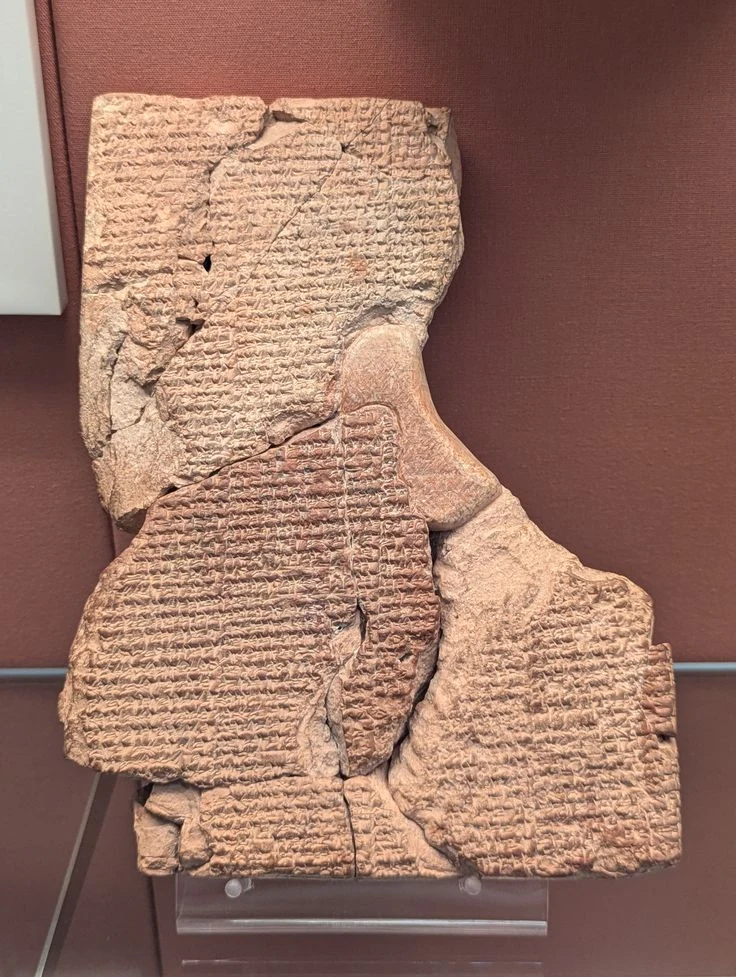
Artifact · On this clay tablet from Sippar, the gods burn their work tools and surround Enlil’s house. A note at the end counts 416 lines and names the scribe who copied this Old Babylonian account of human creation.
-
From 1600 BCE to 1200 BCE
Late Bronze Age
Period · An archaeological period approximately 1600–1200 BCE in much of the Near East, marked by rival kingdoms, Amarna diplomacy, metal exchange and Ugarit’s archives, with uneven regional endings.
-
From 1595 BCE to 1155 BCE
Kassite Babylonia (c. 1595–1155 BCE)
Period · The Kassite kings built a royal city near present-day Baghdad and exchanged letters and gifts with Egypt. Later king lists preserve the names of their earliest rulers, whose rise to power in Babylonia remains unclear.
-
From 1500 BCE to 1250 BCE
Naharin and Mitanni
Site · Egypt's name for the land beyond the Euphrates, ruled in the Late Bronze Age by the kingdom of Mitanni, which its neighbours also called Hurri or Hanigalbat.
-
From 1500 BCE to 1150 BCE
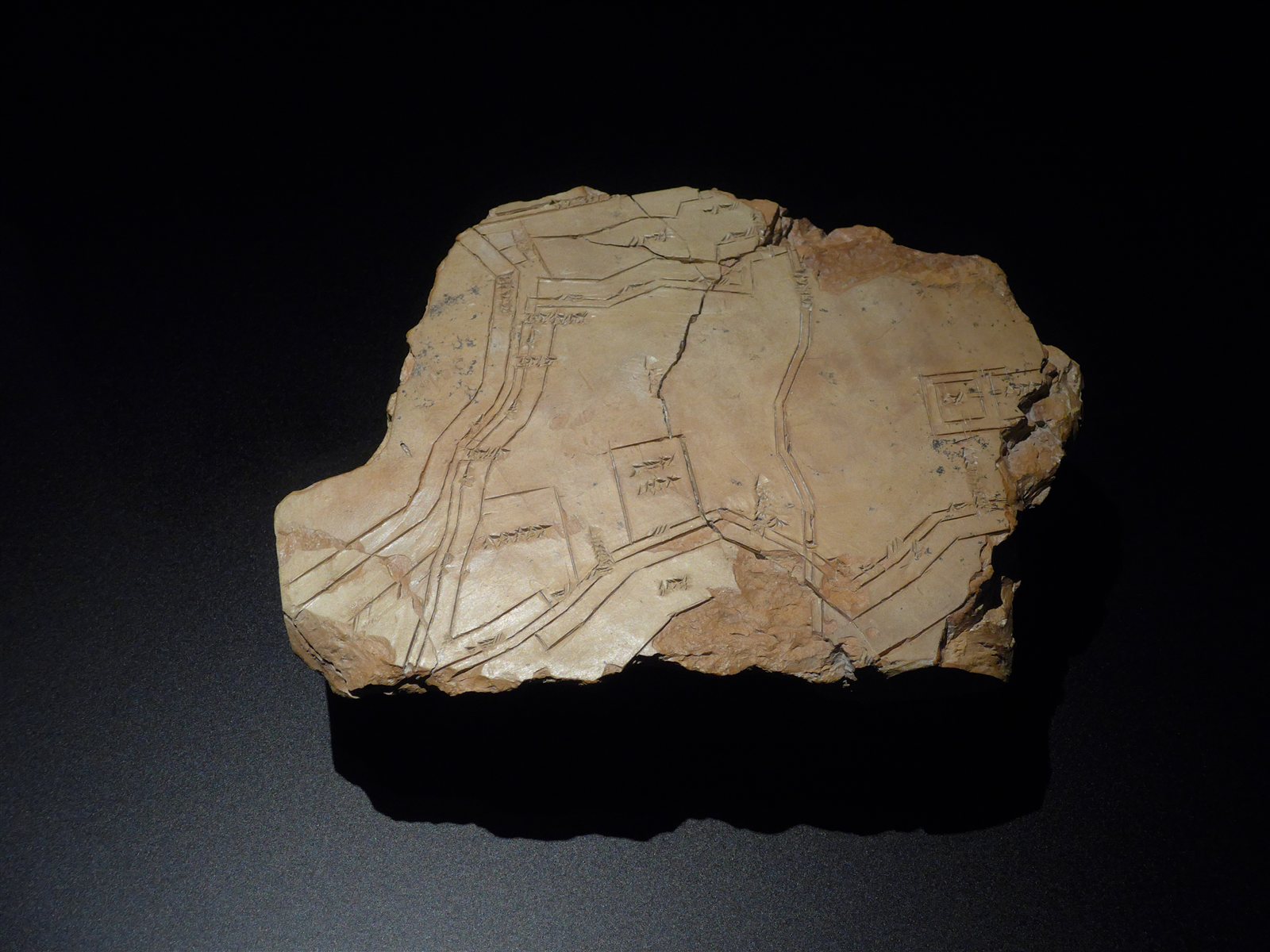
The Clay City Plan of Nippur (Jena HS 197)
Artifact · A clay tablet preserves the walls, waterways and temple precinct of ancient Nippur. Its labels still help excavators compare the city drawn in the second millennium BCE with the remains in the ground.
-
From 1500 BCE to 1330 BCE
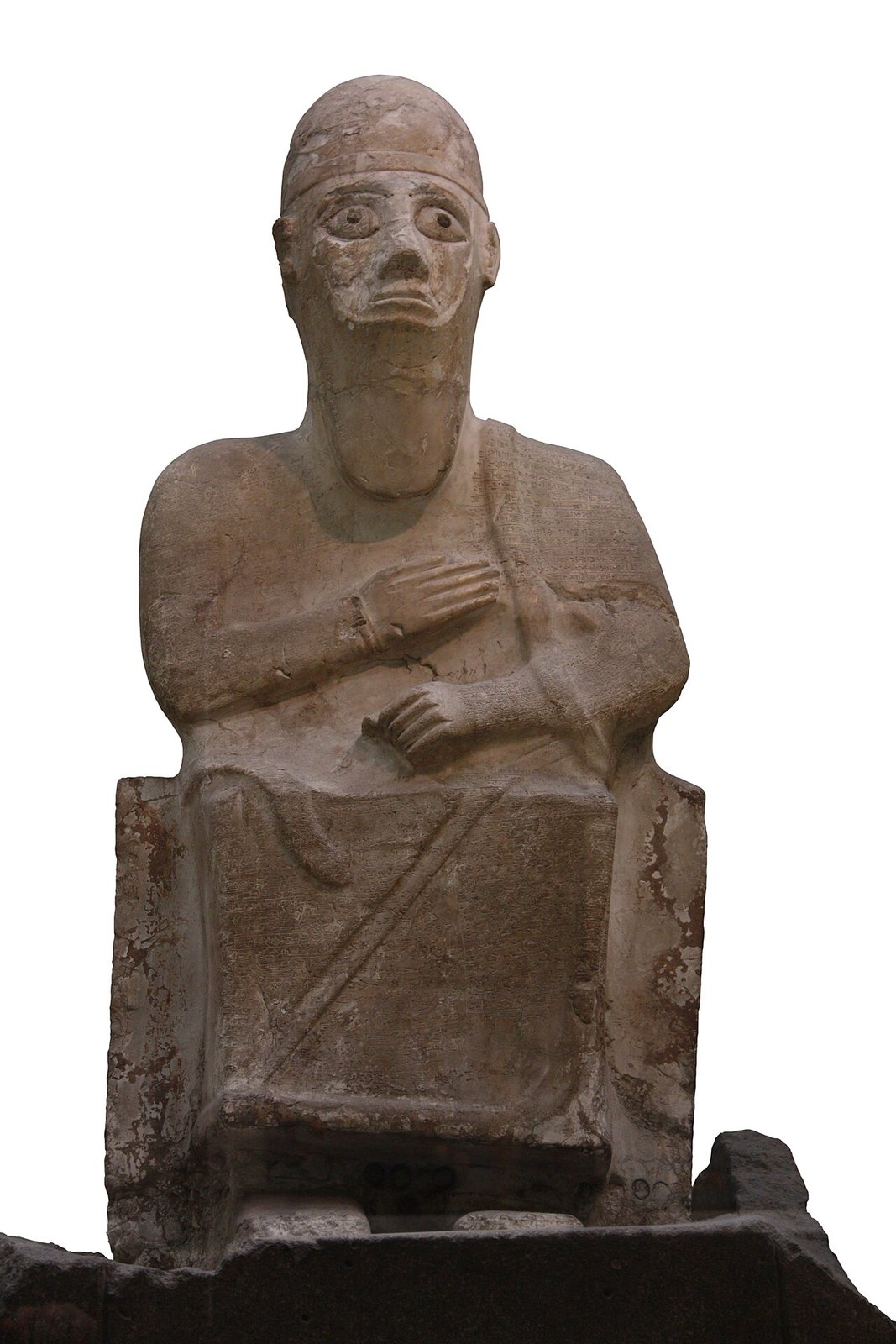
The Statue of Idrimi (British Museum 1939,0613.101)
Artifact · A seated white stone king from Alalakh, his body covered in cuneiform. Found buried in a pit in 1939, the statue raises open questions: who carved it, when the text was added, and who buried it.
-
From 1500 BCE to 1300 BCE
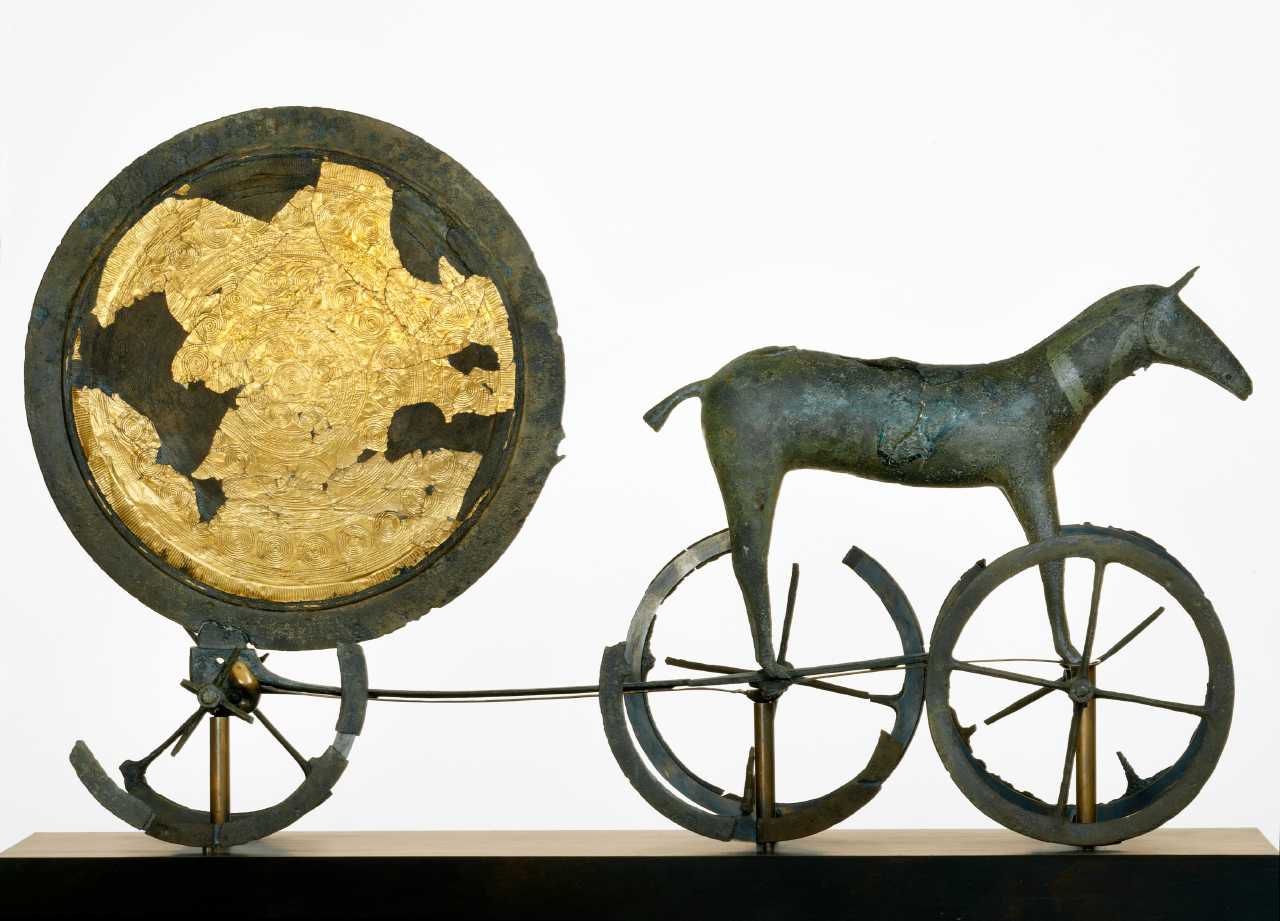
The Trundholm Sun Chariot B7703: Movement and the Limits of Reconstructing Belief
Artifact · A gilded bronze model from the Nordic Early Bronze Age, found in 1902; the entry separates its size and making from readings of its two-sided disc and solar movement, without assuming a ritual or a named deity.
-
From 1485 BCE to 1425 BCE
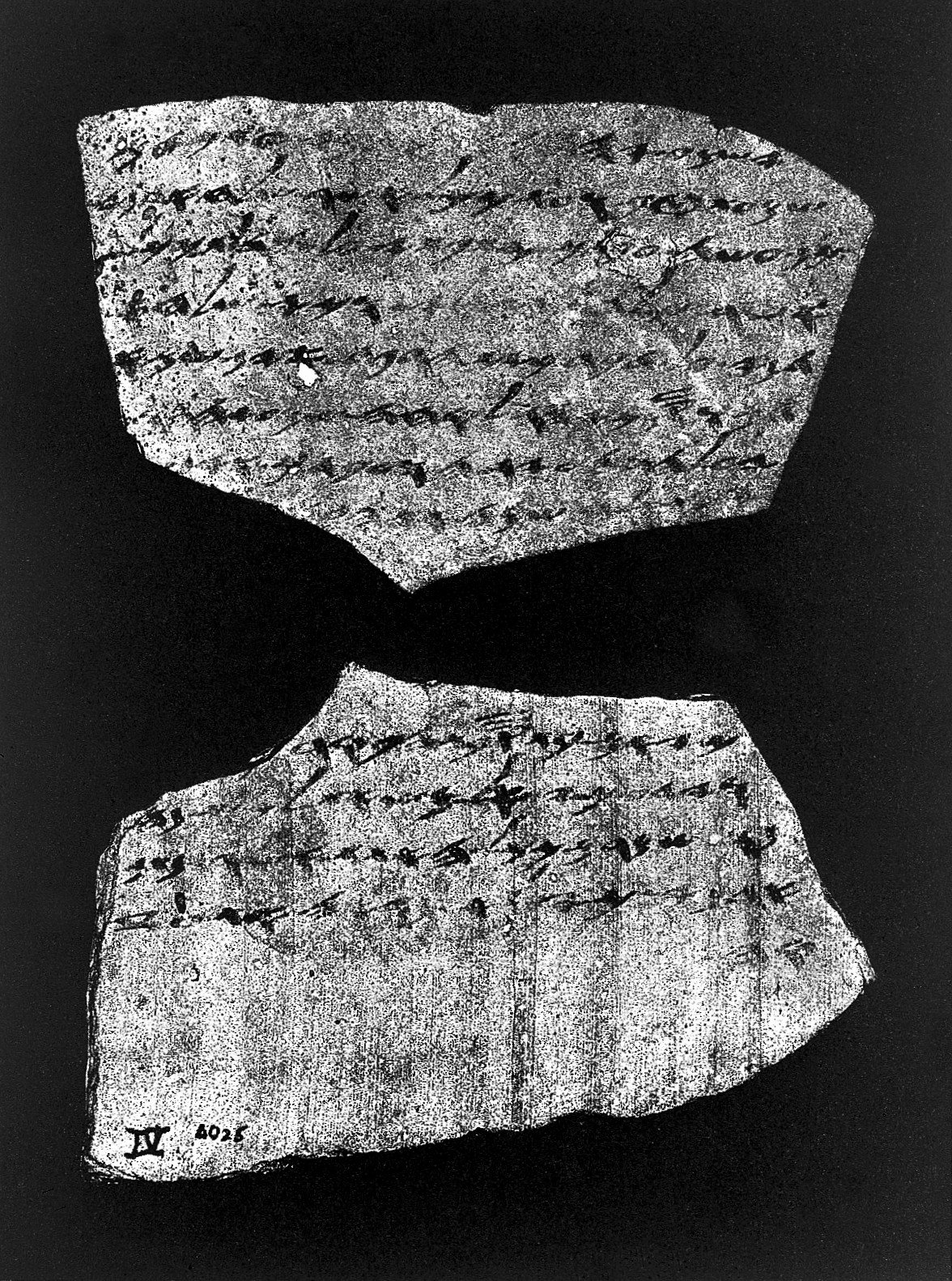
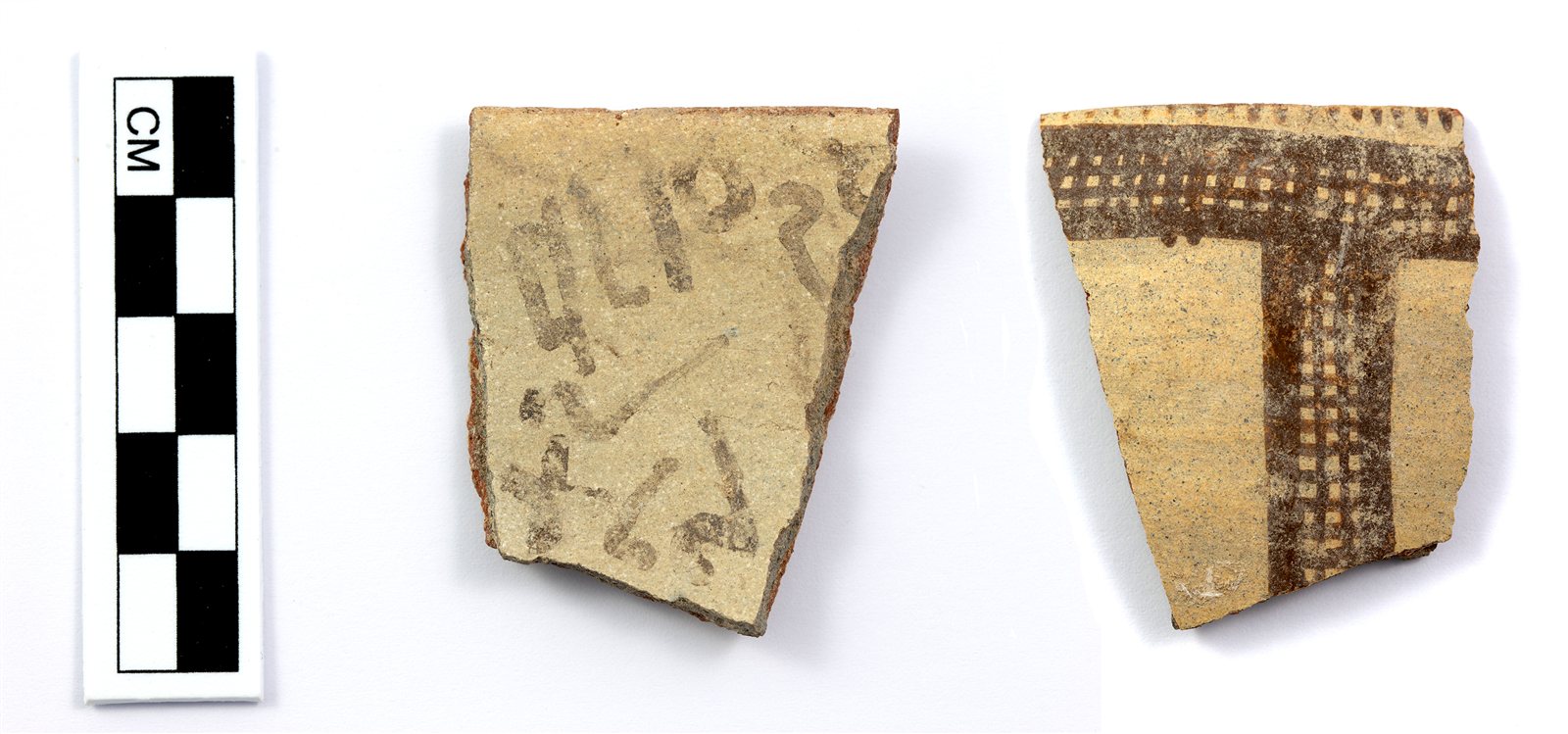
The Early Alphabetic Potsherd from Lachish
Artifact · A few ink letters survive on the rim of a bowl found at Lachish. Charred barley from beside the sherd helps date its burial to the mid-15th century BCE, even though the words themselves remain uncertain.
-
From 1479 BCE to 1425 BCE
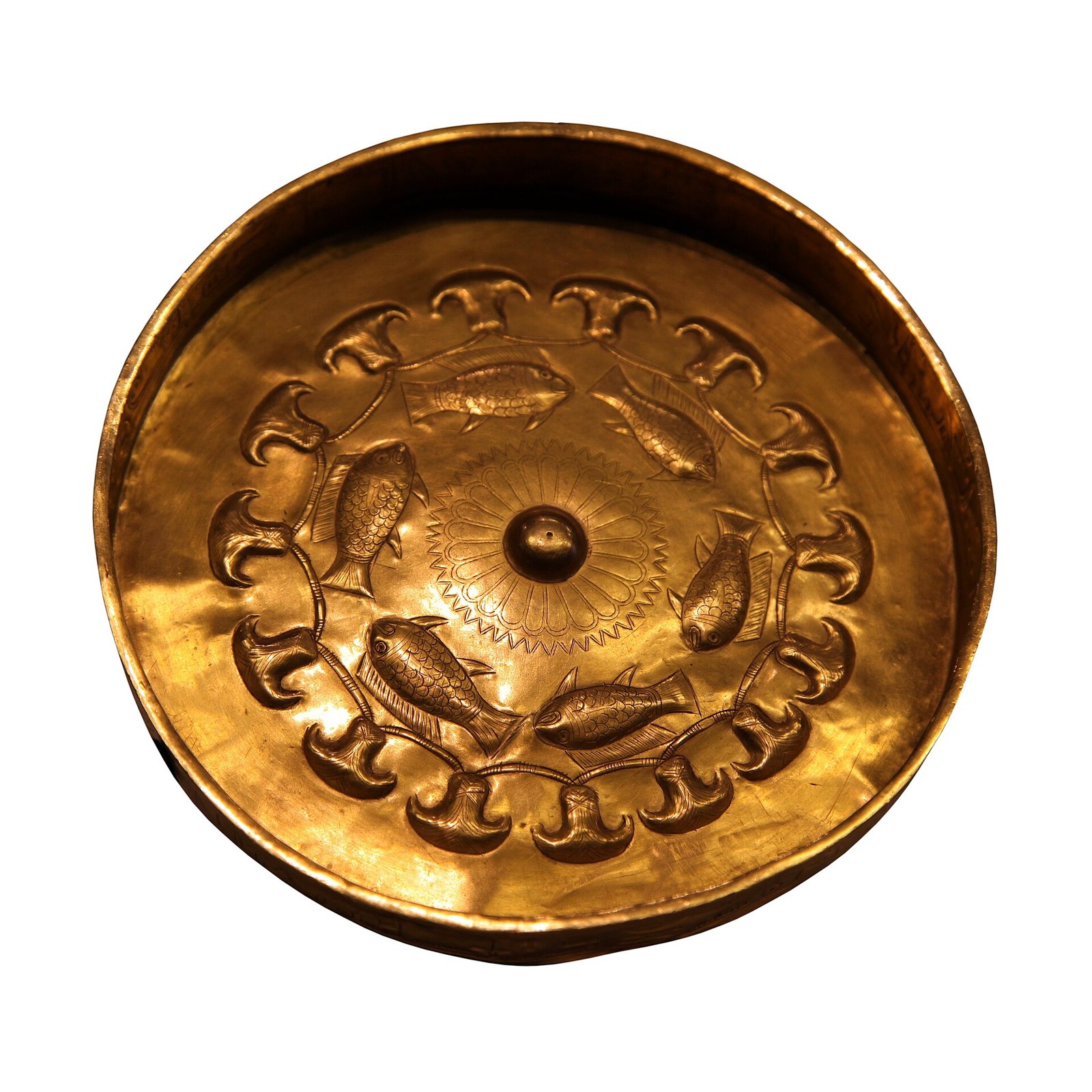
Djehuty and the Taking of Joppa
Person · An Egyptian general of Thutmose III, known from a gold bowl and other objects, and the hero of a later tale in which soldiers hidden in baskets capture the port of Joppa.
-
From 1479 BCE to 1425 BCE
Thutmose III
Person · An Egyptian king of the Eighteenth Dynasty, about 1479–1425 BCE. He shared the throne with Hatshepsut, then led some seventeen campaigns into the Levant, recorded in his Annals at Karnak.
-
From 1475 BCE to 1450 BCE
Idrimi of Alalakh
Person · A king of Alalakh in the fifteenth century BCE. Clay tablets confirm his rule, while a statue tells his story of exile, return and an oath to a Hurrian overlord, perhaps written decades after his death.
-
From 1475 BCE to 1425 BCE
Parattarna
Person · The first king of Mittani known from documents of his own time. He appears almost only through his vassal Idrimi of Alalakh, whose throne he confirmed with an oath in the fifteenth century BCE.
-
From 1473 BCE to 1458 BCE
Hatshepsut
Person · An Egyptian queen of the Eighteenth Dynasty who ruled as king, about 1473–1458 BCE. Her temple at Deir el-Bahari, her statues and the Punt reliefs show how she presented her rule.
-
From 1400 BCE to 1200 BCE
Anat
Entity · Anat in evidence from Mari, Ugarit and Egypt: warrior, Baal’s ally, mourner, petitioner and Aqhat’s adversary. Narrative, cult, epithets and the palace speech are examined separately, with the limits of visual identification.
-
From 1400 BCE to 1200 BCE
Athirat
Entity · A prominent goddess commonly understood as El’s consort in Ugaritic texts; she bears the progenitress epithet and intercedes for Baal’s palace.
-
From 1400 BCE to 1200 BCE
Baal
Entity · Baal (Baʿlu/Haddu), storm god and warrior king in Ugarit’s texts, fights Yamm and Mot and gains El’s permission to build his palace. The Louvre stela AO 15775 is an independent visual witness, not proof he overthrew El.
-
From 1400 BCE to 1200 BCE
Baal Cycle
Entity · A group of Late Bronze Age Ugaritic religious texts recounting Baal’s conflicts, relationships with the gods and the building of his palace.
-
From 1400 BCE to 1200 BCE
Baal and Yam on a Tablet from Ugarit (Louvre AO 16640)
Artifact · A clay fragment from Ugarit preserves part of the struggle between Baal and Yam. The poem moves from a demand for Baal’s surrender before the assembly of the gods to a battle in which the craftsman Kothar names two weapons.
-
From 1400 BCE to 700 BCE
Balaam, Seer of the Gods: A Plaster Wall, a Council of Gods and the Book of Numbers
Study · A seer named Balaam son of Beor appears on an inked plaster wall from Deir ʿAlla and in the Book of Numbers. What each witness says, how councils of gods were pictured at Ugarit, and where the names El and Shaddai enter.
-
From 1400 BCE to 500 BCE
Covenant and imperial treaties: how did loyalty to a king become language for a relationship with YHWH?
Study · How did Deuteronomy rework treaty, loyalty and curse language? Hittite witnesses and Esarhaddon’s oath compared through chronology, arguments for influence and possible transmission.
-
From 1400 BCE to 1200 BCE
Shasu
Entity · Shasu was an Egyptian term for mobile pastoral groups of the Late Bronze Age. Y-h-w occurs in the Soleb and Amarah West lists linked to them, but the name’s location, relation to Yahweh and their worship are contested.
-
From 1400 BCE to 1200 BCE
Six Days, Then the Seventh: The Seven-Day Pattern in Ugaritic Epic
Study · Three Ugaritic epics count six days and let the decisive event fall on the seventh. A reading of the pattern in the Baal, Kirta and Aqhat poems, and of how far it can be compared with other sevens.
-
From 1400 BCE to 1200 BCE
Tablet Six of the Baal Cycle (Louvre AO 16636)
Artifact · The last tablet of the Baal Cycle preserves the return of Baal and the dream in which El sees a sign that he is alive. At the end of the poem, a few lines name the scribe Ilimilku and his teacher.
-
From 1400 BCE to 1100 BCE
The Dagan Stele from Ugarit (Louvre AO 19931)
Artifact · Three lines on a limestone stele name Dagan, the woman who made the dedication and a bull for a meal. A second stele found near the same sanctuary helps explain what the offering meant and why the building’s name is still debated.
-
From 1400 BCE to 1200 BCE
The Ras Shamra Abecedary: A Cuneiform Alphabet in Order (Louvre AO 19992)
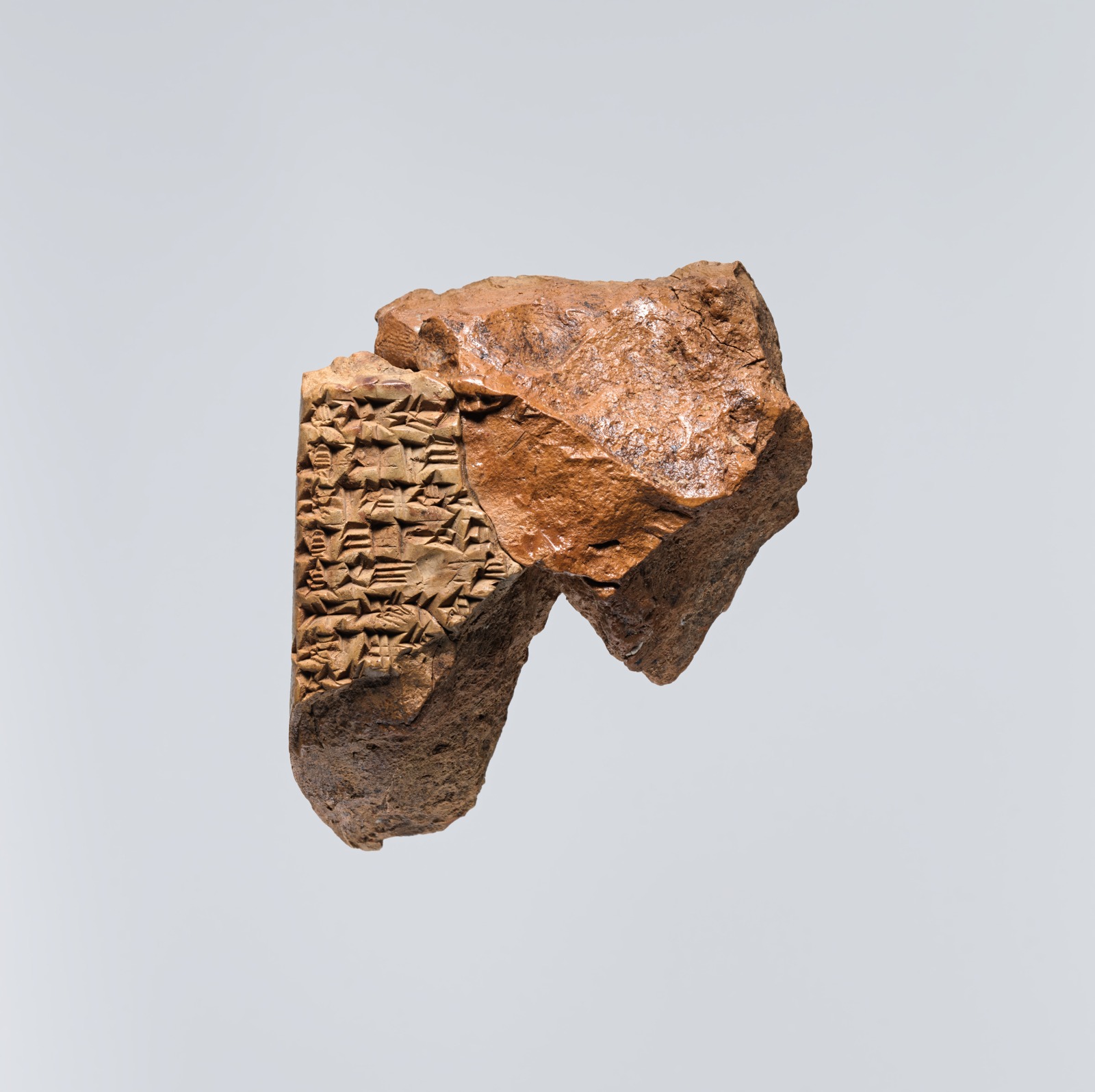
Artifact · A small clay fragment from Ugarit lists the letters of the Ugaritic alphabet in a fixed order, the oldest kind of "ABC" we can hold in our hands. What the tablet is, how it was found, and what it can and cannot tell us.
-
From 1390 BCE to 1353 BCE
Amenhotep III
Person · Amenhotep III built temples and a palace city during Egypt's Eighteenth Dynasty. Letters preserved at Amarna record exchanges and marriage alliances with other royal courts.
-
From 1344 BCE to 1322 BCE
Suppiluliuma I
Person · Hittite king of the fourteenth century BCE who broke the power of Mitanni and brought northern Syria under Hatti. Treaties, letters and his son's prayers tell his story.
-
From 1336 BCE to 1324 BCE
Zannanza
Person · A Hittite prince, son of Suppiluliuma I, sent in the late fourteenth century BCE to marry a widowed queen of Egypt. Hittite texts report that he was killed on the way.
-
From 1300 BCE to 1190 BCE
El’s Banquet at Ugarit (RS 24.258)
Ancient text · An Ugaritic clay tablet tells how El hosted a feast, drank until he collapsed and came to his senses again. On the damaged tablet from Ras Shamra, a line in the clay separates the story of the gods from a short remedy.
-
1300 BCE
Sabbath and Šapattu: Similar Names, Different Calendars
Study · Lunar šapattu and weekly Sabbath: names, dates, rest laws and inscriptions, with arguments for Mesopotamian influence and Israelite origins.
-
From 1300 BCE to 1200 BCE
Shabti of Sherinefer: Answering the Call to Work in the Afterlife
Artifact · A Dynasty 19 shabti, ca. 1300–1200 BCE, combining Sherinefer’s festive clothing, agricultural implements and a Spell 6 inscription asking the figure to work in the owner’s place after death.
-
From 1300 BCE to 1046 BCE
Shang Oracle Bones: Charges, Cracks, and the Recording of Outcomes
Study · A critical study of Shang court bone divination, separating the preparation of heat cracks from framing the charge, its interpretation and recording the outcome, with published warfare extracts and the white-foal case.
-
From 1300 BCE to 1200 BCE
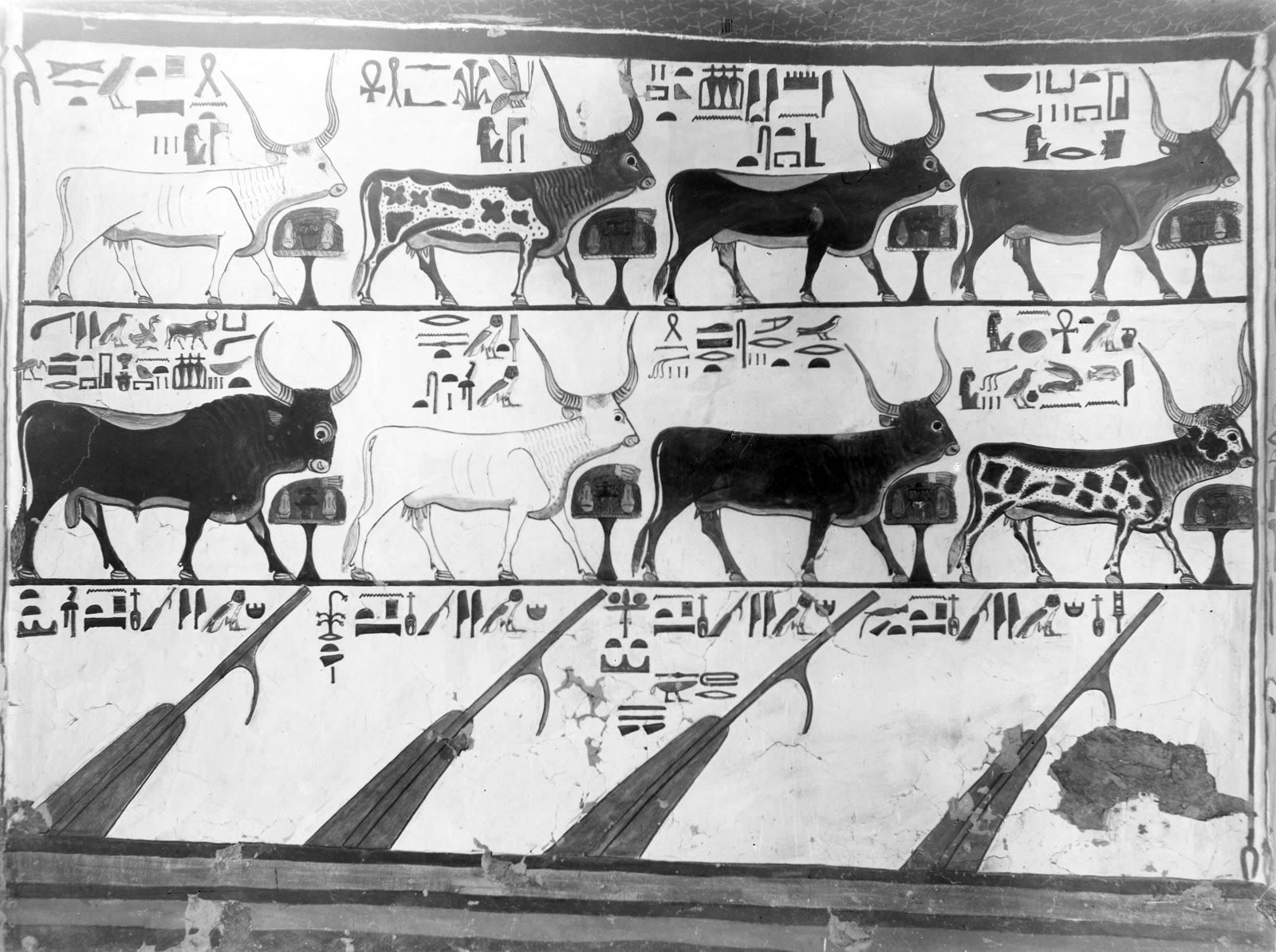
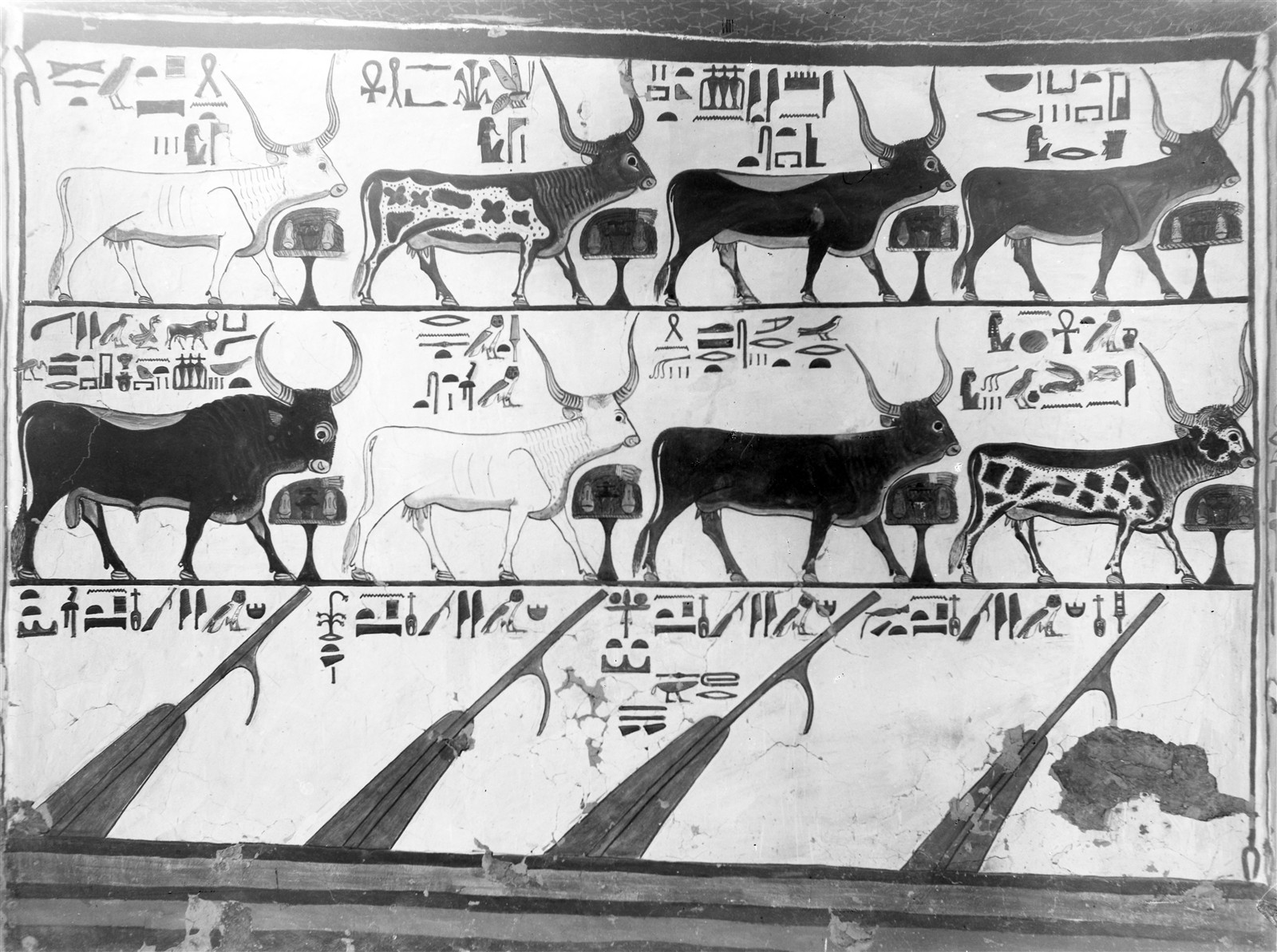
The Seven Hathors and Other Sevens in Ancient Egypt
Entity · The Seven Hathors who announce a person's fate, and the seven cows and a bull of Book of the Dead spell 148: what the papyri and Nefertari's tomb actually say about seven in Egypt.
-
From 1300 BCE to 1150 BCE
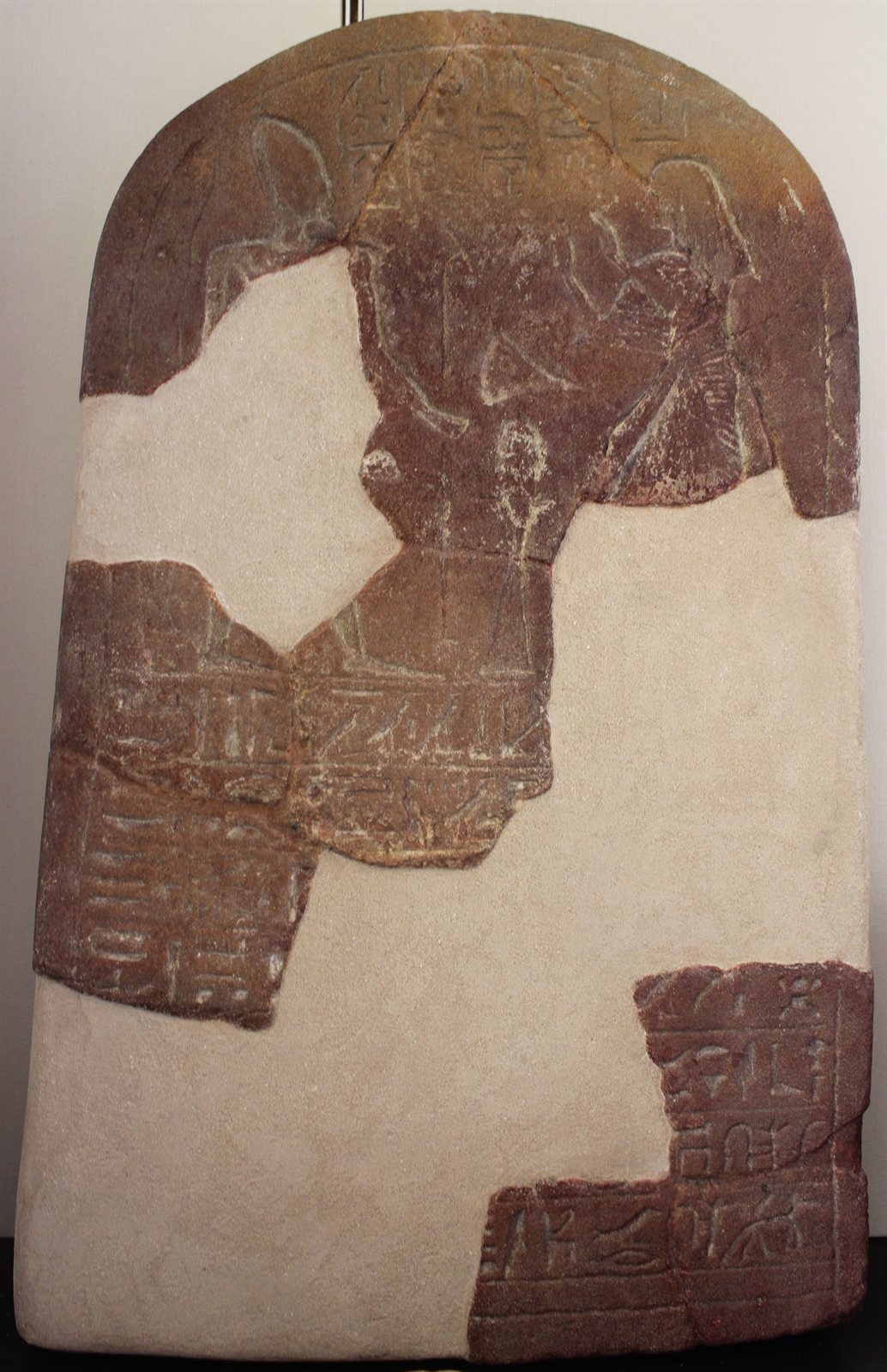
The Stele of Mamy from Ugarit (Louvre AO 13176)
Artifact · An Egyptian hieroglyphic inscription identifies the god who faces a royal scribe on this sandstone stele. The fragments from Ugarit preserve a dedication to Baal of Mount Saphon and clues to how Egyptian scribes wrote his name.
-
From 1300 BCE to 1190 BCE
The Ugaritic Text Associated with Dream Omens (RS 18.041)
Ancient text · A damaged text from the royal palace at Ugarit lists animals and other details in short entries. Its opening may refer to dreams, but the surviving lines leave the purpose of the list open to debate.
-
From 1279 BCE to 1213 BCE
The Tomb of Nefertari in the Valley of the Queens (QV 66)
Site · Cut into limestone near Thebes for a queen of Ramesses II, QV 66 preserves painted funerary spells across its chambers. A broken sarcophagus lid, early photographs and conservation records help document the burial and what survives.
-
1250 BCE
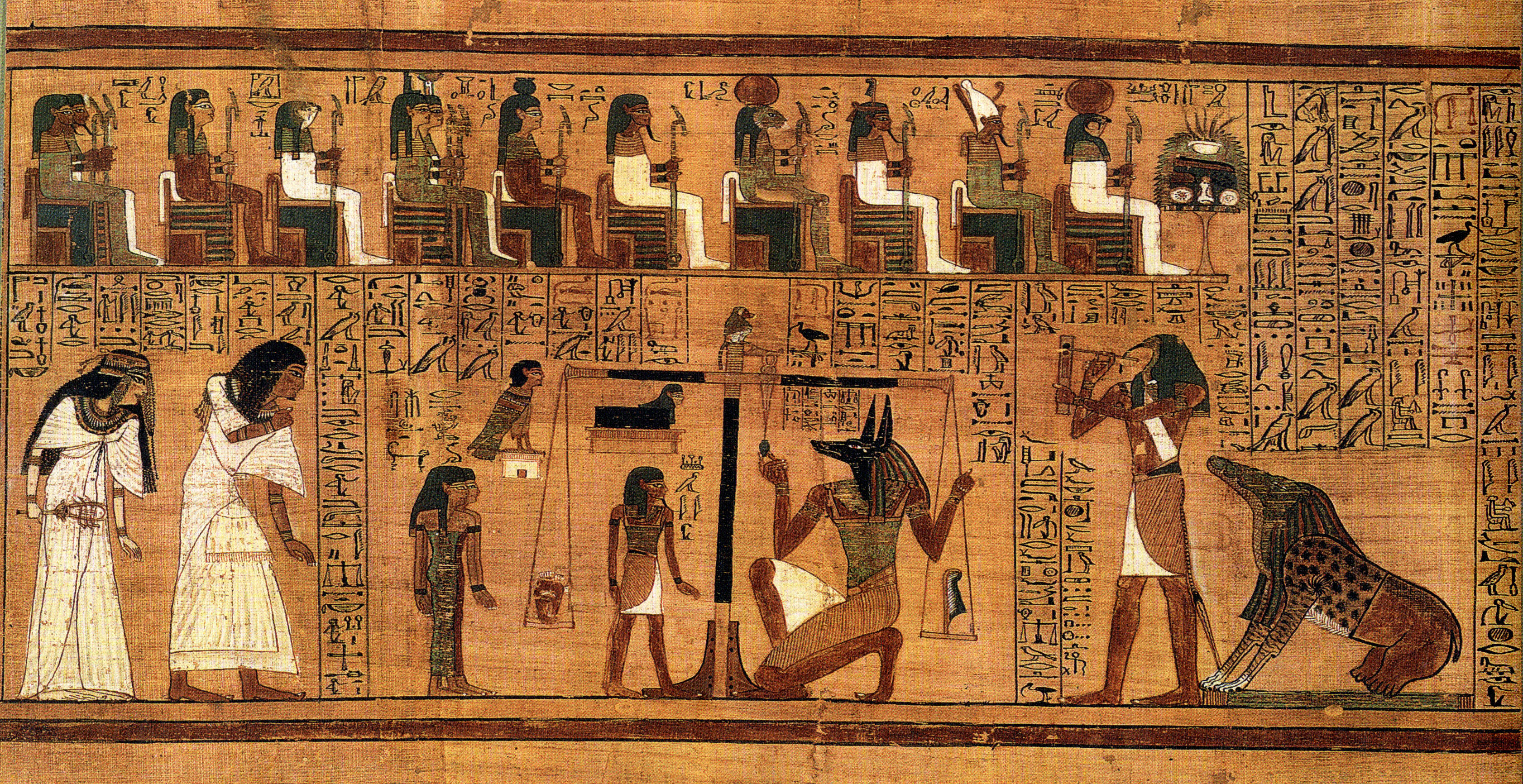
The Papyrus of Ani, Frame 3: Heart, Text, and Image
Artifact · Frame 3 of the Papyrus of Ani in the British Museum, circa 1250 BCE, where Spell 30B addresses the heart beside the judgment balance, Thoth’s declaration and the acceptance of the divine assembly.
-
From 1210 BCE to 1205 BCE
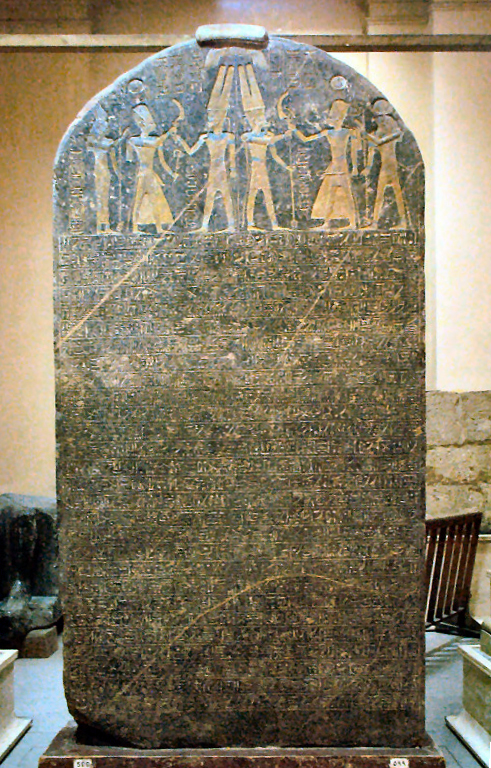
Merneptah Stele
Artifact · The Merneptah Stele, or “Israel Stele,” is an Egyptian victory inscription from Merneptah’s fifth year, around 1208 BCE. The entry examines reading Israel as a group and the limits of inferring its territory or religion.
-
From 1200 BCE to 500 BCE
Genesis and Enuma Elish: creation, parallels, and the limits of borrowing
Study · Waters, naming, celestial bodies, humanity and rest: how converging features inform the relationship between two creation accounts and their different meanings of authority, work and sacred time.
-
From 1200 BCE to 500 BCE
Proverbs and Amenemope: when the sages’ counsel converges
Study · Amenemope and Proverbs compared through dated witnesses, distinctive shared images, the disputed “thirty,” and evidence for transmitting and reshaping wisdom.
-
From 1200 BCE to 586 BCE
The Iron Age in the Levant (c. 1200–586 BCE)
Period · After the Bronze Age crisis, city-states and kingdoms took shape across the Levant. Inscriptions record their dealings with Egypt, Assyria and Babylon. Pottery and radiocarbon dates illuminate the disputed beginnings of Israel and Judah.
-
From 1186 BCE to 1172 BCE
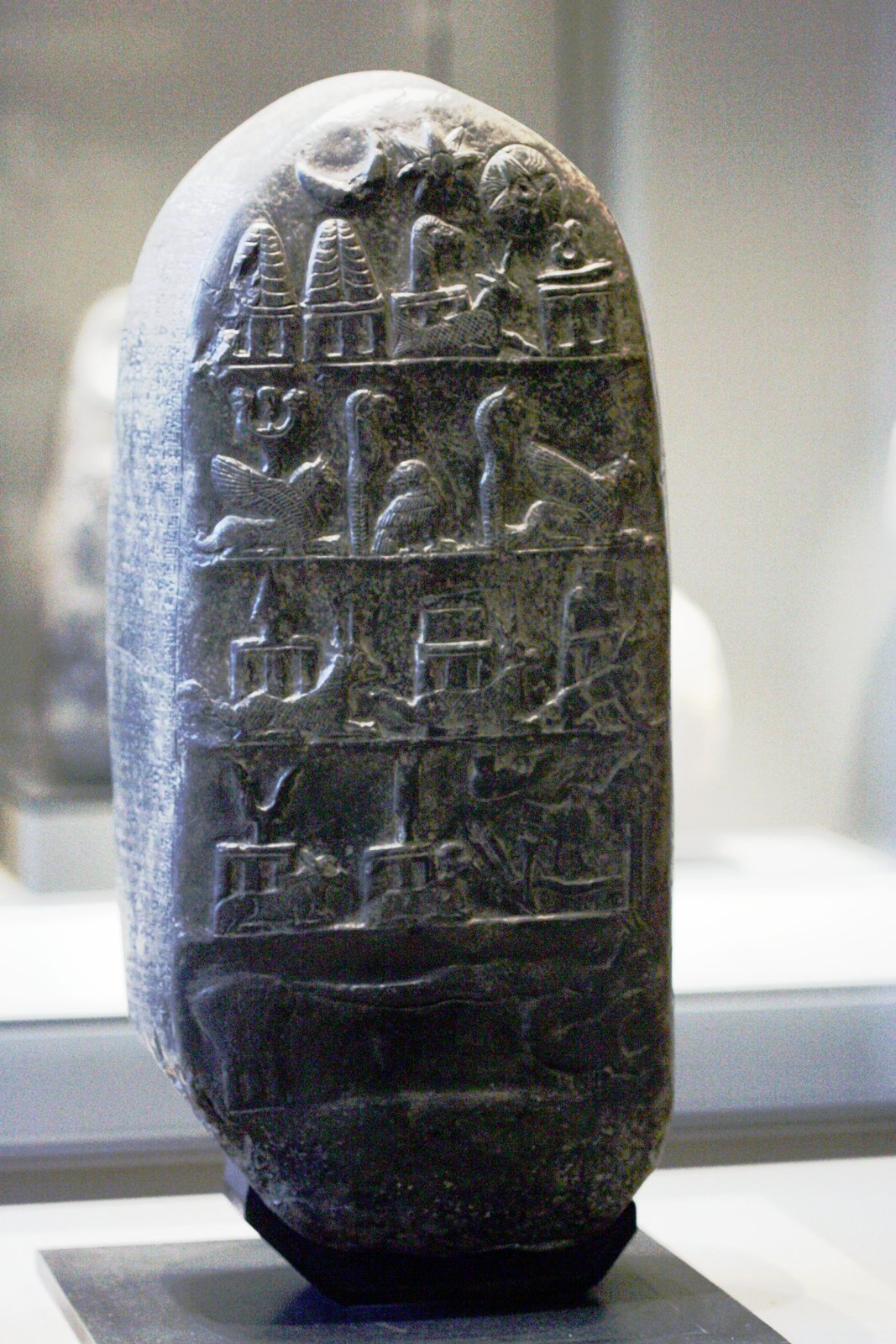
Meli-Shipak’s Land Grant to Marduk-apla-iddina (Louvre Sb 22)
Artifact · A Kassite king recorded a gift of farmland to his son on a limestone monument. Its cuneiform names canals, exemptions and the officials bound by the grant. Carved emblems invoke the protection of the gods.
-
From 1186 BCE to 1172 BCE
The Land Grant to Hunnubat-Nanaya (Louvre SB 23)
Artifact · A Kassite king granted his daughter irrigated land and three villages protected by exemptions. On the limestone monument, he leads her before Nanaya, the goddess named in the inscription and in the princess’s own name.
-
From 1125 BCE to 1104 BCE
The Charter of Šitti-Marduk (British Museum 90858)
Artifact · After a campaign in Elam, Nebuchadnezzar I restored the privileges of the towns of Bīt-Karziabku. The limestone stele names the officials who witnessed the decision and spells out what tax collectors and soldiers could do.
-
From 1100 BCE to 1083 BCE
The Michaux Stone: A Babylonian Marriage Gift (BnF 702)
Artifact · A dark stone records the gift of irrigated land from a Babylonian father to his daughter. Its measured boundaries, family oath and carved divine emblems show how the deed was meant to protect the transfer.
-
From 1070 BCE to 395 CE
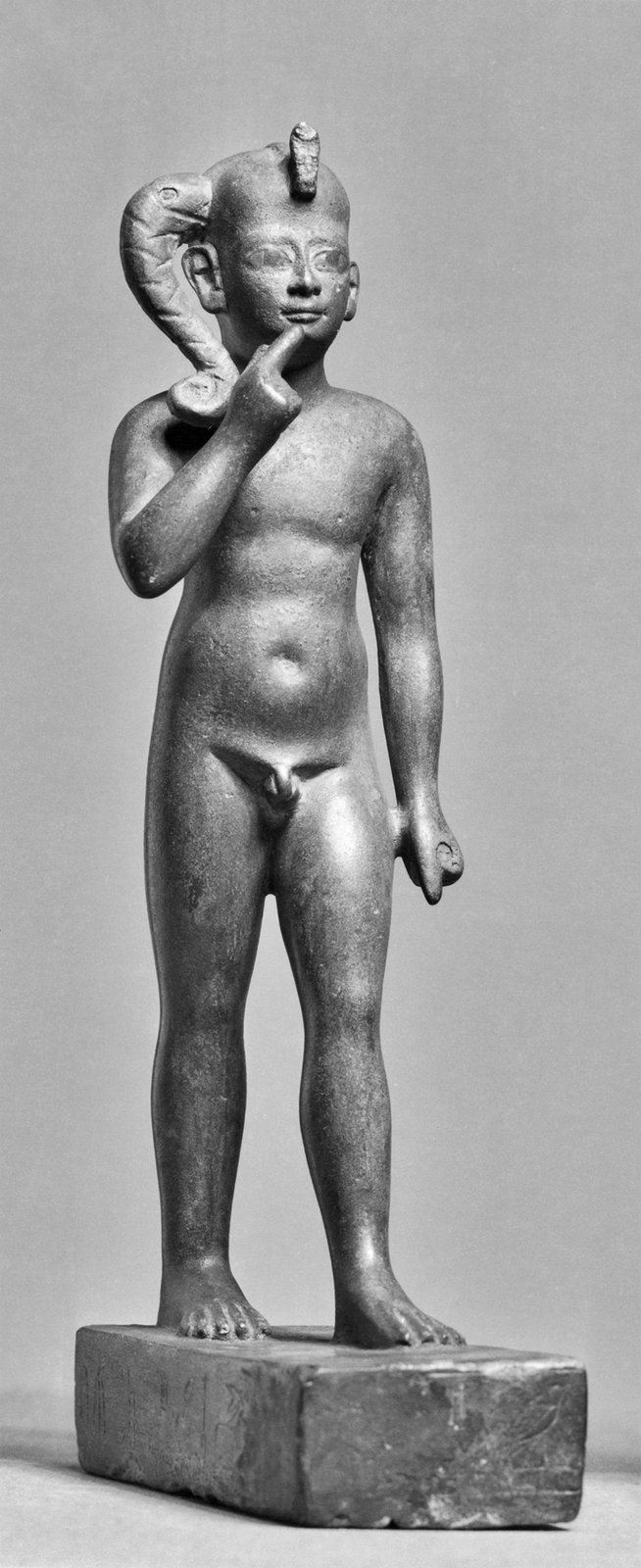
Harpocrates
Entity · Horus as a child: in Egyptian "Hor-pa-khered", in Greek "Harpocrates". A naked boy with a sidelock and a finger at his mouth, he guarded against snakes and scorpions and became a much-loved house god in Greek and Roman Egypt.
-
From 1050 BCE to 146 BCE
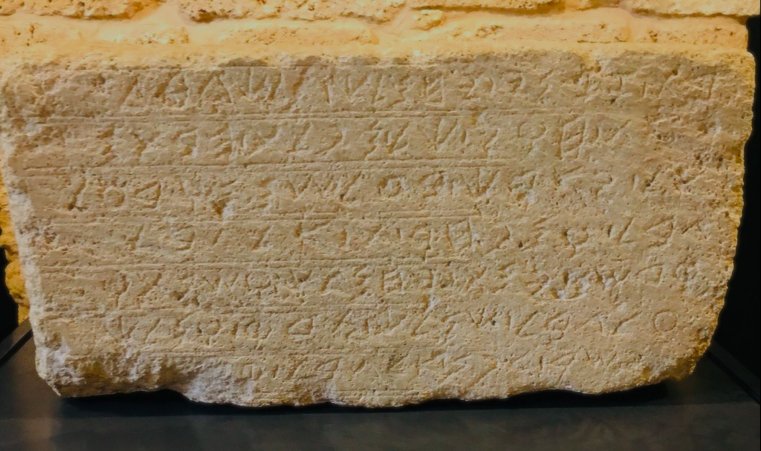
The Phoenician Alphabet
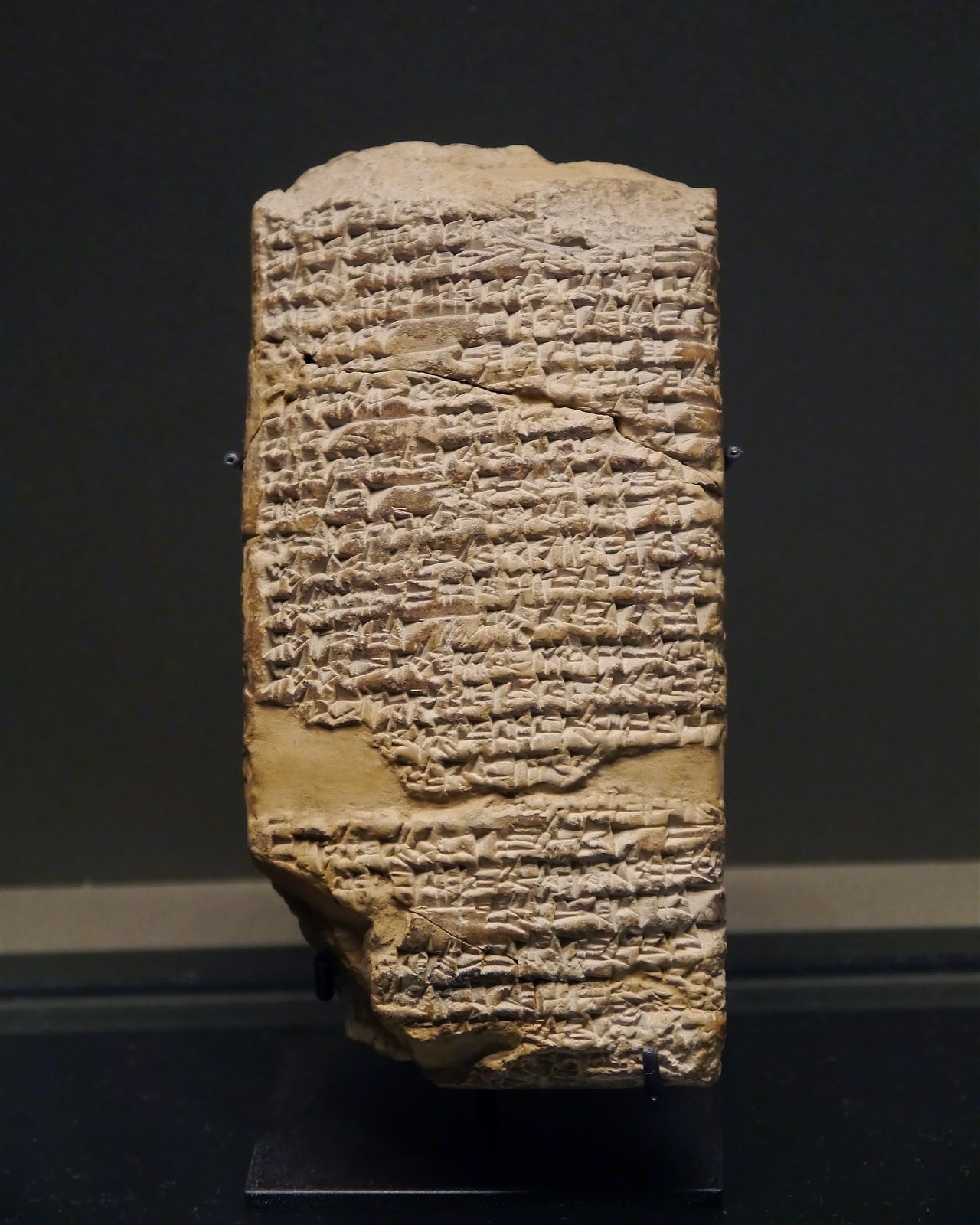
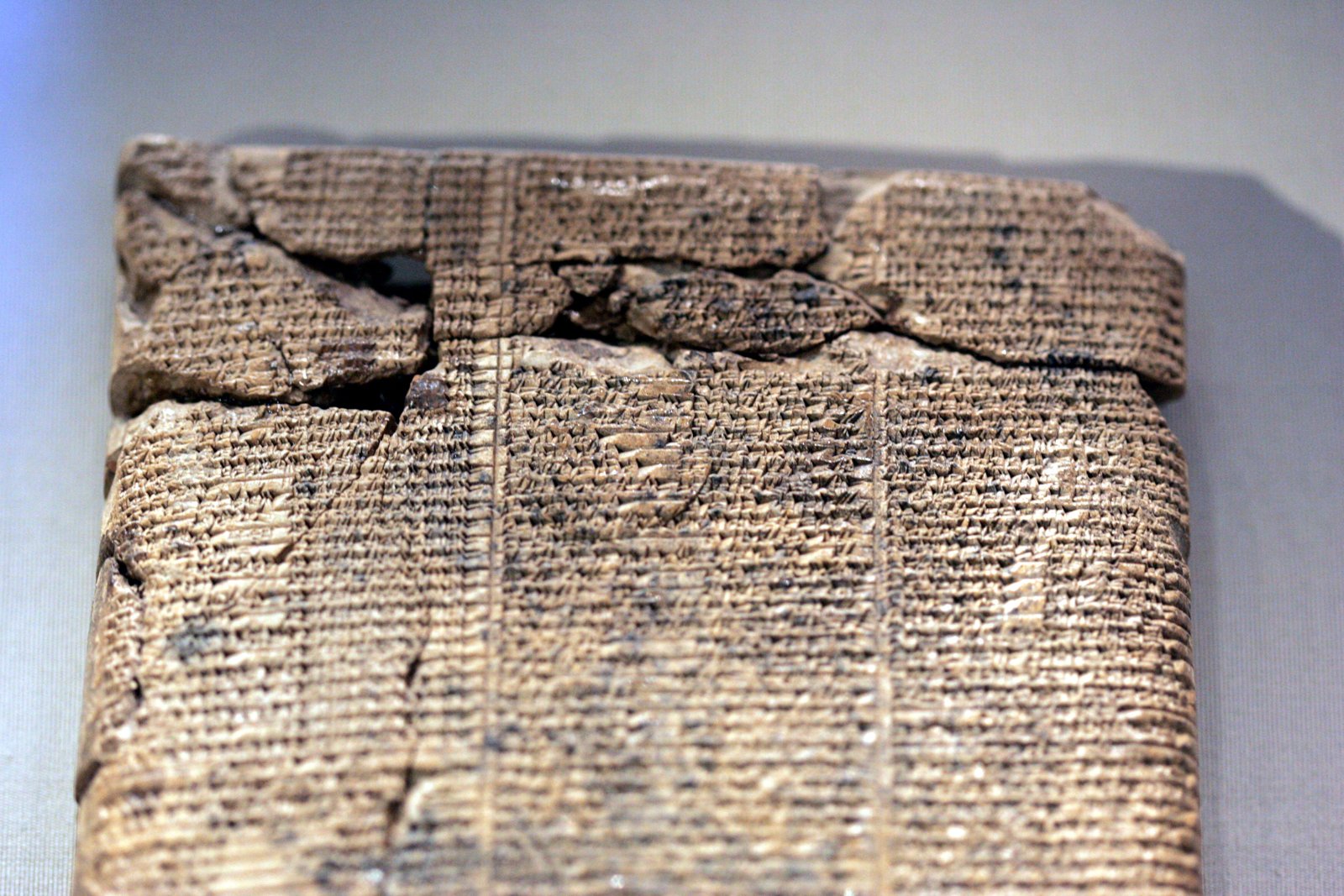
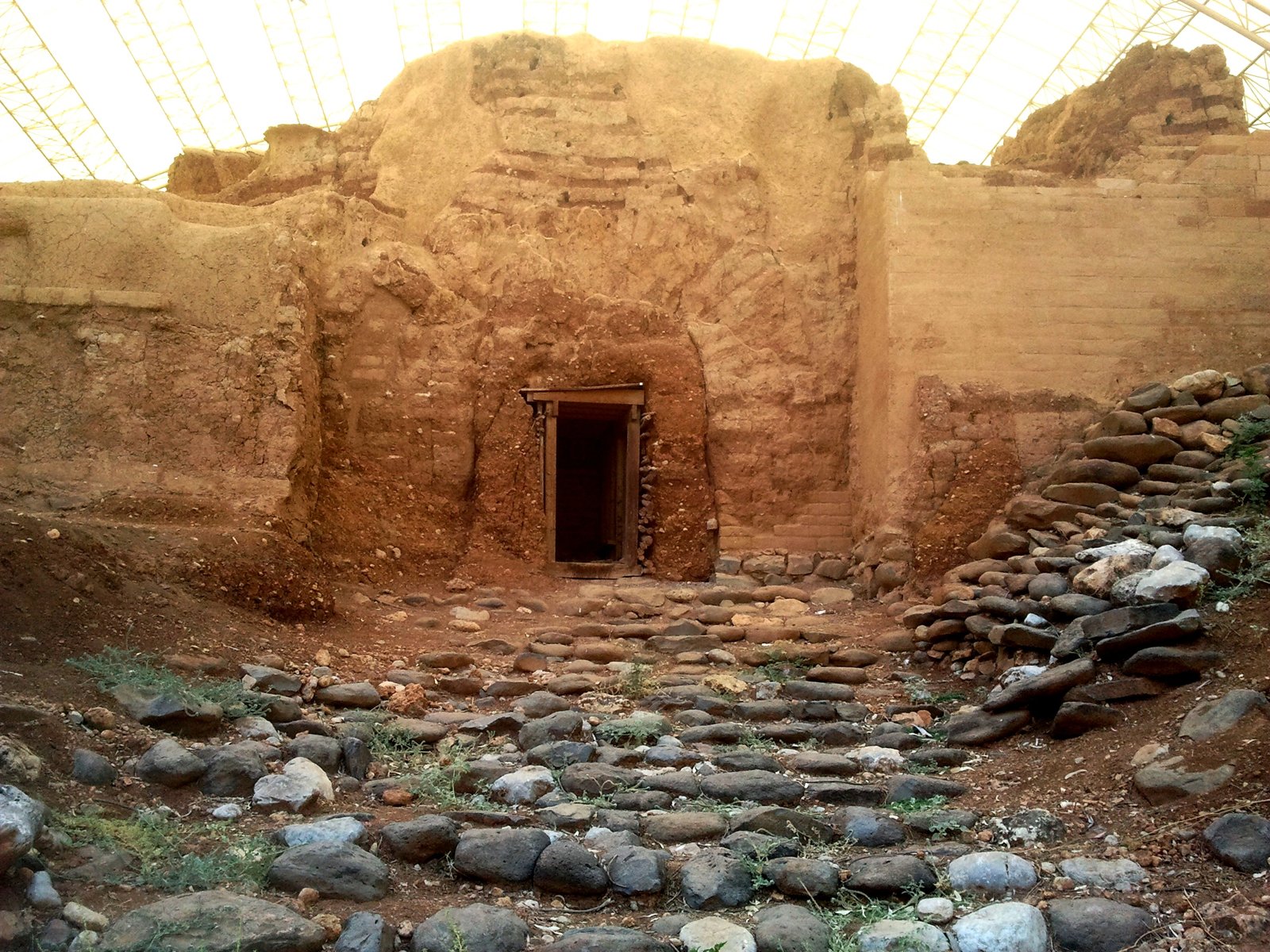
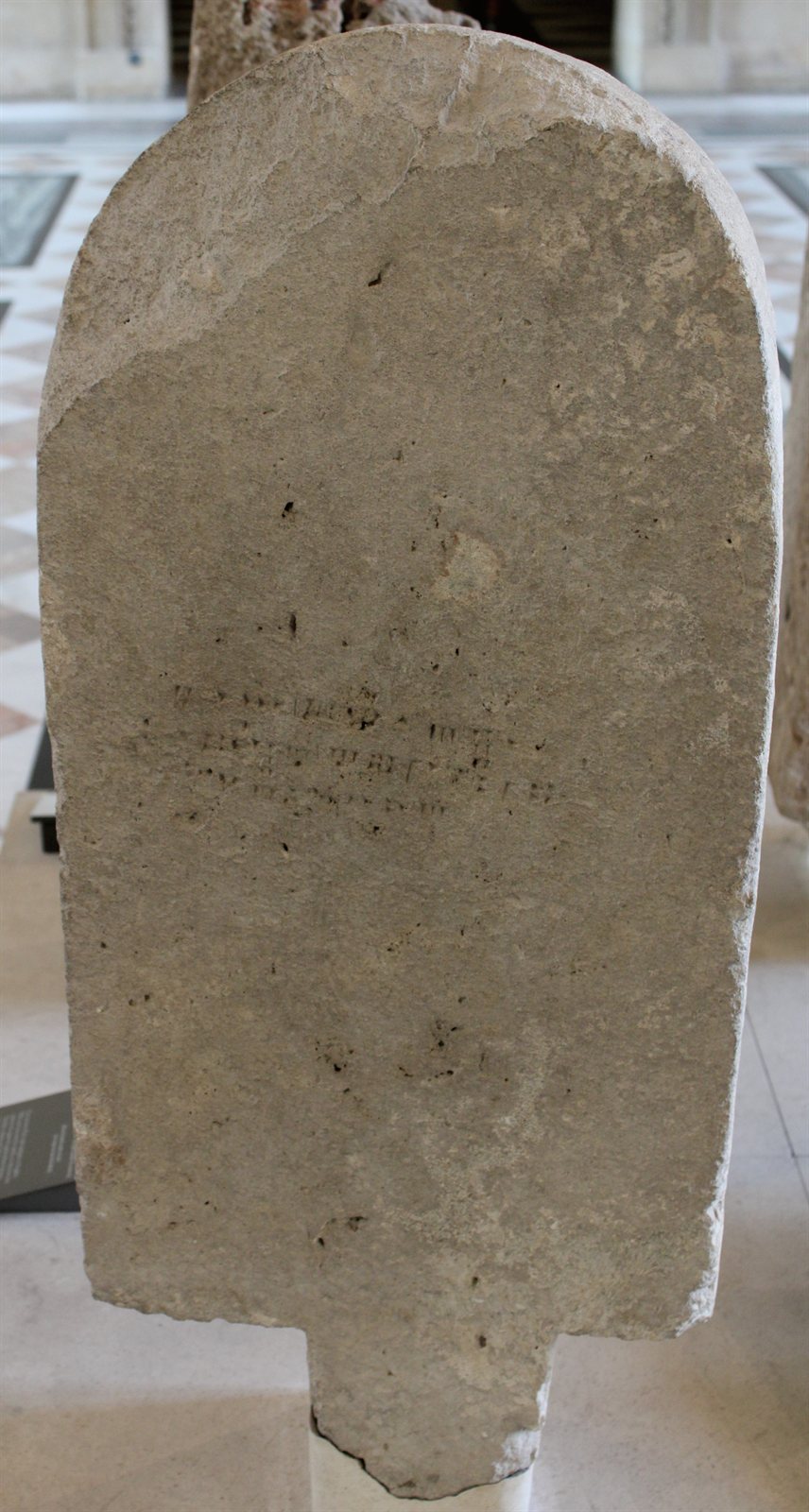
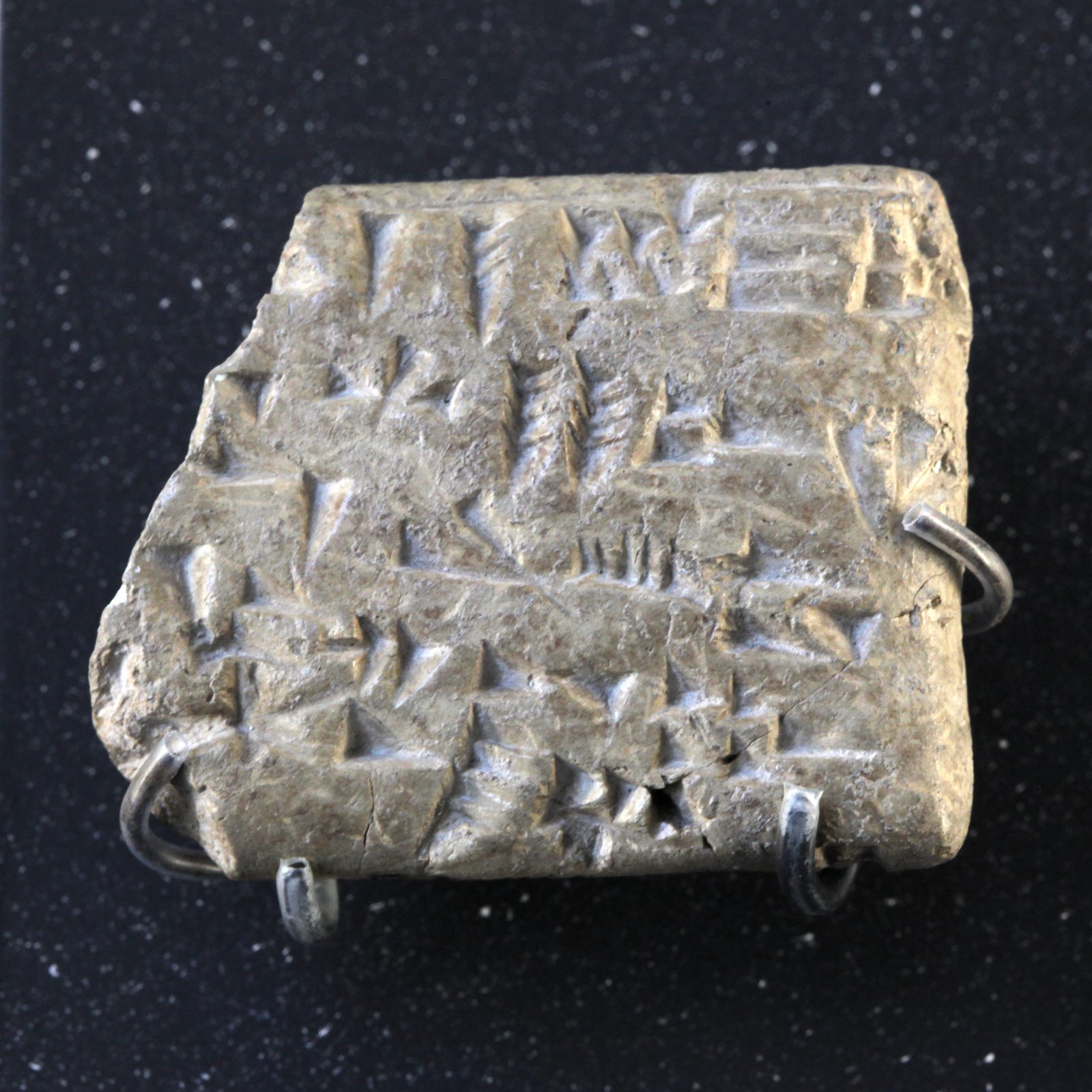
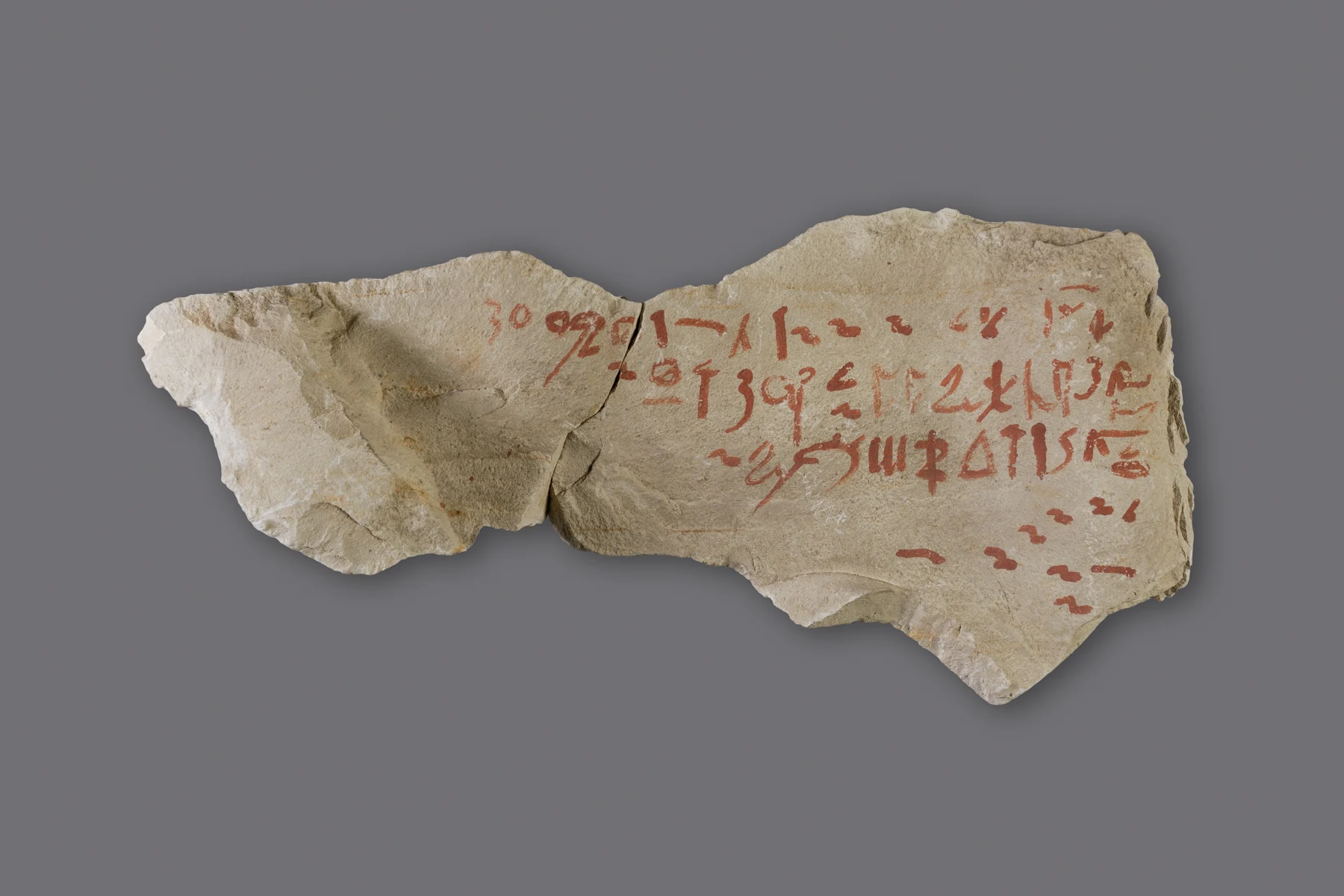
Entity · A set of 22 consonant letters, written right to left, used in the coastal cities of the Levant from about 1000 BCE. Greek, Aramaic, Hebrew and many later scripts descend from it. Its early dates rest on few inscriptions.
First millennium BCE
-
From 1000 BCE to 901 BCE
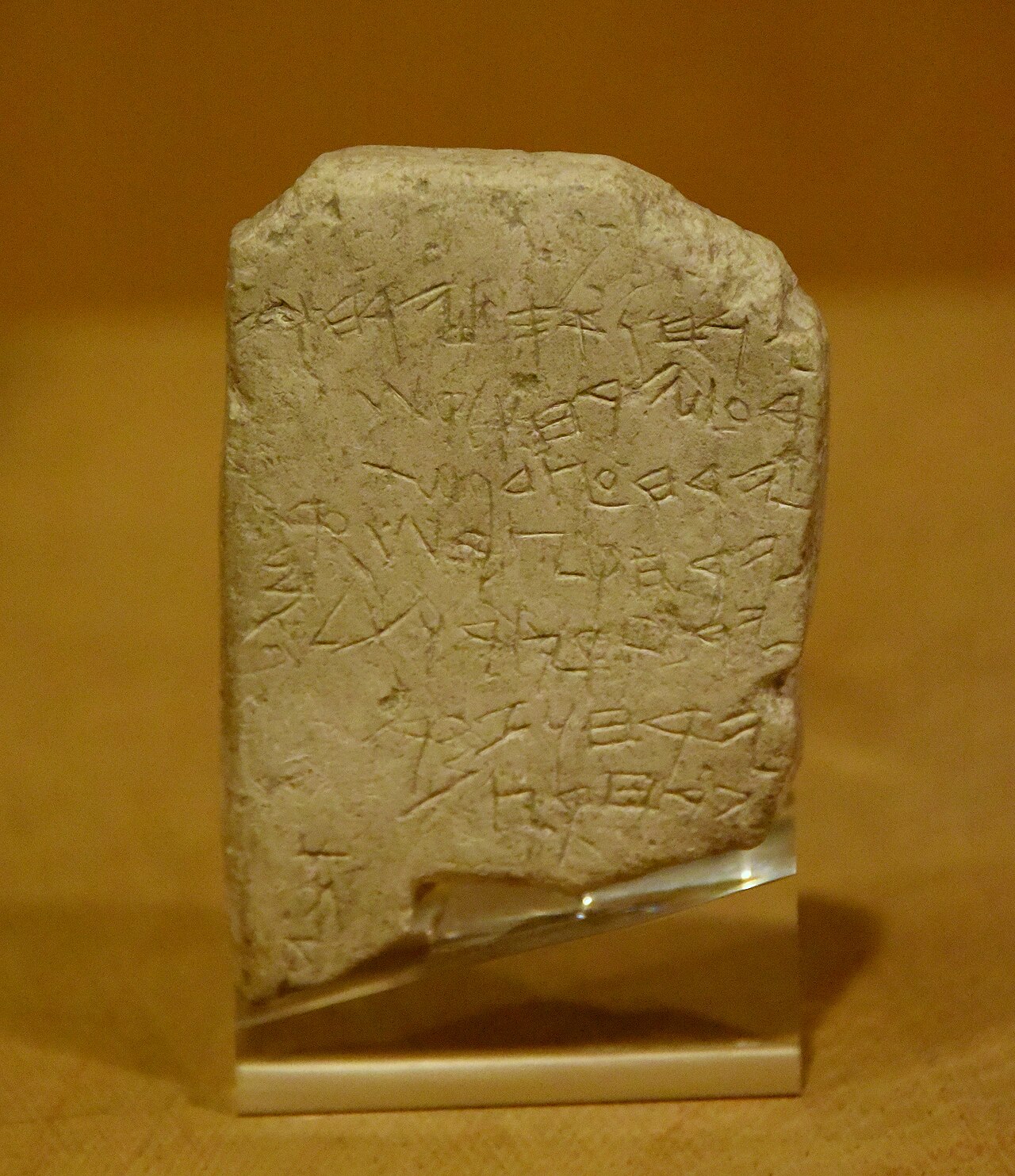
The Gezer Calendar (Istanbul 2089 T)
Artifact · A limestone tablet from Gezer divides the farming year into periods of sowing, harvest and other work. Its seven lines preserve an early example of alphabetic writing.
-
From 1000 BCE to 100 BCE
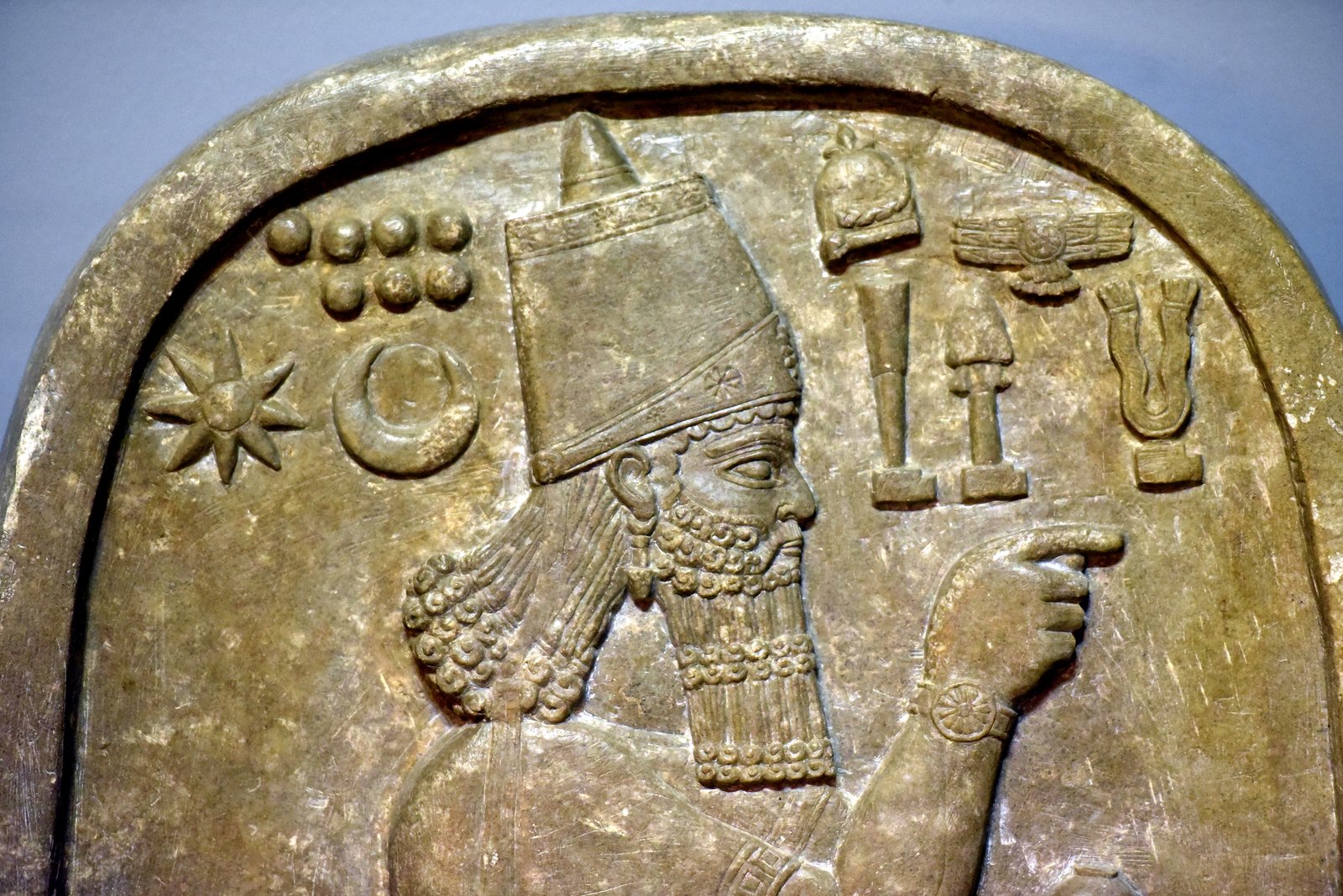
The Pleiades and the Seven Gods: Stars, Seven Dots and Assyrian Symbols
Study · Why do Assyrian monuments show seven dots among the gods' emblems? What the cuneiform sources actually call the Pleiades, and how the cluster came to be linked with the Seven gods.
-
From 1000 BCE to 901 BCE
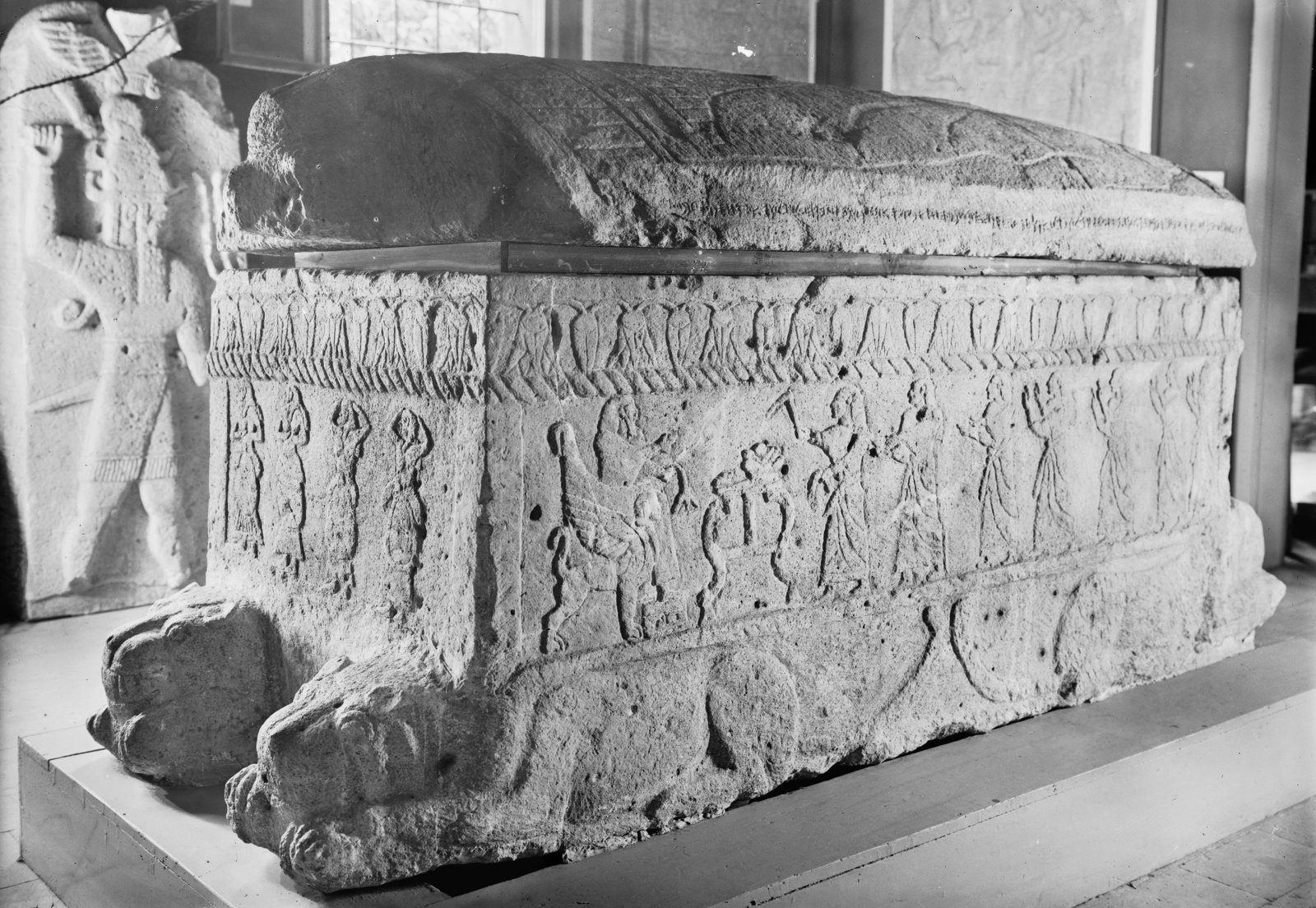
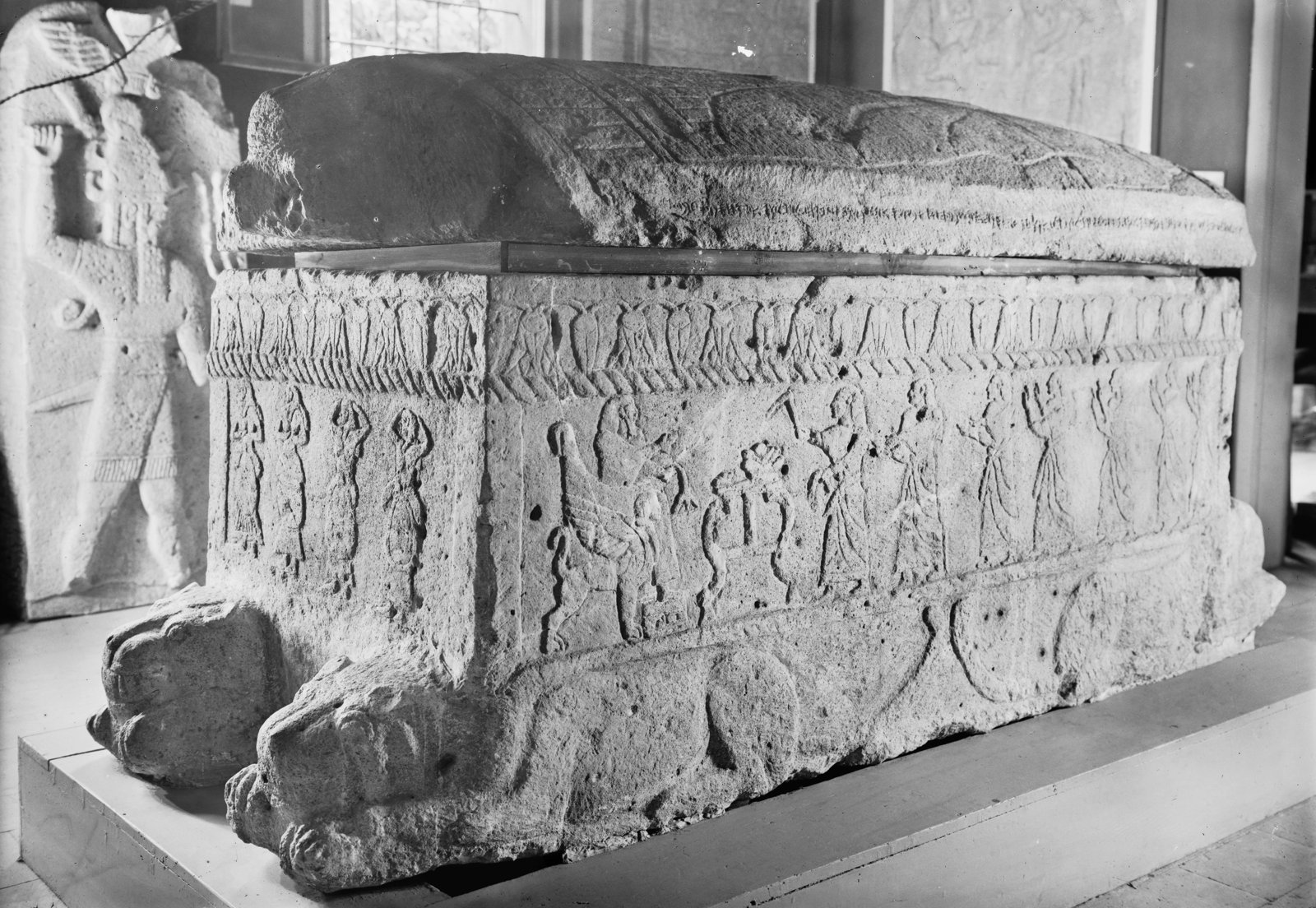
The Sarcophagus of Ahiram from Byblos (KAI 1)
Artifact · Ahiram’s limestone coffin from Byblos rests on four carved lions. A Phoenician inscription runs across the chest and lid. It names the man who provided the burial and warns rulers against opening the coffin.
-
From 1000 BCE to 1 BCE
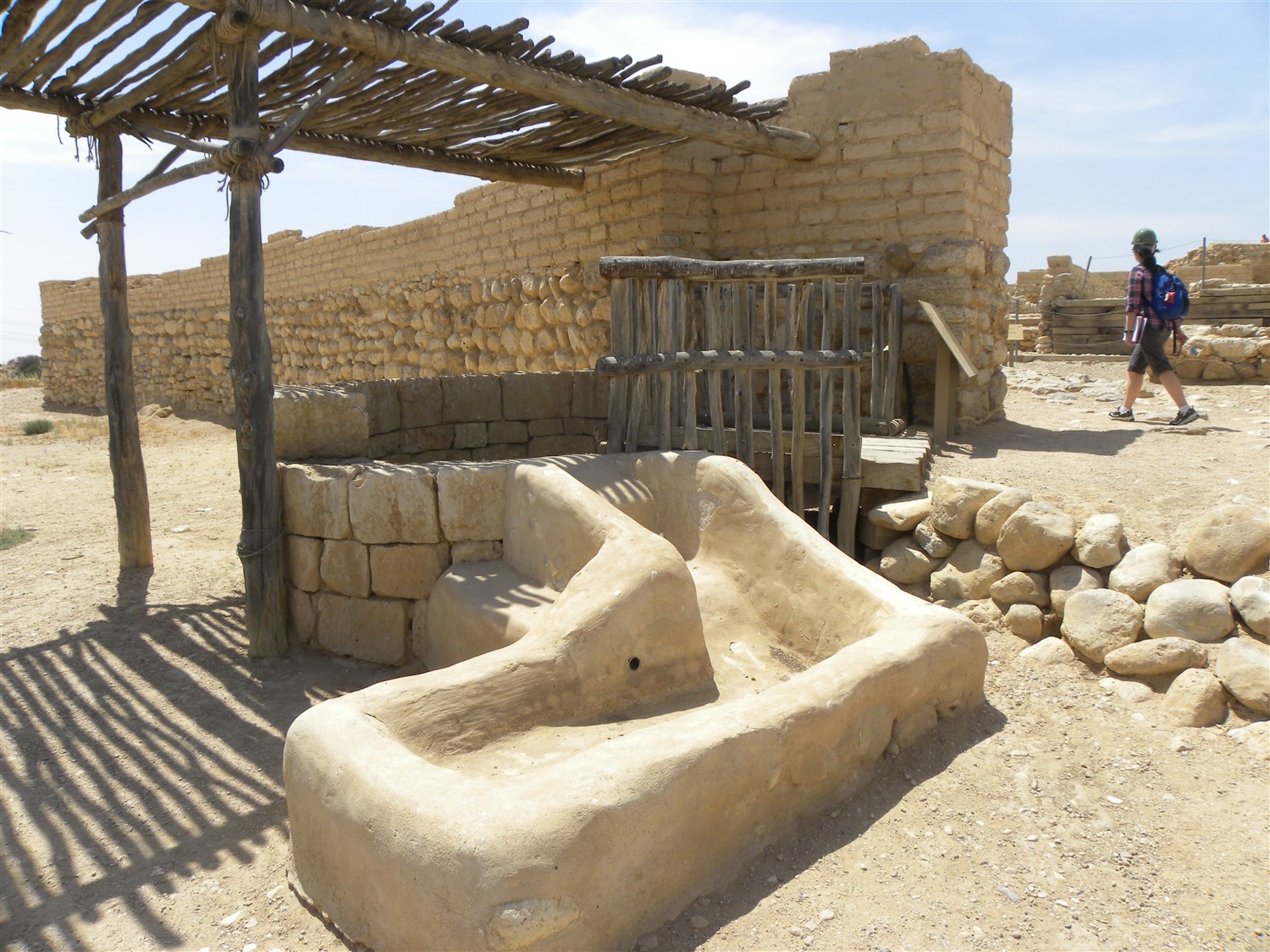
Water at Tel Be'er Sheva: The Gate Well and the Reservoir
Site · At Tel Be'er Sheva, a well outside the gate reached groundwater, while cisterns under the fortified town stored floodwater. Excavations show how the two systems worked and how the reservoir was repaired and later adapted for rainwater.
-
From 950 BCE to 1506 CE
Judgment Scales: Egypt and the Worlds of Late Antiquity
Study · Heart, destiny and deeds: Egyptian, Greek, Hebrew, Iranian and Quranic witnesses compared through roles, dates and the limits of transmission hypotheses.
-
From 911 BCE to 612 BCE
Tablet III of Enuma Elish (British Museum K.3473+)
Artifact · This clay manuscript from Nineveh preserves the gods’ preparations for Marduk’s confrontation with Tiamat. Its last line repeats the opening of Tablet IV, when the gods set out a dais for Marduk.
-
From 911 BCE to 612 BCE
Tablet VI of Enuma Elish from Kish (Ashmolean AN 1926.373)
Artifact · A broken tablet from Kish preserves part of the Babylonian creation poem. Read together, three pieces in Oxford record the Anunnaki of heaven and the netherworld and preserve signs from the passage on the building of Esagila.
-
From 911 BCE to 609 BCE
The Neo-Assyrian empire (c. 911–609 BCE)
Period · Assyrian kings ruled from the Tigris to the Mediterranean and campaigned in Egypt. Their inscriptions describe conquest, tribute and resettlement. Babylonian chronicles and other accounts offer a different view of the empire and its fall.
-
From 911 BCE to 612 BCE
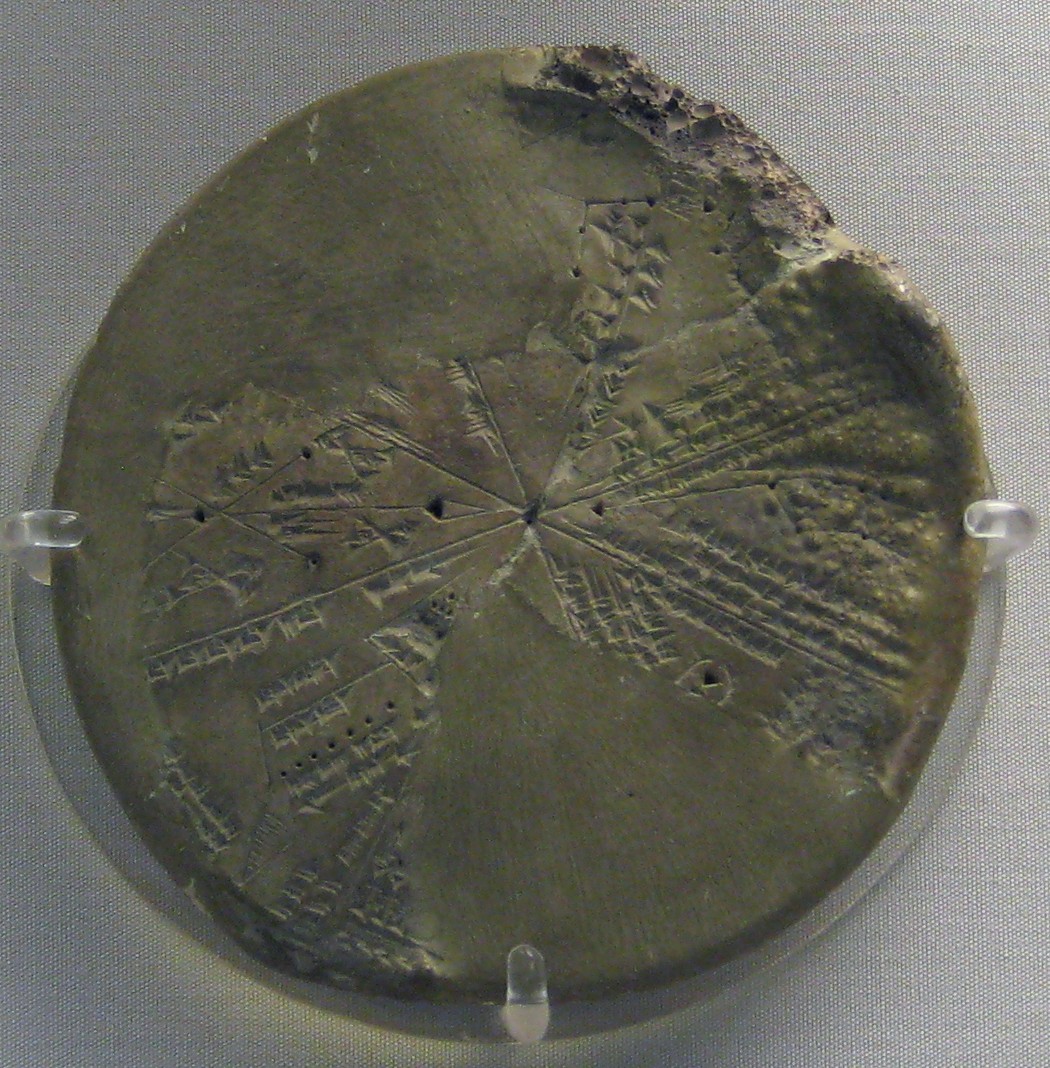
The Nineveh Planisphere (British Museum K.8538)
Artifact · A clay disk from Nineveh sets constellations and cuneiform labels in eight sectors. Its surviving marks show how an Assyrian scribe drew the sky, while some of the writing still resists interpretation.
-
From 900 BCE to 700 BCE
Erra and Ishum: the Babylonian Poem of the Seven, of War and of Protection from Plague
Ancient text · An Akkadian poem in five tablets: the warrior god Erra, roused by the Seven, brings war and ruin on Babylon until Ishum calms him, and the poem itself was used as protection against plague.
-
From 900 BCE to 801 BCE
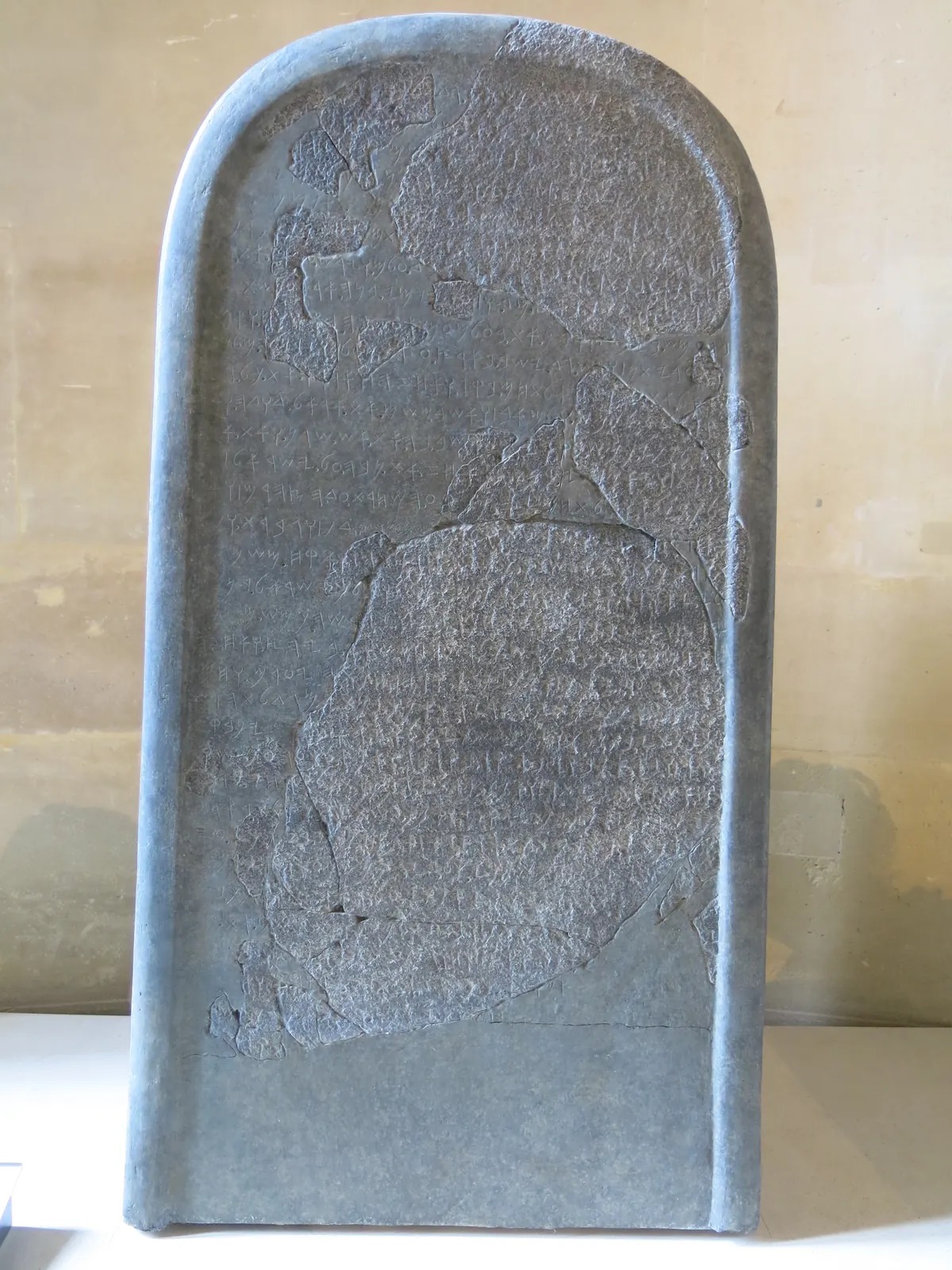
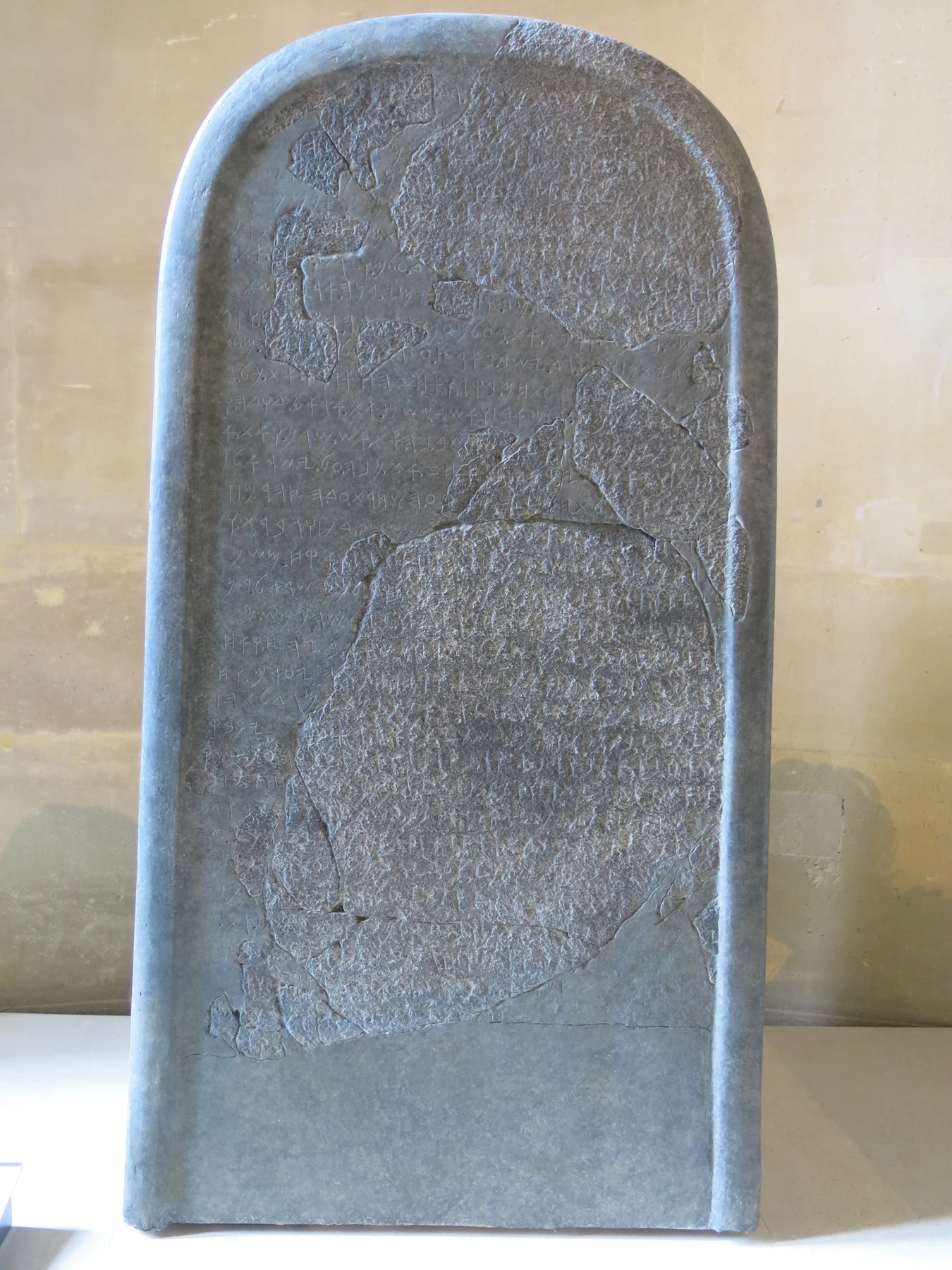
Mesha Stele
Artifact · A ninth-century BCE Moabite royal inscription on Moab’s recovery of land from Israel and the king’s devotion to Chemosh. Line 18 names YHWH; the reading “House of David” in line 31 is a disputed hypothesis.
-
From 900 BCE to 800 BCE
Mesha and Chemosh: How a King Narrates Sacred War
Study · A reading of the Moabite inscription through divine anger, Yahweh’s vessels, violence and construction, separating evidence from royal rhetoric.
-
From 900 BCE to 430 CE
Sons of God and Watchers: How a Brief Story Expanded
Study · From four Genesis verses to angelic descent, teaching and giant spirits in Enoch: texts, manuscripts and limits of comparison with Mesopotamian sages.
-
From 900 BCE to 780 BCE
The Aramaic Stele of Zakkur (Louvre AO 8185)
Artifact · On a broken stele, Zakkur of Hamath recounts how a coalition besieged Hazrak and how a god answered him. An Assyrian inscription names the same king in a ruling on a border along the Orontes River.
-
From 900 BCE to 801 BCE
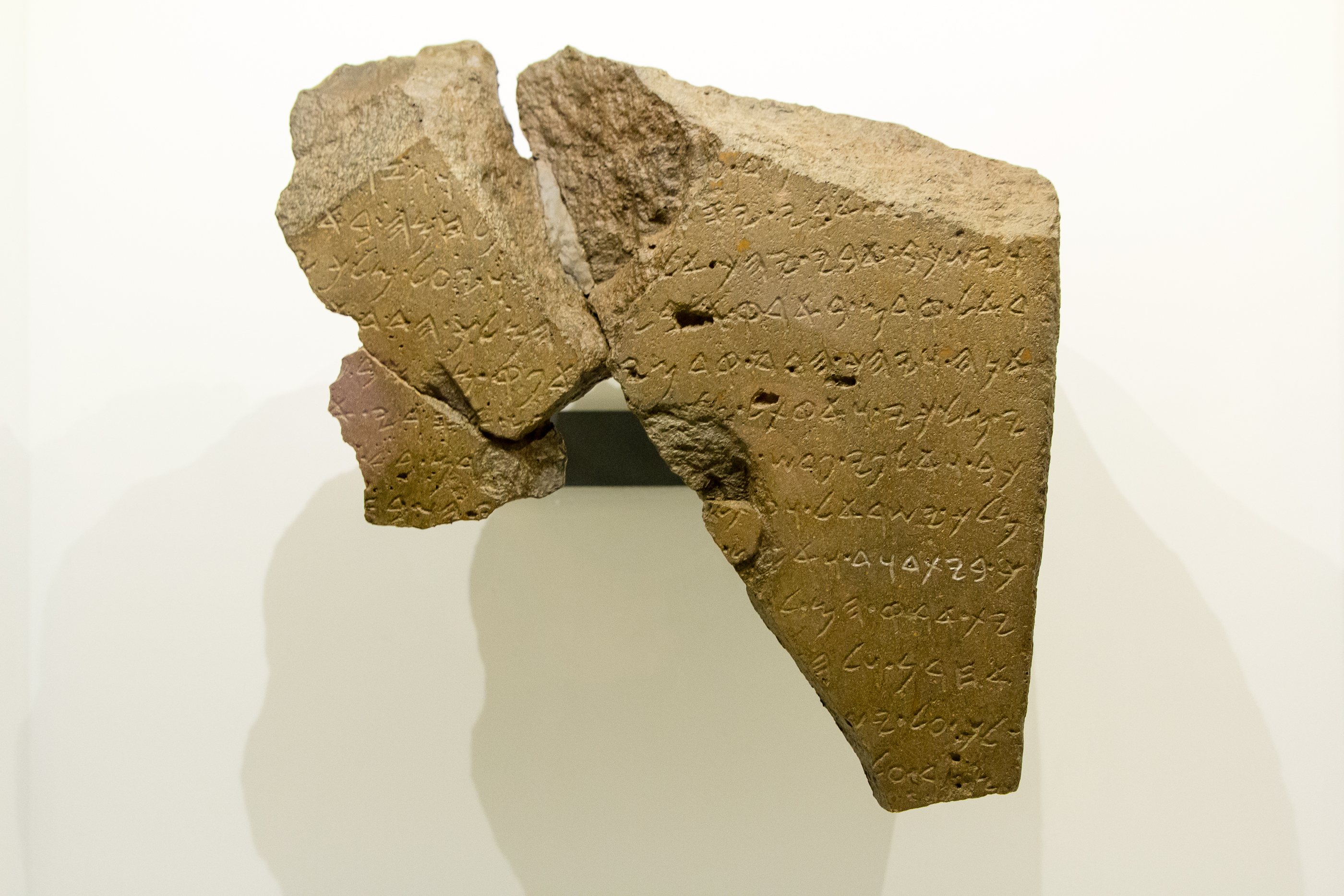
The Tel Dan Stele: Preserved Text, Restorations, and Limits of Inference
Artifact · Three basalt fragments of a ninth-century BCE Aramaic royal inscription, found at Tel Dan in 1993 and 1994. The entry separates their surviving letters, including bytdwd, often read as “House of David,” from restorations.
-
From 883 BCE to 165 BCE
Enoch and the Apkallu: Wisdom before the Flood
Study · Kings,sages and the ancient scribe: primeval knowledge,instruction and limits of proposed transmission into Enochic literature.
-
From 850 BCE to 800 BCE
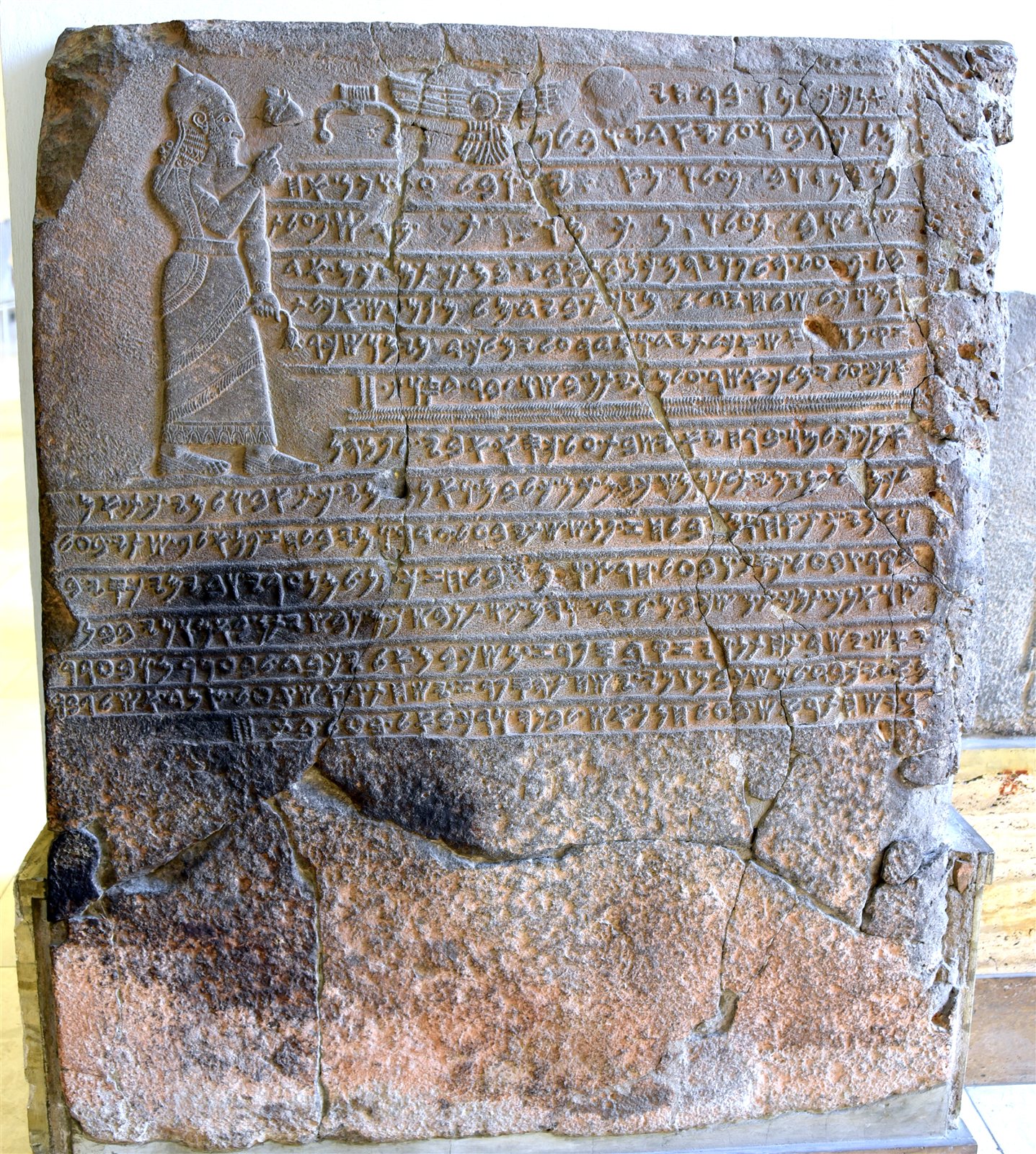
The Phoenician Inscription of Kilamuwa at Zincirli (KAI 24)
Artifact · A ruler at Zincirli set his portrait beside sixteen lines of Phoenician. He listed his predecessors, claimed to have improved his subjects’ lives and called on the dynasty’s gods to protect the inscription.
-
From 831 BCE to 785 BCE
Pygmalion of Tyre
Person · A king of Tyre in the late ninth century BCE, remembered as the brother whose crime drove Elissa to found Carthage. A king list keeps his reign; the story of the murder is legend.
-
From 827 BCE to 824 BCE
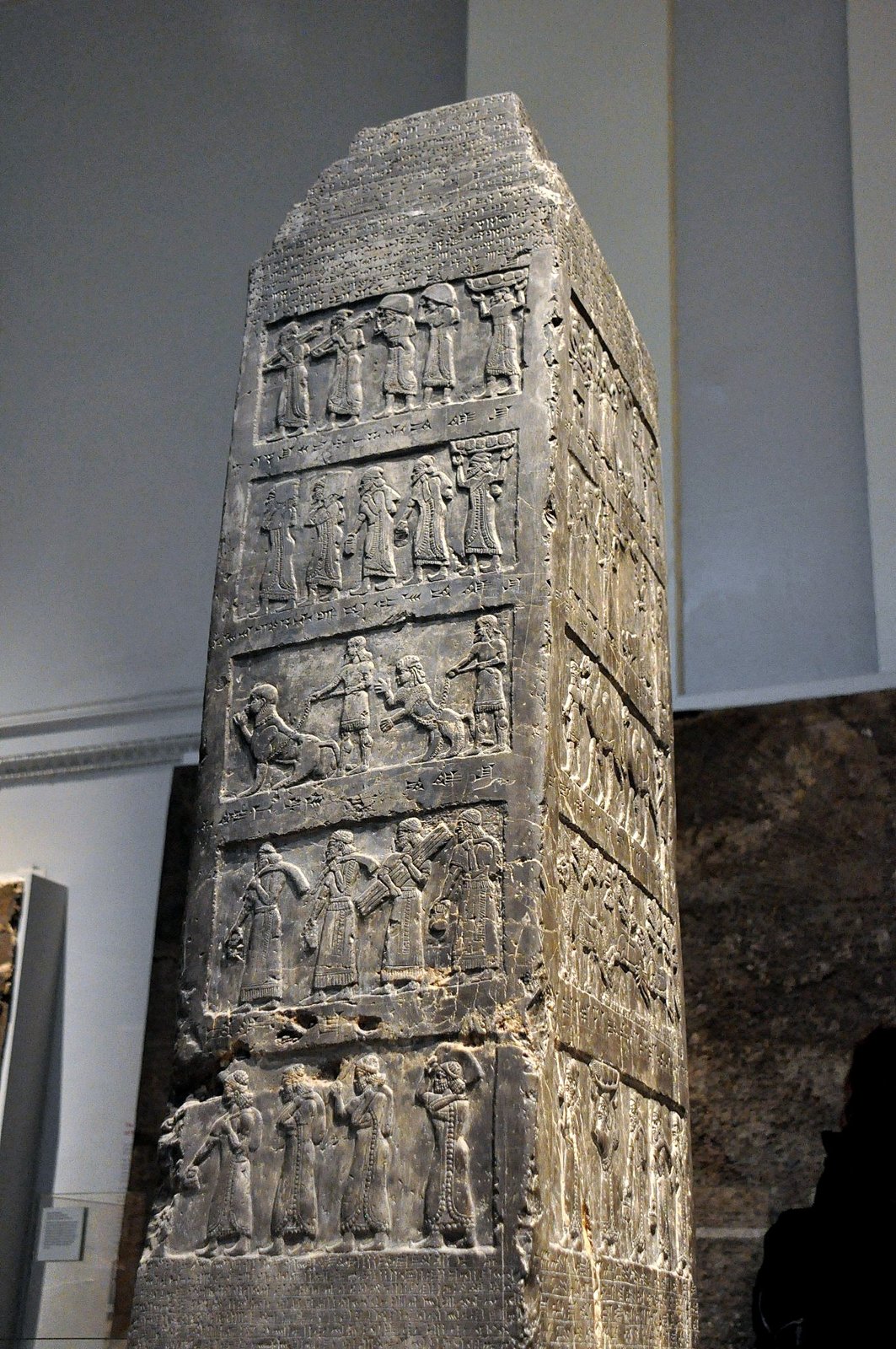
The Black Obelisk of Shalmaneser III: Tribute Scenes and the Name "Jehu, Son of Omri" (British Museum ME 118885)
Artifact · A black stone pillar from Nimrud shows five foreign rulers bowing to an Assyrian king. One caption names "Jehu, son of Omri", the only picture of an Israelite king, though scholars still argue over the name.
-
From 825 BCE to 814 BCE
Elissa (Dido)
Person · The princess of Tyre who, in ancient tradition, fled her brother and founded Carthage. Greek and Roman writers tell her story in different ways, and whether she really lived is still debated.
-
From 814 BCE to 146 BCE
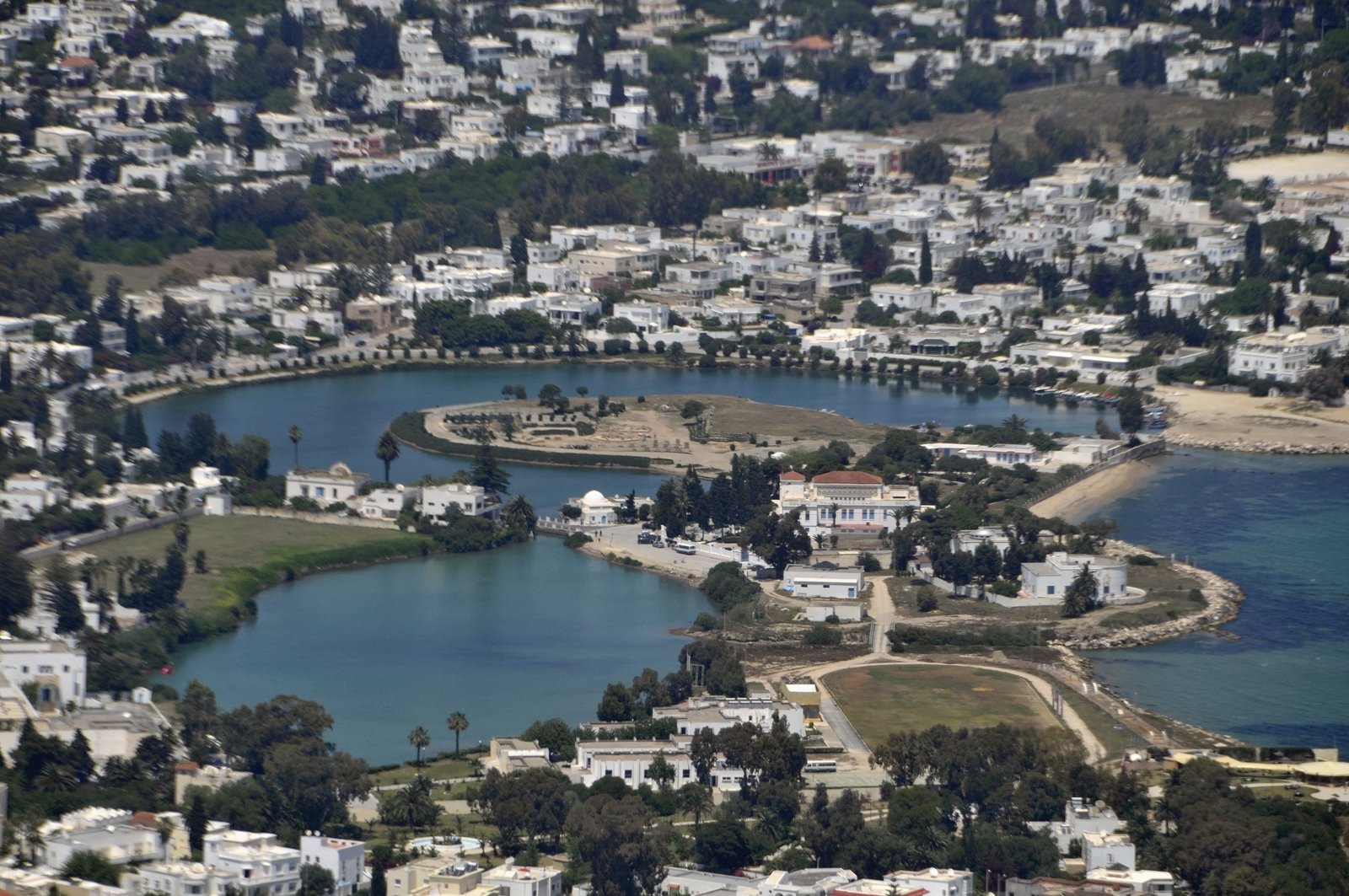
Carthage (Qart-hadasht)
Site · A Phoenician city on the Gulf of Tunis that became the great power of the western Mediterranean until Rome destroyed it in 146 BCE. Its founding story is legend; its earliest layers are a matter for excavation.
-
From 810 BCE to 783 BCE
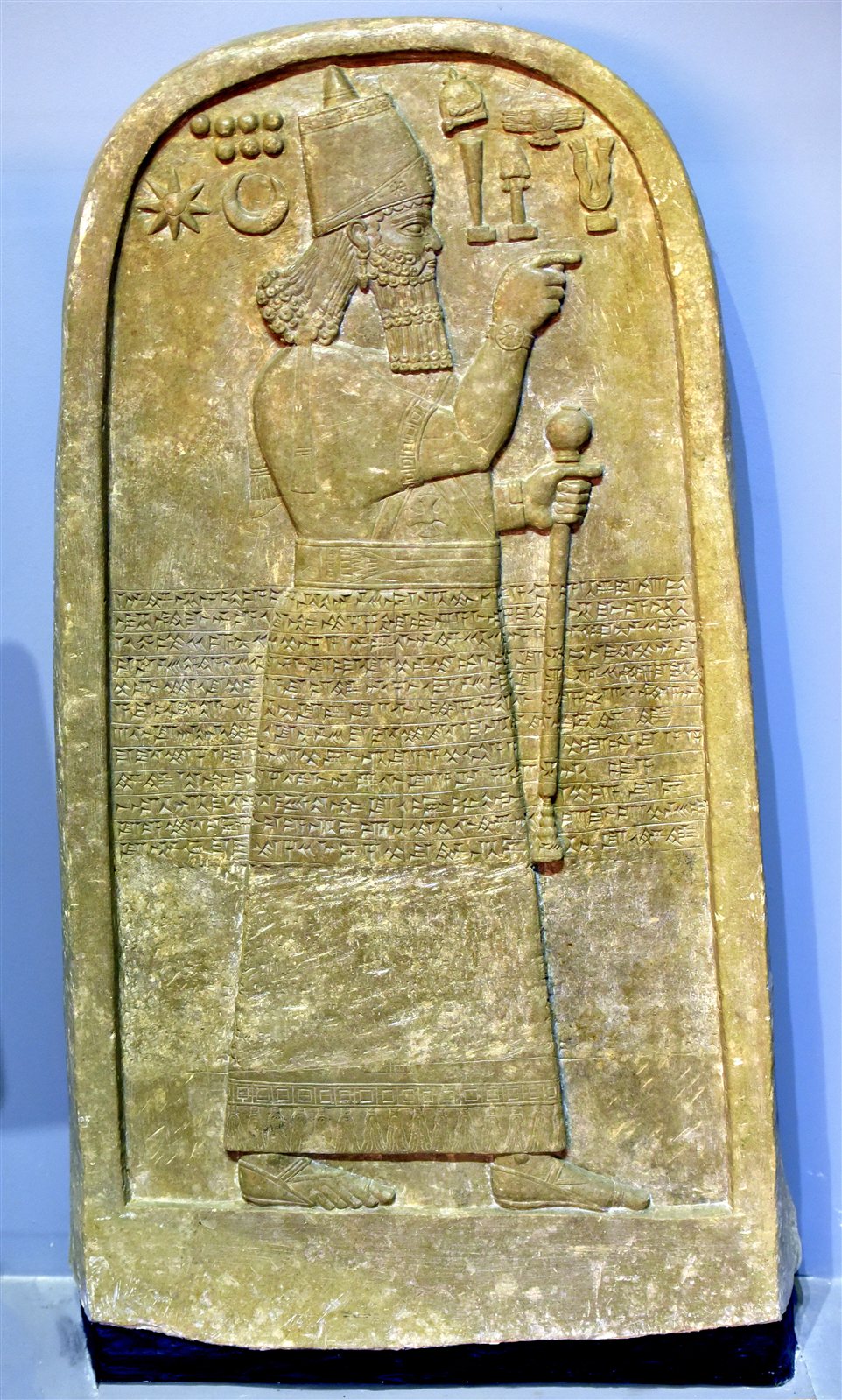
The Tell al-Rimah Stele of Adad-nirari III
Artifact · The stele shows an Assyrian king with his right forefinger extended. The text below the relief names tribute from Damascus, Samaria, Tyre and Sidon. Nine lines about a provincial governor’s building work were deliberately erased in antiquity.
-
From 800 BCE to 394 CE
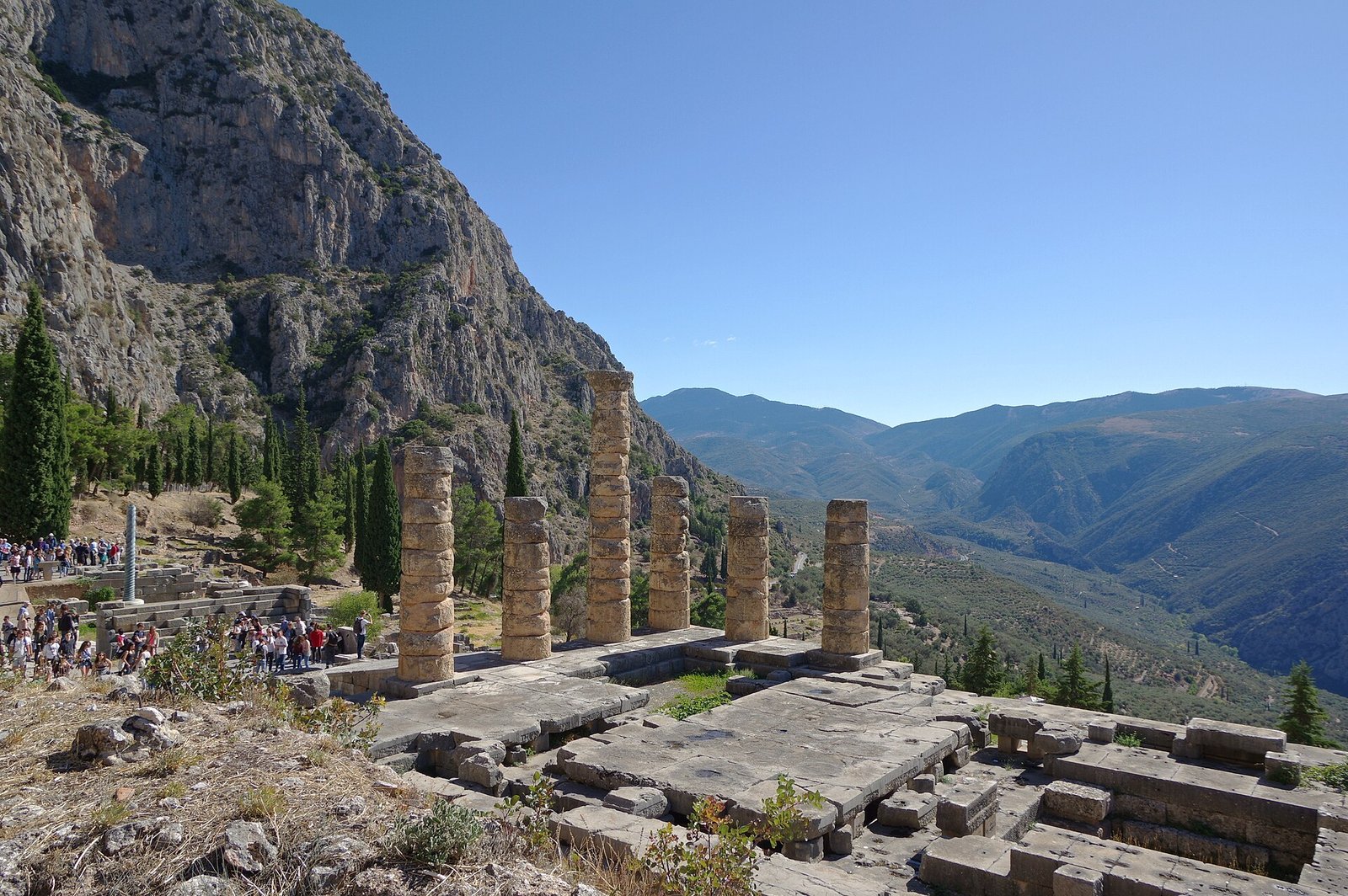
Delphi
Site · The sanctuary of Apollo on the slopes of Mount Parnassus, home of the most famous oracle of the Greek world. For over a thousand years kings, cities and ordinary people brought it their questions and their gifts.
-
From 800 BCE to 601 BCE
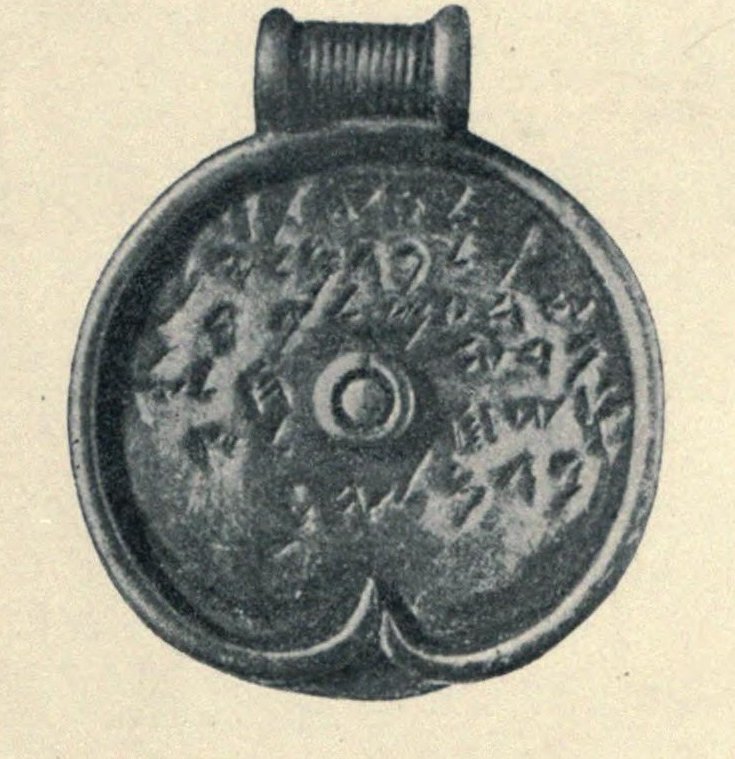
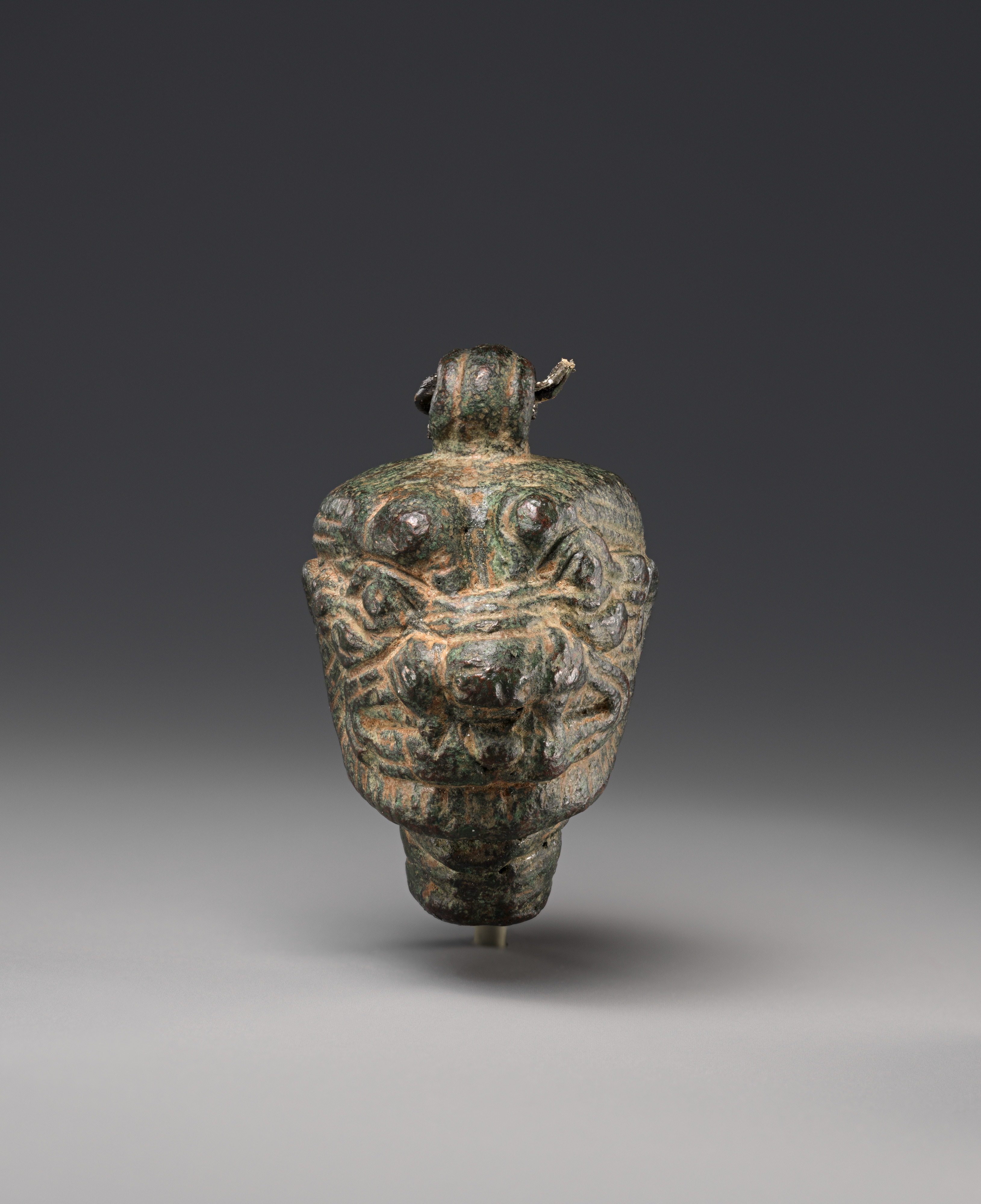
Pazuzu Head Pendant Met 1993.181: A Carried Image and the Limits of Protection
Artifact · A Neo-Assyrian bronze pendant at The Met, dated approximately to the eighth–seventh centuries BCE; the article reads the head, the suspension loop and the direction of the gaze as clues to portable protection.
-
From 800 BCE to 700 BCE
The Balaam Text of Deir ʿAlla: The Night Vision and the Closed Heavens
Ancient text · Gods visit a seer at night. He weeps, then tells his people that a council of divine beings has ordered the sky shut with cloud. A line-by-line reading of the plaster text, separating the ink from what scholars supplied.
-
From 800 BCE to 700 BCE
The Deir ʿAlla Plaster Inscriptions: Balaam, Evidence, and Restoration
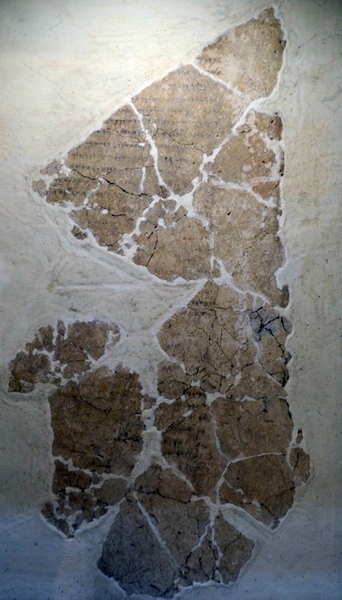
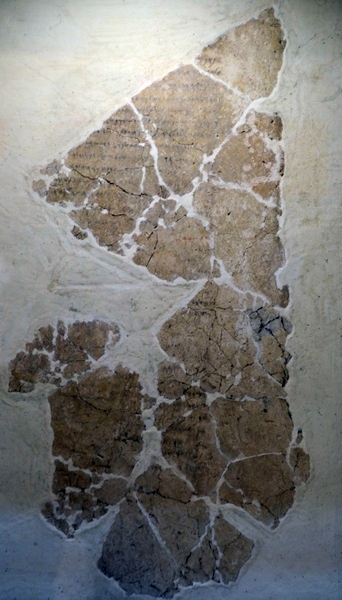
Artifact · Fragments of plaster inscribed in black and red ink, discovered at Tell Deir ʿAlla in Jordan in 1967 and variously dated within the eighth century BCE. The entry examines Combinations I and II, physical joins and textual supplements, Balaam son of Beor and the seer title, the shaddayin and disputed verb in I.6, distinguishing the plaster witness from the Book of Numbers.
-
From 800 BCE to 612 BCE
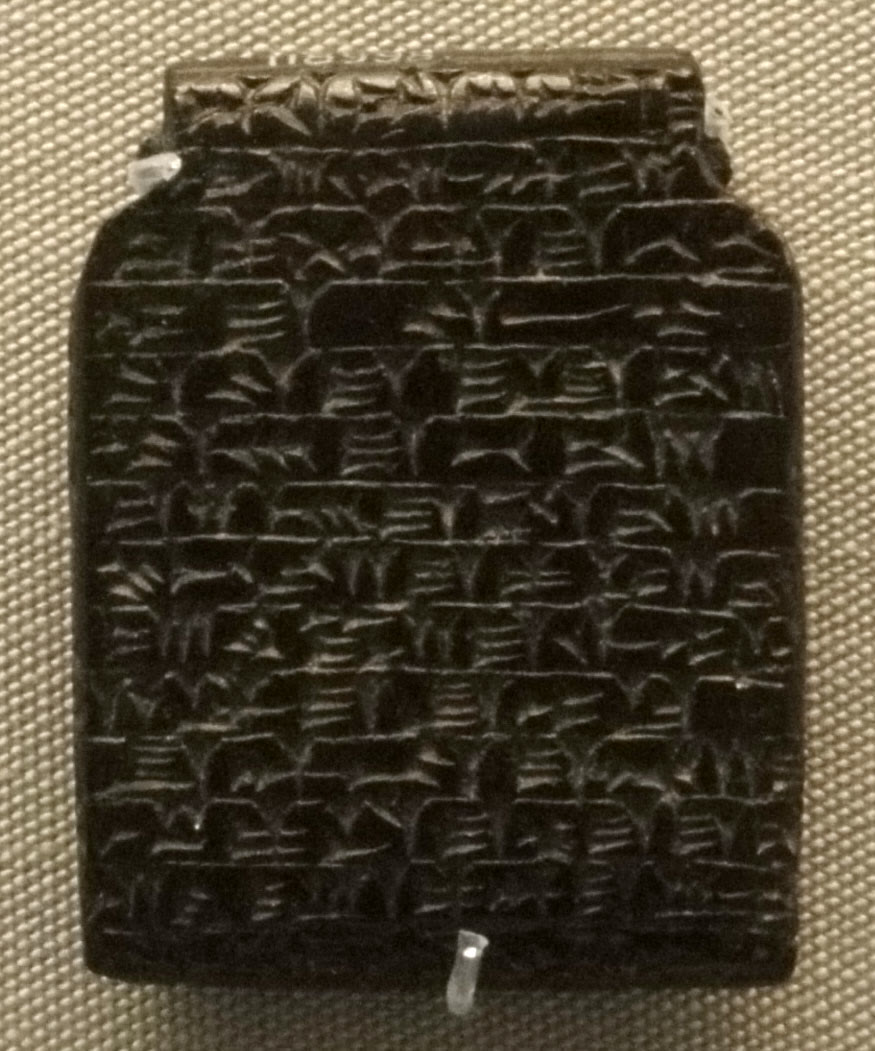
The Erra and Ishum Amulet from Ashur (BM 118998)
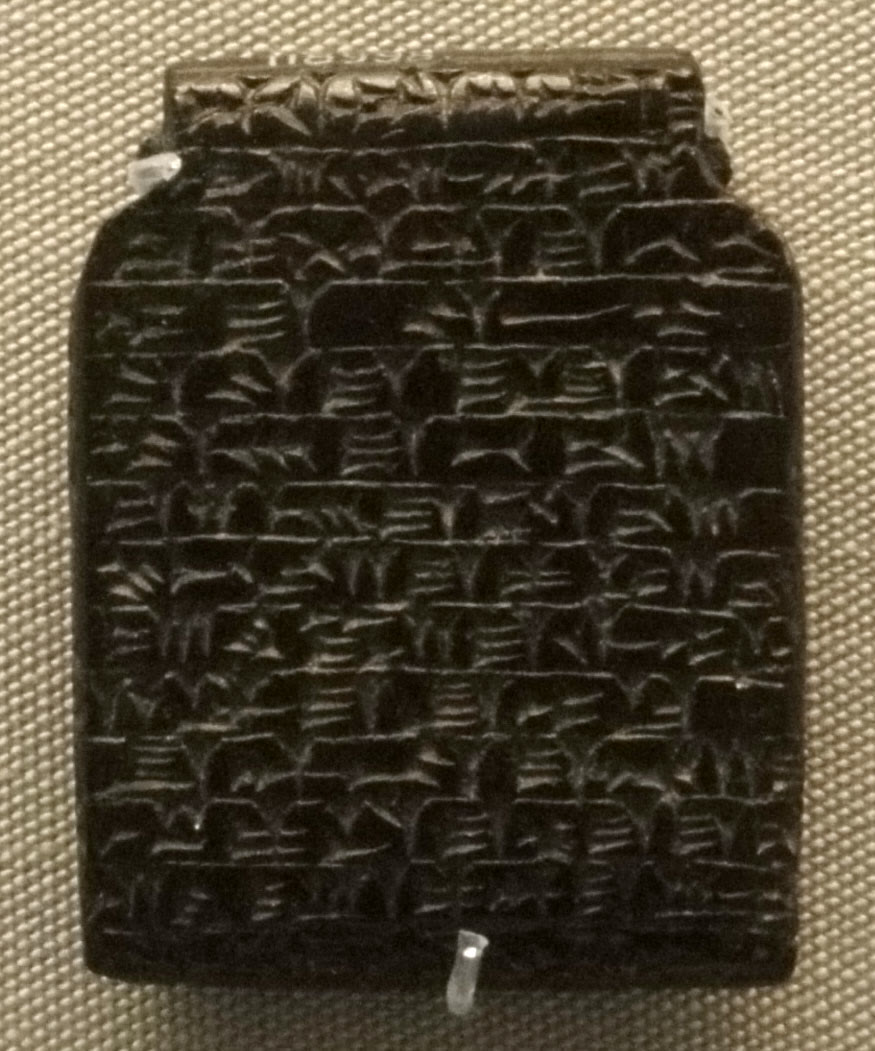
Artifact · A black stone amulet from Ashur carries the closing verses of the third tablet of Erra and Ishum. Compact spellings fit the passage on the stone. A piece of copper survives in the hole from which the amulet hung.
-
From 760 BCE to 720 BCE
The Karatepe Bilingual Inscription (KAI 26)
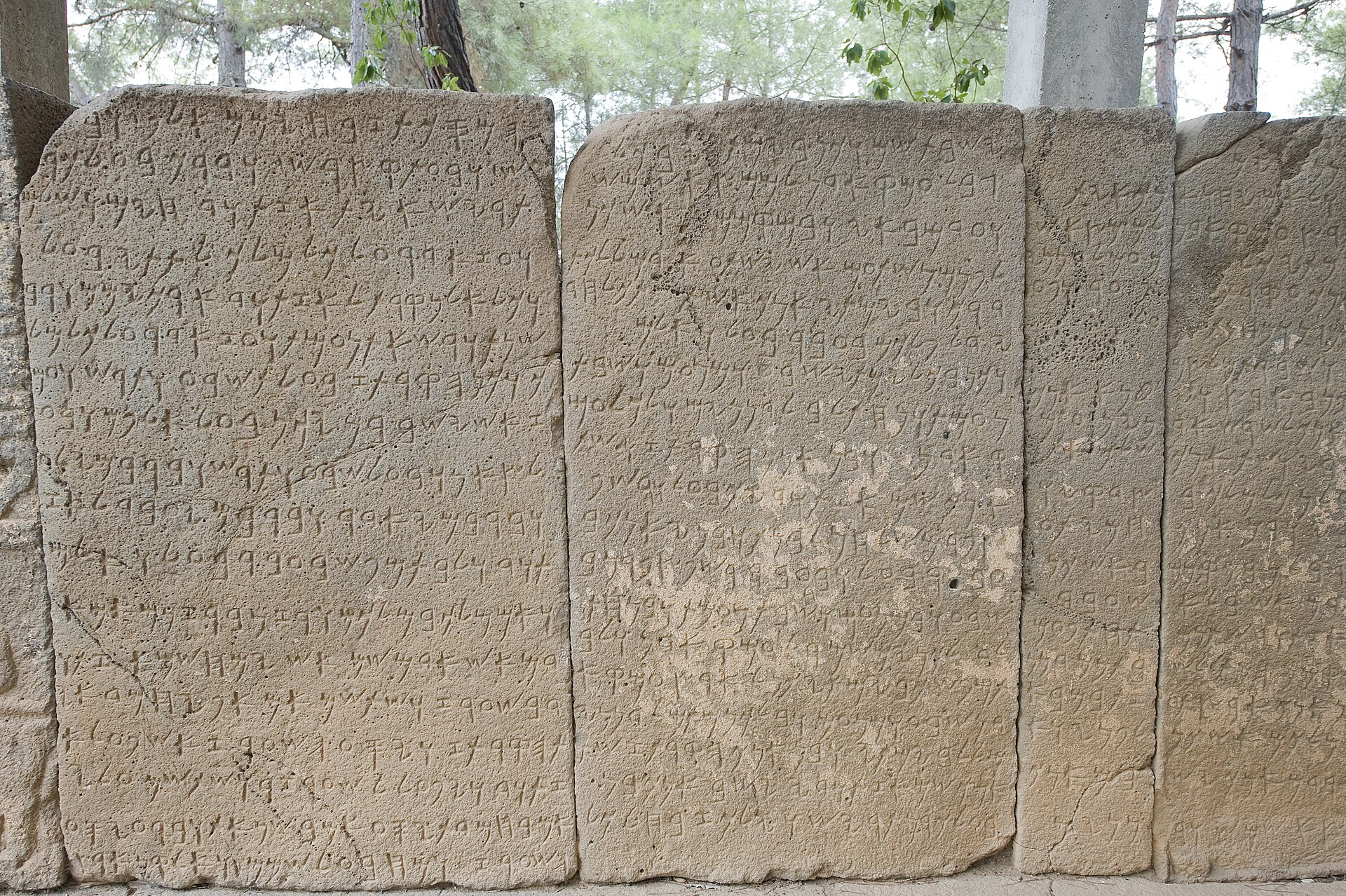
Artifact · At two gates in Iron Age Cilicia, Azatiwada recorded his deeds in Phoenician and Hieroglyphic Luwian. The parallel texts helped scholars read the Anatolian signs and preserve different divine names.
-
From 750 BCE to 650 BCE
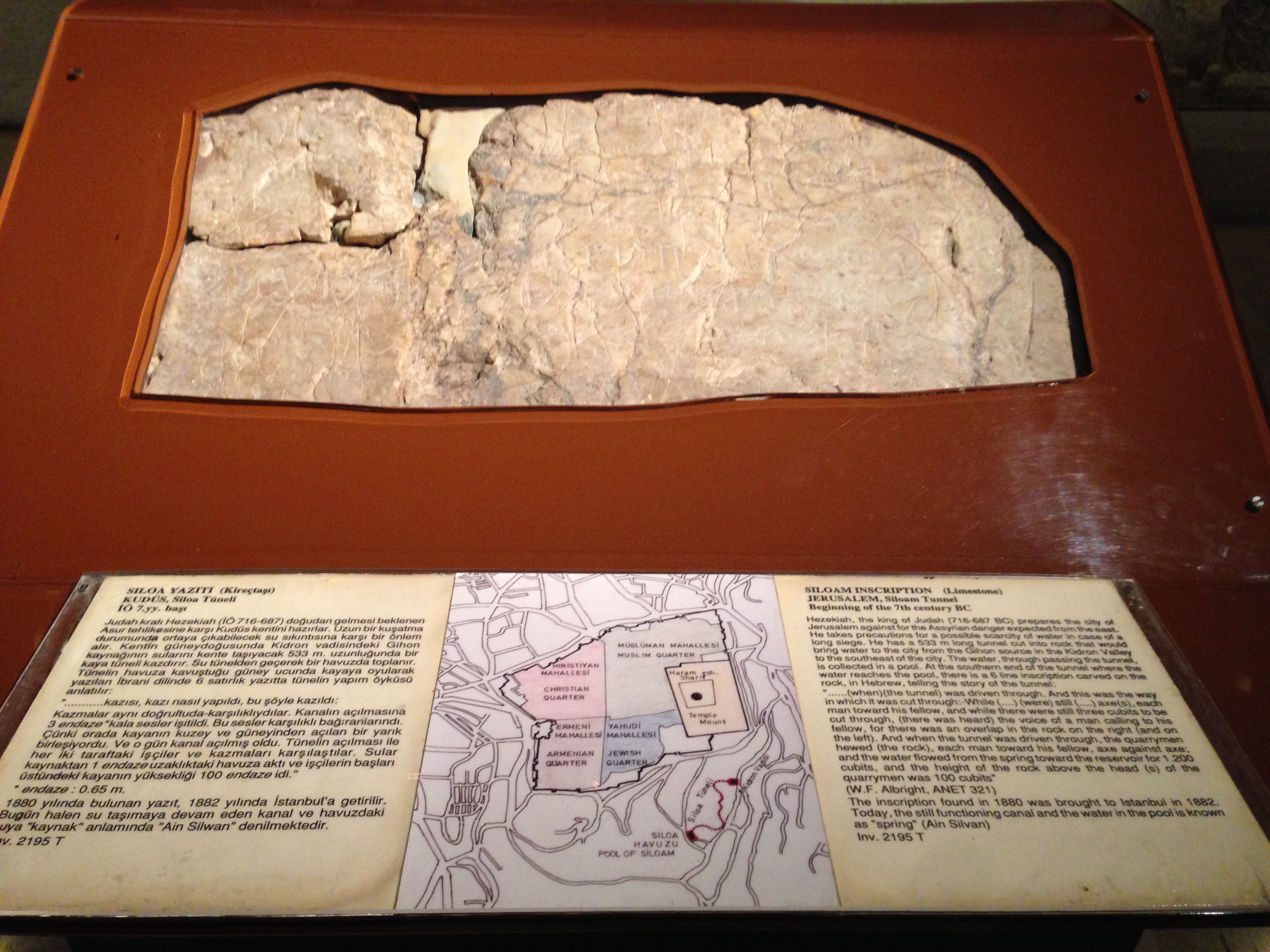
The Siloam Tunnel Inscription: Excavation, Water, and the Limits of Dating
Artifact · A six-line Paleo-Hebrew stone inscription from the Siloam Tunnel wall, describing the diggers’ picks meeting and water reaching the pool. The entry compares it with biblical accounts without attributing Hezekiah’s name to it.
-
From 743 BCE to 732 BCE
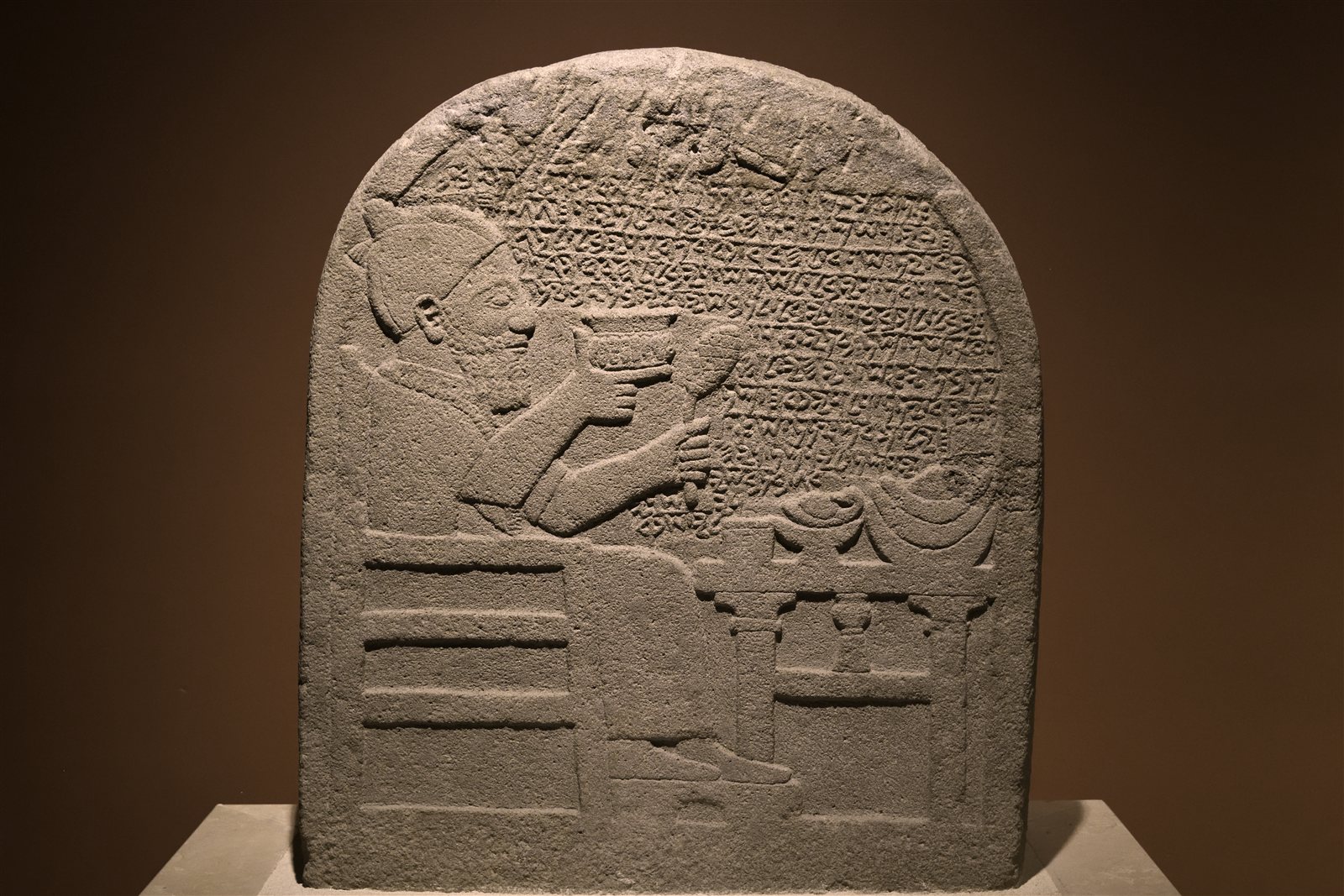
The Funerary Stele of Katumuwa from Zincirli
Artifact · Katumuwa commissioned a stone monument while he was alive. Its relief shows him at a banquet. The inscription asks whoever takes possession of the room to renew an offering in his memory each year.
-
From 732 BCE to 730 BCE
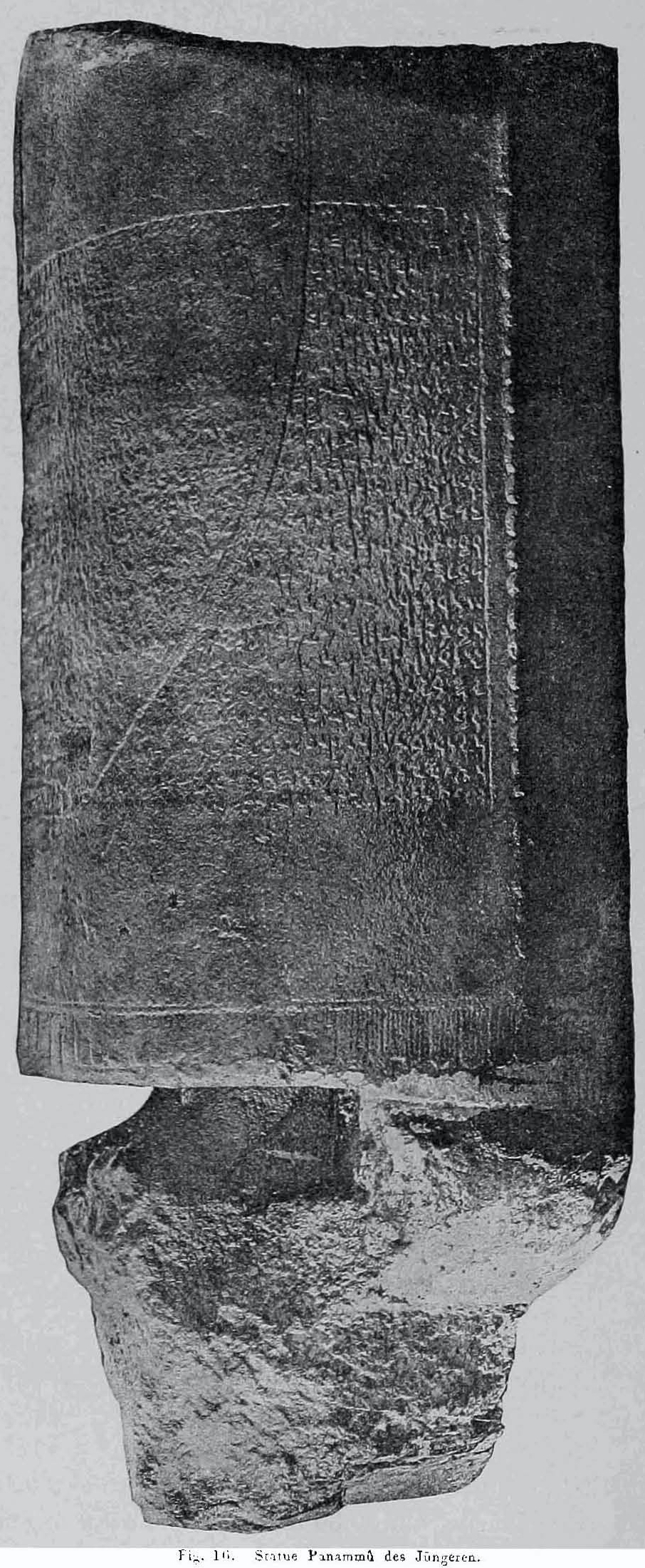
The Memorial Inscription of Panamuwa II (VA 3012)
Artifact · On the surviving lower half of a statue near Zincirli, Barrākib recalls his father’s service to Assyria and death on campaign. The inscription ends with an appeal to the gods of Sam’al, naming Hadad, El, Rākib-El and Šamš.
-
From 721 BCE to 705 BCE
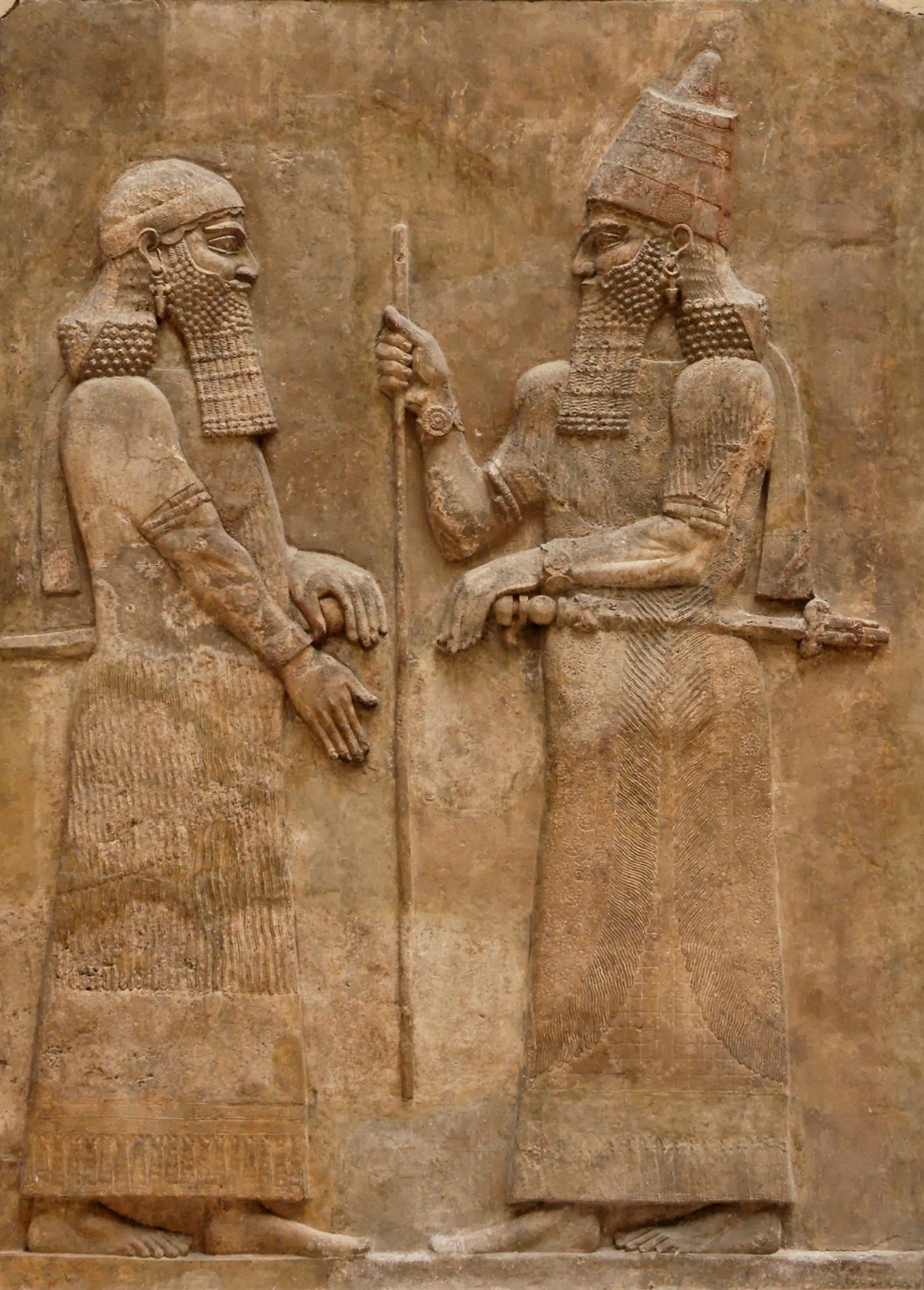
Sargon II and a Dignitary in the Palace at Khorsabad (Louvre AO 19873–19874)
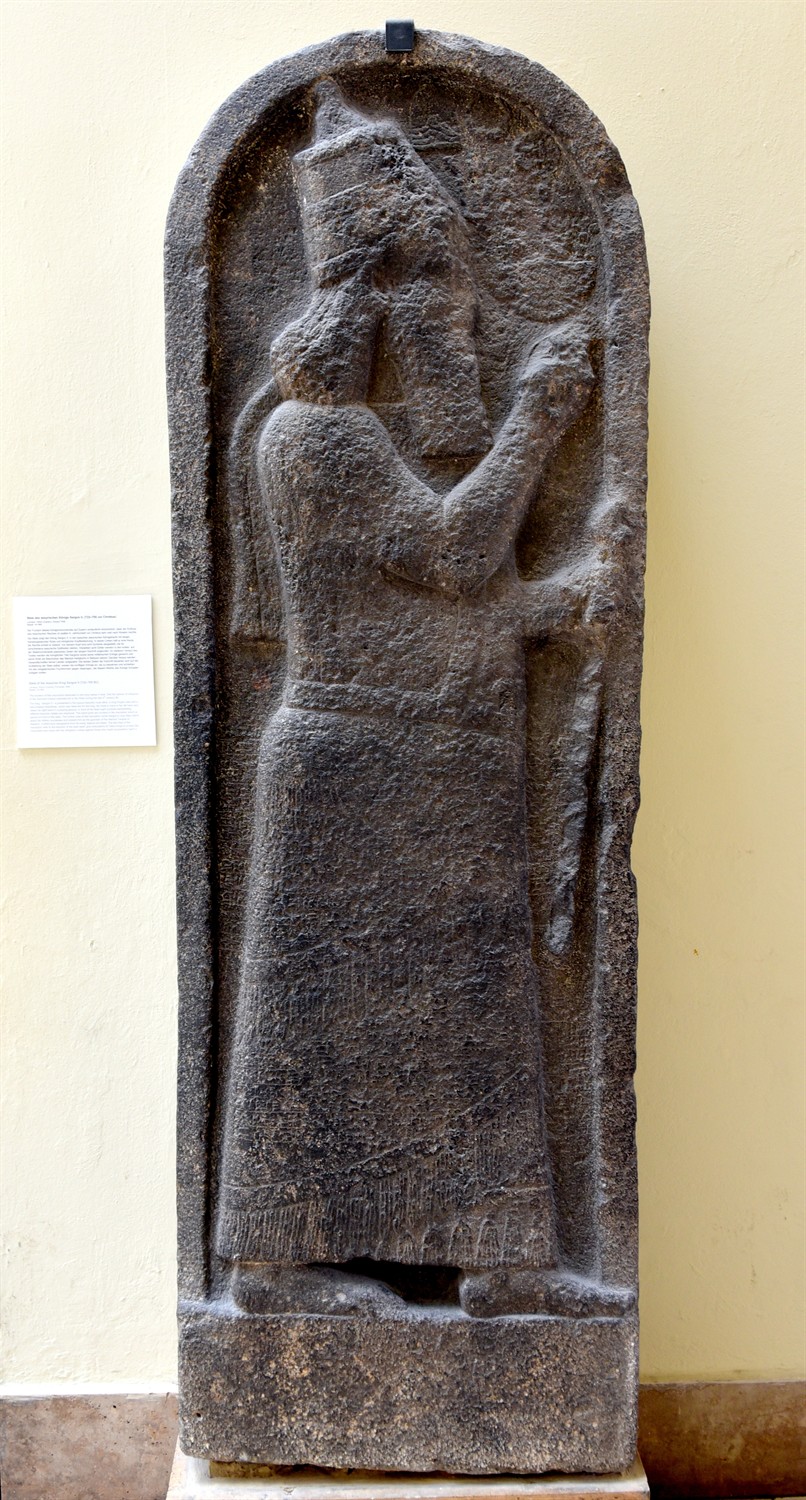
Artifact · A carved wall panel from Khorsabad shows Sargon II facing a bearded court dignitary. Their headgear and jewellery mark differences of rank. Traces of paint and an inscription on the back preserve details of how the panel was made and installed.
-
From 707 BCE to 705 BCE
The Kition Stele of Sargon II (Berlin VA 968)
Artifact · A basalt stele found on Cyprus shows an Assyrian king before eight divine emblems. Its inscription says seven rulers sent gifts to Babylon and asks future kings to preserve the monument.
-
From 700 BCE to 600 BCE
Kummaya in the Assyrian Underworld Vision
Person · The Assyrian prince who, in a damaged tablet from Ashur, sees the court of the underworld and is sent back alive with a warning. Who he really was is still debated.
-
From 700 BCE to 500 BCE
MUL.APIN (British Museum BM 86378): The Babylonian Star Compendium
Artifact · A small clay tablet in the British Museum carries Tablet 1 of MUL.APIN, a Babylonian handbook of stars, sky paths and calendar rules. It was copied for centuries, but when it was first composed is still debated.
-
From 700 BCE to 200 CE
Ptolemy II and the Seventy: Was the Torah Composed in Alexandria?
Study · Aristeas, inspired translation and earlier witnesses: what the Seventy tradition says, and what it cannot establish about Torah composition in Alexandria.
-
From 700 BCE to 500 BCE
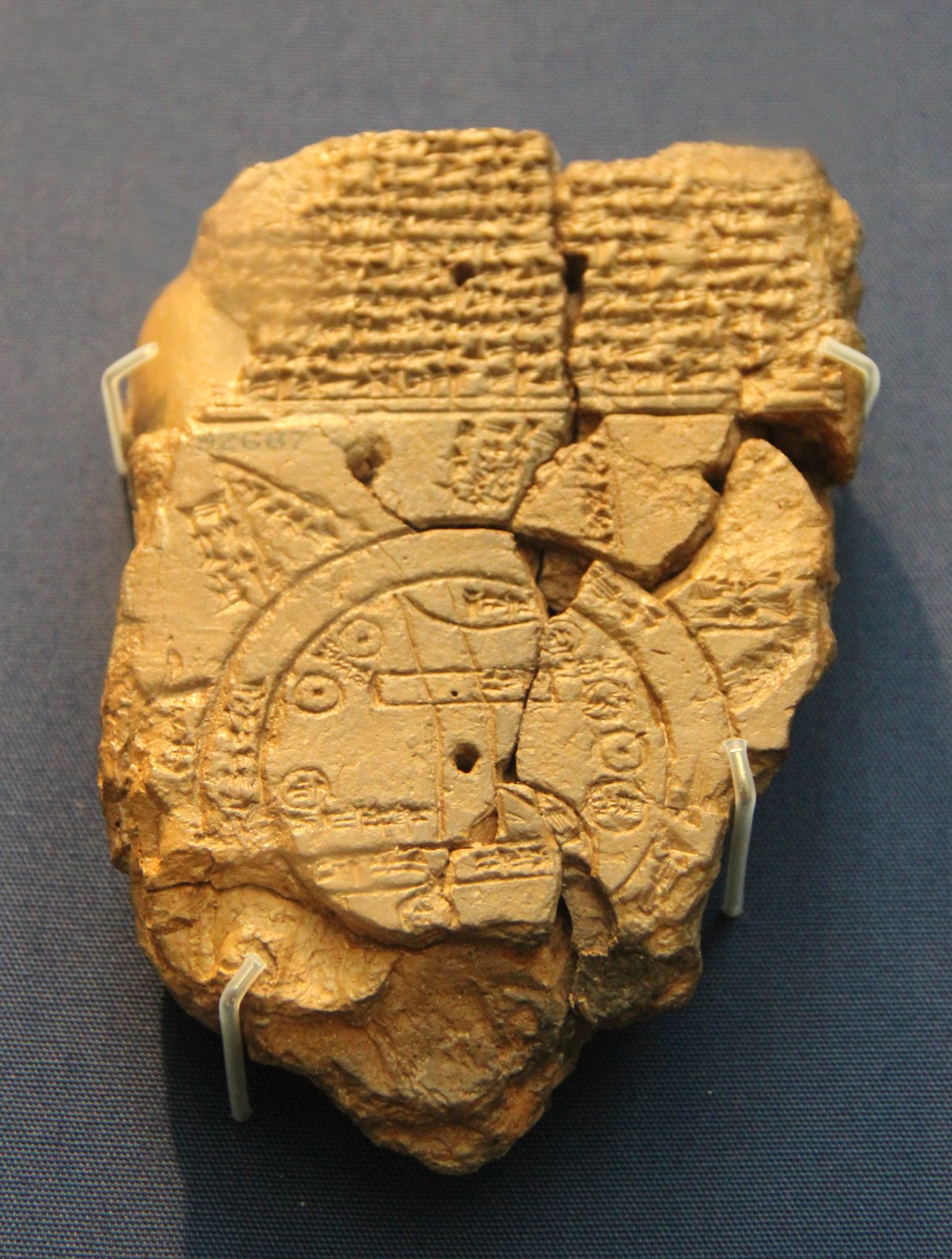
The Babylonian Map of the World (British Museum BM 92687): A Clay Tablet That Draws the Earth
Artifact · A small broken clay tablet from Sippar shows the world as a disc ringed by a "bitter river", with Babylon at its centre. What it draws, what its text says and how scholars read it still differ.
-
From 700 BCE to 600 BCE
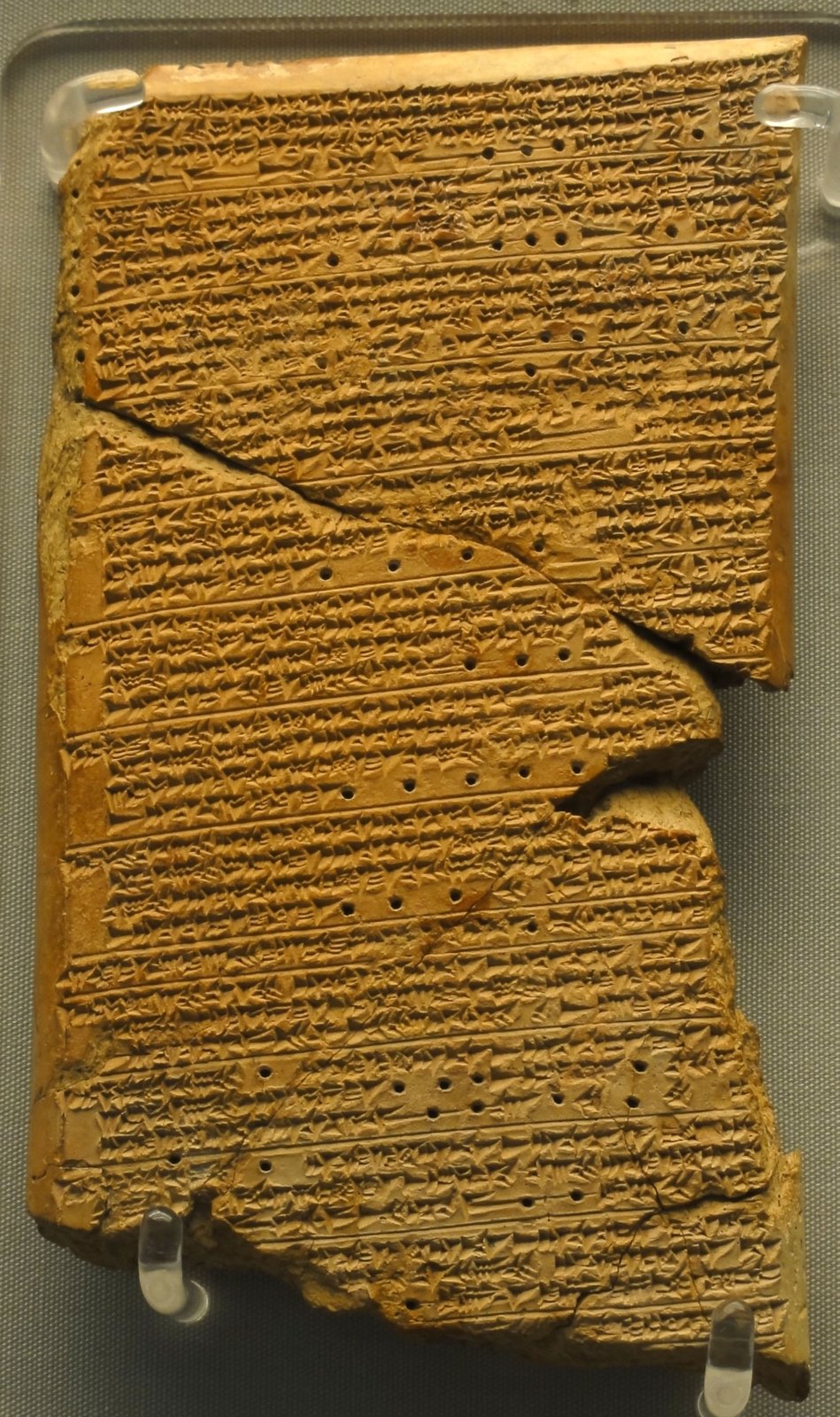
The Venus Tablet of Ammisaduqa (British Museum K.160): Watching a Planet for Omens
Artifact · A clay tablet from Nineveh lists when Venus vanished and reappeared over 21 years, with an omen for each event. Its dates once seemed to fix Babylonian chronology, but the text is damaged and scholars still disagree.
-
From 699 BCE to 600 BCE
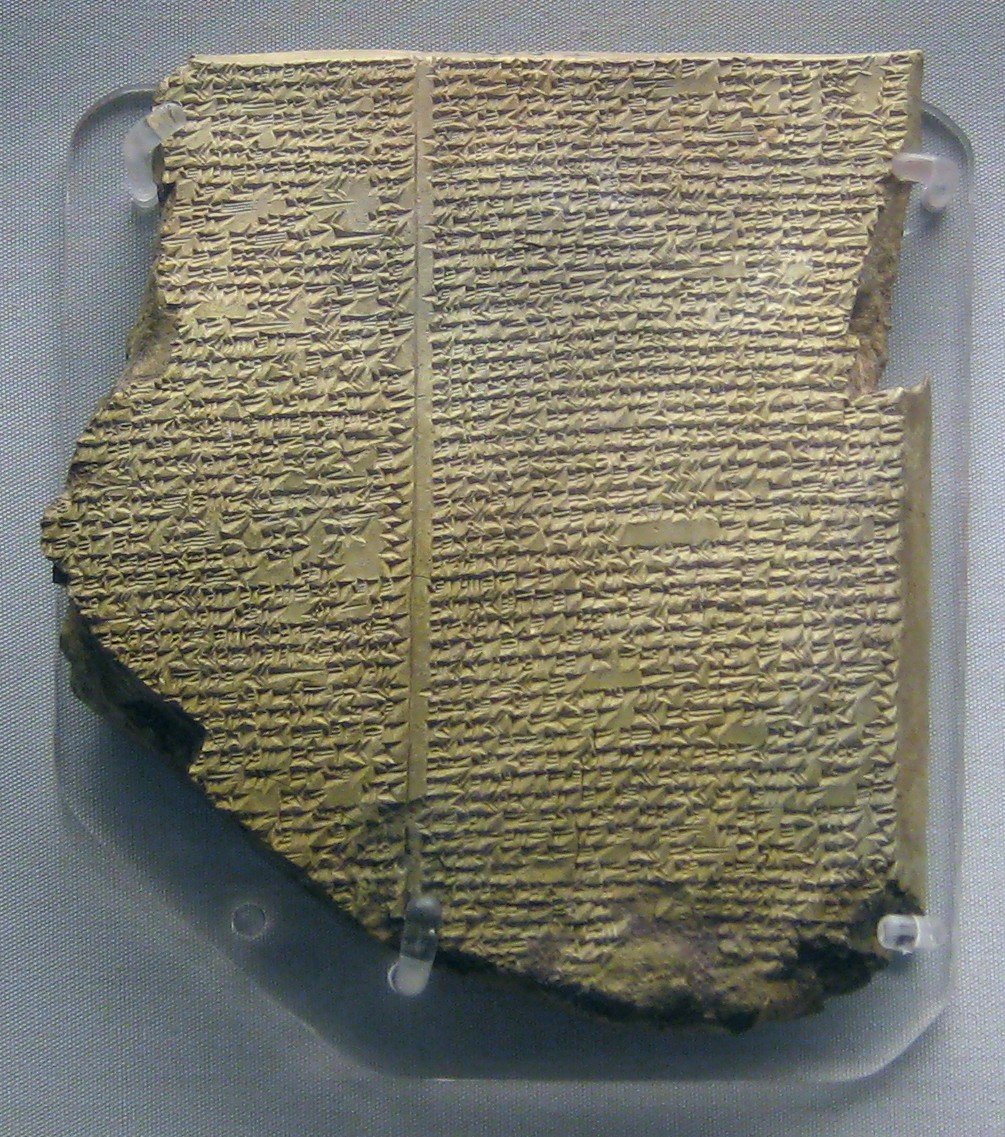
The Flood Tablet (Gilgamesh Tablet XI, British Museum K.3375)
Artifact · A clay tablet from Ashurbanipal's library at Nineveh with the flood story of Gilgamesh Tablet XI, recognised in 1872 by George Smith: what it is, what it says and what it does not prove.
-
691 BCE
The Taylor Prism: Sennacherib and Judah in a Royal Inscription
Artifact · An Assyrian prism dated to 691 BCE that tells, among Sennacherib’s campaigns, of Judah in 701 BCE. The entry separates its claims of 46 towns taken and Hezekiah shut in Jerusalem from what critical comparison can establish.
-
690 BCE
The Aqueduct of Sennacherib at Jerwan
Site · A limestone crossing at Jerwan let a canal carry water over a seasonal stream on its way to Nineveh. The carved blocks describe Sennacherib’s waterworks and show how builders repaired the aqueduct with older stone.
-
672 BCE
Esarhaddon’s Succession Treaty
Entity · An Assyrian imperial oath dated 672 BCE securing Ashurbanipal’s succession in Assyria and his brother Šamaš-šumu-ukin’s in Babylon. Its relationship with Deuteronomy remains debated, and no Jerusalem copy is known.
-
From 671 BCE to 669 BCE
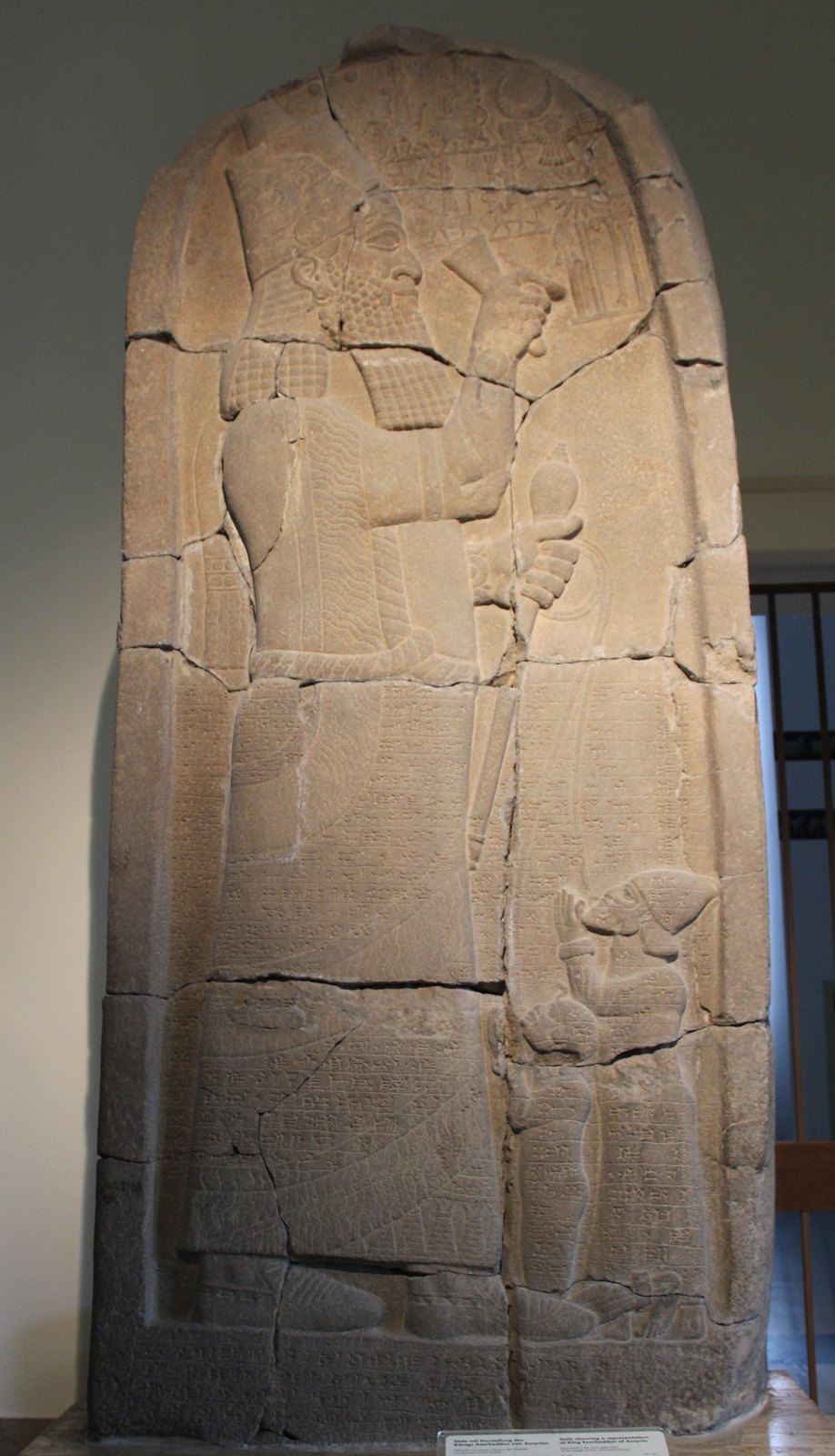
The Victory Stele of Esarhaddon from Zincirli (VA 2708)
Artifact · An Assyrian king towers over two captives on a basalt stele from Zincirli. Seven dots appear above his crown, and the inscription names the Seven among the gods who support him. The text recounts the capture of Memphis.
-
From 650 BCE to 550 BCE
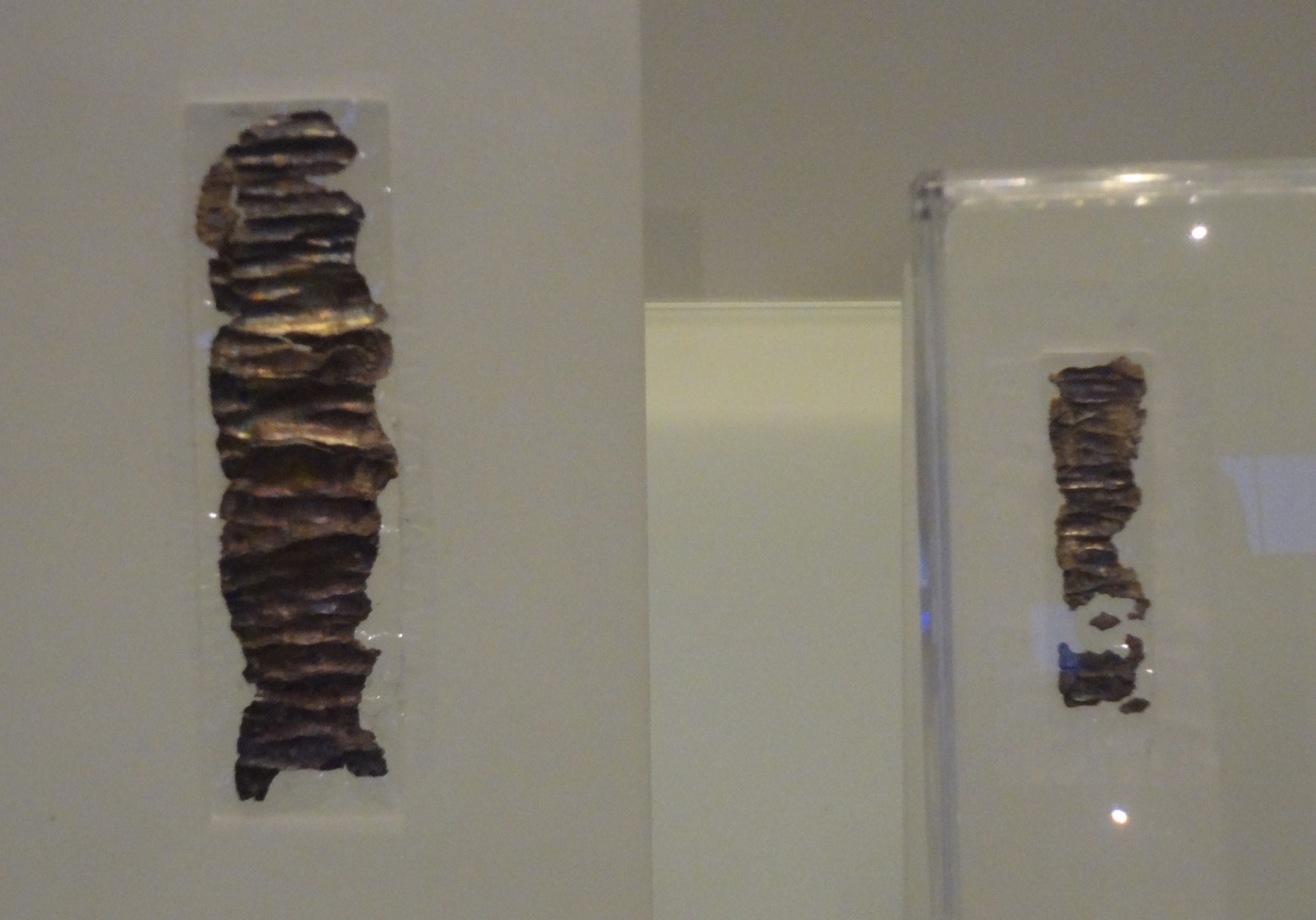
Ketef Hinnom amulets
Artifact · Two silver amulets from a burial at Ketef Hinnom, usually dated to the late seventh or early sixth century BCE. Their blessing parallels Numbers 6:24–26, attesting a formula in use, not the writing of Numbers as a whole.
-
From 649 BCE to 547 BCE
Adad-guppi
Person · Adad-guppi was the mother of Nabonidus, king of Babylon. Two steles from Harran tell of her devotion to Sîn and her son’s rise, while a Babylonian chronicle records her death in 547 BCE.
-
From 626 BCE to 539 BCE
The Neo-Babylonian empire (c. 626–539 BCE)
Period · For under ninety years Babylon ruled the Near East again, after Assyria fell. Its kings rebuilt the city, took Jerusalem and lost the empire to Cyrus. Much of what we know comes from building inscriptions, short chronicles and the Bible.
-
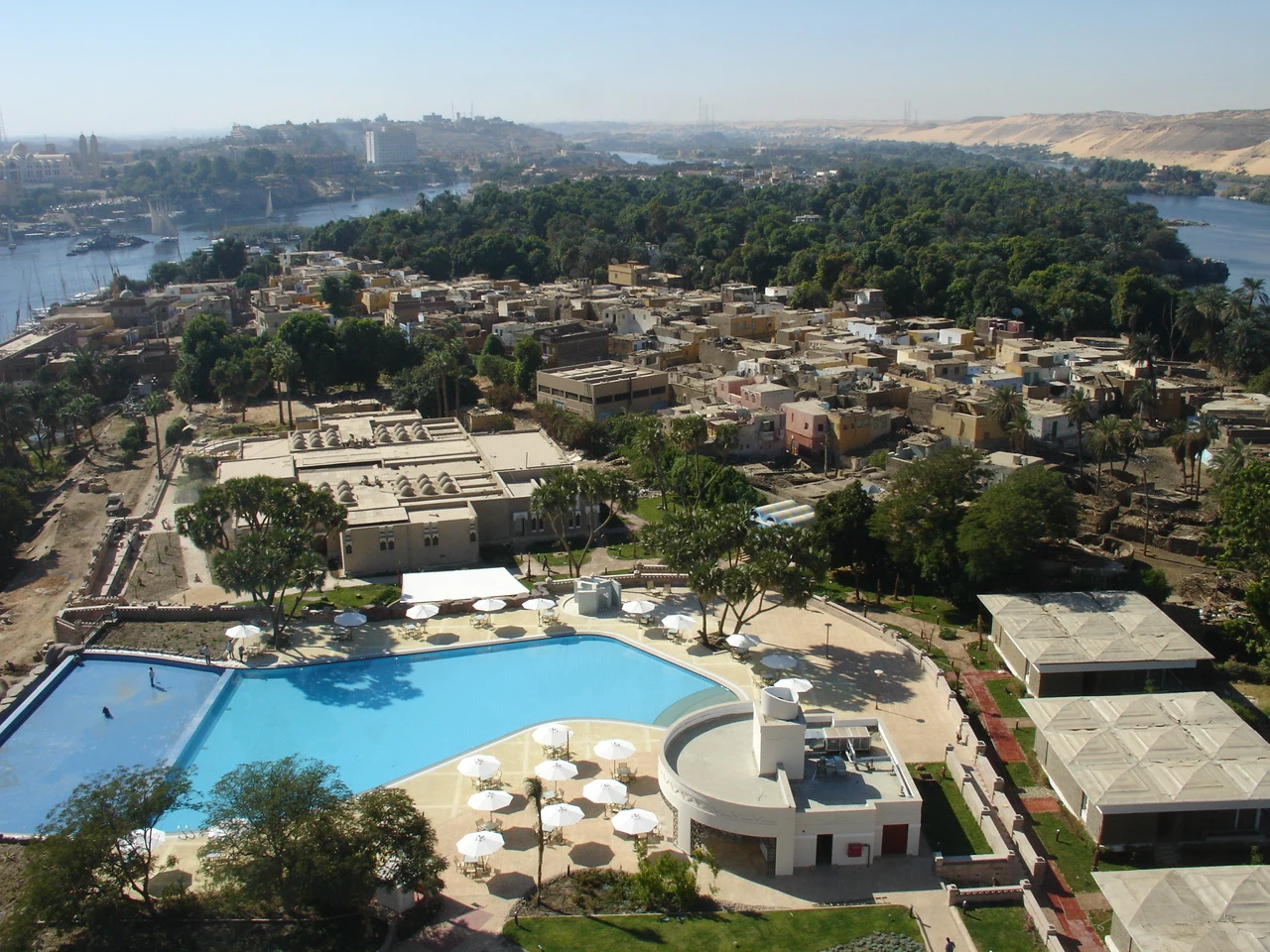
620 BCE
Naucratis
Site · A river port in the western Nile Delta where Greek, Cypriot and other traders met Egypt from the late seventh century BCE. Its finds tell a more complicated story than the ancient accounts of its founding.
-
From 620 BCE to 570 BCE
Sappho
Person · A poet of the island of Lesbos, around 600 BCE, whom later Greeks ranked above every other woman poet. Most of her songs survive only in pieces; one names her brother Charaxus, the merchant tied to Rhodopis in Egypt.
-
From 604 BCE to 539 BCE
The Louvre Syllabary (AO 7661)
Artifact · A clay tablet sets Sumerian readings and Akkadian equivalents side by side. Its last eight lines record how an apprentice copied the list for a scholar, who dedicated it to Ishtar for the temple library at Uruk.
-
From 590 BCE to 586 BCE
The Lachish Letters: Potsherd Messages from the Last Years of Judah
Artifact · Twenty-one inked potsherds found at Lachish in the 1930s give a rare first-hand glimpse of a Judean fortress shortly before the Babylonian conquest of about 588–586 BCE. How much they really tell us is still debated.
-
From 570 BCE to 526 BCE
Rhodopis of Naucratis
Person · A Thracian woman, once enslaved, who won her freedom and wealth in the Greek port of Naucratis in Egypt in the 500s BCE. Later writers gave her a pyramid and a sandal carried off by an eagle.
-
From 550 BCE to 330 BCE
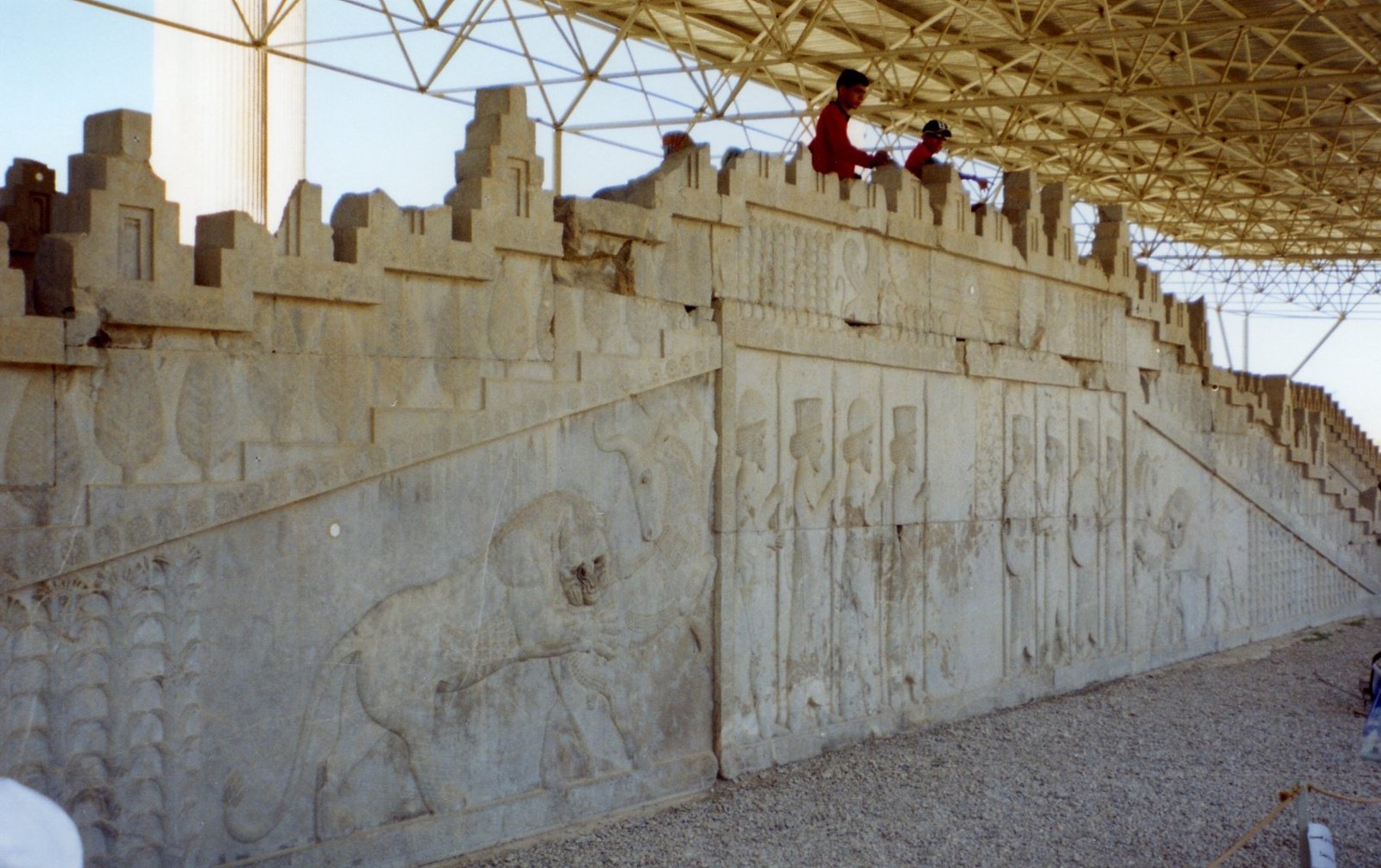
Achaemenid Persia and the Near East (c. 550–330 BCE)
Period · Persian kings ruled from the Aegean and Egypt to Central Asia. Inscriptions and clay archives show how governors, scribes and couriers served the empire. The records preserve several languages, scripts and local traditions.
-
From 539 BCE to 538 BCE
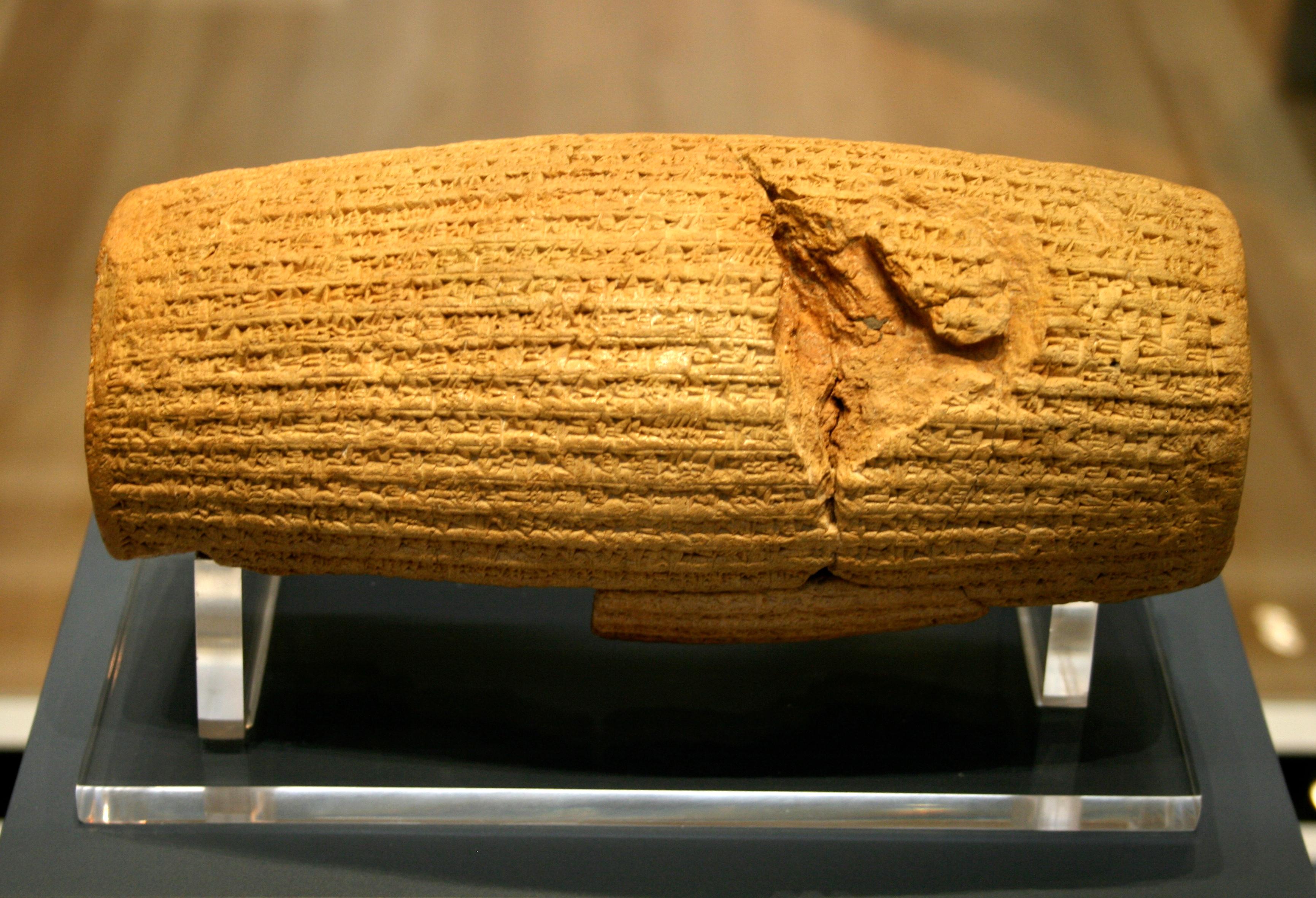
The Cyrus Cylinder: Royal Inscription and the Limits of Inference
Artifact · A critical reading of Babylonian object BM 90920: its damaged royal text, Marduk’s choice of Cyrus, returned divine images and people, and the limits of its modern human-rights label.
-
From 525 BCE to 500 BCE
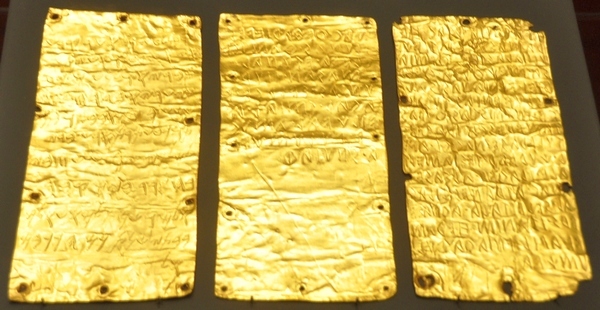
The Pyrgi Gold Tablets: Dedication in Two Languages and the Limits of Equivalence
Artifact · Three gold tablets from the Pyrgi sanctuary (two Etruscan, one Phoenician) record a dedication linked to Thefarie Velianas and Uni/Astarte near the end of the sixth century BCE, showing the limits of linguistic equivalence.
-
From 525 BCE to 407 BCE
Yahweh’s Temple at Elephantine: Worship beyond Jerusalem
Study · What does the petition of 407 BCE reveal about Yaho’s temple, its priests and their links with Judah and Samaria?
-
522 BCE
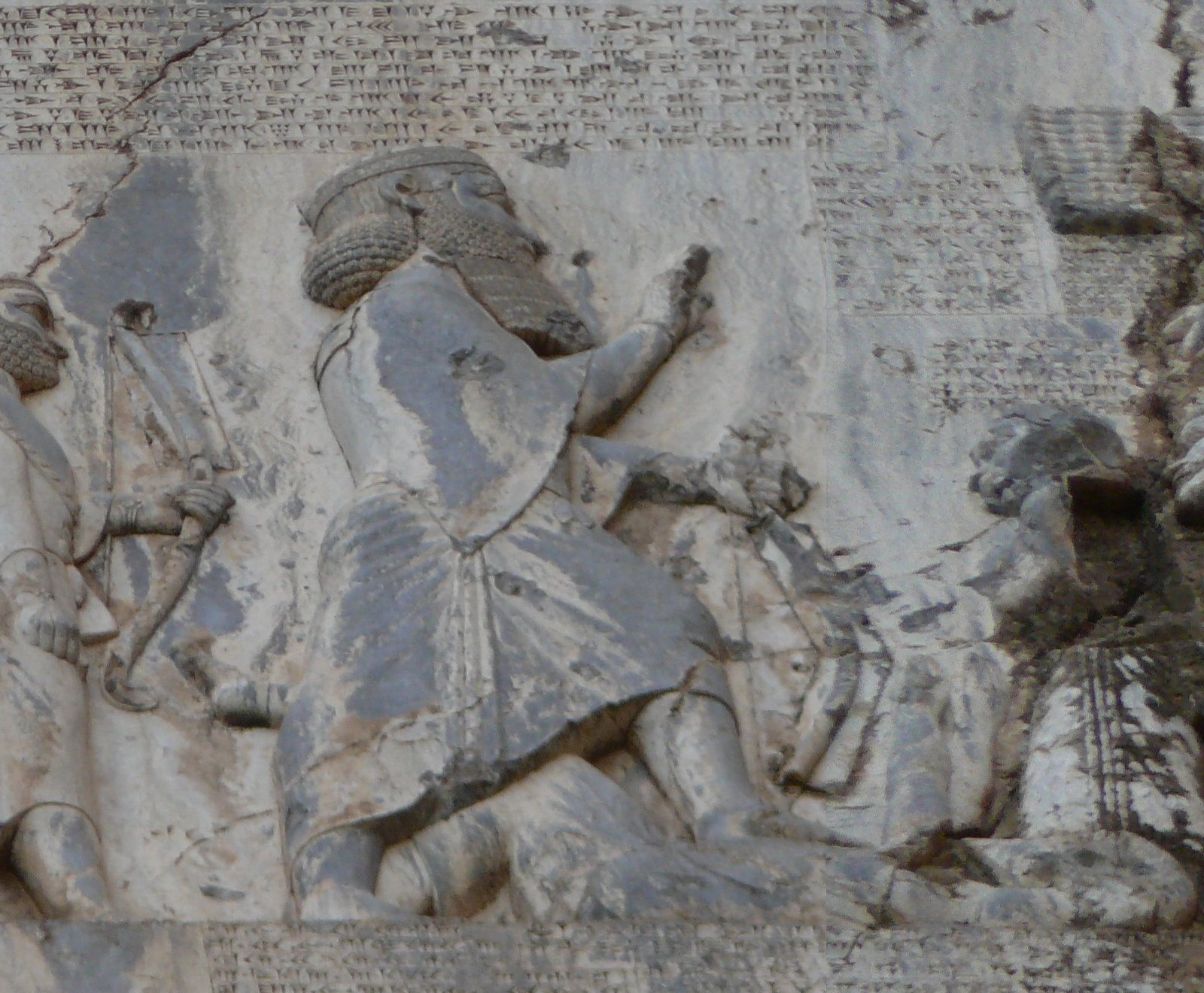
Bardiya and the Behistun Succession
Person · Cyrus's younger son, whom the Greeks called Smerdis. Darius says a magus named Gaumata ruled in his name in 522 BCE; whether that is true has long been debated.