Artifact · Manuscript
The Papyrus of Ani, Frame 3: Heart, Text, and Image
An object record bringing together its image, metadata, rights, and context.
- Names
- Ani’s Judgment, EA10470,3 · Papyrus of Ani, Frame 3
- Timeline
- 1250 BCE
- Region
- Thebes, Upper Egypt
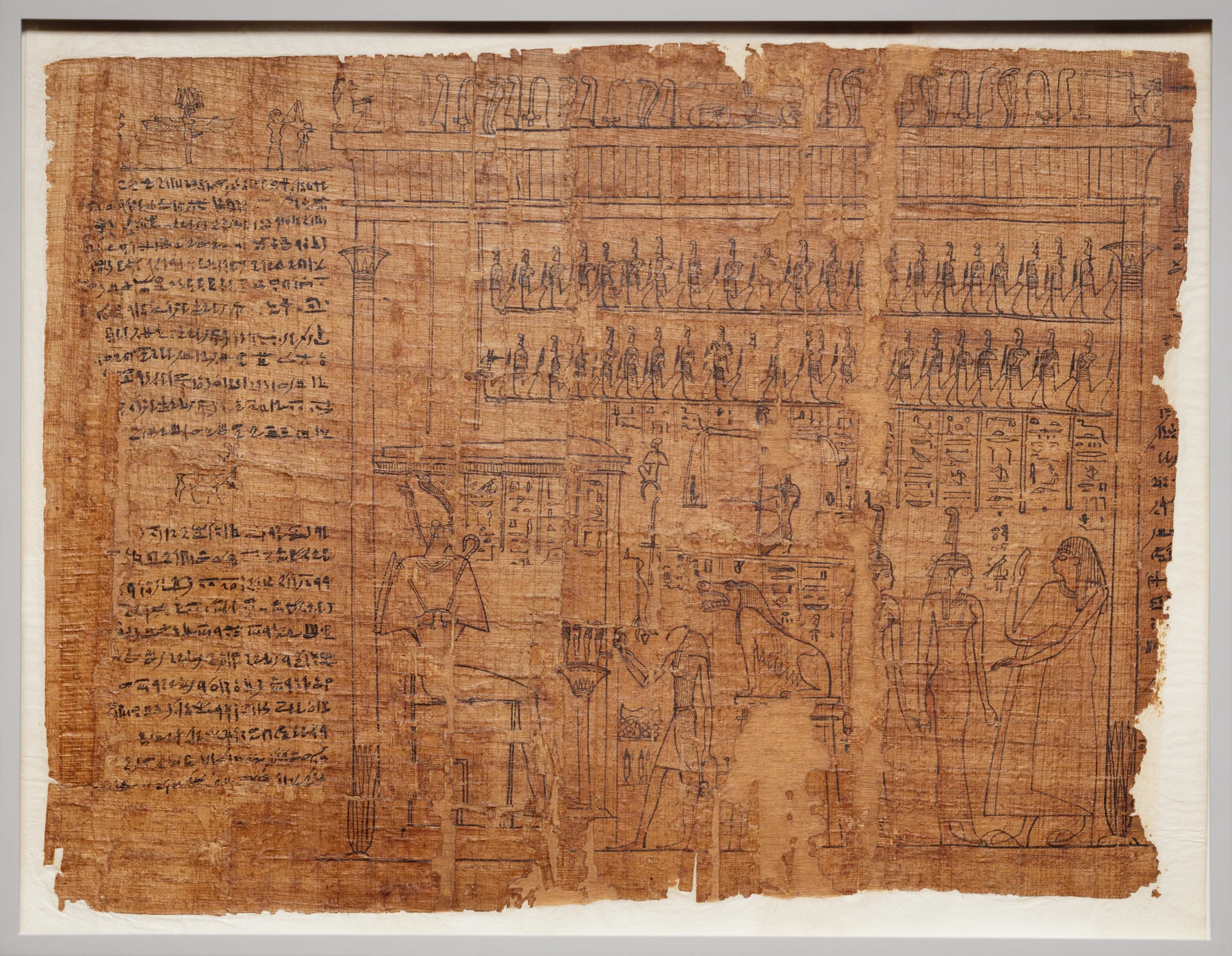
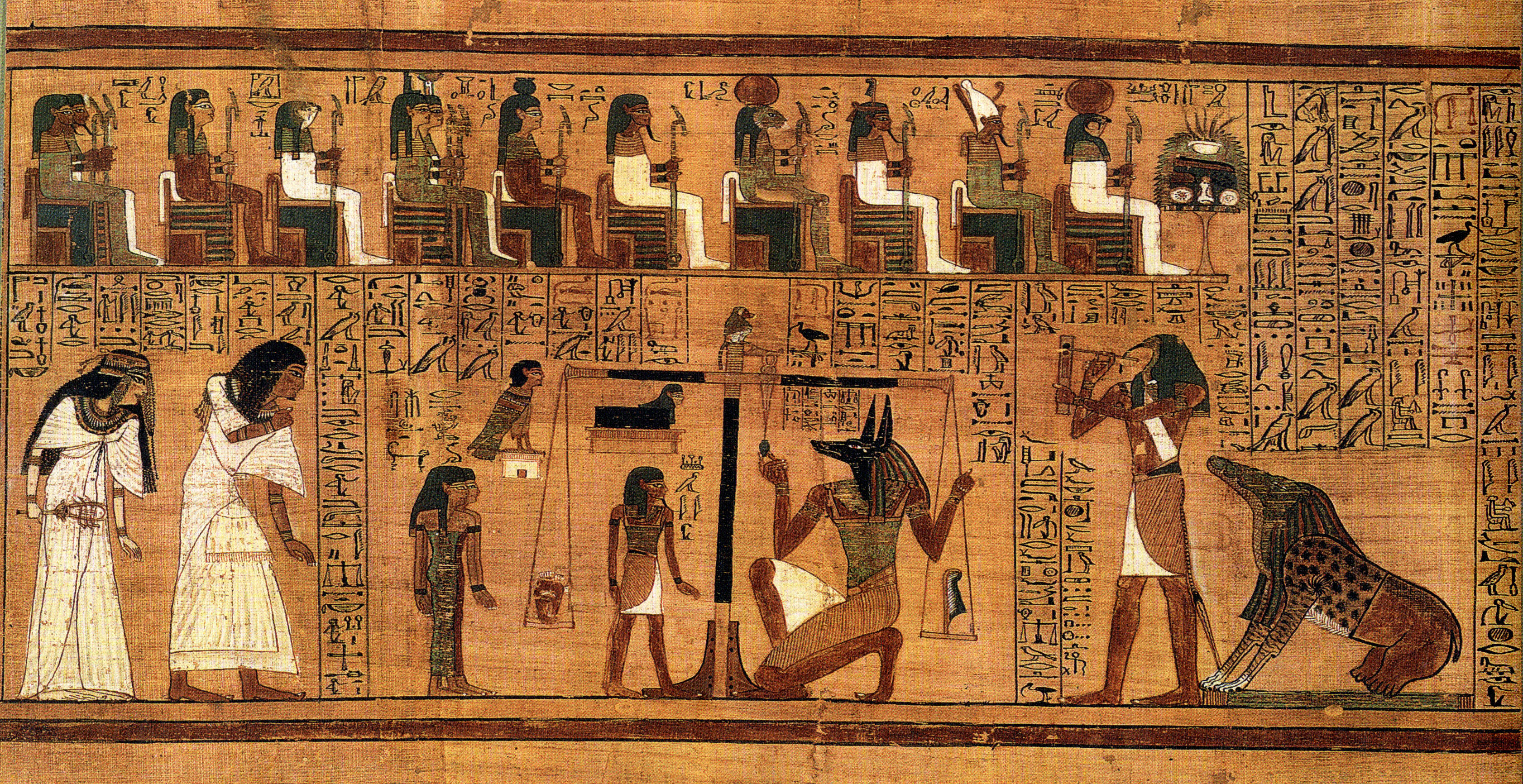
Frame 3 of the Papyrus of Ani in the British Museum, circa 1250 BCE, where Spell 30B addresses the heart beside the judgment balance, Thoth’s declaration and the acceptance of the divine assembly.
Estimated reading time: 6 min Published Last reviewed:
Share article
Photograph
Photographic reproduction attributed to the British Museum, published in Eternal Egypt, ed. Edna R. Russmann (2001), via Wikimedia Commons (PD-Art). · Public domain
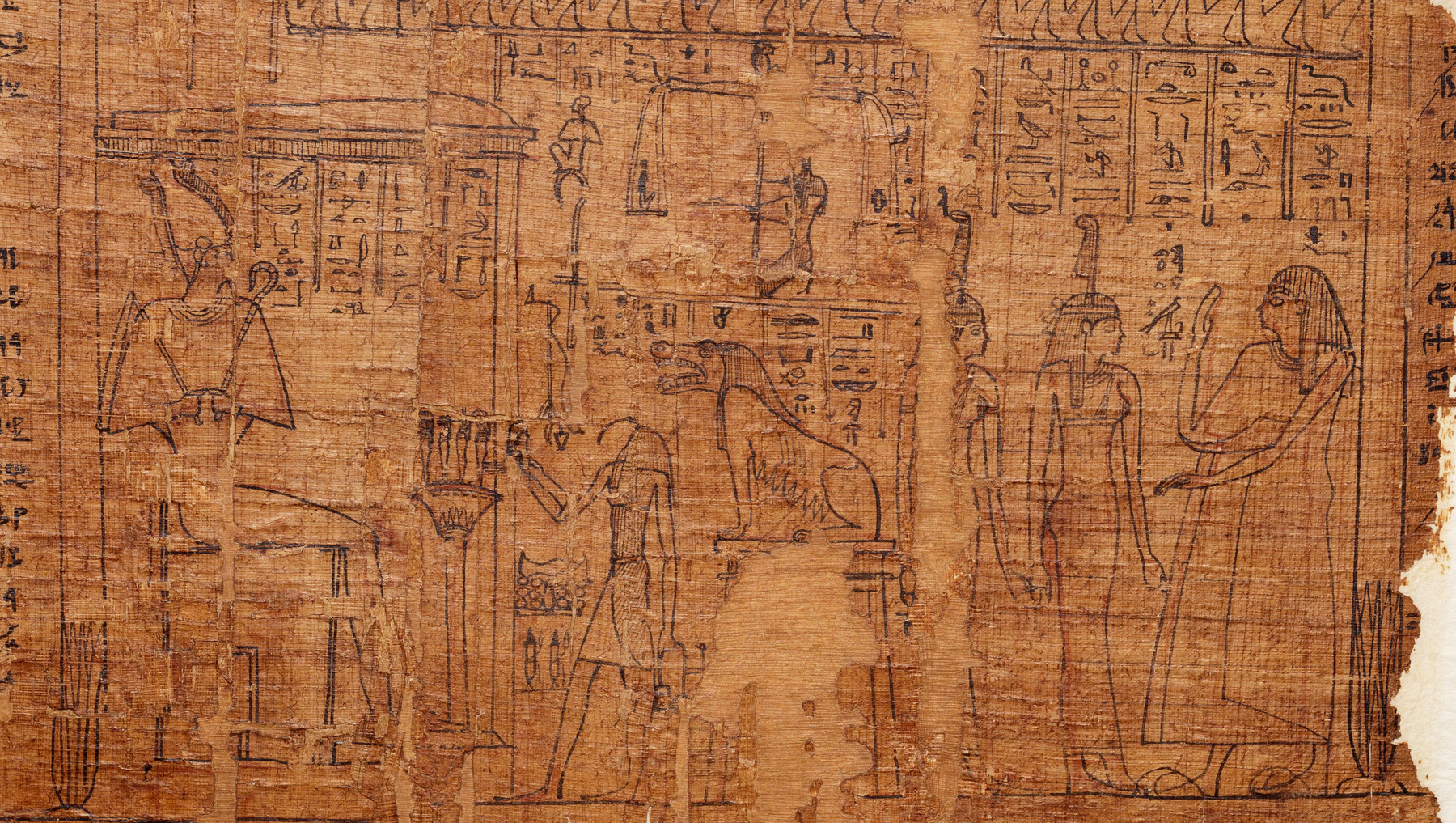
Photographic excerpt of the judgment scene in frame 3 of the Papyrus of Ani (EA10470,3). Ani and Tutu appear on the left, the balance and Anubis in the center, and Thoth and Ammit on the right, with enthroned gods above. It is not the entire roll or every margin of the frame, nor a legible epigraphic facsimile
Image source · Image sourceObject details
- Title
- The Papyrus of Ani, Frame 3: Heart, Text, and Image
- Timeline
- 1250 BCE
- Region
- Thebes, Upper Egypt
- Rights
- Public domain
Text
Introduction
This entry examines one painted portion of the Egyptian Book of the DeadEgyptian Book of the DeadA modern name for a variable collection of Egyptian funerary spells and images intended for the afterlife, not a single book with a fixed sequence.Glossary · Click to read the explanation, not the whole composition or the entire Papyrus of Ani. The British Museum records this particular witness as EA10470,3, frame 3. Within it, Ani addresses his own heart, a balance stages the test, and Thoth and a divine assembly pronounce a favorable verdict. How do these words and images work together, and what can they tell us about the papyrus's manufacture rather than Ani's actual conduct in life? The answer requires keeping frame 3 apart from the adjacent frame and from later papyri with related scenes. [1][2]
Identifying and dating one physical witness
The British Museum assigns this painted papyrus to the Nineteenth Dynasty, circa 1250 BCE, with registration number 1888,0515.1.3. Its catalogued findspot is the Tomb of Ani (Thebes), a register entry rather than a fully documented excavation narrative. Its names include Ani and his wife Tutu. The catalog records that it was donated through E. A. Wallis Budge in 1888; this does not by itself establish a detailed history of excavation. The dimensions 43.10 cm high × 66.20 cm long are explicitly those of the museum frame, not of Ani's complete roll or the photographic excerpt reproduced here. [1]
Three levels must remain separate: the ancient roll with its sequence of funerary compositions, the museum's framed fragment, and the modern image representing only a portion of the surviving surface. Frame number 3 is neither spell number 30B nor modern chapter number 125. The former is a collection designation; the latter numbers were assigned by modern scholarship to particular textual and pictorial units. [1][2][8]
Following the scene from left to right
Ani and Tutu enter from the left in a deferential posture. At the center a balance holds a representation of the heart and the feather of MaatMaatAn Egyptian principle of truth, justice, and right order, also embodied by the ostrich-feather goddess Maat; differently expressed in rule, ritual, and funerary judgment.Glossary · Click to read the explanation, the Egyptian ideal of truth and right order. The jackal-headed AnubisAnubisAnubis is an Egyptian deity associated with the dead and the balance in heart-weighing scenes.Glossary · Click to read the explanation attends the mechanism, while ThothThothThoth is an Egyptian god of knowledge and writing, also associated with recording funerary judgment.Glossary · Click to read the explanation, shown with an ibis head and scribal equipment, stands to the right to register the result. Behind him waits AmmitAmmitAmmit is a composite being in Egyptian judgment imagery, associated with devouring those who fail the trial.Glossary · Click to read the explanation, a composite devourer that threatens a failed heart. A row of enthroned deities surveys the procedure from above, while other figures beside the scales evoke fate, birth and Ani's ba. These identifications follow the museum's account of the iconography, not a fresh decipherment of the minute captions in this photograph. [3]
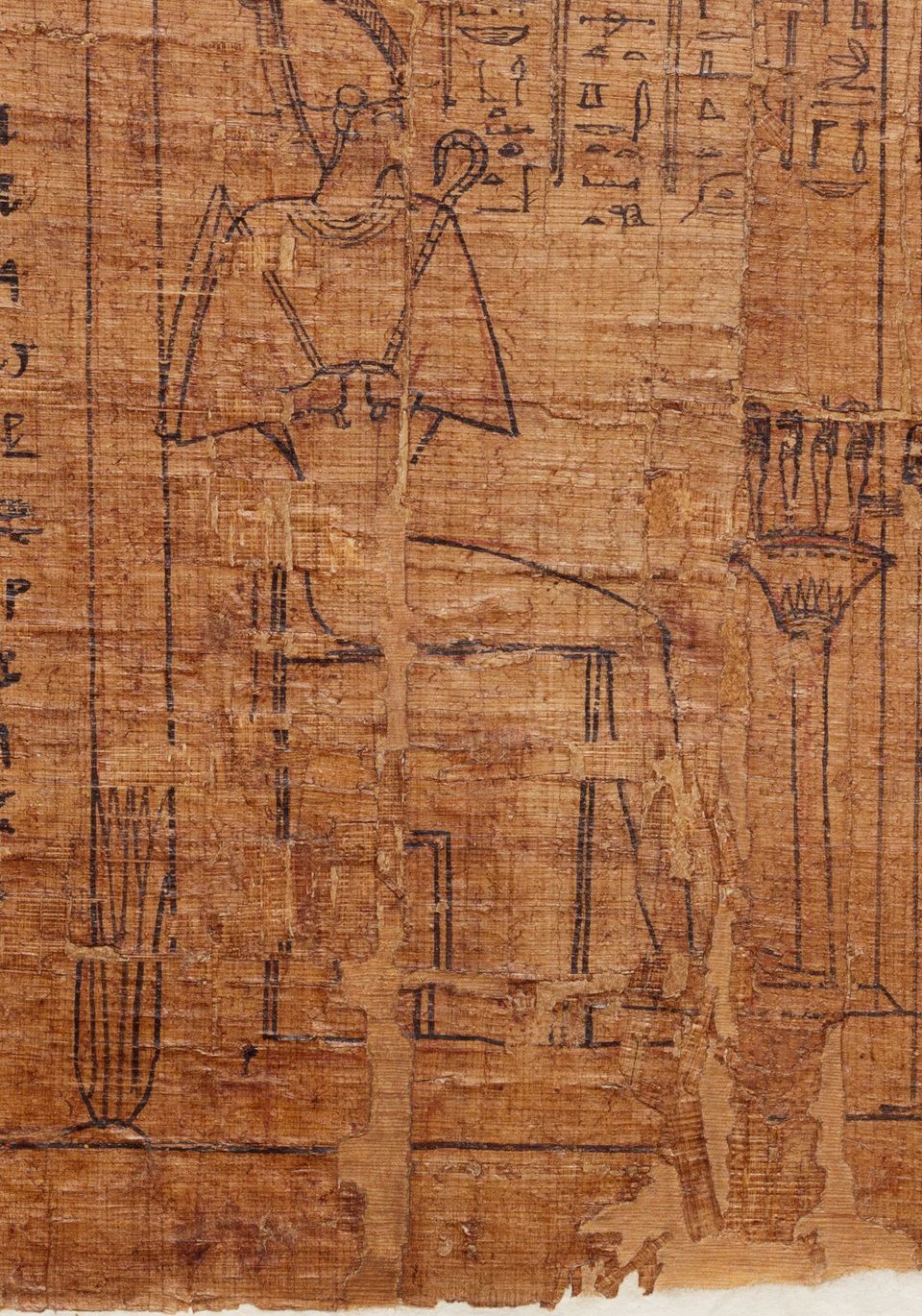
Although OsirisOsirisOsiris was an ancient Egyptian deity associated with the dead, life after death, renewal, and kingship. His roles appear in changing funerary texts, rituals, and judgment scenes, notably the weighing of the heart.Glossary · Click to read the explanation is invoked in the judgment formulae, the seated Osiris receiving Ani after the verdict is depicted in the next frame, EA10470,4, not in the frame examined here. The supplied photograph is itself an excerpt rather than a full-edge facsimile of the framed papyrus; neither its margins nor its individual hieroglyphs should be treated as an independent scholarly edition. [1][6][8]
Ani's address to his heart — Spell 30B
In the judgment scene, Ani's words address his heart as a potential witness, not a modern reader or investigator. In the British Museum's English translation of Spell 30B, Ani calls upon the heart associated with his mother and asks it not to “stand against me as a witness” at the tribunal. This short quotation derives from the museum's translation, not from a new reading of the hieroglyphs, and does not reproduce the entire spell. [1]
The words gain their force beside the scale and feather. Ani appeals to something that can both be weighed and speak against him. UCL's guide explains that the modern chapter labels 30A and 30B refer to different versions of a heart-protection spell, while the judgment vignette belongs to the wider conventions associated with chapter 125. Therefore not every column in this scene is a text of 125B, nor may a translation of 30A be presented as if it were Ani's 30B. [2]
Thoth's declaration and the court's reply
The next voice is that of Thoth. The museum translates a declaration in which he reports the favorable weighing of the heart of “this Osiris” Ani and affirms his deeds. A subsequent response from the Great Ennead validates Thoth's declaration and names Ani as vindicated or true of voice. “This Osiris” is a funerary epithet applied to the deceased; it does not mean that a seated picture of the god must be visible in frame 3. The verdict belongs to the desired funerary outcome expressed by the manuscript, not an independent investigation of Ani's real-life morality. [1]
The scene thus holds three distinct speech acts together: Ani's request to his heart, Thoth's assessment, and divine acceptance of that assessment. Their placement around the balance connects them visually, but it does not turn the painted composition into a transcript of an event witnessed by an ancient court reporter. [1][3]
Planning text and picture: known coordination, unknown hands
Writing, colored figures, borders, spacing and alignment had to be coordinated. The British Museum curator calls the layout skillful while acknowledging that how its design was achieved is unknown. We cannot identify a named painter or scribe from this frame. Damage, pigment loss and fading also complicate inferences about different hands from what now appears in the reproduction. [1]
Holger Kockelmann's study of Book of the Dead manufacture discusses models, allotted spaces for images and rolls assembled from separately prepared sections. He treats the Papyrus of Ani among examples suggesting work by several scribes and draftsmen. Irmtraut Munro likewise demonstrates that vignettes had an active funerary significance rather than merely filling empty spaces. Those comparative findings make collaboration plausible, but they do not fix the sequence of every brushstroke or the identity of the artists of this particular frame. [4][5]
Not the Metropolitan Museum's weighing scene
Readers seeking a broader thematic analysis can consult Weighing the Heart in Egypt, which primarily discusses the Metropolitan Museum papyrus fragment 66.99.142, dated approximately 230–150 BCE. Ani's EA10470,3 is much earlier and belongs to another manuscript and owner. Both evoke a judgment involving a heart and a balance, but the text and image of one cannot simply be substituted for the other. The Egyptian Book of the Dead entry explains the wider corpus and its varied manuscript traditions. [7]
Modern survival and the limits of this evidence
The museum's record places the fragment in its Egypt and Sudan collection and describes it as not on display in the record consulted. Its condition notes fractures, losses, bleaching and faded or degraded pigments. The attached cover is based on a photograph published in 2001—not on an ancient original photograph and not on a universal open license for all British Museum photography. [1][8]
This witness documents a carefully coordinated judgment composition, a heart spell and a favorable divine verdict in a particular Nineteenth-Dynasty funerary manuscript. It cannot prove that the judgment occurred historically, that Ani was morally innocent, that a specific named painter made frame 3, or that all copies of the Book of the Dead were made in the same way. These limits keep the object itself in view rather than completing it with Hunefer, frame 4 or a much later papyrus. [1][4]
References and notes
- British Museum, “Papyrus: Book of the Dead of Ani, frame 3,” EA10470,3, registration 1888,0515.1.3; object, translated passages, curatorial commentary and condition. Object record: Description, Dimensions, Inscription translation, expanded Curator’s comments, Condition and Acquisition were read; listed books were not. Return to the text ↑
- University College London, “Book of the Dead: Chapters in modern numerical order”; modern numbering and the distinction between 30A, 30B and the chapter 125 judgment vignette. Introductory discussion and entries for chapters 30 and 125 and full-height illustrations were read; not every linked chapter. Return to the text ↑
- British Museum, image record 684647001, “Book of the Dead of Ani (sheet 3),” detailed iconographic description of the judgment. Detailed published image description consulted for the people, balance, registers and figures; no independent hieroglyphic readings. Return to the text ↑
- Irmtraut Munro, “The Significance of the Book of the Dead Vignettes,” in Foy Scalf (ed.), Book of the Dead: Becoming God in Ancient Egypt, OIMP 39 (2017). Printed pp. 49–55, selected passages on vignettes, models and funerary function, read in extracted PDF text; figures and entire volume not independently reviewed. Return to the text ↑
- Holger Kockelmann, “How a Book of the Dead Manuscript Was Produced,” in Foy Scalf (ed.), OIMP 39 (2017); papyrus manufacture, scribes and draftsmen, including Ani. Printed pp. 71–74, sections on scribal notes, workshops and master copies read in extracted PDF text, not all plates or the full volume. Return to the text ↑
- British Museum, “Book of the Dead of Ani, frame 4,” EA10470,4; next frame with Ani introduced to Osiris. Indexed Description and frame number consulted; full curatorial comment was not accessed. Return to the text ↑
- IL Archive, “Weighing the Heart in Egypt: Justice, Ritual and the Afterlife,” published study 311 on Metropolitan Museum 66.99.142. Introduction and “Which papyrus?” section consulted for the specific object and approximate date; not a full rereading or independent check of the Met files. Return to the text ↑
- Wikimedia Commons, “File:BD Weighing of the Heart.jpg”; faithful photographic reproduction sourced from Eternal Egypt (Edna R. Russmann, 2001), PD-Art designation. The specific file page, dimensions, photographic source and PD-Art note were examined; the displayed file was matched and reviewed at 340 px and in zoom; no claim of museum CC0 waiver. Return to the text ↑
Archive records may be reviewed and refined as better evidence or sources become available. Suggest a correction
Suggest a correction · Suggest a source for this record
Cite this record
IL Archive, «The Papyrus of Ani, Frame 3: Heart, Text, and Image», https://ilarchive.com/en/artifacts/papyrus-ani-ea10470-3
Continue reading
Related readings