Ancient text
Egyptian Book of the Dead
A text for line-by-line reading, with transliteration, translation, and resources.
A variable corpus of Egyptian funerary spells on manuscripts and objects from just before the New Kingdom onward; no papyrus contains every chapter. The entry explains their functions and the judgment before Osiris.
Estimated reading time: 9 min Published Last reviewed:
Share article
Text
Introduction
What did an ancient Egyptian hope to achieve by placing a papyrus of spells, pictures and divine names among the equipment for burial? This article treats the “Book of the Dead” as a textual tradition preserved in multiple witnesses, not as a single book issued in an established form. It explores what spells and images were meant to accomplish, compares identifiable objects and explains the modern ordering by which scholars refer to the material.
The aim is to introduce the corpus, its history and its evidence, not to present an imagined complete translation of one Egyptian manuscript. Ancient rolls contain different selections, and reading published translations does not amount to independently editing a hieroglyphic or hieratic text.
Guide to this article
- We begin with an identifiable, dated papyrus and then examine the corpus's name and development.
- Next come the selection and use of spells, followed by shabtis, the heart and the judgment scene.
- Finally, individual owners' manuscripts illustrate the difference between Egyptian witnesses and modern arrangements and translations.
One picture within a larger tradition
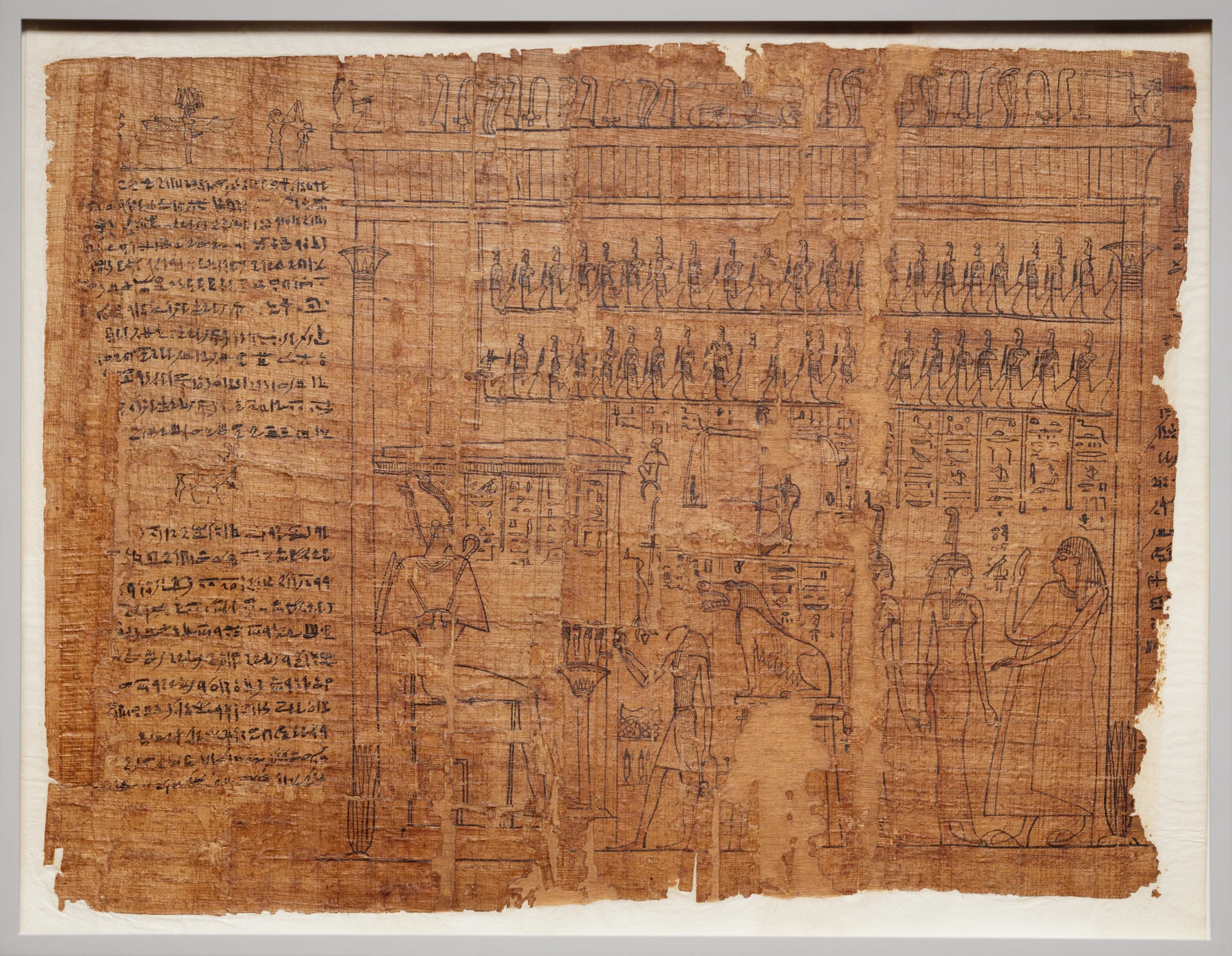
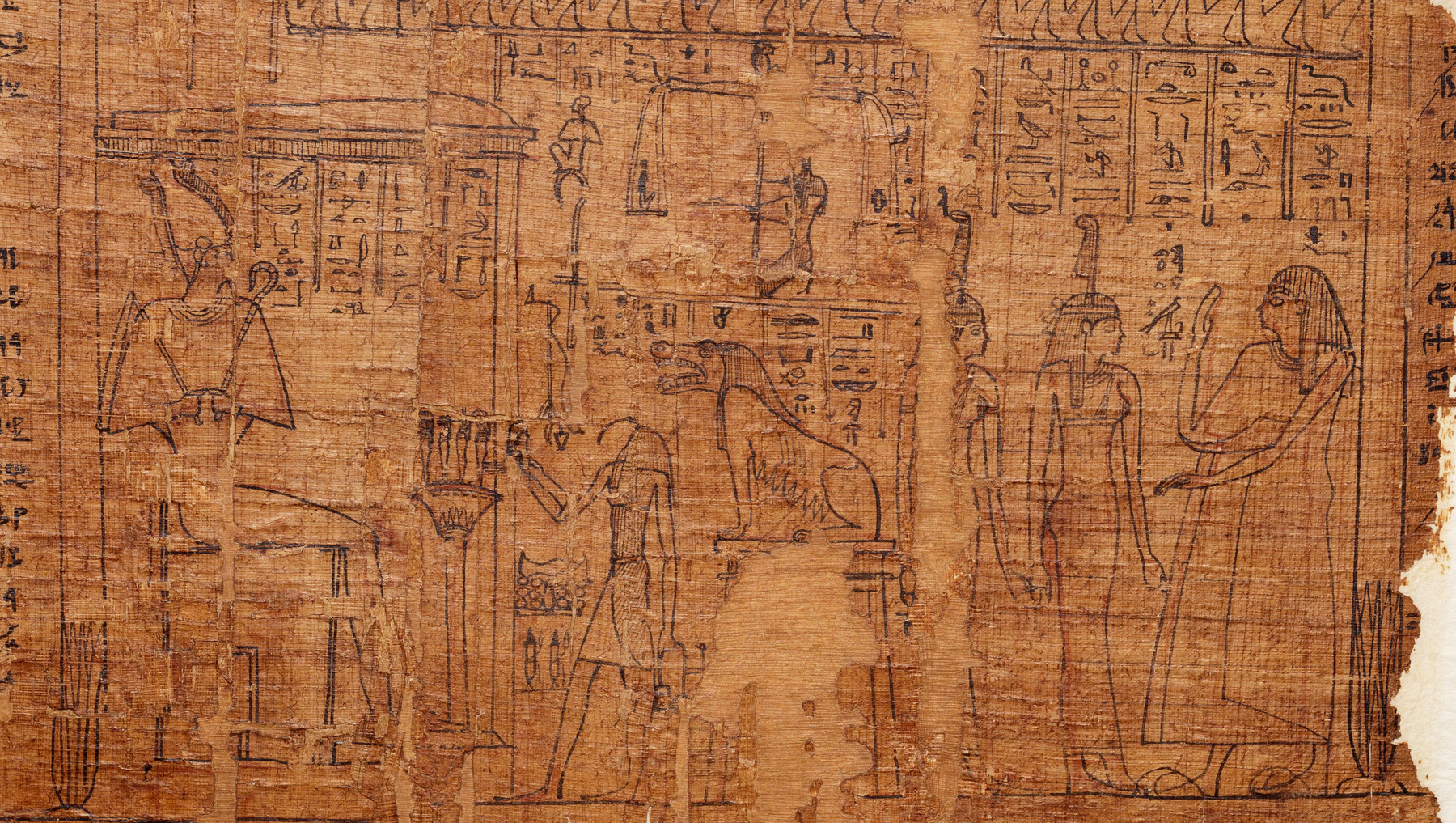
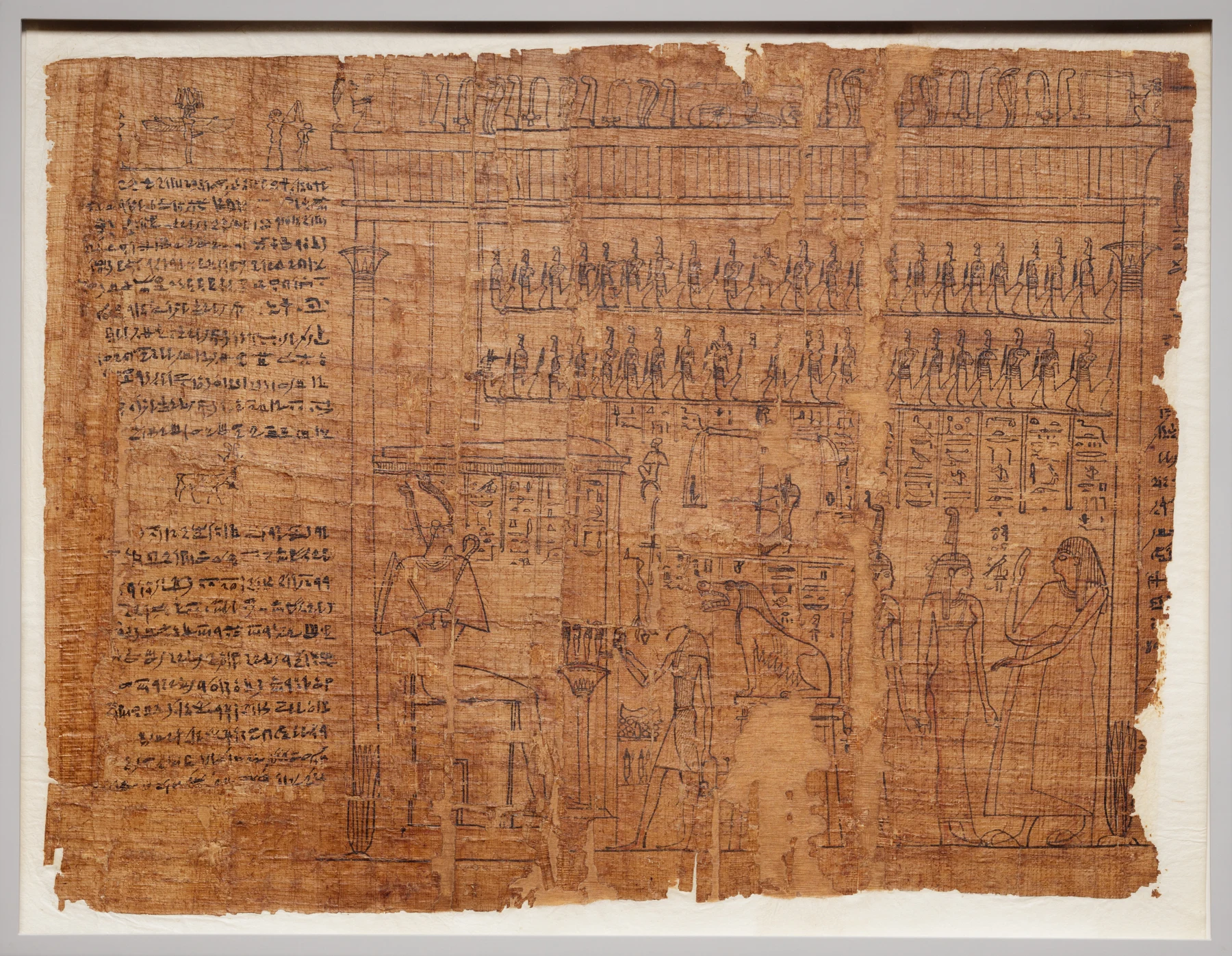
The accompanying image shows part of a funerary papyrus in the Metropolitan Museum of Art, New YorkNew York CityNew York City is in the United States and houses the Metropolitan Museum of ArtGlossary · Click to read the explanation, accession 66.99.142, dated about 230–150 BCE. Writing and figures form a scene of judgment before OsirisOsirisOsiris was an ancient Egyptian deity associated with the dead, life after death, renewal, and kingship. His roles appear in changing funerary texts, rituals, and judgment scenes, notably the weighing of the heart.Glossary · Click to read the explanation. Its presence on this particular papyrus does not make the object an “original edition” of the Book of the Dead: it is a relatively late witness to a subject depicted in some exemplars.[1]
A modern name for a variable collection
Some Egyptian manuscripts use phrases meaning “going forth by day” for the spells, evoking the dead person's freedom to move beyond the tomb. These phrases are not the printed title of every roll. “Book of the Dead” is the conventional modern name for a repertoire of roughly two hundred compositions or “chapters” as classified by Egyptologists, although no surviving ancient scroll contains all of them in the same fixed order.[2]
The Metropolitan Museum's papyrus of Imhotep, a priest of HorusImhotep, priest of Horus and papyrus ownerA priest of Horus for whom a Book of the Dead papyrus was prepared in the early Ptolemaic period, about 332–200 BCE; his manuscript combines texts and images to secure an afterlife.Glossary · Click to read the explanation shows how a personal manuscript assembled invocations, prayers and images without a continuous storyline. The goal was to equip its owner with protection, knowledge, transformation and continued existence, rather than tell a narrative with a prescribed opening and ending.[3]
Origins and changing historical settings
Some of the material has precedents in the “Pyramid Texts” of the later Old Kingdom and the “Coffin Texts” of subsequent periods. Continuity and reuse of spells do not mean that the later Book of the Dead already existed as a book in the age of the pyramids. In the opening of his study of the corpus's origins, Peter Dorman distinguishes the larger repertoire from each individual roll, whose selections could differ from every other copy.[4]
University College London's survey identifies early instances on a Seventeenth Dynasty queen's coffin and on shrouds at the beginning of the Eighteenth Dynasty. Placing papyrus rolls of these spells in elite burials grew more common during the New Kingdom, while copying and rearrangement continued into the Ptolemaic period. The earliest surviving appearance on a particular material is not necessarily the date at which every underlying idea originated.[5]
Production, ownership and burial practice
Scribes and artists prepared rolls containing selections from a recognized repertory; some workshops could leave blank spaces for the eventual owner's name. Yet detailed commissioning documents are lacking for most examples. We cannot simply assert that every owner personally selected a sequence or that all ancient Egyptians possessed long, illustrated papyri.[6]
The compositions occur not only on rolls but also on shrouds, coffins, tomb walls, amulets and other funerary objects. Depositing a written spell belonged to a broader context of treatment of the body, offerings, recitation and funerary figures. A written instruction by itself does not prove exactly how it was performed at a particular funeral.
“Chapter” numbers are scholarly references
Karl Richard Lepsius used the papyrus of Iufankh, now in Turin, for a publication bearing the date 1842, assigning numbers 1–165 to its compositions. Later scholars assigned further numbers to texts preserved on other, sometimes much older, manuscripts. The numbering is useful for reference but is not a table of contents that ancient Egyptians imposed on all their copies.[7]
New Kingdom and Third Intermediate Period rolls vary markedly in both contents and order. A more regular arrangement appears in manuscripts associated with the Twenty-sixth Dynasty and the Ptolemaic period, commonly called the “Saite recension”. It is not a completely uniform text, and the contrasting name “Theban recension” does not establish a known single place of ancient editorial work.
Movement, transformation and enduring identity
Rather than charting a single itinerary, the spells seek to protect the person's name, heart and body; open passages; identify gatekeepers; enable movement by day; and approach RaRe, Egyptian sun godRe is the Egyptian sun god, associated with creation, life and renewal of cosmic orderGlossary · Click to read the explanation and powers of the beyond. Solar and Osirian imagery may appear together without constituting a systematic theology in the modern sense.
Chapter 6, for example, is associated with shabti figurinesFigurineA small shaped object depicting a human, animal or abbreviated form, in clay, stone or another medium. Its form alone does not establish its use; manufacture, handling traces and find context matter.Glossary · Click to read the explanation, which were expected to answer if the dead person was summoned to perform agricultural or other work beyond the grave. University College London publishes a version from the Eighteenth Dynasty papyrus of Nu. The spell addresses the figurine; it should not be turned into evidence that every Egyptian personally labored in an identical afterlife landscape.[8]
The heart as a potential witness
Some spells protect the deceased against the possibility that the heart would testify against its owner during judgment. In distinct versions, chapters 30A and 30B ask the heart not to oppose the dead person. University College London publishes an English rendering of 30A from an Eighteenth Dynasty roll and points to the frequent inscription of 30B on heart scarabs. A given translation's wording must not be projected onto all ancient copies or all scarabs.[9]
The heart in this context brings memory, agency and accountability together: it does not necessarily follow a modern division between intellect and emotion. The textual witness matters as much as the familiar picture of the balance.
Osiris's tribunal and the meaning of Maat
What modern numbering calls chapter 125 includes passages about entering the hall of judgment, declaring innocence and addressing its divine occupants. In one chapter 125A witness, the dead person addresses Osiris, professes knowledge of divine names and denies violating proper order. This is a ritualRitualAn organised or distinguished practice meaningful to a community; it may leave traces, but its form alone does not reveal an associated doctrine.Glossary · Click to read the explanation declaration transmitted on a manuscript, not a documentary transcript of a court case.[10]
Part 125B is often called the “Negative Confession”: it contains denials of wrongdoing such as killing, theft and offenses against people or sacred obligations. The concept of MaatMaatAn Egyptian principle of truth, justice, and right order, also embodied by the ostrich-feather goddess Maat; differently expressed in rule, ritual, and funerary judgment.Glossary · Click to read the explanation embraces truth, right conduct and cosmic order. The list is not verbally fixed: UCL provides one witness arranged around forty-two assessors but also identifies an Eighteenth Dynasty papyrus with thirty-two declarations.[11]
Some rolls continue with an address categorized as 125C. It describes righteous actions, including feeding the hungry, clothing those without garments and presenting offerings. Such additions show why the heading “Negative Confession” cannot account for all that is said in the judgment setting.[12]
Reading the illustrated weighing scene
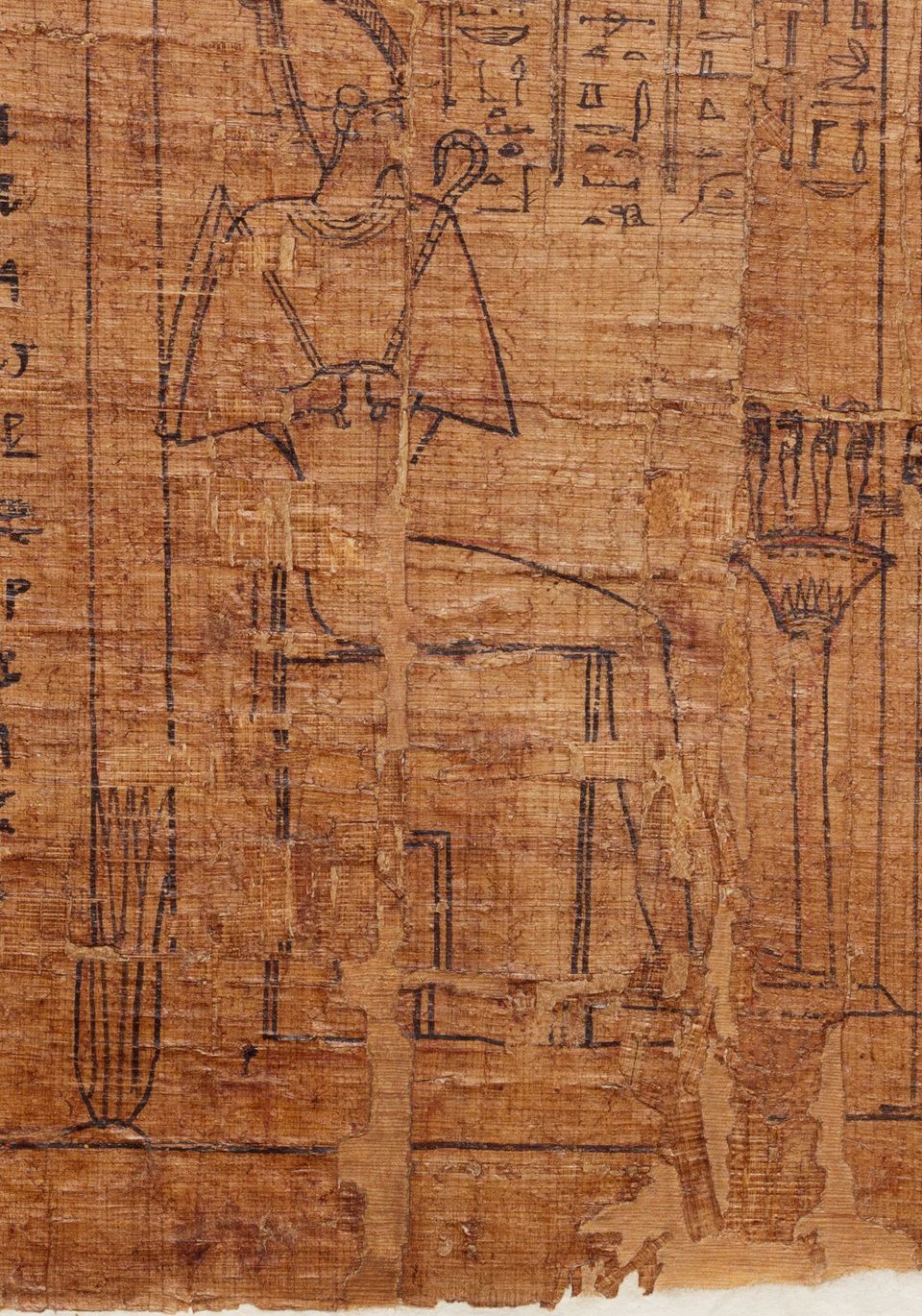
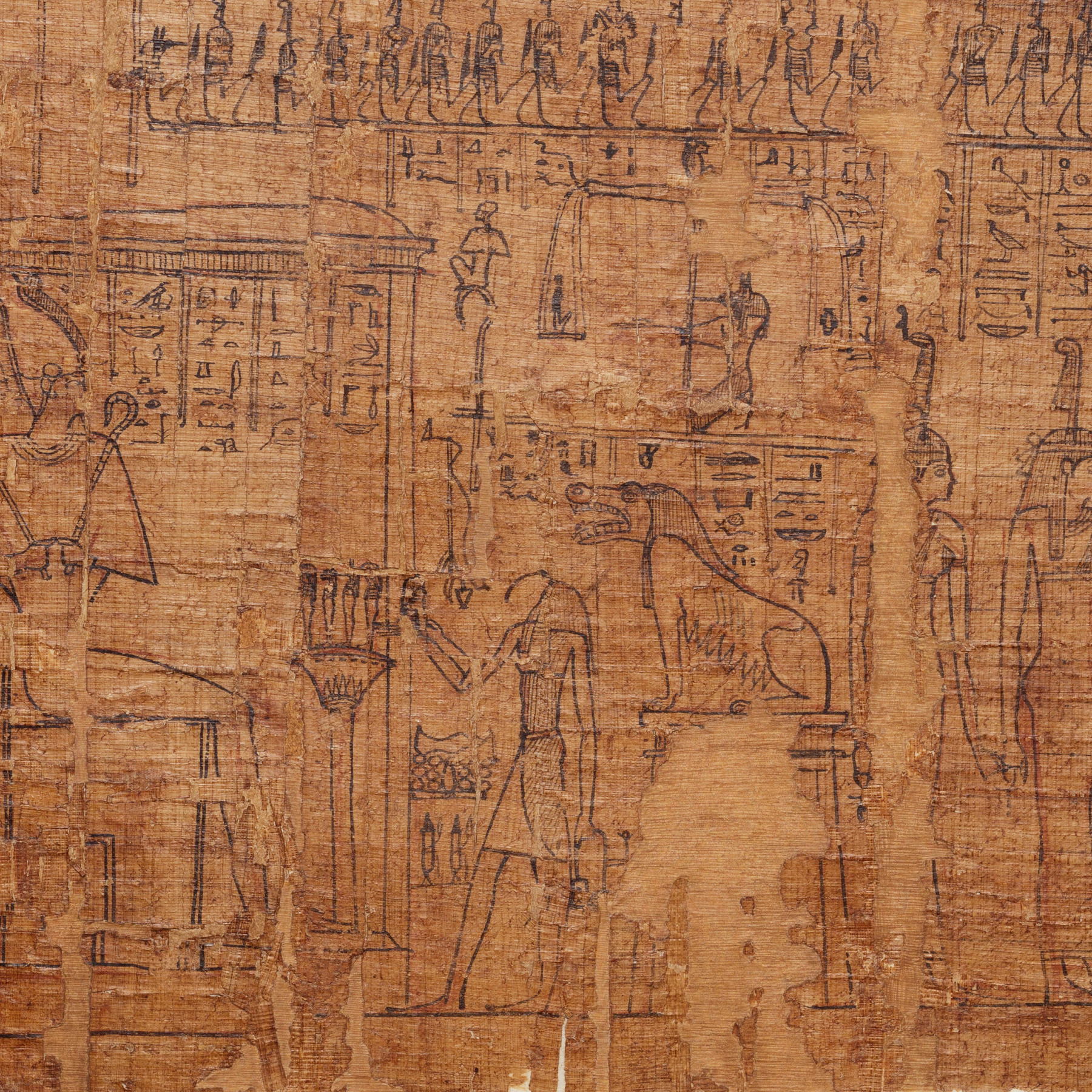
In the Met fragment, assessors fill two upper registers; AnubisAnubisAnubis is an Egyptian deity associated with the dead and the balance in heart-weighing scenes.Glossary · Click to read the explanation stands by the scales and ThothThothThoth is an Egyptian god of knowledge and writing, also associated with recording funerary judgment.Glossary · Click to read the explanation records the decision, while Osiris receives the judgment seated on a throne. The counterweight to the deceased's heart is a small crouching figure of Maat, rather than the single feather depicted in other versions. Ammut, the devourer, represents the possible fate of a failed assessment. These identifications belong to this museum object, not to an obligatory template for every illustration of chapter 125.
Afterlife judgment should not be isolated as a purely ethical slogan divorced from ritual, nor should the spells be treated simply as tricks for avoiding justice. Conduct, knowledge of names, effective utterance and travel through protective and dangerous realms belong together in this material.
Individual manuscripts: Hunefer, Ani and Imhotep
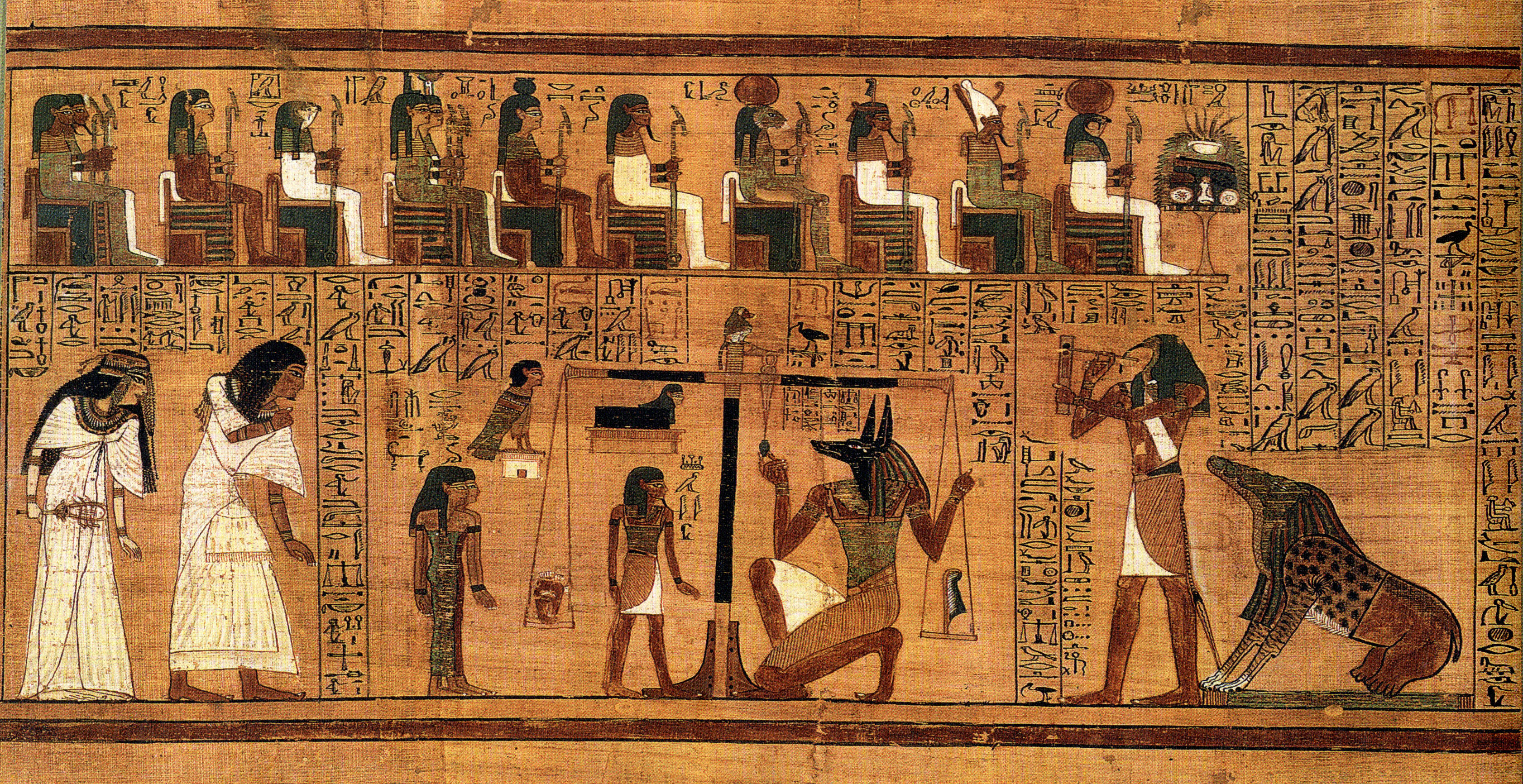
The British Museum preserves the Book of the Dead of Hunefer from the Nineteenth Dynasty, including a framed sheet with a hymn to the rising sun, chapter 15. Hunefer's roll is neither Imhotep's Ptolemaic papyrus nor the small Met judgment fragment. Sharing a modern corpus name does not erase differences of patron, date and content.[13]
The British Museum also preserves sheets of Ani's Nineteenth Dynasty roll. It identifies frame 37 as a set of vignettes for chapters 185 and 186. That frame is not “the whole Papyrus of Ani”, nor is it an illustration of chapter 125 merely because judgment scenes elsewhere have become famous.[14]
Imhotep's papyrus in the Met (35.9.20a–w), dated to the early Ptolemaic period, has 182 columns of hieratic writing on a roll roughly 21.9 metres long, with an extended sequence of illustrations. The museum regards a connection with the burial of a priest of Horus near Meir as probable. Those are object-specific identifications and inferences, not a description of every Book of the Dead.[15]
Reading and studying the corpus today
Modern editions supply chapter numbers, translations and textual comparisons; their convenience can also create the false impression of one definitive ancient work behind all the copies. Better questions are: which roll, from which period, with which spell under which modern number? Is a statement grounded in a surviving text, a published translation or a museum's interpretive account? The 2017 collection edited by Foy Scalf, Book of the Dead: Becoming God in Ancient Egypt, ranges in its published contents from origins and manuscript-making to imagery, ritual and modern reception; its contents page alone is not equivalent to having read all its chapters.[16]
The Book of the Dead is thus a long and diverse history of words, objects, images and ritual practices. The particular weighing scene reproduced here reveals one aspect of that history. It should not be mistaken for the entirety of the tradition or proof of a single belief unchanged across centuries.
Quick answers
What is the Book of the Dead?
It is the modern name for a varied collection of about two hundred spells, or "chapters", that Egyptologists have classified. No surviving ancient scroll contains all of them in one fixed order. [2]
When do the spells first appear, and where were they written?
Early examples appear on a Seventeenth Dynasty queen's coffin and on shrouds at the start of the Eighteenth Dynasty. Papyrus rolls in elite burials grew more common in the New Kingdom. [5]
What were the spells meant to do for the dead person?
They aimed to give the owner protection, knowledge, transformation and continued existence. They were not a story with a set beginning and end. [3]
What happens in the judgment scene?
In chapter 125 the dead person enters the hall of judgment, declares innocence and addresses its divine occupants. It is a ritual declaration on a manuscript, not a record of a court case. [10]
Are the chapter numbers ancient?
No. They are scholars' reference numbers, starting with Lepsius's numbering of 1–165 for the papyrus of Iufankh. Ancient Egyptians did not impose them as a table of contents on all copies. [7]
References and notes (16)
- Ptolemaic funerary papyrus depicting judgment before Osiris; elements read from this particular object, not assumed universal. Met 66.99.142; ca. 230–150 BCE Return to the text ↑
- University College London, “Background information on the Book of the Dead”: corpus, the phrase “going out in the day”, and the selection of spells. Page sections “What is…?”, “What was the Egyptian name…?” and “How was a selection…?” Return to the text ↑
- Curatorial study of Imhotep’s papyrus: spells and images rather than one sequential narrative; protection, knowledge and transformation. Janice Kamrin, 2016; Met 35.9.20a–w Return to the text ↑
- Peter F. Dorman, “The Origins and Early Development of the Book of the Dead,” in Foy Scalf (ed.), Book of the Dead: Becoming God in Ancient Egypt (2017). Only the indexed excerpt from the chapter opening was available, not the full chapter. p. 29, opening passage, indexed excerpt only Return to the text ↑
- University College London, historical survey of Seventeenth Dynasty coffin attestations, early Eighteenth Dynasty shrouds and papyrus use. Section “What do we know about the origins…?” Return to the text ↑
- University College London, on manuscript selection and the lack of detailed evidence for the commissioning of individual papyri. Section “How was a selection…?” Return to the text ↑
- University College London, “Chapters in modern numerical order”: Lepsius’s numbering, later additions by Naville and Budge, varying order and Barguet’s classification. Introduction and listing for chapter 125 Return to the text ↑
- University College London, “Book of the Dead Chapter 6”: published transliteration and English translation from the Papyrus of Nu. Whole short chapter-6 webpage, published English translation; no independent Egyptian reading Return to the text ↑
- University College London, “Book of the Dead Chapter 30A”: the heart, heart scarabs and an Eighteenth Dynasty papyrus text. Whole chapter-30A webpage and published translation Return to the text ↑
- University College London, “Book of the Dead Chapter 125A”: the introductory judgment passage in a published translation of the Papyrus of Nu. Whole chapter-125A webpage, introduction and English translation Return to the text ↑
- University College London, “Book of the Dead Chapter 125B”: negative declarations for forty-two assessors and the variant with thirty-two in Cairo papyrus 2512. Whole chapter-125B webpage, Maiherperi translation and Cairo 2512 variant Return to the text ↑
- University College London, “Book of the Dead Chapter 125C”: the following addresses, including feeding the hungry and clothing the naked. Page introduction and sections 1–4 of the Nu translation; rest not used Return to the text ↑
- British Museum, Book of the Dead of Hunefer, frame 1, EA9901,1: Nineteenth Dynasty; rising-sun hymn, chapter 15. Catalog search-result excerpt only; full record returned HTTP 403 Return to the text ↑
- British Museum, Papyrus of Ani, frame 37, EA10470,37: illustrations of chapters 185 and 186, not the entire roll. Catalog search-result excerpt only; full page returned HTTP 403 Return to the text ↑
- Metropolitan Museum of Art, Imhotep’s Book of Coming Forth by Day, 35.9.20a–w; object record, 182 columns and approximately 21.9 m. Object description, measurements and probable origin Return to the text ↑
- Foy Scalf (ed.), Book of the Dead: Becoming God in Ancient Egypt, Oriental Institute Museum Publications 39 (2017); only the publisher’s contents and bibliographic description were consulted. Publisher’s contents and metadata only; not the fourteen chapters Return to the text ↑
Archive records may be reviewed and refined as better evidence or sources become available. Suggest a correction
Suggest a correction · Suggest a source for this record
Cite this record
IL Archive, «Egyptian Book of the Dead», https://ilarchive.com/en/texts/book-of-the-dead
Continue reading
Related readings