Study
Weighing the Heart in Egypt: Justice, Ritual and the Afterlife
An extended study of a topic, with evidence and references.
- Timeline
- From 230 BCE to 150 BCE
- Region
- Egypt
The heart, Maat and declarations of innocence: how did justice, spells and ritual work together in Egyptian papyri preparing the deceased for the afterlife?
Estimated reading time: 5 min Published Last reviewed:
Share article
Text
Introduction
How was justice connected with life after death in ancient EgyptEgyptEgypt lies mainly in northeastern Africa and includes the Sinai Peninsula in AsiaGlossary · Click to read the explanation? This study examines the weighing of the heart to understand how human conduct, spells and ritualsRitualAn organised or distinguished practice meaningful to a community; it may leave traces, but its form alone does not reveal an associated doctrine.Glossary · Click to read the explanation worked together in ideas about a person's destiny. We read a particular illustrated papyrus alongside another manuscript that explains the function of the Book of the DeadEgyptian Book of the DeadA modern name for a variable collection of Egyptian funerary spells and images intended for the afterlife, not a single book with a fixed sequence.Glossary · Click to read the explanation.
This reading also assists comparison between judgments of the dead in different cultures. The study does not treat a balance alone as proof of borrowing: it first explains the Egyptian scene, then considers what evidence would establish a historical relationship with a later tradition.
The heart in one pan, justice in the other
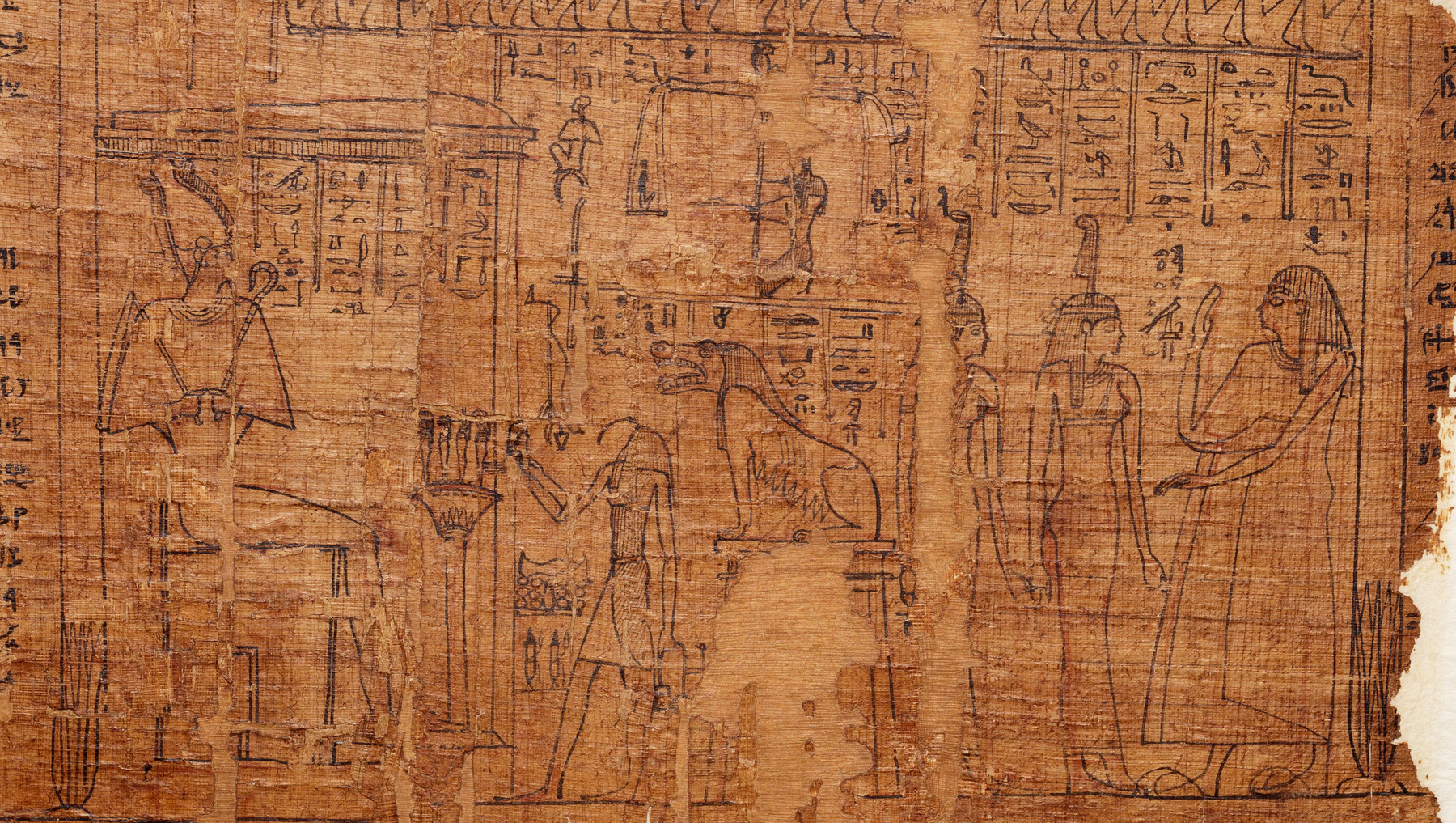
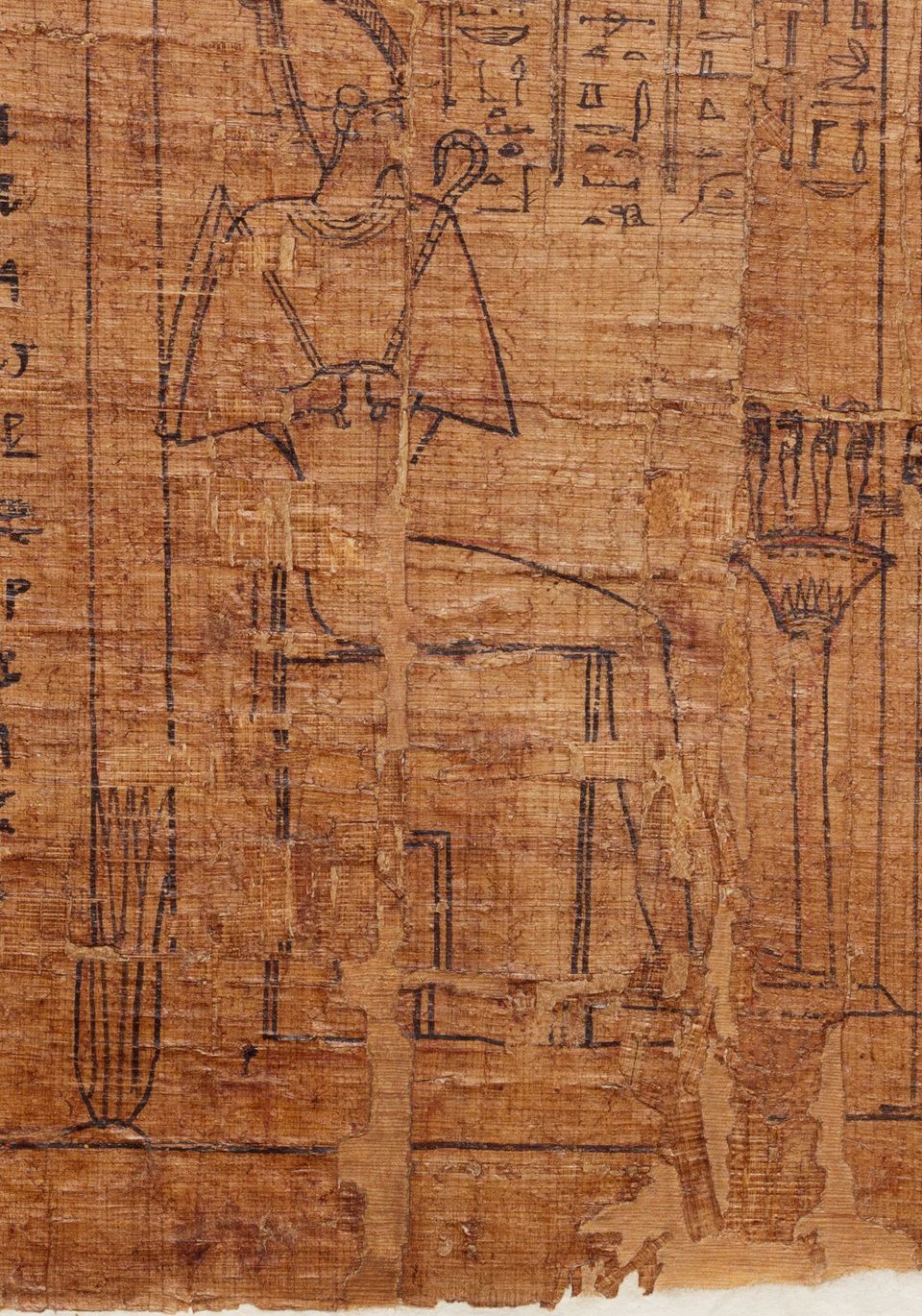
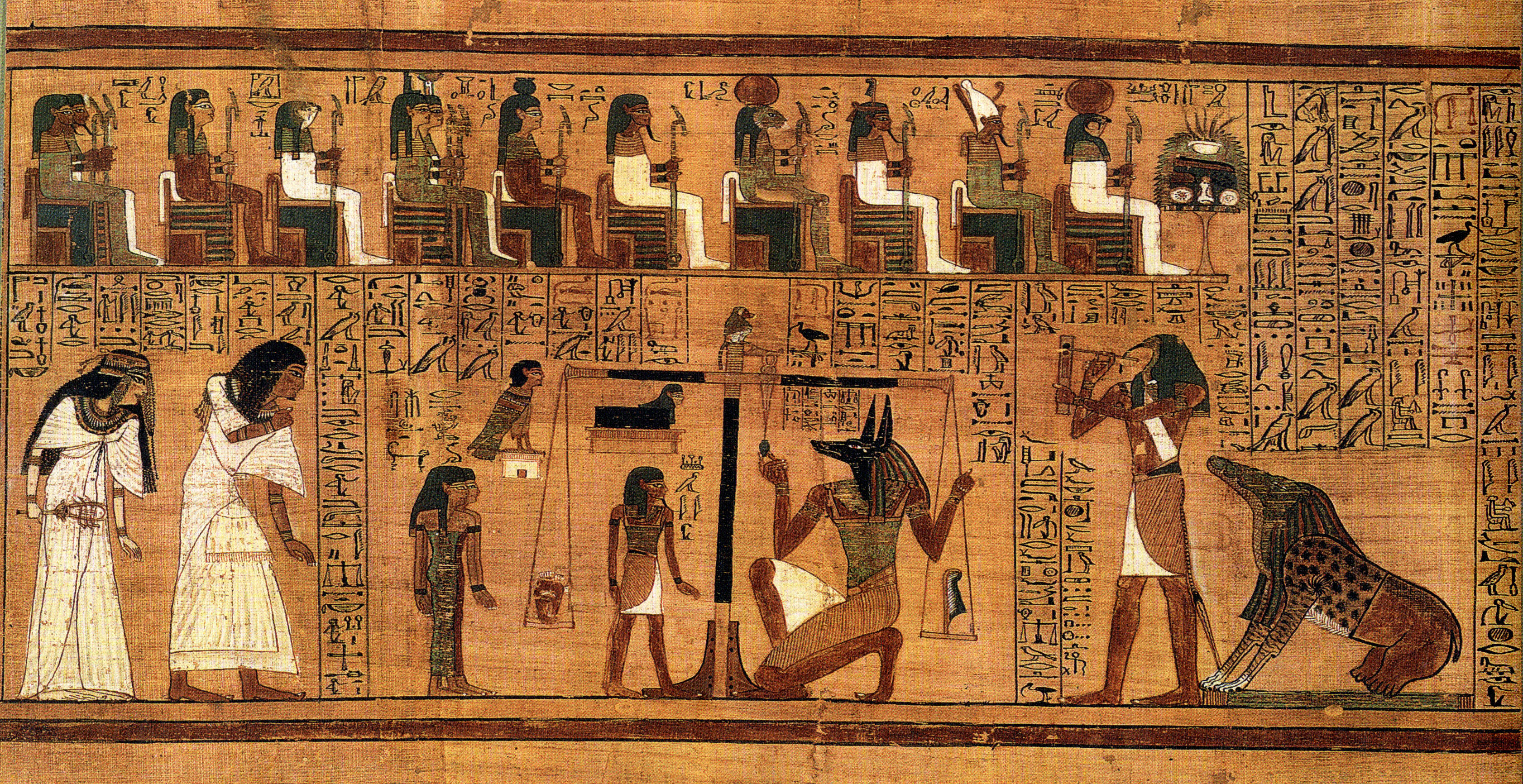
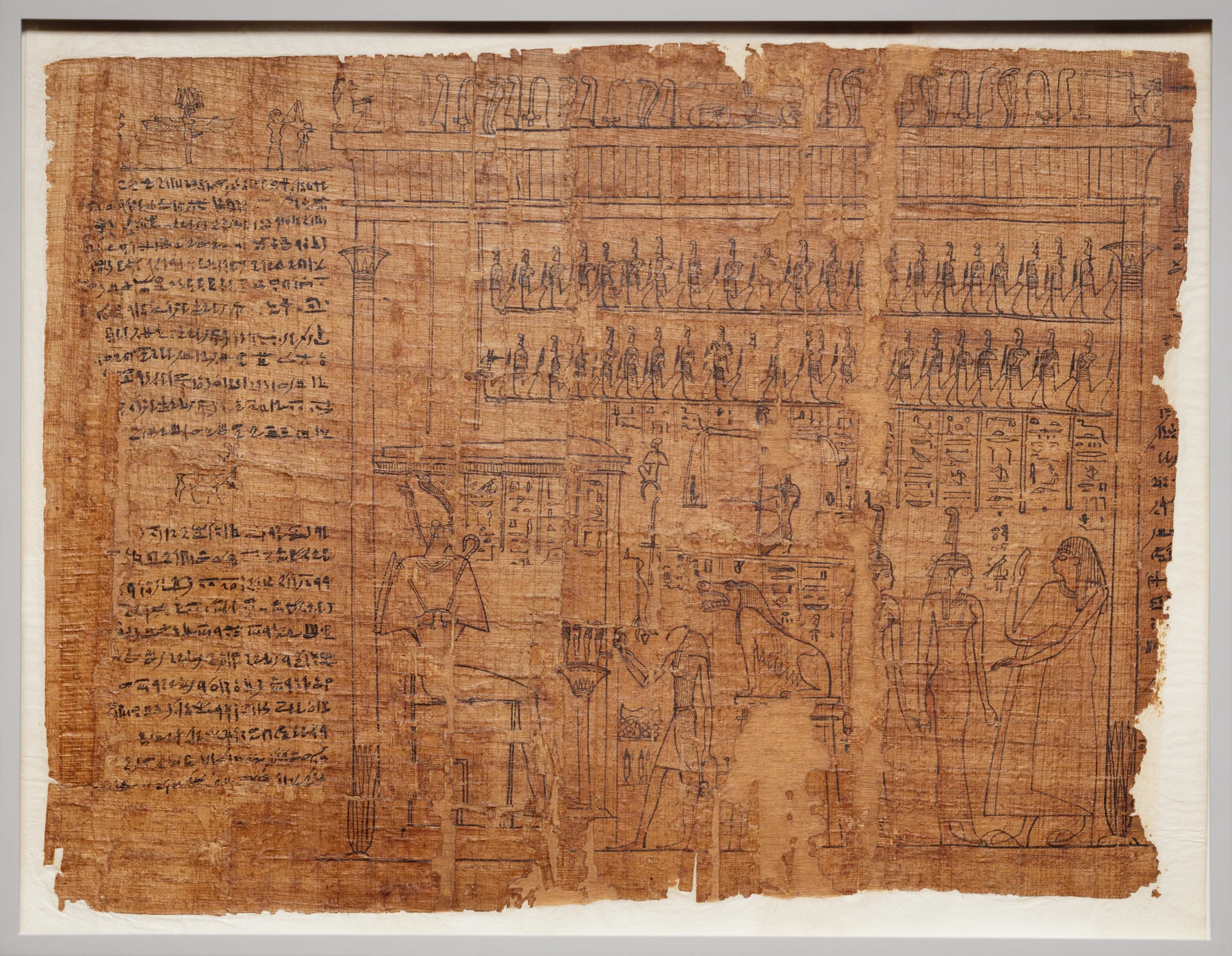
In the accompanying photograph, OsirisOsirisOsiris was an ancient Egyptian deity associated with the dead, life after death, renewal, and kingship. His roles appear in changing funerary texts, rituals, and judgment scenes, notably the weighing of the heart.Glossary · Click to read the explanation sits on the left while the deceased faces a test surrounded by figures performing different roles. One scale pan holds a heart; the other contains a small figure of MaatMaatAn Egyptian principle of truth, justice, and right order, also embodied by the ostrich-feather goddess Maat; differently expressed in rule, ritual, and funerary judgment.Glossary · Click to read the explanation, right order and truth embodied as a goddess. The scene turns a question about a person's life into a visible image: does their heart accord with that order?[1]
Which papyrus are we reading?
The Metropolitan Museum object bears the number 66.99.142 and dates to approximately 230–150 BCE, in the Ptolemaic period, when the Ptolemies ruled Egypt. It is part of a larger funerary papyrus, not a complete book or the earliest witness to judgment. The museum identifies the depicted place as the Hall of the Two Truths, where judgment occurs before Osiris.[1]
This identification matters because details vary between copies. Although Maat's feather is familiar from heart-weighing images, this object places the goddess's figure in the pan. We begin with the surviving image and compare it with others, rather than assuming one unchanging scene.
What does weighing the heart mean?
In the museum's interpretation, the heart was the center of intelligence and emotion. Its weighing makes a person's inner life testify to how they lived. Maat is more than a general name for goodness: she concerns right order encompassing the world, relationships and conduct.[1]
The image therefore does not simply count good and bad deeds mechanically. It represents a test of agreement between a person and Maat. The museum explains that balanced scales mean Osiris accepts the deceased and grants eternal life. Failure exposes the heart to devouring and ends its owner's existence. This papyrus thus connects survival with the outcome of judgment.
Who does what in the tribunal?
AnubisAnubisAnubis is an Egyptian deity associated with the dead and the balance in heart-weighing scenes.Glossary · Click to read the explanation, associated with embalming, conducts the weighing. ThothThothThoth is an Egyptian god of knowledge and writing, also associated with recording funerary judgment.Glossary · Click to read the explanation, the god of writing, appears with scribal equipment to present the favorable result to Osiris. Above them, two rows contain forty-two judges, each wearing a Maat feather on their head and holding a knife.[1]
AmmutAmmitAmmit is a composite being in Egyptian judgment imagery, associated with devouring those who fail the trial.Glossary · Click to read the explanation is the being that devours the heart of anyone who fails the test. Examination, announcement, judgment and punishment are distributed among these figures. The image uses judicial language to make an otherworldly destiny intelligible through authority, testimony and decision, without necessarily copying a particular earthly court.
Declaring innocence within a ritual
The museum describes a declaration in which the deceased denies condemned actions during life. The words have clear ethical content, but they are also prepared to perform a function in otherworldly judgment. They teach us what counted as unacceptable conduct and how people wished to present themselves before the tribunal.[1][2]
They need not be treated as a biography proving every papyrus owner's complete innocence. Their historical value lies in the ideals they express and their role in preparing the deceased to pass through judgment. Conduct, speech and ritual cooperate in this conception; they are not alternatives from which one must be selected.
A collection of spells and images
The Book of the Dead is a modern designation for funerary texts and images also known as the Book of Coming Forth by Day. Some ward off dangers; others provide knowledge of names and places or enable transformation and continued life. The weighing scene belongs within a wider preparation for the next world.[2][3]
Another Metropolitan Museum papyrus, 35.9.20a–w, illustrates this. Prepared for ImhotepImhotep, priest of Horus and papyrus ownerA priest of Horus for whom a Book of the Dead papyrus was prepared in the early Ptolemaic period, about 332–200 BCE; his manuscript combines texts and images to secure an afterlife.Glossary · Click to read the explanation, a priest of HorusHorusEgyptian god associated with kingship and the sky, also appearing as the child protected by his mother Isis in marsh and nursing traditions.Glossary · Click to read the explanation, it dates to approximately 332–200 BCE and is distinct from the cover object. Its museum presentation explains that spells and images do not form one sequential story: amulet spells probably associated with mummification occur near the manuscript's end, although mummification preceded the funeral shown at its beginning.[3]
The arrangement serves protection, knowledge and transformation rather than simply narrating a journey chronologically. This helps us understand the balance within funerary provisions, instead of isolating it as a moral lesson.
From the Egyptian scene to historical comparison
This judgment can be compared with later ideas about the justice of a person's fate after death. A historical relationship, however, needs evidence more specific than a balance in two images: dates of texts, possible contact, details of roles and outcomes, and combinations of features difficult to explain through broad resemblance alone.
Converging evidence may support borrowing or reworking even without a named intermediary. Broader shared traditions or independent developments may explain some similarities. The two papyri alone do not test these possibilities for every religion. They offer a firmer basis for comparison: a heart examined, an order of justice invoked, and texts and rituals helping the deceased reach an acceptable continued life.
Connected readings
Akhenaten and Aten · Living above the dead · Similarity and borrowing
References and notes (3)
- Metropolitan Museum, Part of a funerary papyrus showing the judgment before Osiris, 66.99.142. Hall of the Two Truths, Maat, judges, the roles of Anubis, Thoth and Ammut, and the outcome of judgment. Ptolemaic period, about 230–150 BCE; curatorial object description. Return to the text ↑
- Metropolitan Museum, “The Weighing of the Heart,” 1 January 2016. The accompanying text introduces the Book of the Dead as spells and prayers aiding the deceased, and judgment as a test of conduct. Written introduction on the presentation page; video distinct from this text. Return to the text ↑
- Janice Kamrin, “Scrolling through Imhotep’s Book of the Dead,” Metropolitan Museum, 12 July 2016, with catalogue 35.9.20a–w. Functions of spells and images, the opening funeral scene and the later position of amulet spells. Papyrus of Imhotep, priest of Horus, about 332–200 BCE; paragraphs on arrangement and themes. Return to the text ↑
Suggest a correction · Suggest a source for this record
Cite this record
IL Archive, «Weighing the Heart in Egypt: Justice, Ritual and the Afterlife», https://ilarchive.com/en/studies/egyptian-weighing-of-heart
Continue reading
Related readings