Entity · Concept
Maat
A reference page linking a name, group, or concept to the materials that discuss it.
- Names
- Ma'at · Maʿat
An Egyptian principle of truth, justice, and right order, personified as a goddess; examined through kingship, ritual, wisdom texts, and heart-weighing with attention to variation across sources and periods.
Estimated reading time: 8 min Published Last reviewed:
Share article
Text
Introduction
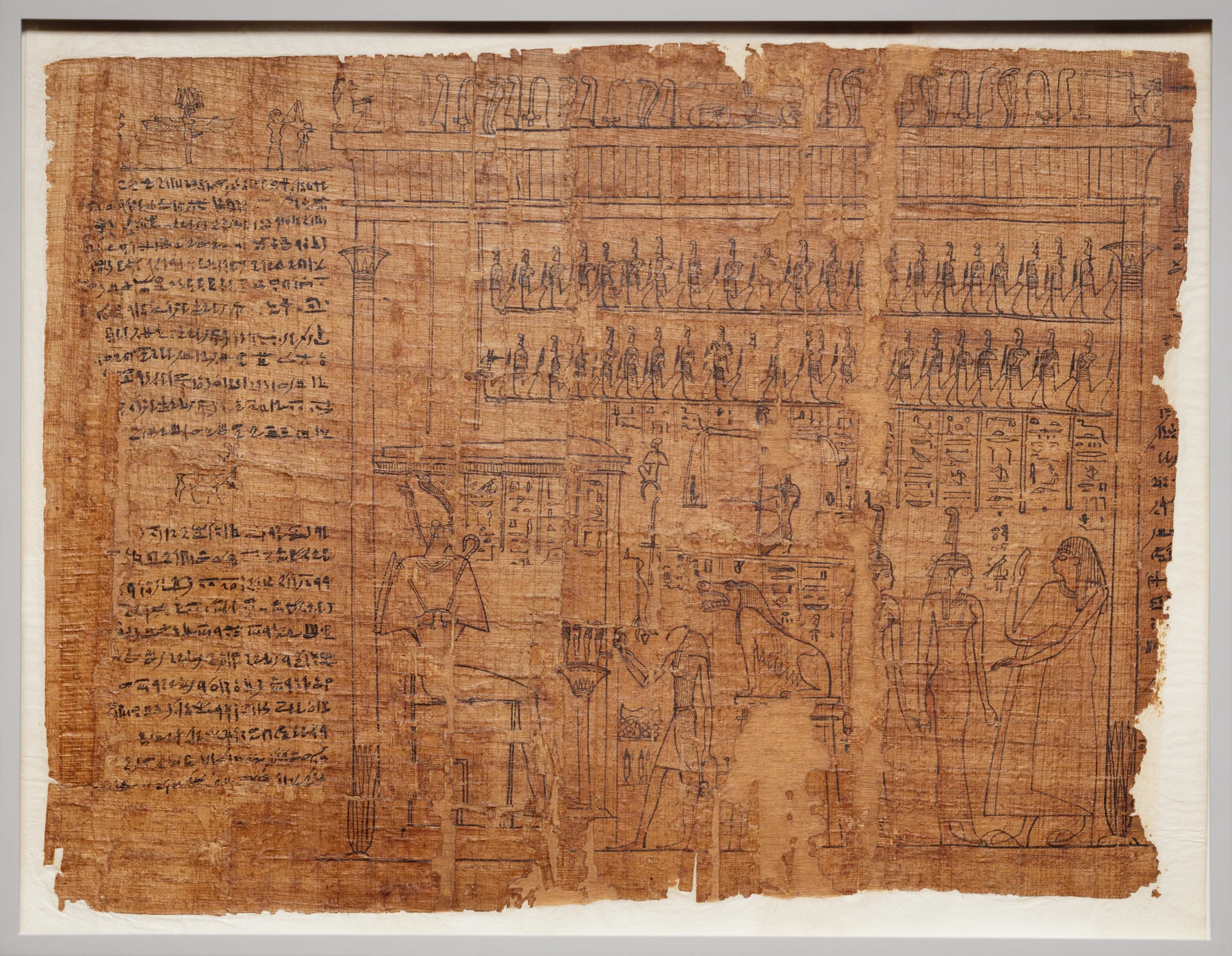
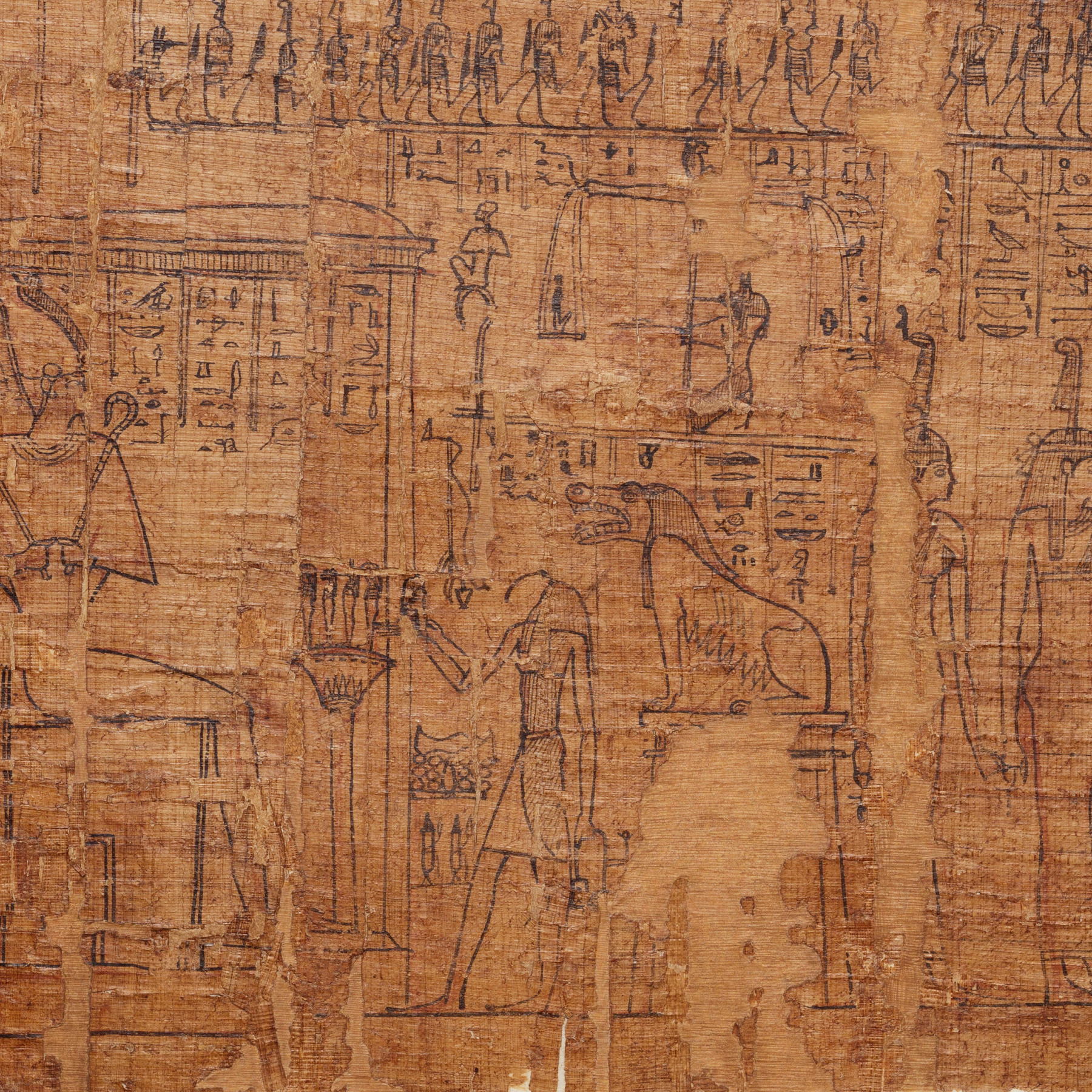
Maat is an ancient Egyptian word for what ought to be right in the world and in human action: truth, justice, and proper order. It is also the name of a goddess who embodies this standard. This article follows the term through kingship, temple ritualRitualAn organised or distinguished practice meaningful to a community; it may leave traces, but its form alone does not reveal an associated doctrine.Glossary · Click to read the explanation, wisdom literature, and the judgment of the dead, taking a particular funerary papyrus in the Metropolitan Museum as a visual test case. Its scale holds a small figure of Maat, not simply an isolated feather. The papyrus is Ptolemaic; its details should not be projected unchanged onto every period of Egyptian history.[1]
Reading guide
- The meaning and image of Maat, and her opposite, isfet.
- Royal responsibilities and the offering of Maat, followed by ethics in literature and administration.
- Declarations of innocence, weighing of the heart, and a close reading of one surviving papyrus.
Word, principle, and goddess
No single English word translates maat adequately. Truthful speech, fairness in dealings, cosmic regularity, and right action all belong to its range, without being interchangeable. “Right order” and “rightness” convey parts of the meaning; “goodness” alone obscures its political, judicial, and cosmic roles. The Fitzwilliam Museum explains this combination of what is right and what is properly ordered, distinguishing the idea from its divine representation.[2]
In Egyptian art, Maat may appear as a woman with an ostrich feather on her head, or the feather may stand for her on its own. The coexistence of an abstract principle and a goddess does not imply two isolated religions. As Egyptologist Nikolaos Lazaridis explains, the word belongs both to lived moral values and to the language of divine order. Surviving sources do not, however, yield a single written moral code shared without variation by every Egyptian.[3]
Order and its opposite
Religious texts link Maat to the ongoing course of the sun and the maintenance of creation. In several traditions the goddess is a daughter of ReRe, Egyptian sun godRe is the Egyptian sun god, associated with creation, life and renewal of cosmic orderGlossary · Click to read the explanation, the sun god. The contrasting term isfet denotes wrongdoing, falsehood, or disorder. This opposition needs to be read in the Egyptian setting of each passage; it need not be turned into a universal, unchanging dualistic philosophy.[4]
The idea also had a political use. Official imagery associated Egypt's stability and the suppression of disorder with legitimate kingship. A scene of a king striking an enemy may assert his role as protector of order rather than document a particular battle. The political work performed by such imagery must therefore be distinguished from evidence that the depicted event occurred exactly as shown.[2]
Kingship and the offering of Maat
Royal ideology assigned the king a responsibility to maintain Maat and present her back to the gods. Temple reliefs sometimes depict a ruler offering a small representation of the goddess. This is a ritual statement about maintaining the temple's relationship with cosmic order, not simply the gift of a figurineFigurineA small shaped object depicting a human, animal or abbreviated form, in clay, stone or another medium. Its form alone does not establish its use; manufacture, handling traces and find context matter.Glossary · Click to read the explanation in a modern everyday sense. University College London's account of the daily temple service places the offering of Maat within a sequence reconstructed from the temple at Abydos and ritual papyri associated with Amun.[5]
Emily Teeter's specialized study examines royal presentations of Maat in New Kingdom and Third Intermediate Period monuments, including variations in placement, texts, and royal legitimacy. The publisher's description and table of contents establish those research questions; they are not sufficient on their own to claim that the rite occurred with the same frequency in every reign or temple. Such numerical claims require consultation of the book's underlying evidence.[6]
Justice in speech and everyday relationships
Maat was not restricted to temple and palace. Biographical inscriptions, instruction texts, and literary narratives praise fairness, truthful speech, and care in dealing with others. The Eloquent Peasant, a literary composition preserved in differing Middle Kingdom textual witnesses, portrays a wronged man arguing for redress before an official. In Mark-Jan Nederhof's English rendering of lines in manuscript B1, speaking Maat and doing Maat belong together. The story gives speech a moral and judicial force while exposing the possibility that an officeholder might fail the very standard he represents.[7]
Other writings praise helping those in need and avoiding theft, lying, and mistreatment. Yet they are selectively preserved sources produced in literate settings or shaped to praise tomb owners. Literary exemplars cannot simply be treated as a survey of everyone's daily conduct. Lazaridis considers ways in which values may have spread beyond the scribal world, while stressing the limits of the evidence.[8]
Maat is not the name of every written law
A broad ideal of justice may guide judgment without naming a particular legislative code. Legal historian Sandra Lippert distinguishes Maat from Egyptian terms for binding regulations, including ḥp. She also warns against directly importing the modern division between civil and criminal law into pharaonic practice. Calling a judge an agent of Maat is therefore not proof that he administered a single statute book bearing that name.[9]
It is useful to describe Maat as a measure of rightful authority and fair conduct, not as one fully recoverable “Constitution of Maat” valid in every Egyptian century. Likewise, a ruler's claim to maintain Maat documents the language of political legitimacy, not the actual fairness of every decision made under that claim.
Declarations of innocence in the Book of the Dead
The most familiar images of Maat concern the judgment after death. In Chapter 125 of the Egyptian Book of the DeadEgyptian Book of the DeadA modern name for a variable collection of Egyptian funerary spells and images intended for the afterlife, not a single book with a fixed sequence.Glossary · Click to read the explanation, the deceased addresses OsirisOsirisOsiris was an ancient Egyptian deity associated with the dead, life after death, renewal, and kingship. His roles appear in changing funerary texts, rituals, and judgment scenes, notably the weighing of the heart.Glossary · Click to read the explanation and declares that various wrongs have not been committed. In UCL's English translation of section 125A, based on the Book of the Dead of Nu in the British Museum, the speaker says that what is right has been brought forward and what is wrong removed, before denying actions including harm to others and manipulation of measures. This is an account of a funerary text as transmitted in one papyrus, not a transcript of a historical trial.[10]
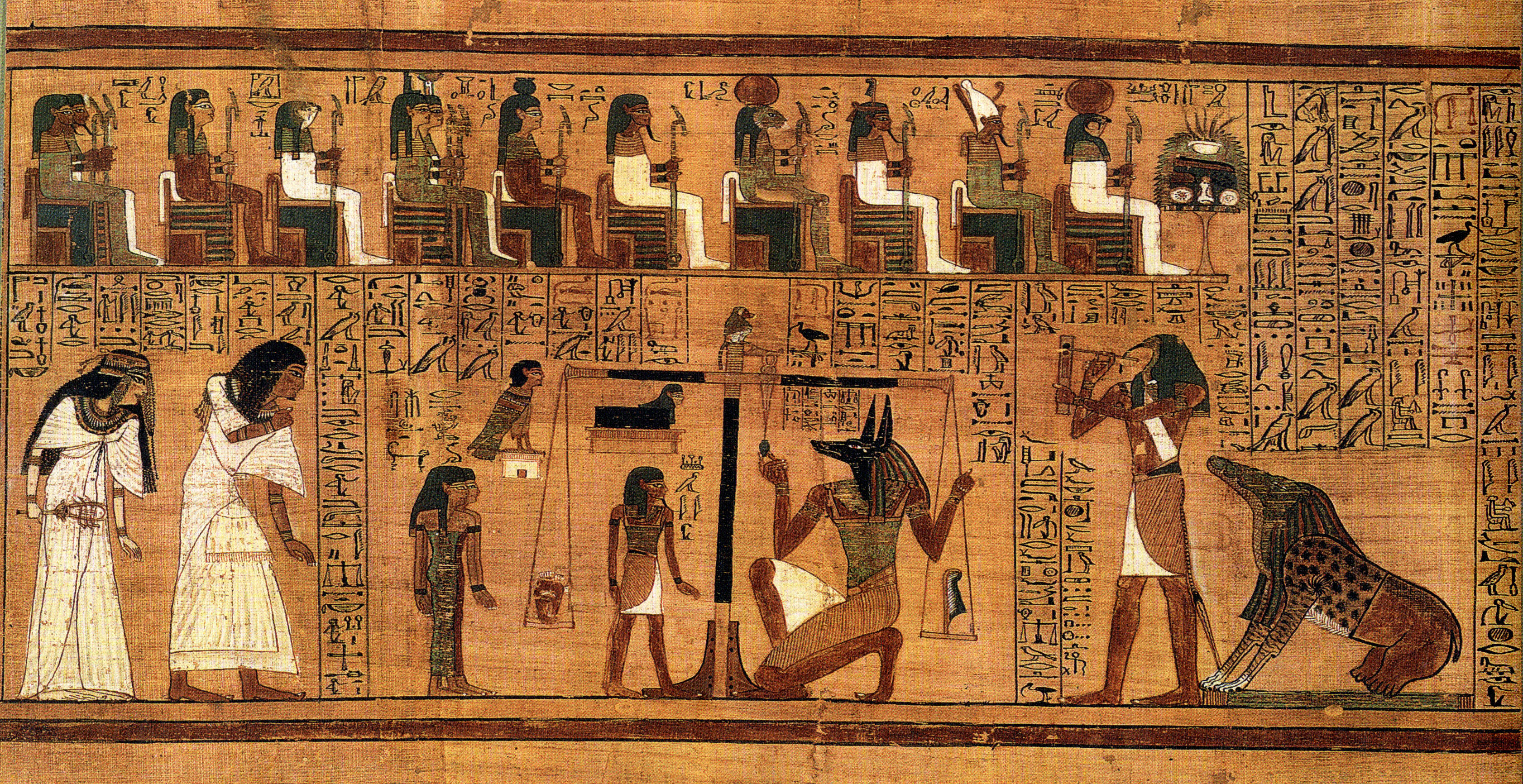
Section 125B presents a sequence of forty-two divine assessors with corresponding declarations of innocence. But the number and order of statements, and the association of divine names with them, vary from manuscript to manuscript. UCL records an Eighteenth Dynasty papyrus with only thirty-two statements. The number forty-two is therefore well attested, not universal to every witness. The familiar heart-weighing image likewise has different arrangements in different manuscripts.[11]
The Metropolitan papyrus as a particular witness
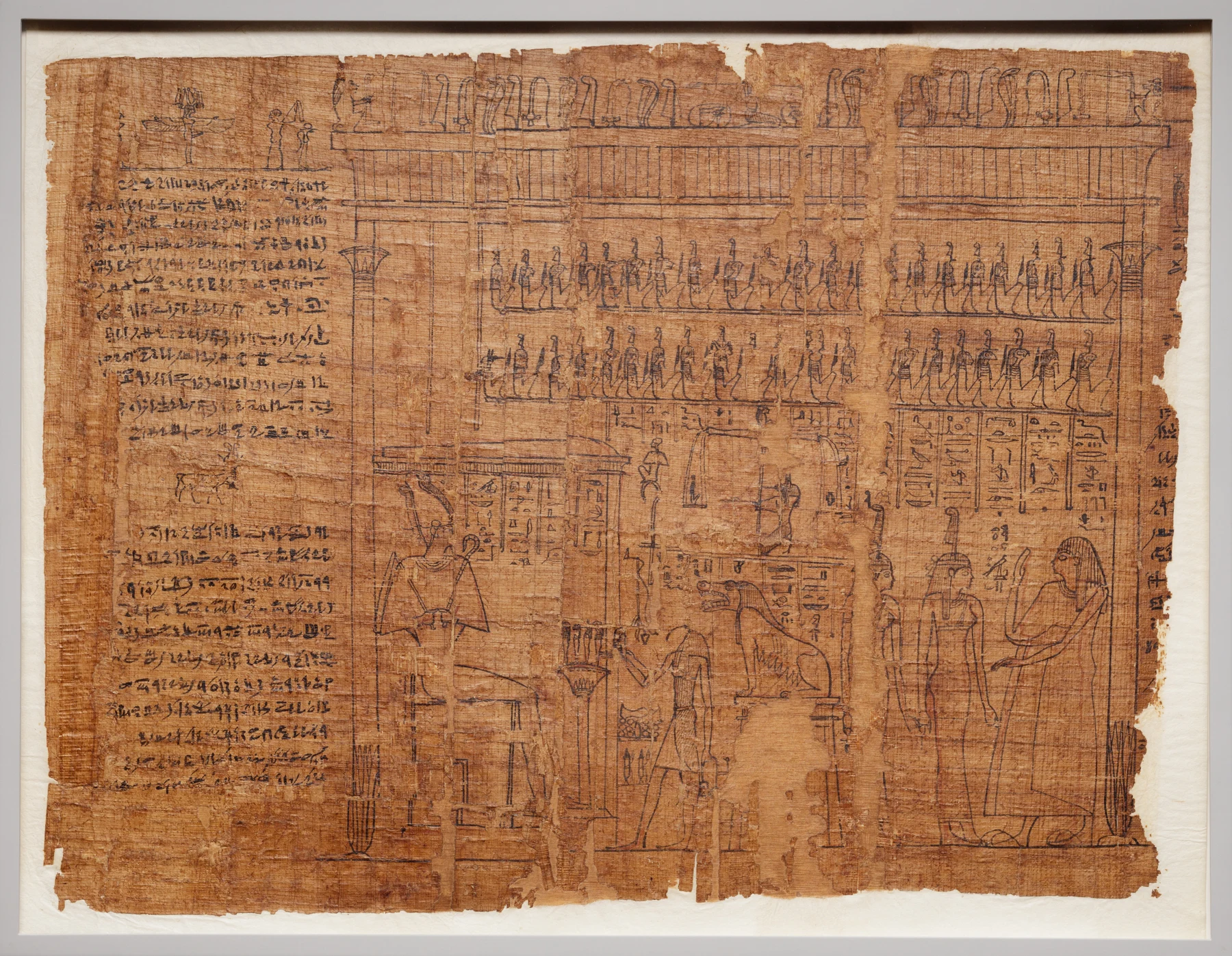
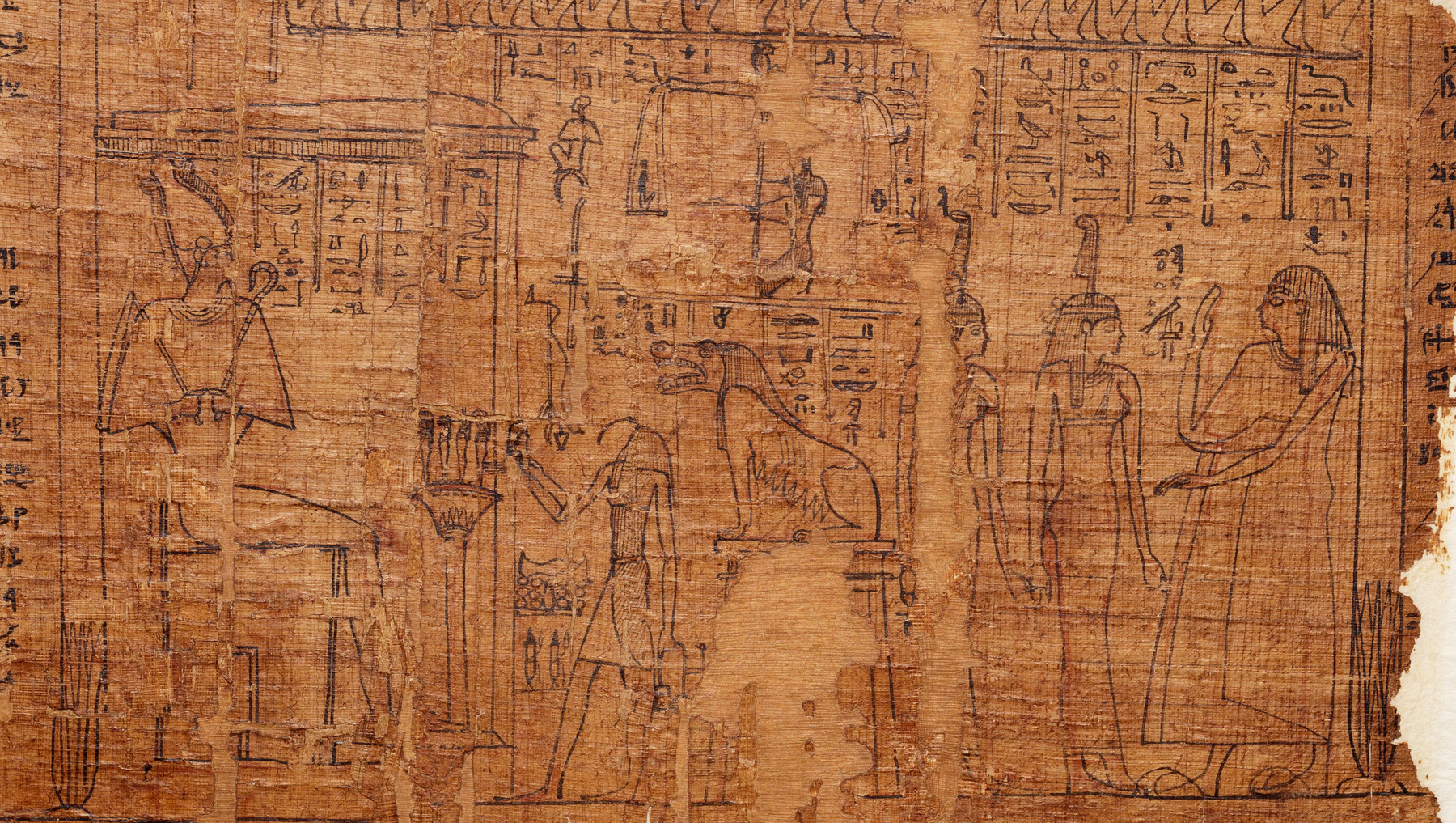
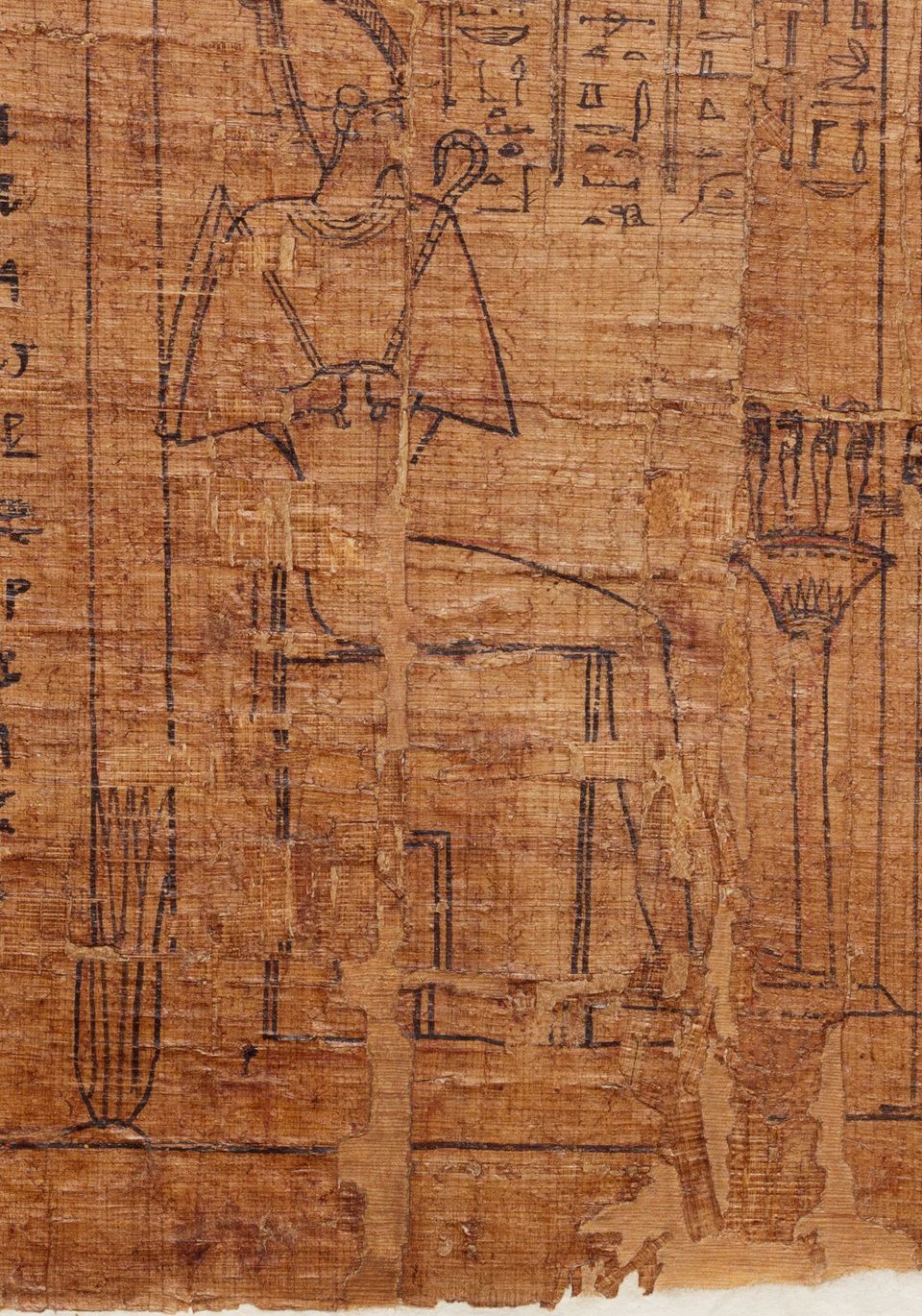
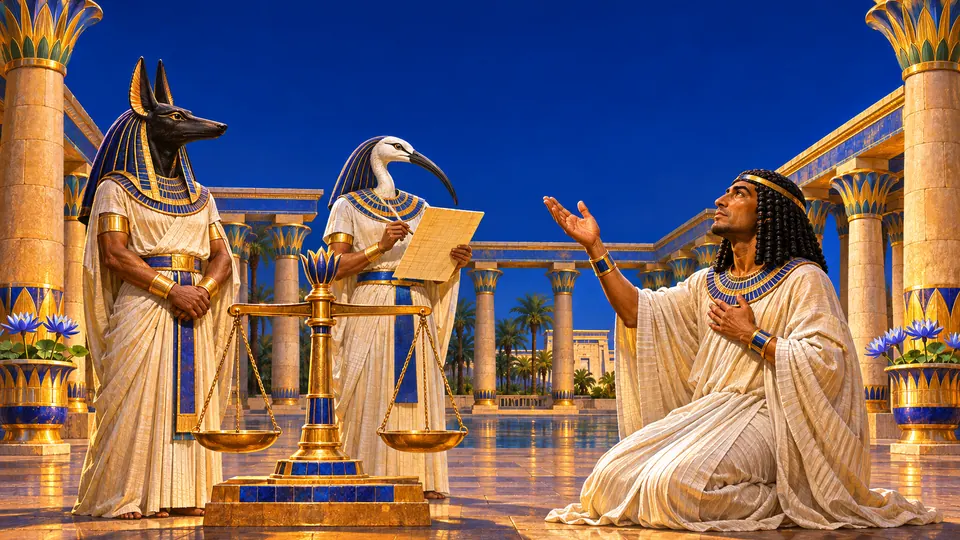
The Metropolitan Museum dates this object, 66.99.142, to approximately 230–150 BCE, and identifies it as part of a larger funerary papyrus. Its upper registers contain two rows of forty-two assessors. Below them, the weighing takes place: the jackal-headed AnubisAnubisAnubis is an Egyptian deity associated with the dead and the balance in heart-weighing scenes.Glossary · Click to read the explanation stands by the balance, while the ibis-headed ThothThothThoth is an Egyptian god of knowledge and writing, also associated with recording funerary judgment.Glossary · Click to read the explanation records or presents the successful result to Osiris, who sits to the left. Close to the scale is AmmitAmmitAmmit is a composite being in Egyptian judgment imagery, associated with devouring those who fail the trial.Glossary · Click to read the explanation, the devourer who threatens the heart when the trial fails.[1]
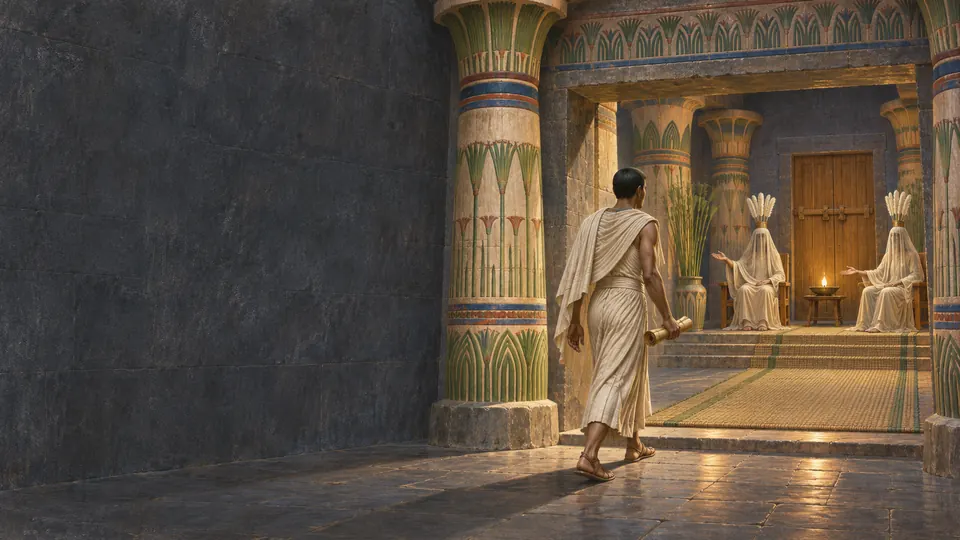
In this object specifically, a small squatting figure of Maat occupies one scale pan, opposite the heart. Other figures of Maat appear near the entrance to the judgment hall. This arrangement differs from examples in which a feather alone is shown as the counterweight. A common modern drawing of a feather must not be substituted for the object actually pictured; nor is this late papyrus evidence for the date at which the underlying beliefs first arose.
Feather, female figure, and variation in imagery
The feather is Maat's distinctive sign, but does not exclude representations of the goddess as a woman. An independent relief described by the Global Egyptian Museum depicts her with jewelry and a feather above her head; the catalog dates that object to the reign of Seti I. It is a different material witness from the Ptolemaic papyrus considered here. Comparing them reveals why an image's inventory number, date, and specific composition matter before generalizing about a symbol.[12]
The name of the judgment hall is sometimes rendered “Hall of the Two Truths” and sometimes “Hall of the Two Maats” or “Hall of the Two Goddesses of What Is Right.” These are translation choices for an ancient expression, not evidence for a known earthly court with precisely the same designation.[10]
Changing contexts and limits of inference
Wisdom literature and earlier statements of upright conduct predate the late papyri that display elaborate judgment scenes. Maat therefore did not begin with Ptolemaic heart-weighing pictures. At the same time, Lazaridis points to a relative shift in Egyptian ethical discourse in the New Kingdom, when personal piety becomes more conspicuous in certain sources than in earlier instructions. He makes this a cautious historical interpretation, qualified by the uneven survival of evidence, rather than a change assignable to a single year.[13]
Nor does royal praise of Maat show that everyone used the concept identically. Temples, autobiographies, instructions, and funerary writings represent different social and literary settings. Reading them together reveals overlapping concerns, but not a uniform account of what every Egyptian believed or practiced.
Conclusion
Maat is both a principle of rightful order and its divine embodiment, connecting ideas about the world with kingship, conduct, ritual, and the fate of the dead. The Metropolitan papyrus gives those ideas a concrete pictorial form, yet remains one Ptolemaic object within a much longer history. A responsible reading keeps the breadth of the concept and the differences among witnesses visible: the measure invoked by a writer, the offering performed by a ruler, and the balance painted on papyrus are connected, but not identical, kinds of evidence.
References and notes (13)
- The Metropolitan Museum of Art, “Part of a funerary papyrus showing the judgment before Osiris,” inv. 66.99.142; object description and rights. Object description; ca. 230–150 BCE Return to the text ↑
- Fitzwilliam Museum, University of Cambridge, “Maat”; concept, iconography, and royal responsibility. Entry, paragraphs 1–6 Return to the text ↑
- Nikolaos Lazaridis, “Ethics,” UCLA Encyclopedia of Egyptology, version 2 (2024); Maat in ethics and religion. Printed pp. 1–3, especially “Ethics and Maat” Return to the text ↑
- Global Egyptian Museum, “Maat”; the contrast with isfet and the goddess as personification. Available glossary entry Return to the text ↑
- University College London, Digital Egypt, “Daily Offering Ritual in ancient Egyptian temples”; offering of Maat. Introduction and stages 1–9, especially stage 6 Return to the text ↑
- Emily Teeter, The Presentation of Maat: Ritual and Legitimacy in Ancient Egypt (Chicago, 1997), SAOC 57; publisher summary and contents only, not the full text. Publisher’s description and table of contents only Return to the text ↑
- Mark-Jan Nederhof, electronic edition and English rendering of The Eloquent Peasant following R. B. Parkinson (1991); witness B1. Witness B1, lines 351–356; PDF pp. 72–73 (1-based) Return to the text ↑
- Lazaridis, “Ethics” (2024); tomb biographies, wisdom texts, and the limits of generalization. Printed pp. 2–4, “Sources” and “Methodological Problems” Return to the text ↑
- Sandra Lippert, “Law: Definitions and Codification,” UCLA Encyclopedia of Egyptology (2012); Maat and legal vocabulary. Printed pp. 1–2, introduction and “Definitions” Return to the text ↑
- University College London, Digital Egypt, “Book of the Dead Chapter 125A”; text and English rendering from Nu’s papyrus, BM EA 10477. Introduction and chapter 125A text/translation on the UCL page Return to the text ↑
- University College London, Digital Egypt, “Book of the Dead Chapter 125B”; Maiherperi and Cairo 2512 variants. Introduction, list of 42, and noted variant of 32 statements on the published page Return to the text ↑
- Global Egyptian Museum, “Relief showing the goddess Maat,” object 2469; catalogued to Seti I. Object description, catalog data, and the displayed translation Return to the text ↑
- Lazaridis, “Ethics” (2024); the qualified historical discussion of piety and ethical change. Printed pp. 4–5, “Historical Development” Return to the text ↑
Suggest a correction · Suggest a source for this record
Cite this record
IL Archive, «Maat», https://ilarchive.com/en/entities/maat
Continue reading
Related readings