Entity · Concept
Figurine
A reference page linking a name, group, or concept to the materials that discuss it.
Small three-dimensional representations of people, animals or other beings. Size and appearance alone do not establish a toy, portrait, ritual object or deity; manufacture, discovery context and use require study.
Text
Form and function
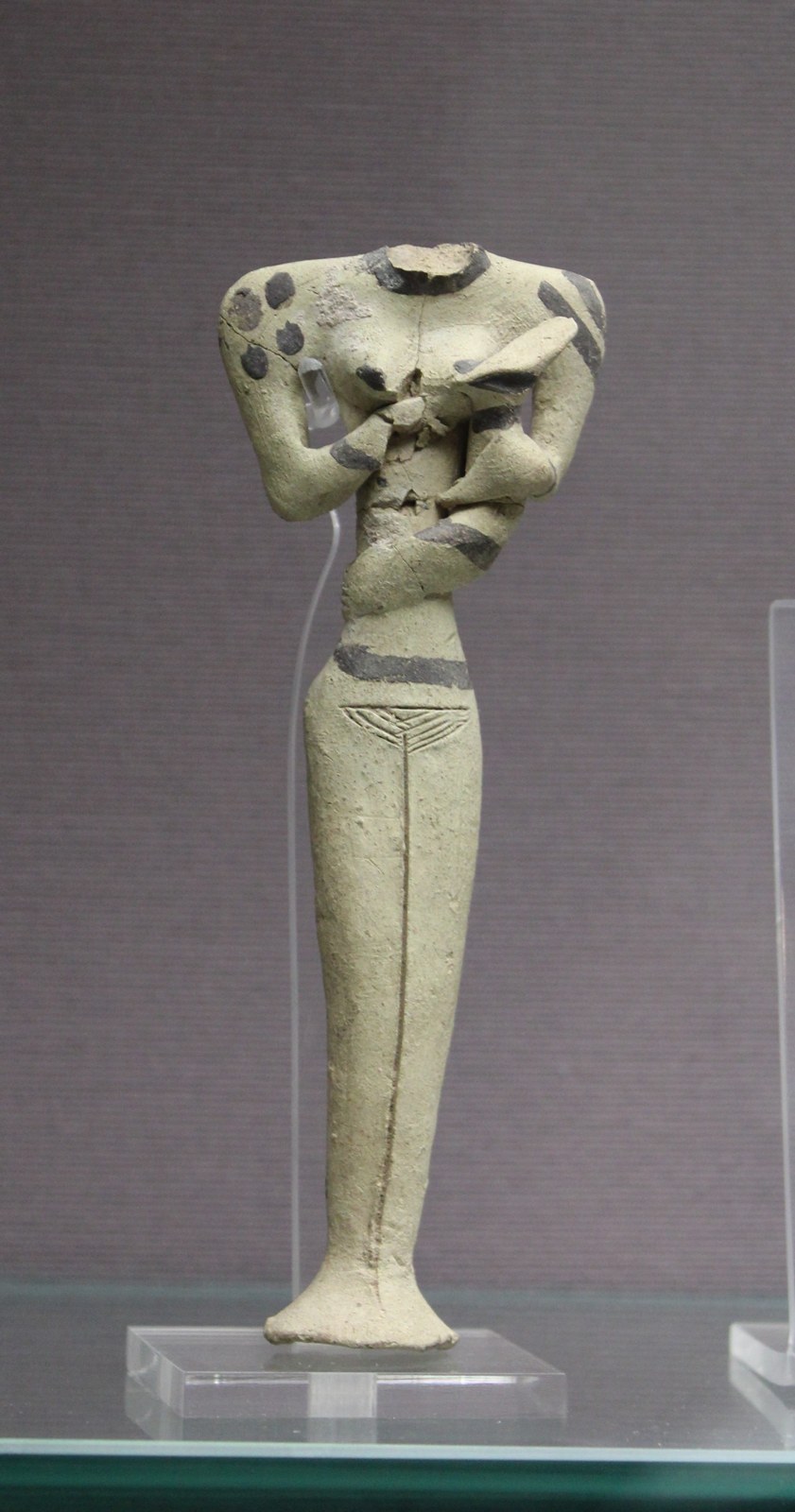
“Figurine” describes an object’s form and scale, not its maker’s beliefs. The UbaidUbaid cultureAn archaeological designation for material traditions originating in southern Mesopotamia with regional diffusion. Broad southern frame c. 6500–3800 BCE; not a known linguistic people, with limits varying by region and phase.Glossary · Click to read the explanation assemblage includes human and animal figures; painted pieces may differ in function from those with clay pellets. Some have documented burial contexts, but their function cannot be generalized.[1]
Photograph
The example is a nursing woman from Ur, British Museum 122873. The mother’s head is missing and the small surviving head belongs to the infant; the scene alone does not establish a goddess.
References and notes
- Ellen McAdam (2024). A Gazetteer of Ubaid Figurines from Ur. In Ur 1922–2022, pp. 49–83. British Institute for the Study of Iraq. Pages 49–55 and 79–82 checked: discontinuous context, earlier types, U15376/122873, manufacture and function. Not the complete Ur volume. Funerary manufacture and criticism of domestic use presented as the author’s reading, not fact for every figurine. Return to the text ↑
Research history
Substantive changes are retained here. Minor copy edits remain in the internal operational log.
-
Substantive record update
Suggest a correction · Suggest a source for this record
Cite this record
IL Archive, «Figurine», Edition 2, https://ilarchive.com/en/entities/figurine